Egypt can leverage the US-China rivalry and its strategic partnership with Beijing to bolster its national security and its position as a global logistics hub through several strategic avenues:
1) Enhancing its status as a global logistics and trade center, through:
– Developing the Suez Canal Economic Zone: Leveraging the massive Chinese investments and projects in the TEDA zone in Ain Sokhna to establish vital industries such as green hydrogen, solar panels, and electric vehicles, transforming Egypt from a mere waterway into a global manufacturing and logistics hub.
– Linking the Belt and Road Initiative with Egypt’s Vision 2030: Integrating Egyptian ports, such as East Port Said, Alexandria, and Ain Sokhna, into the Chinese maritime trade network, while maintaining a balance that allows for alternative investments in other ports and logistics corridors to expand its options and international network of allies.
Stay ahead of the geopolitical week.
MD Briefing delivers expert analysis across five global fronts — the Indo-Pacific, energy, geoeconomics, European security, and the Middle East — every Monday morning. Free.
– Alternative Supply Chains: Egypt offers a secure regional base for global and Chinese companies seeking to diversify their supply chains away from areas of direct conflict, leveraging its strategic location connecting three continents.
2) Enhancing National Security and Red Sea Security, through:
– Diversifying Sources of Armament and Military Technology: The partnership with China allows Egypt to acquire advanced military technology, such as drones, air defense systems, and space and satellite technology, without the stringent political conditions imposed by Washington, thus strengthening the independence of Egyptian military decision-making.
– Securing Navigation in the Red Sea and the El-Mandeb Strait: This can be achieved by utilizing the Chinese military presence in Djibouti and China’s interest in maritime security to coordinate and build a joint security umbrella protecting the Suez Canal from emerging threats, such as attacks in the Red Sea, given that the stability of this waterway is a vital shared interest for both Egypt and China.
– Balancing Political Pressures: By employing flexible diplomacy and strategic balancing, Egypt’s rapprochement with China (especially after joining the BRICS group) provides it with strong leverage in its negotiations with the United States and Western international institutions, and vice versa.
3) Egyptian Expansion and Influence in Africa via China, through:
The Joint Projects (Triangular Cooperation) by acting as a strategic gateway for Chinese investments directed towards the African continent, through the implementation of joint infrastructure projects (roads, power plants, dams) in cooperation between Egyptian and Chinese companies in the Nile Basin and Horn of Africa countries, Egypt can enhance its influence and development diplomacy.
Here, Egypt can benefit from international and Chinese competition over Africa, the Red Sea, and Ethiopia, and from its partnership with China, to strengthen its national security and its position as a logistical and commercial hub. Thus, Chinese economic influence can become a factor of stability and development for Egypt, rather than a new arena for international competition in the future. Egypt can enhance its national security and logistical standing by leveraging its unique strategic location as a link between Africa, Asia, and Europe and by transforming international competition and its partnership with China into well-considered development opportunities. This can be achieved by studying and understanding the following strategic dimensions:
– First: Mechanisms for Egypt to Benefit from International Competition and the Chinese Partnership
– Developing Global Logistics Hubs: Continuing to expand and develop the Suez Canal Economic Zone in conjunction with Chinese investments, such as the TEDA Zone in Ain Sokhna, to transform the canal from a mere waterway into a global manufacturing and re-export hub.
– Continental Connectivity and Infrastructure: Leading regional connectivity projects in Africa, such as the Cairo-Cape Town Highway and the Lake Victoria-Mediterranean Waterway Project, and utilizing funding from China’s Belt and Road Initiative to connect African trade to the Red Sea.
– Diversifying security and military partnerships: Leveraging international competition in the Red Sea to secure navigation and combat piracy and terrorism through building flexible alliances and modernizing Egyptian naval capabilities (the Berenice naval base) without aligning completely with any single international power.
– Localizing industry and technology: Making technology transfer and the localization of industries, such as electric vehicles, renewable energy, and communications, a requirement in investment contracts with China and Western countries. This will reduce reliance on imports and bolster Egyptian economic security.
– Second: Chinese Economic Influence: Stability and Development or an Arena of Competition? Future indicators of Chinese influence in Egypt and the region point to two overlapping scenarios:
– The first scenario: A factor of stability and development, achieved by focusing on infrastructure, providing soft loans, creating local job opportunities, and supporting regional integration. This would have a positive impact on Egypt and Africa, contributing to easing conflicts stemming from poverty and offering African countries alternative financing options for developing their economies.
– The second scenario: Chinese influence within Africa as a negative factor, transforming it into a new arena of international competition. Increased Western (American and European) fears of Chinese hegemony and attempts to contain it through counter-initiatives or political pressure could turn the Red Sea region and Africa into areas of military and political polarization, forcing countries to choose between the Eastern and Western blocs.
– Third: Analyzing China’s role regarding the Grand Ethiopian Renaissance Dam (GERD) issue and whether Beijing can play a role in supporting stability and negotiations between Egypt and Ethiopia
On the other hand, given China’s growing relations with Ethiopia and the Nile Basin countries, its role regarding the GERD issue can be viewed positively for Egypt. Beijing can play a role in supporting stability and negotiations, even though its economic interests might make it more cautious about clashing with Ethiopia. Here, China adopts a pragmatic and cautious approach, balancing its substantial economic interests in Ethiopia with its strategic relationship with Egypt. This limits its role to quiet diplomacy and calls for negotiations without exerting direct pressure or engaging in confrontation with Addis Ababa. This can be understood through:
1) Analyzing China’s role regarding the GERD
– Technical and financial support: Chinese companies and funding have contributed directly to the infrastructure and electricity distribution stations associated with the GERD and Ethiopian projects.
– Non-interference policy: Beijing traditionally adheres to the principle of non-interference in the internal affairs of other countries and avoids taking public stances against Ethiopian development projects.
– Diplomatic balance: China is careful to issue joint statements with Egypt emphasizing the importance of international law and the need to avoid harming water security, but these remain diplomatic statements that fall short of exerting pressure through mediation.
2) Can Beijing support stability and negotiations between Egypt and Ethiopia?
– The capacity exists: China possesses significant economic and financial influence over Ethiopia, enabling it to exert influence if it so desired, given the scale of its investments and loans.
– The will to exert pressure is lacking: China refuses to become a serious mediator or a pressure party and prefers to distance itself from the sharp points of contention between Egypt, Ethiopia, and Sudan.
– Maximum possible role: Beijing’s available role is limited to quiet mediation and encouraging the parties to return to regional negotiating tables without imposing binding solutions.
3) Economic interests and avoiding confrontation:
– Deep strategic partnership: For China, Ethiopia is a key gateway and the heart of Africa for implementing the Belt and Road Initiative and penetrating the Horn of Africa.
– Interconnected projects: Chinese interests in Ethiopia are linked to agricultural, electricity, and railway projects that directly benefit from the dam’s energy.
Here, we conclude that major economic interests make China very wary of losing its Ethiopian ally, which keeps its position biased towards avoiding confrontation and refraining from imposing any forced settlement on it.
From this, we understand that Chinese influence holds enormous developmental potential for Africa, but it remains surrounded by the risks of geopolitical competition with other powers, most notably the United States. Egypt’s ability to achieve diplomatic balance and rely on a policy of multiple partners is the guarantor of transforming this influence into a stabilizing factor that supports its national security.
ONCE dubbed “the most boring man in football” Michael Owen’s choice to sign up for a fly-on-the-wall Amazon documentary about his family was unexpected to say the least.
The former England striker turned pundit, 46, allowed cameras to follow him, his wife Louise and their children Gemma, James, Emily and Jessica as they balance family life with running a horse racing business in Cheshire.
Michael Owen’s decision to star in a fly-on-the-wall documentary came as a shockCredit: Prime VideoMeet The Owens follows Michael, wife Louise and their four children (pictured above)Credit: Instagram @themichaelowen
And it was a distinctly left-field move from Michael, who – unlike celebrity documentary subjects David Beckham, Wayne Rooney and the larger-than-life Tyson Fury – has largely stayed out of the spotlight.
He is seen joking in six part series Meet The Owens that he is now best known as a “boring p***k” or “Gemma Owen’s dad” after she appeared in Love Island, raising questions about why he would agree to film the at-home-with style show.
And we can reveal that the ex-footballer – often referred to as ‘the most boring man in football’ – signed up for his TV payday after ploughing £13 million into his racing business pushed him to his financial limit.
While he may have other streams of income, accounts for Michael’s company Owen Promotions show it holds just £7,219 in cash and owes £2.3m to creditors.
Owen signed up for the show after putting £13 million into his horse racing businessCredit: GettyThe ex-footballer (pictured with David Beckham) has stayed out of the spotlight since leaving the sportCredit: AFP – Getty
It also has three outstanding loans, two of which were taken out in March 2022 and February 2024 with Leeds-based MR Denton Properties.
A further loan was taken out in February 2024 with Andrew Black, who co-founded Betfair.
Two other loans with Grosvenor Funding, which claims to offer “fast and flexible” bridging loans were paid off in 2023.
And all five loans were secured using parts of the Owens home estate – a 42-acre estate he bought in 2001 for £4million.
Despite spending millions on Manor House Stables, Owen says the business still needs investorsCredit: Manor House StablesSources say the business has had a big impact on the footballer turned pundit’s financesCredit: Getty
Speaking in Meet the Owens, which is now number 3 on the Amazon Prime UK chart, Michael revealed he has had to put “£12 or £13 million” into Manor House Stables to build it to its current level.
But he admits the business – which makes cash by persuading investors to back the horses they buy at auction – still desperately needs investors.
And he describes their current status as: “Premier League. Brighton, but not seventh, but kind of bottom half.”
Footage from the first episode shows the racing enthusiast giving pal Jamie Carragher a tour of the impressive grounds and stables, showing off a horse owned by Sir Alex Ferguson and another he owns along with Paul Scholes, Steve McManaman and Owen Hargreaves.
Drone shots show the impressive site from the air, while graphics also flash up on screen showing how the structure works – a handy guide for any would-be investors.
One source told us: “Michael is passionate about Manor House and racing, and he has done an incredible job on Manor House.
“The problem is that it is a big money pit and you can pour millions into it without any guarantee of winning horses.
“He loves it, and would never walk away, but it would be naive to say it hasn’t had a massive impact on his finances.
Owen (pictured with wife Louise) is the sole shareholder of Manor House Stables LLPCredit: GettySources say Owen is hoping the show will help Manor House Stables attract more investorsCredit: Prime Video
“And the pressure is never ending because as a business, you have to buy horses each year – for £90,000 or more – and try to find investors for them.
“Then the million-dollar question is whether or not those horses win, as the stables need winners to succeed.
“But the reality is that you only win a very small percentage of the races in which you have horses.”
Michael is now the sole shareholder for Manor House Stables LLP, which owns the stables, after director and co-owner Andrew Black resigned in March 2022 after six years.
Accounts show the company has healthy assets of approximately £13.6million.
Yet the source said the business still has a way to go before it becomes a money-spinner, rather than a money pit.
They added: “The Amazon payday has come at a good time for Michael, but he is also hoping the airtime for Manor House will attract more investors.
“The more money that comes in, the better the horses and the more winners we will see here.
“That will help the business move higher up the rankings among the top British stables.
“Michael loves racing and he is driven by passion for the sport, but he is also very competitive and wants to win.”
Previously, a source told us: “Michael is extremely determined to succeed in racing. He has poured millions of his own money into Manor House, and he will not stop until he’s at the very top.
“Signing up to broadcast this to the world was a huge risk for him, and he’s desperate for it to work.
“Michael is keen to show off how much Manor House is a reputable and successful stable, and he hopes putting the business on screen ends up being a help rather than a hindrance.”
Chavez’s eyes still gaze from walls across Caracas. So too do the eyes of other figures, like Maduro and independence leader Simon Bolivar. Some images are faded. Others are accompanied by slogans like “To doubt is treason”.
Forastero has worked on government projects, including under Rodriguez. But he is critical of some of the newer images. He remembers a time when he painted murals of Chavez playing with children or riding a bicycle, not slogans.
“When Chavez was alive, people painted Chavez because we loved him very much. It’s as simple as that,” he said.
In recent decades, he argues that Venezuela’s public art has fallen increasingly under government control, with murals commissioned to carry explicitly political messages.
“Muralism is a story told on a wall,” Forastero said. “What we really see on the walls now are propaganda posters. I’m a chavista, and I’m disgusted by it.”
Still, the removal of the artwork is another form of propaganda, in Forastero’s eyes. He believes the Rodriguez government is seeking to project a more “neutral” appearance to better appeal to the US.
He also accuses Rodriguez of abandoning ideals key to the chavismo movement: namely, anti-imperialism and revolution. He pointed to the US’s role in shaping Venezuelan policy.
“The United States is forcing our government to behave this way,” Forastero said.
Forastero believes the removal of Hugo Chavez murals is part of an effort by Venezuela’s government to appeal to the US [Catherine Ellis/Al Jazeera]
Rafael Araujo, a Venezuelan activist, has a different view of the changing landscape.
To him, there was something “jarring” about seeing chavista figures plastered across city walls, especially the leaders who have caused the country so much pain.
During their time in power, Chavez and Maduro both faced allegations of overseeing human rights abuses, including through the violent suppression of dissent. Venezuela’s last two presidential elections have been widely denounced as illegitimate.
Known in Caracas as Senor Papagayo, Araujo has used colourful, handmade kites to protest against government violence and economic policy.
He sees the Chavez murals as a form of oppression, an ever-visible reminder of a repressive government apparatus.
His kites are a way of sending a different message. His favourite carries aloft a single word: “Freedom”.
“Freedom is what all countries need. Democracy is the most balanced system a citizen can live under,” Araujo said.
BRICS leaders gathered in New Delhi for the final day of the summit amid divisions over the wars in Iran and Ukraine, as the group seeks to project unity, strengthen the voice of the Global South and push for a more multipolar world order.
EastEnders fans think they know what brings Stacey Slater back to Walford amid reports actress Lacey Turner is filming a few episodes for the BBC soap during her Strictly stint
16:45, 13 Sep 2026Updated 16:45, 13 Sep 2026
Stacey Slater is returning to EastEnders, according to new reports(Image: CREDIT LINE:BBC/Jack Barns/Kieron McCarron)
Stacey Slater is returning to EastEnders, according to new reports – and it’s very soon.
Lacey Turner is said to be reprising her role on the BBC soap, while she’s starring on Strictly Come Dancing. According to the reports, Stacey could be back in time for Christmas and the big New Year’s Day 2027 episode.
While nothing has been confirmed, it’s thought Lacey will be filming for a handful of episodes, reprising her role around October and November time. Given filming is often around six to eight weeks ahead of transmission, this could mean Stacey is back for December and New Year.
This detail has left many fans convinced they have figured out what brings Stacey back. Some think the episodes are tied into the return of her brother Sean Slater, while others wondered if this means Stacey could be the pregnant woman in Max Branning’s bed, yet to be identified.
A fan posted on social media: “Stacey only seems to be back for a few episodes which must link in with Sean returning. Lacey couldn’t have come back to film anything without it being noticed.”
Another fan said: “Great that Stacey is coming back. I did wonder at the start if it may be her in Max’s bed, but they didn’t part on good terms when she left for Brazil because of Max and Zoe.
“To be cosying up to Max again seems a bit strange. It might be to do with the Vic as she helped Kat.” A third fan said: “I think the best outcome would be if she was the pregnant woman.
“I know it’s probably Priya but that feels to obvious. I don’t really want Max to have another kid, but I’d rather he have one with Stacey than Priya.”
One fan theorised: “Streets are saying stacey is the pregnant woman in max’s bed nyd 2027.” Another said: “Stacey back around new years? How do i make sure she’s not the pregnant woman in max’s bed?”
A further post read: “Stacey is returning for a guest stint but they’ll probably have her involved with Max.” A final comment said: “Will she be the pregnant woman in his bed or will he cheat on Linda with her? Lbr it’s going to be one or the other.”
On Stacey’s apparent comeback, the source told The Sun: “Lacey has created one of the soap’s most iconic character’s in Stacey Slater. She is loved by the fans.
“So the fact that she’s agreed to return, even if it’s only for a handful of episodes, will come as a huge boost for the loyal viewers. Lacey returning for a few episodes to turn the tide. This is not a permanent return.”
They added: “It’s going to take more than Lacey returning for a few episodes to turn the tide.”
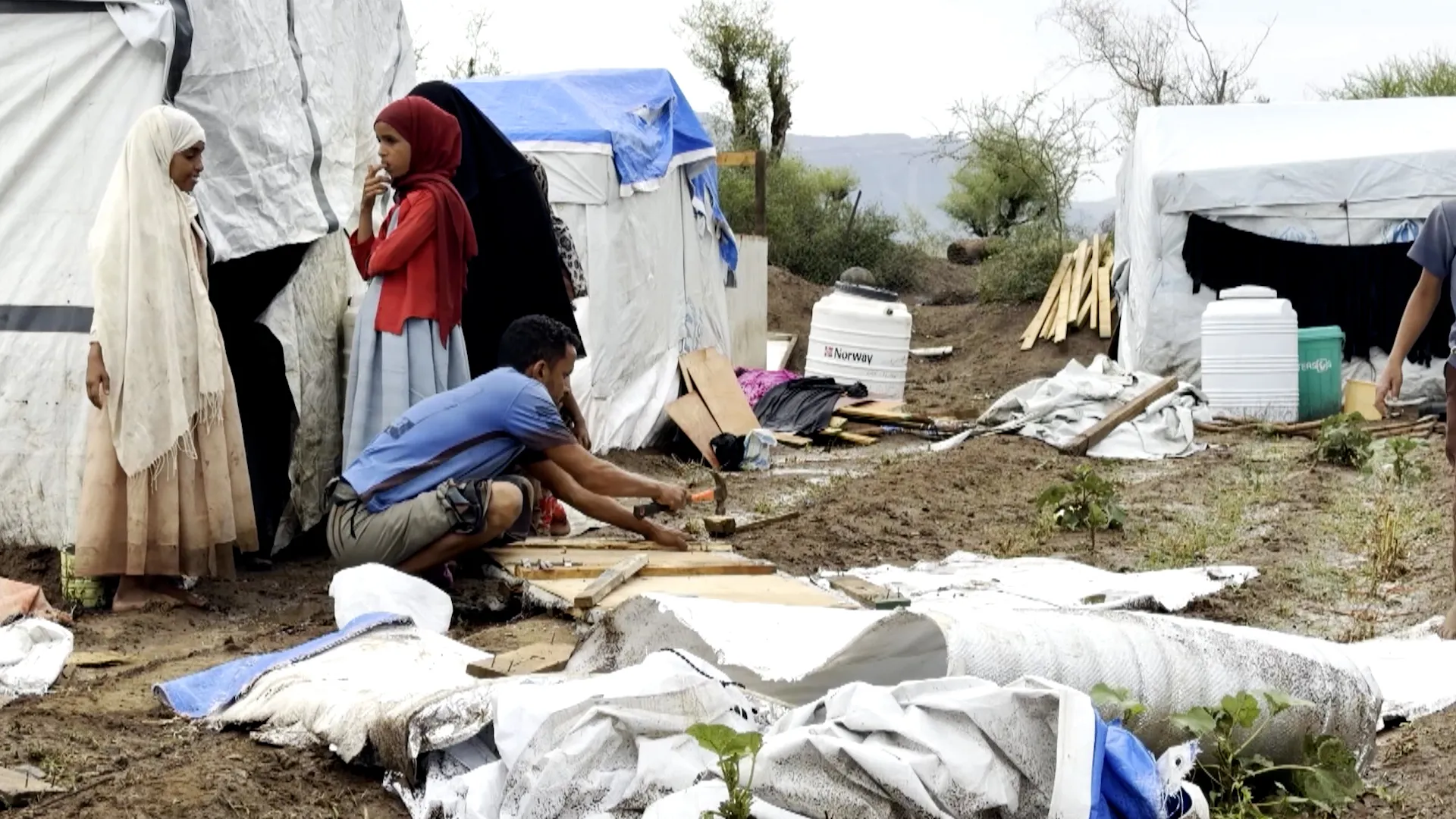
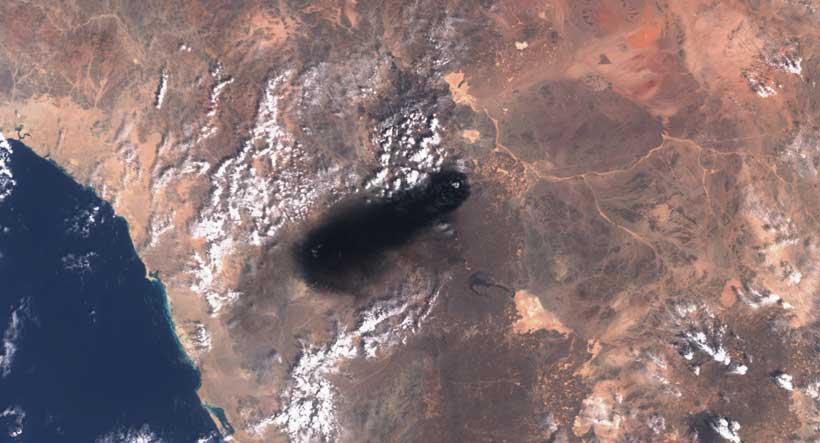
Escalating fighting along Yemen’s western coast has driven more than 2,000 Yemenis across the Red Sea to Djibouti. Inside Yemen, internal displacement has surpassed 85,000 as Houthi forces expand their control along the strategic Red Sea coastline.
JEREMY Clarkson has backed an Instagram influencer to take over Gardener’s World following Monty Don’s shock exit.
Don announced his departure earlier this week after 23 years on the show.
Monty Don announced his leaving earlier this weekCredit: BBCClarkson has spoken out about the departure, making an unusual suggested replacementCredit: Alamy
Writing in his column for The Times, Jeremy has called upon the BBC to carefully consider who will be Don’s replacement.
The former Top Gear presenter reflected on the gardening show tenderly, calling it a “pixelated comfort food”.
Sign up for the Showbiz newsletter
Thank you!
However, Jeremy made a surprising suggestion as to who could fill Don’s shoes.
He said: “So, for the new host, might I recommend that the producers trawl the staff in the nation’s garden centres for candidates. Or check out a girl called Chloe from Blooms & Greens on Instagram.”
Chloe has amassed nearly 700,000 followers on InstagramCredit: instagram/@bloomsandgreensbychloeHer content varies from gardening to bouquet creatingCredit: instagram/@bloomsandgreensbychloe
Chloe, who boasts 672,000 followers online, is famed for her gardening videos.
She offers short snippets of her tending to her organic vegetable garden or floral bouquet creations.
And it seems Jeremy is not the only fan, with one of her videos racking up 2.3million views.
He said: “This is a show that’s watched by a certain type of people. And it should be presented and written and produced by that sort of person.”
He likened her to Don himself, but 50 years his junior, Irish, and a woman.
Speaking of his own gardening skills, Jeremy confessed to being less garden-native than the beloved host.
He called himself “the only person in human history ever to kill a spider plant.”
And that was not his only planting frustration he reflected on – one time he bought a Baobab tree seed from Morocco.
The same seed refused to grow until he passed it onto his gardener, Shaun, where it is now thriving under his care.
Jeremy also delved into the time he planted 50 Christmas trees, only for 47 of them to grow too tall to be of any use.
He said: “But despite this ineptitude, I do watchGardeners’ Worldand that’s why I was sad this week to hear that after 23 years, Monty isleaving the show.”
With the BBC likely currently having conversations about Don’s replacement, Jeremy weighed in with his concerns on the topic.
He said: “I have the most horrible feeling that whoever gets the gig will not be the sort of person who wears corduroy.”
He suggested, if not Chloe, then producers try garden centres to find a host.
Jeremy added: “What they need to remember is that Gardeners’ World is a show about gardening, for sure, but it’s also a state of mind.”
RIYADH: Saudi Arabia’s Tadawul All Share Index slipped on Sunday, losing 142.70 points, or 1.30 percent, to close at 10,864.57.
The total trading turnover of the benchmark index was SR3.83 billion ($1.02 billion), as 42 of the stocks advanced and 221 retreated.
Similarly, the Kingdom’s parallel market Nomu lost 53.44 points, or 0.25 percent, to close at 21,579.19. This comes as 25 of the stocks advanced while 47 retreated.
The MSCI Tadawul Index lost 18.52 points, or 1.25 percent, to close at 1,458.75.
Top gainers, losers
The best-performing stock of the day was Armah Sports Co., whose share price surged 9.95 percent to SR71.85.
Other top performers included Arriyadh Development Co., whose share price rose 5.68 percent to SR16.75, as well as Saudi Reinsurance Co., whose share price surged 3.67 percent to SR28.82.
Saudi Aramco Base Oil Co. recorded the most significant drop, falling 9.97 percent to SR127.30.
Knowledge Economic City also saw its stock price fall 5.08 percent to SR18.88.
Allied Cooperative Insurance Group also saw its stock price decline 4.96 percent to SR7.85.
Corporate announcements
TAM Development Co. received an amendment letter to the award letter for the “Provision of Advisory Services for Community Engagement and Event Management for Green Riyadh Program” project, awarded by the Royal Commission for Riyadh City.
According to a Tadawul statement, the amendment involves the cancellation of an operational line item and will not affect the project’s overall profit margins. The total contract value has therefore been revised to SR12.5 million, inclusive of VAT, while the remaining scope of work will continue under the amended contract with no other changes.
The financial impact will be reflected in the company’s financial results based on implementation progress and the periods in which the related revenue and costs are recognized. The ultimate impact on net profit will depend on the costs associated with the excluded scope and those incurred in completing the remaining work. The company said it will announce any material developments in due course.
TAM Development ended the session at SR59.50, down 0.25 percent.
Anmat Technology for Trading Co. announced the signing of a SR51 million contract with the Oversight and Anti-Corruption Authority, or Nazaha, to supply and install specialized equipment at one of the authority’s premises.
According to a bourse filing, the contract has a duration of 150 days.
Anmat Technology for Trading Co. ended the session at SR9, down 3.33 percent.
Fighting between Yemen’s Houthis and internationally recognised government forces have worsened an already dire humanitarian and displacement crisis. The International Organization for Migration tells Al Jazeera tens of thousands of people are in urgent need of help.
For 10 days, the center of the cinematic universe is the Toronto International Film Festival, whose closest geographical landmark is currently a ludicrous controversy.
“Welcome to TIFF and welcome to the beautiful shore of — say it with me — Lake Ontario,” festival CEO Cameron Bailey said on opening night as he introduced “Being Heumann,” director Sian Heder’s crowd-pleasing follow-up to her best picture Oscar-winner “CODA.”
The crowd said it back. Google Maps, however, insists that the festival is actually a 15-minute stroll to Lake America. I’ve yet to hear a single person call it that without an eyeroll.
What’s in a name? Last year in the spirit of patriotism, my favorite Toronto coffee shop taped over the menu listing for its Americano to re-dub it a Canadiano. This fall, the sign has returned to Americano. Taking a pause from politics, I ordered a flat white.
Yet, the festival’s programmers seem to be decentralizing their attention-hogging neighbors to the south. Typically, TIFF is a launch pad for awards contenders. But there are fewer high profile Hollywood filmmakers this year than usual — which was also the case in Cannes. Perhaps these international festivals are testing their own waters to see if they’re obliged to invite Americans to their party.
Instead, the Toronto line-up boasts pointed films about fascism. On its surface, Michaël R. Roskam’s “Le Faux Soir” is a procedural account of how a network of rebels in occupied Belgium published its own parody issue of a pro-Nazi newspaper on the 25th anniversary of Armistice Day in 1943. Most of the script’s energy goes to talking about typesetting and rotary press flongs, but right before the end credits roll, “Le Faux Soir” blurts out its timeliness about combating Le Fox News with comedy. Metaphorically alluding to the satirical newspaper “The Onion,” the narrator says that to pull off this operation, the team had to stick together like layers of an onion: “Never forget, onion is strength.”
Plenty of local comedies abound, including “The Stunt Driver” by Michael Dowse (“Goon”), an energetic biopic about Ken “The Mad Canadian” Carter, the ’70s speedster who vowed to vault across the mile-wide river between Ottawa and New York in a rocket-powered Lincoln Continental. The site of Carter’s jump is four hours away from the fest, although at his car’s top speed of 280 mph, you could get there in less than one. Safer just to enjoy Jay Baruchel’s funny and endearing portrait of a reckless risk-taker who hates being called a daredevil as much as he resents Ben Foster’s Evel Knievel attempting to give him some advice. “Canadians are God’s chosen people,” Carter growls defiantly. “The last thing we need is a Yankee doodle dandy telling us how to do our jobs.”
It’s also possible that this year’s lack of big films — unlike 2025’s “Frankenstein,”“The Smashing Machine” and “Wake Up Dead Man: A Knives Out Mystery” — is just a reflection of the industry’s changing tides. Two of the buzziest guests at this year’s fest have been Inde Navarrette of the micro-budget horror hit “Obsession,” which premiered at last year’s TIFF, and British Columbia-born Hudson Williams of the TV hockey romance “Heated Rivalry.” Twelve months ago, both actors were anonymous Gen Z-ers who could have easily popped into Tim Hortons for a maple-glazed donut without causing a stir. Now they’re stars.
Personally, I’m all for fresh talent. Audiences and critics alike are bored of film executives clinging to the same proven names and proven plots as tightly as worry beads. Yes, I’m hoping to see some Oscar contenders while I’m here and have my fingers crossed for a few movies I’ll be seeing shortly. But for the sake of filmgoing at large, I’d be more thrilled to spot another under-the-radar “Obsession.”
So far, I haven’t found one. However, I have seen ingenuity made for peanuts, like Jenna Cato Bass’ “Future Tense,” a South African sci-fi drama about a travel service that allows the wealthy to blip back to the 1600s to hot tub under the clear skies before the land was ruined by centuries of trash, trade and colonization. Mismatched new couple Tara and Lwando (Kristen Raath and Lawrence Maleka) — she’s white and sunny, he’s Black and snide — take a blistering vacation that their relationship might not survive.
The script gets screwy in the last act, but Bass proves she can pull off a bold time travel premise using only tastefully bland décor, gorgeous nature footage and a couple of menacing brutes with guns. As a bonus, Raath, her lead, has the spunk, charm and smile of Karen Allen, giving a breakout performance that’s such a delight that you could almost swear the “Raiders of the Lost Ark” ingenue had leapt back four decades to star in the film.
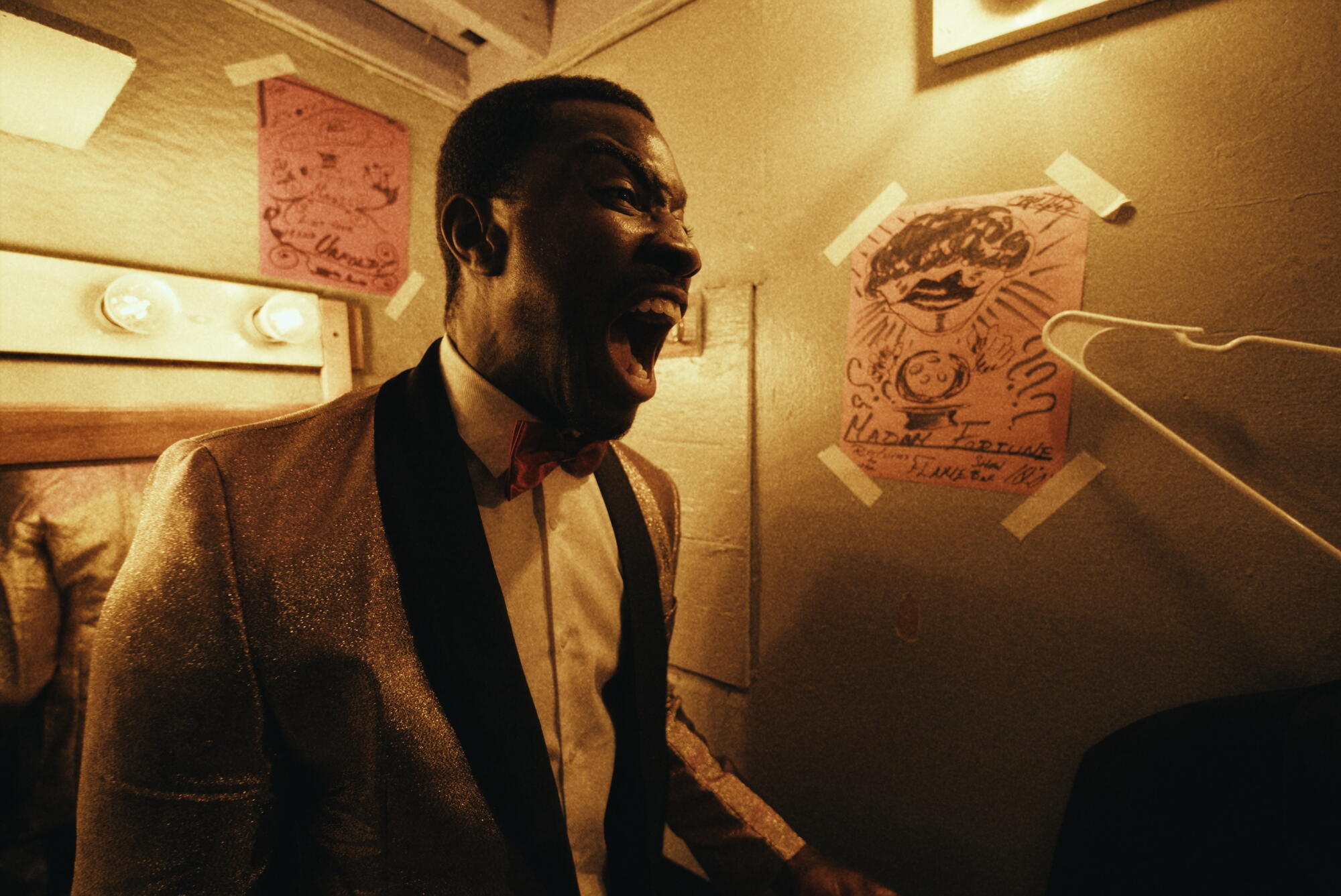
An image from “Voices,” a musical drama set in the 1960s.
(TIFF)
While we’re talking about pivotal moments in personal histories, nine years ago Deanté Gray was a rookie wide receiver for the Houston Texans. He tore his ACL in practice and, after muscling through that disappointment, is now a first-time feature director with “Voices,” a lean and loud musical-thriller about thwarted dreams. Set in one tatty motel room in 1967 Detroit, “Voices” is a vicious flick about rising two soul acts hellbent on getting on stage that night to impress Motown Records’ Barry Gordy.
Technically, only the Harmony Brothers, Bubbles and Melvin (Joe Maye and Jamal R. Averett), are booked to play the gig. But a fame-hungry bellboy, Jordan (Francis C. Edemobi), and his cousin Derrick (Ezekiel Ajeigbe) hatch an impulsive, half-baked plan to perform in their rivals’ place. Egged on by Derrick’s ambitious girlfriend Mia (Raél Ba), who’s angling to be the duo’s opening act, this bad idea crescendos with a half-dozen original songs — and a body count.
The sound design of “Voices” is raw and the rumored $50,000 budget so strapped that minor period piece inconsistencies like cheap plastic trash cans sneak into the frame. Who cares? Sam Buckner III and Charlie T. Savage’s smart and surprising screenplay is crowded with scenes that let its cast shine. Someone — ideally, several people — in here will wind up getting their own major break.
Admittedly, I’m biased. Morbid musicals are one of my favorite micro-genres, from “Little Shop of Horrors” and “All That Jazz” to “A Star Is Born” and “Cabaret.” (If you haven’t seen Steve Martin’s 1981 Depression-era hoofer “Pennies From Heaven,” do that this week.)
Add Theo Rhys’ “Stuffed” to that list. Jodie Comer (“Killing Eve”) plays a goth taxidermist; Harry Melling (“Pillion”) is a lonely man terrified of dying, buried and forgotten. Can she convince the sad sack to kill himself now to become a piece of her permanent collection?
The plot alone gives you the shivers, nodding to predatory internet meet-ups and that volatile mix of victimization and egomania that causes people to hurt themselves and/or others. Dark as the story is, though, co-writer Joss Holden-Rea’s tunes are stunners with limber melodies and creatively off-kilter lyrics. “My past is still before me,” Melling belts, picturing himself proudly mounted in a velvet suit and bronze plaque.
“Stuffed” isn’t for everyone. But my fellow sickos are going to love this bleak and lovely tragicomedy once it sets sail from these shores (whatever they’re called by then) to a theater near you.
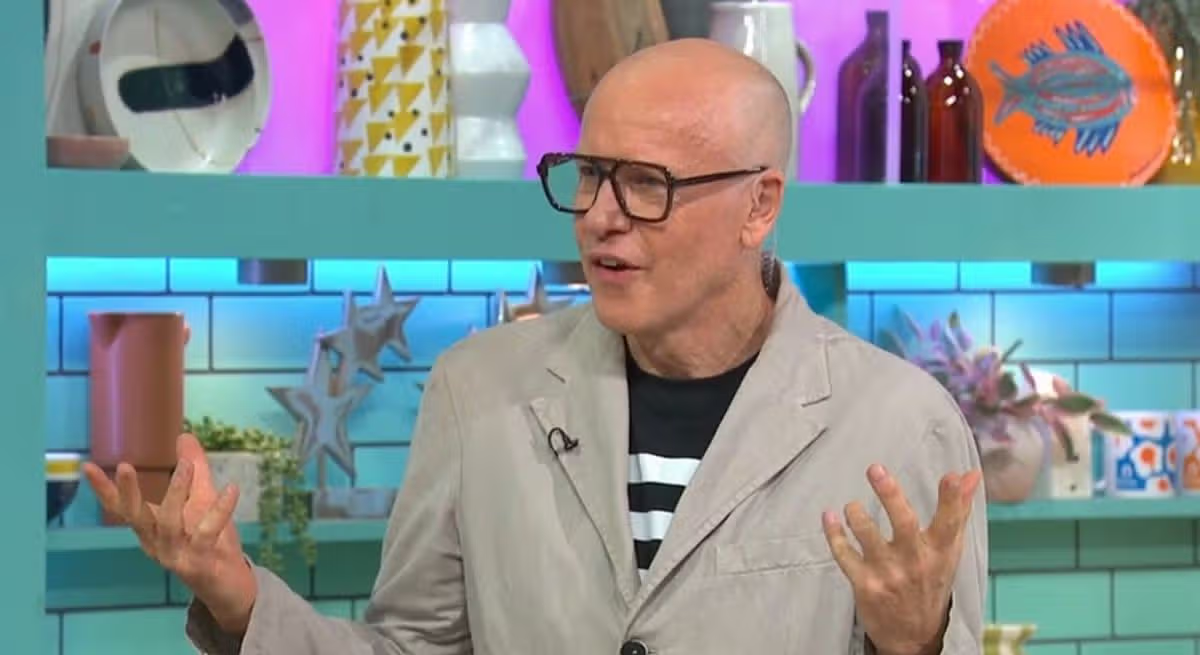
Tim Lovejoy was left confused by Penn Jillette’s comments during the latest edition of the Channel 4 show
Sunday Brunch: Penn Jillette reveals he can’t understand accents
Sunday Brunch presenter Tim Lovejoy was left baffled by one guest.
The weekend show returned to screens on Sunday (September 13), with presenters Tim and Simon Rimmer at the helm. Joining them on the show were guests Beverley Knight, Lara Pulver, Jay Sean, Bloc Party, Van Tulleken, Jesse Tyler Ferguson and Penn Jillette.
As the usual format got underway, the Sunday Brunch studio made for engaging viewing but American magician Penn shared a rather surprising confession.
During the segment where the presenters ask their guests to “dump their grumps” by openly sharing their dislikes, Penn confessed that he was rather lost and only understood a fraction of what was being said.
While discussing the topic of Marmite, and whether they have the sticky spread in the US, Penn said: “I haven’t understood very much of anything that’s being said.”
Revealing that he has bad hearing, Penn also shared that he wasn’t a fan of the British accent. He said: “I don’t hear well and I don’t understand accents so, so far on the show I’ve understood about 30% of what is going on. So when I’m in England, which I am often, I spend most of my time understanding no one.”
He then added that he wrote what he believes he hears and believes that this should be one of his grumps he would dump. He added: “It’s just totally a garble nonsense, which I hear every time you speak.”
Emphasising his point, he then said: “I have no idea what you’re saying. I’m sitting here nodding and smiling in total ignorance.”
Confused by Penn’s admission, Tim branded his complaints as “weird”. He said: “I think that’s really weird because I think we’re speaking like…” Penn interjected: “No, you are! You are speaking wonderfully for people like you!”
It comes after Tim was missing from the show at the end of August. The surprise switch was likely to have been noticed by regular Sunday Brunch viewers, particularly given the long-standing on-screen partnership between Tim and Simon.
The pair have worked together for many years, first joining forces on Something for the Weekend before becoming the faces of Sunday Brunch when the Channel 4 programme launched in 2012.
Their presenting partnership has remained a familiar part of Sunday mornings for more than a decade, making Lovejoy’s absence from this week’s episode all the more striking.
Stepping in to replace him was presenter Yinka Bokinni, who is an experienced broadcaster in her own right. She has worked across both radio and television and has established herself as a familiar face through a range of TV appearances, as well as her work covering entertainment and culture.
There was no explanation given during the programme for Lovejoy’s absence. At the beginning of the show, Yinka simply told viewers that she would be stepping in as his replacement.
Sunday Brunch airs Sundays from 10am on Channel 4.
The Bangsamoro region in the southern Philippines is holding its first elections on Monday, after a five decade-long armed struggle that claimed over 120,000 lives. The vote is the result of a 2014 peace agreement between the Philippine government and the Moro Islamic Liberation Front.
The Ukrainian Navy is claiming one of its uncrewed surface vessels (USV) sank a Russian USV, marking the first time one of these weapons, also known as drone boats, destroyed another. The engagement is the latest iteration in the use of combat drone boats, which Ukraine has employed to devastating effect against Russia’s Black Sea Fleet vessels and facilities, forcing the general evacuation of Russian naval assets from occupied Crimea to bases in Russia proper. The use of weaponized USVs is now proliferating around the globe at an increasing rate.
The incident took place somewhere in the Black Sea, said the Ukrainian Navy, which provided no details about when it happened or exactly where. TWZ cannot independently verify this claim; however, we cannot find any evidence of a drone boat killing another drone boat in the past.
“Units of the Main Intelligence Directorate (GUR) detected the target,” the Ukrainian Navy stated on Telegram. “The Ukrainian Navy’s ‘Sargan 3000’ unmanned boat, equipped with a remotely operated weapon station (RWS) Protector 12.7 mm, successfully destroyed it. This is the first naval battle in history between unmanned boats.”
An 81-second video released by the Ukrainian Navy opens with a view from the Sargan 3000’s onboard camera. It shows the Ukrainian USV acquiring, then engaging the Russian USV with its machine gun. It then cuts to a closer view of the Protector gun system firing at the Russian drone boat. At about the 30-second mark, the view switches to a feed from an aerial platform, though it is unclear if it is piloted or a drone. The video continues with the Sargan 3000 raking the Russian USV with its heavy machine gun until pieces start flying off and it eventually sinks, stern first.
Ukraine’s Navy says a Sargan unmanned surface vessel destroyed a Russian unmanned boat with machine-gun fire in the Black Sea, the first-ever battle between unmanned surface vessels. Ukrainian Navy personnel operated in coordination with HUR. #Ukrainepic.twitter.com/Avg4ecz8m6
The Sargan 3000 (the name means needlefish in Ukrainian) was first introduced by Ukrainian President Volodymyr Zelensky in April as a “multi-purpose platform that has undergone testing and entered service with the Ukrainian Navy. These uncrewed vessels are highly maneuverable and capable of carrying out strike missions.”
“The maritime drone features a specialized low-profile hull with distinctive hydrodynamic lines and is constructed from materials that reduce its radar signature,” the publication explained. “The Sargan-3000 USV is equipped with a waterjet propulsion system (presumably powered by a diesel or hybrid engine to ensure a long operational range).”
AmalNews states that the Sargan 3000 is 6.9 meters (about 22.6 feet) long, 2.2 meters (about 7.2 feet) wide, with an operational radius of up to 1,600 km (about 994 miles) and can carry a payload of 450 kg (about 992 pounds). It travels at an estimated speed range of 40-55 knots.
During operations, the Sargan 3000 connects to Ukraine’s Delta situational awareness system, “enabling the real-time transmission of target data, video feeds, and telemetry to operators,” AmalNews noted. “It features multi-channel control capabilities, including redundant satellite communication terminals (utilizing secure Western commercial networks and NATO military networks).”
It is also equipped with “an autonomous inertial and optical navigation system to ensure operation in the event of GPS jamming, and it incorporates electronic countermeasures (ECM) modules.”
There are several variants of this USV. They include those equipped with machine guns; rockets; FPV drones; an electronic warfare version and one that lays mines, the publication added.
Ukraine’s Sargan-3000 naval drone was presented in an FPV drone carrier variant, additionally fitted with a remote weapon station. The type first appeared in combat conditions in early June, when one washed ashore and detonated in the waters of Romania’s Constanța port. #Ukrainepic.twitter.com/QyKnyJFqUq
The drone boat’s first publicly known combat engagement took place in July, when one “destroyed the Russian Federation’s FSB border guard ship Izumrud,” the Ukrainian Navy stated at the time.
“Ukrainian naval sailors sank the border guard ship of the 2nd rank with the Sargan-3000 maritime unmanned complex near Novorossiysk,” the Ukrainian Navy claimed on Facebook. “Among the crew of the ship are dead and wounded.”
It is unclear whether the USV acted as a kamikaze vessel or a weapons platform, although the former is most likely.
“It was Izumrud that on November 25, 2018, participated in the attack on the ships of the Ukrainian Navy in the Kerch Strait,” the service added. “Revenge is inevitable.”
Ukraine’s Navy has sunk the Russian FSB Border Guard patrol ship Izumrud near Novorossiysk using the Sargan-3000 unmanned maritime system.
The vessel, a Rank 2 patrol ship, reportedly sustained catastrophic damage, with casualties and injuries among its crew.
— SPRAVDI — Stratcom Centre (@StratcomCentre) July 14, 2026
One sea drone killing another is a notable development given the damage these systems can inflict and the challenge of locating and destroying them on open waters. Being able to operate on the water over long distances and timeframes, they can be used to hunt down other drone boats, as what appears to have taken place in this engagement, or serve as a picket line of sorts to protect harbors, vessels and other targets that have been attacked by USVs in the past.
The Russian drone boat, which is not identified, did not appear to be armed.
Ukraine has carried out the world’s first known combat mission in which a sea drone transported and deployed an armed ground robot behind Russian lines on the occupied Kinburn Spit. pic.twitter.com/zyJdFXWxVb
The U.S. used drone boats as kamikaze weapons for the first time in July, during an attack “on a submarine and ship maintenance facility in Iran,” U.S. Central Command (CENTCOM) announced on X at the time.
Yesterday, using multiple one-way attack surface drones, CENTCOM forces successfully struck a submarine and ship maintenance facility in Iran. Three Corsair unmanned surface vessels hit the port at Bandar Abbas Naval Base, marking the first time American forces have employed sea… pic.twitter.com/bOM2kmgRxz
Regardless, it looks like history was made with this incident in the Black Sea. But this involved a sea drone hunting down and destroying another that couldn’t fight back. Given the rapid pace of weapons development by both sides in the Ukraine war, it seems inevitable that a duel between two armed drones boats could soon follow.
Filmmaker Paul Greengrass is often associated with a cinematic aesthetic colloquially known as “shaky cam” — handheld cinematography enabled by lightweight digital cameras that function a lot like another character in the room, on foot, at eye-level, responding and reacting to action and dialogue the way a person would.
It’s a style that has served him well in modern action thrillers like his installments of the “Bourne” franchise, and films depicting recent real-world events like “Captain Phillips” and “The Lost Bus.” Now, Greengrass applies his signature style to the Middle Ages — can shaky cam work in a medieval movie?
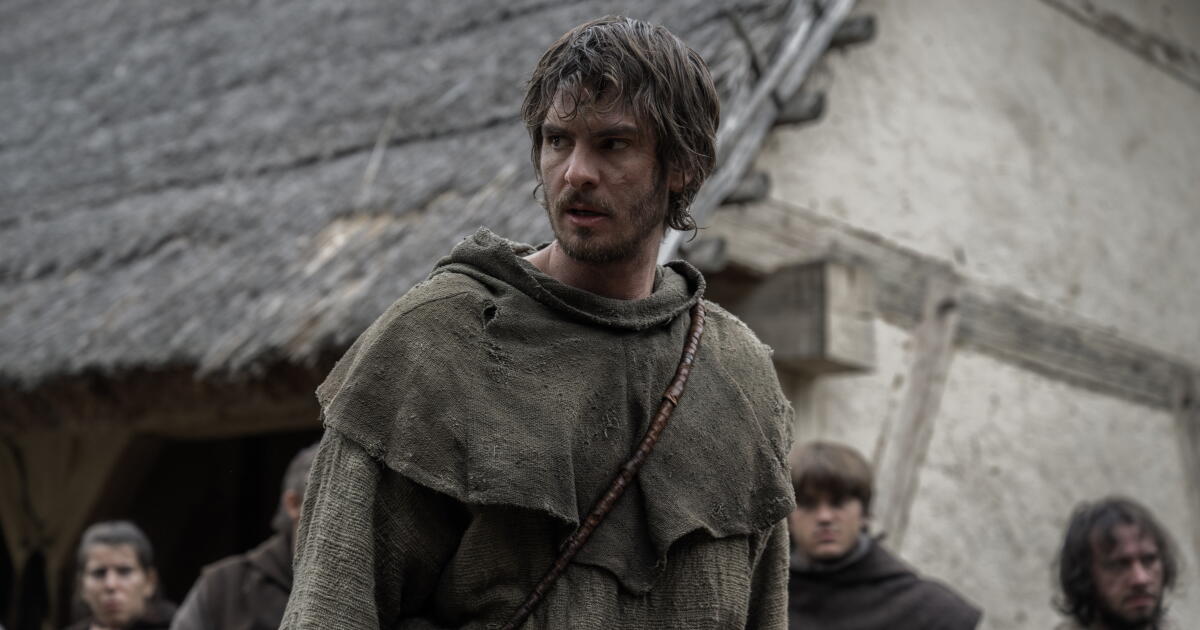
It may seem odd, but it’s a brilliant creative choice when considering that while “The Uprising” is technically about the 1381 Peasants’ Revolt in England, that’s not really what it’s about. It’s about right now.
The shaky cam is intended to jolt us into that awareness. When we pick up with our protagonist, a pathetic ploughman (Andrew Garfield) living a grief-filled and wretched existence, a plague has wiped out half the population. A small group of men hoards wealth and resources, while the peasant class is heavily taxed, laws brutally enforced. As Greengrass lays out the bare facts of this situation with a cinematic style that’s more news documentary than stuffy period piece, the parallels to our own current situation are laid bare.
“The Uprising,” which Greengrass wrote and directed, is told in a fairly simple fashion, with an emphasis on visual storytelling and visceral sensation (the disparate English accents are also lost in the melee of the mob). All we need to know is that the council advising the 14-year-old King Richard II (Woody Norman) conspires while the young royal prays and his mother (Katherine Waterston) glowers. Outside, a bloodthirsty mob armed with farm tools marches on London, led in part by Garfield’s ploughman, who started his own local uprising when he fought back against the taxman. He joins forces with Wat Tyler (Cosmo Jarvis), a former soldier, and John Ball (Jamie Bell), a priest deemed heretic, as the crowd demands an audience with the king.
As the chaos unfolds, Greengrass doesn’t pontificate on the morality of these events and, in fact, maintains a rather neutral stance on them for most of the film, withholding judgment. A revolution is not right or wrong for most of “The Uprising.” It is simply inevitable under the conditions the film presents.
The ploughman wants to play by the rules, but it’s how the revolt plays out that radicalizes him. While Greengrass shows us the uprising in all its messy confusion as the logical outcome of oppression, by following our protagonist as he witnesses treachery and deceit, Greengrass ultimately arrives at the belief that revolution is necessary, even in failure, and that freedom is worth more than anything.
The opening and closing of “The Uprising” are bracing and stark in their storytelling — the middle is a bit mushy and confusing. But it’s the performances that carry us through. Garfield, sensitive and earthy, is our bellwether as the events descend into bloody carnage dictated by muddled agendas. When he turns, we turn, and the anguish that Garfield wordlessly conveys is our compass.
Greengrass surrounds Garfield with actors who deliver bigger performances, like Jarvis as the brutish but shrewd Tyler, and Bell as the fervent Ball. Thomasin McKenzie plays a young woman, Alyce, steeped in her own trauma and loss, who attaches herself to the ploughman, and her ability to express wide-eyed, barely contained hysteria and fear is unmatched. Young Norman is riveting as the increasingly dastardly king.
The Peasant’s Revolt of 1381 is a fascinating moment because it’s a time when the notion of democracy wasn’t even a twinkle in a feudal servant’s eye. The mob’s actions are frustrating because they’re religiously bound to the king, who they believe is an emissary of God, and desperate to change their day-to-day existence. When those two instincts collide, it’s bound to be complex and conflicting, and Greengrass delivers that with a boots-on-the-ground style.
The murkiness of it all clarifies by the end of the film, not just in terms of its heroes, villains and message, but Greengrass also situates this story within a recognizable cinematic and storytelling history. There’s a thrill as it all comes together. Greengrass might be taking a big swing (of the scythe), but his blade finds its target nevertheless.
RIYADH: Hail Municipality has unveiled five new investment opportunities for investors, aiming to boost investment prospects in the region, develop commercial, agricultural and recreational activities, and make use of municipal sites in ways that support economic development and improve the urban landscape.
The investment opportunities include the establishment, operation and maintenance of a mixed-use site in the Al-Nuqrah district covering 5,129 sq. meters, with a contract term of up to 20 years, the Saudi Press Agency reported.
They also include an agricultural nursery site in the Al-Rawabi Al-Awwal district covering 9,999 sq. meters, with a contract term of up to 10 years, and a second nursery site covering 16,828 sq. meters, with a term of up to five years.
The opportunities also include the establishment, operation and maintenance of a commercial complex in the Hittin district covering 6,297 sq. meters, with a contract term of up to 20 years, and the establishment, operation and maintenance of a mixed-use site on Jubbah Road covering 20,326 sq. meters, with a contract term of up to 20 years — offering investors diverse opportunities in commercial, agricultural, recreational and tourism activities, and supporting the development and investment of municipal sites in the region.
The Hail Municipality said the opportunities build on its efforts to empower the private sector, encourage investment, and develop commercial, agricultural, recreational and tourism activities, in line with the goals of Saudi Vision 2030 to strengthen partnership with the private sector, support sustainable development and improve quality of life. It invited the public to view details of the opportunities through the municipality’s investment platform.
Saudi Arabia has closed its East-West oil pipeline due to a drone attack linked to Iranian-backed militias in Iraq. This pipeline is crucial for Saudi Arabia, as it allows the country to bypass the congested Strait of Hormuz, which has faced reduced tanker traffic due to an ongoing conflict between the U.S. and Iran. The Saudi Energy Ministry stated that the closure is a precautionary measure; the pipeline typically carries about 4 to 5 million barrels of oil per day, contributing 4% to 5% of global oil supply. The attack caused injuries and damage, but the exact impact on oil exports is still being evaluated.
President Trump, while attending a golf event in Ireland, suggested that Iran was likely responsible for the attack and predicted that oil prices would drop after the upcoming U.S. midterm elections. Recently, oil prices have surged, with diesel prices in the U.S. topping $6 a gallon due to tensions in the region. Reports surfaced that the Houthis, aligned with Iran, seized the strategic Perim Island in the Red Sea.
Crown Prince Mohammed bin Salman of Saudi Arabia reached out to Trump for military assistance against the Houthis, but Washington decided not to intervene directly at that moment, offering intelligence support instead. There were concerns that the attacks on the pipeline and Perim Island could escalate tensions further, especially since diplomatic efforts to resolve the war have stalled.
Iran’s parliamentary committee has stated that negotiations are futile unless the U.S. meets Iran’s demands, particularly concerning recognition of its control over the Strait of Hormuz. The Iranian foreign ministry announced plans for discussions with Gulf states in Oman regarding the strait. Meanwhile, Iraq’s government dismissed a military commander connected to the attack and has closed the Shalamcheh border crossing with Iran as a precaution to prevent further incidents.
The Saudis have not retaliated yet, following a request from Iraq’s prime minister, but they maintain the right to take necessary actions to protect their interests. Saudi Arabia’s oil production has plummeted to its lowest level in over 30 years, partly due to attacks on maritime vessels by Houthi factions. These forces, supported by Iranian guidance, are reportedly planning counterattacks to reclaim territories lost to the Houthis, who have advanced significantly along Yemen’s coast under Iranian direction. The Houthis have claimed that maritime navigation remains safe, except for Saudi vessels, which are subject to a ban.
MIS-TEEQ sent fans wild at their reunion gig on Saturday night, as original member Zena McNally joined the girl group on stage to perform their debut single.
The highly-anticipated show saw Alesha Dixon, Sabrina Washington and Su-Elise Nash regroup for a comeback performance at London’s OVO Wembley Arena.
Mis-Teeq fans went wild as original member Zena McNally joined the band for an epic reunion at WembleyCredit: The SunThe highly-anticipated show saw Alesha Dixon, Sabrina Washington and Su-Elise Nash regroup for a comeback performance at London’s OVO Wembley ArenaCredit: The Sun
And fans were treated to an extra hit of noughties nostalgia as OG member Zena took to the stage as a special surprise guest.
Zena was only part of Mis-Teeq for the band’s first year, just appearing on their debut single, Why?
Sign up for the Showbiz newsletter
Thank you!
She left in 2001 and attempted to launch a solo career, only releasing two songs, before becoming a DJ for Radio 1 Xtra and eventually moving to the US with her then beau, US soccer [football] player, Cory Gibbs, who she married in 2008 but split from in 2014.
The group welcomed her to the stage and their excitement to be back together as a four-piece was palpableCredit: The SunThe ladies then sat in a line on four stools and delivered their track Why? for the adoring crowdCredit: The SunZena was only part of Mis-Teeq for the band’s first year, just appearing on their debut single (pictured in 2000)Credit: GettyZena left in 2001 and attempted to launch a solo career, only releasing two songs, before becoming a DJ for Radio 1 and eventually moving to the US with her footballer husbandCredit: Instagram / @zena.anez_
But as the group welcomed her to the stage at Wembley on Saturday night, their excitement to be back together as a four-piece was palpable.
Zena looked stunning in a black leather ensemble and hugged the other three ladies as she arrived on stage, with Alesha seen jumping up and down at the reunion in The Sun’s exclusive video.
“How beautiful is Zena?” she exclaimed, before telling the crowd: “You didn’t see that one coming did you?”
Alesha went on the explain that they didn’t want to perform the song that launched them unless Zena sang it with them.
She said: “We could not sing this song without our girl, who, as the day one’s know, is in the video.
“Her vocals are still on the record – she had a sweet voice!”
Alesha turned to Zena and said: “The fans are always talking about you!
“I don’t think they think we like each other – we love each other!”
Zena affirmed that there was no bad blood between the girls, saying: “It’s all love!”
She added: “I want to thank you for having me here tonight – such a special moment.
“I’m hoping you’ll have fun with this – let’s do it!”
The ladies then sat in a line on four stools and delivered their track Why? for the adoring crowd.
The reasons behind Zena’s abrupt 2001 departure have been widely speculated, and the former Mis-Teeq queen has kept relatively tight-lipped.
The only occasion she seemed to shed any light on the split was in an 2010s blog post by writer and speaker Anika Allen where Zena spoke of her initial joy of being in a group before things soured.
She said: “Everything was fine in the beginning and it fun. But as time went on, I began to notice an imbalance in the group as the other members [Sabrina and Alesha] had been their first.”
Sabrina continued: “I felt they were focused on a bit more by the production team, who were suppressing my ideas. I write a lot also. We’re a team, but there was no compromising. I became unhappy.”
The 2026 reunion show has been nine months in the making, since the group announced their comeback at the start of 2026, with The Sun revealing this week that it would be an extraordinary gig for the fans.
Celebrating the 25th anniversary of their debut album Lickin’ On Both Sides, the Scandalous singers locked themselves inside Soundstage Studios in North London in the days leading up to the gig.
“This concert means everything to Alesha, Su-Elise and Sabrina and they have been working so hard to put on the performance of a lifetime,” an insider explained.
The trio performed live together in May, delivering a medley of their hits at the final of Britain’s Got Talent, and sang again as the surprise guests during Capital’s Summertime Ball, thrilling the 80,000-strong crowd.
The insider continued: “When they reunited at BGT and Summertime Ball, they loved being back performing together but they have taken it up a notch for their Wembley concert.
“This past week they’ve been pushing themselves in rehearsals to make sure their moves are flawless.”
The noughties group had seven consecutive top-10 singles and two top-ten albums across US, Europe, Asia and Australia, including their double platinum second album Eye Candy which was released in March 2003.
In spite of this success, the group would disband 2005 while recording their never-released third album, with all three members turning their focus on their respective solo careers.
The far-right Sweden Democrats party could enter government for the first time if right-wing bloc wins.
By AFP and The Associated Press
Published On 13 Sep 202613 Sep 2026
Voters in Sweden are heading to the polls in an extremely close general election that will see either the far right enter government for the first time or the centre-left opposition reclaim power.
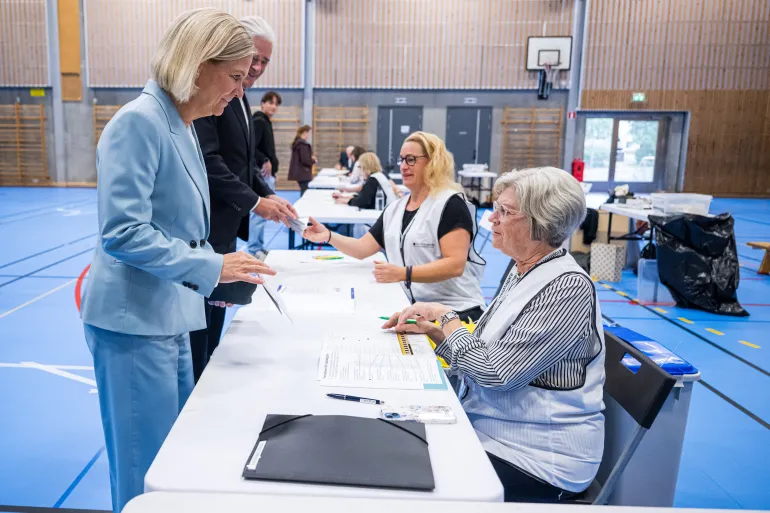
Opposition leader Magdalena Andersson of the Social Democrats was among the first to cast her ballot after polling stations opened at 8:00am (06:00 GMT) on Sunday.
Recommended Stories
list of 3 itemsend of list
The 59-year-old, who in 2021 became the first woman to serve as Sweden’s prime minister, voted with her husband at a school in her home municipality of Nacka, south of Stockholm.
Pre-election opinion polls have long credited the four parties in her left-wing bloc with a comfortable lead over conservative Prime Minister Ulf Kristersson’s four-party alliance, which includes the far-right Sweden Democrats.
But the gap narrowed significantly in the final days of the campaign.
Social Democratic Party leader Magdalena Andersson (L) and her husband Richard Friberg (R) cast their votes at a polling station in a school during Sweden’s general election, in Nacka on September 13, 2026 [AFP]
“It is now up to the Swedish people to decide which direction our country should take. Should we have a government entirely dominated by the Sweden Democrats? Something that has never happened in Sweden before? Or should we have a government led by me, which will steer Sweden in a new spirit of cooperation?” Andersson told reporters after voting.
Her party has pledged to boost the welfare state and help struggling households cope with the rising cost of living.
Outgoing Prime Minister Ulf Kristersson is seeking a second four-year term at the helm of the European Union nation.
He has led Sweden since 2022 with a three-party centre-right coalition. It relies on outside support from the Sweden Democrats, an anti-immigration, far-right party that has moved towards the political mainstream, for a parliamentary majority.
If the right-wing bloc is re-elected, the Sweden Democrats can expect Cabinet posts in the next government.
Kristersson has promised to focus on improving Swedes’ everyday lives, following his government’s clampdown on organised crime and immigration.
“We want to use our new and far better preconditions to improve the lives of ordinary people … to make Sweden great again,” Kristersson told news agency AFP before the vote.
Sweden Democrats party leader Jimmie Akesson (L) votes in Rinkeby, a suburb of Stockholm, Sweden, September 12, 2026, the day before the general election [Claudio Bresciani/EPA]
The Sweden Democrats, a party with neo-Nazi roots, took 20.5 percent of the vote in the 2022 election to become the biggest party on the right.
Kristersson announced in April that his conservative Moderates would allow the party into government if the right has a majority – though he would remain prime minister even if the Sweden Democrats are the stronger party.
Voting stations close at 8:00pm (18:00 GMT) when exit polls are expected to be published, with the first reliable results expected several hours later.
Some eight million people are eligible to vote in the election, in a country of 10.6 million where voter turnout regularly tops 80 percent.
About half of voters have cast their ballots in advance.
Andy Hernández is a Venezuelan economist and grassroots activist. He currently serves in the parliament of the 5 de Marzo Comandante Eterno Commune in El Valle, Caracas, and has played an active role in theCommunard Union, a national alliance of communes. In this exclusive interview, Hernández offers his perspective on local, state-backed projects within the current context of undermined sovereignty.
The 5 de Marzo Comandante Eterno Commune immediately mobilized in response to the double earthquake on June 24. Tell us a little about this and other recent initiatives by the commune.
After the twin earthquakes on June 24, community organizations sprang into action immediately. Collection centers were set up even before the government announced them. In our case, we set up a collection center on the premises of our communal social enterprise (EPSDC) Somos Karive.
At the same time, we noticed that around Somos Karive, many elderly people began leaving their homes, frightened, and taking to the streets. We brought them coffee, talked with them, and before we knew it, we had 300 people inside Somos Karive. There, with the support of the Ministry of Communes and the Caracas Mayor’s Office, we set up a shelter for a few days, until the panic subsided and people felt calm enough to return to their homes.
Somos Karive is one of the community’s main projects. How is it currently operating?
This initiative originally arose from a need to have a space to store food and expand our collaboration with the Pueblo a Pueblo Plan, a rural collective that organizes with urban counterparts to deliver produce at fair prices. The project then grew and now has several branches. The main operation, which generates the most cash flow, partly because it’s coordinated with the Ministry of Commerce, is the meat-processing plant. There, various cuts of meat are cleaned and portioned, vacuum-sealed, and then sold retail and wholesale to about 30 grocery stores in El Valle.
The second most important activity is our supermarket, which sells groceries and other products. There’s also the café, a space at the entrance that serves coffee, breakfast, and lunch. In fact, we also prepare large-scale lunches on demand. Another project here is a water treatment plant. And finally, a Family Production Unit (UPF) operates here, selling screws and other tools. This UPF contributes to the community through the social reinvestment fund. For now, that fund is used to support community activities. But according to the Law of Communes, the fund must be managed by the communal bank, which we are currently reactivating.
In short, Somos Karive has had its successes and failures, but it is a key initiative. I believe the most complex issue is establishing a management model. While all economic activity must generate a surplus, social property companies propose a different framework for labor relations. There is no boss; rather, there is administrative coordination that answers to the commune. No taxes are paid; instead, contributions are made to the social reinvestment fund. There are no social security contributions, but there must be a fund to support producers and a fund for necessary reinvestments. So we’ve been facing these challenges, in addition to the difficulty of operating EPS in the city, where retail activity makes sense but there is a lot of competition.
Hernández in a communal activity in Caracas. (MinComunas)
The Venezuelan government announced a new popularconsultation[for communities to select state-funded projects] for October. What has been the outcome of previous consultations in the commune?
The consultations have led to progress and also provided valuable lessons in our territory. Before the first consultation in 2024, we drew up a wish list without asking ourselves whether those items were feasible or not. Now, after several votes, and with some tools provided by the Venezuelan government for systematic planning, such as the Concrete Action Agenda or the Map of Solutions, we’ve been able to ground the projects in reality. Today we can say that we manage the proposed initiatives and the resources obtained much more effectively. Sometimes we even prepare two reports: one institutional and one community-based.
The most recent one was an extremely complex water project. Our community has gone 30 years without a regular water supply. There are no formal water supply connections, just hoses everywhere. First, the project was formulated: to fix the problem for 291 families without service, and it really did have a significant impact.
Other initiatives proved more difficult. For example, with a project to purchase water tanks, the funds raised were enough for only 10 tanks, yet hundreds of families needed them. The same thing happened with the project from the last consultation, which was to replace gas cylinders. We’ve managed to replace about 500, but there are 2,700 in total that need replacing. And the biggest challenge was with the rooftops. We needed 16,000 zinc sheets, but the project funds only allowed us to purchase about 850. So in situations like these it is difficult to manage everyone’s needs. In the end, we identified the most vulnerable homes, but we were only able to assist 65. No matter how well we manage the resources, they simply aren’t enough.
So we’ve had our share of setbacks, along with a lot of lessons. People now understand that we have to identify the scope of the problems that can actually be solved through these consultations. Rather than having a wish list, we’re learning to formulate real, concrete, and feasible projects.
What do you think of Acting President Delcy Rodríguez’s proposal to extend consultations to condominium boards and neighborhood associations?
To be honest, I find it interesting. The initial reaction, which I’ve seen in discussions with comrades, is to view it with suspicion, thinking of middle-class condominiums that have never believed in popular power.
The central issue is that a condominium board merely manages infrastructure, whereas the commune must implement policies on health, education, recreation, etc. It must act as the government in the territory, even if we aren’t fully exercising that role. So it might seem that by extending the consultation to condominiums, our presence is being undermined. However, our legislation doesn’t prevent condominium boards from participating in these processes.
Ultimately, the commune is the structure that defines the methodology for these consultations. Perhaps if, at some point, the consultations begin to prioritize the perspective of condominium boards, this concern would be justified. To me, that would indeed be a colossal mistake because it would violate the principle that the citizens’ assembly is the body that decides and has the final say on local projects.
The Somos Karive social property company is one of the 5 de Marzo Commune’s main economic initiatives. (MinComunas)
Turning to the national scene, some analysts describe the situation in Venezuela as “tutelage,” while others call it a “protectorate,” where the country’s fate is essentially decided in Washington. In this context, what role should grassroots organizations play? Is it justified to maintain unconditional support for the government?
Here I will speak in a personal capacity, not on behalf of my commune or the Communard Union, because this is a complex and highly contentious debate taking place within social movements, with many different perspectives.
There are several positions: some speak of tutelage, others of a protectorate, and others of a new form of neocolonialism. I believe we must ask ourselves what defines sovereignty. For me, there are two models of sovereignty currently clashing worldwide: one defined by corporations and the other by organized peoples. Now, in more concrete terms, I defend the Venezuelan revolutionary process, our history, and our struggle. I do not agree with some of the government’s decisions, but it remains my government nonetheless.
However, this is a very complex context in the wake of a foreign military intervention. How can a government be evaluated while under military coercion? That is a difficult question to answer. Regardless of whether or not one supports the government, January 3 [US military strikes and kidnapping of Maduro] is a turning point in our process. For me, the central issue is not whether to defend the government or not, but rather to defend our institutions. For example, I do not agree with reestablishing relations with Israel, nor do I agree with the terms of our relationship with the United States. But this is still my government.
I know this may sound illogical or contradictory, but as a popular movement we must understand that sovereignty is being contested on a global scale. Our goal is to build a new form of state, one that has the commune as its foundation. We must strive to ensure that these 5,400 communal circuits form a network for the defense of the territory, fighting for a new hegemony, and with a leadership that allows us to advance and influence national politics. However, this begins with exercising power from the territories in a coordinated manner, managing resources, and sustaining new social relations.
The communes are not even at 10% of our potential. Public consultations, for example, are a glimpse of what we can do, but they account for less than 1% of the national budget. This means that social organizations are not managing oil revenues, which are our primary source of wealth. We must develop political awareness not only to identify imperialist interests in our resources but also to create economic models that can scale up so we can challenge the status quo on different terms. For example, we could envision a communal corridor to exploit minerals in an alternative way. This would turn us into a real threat to those who seek to impose corporate sovereignty.
But returning to the more practical question: should we support the government or not? I believe we must support it because it is the government that establishes our institutional framework, even if it takes the form of a bourgeois state that we want to transcend. Now, should we support every decision? Of course not. But defending sovereignty means defending our institutions against foreign powers that seek to impose themselves upon them. For example, the assassination of Niño Guerrero struck me as a very dangerous precedent.
Finally, I believe it is important to have these discussions, both individually and within our organizations. In the case of the Communard Union, we are preparing a congress where we will need to collectively establish positions regarding this reality and, from there, define the actions we will take to try and revert the situation we are currently facing.
In recent months, we have seen a series of measures and reforms clearly geared toward the interests of transnational capital, such as the reform of the Hydrocarbons Law. What stance should communards take on these issues of national interest?
The reform of the Hydrocarbons Law is an example of this advance of the corporate sovereignty model. And in our context, the coercion and plundering began immediately after January 3. The attacks against Venezuela to seize its resources did not begin a few months ago, but before there was some care about appearances. Now the United States has moved on to directly stealing the country’s export revenues. This is like going back to the 19th century.
It is a complex time for the world. We are sometimes a bit chauvinistic; we believe that Venezuela determines what happens everywhere else. Although we certainly have an impact. We have the world’s largest energy reserves, minerals, fresh water, and other resources. Naturally, without independence there is no commune, and defending the process means defending national independence in order to envision a different world.
Now, what steps should we take to defend ourselves against this plundering? We have our Constitution, but this scheme falls outside even the international legal framework. Some might say the solution is to sabotage our own oil industry, but others would ask whether that would help shift the correlation of forces. Because we’re not just interested in being right. We want to change reality. We could issue a statement from the Communard Union right now, outlining everything we disagree with, and perhaps we should do so, but we must collectively decide what our coherent course of action will be, in terms of politics, communication, and so on, to defend our national project.
“Always loyal / Never gringos / Venezuela is not a colony” mural in Caracas. (Archive)
Venezuelan communes have also been characterized by their internationalism. How do you assess recent events, ranging from “joint” military operations with the US to the reestablishment of ties with Israel?
We believe that the commune is a civilizational project that we are implementing in a specific territory: Venezuela. Elsewhere, people may call it something else or pursue it with a different strategy, but we believe it is a civilizational project that is being debated around the world. So, based on that, the commune is obviously anti-Zionist and anti-imperialist. However, we are being subjugated and subdued. Not just the communes, but the country as a whole.
I believe that in the aftermath of January 3, elements such as the rapprochement with Israel were imposed on us. January 3 and the subsequent coercion were decisive in shifting the balance of institutional power, both within the Venezuelan state and in its foreign relations. The United States violated the Constitution, subdued our armed forces, and killed more than 200 people, including those extrajudicially murdered at sea, not to mention the piracy of hijacking our oil tankers. Thus, these disastrous changes are an imposition based on the logic of the military victor getting the spoils. In fact, US officials have openly stated this.
But the concept of the commune is and always will be anti-imperialist, anti-Zionist, and in support of the self-determination of peoples, with a vision of how resources and community life should be organized, the full exercise of our sovereignty, and so on. In this context, the communes must resist by demonstrating their existence, their socially owned enterprises, their assemblies, and their impact on the territory. Demonstrating that another way of life is possible is a way to fight back both locally and internationally.



















![Social Democratic Party leader Magdalena Andersson (L) and her husband Richard Friberg (R) cast their votes at a polling station in a school during Sweden’s general election, in Nacka on September 13, 2026 [AFP]](https://i0.wp.com/occasionaldigest.com/wp-content/uploads/2026/09/afp_6aa65a7dcf22-1789287037.jpg?w=640&ssl=1)