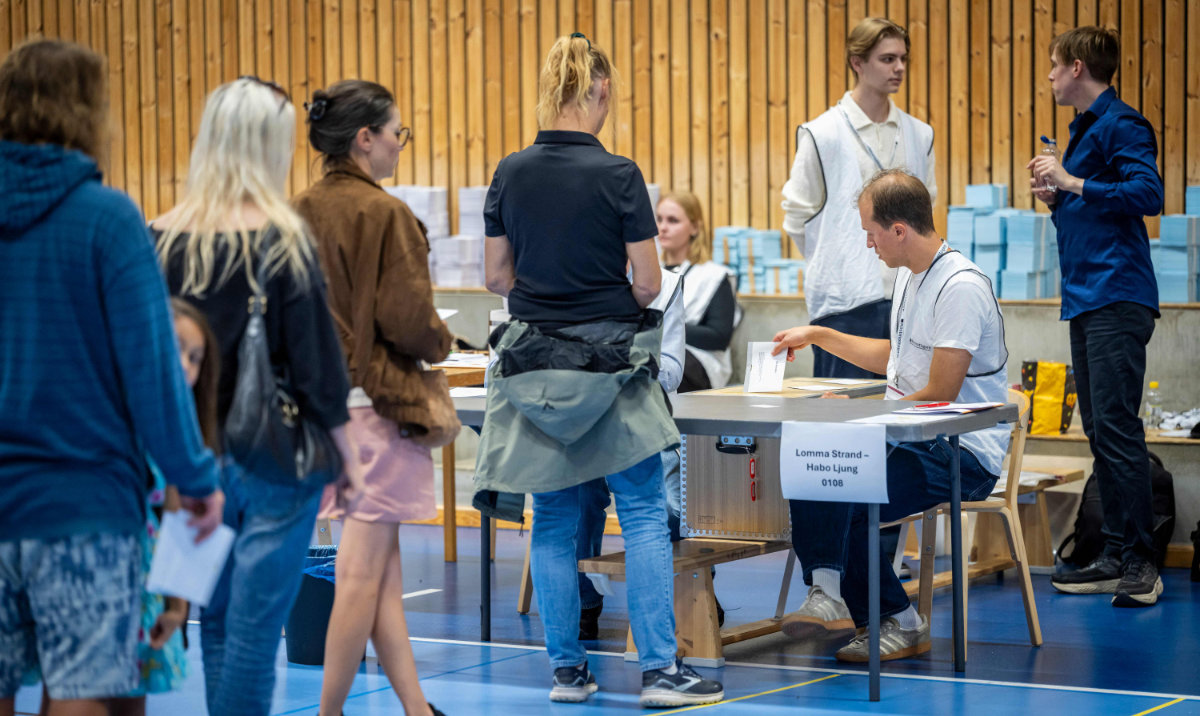
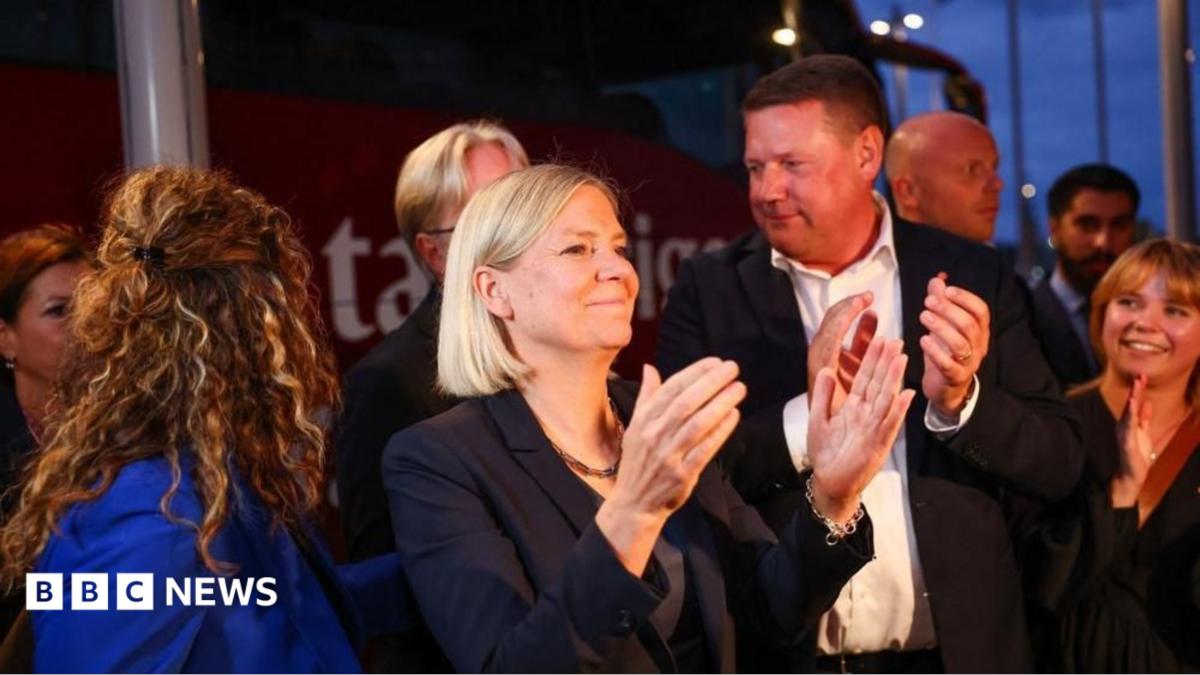
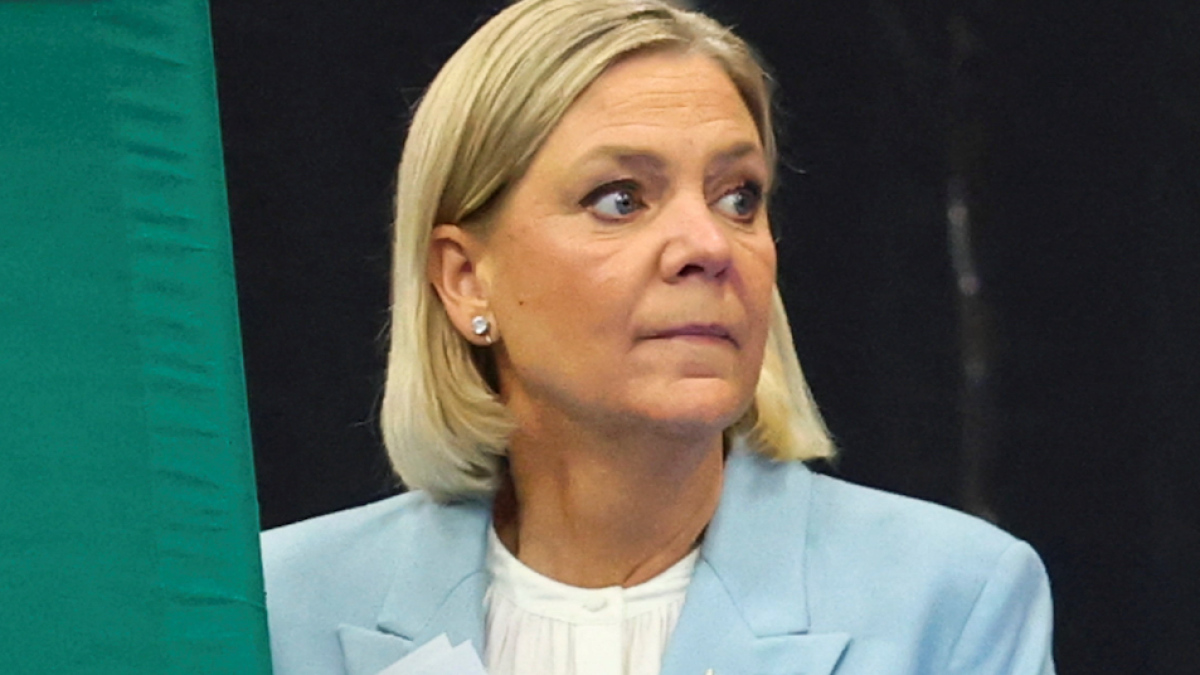
STOCKHOLM: Sweden’s national election results showed a dead heat on Sunday, with a partial count by the election authority indicating a one-seat majority for the opposition center-left bloc that could halt the Nordic nation’s drift away from its liberal heritage.
The bloc, headed by the Social Democrats’ party leader Magdalena Andersson, was expected to win 175 seats in the 349-seat parliament, the Riksdag, based on votes from 4,853 of Sweden’s 6,312 election districts, the election authority said.
The right-wing governing bloc of Prime Minister Ulf Kristersson was seen winning 174 seats, with ballot-counting continuing.
The election, while unlikely to change the course of Sweden’s pro-Western and pro-Ukraine stance, will decide whether Kristersson’s push toward a hard-right clampdown on migration continues.
Given the closeness of the race, the winner may not be known for several days, after all overseas ballots have been counted.
In a pre-election pledge, Kristersson broke a longstanding taboo and said he would bring into government the Sweden Democrats, a far-right party with roots in the Nazi fringe, as he aims to create a majority-right coalition.
Many voters on the right say a win would amount to an endorsement of policies that have helped to curb gang violence and cut immigration dramatically.
But some Swedes have expressed wariness, saying Kristersson’s invitation to the far right was a step too far.
“I think it will be a long night,” said Maria Malmer Stenergard, minister for foreign affairs and a member of Kristersson’s Moderate Party. “Maybe we won’t even have the results until Wednesday when the votes that have been cast abroad arrive.”
Kristersson, who has trailed in opinion polls throughout his four years in office, had been catching up in the final weeks of campaigning, with Andersson and her Social Democrats losing ground.
Critics say the Kristersson government’s immigration policies, whose incentives and penalties press migrants either to conform more closely to Swedish cultural norms or leave the country, are undermining civil liberties.
Electoral success for the Sweden Democrats would be welcomed by Europe’s ascendant far-right parties, which were bolstered by the anti-immigrant Alternative for Germany’s win in a German state election last week.
The far right hopes for gains in upcoming elections across Europe, with the National Rally’s bid for the French presidency next year potentially its biggest prize.
‘DOESN’T LOOK LIKE SWEDEN’
While voting on Saturday in Rinkeby, near Stockholm, the Sweden Democrats’ longstanding leader Jimmie Akesson said the suburb, home to one of the country’s biggest Swedish-Somali populations, “doesn’t look like Sweden.”
Sweden was long one of Europe’s most welcoming countries for immigrants until Kristersson came to power four years ago. His government abolished permanent residency for refugees, tightened welfare rules and stepped up expulsions of those without a right to stay.
The Sweden Democrats acknowledge that their party was founded in part by neo-Nazis and white supremacists in the 1980s, but say they have eliminated such extremists from their ranks and have apologized for their past.
Cheers broke out at the Sweden Democrats’ election party after an updated projection from Swedish broadcaster SVT showed a much narrower gap than an initial exit poll, which had put the center-left opposition ahead with 51 percent of the vote.
“You cannot imagine how nervous I am right now. It feels like my life’s work is hanging in the balance,” said Ludvig Aspling, a member of parliament and immigration spokesperson for the Sweden Democrats. “It is going to be super tight. We still have a chance,” he said.
For Cami, a content creator and podcast host from Northampton, September spells the end of summer spontaneity and a time to restore order.
“If you’ve been away for the summer you’ve probably not had a massive routine,” she says. “And if you’re a parent, then you’ve got kids at home and it’s just a bit more chaotic,” she says.
September feels like “back to school…getting back into your own rhythm”, she adds.
It is the perfect time to “get everything sorted”, she says “So when you get to January you’re not trying to do everything at once.
For Bas Verplanken, professor emeritus of social psychology at the University of Bath, September is a chance to “reorient yourself”.
He says his research suggests people who experienced a big change such as moving house “were more responsive to an intervention aimed at promoting sustainable behaviours” than comparable people who had not moved house.
“It’s really an exciting way of looking at disruption,” he told Chris and Xand van Tulleken on their What’s Up Docs? podcast.
If your daily commute or school run works for you then relax back into them.
“But if there are alternative ways of doing things, explore it, this is the time to do it, and to make those changes,” says Verplanken.
Evelina Fernández’s “Antigone: In the Language of Kings” receives a theatrically entrancing staging at the Getty Villa’s Outdoor Theater in a production co-produced with Latino Theater Company.
The adaptation resets Sophocles’ tragedy to Aztec culture in a transposition that is both visually and musically enlivening. If the drama is oversimplified, it nonetheless makes for a gripping spectacle.
It’s not easy to find analogies that can reanimate the importance of burial rites to a modern audience. The production’s creative team, led by the inexhaustibly inventive director José Luis Valenzuela, returns us to a world where the dead are owed sacred duties and the living are fearful to renege on this basic human responsibility.
The incense-filled production — conducted in English, Spanish and Nahuatl (the language of the Aztecs), with English and Spanish supertitles — proceeds like a pageant. Headdress-clad warriors clash on the battlefield. A masked chorus, moving with the coordination of a Broadway musical ensemble, gives voice to the anxiety and grief of the collective. A statuesque figure of death, trailing black fabric, sweeps up the casualties of war with the efficiency of a human vacuum.
In Sophocles, Antigone, Oedipus’ headstrong daughter, defies the edict issued by her uncle Creon, the newly deputized king, declaring that her slain brother Polynices is an enemy of the state and therefore ineligible for burial. For Antigone this is an imposition of political power over divine law, and she puts her life on the line to uphold her obligation to her family and faith.
The ensemble of “Antigone: In the Language of Kings” at the Getty Villa Museum Outdoor Classical Theater.
The German philosopher Hegel considered Sophocles’ “Antigone” the high-water mark of tragedy for the way it dramatizes the collision between two equally justified moral positions. Creon, representing the claims of the polis over the clan, cannot be dismissed outright. Nor can Antigone, whose all-consuming identification with her cause renders her indifferent to other obligations, be adopted as a user-friendly hero.
Tragedy arises from the one-sidedness of their claims. Antigone loses her life and Creon, for all intents and purposes, destroys his own, suffering the deaths of his most cherished loved ones.
Hegel’s reading of “Antigone” illustrates his thesis-antithesis-synthesis view of dialectical progress. Sophocles, it can be surmised from the other plays in his Oedipus cycle, likely conceived “Antigone” with a larger metaphysical design. But even if Hegel’s interpretation would have seemed off the mark to him, Antigone and Creon are too complex to reduce to a schematic argument.
Fernández simplifies these antagonists. Her Antíkona (a formidable Esperanza América) reveals her softer side even when rejecting her sister, Ixmene (Alexis B. Santiago), for not having the courage to zealously join her fight.
Tlahtoani Klion (Cástulo Guerra), Emperor of Tenochtitlan, is a ruler so intoxicated with his own authority that he’s clearly courting rebuke from the gods. It’s only a matter of time before his hubris is slapped down.
The acting is theatrically robust, though not always subtle. I wondered if ambiguity had been outlawed along with the funeral rites of Antíkona’s warrior brother Polynices. The bold clarity of the performances was energizing, but the wailing sometimes sounded like parody grief.
The outsize nature of the production invites overacting. And Ric Salinas, who plays Chachalacani, humorously obliges, bringing his Culture Clash vaudeville skills to the role of the sentry who’s caught between the rock of Klion’s tyranny and his fellow feeling for Antíkona’s sympathetic cause.
Strong performances are elicited from José Eduardo Moreno, who plays Klion’s son Hemon, Antíkona’s fiancé, and Zilah Mendoza, who plays Cihuatlahtoani Euridice, Klion’s wife. Their portrayals, mixing ferocious strength with stark vulnerability, make the tragedy’s pileup of bodies at the end all the more piercing.
The ensemble of “Antigone: In the Language of Kings” at the Getty Villa Museum Outdoor Classical Theater.
América’s Antíkona is as unyielding as any Antigone I’ve seen. It’s a commanding portrayal, but I wish the production didn’t shrink from its protagonist’s fierceness. The obdurate side of the character is lessened with a gesture Antíkona bestows on Ixmene — a reassurance that even though she’s a revolutionary, she’s still an affectionate sister.
Sophocles is made of harsher stuff. Fernández’s adaptation is anxious to turn tragedy into a sermon, offering theatergoers moral solace where Sophocles leaves his audience in a contemplative state of stunned silence.
But the staging makes up for the dramatic shortfall. Valenzuela masterly orchestrates the mise-en-scène. The majestic costumes of Catarina Copelli, invoking a rich brocaded world on the brink of disappearance, might be the real superstar.
François-Pierre Couture’s scenic design is mesmerizing without ever being overbearing. “Lee” Xinyuan Li’s lighting heightens the sense of theatrical foreboding. Yee Eun Nam’s projections inject into this transient world a welcome subtlety.
Urbanie Lucero’s choreography and movement direction maintain the production’s graceful poise. The musicians, discreetly performing at the back of the stage under the guidance of Mesoamerican instruments director Christopher García, charge the air with percussive Indigenous wonder.
“Antigone: In the Language of Kings” marks the Getty Villa’s 20th anniversary of reinventing classical tragedy for our time. This gorgeous staging makes me ardently wish that the theater extends the tradition for at least another 20 years.
Erling Haaland’s goal for Man City should not have been overturned by VAR in derby at United, admits referee body.
Published On 13 Sep 202613 Sep 2026
Professional Game Referees (Pro Ref) admitted on Sunday that the decision to allow Erling Haaland’s winner in Manchester City’s 1-0 victory over Manchester United was an “error of judgment”.
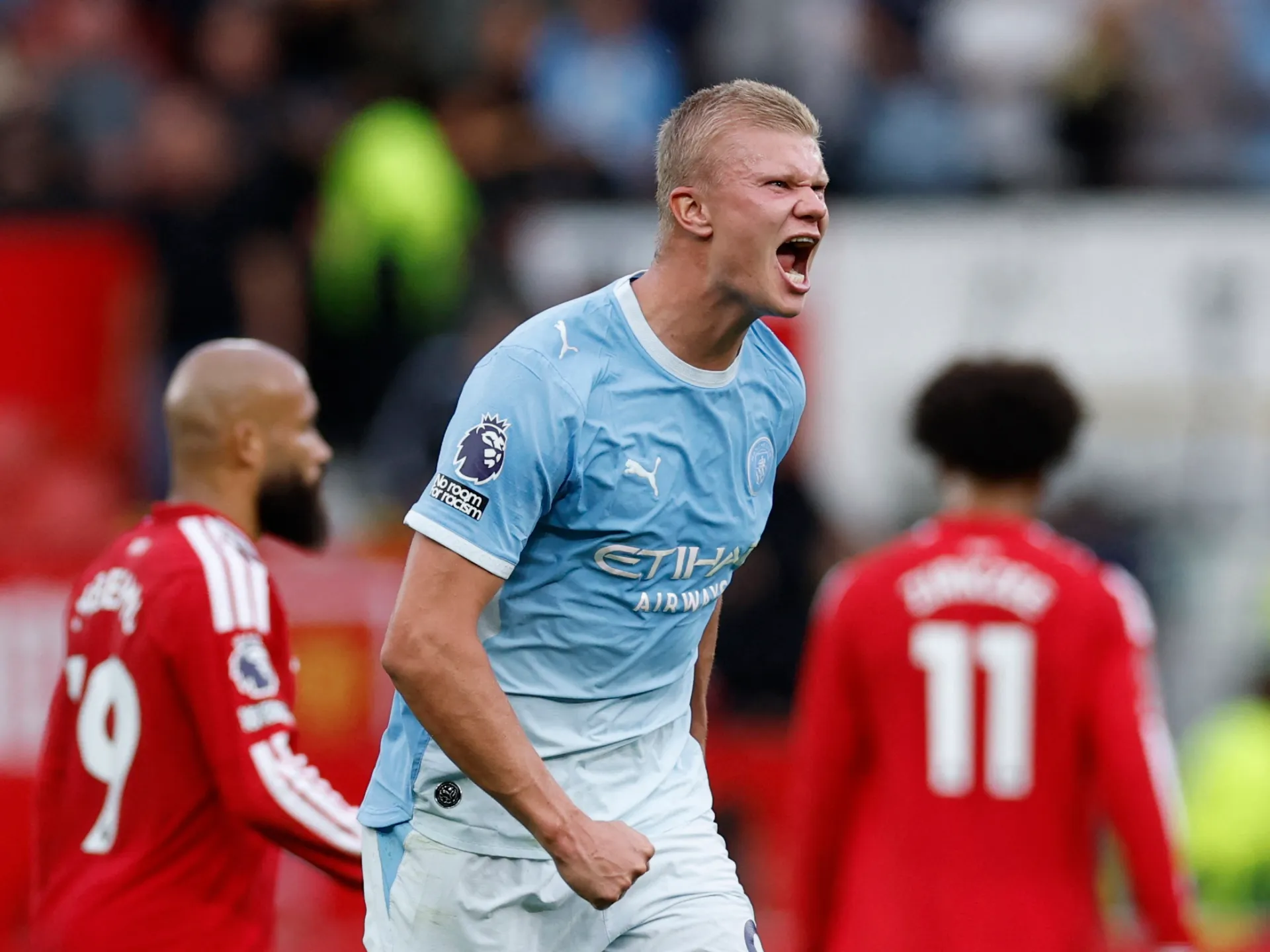
With City down to 10 men after Phil Foden’s dismissal for kicking Bruno Fernandes, Haaland netted on the hour mark with a close-range finish from Josko Gvardiol’s cross.
Recommended Stories
list of 4 itemsend of list
The goal was initially disallowed for offside against Haaland, but VAR eventually overturned that decision, even though City midfielder Enzo Fernandez was in an offside position and attempted to reach the ball before the Norwegian forward.
Fernandez did not touch the ball, so the goal was given, allowing Haaland to celebrate his ninth league strike in Manchester derbies.
Premier League Match Centre posted on social media after the goal to say the VAR “determined that Haaland was in an onside position” and “deemed that while in an offside position, Fernandez didn’t play the ball”.
However, Pro Ref later on Sunday said the VAR “did not recognise the likely impact” of the Argentine midfielder’s position and “should have recommended an on-field review”.
“Contact has been made with Manchester United this evening to acknowledge what we deem is an error of judgment. A review of the incident will take place,” the statement added.
After the match, United manager Michael Carrick said it was “worrying” that a team of officials had come to the conclusion that Haaland’s goal should stand.
Lisandro Martinez was the United defender at the centre of the controversy.
The Argentine said he was clearly impacted by the presence of his international teammate Fernandez and branded the City goal an “injustice”.
“I went to him because he was in front of me. That’s why Haaland was free at the back,” Martinez told Sky Sports.
“Five or six people [officials] doing this kind of mistake in the Premier League is unacceptable.
The Americans won both the 100m and 200m at the Ultimate Championship that saw elite athletes win $150,000 each.
Americans Kenneth Bednarek and Melissa Jefferson-Wooden have claimed the sprint double to close off an action-packed weekend in Budapest that saw elite track and field athletes crowned inaugural Ultimate Champions and pocket $150,000 in prize money.
Bednarek stormed to victory in a 19.52s world lead – the season’s best performance globally – ahead of Olympic champion Letsile Tebogo of Botswana (19.76s) and American Courtney Lindsey (19.79s) as Jamaican sprint legend and Ultimate Champion ambassador Usain Bolt gave his nod of approval from the stands on Sunday.
Recommended Stories
list of 4 itemsend of list
A day earlier, Bednarek finally emerged from the shadow of compatriot sprinter Noah Lyles to claim the 100m crown in 9.85s and edge out world champion Oblique Seville of Jamaica (9.90s) and USA’s Ronnie Baker (9.93s).
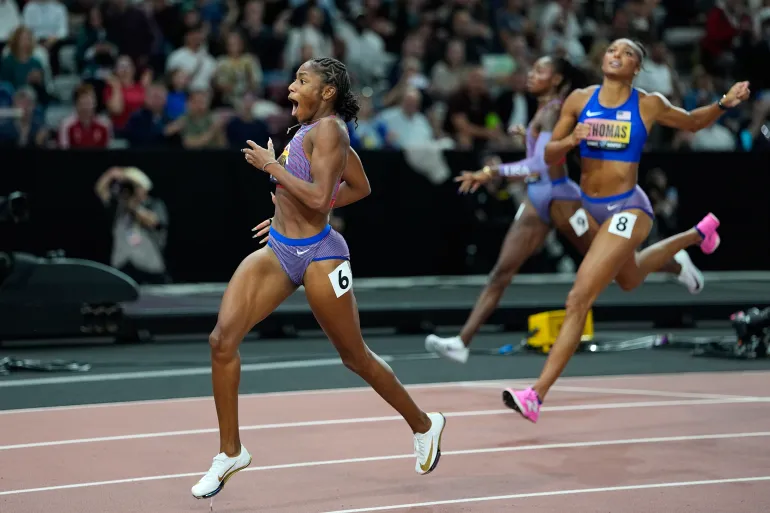
It was a repeat of the Tokyo World Championship double for Jefferson-Wooden, whose 21.47s world lead time made her the third-fastest woman in 200m history as she eased past compatriots Gabrielle Thomas, the Olympic champion (21.77s) and Kayla White (21.93s).
In the 100m, Jefferson-Wooden’s time of 10.62s held off Olympic champion Julien Alfred of Saint Lucia (10.74s) and compatriot Sha’Carri Richardson (10.76s), who clinched her world title in the same stadium three years ago.
Melissa Jefferson-Wooden repeated her double from the Tokyo World Championships when she won the 100m and 200m sprints in Budapest Matthias Schrader/AP]
Earlier on Sunday, Jasmine Jones opened the final day of competition with a shakeup in the women’s 400m hurdles.
The American clocked 52.45s to edge out Slovakia’s Emma Zapletalova (52.68s) and compatriot, world leader, and favourite Anna Cockrell (53.09s), who settled for third after an almost unbeaten season. Teammate Dalilah Muhammad graciously retired from track and field with a fourth-place season’s best of 53.11s.
Reigning javelin king Rumesh Pathirage launched a monstrous 91.09m final throw for the win to continue his unbeaten streak this season.
The Sri Lankan’s throw proved too much for Grenada’s Anderson Peters (86.18m) and third-place Julian Weber of Germany (85.89m), while world champion Keshorn Walcott was disappointed with yet another fourth-place finish (82.41m).
Italy’s Gianmarco Tamberi literally soared to new heights with a 2.37m clearance that amazed the crowd – and himself – well after USA’s JuVaughn Harrison jumped 2.30m for second in the men’s high jump and Mexico’s Erick Portillo cleared 2.26m for third.
Gianmarco Tamberi’s 2.37m jump was a world-leading mark this year [Matthias Schrader/AP]
Josh Kerr of Great Britain kept the 1500m win predictable (3:29.35) after Algeria’s Djamel Sedjati (1:41.91) flipped the script on 800m world and Olympic champion Emmanuel Wanyonyi (1:42.44), who settled for third behind Canada’s Marco Arop (1:42.28) in a stunning finish.
Ethiopia’s Likina Amebaw dominated to claim the women’s 5,000m (14:30.36) while Saly Sarr of Senegal (15.06m) stole the triple jump spotlight from world leader Thea Lafond (14.47m) after the Dominican failed to perform in the Hungarian capital.
Crowd favourite Mondo Duplantis opened the show on Friday with a casual 6.20m jump to reign supreme in the men’s pole vault, although close friend and rival Emmanouil Karalis of Greece continued to close the gap between world number one and two with 6.15m for second.
Over on the women’s side, it was an emotional win for USA’s Sandi Morris when she cleared 4.90m for her first global outdoor title.
Jakob Ingebrigtsen shifted gears to dominate the men’s 5,000m in a comeback like never before (12:59.24), leaving USA’s Cole Hocker (13:00.05) and Parker Wolfe (13:00.13) in his trail.
Jakob Ingebrigtsen of Norway crosses the line to win the men’s 5,000 metres final [Denes Erdos/AP]
The Americans predictably dominated the hurdles as Masai Russell clocked 12.22s in the women’s 100m hurdles to cap off an unbeaten season while Diamond League champion Ja’Kobe Tharp dazzled with 12.94s in the men’s 110m hurdles.
Other predictable wins came from Greece’s Miltiadis Tentoglou in the men’s long jump (8.35m), Switzerland’s Audrey Werro in the women’s 800m (1:55.88), Brazil’s Alison dos Santos in the men’s 400m hurdles (45.98s), Dominican Marileidy Paulino in the women’s 400m (49.07s) and male counterpart Collen Kebinatshipi with a 43.39s Botswana national record.
A cozy, unbothered Yaroslava Mahuchikh rested in her sleeping bag in between jumps that saw her add another high jump title to her collection at 1.99m ahead of Nicola Olyslagers of Australia.
Meanwhile, the women’s javelin saw a clash of old and new as Japan’s Haruka Kitaguchi set a national record (68.92m) en route to reclaiming the throne, while Chinese teen sensation Yan Ziyi retired hurt but claimed her first silver of the season with 68.05m.
Larissa Iapichino of Italy claimed the long jump crown (6.90m) just hours after her grandmother died, while Germany’s Merlin Hummel claimed a shock win in the men’s hammer throw after world and Olympic champion Ethan Katzberg simply could not perform on the day.
Turn on a radio between 1978 and 1987 and you were sure to hear Journey — any of the more than two dozen sumptuous yet muscular rock hits that shaped young America’s ideas about love, inspiration and wanting it the way you need it. Four decades later, the band’s music is still everywhere, including television, social media and streaming platforms like Spotify, where Journey has more monthly listeners than Bruce Springsteen, U2 or Bob Dylan. Yet Saturday night the group will bring what it’s calling its farewell tour to Crypto.com Arena — a capstone (at least if the band is to be believed) to a long career full of twists and turns.
Indeed, domination was hardly a given when guitarist Neal Schon and keyboardist Gregg Rolie — both of whom had played with Carlos Santana — formed Journey as a kind of jazzy proto-jam band in San Francisco in 1973. But with the addition a few years later of singer Steve Perry, the group found its gloriously dramatic sound and began racking up hits one after the next (though critics were rarely kind). Perry eventually quit, which took the wind out of Journey’s sails until Schon discovered an uncanny soundalike from the Philippines, Arnel Pineda, on YouTube; he’s helped the band get back into arenas and the occasional stadium even as Schon and keyboardist Jonathan Cain, who replaced Rolie in 1980, have battled each other in court over financial matters.
Got all that? To try to make sense of Journey’s path, I’ve ranked all 25 of the band’s hits that have charted on Billboard’s Hot 100, starting with the worst and ending with the best. Hold onto that feeling — it goes on and on and on and on.
25. ‘Walks Like a Lady’ (peaked at No. 32 in July 1980)
Some are born to sing the blues, as Perry once observed — just not Perry himself, who chews his way through this corny come-on like an overserved uncle at the Hard Rock Cafe. Nice showcase for Rolie’s organ work, though, on one of the last Journey singles he played on before leaving the band.
24. ‘Just the Same Way’ (peaked at No. 58 in May 1979)
Rolie and Perry tag-teaming lead vocals is not a form of democracy I’d vote for.
23. ‘After the Fall’ (peaked at No. 23 in August 1983)
Safe? Sterile? Soulless? Look, the haters can’t always be wrong.
22. ‘Too Late’ (peaked at No. 70 in January 1980)
“Before your time has run astray / You’ve got to try to get away.”
21. ‘Anytime’ (peaked at No. 83 in July 1978)
After overseeing Queen’s first few albums, producer Roy Thomas Baker turned his attention to Journey (and to the Cars); this midtempo number from the “Infinity” LP offers a credible approximation of Queen’s trademark stacked vocal harmonies.
20. ‘The Party’s Over (Hopelessly in Love)’ (peaked at No. 34 in April 1981)
Three platinum plaques in less than two years — for “Infinity,” “Evolution” and “Departure” — meant that Journey had no choice but to drop a live record, “Captured,” at the top of 1981. (It went platinum by Christmas.) As extra consumer bait, the double album closed with this new studio cut built around a killer Schon lick (and not much else).
19. ‘Good Morning Girl’/‘Stay Awhile’ (peaked at No. 55 in September 1980)
Phantom of the roller rink.
18. ‘Why Can’t This Night Go On Forever’ (peaked at No. 60 in May 1987)
Propelled by the success of his debut solo album — not to mention his appearance on the smash all-star “We Are the World” — Perry assumed greater control of Journey’s sound for 1986’s synthed-up “Raised on Radio,” which spawned no fewer than five singles, ending with this slightly lugubrious ballad. Yet the takeover came with a cost: By the end of 1987, the band had entered a hiatus that would last nearly a decade.
17. ‘Still They Ride’ (peaked at No. 19 in July 1982)
Listen to how nimbly Perry maneuvers some very tricky intervals.
16. ‘When You Love a Woman’ (peaked at No. 12 in December 1996)
Journey reunited for 1996’s “Trial by Fire,” which brought the band its only Grammy nomination (and which might feature the ghastliest album cover in music history). If the members knew that rock had changed dramatically while they were away, they didn’t show it in the LP’s romantic lead single: “When You Love a Woman” — a chart-topper for three weeks on Billboard’s adult contemporary tally — clearly sought to pick up where “Open Arms” and “Faithfully” had left off.
15. ‘Girl Can’t Help It’ (peaked at No. 17 in November 1986)
Wonder what Perry and Huey Lewis talked about between takes on “We Are the World.”
14. ‘Be Good to Yourself’ (peaked at No. 9 in May 1986)
“Karate Kid”-core.
13. ‘Only the Young’ (peaked at No. 9 in March 1985)
More “Karate Kid”-core, in this case released first as a song by Patty Smyth’s band Scandal; Journey’s version later wound up alongside Madonna’s “Crazy for You” on the soundtrack to “Vision Quest.”
12. ‘Wheel in the Sky’ (peaked at No. 57 in May 1978)
Before Perry came aboard in 1977, Journey spent a few months with Robert Fleischman as lead singer — long enough for Fleischman to co-write the group’s first Hot 100 entry, not so long that he got to sing it on the record.
11. ‘Any Way You Want It’ (peaked at No. 23 in April 1980)
Ooh, baby, hold tight.
10. ‘Suzanne’ (peaked at No. 17 in August 1986)
Easily Perry’s most unhinged vocal performance.
9. ‘Send Her My Love’ (peaked at No. 23 in November 1983)
A luscious and melancholy white-soul song that I’d bet Phil Collins admired back in the day — and that Justin Bieber would probably flip for now.
8. ‘Lovin’, Touchin’, Squeezin’’ (peaked at No. 16 in October 1979)
Inducting Journey into the Rock & Roll Hall of Fame in 2017, Train’s Pat Monahan belted the na-na-na outro of the band’s first Top 40 hit as he made his case for the group’s excellence. “They didn’t even need lyrics — that’s how badass this band is,” he pointed out. Still, let’s not gloss over the appealing perversity of starting a song this horny the way Perry does: “You make me weep and want to die.”
7. ‘Lights’ (peaked at No. 68 in September 1978)
Dodgers fans can delight in the fact that Perry originally wrote this paean to San Francisco — an anthem taken up at one time or another by every Bay Area pro sports team, including the Giants — about the lights going down and the sun shining on … Los Angeles. (Swap out “the bay” for “L.A.”) Maybe that’s why “Lights” has always felt to me like a precursor to the Red Hot Chili Peppers’ “Under the Bridge.”
6. ‘Separate Ways (Worlds Apart)’ (peaked at No. 8 in March 1983)
[Listens to “Eye of the Tiger” once.]
5. ‘I’ll Be Alright Without You’ (peaked at No. 14 in February 1987)
Shout out to future “American Idol” judge Randy Jackson, who joined Journey for “Raised on Radio” and proceeded to lay down the slinkiest, sultriest, funkiest bass line the band had ever known.
4. ‘Don’t Stop Believin’’ (peaked at No. 9 in December 1981)
Believin’ in what, exactly? The genius of Journey’s most-streamed track on Spotify (with more than 2.9 billion plays) is its use of concrete images to advance a pretty mysterious narrative. We’ve all stood under a streetlight; we all know the smell of wine and cheap perfume. Yet everybody’s midnight train is going to a different anywhere.
3. ‘Open Arms’ (peaked at No. 2 in February 1982)
Famously — and fortuitously — rejected by a former bandmate of Cain’s as “sentimental rubbish,” “Open Arms” was perhaps just waiting to be embraced by Perry, who sings it with the wounded gusto of a man well acquainted with regret. In a poetic twist, Journey’s highest-charting hit was blocked from No. 1 by the J. Geils Band’s “Centerfold,” in which the heartbroken narrator goes laughing all the way to his bed.
2. ‘Who’s Crying Now’ (peaked at No. 4 in October 1981)
The first of three Top 10 singles from 1981’s 10-times-platinum “Escape,” this immaculate R&B jam imagines an alternate dimension where Perry and Cain hear Earth, Wind & Fire’s “After the Love Has Gone” and decide to form a new group with David Foster. Except Perry remembers the song as a high point for Schon: “You know the guitar outro from ‘Who’s Crying Now’?” he asked a New York Times reporter in 2003. “I fought for that because I knew no DJ would cut that song off with Neal’s guitar wailing at the end of it. It was too brilliant.”
1. ‘Faithfully’ (peaked at No. 12 in June 1983)
It wasn’t the first rock ballad about life on the road — and it definitely wasn’t the last — but “Faithfully” might be the most emotionally generous: “Loving a music man ain’t always what it’s supposed to be,” Perry tells his lady, grounding the song in the experience of those who leave and those left behind; later, he envisions their reunion with such tenderness — “I’ll get the joy of rediscovering you” — that you know he’s already decided to take off again.
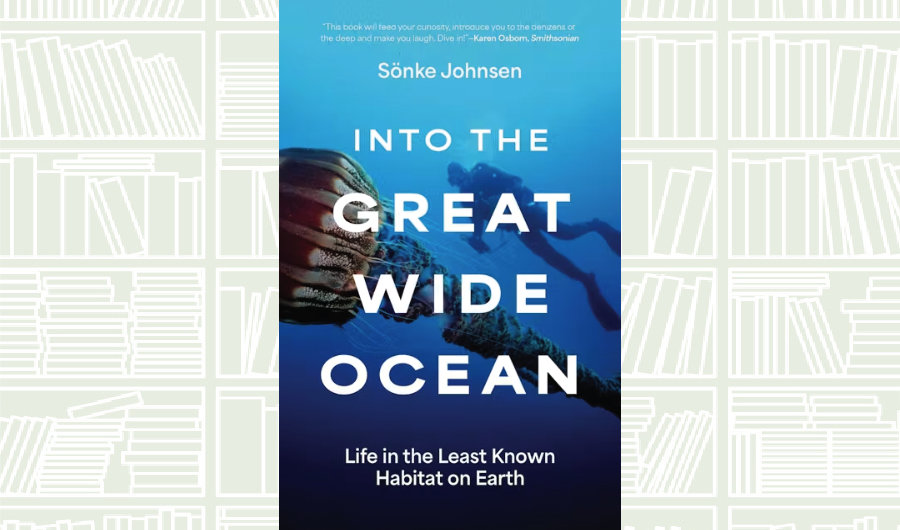
The open ocean, far from the shore and miles above the seafloor, is a vast and formidable habitat that is home to the most abundant life on our planet, from giant squid and jellyfish to anglerfish with bioluminescent lures that draw prey into their toothy mouths.
“Into the Great Wide Ocean” takes readers inside the peculiar world of the seagoing scientists who are providing tantalizing new insights into how the animals of the open ocean solve the problems of their existence.
Sweden has two major political blocs featuring four parties on the right and four on the left – meaning coalition and minority governments are relatively common.
Andersson’s party, the Social Democrats, have been a major force in Swedish politics since the end of World War Two.
But SD – founded by Nazi sympathisers in the 1980s – had been shunned for years until 2022 when it became the country’s second largest party after campaigning on violent crime and immigration.
After casting her vote on Sunday, Andersson laid out the choice facing the Swedish public: “Should we have a government entirely dominated by the Sweden Democrats, something that has never happened in Sweden before? Or should we have a government led by me, which will steer Sweden in a new spirit of co-operation?”
Kristersson, for his part, said it was important he and his alliance were able to continue their work.
“I think there is a genuine enthusiasm for us being able to continue our important work,” he said after casting his ballot in his home municipality of Strangnas.
National security, gang crime and welfare spending dominated the election campaign.
Alison Hammond looked incredible as she showed off her 13 stone weight loss in a glam gown during London Fashion WeekCredit: GettyAlison looked sensational in her purple sequinned gownCredit: Getty
Alison looked sensational as she posed backstage ahead of the Vin + Omi “Anarchy” show during London Fashion Week.
The TV presenter was seen in a purple sequinned gown as she stared moodily at the camera.
Sign up for the Showbiz newsletter
Thank you!
With full glam makeup and voluminous hair, Alison looked absolutely fabulous.
The TV presenter was seen in a purple sequinned gown as she stared moodily at the cameraCredit: GettyAlison is known for presenting ‘This Morning’ TV showCredit: Shutterstock EditorialAlison, who is mum to Aidan, 21, works out three to five times a weekCredit: AlamyHer astonishing weight loss is actually the result of a gym routine, a toyboy boyfriend and a £2.85 supermarket secretCredit: Getty
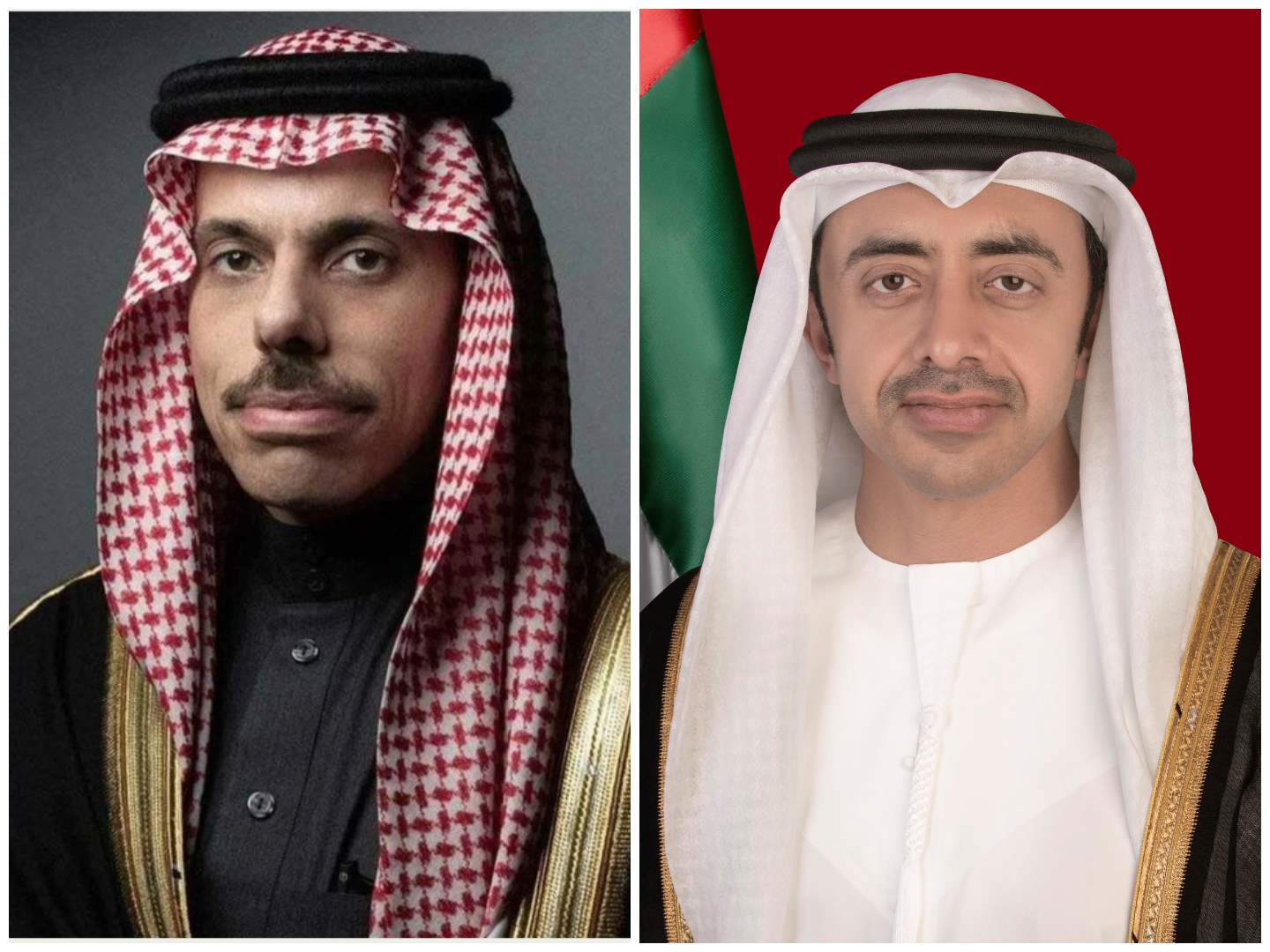
RIYADH: Saudi Arabia and the UAE stressed the need for closer coordination and a united Gulf position as they discussed efforts to contain escalating tensions across the region on Sunday.
During a phone call, Saudi Foreign Minister Prince Faisal bin Farhan discussed rapidly evolving regional developments and efforts to prevent further escalation with Sheikh Abdullah bin Zayed Al-Nahyan, the UAE’s deputy prime minister and foreign minister.
The ministers stressed on the need to align positions and strength consultations between Riyadh and Abu Dhabi to support joint Gulf action and safeguard the security and resources of GCC states.
The call comes amid renewed attacks on Gulf states, including recent Houthi strikes targeting civilian and economic sites in southern Saudi Arabia.
Prince Faisal earlier on Sunday told the BRICS summit in New Delhi that Saudi Arabia’s national security, territorial integrity and resources were “non-negotiable,” warning that GCC states would not tolerate attacks on their territories, facilities or vital interests.
He also called for a shift away from confrontation toward de-escalation and diplomatic efforts, arguing that lasting regional security depended on respect for sovereignty, non-interference and good-neighbourly relations.
Voting is under way in Sweden in a closely fought election that could see the far-right Sweden Democrats enter government for the first time, or centre-left leader Magdalena Andersson return to power.
TORONTO — Greetings from the Great White North, where the Toronto International Film Festival rolls to the end of its first weekend.
As packed as our viewing schedules have been, Amy Nicholson notices something lacking at this year’s festival: big Hollywood. In her first critical dispatch, she sees no “Frankenstein” or “Wake Up Dead Man” in the lineup.
Toronto has even resorted to rebooking the under-the-radar smash “Obsession,” the little movie that grew from a 2025 midnight TIFF launch into a global phenomenon.
Director Curry Barker and star Inde Navarrette delighted festgoers who lined up around the block to watch a special conversation.
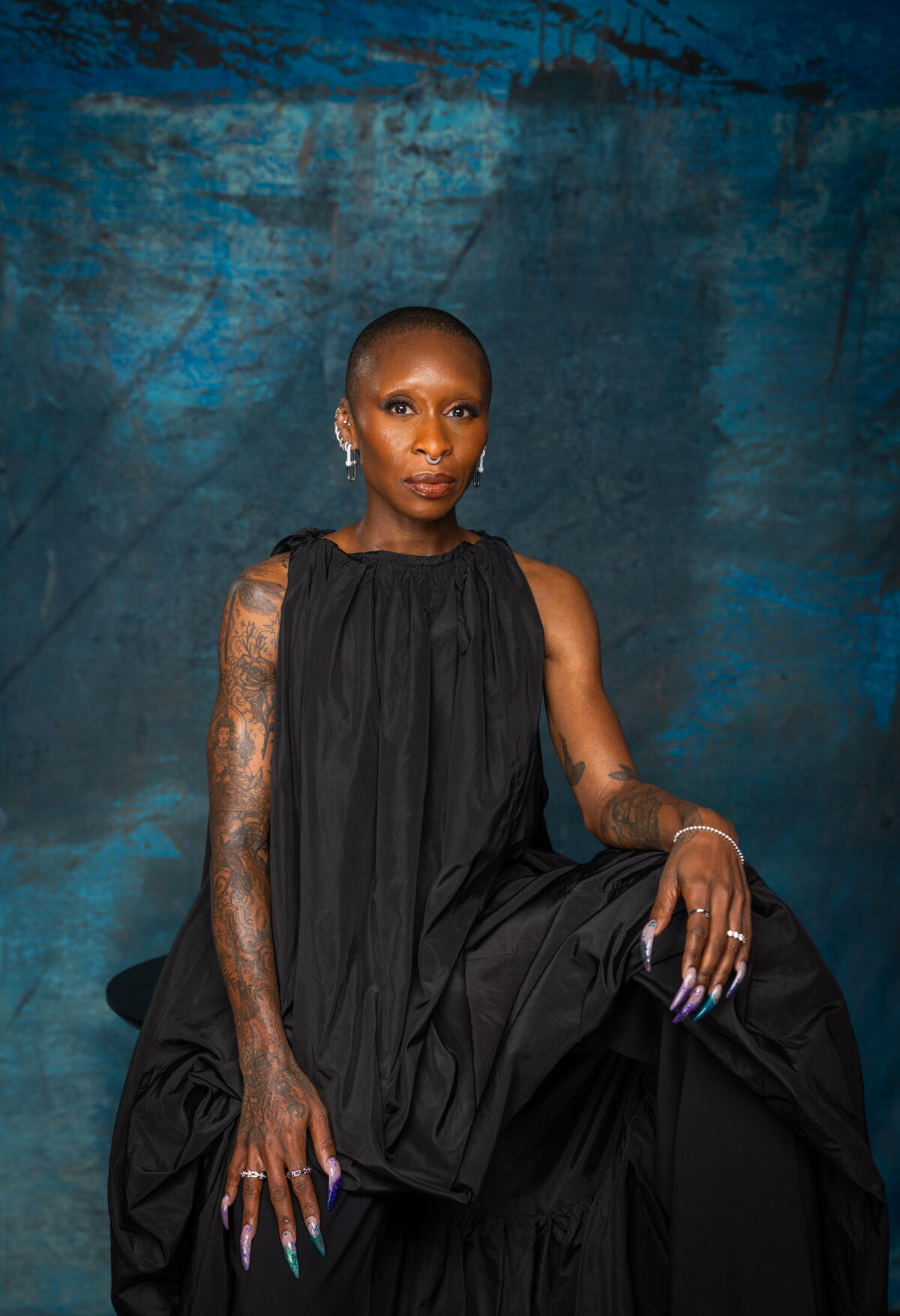
Cynthia Erivo of the film “Prima Facie,” photographed in the Los Angeles Times Studio at RBC House during the 2026 Toronto International Film Festival.
(Jason Armond / Los Angeles Times)
Cynthia Erivo stunned us in our studio space, looking fierce in a dark ensemble and scary nails. We also saw the likes of the luminous Laura Linney and the dapper Korean cast of “Possible Love.” Click through for more celebrity photos and daily surprises.
It takes thermonuclear moxie to write, direct and star in your debut feature — and cast yourself as the cad. No wonder Jordan Firstman‘s uproarious dramedy “Club Kid” blew away expectations at Cannes and has landed in Toronto ready to shake up awards season.
Firstman plays Peter, an aging New York City party promoter whose scene-y shindigs and subsequent hangovers are starting to feel old.
Enter Arlo (a self-possessed Reggie Absolom) the 9-year-old kid he never knew he had and never fathomed he would have, given that women aren’t his thing (except for that one drug-fueled night with a British girl he barely remembers).
You may think you know where the story is headed and you aren’t entirely wrong, but the route there is a riot. — Amy Nicholson
‘Alpha Gang’
A scene from the movie “Alpha Gang.”
(TIFF)
The latest from filmmaking siblings Nathan and David Zellner rolls into Toronto after having just had its world premiere at Telluride.
Their oddball sensibilities and elastic imagination means that you never quite know what to expect from one of their films and this is no exception: a wholly unpredictable story of an alien invasion told from the aliens’ point-of-view that is inscrutably absurd and touched by a startling romantic fatalism.
Two alien cadres, having assumed the looks of 1950s biker gang members, bicker and fight with one another even as they largely overlook their common enemy, the humans.
The cast is likewise a preposterous mash-up of performers you would not wholly expect to see together, including Cate Blanchett, Kelvin Harrison Jr, Léa Seydoux, Riley Keough, Chris Pine, Dave Bautista and others, making the film’s very existence seem like something dropped from outer space. — Mark Olsen
‘The Spiral’
A scene from the movie “The Spiral.”
(TIFF)
Italian horror is my happy place and this is where I’ll be tonight at midnight, sopping up what many early viewers have already described as stylish and vicious.
Director Paolo Strippoli’s domestic drama got sharp reviews out of Venice; it sounds like a cross between a Bava film and “Parasite.” I’ll investigate. — Joshua Rothkopf
On Monday, the Bangsamoro Autonomous Region in Muslim Mindanao (BARMM) in the Philippines will hold its first parliamentary election since it was established in 2018. The vote will officially mark the end of the transition period under the Bangsamoro Transition Authority (BTA), an interim regional government appointed in 2019.
The election is a significant milestone in the Bangsamoro struggle. It is the outcome of decades of armed conflict and negotiations between the Moro Islamic Liberation Front (MILF) and the government of the Philippines.
The vote will test the Philippine government’s commitment to the peace process and the MILF’s commitment to the democratic process.
The struggle for self-determination
BARMM is located on Mindanao, the second-largest island in the Philippine Archipelago, and it covers roughly the territories inhabited by the Moro people, a native Muslim-majority group. For centuries, the Moro enjoyed self-governance in independent states and resisted Spanish colonialism. Following the Philippines’s independence in 1946, they continued their struggle for self-determination.
In 1989, the Autonomous Region in Muslim Mindanao (ARMM) was created by Manila to give some devolved rights to the Moro. However, ARMM largely failed to address local grievances and demands due to its weak structural power. It was given limited autonomy in political and fiscal decision-making, but it did not manage to improve socioeconomic conditions in the region. The MILF continued the armed struggle.
In 2012, President Benigno Aquino III recognised the ARMM as a “failed experiment”. Under his administration, the Framework Agreement on the Bangsamoro was signed between the government and the MILF, paving the way for a new political entity.
Six years later, under President Rodrigo Roa Duterte, the Organic Law for the Bangsamoro Autonomous Region in Muslim Mindanao was promulgated. This legislation granted the region greater fiscal autonomy, a regional government, a parliament, and a justice system.
Then the Comprehensive Agreement on the Bangsamoro was concluded to outline the mechanism of transition from ARMM to BARMM and set up the MILF-dominated BTA to lead it. All of this is culminating in the parliamentary election, which will determine the makeup of the region’s first legislative body.
A contested election
The vote comes at a time of heightened tensions in BARMM and internal divisions within the MILF. Two camps have emerged within the movement – one loyal to MILF Chair Al Haj Murad Ebrahim and another supporting Chief Minister Abdulraof Macacua.
Last month, Macacua joined the newly formed Bangsamoro Federalist Party (BFP), which will compete in the elections against the MILF’s political wing, the United Bangsamoro Justice Party (UBJP). Shortly after, his convoy was attacked, but he survived unscathed.
In early September, Macacua and 40 commanders were dismissed from the MILF’s military wing for alleged insubordination.
These tensions have prompted increased public anxiety about possible post-election unrest. There are other factors that could overshadow the vote.
In past elections, vote-buying was widespread, election-related violence was rampant, and electoral fraud and manipulation were pervasive. If these practices repeat at a large scale, the electoral outcome may not necessarily provide a straightforward measure of the will of Bangsamoro’s people. It may also not be an accurate reflection of whether they are satisfied with the transitional government or not.
The MILF presents itself as a champion of moral governance. If it is to retain this label, it should not give in to widespread vote-buying and electoral manipulation. It should also not let internal rivalries turn violent.
But there are already some alarming signs. Prominent MILF figures have conveyed that if the UBJP, the front’s political wing, sees manipulation and fraud, its members are ready to fight. They have also suggested that since the MILF led the transition, it should remain in power. On social media, some citizens have condemned the MILF camp’s threats, calling such tactics un-Islamic.
Before the vote, Manila has deployed military forces in key areas. This has heightened people’s fears that fighting with the MILF may erupt. The tense situation might lead to a low voter turnout.
Under these circumstances, the future of the Bangsamoro is riddled with uncertainties.
Whatever happens in the election, we must remember that the future of BARMM is a shared responsibility. The Philippine government and the Bangsamoro parties are duty-bound to honour the peace agreement. In addition, the people must exercise their civic rights and responsibilities to help sustain the peace achieved after a long and painful armed conflict and to move toward a prosperous Bangsamoro land.
The views expressed in this article are the author’s own and do not necessarily reflect Al Jazeera’s editorial stance.
A child has been killed after an explosive object detonated when he touched it near Damascus. Relatives identified him as Khaled al-Ajeelah. Explosive remnants of war continue to endanger civilians across Syria. Warning: Contains distressing images.
Experienced host Emma Willis knows what to expect in some ways and just wants to bring ‘joy’ to Strictly viewers in the same way Tess and Claudia did
Strictly has a new trio hosting the show this year with Emma joined by professional dancer Johannes Radebe and comedian Josh Widdicombe.(Image: CREDIT LINE:BBC/Ray Burmiston)
Defiant Emma Willis says she knows the new Strictly Come Dancing series will bring her and the other new hosts lots of abuse and criticism – but she won’t engage with it. Emma, former Strictly professional dancer Johannes Radebe, 39, and comedian Josh Widdicombe, 43, will take over later this month from long-time hosts Tess Daly and Claudia Winkleman, who stepped down last year.
Emma is used to comparisons with other hosts having fronted Big Brother after Davina McCall and Brian Dowling. But she vowed to ignore the haters and just wants to try to enjoy the experience. She said: “I’m ready for the comparisons. I am ready for the negative opinions that can come with these things. Those things I don’t engage with or read, and there are always positives as well.
“At the end of the day, I feel like it’s really simple, right? We we work in this industry, and we’ve been given the opportunity to work on a phenomenal show that is really well loved by the public and also by ourselves. We we aren’t reinventing the wheel, and we’re not rocket scientists.
“We’re working on an entertainment show about dancing that is meant to hopefully bring joy to everybody watching it. So hopefully we can be a small part of that joy and have a really lovely time doing it.”
She added: “There’s obviously a kind of fear that comes with it because of the enormity of it, and you have nerves about being good enough to kind of do the job and step into the role.”
The trio were a surprise choice to make up the presenting team and they admitted they were also a bit shocked to be picked. They gave the impression they were unsure if they were in pole position to get the jobs, saying their final audition was the “very last of the callbacks on a Friday afternoon”. They had also been told it would be a pair presenting and so Josh presumed it was “two weirdos against each other” and he was being pitched head-to-head with Johannes, only to end up working with him and more established host Emma.
Comedian Josh also said that while they would not “reinvent the show”, they would “be ourselves and our personalities will be there”. He added on taking the job: “It’s like you only get one opportunity at this career. We’re incredibly blessed that we’ve got where we are in our careers, and just why not?”
Johannes was initially nervous but after speaking with his agent was more confident. “If anybody was afforded this opportunity amongst my peers[dancers], any one of them would jump at it.”
Emma turned 50 in March, but rather than seeing that milestone as a time to reflect or slow down, is arguably enjoying her most successful stage of her career. She said: “I think maybe there’s more of a reframe needs to be had around 50 and as you’re getting older, you should slow down or change or maybe not do as much. I feel more invigorated at 50, I’m more like I’m more sure of myself. I know what I want to do. I’m not going to apologise for myself and my successes like I’ve done for the last 25 years.
“I’m not about to step down and slow down for anything. So I say, bring it on. You know, life is short. So take these opportunities when they they come your way, because at some point they’ll stop.”
* Strictly Come Dancing will return on Sunday September 19 to BBC One and iPlayer.
France Televisions has removed the replay of the France 5 programme La Grande Librairie after actress Adèle Haenel used a live segment to denounce what she called a genocide in Gaza. The broadcaster says it acted as a precaution while awaiting a review by media regulator Arcom.
Seoirse Comerford owns the Comerford bar in Doonbeg. He described the tournament as “unbelievable”.
“If you look at the red double decker buses going up and down the street full of people, we never thought we would have seen the like of that.”
He said the golf course is a big employer and is keeping Doonbeg “alive”.
“Most rural villages in west Clare are all dying a death, young people going away to college, they don’t come back.
“Like there’s over 300 people employed up there at the golf course , it’s a big boost to the local economy. You’ve got big companies in Dublin, like Intel, the golf course is our Intel down here.
“I probably wouldn’t have taken over the bar business other than the golf course being up there.
“We would have had 1,000 plus through the pub on Saturday night and the same Friday night, so there’s a lot of people around the village, which is great to see.”
Stephen McGann has opened-up about his character, Dr. Turner, being played by a new actor for the drama’s prequel
Call the Midwife wraps up in emotional finale
Call the Midwife legend Stephen McGann has claimed he “cannot see” the resemblance as a new actor steps into the role of Dr. Turner.
The 12th season of the much-loved BBC period drama, based on the memoirs of Jennifer Worth, concluded earlier this year with a heartbreaking finale. The death of Sister Monica Joan (Judy Parfitt) left viewers devastated, while the future of Nonnatus House remained uncertain due to advances in the NHS.
Before the show returns with season 16, a prequel titled Sisters in Arms is set to air this festive season. The three-part mini-series will be set during the London Blitz and follow familiar characters in the early stages of their careers, including Dr. Patrick Turner.
The adored GP first arrived in Poplar during the debut episode of Call the Midwife, which aired in 2012, and has since remained a favourite among fans. The character will appear in the prequel, with This Town actor Ben Rose portraying a young Patrick Turner.
Speaking about Sisters in Arms, Stephen, 63, has offered a playful glimpse into his marriage with the show’s creator, Heidi Thomas, who thinks Ben Rose is the spitting image of her husband. “I think he’s the image of Steve,” Heidi told Radio Times. “Steve can’t see any resemblance, so the audience are going to have to draw their own conclusions.”
Stephen was quick to chime in: “Do you know what happened? I’m in my house, and when the final casting was confirmed, my good lady wife and my son were conferring, going, ‘Oh, he looks like Dad, doesn’t he? Doesn’t he look like Dad?'”
Heidi laughed: “He does, he does, but you can’t see it, can you, love?” Stephen then confirmed: “I can’t see it at all.”
Stephen and Heidi first crossed paths in 1988 and exchanged vows two years later, when they were both 27. They spent their honeymoon in Tuscany before settling down in a quaint cottage in rural Essex, before moving to Cambridge. The couple share one son, Dominic. As per Stephen’s memoir, A History of My Family in Seven Maladies, he first encountered Heidi when he auditioned for her new play at the Liverpool Playhouse.
What is Sisters in Arms about?
Call the Midwife will turn back the clock to World War II as bombs rain down in Poplar, East London, at a time when the National Health Service was non-existent. Set in 1939, it will see three familiar nuns in the early stages of their careers.
According to the BBC’s synopsis: “In September 1939, Sister Monica Joan is in her prime, Sister Julienne and Sister Evangelina are young and zealous, and Nonnatus House is the beating heart of Poplar.
“Together with Sister Alice, and local GP Dr Kit, the nuns dedicate their lives to mothers, babies and those in need. But there is no gas and air, no penicillin, no cure for TB, and no welfare state. Then war is declared – and life gets even harder.”
It adds: “While bombs rain from the sky, women give birth underground, families are shattered, children run wild, and whole streets are reduced to rubble. But courage, compassion and resilience triumph as the community unites in its efforts to survive.”
Created, written, and executive produced by Heidi Thomas, Sisters in Arms welcomes a new cast, including Coronation Street’s Hayley Cropper star Julie Hesmondhalgh as Sister Alice.
Theatre star Helena Wilson is taking on the role of a young Sister Julienne, though the original actress, Jenny Agutter, will be narrating the miniseries. Ami Metcalf, who played Lynette in the first Christmas special, is returning as Betty Buckle, the first wife of Fred Buckle, now played by Ciaran Bowling. Ben Rose also takes on the role of Dr. Turner.
The BBC has confirmed that Sisters in Arms will air on BBC One and iPlayer this Christmas, though the exact days and times are yet to be confirmed.
Call the Midwife is available to stream on BBC iPlayer
A new chapter in Saudi Arabia’s cultural and creative journey begins this morning as the inaugural cohort of students at Riyadh University of the Arts starts their first academic semester. The university launches with immense ambition, bold objectives, and a steadfast foundation: a Saudi identity built on global standards.
Since its inception, the university has enjoyed historic support from the Custodian of the Two Holy Mosques and the Crown Prince — may God protect them — alongside regulatory empowerment that reflects their dedication to the role of culture in the nation’s progress. This culminated in the royal decree authorizing its establishment and approving its charter, representing the highest regulatory authority in the Kingdom.
The overwhelming response to enrollment at the university highlights the genuine passion of Saudis for culture and the arts, a passion rooted in their authentic cultural heritage and ambitious future vision. Since the opening of applications was announced, the university has received thousands of enrollment requests across various cultural disciplines and degree programs offered in its inaugural year. This underscores a true belief in the present and future of the arts within the Kingdom’s major developmental journey, coinciding with a phase in which the entire world is witnessing a remarkable expansion in the creative economy and cultural investment.
The university serves as a major milestone in the human capability development project within the cultural sector. This massive undertaking has seen the Kingdom’s cultural ecosystem make significant strides, with human capability and development initiatives accounting for more than a quarter of all initiatives launched by the ministry and its cultural commissions over the years. These initiatives have served a long list of beneficiaries, with more than 63,000 individuals receiving education and training across various cultural sectors since the establishment of the Ministry of Culture in 2018. The project continues to grow, with its creative impact visibly reflecting on all facets of development within our flourishing society.
I congratulate all the creative men and women who began their academic journey today at Riyadh University of the Arts.
Because education is the foundation for building cultural capabilities, the university has arrived to strengthen the development of the cultural sector, achieve global excellence in culture and arts education, and elevate Saudi culture and its presence both locally and globally. It also aims to bridge the current gap in the cultural labor market, foster an environment that stimulates cultural initiatives in the private sector, and boost overall cultural production in society. This comes at a time when Ministry of Culture forecasts indicate that demand for cultural jobs will exceed 7 percent annually of total employment, with the number of jobs across various cultural sectors projected to reach nearly 346,000 by 2030. Additionally, demand for roles in arts, technology, and design is growing annually by 40 percent in the Middle East, alongside a growth in cultural tourism of more than 109 percent between 2019 and 2022.
The university offers its programs in cooperation with the world’s most prestigious universities through partnerships that facilitate knowledge transfer and the exchange of expertise. This educational framework combines academic rigor with creative innovation and the integration of technology, while balancing theoretical sciences with practical application. It further enables researchers to expand their scope of awareness and knowledge within a fertile cultural environment like Saudi Arabia, where the cultural sector has proven its ability to effectively contribute to the national economy, achieving rapid growth thanks to the support of our wise leadership and the contributions of Saudi creatives across all fields.
The university aims to become a specialized, leading institution in the field of culture in the Middle East and North Africa region, rank among the top 50 cultural universities internationally, and serve as a global hub for academic achievement, scientific research, and cultural and knowledge exchange from Riyadh to the entire world. Among its core missions, the university focuses on strengthening the value chain across all cultural sectors and supplying them with creative and leadership talents, including artists, producers, administrators, and entrepreneurs. This spans the fields of cultural management, film, music, museum management, theater, performing arts, design arts, architecture, fashion, visual arts, photography, heritage and civilization studies, culinary arts, and cultural education.
I congratulate all the creative men and women who began their academic journey today at Riyadh University of the Arts. I am entirely confident that this major milestone will enhance their creative paths, given the university’s commitment to providing top-tier education through partnerships with leading institutions. It offers an exceptional student experience through a diverse range of disciplines, programs, and innovative educational methods, while enabling research and collaboration across cultural sectors. Together, we will enhance the competitiveness of national capabilities in the cultural sector so that Saudi Arabia may flourish with diverse cultural expressions that enrich individual lifestyles, strengthen national identity, and foster cultural dialogue with the world.
I extend my thanks and appreciation to Custodian of the Two Holy Mosques King Salman bin Abdulaziz, and to Prince Mohammed bin Salman bin Abdulaziz, Crown Prince and Prime Minister, for the care, empowerment, and encouragement that Saudi culture receives.
— Prince Badr bin Abdullah bin Farhan is Saudi Minister of Culture and Chairman of the Board of Trustees at Riyadh University of Arts.
— This article was first published in Arabic in Asharq Al-Awsat.
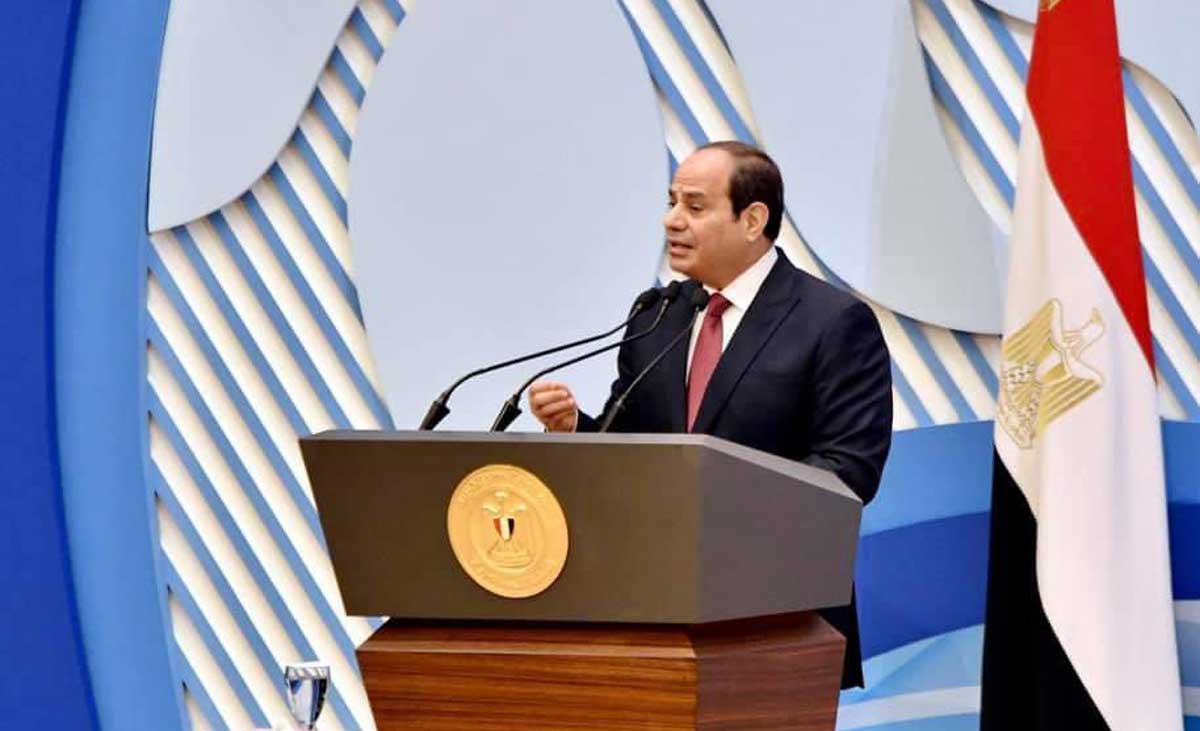
Egypt can leverage the US-China rivalry and its strategic partnership with Beijing to bolster its national security and its position as a global logistics hub through several strategic avenues:
1) Enhancing its status as a global logistics and trade center, through:
– Developing the Suez Canal Economic Zone: Leveraging the massive Chinese investments and projects in the TEDA zone in Ain Sokhna to establish vital industries such as green hydrogen, solar panels, and electric vehicles, transforming Egypt from a mere waterway into a global manufacturing and logistics hub.
– Linking the Belt and Road Initiative with Egypt’s Vision 2030: Integrating Egyptian ports, such as East Port Said, Alexandria, and Ain Sokhna, into the Chinese maritime trade network, while maintaining a balance that allows for alternative investments in other ports and logistics corridors to expand its options and international network of allies.
Stay ahead of the geopolitical week.
MD Briefing delivers expert analysis across five global fronts — the Indo-Pacific, energy, geoeconomics, European security, and the Middle East — every Monday morning. Free.
– Alternative Supply Chains: Egypt offers a secure regional base for global and Chinese companies seeking to diversify their supply chains away from areas of direct conflict, leveraging its strategic location connecting three continents.
2) Enhancing National Security and Red Sea Security, through:
– Diversifying Sources of Armament and Military Technology: The partnership with China allows Egypt to acquire advanced military technology, such as drones, air defense systems, and space and satellite technology, without the stringent political conditions imposed by Washington, thus strengthening the independence of Egyptian military decision-making.
– Securing Navigation in the Red Sea and the El-Mandeb Strait: This can be achieved by utilizing the Chinese military presence in Djibouti and China’s interest in maritime security to coordinate and build a joint security umbrella protecting the Suez Canal from emerging threats, such as attacks in the Red Sea, given that the stability of this waterway is a vital shared interest for both Egypt and China.
– Balancing Political Pressures: By employing flexible diplomacy and strategic balancing, Egypt’s rapprochement with China (especially after joining the BRICS group) provides it with strong leverage in its negotiations with the United States and Western international institutions, and vice versa.
3) Egyptian Expansion and Influence in Africa via China, through:
The Joint Projects (Triangular Cooperation) by acting as a strategic gateway for Chinese investments directed towards the African continent, through the implementation of joint infrastructure projects (roads, power plants, dams) in cooperation between Egyptian and Chinese companies in the Nile Basin and Horn of Africa countries, Egypt can enhance its influence and development diplomacy.
Here, Egypt can benefit from international and Chinese competition over Africa, the Red Sea, and Ethiopia, and from its partnership with China, to strengthen its national security and its position as a logistical and commercial hub. Thus, Chinese economic influence can become a factor of stability and development for Egypt, rather than a new arena for international competition in the future. Egypt can enhance its national security and logistical standing by leveraging its unique strategic location as a link between Africa, Asia, and Europe and by transforming international competition and its partnership with China into well-considered development opportunities. This can be achieved by studying and understanding the following strategic dimensions:
– First: Mechanisms for Egypt to Benefit from International Competition and the Chinese Partnership
– Developing Global Logistics Hubs: Continuing to expand and develop the Suez Canal Economic Zone in conjunction with Chinese investments, such as the TEDA Zone in Ain Sokhna, to transform the canal from a mere waterway into a global manufacturing and re-export hub.
– Continental Connectivity and Infrastructure: Leading regional connectivity projects in Africa, such as the Cairo-Cape Town Highway and the Lake Victoria-Mediterranean Waterway Project, and utilizing funding from China’s Belt and Road Initiative to connect African trade to the Red Sea.
– Diversifying security and military partnerships: Leveraging international competition in the Red Sea to secure navigation and combat piracy and terrorism through building flexible alliances and modernizing Egyptian naval capabilities (the Berenice naval base) without aligning completely with any single international power.
– Localizing industry and technology: Making technology transfer and the localization of industries, such as electric vehicles, renewable energy, and communications, a requirement in investment contracts with China and Western countries. This will reduce reliance on imports and bolster Egyptian economic security.
– Second: Chinese Economic Influence: Stability and Development or an Arena of Competition? Future indicators of Chinese influence in Egypt and the region point to two overlapping scenarios:
– The first scenario: A factor of stability and development, achieved by focusing on infrastructure, providing soft loans, creating local job opportunities, and supporting regional integration. This would have a positive impact on Egypt and Africa, contributing to easing conflicts stemming from poverty and offering African countries alternative financing options for developing their economies.
– The second scenario: Chinese influence within Africa as a negative factor, transforming it into a new arena of international competition. Increased Western (American and European) fears of Chinese hegemony and attempts to contain it through counter-initiatives or political pressure could turn the Red Sea region and Africa into areas of military and political polarization, forcing countries to choose between the Eastern and Western blocs.
– Third: Analyzing China’s role regarding the Grand Ethiopian Renaissance Dam (GERD) issue and whether Beijing can play a role in supporting stability and negotiations between Egypt and Ethiopia
On the other hand, given China’s growing relations with Ethiopia and the Nile Basin countries, its role regarding the GERD issue can be viewed positively for Egypt. Beijing can play a role in supporting stability and negotiations, even though its economic interests might make it more cautious about clashing with Ethiopia. Here, China adopts a pragmatic and cautious approach, balancing its substantial economic interests in Ethiopia with its strategic relationship with Egypt. This limits its role to quiet diplomacy and calls for negotiations without exerting direct pressure or engaging in confrontation with Addis Ababa. This can be understood through:
1) Analyzing China’s role regarding the GERD
– Technical and financial support: Chinese companies and funding have contributed directly to the infrastructure and electricity distribution stations associated with the GERD and Ethiopian projects.
– Non-interference policy: Beijing traditionally adheres to the principle of non-interference in the internal affairs of other countries and avoids taking public stances against Ethiopian development projects.
– Diplomatic balance: China is careful to issue joint statements with Egypt emphasizing the importance of international law and the need to avoid harming water security, but these remain diplomatic statements that fall short of exerting pressure through mediation.
2) Can Beijing support stability and negotiations between Egypt and Ethiopia?
– The capacity exists: China possesses significant economic and financial influence over Ethiopia, enabling it to exert influence if it so desired, given the scale of its investments and loans.
– The will to exert pressure is lacking: China refuses to become a serious mediator or a pressure party and prefers to distance itself from the sharp points of contention between Egypt, Ethiopia, and Sudan.
– Maximum possible role: Beijing’s available role is limited to quiet mediation and encouraging the parties to return to regional negotiating tables without imposing binding solutions.
3) Economic interests and avoiding confrontation:
– Deep strategic partnership: For China, Ethiopia is a key gateway and the heart of Africa for implementing the Belt and Road Initiative and penetrating the Horn of Africa.
– Interconnected projects: Chinese interests in Ethiopia are linked to agricultural, electricity, and railway projects that directly benefit from the dam’s energy.
Here, we conclude that major economic interests make China very wary of losing its Ethiopian ally, which keeps its position biased towards avoiding confrontation and refraining from imposing any forced settlement on it.
From this, we understand that Chinese influence holds enormous developmental potential for Africa, but it remains surrounded by the risks of geopolitical competition with other powers, most notably the United States. Egypt’s ability to achieve diplomatic balance and rely on a policy of multiple partners is the guarantor of transforming this influence into a stabilizing factor that supports its national security.
ONCE dubbed “the most boring man in football” Michael Owen’s choice to sign up for a fly-on-the-wall Amazon documentary about his family was unexpected to say the least.
The former England striker turned pundit, 46, allowed cameras to follow him, his wife Louise and their children Gemma, James, Emily and Jessica as they balance family life with running a horse racing business in Cheshire.
Michael Owen’s decision to star in a fly-on-the-wall documentary came as a shockCredit: Prime VideoMeet The Owens follows Michael, wife Louise and their four children (pictured above)Credit: Instagram @themichaelowen
And it was a distinctly left-field move from Michael, who – unlike celebrity documentary subjects David Beckham, Wayne Rooney and the larger-than-life Tyson Fury – has largely stayed out of the spotlight.
He is seen joking in six part series Meet The Owens that he is now best known as a “boring p***k” or “Gemma Owen’s dad” after she appeared in Love Island, raising questions about why he would agree to film the at-home-with style show.
And we can reveal that the ex-footballer – often referred to as ‘the most boring man in football’ – signed up for his TV payday after ploughing £13 million into his racing business pushed him to his financial limit.
While he may have other streams of income, accounts for Michael’s company Owen Promotions show it holds just £7,219 in cash and owes £2.3m to creditors.
Owen signed up for the show after putting £13 million into his horse racing businessCredit: GettyThe ex-footballer (pictured with David Beckham) has stayed out of the spotlight since leaving the sportCredit: AFP – Getty
It also has three outstanding loans, two of which were taken out in March 2022 and February 2024 with Leeds-based MR Denton Properties.
A further loan was taken out in February 2024 with Andrew Black, who co-founded Betfair.
Two other loans with Grosvenor Funding, which claims to offer “fast and flexible” bridging loans were paid off in 2023.
And all five loans were secured using parts of the Owens home estate – a 42-acre estate he bought in 2001 for £4million.
Despite spending millions on Manor House Stables, Owen says the business still needs investorsCredit: Manor House StablesSources say the business has had a big impact on the footballer turned pundit’s financesCredit: Getty
Speaking in Meet the Owens, which is now number 3 on the Amazon Prime UK chart, Michael revealed he has had to put “£12 or £13 million” into Manor House Stables to build it to its current level.
But he admits the business – which makes cash by persuading investors to back the horses they buy at auction – still desperately needs investors.
And he describes their current status as: “Premier League. Brighton, but not seventh, but kind of bottom half.”
Footage from the first episode shows the racing enthusiast giving pal Jamie Carragher a tour of the impressive grounds and stables, showing off a horse owned by Sir Alex Ferguson and another he owns along with Paul Scholes, Steve McManaman and Owen Hargreaves.
Drone shots show the impressive site from the air, while graphics also flash up on screen showing how the structure works – a handy guide for any would-be investors.
One source told us: “Michael is passionate about Manor House and racing, and he has done an incredible job on Manor House.
“The problem is that it is a big money pit and you can pour millions into it without any guarantee of winning horses.
“He loves it, and would never walk away, but it would be naive to say it hasn’t had a massive impact on his finances.
Owen (pictured with wife Louise) is the sole shareholder of Manor House Stables LLPCredit: GettySources say Owen is hoping the show will help Manor House Stables attract more investorsCredit: Prime Video
“And the pressure is never ending because as a business, you have to buy horses each year – for £90,000 or more – and try to find investors for them.
“Then the million-dollar question is whether or not those horses win, as the stables need winners to succeed.
“But the reality is that you only win a very small percentage of the races in which you have horses.”
Michael is now the sole shareholder for Manor House Stables LLP, which owns the stables, after director and co-owner Andrew Black resigned in March 2022 after six years.
Accounts show the company has healthy assets of approximately £13.6million.
Yet the source said the business still has a way to go before it becomes a money-spinner, rather than a money pit.
They added: “The Amazon payday has come at a good time for Michael, but he is also hoping the airtime for Manor House will attract more investors.
“The more money that comes in, the better the horses and the more winners we will see here.
“That will help the business move higher up the rankings among the top British stables.
“Michael loves racing and he is driven by passion for the sport, but he is also very competitive and wants to win.”
Previously, a source told us: “Michael is extremely determined to succeed in racing. He has poured millions of his own money into Manor House, and he will not stop until he’s at the very top.
“Signing up to broadcast this to the world was a huge risk for him, and he’s desperate for it to work.
“Michael is keen to show off how much Manor House is a reputable and successful stable, and he hopes putting the business on screen ends up being a help rather than a hindrance.”
Chavez’s eyes still gaze from walls across Caracas. So too do the eyes of other figures, like Maduro and independence leader Simon Bolivar. Some images are faded. Others are accompanied by slogans like “To doubt is treason”.
Forastero has worked on government projects, including under Rodriguez. But he is critical of some of the newer images. He remembers a time when he painted murals of Chavez playing with children or riding a bicycle, not slogans.
“When Chavez was alive, people painted Chavez because we loved him very much. It’s as simple as that,” he said.
In recent decades, he argues that Venezuela’s public art has fallen increasingly under government control, with murals commissioned to carry explicitly political messages.
“Muralism is a story told on a wall,” Forastero said. “What we really see on the walls now are propaganda posters. I’m a chavista, and I’m disgusted by it.”
Still, the removal of the artwork is another form of propaganda, in Forastero’s eyes. He believes the Rodriguez government is seeking to project a more “neutral” appearance to better appeal to the US.
He also accuses Rodriguez of abandoning ideals key to the chavismo movement: namely, anti-imperialism and revolution. He pointed to the US’s role in shaping Venezuelan policy.
“The United States is forcing our government to behave this way,” Forastero said.
Forastero believes the removal of Hugo Chavez murals is part of an effort by Venezuela’s government to appeal to the US [Catherine Ellis/Al Jazeera]
Rafael Araujo, a Venezuelan activist, has a different view of the changing landscape.
To him, there was something “jarring” about seeing chavista figures plastered across city walls, especially the leaders who have caused the country so much pain.
During their time in power, Chavez and Maduro both faced allegations of overseeing human rights abuses, including through the violent suppression of dissent. Venezuela’s last two presidential elections have been widely denounced as illegitimate.
Known in Caracas as Senor Papagayo, Araujo has used colourful, handmade kites to protest against government violence and economic policy.
He sees the Chavez murals as a form of oppression, an ever-visible reminder of a repressive government apparatus.
His kites are a way of sending a different message. His favourite carries aloft a single word: “Freedom”.
“Freedom is what all countries need. Democracy is the most balanced system a citizen can live under,” Araujo said.