Strictly Come Dancing is reportedly getting a new spin-off show, its first new show in 22 years, and it will be led by pro dancer Dianne Buswell
Dianne Buswell at the BAFTAs(Image: PA)
Strictly Come Dancing is reportedly getting a new spin-off show, 22 years after It Takes Two launched. According to TV insiders, the BBC’s dance competition will launch Strictly Pro Dance Off, led by popular star Dianne Buswell.
The show would see Strictly’s pro dancers go head-to-head in dance challenges and would launch alongside the next series, which launches this Saturday.
In it, a ‘teacher pro’ would show a dance routine to two other stars, who would then perform it on the dancefloor, with the ‘teacher’ picking who did it best. The winner would go on to the next week to face another star. Each duel is set to last seven minutes, so the show is short and draws in the social media generation.
According to The Sun, a source said the goal was to appeal to a younger audience. “It’s obviously part of the renewed drive to bring in a younger market to the show, which, along with hiring more influencers to compete, is seen as future-proofing the contest,” the source explained.
They added that there would be “inevitable” comparisons to the US version of Dancing With The Stars, as their series, The Next Pro, also featured professional dancers competing in head-to-head challenges. The source acknowledged that they were “different formats” but said the focus on the pros would still cause some to see similarities.
The source also said that Strictly was putting more of a focus on the pro dancers as they are aware that much of the appeal of the show comes from the public’s love for pros like Dianne.
Another popular pro dancer is Johannes Radebe, but he will not have a partner this year – as he has been announced as one of the three new hosts.
Emma Willis and Josh Widdicombe are the other two, replacing Claudia Winkleman and Tess Daly. Unlike Claudia and Tess, who had fixed roles on the dancefloor and in the ‘Claudetorium’, Emma, Josh and Johannes will operate in a more fluid team.
There are set to be a lot of changes to the hosting roles this year. Emma previously revealed that she and her co-hosts would be dancing as well, which Tess and Claudia didn’t do. “We have to dance in the opening show, the three of us together have some choreography,” she said.
Johannes seemed excited by the plans. “Can you imagine?” he laughed. “For my own mental health and well-being, I need to be shaking my tush. You’ll see me, and not only me, in the launch show — there’s going to be more dancing than you’ve ever seen.”
The three of them also shared that Claudia and Tess sent them good luck messages. Emma said: “They have been in touch with all of us, sending love and congratulations and just saying enjoy it – it’s so fun.”
WASHINGTON: US President Donald Trump threatened on Wednesday to cut trade with the European Union after the bloc proposed to make Canada its first ever associate member.
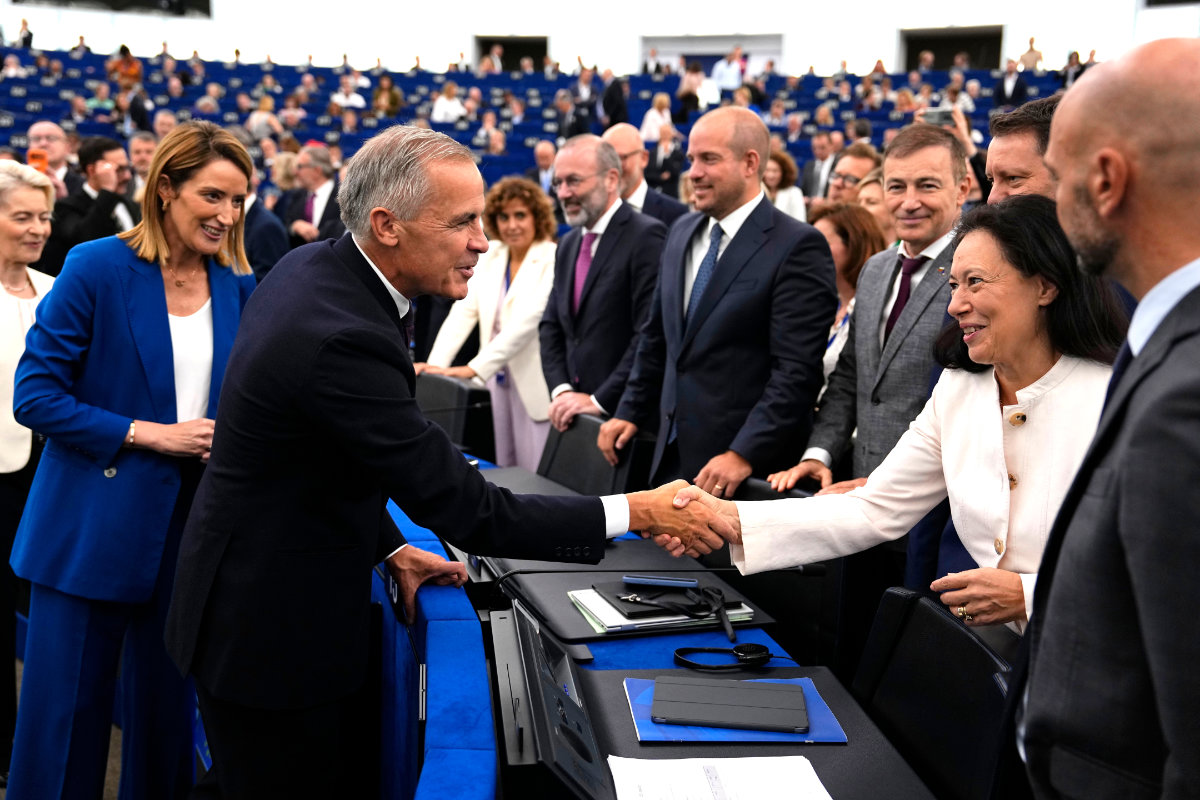
EU chief Ursula von der Leyen raised the prospect a day before Canadian leader Mark Carney was due to address the European Parliament.
Her pitch comes as both Canada and the European Union seek to pivot away from an aggressive United States under Trump’s leadership.
“I think it’s laughable,” Trump told reporters when asked about the plan.
“If they do that, if I think it’s at all a hostile act, I will put very serious tariffs or stop trading with Europe, on many things.”
He added: “If it’s a good intention, that’s fine. If it’s a bad intention, we’ll put very heavy tariffs on Europe, which is a possibility.”
Von der Leyen pitched closer cooperation on tech, defense and energy to Carney, who became the first non-European head of government to attend the annual “State of the European Union” speech.
The German told the European Parliament in Strasbourg that, as democracies face a “fracture in the international rules-based system,” Brussels and Ottawa needed to pull closer together.
“I would like to work with you on opening the door for Canada to be the first associate member of the EU,” von der Leyen told the Canadian premier, drawing a standing ovation in the chamber.
A broader alliance
Carney has been pursuing closer ties with the European Union as Canada gets drawn ever deeper into a trade war with the United States.
He is set to address the parliament on Thursday, with his visit meant to act as a catalyst ahead of an EU-Canada summit in Montreal next month.
Von der Leyen said it was time to move from cooperation based on trade to a broader “alliance for the future” and “bring the relationship with Canada to the highest level possible.”
“We will work on intelligent manufacturing. We will create a tech alliance. We will integrate defense industrial bases. We will make the Arctic a flagship joint project,” she said.
She listed energy, critical minerals, batteries, AI, cyber and economic security as other fields of cooperation.
“This is a partnership not against anyone else, but for our common strength,” she said.
But both the EU and Canada have been buffeted by tariffs and territorial threats from the US and competition from China.
“In a more dangerous and divided world, Canada is forging stronger relationships with trusted partners,” Carney’s office said in a statement.
What’s in a name?
While EU treaties do not envision the possibility of becoming an “associate member,” the idea was first floated by German Chancellor Friedrich Merz this year for Ukraine.
Under that plan, which met a cold reception from a country pushing for full membership, Ukraine would have been allowed to attend the bloc’s summits and have a representative in the European Commission.
It would have also benefited from parts of the EU budget, but without full voting rights.
“We don’t really know yet what it means,” said Tobias Cremer, a center-left European lawmaker from Germany and the main sponsor of a resolution urging stronger EU-Canada cooperation, after von der Leyen’s “associate membership” pitch.
Under EU rules, member states have to approve any form of partnership with a third country and it was unclear how much support von der Leyen’s proposal would receive from capitals.
Brussels and Ottawa already enjoy a considerable level of cooperation.
The CETA free-trade agreement that abolished almost all tariffs has been credited with boosting trade in goods and services by more than 80 percent since 2016.
And this year Canada became the first non-EU country to join a flagship defense loan program.
Carney later flew to Britain for his first meeting with new UK Prime Minister Andy Burnham.
They attended a football match between Everton and Wolverhampton together before Carney’s return to Strasbourg for his Thursday speech.
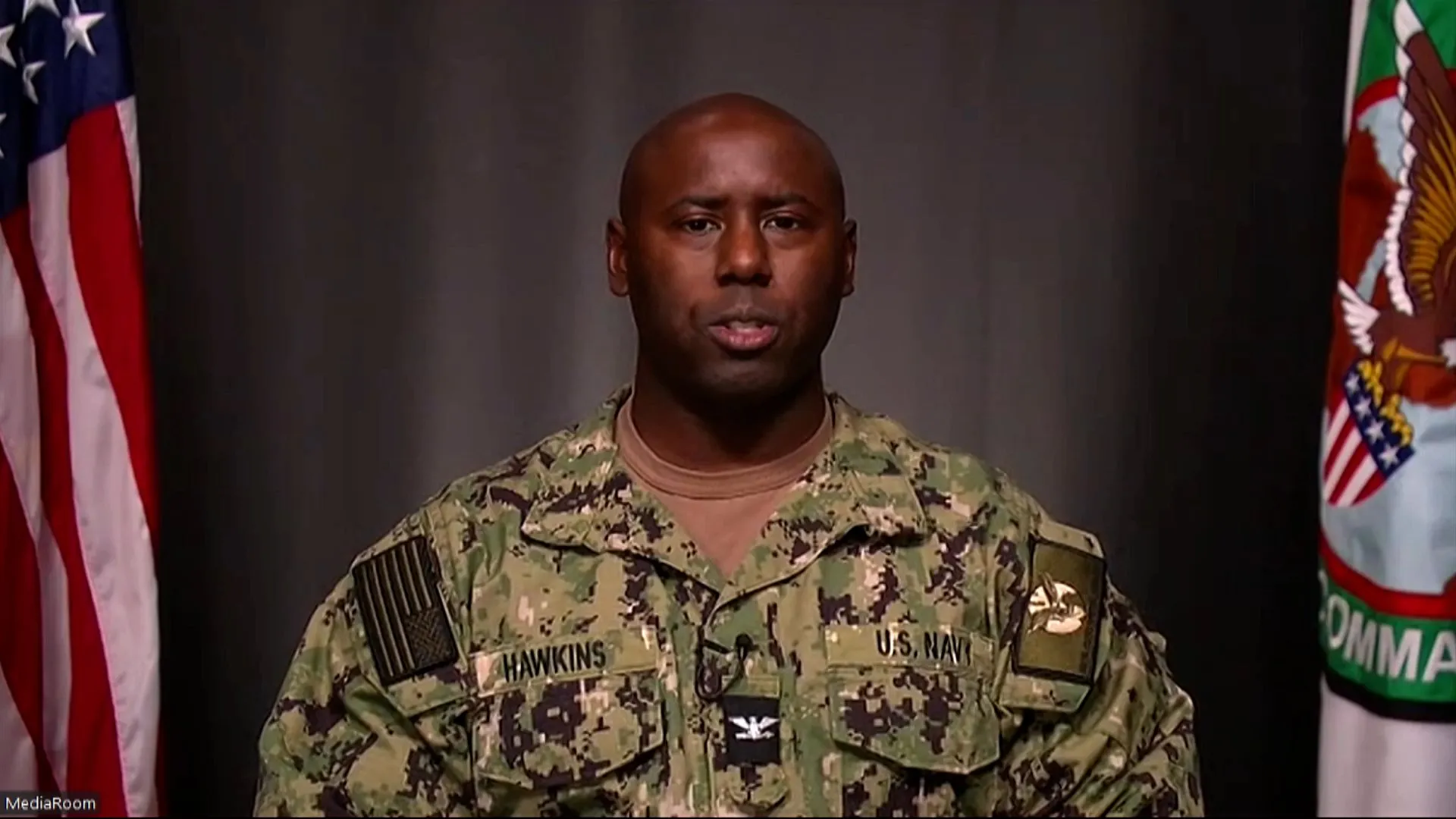
The spokesman for US Central Command has told Al Jazeera its blockade of the Strait of Hormuz is ‘highly effective’. Captain Tim Hawkins says Iran does not control the waterway and that 900m barrels of oil have passed through the strait since May.
Wunmi Mosaku has confirmed the birth of her second child — with style.
The “Sinners” actor posed for photos with her two children, a then-10-week-old son and nearly 3-year-old daughter, for the October issue of British Vogue. In the cover story, the 2026 Oscar nominee reflected on her childhood in Manchester, being pregnant during awards season and her commitment to maintaining a joyful workplace.
Mosaku described this past awards season as “the most inclusive red carpet run I’d ever had.”
“Designers happily embraced my growing bump with no pushback or compromise,” the British Nigerian actor said to the outlet. “I really hope designers remain equally excited about dressing regular curves, not just pregnancy bumps. I’m nervous about what comes next. I am hoping not to go back to sample sizes being sent and forking out for tailoring out of pocket. Long may it continue where designers actually dress me and my body as I am!”
But she also admitted to “struggling with pain, stretching ligaments and exhaustion” as she made the rounds for “Sinners’” awards season run. In addition to Mosaku’s Academy Award nomination for supporting actress, “Sinners’” Oscars haul included wins for filmmaker Ryan Coogler, star Michael B. Jordan, cinematographer Autumn Durald Arkapaw and composer Ludwig Göransson.
Mosaku, who is married to talent agent Tash Moseley, announced her pregnancy in January in an essay for Vogue timed to the 2026 Golden Globe Awards, where she walked the red carpet in a custom yellow dress that did not hide her baby bump.
“In my Nigerian culture, we don’t really announce this kind of news,” she wrote then. “It’s meant to be protected. Everything in me resists sharing it publicly — not because I’m not grateful or joyful, but because this feels like one of the few things that truly belongs to me.”
In addition to sharing her news, the actor also addressed her hope that “we could let women simply be” without scrutinizing their bodies as well as the specific worries that comes with pregnancy as a Black woman.
“Being pregnant as a Black woman, you’re not just worrying about whether your baby will be okay: You’re praying you will be too,” she wrote. “Holding joy and fear at the same time is not abstract; it’s rooted in lived experience, medical bias, and real statistics.”
Mosaku also discussed her forthcoming maternity wear line, Iyadé, in her latest British Vogue interview. The brand’s name is a Yoruba word that means “mother has arrived.”
“I’m so proud of all my designs,” Mosaku told the outlet. “And I know Iyadé needs to exist. I can’t be the only mother who is disappointed with maternity and nursing wear. I cannot be the only person.”
They also agreed to expand air travel and reinstate direct flights between both countries.
Published On 16 Sep 202616 Sep 2026
Israel and Morocco have agreed to upgrade their diplomatic ties, including elevating their respective missions to embassies and appointing ambassadors to both countries.
A meeting between the two countries’ foreign ministers was hosted by the United States ambassador to the United Nations, Mike Waltz, in New York on Wednesday.
Recommended Stories
list of 3 itemsend of list
Israeli Foreign Minister Gideon Saar and Moroccan Foreign Minister Nasser Bourita also agreed to advance economic and trade relations, including completing two agreements by the end of this year on investment protection and preventing double taxation.
“[The] establishment of full diplomatic, peaceful and friendly relations between Morocco and Israel is in the common interest of both countries and will advance the cause of peace,” the US mission to the UN said in a joint statement on behalf of all three countries.
The two sides also agreed to expand air travel, including by reinstating direct flights operated by carriers from both nations, and confirmed plans for high-level bilateral visits in the coming months.
The announcement comes just a day after the sixth anniversary of the Abraham Accords, an initiative spearheaded by US President Donald Trump during his first term in office. The United Arab Emirates, Bahrain, Morocco, Sudan and Kazakhstan have all joined the accords, which are aimed at normalising ties between Arab and Muslim-majority countries and Israel.
Native authorities issue condolences after two adults and a child swept away by floodwaters in southwestern US state.
Published On 17 Sep 202617 Sep 2026
Indigenous authorities in the United States have said that three people have been killed in flooding in the southwestern state of New Mexico, where heavy rains left roadways blocked by water.
Navajo Nation President Buu Nygren said on Wednesday that police had responded to reports of people being swept away by floodwater at 12:30am (06:30 GMT) near the community of Newcomb in northwestern New Mexico.
Recommended Stories
list of 3 itemsend of list
Nygren said that two adults and a child were killed in the incident and offered condolences to the community, while advising residents to exercise caution in areas impacted by rainfall.
“There are no words that can ease the pain of losing a loved one so suddenly, and our hearts are especially heavy knowing that three lives were lost,” Nygren said. “To the family, relatives, and loved ones who are grieving today, we offer our deepest condolences. We pray that you are surrounded by strength, comfort, and the love of your family and community in the difficult days ahead.”
The National Weather Service (NWS) in Albuquerque, New Mexico, issued a special briefing on Tuesday warning of the possibility of widespread thunderstorms in the coming days. The service repeated those warnings on Wednesday, noting that moisture levels are expected to be at record levels for mid-September.
“A Flash Flood Watch is in effect for the western third of New Mexico and the South Central Mountains today,” NWS Albuquerque said in a social media post on Wednesday. “However, flash flooding could occur anywhere in central and northern New Mexico today.”
Heavy rainfall is predicted across parts of Arizona, New Mexico, Colorado and Utah through Thursday. Flash flood warnings were issued for parts of northwestern New Mexico, along with flash flood watches for large areas of central and northern Arizona.
The deaths on Wednesday come several weeks after three hikers were swept away and dozens were rescued after heavy rainfall caused flooding at the Grand Canyon, a popular destination for tourists and outdoor recreation in Arizona.
American housemate Johanne, 44, was labelled ‘disrespectful’ after she walked into the storage room while Omar was praying towards the end of Wednesday night’s episode of the ITV series. She began searching for a drink, apparently unaware of what he was doing.
Once Johanne realised, she apologised and left the room. She later apologised to Omar again, explaining that she had no idea he was praying. While some viewers criticised the interruption, others argued it was a genuine mistake and questioned whether Omar had been given enough privacy in the shared house.
“Omar should have let them know he was going in to pray you could tell she genuinely didn’t know #bbuk,” one viewer wrote on X, formerly Twitter. Another suggested: “I do think Omar should probably have a more private place to pray though how are all housemates going to know #bbuk.”
The encounter nevertheless left some fans cringing. As OK! reports, one posted: “I’ve never gotten worse second hand embarrassment in my life #bbuk.” A second wrote: “Stop that was so awkward poor Omar #BBUK.”
Others took a harsher view of Johanne’s behaviour. One wrote: “Wow Joanne is so disrespectful my lord. #bbuk.” Another added: “Joanne interrupting Omar praying? ! Holy s*** that’s incredibly disrespectful #BBUK.”
The debate came just four days after the new contestants moved into the house, with tensions already emerging. Tonight’s episode also saw Charlotte, who is an amputee, and Rochelle at the centre of the drama after Rochelle revealed she had long had a phobia of people with limb differences.
Meanwhile, Millie, Pauline and Rochelle were confirmed as the housemates facing the series’ first eviction.
The trio had been offered a lifeline if they could identify Big Brother’s moles, Tays and Philip. All three failed to expose the undercover housemates, leaving them facing the public vote.
Voting is now open for Friday’s (September 18) eviction, with viewers asked to choose the housemate they want to leave.
The evicted contestant will then join presenters AJ Odudu and Will Best for a live interview.
The rapper also challenged Robert Kraft to match the donation as fallout from his removal from Ed Sheeran’s tour grows.
Published On 16 Sep 202616 Sep 2026
Rapper Macklemore says he will donate the entire $1m he earned from singer Ed Sheeran’s Loop Tour to organisations supporting Palestinians, days after he was dropped from the tour over his support for Palestine.
Macklemore, whose real name is Ben Haggerty, announced the donation on Instagram on Wednesday, saying the money would go to six groups working directly to support Palestinians. He also called on pro-Israel billionaire Robert Kraft, owner of the New England Patriots, to match it after Kraft confirmed on Tuesday that he had barred Macklemore from performing at Gillette Stadium in the US state of Massachusetts.
Recommended Stories
list of 4 itemsend of list
“Whatever we disagree about, perhaps we can agree on this: Palestinian lives are worth protecting,” Macklemore wrote. “A Palestinian life is no less valuable than any other life on this earth.”
In a statement on Wednesday evening, Kraft said that before Macklemore issued the challenge, Sheeran had called and asked him to commit $2m in humanitarian aid to the region. Kraft said Sheeran now planned to approach other venue owners in an effort to raise more money.
“I believe deeply that all lives are worth protecting,” Kraft said.
Macklemore’s announcement comes as the fallout over his removal from Sheeran’s tour continues to grow. Macklemore said on Monday that he was dropped from the remaining United States dates after using his performances at MetLife Stadium in New Jersey to speak in support of Palestinians.
All of the supporting acts for Sheeran’s upcoming US Loop Tour have now pulled out in solidarity with the rapper. Some of the artists are Irish and pointed to their own country’s history of occupation in explaining their decision to withdraw.
Sheeran has said the decision to remove Macklemore was ultimately made not by him but by the tour promoter.
Kraft later said he had opposed allowing the rapper to perform, citing what he described as Macklemore’s history of “antisemitic rhetoric and imagery”.
Kraft, in a statement to Al Jazeera, said the decision to ban Macklemore from his venue wasn’t about “diminishing the suffering of innocent Palestinians” but argued that “advocacy should not come at the expense of the Jewish community or obscure the responsibility of Hamas”.
In his latest statement on Wednesday, Macklemore said he wanted to pull the conversation away from himself and the controversy surrounding the tour.
“That is what this has always been about. Not me. Not a tour. Not the headlines or the controversy,” he wrote. “It is about Palestinians’ right to freedom, dignity and safety in their own homeland.”
He also acknowledged that donating money carried far less risk than the work being done by people in Gaza and those organising in support of Palestinians.
“Writing a check is one of the least costly forms of solidarity available to me,” he wrote. “I am doing it because I can, and because these organizations are doing the work while much of the world debates it.”
He ended with a call for people to keep paying attention.
“When the news cycle moves on, which it will, don’t move with it. Free Palestine.”
Palestinians in the occupied West Bank know they shouldn’t ask what time their loved ones are going to make it home.
There’s simply no way to give an accurate answer. What used to be a short ride from one place to another could now take hours, or it might not happen at all.
Recommended Stories
list of 3 itemsend of list
Before driving, Palestinians check dedicated WhatsApp and Telegram groups and channels where people share updates on road conditions. But this isn’t typical traffic news: Instead, chats focus on which Israeli military checkpoints are open, which roads are off limits to Palestinians and whether Israeli settlers are attacking Palestinians as they drive their vehicles.
Sometimes pins are sent to warn people driving near towns where Israeli forces are conducting raids.
And if there’s no time to check the groups, then there’s always Basma FM. The Palestinian radio station, based in Rawabi near Ramallah, carries three traffic updates per hour.
The channel started broadcasting on October 2, 2023 – just days before the Hamas-led attack on Israel on October 7 and the start of Israel’s genocidal war on Gaza, and what has become a pogrom against Palestinians in the West Bank.
“Our idea was to target young people. We wanted to offer entertainment and culture news. But five days later, we realised we couldn’t,” said Fatima Barqawi, Basma FM’s news and traffic director.
The team had originally planned traffic updates as part of their programming. “We thought we could tell parents picking up their children from school to know where there was traffic, but after the war on Gaza started, we had to shift focus,” Barqawi said.
Her department has seven employees who verify information with their sources and provide updates on roadblocks.
“Things change each second. We could say there’s a closed checkpoint and Israeli soldiers decide to reopen it. Or vice versa,” Barqawi explained.
Dangers on the roads
The issue for Palestinians driving through the West Bank isn’t simply being late for appointments or held up for hours – it’s that there is an inherent danger to travelling in the occupied territory.
Palestinians in the West Bank drive white-plated vehicles, making them easily identifiable compared to the yellow-plated cars driven by Israeli settlers.
Israeli soldiers have killed Palestinians near checkpoints after claiming they were conducting ramming attacks, and Israeli settlers often attack Palestinian cars or block them from using certain highways.
These attacks are increasing as illegal Israeli settlements grow at a record pace.
It is hard to miss the large infrastructure projects Israel is implementing, expanding highways to connect Israeli settlements to one another and to Israel. This ends up isolating Palestinian communities, often forcing Palestinians to use poorly paved roads or dangerous mountainous routes to avoid Israeli settlers and roadblocks.
It’s a journey of fear and anxiety, a young Palestinian woman who did not wish to be named told Al Jazeera. “I used to blast my music and drive, now I’m on high alert. Always on edge.”
The woman recounted how Israeli soldiers assaulted her fiancé near a checkpoint in Hebron, in the southern occupied West Bank, because they mistakenly thought he had passed without stopping. A year later, she said, a soldier pointed his rifle at her.
“He was shouting at me. The sun was blocking my view, and I was careful crossing the checkpoint but that wasn’t enough. I saw the green beam [from the gun] and thought that was the end,” she said.
Attacks at checkpoints
Many Palestinians report being assaulted, humiliated and sometimes arrested at these checkpoints and roadblocks.
Israel has long imposed movement restrictions on Palestinians, controlling the road system and Palestinians’ access to the wider world. But since the war on Gaza began, these restrictions have intensified.
As of December 2025, the United Nations documented 925 barriers across the occupied West Bank including East Jerusalem, a 43 percent increase over the 20-year annual average of 647, the UN’s humanitarian affairs agency, OCHA, reported.
Almost all of of the villages and cities in the West Bank have iron gates at their entrances, and Israeli forces close them arbitrarily. Some of the gates are only open during certain hours.
A new report by the Israeli human rights group B’Tselem said the restrictions are used to deliberately fragment Palestinian life, with roadblocks and military checkpoints cutting off people from their work, schools, hospitals and one another.
The report, titled The Elimination Project, says there’s a broad rapid and systematic Israeli assault in the West Bank that aims to dismantle the foundations of Palestinian existence, and road closures are just one of them.
That is why, as Heba Erkat prepared her notes before heading into the studio for Basma FM’s Wednesday afternoon bulletin, she knew the information about to be read out could change rapidly.
Her colleague read the news, and then Erkat started listing updates at 61 checkpoints across the West Bank.
It was a relatively good day: only 12 of the checkpoints were either closed or had long queues.
But, as Erkat noted at the end of the segment, “the situation changes by the minute”.
The association said Wednesday that the television tribute — titled “CMA Presents I Will Always Love You: A Celebration of Dolly Parton” — will be recorded live at the Fisher Center for the Performing Arts, on the campus of Belmont University in Nashville.
The tribute will air Oct. 21 at 6 p.m. Pacific on ABC and Disney+, and will stream on Hulu a day later.
In a news release, CMA described the special as a “joyful, emotional celebration” dedicated to Parton, the rhinestone-studded singer whose life began humbly, in a one-room cabin at the foothills of the Great Smoky Mountains.
Robert Deaton, veteran executive producer of the Country Music Awards and Billboard Music Awards, will fill that role on the Parton project.
“Dolly gave Country Music its heart, and giving some of that heart back to her is an incredible honor,” said Deaton in a news release Wednesday. “My hope is simply that we do right by her story, her music and the people who love her, so that this evening feels like the tribute my friend deserves.”
Sarah Trahern, CMA chief executive, added that the tribute is the association’s “responsibility”: “This special is our way of saying thank you, on behalf of every artist, industry member and fan who found a piece of themselves in her music.”
The tribute is in partnership with Belmont University, which hosted the 2025 world premiere of “Dolly: A True Original Musical,” a biographical production about the “9 to 5” singer that is scheduled for its Broadway debut on Jan. 19, what would have been the Parton’s 81st birthday.
The university also previously launched “Dolly U,” an immersive educational partnership designed to connect students with hands-on opportunities in entertainment, media and creative industries.
Greg Jones, president of Belmont University, welcomed the special with a statement of his own: “It is a privilege to welcome artists, friends and fans from around the world to celebrate her extraordinary life and legacy from this stage in Nashville, honoring a woman whose love for Tennessee was woven into everything she did.”
Both the CMA and Belmont University will make a donation from the proceeds to Parton’s Imagination Library, which was launched by the Dollywood Foundation in 1995 to address childhood literacy by giving millions of children the gift of a free book each month. Disney will also support the program.
News of the television tribute follows an announcement last month by Parton’s estate that revealed plans for Dollyfest, a two-day celebration in Nashville and London next year across two consecutive weekends to honor her legacy.
Additional details for the CMA special, including performers and tickets, will be announced at a later date.
Survival Journey is an interactive experience in which participants explore how to transform nature’s challenges into useful resources. It runs until Nov. 24 at Ithra Center. Check the Ithra app for more details.
The U.S. military’s top officer on Wednesday talked about how AI is changing the character of warfare and offered two examples to illustrate his points. His comments included new insights into how two U.S. Army AH-64 Apache crew members were rescued after being shot down by an Iranian drone near the coast of Oman in June. The recovery effort involved America’s first known use of an uncrewed surface vessel (USV) executing a personnel recovery action as part of a military search and rescue operation.
“Information moves so fast that leader decision times have compressed from weeks down to days down to seconds,” explained Air Force Gen. Dan Caine, chairman of the Joint Chiefs of Staff, during his keynote speech at the Air & Space Forces Air, Space and Cyber Conference that TWZ is attending. “In the future fight, advantage will go to the side who can see first, who can understand first, decide first, and act first, and along the way, be a learning organization, and no factor is accelerating change as fast as artificial intelligence and advancing cyber capabilities.”
“AI is here now, and it’s already changing the way militaries see, sense, decide, and act across the joint force,” the chairman proclaimed.
The first example Caine used to highlight these changes took place on June 8. After the Apache went down, “U.S. CENTCOM launched a rapid, responsive joint search and rescue effort to recover the crew. That response drew on the totality of the joint force, and ultimately was required to use enabled unmanned vessels to participate in the rescue of downed U.S. service members for the first time ever.”
A flight of U.S. Army AH-64 Apache attack helicopters, armed with rockets and Hellfire missiles, taxi out to conduct a scheduled flight in the U.S. Central Command area of responsibility. In addition to rockets and missiles, the Apache is additionally armed with a 30mm chain gun. (U.S. Army photo) U.S. Army Central
As we noted in our previous coverage, CENTCOM deployed “a U.S. Navy Corsair unmanned surface vessel,” the command’s spokesman told us at the time.
The Corsair uncrewed surface vessel (USV) (Saronic)
The ability to pull off that rescue mission “did not appear overnight,” Caine pointed out. “It came from the men and women of Task Force 59, CENTCOM’s forward-leaning unmanned joint maritime unit who spent the last several years testing, integrating, and operationalizing unmanned systems and AI in one of the most demanding and kinetic environments on Earth right now.”
“What helped make this possible was not a bunch of general officers and flag officers,” Caine continued. “What made this possible was a bunch of entrepreneurial sailors and members of the joint force on watch floors, at piers, managing networks of unmanned systems across thousands of miles of water, and using AI to turn massive amounts of data into a crisp, clear, perfect maritime picture that allowed us to go grab those two soldiers in the water.”
A top-down view of the Saronic Corsair USV. (Saronic)
The second example Caine shared about the use of AI “points in the other direction, not how quickly we are using these tools, but how quickly these tools are changing the threat.”
In Ukraine, “we see first-person view drones operating in heavily contested EMI [electromagnetic interference] environments. Some now using AI-enabled computer vision to continue to drive towards targets, even when there’s no GPS or the links are cut. That gives small units affordable precision and shows how quickly software and autonomy are changing what is possible at the tactical edge, and the results are stark.”
“In certain locations on the front line of troops right now, the life expectancy of a new Russian recruit arriving on the front lines is as little as 20 to 30 minutes,” Caine added. “Think about that. This is what happens when low-cost precision is fielded fast, adapted quickly, and scaled across the battlefield.”
“The price of lethal exchange is decreasing day over day,” the chairman noted. “One wonders what the future of close air support looks like, but I am comforted by the fact that each and every one of you are in this room thinking about that. Taken together, these examples from the Straits of Hormuz to the front lines in Ukraine show how quickly technology is changing the character of war, and this means our joint force needs to do two things at one time.”
“[W]e need to prepare the joint force to win in this kind of conflict,” the general stated. “We have to assume from now on that our formations will be hunted by autonomous systems, jammed across the spectrum, and tracked in real time, and we have to transition the joint force to be prepared to fight and win our future war by generating and delivering lethality at scale with an agile, optimized, high-low mix of combat capabilities to give the young members of the 2.8-million member all volunteer joint force the tools that they need before they need them.”
It appears Judge Judy has kicked off her retirement tour.
“Judy Justice” star Judy Sheindlin appeared with her son Adam Levy on “Good Morning America” on Wednesday to celebrate her 30th anniversary on TV, and to the hosts’ dismay, she confirmed she was “retiring from [the] in-front-of-the-camera TV bench.”
When asked why she felt now was the right time for her to conclude that chapter of her career, Sheindlin replied that there were a couple of factors.
“First of all, he was ready,” Sheindlin said, nodding toward Levy.
Levy’s syndicated courtroom TV show, “Adam’s Law,” which Sheindlin created and executive produces, premiered Monday.
“I’ve aged pretty well over the years,” she continued. “Reasonably. I look better than my grandmother did at my age, which didn’t take a lot. But it’s time for me to. I’m still going to be creative…. I’m just going to take the message and put it in a little bit of a different form. I’m going to become the Benjamin Button of court.”
Sheindlin previously mentioned that she now plans to focus on other endeavors, such as developing “Judyverse,” an adult animated series based on the viral “Baby Judge Judy” videos made with AI.
“I want to steal Baby Judge Judy back from AI,” Sheindlin told Amy Poehler on an episode of the “Good Hang” podcast last year. “I want to get more people involved with this character. Speaking through Baby Judge Judy would be a whole lot of fun, but you need the right writer.”
Sheindlin, 83, became one of the most recognized TV judges through her time on “Judge Judy.” The arbitration-based courtroom show premiered in 1995 and aired for 25 seasons before concluding in 2021. The streaming series, “Judy Justice,” launched shortly after in the same year and will wrap with its fourth season.
CALIFORNIA: Three people were charged by federal authorities in Los Angeles on Wednesday with stealing $12 million in federal and state homelessness aid to pay for real estate, luxury trips and vintage vehicles.
It was the second such arrest of people on federal fraud charges in Southern California this week, as President Donald Trump’s administration tries to emphasize a crackdown on fraud and waste in government and aid programs. On Tuesday, 12 people were charged with stealing more than $10 million in federal childcare aid.
The three defendants each worked for or ran Southern California-based nonprofit organizations, which often contracted with city, county, state or federal agencies to provide aid or money to find housing and social services for homeless people. Prosecutors allege that the defendants used funds from those contracts to pay personal expenses, accepted bribes, and billed for services that were never provided.
“Make no mistake, HUD and the Trump administration will not tolerate the theft and abuse of taxpayers in this country,” Secretary of Housing and Urban Development Scott Turner said at a news conference.
Turner used the indictments to accuse the Los Angeles Homeless Services Authority, which approved grants to these defendants, of being negligent with taxpayer dollars.
Taxpayer aid spent on video games, nightclubs
Two defendants, Lakiya Malone, 48, and Michael Young, 46, were arrested early Wednesday in Los Angeles. A third defendant charged with wire fraud, Donye Mitchell, 55, is considered a fugitive.
Young is the founder of Home At Last, a nonprofit that took in more than $118 million in public funds since 2019 for its stated mission of providing housing and aid to homeless people.
Federal prosecutors say Young instead created shell companies that he claimed were independent contractors but were, in fact, controlled by him. This alleged self-dealing allowed Young to be paid both at Home At Last and overbill federal and local authorities, prosecutors said. They say Young misused an estimated $7.5 million in taxpayer funds through fake contractors and vendors.
Young used the proceeds to take luxury trips to Tahiti, and used funds to open a nightclub in Inglewood called the Six Seven Five Lounge and other commercial real estate projects, prosecutors allege.
Mitchell is the CEO of Big Blue Umbrella, which was awarded more than $1.2 million from a federally supported nonprofit for housing and mental health care aid. Prosecutors say Mitchell not only misstated his organization’s ability to provide such services, but also used money from the award to pay off his credit card debts, give funds to family members, buy video games and pay legal expenses for an unrelated case.
Malone was charged with accepting more than $180,000 in bribes from another homelessness-aid nonprofit. Malone allegedly not only accepted bribes but also placed people in homeless aid programs who weren’t homeless.
Separately, federal prosecutors announced that a fourth person pleaded guilty to wire fraud and money laundering charges for stealing at least $2 million in homeless aid. Alexander Soofer, the executive director of Abundant Blessings, admitted to working with Malone to bill federal and state authorities for homelessness aid services when there were no participants in his programs.
Big money, little documentation
Some 72,000 to 75,000 people live in shelters or encampments in Los Angeles and Los Angeles County, making it one of the largest homeless populations in the country. It has been a significant issue in Southern California for years, and Los Angeles Mayor Karen Bass made it a cornerstone of her 2022 election campaign.
City and county authorities spend roughly $1 billion a year trying to help the homeless population, often using LAHSA to coordinate aid. While significant funds are spent to address the issue, city and county reviews have repeatedly found that the programs lacked appropriate recordkeeping, audit trails and documentation.
Nathan Hochman, the district attorney for Los Angeles County, told reporters that the public should expect more investigations and indictments into the misuse of homeless aid funds. Hochman’s office’s investigation into Soofer and Abundant Blessings led to his indictment earlier this year.
“I can assure this is the beginning of these prosecutions and we are far, far from the end,” he said, adding that his office’s investigation had found that the only “abundant blessings” Soofer provided were to his friends and family.
Some of the Trump administration’s efforts to go after fraud and abuse of government benefit programs have faced criticism and legal challenges. In December, Vice President JD Vance, who chairs the administration’s task force on the subject, amplified a YouTube video of a popular right-wing influencer accusing childcare providers in Minnesota, many of them immigrants from Somalia, of running scams. State authorities visited the centers and found nearly all of them operating normally.
Nonetheless, the administration launched a massive immigration crackdown in Minnesota. Officials later attempted to freeze federal funds for childcare in five Democratic-led states but were halted by a lawsuit.
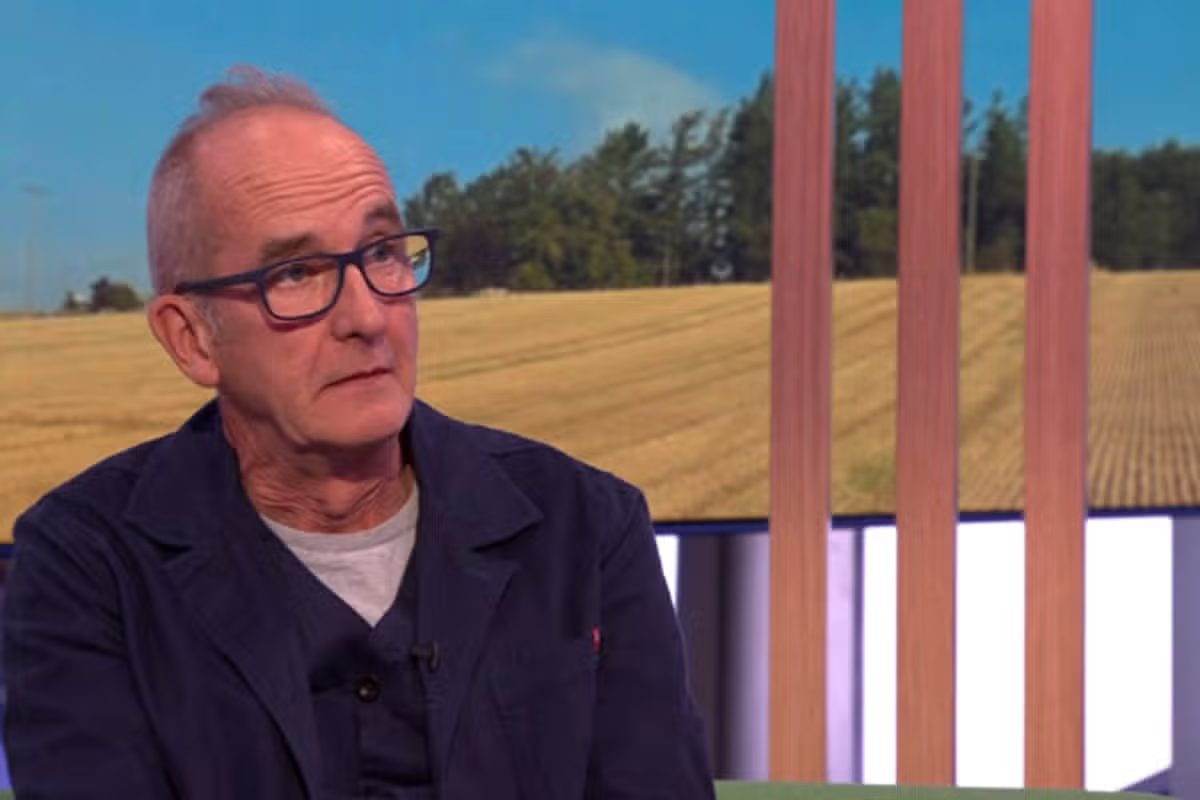
Kevin McCloud appeared on BBC’s The One Show to discuss the latest series of Grand Designs which will see the presenter revisit a project from the very first series
20:43, 16 Sep 2026Updated 21:03, 16 Sep 2026
Kevin McCloud appeared on The One Show to promote the new series of Grand Designs(Image: BBC)
Grand Designs presenter Kevin McCloud has confessed there’s moments from the Channel 4 show which leaves him reaching for the remote control.
The 67-year-old designer and presenter returns to television screens on Wednesday (September 16) to front a brand new series of the beloved renovation programme.
When discussing watching back old clips, Kevin joked: “Yeah that’s painful to watch for me! I have to skip through the fast forward button a lot through these early episodes but the house has not changed, everything is as it was, and when you make the stuff and you record a moment in time, you don’t know whether that idea, that style and approach, whether it will last and have value, and remarkably that house has remained the same and is almost a fantastic example of a mid-1990s building so sometimes it comes back to surprise you.”
Channel 4 announced earlier this month that Grand Designs and Grand Designs: House of the Year will be coming back this Autumn. The iconic and much-loved house building and design show returns with four extraordinary new builds and two long-awaited revisits, spanning across the United Kingdom.
According to bosses, the new series series embraces bold ideas and innovation, showcasing pioneering construction methods and ambitious architecture whilst never losing sight of the people behind them.
Kevin previously said: “It is always a joy to get a series of Grand Designs complete and ready for broadcast – especially when it can run alongside its sister series, House of the Year.
“Together they celebrate the very best in British architecture and remind me of the extraordinary imaginative and resilient potential of human beings. This year is no exception: there are some astonishing stories and homes to discover.”
When asked what he believes is the reason that Grand Designs keeps coming back, Kevin explained: “I think it is the unpredictability of it all. If we were restoring people’s homes for them, then we might have slipped into a predictable format but we haven’t.
“Some of the projects on this series are fascinatingly unpredictable. For example, we see Seb in North-West London, building a house which was completed in 13 months and I was so shocked because O am used to things taking forever.
“We also have a project in Edinburgh, which has been going for over 10 years, and when you look at the date stamps as we go through the programme, you sort of appreciate how some people dedicate a lot of their lives to a building.”
He added: “I thought in series one we might run out of projects. We thought that we had done an eco-project, a modern white block, a glass house, we did the eccentric thing. We thought, will people still tune in if we do another glass box? But the answer is yes, because from the beginning we set ourselves the challenge that in every episode there has to be something new – there has to be some story, some angles, something, a hook.
“Luckily, since architecture is so much about place and response to a place and so much about people and response to people and because places are so infinitely diverse, people are infinitely diverse, this is what makes every project and what keeps me on my toes every time.
“If you look at this coming series, every single project has something unique about it and i find that so fascinating, all of the individual narratives are so different. The houses are all so unique architecturally and in the way they are built.”
The One Show airs weekdays on BBC One and BBC iPlayer at 7pm and Grand Designs returns to Channel 4 at 9pm on Wednesday, September 16
The former minister was handed over to US agencies in May. (Archive)
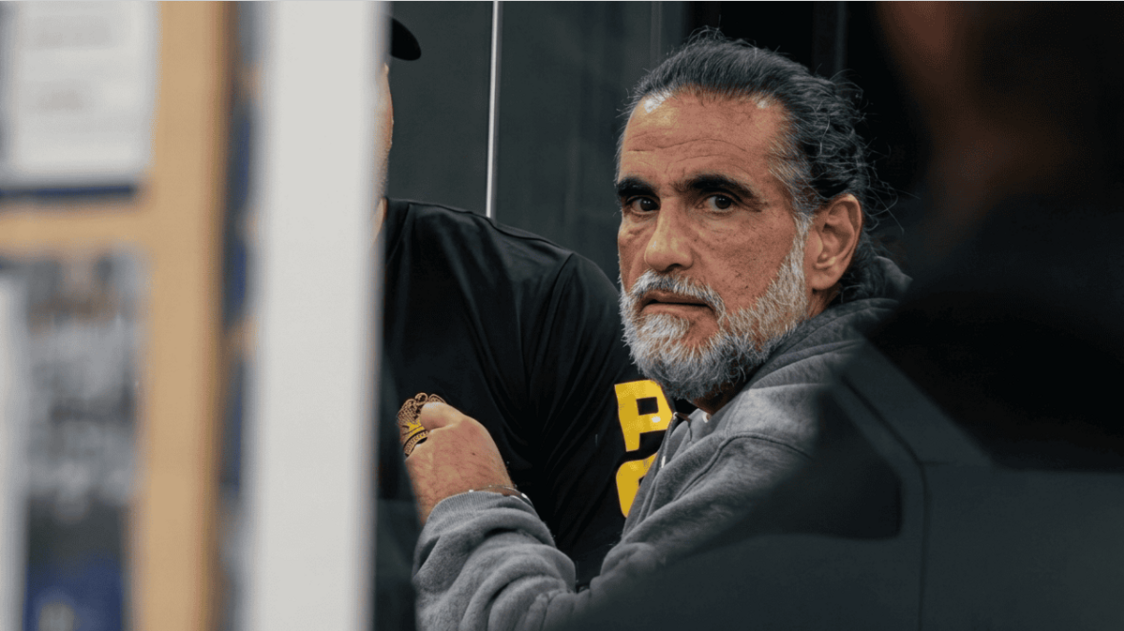
Caracas, September 16, 2026 (venezuelanalysis.com) – Former Venezuelan Industry Minister and government envoy Alex Saab pleaded guilty to conspiracy to commit money laundering and illicit financial transactions after reaching a plea deal with US prosecutors in a federal court in Miami.
Appearing before the US District Court for the Southern District of Florida, Saab changed his previous “not guilty” plea, entered on July 24, during a hearing before Judge Kathleen M. Williams. “Guilty, Your Honor,” the 54-year-old businessman stated during Tuesday’s session.
In his guilty plea, Saab admitted to participating, alongside “high-ranking officials” in the Nicolás Maduro government, in an “illegal scheme” involving bribes and illicit payments linked to the CLAP subsidized food program. The money allegedly obtained through the scheme was wired through accounts located in South Florida.
In the 12-page plea agreement, Saab named Socialist Party (PSUV) lawmaker José Gregorio Vielma Mora, who was governor of Táchira state at the time, as an alleged accomplice, alongside Colombian nationals Álvaro Pulido Vargas, Emmanuel Enrique Rubio González, and Carlos Rolando Lizcano.
However, he also referred to two other individuals as “co-defendant 1” and “co-defendant 3.” Their identities have not been publicly disclosed by US prosecutors.
Saab also agreed to “fully cooperate” with the US Department of Justice (DOJ) by providing “truthful and complete information and testimony, and producing documents, records, and other evidence” in “any trial or judicial proceeding” requested by the US government.
He likewise agreed that he would not “protect any person or entity through false information or omission,” nor falsely implicate “any person or entity.”
The Colombian-born businessman also agreed to surrender US $195 million, along with properties and assets derived from the alleged crimes, to prosecutors. The government gave him 14 days to disclose all assets related to the offenses.
Saab, who stated that he suffers from post-traumatic stress disorder and takes antidepressants every night to sleep, could face a maximum sentence of 20 years in prison, as well as a $500,000 fine.
Nevertheless, prosecutors reportedly agreed to recommend a reduced sentence if his cooperation against the other defendants in the case proves valuable. His sentencing hearing has not been scheduled but is expected to take place in January.
The DOJ warned that it “reserves the right to evaluate the nature and extent of the defendant’s cooperation,” as well as the “quality and significance” of the information provided for the relevant investigations.
The agreement does not publicly specify which investigations Saab will be required to assist with or which other Venezuelan officials the US Justice Department is targeting. With Saab having been a key figure for Caracas to circumvent US economic sanctions, analysts have speculated that he could be a witness in the case against President Nicolás Maduro.
Maduro and First Lady Cilia Flores are facing charges, including drug trafficking conspiracy, after being kidnapped by US special forces on January 3.
The current case is the second criminal prosecution Saab has faced in the United States. In 2020, when traveling as a Venezuelan government envoy, he was arrested in Cape Verde during a refueling stop and subsequently extradited to the United States. He was on trial for separate money laundering accusations.
However, in December 2023, then-President Joe Biden granted Saab a pardon as part of a prisoner exchange between the United States and Venezuela. Saab returned to Caracas and joined the government as minister of industry. Following Maduro’s kidnapping, Acting President Delcy Rodríguez removed the former envoy from the cabinet in January before authorities handed him over to US agencies in May.
Venezuelan high-ranking officials claimed that Saab had committed fraud in acquiring Venezuelan citizenship and vowed to present evidence of his alleged long-term cooperation with US agencies, but no further details have been released to date.
PARIS: France’s ex-culture minister Rachida Dati appeared in court Wednesday on corruption charges linked to dealings with the Renault-Nissan group, just months after her bruising defeat in the Paris mayoral race.
One of the most prominent figures on the French right, Dati, 60, stood in court dressed in black to hear the charges against her, all of which she denies.
Carlos Ghosn, the fugitive former Renault-Nissan chief now living in Lebanon, is being tried in absentia.
Dati has been dogged by controversies for much of her political career.
She resigned as culture minister in February to concentrate on the Paris mayoral race, but lost to Socialist rival Emmanuel Gregoire in March.
She stands charged with corruption and influence-peddling over alleged lobbying for Renault-Nissan between October 2009 and February 2013 while she was a member of the European Parliament.
She became an MEP after serving as justice minister between 2007 and 2009 under President Nicolas Sarkozy.
She has been accused of accepting 900,000 euros (around $1 million) in lawyers’ fees from a Netherlands-based subsidiary of Renault-Nissan.
Dati, who is still the mayor of the French capital’s wealthy seventh district, denies all the charges.
She faces up to 10 years in prison and a fine of up to 450,000 euros, if convicted. She could also face a five-year ban on holding public office.
Her legal team said Dati worked “exclusively” as a lawyer for the Netherlands-based subsidiary.
“Unfounded allegations of influence-peddling in the European Parliament stem from an artificial intellectual construct devised by the prosecution,” her lawyers said.
– ‘Explain facts’ –
French prosecutors argue that a legal services contract signed in 2009 between Dati and Ghosn, under which the former minister was paid an annual fee of 300,000 euros, was used to disguise lobbying work.
Investigators obtained the contract in 2019 during a search of Renault’s headquarters following Ghosn’s arrest in Japan, in a separate case.
Ghosn, the 72-year-old former chairman and chief executive of the Renault-Nissan-Mitsubishi alliance, was arrested in Japan in 2018 on suspicion of financial misconduct, before being sacked by Nissan’s board.
He made a dramatic escape from Japan hidden in an audio-equipment box, landing in Beirut, where he remains at large.
Ghosn faces a litany of charges, including abuse of power and bribery. He has denied any wrongdoing.
In a letter sent to the court in August and seen by AFP, Ghosn requested that the proceedings be postponed.
Denying any attempt to “delay the trial”, Ghosn said he was prepared to appear by video link to “explain facts” that he disputes.
Dati has repeatedly sought to have the charges against her quashed.
She has also been accused of accepting nearly 300,000 euros in undeclared payments from energy group GDF Suez, also while an MEP.
Prosecutors said last year they were looking into reports that Dati failed to declare jewelry and watches worth 420,000 euros upon taking ministerial office.
The 25 basis-point hike is the first raise in three years and comes ahead of critical midterm elections in the United States.
The United States Federal Reserve has said it will raise interest rates by a quarter of a percentage point as inflation, driven by soaring fuel prices amid the US-Iran war, continues to weigh on the economy.
The Fed, which is the central bank of the US, said on Wednesday that it will hike interest rates by 25 basis points to 3.75 percent to 4 percent.
It is the first hike in more than three years and comes just weeks before the US midterm elections, despite repeated demands from US President Donald Trump to lower rates.
“Economic activity is expanding at a solid pace. While uncertainty remains elevated owing, in part, to geopolitical developments, domestic spending has been resilient,” the Fed said in a statement on Wednesday.
“Inflation remains elevated. Today’s policy action will support a timelier return to the Committee’s 2 percent goal. The Committee will deliver price stability.”
After Wednesday’s hike, Fed officials expect one more rate increase this year, according to their quarterly projections.
CME FedWatch, which tracks the likelihood of monetary policy decisions, forecast a 92.3 percent chance of the Fed increasing rates to 3.75 to 4 percent. A week ago, that forecast was a 40 percent chance of a quarter-percent rate increase.
But in the days since, a slew of data shifted those expectations.
Since then, benchmark crude oil prices have continued to soar as strikes in the US-Israel war on Iran have intensified. Brent crude hovered near $109 per barrel on Tuesday.
The average price for a gallon (3.8 litres) of petrol is $4.36, up 14 cents in the past week, and up from $4.06 in the last month, according to the American Automobile Association (AAA), which tracks daily petrol prices.
Diesel, on the other hand, was at $6.31, the highest recorded average and roughly double from a year ago. That, in turn, is expected to further stoke prices as diesel is used in trucks to haul everything from fruits and vegetables to steel and cement.
At the same time, the benchmark 10-year Treasury yield broke above the psychologically important 5 percent threshold on Tuesday, hitting 5.02 percent, its highest level in 19 years. The yield serves as a benchmark for borrowing costs, including car loans and home mortgages, and is a bellwether for inflation.
“The economy is in an unusual place,” Michael Klein, professor of international economic affairs at Tufts University’s Fletcher School and executive editor of EconoFact, a nonpartisan economic and social policy publication, as unemployment remains at a comfortable level while higher prices continue to stick, sending inflation beyond the Fed’s target of 2 percent.
“There [has been] a lot of pressure on Chairman Warsh to raise interest rates because of inflation coming in high, and that has been compounded by concerns about Trump’s pressure” as the president has continued to demand that interest rates be lowered, Klein said.
“Higher interest rates tend to weaken the economy… but if the market believes that there’s going to be a rate increase, it’s priced in already as prices move on news, so this won’t be news,” Klein said, adding that should help steady yields.
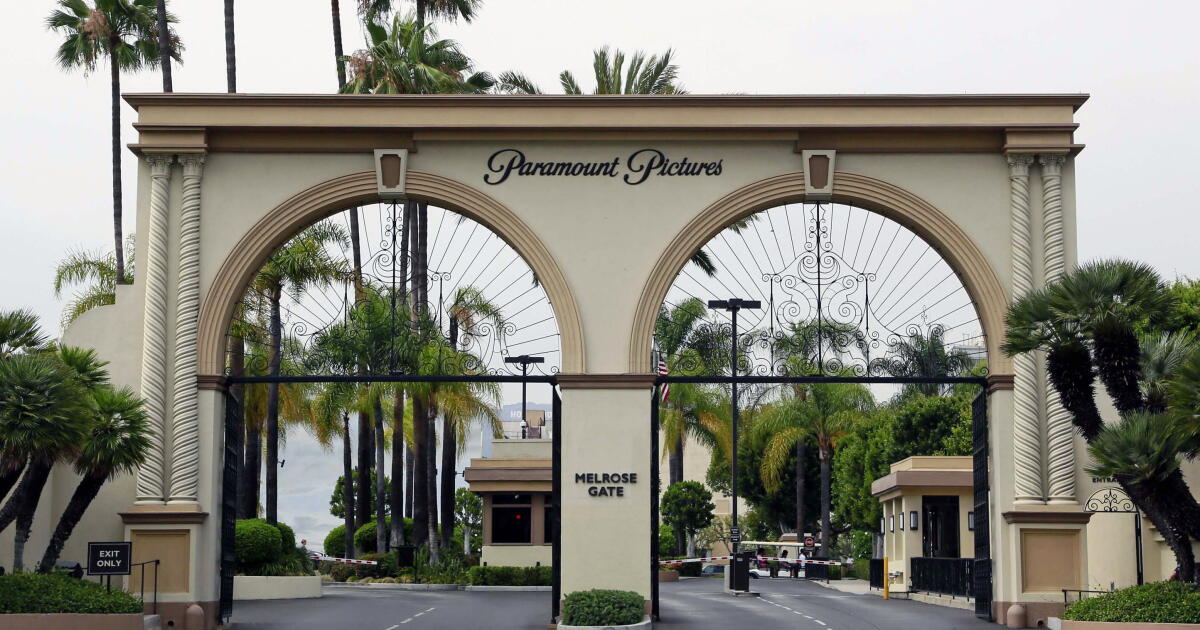
Paramount Skydance will meet with California Atty. Gen. Rob Bonta’s representatives next month for court-ordered settlement talks that could clear a path for David Ellison’s $111-billion takeover of Warner Bros. Discovery.
The two sides will convene for two days, Oct. 14 and Oct. 15, according to court documents filed this week.
The talks come as both sides look for ways to resolve the pitched battle over Hollywood’s industry-reshaping deal, which would put HBO, CBS, CNN, TBS, Food Network, Comedy Central and the Paramount and Warner Bros. studios under one roof. Bonta and 11 other Democratic state attorneys general sued in July to block it, and Ellison’s team has been stoking political pressure on Bonta to retreat.
Bonta canceled preliminary last month after details of a session on ground rules leaked, accusing Paramount of “playing games” by violating a confidentiality agreement and spreading misinformation.
Bonta’s Paramount case appears to have ruffled the Trump administration. He sued one month after the U.S. Justice Department blessed the merger without demanding concessions — a decision he said showed federal officials were not doing their jobs to enforce antitrust law. This week the department weighed in on Paramount’s side.
“The United States enforces the federal antitrust laws and has a strong interest in their correct application,” the Justice Department said in a Tuesday filing, describing its unique position to bring antitrust actions. Its “statement of interest” argued that the plaintiffs had sued as “private persons,” who must clear higher hurdles than the federal government.
The department also asked the judge to force California, the other states and the Writers Guild of America to post a $1.88-billion bond, covering fees Paramount would owe Warner Bros. Discovery shareholders if the deal isn’t finalized by Oct. 1. Paramount agreed to the so-called ticking fees earlier this year, confident the deal would sail through regulatory review. Bonta’s office said Wednesday it stands by its earlier filings arguing it should not have to post the bond. A hearing is set for Sept. 24.
Paramount’s chief legal officer, Makan Delrahim, has been quarterbacking the campaign for Warner Bros. Discovery. He served as Trump’s antitrust chief in his first administration, when he led an unsuccessful effort to block AT&T’s takeover of the company, then known as Time Warner Inc. That 2018 deal was the first of two acquisitions that saddled Warner Bros. with instability, strategic misfires and a mountain of debt, paving the way for the Paramount bid — which would mark the third time in a decade the storied studio has changed hands.
Trump has been eager for Ellison to shake up CNN, a Warner property, following his reboot of CBS News, which has coincided with diminished ratings at “60 Minutes”.
Ellison’s company has won approvals from more than 65 international regulators, and Paramount expects the Trump-appointed Federal Communications Commission leadership to sign off on a foreign ownership arrangement that would give Middle Eastern royal families a nearly 50% equity stake in the merged company. Bonta’s lawsuit is the remaining obstacle to closing.
Hashim Thaci, former President of Kosovo and KLA leader, has been found guilty of war crimes by the Specialist Court in The Hague. Al Jazeera’s Marah Rayan explains how the ruling came about.
Schools in England are to get around £500 million in extra funding towards the teachers’ pay award this school year, reducing the risk of a strike ballot by the largest education union.
Daniel Kebede, the General Secretary of the NEU, said the offer of more funding was a “significant” step in negotiations.
In a letter to the union on Wednesday, which has been seen by the BBC, the government said the increase would be funded by savings in employers’ contributions to the local government pension scheme.
The letter said the 4.9 percentage point drop in what employers are expected to contribute will deliver “significant savings” on the pay bill for support staff, which will not be clawed back by central government.
The National Education Union said it expected the extra money to be around £500m, which schools can now use towards teachers pay this year.
In July, ministers accepted the recommendation of the independent pay review body for teachers and agreed a 3.5% increase from September 2026 would be followed by 3% the following year.
The pay increase had been partly funded by an additional £700m for 2026-27 and £1.1bn for the following year.
Independent economists at the Institute for Fiscal Studies (IFS) said that left schools facing a shortfall of around 1% between rising costs and funding this year.
Luke Sibieta, IFS research fellow, said the extra money would mean the pay increase this year was fully funded – and on top of other funding increases, schools would be £1.6bn better off by next year than they had expected this summer.
The additional money could potentially bring the uplift for this year into line with next year.
Kebede said schools has been “running on empty” and the funding signalled “a welcome return to reality, and a message of hope for the entire school community”.
Paul Whiteman, General Secretary of the National Association of Headteachers, said the decision is “certainly welcome”, putting schools in a “better position”.
He said his union would look carefully at the detail “to determine whether this means the pay uplift is genuinely fully funded” for schools.
Pepe Di’Iasio, General Secretary of the Association of School and College Leaders, said he was “pleased” at the announcement of additional funding but “the wider pressure on school and college budgets remains intense”.
Similarly, the NASUWT union welcomed the news. General Secretary Matt Wrack added schools needed “a sustainable, long-term injection of extra funding” to meet the needs of young people.
In an indicative ballot by the NEU in April, 90% of teachers who voted said they would be prepared to take industrial action over funding and pay, on a turnout of 48%.
A formal ballot was due to begin on 3 October and close 15 December, raising the prospects of teachers pay strikes early in 2027.
The national executive of the NEU will meet on 24 September to consider whether to call that off following the additional funding on offer from the government.
A spokesperson for Education Secretary Lucy Powell said the government was “confident schools can now meet the costs of the award at a national level”.
“The Secretary of State has been clear from day one that supporting teacher recruitment, retention and wellbeing, and rebuilding the relationship with the profession, are among her top priorities.”
TORONTO — An actor from last year’s Toronto International Film Festival has been turning heads around town this week: Inde Navarrette, whose “Obsession” went from a modest 2025 Midnight Madness slot to a box office behemoth.
But if you had to pick this year’s Navarrette, who would it be? Among the breakout names of TIFF 2026 is unquestionably Rosalind Eleazar, the London-born 38-year-old star of “Misty Green,” the first film written and directed by Chris Rock since 2014’s “Top Five” and among the most notable world premieres at this year’s festival.
Misty is a Hollywood survivor who was never able to make the most of her own success, winning an Emmy a few years back but now losing the apartment she has been living in because the widow of the man she was cheating with wants it back. With her bad attitude and personal problems, Misty has burned many bridges along the way. There’s a chance she could be cast in a remake of “Dreamgirls” that would turn everything around for her, but Misty’s brother, Jay (Daniel Kaluuya, in his first major screen role since 2022’s “Nope”), was recently released from a mental facility and needs monitoring.
Though there are comedic moments along the way, “Misty Green” is very much a character study, as well as an unsparring examination of the systemic pressures on Black women in Hollywood — one executive interrupts Misty’s audition to ask if she is “mixed.” She does herself no favors, frequently self-sabotaging and getting in her own way.
“Being an actor is hard,” Eleazar said in an interview at The Times’ photo and video studio in Toronto on Sunday with a sense of well-earned candor. “I could totally relate to Misty’s journey and the setbacks and the constant picking yourself back up after multiple rejections and just going again. And trying not to have armor because as an actor you want to keep yourself open and you don’t want to harden too much. But it can be easy to harden yourself to an industry that can be unforgiving.”
Though “Misty Green” is Eleazar’s first lead in a film, she has had a steadily building career. She is probably most familiar to American audiences from her role as an MI5 agent on the Apple TV series “Slow Horses.” But soon she will likely be known for the explosive announcement that is “Misty Green.” The film will go on to play at the New York Film Festival and the London Film Festival and be released by distributor A24 on Oct. 9.
“It can be easy to harden yourself to an industry that can be unforgiving,” Eleazar says.
(Jason Armond / Los Angeles Times)
After her movie’s TIFF world premiere in a coveted Saturday night slot at Roy Thompson Hall, Eleazar was included among those celebrated at the annual TIFF Tribute Awards, a fundraising gala put on by the festival. She was recognized alongside such actors as Helen Mirren, Penélope Cruz and Isabelle Huppert, whom she called “extraordinary company.”
“I grew up watching them and admired their work,” Eleazar says earlier in the day. “It’s just such an honor to be considered amongst heavyweights like that. Dame Helen Mirren. Crikey.”
With a warm smile she adds, “Just went very British.”
In accepting the prize, Eleazar recalled how when she came to Toronto for the premiere of her first feature film, 2019’s “The Personal History of David Copperfield,” she stepped away from a party to call her mother at 4 a.m. London time. Not wanting to make that same mistake again, she made sure her mother was there with her in Toronto for this year’s Sunday gala, sitting at a table with Eleazar’s husband, the actor and producer Gabriele Lo Giudice.
Eleazar performs two songs in the film, a heartbreakingly vulnerable cabaret version of Radiohead’s “Creep” and a stripped-down, tender reading of “One Night Only” from “Dreamgirls.” (Eleazar does not consider herself a singer and took vocal lessons before shooting.) Then, in a scene in which Misty demands she be allowed to finish an audition, she flashes into someone else in a bit of pure craft that leaves those in the room astonished.
It was important that Misty be seen as someone who is in fact immensely talented, who may even be worth all the bother and strife that she brings along with her.
“I think we’ve seen movies before where the character isn’t talented and it’s about the hustle and the dream of making it in Hollywood,” says Eleazar. “But I think it’s really interesting seeing someone that cannot get out of their own way — someone that is railing against the industry and is fighting Hollywood, fighting herself, fighting the people around her. It becomes quite a universal subject. It is about our industry but it’s also just about someone who is trying to escape herself.”
Despite Misty’s obvious talents, acting simply may not be the best career for her anymore; it strains her emotional and mental health and enables her substance abuse. Over the course of her own career, Eleazar has at times had to check in with herself to make sure she was heading down the right path.
“There are definitely times that I’ve questioned it,” she says. “For me it does really feed my soul and therefore, at my low points, I’ve managed better. But it can be really heavy. And maybe I shouldn’t but I feel like I’m pretty happy being an actor.”
Chris Rock and Rosalind Eleazar in the movie “Misty Green.”
(A24)
To land the role, after a few meetings with Rock over Zoom, Eleazar flew herself from London to Los Angeles so she could read in the room. As it happened, it made for an intense few days: First she had a chemistry read with Ralph Fiennes in the U.K. for a stage role (she would appear opposite Fiennes in “Small Hotel” in 2025) and then immediately flew to L.A. to read with Rock.
“What a mad, amazing three days,” she recalls. Similarly, Eleazar would be ending her whirlwind few days in Toronto by heading to Los Angeles to be with the “Slow Horses” team for the Emmys on Monday.
In introducing her tribute on Sunday night, Rock recalled when Eleazar auditioned for the part.
“The room just changed,” he said. “She was funny, she was dangerous, she was moving and completely in command. Misty Green is a woman whose life is coming apart. Rosalind never played her as a victim. She made you see the intelligence, the appetite and the fight underneath all the chaos. The audition was supposed to help me decide who to play Misty, but halfway through, the decision had already been made.”
“It becomes quite a universal subject,” Eleazar says of Chris Rock’s latest movie. “It is about our industry but it’s also just about someone who is trying to escape herself.”
(Jason Armond / Los Angeles Times)
There is something poetic about the fact that playing a mid-career actress struggling to land her next job may be the very thing that brings Eleazar wider recognition.
“It’s kind of meta, isn’t it?” she says with a laugh. “Look, I’m so happy that people are responding to the film and my performance. That really is the cherry on top because for me — I know it sounds rather cheesy — but I literally felt like I won once I did that film. I had such a great time exploring who she was and working with Chris and Daniel and Adam [Driver] and that cast. So everything else is just so lovely.”
In accepting her own tribute award on Sunday, Helen Mirren went off-script from her prepared remarks to say how moved she had been by Eleazar’s earlier speech, adding, “It’s exciting to see the generations coming up, especially women.”
As Rock succinctly added in his speech, “Misty Green wishes she could be Rosalind Eleazar.”
Regardless of what happens with “Misty Green” commercially or throughout awards season, Eleazar will continue tending her steady climb. Production will begin soon on season 7 of “Slow Horses” and Eleazar is currently shooting a film role that she isn’t yet allowed to talk about.
But Misty and the experience of bringing her to life on the screen will remain transformative.
“It almost reminded me of like a Shakespearean character in a way,” Eleazar says. “She’s so self-destructive and flawed and contradictory and at times it’s hard to get onside with her. We see it a lot of the time with male roles and I’d love to see it more with female roles — these really complex and messy characters.”