The Washington institution cut its global growth forecast by 0.4 percentage points to 2.5 percent, citing surging energy prices, inflation and borrowing costs.
Published On 11 Jun 202611 Jun 2026
The conflict in the Middle East is set to bring global economic growth to its slowest since the COVID-19 pandemic, the World Bank has warned.
In its latest Global Economic Prospects report, published on Thursday, the Washington-based institution cut its global growth forecast for 2026 to 2.5 percent from the 2.9 percent it had predicted in January, citing surging energy prices, rising inflation and higher borrowing costs.
Recommended Stories
list of 3 itemsend of list
The report highlights the significant economic costs of the conflict, which is at risk of flaring up again, as the fragile ceasefire between the United States and Iran is tested on both sides.
The analysis warns that the outlook could decline further if supply disruptions worsen. Iran’s closure of the Strait of Hormuz – a vital passageway for oil and gas transit – in response to the hostilities launched by the US and Israel has put huge stress upon global energy and other supply chains.
The World Bank estimates that Brent crude prices — the international oil benchmark — will average $94 a barrel this year, 36 percent above last year’s average. Fertiliser prices are forecast to increase significantly this year, with knock-on effects for food prices.
Overall, the closure of the strategic waterway will help to push global inflation to 4 percent this year, a substantial increase from last year’s rate of 3.3 percent.
However, the World Bank cautions that global growth could plummet to as low as 1.3 percent this year, should energy supply disruptions worsen, with inflation pushing to 4.4 percent.
The World Bank report also cautions that developing countries are on the front line of the potential impact.
In its report, the institution has downgraded its growth forecasts for two-thirds of countries since January. Global growth is expected to improve to 2.8 percent in 2027, but will remain 0.4 percentage points below the average during the 2010s, during which the world economy was recovering from the global financial crisis.
Excluding China and India, the report worries that developing countries have made little progress towards narrowing their per capita income gap with wealthy nations over the past decade.
“Developing countries have faced a series of challenges over the last decade,” said Ajay Banga, president of the World Bank Group. “The impact differs by country, but the basic test is the same: protect people and preserve stability today, without giving up on growth and jobs tomorrow.”
The World Bank is pledging to assist any developing country experiencing the economic fallout of the Middle East conflict. The organisation says it has set aside up to $60bn to help. It added that if the conflict persists, it can increase its support to $100bn.
The last time Abdullahi Alabi heard from his friend, Oluwafemi Adeyemo, it was a voice note. “I dey Terminus… I sey make I update you,” his friend said in Nigerian Pidgin. He was restocking his foodstuffs at the market, but he never came back.
Abdullahi and Oluwafemi had been friends and coursemates since they came on campus. “We became brothers, I knew his family, he knew mine,” Abdullahi said.
Two days before that, on March 29, terrorists had opened fire on residents and passersby at Angwan Rukuba, a busy roadside community in Jos, Plateau State, North Central Nigeria, killing at least 30 people. The Plateau State government immediately clamped a 48-hour curfew on Jos North, the kind of precaution the city has learned, through painful experience, to take, given how quickly such attacks can tip into ethno-religious reprisal violence.
When the curfew lifted on April 1, Oluwafemi, a final-year Quantity Survey student at the University of Jos (UNIJOS), had just received his upkeep allowance from the Nigerian Education Loan Fund (NELFUND). He headed to Terminus Market that morning, a 15-minute tricycle ride from where he and Abdullahi lived, to buy foodstuffs.
What made Abdullahi check his phone that morning was hearing that something was happening around Terminus. He wanted to know if his friends were alright. That was when he saw the voice note.
“I actually did not take it that seriously,” he said. But as the updates on social media got worse, he started calling. Oluwafemi’s number was not going through. He and other friends kept trying.
By evening, Oluwafemi had not returned and was still unreachable. Abdullahi called the family, who said he had not been in touch with them either. “I took permission from the family to file a missing person report, and we also made a post on social media,” he said.
Then another of Oluwafemi’s friends reached out. She sent Abdullahi a screenshot of her last chat with him. He had told her there was a fight at Terminus, that he had escaped, and that he had made it to Bauchi Road, near the university’s Main Campus. After that, nothing.
The university’s Bauchi Road Campus (also known as the Main Campus) is located along Bauchi Road and is surrounded by volatile communities in the Angwan Rogo area. Map: UNIJOS Navigation Aid.
The next day, Abdullahi and other friends went from one police station to another. On the third day, they started checking mortuaries. That afternoon, a call came asking them to come to the Jos University Teaching Hospital to identify a body.
“When we got there, it was his body,” Abdullahi said, with a sigh. “He was attacked at Bauchi Junction. According to the autopsy, he sustained a gunshot wound to his back and was macheted as well.” He added that they were told that the police officers who brought his corpse to the hospital had intervened. The identities of the perpetrators remain unknown.
Oluwafemi was one of at least eight people killed in reprisal attacks that swept through Jos on 1 April, after the night of terror at Angwan Rukuba took on an ethno-religious colouration.
“Femi was ready to make a change in the world,” Abdullahi said. “A few days before his death, he sent a voice note in a group lamenting about how Nigeria is bad and what he thinks needs to be done to fix the challenges.” He never got the chance.
A portrait of Oluwafemi Adeyemo.
In that same voice note, obtained by HumAngle, Oluwafemi turned his frustration toward the government’s response to the recurring violence. Precautions like curfews, he said, were not enough. “What has curfew done?” he asked. “Make we speak up, abi na until dem kill everybody finish.”
Oluwafemi is not the first UNIJOS student the city has claimed. With over 40,000 students – according to its website – living and studying in Jos’s most volatile neighbourhoods, the university community has, for more than two decades, been one of the most consistent casualties of the city’s recurring violence. And with no meaningful change in how students are protected, many fear it is only a matter of time before the next name is added to the list.
Map of Jos North showing the areas usually affected by the crisis. Map by Mansir Muhammed/HumAngle
Caught in harm’s way
To understand why Oluwafemi’s death is not an isolated tragedy, it helps to know the city he was living in. To outsiders, the speed with which violence can spread across Jos often appears bewildering. Yet the city has endured recurring cycles of conflict for more than two decades, fuelled by a complex mix of ethno-religious tensions, disputes over indigene-settler identities, political representation, land ownership, and access to resources. While many incidents are framed as clashes between Christians and Muslims, residents and researchers have long argued that the roots of the conflict run deeper than religion alone.
“…as is often the case with identity conflicts in Africa, these are socially constructed stereotypes that are manipulated to trigger and drive violence in Jos,” said Prof. Chris Kwaja, a Researcher at the Centre for Conflict Management and Peace Studies at the University of Jos, Nigeria, who also serves as the Plateau State’s Special Envoy on Peace and Security.
“The ethnic or religious dimensions of the conflict have subsequently been misconstrued as the primary driver of violence when, in fact, disenfranchisement, inequality, and other practical fears are the real root causes. Capitalising on such conditions, many political rivals have instrumentalised the ethnic and religious diversity of Jos to manipulate and mobilise support. Each outbreak of violence worsens suspicions and renders communal reconciliation more difficult, deepening the cycle and further incentivising polarisation,” he noted.
Over the years, many neighbourhoods have become identified with particular ethnic and religious communities, creating a city that is deeply polarised along social and geographic lines. Areas such as Angwan Rukuba, Terminus, Bauchi Road, and other mixed communities often function as fault lines where residents from different backgrounds live, trade, commute, and study side by side. When violence breaks out, fear, rumours, and reprisals can quickly travel beyond the immediate scene of an attack, drawing in people who had no connection to the original incident.
For students of the UNIJOS whose campuses, hostels, and daily routines are woven into these communities, that vulnerability is particularly acute. A journey to class, the market, or a friend’s place can suddenly become dangerous when the city descends into unrest.
Map of Plateau State showing Jos North. Illustrated by Mansir Muhammed/HumAngle.
Until his death, Oluwafemi was studying quantity surveying at UNIJOS. Photo: Johnstone Kpilaakaa/HumAngle.
Jos North is where most of the university’s campuses sit, including the Township Campus, Bauchi Road Campus, Naraguta Campus, the Jos University Teaching Hospital, staff quarters, and other facilities. Student hostels, both university-owned and private, are scattered all across the area. Angwan Rukuba, where the March 29 attack happened, is one of the neighbourhoods with the highest concentration of students. Meanwhile, Terminus Market, which borders it, has long been an epicentre of violence in the city.
Get our in-depth, creative coverage of conflict and development delivered to you every weekend.
Subscribe now to our newsletter!
Several residents and students who spoke to HumAngle said the university community is always caught in the middle when violence breaks out, which is hardly surprising, given how deeply the campuses and student hostels are woven into those areas.
Although no comprehensive data exists on the total number of students killed across incidents, HumAngle’s research — drawing on interviews with students and staff, as well as archival news reports — indicates that at least five students have died in every major episode of violence, and often significantly more.
In 2018, Shedrach ‘Kums’ Fenan, a 300-level Law student, was shot and killed by a stray military bullet near the Students’ Village Hostel during a similar crisis. That same year, the bodies of several students were found floating in nearby rivers.
Plangna’an Daor, who studied law at UNIJOS and now works as team lead of the post-conflict rehabilitation and recovery desk at the Plateau Peacebuilding Agency, knew Kums personally.
“I still remember how we were all glued to social media, checking on friends in different parts of Jos, asking questions and trying to understand what was happening,” she told HumAngle. “Imagine finding out that the student was someone you knew personally, someone with immense potential.” As an executive leader of the National Association of Plateau State Students at the time, she travelled with other students for the burial. “It was a stark reminder that students are not merely observers of conflict; they can become direct victims of it,” she said.
Aondona Kwaghaondo, a medical student at the university, almost lost his life when a mob attacked him in August 2021, along the Bauchi Road near the Naraguta Hostels, which sits between major university communities. “It was a very traumatising experience; till this day I am a bit triggered by similar sights and sounds,” he said. Aondona survived, but he sustained several injuries from the attack.
The Bauchi Road route, where Aondona was attacked in 2021, is just beside the highway. Photo: Johnstone Kpilaakaa/HumAngle.
During one of the crises, while she was a student, Plangna’an lived off campus near Dariye Park, barely 100 metres away from the main gate of the Naraguta Campus. “I remember the tension of that period vividly,” she said. “We could hear gunshots at night and constantly monitored developments around us.”
The fear was not abstract. During that same period, Plangna’an narrated that a young man attempting to reach Bauchi Road Junction was stabbed after ignoring a neighbour’s warning and was brought to her compound, where a medical student provided first aid before he could be taken to the hospital. “The atmosphere was one of constant fear and uncertainty,” Plangna’an recalled. Her roommates told her, “This is not the time to sleep in a nightie. Wear trousers. Wear something that, if we have to wake up and run, you can simply get up and leave.”
She also highlights a dimension of the crisis that is easy to overlook: the particular vulnerability of students like Adeyemo, who are from outside Plateau State. “Those of us from Plateau State at least had some understanding of the context,” she said. “But imagine students who came from other states and had no understanding of the local dynamics. They arrived expecting a safe learning environment and suddenly found themselves navigating fear, insecurity, displacement, and uncertainty.” Many students, she notes, are simply unfamiliar with which areas are considered high-risk during periods of tension, and which routes should be avoided.
Prof. Lazarus Maigoro, former chairperson of the Academic Staff Union of Universities (ASUU) UNIJOS chapter, said the pattern has left the university community exasperated. “We have suffered untold damages in relation to loss of lives and property… each time there is a security breach in Jos, and as a union, we have tried to understand how the university community is always at the receiving end of each crisis in Jos,” he said.
“In spite of all the provocations, we have continued to offer community service to all, irrespective of religion, culture and tribe; the university administration has, over the years, made overtures to host communities in terms of undergraduate admissions and staff employment, yet our students and staff are killed at the slightest provocation, however far the epicentre of the crisis from the institution.”
Plangna’an, who now works on post-conflict recovery, points to structural factors that compound the danger. The communities surrounding the university include areas with high concentrations of informal settlements, illegal structures, motor parks, and markets. “Some of these spaces have become hideouts for criminals, street gangs, drug users, and other vulnerable groups susceptible to recruitment into violence and extremism,” she said. Students living off-campus must pass through these environments daily.
As Prof. Maigoro noted, the attacks not only threaten the security of life and property within the university community but also disrupt the academic calendar, causing students to spend more than the stipulated number of years to complete their programmes. “Some who were meant to spend four years will end up doing six, that is, if there are no labour union strikes,” said Liamhuan Akpenmo, a student of the university’s Faculty of Education.
For instance, Adeyemo got admission in 2019, but by the time of his death, he had spent seven years on a five-year programme, his progress interrupted by the COVID-19 lockdown and the 2021 crisis that forced the university to close.
The evacuation
When the situation following the March 29 incident worsened, the university management rescheduled the semester examinations and placed academic and related activities on hold. Prof. Ishaya Tanko, the vice-chancellor, also announced the evacuation of students from hostels, in collaboration with the Plateau State government.
In the days that followed, specifically from April 2, other state governments and private individuals began sending dozens of buses to evacuate students who were indigenes or residents of those states. More than 1600 students were reportedly evacuated by about seven state governments, including Benue, Delta, and Kaduna. Such arrangements are often collaborations with state student union groups and relevant state government ministries.
UNIJOS students living in Benue State awaiting evacuation by the state government on April 2. Photo: Johnstone Kpilaakaa/HumAngle
“It was all familiar,” said Liamhuan, a student who first experienced a similar evacuation in 2021. She and her younger sister, who is also a student, left for Benue; other students travelled as far as Lagos.
Then, even as the crisis was still unfolding, the university management announced that examinations would go ahead. “It was abrupt,” said Liamhuan. The city was not yet safe. A 6 p.m. curfew was still in effect. In one press statement issued around that time, the Student Union Government advised students to either split their journey into two legs or arrive early enough to beat the curfew. Social media was still full of missing-person posters.
“Let me state clearly that since the beginning of the crisis, no single breach of the peace was recorded on any of our campuses,” the Vice Chancellor said at a press briefing. But students like Oluwafemi, who died during the incident, were attacked in areas immediately surrounding the university, a distinction that offered little comfort to those who had lost someone.
For instance, in August 2021, at the peak of a similar crisis, a 100-level microbiology student of the university was murdered by a mob at a filling station, near Dariye Park – where Plangna’an lived – which is located adjacent to the university.
HumAngle reached out to Emmanuel Madugu, the university’s Deputy Registrar for Information and Public Relations, for comment on how the university intends to prevent casualties among students and staff. Madugu acknowledged the request and indicated that he would respond after consulting the relevant units, but had not done so at the time of publication.
An alumnus of the university with knowledge of security matters, who spoke on condition of anonymity, said there is only so much the institution can do. When students and staff are attacked outside the university environment, he noted, the university’s hands are largely tied. The responsibility, he argued, falls primarily on the state and federal governments to secure the city.
For Liamhuan, the management’s decision to continue with the session reflected a pattern she had seen before. “I prefer to leave because the school environment does not feel safe, and everywhere feels threatened. So, home is where I feel safe, and if anything happens to you, it is you and your family that will bear the burden.” She added that the situation is even more difficult for students like herself who live off campus, largely due to a lack of sufficient student hostels.
“Even those on campus are not protected,” Liamhuan added. She once lived in one of the student hostels at the Naraguta Campus before moving off campus. “Students are still attacked by mobs when they are close to the school facilities.” Aondona’s testimony confirms this. Additionally, a viral video during the recent incident showed a man who was attacked right at the entrance of the university’s Naraguta Campus, which houses the administrative building and most of the faculties and student residences.
Although armed security posts existed near university campuses around 2017 and 2018, HumAngle observed that most of those posts no longer exist, and security is now mostly provided by unarmed officers of the university’s Security Division. More recently, through the Tertiary Education Trust Fund, a police station was constructed at the Naraguta Hostels Gate, along the Jos-Bauchi Road, but students say it is insufficient.
Entrance of the student hostels at Naraguta Campus, where Adeyemo lived. Photo: Johnstone Kpilaakaa/HumAngle.
When HumAngle visited the campus in June, no police officers were seen on the grounds, but an unarmed Security Division security guard was at the gate.
For Abdullahi, authorities do not need to wait for violence to break out before they start mapping how to protect the students and the rest of the university community. “If there are checkpoints at flashpoints like Bauchi Road, when a crisis starts, there will be an immediate response, ensuring that killings are avoided,” he said, adding that surveillance cameras can also be installed.
During a condolence visit to Plateau State after the March 29 attack, Nigeria’s President, Bola Tinubu, disclosed that the Federal Government would deploy an artificial intelligence-enabled network of over 5,000 digital cameras to help law enforcement agencies combat insecurity in the state. At the time of this report, the project had yet to commence.
The General Officer Commanding of the 3rd Division, Maxwell Khobe Cantonment, Major Gen. Eyitayo Oyinlola, visited the university during the recent incident “to assure the Vice Chancellor of the Division’s high priority of securing the University in the face of threats to the lives of its community”. But students who were on campus during the incident said little to no security was actually provided.
Younglan Taylong, the university’s Student Union Government president, did not respond to requests for comment. However, students who spoke to HumAngle, including Abdullahi, say the union was supportive during the crisis, providing information, aid, and evacuation support to students.
A police station was recently constructed at the entrance to the hostels on the Naraguta campus, but students and staff say it is insufficient to meet the needs of the university’s vast community. Photo: Johnstone Kpilaakaa/HumAngle.
In the absence of protection, students have had to fend for themselves. Another student, a recent graduate who declined to give his name for fear, recalled that during tense periods, particularly in 2021, students would mobilise to act as a vigilante force around the hostels at night.
“Sometimes, we will just carry kitchen knives, I do not even know what we were thinking,” he said.
What can be done?
For those who have spent years studying or working on the crisis, the frustrating reality is that the recommendations are not new. The Greater Jos Master Plan already includes provisions to relocate illegal motor parks, markets, and informal settlements away from critical public institutions, such as the university. Similar proposals have appeared repeatedly across various commissions of inquiry. “Many remain unimplemented,” Plangna’an said. “There is a need for greater political will to translate these recommendations into reality.”
Among the measures she and others who spoke to HumAngle advocated for are: the establishment of a Mobile Police barracks or dedicated security formation near the university; the construction of additional student hostels to reduce the number of students living off-campus; the strengthening and securing of perimeter fencing at the Permanent Site to control access and deter encroachment; and the provision of secure shuttle bus services for students living off-campus. “While no transport system is completely immune to attack, organised transportation would significantly reduce students’ exposure to risk,” she added.
The post-conflict rehabilitation and recovery expert also calls for dualising major roads around the university and constructing an interchange at the Bauchi Road junction — a congested gateway into the state that regularly creates both mobility and security problems. Beyond infrastructure, she argues for sustained investment in peacebuilding programmes that directly involve students, university staff, and surrounding communities, including support for those living with the psychological aftermath of violence. “There are many students who continue to live with trauma from experiences they have had as victims or witnesses of violence,” she said. “These experiences can affect academic performance, mental health, and overall well-being.”
Plangna’an insists the approach must shift from reactive to preventive. “Every time violence occurs, similar recommendations are made, yet implementation remains weak,” she said. “Early warning without early response has limited value.”
Until that changes, students and experts who spoke to HumAngle say that the university community will remain, as it has been for more than two decades, caught in the crossfire.
Obsession is maybe too hard-edged; interest too soft. But from “Close Encounters of the Third Kind” and “E.T” to his new sci-fi thriller “Disclosure Day,” Steven Spielberg has spent nearly the entire length of his career returning to the possibility that we are not alone in the universe. Even “Firelight,” the amateur movie he made as an Arizona teenager in 1964, revolved around extraterrestrial visitors.
That recurring fascination stands out partly because Spielberg has never been a filmmaker who stays in one lane. Across 36 features as a director, he has pivoted between science fiction, war films, historical dramas, adventure movies, thrillers, comedies and even a musical while somehow retaining the same famed Spielbergian sense of emotional wonder that defined his earliest work.
Which makes “Disclosure Day” — opening Friday and built around mysterious transmissions, buried government secrets and the possibility of alien contact — feel less like a detour than a return to one of Spielberg’s oldest creative preoccupations. Speaking about the film in March at SXSW, Spielberg admitted that while he has no special knowledge about extraterrestrial life, he nevertheless has “a very strong, sneaking suspicion that we are not alone here on Earth right now. And I made a movie about that.”
So with Spielberg once again looking skyward, we decided to revisit the director’s long cinematic relationship with aliens, as figures of astonishment, terror, transcendence and, occasionally, giant crystal skulls from another dimension.
Melinda Dillon and Cary Guffey in 1977’s “Close Encounters of the Third Kind.”
(Columbia Pictures)
Josh Rottenberg: I don’t really remember a world without Spielberg’s aliens. I was 6 when “Close Encounters of the Third Kind” arrived in 1977, not much older than the little boy played by Cary Guffey who is carried off by visitors from another world after his toys mysteriously come to life. Five years later, I was exactly Elliott’s age when “E.T. the Extra-Terrestrial” landed in theaters in 1982.
“Close Encounters” made aliens feel weirdly plausible, not just creatures in a “Star Wars” cantina or rubber-suited monsters from old sci-fi movies but something that might turn up in ordinary American life through blinking kitchen appliances, strange lights in the sky and suburban middle-class dads who can’t explain why they suddenly need to drive to Wyoming.
What surprises me now is how hopeful the movie feels. It came out of the post-Watergate ’70s, when distrust of institutions was running high, but Spielberg directed most of that suspicion toward the government, not the alien visitors. Richard Dreyfuss sculpting Devils Tower out of mashed potatoes should seem completely insane — and it kind of is. But Spielberg somehow makes you understand why Dreyfuss’ Roy Neary is willing to walk away from his entire life and family over something he can’t explain.
With “E.T.,” Spielberg scaled that cosmic yearning down to a California cul-de-sac. I recently watched the movie again at Hollywood Forever Cemetery with my wife and younger daughter, who’s in college now. I’d seen it several times since 1982 but not on a big screen, and I was startled by how much of it I still knew by heart: E.T. shuffling through the kitchen drinking cans of Coors, Elliott freeing the frogs in science class, Drew Barrymore introducing the alien to her dolls like he’s a new kid who just moved in next door. Somewhere along the way, “E.T.” became less a movie to me than part of the background texture of childhood itself.
Spielberg turned one of science fiction’s grandest ideas — first contact with alien life — into the story of a boy and his weird little space-faring goblin best friend. Mark, we’re of the same Gen X vintage. Did Spielberg permanently convince you that aliens were basically on our side?
A scene from the 1982 movie “E.T. the Extra-Terrestrial.”
(Universal Pictures / Photofest)
Mark Olsen: I didn’t see “Close Encounters” when it was first in theaters, but I remember any kid with a piano learning those five notes of John Williams’ alien theme music and then the movie becoming a staple rental of the early VHS era.
When I revisited the film for its 2017 re-release — an overwhelming experience in the sorely missed Cinerama Dome, where the movie also played when it first opened — I was struck by how homespun and handmade it felt, grounded in a naturalistic sense of realism. For as much as Spielberg may be fascinated by aliens and whatever could be out there, he always uses them as a way to reconsider what is going on down here: to reconnect with the elemental aspects of humanity and our common bonds.
I’ll be honest and say that “E.T.” is a movie I have always struggled with. I clearly remember seeing the movie when I was young and being very disturbed by the scene when the government arrives and drapes the family’s house in plastic sheets and tubing. I distinctly recall recognizing that the film itself wanted me to feel bad — I didn’t like that. (Perhaps thus was a young critic born.) Spielberg is often so proud of his mechanics, he lets them show, which is why even then I was resistant to moments when he wants the relationship between Elliott and his new friend to truly take flight.
Tom Cruise in Steven Spielberg’s 2005 sci-fi thriller “War of the Worlds.”
(Paramount Pictures)
Rottenberg: By 2005 and “War of the Worlds,” the wonderment was gone. Spielberg took H.G. Wells’ downbeat vision of extraterrestrials as exterminators and updated it for post-9/11 America: nightmarish scenes of alien tripods clawing their way up through the pavement, blaring air-raid horns, entire crowds vaporized into clouds of dust.
This time, nobody is trying to communicate through music or empathy. Tom Cruise spends the movie running through New Jersey with two terrified kids while ash drifts through the streets and giant alien war machines scoop humans into dangling metal cages. “E.T.” had turned aliens into plush toys and breakfast cereal. “War of the Worlds” turned them back into the menacing aggressors of 1950s sci-fi films like “Earth vs. the Flying Saucers” and “Invaders From Mars.”
Which made it all the more jarring when, three years later, Spielberg suddenly swerved back toward old-school flying-saucer mythology with 2008’s “Indiana Jones and the Kingdom of the Crystal Skull,” shoehorning an extraterrestrial plot into one of his most beloved series. Seeing Cate Blanchett march into a glowing alien chamber to commune with giant crystal skeletons from another dimension, I could understand why some fans reacted like they’d just watched someone spray-paint a UFO on the Ark of the Covenant.
But looking back, the inclusion seems almost inevitable. Spielberg keeps circling back to aliens no matter what genre or franchise he’s working in. Even 2001’s “A.I. Artificial Intelligence” eventually reveals itself as a kind of inverted first-contact story, with humanity becoming the vanished civilization studied by synthetic descendants of the machines.
Mark, were you able to roll with Indy suddenly colliding with Area 51 mythology, or did Spielberg lose you at that point?
Harrison Ford and Shia LaBeouf in the 2008 movie “Indiana Jones and the Kingdom of the Crystal Skull.”
(David James / Paramount Pictures / Lucasfilm)
Olsen: There was something so eye-rollingly whatever about the finale of “Kingdom of the Crystal Skull” that you couldn’t even really be mad about it. On a storytelling scale of Spielbergian preposterousness, the moment lands somewhere between the Wrath of God sequence in “Raiders of the Lost Ark” (totally legit) and the time traveling of “Dial of Destiny” (throws hands in the air).
“War of the Worlds” remains a fascinating film within the director’s space alien canon because it has an anxiety and uncertainty that isn’t often found elsewhere. Even his core interest in creatures, so often a well of amazement and positivity, couldn’t pull him up. Much has been made of the film as a response to the aftermath of 9/11 and Spielberg followed it up with the existential thriller “Munich,” a further exploration of the darker aspects of the national mood, before the year was even up.
This seemed to be a moment of malaise for Spielberg, one he worked his way out of with an unpredictably wide-ranging series of films including “Lincoln,” “Bridge of Spies” and “The Post.” It was as if he were left reeling from cynicism and was trying to reclaim some youthful confidence that he would eventually rediscover with the autobiographical “The Fabelmans.” Josh, do you feel that “Disclosure Day” serves as the final word on Spielberg’s alien interests?
Emily Blunt and Josh O’Connor in the movie “Disclosure Day.”
(Niko Tavernise / Universal Pictures)
Rottenberg: What makes “Disclosure Day” interesting to me — even though I wasn’t fully sold on it — is that Spielberg is returning to these ideas at a moment when UFO culture has already evolved far beyond him.
Screenwriter David Koepp has cited “Three Days of the Condor” as a touchstone, and for long and often gripping stretches, the movie really does play like a paranoid 1970s conspiracy thriller: cryptic transmissions, shadowy government programs, Josh O’Connor racing to expose buried secrets, Colin Firth strapped into a chair using alien technology to manipulate people from afar.
But while “Close Encounters” arrived at a time when UFOs still occupied this hazy space between science fiction, Cold War anxiety and New Age mysticism, “Disclosure Day” lands in a world where self-described UFO abductees have their own support groups and Congress has held multiple hearings about “unidentified anomalous phenomena.” Meanwhile, earlier this spring, the U.S. government declassified another batch of UFO files and the response was roughly equivalent to a collective shrug.
In recent interviews, Spielberg has said he now considers the circumstantial evidence for UFOs “overwhelming” and no longer views “Disclosure Day” as science fiction at all. In his earlier alien films, extraterrestrials represented mystery and escape. Here they feel more like vaguely benevolent interstellar therapists trying to help humanity get its act together. The film’s climax reaches for the same sense of civilizational awe as the mothership landing in “Close Encounters.” For me it didn’t quite get there.
But maybe that’s partly because it’s harder now to experience these ideas with the same innocence they carried in 1977 or 1982. Rewatching “E.T.” at the Hollywood Forever Cemetery, I still wanted to believe that an encounter with an alien intelligence could elevate us. But we’re a long way from Reese’s Pieces and flying bicycles. Mark, did “Disclosure Day” manage to pull you back into Spielberg’s orbit this time?
Olsen: I have to just get it out of the way that as someone from Kansas City, I will be eternally annoyed that Emily Blunt plays a TV weatherperson in KC and Spielberg did not actually shoot there. Having said that, for me the movie is at its best as a chase thriller — a sequence in which O’Connor escapes a remote farmhouse is particularly well-executed.
“Disclosure Day” is first and foremost just a lot of fun, a showcase for Spielberg’s gifts as a filmmaker and his longstanding collaborations with cinematographer Janusz Kaminski and composer John Williams. The film is deeply interested in who knows what. There are longtime tightly held secrets being kept from the rest of us for whatever reason. Though the film is framed as a conspiracy thriller, Spielberg’s essential goodheartedness continually peeks out, as if he can only play at being hard-bitten for so long.
Where the film becomes less sure-footed is when it grabs for its bigger meaning, attempting to render something deeper from Spielberg’s longstanding fascination with aliens and what they might have to teach us.
The real disclosure of “Disclosure Day” turns out to be our own inability to listen: how everyone gets so wrapped up in themselves they often miss the larger picture. But the idea that the entire world could latch onto something together feels too far-fetched in our own current fractured news environment. That is likely less the fault of Spielberg and more one of ourselves. His career-spanning interest in aliens always brings him back to trying to better understand us.
Bahrain released video of damage in Manama after debris from intercepted Iranian drones fell in populated areas, damaging homes, burning vehicles and scattering wreckage. Officials said an 11-year-old girl sustained minor injuries in the incident.
Shrek’s abs are more defined than some might expect. Or is it that the shade of his green skin makes them appear more chiseled under bright lights? Maybe it’s just disorienting because no one anticipated gawking at his torso inside the historic downtown Los Angeles venue founded by Hollywood legends Charlie Chaplin, Mary Pickford, Douglas Fairbanks and D.W. Griffith.
These are thoughts that swirl in one’s head while attending this year’s Las Culturistas Culture Awards ceremony, held on a recent Saturday night at the United Theater. An offshoot of the popular podcast that actor-comedians Matt Rogers and Bowen Yang have hosted since 2016, the award show aims to celebrate the year’s biggest pop culture moments and plays like a fever dream more dazzling and deliciously random than a late-night scroll session on TikTok.
After launching in 2022 as a live event outdoors at Lincoln Center, the guerrilla awards show reached TV screens for the first time last year. This year’s ceremony, which will air June 17 on Bravo and stream on Peacock, coincides with the podcast’s 10th anniversary and features a kaleidoscopic array of attendees, including screen veterans like Lisa Kudrow and Will Ferrell, reality TV favorites like “Summer House’s” Ciara Miller and “The Real Housewives of Dubai’s” Chanel Ayan, and anthropomorphic icons like Miss Piggy and a certain green ogre. And the prizes? It’s the only place you can find categories like “Real Housewives Award for Best Way to Start a Confrontation,” “Pornhub Category We Would Never Click On” and “Hilary Duff Award for Millennial Excellence.”
Over lunch at the NBCUniversal lot in Universal City, Rogers and Yang discussed the show’s evolution. These are edited excerpts from the conversation.
Matt Rogers, left foreground, and Bowen Yang perform a musical number inspired by “Heated Rivalry” during this year’s Las Culturistas Culture Awards.
(Monty Brinton / Bravo)
I will probably regret starting our conversation this way, but we all have our blind spots and, to thoroughly prepare for this interview, I watched “Shrek” for the first time last night.
Yang: Oh great! The first one?
Rogers: How’d you feel?
I get it now.
Rogers: Get what, that he is attractive or …?
I’m not quite there yet. You guys reference the film a lot on your podcast and Shrek has also been a figure on the awards show, including this year. I was hoping you’d explain Shrek as a heartthrob to me as if we’re in a pop culture class. When did this idea really take shape?
Yang: Over at least a couple years, to my knowledge, there’s been this online meme culture around Shrek, where it’s like, “Oh my God, Shrek is like a sex king,” but now it’s even spilled over into like dating life. I don’t know if you’ve heard of this, but there’s a verb called Shreking in dating, where it has to do with women dating a guy that’s below their league because he will be nice to them; he will be a Shrek to their Fiona. That’s an interesting thing — you date someone slightly in another zone than you, so that you can be like, “Well, that’s my Shrek,” but meanwhile, there’s the tension between that and Shrek being someone that people are actually attracted to. This just speaks to the enduring power of Shrek as a pop culture icon.
Rogers: I think what it is, is he has an amazing accent. It’s a very powerful thing. He’s independent, he’s self-sufficient, he’s a movie star.
Yang: He said it at the awards. I mean, he’s a rich celebrity.
Rogers: We saw the real Shrek at the awards and he looks pretty f—ing good to me.
Yang: He looked good to me. I don’t know what these Gen Zers are talking about with this Shrek being below your league.
What are the calls with publicists like now to get their clients to participate?
Yang: Last year was a communication puzzle to solve. We were like, “OK, we have to really convey this the right way.” We thought, perhaps naively, now that we’ve done it, now that there’s a proof of concept, it’s going to be much clearer. I think it was clearer, but there was still that degree of, “oh, this is …” — not to like give ourselves too much credit, but this is a concentric circle outside of what is very established in the form of an award show. You’ve got publicists who are like, “Well, we would love for our client to win an award.” And you’re like, “No, that’s not really the point.”
Rogers: Presenting is just as good as winning, just as good as performing. But I think it’s weird that we have been so late to stumble on what the show really is, which is it’s a variety show. And, so, in wrapping your head around it that way, it’s actually pretty easy to get across. It just has the drag of an award show, and that’s our way in.
But I do understand the publicist hesitation because I will say, in a world where it’s your job to protect your client, you’re putting them in a situation that is like, “OK, they’re going to an award show — that’s something this town takes very seriously.” So, it’s an ask to be like, “Hey, can you come take the piss out of this concept that you’re then probably gonna spend eight months of the year trying to actually achieve?” I would be lying if I said that we didn’t want one day to win one of those awards. It’s an acknowledgment of your work, but in that, Bowen and I think the No. 1 thing that’s the funniest thing in the world is people who take themselves that seriously. It’s a healthy mix of appreciation for this thing that was actually a big element of the culture that made us say culture was for us, which was watching award shows when we were kids, and also the reality that we now know as people that are in the industry of what they really are, which is they’re just shows. We’re not condemning them, we’re having fun with it.
1
2
1.Scenes from the 2025 Las Culturistas Culture Awards: Jeff Goldblum, left, accepting the award for Most Amazing Impact in Film for his appearance in “Jurassic Park,” alongside presenter Patti Harrison. (Griffin Nagel / Bravo)2.Allison Janney was a guest of honor, receiving the Lifetime of Culture award.(Jordan Strauss / Bravo)
Have you been asked to tweak the name of a category or punch it up even more?
Yang: Last week was the window when our producers could be very honest with us and say if something may not be working. Back to the Shrek [bit in this year’s show], actually, that ended up being much dirtier and bluer than it was on stage.
Really? I already knew I wouldn’t be able to include the award category because of Times standards. So the actual bit was raunchier?
Yang: It was even raunchier. It went for it.
Rogers: But it’s also a testament to how much freedom they give us to make our show. If they were concerned at all about us desecrating the image of Shrek, we certainly did not feel that way. I am really shocked and grateful that we get to do something that it feels like we’re getting away with something.
Take me back in time with young Bowen and young Matt. What do you remember about your enthusiasm for award shows growing up?
Yang: It was watching Billy Crystal at the Oscars do song and dance numbers, zing these things in for a laugh that we’re referencing the year, being in these video packages where he was in the movies. That it was live television and just this pageantry of people congratulating themselves, congratulating each other. I would tune in live every single year to all the award shows and I would follow the host changes. I remember Whoopi’s first year [hosting the Oscars]; I remember Ellen’s first year. I was really obsessive. It opened the door for all these things that I currently love, and that I’ve somehow had a fortunate experience in, which is live television, song and dance numbers — everything that Billy Crystal was doing. It keyed me in on how show business works, down to production elements and how filmmaking comes together.
Rogers: I just remember, I looked at the screen and I was like, “Oh, that’s where I belong. I belong with them. I don’t belong out here.” I was one of those Gold Derby kids — I would be on the forums; I still sometimes look at the odds and rankings and stuff. It was like gay sports, particularly with the best actress and best supporting actress races. And then obviously the Grammys, and all of that. One year I was watching, I think it was the People’s Choice Awards or the American Music Awards or something, and Shania Twain lost to LeAnn Rimes, and I cried for a day. I took it so seriously and my mother turned to me and said, “You need to stop.” But you couldn’t tell me it didn’t matter at the time. [Reporter’s note: Twain lost the favorite country new artist award to Rimes at the 1997 American Music Awards.]
As the profile of Bowen Yang and Matt Rogers’ variety-style award show has risen, getting stars on board is an interesting puzzle: “You’ve got publicists who are like, ‘Well, we would love for our client to win an award,’” Yang says. “And you’re like, ‘No, that’s not really the point.’”
(Jason Armond / Los Angeles Times)
What do you remember about your first experience at a major awards show?
Rogers: He was nominated as writer for “SNL” and took me as his date. We were sitting there — the “Queer Eye” guys were sitting like three rows behind us.
Yang: We watched Phoebe Waller-Bridge sweep with “Fleabag.”
Rogers: We watched Michelle Williams win for “Fosse/Verdon.” It was funny because we had gone to the bar and were double-fisting drinks back to the seats and I said to Bowen, “Oh my God, I’m like the Busy Philipps to your Michelle Williams.”
Yang: And who shows up behind us?
Rogers: Busy Philipps taps on our shoulders and goes, “You guys are killing it with those drinks.” And I’m like, she doesn’t even know I’m her. Cut to minutes later, Michelle walking up and giving a banger of a speech.
Yang: That was like our first brush with it. Even now we go to these, and we’re like, this is really something; it’s incredible. We were at the Oscars last year, front row, witnessing all of it go down, witnessing the moment where upsets would happen, feeling the vibe in the room shift. The benefit of our show is that the vibe is pretty high throughout; it does not decline as soon as there are losers in the room.
Las Culturistas Culture Awards took place in late May and is being telecast roughly two weeks later. Do you see it ever going the live route?
Yang: We don’t know. That is my not so secret dream, is to do it live one day. There’s just something about doing it live — and it occurs to me now that I’ve been very lucky and fortunate to have have my reps in. There’s just something so wonderful about it being this event where everyone is tuning in, enjoying it the same time you are. That is really something special.
Rogers: If he’s down, I’m down.
I’m sure this changes each year, but who’s your dream person to snag for an appearance?
Rogers: I would say the people that make it very apparent that they have sketch comedy and impression skills, and maybe you wouldn’t necessarily know that they do until they show that.
Yang: Ariana Grande.
Rogers: Our dream was for Ariana to come do an original character. We actually floated to her the idea — there was going to be like a Banksy reveal of MsMojo, and it was going to be revealed that it was Ariana Grande was MsMojo. But she actually was in rehearsals for the Eternal Sunshine World Tour. Little did we know she also was recording “Petal.” She was a bit too busy to play MsMojo, I guess, this time.
Yang: These two are forever paired in my head, but it’s because she’s another sketch performer: Cher. And sometimes the dream guests are not big names, it’s the people that we came up with in comedy. And actually one of the consumer research reports that we got back before we started writing this year’s show was that the thing that people loved about the Culture Awards was this crossover of reality talent, A-listers and Oscar winners, and comedy people — that mix, those three [types of] people mingling together is what the viewers want.
Rogers: I’m just so proud in every single way of the diverse array of talent that we were able to bring together. I looked out in the audience and it was just a party of so many friends and people we’ve met in the business — people that I didn’t even get to meet that night, but I was just gagged they’re there, especially in the edit, which you’ll see. This is Bowen’s first year in the edit, he had to miss it last year, but that’s what’s so cool about going through the footage, is you’re like, “Oh my God, there’s someone I’ve loved my entire life next to my cousin.” We were saying to each other that it ended up being like a weird love letter to our younger selves, having Mandy Moore and singing “Only Hope” with her and doing the “Pokémon” theme song and getting to hang out with Pikachu.
Do you worry about it ever getting too big?
Rogers: If it ever gets to a point where it couldn’t be funny, that wouldn’t work. We want it to always stay true to what it is, which is it’s our comedy special together. As long as it doesn’t feel like it’s selling out — and I can understand people watching it and being like, “Oh, they obviously had to have Nintendo characters because it’s NBCUniversal or obviously they had to include “Summer House” — none of that is true.
Yang: There’s no mandate.
Rogers: This is genuinely what we would want the show to be, and so as long as it’s that, we’re good.
So what’s your “I don’t think so, honey” on awards shows?
Rogers: I don’t think so, honey — 10 nominees for best picture at the Oscars. Why?
Yang: Totally. Tea.
Rogers: I actually think it helps things that are weirder win because it’s too many. And the way that they ranked choices. I’m a popular-vote person anyway.
Yang: I need us to really get on the same page about play-off music. Sometimes people are encouraged to go on, sometimes we turn against that. Let’s stop innovating, let’s stop trying to break the mold on them. Let’s just respect that as much as we can, unless it’s egregious.
And it’s always a bit within the show.
Yang: This is what I was about to get to. The hosts now are always trying to bitify that; it’s more of a practical thing to keep the show moving. Don’t try to put a hat on top of a hat by making it a comedic moment too. We’ve never really played with that trope, even though we could, and maybe should. For now, my attitude towards play-off music is, these people might not ever be on this stage again.
How soon do you start planning the next one?
Rogers: Hopefully, they give us the green light.
Ana Gasteyer, left, Jamie Lee Curtis and Patti Harrison at the 2025 Las Culturistas Culture Awards.
(Jordan Strauss / Bravo)
How did you go about deciding which categories would return this year and which you invent along the way?
Yang: We did an audit this year of all the categories from the last few years of doing this.
Rogers: Less made it back last year.
Yang: I think maybe about 30 max previous categories [returned] — that’s a decent ratio, 70-30 is nice. From there, we just kind of molded the clay on the table a little bit. We have the benefit of making this a recursive reinvented show every year; the categories itself are the premise, it’s the micro-premise within the segment or the element. The jokes are the nominees. Why not create new opportunities at every turn.
“Las Culturistas” expanded into a video podcast last year. How do you feel about this evolution we’re seeing to the format?
Rogers: It’s not that when I’m on camera with Bowen doing the podcast, like, “Oh, I wish I could be more relaxed,” I just wish the whole industry hadn’t gone this way because I feel like when you’re on camera, you can’t help but be a little bit more self-conscious, and that is going to come through in the podcast product. If I had my druthers, none of them would be on film. I can understand that it helps a lot and I can note a marked difference in the amount of times I get recognized now that we are on social media. It absolutely “helped” our podcast get bigger. That being said, I don’t think it was a good thing for podcasting that they all became TV shows.
Yang: It changes the register and the tone by nature. You cannot help but be motivated by different things, by the appearance of it, by the presentation of it, beyond what it was, which is just radio, which is a really important American form.
As two people who grew up being connoisseurs of pop culture, what is it like to be on the other side of it, to feel the intensity of it — I’m talking about what happened with the Jasmine Crockett comments — to become part of the conversation? What lesson came from that?
Yang: We are experiencing something in an acute way that I think everyone is experiencing, which is we are seeing ourselves in the third person. Everyone is kind of modulating their behavior based on how they are appearing out of body. It’s the way we all move through the world now, which can be snapshot and projected very widely out into the world for whatever reason.
Rogers: When you’re talking candidly, you can never know what piece of what you’re saying is going to be the piece that gets scrutinized again and again and again and again by what feels like the entire internet. And if you did, you would, of course, be more specific, and you would be able to really clearly say why you are saying what you are saying. We have had learning experiences with that, and so what we can do going forward is be more clear about the things that we do believe and stand by. That is something that even 10 years in the game we are learning how to do.
Yang: And I think on a very large scale, what is going to happen is that we are all going to adjust for the fact that we have behaviorally changed because of this idea that we’re seeing ourselves in the third person constantly. For me, personally, I’ve had to wrestle with this idea after being on “SNL” for seven years and having to evaluate myself and having an audience evaluate me every week. I’ve changed behaviorally; I need to get over this fear of being seen. I need to get better about listening to my own voice.
Rogers: The internet is a very weird place and the thing is, it deliberately ignores nuance. It willfully tries to make something seem lowest common denominator, so that there can be a community based around that thing. And that is not good for the world. It’s not good for discourse. It’s not good for our politics. It’s really bad for our politics. Until we can all get on the same page about the ways in which we are willfully misunderstanding each other and calling it discourse, it won’t get better.
Yang: The misunderstandings are about people’s tones, and not necessarily about the things that people are pointing toward.
June 11 (UPI) — President Donald Trump said Thursday that the United States may take control of Iran’s oil and gas industries like it did in Venezuela earlier this year.
Trump posted the threat on social media, warning that the United States will continue attacking Iran after a series of airstrikes on Wednesday.
“The United States will be hitting Iran (Whose Navy, Air Force, Radar, Anti Aircraft, and all other forms of Defense, together with most of its offensive capability, are GONE!), VERY HARD TONIGHT,” Trump wrote. “At some point in the not too distant future, we will be taking Kharg Island, and other oil infrastructure points, and assume total control of their Oil and Gas Markets, much like we have with Venezuela, which is working out brilliantly for both Venezuela and the United States of America.”
About 90% of Iran’s crude oil shipments were exported from Kharg Island before the United States and Israel launched the war on Feb. 28.
The United States has launched strikes on Kharg Island during the Iran war but it has not seized control of any of its oil and gas infrastructure yet.
Trump further discussed taking control of Iranian infrastructure during an appearance on Fox News on Thursday morning.
“Look, my preference has always been take Kharg Island,” he said. “I don’t think America has the stomach for that. I think they’d like to see us come home, but we did it with Venezuela. Venezuela’s worked out great for everybody.”
Fighting has heightened again between the United States and Iran with Iran shooting down a U.S. helicopter earlier this week near the Strait of Hormuz. The U.S. military launched what it is calling “self-defense strikes” on Iranian military surveillance, communication systems and air defense targets.
U.S. Central Command said Wednesday that the strikes were “in response to Iran’s unwarranted and continued aggression.”
Trump has said for weeks that Iran and the United States are close to reaching a peace agreement, saying at several points Iran wanted to reach a deal. Fighting between Iran and Israel paused over the weekend after Trump urged both sides to stop exchanging fire.
The United States continues to enforce a blockade on ships using Iranian ports on the Strait of Hormuz.
The Ultimate Fighting Championship (UFC) arena is seen as preparations continue for the UFC Freedom 250 event on the South Lawn of the White House on Thursday. Photo by Bonnie Cash/UPI | License Photo
VENEZUELA Fury has furiously hit back at critics who claim she is too young to be married.
The eldest Fury offspring, who wed partner Noah Price last month, had so far remained silent on the controversy – but has now issued a defiant response.
Sign up for the Showbiz newsletter
Thank you!
Loved-up Venezuela and Noah celebrate becoming husband and wifeCredit: InstagramThe happy couple shared a kiss after tying the knotCredit: Splash
In a defiant new social media post shared on Instagram, the 16-year-old shared a loved-up snap from her wedding day, with a clear message to trolls in her caption.
“For everyone who said I was too young,” she wrote, looking to silence the subject once and for all.
The photo shared showed Venezuela and Noah grinning from ear to ear on their wedding day as they posed together following the lavish ceremony.
Venezuela’s marriage raised eyebrows among some critics, who argue that 16 is too young to fully understand the lifelong commitment of marriage.
Venezuela showed off her huge fairytale wedding dress before tying the knot with NoahCredit: SplashThe 16-year-old bride wore a towering lace creation complete with a show-stopping 50ft trainCredit: Splash
The debate intensified after England and Wales raised the minimum legal age for marriage to 18 in 2022 as part of efforts to tackle child marriage.
The couple tied the knot on the Isle of Man, where 16 and 17-year-olds can still legally marry with the written consent of a parent or legal guardian.
When the wedding was discussed on Loose Women, the panel were generally positive, while viewers commented on social media: “Are we really celebrating child marriage?”
Parents Tyson and Paris Fury have publicly backed the marriage, with Tyson proudly walking his daughter down the aisle on her big day.
Paris has also defended the decision, pointing out that she was engaged at 17 after meeting Tyson when she was just 15.
Venezuela left formal schooling at 11 as part of Traveller tradition and has since moved from family life into married life.
With 1.3 million TikTok followers, the eldest daughter of Tyson and Paris is reportedly being lined up to star in her own reality show alongside husband Noah, 19.
It is believed Netflix would be the frontrunner to produce the series following the success of the family’s hit show, At Home With The Furys.
Four activists from the Palestine Action group face sentencing in the United Kingdom as “terrorists” on Friday, despite only being convicted by a jury of other criminal charges.
Palestine Action was formally proscribed as a “terrorist” organisation in the UK last July.
Last month, four of six activists on trial were convicted at Woolwich Crown Court in London of criminal damage during a 2024 raid on a factory in Filton, Bristol, operated by Israeli defence firm Elbit. One of the defendants was also found guilty of striking a police officer with a sledgehammer.
The possibility that the judge will rule that the offences have a “terrorist connection” for sentencing purposes has prompted protests.
What is Palestine Action?
The protest group Palestine Action, launched in July 2020, describes itself as a movement “committed to ending global participation in Israel’s genocidal and apartheid regime”.
It seeks to use “disruptive tactics” to target “corporate enablers” and companies involved in the manufacture of weapons for Israel, such as Israel-based Elbit Systems, Italian aerospace company Leonardo, French multinational Thales and Teledyne from the United States. The group has targeted British facilities linked to those companies.
The UK parliament voted in favour of proscribing the group on July 2, 2025, classifying it as a “terrorist” organisation, and bringing it into the same category as armed groups such as al-Qaeda and ISIL (ISIS). The proscription came days after its activists sneaked into an air force base in southern England.
Critics decried the move by MPs, arguing that while members of the group have caused damage to property, they have not committed violent acts that amount to terrorism.
What were they convicted of?
In August 2024, Palestine Action activists raided a factory in Filton near Bristol in southwest England, operated by Israeli arms manufacturer Elbit Systems. They entered the site and caused extensive damage in an attempt to disrupt the production of weapons and drone components they say would be used by Israel in Gaza.
The raid, which prosecutors said caused about one million pounds ($1.36m) of damage, happened 10 months into Israel’s genocidal war on Gaza that began in October 2023.
Last month, jurors at Woolwich Crown Court convicted Charlotte Head, 30, Samuel Corner, 23, Leona Kamio, 30, and Fatema Zainab Rajwani, 21, of criminal damage. The four activists have become known as “the Filton 4”.
Corner was also found guilty of striking a police officer with a sledgehammer and convicted of inflicting grievous bodily harm.
Two other Palestine Action activists, Zoe Rogers, 22, and Jordan Devlin, 31, were found not guilty.
The verdict followed an earlier trial, at which all six defendants were acquitted of aggravated burglary, while the jury was unable to reach verdicts for the criminal damage charges.
Each of the defendants gave evidence, admitting that they damaged Israeli military drones and equipment inside Elbit’s research and development facility in Filton – in order to “save lives in Palestine”, according to a statement by their lawyers.
What would a terrorism sentencing mean?
The jury was not told that, if they convicted, the four could be sentenced under terrorism laws. Criminal damage is not usually a terrorism offence, but in England and Wales judges can decide to treat an offence as having a “terrorist connection” at sentencing, even when the charge itself is not a terrorism offence.
If the court decides there was a terrorism connection, the activists would have to serve their entire sentences in prison, unless they have already completed at least two‑thirds of the sentence and a parole board decides they can be released.
Conversely, non-terrorist prisoners usually serve about 40 percent of their sentence in custody and are released early, but under conditions and supervision, sometimes called licence conditions. If they break those conditions, they can be sent back to prison to finish their sentence.
Additionally, if the activists are sentenced in this way, they can be recorded as “terrorists” for the rest of their lives, would be required to register new mobile devices, email addresses and bank accounts with the police for their lifetime, and face being returned to prison if they breach their licence conditions or reoffend.
What has the reaction to all this been?
On Wednesday, a group of more than 50 lawyers and law professors published an open letter denouncing plans to sentence the four Palestine Action members as terrorists.
The letter highlights that damage to property has been a recurring feature of protest campaigns from the Suffragettes who fought for women to have the right to vote, to environmental protest group Extinction Rebellion.
“It has never previously even been suggested that those taking such action should be treated as terrorists. Blurring the distinction between principled direct action and terrorism is the hallmark of authoritarian regimes,” the open letter stated.
The letter has been signed by law professors from universities in the UK, the Netherlands, Norway and Canada as well as by dozens of practising barristers and solicitors.
According to local news reports, a protest is expected at Woolwich Crown Court on Friday against the potential judgement.
Serena Williams’ doubles campaign at Queen’s has been curtailed as her playing partner Victoria Mboko has withdrawn with a left knee injury.
The 23-time Grand Slam singles champion, 44, made her return to tennis on Tuesday after almost four years away from the sport.
The pair had been scheduled to play their quarter-final on Thursday but Mboko, 19, suffered a nasty fall in her singles match on Wednesday, which forced her to retire from the match.
Trailing 6-2 3-4 against Karolina Pliskova, the Canadian teenager cried out in pain as she went down clutching her knee and she limped off the court in tears.
It means her compatriot Leylah Fernandez and Germany’s Laura Siegemund, who they were scheduled to face in the doubles on Thursday, advance to the semi-finals.
“What a fun and memorable week at the HSBC Championships. Thank you to everyone who made it so special,” Williams posted on Instagram.
“Vicky Mboko, you’re an incredible talent and you’ll be back out there in no time.
“Wishing you a speedy recovery.”
Williams returned with a winning performance on Tuesday as she and Mboko won 7-6 (7-2) 6-2 to upset third seeds Erin Routliffe and Nicole Melichar-Martinez.
Playing 1,375 days after her last competitive match, Williams – one of the greatest players of all time – didn’t look a touch out of place as she rediscovered her powerful serve and groundstrokes.
The extent of Mboko’s injury has not yet been confirmed but there are concerns that the world number nine could miss Wimbledon, which starts on 29 June.
In less than a month, Riverside’s Mission Inn has gained a new owner, lost two prized pieces of art and sparked a heated debate over the line between private property and community history.
The stage for this controversy was set in early May, when hotel owner Kelly Roberts decided to sell the Mission Inn to the Yuhaaviatam of San Manuel Nation, the tribe that owns the Yaamava’ Resort & Casino in Highland and the Palms Casino Resort in Las Vegas.
But it wasn’t the sale (for an undisclosed amount) that started arguments. It was Roberts’ removal of two beloved paintings from the hotel before the sale closed.
A painting at the Mission Inn in Riverside titled “Charge Up San Juan Hill” is taken down on March 20, shortly before the hotel’s change in ownership.
(James Ranger)
One is an alpine landscape called “California Alps” (1874) by William Keith, which measures roughly 6 feet by 8 feet and was displayed in the lobby near the front desk. The other painting, “Charge Up San Juan Hill” (about 1900) by Vasily Vereshchagin, was displayed on a wall of the steakhouse near the lobby. Both paintings had been a part of the hotel for more than a century.
“It was like a slow-motion version of the Louvre Museum heist, pulled off on a sunny day in Riverside in view of guests, staff and visitors,” wrote David Allen of the Riverside Press-Enterprise.
“There’s an outrage among members of this community,” said Mike Marlatt, a Riverside attorney and former board member of the Mission Inn Foundation.
The issue appears to be what agreements Roberts’ late husband made when he bought the building more than 30 years ago.
Former Riverside redevelopment official Ralph Megna, who facilitated the 1992 sale to Duane Roberts’ Historic Mission Inn Corp., wrote on Facebook that “What Kelly is apparently doing at this point is just pillaging the place in violation of those agreements.” But on a phone call, he was less absolute. He said the original pact included an agreement intended to protect about 180 movable pieces of art and artifacts from removal, but that “there’s shades of gray here.” Megna added, “We trusted people. Good faith turned out to be not so good.”
Duane and Kelly Roberts, photographed in 1998 at their home in Laguna Beach. Duane, who reopened the Mission Inn in the early 1990s, died in 2025.
(Glenn Koenig / Los Angeles Times)
Roberts’ family attorney Alan Jackson, however, said “Kelly is not pillaging anything.” He maintained that when Duane Roberts bought the hotel, “he bought every single item. Every single item was the Roberts family’s personal property.” When Kelly Roberts sold the hotel last month, Jackson said, she was free to keep or sell any of its contents.
In that deal, Jackson said, “the buyers would not close” until the paintings and a sculpture of Duane and Kelly Roberts were removed, because “they’re expensive.” Also, Jackson said that Duane Roberts, “before his passing, made it very clear to Kelly and the family that those are two of his favorite paintings ever.”
Jackson declined to say where the artworks are but said “they are in her possession” and “she has no intention of ever getting rid of those ever.”
The iconic spiral staircase in the rotunda of the historic Mission Inn.
(Gina Ferazzi / Los Angeles Times)
The hotel’s new owner, the San Manuel Investment Authority, declined to address questions about the sale agreement. But in a statement, it said it is “committed to collaborating with the Mission Inn Foundation and the City to respectfully steward and preserve this historic landmark, recognizing its deep history and significance to the Riverside community.”
Despite accolades from groups including Historic Hotels of America, tensions between the Roberts family and Riverside preservationists have risen in recent years. In late 2024, after more than 30 years renting space within the hotel, the nonprofit Mission Inn Foundation and Museum was unable to agree on a lease extension with hotel management and moved to a building on Main Street. Foundation leaders did not respond to messages seeking comment.
“The Mission Inn is so foundational to Riverside that any significant change brings real concern to me and makes me uneasy,” said City Council member Philip Falcone, 28, who has been leading tours of the inn since he was in high school.
The Keith painting is “quintessential California, a romanticized view of the Sierra Nevada range. William Keith, the painter, was friends with John Muir,” Falcone said. As for the San Juan Hill painting, it connects neatly with the history of Theodore Roosevelt, one of nine presidents who have visited the inn.
A guest takes in the view from the Spanish patio at the Mission Inn.
(Gina Ferazzi/Los Angeles Times)
The hotel is largely the creation of Frank Miller, who bought Glenwood Cottage, a modest boarding house, from his father in 1880. Then Miller enlisted investment help from his friend, railroad magnate Henry Huntington, transformed the boarding house into a hotel and renamed it. Over time, Miller built it into an architectural wonderland filled with art and antiques gathered in the U.S. and Europe. By 1931, the enterprise filled a city block.
“It’s a unique property,” said David Stolte, president of the Old Riverside Foundation. “It’s a National Historic Landmark. It kind of sits at the intersection of private commerce and public benefit. The original owner, Frank Miller, intended it as a public space, essentially a cultural museum, in addition to his business of running a hotel.”
After Miller’s death in 1935, the hotel’s reputation spread even further, attracting dignitaries of the day — and the future. It served as the site of Richard and Pat Nixon’s wedding in 1940 and Ronald and Nancy Reagan’s honeymoon in 1952. But by the 1960s, it was much diminished, and a later owner, Benjamin Swig, had sold close to 1,000 antiques and artworks to help pay bills.
By the mid-1980s, the hotel had passed through a period of city ownership and was closed. By 1992, more than $50 million had been spent in restoration and renovation, but the project was scuttled by a bankruptcy. That’s when Duane Roberts, who grew up in Riverside and made his fortune selling flash-frozen burritos, bought the property and reopened it.
Duane and Kelly Roberts, residents of Laguna Beach, also established the hotel’s annual Festival of Lights, an Inland Empire holiday tradition. The hotel today includes 238 guest rooms, four restaurants, two lounges, two chapels, a spa, pool and candy shop.
Besides their stewardship of the hotel, Duane and Kelly Roberts became known as major donors to the Republican party. In 2017, Politico reported that Kelly Roberts was in line to be named the Trump administration’s ambassador to Slovenia, but turned down the post.
After Duane Roberts died at 88 in November, Riverside buzzed with questions over the fate of the hotel, prompting another Roberts family lawyer to offer public assurances.
“Nobody’s buying this hotel. Mrs. Roberts is keeping this hotel,” attorney Patrick O’Brien told a TV news crew in late November. But on May 4, Kelly Roberts and the San Manuel Investment Authority announced the pending sale.
Festival of Lights, Mission Inn’s popular holiday tradition, was created by Kelly and Duane Roberts after they reopened the hotel.
(Allen J. Schaben/Los Angeles Times)
Then on May 20, guests spotted workers removing the two paintings from the lobby area. Longtime hotel-watchers said other items had disappeared in recent years, including an 1876 Steinway piano; a statue of the goddess Pomona; William Wendt’s painting “Houses at Arch Beach”; Ilya Repin’s 1884 painting “Portrait of Madame K.”; and the hotel’s Taft Chair, a sturdy oak armchair commissioned by Frank Miller in 1909 to hold 335-pound President Taft. But the midday, presale removal of the Keith and Vereshchagin paintings prompted immediate outcry.
It was “traumatizing, seeing that stuff on display for so long and then seeing it come down,” said James Ranger, a veteran hotel tour guide and Mission Inn Foundation docent. After all the time and money the Roberts family invested in the property, “leaving on this note puts a sour taste out there,” he said.
The sale closed May 29. Though the Roberts family’s attorneys have insisted that the buyers and sellers are in accord, preservation advocates in Riverside have called for a review of documents associated with Roberts’ purchase of the property.
Meanwhile, the hotel’s new era as a tribal holding begins. Besides the two casino-hotels, the Yuhaaviatam of San Manuel Nation owns several other hotels, including the Waldorf Astoria Monarch Beach Resort & Club in Dana Point. As for the Mission Inn, the tribe has signed on Boston-based Pyramid Global Hospitality to take over management, and several changes are already evident.
Notably, the Roberts’ names have been dropped from the signage. Kelly’s Spa has become simply the spa, Duane’s Steakhouse is now just the steakhouse, and Casey’s Cupcakes, a hotel shop founded by Kelly’s daughter Casey Beau Brown, has closed. The Festival of Lights will continue, a spokesperson said.
Stolte said the Old Riverside Foundation believes the tribe will be “great stewards” for the Mission Inn.
“I wish that their welcome to Riverside was a little smoother,” he said.
Staff writer Alex Wigglesworth also contributed to this story.
At a motion for a vote of no confidence against Arwa Elrayess, the first Palestinian president of the University of Oxford’s debating society, Oxford Union, she was accused by a 20-year-old student of contributing to “an atmosphere of hostility and harassment”.
In a video of the forum last week at the prestigious university, which was shared with Al Jazeera, Elrayess is seen replying to Ben Ashworth, “Not just in my career within the union but in my existence as a Palestinian, there seems to always be this post-mortem vilification of Palestinians.”
Recommended Stories
list of 4 itemsend of list
The room was full of onlookers as Elrayess, who became the head of the Oxford Union late last year, stood tall in a green sequinned dress.
“Palestinians, when they talk, are for some reason a danger. Our very existence is something that is scary,” she added.
The motion was filed after screenshots of text messages from Elrayess were quoted in outlets including The Telegraph and the BBC as saying that the Hamas-led incursion into southern Israel on October 7, 2023 was “proportional”.
The text also said groups branded as terrorists were often later “lauded as heroes”.
Ashworth cited the Sunday Telegraph directly in his accusation. The newspaper’s political editor, Camila Turner, whose father serves as chief executive of UK Lawyers for Israel, had carried the claim that Elrayess said Hamas would be “lauded as heroes”.
But Elrayess did not make any statement of support for Hamas.
Nine months ago – before Elrayess was president – she was in a group chat of students meant to discuss politics.
In the group chat, October 7 and Palestine – and broader conversations on resistance groups – were discussed.
“Analysing something is not giving it moral legitimacy,” she told Al Jazeera. “Even though I described explicitly in all the messages that I’m not describing this as legitimate or morally justified, I’m just providing analysis; all of this was stripped away when it was reported in The Telegraph or the Daily News.”
The full quote in question on the group chat read: “Any resistance group will inevitably be deemed a terrorist organisation by the West until they achieve their liberation, by which time they’ll be lauded as heroes as history has historically proven.”
‘Entirely misquoted’
The messages were not meant as commentary on Hamas specifically, she argued.
“It was entirely misquoted; I believe it was entirely intentional to frame as having said something that I simply did not say,” she told Al Jazeera.
To the Jewish Chronicle, though, Elrayess reiterated her position by saying, “I condemn Hamas’ targeting of innocent civilians, just as I condemn the targeting of innocent civilians by the [Israeli army] or any other actor.”
After refuting the allegation and misquotations, Ashworth is seen in the video yelling at Elrayess, asking whether she condemns Hamas again.
Ashworth, who is not Jewish, has faced criticism for recently visiting Israel with the Pinsker Centre, a think tank formerly known as the Pinsker Centre for Zionist Education.
The motion for a vote of no confidence overwhelmingly failed, receiving 126 votes, 116 of which were online signatures, far below the 150 needed to proceed to a poll.
This is not the first misinformation campaign against Elrayess.
In October 2025, just before her election as president of the debating society, falsified minutes were ratified by an unnamed member of the union, alleging that Elrayess “argues that alumni members shouldn’t be allowed to vote, reiterating her claims that they are incapable of making a rational judgement”.
Elrayess believes that the minutes were made up and spread to “paint me as someone who hates alumni of this institution”.
After an internal disciplinary process, the person who falsified the minutes was suspended from office and the minutes were de-ratified.
Shortly after her win, opposition within the Union brought forward a number of charges against Elrayess, ranging from misuse of social media to antisemitism. In January, it was found that the charges were un-evidenced. By this point, however, Elrayess had lost two months of her presidency.
Alongside this, an article was published in the Oxford Standard alleging that she was related to a leader of Hamas who happened to share the same surname as her, and that she had created and shared a cartoon of herself stepping on a lizard and a hook-nosed anti-Semitic caricature to celebrate her victory.
The claims, again, were false. The cartoon linked to an anonymous meme page that Elrayess had nothing to do with, and she had no family ties to Hamas. The article had no author attributed to it, and the Oxford Standard did not contact Elrayess or reply to her emails, fact-checking the article.
Within days, Elrayess had emails from journalists at The Jerusalem Post, Jewish Chronicle and The Telegraph, asking her to clarify her family affiliation with Hamas and her views of Jewish people, stemming from the stark untruths shared in the nameless Oxford Standard article.
Arwa Elrayess said she is the victim of a smear campaign after media outlets selectively quoted and misinterpreted some of her text messages [Courtesy of Arwa Elrayess]
The only cause for the allegations, some have observed, appeared to be Elrayess’s Palestinian identity.
A colleague and friend of Elrayess, who wished to remain unnamed, described to Al Jazeera a sense of distress among Elrayess and her friends.
“The level of attacks that Arwa and her friends received was astounding,” he said.
The Oxford Standard, which no longer exists, deleted both the article and their website altogether. But the rumours they began, with no facts to back them up, have snowballed into national news headlines of Oxford Union’s first Palestinian president being a supporter of Hamas and a proud anti-Semite.
Tweets by prominent Zionist influencers like Eylon Levy, former spokesperson for Israel, sharing the lie that Elrayess is a Hamas heiress, with now-broken Oxford Standard links and no factual corrections.
‘I’m a very proud Palestinian’
Elrayess’s dedication to debate and free speech has brought controversy to her tenure. She invited prominent Israel supporter Tommy Robinson to a debate, triggering widespread protest in Oxford, and has engaged with conservatives and Zionists in her union and her own appointed committee.
Oliver Jones-Lyons, director of finance of the Oxford Union, works alongside Elrayess and describes himself as a “pretty public Zionist”.
Still, despite their diametric positions, Lyons-Jones does not endorse the growing smear campaign against Elrayess.
“I have never felt oppressed, abused or discouraged from sharing my views openly, quite the opposite in fact,” said Jones-Lyons in a statement to Al Jazeera. “Me and Arwa obviously vehemently disagree on a lot of issues; however, our conversations about issues that are deeply personal to both of us have never once been aggressive and have always been productive, in fact I can certainly say Arwa has changed my mind on issues I never thought I would.”
Oxford Union member Oliver Goldstein said, “Personally, I like Arwa. I don’t agree with many of her comments, but do I feel unsafe as a Jewish student at the Oxford Union? No … I don’t think she’s an anti-Semite.”
Despite the inundation of misinformation, Elrayess remains determined.
“My father is from Gaza,” she said. “He would always tell me, ‘It doesn’t really matter what you say or do not say; people will always find a way to spin it in such a way that you become a target, because you’re already a target.”
She said she lives by her father’s words.
“I’m not resigning from my position. They can throw 1,000 different letters in 1,000 different articles. I’m very vocal, and I’m a very proud Palestinian.”
A massive 850-square-meter street mural of football star Neymar da Silva, created by six artists over two days in Brazil’s Novo Hamburgo, is turning heads ahead of the highly anticipated FIFA World Cup.
Emmerdale’s Dr Todd, played by Caroline Harker, has been causing chaos in the village but the actress comes from a famous acting family
13:02, 11 Jun 2026Updated 13:05, 11 Jun 2026
Emmerdale’s Dr Todd, played by Caroline Harker, has been causing chaos in the village but the actress comes from a famous acting family (Image: ITV)
Dr Todd has caused nothing but chaos since her arrival on Emmerdale.
After bullying young trainee doctor Jacob Sugden (Joe-Warren Plant) at the hospital, Dr Todd, played by Caroline Harker, turned her attentions to Charity Dingle (Emma Atkins).
Charity served as a surrogate for granddaughter Sarah Sugden and Sarah’s husband Jacob, giving birth to baby Leyla. However, Charity has failed to tell the new parents that she and Ross Barton are actually Leyla’s biological parents following a short fling together.
After Dr Todd discovered this secret, she demanded £100,000 from Charity, and things took a horrifying turn when Dr Todd sexually assaulted Charity on Sunday’s episode.
With Dr Todd currently dominating storylines on the ITV soap viewers may be interested to learn that actress Caroline, 60, hails from quite a distinguished acting family.
Who is Dr Todd star Caroline Harker’s family?
Away from the soap, it transpires that Dr Todd actress Caroline comes from quite a celebrated family. Her mother, Polly Adams, is an accomplished actress who has worked extensively across both the UK and the US.
She is perhaps best known for playing Mrs Brown in the 1990s television series Just William, with further TV credits including Kingdom and The Cinder Path.
In 1975, Polly made her Broadway debut in the award-nominated role of Grace Harkaway in a revival of London Assurance. However, Polly isn’t the only celebrated family member Caroline has.
Her sister is Susannah Harker, who has featured in hit BBC 1995 series Pride and Prejudice as Jane Bennet, alongside Jennifer Ehle, who played Elizabeth Bennet, and Colin Firth, who played Mr Darcy.
Other roles include Midsomer Murders and Grantchester. She also received a BAFTA TV Award nomination in 1990 for her portrayal of Mattie Storin in House of Cards.
Who is Dr Todd star Caroline Harker’s husband?
Caroline is wed to actor Anthony Calf, and together the couple have three daughters: Louise Emma Calf, Cecilia Ann L Calf, and Anemone Georgiana Calf.
The 66-year-old boasts an extensive acting career and is best known for his roles in The Madness of King George, Beau Geste, and I Came By, alongside his appearances in Lewis.
Between 2023 and 2025, Anthony portrayed Lord Brightlingsea in the costume drama The Buccaneers, and has also featured in the film A Teacher’s Gift (2025) and the series Insomnia (2024).
From 2005, Anthony spent a decade playing DAC Robert Strickland in New Tricks, having previously taken on the role of Michael Beauchamp in Holby City (2005 – 2006).
In 2019, Anthony stepped into the role of William Wickham in the hugely popular series Poldark, and also appeared in Doctor Who as Godsacre (2017) as well as Death in Paradise in 2021 as Phillip Carlton. His former brother-in-law is Game of Thrones star Iain Glen.
What else has Dr Todd star Caroline Harker been in?
Away from her work in the Dales, Caroline has cropped up in a host of productions, including Harry Enfield and Chums, Holding On, The Man Who Lost His Head with Martin Clunes, Auf Wiedersehen, Pet, Midsomer Murders, and Doctors.
In 2012, Caroline took on the role of Alicia Davenport for a brief stint in Coronation Street. She is also widely recognised for her portrayal of PC Hazel Wallace in A Touch of Frost, starring opposite Sir David Jason.
Her most recent roles include Julia in the Apple TV series Hijack, Bethany Hastings in The Stolen Girl, and Mrs. Taylor-Brown. Back in 2011, she made a one-off appearance in New Tricks, sharing the screen with her husband, portraying the character Tabitha Hall-Chalmers.
Emmerdale airs Monday to Friday at 8:00pm on ITV1 and ITVX
June 11 (UPI) — The United States and Iran traded attacks Wednesday night for a second straight day with American forces hitting multiple military, surveillance and radar installations in southern Iran and Iran hitting back at its Persian Gulf neighbors.
U.S. Marine Corps, Air Force, and Navy assets deployed precision munitions against Iranian “military surveillance capabilities, communication systems, and air defense sites across Iran” posing a threat to U.S. forces and international commercial ships transiting regional waters,” U.S. Central Command said in a statement on X.
Tomahawk missiles were fired from the guided-missile destroyer USS Michael Murphy.
“The strikes are in response to Iran’s unwarranted and continued aggression,” added CENTCOM.
Bahrain’s Interior Ministry reported a second night of airborne attacks and condemned what it called “sinful Iranian aggression” after an 11-year-old girl was injured.
“Vehicles caught fire and houses were damaged in Hamad Town and Manama due to falling debris of drones interception. Civil Defense and National Ambulance have taken necessary measures,” the ministry said Thursday morning in an online post accompanied by photos of burnt-out cars, blast damage and firefighters tackling blazes.
In a post on X in the early hours of Thursday, the Kuwait Army said its air defense systems were “currently intercepting hostile aerial targets.”
Royal Jordanian Air Force warplanes intercepted and downed 20 Iranian missiles headed toward the Azraq region in Zarqa Governorate, east of the capital, Amman.
In a statement issued Thursday via the National Center for Security Crises and Management, the General Command of the Jordan Armed Forces-Arab Army said debris from downed missiles fell in multiple locations but that there were no injuries or damage.
Meanwhile, the Indian government confirmed the deaths of three Indian crew members missing from the Palau-flagged oil tanker, M/T Settebello, a day after it was struck by the U.S. military in the Gulf of Oman, through which vessels transiting the Hormuz Strait must transit.
“Sadly, three Indian seafarers initially reported missing are now confirmed dead after bodies have been located and identified. This is a profound loss to our maritime family. The Modi government stands firmly with the bereaved during this difficult hour and is fully committed to supporting the next of kin,” Ports, Shipping & Waterways Minister Sarbananda Sonowal wrote on X.
“I have directed officials to ensure immediate repatriation of the rescued crew members and swift return of the mortal remains of the deceased for their final rites.”
CENTCOM said a U.S. aircraft fired precision munitions into the vessel’s engine room Wednesday after the vessel, which it said was violating the United States’ blockade by attempting to ship oil from Iran, failed to comply with instructions from U.S. forces.
President Donald Trump displays the signed “Secure America Act” in the Oval Office of the White House on Wednesday. The act requires proof of citizenship to register to vote. Photo by Aaron Schwartz/UPI | License Photo
PM Starmer is ‘unable to commit resources the nation needs’, John Healey says in letter.
Published On 11 Jun 202611 Jun 2026
Britain’s defence minister says he has resigned over a disagreement with the prime minister about defence spending.
In a letter addressed to Keir Starmer and posted on X on Thursday, Defence Secretary John Healey accused the prime minister of failing to commit the government resources that are needed to defend the country.
Britain’s’s defence and finance ministries have been locked in talks for months over how to meet rising demands to expand military spending, delaying Britain’s Defence Investment Plan since last year.
“You have been unable, and the Treasury has been unwilling, to commit the resources that the nation needs to defend the country at this time of rising threats,” Healey said in his letter to Starmer.
The delay has infuriated Britain’s defence industry which says it cannot invest in long-term programmes for the country’s security at a time of huge geopolitical volatility and as the United States pivots away from protecting Europe.
While the smoke has begun to clear at “60 Minutes” after three correspondents were fired, CBS News leadership now faces the challenge of finding journalists who can fill their shoes just three months before a new season starts.
The venerable news magazine was plunged into crisis last week as longtime correspondent Scott Pelley confronted management about the May 28 firings of his colleagues Sharyn Alfonsi and Cecilia Vega along with the program’s executive producer Tanya Simon and her second-in-command Draggan Mihailovich.
Pelley, who also accused CBS News Editor-in-Chief Bari Weiss of “murdering” the program, was terminated June 2 after a 37-year career at the network. He later gave an interview to The New York Times, accusing Weiss of “putting her thumb on the scale” for the Trump administration when guiding the editorial direction of stories.
(CBS News denied Pelley’s accusations. But Paramount Chief Executive David Ellison, who has given Weiss a free hand in disrupting the CBS News hierarchy, found the turbulent situation concerning enough to personally reach out to veteran “60 Minutes” correspondent Lesley Stahl, according to The New York Times. He assured Stahl the program would not be subject to political interference, a message she passed along to the staff.)
Lesley Stahl in the 2022 film “Marcel the Shell With Shoes On.”
(A24)
The recent personnel bloodbath followed the already announced departure of Anderson Cooper, and leaves CBS News with four correspondent roles to fill and a far less experienced executive producer — former tech journalist Nick Bilton in place to keep the program on track.
Remaining staffers were encouraged that Maria Gavrilovic, a 19-year veteran of CBS News who worked closely with Pelley, was promoted to senior producer under Bilton. They are also relieved that correspondents Stahl, Jon Wertheim and Bill Whitaker chose to remain with the program rather than leave in solidarity with Pelley.
Norah O’Donnell’s interview with Crown Prince Mohammad bin Salman in 2021.
But “60 Minutes” is under pressure to get a new team in place as newcomers will have little time to learn the program’s formula that gives it the comforting consistency its viewers seek. The 13-minute pieces on “60 Minutes” are filmed, written and voice-tracked in a distinctive narrative style that takes time to master, according to people who have gone through the process.
Weiss has told people internally that “60 Minutes” is the most important platform within the news division and if a major story comes from outside its corps of correspondents, it will find a place on the program.
Here are the leading contenders for full-time roles based on interviews with several sources at CBS News who were not authorized to discuss the matter publicly. A CBS News representative declined comment.
Holly Williams: Williams has been a foreign correspondent working out of Istanbul since 2012. The Australian journalist has reported extensively from war zones in Iraq, Afghanistan, Libya, Gaza and Ukraine. When covering Syria’s civil war from inside the country, she and her team gained access to a prison where alleged ISIS terrorists were being held.
Williams has contributed reports to “60 Minutes” over the years. Before joining CBS, she was a Beijing-based correspondent for Sky News.
CBS News foreign correspondent Holly Williams,
(Michele Crowe / CBS News)
Tony Dokoupil: The anchor of “CBS Evening News” is expected to be added as a contributor to “60 Minutes,” a role also given to his predecessors at the newscast including Dan Rather, Katie Couric, Scott Pelley and Norah O’Donnell.
Dokoupil has done longer interviews and segments for “CBS Sunday Morning” over his 11 years at the network. The additional exposure to a Sunday night audience of more than 9 million who tune into “60 Minutes” could also help boost his nightly newscast. The program has struggled in the ratings since he took over in January when, during his inaugural week, he awkwardly saluted Secretary of State Marco Rubio at the close of one episode.
“CBS Evening News” anchor Tony Dokoupil and the network’s chief national correspondent Matt Gutman.
(CBS News)
Matt Gutman: The network’s national correspondent was Weiss’ first significant on-air talent hire when he joined from ABC News in December. Gutman has been a frequent presence on big stories and breaking coverage for “CBS Evening News” since he arrived.
Mariana van Zeller at the Ultimate Disney Fan Event at the Anaheim Convention Center in September 2022.
(Image Group LA / Walt Disney Co.)
Mariana van Zeller: The multilingual journalist is best known for her documentary series “Trafficked,” which airs on the National Geographic Channel. Van Zeller, 50, has won dozens of awards for the program that has taken her around the world to report on black market activities and human trafficking.
Norah O’Donnell: Currently a contributor to “60 Minutes” who already appears on the program’s trademark open, O’Donnell’s role is expected to expand. After CBS settled a $16-million lawsuit filed by President Trump against the program for what he claimed was deceptive editing of an interview, O’Donnell helped the program by stepping up to interview the president twice, subjecting him to tough questions. Her recent joint interview with three U.S. cardinals about Pope Leo XIV and his church’s opposition to the Iran war and Trump’s aggressive immigration crackdown became a major story in April.
Major Garrett: The network’s chief Washington correspondent recently appeared on “60 Minutes” to interview Israeli Prime Minister Benjamin Netanyahu. The assignment caused internal tension as Stahl was pursuing a sit-down with the leader. But Weiss handled the booking and gave Netanyahu the option to select Garrett.
While the decision faced some criticism, the program regularly agreed to former President Obama’s preference for now-retired “60 Minutes” correspondent Steve Kroft to interview him even though other journalists on the team wanted a chance.
A plenary session of the National Assembly is held in Seoul on Thursday. Photo by Yonhap
The National Assembly on Thursday launched formal procedures for a potential parliamentary investigation into ballot shortages reported during last week’s local elections, with requests for the probe submitted by both the ruling and opposition parties being reported to a plenary session.
The head of the Proceedings Division of the National Assembly Secretariat said that the requests for a parliamentary probe were submitted separately by the ruling Democratic Party (DP) and the main opposition People Power Party (PPP), with all lawmakers from each party sponsoring their respective requests.
The move marks the first step toward establishing a special parliamentary committee to examine allegations of mismanagement by the National Election Commission during the voting process.
The establishment of the committee is expected to undergo negotiations, as proposals from the DP and the PPP differed over the scope of the probe and the number of seats to be allotted to each party on the committee.
The PPP has argued that a separate special counsel probe should be launched alongside the parliamentary investigation, while the DP has maintained that such a move should be considered after the parliamentary probe.
In a meeting chaired by National Assembly Speaker Cho Jeong-sik, the rival parties shared a consensus on holding a plenary session as early as next week to adopt a plan for the parliamentary probe, according to officials.
Separately, the PPP’s new floor leader Jeong Jeom-sig met with Hong Ik-pyo, presidential secretary for political affairs, and stressed the need for a special counsel probe into the incident.
Hong said the presidential office would be open to the idea of a special counsel investigation if the rival parties reach an agreement, according to PPP spokesperson Choi Soo-jin.
Ballot shortages were reported at more than a dozen polling stations in Seoul during last Wednesday’s local elections, temporarily disrupting voting and prompting protests by people alleging election fraud.
Copyright (c) Yonhap News Agency prohibits its content from being redistributed or reprinted without consent, and forbids the content from being learned and used by artificial intelligence systems.
A US strike on an oil tanker accused of transporting Iranian oil has killed three Indian sailors. It was the second attack in three days on a ship carrying crew members from India.
KATIE Price has admitted son Harvey is happiest at home and tells her he “hates” living anywhere else.
The former glamour model revealed that while Harvey previously moved into his own flat, he is now back living with her and dreads the prospect of being away from his mum again.
Sign up for the Showbiz newsletter
Thank you!
Katie says Harvey is happiest when he’s at home with herCredit: GettyKatie says Harvey misses her cuddles when he’s awayCredit: PA
Speaking on The Katie Price Show podcast, Katie opened up about how much Harvey struggles when he’s not at home.
She said: “I think people are noticing I’ve got Harvey here more than I normally do. Normally he’s in Cheltenham.”
Harvey, 24, who has Prader-Willi Syndrome, attended a specialist further education college for young people with complex disabilities.
He enrolled at the residential college in Cheltenham in 2021 before his funding was cut in 2024.
Katie says she is still waiting for a permanent placement for HarveyCredit: GettyKatie revealed Harvey misses her cuddles when he’s away from homeCredit: PA
The World Cup 2026 starts on Thursday, kicking off the biggest tournament in football history across the United States, Canada and Mexico.
A record 48 teams will play 104 matches over the next six weeks, with millions of fans turning their attention to the opening ceremony, the first games and the storylines set to define the tournament.
Recommended Stories
list of 4 itemsend of list
Here’s what to watch on day one:
What’s the schedule on June 11?
The World Cup gets under way on Thursday, June 11, with two Group A matches taking place in Mexico.
The opening ceremony at Mexico City Stadium in Mexico City begins at 11am local time (17:00 GMT) and will feature a celebration of Mexican and Latin music.
Mexican singer Alejandro Fernandez will perform the national anthem, joined by artists including Mana, Los Angeles Azules, Lila Downs and Belinda. Colombia’s J Balvin and Venezuela’s Danny Ocean are also set to appear, while Shakira headlines the ceremony alongside Nigeria’s Burna Boy with the debut performance of “Dai Dai”, the tournament’s official song.
Later, South Korea take on Czechia at Estadio Guadalajara (Estadio Akron) in Guadalajara, with kickoff scheduled for 8pm local time (02:00 GMT on June 12).
What do the predictions say for Mexico vs South Africa match?
Mexico are the clear favourites to beat South Africa in the World Cup opener, with the Opta supercomputer giving the hosts a 66.3 percent chance of victory based on 10,000 pre-match simulations.
South Africa are assigned a 14.3 percent probability of winning, while a draw occurs in 19.4 percent of the simulations.
Looking beyond the opening fixture, Opta also projects Mexico to finish top of Group A, ahead of South Korea, Czechia and South Africa.
El Tri will be led by veteran striker Raul Jimenez and 17-year-old midfielder Gilberto Mora, while goalkeeper Guillermo Ochoa is set to make history by playing in a record sixth World Cup. South Africa, meanwhile, are appearing at the tournament for the fourth time and for the first time since hosting it in 2010.
Teams playing in Mexico will compete at some of the highest-altitude venues in the tournament. Mexico City Stadium is located about 7,300 feet (2,225 metres) above sea level, while Guadalajara sits at roughly 5,138 feet (1,566 metres).
Image source: Opta website
What do the predictions say for South Korea vs Czechia match?
South Korea are slight favourites against Czechia, with Opta assigning them a 42.9 percent chance of victory compared with Czechia’s 31.1 percent.
The likelihood of a draw stands at 26.0 percent, suggesting a closely contested match.
In the wider Group A outlook, South Korea have a 70 percent chance of reaching the knockout stages and a 21.3 percent probability of winning the group, while Czechia are given a 64.3 percent chance of advancing and a 17.9 percent chance of topping the standings.
Image source: Opta website
What else is shaping the World Cup?
While the opening ceremony and first matches take centre stage, they are far from the only stories defining this World Cup. From immigration controversies and soaring ticket prices to new technology and late injury setbacks, here’s what else is making headlines as the tournament gets under way.
Somali referee Omar Artan receives hero’s welcome after World Cup ban
Artan received a hero’s welcome in Mogadishu after being denied entry to the US ahead of the tournament. Hundreds of supporters waving Somali flags gathered to greet the referee, who had been set to become the first Somali official to officiate at a World Cup.
US authorities stopped him at Miami International Airport, citing unspecified “vetting concerns”, and FIFA later removed him from the referees’ roster. Artan told The New York Times he was questioned for 11 hours before being sent back.
Despite the setback, he remained hopeful. “I promise you, God willing, that I will attend the next one,” he told supporters.
Sky-high ticket prices anger fans
World Cup 2026 is shaping up to be the most expensive in the tournament’s history, with soaring ticket prices, costly transport and accommodation, and concerns over US immigration policies prompting some fans to reconsider attending.
FIFA introduced dynamic pricing for the first time, meaning ticket costs rise with demand. With more than 500 million ticket requests submitted during the initial sales phase, some seats have reached eye-watering prices.
“Already there’s so much inflation. I have to pay so much already for the gas to get here, and now even more for tickets, you know, that’s so awful,” a football fan told Al Jazeera.
“That definitely means I won’t be able to go and I think a lot of people are going to feel very jaded for that. So I really hope they can re-evaluate it or at least give some kind of a discount for people who are really huge fans,” she added.
When tickets first went on sale in December, prices ranged from $140 to $8,680 for the final. By April, FIFA had raised the top price to $10,990, nearly seven times the $1,550 maximum outlined in North America’s original bid.
New tech rules
FIFA and the International Football Association Board (IFAB) have introduced a series of changes aimed at speeding up play and improving decision-making.
These include upgraded semiautomated offside technology, a smart match ball fitted with sensors that send real-time data to VAR, visible five-second countdowns to discourage time-wasting on throw-ins and goal kicks, stricter substitution rules and expanded VAR powers to review clear errors involving second yellow cards, mistaken identity and incorrectly awarded corner kicks.
World Cup injury setbacks
The Netherlands have been dealt a blow with Arsenal defender Jurrien Timber ruled out after failing to recover from a groin injury. The Dutch FA said the 24-year-old was not fit enough to cope with the demands of the tournament.
Brazil have also lost a key defender, with AS Roma right back Wesley ruled out after suffering a left thigh injury in a friendly against Egypt. He has been replaced by Atalanta midfielder Ederson ahead of Brazil’s Group C opener against Morocco.
Why are drinks breaks controversial?
FIFA has introduced mandatory three-minute hydration breaks midway through each half of all 104 World Cup games, saying the measure is necessary to protect players from extreme heat following concerns raised during last year’s Club World Cup in the United States.
Critics, however, argue the rule applies too broadly, even in cooler venues, and have accused FIFA of commercialising the stoppages after allowing broadcasters to air advertisements during the breaks.
Trump might not attend United States World Cup opener
President Donald Trump has not said whether he will attend the United States’s opening World Cup match against Paraguay in Los Angeles on Friday. However, several people familiar with the tournament planning said they do not currently expect him to be there, according to a report by Politico, although his plans could still change.
The US government will still be represented at the match. The State Department said Secretary of State Marco Rubio will attend, along with Transportation Secretary Sean Duffy and Homeland Security Secretary Markwayne Mullin.
Mexico’s Claudia Sheinbaum won’t attend either
Mexican President Claudia Sheinbaum won’t be using the ticket FIFA gave her for the opening match. Instead, it went to Yolett Cervantes Cuaquehua, a 21-year-old from Veracruz who won a contest by showing off her football juggling skills.
The challenge invited young women to keep the ball up for one minute on camera, and Sheinbaum also awarded tickets to three other winners.
“They are the pride of Mexico. They will not represent the president, or the head of government, they will represent Mexico,” Sheinbaum said at a news conference to give away the ticket to Cervantes Cuaquehua.
World Cup celebrations begin amid protests in Mexico City
As Mexico gets ready to host the opening match, protests are taking place across the capital. Teachers from the CNTE union, along with transport workers, farmers and families of missing people, have taken to the streets to demand better pay, pension changes and action on longstanding issues.
Some demonstrations have affected World Cup preparations, with protesters blocking roads leading to the Estadio Azteca and removing some tournament installations.
Police block an avenue to prevent protesting teachers from marching to the stadium that will host the opening match of the FIFA World Cup in Mexico City [Eduardo Verdugo/AP]
The 2026 World Cup arrives carrying more baggage than most.
Alongside the excitement of the opening matches are concerns about immigration crackdowns, travel restrictions, the wars in Gaza and Iran, and the close relationship between FIFA boss Gianni Infantino and US President Donald Trump.
Journalist Ashish Malhotra, speaking to Al Jazeera’s The Take, argued that Trump has placed himself at the centre of the tournament. “One reason, Donald Trump. He’s really put himself front and centre for this World Cup,” he said, adding that the US president is using the event as a distraction from other crises.
Malhotra was equally critical of football’s governing body. “FIFA is 100 percent a political actor and it has been for close to a century,” he said, pointing to the organisation’s history of aligning itself with leaders accused of human rights abuses.
And yet, despite the contradictions, billions are still expected to tune in. “Sports are a bit of a drug. It’s a bit of an addiction,” Malhotra said. “The way that a World Cup brings people together is why people get sucked in.” It is perhaps the tournament’s greatest paradox: even amid controversy, the pull of the beautiful game remains difficult to resist.














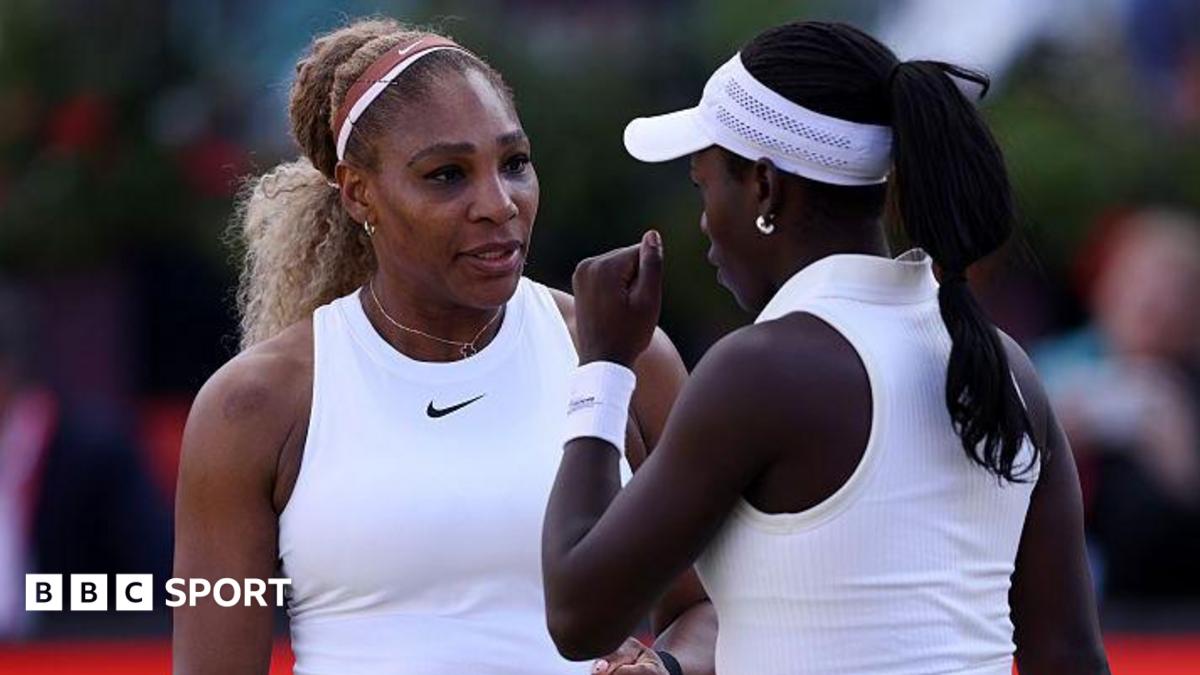



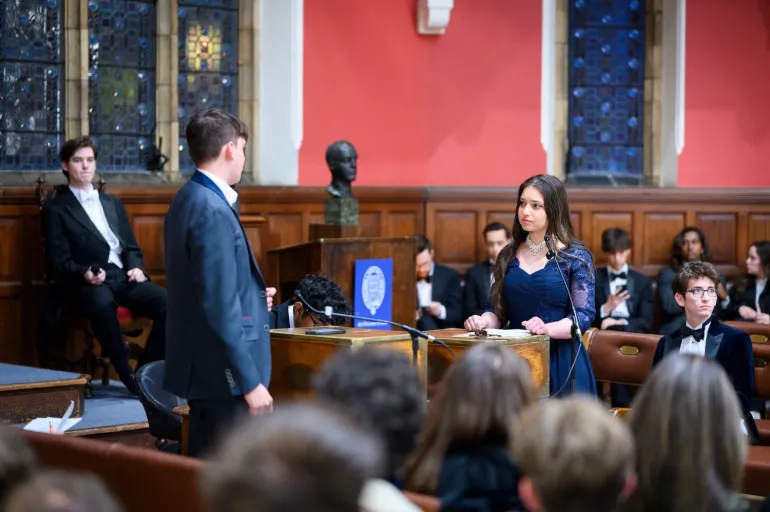
![Arwa Elrayess [Courtesy of Arwa Elrayess]](https://i0.wp.com/occasionaldigest.com/wp-content/uploads/2026/06/original-1C35F445-DBD0-445D-9835-200DAAC9C332-1781175489.jpeg?w=640&ssl=1)