“Which? has repeatedly highlighted Ryanair’s harsh approach to separating families and making parents pay a fee to sit next to children as young as three,” said Rory Boland, travel editor at Which?, “so it’s good to see the regulator investigating the airline’s behaviour.”
After decades spent shaping modern movies without ever taking home a competitive Oscar, actor Glenn Close and director Ridley Scott will finally receive statuettes from the Academy of Motion Picture Arts and Sciences this fall.
The academy announced Wednesday that Close and Scott will receive honorary Oscars at this year’s Governors Awards alongside pioneering animator Floyd Norman, while producers Christine Vachon and Pamela Koffler, co-founders of Killer Films, will receive the Irving G. Thalberg Memorial Award.
The annual Governors Awards, launched in 2009, recognize lifetime achievement and significant contributions to filmmaking and the motion picture industry. The Thalberg Award honors producers whose bodies of work reflect consistently high-quality motion picture production.
Unlike the competitive Oscars handed out during the telecast, the honorary prizes are presented at a separate ceremony attended by film industry figures, academy members and awards season contenders.
Close, 79, one of the most acclaimed actors of her generation, has received eight Oscar nominations over her career, including for “Fatal Attraction,” “Dangerous Liaisons,” “Albert Nobbs” and “The Wife.”
Scott, 88, the architect of “Alien” and “Blade Runner,” whose striking visual style helped define modern blockbuster filmmaking, has scored nominations for directing “Thelma & Louise,” “Gladiator” and “Black Hawk Down,” while also earning a best picture nomination for “The Martian.”
The 90-year-old Norman, who began working at Disney in the 1950s, became the studio’s first Black animator, contributing to films including “Sleeping Beauty,” “The Jungle Book” and “Robin Hood.” His career has spanned more than six decades.
Vachon and Koffler have been central figures in American independent cinema for decades, backing such films as “Boys Don’t Cry,” “Far From Heaven,” “Carol,” “First Reformed” and “Past Lives,” the last of which earned them their first best picture nomination in 2024.
The honors will be presented Nov. 15 at the Ray Dolby Ballroom at Ovation Hollywood during the academy’s 17th Governors Awards ceremony.
Who: South Korea vs Czechia What: FIFA World Cup 2026 Group A match Where: Estadio Guadalajara, Zapopan, Mexico When: Thursday, 8pm local time (02:00 GMT Friday) How to follow: Keep up with all updates on Al Jazeera Sport
South Korea, Asia’s most successful team at the World Cup, begin their 2026 campaign with a game against Czechia, who are back at the tournament after a 20-year absence.
Recommended Stories
list of 4 itemsend of list
With a talented squad featuring Son Heung-min, Lee Kang-in and Kim Min-jae, former semifinalists South Korea – who are ranked 25th in the world – are favourites in the Group A clash and will be keen for an early win in a tough group that also includes cohosts Mexico and South Africa.
But 40th-ranked Czechia are no pushovers. With players like Adam Hlozek, Patrik Schick and Pavel Sulc, they are more than capable of pulling off an upset.
Son Heung-min will be leading South Korea in his fourth World Cup appearance [File: Thaier Al-Sudani/Reuters]
Son leads South Korea’s charge
As always, all eyes will be on South Korea’s superstar Son Heung-min, who now plays his club football for Los Angeles FC.
Set for his fourth appearance at the finals, the 33-year-old former Tottenham winger could be appearing in his final tournament, though it’s not confirmed.
Fans will be hopeful of the captain featuring on the scoresheet after he scored twice in a recent friendly.
The Koreans reached the last 16 in 2022, with Hwang Hee-chan scoring a stoppage-time winner against Portugal to take his team into the knockout rounds. The Wolverhampton Wanderers forward is now keen for a repeat performance at the upcoming tournament.
“If I can have another play like that, it will be great for myself and for our team,” said Hwang, who will be appearing at his third World Cup. “I am working hard for a moment like that.
“Every match is important, but the first match is especially so.”
Czechia: Two-time runners-up
As Czechoslovakia, the Czech team finished runners-up in 1934 and 1962. But since then, their record has been poor, with only four appearances, including just one past the group stage – a quarterfinal run in 1990.
The Czechs are now back at the World Cup after 20 long years, having navigated their way to the finals through dramatic penalty shootout wins in the UEFA qualifiers.
The appointment of coach Miroslav Koubek in December 2025 turned around their fortunes as they went from having a crisis-hit campaign to finishing the job with flying colours.
Czechia’s Tomas Chory heads in a goal during the 3-1 tournament tune-up match against Guatemala on June 6 [File: David W Cerny]
Now, after two decades, as they return to football’s grandest stage, the Czechs will hope to sneak into the knockouts.
With two-metre (6ft 7-inch) Slavia Prague striker Tomas Chory at their disposal, Koubek’s side will seek to impose their physicality on the South Koreans.
They are blessed with more attacking firepower in Bayer Leverkusen striker and Euro 2020 joint top scorer Schick, while Hoffenheim striker Hlozek offers another experienced option up front.
Koubek will also lean on West Ham midfielder Tomas Soucek and 35-year-old Vladimir Darida to provide experience and stability.
How does the World Cup group stage work?
South Korea, Czechia, Mexico and South Africa are in Group A.
The top two teams from each of the 12 groups – along with the eight best third-placed teams – proceed to the next phase, the round of 32, which has been introduced at the World Cup for the first time.
All square in head-to-head record
South Korea and Czechia have met three times, winning one match each, while the other game ended in a draw.
Their last meeting dates back to June 2016 – exactly a decade ago – when South Korea emerged 2-1 winners in a friendly in Prague.
Form guide:
(Last five games, latest first)
South Korea: W-W-L-L-W
Czechia: W-W-W-W-W
Czechia are in fine form heading into the opener, having beaten Kosovo and Guatemala in their pre-World Cup friendlies. Before that, they beat Denmark and Ireland on penalties in the UEFA qualifying playoffs, and also thrashed Gibraltar.
South Korea, on the other hand, are in mixed form. They beat El Salvador and thrashed Trinidad and Tobago in the pre-World Cup friendlies, but lost to Austria and the Ivory Coast.
Where to watch South Korea vs Czechia?
Fans in South Korea can watch the game on platforms Chzzk and JTBC, with kickoff scheduled at 11am local time on Friday.
In Czechia, CT Sport Plus, CT Sport and Nova Action will show the game, which is set to begin at 4am local time on Friday.
Viewers in the United Kingdom can watch it on ITV, while those in the United States can tune in to Fox.
South Korea and Czechia team news
Coach Koubek has a selection headache awaiting.
With Hlozek recently recovering from injury, and Sulc and Lukas Provod also in the mix, Koubek needs to make the tough call on which two attackers will support Schick.
Meanwhile, South Korea’s coach Hong Myung-bo has to contend with some concerns.
Winger Bae Jun-ho – one of the youngest players in the squad – is a major doubt due to an ankle injury, but left-back Lee Tae-seok has returned to team training after a sore calf.
South Korea’s predicted starting XI
Kim Seung-gyu (goalkeeper); Kim Min-jae, Lee Han-beom, Lee Gi-hyuk; Seol Young-woo, Lee Tae-seok, Hwang In-beom, Paik Seung-ho; Lee Kang-in, Lee Jae-sung; Son Heung-min
Czechia’s predicted starting XI
Matej Kovar (goalkeeper); Vladimir Coufal, David Doudera, Tomas Holes, Ladislav Krejci, Jaroslav Zeleny; Tomas Soucek, Michal Sadilek; Adam Hlozek, Pavel Sulc, Patrik Schick
Watch out for Patrik Schick, Czechia’s main attacking threat [File: David W Cerny/Reuters]
You can follow the action on Al Jazeera’s dedicated FIFA World Cup 2026 page with all the latest news, match build-up and live text commentary, and keep up to date with group standings, real-time match results and schedules.
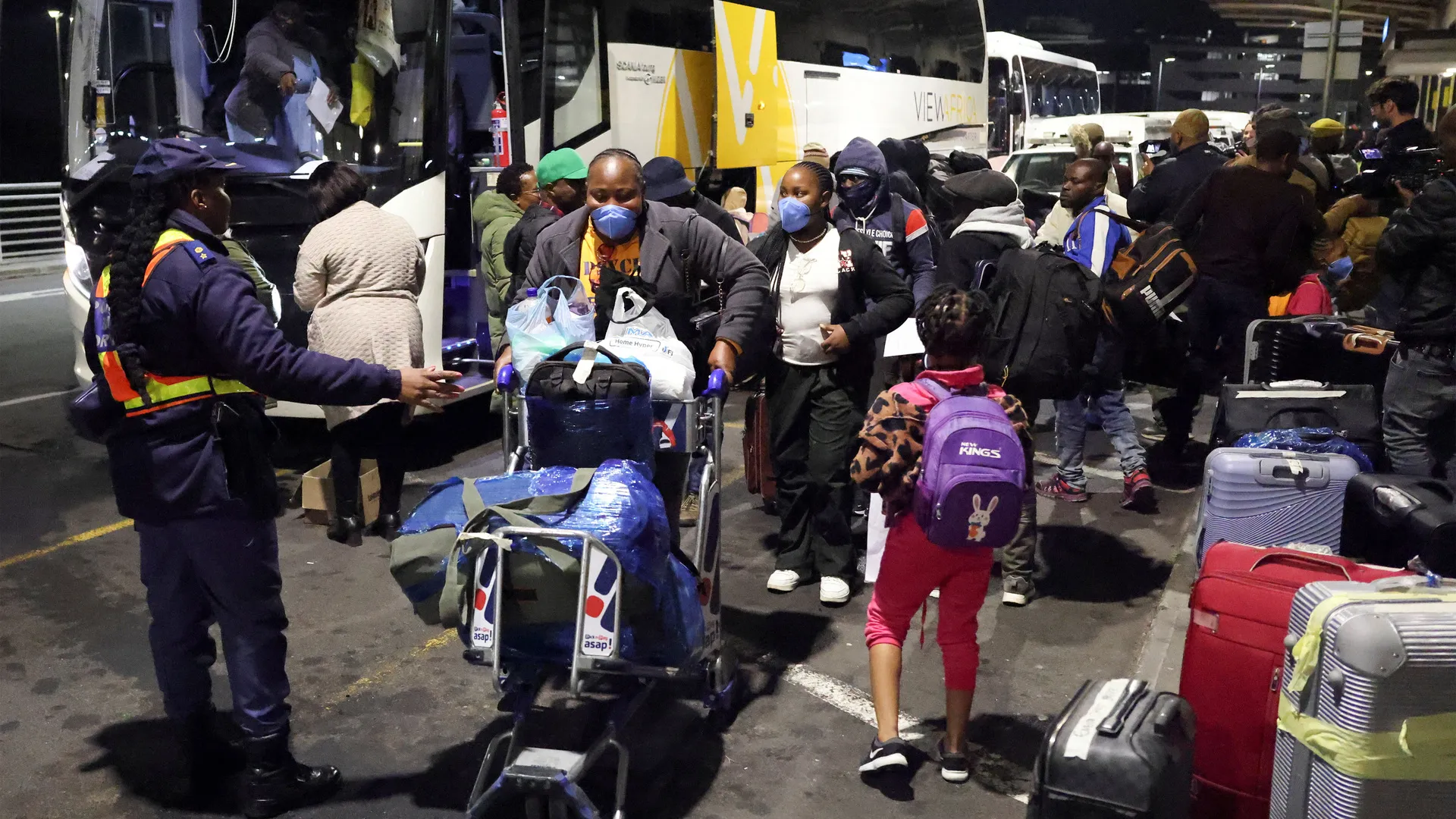
Thousands of migrants shelter in a Durban park after being driven from their homes ahead of a June 30 expulsion ultimatum.
Published On 11 Jun 202611 Jun 2026
More than 3,000 Malawians, including hundreds of children, are staying in an open field in South Africa’s port city of Durban, after fleeing what they described as escalating anti-immigrant threats and attacks.
For weeks, groups armed with sticks, whips and shields have marched through parts of the country demanding that foreigners with no papers leave by June 30.
Recommended Stories
list of 3 itemsend of list
At the park, which transformed into a makeshift transit camp in Durban on Wednesday, many people said repatriation was their only safe option.
“It’s hard to stay here,” Falesi Chukuwumba, a Malawian national, told Al Jazeera. “You can see we are outside. How can we stay in this cold? Our children can get sick.”
Sayiba John, 33, a Malawian who fled Nazareth township with her husband and three children, told the AFP news agency her daughter, a Grade 2 pupil, was forced to abandon her exams.
“They said we must go. We have no choice in the matter,” John said. “It’s better our government take us away from here than to face the anger of the South Africans.”
Ellen Mwamulima, a 45-year-old widow, mother of three and former domestic worker in Mossel Bay in the Western Cape, fled a mob who nearly caught up with her and had to hide out in the bush for two weeks.
“It’s been very difficult because we lost everything, they burnt our houses and all our belongings,” the Malawian told Al Jazeera.
The anti-migrant marches have been backed by the MK Party, led by former President Jacob Zuma, which commands strong support across KwaZulu-Natal province.
When the party called on supporters to march against undocumented migrants, thousands responded. Demonstrators accuse foreign nationals of taking jobs and economic opportunities from South Africans.
“There are undocumented foreigners working everywhere in our business field,” Mythobisi Sabelo, one of the protesters, told Al Jazeera in Durban. “People here have been trying to find work for a long time and given up. It’s becoming an issue.”
Waves of xenophobic violence
But while demonstrators blame foreigners for South Africa’s economic and social issues, others argue that foreigners, particularly those from elsewhere in Africa, are being wrongly blamed.
Ghana, Zimbabwe and Mozambique have repatriated hundreds of nationals this month, and a flight carrying the first group of Nigerians is due to depart Johannesburg.
About 150 additional migrants from Burundi, Ethiopia and Zimbabwe are sheltering at a government office not far from the Durban park.
South Africa has faced recurring waves of xenophobic violence since 2008, when dozens of migrants were killed and thousands displaced. Some three million foreigners – about 5 percent of the population, more than 63 percent of them from within the Southern African Development Community (SADC) bloc – live in the country.
The latest flare-up comes as political parties campaign ahead of local government elections in November.
“Doctor Who” is going through another major regeneration.
The BBC announced Wednesday that it is not moving forward with a previously announced “Doctor Who” Christmas special. Last year, the broadcaster teased a “spectacular” special episode written by showrunner Russell T Davies for the 2026 holiday.
“After careful consideration, the BBC, Russell T Davies and Bad Wolf have collectively decided not to go ahead with the previously announced Doctor Who Christmas episode,” the BBC wrote in its latest update. “This decision was not taken lightly, and we know it will be disappointing for fans, but in order to set the show up for future series, it was decided that rather than bridge the gap with a one off special, we are choosing to push forward to invest in the long-term future of the show which ensures that when the TARDIS lands once more, it does so in all its glory.”
Whovians know that the Christmas Day specials are a longstanding tradition for the sci-fi series. Previous holiday episodes have marked the first full appearance of David Tennant’s Tenth Doctor in 2005 as well as Ncuti Gatwa’s Fifteenth Doctor in 2023.
BBC’s plan now is to “put Doctor Who out to competitive tender” in order to “[secure] the next phase of the show for future generations” — meaning they are inviting potential producers to pitch their ideas for the next era of the long-running series. This also means Davies and producer Bad Wolf are parting ways with the franchise.
“And so GOODBYE from me to Doctor Who but HELLO to a big new future for the show,” Davies wrote in a Wednesday Instagram post, confirming his exit. “You’ll have to wait a bit longer for new Doctor Who… but you’ll be waiting for MORE Doctor Who than a one-off. So it’s worth it!”
Davies, who led the “Doctor Who” revival from its 2005 launch to 2010 before returning for his second stint in 2023, also said that he had not written a script for the previously planned Christmas special and “no actor was ever approached to play the next Doctor.”
“I’m as excited as anyone to see what comes next!” Davies added. “Will they keep the theme tune? Will they lose the blue box? Will they bring back the Drahvin?! It’s all up for grabs, which is so Doctor Who, exciting and unpredictable and new!”
Bad Wolf, which worked on the two seasons starring Gatwa as the Time Lord, also on Wednesday confirmed its exit on Instagram in a post thanking fans and those that joined them on this “incredible journey through Space and Time.”
“It has been a joy and a privilege to have been at the helm of the TARDIS alongside the brilliant Russell T Davies,” read the production company’s statement. “Doctor Who is – and always will be – a show that shines light into the darkness and it has been an absolute honour to have been its torch bearer for 26 episodes with the BBC and Disney+.”
The BBC in its announcement reiterated its commitment to “Doctor Who” and its future. It also shared that a previously announced animated “Doctor Who” series for CBeebies is currently in production.
This latest “Doctor Who” update comes during a tenuous time for the franchise. The series has faced low viewership, Disney+ exiting as the show’s co-producers and Gatwa ending his run as the Doctor. The most recent season concluded with a cliffhanger, with the Fifteenth Doctor regenerating into a form resembling Rose Tyler, the companion portrayed by Billie Piper.
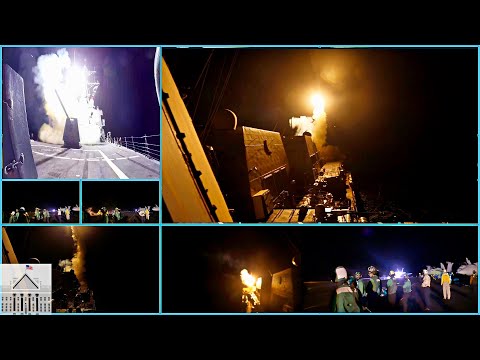
Video released by US Central Command shows what the military says are ‘self-defence’ strikes on Iranian military surveillance capabilities, communications systems and air defence sites. The footage accompanied a statement that US forces had completed the latest wave of attacks.
Pope Leo has traveled to the Canary Islands as the final stop of his week long visit to Spain, placing migration and human dignity at the center of his international message. The Canary Islands have become one of Europe’s most important migration gateways, with thousands of people risking dangerous Atlantic crossings from Africa in search of safety, opportunity, or asylum.
The visit comes amid growing global debate over migration policies, border security, and humanitarian responsibilities. During his Spain tour, Leo has repeatedly argued that the treatment of migrants represents a moral test for governments and societies.
His stop in the Canary Islands includes meetings with migrants, humanitarian organizations, and local groups assisting new arrivals, as well as a memorial tribute to those who lost their lives attempting the journey.
Why the Canary Islands Have Become a Migration Flashpoint
Located off the northwest coast of Africa, the Canary Islands have emerged as a major entry point for migrants seeking access to Europe.
As Mediterranean routes have become increasingly difficult or heavily monitored, many migrants have turned to the Atlantic route despite its extreme dangers. The journey often involves overcrowded boats, harsh weather conditions, and long periods at sea.
The rising number of arrivals has transformed the islands into a focal point of European migration debates, exposing tensions between humanitarian obligations and border management concerns.
Pope Leo’s Broader Message on Migration
The pope’s visit is consistent with his broader emphasis on human rights, social justice, and international responsibility.
Throughout his papacy, Leo has framed migration not merely as a political issue but as a question of human dignity. His criticism of the international community’s response reflects concerns that many governments are prioritizing deterrence and border enforcement over humanitarian protection.
By meeting migrants directly, Leo is attempting to shift attention from statistics and policy disputes toward the personal experiences of those undertaking dangerous journeys.
Spain’s Different Approach
Spain has largely adopted a more welcoming position toward migrants compared with several European countries that have tightened immigration policies.
The government’s efforts to regularize the status of hundreds of thousands of undocumented migrants reflect a belief that legal integration can strengthen social cohesion and economic participation.
However, implementation challenges remain significant. Many migrants continue to face lengthy bureaucratic processes, uncertainty regarding legal status, and difficulties accessing employment and social services.
At the same time, migration has become an increasingly contentious political issue, with critics arguing that more permissive policies could encourage additional arrivals.
The Growing European Debate
Migration remains one of the most divisive issues across Europe.
Governments face competing pressures to maintain border security, address labor shortages, uphold humanitarian commitments, and respond to domestic political concerns. Rising support for nationalist and far right parties in several countries has further intensified the debate.
Against this backdrop, Pope Leo’s intervention highlights the widening gap between humanitarian advocates and political leaders who favor stricter migration controls.
His visit also underscores the role religious institutions continue to play in shaping discussions about ethics, responsibility, and international solidarity.
Analysis
The significance of Pope Leo’s Canary Islands visit extends beyond Spain’s migration challenges.
The trip represents an effort to place human rights concerns at the center of a debate increasingly dominated by security, border control, and political polarization. By choosing one of Europe’s most visible migration entry points, Leo is drawing attention to the human consequences of global inequality, conflict, and displacement.
The visit also reflects a growing tension between moral leadership and political realities. While many governments acknowledge humanitarian responsibilities, they face domestic pressures that often push policy in the opposite direction.
Leo’s message is therefore unlikely to change migration policy overnight. However, it may strengthen the position of humanitarian organizations and advocates who argue that migration should be addressed through a combination of legal pathways, international cooperation, and human rights protections rather than deterrence alone.
Future Outlook
Migration pressures on Europe are unlikely to diminish in the near future.
Conflict, economic instability, climate related challenges, and demographic trends will continue to drive movement across borders. As a result, countries will face increasing pressure to develop sustainable migration frameworks that balance security concerns with humanitarian obligations.
Pope Leo is expected to remain one of the most prominent global voices advocating for migrants and refugees. His Canary Islands visit may become a defining symbol of his broader effort to place human dignity at the center of international policymaking.
The larger challenge for Europe will be determining whether political leaders can translate humanitarian principles into workable migration policies amid growing public and political divisions.
Anticipation. Rumors. Anxiously scanning the horizon, hoping that a brilliant force will leave the masses forever changed. Yes, a new Steven Spielberg movie about close encounters with extraterrestrials is landing — and misses the mark.
“Disclosure Day” is a story of truth and feared consequences. A personality-free cybersecurity expert, Daniel (Josh O’Connor), is on the run with evidence of little gray men arriving on our planet to a rude reception. The aliens are kind. Our species is barbaric. Wittily bruising us with that fact, Spielberg opens with a POV of a wrestler kicking the audience in the face. Welcome to Earth.
Elsewhere in America, a weathergirl named Margaret (Emily Blunt) breezes into her Kansas City studio, babbling up until the minute the news camera turns on, a bravura sequence that channels her restlessness, the station’s tempo and the film’s alarm that this ditz has just this morning been stricken with preternatural powers. (The cinematography and editing are by Janusz Kaminski and Sarah Broshar.) Locally, Margaret is known for announcing hailstorms with a sexy shimmy. Suddenly, she’s fluent in Russian, Korean and telepathy. Although she and her boyfriend, Jackson (Wyatt Russell), are a bad match, she’s giving everyone else life advice like an intergalactic Dear Abby.
When Margaret starts spouting alien-ese — spasms of gutteral clicks — on live TV, she and Jackson rush to the hospital for a brain scan followed by several suspicious men who claim to be with the FBI. Russell’s befuddled Jackson is as useless as a traffic cone but Blunt’s Margaret is a gas before the movie makes her go all glassy-eyed and solemn. Yet, the movie is less inspired by why she was chosen or how she feels about it than in dragging us back in time to the moment when it happened, which isn’t that interesting except for its resemblance to a Disney princess having a psychotic break. The CG animals and aliens look stiff, other than a nifty close-up of an eyeball. (Later, I did like how one alien appears to be wearing sportswear.)
Chasing both Daniel and Margaret around the Midwest is a deep-state company called Wardex that wants to steal back the proof in Daniel’s backpack, a heap of hard drives with footage of 70-plus years of extraterrestrial visitations. It’s a treat to see Spielberg enjoying staging this conspiratorial gossip in different film stocks, from the black-and-white noir of 1947 Roswell to the clinical security-camera look of today. Whatever Wardex does on a day-to-day basis is unclear (we just see video screens and lab equipment). But it acts all-powerful, seeming to know more about outer-space tech than its overseers at the Department of Defense.
The script is by David Koepp of the paranoid thriller “Black Bag” and Spielberg’s 2005 version of “War of the Worlds,” yet, this plot strand about private enterprise isn’t science fiction. Last year, in the unrelated UFO documentary “The Age of Disclosure,” current Secretary of State Marco Rubio admitted that companies have a stronger institutional memory of “exotic materials” than any presidential administration: “The people in government who know where it came from originally — they’re long gone and their successors have no idea that it was there at all.” To add nationalistic insult to injury, the head of Wardex isn’t even American. He’s a Brit played by Colin Firth.
If anything, “Disclosure Day” isn’t paranoid enough. Clutching a mysterious tool the shape of a mouse coffin, Firth’s villain tracks Daniel’s location by mentally transplanting himself into another person’s body, changing the color of their pupils to his own icy blue. His gadget also makes his targets super sweaty. This laborious alien tactic leads to a few fun scenes but frankly feels old-fashioned when the omnipresent surveillance that Spielberg himself warned about nearly 25 years ago in “Minority Report” is now here with recording devices constantly tracking our faces, voices and movements just so we don’t have to dial phones, fetch sandwiches or talk to human drivers. Although his movie urged us against this 24/7 spyware future, we have since embraced the convenience.
I bring this up because “Disclosure Day’s” driving question is how humanity will react to life-altering information. (Not that the plot has much momentum — too many scenes end with the belief that ducking 10 feet out of view makes you invisible, with an antagonist simply giving up.) Daniel insists on total honesty: “People have a right to know the truth,” he says. His girlfriend Jane (Eve Hewson) doubts 8 billion people can handle his alien revelations. A Catholic, she’s alarmed that extraterrestrial intelligence could replace the concept of God, naively claiming that “religion holds society together.” Since when?
There’s some wan comedy in an early scene where these new-ish lovers debate the ethics of secrecy while revealing the skeletons they’ve been hiding from each other. Both have pasts you wouldn’t put on a Tinder profile. The script is glancingly empathetic to Jane’s moral turmoil but like Daniel, the film has made up its mind before the movie started. Narratively and logistically, Daniel’s whistleblowing escape limps along with a lack of suspense. Wardex doesn’t even bother to preemptively discredit Daniel in the public’s eye, which, given the two sentences of backstory we know about his character, would be easy.
Nattering in the background are broadcasts about the impending threat of global war at the hands of the United States, Russia and North Korea. Given that scary possibility, the risk that Daniel’s reveal could tip over the world order doesn’t seem that bad. Honestly, I’m dubious of the film’s certainty that folks even have the bandwidth to care about such news, let alone agree on what they’re seeing. The serious journalism Margaret aspires to do is splintering under our distrust of who controls the megaphones. Last month’s infodump of an Armed Forces report listing 209 sightings of unidentified objects was announced with a presidential tweet that “the people can decide for themselves.” I didn’t bother to click. Did you?
Getting information about these space invaders out leaves no time for taking the marvel of their existence in. Decades after Spielberg unveiled his signature shot — a face amazed at wonders we can’t see — he seems wearied by his awareness that today’s moment of revelation would look like a person staring down at their phone. When lens flares continually beam right at the screen, the whole movie feels like enlightenment under duress.
Where are the aliens from and why are they here? Who knows. “Disclosure Day” speeds around frantically, talking constantly and explaining little. Back in 1977, Spielberg’s “Close Encounters of the Third Kind” was a popcorn masterpiece of withheld information. Its quiet assurance that experts had a handle on flying saucers and a plan to meet them felt comforting. Here, Colman Domingo’s renegade intelligence operative also refuses to tell anyone anything, but all the unspoken beats just feel like plot holes. Mostly, his character builds what looks like a Hollywood set to reveal a truth he already suspects. That’s what Spielberg is doing too, but a film needs a sense of curiosity.
Instead, the wows come from good stagings of ordinary action: a car crash, a gripped crucifix, a hideout crowded with jostling, thrumming musical instruments. There’s a great train-track crossing sequence that’s also a vicious callback to Richard Dreyfuss’ epiphany in “Close Encounters.” Yet, I wanted to see more of the old Spielberg, the one who expressed awe in moments of silence rather than relentless motion.
That Spielberg has come full circle to his lifelong obsession with the sky had me convinced that this might be a secret sequel to “Close Encounters” beyond the droll joke that both Dreyfuss’ Roy and Blunt’s Margaret are shacked up with unsupportive blonds. They do share a universe; you’ll see a glimpse of what could pass for an outtake from Devils Tower, a.k.a. Mashed Potato Mountain, on one of Daniel’s hard drives. Still, I left underwhelmed. I didn’t need Dreyfuss to step off a spaceship gangplank and say, “I’m back.” I just needed “Disclosure Day” to have the same spark of intelligent life.
‘Disclosure Day’
Rated: PG-13, for action/violence, some bloody images and strong language
1 of 2 | South Korean Kim Kuk-gi speaking during a news conference in Pyongyang, North Korea. North Korea’s official Korean Central News Agency (KCNA) said that North Korea has detained South Koreans Kim Kuk-gi and Choe Chun-gil on espionage charges. An unnamed official at the North’s Ministry of State Security branded them as ‘spies’ of the South’s National Intelligence Service and ‘heinous terrorists’. Photo by YONHAP / EPA
June 10 (Asia Today) — Senior U.S. human rights officials visiting South Korea met over two days with families of South Koreans detained or abducted by North Korea, civic groups said Wednesday.
The meetings included families of South Korean missionaries detained in North Korea, wartime and postwar abductees and prisoners of war who were not repatriated after the Korean War.
Riley M. Barnes, assistant secretary of state for democracy, human rights and labor, met Tuesday with Choi Jin-young, the son of South Korean missionary Choi Chun-gil, who is being held in North Korea, according to civic groups.
Julie Turner, acting deputy assistant secretary in the State Department’s Bureau of Democracy, Human Rights and Labor, and Belsis Romero, a White House faith liaison, also took part in the visit.
On Wednesday, U.S. officials met representatives of groups representing families of Korean War abductees, postwar abductees and prisoners of war.
The U.S. officials told the families that Washington continues to pay attention to the issue and that its position has not changed on supporting efforts to confirm the detainees’ status and seek their return, according to the groups.
Choi thanked Barnes for calling for the release of South Koreans detained in North Korea, including missionaries Kim Jung-wook, Kim Kuk-gi and Choi Chun-gil, during a video message last month for an international conference announcing the formation of the Republic of Korea Hostage Family Association.
Choi also delivered a letter addressed to President Donald Trump asking the United States to make the safe return of South Korean detainees, including the three missionaries, part of its North Korea diplomacy.
He also delivered 10,000 signatures gathered online and offline, largely through Korean churches in Los Angeles, calling for the detainees’ repatriation and confirmation of whether they are alive.
Kim Jung-sam, the older brother of missionary Kim Jung-wook, also sent a letter asking Trump to speak out during his presidency on detainees and religious freedom.
Choi said he asked U.S. officials to send a message that Washington has not forgotten the detained missionaries.
“I asked that the U.S. ambassador, the secretary of state or the president meet from time to time with families of South Korean abductees, detainees and prisoners of war,” Choi said. “In that context, I also requested that the U.S. ambassador to South Korea attend an event for Abductees Remembrance Day.”
Lee Sung-eui, head of the Korean War Abductees’ Family Union, Choi Sung-ryong, head of the Association of the Families of Postwar Abductees, and Sohn Myung-hwa, head of a group representing families of prisoners of war, met Turner on Wednesday and urged continued U.S. attention to the abduction issue.
Lee delivered a letter asking Washington to place humanitarian issues first in any future U.S.-North Korea talks, including the return of detained South Koreans, confirmation of the fate of abductees and visits by bereaved families to graves in North Korea.
Lee said he emphasized that wartime abductions during the 1950-53 Korean War were “the root of all forced disappearance crimes committed by North Korea.”
Barnes and Turner also met Saturday with Son Hyun-bo, pastor of Segero Church, who led rallies opposing the impeachment of former President Yoon Suk Yeol. The U.S. officials discussed religious freedom issues in South Korea and attended a Sunday worship service.
On Monday, the U.S. delegation also met Chang Wook-jin, director-general for global multilateral diplomacy at South Korea’s Foreign Ministry, to discuss bilateral efforts to promote democracy and human rights.
A South Korean Foreign Ministry official said the U.S. State Department regularly communicates with a wide range of stakeholders inside and outside South Korea while preparing annual reports on human rights, trafficking in persons and international religious freedom.
The official said the delegation’s visit to South Korea was part of that regular outreach.
A civic group official who recently visited the United States and met State Department officials said the bureau’s meeting with families of North Korean detainees appeared connected to Washington’s recent attention to religious persecution.
The official said U.S. officials also asked questions during a recent meeting about religious freedom and human rights issues involving the South Korean government.
Weekly insights and analysis on the latest developments in military technology, strategy, and foreign policy.
Israel and Iran may be seeking an off-ramp to keep the latest flare-up of fighting from boiling over to an extended conflict in the wake of strikes between the two nations on Sunday and Monday. The attacks marked the most serious challenge to the shaky ceasefire that went into effect on April 8. They took place despite President Donald Trump urging both sides to stand down to let the sputtering peace process move forward.
The Islamic Revolutionary Guard Corps (IRGC) said it was halting attacks on Israel but maintained the right to resume them if Jerusalem continued “to target Hezbollah in Lebanon,” Fox News reporter Trey Yingst reported.
Israeli Prime Minister Benjamin Netanyahu claimed the decision to stop attacking Iran was made because “after we dealt a heavy blow to the terrorist regime in Tehran, it ceased its attacks on us. If the terrorist regime in Iran makes a mistake and attacks us again—we will respond with full force.”
در حال حاضر، آتش متوقف شده است، زیرا پس از اینکه ما به رژیم تروریستی در تهران ضربه محکم زدیم، حمله به ما را متوقف کرد.
اگر رژیم تروریستی در ایران اشتباه کند و دوباره به ما حمله کند – ما با قدرت پاسخ خواهیم داد.
In a post on his social media platform, President Donald Trump said both sides “are looking to do an immediate CEASEFIRE! Final negotiations on ‘Peace’ are proceeding, subject to ignorance or stupidity getting in its way.”
The ongoing U.S. blockade of Iranian ports, however, “will remain in place, and in full force and effect, until a ‘Final Deal’ is reached,” Trump added. “Things should move quickly.”
“Both sides, Israel and Iran, are looking to do an immediate CEASEFIRE! Final negotiations on “Peace” are proceeding, subject to ignorance or stupidity getting in its way…” – President DONALD J. TRUMP pic.twitter.com/zLoFSZo3jZ
Earlier on Monday, Trump demanded that the two sides stop fighting.
“Israel and Iran must immediately stop ‘shooting,’” Trump insisted on Truth Social.
As we noted yesterday, the latest Israel-Iran fighting was sparked by Israeli bombing of Beirut on Sunday. Hours after that took place, Iran launched missiles at Israel and Israel fired back. Initially on Monday, Israeli leaders said they were expecting a conflict that would last for at least several days and that Iran has sufficient stocks of ballistic missiles to carry that out, according to the Israeli N12 News outlet.
In addition, the IDF was preparing for more attacks from the Houthis and Hezbollah, N12 stated.
However, that analysis had apparently changed in recent hours.
Israel’s retaliatory strikes came despite Trump telling several reporters on Sunday that he was going to tell Netanyahu to hold his fire and that both sides had done enough to each other and should cease attacking. Those conversations pointed to either messaging to deceive Iran about a pending attack or further signs of strain between the two leaders.
Trump to Channel 13 News: ”I think Israel has responded enough, no need for more. We can achieve peace after 3,000 years.”
Netanyahu’s push to attack Hezbollah in Lebanon had reportedly already earned a invective-laden rebuke from Trump.
“You’re fucking crazy,” Axios said Trump told the Israeli leader in a phone call last week. “You’d be in prison if it weren’t for me. I’m saving your ass. Everybody hates you now. Everybody hates Israel because of this.”
After Israel struck Beirut on Sunday, Trump told Financial Timesthat Netanyahu would have no choice but to accept any deal the U.S. negotiates with Iran, because he “calls the shots.”
“He won’t have any choice,” Trump told the outlet in a telephone interview. “I call the shots. I call all the shots. He [Netanyahu] doesn’t call the shots.”
BREAKING: President Trump says Israeli Prime Minister Netanyahu will have “no choice” but to accept a US deal with Iran, because he “calls the shots,” per FT.
Details include:
1. “I call the shots. I call all the shots. He [Netanyahu] doesn’t call the shots,” Trump said
2.…
— The Kobeissi Letter (@KobeissiLetter) June 7, 2026
Despite Trump putting his foot down, overnight, “dozens of Israeli Air Force fighter jets struck nine Iranian air defense systems in western and central Iran, and this morning, the IAF struck three factories at a petrochemical complex in southwest Iran,” the Times of Israel reported. “The military says the strikes are only being carried out by Israel, but there is ‘full coordination’ with CENTCOM. Meanwhile, IDF Chief of Staff Lt. Gen. Eyal Zamir has spoken with his counterpart, CENTCOM chief Adm. Brad Cooper, three times, according to the military.”
U.S. forces “are assisting in intercepting incoming missiles,” I24 News Diplomatic Correspondent Amichai Stein reported on X. “So far, Iran has launched approximately 22–24 missiles, while the Houthis have fired two.”
An IDF official confirmed that to us, saying that “the Israeli strikes were fully coordinated with CENTCOM across multiple dimensions, including intelligence, defensive preparedness, and operational planning.”
CENTCOM declined to comment.
However, a U.S. official told TWZ that American forces “did not defend Israel with air defense against missiles and drones.”
IDF sources:
• The military is preparing for at least several days of combat.
• U.S. forces are assisting in intercepting incoming missiles.
• So far, Iran has launched approximately 22–24 missiles, while the Houthis have fired two.
Earlier on Monday, Israel released video it says showed attacks on Iranian air defense systems.
🎥FIRST FOOTAGE: Watch IDF strikes targeting aerial defense systems in Iran, which housed missiles intended to target aircraft. pic.twitter.com/7pWhnOuSGV
That strike was part of a wave of attacks Israel carried out on Iranian air defenses across the country.
⭕️🛩️ STRUCK: The IDF completed a large-scale strike on strategic defense systems belonging to the Iranian terror regime.
Recently, defense systems were deployed across Iran to restore the regime’s capabilities degraded during Operation Roaring Lion. The strike led to the… pic.twitter.com/eEqV2QnXK3
“These facilities were used by the armed forces of the Iranian terror regime to produce and export raw materials for weapons production,” the IDF posited. “The targeted infrastructure produced unique materials that serve as critical components for the development of ballistic missiles.”
🚨 confirmed. Among the 15 Targets IAF attacked is the Mahshahr Petrochemical Complex, officially known as the Petrochemical Special Economic Zone (PETZONE) in Bandar-e Mahshahr, Khuzestan Province. Right across the border from Kuwait !
Video emerged online showing the Israeli airstrikes in Tehran.
For the first time since the April ceasefire, Israel and Iran have attacked each other. Israel carried out strikes on western and central Iran including the Iranian capital Tehran.
While Iran launched missiles at northern Israel and said it is the beginning of a week of attacks.… pic.twitter.com/SmcwFKMw14
The attacks sparked a warning from the U.S. Embassy in Jerusalem.
“As a result of the current security situation in Israel, including Home Front Command alerts for multiple regions,” the U.S. Embassy in Jerusalem is ordering “all U.S. government employees and their family members to shelter in place, and be prepared to move to a protected shelter in the event of a red alert, until further notice.”
As a result of the current security situation in Israel, including Home Front Command alerts for multiple regions, the U.S. Embassy has directed all U.S. government employees and their family members to shelter in place, and be prepared to move to a protected shelter in the event… pic.twitter.com/ohyK56GyNh
— U.S. Embassy Jerusalem (@usembassyjlm) June 8, 2026
Though both Israel and Iran say they are willing to stop fighting, tensions in the region remain high. We will continue to monitor the situation.
UPDATES
As we noted earlier in this story, the Houthi rebels of Yemen said they are banning Israeli ships from the Red Sea and took credit for missile attacks on Israel that took place on Sunday.
“We announce a complete ban on navigation for the enemy in the Red Sea, and any Zionist movements will be considered military targets for our forces,” said Brigadier General Yahya Sare’e, the Houthis’ spokesman. “We will confront escalation with escalation, and our operations will be escalating in line with the battle and our participation in the axis of jihad and resistance.”
“We affirm the right of our people and the free peoples of our nation to confront American-Israeli aggression,” he added. “We will not stand idly by in the face of the unjust siege on our people and the peoples of the axis of jihad and resistance.”
Sare’e also said the Houthis launched “a missile strike on sensitive targets of the Israeli enemy in occupied Jaffa, and achieving its objectives with precision, thanks to God.”
There were no reported injuries or damage from that attack.
Yemen’s Iran-backed Houthis announce that they launched a missile attack on Israel and declared a ban on Israeli shipping in the Red Sea.#Yemenpic.twitter.com/LYYPB7bibK
— Al Arabiya English (@AlArabiya_Eng) June 8, 2026
As we have previously reported, there have been major and relevant concerns that the Houthis could effectively shut down the Bab el-Mandeb (BAM) strait, a narrow stretch of water between Yemen and Djibouti. Doing so would choke off a flow of oil exports from Saudi Arabia to the east, exacerbating a huge spike in oil prices after Iran closed off the Strait of Hormuz to most shipping. Having both straits closed at once is something of a ‘sum of all fears’ scenario for the global energy marketplace.
A new Houthi offensive would be a major cudgel for Iran, because it would open a new front in the war and draw in U.S. military resources at a time when they are already heavily involved in the region.
During the previous Houthi Red Sea campaign that stretched into early 2025, the U.S. and its allies deployed many warships, including the Eisenhower and Truman Carrier Strike Groups (CSG) to both defend against Houthi attacks and strike targets in Yemen. These operations resulted in a large expenditure of air defense munitions already under strain as Iran rained down missiles and drones across the Middle East.
You can see video from some of those encounters below.
Strikes on Iranian-backed Houthi Targets by USS Gravely, USS Carney, and USS Dwight D. Eisenhower
Iran, meanwhile, insists it is maintaining its control over the Strait of Hormuz.
“No vessel without Iran’s permission has the right to pass through the Strait of Hormuz Command vessel of the IRGC Navy,” the official Iranian Fars News Agency stated on X. “It is announced to all vessels that entry of any vessel from hostile countries into the Strait of Hormuz is prohibited and, if observed, they will immediately be targeted.”
CENTCOM says its forces once again disabled a ship trying to run the blockade. This time, the effort involved an F/A-18E/F Super Hornet from the aircraft carrier USS Abraham Lincoln (CVN 72) firing “a precision munition into the ship’s engineering and steering spaces after the crew failed to comply with directions.”
The incident, involving the Palau-flagged M/T Marivex, took place as the unladen oil tanker transited international waters in the Gulf of Oman toward Iran, the command stated on X.
“Marivex is no longer sailing to Iran,” CENTCOM added.
This was the seventh ship trying to run the blockade that CENTCOM forces disabled, the command noted. In addition, it said it “redirected 134 ships that complied, and allowed 42 vessels supporting humanitarian aid to pass since initiating the blockade on April 13.”
You can read more about how the other six ships were disabled in our story here.
According to a release from U.S. Central Command (CENTCOM), the U.S. disabled an unladen oil tanker, the M/T Marivex, in the Gulf of Oman today. Per the release, a “precise munition” from an F/A-18 Super Hornet was fired into the engine and steering areas of the vessel when the… pic.twitter.com/qyW4WBhfLa
Given existing concerns that Iran has mined the Strait, “US allies will seek Trump’s approval for a Europe-led plan to demine the Strait of Hormuz at next week’s G7 summit in France,” Bloomberg News is reporting. “The UK and French-led mine-clearing mission is operationally ready and set to deploy in the days after any Iran deal. Securing a G7 endorsement of the mission is one of the main goals of the summit. European leaders see it as a way of showing the continent is stepping up to help the US after Trump’s fury it didn’t back his war.”
US allies will seek President Donald Trump’s approval for a Europe-led plan to demine the Strait of Hormuz at next week’s Group of Seven summit in France. https://t.co/Byy6mE94rh
You can read more about what it takes to conduct demining operations in our exclusive interview with a former MH-53E pilot who carried out those operations, which you can read here.
My exclusive interview with a pilot who flew the behemoth MH-53E Sea Dragon helicopters on counter mine missions over the Persian Gulf and Strait of Hormuz.https://t.co/C0tvO2sLKp
Despite the renewed fighting, Iran’s president says his country has not abandoned diplomacy.
“Our priority is national security and the peace of our people. We will defend the rights of the nation with authority and will not retreat in the face of any threat,” Masoud Pezeshkian stated on X. “Diplomacy and defense are the two wings of national power; we have neither abandoned the field nor the negotiating table. God willing, with unity and rationality, Iran will emerge triumphant from this trial as well.”
اولویت ما امنیت ملی و آرامش مردم است. با اقتدار از حقوق ملت دفاع میکنیم و در برابر هیچ تهدیدی عقبنشینی نخواهیم کرد. دیپلماسی و دفاع دو بال قدرت ملیاند؛ نه میدان را ترک کردهایم و نه میز مذاکره را. به امید خدا با وحدت و عقلانیت ایران از این آزمون نیز سربلند عبور خواهد کرد.
In a post on X, the Islamic Revolutionary Guard Corps (IRGC)-connected Tasnim news agency claims Iran fired a new jet-powered drone at Israel during its waves of attacks yesterday. The outlet provided no details about the weapon or any imagery of it in flight. TWZ cannot independently verify the claim.
Iran Utilized Newly Unveiled Jet-Powered Drone in Overnight Strikes on Israel
Iran employed a previously unseen jet-powered drone in its overnight attacks on Israel, according to Seyed Mohammad Taheri, a military analyst at Tasnim News Agency’s War Interpretation Desk. https://t.co/ATvBOUmiOZpic.twitter.com/Z4SBHawMcz
— Tasnim News Agency (@Tasnimnews_EN) June 8, 2026
Bill Cody, the Grand Ole Opry and longtime WSM Radio host who woke up listeners with his velvet voice and country music lore, has died. He was 67.
The Tennessee radio station confirmed Cody’s death on social media on Tuesday, writing, “It is with heavy hearts that we share the passing of our dear friend and beloved WSM voice, Bill Cody.
“A singular presence on WSM-AM Nashville for more than three decades, Bill welcomed listeners each morning on Coffee, Country & Cody with a broad smile, a conversational ease, and an unerring ability to make both artists and audiences feel at home. He joined WSM in 1994 and had Charlie Daniels as his first in-studio guest. He built more than a morning show; he created a gathering place rooted in his deep love for country music and the people behind it.”
In late May, Cody’s daughter Hannah Davis shared that the radio host had been admitted to the intensive care unit with heart and kidney failure. “After weeks of being on a roller coaster of emotions, tests, dialysis, medications, steps forwards and steps backwards, it was determined earlier this week that his only option for survival would be a double transplant, heart and kidney,” she wrote on Facebook. “We need a miracle and we know God is able.”
On Tuesday, she wrote that Cody had died peacefully surrounded by family and “was welcomed into heaven as thunder bellowed outside, and we laughed because we knew it was a band of angels rejoicing.”
With nearly 50 years on the airwaves across syndicated radio, television and film, Cody was honored with a star on the Music City Walk of Fame in the fall of 2024. His credits included the film “American Saturday Night: Live From the Grand Ole Opry,” the television show “Tennessee’s Wild Side” on PBS, “Ray Stevens’ Nashville” on RFD-TV, and GAC TV’s “Master Series.”
In 2008, the beloved Nashville host was inducted into the Country Radio Hall of Fame, and across his career, he earned multiple nominations from the Country Music Assn., the Academy of Country Music and Billboard for his contributions to broadcasting.
Born Trent Clutts on Dec. 16, 1958, in Huntsville, Ala., Cody was inspired to pursue a career in broadcasting during visits to a Kentucky radio station with his dad. His father was a Southern Baptist minister, and his Sunday morning sermons were broadcast on the radio in the afternoons. Cody couldn’t get enough of the goings-on at the station when the two would stop by to drop off cassettes.
In 1971, when the radio host was 17, he was hired as a night deejay at WVLK in Lexington, Ky., but the program director didn’t think “Trent Clutts” had the right ring for radio. Cody named himself after “Buffalo Bill,” one of the most famous showmen of the American Old West, and used the moniker for the rest of his career.
As a teenager, Cody noticed a girl named Rebecca during study hall and, according to Davis, winked at her from across the room. The wink sealed the deal and the two spent more than 50 years as a couple, welcomed three children — Luke, Hannah, and Levi, who died in 2025 — and eventually grandchildren, who called him PoPo. The family lived in Cross Plains, Tenn.
“Like so many of us at the Opry, Bill Cody lived out his dreams on the Opry stage. More times than I could count he and I would look at each other as if to say, ‘Can you believe we get to do this?’” Dan Rogers, executive producer at the Grand Ole Opry, wrote on social media.
“Even better, he made Opry audiences tuned in from around the world feel like they were here too, themselves a part of country music’s most famous show. Then, he’d get up early the next morning and — with that signature smile in his voice — tell everybody about it on his show.
“He was the best of friends to country music and to everyone who was a part of it. We’re sure going to miss him.”
Protesters chant ‘Albania is not for sale’ as demonstrations swell against Kushner-backed luxury resort plan.
Published On 11 Jun 202611 Jun 2026
Thousands of Albanians have taken to the streets of the country’s capital, Tirana, in the largest protest yet against a luxury resort development backed by United States President Donald Trump’s son-in-law, Jared Kushner.
Protesters on Wednesday held signs that said “Albania is not for sale” and chanted “New Albania” outside Prime Minister Edi Rama’s office as the crowd stretched half a mile down one of the city’s main boulevards.
Recommended Stories
list of 3 itemsend of list
The project, expected to cost about 5 billion euros ($5.8bn), has provoked outrage in the Balkan country because of its location near a protected wetland home to flamingos, seals and sea turtle nesting sites.
Critics have also raised concerns about a lack of transparency surrounding the plans designed by foreign investors.
“This is the prime example of what has been happening in Albania for the last 35 years,” protester Leand Lakrori told the Reuters news agency. “So today, enough is enough.”
Protesters hold inflatable flamingos as part of a ‘Flamingo Revolution’ against Jared Kushner’s planned property in Albania, June 10, 2026 [AFP]
The protests, which erupted in the village of Zvernec on the southern coastline where the resort is planned, have been dubbed the Flamingo Revolution, in reference to the protected wetland at the development site that serves as a migratory stop for the birds.
Rama has sought to play down the ecological concerns, saying an environmental impact assessment would be completed and that the project would proceed responsibly.
“We are very proud of what we have done for the wildlife in Albania,” he said. “The European Commission has no reason to doubt our firm will to protect whatever has to be protected when it comes to wildlife and nature.”
EU warning
The European Union, which has said it could admit Albania and other Balkan countries by 2030, warned that alignment with European environmental law would be a condition of accession.
“Albania should refrain from action that could undermine the fulfilment of the closing benchmark,” said EU spokesman Guillaume Mercier. “We expect the Albanian authorities to act without delay.”
The protests are the latest test for Rama, who has been in power since 2013 and who many now blame for not eradicating widespread corruption or doing enough to improve basic services like healthcare.
Rama said he has made strides to deal with corruption by creating a special prosecution office, which has opened a series of high-profile investigations.
Still, clashes also broke out earlier this year as protesters demanded the resignation of Rama’s deputy, Belinda Balluku, over alleged corruption. Rama fired Balluku, but the mistrust remains.
“I’m here to protest, to finish this saga of the Albanian government. It’s always the same two parties,” protester Fabio Bracaj told Reuters. “We want a new era. We want a better country.”
The resort development is the brainchild of Kushner and his wife, Ivanka Trump, who described falling in love with Albania a few years ago while visiting on a yacht.
Opposition ignited last month when developers erected a fence around part of the Zvernec site. The fence was later removed following an outcry.
Rama has said the project will go ahead regardless.
Weekly insights and analysis on the latest developments in military technology, strategy, and foreign policy.
A novel kind of drone-based air defense system has been shown for the first time by German weapon manufacturer Diehl Defence. The Cobra 600, which has not previously been seen in public, combines a jet-powered drone platform with a missile rail armed with one of the company’s IRIS-T missiles, a weapon already used in short-range air defense systems and air-to-air applications. The new system immediately recalls recent Russian developments, which add short-range air defense missiles to its versions of the Shahed-136 long-range one-way attack drone, known locally as the Geran.
A rendering of the Cobra 600 in four-engine configuration. Polaris Raumflugzeuge
Cobra 600 is being presented at the ILA Berlin airshow, taking place this week in the German capital. The Cobra 600 is also known as the Airborne Launching and Attack System (AirLAS), and the program was launched last year.
The concept behind the Cobra 600 is that of a ‘missile taxi,’ in which the drone platform carries the IRIS-T missile over a considerable distance. All the while, the drone is meshed with a ground-based air defense system. Typically, this would be one of Diehl’s IRIS-T SLM or IRIS-T SLS systems. Of these, the IRIS-T SLS employs the same missile as the air-to-air variant — and therefore the same missile as the Cobra 600. The physical interface between the drone and the missile is a standard pylon as used on the Eurofighter jet.
A ground-based IRIS-T SLS system. Diehl DefenseAn IRIS-T air defense missile. Diehl Defense
As for the drone platform, this is provided by another German firm, the Polaris Raumflugzeuge aerospace start-up. It has a similar kind of efficient delta planform as the Shahed-136, with a modified flying-wing-like design. On the wingtips are mounted endplate vertical stabilizers. As displayed, the drone is powered by a pair of JetCat-P1000-PRO micro turbojet engines, each of which provides a maximum thrust of 20 pounds. However, the drone has intake ports for another two engines. It’s not clear if these are only intended to be fitted if heavier payloads are being carried, but it’s certainly a possibility. Concept artwork released by Polaris, as seen at the top of this story, shows a four-engine configuration, with the turbojets buried in the airframe and fed by much longer intakes, helping to shield them from detection.
The two JetCat-P1000-PRO micro turbojet engines on the Cobra 600. Thomas Newdick
Polaris Raumflugzeuge has already built a variety of drones in the same configuration, and the company eventually aims to scale this up to produce a spaceplane.
The MIRA II, an experimental drone powered by four turbojets and designed to test an aerospike rocket engine. The landing gear configuration may well point to that used on the Cobra 600. Polaris Raumflugzeuge
Drawing on its design heritage, the Cobra 600 drone has retractable wheeled tricycle landing gear, meaning that it can be reused in some scenarios. The drone therefore takes off and lands from runways, although it is also able to operate from suitable shorter airstrips, such as stretches of highway. It’s also intended to be cheap enough that commanders will also be willing to risk losing it in combat, or after it runs out of fuel.
The concept of operations has the Cobra 600 serving as an adjunct to a ground-based air defense system, extending its range considerably.
With the missile fitted, the Cobra 600 has a range of around 250 miles. This compares to around 25 miles for the ground-launched missile used in the IRIS-T SLM, or approximately eight miles for the missile used in the IRIS-T SLS.
An IRIS-T SLM system deployed. The radar vehicle is seen in the background. Diehl Defense
As such, the Cobra 600 has the potential to turn the ground-based IRIS-T into something a little closer to a long-range surface-to-air missile, in terms of the distance it can cover. Of course, this is only true in terms of absolute range, with the speed and maneuverability of the drone being far inferior to a long-range missile. Unless the target is nearby, or the Cobra 600 has been pre-positioned based on known target vectors, the reaction time it offers is strictly limited. The missile itself is also able to tackle a more limited range of potential targets than a dedicated long-range surface-to-air missile, some of which offer an anti-ballistic missile capability, for example.
On the other hand, the Cobra 600 offers the distinct advantage of being able to loiter in a given area, waiting for threats to emerge, or to perform combat air patrols to screen certain sectors. It is best viewed as a forward-positioned additional launcher for the ground-based IRIS-T, and is also entirely reliant upon that system (or a similar one) for its effectiveness. At the same time, leveraging existing ground-based air defense systems as a force multiplier is a clear advantage. Another possible operational scenario would involve setting the Cobra 600s up as interceptors on a runway, sitting ready for launch on a runway to defend against lower-end threats.
A close-up of the IRIS-T on the Cobra 600 drone. Thomas Newdick
In its current form, the Cobra 600 has no onboard sensors to detect targets other than the imaging infrared seeker head that’s integral to the standard IRIS-T missile.
In an operational scenario, a target for the Cobra 600 would be detected and identified by the ground-based air defense system to which it is ‘tethered.’ Connected via datalink, the ground-based system would vector the drone to the appropriate location. Using its own seeker, the IRIS-T would lock onto the target and be commanded to launch by the operator of the ground-based system. Of course, this presupposes that the datalink is not compromised by hostile interference or due to line-of-sight limitations, although SATCOM capability, like Starlink, would help keep redundant control over the drone beyond line-of-sight.
At this point, the mode of engagement is not dissimilar to the ground-based IRIS-T SLS, which features a lock-on-after-launch (LOAL) capability. This means it can fire missiles without first establishing the weapon’s lock on the target. After receiving target information in the form of three-dimensional coordinates, the missile uses inertial guidance during the initial stage of flight. Upon reaching the designated engagement altitude, its imaging infrared seeker activates and begins searching the predicted target area.
Another conceivable option would be to add some kind of sensor, such as an infrared camera, to the Cobra 600 drone platform, meaning that a ‘person in the loop’ could establish that the missile had locked onto the correct target.
A further option could be to ‘uncage’ the missile seeker and let it search across its field of view only when the Cobra 600 is in a designated ‘kill box,’ within which it would have authority to engage any target it acquires, reactively, and autonomously. Issues such as this clearly need to be addressed, based on combat requirements and ethical concerns.
As well as operating the Cobra 600 in conjunction with the IRIS-T SLM/SLS, it could also be integrated with other ground-based air defenses. According to Polaris, it could also be embedded with aircraft or in a maritime environment.
A rendering of the Cobra 600 in a maritime environment. Polaris Raumflugzeuge
The Cobra 600 has already completed its first flight tests, with a dummy IRIS-T missile fitted. Currently, the development effort is mainly funded by the company, but there has also been investment from at least one interested nation.
With the IRIS-T SLM/SLS combat-proven in Ukraine, experiences from this conflict have almost certainly helped inform the development of the Cobra 600.
The war in Ukraine also provides an interesting parallel to the Cobra 600, in Russia’s missile-armed adaptations of its Shahed/Geran drones.
According to Ukrainian accounts, as well as the rail-mounted missile on the top, these drones are equipped with a camera and a radio-frequency modem.
Russian forces are mounting Igla MANPADS on Shahed drones to target Ukrainian helicopters that intercept them. The drones carry a camera and radio modem, and the missile is launched remotely by an operator in Russian territory. pic.twitter.com/T5TKPHyhVu
However, the concept of operations for the missile-armed Russian drones is very different. While it gives the drones a means to engage Ukrainian fixed-wing aircraft and helicopters, it works more as a deterrent than as a genuinely useful tactical application. As we have noted in the past, the difficulty in obtaining a high degree of situational awareness and the limited agility of the drone raises questions about the effectiveness of these solutions. On the other hand, Russia has been working on a man-in-the-loop (MITL) control capability for the Shahed/Geran, which could potentially be used to operate the missile.
Considerably larger than the Shahed-136 design, the Cobra 600 will provide a higher performance delta overall. It is also jet-powered, and, with up to four engines, this would give more impressive response times and maneuverability than the Russian system.
Dogfight between MQ-1 Predator drone and Mig-25 Foxbat.mp4
The fast pace of development of the Cobra 600 reflects a growing need for ground-based air defenses more generally, after decades of neglect. There is also a need for less-expensive, less-exquisite solutions in this area, something that the Cobra 600 also addresses, with a price point that is significantly lower than a long-range surface-to-air missile (although with the various disadvantages outlined above). At the same time, the Cobra 600 may well end up being used against even lower-cost drones, for which the IRIS-T is still a very expensive solution.
The Cobra 600 reflects a broader shift in air defense thinking driven by the lessons of recent conflicts, particularly in Ukraine and the Middle East, where persistent drone threats, as well as cruise missiles, have exposed the limitations of traditional ground-based air defense architectures.
By combining the endurance and flexibility of a drone with the proven, off-the-shelf IRIS-T interceptor, the Cobra 600 offers a potentially cost-effective way to extend defensive coverage over greater distances and to put ‘shooters’ into contested areas that crewed systems would not be able to venture. While some questions remain about how the Cobra 600 would be integrated with existing operational doctrine, the concept highlights the growing demand for innovative, layered, and resilient air defenses as militaries seek to counter increasingly varied and numerous aerial threats.
A model suing Kanye West is speaking out about the alleged assault that lawyers for the rapper argue was his 1st Amendment right.
Jennifer An, an actor and model who competed on the 13th season of “America’s Next Top Model” in 2009, detailed the alleged assault — that she says happened in 2010 — in a new interview with the BBC’s “Fame Under Fire” podcast that was released Wednesday. In 2024, An filed a lawsuit against the “Heartless” rapper alleging he choked her and used his fingers to simulate oral sex during a music video shoot for La Roux’s “In for the Kill.”
“He had me sit in the chair in front of the camera, and I didn’t know what was going to happen. I was given no direction,” An told the BBC. “I was just told to sit in this chair, and then playback started, and then all of a sudden he just reaches a hand out and starts choking me, and I’m just not sure what’s happening, and then he pulled his other hand out and starts choking me with both hands and then starts smearing my makeup all over my face and sticking his hands inside of my mouth, which simulated oral sex.
“I remember feeling so suffocated, unsure, scared,” she said. An said she was 24 years old at the time of the alleged incident, her first foray into the industry. She told the outlet that, as it was happening, she hoped someone on the production side would call a halt to it.
“I remember him looking at me, like really intensely, and licking his lips a lot, my face was like so close to his,” she continued. “He reached a point that — I assume — he was very happy with himself, and he yelled something like, ‘This is art! I’m Picasso.’”
La Roux said she insisted the alleged assault be left on the cutting room floor, and in a 2024 Instagram exchange with An, the artist said, “I could never forget that, it was horrific,” according to court documents.
During the podcast episode, the BBC correspondent Anoushka Mutanda Dougherty asks if she can see the direct-message exchange between An and La Roux. She then reads aloud a message in which La Roux said, “I was in the room behind the monitor, begging the directors and everyone else to do something, but everyone was scared of him and did nothing.”
La Roux told An that West whispered to her, “I bet you think I just put women back about 10 years.” She said that she responded, “You just put women back about 500 years.”
Representatives for La Roux did not immediately respond to The Times’ request for comment.
The case has not yet gone to trial. In a motion to dismiss the civil suit — which was filed under New York City’s Gender-Motivated Violence Act and remains pending — attorneys for West didn’t deny the incident took place but, rather, argued that it was an artistic performance and therefore protected by the 1st Amendment.
Attorneys representing An in the case, Melissa Berouty and Christine Hintze, told The Times in an emailed statement: “While we respect the importance of artistic expression and the protections afforded by the First Amendment, dismissing this case on that basis would set a dangerous precedent. It would effectively grant immunity to perpetrators of unlawful abuse so long as their conduct occurred under the guise of artistic expression or within an artistic setting.”
They further said that An’s claims are supported by affidavits and written communications from multiple eyewitnesses, including La Roux.
June 10 (UPI) — Brad Lander, former New York City comptroller, appeared in a Manhattan court Wednesday after his arrest last year at 26 Federal Plaza, the site of the city’s major immigration court.
Police arrested Lander on Sept. 18 during his attempt, with other officials, to inspect holding rooms for detained immigrants. Police also arrested about 10 other officials, The Guardian reported.
Lander said that he pleaded not guilty to misdemeanor charges so he could question Immigrations and Customs Enforcement operations under oath, WABC-TV reported.
“Someone for the past year has been unreasonably obstructing the usual use of 26 Federal Plaza as an immigration court hearing, but the guilty party is ICE, the guilty party is not us,” Lander said.
Lander was ticketed on a violation for allegedly blocking an elevator bank on the 10th floor of the building. He testified Wednesday that he was there in his role as comptroller and that there were concerns that the holding rooms — usually used for much shorter periods of time — were crowded and unsafe, The Guardian reported. When the officials were not allowed to inspect the rooms, they sat down to wait.
The Guardian said that the trial unfolded “slightlysurreally — with an emphasis on the detail of alleged elevator blocking.”
“Were you trying to block the elevator?” asked Deidre von Dornum, Lander’s attorney.
“No,” Lander said, saying that the officials were there to inspect the rooms. “Our purpose was not to block the elevators.”
He said the elevator near him “did not ding, or open, during that time.”
Prosecutor Arial Cohen said Lander ignored multiple warnings to move.
Michael Bass, another attorney for Lander, said the comptroller was “concerned for the safety of his constituents.”
“Arrest is the bludgeon of suppression, and this case is yet another example of the administration’s suppression of political dissent,” Bass said.
Lander is running for the congressional seat held by incumbent Democrat Dan Goldman.
Weekly insights and analysis on the latest developments in military technology, strategy, and foreign policy.
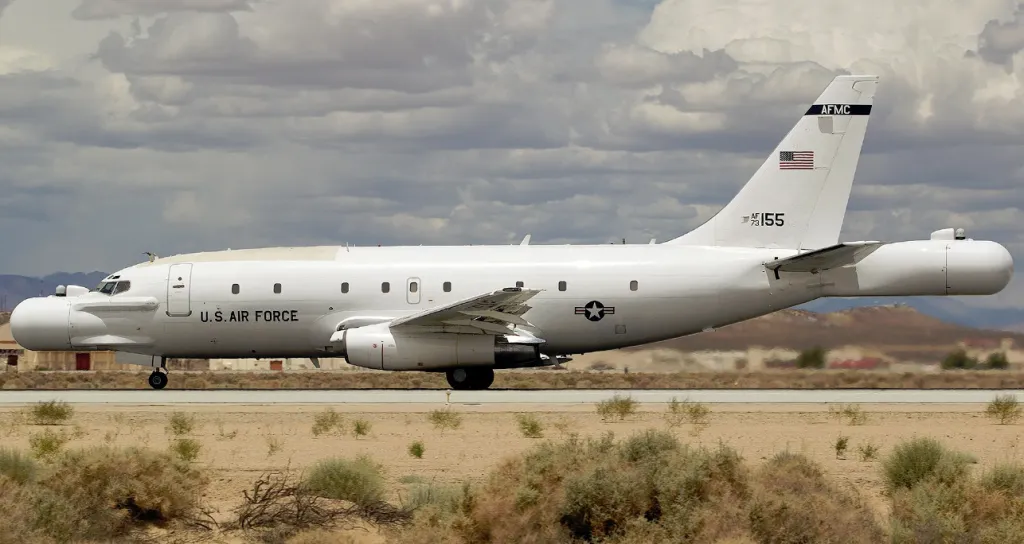
NASA is moving to hire a contractor to assess whether or not a Boeing 737-73W can meet its needs for a new reduced-gravity testbed aircraft. The use of planes modified for this role is now new, and they are often called “Vomit Comets” because of the extreme maneuvers they perform to simulate zero-G environments and the physical side effects this often induces. However, there’s an unusual twist here with the specific plane that NASA is now eyeing: it currently belongs to the U.S. Air Force and is part of a “classified military program.” There is a strong possibility that the aircraft in question is a mysterious 737 that the service acquired in 2020, and that has been the subject of much speculation as to its purpose ever since.
NASA’s Armstrong Flight Research Center posted a contracting notice yesterday justifying a planned sole-source contract to Denmar Technical Services, Inc. in relation to “Reduced Gravity Modification” of the 737-73W aircraft. Earlier this year, signs had already emerged that NASA might be in line to get a heavily modified and highly secretive 737 from the Air Force, designated the NT-43A and commonly referred to by the callsign RAT55. However, yesterday’s notice does not appear to refer to the NT-43A, long used as an airborne signature measurement platform and described in the past as the world’s most secretive 737, which is based on a much older 200-series airframe. We will come back to this later on.
A stock picture of the NT-43A Radar Test Bed aircraft, also commonly known by the callsign RAT55. Phodocu
What NASA wants now
“NASA requires Denmar Technical Services, Inc. to conduct a feasibility assessment to determine the Boeing 737-73W’s suitability to perform the NASA reduced gravity mission; modify the aircraft cabin, if required, to support reduced gravity operations; perform overdue maintenance and inspections, perform airworthiness restoration tasks, and paint the aircraft exterior with NASA identifiers,” the contracting notice NASA released yesterday explains.
The notice adds that the aircraft, if modified, would be used, at least most immediately, “for the Reduced Gravity Test Bed Project in support of the agency [sic] need for performing validation testing on Space Suits in support of the Artemis program.”
Artemis is NASA’s current effort to return U.S. astronauts to the lunar surface. The Artemis II mission, conducted in April, involved the first fly-by of the Moon by a crewed spacecraft since the end of the Apollo program in the early 1970s. However, the spacecraft did not touch down on the surface. The goal now is for a crewed lunar landing to come in 2028. RAT55 was notably used to support the launch of the Artemis II mission and the subsequent recovery of the capsule after its return to Earth.
Back in January, NASA had put out a separate contracting notice calling for information about new options to provide “parabolic flight services” to simulate “reduced gravity environments, including microgravity” for testing and scientific research purposes. The Florida-based Zero-G corporation is currently the primary provider of these services to NASA, using a retrofitted Boeing 727-200 dubbed ‘G-Force One.’ You can read more about NASA’s general use of Vomit Comets in the context of that notice here.
Total Weightless! What Happened on my Zero Gravity Flight?
The Boeing 737-73W under consideration to be turned into a Vomit Comet “is owned by the United States Air Force (USAF). Denmar Technical Services, Inc. has specialized knowledge of this Boeing 737-73W aircraft as they are currently contracted by the USAF to modify the aircraft under a classified military program,” the contracting notice NASA released yesterday adds. “NASA does not have a ‘need to know’ regarding the details of the current modifications being made under the USAF contract and therefore is unable to provide modification details to another contractor or provide another contractor with access to the aircraft. The USAF will transfer ownership of the aircraft to NASA upon completion of the closeout tasks.”
“Denmar Technical Services, Inc. is uniquely positioned to close out work under their existing obligations while performing the feasibility assessment, maintenance, and any modifications required under this action,” the notice continues. “Additionally, due to the constrained timeline for the NASA Extravehicular Activity and Human Surface Mobility Program’s space suit testing for Artemis, NASA requires the assessment and overdue maintenance to be performed immediately upon contract award and any subsequent aircraft modifications to be complete no later than October 1, 2026. The timeline can only be supported if this requirement is fulfilled concurrently with the USAF closeout tasks.”
Denmar is a small aviation firm headquartered in Reno, Nevada. At the time of writing, its website lists a wide array of specialized design, modification, flight testing, and other work among its portfolios. This includes “advanced customized mission system development” that “encompasses the design of unique airborne operator interfaces, specialized emitters and sensors, system integration, and post-mission analytics and processing.” The company also describes itself as the “Nation’s leading experts on IR [infrared] and RF [radiofrequency] survivability, signature modeling, [and] agile software development for analysis and real-world operational assessments.”
In line with all this, Denmar is understood to have been the prime contractor behind the extensive modifications to RAT55. In April, the Air Force confirmed to TWZ that the NT-43A was “being transitioned to start the next phase of its career,” as reflected by its involvement in the Artemis II mission, “after decades of flights supporting the Air Force in various roles.” The aircraft, which is understood to have long called the secretive and remote Tonopah Test Range Airport (TTR) in Nevada home, has been seen much more publicly since then.
Best views of RAT55 yet. Dorsal sensor pod (EO ball) seen in detail here. Also shot inside. I wonder if this is going to be ported in full to a contractor (it is currently operated by a contractor) https://t.co/XoE1zGFN78
However, as NASA’s recent contracting notice makes clear, the 737 it is now looking at as a potential Vomit Comet is a much newer 700-series model. TWZ has reached out to the Air Force and NASA for more information.
The curious case of N712JM
As mentioned, it is very possible, if not highly probable, that the 737 NASA is now considering turning into a Vomit Comet is one that the Air Force acquired in 2020, which TWZ explored in-depth at the time. That aircraft, which is a -73W model, is still officially on the U.S. civil register, with the registration code N712JM. Federal Aviation Administration (FAA) records show that the preceding owner of this aircraft was Denmar, which acquired it in 2019. The plane’s history before that is murky, with Boeing delivering it in 2013 to East West Bank via a trusteeship with Wells Fargo Bank, per the FAA’s records.
N712JM had drawn particular attention in 2020 not just because of its transfer to the Air Force, but also because it emerged at that time wearing a green protective coating and otherwise looking like it had just rolled off the production line. It also had some unusual external features that raised questions about its role, as we explored at the time.
N712JM as it was seen in 2020. Reader submission
In 2020, Jon Ostrower, long-time aviation journalist and editor-in-chief of The Air Current, told TWZ the following:
“This is definitely an airplane that never made it to a formal finish you’d expect from a commercial airplane. The green finish is a protective coating applied to fuselages during manufacturing to protect from scratches and other damage. It is dissolved during painting. You can also still see the manufacturing (line) number as well. That’s from its original trip down the assembly line. There’s also quite a bit of instrumentation visible with sensor wiring leading into the cabin through the passenger windows. This type of arrangement points to a flight test setup of some kind.”
In 2020, N712JM conducted many test flights in U.S. military ranges off the coast of Southern California, flying various flight profiles, some of them quite unusual. The aircraft flew those sorties from Santa Maria Airport in California, and used the callsign STING 38.
What the Air Force has been using N712JM for to date is unknown. Per FAA, the aircraft has been and continues to be registered to an address at Bolling Air Force Base (technically now part of Joint Base Anacostia-Bolling) in Washington, D.C., which looks to belong to the Air Force’s Rapid Capabilities Office (RCO). The RCO has headed up multiple cutting-edge, high-priority programs over the years, including the development of the B-21 Raider stealth bomber and the X-37B reusable spaceplane. A 737-based platform could be configured to support an array of different research and development and test evaluation activities that would fall under the purview of RCO, as well as other stakeholders that this office might engage with.
A screen capture of the entry for N712JM in the FAA’s online database at the time of writing. FAA capture
There has also been some speculation over the years that N712JM might have transformed into an Air Force 737 with the serial number 21-0024, but this appears to still be unconfirmed. The 21-0024 serial has more recently become associated with other shadowy 737s tied to the U.S. military, which have civilian-style paint schemes and may also be on the U.S. civil register. One of them was notably spotted in 2025 at a U.S. forward operating location in El Salvador, sitting directly alongside an Air Force AC-130J Ghostrider gunship and a U.S. Navy P-8A Poseidon maritime patrol plane. This, in turn, raised questions about its involvement in the ongoing U.S. campaign of strikes on alleged drug smuggling boats in the Caribbean and the Eastern Pacific Ocean, as TWZ previously explored in detail.
21-0024, for reference. When I spotted it, FR24 was indeed calling it N712JM, though ADSBx had the BuNo and a different hex. https://t.co/3WwV3kxBC4
Interestingly, there have been several online flight tracking data ‘pings’ suggesting new activity related to N712JM at Colorado Springs Airport since at least February of this year. However, there do not appear to be any confirmed flights by the aircraft from there in that same timeframe. This airport notably sits adjacent to Peterson Space Force Base.
There is still a possibility that NASA could be looking at a different Air Force 737-73W for possible conversion into a Vomit Comet. As the contracting notice makes clear, the aircraft in question is currently in the classified realm. At the same time, this seems far less likely to be the case given everything that is known (and still unknown) about N712JM.
A separate question does exist now as to what effort the Air Force might be in the process of closing out that would allow it to transfer any classified 737 to NASA. TWZ has previously raised tangential questions about how the Air Force might fill the resulting gaps left by the highly-specialized RAT55 moving on to the next stage of its career. It is certainly interesting in its own right that NASA seems to be focused heavily at the moment on leveraging some of the most secretive 737s in existence today to support its much less sensitive needs.
More details may emerge if Denmar deems the “classified” Air Force 737 to be a suitable starting place to create a new Vomit Comet to support NASA’s reduced gravity training needs and the Artemis program.
Update: 3:45 PM EST –
In immediate response to our queries, NASA has directed us to an additional notice about the award of the sole-source contract, valued at $8.4 million, to Denmar Technical Services back on June 1.
“The contractor will modify a Boeing 737-700 aircraft to perform lunar-gravity parabolic flights to test NASA space equipment. Once modifications are complete, NASA Armstrong will own the aircraft and oversee aircraft operations out of NASA Johnson,” the notice says. “The aircraft will be used to validate astronaut lunar suits and associated crew systems required to support Artemis mission objectives. This can be done with the modified 737 aircraft in an operationally relevant, reduced-gravity environment prior to lunar mission execution.”
No mention is made here about the sourcing of the aircraft from the Air Force or its classified mission work, as outlined in the sole-source justification that was released yesterday.
BBC expert Steve Fletcher was given the task of restoring a sentimental item on the latest episode of The Repair Shop.
The Repair Shop guest was moved to tears on the BBC show(Image: BBC)
Emotions were at an all-time high during The Repair Shop as BBC’s Steve Fletcher and Dominic Chinea welcomed Robin into the workshop.
The guest had a large globe with him, which he explained was a ‘world clock’ and was built by his great-grandfather.
He commented: “It’s based on a grandfather clock mechanism. The idea is that the clock makes the globe rotate once every 24 hours. Then, using the numbers on the ring around the equator, you can see what the time is anywhere in the world.”
The BBC stars were blown away as they both called it ‘amazing’ before Robin confessed that he’s never known it to work in his lifetime.
Curious, horologist Steve asked if his great-grandfather was a clock-maker, as the guest explained that he wasn’t, he had been a mechanical engineer, but made the item in his spare time in the 1930s after retirement.
He added: “There’s a little newspaper cutting in here, according to the newspaper it’s supposed to chime every half hour. It took him five years to perfect.”
Sadly, Robin shared that his great-grandfather died when he was one year old, but he has memories of the item in his grandad’s dining room.
When asked what he wanted them to do with the unusual clock, Robin stated the idea would be to get it working, which is something his own father had wanted to do but never was able to.
He added: “If he’d have seen it working, I think it would have really been special to him if I could get it working now, in his memory, but also, grandfather and great-grandfather before that. Just to keep the family legacy going, as it were.
In the end, after the item was worked on by both Steve and Jonathan Wright, it was time for Robin to return to see the final restoration.
When the globe was revealed, which the experts managed to get working once again, Robin was blown away. He commented: “Wow! Well, it looks gorgeous, it really does look gorgeous. I’m… I am stunned, I really am stunned. Thank you. That’s a lovely sound, isn’t it?”
When Steve turned the clock strike on, Robin laughed as he struggled to hold back his emotions. He added: “Wow, that is so sweet. Sorry. I’d have loved my dad to have seen it and heard it. He’d have been thrilled. It’s really, it is emotional.
“Extremely emotional, but it’s magical, fabulous. We shall treasure it until it’s time to hand it on to the next generation.”
Steve added: “It’s been a real great challenge, so thank you very much for bringing it in.
The Repair Shop is available to watch on BBC iPlayer.
Migrants say they are living in fear after a campaign group gave people living illegally in South Africa until June 30 to leave. Nigeria’s diplomatic mission in South Africa says many of those returning no longer feel safe to continue living or working in the country.
The United States government has faced sharp criticism from immigration and human rights experts due to the ongoing visa-related complications and entry denials for athletes and officials participating in the FIFA World Cup.
The censure of US President Donald Trump’s administration grew after top Somali football referee Omar Artan, who was set to officiate in World Cup games, was denied entry into the country this week.
Recommended Stories
list of 4 itemsend of list
“Human rights organisations and advocacy groups have repeatedly raised concerns regarding immigration enforcement practices and treatment of migrant communities in the US,” international sports lawyer Khayran Noor told Al Jazeera last month.
Noor said that while these debates are “independent” of football, they inevitably become relevant when a country hosts one of the world’s largest international gatherings.
“The challenge is that major sporting events rely not only on logistics and security but also on atmosphere and perception.”
UN High Commissioner for Human Rights Volker Turk called for a “massive rethink” of US immigration policies, saying that he hoped issues around “racial profiling, around surveillance, around immigration enforcement are not going to affect this World Cup in the way that they have already done”.
Although Artan returned home on Wednesday to a hero’s welcome and sporting a positive attitude, the incident rehashed the conversation on geopolitics and racism being cloaked by US visa denials ahead of the 48-nation, 39-day tournament starting on Thursday.
Fans from several countries, including Morocco and Scotland, who spent thousands of dollars on flights, hotels and tickets for the most expensive World Cup in history, have also reported having their travel documents denied or revoked just days before they were due to travel.
Here’s a look at the athletes, officials and fans affected by US visa complications:
Omar Artan: Somalia
Artan, 34, was set to make history as the first Somali referee to officiate at a World Cup, but his dream debut ended at Miami airport where he was denied entry into the country and flown back to Istanbul, despite having a valid US visa and all required documents.
The US Department of Homeland Security (DHS) confirmed to Al Jazeera on Monday that Artan was “determined to be inadmissible” to the country “due to vetting concerns”, despite having been listed as one of FIFA’s 52 World Cup referees.
Trump has targeted both Somalia and the Somali-American community with inflammatory rhetoric, at one time calling the community “garbage”, and has put Somalia on the US travel ban list.
Iranian World Cup squad and officials
Until last week, there was uncertainty over whether Iran’s football team would be granted visas by the US due to the ongoing US-Israel war on Iran, which has brought geopolitical tensions into the sports sphere.
The US awarded visas to all the players on Friday, just 10 days before their first match, but several members of the support squad were denied visas, including “key managerial and administrative members,” according to the Iranian football federation.
Iran’s team, whose base camp was to originally be in Arizona, will be based in Tijuana, in neighbouring Mexico, throughout the tournament, despite playing their entire group stage on the US West Coast.
The team will be able to enter the US the day before each of their three World Cup matches, the DHS said on Tuesday.
Media reports over the weekend quoted the Iranian ambassador to Mexico, Abolfazl Pasandideh, as saying that Iran’s team would have to enter and leave the US on the same day as they were playing, raising questions about logistics and whether it would affect team performance.
Aymen Hussein: Iraq
Iraq striker Aymen Hussein was detained for nearly seven hours and his phone inspected at Chicago’s O’Hare airport before he was eventually allowed into the country.
“Why is America hosting the World Cup if it is so hostile to foreign nationals?” the 30-year-old said after the incident.
Meanwhile, national team photographer Talal Salah was held for more than 10 hours, underwent similar phone checks, and was ultimately denied entry into the US.
Woodensky Pierre: Haiti
Woodensky Pierre, the only member of Haiti’s national football team who lives in the Caribbean country, was granted a late visa by the US government to play in the World Cup.
Pierre had been training with local players in an upscale area of Haiti’s capital, Port-au-Prince, as he awaited the visa, which was a “great moment for him, a moment of happiness”, an official of the Haitian Football Federation had said.
The midfielder from Cite Soleil was unable to play in a friendly against New Zealand because his visa was not approved by US authorities until it was too late. He landed at Miami airport around half-time with Haitian football officials and hoped to catch the last part of the game.
Breel Embolo: Switzerland
Swiss forward Breel Embolo was unable to travel with his team due to a flagged visa, but eventually caught up with them after being cleared to enter the US.
The snag was linked to a previous conviction over an altercation in Basel in 2018. Embolo had been convicted of making threats five years later, which he chose not to appeal, but it left his fate to be decided at a meeting at the US Embassy in Bern, where he made his case and was cleared for travel.
Is FIFA obligated to ensure visas?
FIFA’s bidding rules in 2017 for nations wanting to host this World Cup stated that visa processing “must be applied in a non-discriminatory manner”, with the caveat it must not “adversely affect the national immigration and security standards”.
Sports lawyer Noor explained that states understandably retain sovereign responsibilities regarding border control and national security, but global sporting events often require exceptional frameworks.
“This is not about requiring states to abandon immigration laws or surrender sovereignty.
“Rather, it is about asking whether hosting the world’s largest sporting events also carries responsibilities around meaningful inclusion and access,” Noor said.
FIFA president Gianni Infantino has fended off concerns and criticism, saying the global football body’s executives are not “kings of the world” and cannot override government decisions.
Infantino, facing questions from the media on the eve of the World Cup on Wednesday, said that FIFA is focused on being a “sports organisation” and will not intervene in helping the US determine approvals for entry into the country.
“We try always to find solutions – always,” Infantino said at a news conference in Mexico City. “But then we need to respect that we are not the kings of the world who can rule over governments and police forces and I don’t know what. We are a sports organisation; we try to do our best with the means that we have.”
KERRY Katona has stripped completely NUDE to pose with her fitness instructor boyfriend Paolo Margaglione.
The pair who met on Celebs Go Dating in early 2025 can be seen posing for a naked selfie in a bathroom mirror in his recent Instagram post.
Sign up for the Showbiz newsletter
Thank you!
Kerry Katona stripped nude to pose for a very steamy snap with her boyfriend PaoloCredit: Instagram/ @kerrykatona7The pair met on Celebs Go Dating and are very much in loveCredit: Instagram/ @kerrykatona7
Paolo held his iPhone as he snapped the racy photo with one arm around his stunning girlfriend.
Kerry posed and threw her arms around Paolo as he nuzzled into her neck.
In the caption of the post, Paolo penned: “Can we just take a minute to appreciate how lucky I am.
“I’ll shout it from the roof tops with pride, my woman is a certified BADDIE.”
Kerry commented on the photo dump, which included several other sweet photos, as well as the very racy one.
She penned: “Baby, you’ve made me cry.
“I truly love you and I too am eternally grateful for you.”
Kerry went on to say how Paolo is an amazing father and partner, gushing over how proud she is of him.
Last month, one year on from finding love on Celebs Go Dating, Kerry returned to the E4 show.
As Anna Williamson asked what the public support has been like for Kerry and Paolo since they got together, the mum-of-five admitted: “I found it really overwhelming.
“I think since I joined the agency people see me for who I really am rather than just reading a headline.
“People actually watched me fall in love, and the support I’ve had from people – it’s been so overwhelming – for people to be so invested in somebody who I’ve chosen to love.
“It’s been really overwhelming, I’m not sure how to deal with it.”
Wiping away tears with a tissue, Kerry continued after a pause: “Life is so good, it’s so unbelievable that it scares me.”
Marius Borg Høiby and his mother, Norwegian Crown Princess Mette-Marit, attend a government’s party event in 2022 in Oslo, Norway. A Norwegian appeals court has denied Høiby’s request to leave custody because of his mothers’ illness. File photo by Lise Aserud/EPA
June 10 (UPI) — A Norwegian appeals court has denied a request from Marius Borg Høiby, son of Norwegian Crown Princess Mette-Merit, to leave custody because of his mothers’ illness. Høiby is behind bars while he awaits a verdict in his rape trial.
The court overturned a verdict by a lower court Monday that had ordered Høiby’s release before the verdict, which is expected June 15. Hoiby, 29, is facing 40 criminal charges and has been in custody since February.
Princess Mette-Merit, 52, has pulmonary fibrosis, a chronic lung condition, The BBC reported. Her doctors added her to a lung transplant list last week.
“We are very, very disappointed. I find the decision almost incomprehensible,” defense lawyer Ellen Holager Andenæs said to Norwegian news outlet VG, as cited by Nine.com.au.
Høiby had told the lower court that “sitting inside while I know Mum is so sick is unbearable,” The BBC said.
Høiby was detained before his trial after new allegations of assault and violating a restraining order. The appeals court disagreed with the lower court that had ordered his release, saying his risk of reoffending was “virtually unchanged” since its earlier decision.
“As the Court of Appeals sees it, this is not a question of will, but a question of ability, lifestyle and risk factors,” the ruling said. It noted that Høiby is not the only one in prison with a family member affected by serious illness and will not receive special treatment.
Høiby denies four counts of rape but had admitted to lesser charges such as drug possession and traffic offenses. The judges are also considering charges of violence, threats and abusive behavior within a relationship.
Høiby was born before his mother married Norwegian Crown Prince Haakon and is not a member of the royal family. He was first arrested in August 2024.
Weekly insights and analysis on the latest developments in military technology, strategy, and foreign policy.
U.S. President Donald Trump told reporters today that in the wake of overnight attacks between the U.S. and Iran, strikes on Iran will continue. Meanwhile, Iranian officials say they are “reviewing” whether to continue peace talks after one of the most serious exchanges of fire between the two nations since the April 8 ceasefire.
Though damage assessments are still ongoing in the wake of Iranian missiles and drones launched across the Middle East overnight, a U.S. official told TWZ Wednesday morning that so far, there have been no injuries among U.S. personnel reported and no indication yet of any damage to American installations. That’s despite Iranian claims to the contrary.
“Iran launched multiple missiles and drones and just about all were intercepted according to initial reflections from assessments that are ongoing,” the official told us, speaking on condition of anonymity to discuss operational details. “No reports of harm to any U.S. personnel; not aware of any damage to our locations at this time.”
Several videos emerging overnight claimed to show missile interceptions and explosions resulting from the latest Iranian kinetic actions.
Some showed missile interceptions over Muwaffaq Salti. As we have frequently noted, the base has been a major staging area for U.S. airpower in the region. It came under Iranian attack before the ceasefire, with an AN/TPY-2 missile defense radar there having been notably targeted.
Footage shows air defense interceptors engaging incoming Iranian ballistic missiles over Jordan.
Iran’s Islamic Revolutionary Guard Corps (IRGC) says it targeted Jordan’s Muwaffaq al-Salti Air Base, along with 20 other U.S. military sites across the region. pic.twitter.com/RxKHsNaQur
Additional video shows what appears to be an explosion in the distance as viewed from a CCTV camera in Manama in the wake of a claimed Iranian missile launch at Fifth Fleet headquarters. The extent of the damage, if any, is unknown.
CCTV footage shows an explosion in Bahrain’s capital Manama after what authorities say was an Iranian missile strike.
Iran’s IRGC says it hit US military bases in Bahrain, Kuwait and Jordan in retaliatory attacks for US strikes in the Strait of Hormuz. pic.twitter.com/4eKzhBa1np
The Islamic Revolutionary Guard Corps (IRGC)-connected Tasnim News Agency also posted a video it claims shows an attack on the Fifth Fleet. The short video shows what appears to be an explosion in the distance and again, there is no way to tell what, if any damage, was caused.
The Kuwaiti Foreign Affairs Ministry condemned the latest Iranian strikes and said the nation “reserves its full right to take all necessary measures to preserve its security and defend its territories and vital facilities, in accordance with international law and the United Nations Charter.”
بيان صادر عن وزارة الخارجية الأربعاء 10 يونيو 2026
تُعرب وزارة الخارجية عن إدانة دولة الكويت واستنكارها وبأشد العبارات، استمرار الاعتداءات الإيرانية الآثمة والمتكررة على دولة الكويت، والتي كان آخرها اليوم، في تصعيد جديد يُضاف إلى سلسلة الاعتداءات الإيرانية المتواصلة، ويُعد… pic.twitter.com/7H1TFQNqMv
Iran said its latest volley of kinetic actions were in response to what U.S. officials say were strikes on 20 Iranian targets in response to the helicopter downing.
The United States and Iran traded strikes overnight.
20 Iranian targets were hit by U.S. forces, including air defense systems and radar sites.
This latest flurry of strikes prompted comments about the future of diplomacy from both sides.
During a morning press conference, Trump said “we hit ’em hard yesterday, and we’re going to hit ’em again hard today, in case you miss it, in case you don’t turn on your television set, and we’ll see what happens with the deal.”
.@POTUS on Iran: “We hit them hard yesterday and we’re going to hit them again hard today… And we’ll see what happens with the deal. We were really close to a deal — but they keep tapping us along. They keep playing us for suckers because you know what? They dealt with some… pic.twitter.com/ScvGn14QFQ
— Rapid Response 47 (@RapidResponse47) June 10, 2026
Earlier on Wednesday, Trump told Fox News that there may be additional U.S. attacks that focus on “Iranian power plants and bridges.”
NEW: President Trump tells me he “may keep going” with strikes against Iran and is getting closer to targeting Iranian power plants and bridges.
The President also spoke about the U.S. military helicopter that was downed saying that an Iranian drone lodged between the two… pic.twitter.com/j5aQEIzi9s
The president’s comments to Fox follow statements he made on his social media outlet saying Iran has taken too long to agree to a peace deal.
“Iran’s Military is a complete and total mess,” Trump said on Truth Social. “Much of it, like their Navy and Air Force, doesn’t even exist anymore – They have been completely defeated. Iran is all talk and no action. The Bully of the Middle East is DEAD!!! They’ve taken too long to negotiate a deal that would have been great for them, now they will have to pay the price!!!”
Trump did not elaborate on what that price may be.
As we noted earlier in this story, Iran is reassessing the future of diplomatic negotiations aimed at ending the US-Israeli war against the country, according to the official Iranian IRNA news outlet.
“We have to review it,” Iranian Foreign Ministry spokesperson Esmaeil Baqaei told IRNA. “Diplomacy and the battlefield are not separate matters; rather, they run alongside and complement each other in safeguarding Iran’s interests and security.”
Baqaei stressed that Iran’s military and diplomatic tracks operate in coordination.
“Wherever the Armed Forces deem it necessary, they respond to the enemy with authority and strength, and last night’s events showed that Iran’s brave Armed Forces do not hesitate in defending the country,” he posited.
ایرانی وزارت خارجہ کے ترجمان اسماعیل بقائی کا کہنا ہے کہ حملوں کے بعد امریکا کے ساتھ مذاکرات کا ازسرنو جائزہ لے رہے ہیں، امریکا اور اسرائیل بار بار جنگ بندی کی خلاف ورزی کررہے ہیں۔
انہوں نے کہا کہ مذاکرات کو آگے بڑھانے کیلئے پرسکون ماحول بہت ضروری ہے، بدقسمتی سے واشنگٹن کے… pic.twitter.com/1nGcYA3fmN
Despite the flare-up in fighting and posturing by both sides, negotiations appear to be continuing.
“Following consultations with the United States, Qatari negotiators headed to Tehran this morning to meet with the Iranians in an attempt to bridge the remaining gaps,” CNN reported on its Arabic channel, citing a source. “The visit indicates that diplomacy remains active, despite an exchange of fire between Iran and the United States overnight—marking one of the most significant tests of the ceasefire to date. A US official told CNN that the United States believes these strikes will not derail the negotiations.”
مصدر دبلوماسي لـCNN: مفاوضون قطريون توجهوا صباح الأربعاء إلى طهران لسد الفجوات المتبقية مع أمريكا https://t.co/IIkMnAmHkt
At issue remains the future of Iran’s nuclear ambitions, the ongoing closure of the Strait of Hormuz, Tehran’s ballistic missile arsenal and support for proxies and the easing of U.S. sanctions. Whether the increased fighting between the two sides will derail these efforts remains an open question.
UPDATES
Iran claims it downed another U.S. MQ-9 Reaper drone overnight. While TWZ can’t verify that, we have noted that the loss of dozens of these drones to Iran and the Houthis have forced the U.S. Air Force to scramble for replacements.
A cargo ship came under small arms fire 88 nautical miles south of Balhaf, Yemen in the Gulf of Aden, according to the United Kingdom Maritime Trade Operations (UKMTO) monitoring organization.
“A cargo vessel has reported being approached by one craft with 6 armed persons onboard,” UKMTO explained. “There was an exchange of fire between the small craft and the cargo vessel’s Armed Security Team resulting in the small craft turning away. Authorities are investigating. Vessels are advised to transit with caution and report any suspicious activity to UKMTO.”
While details about who was involved are scant, this is the first attack in the region, near the Bab al-Mandeb Strait, since the Houthi rebels of Yemen threatened to shut the vital waterway down in support of Iran last week. You can read more about the implications of the Iranian proxy group closing the Strait on the U.S. military and the global economy in our prior reporting here.
In a post on X, CENTCOM on Wednesday announced it disabled an oil tanker trying to run the blockade of Iranian ports.
The incident took place at 11:14 p.m. on June 9, when a U.S. aircraft “fired precision munitions” into the engine room of the Palau-flagged M/T Settebello as it transited the Gulf of Oman.
The ship was attempting to transport oil from Iran, the command added.
In addition to the ships it disabled, CENTCOM said it has “redirected 134 ships that complied, and allowed 42 vessels supporting humanitarian aid to pass since initiating the blockade on April 13.”
You can read more about the other seven ships hit by CENTCOM here.
CENTCOM:
At 11:14 p.m. on June 9, U.S. forces disabled an oil tanker in the Gulf of Oman for the second consecutive day after another vessel violated the ongoing blockade by attempting to transport oil from Iran.
When it comes to the Strait of Hormuz and Gulf of Oman region, Trump took to social media to say the ongoing blockade of Iranian ports has devastated Tehran’s economy.
“The Fake News Media refuses to report how EFFECTIVE the U.S. Naval BLOCKADE is, the most successful Blockade in the history of Naval Warfare,” the president proclaimed on Truth Social. “NOTHING GETS THROUGH unless we want it to. IT IS A STEEL WALL! Iran is doing ZERO business, not paying their military, or any of their bills, and quickly becoming a FAILED NATION! Lots of oil is getting out. Praise be to Allah!”
President Donald J. Trump has taken to Truth Social again decrying the “fake news media” coverage of the naval blockade of Iran saying that it is a “STEEL WALL”, Iran is doing “ZERO business, not paying their military or any of their bills, and quickly becoming a FAILED NATION!”… pic.twitter.com/DcCHVebRX7
However, in a post on X, the Windward trade intelligence group said that “five Iranian-trading [liquified petroleum gas] LPG carriers have broken the U.S. blockade on Iranian ports,” Windward stated. “Four discharged in India, one in Pakistan. All five used the same playbook, spoofing and AIS blackouts to mask loading and destination. Yet all signaled their exit and/or entry through Hormuz via AIS. Three were already U.S.-sanctioned. A fourth sanctioned June 6. Two operated under false flags, making them legally stateless.”
However, the crude oil blockade is holding, Windward added.
“No Iran-trading VLCC tracked in Asia via Malacca, Sunda, or Lombok since May 4,” the organization noted.
Five Iranian-trading LPG carriers have broken the U.S. blockade on Iranian ports. Four discharged in India, one in Pakistan.
All five used the same playbook, spoofing and AIS blackouts to mask loading and destination. Yet all signaled their exit and/or entry through Hormuz via… pic.twitter.com/iWBqGHSrBl
U.S. Secretary of War Pete Hegseth is scheduled to visit CENTCOM headquarters in Tampa, Florida, today to discuss the ongoing situation with the head of that command, Adm. Brad Cooper, and engage with troops.
Secretary Hegseth will be traveling to Guantanamo Bay, Cuba and Tampa, Florida today to engage with troops at GTMO and CENTCOM, per Pentagon.
Despite efforts to quell the fighting between Israel and Hezbollah in southern Lebanon, the Israeli Air Force continues to strike targets in that country.
“Over the past day, the IDF struck Hezbollah infrastructure sites in the area of Tyre and in several areas in southern Lebanon,” the IDF stated on Telegram.
“In the area of Tyre, the IDF struck six infrastructure sites used by the Hezbollah terrorist organization to advance terror attacks against the State of Israel and IDF soldiers operating in southern Lebanon,” the IDF added. “Among the infrastructure struck was a site used by Hezbollah terrorists to launch explosive drones toward IDF soldiers.”
In southern Lebanon, “the IDF struck ready-to-use Launchers, terrorists who operated in the area in which IDF soldiers are operating, and additional terror infrastructure sites,” it claimed.
השמדת תשתיות טרור מהן הופעלו רחפני הנפץ נגד כוחותינו: חיל-האוויר וכוחות יחידת האיסוף 869 ממשיכים לפעול בדרום לבנון.
במהלך השבועיים האחרונים, הכוחות חיסלו בשיתוף חיל-האוויר יותר מ-20 מחבלים שפעלו לקידום מתווי טרור והיוו איום על כוחותינו. בנוסף הכוחות השמידו מספר תשתיות טרור… pic.twitter.com/Mysi9BMXHW
Hezbollah, meanwhile, attacked a gathering of Israeli troops with a missile, according to Tasnim.
The ongoing Israeli incursion into southern Lebanon and continuing presence in Syria has raised tensions with Turkey. Any direct conflict flaring up from the long-simmering animosity between two of the region’s most powerful militaries – though extremely unlikely – would be a far bigger deal than a dertailment of U.S.-Iran peace talks.
“We are fully aware of what the ultimate objective of the delusion of ‘Greater Israel’ is,” Turkish President Recep Tayyip Erdoğan said Wednesday, adding that Israel’s actions in Lebanon and Syria now threaten Turkey.
Turkish President Recep Tayyip Erdogan:
Israel’s attacks on Syria and Lebanon have reached a point where they also threaten Turkey.
— Ariel Oseran أريئل أوسيران (@ariel_oseran) June 10, 2026
The Turkish leader’s statements sparked a harsh response from Netanyahu.
“The antisemitic tyrant Erdogan, who perpetrates genocide against the Kurds, supports the terrorist organization Hamas, oppresses his own people, and imprisons political rivals, is the last one who can preach morals to the State of Israel,” the Israeli leader retorted. “The State of Israel and the IDF, the most moral army in the world, will continue to act forcefully against Iran and its proxies that threaten the Middle East and the entire world.”
הרודן האנטישמי ארדואן שמבצע רצח עם בכורדים, תומך בארגון הטרור חמאס, מדכא את בני עמו ושם בכלא יריבים פוליטיים הוא האחרון שיכול להטיף מוסר למדינת ישראל.
מדינת ישראל וצה”ל, הצבא המוסרי ביותר בעולם, ימשיכו לפעול בעוצמה נגד איראן ושלוחותיה שמאיימות על המזרח התיכון ועל העולם כולו.
— Benjamin Netanyahu – בנימין נתניהו (@netanyahu) June 10, 2026
The latest events in the Mideast region show that there is no immediate end in sight to the hostilities and we will continue to monitor developments here given the ongoing impacts on the U.S. military and global economy.
UPDATE: 3:01 PM EDT –
Trump claimed the price of oil will fall because of how much has been secretly moved out of the region.
“We’re taking about millions of barrels of oil,” the president told reporters Wednesday afternoon.
.@POTUS on Iran: “Did you know we’ve been taking out millions of barrels of oil? Nobody knows it. You know who doesn’t know about it? Iran — until right now. We took out, the other night, 22 ships.” pic.twitter.com/2odiLYXDJ3
— Rapid Response 47 (@RapidResponse47) June 10, 2026
On his Truth Social, Trump claimed that last month, he “directed our Great U.S. Military to execute a secret mission to support Oil Tankers and other Commercial Ships through the Strait of Hormuz.”
“Today, I am pleased to announce that this effort has resulted in more than 100 MILLION Barrels of Oil making its way through the Strait, and into the Open Market,” he added. “More than 200 Commercial Ships have safely traveled through the Strait. This wildly successful effort is because the UNITED STATES of AMERICA CONTROLS the Strait of Hormuz — NOT Iran. Their military is defeated, and their economy is lost. It’s over for Iran!”
BREAKING: President Trump says he directed the US Military to execute a “secret mission” in the Strait of Hormuz which resulted in over 100 million barrels of crude oil crossing through Hormuz. pic.twitter.com/bSYeetbHH4
— The Kobeissi Letter (@KobeissiLetter) June 10, 2026
However, TankerTrackers.com clarified that the president was referring not to Iranian oil, but Arab oil.
There is now a public misunderstanding regarding President Trump’s statement. It is not Iranian oil that he is talking about. Those are still trapped. Instead, it appears to be the secured convoys of Arab oil into the Gulf of Oman via the Strait of Hormuz. This explains why… https://t.co/fEgyzY3gnX
— TankerTrackers.com, Inc. (@TankerTrackers) June 10, 2026
UPDATE: 3:39 PM EDT –
Hegseth thanked troops at CENTCOM headquarters in Tampa, Florida, for their efforts in the Middle East.
.@SECWAR spoke with troops at U.S. Central Command:
“On behalf of the President of the United States—on behalf of the American people—I want to say how proud we are of the work @CENTCOM has undertaken.” pic.twitter.com/SkDuqzS3UW
The Secretary-General of the International Maritime Organization (IMO) “has expressed deep concern and strong condemnation of the attack on the tanker MT Settebello,” according to the organization.
“I strongly condemn any act from any party that endangers the lives of seafarers and the safety of international shipping,” said Secretary-General Arsenio Dominguez. “This is simply unacceptable. My thoughts are with the families of the three missing seafarers and with all those awaiting news of the crew members.”
Two Indian seafarers died and one was reported missing after the attack, according to The Hindu.