Solar panels stand at the Anjwa Solar City power plant in Shinan County, South Jeolla Province, on Friday. The county distributes part of the project’s profits to residents through local cooperatives under its Sunlight Pension program. Photo by Asia Today
June 15 (Asia Today) — Salt-damaged farmland once unsuitable for either agriculture or aquaculture has become a source of pension income for residents of islands in southwestern South Korea.
Shinan County in South Jeolla Province operates what it calls a “Sunlight Pension,” sharing part of the profits from solar power projects with local residents. The program is regarded as a social economy model that connects large-scale renewable energy infrastructure with household income and local spending.
The county began distributing the pension on Anjwa and Jara islands in 2021 under a renewable energy profit-sharing program. It has since expanded the program to Jido, Saokdo, Imjado and Bigeumdo.
Under the program, part of the profits generated by solar power projects is distributed to residents through local cooperatives.
South Korea’s Ministry of the Interior and Safety regards the Shinan program as a social economy model that converts local resources into resident income while keeping spending within the community. The program brings residents, local government and private businesses together to ensure that some profits from power generation remain in the region.
The model is also consistent with the national government’s initiative to create “Sunlight Income Villages,” where communities receive income from renewable energy projects.
Shinan County enacted an ordinance in 2018 establishing a system to share profits from renewable energy development with residents. Residents do not directly pay the cost of building the power plants. Instead, resident cooperatives participate in the projects and receive dividends from the resulting revenue.
The dividends are paid through local gift certificates, encouraging recipients to spend the money within Shinan County.
“Existing residents are guaranteed dividend benefits, while benefits for new residents vary according to age to encourage younger people to move here,” a county official said. “New residents age 40 or younger are eligible immediately, without a waiting period.”
The program has produced measurable results.
Renewable energy development dividends generated cumulative revenue of 24.71 billion won, or about $16.1 million, between April 2021 and April 2025. Of that amount, 22.32 billion won, or about $14.6 million, was distributed through the Sunlight Pension.
An additional 2.39 billion won, or about $1.6 million, was distributed as a Sunlight Child Allowance for residents younger than 18.
Of Shinan County’s 16,483 residents, 13,284 are members of participating cooperatives, representing a participation rate of 81%.
The Anjwa Solar City power plant serves as the foundation of Shinan’s Sunlight Pension model.
The facility has a combined generating capacity of 288 megawatts, consisting of a 96-megawatt first phase and a 192-megawatt second phase. The first phase began commercial operations in November 2020, followed by the second phase in January 2023.
Plant officials said the project cost about 560 billion won, or approximately $366 million. It generates annual revenue of between 80 billion won and 85 billion won, or roughly $52.3 million to $55.6 million.
The history of the site is also significant.
The land was originally used for farming but became unsuitable for both agriculture and aquaculture because of salt damage and years of use as fish farms. A 2019 revision to South Korea’s Farmland Act allowed salt-damaged farmland to be used temporarily for other purposes, clearing the way for the solar project.
The land is scheduled to be restored to farmland after the solar facilities cease operations.
Anjwa Solar City is considered a leading example of South Korea’s resident-participation renewable energy profit-sharing system. Large solar projects can generate local opposition when residents receive few tangible benefits, making the profit-sharing structure a central element in securing community acceptance.
The Shinan model, however, may be difficult to reproduce in every region. Large renewable energy projects require several conditions, including government approval, resident consent and access to transmission infrastructure.
Project profitability and local acceptance must also be considered to maintain a stable dividend system.
“The Sunlight Pension was designed to ensure that development profits remain with residents and circulate within the community,” the county official said. “We plan to expand the profit-sharing program beyond solar power to offshore wind and other renewable energy projects.”
Since Israel launched its latest war on Gaza, Palestinian activist Mohammad Hannoun has been a figurehead in demonstrations across Italy.
Wrapped in a keffiyeh and waving the national flag, as head of the Palestinian Association in Italy he delivered impassioned speeches condemning the Italian government’s military cooperation with Israel and demanding an end to the genocide in Gaza.
Recommended Stories
list of 3 itemsend of list
The 63-year-old Jordanian national, who lives in the port city of Genoa and is an architect by profession, was arrested in December, under the accusation of having raised around 7 million euros ($8.1m) through his non-profit Association of Solidarity with the Palestinian People (ABSPP) that allegedly ended up in Hamas’s coffers.
Italian Prime Minister Giorgia Meloni expressed “appreciation and satisfaction” when the so-called “Operation Domino” led to the arrest of nine people, including Hannoun, described by investigators as the “head of the Italian cell of the Hamas organisation”.
But Italy’s Supreme Court of Cassation last month demanded a “comprehensive re-evaluation” of the evidence, describing it as too “generic”, according to the ruling seen by Al Jazeera.
The material presented in court consisted of Israeli intelligence sent to Italian authorities, as well as open-source online information whose provenance and reliability had not been established.
Hannoun’s case is not an isolated one.
Last month, Amin Abu Rashid, a Dutch national of Palestinian origin, was acquitted in the Netherlands by the Rotterdam District Court of financing Hamas, after a years-long legal battle landed him in jail for a year. Similarly, the evidence had relied on Israeli government reports and unverified newspaper articles.
The UK-based advocacy organisation CAGE International described Abu Rashid’s acquittal as a “direct rebuke of the use of Israeli intelligence as the basis for prosecuting Palestinian humanitarian organisers in Europe”.
Anas Mustapha, head of public advocacy at CAGE, told Al Jazeera that relying on Israeli evidence to prosecute Palestinians was tantamount to relying on Chinese information to try Hong Kong dissidents.
This practice constitutes a “major threat to the rule of law in Europe”, he said.
“Israeli intelligence is being laundered through European legal systems to suppress Palestinian civil society,” said Mustapha. “The aim is to disrupt and restrict activism and action against the state of Israel.”
‘Battlefield evidence’
Nicola Canestrini, who is among the lawyers representing the nine defendants including Hannoun, liaised with Abu Rashid’s representatives over the course of several months to challenge the use of so-called “battlefield evidence” in both Italian and Dutch courts.
The term refers to evidence collected by military forces during active hostilities or combat operations. Just like a standard crime scene, the collection of this type of evidence under European requirements must be presented with a chain of custody – the chronological documentation of the seizure, transfer, analysis, and storage of the materials.
In Hannoun’s case, the files alleging cooperation between the ABSPP and Hamas’s military wing were not accompanied by a chain of custody, but sent by an Israeli official “whose personal details remain confidential”, according to court documents.
The only indication of their provenance was the word “Avi”, which Canestrini said was later found to mean Israeli intelligence official Avi Abramson.
The evidence purportedly originated from hard drives found in Gaza’s hospitals as they were taken over by Israeli forces, namely in al-Shifa, al-Rantisi and Jabalia, as well as the Maghazi refugee camp and other locations across the Gaza Strip.
United Nations experts and organisations, including Human Rights Watch, have found that Israeli military actions in Gaza, including the forcible displacement of patients from those hospitals, amount to war crimes.
Canestrini and his legal team argued in court that unverifiable evidence collected by a state undergoing trial at the International Criminal Court (ICC) and the International Court of Justice (ICJ) was inadmissible.
“There’s a short-circuit in the legal system that is very troublesome for the rule of law,” the lawyer told Al Jazeera. “We’re seeing a foreign state under investigation for war crimes and crimes against humanity bringing evidence forward, and Italian authorities copying and pasting it in their reports.”
Additionally, rather than file an arrest warrant through established international cooperation channels, Israel sent the documents through a “spontaneous information exchange”. That measure bypasses oversight mechanisms established by the European Union Agency for Criminal Justice Cooperation (Eurojust) and the UN Military Evidence Guidelines.
“I believe this was done wilfully to avoid checks and balances that guarantee the respect of human rights,” the lawyer said.
Al Jazeera contacted Italian officials Riccardo Perisi, director of the Service for Combatting Extremism and External Terrorism, and District Attorney Marco Zocco, who declined to comment on Hannoun’s case due to ongoing legal proceedings. Avi Abramson, the Israeli intelligence official identified as the source of the evidence, did not respond to requests for comment.
According to the European Legal Support Center (ELSC), an independent organisation offering legal assistance to organisations and individuals advocating for Palestine, European states have systematically deployed “counterterrorism” and “public order” measures against Palestine solidarity efforts.
ELSC found a pattern of repression to “demobilise opposition to the Israeli genocide against Palestinians” in the United Kingdom, Germany, the Netherlands, and France, “advanced through alliances between state actors, Zionist lobby groups, and arms manufacturers”.
In Italy, activities around Palestinian solidarity are increasingly “equated with terrorism,” Italo Di Sabato, the national coordinator of Osservatorio Repressione (Observatory on Repression), an Italian organisation focused on tracking state control and defending the right to protest, told Al Jazeera.
The observatory documented cases in which pro-Palestinian activists were targeted by lawsuits, searches and administrative sanctions. “The objective is stifling any real form of solidarity with the Palestinian people,” Di Sabato said.
He argued that accepting opaque evidence to be used against Hannoun would have created a dangerous legal precedent.
“Israel’s aim was to have a free zone where everything is permitted,” Di Sabato said. “The political meaning of the Supreme Court of Cassation’s ruling is that the rule of law cannot be suspended when we deal with Palestine.
“What today constitutes the basis for the repression of Palestinian activism could tomorrow be the basis for the repression of any form of dissent.”
The “Love Island USA” production team is mourning the loss of executive producer James Barker, who died last week while on set in Fiji.
“Love Island USA” producers ITV America and Peacock confirmed Barker’s death in a media release shared with The Times on Monday. The announcement said that Barker died after “an unexpected medical emergency” but did not provide additional details, including the day of his death and a cause of death. Barker was 40.
“James’ unimaginable loss has been deeply felt across not just the entire Love Island USA production, but throughout all of ITV and Peacock,” the television companies said in a joint statement. “He was a beloved and greatly valued member of our collective family whose kindness, talent and dedication left an indelible mark on all of us and everyone who had the privilege of knowing and working with him. We extend our heartfelt condolences to James’ family, friends and colleagues.”
Barker began his tenure on “Love Island USA” in 2020, first working as a story producer. He has worked as an executive producer on the series for the last three seasons and was also a member of the producing team on “Love Island” companion series “Love Island Games” and “Love Island: Beyond the Villa.”
Barker, according to Monday’s statement, also oversaw the hit series’ pop soundtrack. For an interview with Rolling Stone in 2025, Barker recalled watching the original British “Love Island” series and how pop music supplemented the on-screen romances and heartbreak: “I think that is where my brain immediately said, ‘One, this is amazing, and more shows should be like this.’ And two, ‘How do I work on “Love Island”?’”
Barker also noted in the interview that he drew inspiration for the “Love Island USA” villa sound from his pre-TV career as a nightlife DJ and spoke about the process of hand-selecting music from established pop acts and up-and-coming artists.
“In the past, there was such a stigma about reality shows that a lot of artists didn’t want their music associated with reality shows. And that’s starting to turn around now,” Barker told the outlet. “[Artists are] more and more seeing, well, one, the financial aspect of having your music synced in these kind of shows, and also just the wide reach of viewers.”
Before “Love Island USA,” Barker was a producer on reality series “Pawn Stars,” “Counting Cars” and “Forged in Fire.” He later served as a story producer on “Queer Eye,” “Cosmic Love” and “Are You My First?” Outside of his TV work, Barker often performed as DJ Chaotic at gay bar C’mon Everybody in Brooklyn.
“Love Island USA,” which began its eighth season earlier this month, will pay tribute to Barker in Tuesday’s episode.
Los Angeles – “I’m sure when we score a goal today, everyone will be cheering.”
That was the prediction of Iranian fan Parsa Tafreshi, who had travelled from New York to Los Angeles to see Iran take on New Zealand on Monday.
Recommended Stories
list of 3 itemsend of list
His words would prove largely true.
The game ended in a thrilling 2-2 draw, and each time Iran – known as Team Melli – scored, the stadium erupted in deafening celebrations.
There were two opposing sets of Iranian flags in Los Angeles, home to a large Iranian American community that is largely staunchly opposed to the governing system in Tehran.
Some fans waved the Islamic Republic flag, adorned with the name of God. Others opted for the pre-1979-revolution flag featuring the lion and sun, used by the Iranian opposition.
But when Team Melli were building up an attack, their supporters sang in unison.
Chants of “Iran, Iran” rang throughout the stadium, and the fans held their breath collectively each time Iran’s attackers came near New Zealand’s goal.
Concerns of unrest around the game did not materialise. Iranian fans vastly outnumbered their New Zealand counterparts at the stadium, and the game ended without any major incident.
Anti-team protest
A small group of demonstrators had gathered outside the venue, waving Israeli flags and chanting in support of opposition figure Reza Pahlavi.
They also called on United States President Donald Trump to resume the war with Iran, although Washington and Tehran have already reached a ceasefire deal.
“President Trump, finish the job,” they chanted on a loud megaphone.
Protesters also shouted slogans against the Palestinian group Hamas and Lebanon’s Hezbollah.
One of the demonstrators held a banner featuring the faces of Team Melli players with red crosses on them.
“IRGC Team,” it said, referring to Iran’s Islamic Revolutionary Guard Corps, with red ink meant to resemble blood dripping from the letters.
Protester Kourosh Kiumarsi told Al Jazeera that the Iranian squad is the “regime team”.
Asked about the Israeli flags at the demonstration, he said: “Israel and the USA attacked the regime and helped the people of Iran. They are not at war with Iran. They are at war with the Islamic Republic regime.”
Despite the intensity of the slogans at the protest, it was small and contained.
Protesters outside Los Angeles Stadium, June 15, 2026 [Ali Harb/Al Jazeera]
“I love that all the hype was just outside of the stadium,” said Sudi Farokhnia, who wore a green, white and red wig and a shirt featuring the lion and sun flag.
“Once you walked into the stadium, all you could hear was Iran, Iran, Iran. The energy was amazing. The people were amazing,” she told Al Jazeera after the match.
But that does not mean the entire affair was apolitical.
It would be difficult to argue that the pre-revolution flag is not a political statement.
FIFA bans political symbols at international matches, but thousands of Iranian fans on Monday were able to come in with lion-and-sun flags, shirts and hats.
Many also wore political slogans like “Make Iran Great Again” and “free Iran”.
FIFA did not respond to Al Jazeera’s request for comment on the issue.
Minab message
There were also other political expressions at the match.
Arash, an Iranian fan who asked to be identified by his first name only, wore a shirt that said “Mibab 168” on the back.
The US-Israel war on Iran killed hundreds of civilians, including 168 children at a girl’s school in the southern city of Minab, during the first day of the conflict.
“This is not a political shirt. This is not just to send a political message,” Arash told Al Jazeera.
“It’s a simple, simple statement: Schools are sanctuaries, whether it’s school shootings, bombings. School is a place of virtue. It’s a place of learning. It’s a place that – no matter who you are, what you believe in, what country – school should be off limits.”
An Iranian fan in Los Angeles wears a shirt that says, ‘Minab 168’ [Ali Harb/Al Jazeera]
Inside the stadium, a group of Iranian fans also revealed a “MINAB 168” message during the game.
There were also Palestinian and Israeli flags visible in the stands.
The match kicked off with a political message: Many fans jeered the Iranian national anthem, which opposition activists see as representative of the government.
Iran’s participation in the tournament was in peril earlier this year because of the war. Team Melli were forced to stay in Mexico as their base camp, while all their group-stage matches were in the US, because the Trump administration refused to host them.
Once the ball was kicked, however, that all faded into the background.
It was 11 versus 11. And the football delivered excitement, joy and disappointment.
Iran dropped two valuable points against a lower-ranked team, but came twice from behind and hit the woodwork once.
And each of the two times the net bulged, the goals brought happiness to a nation with two flags at home and abroad that has gone through war and immense hardship.
There was a number of protesters outside.
But when Iran scored, almost all Iranians cheered.
Venezuela has signed an agreement with General Electric Vernova aimed at boosting electricity generation as the country seeks to improve a power system plagued by years of outages. Officials say the deal could add 5 gigawatts of capacity over four years.
Former Top Gear host Jeremy Clarkson headed to the auction house on the Prime Video series
Jeremy Clarkson’s net worth after farm show proves massive success BigCityLife
Jeremy Clarkson and Kaleb Cooper bid farewell to an iconic member of Diddly Squat Farm.
Season five of Clarkson’s Farm saw Jeremy selling off the fan-favourite Lambo tractor after it wasn’t getting much use, following his purchase of the AgBot in the new series.
The AgBot, a fully autonomous, driverless tractor, was busy ploughing the fields of Diddly Squat Farm and sowing seeds.
Jeremy and Kaleb could monitor the tractor’s progress on their computer while they got on with other things on the farm, which meant the 2016 Deutz-Fahr tractor wasn’t getting much use.
The veteran broadcaster decided to sell it off, explaining in voiceover: “”The green Lambo hadn’t turned a wheel in weeks, so I decided to sell it, which meant getting it valued by an agricultural auctioneer.”
The valuation on the prized piece of agricultural kit from Oliver Godfrey left Jeremy somewhat surprised and dismayed.
Oliver responded: “It’s not the easiest thing to sell in the world, I’ll be honest, but I would look somewhere in the region of between £50,000 and £60,000.”
Jeremy revealed that the valuation was “quite a lot less” than he’d initially paid for it when he bought it for £80,000.
On the day of the auction, Jeremy didn’t appear too hopeful about his Lambo’s prospects and said: “Here it is. There’s going to be a frenzy of bidding…”
However, the bidding did start to pick up as people put in their offers for the green tractor that Jeremy had customised and adorned with Lamborghini badges.
As the offers went up, Jeremy remarked: “We are actually getting closer to the £80,000 that I had paid for it.”
Despite the valuation, both Jeremy and Kaleb were left astonished and rather relieved when the Lambo ended up getting snapped up for the sum of £70,500.
Get 30 days of Prime Video totally free
This article contains affiliate links, we will receive a commission on any sales we generate from it. Learn more
TV lovers can get 30 days’ free access to binge great shows like Clarkson’s Farm by signing up to Amazon Prime. Just remember to cancel at the end and you won’t be charged.
Once the hammer went down, Jeremy said: “Well, it was a financial hit, but it wasn’t a financial kick in the nuts.”
The auction comes ahead of tomorrow’s Clarkson’s Farm season five finale, when audiences will get the final two episodes titled Sickening and Reaping – referring to the TB outbreak and the harvest at Diddly Squat.
Clarkson’s Farm season 5 concludes tomorrow on Prime Video
JoongAng Group Vice Chairman Hong Jeong-do bows in apology during a news conference at the JoongAng Ilbo building in Seoul on Monday after JTBC and other group affiliates filed for court-led rehabilitation amid a liquidity crisis. Photo by Yonhap News Agency
June 15 (Asia Today) — South Korean broadcaster JTBC and four other companies affiliated with JoongAng Group filed for court-led rehabilitation Monday, two days after the television network defaulted on 20.6 billion won, or about $13.6 million, in debt.
The applications could lead to restructuring, asset sales and efforts to attract new investment if the court approves the rehabilitation proceedings.
The five applicants are JTBC, Contentree JoongAng, Megabox JoongAng, JoongAng Holdings and JoongAng P&I.
JoongAng Group Vice Chairman Hong Jeong-do apologized during a news conference at the JoongAng Ilbo building in western Seoul.
“As a senior executive of JoongAng Group, I sincerely apologize to our employees,” Hong said.
“Management has explored every possible option to overcome the credit crunch and liquidity crisis and maintain the group’s operational stability,” he said. “However, accumulated financial burdens and the prolonged contraction of the capital market have left us with no choice but to file for rehabilitation proceedings.”
JTBC declared a payment default Friday after failing to repay 20.6 billion won in securitized borrowings at maturity.
South Korean credit-rating agencies subsequently downgraded the credit ratings of JTBC and other major group companies.
NICE Investors Service cut JTBC’s unsecured bond rating from BBB with a negative outlook to CCC. A CCC rating indicates a substantial risk of default and generally makes it difficult for a company to raise funds through conventional financial markets.
The agency also downgraded JoongAng Ilbo’s long-term credit rating from BBB with a negative outlook to BB- and lowered its short-term rating from A3 to B-.
Korea Ratings lowered JTBC’s unsecured bond rating from BBB with a negative outlook to BB under negative review. It also downgraded the broadcaster’s commercial paper and electronic short-term bond ratings from A3 to B under negative review.
The group’s financial difficulties have been attributed partly to a sharp decline in television advertising as audiences and advertisers move toward digital platforms and streaming services.
Heavy investment in sports broadcasting rights has also placed pressure on the group’s finances.
JTBC acquired exclusive South Korean broadcasting rights for the FIFA World Cup through Phoenix Sports, an affiliate of JoongAng Group.
Contentree JoongAng, the parent company of Phoenix Sports, reportedly invested $125 million, or about 190 billion won, to secure World Cup rights.
The group also reportedly committed about $500 million for rights to broadcast the Olympic Games from 2026 through 2032 and FIFA World Cup tournaments through 2030.
JTBC failed in February to resell Winter Olympics broadcasting rights to South Korea’s three terrestrial television networks, contributing to substantial losses.
For the 2026 World Cup, JTBC sold some broadcasting rights to public broadcaster KBS for 14 billion won, or about $9.2 million, but did not reach agreements with MBC or SBS.
If the court approves the applications, the companies are expected to consider workforce and business restructuring, asset sales and outside investment as part of a financial recovery plan.
The Seoul Bankruptcy Court assigned the cases involving the JoongAng Group companies and subsidiaries to its Rehabilitation Division 2.
The court will review financial records and other documents submitted by the companies before deciding whether to formally begin the proceedings. Such decisions are generally made within about a month.
Nepalese Foreign Minister Shisir Khanal met Chinese Foreign Minister Wang Yi in Beijing on Monday, marking his first visit to China since Nepal’s Rastriya Swatantra Party won elections in March and formed a new government. The trip came just days after Khanal visited India, underscoring Kathmandu’s efforts to maintain strong ties with both regional powers.
China has long viewed Nepal as a key partner in its neighborhood diplomacy and has invested heavily in infrastructure projects under the Belt and Road Initiative. However, several projects have faced delays and financing disputes, limiting progress in bilateral cooperation.
Why It Matters
Nepal’s new government is reshaping the country’s foreign policy at a time of growing competition between China and India for influence across South Asia. While China has sought deeper economic and strategic engagement with Nepal, the Himalayan nation remains closely linked to India through geography, trade, employment, and cultural ties.
Analysts say Kathmandu’s willingness to engage both powers gives it greater diplomatic leverage. The new government has signaled that it wants improved relations with India while also keeping Chinese investment and infrastructure cooperation on track. This balancing strategy could strengthen Nepal’s bargaining position as Beijing and New Delhi compete for regional influence.
The visit also comes as China faces questions about the effectiveness of some Belt and Road projects in Nepal, including concerns over costs and implementation delays at major infrastructure developments such as Pokhara International Airport.
What’s Next
Nepal is expected to continue pursuing a balanced foreign policy that avoids choosing sides between China and India. Beijing will likely push to accelerate infrastructure cooperation and demonstrate the benefits of its investments, while India will seek to strengthen ties with Nepal’s new leadership.
The success of this approach will depend on whether Nepal can secure tangible economic benefits from both neighbors while maintaining its strategic autonomy. Upcoming decisions on infrastructure financing, trade cooperation, and anti-corruption investigations could shape the future of Nepal’s relationships with Asia’s two largest powers.
The country music star filed for divorce from his wife in Tennessee’s Williamson County on May 18, according to court documents obtained by People — TMZ broke the news. The announcement may come as a shock for country fans who have followed the couple through their sappy podcast appearances and gushy acceptance speeches.
Bunnie XO, who hosts the “Dumb Blonde” podcast, met Jelly Roll at one of his Las Vegas Country Saloon concerts in 2015. Then, a year later on a Las Vegas stage, the “Save Me” hitmaker popped the question.
The pair said their “I do’s” at a local courthouse later than night in a secret ceremony.
Jelly Roll and Bunnie XO have been candid on the podcast circuit about the ups and downs of their relationship. In Bunnie’s 2026 memoir, “Stripped Down: Unfiltered and Unapologetic,” she wrote about Jelly Roll’s 10-month affair in 2018 and her subsequent emotional unraveling.
The couple also has been open about their struggle with IVF in recent years.
As recently as February, while accepting his win for contemporary country album for “Beautifully Broken,” Jelly Roll thanked Bunnie XO in his acceptance speech, saying that he wanted to thank his “beautiful wife” and that he’d be dead or in jail without her.
And during a 2023 appearance on “Bussin’ With the Boys” podcast, Jelly Roll was overcome with emotion recounting his early days with Bunnie XO. “When Bunnie comes into my life, I have to sit Bunnie down and go, ‘Look, I have a kid that you know about that I’m fixing to have to get full custody of.’”
According to the Grammy winner, Bunnie had his back from the beginning.
“I don’t have a house, I’m homeless. So she’s like, ‘Well, the first thing we have to do is get you somewhere to live in Nashville.’ I was like, ‘Well, I can’t put it in my name, I’m a felon, I don’t have enough proof of income to get the kind of place we need to get her in the right school district.’
“Bunnie’s like, ‘Let’s just go get a condo, so you have a bedroom for her.’ … So Bunnie comes down, and we’re getting a condo. I’ll never forget, Bunnie looked at me, and, man, it makes me emotional. She said, ‘No matter what happens with us. I’m gonna help you get this little girl.’
“And I was like, man, what character this woman has,” he continued.
Hours before news of the couple’s split broke, Bunnie XO posted a video on Instagram dancing to Nickelback’s “How You Remind Me,” and mouthing the lyrics “I said I love you and I swear I still do.”
Officials from the Korean Federation of Community Credit Cooperatives pose with representatives of welfare organizations during an event marking the donation of AI companion robots in South Korea on June 11. Photo by KFCC
June 15 (UPI) — The Korean Federation of Community Credit Cooperatives, or KFCC, said Monday that it will provide AI-powered companion robots to elderly residents as South Korea faces the social challenges posed by rapid population aging.
The nationwide cooperative federation noted that a total of 200 robots will be supplied to senior citizens living alone, with the aim of dealing with social isolation.
The robots are designed to offer various support functions, including interactive conversations, medication reminders, and motion-detection capabilities. When emergencies arise, they can alert authorities and connect users with relevant services, according to KFCC.
Information collected by the robots can be shared with caregivers and social welfare workers to help track their health status and identify potential signs of social isolation, the cooperative said.
“The problem of social isolation among elderly people living alone is becoming more severe amid population aging and the growing number of single-person households,” KFCC said in a statement.
“We will continue our social contribution activities to help build warm and inclusive communities where no neighbor is left behind,” it added.
South Korea is one of the fastest-aging societies in the world. Data from the Ministry of the Interior and Safety show that people aged 65 and older accounted for 21.21% of the population as of the end of last year. When the proportion surpasses the 20% mark, a country is classified as as uper-aged society.
Single-person households represented 36.1% of all households in the nation as of the end of 2024.
Weekly insights and analysis on the latest developments in military technology, strategy, and foreign policy.
Here’s TWZ’s weekly carrier tracker monitoring America’s flattop fleet, including deployed Carrier Strike Groups (CSG) and Amphibious Ready Groups (ARG), using publicly available open-source information. Check out last week’s report here.
The U.S. naval blockade of Iranian ports remains in full effect, for now, pending the execution of the ceasefire agreement, scheduled to be formally signed on Friday in Geneva, according to a notice released today by NAVCENT. U.S. Central Command (CENTCOM) forces launched multiple waves of strikes last week against Iran following the shootdown of a U.S. Army Apache helicopter, and disabled an additional two commercial vessels that tried to skirt the blockade, bringing the total to nine. Two carriers, USS Abraham Lincoln and USS George H.W. Bush, embarked with a combined seven squadrons of F/A-18E/F Super Hornets, two squadrons of EA-18G Growlers, and one squadron of F-35C Lightning IIs, continue to support “self defense” strikes and blockade operations.
The Lincoln CSG has been deployed for nearly seven months and would likely be among the first naval assets to rotate out of the theater if the blockade winds down. The details, and scale, of the drawdown of forces in the CENTCOM area of responsibility (AOR), as agreed upon in the memorandum of understanding (MOU), are murky as of publication. More than 20 U.S. Navy surface combatants have been operating in the region.
U.S. Navy fighter jets and command and control aircraft prepare to take off from USS Abraham Lincoln (CVN 72) as the ship transits the Arabian Sea. pic.twitter.com/SAGl2e7y0e
USS Nimitz entered the final leg of her homeport shift to Norfolk, operating off the east coast in U.S. 2nd Fleet AOR after a monthslong circumnavigation of South America, according to flight tracking data and public AIS. Nimitz conducted operations northwest of Cuba and the Bahamas last week. On Thursday, six Super Hornets, attached to the “Kestrels” of Strike Fighter Squadron (VFA) 137, carried out an air power demonstration and show of force, dropping MK-82/BLU-111 bombs on a simulated target in the Gulf of America.
U.S. Navy photo by LT Will “Simple Will” Shortal LT Will “simple Will” ShortalU.S. Navy photo Petty Officer 2nd Class Peter McHaddad
On the west coast, USS Theodore Roosevelt continues working up in preparation for a future deployment. The flattop got underway on June 10 for INSURV inspections to verify readiness and returned to San Diego the following day. The group was also spotted conducting a live fire exercise with the Mk 38 25mm machine gun. USS Carl Vinson got underway for sea trials after a nine-month Planned Incremental Availability (PIA) and moored at port in San Diego on June 13.
U.S. Navy photo by Mass Communication Specialist Seaman Devin Kraemer Seaman Recruit Devin Kraemer
In the Western Pacific, USS George Washington is on a summer patrol and operating in the Philippine Sea. The CSG conducted a replenishment-at-sea with USNS Earl Warren and helo operations while underway in the vicinity of Guam last week. Destroyer USS Shoup, part of the CSG, pulled into Apra Harbor early this morning, according to AIS.
Eyes in the sky.
An MH-60S Sea Hawk assigned to Helicopter Sea Combat Squadron (HSC) 12 operates above Nimitz-class aircraft carrier USS George Washington (CVN 73) while underway in the Philippine Sea.
Two ARG-MEUs are currently deployed. Forward-deployed USS Tripoli continues operations in the CENTCOM AOR, and USS Boxer is underway in the Indo-Pacific (INDOPACOM) AOR, operating in the South China Sea. For a detailed review of America’s amphibious assault fleet, check out our recent report here.
Note: Positions are general approximations.Non-deployed LHA/LHD amphibious warships are not shown.
Contact the author: ian.ellis-jones@teamrecurrent.io
EastEnders spoilers for next week sees tensions simmer for Suki and Eve Panesar-Unwin, as they feud with ruthless Nicola Mitchell, while Bea Pollard targets Billy Mitchell
Hyundai Rotem showcases its K2 main battle tank and other defense technologies at Eurosatory 2026, which takes place in Paris this week. Photo by Hyundai Rotem
June 15 (UPI) — South Korea’s Hyundai Rotem said Monday that the company is showcasing its AI-powered anti-drone technologies at Eurosatory 2026, a defense fair that takes place in Paris this week.
The affiliate of Hyundai Motor Group noted that it has publicly unveiled the system designed to counter unmanned aircraft, including drones, for the first time.
The solution aims to protect troops and military assets from drone attacks by combining AI-driven threat detection and automated response functions, according to Hyundai Rotem.
The firm said that the platform can assess a wide range of battlefield scenarios in real time, analyzing various factors such as the type, distance and altitude of incoming threats to determine the most effective countermeasures.
Built around an unmanned turret platform, the multi-layered defense solution integrates both soft-kill and hard-kill capabilities, Hyundai Rotem said.
The growing importance of such technologies has been recognized by recent conflicts, including the wars in Ukraine and Iran.
Hyundai Rotem is also displaying an export-oriented version of its K2 main battle tank at the exhibition. It has emerged as one of South Korea’s most successful defense exports, as Poland purchased hundreds of the tanks over the past few years.
“By strengthening our capabilities in AI-based protection solutions, including multi-layered defense systems, we will further diversify our business portfolio and enhance our presence in the global market,” Hyundai Rotem said in a statement.
“We will continue to advance key protection and unmanned technologies geared toward preserving human lives, reinforcing our leadership and competitive edge in the defense industry,” it added.
The share price of Hyundai Rotem rose 2.16% on the Seoul bourse on Monday, while the benchmark KOSPI jumped 5.2%.
Ukraine has officially opened the first phase of membership talks with the European Union on Monday. President Volodymyr Zelenskyy welcomed the opportunity and said it sent a clear message that “Europe’s progress cannot be stopped.”
Tyra Banks has filed a defamation lawsuit against Netflix and the directors of “Reality Check: Inside America’s Next Top Model” claiming that she was manipulated and misrepresented in the series.
The three-part documentary, directed by married duo Mor Loushy and Daniel Sivan, revisited the reality show’s rise and many controversies, including former contestant Shandi Sullivan discussing what she described as a blackout sexual encounter that took place during Cycle 2 of the series and was a major plot point because Sullivan was in a relationship.
Sullivan said in “Reality Check” that she felt like producers should have stepped in considering she was heavily intoxicated, but instead they followed her into the bathroom and bedroom to record a sexual encounter with a male model. In a following scene, Banks lectures Sullivan about cheating and “carnal” temptation.
“Tyra Banks participated in the Netflix documentary series about ‘America’s Next Top Model’ because she believed viewers deserved a candid conversation about the show’s legacy — its successes and its shortcomings,” reads the lawsuit. “There are aspects of the show for which Ms. Banks takes accountability and she wanted ANTM viewers to hear that from her directly.”
The lawsuit, filed on Saturday in the Central District of California, claims that the supermodel turned media personality participated in a 3½-hour interview, of which about 16 minutes was used.
“The producers used what could be stripped of context and reassembled to support a false and defamatory narrative unrelated to what she actually expressed,” reads the suit. “The accountability Banks took ended up on the cutting room floor.”
The suit alleges that producers used “selective editing, deliberate omission and surgical manipulation of continuous footage” to create a false narrative that Banks “knowingly allowed a contestant to be sexually assaulted on her show, exploited that contestant’s trauma for ratings, and then could not even remember it when asked.”
Banks claims that she asked Netflix and the producers of the docuseries for access to the unedited footage of her 3½-hour interview, and proposed they work together to “correct the record.”
“Had they agreed, Ms. Banks could have made the truth public and this litigation would likely have been unnecessary,” reads the suit.
According to the suit, Banks was pitched the docuseries as a “definitive three-hour Netflix docuseries exploring America’s Next Top Model as a groundbreaking popculture phenomenon.” The pitch had a Netflix logo on its cover, and Banks had “long trusted and admired Netflix.” The streamer’s involvement was the reason Banks claims she considered the project.
Banks claims the pitch included promises that the documentary would unpack the show’s legacy “not as a takedown, but as a thoughtful in-depth reflection on its influence, evolution, and impact on fashion, television, and culture.”
The suit claims Banks was prepared for a fair comeuppance, but ultimately the former supermodel felt hoodwinked. “Nothing suggested that the project would falsely accuse Ms. Banks of covering up a sexual assault, or being indifferent to what a contestant characterizes as a traumatic experience.”
In February, directors for “Reality Check” revealed that Banks wasn’t invited to participate in the docuseries until well after production began
“It was like, ‘Hey, this can be a great addition, but definitely not a necessity,’” Sivan said. “People talking trash about her is very easy to find. … But having her passion, bringing this program to life, is something that only she could tell.”
Sivan and Loushy, who also helmed the acclaimed 2025 docuseries “American Manhunt: Osama bin Laden,” said they treated “Reality Check” with the same level of care as previous heavyweight projects.
“There were things that were sensitive and important for me,” Loushy said, from the harassment that she said “ANTM” contestants endured to the insecurities that “to us as women, are sitting tight and hard every day on our heart.”
The directing duo hoped to examine the good intentions Banks and producers had, of turning the fashion industry on its head, empowering women and championing diversity, and the way those intentions evolved as the show moved through cycles.
“At the end of the day, was it a force of good, or was it a force of evil? I hope people keep debating that,” Sivan said.
Former Times staff writer Malia Mendez contributed to this report.
US stocks have rallied on hopes that the tentative deal to end the US-Israel war on Iran will restore stability to energy supply chains roiled by months of disruption in the Strait of Hormuz.
The S&P 500 rose 1.7 percent on Monday, taking the benchmark index within touching distance of its all-time high.
Recommended Stories
list of 4 itemsend of list
The tech-focused Nasdaq Composite jumped 3.1 percent, aided by a 19.6 percent gain by SpaceX, which on Friday made the biggest market debut in history and minted the world’s first trillionaire in Elon Musk.
The blue-chip Dow Jones Industrial Average climbed 0.9 percent, closing at a record high.
Brent crude futures, the primary benchmark for global oil prices, fell nearly 5 percent to just above $83 a barrel, the lowest price since the first week of the conflict.
Asian stock markets were largely flat on Monday morning, after surging the previous day on the back of US President Donald Trump’s announcement of his deal with Tehran.
As of 01:30 GMT, Japan’s benchmark Nikkei 225 was 0.01 percent lower, while South Korea’s Kospi, the best-performing major index this year, was down 0.06 percent.
In Taiwan, the TAIEX was up 0.2 percent.
Hong Kong’s Hang Seng Index was down 0.07 percent.
Jay Goldberg, a senior analyst for tech-related equities at the Chicago-based Seaport Research Partners, said the announcement of the US-Iran deal had tilted investors’ risk balancing act towards buying into the market.
“To oversimplify, the debate has been: AI spending is strong, but there’s a war going on,” Goldberg told Al Jazeera.
“The war is over, it seems, so that side of the argument falls away. Investors are now feeling better about taking on more risk,” Goldberg said.
While Washington and Tehran’s framework has raised hopes for a return to stability in global energy markets, it is expected to take months before energy flows fully return to normal, due to the massive backlog of vessels around the Strait of Hormuz and the need to ensure the waterway is safe from Iranian naval mines.
According to the International Shipping Chamber, about 500 ships are still waiting to pass through the strait, which normally carries about one-fifth of global supplies of oil and liquefied natural gas.
From his hometown of Sao Vicente in Cape Verde, Vozinha has been his jersey name throughout his club career.
Published On 16 Jun 202616 Jun 2026
Cape Verde goalkeeper Vozinha broke down in tears at the end of the 0-0 draw with Spain after the 40-year-old was mobbed by his teammates following a stunning display as he denied the European champions victory in their World Cup opener.
Cape Verde were pinned back in their own half for much of Monday’s game, but whenever Spain broke through their dogged rearguard, Vozinha came to the rescue.
Recommended Stories
list of 4 itemsend of list
His heroics earned him the player of the match, pulling off a string of saves at the end of the first half to deny Ferran Torres, Pedri and Aymeric Laporte.
Here’s everything we know about the Cape Verde goalkeeper:
Cape Verde’s goalkeeper, Vozinha, celebrates at the end of the 2026 World Cup Group H match between Spain and Cape Verde at Atlanta Stadium on June 15, 2026 [AFP]
Where does Vozinha play?
Vozinha goalkeeps for Chaves in Portugal’s second-tier football league.
The World Cup is by far the biggest stage he has reached, but Vozinha began his club career at home with Batuque FC, before transferring to CS Mindelense.
The veteran player’s experience comes from the myriad clubs he has represented – from Progresso in Angola to Zimbru Chisinau in Moldova, Gil Vicente in Portugal, AEL Limassol in Cyprus and AS Trencin in Slovakia, before arriving at Chaves.
Is Vozinha his real name?
No, Vozinha is a moniker for Josimar Jose Evora Dias. It came from his grandparents, whom he spent most of his time with as his father was in the military and his mother was working. The name checks out, since it means “little granny” in Portuguese.
From his hometown of Sao Vicente in Cape Verde, Vozinha has been his jersey name throughout the nomadic club pilgrimage across Africa and Europe.
“When I arrived in Angola, there was another goalkeeper named Josimar, and I said, ‘I am not going to put Josimar II on the shirt’. If everyone knew me as Vozinha in Cape Verde, that’s what I would be,” he told FIFA in an interview earlier this year.
What did Vozinha say after the match?
The Cape Verde keeper was reduced to tears by his heroics and fairytale World Cup debut.
“Very proud… It is an honour for me to represent my country,” Vozinha told reporters of his island nation, the third smallest nation to qualify for a World Cup.
“I cried because I grew up with my grandparents and, unfortunately, they were not here; they died a few years before, and they did everything for me and my life,” he added.
“Also, my mum, she didn’t manage to be here because of the visa. The money for the visa, we didn’t manage on time, and I would like her to be here.”
Is Vozinha world-famous now?
Yes, on all counts.
The goalkeeper’s Instagram following jumped from a modest 500,000 to nearly 5 million within a few hours of full-time in the Spain match.
His quiet brilliance was spotlighted on the world’s biggest stage for all to see.
French football star Paul Pogba took to social media after the match in praise of Vozinha.
“The Cape Verde goalkeeper is really something, waaaaw,” he wrote.
A VHS tape of 1993’s “The Nightmare Before Christmas” introduced brothers Roy and Arturo Ambriz to the tactile whimsy of stop-motion, an animation technique where physical objects are manipulated and photographed frame by frame to achieve the illusion of life.
Realizing that the characters on screen were figures in real sets shocked the Mexican filmmakers’ young minds and set them on an arduous path to craft their own worlds.
“If there’s something we’ve loved our whole lives it’s toys: collecting them, modifying them, playing with them, creating dioramas for them,” said Roy, 36, from under his dark shades during a recent interview at Netflix Animation Studios in Burbank.
“And for us, the most sublime moments in life are when we’re doing something artistic, whether that’s painting, drawing or sculpting. And stop-motion animation combines all of that.”
The culmination of years of tireless work and financial stress for the Ambriz siblings is the breathtaking period fantasy “I Am Frankelda,” Mexico’s first-ever stop-motion feature, which is now streaming on Netflix.
“Thankfully, no one put it into our heads that it was impossible to do this,” said Arturo, 38. “That’s why we don’t like going around saying that this is extremely difficult, because maybe if young people hear that, they might not want to do stop-motion. Don’t tell them!”
A lavish musical, “I Am Frankelda” follows Francisca Imelda (voiced by Mireya Mendoza), a young aspiring writer living in 19th century Mexico and struggling to publish her stories. Meanwhile, in the Realm of Spooks, an alternative reality that’s home to all of the fictional characters Francisca has written, Herneval (Juan Pablo Monterrubio), a winged prince, must save his parents and his kingdom. The creatures in this world live off of human fear, so they create our nightmares.
Herneval crosses into the human world to bring Francisca with him to the Realm of Spooks, so that she can write new nightmares that actually scare people. Humans have become difficult to terrify. By this point, a frustrated Francisca has decided to change her name to Frankelda (a reference to “Frankenstein” author Mary Shelley, who inspired the character). Frankelda and Herneval sing of the relationship between fiction and reality. One can’t exist without the other.
Frankelda was first introduced as part of the 2021 series “Frankelda’s Book of Spooks,” which HBO Max commissioned. In the show, the heroine shares nightmarish tales alongside Herneval, who appears not as a prince but a sentient book. The film “I Am Frankelda” is a prequel that explains the relationship between these characters.
Last month, “I Am Frankelda” screened at the Los Angeles Latino International Film Festival, where Guillermo del Toro moderated the post-screening Q&A. A longtime mentor of the Ambriz brothers, Del Toro first supported them by donating to a Kickstarter campaign to finance their ambitious 2016 short film inspired by cubist art, “Revoltoso,” about a one-eyed boar living during the Mexican Revolution.
“In that moment, it was incredibly validating to realize that if Guillermo liked what we were doing, then it made sense to keep on doing it,” Roy said.
Two years apart in age, Roy and Arturo both studied filmmaking at the Centro, a university in Mexico City. Yet directing together wasn’t always the plan.
“I said, ‘We have to co-direct,’ because the situation naturally lent itself for me, being the older one, to take on the role of director while Roy would serve as production designer. But at a certain point, I realized that the hierarchy was wrong, and that if we wanted something sustainable for the rest of our lives, it had to be a 50/50 split between us. And I mean, 50/50, Roy!” said Arturo, playfully chastising his younger brother.
“It’s more like 60/40, with me having 60% of the power,” Roy added laughing.
In 2011, not long after graduating, Arturo found himself ridden with anxiety. Over the course of his education, he’d focused on artistic excellence but hadn’t much thought about how to actually make a living out of his and his brother’s shared passion. That’s when he decided they should create their own studio, Cinema Fantasma, so as to have control of the projects they took on. Their productions for hire include the Adult Swim show “Women Wearing Shoulder Pads,” which was produced entirely at their company in Mexico City.
“It’s been very difficult because we are filmmakers by vocation, but we are businesspeople by necessity,” said Arturo. “Developing that side of things has been the hardest part, but both are indispensable.”
To wrap up the “Frankelda” series, HBO Max requested a 30-minute special. Instead of accepting that offer, Roy suggested they use the proposed budget allocated to partially fund a full-length feature film. HBO Max agreed with the caveat that the brothers would have to come up with the rest of the money needed on their own.
To finance “I Am Frankelda,” Roy and Arturo mortgaged two homes. They are losing one of them to pay off their debts, so it helps that their dream of animation is a family affair. Their parents are executive producers on “Frankelda”; Roy’s wife, Ana Coronilla, worked as production designer; and Arturo’s spouse, Irene Melis, as a director of photography.
That “I Am Frankelda” is a musical is due in great part to Roy’s love of musical theater.
“At first, Arturo wasn’t sure, but using my 60% share of the power, I convinced him that it should be a musical,” Roy said. Yet it’s Arturo who wrote the lyrics to musical numbers. Each track starts as a poem that composer Kevin Smithers transformed into songs.
A fantastical stop-motion musical period piece, “I Am Frankelda” is far from an easy sell, and that’s what makes its existence all the more astonishing. The Ambriz brothers’ creative pursuit of the unpopular and the unfeasible has bonded them with Del Toro.
Mexican filmmaker Guillermo del Toro, pictured, interviewed “I Am Frankelda” directors Roy and Arturo Ambriz on May 30 during the film’s screening at the TCL Chinese Theatre as part of the Los Angeles Latino International Film Festival.
(Jill Connelly / For De Los)
“He is our most important mentor and the person we admire most in the world, and we also share many of the same interests,” Arturo explained. “That’s why when we saw ‘Pan’s Labyrinth,’ it was like when the glass slipper fits Cinderella. It was exactly what we loved: monsters, war, the cruelty of the human spirit, fairies and period settings.”
“Did you just call yourself Cinderella?” Roy interjected with the mischievous smirk typical of a younger brother trying to ruffle some feathers.
“Yes!” Arturo said quietly but without hesitation.
Every time they hear Del Toro speak about his interests, the Ambriz brothers discover a new well of references and “cultural protein,” from authors to painters.
“Guillermo is someone who actively champions the work of others, which I believe is the right way for an artist to be,” Arturo said.
When they finished “I Am Frankelda,” the brothers sent it to Del Toro, eager to hear his thoughts. As soon as he watched it, Del Toro called them.
“We spoke with him for hours, and he told us everything he saw, obviously with great tact, sharing both the good and the not-so-good,” Roy recalled. “But most importantly, he kept telling us that we had created something unprecedented. He insisted that we would pull through, even though we had ended up with a lot of debt.”
The version of “I Am Frankelda” that premiered at film festivals in 2025 is not the same one that will be available on Netflix. Based on Del Toro’s thorough feedback, the filmmakers recut the film and even animated new scenes. They playfully refer to this new cut that audiences will see globally as “The Grandfather Cut,” to honor Del Toro’s influence.
That “I Am Frankelda” was picked for distribution by Netflix is also Del Toro’s doing, the brothers said. It was the veteran director who suggested the film to the streaming company.
“I Am Frankelda” debuted in Mexico last October to an incredible reception, in part thanks to the fandom the characters had amassed via the episodic series.
“We receive fan art and fan fiction every day. People send us photos cosplaying the characters or of their ‘Frankelda’-themed quinceañeras. We’ve even bought bootleg merch at Mexican markets and on Temu or AliExpress too,” Roy said.
“We’ve bought ‘Frankelda’ socks from there that are of terrible quality, but all the more beautiful because of their bad quality,” he added.
“Of course, there are haters, too, but a large segment of the audience really identified with Frankelda as someone who perseveres, as someone who refuses to let her detractors hold her back. It’s been really beautiful watching that fandom grow,” Arturo said.
Another conviction where they align with Del Toro is their disinterest in engaging with artificial intelligence.
“AI is the antithesis of stop-motion. We’re not even remotely interested in it, because we do stop-motion to enjoy the artistic processes,” Roy said. “We created the studio for painting, drawing, sculpting and writing. Whatever happens with AI doesn’t really matter to us.”
Their second feature, “The Ballad of the Phoenix,” a medieval fantasy, is already in the works.
A graphic summarizes the performance of a cobalt-optimized, non-precious-metal catalyst used in an anion-exchange membrane water electrolysis system. Image courtesy of Chung-Ang University
June 15 (Asia Today) — South Korean researchers have developed a catalyst that could substantially reduce the cost of producing green hydrogen while delivering performance and durability comparable to catalysts made with expensive precious metals.
A research team led by Professor Don-Hyung Ha of Chung-Ang University developed multimetallic phosphide nanoparticles that do not require platinum, iridium or other costly precious metals, the university said Monday.
The research was conducted jointly with a team led by Professor Inho Nam of Chung-Ang University’s Department of Chemical Engineering and researchers led by Sung Jong Yoo of the Korea Institute of Science and Technology’s Center for Hydrogen and Fuel Cells.
The catalyst was used to build a high-performance anion-exchange membrane water electrolysis system, a technology considered a potential lower-cost option for producing clean hydrogen.
Water electrolysis uses electricity to split water into hydrogen and oxygen. When the electricity comes from renewable sources, the resulting fuel is commonly called green hydrogen because the production process does not directly emit carbon dioxide.
Many high-performance electrolyzers, however, rely on scarce and expensive catalysts containing platinum or iridium. Their cost and limited availability have been major obstacles to the large-scale commercialization of green hydrogen.
Anion-exchange membrane water electrolysis could reduce dependence on those metals because it can operate with less expensive materials. Existing non-precious-metal catalysts, however, often undergo changes to their surface structures during operation, resulting in lower efficiency and shorter operating lives.
The researchers sought to address the problem by designing nanoparticles made from cobalt, nickel, iron and phosphorus.
They used real-time spectroscopic analysis to examine changes in the catalyst’s oxidation state and surface structure while it was operating.
The team found that optimizing the amount of cobalt caused a stable, highly active structure to form on the catalyst’s surface during electrolysis. The researchers identified this surface reconstruction as a key factor in maintaining high catalytic activity and long-term durability.
In single-cell tests, a system using the catalyst at both the hydrogen-producing and oxygen-producing electrodes reached a current density of 5.73 amperes per square centimeter at 2 volts.
When the catalyst was used only at the oxygen-producing electrode, the system reached 11.43 amperes per square centimeter at the same voltage.
Higher current density generally indicates that an electrolyzer can produce more hydrogen from a given electrode area, although overall commercial performance also depends on factors including energy efficiency, system size, operating conditions and manufacturing cost.
The system also operated continuously for 500 hours at a commercially relevant current density of 1 ampere per square centimeter without a significant decline in performance, the researchers said.
The results indicate that non-precious-metal catalysts can deliver performance approaching that of systems using platinum-group metals.
The study combined control of the catalyst’s chemical composition, real-time analysis of its operating surface and performance testing in a complete electrolysis cell. The researchers said the integrated approach strengthens the catalyst’s potential for practical application.
“This study is academically significant because we precisely controlled the composition of a non-precious multimetallic phosphide catalyst and used real-time analysis to clarify how its surface changes during operation,” Ha said.
“It could serve as a milestone in developing low-cost water electrolysis electrodes that replace expensive precious-metal catalysts while providing both high performance and durability,” he said.
The research was supported by South Korea’s Ministry of Science and ICT through the H2GATHER program, the H2 NEXT ROUND program and a Korea Institute of Science and Technology clean hydrogen technology development program.
The study, titled “Cobalt-Engineered Multimetallic Phosphides with Switchable HER-OER Activity for Durable Anion Exchange Membrane Water Electrolysis,” was published online May 26 in Advanced Functional Materials.
Maxi Araujo scored a late equaliser to salvage a 1-1 draw for Uruguay in their World Cup opener against Saudi Arabia, preventing another stunning upset in Group H after Spain’s earlier goalless draw with Cape Verde.
The Saudis famously beat Argentina 2-1 in their 2022 tournament opener, and they looked on course for another shock, courtesy of Abdulelah Alamri’s 41st-minute strike, until winger Araujo stepped up 10 minutes from time at Miami Stadium on Monday.
Uruguay coach Marcelo Bielsa certainly viewed it as a missed opportunity after European champions Spain dropped two points earlier in the day.
“An opponent we should have beaten; we gave away minutes in the first half that suggest we didn’t do things right,” he said. “We had to win this match.”
The Green Falcons ultimately had goalkeeper Mohammed Alowais to thank for their point, which will give them confidence they can progress to the knockout stage for the first time since the United States last hosted the World Cup in 1994.
“We were very tired at the end, but to play this type of game with this opponent, and to get a point, it’s a positive for us,” said Saudi Arabia coach Georgios Donis.
“I like the spirit and the passion of my players, but I think we have the quality to play better.”
Abdulelah Alamri scores Saudi Arabia’s goal past Fernando Muslera [Molly Darlington/Getty Images via AFP]
Uruguay, World Cup winners in 1930 and 1950, started the match with the swagger of favourites, and in the fifth minute, left winger Araujo turned on the edge of the box and angled a shot at goal, which Alowais parried away.
But barring a Federico Vinas diving header on the half-hour mark, which Alowais also pushed away, the Uruguayans lacked accuracy going forward and often looked a bit casual at the back.
Donis had promised his side would be courageous, and their attack sparked into life in the 36th minute, when left-back Moteb Alharbi skipped through the midfield before being cynically cut down 30 metres (about 30 yards) from goal.
Alamri had a shot from the centre of the box well saved by Fernando Muslera two minutes later, but the Uruguay goalkeeper was powerless to prevent the Saudis from going ahead soon afterwards.
Mohamed Kanno got on the end of a Musab Aljuwayr corner, and although Muslera managed to save his powerful header, Alamri was on hand to tap the ball into the net.
Bielsa made two changes at the break, and Uruguay’s game plan immediately looked more coherent – getting players down the flank to put crosses into the box and producing a string of headers for Alowais to deal with.
Defensive midfielder Manuel Ugarte came within inches of an equaliser when he beat the Saudi keeper in the 60th minute, only for his drilled shot to bounce off the far post.
Vinas had been Uruguay’s best aerial threat all game, and it was no surprise that the breakthrough came from one of his headers 10 minutes from full-time.
Alowais again denied the target man, but the ball fell straight to Araujo, who did well to control it and clip it into the net at the near post.
Uruguay poured forward, looking for a winner in a frenetic finish; Federico Valverde and Jose Maria Gimenez coming closest with rasping shots from either side of the box, which Alowais did well to push past his posts.
“I think the nerves of the debut worked against us, as did the need to go out and score,” said Vinas.
“In the second half, we did a bit more of what the manager wanted. I’m frustrated and angry, but as captain, I’m happy with my teammates’ work.”
Saudi fans celebrate [Alex Slitz/Getty Images via AFP]
Country singer Tyler Farr is recovering after he missed his weekend show.
The “Rednecks Like Me” singer was slated to perform at the Goshen Stampede in Goshen, Conn., on Saturday, but the festival announced just hours before gates opened that Farr had an accident on his Chapel Hill farm, about 45 minutes outside of Nashville.
“Due to a motor vehicle incident on his farm, Tyler Farr was taken to a local hospital and diagnosed with a severe concussion,” read the Instagram post. “Tyler Farr will no longer be able to perform at the Goshen Stampede on June 13, 2026. We appreciate everyone’s understanding and will share additional event information as it becomes available. We wish Tyler a speedy recovery.”
David Foster and the All Stars took Farr’s place in the lineup. The event featured two rodeos with bull riding and steer wrestling, monster trucks, carnival rides and country music. Farr shared Goshen Stampede’s post to his since-expired Instagram stories but hasn’t shared any further updates.
Representatives for the country musician did not immediately respond to The Times’ request for comment.
This isn’t the country music star’s first rodeo. Farr, who released “Quit Bein’ Country” last fall, stopped by Taste of Country’s podcast to promote his new EP and told the outlet that he got into a car wreck on the way there and said his truck was too high.
“There’s a big lift on it, and if it had been a normal vehicle, it’d probably been something you could have just buffed out, but the reinforced-steel, ultra off-road bumper I have broke a taillight and knocked the bumper off [the other vehicle],” he said, adding that his truck didn’t have a scratch. “Luckily the person was cool, cop was cool.”
Apparently the last time he was in an accident (before the one in December), his 2013 hit “Redneck Crazy” went to No. 1 on the charts.
The singer has also been candid about his love for country living and turkey hunting.
“When I moved to Nashville, it wasn’t to be in the Hall of Fame,” he told Land.com last year. “That wasn’t a goal … I’m a pretty simple person. My goal was literally to be on the Opry, have a hit song, little country house in the woods, some land, a tractor.”
Juba, South Sudan – In the days before Lankien was attacked, doctors at the local hospital rushed to evacuate patients. Some were women in labour. Others were being treated for gunshot wounds. By the evening of February 3, just hours after the last patients were carried out, a bomb struck the empty facility, ripping a crater through its warehouse.
Fighting was underway in surrounding areas as South Sudan’s military pressed forward with a counteroffensive aimed at retaking territory seized by opposition armed groups. As the army advanced eastward through Jonglei State, it captured town after town, pushing opposition fighters towards the Ethiopian border.
In the aftermath of the bombing, residents said they were forced to flee into surrounding marshland on the morning of February 7 as mortar fire struck the town. Some eventually returned and described extensive destruction.
The hospital had been looted and burned. Its cold-chain storage unit, used to preserve vaccines, was set on fire. Vehicles were sprayed with bullets and stripped for parts. Solar-powered water systems had been dismantled. The local market was reduced to twisted metal sheets, while homes on the outskirts appeared to have been burned.
“Anything that can support the life of human beings was deliberately destroyed,” said Emmerson Gono, deputy head of mission for Doctors Without Borders, known by its French initials MSF, who visited Lankien in April, adding that this was his assessment based on what he observed.
A counteroffensive across Jonglei
Since the start of what authorities refer to as “Operation Enduring Peace,” satellite imagery analysed by the Centre for Information Resilience (CIR), combined with verified videos, images and witness accounts, indicates widespread destruction across a swathe of Jonglei that has long been a stronghold of opposition groups.
Both the military and opposition forces have been accused of razing villages and attacking civilians in recent months. In this area of Jonglei, which is home to a section of the Nuer ethnic group that officials often cast as hostile to the state, more than a dozen residents who spoke to Al Jazeera said they believed the military was responsible for targeted destruction that experts say has pushed tens of thousands of people towards the brink of famine.
Lankien hospital was evacuated, and patients were discharged hours before the attack, following increased tensions and after MSF received information about a possible attack against the city. [Courtesy of MSF]
In most of the 23 incidents CIR documented between late January and February, civilian structures, including homes, health facilities and markets, appear to have been burned and looted. CIR said the destruction was “likely to be more widespread and potentially part of what it described as a deliberate military strategy”.
“Using satellite imagery, we were able to map how troop movements from west to east followed a path of burning and looting,” said CIR researcher Kiria Borak, stressing that satellite imagery alone cannot determine intent or responsibility.
Some officials and humanitarian actors have attributed the destruction in Jonglei to clashes between government troops and opposition forces. However, residents told Al Jazeera that opposition fighters were not present when their villages were attacked. Those accounts could not be independently verified due to restricted access to the area.
Government officials did not respond to requests for comment on the specific allegations described in this report. In earlier statements, authorities have said military operations are conducted in self-defence and that civilians are not deliberately targeted.
Political backdrop
Violence has escalated since 2025, when opposition leader and first vice president Riek Machar was arrested on charges of subversion, allegations he denies. Machar and President Salva Kiir were once on opposing sides of the country’s 2013–2018 civil war, which killed hundreds of thousands of people before a peace agreement brought them into a fragile unity government.
The implementation of that agreement stalled amid delays in unifying armed forces into a national military and repeated postponements of national elections.
Following Machar’s arrest, the government undertook a campaign of aerial bombardments to beat back a simmering rebellion in rural areas. Machar’s political group declared the peace deal dead and began launching hit-and-run attacks on military positions.
Between December and January, opposition fighters, buoyed by support from local armed youth, seized several military garrisons in Jonglei, prompting the government to announce a counteroffensive on January 28.
Then-army chief Paul Nang ordered forces, drawn from the national army, intelligence units, police and allied militias, according to UN investigators, to retake territory held by opposition groups.
Analysts say the involvement of allied militias operating alongside formal units has complicated the determination of command responsibility.
‘Burning homes’
Five individuals who fled Lankien told Al Jazeera they witnessed events unfold on February 7.
They said government-aligned forces reached the outskirts of the town after fighting in a nearby village. Around late morning, mortar fire struck the town, followed by the arrival of ground forces in armoured vehicles.
Gai Ket, 32, said he had been cutting firewood when explosions began. He rushed back to town to look for his wife and children.
“The first thing I saw was smoke. SSPDF was burning homes,” he said, referring to the national army.
When he reached his house, he found his wife dead, with a severe wound to her chest. Bodies lay scattered across the neighbourhood. “Everything was gone,” he said.
The hospital’s main warehouse was destroyed during the attack, and we lost most of our critical supplies for providing medical care. [Courtesy of MSF]
Another resident, Puoch Duol, said he returned at night to search for his grandmother, who had been too weak to flee. He said he found her body among several others near the ruins of burned homes.
Satellite imagery reviewed by CIR indicates significant destruction in Lankien between February 7 and 9. On February 7, the army announced it was in control of the town.
MSF has said government forces were in control of Lankien in the days after the attack but has not assigned responsibility for the destruction. It said the government is the only party to the conflict with the capability to carry out aerial bombardments.
Government-appointed officials told Al Jazeera that opposition fighters looted the town during their withdrawal. Opposition representatives deny this, saying their forces were not present at the time. Neither account could be independently verified.
A pattern of destruction
Residents described a similar pattern of destruction across towns and villages stretching from the Nile River to the Ethiopian border. Armed men in military-style uniforms arrived in armoured vehicles, often after opposition forces were reported to have withdrawn, according to residents.
Homes and markets were burned, while health facilities and humanitarian compounds were looted. Civilians took refuge in swamps and forests, while those too weak to flee were killed or went missing.
CIR geolocated social media footage from Pathai showing fighters moving among burning structures towards a road leading into the town’s western entrance. The identities of those in the footage could not be independently verified.
Jany, an aid worker based in the town of Walgak, described an attack on February 5.
“We saw smoke everywhere. They were firing guns and burning houses,” he said.
Satellite imagery shows significant structural damage in Walgak between February 3 and 7, shortly after the town changed hands.
Humanitarian sources tracking developments in the area reported that multiple villages in the vicinity of Walgak were burned or destroyed during the same period. These accounts could not be independently verified due to restricted access and ongoing insecurity.
Remote sensing data shows clusters of fire activity across the region during the same period. However, satellite imagery alone cannot determine the cause or responsibility for the fires.
Command rhetoric and discipline
From the start of military operations, remarks by commanders raised concerns over civilian safety.
A video circulated on social media shows Johnson Olony, a deputy army chief who is also head of the Agwelek armed group, telling troops not to spare lives or property during operations. The government later said the remarks did not reflect official policy, and Olony apologised.
In another video, a commander identified as Wal Nyak appears to threaten violence against perceived opposition supporters. “Whether you are a woman or a girl, we will kill you all … We don’t want supporters of Riek Machar here,” he says.
Reports and satellite imagery point to burned villages and mass displacement across Jonglei. [Satellite imagery/Vantor]
The authenticity and full context of the footage could not be independently verified.
Humanitarian impact
Aid agencies say the consequences of the destruction reported in the area are severe and likely to last for months or longer.
At least 28 health facilities in Jonglei were damaged or looted this year, according to the UN. Seventy percent are no longer functioning.
The Integrated Phase Classification (IPC), a United Nations-backed analysis body, says there is a risk of famine in multiple counties, while more than 70,000 people are already facing the highest possible severity of hunger.
Nicholas Kerandi of the UN Food and Agriculture Organization said the impacts on food security and public health “are likely to persist through the remainder of the year and potentially beyond”.
Others say the alleged abuses in Jonglei have pushed South Sudan’s already fractured state to breaking point.
“The tribes don’t trust one another, the citizens don’t trust the government, and the government doesn’t trust its citizens,” Ter Manyang Gatwech, a human rights advocate from Jonglei, told Al Jazeera.
“Unless there is a miracle, South Sudan will disintegrate,” he said.





![Protesters outside the Los Angeles Stadium [Ali Harb/Al Jazeera]](https://i0.wp.com/occasionaldigest.com/wp-content/uploads/2026/06/1000180724-1781564207.jpg?w=640&ssl=1)

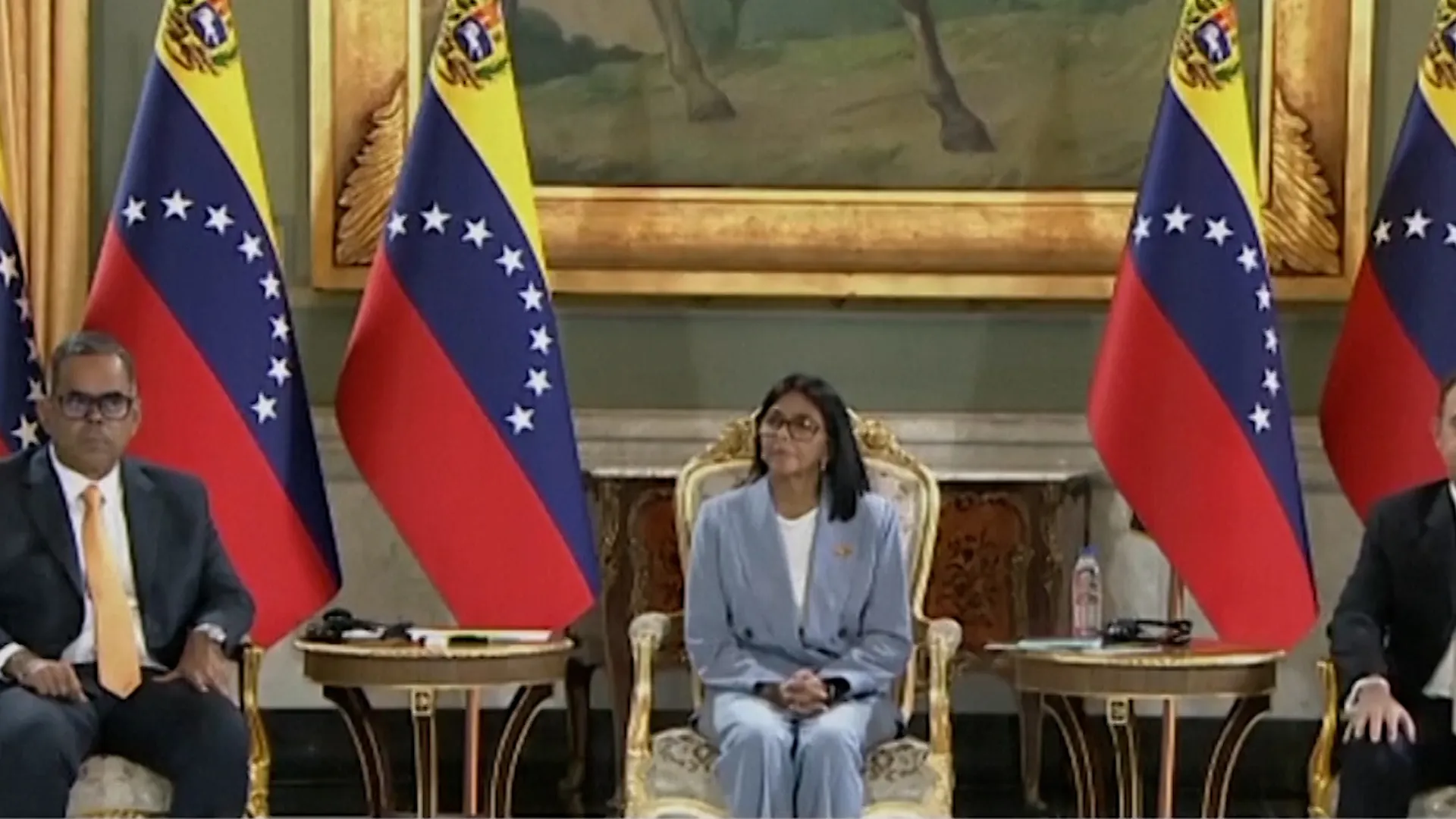








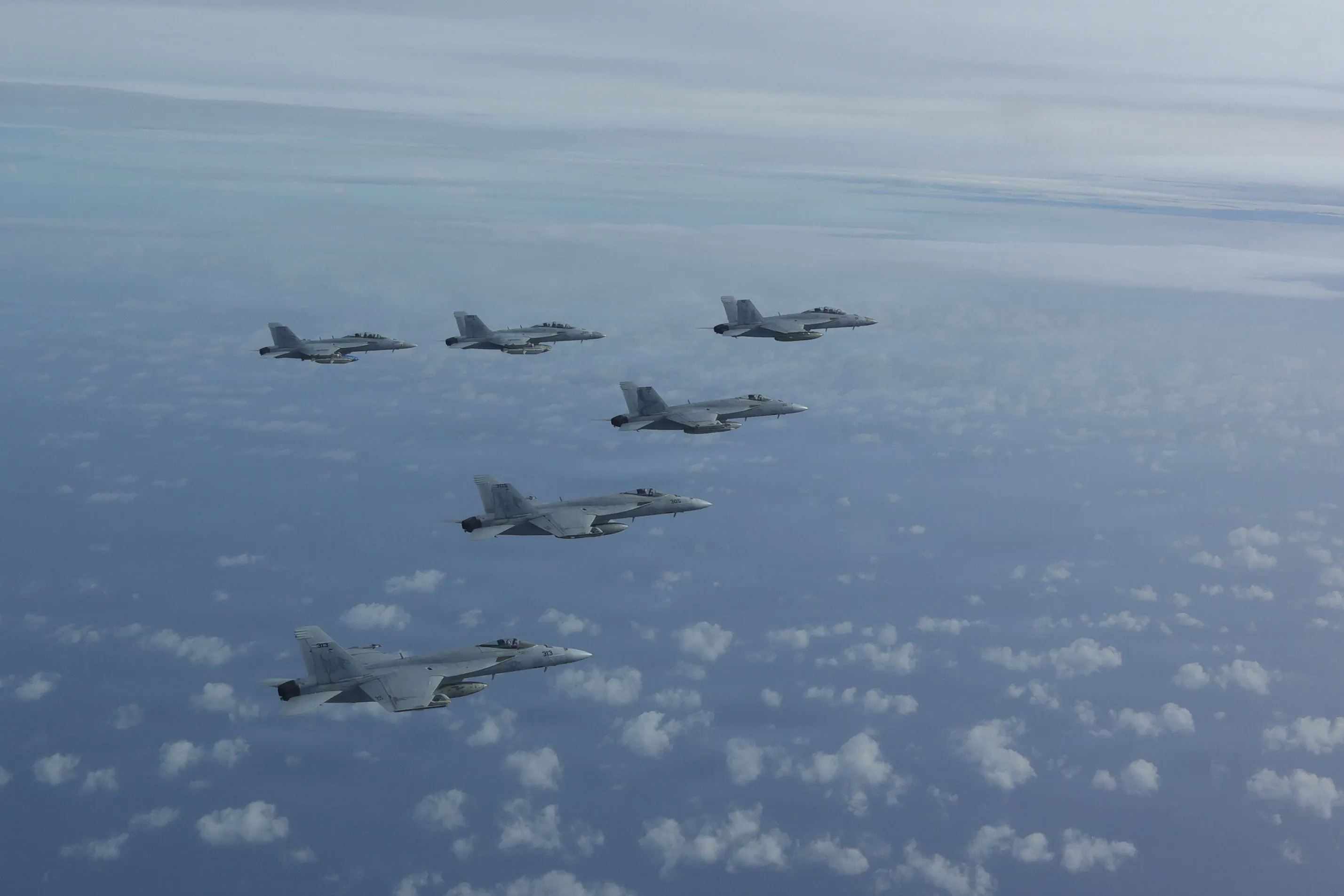


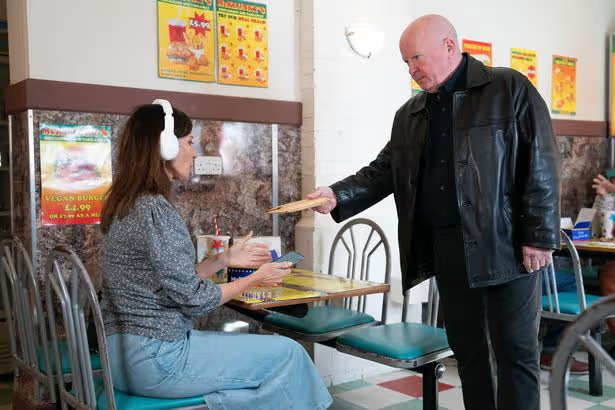

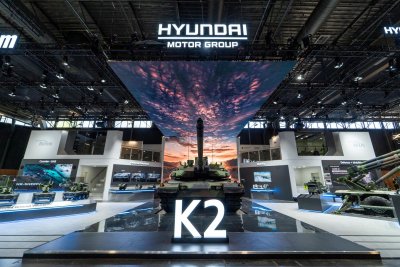











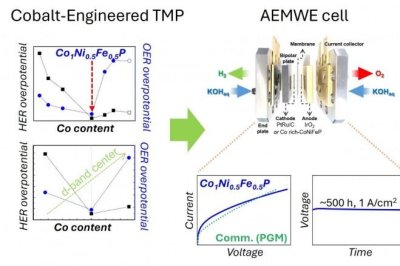

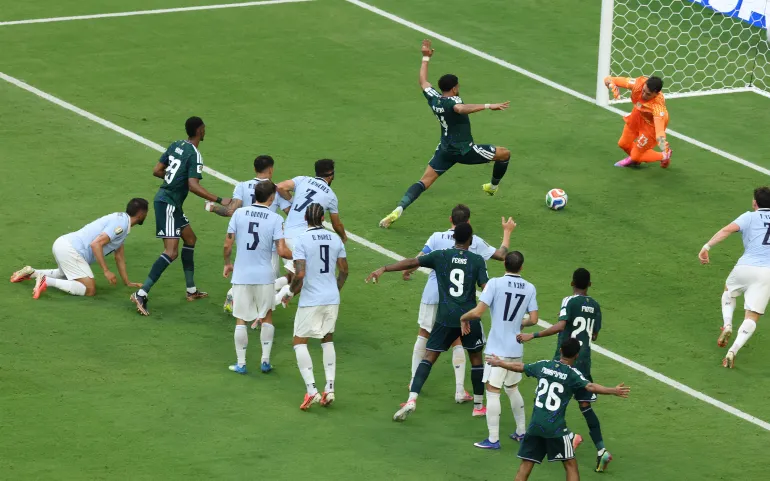



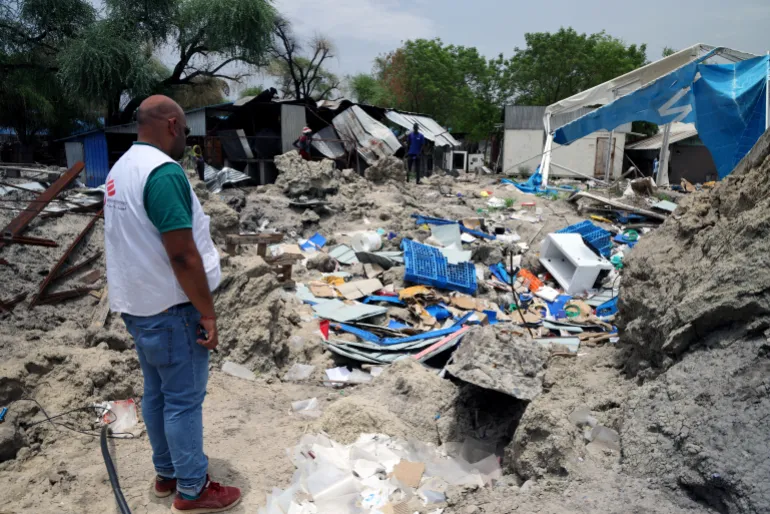
![evacuated, and patients were discharged hours before the attack, following increased tensions and after MSF received information about a possible attack against the city. [Courtesy of MSF]](https://i0.wp.com/occasionaldigest.com/wp-content/uploads/2026/06/MSF366127High-1781523402.jpg?w=640&ssl=1)

![Reports and satellite imagery point to burned villages and mass displacement across Jonglei. [Satellite imagery © Vantor]](https://i0.wp.com/occasionaldigest.com/wp-content/uploads/2026/06/6970434469048635518-copy-1781418505.jpg?w=640&ssl=1)