Saudi Arabia hold firm against relentless pressure to earn a 1-1 draw against two-time world champions Uruguay in their Group H opener at the Miami Stadium.
Several studios in Microsoft Corp.’s Xbox gaming division, including Montreal-based Compulsion Games and San Francisco-based Double Fine, are in active negotiations to spin off as they try to thwart closure, according to people familiar with the company’s plans.
Cambridge, England-based Ninja Theory, the maker of Hellblade, is also in conversations with Xbox, as are several other studios across the portfolio that are at risk of being shuttered.
The studios may still have the opportunity to buy themselves back from Xbox and go independent, although many employees will probably lose their jobs as a result, said the people, who asked not to be named because they were not authorized to speak to the press.
Employees at several studios have been informed of the situation and given permission to seek new work but were told that the status of the studios is still in flux.
An Xbox spokesperson declined to comment.
The potential closures are part of a broader reorganization being overseen by Asha Sharma, who took over as Xbox’s new chief executive in February.
Last week, Bloomberg News reported that the gaming division is planning significant layoffs. Sharma sent out a memo to staff lamenting the bleak state of the business, which has seen revenue and margins plummet in recent years. “Going forward, this cannot continue,” she wrote.
Compulsion Games, Double Fine and Ninja Theory all made award-winning games that were not commercial hits. But even some of Xbox’s more commercially successful studios are not yet sure how they will fit into Sharma’s new mandate, which will prioritize the biggest franchises as the company looks to return to growth.
Compulsion Games is the developer behind South of Midnight, which was released last year. Double Fine, best known for the Psychonauts series, released the smaller games Keeper and Kiln over the last year.
Xbox is facing the current challenges despite having made major purchases in recent years, including its acquisition of Activision Blizzard Inc. for $69 billion in a deal that closed in 2023.
Xbox Game Studios head Craig Duncan stepped down last week ahead of the layoffs, said the people familiar with Microsoft’s plans. Gaming newsletter the Game Business previously reported his departure.
The preliminary deal to end US-Israel war on Iran has sent oil prices tumbling to a three-month low amid hopes that the Strait of Hormuz will reopen.
But it could be months before American consumers see major relief at the petrol pump.
Recommended Stories
list of 3 itemsend of list
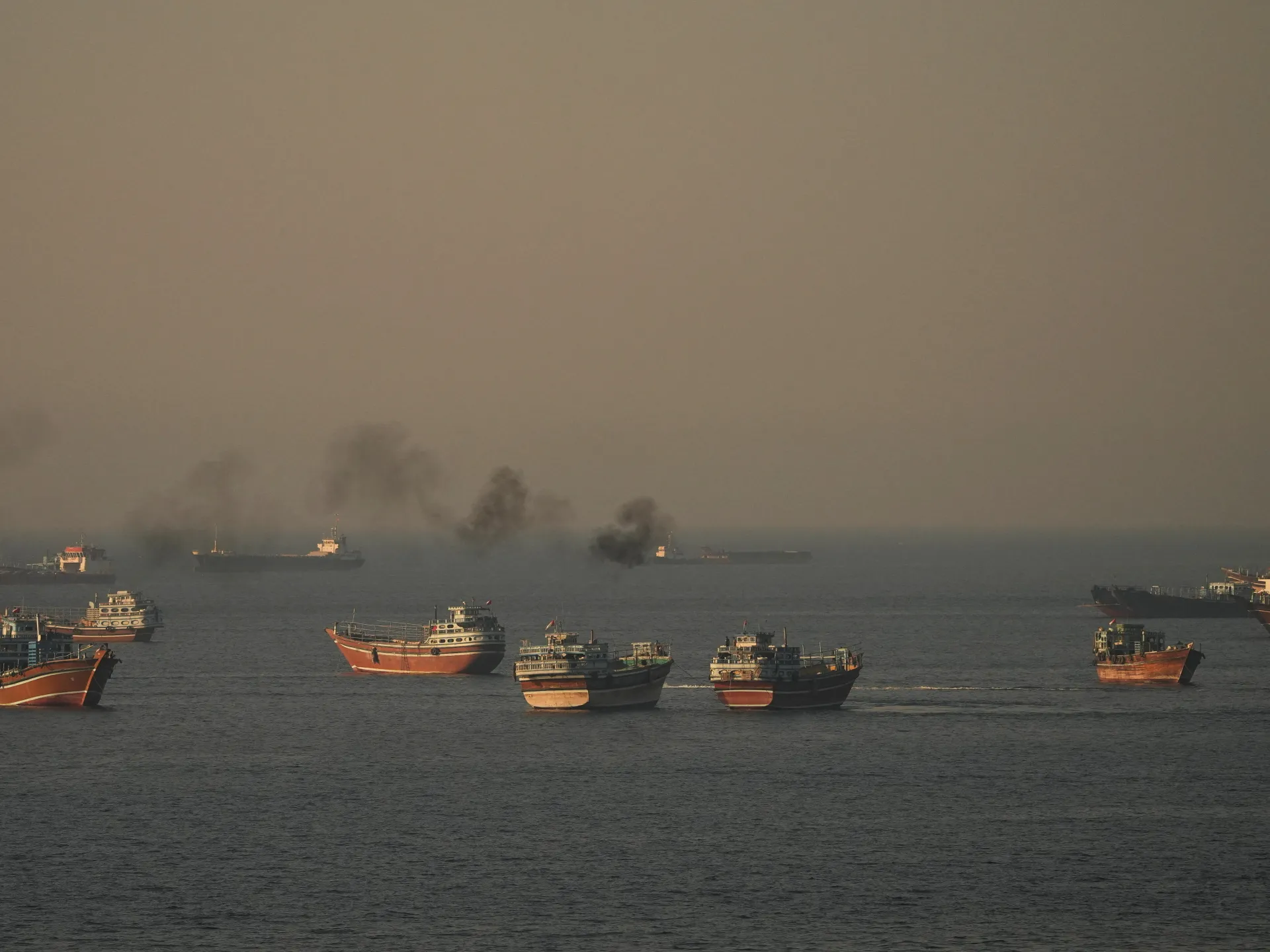
The closure of the strategic chokepoint disrupted global energy markets for more than three months, cutting off a major shipping route through which roughly one-fifth of the world’s oil and liquefied natural gas normally passes.
On Sunday, US President Donald Trump said prices would “drop like a rock” once the strait reopens, a claim he has made multiple times in the past few weeks.
However, experts caution that a major decline in prices is unlikely to happen as quickly as Trump suggests.
While Asian markets rely more heavily on oil shipped through the Strait of Hormuz than North American markets, tighter supply and steady demand have pushed prices higher worldwide.
On Monday, petrol prices in the US remained above $4 per gallon (3.78 litres), averaging $4.06 nationwide, according to the American Automobile Association (AAA). This was a dip from a high in early May of $4.48 per gallon.
By comparison, prices stood at $2.98 per gallon on February 28, when the US and Israel first struck Iran, triggering a ripple effect across global energy markets.
Energy prices have risen sharply in the US in recent months, increasing 7.7 percent over the last two months alone, and are up 40 percent from a year ago, according to last week’s inflation report from the Labor Department’s Bureau of Labor Statistics,
However, prices are beginning to fall, a dip that began as Washington and Tehran entered negotiations.
“The potential deal that the US and Iran agreed to over the weekend certainly could pave the way for even lower prices… in the next two to three days by what we saw over the weekend,” Patrick De Haan, head of petroleum analysis at GasBuddy, which tracks petrol prices, told Al Jazeera.
But De Haan expects a plateau and says that consumers may not see gas prices at pre-war levels until 2027, even if the ceasefire holds.
“It may take many months, if not beyond a year, for global oil inventories to recover to pre-war levels,” De Haan said.
Amid strains on the supply chain, producers will also need time to ramp up output, while port bottlenecks and heightened demand during the busy summer travel season could delay any substantial relief for everyday consumers.
“There are some mitigating factors that are going to slow the decline in prices. There are a lot of organisations and companies that have to re-up their stockpiles [like the US’s strategic petroleum reserve] and fulfil contracts that have been on hold for the last few months,” John Deal, managing director of capital markets at the Post Oak Group investment bank, said.
Supply chain strains
Fixing kinks in the supply chain takes time.
Oil production slumped amid the war. More than 14 million barrels per day, or 14 percent of the world’s demand, has been shut, according to the International Energy Agency.
Deal said it would take time to get oil production back online.
“My sense is that there’s going to be sustained high demand through the summertime, and we probably won’t get back to pre-war levels [on petrol prices] until after the summer, maybe September or October,” Deal said.
Mark Jones, a professor of political science at Rice University, said that producers might be reluctant to bring full operations back online until they can see the ceasefire hold.
The agreement opening the blockade is for a 60-day negotiation period between the two countries.
“Many [producers] may be reluctant to restart production until they are convinced that the peace will hold, because the last thing they want to do is carry out the costly effort to restart production only to see the conflict revived and then have to shut it down once again,” Jones told Al Jazeera.
Getting production back online is also dependent on the impact individual producers have faced throughout the war.
Refineries that were shut as a precaution could reach as much as 95 percent capacity within 40-60 days, Vitol Bahrain’s head of research, Bader Nooruddin, told the Reuters news agency. Those damaged in the fighting could take much longer.
But bottlenecks at ports could be the biggest hurdle, according to Deal.
“There’s a lag time with shipping capacity. Shipping capacity is perhaps the most significant constraint,” Deal said.
This is because there are more than 500 ships still awaiting passage, according to shipping data from Kpler.
With the ships headed all over the world, it will take them weeks to reach their destinations, dock, and unload at the ports.
That also means a wave of empty ships is waiting in limbo for spots at ports to load cargo and ramp back up to normal operations.
Major shipping giants are in a holding pattern.
Norway’s Wallenius Wilhelmsen and Denmark’s Maersk both told Reuters that they have not changed their Middle East operations in the wake of the announcement.
During the war, there was limited passage through the Strait of Hormuz, with an average of 10 ships a day passing through, compared with 135 that normally transit the waterway, according to an analysis by Bloomberg.
“Tankers take months to reach their final destination and then come back again. So the ability to replenish the stocks is going to take until, I think, the early fall, just from a shipping perspective, to get back to the status quo that was in place before the conflict started,” Jones said, referring to the preferred term for the months of September through November in North America.
At the same time, US strategic reserves are running low, at their lowest levels since 1983. Reserves have tumbled by 18 percent since the war began.
“Demand might keep prices high through the summer as strategic reserves get refilled,” Deal added.
Jet fuel demand will also put pressure on consumers amid the normally busy JuneAugust travel season in the US.
“The war has really affected airlines and their ability to schedule and anticipate how the summer months are going to go,” Deal added.
In April, United Airlines CEO Scott Kirby said that airfares for the carrier may have to jump as much as 20 percent on higher fuel prices.
Grocery woes
The increase in prices is also hitting food budgets.
The most recent consumer price index report showed US inflation ticked up by 4.2 percent compared with this time last year. While inflationary pressures were mostly driven by fuel prices, the impact has still been felt at the grocery store.
Almost half of the world’s urea, which is used in fertiliser, is produced in the Gulf region and passes through the Strait of Hormuz. For American farmers, that means access to fertilisers for the next crop season is more expensive.
Tomato prices, already driven up by Trump’s tariffs on Mexico, have surged 40 percent in the last year amid rising transportation costs.
Lettuce prices rose by more than 16 percent in May, and the price of ground beef increased by about 12 percent compared with this time last year.
Jones warned that food prices may not go down.
“Many retailers, wholesalers, and producers will keep them where they are or only reduce them if forced to from a sales perspective. Unlike petrol, which tends to ebb and flow with the price of oil, prices for many other goods that have been adversely affected by all of this are much less likely to return to where they were prior to the start of the conflict,” Jones said.
“For groceries, for manufacturing goods, for anything that has gone up during the conflict, the price that is there now often becomes the new baseline from which prices move in the future.”
This can be compared with the COVID-19 pandemic period. When the pandemic stalled supply chains, producers increased prices. A 2024 investigation by the Federal Trade Commission found that retail grocers kept prices elevated after supply chain constraints brought on by the pandemic had eased.
“Some in the grocery retail industry seem to have used rising costs as an opportunity to further raise prices to increase their profits,” the report said.
Australian referee Shaun Evans says he didn’t intend to ‘communicate a message, affiliation, game or belief of any kind’.
Published On 15 Jun 202615 Jun 2026
FIFA says it has found “no evidence” that one of the referees at the World Cup breached its code of conduct after he was accused of making a white supremacist hand gesture during one of the games.
“FIFA’s independent Disciplinary Committee can confirm that, after looking into the matter involving support video assistant referee Shaun Evans, it has found no evidence of breaches of the FIFA Disciplinary Code,” football’s global governing body told Al Jazeera in an emailed statement on Monday.
Earlier, FIFA’s discrimination monitor at the World Cup called for Evans, working as a VAR official in the tournament, to be removed for appearing to make a hand gesture resembling a white supremacist sign.
When the official broadcast of Germany’s opening game against Curacao on Sunday cut pre-game to show the team of video review analysts, Australian official Evans made an “OK” symbol with his right hand in front of his right leg.
Though the game was played in Houston, video officials work in Dallas at the World Cup broadcast centre.
Evans said the hand gesture was not intentional, nor did he make it to “communicate a message, affiliation, game or belief of any kind”.
“The only explanation I can offer is that the movement was an involuntary, subconscious twitch and I was unaware I had done it at the time,” the official said in a statement shortly before FIFA announced its decision.
“Images taken later during the match showed that I repeated this movement many times while holding a pen between my fingers,” Evans went on to add.
“The coverage following this incident simply does not reflect who I am. Of course, I understand how the gesture has been interpreted and I regret this; however, I want to be very clear and categorically say that I did not knowingly or deliberately make the hand symbol suggested.”
Olivia Rodrigo has officially begun her new era, and this time she invited her fans to experience it alongside her.
To celebrate the release of her latest album, “You Seem Pretty Sad for a Girl So in Love,” Rodrigo collaborated with American Express to re-create the set of her music video for “The Cure.” The pop-up event, which opened last Thursday and ran until Sunday at Mica Studios, featured props from the video, storyboards, exclusive merchandise and several photo ops for fans.
With a beating felt heart and lab beakers to pose with, the pop-up transformed an industrial studio space in the Arts District into a pastel-painted cardboard hospital. Ahead of the public opening, Rodrigo surprised a small group of AMEX cardholders and select fans.
“I have an album that’s coming out today in about one hour, which is crazy,” Rodrigo said, wearing a blue “Nurses Do It Better” baby tee. “I figured since we’re all here, maybe we should just listen to a few of them together? Would that be cool?”
A little over an hour before the album’s release, Rodrigo played four songs from the album as the room brewed with excitement. She began with “Maggots for Brains,” a song about being so infatuated you can’t focus when your partner is away. Although it was their first listen, the song’s catchy chorus already had fans dancing along.
Banner for Rodridgo’s pop-up event hands above Mica Studios
(American Express)
Rodrigo explained that her next song, “Purple,” paid homage to the aesthetics of her previous albums, “Guts” and “Sour.”
“Obviously, this is my first non-purple album, but I just had to shout out purple somehow,” Rodrigo joked. “This song started out as a love song and sort of devolved from there, so I’ll let you guys be the judge.”
Playing off the somber vibes of “Purple,” Rodrigo played “Less” next. The piano ballad follows the dissolution of a relationship as the couple grows apart.
“I’ve been going back and forth on what the saddest song on the record is, but I think this one might be it,” Rodrigo said.
In a room full of fans, the song struck an emotional chord with many of the listeners. To bring the mood back up, Rodrigo finished the night by playing her new single, “Stupid Song.”
“This next one is a happy one, and it actually has a music video that comes out tonight,” Rodrigo said. “I love this song so much. It’s basically about having such an intense crush on someone that it drives you totally f— insane. I feel like we’ve all been there at some point in our lives.”
Rodrigo was all smiles at her event celebrating her latest album steeped in heartbreak and romance.
(American Express)
After Rodrigo previewed her music, “The Cure” music video exhibition was opened up to the fans. The showcase ranged from interactive photo ops to gallery walls featuring behind-the-scenes photos from the video shoot and Rodrigo’s nurse costume on display. The video’s props, which were primarily designed using cardboard and felt, were displayed in glass cases for visitors to admire.
Dressed in fun fashion including light pink and polka-dot outfits, fans posed throughout the set, re-creating scenes from the music video as “The Cure” played overhead. Many had thrown on a piece of the Los Angeles-exclusive merchandise on sale at the pop-up, with shirts and hats reading “You Seem Pretty Sad for a Girl in Los Angeles.”
So while some fans teared up at her lyrics and others beamed with excitement, everyone was hyped to experience Rodrigo’s new album.
“I really hope you enjoy this little exhibition. It is so gorgeous, and I am so proud of it,” Rodrigo said. “Thank you guys for being here, and I really hope you love ‘You Seem Pretty Sad for a Girl So in Love’ as much as I do.”
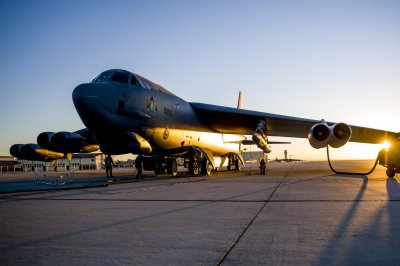
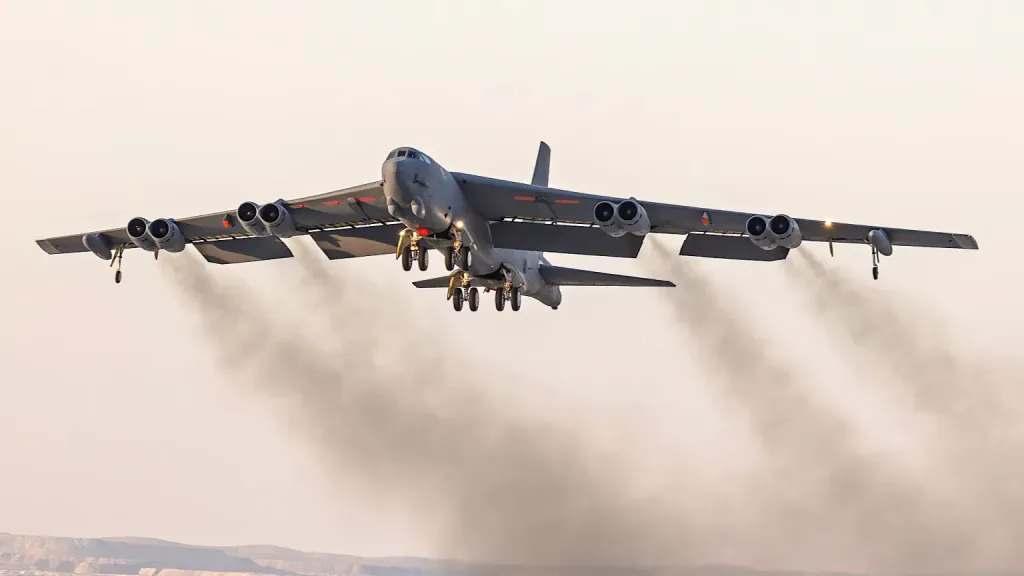
A B-52 Stratofortress assigned to the 419th Flight Test Squadron undergoes pre-flight procedures at Edwards Air Force Base in California in 2020. A B-52 Stratofortress crashed shortly after taking off from the base on Monday. Air Force File Photo by Giancarlo Casem
June 15 (UPI) — California’s Edwards Air Force Base said eight crew members are believed dead following the Monday crash of a B-52 Stratofortress.
The base confirmed the B-52 Stratofortress, which was carrying a crew of eight, crashed shortly after takeoff at 11:20 a.m. Monday morning.
“Initial indications are that the crash was not survivable,” the base said in a release posted to X.
Emergency response personnel were on scene working to account for all eight crew members.
“Our thoughts and prayers are with the families and unit members at this time,” the post said.
‼️ Official release regarding today’s B-52 crash at Edwards. Our thoughts and prayers are with the families and unit members at this time.
The airfield was closed following the crash and all incoming aircraft were diverted.
“All non-commercial visitor passes have been suspended until further notice to allow the installation to focus entirely on emergency response operations,” the base said in an earlier post.
Edwards Air Force Base, located about 100 miles north of Los Angeles, frequently hosts test flights for new and experimental Air Force and NASA aircraft.
The base said more information on the crash will be provided as it becomes available.
It was midnight on April 12 when Modu Baluye woke to the sound of gunfire.
He was asleep with his family inside a classroom at Government Girls’ Secondary School (GGSS), in Monguno, Borno’s north, in northeastern Nigeria, which now serves as a temporary displacement camp, when the first shots rang out. Then came another burst, and another, cutting through the night in rapid succession.
“These people are attacking again,” he remembered saying.
He whispered a prayer and stayed awake. Around him, other displaced families were stirring as well. In the darkness, people listened without speaking, measuring the distance of the violence by the sound of the guns. The attack went on for hours.
By Modu’s account, the gunshots lasted about four hours. He later learned it was a gun battle between terrorists and military officers at the nearby Sector 3 base. As the troops pursued the terrorists along the exit route between Gana Ali, another displacement shelter, and the GGSS, they drove over buried explosives, which detonated and killed the commanding officer and six other soldiers.
By morning, fear had settled over the communities.
The military, residents said, became suspicious of the settlements around the base. The attackers had entered on foot under the cover of darkness, and the communities were not far from the military formation.
“They suspected we were hiding some of them,” Modu said. In the days that followed, soldiers raided Gana Ali and the GGSS camp. Residents told HumAngle that five suspected informants in the communities were arrested, and weapons were recovered. Then came an order for the communities to leave.
“They told us: leave or we will kill you all and burn down your houses,” Modu recounted. Within two days, families began dismantling their makeshift shelters. They packed what they could carry and left. Some were moved to a government settlement on the outskirts of Monguno, along the Monguno-Gajiram road, which is about a 30-minute walk from town.
“It is two weeks today,” Modu said when he spoke to HumAngle on May 10. “The place was torched after we left. I am not sure who torched the buildings.”
For Modu, displacement is not new. He fled Ala, his village in the Marte Local Government Area (LGA) of the state, in 2016 as insurgent violence spread across northern Borno. At the time, he was unmarried and found refuge with his parents at the ‘Water Board’ displacement camp in Monguno, where they lived for about six months. He later moved to the GGSS settlement after securing his own shelter and spent nearly a decade there. In 2024, he got married. By the time soldiers ordered residents to leave the community in April, he had begun building a mud house on a piece of land he purchased the previous year. It was there, in the unfinished house, that he and his family began rebuilding their lives after years of displacement.
A war returning to the bases
The Monguno attack came during a renewed wave of terror assaults on military formations and rural settlements across Borno.
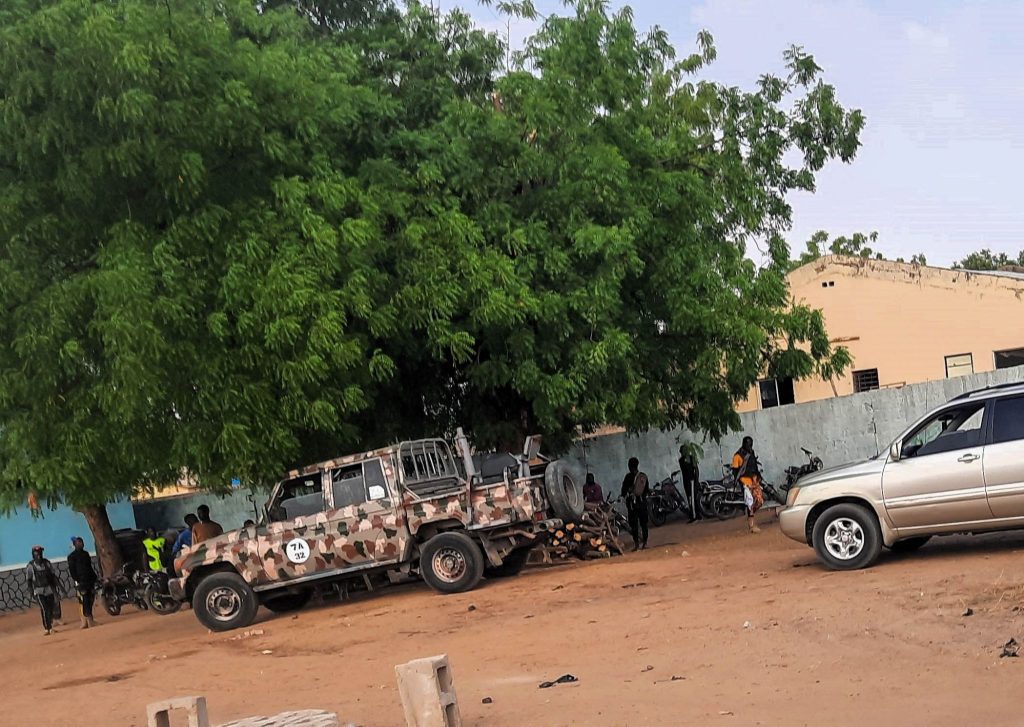
File: A military patrol vehicle with personnel parked outside a Civilian Joint Task Force office in Maiduguri. Photo: Kunle Adebajo/HumAngle.
In recent months, terrorists from Jama’atu Ahlis Sunna Lidda’awati wal-Jihad (JAS), commonly known as Boko Haram, and the Islamic State West Africa (ISWAP) have repeatedly targeted troops, bases, weapons, and supply routes. The attacks have killed soldiers, including senior military officers, and Civilian Joint Task Force (CJTF) members.
In Nov. 2025, terrorists ambushed a military convoy along the Damboa-Biu road. Two soldiers and two CJTF members were killed. Brigadier-General M. Uba, commander of the 25 Task Force Brigade, was abducted and later killed.
On Jan. 26, terrorists attacked a military base in Damasak, killing seven soldiers and capturing 13 others, including the commanding officer. Eleven later escaped. Five days later, on Jan. 31, another terror attack on an army base in Sabon Gari killed nine soldiers and two CJTF members; about 16 injured security personnel were evacuated for treatment.
On March 10, a military base in Kukawa came under attack; the commanding officer, Lt. Col. Umar Farouq, and several of his soldiers were killed.
On April 9, three days before the Monguno attack, terrorists launched a joint assault on the headquarters of the 29 Task Force Brigade in Benisheikh, killing its brigade commander, Brigadier-General Oseni Braimah.
The attacks have already weakened the military formations in rural areas. In some places, troops have withdrawn or consolidated around larger garrison towns, leaving smaller settlements more exposed. But when soldiers are killed, residents say the anger does not end on the battlefield. It returns with the troops.
The Nigerian Police officers at the scene of an explosion at the Maiduguri Monday Market in March. Photo: Al’amin Umar/HumAngle.
The trails of suspicion
In rural Borno, civilians are often trapped between two armed powers. Terrorists demand information about troop movements, military positions, and security operations. Soldiers, in turn, demand information about insurgent hideouts, movements, and informants. Refusing either side can be deadly.
Those suspected of helping the military may be abducted or killed by the terrorists. Those suspected of helping terrorists may be arrested, detained, displaced, or punished by security forces. As a result, civilians often face impossible choices, with serious consequences regardless of whom they cooperate with.
Get our in-depth, creative coverage of conflict and development delivered to you every weekend.
Subscribe now to our newsletter!
Despite these risks, communities have at times provided intelligence to the military. In March, for example, residents of Doro, a rural community in Kukawa LGA on the shores of Lake Chad, reportedly alerted troops after observing suspicious insurgent movements, helping security forces prepare for an attack.
The consequences of such actions can be severe. In March 2022, ISWAP executed four civilians in communities within the same local government area after accusing them of spying for government troops. Residents said the killings were intended to deter others from sharing information with security forces. For many civilians, the message was clear: speaking to the military could carry a death sentence.
The Chief of Defence Staff (CDS), Gen. Olufemi Oluyede, recently argued that residents in Borno and Yobe knew some of those behind the attacks during an operational visit to Maiduguri in March, reflecting a long-held security assumption that residents in affected communities often know more than they admit. The CDS said communities must take ownership of the crisis, citing Kukawa, where he claimed two of the attackers were from within the village.
But for many civilians, knowing does not mean consenting. They say in places where terrorists move freely, buy food, collect supplies, and threaten residents, silence is often a currency for survival.
Professor Abubakar Mu’azu, former director of the Centre for Peace, Development, and Diplomatic Studies at the University of Maiduguri, said this suspicion has existed since the early years of the insurgency.
“Right from the start, there was suspicion by the security agencies that the people who are living in areas where these terrorist activities were happening are also supporting the terrorists,” he said. “They never considered the fact that there is a majority of people who disagree with these terrorists’ activities.”
Mu’azu said the reactionary nature of security operations has prevented the military from building a reliable system of trust with local communities.
“They assume that the locals are giving information to the terrorists willingly,” he said. “But they keep saying they want the people to give them information about the terrorists.”
For him, this contradiction is at the heart of the crisis.
The military needs civilian intelligence to fight terrorism, but if civilians fear that any contact with terrorists, even under duress, will be treated as collaboration, they may stop speaking altogether.
File: Men seated, playing a game on a smartphone in an IDP camp in Maiduguri. Photo: Usman Abba Zanna/HumAngle.
Life under duress
In Monguno, residents say terrorists still move in and out of town despite the presence of security forces.
Koso Abubakar, a displaced farmer, said the terrorists often enter on motorcycles, buy food items, and leave.
“They come and leave at will,” he said. “Sometimes, they come to kidnap people. They don’t attack the military, and the military does not confront them. But on other days, they attack the military. That is when the military retaliates.”
According to Koso, most residents live with the knowledge that they can be accused by either side at any time.
“People are living in fear because everyone is a potential target,” he said.
In many rural communities, even work has become dangerous. A farmer going to his field, a fisher heading towards the water, or a trader moving goods through bush paths may first have to pay those who control the routes. The payments are called taxes, levies, or sometimes simply “settlement”, but residents understand what they are: money paid under fear. To refuse is to risk punishment, in lighter cases, or killing and abduction, in extreme cases, from terrorists. To pay is to risk being seen by soldiers as someone sustaining the insurgency. In this way, even the small acts people perform to feed their families can become evidence against them.
Farmers handing over money to armed and masked terrorists in a rural setting. Illustration: Akila Jibrin/HumAngle.
Professor Mu’azu said this fear terrorists use violence to discipline communities.
“They are very good at setting a very deadly example by killing or eliminating people, with or without evidence,” he said. “If they are attacked by security agencies and they did not hear anything from people living in these settlements, they would assume the people gave information about their positions.”
This was what many residents believe happened in Ngoshe in March, when terrorists attacked the community, killed many residents, and abducted others, including women and children. The attack was suspected to be retaliation for a previous military operation in the Mandara Mountains that killed some terrorist commanders. The terrorists reportedly believed residents had given up their location.
For civilians, the lesson is brutal: giving information can kill you. Not giving information can also kill you.
When protection becomes punishment
The military has long accused some civilians of aiding terrorists. In the early years of the war, many young men were arbitrarily detained. Some disappeared. Some were killed. In April 2014, soldiers arrested 42 adult men from Gallari, a village in the Konduga LGA of Borno, on suspicion of links to the insurgency. They were taken to the Giwa Barracks detention facility in Maiduguri. Twelve years later, only three have regained their freedom after years in detention and alleged torture. Through months of on-the-ground investigation and analysis of satellite imagery, HumAngle has also previously reported on disappearances and mass graves linked to military operations, while the wives of detained and disappeared men later formed the Knifar Women movement to demand justice.
Terrorists and suspected civilian collaborators arrested by the military. Illustration: Akila Jibrin/HumAngle.
For communities already carrying the memory of those years, new raids and forced evacuations reopen old wounds.
Mu’azu said security forces should approach communities with more care, especially when allegations of collaboration arise.
“One would assume that when security forces are dealing with situations like this, they would not come with the mindset that the people are sympathetic to the terrorists, or that all the people are giving information to the terrorists,” he said.
He added that soldiers have a difficult job and deserve sympathy for the burden they carry. But he argued that this does not justify indiscriminate punishment.
“They are the ones who are supposed to protect the civilians,” he said. “If there are people they suspect, they should arrest them and hand them over to the police for proper investigation, without compromising the little support they have in the community.”
When communities are burned or displaced after attacks, the consequences go beyond the immediate loss of shelter. Food stocks disappear. Children are pulled out of school. Families scatter. People who had already fled violence once are forced to flee again.
In resettled or displaced communities, where people have spent years coping, another displacement can mean the collapse of everything they had slowly rebuilt.
A dangerous silence
After the Monguno raid, Koso said some residents became so afraid of the military that they fled into the bush.
“Many people, about 30, also left for the bush,” he said. “Most of them fear the military. The military does not trust them.”
Mu’azu warned that this kind of fear can damage counterterrorism efforts.
“They will lose trust, respect, and block chances of receiving information,” he said. “This could also push them to be recruited by the terrorists.”
For Mu’azu, the solution is not to abandon intelligence work, but to make it safer and more systematic. He said the military should cultivate trusted informants within communities, create secure channels of communication, and protect residents when terrorists retaliate.
“This is the gap,” he said. “Oftentimes, communities are attacked after successful military operations. The patterns should be studied. They should do a statistical analysis. They should be mindful of the time and be prepared against such actions.”
He also called for stronger collaboration among the military, DSS, police, civil defence, and intelligence agencies in neighbouring countries such as Cameroon, Chad, and Niger, because terrorists move across borders.
But for Modu and others displaced from Gana Ali and the GGSS, these policy questions remain distant. What they know is simpler: they fled one danger and met another. They were told to leave the place they had made into a home. Then they watched, or heard, that what remained had been burned.
In Borno’s war, civilians are often asked to prove their loyalty to the state while surviving under the shadow of terrorists, and in that narrow space between fear and suspicion, many are losing everything.
MAYA JAMA has sent a defiant message to Ruben Dias as she posed in a tiny bikini on holiday.
The Love Island host, 31, split from the footballer in April this year, after 18 months together.
Sign up for the Showbiz newsletter
Thank you!
Maya Jama looked amazing as she posed for a mirror selfie on holidayCredit: InstagramThe pair dated for 18 months before going their separate ways in April this yearCredit: Instagram
But she clearly hasn’t been moping around, and has been on holiday in Ibiza, where she flaunted her curves in a tiny bikini.
The telly favourite has shared a number of stunning snaps on her Instagram, including one of her in a Zebra print dress, and another of her in a mesh see-through black dress.
“Fun maxing, sun maxing,” she captioned the Instagram post.
It comes after she opened up about her break-up for the first time earlier this month.
Maya Jama shares sizzling snaps from IbizaCredit: InstagramThe star wowed in a see-through dress while on holiday in IbizaCredit: InstagramMaya and Ruben got together at the end of 2024Credit: InstagramMaya recently wowed in a stunning leopard print dress on ITV2’s AftersunCredit: Shutterstock Editorial
As the guests discussed her relationship on the Cocktails and Takeaways podcast, Maya responded by saying: “Truth is even when I tried to keep my relationships private we get photographed anyway.
“I’m an all or nothing girl, I don’t casually date, so yes I will love loudly or not at all and if it ends it end.
“I decided a long time ago not to base personal life decisions on public opinions.”
The former couple went public with their relationship in April 2025 after their relationship began in December 2024.
But The Sun exclusively revealed that they had split in May this year.
It comes after Maya was clearly feline fine as she turned up the heat in a skimpy leopard-print mini dress on the dating show’s ITV2 spin-off Aftersun on Sunday.
The most recent episode of the programme saw the beauty return to our screens in an incredible leopard print bodycon number.
She caught up with Toni Laites, Yasmin Pettet and Joe Baggs on the sofa.
June 15 (UPI) — Police in New Jersey’s Stafford Township said an Immigration and Customs Enforcement agent fired his gun at a fleeing vehicle moments after being struck.
The Stafford Township Police Department said in a statement shared to social media that ICE was attempting to apprehend a suspect around 9:30 a.m. in Manahawkin when the person fled in a vehicle.
The suspect’s vehicle, which witnesses identified to News 12 New Jersey as a white van, struck an ICE officer, who then fired his gun at the vehicle.
Witnesses said the shot shattered the back window of the van, but the vehicle did not stop.
“The suspect fled the scene in the vehicle and has not been located at this time. The agent reportedly sustained unknown injuries and it is unknown if the suspect was injured at this time,” police wrote.
The department said police were not involved in the original ICE operation Monday morning. The department secured the crime scene and managed traffic while the Federal Bureau of Investigation was called in to investigate.
Police administered first aid to the injured ICE agent and “facilitated his transport for further treatment,” the statement said.
ICE provided a statement to NBC10 Philadelphia identifying the suspect as Friedrich Castillo-Ormeno, a Peru native who was ordered to leave the country by given an immigration judge on Jan. 30.
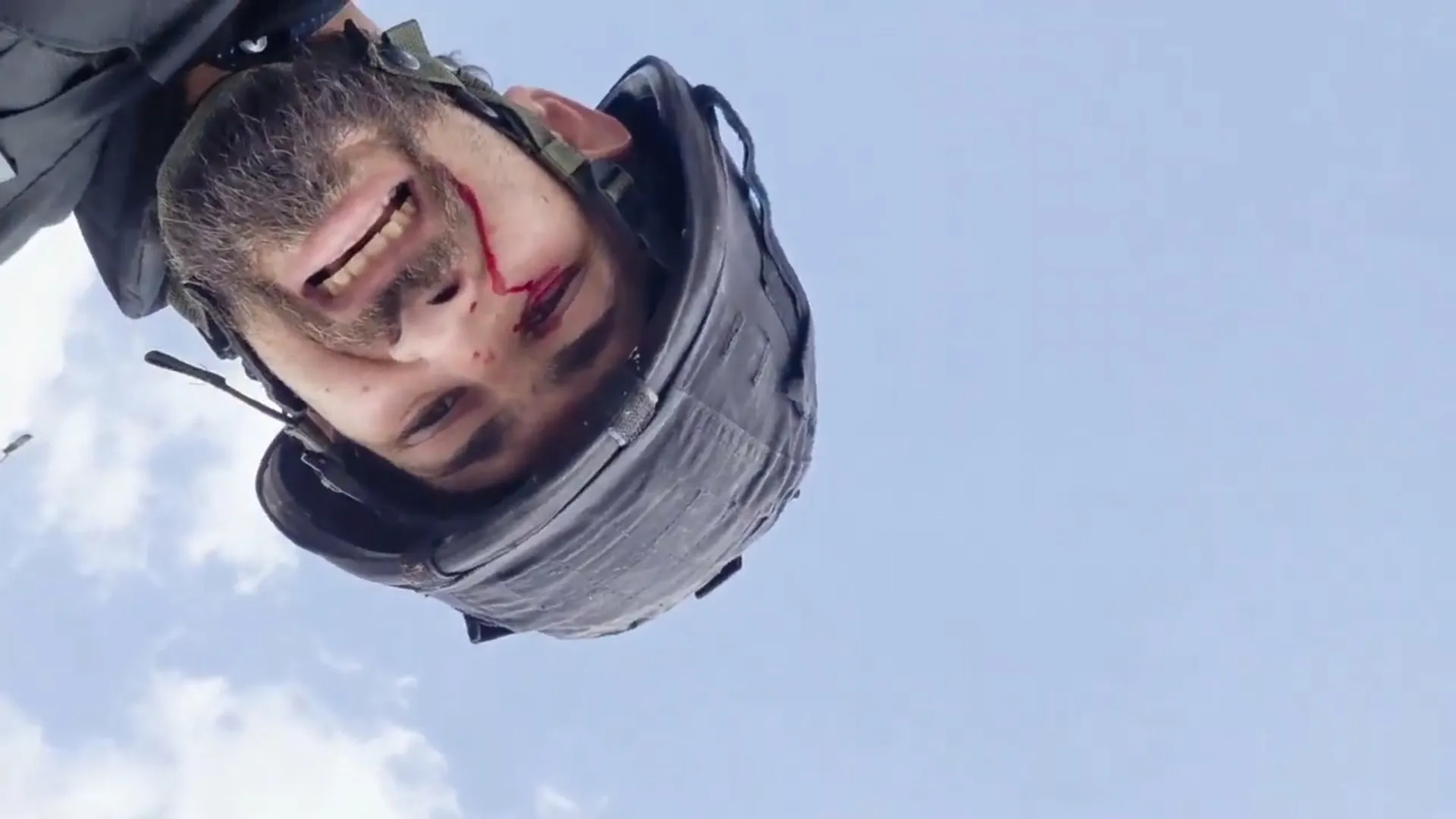
A journalist for Press TV has been hit by shrapnel while filming a report on Israeli attacks in southern Lebanon. Hadi Hoteit said he was targeted despite wearing a ‘Press’ vest, and is in hospital receiving treatment.
Love Is Blind UK Season 2 star Sarover Aujla faces off against former partner Kal in Netflix’s upcoming After the Altar special
Love Is Blind UK’s Sarover was seen in tears as her co-stars flooded her with support(Image: Netflix)
A Netflix star has received an outpouring of support following a scathing outburst aimed at her reality television ex-partner.
A fresh season of Love Is Blind UK is approaching as new singletons prepare for a third series, hoping to discover their perfect match without any face-to-face contact. Only upon getting engaged will they actually meet before cohabiting and arranging their nuptials.
After the Altar was filmed weeks following the dramatic reunion, where audiences learned what truly transpired between the couples – and who, if anybody, remained devoted to each other.
All episodes will drop on Sunday, July 12 on Netflix as an explosive preview has also been unveiled. On social media, Season 2 participant Sarover Aujla posted the exclusive teaser footage, writing: “I don’t think you know the weight of what marriage is’ – Love Is Blind UK: After the alter out 12th July on @netflixuk.”
In the footage, Sarover can be heard discussing her on-screen former husband Kal as she stated: “He’s gone public with his new girlfriend.”
The scene then switches to Kal, conversing with co-star Billy, who says: “I’ve fully moved on now. I’m dating someone else.”
Sarover questions: “Who are you morally as a person?” Speaking to others, Kal acknowledges: “It sounds like she wants to come in guns ablaze.”
Content cannot be displayed without consent
However, in a tense and brutal face-off, Sarover tells Kal: “I don’t think you know the weight of what marriage is.”
He fires back: “Of course I do, I’m not an idiot”, before the camera cuts to Sarover who is seen in tears, surrounded by her co-stars.
Support flooded in online too, as co-star Ashleigh Berry wrote: “Proud of you always”, while Season One’s Jasmine added: “My pregnant a** was gaggedddd! Can’t wait to watch!”.
A further fan gushed: “My heart, my heartttt… The best thing to come from all of this is seeing how much you’re glowing in life right nw. Some things were only meant to be lessons to make you stronger. And I’m all for this new you-stronger, wiser, and shining brighter than ever.”
Netflix released a lengthier trailer packed with the promise of high drama and explosive showdowns, as one star declared they were “done” before storming off camera, while another was spotted wiping away tears, reports OK!.
Javen confessed: “I’m here to cause some chaos”, with later scenes showing him locking horns with ex Katisha and Demola.
Anticipation continues to mount, with one viewer commenting on YouTube: “They really know how to pull us right back in every single time lol.”
Another enthused: “I’m going to go watch season 2 just so I can watch this.”
Love Is Blind After the Altar premiers on Netflix on July 12
In SpaceX’s case, appetite was exceptionally high. The underwriters, which included Goldman Sachs, Bank of America, and JPMorgan, exercised the option in full, purchasing an additional 83.3 million shares directly from the company to meet the huge demand.
If any fan can be excused for using “we” when speaking of their favorite sports team, it would probably be Lee.
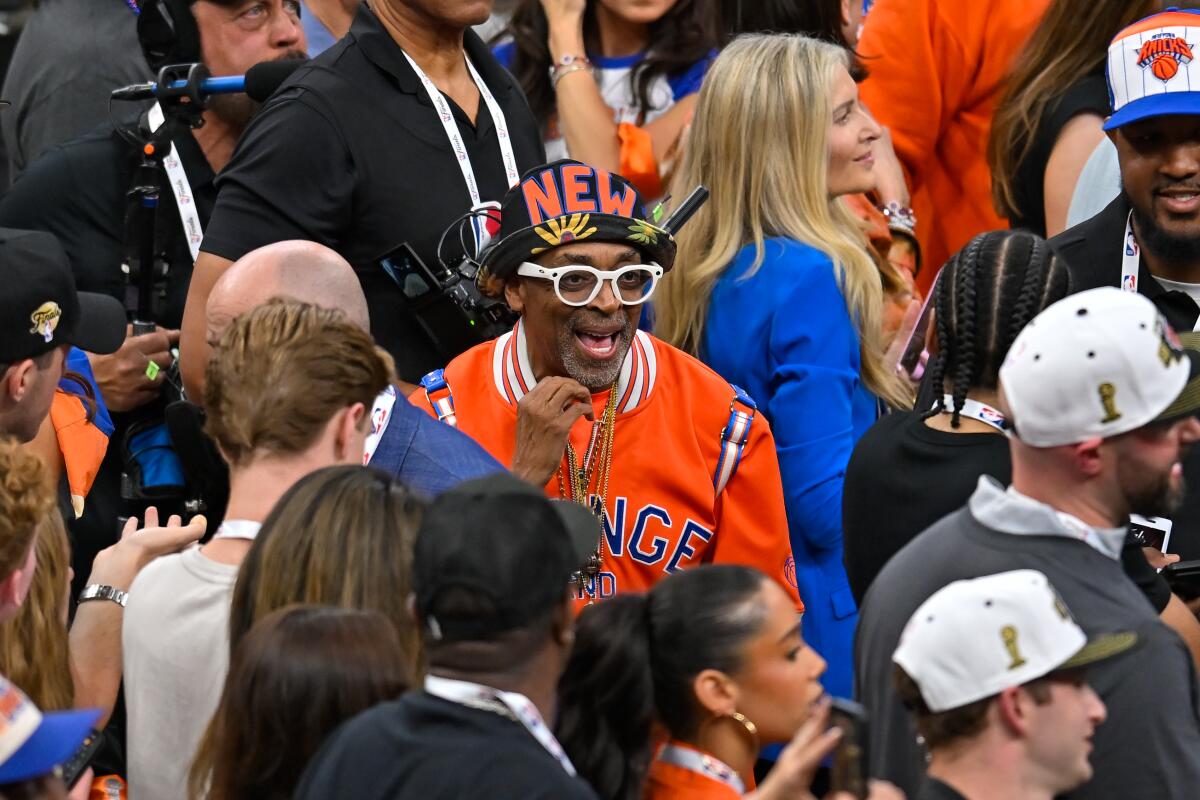
The “Do the Right Thing” star, director and screenwriter was 13 when he witnessed the Knicks defeat the Lakers in Game 7 of the 1970 NBA Finals at Madison Square Garden. And he was on hand in San Antonio at age 69 when the Knicks finished off the Spurs with a title-clinching 94-90 victory in Game 5 of the NBA Finals.
In between, Lee has become the Knicks’ most famous and visible fan. He has been a season-ticket holder since 1985, the rookie season of Hall of Famer Patrick Ewing, and has been a courtside fixture for decades. In 2024, he was inducted into the Naismith Basketball Hall of Fame’s superfan gallery.
During a 2020 appearance on ESPN’s “First Take,” Lee laughed when he was informed that his Knicks seats cost around $300,000 a year and that he had spent roughly $10 million on tickets over the years.
So, yeah, he’s considered by many to be an honorary member of the Knicks — and as such, he’s also considered by many to be more than worthy of an NBA championship ring. The idea has taken off on social media, with several celebrities offering their support.
“Give @officialspikelee a CHAMPIONSHIP RING DAMN IT!!!!!!!!” comedian and actor Kevin Hart wrote Sunday on Instagram.
Legendary sports broadcaster Dick Vitale wrote Monday on X: “I agree with Kevin Hart – yes the LOYALTY of SPIKE LEE to the @nyknicks should be recognized & rewarded- Spike is truly a dedicated & genuine LOYAL Knicks fan .YES I agree with Kevin – SPIKE should get a Championship ring !”
“First Take” host and fellow die-hard Knicks fan Stephen A. Smith reposted on X a graphic calling for Lee to receive a ring for his “decades of loyalty.”
Spike Lee celebrates with a crowd of New York Knicks fans after Game 5 of the NBA Finals on Saturday in San Antonio.
(Darren Abate / Ap Photo/darren Abate)
“I completely support this for Spike Lee,” Smith wrote. “No Knicks’ fan deserves this more than him.”
The Times reached out to a representative for Lee and the Knicks for comment but did not receive an immediate response.
Lee is likely less concerned with a championship ring for himself and more concerned with his beloved team earning another one in 2027.
“You know what I’m thinking?” Lee asked during an on-court interview with WABC-TV in New York immediately following Saturday’s victory, before shouting the answer to his own question: “Back to back!”
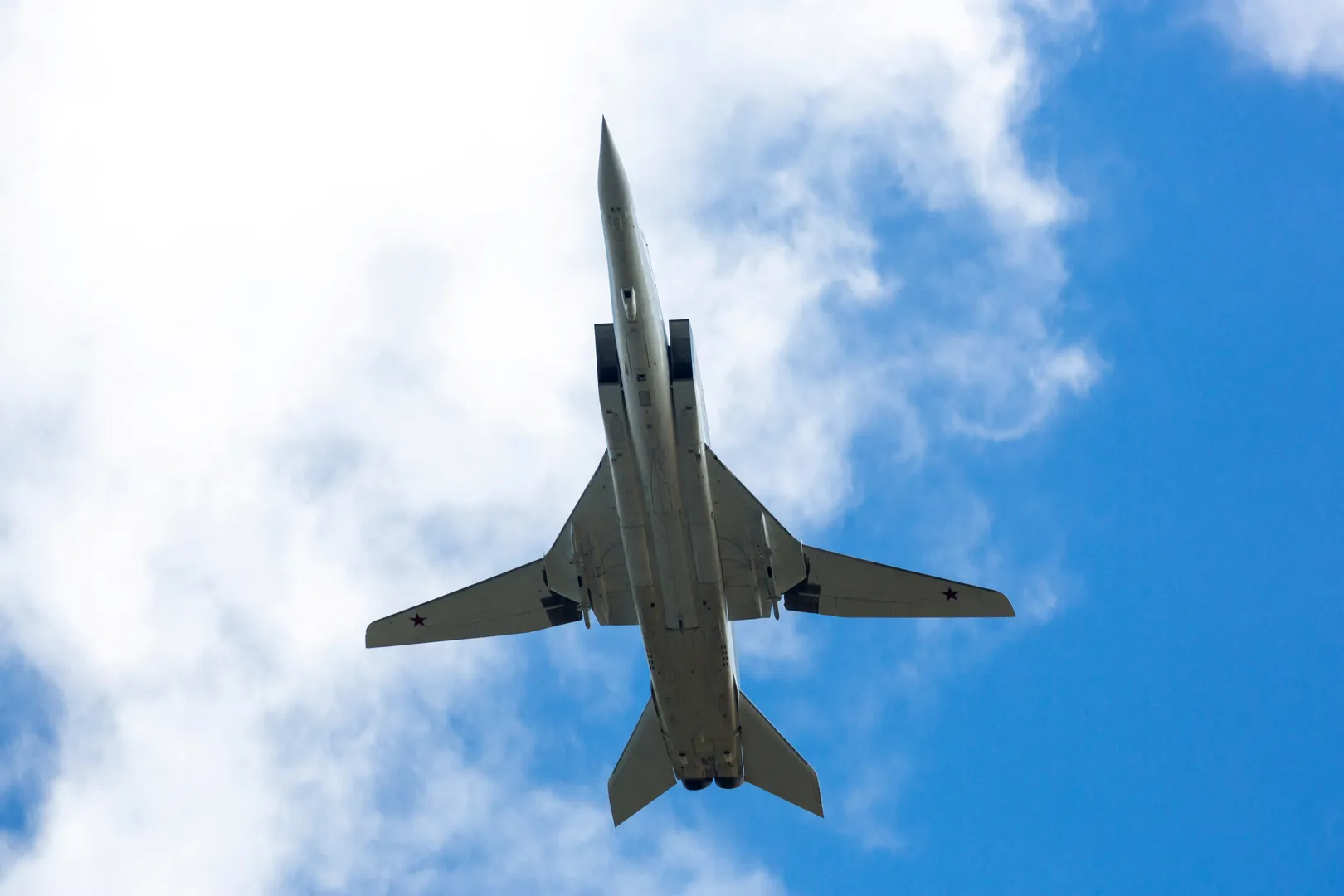
A Russian Tu-22M3 strategic bomber crashed in Siberia’s Irkutsk region during a training flight, but all four crew members had managed to safely eject. The Soviet-era supersonic bomber has been used by Russia in combat operations in Syria and Ukraine.
Weekly insights and analysis on the latest developments in military technology, strategy, and foreign policy.
Details are still coming in, but a B-52 bomber has crashed at Edwards Air Force Base in California.
The base’s official Facebook and X pages have posted the following statement:
“A United States Air Force B-52 Stratofortress crashed shortly after takeoff on the Edwards airfield at 11:20 a.m. Emergency crews immediately responded to the scene and the situation is ongoing. More information will be provided as it becomes available.”
ALERT: A United States Air Force B-52 Stratofortress crashed shortly after takeoff on the Edwards airfield at 11:20 a.m.
Emergency crews immediately responded to the scene and the situation is ongoing. More information will be provided as it becomes available. pic.twitter.com/x932d3HXHz
— Edwards Air Force Base (@EdwardsAFB) June 15, 2026
From what we can see, the B-52 appears to have crashed on or at least very near the base’s main runway. Still images and video emerging now show a large fire with black smoke that can be seen from miles away.
How many individuals were on board the B-52 when it went down, and their fate, are currently unknown. However, the bomber ejection seat configuration could have presented complications for escape depending on how soon after takeoff the incident occurred. The B-52 has crew positions that eject downward.
Prior to this crash, the Air Force had 76 B-52s in service.
A stock picture of a B-52 bomber at Edwards. USAF
Though the two incidents are unrelated, this is also the second crash of a U.S. military aircraft in three days. A U.S. Marine Corps F/A-18D Hornet assigned to Marine Fighter Attack Squadron 323 (VMFA-323) went down near Mount Rainier in Washington State on June 13. The two individuals in that jet were able to eject safely. The Hornet did start a wildfire after hitting the ground.
BREAKING – 🇺🇸 Footage showing a U.S. Marine Corps F/A-18 crashing into a hillside near Rimrock Lake, Wash., on Saturday. pic.twitter.com/yQ4O6UFZOl
A US Navy F/A-18 crashed near Rimrock Lake, pilot ejected and walked out with medics according to reports. This is along the famous VR-1355 low level route in Washington State.
Fox News has now shared a video it says is of the aftermath of the crash, which shows a very large scorched area along the side of one of the runways at Edwards. There is no readily discernible wreckage, pointing to a total loss of the aircraft.
Update: 4:18 PM ET –
Edwards Air Force Base has shared a new update as of 12:48 PM PDT via its social media accounts. The full statement reads:
“The airfield has been closed, and all inbound aircraft are being diverted. All non-commercial visitor passes have been suspended until further notice to allow the installation to focus entirely on emergency response operations.”
Update- 12:48 PDT: The airfield has been closed, and all inbound aircraft are being diverted.
All non-commercial visitor passes have been suspended until further notice to allow the installation to focus entirely on emergency response operations.
— Edwards Air Force Base (@EdwardsAFB) June 15, 2026
We will continue to update this story as more information becomes available.
Brooklyn Beckham made a savage dig at his family for a new advertCredit: InstagramDavid and Victoria Beckham are said to be ‘furious’Credit: Getty
Brooklyn – whose dad played for England in three World Cups – tells the camera: “You’re probably wondering why I’m watching the FIFA World Cup 2026 from home…”
He ends the DoorDash ad laughing: “It’s a long story.”
Now sources close to David and Victoria say they’ve been left “furious” over the ‘attack’ ad.
A source close to the Beckhams said: “To do an ad based on estrangement from family as if it’s a joke when his family is devastated and sister and grandparents are inconsolable…
“Surely he’s going to get stick for claiming he wants peace and privacy and nothing to do with his family, before trying to cash in on it all?
“He says he wants nothing to do with his family, but is now completely trading off them again.”
Brooklyn has been estranged from his family – including his siblings – for more than a year.
In January, the Beckhams’ eldest son made a dozen explosive accusations in a ruthless statement hitting out at his family.
The 26-year-old called out his famous parents for their “inauthenticity”, accused them of making bribes and scolded the family for their treatment of his wife on their wedding day.
He sent his parents a legal notice warning they can only contact him via lawyers.
In the extraordinary “desist” letter, he also instructed them not to “tag” him on social media.
But in a surprising twist, Brooklyn filmed a World Cup advert taking a savage swipe at his family’s estrangement.
It showed Brooklyn throwing down his match tickets onto the coffee table, which appeared to show a £250,000 designer watch gifted to him by his dad and a stack of unopened letters.
The ad went live on social media after we revealed Brooklyn spurned his sister Harper‘s attempt at a reconciliation.
The 14-year-old was pictured delivering a letter to the house Brooklyn shares with his wife Nicola Peltz at the weekend.
The couple were not home at the time and have not yet responded.
They quickly hit back at the Beckhams, claiming the letter felt like an “orchestrated move by his family” – insisting it “made them feel uncomfortable.”
A spokesman for the couple added: “That photographers were in place as the letter was hand-delivered says it all.
The lawsuit originally filed in September focused on broader alleged misappropriation of confidential information.
Published On 15 Jun 202615 Jun 2026
A United States federal judge has dismissed a lawsuit by Elon Musk’s artificial intelligence company xAI that accused rival Sam Altman’s OpenAI of stealing trade secrets for chatbots.
US District Judge Rita Lin in San Francisco said on Monday that xAI failed to show that OpenAI induced former xAI senior engineer Xuechen Li to divulge confidential information related to its Grok chatbot, or that OpenAI engineers knew Li might have disclosed any.
Recommended Stories
list of 4 itemsend of list
Lin dismissed the lawsuit with prejudice, saying it would be “futile” to continue. She dismissed an earlier version in February. The lawsuit originally filed last September focused on broader alleged misappropriation of confidential information, including source code, by xAI employees who left for jobs at OpenAI.
Monday’s decision is Musk’s second legal loss against OpenAI in four weeks.
On May 18, a federal jury ruled against Musk, the world’s richest person, in his $150bn lawsuit accusing OpenAI and Altman of “stealing a charity” by betraying the company’s original mission as a nonprofit to enrich themselves.
The xAI business is part of Musk’s rocket, satellite and AI company SpaceX.
Lawyers for xAI did not immediately respond to requests for comment. OpenAI and its lawyers did not immediately respond to similar requests.
Discussing past work
The amended complaint focused on a presentation that Li gave while OpenAI was recruiting him.
Musk’s company said OpenAI wanted secrets related to the July 2025 release of Grok 4, knowing its forthcoming update to ChatGPT “could not compete” on complex reasoning, and because OpenAI was “lagging” in reinforcement learning and post-training techniques that Li understood.
But the judge said asking job candidates to discuss their prior work was routine, and one could not infer that OpenAI pushed Li to leak anything confidential.
“To hold otherwise would potentially expose employers to liability any time they inquire about a candidate’s past work,” Lin wrote.
OpenAI has said Li never worked for the company and that it never acquired xAI secrets.
In seeking dismissal, lawyers for OpenAI wrote: “OpenAI does not need or want anyone’s trade secrets, especially not from xAI, which is failing in the marketplace and hemorrhaging talent.”
Li is being sued separately by xAI and has denied wrongdoing.
The announcement of a preliminary US-Iran agreement has generated cautious optimism in Lebanon, where months of conflict have displaced large portions of the population and devastated communities across the south.
While the framework reportedly calls for the immediate cessation of military operations, Lebanese authorities are warning residents against assuming that conditions are safe enough for a rapid return.
The caution reflects uncertainty over how the agreement will be implemented and whether all parties will abide by its terms.
Adding to those concerns, Israel has made clear that it does not consider itself bound by the agreement and intends to maintain security zones in southern Lebanon.
Lebanon became one of the principal battlegrounds of the wider regional conflict after Hezbollah opened a front against Israel in support of Iran following the outbreak of hostilities.
The resulting escalation led to extensive Israeli military operations across southern Lebanon, causing widespread destruction and one of the largest displacement crises in the country’s recent history.
Entire communities were uprooted as residents fled bombardment and military activity.
Iran consistently pushed for any agreement with Washington to include provisions addressing Lebanon, viewing the conflict there as inseparable from broader regional tensions.
The inclusion of Lebanon in the framework agreement therefore represents a significant diplomatic concession and a central element of Tehran’s negotiating position.
Why This Matters
Lebanon has become one of the clearest examples of how regional conflicts can produce devastating humanitarian consequences.
The conflict has:
Displaced more than a million people.
Damaged homes, infrastructure, and businesses.
Increased pressure on Lebanon’s already fragile economy.
Deepened political and social instability.
A durable ceasefire could allow reconstruction efforts to begin and reduce the risk of further regional escalation.
However, the humanitarian benefits will depend on security conditions improving on the ground rather than merely on diplomatic declarations.
The Challenge of Returning Home
For displaced families, peace announcements do not automatically translate into confidence.
Many residents remain uncertain about:
Whether military operations have truly ended.
The presence of Israeli forces in southern areas.
The condition of homes and infrastructure.
Future security guarantees.
The hesitation expressed by displaced residents reflects a broader reality in conflict zones: trust often takes much longer to rebuild than physical infrastructure.
Even if active fighting stops, communities may remain reluctant to return until they believe the risk of renewed conflict has genuinely diminished.
Israel’s Position Complicates the Picture
A major obstacle to immediate normalization is Israel’s position.
Israeli officials have indicated they will continue maintaining security zones and reserve the right to conduct operations they deem necessary for national security.
This creates ambiguity regarding implementation of the broader agreement.
While the US-Iran framework may establish a diplomatic foundation for reducing violence, the practical situation on the ground will depend on decisions made by actors who were not direct participants in the negotiations.
This distinction could prove crucial in determining whether the agreement produces lasting stability.
A Test of Regional Diplomacy
The inclusion of Lebanon in the agreement demonstrates how interconnected Middle Eastern conflicts have become.
The war was never confined solely to the United States and Iran. It involved multiple regional actors, proxy groups, and overlapping security concerns.
As a result, success will be measured not only by whether Washington and Tehran uphold their commitments but also by whether the agreement influences behavior across the broader region.
Lebanon is likely to become one of the first and most visible tests of that process.
Key Stakeholders
Lebanon and its government institutions
Displaced Lebanese civilians
Israel and its military leadership
Hezbollah
Iran
The United States
Regional mediators including Pakistan
Humanitarian organizations operating in Lebanon
What to Watch Next
Whether military activity in southern Lebanon decreases in the coming days.
Israeli decisions regarding security zones.
Hezbollah’s official response to the agreement.
The pace of civilian returns to southern communities.
International support for reconstruction and humanitarian assistance.
Broader negotiations during the 60-day ceasefire period.
The agreement creates an opportunity for Lebanon to move toward greater stability after months of destruction and displacement.
If implemented successfully, reduced hostilities could pave the way for reconstruction, humanitarian relief, and the gradual return of displaced populations.
Yet significant uncertainty remains. Security concerns, damaged infrastructure, and competing interpretations of the agreement could slow progress and complicate efforts to restore normalcy.
For many Lebanese families, the end of active conflict would represent only the beginning of a much longer recovery process.
Analysis
The most revealing aspect of Lebanon’s reaction is the disconnect between diplomacy and reality.
International leaders may celebrate ceasefires and framework agreements, but people living through conflict judge peace by different standards. They look not at official statements but at troop movements, security conditions, and whether it is safe to return home.
That gap is already visible in southern Lebanon. While diplomats describe the agreement as a breakthrough, local authorities are warning residents against rushing back. Israel’s decision to maintain security zones further reinforces uncertainty about how quickly conditions can normalize.
This highlights a recurring challenge in conflict resolution. Agreements can stop wars on paper, but rebuilding trust often takes far longer than negotiating a ceasefire.
Lebanon’s experience may therefore become a key measure of whether the US-Iran agreement delivers meaningful change beyond diplomatic symbolism. If displaced communities can safely return, reconstruction begins, and violence declines, the agreement will gain credibility. If insecurity persists despite the deal, questions will quickly emerge about its effectiveness.
Ultimately, Lebanon represents the human dimension of the broader regional settlement. The success of the agreement will not be judged solely by geopolitical outcomes or energy markets but by whether ordinary people feel secure enough to rebuild their lives after months of war.
Julia Donaldson and the BBC have a long festive association with hits including The Gruffalo, Zog and last year’s The Scarecrows’ Wedding
The Baddies is picture book written by Julia Donaldson and illustrated by Axel Scheffler(Image: Axel Scheffler)
Children’s Author Julia Donaldson and the BBC have announced which of her stories they will be turning into an animation for Christmas 2026.
A half hour special of The Baddies is being made by production company Magic Light Pictures. It will feature all-star voice cast, with returning favourite Rob Brydon voicing Ghost, Alison Steadman as Witch, Hammed Animashaun as Troll, Robyn Cara as Girl, Francesca Mills as Mouse alongside Sheridan Smith as the Narrator.
Author Dame Julia Donaldson said: “The Baddies was enormous fun to write because I loved inventing these gloriously wicked characters and then thinking about what might happen when they finally meet someone brave enough to outwit them. Magic Light has done a brilliant job bringing the story to life and the cast have captured all the humour, silliness and spookiness perfectly.”
The Baddies is about the worst Baddies in the world – a troll and a ghost and a witch, who love nothing more than being bad and boasting about it. When a girl with a blue spotty hanky moves into a cottage nearby, the Baddies quarrel about all the nasty tricks they want to play on her.
Then a mouse sets a challenge for the Baddies to see who can steal the hanky. Soon they learn that they may have met their match in the little girl. The story is described as being “packed with mischief, humour and heart”, and is a celebration of courage, kindness and the power of standing up to bullies.
Narrator Sheridan Smith said: “I’ve always loved Julia Donaldson and Axel Scheffler’s stories, so it was such a joy to be part of bringing The Baddies to life. The film is funny, spooky and full of heart, and the animation is absolutely beautiful. I think families are going to have enormous fun watching these wonderful characters causing chaos this Christmas.”
The Baddies is adapted from the hugely successful picture book written by Julia Donaldson and illustrated by Axel Scheffler.
Previous adaptations include The Gruffalo, Zog and last year’s The Scarecrows’ Wedding which pulled in 8.7 million viewers across the festive period
Lindsay Salt, Director of BBC Drama, said: “It’s with a mix of excitement and trepidation that we welcome The Baddies to BBC iPlayer and BBC One this Christmas. I’d like to assure everyone at home that we’ll be working very closely with Julia, Axel and the team at Magic Light to keep viewers safe from Ghost, Witch and Troll’s dastardly deeds.”
The aniamation will go out and Christmas Day on BBC1. Previous adaptions of Julia Donaldson and Axel Scheffler’s works are available to stream on BBC iPlayer.
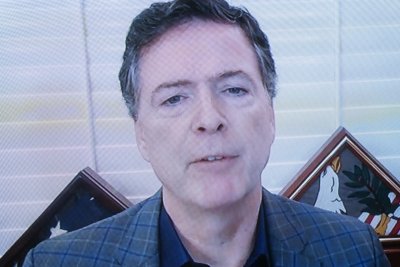
James Comey, former director of the Federal Bureau of Investigation, testifies via videoconference during a Senate Judiciary Committee hearing in Washington, D.C. on Sept. 30, 2020. The U.S. Supreme Court will not take up former Trump adviser Carter Page’s lawsuit against Comey, it decided Monday. File Pool Photo by Stefani Reynolds/UPI | License Photo
June 15 (UPI) — The U.S. Supreme Court will not take up former Trump adviser Carter Page’s lawsuit against former FBI director James Comey, it decided Monday.
Page sought to revive his lawsuit against Comey over errors and omissions made on warrant applications used to get permission to surveil him. The FBI wiretapped Page while it was investigating allegations against President Donald Trump‘s 2016 campaign colluding with Russia to interfere with the election.
Page’s lawsuit was dismissed by lower courts as they ruled he did not file his claims on time. Page alleges that the investigation into him harmed his reputation and cost him business opportunities.
The Trump administration paid Page $1.25 million in April to settle claims he made against the federal government.
The Justice Department said when announcing the agreement to settle with Page that the investigation into him was based on flawed information.
“No American should ever face covert and unlawful surveillance based on their political view,” a spokesperson for the Justice Department said in a statement.
Page has continued his attempts to sue Comey and seven others who served with the FBI during the investigation as individuals.
The Supreme Court released a list of cases it will and will not accept to its docket on Monday. The justices did not say why Page’s case has been denied.
Lamine Yamal comes off the bench but cannot help Spain overcome World Cup debutants Cape Verde in 0-0 draw.
Published On 15 Jun 202615 Jun 2026
Spain’s ghosts of recent World Cup horror shows reappeared in Atlanta as the European champions were held 0-0 by debutants Cape Verde in their opening game.
Lamine Yamal was left on the bench as the Barcelona superstar is eased back to fitness after nearly two months out with a hamstring injury and even his appearance as a second-half substitute failed to break down Cape Verde’s dogged defence.
Recommended Stories
list of 4 itemsend of list
Since winning the World Cup for the first time in 2010, Spain have not won a knockout game and their inability to make dominance of possession count was reminiscent of their meek exits in 2018 and 2022.
Blessed with what coach Luis de la Fuente claimed is the best squad in the competition, Spain were considered among the pre-tournament favourites to go all the way and lift the World Cup on July 19.
But the importance of Yamal and Nico Williams to their chances of success was underlined by a flat performance.
Williams also had an injury-disrupted season at Athletic Bilbao and was not introduced until the 87th minute.
Ranked 67 in the world, Cape Verde were making their debut on the global stage and did a nation of just over 500,000 people proud.
In stark contrast to the searing temperatures faced by some other sides, Atlanta’s state-of-the-art air conditioned stadium meant there was no excuses for the slow tempo of Spain’s build-up.
Indeed the mid-half hydration break was met by boos with fans frustrated at the break in play despite the cool conditions.
It took until six minutes before half-time for Spain to seriously threaten.
Marc Cucurella, fresh for sealing his move from Chelsea to Real Madrid, sent over a teasing cross that Ferran Torres turned onto the crossbar and Cape Verde goalkeeper Vozinha got back on his feet to turn Mikel Oyarzabal’s looping header over the bar.
Torres tested Vozinho again moments later before Aymeric Laporte’s header from a corner was also clawed away by the Cape Verde number one just before half-time.
The break came at a good time for the Blue Sharks and they comfortably held out in the second period until Yamal’s entrance after the second hydration break.
Billed as one of the stars of the tournament, Yamal’s appearance instantly lifted the crowd and injected life into the pedestrian Spanish attack.
His first involvement set up a decent opening for fellow substitute Mikel Merino which was too close to Vozinha.
Yamal also began the move that saw Oyarzabal’s effort deflected over with Spain’s best chance of the second half.
Cape Verde nearly snatched a famous victory in the final minute of the 90 when Dani Borges planted a header too close to Unai Simon.
Spain’s road to victory in 2010 also began disappointingly with defeat to Switzerland, but they have much to work on ahead of facing Saudi Arabia in Atlanta once more on Sunday.