KATIE Price’s husband Lee Andrews has broken his social media silence since going missing weeks ago.
The 43-year-old has claimed he was “captured at gunpoint” and “slapped around” before being accused of spying.
Sign up for the Showbiz newsletter
Thank you!
Lee Andrews has spoken out about being jailedLee then shared a heavily filtered picture of him and his wife Katie Price
He then praised his wife Katie, 48, for her help in getting British authorities involved in his release.
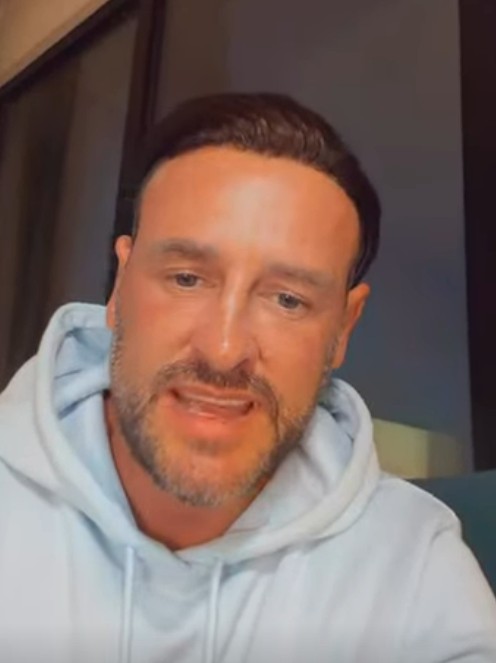
Posting a video of himself on social media with a thicker-looking head of hair, Lee said: “Hi everyone, this is Lee. I’ve been missing now for several weeks. I can tell you I’m now safe and healthy and with my wife.
“I was taken close to the Hattar-Omani border by men at gunpoint and then I was captured by men with assault rifles.
they did slap me around a little bit, little s***s, and I was hand-tied, shackled and also had a hood over my head.
“From there I was taken to a black site and I had no use of my phone and from what I know it was an extended arm of the National Guard and that’s all I can reveal at the moment.
“I have signed disclaimers now with state security and from there I was put into the system.
“At no point have I faced anything to do with fraud allegations or any criminal activities such as that.”
However, UAE officials debunked his claims he was in jail for spying and confirmed he has spent the past four weeks behind bars on suspicion of fraud.
However, UAE officials challenged his claims he was in jail for spying and said he has spent the past four weeks behind bars on suspicion of fraud.
Lee doubled down on his version of events today, adding: “So I’m sending these messages out to my loved ones and my beautiful wife, who without her help involving all the UK authorities, I don’t think I would have got out of that situation.
“Because of the tensions and things happening in the region, and me being so close to the border, this is why I was suspected of espionage and held in a state security building without the use of a telephone and any right to shower, contact or speak to any of my family, including the embassy or my wife.
“So thank you to Katie for making such a noise where the UAE actually listened and let me go.
“From there, I did have a civil case in Dubai, which led to me going into the mainstream prison during the Arabic holiday Eid and I was able to secure my release.
“I’m here now. So thank you for everyone for listening and loved blessings to everyone.”
Katie appeared to accept his story, sharing Lee’s video on Instagram saying: “My husband is back. I love you.”
Pictures showed Katie jumping into Lee’s arms as he picked her up and hugged her before heading to Vox Dubai, an outdoor rooftop cinema, to catch a World Cup football game.
Lee met Katie viaInstagramin January and married in Dubai just nine days later in a whirlwind romance.
Katie told critics who have questioned her decisions: “I know people have been calling me stupid, I see all the trolling, I hear it.
“I am not stupid. Trust me, I am protected in every way. My card has been marked and I have been taking notes.
“There is no way he would mess with me, and in a way I feel protected because I have the nation looking out for me. I’m not a mug and when I finally see Lee, I am going to question him.
“And if the answers I get are not right, that will be it: I’ll be done. That’s it. And I’ll just get on with my life… and not find a man on Instagram and message him….”
The court mandated that a total fine of £140,000 would need to be cleared before he could be released.
While imprisoned, Lee requested during a prison phone call that Katie start an online fundraising page to help raise the money, but she told him: “No one will do that for you, Lee, trust me. Everyone hates you.”
Report highlights the growing threats posed by climate change and calls for the green transition to be accelerated.
Published On 16 Jun 202616 Jun 2026
Almost all children across the globe are exposed to at least one climate hazard and the situation is expected to worsen unless greenhouse gas emissions are urgently reduced, says a report by UNICEF.
The report, published on Tuesday, warns that climate hazards pose a threat to children on multiple fronts, with nearly half of the world’s children exposed to at least three such hazards, putting their health, education and survival at risk.
Recommended Stories
list of 3 itemsend of list
“The lives of children continue to be upended by the impact of heatwaves, wildfires, droughts, and floods,” said UNICEF Executive Director Catherine Russell. “Half of the world’s children are now living with at least three overlapping climate threats shaping their daily lives.”
The report highlights the growing threats posed by climate change and calls on governments and business leaders to accelerate the transition to renewable energy.
According to UNICEF’s report, 1.8 billion children are currently at risk from drought, while 1.2 billion are exposed to extreme heat, as warmer temperatures wreak havoc on the world’s water cycle.
Countries across Western Europe experienced a record-breaking heatwave last month, reaching temperatures not typically expected until the summer.
UNICEF also says that nearly every child is exposed to air pollution, while one billion are exposed to malaria.
Scientists have repeatedly warned that global warming must be limited to 1.5C (2.7F) above pre-industrial levels to avoid the worst effects of climate change.
Nearly 200 countries signed the Paris Agreement, aiming to curb global warming to that 1.5C mark. The accord came into force in November 2016.
Since then, scientists have repeatedly warned that the target is unlikely to be met.
In January, the United States formally withdrew from the Paris Agreement for a second time, following an order by President Donald Trump.
Meanwhile, shipping companies, the U.N. and a maritime security company tell us they are taking a wait-and-see attitude before changing current operations or offering advice to do so. As Trump noted over the weekend, the Strait needs to be fully de-mined while Iranian officials say they will still impose fees for transit.
“The blockade is ongoing and is expected to remain in place until the signing [of the memorandum of understanding] on Friday,” the source, speaking on condition of anonymity to discuss operational details, told us.
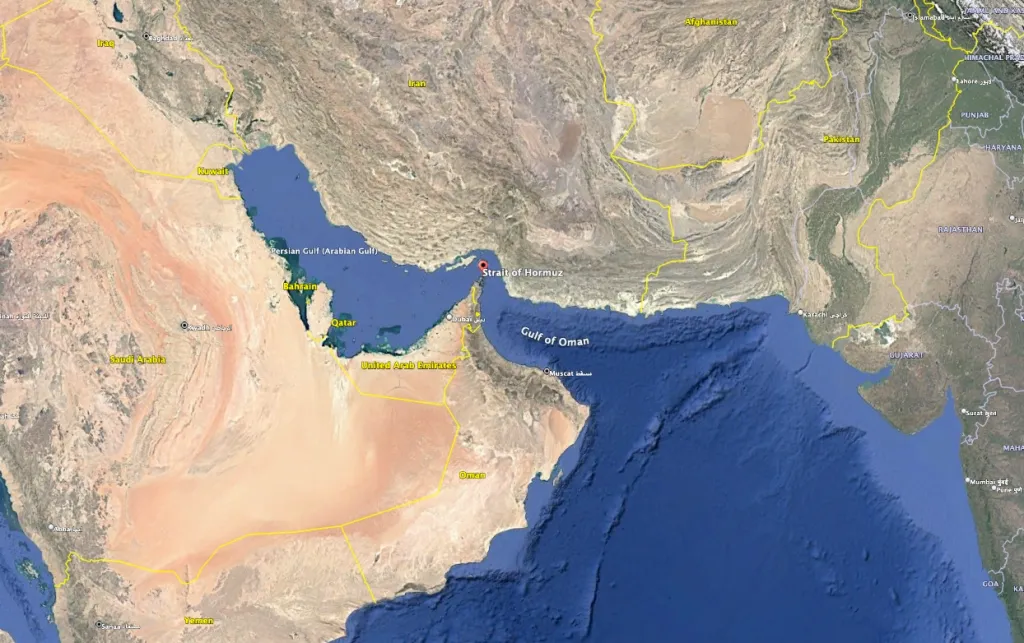
The U.S. naval blockade of Iranian ports will remain in effect until a deal is signed on Friday, a source familiar with the process told us. (Google Earth)
The official declined to tell us whether that means the U.S. will fire on vessels trying to run the blockade or turn ships back, as they have in the past.
As of June 12, U.S. Central Command (CENTCOM) said it disabled nine vessels trying to run the blockade and redirected 139 others. You can read more about how those ships were disabled here.
U.S. forces continue to strictly enforce the blockade against Iran. CENTCOM has redirected 139 compliant commercial ships and disabled 9 non-compliant vessels since April 13. pic.twitter.com/Sl8x1fF2wM
Iran’s reopening of the Strait of Hormuz, combined with the U.S. ending the blockade that went into effect on April 13, is a major component of the U.S.-Iran agreement. Iran closed the Strait to most shipping after it was attacked by the U.S. and Israel on Feb. 28. As we have frequently reported, that had a cascading effect on the global economy, sending oil prices higher.
President Trump says a historic peace agreement is set to be signed Friday in Switzerland after more than 100 days of war. The deal is expected to reopen the Strait of Hormuz, allowing oil to flow again and, according to Trump, helping bring peace and security to the region.… pic.twitter.com/EUh0rSSyeV
During a press conference and in a message on Truth Social, Trump on Monday said the Strait of Hormuz was already “partially opened.”
“Ships are starting to move, many loaded up with Oil, out of the Strait of Hormuz,” the president said on his social media site. “They are going along the Southern ‘Highway,’ which is totally safe, secure, and pristine. There are other areas of travel, also!!!”
“Ships are starting to go out now,” Trump added later at a press conference in France. “By Friday it will completely opened.”
As we previously reported, ships had been transiting the Strait via a southern route close to the United Arab Emirates and Oman under the overwatch of the U.S. military. Last week, Trump revealed that the U.S. had enacted a secret plan to get hundreds of ships out of the Strait; however, that still pales in comparison to the number of ships transiting before the war broke out.
NOW: Trump on Iran:
The strait is already partially open… by Friday, it will be completely open.
As for the blockade, Iranian officials on Monday said it was their understanding it would be lifted right away.
“Under the agreements reached, the war and military operations on all fronts, including Lebanon, will come to an immediate and permanent end beginning tonight,” the Secretariat of Iran’s Supreme National Security Council stated early Monday morning EDT, according to Iran’s official IRNA media outlet. “Furthermore, the naval blockade against Iran will be lifted immediately and completely.”
Also on Monday, Iran’s Foreign Ministry Spokesman, Esmail Baghaei, said the country will continue to charge vessels transiting the Strait for services rendered.
“According to the MoU, Iran and Oman will be responsible for managing passage through the Strait of Hormuz,” he stated. “Iran is not seeking to impose tolls. However, in return for navigation services, environmental protection, insurances and other maritime services, Iran will collect the necessary fees.”
JUST IN: Iran’s Foreign Ministry Spokesman, Ismael Baqaei on the Strait of Hormuz:
“According to the MoU, Iran and Oman will be responsible for managing passage through the Strait of Hormuz.
Iran is not seeking to impose tolls. However, in return for navigation services,… pic.twitter.com/HrpmE9kKtc
A day earlier, Trump addressed the blockade in two statements on his Truth Social site.
“This Great Deal will bring Peace and Security to the whole Region. Many presidents have tried to make Peace with Iran, and all have failed before me,” the president said in the second of the two posts, issued at 6:27 P.M. EDT. “The Leaders of the Region have, for the first time, found a President who can help them achieve real Peace. With the opening of the Strait upon the signing of the Deal on Friday, for purposes of mine removal, oil will flow on both ends again for the Region, and the World!”
A little less than an hour earlier, Trump said he was authorizing “the immediate removal” of the blockade.
“The Deal with the Islamic Republic of Iran is now complete. Congratulations to all! I hereby fully authorize the toll free opening of the Strait of Hormuz, and, simultaneously herewith, authorize the immediate removal of the United States Naval blockade. Ships of the World, start your engines.”
We reached out to the White House for further clarification.
Though both Trump and Iranian officials have weighed in on this deal, much about it remains unknown, something Vice President JD Vance explained Monday morning.
Vance told CNBC’s “Squawk Box” program that though the U.S. and Iran struck a preliminary deal, there are “a lot” of details that remain to be ironed out, but he expressed confidence that America has “all the cards” in subsequent talks.
Vance told the network that Iran’s foreign minister Abbas Araghchi is expected to be involved in those upcoming discussions — as well as its parliamentary speaker, Mohammad Bagher Ghalibaf. He is a hard-liner, Squawk Box noted, whose participation could signal that the regime’s conservative faction is on board with the deal.
“The agreement reached Sunday would extend the U.S.-Iran ceasefire for 60 days and set up a framework for future negotiations about Tehran’s nuclear program and other key issues,” CNBC further explained. “The preliminary deal has yet to be signed and its text has not been released.”
The sides have given themselves “60 days to reach a technical agreement on how to down-blend Iran’s highly enriched uranium and both freeze and monitor its nuclear program going forward,” Axios reported. “That’s a tall order given how difficult it was to reach the much less detailed memorandum of understanding.”
The U.S. “insists Iran is incentivized to reach a final agreement because sanctions relief and access to frozen funds depend on progress on the nuclear front,” Axios added. “Some hawks in the U.S. and Israel worry there will never be a final deal and the war will end with the nuclear questions unresolved.”
Trump told the New York Times on Sunday afternoon that the agreement he had reached with Iran would ultimately assure that the Strait of Hormuz was “permanently toll-free,” a seeming sticking point with Iranian expectations as we discussed earlier in this story.
Trump also insisted that if Iran failed to reach a final nuclear accord with the United States, he would restart military attacks on Tehran or make the United States “the guardian of the Middle East” in return for 20 percent of the region’s revenues.
Given that the U.S. began building up forces in the region in January, many of the ships, aircraft and troops will have to retrograde out of the CENTCOM area of responsibility in the coming weeks. So exactly what the American footprint will be in the CENTCOM area of responsibility in two months is questionable.
There is also massive global and domestic political pressure to end the war, which, as we noted earlier, has created economic upheaval around the world. Moreover, the conflict has not been popular at home, and American voters go to the polls in November for the midterm Congressional elections with Trump’s Republican party struggling to maintain control. Starting the war again, especially knowing how it went this time around and failed to deliver a deal on top of it, would see these pressures magnify.
President Donald Trump tells the New York Times if Iran failed to reach a final nuclear accord with the United States, he would restart military attacks on Tehran. pic.twitter.com/kuCpXU3WUv
Regardless of the diplomatic breakthrough, shipping companies tell us that they are not changing course when it comes to transiting the region.
“The announced agreement is a welcome and positive development, but publicly available details are still limited, and it is too early to assess how it will impact logistics and maritime operations in the Middle East,” a spokesperson for Maersk told us. “At this stage, there are no changes to our operations in the region.”
A spokesperson for Hapag-Lloyd expressed similar sentiments.
“The latest developments give reason to hope that the security situation in the Strait of Hormuz will improve,” the spokesperson told us. “We are currently reviewing the information available and are in close contact with relevant authorities and our security partners. At this stage, our risk assessment remains unchanged and the Strait of Hormuz remains closed for Hapag-Lloyd transits until further notice. The safety of our crews and vessels, and the security of our customers’ cargo, remain our highest priority.”
The U.N.’s International Maritime Organization (IMO) told us that it too was waiting for further details to emerge before offering any concrete new advice to commercial vessels sailing in the region.
“Details of the agreement are due to be released, which will provide more clarity on how restoring full trade can return through the Strait of Hormuz,” IMO told us.
The organization “is working with relevant countries, particularly Oman, Iran and the rest of the coastal States, on the safe route to be used for the evacuation of seafarers on trapped vessels and for trade to resume,” IMO added. “We are assessing the feasibility for vessels to transit and conduct the trade safely and securely, avoiding possible hazards like mines as well as congestion which could lead to accidents.”
I welcome with great satisfaction the peace agreement reached. A first step to restoring safety in this vital corridor,particularly for our seafarers. And for IMO to advance the evacuation plan, which requires safety & security guarantees from all parties. https://t.co/uBCjkD84wypic.twitter.com/PoQH4Q1vlq
An official with the Ambrey maritime security company said there is still a long way to go before commercial vessels can navigate these waters securely.
“The proposed deal still requires meaningful implementation across multiple governments, which will take time,” Joshua Hutchinson, a former Royal Marine commando now serving as the company’s Managing Director of Risk and Intelligence, told us. “Furthermore, over 1,000 vessels remain in the Persian Gulf, and the threat of mines looms; clearing such a large number of vessels will take several months of coordination.”
In addition, “reports say that the agreement will allow the Iranian Maritime Authority to retain control of the Strait of Hormuz through a clearance system, and, for the time being, this will be one of the major concerns that ship operators and owners need to understand,” Hutchinson added.
Another factor in all this remains Israel. Officials in Jerusalem have stated that they will not withdraw from southern Lebanon and will continue to strike Hezbollah targets they deem necessary. The Israeli airstrike on a Hezbollah site in Beirut on Sunday reportedly almost derailed the announcement of the MOU, with an Iranian missile attack on Israel scrubbed at the last moment.
BREAKING: Israel won’t withdraw from land seized in Lebanon, Syria and Gaza, its defense minister says, hours after an interim Iran-U.S. deal was announced. Israel Katz’s remarks are the first official Israeli comments since the announcement. https://t.co/KdVpD2iaxq
Though the preliminary agreement marks the biggest diplomatic breakthrough since hostilities began, there is still a long way to go until Friday in a region known for its volatility. As we have previously reported, several rounds of tit-for-tat attacks between the U.S. and Iran threatened to derail the shaky ceasefire in the past.
Even if Friday’s milestone signing should be reached, questions still remain about whether peace will ultimately be achieved. Given everything at stake, the world awaits warily to see what happens next.
AFTER quitting smoking years ago, Rachel Stevens was spotted in a rare relapse as she puffed on a cigarette on a recent trip to London.
While many a celeb has been caught giving in to their smoking urges, the image is a far cry from her “clean girl” Instagram aesthetic and carefully curated social media, and Insiders tell The Sun that the cheeky cig-break is only a glimpse of the real Rachel, who has hidden behind her S Club 7 persona for years.
Rachel was spotted enjoying a cigarette after previously quitting smoking years agoCredit: TillenDoveExclusive Sun pictures captured a side of the star rarely seen by fansCredit: TillenDove
One source close to the singer says: “People have always had this perception of Rachel as the ultimate girl-next-door. She’s sweet, wholesome, polite and completely drama-free, but the truth is she’s always been far more complex than that.”
“Rachel has spent years carrying the weight of an image that was created when she joined the band aged just 19, and while she appreciated the love from fans, there were times when she felt trapped by the expectations.”
Even now, at 48, Rachel’s online world remains extremely polished.
Just days ago, she was posting perfectly styled outfits, wellness content and carefully framed snapshots of her life.
Scroll through Rachel’s social media, and you’ll find plenty of evidence of the lifestyle she has built her brand around. One day she’s sharing a Pilates session, the next she’s posting from the gym lifting weights or promoting healthy meals and wellness products. Yoghurt bowls, workout routines and clean living have become as much a part of her image as the pop career that made her famous.
What she wasn’t posting about was arguably one of the biggest professional moments she has had in years.
It marked one of the band’s most significant performances since October 2023.
Yet while many artists would have flooded their feeds with backstage snaps and promotional content, Rachel largely stayed quiet. There were a handful of Stories and a Reel, but little fanfare.
Though some fans were left questioning her excitement, for those close to Rachel, it’s entirely typical.
Our source said: “Rachel has always separated the public version of herself from her private life. She doesn’t feel the need to broadcast everything she’s doing. People assume they know her because she’s been famous for so long, but actually she’s one of the more private people in show business.”
That privacy perhaps explains why so much of Rachel’s personal life has unfolded away from public view.
Following the breakdown of her marriage, Rachel began dating Dancing On Ice professional Brendyn Hatfield. They were together for three years, before calling it quits last summer.
The relationship attracted huge attention, with speculation swirling about timelines and cheating rumours that Rachel was ultimately forced to deny. According to those close to her, the experience was deeply uncomfortable.
A pal said: “Having private matters become public talking points was incredibly difficult for Rachel.
“She’s always preferred to keep her personal life out of the spotlight. The divorce came as a shock not just to fans but to people around her too because they genuinely thought the marriage would last forever.”
Yet relationship drama is far from the only challenge Rachel has faced.
Perhaps the most startling chapter of her life came years earlier when she found herself caught up in two terrifying incidents within weeks of each other. In 2009, Rachel was violently attacked during a robbery at her North London home.
The images offered a glimpse behind the wellness-focused persona she presents onlineCredit: TillenDoveRachel’s social media is usually filled with wellness content, healthy living and polished lifestyle postsCredit: Instagram
The singer later recalled being ambushed by a man who grabbed her around the neck and covered her mouth.
Speaking in court years later, she admitted she was left “absolutely terrified”. Just weeks after that ordeal, she found herself caught up in another traumatic incident while having dinner with family in St John’s Wood when a gunman opened fire nearby during a gangland shooting.
The star admitted: “The two incidents that happened so close together definitely caused a lot of post-traumatic stress. After that, I felt scared to even leave my house, get out of my car, and I was just very fearful.”
It was a side of the pop star the public rarely saw. After all, while Rachel was being voted one of the sexiest women in Britain and appearing on magazine covers, privately she was battling fears few fans knew existed.
The source adds: “Everyone assumed she was confident because she was on TV and branded one of the sexiest celebrities in the world every week. But privately she could be incredibly anxious and hard on herself.”
Even Rachel’s driving ban became a talking point because it didn’t fit the image many people had of her.
The singer appeared in court after accumulating 21 penalty points from five speeding offences and attempted to avoid a ban by explaining how it would affect work commitments and family life.
Rachel regularly shares healthy breakfasts and wellness-focused content with her followersCredit: InstagramRachel has shared fitness brands and workout platforms as part of her wellness journeyCredit: Instagram
Again, it surprised many because it felt so at odds with the Rachel the public thought they knew. But insiders insist that’s precisely the point.
Our source explained: “She’s made mistakes, faced challenges and dealt with consequences when things have gone wrong. The idea that she’s some squeaky-clean pop robot isn’t accurate. But neither is the suggestion that there’s some secret wild side waiting to be exposed.”
Indeed, those closest to Rachel say these photos will reveal a whole new authentic side to the pop star.
An insider added: “What people are seeing now is a woman who’s much more comfortable being herself. The smoking pictures might surprise some fans, but those who know Rachel aren’t shocked.
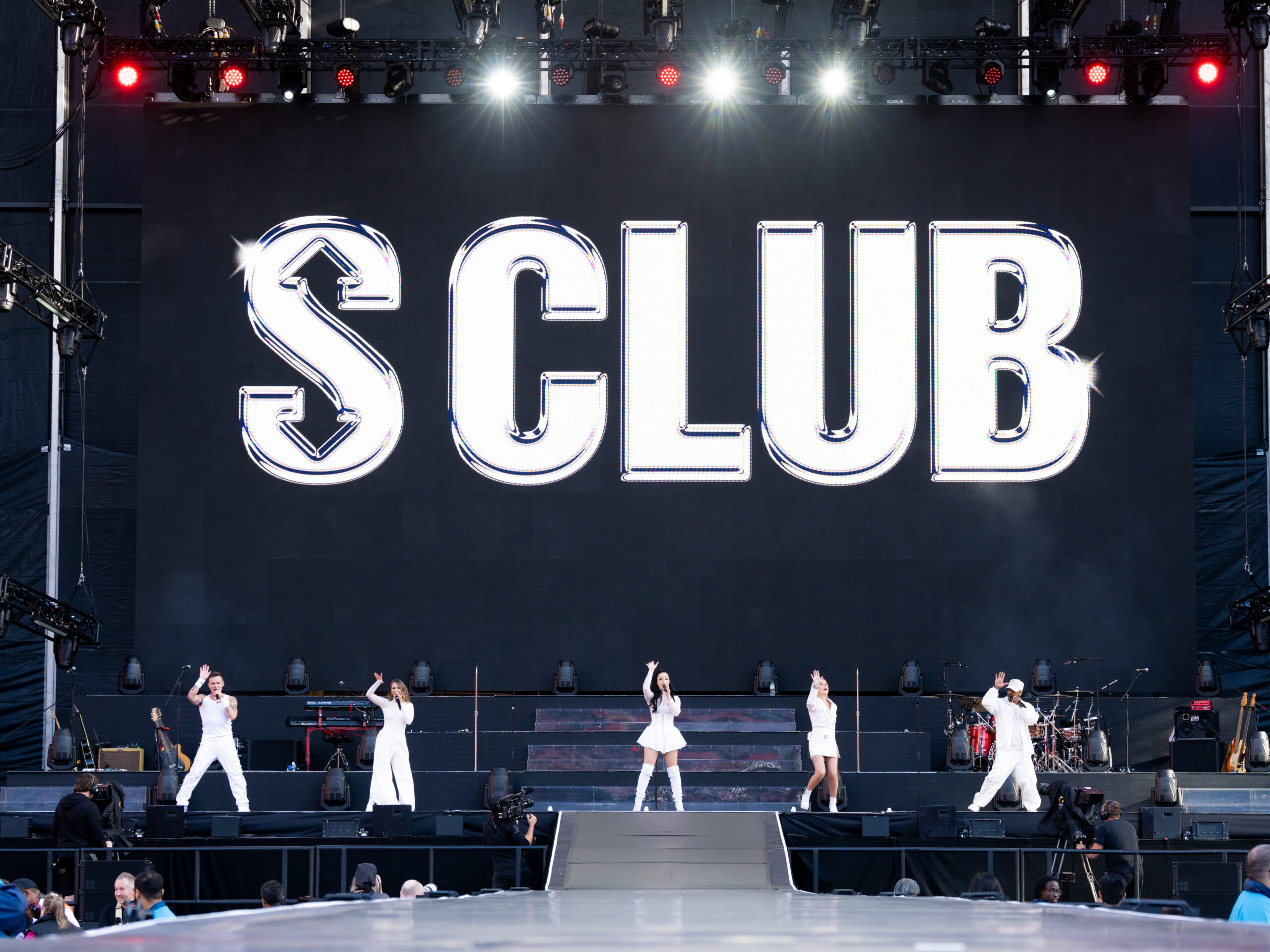
The former S Club singer looked relaxed as she shared a crafty smoke with a friend in Central LondonCredit: TillenDoveRachel reunited with S Club this month for one of the band’s biggest performances in years, opening for BoyZoneCredit: GettyDespite the major comeback moment, Rachel kept the promotion of the reunion surprisingly quiet on social mediaCredit: GettyRachel’s former relationship with Dancing On Ice professional Brendyn Hatfield attracted huge public attention following her divorceCredit: Instagram
“She’s never claimed to be perfect, and she’s certainly never lived her life trying to be a saint.”
For years, Rachel Stevens was boxed into a role she never quite chose: the impossibly perfect girl next door. But behind the green juices has always been somebody far more human.
As one insider puts it: “The real Rachel sits somewhere in the middle. Warm, emotional, resilient, occasionally rebellious and a lot more human than the image people have projected onto her for the last 25 years.”
And if a cigarette outside a venue is finally enough to remind people of that, Rachel probably won’t lose too much sleep over it.
June 16 (UPI) — Voters are heading back to the polls in Georgia on Tuesday for primary election runoffs featuring one contest that pits President Donald Trump‘s endorsement against Gov. Brian Kemp‘s.
Among the key races that will be decided Tuesday is the race to see who will challenge Democratic Sen. Jon Ossoff in November’s midterm election. Trump has endorsed Rep. Mike Collins and Kemp endorsed Derek Dooley.
Kemp gave Dooley, a former college football coach, his endorsement in August. He reiterated his support in a social media post on Monday, asking voters to choose the “conservative fighter who will put Georgians first.”
Trump endorsed Collins on Friday after early voting ended. The president posted his endorsement on social media, calling Collins a “warrior and winner.”
Elsewhere on the ballot, Republican voters will choose their candidate for the state’s gubernatorial race. Kemp is a two-term governor and is in his last year serving in the office. He faced Democrat Stacey Abrams in the last two gubernatorial elections.
Lt. Gov. Burt Jones captured 38% of the vote in the primary election last month, falling short of the 50% threshold required to win. On the other side, billionaire Rick Jackson received 32% of the vote.
The winner of the Republican primary for the gubernatorial candidate will face Atlanta Mayor Keisha Lance Bottoms in November.
President Donald Trump speaks to reporters about restoring commercial fishing access to areas of the Pacific during a signing ceremony in the Oval Office of the White House on Thursday. Photo by Jim Lo Scalzo/UPI | License Photo
Gaza’s football fans once watched the World Cup from the comfort of their homes. Now, displaced in schools and tents, they face power cuts, sparse internet access and the threat of Israeli attacks.
Fox is under fire for missing on-field action during the first match of the World Cup last week. .
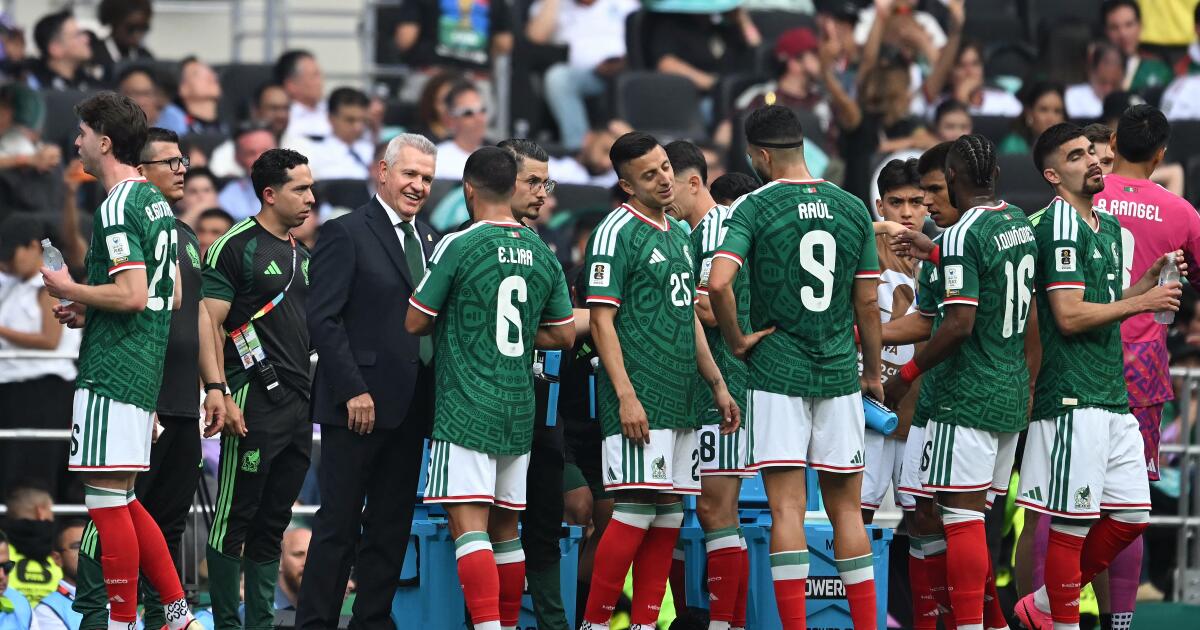
Many sports fans were irate when the network aired a full-screen ad when play resumed after a water break during last Thursday’s Mexico–South Africa match.
In the second half, the referee called for the newly instated hydration break, but the call came during a replay, which led to a miscommunication over when the three-minute break actually started.
Fox ran its full-screen ad late, and because the break didn’t last the full three minutes, players were reportedly left stalling on the field — and many Fox viewers missed the restart entirely.
“The reason that I keep coming back to these games as a fan is for 45 solid minutes of entertainment. Anything that interrupts that, whether it’s [these hydration breaks] or anything else, is not great for the game,” Garrett Denney, an avid World Cup fan and frequent user of the World Cup Reddit page, said. “What we want to see is that kind of rhythm and tempo, the intensity for a full half of soccer.”
Fox declined to comment.
The hydration break is new to the World Cup. FIFA announced it in December as a way to protect players’ health in the summer heat. In every match, the referee is to call for a break around the 22-minute mark of both halves, regardless of weather.
A FIFA spoesperson declined to comment, but pointed to a previous press release describing the breaks as a “focused attempt to ensure the best possible conditions for players, drawing upon the experiences of previous tournaments.”
The extra minutes also created something else — a new advertising window, and broadcasters are taking advantage.
Networks are supposed to leave the on-field action 20 seconds after the referee signals the break and return 30 seconds before play resumes, allowing for ads of up to two minutes and 10 seconds in total. They can air any full-screen ad they’d like, or run a split-screen ad — though a split-screen has to feature a FIFA partner, like Coca-Cola or Adidas.
The stakes are especially high for Fox, which is also leaning on the tournament to promote Fox One, its streaming service that lets subscribers watch its programming without a traditional pay-TV subscription. The World Cup broadcast has been a major plus for the platform, which costs $19.99 a month.
For some soccer fans, though, the commercial breaks are an intrusions.
“The FIFA hydration break is pure capitalism,” comedian Kevin Fredericks wrote on X.
Musician Lloyd Cole made a similar point about the new ad windows: “US tv finally got their 4 quarters. Fifa, corrupt? Fifa?”
After Fox’s stumble, many fans started questioning the intention behind the rule itself.
That frustration has pushed some viewers toward an alternative: Telemundo. The Spanish-language network, available through the Peacock streaming platform, opted for minimal hydration-break ads instead of full-screen takeovers.
During the same Mexico–South Africa match, while Fox aired its full-screen ad, Telemundo kept players on camera, let its commentators share their thoughts, and ran a Lays ad in the corner of the screen. The network has described it as a conscious decision to prioritize authenticity and keep viewers immersed.
“No ads on Telemundo and I’m learning Spanish at the same time!” one user quipped on the World Cup subreddit.
Denney, who’s rooting for Team USA, said his family prefers the Telemundo stream too — even with only part of the household fluent in Spanish.
“Part of our household is fully fluent in Spanish, part is not. And even despite the language barrier, we’ve really gravitated toward the quality of the Telemundo stream,” Denney said. “It’s really more of a rhythmic commentary. You can get deep into the game, you’re not pulled so far out of that experience and it feels almost like you’re at the stadium.”
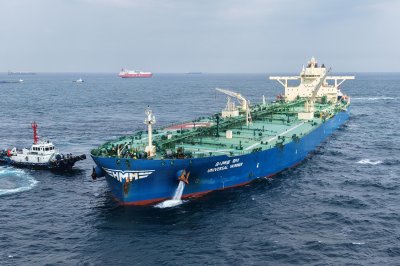
1 of 2 | Crude carrier Universal Winner, a South Korean oil tanker operated by Korean shipping company HMM, reaches waters off the southeastern port city of Ulsan, South Korea, on June 10, about three weeks after exiting the Strait of Hormuz where it had been stranded amid tensions in the Middle East. Photo by Yonhap/EPA
June 16 (UPI) — Oil prices have fallen to their lowest levels since the start of the Iran war with Brent crude oil declining to less than $80 per barrel on Tuesday.
Brent crude oil, the international benchmark, traded for $79.96 on Tuesday morning. It is the first time since the war started that it has traded below $80 per barrel. It has since inched above the $80 mark to about $80.19.
The price of West Texas Intermediate, the U.S. benchmark, has dipped by about 3.8% on Tuesday to $77.71 per barrel.
Tuesday marks the second consecutive day of descending oil prices spurred along by Sunday’s announcement that the United States and Iran have come to terms on a peace agreement. Prior to the announcement, oil prices had risen by about 14% since the start of the war.
Iran closed the Strait of Hormuz after the United States and Israel launched attacks on Feb. 28. The United States later instituted a naval blockade on the strait, stopping any vessels using Iranian ports.
The terms of the peace deal have not been made public. The United States and Iran have electronically signed a preliminary agreement and are expected to officially sign off on the peace deal on Friday.
While oil prices have fallen significantly, gas prices have moved more slowly, dropping by three cents on Tuesday. The national average for a gallon of regular-grade gas is $4.04, AAA reports. Gas prices remain elevated by about 36% since the start of the war.
President Donald Trump said Sunday that the traffic on the Strait of Hormuz would resume immediately. However, it may still take weeks for operators on the strait to actually allow tankers to pass through.
About 20% of the Middle East oil trade uses the Strait of Hormuz.
President Donald Trump speaks to reporters about restoring commercial fishing access to areas of the Pacific during a signing ceremony in the Oval Office of the White House on Thursday. Photo by Jim Lo Scalzo/UPI | License Photo
Emily Atack has been busy filming the new series of BBC drama Reputation.
The Rivals star has been seen on the set of the hotly-anticipated BBC drama, which focuses on the story of a high-stakes celebrity defamation battle. Soon, the legal battle spirals out of control – but at what cost?
In the new photos, Emily can be seen filming in gym gear as she clutches a large bag. Standing outside a nail salon, Emily’s character has sunglasses atop her head as she wears a grey hoodie and blue leggings.
In one picture, she clutches car keys as she hugs one of her co-stars. She is also seen chatting and walking with co-stars Kyle Soller and Marli Siu as part of the scenes.
The series follows the story of a character called Lena, an excellent lawyer who takes on a new case representing global pop star Davina Knight. In her new song, Davina decides to accuse her ex-husband, Billy, of abusive behaviour.
A private split soon ends in a very public libel battle and soon, it is much more than what goes on in the courtroom. There’s social media, PR machines and everyone becomes the judge and the jury.
Lena finds her own personal life thrust into the spotlight as the case continues to unfold. How far will she go to win and how much will Davina do to protect her own reputation?
Lena will be played by Skyfall and Moonlight star Naomie Harris whilst Davina Knight will be played by Mad Men star Christina Hendricks. Naomie said of joining the programme: “I was hooked from page one of Reputation. It’s so rare to read scripts with the wit and flair of Anya’s writing and I knew straight away that I wanted to play Lena.”
Christina added of her part: “Davina’s a fantastic, fierce character. I’m so looking forward to working with Naomie and I’m delighted to be working again with the Forge.”
Emily’s specific role has yet to be revealed but she will also star alongside Alex Jennings (The Crown, The Lady In The Van), David Gyasi (The Diplomat, Interstellar), Emily Atack (Rivals, Inbetweeners), Kyle Soller (Andor, Bodies), Marli Siu (Twenty Twenty Six, Everything I Know About Love) and Alex Heath (Serpent Queen, Prime Target) amongst others.
Tilly Keeper (You, Queenie), Corey Johnson (Digger, The Day of the Jackal), Aidan McArdle (Sherlock & Daughter, Showtrial), Ernest Kingsley Jnr (Washington Black, The Sandman), Jodie Campbell (Boarders, Bitch Boxer), Kayla Meikle (Transaction, Time 2), Mike Noble (This City is Ours, Dirty Business),Enzo Cilenti (Black Mirror, Jonathan Strange & Mr Norrell) and Kat Ronney (Dinosaur, Finding Emily) will all also star in the upcoming BBC drama.
Anya Reiss, writer of Reputation, said: “When I found out London was the global capital of high stakes libel cases – where the rich, powerful and famous come to fight in public for their reputations – I was in. I’ve loved writing this world and now I’m excited to get it off the page and onto the screen.”
Lindsay Salt, Director of BBC Drama, added: “Reputation is high-stakes, intoxicating and hugely entertaining, with a lot to say about the world. In Lena and Davina the brilliant Anya Reiss has created two lead characters for the ages, and we’re delighted to be working with her, Mahalia and the team at The Forge to bring this very public battle to BBC iPlayer and BBC One.”
A viral youth satirical protest movement, the Cockroach Janta Party, has emerged following exam cancellations last month.
Published On 16 Jun 202616 Jun 2026
India has blocked the Telegram messaging app until Monday and ordered the platform to disable the editing feature on messages already posted, saying the platform has been used to “defraud candidates” and for “paper leaks” regarding upcoming national student examinations.
The restriction was issued on Tuesday under a stringent provision of the IT law, which empowers the government to block access to online sites in the interest of India’s “sovereignty and integrity”.
Recommended Stories
list of 4 itemsend of list
Activists said the provision is used to curb free speech although Prime Minister Narendra Modi’s government said it acts in compliance with the law and in the public interest.
Last month, the government cancelled a key undergraduate entrance exam for medical schools known as the National Eligibility-cum-Entrance Test (NEET) after authorities discovered the questions had been leaked beforehand.
The leaks led to a series of student protests across the country, including the emergence of a satirical viral movement, the Cockroach Janta Party, that demanded the resignation of Education Minister Dharmendra Pradhan.
The government has scheduled a new examination for Sunday.
The restrictions on Telegram were imposed “in response to the organised use of the platform by cheating rackets to defraud candidates appearing for the NEET 2026 re-examination scheduled on 21 June 2026”, the Ministry of Education’s National Testing Agency said in a statement.
Telegram has grown rapidly in India, and the country is its biggest market for downloads although WhatsApp remains the dominant messaging platform.
The government said it “regrets the inconvenience caused” due to the blocking of the application, which will affect hundreds of thousands of people, but it said it is a measure of “last resort” as earlier attempts to take down content from the platform had not produced results.
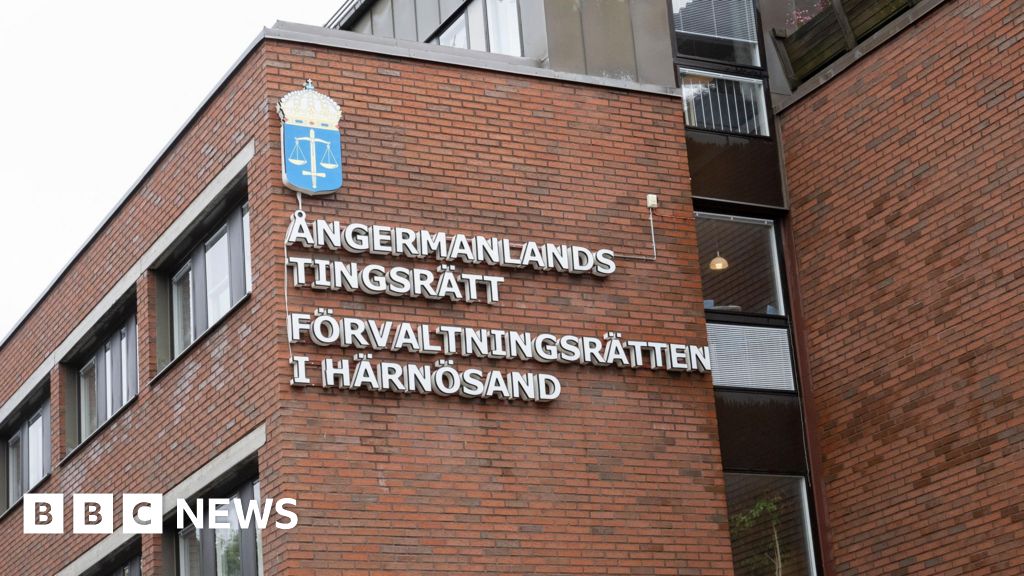
The court found he had controlled her through threats of violence and security cameras. He was convicted of offences including attempted rape, aggravated pimping, assault and unlawful threats following a trial in Härnösand, on Sweden’s eastern coast.
Harlan Coben fans, another of his best-selling books is coming to Netflix.
Hayley Anderson Screen Time TV Reporter
13:48, 16 Jun 2026
I Will Find You premieres on Thursday, June 18, on Netflix.(Image: NETFLIX)
Harlan Coben fans are eagerly anticipating I Will Find You, his next major Netflix drama.
Coben‘s novel adaptations have become hugely sought-after by Netflix subscribers, and I Will Find You is no exception, with the new series based on his 2023 novel of the same name.
The wait is now officially over as this latest thriller follows in the footsteps of his previous hits including Fool Me Once, The Stranger, Stay Close and Run Away.
Brace yourself for gripping drama, nail-biting chases and jaw-dropping twists, all brought to life by a brilliant star-studded cast.
Netflix I Will Find You release date
Thriller enthusiasts won’t have too much longer to wait as I Will Find You arrives on Thursday, June 18, on Netflix.
All eight episodes will drop simultaneously, giving subscribers the opportunity to binge-watch at their own pace.
Who stars in I Will Find You on Netflix?
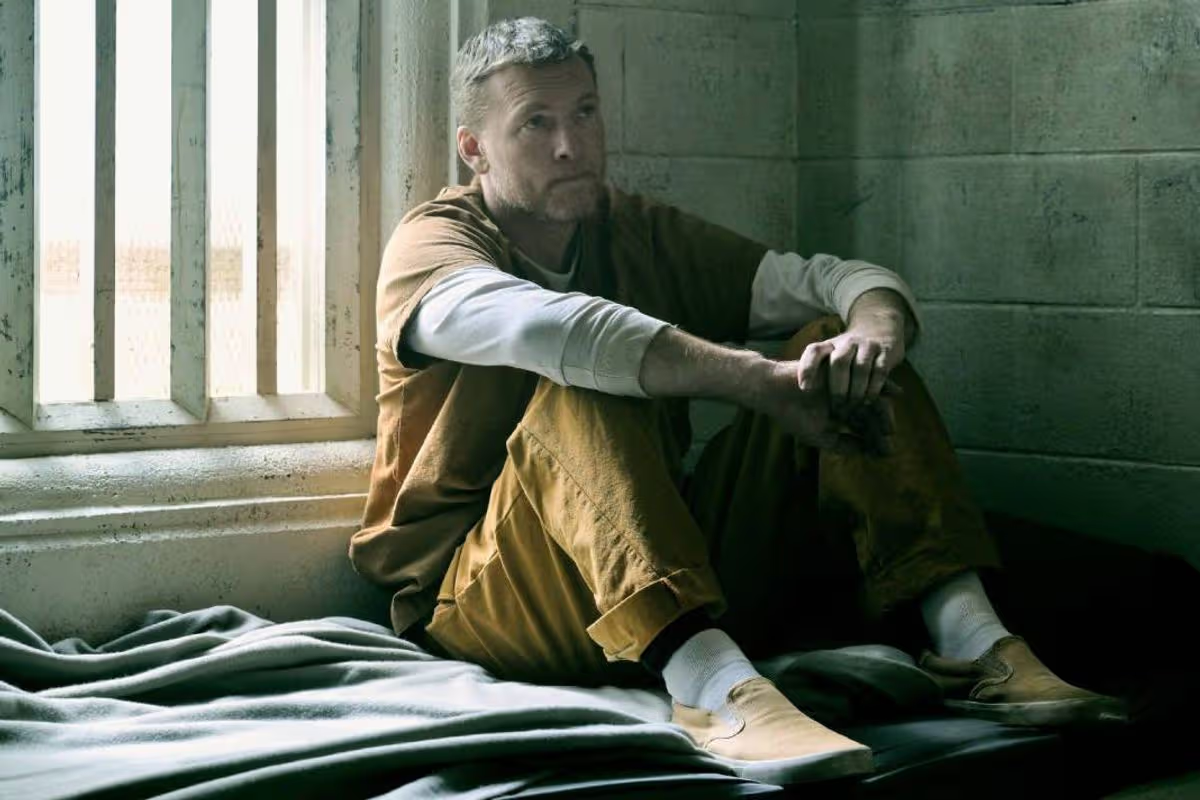
Taking the lead role as David Burroughs, a father wrongfully convicted of murdering his own son, is Sam Worthington, widely recognised for his role in the Avatar franchise.
He is accompanied by Severance star Britt Lower as David’s ex sister-in-law Rachel Mills, This Is Us favourite Milo Ventimiglia as her ex-boyfriend and trusted confidant, and Gotham actress Erin Richards as David’s ex-wife Cheryl.
Further familiar faces joining the I Will Find You cast include Westworld’s Jonathan Tucker, Dear White People actress Logan Browning and Pushing Daisies’ Chi McBride.
What is Harlan Coben’s I Will Find You about?
As stated earlier, I Will Find You on Netflix is adapted from the 2023 Harlan Coben novel of the same name.
It centres on father David Burroughs (portrayed by Sam Worthington) who is “wrongfully serving a life sentence for murdering his son”.
The official synopsis adds: “But when he receives word that his son may actually be alive, David embarks on a truth-finding mission that leads him out of prison and into a world of deceit and despair.”
However, will escaping from prison and becoming a fugitive truly result in him locating his son?
I Will Find You launches on Thursday, June 18, on Netflix.
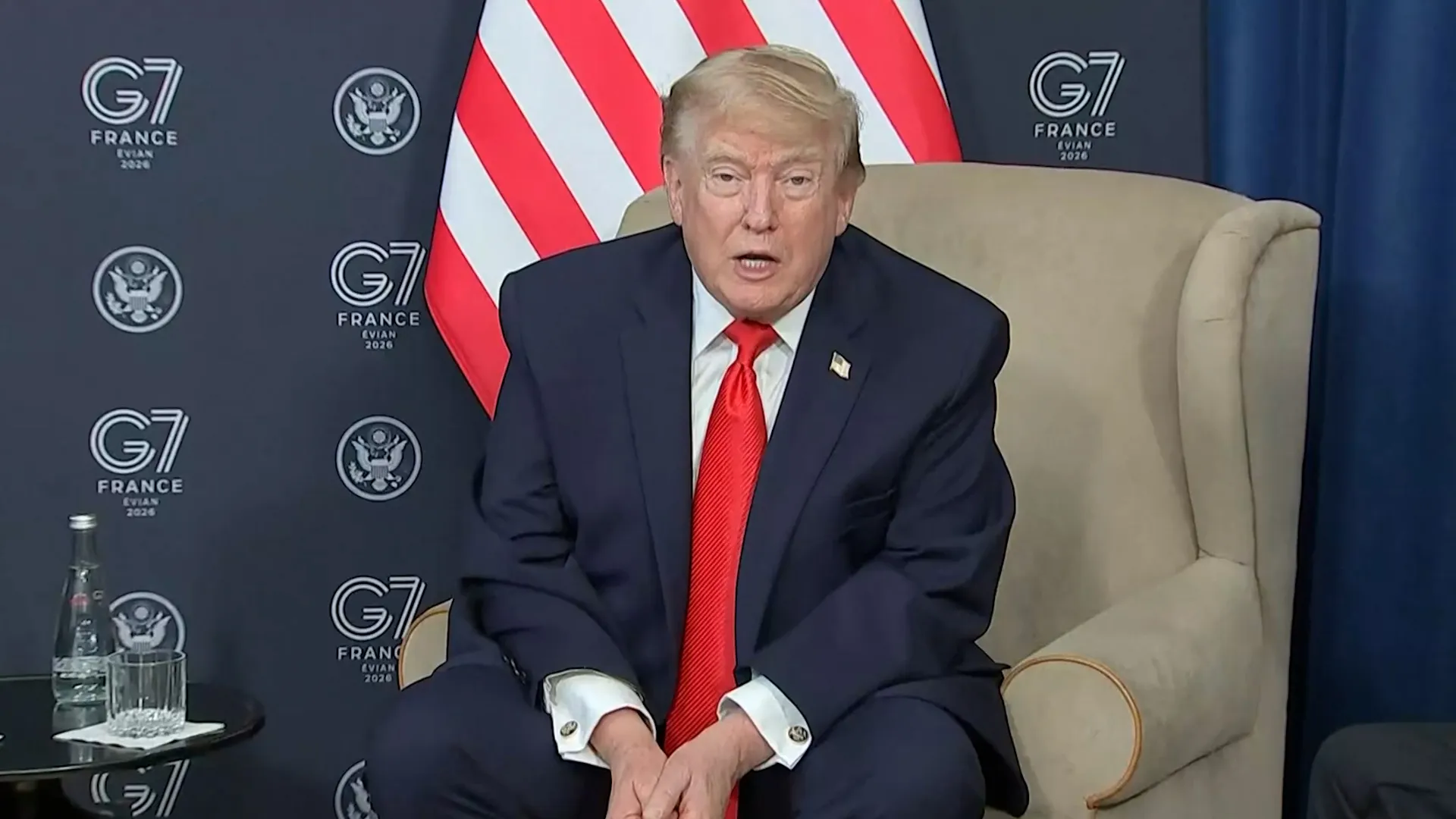
US President Donald Trump says Iran has agreed to not acquire nuclear weapons and will ‘suffer unbelievable consequences’ if they do. His remarks came during a meeting with Qatar’s Emir Sheikh Tamim at the G7 summit in France.
The US-Iran memorandum of understanding expected to be formally signed in Switzerland on Friday could allow for the establishment of a $300bn investment fund for Iran, as part of a broader settlement to end the war that triggered a global energy crisis and upended markets worldwide.
US Vice President JD Vance told CBS News on Monday that the incentives would be connected to Iran’s “performance” in adhering to the deal, which was digitally signed by both sides on Sunday.
Recommended Stories
list of 3 itemsend of list
The scale of the financial incentives grabbed the headlines due to US President Donald Trump’s longstanding criticism of a 2015 nuclear accord that he claimed delivered economic benefits to Tehran.
In a bid to manage perceptions around this politically sensitive issue, Trump took to his Truth Social platform to claim that “the story that the US is paying Iran 300 million Dollars is Fake News,” while Vance told CBS News that the money would not be a US payout in exchange for Iran’s enriched uranium.
“When people say that billions of dollars of assets will be released, that’s not true,” the vice president told the CBS Morning programme. “What is true is that Iran will have a much better and much more prosperous future if they meet the obligations they make in this agreement.”
What do we know about the $300bn investment fund?
Vance said the deal “fundamentally extends a hand to Iran and says, ‘Look, if you guys are willing to honour your obligations, if you’re willing to allow real inspections of your nuclear programme, then we will welcome you back into the world economy.’
“That’s the sort of thing they could have access to, funded by the Gulf Coast coalition, so long as they honour their end of the obligation,” Vance told CBS. He also claimed that while US money would not be injected, economic opportunities could arise once Iran repositions itself in the global economy.
The New York Times quoted sources saying the fund would not come from governments but be created for companies eager to invest in Iran.
Muhanad Seloom, a non-resident senior fellow at the Middle East Council on Global Affairs, said the setup was a no-lose solution for Washington. “If Iran reforms, the administration owns the peace; if it doesn’t, the US loses nothing and the Gulf carries the risk,” he told Al Jazeera.
What about the Iranian frozen assets?
Seloom said the idea of an investment fund was built precisely to escape the optics of releasing Iran’s frozen funds. While the exact amount of Iran’s frozen assets is unclear, official Iranian reports and experts have set the total amount at more than $100bn.
Iran’s economy has been crippled due to years of sanctions imposed on the country by the United States and other nations following the Islamic revolution in 1979, and then amplified over Iran’s nuclear and ballistic missiles programmes. These measures have restricted Tehran’s ability to access its own assets, such as revenues from oil sales, which have been frozen in foreign banks.
Tehran was granted sanctions relief in the wake of the landmark 2015 nuclear deal signed under President Barack Obama, but Trump tore it up in 2018 during his first term. The 2015 deal had put limits on Iran’s nuclear enrichment in exchange for sanctions relief.
Iran’s state-affiliated Mehr News agency reported on Sunday that the 14-point draft memorandum of understanding provided for the release of $24bn in frozen Iranian assets.
Pressed by CBS News on the possibility of releasing frozen funds, Vance said the $24bn figure “just doesn’t appear anywhere in any of the texts that we’ve talked about with the Iranians”.
“What we have said is that we’re willing to talk about unfreezing assets, but a much, much bigger deal is unsanctioning their economy – so long as they make the long-term commitments on the nuclear programme,” the vice president added.
For Iran, where the war inflicted an estimated $29bn damage and the population is struggling with the highest inflation rate since 1942, the investment fund may constitute a much-needed lifeline.
But the optics will not be as favourable, raising a “dignity problem”, Seloom said. “Tehran reads this as supervised, conditional money rather than sovereign relief,” the analyst told Al Jazeera.
Which other contentious issues will be discussed after signing the deal on Friday?
One of the US’s main declared objectives has been to assuage concerns surrounding Iran’s nuclear programme, including a stockpile of more than 440kg (970lbs) of enriched uranium.
The memorandum extends an existing ceasefire arrangement for another 60 days, during which the two sides are expected to hold further negotiations on issues including the disposal of the enriched uranium.
Vance said Tehran had agreed to surrender its stockpile, undergo regular inspections and refrain from producing or buying nuclear weapons, but the full text of the memorandum of understanding has yet to be disclosed.
The reopening of the Strait of Hormuz, which has been subject to competing blockades by the US and Iran, has also been a point of contention. Trump suggested an agreement to reopen the waterway had been reached when he announced a deal on Sunday with the words: “Let the oil flow!”
Speaking to CNBC, however, Vance acknowledged that not all sticking points surrounding the passageway had been resolved. “Well, our expectation is that the strait is gonna be opened in a toll-free way for the long term, and that’s the sort of thing that we’re gonna figure out in these technical negotiations,” he said.
Israel’s ongoing aggression on Lebanon is also expected to create friction, as Iran has insisted any ceasefire deal must include the allied nation. Israel has so far rejected any arrangement that would limit its ability to strike what it says are Hezbollah targets. Defence Minister Israel Katz on Friday said the military would continue operating in Lebanon regardless of any agreement with Tehran.
Mixed reactions to the agreement
Iranian Foreign Minister Abbas Araghchi said the memorandum of understanding would reap economic benefits for Iran but stressed that Tehran would not rely on those benefits for all of its needs.
“We have a history of broken promises, non-compliance, and the tearing up of agreements,” Araghchi said on Monday, according to Press TV. He said discussions about the lifting of US sanctions and Iran’s nuclear programme would be held during a 60-day period of negotiations following the official signature on Friday.
Iran’s new supreme leader, Mojtaba Khamenei, has yet to comment. Some Iranian observers objected to the timing of the announcement, which coincided with Trump’s birthday. Referring to the assassination of former Supreme Leader Ayatollah Ali Khamenei at the beginning of the US-Iran war, conservative journalist Parisa Nasr wrote on X: “Was giving a birthday gift to the killer of the martyred Leader also one of the unwritten conditions of the deal?”
Iranian President Masoud Pezeshkian said Iran’s Supreme National Security Council had approved the deal so that “America’s genuine commitment to respecting the rights of the Iranian nation could be tested in practice.”
Speaking at the G7 summit in France on Tuesday, Trump described the deal with Iran as “fair”, “good”, and under which Iran “can’t have a nuclear weapon” or “they get blown up.”
Qatar’s Emir Sheikh Tamim bin Hamad Al Thani, who is also attending the summit, said the Iran-US agreement will result in positive outcomes for the region.
“This is a very important deal, there’s still a lot of work to be done, but with this momentum – if we continue like that, Mr President – I think we can achieve and do great things in the region,” Sheikh Tamim said.
US Democratic lawmakers welcomed a deal to halt the war with Iran but stressed that its terms must be made public. Senator Gregory Meeks said “any final agreement must be durable, enforceable, transparent” and more than “vague announcements or political spin”.
US Republican Senator Lindsey Graham on Sunday said he was “pleased” about the deal but also “somewhat concerned that Iran’s view of the agreement seems different than what the American negotiating team is claiming”.
Seloom, at the Middle East Council on Global Affairs, said the different narratives underlined that the two sides were “not really talking to each other”. “They’re talking past each other, to domestic audiences,” he said. “Each side has to sell this as a victory it cannot sell honestly.”
TOM Holland has finally confirmed he and Zendaya are married after months of speculation.
A number of AI-generated wedding pics took the Internet by storm earlier this year sparking an ‘are they/aren’t they?’ frenzy.
Sign up for the Showbiz newsletter
Thank you!
Tom Holland has confirmed he is married to ZendayaCredit: GettyThe pair got engaged at the very end of 2024Credit: Getty
In a new interview with Esquire UK, the Spider-Man star, 30, was asked if he needed to address the viral images with his family in case they awkwardly felt they’d been left out.
He said: “No, because they were all there…That’s all you’ll get on that.”
While he wouldn’t go into any more detail on the A-list couple’s wedding, he was happy to speak about the relationship more generally and how he is the “happiest I’ve ever been”.
He said: “Our business can present very stressful situations and it’s really nice to have a bedrock of a relationship that will stand the test of time.
They star together in the Spider-Man filmsCredit: AlamyTom revealed how Zendaya helped him on his sobriety journeyCredit: Getty
“We can support each other in ways that only we can, because only we understand really what it’s like to live this life, and I think that is such a luxury, because I just don’t understand how I would be able to have anything like that with anyone else.
“So, for me, I found my person. She’s my best friend, and I’m the happiest I have ever been when I’m with her, but I have also never felt so supported and safe, ever. Period.”
The nuptials have been a not so well kept secret for some time.
Zendaya’s stylist Law Roach said in March that the pair were husband and wife at the Actor Awards.
He toldAccess Hollywood: “The wedding has already happened. You missed it.”
When asked to spill more details by the reporter, the stylist laughed and said: “It’s very true.”
The same month she was seen wearing a wedding bandat the 19th annual Essence Black Women inHollywood.
The A-list pair reportedly got engaged between Christmas 2024 and New Year, in one of Zendaya’s family homes in the US.
The English actor reportedly asked Zendaya’s dad, Kazembe Ajamu Coleman, for his blessing months before the proposal but waited until the time was right to get down on one knee.
Although they didn’t announce their engagement, during a panel event a reporter called Zendaya Tom’s “girlfriend”, to which the actor corrected them and said: “Fiancée.”
In January 2025, Zendaya was pictured wearing a huge £500,000 diamond ring by Jessica McCormack.
Tom and Zendaya first met on the set of Spider-Man: Homecoming in 2016.
After years of speculation about their relationship, the pair finally confirmed their romance in 2021 after they were photographed kissing in Los Angeles.
While the couple has kept their relationship mostly under wraps, Tom previously opened up about Zendaya’s support during his sobriety journey.
Speaking in October 2024, the actor said throughout his journey his girlfriend showed an “overwhelming sense of support.”
“I realised who my real friends were,” Tom told TV host Michael Strahan.
“And getting an overwhelming sense of support from them and enjoying a nightlife experience with them without the pressure of having a drink was a beautiful experience.”
This year they will appear on the big screen twice together, firstly in Christopher Nolan’s historical epic The Odyssey and later in Spider-Man: Brand New Day.
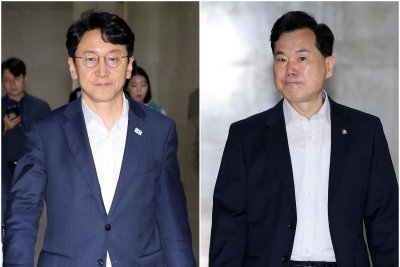
This composite photo, taken Tuesday, shows Rep. Cheon Jun-ho (L), deputy floor leader of the ruling Democratic Party, and Rep. Kim Seung-soo, deputy floor leader of the main opposition People Power Party, prior to their talks at the National Assembly in Seoul. Photo by Yonhap
The rival parties agreed Tuesday to conduct a 45-day parliamentary investigation into the National Election Commission (NEC) over ballot shortages reported during the recent local elections, party officials said.
In a meeting of their deputy floor leaders at the National Assembly, the ruling Democratic Party (DP) and the main opposition People Power Party (PPP) agreed to put the plan to a vote at a parliamentary plenary session on Thursday.
“We agreed to launch the parliamentary probe to swiftly uncover the truth behind the alleged infringement of voting rights of the citizens caused by the ballot shortages and to lay the groundwork for sweeping reforms of the NEC,” Rep. Cheon Jun-ho of the DP told reporters after the meeting.
According to officials from both parties, the special parliamentary committee will be chaired by the PPP and comprise 18 members — nine from the ruling party, seven from the PPP and two from non-negotiating parties.
Rep. Kim Seung-soo of the main opposition PPP said the rival parties agreed to set the investigation period at 45 days in an effort to conduct the probe as swiftly as possible, while leaving open the possibility of an extension if further investigation becomes necessary.
Ballot shortages were reported at more than a dozen polling stations in Seoul during the June 3 local elections, temporarily disrupting voting and prompting protests.
Last week, the DP and the PPP separately submitted requests for a parliamentary probe, though they differed over the scope of the investigation and the number of seats to be allotted to each party on the committee.
Copyright (c) Yonhap News Agency prohibits its content from being redistributed or reprinted without consent, and forbids the content from being learned and used by artificial intelligence systems.
Weekly insights and analysis on the latest developments in military technology, strategy, and foreign policy.
The saga of the Constellation class frigate is emblematic of so many chronic issues with the Navy’s way of procuring warships. The vessel that was supposed to make the wrongs of the Littoral Combat Ship debacle right failed spectacularly and the timing couldn’t have been worse. Now Constellation is dead and the Trump administration is building a different frigate from a different yard. While the Navy has said why it is moving on, we wanted the other side of the story. We recently had a conversation with George Moutafis, CEO of Fincantieri Marine Group, to get exactly that.
Before we get to the questions and answers, however, here is the backstory.
The U.S. Navy needed the Constellation class frigate, badly, and the program to construct it seemed built to deliver. Rather than a clean-sheet design, the service chose the proven Franco-Italian FREMM as its parent design, betting that adapting an existing platform would be far faster and cheaper, and overall less risky than starting from scratch.
It wasn’t. Among the issues plaguing the program, constant change orders pushed the design far from its origins. Two years into construction, the first ship was barely 10% complete while its design was still being finalized. Meanwhile, costs and schedules blew well past original projections.
In the wake of the program’s implosion, the Navy created the Vessel Construction Manager (VCM) system. It uses a hired manager to hold the prime contract and run the show, overseeing shipyard performance, controlling subcontracts, and acting as a buffer between the service and the builder to keep costs and schedules on track.
In a wide-ranging, hour-long exclusive interview, Moutafis – appointed CEO on July 1, 2025 as the wheels were already falling off this project – gave us unique insights into Fincantieri’s version of how Constellation turned into a debacle and what needs to change as a result. He also touched on an array of other topics, which we will address in future installments.
Some of the questions and answers have been edited for clarity.
Fincantieri Marine Group CEO George Moutafis. (Fincantieri)
Q: Why was the Constellation class frigate cancelled from your point of view? What happened that caused the program – which was seen as a must-succeed endeavor, and hugely promising – to get to the point where it was shuttered?
A: It’s for sure a tricky situation. On one hand, the way the Constellation class program was initially laid out and envisioned – potentially a lot of the things that were driving it may have been ahead of its time.
So, while you’re saying you want to attempt to do one thing, but at the same time you’re not evolving the way you execute can lead you to an undesired effect. And I say this because in my eyes, some of those lessons learned out of Constellation are being manifested in the things that the Navy has been rolling out the past few months – a new approach that empowers PAEs [Navy Portfolio Acquisition Executives] to make decisions, to minimize change, to embrace innovation and new technologies. All these elements that we see now being rolled out, I think to a certain degree, connect back to lessons that have been learned out of the Constellation class journey.
A rendering of the now-cancelled Constellation class frigate. USN
Q: What lessons, specifically?
A: Figure out what you want to prioritize, to what extent you want to prioritize schedule, and what’s the best way to say this. When you know when you need something delivered and at what pace, then enable the right level of decision-making. Because otherwise – I don’t want to sound this the wrong way – but perfection sometimes is the enemy of more than good enough.
Going beyond the Constellation class, now the needs are for vessels to be out there for the warfighter as soon as possible. For sure, we will see many cases where it will be considered that a vessel with these capabilities – even though potentially, in some areas, it may not have enough tons of steel on its sides, or whatever – it will be good enough to assist the warfighter as they head into harm’s way.
Those trade-offs are now being placed at the PAE level, allowing Navy leaders at that level to make the right decisions – figuring out whether to continue going down a design spiral versus just moving out with production and enabling us to have the right capabilities on time for the warfighter.
You can see former Navy Secretary John Phelan announce the cancellation of the Constellation class in the following video.
From day one I made it clear: I won’t spend a dollar if it doesn’t strengthen readiness or our ability to win.
To keep that promise, we’re reshaping how we build and field the Fleet—working with industry to deliver warfighting advantage, beginning with a strategic shift away… pic.twitter.com/pbTpIPDfR8
— Archive: Secretary of the Navy John C. Phelan (@SecNavPhelan) November 25, 2025
Q: Could the Constellation class have been salvaged? What would have needed to change to get it to a place where it was affordable, on time and efficient?
A: I think the initial and envisioned approach was a healthy one. Had we kept on track with what was, back then, the principles that led to the selection – but also how it was originally set up – we probably would have kept closer to the original design. And thus allowing [us] to be closer to the original schedule. And thus allowing [us] also to build the vessel that was desired, without delays or major changes.
On our end, from day one or day two – let me say that once the Navy decided their shift, we opted to consciously become a true partner and showcase that we are a true partner to the Navy and the nation. We said, ‘Okay, we will adjust, we will move forward.’ And it’s a clear reality that what we have in Wisconsin is an asset for the Navy, especially in a time like this that leaves all of us eager to serve the way you would need us to serve – whether it’s today through serial production of landing ships and/or icebreakers or others. And in the future, should the small surface combatant segment have additional needs, it’s obvious that the infrastructure [in Wisconsin] has been built to ideally serve that type of vessel, so we’re ready to answer the calling.
President Donald Trump speaks to workers during a visit to the Fincantieri Marinette Marine shipyard on June 25, 2020 in Marinette, Wisconsin. (Photo by Scott Olson/Getty Images) Scott Olson
Q: Why didn’t the Navy just take the base class and do minimal modifications to it? It became what seemed like a totally new ship.
A: That’s a great question, Howard, but I would need to speculate to answer that one, and I wouldn’t want to do that, because you’re right. But at the same time – what’s the saying? Hindsight is 20/20. It’s probably one of those occasions at this point. But it’s a great question. I’d love to be with you when we pose it to the right folks.
Q: But what do you think is the answer to that question, from your point of view?
A: From our point of view – from the get-go, when the award was made, it was made because there was a review of the requirements, a review of the design, and a review of all the elements that led to recognition that the parent design possessed exactly the right features to represent the path forward. So collectively, we had marched on that path. We might find ourselves in a different situation right now, but like I said, it’s one thing asking somebody to change their M.O. and adopt a new approach without fully empowering them or doing something drastic to signal that type of transformation. And it’s another where we said ‘we will try this new approach.’ But there was a lot of follow-through that was needed.
Everybody has developed experiences in certain ways, and everybody – especially when you have folks that have been doing it for decades – has developed their own rules of thumb and approaches to dealing with certain situations. It’s not easy to pivot an entire structure to a new idea or a new approach. So like I said, probably it was the right idea, but a little bit ahead of its time.
The Italian FREMM Carabiniere. (Photo by Francesco Militello Mirto/NurPhoto) NurPhoto
Q: What do you think of the lessons that should be learned from the Constellation class’s story?
A: I want to be a glass-half-full type of guy, so that’s why I connected back the things that I’ve been seeing being rolled out by our Navy the last few months as indeed adopting some of those lessons learned. So I’ll go back to the fact that they’ve decided to find new ways to apply the principle that schedule is king. And those new ways include changes that are not just at the leadership level, not just at the level following that, but indeed of restructuring and reorganizing the teams that are there to implement those guidelines – because that’s key in order to be able to change your ways and adopt lessons learned.
So I’m hopeful that this new approach of the PAE setup will be an enabler to adopt the lessons learned: of how to move fast, of how not to mess with a design especially when it’s meeting and exceeding requirements, of how to manage change – not in the rollout of a change, but in the decision-making of whether to adopt change or not. So a lot of those new ideas that they’ve been trying to apply are promising to that effect.
The future USS Pittsburgh under construction at Ingalls Shipbuilding in Pascagoula, Miss. (Ingalls Shipbuilding)
Q: The Navy adopted the new VCM program to oversee construction of the new Landing Ship Medium (LSM) vessels you are working on. This is a direct result of what happened with the Constellation class, right?
A: I would definitely think so, because it indicates the whole idea that the Navy is recognizing – instead of applying the typical layers of full team presence in the shipbuilder’s yard, additional layers of engineering design, etc. – we’re saying, ‘Okay, in a case where we want to go fast, let’s make our decisions ahead of time, select the design, check it quickly ahead of time, and assign it as a production-related design in the hands of that VCM, and allow an industry set of characters between the VCM and the shipbuilder to deliver.’
Renderings of the Navy’s Landing Ship Medium (LSM) vessels. (USN)
Q: What does Fincantieri have to give up in this VCM approach?
A: Thinking on this – Fincantieri, as a global group, likes to be end-to-end with the end customer. Our strategy is to develop the design according to the needs and requirements, move forward all through construction, and even post-construction to provide full support throughout almost the entire lifecycle of a vessel. That’s the Fincantieri model around the globe.
In this case, we’re looking to adjust to the approach that the Navy is looking to apply – and we can view it as a benefit. We can take it on as a build-to-print: be the shipbuilder that respects this design, doesn’t try to mess with it, just works out all the kinks to ensure producibility, and then moves swiftly into quick serial production.
From that perspective, we’re not really giving up something – we’re just placing at the disposal of the nation the assets that are already in place, and looking to produce as many vessels as quickly as possible.
The launching ceremony of the Italian Navy ship Trieste in the shipyard of Fincantieri at Castellammare di Stabia on May 25, 2019. (Photo by Paolo Manzo/NurPhoto via Getty Images) NurPhoto
Q: How will this speed up U.S. shipbuilding?
A: How I interpret this strategy is the Navy saying: in programs that work, find an approach that allows them to almost get out of the picture. They recognize schedule is priority number one and a quality vessel is priority number two. In order to enable that ‘build more and build fast’ approach, they’re seeking to place somebody – the VCM – to take on the construction, provide them with a mature, production-ready design with no changes to it, and enable the kind of interaction you’ve seen in commercial shipbuilding. That allows those two parties – the VCM and the shipbuilder – to work fast through daily decision-making in a way that favors schedule without compromising quality.
They’re seeking to equip the VCM with a design that will not be touched – a build-to-print situation – and empower them to make these types of decisions daily, so that at the end of the day they simply deliver a vessel to the Navy, minimizing the Navy’s need or propensity to intervene.
It’s an innovative approach, and it definitely requires all parties to give up habits and practices that have taken hold in the past. As long as parties stick with this new approach, it has a great chance of success. On our end, we’re trying to be disciplined in respecting it and pushing forward.
Our next installment of this interview focuses on how Fincantieri is planning to help build Trump’s Golden Fleet and the challenges ahead.
The Dallas Cowboys Cheerleaders secured a significant boost to their salaries last season, but how much are they actually paid?
Inside the Dallas Cowboys Cheerleaders salary after pay dispute(Image: NETFLIX)
They still don’t get nearly as much as the Dallas Cowboys football players.
America’s Sweethearts: Dallas Cowboys Cheerleaders are back on screens this week with a thrilling third instalment of Netflix’s hit docuseries.
Each seven-episode season of the show created by Greg Whiteley chronicles the latest NFL season as both rookie and seasoned cheerleaders compete for a spot on the 36-strong squad.
The newcomers are guided by director Kelli Finglass, head choreographer Judy Trammell and a number of cheerleading veterans who have performed for DCC for up to six years running.
After the first season premiered on Netflix back in 2024, many viewers were shocked by how little the cheerleaders were paid compared to NFL players.
This led to a push for higher pay, spearheaded by a number of veteran cheerleaders, that played a major role in America’s Sweethearts’ second season. But was the dispute successful? And how much are they paid now?
How much are the Dallas Cowboys Cheerleaders paid?
Despite the Dallas Cowboys being valued at over $10 billion (£7.45 billion) at the time, their cheerleaders reportedly only earned between $15 and $20 an hour (£11.18 – £14.90) for practice and $500 (£372) per game before the 2025 season.
This all added up to a salary of around $75,000 (£55,890) a year for cheerleaders who made the squad, according to reports from NBC Boston.
However, this itself was an increase from even lower pay just a few years previously, following historical dissatisfaction with the cheerleaders’ wages.
In 2018, former Dallas Cowboys cheerleader Erica Wilkins successfully sued the organisation, leading to a 2019 settlement that bumped up wages from $8 (£5.96) an hour to $12 (£8.94) an hour. Game day pay was also increased from just $200 (£149) to $400 (£298).
During the 2024-25 season depicted in the Netflix documentary’s second outing, the DCC squad was still unhappy with their income as many of them would have to take on second jobs to make ends meet.
Plus, even the Dallas Cowboys’ newest players were earning around ten times more than veteran cheerleaders, with salaries for rookies starting at $750,000 (£558,900) and veterans at $850,000 (£633,460). Quarterback Dak Prescott is the team’s highest earner, with a current average salary of $60 million (£44.75 million) a year after signing a $240 million (£178.83 million) four-year contract.
Throughout the 2024-25 season, the Dallas Cowboys Cheerleaders held meetings to discuss the issue of pay and even considered staging walkouts during games, though this ultimately didn’t happen.
Jada McLean, who played an instrumental role in securing the squad’s new pay deal, told TIME magazine: “We didn’t want to let people down who were so excited to see the cheerleaders after supporting us through the first season of our television show.”
Watch Netflix hits like Beef season 2 for free
This article contains affiliate links, we will receive a commission on any sales we generate from it. Learn more
Sky is giving away a free Netflix subscription with its new Sky Stream TV bundles, including the £15 Essential TV plan. This lets customers watch live and on-demand TV content without a satellite dish or aerial and includes the new season of Beef.
In the final episode of America’s Sweethearts season two, four-year veteran Megan McElaney announces the squad has secured a “life-changing” salary increase of a staggering 400 percent, with cheerleaders reportedly earning around $75 (£55.89) per hour. Veteran cheerleaders can now earn around $150,000 (£111,770) a year.
However, the cheerleaders’ exact salaries are not disclosed in the series and there has been some dispute over whether the 400 percent figure is accurate.
Veteran Reece Weaver disclosed on the Unplanned podcast last November that the increase was “more like 300 percent”, though maintained the team is still “so grateful with the outcome”.
“I really don’t know all the behind-the-scenes on how it all works out, but what I can say is that it has been such an improvement and a very big increase [over] what we have seen in the past,” she added.
Importantly, the increase does not include a flat fee for game appearances, which Weaver says is a “huge improvement”, and the job has remained part-time and does not include health insurance for cheerleaders.
America’s Sweethearts: Dallas Cowboys Cheerleaders season 3 is available on Netflix.
South Korea is consulting with the United States and Iran about navigation through the Strait of Hormuz, the Foreign Ministry said Tuesday. In this photo, the South Korean oil tanker Universal Winner arrives near Ulsan on June 10 after exiting the Strait. Photo by Yonhap
South Korea has begun consultations with the United States, Iran and other relevant countries regarding navigation through the Strait of Hormuz following the signing of a preliminary deal aimed at ending the monthslong war in the Middle East, the foreign ministry said Tuesday.
According to U.S. officials, President Donald Trump, Vice President JD Vance and Iran’s parliamentary speaker Mohammad Bagher Ghalibaf inked the memorandum of understanding (MOU) that would extend the countries’ ceasefire for 60 days, during which negotiations will take place to address nuclear and other issues to reach a final peace deal.
A large number of vessels, including two dozen South Korea-linked ships, have been stranded in the waterway, which Iran has effectively choked off with threats of missile and drone strikes amid the war.
“We are assessing the details related to maritime transit and have begun necessary communication with relevant countries, including the U.S. and Iran,” ministry spokesperson Park Il said during a regular press briefing.
According to Park, the government is closely monitoring a range of factors before making judgments on passage operations, including the presence of naval mines, the overall security situation in the strait and shipping traffic conditions.
He said the government will continue to prioritize the safety of South Korean vessels and sailors while working to ensure the smooth resumption of shipping.
Park added the government will also maintain close consultations with shipping companies in assessing developments in the region.
Copyright (c) Yonhap News Agency prohibits its content from being redistributed or reprinted without consent, and forbids the content from being learned and used by artificial intelligence systems.
The World Cup on Tuesday features tournament heavyweights Argentina and France, who are beginning their campaigns.
France, the 2018 World Cup winners, take on Senegal in East Rutherford, New Jersey, in a repeat of their famous opener in the 2002 edition while Lionel Messi’s reigning champions Argentina face Algeria in Kansas City, Missouri. In Tuesday’s other matches, Norway return to the World Cup for the first time in 28 years against Iraq, and Austria meet Jordan in the day’s final fixture.
Away from the games, Cape Verde are still celebrating their historic draw with Spain while Iraq’s return to the tournament has sparked both happiness and frustration among their supporters.
Here’s what to watch on Day 6 of the World Cup:
What is the schedule for Tuesday?
Four more teams begin their campaigns on Tuesday.
France vs Senegal at New York New Jersey Stadium is scheduled to kick off at 3pm (19:00 GMT).
Later, Norway return to the World Cup for the first time since 1998 when they take on Iraq at Boston Stadium in Massachusetts with kickoff at 6pm (22:00 GMT).
And Argentina will also play against Algeria at Kansas City Stadium at 8pm (01:00 GMT on Wednesday) before Austria meet Jordan at San Francisco Bay Area Stadium in California at 9pm (04:00 GMT on Wednesday).
What are the predictions for France vs Senegal?
France head into the tournament as one of the favourites, sitting third in FIFA’s world rankings. But African powerhouse Senegal, ranked 16th, are expected to provide a stern early test in their opening match.
The teams’ only previous World Cup meeting came in the opening match of the 2002 tournament when tournament debutants Senegal stunned defending champions France 1-0. Papa Bouba Diop’s memorable winner sparked celebrations across Dakar, and then-President Abdoulaye Wade declared a national holiday. Senegal went on to reach the quarterfinals while France exited without winning a game.
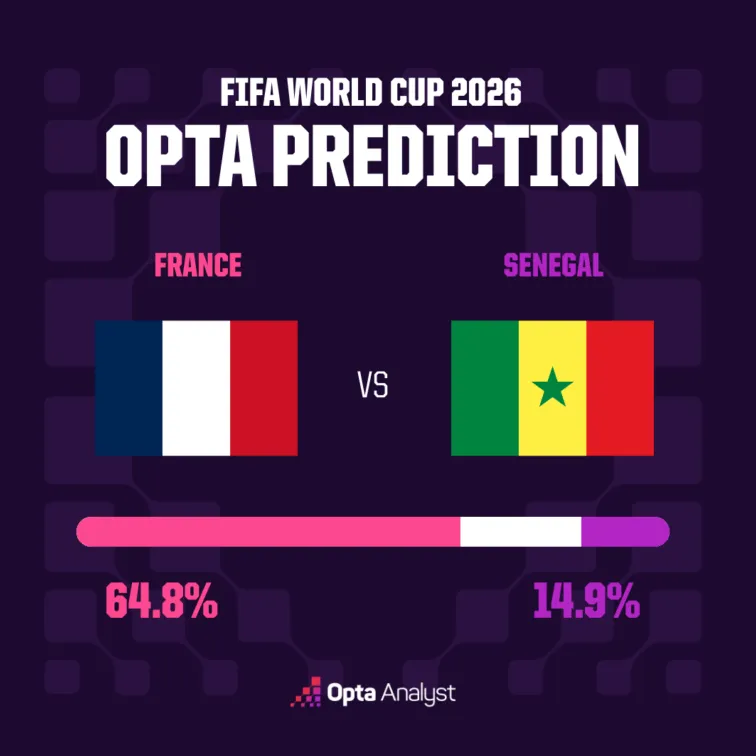
Opta’s supercomputer still gives France a clear edge at New York New Jersey Stadium, assigning Les Bleus a 64.8 percent chance of victory. Senegal’s chances of pulling off another upset stand at 14.9 percent while the probability of a draw is put at 20.3 percent.
What are the predictions for Iraq vs Norway?
Tuesday’s Group I clash will be the first meeting between Iraq and Norway, and it will be the Nordic country’s first World Cup match against a team from the Asian Football Confederation.
Norway have relished their return to the World Cup after a long hiatus from the tournament. Fans have drawn attention with their synchronised “Viking row” celebrations while Erling Haaland shared a Viking-themed team photo on social media, describing the tournament as “a dream 28 years in the making”. Led by Haaland and Martin Odegaard, the Norwegians arrive with high hopes.
Opta’s supercomputer expects Norway to start strongly, giving them a 77.4 percent chance of victory. A draw is rated at 14 percent while Iraq have an 8.6 percent chance of pulling off an upset.
What are the predictions for Argentina vs Algeria?
Argentina and Algeria have never faced each other at the World Cup although they did meet in a friendly in 2007 when Argentina came from behind to secure a thrilling 4-3 win at Barcelona’s Camp Nou. A teenager by the name of Lionel Messi scored the first two goals of his international career that day.
History also favours the South Americans. Argentina have won each of their last six World Cup matches against African opponents, rebounding from their shock 1-0 defeat to Cameroon in 1990. Algeria, meanwhile, have enjoyed mixed fortunes against South American sides at the tournament, beating Chile in 1982 before losing to Brazil four years later.
Opta’s supercomputer expects Argentina to make a winning start in Group J. After 25,000 simulations, Lionel Scaloni’s side emerged victorious 68.2 percent of the time. Algeria were given a 13.2 percent chance of causing an upset while a draw was the outcome in 18.6 percent of the projections.
What are the predictions for Austria vs Jordan?
Austria enter the match as the clear favourites on paper. Ranked 25th in the world, they sit 39 places above Jordan, who are 64th in FIFA’s standings, and the Europeans are widely expected to challenge for a place in the knockout rounds.
Opta’s supercomputer strongly backs Austria to open their campaign with a victory in San Francisco, giving them a 70.3 percent chance of taking all three points. Jordan have been assigned a 12.9 percent probability of pulling off an upset while the likelihood of a draw stands at 16.9 percent.
Looking beyond this match, Austria are considered Argentina’s main challengers in Group J. They have an 18 percent chance of finishing top of the group, compared with just 2.9 percent for Jordan.
What else is shaping the World Cup?
Cape Verde celebrate historic point
Cape Verde’s 0-0 draw with Spain led to wild celebrations among fans, including in Boston, home to a large Cape Verdean community. Supporters said they were proud to see their country shine on the World Cup stage.
“Everyone thought Spain would beat us,” one fan said. “We’re a small country, but we have a big heart.”
According to a report on the NBC TV network, goalkeeper Vozinha also became an overnight social media sensation with his Instagram following soaring after the game. NBC said the goalkeeper went from 50,000 followers on Instagram to 4.9 million.
Cape Verde fans watch the World Cup group stage match against Spain from Praia, Cape Verde, on June 15, 2026 [Danilson Sequeira/Reuters]
Saudi Arabia deny Uruguay victory
Saudi Arabia looked set for another famous World Cup upset after Abdulelah Alamri gave the Green Falcons the lead against Uruguay, four years on from their shock win over Argentina.
But Uruguay’s Maximiliano Araujo struck 10 minutes from time to earn Uruguay a 1-1 draw. Saudi goalkeeper Mohammed Alowais then made several key saves to preserve the point, leaving Group H finely balanced after the opening round of matches.
Abdulelah Al-Amri #4 of Saudi Arabia scores his team’s first goal against Uruguay during the FIFA World Cup 2026 Group H match at Miami Stadium on June 15, 2026 [Lars Baron/Getty Images/Getty Images via AFP]
Tunisia sack coach after heavy defeat
Tunisia have dismissed Sabri Lamouchi after their 5-1 loss to Sweden in their World Cup opener. Mondher Kebaier is set to take over on an interim basis as Tunisia try to revive their campaign before matches against Japan and the Netherlands.
Meet Merlin, Mexico’s unlikely mascot
A duck named Merlin became one of the World Cup’s first viral stars after appearing in Mexico City celebrations dressed in the national team’s colours. Fans on social media called the two-year-old a “national treasure” and even called for him to attend matches as the tournament’s unofficial mascot.
Norway embrace their Viking roots
Norway have brought Viking fever to the tournament. Fans have debuted a synchronised “Viking row” celebration in the stands while the team posed for a Viking-themed photoshoot that sparked both excitement and debate back home. The images, shared by Erling Haaland, have become one of the tournament’s early talking points.
FIFA clears VAR official Shaun Evans
FIFA said it found “no evidence” to support allegations that video assistant referee Shaun Evans breached its disciplinary code after he was accused of making a white supremacist hand gesture during Germany’s World Cup opener against Curacao. Evans, an Australian, said the gesture was an involuntary movement and denied any intent to communicate a racist message.
For many Iraqis, qualifying for the World Cup has brought a rare moment of joy after decades of conflict and hardship.
Fans said the team’s return to football’s biggest stage after more than 40 years offers people a chance to unite and move away, even briefly, from the tensions in the region.
“We haven’t felt this happy in a long time,” Ahmed Salman, an Iraqi fan, told Al Jazeera.
“This is a chance for people to come together and move away from the atmosphere of war, especially given the tense situation in the region.”
But the celebrations have also been mixed with frustration over restrictions that some said have prevented Iraqi supporters from attending the tournament in the United States.
“Banning the fans is a very negative step because sports have nothing to do with politics,” Salman said. “People are coming to celebrate.”
Another Iraq supporter described the emotions as bittersweet.
“As Iraqis, after more than 40 years, we have qualified for the World Cup,” Taha Mohamed said. “It brings a feeling of joy and comfort, … but regarding the fans, it is frustrating.”
If you want personal stories of survival, family trauma or just how to get over a breakup, look no further than adult animation. Even better: Sometimes these shows do all that and are still funny. We’ve rounded up some of this season’s best examples in the genre.
‘Genndy Tartakovsky’s Primal’ (Adult Swim)
Set in an anachronistic world where prehumans and dinosaurs fight for survival, “Primal” is told sans dialogue and focuses on a Neanderthal named Spear (whose vocal grunts are provided by actor Aaron LaPlante) and a female Tyrannosaurusrex known as Fang. It’s raw, bloody and, somehow, tear-jerking.
“There’s drama, there’s violence, certainly there’s a bit of lightheartedness … we’re not trying to do it like a live-action thing, but we’re trying to get cinematic,” says creator Genndy Tartakovsky. “And because it’s dramatic and there’s no dialogue, we’re leaning into the visual storytelling of it all. This makes it seem a little bit more sophisticated.”
Tartakovsky says he even tries to make “the blood spurts look beautiful and designed”: “We’re not doing it for shock value.” The show also added the escaped female slave Mira (voiced by Laëtitia Eïdo) at the end of Season 1 because the creator felt it worked for the story.
‘Kevin’ (Prime Video)
Talking cats are not new to animation. But this one is going through the very human roller coaster of a relationship rebound and self-discovery.
Joe Wengert co-created “Kevin” with ex-girlfriend/series voice actor Aubrey Plaza as a cathartic thought experiment about their actual pet cat, Kevin. (Jason Schwartzman voices him in the show.)
“It’s more fun to write for the animals,” says Wengert, whose credits include Netflix’s animated “Big Mouth” and Fox’s live-action “New Girl.” “They have another level of crazy.”
The show also doubles as therapy.
“I’ve always been too into my relationship and I sort of neglect my friends,” he says, adding that “I’ve always wanted to write something about that, but it’s kind of sad when it’s a human man. It’s less sad when it’s a cat.”
‘Long Story Short’ (Netflix)
Raphael Bob-Waksberg, who also created Netflix’s “BoJack Horseman,” knows his beat is animated shows that are both funny and thought-provoking. He says the difference with “Long Story Short,” in addition to it being about humans and not an anthropomorphic horse, is that it has “sadness we can relate to.”
“Here, we see characters sad in the way that we are sad and we go, ‘Oh, this is not a cartoon exaggeration of our sadness.’ This is exactly the same as our sadness,” Bob-Waksberg says.
In order to keep the show from being a total buzzkill, the writers will craft scenes like an intense conversation between adult siblings about fertility treatments in the midst of the chaos and the bizarre costuming of a child’s dance concert.
He says you can do this in live-action, but it would have to be something in the Tina Fey-Robert Carlock style like NBC’s “30 Rock” or Netflix’s “Unbreakable Kimmy Schmidt,” which are known for rapid-fire bits.
“Usually in live-action, when you think about dramedy, your head goes to like, well, not too funny and not too dramatic. And my shows are kind of the opposite,” he laughs.
‘Mating Season’ (Netflix)
Like another show Andrew Goldberg co-created, Netflix’s “Big Mouth,” “Mating Season” is about sex and relationships. But, because it’s not about kids, it can be less metaphoric. And, because it’s about a group of Gen Z-ish forest animals, it can almost seem … cute?
“It feels less voyeuristic than with people,” Goldberg explains of “Mating Season.”
Goldberg, who loves nature documentaries like Netflix’s “Life on Our Planet,” says they opened the second episode of “Mating Season” with a parody documentary because “we wanted to remind people as much as possible that, yes, these are cartoon characters. But these animals are real, and they’re out there, and they’re going about their lives.”
He says the writers were also inspired by dating shows about humans such as Netflix’s “Love Is Blind” and Peacock’s “Love Island,” because “we really discovered, as we were writing the first season, how much the show was a romantic comedy.”
‘Strip Law’ (Netflix)
“Strip Law,” about a Las Vegas lawyer attempting to live up to his late mother’s legacy, is a David and Goliath story, in which Adam Scott’s Lincoln Gumb and a ragtag crew attempt to defeat the powerful and nefarious attorney Steve Nichols (Keith David). It’s also a send-up of legal procedurals, with Lincoln’s cases including a fight over who’s the real Santa Claus and a custody battle that devolves into a theological debate. Even the season finale is a meta masterpiece that’s told from the points of view of Lincoln’s rival attorneys.
“It would be disingenuous to say we weren’t at least a little trying to weird people out,” creator Cullen Crawford laughs.
Crawford cut some of his teeth on CBS’ “The Late Show With Stephen Colbert,” but says he switched formats when he got burned out writing jokes about President Trump. He says that, at least in the comedy world, “a good animation writer will be a good live-action writer and the other way around, to an extent, as long as you understand the mediums.”