To attract patrons, the Los Angeles County Library turned to some of the most familiar faces on earth: Hello Kitty and her friends.
The bet seemed to be paying off Friday, as thousands of adults flocked to local branches to snag library cards featuring the adorable anthropomorphic gang on launch day.
The county’s library director, Skye Patrick, told The Times Thursday evening that they were bracing for “complete mayhem.”
A library spokesperson said they were still tallying the number of card sign-ups, but at least 4,400 had been issued as of Friday afternoon.
One of them went to Mar Vista resident Sisa Salazar.
“I thought it was super cute,” the 22-year-old said as she waited in line at the Marina del Rey branch Friday afternoon.
The florist used to frequent the library in high school, checking out books and watching shows. But she lost her card in recent years.
So when she came across the special Hello Kitty-themed card on Instagram, she took the opportunity to get a replacement.
Shortly after 2 p.m. Friday, the line for Hello Kitty library cards at the Marina del Rey branch stretched out the door.
(Iris Kwok / Los Angeles Times)
The Marina del Rey library remained busy throughout the afternoon, with a steady line of more than 50 people stretching out the door. Across town, dozens of people lined up outside the South Whittier Library before its 10 a.m. opening, hoping to be among the first to snag the card.
The West Hollywood, Carson, West Covina, La Mirada, Marina del Rey and Alondra branches ran out of cards on the first day, library spokesperson Jessica Lee wrote in an email. She noted the cards can still be found at other locations and roving bookmobiles.
In addition to Hello Kitty, the card depicts several other recognizable characters produced by the Japanese company Sanrio: My Melody, Kuromi, Pompompurin, Keroppi, Cinnamoroll, Chococat and Pochacco.
Many people in line in Marina del Rey chatted about their favorite Sanrio characters and exchanged childhood memories.
Playa del Rey resident Rebecca Leach, 43, already has an L.A. County Library card, which she often uses to read e-books on the Libby app.
Playa del Rey resident Rebecca Leach said she wanted to get the Hello Kitty library card because she grew up with the character and finds it nostalgic.
(Iris Kwok / Los Angeles Times)
But for the registered nurse, who dons a Hello Kitty badge reel at work, nostalgia was part of the card’s appeal. She has fond childhood memories of playing with a color-changing Hello Kitty plush toy. Leach visited several branches Friday before finding a manageable line in Marina del Rey.
“I think it’s great that they’re promoting the library more and doing outreach,” said Jolyne Jimenez, 51, a library assistant at the Santa Monica Public Library and fan of My Melody.
She spent her day off at the Marina del Rey library waiting for the card. (The Santa Monica Public Library is independent of the L.A. County Library system.)
Limited-edition library cards aren’t new in L.A. County. Previous popular designs have included cards commemorating the centennial of the 19th Amendment and the FIFA World Cup, Patrick said.
“What is uncommon is this amount of buzz,” Patrick said, adding that she hoped the heavy interest in the card would translate to increased awareness of the library’s offerings — not just books and e-books, but streaming content, household tools, musical instruments and podcast equipment.
The Hello Kitty card is available through Oct. 18, Patrick said. The library has permission to use Sanrio’s characters for one month for free and plans to restock the cards before the collaboration period ends.
Players celebrate podium finish that brings exemption from conscription, saying the pressure was ‘out of this world’.
Published On 20 Sep 202620 Sep 2026
Iran withstood a late fightback to beat China 79-70 and win the Asian Games men’s basketball bronze, an achievement that left their players “speechless” after months of war back home.
China led 31-29 at half-time in Nagoya, but Iran took charge in the third quarter to lead 55-46 going into the fourth and held on to prompt wild celebrations and secure a place on the podium on Sunday.
Recommended Stories
list of 4 itemsend of list
“To be honest with you, I’m just speechless,” said 6ft 8in (203cm) power forward Arsalan Kazemi, who, in 2013, was the first Iranian to be drafted into the NBA by the Washington Wizards but never made a regular-season appearance.
“The pressure that we had on us is just out of this world,” he added.
“Not a lot of athletes can say that, with the way that it has been for almost six months, what we have been through, what our families have been through.”
“I just congratulate the people of Iran because they deserve much better.”
“And I think my teammates and I put our hearts out on the court today just to get this win and make them happy,” Kazemi said.
Iran’s Matin Aghajanpour and Mahdi Jafari celebrate [Edgar Su/Reuters]
Teammate Arman Zangeneh said the squad had been through a lot, but it was worth it.
“If you get the medal at the Asian Games, you don’t need to go to the army any more, so it’s huge for some players,” said the 6ft 6in (198cm) forward.
“We had a very tough two months. We went to the Philippines to play the qualifiers, then immediately we came here.”
“It was really difficult. And living in a container, with the food and everything, it was hard, very hard.”
“In the end, we got to the point where we go home with a medal, and it means a lot,” Zangeneh added.
Members of Iran’s coaching staff celebrate on court after the win [Anushree Fadnavis/Reuters]
Male athletes from the country’s national teams who win medals at the Asian Games are granted exemption from mandatory military conscription in a move announced by Iran’s former Supreme Leader Ayatollah Ali Khamenei in 2018.
Previously, only medallists at the Olympic or world games were exempt from the draft, according to Iran’s semi-official Tasnim news agency.
Iranian males reaching the age of 18 are required to serve two years on active duty and are then transferred to the reserve force.
Israel’s Rafael and Lockheed Martin are working to accelerate integration of the 1,000-pound-class SPICE standoff weapon with the Israeli Air Force’s F-35I Adir. The development could potentially open the door for the precision-guided munition to be offered to other Joint Strike Fighter operators.
Rafael Advanced Defense Systems announced the effort September 15 during the Air & Space Forces Air, Space and Cyber Symposium that TWZ is attending. The work is being conducted as a joint project with Lockheed Martin at the U.S. contractor’s facilities in the United States and is expected to take several months.
AFA 2026: For the first time, Rafael’s SPICE 1000 is being integrated on the F-35
Rafael Advanced Defense Systems Ltd. is integrating its SPICE 1000 air-to-surface munition on the F-35 Adir fighter aircraft.
Rafael says the effort could eventually make the weapon available to other F-35 operators. “At a later stage, F-35 operators worldwide will be able to field SPICE 1000,” the company said.
The effort was previously referenced in U.S. government documentation before Rafael’s announcement. Published in August, the Pentagon F-35 Modernized Selected Acquisition Report identified the weapon as the “Israel-unique Smart, Precise Impact, Cost-Effective 1000B,” or SPICE 1000B, and said its integration was progressing “with a strategy to accelerate the implementation via a SPICE Lite process.”
The report does not explain what the “SPICE Lite” process entails.
SPICE — which stands for Smart, Precise Impact, and Cost-Effective — is a family of electro-optically guided standoff weapons developed by Rafael. The family includes SPICE 2000, SPICE 1000, and SPICE 250, with the numbers corresponding broadly to the weight class of the underlying warheads.
Based around a 1,000-pound-class bomb, SPICE 1000 uses pop-out wings to achieve a manufacturer-stated range of approximately 125 kilometers, or 78 miles. Rafael gives the weapon a claimed circular error probable of around three meters.
The glide bomb combines inertial and satellite-aided navigation with an electro-optical seeker. During the terminal phase, its seeker can compare the observed target area with stored imagery using scene-matching algorithms, allowing the weapon to continue its attack without relying exclusively on GPS. That feature allows it to engage targets autonomously, offering the launch aircraft a true ‘fire and forget’ capability, and provides resilience in GPS-denied or GPS-degraded environments.
SPICE can also be programmed to approach a target from a particular azimuth and impact angle. This provides flexibility in selecting the terminal attack geometry and can support steep attack profiles against targets where penetration from above is desirable.
SPICE 1000 is not a new Israeli capability. It has been operational with the Israel Air Force since 2017 and is already integrated with Israeli F-16I Sufa, F-16C/D Barak, F-15I Ra’am, and F-15 Baz fighters.
An F-15 Baz configured for precision strike, with a pair of 2,000-pound Rafael SPICE standoff weapons on the underwing pylons. Amit Agronov
“SPICE 1000 has been sold to several countries and is in operational service with a number of air forces worldwide,” Rafael said. “It has served as a primary munition of the Israeli Air Force for several years, including extensive use in recent long-range operations flown from F-15 and F-16 aircraft.”
The Israeli Air Force has released footage showing SPICE weapons being used during recent operations, including imagery from the weapon’s own perspective during its terminal attack.
Israeli Air Force F-15 Bazs preparing for a strike on Iran, each carrying a pair of Spice 1000 glide bombs.
Notably, one of the F-15s, tail no. 450, took part in Operation Wooden Leg exactly 40 years ago, striking PLO targets in Tunisia. pic.twitter.com/FEy6PiDkdU
Combat validated. The stand-off strike capability air forces are asking about. SPICE 250 at Farnborough. Pinpoint accuracy against high-value targets. Real operational results.
— Rafael Advanced Defense Systems (@RAFAELdefense) July 22, 2026
Israel’s F-35I is already unusual within the international Joint Strike Fighter fleet. The IDF has developed and demonstrated an external Joint Direct Attack Munition (JDAM) carriage capability, and said in March 2025 that the Israeli Adir was the only F-35 to have conducted operational strikes with an external weapons configuration. You can read more about that here.
The unique instrumented F-35I assigned to the Israeli Flight Test Center carrying four external 2,000-pound class GBU-31 JDAMs. A single AIM-120 AMRAAM air-to-air missile can be seen in one of the internal weapons bays, which may also house another internal JDAM. Israeli Air Force
However, according toThe Jerusalem Post, the SPICE weapon is expected to be carried internally by F-35Is equipped with Technology Refresh 3, or TR-3, hardware, which would maintain its low-observable configuration. Neither Rafael nor Lockheed Martin has publicly detailed the specific carriage configuration, aircraft modifications or software associated with the current integration effort.
The long-delayed TR-3 is a major upgrade to the F-35’s computing architecture and provides the processing infrastructure required for subsequent Block 4 capabilities. Israel received its first three F-35Is equipped with TR-3 hardware in January of this year.
Lockheed Martin describes Block 4 as the F-35 program’s “most significant evolution of F-35 capabilities to date,” encompassing more than 70 major upgrades, including increased weapons capacity, advanced electronic warfare capabilities, and improved target recognition.
Some of the unclassified upgrades within Block 4. The exact configuration has not been publicly disclosed. U.S. Department of Defense
It remains unclear if the SPICE 1000 integration itself requires the full Block 4 configuration.
The potential significance of the Israeli integration extends beyond the Israel Air Force. If SPICE 1000 ultimately becomes available to other F-35 operators, the completed Israeli integration could provide those countries with another pathway toward fielding a precision standoff weapon rather than requiring them to begin an integration effort entirely from scratch.
Integrating national weapons onto the F-35 can be a lengthy process. It involves not only the weapon itself, but aircraft software, interfaces, weapons-bay compatibility, flight testing, mission-system integration and certification within the U.S.-led F-35 program.
In 2022, the U.K. Ministry of Defence said that scheduled delivery dates for SPEAR 3 had been delayed because of “prioritisation in the overall F-35 development programme,” which is managed by the U.S.-led F-35 Joint Program Office.
An artist’s impression of an F-35 armed with SPEAR 3 and Meteor missiles. MBDA
The program has continued to progress, including F-35B integration work and flight testing. But in June 2026, the U.K. government said that completion of mission-systems integration and jettison trials remained part of a wider weapons-integration program and that SPEAR 3 integration and subsequent release to service would occur in the early 2030s.
Nevertheless, another F-35 operator would not be able to adopt the Israeli SPICE integration without additional work. National configurations, software baselines, certification requirements, weapons procurement, and export approvals would still have to be addressed.
Already, however, aided by its uniquely configured test jet, Israel has demonstrated an unusual ability to integrate nationally developed capabilities onto its F-35I. This has been aided by privileged access to the Joint Strike Fighter’s closely guarded software codes.
The Israeli Air Force F-35I test jet on the flight line together with an F-15I strike fighter. Amit Agronov/Israeli Air Force
A U.K. parliamentary report noted delays in integrating British weapons onto the F-35B while contrasting that with Israel’s ability to integrate domestic electronic warfare systems, sensors, and communications technology onto its Adir.
Meanwhile, Rafael and Lockheed Martin already have experience working together on the SPICE family.
The companies signed a teaming agreement in 2019 covering the joint development, marketing and manufacture of SPICE guidance kits for the U.S. market. In 2021, they expanded the agreement to include SPICE 250, including development for potential sales to the United States and Poland. With some unque capabilities, SPICE could be of particular interest to the U.S. military, especially as it seeks to leverage multiple sources of precision munitions.
The SPICE family also extends beyond the 1,000-pound-class weapon now being integrated with the F-35.
At the other end of the family is SPICE 250, a much smaller weapon designed around a 250-pound-class payload. It incorporates a man-in-the-loop capability that allows an operator to redirect the weapon during its flight and abort the attack if necessary.
SPICE 250 – Stand-Off Air-to-Surface Weapon System
Its smaller dimensions also allow substantially greater weapon carriage. Rafael has marketed configurations in which a fighter can carry as many as 16 SPICE 250 weapons.
SPICE 1000, by comparison, is a substantially heavier weapon intended to provide longer-range precision attack capability with a larger warhead.
The SPICE effort is taking place alongside several other Israeli initiatives aimed at extending the F-35I’s range and weapons capabilities.
The Pentagon’s F-35 documentation has referenced ongoing work on extended-range fuel tanks and electronic warfare pods for the Israeli Air Force, although it did not provide fielding dates.
In May 2026, Israel’s defense ministry awarded an extended-range capability development contract for the F-35I to Elbit Systems subsidiary Cyclone. The capability is intended to increase the aircraft’s radius of action and reduce its reliance on aerial refueling during long-range missions.
For the F-35I, SPICE 1000 adds a long-range strike option that pairs the aircraft’s low observability with substantial standoff range and a relatively heavy warhead. This offers a survivability advantage in increasingly contested environments, allowing attacks from farther outside capable air defense systems and under heavy electronic warfare conditions. This factor will only become more important as integrated air defense systems become more capable and the F-35 more detectable.
Exactly how the weapon will be integrated remains undisclosed. Rafael and Lockheed Martin have not announced the final carriage configuration, aircraft software requirements, flight-test schedule, or expected date for operational clearance.
At the same time, Rafael is explicitly positioning the effort as a potential pathway for SPICE 1000 to become available to the wider F-35 community. This would conceivably give other operators another option at a time when integrating a new standoff weapon onto the fighter can take years.
Premiering Sunday on PBS, “Trespasses,” a four-part adaptation of Louise Kennedy’s 2022 debut novel, is a story of love in a time of choler. Set outside of Belfast in 1975 during the Troubles, it follows a clandestine affair between Cushla Lavery (Lola Petticrew, the serial killer in “Furious”), a 24-year-old Catholic elementary school teacher, and Michael Agnew (Tom Cullen), an older, married Protestant barrister known for defending stone-throwing Catholic youth with an eye to keeping them out of the IRA.
Emptying the thesaurus, press materials stress the hot stuff — “scandalous,” “risqué,” “racy,” “torrid,” “titillating” and “steamy” — and while there is more than a modicum of modest sex scenes, the actual tone of the limited series, as adapted by Ailbhe Keogan and directed by Dawn Shadforth, is quite measured; it runs on talk. That’s not to say, given the setting and the setup, which betokens tragedy as surely as Romeo meeting Juliet, it doesn’t throb with tension, let’s say, three-quarters of the time.
Along with teaching, Cushla works for her brother Eamonn (Martin McCann) at the family bar. The clientele includes Catholics and Protestants, united in their love of whiskey, lately including Michael — whose opposition to extremism grants him the honor of being disliked by both sides — seemingly there expressly, even too expressly, to gaze upon Cushla while he pretends to do crosswords. And she gazes back. Moving through discussions of Malcolm McDowell’s typecasting and group lessons in Irish, led by Cushla, they will go beyond gazing.
She’s a ray of light; he’s magnetically mature. You may or may not buy the mutual attraction the series insists upon, or for that matter, trust the lovers’ motivations. (I think we’re meant at least not to wholly trust Michael, as the older party, with a reputation as a womanizer — I didn’t, anyway.) But you will also be invited to change your mind. Because the camera never leaves Cushla’s side, anything there is to learn we learn along with her, which pays some dramatic dividends and means we’ll be forced to revise earlier judgments, usually for the better.
It’s a dangerous liaison. Michael, who is given to speechifying (and actual speechmaking), declares, “We cannot let the old bigots and the boys with guns tell us how to live … Otherwise nothing will ever change. Hate wins” and, in a favorite refrain, “We must find the bravery to choose freedom over fear.” Cushla, however notes that she comes “from a long line of Catholics that have survived by keeping their heads down and their mouths shut. Having a big opinion like yours, it’s a luxury I don’t have.”
Gerry Harkin (Oisin Thompson), left, Cushla’s colleague and confidant.
(Peter Marley / Channel 4)
Many shots are framed as if Cushla and Michael are being watched, whether or not they are, though sometimes they are, including by each other. (“They like to let me know they know where I am,” Michael says, when Cushla mentions seeing a patrol car outside his flat.) We’re shown the oppressive presence of loyalist troops, and some anti-Catholic vandalism, and a neighbor reflexively checking his car for a bomb, but the greater violence comes through as background noise on the radio or TV news, or reported by Cushla’s young students.
Fortunately, if no less terribly, there is more to the story, and many of the most compelling scenes have little or nothing to do with Michael. (Every scene is a Cushla scene.) She’s wonderful with her class, and her colleague and confidant Gerry Harkin (Oisin Thompson), who will jump onstage at a school assembly to interrupt a strident, bigoted superior, leading the students in a peace song — “Take away the hate and the violence / Bring love into our hearts.” Viewers will consider his bowl haircut a romantic nonstarter, but there are levels to be revealed.
Cushla may not have the luxury of big opinions, but as an obviously good person, whatever one thinks of adultery, she’s unafraid to go against the grain in support of her student Davy McGeown (Daithi Ó Haragain), whose mother (Emily Taaffe) is Protestant and whose Catholic father, in the child’s words, has been “beat up for loving my mummy.” She’s also supportive of Davy’s bright older brother Tommy (Conlaoch Gough-Cunningham), teetering on the edge after the attack on his father.
Above all, there is Cushla’s mother, Gina, played by Gillian Anderson, in a downward spiral since the death of her husband, some two years earlier. Introduced in a state of drunken collapse, Anderson — fearful, bitter, despairing, protective — is quite magnificent limning different levels of intoxication. But she’s even more impressive in her sober scenes, participating in the world beyond her couch, bringing food to the McGeowns and, finally, acting as a mother to Gina.
Michael’s declarations not even aside, Keoghan has a gift for writing dialogue that feels native to the speaker and doesn’t land heavily on a point, and apart from the lovemaking interludes and a gauzy montage of a romantic trip to Dublin, Shadforth’s naturalistic direction enhances the drama by not underscoring it. She has an especially convincing way with party scenes — a school disco, a wedding, an art opening, a birthday party (at which Michael performs a soulful, foreshadowing version of the Carter Family’s “The Last Move For Me”) — where so many productions fall down.
Come for the promised steaminess. Stay for the rest of it.
Israeli settlers have stormed the Al-Aqsa Mosque compound in occupied East Jerusalem again and performed Jewish prayers in the courtyard.
The weekend witnessed a series of provocative acts by Israeli politicians and settlers in the build-up to Yom Kippur, the holiest day in the Jewish calendar, and next month’s Israeli election.
Recommended Stories
list of 4 itemsend of list
On Thursday, National Security Minister Itamar Ben-Gvir and others again stormed the Al-Aqsa Mosque compound for Yom Kippur. Israeli Prime Minister Benjamin Netanyahu also visited a labyrinth of tunnels below occupied East Jerusalem on Saturday.
Early on Sunday morning, Netanyahu released videos and photographs on his official Instagram account documenting his participation in Jewish “Selichot” prayers at the Western Wall, known as the al-Buraq Wall to Muslims.
The tunnels lie underneath occupied East Jerusalem’s bustling Old City and the Al-Aqsa Mosque compound, making the incursions particularly sensitive for the occupied territory’s Palestinian population.
Translation: Happy New Year and a good final signature to all Israelis from the Western Wall.
Under the protection of security forces, Netanyahu, accompanied by several government ministers and thousands of Israeli settlers, made his way onto the plaza of the wall in occupied East Jerusalem on Saturday evening, ahead of Yom Kippur.
Footage shared by the prime minister showed him performing the rituals from behind bulletproof glass. In another video, Netanyahu and his wife, Sara, passed through one of the excavation tunnels running beneath the Western Wall while Jewish prayers took place.
“Well, we are in the tunnels at the al-Buraq Wall. It is moving to touch the rock of our existence. We are here very close to the Holy of Holies. We are here, and we will always remain here,” Netanyahu stated in the video.
Translation: Prime Minister Benjamin Netanyahu and his wife in prayer for the safety of Israeli soldiers tonight at the Western Wall.
Yom Kippur incursions
The prime minister’s subterranean visit unfolded alongside a wave of settler incursions into the holy site above ground.
On its official Facebook page, the Palestinian Jerusalem governorate reported that about 570 settlers had stormed the courtyards of the Al-Aqsa Mosque by 10am local time on Sunday. According to the governorate, the settlers performed Talmudic rituals and “epic prostrations” to mark Yom Kippur.
The Palestinian group Hamas strongly condemned the incursions in a press statement published on its official Telegram channel.
“The storming by Benjamin Netanyahu, against whom an arrest warrant has been issued by the International Criminal Court, of the tunnels and excavations beneath the blessed Al-Aqsa Mosque and the al-Buraq Wall, and the provocative statements and false claims accompanying it about the so-called Holy of Holies, represents a blatant attack on the identity of the Al-Aqsa Mosque and its status, and a provocation to the feelings of our Palestinian people and the Arab and Islamic nations,” the statement in Arabic said.
The group emphasised Al-Aqsa’s exclusively Islamic heritage and rejected Israel’s ongoing excavations under the holy site.
Religious or political?
Israel has been digging beneath occupied East Jerusalem for years, a move that has been condemned by archaeologists and the United Nations. The works are believed to be intended to find proof of the rampart wall of the Second Temple, but experts say there is no proof of this claim. Others view these measures as an attempt by Israel to cement its rule over occupied Palestinian land.
In 2022, Netanyahu led a cabinet meeting in the labyrinth, describing Israel as the “landlords of Jerusalem”. East Jerusalem has been earmarked as the capital of a future Palestinian state by Palestinians.
The timing of Saturday’s visit not only comes on the eve of Yom Kippur but also at a time of huge political significance for the Israeli leader, who trails in the polls against his rival Gadi Eisenkot, leader of the Yashar party.
Ahmed al-Hila, a political analyst specialising in Middle East affairs and the Arab-Israeli conflict, told Al Jazeera that Netanyahu is using religious symbolism to try to secure his political survival ahead of October’s general election.
“Benjamin Netanyahu wanted, through this visit … creating this symbolism for himself as a leader spearheading the right wing to consolidate the Israeli political and religious narrative in the Al-Aqsa Mosque, to attempt to gather the largest possible number of votes to serve as an electoral lever for him,” said al-Hila.
“As for the intense security mobilisation and Benjamin Netanyahu’s appearance behind a bulletproof glass shield [during a speech above ground], this is a direct indication that this city has not, up to this moment, submitted to Israeli security control, despite the repeated and frequent talk that Jerusalem is ‘the capital of the State of Israel’.”
The visit could also be a message to the wider world, amid global criticism of the controversial illegal settlement project E1, which the Israeli government has issued tenders for, and which appears designed to sever East Jerusalem from the occupied West Bank.
“What further confirms this conclusion is that initiating the settlement project called E1 does not only isolate the northern West Bank from its south … but this settlement project completes the isolation of the city of Jerusalem from its Palestinian surroundings,” Al-Hila said. “Therefore, this visit with its political symbolism confirms the idea of Israeli sovereignty over the city of Jerusalem.”
The Labour Party chair has said Sir Jim Ratcliffe loses “the moral high ground” by making statements about the UK while living in tax exile.
Speaking to Sunday with Laura Kuenssberg, Bridget Phillipson said she would take the billionaire businessman’s comments that the UK was “on the slide” with a “pinch of salt”.
Sir Jim, the founder of petrochemical giant Ineos and Manchester United’s co-owner, told the BBC he has lost confidence in the UK due to a combination of high taxes and high immigration.
He has been a tax resident in Monaco since 2020 and said “things would have to get better” in the UK for him to return.
When questioned over the remarks, Phillipson said Sir Jim loses “the moral high ground” by “making these kinds of pronouncements while choosing to make decisions, that he is within his rights to make, to become a tax exile”.
Pushed on whether it bothers her that people who create jobs and pay a lot of tax were leaving the UK, the minister said she was “optimistic about our country’s prospects”.
Other high profile billionaires have left the UK, including including steel tycoon Lakshmi Mittal and most recently the UK’s third biggest taxpayer, hedge-fund boss Chris Rokos.
But, Philipson argued the country was in a good position ahead of the Budget next month, and Andy Burnham has shown a “sense of hope and optimism whilst recognising that many families are still struggling and there is more to do.”
“Of course, there are challenges, including big international headwinds, but I fundamentally believe that we are in a strong position going into this budget because of the decisions taken over the last two years, and I believe our country’s best days lie ahead of us,” she said.
Philipson declined to speculate over whether there would be tax rises in the Budget on 28 October, and said the government remained committed to being disciplined about its spending rules.
“High-stakes” psychological thriller American Hostage has finally landed on Prime Video.
Hayley Anderson Screen Time TV Reporter
12:16, 20 Sep 2026
American Hostage is now available to stream on Prime Video(Image: PRIME VIDEO )
American Hostage is the “harrowing” drama fans have been waiting for starring Mad Men and Land Man icon Jon Hamm.
Prime Video released the intense eight-part series that tells of a “high-stakes” kidnapping in 1970s Indianapolis on on Sunday (September 20).
A beloved radio reporter is thrown into a “life or death crisis” when a kidnapper, who continues to point a shotgun at his hostage, demands to speak to him live on air.
With listeners intensely tuning in to their ongoing conversation, the pressure is on as the radio presenter must try to talk down the kidnapper before it’s too late.
Is American Hostage based on a true story?
What makes this new Prime Video drama even more exciting is the fact that it is based on a real-life story.
The radio reporter in question is Fred Heckman (played by Jon Hamm) with American Hostage telling his “harrowing true story” of what happened between him and kidnapper Tony Kiritsis (Giovanni Ribisi).
In real-life, Kiritsis’ victim Richard Hall was an executive at Meridian Mortgage Co which loaned him money three years prior to buy land and set up a shopping centre.
Kiritsis claimed that Meridian steered shops and business owners away from the centre, so he was confronted with the prospect of closing down and forced to default on the loan.
In an act of revenge, Kiritsis took Hall as his hostage and tied a wire around his neck attached to a shotgun that would go off if he made any sudden movements.
Kiritsis then stated that the only person he would talk to was radio personality Fred Heckman of WIBC so he could vent his feelings about Meridian live on air.
He released Hall on February 10, 1977, after holding him hostage for 63 hours.
Kiritsis was charged with kidnapping, armed extortion and armed robbery but was acquitted by reason of insanity and spent the next decade in psychiatric care.
American Hostage is based on the first season of the scripted podcast of the same name from Shawn Christensen and brought to life for the small screen by Netflix ’s The Night Agent creator Shawn Ryan.
American Hostage is available to watch on Prime Video
Iran’s security chief Mohsen Rezaei has laid out Tehran’s latest set of conditions to end its war with the United States.
In an exclusive interview with Al Jazeera on Saturday, Rezaei said that Tehran has conveyed its conditions to the US via Qatari mediators, but added that Tehran was more battle-hardened now than in the first 40 days of the war, which began in late February following joint US-Israeli strikes on Iran.
Recommended Stories
list of 4 itemsend of list
“We will confront America with greater force, and with more numerous and more painful strikes,” said Rezaei.
While full-scale fighting has been paused for months, the two sides are nowhere close to peace. A June 17 memorandum of understanding (MoU) between the US and Iran expired last month. Since then, attacks have risen, especially in and around the Strait of Hormuz, which Iran has effectively closed, while the US maintains a blockade of Iran’s southern ports.
The escalating attacks on oil tankers attempting to pass through the strait and the effective Houthi control of the Red Sea route, which Saudi Arabia used to export oil, have caused oil prices to cross the $100 mark in recent weeks.
Al Jazeera’s Tohid Asadi, reporting from Tehran, described Rezaei’s remarks as part of the “two-sided, twofold message” Iran has maintained throughout the conflict – combining openness to diplomacy with continued preparations for war”.
So what are Iran’s latest conditions, and do they differ from the June MoU?
What are the Iranian conditions to end the war?
Here is what Rezaei told Al Jazeera:
An end to the war on all fronts, including, in particular, Lebanon.
The release of its frozen funds that run into billions of US dollars.
An end to the naval blockade on Iranian ports.
An end to US interference in Iran’s internal affairs.
An end to US cooperation with “the opponents of our revolution”.
An end to all US attacks on Iranian territory.
“It is in Washington’s interest to accept these conditions. Trump’s threats will not achieve any results. We are prepared for a decisive war,” said the security chief.
On Sunday morning, Iran’s Parliament Speaker Mohammad Bagher Ghalibaf reiterated Tehran’s stance on the Strait of Hormuz, saying the critical waterway will remain closed until the US fulfils its commitments.
“Until these conditions are met, the legitimate rights of the Iranian nation are recognised, and American commitments are fulfilled, there will be no opening for a return to the previous state of negotiations or for the reopening of the Strait of Hormuz,” said Ghalibaf.
What is different to the June MoU?
Iran’s latest set of conditions bears similarities to its demands under the MoU deal signed in June. That agreement also included an end to the war on all fronts, including in Lebanon; respect for each side’s sovereignty and not meddling in internal affairs; an end to the naval blockade by both sides; and the release of Iran’s frozen funds.
The MoU also called for a $300bn US-backed reconstruction plan, while the two sides also agreed that Iran would not procure or develop nuclear weapons and that Tehran would open the Strait of Hormuz for the safe passage of vessels.
It also required the US to issue waivers for the export of Iranian crude oil and other services, no new sanctions on Iran, and no deployment of additional US forces in the region.
In the interview, Rezaei did not mention war reparations from the US as Tehran has been demanding previously.
While there is little genuinely new in the substance of Iranian demands, what has changed is the timing and the channel through which it was delivered, said Adel Abdel Ghafar, a senior fellow focusing on the Middle East at the Australian Strategic Policy Institute.
“With the Islamabad MoU dead and … Rezaei delivering the conditions through Qatar, Iran is putting the onus back on Washington and doing it publicly, for maximum effect,” Abdel Ghafar told Al Jazeera.
Both sides are in a stalemate, he explained, with the US able to sustain the naval blockade and hold air superiority but unable to compel capitulation from Iran.
Iran, meanwhile, cannot break the blockade but “keeps enough asymmetric leverage to make things difficult for everyone”, he said.
“Basically Iran is betting [on the] war’s unpopularity and [that the] US midterms [will] shift things in its favour, so it’s going public with demands and putting the ball in Trump’s court.”
Rezaei, in his interview with Al Jazeera, rejected the US accusation that Tehran violated the MoU by striking an oil tanker in the Strait of Hormuz, stating that Iran’s actions came only after US attacks on Bandar Abbas and an Iranian surveillance platform there.
He said any agreement, including the MoU, required recourse to a dispute-resolution committee agreed between Ghalibaf, Iran’s chief negotiator, and US Vice President JD Vance, which Washington unilaterally withdrew from.
What did Rezaei say on Iran’s nuclear progamme, Yemen and others?
On the nuclear programme, Rezaei said Iran could have withdrawn from the Nuclear Non-Proliferation Treaty following attacks by the US and Israel – something that Tehran would not rule out in the future.
“We were indeed threatened, but we have not withdrawn from the treaty to this day,” he said.
For now, however, the country continues to abide by a fatwa (decree) from the former Supreme Leader Ayatollah Ali Khamenei prohibiting nuclear weapons, said the security chief.
“But we do not know what will happen in the future,” he said, citing further sanctions or a UN Security Council referral of Iran’s nuclear file as potential future pressure.
On the intensifying war in Yemen, Rezaei denied any Iranian involvement, adding that it could offer mediation between the warring sides. He also said Tehran was not exploiting the conflict “for its own political ends”.
“We are fully prepared to help achieve peace between Yemen and Saudi Arabia,” said Rezaei.
The security chief also dismissed speculation, including inside Iran, that it could close the Bab al-Mandeb Strait to pressure global energy markets, stating the waterway “is a Yemeni matter” relating to the Houthi movement, not Iran.
On the Strait of Hormuz, Rezaei said Tehran came within “a short step” of announcing a deal with Oman to manage it, but it may require regional endorsement before being made public.
What has been the US response?
The US has not yet responded to Iran’s new conditions. Rezaei said Iran is “waiting for the Americans to accept and implement” them.
The US did, however, on Saturday warn its citizens in Iraq, Bahrain, Oman, Saudi Arabia, Iran, Qatar, Lebanon, Kuwait and Jordan to exercise “heightened vigilance”, stating that “the security environment remains complex with the potential for unforeseen escalation”.
US President Donald Trump also cut his weekend short from his trip to Camp David, returning to Washington, DC on Saturday from the secluded presidential complex in rural Maryland, the White House said. No explanation was given for the early return, which comes as fighting between Saudi Arabia and the Houthis has escalated.
According to Rob Geist Pinfold, a lecturer at King’s College London, Trump may take Iran’s memo seriously – in an effort to end the war before the US midterm elections in November.
“Trump very much wants a deal to wind up the war before the midterms,” Pinfold told Al Jazeera.
“The US’s Gulf allies will also likely push for a renewal of talks. But it doesn’t mean there still aren’t significant substantive gaps between the parties, which make a comprehensive deal unlikely anytime soon.”
David Des Roches, a former Pentagon director of Arabian Peninsula affairs, however, told Al Jazeera that Washington was unlikely to see Iran’s terms as a serious opening.
“At first glance, probably not serious; they would be viewed as surrender,” Des Roches said.
But he pointed to Iran’s apparent abandonment of war reparations as a sign of movement.
India defeat Bangladesh by 114 runs to book women’s cricket final against Sri Lanka, who beat Pakistan by eight wickets.
Published On 20 Sep 202620 Sep 2026
Smriti Mandhana has become the highest run-scorer in women’s T20 international cricket, guiding India to a crushing win over Bangladesh in an Asian Games semifinal in Japan.
The recently crowned Asian champions defeated Bangladesh by 114 runs on Sunday as Mandhana’s fellow opener Shafali Verma hit her maiden T20 hundred at the Korogi Athletic Park ground in Nagoya.
Mandhana scored 37 off 19 balls with five fours and two sixes in her side’s 195-4 in 20 overs and, in the process, went past New Zealand all-rounder Suzie Bates’s 4,758 runs at the top of the all-time list to stand on 4,788 runs from 171 innings.
Earlier this month, Mandhana reached the top of overall run-scoring charts in women’s international cricket after smashing a record-breaking 124 off 64 balls in the Women’s Asia Cup in Dubai.
Mandhana overtook former India captain Mithali Raj, who had been the top international scorer with 10,868 international runs, during her match-winning innings against Hong Kong on Thursday.
Verma was the star on the day for India in the Asian Games semifinal, scoring 100 not out off 49 balls with three fours and nine sixes. She reached her hundred off the final ball of the 20-over innings and was clearly emotional as she took off her helmet and raised her bat in celebration towards her applauding teammates on the boundary.
India then restricted Bangladesh to 81 in 15.4 overs.
The 50-over world champions will meet Sri Lanka on Tuesday in the gold medal match, which will be a replay of the Asia Cup final from last Sunday, when India won a record-extending eighth title.
Sri Lanka advanced to the final after their captain Chamari Athapaththu led them to an easy eight-wicket win over Pakistan with more than two overs to spare.
The island nation hunted down the 178-run target with 13 balls to spare as Athapaththu led the scoring with 83 not out.
Earlier, Pakistan were asked to bat first and, with half-centuries from Ayesha Zafar and Shawaal Zulfiqar, they posted a total of 177-4 in 20 overs.
Zafar, who hit the joint third-fastest fifty for Pakistan in WT20Is off 27 balls, shared a record stand of 115 with Zulfiqar, which is the second-highest in the format for Pakistan and the highest for the third wicket.
Pakistan were able to score 27 runs off the last three overs as their all-rounder captain Fatima Sana hit two fours and one six in her 12-ball 20.
In reply, Sana broke Sri Lanka’s 36-run opening stand in the fifth over, bowling out Imesha Dulani for 27. Athapaththu, who hit seven fours and six sixes in her 50-ball knock, joined forces with Hasini Perera (42) to form a match-winning 95-run partnership off 56 balls.
Nashra Sundhu provided Pakistan the breakthrough in the 14th over, with Sri Lanka requiring another 47 runs off the last six overs, but Athapaththu’s quickfire stand of 47 off 23 balls with Harshitha Samrawickrama (17 not out) took their team over the line with 13 balls to spare.
Pakistan will play Bangladesh for the bronze medal, also on Tuesday.
ED Sheeran has made a major show change as he admitted he was “afraid” of being pelted by projectiles after the Macklemore controversy.
The singer yesterday broke his silence on the huge Palestine row, which saw Macklemorebe pulled from his gigs over comments about the conflict – andhis own band quit in protest.
Singer Ed Sheeran admitted he was ‘afraid’ to be near the crowd at his show last night for fear they would throw projectiles at himCredit: ReutersMacklemore was pulled from Ed Sheeran’s gigsCredit: Redferns
As masked protesters waving Palestinian flags gathered outside the Lincoln Financial Field venue in Philadelphia, Ed took to the stage.
Near the end of the gig, Ed confessed he was forced to pivot from his original show plan over fears he didn’t know what the “audience would be like.”
Sign up for the Showbiz newsletter
Thank you!
Speaking at his stadium show, Ed said: “The show itself, at this point in the show, to be honest like I usually go out to B stage and I’m gonna be totally honest with you I didn’t know what the audience would be like tonight.
“I didn’t know if I was going to have things thrown at me. I didn’t know if people would be angry at me.”
The audience cheered as Ed continued: “I apologise that today is not the usual Loop show where I stand on the B stage but I was afraid of standing in the middle.
“I will admit that.”
Elsewhere in the show, Ed broke down in tears as he bowed to pressure threatening the future of his US tour, Loop, and apologised.
He said he had tried not to be a “political commentator” because he wanted his music to be about “unity”.
Ed Sheeran broke down in tears at his Philadelphia gig last nightCredit: InstagramThe 35-year-old told fans he’d questioned whether he even wanted to be an artist anymore following the controversyCredit: YouTube
But then admitted on stage: “I cannot hide how I feel about it anymore.”
“What is happening in Gaza is catastrophic and unjustifiable and disproportionate.
“My heart has been broken by the scale of devastation and loss of civilians’ lives, children’s lives.
“And the systemic injustice we are seeing unfold in the West Bank cannot be overlooked.”
The controversy started when US rapper Macklemore was banned by Gillette Stadium owner Robert Kraft from performing at the venue at a gig planned for later this month.
Kraft said he would not “provide a platform for hate speech” after the rapper spoke out about Palestine onstage.
But when Macklemore was pulled from the tour, several other support acts quit in solidarity – including Ed’s own band.
Other acts who dropped out included Grammy award-winning musician Finneas, Irish singer Aaron Rowe and Danish singer Lukas Graham.
Thousands then cancelled tickets and the musician was unsure if he’d be able to carry on with performances at all.
Emotional Ed said he had questioned whether he “wanted to be an artist at all” after the toxic fallout.
The devastated star thanked his fans for still coming out to his gig, saying: “This concert is still a place where everyone is welcome and everyone here can stand beside people that have opposing views, and everyone can stand beside people that they don’t agree with on everything, but they can all agree on singing these songs.”
Mohamed Salah scored three goals and created the fourth as the Turkish champions were defeated 4-0 by Trabzonspor.
Published On 20 Sep 202620 Sep 2026
Mohamed Salah scored a hat-trick and provided an assist as Trabzonspor thrashed defending champions Galatasaray 4-0 at home, handing the Istanbul side their first defeat of the Turkish Super Lig season.
Salah opened the scoring in the fourth minute on Saturday, running through from midfield and finishing calmly, before turning provider to set up Noah Saviolo, who struck from inside the penalty area in the 39th minute.
Salah added a third in the 44th minute with a clinical finish from a Franculino Dju assist, sending the team he joined last month into the break three goals up.
He completed his hat-trick in the 80th minute, running more than half the length of the pitch unchallenged to score with a trademark side-foot finish.
The Egyptian icon has scored seven goals in six appearances in the league this season, with two assists to his name as well.
Salah goes down in sujood after scoring against Galatasaray [Hamza Onder Kuloglu/Anadolu via Getty Images]
Galatasaray coach Okan Buruk was sent to the stands in the 71st minute, while Lesley Ugochukwu was shown a red card in the 87th minute.
German coach Thomas Reis took charge of Trabzonspor this week following the departure of Fatih Tekke earlier this month.
Trabzonspor are fifth in the table with 10 points from six games, three points behind leaders Galatasaray.
Lisandro Brusco is an Argentine political scientist and Palestine solidarity activist with a track record in geopolitical analysis and journalism focused on Global South struggles. He has contributed as a columnist to international media outlets such as Hispan TV, El Salto, Alma Plus TV, and Huellas del Sur, and is a prominent organizer at Masar Badil. In this exclusive interview, Brusco shares his perspective on the genocide in Palestine, analyzes the expansion of Zionism in Latin America, and outlines the challenges facing anti-imperialist internationalism.
Venezuela recently announced the establishment of consular relations and “technical cooperation” with Israel. The rapprochement began with the arrival of a military-humanitarian contingent days after the June 24 earthquake. How can we explain that an army that destroys hospitals and schools and murders people in Gaza would travel to other countries to portray itself as a lifesaver?
What we saw in Venezuela after the double earthquakes, and in Colombia as well, is part of the Israeli colonial regime’s “humanitarian washing” policy. This involves sending humanitarian contingents to aid the civilian population following a natural disaster. The genocidal state of Israel seeks to restore the image it has lost, especially since October 7. On a global scale, its mask has slipped. People began to see, especially in the West, what the State of Israel was doing to the Palestinian people, even before October 7. After October 7, what we call a “televised genocide” became even more evident. Much credit goes to the press and grassroots journalists, many of whom have been killed, especially in the Gaza Strip.
Israel has lost the legitimacy it once enjoyed in global Western opinion as a democratic state, as a state constantly under attack by neighboring nations, by Arab countries. All those myths are crumbling.
“Humanitarian washing” is an attempt to say, “Here are the good guys coming to show solidarity with this population.”
How is it possible that a regime – which has destroyed more than 70% of the infrastructure in the Gaza Strip, which blows up hospitals, schools, and mosques, which has destroyed the agricultural production capacity, the very little the Gaza Strip had, which blocks the entry of humanitarian aid, could turn around and send so-called humanitarian contingents to other regions?
Some of these contingents include soldiers who have even been accused of genocide and are wanted for arrest.
How can this happen? Because governments complicit in this genocide allow these troops to enter their territories. Unfortunately, this is happening in Latin America.
This entire whitewashing mechanism is also applied on social media. In 2025, Israel invested $1 billion in PR firms, influencers, digital diplomacy, artificial intelligence, and so on. The settler-colonial regime needs to control search engines to steer information in its favor and create a permanent stranglehold on social media, so that the public consumes fake news it produces.
Venezuelan Acting President Delcy Rodríguez held multiple meetings with the Israeli military-diplomatic mission. (Presidential Press)
Israel’s influence in Latin America has been linked to the sale of surveillance technology and “combat-tested” weaponry used against the Palestinian people and on other fronts. As Venezuela normalizes its relationship with Israel, what are the main risks you see?
The Zionist lobby in Latin America operates in tandem with imperialist interests in the region. It is very important to highlight this premise in order to analyze the situation correctly and implement sound political strategies.
This is not a recent development: that organic link already existed between the Israeli colonial entity and the ecclesiastical-civil-military dictatorships that were imposed by blood and fire across Latin America in the 1960s and 1970s.
They were not individual Zionist links with each dictatorship, but with the imperial project being imposed on the region: Operation Condor, the US policy toward Latin America and the Caribbean aimed at quelling the revolutionary movements that were taking shape. Israel sold weapons and provided military training to those dictatorships.
The process continued with the so-called democratic transitions of the 1980s and gained new momentum following the US “War on Terror” offensive beginning in 2001. Today we also see this expressed in a clear strengthening of the ties between the Zionist movement, the State of Israel, and US imperialism.
This is not about particular interests, nor is there any intention to create a situation in Latin America similar to that in Palestine. Israel has no plan to build settlements in the region. Here, Zionism continues to support the capitalist imperialist interests of the United States.
We see this in the trade agreements that various governments have signed with Israeli surveillance, arms, and extractive companies.
For example, the Israeli state-owned water company Mekorot advises various provincial governments in Argentina on water management. Similarly, the Israeli company XtraLit is involved in the extraction of lithium, a strategic mineral for contemporary capitalism. Another example is Navitas Petroleum, an oil company that also extracts resources in Argentina.
The focus of these Israeli companies is the same as that of global capitalism: resources. And to ensure the extraction of resources, they need repression; that is why they have military companies, surveillance software, and so on.
Because what Israel has historically sold to the world is repressive technology tested on the ground. Who can better vouch for military tools than the genocidal regime par excellence?
Obviously, there is a political landscape in the region that facilitates all of this: governments like we have in Argentina, Colombia, Chile, and Ecuador. These are governments subservient to imperialist interests, which even create regional and global political structures such as the Isaac Agreements – signed by the Milei administration – that are set to expand to other nations. All of this goes hand in hand with military initiatives such as the Shield of the Americas.
The presence of Zionism in Latin America is a political concern for anti-imperialist activists: there is a hegemonic bloc that is coming for our resources, our territories, to plunder, pollute, and destroy our land. We must fight this bloc.
Having been on the ground in the West Bank, you describe how the machinery of home demolitions, checkpoints, and the violent expansion of settlements operates on a daily basis. How is the settler-colonial project sustained economically and militarily, and what role does the complicity of the international community play?
Israel is sustained, to a great extent, by the United States, international banks, and European powers such as Germany. Without US support, Israel would not have lasted a week in the recent war against Iran. The US Congress, driven by the Zionist lobby, had to approve emergency funds to support Israel’s military defense.
On the other hand, the settlements in the West Bank are sustained economically by state support from the Israeli regime, through subsidies – largely contributions from multinational corporations, ranging from investment funds to Zionist foundations such as the Jewish National Fund.
And the international community, such as the United Nations, has historically legitimized and normalized this occupation, not only through the resolution that allowed for the establishment of the State of Israel, but also by failing to take action against Jewish settlements in the West Bank, despite declaring them illegal.
It is worth noting that when the Oslo Accords were signed in 1993, there were just over 150,000 settlers in the West Bank. Today there are approximately 700,000. There are entire cities that are illegal settlements, with industries, schools, police stations, and so on.
The UN member states are also doing nothing. They could sever trade and diplomatic ties with this genocidal entity, but even the powers that proclaim themselves anti-hegemonic fail to do so.
The only sovereign state that has no ties to the Israeli regime and whose political goal is the destruction of this colonial entity is the Islamic Republic of Iran. It is the only country that has advocated for the destruction of the Israeli occupation of Palestine since 1948.
In short, there is no political initiative by the international community to at least halt the advance of illegal settlements in Palestine. Recently, although the systematic aggression against Gaza continues, the Zionist entity is making much greater inroads in the West Bank through its settlers.
Settler civilians – the vast majority of whom are armed – set fire to Palestinian homes and fields, kill grazing animals, and prevent Palestinian children from going to school. All of this takes place under the protection of the Israeli occupation army. The situation is desperate, and often – with a few honorable exceptions – Palestinians feel that they are on their own.
Brusco has witnessed the brutality of the Israeli occupation first-hand. (Archive)
In the West Bank, you spent time alongside local families. In the face of Israeli violence, how do the Palestinian people sustain their daily lives, their culture, and their resistance in the face of this ongoing occupation?
It is a question as important as it is difficult to answer, because from our perspective it is hard to understand how the Palestinian people sustain their daily lives, their culture, and their resistance in the face of such genocide and ongoing occupation.
As with all anti-colonial struggles, there is a fundamental factor that the colonizers fail to consider as a variable: the Palestinian people’s deep connection with their land. This goes far beyond a purely utilitarian view; it is an ancestral, cultural, social, and historical bond. That is why, despite the brutal attacks of the Zionist occupation, the Palestinian people have no intention of leaving their territory.
Getting them to leave is the primary objective of the Zionist movement: a project of ethnic cleansing that has failed to do so for over 100 years, despite Western support. As time goes on, the Israeli regime faces increasingly severe crises, while the Palestinian population remains steadfast on its land.
We must bear in mind that there is also a deliberate effort to destroy written historical records, civil registries, libraries, and universities. All of this is part of a very clear mission to erase the written history of the Palestinian people. In the face of this, memory is preserved and expressed through oral history – the stories that refugees pass down to new generations.
Therein lies the idea of return and liberation, symbolized by the key. This goes far beyond the material property that families once owned in what is now the State of Israel. The key embodies the history of a people, of a family, their tradition of struggle, their connection to the land, and their origins. It is not conceived in terms of private property, but rather from a social and historical perspective.
That is why, in every refugee camp – whether in the West Bank, Gaza, Lebanon, Jordan, or Syria – each family preserves not only the key but also its customs and identity. If we ask a third- or fourth-generation Palestinian refugee, born in Beirut, where they are from, they will immediately name the Palestinian village razed in 1948 from which their family hails. That identity remains extremely strong even several generations later. That is why there is such brutal repression against the refugee camps, because that is where the revolutionary spirit is preserved.
This tradition is sustained in large part by the daily efforts of families and, in a very special way, by the educational role of women. They are the ones who pass down oral history to children and take charge of their education, especially in contexts where children are prevented from attending school due to Israeli checkpoints or settler attacks.
Alongside this collective memory, Palestinian society draws on solidarity and community resilience. Facing daily policies of apartheid, displacement, torture, home demolitions, and mass incarceration, the community responds collectively. Committees of prisoners’ family members are organized, and when a home is slated for demolition, the community mobilizes to ensure that the family is not left homeless.
In the face of apartheid and ethnic cleansing, resistance is practiced in daily life.
In your writings, you address the essence of the Zionist colonial project and the imposition of permanent control structures in Gaza. What plans does the Israeli government have in store, together with Trump’s Board of Peace, for Gaza?
The Board of Peace is yet another of the many tools of the Israeli colonial regime. In this case, it was proposed by the United States, just as others came from the British Empire, just as the UN hatched a plan to create the State of Israel on Palestinian territory.
These are proposals imposed by the West to ensure the expansion of the State of Israel – as a Zionist project – across all Palestinian territory and beyond.
Thus, the Board of Peace is a strategic policy of the Zionist movement, a tool for administering this occupation, denying the genocide, and imposing a supposed stability built upon the total massacre of the Palestinian people.
We’ve seen this story before, even in Oslo in 1993. At that time, there was talk of building a Palestinian state, of economic growth, of foreign investment, of an economy integrated into the region, and of the creation of a so-called Palestinian Authority.
Far from that, the result was a territory that became even more controlled, more occupied, more fragmented, and more bombed. The Palestinian Authority, it is now undeniable, serves the occupation, collaborating in the repression of those who oppose normalization and the recognition of the State of Israel.
So, I’ll say it again: Trump’s Board of Peace has nothing to do with peace. It serves to uphold the policy of exterminating the Palestinian population and destroying homes, farmland, water supply systems, roads, hospitals, schools, markets, refugee camps, and so on. All the infrastructure that supported daily Palestinian life in the Gaza Strip has now been destroyed.
And this Board of Peace proposes the reconstruction of this territory. Reconstruction for what purpose and for whose benefit? Who will manage this reconstruction? Who will control food supplies and productive land? This Board of Peace goes hand in hand with a plan for the total colonization of the Gaza Strip and total control over its territory, with the possible establishment of a Palestinian governing body in the future.
But in reality, just like the Palestinian Authority in the West Bank, what it will guarantee is the occupying power’s control over that territory, along with a supply of cheap labor.
“Yankees and Zionists out of Venezuela” banner in a recent protest. (Leo Fernandes)
For years, progressive governments in Latin America firmly condemned Israel, and in some cases even severed ties. In the current climate, where realpolitik prevails and the normalization of the Zionist regime is advancing, what challenges do solidarity movements face in sustaining support for the Palestinian cause?
From a communications perspective, the role of grassroots solidarity movements with Palestine is central. We saw this beginning on October 7, 2023, when Palestinian journalists and media workers in Gaza and Lebanon became military targets of the Israeli colonial regime, in response to the threat that was beginning to emerge in the battle of ideas, in the battle for the hearts and minds of the people.
Communication work is strategic when it comes to fostering critical thinking and a revolutionary, solidarity-based practice that breaks with the commodified conception of news to uphold the basic principles of informing the public.
On the other hand, the role of international movements – both in the West and in West Asia, as well as in the countries of the Global South – is fundamental. What the Al-Aqsa Flood operation did was precisely to mobilize and awaken many peoples who were dormant and to show that the enemy is not invincible.
We can launch our own political initiatives, including military ones, to create crises in these genocidal, criminal, and occupation projects that exist today in West Asia and throughout the world.
One key question to address from a solidarity perspective is: How do we bring these national liberation resistance movements together? We must approach this from an internationalist perspective. For example, any victory for the movements organized around the Axis of Resistance that directly confront imperialism – the United States and Israel – is a victory for the peoples of Latin America who face the same enemy. This is the Guevarist conception that any defeat of imperialism anywhere in the world is a victory for the peoples.
It seems to me that this solidarity bond must be organic and strategic when considering the building of international fronts that break the capitalist domination that prevails in much of the world.
If revolutionary governments came to power in Latin America and truly severed ties with the Israeli entity, that would weaken all those fronts involved in the sale of arms, technology, etc,. and set a precedent for other peoples around the world.
And that is the way to support the Palestinian cause, which is the cause of liberation and return. We, too, must instill in public opinion and in our discussions with all organizations the conviction that Palestine will be free from the river to the sea. Today, we cannot reconcile the liberation of the Palestinian people and their return with the existence of the State of Israel.
We need to build political, organic, and genuine solidarity that focuses on projects of national liberation and collective emancipation. And it seems to me that the Al-Aqsa Flood has, in a way, established precisely that: that the best way to change the status quo is by dealing real and tangible blows to colonialism and imperialism.
Brusco interviewing Georges Abdallah, a Lebanese militant who was released in 2025 after more than four decades as a political prisoner in France. (Resumen Latinoamericano)
STRICTLY Come Dancing fans raged at bosses over an “unfair pairing” after the celebrities and pro partners were revealed during the launch show’s twist.
Graeme Hall and Lauren Oakley were paired up last nightCredit: PAFans are furious with the pairing and have taken to X to slam bossesCredit: PA
In a complete overhaul, the 15 celebs were split into three groups of five and danced alongside multiple pros as their partners were revealed live in the studio.
While the celebs beamed as they finally found out who they’d be vying for the Glitterball Trophy with, some fans were not happy about one particular match.
One fan wrote on X: “Oh Lauren. Dear dear Lauren has her work cut out with Graham. Unfair pairing in my opinion. Graham was exhausted after 3 minutes. Poor thing.”
“Lauren putting on a brave face knowing she’s the best dancer and she’s been set up again,” penned another fan.
A third fan said: “Awww I was so hoping Lauren would get a decent partner this year (sorry canine expert) she’s such an underrated pro.”
Meanwhile, a fourth fan added: “Think they may have done Lauren bad this year.”
In 2023, Lauren was paired with Krishnan Guru-Murthy and they came 8th place.
Selected by Beijing in 1996, Tung Chee-hwa’s tenure shaped post-handover Hong Kong during a turbulent political era.
Published On 20 Sep 202620 Sep 2026
Hong Kong has given a state funeral to Tung Chee-hwa, its first post-colonial leader, only the third time the city has granted such an honour since Britain returned it to Chinese rule in 1997.
Senior Chinese and Hong Kong officials bid farewell to Tung at the Hong Kong Funeral Home in North Point on Sunday, a day after a public vigil that drew dozens of political and business figures.
Recommended Stories
list of 3 itemsend of list
Tung, Hong Kong’s first chief executive, died on September 8 at the age of 89.
Members of the public could pay their respects by signing condolence books at three community halls until Sunday noon.
The funeral committee, made up of 87 members, was chaired by Shi Taifeng, a senior Chinese Communist Party Politburo member and vice chairman of the Chinese People’s Political Consultative Conference (CPPCC), the top political advisory body, underlining the level of official backing from Beijing.
Shi attended the funeral alongside Xia Baolong, Beijing’s top official for Hong Kong and Macau affairs; current chief executive John Lee; former chief executives Leung Chun-ying, Carrie Lam and Donald Tsang; and other political and business figures, reported government-funded Radio Television Hong Kong (RTHK).
Lee and Leung were among the pallbearers who carried Tung’s coffin, draped in China’s national flag, from the hall to a hearse, which headed to Cape Collinson Crematorium.
A shipping tycoon with little political experience, Tung was selected in 1996 by a Beijing-appointed committee to become Hong Kong’s first leader after the 1997 handover from Britain.
Tung led the city through the 1997 Asian financial crisis and the 2003 SARS outbreak, and mass protests that year forced him to shelve proposed national security legislation.
He was re-elected unopposed in 2002 but resigned in 2005, midway through his second term, citing poor health, in a move widely seen as driven by Beijing’s loss of confidence in him.
He went on to serve as a vice chairman of the CPPCC until 2023.
Two business leaders, industrialist Ann Tse-kai and tycoon Henry Fok, who both served as vice chairs of the CPPCC, were given state funerals in 2000 and 2006, respectively.
Chinese state media described Tung as a “renowned patriot”, while his successor, Tsang, called him “an easy-going, gentle and refined man with a broad-minded outlook and far-reaching vision”.
Critics recalled his tenure as marked by governance struggles and public discontent that never fully recovered after the financial crisis.
Far-right AfD defeated German chancellor’s CDU in recent Saxony-Anhalt state election, casting doubt on his future.
Published On 20 Sep 202620 Sep 2026
Voters in the eastern German states of Berlin and Mecklenburg-Western Pomerania are heading to the polls as far-right and far-left gains threaten to affect the political standing of Chancellor Friedrich Merz.
About 2.5 million people are eligible to vote in the city-state of Berlin, Germany’s capital, and nearly 1.3 million in Mecklenburg-Western Pomerania on Sunday. Polling booths in both states – traditionally seen as more left-leaning – opened at 8am local time (06:00 GMT) and will close at 6pm (16:00 GMT).
Recommended Stories
list of 3 itemsend of list
Pressure on Merz has been mounting after the far-right Alternative for Germany (AfD) delivered a major defeat to his Christian Democratic Union party (CDU) party two weeks ago in the key state of Saxony-Anhalt. The AfD fell just short of an absolute majority, which would have allowed it to govern on its own.
And after just 16 months in power, Merz’s approval ratings have plunged to about 14 percent, the latest polls suggest, as he struggles to push through promised economic and social welfare reforms with his centre-left coalition partners, the Social Democratic Party (SPD), raising doubts among fellow party members whether he can continue to lead.
In Mecklenburg-Western Pomerania, Merz’s party is an onlooker to the main battle between the SPD’s popular state premier Manuela Schwesig and the AfD’s lead candidate, former radio presenter Leif-Erik Holm.
While the AfD was polling at 36 percent against the SPD’s 37 percent, Merz’s CDU, at just 6 percent, was dangerously close to the 5 percent hurdle needed to stay in the state parliament, according to public broadcaster ZDF.
Reporting from a polling station in Schwerin, Al Jazeera’s Dominic Kane said there was “very much all to play for” in Mecklenburg-Western Pomerania.
“The race between the AfD here and the Social Democrat government is very close indeed,” he added, pointing out to the recent opinion polls.
In Berlin, the CDU is running a tight race against the far-left Die Linke (The Left), which promises drastic measures to solve a dire housing crisis and is popular with young people.
Regional elections would not usually draw much interest outside Germany, but the AfD’s success in Saxony-Anhalt, which it sees as the first step towards winning federal elections due in 2029, has sent shockwaves through Europe.
“Saxony-Anhalt was certainly a revolution for the German party system,” Florian Hartleb, a professor of international relations at Modul University in Vienna and an expert on far-right movements, told Al Jazeera.
Hartleb said the AFD had been “fundamentally excluded” from the power system, with the other political parties trying “everything” against it in recent years. “But it didn’t work out,” he said, citing voters’ dissatisfaction over migration, the economy and social inequality.
Merz has reportedly scheduled a crisis CDU meeting and cleared his calendar to deal with potential aftershocks from Sunday’s elections.
AfD’s main candidate for the Mecklenburg-Western Pomerania state election, Leif-Erik Holm, attends an election campaign event in Schwerin, Mecklenburg-Western Pomerania, northeastern Germany, on September 19, 2026 [Danny Gohlke/AFP]
The Krankies – Scottish comedy duo Ian and Janette Tough – were a huge hit on TV in the 1980s, but Janette’s health battle sadly forced Wee Jimmy Krankie to retire permanently
Ian and Janette Tough are the real-life husband and wife duo behind iconic double act The Krankies
For a generation of TV viewers, few catchphrases trigger nostalgic memories of anarchic 1980s television quite like “Fan-dabi-dozi!” From the late 1970s through to the 1990s, Ian and Janette Tough – the real-life husband and wife duo behind iconic double act The Krankies, who coined the catchphrase – were titans of light entertainment.
Playing a long-suffering dad and his naughty son, Wee Jimmy Krankie, the pair – now both 79 years old – were staples of Saturday night prime shows and children’s TV.
After shooting to stardom on the Royal Variety Performance in 1978, they became household names on programmes like Crackerjack before landing their own series, from The Krankies Klub to The Krankies Elektronik Komik.
A TV resurgence followed in the 1990s when they featured on Dawn French and Jennifer Saunders‘ TV programmes and also starred in a number of pantomimes.
But after several decades at the top, the pair eventually stepped away from the spotlight, leaving a legion of fans wondering what came of the beloved Scottish duo.
Speaking to the Mirror seven years ago, the couple refuted claims from friend Christopher Biggins that political correctness had brought an end to their innuendo-laden panto performances.
Instead, they revealed that medical issues had sadly forced Wee Jimmy to hang up his school uniform for good.
“I was diagnosed with osteoporosis three years ago,” Janette disclosed, then aged 73. “My back’s not good and I can’t do as much as I used to. So, when Ian and I went off on a Caribbean cruise to celebrate our golden wedding last month we decided it’s time to put our feet up.”
The pair had accidentally courted controversy in 2017, during their run in Dick Whittington alongside close friend John Barrowman. “One woman called it smutty” Janette recalled. “We did a scene in bed with John. Wee Jimmy said ‘I can feel your Tinkie Winkie’ and pulled out a Teletubby. Then John said ‘No – this is MY Tinkie-Winkie’ and pulled out a big one.”
Janette continued: “We were doing a revue act in 1981, which featured a magician who had a leopard called Scorpio in his act.
“He had a lion tamer called Rocky and an assistant called Angie – so I had a little ding-dong with Rocky and Ian did the same with Angie. Ian used to joke that I’d come home smelling of leopard while he’d get back with glitter on his bits. We had an anywhere, anytime attitude to sex but we each knew what the other was doing.”
Despite announcing their retirement in 2019 – with Janette also still feeling the lasting effects of a horrific pantomime fall in which she fractured her skull in the early noughties – the pair have continued to make occasional TV appearances.
And fans were delighted last year when the pair unexpectedly popped up in the remastered version of the classic 90s video game Tomb Raider.
A framed pictured of the pair was seen hanging on an office wall as Lara meet the editor of The Times before combing through the newspaper archives.
Reacting to the unexpected appearance, Janette joked to The Scottish Sun: “She did well to dig us up – we’ve been retired for years now.”
Former England forward Andros Townsend avoided serious injury after being run over by a pitch roller as he warmed up at half-time in a Thailand league match.
Joshua Van earned a unanimous decision (49-46, 49-47, 50-45) win over his Brazilian opponent to cement his reign.
Published On 20 Sep 202620 Sep 2026
Joshua Van put on a striking masterclass to secure a unanimous-decision win over Alexandre Pantoja and retain his flyweight title in UFC 331 in Los Angeles, as the 24-year-old from Myanmar settled the score with the former champion after their first fight ended with a freak injury.
Undisputed flyweight champion Van cemented his reign atop the 125-pound (56.7kg) division, defeating the Brazilian via unanimous decision (49-46, 49-47, 50-45) in the main event on Saturday night.
Pantoja had suffered an accidental elbow dislocation 26 seconds into their first fight in December last year, resulting in Van becoming the UFC flyweight champion without an outright win over the Brazilian, who had reigned over the division for at least two years.
Van, the first UFC champion from Myanmar, defended the belt against Tatsuro Taira in May but was left waiting to seal his status as the best in the division as 36-year-old Pantoja recovered from the injury.
“A lot of people said that was an accidental win … well, doubt me now,” Joshua said after his second title defence, which extended his professional MMA record to 18 wins and two losses.
Pantoja took Van down in the first round before landing heavy punches and knees in a fiery exchange, as Van retaliated with a slicing elbow.
“You’re too good to brawl with this guy,” Van’s coaches told him during the break, suggesting a more tactical approach.
Joshua Van punches Alexandre Pantoja in their flyweight championship bout [Luke Hales/Getty Images via AFP]
Van peppered Pantoja with left-handed jabs in the second round and rocked the Brazilian with a fluid combination of punches in the third. Pantoja controlled the fourth round as he took Van down but was unable to submit him.
In the final round, Van stalked Pantoja and knocked him down with an overhand right, securing the win on the judges’ scorecards.
In the co-main event, Armenian contender Arman Tsarukyan staked his claim for a shot at the lightweight title when he pinned Mauricio Ruffy to the cage, rocked him with a left elbow and knocked him out with a right elbow with four seconds to spare in the first round.
“I knew my time would come, so I was patient,” said Tsarukyan, who extended his win streak to six fights, as he called for a bout with champion Justin Gaethje.
In featherweight action, former four-time, two-division Bellator champion Patricio Pitbull (38-9 MMA) earned his first UFC stoppage win, dismantling South Korea’s Dooho Choi via total knockout (TKO) within three minutes and 28 seconds of the opening round.
Brazil’s Pitbull overwhelmed Choi with sharp volume striking before landing a devastating right hand that forced the referee to step in and stop the contest. Pitbull snapped a three-fight finishing streak for Choi, a promotional mainstay who has competed under the UFC banner since 2014.
In the heavyweight division, Sean Sharaf pulled off one of the year’s most stunning upsets, needing just 12 seconds to shock Gable Steveson with a first-round TKO.
Steveson entered the Octagon as a massive betting favourite, but Sharaf caught him immediately in the opening exchange, unleashing a blistering flurry of strikes that forced a lightning-fast stoppage. The 12-second finish marked the third-fastest knockout in UFC heavyweight history.
A visibly frustrated Steveson refused to remain inside the Octagon as Sharaf had his hand officially raised, while Sharaf celebrated the landmark victory in front of an electric crowd.
Singer Ed Sheeran speaks on stage as he addresses a controversy over Macklemore being pulled from the tourCredit: ReutersPro-Palestinian protesters gather neared Sheeran’s Philadelphia showCredit: ReutersThe singer-songwriter broke down on stage, saying he didn’t know if the tour was going to be able to continueCredit: PASheeran’s gig was protested after the controversyCredit: Getty
Protesters mounted a demo outside his Philadelphia gig at the Lincoln Financial Field.
Sheeran said he had questioned whether he “wanted to be an artist at all” after the huge row.
Sign up for the Showbiz newsletter
Thank you!
The singer-songwriter said onstage last night: “I’ve had to take, and make, difficult decisions, and I am making mistakes and I’m so, so sorry for them.
“I don’t want to disappoint fans, and I’ve never wanted to be an activist musician, but this has put me in the middle of an important and passionate argument about freedom of speech and the most complex political issue on the planet.”
US rapper, singer, dancer and DJ, Benjamin Haggerty, known as Macklemore was pulled from Sheeran’s Loop tour afterCredit: AFPAfter Macklemore was scrapped when he expressed pro-Palestine views, a whole wave of other bands dropped out in solidarityCredit: Redferns
He said he had tried not to be a “political commentator” because he wanted his music to be about “unity”.
But after days of increased pressure threatening the future of his US tour Loop, the singer admitted onstage: “I cannot hide how I feel about it anymore.”
“What is happening in Gaza is catastrophic and unjustifiable and disproportionate.
“My heart has been broken by the scale of devastation and loss of civilians’ lives, children’s lives.
“And the systemic injustice we are seeing unfold in the West Bank cannot be overlooked.”
The controversy started when US rapper Macklemore was banned by Gillette Stadium owner Robert Kraft from performing at the venue at a gig planned for later this month.
Kraft said he would not “provide a platform for hate speech” after the rapper spoke out about Palestine onstage.
The singer-songwriter said he had tried not to be a ‘political commentator’ because he wanted his music to be about ‘unity’Credit: Getty
Getting cancelled for literally saying nothing
BY Jeremy Clarkson
IT’S always difficult to predict who’s going to get cancelled next.
A penniless author writes a series of books that children adore and then, one day, she casually mentions that men shouldn’t be allowed to use women’s lavatories.
And that was that.
We were all instructed by a braying mob to burn her books — and even the actors and actresses she’d propelled to fame in the Harry Potter films were quick to denounce her.
She was done. Finished. Cancelled.
So who would be next? Moira Stuart? Judi Dench? Nicholas Lyndhurst?
He literally said nothing at all and, for that, his fans are trying to offload tickets for his forthcoming tour, his support acts have all walked and, from what I hear, even his band is refusing to play with him.
They want him to sound off on Palestine, and because he’s not really that sort of person, the keyboard warriors have sent him to Coventry.
It’s bullying. There’s no other word for it.
But when Macklemore was pulled from the tour, several other support acts quit in solidarity – including Sheeran’s own band.
Other acts who dropped out included Grammy award-winning musician Finneas, Irish singer Aaron Rowe and Danish singer Lukas Graham.
Thousands then cancelled tickets and the musician was unsure if he’d be able to carry on with performances at all.
Emotional Sheeran last night thanked fans for still coming out to his gig, saying: “This concert is still a place where everyone is welcome and everyone here can stand beside people that have opposing views, and everyone can stand beside people that they don’t agree with on everything, but they can all agree on singing these songs.”
He ended the gig by saying: “The world is a scary place right now. America is a scary place right now. This gives hope.”
After losing his warm-up acts, Sheeran’s concert start time was pushed back from 5.30pm local time to 8pm.
The tour began in Auckland, New Zealand, in January and is set to finish in Mexico City in December after 16 more dates across America.
Moscow mayor reports intercepting 1,600 drones during ‘unprecedented’ attack, accusing Ukraine of election interference.
Published On 20 Sep 202620 Sep 2026
At least two people have been killed and a major refinery has been damaged as hundreds of drones targeted the Russian capital, Moscow, and its surrounding region on the final day of the country’s parliamentary elections.
Moscow’s Mayor Sergei Sobyanin said on Sunday that more than 1,600 drones had been intercepted and shot down, 450 of which were heading for Moscow.
Recommended Stories
list of 3 itemsend of list
He also accused Ukraine of attempting to interfere with a tightly controlled three-day election that is set to tighten President Vladimir Putin’s 26-year grip on power.
“The unprecedented attack was clearly planned with the aim of disrupting the elections. The enemy did not succeed,” he said on Telegram.
Moscow regional Governor Andrey Vorobyov said on social media that a 44-year-old woman and an elderly man were killed in two separate locations.
A fire triggered by a drone crashing into a 21-storey building forced the evacuation of 400 people, Vorobyov said.
The strikes come as Kyiv has intensified its long-range drone campaign against Russia, particularly targeting energy infrastructure to cut off a vital source of Kremlin revenue used to fund its war effort, now in its fifth year.
“A facility on the territory of the Moscow Oil Refinery has been damaged,” Sobyanin added, saying that no casualties were reported so far and emergency services were on the scene.
The major refinery has already been hit by Ukrainian strikes in recent months.
The latest strike follows claims by US President Donald Trump on Monday that Ukraine and Russia had agreed not to target each other’s energy facilities.
It also comes as Russians vote in the country’s first parliamentary elections since Moscow sent troops into Ukraine in February 2022, igniting a war that has killed hundreds of thousands of people. Moscow has also organised voting in parts of Ukraine that it has seized in the four-and-a-half-year war.
Meanwhile, Ukraine’s Air Force Command reported that Russia launched 138 drones of various types across the country overnight, according to the Interfax-Ukraine news agency.
It added that air defences managed to shoot down or neutralise 101 of them.
Yemen’s Houthi movement, formally known as Ansar Allah, has released imagery that it says shows the downing of a Royal Saudi Air Force F-15 fighter over Marib governorate. The material includes photos of the wreckage of an F-15 on the ground. At this stage, the fate of the two crew members is unclear. The incident comes amid a major escalation in fighting between Saudi Arabia and the Iran-aligned Houthi movement.
A video of what Ansar Allah says is the successful shootdown of the F-15 shows the typical ground-based forward-looking infrared (FLIR) systems we have seen in use by air defenses in Yemen previously, and, more recently, in Iran.
After a period of relative calm following the 2022 truce, fighting has intensified in recent weeks, with Houthi forces making significant advances against Saudi-backed Yemeni government positions, including around the strategically important coastal areas of Marib and Taiz. The group has also stepped up missile and drone attacks against southern Saudi Arabia, targeting military and energy infrastructure while strangling the kingdom’s ability to move oil through the Red Sea. The Houthis have further declared the Bab el-Mandeb closed to Saudi oil traffic, directly challenging one of Riyadh’s key energy-export routes.
An aerial view of the apparent impact site. Houthi-controlled mediaThe impact site seen from the ground. Houthi-controlled media
Prior to the release of imagery, earlier today the Houthi military spokesman Brig. Gen. Yahya Saree claimed that Houthi forces had shot down a Saudi F-15 while it was conducting operations in support of Saudi-backed forces in Marib. Saree said the aircraft was engaged by a locally manufactured surface-to-air missile, although he did not identify the weapon. Reuters likewise reported that the Houthis had claimed the shootdown but that the claim had not been independently verified.
Saree also claimed that Houthi air defenses subsequently engaged formations of Saudi F-15s and Eurofighter Typhoons that entered the area while attempting to locate the downed aircraft. According to the Houthi account, those aircraft were forced to withdraw. That portion of the claim has likewise not been independently verified.
Saudi Arabia has not, at the time of writing, publicly acknowledged the loss of an F-15. Reutersreported that the Saudi-led campaign had intensified considerably in recent days, with Saudi aircraft striking targets across Yemen while the Houthis have launched missiles and drones toward Saudi territory.
The aircraft appears to be an F-15SA, the most advanced variant of the Eagle operated by the Royal Saudi Air Force. Specifically, it appears to be tail number 5539, assigned to the 55th Squadron based at King Khalid Air Base.
A close-up of one of the tailfins with the apparent tail number 5539. Houthi-controlled mediaAnother view of one of the tailfins. Houthi-controlled media
The Royal Saudi Air Force received 84 of the new-build F-15SA. Meanwhile, the 68-strong fleet of earlier F-15S aircraft has been upgraded locally to a similar standard, also known as F-15SR (for Saudi Retrofit). Aircraft 5539 is understood to be among the latter.
The reported shootdown highlights the continuing threat posed by Houthi air defenses, which have proven considerably more capable and difficult to suppress than their improvised appearance might suggest.
As TWZ has previously detailed, the Houthi air-defense network includes mobile surface-to-air missile systems, repurposed infrared-guided R-73 and R-27 air-to-air missiles, and Iranian-derived systems such as the Saqr/358.
Houthi Thaqib-1 surface-to-air missiles (repurposed R-73s) in front of Thaqib-2s (repurposed R-27). Other Houthi air defense missiles are also seen at the rear. Houthi-controlled media
Of particular concern is the group’s use of passive infrared sensors for detection, tracking, and missile cueing. Unlike conventional fire-control radars, these sensors do not provide an aircraft’s electronic-warfare systems with an early warning that it has been detected or targeted. TWZhas noted that this combination of mobility and passive sensing can create a difficult problem even for highly sophisticated combat aircraft, with the Houthis having previously demonstrated the ability to threaten U.S. crewed and uncrewed aircraft.
That capability does not mean that Houthi air defenses constitute a conventional, integrated air defense network comparable to those operated by major state militaries. However, they can still be effective through a combination of concealment, mobility, passive detection, unconventional employment of missiles, and the difficult operating environment over Yemen.
Previous Saudi aircraft losses attributed to Houthi air defenses during the Yemen war from 2015 to 2022 include several helicopters, fixed-wing aircraft, and drones. Total Saudi losses to all causes in the conflict amount to around a dozen helicopters, five jets, and as many as 30 drones. A Saudi F-15 crashed in the Red Sea at the start of the war in 2015 and Eagles were also reportedly engaged and damaged by Houthi surface-to-air missiles in 2018, although they returned safely.
Video footage that emerged in 2021 shows Saudi troops on the ground watching an F-15 swoop in a relatively low level to knock down a Houthi Qasef-series suicide drone:
Saudi F-15 shooting down a Houthi Qasef-2K
In the past, Houthi forces have come close to engaging U.S. F-35s and have repeatedly demonstrated an ability to bring down MQ-9 Reaper drones. If the Saudi F-15 loss is ultimately confirmed, determining precisely how the aircraft was detected, tracked, engaged, and hit could therefore provide valuable insight into how this unusual air defense architecture is being employed against Saudi and other combat aircraft.
As we discussed at the time, the clear risk posed by Houthi air defenses is likely the main factor behind Saudi employment of a Chinese-made short-range ballistic missile (SRBM) in the current fighting with Yemen.
The timing of the reported shootdown is also notable. It comes amid a sharp escalation in the conflict, with Saudi Arabia conducting air operations against Houthi positions in Yemen and Ansar Allah launching missiles and drones toward targets inside Saudi Arabia. Reutersreported that the Houthis had attacked the Saudi Red Sea port of Yanbu and a southern airbase at Khamis Mushait, while Riyadh has reported intercepting Houthi drones.
The F-15 incident also follows a separate confrontation over an alleged Houthi drone attack near Mecca. Saudi authorities said their air defenses intercepted and destroyed a Houthi drone south of Mecca before it entered the restricted airspace over the city. The Houthis denied targeting the holy city.
Meanwhile, there are reports that U.S. officials met representatives of the Houthis in Oman over the weekend, with the Houthis apparently telling the U.S. officials that they had no intention of attacking American vessels and that they remained committed to the 2025 ceasefire with the United States unless they stepped in on behalf of Saudi Arabia. The Kingdom reportedly requested exactly this in recent weeks but was denied.
For the moment, the most that can be established from the available imagery is that a Saudi F-15 was destroyed, with Ansar Allah claiming responsibility.
This is a developing story and will be updated as additional imagery, official statements, or other independently verifiable information becomes available.
Days before the Lucas Museum of Narrative Art officially opens, protesters from the Fair Games Coalition — wearing Jedi robes and Jar Jar Binks masks and carrying lightsabers — rallied together outside the new museum.
Dozens of people from the group fighting for better worker protections during major sporting events were loudly blowing horns, banging drums and chanting, “Sí se puede,” directly across from Exposition Park’s newest museum. The group was at the museum’s private opening party Saturday night to take a stance against museum co-founder Mellody Hobson‘s recent resignation from the Los Angeles Olympics organizing committee, LA28.
“We launched the campaign with some real, reasonable demands,” said Jessica Durrum, the director of the Fair Games Coalition, for the Los Angeles Alliance for a New Economy. “If the Olympics are coming to town, we want to make sure there are lasting benefits for our communities.”
The Fair Games Coalition, which is made up of over 80 organizations, formed to fight for better labor deals during major events like the Super Bowl and the Olympic and Paralympic Games. Some of the unions in the coalition include United Teachers Los Angeles, National Union of Healthcare Workers, United Food and Commercial Workers Local 770, United Farm Workers and various community groups.
Ahead of these events, the group is asking that employers provide union and living wage jobs, funding for 50,000 units of housing for working families, a moratorium on short-term rentals and protections for immigrant workers.
Gladys Avyla marches in a Fair Games Coalition protest outside the Lucas Museum of Narrative Art.
(Jonathan Alcorn / For The Times)
Gladys Avyla, a member of Unite Here Local 11, has worked as a cleaner at the W Hotel in Hollywood for the last 14 years. Several years ago she had to move to Victorville when her rent in L.A. got too high. Avyla said that with these major sporting events coming through town she’s worried the cost of living will continue to rise as her work gets busier and busier.
“Rent is very high, and everything is expensive. It’s hard living here. We need a wage increase for the Olympics because everything costs so much,” Avyla said in Spanish. “We need help for all workers. We’re human beings, but, honestly, we aren’t treated like human beings.”
Hobson, who co-founded the billion-dollar museum alongside her husband, George Lucas, resigned from LA28 earlier this week. She reportedly stepped down from the position due to the demands of running the Lucas Museum.
But the Fair Games Coalition claims she responded to their requests to meet and discuss their concerns by resigning. The 35-person board led by Casey Wasserman, who was recently under heat for his ties to Jeffrey Epstein and Ghislaine Maxwell, is meant to help plan and execute the upcoming Olympic Games.
“That’s how you hide your head in the sand. But we’re not giving up. She still has clout and still has a lot of power in the city of Los Angeles with the Olympic Committee,” said the Rev. Gary Bernard Williams from St. Mark United Methodist Church, a member of the coalition. “There’s going to be a lot of money flowing at the top. Very little money will be trickling down to the workers who need it the most.”
Demonstrators at a Fair Games Coalition protest at the Lucas Museum of Narrative Art.
(Jonathan Alcorn / For The Times)
LA28 and the Lucas Museum did not immediately respond to a request for comment.
During this year’s World Cup, where several games were hosted in L.A., Unite Here Local 11, the union which represents workers including dishwashers, concession workers, bartenders and servers and SoFi Stadium’s food-service operator Legends Global, came to a tentative agreement days before the first match. Pastor Bridie Roberts, who works as the community organizing director at Unite Here Local 11, said having the Fair Games Coalition’s support was helpful during the negotiations.
“Our members face serious, critical decisions every single day about how to make ends meet and they work with some of the biggest tourism companies in the world that will profit in the billions of these games,” said Roberts. “We feel that the games have potential to bring real outcomes for working people, but only if we fight for them.”












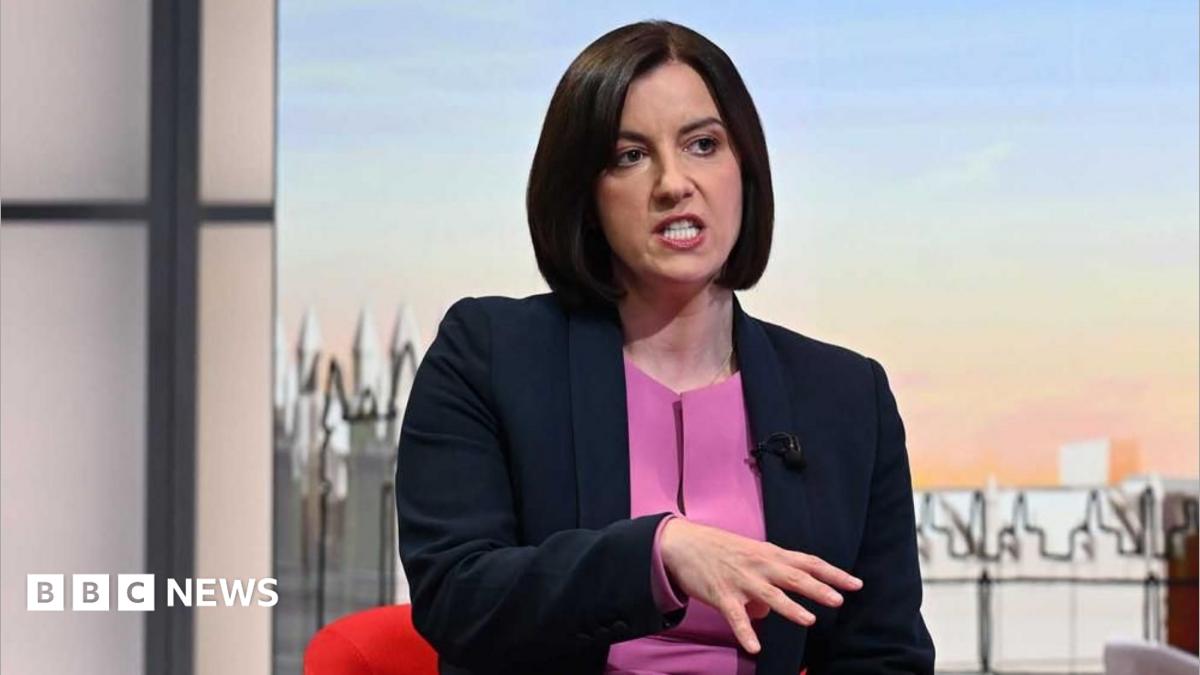
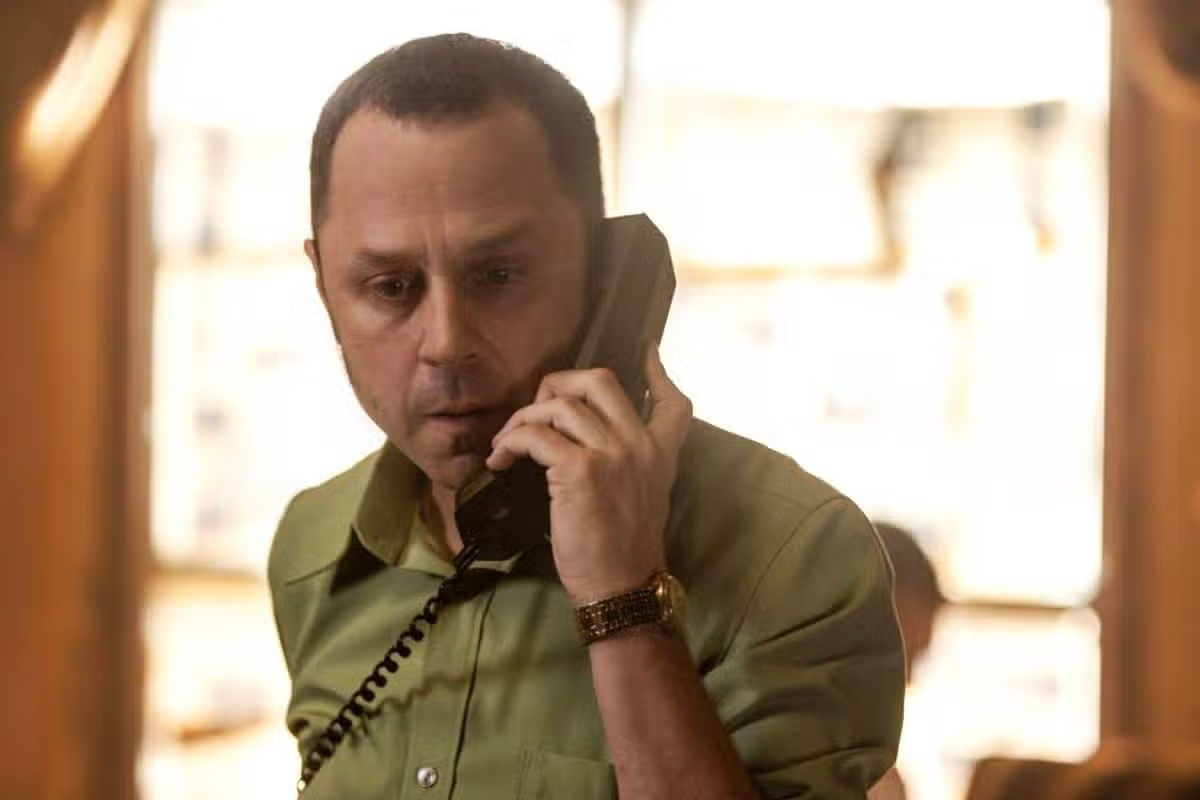

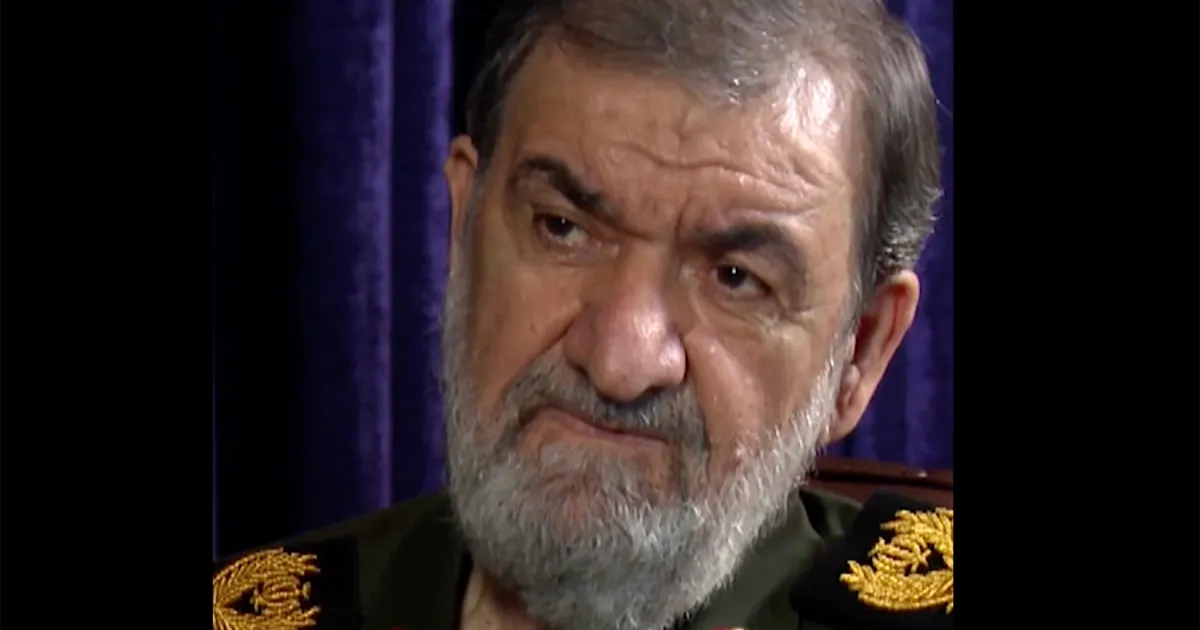



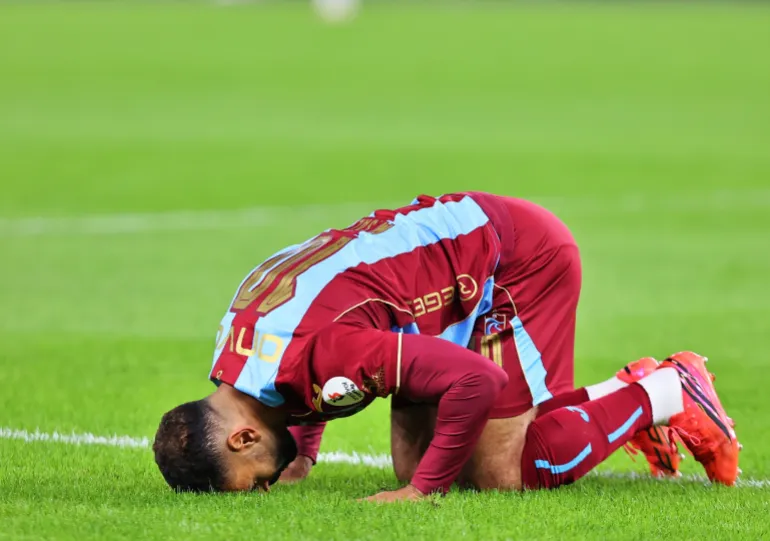







![AfD's main candidate for the Mecklenburg-Western Pomerania state election Leif-Erik Holm attends an election campaign event in Schwerin, Mecklenburg-Western Pomerania, northeastern Germany, on September 19, 2026 [Danny Gohlke/AFP]](https://i0.wp.com/www.aljazeera.com/wp-content/uploads/2026/09/AFP__20260919__C8RV2RX__v1__HighRes__GermanyPoliticsStateVote-1789878295.jpg?w=640&ssl=1)