Scott Bessent and He Lifeng meet in New York for US-China talks ahead of the Trump-Xi meeting later this week.
Published On 20 Sep 202620 Sep 2026
Top economic officials from China and the United States have begun talks in New York City aimed at clearing the way for possible agreements on trade, artificial intelligence and critical minerals ahead of a meeting between US President Donald Trump and Chinese President Xi Jinping later this week.
US Treasury Secretary Scott Bessent and Chinese Vice Premier He Lifeng began talks at JPMorgan Chase’s Manhattan headquarters on Sunday morning, with US Trade Representative Jamieson Greer also taking part.
Recommended Stories
list of 4 itemsend of list
The talks come four days before Trump is due to host Xi at the White House, with both sides looking to ease tensions between the world’s two largest economies.
“I’m looking forward to having focused, fulsome and constructive talks today that will set the stage for our leaders’ meeting,” Bessent told reporters as he arrived.
At the top of the agenda is a fragile US-China trade truce due to expire on November 10.
The agreement, reached in Busan, South Korea, last November, capped US tariffs on Chinese goods at about 20 percent after a tit-for-tat trade fight briefly pushed tariffs into the triple digits.
Washington is also pressuring Beijing over its supply of rare-earth magnets and other critical minerals, crucial to industries ranging from cars to advanced semiconductors.
China promised to restore the flow of critical minerals under last year’s truce, but a senior US official said on Friday that Beijing’s performance had “not been up to par”.
AI enters the talks
Artificial intelligence (AI) is also expected to feature prominently, adding a relatively new issue to negotiations long dominated by trade.
Bessent has said the countries could discuss AI “guardrails” aimed at addressing shared risks, including preventing powerful models from falling into the hands of malign non-state actors.
The talks are expected to cover both open- and closed-weight AI models. Chinese open-weight models have increasingly attracted US companies, in part because they can be cheaper than closed systems developed by US firms such as OpenAI and Anthropic.
“The United States remains the leader in AI,” Bessent said. “And we are open to discussions on avoiding shared risks and avoiding bifurcation of our two systems.”
Another potential point of friction is Iran. China remains one of Tehran’s most important economic partners and buys much of its oil, making Beijing an important target of Washington’s efforts to increase economic pressure on Iran as the US-Israel war on Iran enters its seventh month.
Expectations remain low
Despite the packed agenda, analysts are not expecting a sweeping breakthrough.
“I think there will be some show of deliverables because of the fact that it’s a presidential summit coming, but I don’t feel like we’re on the verge of some sort of breakthrough,” Anna Ashton, a China trade analyst and founder of Ashton Intelligence, told Reuters.
“I think status quo is probably both sides’ general best expectation.”
Former US Deputy Secretary of State Kurt Campbell similarly said the immediate goal may simply be keeping tensions contained.
“One of the only things we can hope for in the short term is a truce, and that this will likely continue through the remainder of this year,” Campbell said.
Sunday’s negotiations are part of a series of meetings between Bessent, He and Greer over the past 16 months aimed at hammering out areas of agreement before Trump and Xi meet face to face.
SHE has faced a tough few years, but standing centre stage in a pop-up stadium built and named in her honour, Shakira has well and truly nailed her big comeback.
Nearly quarter of a century after her debut UK hit Whenever Wherever, she is about to embark on a sold-out residency in Madrid.
Shakira on stage in Madrid on FridayCredit: Nicolas GerardinShakira will perform for more than 600,000 fans after pulling off one of the most impressive career revivals ever over 21 nightsCredit: Nicolas Gerardin
Over 21 nights, she will perform for more than 600,000 fans after pulling off one of the most impressive career revivals ever.
The concerts are the finale to her 127-date Las Mujeres Ya No Lloran World Tour — the highest-grossing Latin tour of all time, and the fifth most lucrative female tour in history.
Sign up for the Showbiz newsletter
Thank you!
And Shakira herself is enjoying it just as much as her rapidly- expanding fan base.
In an exclusive chat, the Colombian superstar — who, despite her age-defying looks, turns 50 in February — said: “I feel more secure and more confident than ever; so much more than when I was in my 20s, which is something I never would have believed or expected.”
She added of her pop renaissance: “I’ve never been more in love with my career, so I’m grateful to still be able to do what I do and just know that people are connecting to that.”
This year has been a game-changer for Shakira. Her World Cup anthem with Burna Boy, Dai Dai, topped charts globally and became one of the biggest hits of 2026 so far.
The video has had more than 1billion views since May, contributing to her becoming the most-watched female artist on YouTube.
The same month, she performed to over 2million people in a single night on Copacabana Beach in Rio De Janeiro — one of the highest- attended concerts ever.
But in Dai Dai, she sings: “You’ve been this brave all along, what broke you once made you strong.”
It is a reflection of her last few years, when life was challenging.
Shakira’s 2017 album, El Dorado, was not received as well as expected, and five years later came her highly-publicised split from Spanish footballer Gerard Pique.
The couple, who never wed but have sons Milan, 13, and Sasha, 11, announced their separation after 11 years together in a public statement.
He was alleged to have moved on with another woman while they were together, although he has not spoken about the circumstances.
Things were made worse when Shakira was dragged into court by Spanish authorities over a tax dispute, in which she claimed she had not spent enough time in the country to pay the taxes they said she owed.
In 2023, she settled on one case of tax evasion, forking out €14.5million in unpaid taxes plus interest, a €7.3million fine and a €432,000 payment to waive a suspended three-year prison sentence.
At the time, things were looking bleak. But she started to turn it around, funnelling her anger into her music, which attracted a whole new generation of fans.
Shakira doing it in style with her countless costumesCredit: Nicolas GerardinShakira performed 12-show Las Mujeres Ya No Lloran European residency at Estadio Shakira (Iberdrola Music) in MadridCredit: Nicolas Gerardin
Then in May, a Spanish court ordered the country’s tax authority to refund €55million of taxes, ruling that the cash was improperly collected during the dispute.
Her epic, two-and-a-half hour concert tells the story of a wronged woman who comes out the other side.
At one point in the show, during song TQG,she is seen trying to reprogramme men’s behaviour.
Later, she is depicted as a lone wolf protecting her cubs, and then duets with her sons, who appear on screens for the track Acrostico.
The message is clear as she tells the crowd: “Love is beautiful. But self-love is more beautiful.”
The gig features a set of some 25 songs, more than a dozen extravagant costumes, fireworks, flamethrowers, twerking and Shakira on the drums and guitar.
It is a triumphant moment of celebration and, during her carnival-inspired, multi-coloured performance of Waka Waka (This Time For Africa), she beams from ear to ear.
Shakira hopes her concerts leave fans, especially women, optimistic about the world, as that’s certainly how she feels after the ordeal she has gone through in recent years.
She told me: “I hope women walk away feeling empowered and excited about what’s ahead of them, knowing that they are the ones who decide how to tell their story and what they want to take away from everything life throws at them.
“It’s been such a revelation to realise that the worst I ever imagined could happen . . . and that I can still find this level of happiness again.”
In Madrid, as well as the temporary stadium built in her honour, there is an entire 30-hectare village of attractions based on the Hips Don’t Lie singer.
And she’s bound to rake it in as there are high-profile sponsorships, including a museum about Shakira in partnership with Amazon.
Shakira at July’s World Cup Halftime Show with Burna BoyCredit: GettyThe star at court in Barcelona accused of tax fraud in 2023Credit: AFP
A whole Disney area inspired by the star’s voice role in Zootropolis 2 is another key attraction, along with a library, in partnership with Penguin, promoting authors from South America.
During the residency, hotel bookings in Madrid are up 15 per cent from 2025, while Ryanair added 225,000 seats on flights to the hotspot ahead of the shows, which are generating hundreds of millions for the city’s economy.
Shakira, who has sold 100million records during her career, has now relocated from Spain to Miami with her sons to start afresh — and she is flying high.
She proved as much on the global stage when an estimated 1.5billion footie fans watched her perform at the inaugural World Cup halftime show in July.
Shakira on stafe playing guitar and rocking outCredit: Nicolas GerardinShakira packing a punch on tour with a wolf propCredit: Nicolas Gerardin
And although she sang alongside acts including Madonna, BTS and Justin Bieber, it was Shakira who stole the spotlight.
Her success is a testament to her grit and temerity, with music insiders revealing she is hands-on with every detail of her career.
A source said: “Shakira has worked harder than anybody for this comeback — it’s taken blood, sweat and tears.
“There have been sleepless nights, relentless workouts and a back-breaking schedule, but she loves it and wants to prove to other women what is possible. She pulled an all-nighter with her band last Wednesday just to rehearse for the show in Madrid, not finishing until 8.30am.
Shakira had a highly-publicised split from Spanish footballer Gerard PiqueCredit: GettyThe Madrid arena ready for the star’s residencyCredit: Chris Cornejo
“This is very serious to her. She wants to stay at the top for years to come.”
Shakira also teamed up with another in-demand pop star, Zara Larsson, earlier this summer for a remix of her song Eurosummer.
And last week, she released a collaboration called Agua with fellow Colombian star Maluma.
Now, all eyes are on what’s next for Shak, who has barely stopped in her quest to win back her superstardom.
Shakira on drums at a gigCredit: Nicolas GerardinShakira with The Sun’s Howell DaviesCredit: Supplied
As for a 13th studio album and future collaborations, she teased: “I’ve definitely chatted with a few people recently who would be really fun and unexpected, but I won’t ruin the surprises . . . ”
Although her tour is coming to an end, Shakira shows no signs of slowing down.
She has hinted that she wants to return to the UK, where she has not performed since 2018.
On the prospect of headlining Glastonbury, where she sang on the Pyramid Stage in 2010, she has said: “It’s such an iconic place to perform.
I’d love to go back to England and perform at Glastonbury.
“That would be like the cherry on top for this amazing year I’ve been having.”
As for a break? I wouldn’t count on it. She said: “I take days here and there to rest, but as long as I still have energy and inspiration, I love to stay working.”
Embattled German Chancellor Friedrich Merz has vowed to stay on despite exit polls in two local elections suggesting damaging defeats for his centre-right Christian Democratic Union (CDU) party.
In the north-eastern state of Mecklenburg-Vorpommern, the party was projected to only just scrape into parliament, while the far-right AfD was on track to win the most votes. Merz called the result “a disaster” for his party.
In Berlin, the ruling CDU was also expected to be beaten by Die Linke (The Left).
Merz is under mounting pressure, with poor approval ratings and rumours he could even be replaced mid-term in a so-called chancellor swap.
Echoing comments he made after that defeat, Merz told reporters at the party’s Berlin headquarters on Sunday that he would forge ahead with his coalition government’s plans to push through a package of economic, tax and welfare reforms.
“The reforms have to come,” he insisted. “I am taking on this responsibility, because I want to move our country forward”.
“What needs to be done now requires backbone, steadfastness and patience,” Merz said. “I will demonstrate this as CDU party chairman and, above all, as chancellor of our country.”
“I would even go so far as to say that these reforms are the antidote to the authoritarian poison that, with the fascination of authoritarianism, is penetrating ever deeper into our society,” Merz added.
Olivia Attwood has stripped to her bra and showed off her “glossy t**s”Credit: olivia_attwood/ InstagramShe also compared herself to a blow-up dollCredit: olivia_attwood/ Instagram
Olivia took to Instagram with a new video and captioned it: “If you also want to look like a blow up doll.”
In the clip, the TV host looked stunning in a lacy black bra as she answered a fan’s question about her glossy t**s routine.
Sign up for the Showbiz newsletter
Thank you!
Wearing a blue satin jacket over her bra, she said: “Sierra has the job of glossing my boobs.
“And the product is Patrick Ta in she’s on Vacation – that body balm thing.”
Olivia revealed what product she used to achieve the lookCredit: olivia_attwood/ InstagramOlivia left jaws on the floor as she wore Margo Robbie’s iconic The Wolf Of Wall Street lingerieCredit: Instagram/@noel_mcgrathShe looked incredible in her boots and black slip as she posed on the bedCredit: Instagram/@noel_mcgrathPete Wicks and Olivia shared a tender kiss at the NTASCredit: Getty
Fans flocked to comment and one wrote: “Stunning! Loving the hair right now.”
Another said: “Obsessed with this look.”
A third added: “Absolute stunner!”
While a fourth wrote: “Liv you absolute goddess.”
This comes days after Olivia left jaws on the floor as she rocked Margot Robbie’s iconic The Wolf Of Wall Street lingerie.
Olivia looked incredible in a blue navy La Perla slip dress with cream floral lace for a night out – which was the exact one that actress Margot, 36, wore during the 2013 blockbuster.
She accessorised with knee high boots, a silver clutch and oversized Gucci sunglasses.
Artists in Gaza are painting murals on destroyed walls, honouring US rapper Macklemore for his support for Palestine. Despite a ceasefire agreement, Israel continues to kill Palestinians in frequent strikes across Gaza.
Abbotsford, British Columbia – Every second day, 28,000 litres of raw milk leave Casey Pruim’s farm in Abbotsford in western Canada, entering a distribution system built on the assumption that the milk and the products made from it will have somewhere to go.
While most is consumed in Canada, some had been sold across the border to the United States.
Those sales have largely come to a standstill since US President Donald Trump’s 50 percent tariff on $20bn in Canadian goods, including dairy products, came into effect on August 22.
Pruim, who is also chair of the British Columbia Dairy Association representing about 400 dairy farmers across the province, told Al Jazeera that Canadian farmers do not individually decide which products are exported.
Instead, producers such as Pruim – whose farm has 330 cows milked three times a day – sell into the provincial milk-marketing system, which distributes milk to processors according to demand, including for products exported to the US.
If a processor loses US demand, it may require less milk, with the impact then spread across the provincial pool.
Dylan Kruger, director of public affairs at BC Dairy, told Al Jazeera “there is still considerable uncertainty around the impact of the US tariffs”.
He said it was too early to know how the industry would be impacted or whether milk no longer sold to the US could be sold elsewhere, mitigating financial losses.
But the tariffs and wider trade tensions have already introduced uncertainty and instability for businesses.
Casey Pruim, owner of Prime Acres Ltd dairy farm in Abbotsford, British Columbia, heads the BC Milk Producers Association in Canada’s western province [File: Ali Mustafa/Al Jazeera]
“If the processor who’s exporting some of his product to the United States can no longer sell into that market because he’s now priced out of the market with a 50 percent tariff, that’s how it would impact the dairy farm,” Pruim said.
Pruim said if processor demand is squeezed, farmers would be forced to dump the milk. In the worst-case scenario, the herd has to be cut.
“Cows aren’t like a tap; you can’t just turn them on or off,” he said.
His warning captures dairy’s particular vulnerability in a tariff war: Milk is highly perishable, collected on a tight schedule and dependent on processors whose demand can change much faster than farmers can adjust production.
“These tariffs are completely unwarranted,” David Wiens, president of the Dairy Farmers of Canada, told Canada’s CBC News, adding that they would affect “the supply chain, not only in Canada but in the US as well”.
Supply-management system
Dairy trade between Canada and the US has largely operated under a free trade agreement between the US, Mexico and Canada, known as CUSMA in Canada.
Canada manages the supply of dairy, poultry and eggs through a national agricultural policy known as supply management. The system uses production quotas and import controls, including tariffs, to provide farmers with more stable and predictable prices while maintaining domestic supply.
Critics describe the system as protectionist and as a government-backed cartel.
Washington argues that Canada’s supply-management system restricts US dairy exports. Trump posted on Truth Social that “Canada had been ripping off the United States of America for years” and accused it of imposing “ridiculously high tariffs” that made life impossible for US farmers.
Canadian producers reject that argument, saying the existing trade agreement already gives US imports substantial tariff-free access that is not fully utilised.
Canada’s dairy trade deficit with the US has grown significantly since CUSMA came into force on July 1, 2020, according to the Dairy Processors Association of Canada.
In 2020, Canada exported 241.3 million Canadian dollars ($173m) in dairy products to the US and imported 647.4 million Canadian dollars ($462.7m) worth of dairy and dairy products. In 2025, Canadian dairy exports had risen to 308.7 million Canadian dollars ($220.7m) while dairy imports from the US had more than doubled to 1.355 billion Canadian dollars ($968.5m), accounting for 13.8 percent of total value of US dairy exports, according to the association.
Nearly 14,000 litres of milk are stored daily in the refrigeration unit at Casey Pruim’s farm in Abbotsford, British Columbia, at a temperature of 2.8’C [File: Ali Mustafa/Al Jazeera]
Bryan Yu, chief economist at Central 1 credit union, said the immediate shock of losing a major market could be difficult for Canadian producers to absorb because replacement buyers cannot be found quickly.
“There is going to be pain in the near term for a lot of our producers,” Yu told Al Jazeera.
“You really can’t quickly adjust to a 50 percent tariff, because it’s uncharted waters for a lot of industries … and ultimately it shuts [Canadian producers] out, because a lot of them don’t have the margins that they can play with,” he said.
Yu said Canadian consumers might absorb some of the additional supply while exporters search for new markets and higher-value products, but neither adjustment is instantaneous.
“There are global markets as well, especially when you talk about chilled, chilled beef, chilled products and really it’s a question of whether … other types of markets that could be available.”
Canada has also imposed retaliatory tariffs, which came into effect on September 8 and cover $20bn worth of US products.
Dairy products are among the targeted goods. The list includes a 50 percent tariff on milk, cream and whey products and a 25 percent tariff on many cheeses imported from the US.
Casey Pruim has a herd of 330 cows at his dairy farm in Abbotsford, British Columbia [File: Ali Mustafa/Al Jazeera]
Canadian Prime Minister Mark Carney has framed Ottawa’s response as both retaliation and an attempt to build greater economic resilience.
Announcing the collapse of the latest negotiations, he said Canada would match Washington’s new tariffs “dollar for dollar” to protect workers, farmers, families and businesses.
But retaliatory measures carry risks of their own.
“Canada’s new retaliatory tariffs will help some industries but hurt most and weaken economic growth across the country by raising costs for producers and consumers,” Oxford Economics said in a report.
For now, geography remains important for perishable goods like dairy products that once moved quickly across the US border and cannot be redirected overnight to a distant market without new buyers, logistics and regulatory approvals.
Ottawa’s Trade Commissioner Service is advising affected companies to check their CUSMA compliance, explore available relief and contact trade commissioners about potential new markets.
Yu predicted that the US and Canada could reach a tariff deal in the following months but said the interim period could bring “higher prices, weaker economic activity and deeper mistrust”.
For Pruim, the uncertainty is as destabilising as the tariff threat itself.
“I think, like [for] any Canadian, it’s disappointing to have these trade talks collapse again and just the uncertainty around it.”
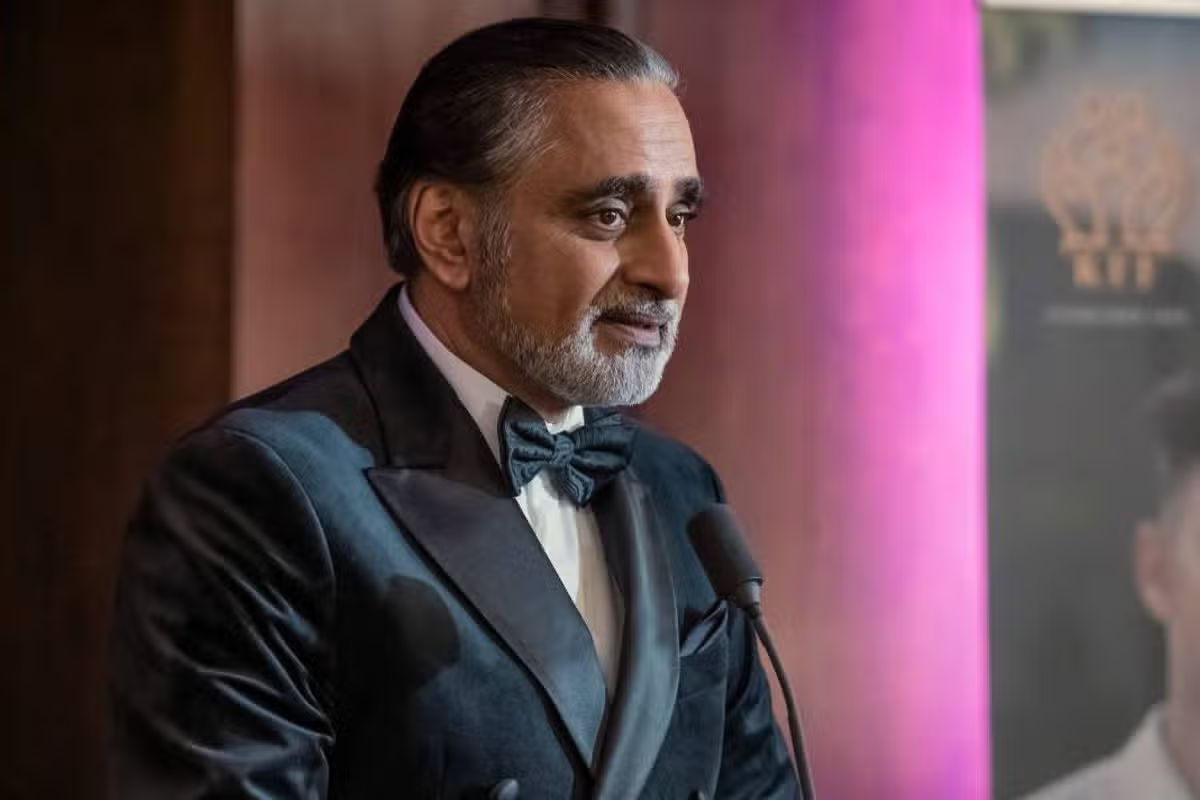
Sanjeev Bhaskar joins Nicola Walker’s The Split spin-off The Split Up but could he reunite with his former Unforgotten co-star?
Hayley Anderson Screen Time TV Reporter
18:15, 20 Sep 2026
Sanjeev Bhaskar plays Dhruv Kishan in BBC The Split Up. (Image: BBC)
Sanjeev Bhaskar is heading up BBC’s next big legal drama tonight with fans keen to know all there is about his personal life.
The Split Up debuts tonight, Sunday, September 20, at 9pm, on BBC One, delving into the Kishan family’s life as Manchester’s elite law firm.
Founder of Kishan Law is father-of-three Dhruv Kishan who is having doubts about leaving his business in his daughter’s hands following the death of her mother.
With The Split fans gearing up to tune into its BBC spin-off, here’s everything there is to know about leading man Sanjeev Bhaskar.
Inside The Split Up star Sanjeev Bhaskar’s life
Early life
Actor Sanjeev Bhaskar was born in Ealing in 1963 after his parents fled their home during the 1947 partition of India and moved to the UK.
He studied business with marketing at Hatfield Polytechnic and worked in marketing before getting into the entertainment industry in his early 30s.
Sanjeev got his breakthrough with the musical comedy double act Secret Asians with Nitin Sawhney which led to the BBC sketch show Goodness Gracious Me.
Sanjeev Bhaskar’s famous wife
The Split Up star Sanjeev Bhaskar is married to actress and comedian Dame Meera Syal who he met on Goodness Gracious Me which she co-created
They once again starred opposite each other in the sitcom The Kumars at No 42 where she played the grandmother of Sanjeev’s character, despite being younger than him.
The pair got married in 2005 and Sanjeev became the step-father to Meera’s daughter Milli from another relationship before welcoming son Shaan later that year.
In 2023, Meera received the BAFTA Fellowship award for her outstanding contributions to TV and film and was made a Dame last year for her services to drama, literature and charity.
In an interview with The Times, Sanjeev shared that he was “super proud” of his wife’s achievements.
Unforgotten season 7 update
Sanjeev will reprise his role as DI Sunny Khan in the seventh season of ITV ’s Unforgotten, now starring alongside Sinead Keenan as DCI Jess James.
Filming for the latest series began in January 2026 and recent reports have suggested that shooting is now complete, although an official return date hasn’t been confirmed.
Sanjeev is starring in BBC The Split Up, the spin-off of The Split which starred his former Unforgotten co-star Nicola Walker.
Speaking of his hopes that there could one day be an onscreen reunion to Radio Times, Sanjeev said: “Emotionally, it would be like some sort of cosmic miracle. I wouldn’t mind it at all.”
Sanjeev Bhaskar net worth
It has been widely reported that Sanjeev Bhaskar has a net worth of around £2 million.
This brings into consideration his almost 30-year career in the entertainment industry as an actor, writer and comedian.
He continues to be a major star in the ITV hit drama Unforgotten and has a star-studded comedy film on the way called The Entertainment System Is Down.
The feature is expected to star major names including Keanu Reeves, Samantha Morton, Kirsten Dunst, Tobias Menzies and Connor Swindells.
The Split Up debuts tonight, Sunday, September 20, at 9pm, on BBC One and BBC iPlayer.
The country has battled multiple wildfires amid record-breaking temperatures fueled by El Nino and intense drought conditions.
Published On 20 Sep 202620 Sep 2026
A massive wildfire has broken out in central Colombia, threatening the popular tourist town of Villa de Leyva, according to local officials.
The forest fire is near the Andean town in the Boyaca department, with flames engulfing the San Marcos hillside above the colonial architecture and cobblestone streets that attract more than a million visitors annually.
The blaze has already consumed 40 hectares of native forest, sending massive plumes of smoke that are visible from the town’s central square, according to Colombian authorities.
On Saturday night, Colombian President Abelardo de la Espriella posted on X that “Villa de Leyva is not alone”, pledging to mobilise all state resources to fight the fire and protect “this historical jewel” and “beautiful city that is the pride of Colombia”.
To combat the flames, the Boyaca department government said it is dispatching two aircraft. A military helicopter will also join the effort, along with firefighters from the capital, Bogota, Interior Minister Rodrigo Lara said.
The mayor of Bogota, Carlos Fernando Galan, will be sending a team of firefighters to join local crews from Tunja and Boyaca, reinforcing containment efforts and securing the urban centre, Lara said.
In the equatorial Andes, forest fires peak during the dry season, but this year they are fuelled by a severe El Nino weather pattern. Record high temperatures and lack of moisture have turned vast expanses of the Andean vegetation into tinderboxes. That has intensified a crisis that has already started 18 active wildfires across the country, according to the latest official data from Colombia’s National Unit for Disaster Risk Management (UNGRD).
The impacts of El Nino, a natural weather pattern, are felt globally and do not affect the entire South American continent in the same way, inducing extreme droughts in some regions and torrential flooding in others. This year, it comes supercharged by the effects of climate change, which is worrying many scientists, governments and aid workers.
The warming of the adjacent Pacific has triggered catastrophic flash floods and landslides in countries such as Peru and Ecuador.
Unlike in the southern part of the continent, where countries including Argentina, Chile and Uruguay have been expecting unseasonably heavy rainfall, El Nino has the opposite effect in the northern part of the continent. A significant reduction in rainfall leads to severe drought conditions which can suppress cloud formation and displace normal rain patterns, driving average temperatures well above normal.
The soaring heat rapidly evaporates moisture from the ground and water basins, leaving countries such as Colombia with extended periods of drought and critically low precipitation.
“El Nino can bring devastating climate extremes on its own, but it’s unfolding today on a much warmer planet, increasing the likelihood that heat, drought, floods and fires will push communities and ecosystems beyond anything they have experienced before,” said Stephanie Roe, lead climate scientist with the World Wildlife Fund.
The game hinged on Huijsen’s red card early in the second half for pulling down Giuliano Simeone in the box.
Published On 20 Sep 202620 Sep 2026
Atletico Madrid edged 10-man Real Madrid 2-1 in a La Liga derby clash to leave Jose Mourinho’s side trailing leaders Barcelona by six points.
Dean Huijsen was sent off early in the second half for Los Blancos on Sunday before Alejandro Grimaldo and Jonathan David’s goals earned Diego Simeone’s Atletico victory, with Antonio Rudiger pulling one back late on.
Atletico rose to second, five points behind Barca and one ahead of Real Madrid, who chalked up a second defeat of the campaign.
The game hinged on Huijsen’s red card early in the second half, for pulling down Giuliano Simeone in the box which led to a penalty, tucked away by Grimaldo to set Atletico on their way.
Mourinho started with Aurelien Tchouameni in midfield over Bernardo Silva, opting for defensive clout over creativity.
There was more tension than footballing quality in the first half, with neither side capable of creating any clear chances.
The main talking point was an incident between Jude Bellingham and Atletico defender Cristian Romero.
The England international threw himself into a tackle and Romero trod on his leg, with Bellingham booked initially, but after a VAR review the referee removed the card and issued it to the Atletico man.
Madrid were also unhappy with a heavy tackle by Lee Kang-in on Federico Valverde which went unpunished just before half-time.
It was a scrappy battle, intense but lacking excitement comparative to the star power on the pitch, especially in Madrid’s front line, with Vinicius Junior, Kylian Mbappe and Bellingham kept quiet.
The game burst into life early in the second half when Huijsen pulled back Giuliano Simeone’s arm as the forward ran through on goal and Atletico were awarded a penalty.
Huijsen was dismissed after a VAR review and Grimaldo beat Madrid goalkeeper Thibaut Courtois from the penalty spot.
Mourinho reacted immediately by replacing the underwhelming Vinicius and Arda Guler and sending on club record signing Yan Diomande and Rudiger.
It was Atletico who struck next, though, with Canada international David tucking away Giuliano Simeone’s raking low cross on 59 minutes for his third goal in three matches.
The hosts came close to getting a third but Courtois made an excellent save to deny Julian Alvarez and Ibrahima Konate reacted brilliantly to head Grimaldo’s effort from the rebound off the line.
Atletico goalkeeper Jan Oblak saved from Diomande and Bellingham rowed with Giuliano Simeone as Madrid’s frustrations showed, impotent to change the course of the game.
Madrid pulled a goal back in the final stages with Rudiger heading Bernardo Silva’s cross past Oblak. However, it was too little too late for Mourinho’s side.
Chinese technology giant Huawei is facing a landmark criminal trial in the United States amid Washington’s long-running tech rivalry with Beijing.
The trial began in federal court in Brooklyn, New York, on September 9, with US prosecutors portraying Huawei as a criminal enterprise that spent two decades stealing technology from US companies, deceiving banks and circumventing sanctions on Iran.
Recommended Stories
list of 3 itemsend of list
Huawei has pleaded not guilty and says the US government is attempting to turn ordinary business disputes and the actions of individual employees into evidence of a company-wide conspiracy.
The trial is expected to last about three months and overlaps with Chinese President Xi Jinping’s September 23-25 visit to Washington, where trade, artificial intelligence, tariffs and access to critical technologies are likely to be on the agenda.
Here is what you need to know:
What are the allegations against Huawei?
US prosecutors have accused the company of racketeering, money laundering, bank and wire fraud, sanctions violations, obstruction and conspiring to steal trade secrets from five US technology companies.
Prosecutors say the alleged wrongdoing stretched from about 1999 to 2020.
“Theft, lies, cover-up,” Justice Department lawyer Taylor Stout said in his opening remarks.
Prosecutors allege Huawei stole technology, including internet-router source code from Cisco and a robotic arm used by T-Mobile to test phones.
They also accuse Huawei of concealing the nature of its operations in Iran to move US dollars through the financial system despite US sanctions.
The government also alleges that Huawei supplied equipment that could help Iranian authorities monitor protesters during demonstrations in 2009.
How has Huawei responded?
Huawei, a major manufacturer of telecommunications equipment, denies any wrongdoing.
The tech giant’s lawyer Brian Heberlig told jurors the case was about “competition, not conspiracy. Innovation, not theft. Ordinary business dealings, not criminal conduct.”
Heberlig accused prosecutors of “cherry-picking isolated events” to construct a conspiracy that did not exist. Huawei’s defence says some incidents involved individual employees whose actions were dealt with internally, rather than reflecting company policy.
He told jurors that prosecutors will describe routine activities by global tech companies “but will twist those ordinary activities to try to make them look criminal”.
Huawei separately described the broader prosecution as an attempt to undermine its competitiveness, saying the US government’s “overarching narrative is demonstrably false” and that it had “the utmost respect for intellectual property”.
The case originated during Donald Trump’s first presidency. His administration placed Huawei on a US trade blacklist in 2019 and pushed allies to exclude the company from 5G networks, arguing its equipment could present national security and espionage risks.
Huawei has repeatedly denied that its technology is used for spying.
What has China’s response been?
Beijing has strongly criticised the prosecution, which has come weeks ahead of Chinese President Xi Jinping’s visit to the US.
On Thursday, a Chinese Ministry of Foreign Affairs spokesperson said “the Chinese government firmly opposes the US side’s suppression and containment of Chinese enterprises”, when asked about the case and the American prosecutor’s “criminal enterprise” description.
China “firmly supports Chinese enterprises in safeguarding their legitimate rights and interests”, the spokesperson said at a regular news conference.
What is Huawei, and has the tech giant faced investigations before?
Huawei is one of the world’s largest telecommunications equipment manufacturers. It also produces smartphones and has become increasingly important to China’s semiconductor and AI industries.
Its activities have drawn scrutiny well beyond the current US trial.
Belgian prosecutors launched an investigation in 2025 into suspected bribery involving the European Parliament allegedly for Huawei’s benefit.
The European Parliament subsequently suspended access for Huawei lobbyists. Huawei said it had “zero-tolerance” for corruption and would cooperate with authorities.
Huawei chief financial officer Meng Wanzhou made worldwide headlines in 2018 when she was arrested on a US warrant after landing in Vancouver, straining both US-China and China-Canada relations.
The warrant was filed after a sealed indictment accused her and the company of bank fraud for misleading HSBC and other banks about Huawei’s business in Iran.
She returned to China in 2021 under a deferred prosecution agreement, and the charges against her were later dismissed.
Admissions Meng made as part of that agreement can, however, be presented as evidence in Huawei’s current trial after a US judge ruled them admissible in June.
They are legally separate but form part of a much wider economic and technological competition between Washington and Beijing.
Huawei became one of the most prominent targets of US restrictions during Trump’s first term.
Since then, the rivalry has expanded from telecommunications and 5G into semiconductors and AI, with Washington restricting China’s access to advanced US chips and chipmaking technology.
Last week, Dario Amodei, the CEO of Anthropic, warned that a “Chinese lead in AI would pose grave danger for the US and the world” and urged Washington to maintain restrictions on cutting-edge AI tech. He also called for action against alleged “distillation” of US models by Chinese AI laboratories.
China’s Foreign Ministry on September 14 accused the US tech giant of “fearmongering”.
“Fomenting various threats, engaging in confrontation and malicious competition will only disrupt the process of global governance of artificial intelligence and is not in the interests of any party,” said ministry spokesperson Guo Jiakun.
The state-backed Global Times newspaper went further, describing Amodei’s proposal as a “Cold War playbook” whose real purpose was to curb Chinese AI development and preserve US technological dominance.
China and the US were engaged in a tit-for-tat tariff war at the beginning of Trump’s presidency in 2025. The trade war ended in a truce, but the world’s two largest economies have failed to strike a trade deal.
Beijing, meanwhile, has used its dominance of critical minerals as leverage and accelerated efforts to build domestic alternatives to American technology.
Currently, China controls most of the world’s rare earth minerals, including metals that are necessary for the manufacture of many technological items, from smartphones to fighter jets. The world’s second-largest economy has 60 percent of these minerals and processes 90 percent of the world’s supply.
In October, Beijing announced plans to require foreign companies to obtain permission to export Chinese rare earth equipment or material.
This meant companies anywhere in the world would need a licence to export rare earth magnets and certain semiconductor materials that contain even trace amounts of minerals sourced from China or produced using Chinese technology.
China’s Ministry of Commerce said its export controls on rare earths, which Trump had labelled “surprising” and “very hostile”, were introduced in response to a series of US measures.
Hundreds of Tunisians have protested in Tunis, demanding the release of four Global Sumud Flotilla activists held in pre-trial detention since March over alleged financial misconduct linked to the Gaza aid mission. The flotilla sailed towards Gaza in 2025 to deliver humanitarian aid.
ZOE Kravitz fans are convinced they’ve worked out who is behind a burner account trolling her new romance with popstar Harry Styles.
Eagle-eyed fans have spotted a major clue that her ex Channing Tatum may be behind the anonymous page.
Zoe Kravitz fans are convinced Channing Tatum is trolling romance with Harry StylesCredit: GettyA burner account which may be linked to Channing has been leaving hate messages on Harry and Zoe related contentCredit: X
Online users have been sent into a frenzy, after a private Instagram page under the name Nonya Bidness went viral for leaving nasty comments on content related to Zoe and her new beau Harry.
Ex-One Direction singer Harry and Zoe, who played Catwoman in The Batman, have dated since August last year.
Sign up for the Showbiz newsletter
Thank you!
They went public with their relationship in Rome but have since kept matters private and not commented on their status in which they are engaged.
It came after Zoe’s high profile relationship with Channing with the pair calling time on their relationship in October 2024 after three years together and an engagement.
It has now been revealed that the burner account may be linked to ex Channing.
The page has left comments under related posts of Harry and Zoe, which said: “Just here for the hate.”
Another read: “When I see these two I think back at how her former fiancé called her the most intentional person he knows. I wonder how contextual he was being…”
Replying to a fan, a third comment said: “To me intentional = calculated. He was speaking in terms of film-making but leaning towards her as a person in general too.
“Now she is constantly spotted with Harry compared to the ex who we heard about long before they were seen together.
“And when they were seen together it was far less frequent. It could be nothing but it just made me think.”
Ex-One Direction singer Harry and Zoe who played Catwoman in The Batman have dated since August last yearCredit: GettyFans have spotted a clue that a burner account writing hate comments may be connected to Zoe’s ex ChanningCredit: X
Fans now believe that Channing is the user behind the account after reportedly discovering that he is the only one to be following the page.
Channing seemingly no longer follows the account and it remains unclear to whether the screenshots of the page have been edited.
The Sun has gone to Channing’s rep for comment.
Fans have taken to X to share their own thoughts on the account with one user saying: “There’s no way Channing Tatum is leaving hate comments on Deuxmoi with his burner account only he follows.”
“Lmaooooo he’s his only follower on his burner on threads as well. Pack it up.
“We can’t even give him the benefit of the doubt of “it’s a fan he just happened to follow cause they said nice things about him,” insisted another.
A third wrote: “That is insane if there’s any truth to it, men always go crazy when their ex dates Harry.”
Venezuelan rescue dog ‘Tsunami’ has been honoured with a bronze statue in Maracaibo for his search-and-rescue work after deadly earthquakes in June. The Border Collie reportedly helped locate at least 26 survivors in the aftermath of the quakes, which killed more than 6,500 people.
The fourth China-Africa Peace and Security Forum was held in Beijing, China, from September 15 to 17, 2026, coinciding with the 13th Xiangshan Forum and the 70th anniversary of the establishment of diplomatic relations between China and African countries. Military representatives and defense officials from the African Union and 41 African nations participated. This expansion of bilateral military relations between Beijing and African countries comes at a time when Beijing and Washington are vying for influence on the African continent, while African nations seek to diversify their partners and strengthen their security capabilities, particularly in regions facing escalating threats, such as the Horn of Africa. The fourth China-Africa Peace and Security Forum, held in Beijing, represents a pivotal milestone reflecting the growing military and defense cooperation between China and 41 African countries, along with the African Union, as Beijing seeks to solidify its security presence on the African continent. The most prominent theme of the forum and defense cooperation was the speech by Chinese Defense Minister Admiral Dong Jun, who called for deepening strategic coordination and developing mechanisms for defense exchange and maritime security based on equality and mutual benefit, without political dictates or conditions, between China and African countries. This reflects the growing African interest in partnership with China, driven by a desire to diversify military options and avoid the pressures and conditions associated with Western and American partnerships. The China-Africa Peace and Security Forum witnessed the signing of bilateral memoranda of understanding to enhance military capabilities, training, and the exchange of expertise between China and some participating countries, such as Mauritania.
The fourth session of the China-Africa Peace and Security Forum, held in Beijing, China, witnessed a significant deepening of bilateral military cooperation between China and Africa. On the sidelines of the forum, the Islamic Republic of Mauritania and the People’s Republic of China signed two memoranda of understanding to strengthen and develop military cooperation between the two countries. This signing took place during a meeting between Mauritanian Defense Minister Hanan Ould Sidi and his Chinese counterpart, Admiral Dong Jun. The most prominent areas of the memoranda of understanding included strengthening military and security capabilities to address challenges in the Sahel region and Africa, particularly combating terrorism and organized crime. They also focused on military education and training for African military personnel and the exchange of expertise, intelligence, and security experiences between the two sides. This move is part of a broader Chinese strategy to enhance defense partnerships with African countries (with representatives from 41 nations participating), emphasizing joint military training and coordination.
In this context, cooperation between the Chinese People’s Liberation Army and African armies is steadily increasing, encompassing training, counter-terrorism exercises, and peacekeeping operations. The most prominent forms and areas of military cooperation between China and Africa include joint military exercises, where the Chinese army conducts joint drills with African countries, such as the Peace Unit exercises with Tanzania and Mozambique to combat terrorism on land and at sea. This cooperation also encompasses peacekeeping and assistance efforts, with China participating in numerous UN peacekeeping missions in Africa and deploying warships to combat piracy off the coast of Somalia. Simultaneously, there is an increase in military education and training programs, with Chinese military academies hosting African leaders, defense ministers, and officers to enhance professional exchanges and build long-term strategic relationships. To this end, China regularly organizes the China-Africa Peace and Security Forum to strengthen defense coordination and consultation with various countries on the continent. The objectives of the Chinese military presence in Africa include modernizing African military expertise, providing the People’s Liberation Army with field operational experience in diverse and complex security environments, and protecting Chinese interests and securing massive Chinese investments and economic projects related to the Belt and Road Initiative. With increasing practical cooperation between China and Africa, Beijing is bolstering its diplomatic and strategic influence on the African continent in the face of international competition with Washington.
China’s military presence in Africa can be summarized as achieving three major strategic objectives, such as modernizing African military expertise, providing the Chinese People’s Liberation Army with field experience, and protecting the substantial investment interests of China’s Belt and Road Initiative. These three objectives and their shared benefits can be detailed as follows:
Stay ahead of the geopolitical week.
MD Briefing delivers expert analysis across five global fronts — the Indo-Pacific, energy, geoeconomics, European security, and the Middle East — every Monday morning. Free.
1) Modernizing African Military Expertise:
China seeks to present itself as a reliable and alternative security partner for African countries through various modernization mechanisms, including:
– Technology Transfer and Training: By providing advanced training programs for African officers at Chinese military academies and transferring modern tactical and operational knowledge.
– Defense Infrastructure Development: By contributing to the construction of bases, logistics centers, and training facilities for African armies.
– Arms and Equipment Sales: By supplying African countries with modern weapons systems at competitive prices, such as drones, armored vehicles, and communication systems, thereby enhancing the combat effectiveness of these armies.
– Counterterrorism and Counter-Piracy: By building joint capabilities between the Chinese People’s Liberation Army (PLA) and local African armies to counter unconventional security threats in conflict zones and maritime piracy areas, such as the Gulf of Aden.
2) Gaining Field Operational Experience for the PLA
The diverse and complex African security environment represents an important real-world testing ground for the Chinese military, which lacks modern field combat experience outside its borders. This benefit is achieved through:
– Testing Chinese weapons, military equipment, and armaments: By experiencing the effectiveness and quality of Chinese weapons and military equipment in harsh climatic and geographical environments (desert, tropical).
– Remote Operations Management: Developing the ability to command and control forces across vast geographical distances and testing the effectiveness of cross-border supply and logistics.
– Participation in peacekeeping forces: China’s extensive involvement in UN peacekeeping missions in Africa, such as in Mali, South Sudan, and the Central African Republic, provides Chinese officers with experience interacting with international militaries and managing complex security crises.
– Naval and operational presence: Utilizing the Chinese military base in Djibouti as a launchpad for evacuation operations, counter-piracy efforts, and protecting shipping lanes enhances the flexibility of the Chinese navy.
3) Protecting interests and securing investments under China’s Belt and Road Initiative
Africa is a key pillar of China’s Belt and Road Initiative, and the military role in protecting these massive Chinese investments is complemented by:
– Securing critical infrastructure: Protecting ports, railways, mines, and energy fields financed and operated by Chinese companies against any political instability or terrorist attacks.
– Securing Maritime Routes: Ensuring the safety of vital maritime trade routes for transporting raw materials from Africa to China and Chinese goods to global markets via the Red Sea and the Bab el-Mandeb Strait.
– Protecting Chinese Communities: Providing security and rapid intervention capabilities to evacuate thousands of Chinese workers and citizens from African conflict zones when necessary.
From the preceding presentation and analysis, we understand the importance of the China-Africa Peace and Security Forum in strengthening defense exchange mechanisms, defining and deepening regional cooperation in maritime security, combating terrorism and extremism, and building defense capabilities in emerging areas to address escalating security risks on the African continent, such as the Sahel region. The Forum provides an opportunity to enhance consultation and exchange views between China and African countries on various peace and security issues and to develop prospects for cooperation between China and African countries in related fields. China-Africa cooperation encompasses military training, naval exercises and patrols, counter-terrorism, mine clearance, and securing shipping lanes, as well as the transfer of expertise and technology and the marketing of Chinese weapons.
ITV’s new drama The Blame starring Michelle Keegan and Douglas Booth tackles misogyny that can be found in the UK police force
Michelle Keegan stars as Di Emma Craine in ITV’s The Blame(Image: ITV)
Deeply offensive messages sent by serving police officers in a group chat are the basis of a storyline featured in ITV‘s gripping new drama starring Michelle Keegan.
Six-part series The Blame, based on the 2023 book of the same name by Charlotte Langley, starts off when the body of a young woman is found in a small town where DI Crane (Michelle Keegan) and DI Radley (Douglas Booth) work.
The duo team up to uncover what happened to a teenage figure skater, Sophie Madsen, and discover “a tangled web of lies, institutional cover-ups and a moral compromise”.
The show tackles misogyny that can be found in the UK police force, and the official synopsis confirms that Keegan’s DI Crane “must navigate both a murder investigation and the treacherous politics inside her own team”.
It also depicts actual text messages from the real-life Metropolitan Police group chat scandals, in which multiple investigations exposed deep-rooted and systemic racism, homophobia, and sexism, dismissed as “banter”, poisoning the country’s top police force.
Speaking about The Blame at ITV Showcase 2026 earlier this year, actor Douglas Booth explained: “There was a Panorama about the Charing Cross WhatsApp messages and texts that are completely sickening, and that was a bit of a basis and model for this group chat to let this toxic behavior spread and rot the department.”
He added: “Every single character in this show is trying to be a good person and nearly all of them are touched by some sort of institutional failure and hold some form of moral injury.”
An official investigation was launched by the Independent Office for Police Conduct, which exposed the highly damaging revelations involving officers based at London’s Charing Cross Police Station who shared deeply offensive, racist, misogynistic, and homophobic messages on WhatsApp and Facebook.
First exposed globally in a landmark February 2022 report by the Independent Office for Police Conduct (IOPC), the scandal triggered widespread public outrage and directly contributed to the resignation of Metropolitan Police Commissioner Dame Cressida Dick.
The IOPC’s Operation Hotton uncovered a toxic culture within the station’s impact team between 2016 and 2018, which officers routinely dismissed as “banter”.
The watchdog noted a pervasive culture of bullying where good officers were too intimidated to challenge or report their peers. The initial 2022 report led to multiple fast-track misconduct hearings, resulting in several officers being sacked, forced to resign, or barred from policing.
Secret filming aired during BBC’s Panorama Undercover in the Police revealed evidence of racism, misogyny and officers revelling in the use of force at Charing Cross.
Assistant Commissioner Matt Twist said at the time: “Enquiries were immediately launched by our Directorate of Professional Standards into allegations of criminality and misconduct by officers and staff based at Charing Cross Police Station.The behaviour as reported is disgraceful and rapid steps to secure evidence and protect the public have also been taken.
“In addition, we are scrutinising more widely the leadership and culture within these teams, led by Professional Standards and senior leaders, to root out any further failings. The leadership of these teams failed to create the right culture that identified warning signs or generated confidence in junior colleagues to report. This is one of the reasons we are taking such assertive exceptional action.
“The Met’s leadership has been very clear that it will not tolerate behaviour that fails to meet the organisation’s standards of professionalism and integrity.”
The Blame airs Sunday, September 20 on ITV1 at 9pm
The top U.S. Air Force officer in Europe, who also serves as the NATO Allied Air Command leader, said he has been tasked with enacting new alliance plans to defend against cruise missiles and drones. He was responding to questions about a drone that NATO had to shoot down after it entered Lithuanian airspace overnight. European Commission President Ursula von der Leyen said Tuesday morning that the incident was “part of a broader pattern of Russian aggression and provocation against Europe, testing our readiness and our resolve.”
We now know that Russia is responsible for the attempted explosive attack at Leipzig airport. Russia’s repeated hybrid attacks on Germany and Europe are unacceptable. (1/4) pic.twitter.com/o3vBjgpeb1
“I don’t know what’s in the mind of Putin or his fielded forces about those one-way attack drones or even cruise missiles, like we’ve seen enter Polish airspace just a few months ago. In July, we had an AS-23 cruise missile enter Poland,” Lt. Gen. Jason T. Hinds, Commander, U.S. Air Forces in Europe/U.S. Air Forces Africa (USAFE), and Commander of the Allied Air Command, said in response to a question about the drone shootdown over Lithuania. He was speaking during a media roundtable at the Air & Space Forces Air, Space and Cyber Conference that TWZ is attending.
This video grab taken from footage from TVN Poland on July 30, 2026, shows the Polish army securing a large crater from a Russian missile that crashed in Poland. (Photo by various sources / AFP) –
Hinds added that while he doesn’t “know the why behind” the drone incursion into Lithuania, he has been tasked by U.S. Air Force Gen. Alexus G. Grynkewich, who serves as NATO Supreme Allied Commander Europe (SACEUR), “to fully implement EVA [Enhanced Vigilance Activity] Eastern Sentry and now its Standing Defense Plan 12000, which gives the nations the capabilities that they need to defend their airspace against either one-way attack drones like the one that you described last night, or a cruise missile.”
EVA Eastern Sentry is a mission NATO stood up in September 2025 after “an unprecedented number of Russian drones and planes violated the airspace of several NATO Allies,” according to the alliance. “Allies are contributing additional capabilities and assets to NATO’s deterrence and defense – for instance, more fighter jets, helicopters, transport aircraft, air defense systems, surveillance aircraft and frigates – and improving the coordination of these assets through NATO.”
Is the Kremlin testing Europe’s defenses with drone incursions? | DW News
Standing Defense Plan 12000 is a new plan for integrated air and missile defense across the alliance. Grynkewich introduced the concept during testimony to Congress in March.
Hinds acknowledged that Russia could be testing the alliance.
“It’s not about the small UASs; that’s typically a national responsibility, and it could be probing,” the Air Force general noted. “Regardless of the intent behind it, what we want to be prepared for is the second that a one-way attack drone or a cruise missile is first and foremost detected – hopefully well before it enters NATO territory – we want to know it. We want to know where it’s coming from. We want to have the capability to sense it. We want to be able to have the C2 [command and control] systems to be able to decide what to do about it, and then have the right kit to be able to act.”
Despite an integrated air and missile defense system that includes Patriot surface-to-air missile batteries, NATO currently is primarily “using air power” against drones and cruise missiles “and that’s not putting us on the right side of the cost curve,” Hinds stated. “But we want to get there.”
Using NATO jets to take down drones “is very effective, just like what you saw last night, and many other times,” but not necessarily efficient, Hinds explained.
Video shows debris after NATO jets shoot down a drone over Lithuania
“I think there’s been at least five other cases of allied nations providing air power to shoot down one-way attack drones,” he proffered. “I want to get to the point where we’re doing it efficiently, using lower-cost interceptors, hopefully ground-based, and in some cases air-based that are cheaper to use, so we’ll see what the intent may be. Intelligence organizations are going to provide us with that intelligence later on, but I just don’t know yet.”
You can see one of those NATO jet engagements with drones in the following video.
The Defence Procurement Agency has successfully completed integration testing of 68 mm laser-guided rockets on the Rafale fighter jet. The time between the contract being awarded for this new capability and initial operational capability being achieved was less than 8 months. pic.twitter.com/rR2Nij9EzY
— French Aid to Europe 🇨🇵 🇪🇺 (@aidefranceukr) July 13, 2026
As the threats have evolved, NATO has “transitioned away from air policing, and we’ve transitioned to air defense for some specific reasons,” the general pointed out. “One is readiness. Air policing is a readiness decrementing mission that the alliance has done for years. There’s also an assurance mission that we did for 32 nations. That’s transitioned to air defense now. Air defense means we have the right kit, multi-domain, to be able to be put in the right place based on indications, warnings, or real threats, like you saw last night, inside of the Baltic nations, to be able to respond decisively and quickly.”
“There’s also a deterrence value there,” Hinds added. “So if Russia does fly a one-way attack drone or a cruise missile, they know that we’re going to be in the right spot to be able to detect it and then defend against it.”
“These are limited incursions, right? Small numbers. Here’s what I see: hybrid activities may, in fact, only be one of the few levers that Putin has available to him, because he sees that he does not have an advantage in geography, domain, or readiness,” Hinds suggested.
“Think about that,” he urged. “So what are we seeing? We’re not seeing a massing of forces across the opposite side of Finland, a new NATO nation. We’re not seeing a massing of forces whatsoever in any domain opposite of Poland, Latvia, Lithuania, or Estonia. You’re seeing a significant number of one-way attack drones in the Black Sea targeting Ukraine. Some of them are entering Romania. What you’re not seeing is a direct confrontation in geography. We’re not seeing direct competition in domains. And I think Putin knows that we are ready. I know he knows that we’re a defensive alliance. I know he knows that we have an advantage in every domain against them, and I think that’s likely why you’re seeing things like what you’re seeing with hybrid activity.”
Russian President Vladimir Putin. (Photo by Contributor/Getty Images) Contributor#8523328
Though below the level of armed conflict, these Russian activities raise the potential for something worse, Hinds posited.
“The risk about hybrid activity, from my perspective, is it could lead to escalation, and that’s where I hope that we get back towards deterrence again, and that the nations they’re going to decide to do what they want to do when it comes to these hybrid activities,” the general said. “Some of them are law enforcement. Some of them are military responses, and that’s up to the nations to decide how they’re going to deal with that. Not me.”
“But what I owe General Grynkewich is to ensure that we are demonstrating our deterrence each and every day, and we’re doing that effectively across all domains,” Hinds added. “And to ensure that Putin knows that if he tries something against the alliance, that we will be there, and we’re ready to win decisively if challenged.”
To attract patrons, the Los Angeles County Library turned to some of the most familiar faces on earth: Hello Kitty and her friends.
The bet seemed to be paying off Friday, as thousands of adults flocked to local branches to snag library cards featuring the adorable anthropomorphic gang on launch day.
The county’s library director, Skye Patrick, told The Times Thursday evening that they were bracing for “complete mayhem.”
A library spokesperson said they were still tallying the number of card sign-ups, but at least 4,400 had been issued as of Friday afternoon.
One of them went to Mar Vista resident Sisa Salazar.
“I thought it was super cute,” the 22-year-old said as she waited in line at the Marina del Rey branch Friday afternoon.
The florist used to frequent the library in high school, checking out books and watching shows. But she lost her card in recent years.
So when she came across the special Hello Kitty-themed card on Instagram, she took the opportunity to get a replacement.
Shortly after 2 p.m. Friday, the line for Hello Kitty library cards at the Marina del Rey branch stretched out the door.
(Iris Kwok / Los Angeles Times)
The Marina del Rey library remained busy throughout the afternoon, with a steady line of more than 50 people stretching out the door. Across town, dozens of people lined up outside the South Whittier Library before its 10 a.m. opening, hoping to be among the first to snag the card.
The West Hollywood, Carson, West Covina, La Mirada, Marina del Rey and Alondra branches ran out of cards on the first day, library spokesperson Jessica Lee wrote in an email. She noted the cards can still be found at other locations and roving bookmobiles.
In addition to Hello Kitty, the card depicts several other recognizable characters produced by the Japanese company Sanrio: My Melody, Kuromi, Pompompurin, Keroppi, Cinnamoroll, Chococat and Pochacco.
Many people in line in Marina del Rey chatted about their favorite Sanrio characters and exchanged childhood memories.
Playa del Rey resident Rebecca Leach, 43, already has an L.A. County Library card, which she often uses to read e-books on the Libby app.
Playa del Rey resident Rebecca Leach said she wanted to get the Hello Kitty library card because she grew up with the character and finds it nostalgic.
(Iris Kwok / Los Angeles Times)
But for the registered nurse, who dons a Hello Kitty badge reel at work, nostalgia was part of the card’s appeal. She has fond childhood memories of playing with a color-changing Hello Kitty plush toy. Leach visited several branches Friday before finding a manageable line in Marina del Rey.
“I think it’s great that they’re promoting the library more and doing outreach,” said Jolyne Jimenez, 51, a library assistant at the Santa Monica Public Library and fan of My Melody.
She spent her day off at the Marina del Rey library waiting for the card. (The Santa Monica Public Library is independent of the L.A. County Library system.)
Limited-edition library cards aren’t new in L.A. County. Previous popular designs have included cards commemorating the centennial of the 19th Amendment and the FIFA World Cup, Patrick said.
“What is uncommon is this amount of buzz,” Patrick said, adding that she hoped the heavy interest in the card would translate to increased awareness of the library’s offerings — not just books and e-books, but streaming content, household tools, musical instruments and podcast equipment.
The Hello Kitty card is available through Oct. 18, Patrick said. The library has permission to use Sanrio’s characters for one month for free and plans to restock the cards before the collaboration period ends.
Players celebrate podium finish that brings exemption from conscription, saying the pressure was ‘out of this world’.
Published On 20 Sep 202620 Sep 2026
Iran withstood a late fightback to beat China 79-70 and win the Asian Games men’s basketball bronze, an achievement that left their players “speechless” after months of war back home.
China led 31-29 at half-time in Nagoya, but Iran took charge in the third quarter to lead 55-46 going into the fourth and held on to prompt wild celebrations and secure a place on the podium on Sunday.
Recommended Stories
list of 4 itemsend of list
“To be honest with you, I’m just speechless,” said 6ft 8in (203cm) power forward Arsalan Kazemi, who, in 2013, was the first Iranian to be drafted into the NBA by the Washington Wizards but never made a regular-season appearance.
“The pressure that we had on us is just out of this world,” he added.
“Not a lot of athletes can say that, with the way that it has been for almost six months, what we have been through, what our families have been through.”
“I just congratulate the people of Iran because they deserve much better.”
“And I think my teammates and I put our hearts out on the court today just to get this win and make them happy,” Kazemi said.
Iran’s Matin Aghajanpour and Mahdi Jafari celebrate [Edgar Su/Reuters]
Teammate Arman Zangeneh said the squad had been through a lot, but it was worth it.
“If you get the medal at the Asian Games, you don’t need to go to the army any more, so it’s huge for some players,” said the 6ft 6in (198cm) forward.
“We had a very tough two months. We went to the Philippines to play the qualifiers, then immediately we came here.”
“It was really difficult. And living in a container, with the food and everything, it was hard, very hard.”
“In the end, we got to the point where we go home with a medal, and it means a lot,” Zangeneh added.
Members of Iran’s coaching staff celebrate on court after the win [Anushree Fadnavis/Reuters]
Male athletes from the country’s national teams who win medals at the Asian Games are granted exemption from mandatory military conscription in a move announced by Iran’s former Supreme Leader Ayatollah Ali Khamenei in 2018.
Previously, only medallists at the Olympic or world games were exempt from the draft, according to Iran’s semi-official Tasnim news agency.
Iranian males reaching the age of 18 are required to serve two years on active duty and are then transferred to the reserve force.
Israel’s Rafael and Lockheed Martin are working to accelerate integration of the 1,000-pound-class SPICE standoff weapon with the Israeli Air Force’s F-35I Adir. The development could potentially open the door for the precision-guided munition to be offered to other Joint Strike Fighter operators.
Rafael Advanced Defense Systems announced the effort September 15 during the Air & Space Forces Air, Space and Cyber Symposium that TWZ is attending. The work is being conducted as a joint project with Lockheed Martin at the U.S. contractor’s facilities in the United States and is expected to take several months.
AFA 2026: For the first time, Rafael’s SPICE 1000 is being integrated on the F-35
Rafael Advanced Defense Systems Ltd. is integrating its SPICE 1000 air-to-surface munition on the F-35 Adir fighter aircraft.
Rafael says the effort could eventually make the weapon available to other F-35 operators. “At a later stage, F-35 operators worldwide will be able to field SPICE 1000,” the company said.
The effort was previously referenced in U.S. government documentation before Rafael’s announcement. Published in August, the Pentagon F-35 Modernized Selected Acquisition Report identified the weapon as the “Israel-unique Smart, Precise Impact, Cost-Effective 1000B,” or SPICE 1000B, and said its integration was progressing “with a strategy to accelerate the implementation via a SPICE Lite process.”
The report does not explain what the “SPICE Lite” process entails.
SPICE — which stands for Smart, Precise Impact, and Cost-Effective — is a family of electro-optically guided standoff weapons developed by Rafael. The family includes SPICE 2000, SPICE 1000, and SPICE 250, with the numbers corresponding broadly to the weight class of the underlying warheads.
Based around a 1,000-pound-class bomb, SPICE 1000 uses pop-out wings to achieve a manufacturer-stated range of approximately 125 kilometers, or 78 miles. Rafael gives the weapon a claimed circular error probable of around three meters.
The glide bomb combines inertial and satellite-aided navigation with an electro-optical seeker. During the terminal phase, its seeker can compare the observed target area with stored imagery using scene-matching algorithms, allowing the weapon to continue its attack without relying exclusively on GPS. That feature allows it to engage targets autonomously, offering the launch aircraft a true ‘fire and forget’ capability, and provides resilience in GPS-denied or GPS-degraded environments.
SPICE can also be programmed to approach a target from a particular azimuth and impact angle. This provides flexibility in selecting the terminal attack geometry and can support steep attack profiles against targets where penetration from above is desirable.
SPICE 1000 is not a new Israeli capability. It has been operational with the Israel Air Force since 2017 and is already integrated with Israeli F-16I Sufa, F-16C/D Barak, F-15I Ra’am, and F-15 Baz fighters.
An F-15 Baz configured for precision strike, with a pair of 2,000-pound Rafael SPICE standoff weapons on the underwing pylons. Amit Agronov
“SPICE 1000 has been sold to several countries and is in operational service with a number of air forces worldwide,” Rafael said. “It has served as a primary munition of the Israeli Air Force for several years, including extensive use in recent long-range operations flown from F-15 and F-16 aircraft.”
The Israeli Air Force has released footage showing SPICE weapons being used during recent operations, including imagery from the weapon’s own perspective during its terminal attack.
Israeli Air Force F-15 Bazs preparing for a strike on Iran, each carrying a pair of Spice 1000 glide bombs.
Notably, one of the F-15s, tail no. 450, took part in Operation Wooden Leg exactly 40 years ago, striking PLO targets in Tunisia. pic.twitter.com/FEy6PiDkdU
Combat validated. The stand-off strike capability air forces are asking about. SPICE 250 at Farnborough. Pinpoint accuracy against high-value targets. Real operational results.
— Rafael Advanced Defense Systems (@RAFAELdefense) July 22, 2026
Israel’s F-35I is already unusual within the international Joint Strike Fighter fleet. The IDF has developed and demonstrated an external Joint Direct Attack Munition (JDAM) carriage capability, and said in March 2025 that the Israeli Adir was the only F-35 to have conducted operational strikes with an external weapons configuration. You can read more about that here.
The unique instrumented F-35I assigned to the Israeli Flight Test Center carrying four external 2,000-pound class GBU-31 JDAMs. A single AIM-120 AMRAAM air-to-air missile can be seen in one of the internal weapons bays, which may also house another internal JDAM. Israeli Air Force
However, according toThe Jerusalem Post, the SPICE weapon is expected to be carried internally by F-35Is equipped with Technology Refresh 3, or TR-3, hardware, which would maintain its low-observable configuration. Neither Rafael nor Lockheed Martin has publicly detailed the specific carriage configuration, aircraft modifications or software associated with the current integration effort.
The long-delayed TR-3 is a major upgrade to the F-35’s computing architecture and provides the processing infrastructure required for subsequent Block 4 capabilities. Israel received its first three F-35Is equipped with TR-3 hardware in January of this year.
Lockheed Martin describes Block 4 as the F-35 program’s “most significant evolution of F-35 capabilities to date,” encompassing more than 70 major upgrades, including increased weapons capacity, advanced electronic warfare capabilities, and improved target recognition.
Some of the unclassified upgrades within Block 4. The exact configuration has not been publicly disclosed. U.S. Department of Defense
It remains unclear if the SPICE 1000 integration itself requires the full Block 4 configuration.
The potential significance of the Israeli integration extends beyond the Israel Air Force. If SPICE 1000 ultimately becomes available to other F-35 operators, the completed Israeli integration could provide those countries with another pathway toward fielding a precision standoff weapon rather than requiring them to begin an integration effort entirely from scratch.
Integrating national weapons onto the F-35 can be a lengthy process. It involves not only the weapon itself, but aircraft software, interfaces, weapons-bay compatibility, flight testing, mission-system integration and certification within the U.S.-led F-35 program.
In 2022, the U.K. Ministry of Defence said that scheduled delivery dates for SPEAR 3 had been delayed because of “prioritisation in the overall F-35 development programme,” which is managed by the U.S.-led F-35 Joint Program Office.
An artist’s impression of an F-35 armed with SPEAR 3 and Meteor missiles. MBDA
The program has continued to progress, including F-35B integration work and flight testing. But in June 2026, the U.K. government said that completion of mission-systems integration and jettison trials remained part of a wider weapons-integration program and that SPEAR 3 integration and subsequent release to service would occur in the early 2030s.
Nevertheless, another F-35 operator would not be able to adopt the Israeli SPICE integration without additional work. National configurations, software baselines, certification requirements, weapons procurement, and export approvals would still have to be addressed.
Already, however, aided by its uniquely configured test jet, Israel has demonstrated an unusual ability to integrate nationally developed capabilities onto its F-35I. This has been aided by privileged access to the Joint Strike Fighter’s closely guarded software codes.
The Israeli Air Force F-35I test jet on the flight line together with an F-15I strike fighter. Amit Agronov/Israeli Air Force
A U.K. parliamentary report noted delays in integrating British weapons onto the F-35B while contrasting that with Israel’s ability to integrate domestic electronic warfare systems, sensors, and communications technology onto its Adir.
Meanwhile, Rafael and Lockheed Martin already have experience working together on the SPICE family.
The companies signed a teaming agreement in 2019 covering the joint development, marketing and manufacture of SPICE guidance kits for the U.S. market. In 2021, they expanded the agreement to include SPICE 250, including development for potential sales to the United States and Poland. With some unque capabilities, SPICE could be of particular interest to the U.S. military, especially as it seeks to leverage multiple sources of precision munitions.
The SPICE family also extends beyond the 1,000-pound-class weapon now being integrated with the F-35.
At the other end of the family is SPICE 250, a much smaller weapon designed around a 250-pound-class payload. It incorporates a man-in-the-loop capability that allows an operator to redirect the weapon during its flight and abort the attack if necessary.
SPICE 250 – Stand-Off Air-to-Surface Weapon System
Its smaller dimensions also allow substantially greater weapon carriage. Rafael has marketed configurations in which a fighter can carry as many as 16 SPICE 250 weapons.
SPICE 1000, by comparison, is a substantially heavier weapon intended to provide longer-range precision attack capability with a larger warhead.
The SPICE effort is taking place alongside several other Israeli initiatives aimed at extending the F-35I’s range and weapons capabilities.
The Pentagon’s F-35 documentation has referenced ongoing work on extended-range fuel tanks and electronic warfare pods for the Israeli Air Force, although it did not provide fielding dates.
In May 2026, Israel’s defense ministry awarded an extended-range capability development contract for the F-35I to Elbit Systems subsidiary Cyclone. The capability is intended to increase the aircraft’s radius of action and reduce its reliance on aerial refueling during long-range missions.
For the F-35I, SPICE 1000 adds a long-range strike option that pairs the aircraft’s low observability with substantial standoff range and a relatively heavy warhead. This offers a survivability advantage in increasingly contested environments, allowing attacks from farther outside capable air defense systems and under heavy electronic warfare conditions. This factor will only become more important as integrated air defense systems become more capable and the F-35 more detectable.
Exactly how the weapon will be integrated remains undisclosed. Rafael and Lockheed Martin have not announced the final carriage configuration, aircraft software requirements, flight-test schedule, or expected date for operational clearance.
At the same time, Rafael is explicitly positioning the effort as a potential pathway for SPICE 1000 to become available to the wider F-35 community. This would conceivably give other operators another option at a time when integrating a new standoff weapon onto the fighter can take years.




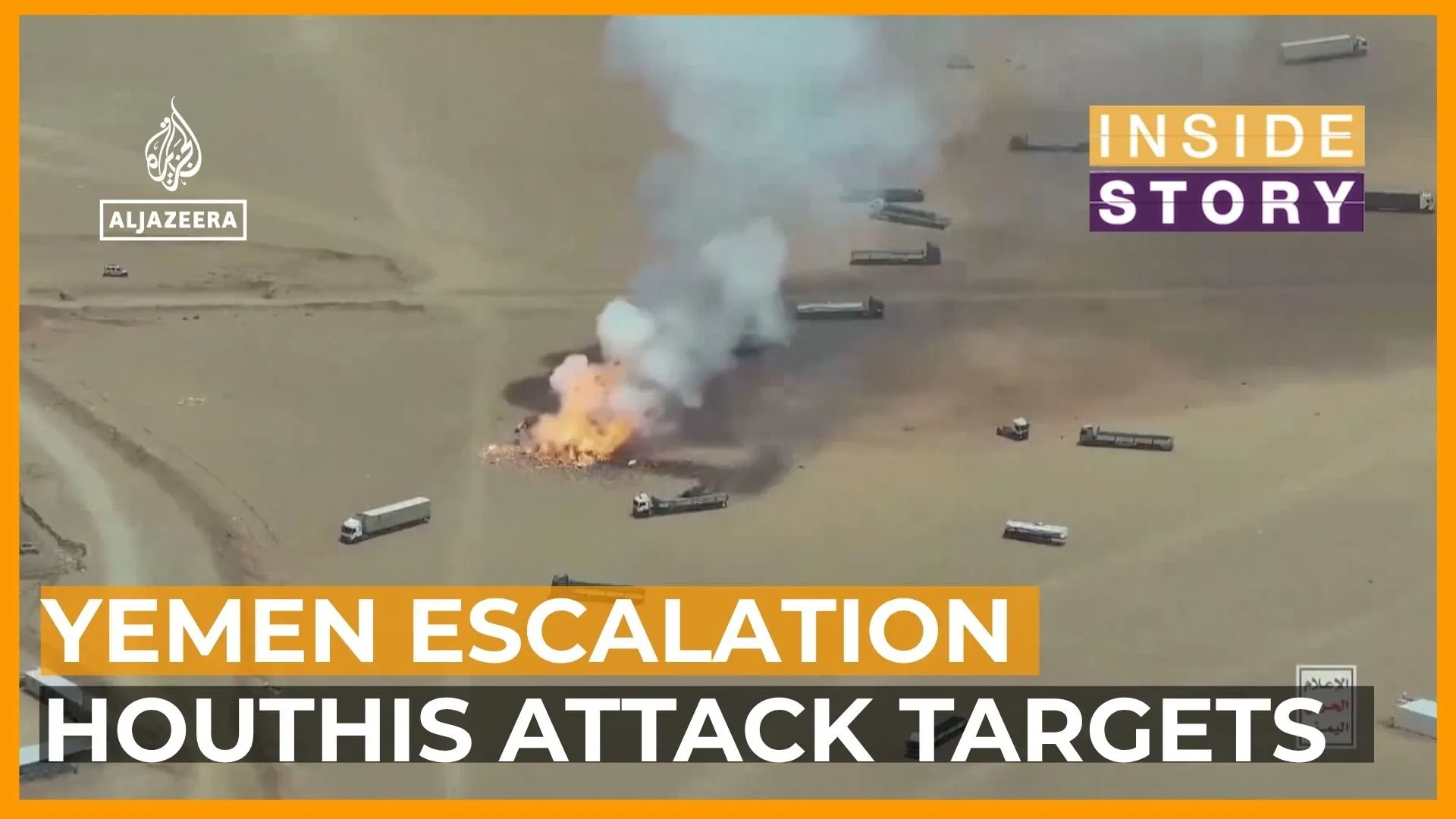
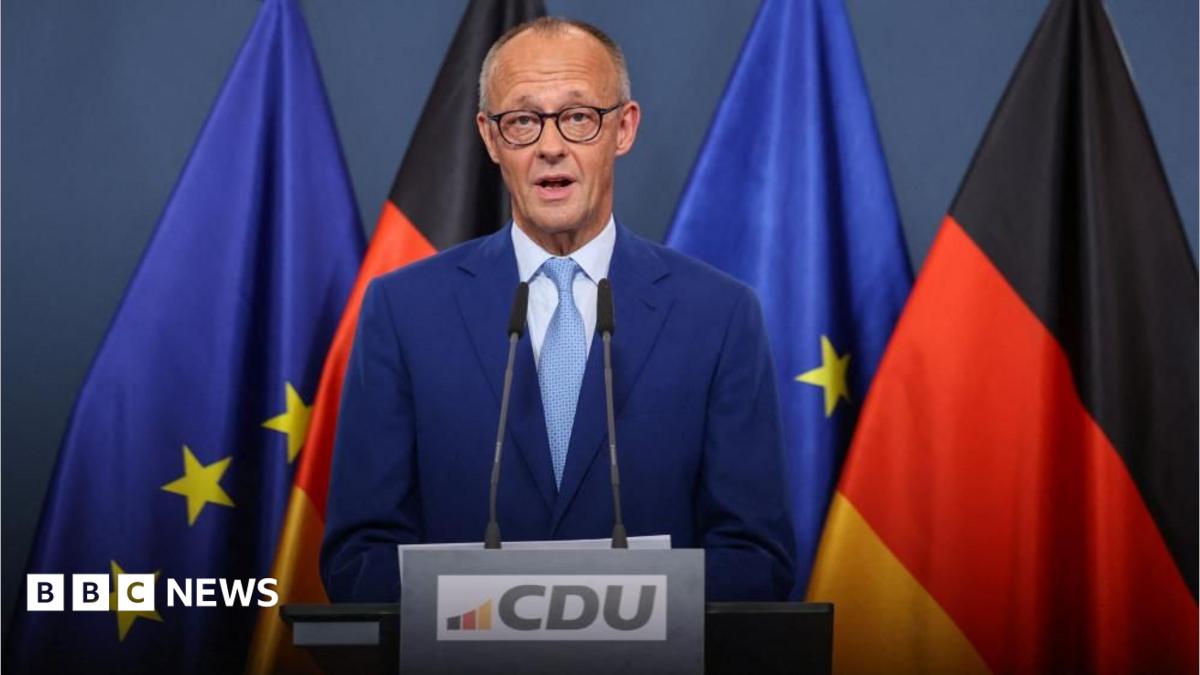




![Casey Pruim, owner of Prime Acres Ltd. dairy farm in Abbotsford, British Columbia heads the BC Milk Producers Association in Canada's western province [Ali Mustafa/Al Jazeera]](https://i0.wp.com/www.aljazeera.com/wp-content/uploads/2026/09/PRUIM7-1789051532.jpg?w=640&ssl=1)
![Each day almost 14,000 litres of milk produced by cows is stored in the refrigeration unit at Casey Pruim's Prime Acres Ltd. dairy farm in Abbotsford, British Columbia at a temperature of 2.8'C [Ali Mustafa/Al Jazeera]](https://i0.wp.com/www.aljazeera.com/wp-content/uploads/2026/09/DSLR_PRUIM25-1789051502.jpg?w=640&ssl=1)
![Casey Pruim, owner of Prime Acres Ltd. has a herd of 330 cows at his dairy farm in Abbotsford, British Columbia [Ali Mustafa/Al Jazeera]](https://i0.wp.com/www.aljazeera.com/wp-content/uploads/2026/09/DSC01443-1789051497.jpg?w=640&ssl=1)