Nvidia next-gen 'Kyber' AI rack delayed to 2028 on manufacturing snags: report
Nvidia next-gen 'Kyber' AI rack delayed to 2028 on manufacturing snags: report
Source link
Nvidia next-gen 'Kyber' AI rack delayed to 2028 on manufacturing snags: report
Source link

Quant snapshot: PENG, and LEVI lead top-rated names as EPAC and SMPL lag
Source link
Citi's picks and pans for H2 '26: REITs, tech, consumer, health
Source link

SA Asks: What's the best space stock play right now?
Source link

alexsl
Wall Street ended the holiday-shortened week higher as investors looked past softer-than-expected labor market data and increased bets that the Federal Reserve could cut interest rates before year-end.
The June jobs report showed the U.S. added just 57,000 jobs, missing expectations, while the


Alexander Koerner/Getty Images News
Continental (CTTAY) announced on Saturday plans to sell its ContiTech plastics and rubber production unit to investment firm Lone Star Funds for $4.6B (€4.0B) as the German company seeks to become a pure-play tiremaker.
The deal value includes €250M in performance-based

Top dividend growth stocks under $10 include Alvopetro Energy, Vox Royalty
Source link

shaunl/iStock Unreleased via Getty Images
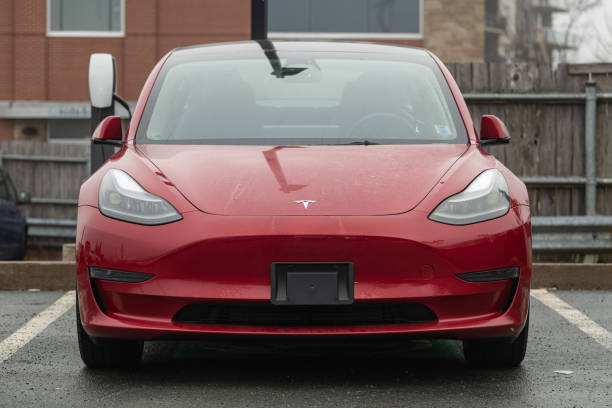
A Texas man has been charged with manslaughter after his Tesla (TSLA) Model 3, which was operating in Full Self-Driving mode, crashed into a home and killed a 76-year-old woman.
Michael David Butler, 44, told paramedics “the car was on ‘Autopilot,'” when it hit the

Published on •Updated
Stock markets across Asia mostly advanced on Friday, taking their cue from a fresh record close for the Dow on Wall Street, as some of the AI-linked shares battered in this week’s sell-off found their feet again while others kept falling.

The volatility was calmer than the heavy selling seen a day earlier, when worries about stretched technology valuations sent semiconductor shares tumbling across the region.
At the time of writing, South Korea’s Kospi led the bounce, climbing over 4% to recoup part of the nearly 8% plunge it suffered on Thursday. Samsung Electronics, the country’s largest company and a major chipmaker, jumped 7%, while smaller memory rival SK Hynix rose 4.9%.
In Tokyo, the Nikkei 225 added 1%, helped by a 6.6% leap in memory maker Kioxia, although chip-equipment supplier Tokyo Electron slipped 2.5%.
Elsewhere, Hong Kong’s Hang Seng gained 1.7% and the Shanghai Composite rose 0.7%, while Australia’s S&P/ASX 200 advanced 1.3% and Taiwan’s Taiex bucked the trend, easing 0.6%.
As for European markets, both the Euro Stoxx 50 and the broader pan-European Stoxx 600 opened within a 0.3% range.
The UK’s FTSE 100, Germany’s DAX 30, France’s CAC 40 and Italy’s FTSE MI, all traded between 0.1% and 0.3% higher.
Spain’s IBEX 35taly’s FTSE MIB led the pack and rose about 0.4%.
US stocks were mixed on Thursday, but the Dow still managed a fresh peak, rising 1.1% to 52,900.
The broader S&P 500 ended virtually flat despite seven in ten of its members gaining, held back by another retreat in chip stocks, while the technology-heavy Nasdaq fell 0.8%.
Sentiment drew support from data showing US employers added 57,000 jobs last month, well below the 100,000 forecast and a slowdown on May.
A softer labour market could ease inflation pressure and, with oil back below its pre-war levels, may lessen the case for the Federal Reserve to raise interest rates repeatedly this year, an outcome investors would welcome.
Crypto-linked shares also firmed as Bitcoin rose about 2%, lifting Robinhood and Coinbase alongside it.
Still, the AI trade remained under strain.
Micron gave up an early gain to fall 5.5%, a day after a 10.6% slump, while Lam Research sank more than 10% and Nvidia, now worth close to $4.7 trillion, edged 1.4% lower.
On oil, Brent crude, the international benchmark, rose 1% to around $73 a barrel early Friday, while US crude added 0.5% to about $69, with prices still sitting below where they were before the Iran war began in late February.
Additional sources • AP

Pembina Pipeline (PBA) has signed a preliminary agreement with Canadian federal and provincial governments, alongside Trans Mountain, to participate in a major nation-building energy infrastructure initiative aimed at expanding global market access for Canadian crude oil.
The multi-stakeholder partnership aims
Missed payroll expectations and revised April and May numbers put the Fed in a tough spot for rate cuts.
June’s employment numbers showed almost no change from the previous month, as the Bureau of Labor Statistics reported a 4.2% unemployment rate and an estimated 57,000 nonfarm payroll jobs, roughly half the 115,000 economists expected.
At the same time, the agency also revised April’s and May’s total nonfarm payrolls down by 31,000 and 43,000 jobs, respectively.
According to BLS data, the financial activities sector experienced no job growth in June, after losing 22,000 jobs in May and 43,000 from the end of January. Meanwhile, healthcare and social assistance added the most jobs in June, with 46,600. Among the sectors with the largest job losses were leisure and hospitality (-61,000), information (-9,000), and retail trade (-7,500).
“We know it’s taking people longer to find work, but there are also signs of labor supply constraints in certain industries,” said Nela Richardson, chief economist at ADP, in the company’s National Employment Report for June. “For now, the overall effect is a slowdown in job creation.”
Using its proprietary methodology developed with Stanford Digital Economy Lab, ADP estimated that U.S. private employers added 98,000 jobs in June. Financial activities saw an increase of 14,000 jobs, placing it only behind education and health services (48,000) and trade, transportation, and utilities (15,000) in job creation.
Small businesses remain the largest source of hiring, with companies with 1-19 employees adding 38,000 new jobs. The companies with more than 500 employees added an additional 25,000 new positions. The companies that fell in between those sizes added 44,000 new jobs.
The revised April and May employment numbers and June’s lower-than-expected numbers reveal a softer labor market in the second quarter than previously thought.
The new figures have created a headwind for the Federal Reserve on possible rate cuts, as inflation remains close to its 2% target, according to the authors of a blogpost on the Curzio Research website.
“But a slowing labor market argues for cuts to support growth before conditions deteriorate further,” they wrote. “That is why the revisions matter. Every policy decision is only as good as the data behind it. If the Fed is reacting to numbers that keep getting weaker after the fact, it risks staying tight for too long.”


monsitj/iStock via Getty Images
Gold futures gained Thursday after a weaker-than-expected June employment report pressured the U.S. dollar and cooled near-term expectations for rate-tightening from the Federal Reserve.
Only 57K non-farm jobs were added in June, the Bureau of Labor Statistics reported, well below analyst forecasts
ConocoPhillips (COP) shares snapped six straight sessions of losses, as the stock was up 1.4% at $104.63 on Thursday.
The oil and gas exploration and production company fell 3.5% in the preceding six sessions. COP is down 11% over the past one month.
A steep NAV drop and a federal probe trigger a high-level departure at BlackRock.
The private credit market’s roughest stretch in years has claimed its first senior leader at a major asset manager.
BlackRock’s Phil Tseng is in the process of leaving his post as CEO of the firm’s publicly traded business development company, according to Bloomberg News.
The move comes amid a brutal year for BlackRock TCP Capital Corp. The firm marked down its net asset value twice in 2026 — by 19% in January and another 5% in May. Meanwhile, federal prosecutors in Manhattan have been reportedly probing the fund and questioning executives as part of the inquiry.
Tseng, an acqui-hire from BlackRock’s 2018 acquisition of Tennenbaum Capital Partners, remains employed for now with no set departure timeline.
Tseng’s exit echoes a pattern that emerged last fall when two auto-related borrowers collapsed and rattled private lenders. Cleveland-based First Brands filed for Chapter 11 in September after off-balance-sheet financing obscured leverage levels beyond what lenders had underwritten. Founder and CEO Patrick James resigned as the bankruptcy unfolded.
That same month, subprime auto lender Tricolor Holdings began liquidating. Federal prosecutors later indicted founder and CEO Daniel Chu and chief operating officer David Goodgame, alleging the pair systematically misled lenders to keep credit lines open. Goodgame pleaded guilty in June to six counts, including bank fraud and conspiracy, and is now cooperating with prosecutors — a deal that could put him on the stand against Chu, who has pleaded not guilty. Chu had also abruptly resigned from Origin Bancorp’s board days before Tricolor’s implosion.
Industry executives have largely characterized the two collapses as isolated fraud cases rather than evidence of systemic rot. Blue Owl co-president Craig Packer told CNBC in October that the failures “weren’t private credit stories” at all.
BlackRock CEO Larry Fink struck a similarly confident tone. On an April earnings call, he told analysts that institutional demand for private credit was “accelerating.” Still, headlines around the sector aren’t reflecting what the firm’s own client and portfolio data showed.
Redemptions from business development companies, key lenders in the private credit market, are surging. Investors requested $20.8 billion in redemptions in the first quarter alone. In some cases, those redemptions exceeded the 5% cap set by BlackRock and its rivals: Apollo Global Management, Ares Management, Blackstone, Blue Owl Capital, and KKR.
Not all private credit funds appear troubled. Goldman Sachs’ private credit fund, for example, honored all redemption requests in Q2 because it reported relatively modest private credit fund redemption requests (3.2%). The same goes for Nuveen Churchill and Oaktree with withdrawals of 3.1% to 4.5%, respectively.
But with so many of the sector’s players posting losses, Tseng’s departure suggests the reckoning is reaching up the org chart.
Published on
European car suppliers and manufacturers are divided over Brussels’ “Made in Europe” strategy, an effort to shield the EU market from Chinese competition.
The EU car industry is facing fierce competition from China, threatening hundreds of thousands of jobs across the bloc. To address the issue, the EU is preparing the so-called Industrial Accelerator Act, which is designed to favour electric vehicles constructed mostly with European components in public procurement and public support schemes.
However, EU car suppliers and manufacturers disagree over the proposed law, currently under discussion by EU countries and the European Parliament, which sets a 70 percent local content threshold for electric vehicles.
According to the European Association of Automotive Suppliers (CLEPA), the Commission’s proposal is a step in the right direction. Based on a study commissioned from management consultancy Roland Berger that Euronews has seen, plug-in hybrid electric vehicles and battery-electric vehicles manufactured in Europe already contain between 80 percent and 90 percent made-in-Europe components.
Consequently, it considers the Commission’s 70 percent threshold to be achievable.
But the European Automobile Manufacturers’ Association (ACEA) is pushing for a different methodology, under which regulators would assess finished vehicles instead of the local content in vehicle components.
“A vehicle is far more than the sum of its parts. Its value also lies in the R&D, advanced engineering and highly skilled workforce behind it,” ACEA said in a position paper published on 1 July.
CLEPA responded that under this methodology, a finished vehicle would require only 50 percent EU-made parts and components, with the remaining 20 percent coming from R&D, design and other activities.
This 20 percentage-point dilution of the requirement for EU-made parts “could result in the loss of 350,000 jobs”, CLEPA warned, saying the Commission’s component-level approach would “safeguard the existing manufacturing base”.
“What we are looking at right now is significant competition from best-cost countries, and the dragon in the room is China,” CLEPA Secretary General Benjamin Krieger told Euronews.
“A ‘Made in Europe’ threshold that ignores where the actual parts are built is a label that ignores the European worker,” he said.
Ouster stock falls after pricing $200M public stock offering at $55.22/share
Source link
Published on
Most Asian stock markets dropped on Thursday, dragged down by a wave of selling in semiconductor shares, as European bourses made a subdued start and Wall Street looked set to open in the red before the release of key US employment figures.
The pullback centred on the technology sector, where investors retreated from the chip stocks that have powered much of this year’s rally, amid growing unease that the vast sums Big Tech is spending on AI could leave the market awash with supply.
South Korea’s Kospi bore the worst of it, tumbling around 5% as its heavyweight chipmakers slid. Memory specialist SK Hynix lost close to 8% and Samsung Electronics fell more than 6%.
In Tokyo, the Nikkei 225 shed about 1.5%, with chip-equipment maker Tokyo Electron down around 5.6%, while Taiwan’s Taiex slipped 1.1% as TSMC, the world’s largest contract chipmaker, gave up 1.8%.
The falls followed a rough session for chip stocks on Wall Street this Wednesday, where Micron Technology dropped more than 10% and Intel sank around 9%.
The moves stand in sharp contrast to a stellar year for Asian tech, with the Kospi and the Nikkei still up roughly 85% and 34% respectively in 2026.
On the other hand, Hong Kong’s Hang Seng rose about 0.8%, lifted by an 8.7% jump in electric-vehicle maker BYD after it reported a second straight monthly rise in sales, while India’s Sensex added 0.5%.
In Europe, markets opened flat as both the Euro Stoxx 50 and the broader pan-European Stoxx 600 traded within a 1% range at the start of Thursday’s session.
The UK’s FTSE 100, Germany’s DAX 30, France’s CAC 40 and Spain’s IBEX 35, all traded between 0.1% and 0.3% higher.
Italy’s FTSE MIB led the pack and rose about 0.4%.
Crude prices fell again, trading below where they sat before the Iran war began in late February, as hopes grew that supplies through the Strait of Hormuz will steadily recover.
Brent crude, the international standard, eased around 1% to about $70.89 a barrel while WTI, the US benchmark, dropped 3% to roughly $69.
Attention now turns to the US, where stock futures edged lower ahead of the June employment report, brought forward a day because of Friday’s Independence Day.
Economists polled by Dow Jones expect around 115,000 jobs were added last month.
The figure carries extra weight under the new Federal Reserve chair, Kevin Warsh, with investors wary that a strong reading could harden the case for keeping interest rates higher for longer.
According to economists at Capital Economics, demand for AI may keep growing but at a slower pace than many expect, a caution that helped sour sentiment towards the sector.
Additional sources • AP
For more than three years, the ‘Magnificent Seven’ or ‘Mag 7’, which includes Nvidia, Apple, Microsoft, Alphabet, Amazon, Meta and Tesla, carried Wall Street.
Then came June 2026.
Nvidia dropped over 5%, Microsoft fell about 17%, its worst monthly performance since December 2000, Alphabet declined nearly 6%, Amazon lost roughly 12% and Meta dropped around 11%.
As for Apple and Tesla, the companies had directionally different but equally volatile monthly moves.
Apple made a new all-time high closing price of $315.2 on the second day of the month but subsequently declined more than 10% from that peak.
On the other hand, Elon Musk’s company dropped more than 6% in the first week of June but clawed most of that back by the close of the month, ending roughly flat.
Taken together, the ‘Magnificent Seven’ erased about $2.3 trillion (€2tn) in market value in a single month.
What made the selloff remarkable was its breadth. Usually one or two stocks stumble while the others hold up. This time, nearly every member of the group moved lower.
The Roundhill Magnificent Seven ETF (MAGS), which holds all seven companies, fell about 13% from its late May record high.
So what happened to Wall Street’s favorite technology stocks? And why are investors backing away?
The MAGS ETF bled more than $700 million (€615mn) over the month, its worst outflow since it launched in 2023, according to TradingView data. For a fund that had become the simplest way to bet on the US tech boom, the reversal was striking.
One name outside the club had it even worse. Oracle, a hyperscaler not included in the ‘Magnificent Seven’, crashed around 35%, its steepest month since September 1990, after alarming investors with a surge in AI spending and debt.
The fall wiped roughly $100 billion (€87.9bn) off the fortune of co-founder and billionaire Larry Ellison. The market punished the biggest AI spenders, and the numbers explain it.
The five largest hyperscalers are set to spend more than $700 billion (€615bn) on AI infrastructure this year. Microsoft alone is heading towards roughly $190 billion (€167bn), according to estimates from the Bank of America.
The bank said that hyperscaler capital spending has jumped from about 70% of operating cash flow in 2025 to nearly 100% in 2026.
The translation is simple: far less capital left over for share buybacks and dividends, and an increasingly larger bill that will need to be justified with future revenue as costs are climbing too.
The ‘Magnificent Seven’ are the biggest buyers of the memory that feeds AI data centres, and those chips have become scarce and expensive.
Micron Technology, one of the main memory chipmakers, reported earnings per share of $24.67 for its latest quarter, up from $1.68 a year earlier, close to a fifteenfold jump.
Prices for DRAM, the memory inside almost every device, rose as much as 98% in the first quarter alone, a surge some in the industry have nicknamed “RAMageddon”.
While the biggest technology stocks struggled, the rest of the market continued to rise.
LPL Financial chief equity strategist Jeff Buchbinder points to that trend. Excluding the ‘Magnificent Seven’, the remaining S&P 500 companies grew earnings by 17.5% in the first quarter, helped in part by semiconductor and memory producers.
Buchbinder expects that figure to exceed 20.5% in the second quarter. Meanwhile, the earnings growth projection for the ‘Magnificent Seven’ will be lower than that.
In other words, the other 493 companies are now growing earnings faster than the market’s biggest stars, and investors have noticed.
By late June, the S&P 493 – which excludes the ‘Magnificent Seven’ – had climbed 13.7% for the year. In contrast, the ‘Magnificent Seven’ basket was down 6.6%, while the broader S&P 500 posted a more modest 7.4% gain.
According to veteran investor Ed Yardeni, investors are beginning to show signs of AI fatigue, questioning whether unprecedented spending on infrastructure will ultimately generate attractive returns as cheaper open source models proliferate and AI token prices continue to decline.
The ‘Magnificent Seven’ still delivered an estimated 29% earnings growth in the first quarter, and they are unlikely to lose their leadership positions anytime soon.
Yet, the debate has shifted.
Investors are no longer asking whether AI will transform the economy. They are asking when hundreds of billions of dollars in AI investment will begin producing meaningful returns.
June may have offered the first clear answer.
The AI trade is no longer a one way bet on seven companies. The ‘Magnificent Seven’ created the AI boom, but they are no longer the only way to invest in it.


Just_Super/iStock via Getty Images

Alibaba, U.S. payments unit to pay $600M to settle U.S. probe
Source link

