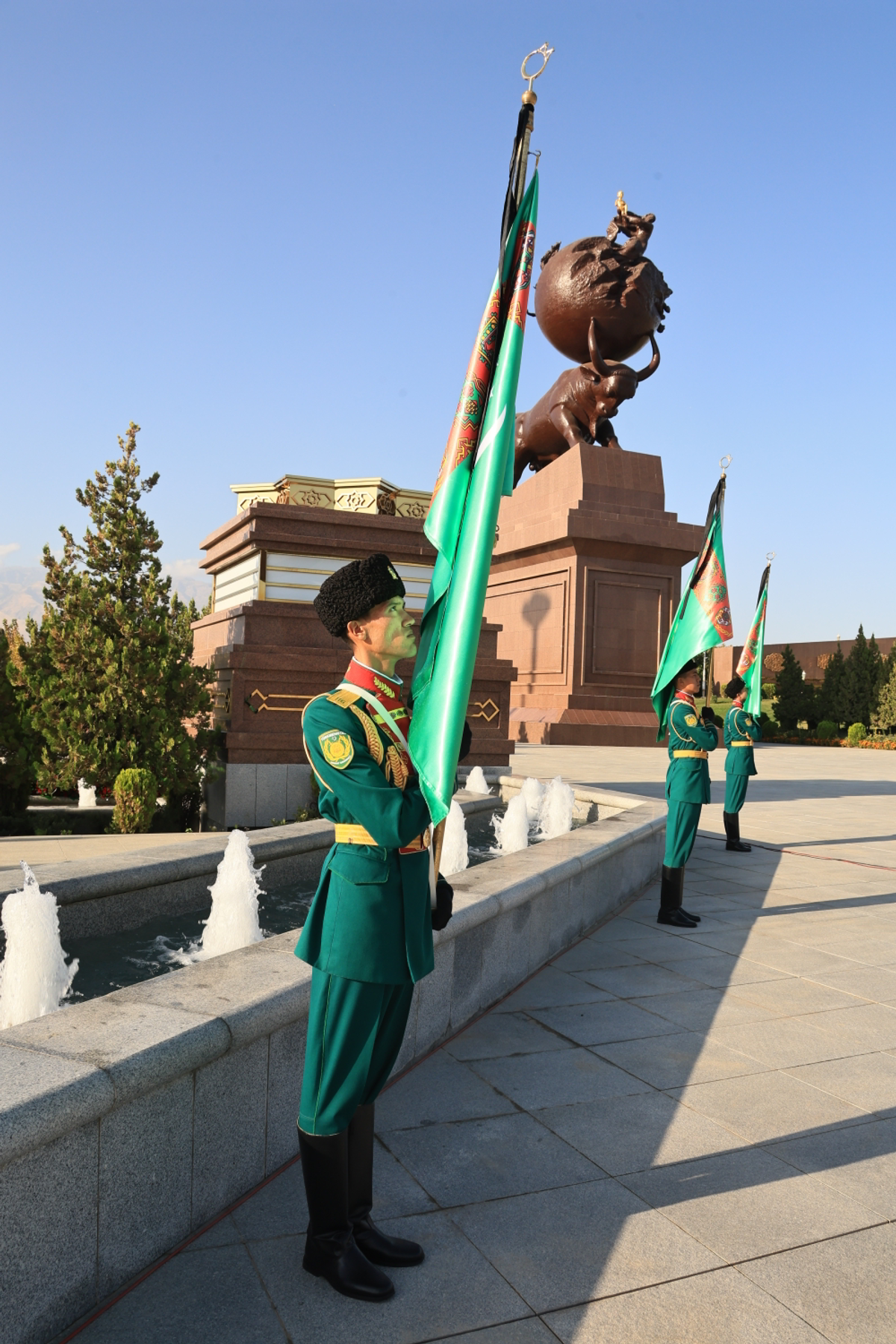
At 1:12am on October 6th 1948 an earthquake struck Turkmenistan. The earthquake was recorded as having a magnitude of 7.3 and the epicentre was just south of the capital, Ashgabat.
Within a matter of minutes, Ashgabat and about 40 surrounding villages were reduced to rubble, with almost all brick buildings collapsing and concrete structures heavily damaged.
Details of the damage were censored by the Turkmen government, so estimates of casualties vary. At the time, deaths were estimated at 10,000. After independence from Soviet rule, it was revealed that the number was closer to 110,00, which was 10% of the population of the country at the time.
That’s not to say that the Soviets didn’t try to respond. A thousand doctors and medical employees immediately arrived in Ashgabat from all parts of the former Soviet Union to assist the survivors and the surrounding Soviet states offered help in whatever way they could.
On Earthquake Memorial Day in 2009, Turkmen President Gurbanguly Berdymukhamedov said about 176,000 people suffered due to the Earthquake.
“One of the most powerful earthquakes in the world occurred in Ashgabat and its surroundings on October 6th 1948, at 1:12… [the] Natural disaster was a severe test for Turkmen people and razed to the ground the city with 198,000 people for 15-20 seconds,” Berdymukhamedov said.
In 2002, the government of Turkmenistan commemorated the devastating event by issuing special coins featuring images of President Suparmurat Niyazov and his family members. The earthquake killed Niyazov’s mother and the rest of his family, leaving him an orphan.