
March 22 (Asia Today) — South Korea should maintain “strategic ambiguity” in responding to U.S. pressure over the Middle East crisis, experts said, as tensions surrounding Iran and the Strait of Hormuz intensify.
The call comes after Donald Trump urged allies including South Korea, Japan and European partners to play a greater role following U.S. and Israeli strikes on Iran, raising concerns in Seoul about balancing its alliance with Washington and broader diplomatic interests.
South Korean officials said they are taking a cautious approach and have not received formal requests from the United States regarding potential military deployment to the Strait of Hormuz.
The government is focusing on assessing the intent behind Trump’s remarks while weighing the risks of deeper involvement in the region.
The Strait of Hormuz, a critical global energy shipping route, has long been vulnerable to disruption. Analysts say any effort to secure maritime traffic would likely require multinational coordination rather than unilateral action.
Foreign ministers from the Group of Seven nations recently condemned Iran’s attacks on civilian infrastructure and said they are prepared to take steps to support global energy supplies, though the timing of any direct action remains unclear.
A Foreign Ministry official said stability in Middle Eastern shipping lanes is vital for South Korea and other major economies, noting that ensuring safe passage is a challenge that cannot be addressed by a single country.
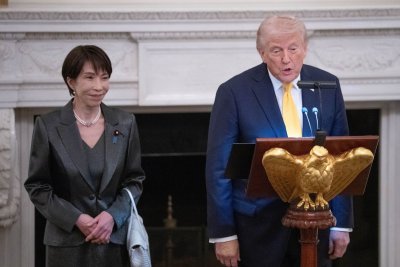
Experts pointed to Japan’s approach under Sanae Takaichi as a potential model. Tokyo has prioritized its alliance with the United States while limiting direct military involvement, balancing energy security, international law and domestic public opinion.
Lee Ki-tae, a senior researcher at the Sejong Institute, said South Korea should similarly avoid automatic military intervention and instead preserve flexibility.
“Maintaining strategic ambiguity allows South Korea to uphold its alliance while avoiding immediate alignment with any one side,” he said.
Park Won-gon, a professor at Ewha Womans University, said logistical and political constraints also support a cautious stance. He noted that deploying naval forces would require parliamentary approval, a process that could take about two months.
He added that evolving and sometimes inconsistent messaging from Washington further underscores the need for careful deliberation.
— Reported by Asia Today; translated by UPI
© Asia Today. Unauthorized reproduction or redistribution prohibited.
Original Korean report: https://www.asiatoday.co.kr/kn/view.php?key=20260323010006558