ITV have issued a statement after a furious backlash from fans in the way Omar has been treating fellow housemate Rhianna.

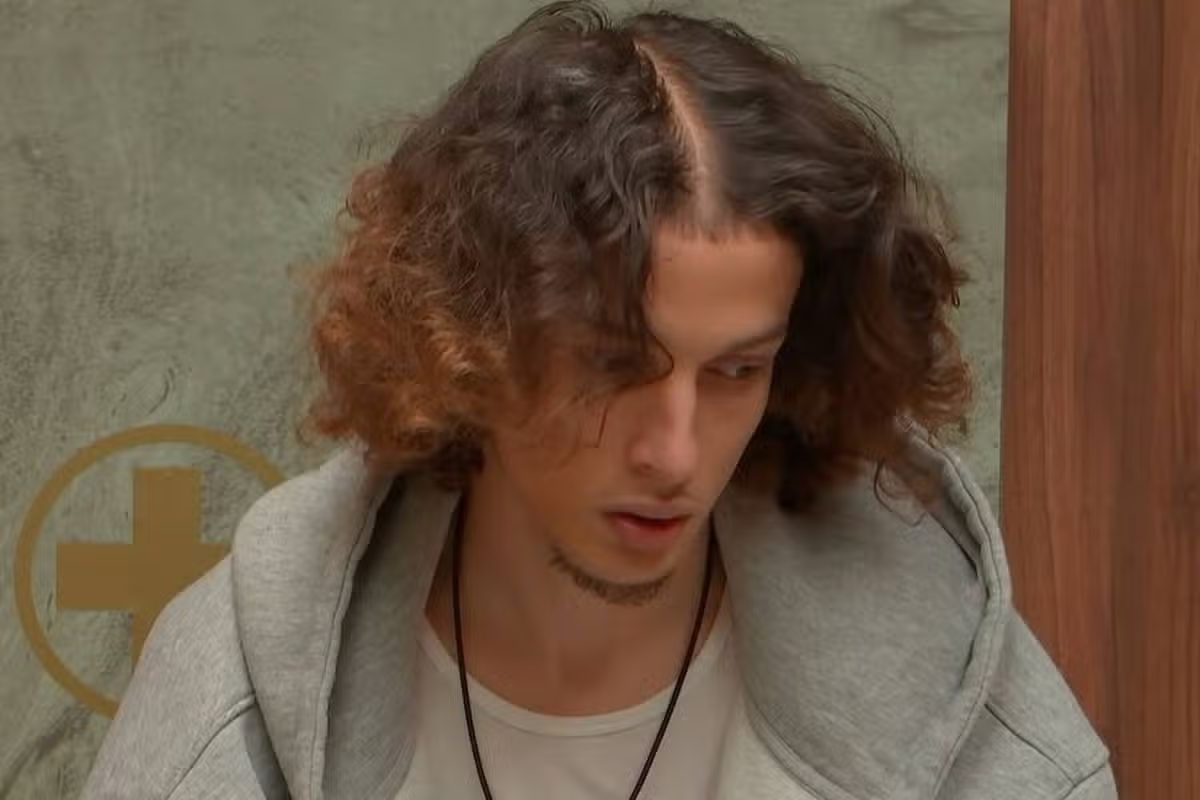
Omar in Big Brother(Image: ITV)
ITV has issued a statement after furious Big Brother fans voiced their concern about Omar’s behaviour towards Rhianna on Monday night’s episode.
Fans were quick to rush to social media to complain about his actions and some even called for producers of the show to “step in” after the altercation left Rhianna in tears. Others insisted he needed to be removed immediately.
ITV today released a statement pointing to their strictly-enforced welfare protocols. It said: “All Housemates receive Respect and Inclusion training and an extensive briefing from the Big Brother Senior team to prepare them for living in the House and to set out Big Brother’s expectations for appropriate behaviour and language.
“Housemates are monitored 24 hours a day and any instances of inappropriate behaviour are responded to appropriately.
To see more of the stories you love from The Mirror and to find them easily in Google then make us your preferred source. Free and easy-to-do, just click on the link here to find more from The Mirror at the top of your feed.
“Welfare and safeguarding are prioritised throughout the production, with a dedicated welfare team available to support Housemates before, during and after their time in the House.”
The issue arose as viewers watched on as Rhianna appeared to end her relationship with Omar. She questioned his maturity in conversation.
Rhianna was later called to the Diary Room. She was asked by Big Brother if she was okay and she told them: “I’m not that good but I’ll be fine. Obviously me and Omar have not been good over the last few days and sometimes I don’t like the way he speaks to me.”
She added: “I wouldn’t let a boy speak to me like that outside of here so why am I letting him speak to me like that… If it keeps going in circles, we can just be friends.”
Fans quickly shared their views on social media and said the viewing was “uncomfortable”. One user on X, formerly known as Twitter, said: “Big Brother really needs to intervene between Omar and Rhianna and call out the abhorrent actions of Omar.
“The way he speaks to her, the double standards and all the red flags are so concerning for her and any other potential future partners.”
Former I’m A Celebrity Star and regular guest on Big Brother companion shows Dean McCulloch shared a TikTok and captioned it: “Omar needs to be removed from the house with immediate effect.”
He said: “Those scenes that we had to watch tonight and that behaviour that Rihanna had to endure is completely unacceptable. That’s not even good TV. That’s not even close to being good TV.
“The way that he has spoken about her and to her and the way he is treating her . . . should not be tolerated in any way shape or form. He needs to be made an example of. The way he leaned over her, spoke to her in her ear, the way he told her she needed to fix up, the way he said look at me…we’ve moved into a dark place and Rihanna needs to be protected.”
ITV’s comment comes after Women’s Aid also responded to the scenes. On Instagram, they said: “We’re seeing coercive and controlling behaviours being given a platform in popular media like Big Brother. We’ve been contacted by many viewers who have expressed concern. Not only does Big Brother risk minimising survivors’ experiences, it also risks presenting abuse as a form of entertainment.
“Producers should understand their responsibility to keep contestants emotionally and physically safe. The women in these programmes are real people and need real support. We continue to urge television companies such as ITV to engage with experts like Women’s Aid to understand the nature of abuse and how they can do better to protect contestants.”
For confidential support, call the 24-hour National Domestic Abuse Freephone Helpline on 0808 2000 247 or visit womensaid.co.uk
Like this story? For more of the latest showbiz news and gossip, follow Mirror Celebs on TikTok, Snapchat, Instagram, Twitter, Facebook, YouTube and Threads.