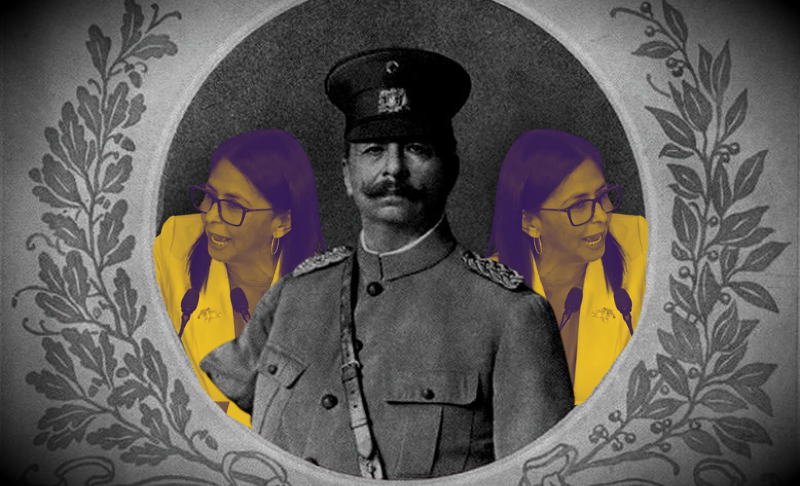
In recent days, the Venezuelan public debate has been filled with comparisons between what has transpired after the January 3 US military operation and the era of Juan Vicente Gómez (1908–1935), the Andean strongman who ruled for 27 years. The immediate flashpoint is the National Assembly’s proposed reform of the 2006 Hydrocarbons Law, designed to reopen the oil industry to private capital.
Displaced chavistas such as Andrés Izarra argue the reform is unconstitutional and evokes the “servile” terms under which Gómez granted oil concessions to foreign firms in the 1920s. Yet the comparison extends beyond oil: chavismo’s political economy resembles Gómez’s in three recurring ways: monopoly rents, opaque bargains with capital, and repression that doubles as a system of extraction.
Scholars of early twentieth-century Venezuela have shown that corruption and the privatization of public office of the Gómez era functioned as governing tools that helped finance coercion, reward loyalists, and develop a powerful and centralized state. Gómez assembled a ruling coalition by binding regional powerbrokers and emerging civilian interests to state-sanctioned rents, especially through monopolies granted under the dictator’s shadow. The arrangement remains familiar to Venezuelans who have watched chavismo merge political loyalty, access to state resources, and personal enrichment into a single logic of rule. Those mechanisms are easiest to see in the political economy of monopoly, contracts, and prisons.
Public office as private business
First, monopoly rents have flourished under authoritarian rule. Under Hugo Chávez, the progressive erosion of checks and balances, and the hollowing out of democratic constraints, helped reconstitute a patrimonial logic of governance. Discretionary access to state resources became a core currency of political loyalty. Over time, the government entrusted senior military officers with the “management” of strategic sectors and state enterprises, creating incentives in which institutional loyalty and personal stake became difficult to disentangle. Alongside these appointments, the state’s dense architecture of controls and bureaucratic choke points created new opportunities to extract rents, shifting costs onto ordinary Venezuelans while protecting insiders. A similar political logic constructed power in Venezuela more than a century ago.
Gómez consolidated his ruling coalition through a tacit understanding: public office could be treated as private business, so long as loyalty held and order endured. One reliable stream of income that lubricated those clientelistic networks came from the cattle business. Beginning early in the regime, the autocrat and his circle leveraged control over cattle supply and slaughtering channels, backed by selective taxation and regulatory privilege, to squeeze competitors and reward allies. Another, more explicitly fiscal mechanism, was tax farming. The state granted private individuals the right to collect specific federal taxes, liquor being a prominent case, in exchange for a fixed payment to the treasury, leaving the tax farmer free to pocket the surplus. Many of the habits we now associate with the petrostate were already baked into everyday monopolies on beef and booze. Oil did not invent rent-seeking; it amplified it, turning familiar practices of privileged access into vastly more lucrative rents.
Delcy’s CPPs transfer operational and investment burdens to private actors, while the state retains political control. These deals have created a new class of intermediaries whose profitability depends less on technical competence than on privileged access to decision-makers.
If the military profited from monopolies in agriculture and cattle ranching, oil gave Gómez a broader instrument: it allowed him to co-opt civilian elites who had long bristled at Andean hegemony. Beyond the autocrat’s immediate family, the most visible beneficiaries of the concession trade were lawyers, engineers, bankers, and other members of the professional classes who monetized access, paperwork, and proximity to power in the new petroleum economy.
A comparable dynamic has surfaced amid PDVSA’s collapse. As the government ignored the current hydrocarbons framework, “productive participation contracts” (CPPs) emerged as a salient workaround. These arrangements effectively transfer operational and investment burdens to private actors, while the state retains political control. Investigative outlets have traced how these opaque deals created a new class of intermediaries whose profitability depends less on technical competence than on privileged access to decision-makers. The Anti-Blockade Law, in turn, has provided the legal umbrella for confidentiality, shielding contract terms from public scrutiny in the name of national security and sanctions evasion.
This pattern is not an accidental echo of the 1920s concession era: the bargain with foreign capital then was not merely economic, but political and deliberately opaque. And when monopolies and privileged access harden into a system, those who cannot buy their way around it are left to absorb the costs; those who challenge it often face a harsher penalty than economic hardship, imprisonment.
Extractivist fear
La Rotunda became a landmark of political oppression under Gómez. In its cells, political prisoners endured systematic torture and humiliation, and the regime’s agents turned captivity into a market through constant extortion for money, food, and favors. Many detainees suffered forced labor so that the infrastructure they built (roads and highways), and that the dictatorship showcased as “modernization,” often bore the hidden imprint of coerced bodies.
That same logic is painfully recognizable today for families with relatives held at El Helicoide and other detention centers. Relatives bring medicines, food, and basic supplies only to face a system in which guards and intermediaries can confiscate, withhold, or demand payments simply to deliver necessities, or even to confirm that a detainee is still there. Imprisonment becomes not only repression, but another revenue stream: a mechanism of extraction layered onto fear.
If the Gómez precedent teaches anything, it is that once an authoritarian equilibrium is broken, restoring the old order is far harder than improvising a new one.
These parallels go a long way toward explaining why both systems proved so resilient, able to ride out internal shocks by combining repression with co-optation, and by making access to rents the glue of elite cohesion. Important differences remain, however.
The dawn versus the sunset of democracy
Gómez ruled over a country still shaped by civil war legacies and weak national institutions. Part of his historical significance lies in how his dictatorship centralized coercion, built a state apparatus, and disciplined regional caudillos, an infrastructure that later governments could eventually open. Democracy did not arrive automatically, but the post-1935 succession did produce a cautious opening under presidents Eleazar López Contreras and Isaías Medina Angarita as the political opposition pressed for change.
Chavismo, by contrast, emerged through elections. It initially spoke the language of participation and inclusion, yet over time it systematically hollowed out checks and balances and concentrated authority in ways that destroyed institutional autonomy. In any case, neither model was indefinitely sustainable. Both eventually confronted moments of succession, and the question shifted from endurance to what, exactly, would replace them.
In both transitions, it was not ordinary domestic pressure that structurally broke the authoritarian bargain, but a decisive external shock. Gómez weathered conspiracies, incursions, and waves of dissent; in the end, only death removed him. For chavismo, the US extraction of Maduro abruptly altered the balance of power inside the ruling coalition, fracturing the status quo among factions and forcing them to operate under Washington’s shadow for the foreseeable future.
After 1935, López Contreras and Medina Angarita moved quickly to neutralize the most predatory residues of Gomecismo, including the family clique. They steered the system gradually toward institutional consolidation and political opening. Echoes of that succession moment now hover over Venezuelan politics.
It is too soon to tell where this transition leads, who will define its project, or what counter-moves it will invite. If the Gómez precedent teaches anything, it is that once an authoritarian equilibrium is broken, restoring the old order is far harder than improvising a new one. Whether that improvisation produces a democratic opening, or a reconstituted chavismo capable of surviving even where Gomecismo could not, remains the central question.