Gov. Gavin Newsom’s recently proposed 2026-27 state budget included a pleasant surprise: a deficit of about $3 billion — significantly less than analysts had estimated. But when it comes to California state budgets, good news rarely lasts. Newsom’s own estimates warn that the deficit may reach $22 billion in the following fiscal year.
It is all too common for California’s budget to careen from year to year. Between 2022 and 2024 the state experienced a $175-billion swing from surplus to deficit. This time the crunch came because spending fueled by the post-pandemic economic recovery was not sustainable when revenue plummeted just a few years later — but the state budget has long gone through similar boom-and-bust cycles.
Although California’s leaders deserve their fair share of the blame for putting the state on this budgetary roller coaster, there are three underlying factors that make effective fiscal management in California uniquely challenging: an overreliance on the state’s personal income tax; mandatory spending commitments that limit policymakers’ discretion to address challenges; and a lack of accountability for the taxpayer money that is spent.
First, California has an outdated tax system. In the 2025-26 budget, for example, the personal income tax made up nearly 70% of general fund revenue. By comparison, personal income taxes account for 38% of total state tax collections nationally. The Golden State’s extreme reliance on the personal income tax means that when incomes are high in California, revenue collections are strong, but when the economy slows and incomes fall, state revenue weakens drastically too.
The outsize role that capital gains — income from certain investments — play in revenue makes the volatility worse. High earners tend to earn a larger share of their total income this way. In fact, the unexpectedly narrow deficit in Newsom’s 2026 budget was due to what California’s Legislative Analyst Office identified as a $42-billion tailwind created by a robust stock market, which led more Californians to earn more capital gains and pay more taxes on those earnings. But when equity markets aren’t performing well, collections take a major hit. Consider this contrast: In 2021, capital gains accounted for almost a quarter of the personal income tax liability in the state, compared with just 10% in 2023.
The reliance on personal income taxes means that as the highest earners leave, so does California’s revenue. In the 20 years leading up to 2023, the top 1% of income earners in the state were responsible for an average of 45% of total personal income tax liability. That’s why policies like the recently discussed “billionaires tax” could lead to capital flight from California, jeopardizing the state’s ability to fund basic services.
The second complicating factor in California’s budget process is the amount of money tied up in spending commitments over which policymakers have little discretion. Many of these restrictions have been imposed by voters over the last several decades in ballot initiatives that have passed with significant margins. Together, these provisions — while well-meaning and politically popular in many cases — create limitations that make budgeting a challenge in California.
For example, funding for the state’s public schools is largely guaranteed by Proposition 98, a state constitutional amendment approved by voters in 1988 that establishes an annual minimum funding amount for public K-12 schools and community colleges. About 40% of the general fund budget in California, or nearly $90 billion in 2026, is committed without exception to K-14 schools through Proposition 98.
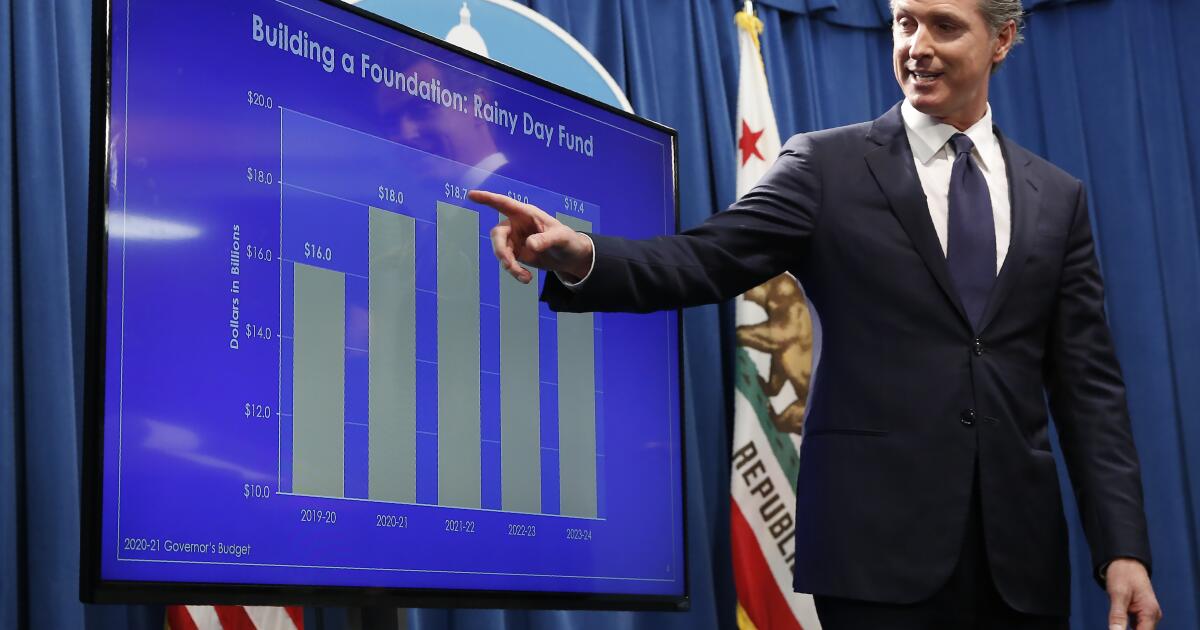
California voters have also approved tens of billions of dollars in borrowing over the last 20 years that the state’s constitution requires be paid back from the general fund. These bond authorizations create obligations to repay borrowing for priorities as wide-ranging as health facilities, water infrastructure and wildfire prevention. Repaying these “IOUs” requires policymakers to trim spending in other areas. Also, the state’s rainy-day fund, which is designed to insulate the budget from economic downturns, requires an annual set-aside of 1.5% of estimated general fund revenue.
Finally, California has no systematic way of providing accountability for and assessing whether any of its spending is producing promised outcomes. Governments at every level struggle with the concept of detailing what the “return on investment” is for public spending. But the situation in California is particularly dire. Thus, taxpayers are often stuck financing underperforming government programs riddled with waste and outright fraud, as was the case in the recent $30-billion scandal that afflicted the state’s unemployment insurance program.
In the mid-2000s, California commissioned a unified financial accounting and transparency system known as Fi$Cal that was supposed to replace several outdated systems. Over a billion dollars and several blown deadlines later, the platform still isn’t complete and won’t be fully operational until July 1, 2032. While the state auditor, an official appointed by the governor, does a credible job of analyzing state spending, recommendations for improvements are often not implemented. And the state controller — the elected chief fiscal officer who is responsible to voters for financial oversight of state spending — hasn’t produced California’s annual financial audit on time since 2017.
It’s hard for a state to properly manage its finances when there’s confusion over how much it’s really spending, or whether that money is achieving its intended purpose. But that’s become business as usual here.
Policymakers will have a tough time addressing California’s budget and fiscal challenges unless each of these three underlying factors is addressed. Our antiquated tax code should be reformed to reduce reliance on the personal income tax and raise revenue in a more predictable way. Californians must understand that there are long-term implications of borrowing to address challenges and warily approach future bond measures and other initiatives that tie the hands of policymakers today. And voters should elect politicians willing to provide them with the oversight that’s needed for the taxpayer money that Sacramento spends.
Without these changes, Californians are probably headed for more fiscal follies in the years ahead.
Lanhee J. Chen is a fellow at the Hoover Institution at Stanford University and was a candidate for California state controller in 2022.