Across a large conference room table somewhere inside the bowels of the Wynn Las Vegas, the members of Grupo Frontera appeared tired.
The Tex-Mex quintet had been shuffling up and down the Las Vegas strip for eight straight hours doing media interviews in the lead-up to the Latin Grammys, held on Nov. 13 at MGM Grand Garden Arena. They were nominated twice in the regional Mexican song category for their cumbia norteña tracks “Me Jalo,” a collaboration with the clamorous Mexican American band Fuerza Regida, and “Hecha Pa’ Mí,” but would lose out to Los Tigres del Norte’s “La Lotería.”
Despite the exhaustion, Grupo Frontera was happy to be back in Sin City once again — a testament to how far they’ve come in such a brief period of time.
In 2022, shortly after forming, the South Texas band showed up during the last Latin Grammys week held in Las Vegas, uninvited to any legitimate ceremony; it’s a common move by growing artists to get their name out there and possibly rub elbows with some of the biggest stars and producers in the Latin music world.
“We were just doing everything around it but not the [Latin] Grammys,” says lead vocalist Adelaido “Payo” Solís III. “I always think of that time that we came with nothing under our belt.”
Grupo Frontera had already generated buzz thanks to their cover of “No Se Va,” a 2018 hit by Colombian pop band Morat. Their norteño take cracked the Billboard Hot 100 despite the group having no major label deal or studio album of their own. Fame came quickly for them after linking up with fellow border kid Edgar Barrera. The award-winning songwriter-producer (Madonna, Shakira, Karol G and The Weeknd) took the band under his wing after watching them perform at the grand opening of a tire shop in McAllen, Texas.
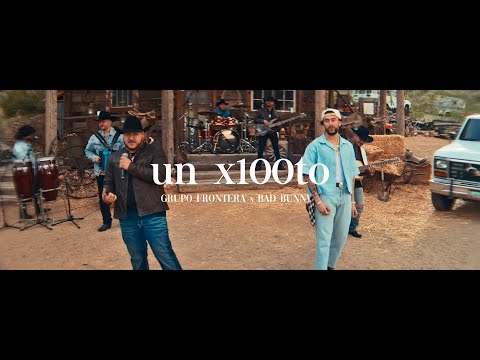
In early 2023, Barrera paired them up with Bad Bunny for “Un x100to.” Backed by the accordion — a staple of borderland music for more than a century — the modern lovelorn cumbia about stalking an ex on Instagram and using the last remaining bit of phone battery to apologize broke containment, propelling Grupo Frontera into the mainstream. A week after its release, Bad Bunny brought Solís on stage to perform the track at Coachella.

With a co-sign from the biggest artist on the planet and under the tutelage of Barrera, Grupo Frontera quickly cemented itself as the Texas representative of the new wave of música Mexicana, becoming one of the biggest players in a genre on the cusp of dominating the global streaming charts.
“The first year was a hundred percent the songs, lyrics and what [Barrera] told us to do,” said Solis. “We didn’t really know anything about the music industry so in the beginning we just let him guide us and develop the sound he wanted for us.”
The band called Barrera their Rick Rubin, referencing the Def Jam Records co-founder who produced albums for the Red Hot Chili Peppers, Slayer, Run-D.M.C., Lady Gaga and plenty more seminal acts.
Since then, Grupo Frontera has put out three full-length albums and four EPs, collecting three Latin Grammys in the process — they won for Regional Mexican song in 2023 (“Un x100to”) and 2024 (“El Amor de su Vida” a collab with Grupo Firme), and Norteño album in 2023 for their debut studio album, “El Comienzo,” which peaked at No. 34 on the Billboard 200.
Their most recent LP, “Lo Que Me Falta Por Llorar” (released Oct. 23), is a blend of classic cumbias norteñas (the bouncy, heart-torn “Que Bueno Que Te Fuiste”), swaying Tejano songs (“Si me Quiere”) and a hip-churning huapango (“Quien la Manda”). It also leans into other popular Latin genres, with strands of reggaetón in “No Lo Ves” (featuring Ozuna) and trap flare in “Triste Pero Bien C—,” (featuring rapper Myke Towers).
“It’s like ‘Goldilocks and the Three Bears,’ fame,” said Solís. “The first [album] was too small, the second one was too big, and this one was just right.”
In November, Grupo Frontera received their first two Grammy nominations for their joint EP “Mala Mia” with Fuerza Regida, and a solo EP titled “Y Lo Que Viene.” The band was notified before performing at the Grand Ole Opry, marking yet another milestone as it became the first regional Mexican group to play at the iconic Nashville venue.

There’s an ongoing bet within the group: If Grupo Frontera wins an American Grammy, Juan Javier Cantu, the group’s accordion player and secondary vocalist, will tattoo a gramophone somewhere on his person. It’s a big deal given his apprehension toward body art.
All other band members, which also include congas player Julian Peña Jr., bajo quinto player Alberto “Beto” Acosta and drummer Carlos Guerrero, already have a gramophone tattoo to represent their Latin Grammy victories to date. They’re an expensive habit, Solís noted, pointing to Acosta, whose neck and arms are covered in ink, as evidence.
“ I think Beto’s body is worth more than his watches,” he said.
“He’s worthless,” Cantu chimed in. Confused, I asked if he instead meant “priceless.”
“No, he meant worthless,” Guerrero jokingly interjects, causing the group to jolt in roaring laughter. Teasing aside, there is an unequivocal sense of respect and appreciation for one another. Throughout the interview, the band members busted each other’s chops, throwing in the occasional “Te amo, compadre!”
“We want to always be the five of us, however long the group lasts,” said Cantu, who admits he’s the most sentimental of the bunch. “We’ve had our differences but there’s never been a moment where someone wants to leave [the band].”
The latest album comes at a pivotal time for the Texas band, which will embark on its international “Triste Pero Bien C—” tour next year. Not everything about their meteoric rise has been rosy.
Earlier this year in a now-deleted TikTok video, Grupo Frontera appeared to be dancing to the Village People’s “Y.M.C.A.,” a song associated with Donald Trump’s rallies since at least 2020. Other videos of Solis’ grandparents dancing to the song while holding voting stickers circulated online, prompting many spectators to wonder if the members were Trump supporters.
“No way, I don’t think people will believe that! It didn’t happen,” Solis first told himself when he saw the rumors begin to spread online.
“It’s like when you are a little kid and your mom asks you, ‘Who did this?’ You know you didn’t do anything but they blame you for it, but your mom knows you didn’t do it,” added Solis. “That’s a bit of how we were feeling at the moment.”
Shortly after the social media frenzy, Grupo Frontera was named as a headliner for the Sueños music festival in Chicago, inciting backlash among many attendees. One person online created a petition for its removal from the lineup on Change.org.
The growing onslaught of criticism prompted the band to respond, posting a message on its social media platforms on Feb. 7 and again on Feb. 22 stating that Grupo Frontera had “no affiliation, nor any alliance, with any political party that’s against immigrants and the Latino community.”
The statements came at a fraught political moment for many in the Latino community. Trump, who has vehemently targeted immigrant groups, had just been sworn into office for his second term and was promising to conduct “the largest mass deportation in U.S. history.” Many political experts also pointed to the Latino vote swaying toward Trump.
“Our music is to make love, connect people by the border, not the opposite,” Cantu said. “Why would we get involved in something that is seriously damaging families?”
Solis hoped to clear the air on the topic once and for all, and move forward from the social media rumors.
“Any person who is against our people and who is harming our people, not just our Mexican community but all Latinos, we do not support that,” he said. “Not just the president, but anybody.”
The band members say they’ve learned several key lessons from this experience. For one, they’ve continued to show up where they believe counts the most, in the communities they hold dear to their heart. In March, when flash floods impacted Reynosa, Mexico, the border city across from the river from the Rio Grande Valley, the group delivered aid to support impacted individuals. The band also donated a portion of all proceeds from its surprise EP “Y Lo Que Viene” to frontline organizations in the wake of the ongoing immigration raids targeting Los Angeles since June.
“When it comes from the heart, people feel it and know it,” Cantu said.
“That’s how this dream began with us five, we wanted to make music that was different from what people were hearing, [music] that made sense and that everyone who is in their homes can unite over a song,” said Cantu. “[We want to hear ] a kid say, ‘I want to listen to ‘No Capea’’ and his grandfather too!”
One could assume that such online rumors would weigh on the mental health of each member, perhaps frustrate them to no avail, but the group has made peace with the idea that some individuals will continue to question the group’s intentions.
“But we understand people that are frustrated and want to take out their anger towards someone, no one wants to see [their favorite artist] supporting someone who is against the community,” said Cantu. “But we are with you.”
While mostly quiet during the entire interview, Peña, who often delivers the group’s tagline at the end of every song (“Y esto es Grupo Frontera!”), lifted up his sleepy gaze from the table to deliver one final statement of the afternoon: “There’s a saying, that what one does not owe, one does not fear.”