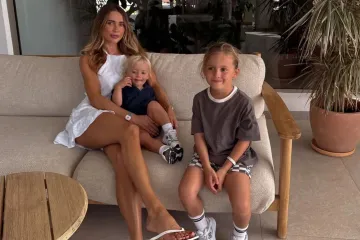
Jake Quickenden has given fans a look at his new kitchen after moving out of the marital homeCredit: jakequickenden/ InstagramJake and his wife Sophie split in May after four years of marriageCredit: Getty
Standing in the kitchen near a set of double patio doors leading out into the garden, Jake said he wanted to “have a bit of colour.”
Sign up for the Showbiz newsletter
Thank you!
He added: “I didn’t want to go boring grey.”
To highlight his point, he showed off green, leather high stools that he had at one end of the kitchen around a table and in front of a large statement clock and funky gold lighting.
Jake wanted to add colour to the space and opted for green huesCredit: jakequickenden/ InstagramThe dining area featured a large clock on the wall and statement lightingCredit: jakequickenden/ InstagramJake was also impressed with his Quooker tapCredit: jakequickenden/ InstagramJake and Sophie have two sons together and Jake is also stepdad to Sophie’s eldest sonCredit: Instagram
At the other end of the kitchen are white units with a gold Quooker tap over the sink which he was impressed with.
He said: “So yeah, this is the kitchen, I hope you like it, I love it.”
In the caption he added: “Kitchen reveal…. I forgot to mention some bits so any info you want just ask in comments.. seriously @quookeruk is a game changer and @babyeleganceire high chair is so cool.
“But yeah been here a week and I feel like I’ve really made it nice for me and the boys…. It’s been stressful and I’ve had ups and downs, esp falling down the stairs and putting a hole in the wall this morning, but this is home now.
“Thanks for being cool everyone have a nice weekend.“
When Jake first shared a post about his new home, he admitted fearing his two sons with Sophie – Leo, five and Kit, one – wouldn’t feel like it’s home when they come to stay.
He added: “I’m not good on my own, never have been but maybe that’s part of the journey to get comfortable alone for a while!
“It’s a strange feeling of excitement and anxiety, looking forward to making it my own but terrified to not be with the boys everyday.”
Accra, Ghana – The Africa Space Expo (ASPEX), which closed in Abidjan, Ivory Coast, last week, was not designed as a showcase for rockets and astronauts. Organisers presented it instead as a marketplace for space applications in food security, climate resilience, territorial monitoring, connectivity and maritime security, bringing start-ups, project labs and investors together to move ideas from demonstration to deployment.
The event also produced several concrete agreements. The Ivory Coast signed the Artemis Accords, becoming the 75th signatory of the agreement on space exploration and development, while Angola signed a letter of intent on space cooperation with the United Arab Emirates.
But beyond the agreements, the expo highlighted a question that is becoming harder to avoid: Can Africa move from using space technology to building more of it itself?
Ghana offers a clear illustration of both the progress and the gap.
Ghana’s ambitions in space and nuclear science date back to its early years of independence. In 1961, President Kwame Nkrumah’s government initiated a nuclear reactor project in Accra. Two years later, the government established the Ghana Atomic Energy Commission through an act of Parliament with a mandate covering the peaceful applications of nuclear energy.
The reactor project was shelved after Nkrumah was overthrown in 1966, but the institution he helped establish remains the parent body of the Ghana Space Science and Technology Institute (GSSTI).
Joseph Tandoh, director of the GSSTI, traces Ghana’s more recent space programme to a partnership with South Africa.
“Ghana became a partner through South Africa,” he told Al Jazeera. “Through that project, we were able to reconstruct the old satellite antenna at Kuntunse into a radio telescope.”
Through its partnership with South Africa on radio astronomy, Ghana converted a redundant 32-metre (105ft) antenna at Kuntunse into a functioning radio telescope. Ghana became the first of South Africa’s eight African Square Kilometre Array partner countries to complete the conversion, and the telescope was launched in August 2017.
Ghana’s National Space Policy was approved by the cabinet in 2022 and launched in 2024. The government approved the establishment of a Ghana Space Agency in 2025, beginning the process of creating a dedicated national institution for the sector.
The institutional framework is taking shape. The harder question is how Ghana moves from using space technology to developing and building more of it itself.
What Ghana is already doing
At the GSSTI, that transition is already under way.
Tandoh told Al Jazeera GEOMAIZE, a partnership between the GSSTI and VITO, the Flemish Institute for Technological Research in Belgium, has demonstrated how satellite data can be applied to Ghanaian agriculture.
The project monitored crop health and developed algorithms to classify crops. Ghana is also expanding its use of Earth observation data and artificial intelligence for crop monitoring and yield prediction.
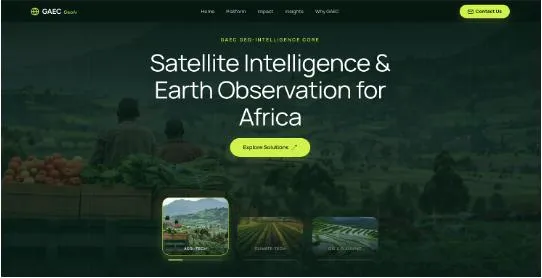
A crop health monitoring app developed by Galaxy Aerospace Ghana to support food security [Handout/GSSTI/Galaxy Aerospace Ghana]
But predicting yields has proved more difficult. Tandoh said the model’s accuracy fell short of expectations, largely because many Ghanaian farmers practise smallholder mixed cropping and satellite soil-moisture data are too coarse to capture differences between small farms.
A follow-up project supported by the French embassy and international research partners, is now working to improve the estimates.
The GSSTI has also used satellite data to track forest loss linked to mining and is working with partners in Nigeria on a digital twin to simulate coastal erosion at Keta and Agavedzi. Japanese cooperation has provided technical training while the French government supported work on space legislation that produced a draft now being reviewed by the attorney general.
“We always say that Ghana Space Science and Technology Institute becoming an agency is to position Ghana in a way that we will not only be users of the technology but we will also contribute to designing, developing and building our own tools,” Tandoh said.
The funding wall
Victor Tagborloh founded Galaxy Aerospace Ghana in 2020. Two years later, his team launched a high-altitude balloon into near space, capturing images of Ghana’s geography with clearance from national security and airport authorities.
The company has since designed mini-rockets for the GSSTI, trained young people in space robotics and artificial intelligence and pushed for the introduction of Starlink in Ghana in 2024.
But Tagborloh said the company has yet to secure an investor, six years after it was founded.
Galaxy’s longer-term plans include a space university on 33,000 hectares (82,000 acres) that it has secured at Apam in Ghana’s Central Region as well as a ground station that would give the country greater capacity to monitor floods, mining activity and coastal erosion.
The company is seeking investors for the ground station and a geospatial intelligence platform. Tagborloh said the curriculum is ready and the land is available. What is missing is the capital to turn those plans into infrastructure.
He also argued that Ghana’s position near the equator could provide an advantage for launching spacecraft, potentially reducing the fuel required to reach orbit. Several other African countries share similar geography.
But Tagborloh’s ambition goes beyond launching rockets. He wants Ghana to develop more of the infrastructure and expertise needed to build its own space capabilities.
Who is building the industry?
Bright Atsu Sogbey, president of the Africa Development Council and a senior research engineer at the Ghana Atomic Energy Commission, argued that the private sector cannot build the industry alone.
“Borrowed technology cannot be sustainable,” Sogbey told Al Jazeera. “The state must be in the driver’s seat, using the natural resources we have to ensure that, in partnership with the private sector, we can have laboratories and manufacturing hubs for the space industry.”
He pointed to South Africa, Egypt and Nigeria, which have established space laboratories and manufactured test satellites. Ghana, he said, still lacks the state-backed laboratories and manufacturing hubs needed to produce more of its own components rather than importing them.
Ghana’s radio telescope is used for research and training [Handout/GSSTI]
“Enough of the talk shop,” Sogbey said. “The next expo should see African satellites assembled on this continent and launching capability for African satellites.”
Engineer Daniel Aboagye, CEO of African Progressive Research and Innovations, said the change must also begin in education.
“With how technology is advancing, Africa must introduce space science into its education systems,” Aboagye told Al Jazeera. “We cannot continue to be consumers of technology we do not understand.”
Kwadwo Dwomo II, CEO of COMCENT Ghana, works on agritech systems that depend on satellite data. He also called for greater government investment in the sector.
Ghana is home to a small cluster of companies, including Galaxy Aerospace, Xavier Space Solutions and Ayeji Aerospace, working in areas such as satellite technology, Earth observation and geospatial services.
Galaxy Aerospace confirmed to Al Jazeera that it was unable to participate in this year’s expo. The company said it hopes to participate in the next expo.
A continental project
The challenge facing Ghana is shared across much of Africa: moving from using space technology to developing and building more of it locally while overcoming limited investment, infrastructure and manufacturing capacity.
ASPEX was designed in part to address that gap.
The African Space Agency, headquartered in Egypt, is intended to provide a continental framework for cooperation while the expo aims to connect investors with African start-ups, researchers and space projects.
But the distance between the ambitions presented at the expo and the resources available to engineers trying to turn them into businesses remains substantial.
For Tandoh, Ghana’s immediate priority is to build the application layer: a satellite-data processing hub capable of serving ministries across government before the country moves further into designing and launching its own satellites.
“Space cuts across all the ministries,” he told Al Jazeera. “We should be able to build and validate our own tools first.”
For Tagborloh, the timeline is more urgent.
“We shouldn’t wait for tomorrow,” he told Al Jazeera. “Whatever decision we have to take, especially for human resource capital in the space industry, it has to be now.”
Ghana has the policy. It has engineers, research institutions and companies trying to build a space industry. What it does not yet have is the capital and manufacturing capacity to turn those capabilities into a domestic industry.
“We have the team, the knowledge, the research and the technical know-how,” Tagborloh told Al Jazeera. “We just need funds.”
Hollywood stars have gathered to pay their respects to Hayden Panettiere at her memorial this weekendCredit: GettyHayden’s Nashville co-star Connie Britton was one of 150 people to attend the eventCredit: �Lionsgate
Hayden’s former co-star Connie Britton was seen arriving at the memorial in Malibu, California, who reportedly had a special role at the service.
According to TMZ, Connie delivered a speech at the wake in addition to fellow Nashville cast member Charles Esten.
Sign up for the Showbiz newsletter
Thank you!
Furthermore, Charles is said to have performed one of Hayden’s character’s song from the hit US show, as fellow Nashville alumni Lennon Stella and Jonathan Jackson watched on.
Connie reportedly gave a speech at the service where white doves were released outside the churchCredit: Channel 4Ruby Rose was another star in attendance who called Hayden her ‘best friend’ days prior in an emotional red carpet momentCredit: Getty
Doves were reportedly released outside of the ceremony, with TMZ claiming a photo of a bikini-clad Hayden smiling on a boat was chosen for the order of service, bearing the line: “Honoring the life & legacy [of] Hayden Panettiere. 8.21.89 – 8.16.26.”
The outlet further states that the memorial for the late star was attended by 150 people in total and was organised by Hayden’s family including her dad Skip Panettiere.
Hayden’s ex-fiancé, Wladimir Klitschko, and their 11-year-old daughter, Kaya, were not photographed at the event.
Notably missing from proceedings was Hayden’s mum Lesley Vogel and her boyfriend Brian Hickerson, plus his brother Zach.
It was previously reported that the trio were not invited to the event.
However, TMZ reported that a source close to Lesley Vogel denied she was not invited, but admitted she did not attend due to a family emergency.
Hayden Panettiere’s mum was not present at the memorialCredit: GettyThe star’s on-and-off again boyfriend Brian Hickerson also didn’t attend the send-off to HaydenCredit: Rex
As The U.S. Sun reported, Hayden was found dead in a Greenville, South Carolina Airbnb on August 16, where she was staying with her on-again, off-again boyfriend Brian.
“Although my daughter and I were estranged, it was not for lack of care or love. It was due to the involvement of a toxic individual who I believe led to her death,” she said, pointing fingers at Brian.
“Hayden was a beautiful and talented young woman who unfortunately became involved with the wrong person, and although her family tried to extricate him from her life, we were unable to be successful.”
Brian and his brother have denied any involvement in Panettiere’s death.
Hayden’s loved ones had been weary of Brian’s presence in her life, after the couple first started dating in 2018.
He had been arrested multiple times for allegedly assaulting her, and even served jail time for the two felony counts, which included punching her in the past.
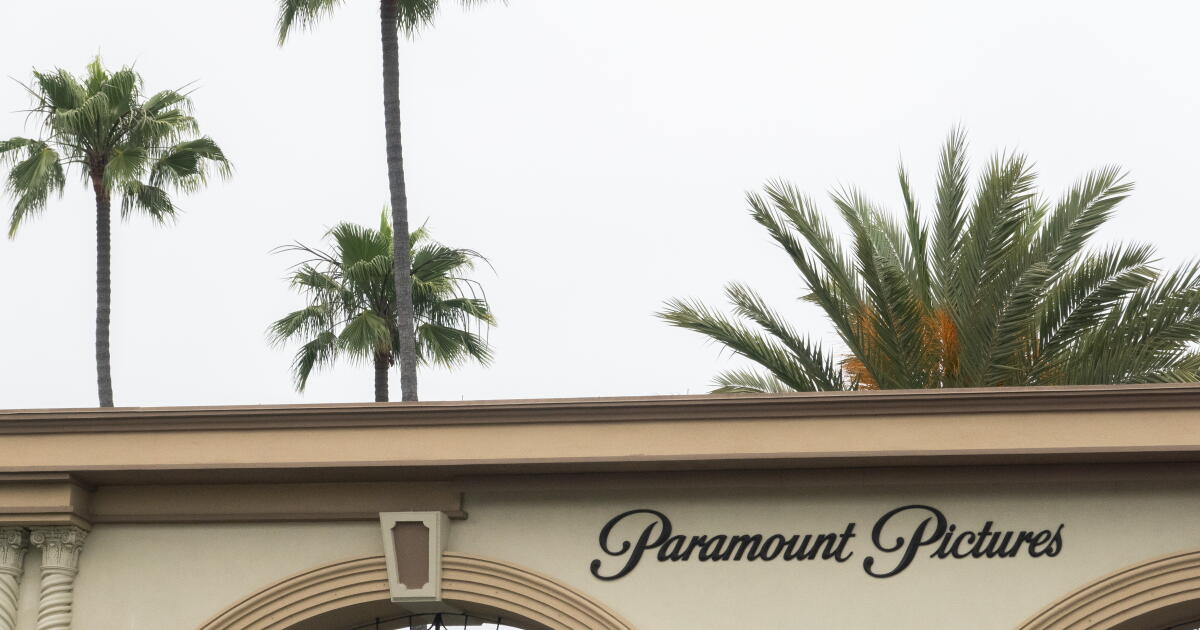
After a bitter standoff, Paramount Skydance and California Atty. Gen. Rob Bonta have made progress in settlement talks that could push Hollywood’s massive merger over the finish line, people familiar with the matter said Friday.
The two sides have quietly been negotiating a truce to end the antitrust lawsuit brought by Bonta and 11 other Democratic state attorneys general — a legal volley that has threatened to derail Paramount’s $111-billion takeover of Warner Bros. Discovery.
It’s not clear how close to a resolution the two sides are, but talks in recent days have been constructive, one of the knowledgeable sources said.
Paramount Chief Executive David Ellison is highly motivated to end the court battle with Bonta before Oct. 1, when his company will be obligated to make a higher payout — an extra $7 million a day — to Warner Bros. Discovery shareholders on top of the $81 billion the company has already agreed to pay.
For weeks, Ellison and his team have been ratcheting up political heat on Bonta to abandon his lawsuit, including threatening to pull Paramount out of Hollywood — a scenario that has rattled state and local lawmakers who desperately want to bring film jobs back to Los Angeles, not lose thousands more.
Paramount declined to comment.
A spokesperson for Bonta’s office said in a statement: “Potential settlement talks are confidential. We cannot confirm or deny whether settlement talks are occurring or their alleged substance.”
Both sides have incentives to settle. Ellison, who has leaned on his family’s connections to President Trump and Washington Republicans, would like to avoid taking on more debt for the already highly leveraged deal. And he is eager to close the transaction and take the reins at Warner Bros. before the midterm elections.
Bonta has been on a winning streak with favorable rulings against the Trump administration and social media giant Meta, and he doesn’t want to overplay his hand or risk having his coalition of state attorneys fall apart.
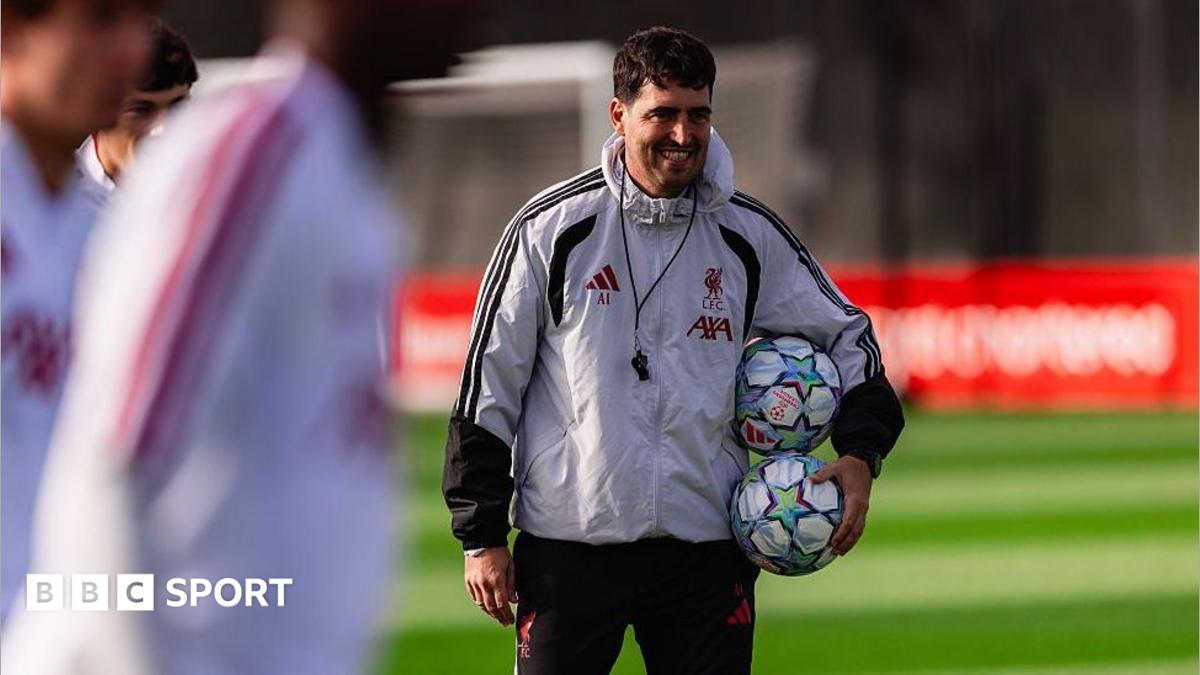
Iraola’s preference is to name the team on the morning of the game and he saves the post-match debrief with his players for the day after the match.
There is a sense of pragmatism with his media interactions, too, after a situation where his comments to LFC TV following a pre-season friendly against Monaco were widely reported.
Iraola conceded Liverpool had run out of steam after 30 minutes and did not have the energy levels at the time to play with the intensity that he wants. It wasn’t meant to be a dig at his players – rather an admittance that they were working on building that intensity up.
But there is a realisation that at a club like Liverpool, every word you say can end up shared across social media and taken in a different way than you meant. That said, Iraola comes across as calm in his news conferences and open to discussion.
It is very much a case of Iraola adapting to the club as much as the other way round.
One of the main reasons they went for Iraola was his ability to develop young talent and the average age of Liverpool‘s players in the Premier League this season is 25.3 – only five teams have a lower average.
Youngsters like Rio Ngumoha, 18, Trey Nyoni, 19, and Koumas, 20, all started against Tottenham in the Carabao Cup and all three will play bigger roles this season than last.
Intensity is a buzzword under Iraola and that is a non-negotiable but he is already aware that, with such a brutal schedule, Liverpool will need to find ways to adapt and occasionally win games with a set-piece or an individual moment of brilliance.
Going into this weekend, they have made the most sprints in the Premier League but looked flat against Fulham last weekend in a goalless draw, less than 72 hours after beating Atletico Madrid in the Champions League.
Sunday’s game against Bournemouth will be a fourth in 12 days and, after the international break, Liverpool have a spell of four games in 10 days. Between 11 October and 7 November, they will play nine times.
Iraola would no doubt have had a smile seeing Bournemouth win on their Europa League bow against Real Sociedad on Thursday, in the Basque region where he grew up.
Perhaps he will have a moment on the flight down from Liverpool on Saturday to think about how far he has come.
Liverpool haven’t exactly had a dream start under Iraola but they are yet to lose. Becoming a team that is hard to beat is undoubtedly a step in the right direction after 12 league losses last term, but as vice-captain Alisson said last week, draws aren’t good enough for Liverpool.
And Iraola, who is unbeaten in the Premier League since January across his two clubs, knows that a win on familiar territory on Sunday would be the perfect way to head into the international break.
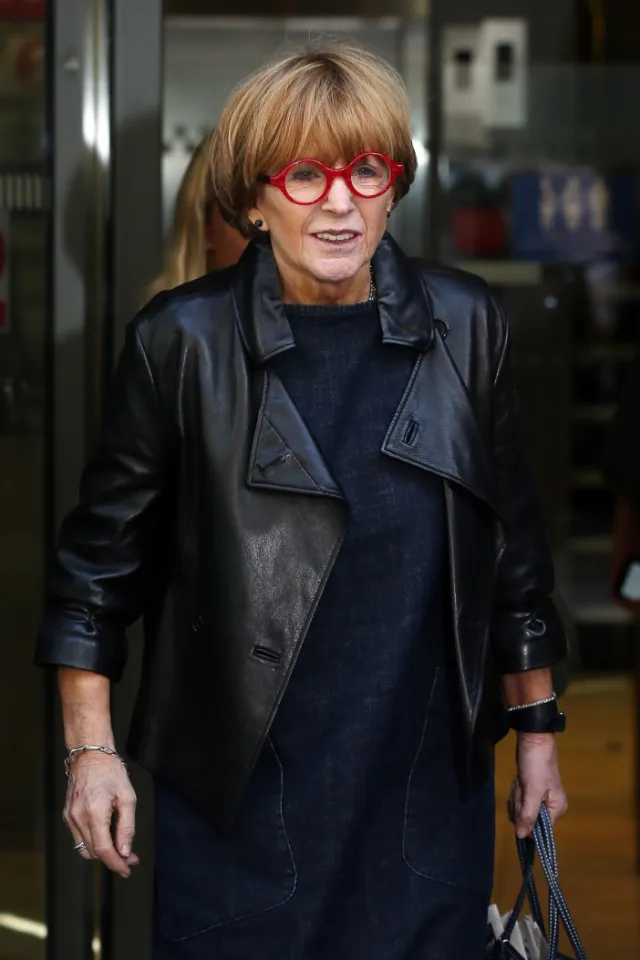
Anne is said to have split from Andrew Parker Bowles after around four years of datingCredit: GC ImagesThe retired brigadier, 86, has never been photographed with Anne or spoken publicly about their relationshipCredit: Getty Images
Now the Daily Mail have alleged the TV presenter has called time on her relationship with Andrew, 86 – who still lives in the Cotswolds – after around four years of dating.
The publication reports that, when asked if she’d been going out with the retired brigadier, Anne replied: “I might have done.
Sign up for the Showbiz newsletter
Thank you!
“It’s very difficult to talk about a relationship where part of it is owned by somebody else, so out of politeness I don’t talk about it.”
Anne and Andrew have never been photographed together and he’s never confirmed their relationship.