Rare bipartisan bill requires data centres to pay for infrastructure, but environmental groups say it falls short.
Published On 10 Nov 202610 Nov 2026
The United States Senate has voted to move forward on a bipartisan bill that would speed up the process to build new data centres and energy infrastructure in the country.
Nearly all of the chamber’s Republicans, as well as more than a dozen Democrats, voted 73-25 on Monday to take up the Bipartisan American Affordability and Jobs Act, which supporters, including US President Donald Trump, have said is necessary to meet the nation’s growing demand for electricity.
Recommended Stories
list of 3 itemsend of list
“This Bill is a BIG WIN for U.S. ENERGY INDEPENDENCE and DOMINANCE”, Trump posted on social media Monday as he encouraged lawmakers to support it.
The legislation would overhaul the permitting process for major energy projects – both clean energy and fossil fuel-run – across the US, reduce deadlines for environmental reviews and impose restrictions on when projects can be challenged in the country’s courts. It would also force owners of energy-hungry data centres to pay for the infrastructure that is needed to power them.
Growing anger in the US over those facilities’ use in powering artificial intelligence (AI), which has resulted in rising electricity bills for customers across the country, helped fuel last week’s takeover of the US Congress by Democrats.
“The people sent us a very clear message on Tuesday that they expect us to lower the costs in their daily lives,” Democratic Senator Martin Heinrich, the ranking member on the Senate Energy and Natural Resources Committee, said on Monday. “We don’t have to wait for the new Congress to start lowering costs. We can do that today.”
Authors of the bill claim it will provide $19bn in savings on residential electricity bills through 2040. The number of solar and wind projects connecting to the US electric grid would be doubled, with data centres paying $55bn over the next 10 years to cover their power usage.
But despite the bill’s claims of increasing clean energy projects, environmental organisations are opposed to the legislation. They argue it would also lock in development of fossil fuels, weaken environmental laws and make it harder for US residents to challenge projects in their communities.
Earlier this year, a coalition of national groups – including the Climate Justice Alliance, Indigenous Environmental Network and Western Environmental Law Center – issued a joint statement opposing the bill.
“We cannot allow the lies to continue, as the facts are clear: If this backroom permitting reform deal is pushed through, it will enable a no-guardrails buildout of dangerous projects that will harm our health and environment, drive up energy costs, and violate our rights,” they said in September.
“This will be especially harmful for communities of color and lower income neighborhoods already overburdened by pollution and climate impacts.”
While the legislation received rare overwhelming support from both major political parties, the Democrats’ midterm win could complicate its final passage.
Some in the party argue that the legislation should be shelved until new Democratic majorities in the US House and Senate are sworn in early next year.
House Minority Leader Hakeem Jeffries, who is on track to become the body’s new speaker in January, criticised the bill last week, warning it “falls short” in several areas.
“We must once again support the clean energy economy and combat the climate crisis with the fierce urgency of now,” a Jeffries spokesperson said in a statement released to the Associated Press.
Jeffries’s office added: “Leader Jeffries will not rubber-stamp legislation that emerges from the Senate without more constructive involvement with our Caucus as we fight to make life more affordable for the American people.”
The most famous 15-minute cruise around a miniature world is almost ready for its holiday close-up. Disneyland’s It’s a Small World Holiday opens Friday, and it’s a seasonal delight, a bright and wintry jaunt to the North Pole and then around the globe and back.
You’re reading Mr. Todd’s Wild Ride newsletter
Todd Martens’ newsletter delivers news and commentary on the past, present and future of theme parks, right from the theme park capital of the world — Southern California.
By continuing, you agree to our Terms of Service, which include arbitration and a class action waiver. You agree that we and our third-party vendors may collect and use your information, including through cookies, pixels and similar technologies, for the purposes set forth in our Privacy Policy such as personalizing your experience and ads.
Closed from just before Halloween, the attraction has undergone nearly two weeks of round-the-clock work, with set dressing during the day, and maintenance and facade work at night. Hours before the boat ride was to be refilled with water on Monday afternoon, Disneyland team members gave me a walkthrough, providing me with a rare peek behind the scenes. As a devotee of Mary Blair and Rolly Crump, so much so that It’s a Small World is my favorite ride at the park, I was eager to see the attraction from a new perspective.
Here’s just some of what I learned as I strolled the dry waterway and took a brief jaunt into the ride’s attic, a maze of wooden paths with vintage automations and a handful of small openings into the magical world below.
If you’ve been on the ride during the regular season, you’ve glided right past the holiday fixtures without knowing it
Troy Romero, a Disneyland stage technician, left, and David Miller, director of entertainment tech services, give a tour of It’s a Small World Holiday.
(Ronaldo Bolaños / Los Angeles Times)
Disneyland teams of late have been focused on reducing ride downtime, and last year the It’s a Small World team was able to trim the refurbishment time from 18 days to 14 days. This was mostly accomplished by adding and shifting crew hours, but It’s a Small World is a delicate attraction, with the vast majority of its wooden set pieces dating to the mid-1960s. Navigating around such a fragile work is difficult, especially with much of the holiday version of the attraction stored on the ride itself.
That means that for most of the year, guests are gliding right past the Christmas-heavy overlays. They’re stationed behind the facades or tucked on the floor just under the elevated flume.
It’s a Small World Holiday is a Disneyland tradition that began in 1997.
(Ronaldo Bolaños / Los Angeles Times)
Snowflake lights that glisten near the start of the attraction, for instance, had been kept in the South America section until someone suggested simply laying them down when they’re not in use. It’s a simple fix that has saved hours of time lifting props over and around set pieces. Additionally, four snow animals in the finale were previously housed in Africa, but have been moved closer to their winter homes, eliminating the process of lifting the animals or dissembling and reassembling set pieces to traverse around the attraction. That also means less risk, both to the staff and the delicate scenery.
Reducing the closure period by four days may not sound like much, but David Miller, Disneyland’s director of entertainment tech services, says that equates to 74,000 more guests being able to ride the attraction.
Miss the old finale of the Main Street Electrical Parade? A piece of it lives on in the Asia section
Details from the Asia section of It’s a Small World.
(Ronaldo Bolaños / Los Angeles Times)
In 2022, Disneyland changed the finale of its Main Street Electrical Parade. Gone was a patriotic float at its end, one in which fireworks twinkled over a red, white and blue tapestry. Those fireworks, however, found a new home. They now reside in the Asia section of It’s a Small World Holiday. Look for them near the end of the room, off to the left above a translucent, glowing dragon.
“We want to make sure we’re leveraging what we’ve got,” Miller says. “So when our finale float changed, the fireworks were moved and brought over to help us celebrate the season.”
Guess the weight of the candy arch
A Christmas critter in It’s a Small World Holiday.
(Ronaldo Bolaños / Los Angeles Times)
One of the largest set pieces in It’s a Small World Holiday is the Christmas tree in the Europe section of the park, a towering monument of glowing candles and glistening ribbons that is replacing a chess board. The metal and aluminum tree is then raised in parts, all seven of them. The top is placed first, and each section is affixed underneath until it takes shape. A heavy piece, the back of the tree is wired up into the attic to ensure it stays in place.
But it’s not the heaviest set piece in the Europe section of the attraction. That would be the candy arch, detailed with candy canes, gingerbread and frosting. While Miller didn’t know its total weight, just the top of that arch is more than a ton. As one can imagine, moving it is no easy feat. It’s stored nearby, and slotted into place by a series of stitched-together chain motors. Theme park attractions often utilize tricks of old-fashioned theater, such as painted Styrofoam or hollowed-out wood. But not here. “It is built to withstand much,” Miller says.
“Funny thing, I heard one of the riggers say, if there was an earthquake, I’d run to the candy arch,” says Georg Schanz, an entertainment tech manager with the resort.
Numerous scents are piped in throughout It’s a Small World Holiday.
(Ronaldo Bolaños / Los Angeles Times)
Anyone smell gingerbread?
As boats glide under the candy arch, don’t be surprised if you start craving a cookie. That’s because Disneyland is piping in a gingebread aroma. There are at least five scents throughout It’s a Small World Holiday, says Schanz, but the gingerbread was the only one I detected, so you’re on your own to count the rest.
Elvis is back in the building
A small Elvis Presley toy stands on a surfboard with Lilo and Stitch.
(Ronaldo Bolaños / Los Angeles Times)
A guest favorite of It’s a Small World Holiday is the tiny Elvis Presley figure affixed to a surfboard featuring the characters of Lilo and Stitch. The Elvis toy only comes out for the holiday edition of the attraction. The figure was not part of the initial design of It’s a Small World Holiday, and was added, Miller says, by a stage technician.
“Every once in a while there are little moments that can influence an attraction,” Miller says.
Watch the bells in the opening room
The bells inside It’s a Small World Holiday are outfitted with motion sensors.
(Ronaldo Bolaños / Los Angeles Times)
One of the most complex builds of It’s a Small World Holiday is actually its opening scene, which the team calls the “hello room.” Composed of mostly flat figures — toy soldiers, a rocking horse, doll-like characters holding balloons — it may not look like one of the most intense scenes to construct, but these are large wooden pieces that have to navigate places with low ceilings. This space alone takes three days to empty and repopulate.
Pay attention to the bells that lead out of the room and into the North Pole. Those operate only by motion sensors as a boat approaches.
A holiday adornment for nearly every doll — all 300 of them
The It’s a Small World dolls are ready for the holidays.
(Ronaldo Bolaños / Los Angeles Times)
The brightly lit finale — an explosion of whites and lights — is another tricky scene to construct. That’s because each and every doll in the room is touched up. Disney says there are about 300 dolls on the entire ride, and it feels like a large percentage are in this closing scene. “Every doll in here gets something,” Miller says of the grand finale room. “Whether it’s holly, a choir book or just a sparkle, every doll in here gets something.”
Consistency from year to year is important. That’s why the entire ride is 3D-scanned. The teams can call up a room to compare images from earlier editions. “It’s a lot like a real estate tour, where you see little point-to-points throughout the house,” Miller says. “That helps us make sure everything is where it’s supposed to be.”
Like a real estate tour? I know I’m ready to move in. We just may have to turn down the music, though.
This week in SoCal theme parks
Christmas decorations have arrived at the Disneyland Resort.
(Todd Martens / Los Angeles Times)
Christmas is upon us. Disneyland’s holiday season begins Friday, although many of the decorations are already in place. Come the end of the week, however, there will be new foods to sample, and a number of returning shows. Don’t miss the terrific “¡Viva Navidad!,” or “World of Color — Season of Light,” back after a hiatus due to Disneyland’s 70th anniversary celebrations.
Calling all Tinker Bell fans!“Tinker Bell’s Neverland Adventure: An Illuminated Adventure” opens Friday at South Coast Botanic Garden in Palos Verdes Estates. The illuminated night walk will take guests on a journey through numerous locales from the fairy tale, ranging from the rooftops of London to the Lost Boys’ secret hideout to Captain Hook’s pirate ship. The trail is designed for all ages.
A new pass for Universal fans. Universal Studios Hollywood has introduced a new “Diamond Pass,” now its highest tier annual passport. Selling for $999, the pass has no blockout days and includes daily access to the park’s line-skipping express pass as well as a ticket to after-hours events Halloween Horror Nights and Fan Fest. The pass also includes access to an Universal VIP tour.
Tell us your stories. Ask us your questions.
Have a theme park tale to share? Whether it was a good day or less-than-perfect day, I would love to hear about it. Have a question? A tip? A fun photo from the parks to share? Email me at todd.martens@latimes.com. I may feature your note in an upcoming newsletter.
Ride on,
Todd Martens
—
This newsletter is free thanks to the support of L.A. Times subscribers. If you’re not yet a subscriber, explore subscription packages to unlock unlimited digital access and support award-winning local reporting.
Was this newsletter forwarded to you? Sign up here to get it in your inbox.
OUR Spotlight On column gives you the lowdown on what to see and do in some of the most popular holiday destinations – as well as some lesser-known areas.
This week, we’re shining a light on the lively Spanish resort of Playa de las Américas in Tenerife.
Here’s why Playa de las Americas should be your next holiday stopSource: GettyThe resort has it all from nature to cocktails by the beachSource: Getty
MUST SEE/DO
Tenerife’s crystal-clear waters are abundant with marine life, and a turtle, whale or dolphin-watching tour is a must.
You can book a whale-watching pirate cruise for as little as £17 on Get Your Guide, with options that include a stop for a snorkel or a buffet and drinks on board.
Sign up for the Travel newsletter
Thank you!
If you’re wanting something a little more active, Get Your Guide also offers surf lessons from £30 or parasailing to view the seas from the sky.
HIDDEN GEM
Tenerife is one of the world’s top destinations for stargazing.
A certified Starlight Destination, the island’s low levels of light pollution means you get exceptionally clear views of the Milky Way at night time.
This is what makes the island perfect for spotting some key sky-based landmarks with year-round visibility of 83 of the 88 officially recognised constellations.
BEST VIEW
Tenerife’s highest peak, Mount Teide, is the best spot to head for those jaw-dropping views over the island.
Experienced hikers can tackle the 8.3km trail up to La Rambleta, where you can continue to the summit with a permit, bookable for free on the National Park’s website.
Alternatively, the scenic cable car will take you through a blanket of clouds to the top for €23.50.
The panoramic views from the Pico Viejo viewpoint are especially striking, with glimpses of islands La Gomera, El Hierro, and La Palma on clear days.
Save time for the beach too, with miles of golden sandSource: Getty
RATED RESTAURANT
For authentic Castilian cuisine, prime cuts of meat, and excellent wine, look no further than Meson Castellano, sat on a row of bustling bars.
With an unassuming exterior, inside it is a warm and inviting traditional restaurant serving dishes with bold Spanish flavours.
Here, you can sample perfectly cured jamon iberico, a classic ribeye steak served to your liking or juicy legs of lamb.
Wash it all down with a glass of local wine. And you won’t want to miss the baked cheesecake.
BEST BAR
Tenerife’s nightlife is varied. For a lively night, Magic Bar in Las Americas is a local favourite, known for its colourful cocktails – better still, its in a central location.
For something off the beaten track, head up the mountain to Finca Tres Roques, a cosy bar with local charm serving carafes of house red, farm-to-plate food, and stunning views.
HOTEL PICK
The 5H Sir Anthony, on Tenerife’s southern coast, is a boutique hotel with exceptional service, and direct access to El Camisón Beach.
Many rooms feature private plunge pools. Guests looking to unwind can even enjoy private rooftop spa treatments.
The decor is elegant, the atmosphere is peaceful and the location is excellent. Rooms cost from around £250 per night.
WASHINGTON — The midterm elections already upended national politics. Due to the number of state governments that have flipped to Democratic control, they also could change the way the U.S. elects a president.
The sudden blue tint to so many more statehouses opens the door to enough states joining 18 other Democratic-run states in a deal that would effectively neuter the Electoral College. It would remake the battle for the presidency into one for the most votes nationwide, rather than candidates concentrating on a half dozen or so swing states.
The states that have joined what is known as the National Popular Vote Interstate Compact account for 222 Electoral College votes. Once the number of states involved hits the 270 needed to win the presidency, the arrangement would effectively require a candidate to win the national popular vote to get an Electoral College majority.
It’s not clear that the strategy has support from all the newly elected lawmakers and governors in the key states, and it’s almost certain to draw legal challenges from conservative groups. If it does go forward, it could land before the conservative-majority Supreme Court.
Yet the sweep of the Democratic wins for governor and in state legislatures has the plan’s supporters optimistic. In Tuesday’s elections, Democrats won full control in six states representing 71 Electoral College votes: Arizona, Michigan, Minnesota, Nevada, Pennsylvania and Wisconsin. Minnesota, with its 10 electoral votes, had joined the compact when it was previously under full Democratic control in 2023.
Some governors express support while others are noncommittal
“We can do away with it,” Wisconsin’s new Democratic Gov. David Crowley said of the Electoral College, now that he has a legislature in his party’s hands for the first time in 16 years. “I am interested in having those conversations with the state Legislature.”
Over the weekend, Pennsylvania Gov. Josh Shapiro, a likely 2028 contender for the Democratic presidential nomination, said he would like his newly Democratic legislature to take steps toward making the Electoral College obsolete.
“I think that the national popular vote makes sense. My views on that have not changed,” Shapiro said on a liberal podcast. “I’ll work with lawmakers to figure out what the right mechanism is for moving forward on that.”
If Pennsylvania and Wisconsin supported the compact, reaching the 270 threshold would require Michigan and either Arizona or Nevada to join. Michigan’s new Democratic governor, Jocelyn Benson did not respond to a request for comment.
Not every Democratic governor is embracing the push yet. In a television interview on Monday, Arizona Gov. Katie Hobbs declined to say whether she favored her state joining the compact. She said she’s focused on other things, like the cost of living.
Nevada’s previous experience with the issue also is a cautionary tale for supporters.
In 2019, then-Democratic Gov. Steve Sisolak vetoed a measure that would have committed Nevada to joining the compact after it was passed by Democratic majorities in both houses of the Legislature. Sisolak said at the time that the popular vote idea would diminish the influence of smaller-population states like Nevada in national elections.
Democrats passed another measure to join the compact in 2023, but couldn’t figure out a way around the state’s then-Republican governor. The incoming administration of its new Democratic governor, Aaron Ford, did not respond to requests for comment.
Republicans will use their diminished power to push back.
“Our Constitution gives states a voice in choosing the president for a reason,” Tyler August, the Republican leader in the Wisconsin Assembly, said in a statement Tuesday. “This would undermine that balance and disenfranchise Wisconsin voters by letting results in other states override their choice.”
Two presidents 16 years apart lost the popular vote
The idea of shifting to a national popular vote gained traction among Democrats after Republican George W. Bush won the 2000 presidential election by inching ahead of Democrat Al Gore in the Electoral College even while losing the popular vote. It became turbocharged after Republicans again won the White House that way in 2016 with Donald Trump’s victory over Democrat Hillary Clinton.
Under the National Popular Vote plan, the candidate who wins the popular vote nationwide would receive the Electoral College votes from the states that have joined the compact.
There’s nothing inherently partisan about the idea, said Patrick Rosenstiel, a Republican strategist in Minnesota who is a senior consultant to the popular vote movement. Occasionally GOP-majority legislative chambers, including the Oklahoma Senate, have passed proposals to join the compact, but the bills haven’t gone further.
He said his own presidential vote is essentially meaningless because Minnesota has reliably voted Democratic in presidential elections for decades, leaving him with no say in the outcome and steering the vast majority of the candidates’ attention elsewhere.
“I don’t believe I’ve ever been relevant in the outcome of a presidential election,” he said. “National popular vote forces campaigns to focus on every persuadable voter in every precinct across the nation.”
Rosenstiel said the national popular vote campaign has been revving up to push the issue when the newly Democratic state legislatures convene at the start of the year. He said the organization has already lined up legislative sponsors.
The compact could create constitutional concerns
Republicans no longer have the power to stop the change in the Democratic-controlled states, but some conservative groups are prepared for a fight. The change “disenfranchises voters in member states if enacted, violates the United States Constitution, and undermines America’s Founders’ intent,” wrote analysts for the America First Policy Institute, a pro-Trump think tank, in September.
There also is no guarantee the proposals will pass. Derek Muller, a Notre Dame law professor who is skeptical of the idea, said some might have second thoughts now that it’s gone from a symbolic protest vote to a real possibility. He said there will be constitutional concerns, as well, that will likely lead to legal challenges.
The Constitution lets states run elections, and the Supreme Court in a case stemming from electors who sought to find a substitute for Trump in 2016 has ruled that states can require electors to vote for the presidential candidate they’re pledged to.
Muller flagged potential legal hurdles to the popular vote plan. States have the power to run their elections but not set rules that will determine the outcome in other states’ contests. Additionally, each state ballot is different, and some would potentially have third-party candidates who wouldn’t appear elsewhere, leading to the dilution of a vote for a Democrat or Republican in one state compared to another.
That could violate the 14th Amendment’s requirement that everyone have “equal protection of the laws.” The U.S. Supreme Court also might decide that states can’t join a compact to change one of their core constitutional duties, unless they get congressional approval.
“I think the Supreme Court will be interested,” Muller said.
Riccardi and Bauer write for the Associated Press. Bauer reported from Madison, Wis. AP writers Marc Levy in Harrisburg, Pa., Jacqueline GaNun in Lansing, Mich., Jessica Hill in Las Vegas and Mikella Schuettler in Phoenix contributed to this report.
In the hours before Game 1 of the World Series, as the Violent Femmes played “Kiss Off” before their hometown fans in Milwaukee, Bruce Meyer talked about getting blown off by baseball’s owners.
He didn’t put it quite that way. But Meyer, the executive director of the Major League Baseball Players Assn., expressed his frustration that months of collective bargaining over dozens of issues has boiled down to what he sees as one gigantic, inflexible roadblock: “They’ve made clear they’re not willing to talk about anything outside of their cap system.”
The league and its owners are willing to talk about key issues for the union: higher minimum salaries, fewer years to free agency, an end to the qualifying offers that can dampen the market for free agents. But the price would be a salary cap.
The players have made clear they’re not willing to consider the salary cap that owners insist would underpin everything else in what would be a radical new economic system. That could backfire: a wonky provision in labor law could give the owners the option to adopt a salary cap no matter what the players want.
With three weeks left before the current collective bargaining agreement expires — and with the owners planning to lock out players immediately thereafter — player representative and former Philadelphia Phillies catcher Garrett Stubbs called the negotiations “a complete waste of time” and “a charade.” He told the Philadelphia Inquirer the owners continue to present proposals “with the salary cap attached to every single proposal.”
So why wouldn’t the union just walk away from the bargaining table and tell the owners to call when they get serious?
Under labor law, parties in collective bargaining must negotiate in good faith. If the union refuses to discuss a salary cap, the owners could at some point declare an impasse. That would mean the owners would end the lockout by imposing their last offer as a new labor agreement — including a salary cap — and claiming the players would not negotiate in good faith.
That would not be a risk-free strategy. The players could ask the National Labor Relations Board to intervene, arguing they had offered solutions to the owners’ economic concerns — expanded revenue sharing, for instance — that the owners would not consider.
In the 1994-95 strike, the last time the league sought a salary cap, the owners played the impasse card. However, the NLRB found that the owners were the party that had failed to negotiate in good faith. United States District Court Judge Sonia Sotomayor agreed — you know her as a Supreme Court justice now — and ordered the old collective bargaining agreement reinstated.
In this moment, with the NLRB generally considered more business-friendly under President Trump, the union might not find the board as receptive to its positions as it did then.
“I could certainly imagine a scenario where the owners get into his ear how it’s going to destroy baseball and America and everything else, and he puts his thumb on the scale or otherwise reaches out to the decision makers at the NLRB and says, ‘You’re not finding a violation here,’” Jennifer Abruzzo, the NLRB general counsel during the Biden administration, told The Times.
Ivan Smith, a partner in labor and employment law at Seyfarth Shaw and leader of the firm’s sports and entertainment division, said the short-term gain of declaring an impasse might not be worth the potential long-term pain for the owners.
“Ultimately, they want to be able to put enough pressure on the players to get them to give them (the cap) for their business,” Smith said. “But, if you impose, you’re now giving players more tools to fight you. Why go through that?”
Jennifer Abruzzo, the National Labor Relations Board general counsel during the Biden administration, said it’s entirely possible that the NLRB under President Trump might not be as receptive to the positions of the players’ union.
(Amanda Andrade-Rhoades / Associated Press)
One powerful tool, according to Abruzzo and Smith: If the owners go the impasse route — hey, we’re putting in a new labor contract and we’re ending the lockout! — the players could simply respond by going on strike.
The players would have another card to play too, separate from the impasse question. They could vote to decertify their union, which would be something of a chaos option: Hello, owners, who ya gonna negotiate with now?
Under a collective bargaining agreement, the league and the union negotiate various restrictions on negotiation by individual players — draft pick signings, international player signings, minimum salaries, arbitration, free agency, and more.
“If there is no union in place, then they’re not represented by anybody,” Abruzzo said. “So there would be a free-for-all. You would have independent employment agreements with every player.”
On the one hand, that could flood the market with players forced to take whatever salary an owner offered. On the other hand — and this likely would be the objective of decertification — individual players could sue for antitrust violations and the triple damages that can accompany them, pursue a judge’s order to end the lockout, and/or leverage those options toward a new collective bargaining agreement. (And, if the union quickly reassembles, the owners could then argue in court the decertification was a sham.)
Trump is the wild card in all of this. In the 1994-95 strike, President Clinton appointed a federal mediator, although the mediator was unsuccessful in leading the two sides to an agreement.
After Americans largely rebuked his leadership by thumping Republicans in last week’s midterm elections, Trump might well savor an opportunity to get involved and portray himself as the guy who saved baseball.
“He might say, ‘Hey, let me focus on anything else,’” Smith said.
In September, Trump said he would welcome a chance to bring labor peace to baseball.
What do the league and the union have to say about all this? Both sides declined comment for this column.
But baseball runs on deadlines, and the one for missing games next season is about four months away. The options for impasse, decertification and presidential involvement all could require longer than that to resolve.
That means the quickest route to resolution could be Plan A: Actual bargaining, with give and take.
“I’m not prepared to write the process off as ending in a really ugly labor battle,” Manfred said at the World Series. “I believe in the process of collective bargaining. I believe, if people approach the table not with preconceived notions about what has to happen and commit to the process, that we can make an agreement without having a disruption.”
Mathias Licharz calls for the ‘unconditional’ release of ousted politicians, including former leader Aung San Suu Kyi.
Published On 10 Nov 202610 Nov 2026
Myanmar’s Ministry of Foreign Affairs has summoned the head of mission at the German embassy in the country over a Facebook video calling for authorities to “unconditionally release” ousted politicians such as former leader Aung San Suu Kyi.
The ministry said in a statement on Tuesday that Mathias Licharz in the video “appeared to fuel opposition to the host country and its Government, thereby inciting internal unrest”.
Recommended Stories
list of 3 itemsend of list
Licharz met Deputy Foreign Minister Ko Ko Kyaw, was “warned against the video” and handed an aide-memoire, the ministry said.
“The Deputy Minister strongly warned against recurrence of such act and informed him that any similar conduct would be treated with utmost seriousness and would take appropriate actions,” the ministry said.
Licharz posted the video on Sunday, standing outside the former Yangon residence of Win Myint, the figurehead president of Aung San Suu Kyi‘s government that was removed in a 2021 coup.
Myanmar activists hold an image of their country’s civilian president Win Myint as they protest outside the Myanmar embassy in Tokyo on February 7, 2021 [Philip Fong/AFP]
The German diplomat said in his message, marking Win Myint’s 75th birthday, that the United Nations still regards him as the “legitimate president” of Myanmar.
In the video, he called for authorities to “unconditionally release all those who are arbitrarily detained, including Win Myint and Daw Aung San Suu Kyi” – using the affectionate term by which Aung San Suu Kyi‘s supporters refer to her.
Germany’s embassy in Myanmar did not immediately comment.
Win Myint’s downfall
Win Myint was jailed in the February 2021 military coup, ending Myanmar’s decade-long democratic experiment.
Since then, pro-democracy rebels rose up and long-simmering ethnic minority rebellions challenging central rule boiled over.
Aung San Suu Kyi, left, and detained President Win Myint during their first court appearance in Naypyidaw [File: Handout/Myanmar Ministry of Information via AFP]
Authorities said in April he had been pardoned of his post-coup convictions – charges that supporters and analysts say were confected to oust the government.
However, Licharz said in his video message his efforts to meet Win Myint had been unfruitful.
“There is only one conclusion,” he said. “U Wint Myint is not a free man. He’s not allowed to meet with whom he would like to meet, and he’s not allowed to communicate independently,” he added, using a male honorific.
The military leadership behind the coup organised elections, installing a nominally civilian government this year, although analysts regard it as a fig leaf for ongoing military rule.
“Should the Charge d’Affaires choose to recognize U Win Myint as President and wish to discontinue his service in Myanmar, the Ministry would have no objection,” the Foreign Ministry statement said on Tuesday.
Aung San Suu Kyi remains detained but was moved to house arrest in the capital Naypyidaw this year, authorities say, where access to the 81-year-old Nobel Peace Prize laureate remains tightly controlled.
If Ratcliffe was to decide otherwise, it would raise serious questions over the future of Berrada and Wilcox.
How could they work with Carrick again in that scenario?
The pair have beenthe subject of intense and frequent fan discontent. But sources are adamant that Ratcliffe still retains faith in the pair, even though United are heading towards sacking a manager in mid-season for the third successive year, having backed them in the summer and spend millions on new players.
Ratcliffe is a ruthless operator, and has clear opinions of his own. He also has form, spending £5m hiring Dan Ashworth as sporting director from Newcastle in 2024, then waiting for the 55-year-old to spend five months on gardening leave before he could start work.
Five months later, Ashworth was sacked due to a divergence of opinion over who should replace Ten Hag. Ashworth felt someone with Premier League experience was a better fit for United’s squad. Ratcliffe wanted a more modern alternative. Berrada suggested Amorim. Wilcox, after initial reservations, also got on board. Amorim was dismissed after 14 months.
The other unknown element is the Glazer family. They will need to sign off any decision.
At the time of the Ratcliffe purchase, United confirmed the club’s ‘board’ had handed over responsibility for the football side. But United’s articles of association state that responsibilities delegated by directors can also be “revoked or altered”.
Crucially, of the 12 current directors, six are members of the Glazer family, including co-chairs Joel and Avi Glazer. United’s rules state that if required, the chairman of any meeting will have a second and casting vote.
Although there have been media reports of Glazer dissatisfaction at United’s current plight, there has been no public statement on the matter.
EXCLUSIVE: Kate Lawler has revealed her dream role alongside close pal Alison Hammond 24 years after the pair first met on series three of Big Brother.
Kate Lawler on This Morning(Image: Ken McKay/ITV/REX/Shutterstock)
Fresh from her success presenting Big Brother: The Group Chat, Kate Lawler has her eyes on the big prize at This Morning. The TV personality, 46, admits she is desperate to sit on the main sofa alongside close pal Alison Hammond.
But she is keen to stress she is not gunning for Dermot O’Leary’s job. The Big Brother series three winner was widely praised for her link-up with GK Barry on this year’s spin-off show.
And she revealed she has been begging producers to let her make the step up on the ITV morning show where she presents live competitions and segments.
Speaking exclusively to the Mirror, Kate said: “I’m the silly one now on This Morning. But Alison and I, like I’ve always said that I would love to host the show with Alison.
To see more of the stories you love from The Mirror and to find them easily in Google then make us your preferred source. Free and easy-to-do, just click on the link here to find more from The Mirror at the top of your feed.
“Not that I’m trying to take Dermot’s job! But we always say to Vivek who runs it, ‘Put us on together, Vivek! We’d love to host together’. We still would love to do something together. I don’t know what that is.
“But I would love to do that show if Dermot has a sick day. But I’m definitely not trying to take his job, because Dermot and Alison are just the best duo, and you can tell their chemistry is genuine. They genuinely get on, they love each other. But we still would love to do that show together one day.”
Speaking of genuine connections, Kate admits she was surprised at how well she gelled with GK Barry on their Big Brother spin-off.
“When I did a screen test with GK, I was just like, she is laugh-out-loud funny, and if I’m not doing the show with her, I don’t want to do it with anyone else. She is jokes, and she made my belly laugh every day. She’s probably one of the funniest people I know, just loved working with her.”
Kate was speaking ahead of the launch of Pooch & Mutt’s Christmas range, where the star is an ambassador. And Kate was keen to stress how important her link-up with the company is.
She opened up about how proud she is regarding the work that Pooch & Mutt are doing, especially with their calming range. “I love working with them,” she gushed. “The range is great, they’re for every breed, every need…
“And they work with Woodgreen pets, which is a rehoming charity as well. If anyone is thinking about getting a dog for Christmas, please consider rescues, because so many people think, ‘Oh no, a rescue’s going to be a problematic dog.’
“You can get like puppies in rescue, you can get young dogs through no fault of their own who’ve come into rescue, they’re not all problematic. So, I love that they work with the charity as well.”
Kate, has two dogs herself – mixed-breed terrier rescue Shirley, eight, and border terrier Baxter, 16. And she admits sometimes prefers dogs over humans. Speaking of Baxter, she said: “He’s been the most constant thing in my life as an adult. I haven’t even been with my husband that long.
“He has been through house moves, through breakups, through everything: jobs. And, honestly, he’s getting to the end-of-life stage now. He’s deaf, he’s got osteoarthritis, he has his acupuncture once a month, but he is just still going strong.
“I don’t know how long he’s got left, it’s quite sad. But it’s one of those things in life where you never kind of know when the right time is, and I don’t ever want it to get too horrible for him.”
This Christmas Pooch & Mutt are celebrating the central role dogs play in our festive traditions and driving home one core truth: Christmas wouldn’t be Christmas without your dog.
Last week’s midterm elections made history across the country, and Los Angeles was no exception: Asian Americans will now hold all three citywide elective offices — mayor, city attorney and controller — for the first time.
Mayor-elect Nithya Raman came to the U.S. from India as a child. City Atty.-elect Marissa Roy’s mother also emigrated from India. And City Controller Kenneth Mejia, who is Filipino, won reelection to a second four-year term in June.
“This is a historic moment for the nation and certainly for our city and state, and for [Asian American and Pacific Islander] communities,” said Manjusha P. Kulkarni, executive director of the AAPI Equity Alliance, which advocates for resources and funding for the coalition of community organizations it represents. “We feel that the work that we’ve done across many decades has come to fruition in seeing progressive Asian American representation in our city.”
Kulkarni noted that Asian American voters have trended more progressive over the decades, after years of being pigeonholed as largely conservative. Raman and Roy were both endorsed by the Democratic Socialists of America, and Mejia was recommended by the leftist group.
Across the country, voters made history at the ballot box: California voted in its first Latino governor, Texas elected its first Latina governor and Georgia will have its first Black female governor. Michigan elected Abdul El-Sayed, who will become the first Muslim in the U.S. Senate.
The two largest U.S. cities will now be headed by South Asian Americans: New York City’s Zohran Mamdani, born to Indian parents, and Raman, who arrived from India to the U.S. at the age of 6. Raman became the first Asian American woman and the first South Asian elected to the City Council when she won her seat in 2020.
In her first address as mayor-elect last week, Raman acknowledged the significance of voters putting their faith in her at a time when the Trump administration has terrified immigrant communities with mass deportations.
“This city has opened its arms to people to come and build their dreams here, and the idea that Angelenos voted for an immigrant to be their next mayor at this moment in American history is so deeply moving to me,” she said.
Roy frequently invoked her mother’s immigrant story and her Indian heritage on the campaign trail. As a founding board member of the Asian Democrats of Los Angeles County, she had key Asian American backers, including California Atty. Gen. Rob Bonta and San Francisco City Atty. David Chiu.
Roy, whose campaign was infused with Bollywood needle drops on Instagram, is also the co-creator of a “Raman Rager” Bollywood dance mix for a South Asian-themed fundraiser that has since taken on a life of its own.
Roy said in an interview that her win in last week’s election represents a moment for the city’s broader immigrant community. When she won, she received Whatsapp messages from family members in India who were watching closely and was featured in an India Weekly article.
“I think this is really a significant moment, not just for the Asian American community, but for the immigrant community to have an immigrant mayor, to have a city attorney who is the daughter of an immigrant,” Roy said. “This is Los Angeles sending a message about who it is.”
Asians are the fastest growing population in the U.S., outpacing Black, Latino and white populations, according to the Pew Research Center. Asian Americans and Pacific Islanders represent about 12% of the city’s population, according to the U.S. Census Bureau.
And they constitute more than 1 million eligible voters in L.A. County, according to an analysis of census data by Asian Americans Advancing Justice Southern California.
“Our communities have helped build Los Angeles, and it’s time our political leadership reflects the enormous role we play in shaping its future,” Dahni Tsuboi, chief executive of the organization, said in a statement.
On election night last week, Zahra Hajee, president of Asian Democrats of L.A. County, hopped from Roy’s election night party — which featured a henna station and a victorious Roy who flashed glittering bangles — to Raman’s, where Mejia gave an impassioned speech as a Raman win looked likely. After Raman took the lead by early Wednesday morning, Hajee, who is Pakistani American and Muslim, became emotional.
“To be able to see two South Asian women leaders — I didn’t think I’d see this in my lifetime,” Hajee said. “Being able to have those shared experiences with our next city attorney and next mayor is just such a surreal feeling and a connection I thought I’d never have.”
The group, which has about a thousand members, was among the first to endorse Roy’s campaign and supported Raman early on. The organization also has a working relationship with Mejia, who is a member of the Green Party. It also helped introduce Raman to key constituencies; she set up an event with small business owners in L.A.’s Little Bangladesh neighborhood near Koreatown, for example.
Nina Long, policy manager for AAPI Force, a progressive statewide coalition, said the candidates’ outreach reflected the nuances of the community, reaching groups including Chinese, Korean and Filipino voters.
“They did not treat AAPIs as a voter bloc to be taken for granted,” she said. “Each of the candidates was really savvy about the diversity of AAPI communities in Los Angeles.”
The dominance of Asian Americans in this election is also a display of the growing political influence of Asian American and Pacific Islander voters.
“For a very long time, the AAPI community was considered a quote unquote margin of victory in Democratic politics,” Hajee said. “We have shown our community is not just a margin of victory but a true base of voters.”
Mejia acknowledged the moment as a “huge feat” for progressive values being championed by Asian Americans.
“Representation is great, but it’s also showing that we have people running on great values centered on people, not special interests,” he said in an interview. “The fact that we are all AAPI is amazing, but the credit is what we stand for and what we believe in.”
He said his views were shaped by having parents who worked hard but were exposed to more conservative values and were expected to keep their heads down and not ask questions. But as life has become harder, more Asian Americans, especially young people, want better, he said.
“I believe what you’re seeing right now, this movement in politics, is that so many people are paying attention, especially those from immigrant communities,” he said.
There are currently three Asian Americans on the L.A. City Council, including Raman, who represents District 4. The other two are Ysabel Jurado of District 14 and John Lee of District 12.
Jurado became the first Filipina elected to the City Council when she won in 2024. In a statement, she said, seeing three Asian American leaders elected to citywide office felt deeply personal.
“It reflects generations of organizing by communities who fought to be heard and opened doors for those who would follow,” she said, adding that she looked forward to pushing for policies that would make living in L.A. more affordable. “We have an opportunity to show what greater representation can mean in people’s everyday lives.”
Times staff writers Noah Haggerty and Sonja Sharp contributed to this report.
Herzog calls for an inquiry into the October 7 attacks during a Knesset session amid political gridlock following elections.
Published On 10 Nov 202610 Nov 2026
Israeli President Isaac Herzog has urged lawmakers to “leave no stone unturned” and launch an investigation into the October 7 attacks by Hamas in a speech opening the new parliamentary session, after the election left Prime Minister Benjamin Netanyahu’s bloc short of a majority.
Herzog called on party leaders to “make concessions” and do “everything possible to avoid a repeat election” at the swearing-in of newly elected members in the 26th Knesset on Tuesday.
Recommended Stories
list of 4 itemsend of list
The Israeli president tasked opposition leader Gadi Eisenkot with forming the country’s next government on Sunday, starting the clock for him to cobble together a coalition within 28 days, with a possible 14-day extension.
While also short of a parliamentary majority, Eisenkot and his allies hope to use their newfound legislative power to move rapidly to establish an independent inquiry into the October 7 attacks.
“I am committed in this complex situation to form a national emergency government as quickly as possible,” Eisenkot said, ahead of the Knesset session.
Netanyahu has previously refused to form a commission to investigate the attacks, arguing that a panel appointed by the Israeli Supreme Court would be biased against the government.
On Iran, Herzog said in his speech that Tehran “does not stop even for a moment in its plots and threats, whether directly or through its partners”, repeating the notion from his speech officially delegating Eisenkot to form the new government.
The president said Israel “must fortify the alliance” with the United States amid increasing disapproval of Israel among the US public due to the genocidal war on Gaza and the US-Israel war on Iran.
“Alongside the stubborn and determined war against those who seek to harm us, we must build a stable political horizon in the region with our neighbours,” he said, adding that Israel must “strengthen and even add to the peace agreements with Egypt, Jordan, Morocco, the United Arab Emirates, and Bahrain”.
“Yashar, Eisenkot’s party, has already submitted 61 signatures of new parliamentarians demanding that the vote take place as soon as possible,” said Al Jazeera’s Nour Odeh, reporting from the occupied West Bank.
Netanyahu and his bloc continue to protest the result of the October 27 elections, claiming foreign interference after Palestinian-Israeli parties secured a 19-seat bloc.
“Those protests have gone unanswered because the results have been certified and every relevant authority has dismissed the allegations that there were widespread violations,” Odeh said.
Eisenkot has yet to strike deals with parties that could bring him to the 61-seat majority needed to form a government. If neither Eisenkot nor Netanyahu forms a coalition, another round of elections could follow.
The maker of Claude is looking to raise up to $64.4bn in one of the largest IPOs in history next week.
Published On 10 Nov 202610 Nov 2026
Anthropic is seeking a valuation of $1.4 trillion for its upcoming IPO, with the company looking to raise as much as $64.4bn in what would be one of the largest stock market debuts in history.
The company, which makes the Claude AI chatbot, launched its investor roadshow on Tuesday, with reported plans to go public next week.
Recommended Stories
list of 4 itemsend of list
According to its filing with the United States Securities and Exchange Commission (SEC) on Tuesday, Anthropic plans to offer 825 million shares priced between $70 and $78, giving it a valuation of up to $1.4 trillion when potential shares are included.
It has also secured $26bn in a separate private placement backed by some of the world’s largest tech companies, including Google, Nvidia, Microsoft and AMD.
The listing is being closely watched as a major test for how much investors are still willing to bet on AI companies, which have driven huge gains in tech stocks and the broader US market.
The $1.4 trillion valuation is lower than earlier estimates, which had suggested Anthropic could be valued between $1.5 trillion and $2 trillion, as concerns grow about the company’s enormous infrastructure spending and recent swings in AI stock prices.
Those concerns extend beyond Anthropic, with investors increasingly questioning whether AI companies can make enough money to justify their soaring valuations and sustain the boom.
The company reported revenues of $17bn in their third quarter, up from $1.4bn a year earlier, as its net losses narrowed. On Tuesday, Anthropic said it was on pace to generate about $81bn in annual revenue, $10bn higher than its estimate a month earlier.
The company credits its growth to the demand for Claude, including from industries like healthcare, financial services and legal services.
But to keep up with that demand, Anthropic has committed almost $900bn to computing costs with partners including Amazon and Google, a massive financial bet on continued demand for its product.
The IPO also lands in an uncertain political climate, with Democrats having just won control of both chambers of the US Congress in the midterm elections last week. The new Democratic-led House of Representatives and Senate have raised the prospect of more regulation of AI companies and new restrictions on the construction of data centres that power the technology.
AI stocks slid after the midterms, with the Nasdaq falling 5.5 percent on Thursday, its biggest one-day drop in more than a year. The selloff, also driven by declines at Nvidia, whose CEO was targeted by an alleged Chinese spy, wiped out trillions of dollars from the market.
Markets have since recovered some of those losses, though the Nasdaq dipped slightly below 1 percent on Tuesday. Some analysts argued the sell-off was an overreaction and that the election was unlikely to derail the expansion of data centres.
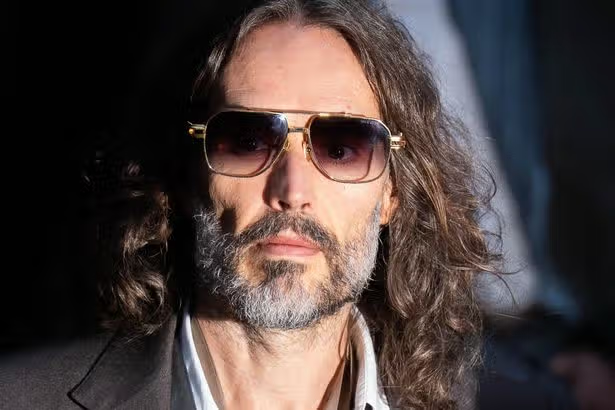
Russell Brand told to ‘watch his step’ during new life inside prison – and he’ll be ‘lowest of the low’
Serial sex predator Russell Brand will be regarded by fellow inmates as the “lowest of the low”, a prison advisor has said.
As both a convicted rapist and a celebrity, Brand will be seen as a target simply because he is famous, or by those wanting to extort money from him.
After being sentenced on Monday to 10-and-a-half years in jail, Brand, 51, was reportedly taken to HMP Wandsworth, a Category B security prison built in 1851 that holds around 1,300-1,500 inmates – almost double what it was originally designed to accommodate. Former prisoner Chris Atkins said of the jail: “It is a form of hell.”
According to those who have served time in jail, the first night as a sentenced prisoner is often the hardest part of all.
“To be clear, this performance was consistent with what we had anticipated.” (President, CEO & Director Nicholas Curtis)
“Total revenue in the third quarter was $14.1 million, a 1% decline from the $14.3 million a
Seeking Alpha’s Disclaimer:This article was automatically generated by an AI tool based on content available on the Seeking Alpha website, and has not been curated or reviewed by humans. Due to inherent limitations in using AI-based tools, the accuracy, completeness, or timeliness of such articles cannot be guaranteed. This article is intended for informational purposes only. Seeking Alpha does not take account of your objectives or your financial situation and does not offer any personalized investment advice. Seeking Alpha is not a licensed securities dealer, broker or US investment adviser or investment bank.
WASHINGTON — Senate Republicans met Tuesday to discuss their future and were expected to reconvene in the afternoon as they decide whether to keep South Dakota Sen. John Thune as their leader. The meetings come just a week after steep losses in the midterm elections that cost them their majority.
Thune is expected to be reelected, given that he remains popular with his GOP colleagues and is so far running unopposed. But senators left the meeting after two hours of discussions with no resolution on a way forward.
“We want to be thoughtful and do the right thing,” said West Virginia Sen. Jim Justice as the meeting broke up. He said no obvious alternative had emerged, but “there is a legitimate argument that if we lost as badly as we lost, why would we continue on with the same leadership?”
At the same time, the current GOP leadership “didn’t cause this problem to happen,” Justice said.
Some Republicans who returned to Washington on Monday for the first time since the election wipeout that cost them at least seven seats had said beforehand that it’s too soon to endorse the status quo.
“We need to have some real soul-searching,” said Wisconsin Sen. Ron Johnson, who circulated a letter to the conference asking for a delay in the closed-door, secret-ballot leadership elections. “We can’t just continue on business as usual — that kind of defeat demands change.”
Still, Johnson conceded that there’s no one else on the ballot.
“That’s part of our problem, who would want the job?” he said, turning to a reporter and joking, “Do you want it?”
The angst comes as the party is just beginning to reckon with what the election results mean for GOP lawmakers and how soon they can try to rebuild their ranks. Two additional races remain uncalled in Alaska and Mississippi that could further deplete their numbers.
The Republican leadership declined to move the elections, which include contests for other party leaders as well and are held in the small Old Senate Chamber just down the hall from the large one used Tuesday. But senators could still seek a vote to delay them.
Thune said on Monday they will have a “very fulsome, robust conversation about where we go from here and then we’ll see what the consensus of the conference is.”
“Ultimately that’s a decision made by Republican senators,” Thune said.
Despite some critics, Thune has respect from colleagues
Thune, who replaced Sen. Mitch McConnell of Kentucky as leader in early 2025, has spent much of the last two years navigating President Trump, who has often been at odds with the Senate.
While backing up Trump on most policy, Thune has refused to change Senate rules and scrap the filibuster to pass voting legislation that would require proof of citizenship for all voters — a position that frustrated Trump and enraged some in the president’s political base.
But Trump hosted Thune and his family at the White House in October. He said Monday that the GOP leader is “a very fine man.” The election is “up to the Senate,” Trump said.
Thune has made it a point to hear out different viewpoints before he makes major decisions and has maintained close relationships with the rank and file — a different approach from his predecessor, McConnell.
Thune “has widespread support” among Republican senators, said Oklahoma Sen. Jim Lankford, who said he supports having the elections on Tuesday when many of the new GOP senators are already in town for freshman orientation.
“It’s a pretty complicated role to be able to manage,” Lankford said. “No one wants that job.”
Walking into the meeting, South Dakota Sen. Mike Rounds said most senators are ready to move forward. It is time to have “leadership in place,” he said.
Republicans push to delay leadership elections
Still, Johnson and others in his conference say Tuesday’s leadership election is too soon.
The midterm election was “an incredible repudiation of the focus of this Congress for the last two years,” said Missouri Sen. Josh Hawley, citing reductions to Medicaid and rural hospital funding in the sweeping tax cuts bill that Republicans pushed through last year. Hawley voted for the legislation after criticizing it.
Hawley said he hasn’t “heard any acknowledgement of that yet from leadership, which I think is extremely alarming,” and he also hasn’t heard from Thune personally.
“I want to hear that we are going to have a different direction,” including ways to lower costs for Americans, Hawley said.
Pennsylvania Sen. Dave McCormick in a statement over the weekend said Republicans shouldn’t choose a leader until the lessons of the election have been “digested and debated.” Indiana Sen. Jim Banks said Republicans need to “sit down and have a frank conversation about where we fell short.”
Republican Sen. Mike Lee of Utah, one of a few senators who signed Johnson’s letter asking for a delay, said any leadership contest should come after the two outstanding Senate elections in Alaska and Mississippi are decided.
Neither of those races has yet been called, so it’s unclear if Republican Sens. Dan Sullivan of Alaska and Cindy Hyde-Smith of Mississippi will be returning to the Senate next year.
Thune looks to the next Congress
The soul-searching comes as lawmakers are trying to wrap up the year’s work — funding the government and seeing if there are some issues where they can work together, including an energy permitting bill that moved forward on a bipartisan vote Monday evening.
Republicans will try to confirm as many of Trump’s nominees as they can before the new Congress begins in January, and Democrats will strategize on how to best keep up their momentum into next year.
Thune is expected to emphasize his collaborative approach to his colleagues and point out what they did get done in the last year — including the tax and spending cuts legislation and an attempt at reining in the chaotic annual spending process.
In his first remarks on the Senate floor since the election, which he called a “tough night,” Thune previewed his pitch to his colleagues who are looking for answers on how they will navigate the minority.
Republicans will be willing to work with Democrats, Thune said Monday, but “the American people are not looking for socialist government and leftist fantasies.”
Despite gains, Democrats are having similar conversations
Across the aisle, Democrats who could hold as many as 56 seats next year are having private discussions about whether New York Sen. Chuck Schumer is still the right person to lead them.
Schumer has found critics on the left and the right of his caucus as candidates from both sides declined to say in the campaign whether they would support him as leader. Maryland Sen. Chris Van Hollen and Michigan Sen. Elissa Slotkin have both considered challenging Schumer, but neither has announced a run.
Many in the party have said it’s time for generational change after Schumer’s 12 years as leader. Still, Schumer appears to have widespread support from his members after carrying his party to massive wins in Tuesday’s elections.
Sen. Kirsten Gillibrand, Schumer’s New York colleague and the head of the Democratic Senate campaign arm, predicted that he will win enough support. Schumer not only won the Senate back but he “cares deeply, and he understands politics well,” she said.
Jalonick and Sloan write for the Associated Press.
At the World Cup, the 29-year-old was was put to sleep to correct his heartbeat and was given the all clear to play in the opening 1-0 victory over Haiti in Massachusettes.
“I had to go and get the shock on my heart,” the former Manchester United player, who also also played the 90 minutes in the losses to Morocco and Brazil, said.
“I was two days before the Haiti game. You’ve prepared so well. I was in such good condition and then something like that happens. You’re thinking, ‘how is this happening to me’?
“You have to get on with it, that’s the cards that you’re dealt in football. Sometimes, things don’t go your way.
“I was 100% [fit], but obviously, whenever you’re sat in a hospital bed two days before the first game of the World Cup about to get put to sleep, it’s not ideal, is it?”
Seven-time Formula One world champion Lewis Hamilton has visited Gaza aid operations in Egypt, touring the Rafah crossing and Red Crescent warehouses to see how supplies are coordinated. The 41-year-old has spoken out about ending conflicts and supporting those in need.
Air Force B-1B Lancer pilots have begun taking to the skies in small, contractor-operated bizjets under a new initiative designed to give them more flying time without putting additional demands on the bomber fleet. The Bomber Supplemental Trainer for Aircrew Readiness (BSTAR) program began flying earlier this month in Abilene, Texas, close to Dyess Air Force Base. Using civilian HondaJet aircraft, the program is supposed to help bomber crews build foundational airmanship while preserving B-1 sorties for specialized combat training, and is now set to expand.
The first military training flight took place on November 2, 2026, with a B-1 pilot from Dyess at the controls. The Air Force officially launched the initiative two days later, with Air Force Global Strike Command (AFGSC) commander Gen. S.L. Davis and an incoming B-1 pilot taking part in the event. Maj. Gen. Ty Neuman, Eighth Air Force and Joint-Global Strike Operations Center commander, also participated in an observer flight.
U.S. Air Force Gen. S.L. Davis, commander of Air Force Global Strike Command, discusses the Bomber Supplemental Trainer for Aircrew Readiness initiative with Airmen and XSTAR Aviation contractor personnel at Abilene Regional Airport, Texas, Nov. 4, 2026. U.S. Air Force photo by Senior Airman Adrien Tran
“Combat-ready aircrews are built on foundational airmanship, sound decision-making and time in the air,” Davis said. He added that the program provides additional flying opportunities at a much lower cost than using the bombers themselves.
The initiative uses a contractor-owned, contractor-operated (COCO) model. XSTAR Aviation provides the aircraft, instructor pilots, maintenance, scheduling, and other support. Flights operate from Abilene Regional Airport, meaning the Air Force does not need to dedicate additional B-1 aircraft or military maintenance personnel to the effort.
The goal is to provide eligible B-1 pilots with approximately 100 additional flight hours each year. That is equivalent to roughly four additional two-hour sorties per month. The training focuses on core flying skills, including instrument procedures, mission planning, aircraft handling, and crew resource management.
A U.S. Air Force B-1B pilot conducts a preflight inspection of a contractor-operated aircraft at Abilene Regional Airport, Texas, Nov. 2, 2026. The flight marked the first military training sortie of the Bomber Supplemental Trainer for Aircrew Readiness initiative. U.S. Air Force photo by Senior Airman Jade M. Caldwell
Those hours are intended to build and sustain general airmanship, not to replace training that can only be conducted in the B-1. Aerial refueling, tactical employment, and weapons delivery will remain part of the bomber’s own training syllabus. The idea is to preserve B-1 flight hours for those specialized requirements while allowing pilots to maintain and develop more basic flying skills in less expensive aircraft.
“B-1 aircrews require precision, discipline, and sound judgment,” Neuman said. “BSTAR increases airmanship, producing safer, more effective and more lethal operators while preserving B-1 flight hours for specialized training.”
Sorties are tracked and debriefed, with feedback and operational data collected to help assess the program’s effectiveness. That information is also expected to inform the development of training curricula and potential expansion of the effort.
A contractor-operated HondaJet departs on the inaugural military training sortie supporting the Bomber Supplemental Trainer for Aircrew Readiness initiative at Abilene Regional Airport, Texas, Nov. 2, 2026. U.S. Air Force photo by Senior Airman Jade M. Caldwell U.S. Air Force/Senior Airman Jade Caldwell
A New Training Model For The B-1 Force
The aircraft and personnel supporting BSTAR began moving into place earlier this year. Positioning and validation flights took place in September, followed by the start of contractor instructor-pilot operations in October.
XSTAR Aviation says the program is designed to grow beyond its initial location. The company plans to expand operations to Rapid City, South Dakota, in January 2027, supporting B-1 pilots assigned to nearby Ellsworth Air Force Base. That would establish a two-location operation serving the bomber’s two principal bases.
The effort is backed by a significant contract award. A March 23, 2026, award notice on SAM.gov lists X-Star Inc. as the recipient of an award worth up to $78 million, including base and option periods. The award is identified as “Bomber Supplemental Trainer for Aircrew Readiness Production Other Transaction SBIR Phase III.”
A U.S. Air Force B-1B assigned to the 7th Bomb Wing takes off from Dyess Air Force Base, Texas, Dec. 25, 2025. U.S. Air Force photo
The award’s objectives extend beyond simply providing aircraft and flight hours. They include developing training solutions and curricula, collecting performance data, evaluating training outcomes, and tracking airmanship trends. The work is also intended to help determine how the model could be sustained and scaled, potentially supporting a steady-state BSTAR Companion Trainer Program across the wider Air Force.
XSTAR Aviation describes itself as a veteran-owned small business created as a direct outgrowth of an AFGSC-led BSTAR study. The company says it was established as a subsidiary of SBCC to manage contractor-owned and contractor-operated aircraft and provide turnkey training solutions for the Department of Defense.
The aircraft being used are civilian HondaJets. The HondaJet family is a light business jet powered by two GE Honda HF120 turbofan engines, with the engines in an unusual installation on pylons above the wings. The Elite II version, for example, has a published maximum cruise speed of 422 knots, a maximum operating altitude of 43,000 feet, and a range of 1,547 nautical miles with four passengers and fuel reserves.
Flying a HondaJet to Austin, TX with Just One Pilot
Companion Trainers Are Nothing New For The Air Force
The use of companion aircraft to supplement pilot training is not a new concept for the Air Force. B-2 pilots, for example, have long used T-38 Talon advanced jet trainers to maintain basic flying proficiency. The smaller jets allow crews to practice skills such as instrument flying, formation work, and aircraft handling without having to use the much more expensive stealth bombers for every training event. The Air Force has also used T-37 and T-38 trainers to support other aircraft communities, including B-52, F-22, KC-135, and U-2 crews.
The idea of using business jets specifically for bomber training also goes back a long way. A 1981 Government Accountability Office (GAO) report discussed an Air Force proposal for a dedicated Companion Trainer Aircraft (CTA) for B-52 crews. The concept called for a small, fuel-efficient, business-type aircraft with avionics similar to those in the Stratofortress. It was intended to supplement simulator training and provide opportunities to practice tasks such as communications, aerial refueling rendezvous, navigation, terrain avoidance, and weapons delivery, while reducing the need to use B-52s for those activities.
The Air Force planned to evaluate the concept in fiscal year 1981, though it never became an operational program.
A T-38 Talon flies in formation with a B-2 during a training mission over Whiteman Air Force Base, Missouri, Feb. 20, 2014. U.S. Air Force photo by Staff Sgt. Jonathan Snyder/RELEASED
What Happens Next?
BSTAR is a modern take on that 1980s-era Companion Trainer Aircraft idea, using contractor-operated civilian business jets to provide supplemental flying experience without requiring the Air Force to acquire and sustain a dedicated fleet of military companion trainers.
Returning to the BSTAR initiative, XSTAR Aviation Executive Vice President of Operations Col. Miles McClung, USAF (Ret.), described the effort as an investment in fundamental flying skills. “Our mission is to build airmanship through flight training,” he said.
For the B-1 community, the program means pilots can gain more time in the air and practice important flying skills without putting additional hours on an aging bomber fleet. The B-1 remains essential for training in the aircraft’s unique mission systems and combat capabilities, but not every proficiency requirement needs to be met in the aircraft itself.
U.S. Air Force B-1B pilots assigned to the 28th Bomb Squadron operate the XSTAR simulator during a Bomber Supplemental Trainer for Aircrew Readiness observation at Abilene Regional Airport, Texas, Nov. 4, 2026. U.S. Air Force photo by Senior Airman Adrien Tran
The initiative is not without its skeptics. One former B-1 pilot, speaking to TWZ on condition of anonymity, questioned how much additional proficiency crews would gain from flying HondaJets, given that its handling characteristics and instrumentation bear little resemblance to those of the Bone. While acknowledging that getting pilots into the air is preferable to relying entirely on simulators, the former pilot argued that the latter can be more useful for practicing bomber-specific mission tasks. The HondaJet also offers little direct benefit to weapon systems officers, who cannot use it to practice the B-1’s specialized mission systems or combat procedures.
The former pilot suggested that BSTAR reflects a wider challenge facing the B-1 community, with reductions in aircraft availability, flight hours, crew numbers, and maintenance resources making it increasingly difficult to maintain the flying requirements of the Air Force’s Ready Aircrew Program (RAP), which establishes minimum standards for retaining combat-ready status. While the contractor-operated approach should be considerably less expensive than generating additional B-1 sorties, he questioned whether the resulting flight time would translate into meaningful improvements in combat readiness.
U.S. Air Force Gen. S. L. Davis, commander of Air Force Global Strike Command, left, in a B-1B during a local training sortie at Dyess Air Force Base, Texas, March 31, 2026. U.S. Air Force/Courtesy Photo
Nevertheless, the economics of the approach are difficult to ignore. A HondaJet is estimated to cost roughly $2,000-$3,000 per flight hour to operate, compared with approximately $90,000 for a B-1B flight hour. Even allowing for a higher effective cost of perhaps $4,000 per hour under the BSTAR contract, that represents a cost difference of more than 20 times, potentially reaching 30-45 times depending on the actual operating costs. The COCO model also gives the Air Force considerable flexibility. After all, XSTAR provides the aircraft, pilots, maintenance, and supporting infrastructure, without requiring the service to acquire additional aircraft, establish new facilities, or assign military personnel to run the operation. As with Red Air adversary providers, the arrangement can also be expanded, recompeted, or discontinued at the end of the contract period, offering a degree of flexibility that would be difficult to achieve with an Air Force-owned fleet.
Fiscal Year 2027 budget documents outline plans for a $342 million investment in upgrades for the Air Force’s remaining 44 B-1Bs over the 2027-2031 period. The funding is intended to modernize the bomber and preserve its combat capabilities through 2037, extending the aircraft’s relevance well beyond its previously anticipated retirement timeline. That extended service life comes as demand for the B-1B remains high, including its recent heavy involvement in Operation Epic Fury. Keeping a fleet that has been reduced by a third viable for another decade will therefore require not only major aircraft upgrades and careful preservation of airframes, but also sustained investment in maintaining aircrew proficiency and readiness.
U.S. Air Force pilots assigned to the 28th Bomb Squadron inspect flight equipment before departing for the UFC Freedom 250 flyover at Dyess Air Force Base, Texas, June 14, 2026. U.S. Air Force photo by Airman 1st Class Caleb Schellenberg
There is also the possibility that BSTAR is spinning up at this point in order to support the Air Force’s forthcoming B-21 Raider. As we have explored in the past, the B-21 fleet could be tasked with a much broader range of operational missions than the B-1 that it will replace, putting a premium on available airframes, which could impact hours allocated to pilot training. The B-21, although built for better efficiency than the B-2, will not be cheap to fly either. A COCO pilot trainer might be one approach to help mitigate that.
In the meantime, as the Air Force works to sustain its bomber force and prepare its crews for their demanding missions, the service eyes BSTAR as a way of adding flying opportunities while keeping the Lancers available for the training only they can provide. Time will tell if that investment proves worthwhile enough for wider adoption.
In late October, two non-Equity touring musicals opened on the same night at two of L.A.’s largest theaters: “Tommy” at the Hollywood Pantages and “The Music Man” at Center Theatre Group’s Ahmanson. The shows — which operate outside of the Actors’ Equity Assn., the union that represents more than 51,000 professional stage actors and managers nationwide — reignited a contentious debate about whether a major regional nonprofit like CTG should host nonunion shows.
Critics questioned whether these productions threaten CTG’s artistic mission and if Angelenos should pay top dollar for nonunion shows. Finally, and perhaps most importantly, what should matter more, a theater’s bottom line or its core values? The underlying implication in much of the criticism was that non-Equity shows are subpar and that hosting them implies a tacit acceptance of the mistreatment of actors.
Savannah Stevenson, who plays Mrs. Paroo in the national tour of “The Music Man,” would like to banish those concerns.
“We should completely dispel the notion that because we’re a non-Equity tour, we’re somehow put through the wringer,” Stevenson said during a phone interview from the Airbnb she was sharing with three cast members. It was a few hours before curtain during the final days of the show’s nearly two-week run in downtown L.A., before it departed for the Capitol Theatre in Yakima, Wash.
Touring small towns like Yakima is a big part of why non-Equity shows exist. The tours began popping up in the 1990s after the rise of the Broadway megamusical, to bring shows to places that would otherwise go without. Before its arrival in L.A., “The Music Man” was in Senatobia, Miss., with a population of about 8,500. A major union show like “The Lion King” will never stop in Senatobia, but the people there can enjoy a bit of River City thanks to Stevenson and the rest of “The Music Man” cast.
“The biggest difference in my mind is, frankly, the schedule. As a non-Equity tour, we do significantly more one-nighters or short engagements,” Stevenson said. “But we also all knew that when we signed up for it. And that is what allows us to share this particular piece of musical theater and musical theater history with such a wide swath of the country.”
Many professional actors choose to remain non-Equity for a variety of reasons, Stevenson said. Jobs are more plentiful for non-Equity actors, she noted, especially if you make a living working at regional houses outside of major cities, which often book only a handful of Equity actors per show. Stevenson recently shared a dressing room and top billing with an Equity actor in a Connecticut show — and other than the fact that the Equity actor was paid more, their treatment was the same, she said.
“We worked side by side every single day, had equally large parts, and I don’t think that anyone coming to that show would have said, ‘Oh, well, gosh, the Equity girl was the real standout in that show,’” Stevenson said gamely.
Elizabeth D’Aiuto, left, Addie Jaymes and Savannah Stevenson in the touring production of Meredith Willson’s “The Music Man.”
(Marshall Meadows)
Stevenson spoke in the wake of a review by Times theater critic Charles McNulty, which called “The Music Man” a “community-theater-level production,” and slammed CTG for “damaging its stature as a nonprofit theater leader by offering such an important showcase to this second-tier touring production.”
The public reception for “The Music Man” was quite warmer. The show ranked above “Amélie, A New Musical,” “Latin History for Morons” and “Paranormal Activity” in audience surveys, according to CTG, and late last week it was on track to outsell “Parade,” “Life of Pi” and “Paranormal Activity.” CTG’s Artistic Director Snehal Desai said each year fans ask for a classic musical and this season only two such shows were on tour: “The Sound of Music” and “The Music Man.” The former (an Equity tour) went to the Pantages, which is run by the for-profit Nederlander organization. That left the latter available to CTG.
The uproar resulting from the non-Equity “The Music Man’s” arrival at the Ahmanson ties directly into the ongoing — and at times overheated — conversation about the future of the American nonprofit theater movement that erupted in late July when the Public Theater’s Artistic Director Oskar Eustis announced his intention to step down after 23 years, declaring the movement “over” and “not coming back.” Since then, theater leaders, including Desai, have been casting around for a brand new way of building a sustainable future. In Desai’s case, that meant attempting to stay in the black — a course of action that is not always looked upon kindly.
Equity vs. non-Equity
The decision to book non-Equity shows was less about saving money than it was about the Tetris-like planning required to keep the Ahmanson gainfully booked, Desai said. The cost of hosting an Equity versus a non-Equity show is about the same for CTG. Non-Equity shows get paid a flat-rate guarantee that is less than what Equity shows seek, but that’s just one piece of the pie, Desai said. CTG also must factor in overhead and local labor costs, production and marketing expenses, and more. This year there are 25 touring Equity shows and 24 non-Equity shows (a number that has stayed fairly steady for the last eight years, with the exception of the height of the COVID-19 pandemic when Equity tours shut down completely). More than 20 available Equity shows went to the Pantages — along with at least five non-Equity shows. This left only a few Equity shows for CTG to choose from, and Desai had to make sure those fit into the schedule.
Aliya Grace in the North American tour of “Boop!,” which is coming next year to the Ahmanson Theatre.
(Matthew Murphy)
This season will see three non-Equity shows: “Clue,” “The Music Man” and Boop!,” which is the rare show to go straight from Broadway to a non-Equity tour.
“The three [non-Equity shows] that we programmed were what was available to us,” Desai said, adding that the shows came from producers CTG had worked with before so he was confident that “they’re maintaining a certain quality. That they’re taking care of the companies. That they’re adhering to standards.”
Daniel Sher, the president of Big League Productions, which is producing “The Music Man” tour, said the organization does its best to follow union rules that are “reasonable.” Big League has produced mostly non-Equity touring shows for about 35 years, and Sher noted that the show’s crew is union, so the production adheres to many union rules by proxy. The Ahmanson is a union house, with its own union crew — so those rules also apply. Sher wishes he could provide health insurance for his actors, but that is cost-prohibitive, so he gives a small health stipend instead.
“I think there’s just a lot of non-Equity work now,” Sher said. “So it’s kind of like it’s a natural market force. As long as there remains this kind of vast amount of work, there are actors who will choose to remain non-Equity.”
Broadway hits will almost always start as Equity tours, he said, but once they stop being money-making juggernauts, they often go nonunion by necessity. That’s the case with “The Music Man,” he said, noting that a show of its size and scope would be financially impossible to stage as an Equity tour in the current marketplace. He would love for the union to consider allowing a mix of union and nonunion actors on national tours — like it does for regional theaters: “There’s a world where the producers and Equity could try to find a way, but the economics just have to work.”
Stevenson’s goal is to keep performing. She was an Equity member at the beginning of her career, then took 18 years off to practice law before returning to acting — this time without an Equity card.
“Whether you are a presenter or a producer or an actor or a member of the crew, or an audience member, we are all aligned around the notion of ensuring that the theater industry does not continue to contract in the way that it has, particularly since the pandemic,” she said. “So if we can ensure that we’re keeping a variety of shows alive and reaching more corners of the country, then we have to make room for both Equity and non-Equity tours.”
The 2025 North American tour of “Clue,” which played at the Ahmanson Theatre during a non-Equity tour.
(Evan Zimmerman for MurphyMade)
Even Actors’ Equity has changed its approach to non-Equity shows. In 2001 the union picketed a previous non-Equity tour of “The Music Man” and in 2014 it ran an ad campaign urging theatergoers to “Ask if it’s Equity,” before buying tickets. That campaign, along with more demanding rules around how an actor could join the union, were scrapped in 2023 out of concern for “small ‘e’ equity and justice, and who should have the decision to join the union,” said Actors’ Equity Assn. sopkesperson David Levy.
Prior rules relied on the employer to decide whether an actor was worthy of joining the union, “and we wanted to put that power back in the hands of the actual members themselves,” Levy said. Actors’ Equity currently has an “open access” policy that allows anyone who has worked in any kind of professional theater in the U.S. to join.
“The quality of the talent in these tours is not any less than the quality of talent on any union stage,” Levy said. “What’s at issue is how that talent is treated, how they’re paid, what the workplace safety rules are, what accommodations they’re given as they travel, whether they get appropriate rest time.”
While the union would prefer that every theater show operate under an Equity contract, it’s aware that this may not be financially feasible in all situations, Levy said, noting that nonunion shows might be the only viable option for smaller towns across the country without rich and diverse theater ecosystems.
“We would never want to deprive those audiences of having that transformational opportunity of seeing singers and dancers and actors and musicians do their thing,” Levy said, adding that L.A., unlike less populous cities, doesn’t have a dearth of theater offerings. “Now, in a perfect world, that job would come with both standardized wages and work rules and benefits, as well as the safety guarantees of a union contract.” He paused, “We do not live in a perfect world.”
The future of nonprofit theater
CTG came perilously close to financially bottoming out in 2023 when it closed the Mark Taper Forum for almost a year and a half. This happened just before Desai took over from Michael Ritchie as the third artistic director in CTG’s history, arriving just in time to pick up the pieces following the COVID-19 pandemic. When CTG finally reopened its theater doors after an astonishing 56 weeks, its staff was decimated, tickets sales had plunged and the cost of putting on productions had skyrocketed. CTG’s staffing still remains more than 20% down from its pre-pandemic high, although its subscriptions are on the rise — up 226% over last year.
“We used to talk to donors about how CTG valued union-only productions, even though they are more expensive, because CTG valued more than just the bottom-line,” former CTG board chair Kiki Ramos Gindler wrote on Facebook in response to McNulty’s review. “Unlike the Nederlander Organization, a for-profit theatre business keenly focused on profits. … The mission is to support our community, not to find ways to keep from going out of business. If this is a path to staying in business, it’s a wrong path and maybe time to take a final bow rather than completely throw away core values.” (Nederlander declined a request for comment on the issue.)
In late September the DeVos Institute of Arts and Nonprofit Management, which was founded at the Kennedy Center in 2001 and supports arts groups nationwide, hosted a nearly two-hour Zoom forum called “Is the American Nonprofit Theater Movement Over?” About 17 major theater leaders spoke on the call that had 800 participants, including Eustis and Desai, all seeking to examine what elements of “a historical model for producing and presenting nonprofit theater in America” have ended, and which remain relevant.
Center Theatre Group’s Mark Taper Forum in 2019, four years before it was temporarily closed due to a financial crisis.
(Al Seib / Los Angeles Times)
“When I first became an artistic director, there were two words that I had never heard before that became my mantra for years: cash flow. These days, a lot of my conversations seem to be focused on three words: minding the gap,” Desai said. “There are so many gaps confronting our field right now. There is the gap between what a production costs and the revenue it can generate. The gap between the impact of the work we make and the value we assign it. The gap between the origin stories of our institutions and the communities we serve. And perhaps, most importantly, there is the gap between the models we inherited and the world we actually live in.”
For CTG, that means keeping the 2,000-seat Ahmanson Theatre booked with revenue-generating shows in order to afford to continue producing work the company does at the Taper and at Culver City’s Kirk Douglas Theatre. “Phantom of the Opera” ran for 4½ years straight at the Ahmanson from 1989 to 1993, a commercial success that enabled a golden age at CTG under founding Artistic Director Gordon Davidson that included the 1992 premiere of Tony Kushner’s groundbreaking two-part play “Angels in America.”
The Ahmanson needs to be that commercial vehicle again, if CTG is to continue pushing artistic boundaries, Desai said. CTG-produced shows are always Equity, while major touring shows arriving at the Ahmanson sometimes aren’t.
“When a show doesn’t meet its goal, it is a huge swing. It is millions of dollars. And so we have to be super careful about what we’re programming,” Desai said. “And I’m also trying to take care of the audience that I’m building in line with the artistic vision.”
SA Spotlight uses AI to summarize content published on Seeking Alpha. All summaries are reviewed by human editors prior to publication.
Torsten Asmus/iStock via Getty Images
Shares of Hims & Hers Health (HIMS), a consumer-focused digital health and telehealth platform, tumbled almost 14% today after the company reported a quarterly earnings miss and reduced its full-year guidance. In morning trading, the stock fell to $19.76, a decline of $3.18 from its previous
Seeking Alpha’s Disclaimer:This article was automatically generated by an AI tool based on content available on the Seeking Alpha website, and has not been curated or reviewed by humans. Due to inherent limitations in using AI-based tools, the accuracy, completeness, or timeliness of such articles cannot be guaranteed. This article is intended for informational purposes only. Seeking Alpha does not take account of your objectives or your financial situation and does not offer any personalized investment advice. Seeking Alpha is not a licensed securities dealer, broker or US investment adviser or investment bank.
A Northern California judge on Monday permanently barred Shasta County from implementing a voter-approved initiative that sought to dramatically reshape voting in the conservative stronghold.
Measure B, which was passed by 56% of voters in the June primary, sought to require hand-counted ballots, eliminate most mail-in voting and require residents to present government-issued photo identification to cast a ballot on election day.
California Atty. Gen. Rob Bonta and Secretary of State Shirley Weber, the state’s top elections official, sued Shasta County days after the primary, arguing that Measure B violates state election laws. Shasta County Superior Court Judge Benjamin Hanna temporarily blocked the measure in August.
In his final ruling Monday, Hanna wrote that the provisions of Measure B “are wholly contrary to existing state law.”
“The regulation and administration of the electoral process is a matter of statewide concern, and Shasta County’s status as a charter county does not entitle it to enact invalid legislation simply because some in this community do not agree with the existing law,” the ruling continued.
Attorney Alexander Haberbush, who represented a group of Measure B supporters, did not immediately respond to The Times’ request for comment. But Haberbush told local television station KRCR that they are “reviewing every option, including an appeal.”
“Today’s ruling tells the voters of every charter county in California that they have no say over how their own elections are run. This ruling goes far further than any state law requires,” he told the station.
The battle over election integrity took hold in the mostly rural Shasta County in 2023. At the time, the Shasta County Board of Supervisors, fueled by President Trump’s unsubstantiated election fraud claims, stopped using Dominion voting machines and opted to hand-count ballots for the county’s more than 110,000 registered voters. The move quickly prompted a new state law that banned them from doing so.
The fight has continued amid Trump’s calls for the government to “nationalize” state-run elections and restrict voting by mail.
Weber in a statement Monday described Measure B as a “colossal waste of time and taxpayer funds” and an attempt to disenfranchise voters.
“Today’s decision affirms what was a forgone conclusion from the beginning,” she said. “As long as there are those willing to enact reckless, illegal, and poorly drafted laws, on behalf of Californians, we will see them in court.”
Sherman Oaks Notre Dame football coach Evan Yabu pulled off a rare feat — he changed what had been working during the regular season with a new strategy for the playoffs.
All season, Tahj Skinner, the team’s best athlete and starting safety, had been playing quarterback. Notre Dame qualified for the Southern Section Division 2 playoffs and faced Corona del Mar on Friday.
That’s when Yabu made a big change. He put in freshman West Dunton, a junior varsity player, to be the starting quarterback to free up Skinner to play receiver and also focus more on defense. Dunton kept his poise to deliver a 20-19 victory. Skinner caught 10 passes.
Yabu said Dunton had been preparing well on junior varsity and it gave the Knights the opportunity to use Skinner’s other skills.
Next up for the Knights is a Friday showdown against top-seeded Chaparral at home.
Call it bold what Yabu did but it worked, and Skinner can always return to quarterback if needed for his running skills.
This is a daily look at the positive happenings in high school sports. To submit any news, please email eric.sondheimer@latimes.com.