Repeated Israeli attacks have created havoc on the country’s wheat production, particularly in the south and in eastern Lebanon’s Bekaa Valley, where lands abandoned due to the impacts of war have increased to around 24 percent.
“They’re disrupting entire ecosystems,” Munira Khayyat, author of A Landscape of War: Ecologies of Resistance and Survival in South Lebanon, told Al Jazeera. “[Israel is] advancing the possibilities of drought and desertification, basically weakening the capacity of this land to hold life.”
Farmlands damaged
Since 2023, Israel has been attacking large swaths of southern Lebanon, including using chemicals like white phosphorus, in what analysts and locals said was an effort to make the ground sterile or uninhabitable. A ceasefire was brokered in 2024 by France and the United States, but Israel never stopped attacking targets in Lebanon.
On March 2, Israel escalated its war on Lebanon for the second time in under two years. Hezbollah had attacked Israel following Israel’s assassination of Iran’s Supreme Leader Ayatollah Ali Khamenei two days earlier. The group also said it was in response to near-daily ceasefire violations by Israel.
Since then, Israel has reinvaded southern Lebanon, taking land up to 10 kilometres (6.2 miles) inside the country. Beirut and Tel Aviv signed a US-brokered framework agreement in June, which was supposed to put into motion so-called “pilot zones”. Under these pilot zones, Israeli troops would withdraw to be replaced by the Lebanese Armed Forces, who would also work to disarm Hezbollah.
Instead, Israeli troops have continued to level destruction in southern Lebanon, detonating homes and crucial infrastructure, including farmland.
“The South [of Lebanon] experienced the highest average losses [in wheat-growing areas], reaching 47 percent in 2023-2024 and 61 percent in 2024-2025,” Mariam Ibrahim, a researcher with Lebanon’s National Council for Scientific Research [CNRS-L] and author of a recent paper called “Wheat in Crisis” that tracked Lebanon’s wheat struggles from 2017 to 2025, told Al Jazeera. “The Bekaa plain, which accounts for approximately 64 percent of Lebanon’s national wheat production, was also significantly affected, losing around 43 percent and 57 percent of its wheat area during the two respective seasons.”
In areas like the border town Bint Jbeil, 100 percent of cropland was destroyed, while in the Baalbeck district to the east, the study says approximately 32 percent of cropland was destroyed.
Wheat price influences
Ibrahim said the Russian-Ukrainian war led to an increase in bread prices and incentivised some domestic Lebanese production.
“The depreciation of the Lebanese pound meant that farmers could potentially generate higher revenues and profits in local currency when selling their wheat, as wheat prices were increasingly influenced by international market prices,” she said. “This provided an additional economic incentive to expand wheat cultivation, and our results showed that Lebanon’s wheat cultivation area reached its peak [during] the 2022-2023 season.”
However, experts said that since 2023, Israel’s war on Lebanon led to the proportion of land that had been used to grow wheat that was now left fallow increasing from 9 percent to 24 percent, mostly in the south and the Bekaa Valley.
Elias Ghadban, a food security expert with the independent Beirut-based consultancy firm AgriDev, told Al Jazeera that the destruction of land used to farm wheat has not made a “significant difference” at the national level, but it has had a damaging effect on southern wheat farmers who “lost their livelihoods”.
Ghadban also pointed to the fact that the cost of living has increased in Lebanon while salaries have failed to match that increase. “The expenditure on basic needs went up,” he said.
The economic crisis, followed by three years of war, has devastated many farmers, particularly as much of southern Lebanon’s farmland is largely unindustrialised. Experts warn that the destruction caused by Israel’s war could prevent many farmers from rebuilding their livelihoods, even after the fighting ends.
“All those small farmers who have made southern Lebanon what it is today and have been able to hold that land through their attachment to it, through their farming of it, through their existential need to be on that land in order to make their lives viable, that’s going to be broken,” Khayyat said.
Abdel-Malek, the captain and goalkeeper of Gaza Sports Club, recently played in the Thousand Martyrs Cup final.
Palestinian footballer Mahmoud Kamal Fares Abdel-Malek has been killed in an Israeli air strike on Gaza, the Palestinian Football Association (PFA) has confirmed.
The PFA said Abdel-Malek, the captain and goalkeeper of Gaza Sports Club, was targeted in Tuesday’s attack on Gaza City’s southern Sabra neighbourhood.
Recommended Stories
list of 4 itemsend of list
The 20-year-old was the 1,017th person involved in sport to be killed in Gaza in Israel’s genocidal war on the enclave, according to figures provided by the PFA.
Abdel-Malek’s death came five days after he played in the final of the Gaza and Northern Gaza division of the Thousand Martyrs Cup, a tournament named after the more than 1,000 athletes and sports officials killed in the Strip since October 2023.
“Club legend and goalkeeper of the first team Mahmoud Kamal Fares Abdel-Malik was martyred moments ago,” the club wrote in a social media post announcing his death.
More than 200 clubs competed, including 146 from the occupied West Bank, 44 from Gaza, and 36 from Palestinian refugee camps in Lebanon.
The tournament kicked off simultaneously in the three locations.
PFA President Jibril Rajoub said the event showed that Palestinians had not lost their “national will”.
“Nor have we lost our belief that sport will remain a symbol of hope and life,” he added.
Abdel-Malek’s death comes days after Israeli forces killed 15-year-old Mohammad Nidal Barbak on Friday, shooting him while he was playing football with his friends in the al-Mawasi area of Khan Younis.
The incident has highlighted FIFA’s inaction towards Israel, despite its multiple breaches of the global football body’s anti-discrimination rules.
In March, the PFA called for the Israeli Football Association (IFA) to receive a ban after a report by FIFA’s disciplinary committee found that the IFA “failed to take meaningful action against Beitar Jerusalem” for “persistent and well-documented racist behaviour”.
“We maintain our right and continue our efforts to ensure that the Israeli Football Association is expelled from all international institutions,” Rajoub, who also heads the Palestine Olympic Committee, said at the time.
On the alleged criminal activity of Israeli sports officials, Rajoub said he was referring to instances of players killed during the three years of genocide in Gaza, and the destruction of many of the territory’s sports facilities.
Israeli attacks have devastated Gaza’s sports infrastructure, destroying stadiums, clubs, sports halls and academies as well as bulldozing several sports facilities, Palestinian sports officials say.
The human losses and destruction have left Palestinian sport in an “existential” crisis, according to Palestinian Sports Media Federation Secretary-General Mustafa Siam.
Israel has destroyed more than 50 of Gaza’s 56 sports clubs and about 20 five-a-side football fields established by the PFA with support from FIFA, he told the Anadolu news agency in August.
At least 74,645 Palestinians have been killed since October 7, 2023, while 175,978 have been injured, according to the Palestinian Ministry of Health.
The next series of I’m A Celebrity… Get Me Out Of Here will begin on Monday with some huge names taking part, including Wayne Rooney, a Gavin & Stacey star and a Paralympian
16:25, 11 Nov 2026Updated 16:26, 11 Nov 2026
I’m A Celebrity is back on Monday with a fresh new cast, ready to take on Bushtucker Trials. From Wayne Rooney to AJ Odudu, this is perhaps one of the most Jungle-ready casts ever – but who will walk away as the champion?
According to insiders, this year’s cohort are coming in well-equipped with survival skills they’ve learnt from previous TV shows and travels. Paralympian Ade Adepitan, took part in BBC Two’s Beyond Boundaries in 2005, and spent four weeks trekking 220 miles through the Nicaraguan jungle in a customised wheelchair, while Mariella Frostrup has hiked in the foothills of Mount Everest and explored remote parts of South America as a hobby.
To see more of the stories you love from The Mirror and to find them easily in Google then make us your preferred source. Free and easy-to-do, just click on the link here to find more from The Mirror at the top of your feed.
YouTube star Sharky has already taken part in a 24-hour survival challenge in the Australian wilderness, while model Leomie Anderson experienced life in the Costa Rican jungle during Netflix’s Celebrity Bear Hunt. Even Big Brother presenter AJ Odudu has experience of roughing it outdoors, having spent time in the freezing Chilean Andes during Channel 4’s Celebrity SAS: Who Dares Wins.
A show insider said: “The show can be very tough at times especially when the weather turns and hunger kicks in but this year’s jungle intake are much more hardy than usual and should be able to take being in the wilderness in their stride.
“The casting team couldn’t believe it when the extent of the contestants’ experience became clear – it should, in theory, be a walk in the park for some of them but we will have to wait and see.”
But, despite the skills of these contestants, some have guessed that it will be Gavin & Stacey actress Joanna Page who walks away a winner. The star touched down in Australia earlier this week, dress the part in leopard print trousers.
Speaking on Wednesday’s episode of Good Morning Britain, entertainment correspondent Richard Arnold wasted no time in tipping Gavin and Stacey star Joanna for victory, citing her “chattiness” and “warming personality”. Richard told GMB hosts Richard Madeley and Susanna Reid: “Joanna Page has absolutely what it takes to be Queen.”
He added: “She loves a chatter, she loves a natter, and if you’ve listened to her podcast, you know that. She’s so warm, she’s the every woman.”
Richard went on to say: “Joanna Page has also said in a pre-interview she wants people to know the real Joanna, and to make her children proud. I think Joanna has already opened a book quite far, as I say, on her podcast, but she is so adorable. So I think I’ve probably staked my claim already; I’m probably getting in early for her to be queen of the jungle.”
Richard also added that Ricky Wilson, of the Kaiser Chiefs, was an “every man” who would be able to get the jobs done that needed doing, while footballer Wayne had “some skin in the game”. He said Claire Sweeney was likely to be “singing around” as she had “a gob on her, and it’s a lovely one”.
SA Spotlight uses AI to summarize content published on Seeking Alpha. All summaries are reviewed by human editors prior to publication.
Rasi Bhadramani/iStock via Getty Images
Cloud platform company DigitalOcean Holdings (DOCN) rallied just over 11% on Wednesday. trading at $88.11 in late-morning trading. This represented a gain of $8.59 on the day.
The rebound came after DOCN lost about 41% over the past month, with earnings from
Seeking Alpha’s Disclaimer:This article was automatically generated by an AI tool based on content available on the Seeking Alpha website, and has not been curated or reviewed by humans. Due to inherent limitations in using AI-based tools, the accuracy, completeness, or timeliness of such articles cannot be guaranteed. This article is intended for informational purposes only. Seeking Alpha does not take account of your objectives or your financial situation and does not offer any personalized investment advice. Seeking Alpha is not a licensed securities dealer, broker or US investment adviser or investment bank.
WASHINGTON — The White House’s top lawyer is raising the possibility of criminal investigations into House Democrats, arguing that the inquiries they plan to open into President Trump and administration officials could themselves break the law.
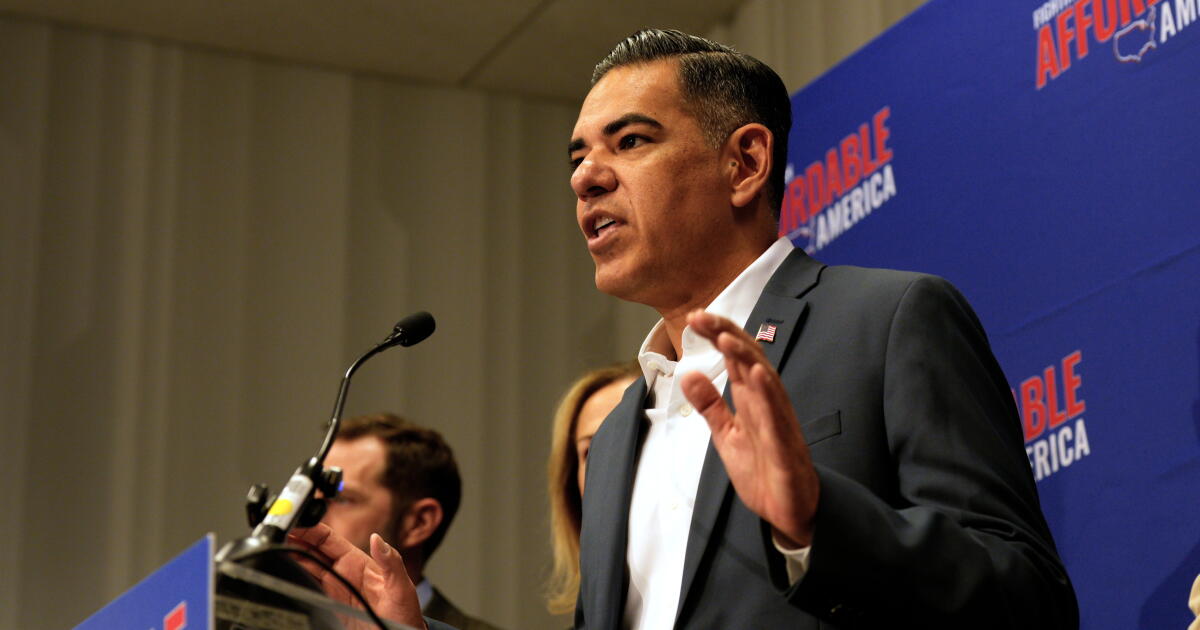
Will Scharf, the White House counsel, made the warning in a letter dated Monday to Rep. Robert Garcia (D-Long Beach), who is in line to lead the House Committee on Oversight and Government Reform, when Democrats take control of the chamber in January.
“We are monitoring the abusive and capricious threats that are now proliferating from Democrat legislators who seek to abuse the legislative process to intimidate and to interfere with the lawful functioning of government,” Scharf wrote.
Scharf cited recent statements by Democrats in news reports about their intent to investigate alleged corrupt practices by administration officials, and wrote that Congress needs to “identify a legitimate purpose underlying its investigative acts.” Otherwise, he argued, a “process designed merely to abuse or instill fear in the recipient may cross the line into blatant criminality.”
“And issuing unlawful subpoenas with the intention of depriving citizens of their constitutional rights and privileges may warrant further investigation,” he wrote.
The letter marks a sharp escalation in the administration’s posture toward Congress, which will soon be under the control of Democrats following the midterm elections. Rather than fighting congressional investigations after they begin, the White House is moving preemptively, threatening the investigators before they even take control of the chamber.
It is an effort sets up a showdown over Congress’ oversight powers and the White House which is likely to define the last two years of Trump’s term.
Garcia had not received the letter as of Wednesday morning, a person familiar with the matter told The Times, adding that Democrats learned of it through news reports. The letter was first reported by Punchbowl News.
In a statement, Garcia argued the threats from the White House are an attempt to infringe on the committee’s constitutionally protected right to conduct congressional oversight.
“It appears Donald Trump has something to hide,” Garcia said. “Let’s be clear: Congress’ authority comes from Article I of the Constitution, not from the permission of the White House. Congress has wide latitude to conduct investigations and oversight, an authority inherent in the power to legislate.”
He added: “We are a co-equal branch of government and will not be deterred by baseless threats from a weaponized DOJ or from the President’s lawyers.”
The White House did not immediately respond to a request seeking comment.
IT’S a very, very long time between now and being able to enjoy T-shirt weather here in the UK.
So if you’re finding the prospect of several months of dark afternoons and cloudy skies a bit depressing – we’ve found some VERY cheap sunshine holidays to break up the grey.
Rob Brooks is a holiday expert who spends all day searching through customer reviews, hotel prices and live holiday bookingsSource: Rob Brooks
I’m a holiday expert who spends all day searching through customer reviews, hotel prices and live holiday bookings – and when I’m not doing that I’m on the ground, reviewing all inclusive hotels.
So here I am, sharing what I’ve learnt about some of the best places to go for a cheap bit of sun between now and late spring.
I’ve picked my favourite five-night escapes every single month, from November 2026 through to April 2027, that all cost less than £150pp.
The £150 covers the flights and accommodation, so you’ll still need spending money, but it’s an incredible starting point.
I’ve found the deals and made sure to mix in places where there’s plenty to explore with somewhere to slow down, get by the sea and enjoy a change of scenery.
Something different each month, with the next trip already waiting when you get home. Here’s how I’d do it…
November: Marrakech, Morocco, from £105pp
Marrakech is still a warm destination even in winterSource: Alamy
I’d kick things off somewhere that feels a very long way from a British November.
And Marrakech does that in heaps: spice stalls, colourful courtyards, rooftop cafés and the bustle of Jemaa el-Fna.
You can spend hours exploring the souks, watching craftspeople at work and trying to convince yourself you’ve got room in your luggage for that Moroccan lamp.
With average daytime highs around 23C in November, there’s a very appealing prospect of sitting outside in the sunshine while everyone back home is discussing whether to put the heating on.
The deal I found is five nights, room only, at Hotel Aday from £105pp, including direct return flights from Manchester on November 28, 2026.
The hotel is in the medina, a few minutes from Jemaa el-Fna and, for this trip, that’s where the value lies: you’re staying close to the action, with the markets and historic centre ready to explore.
I’d spend the first day getting my bearings, then work through the souks and sights at my own pace, then come evening, I’d find somewhere overlooking the square and watch the city put on its show.
At £210 for two people, including flights, that’s quite the opening act.
December: Bugibba, Malta, from £110pp
From Bugibba you can go on some great day tripsSource: Alamy
December’s escape is Malta, where five nights gives you time to combine a seaside base with some brill days out.
I’d use Bugibba as the starting point, then head into Valletta for a day in the capital and make another trip to Mdina (both are accessible by bus from Bugibba, so you can get a good taste of the island without hiring a car).
There’s something particularly satisfying about spending a December afternoon having coffee outside with the sea nearby, and Malta gives you the opportunity to do exactly that, with sightseeing to fill the rest of the diary.
The deal I found is five nights, room only, at Topaz from £110pp, including direct return flights from Bournemouth on December 7, 2026.
One hotel feature I especially like for these dates is the indoor pool, available during the colder months.
There’s also a lounge with a small library for anyone whose holiday ambitions include finally finishing their book.
That’s £220 for two people, including flights, for five nights away before Christmas.
So leave space in your suitcase as it’s a great place for some Christmas shopping too.
January: Naples, Italy, from £110pp
Great pizza and cheap holidays make Naples the perfect spotSource: Alamy
January needs a better plan than sitting around, waiting for payday, and my ideal plan would involve Naples and a considerable amount of pizza – for just over £100.
This is the month I’d definitely lean into a city break: beautiful churches, delicious coffee stops and the only decision to be made is which pasta dish to try on the menu.
Five nights gives you time to get beyond the first few sights and start finding your own favourite corners.
The deal I found is five nights, room only, at Royal Art House H Duomo from £110pp, including direct return flights from London Stansted on January 9, 2027.
The property is on Corso Umberto I, putting you close to the historic centre, although its transport connections also make Pompeii or Herculaneum very possible additions to the itinerary.
January’s typical daytime temperatures are around 12–13C, which suits a trip where you’re out exploring rather than planning everything around a sunlounger.
Catch a bright afternoon and I’d make time for an outdoor cocktail between sights.
I’d explore Naples itself for a few days, then consider one bigger excursion – there’s no need to rush back after a single night when five nights and the flights cost £220 for two.
February: Alanya, Turkey, from £135pp
Alanya has both fantastic beaches and historySource: Alamy
February takes us to Alanya, where I’d make the most of the mix of history, Turkish food and decent weather in a gorgeous location.
The castle is the obvious place to start, with the harbour and town giving you plenty more to explore.
It’s a holiday where you can do something interesting in the morning, then spend the afternoon deciding how much or how little you fancy doing next.
Average daytime highs are around 15C in February, giving you some welcome mild-weather potential for getting out and about.
The deal I found is five nights, room only, at Villa Sonata Hotel from £135pp, including direct return flights from Manchester on February 23, 2027.
Villa Sonata is one of a villa complex, and there’s an on-site restaurant for meals at a modest extra cost.
It has the sort of setting I’d enjoy returning to after a day exploring: somewhere to sit down, order something and declare myself finished for the afternoon.
For £270 for two people, including flights, you’ve got five nights to enjoy Alanya’s sights, sample Turkish dishes and take February at a much more agreeable pace.
March: Lloret de Mar, Spain, from £145pp
You might not have heard of Santa Clotilde Gardens but it is a great side of Costa Brava to exploreSource: Alamy
For March, I’d head to the Costa Brava and give Lloret de Mar a go – and the Santa Clotilde Gardens would be high on my list.
They’re perched above the Mediterranean, with terraces, greenery and sea views that make a very convincing case for taking your time.
If you watched House of the Dragon, you might even recognise the setting as scenes were filmed here!
The deal I found is five nights, self catering, at Els Llorers Apartments from £145pp, including direct return flights from London Luton on March 14, 2027.
The apartments have kitchens with a fridge and microwave, so breakfast, snacks and cold drinks are easy to sort yourself – that leaves more of the spending money available for the things you actually want to do.
I’d build this trip around exploring the town and making the most of bright spring afternoons by the sea.
Having your own apartment also makes the slower days easy: breakfast when you fancy it, a book and no pressing reason to check the time.
All for just £290 for two people, including flights. Crazy deal!
April: Albufeira, Portugal, from £145pp
With 20C highs in April, you can’t go wrong with a trip to the AlgarveSource: Alamy
I’d finish the six-month run soaking up the sun in the Algarve.
Albufeira gives you beaches, an old town to explore and plenty of choice when it comes to eating out – Fishermen’s Beach sits directly in front of the historic centre, so you can combine a morning around town with an afternoon on the sand.
With average daytime highs around 20C in April, this is one where I’d be hoping to get plenty of use out of the sunglasses.
The deal I found is five nights, room only, at Areias Senses (Adults Only 16+) from £145pp, including direct return flights from London Luton on 25 April 2027.
There’s an outdoor pool with sunloungers, giving you somewhere to settle on those sunny afternoons.
And the room only basis also means you can try different places for breakfast and dinner rather than organising the day around set mealtimes.
I’d mix exploring Albufeira with beach time and a couple of afternoons doing very little around the hotel.
Plus, by holiday number six, I’d expect to be quite accomplished at that. And for £290 for two people, including flights, it’s a very, very tempting finish.
Tehran, Iran – After months of oscillating between new bouts of fighting and negotiations, the administration of United States President Donald Trump has reportedly opted for a third option – gradual economic pressure on Tehran.
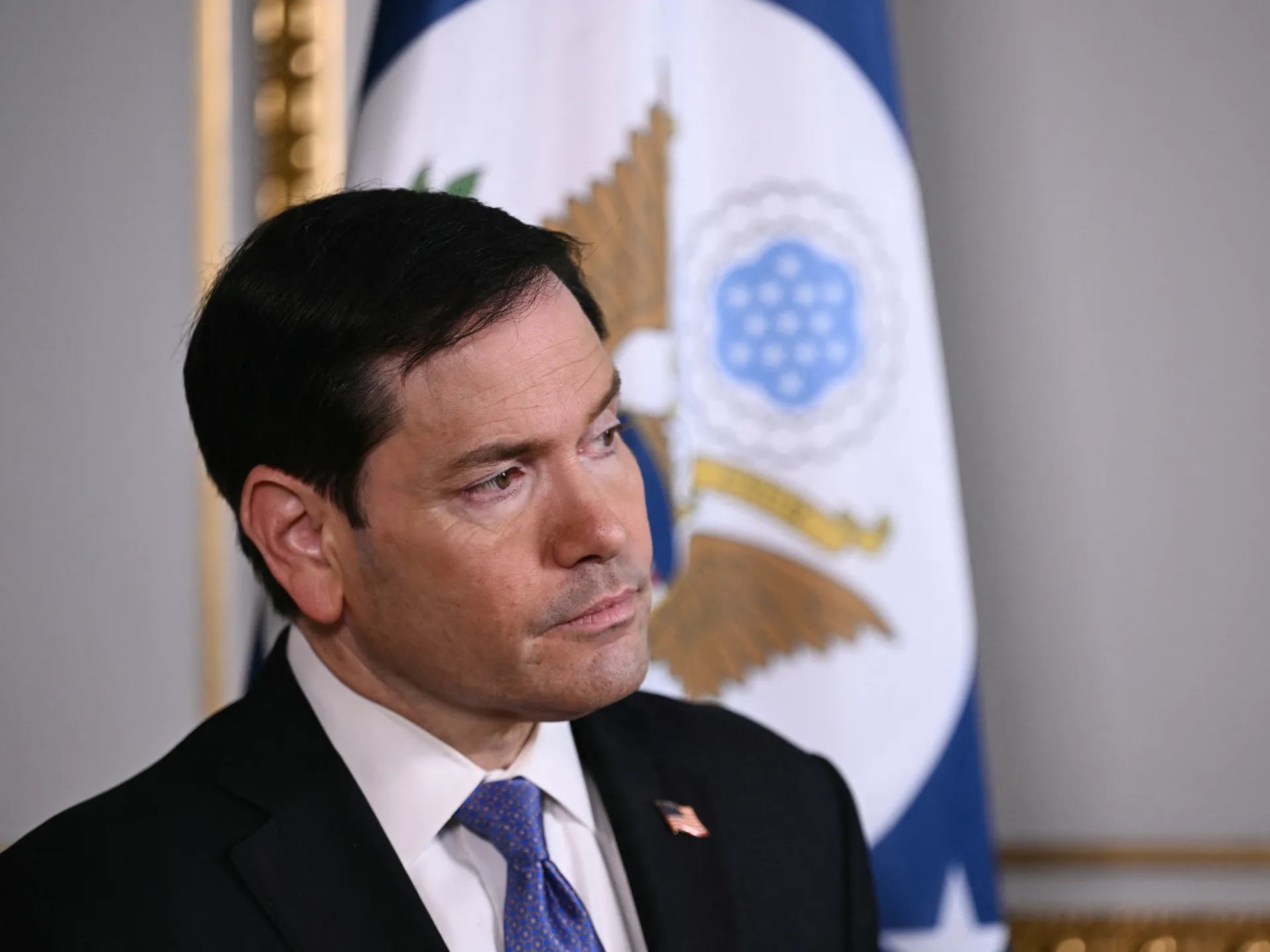
US Secretary of State Marco Rubio told his Group of Seven (G7) counterparts in Paris on Tuesday that a naval blockade, stringent sanctions and overland border disruptions could continue without a clear endpoint in sight, according to US media. He later said that Iran’s economy “continues to collapse” and predicted worsening conditions over the next one to three months.
Recommended Stories
list of 3 itemsend of list
Tehran-based economist and market analyst Isaac Saidian said that if the persistent economic siege on Iran brings the country’s oil incomes down to near-zero levels, Tehran will be faced with one of the most difficult challenges in its recent history.
“The issue is not just a decline in foreign currency incomes, but the government’s ability to account for current expenditure, paying salaries and pensions, providing essential goods, preserving the value of the national currency, and preventing budget deficits from turning into a new inflationary wave,” Saidian told Al Jazeera.
Iran’s President Masoud Pezeshkian has indicated that the cash-strapped civilian government is preparing to deal with a prolonged economic crisis caused by siege and sanctions, but has admitted that the lingering “no war, no peace” conditions will be harmful.
But the authorities have stressed that there are no prospects of economic collapse. They have also raised the prospect of “breaking the blockade” if necessary, although it remains unclear by what means.
Iran’s President Masoud Pezeshkian speaks with Russia’s President Vladimir Putin during their meeting on the sidelines of the Summit of Heads of State and Government of the Gas Exporting Countries Forum (GECF) at the Grand Kremlin Palace in Moscow, Tuesday, October 27, 2026 [Igor Ivanko/Pool Photo via AP]
In a budget directive on November 3, Pezeshkian’s administration set out two scenarios. One was the continuation of sanctions, the maritime blockade and present regional conditions. The other prediction was an improvement of the situation involving fewer financial and commercial restrictions, including a substantial or complete removal of the blockade.
“The government must prepare for circumstances in which oil revenue reaches zero,” Mohammad Ghasemi, deputy for coordination of planning and budget at Iran’s Plan and Budget Organization, told local media on Monday about a contingency for next year.
The US military first imposed a naval blockade of Iran’s southern ports, through which most of the country’s trade passed, on April 13. A memorandum of understanding in June lifted the blockade and allowed some oil and trade to pass through the Strait of Hormuz, but the deal fell apart within weeks. The second blockade has been in place since July 14, as Iran and the US fight for control of the Strait of Hormuz.
The US military says it has redirected 147 ships and disabled five while enforcing the blockade. It also claimed to have destroyed 10 Iranian oil tankers linked to the shadow fleet of Iran’s Islamic Revolutionary Guard Corps (IRGC). According to the US Treasury, the blockade has led to Iran loading no oil onto vessels since August 25.
A late October assessment by Kpler said Iran’s oil production had fallen below 2 million barrels a day in the preceding months. Iran produced 3.45 million barrels of crude per day in January and 3.59 million in the following month, but Israel and the US’s war on Iran began on February 28.
The volume of Iranian crude and condensate floating outside the blockade zone had also fallen from 88.8 million barrels on July 14 to zero in mid-October. Because Chinese buyers generally pay one to two months after discharge, Kpler anticipated crude and condensate receipts potentially drying up around mid-December. Around 43 million barrels remain stranded inside the blockade area.
The US sanctions have also limited air travel to and from Iran, while a new US task force announced this week aims at closing or disrupting most of Iran’s land borders with its seven neighbours.
The Iranian economy has already been dealing with chronic inflation, falling investments and purchasing power, as well as banking and budget imbalances for years. So removing oil revenues will undoubtedly exacerbate the situation.
The government has increasingly relied on taxes to account for a larger share of the budget, but oil still accounted for roughly one-third of planned government funding in the 2026–27 budget proposal.
Economist Saidian said if oil revenues fall sharply, the government’s next step should be to review public spending. Cutting spending on overlapping administrative structures and opaque budgetary grants, while suspending low-return public investment projects, could ease some of the fiscal pressure on the state, he said.
Reforming tax exemptions and tackling tax evasion, as well as carefully managed bond issuance and sale of some non-essential government assets, are other options. But he cautioned that any abrupt drops in salaries, pensions, or social support budgets would only deepen poverty.
The government has signalled that it will likely have to resort to reducing fuel and other energy subsidies again, which will increase prices, but the process will be gradual to lessen the impact on inflation.
“Expanding non-oil exports and facilitating trade with neighbouring countries are also essential,” Saidian said. “Even so, these exports cannot be expected to replace oil revenue in the short term, especially while restrictions on banking, insurance and transport remain in place.”
Government spokesperson Fatemeh Mohajerani said on Tuesday that next year’s budget would prioritise inflation control through fiscal discipline, household support and tighter oversight of banks. The administration will continue handing out electronic food coupons, although it has been struggling to preserve their value due to runaway prices.
Year-on-year inflation was at nearly 89 percent in the Iranian calendar month ending October 22, according to the Statistical Center of Iran.
Saidian pointed out that no amount of austerity measures or budget reforms can fully replace sustainable access to foreign trade, investment and foreign currency incomes, so exiting inflationary stagnation for a prolonged period would require reduced tensions.
“The historical significance of the 2027-28 budget lies in what it can reveal about how prepared Iran’s government is to move beyond an oil-dependent economy and toward transparent, accountable fiscal governance. The budget should not merely be a plan to manage the government in a difficult year, but a plan to prevent passing on today’s crisis to future generations and to start structural reforms in Iran’s economy,” he said.
“The greatest danger is not that the government might run short of funds for a few months. The real danger is that it could stay afloat on paper while passing the cost of doing so on to the public, leaving society poorer, eroding the middle class, widening poverty and weakening the country’s productive capacity.”
Kongsberg Maritime has unveiled a new fully uncrewed surface vessel (USV) design, which is based on a hardy fishing vessel, intended to meet the Royal Navy’s emerging Type 92 requirement. It calls for autonomous platforms to persistently hunt Russian submarines in the increasingly contested waters of the North Atlantic and Arctic.
Dubbed the Arctic Hunter USV, the vessel combines a proven commercial ship design with Kongsberg Maritime’s remote-control and autonomous technologies. It is being developed around an anti-submarine warfare (ASW) mission, with a particular emphasis on providing persistent underwater surveillance in the High North.
A rendering showing the rear aspect of the Arctic Hunter with its notably generous rear deck space. Kongsberg Maritime
The announcement, made November 9, comes as the Royal Navy moves ahead with its broader Hybrid Navy concept, which will see uncrewed vessels and other autonomous systems operate alongside traditional crewed warships and aircraft. The Type 92 is one of four new uncrewed vessel types envisioned under this effort, which is intended to significantly expand the fleet’s overall sensing and weapons capacity.
Bruce Balchin of Kongsberg Maritime, which is headquartered in Norway, told TWZ that the Arctic Hunter concept emerged from the Royal Navy’s stated desire to address the submarine threat in the High North with capabilities that could be delivered quickly and in significant numbers, using commercial shipyards.
“We’ve been following the Royal Navy’s Hybrid Fleet and some of the statements that have been coming from the First Sea Lord,” Balchin explained. “The immediate threat is submarines in the High North. I need things at mass to be delivered at mass and at pace. I need commercial shipyards.”
A rendering showing the Arctic Hunter in the process of deploying its towed sonar aray, with a Type 45 destroyer alongside. Kongsberg Maritime
Kongsberg’s response was to look at an existing commercial vessel design that could be adapted to tow a powerful submarine-hunting sonar. Rather than developing a new military ship, the company saw an opportunity to repurpose an Arctic fishing vessel, replacing its fishing equipment with the systems needed for ASW surveillance.
The resulting Arctic Hunter is based on an existing 184-foot hull design. Kongsberg plans to remove the wheelhouse and fish-processing factory, freeing up space for the military mission systems and equipment needed to operate the vessel remotely.
“Replace towing fish with towing sonar,” Balchin said, describing the basic concept. “It’s not a stretch to say we straight away got a vessel which is hardened to that environment, used to working at that sea state.”
An example of an Arctic trawler design from Kongsberg Maritime — a 184-foot hull form optimized for operations in the North Atlantic. This forms the basis of the hull form for the Arctic Hunter USV. Kongsberg Maritime
There are other advantages to starting with a fishing vessel, too. These ships are already designed to operate for extended periods in demanding Arctic conditions, with relatively straightforward maintenance requirements. They also have the machinery, power generation, and internal volume needed to support substantial mission equipment.
The platform is being designed around a relatively high-performance towed array, the Sonar 2087, developed by Thales Underwater Systems. The Type 92 is intended to provide a significant extension of the Royal Navy’s ASW sensing capabilities, and Kongsberg believes that requires a substantial towed array.
Sonar 2087 already equips Royal Navy Type 23 frigates and will be carried aboard its forthcoming Type 26 ASW frigates.
The Royal Type 23 frigate HMS Somerset escorting a Russian Kilo class submarine through the English Channel. Crown Copyright
Another critical consideration is the vessel’s acoustic signature. A sonar platform needs to be quiet enough that its own machinery and propellers do not interfere with its ability to detect submarines.
“You can have the best sonar in the world, but if you’ve got a very noisy ship, it drowns out everything else you’re trying to find,” Balchin said. “You need a very quiet platform to maximize the performance of your sonar.”
Kongsberg has considerable experience in this area, having designed propellers for the Royal Navy’s Type 23 and Type 26 frigates. The company has applied some of that expertise to the Arctic Hunter, optimizing its hull and propeller design to reduce underwater radiated noise (URN).
This propeller from a Type 23 frigate was put in the National Maritime Museum in Greenwich after being rejected for service as not exactly meeting the technical design specification. Royal Museums Greenwich
The fishing vessel design already offered a relatively quiet platform, partly because of the requirements of its original mission. Kongsberg says it is further improving that performance for the ASW role.
The Arctic Hunter also draws on technology from another Kongsberg project called Reach Remote, an existing uncrewed offshore vessel that operates in the North Atlantic, deploying remotely operated vehicles (ROVs) for survey work.
Reach Remote: Powered by partnership, proven by performance
Rather than developing an entirely new autonomous control system, Kongsberg intends to transfer the proven remote-operation technology from Reach Remote into the Arctic Hunter platform.
“We’re taking a proven platform, proven flag-approved remote autonomy technology with a proven sonar, and then we’ve also added on another layer of military communications,” Balchin said.
Those communications will be designed to provide secure connectivity in the contested and degraded environments expected in the High North.
Kongsberg is designing the Arctic Hunter for up to 60 days at sea without human intervention aboard. The company’s existing Reach Remote vessels already operate for around 30 days at a time, providing a basis for extending that endurance.
The vessel is uncrewed by design, rather than being a conventional ship subsequently adapted to operate without a crew, and this has significant implications for its layout and cost.
“Putting anybody on it for any period of time massively complicates a ship and adds significant costs,” Balchin explained, pointing to the need for accommodation, a galley, water supplies, and other systems required to support a human crew.
Engineers may occasionally board the vessel for maintenance or servicing, but its normal operation will be controlled from shore.
The initial concept is deliberately focused on a relatively straightforward ASW sensing mission. Balchin described this as a “minimum viable capability,” intended to get additional submarine-hunting sensors into the High North as quickly as possible.
Initially, the Arctic Hunter vessels could operate as an uncrewed flotilla, collecting underwater surveillance data and transmitting it to military decision-makers in the United Kingdom. This would provide the Royal Navy with additional sensing capacity without requiring the vessels to operate directly alongside crewed warships from the outset.
Over time, however, Kongsberg sees the vessels working more closely with the Type 26 frigates as those warships enter service.
The future Type 26 frigate HMS Glasgow under construction. Crown Copyright
“Type 26 at the core, and these acting as autonomous wingmen,” is how Balchin described the longer-term concept.
This would give the Royal Navy considerable flexibility in how it deploys the vessels, allowing them to operate independently or as part of a wider ASW formation. It could also help address gaps in the existing frigate fleet by providing additional sensing assets that do not require a crewed warship to remain continuously on station.
Although the Arctic Hunter is being developed primarily as a sensor platform, its design has considerable room for additional capabilities. Balchin highlighted the vessel’s installed power, payload capacity, and unused internal volume as factors that could allow it to accommodate other mission systems.
“We have resisted the temptation to go on flights of fancy at this time around what else it could do, and instead stick to that very simple: we want to get a program of record in quickly,” he said.
The vessel’s potential flexibility could nevertheless be attractive to other navies. Balchin emphasized that the underlying platform is not inherently tied to British systems. For the U.K. Type 92 requirement, it would carry sovereign British sonar and secure military communications, but other customers could select their own equipment.
“If America said, ‘I want to tow a different sonar, and I’d like to have an American communication system in there,’ that’s very easy as well,” he said. It’s worth noting that a version of the Sonar 2087, known as CAPTAS-4, had been planned for the U.S. Navy’s now-canceled Constellation class frigate. The FF(X) that has superseded it currently lacks any built-in sonar array, fixed or towed, and other anti-submarine warfare capabilities.
Unrivalled Anti-submarine warfare with CAPTAS-4 VDS and FLASH dipping sonar – Thales
Kongsberg believes its underlying platform could therefore provide a common commercial foundation for different national requirements, with the military payload adapted to suit each customer.
For the British program, the company is working with its established shipbuilding partner Balaena Maritime, with construction planned at the latter’s Birkenhead yard.
A commercial approach to construction is central to the Arctic Hunter proposition. Fishing vessels operating in Arctic waters typically spend around six weeks at sea before returning to port to unload their catch, refuel, and undergo servicing. They then head back out again, with relatively straightforward shore-based support.
Kongsberg believes the same model can be applied to the uncrewed ASW vessels. Existing commercial shipyard infrastructure, including dry docks and slipways, could support routine maintenance, with additional facilities required for sonar and military communications servicing.
There would also be a remote operations center in the High North to control the vessels themselves. However, the more important decisions about where the flotilla should operate and how its missions should be managed would remain in the United Kingdom.
The Arctic Hunter is also being presented as a potential export product. Balchin said Kongsberg’s separation from the wider Kongsberg Group earlier this year had given the maritime business greater freedom to work with different defense companies and national partners.
For the Royal Navy, the Type 92 is part of a much broader effort to reshape how the service operates at sea. Under the Hybrid Navy concept, four new types of uncrewed vessels will take on different roles, ranging from providing additional missile capacity to extending the fleet’s ability to detect and engage threats underwater and in the air.
The move toward a fleet built around autonomous vessels represents a new venture for the Royal Navy. However, the service is already beginning to establish the operational structures needed to make that transition.
Last week, it formally commissioned its 1st Autonomous Squadron at Portsmouth, a unit of around 180 personnel that will operate uncrewed surface vessels on frontline missions. Initially equipped with Kraken and Rattler craft, the squadron is intended to develop the skills, tactics and experience needed to bring increasingly sophisticated autonomous systems into the fleet. The Type 92 and other larger uncrewed vessels would represent a significant expansion of that effort, moving beyond smaller boats toward persistent, ocean-going capabilities.
Kraken (front) and Rattler unmanned surface vessels of the 1st Autonomous Squadron in Portsmouth. Crown Copyright
The Arctic Hunter announcement also highlights the growing emphasis on industrial cooperation between the United Kingdom and Norway in the maritime domain. The two countries have been working more closely on security in the North Atlantic and High North, including through the Lunna House agreement, which includes an ambition for both nations to lead NATO’s adoption of autonomous systems in the region.
The proposed Type 92 program also comes amid mounting concern over Russian submarine activity in the North Atlantic, where Moscow’s undersea forces remain a significant threat to NATO’s maritime communications, reinforcement routes, and naval forces. Persistent uncrewed sensors could help address the challenge of maintaining surveillance over such a large area, particularly as crewed ASW platforms face competing operational demands.
Russian submarine activity in the North Atlantic has been a growing worry for NATO for years, with the challenge involving not just the number of deployments but the increasingly capable boats involved. As TWZ has reported, Russian submarines are operating for longer periods and carrying more lethal weapons, while newer designs such as the Yasen class are quieter and harder to detect. In April of this year, the United Kingdom and Norway disclosed a month-long operation with Norway and other allies to track a Russian Akula class attack submarine and two small, special-missions submarines operating near critical undersea infrastructure in the North Atlantic. The episode underscored the demands placed on crewed ships and patrol aircraft to maintain persistent surveillance across the region.
The Russian Navy’s Yasen class submarine Severodvinsk. Russian Ministry of Defense
For now, the Arctic Hunter represents an industrially focused proposal for a major element of the U.K.’s emerging Hybrid Navy concept. Its combination of commercial shipbuilding, autonomous vessel technology, and sovereign British ASW systems is intended to offer a relatively rapid route to expanding the Royal Navy’s underwater surveillance capacity.
More broadly, the Type 92 points toward a future fleet in which crewed warships are increasingly supported by uncrewed platforms that distribute weapons, sensors and other capabilities across a wider operating area. While embracing so much unproven technology and concepts comes with risks, the Royal Navy is betting that a combination of autonomous systems and traditional warships can deliver greater firepower, persistence, and operational reach.
People could claim a refund if their living situation changes, with some eligible for up to £155
People who watch TV could be owed money back if their circumstances changed (stock)(Image: Wang Yukun via Getty Images)
TV Licence holders could be missing out on a refund if their circumstances change. In certain situations, people may be losing out on as much as £155, and they can put in a claim for up to two years ago.
Consumer and lifestyle expert for ITV’sThis Morning, Grace Forell, suggests more people could be eligible to reclaim a portion of their TV Licence fee. There are particular circumstances that people must satisfy to qualify – though she says these situations happen more frequently than you might think.
Brits require a valid TV Licence if they watch television and stream live broadcasts on services such as YouTube or Amazon Prime. Many people mistakenly believe the Licence isn’t necessary if they don’t watch BBC content.
Reclaiming the maximum portion of a TV Licence could see households receive up to £155, provided they hold a standard £180 colour TV Licence. The application process is available to anyone who meets the criteria.
Content cannot be displayed without consent
The highest refund available is eleven-twelfths (11/12ths) of the total licence fee, which presently amounts to £155.37. Since a TV Licence refund is worked out based on complete, unused calendar months left on the licence, it’s impossible to receive a full 100% refund once the licence has commenced, reports the Express.
Grace said: “If you buy a licence and then your living circumstances change, you can apply for a refund for the unused months. Say you move into university halls and buy a licence, but then move back home nine months later, as long as your family home has a suitable licence, you can cancel yours and get money back.”
It’s not only students who stand to gain from this. Those who move in with a partner, friend, or family member who already holds a valid licence can apply for a refund on their own licence prior to relocating.
There is, however, one crucial condition that all those seeking a refund must meet. Grace confirms that refunds will only be possible if people have “at least one complete month remaining” on their licence.
Ensure our latest headlines always appear at the top of your Google Search by making us a Preferred Source. Click here to activate or add us as a Preferred Source in your Google search settings
You can request a TV Licence refund online via the TV Licensing Refund Form, or alternatively, ring TV Licensing directly on 0300 790 6071. Applications can be submitted up to 14 days before the date you no longer need the licence. Should your refund be approved, your TV Licence will be cancelled automatically.
For most standard refund claims, TV Licensing states that customers can claim a refund for a licence that expired up to two years ago, with the refund still calculated based on “unused complete months”.
Those making backdated claims will need to supply evidence confirming the precise date they no longer required the licence, such as a tenancy agreement showing when they moved out. Speaking directly with TV Licensing can be particularly helpful for those in more complex situations, where additional proof may be required before a refund is released.
Wall Street’s major market averages rebounded higher for the most part on Wednesday as strong results and upbeat guidance from CoreWeave lifted sentiment across the technology sector.
The blue-chip Dow (DJI) was last -0.2%, the benchmark S&P 500 (
After the earthquakes, Defence Minister Gustavo González López and former Foreign Minister Félix Plasencia stand alongside Maj. Gen. Kevin Jarrard and other US military officers. US personnel then gained access to Maiquetía’s control tower and operations. Source: US Southern Command.
How are the National Bolivarian Armed Forces (FANB) and the rest of the security apparatus actually changing? Both publicly and behind closed doors, a military institution forged in Hugo Chávez’s operational doctrine and hardened under Nicolás Maduro’s governance of patronage, corruption and systemic repression is now actively coordinating with the foreign force that entered national territory on January 3, inflicted heavy casualties across the FANB (predominantly among young service members) and captured the man they answered to as Commander-in-Chief.
The recent news cycle offers hints of how this military cooperation is taking shape in the bilateral Caracas–Washington relationship. On Tuesday, November 3, The New York Times reported that the Trump administration is seeking to lay the groundwork for US military forces to operate and establish a footprint inside Venezuela. Days earlier, local human rights group FundaRedes reported a lethal FANB offensive against the National Liberation Army (ELN) in Apure state, which was reportedly mirrored shortly after in a mining zone in western Bolívar state. Sources cited by the Times noted that the Apure operation was conducted with direct US intelligence and drone assets.
Daniel Blanco, until recently an intelligence analyst at the UK-based risk consultancy Grey Dynamics, has published extensive assessments on military operations, armed groups, and geopolitical dynamics across Latin America, Africa, Ukraine, and the Middle East. He was on the ground in Venezuela earlier this year, observing firsthand the progress made in the post-Maduro phase and the significant operational friction that lies ahead. We sat down with him to discuss whether the nation’s political shifts are penetrating the least visible layer of power: the interior of the barracks, the orders currently being issued, and the practices that have quietly ceased.
At an operational level, where do you see the actual footprint and decision-making power of the United States within Venezuelan security agencies, the Armed Forces, and territorial control?
Ever since the capture and extraction of Nicolás Maduro in early January, we have seen consistent operational indicators suggesting that US tutelage over the Venezuelan Armed Forces is being channeled through a Train, Advise, and Assist (TAA) framework. This model of military cooperation can span everything from instructional training and doctrinal advising to joint operational planning, tactical intelligence sharing, logistics, and inter-unit synchronization, without necessarily requiring US forces to assume direct command of field operations.
A clear precedent was seen in the deployments following this year’s Vargas earthquake, when US Special Forces operated alongside the Venezuelan Military Police and maintained a temporary operational presence at Maiquetía International Airport.
Is the FANB genuinely falling in line under the command of Gustavo González López? From your perspective, what has structurally changed—and what hasn’t—since January 3 and the departure of Vladimir Padrino López?
Armed forces and intelligence apparatuses anywhere in the world can be compared to massive cargo ships: changing their heading takes considerable time, regardless of the immediate intentions of those at the helm. That said, just because broad strategic reorganizations or wide-scale shifts are not immediately visible in public discourse does not mean that tactical-level refinements are not already underway. These improvements have already yielded concrete results, such as the tactical neutralization of Niño Guerrero.
President Trump announced that alleged elimination of Niño Guerrero, which many presume was directly carried out by US assets. Yet irregular groups still exert tight control over Venezuelan gold. What is your read on Washington’s posture toward southern Venezuela, given its strategic interest in Bolívar’s mineral reserves?
The United States has an undeniable strategic interest in stabilizing the Orinoco Mining Arc. Establishing security across the region not only cuts down overarching security expenditures, but also clears the path to scale up industrial mining operations on the ground. You cannot train, employ, and professionalize a local workforce if civilians wake up every morning having to navigate extortion payments to sindicatos (local criminal networks) or dodge anti-personnel landmines planted along transit routes by guerrilla fronts from Colombia.
What can we expect from joint or coordinated FANB operations against the ELN and FARC dissident factions in conjunction with the US and Colombia?
We will likely continue to observe the “Hunter-Killer” framework previously deployed in Bolívar. In this operational model, specialized intelligence units from the Venezuelan Ministry of Defense supply actionable, real-time target data to the US, which then carries out precision kinetic strikes using unmanned aerial platforms, such as Reaper or Predator drones. It is a structure designed to cleanly target acquisition and tracking from the physical execution of the strike.
Reports indicate that military forces struck an ELN encampment with drones along the Apure–Colombia border on Friday, October 31, leaving about 20 dead and numerous wounded. The following day, FundaRedes reported another offensive in the Los Pijiguaos mining area in Bolívar state, near bauxite storage hubs—reportedly also involving loitering munitions or explosive drones. Do these maneuvers signal an institutional break in how the FANB approaches what was historically a local partner? Could the kinetic phase have been physically executed by the US?
If these events were indeed kinetic strikes carried out by unmanned aerial platforms, we have to assume the strikes were physically executed by Washington. Caracas currently lacks long-range, armed unmanned combat aerial systems. However, we cannot entirely rule out that the Venezuelan Air Force deployed conventional airframes delivering standard air-to-ground ordnance in Apure.
Why do you think there has been almost total official radio silence around these recent border maneuvers, while the operation against Niño Guerrero was an immediate media event championed by both Delcy Rodríguez and Donald Trump? Does that discrepancy surprise you?
Because they represent completely different operational tiers and tactical doctrines. The strike in Bolívar was a localized tactical engagement designed to win an immediate firefight; it did not require strict Operational Security (OPSEC). Apure, by contrast, points to a broader operational deployment aimed at sustaining a prolonged counter-insurgency campaign.
That distinction explains the current silence: forces on the ground intend to sustain their pressure and cannot afford leaks that compromise intelligence sources, operational methodologies, or airborne assets.
Furthermore, this information blackout is actually an encouraging metric of the professionalization the Armed Forces could eventually achieve. In terms of maintaining OPSEC, moving away from theatrical parade formations and staged photo-ops of military brass is a positive step.
Weeks ago, there was heavy debate surrounding the return of María Corina Machado: whether it had US backing, and how much assistance came from the Colombian state. Venezuela’s borders remain notoriously porous, but Machado is one of the most recognizable figures in the country. To move her securely from Panama to Colombia and finally across the border into Venezuela, what role could the United States have realistically played?
There was unequivocally some degree of operational coordination, logistical assistance, and strategic communication between the US and Colombia during María Corina’s reentry into Venezuela. Without access to classified operational logs, I wouldn’t speculate on whether this was handled through intelligence liaison officers or via direct executive-level channels. What is indisputable is that the maneuver fits the definition of a Covert Action: a scenario where external state participation is inferred, but where the participating actors retain plausible deniability on the public stage.
How complex is it from a security standpoint to extract and insert a high-profile political leader into Venezuelan territory?
Very complex given the severe breakdown of law and order along the Colombian border. Throughout her transit, María Corina was directly exposed to multiple irregular armed groups controlling movement in that corridor. The operational footprint almost certainly incorporated passive surveillance or low-profile close protection details tasked with safeguarding her physical integrity and ensuring freedom of movement.
What practical security precautions would you recommend to journalists and civillians traveling to Venezuela under current conditions?
Security protocols depend heavily on the specific risk profile of the individual and the organization they represent. At a bare minimum, travelers should carry a dedicated burner work phone equipped with a local physical SIM card, scrubbed clean of personal social media accounts or banking access, and kept entirely isolated from their everyday personal devices to mitigate exposure to growing local cybercrime.
Beyond that, individuals must maintain a low digital footprint—what we term personal OPSEC—to minimize trackable data traces that hostile actors, both inside and outside Venezuela, can harvest and weaponize.
Major League Baseball writers and other content producers have voted to join the Writers Guild of America East.
The WGA said Wednesday that 127 employees of MLB Advanced Media — the content creators for the league’s official website and popular app — are now represented by the New York-based guild for collective bargaining. The American Arbitration Assn. administered an election after a majority of the group signed union cards.
The move marks the first time workers of a professional sports league have formed a WGA bargaining unit.
“The Guild is excited to welcome more workers from the sports industry into the labor movement,” Writers Guild of America East President Tom Fontana said in a statement. “This bargaining unit now has earned a seat at the table with Major League Baseball to negotiate a fair first union contract.”
In a statement, the league said it did not stand in the way of the organizing efforts.
“MLB worked cooperatively and in good faith to identify the appropriate bargaining unit and to respect the rights of the affected employees to decide whether to unionize,” the league said. “We look forward to working with the WGAE as their new representative.”
Neither side disclosed what workplace matters prompted the group to organize.
The unit produces content for the league’s digital offerings in English, Spanish and Japanese.
The effort comes as baseball executives are embroiled in tumultuous contract negotiations with its big league players. The collective bargaining agreement with the Major League Baseball Players Assn. expires Dec. 1, and team owners could lock out players after that deadline if no deal is reached.
South Africa’s most decorated Olympian is switching nations to swim for the Netherlands, and it’s divided opinion in the country. Some blame South Africa’s swimming authorities, while others question the ethics of Tatjana Smith’s dual citizenship.
United States Secretary of State Marco Rubio has said that Washington’s economic pressure campaign against Iran is proving so effective that a resumption of large-scale military operations is unnecessary.
His remarks are the latest in an often-evolving series of messages from US President Donald Trump’s administration on the conflict with Iran. They also come after a crushing midterm defeat for Trump’s Republican Party, which the president acknowledged was likely partly driven by public opposition to the war.
Recommended Stories
list of 3 itemsend of list
So how do Rubio’s latest remarks compare with the positions of other administration officials, and what do they say about the state of the conflict?
What have Trump, Rubio and Vance said about the conflict?
Rubio made his latest comments on Tuesday after meeting with foreign ministers from the Group of Seven (G7) forum in Paris.
He said he told G7 allies that “the economic campaign [against Iran] is so devastating that right now there is no need for major combat operations”.
“We don’t need to conduct military strikes if we’re achieving the same objective through economic means and economic pressure. That’s not stalemate,” Rubio said.
“The economic pressure on Iran is going to get even worse,” he added.
Rubio also pushed G7 allies to help “protect shipping” around the embattled Strait of Hormuz, where he said US forces would stay.
The secretary of state’s remarks were largely in line with Trump’s comments on Monday, when the president said further strikes against Iran were “quite unlikely”.
Writing on his Truth Social platform, Trump said the US’s Gulf allies preferred a continuation of the “status quo”, referring to the US’s blockade of Iranian ports. Trump added that there appears to be “positive momentum” towards ending the conflict, but that the US remains “locked and loaded” should circumstances change.
Vice President JD Vance, who has been more critical of the war and recently wrote a lengthy social media post blaming the Republican Party’s midterm defeat on the conflict, favours a deal with Iran, which Trump does not believe is possible right now, the Reuters news agency cited an informed source as saying.
Between sanctions and diplomacy: What are the divisions on Iran war strategy?
Negotiations to end the US-Iran conflict have been largely stalled for months, as Iran continues to target vessels it claims are violating its conditions for transit through the Strait of Hormuz and the US ramps up sanctions against Iran and continues to blockade Iranian ports, with plans to block Iran’s land-based supply routes as well.
Back in September, Iran proposed a seven-day plan to reopen the Strait of Hormuz and restart talks. Tehran has since said that timeline could be brought down to two days. Tehran’s demands for the US include lifting sanctions Washington imposed after the collapse of a June memorandum of understanding (MoU), reducing the US military presence in the region, reinstating oil waivers and releasing frozen Iranian funds.
Trump, torn between restarting an unpopular war or pushing harder for a deal with Tehran, has for now settled on a middle ground: doubling down on the pressure campaign against Iran while avoiding a return to full-scale military action, according to officials quoted by Axios.
That strategy is backed by several key administration officials, including Treasury Secretary Scott Bessent and CIA Director John Ratcliffe, as well as Trump’s son-in-law Jared Kushner, Axios cited US officials as saying.
However, several US allies in the region, including Pakistan, Iraq and Turkiye, are concerned that a drawn-out US pressure campaign against Iran could hurt their own business interests, said one official cited by the news outlet.
Trita Parsi, executive vice president of the Quincy Institute for Responsible Statecraft, said that a long-term US policy of intensive sanctions and a blockade against Iran would only prolong an “unstable status quo” that would eventually escalate into more military confrontation.
However, he said one “walk-away” option for Trump could be to quietly relax the sanctions and blockade while maintaining them “on paper”.
In this case, “Trump walks away and claims to retain the blockade and sanctions infrastructure, but in reality, allows it to imperceptibly wither away,” Parsi told Al Jazeera. “The blockade begins to loosen, sanctions enforcement begins to decay, and slowly but surely, Asian and Middle Eastern countries begin trading with and investing in Iran.”
“A new equilibrium emerges in which sanctions enforcement is strong enough for the US to claim the restrictions are still in place, yet weak enough to prevent Tehran from challenging the new status quo,” Parsi said.
Have the midterm election results impacted Trump’s strategy?
Yes, according to analysts.
Negar Mortazavi, senior non-resident fellow at the Center for International Policy in Washington, DC, said the Republicans’ resounding election defeat “dramatically raised the political cost of more escalation” and gave the Democrats a stronger mandate to challenge the war.
“If Democrats unite and use their new power aggressively, they can make it increasingly difficult for Trump to continue the war, pressuring him to end it,” Mortazavi told Al Jazeera.
“A diplomatic breakthrough is not guaranteed, but the political and strategic costs of escalation keep growing, making another round of war less likely,” she added.
Both Trump and Vance have acknowledged that the Iran war was partly to blame for the Republicans’ loss, with Trump saying voters were not ready for petrol prices to rise.
According to a poll by Reuters/Ipsos completed on Monday, 71 percent of Americans – including 93 percent of Democrats and 51 percent of Republicans – favour congressional legislation that would halt the Iran war.
What is Iran saying?
Iranian officials have upped their rhetoric even as Washington appears to be moving away from military escalation.
Iran’s Foreign Minister Abbas Araghchi on Tuesday said the war will “not end either through military means or by increasing sanctions”, but only through “using the language of respect”.
In comments carried by Iran’s IRNA news agency, he urged the US “to act on Iran’s demands and conditions”, adding that Trump “should have realised much earlier that he has not achieved, and will not achieve, any of his goals in the war with Iran”.
Iran’s top security chief Mohsen Rezaei, in a social media post on Monday, said the US government had been “wrecked” by the war and that it was time for it to “surrender” to Iran’s demands.
Al Jazeera’s Mohamed Vall, reporting from Tehran, noted that Iran’s language has become “more confident than ever before”.
“They’re trying to convey to the public, internally, and also to the Americans, that there is no way this war can be declared over without responding to those conditions presented by Iran during the negotiations,” said Vall.
What is the current status of diplomacy?
There are mixed messages.
The Qatari Ministry of Foreign Affairs on Tuesday said that Doha is “working tirelessly” in its ongoing mediation efforts, and has received positive reactions from both sides.
Trump, the day before, after hosting Qatar’s prime minister at the White House, also spoke of “momentum towards the end of this conflict”, adding that “Iran is talking to us, and they’re talking very politely”.
Rubio, for his part, said the US remains “open to diplomacy”, but called Iran’s current demands “totally unrealistic”.
“We expect that could change – and if it does, we’re prepared for diplomacy,” he said.
Iranian officials, meanwhile, have appeared more sceptical of the latest reports of mediation, insisting that the US must accept their demands.
Rezaei on Tuesday said there were no negotiations taking place between Tehran and Washington and that Iran would retaliate against any new US attack by targeting US bases “far away”. He also said Iran would not let any of its enriched nuclear material leave the country, ruling out a concession the US has sought in potential nuclear talks.
In a social media post, Rezaei went on to accuse the US of “manufacturing FAKE NEWS about imaginary talks”.
Netflix viewers say this drama is the “best” on the streaming platform – and it’s so good it has them rewatching it over and over again. So have you checked this out yet?
Andie MacDowell is also part of the cast in the series(Image: RICARDO HUBBS/NETFLIX)
Thankfully Netflix is so good for new shows, with the streaming giant releasing fresh TV series and movies every single week. New content is added almost daily with multiple major original shows dropping on a weekly basis. Now if you’re on the hunt for something binge-worthy, we might have just the drama series for you. But we’re warning you, it’s so good, viewers say they have to rewatch it after binging it the first time.
Ensure our latest headlines always appear at the top of your Google Search by making us a Preferred Source. Click here to activate or add us as Preferred Source in your Google search settings
Social media is often a great place for recommendations as just recently Reddit users couldn’t help but praise Maid, a 10-episode drama available to watch now.
The post began: “Please recommend any good gripping limited series on Netflix. As most of the series have a good start and as they progress they get deviation. How is the Burroughs is it good to watch?”
Many raced to the comments section to mention Maid as one wrote: “It’s a fantastic short series. It’s one of the best I’ve seen on Netflix.” While another added: “I second this, incredible show.”
A third commented: “The emotions! Best thing to ever come out of Netflix.” And a fourth chimed in: “I agree. I just rewatched and it was even better the second viewing!”
What is Maid about?
The Netflix limited series is a 10-episode drama about Alex, a young mum who flees an emotionally abusive relationship with her partner Sean.
Inspired by Stephanie Land’s best-selling memoir, Maid: Harm Work, Low Pay and a Mother’s Will to Survive, it chronicles her real-life experience working as a housecleaner while living on a government assistance and striving to write and attend college.
This series centres Alexandra “Alex” Russell, played by Margaret Qualley, who finds work with a low-wage cleaning company to support herself and her two-year-old Maddie while facing severe financial instability and homelessness.
She leaves her partner Sean Boyd (Nick Robinson) as she also deals with a complex, unpredictable mother (Andie MacDowell) who tries to break toxic cycles to build a safe future for her daughter.
The limited-series, which dropped on Netflix on October 1, 2021, had been viewed by an estimated 67 million households, becoming the streaming giant’s fourth most-watched shows that year.
In the streaming rankings for the week of October 4-10, 2021, Maid doubled its viewing time from the previous week and climbed to second place behind Squid Game, which released a month before, with 1.9 billion minutes of viewing time.
You can watch all 10 episodes of the Maid on Netflix UK now.
Germany’s military is phasing out Chinese-made drones used for training and restricting certain vehicles from military bases amid concerns that onboard sensors could transmit sensitive information to Chinese intelligence agencies.
A military counterintelligence investigation identified potential espionage risks involving cameras, microphones
California’s sky-high housing costs cast a dark shadow on its sunny disposition, sending some fleeing to more affordable climes.
Yet voters decisively rejected a state ballot measure that promised to make it easier and cheaper to build housing by changing the law often blamed for driving up costs: the California Environmental Quality Act. Proposition 45 even divided pro-housing groups.
So what gives? And where do we go from here?
Proposition 45 would have offered expedited environmental review and put a shot clock on legal challenges for projects defined as essential, including those involving housing, water, transportation and internet access. Supporters said it would cut costly delays, while opponents warned it would weaken environmental protections and public input.
Skeptics pointed out that state lawmakers already changed CEQA last year, exempting the lion’s share of urban infill housing from the law. They argued that means the proposition would have largely benefited low-density development on the outskirts of cities — sometimes labeled “sprawl.”
But supporters say the measure would also boost projects in cities left out of those exemptions. All types of housing, some say, are needed to dig the state out of its shortage.
For housing advocates, where they stood on the measure “ultimately depends on how you feel about exurban development” and whether the state should be making it easier to build it, said Ethan Elkind, director of the climate program at the UC Berkeley Center for Law, Energy and the Environment, who didn’t take a public position on the measure.
Jordan Grimes, legislative director for the Greenbelt Alliance, an environmental nonprofit that opposed the measure, is among those that see it as the wrong type of development.
According to Grimes, it increases greenhouse gas emissions as residents are forced to drive more; gobbles up natural areas and farmland to build; and requires outsize investment from taxpayers in the urban core to pay for the needed infrastructure.
“It’s definitely not climate friendly for sure,” he said. “But sprawl is also a pretty huge economic drag.”
The significant legislative changes enacted last year under Assembly Bill 130 are paying off, he said. He estimated some 18,000 units have since been permitted statewide.
“If you want to build a new apartment building in Los Angeles or Beverly Hills or Palo Alto or San Francisco, you can do that now,” he said, describing it as a “watershed moment” in the state’s urban housing production.
But many who laud the changes believe there’s more that can be done. For instance, infill projects over 20 acres don’t qualify for the CEQA exemption.
“So there’s still these massive projects where you know developers want to be able to do redevelopments of shopping malls and parking structures, but they just can’t,” said Paul Shafer, public policy manager for the nonprofit California Council for Affordable Housing, which backed the measure.
He added that there are certain rural areas that didn’t benefit from last year’s changes because projects there don’t fit the definition of infill housing.
“There’s a lot of hesitation around what greenfill looks like,” he said. “But when we’re in a 2.5-million-unit housing shortage, it really requires more than just that infill development to fill that gap.”
Shifting public opinion
A July poll by the Public Policy Institute of California found that 73% of likely voters would support Proposition 45. By October, voters were divided, with 50% opposed and 46% in favor, according to another survey by the nonpartisan think tank.
Experts pointed to a number of possibilities for voters’ decisions, including what some characterized as successful but potentially misleading messaging by the opposition and confusion over the complex measure. Others suggested voters rejected it based on its substance, deciding they didn’t want to fast-track some projects it covered.
Supporters raised several million dollars more than opponents, according to state campaign finance data. Yet Jason Elliott, a consultant who helped craft the measure, said proponents were outspent 2 to 1 on paid advertising, “making it hard to compete.”
What’s next
Some want to see state lawmakers take up parts of Proposition 45, including imposing timelines for review and litigation related to CEQA. The measure generally would have meant that environmental impact reports could take no more than 365 business days and lawsuits no more than 270 calendar days.
“Death by delay is a real strategy, particularly for affordable housing,” said Linda Mandolini, chief executive of Eden Housing, which develops and owns affordable housing.
For five years, she said, the nonprofit was embroiled in a series of lawsuits over a 130-unit project it’s developing in the eastern edge of the Bay Area. It’s starting construction this year, but she estimates the delays cost them $29 million.
Shafer, of California Council for Affordable Housing, said shot clocks would offer some certainty that the state’s current development process lacks. Some say it’s hard to secure financing and insurance when you don’t know how long it will take before you can break ground.
But Shafer is not optimistic that the Legislature will prioritize making such changes.
“I don’t think there’s going to be an appetite to see reforms in this area, certainly not as far-reaching as we saw in Prop. 45, for many years to come,” he said.
Not everyone sees the environmental law as the area to target.
UC Berkeley’s Elkind believes the first step to boost housing in already developed areas would be for state lawmakers to allow denser housing in communities where it’s restricted — such as permitting apartments in areas zoned for single-family homes.
“We’re really at that point where we’ve got to start kind of chainsawing through the thicket of local requirements that keep the infill housing we need from getting built,” he said. “And it’s not really about CEQA at this point.”
Centre-back David Bates could win his first cap in seven years after being added to the Scotland squad for the matches against North Macedonia and Switzerland.
Bates, playing with Amedspor in Turkey, won the last of his four Scotland caps in 2019 and replaces fellow defender Luis Binks, who has withdrawn.
As well as spells in his homeland, 30-year-old Bates has club experience in Belgium, England and Germany, with most appearances coming at Mechelen.
Luke Graham, Jack Hendry and Ryan Porteous are the other central defenders in Sebastien Pocognoli’s squad, though left-back Kieran Tierney can also operate in the head coach’s preferred back three.
Brondby’s Binks won his first three caps during Scotland’s opening four Nations League fixtures, in which they picked up four points.
North Macedonia, who travel to Hampden on Friday, have no points in the section, with Slovenia three points better off than Scotland and Monday’s hosts Switzerland on maximum points.
If Michael Carrick’s departure as head coach of Manchester United is confirmed, Mauricio Pochettino is reportedly the man tasked with turning the fortunes of the Old Trafford club around.
United lie in the Premier League’s relegation zone, one point off the bottom in 18th, after winning just one of their opening 10 matches, that coming against Ipswich in August.
Recommended Stories
list of 4 itemsend of list
It’s the club’s worst start to a season in 30 years, and the expectations will be high for whoever takes the role, with their first league game coming away at bitter rivals Liverpool on November 22.
Pochettino – whose release from the contract extension he signed as USA head coach has reportedly been arranged while Carrick officially remains in position – would become the eighth permanent man in charge at Old Trafford since Sir Alex Ferguson’s departure in May 2013 after more than 26 years in the job.
Manchester United head coach Michael Carrick gestures to fans after the Premier League match against Bournemouth at Old Trafford in Manchester on October 25, 2026 [Darren Staples/AFP]
Who is Mauricio Pochettino?
The 54-year-old Argentinian was known during his playing career as a no-nonsense central defender, but as a manager he has evolved into one known for attractive, attacking football, with a focus on developing young talent.
He began playing in 1989 with Newell’s Old Boys before a switch to Spain in 1994, joining La Liga side Espanyol, where he played more than 200 league games across a seven-year career and broke into the Argentina squad, winning 20 caps and starting every game in the 2002 World Cup.
He had spells with Paris Saint-Germain and Bordeaux in France’s Ligue 1 before ending his career with Espanyol, for whom he passed 300 appearances in all competitions.
His first job in management came in January 2009, when he became Espanyol’s third coach of the season and successfully guided the Barcelona-based club away from the threat of relegation and beat city rivals Barcelona at Camp Nou for the first time in 27 years along the way.
He left the club by mutual consent in November 2012 and landed his first job in the Premier League at Southampton two months later, earning plaudits as Saints climbed the table before leading them to an eighth-placed finish in his first full season and the club’s highest points tally since the Premier League’s formation in 1992.
Tottenham manager Mauricio Pochettino, Ben Davies, Fernando Llorente and Erik Lamela celebrate after their Champions League semifinal second leg against Ajax in Amsterdam on May 8, 2019 [Matthew Childs/Action Images via Reuters]
He moved to Tottenham in 2014 and oversaw the most successful run in the club’s recent history, reaching the League Cup final in his first season and finishing in fifth. He also allowed young prospects like Harry Kane, Dele Alli and Eric Dier the chance to shine – something which has been a focus for the Argentinian during his coaching career, often watching youth games and allowing young prospects to train with first-team set-ups to help their progress.
Spurs recorded their highest league finish since 1990 in 2016 and in 2017 finished second with a club-record 86 points, their highest finish since 1963.
Pochettino guided Tottenham to the Champions League final in 2019, overcoming Man City and Ajax in dramatic style along the way before losing 2-0 to Liverpool in the final in Madrid.
He was, however, sacked five months later after a poor start to the Premier League season before becoming head coach of Paris Saint-Germain from January 2021 to July 2022, departing after winning his first league title.
He spent the 2023-24 season in charge of Chelsea but departed two days after guiding the Blues to a sixth-place finish and took over the USA national team in September 2024, guiding the cohosts to the last-16 exit at the hands of Belgium at the 2026 World Cup before extending his contract in August.
Ben Chilwell of Chelsea is embraced by manager Mauricio Pochettino following his substitution [Clive Mason/Getty Images]
Is Pochettino’s style a good fit?
Man United have long been associated with free-flowing attacking football, and Pochettino’s style was always likely to make him a more appealing option for the club’s hierarchy than the more pragmatic approach of another of the potential frontrunners for the job, Antonio Conte.
The Italian’s style is built more around tactical discipline, high work rate and defensive stability with reliance on quick counter-attacks.
Across his coaching career, Pochettino has become known for his attacking style of play, which relies on pressing high to win the ball back, focuses on keeping possession and usually adopts a 4-2-3-1 formation – which might suit the squad he inherits, as it becomes more of a 3-2-5 when building from the back, employing one inverted full-back and allowing the other to provide width in attack.
The likes of Bruno Fernandes, Matheus Cunha and Bryan Mbeumo would likely thrive in his system, but the lack of a top-class No. 9 will be a hindrance, with Benjamin Sesko sidelined through injury and Joshua Zirkzee having struggled to make an impact.
The defence will come under huge scrutiny too; United have conceded 30 goals in their 15 games in all competitions this season and Pochettino’s defence can be exposed on the counterattack with so many men committed forward.
One of the factors which Pochettino is known for is his willingness to integrate young talent into training and match day squads and help establish a club’s identity, particularly at Southampton, where he previously worked with United’s Luke Shaw, and at Tottenham. That is also something United have traditionally been associated with, with Sir Alex Ferguson taking the likes of Ryan Giggs, David Beckham, Paul Scholes and Gary Neville and turning them into global stars. The likes of Shea Lacey might benefit particularly from Pochettino’s tutelage.
Manchester United’s Bruno Fernandes during the Champions League match at the Giuseppe Sinigaglia Stadium in Como on October 21, 2026 [Luca Rossini/PA Images via Getty Images]
Any potential pitfalls?
There might be some. One of Tottenham fans’ main gripes during Pochettino’s largely successful period at the club was that he prioritised league games over cup games, and team selections often reflected that.
United are already out of the League Cup, but a new boss appointed during the international break will face 16 games in 60 days starting with the trip to Anfield, with four Champions League games and an FA Cup third-round tie to fit in around 11 Premier League games which might prove crucial to their season.
Pochettino’s style also places a heavy reliance on fitness, intensity and discipline, something which has been somewhat lacking in large parts of the season so far at the Red Devils.
There were also issues arising from his spell at PSG. He was able to call upon some of the icons of the sport in Kylian Mbappe and Neymar in 2021, but PSG failed to win Ligue 1 for the first time in the past nine seasons, finishing a point behind Lille after losing four games down the stretch. He did win the title the following year, with Lionel Messi added to the ranks, but they failed to make even the quarterfinals of the Champions League or the Coupe de France.
The U.S. Air Force is looking for contractors who could install netting at Tyndall Air Force Base in Florida to help protect F-35 Joint Strike Fighters from drone attacks. The netting plan, which has yet to be finalized, does reflect growing support for increased physical hardening of bases within the U.S. military, especially against uncrewed aerial threats. At the same time, it also calls attention to how the Air Force, in particular, has dragged its feet, if not actively pushed back, on such efforts.
The Air Force’s 325th Contracting Squadron at Tyndall announced last Friday that it was conducting “market research to identify qualified sources capable of providing all design, materials, labor, and equipment necessary to furnish and install counter-Unmanned Aircraft System (UAS) netting” around six sunshade-type shelters at the base. Each one of these open-ended structures is 630 feet long, 65 feet wide, and 30 feet high. They are designed to accommodate up to six F-35As apiece at a time.
A graphic depicting the sunshade-type shelters at Tyndall that could now receive counter-drone netting. US Army Corps of EngineersAdditional schematics of the sunshade-type shelters at Tyndall. US Army Corps of Engineers
Today, Tyndall is a major hub for Air Force F-35 operations. Situated on the Florida Panhandle with ready access to extensive ranges in the Gulf, it is also an important facility for training and other activities. The base notably hosts the Checkered Flag large-force exercise series, which regularly includes participants from elsewhere across the U.S. military, as well as foreign allies and partners.
It is important to note here that the six structures mentioned in the notice only reflect a portion of the sunshade-type shelters at Tyndall. F-35s and other aircraft, including ones visiting for exercises and other training, also regularly park out in the open along the base’s flightline.
F-35 Joint Strike Fighters seen parked under sunshade-type shelters and out in the open during an iteration of Exercise Checked Flag at Tyndall in 2025. USAF/Senior Airman Zeeshan Naeem
At this time, “the Government does not guarantee that a contract will result from this notice, and the Government will not reimburse any costs incurred by interested parties in preparing or submitting a response,” the contracting notice stresses. It does, however, lay out key parameters.
The 325th Contracting Squadron’s notice says the prospective counter-drone “netting installed on the north- and south-facing sides shall be quickly and easily retractable to allow normal aircraft entry and exit.” It has to have a tensile strength of at least 200 pounds and a mesh with squares no more than three inches across. Overall, the nets have to be “capable of stopping Group 1 small UAVs from penetrating the structure without compromising the netting.”
The U.S. military breaks drones down into five tiers, with Group 1 being the lowest. It covers designs with maximum takeoff weights of 20 pounds or less, that can’t fly above altitudes of 1,200 feet, and have maximum speeds of no more than 100 knots. Quadcopter-type drones, including weaponized commercial types, are a prime example of what falls into the Group 1 category. There are also fixed-wing uncrewed aerial systems that meet those parameters.
A full breakdown of how the US military categorizes different drones. Congressional Research Service
Beyond their counter-drone capabilities, the nets would have to be “UV-resistant, moisture-resistant, capable of withstanding temperatures up to 400°F,” and “polyester or nylon are preferred.” They also “must meet Miami-Dade County Wind Load rating requirements.” These requirements are in line with Tyndall’s location in the Florida Panhandle, where hurricanes and other extreme weather are also real concerns.
Drone threats to aircraft parked in the open are not new
The russian terrorist state no longer has the ability to produce Tu-95s or any kind of strategic bomber. This is a tremendous victory for Ukraine. pic.twitter.com/SVeQE78v0h
Even before Operation Spiderweb, the U.S. Air Force had at least considered installing nets or other physical barriers to help blunt drone attacks on parked aircraft at Langley Air Force Base in Virginia and Seymour Johnson Air Force Base in North Carolina.
New footage of yet another act of Russian terrorism on EU soil, showing the drone loaded with explosives on the tarmac at Leipzig/Halle Airport, just meters from a Ukrainian Antonov An-124 cargo aircraft.
— SPRAVDI — Stratcom Centre (@StratcomCentre) August 5, 2026
In October, the Air Force made a sudden and unexpected decision to withdraw B-1 bombers from RAF Fairford, an airbase in the United Kingdom. Still, unconfirmed reports said that the move was driven by concerns about an Iranian-directed drone attack broadly akin to Operation Spiderweb.
Separate from any particular mode of attack, the vulnerability of aircraft parked out on open flightlines is well established at this point, in general. This point was driven home for the U.S. military more directly by an Iranian missile and drone barrage on Prince Sultan Air Base in Saudi Arabia in March, which destroyed a prized E-3 Sentry Airborne Warning and Control System (AWACS) radar plane and damaged several KC-135 tankers. F-15E Strike Eagles and A-10 Warthog ground attack jets were also reportedly damaged following Iran’s attack on Muwaffaq Salti Air Base in Jordan in September.
Counter-drone nets would not have stopped the attacks on Prince Sultan or Muwaffaq Salti, in which both included ballistic missiles. Iran also launched long-range kamikaze drones much larger and more capable than any Group 1 design at Prince Sultan Air Base.
In March, Iranian-backed militias in Iraq also launched localized drone attacks on a U.S. Army Black Hawk helicopter and other American assets in that country, where nets could have offered additional protection.
An Iranian-backed militia carried out a successful FPV drone strike on Camp Victory in Iraq yesterday, successfully hitting multiple targets.
Despite the years of concerning drone incursions, as well as observations from the conflict in Ukraine and now the experiences from the war with Iran, the Air Force has continued to, at best, downplay the value of physical hardening of infrastructure. A debate surrounding the pros and cons of building new hardened aircraft shelters has become a particular flashpoint. More recently, the service’s top leader has voiced support for nets and other lower-cost passive defenses, while still pushing back on shelters.
“There is value in some light protection against small, unmanned threats,” Air Force Chief of Staff Gen. Kenneth Wilsbach told Breaking Defense in July. “Some of them — just nets that are up that keep a small, few-$100 drone from getting next to a $2 billion aircraft. That actually works, [and is] really cheap.”
Otherwise, “I think that I don’t want to spend a lot of money on hardening shelters. Unless you’re going to send something 100 feet or more underground, we can blow it up, and so can they,” Wilsbach said in the same interview. “So, the economics of building a shelter that is impervious to a strike doesn’t work.”
“I think the economics favor defending your airspace, defending your ground space with systems that can defeat the incoming rounds, versus building a shelter,” he added. “Some people would argue, well, you should do both. Well, that’s even more expensive. And the other thing is, the shelter doesn’t go anywhere.”
U.S. Air Force Chief of Staff Gen. Ken Wilsbach speaks during an all-call with personnel at RAF Mildenhall, another base in the United Kingdom, on July 13, 2026. USAF
Wilsbach’s comments here came in response to a direct question about whether he still stood behind similar remarks he made back in 2023. At that time, he was head of Pacific Air Forces (PACAF), the Air Force’s top command in that region. In recent years, other Air Force officers have similarly downplayed calls for construction of new hardened aircraft shelters, in particular.
As TWZ has reported on several occasions now, the key counterpoint when it comes to shelters, at least, is that not all such structures have to be stereotypical Cold War-era concrete bunkers to be useful. Just like nets can provide a valuable additional lower-cost layer of counter-drone protection, less-well-protected shelters that are cheaper to build would still offer benefits.
A US F-16 sits inside a traditional reinforced concrete hardened aircraft shelter. USAF
“A structure that shields against smaller blasts and shrapnel, also including from cluster munitions that can be readily scattered across wide areas, is one that then has to be addressed by more capable weapons. This could even include mobile or otherwise temporary shelters that offer sufficient concealment and protection.”
“Eliminating, or at least substantially mitigating, the lowest rung of threats creates a dilemma for opponents, who then have to decide whether it is even worthwhile to attempt certain types of attacks. There is clear value in narrowing the available options for the enemy and pushing them toward having to expend higher-end, more expensive munitions, that are available in smaller quantities, and that traditional active defenses may be better optimized to handle. As an example, it may be more viable to shoot down a small barrage of incoming cruise missiles than a swarm of dozens of drones.”
Fully enclosed shelters, even ones that aren’t hardened, can offer additional benefits beyond protecting against hostile attacks. As mentioned earlier, extreme weather is a real threat to aircraft parked out on open flightlines, too. Tyndall Air Force Base in Florida is an especially notable case study to consider in this regard.
As highlighted by Gen. Wilsbach’s comments to Breaking Defense in July, the U.S. military has clearly been taking notice of global developments when it comes to aspects of physical hardening. At the end of January, the Pentagon, by way of Joint Interagency Task Force 401 (JIATF-401), also notably issued new guidance for protecting critical infrastructure against drone attacks that explicitly called for increased use of netting, along with cables and other kinds of passive physical defenses. JIATF-401 was established in late 2025 to serve as a focal point for counter-drone efforts across the U.S. military, as well as other branches of government, and to help accelerate the fielding of new capabilities.
The section on physical hardening from the counter-drone guidance the Pentagon released in January. US Military
The counter-drone guidance the Pentagon promulgated earlier this year did also make clear that there is no one single solution to threats posed by uncrewed aerial attackers. Nets and other passive measures are complements, not substitutes for active defenses and other relevant tactics, techniques, and procedures. By the same token, however, they are valuable, if not increasingly critical, additions to a comprehensive layered defensive architecture.
“The technology is not going to solve this problem for us. We can’t field a system that will stop every drone,” U.S. Army Brig. Gen. Matt Ross, Director, head of JIATF-401, told TWZ and other outlets during a press call in December 2025 in response to a direct question about physical hardening from this author. “At the end of that would be protection, which would be netting or fencing or physical barriers that would prevent a [sic] unmanned system from having its intended effect.”
As it stands now, prospective contractors have until November 13 to submit details about how they would go about installing counter-drone netting at Tyndall if and when the Air Force decides to move ahead with that project. In the meantime, the contracting announcement only reinforces the continued and increasingly glaring lack of urgency with which the service is pursuing any kind of physical hardening.
FLORIDATIX have launched their mega Black Friday sale early – and our code saves you an EXTRA 25% off your dream Florida holiday.
The travel website sell tickets to attractions like Walt Disney World, Universal Resort and Legoland Florida Resort.
Save 20 per cent on Disney 14-day magic tickets, plus use the code for an additional 25 per cent offSource: Handout
Click below and use code BF25 to get 25% off Florida hotel, attraction and theme park tickets
The Black Friday sale sees up to 20 per cent off Disney 14-day magic tickets and 25 per cent off Universal Orlando Resort – but our code bags you even more savings.
If you use code BF25 when checking out, you’ll save an EXTRA 25 per cent on top of your booking. This applies to all bookings sitewide!
Sign up for the Travel newsletter
Thank you!
So if you’ve been thinking about planning that bucket list family holiday, now’s the time to get it locked in for cheap.
You can buy a Universal Orlando Resort 14-Day Ticket from only £35.36 per day, and a Disney 14-day Magic Ticket from £39.43 per day.
If you want to tick off multiple parks on your Florida trip, you can also save up to 25 per cent on combo tickets, which puts together multiple attractions into one deal.
The Disney and Universal Combo starts from £74.19 per day in the sale, and includes 14-day attraction tickets for both parks.
You can also save on popular attractions like Legoland Florida Resort, Madame Tussauds Orlando and the Kennedy Space Centre.
But it’s not just the big names you can save big on, there are some unique experiences on offer, too.
One of which is Medieval Times: an 11th century-themed dinner show with live jousting that has recently been doing the rounds on social media.
Here you can dine on a royal banquet as you watch six knights battle in authentic sword fights.
Save on big name attractions like Universal Orlando Resort, Walt Disney World and Legoland Florida ResortSource: Getty
Click below and use code BF25 to get 25% off Florida hotel, attraction and theme park tickets
You can even save on tickets to go and watch an Orlando Magic basketball game, and soak up the electric atmosphere of an American sports game.
Another attraction you can use the discount code for is Island H2O waterpark, the perfect place to visit to cool off from the Florida heat and keep the kids entertained at the same time.
You can even use the discount code to save on hotels, and if you’ve been wanting to try out a Disney Cruise, there’s discounts on those.
Using the discount code BF25 even gets you two extra freebies, too.
Exclusive to Floridatix, you’ll also bag a free Magic Pack and eSIM with every booking.
The Magic Pack contains theme park guides, planners, and lots of information about the attractions to help you plan your big trip properly.
Every booking also gets a free 1GB eSIM, so you can stay connected with everyone back home without worrying about roaming charges.
There are lots of happy holidaymakers who have booked their dream trip through Floridatix, and have praised the affordable deals as well as the customer service.
Holidaymaker Rebecca writes “I have just booked our Disney and universal tickets with the Black Friday deal.
“Penny was absolutely amazing, so friendly and helpful. This is our 4th trip and honestly what a deal! Cheapest we have paid”.
Another Floridatix user, Jeremy, said “Can’t praise FloridaTix enough, just wish I’d found them earlier as they are by far the cheapest ticket provider that I have found.
“Their customer service is exceptional. Sarah handled all of our requirements, she made the whole process easy, and saved us a considerable amount of money“.
Visit Floridatix to browse the deals in their early Black Friday saleSource: Alamy
Click below and use code BF25 to get 25% off Florida hotel, attraction and theme park tickets