Month: November 2026

Cleveland wins fourth straight City Section boys’ water polo title

Despite being the defending champion, Cleveland was not the No. 1 seed in the City Section Open Division boys’ water polo playoffs.

When the final game was over, however, the Cavaliers proved they are still the best, beating host Palisades 9-7 in a defensive struggle Thursday night to capture their fourth section title in a row and third straight in the Open Division.

Arthur Petrosian scored six goals, including the winner on a shot from the hole with 1:30 left to break a 7-7 tie.

“I’m used to scoring this many goals in a game,” said Petrosian, who netted his team’s first five goals, two of them on five-meter shots, but had to be careful after getting two ejections in the first half. “This title means the most because we had to beat them in their own pool.”

Charlie Rinsky added an insurance goal 40 seconds later, and after the top-seeded Dolphins were thwarted on their next possession, Cleveland played keep-away to run all but three seconds off the clock.

“We came into the game thinking we’d run them over, but after the first three quarters it was tied and we just kept thinking next play and reset on defense,” added Petrosian, who scored twice on five-meter shots in last year’s 9-4 championship victory over Eagle Rock.

Daris Fathali Nejad scored in the second quarter and again in the fourth and goalie Matthew Prontenko made 10 saves for the second-seeded Cavaliers (21-8), who have won five section titles — the first coming in 2010.

Jake Gallagher, Max Szymanski and Reed Winters each scored twice for Palisades (19-11), which holds the City record with 18 crowns, including the Division I title last year. Kai Gundershaug also scored and Aidan Moriarty had nine saves for the Dolphins.

Cleveland started its Open Division trifecta two years ago by snapping Palisades’ streak of 11 consecutive titles with a 15-4 finals victory at Valley College.

Earlier, Granada Hills beat Eagle Rock 10-8 for the Division I title.

Source link

The beautiful island that’s 25C in November and is a direct flight from the UK

This island has delicious food, rich history and plenty to explore

Summer has well and truly drawn to a close, with UK temperatures dropping steadily by the day amid concerns that the Polar Vortex could bring an even colder snap soon. Yet within easy and affordable reach of Britain, there are destinations where the weather remains mild and the sun continues to shine.

One such gem is a breathtaking Mediterranean island celebrated for its spectacular landscapes and mouthwatering cuisine.

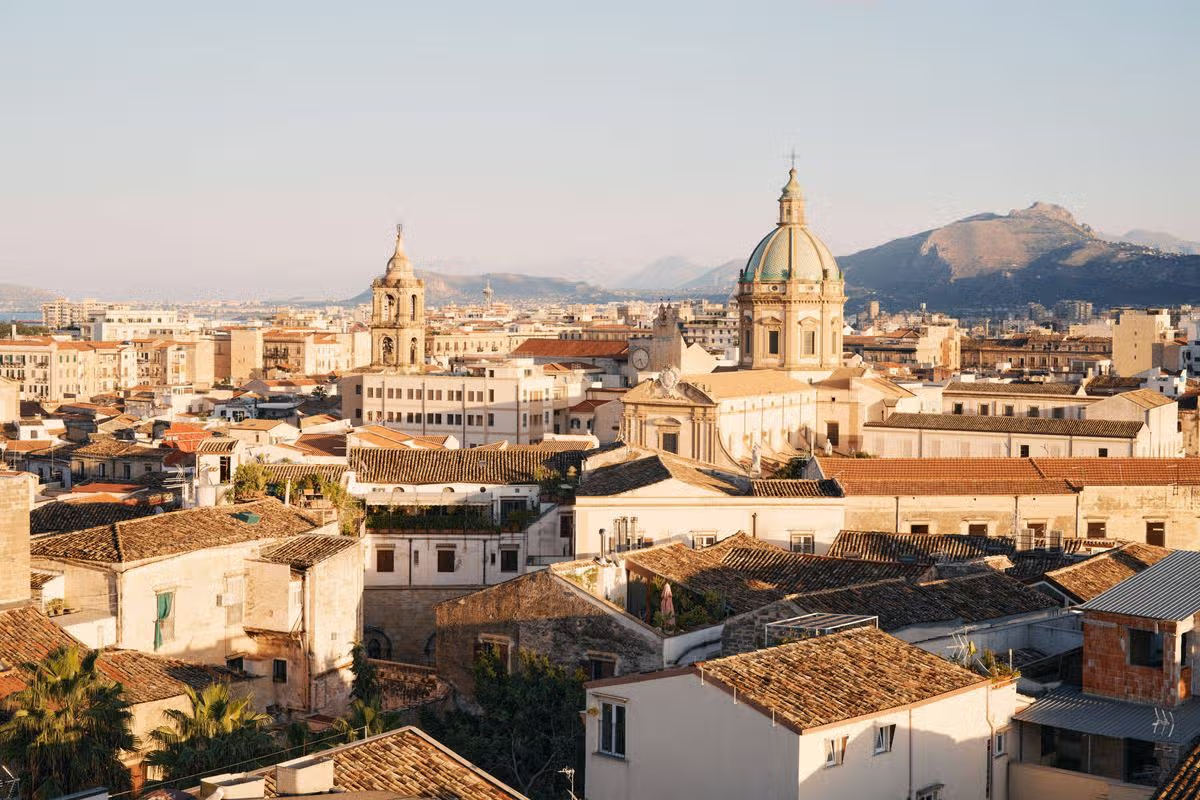
While summer daytime temperatures on this island can soar to 35C, the autumn shoulder season offers the ideal window to visit. Currently, the island of Sicily is enjoying impressive highs of 25C – perfect for soaking up some late-season sunshine.

Major cities such as Palermo and Catania remain vibrant throughout the year, but autumn brings fewer crowds, allowing you to wander the bustling street markets without being hemmed in by fellow tourists.

November also marks the height of olive-picking season across the countryside. This means numerous beautiful rural estates will be offering olive grove tours, tastings and cookery classes – an ideal way to spend the day.

One of the best estates you can tour is Serafica on the slopes of Mount Etna. You can enjoy a two hour tour of the groves and the olive mill, then a delicious tasting of three of their home-made olive oils with local cheese and bruschetta.

And with daytime temperatures being more moderate, it’s also the perfect opportunity to tackle Mount Etna, the imposing volcano that dominates the island’s skyline. Mount Etna is Europe’s tallest active volcano and there are numerous walking routes up it depending on your fitness level – however, by law you are not permitted to climb beyond 2,800 metres without a licensed volcanological or alpine guide.

During the autumn months, the views across the island are truly breathtaking.

If you’d prefer to keep your feet on the ground, November is also an ideal time to discover some of the island’s well-known archaeological sites that are typically packed with visitors throughout the summer.

Among the most remarkable is the Valley of the Temples in Agrigento – widely regarded as one of the finest examples of ancient Greek art and architecture. It features the remains of seven temples alongside the Tomb of Theron, a large pyramid-shaped monument that historians believe was built to honour Romans who fell during the second Punic War.

Entry tickets to the Valley start from just £11, and those who have made the trip were left speechless by the ruins. One visitor wrote on Google: “An extraordinary place where more than 2,500 years of history come to life. The Valley of the Temples is a highlight of any trip to Sicily, with magnificent ancient buildings set in a beautiful Mediterranean landscape.”

Another commented: “A beautiful and impressive place with remarkably well-preserved ancient ruins. With some reconstruction, it’s easy to imagine the original size and scale of the buildings.”

Sicily, much like the rest of Italy, is famous for its mouth-watering fresh cuisine including traditional pasta dishes, arancini and chargrilled vegetables. Dining options span from budget-friendly and casual trattorias through to upscale Michelin-starred restaurants.

The slopes of Mount Etna offer lush, fertile soil perfect for farm-to-table eateries such as Zafferana Etnea on the mountain’s eastern slopes.

This upscale, fine dining restaurant offers ingredients from their own organic gardens and orchards, paired with estate wines.

Flights to Sicily from the UK

Skyscanner is displaying numerous bargain flights direct to Sicily in November. These include Stansted to Palermo with Ryanair for £28 and Stansted to Catania with Ryanair for £32.

Source link

Best Christmas market for over 65s is also the ‘most beautiful’ in Europe — full list

It’s one of the oldest Christmas markets in Europe, dating back to 1570

A recent study by mobility specialists at Muick Sandy named Europe’s most accessible Christmas markets. The research examined the proximity to accessible toilets, parking and step-free public transport, surrounding terrain conditions, and the accessibility amenities on offer to guests.

According to the research, Strasbourg, in France, tops the list as Europe’s most accessible Christmas market. Visitors were found to be a mere 23 metres from step-free public transport, the shortest distance of any market examined.

Strasbourg also scored nine out of 10 for accessibility facilities, making it perfect for older travellers visiting the famous Christmas market this winter.

Strasbourg is known as the “capital of Christmas”, and its festive market ranks amongst the oldest and most enchanting in Europe, with roots stretching back to 1570.

It is also considered one of the most stunning in the world, set against the backdrop of its magnificent cathedral. Strasbourg recently featured in TripAdvisor’s Traveller’s Choice Top 10 French destinations.

Boasting timber-framed houses and charming canals, this picturesque city makes for an ideal winter escape.

Strasbourg Christmas Market runs from November 27 to December 24, 2026.

Birmingham came second and was named the UK’s most accessible Christmas market, scoring a perfect 10 out of 10 for accessibility facilities. Guests are situated just 110 metres from an accessible toilet, 158 metres from accessible parking and 133 metres from step-free public transport.

The experts explained: “Just 5.7% of the surrounding ground assessed was rough or uneven, contributing to Birmingham finishing comfortably ahead of the remaining markets.”

Birmingham Christmas Market runs from November 5 to December 24, 2026.

Ben Kenny, director at Muick Sandy, said: “Christmas markets are a huge part of the festive season for millions of people, but something as simple as uneven ground, a long journey from accessible parking or a lack of suitable facilities can make visiting much more difficult for somebody with limited mobility.

“Anyone with mobility needs planning a Christmas market trip should check the accessibility information available before travelling, particularly the location of parking, toilets and step-free transport.”

See more of the stories you love from The Mirror and find us easily in Google by making us a Preferred Source. Free and easy-to-do, just click here to activate or add us as Preferred Source in your Google search settings.

Most accessible Christmas markets

  1. Strasbourg, France
  2. Birmingham, United Kingdom
  3. Baden-Baden, Germany
  4. Frankfurt, Germany
  5. Vienna, Austria
  6. Rotterdam, Netherlands
  7. London, United Kingdom
  8. Dresden, Germany
  9. Nuremberg, Germany
  10. Manchester, United Kingdom

Source link

The Gulf must build security that can outlast this war | Energy

On November 10, Gulf defence ministers approved the establishment of a forward command in Kuwait under the Gulf Cooperation Council’s Unified Military Command, with forces to be allocated to it. The decision marks another step towards Gulf states taking greater collective responsibility for their security.

One day earlier, after meeting Qatar’s prime minister, US President Donald Trump had said: “Iran militarily is effectively over.” He also said the US blockade would continue and left open further military action. His remarks fell short of announcing an agreed end to the war.

Any opening for diplomacy deserves support. But even a lasting agreement would leave the Gulf’s underlying security problems unresolved. The Kuwait command’s value will depend on implementation and on how it connects with the region’s other security partnerships.

The answer requires abandoning the expectation that one grand security arrangement can resolve every threat facing the region. That expectation assumes a degree of agreement about enemies, priorities and acceptable risks that does not exist.

Iran’s attacks on Gulf states during this war, together with Israel’s September 2025 strike on Qatar, demonstrate the breadth of the challenge. A security architecture designed around only one adversary will leave serious gaps. Armed militias and terrorist groups add other risks, alongside cyberattacks, maritime disruption and the consequences of state failure in the neighbourhood. The erosion of international restraints on the use of force makes all of these problems harder to manage.

The most credible response to this complex set of threats is a security architecture that is both layered and networked. Gulf states are already moving in this direction. The task now is to make those arrangements work together and sustain the effort when the immediate pressure of war recedes.

Layering starts with the recognition that different partnerships do different jobs. National capabilities and cooperation within the Gulf Cooperation Council provide the foundation. The relationship with the United States remains central, while additional arrangements address needs that a single partner cannot meet.

Cooperation with US Central Command supplies an operational layer. The air and missile defence coordination cell opened at Al Udeid in January, for example, was designed to improve regional coordination, share threat warnings and prepare for contingencies.

The Mecca Joint Defence Agreement, signed in August by Saudi Arabia, Türkiye and Pakistan, adds a collective defence commitment among its members. The Badr memorandum, signed in October by Qatar, Turkiye, Pakistan and Indonesia, sets out cooperation in defence manufacturing, research and technical training.

These arrangements should be judged by the gaps they fill. Collective defence, operational coordination and industrial capacity reinforce one another, but none can substitute for the others. Buying an interceptor, producing its components and deciding who will use it in a crisis are separate problems.

The next step is to connect these layers so that capabilities developed through one partnership strengthen what countries can do through another. This is what makes the architecture networked.

Qatar offers a useful example. It shares GCC membership with Saudi Arabia and participates in Badr alongside Turkiye and Pakistan. It therefore connects to all three Mecca signatories through other arrangements, despite not being a party to Mecca itself.

Those connections create opportunities. Stronger production capacity or better coordination among shared partners could improve the capabilities available to Qatar through its own relationships. A more effective deterrent against attacks on a neighbour could also improve the wider security environment.

Such benefits depend on deliberate cooperation. Qatar acquires no automatic Mecca guarantee through association. Information, equipment and expertise travel through a network only when governments agree to make that possible. The connections need as much attention as the agreements themselves.

This is also where the Gulf’s interests converge with those of a wider group of countries. European states, Japan, South Korea, Singapore, Indonesia and Pakistan all have reasons to resist a world in which force routinely overrides sovereignty and access to trade depends on political coercion.

Energy exporters and importers face different consequences when shipping is disrupted, but both need these routes to remain open. Countries need not share a political system or an identical relationship with Washington to recognise the costs of an international order becoming less predictable.

There is already a diplomatic basis for cooperation. The EU and GCC have jointly defended freedom of navigation through Hormuz. ASEAN and GCC ministers have reaffirmed sovereignty, the protection of civilian infrastructure and the need for diplomacy.

These states should become more active defenders of the basic rules on which their prosperity depends. They have an opportunity to shape the emerging international order collectively. Their combined economic, technological and diplomatic resources can give weight to rules that individual states struggle to defend alone. The same networks that help protect infrastructure can support coordinated diplomacy when those rules are violated.

Credibility will require consistency. Sovereignty must matter when the aggressor is a partner as well as an adversary. Civilian protection must apply in Palestine, Ukraine and the Gulf. Mediation must remain possible even when the parties at the table are politically inconvenient.

At the operational level, the immediate task is to connect existing security arrangements. Gulf governments and their partners should agree on how warnings can be shared across arrangements, which capabilities can be made available, and who has authority to request assistance. Joint exercises should test those connections under pressure, including when one partner cannot participate.

The next priority is protecting the systems that allow societies to function. Energy and water facilities, ports and communications networks deserve sustained cooperation on protection and repair. A partnership that can restore an essential service quickly contributes directly to security, even if it has no mutual defence clause.

Diplomacy to prevent escalation must form a layer of its own. Channels with Iran, arrangements to prevent incidents at sea and mechanisms for managing escalation remain necessary alongside stronger defences. Gulf states should use any opening created by the current talks to pursue reciprocal, verifiable restraint.

This wider security architecture would give Gulf, European and Asian partners practical work around which to organise. Some can contribute defence technology, others maritime expertise, industrial production, financing or diplomatic access. Cooperation should allow states to contribute where they have both the capacity and the political willingness to act.

The difficulty is that every participant remains sovereign. Gulf states themselves do not have identical interests. Their external partners face different constitutional requirements, domestic pressures and relationships with other powers. Some constraints are enduring; others reflect political choices that can change.

A government willing to provide intelligence may be unwilling to deploy forces. Another may support maritime protection but oppose an operation on land. Those limits should be understood before a crisis, when there is still time to plan around them.

Overlapping partnerships also carry risks. They can duplicate effort, create false expectations or draw countries into disputes they intended to avoid. Clear responsibilities and consultation procedures are essential. Adding agreements without clarifying what they deliver would produce more complexity without more security.

Nor should we promise that such an architecture will deliver a long peace. The rivalries and political grievances shaping this region will not disappear because its governments cooperate more closely.

A more attainable objective is relative peace and security: fewer opportunities for coercion, crises contained before they widen, and civilian life less exposed to each new confrontation. That means reducing the frequency and consequences of violence while continuing to work towards durable settlements. Permanent emergency cannot become an acceptable destination.

Gulf states should use this moment to connect their partnerships, strengthen their own capabilities and establish clearer limits on escalation. The aim is a region with more partners able to act together, and fewer crises capable of dragging everyone into war.

The views expressed in this article are the author’s own and do not necessarily reflect Al Jazeera’s editorial stance.

Source link

The real winner in Poland’s constitutional battle is Putin | Opinions

Poland’s two main political camps are locked in an escalating fight for control of the Constitutional Tribunal, each claiming to defend the rule of law. In the process, they are undermining the legitimacy of the Polish state in the eyes of its own citizens, playing directly into Putin’s playbook.

The roots of the dispute go back more than a decade. In 2015, the outgoing centre-right Civic Platform-controlled parliament attempted to appoint judges to the Constitutional Tribunal for vacancies that should have been left to the incoming parliament. The newly elected conservative Law and Justice government used this controversy to intensify its efforts to pack the Tribunal with party nominees rather than independent judges.

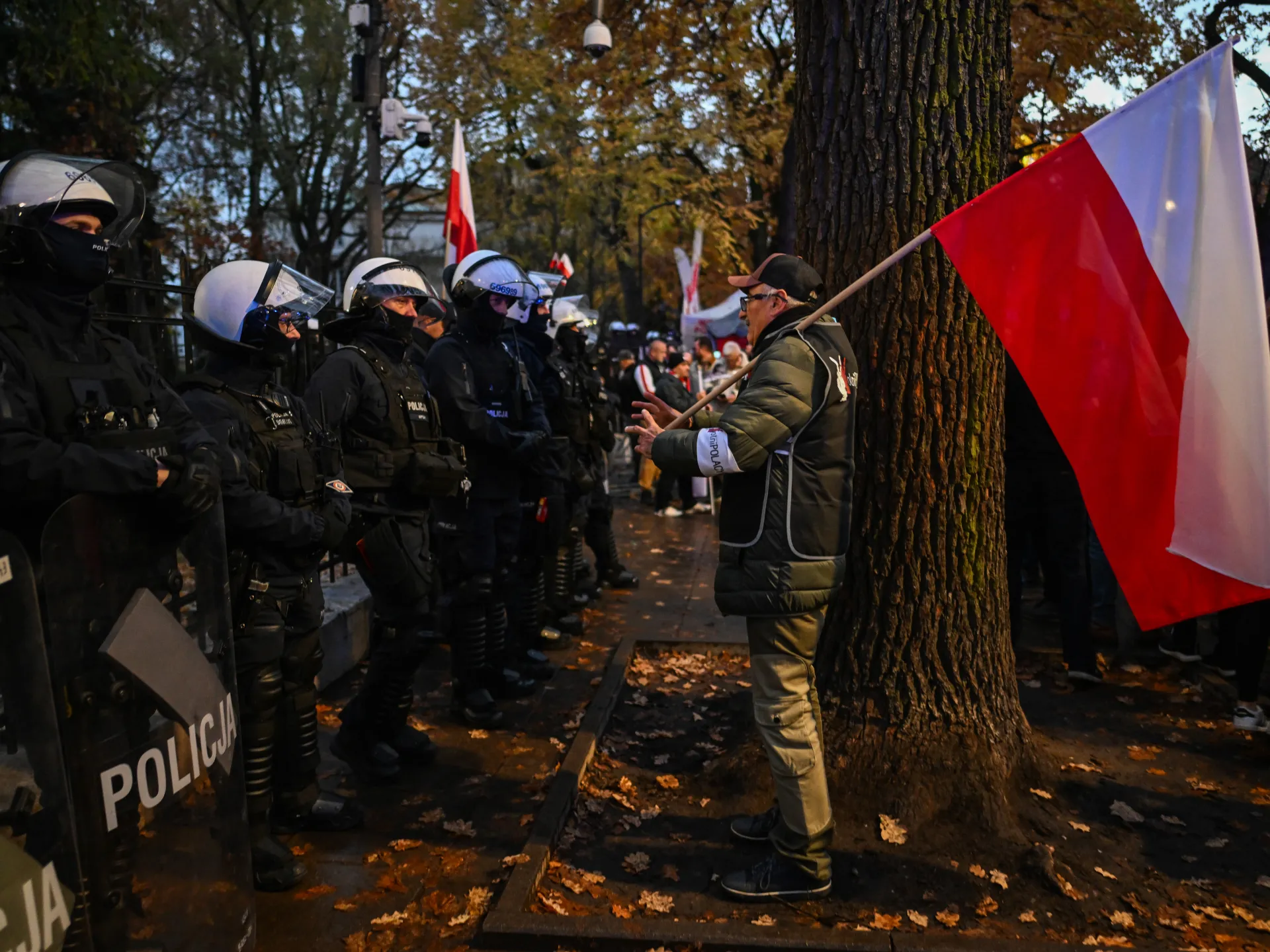
Now back in power, Civic Platform is trying to bring new judges into the Constitutional Tribunal. But President Karol Nawrocki and the Tribunal’s leadership, both aligned with Law and Justice, have blocked several of the newly appointed judges from taking office. Last month, one of the newly elected judges ordered the suspension of the Tribunal’s president and deputy, and police were deployed to the building. Nawrocki denounced the move as a forcible takeover, while Prime Minister Donald Tusk defended it as an effort to restore the rule of law.

Moscow has already seized on the confrontation to cast doubt on the legitimacy of Poland’s institutions. On November 3, former Russian President Dmitry Medvedev described the intervention as a “coup”.

A decade ago, it was the conservative Law and Justice government that sought to pack the Constitutional Tribunal with party nominees, disregarding legal constraints. Today, it is the coalition of the centre-right Civic Platform and the liberal Left that is acting unlawfully. We see the main parties becoming mirror images of one another. Conservative Law and Justice is calling on its supporters to take to the streets to defend the rule of law, a slogan previously used by the liberal opposition when Law and Justice was in power. Now it is the liberal Prime Minister Donald Tusk who is playing the strongman, with police carrying shields and wearing helmets deployed around the Constitutional Tribunal during the operation. He presents himself as an effective leader who gets things done, with little regard for legal subtleties and doubts raised even by some liberal-leaning experts. Against this backdrop, a photograph of Tusk reading an issue of the philosophical journal Kronos devoted to Carl Schmitt has recently circulated widely on social media. Schmitt, a theorist of decisionism, famously declared, “Sovereign is he who decides on the exception.”

Law and Justice’s efforts to politicise the Constitutional Tribunal pushed middle-aged supporters of the liberals in big cities onto the streets a decade ago. It seems, however, unlikely that Poles will again take to the streets in their millions to support either political bloc. The public is tired of the tug-of-war between politicians, not only because both main blocs demonstrate considerable hypocrisy when invoking the rule of law over force, but also because the fight does not speak to people’s chief everyday concerns: the cost of living and the safety of a country with an aggressive neighbour waging a hot war on its border and a hybrid and cognitive war inside the country.

What has changed drastically compared to the protests that took place a decade ago, when the main forces occupied mirror-image positions, is the geopolitical context: Russia’s full-scale war in neighbouring Ukraine, alongside its hybrid and information warfare aimed at weakening Poland’s position on the global stage.

In the worst-case scenario, this struggle over the legitimacy of state institutions could extend to elections. A precedent can be found in Romania, where, on December 6, 2024, the Constitutional Court annulled the presidential election following intelligence reports of alleged foreign interference, social media manipulation and campaign financing irregularities, and ordered the electoral process to be repeated.

What we might see in other Central and Eastern European countries, including Poland if the situation deteriorates, is, on the one hand, the liberal establishment adopting measures that override electoral outcomes, such as courts annulling elections in response to genuine foreign interference through social media campaigns. On the other hand, the opposition could become increasingly anti-establishment, effectively delegitimising the institutions of the state. The problem will be aggravated by the fact that foreign interference may be real rather than invented by the establishment.

These two opposing forces are squeezing the middle ground on which democracy depends: on one side, social media platforms controlled by foreign superpowers algorithmically manipulating the emotions of the populus and fuelling distrust in the state; on the other, the decisionism of an establishment governing in a state of exception through politically subordinated courts. Both leave less space for thoughtful civic self-determination.

A large part of the commentariat in Poland, however, still sees this dynamic as another round in the familiar two-party struggle between Civic Platform’s EU-oriented liberals and Law and Justice conservatives backed by the US. Beyond this rivalry, Russia- and China-inspired, supposedly anti-establishment radical influencers and parties, both anti-European and anti-American, seek to portray the state as a foreign occupation. The wilder the theories delegitimising the state become, the more pretexts the ruling establishment will have to delegitimise the opposition.

The danger is no longer simply that one political bloc might gain control of the Constitutional Tribunal at the expense of another. It is that, as both sides continue to undermine the legitimacy of state institutions, growing numbers of Poles may cease to see those institutions as their own. What is being weakened is not just the authority of a particular government, but the bond between citizens and the state itself.

No one could be happier about this kind of self-reinforcing dynamic, which weakens Poland’s position, than Putin.

If any healing is possible, it will not come from the existing political forces.

The views expressed in this article are the author’s own and do not necessarily reflect Al Jazeera’s editorial stance.

Source link

‘Should we be worried?’ ask Mariah Carey fans as they spot video of megastar ‘struggling to walk’

CHRISTMAS just wouldn’t be Christmas without Mariah Carey’s high pitched falsetto and the opening strains of her tireless festive hit.

But the singer appeared to have other things on her mind while signing autographs for loyal fans during a recent public appearance in Brazil.

Mariah Carey sparked concern from well-meaning fans this week after looking unsteady during a recent public appearance in Brazil Source: Tiktok/@fyraura
The singer needed help as she climbed from the read of her chauffeur driven car Source: Tiktok/@fyraura

Video footage captured Mariah, 57, as she erratically climbed from her chauffeur driven car and approached a gathering of placard wielding fans this week.

The singer appeared to be in good spirits as she signed autographs and posed for selfies, but her shaky hands and vulnerable demeanour prompted inevitable concern from those who subsequently viewed the clip on social media.

Commenting on TikTok, one fan wrote: “Should we be worried?”

Elsewhere, a second added: “She looks like she’s in pain.”

WHAT A CAREY ON

Mariah Carey fans left fuming over ‘diabolical’ prices for Christmas shows


NO DIVA

Mariah Carey’s brother spotted working ‘normal job’ at tourist resort

Mariah was monitored by an assistant as she worked her way down a line of fans this week Source: Tiktok/@fyraura
Meanwhile, Mariah’s British fans are up in arms over the cost of tickets for her forthcoming Christmas shows Source: Getty

While a third shared: “Praying and sending health wishes for our Christmas queen.”  

Referencing the closeness of Mariah’s female assistant, whose arm is seen clutching the singer’s waist as she unsteadily works her way along a line of eager fans, another reasoned: “1: it’s raining 2: they are on a slant 3: she is wearing heels 4: she doesn’t want to fall.”

Meanwhile, British fans have been left fuming over “diabolical” ticket prices for her Christmas shows.

The Sun previously confirmed that Mariah’s Christmastime tour will touch down in Birmingham, London and Manchester across November and December this year.

These are Mariah’s first dedicated UK Christmas shows on this side of the Atlantic in eight years.

However, fans were stunned when they realised just how steep the ticket prices were, with some seats costing a jaw‑dropping £577.

Taking to social media, one wrote: “I think the prices are awful.”

A second added: “£325 for the first few rows in Birmingham. I paid less for Celine Dion on the front section.”

Source link

Why the Era of Cheap Supply Chains Is Over

With global trade fracturing amid tariffs and risk, corporations are rethinking supply-chain costs.

This article appears in the November issue of Global Finance Magazine.

When a Citi analyst pressed SIG Group CFO Ann-Kristin Erkens on the company’s first-half call in July about whether its €80 million inventory build would become permanent, he was asking a version of a question finance chiefs now routinely face: How much should a company pay to protect itself from supply shocks? 

Part of the inventory increase came from valuing stock at higher input costs and part of it was deliberate, said Erkens, who has since been promoted to CEO. “There is an element of safety stock in there,” she said; whether the Swiss packaging maker works it down by year-end will depend on market volatility.

Companies that once scoured the globe for the lowest-cost production to feed just-in-time inventories now must account for geopolitical risk, surprise supply disruptions, and the price of keeping operations running when global trade falters. 

The new era of de-globalization is complicated by the need to spread costs out. Some are on the balance sheet as extra inventory. Others may be in capex as relocated or duplicate capacity. Sometimes costs appear as financing for a company signing up new suppliers. A CFO who wants to nail resilience must add up these scattered costs and figure out how much the business can recover.

Shock Absorbers

Inventory can be the quickest lever to pull, and usually the first. 

At Authority Brands, a consumer services company, some of the larger franchisees and company-run locations bought extra HVAC compressors and outdoor units in the first quarter of 2025, ahead of tariff-driven price increases, said CFO Josh Greear. 

In a normal year, those operators carry “weeks of inventory, not months.” Authority Brands negotiated with distributors on behalf of the whole system to lock in stock at existing prices. The manufacturers ended up raising prices anyway, including those building in the U.S., because every competitor’s costs had gone up.

Trane Technologies experienced the same whiplash on a large balance sheet. During the company’s second-quarter 2026 earnings call, CEO Dave Regnery said it had added four times the capacity to its applied HVAC business over the past three to four years, and guided 2026 capex to 2% to 3% of revenue. Part of that build-out runs through the P&L as production ramps up, CFO Chris Kuehn added, and may weigh on operating leverage in the very near term. 

Trane is “not going to get behind” and is “not turning away any orders,” Kuehn said.

Francois Motte, CFO of rare-earths developer Aclara Resources Inc., has worked through how to split the cost of resilience with customers and governments. 

Operating costs at Aclara, which has operations in Brazil, Chile, and the U.S., are close to Chinese companies’, he said. Its disadvantage is the cost of capital. Governments in the U.S., Japan, South Korea, and Brazil are narrowing that gap with long-dated finance, often 10 to 12 years out and in some cases up to 20. Their backing also tells customers a supplier has survived due diligence, said Motte, which can matter to buyers as much as the money.

Aclara pairs take-or-pay offtake agreements with a minimum price that lasts until its construction debt is repaid, he explained. In return, it offers customers a price cap, protecting them when supply is tight. After the payback period, Aclara is willing to move to index pricing.

Gas turbine makers sitting on years of backlog are paying up for yttrium, a rare earth that makes up about 8% of the mix in thermal barrier coatings, and yttrium now accounts for roughly 30% of the value of Aclara’s output, Motte said. Carmakers competing with Chinese electric vehicles have far less room to pay.

The Cost of Weak Suppliers

Costs that customers refuse to absorb land on suppliers. Rapid Ratings International Inc., a supply chain risk intelligence firm, modeled country-specific tariff rates, assuming suppliers could pass through only about half the added cost. Even in that scenario, the number of public-company suppliers rated High or Very High Risk for weak financial health rose 56%. Among privately held suppliers, the number struggling dangerously more than doubled. (The chart on the left shows changes in financial health scores across sectors.)

RapidRatings CEO Charlie Minutella described how painful this can be in practice. 

A manufacturer learns that the supplier of a critical engineered component is heading into financial restructuring. Qualifying a replacement, with new tooling and a production ramp, would take several quarters, and by the time the distress is visible, that window has closed. The manufacturer instead pays a sum in the mid-tens of millions of dollars to keep the supplier operating. 

“Wait for headlines or disruptions to emerge, and the only option left is writing the check,” Minutella said.

Late discoveries reach the plant floor, too, observed Catherine Cormier, chief innovation officer at Assent Inc., a supply chain software firm. Manufacturers must retool entire factories and halt production to change a product’s composition for regulators—and some must destroy finished goods they can no longer sell.

Supply chain consultancy Miebach Consulting GmbH, reviewed the sprawling production footprint of a consumer goods manufacturer, including its actual and projected P&L for the previous few years. In each year, an outside event knocked results off plan. 

“Find me a year we’ve had a white swan,” quipped Nick Banich, chief revenue officer for Miebach in the U.S. and Canada.

Nick Banich,
Miebach

Some shocks had hit more than once, Miebach’s review revealed, so the manufacturer built them into its long-term plan. That made shifting some production from Southeast Asia to Mexico look more attractive. Labor costs would rise 15% to 20% while unit costs would increase 7% to 14%, depending on the product. But cutting about 20 days of ocean transit would free up working capital, and the move would reduce the company’s exposure to another round of tariffs.

Raising inventory on everything can be an easy response, and the most expensive one. After Covid-19, many organizations “beefed up inventory, and it didn’t really solve a lot of the service issues,” Banich said. He argues for segmenting by SKU and by supplier. “It’s not going to make sense to have committed capacity with an additional supplier with machines running at 40% utilization for everything.” 

Life sciences companies already hold what they call strategic stock against low-probability, high-damage events, and he said he expects other industries to borrow the approach.

Weld Royal is a contributing writer based in the U.S.

Source link

‘I check in late for flights and board last – it’s stressful but there’s big benefit’

A travel expert has revealed why she bides her time before approaching the check-in desk – while this can be effective, her methods are pretty controversial

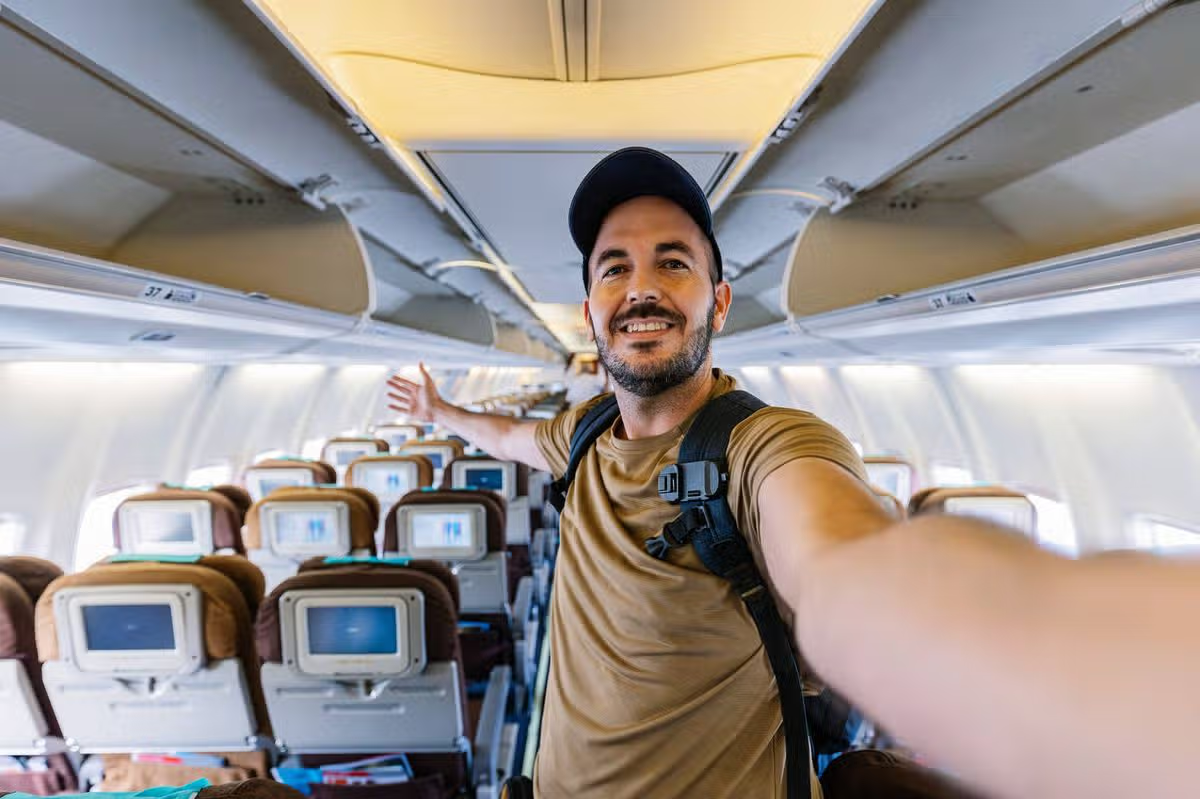
Anyone who has flown with a budget carrier knows the drill. You either cough up a hefty fee to sit with your friends, or you resign yourself to being shoved into a dreaded middle seat at the back of the cabin.

Budget airlines have been accused of deliberately allocating their least desirable spots first, banking on the fact that frustrated holidaymakers will eventually snap and pay for an upgrade.

But a seasoned travel expert has shared a brilliant workaround to help you secure a premium seat for absolutely nothing – all you have to do is hold your nerve.

Chelsea, a budget travel creator with over 5.5 million likes on TikTok, claims that procrastination is the key to beating the airline’s algorithm.

Dubbing her method ‘check-in chicken’, she advises passengers to hold off on checking in until the absolute last minute.

Because the system fills the worst seats early on, the only spots left as the check-in window closes are usually the pricier ones at the front of the aircraft or those with extra legroom.

Content cannot be displayed without consent

Ensure our latest travel headlines always appear at the top of your Google Search by making us a Preferred Source. Click here to activate or add us as Preferred Source in your Google search settings

Sharing a recent success story with Wizz Air, Chelsea explained that she waited until just five hours before departure to hit the button.

“I have not checked in yet, as essentially what they do is palm off middle seats or the back of the plane in the hope that you will then pay to change your seat,” she told her followers.

The gamble was a massive success, with the creator automatically landing two highly sought-after extra legroom seats for free. Frequent flyers claim the exact same trick works for Ryanair journeys, too.

But there’s a catch

While it sounds like a foolproof way to save money, playing check-in chicken comes with some serious risks. If flights are overbooked, you run the very real risk of being bumped from the flight entirely.

To lower the risk, Chelsea recommends actively monitoring the live seating plan on the airline’s app throughout the day, and checking in the moment only premium seats are left.

You also need to consider your luggage. Checking in late guarantees you will be in the final boarding group.

By the time you step onto the plane, the overhead lockers will be completely jammed, meaning staff will likely confiscate your hand luggage at the gate and put it in the hold—leaving you with an annoying wait at the baggage carousel when you land.

Despite the downsides, the controversial tactic sparked a fierce debate online, with savvy tourists begging Chelsea to keep the hack quiet.

“Stop telling everyone,” one user pleaded, while another boasted: “No don’t wreck this hack – I got 29E on Sunday by checking in an hour before it shut.”

However, others warned that the algorithm is entirely unpredictable. One lucky traveller revealed: “I had the exact opposite experience, checked in the minute the flight opened and they put me in the exit row for free.”

Meanwhile, another issued a stark warning for anyone feeling brave: “Definitely not worth it. I know someone who tried this and was left with no seat and had to wait until the next flight the next day.”

Source link

High school volleyball: Regional playoff results and schedule

CIF SOCAL REGIONALS

THURSDAY’S RESULTS

Quarterfinals

DIVISION I

#8 San Juan Hills d. #1 Harvard-Westlake, 17-25, 25-16, 23-25, 25-11, 18-16

#4 Redondo Union d. #5 Murrieta Valley, 24-26, 28-26, 25-20, 25-23

#14 Coronado d. #11 Sherman Oaks Notre Dame, 15-25, 20-25, 25-12, 25-18, 15-9

#7 San Luis Obispo d. #15 Bishop’s, 23-25, 25-22, 25-23, 25-12

DIVISION II

#16 Mission College Prep d. #8 Bakersfield Liberty, 18-25, 25-22, 23-25, 25-21, 17-15

#5 Santa Fe Christian d. #13 Vista Murrieta, 27-25, 25-18, 25-23

#6 Newbury Park d. #14 Glendora, 25-22, 25-19, 20-25, 25-17

#2 North County San Marcos d. #10 Westview, 25-20, 25-14, 25-22

DIVISION III

#1 Santa Barbara d. #9 Steele Canyon, 25-18, 26-24, 25-19

#4 Helix d. #5 Woodland Hills Taft, 25-9, 23-25, 25-17, 25-21

#3 Sage Creek d. #6 Cleveland, 25-19, 25-16, 18-25, 25-19

#10 Westridge d. #2 Point Loma, 25-21, 29-27, 25-17

DIVISION IV

#1 El Camino Real d. #8 Placentia Valencia, 25-13, 25-11, 23-25, 24-26, 15-6

#5 Chatsworth d. #4 Granada Hills, 27-29, 25-19, 25-19, 20-25, 21-19

#3 Cqstaic d. #11 Fullerton, 3-0

#7 Capistrano Valley d. #2 Lakewood, 24-26, 26-24, 25-18, 17-25, 15-8

DIVISION V

#1 Rio Mesa d. #8 San Diego Hoover, 25-11, 25-15, 25-12

#5 Bakersfield North d. #4 Strathmore, 18-25, 25-19, 25-11, 25-22

#3 Desert Christian Academy d. #6 Maywood CES, 3-1

#7 Rancho Mirage d. #2 San Gabriel Academy, 3-2

SATURDAY’S SCHEDULE

(Matches at 6 p.m. unless noted)

Semifinals

OPEN DIVISION

#4 San Diego Cathedral Catholic at #1 Mater Dei

#3 Torrey Pines at #2 Sierra Canyon

DIVISION 1

#8 San Juan Hills at #4 Redondo Union

#14 Coronado at #7 San Luis Obispo

DIVISION 2

#16 Mission College Prep at #5 Santa Fe Christian

#6 Newbury Park at #2 North County San Marcos

DIVISION 3

#4 Helix at #1 Santa Barbara

#3 Sage Creek at #2 Point Loma

DIVISION 4

#5 Chatsworth at #1 El Camino Real

#7 Capistrano Valley Christian at #3 Castaic

DIVISION 5

#5 Bakersfield North at #1 Rio Mesa

#7 Rancho Mirage at #3 Desert Christian Academy

Note: Finals (all divisions) Nov. 17 at higher seeds; State Finals Nov. 20 at Santiago College.

Source link

‘I found the best mountain view in Europe’: readers’ favourite wild escapes in Scotland | Scotland holidays

A stunning view on the Isle of Skye

At Camasunary bay on the Strathaird peninsula of the Isle of Skye, we watched an otter at low tide lifting seaweed to find crabs. Boots off, we crossed one of Skye’s shortest (and coldest) rivers, before slogging upwards through unforgiving heather to the col beneath the pathless hill Sgùrr na Strì. The mountain view from the summit’s glaciated slabs is perhaps the finest in Scotland – or even Europe. Below is landlocked Loch Coruisk, girdled by the black teeth of the entire Cuillin ridge. Extraordinary. An hour passed, maybe two, before we headed back. The otter was by then long gone, hopefully just as replete and satisfied as we were.

Hugh Jones

Winter walking on the Cape Wrath trail

It was about -4C while Tim was walking the Cape Wrath trail. Photograph: Tim

I did a long-distance winter walk on part of the Cape Wrath trail, heading south from the hamlet of Strathcarron to Fort William. Initially, the weather was perfect, with temperatures of about -4C, but then a full-on named storm blew in. I camped a couple of nights, but all my water froze. I then stayed in some great bothies. After five days, the only other person I had seen was at a gift shop in Morvich.

Tim

Pristine beaches on the Isle of Lewis

Photograph: Jason

My girlfriend and I pitched our tent at Ardroil Sands, dropping a fiver into the campsite honesty box and putting aside pound coins for the hot showers later. The weather was unusually warm and there really was a tropical feel to the place. After firing up our barbecue, the glassy Atlantic beckoned. With dry bags strapped to our paddleboards, we launched into the turquoise waters of Uig. As we skirted rugged headlands and the water beneath us shifted to deep sapphire, we glided into the hidden sanctuary of Carnish Beach, claiming our own untouched white-sand paradise at the edge of the world.

Jason

Profile

Readers’ tips: send a tip for a chance to win a £200 voucher for a Coolstays break

Show

Guardian Travel readers’ tips

Every week we ask our readers for recommendations from their travels. A selection of tips will be featured online and may appear in print. To enter the latest competition visit the readers’ tips homepage

–

Thank you for your feedback.

Rewilding in Glen Affric

The bothy in Glen Affric. Photograph: Debbie Carr

Last September, I spent a week in Athnamulloch Bothy in Glen Affric with 10 other like-minded people of different ages and backgrounds, planting trees, removing old deer fencing, climbing hills and viewing beaver lodges from canoes. We were volunteering for Trees for Life, which manages a range of rewilding projects in the north-west Highlands from their tree nursery base at Dundreggan (which also hosts volunteers). I found wonderful company and fulfilling activities all in an utterly beautiful location. The cost (£690) includes accommodation and food, with all profits going to the charity.

Debbie Carr

Blissful isolation on Iona

Photograph: AlasdairJames/Getty Images

The tiny island of Iona might be best known for its medieval abbey and nunnery, but the whole southern part of the island is uninhabited and wild – you can explore all day and not see another soul. There’s an abandoned marble quarry, several idyllic bays and stunning views everywhere you look. And when you get tired of exploring and isolation, you can quickly head back into the village for food and drink.

Roddy

The beauty of Kintyre

Kintyre, seen from the Isle of Arran. Photograph: Andy Sutton/Alamy

I visited the remote Kintyre peninsula in a very wet January and was still blown away by its beauty. The world-class whisky distilleries and log fires helped, as did the sandy beaches and historic sites. The quality of the seafood rivalled that of Oban. I loved it so much I visited again in summer, and also went to the Isle of Gigha, another incredible place. This time the sun was shining and we got that Caribbean feeling. Can’t wait to go back again.

Michelle

skip past newsletter promotion


An adventure in Knoydart

The Knoydart peninsula. Photograph: Sam Kovak/Alamy

It was an adventure to get into and out of remote Knoydart. There are no roads, so the choice is between a multiday hike from Kinloch Hourn or Glenfinnan, or the 40-minute ferry from Mallaig. We took the latter, which proved an adventure in itself. Magnificent Munros rise sharply above shimmering sea lochs, while ancient woodlands and quiet shores offer plenty of red deer and dolphin sightings. Our hike up Ladhar Bheinn offered dramatic views over the area, and on another day we followed some locals on part of the Cape Wrath trail. We stayed in the village of Inverie and visited the UK’s most remote pub, the Old Forge. Inverie sits on beautiful Loch Nevis – often called the Loch of Heaven because of its idyllic calm waters and spacious open setting.

Joe

Sea kayaking on the west coast

Photograph: Shoults/Alamy

A multiday sea kayaking journey in the Moidart and Arisaig region on the west coast fully immersed us in a remote wilderness. Unzipping our tents each morning above a glorious white beach with our kayaks there ready was unreal. We would paddle past seals, lunch on another beach or island, and enjoy the ever-changing vistas of distant islands and a delightful new camping spot every evening. Dinner cooked after a day’s paddling tasted fabulous, and the sunsets over the sea, which few others got to see, were sublime. The trip was through Arisaig Sea Kayak Centre and cost £595.

Glynis Davies

Winter wonders on Mull

February on Mull. Photograph: Barbara

The Ardmeanach peninsula in February offers a broody atmosphere and wonderful wildlife. Thin red sunrises illuminated the wake of an otter swimming past our lochside cottage window; the shortened days featured thunderous clouds, snow and rainbows. Atop a wizened Scots pine in Tiroran forest, a majestic sea eagle perched in sunlit splendour. A noble stag held our enraptured gaze in a stunning roadside encounter. Shoreside walks, through volcanic rocks erupted a mere 60 million years ago, led to basalt columns and, for the brave (the paths are narrow and vertiginous), MacCulloch’s Fossil Tree, trapped in lava for ever.

Barbara Maher

Winning tip: forest and corries on a long Cairngorms hike

Looking down Stag Rocks to Loch Avon. Photograph: Murdo MacLeod/The Guardian

One of the most incredible multiday hikes is into the heart of the Cairngorms. Start at Glenmore (there’s a campsite on the beach of Loch Morlich, or great rooms and a bar at the Lodge) and walk an hour or so on a good path up to Ryvoan bothy, through woodland alive with crested tits, red squirrels and capercaillie. Walk past Bynack More and round to Lairig an Laoigh, where you might feel like the only people in the world. You can wild camp on the route below pure dark skies, but it’s a walk up the Fords of Avon that is the real highlight. A rough path takes you past Beinn Mheadhoin (worth diverting up for the huge rock formations on the summit) until Loch Avon opens up in front of you – one of the most stunning corries in Scotland and a beautiful place for a swim, a climb or just to lie back and watch the world.

Hannah

Source link

Australia captain Pat Cummins denies involvement in ‘Sandpapergate’ scandal | Cricket

Australia captain Pat Cummins ⁠has again denied any involvement in ⁠the plot to use sandpaper on the ball in a Test against South Africa in 2018, describing the allegations in Usman Khawaja’s autobiography as “utter nonsense”.

Former Australia batsman Khawaja, whose autobiography was published on Tuesday, said last weekend that all the players in the team knew about ⁠the plot to rough up the ball with sandpaper to make it swing. His latest comments triggered calls for a new investigation into the incident.

Recommended Stories

list of 3 itemsend of list

The scandal centred around the third Test in Cape Town, but Khawaja also claimed the tactic was used in the second Test at Port Elizabeth.

“When he says we all knew, if by that he means that we knew sandpaper was going out in the field, he’s 100 percent wrong. I’ve said that consistently for the last eight years,” Cummins told a news conference in Sydney on Friday.

“I did not know that was happening, but I think ⁠Usman actually says things that are actually far more serious than that.

“He says that I and others were architects of a scheme to ball tamper with sandpaper. That’s complete and utter nonsense.

“There was no master plan around using illegal methods,” he added. “There’s no grand plan. There’s no team meeting. There’s no bowlers saying ‘this is what must happen’.”

Cummins and fellow bowlers Mitchell Starc, Josh Hazlewood and Nathan Lyon all denied publicly in a 2021 statement that they were aware of the plan.

Darren Lehmann, who was the Australian head coach at the time, has also denied any knowledge, as has former batting coach Graeme Hick, who called Khawaja’s allegations “absolutely false”.

Cummins spoke for 68 minutes on Friday, taking every question from the media and saying he would never discuss the ball-tampering incident again.

The Australia skipper also took exception to Pakistan-born Khawaja’s contention in the book that the colour of his ‌skin and background had prevented him from becoming Australia captain.

“I think of all the things that I’ve read this week, I think that’s actually the most serious,” he said.

“Him saying that if you’re Australian captain, you have to be a certain skin colour, I couldn’t disagree with that statement any more.”

Steve Smith and David Warner, the then-Australia captain and vice-captain, were banned by Cricket Australia from elite cricket for a year for their roles in the ball-tampering.

Opening batter Cameron Bancroft, who brought a piece of sandpaper onto the field, received a nine-month suspension for his part in the ball-tampering.

“I was genuinely shocked this week when I found out that Usman admitted that he told Cam to be careful when using sandpaper. That’s not the Usman that I know,” Cummins said.

“It’s not the Usman that has helped rebuild the Australian cricket ⁠culture over the last eight years.”

Later on Friday, Warner said the trio had paid a heavy price for the incident and revealed ⁠that his wife Candice had lost a baby in the aftermath of what became known as “Sandpapergate“.

“I still stick by Uzzie and what he has written in that book. It is the truth,” the former Test opener said in TV commentary ahead of a one-day international between Australia and England.

“I actually feel for [Khawaja] at the moment. I actually feel that the captain today threw Uzzie under the bus and I’m very disappointed ⁠by that.”

PERTH, AUSTRALIA - NOVEMBER 22: Usman Khawaja of Australia comes from the ground during day two of the First 2025/26 Ashes Series Test Match between Australia and England at Perth Stadium on November 22, 2025 in Perth, Australia. (Photo by Darrian Traynor/Getty Images)
Retired Usman Khawaja reopened old wounds with the release of his autobiography this week and a chapter dealing with the 2018 ball-tampering scandal in South Africa that rocked world cricket [File: Darrian Traynor/Getty Images]

‘Casual with lives and reputations’

Cummins was asked about Khawaja’s recollection that two players had rejected the batsman’s call for the team to take collective responsibility for the ball-tampering.

“I don’t remember any conversation around collective responsibility,” he said.

“So then, I’ve got no idea who ⁠those two people would be because I don’t remember ever being asked or having a conversation about it.”

Khawaja and ⁠Warner have also been critical of the Cricket Australia investigation in 2018 that found the three punished players solely responsible for the plot.

“I got asked to be part of that review,” Cummins said. “I was totally truthful. I’ve been very consistent since then at that event till now. Nothing’s changed.”

Earlier this week, the head of Cricket Australia ruled out opening another investigation into the 2018 incident.

Cummins said he respected the right of Khawaja to tell ‌his story in the autobiography but felt some of the allegations were very serious and had to be addressed.

“Usman’s a friend, but friends aren’t casual with each other’s lives and reputations,” he said.

“In his book, Uzzie has been casual with my life and the lives of many others, and I think Australian cricket.”

Cummins added, though, that he would not ‌be ‌taking legal action against Khawaja over the allegations in the book.

“I did get advised this week that some of the things that’ve been said are probably defamatory, but I won’t be doing that,” Cummins said.

“You’ve got to move on. It’s been eight years. We’re moving on. So, you got to draw a line at some point.”

Source link

High-Speed Aircraft Startup Hermeus Joins Forces With Northrop Grumman

Aviation startup Hermeus and established prime contractor Northrop Grumman say they are now working together toward the aim of delivering operational uncrewed aircraft capable of high-supersonic, if not hypersonic, flight to the U.S. military. Through a newly announced partnership, Northrop Grumman is set to integrate electronic warfare systems, sensors, autonomy packages, and other capabilities onto “next-generation” Hermeus drones.

Hermeus and Northrop Grumman announced their team-up earlier today. Hermeus, which was founded in 2018, has already flown a succession of ever-more capable uncrewed jet-powered Quarterhorse demonstrator drones. The delta-winged Quarterhorse Mk 2.1 was the first of these to break the sound barrier during a test flight in May. The company is now working on a further evolved Quarterhorse Mk 2.2, which it hopes to push beyond Mach 2.

A look at the progression in Hermeus Quarterhorse drone designs to date, starting with the non-flying Mk 0 ‘iron bird’ test rig on the far left. Hermeus

Hermeus’ stated end goal is a design capable of hypersonic flight. The company has also previously shown renderings of a planned “mission plane” prototype described as being capable of “high-Mach” flight and equipped with six underwing pylons, three under each wing, as well as one along the centerline.

A rendering of Hermeus’ planned “mission plane.” Hermeus

Quarterhorse Mk 2.1 has already demonstrated the ability to release stores at high speed. In September, Hermeus also unveiled Ramjet-X, a smaller ramjet-powered platform that can be air-launched from Quarterhorse drones, ostensibly to support high-speed flight testing activities, but that could be adapted to operational missions.

Another huge HyCAT milestone – a successful unmanned stores separation flight test with @hermeuscorp.

This was only the program’s 5th flight since the Spring. Tests like this usually take years. We’re moving 4x as fast. pic.twitter.com/2PN7Me5uvN

— Department of War Innovation Unit (@DIU_x) July 30, 2026

America wins the high-speed race by putting hardware in the sky, learning fast, and flying again next week.

Today, Hermeus introduces Ramjet-X.

Air-launched directly from our Quarterhorse flight test program, Ramjet-X is a low-cost ramjet test platform engineered to break one… pic.twitter.com/3Y9vRlfzYQ

— Hermeus (@hermeuscorp) September 9, 2026

Now, as part of the new partnership, “Northrop Grumman will provide integrated mission systems design, development, integration, and sustainment for Hermeus’ next-generation aircraft — reusable, unmanned high-Mach platforms designed to deliver affordable capability on relevant timelines,” according to a press release from Hermeus. “The collaboration creates a path to equip Hermeus’ aircraft with technology across sensing, communications, navigation, and command and control, allowing the aircraft to operate more intelligently and take on more complex missions” and “give warfighters faster, more survivable options in combat.”

“As the threat environment accelerates, the Department of War needs autonomous systems developed and fielded in months, not years,” per a separate Northrop Grumman press release. “Northrop Grumman and Hermeus will meet that need by pairing Northrop Grumman’s combat‑proven mission systems and ‘ready‑now’ electronic warfare, communication, sensing and autonomy expertise with Hermeus’ high‑speed Quarterhorse aircraft.”

“We’re building a new class of aircraft that gives the warfighter improved speed, range, and flexibility while integrating into the existing Force,” Zach Shore, CEO of Hermeus, also said in a statement. “Adding Northrop Grumman’s battle-tested mission systems will push what those aircraft can do in real world scenarios and help us field operational capability faster. Northrop brings decades of experience turning aircraft into effective mission platforms and that’s exactly what we want to tap into.”

Another view of Hermeus’ Quarterhorse Mk 2.1 demonstrator. Hermeus

Beyond the mention of electronic warfare, sensing, and communications capabilities, neither company’s press release elaborates more specifically on the kind of operational missions that future Hermeus drones could be tasked with. It is also unclear which branches of the U.S. military might be looking to fly them. TWZ has reached out for more information.

That being said, development of the Quarterhorse family has been supported in part through contracts from the U.S. Air Force and the Pentagon’s Defense Innovation Unit (DIU). The aforementioned stores release testing was conducted under the auspices of a DIU effort called High-Cadence Airborne Testing Capabilities (HyCAT).

Hermeus’ inclusion in HyCAT brought “a technical focus on turbine-based combined cycle [TBCC] propulsion and a pathway for dual-use, reusable hypersonic flight aircraft,” according to a DIU press release back in 2023. “Hermeus will emphasize demonstration of enabling technologies – aircraft sub-systems and mission integration – needed for future hypersonic aircraft.”

Hermeus has also been developing a TBCC propulsion system called Chimera. The company’s goal is to integrate that onto a future Quarterhorse Mk 3 design.

Hypersonic Engine Test Milestone thumbnail

Hypersonic Engine Test Milestone

As we have written previously:

“A practical TBCC propulsion system has long been viewed as something of a holy grail for very high-speed aircraft design. Ramjets and scramjets typically used to propel air-breathing air vehicles to hypersonic speeds, typically defined as anything above Mach 5, do not work properly at subsonic speeds and can have trouble operating efficiently even at low-supersonic speeds. As such, a significant initial boost velocity, usually provided by a rocket motor, is required before those engines can kick in. A TBCC combines ramjets/scramjets with jet turbines that work at lower speeds and offers the ability to seamlessly shift from one mode to the other. An air vehicle with a TBCC propulsion system would be able to take off and land from suitably long existing runways, but cruise at high-supersonic or even hypersonic speeds, offering immense operational flexibility.”

Furthermore, the U.S. Air Force has been open in recent years about at least having an interest in reusable hypersonic air vehicles capable of performing strike and intelligence, surveillance, and reconnaissance (ISR) missions. The service has publicly pursued the development of relevant technologies, including advanced scramjet engines and TBCC propulsion concepts, and full-up demonstrators to prove them out, through several programs in recent years, but the outcomes to date remain unclear.

The Air Force did award Leidos a contract for the development of a full-up prototype reusable hypersonic air vehicle under its secretive Mayhem program back in 2022. That effort, which aimed to demonstrate a platform that could be adapted to hypersonic strike and ISR missions, ran into budget and other hurdles, and its status was decidedly murky as of 2024. That same year, a very similar-sounding project called Next Generation Responsive Strike (Next RS) emerged at the Defense Advanced Research Projects Agency (DARPA), in which the Air Force was also involved. As of 2025, the Next RS plan also included plans to acquire a flying prototype or demonstrator by 2030, but how that effort has advanced since then is unclear.

A rendering Leidos released after being awarded the Mayhem contract in 2022. Leidos

As we have also written in the past:

“A reusable uncrewed air-launched hypersonic strike and reconnaissance aircraft could certainly offer benefits in various operational scenarios. Such a system could be ideal for prosecuting time-sensitive targets, or just gathering intelligence on them, including deep in denied areas at extreme stand-off ranges. From an ISR perspective, spy satellites, which might be the only other option for collecting on the targets in question, could take too long to retask and are predictable, with the enemy knowing when they will pass overhead.”

“An air-launched reusable platform could offer additional flexibility in terms of vector of approach and timely arrival over a target area compared to regional ground and surface-launched concepts.”

Northrop Grumman’s press release today highlights the potential to add electronic warfare capabilities to the mix. It’s not clear whether the aim here is to provide self-production for the drone or to enable non-kinetic attacks, or both. An electronic warfare package could also allow the vehicle to act as a very-high-speed reusable decoy.

It’s also important to note that a design from Hermeus would not need to be capable of hypersonic flight, defined as anything above Mach 5, to be relevant in the roles described above. As mentioned earlier, even before today’s announcement, the company had plans for an operationalized ‘high-Mach’ drone. We have also already seen such capability fielded in China in the form of the WZ-8, a rocket-powered tactical theater reconnaissance drone.

A WZ-8 drone or mockup thereof. Chinese Internet A good overall view of the WZ-8. Chinese Internet

Aircraft, crewed and uncrewed, that can fly at transitional speeds between the high-supersonic and fully hypersonic regimes are also set to be increasingly relevant for research and development and test and evaluation activities. This is the arena where Hermeus is working now through efforts like HyCAT. Growing demand for these kinds of high-speed flight test capabilities has also recently been underscored by reports that NASA is exploring returning a retired SR-71 Blackbird to flight as an experimental X-plane.

There is clearly work still to be done before any version of Quarterhorse, or a future design from Hermeus, emerges as an operational platform, hypersonic or not. At the same time, the new partnership with Northrop Grumman reflects a new and very explicit step toward that goal, which is building on work already being done with the support of the U.S. military.

Contact the author: joe@twz.com

Joseph is TWZ’s Deputy Editor, helping to oversee the site’s highly experienced and dedicated team, while also writing informative and impactful defense and national security content. He lives right in the thick of it in the Washington, D.C. area.


Source link

Paloma Faith announces new tour and album with very different theme, two years after break-up record

SHE may have been murdered on The Celebrity Traitors by best friend Alan Carr, but Paloma Faith is back and very much alive.

The singer has announced that her seventh studio album, In Full Colour, will drop on March 5 before she embarks on a huge UK tour.

NINTCHDBPICT001122572904
Paloma Faith has announced her seventh studio album, In Full Colour Source: Supplied
Paloma Faith at the Walpole British Luxury Awards, wearing a black gown with a thigh-high slit, a feathered bolero jacket, and a black ribbon tied around the neck.
The singer reveals her album, out on March 5, shows her at her happiest Source: Dave Benett/Getty Images for Wal

The record is Paloma’s first since 2024’s The Glorification Of Sadness – an album all about the breakdown of her relationship with artist Leyman Lahcine, dad of her first two children.

While that record showed the singer at her most broken, she insists In Full Colour is her at her happiest.

Paloma, who appeared on last year’s Celebrity Traitors, said: “This album is intentionally optimistic. In a world that can feel hopeless, this album is joy as protest. Humanity can win.”

But self-doubt creeps into the lead single, Gone, which is out today and has a Seventies soul sound.

VIVA LO’S VEGAS

J-Lo wows in catsuit on stage after landing TV special showcasing residency


BECCA THAN EVER

Becky Hill targets label execs & nepo babies on brutally honest new album

Paloma explained: “It is about how isolating this job can be.

“You can be on a stage in full sequins and wonder if anyone can really see you, or even worse, if you can see yourself at all any more.”

Paloma’s 18-date tour, which kicks off next October, includes shows at London’s Royal Albert Hall and Birmingham’s Symphony Hall.

Source link

Addy Brown, Sienna Betts power No. 10 UCLA women to victory

Addy Brown had 18 points and eight rebounds, Sienna Betts had 11 points, 10 rebounds and three blocks and No. 10 UCLA never trailed Thursday night in a 76-44 win over Arizona on Thursday.

Timea Gardiner added 16 points, KK Bransford scored 13 and Somto Okafor 10 for UCLA (3-0).

Makayla Presser-Palmer and Aliyahna Morris led Arizona (2-1) with eight points apiece.

Betts made back-to-back baskets before Donovyn Hunter hit a three-pointer that made it 14-4 a little more than four minutes into the game and the Bruins took a 13-point lead into halftime.

Sumayah Sugapong hit a three-pointer and Gerda Raulusaityte followed with a layup 48 seconds into the second half that made it 37-29 but the Wildcats got no closer.

Brown had a three-point play and hit a three-pointer as part of a a 16-2 run that closed the third quarter and gave UCLA a 62-39 lead going into the fourth.

The Wildcats scored just 19 second-half points, five in the fourth quarter — their lowest-scoring quarter this season. Arizona shot 24% (14 of 58) overall, made just three of 16 (19%) from three-point range, and hit 13 of 19 (68%) from the free-throw line.

The Bruins have won four straight against Arizona and lead the all-time series with their former Pac-12 rival 67-25.

Up next for UCLA: vs. Princeton at Pauley Pavilion on Sunday.

Source link

Pope Leo meets clergy abuse survivors in Peru amid calls for justice | Newsfeed

Pope Leo met six survivors of clergy abuse while on his visit to Peru, but other victims say the meeting excluded representatives of hundreds more who are still seeking answers, justice and accountability from the Catholic Church.

Source link

There Will Soon Be Elections in Venezuela

US officials have openly meddled in Venezuelan affairs since January. (Archive)

1

Everything is going according to the plan of the “foreign sentinel.”(1) One could almost add that the current scenario resembles that of the late twentieth century, when Venezuelan society decided that the best option was change by peaceful and democratic means. But this is no time to make concessions to the past. As the President of the Venezuelan Episcopal Conference declared: “We must all acknowledge, with humility, that we arrived at January 3 because, as a society, although we tried by every means within our reach… we did not find a common course of action,” and “for that reason an external agent had to intervene.”(2) We tried, but we were not capable of it. The moment demands more of us than a gesture of contrition. It is time to turn the page.

One must also recognize, as Monsignor Jesús González de Zárate might have said, that the “external agent” does not want another Iraq. Thank God. Indeed, this is what the State Department says: “we would prefer not to have bloodshed and not have instability and not have civil war in a place. We would prefer the peaceful transition process, which is why we are required to, as a result, work with the interim authorities to make all of these reforms and to use the leverage we have to ensure that these reforms continue to move forward on a proper pace.” The “leverage” is such that, in reality, the “collaboration” is mutual. Even so, there is impatience, dissatisfaction, perhaps even incomprehension: the transition is moving very slowly. There is a desire for revenge.

In response, the State Department adopts a condescending tone: it acknowledges that the issue of political reforms “really hasn’t gotten nearly as much attention as some of the other more higher-profile things on the economic side, the oil deals and et cetera,” but asks us to understand that the political must be kept in step with the economic. There could be elections in the very short term, because it must be admitted that “they [the Venezuelan authorities] know how to run” them, but the current institutions might refuse to recognize the results. It says it is on the way to resolving this matter, but explains that there is another one that is much more important and therefore a priority: “if you want a democratically elected government to succeed, you don’t want them to inherit an economic apocalypse that brings it down. Because you’ll have an election, everybody will be happy, but a month later everyone’s gonna be mad that there’s fuel shortages, that there’s no electricity.” It insists: “if you want a democratically elected government to succeed, … you can’t leave them saddled with an economic calamity, because eventually no matter how happy people are, they had an election, they still want to eat. They still want to be able to pay their bills, and they still want the electrical power to not … suffer from chronic blackouts.”

2

Ever since, we have witnessed a curious spectacle: an army of analysts racking their brains, trying to decipher the mystery hidden behind those words, some clue that might let them guess when presidential elections will be held. It is like walking down the street and coming upon a small crowd gathered around one of those loudmouthed, quick-fingered characters running the shell game. Something similar happens every time some imperial spokesman decides to try out the phrase: “All options are on the table.” There will always be someone who bets and loses.

The answer is very simple and there is no mystery: there will be elections when the US government decides so. The bettor will never find the coin, skillfully hidden in the hands of the one moving the shells. Whoever accepts that someone else decides what all the options are has lost in advance.

Everything unfolds according to the rules of street magic: the “external agent” acts as if it had nothing to do with the “economic apocalypse,” with the fuel shortages, with the power cuts, with people’s difficulty in putting food on the table and paying their bills, and tells us it is working to create the conditions that will allow us to hold free and fair elections. It also acts to favor, electorally, political figures who, for their part, behave as if they were angels who have never in their lives broken any of the first four seals. As a finishing touch, it offers us the “chance” of an “enduring republic” when in reality it intends to deny us the option of existing as a true republic.

It may be true that the USA does not want another Iraq in Venezuela. And the real reasons for this can be debated. But what matters here is that, when it comes to defining its goal, the State Department has no qualms about trying out its crude and clumsy version of the Kingdom of God on Earth. But when it comes to talking about options on the table, try as it might, it cannot help showing itself as it is: a “foreign sentinel” acting as a regressive force. There are only two options: “peaceful transition” or “civil war.” One way or another, the goal will be achieved: the “democratic transition.” Make no mistake: the USA would prefer “not to have bloodshed and not have instability and not have civil war.” But things have to be done its way. “I am democracy,” the State Department tells us, in the finest tradition of nineteenth-century Bonapartism.

If things can only be done Washington’s way, it is because the possibility of doing them the Venezuelan way has been denied in advance. That denial is, in itself, an act of violence. It is the continuation of a war that began without a formal declaration. A “peaceful transition” is under way, we are told, but the [1999] Constitution that we ratified by popular vote is systematically violated, whether de facto or through legislative acts of regressive content enacted at the request of the “foreign sentinel.” This is violence with dramatic material effects. One need only look at any of the fundamental problems of Venezuelan society: the value of its labor power, the state of its public services, the exploitation of its natural resources, and so on. Any decision relating to any of these matters is taken to safeguard the interests of the US government, of its corporations and, of course, of the local businesses aligned with this exercise in continued plunder.

It is not that things cannot be done the Venezuelan way, that is, by putting the interests of the nation first, simply because we tried and did not find a path, so that we must now accept external intervention as a fatality, given our errors and omissions, as the Episcopal Conference has put it. In reality, the US government has not come to resolve the situation. The “economic calamity” was, is and will be: it was the result, partial but decisive, of US meddling; it is a precondition for the intervention under way; and it will be the consequence of the continued plunder of our wealth, of its control over our economy in particular and our institutions in general, that is, of our loss of sovereignty.

Venezuelan reality contradicts any resemblance to the rhetoric of the State Department, which is rather the stuff of utopian millenarianism, and is akin to dystopia, and that in the best of cases. For it can only be dystopian, if not simply cynical, a rhetoric that promises “democratic transition” to a society that should consequently be celebrating the imminent advent of freedom, when the stubborn facts speak to us of continuity and deepening of the catastrophe, but with our own faces, once elections are held. “O, what a goodly outside falsehood hath!” [Shakespeare, The Merchant of Venice]

3

And how deceptive popular victories can seem when they are in the mouths of those who traffic in historical truth.

The State Department’s rhetoric, with its references to the present “economic apocalypse,” would be the vanguard of the form taken by the narrative that, broadly speaking, the Venezuelan right has built about the Bolivarian Revolution: that of an eschatology of the past. The apocalypse has already happened, and the survivors of the horror bear witness to it today.

Building a solid and genuine popular option that allows us to recover our condition as a free, sovereign and independent nation requires putting this eschatological interpretation of our recent history in its place. Under the leadership of Hugo Chávez, the Bolivarian Revolution could have been many things: a timid reformist attempt, a promising democratic experiment razed with blood and fire by the oligarchy, a process drowned under the weight of its own contradictions. On the contrary, it was a successful experience, with more than tangible results, with its corresponding lights and shadows.

Thus, for example, between 2003 and 2012 the percentage of Venezuelan households in poverty fell from 54% to 21.2%, while the percentage of households in extreme poverty dropped from 25.1% to 6%. By 2012, the number of undernourished people estimated for 1990 had been cut by half or more. Between 1978 and 1999, annual growth in gross domestic product per capita turned negative, at a rate close to -2%. By contrast, GDP per capita rose 58.1% between 2003 and 2012. In 2012, the integral minimum wage was around $644, and the country recorded the highest Real Minimum Wage Index in Latin America. Also in 2012, Venezuela was the second least unequal country in the region (Gini index). That same year, Chávez approved an Organic Labor Law that restored the retroactivity of social benefits, reduced the working day to 40 hours a week (8 hours a day) and expressly prohibited the outsourcing or subcontracting of permanent activities.(3) What horror!

The Colombian writer William Ospina stated that “Chávez’s revolution has consisted of economic decisions and political mobilizations: not of executions, nor proscriptions, nor censorship. This is perhaps what gives the process led by Hugo Chávez its historic magnitude: no one can ignore the importance of what is happening, no one can ignore the enormity of the urgent problems it has faced, the enormity of the solutions it has attempted, and yet it has been carried out in a climate of peace, of respect for life, within the framework of institutions, and heeding high principles of humanity and dignity.”(4)

At the antipodes of apocalypse or calamity, the time of the Bolivarian Revolution under Chávez’s leadership meant, for the popular majorities, the temporary interruption of the catastrophe.(5) And it was so, in large measure, because it had the historic good judgment to confront the trilemma: “what to produce, how to produce and for whom to produce,” which Domingo Alberto Rangel defined as the “unshakable foundations of an economic order.”(6) Ospina himself pointed out “how arrogant and insensitive oil elites strolled around the world like Saudi sheikhs while the Venezuelan people sank into poverty and abandonment. No one can deny that those elites were the ones who educated the country in the precarious logic of subsidies and who never made serious efforts to ‘sow the oil,’ to convert oil wealth into a diverse economy that would stimulate social labor and community initiative. Later they would reproach Chávez for not having fully accomplished in ten years the sowing and diversification that they did not attempt in 50.” Nowadays, with a levity worthy of better purposes, it is common to hear voices from across the political spectrum making exactly the same reproach.

Appealing to the need to grasp the sign of the times, perhaps in an attempt to avoid the difficult plight of being singled out as political species on the road to extinction, there are those who argue that going back over the history of the Bolivarian Revolution amounts to living in the past. Walter Benjamin already warned us of the dangers of swimming with the current.(7) To brush history against the grain means today to muster the strength of spirit needed to undertake an indispensable task: to narrate the trajectory of a revolutionary experience that knew how to be the interruption of the catastrophe and, perhaps more important still, to give an account of its own interruption, for which, incidentally, responsibility cannot fall on Hugo Chávez.

The interruption of the progressive trajectory of the Bolivarian experience was accepted by the popular majorities as a fait accompli a decade ago. Denying the evidence is self-defeating, because it amounts to continuing to spend what one no longer has: an enormous political energy. The same happened with time: in trying to gain it, a precious historic opportunity was squandered. Today the situation is very different and the accumulated debt is enormous.

There will soon be elections in Venezuela, and there will be those who celebrate in the streets, thus consummating a transition that will really be continuity. They will go on talking about democracy to a country that has had its freedom snatched away, and once again popular rage will be expressed. The majorities will fight to reverse the situation, that is, to put things in their place. Then they will celebrate, this time for real, massively and noisily, and they will raise a toast to the health of those who in their day knew how to recognize themselves in “the deep wisdom, the cunning, the mischief and the courage of the popular soul.” It is a matter of time. There is no sleight of hand. This is a people who have never stopped fighting. Whether it happens sooner or later will depend, in large measure, on the will to settle accounts with our own history.

References

(1) Antonio Gramsci. Notas sobre Maquiavelo, sobre la política y sobre el Estado moderno [Notes on Machiavelli, on Politics, and on the Modern State]. Nueva Visión, Buenos Aires, 1972, p. 61. [English]

(2) Leopoldo Puchi. El «tuvo que» de la CEV [The “Had To” of the Venezuelan Episcopal Conference]. El Universal, October 25, 2026.

(3) Poverty and extreme poverty: Instituto Nacional de Estadística. Undernourishment: FAO. GDP per capita: Alí Rodríguez Araque and Bernard Mommer. “Primer centenario de la Venezuela exportadora de petróleo” [First Centenary of Oil-Exporting Venezuela]. Aporrea, November 28, 2017. Also: Malfred Gerig. La Larga Depresión venezolana. Economía política del auge y caída del siglo petrolero [The Long Venezuelan Depression. Political Economy of the Rise and Fall of the Oil Century]. Centro de Estudios para la Democracia Socialista, Trinchera. Caracas, Venezuela, 2022, pp. 70-71. Integral minimum wage: Reinaldo Iturriza López. El chavismo en el laberinto hegemónico (y una novedad histórica) [Chavismo in the Hegemonic Labyrinth (and a Historical Novelty)]. Saber y Poder, December 16, 2021. Real Minimum Wage Index: ECLAC (Economic Commission for Latin America and the Caribbean; CEPAL in Spanish). Gini index: ECLAC. Social benefits, working hours, subcontracting: Ley Orgánica del Trabajo, los Trabajadores y las Trabajadoras [Organic Law on Labor, Male Workers and Female Workers].

(4) William Ospina. Chávez: una revolución democrática [Chávez: A Democratic Revolution]. El Espectador, March 9, 2013.

(5) Reinaldo Iturriza López. Hipótesis sobre nuestro tiempo del ahora [Hypotheses on Our Time of the Now]. Saber y Poder, October 19, 2026.

(6) Domingo Alberto Rangel. Capital y desarrollo. Tomo I: La Venezuela agraria [Capital and Development. Volume I: Agrarian Venezuela]. Universidad Central de Venezuela. Instituto de Investigaciones Económicas y Sociales. Caracas, Venezuela, 1969, p. 14.

(7) Walter Benjamin. Tesis sobre la historia y otros fragmentos. Universidad Autónoma de la Ciudad de México. Editorial Ítaca. Mexico, 2008, p. 46. [Theses on the Philosophy of History]

Translation by Fausto Giudice, with minor edits from Venezuelanalysis.

The views expressed in this article are the author’s own and do not necessarily reflect those of the Venezuelanalysis editorial staff.

Source: Saber y Poder

Source link

I’m A Celeb camp’s 2026 transformation for Ade Adepitan including stairlift

Exclusive: The Mirror’s Associate Editor Tom Bryant is given an exclusive tour of the I’m A Celebrity camp where he sees the incredible work to ensure Ade Adepitan can take part in the show

I’m A Celebrity’s amazing new adaptations for Ade Adepitan

I’m A Celebrity bosses invited Ade Adepitan into the Australian jungle several months ago to help make a series of extraordinary changes to the camp, it’s been revealed.

Producers spent a full day with the wheelchair basketball star and TV presenter earlier this year, testing how he would cope with the notoriously difficult terrain and working out what adaptations would be needed.

The result is a specially modified camp, with widened paths, strengthened handrails, wheelchair parking spaces, crutch holders and even a stairlift for the jungle shower. Execs have confirmed that Ade will also be able to tackle the majority of this year’s approximately 23 Bushtucker Trials – including the famous Celebrity Cyclone.

One of the executive producers told us: “All I will say is that if he makes it that far…he will be doing the Celebrity Cyclone. Without giving anything away, from the moment you see him on screen, you will be impressed.”

The preparations began when producers decided they wanted Ade in this year’s line-up and invited him Down Under for a recce, in February.

He was kept deliberately in the dark about the trials, or anything that has been planned for this series. Instead, execs wanted to learn more about his needs.

The exec said: “The camp didn’t look anything like it does now…nothing was given away. He came to almost educate us about what his needs were to be able to live in this camp.

“It was more about understanding what he could do, what he needed and what we could do to adapt to make him more comfortable in camp.” Ade, who contracted polio as a baby, uses both a wheelchair and crutches.

His visit lasted just one day, but involved a detailed examination of the jungle site alongside safety experts and construction managers.

We were given a tour of the modified camp, where the changes have been carefully incorporated so as not to stand out.

Paths have been widened to accommodate Ade’s wheelchair, while steps have been altered to make it easier for him to move between the camp’s different levels on crutches.

Special parking spaces have been created so he can leave his wheelchair and switch to crutches whenever he wishes.

Ade will also have the use of three wheelchairs in and around camp along with three pairs of crutches left where needed. There will be another wheelchair for the Trials and an electric wheelchair that can handle more difficult terrain, such as a beach.

The producer explained: “With Ade, he goes between crutches and a wheelchair. He transfers between the two, and what we want him to do is have the same here that he’d have at home.”

The changes extend beyond camp to the show’s notorious Bushtucker Trials.

Rather than automatically exempting Ade from challenges, producers have worked with him to modify individual elements, including adding extra handles and other equipment where necessary.

The producer said: “There are about 23 trials, and he can do the majority of them, which I think is a real achievement.

“It would be really easy just to go, ‘Here’s the trial,’ and then say, ‘Well, he can’t do it. Medically exempt,’ or whatever it might be.

“There are lots of people every year who are exempt for various reasons, but we really wanted to set him up to succeed.”

The team insists the changes will not fundamentally alter the programme. “It will feel like the same show. It will be the same iconic show that we all know and love,” the producer said. “They’re just tweaks and adaptations that mean he’s able to do them.”

Ade has also already successfully crossed the famous rope bridges in his wheelchair. “We went through there with him when we were here, and he actually wheeled across,” the producer revealed. “He was really happy. It was all perfect and it all worked.”

Bosses were also struck by Ade’s physical fitness during his visit. “I was so impressed at how fit he was and how he got around camp on his crutches and in his wheelchair. We think we know certain things, but we don’t.”

Despite the extensive preparations, producers say Ade will decide for himself how to navigate camp and where to sleep, including whether he wants to use a hammock.

They also insist he was selected because of his personality, rather than a “tick-box exercise.”

“Once you meet Ade, you’re like, ‘Oh my God, I need to have you on this show. You need to be part of this lineup,’” the producer said. “For me, it’s not a token. It’s not a tick-box exercise. We want him to be part of the experience like everyone else would be.”

Ade, who won bronze with the men’s wheelchair basketball team at the 2004 Paralympics, previously said no words could really sum up how it feels.

“Words like ‘honour’ and ‘privilege’ are ones I feel, but I don’t think they sum it up enough,” he said. “For me, this is a moment in time. Even if I go out in the first week, I will always be remembered as the person in a wheelchair. I am slightly overwhelmed.”

Source link

Liftoff forecasts $907M-$912M 2026 revenue as it raises Q4 outlook to $244M-$249M

Earnings Call Insights: Liftoff Mobile, Inc. (LFTO) Q3 2026

Management View

  • “Total revenue was $238 million in the third quarter, an increase of 32% year-over-year.” (CEO & Director Jeremy Bondy)
  • “Adjusted EBITDA was $145 million, representing a margin of 61%.” (CEO & Director Bondy)

Seeking Alpha’s Disclaimer: This article was automatically generated by an AI tool based on content available on the Seeking Alpha website, and has not been curated or reviewed by humans. Due to inherent limitations in using AI-based tools, the accuracy, completeness, or timeliness of such articles cannot be guaranteed. This article is intended for informational purposes only. Seeking Alpha does not take account of your objectives or your financial situation and does not offer any personalized investment advice. Seeking Alpha is not a licensed securities dealer, broker or US investment adviser or investment bank.

Source link

History of Wales v All Blacks: Seven decades of cheating, scandal and drama

Windsor described the game as the worst day of his career. He added: “I knew straight away that it was a con job. When we found out later that they had planned it the night before, that really got to me. I’ll never forget that as long as I live.”

It would be 26 years until Wales would come as close to ending the losing run.

In contrast to 1978, few expected much of a young Wales side in 2004 that had done little to impress despite scoring a record 37 points against the All Blacks in defeat at the World Cup in Australia the previous year.

Under new head coach Mike Ruddock and with a rising young star, Gavin Henson, in their ranks, Wales played with abandon and led at half-time through tries by Tom Shanklin and Mefin Davies.

New Zealand, jolted into action, had Joe Rokocoko, the most potent player on the planet at the time, to thank for two wonderful solo tries. But for once, Wales refused to yield and could have pulled off a shock if not for some disastrous timekeeping.

Wales, back to within a point after Henson’s kick, thought there was injury time to come on the stadium clock, which in fact showed the correct time on the referee’s watch.

With seconds to go, Stephen Jones kicked the ball away and Wales never had another chance.

Try-scorer Shanklin said: “It’s actually more painful and frustrating now, when I look back, than it was at the time. We had been through some tough years so I was actually quite pleased that we hadn’t been hammered and put on a great show.

“But looking back, you realise now just how close we came to making history. However, the pay-off was that autumn campaign set us up for another piece of history with the Grand Slam the following year.”

Source link

US envoys shuttle between Putin and Zelenskyy | European Union

US envoys Steve Witkoff and Jared Kushner have shuttled between Dublin and Moscow in efforts to broker a Russia-Ukraine peace deal. The meetings with Volodymyr Zelenskyy and Vladimir Putin followed the first direct Russia-Ukraine talks in nine months.

Source link