Edinburgh has been named the best UK city for book lovers in a study by Kindred Press comparing access to public libraries, mapped bookshops and listed literary festivals across UK cities
There are the most ammount of bookshops per capita (Image: Dragos Cosmin photos via Getty Images)
If browsing bookshops, opening a fresh paperback and gazing through a frosty window sound like your perfect weekend escape – this charming Scottish city will prove ideal for you.
Edinburgh has been crowned the top UK destination for bibliophiles in research examining access to public libraries, mapped bookshops and listed literary festivals throughout Britain’s cities.
The study by Kindred Press places the Scottish capital first with 73.54 points out of 100, followed by York on 67.28 and Dundee on 61.43. Each metric was population-adjusted, with libraries and bookshops contributing 40% to the score respectively, while literary festivals comprised the remaining 20%.
Edinburgh claims the leading position with 10.73 mapped bookshops per 100,000 inhabitants, the highest proportion amongst the cities analysed. It also boasts 4.89 public libraries and 1.88 listed literary festivals per 100,000 people.
Its total score places it 6.26 points clear of York, reports the Daily Record. Edinburgh holds the distinction of being the world’s inaugural UNESCO City of Literature, featuring a record quantity of independent book retailers.
Topping and Company booksellers stands as one of Britain’s largest independent bookshops with floor-to-ceiling shelving and even charming rolling ladders enabling customers to access the uppermost shelves. What’s more, they provide complimentary tea and coffee while you peruse.
The Edinburgh Bookshop represents another standout establishment, having secured the Scottish Independent Bookshop of the Year title multiple times. It specialises in children’s literature and hosts various community reading groups.
Edinburgh’s premier literary event is the International Book Festival held each August. Regarded as the world’s biggest public celebration of literature, it welcomes 600 authors, thinkers, and poets from more than 40 countries every year for workshops and debates, alongside a brilliant programme for younger readers.
Come October, the Scottish International Storytelling Festival takes place — a more specialised event dedicated to celebrating live storytelling, oral traditions, folklore, and myth.
Dawson Whitfield, spokesperson for Kindred Press, commented: “Bookshops and libraries give people places to discover new authors and find their next read. Looking at provision per head helps put cities of different sizes on a more comparable footing.
“Edinburgh leads this study, with York and Dundee also scoring strongly. For readers planning a city break, the results offer a starting point for exploring the bookshops, libraries and literary events each place has to offer.”
CITY SECTION AMIT 51, Alliance Levine 24 Animo Leadership 63, AHSA 46 Animo Watts 65, USC Hybrid Bert Corona 53, Valor Academy 22 Fulton 50, San Fernando Arroyo 47 Garfield 71, Stern 30 Grant 46, East Valley 45 Harbor Teacher 56, Alliance Ted Tajima 18 Hawkins 57, Contreras 55 L.A. Jordan 65, Birmingham 61 L.A. Marshall 64, Bernstein 54 L.A. Wilson 100, South East 46 L.A. University 73, Van Nuys 39 Manual Arts 76, Animo Bunche 22 Orthopaedic 45, Foshay 36 SOCES 65, Reseda 20 Sylmar 67, El Camino Real 56 Verdugo Hills 54, Franklin 40 WISH Academy 41, New West Charter 37
SOUTHERN SECTION Alemany 77, Blair 62 Animo Leadership 63, AHSA 46 Arlington 64, West Valley 42 Arrowhead Christian 63, Yucaipa 47 Azusa 60, El Monte Arroyo 55 Bell Gardens 61, San Gorgonio 29 Buena Park 65, San Bernardino 56 California City 61, PACS 46 California Military 51, Highland Entrepreneur 33 Canyon Springs 59, Jurupa Hills 43 Chaparral 84, Eisenhower 60 Corona Santiago 45, Pomona 26 Crean Lutheran 84, Victor Valley 56 Crespi 76, Moorpark 35 Crossroads 56, Oakwood 55 El Dorado 83, Newport Harbor 33 Esperanza 58, Sierra Vista 57 Estancia 56, Loara 39 Fillmore 62, Villanova Prep 27 Foothill Tech 87, Trinity Classical Academy 40 Hemet 77, Citrus Valley 58 Indio 62, Coachella Valley 41 Kaiser 41, Monrovia 33 Lancaster 68, Canyon Country Canyon 38 Loma Linda Academy 67, San Jacinto Leadership 43 Magnolia Science Academy 53, Glenn 46 Milken 87, Culver City 53 Mira Costa 57, St. Anthony 55 (OT) Norte Vista 103, La Sierra 43 Ontario 62, Workman 34 Orange Lutheran 69, Warren 48 Ramona 61, Firebaugh 19 Rancho Cucamonga 68, Anaheim 25 Redlands East Valley 77, Valley View 41 Ridgecrest Burroughs 53, Antelope Valley 36 Rolling Hills Prep 101, Lennox Academy 12 Samueli Academy 61, Vista Meridian 21 San Clemente 84, Los Altos 60 San Gabriel 58, Pasadena Marshall 22 Santa Barbara 78, Oak Park 72 Santa Barbara Providence 60, Hueneme 55 Santa Monica 81, Orange County Pacifica Christian 60 Sierra Canyon 65, AGBU 21 Silver Valley 62, Desert Christian 34 South Torrance 73, Quartz Hill 49 St. Margaret’s 66, Santa Ana Calvary Chapel 49 St. Monica Academy 70, Mesrobian 19 St. Pius-St. Matthias 79, St. Paul 38 Tahquitz 83, Cathedral City 22 Temescal Prep 47, Lakeside 0 Torrance 60, Woodbridge 38 Tustin 77, Walnut 48 University Prep 69, CSDR 49 Webb 64, Bassett 35 Westminster La Quinta 54, Bolsa Grande 47 West Ranch 55, San Marino 53 Wiseburn-Da Vinci 58, Paramount 44 Yorba Linda 66, Edgewood 44 YULA 86, Le Lycee 24
INTERSECTIONAL Alhambra 85, CALS Early College 7 Bellflower 60, Maywood Academy 26 Canoga Park 55, Geffen Academy 52 Cantwell-Sacred Heart 73, L.A. Roosevelt 47 Castaic 71, Monroe 34 Chatsworth 68, Burbank Burroughs 56 JSerra 48, Battle Ground Academy (Tennessee) 29 Paraclete 75, Boron 8 Rancho Christian 90, Sage Creek 56
Girls
CITY SECTION AMIT 20, Alliance Levine 14 Birmingham 59, Granada Hills Kennedy 29 East Valley 23, Valley Oaks CES 3 Jefferson 54, Maywood Academy 8 Larchmont Charter 74, Hawkins 30 L.A. Wilson 64, South East 27 New Designs University Park 29, MSCP 22 Northridge Academy 66, Reseda 24 San Fernando 63, MSAR 13 San Fernando Arroyo 48, Fulton 8 Torres 42, Animo De La Hoya 9
SOUTHERN SECTION AAE 50, Granite Hills 44 Agoura 58, Hueneme 15 Aquinas 60, Chino Hills 28 Antelope Valley 43, Simi Valley 35 Arlington 57, Bethel Christian 8 Bishop Amat 63, Colony 45 Bishop Diego 74, Carpinteria 30 Brea Olinda 64, Montclair 29 California Military Institute 61, Highland Entrepreneur 6 Camarillo 49, Chaminade 39 Citrus Hills 23, Jurupa Hills 19 Corona Santiago 69, Glendora 43 Culver City 60, San Gabriel Academy 12 Del Sol 51, Santa Clara 41 El Monte Arroyo 40, Azusa 3 El Rancho 59, Rosemead 21 El Toro 44, Whitney 31 Indio 24, Tahquitz 20 Irvine 62, Costa Mesa 30 La Habra 26, Monrovia 18 La Serna 41, Yorba Linda 37 Long Beach Jordan 61, Peninsula 20 Maranatha 91, Blair 12 Mayfair 36, Chadwick 31 Millikan 58, Lucerne Valley 11 Montebello 31, Edgewood 23 Muir 43, Flintridge Sacred Heart 40 Orange Lutheran 73, St. Pius X-St. Matthias Academy 26 Paloma Valley 53, Santa Rosa Academy 7 Pasadena Poly 48, Southwestern Academy 5 Rancho Cucamonga 43, Bonita 36 Riverside King 51, Valley View 24 Rosary 58, Yucaipa 34 San Juan Hills 69, Villa Park 43 Santa Margarita 97, Buena Park 4 Sonora 59, Anaheim 15 Tesoro 58, Santa Ana Foothill 46 Trabuco Hills 64, El Dorado 30 Troy 70. Long Beach Wilson 26 University Prep 69, CSDR 49 Village Christian 53, Burbank 38
INTERSECTIONAL El Camino Real 62, Royal 19 Lancaster 65, Tehachapi 34 Nordhoff 26, Los Olivos Midland 4 Notre Dame Academy 60, Milken 52 Oaks Christian 71, Santa Maria St. Joseph 53 Panorama 56, Buckley 33 Summit 72, L.A. Roosevelt 49
The AI company behind Claude raised $81.3bn in the largest initial public offering ever, at a $1.5 trillion valuation.
Anthropic, the artificial intelligence company behind the Claude chatbot, has raised $81.3bn in the largest initial public offering (IPO) in history, despite fears that AI could threaten humanity, protests over energy-hungry data centres and concerns about an AI investment bubble.
Five years ago, Anthropic raised $124m from its first investors. On Wednesday, it priced its shares at $83 each, valuing the company at roughly $1.5 trillion and making it the world’s 12th-biggest company, just behind Tesla. Its shares begin trading on the Nasdaq in New York on Thursday under the ticker “ANT”.
Demand far outstripped expectations. Investors reportedly sought six times as many shares as were available, and Anthropic sold 980 million shares, up from the 825 million it had planned, at a price above its expected range of $70 to $78.
What is an IPO?
An initial public offering (IPO) is the process by which a private company sells shares to the public for the first time by listing on a stock exchange. The company raises money by issuing new shares, and existing owners, such as founders and early investors, can sell some of theirs.
To prepare, the company hires investment banks to value it and run the sale. The banks write a prospectus explaining its business, finances and risks.
Executives and bankers then pitch the shares to big investors to gauge demand before setting the price. Early investors are usually barred from selling for several months after the listing.
Founder, CEO, chairman and chief engineer of SpaceX, Elon Musk, speaks via videolink on the day of SpaceX’s IPO at the Nasdaq MarketSite in New York City on June 12, 2026 [Brendan McDermid/Reuters]
How much is Anthropic worth?
Anthropic was founded in 2021 by seven former OpenAI employees, including siblings Dario and Daniela Amodei. It develops AI models under its Claude brand, making most of its money by selling businesses access.
Its growth has been extraordinary. In May 2026, Anthropic raised $65bn from private investors at a valuation of $965bn. Its IPO price values the company about 55 percent higher.
Anthropic confidentially filed for an IPO in June and made its registration statement public on October 26.
Its revenue reached $33.2bn in the first nine months of 2026, including $17bn in the third quarter. That represents rapid growth from the previous year, although the company continues to spend heavily on computing infrastructure.
Its November prospectus also reported a net loss of $104bn over the first nine months of the year, largely driven by non-cash accounting adjustments, and disclosed nearly $901bn in computing and infrastructure commitments.
Biggest IPOs in history
Anthropic overtook SpaceX, which raised $75bn in June by selling shares at $135 each, valuing Elon Musk’s rocket, satellite and AI company at $1.75 trillion. SpaceX’s total rose to $85.7bn after it sold extra shares following its listing.
In July, South Korean chipmaker SK Hynix raised $26.5bn when it listed on the Nasdaq, the largest US listing ever by a foreign company. It now ranks third.
Saudi Aramco, which held the record before SpaceX, is now fourth. The state-owned oil giant raised $25.6bn on Riyadh’s stock exchange in December 2019, at a valuation of about $1.7 trillion.
The rest of the top 10 are Alibaba (2014), SoftBank (2018), NTT Mobile (1998), Visa (2008), AIA (2010) and Enel (1999).
United States Defense Secretary Pete Hegseth has announced a new cooperation agreement with Venezuela’s interim government to facilitate military cooperation between the two countries.
The Pentagon chief’s announcement came during an unannounced visit to Caracas on Wednesday. The US says the agreement will help fight drug trafficking and improve security in the region. Venezuela says it will help strengthen its military without compromising its sovereignty.
Recommended Stories
list of 3 itemsend of list
But why is an agreement happening now, and what does each side stand to gain?
Here is what we know:
What is the new US-Venezuela military agreement?
The US and Venezuela have agreed to strengthen military cooperation in several areas, including joint training, intelligence sharing, military equipment and border security.
Hegseth met Venezuela’s interim President Delcy Rodriguez and Defence Minister Gustavo Gonzalez Lopez in Caracas. He said the agreement would allow the two countries’ armed forces to work together to combat drug trafficking and armed groups operating in Venezuela.
Rodriguez described Hegseth’s visit as an extraordinary step in relations between the two countries.
She said renewed military cooperation would help improve troop training, modernise equipment and give armed forces access to new technologies.
Her government said the country’s armed forces, known as the Bolivarian National Armed Forces (FANB), would benefit directly from the agreement.
However, the full terms of the agreement have not been made public, including details of how the two countries would carry out joint military operations.
Why is the US strengthening military ties with Venezuela?
The Trump administration said closer military cooperation with Venezuela will help fight drug trafficking and armed groups, and improve security in the region.
Hegseth said the agreement should help Venezuela regain control of areas where armed groups and drug trafficking networks operate.
But political analyst Carlos Pina said the timing of the visit is important, particularly after the Democrats won the midterm elections in the US.
“I think many of the things happening between the United States and Venezuela are closely related to the November 3 election results,” Pina said.
He explained that the Democrats have already said they aim to increase scrutiny of US foreign policy towards Venezuela, including the agreements reached with Caracas during 2026, after US forces abducted then-President Nicolas Maduro and took him to New York. The US has since, in effect, taken control of Venezuela’s oil industry — the country has the world’s largest oil reserves.
Pina also pointed out the recent attempt to impeach Hegseth. “I think this Hegseth visit also falls within that framework, to get ahead of what will be the debate in the new US Congress.”
On November 10, the House of Representatives voted 211-204 against impeaching Hegseth for now, but Democrats could try again after January, with their new majority in the House.
The November resolution against Hegseth, introduced by Republican Thomas Massie, included eight articles of impeachment related to the US-Israel war on Iran, military strikes on suspected drug-trafficking boats and the January operation that ousted Maduro from power.
Massie said Hegseth ordered an act of war against Venezuela without congressional authorisation. He argued that the operation went beyond arresting Maduro on drug trafficking charges and was also intended to give Washington control over Venezuela’s oil reserves.
“Secretary Hegseth executed unlawful orders effecting the removal of the President of a sovereign nation, placed boots on the ground, conducted preparatory bombardments, inflicted substantial casualties, and subsequently caused regime change, each of which constitutes acts of war,” Massie said in the impeachment resolution.
Pina believes Hegseth’s visit is partly aimed at defending Trump’s policy in Venezuela before Democrats take control of Congress in January.
“Hegseth goes to Venezuela, which is probably one of Trump’s few foreign policy successes, to show the American public that the plan they are carrying out in Venezuela benefits US national interests,” he said.
Why is Delcy Rodriguez cooperating with the US?
Rodriguez and her government welcomed the agreement, saying it will help strengthen the country’s forces and improve its training and access to technology.
Venezuelan officials have also stressed that the cooperation must respect the country’s sovereignty and constitution.
But analysts say the agreement may also signal Rodriguez’s efforts to remain in power following Maduro’s ousting.
“The simple answer is that they want to remain in power as long as possible,” Phil Gunson, a senior analyst at the International Crisis Group, told Al Jazeera.
He said Rodriguez’s government faces considerable pressure from Washington. “If they decline to cooperate, they have been told they will suffer the same fate as Maduro, or worse.”
He also pointed to Washington’s financial leverage over Caracas.
“The US currently controls most of Venezuela’s foreign earnings, in the form of revenue from oil sales, and can cut off the funds whenever it wishes,” Gunson said.
Since Maduro’s ousting in January, revenue from Venezuelan oil sales has been deposited into US-controlled accounts, with Washington supervising the release of funds to Caracas.
According to a Department of State report released on November 12, more than $12bn from Venezuela’s oil and other natural resources passed through these accounts between January and September.
The US government said nearly 99 percent of the money had been disbursed mostly to individuals and businesses in Venezuela through commercial banks. But the agreement means Caracas depends on Washington to approve the release of money from these accounts, potentially giving the Trump administration tools to put pressure on Rodriguez’s government.
Pina described the Venezuelan government’s approach as “a calculation of survival”.
“They are capable of yielding in certain areas to the US government, as long as their hold on government is not affected or threatened,” he told Al Jazeera.
Pina also said Rodriguez was trying to buy time, particularly as Democrats prepare to take control of the US Congress in January.
“She gains time,” he said, suggesting that greater congressional scrutiny of Trump’s Venezuela policies could eventually give Caracas more room to negotiate.
What could the agreement mean for Venezuela’s military?
One of the key questions, say analysts, is whether closer cooperation with Washington could lead to changes within Venezuela’s armed forces, many of whose senior officers served under Maduro.
Gunson said much would depend on Washington’s intentions.
“Will Washington seek to reform the security forces, whose leaders it has accused of drug trafficking, human rights abuses and collaboration with Colombian guerrillas and other armed groups?” he said.
He also explained Venezuela’s military is not in a position to resist US influence.
“In its current state, the military as an institution is not in a position to resist US influence, for good or ill,” he said.
But he explained that some senior officers could try to sabotage the process if they feared prosecution or losing their positions.
Separately, Venezuelan Defence Minister Gonzalez Lopez also issued his first statement since taking office.
He said the new relationship follows the “painful events of January 3”, when US forces removed Maduro from power.
Gonzalez Lopez said military cooperation with Washington would follow Venezuela’s constitution and respect the country’s “sovereignty, independence and territorial integrity”.
He also stressed that Venezuela’s armed forces would retain control over their own leadership, command and operations.
Could the agreement lead to a greater US military presence in Venezuela?
There is no clarity on the terms of the agreement.
But Pina said the agreement seems to focus on limited military cooperation, particularly operations against armed groups and drug trafficking networks along the Venezuela-Colombia border.
Pina said the two countries could carry out joint military operations, including air raids against armed groups operating in the area.
But he believes Venezuela’s military will be reluctant to give the US a much larger role.
“The Venezuelan armed forces are not going to concede beyond that,” he said.
Pina argued that Washington needs a stronger military presence in Venezuela if it wants to maintain its influence over the country’s political transition, particularly because armed forces remain under the governing party’s control.
What does the agreement mean for Latin America?
The agreement could affect other countries, particularly neighbouring Colombia, which shares a long border with Venezuela.
Several Colombian armed groups operate on both sides of the border, including the National Liberation Army (ELN), which has been fighting the Colombian government for decades.
Pina said the joint military operations could weaken these groups and reduce their ability to operate across the border.
However, on Wednesday, The New York Times reported that Colombian President Abelardo de la Espriella had rejected a US proposal to allow joint military operations on its territory.
But De La Espriella denied the NYT report, saying Colombia wanted to strengthen military cooperation with Washington, although the presence of foreign troops would require congressional approval.
Hegseth also rejected the report, calling it “totally false”.
Gunson said Trump sees Venezuela as a major success and as a model for US relations with Latin America. But he said the results of the midterm elections could change how governments in the region respond to Washington.
“Governments in the region that seemed bound to fall into line with the US hemispheric security policy may start to think again,” Gunson said.
Pina also believes the agreement with Venezuela could raise concerns in other Latin American countries, including Mexico, about the possibility of US military operations on their territory.
“I think what happened with Nicolas Maduro marked a before and after in Donald Trump’s regional security policy,” Pina said.
He argued that the January operation showed Washington was prepared to use military force to pursue its interests, even when such actions could violate international law.
But Pina questioned whether the agreement represents a long-term change in US policy towards the region, or is primarily a political response to the recent attempt to impeach Hegseth.
US Defense Secretary Pete Hegseth arrives at CATAM airbase in Bogota on November 18, 2026 [AFP]
VETERAN actor Larry Poindexter has died aged 66 just days after being struck by a car in a horror accident.
The Days of Our Lives star, whose Hollywood career spanned more than four decades, died suddenly in hospital on Wednesday after suffering injuries in the collision.
Actor Larry Poindexter died at age 66 following a vehicle collision in CaliforniaSource: GettyHe was best known for roles on NBC soap Days of Our Lives
Poindexter was reportedly crossing a street to pick up food near his home in Studio City, California, on Friday night when he was hit.
He spent the following four-and-a-half days in hospital and had been due to undergo surgery for broken ribs on Wednesday.
Sign up for the Showbiz newsletter
Thank you!
However, the beloved actor died unexpectedly that morning before the procedure could take place, according to Deadline.
Further details surrounding the collision and his sudden death have not been released.
Poindexter was familiar face on American television, racking up nearly 200 film and TV credits throughout his lengthy career.
He was best known for his appearances on the hit NBC soap Days of Our Lives, where he played two different characters across three decades.
His first stint came in 1984 when he appeared as Ben Welch, before returning to the long-running drama as Father Louis between 2014 and 2018.
He also starred in 12 episodes of General Hospital as Dr. Asher Thomas in 2005 and appeared in 23 episodes of Santa Barbara.
Most read in Entertainment
The Dallas-born actor enjoyed a string of primetime roles, including a recurring part on the military drama JAG.
He also appeared in the MTV comedy The Hard Times of RJ Berger and made guest appearances on Friends, NCIS, Will & Grace, CSI and How I Met Your Mother.
Movie fans may recognize him from the 2003 action blockbuster S.W.A.T., where he played LAPD Captain Tom Fuller opposite Samuel L. Jackson and Colin Farrell.
His character famously clashed with Jackson’s tough-talking Hondo in the hit movie.
Poindexter later returned to the franchise in its television adaptation, playing Sergeant Boyer.
His other television credits included Scandal, Bones, Supernatural, Hawaii Five-0, The Rookie and 9-1-1.
His most recent guest appearance was in the fourth season of Netflix’s The Lincoln Lawyer earlier this year.
Born in Dallas in 1959, Poindexter grew up surrounded by showbusiness.
His father, H.R. Poindexter, was a Tony Award-winning lighting and set designer, while his mother, Sue Ann Erdman, was an opera singer.
He made his television debut in 1982 before landing a role in the 1983 TV movie Thursday’s Child alongside Rob Lowe.
More to follow… For the latest news on this story, keep checking back at The U.S. Sun, your go-to destination for the best celebrity news, sports news, real-life stories, jaw-dropping pictures, and must-see videos.
AbbVie (ABBV) has agreed to pay up to $2.54B to collaborate with Germany-based biotech DISCO Pharmaceuticals on the development of novel cancer treatments, marking an early-stage expansion of the drugmaker’s efforts in next-generation bispecific therapies.
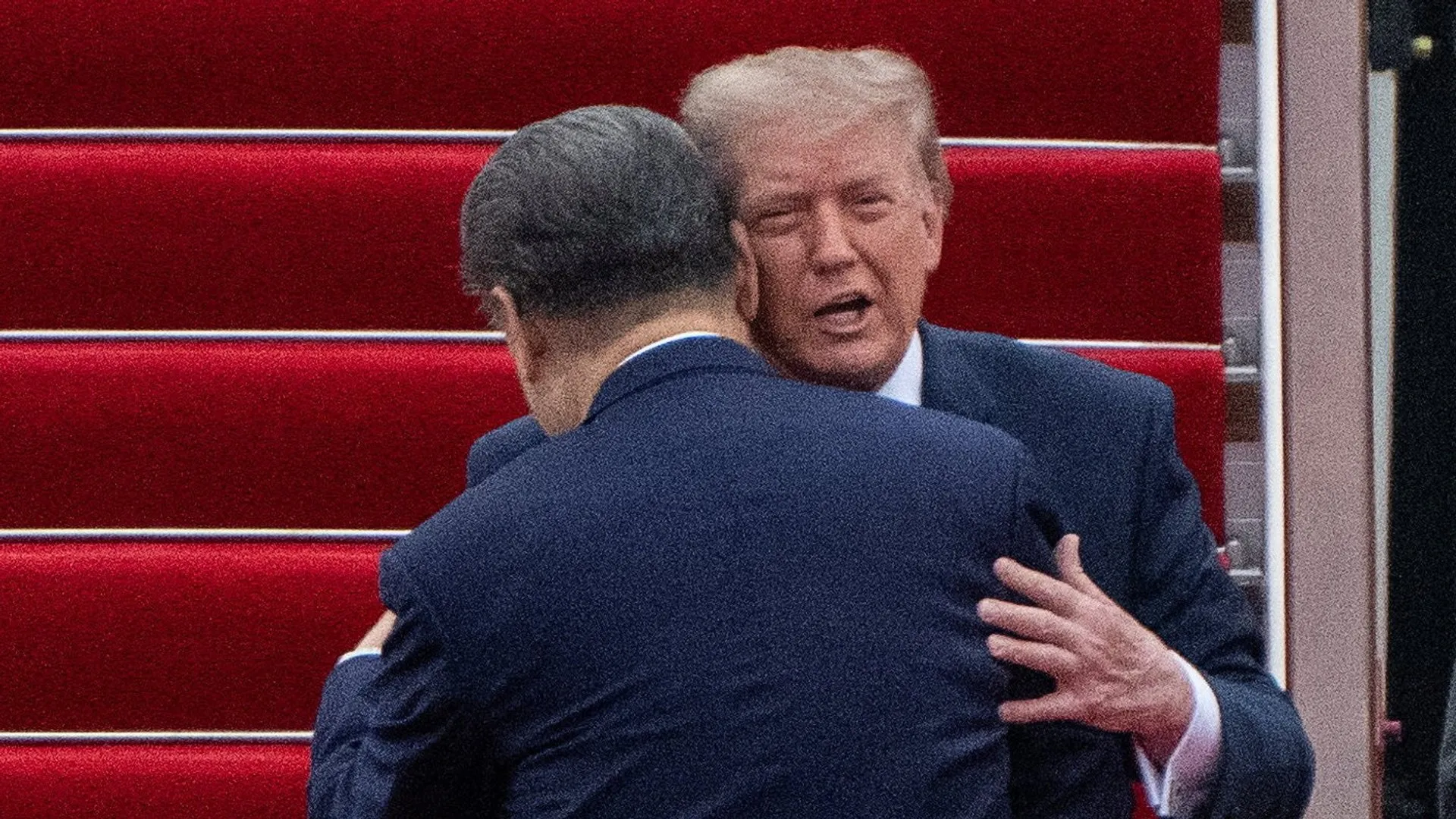
Excitement abounds around the possible tripartite meeting in Shenzhen, China, between Presidents Xi Jinping, Vladimir Putin, and Donald Trump during the November 18-19 Asia-Pacific Economic Cooperation summit.
Some are calling it Yalta 2.0. We’d rather think of it as Reykjavik 2.0, while also welcoming some of the broader diplomatic breakthroughs and global reordering achieved at Yalta almost 82 years ago.
Dmitri Trenin, who directed the Carnegie Moscow Center for many years and is now president of the Russian International Affairs Council, wrote encouragingly: “The US president has mentioned that an unprecedented trilateral meeting… would make sense if it were focused on denuclearisation.” Trenin wrote this in Al Jazeera while explaining why Russia could play a helpful role in negotiating a new nuclear agreement between its Iranian ally and the United States.
While anything that might help end the dangerous, destructive, and potentially apocalyptic conflagration in Southwest Asia would be more than welcome, we think the leaders can and should aim even higher: Why not rekindle the spirit of the 1986 meeting between US President Ronald Reagan and Soviet leader Mikhail Gorbachev, at which they came within a hair’s breadth, arguably one word, of agreeing to eliminate not only all ballistic missiles, as Reagan originally proposed, but all nuclear weapons, as Gorbachev countered. Reagan replied, “Yes, all”, and Secretary of State George Shultz agreed. “Let’s do it,” he said.
The chance to achieve the most extraordinary diplomatic breakthrough in history slipped through Reagan’s grasp when he insisted on unlimited testing of his Strategic Defense Initiative (SDI) fantasy rather than limiting SDI to the laboratory for 10 years. The world’s hopes were dashed, and we have not come close since.
Sure, we’re up against obstacles, and the odds are long. Trump has responded to the midterm shellacking by appointing Stephen Miller as chief of staff, in effect giving the middle finger to those who didn’t support the Republicans, which is not a hopeful sign. Putin knows that much of Russia’s power comes not from its economic prowess or its conventional military but from possessing the largest nuclear arsenal in the world. And Xi has made it clear that China won’t engage in arms control talks until the largest nuclear arsenals are reduced – meanwhile, China has been rapidly increasing the size of its arsenal.
That said, there are good reasons why all three could support this proposal. After his party’s midterm defeat, Trump, probably the most recalcitrant of the three, may be desperate for an achievement that could cement at least a piece of a positive legacy – and in this case a very big piece, a resounding piece. And he has been all over the map on the nuclear issue. In February 2025, he said, “There’s no reason for us to be building brand-new nuclear weapons. We already have so many. You could destroy the world 50 times over, 100 times over. And here we are building new nuclear weapons, and they’re building nuclear weapons.” He also said, “We’re all spending a lot of money that we could be spending on other things that are actually, hopefully, much more productive.”
This is apparently something he’s been contemplating for many years. In 2016, he told Maggie Haberman and David Sanger of The New York Times: “I personally think it’s the biggest problem the world has, nuclear capability. I think it’s the single biggest problem… Power of weaponry today is beyond anything ever thought of, or even, you know, it’s unthinkable, the power… And to me, it’s the single biggest, it’s the single biggest problem.” He credits his “very brilliant” MIT physicist uncle, John Trump, with making him aware of this danger.
In 1986, he sought the advice of Bernard Lown, cofounder of International Physicians for the Prevention of Nuclear War (IPPNW), which won the Nobel Peace Prize, on negotiating nuclear disarmament with Gorbachev. He told Lown he would get Reagan to send him to Moscow and that he would secure disarmament and end the Cold War in one hour. Lown commented, “I sat there dumbfounded. ‘Who is this self-inflated individual? Is he sane or what?’”
On January 23, 2025, Trump told the World Economic Forum in Davos: “And I will tell you that President Putin really liked the idea of – of cutting way back on nuclear. And I think the rest of the world, we would have gotten them to follow. And China would have come along too. China also liked it. Tremendous amounts of money are being spent on nuclear, and the destructive capability is something that we don’t even want to talk about today, because you don’t want to hear it. It’s too depressing. So, we want to see if we can denuclearise, and I think that’s very possible. And I can tell you that President Putin wanted to do it. He and I wanted to do it. We had a good conversation with China. They would have been involved, and that would have been an unbelievable thing for the planet.”
Whether Trump is sane is even more heatedly debated today than it was 40 years ago, but the possibility that he is iconoclastic enough to take a dramatic step that reverses the course of history should not be in doubt. The question is whether he’s capable of taking such a step in favour of humanity rather than against it.
The same is true of Putin. Putin told a meeting of the Valdai International Discussion Club in Sochi in 2017, “Should you ask me if nuclear disarmament is possible, I will tell you: Yes, it is possible. Does Russia wish to achieve universal nuclear disarmament or not? The answer is in the affirmative, too. Yes, it does, and it will be working for it.”
Shortly before the invasion of Ukraine, the leaders of the US, Russia, China, France, and the United Kingdom jointly declared: “We affirm that a nuclear war cannot be won and must never be fought… We remain committed to our Nuclear Non-Proliferation Treaty (NPT) obligations, including our Article VI obligation to pursue negotiations in good faith on effective measures relating to cessation of the nuclear arms race at an early date and to nuclear disarmament.”
Sceptics will rightly point out that this was before the invasion of Ukraine and a series of slightly veiled nuclear threats that Putin issued. But it at least offers a glimmer of hope, especially in the context of a security agreement that promises peaceful coexistence for all participants.
In 2017, in a speech at the United Nations Office in Geneva, Xi said clearly, “Nuclear weapons, the Sword of Damocles that hangs over humankind, should be completely prohibited and ultimately destroyed over time to make the world free of nuclear weapons.”
While not disavowing this sentiment, Xi has more recently indicated that China would not participate in arms control discussions until the gap between its arsenal and those of the largest nuclear powers – the United States and Russia – had narrowed. Fine. To most people, that means China increasing the size of its arsenal to the 5,000-plus weapons that both Russia and the United States possess.
We have a different proposal: How about if the US and Russia reduce their arsenals to the 600 or so that China now possesses?
We see this being done in three four-year stages, much as Reagan and Gorbachev envisioned 40 years ago. In the first stage, the US and Russia pare down their arsenals, while China forgoes its expansion. During this trust-building stage, the wars in Iran and Ukraine would need to end quickly, alongside a recommitment to the UN Charter and peaceful development by not just China, Russia, and the US, but all nuclear-armed states.
The second four-year stage would be more complex, as it would involve bilateral, trilateral, and multilateral negotiations among all nine nuclear-armed states to address the specific reasons why each of the states possesses nuclear weapons and find ways to reduce or eliminate those incentives. Intense diplomacy would be required during this period, resulting in all nine nuclear powers joining the Treaty on the Prohibition of Nuclear Weapons (TPNW). The TPNW would give all nine states a 10-year timeline to eliminate their arsenals.
However, they could accomplish this in four years, given that the starting point would be arsenals of no more than 600 nuclear warheads. This last four-year stage would involve reductions, verification, and eventual elimination of arsenals. It could be done in plenty of time for the centennial celebration of the United Nations and the centennial commemoration of the atomic bombings of Hiroshima and Nagasaki.
The nuclear age should end well before it turns 100.
If Reagan and Gorbachev could come so close 40 years ago, we should not rule out the possibility that Putin, Xi, and Trump could do so today. As John Kennedy said in his great American University commencement address in 1963: “Our problems are man-made – therefore, they can be solved by man. And man can be as big as he wants. No problem of human destiny is beyond human beings. Man’s reason and spirit have often solved the seemingly unsolvable – and we believe they can do it again.”
Europe is beginning to explore the possibility of delivering conventional military payloads from orbit, with the German arm of defense behemoth MBDA and space transportation company ATMOS Space Cargo teaming up to investigate a concept known as Precision Orbital Deep Strike (PODS). The proposal involves putting military payloads into space before sending them back through the atmosphere when commanded, potentially offering a radically different approach to long-range precision strike.
ATMOS Space Cargo’s Phoenix 1 capsule is seen attached to the upper stage of its Falcon 9 rocket during its mission on April 21, 2025. ATMOS Space Cargo
The companies announced their cooperation agreement on November 18, establishing a framework for joint feasibility studies and the design, development, and demonstration of the proposed capability. Initial work will examine system architecture, technical feasibility, payload integration, and potential technology demonstrations.
The concept is undoubtedly hugely ambitious. Getting a payload into orbit and returning it to Earth is a very different problem from developing a reliable weapon capable of striking a designated target with precision and at a predictable time. With that in mind, the agreement represents an initial effort to determine whether such a capability is technically and operationally feasible.
ATMOS and @MBDADeutschland have agreed to assess and pursue the development of a Precision Orbital Deep Strike (PODS) capability.
The objective is to explore how these orbital technologies could strengthen Europe’s conventional deterrence.
The idea of using orbital trajectories to deliver weapons against targets on Earth is not new. During the Cold War, the Soviet Union developed and briefly operated a Fractional Orbital Bombardment System (FOBS), designed to place nuclear warheads into partial orbital trajectories before bringing them back toward their targets; China has more recently revisited the idea. Earlier American proposals for orbital kinetic bombardment weapons, often referred to as “Rods from God,” meanwhile explored the possibility of delivering conventional effects from space.
A Long March 2C space launch rocket blasts off from a pad in China. The Long March 2C has reportedly been used for test launches of the Chinese Fractional Orbital Bombardment System (FOBS). CCTV News
PODS appears to be pursuing a different approach, drawing on modern commercial orbital transportation and atmospheric re-entry technologies to potentially deliver conventional military payloads. Those payloads could consist of kinetic projectiles that simply fall from space, or perhaps some other type of munitions that emerge from a capsule after entering the atmosphere.
The London Timesreported earlier this month that ATMOS had already been working on a prototype concept involving a conventional projectile carried by a satellite and protected by a re-entry vehicle. The company had reportedly been exploring military applications since Russia’s full-scale invasion of Ukraine in 2022 and was looking for a major defense-industry partner to help advance the concept. Now, MBDA has been identified as a potential candidate.
A Russian BMP-3 infantry fighting vehicle destroyed by Ukrainian troops in Mariupol. The full-scale invasion of Ukraine by Russia has prompted ATMOS to look at military applications for its space systems. Ministry of Internal Affairs of Ukraine
According to the German business newspaper Handelsblatt, the concept could eventually involve dozens of capsules operating in low Earth orbit, with military payloads held in space until needed. Low Earth Orbit (LEO) refers to a band of space that measures roughly 100 miles to 1,200 miles above the Earth, and which is highly congested. It is unclear if the plan is to use a recoverable capsule that carries a weapon, releases it during re-entry or before reaching the target, then continues to a separate recovery area, or if this is a one-way payload delivery, with the capsule and its payload expended in the strike. We have approached ATMOS for more details.
Meanwhile, ATMOS CEO Sebastian Klaus reportedly described a system intended to reach targets anywhere on Earth in less than 60 minutes.
Satellites in low Earth orbit travel at approximately 17,500 miles per hour, but this does not mean they can strike any location on Earth within a predictable timeframe. Response times will be affected by orbital inclination, spacecraft positioning, the availability of suitably positioned vehicles, re-entry requirements, and more. Achieving genuinely responsive global coverage could therefore require a substantial constellation and considerable investment in launch and replenishment infrastructure.
Commercial Space Tech Meets Military Need
ATMOS is developing reusable systems for transporting cargo into orbit and returning it to Earth. Its Phoenix program is intended to support applications including scientific research and industrial manufacturing, with atmospheric re-entry technology at the heart of the company’s approach.
The Phoenix I re-entry capsule. ATMOS Space Cargo
These technologies could provide a starting point for the military applications now being explored with MBDA. However, the companies describe PODS as a dedicated defense initiative, separate from the civilian Phoenix program, billed as a reusable orbital transfer and return vehicle (OTRV) for autonomous cargo operations.
To date, ATMOS has demonstrated that its re-entry technology can survive an orbital flight and atmospheric entry, using its Inflatable Atmospheric Decelerator (IAD), but has not demonstrated a recoverable, independently maneuvering orbital vehicle.
A rendering of ATMOS’s next-generation vehicle with its inflatable decelerator. ATMOS Space Cargo
There is also a huge gulf between developing a spacecraft capable of returning cargo from orbit and creating a military delivery system capable of placing a payload accurately at a designated location. Re-entry vehicles must contend with extreme heating, rapidly changing aerodynamic conditions, and enormous stresses. Maintaining predictable flight characteristics throughout that process is already a considerable engineering challenge.
Adding a military payload introduces further complications. The system would need to account for the payload’s specific characteristics, its survivability during re-entry, and the requirements of its intended mission. Neither company has explained what kinds of military payloads are being considered or how the proposed system would achieve its intended accuracy.
It is also unclear whether PODS would involve a dedicated orbital weapons platform, individual re-entry vehicles carried into orbit, or another configuration altogether.
The hope is clearly that the combination of MBDA’s experience in missile development, guidance systems, and military payload integration, combined with ATMOS’s expertise in orbital transportation and re-entry systems, will be a meaningful starting point.
The Economics And Military Utility Remain Unclear
Even if the engineering challenges can be addressed, whether PODS would make military sense remains an open question.
A system intended to provide rapid global strike coverage from orbit could require access to launch vehicles, replacement capacity, and ground infrastructure. Maintaining such a constellation could prove expensive in comparison to the volume of kinetic strike capability they provide. In terms of numbers, German media reports suggest that “dozens” of capsules could do the job. This would be sufficient for its primary mission of striking only extremely high value and/or time sensitive targets and acting as a ‘silver bullet’ weapon system.
There would also be questions about survivability. Satellites in low Earth orbit are relatively easy to track, and their predictable orbital paths could make military platforms vulnerable to the kinds of counterspace capabilities that China and Russia are both actively engaged in. A system designed to provide persistent orbital strike options could therefore become a very attractive target in a major conflict.
A U.S. Defense Intelligence Agency graphic highlighting some of the ways on-orbit attacks can be carried out. DIA
The strategic advantages are clear. As well as reach, PODS would offer extreme unpredictability, a very fast response time and unconventional approach trajectories, as well as blistering speed, making it very hard to defend against. This could be enough to justify the additional expense and complexity. Having the weapon in orbit would provide better survivability than on the ground, at least in most cases.
On the other hand, space-based platforms are not inherently invulnerable, and orbital mechanics impose constraints, too.
The concept would also raise significant legal and strategic questions. The 1967 Outer Space Treaty prohibits placing nuclear weapons and other weapons of mass destruction in orbit, but does not contain an equivalent blanket prohibition on conventional weapons in Earth orbit. Despite that, international law governing the use of force and the conduct of hostilities would remain applicable.
Outer Space Treaty Signed In Washington (1967)
There could also be consequences for strategic stability. Other countries might have difficulty distinguishing between commercial orbital transportation systems and military platforms, particularly if the latter were designed to carry payloads that could be returned to Earth at short notice. Even a conventional weapons system could be perceived as a significant strategic threat, potentially encouraging further counterspace developments.
“Europe must be able to develop, build, and operate its critical defense capabilities through its own industry — and that starts with infrastructure,” ATMOS CEO Sebastian Klaus said. He described orbital transportation and atmospheric re-entry as a new layer of strategic infrastructure, arguing that control over these technologies will determine what Europe can achieve independently.
MBDA Deutschland Managing Director Thomas Gottschild similarly described the cooperation as part of the company’s wider strategic vision in the space sector, with the aim of providing European armed forces with a sovereign capability.
Production of Aster air defense missiles at an MBDA facility in Europe. MBDA
Those ambitions reflect growing European interest in space as an operational domain and in reducing dependence on external suppliers for critical defense technologies, wherever they might be based.
At the same time, neither company has disclosed a development budget or an operational timetable. MBDA says that specific development activities and subsequent projects will require further evaluation and separate agreements.
The partnership is nevertheless noteworthy. It formalizes cooperation between a European space transportation company that has been exploring military applications for several years and one of the continent’s leading missile manufacturers.
Whether that combination can ultimately produce a practical orbital strike capability remains a very open question. The technical hurdles, potential costs, and uncertain military advantages are substantial. A European system fielding weapons capable of routinely striking targets from orbit remains far away in the future, if it’s even feasible. However, Europe is at least starting to explore the boundaries between commercial space transportation and conventional military strike.
Wayne Rooney looks like a man enjoying himself in the I’m A Celebrity jungle. Fitter, healthier and more relaxed than we’ve seen him in years, the former England captain seems remarkably comfortable in his own skin.
When I caught up with him shortly before he entered camp, he was clearly in a good place when it came to his marriage too. Asked who his dream campmate would be, he sweetly replied: “Coleen.”
It is clear how much he owes not just to his wife, but also the whole family network. This week in a pre-recorded interview Wayne revealed how he turned to Coleen and his mum during the darkest period of his life, in which he contemplated taking his own life.
“I really struggled to deal with it all but it was only when I spoke to Coleen, I spoke to my mum, and I opened up (that) I knew I needed help to get through it,” he said.
It was a remarkable admission from one of England’s greatest footballers, and a powerful reminder of just how much those closest to him had helped him through his bleakest days.
Having had a small glimpse into the Rooney family myself while covering I’m A Celebrity in Australia two years ago, I know just how close-knit they are.
Coleen’s mum Colette and husband Tony had arrived on the Gold Coast with their grandkids Kit and Cass to cheer on their daughter, who was going down a storm in the jungle.
Amid all the usual craziness at the upmarket celebrity hotel in Surfers Paradise, the family were a breath of fresh air. Colette was genuinely one of the nicest people I met during my time there. Warm, funny, kind and completely down to earth, she was a proud mum from Liverpool who adored her family.
One of the things I remember most clearly was her talking about the family’s holidays when Coleen was growing up. They had a caravan which cost just £200, and the children would play outside and wash in a tin bath.
“These were all the memories she’s kept,” Colette told me. And although Wayne grew up in a different household, he came from much the same sort of down-to-earth background, where football, friends and relatives were at the centre of everything.
I suspect that’s part of why he feels so at home with Coleen’s family. They understand where he comes from, and they knew him before the rest of the country did.
That familiarity must have mattered when Wayne burst onto the scene as a teenage prodigy. He was just 16 when he scored that sensational goal against Arsenal for Everton in 2002.
After making his England debut, Wayne recalled returning to his mum’s house and finding a photographer waiting outside.
“I was like, ‘What is going on?’ I wanted to be a football player. That’s all I wanted to be. But then I was starting to see the other side of it, and I hated it and really struggled,” Wayne said this week.
Soon he was being thrust into a whirlwind of interviews and press conferences for which he felt completely ill-equipped.
“I just wanted to be that kid….and still go and play with my mates. And so that was really difficult for me,” he said. And it wasn’t just Wayne whose life had been turned upside down.
Coleen was still a teenager too, suddenly finding herself followed by photographers and having her every move scrutinised. Imagine being their parents, watching your children become two of the most famous teenagers in Britain almost overnight.
They could offer support and reassurance, but there was little they could do to protect them from the attention. And, as I discovered when I spoke to Colette, that intrusion has never entirely gone away.
She told me how difficult Wayne found it simply trying to watch his eldest son Kai play football without being approached by supporters wanting photographs and autographs.
“The boys feel it… they want the dad to be with them,” she said, “People come up to him, sadly, thinking it’s their right. It’s not that easy to refuse them, but he just wants to spend time with his own children.”
I remember finding that terribly sad. But it gives you some idea of the difficulties Wayne and Coleen have faced trying to preserve a normal family life.
Of course, Wayne went on to enjoy a career beyond anything he could have imagined. He won five Premier League titles and the Champions League with Manchester United and became the club’s record goalscorer. But away from the pitch, he was struggling badly.
In his interview with Gabby Logan, Wayne described how he would shut himself away in a games room and drink alone for two days. He would then turn up for training using eye drops and chewing gum to disguise the effects.
And because he was still scoring goals at the weekend, he found himself trapped in a cycle.
“I can look back and say I was selfish but I was going through something which I was really struggling to deal with,” he said, “I got to a place where I was contemplating suicide. I didn’t want to be around anyone, I didn’t want to see anybody in the street, in the shops. I was always comfortable on a football pitch, but everything else I struggled with.”
Alluding to the off-field scandals that affected his relationship with Coleen, he added: “I couldn’t deal with the pressures of everything and I made stupid choices when I was younger, off the pitch, and I really struggled to deal with it all to be honest.”
For Wayne, even admitting he needed help was difficult. He explained that, growing up, he had been taught to fight his own battles and never show weakness.
After eventually opening up to Coleen and his mum, the whole family pulled together, and clasped a protective arm around him. As Colette pointed out to me two years ago, her daughter and Wayne are “happiest, when they’re around family.”
Seeing him shine in the jungle, that much is obvious…
With stunning views over Borrowdale, Donna and Gary MacRae’s small country house hotel is in a walker’s wonderland, with routes for all abilities, from the challenge of a Wainwright to a stroll around the wooded grounds. Donna and Gary can supply a packed lunch, arrange for a mountain guide and share information on favourite walks. For Gary, that means a scenic, “easy-going stroll” from Dock Tarn to Watendlath National Trust village and tarn; for Donna, a hike to the top of Rigg Head Quarry, then on towards High Spy, along the river over Maiden Moor and Catbells. Drying facilities, drinks and canapes and a four-course dinner await the rovers’ return.
Doubles from £200 B&B (2-night min), dinner from £55pp, no pets, no under 15s, hazelbankhotel.co.uk
The Gurnard’s Head, Zennor, Cornwall
Brothers Charles and Edmund Inkin’s relaxed, stylish dining pub is a perfect starting point from which to explore the South West Coast Path or to join a foraging foray. Maybe strike out for arty, bustling St Ives. With some tough going (boots, not flip-flops), it’s a moderately challenging, scenic 6.5 miles of rugged coastline. Bring binoculars and a camera; watch for seals, dolphins, kittiwakes, kestrels, gannets, guillemots … In spring, the way is spangled with wild squill, sea pinks and dog violets. Whether you walk or bus back, you can look forward to a friendly welcome and a delicious dinner. Unfussy bedrooms have books, fresh flowers, a Roberts radio, Bramley toiletries, and a sea or moorland view.
Doubles from £175B&B, weekday Winter Escape dinner and B&B £239, a la carte £55, gurnardshead.co.uk
Rathmullan House, Rathmullan, County Donegal
You can bask in the warmth of turf fires at this country house in wooded grounds on the shores of Lough Swilly, at the start of the Wild Atlantic Way, or step out and follow Batt’s Walk, a scenic woodland path along the lough. In summer, join local historian Deirdra Friel’s Donegal heritage walking tours. Built in the 1760s as a summer retreat for the bishop of Derry and Raphoe, and much extended by the Batt family in the 1870s, Rathmullan House had been a Holiday Fellowship hikers’ hostel and a wartime army base when Bob and Robin Wheeler bought it in 1961 and set about transforming it. Run today by their son Mark and his wife, Mary, it has the feel of a big, beautiful, lived-in family home. Dine on homegrown produce in the Cook & Gardener or more casually during the day in the atmospheric Batt’s Bar.
Doubles from €200 B&B. Set-price menu €55/€65 (2/3 courses), rathmullanhouse.com
The Traddock, Austwick, North Yorkshire
Afternoon tea by the fire in one of three comfy lounges is a treat at the Reynolds family’s much-loved, dog-friendly, traditional country house hotel in a small village within the Yorkshire Dales national park. The walker’s bible here is Alfred Wainwright’s 1970 Walks in Limestone Country: The Whernside, Ingleborough and Penyghent Areas of Yorkshire, with 34 walks, revised and updated by Chris Jesty. “For the explorer,” wrote Wainwright, “there are places of fascinating interest, of strange beauty, of thrilling adventure, such as are not to be found elsewhere.” If you feel intimidated by Hell’s Cauldron and Ibbeth Peril or the Three Peaks challenge, you can opt for a riverside amble, borrow maps and order a packed lunch, while the friendly staff happily share local knowledge. Days begin with a hearty full Yorkshire breakfast and end with a gourmet dinner.
James Moffett’s 17th-century, Grade II-listed country house in mature walled grounds wins perennial praise for its timeless values and generosity of spirit. Walkers here are spoilt for choice, with the scenic trails and diverse terrain of the Peak District offering routes for the most and least tenacious. Pick up a complimentary packed lunch, then follow the 13-mile Tissington Trail along the route of the former Buxton to Ashbourne railway line, cross the River Dove by stepping stones, or take a drive and enjoy the views from Kinder Scout, scene of the 1932 mass trespass, an assertion of the public’s right to roam “the finest stretches of moorland”, which would lead to the creation of national parks. The hotel is a wonderful blend of homeliness and luxury, with crackling fires on cold days and a restaurant serving a set-price, daily changing menu of hearty fare.
Doubles from £150 B&B, fixed-price a la carte £35/£42.50 for 2/3 courses, no under-12s, bigginhall.co.uk
Pen-y-Dyffryn, Oswestry, Shropshire
Walking breaks are a speciality at the Hunter family’s dog-friendly hotel, a Georgian former rectory in hilly country on the Welsh border. The hosts can provide a packed lunch and have compiled a folder of suggested walks, ranging from a stroll in neighbouring woodland to all-day treks, with the Offa’s Dyke long-distance path just a mile away. The bedrooms, several with a patio, are spread across the main building and coach house, with the Valley Room and Suite at the top of the flower-filled garden. A nightly changing menu of locally sourced produce includes vegetarian and vegan options. An excellent breakfast, cooked to order is accompanied by a morning newsletter, a charming personal touch.
Families and their dogs are welcome at this 17th-century-cum-Victorian village local and dining pub, moments from the A3, with the River Wey running past the garden. Within the Surrey Hills national landscape and ideally placed for hiking the South Downs, it offers routes in all directions. For a morning constitutional, a short river pootle takes in two medieval bridges. For something more strenuous, you could take a drive and climb Box Hill, scene of the ill-fated picnic in Jane Austen’s Emma, and spend happy hours butterfly spotting. The Stag is a proper, affordable pub with stylish modern touches. The menu appeals to all tastes, with small plates, burgers, bangers and Buddha bowls, sandwiches and Sunday roasts.
In a peaceful village in the Lyth valley, the dining pub with rooms has a well-deserved reputation among foodies, so you’ll want to work up an appetite. Walkers are, of course, in their element, with fells to climb, watersides to wander and treks through Grizedale Forest’s trails. A “must do”, say the hosts, is Gummer’s How, above Fell Foot, at the southern tip of Windermere, where panoramic views take in Scafell and Helvellyn, the Pennine Ridge, Morecambe Bay – even, maybe, Blackpool Tower. Back at base, you’ll find rustic-chic bedrooms, a cosy beamed bar and more formal dining room, where talented chef Andy Beaton uses local ingredients in such dishes as roast venison loin, beetroot, blackberries and creamed cabbage.
The River Forss loops round this Georgian country house, an exceptional hotel below a waterfall off the spectacular North Coast 500 route in the far north. Part of Nick Dent’s innovative Original Collection, it has comfortable, characterful bedrooms in the main house, lodges and cottages. You might follow the river to the sea, or join guided walks run by the Countryside Rangers service, which aims to connect people with the nature, wildlife and heritage of the Highlands. The bar is a whisky lover’s heaven. Breakfast brings porridge, a full Scottish with haggis or locally smoked fish.
Doubles from £93 B&B, set-price a la carte £85, tasting menu £105, forsshousehotel.co.uk
Plas Tan-Yr-Allt, Tremadog, Gwynedd
Howard and Mark Mattingley-White take great pride in their historic B&B, a Regency villa with breathtaking views over the Glaslyn estuary to the Rhinog mountains. This was once home to William Alexander Madocks, founder of the village of Tremadog. Shelley completed Queen Mab here, survived a shooting and is commemorated in Shelley’s Theatre, one of three quirky, indulgent, themed bedrooms. The Triumph of Neptune mural in the dining room was designed by Clough Williams-Ellis. With 40-acre grounds, you can simply saunter around the property, but the Llyn Peninsula and Eryri beg to be discovered, and sandy beaches are a 10-minute drive away. Just be back in time for Miss Hilda’s Edwardian cream tea, served in the drawing room or on a wisteria-draped veranda.
The two of them had been driving the Lakers during the winning streak, but the struggles by Doncic and Grimes were a microcosm of what ailed the Lakers during a 109-97 loss to the Utah Jazz on Wednesday night at Crypto.com Arena.
Doncic and Grimes combined to shoot 18-for-48 from the field and six-for-22 from three-point range.
Doncic had 29 points, but he was 10-for-28 from the field and two-for-12 from three-point range, never able to get on track because of the constant double teams the Jazz sent his way.
Grimes had 20 points, but he was eight-for-20 from the field and four-for-10 from three-point range.
As a team, the Lakers shot 38.2% from the field and 27.3% from three-point range, their nine-game winning streak going down in the process.
After the Jazz opened an 18-point lead with 1:51 left, Lakers coach JJ Redick waved the white flag, pulling his starters after a rough night.
The Lakers were playing a back-to-back game and third game this week, and they looked tired from it all.
The 3-13 Jazz were also playing a back-to-back game, but won their second straight game despite turning the ball over 23 times.
Doncic was called for a traveling violation late in the second quarter, a call he disagreed with. A few seconds later, he was hit with a technical foul for arguing with the officials.
Early in the third quarter, the Lakers were issued another technical foul, this time on the bench.
It was a tough first half for Doncic and the Lakers. Yes, Doncic had 22 points in the first 24 minutes, but he missed 11 of his 19 shots and seven of his eight three-pointers. He had four of the Lakers’ six turnovers.
They shot just 38.3% from the field by the intermission and 26.7% (four-for-15) from three-point range.
The Lakers trailed 56-54 at the half despite the Jazz turning the ball over 12 times.
Walker Kessler spent his first four years in the NBA playing for the Jazz, making relationships and friendships that still remain even though he now plays for the Lakers. But when the Lakers and Kessler played the Jazz last month in Utah, those same friends did all they could to make life difficult for the big man.
Lakers center Walker Kessler dunks over Jazz guard Ace Bailey in the second half on Wednesday.
(Eric Thayer / Los Angeles Times)
Kessler had just two points on just two shots, to go along with seven rebounds. The Lakers won the game, so it was all good for Kessler.
He missed the game against the Charlotte Hornets on Tuesday night with right lower leg soreness, but was back starting against the Jazz.
Kessler was looking forward to having a better outing this time against the Jazz.
“I do remember, you know, like Walker obviously is friends with a number of their players, and they told him like ‘our game plan is not allow you to have a single dunk or lob,’” Redick recalled. “So, they were really pulled in with that low man, even if the ball was going away from the double-side. In pick and roll, they would tag him with the nail guy as well and pull the low man all the way in. I can’t remember the exact number, 47 or something like that, but it was a high-volume three-point game for us. So clearly, you know, an emphasis on taking away those paint points for him. That was the biggest thing from that game.”
By the end of the first half, Kessler had just two points, on two made free throws. He was 0-for-2 from the field. He finished the game with 10 points and 11 rebounds, but was four-for-10 from the free-throw line.
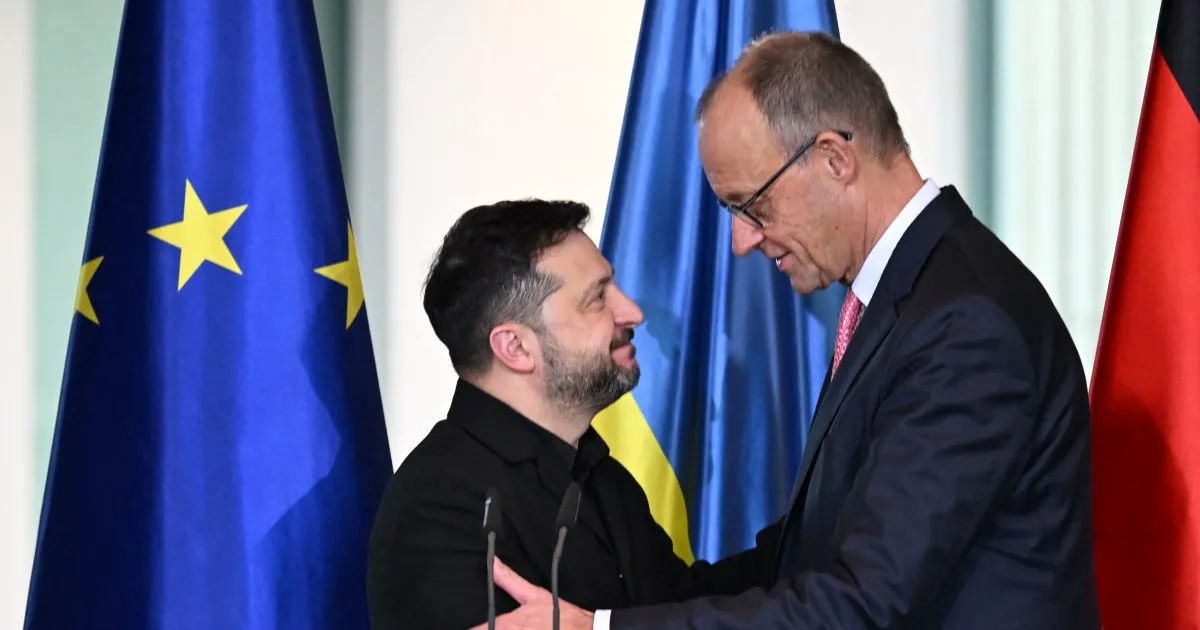
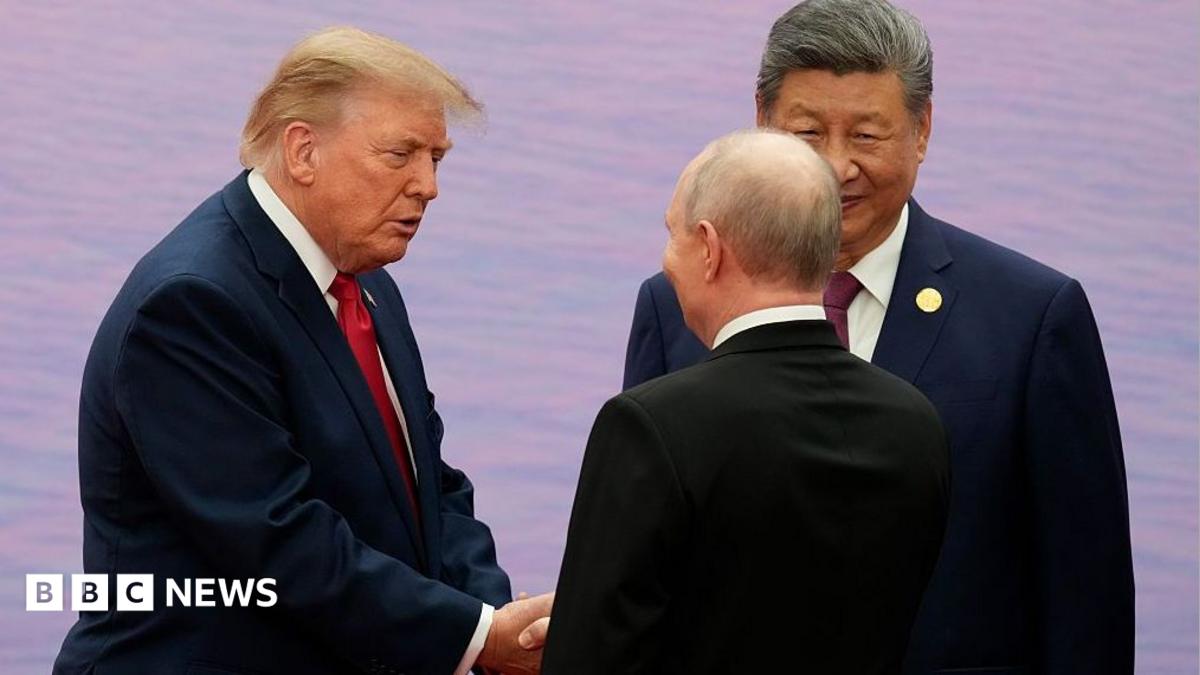
As US President Donald Trump shakes hands with Russian President Vladimir Putin in China, European leaders are due to gather in Berlin to agree on funding for Ukraine’s defence and press Washington’s visiting envoys for a European role in Russia-Ukraine peace talks.
German Chancellor Friedrich Merz is hosting the so-called Coalition of the Willing summit on Thursday alongside French President Emmanuel Macron and UK Prime Minister Andy Burnham. More than 30 leaders are expected to attend, including Ukrainian President Volodymyr Zelenskyy.
Recommended Stories
list of 3 itemsend of list
The summit agenda includes long-term security guarantees and continued military and financial support for Ukraine. Zelenskyy has said air defence will be his immediate priority as Kyiv enters a winter with the threat of Moscow’s drone attacks looming.
Trump administration envoys Steve Witkoff and Jared Kushner are expected, according to media reports, to meet Ukrainian officials and Europe’s newly formed negotiating team in Berlin. The team includes France, Germany, the United Kingdom, Italy and Poland, plus European Commission President Ursula von der Leyen and European Council President Antonio Costa.
Washington has backed European participation in the next round of talks, but Moscow has yet to agree.
The impasse could put Ukraine’s main financial backer on the sidelines of talks over its future, as European Union countries are set to make even steeper commitments.
The European Commission on Wednesday proposed an additional 45 billion-euro ($49.3bn) loan for 2027, with up to 25 billion euros ($27.4bn) for military aid and 20 billion euros ($21.9bn) for budget support. That follows a 1.71 billion-euro ($1.87bn) payment on Monday under an existing EU loan for drones, ammunition and air defence.
Even if the new loan is approved, it would leave a 25 billion-euro ($27.4bn) financing gap next year.
‘Quite a stupid thing’
Zelenskyy said the US envoys had promised to brief Kyiv on Trump’s discussions in China, where he is meeting Chinese President Xi Jinping and Putin.
The Berlin summit gives European negotiators a chance to agree on what they want from the next round and put it directly to Trump’s envoys, just days after a public disagreement between the transatlantic partners emerged in Brussels.
At Tuesday’s Ukraine Defence Contact Group meeting at NATO headquarters, Elbridge Colby, the Pentagon’s undersecretary for policy, argued that some Ukrainian strikes deep inside Russia had done little to slow Moscow’s military advances and that attacks on civilian infrastructure may have hardened Russian resolve.
In a swift backlash, German Federal Minister of Defence Boris Pistorius called the assessment “quite a stupid thing” and pointed to Russia’s repeated attacks on Ukraine’s electricity and heating infrastructure. London was quick to align with Berlin, with UK Defence Secretary Wes Streeting arguing that Ukraine should decide how to fight and that its long-range strikes had weakened Russia’s military capabilities.
After a nine-month hiatus, US, Ukrainian and Russian officials resumed talks in Abu Dhabi last week. Witkoff and Kushner then met Putin in Moscow and said Europeans would join the next round, despite Moscow throwing cold water on the idea.
Europe gets a seat at the table
Within Europe, newfound energy has emerged with the prospect of the bloc joining negotiations, with EU leaders agreeing in Dublin last week on a team.
Sharon Hudson-Dean, a senior fellow with the Center for European Policy Analysis, told Al Jazeera that “success” in Berlin would mean firmer commitments to Ukraine’s immediate defence and its 2027 budget, as well as closer alignment between Washington and European capitals.
European leaders, she said, are wary of US announcements and Russian intentions and want a say in decisions that will affect their security, budgets and markets.
“Washington should leave Berlin recognising that Europe will shoulder much of the financial and security burden of implementing any settlement, and as such, needs a seat at the table,” Hudson-Dean said.
With Europeans likely to bear many of the costs of security guarantees, sanctions and Ukraine’s path to EU membership, she said, they want to be “in on the takeoffs, not just the crash landings”.
Ahead of the Berlin summit, European allies pledged more winter aid for Kyiv and outlined plans to deliver fighter jets and air defence missiles, as Zelenskyy urged them to release Patriot and IRIS-T interceptors from their stocks, offering to replace them with missiles Kyiv has on order.
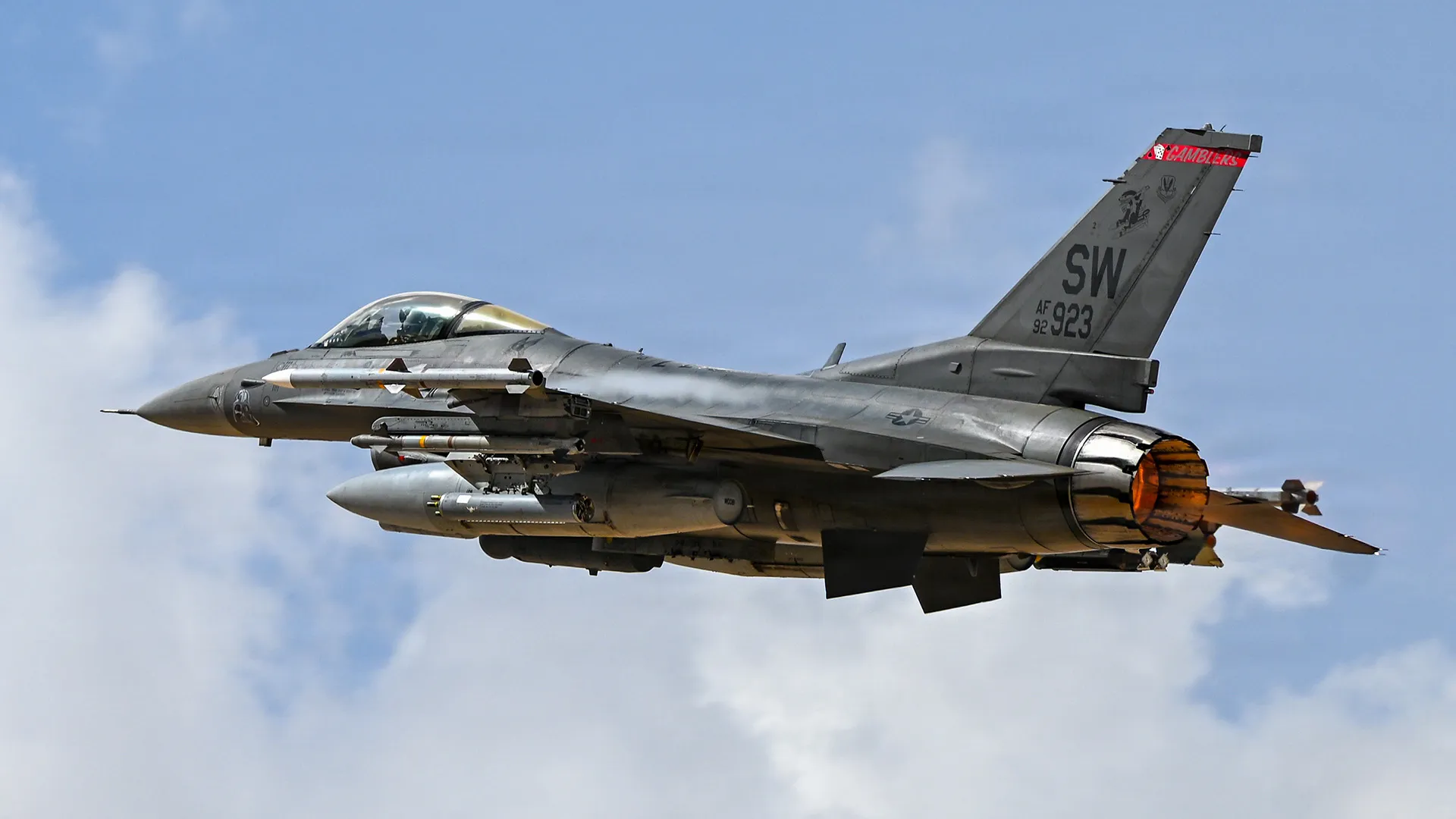
The Ukrainian leader also said Ukraine needed 40 more F-16s.
In response, Germany and Norway each announced $300m for the Prioritised Ukraine Requirements List (PURL), a NATO-coordinated programme that buys US weapons for Ukraine. Their joint package includes Patriot missiles.
The UK, Denmark, the Netherlands, Finland, Belgium, France, Sweden, Lithuania, Estonia and Portugal all reiterated or pledged further funding for Ukraine in the lead-up to the Berlin summit.
European rifts
Poland will be represented on Europe’s negotiating team, but Prime Minister Donald Tusk said on Friday that Warsaw would put no additional money into PURL at this stage. Bulgaria, Hungary, the Czech Republic and Slovakia have indicated they will opt out of the next round of EU financing.
Despite elections in Hungary that ushered in a more EU-friendly leadership, Budapest continues to oppose military assistance for Kyiv.
Kinga Koranyi, an assistant professor at the University of Wroclaw who studies Hungarian politics and EU governance, told Al Jazeera the idea that Hungary should “stay out of the war” remains widely shared after years of politicisation under former Prime Minister Viktor Orban’s Fidesz party, leaving direct funding for Kyiv unpopular.
Years of lost access to EU funds over rule-of-law disputes have also made Budapest cautious about new spending, she said, as the cost of the war with no end in sight continues to mount.
Xi Jinping will believe he has achieved something no other world leader could in securing a historic summit with Vladimir Putin and Donald Trump in Shenzhen.
For decades, Washington and its western allies shaped the world order.
Yet it is China that has orchestrated the remarkable diplomatic spectacle of three of the world’s most powerful protagonists sitting around the table.
And surrounding it all is the futuristic display that is Shenzhen, with driverless cars cruising past as drones fly overhead and robots – literally – dance in the streets.
Ostensibly, this is an economic summit for Asia Pacific leaders. But for Xi, it is also a demonstration of China’s grip on the global economy and world politics.
His country is no longer just reacting to decisions made in Washington, London or Brussels – instead Beijing is at the heart of conversations which are reshaping the international order.
But this meeting is not without its pitfalls for Xi as there are many things he does not appear keen to discuss with Putin and Trump.
I’m A Celebrity 2026 hosts Ant and Dec were quick to comment on Mariella Frostrup’s dig about Wayne Rooney’s glasses, as the pair also talked about Leigh Francis’ debut
22:54, 18 Nov 2026Updated 22:58, 18 Nov 2026
I’m A Celebrity host Ant McPartlin was not happy(Image: ITV)
I’m A Celebrity host Ant McPartlin was not happy with Mariella Frostrup’s ‘dig’ at Wayne Rooney.
As footballer Wayne confessed he had glasses but was too embarrassed to wear them, his campmates were quick to encourage him. Wayne decided to try them on in front of Mariella and Joanna Page, but he did not get the reaction he was expecting.
Instead, Mariella told him “not those ones”, suggesting he could get way better frames. He was then advised to head out with his wife Coleen Rooney, so that she could pick him out a more stylish pair of glasses.
Ant watched the moment and called out the comments, suggesting it wasn’t nice. Ant also confessed he “felt Wayne’s pain”, also admitting his own embarrassment over his new glasses.
Speaking on spin-off series Unpacked, Ant said of Mariella: “Don’t say that to him! They’re going to go at the bottom of the bag now and we’ll never see them again.”
As Sam Thompson added how Wayne had just confessed he was “self-conscious” in his glasses moments before the comments no doubt made him feel worse, Ant said: “I know!” Ant then added: “I feel his pain there.”
He talked of recently getting glasses and being self-conscious in them, understanding why Wayne felt how he did. Wayne said he’d had them a while but had not worn them, and definitely didn’t feel as though he could wear them in public.
Ant and Dec also talked about Leigh Francis’ debut on the show as a late arrival. As Sam asked the pair if they’d be taking revenge on him, they said they would for sure.
Ant said: “He has kind of parodied this show and us for years. Eventually we got him in there.” Dec added: “We’ve asked him several times, he’s always said no.”
The hosts also promised that viewers would see a different side to Leigh, and would not be seeing his alter-ego Keith Lemon. Dec said: “I think he’s got a brilliant sense of humour.”
Ant added: “He can be quite gentle at times. He can be quiet.” Dec went on: “He’s not Keith Lemon, so that’s not what you’re getting. I think you’ll see that.
“He loves getting to know people. He’s very interested in people. He will be perfect down there.” Ant also revealed Leigh was a huge fan of the show.
The airline, Britain’s third-largest, announced the move a day after it cut the number of seats available on its winter flights due to soaring fuel costs created by the Iran War
Jet2 made the announcement on Wednesday(Image: Nicholas.T.Ansell/Press Association)
Jet2 has added three new holiday destinations from a major UK airport for next summer. Holidaymakers will be able to jet off to the coast from London Gatwick.
The new Jet2Holidays destinations are Dubrovnik in Croatia, on the coast of the Adriatic, the Dalaman coast in Turkey, and Tunisia’s Enfidha, on the Mediterranean. Flights start from May 2027.
The move has been driven by a surge in independent travel agent bookings, CEO Steve Heapy said. “Our independent travel agent partners have played a huge role in making our first summer at London Gatwick such a success, and the demand we’ve seen from the trade has been truly outstanding,” he said.
“That demand is exactly why we’re going bigger for Summer 2027, with more seats, three brilliant new holiday destinations and extra capacity to the destinations that agents’ customers love most.
“We’re committed to giving our agency partners more choice, more flexibility and more reasons to book with Jet2holidays. This is a real statement of our long-term commitment to London Gatwick and to our partners.”
Adding three new holiday spots takes the total number of Jet2 destinations available from Gatwick to 46. They will be serviced by twice-weekly flights, which means the airline will station an extra aeroplane at Gatwick, Britain’s second-busiest airport.
The eighth aircraft will allow Jet2 to take-off more than 100 times from Gatwick at the peak of the summer season. The announcement comes a day after Jet2 confirmed it was cutting winter holiday destinations owing to soaring fuel costs created by the Iran War.
The package holiday firm, which is also the UK’s third-largest airline, said it had reduced its seat capacity by 240,000 since early September for the winter season – a 3.6 percent drop year-on-year.
Half-year results on Wednesday showed the firm’s pre-tax profits dropped by nearly a fifth, down 19 percent to £652.2 million for the six months to September 30, despite revenues rising 5 percent to a record £5.63 billion. Income increased as Jet2 slashed its fares to attract 9 percent more passengers, taking the total to 15.4 million – the highest in its history.
Despite this, its yields on flight tickets fell 14 percent per passenger to £104.82 in the first half, which weighed on profits, alongside costs.
Intel (INTC) CEO Lip-Bu Tan said on Wednesday that the company has signed the first outside customer for its 18A chips. INTC shares rose 2.6% in extended trading.
“Resilient supply on the foundry is very important,” Tan said at the TomorrowX
ST. LOUIS — Jake Neighbours, Philip Broberg and Logan Mailleux scored in a three-minute stretch of the third period, and the St. Louis Blues held off the Ducks 8-6 on Tuesday night despite allowing Cutter Gauthier to extend his goal-scoring streak to 10 games with a hat trick.
Gauthier netted a pair of one-timers, then scored with 39.8 seconds left to cut the deficit to 7-6 and tie Edmonton’s Leon Draisaitl for the NHL lead with 21 goals. Gauthier has 19 goals, including four hat tricks, during his scoring streak.
Pavel Buchnevich’s empty-netter off the ensuing faceoff put away the game and gave the Blues their season high for goals.
St. Louis also got goals from Robert Thomas, Dalibor Dvorsky, Connor McMichael and Jonatan Berggren, who was a healthy scratch in the Blues’ previous game. Thomas had two assists.
Jordan Binnington earned his second win in six starts this season, making 25 saves.
Gauthier tied the score at 2 with a one-timer past Binnington 1:02 into the second period.
It’s only the 25th time in NHL history that a player has scored a goal in at least 10 straight games, and Gauthier is the 21st player to accomplish the feat. Former St. Louis star Brett Hull is one of four players with two 10-game goal streaks, doing it twice during the 1991-92 season.
Teemu Selanne holds the Ducks record of 11 in a row, and he’s also the most recent player with a double-digit scoring streak, doing it in 1997. The NHL record is 16.
The Blues took the lead for good on Thomas’ goal off a rebound and Dvorsky’s backhand, which made it 4-2 with 6:23 left in the second period.
Gauthier cut the deficit in half later in the second period with another one-timer just 8 seconds into a power play, smashing a cross-ice feed from Leo Carlsson. But the Blues scored the next three goals for a 7-3 lead.
Ville Husso gave up seven goals on 24 shots before being replaced by Lukas Dostal midway through the third period. Alex Killorn, Ian Moore and Mikael Granlund also scored for the Ducks.
US President Donald Trump says he plans to raise nuclear non-proliferation with China’s Xi Jinping and Russia’s Vladimir Putin as they meet in Shenzhen. But, as Al Jazeera’s Katrina Yu reports, China may not be willing to discuss denuclearisation.
Amid stalled efforts to find a diplomatic solution to the conflict between the U.S. and Iran, the Islamic Republic is stepping up attacks on Kuwait and Bahrain, two nations that host American bases. Wednesday’s strikes took place after the latest U.S. attack on Iran’s Qeshm Island.
These actions, along with other developments we will discuss below, raise questions about whether the Middle East could erupt into a new round of intense fighting.
New Iranian Attacks On Gulf Nations
On Wednesday, Kuwait and Bahrain said they both intercepted Iranian strikes. For Kuwait, it was the first time since September it had been attacked. The strikes on Bahrain marked a continuation of Iranian attacks that began Nov. 13 after they had been paused for two months.
These strikes appear to be an escalation of Iranian actions in response to a U.S. attack on Qeshm Island on Tuesday, The Associated Press suggested. We will discuss that in more detail later in this story.
“Kuwaiti air defenses are currently countering hostile drone attacks,” the Kuwaiti Army posted on X early Wednesday morning local time. “The General Staff of the Army notes that any explosion sounds heard are the result of air defense systems intercepting hostile attacks. Everyone is requested to comply with the security and safety instructions issued by the relevant authorities.”
تتصدى حالياً الدفاعات الجوية الكويتية لهجمات طائرات مسيّرة معادية.
تنوه رئاسة الأركان العامة للجيش بأن أصوات الانفجارات، إن سُمعت، فهي نتيجة اعتراض منظومات الدفاع الجوي للهجمات المعادية.
The Iranian Army claimed that “its combat drones have targeted Patriot air defense systems and drone and missile launch platforms at the US Ali Al-Salem Air Base in Kuwait early Wednesday,” according to the Iranian Tasnim news agency affiliated with the Islamic Revolutionary Guard Corps (IRGC).
Tasnim offered no visual proofof an attack on Ali Al-Salem Air Base and none has emerged so far on social media either. Iran has frequently made claims that proved to be false about successful attacks on U.S. assets.
As we noted earlier, Bahrain also said it came under Iranian fire.
“The General Command of the Bahrain Defense Force announces that Iran continues its systematic hostile approach through its vicious attacks targeting the Kingdom of Bahrain,” the Bahrain Defense Force (BDF) stated on Instagram. “The General Command confirms that with a firm will and high combat readiness, the air defense systems of the Bahrain Defense Force (BDF) responded to a number of Iranian air attacks on Wednesday, November 18, 2026.”
The BDF did not say whether it repelled Iranian missiles or drones, and there was no immediate Iranian claim that it targeted Bahrain on Wednesday.
A day earlier, the IRGC claimed it hit a radar system at a base in Bahrain. CENTCOM quickly disputed that claim.
Wednesday’s Iranian attacks on Kuwait and Bahrain sparked unconfirmed speculation among open-source flight trackers that a C-17 Globemaster III transport jet, coded as a medical evacuation flight, may have been carrying wounded U.S. troops. The flight left the Middle East headed for Ramstein Air Base in Germany, which is located near Landstuhl Regional Medical Center, where many wounded troops are first sent before heading home.
US Air Force C-17A Globemaster III #AE2FA8 as BNDGE01 is on the way back to Ramstein AB, Germany on an unscheduled medical evacuation mission out of the Middle East.
Some are speculating that this flight is due to recent Iranian attacks on Bahrain and Kuwait. That is a… pic.twitter.com/1LNUbAAIzb
U.S. Central Command (CENTCOM) put out a message on X Wednesday afternoon saying no troops were injured.
🚫 CLAIM: There are claims circulating online that U.S. personnel were recently injured by Iranian attacks and required medical evacuation. This is FALSE.
✅ FACT: No U.S. personnel have been injured in any attempted Iranian attacks this week. All American service members are… pic.twitter.com/ulvDi1Mvd3
Earlier, a U.S. official told us there had been “zero impacts” on U.S. facilities in the region from Iranian attacks despite several recent claims out of Tehran.
Meanwhile, the U.S. is continuing to hit Iranian targets in response to what American officials say are threatening actions by Tehran. This includes ongoing Iranian attacks against shipping in the Strait of Hormuz.
On Tuesday, the U.S. carried out its latest airstrikes on Iran’s strategic Qeshm Island in the strait, according to several media accounts.
The Qeshm Island strike was one of several that went after Iranian coastal targets in recent weeks as friction has increased over U.S. support of ships transiting the Strait of Hormuz and growing Iranian frustration with the status quo. The strikes had been carried out largely in secret for several weeks, but the U.S. has become more open to acknowledging them recently.
The timing of the latest U.S. strikes on Qeshm Island “is itself noteworthy,” Hamidreza Azizi, senior Iran analyst at the Crisis Group, pointed out on X.
“Unlike previous U.S. attacks on Iranian coastal areas and islands, which largely took place at night, these strikes were carried out in broad daylight. This could signal a change in the pattern of U.S. military operations against Iran,” Azizi posited.
Things are escalating rapidly between #Iran and the United States.
🔹Over the past 24 hours, the Iranian armed forces have reported incidents involving four oil tankers in the Strait of Hormuz, resulting in explosions and fires. According to the Iranian account, the vessels…
The U.S. appears to be growing more willing to acknowledge these strikes just as Iran seems to be shifting tactics amid stalled diplomacy.
“Iran appears to be pursuing a strategy of deliberate, calibrated escalation,” Danny Citrinowicz, a researcher at Israel’s Institute for National Security Studies and a former Iran specialist in Israel’s military and intelligence service, suggested on X. “The objective is not necessarily to trigger an all-out war, but to steadily increase the military, economic, and political costs of maintaining the blockade.”
“The pattern is increasingly clear: from attacks on tankers transiting the Strait of Hormuz to attacks on vessels at anchor; from missile strikes to commando operations; and from attacks on U.S. bases in Bahrain to strikes extending into Kuwait, reportedly beginning with drones and progressing to missiles,” he added.
“Initially, Iranian retaliation was framed as a response to direct U.S. attacks,” the analyst continued. “Now, Tehran is increasingly invoking violations of its airspace and sovereignty as grounds for further military action. It potentially expands the range of incidents Iran can use to justify retaliation, creating additional pathways to escalation even without a new direct American strike.”
The Escalation Is Not Random — It Is Following a Pattern
As long as the U.S. naval blockade remains in place and no agreement is reached, further escalation will become increasingly difficult to avoid. There are two clear paths to de-escalation: a negotiated agreement or a U.S.… https://t.co/xjqR7pRpD9
— Danny (Dennis) Citrinowicz ,داني سيترينوفيتش (@citrinowicz) November 17, 2026
Supposed Dirty Bomb Threat
On Monday, CNN reported that new U.S. intelligence assessments have indicated that “Iran is developing plans to target senior Trump administration officials by detonating a so-called dirty bomb or a chemical weapon in Washington, DC.”
“Sources familiar with the latest intelligence characterized the Iranian planning as, for now, an effort to give itself options rather than an indicator of an imminent attack,” the network added. “But the plotting picked up by the US has been very specific and includes locations and targets, two of the sources said, and has sparked a flurry of US contingency planning.”
White House spokesperson Lauren Bis told CNN that the U.S. is “monitoring any and all potential threats, but at this time there are no credible threats to the homeland.”
But American officials “have viewed the intelligence as a signal of an alarming willingness to escalate by Iran as it faces intense pressure from ongoing US military strikes and a punishing economic blockade that top administration officials have said is ‘devastating’ the country.”
CNN acknowledged that it remains unknown if Iran even has the capability to pull off these kinds of attacks.
TWZ cannot independently verify the reported Iranian dirty bomb threat, which is the latest in a series of dire warnings about actions the Islamic Republic may take against U.S. officials.
“Threats against Americans have ramped up since the start of the ongoing war with Iran,” CBS News noted. “Director of National Intelligence Jay Clayton warned in October that Iran has ‘substantially increased efforts to target U.S. personnel’ abroad, with plots to kill Americans reaching ‘advanced stages’ in the Middle East and other countries.”
That Iran would have the interest, let alone be in a position, to set off a dirty bomb in D.C. seems dubious given the response such an attack would provoke from the U.S., as TWZ editor-in-chief Tyler Rogoway pointed out.
There are a growing number of pundits that are questioning the veracity of all these claims and leaks considering the tough spot the administration is in when it comes to the war it started many months ago.
Still, in response to the dirty bomb claim, President Donald Trump told reporters, “We’re looking into it.” Queried about whether there was an imminent threat, Trump said: “Well, if there is, they will pay a price the likes of which no country has ever paid before.”
Trump added that “we take it very seriously because they happen to be crazy.”
President Donald Trump said the U.S. is taking seriously reports of a potential Iranian plot to detonate a “dirty bomb” in Washington, D.C., when asked about the alleged threat on Tuesday.
Trump warned that Iran would “pay a price the likes of which no country has ever paid… pic.twitter.com/srx8l5Iz3a
On Wednesday, Secretary of State Marco Rubio said he did not think there was any imminent threat to the U.S. capital, when asked about the CNN report, Reuters noted.
These latest developments “should serve as an important reminder of the inherent instability of the current situation,” Azizi added. “Some within the Trump administration – and perhaps even Trump himself – may believe that Washington can maintain economic pressure and the naval blockade against Iran indefinitely while avoiding another full-scale war. But the developments of the past 24 hours demonstrate how difficult it is to sustain such an arrangement.”
Earlier this month, Trump declared that “Iran militarily is effectively over,” after meeting Qatari officials in the White House to talk about a peace plan that has so far not gained any real traction. “We’re just keeping it the status quo, and we’re doing that really at the behest of countries that are their neighbors.”
PRESIDENT TRUMP: “Iran, militarily, is effectively over. We’re just keeping it the status quo… I don’t guarantee anything, but if we do have to go back in, we are locked and loaded.” pic.twitter.com/a4wKsIw0kM
Trump hasn’t shown any overt signs of changing the status quo since he made those comments. For a short period, the U.S. had three aircraft carriers in the CENTCOM region when USS Theodore Roosevelt arrived on Nov. 15, joining the USS George Washington and the USS George H.W. Bush. However, Wednesday afternoon, Bloomberg News reported on X that one of the two flattops on station there had left.
We break: One of three US aircraft carrier strike groups in the Persian Gulf region to enforce the naval blockade against Iran has left the region and is likely returning to its home port, according to two US officials.
The New York Times reported that the Washington has left the region.
NEW: The USS George Washington has left the Middle East and is now conducting “routine operations” in the Pacific Fleet region. It was replaced earlier this week by the USS Theodore Roosevelt, so two aircraft carriers remain in the Middle East
While Trump’s current thinking on whether to launch a new wave of strikes on Iran is unknown, his window to do so may be closing with the Democrats taking control of the Senate and House on Jan. 3.
A day after the Democratic Party’s stunning midterm election victories, Senate Democratic Leader Chuck Schumer (N.Y.) “said there will be Senate Republican support for ending the war with Iran as soon as possible and threatened that Democrats will use the ‘power of the purse’ to starve the Defense Department of funding if necessary to bring a swift end to the conflict,” The Hill reported.
“We are going to end the war,” Schumer proclaimed. “We have some Republicans already who have joined us in ending the war, and the Founding Fathers had the power of the purse as one of the ways of deterring a president who does war without the consent of the American people.”
Given the growing tensions in the region, it remains possible that a much larger conflict could flare up well before the Democrats have a chance to exert their newfound influence.
Even the most ardent “Yellowjackets” fans can be forgiven if their memory is a bit rusty — it’s been more than 18 months since the twisty survival thriller aired its Season 3 finale. So there’s a lot to remember when the series returns to Paramount+ for its fourth and final season on Friday. Below is a quick primer on some of the main plot points up until now and where the characters find themselves, both in the 1996-97 timeline and the present day.
In the past
Girls gone wild
Season 3 begins with the Yellowjackets rebuilding after the cabin fire.
(Kailey Schwerman / Paramount+ with Showtime)
Season 3 begins a few months after the Yellowjackets’ cabin burned down. Things seem peaceful; huts have been built and there’s even livestock and a thriving garden. Natalie (Sophie Thatcher) leads the group and discourages anyone from tracking down Coach Ben (Steven Krueger). But Shauna’s (Sophie Nélisse) descent into full darkness — and how the others react to it — is a big part of Season 3. Through intimidation, alliances and several power shifts, Shauna eventually usurps Natalie as leader. After years of speculation, it’s revealed that the Antler Queen seen in the very first episode is none other than Shauna. Another mystery from the first episode is finally revealed: Mari (Alexa Barajas) was the girl in the pit, after having the misfortune of drawing the wrong card and chosen as a sacrifice.
Coach Ben is alive — oh, never mind
Teen Natalie (Sophie Thatcher) shows mercy toward Coach Ben (Steven Krueger).
(Colin Bentley / Paramount+ with Showtime)
After fleeing the increasingly unpredictable girls in Season 2, we learn that Ben has taken refuge at Javi’s underground cave. He’s discovered when Mari falls into one of his traps. Though he holds her captive at first, he eventually lets her go. This turns out to be a big mistake, as she instantly tells the rest of the Yellowjackets, who capture him. Still blaming him for the cabin fire and his refusal to participate in the cannibalism, a trial is held for Ben. (Misty is his lawyer, Taissa is the prosecutor.) After Shauna intimidates a majority of the jury into finding him guilty, Ben is sentenced to death. But he’s given a last-second reprieve when Akilah (Nia Sondaya) reveals she had a vision that Ben is needed as a “bridge home” for the group. He is spared, but Shauna makes Melissa (Jenna Burgess) slash his Achilles tendon to keep him from running away. So Ben has evaded death again. But after being locked in the animal pen and force-fed, Ben begs Natalie for mercy — and she plunges a knife into his heart.
New travelers
A pair of researchers, Edwin (Nelson Franklin) and Hannah (Ashley Sutton), and their guide Kodiak (Joel McHale) discover the girls.
(Kailey Schwerman / Paramount+ with Showtime)
As the Yellowjackets feast on Ben, they are discovered by scientists Hannah (Ashley Sutton) and Edwin (Nelson Franklin) and their guide, Kodiak (Joel McHale). It’s all captured on Hannah’s tape, along with Lottie putting an ax in Edwin’s head. Hannah also records a message to her daughter, Alex, before she and Kodiak are taken captive. Kodiak offers to guide them all to safety, an idea that doesn’t appeal to Shauna, who has come to enjoy her power in the wilderness. To prove her loyalty to Shauna, Hannah stabs Kodiak and is welcomed into the group.
Natalie saves the day?
Natalie manages to make contact with the outside world in the Season 3 finale.
(Paramount+ with Showtime)
Even with the guide gone, there is hope for rescue. Van (Liv Hewson) has been attempting to fix the scientists’ satellite phone. She is helped by Misty (Samantha Hanratty), who brings her pieces of the plane’s transponder, which she had originally destroyed. Natalie colludes with them to finish the repairs. Hannah also helps by wearing Natalie’s mask so Natalie can sneak away and get the phone to a high peak for a signal. In the final moments of the season, Natalie is able to make contact with the outside world.
In the Present
One hell of a mixtape
Melissa (Hilary Swank) returns; she changed her name and married Hannah’s daughter.
(Kailey Schwerman / Paramount+ with Showtime)
A large part of Season 3 was built around the mysterious digital audio tape left on Shauna’s (Melanie Lynskey) doorstep — which turns out to be Hannah’s recording. We find out the person who sent it was none other than Melissa, the girl who once seemed to worship Shauna before becoming terrified of her. Melissa (Hilary Swank) is not only alive, but living a happy life under a new name. She even has a daughter and a wife, who turns out to be Hannah’s daughter, Alex.
The deaths of Lottie and Van
Callie (Sarah Desjardins) turns out to be the person who shoved Lottie (Simone Kessell) down the stairwell.
(Kailey Schwerman/Paramount+ with Showtime)
The tape ultimately leads to the death of two Yellowjackets. Lottie (Simone Kessell) is released by the psychiatric prison and shows up at Jeff (Warren Cole) and Shauna’s home; she develops a bond with their daughter, Callie (Sarah Desjardins). When Lottie is found dead at the bottom of a stairwell, Misty (Christina Ricci), and her fellow citizen-detective Walter (Elijah Wood), investigate. While Shauna is the original suspect, it turns out to have been Callie, who shoved her in a fit of anger after Lottie stole the tape from their house.
Shauna learns that Melissa had sent the tape as a peace offering — when it was received, Callie dropped the note explaining everything under the fridge. But it’s too late; Shauna attacks Melissa, taking a bite out of her arm and then forces her to eat it. Melissa breaks free but not for long.
Melissa escapes only long enough to encounter Misty, Taissa (Tawny Cypress) and Van (Lauren Ambrose). Back at her house, Melissa manages to knock everyone out by shutting the flue on the fireplace and letting carbon monoxide fill the room. Van comes in from outside and rescues them all. Taissa, who has spent most of the season taken over by her sinister alter ego (Other Tai), wants to kill Melissa as a blood sacrifice to keep Van’s cancer in remission. And for a brief moment, Van considers it. But she chooses to let her go — and Melissa fatally stabs Van in the chest with a knife.
Where are they now?
Shauna (Melanie Lynskey) embraces her dark side.
(Darko Sikman / Paramount+)
Taissa doesn’t take losing her true love well. In fact, she carries her body to the woods, cuts out her heart and eats it. Melissa goes on the run from her former teammates and probably has a lot of explaining to do to Alex. Misty stops trying to solve everyone’s problems; she breaks with both an increasingly suspicious Walter and the spiraling Shauna. The last straw for Shauna is when Jeff, who is fed up with his wife’s lies and wanting to protect their daughter, takes Callie and leaves. This dissolves any shred of composure for Shauna, who completely embraces her dark side.