Ecuadorian public holidays offer a fascinating timeline of the nation’s historical struggle for freedom from Spanish rule. The journey began with Quito initiating the first Latin American independence declaration in 1809, which ultimately sparked a widespread regional movement. Following this momentum, Guayaquil successfully claimed its freedom in October 1820, quickly followed by the southern economic hub of Cuenca declaring its independence on November 3, 1820. These crucial milestones fueled the broader liberation effort and shaped the country’s early political landscape. Today, Cuenca stands proudly as the Azuay Province capital and the nation’s third-largest municipality, celebrated globally for its UNESCO-recognized historic architecture.
Two mothers whose children have been affected by sodium valproate have urged the government to compensate victims
10:23, 03 Nov 2026Updated 10:25, 03 Nov 2026
Emma Murphy says she used sodium valproate throughout her pregnancies with no warning (Image: BBC)
Two mothers have claimed they weren’t warned of possible birth defects after taking an epilepsy drug.
Emma Murphy was diagnosed with epilepsy at age 12 and was medicated with sodium valproate, which she used throughout her pregnancies after “no warnings” of possible harm to her unborn babies were given.
Emma’s five children have now been diagnosed with various medical conditions, including deafness and cerebral palsy. Appearing on Tuesday’s (November 3) instalment of BBC Breakfast, Emma appeared alongside Janet Williams as they urged the government to compensate families impacted by the use of sodium valproate during pregnancy.
Emma told hosts Jon Kay and Sally Nugent: “There were no warnings given by healthcare professionals. We were informed there was a possibility of cleft lip or palate, maybe spina bifida, but that would be picked up on any scans we had and we were reassured by that.
“But there were no warnings regarding a syndrome that it would cause autism or lifelong disability, and I have got five children affected now. It’s just completely devastating.”
Explaining how sodium valproate has affected her own five children, Emma added: “There’s a diagnosis of autism, cerebral palsy, deafness, incontinence, sensory processing disorder, language difficulties, learning disabilities, it is a huge spectrum that has completely devastated not just my family, but thousands of families in the UK.”
Sodium valproate, which is also used to treat bipolar disorder, can cause physical harm in the womb, and children can be born with a cleft palate and spina bifida, as well as neurodevelopmental disorders.
The medicine now carries warnings about use during pregnancy, with the NHS website stating: “Sodium valproate is not recommended in pregnancy, as it can cause birth defects and problems with your child’s learning and behaviour. If there’s a chance you could become pregnant while taking this medicine, your doctor will enrol you on Prevent, the valproate pregnancy prevention programme.”
Mum-of-two Janet was diagnosed with epilepsy when she was 16 and was also prescribed sodium valproate. However, after giving birth, her son suffered from withdrawal symptoms and was taken down to the Neonatal Intensive Care Unit (NICU).
“We knew nothing about it, we had nothing explained to us, so just him going down to NICU was a worry. They eventually explained to us about the withdrawals but nothing was said to us about the syndrome”, Janet confirmed.
When she welcomed her second son into the world, she was met with the same heartbreak as he was also taken down to NICU as he suffered from withdrawals.
Janet later received a letter confirming it was the Epilim, which is a brand name for sodium valproate, that had caused her children to be unwell. Both sons have been diagnosed with autism.
Jon asked: “How do you know it’s the drug, Emma? There are some children who will have the conditions and symptoms that your kids have got. How do you know it is the drug that is to blame?”
Emma replied: “There is a definitive syndrome now called Fetal Valproate Spectrum Disorder, and we know it is that that causes this.”
She also urged Andy Burnham to meet with her and help the victims get justice and compensation. Jon pointed out that while the Prime Minister is in a position of power, there are other “scandals” including “nuclear test victims, the blood scandal, the Post Office scandal”, that also require compensation, and there is “not much money”.
Jon said: “The government says it’s working on it, there has been a huge report. They say they’re going through that, making progress but they haven’t yet made a decision on how to provide financial redress.”
Emma and Janet are both starring in the upcoming BBC documentary Mums v Big Pharma, which airs on November 9, and details a decades-long campaign by British mothers against drug companies, doctors, and the government.
The Department of Health said the Government was determined to make progress on its response to the Hughes report, adding it was clear those affected have already waited far too long for answers. A decision has not yet been made to provide financial redress, it added.
A statement from Sanofi, the pharmaceutical company behind Epilim, said: “Sanofi understand the concerns of persons affected by valproate and their families and their need to be heard. The use of valproate in pregnancy is an incredibly complex issue that involves many different parties including government, regulators, doctors and other prescribers, pharmacists, manufacturers, patients, and other people affected.
“The supply of valproate, an essential medicine used to treat serious and potentially life-threatening conditions, is subject to detailed regulatory requirements and supervision by the regulatory authority. We have provided information to the regulatory authorities, under their supervision and in accordance with their evaluation and decisions, information has been given to healthcare professionals and patients that reflect the evolution of scientific knowledge.
“We are committed to working with all concerned stakeholders to continue educating about the risks and precautions for the appropriate use of valproate.”
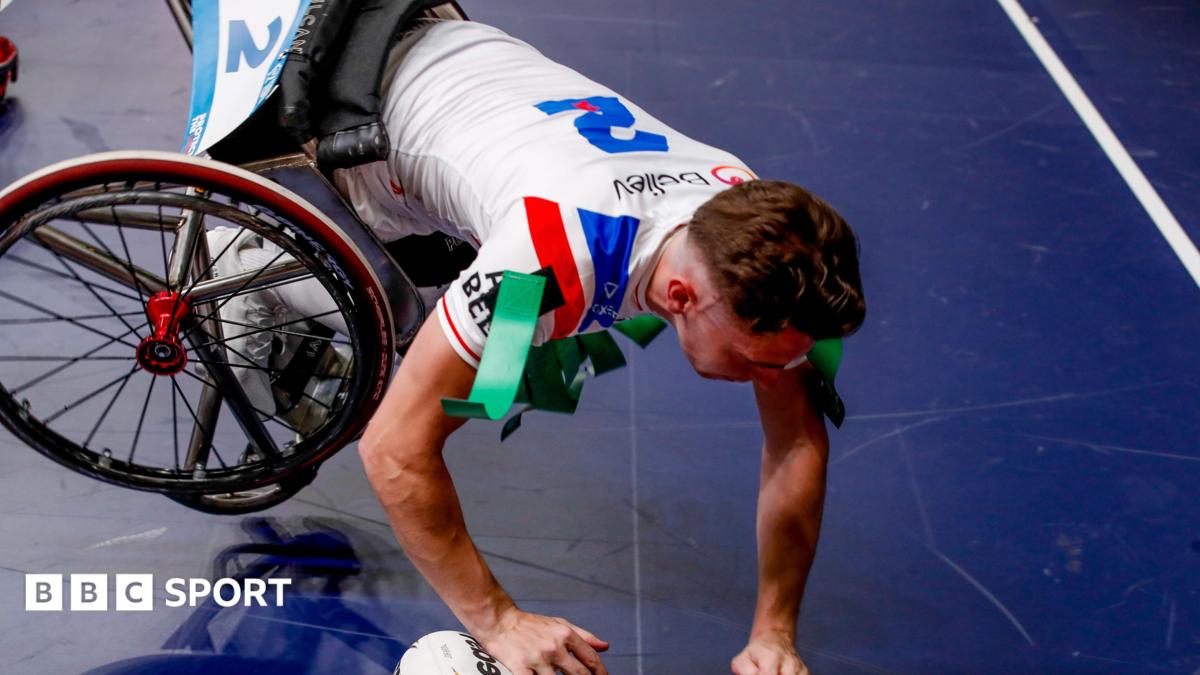
Last week, player Rob Hawkins said England “were not playing to our standards” in their opening 98-18 win over Wales and rated the team five out of 10.
Asked how he would rate England’s showing against the USA, Billington told Premier Sports: “At least a seven. All week, we have been banging on about playing the way we want to play, and the boys really stuck to their principles.
“I’m over the moon for the guys to put on such senior performances.”
Finlay O’Neill was named player of the match as he recorded 38 points, with two tries and 15 conversions.
“It was a good team effort, not just myself,” O’Neill said. “We talked about how we could improve, and I think we did that.
“We need to take the positives – [there are a] few areas to work on but I think we can be very happy with that performance.”
The four semi-finalists have now been set, with the final group games to decide who faces who in the knockouts.
In Pool A, Ireland ensured they will qualify alongside England with a 68-28 victory over Wales.
Ireland, who are ranked third in the world, will face the English in their final group game on Friday in Wollongong (06:00 GMT).
In Pool A, two-time champions France and hosts Australia both booked their passages through while scoring triple figures.
France, who were losing finalists against England in 2022, thrashed New Zealand 120-10.
Australia beat Scotland 104-24, and will play the French on Friday to determine the pool winners.
Scotland, New Zealand, Wales and USA all go into a ranking competition to determine fifth through to eighth place.
Wales will face USA in Pool A on Friday, while Scotland play New Zealand.
Tell bullies to ‘sod off’. That’s the advice IOC President Kirsty Coventry has for young athletes facing bullying. She spoke to Al Jazeera ahead of the Youth Olympics in Senegal, where she reflected on her own experience as a young athlete.
On Sunday evening, commentator Tucker Carlson made a chilling claim: U.S. President Donald Trump may soon use nuclear weapons against Iran’s Pickaxe Mountain facility. Carlson’s comments were posted on X just two days ahead of the Nov. 3 U.S. midterm elections, which Trump has frequently used as a timeframe for when he would conduct a new wave of airstrikes on Iran if he so decides. However, earlier on Monday, Trump downplayed that deadline, answering “no” when asked by reporters whether he was considering attacking after the election is over.
Regardless, Carlson’s claim runs counter to the president’s previous stance on the nuclear weapons issue. Trump has publicly eschewed their use, and while he has discussed attacking Pickaxe Mountain, he’s made it clear it would be by a conventional weapon if he made the call.
Monday afternoon, the White House dismissed Carlson’s asssertion.
“President Trump has a wide range of options available regarding Iran, and he will do what is right to keep the American people safe,” a White House official told us. “Tucker Carlson lost his way long ago due to a debilitating case of Trump Derangement Syndrome, and he has no insight into military planning or the Commander-in-Chief’s thinking.”
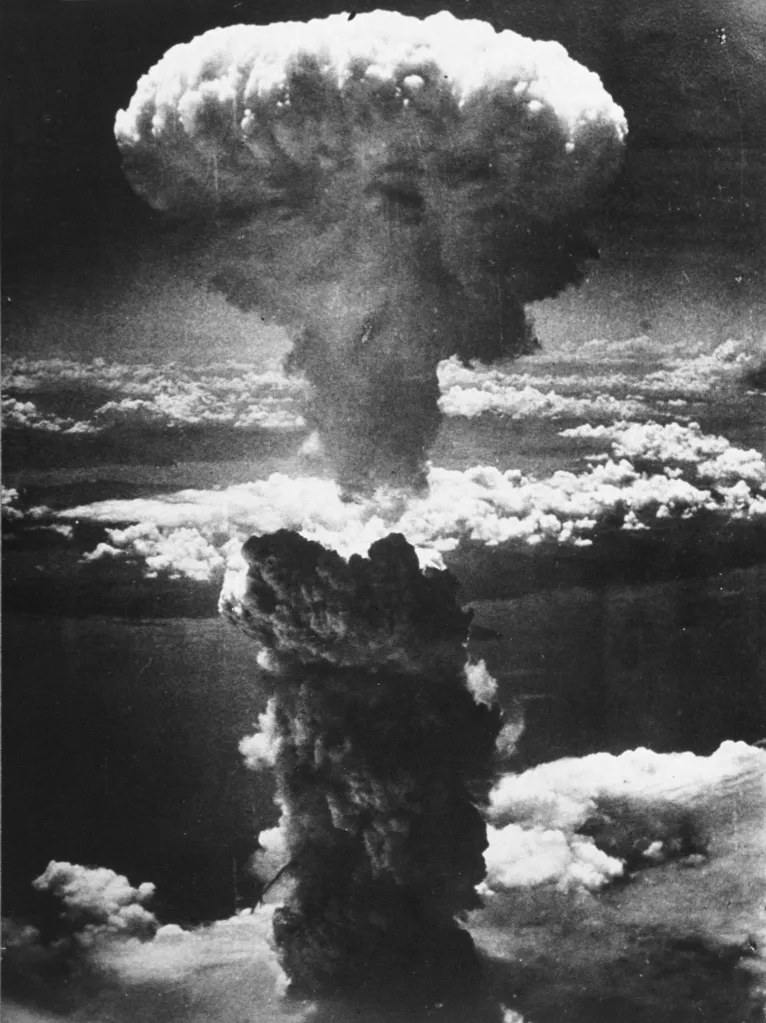
We don’t know the source of Carlson’s information or if it is in any way accurate. Carlson has experienced a major rift with Trump and has said plenty of shocking things in recent years, especially in regard to Trump’s second term and the war with Iran. Still, he is a very connected figure in right-wing media. Regardless, as TWZ editor-in-chief Tyler Rogoway noted on X, even conjecture that has gone viral about the potential use of a nuclear weapon for the first time since the U.S. bombed Nagasaki on Aug. 9, 1945, merits discussion. It would have such profound and irrevocable repercussions that it should not be ignored. We addressed the same concerns in regard to Russia and Ukraine in 2022.
A dense column of smoke rises more than 60,000 feet into the air over the Japanese industrial port of Nagasaki, the result of an atomic bomb, the second ever used in warfare, Aug. 9, 1945. (Courtesy of the National Archives/Newsmakers) National Archives
“If a nuclear weapon were used on [Pickaxe Mountain] in Iran by the US or Israel or an empty field in Ukraine by Russia etc, it doesn’t matter, it would open up Pandora’s box and would make the U.S. and the world dramatically less safe,” Rogoway stated. “This isn’t even a question of how big of a disaster the use, in any manner, of a nuclear weapon would be. It would represent the largest foreign policy error ever by the United States if we were involved. We can only hope this claim isn’t accurate in any way.”
“…And I have no idea if this claim has merit, but this is important nonetheless,” he added in his X thread. “It is massively viral on my X feed. It has to be addressed.”
If a nuclear weapon were used on Pick Axe mountain in Iran by the US or Israel or an empty field in Ukraine by Russia etc, it doesn’t matter, it would open up Pandora’s box and would make the U.S. and the world dramatically less safe. This isn’t even a question of how big of a…
“Under pressure from Israeli prime minister Benjamin Netanyahu, the Trump administration may be within days of launching a nuclear strike on Iran,” Carlson stated on X. “The target would be Pickax Mountain in central Iran, where Israeli intelligence claims the Iranian government has restarted its nuclear enrichment program. No conventional weapon in the American arsenal can penetrate 300 feet of solid granite to destroy the tunnels where enrichment is supposedly taking place.”
“The only military option is a nuclear strike. Netanyahu has been pushing hard for one,” the commentator added. “‘Bibi calls Trump about it every day,’ says an informed observer. Netanyahu is cornered and desperate. After last week’s election results, he can’t form a government unless Trump intervenes directly in Israeli politics and brokers a deal with other parties that gives Netanyahu 61 seats in the Knesset. Otherwise, he is out as prime minister and on his way to ignominy, investigations and possibly jail. Netanyahu must stay close to Trump. He needs this war.”
What Trump has said about using nuclear weapons
“We don’t need it. Why do I need it?” Trump responded in April when asked if he would use nuclear weapons against Iran. “Why would a stupid question like that be asked? Why would I use a nuclear weapon where we’ve totally in a very conventional way decimated them without it.”
“A nuclear weapon should never be allowed to be used by anybody,” he added.
WATCH: Trump says he won’t use nuclear weapons in Iran
The American leader reiterated that stance in August.
“They’re totally defeated militarily, so I defeat them, and now I should use a nuclear weapon on top of them? What a stupid question,” Trump responded on Aug. 31 when again asked by a reporter if he would use nuclear weapons against Iran.
Still, Trump sparked concerns about whether he would use nuclear weapons when he threatened to obliterate Iran in April in a social media post.
“A whole civilization will die tonight, never to be brought back again,” Trump stated on his Truth Social site. “I don’t want that to happen, but it probably will.”
Several experts we spoke with downplayed the chances that Trump would order a nuclear strike on Pickaxe Mountain, but they did not completely rule it out.
“Is it likely? No,” Daryl G. Kimball, Executive Director of the Arms Control Association (ACA) and publisher and contributor for the organization’s monthly journal, Arms Control Today, said when we asked if he thought Trump would order a nuclear strike. “Is it possible that an unstable desperate president who has sole authority to authorize nuclear weapons use, would do so, yes. Given the situation, it is crucial that responsible U.S. voices and international leaders speak out against a massive U.S. strike on Iran of any kind.”
“That is highly unlikely,” Hans Kristensen — director, Nuclear Information Project, Federation of American Scientists, explained to us. He also writes the bi-monthly Nuclear Notebook and the world nuclear forces overview in the SIPRI Yearbook. “There is nothing at all in Iran that justifies breaking the 81-year absence of nuclear weapons use. It would be a violation of the international Laws of War, have devastating consequences for U.S. foreign policy and the efforts to prevent proliferation and the use of nuclear weapons. It would be the kind of act where one would hope the people in the nuclear chain of command would refuse to carry out the president’s order.”
“I honestly don’t know that anyone knows that Trump will or won’t do, including Trump,” Stephen I. Schwartz, nonresident senior fellow at the Bulletin of the Atomic Scientists, told us. “… for many years, often without prompting, he has spoken with a mix of wariness and awe about the tremendous power of nuclear weapons. But he has also publicly and repeatedly threatened to utterly annihilate North Korea, Afghanistan, and Iran. So, really, who knows?”
What weapon could the U.S. use if Trump ordered a nuclear strike?
As we have reported in the past, the B61-11 is the only air-delivered nuclear weapon in the U.S. stockpile today that is specifically designed to address this target set.
“The B61-11 is based on the earlier B61-7, but is substantially different in form and function. It has a heavily reinforced outer shell, possibly with a depleted uranium penetrating nose section, and a rocket booster at the rear to help it penetrate down into underground facilities. Sources differ on themaximum yield of the B61-11, but it is said to either be between 340 and 360 kilotons (identical to that of the B61-7) or to be closer to 400 kilotons. There are also reportedly fewer than 100 of these bombs in the stockpile.”
The first B61-11 versions entered service in the 1960s. We have written extensively about the entire family of these weapons.
An example of the B61-11, or more likely an inert version thereof. This is the only specialized air-delivered deep-penetrating weapon known to be in the U.S. nuclear stockpile today. (Public Domain)
Given the yield of the B61-11, “one could probably do the job” of rendering Pickaxe Mountain unusable, Kristensen told us. “The collateral damage from 400 kilotons would be considerable; even if some very deep structures potentially survived, the damage to the overall infrastructure — plus the residual radiation in the soil — would probably make the site unusable. Other potential options include more conventional penetrator attacks to take out access points and accessible infrastructure, or potentially cyber attacks to sabotage or disable equipment and functions.”
“I think there are many non-nuclear options the United States and/or Israel could utilize to prevent Iran from restarting its nuclear weapons program (if, indeed, Iran has made a decision to do that),” argued Schwartz. “That would include using guided conventional bombs to target any entrances to the facility, impeding efforts of personnel to gain access and also complicating/preventing the movement of any materials out of the mountain.”
“Using an ICBM [intercontinental ballistic missile] would not be a good option,” he added. “For one thing, any ICBM would have to fly over Russia to reach Iran, which would be risky in more ways than one, even if Putin somehow agreed to allow that to happen. For another, ICBM warheads are not designed to penetrate the earth, at least not to any significant depth, so the force of the explosion would largely be ‘wasted’ on the surface, with everything that implies about lethal radioactive fallout. (Using an SLBM [submarine-launched ballistic missile] from a Trident submarine stationed closer to Iran would avoid the overflight risks but would also still be perceived as a threat by Russia and perhaps China after launch, even if we notify them in advance. But W76 and W76-1 warheads are not earth-penetrators, and I doubt we would want to use a 455-kiloton W88, our largest ballistic missile warhead, also not a deep earth-penetrator.)”
The W88 Alt 370 arming, fuzing, and firing assembly. (NNSA)
It’s possible a special operations forces teams could attempt to raid the facility, access its interior and place a nuclear device inside it, although such a mission would be immensely challenging and extremely risky. We have also talked about the possibility of irradiating the facilities from the inside without using a nuclear warhead, but instead planting and detonating a kind of dirty bomb.
There are many other ways to do it, including one on a Jericho BM, or even raiding the place and planing a device inside. We have talked about even irradiating the interior for years.
As we noted earlier in this story, Trump has brought up the issue of conventional weapons to attack Pickaxe Mountain. In July, he said it was ripe for a “nice big fat shot right in the front door.”
At the time, we discussed how difficult it would be to effectively destroy or render inoperable a hardened, deeply buried facility like Pickaxe.
MOPs were the centerpiece during the June 2025 Operation Midnight Hammer strikes, with 12 being dropped on Fordow and another two on Natanz. To get at the actual targets at Fordow, six MOPs were dropped on two specific ventilation shafts, with each successive bomb burrowing deeper down into the complex below. This underscores the challenges that would be involved in attempting a similar operation against Pickaxe Mountain. It is unclear how many MOPs the U.S. has left or whether there are enough to have the same kind of effects on Pickaxe Mountain as they had on Fordow and Natanz. We also don’t even know if any features of the installation, like the ventilation shafts, even exist there to be exploited.
GBU-57 MOP test
CBS News reported last month that the White House and Pentagon “have prepared plans to use a Massive Ordnance Air Blast bomb [MOAB] to hit military sites in Iran,” including Pickaxe Mountain, “if ordered by President Trump.” However, the 22,000-pound-class MOAB, also designated the GBU-43/B, is not a deep-penetrating munition, it’s a fuel-air bomb, and it was not immediately clear from that story how the weapon might be employed. The bomb is also only known to be currently cleared for employment via C-130-type aircraft. It has only been used in combat once, in Afghanistan in 2017, where the skies above were entirely permissive.
The MOAB sitting on its pallet. The weapon is released out of the rear cargo ramp of a C-130. (DoD)
MOAB’s use case would be limited against sites like Pickaxe Mountain. While its unique overpressure effects could harm any personnel exposed inside tunnel systems that are open to the outside world, it is unlikely to destroy or even heavily damage the hardened facilities themselves. It could cause damage to external support infrastructure and act as a psychological weapon in its own right, but it is not a bunker buster in any way.
As mentioned earlier, although for a nuclear weapon insertion mission, a much more dangerous option for American forces would be sending U.S. troops directly into Iran to secure and destroy the facility.
“Special Operations Forces [SOF] could render the site off-limits, at least for a time, but that would be a much riskier operation,” Schwartz noted.
We addressed the SOF option earlier this year in an interview with former U.S. Central Command commander Joseph Votel, who discussed the enormous challenges of putting boots on the ground so deep into Iranian territory. We have frequently discussed the complexities, and pros and cons of a commando raid on an underground nuclear facility.
Still doing this deep in Iran could require a relatively large force and an operation that could last days and would include occupying and defending a key area within the country as teams try to access the caverns. It depends on just how accessible and defended Pickaxe Mountain is.
The fallout dangers of using a nuclear weapon against Iran
The B61-11 “would dig up and disperse into the atmosphere large amounts of radioactive material,” Kristensen told us.
“A surface burst would, depending on wind conditions, spread debris nearly 300 km downwind,” he explained. “Perhaps further, because the simulation calculates a surface bust, while the B61-11 would penetrate a few meters into the rock and therefore increase the fallout issue.”
A screenshot of a simulation of effects of a U.S. B61-11 nuclear bomb if dropped on Pickaxe Mountain. (NUKEMAP)
If highly enriched uranium was stored underground, it would be hard to determine what would happen to it in such an attack, Kristensen added.
“It depends on how the attack is carried out,” Kristensen noted. “It could potentially be entombed or some of it could be lifted up into the atmosphere.”
“U.S. politicians and some civilian military leaders have, since the first Gulf War, periodically and misleadingly claimed that earth-penetrating nuclear weapons can safely and reliably destroy deeply-buried and hardened underground targets with no significant consequences above ground,” Schwartz proffered. “Nothing could be further from the truth, for the simple reason that earth-penetrating nuclear weapons have to, you know, penetrate the earth. That leaves a hole out of which radioactive dirt and gases will spew following any nuclear explosion (as happened more than once at the Nevada Test Site during the Cold War, when nuclear test shafts thought to be properly and fully stemmed or sealed failed, releasing vast and dangerous amounts of radioactive debris, contaminating both the test site and areas downwind.”)
55 years ago this morning, BANEBERRY—a 10-kiloton, weapons-related, underground nuclear test 912 feet beneath the Nevada Test Site—accidentally vented, releasing 6.7 million curies of radioactive debris, including 80,000 curies of iodine-131, the second largest venting in US history. (THREAD)
“The larger the explosion, the larger the venting,” Schwartz added. “Depending on which way the winds are blowing, downwind of Pickaxe Mountain could include Iraq, Kuwait, Saudi Arabia, Qatar, the United Arab Emirates, Oman, Turkey, Azerbaijan, Georgia, Russia, Turkmenistan, Kazakhstan, Uzbekistan, Afghanistan, and Pakistan.”
What about the geopolitical fallout?
In his X post, Carlson offered a blunt assessment of the geopolitical ramifications of a U.S. nuclear strike on Iran.
“An American nuclear attack on Iran would set a new precedent,” he stated. “The Russians have already told at least two other governments that an American nuclear strike on Iran would free them to use nuclear weapons against Ukraine. Pakistan and India would be tempted to do the same against each other, as would North Korea against Seoul. After the first nuclear strike, World War Three is inevitable.”
“The United States has, Republican and Democratic administrations alike, worked hard to ensure that the achievement of no nuclear weapons use since 1945 is continued,” Kristensen told us. “If the Trump regime were to break that taboo, especially in a situation where there is no imminent or executed Iranian nuclear threat to the United States or its allies, it would turn the United States into the nuclear pariah. It would threaten political relations with allies that have also worked to prevent the use of nuclear weapons. And, yes, if the United States were to break the taboo, other nuclear armed states would feel less inhibited — Putin included.”
“If Trump decides to attack Iran with nuclear weapons in a purely preventive war of choice (with Iran presenting no imminent or probably even short-term threat, making such an attack illegal under international law), it will almost certainly unleash both global condemnation (apart from Israel) and a new wave of nuclear proliferation that will be extremely difficult if not impossible to stop,” said Schwartz. “That would be highly counterproductive for the United States and its allies. And while I am not an economist, it’s not hard to imagine there will be severe and negative global economic repercussions as well.”
The sentiments expressed by the nuclear experts echo what Rogoway stated on X.
“The potential game trees for many potential hotspots around the globe post use would be so terrifying it’s hard to comprehend,” he wrote. “All the softer levers the U.S. once had to deter such a thing, which has been effective for the better part of a century would vanish. Proliferation would explode. The U.S. would likely no longer be a superpower beyond it’s military capabilities and likely short-term wealth. [Every] ounce of moral highground would evaporate. The entire world would be on the brink by default.”
He also stated that this would quickly destroy key alliances.
The potential game trees for many potential hotspots around the globe post use would be so terrifying it’s hard to comprehend. All the softer levers the U.S. once had to deter such a thing, which has been effective for the better part of a century would vanish. Proliferation…
We have no direct information about whether Trump is even contemplating the use a nuclear weapons against Iran or not. However, a discussion of the wide-ranging ramifications of such an unprecedented act is a worthwhile exercise, especially in these uncertain times, and even more so if this possibility has actually been floated within the administration.
A UK travel company that sells holidays to Turkey, Greece and Portugal has entered administration after nearly four decades.
Wroxham Travel first opened in 1987 as an independent travel agency selling holidays to numerous destinations including UK staycations, short-haul trips and long-haul holidays.
Wroxham Travel has entered administration after 39 yearsCredit: Alamy
The company also sold ocean and river cruise trips.
However, the Norwich-based company officially closed on October 30.
Sign up for the Travel newsletter
Thank you!
The company had two high street stores – one in Hoveton and one in Aylsham.
While the impact of the company’s closure isn’t clear, it is expected to primarily affect holidaymakers in the Norfolk and Greater Norwich areas.
The Association of British Travel Agents (ABTA) said in a statement: “We are sorry to inform you that Wroxham Travel has ceased trading with effect from 30 October 2026.
“We are now treating this as a financial failure.
The company used to sell holidays to the likes of Turkey and GreeceCredit: Alamy
“If you booked a holiday through Wroxham Travel, the tour operator or principal business with whom Wroxham Travel booked your holiday will be named on your paperwork (or ATOL certificate if it was a flight inclusive holiday; this would be stated on your ATOL certificate under “Who is protecting your trip”).
“To ensure your holiday can continue as planned, you will need to contact the credit control department of your tour operator or other principal travel business with whom you have a contract.
“Your booking should continue as normal, and they will be your direct point of contact.
“Please ensure that you have all your documentation with you, as they may require information from it to assist you.”
LOOKING for a holiday where your cash goes further? These destinations have been revealed as the best value for money.
Skyscanner recently unveiled its list of top spots across the world where the price of flights has dropped the most – and in some cases, hotels too.
Bilbao tops the list – and it’s the closest Spanish city to the UKCredit: jon chica paradaThe pretty Greek island of Rhodes has seen a sharp drop in flight prices tooCredit: Alamy
At the very top of the Skyscanner list is the city of Bilbao which has seen a 66 per cent drop in flight prices from last year.
It’s a great choice for Brits too as it’s the closest Spanish city to the UK taking less than two hours to get there.
Sign up for the Travel newsletter
Thank you!
One-way flights to Bilbao can be as little as £20 with with the cost of hotels down by 63 per cent from last year, rooms start from £29 on Booking.com.
If you fancy booking a whole trip, with loveholidays the cost of a seven-night break to Bilbao in April 2027 starts from £42pppn.
As Bilbao is that it doesn’t get as many tourists as lots of other Spanish cities, it’s a lot quieter than its neighbours.
In 2025, just 1.6 million visited Bilbao last year compared to 16 million in Barcelona.
There’s lots to see too like the neighbourhood of Iralabarri which has been compared to Notting Hill thanks to its colourful town houses.
Deputy Travel Editor Kara Godfrey who visited earlier this year suggested heading its top attraction, the Guggenheim Bilbao museum which is filled with modern and contemporary art.
When it comes to food, Kara attempted the art of txikiteo which is where you hop between tapas bars for snacks and drinks.
Kara added: “My number one spot was Cafe Bar Bilbao for its tasty pork sliders, as well as Taberna Ona for freshly sliced Iberian ham.
Fez in Morocco has seen a drop in the price of flights and it’s a popular winter sun cityCredit: Alamy Stock Photo
“The most famous Bilbao drink is txakoli, a Basque white wine which you can find pretty much anywhere.
“Squeeze into the family-run Taberna Basaras, a tiny bar with barrels for tables and bottles from floor to ceiling, for a hearty glass. You might also spot the locals ordering a mariano, a vermouth “daytime” cocktail that’s lighter than a negroni.”
The second city on the list is Wrocław in Poland which has had a flight price drop of 47 per cent.
The Polish city has colourful market squares with cobbled streets and tall pastel townhouses.
It’s known as a city of festivals with lots going on throughout the year from films and jazz to classical music.
If you fancy visiting during the festive period, Wroclaw’s Christmas market is one of the largest in Poland.
One-way flights to Wroclaw start from £27.
Wroclaw is the ideal city break for Brits with short flights and they’re less than £30Credit: AlamyPula is considered the ‘Rome of Croatia’Credit: Alamy Stock Photo
With loveholidays, a three-night break in the city starts from £149pp or £50pppn.
Another place not far from the UK that has seen a drop in price is Bordeaux in France where air fares have decreased by 34 per cent.
The port city in southwestern France is known for its 18th-century architecture and wine culture.
Make sure to pop into Bassins des Lumières – a former World War Two submarine base which has been transformed into a digital art installation.
If you’re planning a summer holiday next year, a trip to Rhodes in Greece shouldn’t put a dent in your wallet.
The beautiful island is the largest of the Dodecanese and is known for having pretty beach resorts, ancient ruins and it has highs of over 30C in the summertime.
It’s seen a drop in flight prices by 22 per cent and on Skyscanner, one-way tickets are as cheap as £28.
Pula, which is considered the ‘Rome of Croatia‘ came in seventh spot.
It’s ampitheatre is one of the best-preserved Roman monumentsCredit: Alamy Stock PhotoFurther afield is Krabi in Thailand with a reduction of flight prices by 15 per centCredit: Alamy Stock Photo
This City is Ours fans are worried for Rachel Duffy as she becomes more powerful following her deal with Jamie.
Rachel Duffy has more power in This City is Ours season 2(Image: BBC)
This City is Ours fans are concerned about the body count in the latest season.
This City is Ours continues to air on BBC One and the second season sees Rachel Duffy (played by Laura Aikman) start to take control having been ignored by the men in the business for years. The first season saw Rachel start to earn her seat at the table, only to be pushed aside again.
This all changed following her little side deal with Jamie (Jack McMullen) and now, the pair are becoming more and more powerful. Ahead of the new season, which is full of shocking death twists, actress Aikman shared: “This whole series is about shifting power, both in the business and in people’s relationships. We’re going to see Michael (James Nelson-Joyce) more powerless than we’ve seen him before, and Rachel more powerful than we’ve ever seen her. But as is true to the show, power is always up for grabs.”
She added: “For Rachel, I desperately wanted for her to get more power, it felt like she was so unheard, and pent up with anger at being ignored, so that starting to happen for Rachel in series two was all of my dreams coming true for her.” Here is all you need to know about who Rachel is and what happens to her.
WARNING: THIS STORY CONTAINS SPOILERS
Who is Rachel Duffy in This City is Ours?
Rachel Duffy is Jamie’s cousin and the gang’s accountant in the series, and she is married to Robert “Bobby” Duffy (Kevin Harvey), a senior gang member. In the second season Rachel does a business deal behind her husband’s back and she is shunned by the rest of the gang.
Actress Aikman shared the storyline: “There’s a scene between Kevin and myself where Rachel questions if her actions would be judged so harshly if she was a man. That scene was really satisfying and makes you examine who you’re rooting for and why.
“I think the viewers all root for Michael, as do I, when I’m watching the series. This is a man who we saw murder his best friend (Ronnie, Sean Bean), and at no point do we think Diana should leave him. We want Michael to win. But when Rachel does something far less catastrophic, she is judged harshly.”
Actress Aikman, 40, is otherwise known for her roles in The Mysti Show, Casualty, The Job Lot and Waterloo Road. She also played Sonia in Gavin & Stacey. The star has been married to actor Matt Kennard since 2019, with the pair having met when she joined the final season of Bluestone 42.
Ensure our latest This City is Ours stories always appear at the top of your Google Search by making us a Preferred Source. Click here to activate or add us as Preferred Source in your Google search settings
Does Rachel Duffy die in This City is Ours?
Sadly for fans of Rachel, she does meet her demise in the second season of This City is Ours and she was seen being taken away in a body bag, having last been seen dancing at a nightclub. Multiple suspects are questioned about the shooting, including her husband, and new antagonist Ozzie Thompson (Shaun Evans) questions Freddie (Adam Abbou) about his involvement.
Ozzie attempted to help a vulnerable Freddie escape to Ireland, with Michael Kavanagh (James Nelson-Joyce) knowing that it was Freddie who shot Rachel. Once Michael had located Freddie, Freddie did the right thing and confessed to the murder, giving himself up to the police.
Ozzie got his comeuppance in the end after it was discovered he had manipulated Freddie into killing Rachel. Plenty of people wanted Ozzie dead after it was discovered he had coaxed Freddie into carrying the gun that eventually killed her.
At the end of the series Michael, Jamie, Bobby, and Banksey (Mike Noble) killed Ozzie by shooting him four times – one bullet each. Ozzie had ultimately used Freddie to target the Phelan family’s circle, setting off a chain of violent, vengeful acts across the season.
This City is Ours is streaming on BBC iPlayer, with episodes airing weekly on BBC One on Sundays and Mondays
Earnings Call Insights: Allison Transmission Holdings, Inc. (ALSN) Q3 2026
Management View
David Graziosi (Chairman, President & CEO) said, “Under this structure, the Allison Transmission and Allison Off-Highway business units, along with their combined product portfolios now operate under the unified Allison name.” He added, “trusted brands such as Allison
Seeking Alpha’s Disclaimer:This article was automatically generated by an AI tool based on content available on the Seeking Alpha website, and has not been curated or reviewed by humans. Due to inherent limitations in using AI-based tools, the accuracy, completeness, or timeliness of such articles cannot be guaranteed. This article is intended for informational purposes only. Seeking Alpha does not take account of your objectives or your financial situation and does not offer any personalized investment advice. Seeking Alpha is not a licensed securities dealer, broker or US investment adviser or investment bank.
West Ham United have sacked head coach Nuno Espirito Santo after their disappointing start to the Championship season.
The 52-year-old has been in charge since September 2025 and oversaw the Hammers’ relegation from the Premier League last season.
Widely seen as favourites for automatic promotion, the London side are currently eighth in the table, six points behind leaders Middlesbrough.
They have won two of their last six games and have lost back-to-back home matches – a 3-2 loss to Southampton and a 3-1 defeat to West Bromwich Albion on Saturday.
Assistant head coach Rui Pedro Silva and goalkeeper coach Rui Barbosa have also left the club.
Mark Noble, Steve Potts and Gerard Prenderville will take temporary charge of the side for their Championship trip to Cardiff City on Wednesday night.
“Following a thorough review of the start to the EFL Championship season, the board of directors believe that a change is necessary at this time in order to ensure that the club’s objectives and expectations remain on track,” a West Ham United statement read.
“West Ham United would like to thank Nuno, Rui and Rui for their hard work and commitment during their time at the Club, and wish them all the very best for the future.
“The process of recruiting a new head coach is already under way.”
FIFA Council members may view documents related to Gianni Infantino’s doomed plan, but only in person in Zurich
Published On 3 Nov 20263 Nov 2026
FIFA will release details of President Gianni Infantino’s aborted plan to sell off stakes in future World Cups to private investors, but they will not be shared with the public.
Reports in the British media said members of the FIFA Council, the main decision-making body of football’s world governing body, will be given access to “key documents” related to the proposal, named FIFA Forward Enterprise.
However, they can only view them under “strict protocols to preserve confidentiality”, the reports said. Those include the 37 members of the council having to register for an in-person appointment to view selected paperwork in Zurich, Switzerland, in the next two weeks.
Infantino attends the opening game of the 2026 U-20 Women’s World Cup opening match in Katowice, Poland [File: Beata Zawrzel/AP Photo]
The news came out late on Monday, the deadline European football’s governing body, UEFA, had set for FIFA to release details about the $4.2bn scheme and answer questions about how the proposal came about and who approved it before the plans were dropped in July amid a worldwide backlash.
UEFA set the deadline after a tense council meeting at which Infantino apologised for the proposal but provided no details about how the plan was formed. He asked council members to submit their questions in writing.
UEFA is leading attempts to remove Infantino before or at the FIFA presidential election on March 18 in Rabat, Morocco. Infantino, who was elected in 2016, is seeking a fourth term through 2031.
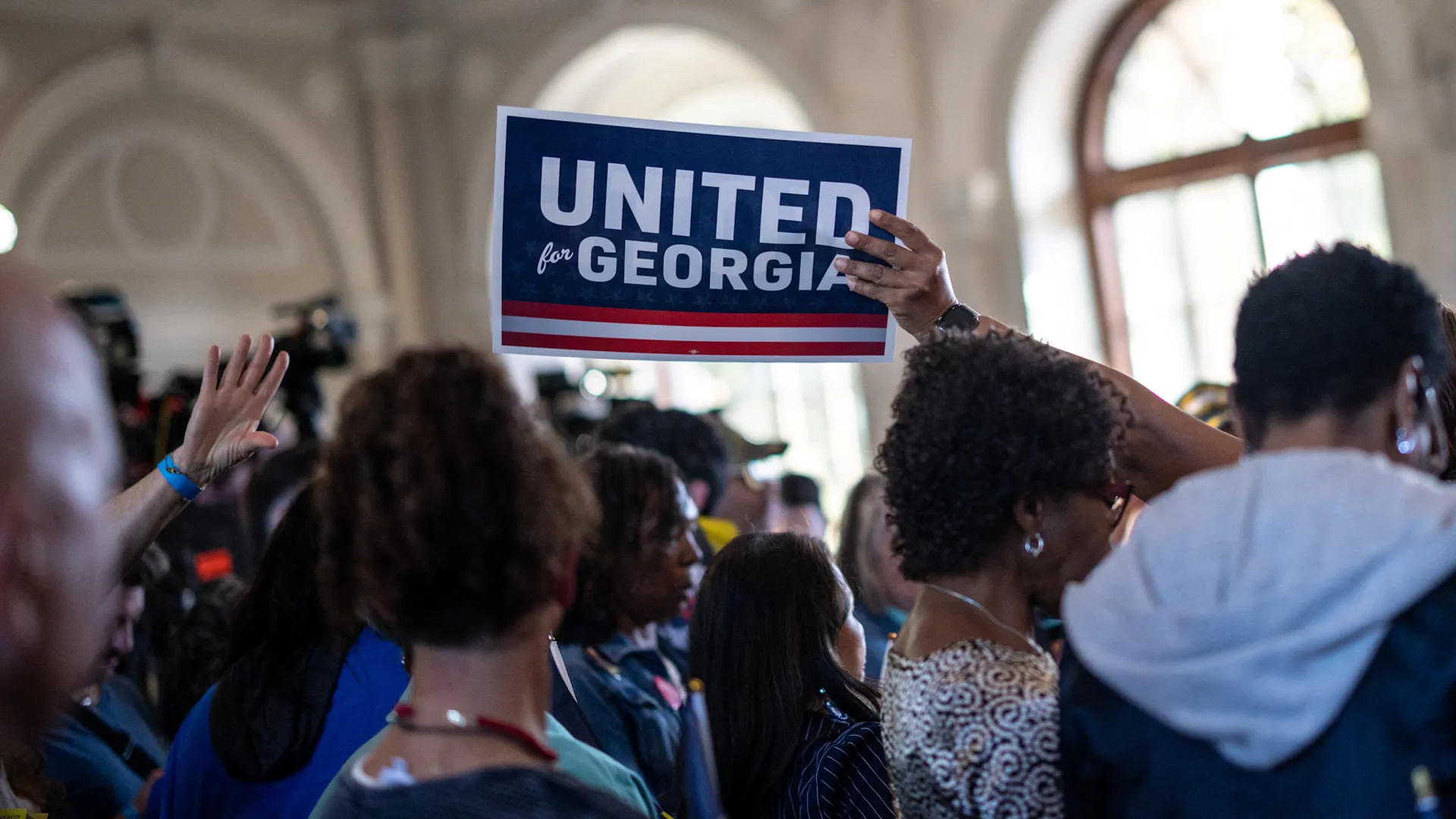
Democratic Senator Jon Ossoff and Republican opponent Mike Collins made their final appeals to voters in Georgia ahead of the November 3 US midterm elections.
Emmerdale, EastEnders and Coronation Street spoilers see big moments for all three soaps next week, as villains return, bombshells are dropped and new questions are asked
Emmerdale, EastEnders and Coronation Street spoilers see big moments for all three soaps next week(Image: CREDIT LINE:BBC/Jack Barnes/Kieron McCarron)
EastEnders welcomes back a familiar face, a past villain, and what they have to say will shock some residents. It’s set to be an unmissable week on the show as secrets are revealed, and big twists occur.
On Emmerdale, two returns are teased before one is sadly ruled out. As for the other, a villain’s confirmed comeback finally begins, and it could leave one family at war.
On Coronation Street, there’s a special episode on the way centred around Debbie Webster, as her health continues to deteriorate after her dementia diagnosis. But it seems more than one discovery will be made.
EastEnders
Linda is shocked to discover Lee has spent the night on Sean‘s floor after getting drunk. Linda turns to Elaine and Sharon for support but she’s rocked by what she uncovers when she answers a phone call on Lee’s mobile.
Linda heads off to seek the truth, needing answers and it’s Janine she chooses to confront. Soon she makes a bombshell discovery from Janine but what has Janine told her?
As Linda refuses to believe what she’s been told, she heads back to the Square and has a heart-to-heart with Max. But Linda is not done and she plans to see Janine once more, while Max makes a decision he might regret.
Later, Linda knows something and she has to tell Lee, Nancy and Johnny what she’s been told. It leads to the trio disappearing and Linda and Max are desperately searching for them.
Linda finds Nancy and they soon reflect on things, but shortly after Nancy’s waters break. Meanwhile, Lee shares his concerns with Linda about becoming a dad, and Nancy’s rushed to hospital, but what have they found out? And what does Janine tell them?
Coronation Street
There’s a special episode next week that focuses on Debbie Webster, as her friends rally round her amid her dementia battle. But soon, accusations fly and emotions run high with secrets to be revealed.
The episode focuses on Debbie‘s Angels Abby, Bernie, Christina, Sally and Glenda, who are helping Debbie surprise her son Carl for his birthday. But what’s meant to be a fun experience soon turns into chaos. As tensions between the women rise and confrontations take place, history and trauma rise to the surface.
As the group struggles to keep things going for Debbie, characters confide in one another and decisions are made about futures. As the evening comes to an end, the women unite to move forward whilst some of them are keeping some life-altering choices private, so what will be revealed?
Emmerdale
Tom King is finally back on Emmerdale next week. Meanwhile there’s another return teased for Samson Dingle, but things come to a halt when it’s revealed Tom has been beaten up in prison.
He’s in a critical condition in hospital and soon Belle finds out that Cain organised the attack and that Samson was the one who carried it out. Things get tense as Sam realises what Cain has done.
As the family come to blows, Samson reveals to his family that his new charges mean he could have a longer stretch in prison. As Belle feels paranoid about how Tom will react to this, Kammy tries to calm her down.
Soon Sam and Cain are clashing again but at breaking point, Belle makes a decision. As she calls out her brothers Cain and Sam she announce her she will talk to Tom at the hospital.
Tom is being held there while he recovers. Belle decides to visit him alone, but will she go in and will Tom have his say?
EastEnders airs Mondays to Thursdays at 7:30pm on BBC One and BBC iPlayer.Emmerdale airs weeknights at 8pm on ITV1 and ITVX.
Victims of the Oct. 29 hack that stole approximately $6.3 billion in digital assets from crypto exchange operator Binance will be made whole using company funds, the exchange operator announced the day after the hack.
Richard Teng, Co-CEO of Binance, said in a video statement posted on X that the company has already used $5 billion to purchase the affected digital assets, including USDC, USDT, BTC, and others, through market and over-the-counter purchases.
“Most of what we earn from day-to-day operations is held in crypto assets and then is reinvested into the business and security,” he said. “Because we believe in crypto and the long-term value of this industry, this is precisely why we are able to absorb a loss of this size immediately with our own money.”
Binance plans to release a full proof-of-reserves report by Nov. 2. Until then, it has paused withdrawals to investigate, rebuild, and retest its entire infrastructure. The move has frozen an estimated $3 billion in digital assets, including $2.3 billion in stablecoins such as USDT and USDC, according to CoinDesk.
Anatomy of a Hack
Binance initially said the hacker gained access to its system via a compromised laptop belonging to a DevOps engineer, but further investigation revealed that the hot wallet hack, which is used for regular transactions, was far more complex and involved multiple breach points.
“The attacker used a self-destruct mechanism that destroyed tooling and tracers as they ran, which makes it more difficult for us to trace and investigate,” said Teng. “The attacker used a known multi-signature protocol, EIP 7702, to obtain on-chain execution approval of a hot wallet. The delegation did not pass through our normal approval controls.”
“The attacker sold about 325 million USDT to market makers within minutes of receiving it,” said Ari Redbord, global head of policy at TRM Labs. “This shows how quickly stolen funds can reach unsuspecting counterparties.”
An Ounce of Prevention
CFOs of firms with stablecoins frozen by Binance should prepare to prove that the frozen assets belong to their companies by providing copies of account agreements, every deposit and withdrawal address, transaction hashes, statements, and approval logs.
“Treasury should own that file, and copies should live on your own systems, since a custodian’s platform can go dark during an incident,” said Redbord. “When issuers like Tether and Circle freeze funds, the paper trail decides who gets them back.”
He also suggested that every corporate treasury have its custodian commit to five things in writing: a set time to inform you of an incident, clear legal title to the company’s assets that is separate from the custodian’s title, reviewable insurance and audit controls, systems divided by chain and wallet type, and round-the-clock cooperation with stablecoin issuers and law enforcement.
“This hack showed what that cooperation can do, because issuers froze about $2.7 billion within hours,” said Redbord. “Test it before you need it.”
Rob Daly writes about the economy and fintech. You can reach him at rdaly@gfmag.com
On November 3, as Americans vote in the midterm elections, the United States faces a defining test of presidential power, constitutional accountability and democratic resilience. The election will determine control of Congress, but its stakes extend far beyond partisan fortunes. At issue is whether constitutional checks and balances can constrain President Donald Trump, whether election officials can withstand political pressure, and whether the government will respect the voters’ verdict when the outcome threatens its interests.
The battle for control of elections
The administration’s efforts to reshape election procedures have encountered substantial judicial resistance. According to an October 20 review by the Brennan Center for Justice, at least 34 federal district court decisions had temporarily or permanently blocked administration initiatives involving election procedures and demands for voter registration records. The rulings included decisions by judges appointed by presidents of both parties, including Trump himself.
These decisions demonstrate that judicial oversight remains an important constitutional safeguard. Yet repeated litigation exposes a vulnerability: courts often intervene only after disputed measures have been introduced, leaving states to challenge policies that can generate uncertainty close to Election Day.
The controversy intensified on October 26, when a federal appeals court declined to order California to set aside ballots from approximately 20,000 registered voters whom the Justice Department alleges may be noncitizens. The court ruled that the lower court had not been given adequate opportunity to consider the government’s request. The underlying dispute remained unresolved.
The administration maintains that its actions protect electoral integrity. But investigating credible allegations of wrongdoing is fundamentally different from restricting eligible voters on the basis of unverified suspicions. Election security requires accurate voter rolls, but it equally requires protecting citizens from erroneous challenges.
Repeated allegations of fraud can undermine confidence even when evidence fails to establish that an election has been compromised. The danger is that routine election administration becomes suspect in the public mind, regardless of the facts.
Congress as a constitutional check
Republicans hold narrow majorities in both chambers of Congress, placing control of the House and potentially the Senate within reach of Democrats.
A Democratic House majority would strengthen the opposition’s ability to investigate administration policies, subpoena officials and scrutinise executive decisions. Immigration enforcement, election procedures, federal spending and the implementation of executive orders could face intensified oversight.
Such scrutiny could expose misconduct where evidence supports it and compel officials to explain decisions otherwise shielded from meaningful examination. Yet investigations do not automatically produce accountability. Subpoenas can trigger prolonged legal battles, and congressional hearings alone cannot force policy changes.
Control of the Senate would give Democrats greater influence over presidential nominations and judicial appointments. Nevertheless, Trump would retain his veto power and substantial executive authority. Even unified Democratic control of Congress would not automatically reverse his agenda.
The deeper question is whether Congress will exercise its constitutional responsibilities independently or allow partisan loyalty to take precedence over institutional accountability. Checks and balances cannot function effectively if one branch declines to challenge another when circumstances demand it.
The test after election day
Perhaps the most consequential confrontation will come after the ballots are cast.
Trump’s response to his 2020 presidential defeat remains a critical precedent. He challenged the result, made unsubstantiated allegations of fraud, and pressured Georgia officials to find enough votes to reverse his loss. On January 6, 2021, a mob attacked the Capitol as Congress met to certify the presidential election.
That history does not establish that similar events will recur in 2026. It does, however, make scrutiny of potential election disputes essential.
The danger may lie not in a single intervention capable of changing the result, but in successive confrontations: challenges to ballot counting, pressure on state officials, demands for investigations and attempts to portray ordinary procedures as evidence of fraud. Even unsuccessful efforts can delay resolution and weaken public confidence.
Candidates have every right to pursue legitimate legal challenges. Courts must consider credible evidence, and election officials must correct documented irregularities. But allegations are not proof, and no president can simply declare an unfavourable result invalid.
An election can also be damaged without a single vote being changed. Intimidation of election workers, unfounded accusations and efforts to discredit established procedures can erode public acceptance of legitimate outcomes.
The distinction between lawful scrutiny and political interference is therefore fundamental. Electoral integrity depends on evidence, consistent procedures and respect for the law – not on whether the outcome favours the governing party.
Courts cannot defend democracy alone
Judicial intervention demonstrates that constitutional safeguards remain operational. Courts can invalidate unlawful executive actions, but they cannot independently administer elections across thousands of jurisdictions or guarantee that political leaders will respect every ruling.
Nor can judicial decisions alone restore public confidence after sustained efforts to discredit electoral institutions. Democracy depends on Congress exercising oversight, election officials counting ballots accurately, courts acting impartially and political leaders respecting lawful outcomes.
The willingness of judges appointed by presidents of both parties to rule against administration initiatives reinforces a fundamental principle: constitutional protections cannot depend on partisan alignment. Their effectiveness rests on whether institutions apply the same rules regardless of who benefits.
The broader danger is institutional erosion. Repeated confrontations can weaken public confidence, discourage election workers and normalise the idea that constitutional constraints are obstacles to political power rather than obligations governing its exercise.
A verdict beyond the ballots
The November 3 midterms will not resolve the struggle over presidential power. If Republicans retain Congress, Trump will continue to benefit from congressional majorities, although judicial and state-level checks will remain. If Democrats gain one or both chambers, the administration will face greater scrutiny, but substantial executive authority will persist.
Neither outcome guarantees effective constitutional government. The decisive issue is whether institutions exercise their lawful responsibilities and whether political leaders accept that presidential power is neither unlimited nor permanent.
American democracy has survived profound crises, but resilience should not be confused with invulnerability. Checks and balances work only when institutions enforce them and political leaders respect their limits.
The midterms are therefore about more than congressional arithmetic. They will test whether votes are counted according to law, disputes are resolved through established procedures and electoral outcomes are respected regardless of partisan consequences.
The ballots will determine who controls Congress. What follows will reveal whether American institutions can still uphold a principle fundamental to democratic government: no president stands above the law, no party owns the electoral process, and no exercise of political power is beyond accountability.
On November 3, Americans will vote to determine the composition of Congress. The aftermath will test something more enduring: whether the constitutional restraints that have sustained American democracy remain binding when their enforcement carries the highest political stakes.
The views expressed in this article are the author’s own and do not necessarily reflect Al Jazeera’s editorial stance.
Congress is made up of two parts – the lower chamber, the House of Representatives and the upper chamber, the Senate.
To win a majority in the House, a party needs 218 seats. In the Senate, a party needs 51 seats for an outright majority. But if the upper chamber is split 50-50, the vice-president has a tie-breaking vote, which gives their party control of it.
First results will start to come in after 18:00 EST (23:00 GMT). They won’t tell us much about the overall result because these races are in places considered safe bets for Republicans (Kentucky and Indiana) or Democrats (Vermont).
Throughout the night, BBC analysts will focus on the competitive races which will give an indication of how well things are going for Trump.
There are several tight Senate contests in the Eastern Time zone – like Ohio, where polls close at 19:30 EST (00:30 GMT) and Maine,where they shut at 20:00 EST (01:00 GMT). Thesecould provide early indications of the electorate’s mood.
Some key contests might start to be “called” by US media outlets. They use models to project which way a state has voted, even before the full vote count has been completed.
This happens when they believe a party or a candidate has gained a lead that cannot be beaten. But in some closely-fought states, outlets could take a long time to make their projections.
The overall timing of the result will depend on how tight the races are and which races end up being decisive.
Dame Kristin Scott Thomas and Barry from EastEnders are battling it out for festive attention as John Lewis and Lidl unveil two very different Christmas adverts hours apart. One tugs at the heartstrings, the other turns up the volume on festive fun
John Lewis Christmas Advert 2026
It’s Gran Cave verses a very Lidl Christmas.
Dame Kristin Scott Thomas against Barry from EastEnders.
Two very different offerings, but in the battle for the most memorable Christmas advert, there’s definitely one you will still be humming come December 25th, when it’s playing on the telly for the 500th time.
The Lidl ad is brash, bright and the message is bold – ‘Fill up that trolley!’ Whether it’s mince pies, Brussell sprouts, bottles of fizz or a middle-aisle festive gonk, throw it in there. The more the merrier.
The John Lewis advert couldn’t be more different. This year customers are encouraged to buy thoughtfully and put value on considered presents for that perfect family get together.
Both creating stress-inducing shopping scenarios, albeit in slightly different ways.
While you might find yourself singing along to Slade with Lidl’s reworked lyrics, the John Lewis ad will give you a little bit more to mull over this year.
It won’t be ranked as one of the retailer’s classics, but parents and grandparents will relate to the panic of knowing what to buy children and grandchildren – and the thrill of watching a gift go down brilliantly.
John Lewis’ ability to hit you right in the festive feels is the reason the retailer is celebrating its 20th Christmas advert this year and why many consider its release the unofficial start of the holidays.
With household bills continuing to rise, there’s a useful, if slightly bah-humbug, message here: think carefully about what you’re spending rather than handing over envelopes of cash.
The nation’s young folk may take a different view.
The creative team at the high street retail giant say this year’s ad comes from the heart and has the cost of living in mind.
That said, all the goodies on display – including the wooden Fisher-Price dog, which turns 60 this year, can be yours for a price in store. We bet that wooden pooch didn’t cost £12.99 in 1966.
With the toy likely to sell out as in previous years, the real winner this Christmas will be anyone who can dig one of those vintage pull-alongs out of the attic to flog on Vinted.
So while Lidl might have you singing all the way to the supermarket, it’s the John Lewis advert that will have you thinking a little harder about what makes Christmas really memorable.
Calix press release (CALX): Q3 Non-GAAP EPS of $0.44 beats by $0.03.
Revenue of $301.71M (+13.7% Y/Y) misses by $2.39M.
In October 2026, we increased our stock repurchase authorization by $100 million, increasing the remaining repurchase authorization to $144 million as of the date
Scottie Barnes scored 15 of his 22 points in the fourth quarter, Immanuel Quickley had 27 and the Toronto Raptors rallied for a 125-118 win over the skidding Clippers on Monday night.
Toronto trailed by 13 going into the final period, but Barnes hit a turnaround jumper with 2:08 remaining to give the Raptors their first lead as part of a 12-1 run.
RJ Barrett scored 26 for Toronto. Barnes also finished with 15 rebounds and eight assists.
Kobe Sanders had a career-high 26 points for the Clippers, who have dropped six straight games since winning their season opener Oct. 21 against Sacramento.
The matchup lost some of its luster with Raptors forward Kawhi Leonard unavailable because of a left knee injury, delaying his return to Southern California after spending the previous seven seasons with the Clippers (he missed one because of injury).
His largely disappointing tenure ended when the Clippers had to forfeit five first-round draft picks and were fined $30 million for circumventing salary cap rules in regard to how Leonard was compensated. Team owner Steve Ballmer was suspended for one year.
Leonard was traded back to Toronto in September for Brandon Ingram, Gradey Dick, two first-round draft picks, two second-round picks and a pick swap nearly three months after the deal was originally agreed to in July. It had been delayed pending resolution of the NBA’s investigation.
Dick made his first start for the Clippers and had 12 points, four rebounds and three assists in 29 minutes.
Clippers coach Tyronn Lue was on the floor despite an illness that prevented him from holding his pregame news conference.
Start date for AFC Cup 2027 moved from January to December due to ongoing Houthi attacks on host nation Saudi Arabia.
Published On 3 Nov 20263 Nov 2026
Football’s upcoming Asian Cup 2027 tournament in Saudi Arabia has been rescheduled from a January start to December due to the ongoing conflict in the region, the Asian Football Confederation (AFC) has confirmed.
The 24-team competition, which was due to get under way in Riyadh on January 7, 2027, will now begin on December 23, the AFC said in a statement on Tuesday.
Asian football’s governing body announced the decision following “extensive discussions and close consultation with the Local Organising Committee (LOC) of the AFC Asian Cup Saudi Arabia 2027 and the Saudi Arabian Football Federation (SAFF)”.
The tournament will now run from December 23, 2027, to January 21, 2028.
“The organising committee for the AFC Asian Cup approved rescheduling the tournament in light of the current exceptional circumstances arising from developments in the region, including substantial logistical complexities and travel disruptions,” the AFC’s statement added.
Saudi Arabia has repeatedly come under attack from Yemen’s Houthis since September, with capital Riyadh among the cities repeatedly targeted by missiles.
The Saudi-led coalition in Yemen reported on Friday that it “intercepted and destroyed” a drone launched by the Houthis towards Saudi Arabia’s Mecca region.
It was also reported that a missile aimed at western Saudi Arabia was earlier brought down, as hostilities between the Riyadh-backed Yemen government and Iran-backed Houthis continue to escalate.
The tournament’s fate hung in the balance in past weeks, with several participating nations expressing concerns about the security situation.
The AFC said while “exceptional circumstances” had been created for the organisation and delivery of the competition as originally scheduled, the postponement became necessary “in the interest of all participating teams, officials, spectators and other stakeholders.”
The AFC will submit the new tournament dates to FIFA for approval from football’s global governing body.