For one UK city, Christmas has already begun as its markets open today (Friday, November 6). Manchester Christmas Markets is bringing festive shopping, food and drink to the streets of the city.
Wooden chalets line parts of Manchester, where visitors can shop for handmade gifts, artisan products, and international food and drink, as well as take part in family-friendly festive experiences.
Albert Square will be at the heart of the festivities, hosting the 50-metre-high Ferris wheel and a pop-up pub. Manchester’s Giant Santa will also make a comeback alongside a vintage Helter-Skelter.
This year marks the first for a new tree installation with a life-sized selfie sleigh. Over at Cathedral Gardens sits Skate MCR, an undercover ice-skating rink with additional stalls.
In a month’s time, the Manchester Christmas Parade will take place, with more details about the event to come on Sunday, December 6. Overall, the markets will be home to 210 stalls across 10 different city centre sites.
Ensure our latest lifestyle headlines always appear at the top of your Google Search by making us a Preferred Source. Click here to activate or add us as Preferred Source in your Google search settings
Where is the Manchester Christmas Market?
The market is spread across the city centre as hundreds of stalls make up the festive atmosphere. This year, locations include Albert Square, Lincoln Square, King Street, St Ann’s Square, Exchange Street, New Cathedral Street, Exchange Square, Corn Exchange, Cathedral Gardens, and Market Street.
When does the market open?
Manchester Christmas Markets will open on Friday, November 6 and run until Tuesday, December 22. The festivities at Albert Square and Cathedral Gardens will remain open throughout the Christmas period until Sunday, January 3.
Meanwhile, Skate MCR ice rink will be open from Friday, November 6 to Sunday, January 3. The market is open seven days a week from 10am until 9pm.
How much is Manchester Christmas Market?
It is free to visit Manchester Christmas Market and you do not need a ticket to enter.
How to get to Manchester Christmas Market
Manchester Christmas Market is best accessed by public transport as Manchester city centre is served by trains, trams and buses. Manchester’s Victoria and Piccadilly Stations are an easy walk to the markets.
Trams and buses on the Bee Network run every 12 minutes, and are said to be the “easiest, cheapest and fastest” way to get to the markets.
Roads and car parks are said to be very busy, with the option of using Greater Manchester’s Park & Ride locations instead. There are multiple car parks within a walking distance of the markets, with Piccadilly Plaza and Chorlton Street being the closest.
Tinto Brass, the avant-garde Italian director best known for 1970s erotic films “Caligula” and “Salon Kitty,” died Wednesday in Rome. He was 93.
His wife, Caterina Varzi, and children Bonifacio and Beatrice Brass confirmed the director’s death to Italian press agency Ansa.
Brass was born in Milan in 1933 but grew up in Venice. The son of a criminal lawyer, Brass graduated from the University of Padua in Northern Italy with a law degree in 1957, but he never felt the vocation suited him and instead packed his bags for Paris, where he followed his passion for cinema. In Paris, he worked as an editor and assistant at the Cinémathèque Française, an acclaimed film archive that doubled as a school for cinephiles founded by Henri Langlois and three friends.
When he returned to Italy, Brass worked under prominent Italian neorealist director Roberto Rossellini as an editor and assistant director.
In 1963, Brass made his feature directorial debut with “Who Works Is Lost,” a day in the life of an unmoored designer in Venice who questions the societal expectation of labor, which screened at the 1963 Venice International Film Festival. The decade cemented Brass’ reputation as an experimental director with a rebellious spirit, and in the late ’60s, he was approached by Warner Bros to direct the film adaptation of Anthony Burgess’ dystopian novel, “A Clockwork Orange.” The deal fell through due to scheduling conflicts, but Brass would go on to work with the film’s title star, Malcolm McDowell, in his most famous film, “Caligula,” which was written by Gore Vidal and produced by Penthouse magazine founder Bob Guccione.
McDowell starred as the sexually deviant emperor, alongside Helen Mirren, Peter O’Toole and John Gielgud. Brass was fired from the project and nixed as an editor over creative clashes with Guccione, who wanted to amp up the raunchy scenes, Penthouse-style. After Guccione took control, he added pornographic scenes to the final cut, which prompted Brass and Vidal to sue to have their names scrubbed from the film. Naturally, the movie has gained a cult following since its release more than four decades ago.
Malcolm McDowell and Helen Mirren starred in 1979’s “Caligula,” directed by Tinto Brass.
(Drafthouse Films)
While Brass decried Guccione’s hardcore take on sex in cinema, he celebrated eroticism and pivoted to the genre with “Salon Kitty” (1976), “The Key” (1983), “Paprika” (1991), “All Ladies Do It” (1992), “Frivolous Lola” (1998) and “Cheeky” (2000).
“I made so many erotic films because I believed eroticism to be a fundamental key to human expression and, above all, the key to portraying women,” he told La Repubblica newspaper. “That was what interested me most.”
Brass also directed the Western “Yankee” (1966) and the murder mystery “I Am What I Am” (1967).
Brass is survived by his wife, Caterina, whom he married in 2017, and his children.
For the past 30 years, Mark Gregory’s Air Salvage International (ASI) has been assessing, chopping up, disassembling, and recycling planes at the private airfield, which sits two miles from Kemble in Gloucestershire
Where do planes go when they die? For the past 30 years, Mark Gregory’s Air Salvage International (ASI) has been assessing, chopping up, disassembling, and recycling planes at the ends of their lives at the private airfield, which sits two miles from Kemble in Gloucestershire.
Armed with redundancy money in the early ’90s, Mark bought his first plane and spent six months breaking it down into sellable bits. More than 1,400 aircraft later, the business is thriving and employs dozens of people to meet the growing demand of the ever-expanding aviation industry.
And there are big bucks at stake. The equivalent of a commercial jet’s MOT costs around £1 million, which is why many plane owners decide to send their ageing aircraft to Mark instead. Sometimes, as much as £12 million can be salvaged from them, either as reusable parts or as recyclable materials.
There are a few other strings to the business’s bow, Mark explained as he took me on a tour around the facility. ASI puts on dramatic training scenarios for organisations including the SAS, helping them practise plane-related emergencies. One mock-up situation had Mark and his team crush a van with a plane fuselage, creating a tricky day out for the special forces, who also had to deal with hijackers and “injured” passengers on board.
One particularly interesting aircraft that ended up with Mark is a VIP-fitted Boeing 727 that was once part of Saddam Hussein’s fleet, after he instructed Iraqi Airways to steal all of Kuwait Airways’ planes during its 1990 invasion of the country.
Do you have a travel story to share? Email webtravel@reachplc.com
Asian shippers eye the Arctic Northern Sea Route as the Middle East conflict disrupts traditional trade lanes.
This article appears in the November issue of Global Finance Magazine.
Asian countries are betting on the Arctic Northern Sea Route as an alternative to traditional shipping lanes to send goods to Europe as the U.S.-Iran conflict makes the Persian Gulf less attractive. In August, the container ship Pan Star Acro left South Korea for the U.K., the Netherlands, and Poland via the Arctic. The same month, the Dubai Tower, operated by the Chinese company Sea Legend, left Qingdao for Teesport in the U.K.
At first, the Suez Canal appeared the natural alternative to the Gulf, but attacks by Yemen’s Houthi rebels on vessels in the Red Sea and the Bab al-Mandeb strait curbed shippers’ enthusiasm. And Plan B, the Cape of Good Hope, is costly.
“The route Shanghai-Le Havre [France] via the Suez Canal is a 40-day trip,” said Jérôme de Ricqlès, shipping expert at the digital logistics platform Upply. “The Cape of Good Hope option is even longer, 60 to 65 days.” That leaves Asian shipping companies with the Northern Sea Route, or NSR.
“The gain is really noticeable,” de Ricqlès said. “The journey only lasts 20 days.” The NSR also appears less costly.
The Russian Complication
Not that it’s ideal.
Interest in the Arctic is growing, Allianz acknowledged in its Safety and Shipping Review 2026, “but the region remains higher risk.” Machinery damage, territorial disputes, and potential sanctions against Russia complicate operations.
Jérôme De Ricqlès, Upply
The ice silk lane runs along the Russian coast for thousands of kilometers, so shipping companies need the Kremlin’s green light and specialized icebreakers to escort vessels through the Arctic passage. The route is open only from August to October.
While Sea Legend promises weekly container service beginning next summer, “it will only operate for eight weeks,” said Niels Rasmussen, chief shipping analyst at BIMCO, or Baltic and International Maritime Council. Asian shipping companies will be able to carry “less than 0.5% of the weekly volume from East and Southeast Asia to North Europe.”
“On paper, NSR is very attractive; in reality, the route is at an early stage of development,” said de Ricqlès. Volumes are small, and the environmental impact could be large. Mindful of a potential acceleration of damage from global warming, several shipping giants, including Maersk, Mediterranean Shipping Co., CMA CGM, and Hapag-Lloyd, have already pledged to “not use the Northeast passage.”
But never say never.
“Within 20 years, global warming could allow six months of navigation in the Arctic,” de Ricqlès speculated. China, which benefits from a limitless friendship treaty with Russia, would then be able to establish robust polar traffic between Asia and Europe. While Korean and Chinese shipping companies currently operate small vessels with a capacity of around 2,000 to 3,000 TEU (20-foot equivalent units), future ships could be considerably bigger.
“China is working on nuclear-powered container ships,” said de Ricqlès. “Ports usually stay far away from risky nuclear vessels, but Gdynia in Poland would be the perfect port of entry to Europe.” One of its terminals is controlled by CK Hutchison, a Chinese conglomerate.
Caroline Crosdale is a contributing writer based in the U.S.
The Times is tracking race results across California, Congress and Los Angeles County from the moment polls close until the secretary of state certifies results in early December.
Twenty-three million registered voters in the state received a ballot by mail this fall. The vote count starts once the polls close at 8 p.m. on Tuesday. However, winners may not be known on election night because of the state’s mail-in and conditional ballot process.
The vote counts on these pages update periodically as results are reported by the Associated Press and the county registrars. On election day, those results include in-person voting as well as any mail-in ballots already received. In the days and weeks following, votes will be reported approximately once a day, as they are processed by county registrars. Voters can track their own cast ballot here.
The Associated Press surveys the numbers posted by local election officials. The AP projects the winner for all statewide and federal races using vote returns and other data. A race may be called before all expected votes are in. Results can change as more ballots are counted.
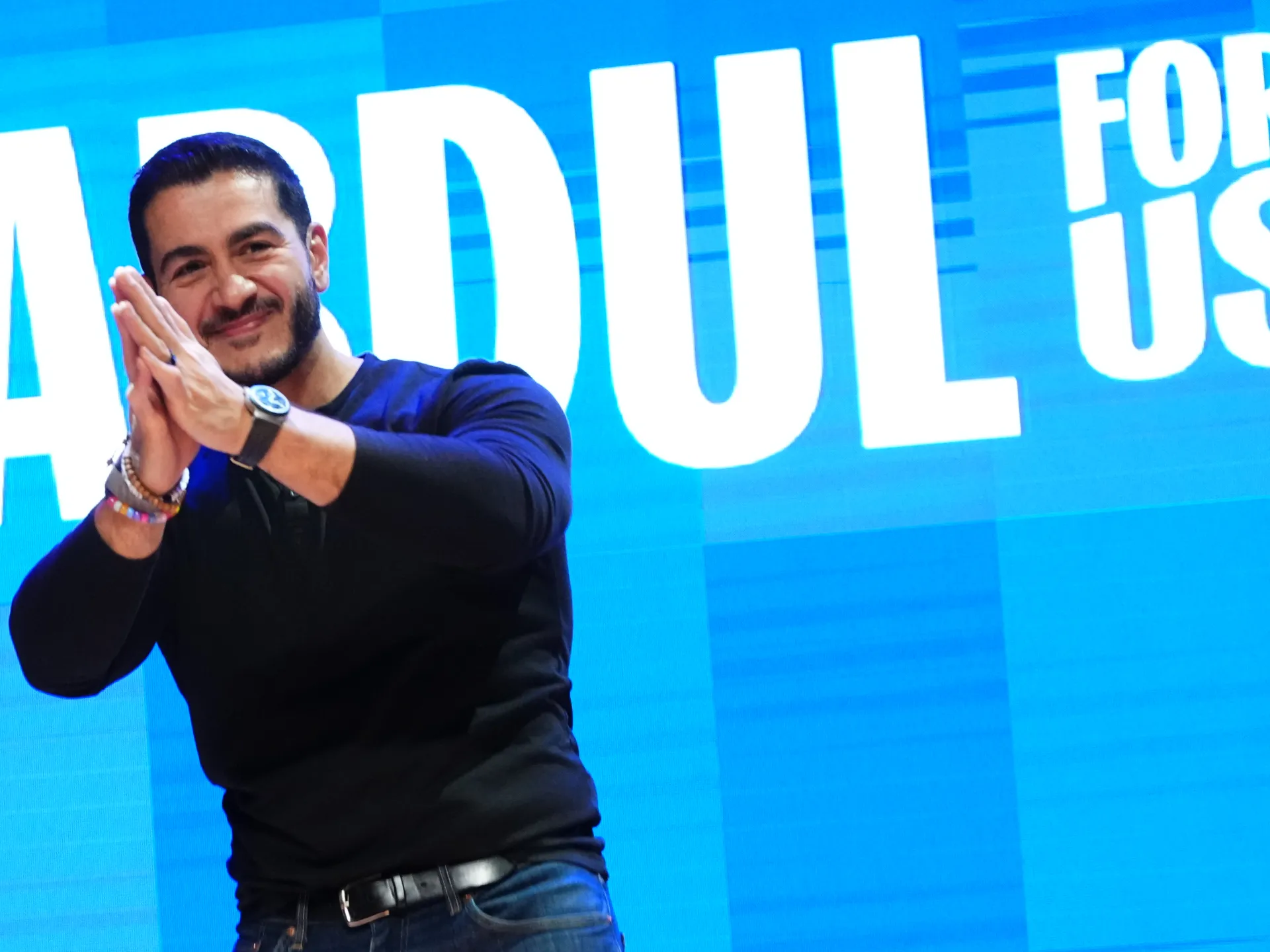
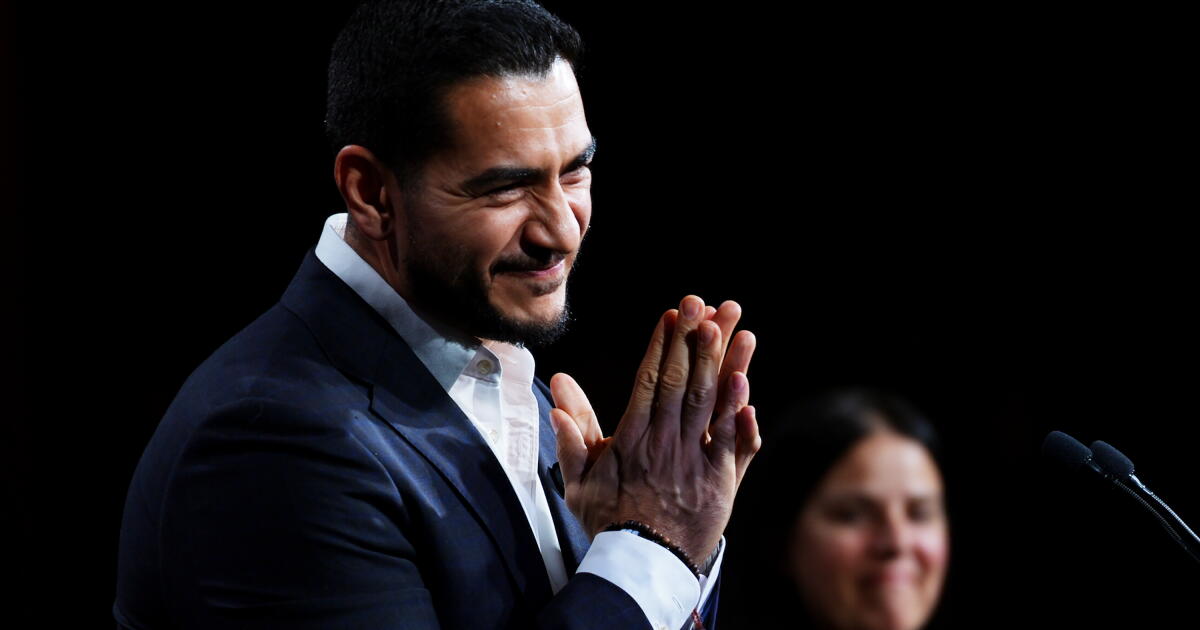
Messages popped up on my WhatsApp account from New York, Gaza, Pakistan and Australia. Friends and colleagues were following Michigan’s Senate race, talking excitedly about Abdul El-Sayed. As the results from Wayne County sealed his victory on Tuesday, I felt something I had rarely felt before in American politics: not a muted relief that someone had lost but genuine joy and hope that someone had won.
El-Sayed, a physician and former Detroit health director, defeated Republican Mike Rogers. He will be the first Muslim ever elected to the United States Senate. As a Muslim American from Michigan, this hit home.
Like many in Michigan’s Muslim community, I knew of Abdul long before he became a fixture in national headlines, from his 2018 gubernatorial campaign to his Friday sermons in local mosques. As Ramadan began this year, I attended one of his town halls for Muslim constituents. Before a few dozen community members and leaders, Abdul pledged to fight for all Michiganders. His sincerity and commitment to that pledge remained evident even as the pressures of the campaign intensified. I have seen him attend funerals for community members near my home and watched him go from person to person, greeting people with kindness. Even in the final days of an exhausting campaign, he responded personally to messages from the community, including mine.
We attended the same university, the University of Michigan, where he once helped lead the Muslim Students’ Association. I later served as a college student body president there. Just days before the election, Muslim alumni (including me) invited him to a football tailgate party with students, parents and graduates. His former teachers and students have spoken to me with pride about the person they knew.
Muslim Americans are often asked to celebrate any politician who occasionally says “salaam” or appears in a mosque before Election Day. Abdul was not an outsider to our community coming to court us. He belonged to it.
During the campaign, I welcomed hundreds of local Muslim community members, out-of-state political candidates canvassing for him and members of his staff into my home. People heard from those closest to him what this race could mean for Muslim Americans. The enthusiasm felt different from the familiar, dispiriting bargain of voting mainly to stop someone worse.
Two years ago, I wrote about why I would vote against genocide in the 2024 presidential election. That decision was shaped by my work with Palestinian healthcare workers, by witnessing the realities in Palestine firsthand and by outrage at the Biden-Harris administration’s complicity in the genocide in Gaza. Neither I nor many of Michigan’s Muslims have forgotten. But this time, the ballot offered something other than just a protest vote: a candidate who had opposed Israel’s genocide against Palestinians from the outset while also caring about the range of issues affecting Michiganders.
His willingness to speak truth to power attracted immense hostility from Washington’s elites. President Donald Trump repeatedly mocked Abdul’s name, treating “Muhammad” – his middle name, meaning “the praised one” – as an insult. Political opponents and even some voters insinuated that his faith alone made him suspect, recycling unsubstantiated allegations tying him to groups and movements he did not belong to.
Abdul responded with dignity and directness. When critics made his name the issue, he spoke about groceries, housing, healthcare and affordability. When challenged over his opposition to genocide, he questioned the premise that wanting children to live free of bombs was somehow hateful. He did not accept the proposition that a Muslim must disown his community or Palestine to qualify for public office.
And most importantly, he fought back. Many Muslim voters I spoke to felt they had found someone willing to fight for them, to challenge the presumptions and racism of journalists, pundits and media outlets rather than accept their unjust framing.
His victory speech began with the words his opponents had tried to weaponise: “My name is Abdulrahman Mohamed El-Sayed.” He recalled having said “inshallah” – “God willing” – whenever he was asked about winning. Now, he said, it was time for “alhamdulillah”, or “Praise be to God.”
That moment was electric, not because Arabic phrases alone are a sign of solidarity – even former President Joe Biden said “inshallah” in a debate before proceeding to commit genocide against Palestinians and aid the bombing of mosques and burning of Qurans – but because his Muslim identity had survived a countrywide effort by special interest groups and racists to make it disqualifying. His faith, Islam, is a value system he actively chooses every day, a commitment he strives to live out in public life. His being Muslim mattered to me more than his Arab ethnicity or ancestral origins, a simple happenstance of birth.
There was money behind the attempt to stop him too. The American Israel Public Affairs Committee’s (AIPAC’s) affiliated super PAC spent roughly $30m in Michigan’s Democratic primary, an extraordinary investment to defeat someone who openly opposed US support for Israel’s genocide and apartheid. In his victory speech, Abdul thanked AIPAC for the chance to beat it twice. One loss will not dissolve the lobbying group’s power. But Michigan demonstrated that AIPAC spending need not amount to a veto over who can win.
After Mayor Zohran Mamdani’s victory in New York, sceptics suggested that a Muslim candidate outspoken about Palestine could only win in a liberal metropolis, not a state that Trump carried in 2024. El-Sayed travelled from small towns and villages to industrial cities and suburbs, visiting churches and mosques, and he won statewide.
Michigan has long been a centre of Muslim American life, from Dearborn’s famous Arab restaurants and coffee houses to Hamtramck, the first Muslim-majority city in the US. Generations have built mosques, schools, businesses and institutions while enduring suspicion and discrimination. There is irony in Michigan electing a Muslim alumnus of the University of Michigan, which has faced legal challenges over its treatment of antigenocide protesters. Some of the voices that were treated as dangerous on campus found a home at the ballot box for the first time.
Other Muslims across the country made history too. My mentor, friend and colleague Adam Hamawy, with whom I served on a medical mission in Palestine documenting harm to people’s health, won his congressional race in New Jersey and travelled to Michigan to support Abdul. Darializa Avila Chevalier, Aber Kawas, Nabeela Syed and so many others won seats in Congress and state legislatures across the country, refusing to accept that their silence on human rights abuses is the price of participation.
Yet our celebration does not mean we have suspended all judgement. Some Muslims I spoke with vehemently opposed Abdul’s decision to campaign alongside former Vice President Kamala Harris and former President Barack Obama. Their administrations’ policies, from facilitating the genocide in Gaza to conducting drone strikes against civilians in multiple Muslim-majority countries, remain at the forefront of people’s minds. I understood their anger and shared their apprehensions about normalising the killers of children. Yet many of us still voted for Abdul because we believed in his sincerity and because he had repeatedly made clear that he did not agree with every policy of those backing his campaign. I am under no illusion that one senator alone will end the systems and structures of exploitation that fund war machines abroad and fail their own communities at home. Muslim representation risks becoming hollow if mistaken for the only tool for liberation.
And that is precisely why the substance of his campaign matters. Abdul connected the fight against endless war to the fight for healthcare, clean water and a liveable wage. He spoke of a mother trying to keep her children on lifesaving medication and a worker fighting for a union. He insisted that the money spent destroying someone else’s children has a cost for children in the US too. His politics asked whether Americans could both recognise their own self-interest and show humanity towards others.
His election does not make US government policies any more just overnight. It does not bring back a single Palestinian child. It does not absolve the Democrats, Washington or any of us of complicity. And it certainly does not entitle Abdul to six years in the Senate without scrutiny.
But it destroys one convenient lie: that Muslim Americans must choose between being unapologetically Muslim and belonging fully to American public life.
For years, we were told to lower our voices, soften our names and reconsider what we advocate for if we wanted to succeed. On Tuesday, Michigan delivered its verdict. The man they tried to make unelectable will now sit in the US Senate. Alhamdulillah, he does not need to become less Muslim to serve his state – and the rest of us do not need to police who we are to demand a better future for ourselves and the generations to come.
The views expressed in this article are the author’s own and do not necessarily reflect Al Jazeera’s editorial stance.
BBC Scotland was given access to the strategic co-ordination centre at the police headquarters at Fettes.
A wall of CCTV cameras trained across Edinburgh and Glasgow flickered from empty streets to a packed Celtic stadium as officers watch for signs of disorder.
The atmosphere in the room was calm despite pockets of disorder – the situation seemed to be generally under control.
Information flashed up on screens with updates from Operation Moonbeam. As the evening progressed the screens filled up as public order units were deployed to an increasing number of places.
Teams from Police Scotland, the Scottish Fire and Rescue Service, the Scottish Ambulance Service, the Scottish government and Edinburgh city council were in attendance.
Officers from as far afield as Avon and Somerset, Hampshire, Hertfordshire and South Wales were ready to be deployed.
Scotland’s Education Secretary Mairi McAllan said any instances of disorder or attacks on the public or on emergency services were “completely unacceptable”.
She told the BBC’s Radio Scotland’s Breakfast programme: “Police Scotland were well prepared. Our emergency services were well prepared. The vast majority of displays went ahead without any problems, and that’s to be welcomed.
“But nonetheless, I would want to be absolutely unequivocal. Totally unacceptable that any disorder related to fireworks should be ongoing.”
Additional reporting by Paul Ward and Patrick Jackson.
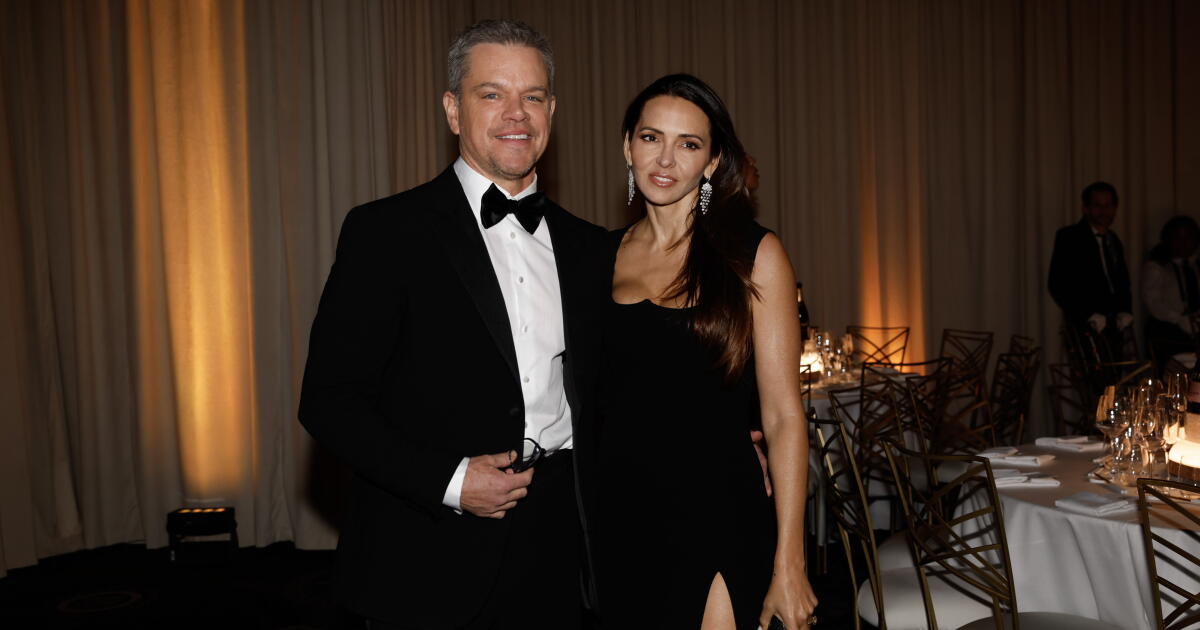
Matt Damon revealed that his wife of more than 20 years, Luciana “Lucy” Barroso, suffered a brain aneurysm.
The revelation came during an interview with GQ, when “The Odyssey” star opened up about a time he felt a tinge of FOMO watching the Oscars from bed with his wife and then-newborn baby.
It was the 79th Academy Awards in 2007 and Martin Scorsese was nominated for best director for “The Departed,” which was also up for best picture. Damon portrays a corrupt police officer in the film.
“Lucy and I were laying in bed watching it and so nervous for Marty,” he told the magazine. “And then when he won, I was jumping up and down in the bedroom and I remember being really excited. And then the next category was best picture, and The Departed won. And I realized in that moment I hadn’t even considered that that could happen. And I turned to Lucy and I was like, ‘S—, we should be there!’ … I totally blew it.”
After the experience, Damon said his wife wouldn’t let him miss out again, even in the wake of serious medical trauma.
In 2024, “Oppenheimer” was up for best picture. In the movie, Damon plays Col. Leslie R. Groves, head of the Manhattan Project. The film won the award, and this time, Barroso had a surprise in store, an Oscar-worthy dress ready to go for the big night even though she’d just had surgery after suffering a brain aneurysm.
“She’s totally fine, thank God,” he said. “But [she] had this brain surgery the week before the Oscars. But it was the first night she felt good enough to get up and had her energy back. And she surprised me and got a dress and we went out to the after-party, because she remembered that the last time it happened, I didn’t do it. And she was like, ‘This time we’re going out.’ And it was pretty f— heroic of her to do that and really meaningful.”
The Argentine-born Barroso and Damon tied the knot back in 2005. They had met two years earlier, and during a 2011 appearance on “The Ellen DeGeneres Show,” Damon said that meeting his wife was a complete stroke of luck.
He was filming “Stuck on You” in 2002, with the Farrelly brothers at the helm. “We were supposed to shoot in Hawaii, and then the movie got moved to Miami . . . and I’d never really hung out in Miami,” he told DeGeneres, adding that in the middle of the shoot a couple of the guys from the crew invited him to grab a beer at a local watering hole. “They kind of dragged me along, and we ended up at a bar where my wife was the bartender, and I literally saw her across a crowded room, literally.
“And eight years and four kids later, that’s my life,” he joked. “I don’t know how else our paths would have crossed if that didn’t happen.”
DEARBORN, Mich. — Campaigning relentlessly across Michigan, Abdul El-Sayed didn’t highlight the possibility that he could become the first Muslim elected to the U.S. Senate. But with victory in hand, he savored his triumph over the vitriol aimed at him and his fellow Muslim Americans.
“They tried to demonize people because of how they pray,” he told the Associated Press on Wednesday. “And Michigan — the whole Michigan — clapped back. People don’t want that. They’re sick of it.”
He showed his pride in his victory speech, declaring: “My name is Abdulrahman Mohamed El-Sayed.”
Twenty-five years after the Sept. 11 attacks and their aftermath yanked anti-Muslim sentiment into the forefront of American life, those emotions are shared by many Muslim Americans in Michigan and across the country.
They saw a surge of anti-Muslim rhetoric after Zohran Mamdani’s election as New York City mayor a year ago, and they saw the attacks intensify as El-Sayed became the new prime target. President Trump called him a “jihadist” who was “on the side of the terrorists.” Dozens of Trump’s fellow Republicans in Congress formed a Sharia-Free America Caucus, depicting Islam’s religious code as a threat to the U.S. Constitution.
But now, after El-Sayed’s defeat of GOP rival Mike Rogers was confirmed early Wednesday, there is a pervasive sense that a broader victory is at hand.
The outcome “represents a historic turning point for American Muslim political engagement and a historic defeat for the politics of hate,” said Nihad Awad, national executive director of the Council on American-Islamic Relations.
“Anti-Muslim extremists, Israel lobby groups and even the president of the United States used every smear in the book to paint Dr. El-Sayed as a Muslim bogeyman,” he said. “None of it was true, and none of it worked. Anti-Muslim hate was on the ballot, and it failed.”
In Dearborn, talk of ‘a beautifully American story’
Excitement over El-Sayed’s victory was palpable in Dearborn, a city near Detroit with a sizable Arab American population. The mayor, Abdullah Hammoud, said residents showed up at the ballot box in huge numbers.
“What a beautifully American story,” Hammoud said. “One of our brightest and best earned the support of the majority of Michiganders who participated in yesterday’s election. And regardless of the direction in which he prays, they’re sending him to the U.S. Senate.”
Hammoud, who has known El-Sayed for more than a decade, said although his win was important for many Arab Americans, people voted for him because of his platform, not his identity. He cited support in Dearborn for independent Vermont Sen. Bernie Sanders’ 2016 presidential campaign. Sanders, who is Jewish and caucuses with Democrats, ran on a progressive platform.
In El-Sayed, residents of Dearborn “finally saw themselves and a candidate who appealed to them, but it had to do with far more than just his ethnicity or his religion,” Hammoud said. “It was honestly because of the policies and building a coalition with this community in an honest way.”
When Zaynah Jadallah, 26, canvassed for El-Sayed in Dearborn, she said most people told her they already planned on voting for him before inviting her in for water or food. She credited the name recognition to El-Sayed’s grassroots campaigning and his pride in his Egyptian heritage.
“He’s always been proud of his identity. He never shied away from it or from saying his name,” Jadallah said.
Yasmin El-Sayed, no relation to the senator-elect, took her two daughters to the Detroit watch party from New York. She teared up after the victory speech.
“Having grown up in a post-9/11 world, being Muslim, being Arab myself, never in a million years did I think we would see what we saw today,” she said.
In a time of suspicion of government, a message of representation
El-Sayed depicted his election as a victory for all those “who don’t see themselves reflected in our government or who’ve been told that they don’t belong for some reason or another — not just how they pray but who they love, how they identify, the color of their skin, where they grew up.″
“I didn’t run to be the first Muslim senator. I ran to be the next senator of the state of Michigan who happens to be Muslim,” he said. ″But I also know that democracy is constantly about the conversation about who we are, who we want to be.”
“Michigan proved just how big we are. Rejected a hateful, spiteful campaign that had nothing to say about the issues and only wanted to point to my name and my face,” he added. ″I want all of those folks out there who have been told that America’s not big enough for them to reflect on that. America really is big enough for all of us.”
Mohamed Gula, CEO of the Muslim American advocacy group Emgage Action, said he was elated by El-Sayed’s triumph after a year of “extremely Islamophobic and disgusting rhetoric being used as a campaign strategy.”
“For Abdul to come out last night and use his full name meant the world to someone who grew up in post-9/11 America, where the Muslim American community was seen through a national security lens,” Gula said.
“Our children, years from now, will be able to run for office,” he said, “to be seen as who they are.”
A debate over the place of sharia law — and its very definition
Among the most frequent targets of anti-Muslim rhetoric was sharia, the religious code that provides Muslims with guidance on how to lead righteous lives. At the Republicans’ midterm convention in Dallas, some of the loudest cheers came after GOP Sen. Ted Cruz of Texas declared: “Sharia law has no place in America.”
Muslim American civic leaders and scholars — in Texas and other states — responded forcefully to the anti-sharia rhetoric that dates back more than 15 years.
They passionately defended sharia — the way it’s practiced in the United States — as positive guidance that shares elements with the codes of other faiths, such as the Ten Commandments and the collective body of Jewish law derived from the Torah. They rebutted the claims of GOP critics that sharia is a coercive code that threatens the Constitution and the judicial system.
Gula noted that Republican Texas Gov. Greg Abbott and Atty. Gen. Ken Paxton were among the leaders of the anti-sharia campaign. Abbott lost his bid for reelection in Tuesday’s voting, and Paxton was trounced by Democrat James Talarico in the race for a U.S. Senate seat.
“I saw this as not just Muslims standing against Islamophobia as never before,” Gula said. “I saw Americans saying hate will not be used as a campaign issue … we are not going to accept hate.”
Asma Uddin, a professor at Michigan State University’s College of Law, has argued that many American politicians are depicting ordinary Muslim religious practices — such as prayer, choice of apparel, family counseling and mosque attendance — as evidence of political danger.
“What I find especially exciting is that El-Sayed won in a political climate where being visibly Muslim can still be a liability,” she said. His victory “gives us real reason for optimism. It suggests that anti-Muslim attacks don’t necessarily carry the political weight that those deploying them assume they do.”
GaNun, Cappelletti and Crary write for the Associated Press. Cappelletti reported from Washington and Crary from New York.
As well as great military triumphs, I studied defeats too – they are as much a part of football management as victories, after all – and you can compare the organisational brilliance of Napoleon to the disaster of the Battle of Balaclava and the Charge of the Light Brigade.
One summer, I travelled out to Crimea to witness the scene of that tragic charge by the bravest of brave men.
Lord Raglan, the British commander-in-chief, was based on the high ground and could see everything in the Russian positions and the brigades.
His order to attack was ambiguous and although Lord Cardigan, who led the charge, questioned it, he still followed it through – leading to one of the most infamous military disasters in history.
It should never have happened but, just as in football, leadership and communication from the top was key. The instructions were passed down from Raglan to Lord Lucan to Cardigan and became garbled – too many cooks, in my opinion!
The last book which really stuck with me, in terms of inspiring me as a leader, was the story of HMS Endurance – disaster strikes during a journey through the ice fields of the southern hemisphere when the ship becomes stuck.
I cannot do justice to the deeds of Sir Ernest Shackleton in this column but his leadership of his men, along with his number two Frank Worsley, was extraordinary.
Both dovetailed in a way that gave their men the energy, desire and determination to believe and follow instructions in the most appalling conditions, never once questioning their leaders’ abilities to help them survive.
Over the years, I’ve never stopped reading about, or watching, great leaders like that – there is so much that young coaches can learn from other sports or history that will benefit then, the same way it did me.
Going to games was still the most important thing when I was between jobs, because I would always believe my own eyes when watching players.
There were times when that became more of a challenge, especially at the back end of my career, but times change and if you are not in tune with what is happening in the game then you can get dropped very quickly.
But I am sure that most of my managerial compatriots would also agree with me that experience in all walks of life can be invaluable.
I learned so much when I was out of work, about all aspects of leadership, individually and collectively.
My advice to managers out of work now is the same that I received from Jim, all those years ago – pick yourselves up and get off the sofa to get back in work as quickly as possible.
You should never be afraid of dropping down a level the way I did, too. It is better to get a job, any job, than be out of football full-stop. That hasn’t changed since my day, either.
Tony Pulis was speaking to BBC Sport’s Chris Bevan.
Hussey, known as ‘Mr Cricket’ for his technical expertise, will also work with Australia during the LA 2028 Olympics.
Published On 6 Nov 20266 Nov 2026
Mike Hussey was appointed on Friday as a consultant coach to the Australian team for next year’s blockbuster Ashes series against England and the 2027 Cricket World Cup.
The former Australian batsman revealed in August that England’s new red-ball coach, Stephen Fleming, had informally approached him to be their Test batting mentor.
Recommended Stories
list of 3 itemsend of list
But the 51-year-old turned down the audacious offer and has instead committed to helping his home nation arrest a batting crisis, highlighted by their recent 2-1 Test series defeat in South Africa.
Hussey, known as “Mr Cricket” for his technical expertise, will also provide coaching assistance during this month’s home T20 series against England and the subsequent four-Test series against New Zealand.
He will additionally work with Australia during the 2028 Los Angeles Olympics, where cricket is on the agenda, and the T20 World Cup in 2028.
Australia’s former batsman Mike Hussey played 302 matches for the national team across all formats [File: William West/AFP]
“I am extremely excited about being a part of the team in a more formal and meaningful role in the coming years,” said Hussey, who played more than 300 matches for Australia across all formats.
“This team has achieved so much in recent times, to which I hope I can add value to the coaching and playing groups ahead of what will be an exciting and challenging period.”
Hussey has extensive experience as a coach, including with both Australia and England.
He was part of England’s coaching setup when they won the T20 World Cup in 2022 and was the Chennai Super Kings’ longtime batting coach under Fleming in the Indian Premier League. He also led Welsh Fire in this year’s Hundred.
“Mike has been a highly valued part of our staff in the past and brings a considerable skill set which is complementary to the coaches and players,” said Australian head coach Andrew McDonald.
“Not only is his expertise as a player and coach across multiple formats, competitions, countries invaluable, so are his qualities as a person.”
Israel’s President Isaac Herzog has said he will name a candidate to form the country’s next government by Sunday, after a majority of lawmakers backed opposition leader Gadi Eisenkot over Prime Minister Benjamin Netanyahu.
Herzog made the announcement on Thursday after holding marathon talks with parties elected to the 120-seat parliament, known as the Knesset.
Recommended Stories
list of 3 itemsend of list
Some 67 lawmakers endorsed Eisenkot, a former military chief, while 46 backed Netanyahu.
In televised remarks at the end of the talks, Herzog said that although the “results of the consultations may appear clear”, there were “mutual vetoes between the blocs and within the blocs themselves” that make it difficult to say who has the best chance of assembling a governing coalition.
He said he would hold “personal talks with some of the party leaders” over the Israeli weekend, which runs Friday-Saturday, and make a pick on Sunday.
Israel’s October 27 election left neither Netanyahu nor Eisenkot with a clear path to a parliamentary majority, handing Herzog the difficult task of choosing a candidate in a deeply divided country.
Netanyahu’s Likud won the most seats of any single party with 27 in the 120-seat Knesset, but his wider religious-nationalist coalition garnered only 53 in total.
Eisenkot’s alliance of four Jewish-led parties, which spans the political spectrum from centre-left to right, won 48 seats despite polls that had predicted a close race.
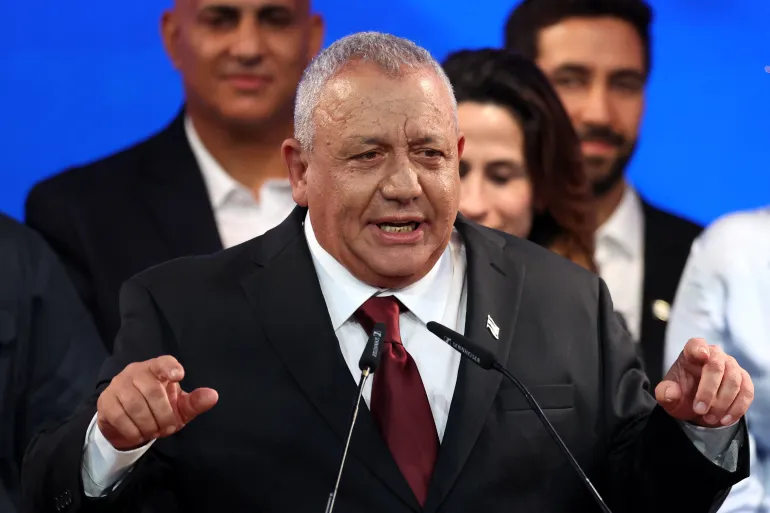
Yashar party leader Gadi Eisenkot is hoping to dethrone Prime Minister Benjamin Netanyahu [AFP]
Two parties representing Israel’s Palestinian minority won an unprecedented 19 seats.
Eisenkot, like Netanyahu, has ruled out forming a government with the Arab-led parties. Both of those parties nonetheless recommended him, giving him the support of a comfortable majority of lawmakers.
“We want to do things that we did not do in the past in order to remove this criminal government,” Ahmad Tibi, a senior member of the Joint List, which represents an alliance of Arab parties, told The Associated Press news agency.
Eisenkot’s party, Yashar, said his 67 recommendations were the most any candidate had received since 2015, and urged Herzog to give him the mandate “as soon as possible” so he could form a national emergency government.
Separately, Netanyahu suffered a setback on Thursday when United Torah Judaism, one of the two main ultra-Orthodox parties and a longtime ally, declined to recommend any candidate.
The party broke with Netanyahu over his coalition’s failure to pass legislation exempting ultra-Orthodox men from military service, The Times of Israel reported.
Yariv Oppenheimer, a member of the Democrats, a party in Eisenkot’s alliance, told Al Jazeera that he saw “no reason” Herzog would not choose Eisenkot on Sunday.
He said United Torah Judaism had signalled that its support was available for the right price, meaning that a good enough offer from Eisenkot could give him the numbers he needed.
“It’s very clear that Netanyahu doesn’t have a chance to establish a government at all,” he added.
Once nominated by Herzog, the candidate will have 28 days to try to forge a government, with a possible 14-day extension.
Netanyahu will remain prime minister in a caretaker government until a new coalition is formed, or through another election that must be held if no candidate succeeds.
Netanyahu, at risk of losing power, has seized on an investigation by election officials into possible vote tampering to cast doubt on the results, accusing Arab-led parties of stealing the vote.
Critics accuse Netanyahu and his partners of trying to undermine the results, which he denies.
Israel’s Central Election Committee said on Wednesday that the election’s integrity had not been compromised. The head of the committee, Supreme Court Justice Noam Sohlberg, has called on Israel’s elected officials to protect public trust rather than shake it.
“This is a real danger. One of the foundations of democracy is the peaceful transfer of power,” Sohlberg told Herzog at his residence on Wednesday. High voter turnout, including among the Arab minority, was a blessing, he said.
Netanyahu’s allies on the far-right, including National Security Minister Itamar Ben-Gvir, have called for the immediate arrest and interrogation of Arab party leaders.
A TUI flight attendant has shared three things you should never do on a plane – and some travellers were surprised to learn they’d been making these mistakes
If there’s someone you should take travel advice from, it’s flight attendants (stock image)(Image: Image Source via Getty Images)
Jetting off on holiday should be a relaxing experience, but even the most seasoned globetrotters could be making some major hygiene and safety blunders as soon as they set foot on an aeroplane. Whether you’re a nervous flier or a frequent traveller who knows the safety briefing off by heart, navigating the unspoken rules of the cabin can be a minefield.
Now, a TUI flight attendant has lifted the lid on the common passenger habits that secretly drive cabin crew mad – and some of them are genuinely stomach-churning.
German air hostess Mrs Miva took to TikTok to reveal the “three things you should never do” while airborne, leaving plenty of holidaymakers stunned.
From triggering false emergencies to risking some serious hygiene hazards, her viral video had hundreds of viewers sheepishly admitting they were guilty as charged. So, are you committing any of these ultimate travel sins that cabin crew hate?
1. Ditch the deodorant and hairspray
If you want to freshen up before landing, stick to a roll-on. Mrs Miva warned that spraying aerosols like deodorant or hairspray in the confined space of a plane toilet “could trigger the smoke detector”, instantly sparking a mid-air panic.
Aircraft smoke detectors are incredibly sensitive and designed to pick up tiny particles in the air. While they are usually smart enough to distinguish actual smoke from other substances, a heavy aerosol cloud in a tiny lavatory is a surefire way to set off a false alarm.
To save the crew from rushing to your door expecting a fire, leave the sprays securely in your hand luggage.
2. Don’t fall asleep against the window
We all love securing a window seat so we can rest our heads and catch a few winks, but Mrs Miva urged passengers to think twice.
“Don’t lean your head against the window. They are very rarely cleaned,” she claimed.
While tray tables and high-touch areas are usually given a quick wipe-down between flights, deep cleans are much less frequent – especially when planes are operating tight, back-to-back turnaround journeys.
As a result, those acrylic windows can harbour a massive accumulation of germs. If you absolutely have to lean against the wall to sleep, make sure you give the area a thorough wipe down with antibacterial spray first.
3. Never go to the toilet without shoes on
This one should be common sense, but you would be surprised how many people wander down the aisle in their socks or even completely barefoot.
While cabin crew do their best to tidy the lavatories and restock supplies during long-haul flights, the sheer volume of passengers using such a tiny space means the room isn’t always pristine.
If you spot a suspicious puddle on the floor, do not assume it has just splashed out of the sink. As Mrs Miva bluntly warned: “Don’t go to the lavatory with socks or barefoot. The water on the floor was not used for cleaning.”
So do yourself a massive favour – keep your shoes on!
Ensure our latest DWP headlines always appear at the top of your Google Search by making us a Preferred Source. Click here to activate or add us as Preferred Source in your Google search settings
The Ropes of Hope works for coral reef restoration in the Mafia Island marine park, off Tanzania. Instead of scuba diving to see shrinking reefs, we got involved with a project regrowing them. It’s the brainchild of Jean de Villiers, a South African molecular biologist who talked my teenagers through the underwater coral gene bank research and community involvement. Our ocean-view tree house accommodation didn’t hurt, with hot chocolate and cake hoisted up fresh each morning. In an educational U-turn, our eldest now studies sustainable development – Jean is doing something right.
Claire
Rewilding in the Scottish Highlands
Glen Affric, west of Loch Ness, Scotland. Photograph: Zak Kennedy/Alamy
Trees for Life, founded 40 years ago, is a rewilding project aiming to restore the glorious Caledonian forest across the Scottish Highlands. Typical volunteer weeks involve groups of up to 10 adults staying in bothies where you live and cook together and spend days on tasks such as planting, monitoring wildlife, surveying vegetation and maintenance work. They take place in some of the most beautiful and remote locations in the Highlands such as Glen Affric, one of the largest wild native forests in the UK where my partner and I spent a week we’ve never forgotten. There’s no wifi or fancy frills but a life-changing opportunity to work and live in a truly wild and beautiful part of Scotland, make new friends and feel your body and mind respond to hard but vital work.
Cal
Closer to nature in the Netherlands
Cabin Anna at Maashorst nature reserve, near Nijmegen. Photograph: Tõnu Tunnel
The Holenberg forest in a remote corner of the Netherlands is the gateway to the Maashorst nature reserve, where I stayed in a Cabin Anna – an eco-aware experience that is as much an ethos as it is accommodation. Tucked away among a canvas of trees, heather and wetlands, the focus of these self-sufficient woodland cabins is on reducing man’s negative impact on the landscape, from the bed linen to the recycled waste-product cups, knives and forks. The simple wooden cabins are candlelit and sleep two – outside nights on the terrace gazing at stars are encouraged. You can hire bikes or hike through the forest to explore, including seeing and sensitively interacting with cows, goats, sheep and bison to enhance awareness of the natural world.
April
A buzzy experience in Italy’s South Tirol
The whirlpool on the roof terrace at the Rinner Hotel. Photograph: Stephan Feichter
Thanks to a stay at the Rinner Hotel in the South Tirol, my young teenagers and I discovered the generous contribution that bees make to our planet in terms of life, sustainability and conservation. Everything at this family-run Alpine hotel is centred on apiculture and the bee. There is an api wellness experience, including the inhalation of healthy beehive air while listening to the meditative buzzing of bees, hands-on sessions, beekeeping courses and a delicious dining menu of organic honeys – including a gala honey feast, with each course connected to sweet nectar produced on site. All electricity is generated from waste wood products that would have been thrown away, and the food, including organic wheat and barley, all comes from the green fields of the South Tyrol. My wife said I came back as a more relaxed, cooperative, sweeter person – a fine compliment to the bees.
Nigel
Walking with rhinos in Uganda
White rhinos at Ziwa ranch in Nakasongola, central Uganda. Photograph: Matthias Mugisha/Snap Uganda/Alamy
At Uganda’s Ziwa Rhino and Wildlife Ranch, conservation comes with mud, nerves and a very wet ending. Our guide, SP, treated rhino trekking like a game: he was captain, and victory meant spotting three rhinos. Walking silently along the winding “rhino highway”, we encountered mothers and calves just 25ft away, watching them graze in the wild. Ziwa is Uganda’s only place to see wild rhinos, part of a project to restore these endangered giants. SP called their favourite muddy wallow and salt lick the “rhino supermarket”. We even found the alpha male. Then the heavens opened. Game won; dryness lost!
A resident in the Cat Park, Kotor, Montenegro. Photograph: Christiaan May/Alamy
Last summer, while exploring Kotor, Montenegro, a local person’s recommendation led me to a cat park just inside the Old Town’s North Gate. In this quiet corner, sun-drowsy cats sprawled across the warm ground, while mischievous kittens tumbled over one another. Beside them, a curious recycling machine offered an irresistible exchange: feed it empty plastic bottles in exchange for cat food for the town’s feline residents. After collecting my plastic waste for a week, I brought it here, a simple way to give something back to Kotor.
Lucy
Wild spaces teeming with life in Kent
A short-eared owl at Elmley Nature Reserve, Kent. Photograph: Samuel Baylis/Alamy
We love Elmley Nature Reserve on the Isle of Sheppey in Kent for its remote, windswept landscapes and the long, seemingly barren stretches of land that are in fact teeming with life. One of my favourite memories is getting out and about at dusk, listening to the little owls hoot to one another as the gloom closes in. There’s something special about being somewhere so exposed and yet quiet, surrounded by owls (and other wildlife) going about their own lives. Elmley makes you slow down, pay attention and realise that even the emptiest-looking landscape is full of life.
Matt
Winning tip: a sea turtle hospital in Calabria, Italy
The Sea Turtle Recovery Centre in Brancaleone. Photograph: Alessandro Rota/Getty Images
We spent September bicycle touring in Sicily and Calabria and one of the highlights was a few days in Brancaleone, a typical Italian working town. We visited the Sea Turtle Recovery Centre in the old railway station. The centre is manned entirely by volunteers and since 2006 they have rescued and rehabilitated more than 700 turtles. The staff are enthusiastic, friendly and informative. They charge a small entry fee and it’s by appointment only, but it is a joy to visit.
RUSSELL Brand, they say, was a man hiding in plain sight.
Let me tell you now: no, he was not. This was a vile predator openly peacocking about precisely how depraved and sick he has always been.
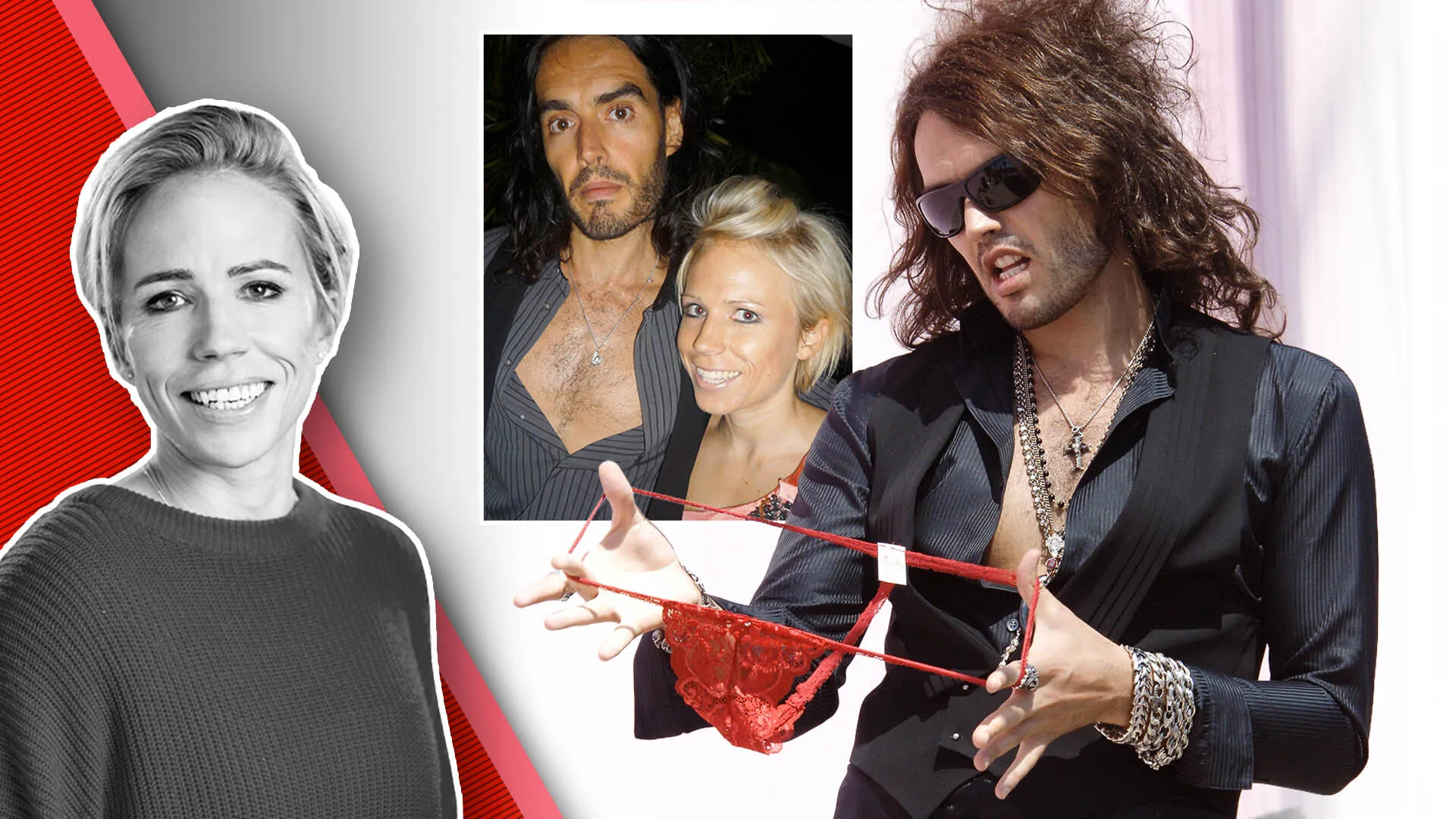
‘I had my own terrifying run-ins with Russell Brand’, says The Sun’s ClemmieSource: RexClemmie describes Russell as a vile predator openly peacocking about precisely how depraved and sick he has always been, pictured pair in 2010Source: The Mirror
“What kind of man was I?”’ he wrote in his own book. “Treating women in this way.
“If this is what I’m telling you, can you imagine what’s being left out?”
Now, in part, we know.
Quite why it took so long for the world to wake-up, and act on the clues he was liberally throwing around – as narcissists tend to do – are questions that shall follow in due course.
We must commend the brave, courageous women – his victims – for speaking out in a judicial system which traditionally views are as notoriously hard to prosecute.
It must also be stated: were it not for hard-working, incredibly diligent journalists at The Sunday Times and Channel 4’s Dispatches – ones Brand and his lawyers tried to shut down – this man would still be free today.
In fact, after getting wind of the investigation into Brand, I introduced my contact to the Dispatches team. He willingly shared his testimony which, I believe, proved helpful for background.
I also wish to add, I have deep sympathy with the other victims of this fall-out: his loyal family, members of whom appeared this week in court. This will be unbearably hard for his three children too, and they must have our compassion.
Three years ago, in a column for The Sun, Clemmie wrote about her own torrid encounter with the erstwhile toast of HollywoodSource: The Mirror‘We must commend the brave, courageous women – his victims – for speaking out in a judicial system which traditionally views are as notoriously hard to prosecute’, says ClemmieSource: Rex
Three years ago, in a column for this newspaper, I wrote about my own torrid encounter with the erstwhile toast of Hollywood.
To rewind, on August 18 2010, I had written a story revealing Brand was having relationship counselling with his then-fiancée, American singer Katy Perry.
The star procured my number and wanted to know who’d given me the story: A name. He pushed, and pushed, and pushed.
For the next ten days or so, I would receive daily texts and calls, begging me to betray my sources.
If I did so, he promised a joint interview with him and Katy, or the exclusive news if the couple should become pregnant. He was an arch manipulator.
After fobbing him off, or so I thought, one horrifying afternoon, I received a tearful phone call from my contact.
His elderly mother had received an unannounced visit from one of his terrifying and burly flunkies, threatening in the most terrifying of ways.
She was home alone in North London, and the minder called my source – after demanding his number – and said: “Don’t forget where I am. I’m stood here with your mum.”
He went on to tell her that her son was “in a lot of trouble”.
Afterwards, the two entirely blameless pensioner was, understandably, left reeling.
Clemmie had written a story revealing Brand was having relationship counselling with his then-fiancée, American singer Katy PerrySource: GettyAs a showbiz reporter in the noughties, Clemmie and Russell’s paths crossed on numerous occasions, pictured on Bake OffSource: Mark Bourdillon (Channel 4 images must not be altered or manipulated in any way) CHANN
I was later told Brand had “blagged” the number from my former newspaper’s unsuspecting accounts’ department.
It was but a flavour of the man, and so deeply unnerving. For years, I have hated myself for being so flattered, initially, by his attentions.
After the initial investigation into Brand, colloquially I have heard from so many people about things he is alleged to have said and done. All pretty awful.
One colleague recalled how Brand, sitting in his dressing room, would get his penis out to a young make-up girl. In her early twenties, she felt deeply uncomfortable but also too powerless, too afraid, to raise the red flag.
Certainly, such a narrative – the abuse of power – appears to be a long-running theme in this harrowing case: his influence and popularity acting as the ultimate enabler, a bullet-proof shield.
Naturally, as a showbiz reporter in the noughties, our paths crossed on numerous occasions.
Perhaps it should be noted that at no point did Brand try it on with me. In fact, I’d go as far to say we found one another mutually repellant.
He was mercurial. He could be wildly charismatic. Charming.
A long-time member of AA, he was never drunk or obnoxious, but his moods could swing enormously.
I interviewed him in Los Angeles one year, at a time when Hollywood couldn’t get enough of this louche, skinny jean-wearing, open-shirted man.
He was charm personified, and spoke elegantly and idiosyncratically, as always.
Indeed, if Brand was hiding behind anything, it was his florid vocabulary: big words used to obfuscate.
Brand has been found guilty of one count of rape and three counts of sexual assault following his trial at Southwark Crown CourtSource: X
Brand’s verdicts in full
Count 1 Brand was charged with raping a woman in her hotel room after meeting her at cabaret show he was performing in on the fringes of the Labour Party conference in Bournemouth in 1999. He was found not guilty of rape.
Count 2 He was accused of trying to drag an MTV worker into a toilet at her London offices in 2001 He was found not guilty of attempted indecent assault.
Count 3 Brand was accused of grabbing the breasts of an MTV worker he met at a friend’s party at Nordic Bar in London’s Soho in 2004 within seconds of meeting her. He was found guilty of sexual assault.
Count 4 He was accused of dragging the same MTV worker he groped at the bar into the toilets and orally raping her. He was found not guilty of rape.
Count 5 Brand was accused of kissing and groping a Choice FM radio worker in around 2004 or 2005 in front of his entourage. He was found guilty of sexual assault.
Count 6 He was charged with raping a fan at his London home after they met when he invited her backstage after one of his gigs at the Hammersmith Apollo in February 2009. He was found guilty of rape.
Count 7 He was charged with sexually assaulting a Channel 4 staffer by shoving his face in her groin when his entourage allegedly asked her to give him a massage in 2009. He was found guilty of sexual assault.
My former colleague and friend had a very different experience.
Speaking to him a London hotel room, mid-interview he stood up, went to the toilet with the door still open, and p***ed, telling her: “You can keep asking me questions”.
She felt wildly awkward.
At parties, women flocked towards Brand; he was rarely shy of female attention, and clearly he basked in it, like a flower gravitating towards the sunlight.
Sex – we now know, some of it, heinously, non-consenting, was his drug of choice.
He has repented, he insisted, often clutching a Bible. He was very, very sorry. Nothing to see here, M’Lord.
Except there is, and there was.
Guilty of one count of rape and three counts of sexual assault following his trial at Southwark Crown Court, we are assured he faces a “lengthy” sentence.
Thank God, as Brand himself might, in this rare instance, probably not say.
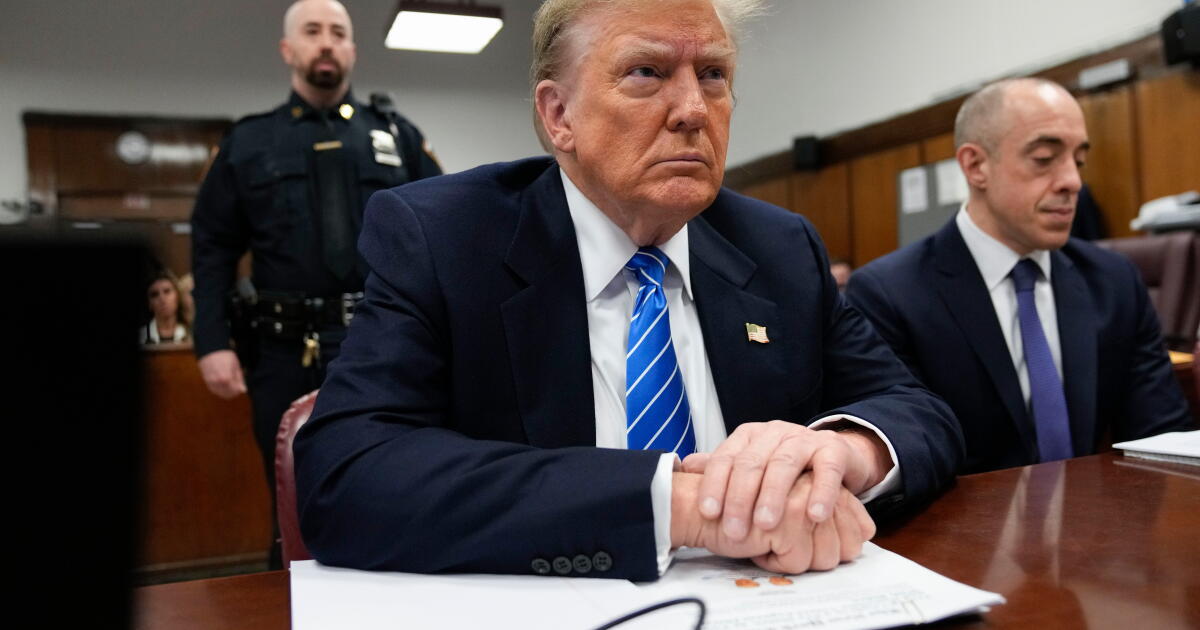
NEW YORK — New York appeals judges grilled President Trump’s lawyers and prosecutors Thursday about his bid to erase his historic hush money conviction, but the court didn’t signal how or when it would rule.
The judges delved into legal theory, presidential immunity and some evidence in Trump’s 2024 trial. Convicted of 34 felony counts of falsifying business records to obscure a $130,000 payment to adult film performer Stormy Daniels, Trump denies any wrongdoing. He has turned to state and federal courts in hopes of unwinding the verdict.
Trump, who denounced the case on social media as recently as September, didn’t attend Thursday’s court session.
Much of the back-and-forth focused on prosecutors’ theory that the hush money was meant to keep unflattering information about Trump away from the electorate before the 2016 vote, and that it amounted to an illegal campaign contribution under the Federal Election Campaign Act.
Trump lawyer Robert Giuffra Jr. told the judges that Manhattan Dist. Atty. Alvin Bragg’s office has no place tying a case to a federal election law.
“We think it’s the most obvious ground for reversal,” he said.
Prosecutors argued that they weren’t prosecuting an alleged federal campaign finance offense, but rather presenting it as a factor underlying what they claim was a Trump-orchestrated conspiracy.
“So are you relying upon FECA in order to prove your falsifying business records [charge]?” Justice Troy Webber asked.
“Only partially,” replied Bragg’s appeals chief, Steven Wu, adding that it was “important only to show that the purpose for the falsifying business records here was to conceal that conspiracy.”
Judges drill down on question about White House conversations
The appeal also concerns whether jurors should have been allowed to hear testimony about supposed White House workflow and conversations — some with then-Communications Director Hope Hicks — and even Trump social media posts during his first term. His lawyers cite presidential immunity for official acts, and they argue his official conduct included responding to the Daniels drama once it became public in 2018.
“Ms. Hicks was serving as a White House official,” talking with the president about how to respond to press inquiries that implicitly concerned his fitness for office, Giuffra told the appeals judges.
Wu countered later: “In this conversation, they were not speaking about a press response. … The president was talking to her about his private opinion.”
The appeals judges pressed both sides about the matter and the specifics of Hicks’ testimony. She told jurors that she asked Trump how he wanted to respond, but as for what he said, she testified only that he expressed relief that the Daniels story hadn’t emerged during the campaign.
Bragg’s office contends that all the White House-related evidence was fair game. The conversations were “unofficial conduct,” some of the other evidence was public record, and some was a general description of office practices, prosecutors say. They maintain that even if some of the evidence should have been excluded, its admission was a “harmless error” that doesn’t warrant overturning a conviction that rested on “a mountain” of other proof against Trump.
Justice Bahaati E. Pitt-Burke wondered aloud about that.
“If you take all of those things cumulatively, right, and there’s a problem with this evidence, there’s a problem with this evidence, at what point … does it stop being harmless error and turn into something else?” she asked.
“It would have to be a lot more than there was in this case,” Wu responded.
Trump’s lawyers also have argued the case was political
While the appeal turns on complex legal disputes, political overtones aren’t hard to find. The very first paragraph of one of the Trump team’s court filings contended that the case was the flimsy product of “immense political pressure” on a Democratic prosecutor to go after Trump — rhetoric that echoes the Republican president’s own oft-repeated claims in the court of public opinion.
The May 2024 verdict made Trump the first former — and now current — U.S. president with a criminal conviction. Though historic, it didn’t impede his return to the White House or subject him to any punishment.
The trial involved $130,000 that Daniels got from Trump’s then-fixer and lawyer, Michael Cohen, weeks before the 2016 election. The money bought, for a time, her silence about an alleged sexual encounter with the married Trump a decade earlier. He says that nothing sexual happened between them.
Trump’s lawyers argue there’s only “weak” evidence that he even knew about Cohen’s dealings at the time. His trial attorneys also said that payments to Cohen were indeed legal expenses, and that any hush money expended on Trump’s behalf wasn’t hidden campaign spending, just an effort to avoid embarrassing his family.
The distinction matters because, under New York law, falsifying business records isn’t a felony unless it’s done with an intent to commit or conceal a separate crime.
While pursuing his state appeal, Trump also has been trying to shift the case to federal court and have it dismissed on immunity grounds. A federal judge said no — for the third time — in August. Trump’s attorneys are appealing that decision, with arguments set for Nov. 16.
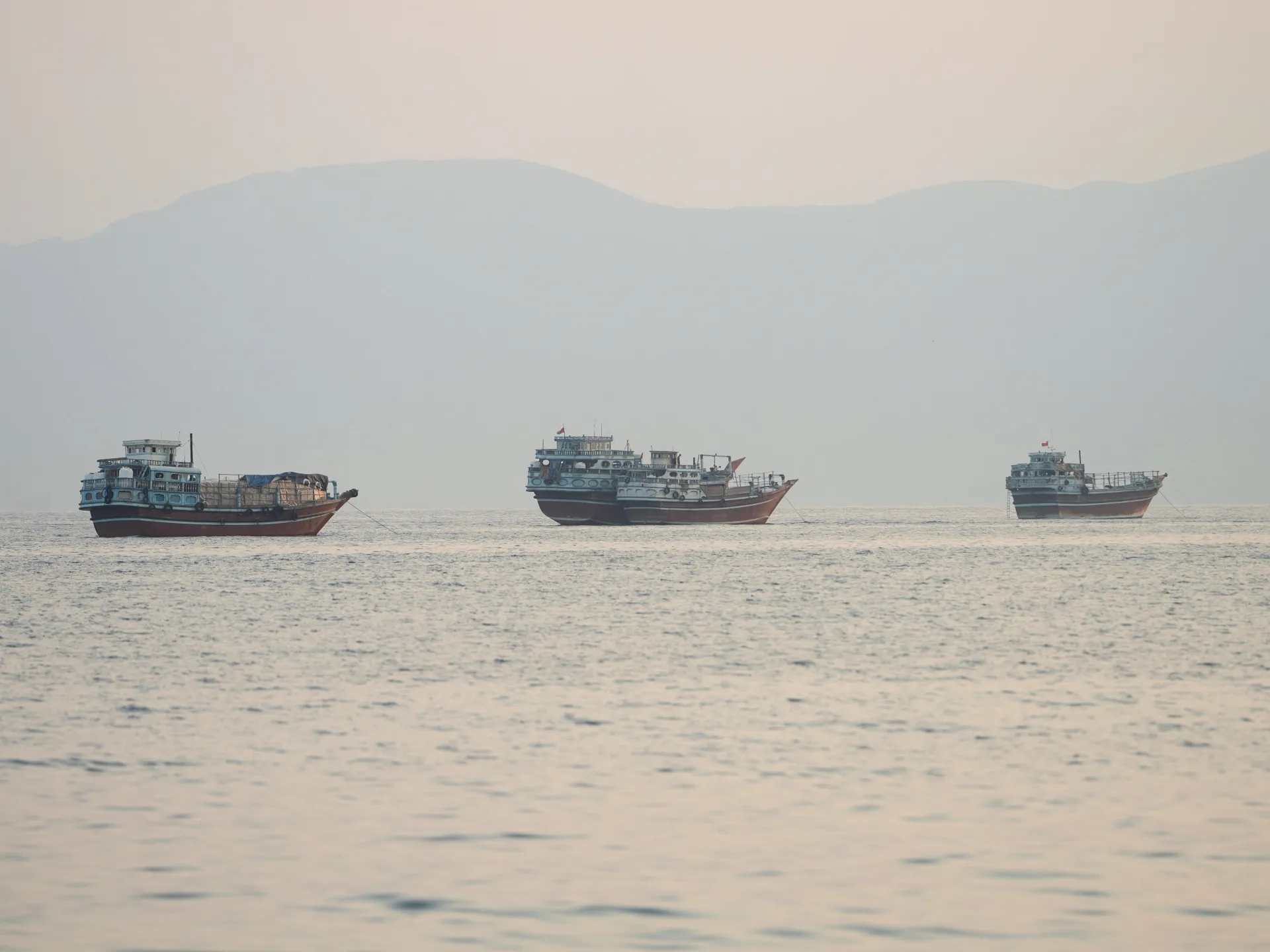
Iran has exempted ships from India, China, Iraq and Qatar from its Strait of Hormuz restrictions, a senior Iranian lawmaker said on Tuesday.
“Ships from these countries pass freely, and the Americans do not intercept them either,” Amir Hayat Moqaddam, deputy chairman of the Iranian parliament’s National Security and Foreign Policy Committee, told the Iranian Students’ News Agency (ISNA).
Recommended Stories
list of 4 itemsend of list
Iran effectively shut the strait early in the US-Israel war on Iran, which began on February 28, and the United States reimposed a naval blockade on Iran’s southern ports in July.
So why have these four countries been granted passage through the critical strait, and can their ships really sail freely while the blockade remains in place?
What does Iran get in return for letting ships pass?
It will receive medicine from India and political backing from China, according to Hayat Moqaddam. Iran already receives diplomatic support from Qatar, which is leading mediation efforts to end the US-Israel war on Iran.
Hayat Moqaddam said Tehran will also collect transit fees from Indian and Chinese ships, while Qatari vessels pass free. He did not say whether Iraqi ships will pay a toll.
“Whatever the lawmaker says is the rationale – the big question is if it works and, if yes, to what extent?” Rouzbeh Parsi, an Iran analyst and affiliated researcher at Lund University’s Department of History and Human Rights Studies, told Al Jazeera.
“Iran has been under sanctions for a very long time, so bartering and quid pro quos in trade are nothing new,” he said. The difference now, he added, is that “it’s about poking holes in an embargo and getting crucial goods/services in and out”.
Nader Hashemi, an associate professor of Middle East politics at Georgetown University, said that “most likely Iran is charging a transit fee or a percentage of the cargo value to allow those ships to go through without being harassed”.
“It’s a clever move by Tehran for several reasons,” Wolfgang Pusztai, a security and defence analyst and Austria’s former defence attache to Libya, told Al Jazeera.
“If successful, this move will generate significant revenue for Iran, as China is by far the largest purchaser of Iranian crude oil, buying nearly 90 percent of Iran’s total oil exports,” he said.
By including Qatar, with its many liquefied natural gas (LNG) buyers, and India, Iran is also “trying to undermine acceptance” of Washington’s strategy in the conflict, especially as it charges Qatar no tolls, he added.
Why does it matter to these four countries?
All four are highly dependent on the Strait of Hormuz for exports.
Of the 10.23 million barrels a day of Gulf crude that passed through the strait in October, about 42 percent went to China and 13 percent to India, Muyu Xu, a senior crude oil analyst at the analytics firm Kpler, told Al Jazeera.
“China is the country most able to cross US interests. The question is whether Beijing considers it worth the potential political cost,” Parsi said.
Asia is particularly reliant on Gulf oil and gas usually shipped out via Hormuz. Countries there have much to offer in return for allowing ships to pass.
“For India, the shutdown of oil from the Gulf has been a great loss – and it is a big producer of the pharmaceuticals that Iran cannot manufacture itself,” he said.
Qatar, which is mediating between Washington and Tehran, shipped no LNG through the strait in August, but managed 1.8 million tonnes in October, Xu said.
Its crude transits fell over the same period, from 517,000 barrels a day to 193,000, while Iraq’s rose from 1.69 million to 2.65 million.
Kpler has been unable to trace the origin of up to two million barrels a day of Middle Eastern crude, so both countries’ flows may be higher, Xu said.
“India and Qatar have closer relationships with DC they need to maintain – while both of them also feel let down by Trump,” Parsi said, adding, “For Qatar, maintaining a relationship with Iran is also vital since it’s an unavoidable neighbour.”
“So for all of them, there are upsides for these exemptions from Iranian restrictions but also political dangers,” he said.
Is this announcement new?
Not entirely.
Iran began letting some vessels from countries it considers friendly pass within weeks of the war starting. And in April, its military command said “brotherly” Iraq was exempt.
With the Iraqi exemption, Iran “probably intends to support the economic recovery” of its western neighbour, a fellow Shia-majority country, Pusztai said.
Will ships be able to get past the US blockade?
That depends on Washington.
US Central Command (CENTCOM) has said the blockade applies to “all vessels of all nations entering or leaving coastal areas or ports in Iran”, while vessels avoiding Iranian ports are not affected.
It has also said humanitarian shipments, including “food and medical supplies essential for the survival of the civilian populations”, can pass after inspection.
But Hayat Moqaddam did not appear to limit the exemptions to ships trading with other Gulf states, Pusztai noted. “If this is really the case, this would also have a significant impact on the other Gulf states, including Saudi Arabia,” he said.
“This could make the continuation of the American naval blockade more difficult and less effective, assuming Washington accepts this Iranian move,” he said. The main change, he added, is that the exemption “would also cover Chinese/Indian ships from/to Iran”, if the US accepts it.
It is also unclear whether “ships of these countries” means the flag a vessel flies, its owner, its operator or some other link, Pusztai said.
Ending the blockade is one of Tehran’s demands before it will commit to broader peace talks with the US, which will include discussions about Iran’s nuclear programme. Qatar-mediated talks currently centre on an Iranian proposal to reopen the strait if the US meets seven conditions, including this and lifting sanctions.
“It seems to be that Iran tries to separate the questions of free passage through the Strait of Hormuz and oil exports from the nuclear question,” Pusztai said, adding, “The American reaction will show if this is successful.”
Will this make a difference to oil markets?
Not much, for now.
“I think they make only limited difference at present,” Chris Beauchamp, chief market analyst at IG Group, told Al Jazeera.
“Markets are back to pricing in a peace deal, but if conflict flares up at full tilt, then Iranian commanders may not have time to distinguish their targets,” he said, adding: “At present, the focus remains squarely on the prospects of a broader deal.”
An exemption has not guaranteed safety. On October 30, the Qatari LNG carrier Al Mayeda was struck by “unidentified objects” in the Gulf, said its owner, Qatar Gas Transport Company.
More than 120 commercial ships have been hit in the region since the war began, with October being the worst month, according to data from the International Maritime Organization and United Kingdom Maritime Trade Operations.
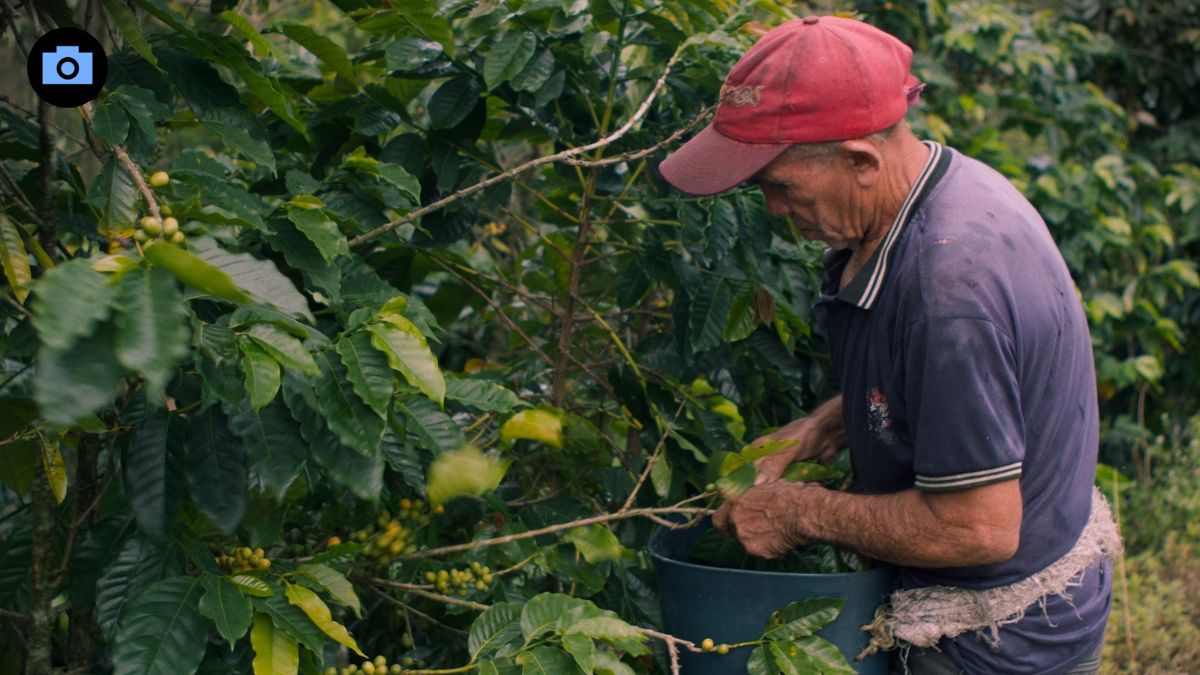
Coffee growing is one of the main activities in the Morán municipality, Lara State. (Gerardo Rojas)
Traveling through the Hilario Luna y Luna and Guarico parishes of the Morán municipality in Lara State means connecting with a land full of history, struggle, and resistance. It is also home to thousands of hard-working small-scale coffee-producing families who share a culture of collective work to improve their living conditions. Common problems often call for joint solutions, such as coming together to repair roads, or pooling coffee contributions to rent heavy machinery.
This time of year, everything revolves around the harvest, which holds the key to surviving for another year. For many campesinos, whatever they can get for their quintals [around 46 kilos] of coffee can be their only source of income. It is the basis for planning the daily reproduction needs, including food, clothes, healthcare, and tending to the land, which requires maintenance, fertilizer, fuel, and other inputs for the next sowing cycle.
As such, prices, yields, bean quality, as well as any unforeseen setbacks, will shape campesino lives until the next cycle. Underwhelming revenues can leave producers at the mercy of loans that often entail “paying double.” In other words, for every quintal loaned, or its money equivalent, the campesino must pay back two in the next harvest. This further shrinks the margin of error, in a context where inputs, fertilizers, machinery, etc., in the countryside are fully subjected to the market dictates and the interests of agribusiness corporations.
Therefore, the yearly setting of the quintal price is a matter of life or death for thousands of small and midsize coffee producers, with plots ranging from a few hundred square meters up to 8 hectares.
The prices on paper
On September 12, an agreement on coffee harvest prices by quality was reached at the Land Institute (INTI) headquarters in Caracas. It followed a review of cost structures and several preliminary meetings. The accord was signed by representatives of Venezuelan coffee producers and private processing and roasting companies. The talks were mediated by the Agriculture Ministry and the state-run Venezuelan Coffee Corporation.
Coffee type
Price (USD per quintal)
Grade 1 (Excelso)
Direct negotiation between buyer and coffee producer
Grade 2 (Gourmet)
Direct negotiation between buyer and coffee producer
Grade 3 (Washed type A)
310
Grade 4 (Washed type B)
300
Grade 5 (Washed type C)
295
Robusta
270
As I toured the villages in the aforementioned parishes, there was one common complaint: “the established prices are not being upheld,” in reference to both the coffee-roasting plants and the traditional intermediaries. This has been a recurring issue in recent years.
From October 12 to October 24, prices varied between $205 and $245 per quintal, significantly below the agreed-upon figures. And though there was a slight upward trend, time runs against producers, especially the smaller ones. They must sell in order to settle pending debts or meet other financial commitments from the harvest work. At the same time, according to local sources, buyers are paying $280 or $285 for shipments of 50 quintals or more, volumes that only large-scale producers can meet.
Rural organizations have denounced the low prices in multiple protests in Portuguesa State, another region with a coffee-producing track record and with a concentration of agroindustrial corporations. However, there has been no response from the Venezuelan government. Since mid-October, dozens of producers have demonstrated outside the headquarters of the Botalón and Amanecer corporations, two of the biggest Venezuelan agribusiness corporations. Campesinos hold them directly responsible for disregarding the established prices.
On October 23, Agriculture Minister Vladimir Padrino López visited Guarico, and some expected that he would comment on the price issue. But the only visible outcome of his visit was social mediacontent. There were no meetings with coffee growers, at least no small-scale ones (the videos were recorded in corporate properties), and there were no talks with local authorities.
Thus far, there has been no sign of the set prices being respected. An important factor may be the fact that they were not published in the Official Gazette as usual, which would grant more legal weight to the complaints. In contrast, what was spread on social media and reported on by some private media outlets was just the first of three pages in the document. Unfortunately, neither the Agriculture Ministry nor the Venezuelan Coffee Corporation has issued any press statement on the matter.
Bad harvest
Another recurring theme in conversations with local campesinos was the low yield of this year’s harvest. It is commonly said that good and bad years alternate, that picking the fruits of the good years “hurts the plants,” meaning the next cycle will be used to recover and yield less.
But on this occasion there was a different explanation. Throughout the year, the area has been hit by heavy rain, and coffea plants did not “enjoy summer” in February and March. As a result, flowers did not fully bloom, leading to fewer fruits. Some producers noted that in many cases only half the bean was properly developed.
This phenomenon is more prevalent in varieties that are not robusta, the one that fetches lower prices in the recent agreement. The canephora plants have produced a good harvest. Canephora is a robusta variety, native to central and western sub-Saharan Africa, that has quickly spread throughout this entire region in recent years. In certain ways it resembles the creole coffee that has practically vanished from fields.
It is a plant that carries a big load, with heavy beans. It takes 12 or 13 20-liter cans to reach a quintal, as opposed to as many as 18 for other varieties. It requires little maintenance, though its size makes harvesting more cumbersome. Local families are tempted to ditch all other coffee plants and focus exclusively on canephora, despite the lower price per quintal. But some warn that it would be a mistake. Planting a single variety increases the risk of losing everything to disease.
Between survival and exports
Most debates surrounding coffee identify the need to improve quality, which seems to be a broad consensus. But for small-scale producers, who contribute the bulk of the harvest, doing so requires a comprehensive public policy grounded in their specific circumstances and needs.
One of them, circling back to the original issue, is ensuring that the established prices are adhered to. Failing that, it is impossible for campesinos to sustain their activity and plan long term. If intermediaries and coffee-buying firms simply purchase “in bulk,” with little concern for quality, they reduce the incentive to improve it. If companies are going to mix grade A and grade C washed coffee beans, or mix with robusta, while paying the same low price, then why bother with a better plant?
Nowadays, many producers are drying their coffee with the shell, without depulping, though it reduces the bean quality, to then hull and sell. Very few dry their harvests in the sun, not only because of recent rainfall, but also to make the process faster. They resort to diesel-powered dryers, which generate a heat-producing flame that then needs to be spread with a wheel and an engine. The process also requires electricity, bringing another recurring complaint: blackouts and surges slow down drying. Beans require 24 to 36 hours, depending on the machine, the amount of coffee, and whether it has been depulped.
The local producers I talked to acknowledged that the government’s diesel distribution has been effective. There is a schedule, with a price of $50 per 200-liter drum, far cheaper than the $120 it costs in gas stations, though there are complaints about diesel being diverted to a black market. But all in all, it is considered a positive policy, though tighter oversight is needed to address vulnerabilities.
The policy is also appreciated because it is adapted to a technology that has become widespread in recent years, but runs counter to quality-improving recommendations. The Venezuelan Coffee Corporation is pushing African raised beds, for instance, for sun drying. This method was visible in Padrino’s social media videos.
This is one of the main avenues to improve coffee quality, but mostly geared toward large-scale producers. These are the ones with an entire chain connecting research centers, processing industries, and public institutions, with the main focus on export. The Venezuelan government has identified coffee as an export staple as it searches for new sources of foreign income. Nevertheless, though the export priority has permeated communal initiatives, this policy is mostly geared toward agribusiness corporations, built on their logic of accumulation and profiting from the effort of small and midsize producers.
This does not mean that small-scale campesinos cannot improve bean quality and export their harvests. There are already positive precedents in that regard. However, there is no comprehensive policy to support their efforts and expand grassroots initiatives.
In contrast, land hoarding is on the rise, with ever more huge plantations. These are presented as necessary to improve productivity and quality, so as to yield foreign currency from exports and contribute to “prosperity.” This trend marks a significant shift in the coffee-producing environment and can put small producers, their production techniques, their livelihoods, and shrinking land at risk. Even more so if the established harvest prices are not upheld.
Gerardo Rojas is a Venezuelan activist and photographer based in Barquisimeto, Lara State. He belongs to communications collective Voces Urgentes and was a founding member of the Ataroa Commune in Barquisimeto. He also served as communal economy vice-minister. Rojas has written extensively about popular power in Venezuela, including the book Chávez y la Democracia Socialista (CEDES, 2025).
The views expressed in this article are the author’s own and do not necessarily reflect those of the Venezuelanalysis editorial staff.
IN the summer of 1970, Tom Petty met one of his future Heartbreakers – and made a friend for life.
He was 19 when he invited guitarist Mike Campbell, then 20, to join his band Mudcrutch, named after the rundown Florida farm where they practised.
Tom Petty poses in San Francisco in 1979Source: Adrian BootMike Campbell and Tom on stage in 1977Source: Getty
“Tom was instantly unforgettable,” says Campbell today. “Of course, he had the long blond hair but he also had a swagger.
“He had this vibe around him of knowing where he was going — and he was smarter than anybody else in the room.”
Sign up for the Showbiz newsletter
Thank you!
The pair hit it off from the get-go, resulting in Campbell being by Petty’s side throughout his career — playing lead guitar in The Heartbreakers, joining Tom on his solo albums and taking part in the Mudcrutch revival in 2007.
“We immediately connected as musicians,” continues Campbell. “We had a similar dream — not to be rock stars, just to be professional and successful.
“The whole rock star thing came later. Tom lived at home [with his parents Earl and Kitty] and was a hippie dude like me.”
The first incarnation of Mudcrutch “paid their dues” in Petty’s hometown of Gainesville, Florida, known for its vast university campus.
Campbell recalls: “I’d come down from Jacksonville and was pretty much homeless. I was sleeping on couches and giving guitar lessons. It was a meagre existence.”
Things began to fall into place when he hooked up with two Toms — Tom Petty and Tom Leadon (brother of Eagles’ guitarist Bernie) — and drummer Randall Marsh to form Mudcrutch.
Heatbreakers, Ron Blair, Mike Campbell, Benmont Tench, Stan Lynch and Tom Petty in ’79Source: Adrian BootPetty became one of rock music’s most enduring icons, enjoying a remarkable career with The Heartbreakers spanning more than four decadesSource: Reuters
He says: “Gainesville was a great place to be. There was a thriving artistic community around the university, lots of parks for us to play for free and little bars to play in around town.
“We even got a gig in a topless bar for a while but it kept us in money for a few months.
“We mostly played covers but Tom was beginning to write and I was dabbling around with ideas.”
I ask Campbell what kind of music and which artists were his and Petty’s chief inspirations.
“Florida was a hotbed for all kinds of music, from blues and country to rock ’n’ roll,” he replies.
“But the strongest influence on both of us was the whole British Invasion — The Beatles, the Stones, The Kinks, The Animals.
“We would draw on them our whole lives.”
I’m speaking to Campbell, 76, to celebrate the 50th anniversary of the band that Mudcrutch eventually morphed into, all-American icons Tom Petty & The Heartbreakers.
Petty on stage in New York City in 1978Source: AlamyPetty died aged 66 from an accidental overdose of prescription medication in October 2017, a week after performing his final show with The Heartbreakers in Los AngelesSource: Getty – Contributor
Campbell is in Memphis, Tennessee, for the last stop on his tour with his post-Heartbreakers band, The Dirty Knobs.
He notes that he is in the music-loving Southern city where Elvis Presley started out at Sam Phillips’ Sun Records.
“The tour is coming to a close and everybody has picked up the flu,” he sighs when we’re connected via video call from his hotel room.
“Sorry if I sound a little under the weather but I’ll be OK.”
The main hook for our chat is a new boxset documenting the earliest recorded forays of Mudcrutch, Petty’s solo excursions as he searched for his direct yet melodic sound, his first two albums with The Heartbreakers, an incendiary 1977 Heartbreakers gig and footage from BBC Two’s cult late-night show, The Old Grey Whistle Test.
Campbell is still coming to terms with his loss. Before returning to memories of their early years together, he reflects on the man he was proud to call his “best friend”.
“It was like losing your right arm,” he affirms. “Very hard — and a surprise — and I’m still grieving.
“Tom and I were close, not necessarily to hang out all the time, but our musical and spiritual connection was about as strong as anybody can have.”
When touring with The Dirty Knobs, Campbell makes sure to include Heartbreakers songs in the set, featuring some of his co-writes with Petty such as Runnin’ Down The Dream and You Got Lucky.
“I can’t believe it’s nine years,” he says. “But, as time goes on, I’ve dealt with the grief better.
“I like to perform Heartbreakers songs to keep them alive, to remember and revisit my time with Tom.
“It is bittersweet but there are moments when I feel his spirit. He’s right behind me, saying, ‘Go man, go!’ ”
Campbell concludes: “You might never get over the loss of your brother or your father or your mother or your best friend but you learn to cope. That’s what grief is.
“Memories seem to have a life of their own and I have very good memories. I treasure them.”
This is a cue for more of Campbell’s precious recollections of the Seventies, beginning with Mudcrutch’s first attempts at recording.
On the first disc of the new boxset, No Sleep Till LA, there is an unpolished but promising song from 1971 called Up In Mississippi Tonight — a self-financed single — and later efforts including Depot Street and Wild Eyes.
So what does Campbell make of those initial studio forays all these years later?
“I hear immaturity and I don’t hear any big hit singles,” he decides. “But I do hear dedicated dudes trying to learn their craft.
“We drove down to Miami to cut a couple of demos and were intimidated because we only knew how to play live.
“We were ducks out of water so it was quite an education.
“The looseness of it all is shocking to me now but you sense the germ of something special is about to show itself.”
Their chastening early studio endeavours meant that Petty, Campbell and the rest of Mudcrutch decided they needed “to get smarter and get out of Gainesville”.
By this time, another future Heartbreaker, keyboardist Benmont Tench, had joined the fold, bringing an extra level of sophistication to the group’s music.
Campbell says: “We had done everything we could do as a local band. We had played everywhere, we had a following, but there was nowhere else to go.
“So we thought either New York or LA was our best shot at getting into the rat race.”
He adds that they chose the West Coast because “we already had a friend in Bernie Leadon, who came back to Florida and said, ‘It’s all going on in LA — record companies and musicians everywhere’.
“He encouraged us to get our asses out there, take our hard knocks, and get into it.”
Mudcrutch arrived in LA in 1974 but things didn’t go well. Although famed musician Leon Russell signed them to Shelter Records, their first single, Depot Street, flopped and they were dropped soon afterwards.
Petty, however, still had a solo deal with Shelter and his next efforts are represented on the No Sleep Till LA disc by a gorgeous acoustic demo, Unheard Kind Of Hero.
Campbell remembers the period like this: “After a couple of years of Mudcrutch struggle and the band falling apart, then Tom trying to go solo, The Heartbreakers showed up like magic one night — and boom!”
He explains: “Benmont had put together a demo session [in 1976] to work on songs and he called us all down.
“It was as if a light went on — this is who we are, this is what we do.
“Tom immediately said he was fed up with trying to make a solo record. He wanted to be in a band and said, ‘I’ve still got a deal and this is my band!’ ” It consisted of Petty, Campbell, Tench and new recruits Stan Lynch on drums and Ron Blair on bass.
“And we started that first Heartbreakers record almost overnight,” continues Campbell.
As for calling themselves Tom Petty & The Heartbreakers, he says: “I never had any issues with that. Tom was a great leader and frontman.”
Producer Denny Cordell gave them “unlimited studio time and nice equipment” and soon songs flowed thick and fast.
“They just started exploding out of Tom like they were waiting for an outlet,” says Campbell. “He’d come in and say, ‘Oh, I’ve got a song, it’s called Breakdown. And here’s another called I Need To Know’.”
The self-titled debut album kicks off in thrilling fashion with Petty/Campbell’s Rockin’ Around (With You).
“I wasn’t even trying to write a song,” says the guitarist. “I was sitting in the studio playing the riff and Tom walked by and goes, ‘What’s that?’
“He took it home and came back the next day with Rockin’ Around (With You). But the real lightbulb moment was on the 4th of July, 1976, when we recorded American Girl.”
Campbell watched Petty demo the first Heartbreakers stone-cold classic on acoustic guitar and decided it would benefit from a 12-string.
“But we couldn’t afford a 12-string so I tried to emulate it with my six-string by playing octaves,” he says.
“When we finished that song, we realised something had happened. We had found our sound — and nobody else sounded like that.
“From then on, it was smooth sailing. Tom was finding his persona and his voice. He was getting confident and he was proud of the band.”
The self-titled debut album, released on November 9, 1976, failed to make an impact in the States but, as Campbell points out: “The British press loved us. They thought we were a punk band.”
A brief UK tour in May and June, 1977, brings back fond memories for Campbell.
He says: “Our first show was in Cardiff supporting Nils Lofgren. We drove there in a little bread truck, facing each other on wooden benches.
“For the last song, Tom and I were running around in circles and got our guitar cords tangled up. We were literally hog-tied to each other and everyone was laughing.
“After that it was Heartbreaker mania for a while. We played places like Stoke-on-Trent, Sheffield, Manchester, Birmingham, Leeds.”
On returning to the States, the Heartbreakers set about trying to break through.
“But we couldn’t get arrested,” laughs Campbell. “The first album came and went so it was back to the grind. The second [1978’s You’re Gonna Get It!] picked up a little traction with songs Listen To Her Heart and I Need To Know but the response was still pretty meagre.
“We were opening for Bob Seger if we were lucky or the J. Geils Band, going from city to city in a minivan.”
Everything changed with the fabulous third album, Damn The Torpedoes (1979), which reached No2 on the Billboard charts despite what Campbell calls “a difficult birth”.
It opened with two of his co-writes, Refugee and Here Comes My Girl, but the story behind that album is for another time.
Before I let him go, I ask Campbell about playing not just with Petty but many great artists during his career.
“I feel like the luckiest guy in the world,” he says. “My path has landed me in the presence of my heroes — and they always tripped me out.
“I’d think, ‘Wow, I’m just this little kid from Florida and there’s George Harrison or Bob Dylan or Roy Orbison or Johnny Cash. How did I get here?’
“People like that can overwhelm you. You get a gush of confusion but it soon settles down.”
As for Petty, it was never like that. He just wanted to be one of the boys.
Campbell says: “Tom could have gone solo and could have been like Rod Stewart or whoever but he grew up in a band and he wanted to keep it that way.
“It’s why we stayed together for so long. I always liked that about him.”
On a personal note, he adds: “If Tom was working on a record, he could always look at me and say, ‘Should I go this way or that?’
“He trusted me and we loved each other.”
Tom Petty and the Heartbreakers Origins is out Friday, November 6Source: Supplied