The Argentinian scored 26 goals in regular season, topping the charts and leading Inter Miami to the MLS Cup playoffs.
Published On 8 Nov 20268 Nov 2026
Lionel Messi has become the first player to win back-to-back Golden Boot awards in Major League Soccer after leading his club Inter Miami to a second-place finish in the Eastern Conference.
MLS defending champions Miami earned a wasteful 3-3 draw against Charlotte on the final day of the regular season on Saturday.
Recommended Stories
list of 4 itemsend of list
The Argentinian superstar did not score but set up the first two goals at Miami’s Nu Stadium, both from corners, to help secure home advantage for his club in the first two playoff rounds.
Ian Fray, Luis Suarez and Rodrigo De Paul racked up three first-half strikes for Inter Miami before Liel Abada’s brace soon after the break led to a comeback sealed by Rodolfo Aloko’s late strike.
Runaway overall leaders Nashville broke the all-time MLS points record for a season with a whopping 77 after beating Cincinnati 2-0. At 23-3 with eight draws, Nashville won the East and broke the mark of 74 points set by Miami in 2024.
Miami finished second in the East on 60 points as third-place New England failed to take advantage of Inter’s draw with a surprise 1-0 loss at Orlando to end on 58.
At Miami, Messi’s 14th-minute corner fell unexpectedly to Charlotte’s Luca de la Torre, who spooned it up for Fray to open the scoring.
Another Messi corner in the 33rd minute found Suarez wide open at the near post. The Uruguayan glanced in his header for 2-0.
De Paul made it three before half-time, but Abada pulled back a goal for the visitors early and bagged a second in the 55th minute.
In the 90th minute, Aloko bagged the equaliser, reacting first to the ball as Smalls’s shot ricocheted off the post.
A visibly frustrated Messi hit the post in stoppage time before Aloko came inches from bagging an unlikely winner with a thunderous shot into the outside netting.
Messi’s 26 goals this season were enough to make him the first to successfully defend the top goal-scoring honour. Petar Musa of Dallas was second with 22 goals but did not score in his club’s 3-1 home victory over Colorado.
The 39-year-old finished with 29 goals the previous season, becoming the second player in league history to score at least 25 times in back-to-back years.
Messi recently retired from international football after an illustrious 21-year career with the 2022 world champions, but recently signed a contract extension with the MLS club through 2028.
Inter Miami are the holders of the MLS Cup, which they won in Messi’s second season with the club in 2025.
Playoffs for this season’s MLS Cup begin on November 19.
Messi’s men will face Columbus to begin the MLS playoffs. Other East matchups send New England against Philadelphia, Charlotte against Chicago and top seed Nashville against the wild-card winner, Orlando or Cincinnati.
Columbus took advantage of the Cincinnati loss with a 4-3 victory at Chicago to finish seventh and avoid the wild-card round.
The new series of I’m A Celebrity…Get Me Out Of Here! is just days away, with rumours already starting to swirl about a ‘secret alliance’ between two of the campmates
I’m A Celeb fans can’t wait for the new series to kick off(Image: ITV)
I’m A Celebrity…Get Me Out Of Here! fans can’t wait for the new series to start and there’s already some major gossip! Rumoured campmates Wayne Rooney and Chloe Burrows have already formed an alliance.
Speaking about the pair’s friendship ahead of the show, a source said to be close to Chloe told the Mail: “Chloe and Wayne bonded over their I’m A Celebrity booking back in May when they played in Soccer Aid together.
“Talks were well underway for the show at that time, so they both knew they were heading into the jungle. They were on the same team and got along really well.”
To see more of the stories you love from The Mirror and to find them easily in Google then make us your preferred source. Free and easy-to-do, just clickon the link here to find more from The Mirror at the top of your feed.
Former footballer, Wayne, 41 – who was papped at the airport today en route to Australia – will be without wife, Coleen, 40, and their four sons while in the jungle. However, he’s said to have formed a secret alliance with fellow campmate and Love Island pal, Chloe Burrows, 30, who he met when they played in the charity football match, Soccer Aid.
Revealing Wayne and Chloe had chatted about how they were feeling about going on the iconic ITV show, they added: “It’s nice that they already have that connection going in. They had a catch-up about how they were both feeling about the show, and it will be great to watch their friendship grow even more once they’re in camp.”
Chloe shot to fame on Love Island in 2021 and proved a huge hit with viewers, eventually finishing runner-up alongside her then-boyfriend Toby Aromolaran. I’m A Celeb producers have been reportedly been keen to sign her up for the iconic show, with the Chloe Vs The World presenter said to be enthusiastic about swapping her home comforts for life in camp.
Influencer, Chloe, posed for a selfie with Wayne at the charity football match in Stratford, which she captioned: “What an amazing experience.”
She is said to have held a number of meetings with bosses behind the ITV jungle show ahead of its return to Australia this month.
Wayne, meanwhile, is following in his wife’s Coleen’s footsteps after the WAG appeared on I’m A Celeb two years ago and is said to be eager to get stuck into the BushTucker Trials to impress his sons.
He is set to be joined Down Under by stars including,Chloe, Joanna Page, Ade Adepitan, Claire Sweeney, Ricky Wilson, AJ Odudu, Sharky, Leigh Francis, Mariella Frostrup, Leomie Anderson, and Jack Skipper. The show is expected to run for approximately three weeks, ending with a live final in early December.
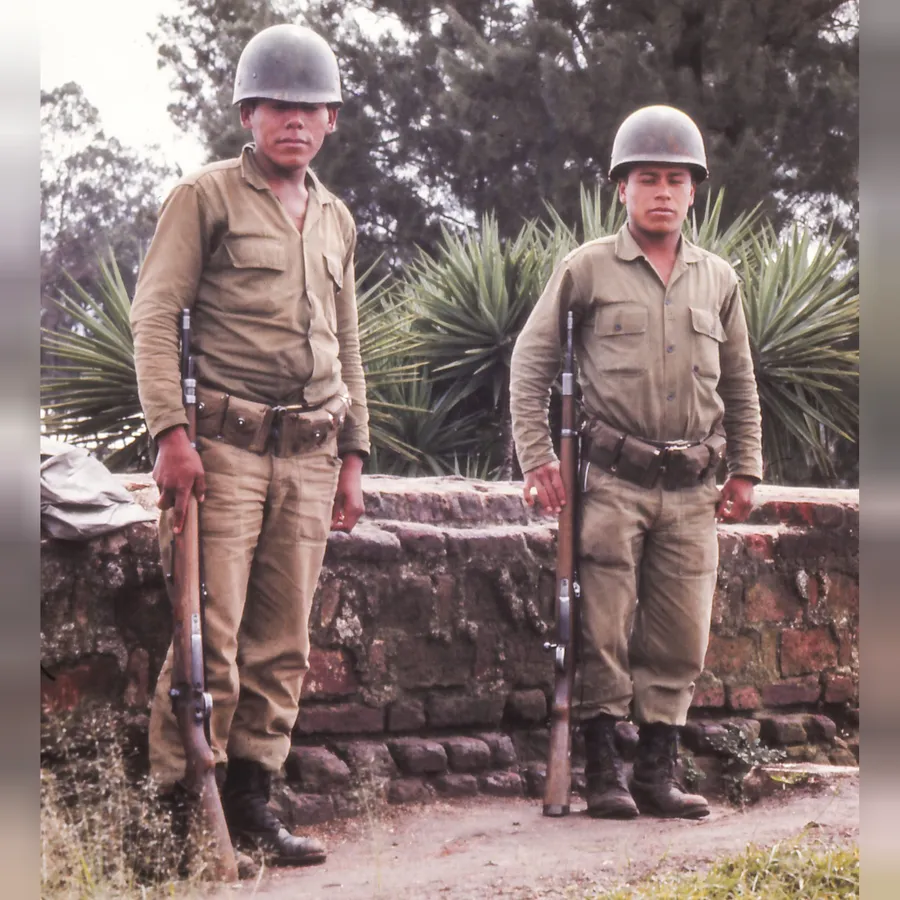
The provided source discusses the historical background of Guatemala, focusing specifically on the political and economic turmoil brought on by the Great Depression in 1929. To prevent total societal collapse amidst widespread joblessness and public unrest, the nation turned to Jorge Ubico for firm leadership, leading to his unopposed election victory in 1931. Once in power, Ubico attempted to stabilize the economy by enforcing strict labor regulations and heavily militarizing the government by placing military officials in key administrative roles. Additionally, the text highlights his complex political alignments during the Second World War, noting his support for American interests while simultaneously expressing open admiration for European fascist leaders. Finally, the article reveals Ubico’s intense fascination with Napoleon Bonaparte, a personal obsession that led him to view himself as a modern counterpart to the historical French emperor.
Wales fans were looking for a statement performance against Japan. A marker to put down as the World Cup looms in under a year.
They were not provided with that but did witness a victory, however scratchy.
So Wales woke up on a Sunday morning with a Test victory to mark. That has not happened often in recent times.
Some of these Wales players will still remember the record-breaking 18-Test losing sequence between 2023 and 2025. If Wales players can take any positives this weekend, it will be victory.
As Tandy said afterwards, it is always easier to debrief a bonus-point victory.
Among the disjointed team performance, there were notable impressive individual displays from the usual suspects.
Back-row duo Aaron Wainwright and Jac Morgan excelled in attack and defence, full-back Blair Murray was a constant attacking threat and wing Josh Adams popped up with two tries.
Centre Eddie James showed glimpses of his power game in a new-look midfield partnership with Max Llewellyn.
While the centre combination did not set the world alight, it warrants further opportunites.
Tandy will not be content with Wales spending long periods defending and only having 40% in territory and possession.
This was emphasised in the tackle count as the hosts made 227 compared to Japan’s 115, with Wales finishing with the top eight tacklers in the game.
He will be encouraged by the resolve with Morgan topping the official Nations Championship charts with 24, followed by lock Dafydd Jenkins (23) and Wainwright (20).
Wales also forced 10 turnovers with Alex Mann gaining three, while there were crucial interventions from Lake, Adams and prop Nicky Smith when Japan seemed destined to score.
Kyiv, Ukraine – Kyrylo, a wounded drone technician from eastern Ukraine, does not care much about the results of midterm elections in the United States.
Tuesday’s vote brought on a “blue wave” of victories for the Democratic Party, which will control both houses in the new Congress and provide a check on President Donald Trump.
Recommended Stories
list of 4 itemsend of list
But it means little to the Ukrainian servicemen.
“We already learned how not to depend on America,” said the 37-year-old, who is recovering from a heavy contusion in a Kyiv hospital after a Russian glide bomb hit his bunker.
He asked Al Jazeera to withhold his last name in accordance with wartime protocol.
“Trump has let us down so many times, sold us to Russia and we’re still standing and kicking Russian [butt],” he said. “We no longer depend on American money and weaponry. The whole world wants to buy our drones now.”
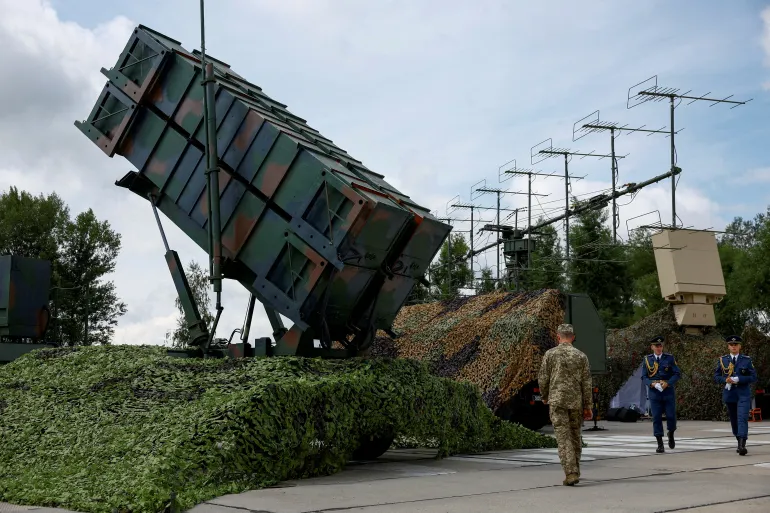
Ukrainian service members walk next to a launcher of a Patriot air defence system in an undisclosed location, Ukraine, August 4, 2024 [Valentyn Ogirenko/Reuters]
Under Trump, Washington gradually stopped footing much of Ukraine’s wartime bills. While the amount of financial and military aid nearly reached $200bn from Russia’s 2022 full-scale invasion to late 2024, since 2025, the US assistance has slowed to a trickle.
From October 2025 to March, Kyiv received a mere $8.2bn in military aid as part of “legacy pipelines” dating back to US President Joe Biden’s administration. The deals will have cost another $13bn when the supplies are over.
Even though Europe took over most of the financial weight, coughing up $83bn in 2025 alone, almost a third of all weaponry comes from US companies, according to the Kiel Institute, a German think tank.
Some aid may be restored, and the Democrats have pledged to scrutinise Trump’s ties to Russia and conduct sweeping investigations focused on alleged corruption within the Trump family.
The investigations will include their ties to Russian politicians, intelligence and oligarchs, such as Umar Kremlev, who reportedly paid hundreds of thousands of dollars for Donald Trump Jr’s wedding celebrations in the Bahamas in May.
The Democrats have already signalled their readiness to issue subpoenas and force the disclosure of executive branch records, including the ones related to Ukraine, once they take control of Congress on January 3.
“Ukraine’s positions may become stronger,” Volodymyr Fesenko, head of the Kyiv-based Penta think tank, told Al Jazeera. “But we need to keep bipartisan support.”
Ukrainian President Volodymyr Zelenskyy said of the midterm results, “We have bipartisan support.” He said he was “thankful to the Republicans, but Democrats very clearly state their support of Ukraine and providing aid to it.”
Loss of Ukraine-supporting Republicans
But getting more backing from the US Congress is not going to be easy as several Republicans who supported Ukraine have lost their seats.
The “blue wave” unseated Brian Fitzpatrick of Pennsylvania, who cochaired the Congressional Ukraine Caucus and was one of Kyiv’s staunchest supporters.
Other notable pro-Ukrainian Republicans are Don Bacon of Nebraska, a self-described “Reaganite” staunchly opposed to Russia, and Mike Lawler of New York, who voted for the Ukraine Support Act.
At the same time, Kyiv needs to appoint a new ambassador to Washington. Olha Stefanishyna, a former deputy prime minister, was fired in August during a probe into her “illegal enrichment”.
A woman stands at the site of her in-laws’ house destroyed during a Russian air strike on the outskirts of Dnipro, Ukraine October 19, 2026 [Reuters]
The ambassador works with Congress and organises contacts with Kyiv and trips by lawmakers to Ukraine.
“That’s why first of all a new ambassador has to be appointed,” Fesenko said.
And while some supporters of the Democrats urge their party to impeach Trump, Kyiv would be on the losing side, analysts said.
“God forbid if Ukraine becomes the focus of a [third] impeachment because of the negative experience during Trump’s first presidency,” Fesenko said. “It made Trump form a stable negative attitude towards Ukraine.”
Trump’s first impeachment in 2019 concerned accusations that he pressured Kyiv to investigate Biden and Biden’s son Hunter, who had been on the board of Burisma, a Ukrainian natural gas company implicated in corruption schemes.
The Democrats said Trump froze $390m in military aid to Ukraine as leverage at a time when Kyiv badly needed US arms to continue fighting Russia-backed separatists.
Now, before the new Congress takes office, Trump is likely to pressure Ukraine to accept a fast-tracked peace deal with Russia.
“Because when Russia isn’t willing to concede, the fastest way to solve the matter – either through a truce or through freezing the war – is only possible if [Trump] twists Kyiv’s arms,” Kyiv-based analyst Igar Tyshkevych told Al Jazeera.
“That’s why the next two months will be rather complicated for Ukraine,” he said.
Because Trump at the moment has Republican majorities in both houses, he will “try to show the effectiveness of his policies to decrease the possible level of confrontation with the new Congress”, Tyshkevych said.
The new Congress will have to deal with a dilemma rooted in allegations of corruption involving top Ukrainian officials and their purported embezzlement of US aid.
“On the one hand, there’s a political conviction to keep supporting Ukraine and on the other hand the political necessity to put an end to questions, suspicions and accusations of Ukrainian leaders in corruption,” he said.
Pro-Kremlin voices are already counting Moscow’s possible losses.
“The Democrats will double down on their efforts to prevent Trump from establishing a dialogue with Moscow, demand the resumption of direct US military aid to Kyiv, insist on the restoration of transatlantic unity on the Ukrainian issue and propose new sanctions against Russia and its main trading partners,” Moscow-based political analyst Andrey Kortunov wrote in an opinion piece for the Kommersant daily.
The Democrats “will initiate investigations into how he negotiates with us”, Moscow-based analyst Malek Dudakov told the Gazeta.ru daily.
The Russian Ministry of Foreign Affairs dismissed the concerns, saying Moscow’s foreign policies “don’t depend on the fluctuations of the political barometer in other nations”.
Kremlin spokesman Dmitry Peskov, meanwhile, spoke in flattering terms, saying, “President Trump continues to exercise his powers. We sincerely hope that he will continue his peacemaking efforts.”
Rybakina pulled out on the eve of the Indian Wells tournament, with Ukraine’s Marta Kostyuk replacing the top seed.
Published On 8 Nov 20268 Nov 2026
Defending champion Elena Rybakina has pulled out of the Women’s Tennis Association (WTA) Finals, saying she was not physically ready to compete, allowing Ukraine’s Marta Kostyuk to take her place in the eight-player field at Indian Wells.
Organisers on Saturday cited a viral illness as the official reason for the world number one’s “disappointing” withdrawal, but said the world number one needs time to recover from the physical toll of a demanding year.
Tournament director Garbine Muguruza, a former world number one and two-time Grand Slam champion, said she had spoken with Rybakina and that the Kazakh had been unable to recover in time after struggling with physical problems late in the season.
Recommended Stories
list of 3 itemsend of list
“We love Elena, and we know that she was feeling so-so in Tokyo as well,” Muguruza told the Reuters news agency. “I spoke to her today, and she really couldn’t recover on time.
“What we want is for her to feel good, to go rest, to recover. We don’t want her to feel like she has to play — only if she’s ready to.”
Rybakina, who won two Grand Slam titles this year, also withdrew from the quarterfinals of the Pan Pacific Open in Tokyo last month because of a neck injury.
Rybakina undertook a few practice sessions before the WTA Finals, but pulled out of the tournament due to a viral illness [Mathew Stockman/AFP]
‘Amazing field’ despite Rybakina absence
Rybakina’s absence deprives the event of some star power, but Muguruza said the round-robin format and depth of the field would ensure a high-quality tournament.
“We have the best players,” said Muguruza, who triumphed at the WTA Finals in Guadalajara in 2021.
“I know our world number one is not going to be able to play, but we have an amazing field, the very best,” she added.
“Every match could be a Grand Slam final. You really need to be ready. You cannot give one inch.”
Kostyuk, who is making her WTA Finals debut after a breakthrough season that included the Madrid title and a rise into the top 10, was already in Indian Wells as an alternate and practising when Rybakina withdrew.
Muguruza said the Ukrainian, known for her signature post-match backflip celebrations, had earned her opportunity.
“Marta is great. She’s had a breakthrough year,” Muguruza said. “With this year, we have many first-time players in the Finals, and that’s very exciting. It’s very hard to qualify.”
Kostyuk has been outspoken about Russia’s invasion of Ukraine and does not shake hands with Russian or Belarusian opponents. Muguruza said the tournament would support players in making their own decisions.
“They’re free to do whatever they feel,” she said. “We are open and supporting them.”
Opportunity for Sabalenka
Rybakina’s withdrawal could create an opening for world number two Aryna Sabalenka to make inroads in the rankings.
Sabalenka, who won the Indian Wells title earlier this year, has the chance to reduce the gap at the top of the rankings, according to Muguruza, who highlighted Russian teenager Mirra Andreeva as a player comfortable in the California desert.
“Of course, Aryna might be thinking that this can be a good opportunity,” she said.
The WTA moved the finals to Indian Wells from Riyadh, Saudi Arabia, with Muguruza saying player safety had been the decisive consideration amid conflict in the Middle East region.
“It clearly felt no longer safe to be in a region where there is conflict,” she said. “Taking care of the players and looking ahead to what could be safe, comfortable and secure, relocating felt the best decision.”
Muguruza said players had responded positively to the switch to Indian Wells, where she competed regularly during her career.
“When we knew that Indian Wells could be the next venue, it was just a joy,” she said, adding that ticket sales have been strong. “The whole thing is just perfect.”
NAMED Europe’s best city 2026 by Travel + Leisure earlier this year, Florence’s easy-to-traverse streets make it an ideal weekend away.
You can find world-famous art and fantastic pizza just steps from each other. Here’s why a trip to the beautiful Italian city should be on everyone’s bucket list…
The Italian city of Florence was crowned Europe’s best city 2026 by Travel + Leisure earlier this year,Source: GettyGawp at stunning artworks like Sandro Botticelli’s The Birth Of Venus at the Uffizi GallerySource: Getty
WHY SHOULD I GO?
Florence is now a bit easier to visit, with easyJet expanding its city break package destinations.
Two-hour flights, cheap package holidays and weather that is still warmer than the UK’s are just some of the many reasons it’s great.
Sign up for the Travel newsletter
Thank you!
STREETS MADE FOR WALKING?
Florence is incredibly easy to explore on foot, with its biggest attractions and best restaurants just a short stroll apartSource: Getty
Forget taxis and trains — Florence is insanely walkable, with its top attractions and restaurants all within spitting distance of each other.
Perfect if you love a mooch without having to work out how to use a foreign public transport system.
The city is known for its Renaissance art, so most people head straight to the Uffizi Gallery to see Botticelli’s most famous painting, The Birth Of Venus.
But I’d recommend heading over the river to Palazzo Pitti instead. Owned by the Medici family back in the 1500s, the palace was said to have inspired Versailles in France.
Now it is home to five separate museums, with 500 paintings across 28 ornately decorated halls.
The highlight is Italy’s largest Museum of Costume and Fashion, featuring pieces from Chanel, Dior and Schiaparelli. Speaking of fashion, make sure you don’t leave without a leather souvenir, as Florentine leather is world-famous.
There are more market stalls and shops than you can shake a stick at, so you’ll be spoilt for choice for bags, belts and even more leather pieces.
WHERE SHOULD I EAT?
What is a trip to Italy without a little bit of gorging on pizza?Source: Supplied
The city is known for its Renaissance art, so most people head straight to the Uffizi Gallery to see Botticelli’s most famous painting, The Birth Of Venus.
But I’d recommend heading over the river to Palazzo Pitti instead. Owned by the Medici family back in the 1500s, the palace was said to have inspired Versailles in France.
Now it is home to five separate museums, with 500 paintings across 28 ornately decorated halls.
The highlight is Italy’s largest Museum of Costume and Fashion, featuring pieces from Chanel, Dior and Schiaparelli. Speaking of fashion, make sure you don’t leave without a leather souvenir, as Florentine leather is world-famous.
There are more market stalls and shops than you can shake a stick at, so you’ll be spoilt for choice for bags, belts and even more leather pieces.
I FANCY A DRINK
Florence is hardly short of wine bars, but my favourite is Oratio, in a tiny library dedicated to wine books where wines are organised into regions of Italy.
Service is friendly, the menu is affordable, and you can pick up a book or two if you want to learn more about what you are drinking.
There are also Florence’s famous wine windows — 300 portals in the city’s stonework which were used to serve wine and food to people during the plague without risking physical contact.
Glasses of wine are still passed through the windows, and a popular one is part of the restaurant Babae, where you can even keep the plastic souvenir wine glass.
WHERE SHOULD I STAY?
Three nights’ room-only at the 4* Palazzo Monnalisa is from £536pp including flights from Gatwick on February 5Source: Supplied
There’s no better stay than at the 4H Palazzo Monnalisa, a city-centre hotel, but in a quiet street.
The building dates from the 14th century but recently completed a two-year renovation, so rooms are modern and cosy yet arty and chic — think terracotta tiles and textured mural wallpaper showcasing famous Italian skylines.
The rooms surround a private garden courtyard, making it feel worlds away from the busy city.
Breakfast is small but enough to line your stomach for the day, in the form of fresh pastries and fruit, or a hot menu offering dishes such as eggs benedict.
The restaurant is here too, with the bar on the other side to grab a wine to take to the outdoor patio.
The hotel almost feels like a museum in itself, from the painted wooden ceilings to its time-worn stone steps.
GO: Florence
GETTING/STAYING THERE: Three nights’ room-only at the 4H Palazzo Monnalisa is from £536pp including flights from Gatwick on February 5. See easyjet.com/en/holidays. Use code BLKFRIDAY to get money off bookings made before December 1.
Few of us living in Southern California fully grasp the pivotal role the area has played in the history of flight and space travel. It boasted about two-thirds of the nation’s aircraft companies by the end of World War II and later birthed moon-bound Apollo spacecraft and the Columbia, Challenger, Discovery, Atlantis and Endeavour space shuttles. NASA’s Jet Propulsion Laboratory in La Cañada Flintridge is still where many of NASA’s robotic space missions are built and operated, and SpaceX has forged most of its rockets and spacecraft in Hawthorne.
Share via
Take a tour of Endeavour’s new home at the Samuel Oschin Air and Space Center, which features an awe-inspiring elevator ride, 115-foot slide and dozens of fun and educational exhibits.
Our region specializes in another kind of escape too: entertainment. At the new Samuel Oschin Air and Space Center, the $450-million, 200,000-square-foot expansion of the California Science Center, which opens to the public on Nov. 13, our expertise in cosmonautics and creativity converge to produce a blockbuster — a people-pleasing, action-packed popcorn flick that’s a foil to the city’s newest museums such as LACMA’s indie art house and Lucas’ sci-fi saga.
The center, with its galleries dedicated to aviation, space exploration and the shuttle program, turns the miracle of flight into theater, building to a dazzling denouement: the space shuttle Endeavour, with its solid rocket boosters and enormous external tank displayed in launch-ready position for the first time.
The drama begins in a darkened room, where a film created by J.J. Abrams’ production company, Bad Robot, transports you into the rousing, aggressively optimistic world of space travel, with its grainy footage, scratchy voices and real-life heroes. Then the shuttle appears on screen, the music swells and the room shakes with the tearing, rumbling force of a launch. The music resolves and smoke rolls into the gallery before the screen opens up and the real Endeavour gleams in the distance, spotlighted like a mirage in the dark.
The Samuel Oschin Air and Space Center. The cone-like top houses the Endeavour space shuttle in launch position.
(Allen J. Schaben / Los Angeles Times)
It’s all a bit much. But I defy you to experience this reveal without getting goosebumps, or even (like a few people I know) shedding a tear.
You may think you experienced the shuttle a few years ago, parked in a hangar-like building at the west edge of the Science Center. But witnessing the shuttle upright — an idea that emerged out of a Science Center master plan over 30 years ago — is an entirely different thing. The 20-story-tall Endeavour stack is, simply put, one of the greatest artifacts ever installed in a museum. Anchored, via just eight bolts, to a concrete pad a floor below the ground, it’s a mesmerizing monument that feels as if it’s emerging from the earth to burst into space.
Space is the key word. To its credit, Oschin architect ZGF has done its best to keep the shuttle gallery’s dark, cavernous architecture in the background; focusing attention on the Endeavour while transporting visitors to another realm. Above its three-story concrete lower walls the gallery’s structure becomes a lean, self-supporting steel diagrid (think of a giant Erector Set) that wraps around the orbiter without interior walls or columns. Its web of steel connectors reads like a constellation. Its cone-shaped surface consists of thousands of panels, merging support and weather protection, and serving, via steel clips, as a frame for the building’s outer stainless-steel tiles. Each panel is different, their subtly shifting shapes recalling those of the shuttle’s heat-shield tiles.
Former NASA astronaut John “Danny” Olivas watches a J.J. Abrams-produced film about the space shuttle program before entering the shuttle display area at the Samuel Oschin Air and Space Center.
(Allen J. Schaben / Los Angeles Times)
From the upper deck, visitors can get a close-up view of the cockpit of space shuttle Endeavour inside the Samuel Oschin Shuttle Gallery at the California Science Center in Exposition Park.
(Allen J. Schaben / Los Angeles Times)
The building choreographs a series of changing paths and perspectives within this vast armature. From wrapping overlooks, anchored by a central stepped terrace, you can take in the Endeavour’s full presence, set against the ethereal diagrid, from all sides. Walk to the far end to get closer to the shuttle: Its open cargo bay, which shows off its 50-foot-long mechanical arm designed to launch satellites and snag spacecraft, looks enormous compared with the tiny cockpit and living quarters where floating astronauts somehow squeezed in together, literally sleeping against walls and ceilings.
You can descend stairs from here, or opt for a (very) fast ride down one of the gallery’s 115-foot-long tubular metal slides, which dive through the floor and curve, as if hurtling through the atmosphere, to the base of the shuttle. Looking up from the ground floor gives you a true sense of the scale of the behemoth orbiter, boosters and tank, which shoot up like skyscrapers.
The super-fast 115-foot-long Shuttle Descent Slides inside the Samuel Oschin Shuttle Gallery.
(Allen J. Schaben / Los Angeles Times)
The “Launch Tower,” a 16-story-tall re-creation of the shuttle launchpad’s gantry, gets you even closer to the stack. You ascend quickly via its glass elevator, and the Endeavour and its components shift in size and sensation as you climb. Viewing decks at multiple levels help you draw alongside. At one moment the orbiter looks alive — with its black, doglike cone nose and deep nostrils. Then it resembles an alien probe, filled with weird nozzles and mysterious hatches. It may dawn on you that this heroic artifact is a vulnerable, handmade thing. Ceramic tiles closer to the front are darker, stained with the unreal heat of piercing the atmosphere. Some of the shielding consists of white, quilted silica fabric; literally handwoven.
At the top level, 140 feet up, you walk out onto a structural glass-floor ledge and stare down into the shuttle’s cockpit, through your feet. You, the tiny David, have eclipsed the Goliath and conquered space! Or you peer over a railing to study the external tank — literally the last of its kind — tracked down for this exhibit at NASA’s Michoud Assembly Facility in Louisiana. It’s fluted in places, like a colossal, Space Age column. Elsewhere it’s mottled and reddish, as if made of clay.
The experience is profound for reasons other than pure spatial and tactical wonder. The shuttle is a machine for nostalgia, embodying a space program that brought us miraculously closer to the heavens and distilled the promise — deeply American, for better or worse — that ingenuity and persistence could take us beyond what seemed possible. Visiting it brings back childhood memories of watching a launch in awe. It transports us to a simpler time when spaceflight felt like a shared public undertaking, led by NASA in pursuit of knowledge, not by billionaires in pursuit of ego.
Part science exhibit, part thrill ride, the shuttle gallery teaches most effectively via emotion. While it’s hard to pull your attention from the shuttle, the area is layered with dozens more evocative exhibits and artifacts, including a replica of the shuttle’s flight deck — housing more than 1,000 densely packed switches, dials and displays — and a simulator that allows you to move, weightlessly, through the International Space Station. A line of graphics along one wall outlines the details of each shuttle mission — 135 in all — as vertical stripes of information.
The Oschin’s Aviation and Space galleries, bridging the shuttle gallery and the Science Center’s towering lobby, share the same broad idea: let extraordinary artifacts lead, and use architecture to shape the views and journeys around them. They’re excellently executed, but they feel familiar — planes and spacecraft spread across several levels accompanied by oversize graphics and hands-on displays. They rarely reach the singular intensity of the shuttle gallery.
Several planes and jets, including an inverted Grumman F11F-1 Tiger, are on display inside the Korean Air Aviation Gallery at the Samuel Oschin Air and Space Center.
(Allen J. Schaben / Los Angeles Times)
The three-story aviation hall makes room for almost two dozen aircraft — including a replica Wright Brothers glider, a Grumman F11F-1 Tiger, inverted as if a Navy Blue Angel were still steering, and a Joby S4 Air Taxi — suspended via steel wires from extra-thick concrete beams. Large openings cut through each level’s floor plates help accommodate the impressive craft while providing perspectives from all angles, even above. Exposed structure and lighting give the area the spare feeling of a hangar, with upper-level clerestory windows and skylights providing natural light. The “Concourse,” a central bank of bleacher seating linking the first and second floors, provides a place to take it all in, or to watch occasional presentations and shows.
Dozens of exhibits, which don’t have to compete with a looming space shuttle, will make it hard for you to get your children to leave. You can explore the interior of a 747, embarking on a simulated flight to South Korea, learn the mechanics of flight through several manually controlled displays, or send drones on missions above a miniature model of Los Angeles.
The space galleries capture more of the shuttle exhibit’s sense of otherworldly drama: dark, amorphous, windowless spaces with graphics of glittering stars and planets on the walls and spotlights lending pop to each surreal artifact. You can gape at gargantuan rocket components and space vehicles — the Rocket Lab Electron Rocket, for instance, juts through multiple floors — or ogle space suits, shuttle thrusters and moon rocks. There’s the diminutive Mercury-Redstone 2 capsule, which carried a chimpanzee on a suborbital spaceflight; the scruffy Apollo-ASTP Command Module, which orbited the Earth; and a model of Mariner IV, the probe that took the first close-up pictures of Mars. The best interactive exhibits turn curiosity and fun into stealth learning, like a chance to control a Mars rover or practice repairing the Hubble Space Telescope.
A section of a Boeing 747 is displayed inside the Korean Air Aviation Gallery at the Samuel Oschin Air and Space Center. Guests can take a simulated flight to Seoul.
(Allen J. Schaben / Los Angeles Times)
Outside, the addition has its strengths, but it makes an uneven case architecturally. I don’t mind that it doesn’t rhyme with the rest of the center: Oschin is one of a kind, especially its shuttle gallery. Besides, I’ve never been a big fan of the main building’s postmodern agglomeration. The new wing’s irregular, mysterious form and overlapping stainless-steel panels catch unique swathes of glowing sunlight. Its tight curves and angled seams recall aeronautic skins, giving the surface a sense of buzzing movement — an appropriate preview for what’s inside. When the building wraps around the shuttle itself it reads as a gleaming, cone-shaped beacon, visible from far away; tracing the shuttle’s dimensions and anchoring the museum in Expo Park. But the remainder feels leftover — formless and aimless — like tinfoil stretched around a clunky, conventional mass. It’s an outgrowth of merging an entirely new kind of exhibit with a more traditional one.
Oschin’s scalelike steel panels, albeit part of a smart, efficient structural solution, inevitably read as a watered-down redux of Frank Gehry’s Bilbao-era work. The echo is especially ironic given the presence, just a few feet away, of Gehry’s 1984 Science Center Air and Space Gallery (which closed in 2011), now empty and deteriorating. That canted, seven-sided building boldly incorporated a Lockheed F-104 Starfighter jet into its sheet metal and stucco-clad architecture. Its neglected husk is a missed opportunity: Why echo Gehry from across the street when you could engage the work already there? Science Center President and Chief Executive Jeffrey N. Rudolph says there is hope to someday bring the building back into service, but that its small spaces, awkward circulation and constant leaking have made that difficult.
A drone view at sunset of the Samuel Oschin Air and Space Center.
(Allen J. Schaben / Los Angeles Times)
The larger missed opportunity is Expo Park itself. With the recent additions of Oschin, the Lucas Museum and BMO Stadium, two expansions to the Natural History Museum and the renovation of the California African American Museum, the area now arguably contains Los Angeles’ most impressive collection of cultural institutions. But despite decades of visioning, the buildings are still not connected in a meaningful, humane way. State Drive, an ugly black roadway, separates the Science Center and its new addition from the park’s Rose Garden, and serves as a sad connector to the rest of the park.
Expo’s most recent master plan, approved in 2020, called for, among many other unexecuted improvements, replacing State Drive with a soft, shaded pedestrian route called Museum Walk. Plans for such a connector date back as far as the 1984 Olympics. “If there was funding (and significant effort toward its delivery) we would indeed explore creating a green promenade,” Andrea Ambriz, general manager of the state-run Office of Exposition Park Management, wrote in an email. “We’d love to see it developed,” echoed Rudolph.
The state contributed $80 million to the Oschin Center’s creation, and it is spending another $450 million on Expo’s deferred maintenance, accessibility and a new park along the complex’s south edge. Why not a few million more to better connect its facilities? And why can’t the institutions themselves chip in? The park’s museums should no longer be treated as isolated islands — the spaces between them urban leftovers.
Ironically, while Expo Park desperately needs to connect, Oschin’s galleries succeed most when they disengage from the world. And that’s OK. Their darkness and surreality narrow your attention and enhance your connection to their stunning, futuristic artifacts, turning a familiar experience into a thrilling journey. These spaces are about wonder, perfect for a museum that, at its core, is about teaching and inspiring children.
Los Angeles has long known how to produce this kind of wonder, in its aerospace workshops, soundstages and sometimes, its architecture. Oschin reveals the power of uniting these strengths. But the reality outside shows how much work remains to bridge the gap between the remarkable things this city builds and the often neglected spaces between.
The tournament debutants put pressure on the Australia line from the start. Soon the entire Aussie team caught the bug with simple drops and brainless errors, and after 12 minutes Simaima Taufa conceded a penalty under the posts.
Fiji opted to kick for two points. Four minutes later, they went all the way.
Captain Sereana Naitokatoka stole the ball from Jaime Chapman 10 metres from the Australia line, and they drove through the defence for half-back Luisa Yaranamua to score. She also converted to give Fiji an astonishing 8-0 lead.
At last Australia sparked into life, and two tries in the final 10 minutes of the opening half brought them level.
Church drove over in the right corner, before Tamika Upton slipped through the defence as Australia returned pressure following a Fiji drop-out.
But Jocelyn Kelleher missed twice from the tee to allow Fiji in at half-time level. Had Upton not brilliantly tipped a Fiji grubber behind, Australia would have trailed.
Whatever coach Jess Skinner said in the changing room woke Australia up, and they took control.
Church completed her treble – the third a brilliant catch from a booming Tarryn Aiken kick to the corner and before grounding the ball at full tilt – either side of Chapman diving over.
Normal service resumed. But at last, the Jillaroos have been proved fallible – with a late Maria Paseka try providing a deserved flourish for fearless Fiji.
Church, though, had the last word for Australia – collecting Losana Lutu’s kick around 30 metres from her own line before racing clear to score.
New Delhi, India – Both daughters of S Budhiraja live in the United States. Yet, when he and his wife head out to the market in Gurugram, a bustling business district on the outskirts of India’s capital, a young man walks beside them.
It is 26-year-old Roney Raju, their “hired grandson”.
Recommended Stories
list of 4 itemsend of list
Across Indian cities, a small but growing number of companies are now selling what families once took for granted: someone to take care of ageing people. Chores include taking them to the temple, sitting with them during a hospital visit, playing cards, or simply listening to them.
Some firms call such workers “children for hire”; others call them a “grandchild for rent”.
India, the world’s most populous country, is growing older quickly.
People over 60 made up 10.5 percent of its population in 2022, a demographic projected to nearly double to 21 percent by 2050, according to the India Ageing Report 2023 by the United Nations Population Fund (UNFPA) and the International Institute for Population Sciences.
That means about 347 million elderly Indians – a number almost equal to the entire population of the US, the world’s third most populous nation – will need specialised care by 2050.
Several Indian startups see the opportunity, with the Indian government estimating the senior care industry at about $7bn.
Raju, holding a master’s degree in social work, works for one such company in Gurugram. He has been looking after the Budhirajas for the last few months.
“I was comfortable with him from the get-go,” Budhiraja, who is in his 80s, told Al Jazeera. “I feel he understands me 200 percent.”
Raju describes the bond in the same vein. “Right now, he is family to me,” he said. The couple, he said, see him as “their proxy child, and much more than a service companion”.
The bond has deepened over the past months. When Budhiraja was admitted for surgery, Raju kept track of the doctors and the medicines. He would even call to check on them after his shift had ended.
Growing industry
Raju’s boss Gaurav Mittal says many clients actually come to treat their companions “like their own grandchildren”.
He charges 450 rupees ($5) an hour for 10 hours of service in a month, or 400 rupees ($4.5) per hour if it is 25 hours. Like a mobile phone recharge, unused hours are rolled over to the next month.
In a country with an average per capita income of about 220,000 rupees ($2,750) a year, Mittal’s service caters to a small minority of urban, financially secure families.
A companion visiting a Hindu temple with his client and her domestic help [Handout via Al Jazeera]
Mittal said the idea for his company came from home. After his father died four years ago, his mother had to leave their hometown and move in with him. She was sociable and had money to spend, but depended on family members to go anywhere.
“The world is not designed keeping the senior citizens as the central pillar,” Mittal said.
The idea for such startups, however, is not entirely new.
A 2017 report counted at least five startups offering young companions to seniors. In 2022, the late Ratan Tata of the Tata Group promoted a Mumbai-based startup whose tagline says: “Everything Grandkids Do!”
The companions who work for these companies undergo police verification before they start working for a senior person. Before working alone, they often shadow a senior staff member on home visits.
Most companions are trained in psychology, social work or hospitality.
Vinay Kumar works as a companion for a firm based in the southern city of Hyderabad.
“We are not just taskmasters, but we develop a relationship with our clients. We support them and spend quality time with them so that they don’t miss their close ones,” he told Al Jazeera. “They may still do, but we try.”
Lonely seniors
The 2023 United Nations Population Fund (UNFPA) report projects that older Indians will outnumber the country’s children by 2046. And many of these seniors are lonely.
In 2022, India conducted the Longitudinal Ageing Study, a national survey of more than 72,000 people. It found that 20.5 percent of middle-aged and older adults reported moderate loneliness, while 13.3 percent categorised their loneliness as severe.
Among people over 60 who lived alone, more than a third (37 percent) reported feeling lonely, the study found.
Globally, a study commissioned by the World Health Organization in 2025 found that loneliness affects one in six people and is linked to about 871,000 deaths a year.
Santosh Abraham, CEO of a Bengaluru-based startup founded in 2015, says while the children of elderly people are worried about medical emergencies or market errands, their parents mostly had a different concern.
“I am lonely, I don’t have anyone to talk to,” Abraham recalled one of his clients as saying. “I have done so much for my family and society; there is no recognition for it.”
Abraham said the most common request he gets is one that “nobody says out loud”.
“A senior calls us claiming to feel unwell. A care manager arrives, finds nothing wrong, and is then asked to sit and talk for an hour,” he said. “They just want company.”
Kumar said companions like him have to “understand their pain”.
“Most of the seniors who are living alone are very lonely. They want someone to play cards or indoor games with. Someone wants to go to a movie, or a temple, or parks, or attend local programmes,” he said.
Abraham said some seniors find a stranger easier to confide in. “With a companion, there is no baggage,” he told Al Jazeera.
For the young people doing the work, the line between their job and a relationship blurs quickly.
Raju says the visits to the Budhirajas are harder than office work. “Forming an emotional connection is never easy and is different each and every time,” he said.
Kumar, in Hyderabad, agrees. He said his clients often tell him about health problems that they hide from their children living in another city or abroad so as not to worry them.
He recalled a client who went from shutting the door on his face because he did not know English or Hindi to paying for his driving lessons and introducing him to people as his “god-gifted son”. When the man died in 2023, his son asked Kumar to perform the final rites alongside him.
Kumar once even cut short his 12-day marriage leave because one of his clients kept calling, asking him to come. “I genuinely feel these seniors are my own parents and grandparents,” he said.
‘Older person feels seen, heard, safe’
Others are more cautious about what the job demands.
Prashanth Reddy, founder of the Hyderabad-based company that Kumar works for, said companions must understand boundaries.
“Companions are there to provide support, not to replace doctors or mental health professionals,” he said.
Abraham agreed. He said he underlines one golden rule during his training sessions with aspiring companions: “Talk less and listen more.”
The children of such elderly people who buy the services of these companies say paying takes out the awkwardness of asking neighbours or relatives for help.
“When you pay for a service, you don’t have to feel like you’re asking someone for a favour,” says Vinnay K, a US-based software professional, who has been hiring a companion for his ageing mother for five years.
Shilpa Bandyopadhyay, assistant professor at Jindal Institute of Behavioural Sciences near New Delhi, told Al Jazeera that hiring a companion “should not automatically be interpreted as evidence that their families have failed”.
She said a growing demand for professional elderly care raises harder questions about a family-centric society like India’s.
“Do we recognise ‘companionship’ as a legitimate and continuing need of our older family members or see eldercare mainly as food, shelter, healthcare and physical help?” she asked.
She argued for “a more balanced ecosystem of ageing” that brings together families, community networks, accessible public spaces and affordable professional services, without romanticising traditional family structures or dismissing new ones.
“At the end of the day, the question isn’t who lives with an older person,” she said, but “rather whether the older person feels seen, heard, safe, valued, and meaningfully connected”.
Back in Gurugram, Budhiraja is asked how he would feel if Raju did not show up for work tomorrow.
“I will make sure he comes after finding out why he couldn’t come,” he said. “I need him. As you grow older, the needs are more.”
Ahmed Abed (a pseudonym due to ongoing threats of arrest) still feels like a prisoner despite being released from an Israeli jail to the occupied West Bank nearly two years ago.
Despite being technically “free”, Abed, 43, is still often rearrested by Israeli forces or summoned by intelligence for interrogation.
Recommended Stories
list of 3 itemsend of list
Hundreds of other Palestinians in the occupied West Bank face similar ordeals after being released from Israeli prisons. Their homes are sometimes raided twice a week; they can be detained, assaulted and interrogated on the spot before being released.
Every day, organisations dedicated to prisoners’ affairs document the arrests of dozens of Palestinians across the West Bank as part of large-scale operations that frequently target former detainees. Most of those detained are released after hours of interrogation, in what appears to be a campaign of intimidation by Israel against former Palestinian prisoners.
Frequent detentions
Abed was released as part of a prisoner exchange deal between Hamas and Israel in January 2025, having served 22 years of a life sentence. Since his release, he has faced persistent harassment by the Israeli military.
Just days after Abed’s release, he was summoned by Israeli intelligence for questioning. They informed him that they were unhappy with the political decision to carry out the exchange deal and warned they would rearrest him if he made the “slightest mistake”.
Since his release, he has been arrested six times and summoned for interrogation five times. Each time, his home has been raided and his family terrorised by Israeli soldiers. His father was once arrested simply because Abed happened to be outside his house at night.
Israeli soldiers raid a house in Qalqilya city, occupied West Bank [Mohamad Nazzal/Al Jazeera]
“Whenever there are reports of Israeli military activity in the city, my family goes into a state of high alert; no one sleeps all night,” he told Al Jazeera. “Some neighbours even leave their homes, fearing they might be raided as part of the collective intimidation campaign imposed because of me.”
When Abed is arrested, he is often forced to walk for several kilometres handcuffed and blindfolded, accompanied by soldiers. He is then placed in a detention centre under dire conditions, deprived of food and water, subjected to beatings and verbal abuse, and then the threats begin.
“Every time, they threaten to send me back to prison to the point where I feel as though two-thirds of my body are still in captivity, with only one-third outside,” he said. “The threats vary, but the underlying message is always the same: I am not permitted to do anything ordinary or live a normal life like everyone else.”
Abed avoids family gatherings, fearing his presence may bring them harm, and so limits his interactions to his immediate family. An Israeli officer warned him that if he were to go to the mosque to pray, he would be arrested.
“The Israeli officer told me, ‘We have zero patience for you. Any behaviour we deem inappropriate, or any movement we find suspicious, we will rearrest you immediately,’” Abed added.
Although he managed to earn both a bachelor’s degree and a doctorate during his time in prison, he has been unable to secure a job. When employers learn about his repeated arrests, they refuse to hire him. Instead, he has to rely on day-labour work to cover his basic costs.
Loss of livelihood
A former prisoner from Qalqilya says he is arrested on average twice a week during the frequent Israeli military sweeps of the city, where former detainees are targeted. He was recently warned during one interrogation that if he ever set foot on a football pitch, he would be arrested. This puts his job as a referee in jeopardy.
Abdullah, another former prisoner from the city who also requested not to use his real name, told Al Jazeera that he has been arrested so many times since his release in 2000 that he has lost count. But he says he has spent a total of 17 years in custody since his “release”.
He was recently held under “administrative detention”, lasting from November 2023 to February 2025, during which he was subject to physical and psychological torture. By the time he was released, he had lost 60kg (132 pounds).
Abdullah, who supports a family of seven, is repeatedly arrested and released after a few hours, but only after his children have been terrorised and his home ransacked.
His employer grew frustrated with his repeated detentions and found a replacement for him.
“After losing my job, I began working on a piece of land I inherited from my father. However, due to arrests and threats, I can never find the right time to tend to it,” he said. “I often fall behind in irrigating, applying pesticides, or tilling the soil, all of which have taken a toll on my seasonal yields, leaving me with more losses than profits.”
‘Normalising fear’
Since the outbreak of the war on the Gaza Strip in October 2023, the occupied West Bank has witnessed a wave of Israeli arrest campaigns and pogroms. Israeli troops now make regular incursions into towns, refugee camps, and homes, as well as arrests at military checkpoints to detain former prisoners.
Palestinian prisoner advocacy organisations have documented approximately 26,000 arrests in the occupied West Bank, including East Jerusalem, between October 2023, when the genocidal war on Gaza began, and early October 2026. This figure includes more than 800 women and nearly 2,000 minors. The total encompasses individuals who were subsequently released, not just those who remain in custody.
Amani Sarahneh, a spokesperson for the Palestinian Prisoner’s Society, told Al Jazeera that Israeli operations in the West Bank have evolved into a continuous, round-the-clock wave of detentions. On average, between 10 and 15 Palestinians are arrested and remain in Israeli custody every day.
These arrests not only take place at night, as they did before, but also during daylight hours, at military checkpoints, and through field interrogations.
“The persistence of these campaigns has led to a ‘normalisation of fear’ among the citizens, which has significantly impacted social relations, particularly in villages where residents live in a state of constant anxiety, fearing that occupation forces might storm their towns or public spaces and arrest groups of people at any moment,” she told Al Jazeera.
These arrests are frequently accompanied by physical assaults and abuse, with detainees held for long hours while handcuffed and blindfolded. The victims’ family homes are frequently ransacked and possessions taken away during the Israeli raids.
“These policies also include using family members of those targeted, such as wives and sisters, as hostages to exert pressure,” Sarahneh said.
“The impact of these campaigns has extended beyond the detainees and their families, deepening a sense of fear and apprehension among the general public, who now worry that the arrests could reach a much wider segment of the population,” Sarahneh said.
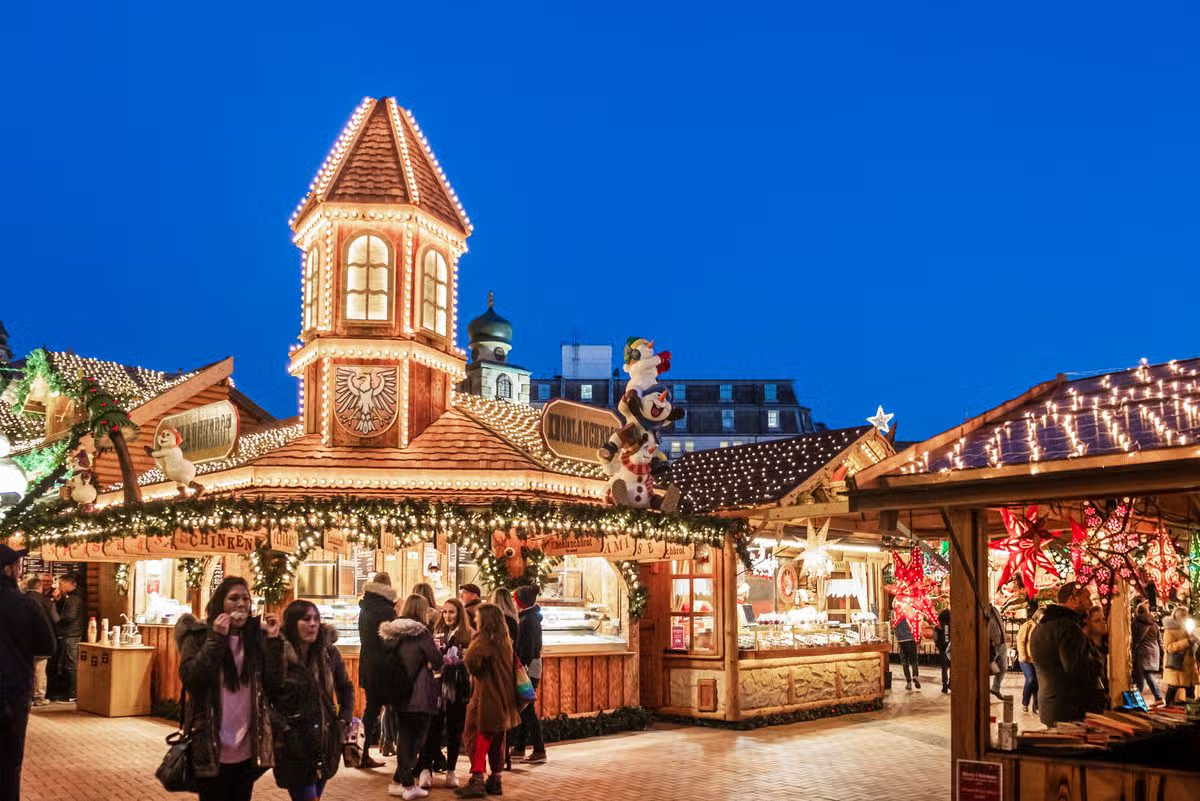
Timber huts are now lining Birmingham’s streets alongside traditional food, drink, handmade gifts, decorations and jewellery. Visitors can tuck into schnitzels and bratwursts while sipping German beer and hot chocolate.
Where is Birmingham’s Frankfurt Christmas Market?
The market takes over the city centre, making it hard not to join in. Stalls and entertainment sit in Victoria Square and New Street, between Corporation Street and the Bullring.
This year, there is a slight change due to roadworks. There will be no stalls between Nando’s and the Apple Store on New Street.
When is the market open?
Birmingham’s Christmas Market opened its doors on Thursday, November 5 and will run until Thursday, December 24. It is open every day during that time period.
Monday to Thursday, the market will open from 11am to 9pm, while on Fridays it will stay open until 9:30pm. Saturday hours are 10am until 9:30pm, and Sunday hours are 10am until 9pm.
Ensure our latest headlines always appear at the top of your Google Search by making us a Preferred Source. Click here to activate or add us as Preferred Source in your Google search settings.
What is on?
Musicians from Germany will entertain crowds at lunchtime and in the evenings from Monday to Friday, and all day at weekends. The German House Band will play a mix of Christmas songs and family favourites.
On Monday evenings, a talent slot is open to new and up-and-coming musicians. The two best acts from the Monday sessions will be given the chance to perform in a prime-time December slot.
The big wheel and ice rink also make a return to Centenary Square. These attractions will run until January 3.
How to get to Birmingham Christmas Market
Birmingham’s three stations, Snow Hill, New Street and Moor Street, are within walking distance of the market. It can also be accessed by Metro tram stops and bus services.
There are plenty of car parks near the market, but drivers are advised that the market is located within Birmingham’s Clean Air Zone, which may incur a fee.
At the top of Constitution Hill, there are more attractions to explore including The Camera Obscura.
#8 Harbour Bar, Scarborough (North Yorkshire)
Harbour Bar is a family-run ice cream barSource: Alamy
The Harbour Bar in Scarborough, North Yorkshire is a family owned ice cream and milk bar which has stood on the seafront since 1945.
Inside the bar has a white-and-yellow 1950s/60s decor with neon lighting and even vintage counter service.
All ice cream is made on site using traditional recipes.
The joint has won awards for its sundaes such as Knickerbocker Glory.
#7 Shell Grotto, Margate (Kent)
Shell Grotto in Kent is home to more than 4.6million shellsSource: Alamy
In Margate, explore Shell Grotto which is an underground chamber full of, well, shells.
The chamber was discovered completely randomly in the 19th century and boasts 21 metres of winding passages covered in 4.6million shells.
Having recently visited, Deputy Travel Editor, Kara Godfrey said: “Discovered in 1835, the mystery of the Shell Grotto is what gives it its charm – even now, we don’t know who created it, when, or why.
“But the bizarre underground chambers are well-worth exploring and it certainly makes for an interesting visit (if you don’t mind leaving with more questions than answers…).”
#6 Volks Electric Railway, Brighton (East Sussex)
In Brighton, there’s Volk’s Electric Railway is the oldest operating electric railway in the worldSource: Alamy
Volk’s Electric Railway in Brighton, East Sussex, is the oldest operating electric railway in the world.
Having opened in 1883, the railway stretches just over a mile along Brighton seafront.
The railway operates seasonally with a round trip taking around half an hour.
You don’t need to pre-book – you can just turn up, buy tickets at the station and then head for a ride.
#5 Weymouth Deckchairs (Dorset)
Weymouth Deckchairs overlook the beach and secured the fifth spot on the listSource: Getty
Weymouth’s Deckchairs are loved for their charming, traditional feel and came in as the fifth best seaside spot in the country.
The chairs are available each day from April through the end of September, weather permitting, and make for the ideal photo op.
Hiring a deckchair costs around £3.70 per day.
Though, if you are over 60 and live in the area you can get a free pass.
#4 Tinside Lido, Plymouth (Devon)
Tinside Lido in Plymouth is regularly named one of the top outdoor pools in EuropeSource: Alamy
Fancy a dip? In fourth place is the only lido on the list – Grade II-listed Art Deco Tinside Lido in Plymouth.
After opening in 1935, the pool quickly became a popular spot and today is often ranked among the top outdoor pools in Europe.
The semi-circular pool screams of classic seaside memories and is unheated.
The pool costs £10.50 for both adults and children.
#3 Wemyss Bay Railway Station (Inverclyde)
Wemyss Bay Railway Station is a Category A-listed Edwardian railway stationSource: Alamy
Wemyss Bay Railway Station is a Category A-listed Edwardian railway found in the village of Wemyss Bay in Inverclyde, Scotland.
It is often dubbed one of the most beautiful train stations in the UK.
It also marks the final stop on the Inverclyde Line which connects the region to Glasgow Central.
One visitor said: “A fascinating and beautifully preserved reminder of the heyday of mass travel to the seaside – now an integral part of its local community.”
#2 North & South Marine Parks, South Shields (Tyne & Wear)
North and South Marine Parks in South Shields secured second placeSource: Alamy
North Marine Park and South Marine Park are interconnected Victorian parks located on South Shields seafront in Tyne & Wear.
The parks sit alongside Ocean Beach Pleasure Park and boast a mixture of attractions including green spaces and even a miniature railway.
One person said: “It has everything! Miniature train, lake with boats, play area, cafe, beautiful gardens.
“The beach is over the road as well as a traditional fairground. Lots of events, music, fun and family friendly.”
#1 Herne Bay Pier (Kent)
And coming out on top was Herne Bay Pier in KentSource: Alamy
And securing the top spot for the best seaside destination is Herne Bay Pier in Kent.
The traditional seaside attraction has loads to do from family entertainment including arcades to beach hut shops.
One person said: “I love the pier as there are so many places to eat and drink. If you have children with you there are plenty of things for them to do. Always see people crabbing off the side.
“They have dog shows too and music shows through the summer weekends. It’s so versatile and just a really enjoyable place to be.
“Fantastic variety of activities for all ages. The Pier Volunteers are a credit to the community.”
When it comes to Strictly Come Dancing this year, there has been no shortage of drama on the BBC show, and now fans have called a ‘wave of negativity’ that has been directed at one star on the show
08:40, 08 Nov 2026Updated 08:40, 08 Nov 2026
Strictly fans have blasted the ‘wave of negativity’ towards one star on the show(Image: BBC/PA Wire)
A lot of Strictly fans also haven’t been thrilled about some of the changes made to Strictly’s BBC 2 companion show, It Takes Two, either. However, some viewers have now spoken out against certain fans criticising another area of the show – one of the judges. One Strictly fan took to Reddit after last weekend’s Halloween shows to slam fellow viewers regarding their treatment of head judge Shirley Ballas.
Talking to the site, they wrote: “Can we chill it with the Shirley hate please?
“I’m seeing posts on here directing negativity, hatred and vitriol towards Shirley on the daily now and it’s getting tiring.
“Has she done anyone any physical harm? No. Has she ever been verbally abusive or nasty towards contestants? No. Has she ever had dancers publicly speak out against her? No. So why am I seeing constant piles on against her?”
They added: “She might be a flawed person, but oh my god everyone is. This is probably an unpopular opinion but she’s my favourite judge, I love her sass and I just think she seems really fun and lovely.
“It’s fine if you’re not enamoured by her but is it really necessary to critique every single thing she does?”
Shirley, 66, faced significant backlash from viewers following her Halloween week judging appearance on the show.
Viewers accused her of being excessively harsh and out of step with the other judges.
Fans on social media voiced frustration over what they perceived as double standards in her technical scrutiny, claiming she was far more forgiving of certain contestants while penalising others heavily for technical flaws.
Critics also argued that her technical reprimands—such as scolding contestants on footwork and posture—were disproportionate for the fun, production-heavy Halloween specials.
Ballas has defended herself from the critics, insisting she judges strictly on what she sees “without fear or favour” and does not do “fluff”.
She maintained that 4s and 5s are still respectable scores in technical ballroom judging and that higher marks must be earned as the competition progresses.
Many people agreed with the original Reddit poster, as one wrote: “I’m a Shirley Ballas fan. I have criticisms of all the judges, none of them are perfect or everybody’s cup of tea, but Shirley gets it worst. The same happened to Arlene Phillips when she was a judge. Craig is a far harsher critic than Shirley but is allowed to be the pantomime villain.”
While another echoed: “Why does Shirley get the brunt of it? If you look at the show’s history, Craig has said a lot of things and yet he avoids the heat.”
A third chimed in: “She can not do right for doing wrong. We are all critics at the end of the day but she has however many years of dance experience behind her to back up her comments.”
Not everyone agreed though, as one person wrote: “Not seeing this personally, I absolutely don’t condone extreme hate but there’s a lot to criticise about Shirley and as long as it’s said respectfully, I don’t see a problem with it.”
Another added: “I expect more from Shirley, she is the best and most experienced dancer and she sometimes goes so off piste.”
Strictly Come Dancing is next on TV on BBC One at 6:30pm on Saturday, 7 November 2026 for Week 7.
Ensure our latest DWP headlines always appear at the top of your Google Search by making us a Preferred Source. Click here to activate or add us as Preferred Source in your Google search settings
Note:City Section Finals Thursday, Nov. 12 at Palisades (Division I at 5 p.m., Open Division at 7 p..m.);Southern Section Finals (all divisions) Saturday, Nov. 14 at Mt. San Antonio College.
The interceptions come as the Houthis report 33 people killed in a coalition air attack on a village near Sanaa.
Published On 8 Nov 20268 Nov 2026
The Saudi-led coalition fighting Yemen’s Houthis says its air defences have destroyed three ballistic missiles launched by the Iran-aligned armed group towards the kingdom.
Two of the missiles were launched towards the kingdom’s capital, Riyadh, Major-General Turki al-Maliki, the coalition’s spokesperson, said in a post on X on Sunday.
Recommended Stories
list of 3 itemsend of list
Later, the coalition said it intercepted and destroyed two cruise missiles in Riyadh and the southern region.
Earlier, al-Maliki also confirmed another interception of a ballistic missile launched by the Houthis towards the kingdom’s Eastern province.
The attacks come as fighting intensifies across Yemen between the Houthis, also known as Ansar Allah (Arabic for Supporters of God), and government forces, who launched the Dawn of Yemen operation aimed at retaking Houthi-held territory, including the capital, Sanaa, last month.
The Houthi-run Health Ministry spokesperson, Anees al-Asbahi, said on Saturday that 33 people, including eight women and 13 children, were killed after Saudi-led coalition air attacks on the village of al-Shariyah, near Sanaa.
A man carries a girl outside a hospital after she was injured in an attack in Bani Hushaish near Sanaa, Yemen, on November 7, 2026 [Khaled Abdullah/Reuters]
In a post on X, al-Asbahi said at least 39 others were wounded in the attacks on Saturday, which targeted homes, roads, paramedics and civil defence teams in the village, located in the Bani Hushaish district east of Sanaa.
There was no immediate comment from the Saudi-led coalition on the reported strikes. Al Jazeera could not independently verify the reports.
Media outlets affiliated with the Houthis reported on Sunday that various areas of the Shada border district in Saada province have also been subjected to artillery shelling.
Houthi military spokesperson Yahya Saree earlier claimed that the coalition had carried out 105 air strikes and missile attacks over 24 hours targeting Sanaa and seven other governorates, taking the total number of strikes since the escalation began to 4,369.
The Houthis, meanwhile, carried out six operations targeting Aramco oil facilities, Riyadh airport and Saudi military positions on both sides of the border, Saree claimed in a post on X.
On Friday, an attack on a market in Taiz province killed 30 people. The Houthis blamed it on Saudi air strikes, while Yemeni government forces accused the Iran-aligned group of firing a ballistic missile at the site.
According to the United Nations, more than 1,600 people have been killed and almost 300,000 displaced since a 2022 ceasefire collapsed in July after the Houthis announced a blockade of Saudi ports.
In September, the Houthis seized much of Yemen’s Red Sea coast in a lightning offensive, while government forces launched a campaign to reclaim Houthi-held territory in October.
A UK town is so picturesque, with its cobbled high street, cosy pubs and charming cottages, that it’s been used as the film set for a Christmas movie starring Rebel Wilson
This charming UK town warrants a visit during the festive season – and for very good reasons (Image: Getty Images)
There aren’t many places that feel as though you’ve stepped straight into a scene from a Christmas movie, but for one charming UK town, it’s exactly that. There are idyllic cottages set against rolling countryside and cobbled lanes along its flourishing high street, brimming with independent gems and cosy retreats that resemble movie meet-cutes.
Just last year, the pretty market town of Knaresborough, nestled along the River Nidd in North Yorkshire, drew in film productions. Knaresborough became the primary filming location for the Sky Original Christmas film, Tinsel Town, starring Hollywood A-listers Kiefer Sutherland and Rebel Wilson, alongside EastEnders star Danny Dyer.
While the town is beautifully decorated during the festive months, with Christmas trees and dazzling fairy lights, the production meant that residents could savor the merry setting that much longer. Knitting Pretty shopkeeper Di Watson said at the time: “The town is buzzing with excitement. Knaresborough is a unique, beautiful, friendly town and we’re delighted to be part of this.”
Yet, it’s not the first time Knaresborough has drawn in Christmas film productions, thanks to its postcard-worthy landscapes. The Yorkshire town was also featured in the movie A Very British Christmas, with its narrow streets, castle ruins, pubs, and cafés used to set the festive scene.
While production crews have taken advantage of Knaresborough’s setting, visitors have been equally impressed. Many admire the town for its ‘fairy-tale atmosphere’, thanks to its charming stone cottages, chequered facades, and buildings boasting exposed beams and uneven floors, and it’s also been named one of the most beautiful towns in the UK.
Knaresborough certainly warrants a visit during the festive season, with its town centre, sitting atop the cliffs overlooking the river, packed with independent shops for unique Christmas gift ideas, alongside cosy cafés for that sought-after gingerbread-spiced latte and traditional pubs to escape the winter chill. It also hosts a weekly market, bringing the local community together every Wednesday, and on Saturday, 5 and Sunday, 6 December, they will hold their annual Christmas market around the town’s historic Market Place.
With Knaresborough spotlighted as a Christmas movie scene, there’s plenty more to discover for that extra touch of festive merriment, with a wintry stroll along its steep streets and quirky architecture. Elsewhere, it’s celebrated for its fascinating railway viaduct, featuring four magnificent arches that span the Harrogate line across the River Nidd.
Knaresborough Castle is another highlight in the vicinity, with the ruined fortress perched above the river offering beautiful vistas. Guests can explore the medieval castle and its grounds, and visit the Courtroom Museum to discover more about its fascinating history spanning over 900 years.
The tiny medieval Chapel of Our Lady is another notable landmark in Knaresborough, alongside its peaceful Bebra Gardens, ideal for another winter wander. Further along the river, there’s the welcoming World’s End pub that looks out over the River Nidd with a terrace, as well as the delightful Marigold Cafe & Boating for that caffeine fix.
The town is also home to ‘England’s oldest tourist attraction’, Mother Shipton’s Cave, having welcomed guests since 1630. It’s also the birthplace of England’s most renowned prophetess, with the compact cave recounting “the story of life and legacy”, where guests can discover the small cave before making a wish in the famous Petrifying Well.
Ensure our latest travel stories always appear at the top of your Google Search by making us a Preferred Source. Click here to activate or add us as a Preferred Source in your Google search settings
Do you have a travel story to share? Email webtravel@reachplc.com
When it comes to what rifles, sidearms and optics work best in war, there is perhaps no better place to find out than Ukraine. During more than four years of intense defense of their homeland, Ukrainian troops have used an assortment of small arms and accessories, many foreign-made, others domestically produced, to fight the Russians.
To get a better sense of what Ukrainians are currently using on the front lines, what they like, and what they don’t, we reached out to the First Corps Azov of the National Guard of Ukraine. The unit is stationed in the bloody Dobropillia sector in the eastern Donetsk region and is in the middle of one of the toughest fights in Ukraine.
Five soldiers from different Azov units with a range of specialties offered their unique insights into the weapons, sights and scopes they like and the ones they don’t.
The soldiers are issued all their weapons exclusively through the brigade’s armament service, which obtains them from the Ukrainian Defense Ministry (MoD). Individuals, however, told us they sometimes purchase their own sights and scopes and other accessories, depending on the models.
Some of the questions and answers have been slightly edited for clarity.
Specifically, what rifles are the most coveted? And if they are AR-15s and AKs, which specific ones?
Tarantino, Chief Armorer, 12th Special Forces Brigade Azov, First Corps Azov of the National Guard of Ukraine.
When it comes to light weapon systems, the most common is an assault rifle based on the AR-15 [chambered 5.56mm], either domestic production or the one given to us by partner countries.
Chill, Chief Tactical Training Instructor, 41st Unmanned Systems Regiment Pilum, First Corps Azov of the National Guard of Ukraine.
So, in my personal opinion, the UAR-15 system is better for me because it’s lighter and it’s more reliable. I have worked with both platforms, both systems, and I can compare them based on my experience. And from my personal experience, the AR system is better.
The caliber is 5.56, and it’s also really convenient in terms of its modification and modernization because with the AK platform, you need to adapt it for further adjustments individually. But in the case of the UAR system, it’s really adaptable and you do not basically need anything in order to modernize it or modify it.
Made In Ukraine – The New Game-Changing UAR-15 Rifle
Khalepa, Anti-Aircraft Artillery Battery Commander, Air Defense Battalion Strazh, First Corps Azov of the National Guard of Ukraine.
Well, in our case, we are using larger calibers starting from 12.7mm up to 35mm. So we do not actually use the standard rifles.
Chewie, Deputy Commander for Logistics, Separate Special Operations Detachment Tuman, First Corps Azov of the National Guard of Ukraine.
When it comes to close combat, usually this is the UAR-15S of Ukrainian manufacturer called Zbroyar.
Barman, Tactical Training Instructor, Personnel Training Battalion, First Corps Azov of the National Guard of Ukraine.
So currently our key weapon platform is the UAR-15, but previously we also used the AK-74 and other modifications. The AK-74 fires 5.45mm rounds.
What is most conducive to fighting?
Tarantino
Well, the best weapon to work with is not the weapon itself, but the people we are working with. The weapon is only the instrument. But personally, the most reliable weapon is the one that has as few stoppages as possible because the last thing you want is to have a stoppage in the situation where you need to fire.
For me, that is the Heckler & Koch 416. But I am talking about my preferences and experience. That gun has a gas piston system that has proven itself the most efficient due to the fact that the movement of the piston back and forth is relatively short. That makes the weapon itself much more reliable.
Heckler & Koch 416. (Heckler & Koch)
Another system, called DI [direct impingement used in standard AR-15 pattern rifles], requires much more attention from the gunner who is shooting the rifle. Because in the conditions where the operator, the marksman, is sitting in the trench or in a bunker — especially now in autumn when the humidity is high — this DI system requires much more attention due to the wet weather around. The gas piston system has proven itself much more reliable and it doesn’t need that much attention.
Chill
We are using the Ukrainian-manufactured UAR-15 rifle, and you know, as they say, the best rifle is the one that you have.
Ukrainian-built UAR-15. Photo credits: (National Guard of Ukraine)
Chewie
So the weapon system that I told you about, UAR-15, is indeed the most loved because, in addition to this weapon, we do possess small numbers of Beretta, Bren, and several other weapon systems.
The reason why we prefer the UAR-15 is, first of all, it is much lighter. Second, it’s shorter. Another reason is that, taking into account the combat warfare that we have right now, we have the manufacturer on the premises of our country. It means if something happens to the weapon, it doesn’t take much time to either send the request to the manufacturer for them to send us the spare details, or for us to send the weapon system to them for maintenance.
Barman
Our preference is of course the UAR-15, and we’re using the 5.56 UAR platforms because it’s more convenient to use, it’s easier to maintain, and it’s also more reliable. But we also need to understand that our enemy is using the AK platforms, the AK-12, the AK-74, and while of course we are carrying the 5.56 rounds, usually during the assault actions, we can take the AK rifles and the 5.45 rounds to be able to use our rifles in compatibly with the enemy’s rifles. We can use the AKs for the element of surprise and for deception. The way they look compared to the UAR rifles makes it easier to deceive the enemy.
Kalashnikov AK-74. (Kalashnikov)
Have you noticed any performance differences between the AR-15 piston and direct impingement (DI) versions?
Tarantino
Well, again, the biggest difference between this gas piston system and the DI system is that the gas piston system has a very short movement back and forth of the piston. It means that the chances of stoppage in this weapon are quite low, while the DI system is much more demanding because these exhaust gases go back into this tube that pushes the bolt carrier back. That means these gases make this tunnel much more dirty. And in a situation when the rotation of the soldier to the battlefield is for two weeks, and these are the two weeks of a very intensive fight, a soldier doesn’t always have the chance to disassemble a weapon and pull the bolt carrier out and clean it.
Compared to the DI system, the Heckler & Koch quality of the barrel itself is exceptionally phenomenal. So the quality of the metal is good, and it allows you to shoot even four or five or even six magazines in a row without the barrel getting overheated.
Chill
Well, talking about the piston system, the only AR-15-based rifle which I know has the piston system is the Heckler & Koch 416. So I have some experience in using it, but unfortunately I do not have this rifle. But I would like to. It’s quite reliable based on my communication with other operators and service members. I also get really good feedback about that weapon. But that’s the only weapon system with this piston system that I know of, and yeah, it presents some advantages.
The UAR-15 system that we are currently using within our unit is the DI-based weapon system, and the key difference is that they become contaminated quicker, and they require better and more frequent maintenance, which is not always possible to ensure in combat conditions.
Piston driven AR15 VS gas impingement
Khalepa
Well, I have served in the infantry since 2022, and I have had some experience with the piston systems, for instance, with the AK system, and I did not really notice any major differences.
Chewie
We use only the DI system.
Barman
Well, from my experience, the gas piston systems like the one that we can find on the HK 416, they are simpler to maintain. They are more efficient in terms of their principle of operation, and also they are more reliable, I would say.
Ukrainian special operations forces (SOF) with HK 416 rifles. (Ukrainian MoD/Spectre 33)
But the key difference in the DI system is that, of course, it’s a little bit more difficult to maintain them. But at the same time, you can regulate the amount of gas that goes back into the receiver. So, both of these systems have their own advantages and disadvantages.
If I were asked to choose between the two, I would use the gas piston system. It also has fewer parts that can be broken during intensive use.
Any bullpups, where the grip is forward of the breech, that have performed well?
Tarantino
I will tell you this: we have never received a foreign-made bullpup weapon. We have several domestic-made ones. One of them is called the Fort 221.
So for the short-term operations, when you have to fulfill a mission within a small and limited amount of time, and especially when you have to move around a lot, this forward bullpup configuration has proven itself quite good. But when it comes to long-term operations, when you have to, in addition to moving a lot, have to be out there in the field for quite a long time, this one is not the best option for this.
A Ukrainian Fort 221 bullpup rifle. (Ukrainian Ministry of Internal Affairs)
Chill
Well, I wouldn’t say that I would recommend any of the bullpups that I have used. So I have used the Fort 224, and my impressions of this weapon system are like 50-50.
I would say that the primary issue with these rifles is their ergonomic characteristics. So, especially while shooting from a prone position, it’s pretty difficult to handle these rifles. So maybe during some kind of assault actions, active offensive actions, these rifles could be usable. But in terms of ergonomics, the standard rifles are much more convenient to use.
Khalepa
We don’t use bullpups.
Chewie
We do not use any bullpups. One of the reasons is that a Ukrainian manufacturer used to produce these weapon systems with a 5.45mm, and that’s definitely not a reliable weapon at all.
Barman
I had some experience in using bullpup rifles, namely the Tavor, also the Ukrainian-manufactured Malyuk, and I think that’s it with bullpup assault rifles. But also I have used Turkish-manufactured bullpup type shotguns.
In my experience, the bullpup systems function seamlessly, but I’m just more used to the classic configuration of the assault rifles.
But the bullpup rifles have their own advantages. For example, they are more compact, so they can have the same length of the barrel. The ballistics will be the same, but the rifle will be more compact. At the same time, the bullpup configurations require more practice at the shooting range. So you just need to get used to reloading the bullpup rifle because the magazine is located in the rear part of the weapon. I wouldn’t say that this is much more difficult than reloading a weapon with the classical configuration, but it just feels unusual. This is why you just need more practice to get used to it.
Are you using suppressors and, if so, what kind?
Tarantino
When it comes to silencers and these suppressors, this very gap is not yet filled, so there is still a lot of room for maneuver and for somebody to enter this field. We do use them. We use several of them. One of them is called Ase Utra, but this one has the option of what’s called a gas release function.
Ase Utra supressor. (Ase Utra)
Another one we have is called Ukrop FAST (Fast-Attach Suppressor Tactical) suppressor. This can be easily attached and detached. But when it comes to active combat and when it comes to automatic mode of firing, these very suppressors lose their resources quite fast, so the wear and tear comes quite fast.
Chill
Personally, I do not use any suppressors, any sound moderators, because I do not have the tasks that require such equipment. But of course, the other service members who have the appropriate tasks, they use those.
Khalepa
No, we do not use any kind of those because we are located far from settlements and towns, which is why we do not need any kind of suppressors.
Chewie
So when it comes to the UAR system, they go in a set with the manufacturer-issued suppressors. So we do use them because they go in a set. And another one that we use is the one called Ase Utra.
The reason why we prefer this suppressor that goes in a set with UAR-15 is that it has a function of quick removal. It means that to install it on the gun and to take it out from the gun, it doesn’t need much time and it doesn’t require any additional fixing of the aiming point. It means that a person can shoot if at some point he or she needs to put on the suppressor, they put on the suppressor and keeps shooting, so there is no need to do another kind of manipulations with the aiming device.
Ase Ultra doesn’t have this function. It means that after putting on the suppressor, you still have to adjust the aiming point a little bit. There is only one exception with Ase Ultra suppressors, for the caliber .308, which is the UAR-10. This one has shown its efficiency quite well, and the preciseness of shooting for the distance of approximately 900 yards remains the same with the suppressor and without the suppressor. But that’s the only exception. In the past we used to use the UAR-10 much more often, both modifications, the short barrel and long barrel. But right now it’s more and more rare to use it.
UAR-10 semi-auto sniper rifle chambered for 7.62х51mm NATO round. (National Guard of Ukraine)
Barman
I have used some of the sound moderators, mostly manufactured by the Ukrainian company Zbroyar. Also, some of the American manufactured sound moderators, SureFire RC2, and also the Ukrainian manufactured Mystic Medusa sound moderators. So all of them were used in the automatic fire mode, and they have demonstrated quite a high level of efficiency.
Surefire SOCOM556 RC2 Suppressor. (Surefire)
But I would say that the Zbroyar-manufactured sound moderators have a slight disadvantage in terms of how the gases are channeled. So, if you fire a weapon like the Heckler & Koch, sometimes while shooting automatic fire bursts, you can have some problems with the gas from firing.
It all depends on whether you can regulate the gas block in the weapon system or not. So, for instance, in the UAR systems, there is a possibility to regulate the gas block, and this is why you can adjust your shooting depending on what you’re using. But with some of the weapons, you cannot adjust this, and part of the gas just returns to the receiver, causing problems.
What about personal defense weapons and submachine guns?
Tarantino
Yes, we do use some submachineguns. One of them is Heckler & Koch MP5, which has proven itself quite good because this one is quite comfortable to work with, and this one is quite a mobile weapon system and easy to operate.
The only drawback of such a weapon is that you can only use it in a few situations. So the variety of usage of this weapon is too narrow. So it’s quite irrational to use this weapon system in modern combat warfare. The best example where it definitely will serve you well? I’d say the drivers of the vehicles use them, or the tank drivers use them, due to the fact that they have to fulfill other missions. The weapon itself is relatively small, so this comes handy for drivers and the tank drivers.
Heckler & Koch MP5. (Heckler & Koch)
Chill
Well, usually the only self-defense gun which has been used is the handgun, so the pistol. As for the submachine guns, we almost do not use them at all because of their form factors. So the most standard self-defense weapon is either the rifle for every service member, or when there is an opportunity to use a pistol. But submachine guns are not widely used.
Khalepa
The Fort 20 is the model of the pistol that we are using for personal defense weapons in our unit. And as for the personal weapons, we also use the UAR-15 rifles.
Chewie
We do not use submachine guns. What our soldiers do use, because they are issued out, are sidearms. It’s either Glock 17 or the Fort 20.
Barman
In terms of submachine guns, I have only used those at shooting ranges, so I do not have any real experience with them. But our sidearms are usually Glock 17 or Fort 20, and also we had some experience with Berettas.
What about optics? What red dots and scopes are most used? What works best and what do soldiers see as the positives and negatives of different brands and types, like EOTECH holographic sights versus Holosun or Aimpoint red dots?
Tarantino
There is one optic that’s called Aimpoint, third generation. When it comes to red dot sights, we take what is available commercially. So what has proven its efficiency is the one red dot called Holosun. This one out of everything that is on the market has also proved its efficiency. But we are talking about relatively cheap options right now. Other brands that are quite popular are the EOTECH, Vortex, and Vector Optics.
A view of the sight of a rifle, at an undisclosed location next to the Vuhledar frontline, Ukraine March 7, 2023. The frontline around the city of Vuhledar, a strategic rail and road hub south of Bakhmut, resembles an apocalyptic scenario. (Photo by Ignacio Marin Fernandez/Anadolu Agency via Getty Images) Anadolu
Chill
I have been using the Holosun red dot scope for over three years, and I cannot say that I have any complaints regarding that. It performs its function, and the rest of the possible manufacturers of these devices depend on the unit and depend on their personal budgets as well. So, of course, there are some differences between them. For instance, the Aimpoint has proven itself really reliable. The EOTECH as well. There are some drawbacks related to its dimension. It’s pretty large, and it is not appropriate for all the operators.
Holosun, I would say that this is the device that shows the best cost-to-quality ratio. So it all depends on the unit. For instance, when we are talking about the service members that are involved in some direct action, for instance, in assault actions, then they might use the EOTECH or the Aimpoint devices. But other service members might as well use the Holosun devices and other brands that are also available on the market. So, as usual, everything is operator-dependent. I wouldn’t say that there are any particular problems with them, but maybe the price, the high price, can be called just one of the problems.
#Ukraine: Destroyed and captured Russian equipment in Kupiansk-Vuzlovyi, #Kharkiv Oblast – a BTR-80-based vehicle and a Tigr-M IMV. Note the prevalence of US-donated 🇺🇸 M4A1 assault rifles with Aimpoint M68 CCO red dot sights. pic.twitter.com/g0Qx1ypeQ8
The baseline is that everyone is using the rifles with iron sights. But then, if, for instance, the additional optical devices are not provided for by the unit, then the fighters can choose to buy their own optics. It all depends on the unit and the operator.
Khalepa
In the unit that I’m currently serving in, we do not use any kind of these optical devices because we are located very far from the front line. Basically, our positions are in the rear, and since we are concerned with shooting down aerial targets, we do not need to use any of these devices.
Chewie
So we do use Aimpoint. We use the modifications M5, M4, and also we use the EOTECH.
An Azov soldier using an Aimpoint red dot sight on a Heckler & Koch HK416 rifle. (Azov)
So when it comes to EOTECH, it has one big advantage. It has quite a big screen or quite a big window that allows the operator to see a much wider spectrum, and this allows him to make much more precise aim. But the drawback of this one is that it doesn’t have this kind of underbarrel option of having the grenade launcher under the barrel. When it comes to Aimpoint, the aim itself is quite small, but this one is capable of withstanding the launching of the underbarrel grenade launcher. When the grenade is leaving the barrel, the Aimpoint still can remain on the barrel and not be lost.
The peculiarity of this EOTECH is the following: when you shoot two or three grenades from the underbarrel grenade launcher, after two or three shots, the aiming stops working correctly. The recoil from the grenade launcher impacts the work of this aiming device, and it’s no longer correct.
Barman
I have worked both with red dot sights and optical scopes. In terms of the red dot sights, I have experience in using the EOTECH 553 and the EOTECH XPS3. I’ve used them with the 3x magnifier, also manufactured by the EOTECH company, and also I have some experience in using the Aimpoint T2 red dot sights, also in combination with the EOTech magnifier. Also, I have used the Vortex Crossfire red dot sight. It’s similar to the Aimpoint T2, but it’s a little bit cheaper and it is intended to be used by sportsmen.
EOTECH XPS3 sight. (EOTECH)
All of these models have their own advantages. In terms of the EOTECH and Aimpoint, they have the mil-spec certification, which is why they can be more resilient than the other brands. If I were to choose, then I would definitely choose the Aimpoint T2 red dot sight because this is like the classical red dot sight, not the holographic sight, like the EOTECH XPS3. So this means that even with the partial damage of the sight, with the partial damage of the lens, it still gives you the red dot, and you are still able to efficiently shoot with it.
Partially we buy them ourselves. Partially we are issued those sights by the state. For instance, in this unit, I was issued the Aimpoint T2 micro kit. So in another unit that we have served before joining this unit, we were issued ACOG sights for the M4A1 rifles, so it really depends.
What about scopes?
Tarantino
When it comes to the scopes, the ones that we use are the ones that zoom in at the 3x or 5x magnification, no more, because 3X and 5x are exactly the ranges that are good enough for you to operate your weapon in an efficient way and to cover that area of responsibility each marksman has.
Chill
We do not have any organic standard-issue scopes within our unit, but from what I have seen among the operators in our subunits, I have seen the Vortex scopes. So these are the ones that can be used with the AR systems.
As for magnification, it’s either 1-8x or 1-16x. Usually, our operators are using the scopes with variable magnification, and it all depends on the task. But mostly, these scopes are not used for firing, but rather for observation.
Khalepa
We don’t use scopes.
Chewie
We do use them. We use mostly four different modification brands. One of them is called Nightforce. Another one is called Schmidt & Bender. Another one is called Kahles, and the last one that we use is called Leupold.
So roughly speaking, Kahles and Leupold are equals and they work quite similar. The differences are that in the Kahles, the aiming matrix is different, but when it comes to Leupold, I would say that the lens is quite clean, so that makes this one very, very much loved. So I do possess the Leupold scopes. This is my main scope I use. It has been through a lot, and it has withstood a lot of explosions, and it’s still up and running. It’s still functioning.
A Ukrainian Special Operations Forces soldier with a Leupold scope. (Ukrainian Special Forces)
When it comes to this Kahles, again, roughly speaking, it has shown its efficiency quite well. Some modifications to these Kahles scopes allow it to provide a view called parallax. That’s one of the settings. So if a soldier doesn’t know how to properly use it, it’s not possible to set this scope correctly.
We do buy a lot of those scopes. Back in the past, volunteers used to help us a lot, and other companies used to buy them for us and simply deliver them to us, but right now the system is such that we do receive from the government from the official line of sustainment very efficient scopes.
Barman
So currently I’m using the Sig Sauer scope. I need to look up the exact model, but its magnification is one to six. Its ballistics are honed for the 5.56 caliber exactly for the M855 cartridge. This is the scope which is most optimal for the usage with the assault rifle. But previously, I also used the Elcan Specter scope and also the EOTECH Vudu.
I cannot just select only one scope. One of my favorites is the Elcan Specter. It’s quite compact, and its magnification is one to four. At the level of one, it can be used as a red dot sight, and then it can also be used as the classical optical sight to magnify the image. And for shooting at longer ranges, well, I would say that the Sig Sauer is my favorite. So it’s pretty convenient to be used for shooting at ranges of several hundred meters.
Sig Sauer TANGO-MSR COMPACT 1-8x24MM (SFP) rifle scope. (Sig Sauer)
How prevalent are thermal scopes? Is there a difference in quality between those used by the Russians and Ukrainians that gives an upper hand?
Tarantino
When it comes to thermal optics, the one that we use quite often is called Archer. That’s a Ukrainian domestic production thermal vision device, and this one is quite efficient and quite comfortable to use. And when it comes to the night operations, that’s definitely a must-have that each soldier is supposed to have. But when it comes to what the enemy is using, what kind of thermals the enemy is using, I cannot give you the clear answer because, in all honesty, I do not know.
Chill
Within our unit, we do not use thermal scopes, but I know guys who do, and well, it’s quite a useful thing if your tasks and if your unit imply using the thermal vision scopes. Since we are an unmanned systems regiment, we do not have the kind of tasks that require the use of the thermal scopes.
Chewie
We do use the thermal scopes and additional adapters to them. But when it comes to Russian thermals and what kind of thermals they use, I will be honest with you. I have never had any chance to get a hold of them and hold them in my hands, so I cannot compare them.
I can only tell you about Ukrainian manufacturers. But when it comes to long-range guns, we use the Archer 7 for this very purpose. When it comes to the .338 caliber, we use guns by Accuracy International, and Sako TRG 42. When it comes to the .375 caliber, we use the Cadex 40 Shadow.
When it comes to UAR-15 5.56, usually we use the Archer 10 for this very purpose. When it comes to simply observational functions, we use either Archer 55 or Archer 8. And I also know about some other units that use thermals called Safran because they have the peculiarity of having coolant inside.
Archer TMA 55M thermal scope. (Archer)
Barman
I’ve used thermal vision scopes. First of all, in terms of the Russian thermal vision scopes, unfortunately, I haven’t had any experience of using those, but I have some experience with the Archer manufacturer with the Archer thermal vision scopes. Usually, the TSA-7 models have proven to be quite good, and also I had some experience with the Chinese-manufactured AGM thermal vision scopes, and they are also quite good.
Archer TSA-7 thermal scope. (Archer)
My favorite is Archer, the TSA-7. We have used it for the longest periods of time, and we are really used to operating with it. So it has the ballistic suggested for every type of ammunition. It has a laser rangefinder. It has a ballistic calculator. So it’s quite a useful thing, and it’s easy and convenient to use.
What about night vision? Are most troops using night vision goggles and need to set their rifles up for that?
Tarantino
We use a classical one called the PVS-7. We attach it to our helmets.
Chill
Night vision devices on assault rifles and other weapons are primarily used by reconnaissance and assault units — particularly during clearing operations. As for the drone component, NVDs are used by drivers for safe and concealed delivery of crews to the positions during the night, as well as the operators themselvs for nighttime work and launches.
Khalepa
We have some night vision devices, namely Archer 10, but these devices were just issued to the guys to monitor their perimeter during nighttime. We have no need for that because we are located in the rear and we are more concerned with the sky than with what’s on the ground.
Chewie
We do not use the night vision devices installed on the weapon system. We do use them installed on the soldiers’ helmets, but not on the weapon system. Sometimes our soldiers do use the laser point night vision devices, but they use it only when they use the infrared spectrum. When it comes to installing the aim on the gun, usually the soldier does a zeroing, and if the zeroing is done properly, the efficient range of such a weapon to operate in this infrared spectrum is up to 200 meters.
Barman
We don’t use the night vision devices on the weapons systems themselves. We use them attached to the camera, to the helmets, and out of those we use the PVS-14 L3Harris. That’s a monocular. Also, we use the PVS-32. That’s a binocular. The most widely used is the PVS-14.
PVS-14 L3Harris night vision monocular. (L3Harris)
In my personal opinion, the PVS-14 is simply much more comfortable. I love this one simply because this is a monocular and I use it with my left eye because the right eye I mostly use for the red dot or with the laser beam aiming device. But that’s very much an individual opinion because a lot of people in my unit prefer the PVS-32.
How much leeway do troops have for customizing their rifles?
Tarantino
Well, before using any kind of modifiers on any weapon system, the way we deal with that is the following: Before doing that, each soldier is supposed to master how to handle a weapon without any additional modifiers, meaning the default setting of the weapon that he or she receives.
He or she is supposed to first get a feel for this and receive some kind of qualification with this one without any additional modifier. Only after a soldier gets used to, and is quite good at, handling the weapon with the mechanical optics that the weapon goes with, can a soldier go to another level. But this is done only if sergeants and commanders see that the soldier has reached some kind of efficiency level, and only after that, the commander or sergeant can give permission to install any kind of additional modifiers on the weapon.
Chill
The first thing that we always emphasize and that we try to popularize among our personnel is the installment of the red dot sights. We try to explain the advantages of using red dot sights on the weapons.
Then, if the weapon does not have the ambidextrous safety, we try to persuade people to install those safety levers that can be switched from both sides ambidextrously, and then the third thing is the buttstock, the pistol grip. So these things are usually not convenient due to the specificities of every person’s ergonomics.
Ukrainian soldiers of the 47th Separate Mechanized Brigade, operating under the call signs “Hrek” and “Mahura”, inspect forward infantry positions near the border with Russia on August 28, 2026 in Sumy Region, Ukraine. The two officers arrived at the frontline on quad bikes to evaluate the defensive lines and meet with infantrymen who had held their ground for 59 days before escorting them to an evacuation point. (Photo by Kostiantyn Liberov/Libkos/Getty Images) Libkos
Khalepa
Apart from just standard procedures like zeroing with the weapon, adjusting the iron sight and so on, we do not customize our weapon. We do not conduct any additional modifications.
Chewie
We do have some additional modifications when it comes to magazines, when it comes to magnifiers, when it comes to the grasp handles. Some of the soldiers do use the forward grasp handle. Some of the soldiers do use the flashlights that they put underneath the barrel. But it’s not about sport modification. The primary reason is to make the weapon more comfortable for you, and to make you a much better operator of this weapon.
Barman
I need to separate it into two parts. The first part is about the insides of the weapon systems. Mostly, we do not change the insides of the weapon systems. There might be some changes with a bolt carriage, but that’s mostly the exception. We can work with the suppressors, with the heavy buffer suppressors and optics, red dots, and handles for a better grip.
What about sidearms? What sidearms are most prevalent and in what caliber?
Tarantino
When it comes to the pistols, the most used one is the Fort 20. That’s domestic production. Also Glock. Also the one called Sig Sauer, and the last one that is the CZ. These are all 9mm weapons.
🇺🇦Ukrainian soldier with modern 🇨🇿CZ P-10 F pistol made by ČZUB.
ČZUB supplied Ukraine with a large number of weapons from its stocks, in addition to the CZ P-10 C/F, also CZ Bren 807 or CZ Bren BR. Whether these were a gift from ČZUB or the weapons were donated by the Czech… pic.twitter.com/U8nsFSN92d
Well, previously we used to use Makarov pistols, but now we’re using the Fort 20 Ukrainian manufactured sidearms, and also I have previously used the Glock pistols. So basically, these are the most common, most widespread pistols that you can come across in Ukraine.
Khalepa
Currently the Fort 20 and the Glock 17 are the most commonly used pistols.
Chewie
So as I have already mentioned, the sidearms that we are using are the Glock 17 and the Fort 20.
Barman
So the main caliber is 9x19mm. That’s the most widely used caliber. When it comes to sidearm brands, the most widely used ones are Fort 20, Glock 17, and this Czech CZ.
A Ukrainian soldier firing a Glock 9mm pistol. (Azov)
What are considered the best and most reliable and what has been disappointing or considered not as reliable?
Tarantino
When it comes to these small arms and guns, a lot depends on the anthropometric characteristics of each individual – the size of the palm, the grasp that each individual has. But when it comes to reliability, in my experience, the Fort 20 is number one, and when it comes to comfort and efficiency, I would say that Sig Sauer is the best one.
I cannot give you a very clear answer about which is the most disappointing, because all of these four weapon systems will be able to fulfill their mission in the hands of a very skilled operator. So those small differences, these are the differences that each individual has as preferences only. But when it comes to functions and functionality, they all will do a good job.
When it comes to my favorite weapon systems, it’s definitely gonna be the Sig Sauer, but I really struggle with the idea of finding the most disappointing one.
At some point, Glock might be called one, but Glock is also quite a reliable weapon, and I cannot even tell you assuredly that Glock is the worst.
Chill
As for my favorite type of pistol, it’s the Glock, of course. But as for those that do not live up to my expectations, I do not think that I can choose one. Previously, we had some Soviet manufactured sidearm models. For instance, we used the TT Soviet manufactured pistol, so I would say that it was pretty bad. So those were the old Soviet pistols, and they do not live up to the requirements of modern warfare.
I like the Glock because, first of all, it’s convenient. Second, accessibility. Then the shooting precision, and of course their dimensions. Their dimensions are also pretty convenient.
Khalepa
I would just say that every weapon needs its own approach. So you just need to find the right approach to every weapon. But no, there are no weapons that I wouldn’t use.
I like the Glock 17 and the Fort 20 because both of these pistols are easy to maintain, especially the Fort 20. It’s lightweight. It’s not really large, so it’s quite convenient to use. And as for the Glock pistol, it’s just the golden classic, the classical example of a handgun.
Chewie
Well, in terms of Glock 17, from my own combat experience, I would like to say that this is a really good weapon that works pretty well even in mud conditions, even when it’s dirty. So in 90% of cases, it didn’t show any malfunctions, any stoppages, etc. Even in really bad operational conditions. In terms of the Fort 20, it’s also quite a good weapon. But well, unfortunately, we cannot provide the Glock pistols for all of our service members. But if we had this opportunity, of course, we would provide the Glocks for 100% of our personnel.
The primary reason why we cannot provide Glocks for all of our personnel is that currently our unit is not purchasing Glocks because there are no funds for this procurement. And as for the key differences between the Glock and the Fort systems, the Fort is really sensitive to humidity and it gets rusty quite soon. So basically, this can also lead to some malfunctions.
I have worked with many pistols, and talking about those that I would never use, these are some of the models manufactured by Beretta. I really didn’t like those, both in terms of maintenance, in terms of the recoil of this weapon. They were hard to maintain, and they had too much recoil. It’s also not really controllable, especially in field conditions. But of course, this is also a matter of habit.
Beretta M9A4 pistol. (Beretta)
So you just need to get used to this weapon. I’m already used to the weapons that we use, and we can just easily maintain them, even in field conditions. And also, we’re quite good at operating the weapons.
Barman
The one that we use in my unit is the Fort 20. But the drawback of this one is that the barrel is very fragile and very much open for any kind of corrosion and rust. So if I could choose one, according to my preferences, I would definitely choose the CZ P-07.
CZ P-07
Right now we are in the process of rearming the soldiers, meaning that some of the soldiers have already received this weapon system, the rest of us will receive it, I guess, by the end of next year. This is being provided by MoD.
Out of those that I had a chance to put my hands on, I didn’t like the Beretta much because the way it sits in the hand is not comfortable. It has a pretty strong recoil, and this one is very sensitive and requires much more attention.
Do you run red dots on your pistols? If so, what kinds have worked well? What hasn’t? Same for pistol lights.
Tarantino
I have never worked with a pistol with a red dot. I do know that some of the soldiers use it, but for me, it seems mostly like something for the sport world, not the war world.
It goes without saying, but there are some pitfalls and drawbacks of this because when it comes to the red dot on your main gun, it’s always in your hands. It’s always in front of you, so you can control it. But the pistol that the soldiers do have usually is in such a place where you do not completely have control every time you move.
That means that, if at some point you fall, or if at some point you are in the dense wood and it might simply knock this red dot off. So a pistol usually is in the holster, and don’t always have your eye on the holster or the pistol. While the red dot is on your rifle, you always keep an eye on it. So it simply can fall apart. And that’s a bad story when a soldier can only operate the pistol with a red dot, it means that you take the red dot out, and you cannot work with mechanical optics, it will be a very dire situation.
I don’t have much expertise in this field when it comes to the flashlights under the barrel of the pistol, and when it comes to any kind of modifications on the pistols. I do know that some reconnaissance soldiers do use the flashlights on the pistols, but that’s mostly on very rare occasions.
Chill
Personally, I have not used any red dot sights with my handguns. The only personnel that I have seen using red dot sights on their pistols are close protection service members, and for them this is justifiable because the pistol is their primary weapon, but for us the pistol is just a sidearm. So this is why we do not concentrate on using red dot sights on our pistols.
Glock 19 with a Holosun 507C red dot. (Photo by Valentine CHAPUIS / AFP) VALENTINE CHAPUIS
Khalepa
No, the effective range of these handguns is 20 to 30 meters, so there is no need, no sense using red dot sights on them. We don’t use pistol lights.
Chewie
In combat, we do not really use red dot sights on our pistols. Some of our guys can just install red dot sights on their pistols for sports reasons, just for training, for some personal use, etc. But not in combat.
In terms of the closed-type [fully enclosed emitter] red dot sights, first of all they are quite pricey, and secondly they can be easily broken. Again, they are susceptible to mud, to humidity, etc. And in terms of the open-type red dot sights, a bit of mud and it doesn’t work anymore. At the same time, in terms of the use of the iron sights on the pistol, they are basically fail-proof. And even if they are dirty, even if there is some contamination, some mud, you can just clean them off with your glove and keep on shooting. So they are just fail-proof on the battlefield. And it’s easier. You don’t have to put in and out of your holster without the red dot.
My issued weapon doesn’t have a red dot sight, and I feel pretty confident in getting it out of the holster and putting it back in the holster. And my personal sidearm – a Glock 34 – I have a red dot sight on it, and once again, no problems in using the holster. The Glock 34 is a sports weapon I purchased to participate in sports. This is not a self-defense weapon.
Barman
When it comes to combat and real combat warfare, we do not use the red dots on the pistols. So the war is about the dust and it’s about being dirty and there is a pretty big and high chance that you might hit your weapon either with a stick or something and simply destroy or break the red dot. That is the reason why most of us stick to mechanical sights.
What about shotguns? Do you use them for trench warfare? What about for shooting down drones?
Tarantino
When it comes to military shotguns, unfortunately, I cannot give you a lot of information because we don’t have many chances to work with them.
Chill
Usually they just use shotguns to shoot down drones. I haven’t really heard anything about using shotguns while conducting any actions in the trenches.
Khalepa
Well, as of today, we do not use shotguns, because they can be used against FPV drones or other types of small drones, but our unit does not use shotguns to shoot down Shahed drones.
Chewie
Well, usually we use shotguns for the crews of armored fighting vehicles, but we use shotguns in really rare cases. Mostly, all the personnel are trained to shoot down drones with their primary weapon without using the shotguns.
Barman
We do not use shotguns at all. The weapon that we operate is our authorized UAR-15 with the very standard M855 round.
What shotguns work best for shooting down drones?
Tarantino
So out of those that I had a chance to get my hands on, is one called Benelli. That’s an Italian production shotgun. I have it in my hands. That’s a very qualitative weapon system, and definitely is a reliable one. Another one that I used in my career is the Winchester, and it also looks and works quite and is quite an efficient weapon system.
Benelli 828 U SUPERSPORT A.I. OVER AND UNDER SHOTGUNS. (Benelli)
The one that we know that we use is the one from the Turkish production, and these are the smoothbore weapons. The drawback of all of them is the following: the weapon is the same, but the manufacturers of the same weapon are different. It means that a brand new weapon from one manufacturer can be up and running and working well, but another weapon system from another manufacturer cannot work so smoothly, and it requires additional fixing of some things. The explanation for all this in my mind is quite easy because these all are not military weapons. These are the weapons designed for hunting and for hunters.
Chill
We do not really have any kind of standardization in this matter. It’s either the Turkish manufactured platforms or any platforms that we can get.
As a hunter, I prefer the classical platforms, but now we have a lot of different types of shotguns in Ukraine, different form factors, a lot of Turkish-manufactured Hatsan shotguns, both pump-actions and other models, and I would say that the pump-action guns are the most effective that can be used in our conditions of Ukrainian warfare.
Chewie
Currently we are using the Turkish manufactured copy of Benelli and also the Safari [HG-150M]. This is a Ukrainian manufacturer.
Do you use a 5.56 fragmentation round for shooting down drones?
Tarantino
Yes, 5.56 shot rounds are occasionally used. However, the firing effectiveness depends exclusively on the operator’s skills.
Chill
No, we do not usually use specialized anti-drone cartridges. It’s usually just simple shot cartridges.
Khalepa
Well, the UAR-15 rifles have the special type of anti-drone ammunition that doesn’t have a single bullet, but it has something more similar to the shotgun, which just acts as the fragmentary ammunition that you have described. We have them and we practice using them at the training sites at the shooting ranges, but we haven’t had any need to use them in the real combat scenario yet.
If we’re looking at the extreme situations and if we imagine that a rifle with the anti-drone munitions is the only thing that you have against the drones, yes, I would say that these anti-drone munitions are better than just simple bullets. They contain small gauge shot, and in comparison with the bullet, they are much more effective in damaging the drones because they can cover a larger area, and the dispersion is larger and better than in just simple cartridges with bullets.
Drone Round: The Next Evolution of Counter-UAS
Chewie
No special cartridges. We just train them to shoot down the drones with what we have, with what they fight. Because when our personnel are somewhere in the tree line and they have contact with the enemy, and they quickly need to shoot down a drone, they will not have time to change the magazine for the one with the anti-drone cartridges, and basically shooting down drones with standard munitions has proven quite efficient. So we train our people to do this. We have quite high results, and we even had cases when our fighters shot down drones with their pistols.
Barman
The only scenario where we use them is during training on the ranges. But when it comes to combat warfare, usually we do stick to our standard rounds because when it comes to warfare right now, a lot of those attacks happen suddenly, unexpectedly. It means that a soldier simply doesn’t have time to change the magazine for the magazine that has those rounds that have these fragments in it.
The peculiarity of the fragmentation round is that its range of efficiency is approximately from 40 to 60 meters, while a usual standard round can hit a drone at a distance of 100 to 150 meters, so we simply made our own conclusion and stuck to this. That using a regular round is much better than this fragment round.
The supporting actor race finds several multiple nominees in the running alongside an icon among Latino entertainment figures looking for his first-ever nod.
Anne Thompson declares, “The favorite is [Andrew] Garfield, who plays tricky billionaire Sam Altman in ‘Artificial.’ It is a winning, if not positive, portrayal.”
“Past winner Sam Rockwell is also a lock,” says Dave Karger, “while veteran John Leguizamo is angling for his first nomination. And the always-reliable Edward Norton would increase his tally to five.”
Glenn Whipp says front-runner Paul Giamatti has been “so good for so long,” it seems as if he has won before, though he hasn’t. But “the way he brings to life the demanding, bighearted theater director in ‘The Debut’ will give him another shot.” As Robert Daniels says, his turn is “made memorable for the actor’s moments of tenacity, anguish and vulnerability. It’s Giamatti giving a classic Giamatti performance.”
1. Paul Giamatti, “The Debut” 2. John Leguizamo, “The Odyssey” 3. Sam Rockwell, “Wild Horse Nine” 4. Andrew Garfield, “Artificial” 5. Edward Norton, “The Invite” 6. John Goodman, “Digger”
RogerEbert.com
Robert Daniels
1. Paul Giamatti, “The Debut” 2. John Leguizamo, “The Odyssey” 3. Andrew Garfield, “Artificial” 4. Sam Rockwell, “Wild Horse Nine” 5. Edward Norton, “The Invite”
“Paul Giamatti got extremely close to winning best actor for ‘The Holdovers.’ His role as a theater director in ‘The Debut,’ isn’t the showstopping kind, but it is made memorable for the actor’s moments of tenacity, anguish and vulnerability. It’s Giamatti giving a classic Giamatti performance.”
Turner Classic Movies
Dave Karger
1. Paul Giamatti, “The Debut” 2. Sam Rockwell, “Wild Horse Nine” 3. John Leguizamo, “The Odyssey” 4. Andrew Garfield, “Artificial” 5. Edward Norton, “The Invite”
“Could this finally be Paul Giamatti’s year? He will definitely earn his third career nomination for going toe-to-toe with Julianne Moore in ‘The Debut.’ Past winner Sam Rockwell is also a lock, while veteran John Leguizamo is angling for his first nomination. And the always-reliable Edward Norton would increase his tally to five.”
Los Angeles Times
Amy Nicholson
1. John Goodman, “Digger” 2. Paul Giamatti, “The Debut” 3. John Leguizamo, “The Odyssey” 4. Sam Rockwell, “Wild Horse Nine” 5. Reggie Absolom, “Club Kid”
“Dismal box office aside, there’s a lot of passion for ‘Digger’ burbling up from the internet. I wouldn’t count it out yet, and John Goodman’s ferocious president goes toe-to-toe with Tom Cruise in every scene.”
IndieWire
Anne Thompson
1. Andrew Garfield, “Artificial” 2. John Leguizamo, “The Odyssey” 3. Paul Giamatti, “The Debut” 4. Sam Rockwell, “Wild Horse Nine” 5. Edward Norton, “The Invite”
“The favorite is Garfield, who plays tricky billionaire Sam Altman in ‘Artificial.’ It is a winning, if not positive, portrayal. His challengers are strong: Leguizamo in ‘The Odyssey,’ which has coattails, Giamatti in ‘The Debut,’ Rockwell, who won for Martin McDonagh’s ‘Three Billboards,’ and four-time nominee Norton in ‘The Invite.’ ”
Tribune News Service
Katie Walsh
1. Sam Rockwell, “Wild Horse Nine” 2. Paul Giamatti, “The Debut” 3. John Leguizamo, “The Odyssey” 4. Edward Norton, “The Invite” 5. Andrew Garfield, “Artificial”
“Giamatti and Rockwell (a previous winner) are reliable standbys, and they’re terrific in ‘The Debut’ and ‘Wild Horse Nine,’ respectively. I would love to see John Leguizamo (‘The Odyssey’) and Andrew Garfield (‘Artificial’) recognized, but to win, it’s a coin toss between Giamatti and Rockwell for me right now.”
Los Angeles Times
Glenn Whipp
1. Paul Giamatti, “The Debut” 2. John Leguizamo, “The Odyssey” 3. Sam Rockwell, “Wild Horse Nine” 4. Edward Norton, “The Invite” 5. Guitarricadelafuente, “La Bola Negra”
“Paul Giamatti has been so good for so long in so many great movies that you assume he must have won an Oscar for one of them. Nope. But the way he brings to life the demanding, big-hearted theater director in ‘The Debut’ will give him another shot.”
It’s only a kilometre long, but you can spend hours here.
This high street is just minutes from my home(Image: Vita Molyneux)
Living in London, it can be easy to feel like just another face in the crowd. The city’s relentless energy has a habit of sweeping people along on an unstoppable wave of commitments and social engagements.
Yet there are a handful of corners quietly resisting the city’s never-ending march of development — and I’m fortunate enough to live just a short walk from one of them.
Stoke Newington Church Street stretches just a kilometre, but it is absolutely bursting with independent businesses. In fact, independent retailers account for a remarkable 90% of the shops lining this road, so while walking it from one end to the other takes no more than 10 minutes, you’ll almost certainly find yourself strolling at a far more leisurely pace.
Abney Park Cemetery
The street is framed at both ends by two of London’s most breathtaking green spaces. You can begin your walk, as I frequently do, at Abney Park Cemetery, which sprawls across the eastern end of the street near Stoke Newington High Street.
This is one of London’s celebrated ‘Magnificent Seven’ garden cemeteries — and it truly lives up to that billing. First opened in 1840, it covers an impressive 31 acres.
Today, well-trodden paths weave through the gloriously untamed grounds, where headstones tilt at unlikely angles and towering trees cast dappled light across ivy-clad mausoleums. It holds the distinction of being the UK’s first entirely non-denominational garden cemetery, with a grand chapel at its heart, welcoming mourners of every faith.
It’s a brilliant starting point for a stroll, and when I wandered through the striking white gates yesterday afternoon, the paths were already bustling with young mothers pushing prams and dog walkers giving their pets a breath of fresh air.
Take whichever route takes your fancy, but when you’re ready to head towards the high street, turn left and make your way out.
You’ll notice a distinct absence of traffic — that’s down to a low traffic initiative introduced by the council, which restricts most cars from the road, making it a pleasure to walk along. There’s also no underground station nearby, which is precisely what gives Stoke Newington Church Street its wonderfully quiet, village-like feel compared to the neighbouring areas of Dalston and Finsbury Park.
Homeware shops and pubs
On the right-hand side of the street you’ll find PREP Cookshop — quite possibly my favourite shop on the strip.
This wonderful spot opened in 2015 and stocks all manner of items, from homewares to top-quality baking and cooking equipment, alongside ceramics crafted by local artists.
When I popped in yesterday, I had a chat with Christiana, who has been working at PREP for just over a year and has lived in Stoke Newington for 12 years. She told me her favourite thing about the area was its sense of community.
She said: “It’s all familiar faces – like a village for everyone. There’s a good amount of hustle and bustle, but it’s still cosy and cute and people remember you.”
I asked whether she’d ever consider leaving Stoke Newington, and she laughed. “Only against my will!”
Leaving PREP behind, I continued my stroll up towards the second of the area’s stunning green spaces — Clissold Park. Though between the two, there’s plenty worth stopping for along the way.
If you’re a Guinness fan, The Auld Shillelagh is an absolute must. This classic Irish pub is widely regarded as serving the finest pint in London.
It’s actually where I had my very first Guinness. Be sure to arrive early, as this narrow boozer fills up quickly on evenings and weekends.
If it’s a little too soon for a pint, then seek out one of Stoke Newington Church Street’s best-kept secrets. Tucked just off the main road, you’ll discover Retro Hub.
From the pavement outside, you’ll spot mirrors and paintings lining the street — a perfect spot for a selfie.
Inside, narrow passageways wind their way through towering stacks of vintage furniture. Think mid-century dressers, a vintage Street Fighter arcade machine, and every conceivable variety of tables, desks and chairs.
If you can walk out empty-handed, you’ve got far more willpower than me.
From there, make your way along to Search and Rescue. Regularly namechecked in lifestyle guides and lists of the capital’s trendiest boutiques, this stylish shop stocks a carefully curated selection of vintage furniture, fragrances, ceramics, stationery, jewellery and much more.
Whether you’re hunting for the perfect gift or simply treating yourself, Search and Rescue won’t disappoint. Manager Lauren told me the shop has been a fixture on the street for over a decade.
Having lived in the area for six years, she echoed Christiana’s sentiments, saying her favourite aspect is the strong sense of community.
She said: “All of the independent [shops] all have quite a nice community. We all help each other out, and there’s lots of events held. We’re all looking forward to whatever new things are going to open in the future.”
Bakeries and parks
I managed to resist splashing my wages in Search and Rescue, and carried on my wander along the street to yet another beloved institution — Spence Bakery.
This independent bakery has been a cornerstone of the community since 2002. Although it was fairly quiet when I popped in on Thursday afternoon, don’t be fooled. At weekends, there’s a queue out the door for their freshly baked pastries, breads and coffees.
Inside, Ellen stepped away from the coffee machine to have a chat about what keeps customers coming back.
“Our best sellers are the seasonal things, but lemon drizzle is always popular. For pastries, it’s got to be the pain au chocolat.”
Ellen herself has a soft spot for their cinnamon danish — and when it comes to the high street, she named Search and Rescue as her favourite neighbouring shop, particularly their candles. Though with so much on offer, picking just one is no easy task.
Ellen said: “I just love all the independent shops.”
Once you’ve visited Spence Bakery, you’re just a short stroll away from the other park that borders Stoke Newington Church Street.
Clissold Park is a stunning, beautifully maintained historic green space spanning 54 acres, criss-crossed by bridges over the man-made aqueduct that meanders throughout.
Yet the undisputed highlight for me is the park’s resident herd of fallow deer. Housed within a dedicated enclosure and completely free to visit, they’re at their liveliest at dusk and dawn.
On my visit, the buck was shadowing the females, bellowing loudly in a bid to win their affections — though they appeared thoroughly unimpressed.
Come autumn, the park is simply breathtaking. Tree-lined paths blaze with golden hues, while vast open lawns provide the ideal setting for a kickabout, a dog walk, or simply settling down to watch the world go by.
My favourite pub
After a leisurely lap of the park, taking in the deer enclosure and Clissold House, I made my way back to Stoke Newington Church Street for a well-earned pint before heading home.
Just a stone’s throw from the park sits The Mary Wollstonecraft, an independent freehouse that took over from Ryan’s Bar in July 2026. From the street, it cuts an understated figure — a compact green frontage adorned with charming hanging baskets — but step inside its snug, dimly lit interior and discover what’s tucked away out the back.
The pub’s interior is a wonderful tribute to female writers — naturally, its namesake Mary Wollstonecraft, the legendary writer, philosopher and Stoke Newington local, takes centre stage, but a striking installation of tiles also pays homage to other celebrated women writers, ranging from Sappho in Ancient Greece all the way through to Sally Rooney.
Don’t come here expecting a pint of Guinness; instead, you’ll find 10 cask hand pumps and 12 rotating keg lines dedicated exclusively to smaller British breweries and classic German imports. I opted for a cider and made my way outside to the vast beer garden stretching out behind the pub.
Covered, heated and bursting with lush greenery, it’s furnished with wrought iron patio seating topped with plump, comfortable cushions. The beer garden truly feels like a hidden retreat from the bustling high street.
It’s so tranquil you could easily imagine you were sitting in a mate’s back garden rather than a pub. The gentle trickle of a water fountain was the only sound accompanying me as I savoured my pint and considered just how fortunate I am to have this gem on my doorstep.