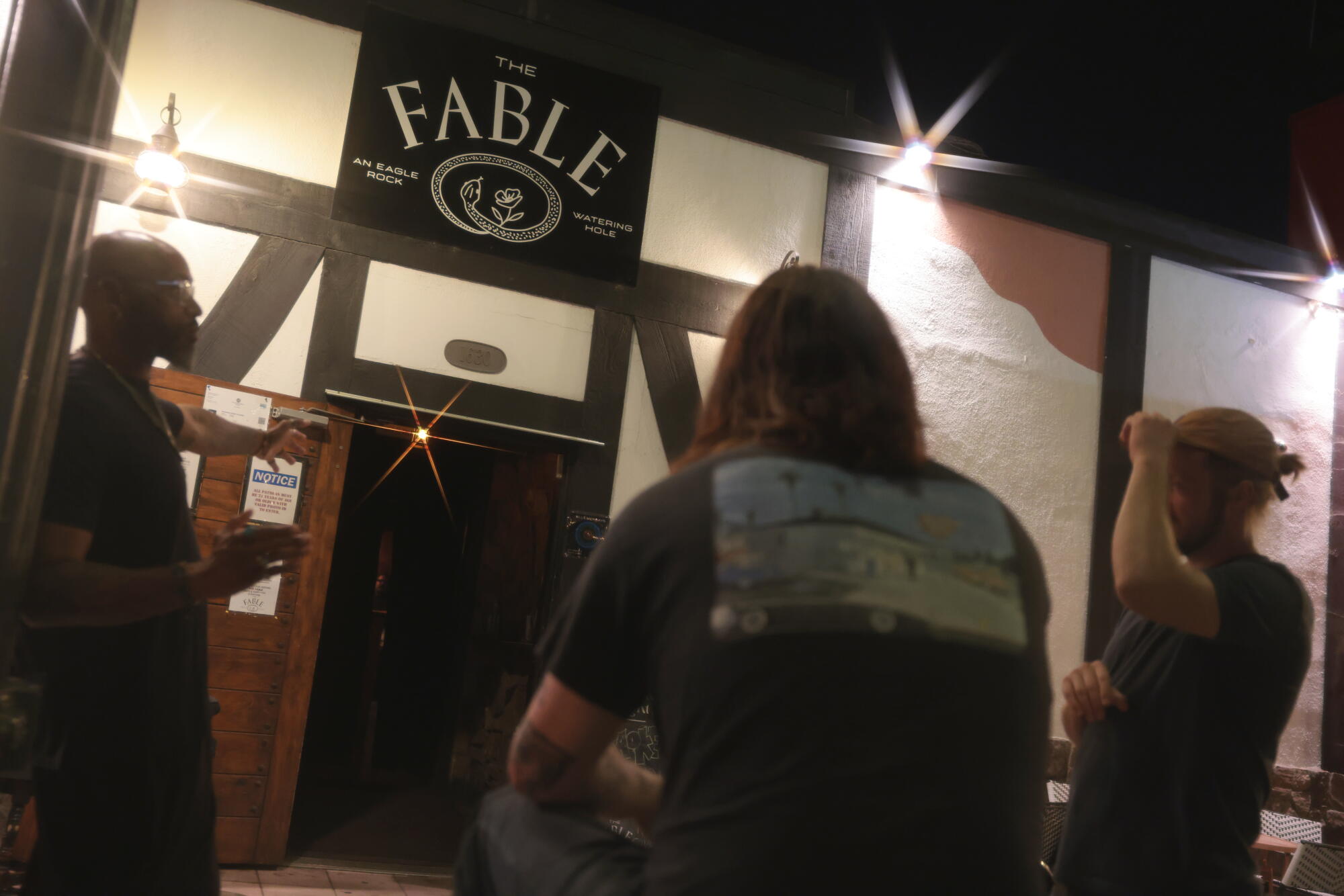
A man dedicates U2’s “With or Without You” to the ex-boyfriend who ghosted him. A woman sings “I’m Coming Home” from “The Rocky Horror Picture Show” for the late Tim Curry. The room pounds their fists on the tables to the bridge of Metallica’s “One,” a harrowing anthem about the horrors of war.
This is Blue Mondays, a karaoke night dedicated to sad songs that’s become a ritual of catharsis for its regulars. It happens the first Monday of every month at the Fable, where singers compete for what KJ (karaoke jockey) Teri Gamble calls, “the most coveted shirt in all of Eagle Rock”: a blue T-shirt featuring a pajama-clad Garfield (the cat, not the president) with the caption “I hate Mondays.”
Gamble, an actor, musician and podcaster, has sung karaoke since childhood with their babysitter. They host several karaoke events, including a Broadway night at Akbar in Silver Lake, and have helmed Blue Mondays for about two years.
Singers gather at the Fable on the first Monday of the month to belt out their saddest songs.
Gamble doesn’t always choose the best singer to win the Garfield shirt. They consider performers who make a song their own, get everyone singing along, or seem like they need a win.
“There was a girl who … had a cast on her arm. She cried her whole song. I said, ‘you don’t have to tell me what happened, but I love you and I hope everything gets better.’ And then I definitely gave her the shirt that night,” Gamble said.
Thom Sigsby, who owns the Fable with his wife, Monica Katzenell Sigsby, enjoys the low-key performances. “Someone did [Sara Bareilles’ “She Used to Be Mine”] and it was just devastating. There wasn’t a single moment of feeling like she realized there was anyone else in the room,” he said.
You’d expect long faces nursing their drinks, but it’s often the opposite. There’s something freeing about exorcising negativity through song that keeps people coming back. There’s community here, across the dedicated regulars and the staff — Gamble’s an incredible singer, and bartender Megha Wescombe absolutely crushes “Maybe This Time” from “Cabaret.” As Nicole Kidman might say, “Heartbreak feels good in a place like this.”
Patrons cheer after a performance during Blue Mondays. Regulars tell stories of forging new friendships at the event.
Mel Minghelli can perform both parts in “Phantom of the Oprah” thanks to her wide vocal range.
“I think I end up feeling less sad about my own personal sads because we are sharing them together,” Gamble said. “So it feels like the burden is lessened by the end of the night every time.”
Akhil Indurti, a software engineer who also performs musical improv at the Upright Citizens Brigade, won October’s shirt. He sang System of a Down’s “Chop Suey” (frontman Serj Tankian owns Kavat Cafe, two doors down), though his go-to is Chris Isaak’s “Wicked Game.”
“I think oftentimes [people] listen to sad songs because they’re sometimes more musically interesting,” he said. “They’re not just a major chord progression. It’s not usually just sadness. There’s nuance and subtlety. There’s some storytelling.”
Soraya Sebghati won September’s shirt with Linda Ronstadt’s “Long Long Time.” She fronts the band Night Talks, and said sometimes people tell her she shouldn’t be allowed to do karaoke because she’s a professional. She still loves it, both as a performer and a spectator, and — despite her seemingly upbeat demeanor — enjoys Blue Mondays as a “safe space for the freaks and the goths and people who want to sing sad stuff.”
Fable owner Thom Sigsby says his karaoke book, with more than 12,000 songs, may feel antiquated compared with digital karaoke platforms, but that’s the point.
“I’m the kind of person, when I’m sad, I like to listen to more sad music. I’m also a big cinephile. Bleak Week at Cinematheque’s [Bleak Week: Cinema of Despair] is my favorite week of programming of the year,” she said.
Fable owner Thom Sigsby says his karaoke book, with more than 12,000 songs, may feel antiquated compared to digital karaoke platforms, but that’s the point.
Dave Child lays it all out on the karaoke stage.
The Fable’s crowd and the songs they choose are eclectic, spanning generations and musical tastes. Some songs you’re guaranteed to hear every time — Radiohead’s “Creep” and Johnny Cash’s cover of “Hurt” are staples — but some performers choose more subversive tracks.
For example, OutKast’s “Hey Ya” sounds happy, but it’s about loveless relationships. Barry Manilow’s high-energy “Copacabana” describes a woman who drank her life away following her lover’s murder. Gamble recalled a performer who writhed on the floor while sob-singing Lou Bega’s “Mambo No. 5,” which could be sad considering the protagonist’s inability to maintain a steady relationship.
Blue Mondays didn’t start at the Fable. Sigsby was already a karaoke enthusiast when he began KJing at Bigfoot Lodge in Atwater Village about 14 years ago. By his own admission, he “got way too into it,” spending his own money to add songs to his book. A former theater kid and commercial actor, karaoke gave Sigsby a new way to express himself on stage and make friends. He and his wife even bonded over karaoke before they married.
Lyrics for “Solitaire,” a Neil Sedaka ballad, plays during a karaoke performance.
Given that Mondays are usually slow, Sigsby and his co-workers began adding shticks: single-artist blocks, nights where KJs chose singers’ songs, and Blue Mondays, which offered a free “Prozac” shot for each depressing tune (a mystery blend with an on-theme hue). Free booze — which singers still receive today — was a motivator, but so was the theme, which seemed to “resonate” more than the others.
Sigsby later founded his own karaoke company, HiHo Karaoke. It operates at bars including Ye Rustic Inn, Glendale’s the Gold Rail and Bigfoot Lodge, whose own Blue Mondays, Sigsby said, draws a younger crowd. Compared with some karaoke outfits, Sigsby admits HiHo may appear “antiquated,” but that’s intentional. “There’s no app, there [are] no [paper] slips. You literally just come talk to us because we want to meet you and talk to you and have a relationship with the singer[s],” he said.
The same goes for HiHo’s book. Streaming services may offer 50,000-song catalogs, but HiHo’s 12,000-plus book is curated by its hosts and clientele. Licensing each song ensures musicians and rights holders are paid, and lets people request the songs they’ve been dying to sing, from emo deep cuts to Puccini operas.
Brian Collins performs during Blue Mondays.
In 2019, Sigsby and his wife purchased the Fable (formerly the Old Chalet and before that, the Black Boar) less than six months before the pandemic. It was after stay-at-home orders lifted that Blue Mondays really took off. “I think it really was just this need for everyone to reconnect coming out of COVID and also have a safe space … where they really could emote,” he said.
Through the Eaton fire in nearby Altadena and today’s economic uncertainty — Sigsby notes the first Monday means everyone’s just paid rent — the Fable has continued to offer that space.
Regular Mel Minghelli, whose impressive four-octave range let her nail both the Phantom and Christine in “The Phantom of the Opera,” said, “I think in the way that sad music has helped people as a comfort, it’s really nice to be able to perform it and have other people … hear it or also feel comforted.” Minghelli used to treat her unique talent as a “party trick,” but now wants to record her own music with singer-songwriter Johnny Mace, another regular she met at the Fable.
Mace chose Calum Scott’s cover of Robyn’s “Dancing on My Own” that evening, though he said he often does Black Sabbath’s “War Pigs.” He described the Fable as a “magical” place where he’s found numerous friends and opportunities. “I was in the deepest depression and coming out here got my confidence back and I found my voice again. I [had given up] on my music career. I was really hurting and this place gave me life again so I owe this place a lot,” he said.
He won the shirt once singing the Goo Goo Dolls’ “Iris” but has since given it away, to whom he can’t remember. Why? Unlike Garfield, he likes Mondays.
The next Blue Monday is Nov. 2, 8:30 p.m.-12:30 a.m., at the Fable, 1630 Colorado Blvd. in Eagle Rock.
The Farsh Al-Hawa area in the city of Hebron in the occupied West Bank is unrecognisable after Israeli forces demolished a three-story building and industrial facilities there. Israel’s Finance Minister Bezalel Smotrich, who also holds the West Bank portfolio in the Ministry of Defence, said he ordered their destruction.
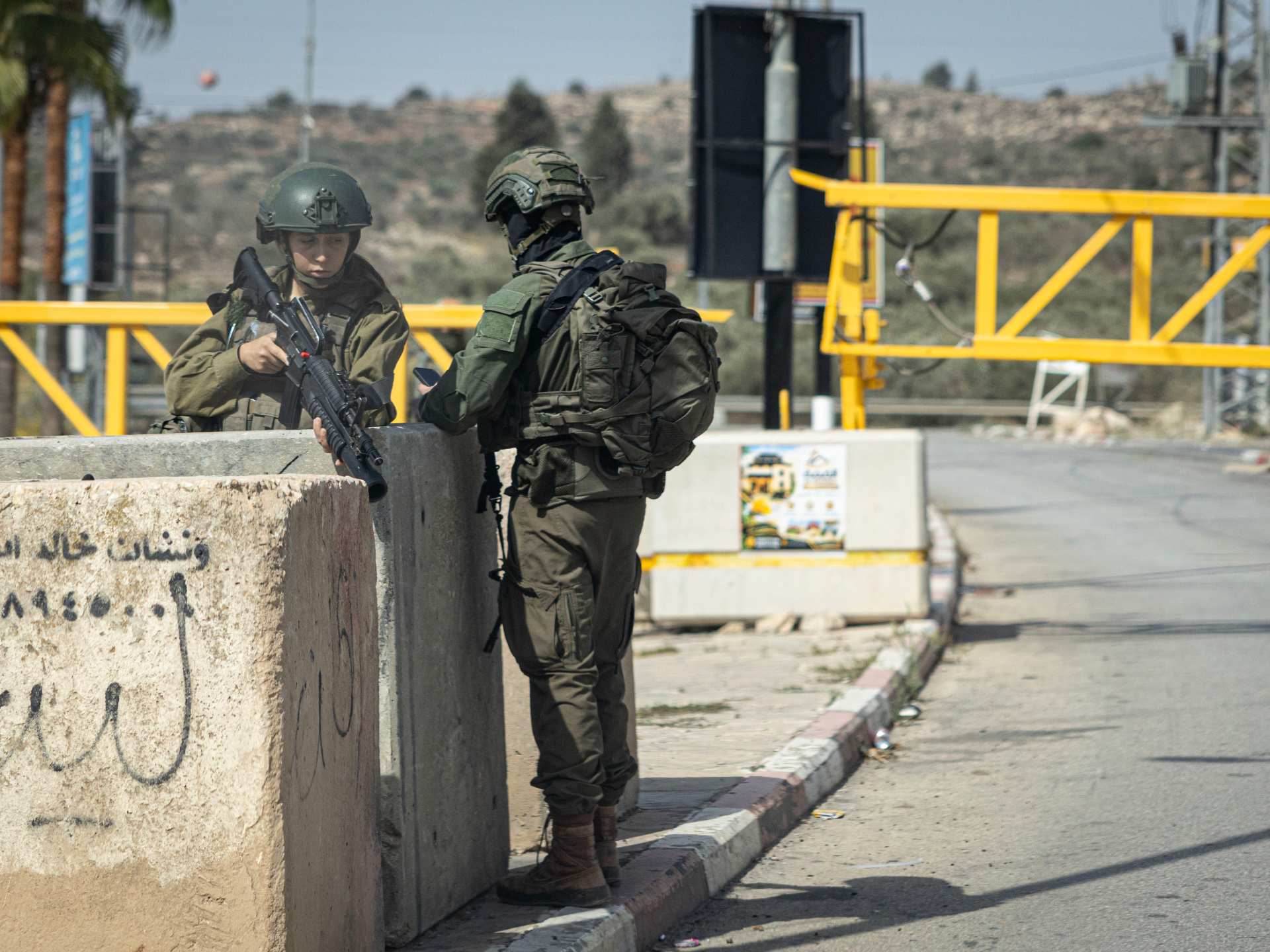
It all started on Friday, when two Palestinians attacked an Israeli military checkpoint in Farsh Al-Hawa, killing two soldiers and injuring others.
Recommended Stories
list of 3 itemsend of list
Since then, Hebron, the West Bank’s economic capital, has been attacked and put under lockdown by Israeli forces.
Israel has announced a sweeping military assault in the city, targeting the neighbourhood of the gunmen, who were killed on Friday. Israeli forces have already forcibly displaced more than 2,000 Palestinians. City officials say almost half of the displaced are babies and children under 18, along with 81 pregnant women and 204 elderly.
Fahd Ahmaro was forced to leave his home, along with his family. He told Al Jazeera that he planned to stay but felt compelled to seek shelter outside his neighbourhood because the women and children were terrified.
“We left with nothing but the clothes on our backs. Our savings, belongings and documents are all in the house,” he said. “I tried to go back after I got my family out safely, but I couldn’t. It’s not safe any more.”
Palestinian authorities in Hebron have declared a state of emergency and created a crisis group, bringing together government agencies, the private sector and civil society, to respond after thousands of people in the city were forced to flee their homes.
Riyadh Khamis, who serves on the committee, told Al Jazeera that philanthropists who could not bear the thought of fellow Palestinians staying in temporary shelters opened their homes to the displaced.
“Hebron is known for its social solidarity and generosity. Our city was the first to provide aid during the COVID lockdown and during the genocide,” Khamis told Al Jazeera. “Today, our neighbours needed help so we all rallied.”
Real estate developer Mohamed Al-Rujoob is one of the philanthropists who sprang to action at the start of the assault on the city.
Al-Rujoob, who owns several apartments in Dura, a town close to Hebron, announced that the properties would be made available for displaced families, prompting other owners to do the same. He now hosts three extended families in his apartments, including 30 children.
“We must preserve people’s dignity. Today, we host these good people. Tomorrow, who knows? It might be us who need shelter. We’re all under the same occupation and we’re all vulnerable,” he said.
The Israeli army says Hebron is on lockdown, which affects nearly 1 million Palestinians who live in the city and the rest of the district.
Restrictions on movement have had a severe impact on the West Bank’s largest district. Schools have moved to online classes, while Hebron’s universities have made similar arrangements for their 18,000 students until the Israeli operation ends.
The measures are essential for Palestinian students who are stuck in their homes and neighbourhoods, including the besieged Fawwar refugee camp in Hebron, home to nearly 8,000 Palestinians. Israeli soldiers closed the camp’s entrance gate on Saturday, barring residents from entering or leaving, even on foot.
Abdel Fattah Al-Ttitti, a school teacher who lives in the camp and works in a Hebron school, said “we are locked in”.
“If, God forbid, somebody needs medical attention, we may be able to get them to the clinic in Masafer Yatta, but that clinic is poorly equipped. If there’s a medical emergency, they can’t help,” Al-Ttitti told Al Jazeera.
He is glad that schools announced online classes. “Until this campaign is over, there’s no other way,” he said.
Many in Hebron believe that Israel’s military campaign in the city has a political dimension, with Israelis heading to the polls on Tuesday for a general election.
Prime Minister Benjamin Netanyahu’s governing coalition is vying for every right-wing vote. Violence against Palestinians has proved an expedient campaign tactic for politicians such as National Security Minister Itamar Ben-Gvir and Minister of Settlement Affairs, Orit Strook.
Both right-wing ministers have homes in illegal settlements in the Hebron area and support the ethnic cleansing of Palestinians from the occupied West Bank and Gaza, which they refer to as “encouraging voluntary migration”.
BBC Breakfast returned on Monday with Jon Kay and Sally Nugent and there was a sad update following Storm Boelo
Jennie Buzaglo Showbiz & TV Reporter and Karen Price Assistant Editor of Screen Time
09:14, 26 Oct 2026Updated 09:14, 26 Oct 2026
BBC Breakfast issued a report on fatalities following Storm Boelo(Image: BBC)
BBC Breakfast host Jon Kay revealed two people have died as a result of Storm Boelo.
The presenter returned to our TV screens on Monday, October 26 alongside Sally Nugent when he shared that both men were fatally struck by falling trees while the storm persists in delivering dangerous conditions across the UK.
He said: “A man in his 20s was pronounced dead in North London after the car he was driving was hit by a falling tree, and hours earlier, a 60-year-old man died in Dumfries in Galloway.”
Chief Inspector Guy Ellwood, from the North West Command Unit, said: “This is a deeply tragic incident and our thoughts are with the loved ones of the young man who lost his life.”
Jon disclosed that Storm Boelo has plunged 90,000 households into darkness. Providing additional information, Thomas Magill described how Storm Boelo was “sweeping people off their feet” in Blackpool, reports the Express. He continued: “Emergency services worked tirelessly as it battled the North West, toppling trees and flooding parts of Cumbria.”
Thomas explained that a pub in Bouth, a Lake District village, has transformed into a community centre, providing meals and refuge to vulnerable residents cut off from electricity. These locals found themselves without power and hot water, prompting them to seek assistance at the pub.
Thomas went on: “As the storm moved in across the Irish sea, coastal areas off the Isle of Man were battled by high tides and strong winds. In Scotland, it was a similar story.”
Ensure our latest TV stories always appear at the top of your Google Search by making us a Preferred Source. Click here to activate or add us as Preferred Source in your Google search settings
Footage captured the high street in Largs entirely submerged, with properties and shops left devastated. “Everything is absolutely swimming in sea water, sludge, leaves, debris, just mashed up confectionery. It’s awful,” a local said.
Travel has been severely disrupted across the region, with ScotRail urging passengers to check before setting off on their journeys. Thomas added: “Storm Boelo was also felt as far south as Kent, where emergency services worked continuously to clear blocked roads and secure areas. Today, thousands of homes still remain without power.”
Lawrence Slade, chief executive of the Emergency Networks Association, said: “The difficult thing is, we can’t actually get people out there to replace poles and wires until the worst effects of the storm have gone through.
“The clear message is that the teams will be working as hard as they possibly can to get people back on power soon as they possibly can in the safest possible way.”
Thomas remarked: “The worst of the storms may be over, but it’s unclear when power will return to the thousands of homes affected, and how long the clean up will take.”
ONE airline is returning to the UK after more than a decade with a direct route from London.
Cyprus Airways is relaunching daily direct flights to Larnaca on April 23, 2027.
New flights will launch from London Stansted to Larnaca in April 2027Credit: AlamyThe daily service has return flights from £355Credit: Getty
The airline last regularly served London until 2015, also flying to Stansted – although it was a different company at the time under government ownership.
It will be a year-round service and according to its website, return trips start from €423 (£355) in Economy Basic.
Sign up for the Travel newsletter
Thank you!
With this option, holidaymakers get one 10kg cabin bag included and a personal item.
Another is Economy Flex which includes one 10kg cabin baggage and a personal item as well as one checked bag at 23kg included – there’s also free seat selection.
Cyprus Airways also has Business Class which has in-flight service, lounge access and priority check-in.
The ticket includes 15kg cabin baggage, two 32kg checked bags, seat selection, fast track, meals included and priority boarding.
Thanos Pascalis, chief executive of Cyprus Airways, said: “By adding London Stansted to our network from April 2027, we are providing our customers with greater choice and flexibility while further strengthening our presence in one of Cyprus’ most significant international markets.
“We look forward to welcoming passengers on board and offering them the convenience, reliability and authentic Cypriot hospitality that define Cyprus Airways.”
For those Brits who arrive in Larnaca in April, they can expect average highs of around 18C.
It’s a popular spot for the cooler months as well as in October it still has highs of 22C and it remains as high as 14C in December.
Singer Peter Andre has his own holiday home in LarnacaCredit: Alamy
There shouldn’t be a long wait in the airport either as Cyprus doesn’t require EES checks.
Brits with a valid passport can visit the country for up to 90 days without the need for a visa.
The island itself gets over 300 days of sunshine each year and is known for having beautiful beaches – including one of the best in the world.
In the Europe list of ‘World’s Best Beaches‘, Golden Beach found on the Karpaz Peninsula in the north of the island comes in at number 30 out of 50.
The beach has 2.4 miles of sand and is known for its wild beauty and sand dunes – it’s a place where you’ll find sea turtle nesting grounds.
Talking to Sun Travel he said: “For anyone going to Larnaca, I have three recommendations. One is a new restaurants called Theta in Perivolia which is very near the airport.”
Peter also loves to go to a Japanese restaurant called Nippon.
He also added: “There’s another one called Opa Souvlaki Kiti, it’s not fancy, but if you want a proper Greek kebab done the Cypriot way, go there.”
But, despite the abominable weather altering the whole complexion of round four, there was no shortage of drama.
In the East Midlands derby on Saturday, Leicester Tigers produced a second-half performance that was as vintage Leicester Tigers as you could possibly get: a brutal set-piece and forward display that shook the old foundations of the Crumbie Stand and would have made the ABC Club proud.
In front of a febrile sell-out crowd, the game was played on the edge – a major scuffle breaking out on the stroke of half-time with England team-mates Henry Pollock and Ollie Chessum in the thick of it.
But tensions will have eased quickly. Thirteen of those involved in the derby met up for dinner in the England camp on Sunday.
“This fixture always has some heat behind it, and we know it means a lot to each other and to the fans,” Leicester and England scrum-half Jack van Poortvliet explained to BBC Radio 5 Live.
“We just try and put all our heart on to the pitch. Sometimes it boils over into a little scuffle, but we will go and have a beer with them now. That’s what rugby is about. You play fierce with each other and then enjoy each other’s company.
“We always end up laughing about it. Being in England camp with them almost makes the fixture mean a bit more, because you always want one over them.”
Northampton are the champions and still the team to beat. However, that’s twice in six months they’ve been handed a lesson by the Tigers at Mattioli Woods Welford Road.
Saints fans will be comforted by the fact the title is decided in the warm early summer months of May and June, but boss Phil Dowson will still want his side to be as effective in the wet as they are in the dry.
At 80, President Luiz Inacio Lula da Silva has pulled off an extraordinary political victory. After losing the first round to Flavio Bolsonaro, son of former President Jair Bolsonaro, by 47 percent to 45 percent, Lula defied the odds to secure a stunning second-round victory, with 51.8 percent of the vote against Bolsonaro’s 48.2 percent.
His triumph confounded every pre-election poll and crowned a dramatic campaign revival that few had anticipated.
Lula’s victory in Latin America’s largest country does more than halt the far right’s return to power in Brazil. It breaks a succession of right-wing electoral victories across the region and deals a major blow to United States President Donald Trump’s increasingly interventionist agenda in the Western Hemisphere.
When Bolsonaro unexpectedly defeated Lula in the first round, the result sent shockwaves across Brazil and beyond. For the government, the defeat was particularly startling given its strong socioeconomic record. What followed was an extraordinary three-week political mobilisation that transformed the sluggish first-round campaign of Lula’s Workers’ Party into an existential confrontation over the future of democracy and sovereignty in Brazil.
The economic record was hardly that of a government heading for defeat. Brazil’s economy grew by a cumulative 9.2 percent between 2023 and 2025, compared with an average of just 5.6 percent among its South American neighbours. Unemployment fell from 9.3 percent in 2022 to a historic low of 5.4 percent in 2026.
Brazil also exited the United Nations Hunger Map in 2025, after having returned to it under the Bolsonaro senior administration. In the Amazon, deforestation fell to its lowest level in decades, a sharp reversal of the trend under his predecessor.
Not everything has been rosy under the Lula administration. Millions of Brazilians have remained trapped in credit-card debt, struggling with extremely high interest rates, while an explosion of online gambling has devastated the livelihoods of families. The run-off result sent a clear signal that there was social discontent.
Lula responded with unusually bold measures: a sweeping debt-relief initiative and restrictions on online betting, as well as expanded social benefits, fuel subsidies, and the transition from a six-day to a five-day working week. These policies sought to reconnect the government’s macroeconomic achievements with the everyday economic anxieties of Brazilian voters.
Bolsonaro offered a radically different vision for Brazil: sweeping spending cuts, privatisations, lower taxes and, above all, an iron-fisted response to crime and insecurity. His proposals included building five maximum-security prisons modelled on El Salvador’s notorious penitentiary system and authorising lethal force against heavily armed criminals.
Bolsonaro also pledged to pardon his father, sentenced to 27 years for plotting to overturn the 2022 election, and to grant clemency to those convicted over the January 8, 2023 assault on Brazil’s democratic institutions. For his supporters, this represented an opportunity to reverse what they considered judicial persecution. For his opponents, it threatened to rehabilitate the attempted coup and undermine judicial independence.
Lula’s campaign came back re-energised, with many young Brazilians mobilising at the grassroots level. The campaign was able to overcome even algorithmic bias by social media giants like Meta, which favoured Bolsonaro.
Ultimately, the election became a battle not only over Brazil’s democracy but also its sovereignty. Trump’s administration has intervened conspicuously in Brazilian politics throughout Lula’s term, imposing punitive tariffs, sanctioning a Supreme Court justice involved in Jair Bolsonaro’s prosecution and openly embracing his son’s candidacy.
In May, Trump received Flavio Bolsonaro in the Oval Office. Two days later, Secretary of State Marco Rubio designated Brazil’s two largest crime organisations as foreign terrorist organisations, a measure Flavio had publicly requested.
These designations carry implications extending far beyond electoral politics. They potentially open the door to US military operations on Brazilian territory under Washington’s expanding war on so-called “narcoterrorism”. The world saw how one such foreign terrorist designation enabled the US to intervene militarily in Venezuela and abduct its sitting president.
Whereas Trump seeks to draw Latin America’s largest country into Washington’s expanding system of hemispheric military dominance, Lula has defended Brazil’s strategic autonomy, insisting that cooperation against organised crime must respect national sovereignty.
He framed the election as a choice between a sovereign Brazil charting its own course and one subordinated to Washington’s geopolitical agenda. Sunday’s election result shows that the Brazilian people have made their choice.
Importantly, Lula’s victory may mark a turning point in Latin America’s rightward shift. Since Trump’s return to the White House, the right has scored a string of electoral victories in Honduras, Chile, and Bolivia, among others. But Lula’s re-election suggests that its momentum may be faltering.
The result comes just ahead of the US midterms and could deliver a significant setback to the strength of Trump’s leadership in the Americas. In Argentina, President Javier Milei — who regularly attacks Lula and threw all his weight behind Bolsonaro — has been sliding in the polls ahead of next year’s presidential election. In Chile, President Jose Antonio Kast has suffered an even more precipitous collapse in public support.
Mexico’s Claudia Sheinbaum, for her part, has likely breathed a sigh of relief. A Lula defeat would have left her increasingly isolated in a region gravitating towards Mexico’s northern neighbour. Instead, Latin America’s two most populous countries and largest economies will remain firmly on the left for the foreseeable future.
It is too early to declare the region’s rightward turn over. But Lula’s victory raises the possibility that the wave has already crested. Brazil will not be joining Trump’s Shield of the Americas, and while the “Donroe Doctrine” remains a threat, its moment of greatest ascendancy may already be behind it.
Lula’s victory is a vindication of a lifetime spent fighting for society’s most marginalised and disenfranchised. And its significance extends far beyond Brazil’s borders. For defenders of democracy, multilateralism, international law, environmental protection and the sovereignty of the Global South, it sends a powerful message: the far right’s advance is neither inevitable nor irreversible. Not in Brazil. Not anywhere.
The views expressed in this article are the author’s own and do not necessarily reflect Al Jazeera’s editorial stance.
Deir el-Balah, Gaza Strip — After three years of genocidal war, Palestinians in Gaza are watching the upcoming elections in Israel with a mixture of fear and uncertainty.
Although the territory has been under a “ceasefire” since October 2025, Palestinians in Gaza continue to endure almost daily Israeli air strikes, dire living conditions, and a punishing siege that has caused shortages of basic goods.
Recommended Stories
list of 2 itemsend of list
Israelis will head to the polls on Tuesday to vote for their next government, in an election that has been shaped by the war on Gaza. Prime Minister Benjamin Netanyahu has been strongly criticised for his handling of security before the October 7, 2023, Hamas-led attacks on Israel. Members of his far-right government have called for a tougher line on Gaza, including the expulsion of its population.
The people of Gaza know this election will shape their future and many have been closely watching the campaign.
Mohammed Eliyan, 36, was displaced from Jabalia refugee camp in northern Gaza and now lives in Deir el-Balah with his five children. He hopes a change in leadership in Israel could bring relief to Palestinians who have endured repeated displacement and war.
“We follow the Israeli election to see who will win in the next phase. We hope there might be some easing for the Palestinian cause and for us, who have been displaced again,” he told Al Jazeera.
Mohammed Eliyan, displaced from Jabalia refugee camp in northern Gaza, hopes Israel’s election will bring change and relief to Palestinians [Abdelhakim Abu Riash/Al Jazeera]
Eliyan hopes that Gadi Eisenkot, the former Israeli military commander and Netanyahu’s main rival, will defeat the prime minister. He sees Netanyahu as more hardline and fears that if his Likud party and far-right allies win another term, it would mean more war and further displacement for Gaza’s people.
“We hope there will be changes after the election, and that someone other than Benjamin Netanyahu will win. What Netanyahu has done to the Palestinian people, before and after October 7, has not been a small thing,” he said.
But regardless of who wins, Eliyan does not expect a major shift in Israeli policy.
“They are still our enemy, and I don’t expect things to improve dramatically,” he said. “But we hope someone else might be less harsh than Netanyahu.”
He called on Israel’s next leader to end the war, prevent displacement and starvation, and ease restrictions at Gaza’s crossings.
“We want whoever leads Israel not to be hardline. End the war and let us live in peace,” he said.
Islam Salem, displaced from Beit Lahiya in northern Gaza, is uncertain whether Israel’s election will bring meaningful change for Palestinians [Abdelhakim Abu Riash/Al Jazeera]
Islam Salem, 41, is displaced from Beit Lahiya in northern Gaza and has three daughters. He is following Israel’s election closely and believes the result could affect Gaza’s future and the lives of his children, likely for the worse.
“Politics is our livelihood. It is connected to everything in our lives, our living conditions and even the future of our children,” he said.
But he also believes that elections primarily serve Israeli interests, so even if there are new faces in the next government, the Gaza strategy will likely remain the same.
“Israeli policy will not change in any way. Whatever they take, they consider it theirs and a political gain for them, the gains of a war they have pursued for a long time,” Islam told Al Jazeera.
He pointed to Israel’s continued control of about 65 percent of Gaza’s territory inside the “Yellow Line”. He also doubts whether reconstruction will begin soon in Gaza, where more than 80 percent of buildings have been damaged, and about two-thirds of those have been completely destroyed.
“I think reconstruction will be difficult. They do not want to give others any rights. They want their rights in full, and even more,” he said.
Years of war have left Salem struggling to imagine a future beyond his harsh daily reality.
“There is no future left for us to be afraid of. We live day by day. We have no idea what will happen next, and everything we feared has already happened,” he said.
Asked what he would say to Israel’s next prime minister, he spoke of how many in Gaza are feeling.
“If only a simple person could come and talk to him and say, ‘Leave us alone. Give us some breathing space and let us breathe.’ But he would not be convinced. What can I say to him?” he said.
Hanan Abu al-Maaza, faces an uncertain future in Gaza as Palestinians consider what Israel’s election could mean for their lives [Abdelhakim Abu Riash/Al Jazeera]
Hanan Abu al-Maaza, 57, has been displaced more than 12 times during the war on Gaza. She fears Israel’s next government could bring more suffering to its people in the besieged enclave.
“We follow the election because of the fear and anxiety we are living with. We have been displaced more than 12 times, and we are afraid they will do even worse to us than before,” she said.
“We go to sleep without feeling safe, wondering what they might do to us next. The fear is still in our heads and hearts.”
Abu al-Maaza says if Netanyahu is defeated, there will be more chance that she can return to her home in Beit Lahiya.
“I hope someone else wins, so we can have peace of mind and feel safe, and return to our homes. That is what we wish for,” she said.
After years of destruction in Gaza, she hopes Israel’s next leader will show Palestinians more mercy.
“Maybe he will say that there is nothing left in Gaza, that they have done enough and should let people live. There is hardly anything left in Gaza for anyone to think about doing anything more,” she said.
Abu al-Maaza urged Israel’s next leader to end the war and stop the suffering in the territory.
“We have had enough of war and destruction. There is nothing left to destroy, yet the suffering continues,” she said.
Manar Owaida, displaced from northern Gaza, follows Israel’s election closely amid uncertainty over what its outcome could mean for Palestinians [Abdelhakim Abu Riash/Al Jazeera]
Manar Owaida, 23, is originally from northern Gaza and is now displaced in the Tal al-Hawa neighbourhood of Gaza City. She is also keeping an eye on the Israeli election and considering its potential impact.
“I follow the election to know what they are saying and planning, and to understand what is happening around us and how the next Israeli government might affect the situation in Gaza,” she said.
Owaida hopes Gadi Eisenkot will replace Netanyahu, and sees the current prime minister as more extreme than his challenger. But she does not believe a change in Israel’s leadership would transform Palestinian lives, arguing that government policies have remained consistent for decades.
“Israel’s policy is one of crime, killing and destruction. Since 1948, it has been the same policy, the same killing and the same blockade,” she said.
Still, she hopes a new government could ease restrictions and killings and withdraw from areas beyond the “Yellow Line”, allowing life to gradually return to Gaza.
“There might be a change in Israeli policy if someone comes in place of Netanyahu and eases the blockade and the killing we are living through,” she said.
“There could be a withdrawal from the Yellow Line and life could gradually return to Gaza. But we are waiting with fear and uncertainty, alongside a little hope.”
Her greatest concern is that Netanyahu could launch a wider regional war to avoid domestic political pressure around the time of the vote.
Owaida said she wants Israel’s next prime minister to allow Palestinians to live without fear of further violence.
“We want to live in freedom and peace, away from killing and wars,” she said.
Mousa Ali, a father of four, now lives in Gaza City after being displaced from Beit Lahiya in northern Gaza [Abdelhakim Abu Riash/Al Jazeera]
Mousa Ali, 33, was displaced from Beit Lahiya in northern Gaza and is now in Gaza City with his four children.
He believes that the outcome of the election could determine whether displaced Palestinians can return to areas beyond the “Yellow Line”.
“For Palestinians, this election is critical, especially because of the Yellow Line. We hope the opposition will be better when it comes to allowing displaced people to return to their areas,” he said.
Ali mentioned Gadi Eisenkot as a possible alternative and hopes Arab parties will perform strongly so they have a role in the next government.
But he does not expect a new leader to bring major changes for the people of Gaza and fears that Israeli attacks will continue. He says a Netanyahu victory would prolong displacement and control over areas around the “Yellow Line”.
“Every day in Gaza, there is blood, there are people being killed, and there is bombing everywhere,” he said. “We hope this policy will end and that a new prime minister will stop this ongoing bloodshed.”
DAISY Edgar-Jones left fans stunned after she revealed it was her dad that created iconic TV show Big Brother.
The Where The Crawdads Sing and Normal People actress even told how she’d perched on the spy house’s Diary Room chair during her youth as she accompanied father Philip, 60, to work.
Daisy Edgar Jones fans were left stunned after learning her dad ‘created Big Brother’Credit: Instagram/todayshowHer father Philip Edgar Jones, is the director of Sky ArtsCredit: INSTAGRAM/PE JONES
The Brit, 28, who has now been dubbed a “nepo-baby”, opened up on her famous parent on the Open Book with Jenna podcast – and even let slip his words of wisdom.
Daisy, whose mother is a drama teacher, said: “My dad used to run this TV show Big Brother.
Sign up for the Showbiz newsletter
Thank you!
“Which, you know it, it was obviously a massive TV show when I was younger.
“And there’s loads of pictures from me aged probably like six or seven up until a little older, sitting on the Diary Room chair.
Daisy, 28, said he gave her ‘words of wisdom’ about the industryCredit: Instagram/todayshowDaisy has rocketed to fame in recent yearsCredit: AP
“Obviously I was too young to watch the show, I wasn’t allowed to.
“But in that show, individuals would come in anonymous and leave very very famous, so I suppose when Normal People came out he [her dad] sat me down and he was like – he couldn’t because it was Covid – but he told me on the phone and essentially said ‘there might be some things that shift for you’.
“And here’s just some words of wisdom that I learned which is that you might not change but the world around you might and the way people interact with you might”.
Daisy continued: “And so remembering that you haven’t changed, you are what you are and you are the same person – and who you were pre all of this – is very important.
She became a household name after starring in the BBC’s adaptation of Sally Rooney’s Normal PeopleCredit: BBCShe told how her dad Philip gave her the same ‘talk of doom’ as he did to the spy house contestantsCredit: Ashley Coombes
“To keep your feet on the floor and know that you’re an individual amongst lots of people with their own stuff going on and inner lives.
“It’s really important to keep your, I suppose, feet really planted on the floor.
“And I’m really grateful for that because, yeah, he just gave me loads of words of wisdom.
She has previously admitted her dad Philip, who is the director of Sky Arts, gave her the same talk of “doom” which he gave Big Brother contestants.
One fan was quick to comment: “Oh my god not another Nepo. Jesus Christ and I really loved her for years”.
A second put: “I definitely think it does make her a nepo as her father clearly would have had industry connections and was able to give her starting opportunities in film and TV, and I assume he was also able to afford to provide her with financial support to get her where she is now.
“Although I must say I do still love her acting and I think she is talented, it just is disappointing to find out as it’s so clear that working class actors without industry connections are just increasingly missing out on work/opportunities because of these nepos”.
Another defended Daisy and put: “It doesn’t make her a nepo baby not like her dad gave her work throughout her life to get where she is now”.
Her BBC show Normal People was one of the biggest global hits of 2020, attracting 62.7 million views on iPlayer alone.
It was a role that would also net Daisy her first Golden Globe nomination.
She had an open audition for a part in Cold Feet and the TV series first put her on the map and also got her an agent.
“Cold Feet was a good place to start, because I had a small part so I could learn the scary things like walking in and not being self-conscious,” she said.
Bagging more roles in productions, including a special of BBC’s Outnumbered and two episodes of Silent Witness, prompted her to take a year off before university.
She worked in a cafe near her home before rocketing back into the spotlight.
Elbit Systems (ESLT) has secured contracts worth approximately $200M from an Asia-Pacific country to supply airborne intelligence, surveillance, reconnaissance, targeting, and training solutions.
The contracts will be executed over a period of up to five years.
THE thespians who frequent the Garrick Theatre in London’s West End are more used to seeing the likes of Richard E. Grant and Christine Baranski tread the boards than a dwarf bouncing around inside a giant balloon.
That’s their loss though, because the families packing the venue off Leicester Square were hooting with laughter at the launch of Cirque Bererk last week – a theatre-circus spectacular with more than 30 performers that is running throughout October half term.
Cirque Beserk is a theatre-circus spectacular with more than 30 performers that is running throughout October half term in London’s West EndCredit: Jonathan Hordle
And Sun Club members can get an extra 10 per cent off if they book their tickets through London Theatre Direct, when booking via our Sun Club Promo page.
To get your tickets, sign up to Sun Club for for £1.99 a month then head to the Sun Club Offers hub and London Theatre Direct page or click here.
Sign up for the Travel newsletter
Thank you!
It was quite something to see a group of acts usually found in big tops showcasing their talents in a old-fashioned London theatre.
Despite the smaller stage, we witnessed acrobats spinning from their mouths, men doing the limbo under poles of burning fire, motorbikes racing round a metal cage and a mesmerising quad of dancers in LED armour.
While there was a lack of a thread between most of the acts that left it feeling slightly disjointed, you can be sure the children in the audience didn’t notice it.
Despite the age of the kids ranging from around three years old upwards (although age guidance is age five-plus), their concentration was held throughout the show – even though it was long enough to merit an interval.
Of course they were – who doesn’t want to see performers juggling fire and shooting arrows through objects onstage?
This was also in no small part thanks to the man from the aforementioned balloon, who took on the role of a modern ringmaster.
Fans of Zippos Circus, who produce Cirque Beserk, may recognise him from Zippos travelling shows.
With a grin wide enough to light up any stage, he tied all of the acts together alongside a comedy robot, in a style akin to an entry-level Cirque De Soleil.
Which is essentially what this show is, a great starter show for families that is a wonderful way to introduce kids to the magic of both the circus and London’s West End.
Cirque Beserk runs every day until October 31, with tickets from £28.
Theatregoers witness acrobats spinning from their mouths, men doing the limbo under poles of burning fire, motorbikes racing round a metal cageCredit: Jonathan Hordle
When Mr Kilpatrick returns to his classroom in Doha after mid-term, the scale of the achievement back home may be lost on those around him.
So he admits he may have to get creative when explaining the events of his trip back home.
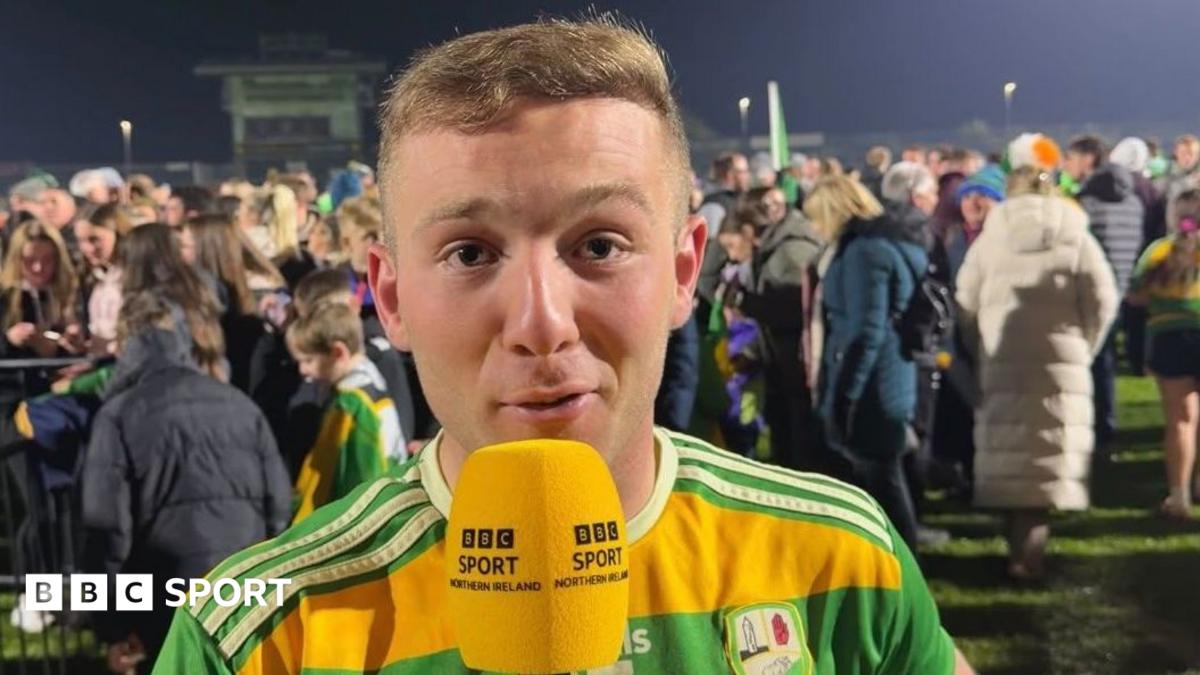
“Well it’s funny, it’s a Spanish outfit that I’m working for so they haven’t got a clue who Edendork are or what Gaelic football is.
“But they don’t need to know, I’ll tell them that I had a great week.
“It’s my World Cup, every bit of it. I’ll be able to enjoy myself now and then I’ll get back next week, and we’ll just reminisce about what’s happened.”
Neil is the brother of Tyrone star Conn Kilpatrick, so the club’s first senior county title was an extra special.
“It’s definitely special and I was gutted at the last couple of years that I didn’t come home for the championship.
“I was watching it on TV and just to experience this with Conn, and experience this with family, is something that I’ll never forget.”
He adds that living away from home means he only gets six or seven weeks in the summer back in Tyrone, and winning a title with those he grew up with means “it’s probably hard to put into words”.
“To many people this probably means nothing, but to the few that are out here on the field and are part of the Edendork community this is everything.
“We’ll probably never experience a day like this ever again so you just have got to soak it up and enjoy every single bit of it.”
Planned talks to be first high-level contact between Iran and the bloc since Houthi rebels escalated their attacks on Saudi Arabia.
Published On 26 Oct 202626 Oct 2026
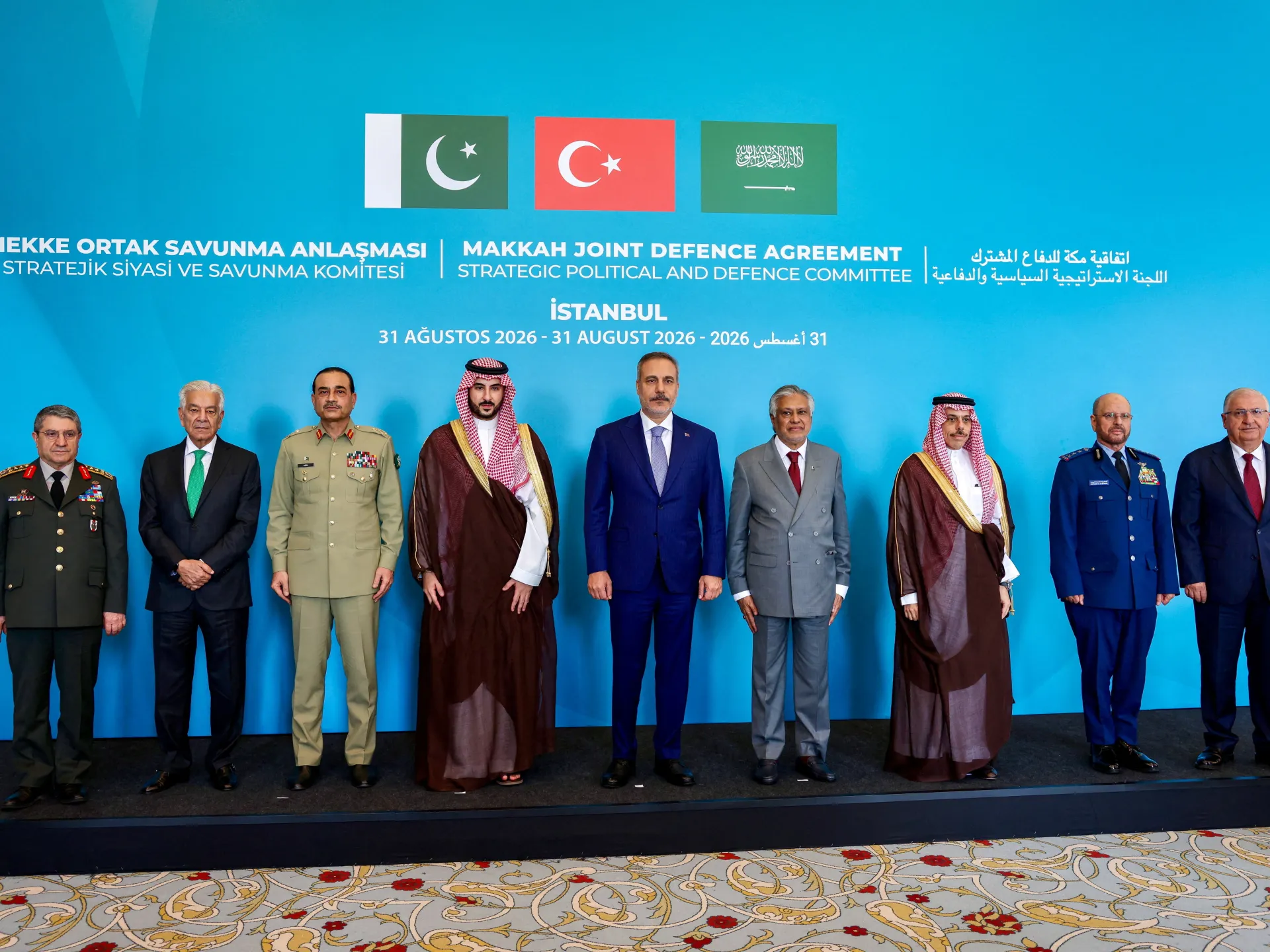
Delegations from the Mecca Defence Alliance countries – Saudi Arabia, Turkiye and Pakistan – will visit Tehran for talks, according to Saudi and Iranian officials.
Ali Bagheri Kani, deputy secretary of Iran’s Supreme National Security Council, was quoted by state-run media as saying Saudi Defence Minister Khalid bin Salman Al Saud, Pakistani military chief Asim Munir and Turkish intelligence chief Ibrahim Kalin will participate in a joint meeting during their visit to Tehran on Monday.
Recommended Stories
list of 4 itemsend of list
The Iranian delegation will be led by Mohsen Rezaei, secretary of the Supreme National Security Council.
The participating countries could take an effective step towards establishing regional security based on actors in the region, Bagheri Kani said.
Rayed Krimly, the Saudi deputy minister for public diplomacy, also confirmed the meeting, adding that the visit comes as part of the continued efforts by the Mecca Defence Alliance allies “for de-escalation between parties involved in the ongoing crisis and promoting dialogue and diplomatic solutions in support of the mediation efforts carried out” by Qatar and Pakistan.
“The visit underscores the pivotal role of Mecca Joint Defence Agreement countries in reinforcing regional security and stability and working with all countries in the region to achieve that goal,” he wrote on X.
Houthi attacks on Saudi Arabia
The planned talks would be the first high-level contact between Iran and all members of the alliance since Yemen’s Iran-aligned Houthi armed group escalated attacks on Saudi Arabia last month.
Field Marshal Munir last week visited Tehran, where he met President Masoud Pezeshkian and other senior officials.
During the visit, Iranian officials told him there would be no talks with the United States about ending the US-Israel war on Iran until Tehran’s demands were met, according to Iranian media.
Pakistan has been a key intermediary between Washington and Tehran since the US and Israel launched the war in February.
Earlier mediation efforts helped produce an interim agreement in June, but the deal quickly unravelled as fighting between Iran and the US resumed weeks later.
Saudi Arabia intercepted another wave of missiles and drones on Sunday as fighting with the Houthis continued.
Ministers from the Mecca Defence Alliance countries held an emergency meeting in Riyadh this month and agreed to ensure the “rapid deployment” of military forces and capabilities in Saudi Arabia.
The Houthi attacks have become an increasingly destabilising element in the US-Israeli war on Iran, turning US ally Saudi Arabia into a pressure point in the wider war.
Turkiye, Pakistan and Saudi Arabia signed the Mecca Joint Defence Agreement in August. Under it, an armed attack on one member is considered an attack on all.
The agreement’s first article says the parties shall use “all necessary means” to eliminate threats to one another’s territorial integrity, sovereignty and internationally recognised borders, according to the text publicised at the time.
Efforts by Turkiye’s parliament to ratify the agreement began last week and are still under way while Pakistan approved the pact last week.
CYCLISTS have been seen brazenly ignoring Sadiq Khan’s ‘pedestrian-only’ zone on Oxford Street just hours after the ban came into force.
As of today a one-kilometre stretch of the world-famous London street is now free from cars and buses prior to being fully pedestrianised.
Cyclist riding on a pavement, as pedestrianisation of Oxford Street commencesCredit: LNPSecurity guards were seen trying to get cyclists to funnel aroundCredit: LNP
The entire section between Selfridges near the Marble Arch end and Great Portland Street (including Oxford Circus) is the first to be impacted – with the festive period just around the corner.
Transport for London (TFL) has confirmed that e-bikes, pedal bikes, and e-scooters will no longer be allowed to go through the area but instead will be funnelled to surrounding routes.
Sign up for the Travel newsletter
Thank you!
However, cyclists were filmed whizzing through the green bollards installed just last night and designed to stop traffic.
A team of security guards was seen trying to wave down commuters, delivery drivers and e-bike renters and get them to dismount.
Cyclists ignore newly pedestrianised Oxford Street just hours after the ban was introducedCredit: BBC LondonSigns tell cyclists that they have to dismount and walk their bikeCredit: GettyOxford Street in central London the day before it was pedestrianisedCredit: Alamy Live News.Cars, buses, taxis and bicycles can no longer travel along much of Oxford Street
One member of the public said it was “absolutely pandemonium” last night as buses kept coming up to the new obstructive bollards.
The road will be closed to all traffic between 7am and midnight every day of the week.
Exceptions have been made for deliveries, which can be made from midnight to 7am, and for emergency vehicles – which retain access at all times.
But many Londoners have bemoaned the fact that the surrounding area will be gridlocked due to the changes.
As the busy festive period gets underway, others have voiced their concerns over how shoppers will carry their hauls in the lead up to Christmas.
One local councillor described the plan as a “disaster for local people” – and accused London Mayor Sadiq Khan of pushing it through to meet an “arbitrary deadline”.
Cllr Tim Barnes, Westminster City Council Deputy Leader, said: “We’re extremely disappointed that MHCLG have ignored legitimate concerns about the impact this scheme will have on central London.
“London deserves a world class shopping district but I’m worried we’re heading for an unmanaged mess.”
Oxford Street is closed to traffic from this morningBritain’s busiest high street will no longer be the sameCredit: Alamy
He added: “It’s going to be very difficult for people with accessibility issues to get to the street. There is no step free access from Oxford Circus Tube.”
The technology is expected to be installed in December, just in time for the busy festive shopping period.
Today’s pedestrianisation of this stretch of road has repeatedly been described as the “first phase” – but it has faced criticism.
Sean Lane, 43, a cabbie for ten years driving down Oxford Street, said he was particularly concerned about disabled passengers and parents with prams.
He told The Times: “It’s gonna create gridlock. I just can’t understand it. You can see how wide the pavements are.
“There’s more than enough room for everybody. Even if you made it one lane, a one-way road, at least we can come along.”
Paul Fisher, a Conservative Westminster councillor, fears for the postcard view of the high street during the Christmas period but also on a year-round basis.
He said: “Why do people go to Oxford Street? They don’t just go to shop, they go for the experience, for the iconic buses and taxis.
“Many tourists shop on Oxford Street because of the iconic view you get … that vision will be lost forever.”
Traffic can still flow north and south along Regent Street at the Oxford Circus junction.
Pedestrians can cross at the junction and the plan is for traffic signals to be re-phased for the changes.
Traffic can also cross the pedestrianised zone on these four other routes: Duke Street (northbound), Davies Street/Stratford Place (both directions for local access), Vere Street/New Bond Street (southbound only) and Holles Street (northbound only).
Private cars have been barred for years but now all motorised traffic, including buses and black cabs, as well as bicycles, will be kept away.
London Mayor Khan has hailed the move as “a truly momentous occasion for the capital“.
The pedestrianisation of Oxford Street has been tried for years but remains controversial.
And although the traffic may have been stopped, the initial works scheme is not expected to be completed until spring next year.
The closure is part of a £150m phased plan to revive the area with “mini parks” and more than 50 trees, benches, lighting and public art.
It is hoped the plans will encourage bars and restaurants to move in alongside the shops to create a feel similar to the Rue de Rivoli in Paris or La Rambla in Barcelona.
From judicial reform to conscription and the Palestinians, here’s where candidates stand on the key issues dominating the campaign.
For an election often billed as the most consequential in Israel’s history, many issues that outsiders might expect to divide the candidates are, in fact, points of consensus among the frontrunners.
None of the leading contenders in Tuesday’s election has questioned the case for unleashing a genocide on Gaza in response to the Hamas-led attack of October 7, 2023, or the wars that have followed, including the one on Iran. Nor have most candidates for the premiership offered a clear path towards implementing a two-state solution to the Israel-Palestine conflict that was envisaged in the 1990s, or towards an equitable settlement with the Palestinians whose territory Israel occupies.
Recommended Stories
list of 4 itemsend of list
Instead, the points of division centre almost exclusively on Israel’s internal politics and how voters see the future character of their country. The choice is between the hard-right government of incumbent Prime Minister Benjamin Netanyahu, unconstrained by the judicial oversight he has railed against, and the future outlined by the disparate coalition of his opponents, which promises a broadly similar policy agenda but within the confines of the law and without the more extreme elements of the current governing coalition.
So, what have the leading candidates said about the main issues?
(Al Jazeera)
The two-state solution
Despite having committed to working towards a two-state solution in the 1990s’ Oslo Accords, with many of their allies adjusting their policies towards Israel to reflect that commitment, few of the contenders in Tuesday’s election appear ready to honour it. Instead, their government stands widely accused of abetting the settler pogroms now raging across the West Bank, while supporting continued construction in the occupied territory in defiance of international law. This includes the E1 settlement plan, which ministers openly boast will bury the two-state solution.
Here’s what some of the contenders have said:
Likud party leader, Prime Minister Benjamin Netanyahu: “We are going to fulfill our promise that there will be no Palestinian state; this place belongs to us.”
Yashar party Gadi Eisenkot: “My position on the Palestinian issue has remained consistent: The principle of two states for two peoples is a mistake.”
Religious Zionist party leader, Finance Minister Bezalel Smotrich: The next government should “destroy the idea of an Arab terror state; finally, formally and practically cancel the cursed Oslo Accords and get on the path of sovereignty, while encouraging migration both from Gaza and from Judea and Samaria [occupied West Bank]. There is no other long-term solution.”
The Democrats leader Yair Golan: “We need to understand that Israeli society is still in trauma from October 7. To make the galactic leap from the current situation to a two-state solution is impossible. It’s not enough to return to old formulas, we need to adjust our plans, our ideas, our perceptions. My concept is about civil separation and security responsibility.”
Haredi draft
The conscription of Israel’s growing ultra-Orthodox, or Haredi, population into the army is an issue largely unique to Israel, and one whose prominence has grown as the human and economic costs of the wars in which many refuse to take part have mounted.
Netanyahu has continued to rely on the two main Haredi parties, Shas and United Torah Judaism (UTJ), for support in the Knesset. They have in turn insisted that he pass legislation overturning the Supreme Court ruling of June 25, 2024 and offering ultra-Orthodox youth a legislative shield against conscription.
Ultra-Orthodox Jewish men during the ‘Million Man’ protest in Jerusalem against Israeli military conscription, October 30, 2025. [Ammar Awad/Reuters]
Here is what leaders have said:
Netanyahu after the arrest this month of about 40 Haredim – plural for Haredi – for avoiding the draft: “We must preserve the world of Torah because it preserved us. These arrests are a deliberate attempt to harm the process of drafting Haredim without coercion.”
Shas leader Aryeh Deri: “There will be no government in Israel with Shas’s support or participation unless the status of yeshiva [seminary] students is regulated.”
Eisenkot: “That is what the upcoming election is about: Netanyahu’s draft-dodging government, or a government of conscription led by me.”
Yisrael Beiteinu party leader Avigdor Liberman: “Netanyahu is issuing an impassioned call against the arrest of draft evaders, once again proving that he is a hostage to the draft evaders – without them, he has no government.”
Judicial overhaul
Days after taking office in 2022, Netanyahu’s government unveiled a plan to curb the powers of Israel’s courts, which triggered months of mass protests in 2023 before the war on Gaza paused the fight.
The coalition has passed measures reshaping how judges are appointed, while in July a law stripped Attorney General Gali Baharav-Miara of many of her powers, allowing the government to reject her legal advice and choose its own lawyers in court. Both are due to take effect after the election and most of the opposition has promised to reverse them.
Protesting in Tel Aviv against the government’s judicial overhaul [File: Ilan Rosenberg/Reuters]
The government has also boycotted Chief Justice Isaac Amit. Critics call it a deliberate assault on democracy by a prime minister embroiled in a long-running corruption trial of his own, while Justice Minister Yariv Levin says the election is a historic chance to finish the job.
Here are some of the contenders’ statements:
Netanyahu: “Democracy is the rule of the people. It’s ‘we the people,’ not ‘we the judges … In Israel, [judicial reform] was completely derailed, and we have to bring it back. We don’t have to crush the judiciary, but we have to make sure it doesn’t crush the legislative branch, the Knesset or the executive branch of government.”
Together alliance co-leader, former Prime Minister Naftali Bennett: “I want to be clear. We will cancel all the legal revolution laws immediately upon the convening of the Knesset.”
October 7 inquiry
While the killing of more than 74,000 people in Gaza has been entirely absent during the campaign of the two main alliances, questions over political accountability for security failures ahead of and during the Hamas-led attack in 2023 have dominated this election cycle.
Inquiries into failings by the security services ahead of and during the Hamas-led attack led to the resignation of Chief of Staff Herzi Halevi, announced in January 2025. They also fed a long, drawn-out and bitter fight with the prime minister that ended with the departure of Shin Bet head Ronen Bar in June last year.
However, despite recent news reports suggesting that Netanyahu was warned by both the UAE and Egypt ahead of the attack, and longstanding criticism of his policy of keeping Hamas in power in Gaza as a bulwark against the Palestinian Authority, no similar inquiry into his own alleged failings before October 7 has happened.
Here are some of the leaders’ statements:
Eisenkot: “Netanyahu was warned and did not act. A State Commission of Inquiry that we will establish will investigate the disaster. The heads of the systems took responsibility and resigned long ago. We will not allow the master of evaders to escape the truth.”
Netanyahu: The prime minister told the Knesset that his government “wants to establish a commission of inquiry with as broad public support as possible” and not one dismissed by what he claimed is “at least half the country”. The proposed government-led inquiry never reached its final reading and has been deferred to the next session.
LOONEY Tunes actor Eric Bauza, who voiced iconic cartoon characters such as Bugs Bunny and Daffy Duck, has died aged 46.
The award-winning star’s family posted on Instagram that he had died “suddenly” and there would be “more details to come”.
Emmy Award-winning voice actor Eric Bauza has died aged 46Credit: GettyThe star voiced iconic characters like Bugs Bunny, Daffy Duck and The Road RunnerCredit: Getty
The Canadian voiced dozens of beloved characters over more than 25 years in the industry, winning three Emmys for his Looney Tunes roles.
He died as a result of heart disease, according to Los Angeles County Medical Examiner records.
Sign up for the Showbiz newsletter
Thank you!
Bauza had multiple characters in this summer‘s hit animated comedy Coyote vs. Acme.
These included Bugs Bunny, Daffy Duck, Foghorn Leghorn, Pepé Le Pew, Porky Pig, Elmer Fudd and The Road Runner.
The actor told NBCNews in 2021 that he was a huge fan of Looney Tunes growing up and used to copy the voices.
He said: “Looney Tunes transcends all languages and all cultures.
“It doesn’t matter what part of the planet you’re from. You get the comedy.”
Bauza was also known for playing Toad General in 2023’s The Super Mario Bros. Movie and its sequel The Super Mario Galaxy Movie, this year’s fifth highest-grossing film internationally.
Most read in Entertainment
Bauza was a huge fan of Looney Tunes growing upCredit: GettyHe started voicing Bugs Bunny in 2018Credit: Getty
He won three Emmy Awards for outstanding voice performance in 2022, 2023 and 2025 for different animated shows.
Channing Dungey, the chairman of Warner Bros. Television Group and US Networks, said in a statement: “Eric Bauza was a unique voice talent who brought joy and laughter to millions around the world.
“He followed in the footsteps of giants like Mel Blanc. Eric said that carrying on the legendary legacy of the Looney Tunes was among the greatest honors of his life.”
Born in the Toronto suburb of Scarborough in Ontario, Bauza made his voice acting debut in the Canadian animated series The Ripping Friends.
Before stepping behind the microphone, he began his journey in animation as a character designer for Hollywood production studios.
He would go on to have more 421 voice acting credits in film, television and video games listed on his IMDb profile.
Bauza’s extraordinary vocal range allowed him to become the definitive modern successor to legendary voice actor Mel Blanc, and he first took on the iconic Bugs Bunny role in 2018.
He was hired by showrunner Peter Browngardt to audition during breaks in recording sessions for Uncle Grandpa.
His official debut episodes eventually premiered with the launch of the HBO streaming series Looney Tunes Cartoons in 2020.
Film producer and screenwriter Christopher DeFaria, who worked with Bauza on Coyote vs. Acme, told Variety the voice actor would be remembered for his “incredible impact”.
DeFaria said: “He’s a voiceover artist for animated characters that have historic precedents and roles, and somehow out of that, he carved out a place in this business.
“This past year, he had such an incredible impact, both on our movie, of course, but also on bringing attention to this amazing art form.”
Caldwell (CWLPF) announced it has completed the sale of substantially all net operating assets of its wholly owned subsidiary, IQTalent Partners, Inc., to WinMil, Inc. WinMil will continue operating the business under the IQTalent brand.
Banjul, the Gambia – It is still early when Magistrate Muhammed Krubally arrives at the Banjul Magistrates’ Court.
Before the first case, his clerk goes over the day’s proceedings, running through the files and making sure everything is in place. Krubally listens, asks questions, and prepares to preside.
Recommended Stories
list of 3 itemsend of list
Then he enters a packed courtroom, where lawyers, witnesses and relatives have gathered for a criminal case.
The room falls quiet.
Krubally cannot see the people before him, but he can hear them. A lawyer rises. A witness speaks. Papers move across the room. His clerk is nearby.
At his desk, his computer speaks back to him.
Krubally uses JAWS, or Job Access With Speech, a screen reader that allows him to navigate his computer and read documents and judgements.
“This makes my job very easy,” he tells Al Jazeera.
He also uses AI-enabled smart glasses to access information and carry out tasks independently.
But technology is only part of how he works.
He listens for voices, remembers details and follows the rhythm of proceedings, building a picture of the courtroom through sound. When necessary, he relies on his clerk.
At 41, Krubally says he has presided over more than 1,000 civil and criminal cases since joining the bench.
In 2016, he became the Gambia’s first visually impaired magistrate. The Gambia Organisation of the Visually Impaired (GOVI) identifies him as the country’s first person with a visual impairment to hold the position.
For Krubally, this is not an experiment in what a visually impaired person might be capable of doing.
It is his profession.
And he has spent a decade doing it.
A determination shaped early
Long before he took his place on the bench, Krubally grew up in a village in the Gambia’s Central River Region, the second of nine children.
From an early age, he wanted to become a lawyer. Part of that ambition was personal: he wanted to defend his own rights. But he also wanted to advocate for others.
He wanted, he says, “to be the voice for the voiceless”, particularly people with disabilities.
The path was not straightforward.
From primary school through university, Krubally encountered limited resources and an education system that often left visually impaired students like him facing obstacles their sighted classmates did not.
He remembers being discouraged by fellow students and some teachers from pursuing the education he wanted.
Instead of making him abandon his ambition, he says, their doubts only strengthened it.
“Their discouragement kept me going. I knew what I wanted, and see where I am now,” he says.
Those experiences later shaped his decision to enter the judiciary.
“I became a magistrate to change the system, to make it inclusive,” he says.
But joining one of the country’s most important public institutions did not make those barriers disappear.
Rights on paper, barriers in practice
The Gambia’s Persons with Disabilities Act, passed in 2021, sets out principles including independence, non-discrimination, full participation, equality of opportunity and accessibility.
The law also contains provisions covering employment, public buildings and services, information and access to justice.
Yet putting those rights into practice remains a challenge.
People walk along a crowded street in the Gambia, where accessibility remains a challenge for people with disabilities despite legal protections [Kaddy Jawo/Al Jazeera]
The National Human Rights Commission has identified barriers affecting people with disabilities, including discrimination and difficulties accessing services, education and employment.
Al Jazeera contacted the Ministry of Gender, Children and Social Welfare for a response on implementation of the act, including measures to improve accessibility, education and employment opportunities for people with disabilities. The ministry did not respond.
Krubally encounters those challenges not only as a judicial officer, but also as an advocate.
As president of the Gambia Federation of the Disabled, he speaks at events in the Gambia and beyond, pressing for greater recognition of the rights and potential of people with disabilities.
“I want to see a world for all; inclusion matters,” he says.
For Krubally, inclusion is not simply about opening the door. It is about having the means to participate once inside.
The barriers begin at school
For many people with disabilities, working towards full inclusion begins long before they enter a courtroom or parliament.
It begins at school.
Today, GOVI’s Resource Centre for the Blind provides specialist education for children with visual impairments before they transition into mainstream schools.
Forty-nine pupils aged between four and 14 currently attend the centre, Lamin Colley, its head of school, told Al Jazeera.
After completing their studies there, pupils are expected to enter mainstream schools, where special-needs teachers stationed across school clusters are meant to support them.
But that support is stretched.
Colley told Al Jazeera that limited learning materials and the size of the school clusters are putting pressure on the support available to students. A single special-needs teacher, he said, cannot maintain regular contact with all students across those clusters.
“The reality on the ground is that not much has changed after the disability act has been passed,” Colley says.
He attributes this partly to what he describes as insufficient government funding for disability issues in the national budget.
Colley remembers Krubally as a pupil who loved to read and could often be found in the library. He also remembers his determination to participate in activities alongside his sighted classmates.
Years later, Krubally’s journey carries a message beyond the school gates.
“Disability does not mean inability.”
But one person’s achievement does not erase the obstacles facing those coming behind him.
Entering an institution is not enough
Ndey Yassin Secka-Sallah knows what it means to enter a public institution without having the tools to participate independently.
She was nominated to the Gambia’s National Assembly and has long advocated for the rights of people with disabilities. GOVI describes her as the country’s only visually impaired parliamentarian.
She was also involved in advocacy around disability rights and the push for stronger legal protections.
Yet taking a seat in parliament did not make the institution accessible.
“I used to depend on my fellow colleagues to know what was being discussed,” she told Al Jazeera.
What she wanted was not special treatment, but independence.
“I would have loved to be independent, without depending on people for help.”
Five years after the disability law was passed, Secka-Sallah says implementation remains a major challenge.
She sees Krubally’s appointment to the bench as significant, but not as the end of the struggle.
“Inclusion is all we wish for,” she says.
Musa Barrow, another visually impaired professional, teaches media law and ethics to journalism students.
Like Krubally, Barrow has encountered assumptions about what a visually impaired person can do. Some students have questioned whether he can meet the standards they expect from a lecturer.
Technology has helped him work independently. He uses digital tools to read, write and prepare lecture notes.
“Technology has broken that barrier for me,” he says.
But students’ assumptions have not disappeared.
His response is direct.
“I can do more than what sighted people can do,” he says.
Barrow’s visual impairment has also shaped how he teaches journalism, particularly when discussing the media’s portrayal of disability.
The experiences of Krubally, Secka-Sallah and Barrow all point to the same gap: entering an institution is not the same as being equipped to participate fully in it.
What does the law look like in practice?
The scale of the challenge is difficult to measure.
The Gambia’s 2013 Population and Housing Census recorded a disability prevalence of 1.2 percent, representing 21,873 people, according to later analysis of the census data.
But that figure may understate the scale of disability in the country. The census used a narrower set of questions and did not use the Washington Group questions commonly used to measure functional difficulties.
Magistrate Muhammed Krubally presides over proceedings as the court sits in session [Kaddy Jawo/Al Jazeera]
The Gambia has since conducted a new population and housing census, with preliminary results released in September 2024. But the preliminary report did not include detailed updated national disability data.
That leaves an incomplete picture of how the country’s disability landscape may have changed over the past decade.
What is clearer is the experience of people navigating institutions that were not designed with them in mind: a parliamentarian depending on colleagues to follow proceedings, a lecturer being questioned about his ability to teach, or children entering mainstream schools with limited specialist support.
Krubally knows that journey personally.
He now mentors young people, many of them visually impaired. One is Modou Lamin Dampha, who describes Krubally as someone who encourages him to keep pursuing his ambitions.
“He advises and encourages me to keep going, that things are possible,” Dampha says.
For Dampha, Krubally is more than a magistrate.
He is evidence that professional ambition does not have to end with disability.
Has the courtroom changed?
Back inside the Banjul Magistrates’ Court, the case continues.
Krubally listens as the proceedings unfold, using voices, memory, technology and experience to follow what is happening before him.
His career raises a harder question: how much has the system itself changed?
The judiciary was asked what accommodations are available to Krubally, what accessibility measures are in place for judicial officers and court users with disabilities, and what changes it has made since the Persons with Disabilities Act was passed.
It did not respond by the time of publication.
Krubally has spent a decade adapting to the demands of the courtroom.
Whether the institution around him has also adapted remains an open question.
Asked what he sees when he looks to the future, Krubally says it is not about the obstacles he has overcome.
Everyone had their reasons for joining the trip. Louisa from south London was putting her life back together after a split from her partner; first-timer Tim was strapping on ski boots following years of hesitation; and Lexi from Bristol had a classic case of the non-skiing boyfriend.
I was there because I needed a ski gang. None of my friends ski, and my brother was out of action with an injury. Not only that, I needed a good night’s sleep. I love my two-year-old son dearly, but I have somehow spawned an insomniac – still waking four times a night. Weary from bedtime battles, Holly, my partner, bluntly pointed out we could both benefit from “a temporary break from family life”. In other words: separate holidays.
Holly arranged a walking trip with friends; I opted for a week’s skiing in the French ski resort of Les Deux Alpes with Friendship Travel, a specialist operator in solo travel for more than 20 years. They find a chalet, fill it with solo skiers, provide travel, most meals and group ski lessons – that’s the basic service.
The chalet. Photograph: Andrew Day
We were staying in a comfortable, largeish chalet just back from the resort’s mile-long drag. Entering a group holiday with strangers is a leap into the unknown. I was greeted by Sam and Mike, our (thankfully) low-key hosts, shown to my private room (you can save by bunking up with a same sex stranger), then introduced to my fellow holidaymakers. It turned out that there were 17 of us – nine women, eight men – and we were whisked into the lounge for a briefing and welcome drink. The atmosphere was upbeat and easy, and we gathered round one large table for an excellent three-course dinner.
Most Friendship Travel guests are aged between 35 and 65, and our group was at the top end of that range. There was Vivienne, a retired nurse from Cumbria who had just lost her partner, and Adriana, a “silver splitter” relishing retirement. For a few – myself included – it was the first such holiday, but many were inveterate solo travellers, with Ivyon, a former production operator from Bridgend, clocking up more than 90 trips.
The first morning, we set off to our ski lockers at the bottom of the slopes (tip: I booked my equipment hire in advance, saving €40). The group naturally fragmented, allowing small cliques to form – people relaxed as they started to identify potential après buddies.
I skied with Elaine, Clemmie, James and our guide, Luke, in the “level 4 advanced” group (we were asked to rate our ability beforehand). The backbone of Les Deux Alpes, the new Jandri 3S cable car, whisked us up to an altitude of 3,200 metres in 17 minutes – instead of the previous 40. Above broken clouds, we paused to admire the astonishing jagged peaks of the Écrins national park.
Andrew, Luke, James, Elaine and Clemmie. Photograph: Andrew Day
We blasted down a mixture of broad blue and red runs, plus some not overly challenging blacks. Although none of us had met before, we quickly settled into a rhythm, looking out for one another as the snow fell softly. There’s safety in numbers, especially on the off-piste sections. “I’d never have tried that alone,” said Clemmie.
Afternoons brought more skiing, followed by hands-in-the-air après at Skandal – reopened in 2025 following an extension – with a DJ on a packed terrace. Around sundown, the chalet WhatsApp group would start to ping. “Polar Bear Pub, anyone?” would be a typical message, often sent by Mícheál from Armagh, a dependable partner for a pint.
Solo travel has undergone a perception shift in recent decades, according to Colum McLornan, who founded Friendship Travel in 1999. “Travelling alone was often seen as unconventional, and for many it carried a stigma. But travellers are increasingly seeking independence, flexibility and personal growth. What was once viewed with hesitation is now celebrated, and solo holidays have become one of the fastest-growing segments in the industry,” he said.
Clemmie, Elaine and Andrew hit the slopes. Photograph: Andrew Day
At times, group etiquette could be a minefield: nobody likes waiting for latecomers (me); is it rude to always sit in the same seat at breakfast? (probably); is it OK to peel away from the group and ski by oneself? (up to a point); will I look like a skinflint if I buy my own wine? (absolutely, but life’s too short for plonk).
Honourable mention to Steve, a jolly retired doctor from north London. I enjoyed his vivid stories of cruising the Yangtze River, and skiing with his father in Austria during the late 1950s. Despite our age gap, we struck up a bond that lasted all week. Naturally, not all guests are interesting and fun. One seemingly endless dinner conversation about printer cartridges had me dreaming of Netflix in my room.
Then, suddenly, I found myself hugging my ski gang goodbye, bound for the train. Would I go solo again? Yes. Our hosts were helpful without being intrusive, the skiing superb (especially the high-altitude stuff on Glacier de Mont-de-Lans) and I met people I will stay in touch with. Best of all, I finally got some sleep.
The trip was provided by Friendship Travel. A seven-night package with a private room in a shared chalet, daily breakfast and afternoon tea, dinner with wine on five evenings, and six days of group ski lessons in Les Deux Alpes, costs from £1,820pp. Return rail travel from London to Grenoble was provided by Eurostar
Organisers of January’s off-road race say it will be relocated due to recent developments in the region.
Published On 26 Oct 202626 Oct 2026
The Dakar Rally, one of the world’s toughest and best-known off-road races, has been moved out of Saudi Arabia for the 2027 edition due to the “recent developments in the region”, organisers say.
The rally, scheduled for January, will now be held “in a different territory” to be announced later before a planned return to Saudi Arabia in 2028, the Amaury Sport Organisation and Saudi Motorsport Company said in a statement on Sunday.
A new location will be announced in the “coming days”, the statement added.
It’s the latest in a series of sports events to be moved out of Saudi Arabia this year over the US-Israel war on Iran and deadly attacks by Yemen’s Houthis on Saudi Arabia.
Saudi Arabia has hosted the Dakar Rally since 2020. Reports in specialist race media said a move to Morocco or Spain is being considered.
If it is moved to Morocco, it would be the first time the Dakar has been held in Africa since 2007. The event began as a competition from Paris to Senegal’s capital, Dakar. It was cancelled on short notice in 2008 over security concerns in North Africa. Since then, it has been held first in South America, then in Saudi Arabia.
Organisers said they intend to bring the rally back to Saudi Arabia in 2028 to celebrate its 50th edition.
This season’s Formula One grand prix in Jeddah was cancelled while the race in Bahrain was called off and later rescheduled under the same name in Malaysia.
The final round of the World Rally Championship in Saudi Arabia next month has also been scrapped.
An exhibition tennis tournament in Saudi Arabia due to feature Novak Djokovic, Carlos Alcaraz and Alexander Zverev has been postponed until late December.
The WTA Finals were also scheduled to be held in Riyadh next month but will instead take place at Indian Wells, California, in the United States.
The last two races of the F1 season in Qatar (November 29) and Abu Dhabi (December 6) are still on the calendar, as is the Qatar MotoGP next month, but they are the subject of intense internal debate.
Dakar Rally organisers had hoped to keep the 2027 race in Saudi Arabia by working on a new route in the northern part of the country.
But the latest strikes, including a series of attacks on King Khalid International Airport in Riyadh this month, which killed 18 people and injured hundreds more, have rendered that impossible.
The war in Yemen escalated sharply when the Houthis seized strategic territory from forces loyal to the country’s internationally recognised government along the Red Sea coast last month.
The Houthi attacks on Saudi Arabia, which leads a coalition supporting Yemen’s government forces, have dealt a huge blow to the kingdom, the world’s biggest exporter of crude oil, disrupting its businesses, airlines and normal life and damaging its international image.
Big Brother fans were floored by what one housemate said as they gave their honest opinion
The housemates were asked for their honest opinions(Image: ITV)
Some Big Brother viewers were left stunned over one star’s comments.
Fans of ITV’s reality series are furious after one housemate was asked for their honest opinion of a fellow contestant. Their comment has been branded as ‘insane’.
Tonight’s episode (October 25) saw the aftermath of Harry’s eviction on Friday. It also saw the house be rattled not just by the result but by what they believe they heard shouted and cheered by the crowd who attended the live show.
The next day, the group were gathered on the sofas for the latest task. Big Brother told them: “Housemates, after six weeks together, you could say you’ve become family. A big, dysfunctional family. To help put the ‘fun’ back in dysfunctional, today, Big Brother will be running family therapy sessions. If you complete the therapy sessions to Big Brother’s satisfaction, you will receive a special reward.”
Later, the housemates were called once again for the final part of the challenge, which was called Honesty Therapy. Each housemate was forced to pick two others. Their first pick must then give their brutally honest opinion about the other.
Ensure our latest Big Brother stories always appear at the top of your Google Search by making us a Preferred Source.Click here to activateor add us as Preferred Source in your Google search settings.
While previous scenes during the episode saw some housemates rebuild their relationships, including Rochelle and Twinks, Twinks and Omar, Omar and Rhianna and Yasmin and Sam, the task threatened to ruin it all.
Sam went first and said: I think one person here is very right to the point and that would be Philip. So Philip, I’d like to hear your honest opinion about Yasmin.”
Twinks commented: “This is savage, isn’t it.” Philip then stood up and partially tongue in cheek commented: “Well Yasmin, you get on my nerves sometimes, girl…I’m up to here with you. You’re always trying to fix people’s problems, fix your f****** own before anyone else’s and stop getting in people’s business, bone collecting.”
However, Rochelle was asked to give her view on Catrin. Rochelle quipped: “You’re a pig.” Even some housemates were taken aback as Philip muttered: “You can’t say that.”
Rochelle tried to expand on her comments and explained: “Sometimes you’re greedy with the chocolates. Just the sweets.”
Catrin did not seem sure how to respond but she was then asked to share her view on Rochelle in turn. She said: “Sometimes I can’t finish my sentence. Maybe don’t cut across people. Sometimes it’d be nice to compliment people rather than say the worst things.”
Fans watching along at home were taken aback by Rochelle’s comments. They were furious that she would say such a thing and one person posted on social media: “Rochelle calling Cat a pig was out of order especially in front of everybody.”
Another added: “How can Rochelle actually look Catrin in the face & say ‘You’re a pig’? So rude. Doesn’t she steal all the salt and vinegar crisps every week and stash them in her drawer.”
Someone else commented: “Rochelle just went on Cat and called her a pig. Those tears can stay where they were.”
While one person replied: “Calling someone a pig is so outrageous!” One fan put forward: “You’re a pig is actually insane actually but am I shocked, no! It’s Rochelle we are talking about.”
Big Brother continues tomorrow at 9pm on ITV2 and ITVX.
As remote talent surges globally, legacy banking is giving way to instant, borderless payouts.
This article appears in the November issue of Global Finance Magazine.
The World Bank estimates that there are between 154 million and 435 million gig workers worldwide, a workforce that is helping reshape the estimated $191 trillion cross-border payments market.
Financial institutions are looking to tap into the gig economy’s high-volume, low-value cross-border payments for freelancer payments, remittances, and small-business transactions. The market is projected to grow nearly threefold, from $674.1 billion to between $2.18 trillion and $2.52 trillion, over the next 8 to 9 years.
J.P. Morgan Payments recently expanded the cross-border payment capabilities of its Xpedite Remit offering by integrating Thunes’ Direct Global Network, enabling clients to make payments in more than 100 currencies via instant payment rails to accounts and, in some cases, to digital wallets.
“If you’re paying an individual in China, they probably want to receive it in their wallet rather than in their account,” Gayathri Vasudev, global head of high-value payments & FX at J.P. Morgan Payments, told Global Finance.
Cross-Border Payments Speed Up
Whether it’s Brazil’s PIX, India’s Unified Payment Interface, or the EU’s SEPA Instant Credit Transfer, the domestic instant payment rails have set a high bar for cross-border payment rails.
“Customers and businesses now expect domestic payments to be instant, transparent, and available 24/7,” said Albion Murati, a senior partner at McKinsey & Co., who moderated a panel on the topic at the recent Sibos conference in Miami. “Cross-border transfers, by contrast, do not always deliver the same experience.”
“In most jurisdictions now, the progress that retail and wholesale domestic payments have made in terms of having that great customer experience is there for all to see,” added panelist Simon Eacott, head of payments at NatWest. “And whilst cross-border, we have made a lot of progress over the years, it’s still lagging a little bit in many areas.”
However, the speed of cross-border transactions has improved dramatically, according to Swift performance data. For inward transactions, the average time for ANZ is about 90 seconds, said fellow panelist Lisa Vasic, managing director of transaction banking at ANZ.
Corporate treasuries could pay employee salaries in emerging markets, for example, $1,000 to $4,000, directly to an employee’s mobile money account or digital wallet, said Peter De Caluwe, co-founder and CEO of Thunes. “If it’s a corporate that is ordering 50 tons of chemicals for $2 million, it won’t be paid into a wallet. That is something that needs to be transacted with correspondent banks because there is trade financing involved.”
“Speed is not the issue that it once was,” said Vasic. “Similarly, on an outbound transaction in certain corridors, we are getting payments there in 40 seconds.”
Speed is important, but not as important as principle protection for low-value cross-border flows, added J.P. Morgan Payments’ Vasudev, who was also on the panel.
“It means no deductions,” she said. “What you send is what the beneficiary gets.”
For multinational employers, these advances should improve the cross-border contractor experience and reduce payment inquiries. Adoption, however, hinges on greater transparency and availability.
Rob Daly covers fintech and economics. Contact him at rdaly@gfmag.com.