


Marcelo Mousalli, Head of Product for Latin America at Bank of America, speaks with Global Finance editor Paul Curcio at the 2026 Global Finance Transaction Banking Awards, Fontainebleau, Miami Beach.

MYLEENE Klass has finally spoken out on why she won’t be joining her fellow Hear’Say bandmates for their upcoming reunion tour.
The noughties band announced last week that they were returning for a tour to mark 25 years since their No.1 hit Pure & Simple.
However, fans quickly noticed that Myleene was missing from the line-up – as Kym Marsh, Suzanne Shaw, Noel Sullivan and Danny Foster were all promoting the reunion online while she remained silent.
Now, Myleene has revealed why she turned down the tour.
Talking on today’s Loose Women, the star explained: “They were really sweet and they did include me in the discussions but it’s not something I can commit to at the moment, I just really can’t.
“I know they are still figuring out a lot of the moving parts of it and until they do that, there’s nothing set in stone. For me, I’m just super busy.
“I’m committed to you guys. I’ve got my work. I love the guys dearly, it was an incredibly important time in my life. It taught me so much, epic songs and moments like that.”
Myleene isn’t totally against the idea of ever joining her bandmates, she admitted.
When quizzed by her fellow Loose Women, Myleene said: “I would say never say never about anything.
“Because, I don’t really agree about revisiting the past but then people say to me, like, ‘you went back in the jungle’ and I went back and had another bob! So, I’m a walking contradiction in that sense!
“Like I said, until there are things set in stone it’s very difficult to commit to something that is so up in the air. I think they are figuring things out as well, but I really do appreciate that they included me in the initial discussions.”
Hear’Say formed on ITV reality television show Popstars and debuted in 2001, splitting the following year.
The band set tongues wagging last week as they reignited an Instagram page to tease their tour.
They posted a screen recording of a WhatsApp conversation between them, with Danny writing: “Wow . . . can you believe the response to that tour clip we posted?!”, referencing a video they had shared of an old performance. Suzanne replied: “I know right, amazing! Ahhh the memories . . . can you believe it was 25 years ago?!”
Noel said: “OK, so hear me out . . . ” Kym urged: “Go on,” before Noel added: “Fancy getting the band back together?”
The post came exactly 24 years after Hear’Say split, with the band disbanding on 1 October 2002.

SACRAMENTO — Look, Xavier Becerra could cruise to a South Pacific island and bask on the beach until election day and Californians would still choose him as their next governor.
So, last week’s televised CNN debate between Becerra and Republican Steve Hilton really had no election significance, although it was important for the Democratic frontrunner in other ways.
Who won the debate? Becerra, because he came across as calm, collected and capable of governing this troubled state — certainly very few voters’ ideal candidate, but the only real choice for most Californians.
There’s simply no way Becerra can lose on Nov. 3 because his only opponent is a Republican. Californians will not elect a Republican governor in this polarized era, particularly one endorsed by the reviled President Trump.
Moreover, Hilton’s only previous political experience was as an advisor to a British prime minister and his sole claim to U.S. notoriety was as a Fox News TV host–not exactly resume boosters in California.
Becerra — with public office experience spanning more than three decades — held a growing 25-point lead in a recent poll by the UC Berkeley Institute of Governmental Studies.
He’s a shoo-in simply because he has a “D” beside his name in this state where Democrats outnumber Republicans nearly 2-to-1 and despise the GOP president.
Californians haven’t elected a Republican to statewide office in 20 years — and that’s Hilton’s main pitch to voters.
Expert columnists cover the insights, legislation, players and politics you need to know.
By continuing, you agree to our Terms of Service, which include arbitration and a class action waiver. You agree that we and our third-party vendors may collect and use your information, including through cookies, pixels and similar technologies, for the purposes set forth in our Privacy Policy such as personalizing your experience and ads.
“The definition of insanity is doing the same thing and expecting a different result,” the GOP candidate asserted during the debate, as he does several times a day.
Turning to Becerra, Hilton said:
“You’re the candidate who is supported by the machine in Sacramento — the unions, big business, all these people that for 16 years have given us the highest cost of living in the country, made it impossible to build anything, given us the highest unemployment rate, the highest poverty rate….
“And that’s why we’ve got to try something different this time instead of voting for more of the same.”
OK, fair point. But try what exactly? That’s where Hilton stalls or veers erratically.
He’d build “10 new cities.” Build them where exactly? He doesn’t say.
He definitely doesn’t want to construct new apartment buildings in the suburbs “when we have got so much space that we could be building on in California.”
Like out in Southern California deserts or Central Valley farm fields — requiring two-hour commutes to urban jobs?
And where does the water come from for these 10 new cities as the West scrambles for what’s left of diminishing supplies? But unfortunately there was no discussion of that during the debate.
One debate exchange that caught my attention was about vaccines. Hilton seemed to be carrying the torch for whacko anti-vaxxer Robert F. Kennedy Jr., Becerra’s successor as U.S. health secretary in the Trump administration.
Debate co-moderator Dana Bash recalled what Hilton said previously about children’s vaccinations: “The government should have nothing to do with these fundamental and vital decisions.” And she asked whether he’d push to eliminate California’s vaccine requirements.
“No,” Hilton replied. “I’m pro vaccine.” But then he seemed to wander all over the stage looking to have it both ways.
It’s a “very, very emotional issue for a lot of parents,” he said, adding there’s “data around the world” showing that where vaccine “mandates are lower… you actually have higher [vaccination] compliance, where parents don’t feel that they’re being bullied into doing something that they don’t want to do. And that’s what I want to see here.”
But he ultimately said,“I’d follow the law.”
In California, the law requires all children without medical exemptions to be vaccinated for several diseases — including polio, measles, mumps, chickenpox, hepatitis B and whooping cough — before they’re admitted to school.
That’s a blessing. When I grew up, practically every kid at some point was bedridden with one or more of those dangerous ailments. Then some saviors invented vaccines.
“We had nearly eradicated measles,” Becerra said, responding to Hilton. “When I left HHS, you rarely heard of a case of measles…. Today, children are dying of measles. Today, the spread of measles has reached a proportion we haven’t seen since the 1960s.
“That’s what happens when vaccine deniers take over.”
Becerra achieved all he needed to in the debate. He didn’t screw up. He kept cool and actually was fairly quick on his feet in replying to Hilton’s attacks, while planting a MAGA hat firmly on the Republican’s head.
He missed an opportunity to accomplish more, however — like making Californians feel really good about voting for him, rather than merely because he’s the only Democrat left standing in the contest to replace the termed out Gov. Gavin Newsom.
Voters might like to hear what Becerra’s vision is — if he has one — for the California he wants to build.
What does he have in mind besides just defending California against Trump? That’s a given. How’s he going to lower our living costs? Upgrade public education? Prevent wildfires? Details, not platitudes.
Rather than relaxing on his lead, Becerra should be constantly moving around the state, introducing himself to Californians and — more importantly — listening to their problems and ideas. To his credit, he’s doing that this week.
“The debate was boring and uneventful, but Becerra won it,” says Republican consultant Rob Stutzman. “He is perfectly vanilla and that makes it really hard to pin him down in an attack.”
“We got the genuine Xavier Becerra. That’s exactly who he is,” says veteran Democratic strategist Garry Sragow, a longtime political ally. “Thoughtful, committed and very decent, but does not go very high on the charisma meter.”
In California right now, a candidate’s charisma rates much lower than a simple “D.”
The must-read: Voter ID proponents accuse California Democrats of lying about Trump’s support for Prop. 39
Eyes of the World: Will or won’t they? Newsom and Harris weigh 2028 contest — and possible collision
The L.A. Times Special: Voter guide to the 2026 California general election
Until next week,
George Skelton
—
Was this newsletter forwarded to you? Sign up here to get it in your inbox.

Welcome back to the Times of Troy newsletter, where I, like many of you, can’t help but wonder: What’s going on with Jayden Maiava?
As USC’s quarterback kneeled out the final seconds of an unsatisfying win over Washington on Saturday, he didn’t waste any time celebrating on the field. Maiava spotted an NBC camera trained on him, turned toward the Coliseum tunnel and took off.
The camera followed Maiava and caught USC sports information director Katie Ryan sprinting to reach him. But even after Ryan caught up to the quarterback, Maiava barely broke his stride. He just kept running, the first one up the tunnel, while his Trojan teammates remained on the field.
Get our Times of Troy newsletter for USC insights, news and much more — exclusive to L.A. Times subscribers. Free Members receive a partial preview of each edition.
By continuing, you agree to our Terms of Service, which include arbitration and a class action waiver. You agree that we and our third-party vendors may collect and use your information, including through cookies, pixels and similar technologies, for the purposes set forth in our Privacy Policy such as personalizing your experience and ads.
It was a strange moment, after a game of strange moments for Maiava. And it certainly was not the sort of body language you want to see from your starting quarterback and team leader. Let alone after a win.
It didn’t get much better afterward, when USC trotted him out for the team’s postgame news conference. Maiava was asked about not being able to get into a rhythm. And he proceeded to answer a question that seemingly wasn’t asked.
“Just being able to trust it, fall back on routine plays,” Maiava said.
That’s not new for Maiava, who has often avoided any questions that he doesn’t want to answer by using a non sequitur football cliche. That’s his right. He’s not obligated to play ball with reporters.

USC quarterback Jayden Maiava jogs off the field without pausing for an NBC interview after the Trojans’ win over Washington at the Coliseum on Saturday.
(Ronaldo Bolanos/Los Angeles Times)
But USC has trumpeted Maiava’s progress as a vocal leader for more than a year now. And as the quarterback, he is naturally a representation of the program’s leadership and its larger culture. Which is what makes the body language of the past two weeks, as USC’s season feels on the brink, particularly concerning. Especially in context with what we’ve seen on the field.
The truth is Maiava hasn’t really looked the same since the shutout of Fresno State on Sept. 4, when he appeared to hurt his right shoulder. Maiava was asked about it the following weeks, but he said that he was “great.”
“It’s a physical game,” Maiava said. “It’s what happens.”
No one has mentioned the injury since, but Maiava has been markedly less accurate in the ensuing four games. He’s completing 60% of his passes over that time, after the first two games had him closer to 90%. Maiava’s mechanics have looked far less consistent over that stretch. And then there were the moments Saturday in which Maiava appeared tentative, like he might actually be shying away from running the ball.
During USC’s opening drive, Maiava scrambled away from pressure and had a chance to take off upfield and potentially pick up the first down with his legs. But instead he sprinted wider toward the sideline, in search of receivers who weren’t there in the corner of the end zone. He ended up getting sacked.
A couple possessions later, Maiava launched a prayer down the field off his back foot. It was intercepted and the quarterback threw his hands, fully aware the turnover was his fault.
USC’s problems certainly can’t be laid at Maiava’s feet. The quarterback has been pretty good this season by normal statistical standards. He’s ninth in the nation in passing yards per game (290) and third in total passing touchdowns (15)
But our eyes also don’t deceive us. Maybe he is hurt. Regardless, in order to actually save their season, the Trojans need Maiava to be more than just a passable Big Ten quarterback. They need him to put the team on his back.
Riley said earlier this season that Maiava has come further than any other passer he’s mentored as a college coach. But midway through his third season at USC, it’s this last step in his development that seems to be most troubling Maiava.

USC defensive coordinator Gary Patterson walked onto the field before the Trojans played Oregon at the Coliseum on Sept. 26.
(Ronaldo Bolanos/Los Angeles Times)
With its defense clearly struggling to communicate, USC moved defensive coordinator Gary Patterson from the field to the press box.
The results at least seemed palpable on Saturday. The defense was much more dialed in on third down, holding the Huskies to just a single conversion on 12 attempts. And the secondary seemed to iron out most of its communication problems.
Whether that can be attributed to Patterson being the one in the booth is impossible for me to say. The bigger question, as I see it, is why there was such a disconnect between Patterson, his scheme and the rest of the staff. Riley seemed to suggest that the way Patterson wanted to do things wasn’t clicking with the rest of the operation.
“Going through some of these first few games, seeing the makeup of the staff, it was a conversation that he and I had on Sunday,” Riley said after USC’s win over Washington. “We thought there were some reasons just kind of in our operation that made sense. He knows this defense obviously better than anyone. He was used to having, I think, a staff at TCU — if you look at his staff there, for years and years, they had little to no turnover, right? So when you had guys who had been coaching with you for 15-20 years, like he had in a lot of ways, you might handle that different. He had a heck of a defensive staff, and it’s kind of like players, right? You’re trying to just move the chess pieces to get everyone in the right position to get the best out of them.”

Ask most people from within the Trojan family when things started to unravel for USC’s football program, and they’ll inevitably point to the Reggie Bush-related NCAA sanctions as an obvious starting place.
Well, what if I told you that the mess that USC would find itself wrapped up in could’ve been so easily avoided?
At least, that’s the opinion of the key former members of New Era Sports & Entertainment, the failed sports agency that said it paid Bush and his family. Bush continues to deny allegations he violated NCAA rules. What could’ve presumably ended with one calm conversation in 2006 ended up snowballing into a yearslong saga that didn’t just upend USC football, it derailed the lives of everyone involved.
You can hear the whole story on Tuesday, at this link and wherever you get your podcasts.
— USC’s pass rush finally played to its potential. The Trojans tallied 25 (!) pressures against Washington and sacked Demond Williams Jr. five times, which was more than its previous three games combined. The most important of those sacks came on the final drive, as Kameryn Crawford dropped Williams on a critical third down, deep in USC’s own territory. Freshman Luke Wafle also got his first college sack, after being close basically 10 other times, and he seemed relieved by that. He wasn’t the only one relieved by the pass rush production. The Trojans’ maligned secondary, in particular, was a major beneficiary.
— Rampant penalties may just be a part of this team’s identity. USC committed nine penalties against Washington and lost 94 yards, but the numbers alone didn’t tell the whole story. Half of those penalties were pretty consequential. An illegal formation call brought back a USC passing touchdown, then a face mask from Wafle kept the ensuing Washington drive moving. The Huskies ended up scoring a go-ahead touchdown. USC has at least eight penalties in three of its past four games.
— Should Desman Stephens II keep his starting job when he returns? Not because of what happened against Oregon, but because of what happened against Washington. I thought his replacement, Ta’Mere Robinson, played the best game of any linebacker at USC this season. Robinson had six defensive stops, twice as many as any other Trojan defender on Saturday. He added a sack and graded quite well in coverage by Pro Football Focus. It’s not like Stephens was playing all that well before his suspension. USC also got a strong showing from reserve linebacker Elijah Newby.
— Alex Graham is clearly essential to USC’s secondary. The Trojans’ Swiss Army knife defensive back returned from injury Saturday and made a marked difference for the whole unit. Graham had four pressures as a blitzer and has looked absolutely lethal in that role. And he played a huge part in taking away Washington’s short-area passing game, which can be dangerous if Williams is able to get loose. There’s no player more valuable on the back end of USC’s defense.

USC’s Brian Cushing blocks Sean Douglas’ punt during the Trojans’ win over Washington on Oct. 7, 2006.
(Matt Sayles / Associated Press)
For the second straight week, USC’s defense was backed up deep into its own territory in the final seconds, in danger of losing to a lesser Pac-10 team.
Washington had gotten the ball back with 1:34 remaining, trailing the Trojans, 26-20, when Husky quarterback Isaiah Stanback proceeded to march down the field on USC’s defense. Stanback scrambled to convert a fourth down with 18 seconds remaining, then completed a 19-yard pass to the USC 15.
But with two seconds left, Washington couldn’t get set in time to spike the ball. The clock ran out on their comeback attempt.
The whole experience gave linebacker Brian Cushing flashbacks of USC’s loss to Texas at the Rose Bowl.
“That last minute just got a little nerve-racking,” Cushing said.
USC’s men’s water polo team was down 12-11 to California when the Trojans collected the ball with five seconds remaining in their Mountain Pacific Sports Federation opener. Somehow, they managed to win the game from there.
It started with an exclusion. Then a goal with a single tick left on the clock, sending the game to overtime.
It went to a second overtime and USC eventually put away the game 15-14 with a golden goal from Strahinja Krstic. A scintillating start to conference play.
Newsletter editor and poll manager Houston Mitchell is out this week, so we’re extending our poll one more week. If you have not voted, feel free to weigh in now.
Will Lincoln Riley be USC’s coach in 2027?
Yes
No
Click here to vote in our survey.

Sienna Miller and Dominic West star in the new HBO series “War.”
(Justin Downing/ Sky / HBO)
I’ve been yearning for a slow-burn HBO drama since the end of “Industry’s” most recent season, and I’m optimistic that the network appears to have delivered.
“War” has that potential, at least. The first season of what is apparently an anthology series follows a high-stakes divorce case between a tech mogul played by Dominic West and a movie star played by Sienna Miller. And while it doesn’t seem to be breaking any new ground as a legal drama, the writing and acting appears to be on point — as usual with an HBO show of this magnitude.
Listen now: Podcast ‘House of Troy’ features inside look at highs, lows of USC Athletics
USC silences the ‘Fire Lincoln!’ chants with thrilling comeback win over Washington
Lincoln Riley backs coordinator Gary Patterson amid USC defensive woes
Jahkeem Stewart eases back from injury at critical time for USC defense
‘All options are on the table’: Fallout from Oregon loss puts Lincoln Riley on hot seat
Ultimate SoCal college football sports bar guide: Where to watch your team
Times of Troy: USC gave Lincoln Riley everything. And for what in return?
That concludes today’s newsletter. If you have any feedback, ideas for improvement or things you’d like to see, email me at ryan.kartje@latimes.com, and follow me on X at @Ryan_Kartje. To get this newsletter in your inbox, click here.
Education Minister Edouard Geffray said on Sunday about 500 schools likely to be fully or partially closed on Monday.

Published On 5 Oct 20265 Oct 2026
Hundreds of high schools in France are closed as student protests continue against rundown schools and teacher shortages.
Government spokesperson Maud Bregeon told CNews television on Monday that the priority was to “restore order”.
list of 3 itemsend of list
Earlier, National Education Minister Edouard Geffray said on Sunday evening, of the 3,700 schools, 400 to 500 were likely to be closed fully or partially on Monday.
Geffray said 24 schools had been burned or ransacked, while 78 teaching staff had been injured since the beginning of the protests.
Nationwide demonstrations erupted at the end of last month at a high school in a Parisian suburb over teacher shortages, before spreading nationwide.
Reporting from a high school in Paris, Al Jazeera’s Natacha Butler said students had set up a barricade in front of the building’s entrance using dustbins and fences.
“We’ve been talking to many of the students who have come out here, and what they say is that they are here to have their demands heard by the government. They say they are fed up with teacher shortages and often don’t have teachers for subjects like maths and English,” she said.
“They also tell us that they’re here to demonstrate to show solidarity with other high school students who are in perhaps poorer areas in France with less adequate facilities or in France’s overseas territories. They say all young people should have an equal right to education,” Butler added.
French news channel BFMTV showed images of police and students clashing in Lille, northern France, tear gas being used in Toulouse in the southwest and of a fire being set alight as people tried to break into a school in central Paris.
Carole Zerbib, head of the vandalised Lycee Vauquelin in Paris’s 13th district, said a “very determined” group wearing hoods and masks attacked her school.
While police and firefighters quickly put out the fire and the school was evacuated, suspending classes, Zerbib said it was “very violent and happened very quickly”, adding that the attack lasted 15-20 minutes.
Since September 28, about 5,000 people, mostly teenagers, have been arrested across the country and dozens have been injured.
French newspaper La Voix du Nord reported on Monday that a teenager lost a hand after picking up a police stun grenade.
Teachers and members of the public have also been attacked, while estimated costs of property damage are in the tens of millions of euros.
Student unions have called for a national day of demonstration on Tuesday.

This winter thousands of holidaymakers will be packing their thermals and heading for the ski slopes. We’d love to hear about your favourite smaller ski resort, one which has managed to hang on to its local character and charm, whether it’s in the Alps, the Pyrenees, Scandinavia or eastern Europe.
The best tip of the week, chosen by Tom Hall of Lonely Planet wins a £200 voucher to stay at a Coolstays property – the company has more than 3,000 worldwide. The best tips will appear in the Guardian Travel section and website.
Keep your tip to about 100 words
If you have a relevant photo, do send it in – but it’s your words we will be judging for the competition.
We’re sorry, but for legal reasons you must be a UK resident to enter this competition.
The competition closes on Monday 12 October at 10am BST
Have a look at our past winners and other tips
Read the terms and conditions here
Share your tip
Share your travel tip using the form below.
If you’re having trouble using the form click here. Read terms of service here and privacy policy here.


A MAJOR airport will ‘shutdown’ with major strike action to go ahead this month.
Nearly 130 workers are set to walk out of Leeds Bradford Airport, in a dispute over pay.


The strike action will include a mix of air traffic control workers, as well as security, customer service and cleaners.
Despite ongoing pay talks since December 2025, the Unite members involved said it “didn’t go far enough”.
If the strike goes ahead, it will start at October 16 and last until 6am on Sunday 18.
No flights will be able to land or depart from the airport, nor will passengers be able to go through security.
Unite general secretary Sharon Graham said: “Leeds Bradford Airport is very profitable and can more than afford to come back to the table with an offer that doesn’t fall short of our members’ expectations.
“Our hardworking members should not be paid less than those doing the same jobs at other airports.
“Workers taking action at Leeds Bradford Airport have Unite’s full support in their fight for fairer pay.”
The airport is set to handle 4.5million passengers this year, with a huge £100million terminal renovation last year.
It also previously revealed plans to one day launch long-haul flights, with most routes being to Europe including Spain.
Although the airport is losing all of it’s easyJet flights next year, which will be axed by January 2027.
Unite regional officer Neil Whitaker said they had “no choice but to strike,” citing a “fair pay rise” needed to call it off.
A Leeds Bradford Airport spokesperson told Sun Travel: “Leeds Bradford Airport acknowledges the proposed industrial action due to take place between 16-18 October involving a group of operational colleagues.
“We respect the right of employees to participate in lawful industrial action. However, we are disappointed by this and do not believe strike action is the right way to resolve the issues still under discussion.
“The airport has made what we believe is a fair and responsible offer that is significantly above inflation and reflects both current economic conditions and the need to ensure the long-term sustainability of the business.
“Our priority now is to minimise disruption for customers, many of whom have worked hard and saved for important holidays, family visits and business travel. At this stage we anticipate running near-normal operations during the period.
“Leeds Bradford Airport plays a vital role in connecting Yorkshire to the world. Industrial action has the potential to cause inconvenience for thousands of customers and local businesses who rely on those connections.
“We remain committed to constructive dialogue with Unite and would welcome continued discussions aimed at reaching a resolution.
“It is important to recognise that any profits generated by Leeds Bradford Airport are reinvested back into the airport and has been for a number of years. Those funds support improvements to facilities, infrastructure, operations and customer experience including the ongoing LBA:REGEN project which saw the opening of a new central search zone and staff welfare facilities this week.”
The 20-year-old soldier denies the charge as protests held on Okinawa and in Tokyo.
Published On 5 Oct 20265 Oct 2026
Japan’s prime minister says the killing of a woman, allegedly by a US Marine stationed in Okinawa, is a “heinous crime”, and she has called on the United States to “thoroughly enforce discipline” amid growing outrage in Japan.
Sanae Takaichi told lawmakers on Monday that the government has urged the US to provide “full cooperation with the investigation” and called for “strict discipline among US military personnel”.
list of 4 itemsend of list
About 54,000 US military personnel, including 18,000 Marines, are stationed in Japan. The majority of these forces are based in Okinawa, a Japanese island that came under US administrative control at the end of World War II and was returned to Japan in 1972.
Crimes including rapes, assaults, hit-and-run and drink-driving incidents by US personnel have long sparked protests on the island.
The new case involves a 20-year-old Marine who was arrested on suspicion of killing a 39-year-old woman at a hotel in the city of Naha and stealing her wallet, police said on Sunday.
The Kyodo News agency, quoting police, reported that the woman’s body was found in a hotel room and she appeared to have been strangled.
The Marine was arrested by Japanese police on Sunday and sent to prosecutors on Monday, according to Kyodo News. He has denied the charges.
“The occurrence of such a heinous crime is extremely regrettable,” Takaichi said.
Chief Cabinet Secretary Minoru Kihara told reporters on Monday that Tokyo will “continue to urge the US side to thoroughly enforce discipline” among its soldiers in Japan.
Kihara, who is in charge of mitigating the impact of US forces in Okinawa, said Tokyo has protested to the US at “various levels”.
The incident has caused outrage across Japan, and the Japanese Ministries of Foreign Affairs and Defence have summoned the US ambassador and the commander of US forces in Japan.
According to Jiji Press, about 100 people held protests outside the Okinawa prefectural government building on Sunday and shouted: “How much longer do we have to bear all of this?”
Another 100 people participated in a rally in Naha on Sunday, Japanese media reported.
Okinawa native Sorane Sakihama, 24, who organised a similar rally in Tokyo on Sunday, said she cried upon learning about the woman’s death.
“We couldn’t protect her. That made me so angry and sad,” the university student told the AFP news agency, adding that she was planning to organise another protest in front of the US embassy on Tuesday evening.
“I want to ask them: What are these soldiers stationed here for? They might say they are here to protect lives or boost security. But how can they say that when a life was taken by one of their own?”
Since Okinawa was returned to Japan, about 6,000 US military personnel have been arrested in Japan, according to the Yomiuri Shimbun newspaper.

When Zoe Kazan learned she was going to adapt “East of Eden,” she knew it meant she’d be destroying a copy of John Steinbeck’s 1952 novel with scribbled notes in different colors, highlights and earmarked edges. So she ordered a used one from Powell’s Books — it has somebody else’s last name written on it, she points out.
“It’s a treasure to me,” she said during a recent video call from London.
Steinbeck’s Cain and Abel-inspired novel follows two families across decades as a way to explore good and evil, legacy, free will and what makes a person. Driving many of the biblical parallels are two sets of siblings — half-brothers, Charles and Adam Trask, and later, Adam’s fraternal twin sons Cal and Aron — each competing for their father’s attention and love. Disrupting their lives is an enigmatic woman named Cathy Ames, who Adam marries and who gives birth to Cal and Aron.
The book-to-screen adaptation has been Kazan’s passion project. And for a tale of familial legacy, she had her own to confront — in 1955, her grandfather Elia Kazan directed a film version that starred James Dean and covered the last third of the book, which focused on Cal and Aron. Zoe Kazan’s interest in the story took shape decades later when, as a teenager, she discovered the book.
She found herself drawn to Cathy, its famous antagonist.
“I felt repelled by her, attracted by her, curious about her. I felt empathy. I felt hared. I felt love. I felt all these things,” Kazan said. “I had never read anybody like her. I just remember, every few pages, wanting to stop and read aloud to someone the things that she was doing or [the things] that someone was saying about her.”
She also felt the pull of the story’s examination of intergenerational cycles and familial legacy.
“It feels a little bit like a chicken-and-egg situation. Which came first: Was I drawn to this book because of its intergenerational aspects or did this book teach me to think about intergenerational aspects?”
Now streaming on Netflix, the seven-part adaptation Kazan shepherded — alongside co-showrunner Jeb Stuart — covers more ground of the multigenerational saga than her grandfather’s film. This new version also centers Cathy.
Here’s what Kazan told us about her vision.

Home  Media Conferences and Events Bank of America’s Marcelo Mousalli at the 2026 Global Finance Awards
Marcelo Mousalli, Head of Product for Latin America at Bank of America, speaks with Global Finance editor Paul Curcio at the 2026 Global Finance Transaction Banking Awards, Fontainebleau, Miami Beach.

This season is the WSL’s biggest ever, literally, with the league expanding from 12 to 14 teams and three coming up from WSL 2.
But does bigger mean stronger?
Crystal Palace look the most comfortable of the promoted sides, boasting six points from five games and they moved to eighth in the WSL table by drawing at Aston Villa on Sunday.
But things are more difficult for the other promoted sides, Birmingham and Charlton, who prop up the table.
Despite some promising patches, WSL 2 champions Birmingham have just two points and one of those came against Crystal Palace.
At least France forward Oceane Hurtre looks suited to this level, sitting as joint top scorer in the WSL with five goals from five games.
Hurtre scored against Everton in defeat on Sunday but defender Neve Herron summed things up by saying Blues were “second to everything” after the game.
Meanwhile, it looks bleak for Charlton, bottom of the table with zero points, 15 goals against and only two goals scored.
After their 5-1 loss to Brighton on Sunday, goalkeeper and captain Sophie Whitehouse said: “It just wasn’t good enough.
“It’s a tough league. The jump up is so big. You can’t make any mistakes.”
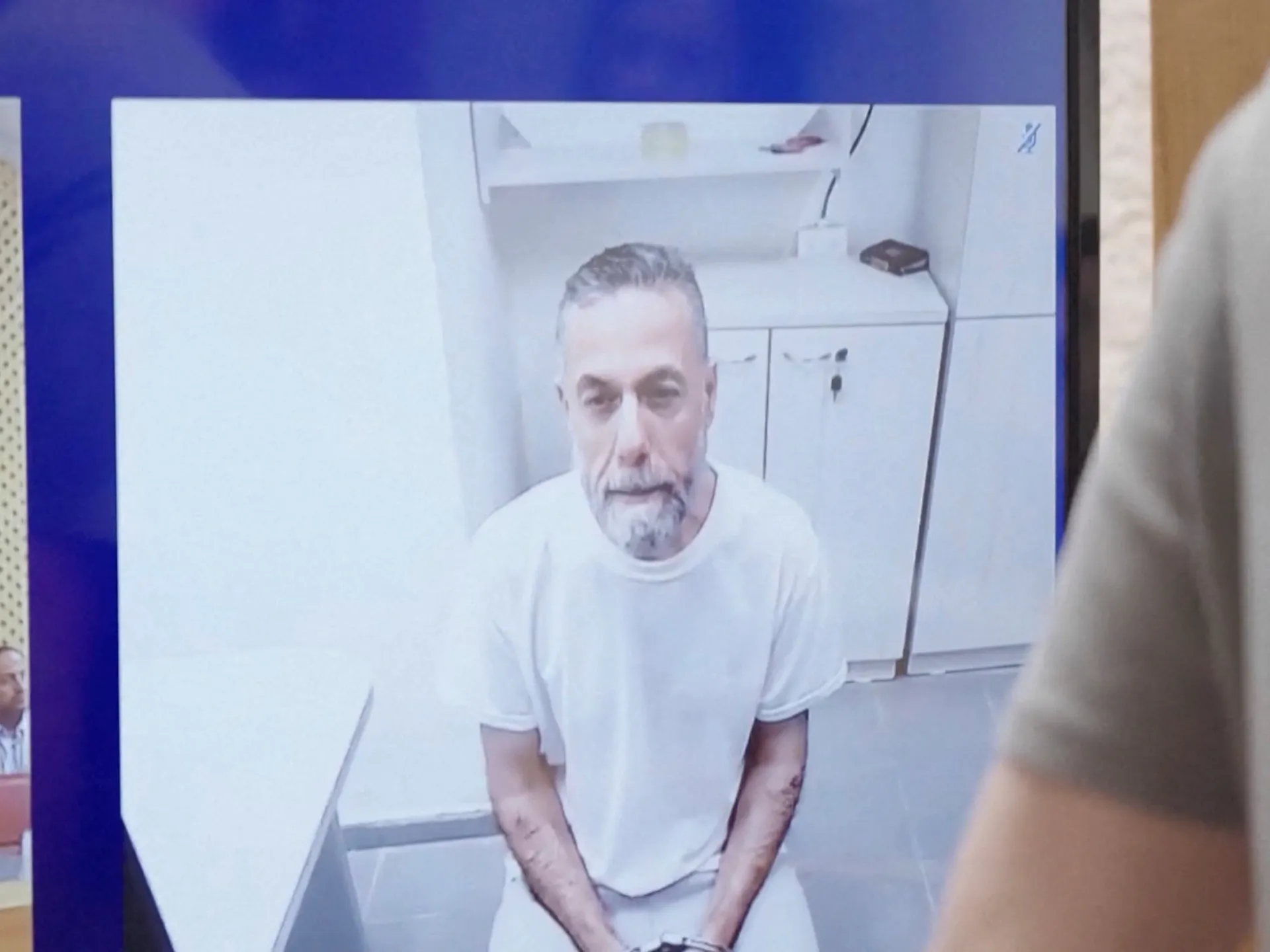
More than 1,700 healthcare workers have been killed during the genocide in Gaza. Israel has detained hundreds more without charges. Doctors, nurses and paramedics who stayed to treat the wounded have themselves become casualties of this war.
When medical staff are killed, imprisoned or disappeared, it is not only they who pay the price. Patients lose the people they rely on to keep them alive.
This is something delegates who gather in Rotterdam this week for the General Assembly of the World Medical Association (WMA) must remember. The fate of their Palestinian colleagues should be put on the table, not as a debating point, but as a test of whether the world’s governing body of medical ethics still means what it says.
The WMA already recognised the seriousness of these issues last year by adopting a resolution on the protection of healthcare in conflict. That was an important step and a welcome reaffirmation of the principles of medical neutrality. The challenge now is to ensure this is followed by the commitment of every medical association to explicitly support it and to use its influence to pressure governments to act.
If the WMA Assembly needs a single face for this file, it could be the one of Dr Hussam Abu Safia, the paediatrician who was the head of Kamal Adwan Hospital, the last functioning hospital in northern Gaza until Israeli forces stormed it in December 2024.
He’s been held now for more than 22 months without charge under Israel’s Incarceration of Unlawful Combatants Law, which permits indefinite detentions. He reportedly continues to endure prolonged solitary confinement, beatings, severe weight loss and untreated pre-existing conditions. An international petition for his release has drawn the signatures of more than 970 medical professionals from 41 countries.
Alongside him stands Dr Mazen al-Rantisi, the 71-year-old family physician from Ramallah in the occupied West Bank, known as the “doctor of the poor”. He was arrested in June in a predawn raid on his home.
In addition, our longtime Doctors Without Borders (MSF) colleague, Dr Mohammed Hassan Ali Obeid, a respected 43-year-old Palestinian orthopaedic surgeon and father of three children, has been detained under the Unlawful Combatants Law in Israel for more than 600 days without charge.
Although detained health workers have been released, more than 80 remain in Israeli custody alongside at least a dozen arrested from the West Bank.
The World Health Organization (WHO) has recorded 1,000 attacks on healthcare, which have resulted in more than 1,000 deaths and 1,700 injuries in Gaza since October 7, 2023. Roughly 90 percent of Gaza’s health infrastructure has been destroyed or damaged. In August 2025, United Nations experts stated that the systematic destruction of the health system amounts to “medicide”.
In the West Bank, where no wartime emergency provides cover, the WHO also documented more than 1,000 attacks on healthcare since October 7, 2023, with 42 deaths and at least 218 injuries.
Ambulances are stopped at checkpoints and their crews taken. Medics trying to reach people injured in settler attacks have themselves been obstructed. Dialysis and oncologic patients stay home because the checkpoints make the journey to treatment impossible. Healthcare workers have been shot, detained and killed during Israeli military raids.
All of this represents Israel’s deliberate and systematic endeavour to dismantle Palestinians’ capacity to provide care. This is consistent with its clear and blatant disregard for Palestinian life.
The WMA Assembly should speak plainly about what is happening. It should call publicly for the release of detained Palestinian doctors, including Abu Safia, al-Rantisi and Obeid. It should press for independent access to those still being held. And it should back independent investigations into attacks on healthcare in Gaza and the West Bank with the findings made public regardless of where they lead.
This is an opportunity to collectively pressure fellow medical associations, political authorities and any relevant bodies to take action.
What lies before the Rotterdam assembly is a duty. One that reaffirms loudly, structurally, universally the founding proposition of the WMA: that membership carries an ethical responsibility, which does not flex with geography or alliances.
Healthcare workers are not targets. Either a white coat is worth protecting everywhere, or it is protected nowhere. The test is not simply whether we affirm these principles, but whether we uphold them when it matters most.
The views expressed in this article are the author’s own and do not necessarily reflect Al Jazeera’s editorial stance.


Win a luxurious 2 night stay in the stunning Town Hall Hotel
Looking for the ultimate East London escape? We’ve teamed up with the award-winning Town Hall Hotel in Bethnal Green to give one lucky reader and a guest the chance to win a stylish two-night stay, complete with daily breakfast and dinner at the acclaimed Elis .
Housed inside the former Edwardian Bethnal Green Town Hall, this Grade-II listed landmark seamlessly blends grand historic architecture with cutting-edge modern design. Step inside to discover sweeping marble staircases, intricate Art Deco detailing, and a striking glass-and-steel extension—creating a boutique retreat like no other.
Experience the best of East London
Positioned right in the energetic heart of Bethnal Green, Town Hall Hotel is perfectly placed for exploring East London’s vibrant culture from the independent boutiques of Shoreditch, to the iconic Columbia Road Flower Market and historic Brick Lane.
When you’re not out exploring, unwind in the hotel’s breath taking 14-metre indoor heated swimming pool, squeeze in a session at the gym, or relax with a cocktail at the bar.
What you can win:
For your chance to win simply fill in the form below. if you can’t see the form, click here.
This competition closes on the 15th November.

Aden, Yemen – In this coastal city long accustomed to sweltering, humid summers, the absence of electricity can reshape an entire day.
When the power cuts out, fans and air conditioners fall silent. Sleep becomes difficult. Students race to finish their homework before darkness arrives. Children spill onto the streets while young men drift towards the sea in search of moving air and cooler waters.
Inside hospitals, where treatment cannot be postponed until the lights come back on, electricity carries a different weight altogether.
Yemen’s power crisis predates the current war. Even before the conflict, only about 55 percent of the population had access to electricity from all sources, which is among the lowest rates in the Middle East and North Africa.
Since 2015, damage to infrastructure, fuel shortages and ageing generation and distribution systems have left supplies even more fragile.
In Aden, power stations continue to face repeated shutdowns, leaving residents without electricity for long periods. Insurance premium increases on tankers carrying fuel to Aden have also reportedly made the crisis worse.

An assessment by the International Monetary Fund (IMF) published this year said Aden was receiving just two to six hours of electricity a day as structural weaknesses and fuel shortages caused frequent outages.
As the sun sets over the city, a second part of the day begins. Homes and businesses slip into darkness, punctuated only by small lights powered by batteries and solar systems. Residents often do not know how long the latest blackout will last, or how long the power will stay on once it comes back.
During the summer, when temperatures in Aden climb towards 40 degrees Celsius (104 degrees Fahrenheit), the consequences are hard to escape. Residents in the city interviewed in the middle of the year said their homes had become almost unbearable during the prolonged power cuts that plague the city. The heat does not always disappear when the sun goes down.

“Sometimes the power comes back while we are asleep, so we wake up to use it. Our lives have become tied to when electricity comes and goes,” one resident said. For her family, an outage is measured not just in hours but in problems. Children are unable to sleep, food spoils in warm refrigerators and housework must wait.
When the heat inside becomes too much, Youssef heads for the coast. The sea, he said, is no longer just a place of recreation but a refuge from the unbearable heat of the city.
“When the electricity is off for hours, it is very difficult to stay inside,” he said. “There is no fan and no air conditioning, and the humidity makes the heat worse, so we come to the sea.”
Towards the end of the day, young men and families gather along the waterfront. Some swim. Others simply sit beside the water and wait for the city to cool. But the sea cannot solve Aden’s electricity crisis. Hours later, Youssef returns home and sometimes finds the house exactly as he left it.
“Sometimes we get back and the power is still out, and we start waiting all over again,” he said.
For children like Mohammed, Saeed and Abdullah, blackouts have changed where childhood takes place. When their homes become too hot, they move into the street, running between houses or sitting with other children until late.

“It gets hot inside the house, so we come down and play in the street,” one of the boys said. “We play football or sit with our friends. Outside is better when the electricity is off.”
For them, a blackout is not an extraordinary event. It is part of the life they have grown up with.
The effects follow them into the classroom. In Aden, the United Nations Development Programme documented more than 7,000 students and teachers struggling in dark, stifling classrooms during power cuts. The installation of solar systems at eight schools and an education office has helped. One teacher reported that some students had fainted due to the heat.
At home, preparing for exams can depend on a rechargeable lamp or a small solar system if they have one.
In hospitals, there is no option but to simply wait out the darkness. Operating theatres, intensive care units, laboratories, medical refrigerators and dialysis machines all depend on continuous power.
The World Health Organization (WHO) says recurring power cuts disrupt lifesaving health services across Yemen, forcing facilities to rely on combinations of grid electricity, generators and solar systems.
In 2025, the WHO supplied about 4.33 million litres (1.14 million gallons) of fuel to 177 health facilities across the country to keep generators and essential equipment running.

Zeina Ahmed, a kidney patient, watches tubes carry her blood to a dialysis machine.
“For people at home, a power cut means heat and darkness. For us here, the first thing we think about is whether we will be able to have our dialysis or not,” she said.
“I come to the hospital knowing that I need this session. If it is delayed, I keep thinking about when I will get it and whether the machines will continue to work.”
After years of unreliable grid supply, solar panels, batteries and generators have become familiar parts of Yemen’s landscape.
They sit on rooftops, providing power to the homes, businesses and schools that can afford them.
More than half of Yemen’s homes now rely on solar power in some form, according to the WHO, while hospitals and other health facilities are increasingly adopting solar systems to keep essential services running.
Families who can afford to buy larger panels and batteries can power more appliances. Others might have just enough electricity for a light, a fan or a phone charger – a fragile shield against the dark and the heat.


Inside Coronation Street Christina star’s life from marrying co-star to famous brother
Amy Robbins has become a firm favourite playing Christina Boyd on Coronation Street – but what do we know about her life?
Actress Amy joined the ITV soap in 2023 as Christina, the mother of Daisy Midgeley (Charlotte Jordan). Since then, Christina has become a regular and has been involved in several big storylines too.
From her devious catfishing scheme to finding love with undertaker George Shuttleworth (Tony Maudsley), her time in Weatherfield has not been short of drama.
Especially at the moment, as it was recently revealed that Christina’s long-lost granddaughter Lucy Parkinson (Anya Dewin) is living on the cobbles. And in Monday’s episode (October 5), Christina tries to get to know Lucy, who is unaware of the truth.
In real life though, Christina star Amy’s life couldn’t be more different from her on-screen Weatherfield alter-ego’s… Here, we’re taking a look inside the soap favourite’s life.
Amy Robbins boasts an extensive television portfolio spanning many years. The RADA-educated star has featured in programmes.
These include Where the Heart Is, Heartbeat, Hollyoaks, EastEnders, Holby City, Doctors, and even Emmerdale. She appeared on the ITV soap in 2022, playing the defence barrister in the court case of the village serial killer Meena Jutla (Paige Sandhu).
Amy is loved-up with her husband and fellow actor Robert Daws whose career spans almost 50 years. Robert has appeared in the likes of Death in Paradise, Holby City an he played Tuppy Glossop in ITV’s comedy Jeeves and Wooster from 1990 to 1993.
Robert also appeared on Coronation Street in 2010 playing Tom Hughes. As for Amy and Robert, the pair started dating while working on ITV medical drama The Royal in which Amy played Dr. Jill Weatherill and Robert played her on-screen husband Dr Gordon.
Talking about their romance, Amy told The Mirror in 2007: “We were friends for a long time. But I just knew I wanted to be with him. We are like two sides of the same person and have a similar outlook on life. We are both big family people and put our families first. People even say that we look alike.”
Amy and Robert also share two daughters, Elizabeth and May. However, according to Amy her first experience of childbirth was traumatic. She added to the publication: “It was a nightmare. I remember going into the labour ward and thinking I’d gone into hell and all these women were being tortured.
Amy belongs to a remarkably gifted theatrical family. Amy’s sibling Ted previously enjoyed his moment in Corrie’s spotlight, appearing in the programme seven years ago as Mary Taylor’s romantic interest, Brendan Finch.
Nevertheless, he’s equally recognised for his contributions to productions including Calendar Girls, The Slammer, Diddy Movies, and Benidorm. In 2023, Amy revealed the guidance Ted offered her after discovering she’d secured a role in the popular ITV soap.
She told The Mirror: “He told me not to underestimate the feeling of standing in the Rovers for the first time. He said it would be overwhelming, and he was right.
“His other piece of advice was not to call William Roache ‘Ken’ like he did. Ted bumped into William and accidentally said ‘hello Mr Barlow’.”
Meanwhile, Amy’s sister, Kate Robbins, is also a recognisable face, and the duo featured together in the 1986 sketch programme Robbins.
Kate has appeared on screen in programmes including Spitting Image, After Life, and EastEnders, whilst her daughter is I’m A Celeb and Rivals star, Emily Atack.
But that’s not everything, as Amy’s first cousin once removed is The Beatles icon Paul McCartney. Paul is Amy’s mum’s cousin, and she’s spoken warmly of him, stating: “He’s everything you would hope him to be, genuinely lovely.”
Coronation Street airs Monday to Friday at 8:30pm on ITV1 and ITVX

WASHINGTON — Late September in the Oval Office, President Trump declared, “Iran will never have a nuclear weapon. We’re gonna win that war very soon.”
It wasn’t the first time he’s described the hostilities as “war.”
On Feb. 28, the day U.S. and Israeli began bombarding Iran, he warned that “the lives of courageous American heroes may be lost, and we may have casualties. That often happens in war, but we’re doing this not for now. We’re doing this for the future, and it is a noble mission.”
But throughout seven months of back-and-forth strikes with Iran, Trump administration officials, and sometimes Trump himself, have performed verbal acrobatics to avoid the “W” word.

(Pool / Getty Images)
Senior administration officials loosely tossed around “war” during the first stages of conflict, but with polls showing the war in unpopular and congressional support waning, “war” and even “Operation Epic Fury” have become taboo among members of the Trump administration.
Trump has called attacks on Iran a “military operation,” “military decimation,” “excursion” and “skirmish.”
At a White House press briefing last month, Vice President JD Vance attempted to clear the air when a reporter asked about a potential end to what she called a “war in Iran.”
“I wouldn’t call it a war right now,” Vance said. “Major combat operations lasted for about six weeks.”

Vice President JD Vance, addressing reporters at the White House on Sept. 3, said, “I wouldn’t call it a war right now” when asked about the conflict with Iran.
(Chip Somodevilla / Getty Images)
Defense Secretary Pete Hegseth tread carefully in front of the Senate Appropriations Committee in July, repeatedly referring to a “conflict” in Iran that needed additional funding to continue.
On May 5, during the first of two delicate ceasefires with Iran, Secretary of State Marco Rubio announced an end to the objectives laid out in Operation Epic Fury and the beginning of “Project Freedom” — an effort to escort merchant ships through the Strait of Hormuz.
In April, Trump announced the blockade of Iranian ports. When asked about whether the blockade constituted an act of war, Rubio replied, “That’s not an act of war, that’s a defensive measure. It’s a counter to what they have decided to do.”
Senior Trump officials have maintained that the conflict can no longer be viewed as war because the intensity of strikes between the two countries has been reduced.
The “end” of Operation Epic Fury, the name Trump used when he announced hostilities on Feb. 28, was declared on May 5 — 60 days after the fighting began.
The timing was no coincidence. Under the War Powers Resolution of 1973, a president must cease all hostilities abroad after 60 days if there is no congressional declaration of war.
Under the Constitution, only Congress declares war, but past presidents have routinely circumvented this rule by exercising their authority to direct the military and initiate strikes on targeted nations.
Nearly every modern president, from Dwight D. Eisenhower to Trump, has used this justification to undertake military action without the declaratory approval of Congress.
Congress can also choose to approve an Authorization for Use of Military Force, which grants the president legal authority to conduct military operations overseas.
Unless Congress sets a time limit on the authorization, authority to use the legal justification to launch military strikes can theoretically span multiple administrations.
Rep. Jamie Raskin (D-Md.), a former constitutional law professor at American University, said that presidents of both parties have avoided the term “war” when attempting to evade congressional approval of hostile action abroad.
“Trump has followed some of his predecessors in playing word games with the war power,” Raskin said. “What makes his case so extreme is that he proudly described it as a war and depicted it in glorified military terms.”
In March, seven days into the fighting, Trump said, “The war itself is going unbelievably. It’s as good as it can be.”
Congress has not officially declared war since World War II. The Vietnam War, the invasion of Afghanistan and both wars in Iraq were all approved by Congress under the umbrella of an Authorization for the Use of Military Force.
This year Congress has not approved such an authorization for the action with Iran. Fourteen Senate votes for a War Powers Resolution to curb Trump’s war efforts have failed in the chamber so far.
According to a CNN/SSRS poll last month, only 26% of Americans approve of the Trump administration’s handling of the Iran war.
Raskin said that he believes Trump’s terminology has shifted with the public mood, adding that he hasn’t heard any of his Republican colleagues “play along with the semantic games.”
“When things have turned south in the fortunes of this war, he has tried to pretend it’s something else,” Raskin said. “I think that has just further enraged the population.”
The administration’s declaration that Operation Epic Fury had concluded echoed May 2003, when then-President George W. Bush stood in front of a banner reading “Mission Accomplished” aboard the USS Abraham Lincoln, approximately six weeks after Operation Iraqi Freedom began.
“Major combat operations in Iraq have ended,” Bush said. “And now our coalition is engaged in securing and reconstructing that country.”

President George W. Bush speaks aboard the aircraft carrier USS Abraham Lincoln off the California coast on May 1, 2003.
(J. Scott Applewhite/AP)
Despite the victory lap, combat operations in Iraq and across the Middle East continued through the aughts. The Iraq war wouldn’t officially end until 2011, with President Obama’s signature.
Obama himself relied heavily on the 2001 Authorization for the Use of Military Force — passed by Congress under Bush — in his military campaign against Islamic State during his presidency.
According to Council on Foreign Relations data, Obama launched 542 drone strikes and killed 3,797 people in Yemen, Pakistan and Somalia without renewed approval from Congress.
A case more analogous to Trump’s comes in former President Truman’s unilateral decision to deploy U.S. troops to Korea in 1950. The Truman administration forwent congressional approval altogether and used United Nations Security Council resolutions to justify the intervention against Communist forces in the north, according to a White House news release from the time.
There were many critics of this exercise of executive war powers, most notably, Ohio Republican Sen. Robert A. Taft, who argued that Truman had usurped congressional war powers.
However, that Congress still provided monetary support, granting Truman military funds and extensions to the draft to raise additional troops for the Korean War effort. According to historical Gallup polls, 78% of Americans in 1950 approved of U.S. intervention in Korea.
While Vance and other administration officials continue to avoid “war,” it does slip out now and then. Trump has been, perhaps, the most discordant messenger of the administration when discussing Iran.
After referring to the “war” on social media and public interviews more than a dozen times, Trump backed Vance’s comments about the Iran war no longer being active as he spoke to reporters in the Oval Office in September. He refuses to call the conflict a “war,” Trump said, because “you are supposed to get approval.”
“I call it a military conflict, because it’s small potatoes for us,” Trump said.

Northern Ireland’s Glenn Irwin has been discharged from hospital after crashing in Sunday’s British Superbike round at Donington Park.
The 36-year-old was moved to Queen’s Medical Centre in Nottingham after the incident because of “concern regarding a possible spinal fracture”.
However, there was a positive update from the British Superbike Championship.
It said that Irwin been “pronounced clear and discharged and will be reviewed for fitness to ride at Brands Hatch”.
Irwin crashed on the penultimate lap of the third BSB race of the weekend at Starkey’s Bridge.
He was assessed and treated at the medial centre at the circuit, and was conscious and stable throughout.
It is the second time that the Ducati rider has been taken to hospital after a crash this season.
Irwin sustained pelvic and neck injuries in a crash at Snetterton in July and missed the two remaining races that weekend.
BSB leader Kyle Ryde won the opening two races of the weekend at Donington but Scott Redding clinched the third and final outing to take the championship to the final weekend at Brands Hatch from 17-18 October.

Palestinian mothers are finding it increasingly difficult to breastfeed their babies in Gaza. After three years of Israel’s genocidal war, women suffer malnutrition, displacement and poor healthcare, yet still strive to nourish their infants.
Published On 5 Oct 20265 Oct 2026
Share

AN island in Europe has already lost thousands of tourists after Ryanair axed all flights there earlier this year.
The budget airline previously operated flights to the Azores in Portugal, having launched in 2015.
However, they confirmed last year that they would be scrapping them all with the last flight taking place on March 28.
The cancellations were due to airport fees, Ryanair said, as well as environment taxes in Europe.
The removal of Ryanair flights – which also included a number of routes from the UK – has left just British Airways operating flights, along with European airlines TAP and Azores Airlines.
Most of these operate from mainland Portugal.
And new figures have found that the loss of Ryanair passengers has seen a drop in tourists of 100,000 already.
According to the Regional Statistics Service of the Azores (SREA), passengers arriving at the island airport dropped by 103,766 between April and August.
And there are fears this could increase even more, with projections of up to “391,000 overnight stays” lost a year.

Brits wanting to fly to the island from the UK can now only fly with British Airways, which runes flights from London Heathrow between April and October.
Otherwise alternative routes are to fly to Portugal with a connecting flight from Lisbon or Faro.

ONE of the longest piers in the UK has unveiled its latest restoration update after being forced to close four years ago.
Southport Pier in Merseyside has been closed since 2022 after being deemed unsafe but is currently undergoing a huge £20million restoration project.
As part of the project, sections of the pier are being stripped back including the decking.
There will also be replacement steelwork, such as restoring the existing handrails and tramlines.
A total of 27 lighting arches have been removed as well as a half-way house and kiosk that have been taken down.
The pier, which is one of the longest in the UK and dates back to 1860, will undergo construction and reconstruction work until around September next year.
Read more on travel inspo
Sefton Council previously said: “The first task contractors will have is to assess the current condition of the existing paintwork on the structure’s columns. We want to ascertain if there has been any deterioration since previous assessments were undertaken.
“If the condition is good it can be left as is, however if not we will also need to repaint the whole structure as part of the repair works.
“This pre-construction work will take at least five days to complete.
“Following this we’ll shortly be moving onto the ground investigation stage within the coming weeks, which checks the stability of the ground underneath and around the Pier for materials like scaffolding.”

The pier originally opened in 1860 but the pavilion was destroyed in 1897 by a fire.
Another fire damaged the deck in 1959.
Then in 1975, it was awarded a Grade II listed status and a £7million tramway was added in 2002 running along the pier.
Notably figures associated with the pier include Charlie Chaplin, who performed there during his early career.
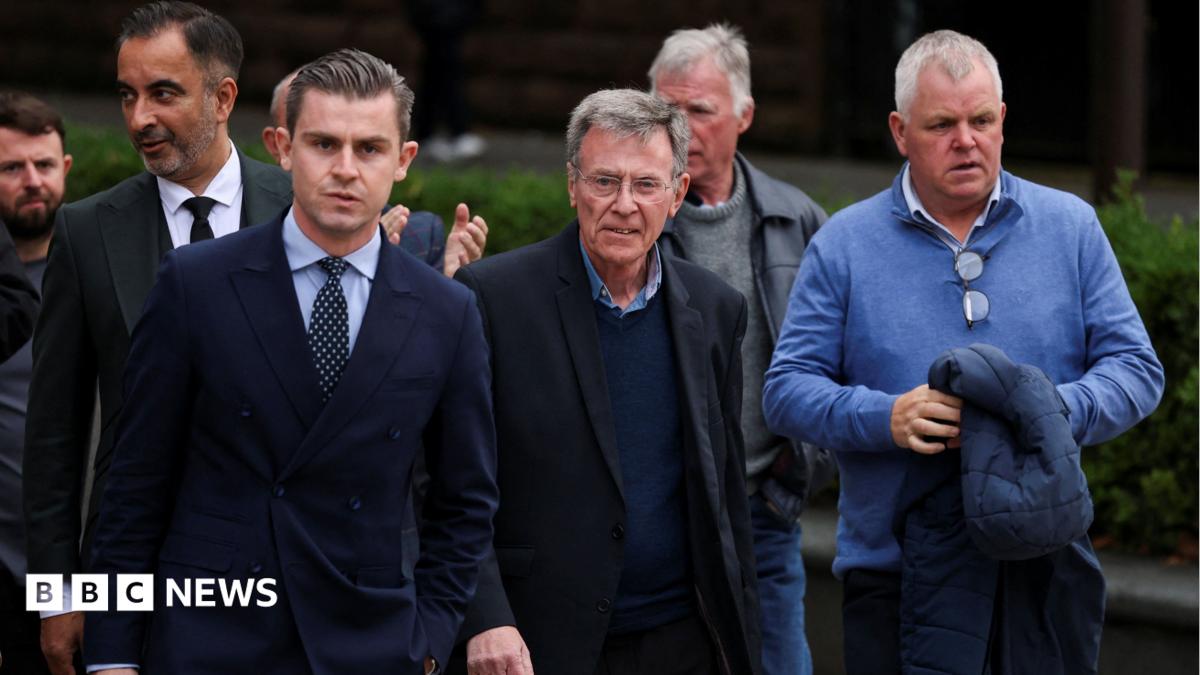
A challenge to the decision to allow a controversial Orange Order parade to go down a predominantly nationalist road is being heard in court.
The deadlock over the proposed march in Portadown – opposed by residents of the Garvaghy Road – has lasted since last Sunday morning.
The stalemate has reopened what was once the most bitter parading dispute in Northern Ireland, with stand-offs in the mid-to-late 90s accompanied by riots, roadblocks and killings.
The fresh Court of Appeal application argues that the Parades Commission, the organisation that approved the march, had “materially misdirected itself” on the police assessment of the potential for disorder.
The application also said the commission had not given an “accurate representation” of PSNI evidence in its decision.
The Garvaghy Road Residents Coalition (GRRC) and their legal representatives arrived at the court on Monday morning.
Loyalist activist Jamie Bryson, who has been acting as legal advisor to the Portadown District, Democratic Unionist Party (DUP) MP Carla Lockhart and Orange Order legal representatives also arrived.
The hearing began in Belfast at about 10:30 BST.

NORTH West was seen towering over her glam step-mum Bianca Censori, as they made a rare family appearance with Kanye West at a festival.
The rapper, 49, shares his eldest child, 13, along with Saint, 10, Chicago, eight, and Psalm, seven, with his ex-wife Kim Kardashian, 45.
The teenage reality star, who is famed for her family’s show The Kardashians, stepped out at ComplexCon with her famous dad and his wife.
Arriving at the Los Angeles Convention Centre for the event, and flanked by a 10-strong security team, the trio looked happy and relaxed.
With her striking blue hair and full face of heavy make-up, North looked older than her 13 years, as she towered over her step mum Bianca Censori, 31.
The young star’s dad’s wife also looked glam and was wearing a lot more clothes for the occasion than she usually does.
Read More about Kardashians
The trio’s appearance came after North’s mum Kim spoke about her concerns over her kids growing up in the spotlight – particularly North
The reality queen’s eldest is currently riding high as a TikTok star, and is also following in her father Kanye West‘s footsteps by forging a music career.
Speaking to the Sunday Times in the US, mum-of-four Kim, who is dating F1 superstar Lewis Hamilton, 41, said: “I do worry about it. Each kid does what they’re comfortable with.
“So, my little ones come around when I’m filming but they don’t really do storylines.
“North loves it a little bit more than the rest. I hold her back.
“All she wants to do is forward-facing projects.
“And so it’s like us really kind of trying to savour those moments and not doing everything that comes her way, so we can really make sure that we manage it the right way.”

Major executive moves and leadership changes across the finance industry.
This article appears in the September 2026 issue of Global Finance Magazine.

The World Bank Group appointed Michael Kremer to be the organization’s chief economist and senior vice president for development economics.
Most recently, he served as director of the University of Chicago’s Development Innovation Lab, where he researched economic growth, technological change, and development economics. Kermer, Abhijit Banerjee, and Esther Duflo jointly won the Nobel Prize in Economics in 2019 for their “experimental approach to alleviating global poverty.
Kremer “has spent his career not just identifying what works in development but proving it at scale,” said Ajay Banga, President of the World Bank Group. “That is exactly the kind of thinking we need.” —Rob Daly

After more than a decade at HSBC, Pam Kaur will step down as Group CFO, a position she has held since January 2025, before the bank’s 2027 annual meeting.
She will assume an advisory role to support Group CEO Georges Elherdy and ensure a smooth transition for her successor.
Kaur began her career in 2013 as group head of internal audit before advancing to the head of wholesale market and credit risk, group chief risk officer, group chief risk and compliance officer, and eventually group CFO.
Brendan Nelson, HSBC Group Holding plc chairman, praised Kaur for her “strong judgment and integrity.” She will leave the Group CFO role with the firm’s “deepest thanks and best wishes,” he added. —Rob Daly

J.P. Morgan named Nelle Miller and William Sinclair as co-CEOs of its U.S. Private Bank in September.
The pair leads the firm’s $2.4 trillion U.S. private banking business, overseeing more than 5,500 professionals across 57 offices who serve the wealthiest individuals, family offices, and institutions nationwide.
The appointments follow the July 2025 naming of David Frame as global CEO of J.P. Morgan Private Bank. Miller and Sinclair joined in 2002 and 2007, respectively. Miller currently heads the firm’s New York market, while Sinclair leads the Financial Leaders Group.
“We have a fantastic franchise, with exceptional people and an unparalleled breadth of capabilities,” Sinclair said. —Anthony Noto

IA Global Capital, a technology-focused investment bank with offices in New York and London, announced that Jules Wurlod has joined the firm as managing director.
Wurlod has served as M&A director for circular businesses at Houlihan Lokey since 2020, focusing on circular technology services such as device-as-a-service, IT asset management, IT asset disposition, recommerce, and trade-in. He previously worked as a project leader at Boston Consulting Group, advising Fortune 500 companies and government officials across Europe and the Middle East on corporate strategy and sustainability. —Anthony Noto


