THE best holiday parks and resorts around the UK have been announced from luxury resorts to lakeside lodges with incredible views.
Which? has found the top stays by looking at price, accommodation, cleanliness, food and drink to value for money – so who is taking the top spot?
Some of the best holiday parks have lakeside lodges – like Keswick Reach Lodge RetreatCredit: TripAdvisorOthers like Hoburne Cotswold Reach have outdoor poolsCredit: TripAdvisor
In Hopton-on-Sea, guests can choose to stay in cosy bungalows, hotel rooms, or go all out with a stay in the Penthouse which has views over the Resort and out towards the sea.
At Five Lakes in Essex, there’s a choice of The Village, which is set within the grounds of the holiday park, hotel rooms and suites.
The holiday park came at the top of the table for recommended resorts with an average price of £87pppn.
It received five-stars for customer service, along with facilities, food and drink.
Second on Which?’s list is Hoburne Holidays which has seven resorts across the country in Dorset, Hampshire, the New Forest, Devon, the Cotswolds and Somerset.
Hoburne Park in Dorset was the very first to open in 1912 which is right by the coast and has cosy caravans and lodges.
Potters Resorts came in first place with its two resorts in Norfolk and EssexCredit: Potters Resorts Hopton on Sea
A few minutes away is the soft sandy Avon beach and further along is Mudeford Quay and Hengistbury Head.
When it comes to activities, there is a heated indoor pool, seasonal outdoor pool, adventure golf, games area, paddle boats, crafts as well as steam room sauna and a gym.
Another popular resort is in Gloucestershire, called Cotswolds Reach it has lovely lodges to settle down in – and a heated outdoor pool.
The average price starts from £63pppn and it received a customer score of 81 per cent.
Its highest star rating was in food and drink, followed by value for money, facilities, activities and entertainment, cleanliness and quality of accommodation – for which it got four-stars.
Darwin Escapes came third on the list – and some of its holiday parks have incredible lakeside lodges with mountain views.
Keswick Reach Lodge Retreat is a great spot for anyone wanting to see more of the Lake District.
There’s an on-site restaurant, spa, relaxation suite which you can book to have for yourself, a gym, and a corner shop.
Some of the self-catered, countryside-retreat style lodges have wooden beam ceilings and a woodburner with a deck to enjoy in the summer, even hot tubs.
Darwin Escapes had an average price of £50pppn with a customer score of 80 per cent – a family of four can book a lodge at Keswick Reach Lodge Retreat in November from £195 or £12.18pppn.
Dylan Coastal Resort in Wales looks over the Taf EstuaryCredit: LandalSome lodges at the Dylan Coastal Resort even have hut tubsCredit: Landal
Landal Green Parks in fourth place was also recommended by Which? and one of its most impressive holiday parks is Dylan Coastal Resort in South Wales.
The holiday lodges sit high up on a hilltop looking out over the Taf Estuary which make for very impressive views.
The lodges range from 1-4 person to six- person stays – and some with hot tubs too.
Below the holiday lodges is Milk Wood House, which is home to facilities including an infinity pool, outdoor spa area, and lots of therapy treatments.
It’s also where guests will find the bar and restaurant which can be enjoyed on one of the three terraces.
Nearby, guests can try out watersports and bouldering at Wild Lakes, explore the National Botanical Garde, n and the beautiful fishing village of Tenby.
It came fourth on the table with an average price of £58pppn and a customer score of 80 per cent.
Other well-known brands like Away Resorts were also mentioned – it came in seventh on the list with a customer score of 75 per cent.
In the last five places on the table were Center Parcs, Haven Holiday Parks, Parkdean, Butlins and Pontins.
These are the full list of the best UK holiday parks from Which?
RIYADH: Egypt’s annual nationwide inflation rate eased to 12.7 percent in August from 13 percent in the previous month, as lower food prices offset increases in electricity, housing and other household costs.
Egypt continued to experience faster price growth than several regional peers, although the latest available comparative readings are for July rather than August.
Saudi Arabia’s annual inflation was 1.8 percent in July, while Jordan’s was 2.7 percent, according to official data from the respective countries. Morocco recorded a 0.6 percent annual decline in consumer prices.
The International Monetary Fund expects Egypt’s inflation to rise to 16.7 percent in the second half of 2026, reflecting higher energy prices, exchange-rate depreciation and unfavorable base effects.
In its latest report, CAPMAS stated: “The food and beverages division recorded a decrease of 1.2 percent due to a 0.1 percent decrease in the prices of cereals and bread, a 1.5 percent decrease in the prices of meat and poultry, a 0.1 percent decrease in the prices of fish and seafood, and a 7 percent decrease in the prices of vegetables.”
Housing costs climb
Housing, water, electricity, gas and other fuels rose 1.9 percent during the month. Electricity, gas and fuel prices increased 4.3 percent, while actual rents rose 0.8 percent and housing maintenance costs increased 0.5 percent.
Prices for furnishings and household equipment rose 0.7 percent, while clothing increased 0.5 percent, healthcare 0.4 percent, transport 0.2 percent, and restaurants and hotels 0.5 percent.
On an annual basis, housing, water, electricity, gas and other fuels recorded the largest increase, at 33 percent, with actual rents up 28 percent and electricity, gas and fuels rising 22.4 percent.
Transport costs increased 21.7 percent annually, while education rose 20 percent and recreation and culture increased 15.3 percent. Food and beverages prices rose 6.5 percent, with vegetable prices up 27.7 percent.
Monetary policy
The inflation data comes after the Central Bank of Egypt kept its key interest rates unchanged last month, with the overnight deposit rate at 19 percent and the lending rate at 20 percent. The main operation and discount rates were maintained at 19.5 percent.
The CBE expects headline inflation to accelerate through the third quarter because of unfavorable base effects before gradually declining from the first quarter of 2027. It expects inflation to converge toward its 7 percent target, plus or minus 2 percentage points, during the second half of 2027.
The central bank has warned that the inflation outlook remains exposed to risks from regional hostilities and a stronger-than-expected pass-through from fiscal consolidation measures.
The ITV show returned to screens this week following a lengthy break due to the changes made by the broadcaster this year.
Kaye Adams announced the show was going to take another break(Image: ITV)
Loose Women has been replaced in another schedule shake-up.
On Monday, the Loose Women panel members were thrilled when they returned to the ITV show after a lengthy break, due to the show being cut to 30 weeks of the year.
Presenter Ruth Langsford told viewers they were happy to be back, adding that they had ‘missed’ the show. However, after three days back, Loose Women has had another schedule change.
At the end of Wednesday’s show, Kaye Adams explained they weren’t going to be on for the rest of the week. She commented: “That is it for today and this week, we are off tomorrow and Friday for the racing.”
Although she told viewers that when the show returns, they’ll be joined by some familiar faces. Kaye continued: “We are back to normal, whatever that is, next week with two guest panellists joining us.
“Dragons’ Den star Emma Grede and Corrie’s Maria, Samia Longchambon. They’ll be here on the panel, we’ll see you at 12:30 on Monday.”
The show is taking a two-day hiatus as ITV covers the racing live from Doncaster, when viewers will see Ed Chamberlin and Francesca Cumani present coverage.
Before September, Loose Women was last on-air back in July as the presenters confirmed their lengthy break at the time, as Kaye told their fans: “We’re done for the summer.”
It comes after the Managing Director of ITV’s Media and Entertainment Division, Kevin Lygo, confirmed the broadcaster will see major changes in 2026 to its daytime scheduling.
Lorraine Kelly’s programme was cut back to 30 minutes as opposed to a full hour, and was also reduced to airing for 30 weeks on a seasonal schedule, similar to Loose Women.
During the weeks Lorraine isn’t on, fans have seen Good Morning Britain extended for an extra 30 minutes.
Speaking about the changes at the time, Kevin commented: “Daytime is a really important part of what we do, and these scheduling and production changes will enable us to continue to deliver a schedule providing viewers with the news, debate and discussion they love from the presenters they know and trust as well generating savingswhich will allow us to reinvest across the programme budget in other genres.
“These changes also allow us to consolidate our news operations and expand our national, international and regional news output and to build upon our proud history of trusted journalism at a time when our viewers need accurate, unbiased news coverage more than ever.”
LONDON: Prominent Israeli figures have welcomed British sanctions against illegal settlements in the occupied West Bank, The Guardian reported.
In a joint statement, they described the move as an “inevitable consequence” of their government’s actions.
Sanctions are being imposed “against Jewish terrorists, and not against the legitimacy of the state of Israel,” they said.
“There is no basis to the government’s response that the decision to impose sanctions against Jewish terrorists is an expression of antisemitism.”
Prof. David Harel, British-born president of the Israel Academy of Sciences and Humanities and a signatory to the statement, said the measures delivered urgently needed support for liberal Israelis who are trying to stop attacks on Palestinians and end the occupation.
“I personally would fight until my last breath against antisemitism and against anti-Israelism,” he told The Guardian. “But what is justified, and I do support, is being anti things that Israel is doing, and these days in particular what it is doing in the West Bank.
“Getting out of there (occupied Palestine), or, at least for the present, stopping these things from happening and starting to really talk about a two-state solution is not only good for the Palestinians. It’s not that we’re doing these poor people a favour. We’re doing a favour to ourselves, no less, maybe even more.”
Signatories to the statement include former Prime Minister Ehud Olmert; former commander of the Israeli military Dan Halutz; former ministers Yuli Tamir and Roni Bar-On; and former Ambassador to Germany Yoram Ben Zeev.
They wrote: “This decision is precisely what the state of Israel should have received in order to remove the disgrace of Jewish terrorism from the face of the country.”
Former diplomat Nadav Tamir also said the sanctions are good for Israel. “Any move to prevent annexation and ethnic cleansing of the Palestinians in the West Bank (and Gaza) is serving the long-term interests of the Zionist vision of Israel as the democratic homeland of the Jewish people,” he added. “It will help us to be more secure and moral.”
Avraham Burg, a former parliament speaker, said “like many Israelis and Palestinians, I am grateful for the courageous moral leadership” of UK Foreign Secretary Ed Miliband. “It’s a good beginning. Do not stop.”
Fourteen Israeli human rights organizations — including B’Tselem, Physicians for Human Rights Israel and Breaking the Silence — welcomed the sanctions.
“This is an important and necessary first step to meet states’ legal obligation,” they said in a statement. “We urge the international community to take further concrete measures to ensure that its relations with Israel no longer enable Israel’s settlement enterprise, forced displacement and ethnic cleansing in the occupied West Bank, or its broader assault on Palestinian human rights across all territories under its control.”
President Donald Trump pledged Wednesday to send every American adult $5,000 if Republicans retain control of the House and Senate in the midterm elections, an extraordinary gambit to reverse his party’s sagging fortunes in November.
The dubious promise would likely cost more than $1 trillion and require congressional approval, and would further exacerbate the country’s nearly $1.8 trillion annual budget deficit and concerns about inflation.
“If the Republicans win, you win with us and you get $5,000,” Trump said during the GOP’s midterm convention in Dallas. “It will be called the Trump Dividend.”
He likened the payments to a corporation’s distributions to shareholders, citing “our tremendous strength and success economically.”
Within an hour, Vice President JD Vance appeared to try to walk back Trump’s proposal — at least in part — by suggesting the dividend payments would not go to the wealthy. Vance suggested it could be paid for by U.S. tariff revenues, though the suggested payment dwarfs what the U.S. has taken in through the protectionist measures.
The White House did not respond to a message seeking details.
Congress would need to approve or otherwise acquiesce to the payment. The sum would far exceed U.S. tariff revenues even before the Supreme Court tossed much of the president’s tariff program last year.
The national debt last month topped $40 trillion for the first time.
Trump has frequently lamented that, during the modern era, the president’s party almost always loses seats in Congress during the midterms, and he has looked for unorthodox ways to defy the trend, including this week’s convention.
“We’re going to change that,” Trump said. “There’s no reason for it.”
Marc Goldwein, the senior policy director at the Committee for a Responsible Federal Budget, a think tank in Washington, said Trump has no authority send money to Americans without approval from Congress.
Goldwein added that dividends are something that companies pay when there’s a surplus, but the U.S. is running $2 trillion annual deficits and has $40 trillion in debt.
“The idea that we’ve had fiscal success is backwards and bordering on laughable,” he said. “We don’t have surpluses to give away.”
The move was reminiscent of billionaire Elon Musk’s efforts to buy votes in last year’s Wisconsin state Supreme Court race, where he handed out million-dollar checks to voters to try to boost a candidate who ultimately lost.
Trump has discussed the possibility before but has never tied it to his party’s electoral fortunes. Earlier this year, he proposed a $2,000 dividend and said he didn’t think he needed approval from Congress.
Get our L.A. Times Politics newsletter
The latest news, analysis and insights from our politics team.
By continuing, you agree to our Terms of Service, which include arbitration and a class action waiver. You agree that we and our third-party vendors may collect and use your information, including through cookies, pixels and similar technologies, for the purposes set forth in our Privacy Policy such as personalizing your experience and ads.
Last year, Trump gave members of the military a $1,776 check that he called a “warrior dividend.”
“I will get a bill ready so that we can get the Trump Dividend passed immediately after the November 3rd election,” Republican Sen. Bernie Moreno of Ohio wrote on X late Wednesday. “Because Republicans (and America) will win!”
A $5,000 check would give each American more money than they received in direct government payments from COVID-19 relief measures during Trump’s first term.
Trump’s proposal would be legal because the payment would go to everyone regardless of how they voted, or whether they voted at all, said New Mexico-based attorney John Day.
“This is a campaign promise,” Day said. “It’s not a payment to individuals to try to get them to vote in a particular way.”
Republicans are on defense as they look to defend their narrow House majority against strong headwinds. Trump is unpopular, and Americans overwhelmingly oppose the war in Iran. Even the Senate, which Republicans once were well-positioned to keep, is up for grabs.
Cooper writes for the Associated Press. Associated Press writers Lisa Mascaro and River Zhang contributed.
TRAVEL chaos caused by a major tech outage across all UK airports earlier this week has left thousands stranded – with many left out of pocket when booking back up flights and hotels.
An Air Traffic Control failure in the UK on Tuesday saw thousands of flights cancelled, resulting in travel chaos across the globe.
An Air Traffic Control issue in the UK left thousands of travellers stranded this weekCredit: EPA
Many have since been asking if they can claim compensation back, with flights both delayed and cancelled for days.
However, as the NATS issue was classed as an “extraordinary circumstance” travellers are not entitled to cash compensation.
Sign up for the Travel newsletter
Thank you!
The maximum compensation you can get is for long-haul flights which are delayed four hours or more, which would be £520.
This is only for when the problems are the caused by the airline, directly, however.
Lisa Minot, Head of Travel said: “Airlines are only required to give you compensation if the delay or cancellation is the airline’s fault, as in a technical failure on a plane or issues with crew.
“In this situation, where ATC is the reason for the chaos, there is unfortunately no compensation due.”
Yet, airlines do have a duty of care, so you can recoup some of your costs.
When affected by flight delays, airlines must provide travellers with food and drink as well as accommodation.
‘Care’ you should receive includes food and drink, two phone calls, accommodation and transport between the airport and where you are staying.
Usually, an airline will provide you with a voucher to get food or drink, however if a voucher isn’t provided, make sure you keep your receipts to claim back expenses incurred.
As the issue was outside of airlines’ control, it is class as an “extraordinary circumstance” meaning passengers cannot claim cash compensationCredit: EPA
While an airline might automatically book your accommodation when your flight is delayed or cancelled, sometimes you might be asked to book it yourself via its website or a dedicated app.
Although, it is advised to always ask airport staff before booking a hotel yourself.
If you pay for your own hotel, you must make sure to keep all your receipts so you can claim back your costs.
Airlines will cover a hotel with a reasonable price though, so don’t go booking a five-star stay.
Then head to your airline’s website and find their expenses claims page and fill out the form with the relevant details.
The CAA also recommends asking for an itemised receipt to show what you purchased and how much was spent on each thing.
Lisa added: “Check your insurance policy to see if you have any redress if you have incurred additional costs like missing a concert or unable to pick up car hire. You may be able to claim for that.
“Generally for delays, if an airline looks after you or provides you with food and drink or hotels, you cannot claim for the same costs against your travel insurance.”
A critical issue we ought to pay more attention to is the rapid urbanization seen across the Middle East and North Africa, which is undoubtedly reshaping the region’s demographic and economic landscapes.
Many people are attempting to find better economic opportunities, services and connectivity and, as a result, cities are expanding at unprecedented rates. Without doubt, this transformation is driving growth across MENA, but it has also intensified pressure on air quality.
The levels of fine particulate matter such as nitrogen oxides and other pollutants from vehicles, industry, construction and energy production now exceed safe thresholds in many major urban areas.
As a result, clean air is going to be one of the defining challenges of the region’s urban future. This issue should no longer be treated solely as an environmental or public health concern due to the fact it is increasingly a determinant of economic competitiveness, tourism appeal, quality of life and long-term urban attractiveness.
Data from recent global assessments point to the scale of the problem. The World Health Organization’s air quality guidelines state that the level of fine particulate matter of 2.5 micrometers or less in diameter should not exceed 5 micrograms per cubic meter. But many MENA cities record multiyear averages several times higher.
Addressing the challenge requires a practical, multipronged approach that major cities can initiate immediately
Dr. Majid Rafizadeh
For example, Cairo, Egypt’s megacity of more than 20 million residents, has frequently registered annual concentrations of about 40 micrograms per cubic meter. Baghdad has recorded levels of up to 44 micrograms per cubic meter. Kuwait City has also appeared among the higher-ranking capitals in regional assessments. Abu Dhabi and Doha have reported averages in the low-to-mid 30s, still well above WHO guidelines.
Analyses using the Air Quality Life Index framework indicate that more than 90 percent of the MENA region’s population lives in areas exceeding the WHO guideline, with residents in the most polluted zones potentially losing several years of life expectancy.
These elevated levels of particulates carry well-documented health consequences, such as increased rates of respiratory and cardiovascular disease and premature mortality.
But the implications extend far beyond health statistics. Air quality should be regarded as a material factor in the region’s economic competitiveness. Chronic exposure reduces labor productivity, with World Bank estimates placing the economic cost of air pollution in the Greater Cairo region alone at about 1.4 percent of Egypt’s gross domestic product.
Cities that fail to reverse pollution also become less attractive to skilled workers and international firms. Tourism and investment flows are similarly sensitive to this issue. The MENA region has invested heavily in positioning itself as a global destination for leisure, business and transit traffic. Poor air quality undermines visitor experiences, particularly for families, older travelers and those who are susceptible to respiratory issues.
Another issue is that the reduced quality of life caused by air pollution influences the domestic retention of educated people.
In short, clean air should be viewed as an input into the region’s broader development, rather than merely an environmental issue.
Addressing the challenge requires a practical, multipronged approach that major cities can initiate immediately. For example, expanding clean public transport ranks among the highest-impact measures. This means investing in metro and bus rapid transit systems, including electric bus fleets, to reduce reliance on private vehicles and cut emissions.
Cairo’s efforts to introduce electric buses and expand mass transit are a step in the right direction. Other actions to reduce vehicle emissions can include stricter fuel quality standards, the more widespread use of electric and hybrid vehicles, and the adoption of low-emission zones in city centers.
One significant move would be increasing green spaces, which offer both direct and indirect benefits. Urban vegetation cleans air, as the strategic expansion of parks, street trees and green corridors can lower pollutant concentrations. Transitioning to cleaner energy sources is also vital, as this lowers both particulate and gaseous emissions.
While public health gains are foundational, the economic, touristic and quality-of-life returns are equally consequential
Dr. Majid Rafizadeh
None of these steps constitute a quick fix. Air quality improvement is cumulative and requires sustained actions, policy, financing and public engagement. The alternative — continued high exposure — will increasingly constrain the outcomes cities seek: a healthier population, more productive workforce, vibrant tourism sector and competitive investment conditions.
Therefore, the central argument should be that clean air must be treated as a strategic priority because improvements compound over time and because air quality will shape the relative success of cities in the decades ahead.
While public health gains are foundational, the economic, touristic and quality-of-life returns are equally consequential. Cities that move without delay on issues such as cleaner transport, emissions standards, green infrastructure, planning and technology will position themselves more favorably for the future. Those that delay will face mounting costs in terms of health, productivity and attractiveness.
In a nutshell, clean air is critical to the future of the region and must not be viewed as merely an environmental concern. It is a foundational driver of sustained economic growth, tourism competitiveness, investment attractiveness, public health and overall quality of life. Taking it seriously now is not merely prudent environmental policy, it is an investment in the long-term viability and competitiveness of the region.
The renewed escalation in Yemen is no longer simply a Yemeni battlefield development. For Saudi Arabia, it is becoming a direct test of national security, economic resilience and the kingdom’s ability to prevent the wider regional war from spilling further across its borders.
The latest Houthi attacks have demonstrated this clearly. Missiles and drones have hit civilian and economic sites in Abha, Khamis Mushait, Jizan and Najran, injuring dozens of civilians and causing fires and temporary disruption at energy facilities. The attacks came as fighting intensified in Yemen and around the western coast, while the Houthis continued to threaten maritime traffic in the Red Sea and Bab al-Mandeb.
Saudi Arabia therefore faces two interconnected threats: Attacks on its territory and attempts to disrupt the maritime routes on which regional and international trade depends.
This creates a difficult strategic equation for Riyadh. Saudi Arabia has spent the past several years trying to move away from direct military involvement in Yemen and towards diplomacy, de-escalation and support for a political settlement. A return to an open-ended war would contradict that strategy and impose unnecessary political and economic costs.
But restraint cannot mean accepting repeated attacks on Saudi territory.
A different security environment
The security challenge today differs considerably from the first years of the Yemen war.
Saudi Arabia has strengthened its air and missile defences, improved coordination between its military and security institutions and accumulated considerable experience in countering drones and ballistic missiles. It is therefore much better prepared to defend its territory than it was a decade ago.
Yet the Houthi threat has also evolved.
The group possesses a combination of ballistic missiles, cruise missiles and increasingly sophisticated drones. Even when most incoming weapons are intercepted, relatively inexpensive systems can impose disproportionate defensive costs and create uncertainty around airports, industrial facilities, border communities and energy infrastructure.
This means Saudi security cannot depend on interception alone. No air defence system can guarantee a perfect shield indefinitely.
The strategic objective must therefore be deterrence: Convincing the Houthis that attacks on Saudi territory will impose costs greater than any political or military benefit they expect to obtain.
This does not necessarily require returning to the large-scale military campaign of previous years. Riyadh has more options today. These include intelligence operations, strengthening Yemeni government forces, improving border security, disrupting missile and drone supply networks and, where necessary, conducting proportionate operations against facilities directly involved in attacks on Saudi Arabia.
The distinction is important. Saudi Arabia does not need to choose between doing nothing and returning to a full-scale war.
The economic front
The economic consequences are equally important.
Saudi Arabia is one of the world’s largest energy exporters, which makes attacks on its oil infrastructure internationally significant even when physical damage is limited. The latest attacks affected energy facilities and contributed to renewed concern in already nervous global oil markets.
There is an apparent paradox here: Regional instability can push oil prices higher and temporarily increase Saudi oil revenues. But higher prices caused by war should not be confused with economic benefit.
Saudi Arabia’s economic strategy under Vision 2030 depends increasingly on stability, investment, tourism, logistics, technology and the development of major projects outside the oil sector. Persistent missile and drone attacks can raise insurance and transport costs and affect perceptions of regional risk even if the kingdom’s underlying economy remains strong.
The greater strategic concern is maritime security.
Saudi Arabia occupies a strategic position between two of the world’s most important energy corridors: The Strait of Hormuz to the east and Bab al-Mandeb to the west. Disruption of both routes represents a serious challenge not only for Saudi Arabia but for the global economy.
This is why the Red Sea dimension of the Yemen conflict is particularly important. Bab al-Mandeb connects the Indian Ocean with the Red Sea and the Suez Canal. A sustained Houthi ability to threaten shipping there would increase freight and insurance costs and potentially divert vessels around Africa.
Saudi Arabia, however, possesses an important strategic advantage: Its energy infrastructure is not completely dependent on the Gulf. The kingdom can transport significant quantities of oil through its East-West pipeline to terminals on the Red Sea. This provides an alternative to Hormuz and gives Riyadh greater strategic flexibility.
That advantage does not, however, eliminate Saudi Arabia’s exposure to insecurity elsewhere in the Red Sea, including around Bab al-Mandeb.
Protecting Bab al-Mandeb should therefore be understood not simply as a Saudi or Yemeni interest but as an international economic and security requirement.
Avoiding the Houthi trap
The greatest danger for Riyadh may be political rather than purely military.
The Houthis could benefit from drawing Saudi Arabia back into an extensive war. It would allow them to portray the conflict once again as a confrontation between Yemen and an external power rather than a struggle among Yemenis over the future of their state.
Saudi Arabia should avoid this trap.
Confronting the Houthis must remain fundamentally a Yemeni responsibility. The internationally recognised Yemeni government and its forces should carry the principal burden of confronting Houthi expansion on the ground, while Saudi Arabia provides political, economic, intelligence and defensive support.
This is particularly important on the western coast. If the Houthis consolidate their military position around strategic areas overlooking the Red Sea and Bab al-Mandeb, the consequences will extend far beyond Yemen.
The objective should not be to retake Sanaa through another large-scale air campaign or restart an indefinite regional war. It should be to prevent the Houthis from using military force to change the regional balance, threaten neighbouring states or threaten international maritime arteries.
Diplomacy backed by deterrence
Saudi policy is therefore likely to operate on several tracks simultaneously.
First, Riyadh will continue strengthening its air and missile defences and protecting critical infrastructure. Second, it can increase support for Yemeni government forces while avoiding unnecessary direct involvement in ground combat. Third, it will seek broader regional and international cooperation to secure the Red Sea and Bab al-Mandeb.
At the same time, diplomatic channels should remain open.
Saudi Arabia has repeatedly demonstrated its preference for a negotiated settlement in Yemen. But negotiations are sustainable only when both sides believe that escalation carries unacceptable costs.
Diplomacy, therefore, must be backed by credible military power.
Saudi Arabia has strong incentives to prevent Yemen from becoming another permanent front in the wider regional confrontation. The kingdom’s economic transformation requires stability, while its geopolitical interests require secure borders, uninterrupted energy exports and freedom of navigation.
But the same logic that encourages restraint also places limits on it.
If attacks on Saudi cities, civilians and energy infrastructure continue, Riyadh will increasingly regard the issue not as intervention in the Yemeni civil war but as the defence of Saudi territory.
That distinction will shape what comes next.
Saudi Arabia does not need another prolonged Yemen war. Nor does Yemen. But avoiding one requires restoring deterrence while preserving the possibility of a political settlement.
The most effective Saudi strategy, therefore, is neither unlimited escalation nor passive restraint. It is calibrated pressure: Defend the kingdom, strengthen legitimate Yemeni institutions, protect the Red Sea, keep diplomatic channels open and make clear that attacks on Saudi territory will carry consequences.
The views expressed in this article are the author’s own and do not necessarily reflect Al Jazeera’s editorial stance.
YOU don’t need a fancy First Class plane ticket to enjoy a luxurious airport lounge with a free buffet.
In fact, there’s a far easier way you could be chilling in a classy airport lounge on your next trip, without forking out thousands. Click here to find out how.
This travel hack costs less than £5 a month and will get you into glamorous airport loungesCredit: Getty
Save 20% on Priority Pass across 1,900+ airport lounges
We’ve all been there – sitting in a hard plastic chair at the airport gate with a packet of crisps and a bottle of water that cost you an arm and a leg.
Or worse, stressing out that your family meal is taking too long to arrive and you might need to leg it to the boarding gate.
Sign up for the Travel newsletter
Thank you!
Instead, with a Priority Pass you could be snuggling into a cosy sleep pod, kicking back on a comfy sofa or tucking into a complimentary meal.
The best part? Sun readers can bag 20% off a Priority Pass right now by clicking here.
Priority Pass members get access to over 1,900 airport lounges across the world. The lounges cover over 85% of the world’s top 100 airports, so you’re basically travelling like a First Class passenger on the cheap (before you reach the plane and turn right).
There’s complimentary food and drink across ALL lounges, which will already save you on having to fork out for an expensive airport meal.
Plus there’s comfy sofas, charging points and free Wi-Fi, making that wait before your flight all the more comfortable.
Some lounges even have showers, sleep pods, desks and quiet spaces – so if you want to squeeze in a nap after your early wake-up, no problem.
A standard membership usually costs £69 per year, but you can now bag 20% off and pay only £55 for the whole year.
This gives you access to nearly 2,000 airports across the world, for a £24 fee each visit.
All Priority Pass member benefits
Priority Pass members get access to the following:
Complimentary food and drinks
Sleep pods to rest at certain airport locations
Be Relax spa treatments (at select lounges)
Bring along a guest (£24 Guest visit fee)
Discounts on more airport dining and spa treatments
The option to re-book selected lounges for a supplementary fee
Free membership to the WithU Fitness app (worth £79.99 per year)
All of the airport lounges offer complimentary food and drinkCredit: Getty
Save 20% on Priority Pass across 1,900+ airport lounges
Members also get extra perks like access to Be Relax spa treatments, including massages, manicures and more at participating airports.
Plus if you want to stretch or get a workout in before or after your journey, members also get access to a fitness app worth £79.99 completely for free.
The WithU Fitness app creates you a personalised training program which can be used in the gym or at home.
It’s also full of audio workouts where you are coached by professional trainers.
Priority Pass lets you into more than 1,900 lounges globallyCredit: Getty
Priority Pass plan options
Standard Plan is on a pay-as-you-go basis – all lounge visits are charged £24 at the time of usage to your payment card.
£69 £55 for first year (20% discount) / £4.60 per month
Standard Plus includes 10 free visits during your membership year, visits after this will be charged £24 to your payment card.
£229 £206 for first year (10% discount) / £17.17 per month
The Prestige Plan is unlimited free member lounge visits. Under all three plans members can take accompanied guests into the lounges for the visit fee stated which is charged to your payment card.
£419 per year / £34.92 per month
Save 20% on Priority Pass across 1,900+ airport lounges
Court also acquits Dow Jones on the charge of dismissal over Selina Cheng’s leadership role with the Hong Kong Journalists Association.
Published On 10 Sep 202610 Sep 2026
A Hong Kong court has convicted Dow Jones for trying to deter a journalist from taking a union role, but also acquitted the publisher on the charge of dismissal over the role, in a case that raised concerns about media freedom in the city.
Selina Cheng, who was fired by the Wall Street Journal (WSJ) in July 2024, had accused the newspaper’s publisher Dow Jones of unlawfully terminating her employment over her role chairing the Hong Kong Journalists Association (HKJA) and of trying to prevent her from standing for a union position.
Recommended Stories
list of 3 itemsend of list
The court found the company guilty on Thursday of trying to prevent Cheng’s right to run for the union chairmanship.
However, the judge sided with Dow Jones’ argument that she was made redundant because of corporate restructuring, and not due to her role as HKJA chair.
The right to take part in a trade union is protected by Hong Kong’s labour laws. An employer found guilty on “prevent or deter” charges could be fined up to 100,000 Hong Kong dollars ($12,755).
“If reporters’ employment rights are not sufficiently safeguarded, or when their rights are violated and not enforced in law, then we can no longer work safely as reporters,” Cheng told reporters outside the court after the ruling.
The judge said the company’s requirement that Cheng seek prior permission to take a union role was an “unjustified deterrent” of her rights.
Dow Jones said it disagreed with the ruling and was evaluating next steps.
“The Wall Street Journal has a long and proud history as an employer in Hong Kong. Throughout that time, we have remained deeply respectful of its labour laws and supportive of our employees’ rights, while publishing excellent, impartial journalism about the region,” a spokesperson said.
Sentencing is expected to be handed down at a later date.
Cheng launched a private prosecution last year for illegal termination, after filing a complaint with the Labour Department that did not result in a prosecution.
Founded in 1968, the HKJA is Hong Kong’s longest-established journalists’ organisation and one of the last remaining groups advocating for media rights in the city.
Although Hong Kong was once known for its independent news outlets, media freedom has come under strain and many outlets have disbanded since Beijing imposed a 2020 national security law following sometimes violent pro-democracy protests, according to international rankings and HKJA surveys.
THE Office star Lucy Davis has tackled a terrifying zip-wire challenge amid her terminal cancer fight.
The 53-year-old announced last month that she’s been diagnosed with incurable stage four breast cancer.
The Office star Lucy Davis has bravely taken on a gruelling hike and terrifying zip wireCredit: reallucydavis/ InstagramShe took to Instagram to share her zip line challengeCredit: reallucydavis/ Instagram
She admitted “I don’t know how long I have left” as she revealed the tragic news with her followers in a video on social media.
However, Lucy said she was determined to have as much fun as she can during the time she has left and she’s doing exactly that.
Sign up for the Showbiz newsletter
Thank you!
The daredevil shared her pride on Wednesday after completing a gruelling hike followed by a scary zip line through a California canyon.
She took to Instagram to share pictures of herself on the hike as well as video of the moment she bravely took on the zip line.
Lucy took the zip line in her strideCredit: reallucydavis/ InstagramShe hiked across the California canyonCredit: reallucydavis/ Instagram
Lucy penned: “I loved this #zipline and I was a bit proud of myself for doing it because they said to be prepared for a 25 minute walk, so I took my pain meds an hour before in preparation.
“In previous zip lines, I’ve always been driven up to the first line, and the walking is in between the lines.
“But no. This was a legit hike up to the first zip. It took me one hour and 15 minutes.
“I was so grateful for the support of the guides and my friend @jharris1231 who helped me up, and the other people on the hike that never judged me or made me feel stupid. Thank you.”
Her fans flocked to the comments section as one expressed: “Still living to the fullest and experiencing life. Good on you!”
Another person commented: “Oh wow, you’re fabulous Lucy. Still chokes me up though.”
Somebody else gushed: “You are such an inspiration. Also, whenever I see you I remember Aunt Hilda, she was so comforting as a character.
“You really played her so well, you’re truly amazing. So talented and inspiring.”
She revealed last month that she’s got incurable cancerCredit: instagram/reallucydavisShe’s best known for her role in The OfficeCredit: BBC
Yet another added: “My gosh Lucy, so much courage! You are such an inspiration.”
Lucy took to Instagram last month to share her heartbreaking news.
She wrote: “Hi friends:) I wanted to share something with you all that I’ve kept to myself for a while but for various reasons would like to share now.
“A year and a half ago I was diagnosed with Stage 4 Breast Cancer, which has metastasized to my bones. Specifically to my spine, right hip, and my ribs. The cancer is incurable, and too late for chemo.
“The initial lump that I felt, wasn’t a ‘lump’ as such; rather a kind of hard spot. Really tiny.
“I almost didn’t bother getting it checked. So I guess I’m saying don’t ignore anything – get everything checked out.”
Lucy told her fans that she’s at peace with “whatever comes next,” as she shared the clip of her ringing the cancer treatment bell.
While she rang the bell, Lucy confessed she has been told by doctors it’s “too late” for her to receive Chemotherapy.
The European Commission unveiled on Wednesday a legislative proposal allowing EU public authorities to favour European companies in public procurement for key public services such as energy, water, railways, ports, airports and postal services.
ADVERTISEMENT
ADVERTISEMENT
The move comes as European policymakers seek to shield the bloc’s market from China amid heated trade negotiations, as the EU grapples with a trade deficit with Beijing of roughly €1 billion a day.
Public procurement markets in Europe represent €2 trillion every year — 15% of Europe’s GDP.
“Public money must serve our collective interests,” Commission Vice-President Stéphane Séjourné said on Wednesday. “A public buyer will be able to organise his European preference and to exclude operators coming from countries with which we do not agree on public markets, both on the basis of the nationality of the company or on the base of the origin of the products.”
Under the Commission’s proposal, EU public authorities will be able to exclude non-European companies from public contracts when they come from countries that do not allow Europeans access to their own public procurement markets.
“A municipality will be very clearly able to exclude a Chinese company or a European company that offers Chinese products,” Séjourné added. “It will also be able to give more points and more visibility in his offer to European offers compared to competition offers.”
Swift reaction from China
The Commission proposes that at least 30% of the evaluation of supplies for public procurement rely on quality criteria and not only on price, which will also hit low-cost Chinese products.
“The new standard is the best quality-price ratio, and not just the price,” Séjourné said. “Our choices must also be able to meet social and environmental demands, but also sovereignty.”
The legislation, which still has to be adopted by the EU co-legislators — the European Parliament and the EU Council — prompted a swift reaction from China. In a statement released after the commission’s announcement, China’s Chamber of Commerce to the EU said that such a European preference could “distort a level playing field” for Chinese companies participating in the European public procurement market.
“Public procurement should not discriminate against suppliers or goods on the basis of the supplier’s nationality or the country of origin of the goods.”
In March, another proposal creating a European preference in EU strategic sectors such as green tech, cars and energy-intensive industries also prompted Chinese ire, with Beijing threatening to retaliate.
EU Trade Commissioner Maroš Šefčovič will travel to China in early October, hoping to reach a political deal with Beijing to rebalance the trade relationship with the EU.
A technical glitch on September 8 triggered chaos at major air transport hubs across the countryCredit: GettyIt lead to the cancellation of more than 2,000 flights arriving or departing the UKCredit: Getty
With the weekend fast approaching, families are wondering: “Will my holiday still go ahead, and who is footing the bill?”
Here is everything you need to know about the current travel situation, why flights have still been grounded, and what aviation bosses are saying.
Aviation analytics company Cirium confirmed that cancellations are slowing down, with schedules expected to return to normal later today (September 10).
BA said it was “sorry” to its customers, but stressed the meltdown was “out of our control”.
Taking a swipe at air traffic bosses, a BA spokesperson said: “Our customers and colleagues are tired of dealing with these issues, time after time. This needs to be addressed as a matter of urgency.”
Meanwhile, Heathrow has assured passengers that it is working with airlines to ensure the majority of flights operate normally.
If your flight was cancelled or delayed due to the outage, you’re unlikely to see a payout.
The Civil Aviation Authority (CAA) has said that the National Air Traffic Services (NATS) meltdown is considered an “extraordinary circumstance”.
Under passenger rights rules, this means airlines do not legally have to pay out compensation for delays or cancellations caused by the incident.
But airlines are still legally required to “look after” passengers, meaning they must provide food, drink, and overnight accommodation if you’re severely delayed or rebooked onto a flight the next day.
Who is to blame?
NATS chief executive Martin Rolfe is facing mounting pressure to resign over the fiasco, with Ryanair boss Michael O’Leary branding Rolfe’s position as “untenable”.
Despite the backlash, Downing Street has said it still has confidence in Rolfe, who stated he takes “full responsibility” for the outage.
Transport Secretary Heidi Alexander confirmed the outage was due to a technical issue at NATS’ Swanwick site, ruling out a cyberattack.
She told MPs she did not believe the issue was “unavoidable” and ordered the CAA to conduct an independent, six-month review into what went wrong.
War in the Middle East. The hottest summer on record in the U.S. AI getting as scary as “Terminator 2: Judgment Day.” An eroding coastline. A president who spends more time posting pathetic memes than improving the lives of everyday Americans.
It sure seems like we’re living in the End Times, right?
Why, we haven’t even reached the most frightening part of 2026: Election Day, when false prophets will besmirch ballots as the Great Deceiver, also known as Donald J. Trump, does everything possible to maintain his reign.
While people should research candidates and ballot initiatives before deciding how to vote, I also suggest that they read up on some of the thousands of saints recognized by the Catholic Church. You don’t have to belong to the faith to find wisdom in the lives of people who dealt with trials and tribulations far harder than ours and are now considered worthy of emulation.
This campaign season contains all sorts of scenarios screaming for holy intervention. We should pray extra hard to these saints for the next two months:
St. Homobonus: The Catholic Church recognizes no patron saint for the wealthy, since Jesus preached that it was easier for a camel to go through the eye of a needle than for a rich man to enter heaven. Captains of industry instead venerate this 12th century Italian nepo baby, who ran a successful clothing business yet gave most of his earnings to the poor. If tech bros followed St. Homobonus’ example, that would be a far more convincing argument against Prop. 40, the California ballot initiative that would impose a (supposed) onetime tax on billionaires, than what they’re doing: whining about socialism, threatening to leave California and spending tens of millions of dollars on ads that voters are already tuning out or tossing in the trash.
Archangel Gabriel: His role in telling the Virgin Mary she would become the mother of Jesus makes my brother’s namesake the patron saint of mail carriers. With Trump doing everything possible to ban mail-in voting — and a compliant Postal Service leadership eager to do his bidding — here’s to hoping Archangel Gabriel calls up his winged homeboys Michael and Raphael, fights off all electoral Satans and ensures a fair election.
St. Benedict: Patron saint of exorcisms. Someone place his prayer card at all the city halls in southeast L.A. County to rid the area of civic corruption once and for all!
St. Peter Claver: Chapters of the Knights of Peter Claver — the oldest Black Catholic fraternal organization in the U.S. — exist in parishes across South L.A. Some in the area are fretting because, for the first time in 63 years, not all of its three City Council seats will be held by Black representatives. With Curren Price terming out, a Latino immigrant — either Jose Ugarte or Estuardo Mazariegos — will capture the District 9 seat. May the winner follow the example of Claver, who spent his life advocating for Black people in Colombia despite the fact he was a white Spaniard, and ensure that Black Angelenos — now only 8% of the city’s population — continue to have strong representation at City Hall.
St. Augustine: The founder of the Augustinian order to which Pope Leo belongs, he’s the patron saint of converts and preached against the haughty. “They uplift themselves,” Augustine wrote, “as though they were righteous or important but, as Paul writes, ‘Like smoke they will not last because their insanity will soon become obvious to everyone.’” Are your ears burning yet, JD Vance? Do you feel a tingle on your neck, Gavin Newsom?
Xavier Becerra, left, and Steve Hilton during a California gubernatorial candidate debate Feb. 3 in San Francisco.
(Laure Andrillon / Associated Press)
St. Stephen and St. Francis Xavier: They share names and attributes with Steve Hilton and Xavier Becerra, who are running against each other to become California’s next governor. Becerra has spent his decades-long political career serving as missionary for California liberalism, just like Francis Xavier helped make the Jesuits a worldwide institution. Of the two St. Stephens, one was a former king who’s the patron saint of Hungary, birthplace of Hilton’s parents. Far more relevant is the St. Stephen who was the first Christian martyr. The way Hilton is sacrificing his political life in the name of Trump, he’d better ask that Stephen to tell God not to make his likely electoral demise too painful.
Our Lady of Refuge: Although St. Junípero Serra was the Apostle of California, this Marian apparition has been the patroness of the Golden State since the days when we were part of Mexico. Sinners ask her to beg God for forgiveness on their behalf — and isn’t that what we all will do when our chosen candidate inevitably messes up?
St. Thomas: He’s the patron saint of India, where Los Angeles city councilmember and mayoral candidate Nithya Raman was born. He’s also the patron saint of architects, too many of whom have sat around with their hands tied up in red tape while waiting to rebuild Pacific Palisades after last year’s inferno, a stasis that many residents will forever blame on Mayor Karen Bass. But history better remember the Apostle as Doubting Thomas, who refused to believe that Jesus had risen from the dead until feeling the holes in His crucified hands. Let’s hope Angelenos are as skeptical about the claims of both Bass and Raman that they, and only they, can revive L.A.
St. Clare of Assisi: She died in the 13th century, but the Italian nun was named the patron saint of television in 1958 because she could see a Mass held far away, despite being bedridden. May St. Clare convince God to short-circuit networks and streaming services every time another annoying political ad interrupts me while I’m watching the latest episode of “Project Runway.”
St. Thomas More: The patron saint of politicians famously stood up to England’s King Henry VIII and his philandering, unethical ways. May St. Thomas More’s witness inspire someone in Trump’s cabinet to do the same.
Eh, who am I kidding? Some things are beyond even God.
Question about the Clippers’ attempt to evade the NBA salary cap: Did they really think they could get away with it?
One rule I’ve developed in years of writing about financial scandals is that, as bad as a scheme appears at first, it’s more likely than not that the facts will turn out to be nastier than they appeared at first.
Case in point: The scandal swirling around the Los Angeles Clippers of the National Basketball Assn. and their billionaire owner, former Microsoft Chief Executive Steve Ballmer.
The story was initially broken one year ago by sports podcaster Pablo Torre, who reported on a suspect endorsement deal between a sustainability company named Aspiration and All-Star forward Kawhi Leonard that smelled like an attempt to circumvent the NBA’s strict salary cap. (Torre won a Pulitzer Prize for his reporting.)
I have no idea why we’d do this.
— Aspiration executive questioning its “endorsement” deal with Kawhi Leonard
By Sept. 2, when the NBA issued a series of nuclear sanctions against the team and Ballmer, it had become much bigger. The team, according to an investigative report the league released, actually orchestrated endorsement deals for Leonard with four companies that had been angling for business arrangements with the team, not just one, and took steps to hide the deals from public view.
Because of the extent to which these deals violated league rules and perhaps because the Clippers are repeat offenders (they were fined $250,000 in 2015 for a similar endorsement scheme involving then-free agent DeAndre Jordan), the league hit the team with its maximum penalties.
Get the latest from Michael Hiltzik
Commentary on economics and more from a Pulitzer Prize winner.
By continuing, you agree to our Terms of Service, which include arbitration and a class action waiver. You agree that we and our third-party vendors may collect and use your information, including through cookies, pixels and similar technologies, for the purposes set forth in our Privacy Policy such as personalizing your experience and ads.
It fined the team $30 million and took away its first-round draft picks for five years, 2029-2033 (the team already had ceded its first-round picks for the next two years in trade deals). It suspended Ballmer from any league or team activities for one year and imposed a one-year suspension on Gillian Zucker, the team’s president of business operations, and a six-month ban on Lawrence Frank, its president of basketball operations.
The Clippers said they “vehemently reject” the accusations and called them the product of a “heavily biased investigation.” They said they would appeal the sanctions, though it’s unclear how they could do that.
Leonard, who appears to be on his way back to the Toronto Raptors, from whence he came to the Clippers in 2019, issued a statement accepting “full responsibility for lapses in judgment by people within my inner circle.” That’s an apparent reference to Dennis Robertson, his business manager and uncle, who the investigators said was a key figure pushing the Clippers to find “off-court income” for Leonard.
The report released by the NBA’s investigators at the law firm of Wachtell, Lipton, Rosen & Katz portrays Ballmer and the team as treating the league’s salary cap rules not as strict mandates, but as obstacles to be evaded, like traffic cones. And it describes efforts at subterfuge that seemed to reach a Gilbert & Sullivan-esque level of absurdity.
Ballmer is called out to an extent that one almost never sees when applied to the millionaires and billionaires who own most professional sports teams. That’s even more remarkable given his status in the NBA: With a reported net worth of more than $150 billion, he is the richest team owner by an enormous margin, outranking the next-place owners, the Adelson family, owners of the Dallas Mavericks, by about $115 billion.
The other NBA owners were reportedly stunned by the sheer arrogance of the Clippers’ behavior. That’s saying something, since one would expect that those in the billionaire class have had plenty of rannygazoo paraded past their eyes in the course of their business careers. Ballmer, who can often be seen bouncing around like a hyper-caffeinated party animal in the Clippers’ home arena, Intuit Dome, is no shrinking violet — he was known as a ferociously hard-charging, hands-on leader at Microsoft. The NBA faults him for being “knowingly” engaged in the team’s dealings with Leonard and creating its anything-goes culture.
The NBA values its salary cap as a key to a competitive balance, enabling even mid-market teams to reach the Finals — over the last 10 seasons, eight teams have reigned as champs. Its rules bar teams from initiating endorsement deals or other such arrangements for players by interpreting them as an underhanded breach of the cap; if teams are approached by a potential endorsement partner for a player, they can refer the partner to a player’s representatives but can’t participate in the dealmaking. They’re also required to report any such overtures to the league. The Clippers violated those rules, the investigators say.
The investigators say the team tried to circumvent the initiation clause via emails Zucker sent to three companies in 2020, implying that she was responding to their requests for introductions to Leonard.
The investigators found “no documentary evidence” that the companies genuinely initiated the requests. They viewed the emails merely as efforts to “create the appearance” that the Clippers were complying with the rules. The companies were Boingo, a wi-fi company at which Zucker’s husband was then chairman; Daktronics, a maker of scoreboards and video displays; and Lockton, an insurance brokerage.
All three were seeking to launch business relationships with the Clippers. The investigators asserted that the team implied to them that participating in its scheme to make illicit payments to Leonard by signing him to endorsement deals would help them win the contracts. They also found that the Clippers essentially assured the companies that it would cover their payments for the endorsement deals via their other contracts.
The investigators called these multi-year, multimillion-dollar endorsement deals, totaling $18 million, “peculiar.” None of the companies had ever signed an endorsement deal “of remotely the same financial magnitude” as these, nor have they done so since.
None of the deals was publicly announced, even though the whole point of signing a pro player to represent your company is to shout it from the rooftops. In any case, Leonard was nothing like a big, popular star—the investigators charitably referred to his “relatively insubstantial endorsement profile.” That hardly mattered, since the deals didn’t require Leonard to actually do anything for the money.
The key deal was with Aspiration, which was guided by the Clippers into paying Leonard $48 million over four years. When Joseph Sanberg, Aspiration’s co-founder and a board member, presented the deal to top executives, they were dumbfounded. “I have no idea why we’d do this,” one wrote in an email, according to the investigators.
But Sanberg assured them that the Clippers would adjust their contract with Aspire to cover the expense. Seeing that the deal was “cashflow neutral,” as an executive observed, they agreed.
Inside the Clippers’ front office, the contract for Aspiration to provide environmental services was seen as “super shady,” according to a text from one executive to another cited in the report.
Ballmer maintained in at least one interview that the endorsement deal was initiated by Aspiration: “They were off to the races on their own,” he told a television interviewer. “We weren’t involved.”
In fact, the investigators say, the Clippers initiated the contact with Aspiration, put the firm in touch with a business agent who was already a team contractor, and provided the agent with proposed deal terms. The investigators found that the endorsement deal was such a departure for Aspiration that Sanberg needed to be educated about what it should require from Leonard in return for his fees. Sanberg “doesn’t really know what to ask for,” the agent told his associates.
Ballmer maintains that he was the victim in this arrangement. He points the finger at Sanberg, who he says enticed him into investing $60 million in his failing firm, thereby causing him “reputational harm.” But Sanberg might be viewed as a target of convenience, given that he pleaded guilty last year to federal fraud charges associated with the collapse of Aspiration and has been sentenced to 14 years in prison. (The NBA investigators told the court in a pre-sentence letter that Sanberg “substantially assisted our investigation”—though in the investigative report they said they “remained cautious in relying on Mr. Sanberg’s information” unless it was “corroborated by other evidence.”)
Where does this leave the Clippers? Nowhere good. Ballmer’s acquisition of the team in 2014 was seen as a major step toward ending its years-long record of futility, dating to its origin as the Buffalo Braves in 1970. The team still has never played in the NBA Finals. Leonard hasn’t lived up to expectations — injuries have kept him off the court for nearly half of his games as a Clipper, as my colleague Mirjam Swanson notes.
Basketball mavens see the NBA sanctions as condemning the Clippers to as long as 10 more years in John Bunyan’s Slough of Despond. For a brief moment, Ballmer got Southern California fans excited about the team. Ten years from now, will anyone even remember they exist?
The continental games will officially open on September 19, but several team competitions will get under way earlier.
Published On 10 Sep 202610 Sep 2026
The Asian Games have begun in Japan with Qatar beating Iran in men’s basketball, the first action in the continental multisport showpiece that has more participants than the Olympics.
Qatar held off a comeback from Iran to win their Group B encounter 59-35 at the Aichi International Arena in Nagoya on Thursday.
It was the first match of a men’s basketball competition that will have medal finals on September 20, the day after the opening ceremony.
“We know we need to win at least one game so we can qualify for the next round,” said Qatar’s Michael Lewis, the United States-born player who scored a game-high 21 points.
“Feels good to get some team camaraderie back, and now we have got to keep going.”
Later in Group B, Taiwan beat Jordan 83-80.
The Qatar vs Iran men’s basketball match was the first one of the Asian Games 2026 [AFP]
More than 17,000 athletes and officials are expected to take part in 43 sports at the Nagoya-Aichi Games, which do not officially start until the opening ceremony on September 19 and will run until October 4.
Several events such as basketball, football, cricket, hockey and modern pentathlon will get under way before the opening ceremony.
Los Angeles 2028 Olympics qualifying spots are up for grabs in several sports at the Asian Games, which are returning to Japan for the first time since 1994.
Organisers hope the athletes will have a “unique experience” staying in accommodation ranging from a cruise liner and wooden containers to standard hotel rooms.
Officials are confident that the plan will not be affected by Japan’s typhoon season, which is usually in full swing in September-October.
Rainwater also leaked into some competition venues, with more wet weather forecast for the coming days.
Among those in action at the Games will be Philippine tennis sensation Alexandra Eala and a pair of world-class teenage talents: 15-year-old Indian cricketer Vaibhav Sooryavanshi and 13-year-old Chinese swimmer Yu Zidi.
People have even reported getting the ‘best’ seats using this free method
People can take advantage of this ‘free’ booking trick to make sure they get their chosen seats ‘for free’(Image: Getty Images)
Ryanair passengers flying abroad to escape the UK weather might want to consider a ‘trick’ to help them be assigned ‘better’ seats without paying extra. The trick, as explained by ITV This Morning’s money-saving specialist Jordon Cox, does involve a little bit of luck, but it could pay off by saving customers up to £38 per person.
On Ryanair, the cost of choosing a specific seat varies based on the route, travel dates, and when you buy. Based on the airline’s published fees table, passengers can expect to pay between £3 and £30 when booking in advance, with fees as high as £38 per seat when booking at the airport desk.
Customers can avoid any cost entirely by accepting a random seat allocation from the airline. However, you leave it up to chance what part of the plane your seats will be in.
These random seats are picked and assigned at the exact moment you complete your online check-in, which is open up to 24 hours before the flight’s scheduled departure time. The airline’s automated system selects the seats, and customers have no say in where they end up if they choose this route.
Ryanair’s algorithm is notorious for assigning middle seats first to these free-allocation passengers, as reported by The Telegraph, and is said to hold back window and aisle seats. Many people will argue that middle seats are not the best place on a plane because they offer the least space when both seats on either side are occupied.
Content cannot be displayed without consent
ITV This Morning’s money-saving specialist Jordon Cox claims online that travellers might be able to take advantage of a workaround to avoid being put in a middle seat. In a post on Instagram, he suggests that one method ‘tricks the system’ into giving you the exact seat you want at no extra cost.
He said: “On the day that you’re checking in (I recommend about five to six hours before your flight), go into seat selection and see what seats are still available. A lot of these will be middle seats.
“Go to a separate tab and make a new booking for the flight you’re on. Put in some bogus names, then select each person a ‘seat’ in the places you DON’T want to sit. Because you’ve selected all those seats, and they’re in ‘someone else’s’ basket – for a short time, you can’t be sat there.
“That’s your cue to go back to your actual booking, and check-in with ‘random’ seat selection. You’ll be placed in one of the remaining seats – hopefully the only ones left are the aisle and the window.”
Reddit users claim that the sweet spot for securing the ‘best seats’ is not long before your flight takes off. By this time, the early check-in passengers have already been forced into specific parts of the plane, reducing the pool of available seats for those still unassigned.
In certain circumstances, Ryanair will likely randomly offer passengers an extra-legroom seat for free, but only under very specific conditions. However, because Ryanair never leaves a flight intentionally unbalanced and cannot leave critical seats empty, they will release them into the free pool at the absolute last minute.
If the only empty spots left on the aircraft are the premium legroom seats (like the emergency exit rows), the algorithm is forced to give them to you for free because it has nowhere else to put you and safety laws state that the emergency exit rows (Rows 1, 16, and 17) cannot be completely empty during takeoff and landing.
RAIN has arrived and it seems summer is truly over, but that doesn’t mean you can’t get out in nature – especially if its indoors.
Around the UK are lots of attractions with indoor conservatories and glasshouses full of plants – and we’ve highlighted some of the best to explore this autumn.
The country’s largest indoor rainforest is in the Eden Project and it’s as warm as 35CCredit: Alamy Stock Photo
The Eden Project, Cornwall
Go big or go home, right? The Eden Project has two biomes one of which is home to the world’s largest indoor rainforest.
The Rainforest Biome can be as hot as 35C so make sure to wear layers if you visit this autumn and winter.
Sign up for the Travel newsletter
Thank you!
Inside are beautiful waterfalls, a canopy walkway, wobbly bridges, free-roaming partridges and over 1,000 varieties of plants.
The Mediterranean Biome is slightly cooler but can still get up to 25C with pretty flowers and plants from the Mediterranean, California and even Western Australia.
Make sure to follow the path to the olive trees, stop by the perfume garden for some scented plants and spot the sculptures hidden amongst the greenery.
You can book during events throughout the year too.
Across September 26-27 will be the Celebration of Stories Weekend where children’s authors will read stories from their books, along with workshops and family activities.
From November 20-January 2 will be its Christmas event. General tickets for adults start from £35.50 and tickets for children (5-15) start from £12.50.
Kew Gardens, London
Kew Gardens has some incredible plant displays that are insideCredit: Alamy
Kew Gardens is known for its incredible landscape gardens and lakes – but there’s plenty of it that’s indoors too.
One of its most impressive attractions that’s inside is Palm House which is an indoor rainforest full of endangered plants – some of which are even extinct in the wild.
The Princess of Wales Conservatory at Kew Gardens has 10 different zones with different climates including topical ones – so you can warm up inside.
Discover Venus flytraps, succulents and tropical orchids inside.
Other indoor attractions include Davies Alpine House where plants that thrive in cool, dry and windy conditions live.
There’s also Temperate House which is the world’s largest Victorian glasshouse with around 10,000 different plants from around the world.
If you want to find out more on Kew Gardens, check out Travel Reporter Cyann Fielding’s full guide on it, here.
General admission tickets start from £17 for adults – an offer for £10 tickets starts later this month. Tickets for children (between 4-15) start from £2.
The National Botanic Garden of Wales, Carmarthenshire
The National Botanic Garden of Wales is the biggest of its kind in the worldCredit: Tim Graham
In the heart of Carmarthenshire is the National Botanic Garden of Waleswhich has a claim to fame as being the largest single-span great glasshouse in the world.
It was even designed by Foster + Partners which are behind buildings like The Gherkin.
Inside the raindrop-shaped glasshouse are endangered plants from Mediterranean climate regions like the Canary Islands, Chile and South Africa.
Along with its various species of plants are rocky terraces and sandstone cliffs.
There are places for snacks too at the Caffi Botanica which serves up snacks, sandwiches, hot meals – some ingredients are even grown in the conservatory itself.
Tickets start from £16.49 for adults and £8.44 for children (between 2-17).
The Winter Garden, Sheffield
The Winter Garden in Sheffield is completely free to exploreCredit: Alamy Stock Photo
The Winter Garden in Sheffield is one of the largest temperate glasshouses to be built in the UK in the last 100 years.
The building is so big that it could actually fit 5,000 regular-sized greenhouses inside of it.
It’s full of greenery with over 2,500 plants from around the world inside of it and paths for a relaxing stroll inside.
There’s everything from tall trees to bamboo, bedding plants which change seasonally and flowers.
It might not be a place that you can spend a day in – but it’s attached to connected to the Millennium Gallery and the Peace Gardens which you can explore too.
It’s completely free to walk through The Winter Garden and it’s open Monday to Saturday between 8am-8pm, on Sunday it’s open from 10am to 5pm.
David Welch Winter Gardens, Aberdeen
These indoor gardens are found within Duthie Park in AberdeenCredit: Alamy Stock Photo
David Welch Winter Gardens is found inside Duthie Park in the Ferryhill area of Aberdeen.
The glasshouse was added to the park in the 1900s and is now one of the most visited indoor plant collections in Scotland.
Inside is Europe’s largest indoor plant collection where you can explore the enormous Temperate House.
There’s also the Corridor of Perfumes which is a fragrant zone within the glasshouse, Fern House, Victorian Corridor, Japanese Garden, Tropical House and Arid House.
If its not too cold outside, take a stroll around Duthie Park which has a bandstand, fountains and a boating pond too.
Entry to the David Welch Winter Gardens at Duthie Park is completely free.
The Barbican Conservatory, London
The Barbican Conservatory will close next year so try and pop in nowCredit: Alamy
This one might be slightly harder to visit – but it’s still worth mentioning as the Barbican Conservatory is the second biggest of its kind in London (behind the Princess of Wales Conservatory at Kew Gardens).
The conservatory is part of the Barbican Centre in central London and is full with over 1,500 species of tropical and subtropical plants, trees and even fish.
There’s very much limited time to visit though as the Barbican Conservatory will close to the public and undergo a major restoration in January 2027.
But if you want to see inside before its closure, tickets are released one month in advance online with a number day tickets released from 9.30am on the day that the conservatory opens – entry is completely free.
If you want to find out when new tickets are available, you can join the waiting list.
And if you want to take a rare piece of the Barbican Conservatory home with you, check out the plant adoption event happening later this year.
Sanaa, Yemen – The United Nations-recognised Yemeni government and the Houthi group have been using warplanes, missiles, drones and other weapons as they engage in intense fighting on multiple fronts in the country’s north, west and central regions.
At least 194 people have been killed and 880 others wounded in the past two weeks of fighting in parts of Taiz, the western coast, al-Jawf, Marib and Dhalea, according to aid agencies.
Iran-backed Houthis, also known as Ansar Allah (supporters of God), have intensified attacks on the coastal district of al-Makha (Mocha) located on the western coast, among others, to gain a foothold in the Red Sea – a vital shipping lane.
On the other hand, government forces have been battling to expand in Taiz and boost their control of Marib, an oil-producing region in the north.
Fighting has also been raging in the al-Jawf governorate bordering Saudi Arabia and Dhalea, which connects the Houthi-controlled north to the country’s south under the internationally recognised government.
Experts say gains or losses on any of these strategically important fronts could have significant consequences for either side.
Taiz and western coast fronts
“The hills and mountainous areas of Taiz and the western coast are key targets for the Houthis, who have repeatedly attempted to advance there,” Yazeed al-Jeddawy, the research manager at the Sanaa Center for Strategic Studies, said.
“The Houthis are trying to seize commanding terrains, cut supply routes between the coastal Mocha district and Taiz, and prevent government troops on the western coast from linking up with the Taiz Military Axis,” said al-Jeddawy.
In Taiz and along the western coast, al-Jeddawy says, the immediate contest is over the heights and roads connecting Taiz to al-Makha.
Situated roughly 60km (37 miles) from the Bab al-Mandeb strait, al-Makha enjoys a highly strategic position on the Red Sea. For a month now, the Houthis have launched missile and drone attacks on the city, causing massive damage to its port facilities and killing and injuring several civilians.
Recently, the group has also attempted to extend its ground operations towards al-Makha city.
“The Houthis seem intent on tightening their hold around [al-Makha] and moving closer to the Dhubab–Bab al-Mandeb area. A substantial advance would strengthen their position near the southern entrance to the Red Sea and give them greater leverage over international shipping,” he added.
Fuad Mussed, a Yemeni political analyst and author, told Al Jazeera that the strategic importance of the western coast and Taiz fronts stems from their proximity to Bab al-Mandeb, a chokepoint connecting the Red Sea to the Gulf of Aden and one of the world’s most important shipping routes.
“The Houthis seek to move closer to this vital waterway to threaten maritime traffic. Such a move aims to keep the Strait of Hormuz and Bab al-Mandeb under the influence of Iran and use them as leverage against regional and international powers. This is a strategy Tehran has been pursuing for years,” Mussed said.
Iran has blocked the Strait of Hormuz, a global oil chokepoint, to use it as leverage in the war against the United States. It has also warned that its allies could shut shipping via Bab al-Mandeb. Iran also attacked Saudi Arabia’s pipeline used to export oil from the Red Sea.
In July, the Houthis declared a blockade against Saudi vessels transiting through the Red Sea – an alternative to the Strait of Hormuz.
Marib and al-Jawf fronts
Over the past few weeks, pro-government forces have attacked Houthi-held territories in Marib and al-Jawf, facing further retaliation from the Houthis.
Saddam al-Huraibi, a Yemeni political commentator, said the Marib front is fateful for both sides.
“Marib is a government stronghold in north Yemen. So, a Houthi expansion in Marib would threaten government presence and weaken its leverage in the north. That is why pro-government troops are ready to fight tooth and nail on this front line,” al-Huraibi told Al Jazeera.
For the Houthis, the takeover of Marib will deepen the group’s authority and step towards controlling the oil and gas infrastructure. The Iran-backed group captured vast swaths of northern Yemen, including the capital, Sanaa, in 2014, but Marib has remained in government hands since.
“Dominating Marib’s oil and gas resources has been a Houthi goal for over a decade. Without facing a crushing defeat in Marib, they would keep fighting to achieve that goal,” al-Huraibi said.
Adjacent to Marib, al-Jawf is also a hub of tense fighting between the Houthis and government forces. A government gain there would lay the groundwork for further advances, while a strong Houthi defence could undermine government forces’ morale and prompt them to retreat.
“Government-aligned forces have lately focused much of their offensive effort on al-Jawf. Government gains in al-Jawf would ease the threat to Marib while requiring the Houthis to defend a much broader area,” al-Huraibi said.
Al-Jeddawy said government gains could open routes towards the north – Saada, Amran or Houthi positions north of Marib.
The Houthis have carried out attacks in Saudi Arabia, including energy facilities in the country’s south. They have also accused Saudi Arabia of launching multiple attacks in al-Jawf, al-Bayda, Marib and Taiz provinces in support of government forces.
This screen grab taken from undated video footage released on September 9, 2026 by Ansarullah Media Centre shows what the Houthi authorities said are attacks on Saudi-backed forces in Jawf province’s frontlines [AFP]
The Dhalea front
Fighting on the Dhalea front, a strategic gateway between Houthi-held territory and the southern governorates, has intensified in recent weeks.
Fighting there did not fully stop during the relative calm, which began in April 2022 following the UN-brokered ceasefire.
A Houthi advance there could open a route for their fighters to reach other southern territories. On the other hand, a Houthi setback would encourage government forces to push towards Ibb, controlled by the group.
“[Houthi] advances in Dhalea could expose the southern hinterland, while [government advances] could threaten Houthi positions and supply routes towards Ibb, al-Bayda and, farther north, Sanaa,” al-Jeddawy noted.
With the escalating fighting, the Houthis face pressure on several fronts, but the group has been readying for a range of scenarios, Khaled Ghorab, a pro-Houthi general, said.
“The [Houthi] Yemeni armed forces were never caught off guard by the prospect of escalation; rather, they worked to build and develop their own military capabilities based on tactical combat plans designed to counter a comprehensive, sustained attack launched simultaneously from land, sea and air,” he said.
Ghorab noted that this state of readiness enables the Houthi forces to carry out a direct response to sources of the threat – whether deep within enemy territory or at sea – targeting military bases or aircraft carriers as far as the Horn of Africa.
While the warring parties compete to seize strategic positions on several front lines, the latest escalation is also closely related to the wider regional confrontation.
“Iran has an interest in keeping Yemen and the Red Sea active as sources of leverage, while parts of the government camp believe the Houthis are under growing strain and that this is an opportunity to weaken them,” al-Jeddawy, the Sanaa-based researcher, said.
“The escalation still reflects domestic military and political aims, but its timing and direction cannot be separated from the regional war,” he told Al Jazeera.
The actress has reportedly been cast as one of the four leads in Netflix’s Feral, a “darkly comedic thriller series based on a 1987 novel by Shirley Conran”, Deadline shared. The news outlet teased: “In the series, four very different women learn to survive on a lethal tropical island after their mining exec husbands are kidnapped. The question is, can they put aside their differences, their self-doubts, and their vanities to stay alive?”
Her latest reported project is based on Shirley Conran’s novel, Savages, which “deals with five women, transformed from wives of the powerful rich executives to widows in the jungle, coming face to face with the savage inside themselves”. The story has been described by readers as a “female Lord of the Flies” and has recently been adapted into a TV series.
Fans took to Goodreads to share their thoughts on the original source material, with one saying: “I keep going back to this book; I’ve probably read it 7 or 8 times. I like the way she shows the relationships and how they change. The suspense is great.
“I like how you see the strengths come out, and the frailties, and how they cope with them. I find this book inspiring. It seems like just another fluffy beach read, but these women are tested to the limit and overcome overwhelming difficulty.”
Another added: “Oh my gosh. This book was so good. Engrossing. I had trouble putting it down to do anything else. It’s going on my list of favourite books. And, it was educational. I learned a lot about wilderness living. Just wow, really.”
A third commented, “I have never forgotten this female Lord of the Flies type book. Women get stuck on a deserted island, and what issues ensue. I loved this book and especially how the power struggle shook out. One of my favourite books!”
In March 2026, Gunning opened up about how her award-winning role in Baby Reindeer changed her life and catapulted her to global fame, telling Variety Australia: “The whole of the Baby Reindeer journey was just so surreal. What an amazing thing to be part of. I don’t feel like I’ve changed as a person, but I feel like I’ve had some amazing opportunities since.
Get Netflix free with Sky
This article contains affiliate links, we will receive a commission on any sales we generate from it. Learn more
Sky is giving away a free Netflix subscription with its new Sky Stream TV bundles, including the £15 Essential TV bundle. This lets members watch live and on-demand TV content without a satellite dish or aerial and includes hit shows like Stranger Things and The Last of Us.
“I was over in America loads, and haven’t been before. And also the people I’ve met and the jobs I’ve had a chance to do since have just been so lovely.” She caught the eye of directors who have offered huge opportunities, adding: ” [There have been] a few things coming in which has been lovely.
“And I’ve just had, I suppose, more and more people have got to know who I am really, which is always nice. So yeah, hopefully more interesting [projects] will come my way.”
There’s a cross on the roof, stained glass in the windows and a choir loft upstairs, but this whitewashed three-level building near Sunset Boulevard in Silver Lake is no longer a house of worship.
It’s the Hotel Lucile, a 25-room boutique lodging that opens Sept. 14 with a restaurant and bar in the high-ceilinged sanctuary where churchgoers once gathered. This opening follows more than a decade of controversy and transformation, including a community debate, bankruptcy and the arrival of a new hotelier in 2020.
The new hotelier is Los Angeles-based Casetta Group, which specializes in adapting older structures and has six properties in California and New Mexico, including the Surfrider Hotel in Malibu and Casa Cody in Palm Springs.
When guests arrive at Hotel Lucile, they will find many reminders that the building was constructed as Bethany Presbyterian Church in 1931. But those guests will also see plenty of updates, including 25 guest rooms in the space that once held a church school; a small pool (about 15 feet square); and a rotating display of more than 100 contemporary artworks (many for sale). The organ loft is now a meeting space. The choir loft is retooled as a zone for coffee and drinks. The rooftop is a lounge with downtown views.
1.Bathroom inside a suite.2.Desk inside a premium king room.3.Sitting area inside a suite.(Myung J. Chun / Los Angeles Times)
“The building has lived several lives,” Hotel Lucile general manager Anthony Gutierrez said in an email. “It has always been a place for people to gather.”
The establishment fell idle as developer Dana Hollister took over the lease and sought city permits to convert it into a hotel with alcohol and dancing. Despite opposition from many neighboring homeowners and businesses alarmed by possible traffic impacts, those permits were approved in 2014.
But Hollister declared bankruptcy in 2018 and sold her interest in the property in 2020. That’s when the Casetta Group took over Hollister’s long-term lease from the Presbytery of the Pacific, which owns the property.
This church-to-commerce transition isn’t entirely unique. Across the city and the country, declining attendance has idled many religious buildings, often leading to conversions. In DTLA, the restaurant and event space known as Redbird + Vibiana was previously St. Vibiana’s Cathedral, deconsecrated by the Catholic Church after suffering damages in the 1994 Northridge earthquake. In Beachwood Canyon, the Monastery of the Angels was built as a private mansion and rebuilt by the Catholic Church in 1948 as a monastery. In early 2026, Homeboy Industries bought it from the church and began remaking it into Home of the Angels, a “recovery campus” for people impacted by trauma, substance use disorders and involvement in the justice system.
More church conversions may follow, thanks to California law SB4, passed in 2023 to allow faith-based groups and nonprofit colleges to avoid some local restrictions when converting buildings into affordable housing.
Meanwhile, the Hotel Lucile begins a new chapter, retaining interior arches, masonry, woodwork details and a rooftop cross that the hotel will keep alight at night. (The old church bell, however, will remain silent.)
Because the hotel has no on-site parking, it will rely upon valets and street parking (already tight in the neighborhood) to accommodate the cars of overnight guests and restaurant diners.
The rates begin at $441 nightly, plus a $50 amenity fee. To start, management is offering a “locals rate” of 15% off for guests who can show a California state ID.
“We did preserve as much as we could of the original beams and stained glass,” said Laney Langenstein, who oversees strategy and marketing for Casetta. Though guest rooms have minibars (curated by Erewhon and other partners), Langenstein noted that hotel staffers will also push a martini cart that will “go through the hallways and see if anybody thinks it’s cocktail hour.”
The dinner-only restaurant, Sous Sous, will draw upon cooking traditions of southern France and the American South, seating up to about 120, with occasional live music on the room’s stage. A hotel cafe will be open to guests for breakfast and lunch.
The new look of the hotel was produced by Casetta Hotels and design firm Electric Bowery. Children are permitted at the hotel, but not encouraged by the layout. (Of 25 rooms, 24 have a single king bed and one has two queens. Most rooms have showers, not tubs. There is one suite, which has its own courtyard patio and fountain.)
With an eye to potential expansion later, hotel management has also bought up one of the three immediately neighboring properties.
Meanwhile, now that the hotel is about to open, feelings among neighbors are mixed.
A booth at Sous Sous restaurant.
“When they tried to get a permit for the hotel, we all went to speak against it. But they got the permit,” said Jin Chang, longtime owner of nearby Big Mac’s Liquor on Sunset. Now, Chang said, he’s neutral about the hotel opening and relieved that his mini-mall has its own parking lot.
“What’s the definition of progress?” asked VJ Kesh, a longtime neighborhood resident. “Is this hotel a reflection of Silver Lake? Hell, yes. So I’m in favor.”
Comparing the Lucas Museum of Narrative Art to a spaceship has become an internet cliche, but the otherworldly campus really does feel like it exists in a galaxy far, far away. Nestled in Exposition Park beside the Natural History Museum and down the block from the soon-to-open Samuel Oschin Air and Space Center (with its actual spaceship), the Lucas Museum’s Ma Yansong-designed building sticks out like a green thumb.
There are 11 acres of lush public park space to explore, dotted with “Star Wars”-themed statues and a hanging garden, as well as benches and an amphitheater for outdoor events. A waterfall tucked on the north end of the building acts as a cooling mechanism for the 300,000-square-foot structure, but also serves as a gathering spot for jovial seagulls.
If you get peckish, there are two options: A cafe on the ground floor with typical sandwich and salad fare as well as a Starbucks; and a fifth-floor restaurant called Skywalker Grill with a full bar, curved cherry wood walls and lovely views of downtown L.A. (Nab a reservation or you’ll likely never get in.)
There are 100,000 square feet of gallery space, with the art spread mostly across the fourth floor — and in a fifth-floor murals gallery where you’ll find a selection of Banksys hidden in a back corner. More than 30 discrete galleries have something for almost everyone and are curated by broad themes including motherhood, community, romance, sports, science fiction and comics.
And, yes, there is a “Star Wars” exhibit, but it’s just a small part of the overall scene. If you come explicitly for that, your day will be filled with unexpected discovery.


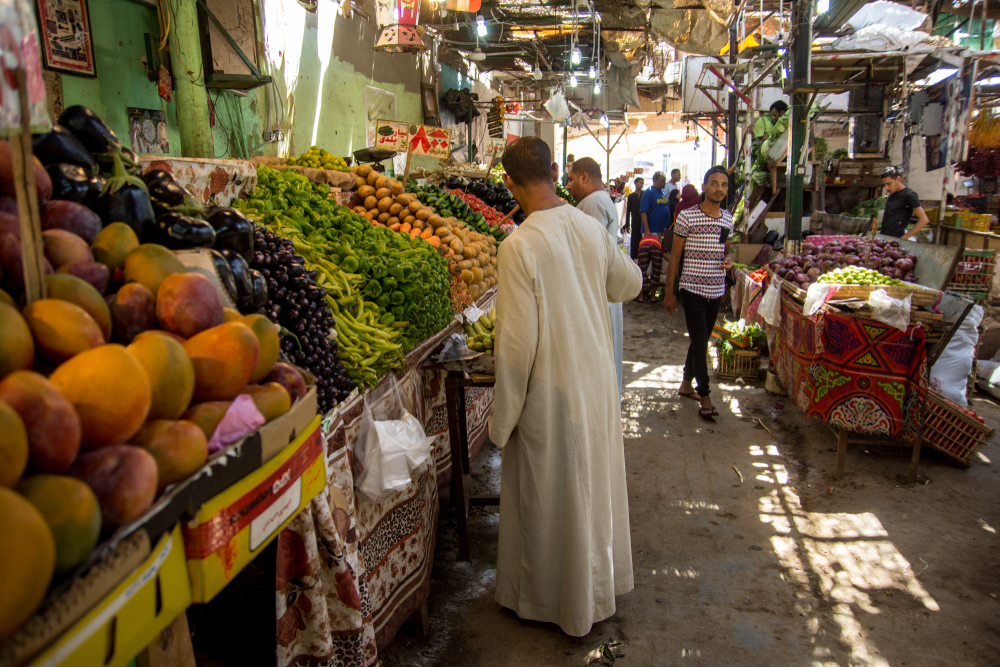

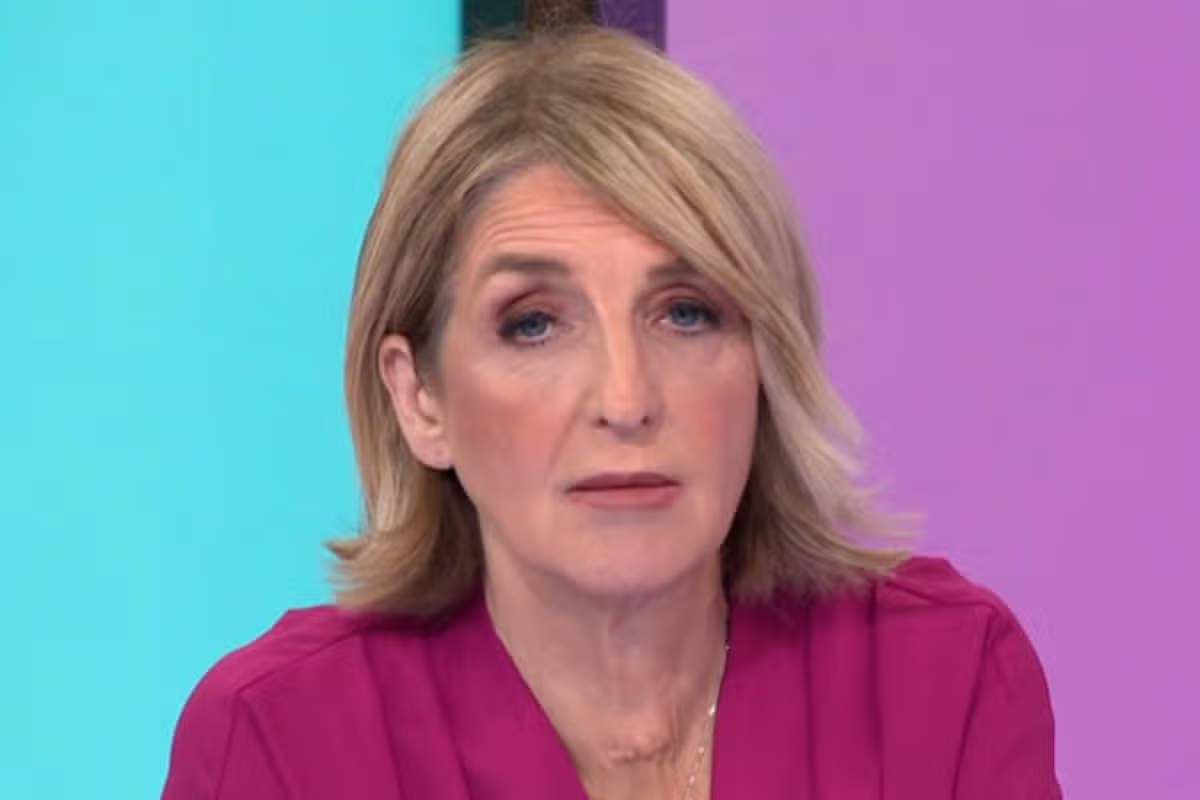

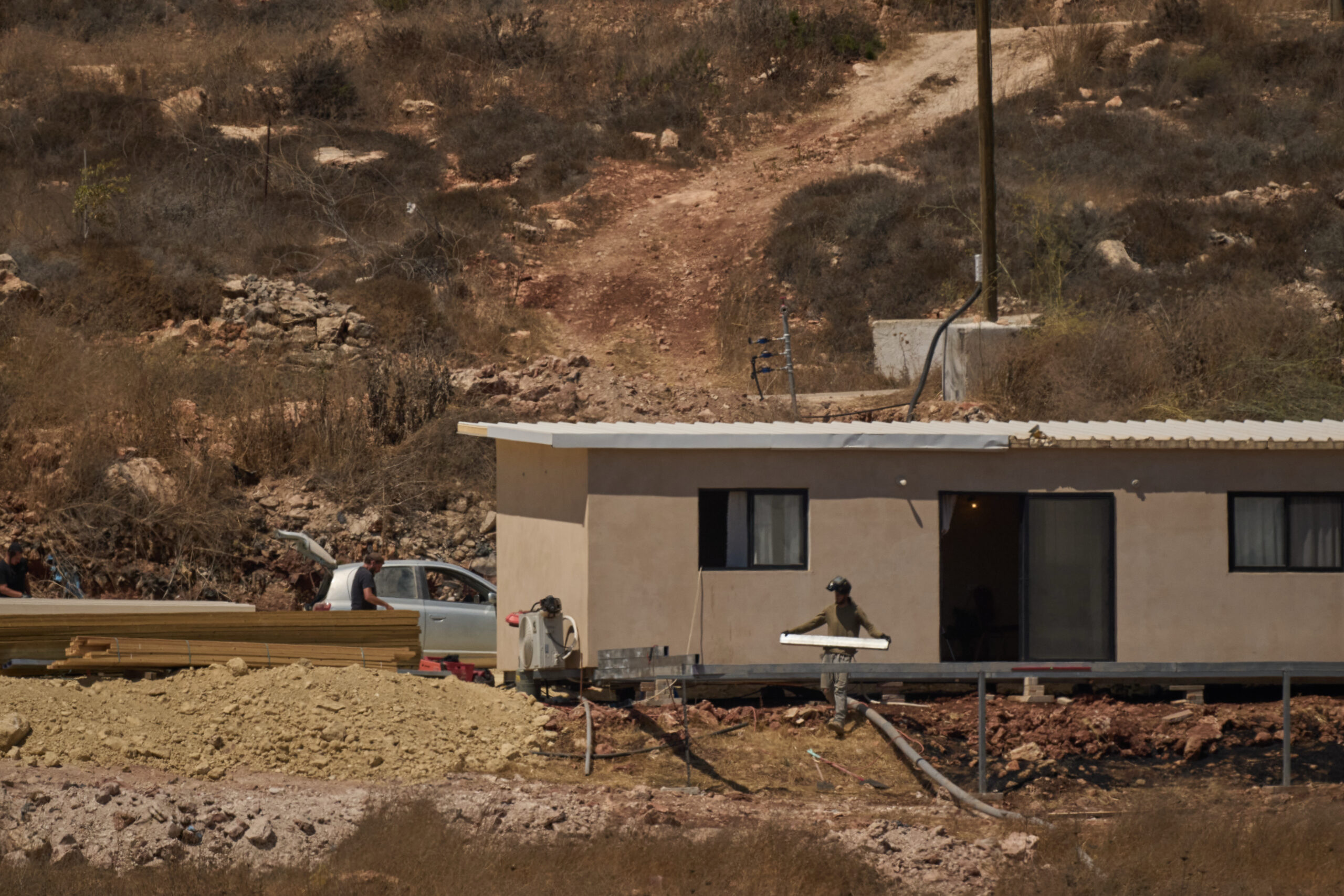

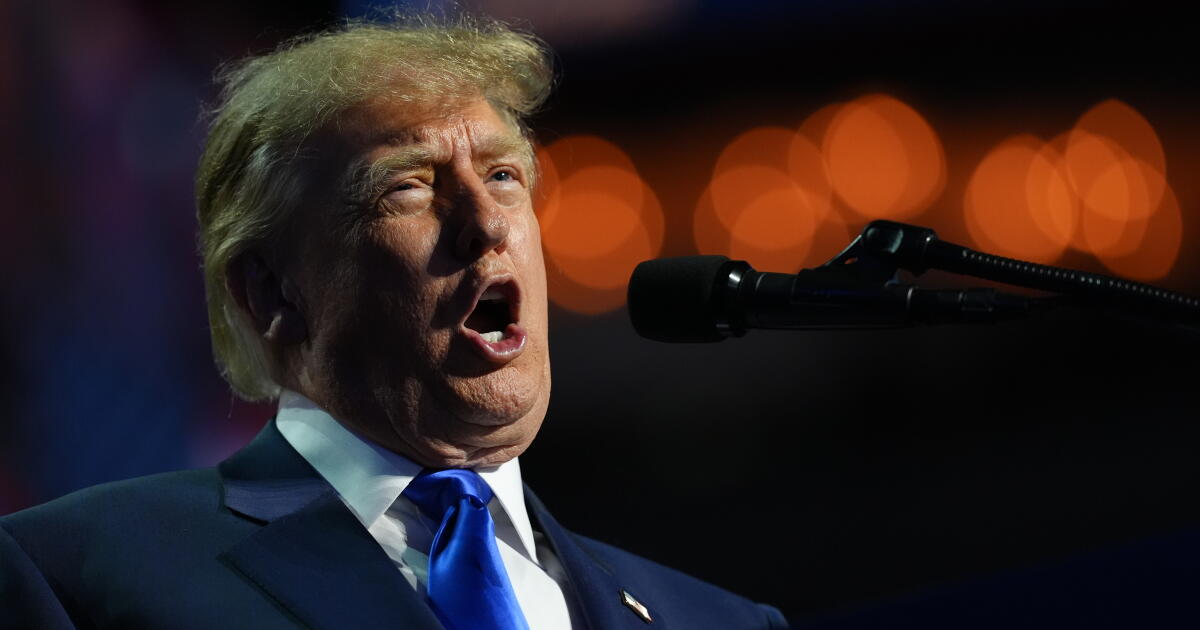







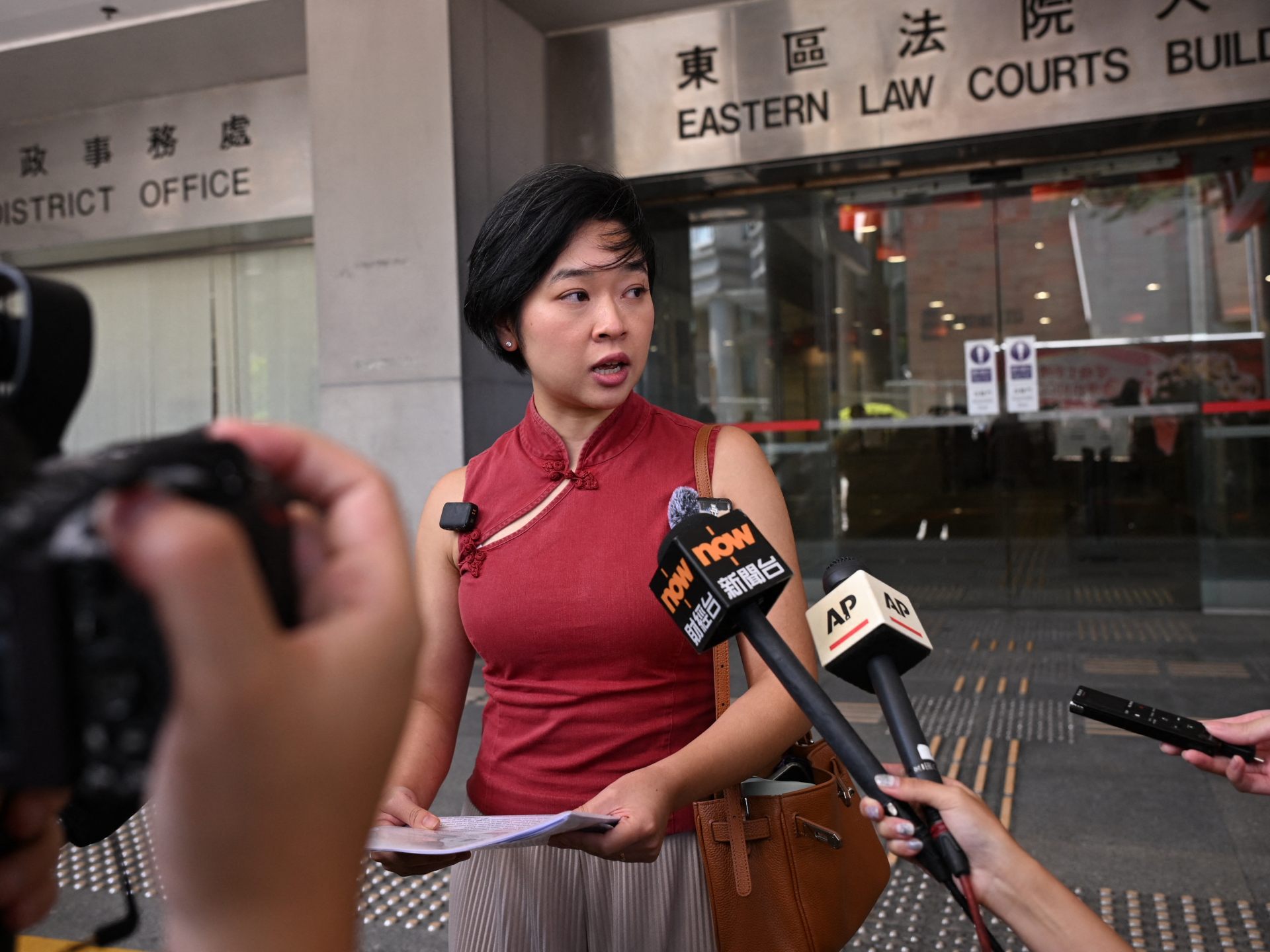



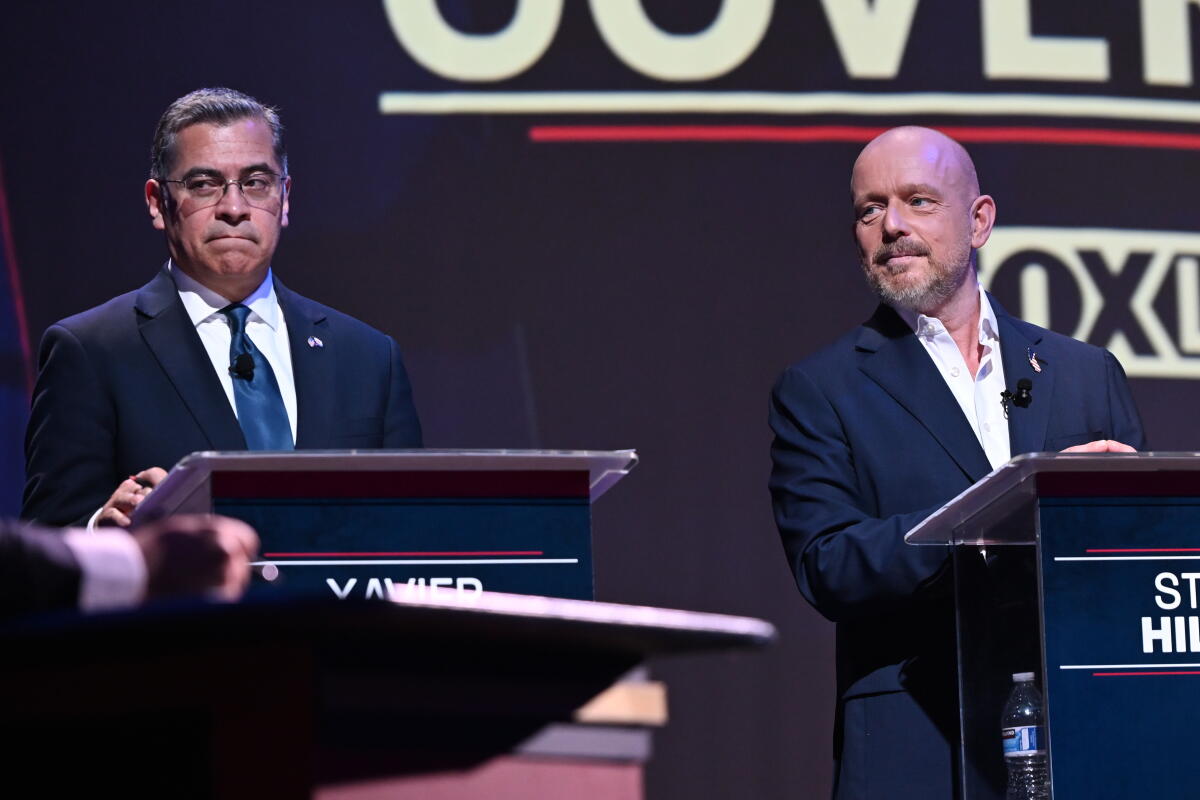


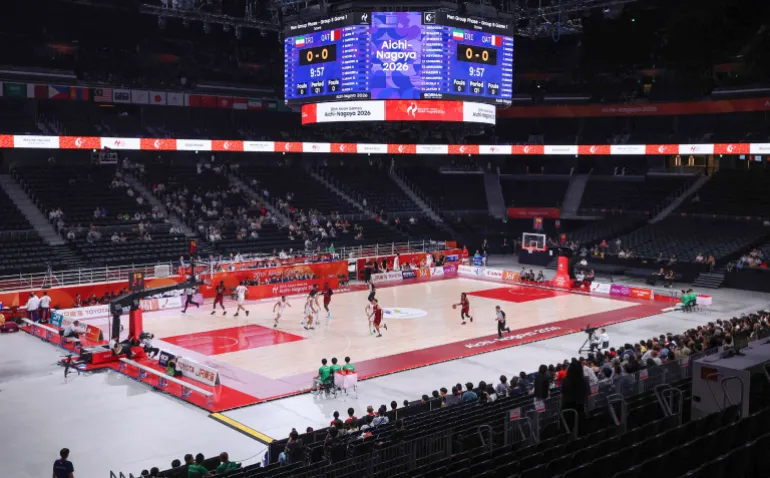

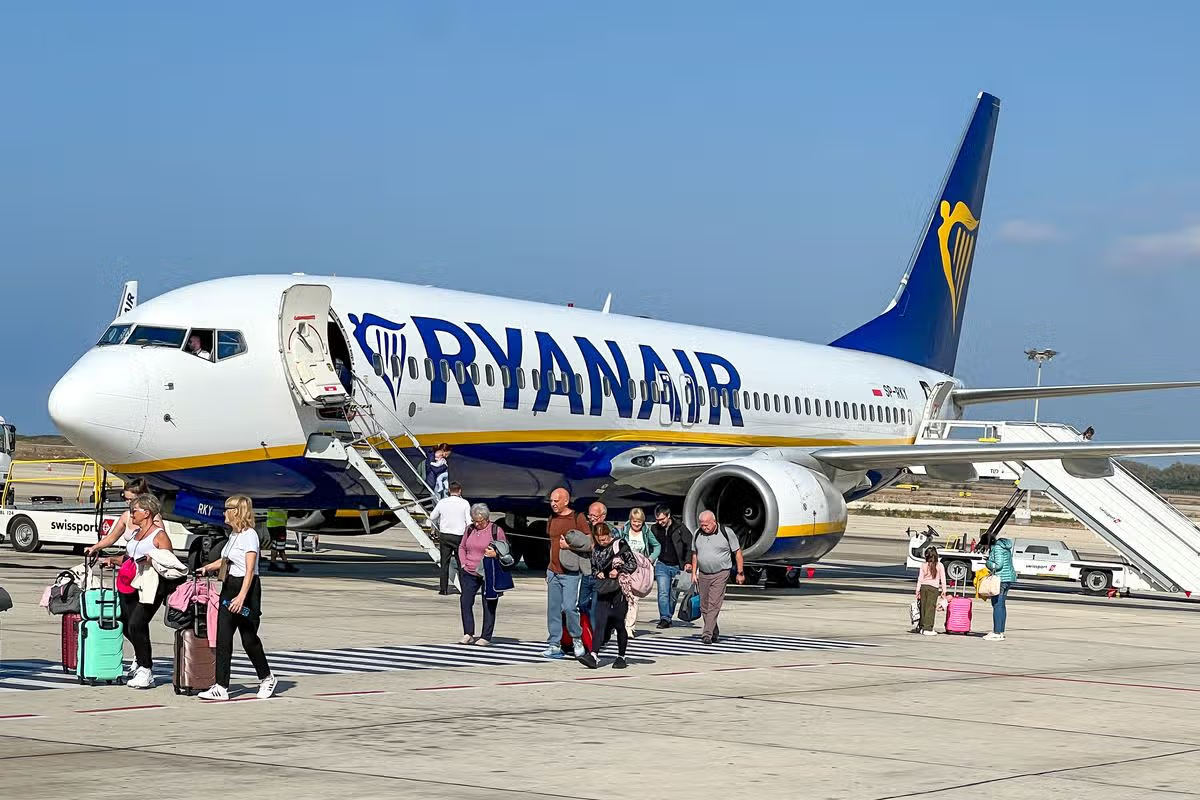


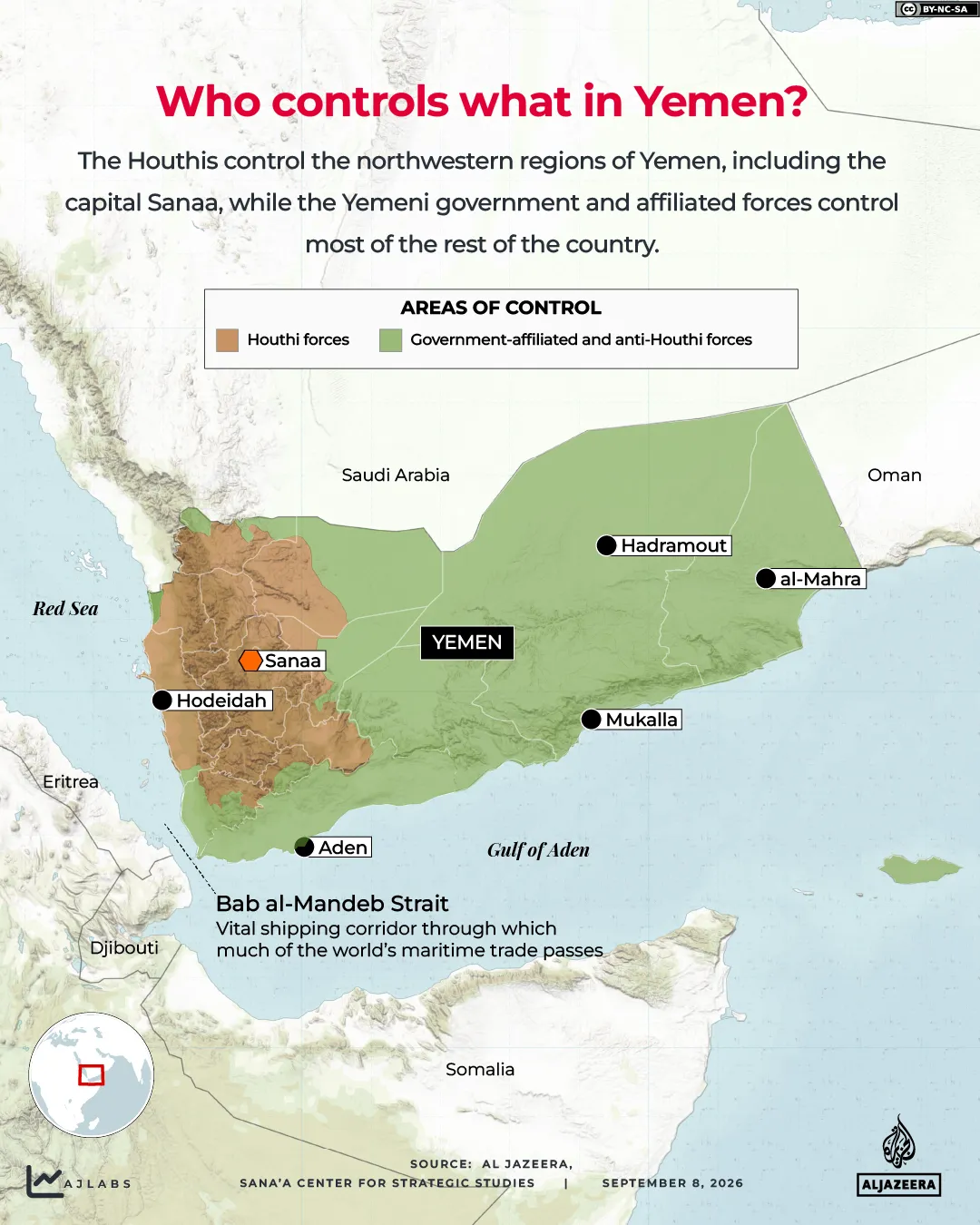

![This screen grab taken from undated video footage released on September 9, 2026 by Ansarullah Media Centre shows what the Houthi authorities said are attacks on Saudi-backed forces in Jawf province’s frontlines [AFP]](https://i0.wp.com/www.aljazeera.com/wp-content/uploads/2026/09/afp_6aa18c010e16-1788972033.jpg?w=640&ssl=1)