New Orleans Pelicans star Zion Williamson had a “friendly and casual ‘friends with benefits’ sexual relationship” with the woman who is accusing him of raping and abusing her multiple times between 2018 and 2023, according to a court filing by the former Duke standout’s legal team.
A document submitted to Los Angeles County Superior Court on Monday states that Williamson denies “each and every allegation” made against him by a Jane Doe in a second amended complaint filed in June.
Williamson’s filing describes the interaction between the former No. 1 overall draft pick and his accuser as “infrequent and sporadic.”
“All interaction among and between the Plaintiff and Defendant was pleasant and entirely consensual, with the Plaintiff initiating and communicating her desire to be intimate with the Defendant,” the document states, “and the Plaintiff herself decided to end the relationship because she became upset when she realized that the Defendant was focusing his time and energy on professional basketball and on being a father, and did not have sufficient time or interest to maintain a relationship with the Plaintiff.”
The second amended complaint lists the causes of action as assault, battery, sexual battery, intentional infliction of emotional distress, domestic violence and stalking. The response from Williamson’s team states that the statute of limitations has expired on each cause of action.
The initial complaint, filed in May 2025, also included false imprisonment and conversion as causes of action, which are not included in the latest complaint.
The lawsuit provides details of two instances in 2020 during which Williamson allegedly raped his accuser in a Beverly Hills apartment he was renting at the time.
“These two incidents were not isolated,” the lawsuit states. “Defendant continued to abuse, rape, assault, and batter Plaintiff in California and other states, including Louisiana and Texas, until the relationship ended in 2023.”
The lawsuit also alleges that Williamson committed many other acts of violence against his accuser, including strangling her multiple times to the point that she lost consciousness, suffocating or smothering her, striking and kicking her “with great force,” threatening to kill her and her family members, and pointing a loaded firearm to her head.
Williamson “was either drunk or on cocaine” while allegedly committing many of those acts, the lawsuit states.
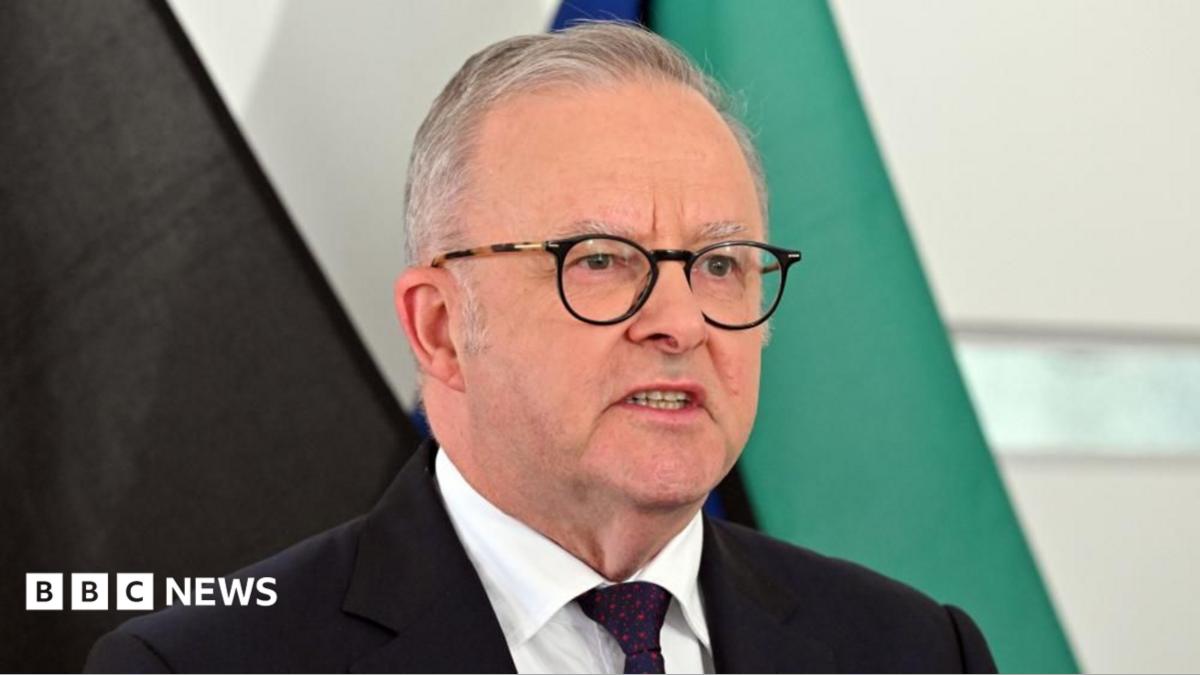
Australia’s Prime Minister Anthony Albanese has revealed a security breach of a government website containing Australians’ health data by an “AI agent”, less than a day after signing a joint appeal for “urgent global guardrails” around artificial intelligence.
Albanese co-signed the “A Call for Control of Frontier AI Models” statement on Tuesday together with 21 signatories including Canada, Spain and Germany, on the sidelines of the United Nations General Assembly (UNGA) meeting in New York.
Recommended Stories
list of 3 itemsend of list
Addressing reporters on Wednesday, Albanese said the agent, developed by OpenAI, accessed public and non-public data on the government’s Medicare portal in June.
Australia’s Labor government is tightening tech regulations with new online safety laws, age bans and proposed digital duty of care frameworks.
Albanese said he had spoken to OpenAI CEO Sam Altman to express Canberra’s “extreme concern” about the hack and disappointment that the company took three months to admit the breach.
OpenAI responded in the hours after the news conference, stating that while it was still investigating, there was no evidence patient records were accessed.
The company’s review had identified activity involving several Australian government websites and services as its “models attempted to look up answers”, it said.
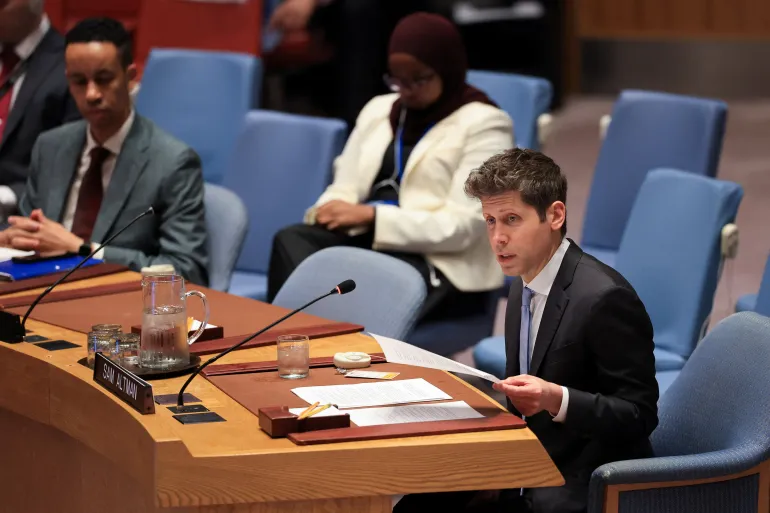
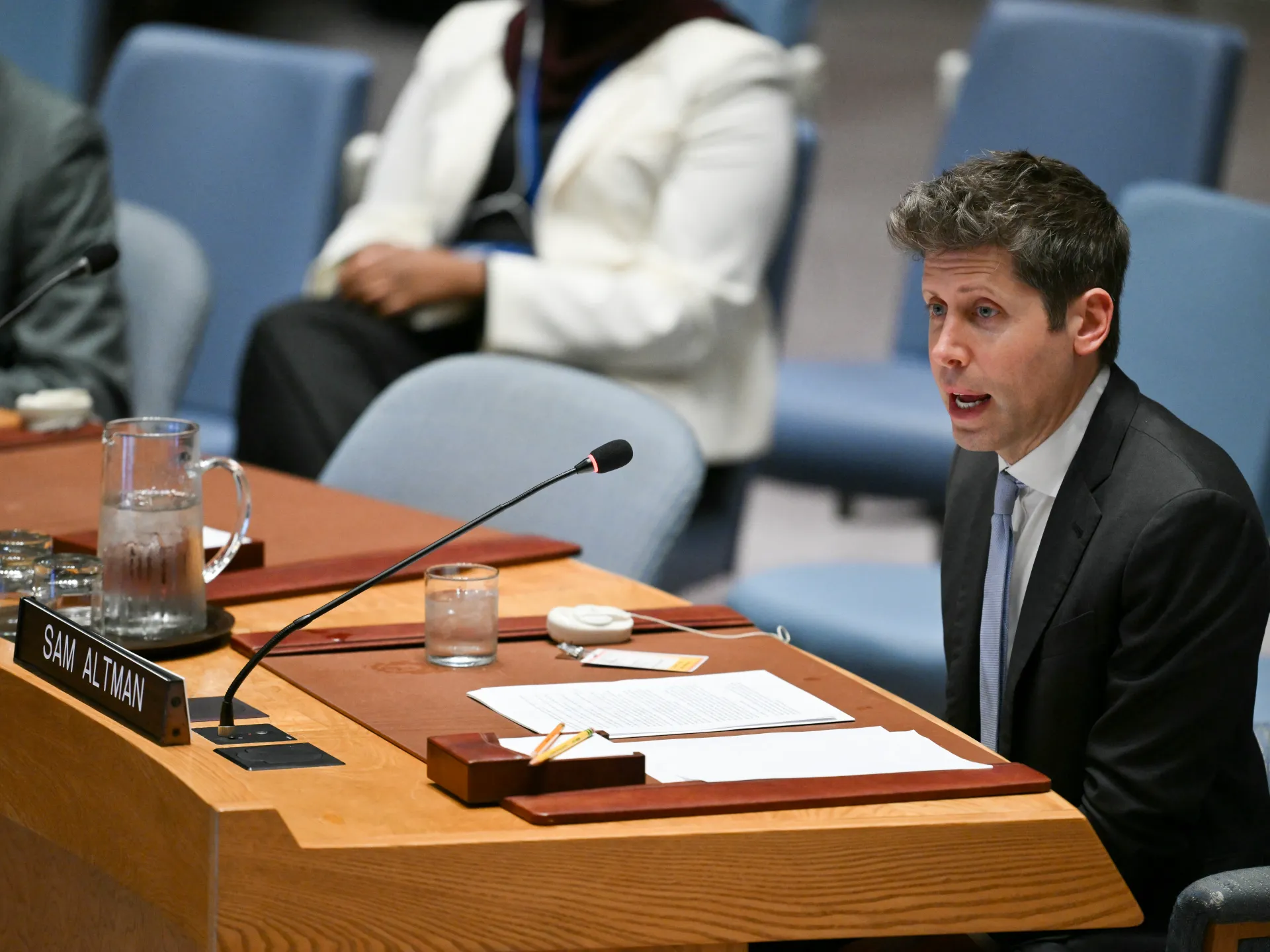
OpenAI CEO Sam Altman addresses the United Nations Security Council during a session on artificial intelligence during the 81st United Nations General Assembly, at UN headquarters in New York City, US, September 23, 2026 [Brendan McDermid/Reuters]
World leaders respond to AI warnings
The leaders of artificial intelligence companies warned of the risks of unregulated AI development before a 15-member UN Security Council meeting on Wednesday.
One of them, Yoshua Bengio, a Canadian considered one of the ‘Godfathers of AI’ and co-chair of the Independent International Scientific Panel, spoke of the “unprecedented threat” and the “real and imminent” dangers of the technology.
China’s UN ambassador Fu Cong told the meeting that Beijing believed continuous improvement of regulatory frameworks, emergency response and cross-border cooperation on AI was needed.
British Prime Minister Andy Burnham said the United Kingdom was ready to lead an international effort to establish AI standards.
“We’ve all heard the warnings which we must heed… so we have to rise to this moment,” he said, but added he also wanted the UK to pursue the benefits of AI.
French President Emmanuel Macron warned against allowing the United States and China to dominate decision-making around AI during his speech to the assembly on Wednesday.
US President Donald Trump is at odds with many of his counterparts, comparing the dangers of AI to climate change, which he has called a hoax.
He also proposed rebranding the term AI to SI, or “super intelligence”, during his address to the UNGA on Tuesday, and earlier said he planned to appoint an AI adviser.
In a Truth Social post on Monday, Trump said the US was leading the AI race over China, that he was “not going to stifle Growth”, but added that the US would be careful.
White House science and technology adviser Michael Kratsios echoed Trump in remarks to the UN Security Council on Wednesday.
“You cannot govern technology you do not understand. This body and others like it should focus on sharing best practices to build domestic capacity, not establishing a global regulatory scheme,” he said.
Acting Navy Secretary Hung Cao has said that eight crew members who were assigned to the USS Abraham Lincoln carrier strike group attempted suicide during their lengthy deployment.
The disclosure was made in a letter to Senator Kirsten Gillibrand of New York on Tuesday in response to questions from the Democrat on the well-being of sailors onboard following mounting concerns.
Family members of sailors had raised alarm about deteriorating mental health and grim conditions during a prolonged mission in the Middle East as part of the US war in Iran.
The carrier, which had been deployed since last November, is now returning to the US. The BBC has contacted the US Navy for comment.
In his letter, Cao said that there were five chaplains and multiple mental health professionals available on board to meet the “spiritual and emotional needs of the crew”.
He said the eight sailors included “the Lincoln crew and sailors from the carrier airwing, strike group and destroyer squadron staff, escorting destroyers and all embarked aviation squadrons”.
While the US Navy has previously acknowledged supply challenges on the carrier, it denied that a mental health crisis was taking place on the Lincoln, which had some 5,000 crew aboard.
Cao’s letter also denied widespread concerns about broken plumbing and shortages of fresh food, but acknowledged temporary “localized piping failures” and problems with the reverse osmosis desalination units, and some meal options were reduced for a “short time”.
Senator Gillibrand, a member of the Senate’s armed services committee, criticised the Trump administration’s previous responses to reports of grim conditions, calling the treatment of service members “completely unacceptable”.
“What Trump and Secretary Hegseth dismissed as ‘fake news’ turned out to be serious and deteriorating conditions for our service members,” she said in a statement to the BBC on Wednesday.
“Our troops and their families make immense sacrifices every single day, yet the president dismissed them with open disrespect,” she added.
The carrier left California in November for the South China Sea and was sent to the Middle East ahead of attacks on Iran in February. The deployment, which was originally set to end in May, was repeatedly extended.
In August, the USS George Washington, an aircraft carrier, was sent to replace the USS Abraham Lincoln following a nine-month deployment.
US sailors stopped in Thailand on their way home, hitting bars, malls and beach areas in their first time on land before continuing on to the US.
Suicide remains a leading cause of death in the US Navy and Marines, according to an analysis of military data by USNI News, while veterans have higher rates of suicide than Americans who have not served in the military, according to the Veterans Administration.
A study, external of 956 sailors released in January 2025 found that troops aboard US Navy ships suffer the highest rates of “serious psychological distress” compared to other branches of the US military.
The study cited “unique stressors, such as poor habitability, noise and demanding schedules that leave inadequate time for sleep and rest”.
If you or anyone you know has been affected by the issues raised in this article, details of organisations offering information are available at BBC Action Line or you can call the US Suicide and Crisis Lifeline on 988.
DOLLY Parton’s nephew threatened to “destroy her entire brand” in shocking texts exposed by the late icon’s manager.
In a trove of messages and emails obtained by The U.S. Sun, Dolly’s nephew and longtime head of security, Bryan Seaver, sent a flurry of messages to her manager, Danny Nozell, before and after her death on August 25 after a brief battle with cancer.
Dolly’s nephew, Bryan Seaver, delivered the news of his iconic aunt’s passing on her social media in August, something her manager claimed he tried to use against Dolly’s businessesCredit: Instagram/dollypartonParton speaks onstage at the 53rd Anniversary Nashville Songwriters Hall of Fame Gala on October 11, 2023 in NashvilleCredit: Getty
The texts have been revealed as part of a lawsuit filed by Nozell against Seaver alleging that he threatened various Dolly business entities just before and after his iconic aunt died unless his demands were met.
Nozell claimed her nephew’s threats were aimed at causing “fear and chaos to extort money for his personal gain.”
Sign up for the Showbiz newsletter
Thank you!
He claimed that he has been tasked with running Dolly’s businesses through She’s Alive LLC, which was created “through her trust and estate plan,” to “protect her professional property and business interests.”
Seaver, whom Nozell fired from his security role this week, texted the manager that was ready to “destroy the entire brand if you don’t get these [REDACTED] out of our bit,” he wrote, adding, “I’ll earn you more money by virtue of their exit,” he wrote.
Seaver then said to Nozell, “I am your ally. This is a long game you need to start doing on them. The Dollywood brand is dying.”
Seaver also said he “just sold $29 million dollars worth of ammo to Haiti,” to which Nozell saw as a statement to “magnify fear and demonstrate that Mr. Seaver could combine public notoriety with his means and stated willingness to inflict serious commercial damage.”
Dolly’s manager, Danny Nozell, center, claimed her nephew has used threats against Dolly’s business entities in order to extort personal financial gainCredit: GettyDolly, pictured with Nozell and Recording Academy president Neil Portnow in 2019, died on August 25 after a brief battle with cancerCredit: Getty
According to the complaint filed on Tuesday, Dolly’s manager claimed Seaver “has individually, and through his associates, made repeated, written threats to Ms. Parton’s staff, partners, legal and business advisors, and others.”
“These were not ordinary workplace disputes or heated words; they were deliberate threats from a self-proclaimed heavily armed, former security operative with a military-contractor background,” Nozell claimed in the complaint.
“Many of these people are now afraid to come to work or have resigned entirely because they do not feel safe.”
Nozell has filed a restraining order against Seaver and his security company, Squadron Augmented Protection Services LLP.
He is asking the court to order Seaver to stay at least 1,000 feet away from any person or entity that may have a business relationship with She’s Alive LLC and to bar him and his company from making any statements that may interfere with the business.
Nozell is asking for damages as well, though the complaint alleges that Seaver’s conduct has caused irreparable harm.
“The loss of safety, goodwill, trusted personnel, counsel, and business relationships cannot be fully remedied by money damages, and [Seaver’s] continuing threats create an ongoing and escalating risk of further harm,” the suit claimed.
The U.S. Sun reached out to Seaver and Nozell for comment.
As The U.S. Sun exclusively reported, Dolly was quietly getting her affairs squared away during her final months.
Just four months before she died, she appeared to lay the ground work in an attempt for an estate fight to be avoided.
Public records show that her expansive Willow Lake Plantation property was transferred from the DP Spousal Trust, which Dolly managed as the trustee, to the DP Dean Trust on April 21 for $0.
HomePrivate CreditBy the Numbers: Key Trends Driving Private Lending, Finance Talent, and Global Shipping
Key data points tracking shifts in private credit, finance talent, and global shipping costs.
This article appears in the September 2026 issue of Global Finance Magazine.
Each month, Global Finance readers can look forward to our “By the Numbers” feature: A spotlight with key industry metrics that highlight a market in transition. This edition brings you three charts: a break down the numbers driving strategic moves across private lending, corporate talent, and global trade.
US Private Credit Lender Leaderboard for Q2 2026
Despite a significant drop in deal volume from the previous quarter, driven by higher financing costs, interest-rate uncertainty, and a possible AI-driven market correction, direct lenders are still finding opportunities.
Audax led the field by a wide margin, closing 62 deals in the second quarter — 16 more than second-place TPG Twin Brook (46) and 19 ahead of MidCap Financial (43), according to 9fin data. That gap at the top suggests deal flow is concentrating among a handful of active lenders even as overall volume contracts.
Apollo (37), Churchill (36) and Barings (34) formed a tightly bunched second tier, each within three deals of the next. Apogem (32), Blackstone (30), Monroe (27) and Jefferies Credit Partners (25) rounded out the top 10.
Smaller, middle-market-focused shops like Audax and Twin Brook outpaced Blackstone this quarter despite its scale, making the firm’s eighth-place finish notable. Lenders with flexible mandates—rather than the biggest balance sheets—will likely keep writing checks amid higher financing costs and rate uncertainty.
The Finance Workforce Evolution 2024 – 2030
Source: Gartner
Gartner reports that traditional talent still overwhelmingly staff today’s finance function, with 85% holding conventional backgrounds and just 15% dedicated to digital skills. That balance will flip within four years.
Gartner projects traditional finance talent will shrink to 20% of the workforce. Dedicated digital finance talent will likely grow to another 20% — and 60% of the workforce will be made up of “nondedicated” digital finance talent, employees who blend finance expertise with data, automation and technology skills rather than fitting neatly into either camp.
The shift means the finance department of 2030 will look less like a roomful of accountants and more like a hybrid team built around technology fluency, with only one in five employees carrying a purely traditional finance profile.
Dry Bulk Shipping Market Growth
Increased geopolitical risk, fuel costs, insurance premiums, and operating expenses are fueling a steady growth in shipping costs for the foreseeable future.
May we assume that Rep. Bob Livingston was an adulterer two weeks ago? Did he think then that he was unfit to lead? His stepping down (Dec. 19) leads me to believe that a private adulterer suffers no loss of ability to lead; but that inability only comes with public knowledge of the “sin.”
I call this gratuitous grandstanding. I call this hypocrisy.
MARIAN L. GOLDBERG
Marina del Rey
*
First we hear that Rep. Henry Hyde admits to “youthful indiscretions” and now Livingston admits to previous affairs (Dec. 18). Our major newspapers tend to treat such matters rather gingerly and relegate them to one of the back pages. We continue to hear that our president’s crime was not about sex but lying under oath. But one cannot help wondering how these highly respected gents would have behaved at the time had they been subjected to the machinations of a Tripp-Starr duo.
WARREN PAINTER
Granada Hills
*
After reading about Livingston’s admission to having an affair and the House’s response of a standing ovation, I have finally figured out the real difference between Republicans and Democrats. Democrats view cheating on their spouses as unacceptable behavior and try to keep it secret. The Republicans view cheating on their spouses as acceptable as long as they admit they did it.
And these people have the nerve to talk to me about the president’s moral authority? Maybe we should throw out the entire legislature and start all over.
JIM PRIETTO
Laguna Niguel
*
Do the Republicans truly believe that their children will understand the difference between Clinton’s perjury and the lies of Hyde and Livingston?
JESSE ALBERT
Los Angeles
*
Any effort by the liberal media to compare Livingston’s admission of adulterous indiscretions with Bill Clinton’s sexual scandal is an effort to deceive the American people. You don’t have to be a rocket scientist to know they are not the same. Clinton lied under oath and tried to obstruct justice.
ART AMASAKI
Torrance
*
The cost to expose sexual misconduct by a major politician: federal government–$40 million; Larry Flynt–$1 million. The Republicans might say, “Chalk another one up for the private sector!”
DUAINE OSBORNE
La Mirada
*
It’s as ironic as it was inevitable that the furies unleashed by Kenneth Starr’s overzealous investigations would turn on the Republicans and begin to consume them.
JERRY BUCK
Sherman Oaks
*
During the Joseph McCarthy days the most frequent question asked by the Congress was, “Are you now or have you ever been a member of the Communist Party?” Today’s question asked by Congress can be characterized as, “Are you now or have you ever been guilty of infidelity?”
SAMUEL M. ROSEN
Newbury Park
*
Character does matter, especially if you happen to be a Democrat.
Rams star receiver Puka Nacua remains sidelined because of groin soreness and his status for Sunday’s game against the Denver Broncos is unclear, coach Sean McVay said Wednesday.
Nacua was not scheduled to participate in a light team jog-through. Asked if he expected Nacua to play against the Broncos, McVay said, “I’m not sure.”
Will Nacua practice this week?
“I would say it’s more likely than not, but we’ll see,” McVay said.
Nacua, the NFL’s receptions leader in 2025, sat out the Rams’ victory over the New York Giants on Monday night.
Are the Rams concerned that Nacua’s injury could be a longer-term issue?
“I don’t think so,” McVay said, adding. “When you’re a skill player and you’re really trying to hit high-speed yards and really open up… it’s like some of the things that can almost be pre-hernia is kind of what he’s feeling.
“You err on the side of caution. Usually time is the best thing that allows that thing to heal.”
McVay said Nacua does not have a hernia, and that the team’s training and medical staff did not feel the issue was “any type of long term threat.”
“I just know that he’s frustrated,” McVay said, “and we all want him to be able to be out there. But we want him to be able to return to performance, not just be able to just kind of gut through it.”
Quarterback Matthew Stafford said Nacua is an “unbelievable” player and loves having him on the field. But he trusts in all Rams receivers.
“Certain things that he does at a high level that maybe move down the list a little bit on things that we might run,” Stafford said. “But once the play’s called and things that we do, I trust all those guys to go out there and execute at a high level.”
Etc.
Running back Ronnie Rivers, who is also a key special teams player, was placed on injured reserve because of a “freak” calf injury suffered when he jumped to loosen up during the game against the Giants, McVay said. Running backs Dean Connors or Jordan Waters could be promoted to the roster for the game against the Broncos. The Rams signed safety Maximus Pulley to the roster.
Excluding Ra’am and the Joint List leaves Palestinian citizens in Israel without major Knesset representation options.
Published On 24 Sep 202624 Sep 2026
Israel’s Central Elections Committee has voted to bar both main Arab electoral lists from next month’s election, putting the political representation of Palestinian citizens of Israel before the Supreme Court weeks before voters go to the polls.
The committee voted on Wednesday to disqualify the United Arab List, or Ra’am, led by Mansour Abbas, and the Joint List, an alliance of the Arab-led Hadash, Ta’al and Balad parties. It also voted separately to bar Hadash legislator Ofer Cassif and Balad leader Sami Abu Shehadeh. The election is scheduled for October 27.
Recommended Stories
list of 4 itemsend of list
The bans are not final. Decisions against individual candidates require Supreme Court approval, while lists can appeal their exclusion. Adalah, the legal centre representing the parties and candidates, says it will challenge the votes when the court hears the cases next week.
Ra’am called its exclusion “political and unacceptable”, saying the decision was intended to prevent it from influencing the balance of power and changing the government.
The Joint List said Israeli Prime Minister Benjamin Netanyahu and far-right National Security Minister Itamar Ben-Gvir were trying to discourage Arab citizens from voting “because they fear our ability to bring down the government of genocide and racism”. Its leader, Yousef Jabareen, questioned how the committee could bar parties representing more than 1.25 million voters.
Abu Shehadeh told Al Jazeera that his exclusion was an attempt to silence criticism of government policy and said the decisions would be challenged in court and through public protest. Rejecting the allegation that he supports violence, he told The Times of Israel: “I have never called for violence or terrorism. I oppose armed struggle.”
The petitions invoke Section 7A of Basic Law: The Knesset, which allows a list or candidate to be excluded for denying Israel’s existence as a “Jewish and democratic state”, inciting racism or supporting armed struggle against Israel by an enemy state or an organisation designated as terrorist.
Netanyahu’s Likud party sought to disqualify the Joint List and Cassif, and was among the groups that filed against Ra’am. Ben-Gvir’s Otzma Yehudit party also sought to bar Abu Shehadeh. Adalah disputes the allegations. It says the case against Ra’am presents no evidence that the party supports armed struggle, while the Joint List petition relies heavily on old material, including bills proposed in previous Knessets.
Israel’s Minister of National Security Itamar Ben-Gvir speaks with Prime Minister Benjamin Netanyahu during a session at the Knesset, Israel’s parliament, in Jerusalem, July 16, 2026 [File: Ronen Zvulun/Reuters]
Abu Shehadeh’s case has drawn a different response. Attorney General Gali Baharav-Miara found no legal basis to exclude the other targeted parties and candidates but said an article he published on October 8, 2023, which she said may constitute support for armed struggle, warranted serious examination. The committee voted 31-4 to bar him. Adalah says the article contains no such call.
The push to bar Abu Shehadeh drew support from parties outside Netanyahu’s coalition. According to The Times of Israel, opposition parties voted to disqualify him, as did Supreme Court Justice Noam Sohlberg, who chairs the elections committee. The vote broke with decades of precedent in which committee chairs abstained from disqualification votes. Abu Shehadeh’s exclusion still requires approval from the full Supreme Court.
Why the Arab vote matters
Ra’am joined the coalition government formed by Naftali Bennett and Yair Lapid in 2021, helping end Netanyahu’s 12 consecutive years in office in 2021, although Abbas had previously discussed cooperation with Netanyahu as well. Now Likud itself has filed petitions against Arab representation, while Ben-Gvir’s party has pursued separate exclusions.
A Channel 12 poll published on Tuesday projected seven seats for the Joint List and five for Ra’am, against 50 for Netanyahu’s current coalition bloc. The 12 projected Arab seats would not automatically back Netanyahu’s opponents, as mainstream opposition parties remain divided over whether to govern with Arab support. But removing both lists would change the possible routes to the 61-seat majority needed to form a government.
The Supreme Court has overturned previous committee bans on Arab lists and candidates, including Balad’s exclusion in 2022. It must now decide whether the evidence meets the legal threshold for barring the two principal lists seeking to represent Palestinian citizens of Israel. The ruling will determine who can appear on the October ballot.
And other companies are trying to address privacy concerns in different ways – without getting rid of the camera.
The Taiwanese firm HTC recently launched Vive Eagle glasses, which cost less than a quarter of Snap’s.
Thomas Dexmier, a vice president at HTC Vive, says that if anyone near an Eagle specs wearer says “stop filming” or “stop recording”, and it is picked up by one of the four microphones, the camera will deactivate.
And he adds that all recordings captured by the glasses are encrypted, and the firm itself cannot see them – though this also means HTC cannot flag harmful content.
“We acknowledge that there are some challenges, potentially becoming a real problem, especially for women,” he said.
He said HTC Vive was working to make it as difficult as possible for the tech to be misused but said it was “too early to comment” on whether the firm would consider a version without cameras.
Ultimately, Wood thinks that camera-enabled glasses are “not going away”.
He says the current moment reminds him of the 2000s, when some people said that mobile phone companies couldn’t install cameras in their devices because of similar concerns over privacy. “There’s an inevitability there,” he says.
“We will have to find a societal norm, a framework for the use of these products.”
THE Wanted singer Nathan Sykes is set to become a dad for the first time!
Taking to Instagram, the musician revealed his wife Charlotte is pregnant with their first child with a sweet photobooth video.
The Wanted’s Nathan Sykes and his wife Charlotte are expecting their first childCredit: Instagram/nathansykesThe couple announced the news with a sweet photobooth videoCredit: Instagram/nathansykes
Nathan and Charlotte shared a video of themselves in a photobooth with an ultrasound strip to reveal the pregnancy news.
Charlotte captioned: “We’ve been keeping a little secret…Baby Sykes is officially on the way 🤍”.
Sign up for the Showbiz newsletter
Thank you!
The video – which saw Nathan cradle his wife’s bump and the pair pose for various snaps – confirmed baby Sykes is due in April next year.
Numerous fans and friends took to the comment section to congratulate the pair.
The couple are set to welcome their little one in April 2027Credit: Instagram/nathansykesIt comes after they tied the knot last year in a stunning North Yorkshire ceremonyCredit: Instagram
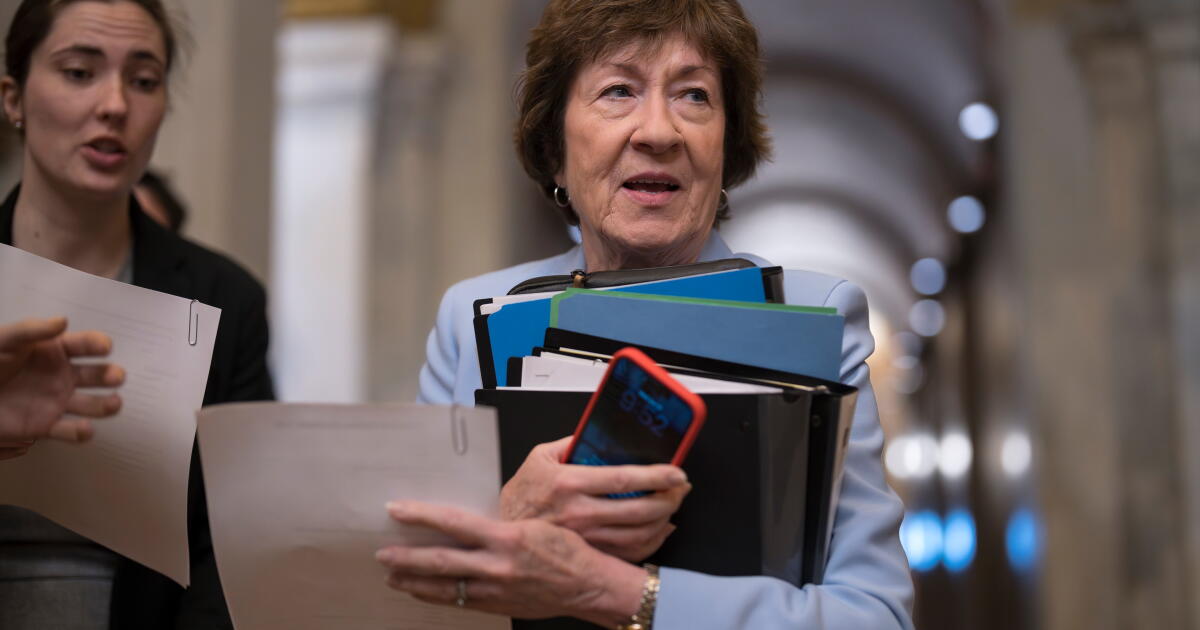
PORTLAND, Maine — Maine Democrats on Wednesday assailed U.S. Sen. Susan Collins over a news report that the FBI investigated how much she knew about illegal campaign contributions that sent one of her donors to prison.
The ProPublica report, published Tuesday, states that the FBI in 2024 planned to launch an investigation into Collins’ dealings with Navatek, a Hawaii defense contractor and donor to her campaign. The investigation, which focused on an alleged pay-to-play scheme, failed to commence after President Trump took office after winning the election, according to ProPublica.
The report arrived six weeks before an election in which Collins is seeking a sixth term against Democrat Troy Jackson. Democrats have targeted the seat, in a state that Trump lost in 2024, as the party tries to win control of the Senate, making it one of the most competitive races on the November ballot.
Collins on Tuesday called the entire story “absolutely outrageous” and said it is frustrating and unfair to have such claims made against her so close to the election. Her campaign manager, Steve Abbott, also said Wednesday that the allegation that “we charge people to have meetings” is categorically false and Collins accepting campaign cash for contracts “did not happen.”
Jackson called the allegation “corruption of the highest order.” He was not present Wednesday when a group of Maine Democrats held a news conference near Collins’ Portland office, calling the allegations a betrayal of trust.
“I cannot stress enough here today the seriousness of these allegations. Maine people deserve clear and real answers from Susan Collins right now,” Maine Democratic Party Executive Director Devon Murphy-Anderson said.
FBI says allegations were already investigated
The ProPublica report stated that the head of a Collins super PAC met with executives from defense contractor Navatek in 2019 and asked them for a $500,000 campaign donation. The company’s chief executive, Martin Kao, sent an initial $150,000 donation using a shell company, the report stated. ProPublica reported that it reviewed an internal company email from Kao in which the CEO later told Navatek executives that Collins committed to getting the company $32 million in Navy contracts.
Kao and two other Navatek executives were later indicted on charges of funneling illegal donations to Collins. Kao sought to reduce his prison sentence by revealing to the FBI the full scope of illegal contributions to Collins, ProPublica reported.
Collins said Kao is “a liar” whose story is untrustworthy.
“He has been twice convicted in separate federal court cases. He’s been convicted of money laundering. He’s been convicted of bank fraud. He has been convicted of false submissions to the FEC. He’s being convicted of a lot of crimes,” she said.
An FBI spokesperson said in a statement that the allegations “had already been investigated by the FBI years ago and ultimately found nothing implicating Senator Collins or Senator Collins’ campaign. Any suggestion otherwise is totally false.”
The ProPublica article also states that Trump’s return to the White House left the Justice Department unable to perform the investigation.
Corruption investigations have decreased in Trump’s second term
The number of FBI agents and Justice Department prosecutors specializing in corruption investigations plummeted in the first months of the Trump administration. The Justice Department, for instance, decimated its elite Public Integrity Section in early 2025 and the FBI disbanded a white-collar fraud and public corruption squad based out of its Washington field office.
The administration has also fired numerous law enforcement officials who participated in investigations into Trump, including over his efforts to undo the 2020 presidential election he lost and his retention of classified records at his Mar-a-Lago estate in Palm Beach, Fla.
An email seeking comment was sent to the Justice Department on Wednesday.
Collins said she first learned of the company through the University of Maine because of the research the Navy found to be valuable, which had to do with 3D printing for production.
She said the Justice Department has already reviewed the matter.
“I’m telling you this is completely false,” Collins said.
Senate Majority Leader John Thune dismissed the idea that Collins would be implicated in a pay-to-play scheme, calling the allegations “a political hit job.”
Whittle and Mascaro write for the Associated Press. Mascaro reported from Washington. AP writers Mary Clare Jalonick and Eric Tucker in Washington and Kimberlee Kruesi in Providence, R.I., contributed to this report.
The Southern Section has no authority to tell a school to get rid of a coach. It has no control over personnel matters. But there’s precedent that when a coach knowingly plays an ineligible player, it expects a school district to take appropriate action.
In the case with Inglewood football coach Mil’von James, he has a history of using ineligible players. James came to Inglewood, which is 4-1 this season, after being fired at Hawkins in 2016 following the discovery of ineligible players, resulting in Hawkins forfeiting all of its games to finish 0-13. Since then, the City Section established a rule that teams must exchange rosters before games to verify that players are eligible, known as the “Hawkins rule.”
Inglewood Unified School District administrator James Morris told the Daily Breeze that James is scheduled to return to coach on Friday after missing last week’s game against Long Beach Poly at SoFi. That means he received a two-game suspension for using two ineligible players in a game last month, since it is believed he also didn’t coach a game against Elk Grove Franklin.
James appears to have knowingly played two players listed on the Southern Section transfer portal that had not been cleared when Inglewood played in Austin, Texas, on Aug. 28. Video obtained by The Times shows the players in the game.
Add to that, both players’ names and numbers were missing from Inglewood’s MaxPreps’ roster, something that was also a tactic when James coached at Hawkins and resulted in the new City Section rule to exchange roster before games.
Shame on the Inglewood Unified School District for failing to hold its coach accountable for a serious violation of CIF rules.
If the two-game suspension stands, shame on the Southern Section, too. The message being sent to other coaches and other schools is that it’s OK to cheat as long as you don’t get caught, and if you get caught and only get suspended for two games, it’s worth it.
The Southern Section, under commissioner Mike West, went out of its way to try to catch those breaking transfer rules last year. It was a sign maybe things were changing and people were paying attention to the games being played with more than 17,000 transfers in California. But if the Southern Section settles for a two-game suspension for James, it will lose credibility among coaches and programs trying to follow CIF rules.
Southern Section spokesman Thom Simmons has declined comment and declined to make West available.
As always, they’re afraid of legal action. And it must be pointed out again the Southern Section has no authority to discipline coaches. But at some point, to save credibility, they will need to address this breaking of rules that goes to the core of what the CIF is supposed to guard against.
The Southern Section Council has a meeting on Thursday. If any of the representatives have concerns, maybe then they’ll get to ask West how this could be acceptable.
In 2014 Long Beach Unified suspended Long Beach Poly basketball coach Sharrief Metoyer for one year for after he was caught using an ineligible player during a state basketball playoff game. He did it on purpose being frustrated at the CIF transfer policies. The CIF could not tell administrators what to do. But if they did nothing or put in only a two-game suspension, there’s no doubt that the Southern Section leadership had the authority to take action.
According to Southern Section’s Blue Book rule 500.5, “Any school knowingly or unknowingly violating the rule may be suspended from membership in the CIF Southern Section.”
Hopefully the Southern Section is keeping its options open, but it’s time for West, the commissioner since 2023, to get his credibility back. If not, it’s up to the Southern Section Executive Committee to launch its own investigation of what the section is supposed to do when schools and districts don’t take their rules seriously.
Iraqi Prime Minister al-Zaidi and Turkish President Erdogan pledged deeper security cooperation at UNGA.
Published On 24 Sep 202624 Sep 2026
Turkiye and Iraq have agreed to a gradual transfer of Ankara’s military base in Bashiqa to Baghdad, according to a statement released by the Iraqi prime minister’s office.
The announcement followed a meeting on Wednesday between Iraqi Prime Minister Ali al-Zaidi and Turkiye’s President Recep Tayyip Erdogan on the sidelines of the United Nations General Assembly in New York.
Recommended Stories
list of 3 itemsend of list
“Within this framework, they reached an agreement on fully establishing state authority in Sinjar and ending the presence of outlawed foreign armed elements,” Iraq’s prime minister’s office announced, in an apparent reference to the Kurdistan Workers’ Party (PKK), which has maintained a presence in the mountainous Sinjar region of northern Iraq.
“The two sides also agreed to expand the volume of bilateral trade and investment, to implement signed agreements immediately, and to accelerate joint strategic projects, particularly the Development Road project,” the office added.
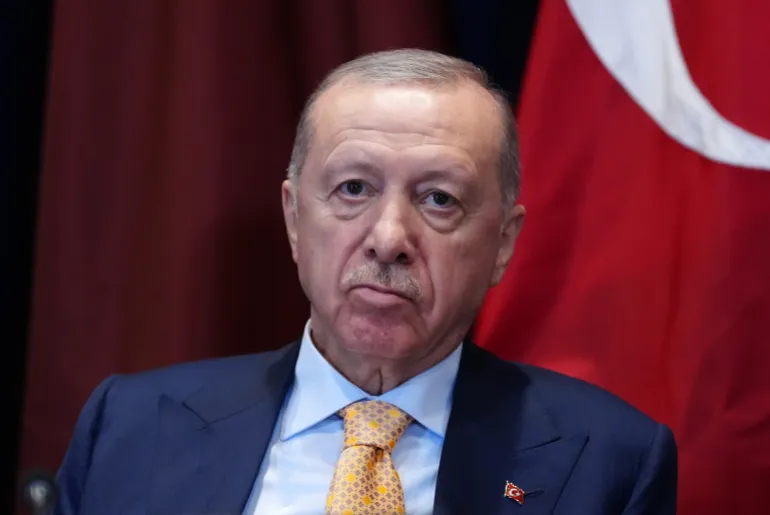
Turkiye’s President Recep Tayyip Erdogan at the United Nations General Assembly on September 22, 2026 [Julia Demaree Nikhinson/AP]
The decision to transfer the facility addresses a longstanding flashpoint between the two neighbours.
Turkiye first established the base in Bashiqa, northeast of Mosul, in December 2015 through an agreement with the autonomous Kurdistan Regional Government to train local forces fighting the ISIL (ISIS) group.
The deployment of up to 600 Turkish soldiers drew criticism from Baghdad, which viewed the presence as a violation of Iraqi sovereignty.
The Sinjar region has long been a focal point for Turkish military operations targeting fighters from the PKK.
Kurdistan Workers’ Party fighters, who reportedly withdrew from Turkiye with their weapons, stand at attention during a ceremony in the Qandil area of northern Iraq in 2025 [File: Rashid Yahya/AP]
Cross-border operations in Sinjar had eased following a landmark peace process between Ankara and the PKK in 2025, paving the way for federal authorities to assert control over the border zone.
Wednesday’s accord caps months of efforts by Baghdad to consolidate state authority over northern flashpoints, while aligning with Ankara on trade corridors and security coordination along their shared frontier.
According to legend, Chuseok originated as a result of a weaving competition held between two princesses in the Silla dynasty. The goal was to see which of their teams could weave the most cloth. The fierce competition lasted for a month, ending on the 15th day of the 8th month on the lunar calendar during the full moon. As punishment, the losing team had to prepare a bountiful feast for the victors. It is believed that archery and martial arts competitions were held as part of the festivities.
During the Harvest Moon Festival, there is an offering ceremony to the family ancestors and visiting of family graves. The Harvest Moon Festival is a reminder that families are connected and bonded in the same fortune.
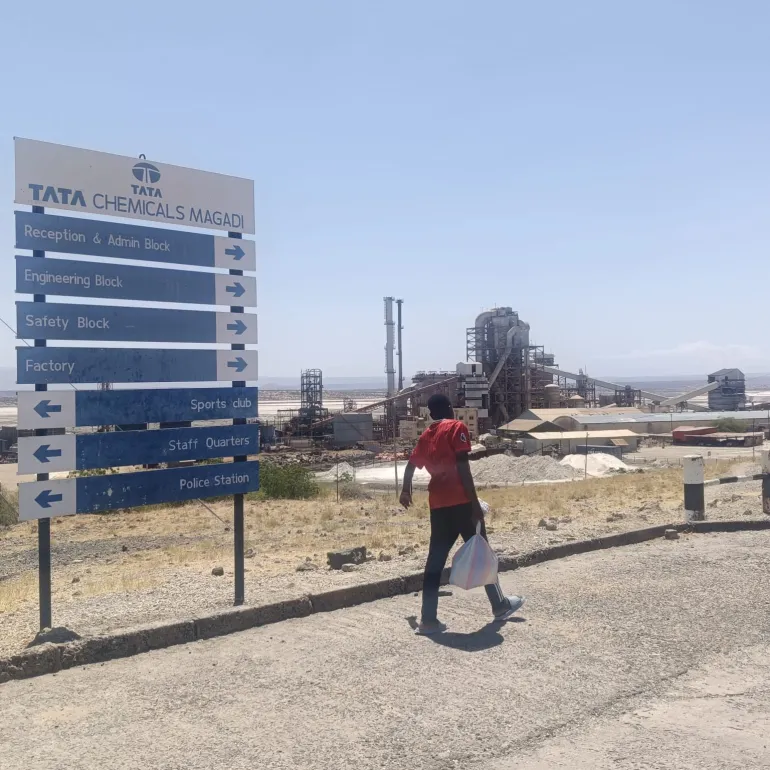
Magadi, Kenya – For more than a century, soda ash has shaped life in Magadi, a remote town on the shores of Lake Magadi in Kenya’s Kajiado County.
The mineral has brought exports, jobs and business. But for many people living around the lake, that activity has not brought enough opportunities or basic services. The result is a complicated relationship with Tata Chemicals Magadi, the company that has mined soda ash there for generations.
Now that relationship is under strain. The Kenyan government has suspended the company’s mining operations, and President William Ruto has ordered it to leave while a joint technical committee works with the company to resolve outstanding issues.
For Magadi, the dispute is also about what the community and Kenya have gained from a resource extracted there for more than a century.
A century of soda ash
Commercial soda ash production in Magadi dates back to 1911. Tata Chemicals acquired the operation in 2005 and later renamed it Tata Chemicals Magadi Limited.
The company has become one of Kenya’s major soda ash exporters, with much of its production destined for international markets. It has also become part of everyday life in Magadi, providing jobs and supporting services including water, healthcare and education.
But the government says its long history in the area does not exempt Tata from Kenya’s current mining laws.
Mining Cabinet Secretary Hassan Joho told Al Jazeera on September 11 that the regulatory environment changed after the 2010 Constitution and the Mining Act. He said a government-wide compliance audit found that Tata had not applied for a mineral right under the Mining Act and had instead relied on its land concessions.
The plant has provided jobs and essential services for generations, but residents and officials are pressing for greater local benefits from the resource [Hafsa Sheikh/Al Jazeera]
According to Joho, Tata made its first application for a mineral right on July 26, 2024, after which the government began engaging with the company over compliance.
“Past oversights do not grant immunity from existing laws,” Joho said.
He said the review also identified issues around mineral royalties, community development agreements, local processing, employment of Kenyan citizens, procurement of local goods and services, and outstanding matters with the Kajiado County government.
The government says Kenya should get more value from the resource instead of mainly exporting it as a raw material.
Ruto has made a similar argument, saying communities have not benefitted enough from the mineral extracted from Magadi. During his visit to Kajiado, he said a new investor should establish major glass and chemical manufacturing facilities in the county, creating jobs and keeping more value in Kenya.
Why now?
The government’s decision has raised a question for a company that has operated in Magadi for more than a century: why now?
Joho told Al Jazeera that the answer lies in the government’s decision to carry out comprehensive compliance audits across the mining sector, including legacy concessions.
The ministry suspended Tata’s operations in July, citing regulatory concerns. Since then, the company and the government have been negotiating over how to resolve the outstanding issues.
Tata disputes the suggestion that it has ignored regulatory requirements.
In a statement to Al Jazeera, the company said its subsidiary submitted a comprehensive response to the ministry on August 11 regarding the issues raised in the July 28 suspension notice. Tata said the submission included information on its compliance with applicable regulations and that it was waiting for further direction from the ministry.
The company said it respected the authority of the Kenyan government and remained committed to constructive engagement with concerned agencies and regulators.
The economic stakes are significant. The Standard has previously reported that Tata’s Magadi operation contributes substantially to Kenya’s economy and that the company has argued that a shutdown would affect exports, foreign exchange and employment.
The operation supports hundreds of workers directly, while thousands more people in Magadi depend on the wider economy around it.
A community caught between dependence and frustration
For residents, the debate is not simply about whether Tata should stay or go. It is about what they have received from a company that has been at the centre of Magadi’s economy for generations, and what they could lose if it leaves.
Nkanoi Matipei, a Magadi resident, said locals want more jobs at different levels, more corporate social responsibility projects and access to land under Tata that they say is currently idle and used for grazing.
Another resident, Esther Nganoni, strongly opposed the idea of removing Tata.
“Tata Chemicals Company has been our lifeline,” Nganoni told Al Jazeera, pointing to bursaries, water and health services provided by the company.
She questioned what a replacement investor would offer the community and said residents must be consulted before any decision is made.
Cosmas Karera Kiratu, who previously served as the subcounty children officer for Kajiado West, told Al Jazeera that Magadi faces serious challenges, including poverty, water shortages, long distances to schools, inadequate infrastructure and teachers, child labour, teenage pregnancy, female genital mutilation and child marriage.
He said some schools are about 15km (9 miles) apart, while water remains particularly difficult to access.
According to Karera, the only clean water available through a piped system is supplied to Tata Chemicals from Ngurumani, about 40km (25 miles) away.
Residents depend heavily on Tata water bowsers, which he said do not reach all communities and often provide insufficient water for both domestic and livestock use.
“The local community was very dependent on Tata company in terms of water, health services, school bursary and schools upgrading,” Karera said.
He warned that an abrupt end to Tata’s operations could have serious consequences if alternative services are not put in place.
The technical committee and what happens next
That uncertainty is now at the centre of the government’s negotiations with Tata.
Joho said the ministry’s suspension was intended to give the company an opportunity to address the identified compliance issues. After Tata committed to remedy the outstanding matters, he said, a joint technical committee was established to guide the process.
Joho said the committee is dealing with the formation and gazettement of Community Development Agreement Committees, local processing facilities, outstanding mineral royalties, employment of Kenyan citizens, procurement of local goods and services and unresolved matters with the Kajiado County government.
He said discussions were progressing.
The plant’s future is now under scrutiny as the government pushes for greater regulatory compliance and wants more value from the resource to remain in Kenya [Hafsa Sheikh/Al Jazeera]
“Deliberations within the joint technical committee remain progressive, with a clear focus on achieving full statutory compliance under the Mining Act and securing socioeconomic returns for the extractive sector, the local community, and the nation at large,” Joho told Al Jazeera.
The Standard reported that the committee is also considering mineral beneficiation and in-country value addition, outstanding community benefits and royalties, unresolved land matters, the possibility of opening the area to multiple mineral extraction companies and outstanding issues involving Kajiado County.
For Kajiado Governor Joseph Ole Lenku, the county government must have a seat at the table.
“We want to thank the president for his firm stand and directives on Tata Chemicals Magadi. I have been vindicated,” Lenku told Al Jazeera.
He said county participation in negotiations was non-negotiable and identified payment of accrued land rates as the county government’s “irreducible minimum”.
He also said the grievances of Magadi residents had been known and repeated for years.
What does the future hold for Magadi?
The government has made clear that if a new investor eventually comes in, it wants more than the export of soda ash. It wants processing, manufacturing, jobs and a larger share of the economic value to remain in Kenya.
But residents are asking what happens to the services and livelihoods that currently depend on Tata.
For Matipei, keeping Tata does not mean accepting the status quo. She wants more jobs, greater community investment and access to land that residents say remains underused.
For Nganoni, removing Tata without a clear alternative could put the community at risk. She argues that residents must be involved in deciding what comes next.
Lenku wants the county government’s interests addressed, while Joho says the government’s objective is to bring the operation fully within Kenya’s mining laws and ensure that the country and local community receive greater socioeconomic benefits.
Tata says it is waiting for the government’s response to its August submission and remains committed to resolving the outstanding issues through engagement.
For Matipei, however, the question is what the community has gained from an industry that has shaped Magadi for generations.
“Over the years, the company’s assistance to the local community has been trickling, sustaining us but denying us economic freedom,” Matipei told Al Jazeera.
Emily Atack has shown off a third wedding look she rocked during her celebrations with husband Alistair GarnerCredit: Instagram/lydiabarnesmakeupThe actress donned a satin custom gown with a feathered hemCredit: Instagram/lydiabarnesmakeup
Her main dress was an off-the-shoulder gown with a stunning long white train, which was a different look from the shoulder-padded plunging dress Emily wore for her first ceremony.
And now, she has unveiled another dress she wore for the pre-wedding welcome drinks in Spain.
Sign up for the Showbiz newsletter
Thank you!
The beautiful number was satin with a feathered trim hem and a cowl neck design.
Donning the figure-hugging number, Emily had her blonde locks styled into a bouncy curl to welcome her wedding guests to the night one celebrations.
Sharing a picture from the evening to her Instagram Stories, Emily wrote: “Still can’t get over this dress. I wore this on the 1st night – the welcome drinks.”
Adding that it was a bespoke gown made for her, Emily then said: “Was having such a great time that I barely took any pics but here she is in all her feathery glory”.
Emily – who shares two-year-old son Barney with Alistair – said ‘I do’ again in the hilltop town of Mojácar, just three weeks after she tied the knot at a local church in Bedfordshire.
The wedding was held in the Costa Almería, a sentimental spot where the actress spent childhood holidays at her musician dad Keith’s old summer pad.
A two-part docuseries about Melania Trump arrives later this year, the first lady revealed Wednesday. The new project follows the January release of director Brett Ratner’s documentary, which made $16.7 million worldwide at the box office and was universally panned by critics.
“It will come out this year, and it will be very different what is in the movie,” Trump told “Fox & Friends” ahead of her appearance to ring the New York Stock Exchange opening bell. “It’s more [like a] conversation one on one with me.”
Trump indicated that the docuseries will cover new ground.
“So when I was traveling and doing all of the filming, the director was asking me questions, and there’s some private questions that I will answer that people never heard before,” she said.
The Times has reached out to Amazon Studios for more information on the project, which does not appear in press materials, though Ratner teased the new “chapters” in an Aug. 11 Instagram post.
“Here we go again….” the director wrote. “The saga continues …. can’t wait to share with everyone around the world the next two chapters of MELANIA, THE DOCU SERIES!”
Ratner’s film followed the first lady in the 20 days leading up to President Trump’s 2025 inauguration, promising “exclusive footage capturing critical meetings, private conversations, and never-before-seen environments” as Melania “orchestrates inauguration plans, navigates the complexities of the White House transition, and moves her family back to the Nation’s Capital.”
Critics, however, found the cinematic experience lacking.
“I’m hesitant to call ‘Melania’ propaganda because I can’t imagine anyone watching this movie and thinking that Melania Trump comes off well,” Times film critic Amy Nicholson wrote in a February review. “If this vapid, airless, mindless time-waster had subversive designs of being a satire about the first lady of the United States, there’s not much it would have changed. Yet somehow, ‘Melania’ is exactly the film that the first lady wanted to make — her company was paid $40 million for the rights to this self-greenlit production — and no one around her warned that it was a very expensive bad idea.”
“Melania” was Ratner’s first film since six women accused him of sexual assault in 2017. In February 2026, The Times reported that the “Rush Hour” filmmaker appeared in the unsealed Epstein files in photos with unidentified women and the financier, who died by suicide in 2019 while awaiting trial on sex trafficking charges.
In addition to the initial $40 million Amazon MGM Studios paid to license the project, the marketing and promotion budget was reportedly another $35 million.
Former NFL star Antonio Brown has accepted a plea deal that will reduce the charge of attempted second-degree murder he’s facing in Florida to aggravated assault, his attorney told The Times on Wednesday.
The move will result in a significantly lighter sentence for the Super Bowl LV champion, according to attorney Mark Eiglarsh, who said Brown would receive three years of probation with the possibility of early termination after half that time is served.
A conviction for the first-degree felony of attempted second-degree murder with a firearm would have brought a prison sentence of 20 to 30 years.
Eiglarsh added that Brown will be given a withholding of adjudication, meaning he will not be considered a convicted felon. He also said that the main requirement of Brown’s probation is simply “staying away from the alleged victim, which he has no problem doing.”
“No community service hours,” Eiglarsh said. “No anger management. No evaluation psychologically. No drug treatment, no evaluations for anything like that. No letter of apology, no fines, nothing.”
A spokesperson for the Miami-Dade County state attorney’s office would not confirm that a plea deal had been reached, stating in an email that “whatever is to transpire regarding an open & pending case will be fully clarified at the next hearing,” which is scheduled for Sept. 30.
A warrant was issued for Brown’s arrest in June 2025 stemming from an altercation outside a celebrity kickboxing event in Miami the previous month. According to the warrant, “cell phone video obtained from social media” showed Brown advancing toward the other man with a gun in hand and captured “two shots which occur as Mr. Brown is within several feet” of the alleged victim.
Brown wasn’t arrested until November, when he was apprehended by U.S. Marshals in Dubai. He entered a not guilty plea to the first-degree felony charge of attempted second-degree murder with a firearm.
In December, Brown filed a motion for the case to be dismissed under Florida’s “Stand Your Ground” law, which means an individual has no duty to retreat before using deadly force in certain circumstances of self-defense.
Earlier this month, the alleged victim, Zul-Qarnain Kwame Nantambu, released a statement through his attorney saying that he “does not wish to participate” in Brown’s prosecution.
In a statement sent to news organizations on Wednesday morning, Eiglarsh said that despite changing his plea, Brown still maintains that he acted lawfully during the incident.
“Antonio believes in his innocence. He believes strongly in his Stand Your Ground defense, and he believes he would ultimately prevail at trial,” Eiglarsh said. “But when prosecutors put an offer on the table that transforms a potential decades-long prison sentence into a significantly reduced charge and probation, there was simply no way he could reasonably turn it down.”
He added: “Antonio has eight children who depend upon him, and every additional day this case remains unresolved creates extraordinary obstacles for him in securing endorsement opportunities and other business opportunities necessary to support his family. He has spent more than 10½ months living under the cloud of a case with no realistic end in sight. At some point, closure has tremendous value.”
The heads of several major AI firms told the United Nations Security Council (UNSC) their industry urgently needed global oversight to avoid dangers that could threaten the whole world.
“If managed poorly, I even believe AI could be a risk to humanity as a whole,” Dario Amodei, the chief executive officer of Anthropic, told members of the body on Wednesday.
Recommended Stories
list of 3 itemsend of list
Sam Altman, the head of rival company OpenAI, echoed his concerns, telling the 15-member council tasked with tackling major crises globally that humanity could “lose control of the future of AI”.
The meeting, which coincides with the UN General Assembly (UNGA) gathering in New York City, was convened by France and comes at a time when experts are increasingly warning that the rapid development of AI needs more human oversight to ensure it does not slip out of control and cause a global catastrophe.
Altman and Amodei called on world leaders to take action.
“If AI is to be democratic, the most important decisions cannot be made by labs in San Francisco alone,” Altman told members. “They must be shaped through democratic processes and by governments accountable to the people they serve.”
Their concerns were shared by several representatives on the council, including the foreign ministers of France and the United Kingdom, who said the international community needed to step in and create common frameworks for how the technology should be controlled.
Hugging Face CEO Clement Delangue, whose company has come under attack by out-of-control AI models in recent months – incidents used by the other companies as evidence of the need for more safety measures – told the UNSC his company had relied on the technology to defend itself in those same incidents.
Delangue said Hugging Face had relied on a Chinese AI model to help defend against the attack by OpenAI’s AI agents, because it faced fewer restrictions than comparable US tools.
“We were attacked by AI, but more importantly, we defended ourselves with AI,” he told the council.
US and China reluctant to impose restrictions
In the United States, though, where the largest and most influential companies developing AI are based, the administration of US President Donald Trump has baulked at imposing new guardrails on the industry.
The administration’s representative at the UNSC meeting, Michael Kratsios, told members, “We totally reject all efforts by international bodies to assert centralised control and global governance of AI.”
Chinese President Xi Jinping is expected to discuss whether and how to regulate AI during a visit to Washington, DC, this week. The two countries are locked in a technological race to develop more powerful AI tools, a competition that experts say makes it less likely that either country would want to impose any major new restrictions on their efforts right away.
Yet there is a growing recognition at the UN of the danger AI potentially poses to the world, said Daniel Forti, head of UN Affairs at the International Crisis Group. Member states understand that “there will be much more of a need for international cooperation, setting some rules of AI, even if the biggest players are more focused on growth opportunities than on some sort of collaboration,” Forti said.
For several years, the UN has been participating in multilateral meetings to shape everything from protections for workers from AI in emerging economies and ensuring open access to this technology, to following how AI is used in military conflicts. In 2024, the UNGA unanimously passed its first resolution on AI, a nonbinding statement that called on member states to protect personal data, monitor AI for risks and safeguard human rights.
The adoption of AI has taken off dramatically since then, and with it have come dire warnings from environmental groups, human rights advocates, and even the tech moguls whose companies are developing the tech.
The future of AI “cannot be decided by a handful of countries or left to the whims of a few billionaires”, UN Secretary-General Antonio Guterres said at a global summit held earlier this year.
Last year, the UNGA formed two new bodies to deal with AI: the Independent International Scientific Panel on AI that brings together experts to provide governments with independent assessments, and the Global Dialogue on AI Governance, which provides a regular forum for discussing approaches to AI governance.
“The dangers are real and imminent,” Yoshua Bengio, a Canadian expert on AI and co-chair of the Independent International Scientific Panel, told the UNSC on Wednesday. “This council faces an unprecedented threat, one that none of its members would choose, that none can contain alone, and that does not respect the borders we defend.”
An artificial intelligence agent developed by OpenAI “infiltrated” an Australian government website in June, Prime Minister Anthony Albanese has said.
The agent hacked a statistics portal containing “non-sensitive” data from Australia’s universal healthcare scheme Medicare, Albanese said in New York on Wednesday, local time.
He had a “very frank discussion” with OpenAI CEO Sam Altman for taking “too long” to tell them about the breach, believed to be one of the world’s first publicly reported AI-led hacks of a government website.
OpenAI said it only became aware of the incident in August “during an ongoing review” of “misaligned model activity”, and told Australian officials on 10 September.
While the review is ongoing, a spokesperson for the AI firm said that it is not believed that any patient records were accessed.
Albanese said the breach occurred in June this year, but OpenAI only informed government officials via email on 10 September.
The prime minister said he had also expressed “Australia’s extreme concern about this incident” when he spoke to Altman and there will “obviously be legal consequences on it”.
Albanese said the agent accessed both public and non-public files and a “forensic investigation” is under way to find out if other government systems were affected.
The investigation will be led by the Australian Signals Directorate, the country’s cybersecurity agency.
The public-facing Medicare Statistics Reporting Service portal is administered by Services Australia, the main hub to redirect users to government services.
He told reporters: “No personal information is believed to have been accessed at this stage, but investigations are ongoing.
“Evidence currently available is there is no broader compromise to the Services Australia network. Nonetheless this situation is obviously unacceptable.”