Republican Senator Rand Paul is standing in the way of the bipartisan Connected Vehicle Security Act of 2026, sponsored by Senators Bernie Moreno of Ohio and Elissa Slotkin of Michigan, from passing through the Senate. The legislation aims to prohibit the import, manufacture, and sale
Gov. Gavin Newsom signed a landmark bill that would give a financial boost to California’s struggling newsrooms.
Assembly Bill 2222 will create refundable tax credits for California local news organizations based on the number of journalists they employ. It passed through both houses. It marks an innovative yet controversial attempt to slow the decline of local journalism.
The bill, called the Community Newsroom Employment and Workforce Sustainability Act, works by assigning a “job retention credit” of $20,000 per journalist for up to five positions, and after that $15,000 for every additional journalist. Part-time positions will be awarded half-credits. It also stacks an additional $15,000 credit for each new hire, to incentivize expanding journalist head counts.
Before signing the bill Wednesday morning, Newsom spoke about what he called the “assault on the free press and the First Amendment..coming from Washington D.C. and Donald Trump.”
“It’s journalists that need to report those stories and local journalists that need to uncover and sort of peel back the facade if democracy is going to survive, let alone thrive,” Newsom said.
The bill was supported by the California News Publishers Assn., of which the Los Angeles Times is a member and a wide range of other community news boosters. Backers said it could be a lifeline to local news organizations, many of which have struggled to maintain staffing levels over the past two decades.
California has lost more than 12,000 of its local journalists since 2002, according to nonprofit advocacy group Rebuild Local News. And almost 40% of all local U.S. newspapers have vanished, according to an annual report on the state of local news put out by Northwestern University’s Medill journalism school.
To pay for the credits, the bill would amend California’s tax code to align with a little-discussed component of President Trump’s “Big Beautiful” tax bill that expanded taxes on some companies by eliminating a deduction for executive salaries of over $1 million annually.
It is common practice for the state to consider aligning its tax code with the federal structure to make filing taxes easier and administering them more cheaply. But California has not yet sought to adopt this federal tax change, a move which would increase tax revenues to the state.
The California Taxpayers Assn. and groups representing business interests such as the California Chamber of Commerce oppose the bill because it raises taxes on employers that they argue already face billions of dollars in new taxes.
They contend that the higher costs will be passed along to consumers.
The governor’s finance office issued an analysis opposing the bill for not including a cap on the tax credits, thus creating “unlimited fiscal liability to the state,” and argued the bill mainly subsidizes existing activity rather than encouraging the creation of new jobs.
While speaking with reporters on Wednesday, Newsom acknowledged some of the concerns that have been raised about those who will receive benefits from the bill’s funds, specifically hedge funds and billionaire owners and outlets who he says spread propaganda.
“It does subsidize those that don’t need to be subsidized,” he said. “We have hedge funds in this space. We have billionaires in this space. We have people that are profiteering in this space by gutting the newsrooms and extracting value out of the space that also are the beneficiaries.”
Newsom said he chose not to veto the bill because he believes its benefits outweigh the liabilities. He added that he hopes the legislature and next governor can work to narrow down who benefits most from the legislation.
“We should not be subsidizing hedge funds,” he said. “We should be focused on where the need is the greatest, in my humble opinion, and I do think when you have no cap, the limitlessness of this…to some of the most well-heeled organizations, where now they simply could pull from this bill the benefits that they didn’t even ask for or need, is self-evident.”
Assemblymember Chris Ward (D-San Diego), who authored the bill, said the governor’s signature shows California’s commitment to the free press at a time when newsrooms are shrinking and misinformation is rampant.
“Local journalism is the backbone of an informed democracy, and today California made clear that the people doing this essential work are worth investing in,” Ward said in a statement. “This historic investment will help keep reporters in our communities, strengthen nonprofit and public media, and ensure Californians continue to have access to trusted, fact-based local news.”
In signing the bill, Newsom emphasized the role of journalism in uncovering scandal and wrongdoing.
“The L.A. Times to their credit did a big investigative piece on Bell, and people getting paid a million dollars in some cases, local government officials, a million damn dollars a year. No one would have known had it not been for local journalism. How many more Bells are out there, not just in this state, but all across the country?”
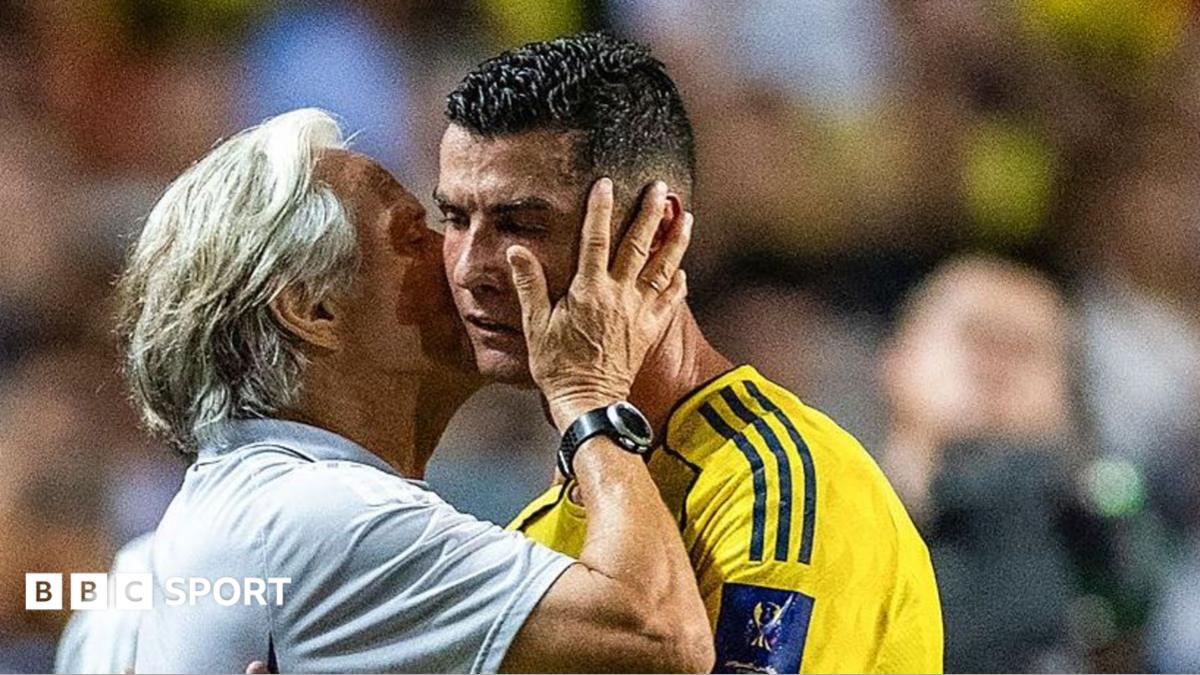
Portugal head coach Jorge Jesus has said there is no rift with captain Cristiano Ronaldo following claims the five-time Ballon d’Or winner had refused to train.
The Al-Nassr forward did not feature in Portugal’s 2-1 win over Norway in Olso on Sunday and did not join his team-mates in going over to the visiting fans at the final whistle.
Instead, the former Real Madrid and Manchester United player headed to the changing rooms – prompting reports he was unhappy with the manager.
Speaking to media before Portugal’s Nations League match against Denmark on Thursday, Jesus said: “There was no incident whatsoever.
“Any player – and I was a player myself – when you spend 20 or 30 minutes warming up and then don’t get on, no-one is happy about that.”
Jesus said he had told Ronaldo before the match he would not be starting, but might be brought on later in the game.
“Afterwards, as coach, I decided not to bring him on. It’s nothing to make a fuss about,” he added.
Former Benfica manager Jesus also dismissed suggestions Ronaldo had refused to train on Tuesday, saying the 41-year-old instead had to do individual exercises for “mobility” and “strengthening” but would train as normal on Wednesday.
However, Ronaldo did not join his team-mates on the pitch in Denmark with Portuguese media sharing a video of him leaving Parken stadium alongside two members of the backroom staff.
They also said Ronaldo’s private jet was heading to Copenhagen.
Goncalo Ramos scored the winner against Norway and Jesus confirmed the AC Milan striker would again be preferred to Ronaldo against Denmark.
“If everything goes according to plan, it will be Goncalo who plays,” Jesus said.
“If I need [Ronaldo], he’ll come on. If I don’t need him, he won’t.”
I asked myself this question and then one second later I asked Google, because my phone was in my hand as it is 50% of the time, and 75% of the time when I’m not being social. I spend a lot of time alone, writing books that I hope will end up in libraries.
I knew there were many public libraries in L.A., and that walking to all of them would probably result in a trail that looked like a snarled nest. This turned out to be correct. The city of Los Angeles has 73 libraries. The county has 86. And Santa Monica has five.
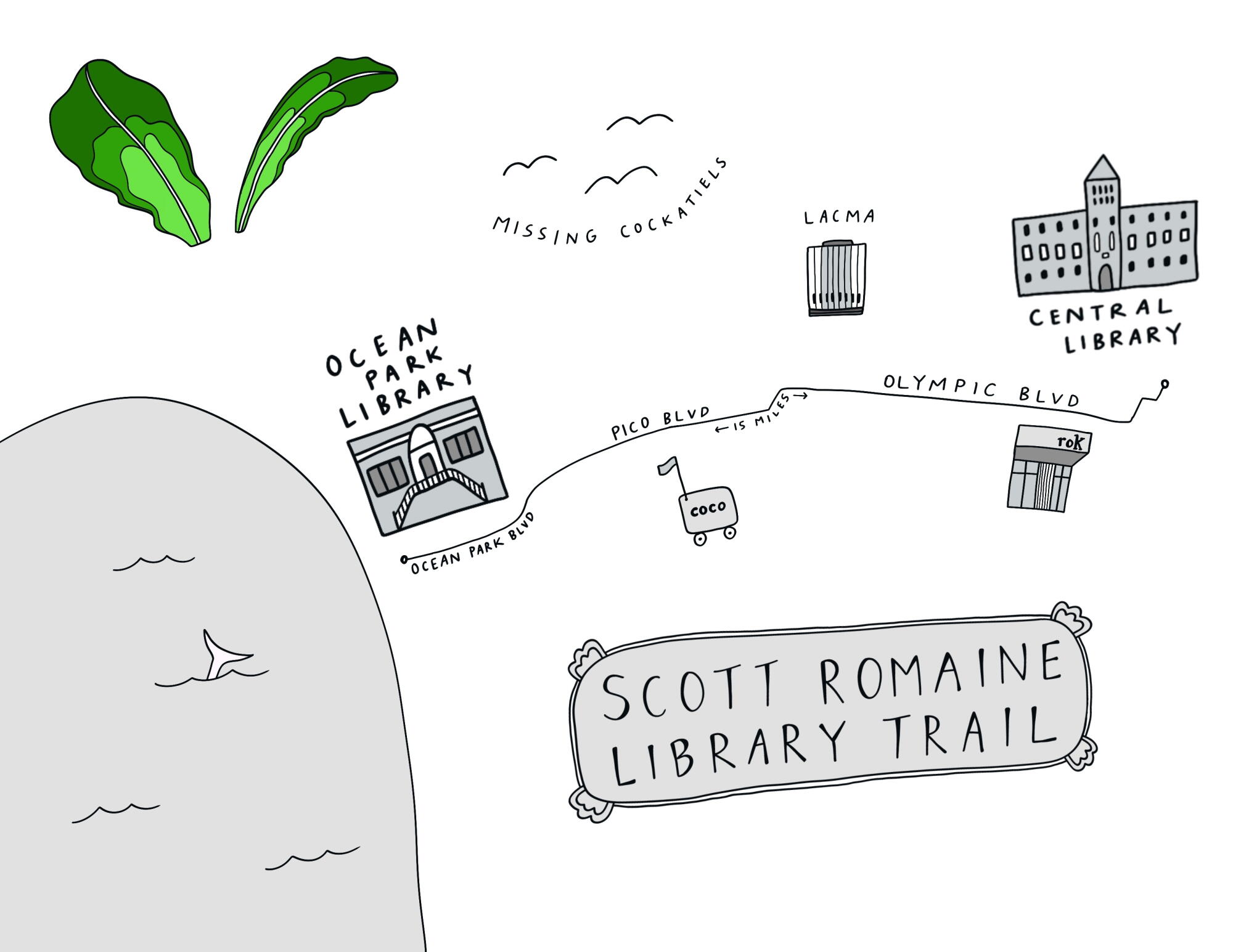
So, I decided to simplify. I would walk about 15 miles from the Central Library in downtown L.A. to the Ocean Park Library in Santa Monica, and, since every trail needs a name, I would call it … the phrase “booking it” arrived in my mind. I crossed that out, and then I crossed out some other bad options, and then I decided to let it go and name the trail after I was done, which is often what I do when writing a novel, because you don’t really know what a thing is until it exists. With books, and with trails, and with life, the only thing we can ever be sure of is that our plans will always turn out to be wrong.
An illustrated map of the 15-mile trek from the Central Library in downtown L.A. to Ocean Park Library in Santa Monica.
Case in point: The day before the trail, I planned to draw some lettuce on my sun hat with fabric pens. I envisioned that on one side, the lettuce would be beautiful and perfect, and on the other side, it would be goopy and rotting. What ended up happening was that I drew two lovely romaine leaves, and I liked them so much that I stopped there.
As I said, I spend a lot of time by myself, and I imagined that walking this trail would be a solitary adventure. I’m currently in the process of writing a new novel, and since walking is so conducive to writing, I thought the trail would give me a nice big swath of time to ponder the fictional world I’ve created.
I was told that a photographer named Scott Strazzante would meet me at the Central Library at 7 a.m. I assumed he’d take some shots and maybe walk with me for a little while, and then we’d part ways. What actually happened was that Scott stayed with me the entire time. This caused me to see the two romaine lettuce leaves on my hat as a foreshadowing. I was one leaf, and Scott was the other.
1
2
1. L.A. Central Library. 2.The Lodrick M. Cook Rotunda inside the library. (Scott Strazzante / For The Times)
But back to the Central Library. It’s a masterpiece. Maybe you already know that. In case you don’t, I recommend a visit. Scott and I ended up in the rotunda, surrounded by murals, and it felt like taking a quick trip to Italy. Although really, it was a trip through California’s history. That’s what the murals depict.
An important part of the library’s history is that people (or one person?) tried to burn it down. Twice. In 1986, there were two arson attacks, spaced a few months apart. Who would want to burn down a library? It’s still unclear, although the main suspect for the first attempt was an out-of-work actor named Harry Peak.
The route from the Central Library to the Ocean Park Library is so easy that you could do it without your phone. You walk down four blocks to Olympic Boulevard, then head west. At some point, switch over to Pico Boulevard and keep heading west. Eventually, you’ll veer off at Gateway Boulevard, which turns into Ocean Park Boulevard, and boom! You’re there!
If you do this trail, I suggest you bring sunscreen, a hat and an external battery to charge your phone. I would also bring water and snacks, although, of course, there are many places to get those things along the way.
As Scott and I walked down Olympic, I said hi to a few people we passed, and Scott did too. After one of these interactions, Scott said, “People must think we’re missionaries or something, saying hi like that.”
A woman holds a religious sign at Olympic Boulevard and Alvarado Street.
I didn’t respond. But as we kept walking, I wondered about the implication of Scott’s statement, which is that if you’re going to be nice to a stranger, then it must be because you want something from them.
Scott and I stopped for beverages at Rok Coffee & Tea at Olympic and Ardmore Avenue, which I highly recommend. They have a free photo booth! Without the booth! It’s a modern, open-air version. Scott and I took a selfie. The people behind the counter were exceptionally friendly. When we walked out, Scott made a comment about it. “They were so nice,” he said, kind of in awe.
The arc of this story, I would say, is that Scott’s heart melted more and more as we walked, and so did mine.
At the start of the trail, Scott kept stopping to take photos. Which, you know, was his job. But I was annoyed about it. I was thinking, Damn, I was planning to dream about my novel and maybe call my sister and now I have to wait for this dawdling photographer?
Internally, I had a quick chat with myself. I could either choose to be irritated, or I could choose to love Scott. By the time we took the selfie at Rok, I loved Scott. Then he told me about his life and I loved him more. Scott’s new to L.A. He moved down here from Marin County, but he’s originally from Chicago. He hates shopping. When I complimented his shirt ( which said “Lucky Brand” on it) he said, “I didn’t even see that.” I noticed he was especially interested in signs about lost animals, which I thought was sweet. “Somebody lost a cockatiel!” he said, jogging to catch up, because I hadn’t waited for him.
Scott ended up jogging a fair amount. “We’re making this light!” I shouted a few times, and he sprang into action. He was a good sport about it. Running uses different leg muscles than walking, he pointed out, and his walking muscles were tired.
1
2
3
1.A Chevrolet van parked on Sherbourne Drive.2.Writer Swan Huntley walks along Olympic Boulevard.3.A jogger passes Love Psychic on Olympic Boulevard and Citrus Avenue.(Scott Strazzante / For The Times)
In other moments, Scott took the lead. He wanted to cross the street to take a picture of the Koreatown sign, so we did that. He stopped to ask people if he could photograph them, which meant that we had more conversations with strangers than I would have had alone. Scott made my solo journey into a social one, and by the time we cut down to Pico, I couldn’t believe there had ever been a moment when I didn’t want this awesome man to walk with me.
Here’s another equation:
Being alone + reading news headlines = I think the world is bad.
When I’m by myself for too long, scrolling through articles about the worst things that have happened recently, I inevitably start to think that strangers suck and that kindness is an outlier. When Scott said that us chirpily saying hi to strangers must have made them think we were missionaries, I thought that was sad. As the day went on, I realized I spend more of my life than I want in that sad place.
Near the intersection of Pico and Robertson, Scott and I met a guy whose job it is to change out the batteries on Coco delivery bots. He told us that Cocos are not autonomous. They’re operated by people overseas, who might never come to Los Angeles. After our conversation with this guy, I said to Scott, “He was so nice!” Scott said, “I know!”
So, you can see how our hearts were totally melted. Strangers, as it turns out, often don’t suck.
By the time we got to the Ocean Park Library, my legs were noodles and Scott’s T-shirt was soaked in sweat. There were five people inside. One was on a computer, one was sitting at a table, one was napping in a small chair and two were in larger chairs, charging their phones, with a bunch of bags laid out by their feet.
Inside the community-centered Ocean Park Branch of Santa Monica Public Library.
Thomas Alexander, one of the librarians, told me that people come to the library for all sorts of reasons. Sometimes it’s for books. Sometimes it’s for events, like the zine workshop they put on recently in the basement, which was very well-attended. And sometimes it’s to charge a phone or use a computer or just be quiet for a little while.
I asked Thomas why he became a librarian. He said, “I like working with the community.”
On some other day, this statement might not have made that much of an impact on me. But on that day, it did. Scott and I had spent the last six hours communing with each other and with all the people we met along the trail. I thought about Harry, the out-of-work actor who had possibly lighted the Central Library on fire in 1986. I don’t know anything about him, but my guess is that he was someone who had forgotten that he was part of a community. I wish that Harry could have met Thomas, who has a calm, sincere demeanor and big, brown inviting eyes that seem to say, Hi, I just want to hang out.
Or I’m projecting. By the end of this walk, that’s what I was thinking. I’d gone from being a one-woman show to: Hi, I just want to hang out.
Swan Huntley arrives at Ocean Park Branch of Santa Monica Public Library.
So, my plans were wrong, as they always are, and I’m glad. The original goal of inventing (discovering?) the Scott Romaine Library Trail was to inspire you to care about books. I ended up inspiring myself to care about what libraries are actually about: community.
Crown Prince Mohammed bin Salman says the kingdom ‘will not hesitate to respond firmly to any threat’.
Published On 30 Sep 202630 Sep 2026
Saudi Arabia’s Crown Prince Mohammed bin Salman (MBS) has promised not to compromise on the kingdom’s security in the face of attacks by the Houthi armed group, saying the Yemeni rebels chose “chaos and destruction, threatening the Yemeni people and the region”.
In a speech delivered Wednesday on behalf of King Salman bin Abdulaziz Al Saud during the opening of the third year of the ninth session of Saudi Arabia’s Shura Council, Prince Mohammed said the country “will not hesitate to respond firmly to any threat or attack aimed at undermining” its security.
He pointed to the trilateral Mecca Joint Defence Agreement with Turkiye and Pakistan that was formalised in August, saying the alliance shows the Saudi leadership’s intent “to strengthen regional stability, shield it from the repercussions of tensions and conflicts and coordinate efforts”.
At the same time, the crown prince said, Saudi Arabia is making “every possible effort to de-escalate tensions and support diplomatic solutions without the slightest compromise on preserving our security”.
Maritime coalition to defend Red Sea
MBS also addressed the targeting of vessels by the Houthis in the Red Sea along the Bab al-Mandeb strait, rejecting the use of international waterways as a tool for political or economic pressure.
He said a “multinational defensive maritime coalition” was set up to ensure “common interests” are protected in international waterways.
In recent weeks, the Houthis have ramped up attacks on Saudi Arabia, as they fight Yemen’s internationally recognised, Saudi-backed government forces.
Last week, Riyadh said it intercepted six ballistic missiles aimed at Taif in western Saudi Arabia and the Yanbu port area on the Red Sea.
The Houthis also said they attacked “a sensitive target” in the Saudi capital, Riyadh, and Saudi Aramco facilities in Yanbu.
On Tuesday, Pakistan’s Defence Minister Khawaja Muhammad Asif said Islamabad will make “whatever means” available to Saudi Arabia under the mutual defence pact if the Houthi attacks on the kingdom continue.
“Cartoon Network was better than Disney Channel and Nickelodeon.”
“Men should be required to get a vasectomy after a certain amount of baby mamas.”
These are just some of the bold, controversial statements that have come up at “Unpopular Opinion,” a live, interactive event where people share and defend their hot takes in front of a spirited audience. To support their claims, they present slide decks filled with graphics and memes on a giant screen. Those in the crowd gasp, cheer and laugh.
The crowd from a past “Unpopular Opinion” event. The viral series is coming to the Regent Theater in L.A.
(Quest Hollis / SideQuest Visuals)
The event was created by Chance Albury and Sarah Prince, founders of the Washington, D.C.-based experiential production company Something Different. People were already having these types of impassioned conversations online, Albury says, and they simply wanted to provide that space in real life.
They debuted the series in February, and after recaps of events went viral, they decided to take it on tour. “Unpopular Opinion” makes a stop in Los Angeles on Thursday at the Regent Theater.
“Who knew rage-baiting could be such a unifier?” Albury says.
“Everyone loves to argue,” Prince adds.
Albury says that the success of the show relies on having different perspectives and opinions in the room. The slide decks are also a major draw. Unpopular Opinion is one of several events that takes PowerPoint-style presentations out of their traditional setting — the office or the classroom — and puts them front and center in a social scene. Over the last few years, slide decks have shown up at house parties, matchmaking events and even in bars at gatherings like Lectures on Tap.
Anyone who wants to present can submit their hot take through an application form. Albury and Prince receive roughly 50 submissions for each event, but only about seven to nine are selected.
Presenters defend their hottest takes on stage using slides and passion.
(Quest Hollis / SideQuest Visuals)
“There’s just so many topics that you can talk about so it can’t get old,” says Prince, adding that a lot of the speakers are funny and present like stand-up comedians.
Typically hosted at a live music venue, the vibe of “Unpopular Opinion” feels like a boisterous late-night game show. Drinks are available for purchase at the bar. A live DJ plays a mix of hip-hop, pop and other high-energy genres as a host hypes up the crowd. As an icebreaker, audience members are asked to submit their own unpopular opinions to be displayed on the screen for everyone to see.
Then the main event begins. Presenters are given 10 minutes to make their case. Unlike a traditional debate tournament, audience members are encouraged to get involved and make their thoughts known.
“There’s just so many topics that you can talk about so it can’t get old,” says co-founder Sarah Prince.
(Quest Hollis / SideQuest Visuals)
After each pitch, the host asks audience members to hold up their paddle, which has a green thumbs up and a red thumbs down to indicate whether they agree or disagree. Then a mic is passed around so attendees can share their thoughts or rebuttals.
Though the event is called “Unpopular Opinion,” there are times when the majority of the crowd agrees with the presenter. There are also times when the audience strongly disagrees. In either case, Albury and Prince ask that attendees are respectful to one another.
The presentation topics range drastically, from lighthearted social media discourse (“Women standing behind the DJ booth is more embarrassing than men”) to hot-button dating debates (“Splitting the bill on the first date is fine”) to deeper societal issues (“People hate everything about slavery but Christianity”).
Albury and Prince say they are exploring ways to bring “Unpopular Opinion” “beyond the show doors” for those who can’t make it to a live event. They already post man-on-the-street-style interviews on social media, in which they ask people to weigh in on hot button questions.
Albury says the beauty of “Unpopular Opinion” is that it shows people it’s OK to disagree. “Just because we have different opinions doesn’t mean we can’t talk about it,” she says. “We may not even come to terms on agreeing or disagreeing, but we’ve got that space.”
‘Unpopular Opinion,’ hosted by Something Different
When: Oct. 1. Doors open at 7 p.m. and showtime is at 8 p.m. Where: Regent Theater, 448 S. Main St., Los Angeles Info: Tickets start at $48.60 (including fees). Must be 21+ to enter.
COPS have threatened to force arrested criminals to listen to Taylor Swift’s new release on loop.
Greensboro Police in North Carolina, US, jokingly swiped at the superstar’s album after it received mixed reviews.
Cops threatened to force arrested criminals to listen to Taylor Swift’s new release on loopCredit: FilmMagicTaylor re-released her Life of a Showgirl album with four new songs last weekCredit: AP
They posted: “Those who are arrested tonight will be required to listen to Taylor Swift’s new songs on repeat.”
But following a huge online backlash, the force later wrote: “We apologise for stirring up the Taylor bots.
Cruel Summer singer Swift, 36, re-released her Life of a Showgirl album with four new songs last week, adding “The Encore” to the title.
But critics were not impressed.
Music magazine Pitchfork rated it 4/10, saying: “Taylor Swift has let the quality of her songwriting slide in favour of commercial domination.”
Critic Shaad D’Souza added: “Yes, Taylor Swift will always have one of the greatest songwriting catalogues of all time.
“Not even Taylor Swift could take that away from her — but she sure is trying.”
The album came out in 2025 as the first release since the end of her record-breaking Eras Tour, but failed to win acclaim.
Swift previously said she did not intend to add new tracks, but later admitted she went on a trip with her collaborators and “did what we do when we feel anything: we wrote more songs”.
CHICAGO — The U.S. can deport the leader of Wisconsin’s largest mosque — an outspoken advocate of Palestinian rights — on the grounds that he is a threat to national security, an immigration judge ruled Wednesday.
Salah Sarsour was detained in Milwaukee in March by U.S. Immigration and Customs Enforcement officers. A federal judge ordered Sarsour’s release in June, saying he raised a “substantial” claim that the Trump administration was targeting him for speaking out against Israel and advocating for Palestinian rights.
Sarsour called the ruling “deeply disappointing,” but said he intends to appeal.
“I will continue fighting to defend the right to free speech and to stay in the country I have called home for more than three decades,” Sarsour said in a statement.
Government attorneys say Sarsour’s decades-old convictions in Israel make him a threat to national security and accuse him of lying on his green card application. Judge Jayme Salinardi, with the Chicago Immigration Court, found him removable on foreign-policy grounds but tossed out the government’s claim that Sarsour lied to immigration authorities.
Sarsour says he fears for his life if he is deported to the West Bank
Sarsour, who was born in the Israeli-occupied West Bank, was imprisoned in Israel in 1988 after confessing to throwing a Molotov cocktail and stones at Israeli military personnel. In 1995, he was convicted of attempting to possess weapons. Sarsour denies committing those crimes. His attorneys say he was tortured and coerced into confessing in both instances.
Sarsour, the president of the Islamic Society of Milwaukee, does not have a criminal record in the U.S., where he has lived since 1993. His attorneys say the U.S. government has known about Sarsour’s convictions in Israel since he arrived.
Deportation to the West Bank “means the end of my life,” Sarsour told the Associated Press on Tuesday.
One of his attorneys, Patrick Taurel, told the AP that Sarsour’s earlier treatment by Israeli authorities is “probably a good indicator of what awaits him” if he is deported.
At a status hearing Wednesday, Taurel pressed the judge to specify that Sarsour can only be deported to Israel or the Palestinian territories. Jordan, a country to which Sarsour has no connection, is listed as a possible destination on the order of removal.
Sarsour was instructed by immigration officers to list Jordan as his home country on an immigration form because his preferred entry — “Palestine” — is not a fully independent, unified state. But he “has no right to reside in Jordan,” Taurel said.
Salinardi declined, calling it an issue to be addressed on appeal.
Attorney says Sarsour will fight deportation
Taurel said Wednesday that Sarsour is being unfairly targeted.
“If Salah can be deported for his speech in support of Palestinian rights, anyone can face the same fate,” he said.
Secretary of State Marco Rubio issued a memo in June 2025 invoking a rarely used immigration provision saying Sarsour could be deported on the same grounds as Mahmoud Khalil and Mohsen Mahdawi, both advocates for Palestinian rights whom the Trump administration has tried to expel, according to court documents.
Before the judge’s ruling, Taurel said Sarsour would need to demonstrate on appeal that he could be tortured again if he were deported.
“It’s a very high bar, although I think we can meet it in this case, given what Salah has already experienced, and given the government of Israel’s treatment” of others like him, Taurel said.
A notice of appeal is due within 30 days. Salinardi did not schedule a new hearing and announced he is retiring and that Judge Craig Defoe will oversee the case going forward.
Sarsour says he was tortured and coerced into confessions
Jawad Boulos, who represented Sarsour when he was convicted in Israel, testified in August that Sarsour was coerced into confessing and that he wasn’t convicted of any charge tying him to a terrorist organization. He said Sarsour was tortured by Shin Bet, Israel’s internal security agency.
The Department of Homeland Security challenged Boulos about the torture allegations, questioning how he could know it was true.
Sarsour’s current defense team has asked why U.S. authorities waited until this year to detain him. Taurel said the government has known about Sarsour’s imprisonment in Israel for decades and that he has not concealed that from immigration authorities.
Experts on forced confessions and the treatment of Palestinian prisoners in Israeli prisons also testified in Sarsour’s defense. Israeli military courts have faced repeated scrutiny over allegations of limited due process and the high conviction rate of Palestinians. Israel rejects the claims.
In June, U.S. District Judge James Patrick Hanlon ordered Sarsour released from ICE custody saying he could have a case arguing the U.S. government detained him in retaliation for protected speech. Further, Hanlon said, government attorneys had not explained why Sarsour was suddenly considered a threat after decades as a lawful permanent resident.
The Trump administration has appealed Hanlon’s ruling.
Sarsour, who has Type 2 diabetes, lost more than 30 pounds while detained by ICE, and his blood sugar levels were checked only once a month, putting him at risk of organ failure or death, his attorneys said.
An investigation by KFF Health News and the Associated Press found that hundreds of detainees in at least 33 states have filed federal lawsuits with similar allegations of medical neglect.
After days of indecision, NASCAR disciplined seven people who participated in the attack of young racing star Corey Heim in front of a concession stand at Martinsville Speedway shortly after the ValleyStar Credit Union 300 on Saturday.
Major penalties and suspensions were issued to team owner Chad Bryant and crew member Steve Civatarese. Both are suspended indefinitely from NASCAR events — including next year’s ValleyStar Credit Union 300 — and are also on probation for a year.
Additionally, Bryant was fined $2,000 and must attend a NASCAR-approved anger management program. Civatarese was fined $1,000. Ryden Lapcevich, the younger brother of Bryant driver Treyten Lapcevich, was fined $500 and placed on probation through Dec. 31, 2027.
NASCAR said in a release that Bryant, Civatarese and Ryden Lapcevich violated Sections 12-6.1C & 12-6.1C2 of the NASCAR Rule Book, which pertains to member-to-member confrontations with physical violence.
Four others from the Bryant pit crew were also fined and put on probation because of their participation in a separate altercation after the conclusion of the second heat race at Martinsville.
The disciplinary action comes after NASCAR was criticized on social media by racing fans who wondered if the governing body would ignore the beating of Heim that was widely distributed online. NASCAR posted its own video of the confrontation.
Heim, 24, often races cars for 23XI Racing, owned by Denny Hamlin and NBA legend Michael Jordan, and will drive for the team full-time next year. During his podcast “Actions Detrimental” on Monday, Hamlin called Bryant and his team “cowards.”
“Just complete classlessness from Chad Bryant, the owner, and his team to wait on Corey,” Hamlin said. “Listen to what they did. Those [expletive] cowards waited on Corey Heim to leave his car and leave his team, and then jump him while he was on the way to his hauler.”
The attack in front of a hot dog stand in the pit area was triggered by an accident shortly after the checkered flag involving Heim and Treyten Lapcevich, who was driving Chad Bryant Racing’s No. 77. After the pair aggressively jousted for runner-up during the final laps, Lapcevich drove into Heim’s right side during the cool-down lap. Heim responded by sending his car over the front of Lapcevich’s car, causing a wreck that destroyed both cars.
Lapcevich tried to confront Heim after the race but was held back by Bryant, who instead brought six team members to do so violently. Lapcevich issued a statement Tuesday condemning the actions of his racing team.
“What happened with Corey after the race was wrong, and it should not have happened,” Lapcevich said. “While I was not involved in the incident, I want to be clear that I do not condone any action that took place.
“Emotions can run high after a race, and I was certainly frustrated and upset following Saturday night. I planned on having a conversation with Corey following the race. However, there is a clear line between being angry about what happens on the racetrack and allowing that frustration to become physical. What happened after the race for sure crossed that line.”
Hamlin called for discipline on his podcast and got plenty of support from fans on social media.
“I don’t know who’s in charge of NASCAR Regional, but there is absolutely no way that any of those guys should be in a pit lane for the next year, at least,” Hamlin said. “And I want them to say publicly what they do to them. And if it’s nothing, I will have a major problem. But none of those cowards should be in a pit lane in the foreseeable future.”
Heim seemed to downplay the incident. He posted a selfie with a thumbs-up and a caption that read, “Solid effort, but at least make it count next time.” He also posted the hot dog stand menu — which was dented by an errant punch during the fight — saying “New office piece. Poor thing took a beating this weekend.”
Pit crew members punished for the separate altercation included Dylan Jenks and Ryan Burrow, who each were fined $500 and placed on NASCAR probation until Dec. 31, 2027. In addition, Brad Housewright and Chase Burrow were each fined $250 and placed on the same probation.
Heim, a rising star who won NASCAR Cup Series events at Naval Base Coronado and Indianapolis Motor Speedway this season and is the reigning NASCAR Craftsman Truck Series champion, was driving the No. 22 for Nelson Motorsports.
Bangladesh’s health authorities report that at least 233 people have died from the mosquito-borne illness disease dengue fever. Thousands of cases have been recorded across the country since the start of 2026.
Israeli Prime Minister Benjamin Netanyahu has met Yaniv Hayun, the Flydubai passenger that helped restrain a pilot who stabbed a colleague. Netanyahu called the passenger a ‘hero’ during a meeting at Ben Gurion Airport in Tel Aviv shortly after the flight landed.
Vogue Williams told of the ’embarrassment’ over divorcing her first husband, singer Brian McFaddenCredit: GettyShe later married Made In Chelsea’s Spencer Matthews and they went on to start a family togetherCredit: voguewilliams/Instagram
Vogue and Brian were married from 2012 until 2017Credit: Getty Images – GettyVogue welcomed her and Spencer’s fourth child, Remy, earlier this monthCredit: Instagram/ @voguewilliams
“I was just going to have to live a life of being single. And I was like, ‘I’m going to enjoy being single for once in my life’.”
Vogue added: “I did enjoy being single and it took about three months because I was so used to being in relationships and then I enjoyed being single.
“Then I met somebody and now I’m sitting on this podcast breastfeedingmy fourth child. So this could be you at 40.”
WASHINGTON — About half of rural voters identify with Make America Healthy Again, a sprawling political movement championed by the Trump administration, but most said President Trump’s healthcare policies have not benefited their communities, according to a new poll from The Associated Press in partnership with KFF.
About 8 in 10 rural voters — an important voting bloc for Trump and fellow Republicans — said the Trump administration’s policies have had a negative effect or no impact on the health of people where they live. Most MAHA supporters, 68%, also feel this way, according to the national survey of more than 2,000 rural registered voters.
The findings signal an apparent disconnect between the Trump administration’s MAHA-branded policy priorities and rural America’s perception of their reach and effectiveness.
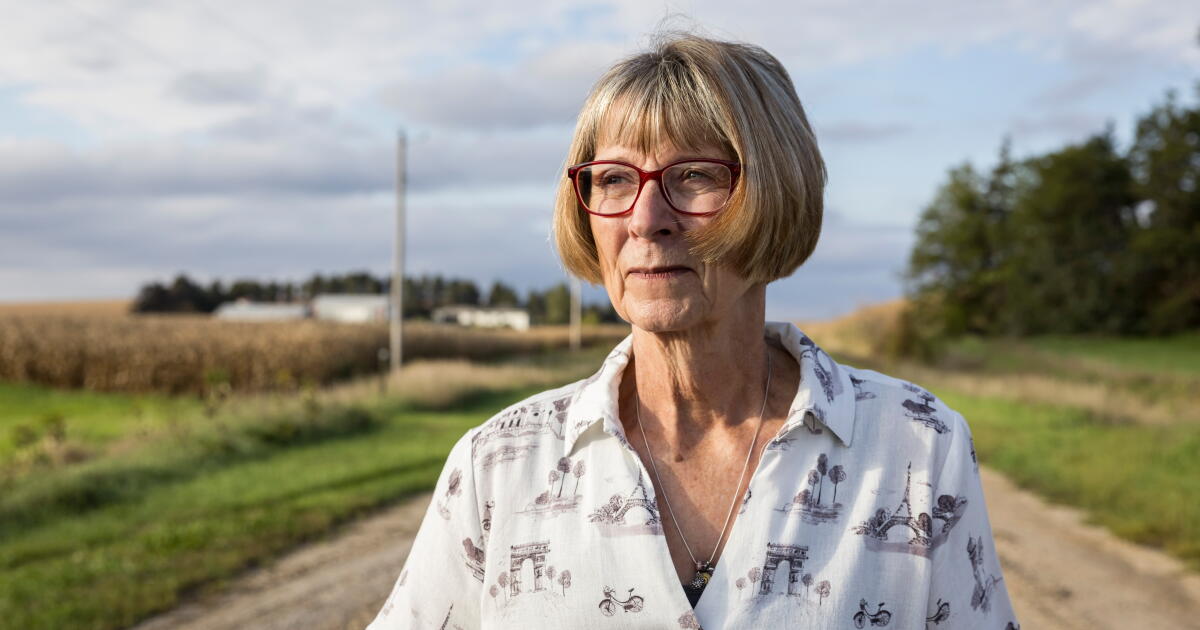
Iowa pastor Mike Jager, 58, is a registered Republican and considers himself part of the MAHA movement. The Trump administration’s health policies have had “minimal” impact on the health of his community, Jager said, but he added that Trump’s health secretary, Robert F. Kennedy Jr., is moving the needle “in the right direction.”
“It’s a beginning,” Jager said. “It’s a big ship to try and turn around and course-correct.”
Kennedy has used the MAHA label to support various agendas, including abandoning long-standing vaccine guidance, researching ultraprocessed foods and investing in regenerative agriculture.
Jager lives in Sumner, Iowa, “less than a quarter mile from where the corn ends and the city begins.” He’s seen family members and neighbors develop diseases that he believes resulted in part from exposure to agricultural chemicals and consumption of unhealthy, processed foods.
In the June Republican primary for governor, Jager voted for Zach Lahn, a businessman and farmer who ran on a MAHA platform and beat out Trump-backed U.S. Rep. Randy Feenstra. He plans to vote for him again in November.
Many rural voters are prioritizing health issues
About two-thirds of rural voters who support MAHA said it’s “extremely” or “very” important to them to vote for a candidate who does, too, while only 4 in 10 rural voters overall said the same.
Trump sought to seize on MAHA support during his campaign for another term two years ago. Now, amid tight midterm races, Kennedy has campaigned to galvanize the movement’s support. In May, he attended a MAHA bill signing with Iowa Republican Gov. Kim Reynolds, and in August, he went fishing with Lahn, posting about it on social media.
Yet the survey indicates voters are noticing “this weird split in the Trump administration” between what Kennedy messages and what Trump says and does, said David Peterson, a political science professor at Iowa State University.
In Iowa, concerns about what’s causing rising cancer rates are “a big deal,” he said. For many people who identify with MAHA, being healthy includes taking on corporate agriculture and pharmaceutical companies that they think cause cancer, he added.
In the poll, views on healthcare access and costs largely diverged along party lines. Most Democratic and independent voters said the Trump administration’s healthcare policies have had a negative impact on their healthcare costs and the health and well-being of people in their communities. Republicans were likelier to say there hasn’t been an impact.
Talking on the phone from her 200-acre farm in Carroll County, Iowa, 71-year-old Donna Klocke said that her husband had died from cancer and that she has neighbors who also have cancer.
“It’s just very prevalent,” Klocke said. “We’re in a farming community. We use chemicals and pesticides and all kinds of things that aren’t necessarily good for us.”
Klocke, a Democrat, said the MAHA movement is a good idea because she cares about being healthy, but she does not consider herself part of it and will not be voting for a candidate who represents the movement.
“Measles are coming back and polio,” Klocke said. “It’s the measles that really gets me. It’s like, do you not understand how dangerous it is?”
Survey reflects angst over healthcare
Nearly half of rural voters said their communities don’t have enough doctors or other healthcare providers, and even more said there aren’t enough mental health workers specifically. The share of rural voters who said their community does not have enough hospitals increased to 35% from 21% in a similar question asked in a KFF-Washington Post survey in 2017.
And as with the general population, healthcare, gas and grocery costs are top pain points. At least 6 in 10 rural voters said they were worried about healthcare costs.
The level of worry varied based on coverage, with rural voters enrolled in employer plans or Medicare less likely to be worried. The survey found that 80% of working-age rural voters on Medicaid were very or somewhat worried about healthcare costs. Last year, Republicans passed a tax and spending bill that cut over $900 billion in projected Medicaid spending over a decade and mandated new eligibility requirements.
In the tiny community of Lipan, Texas, west of Dallas, Kim Solis and her husband have a handyman-and-home-remodel business and get their insurance on the marketplace. Since Trump returned to office, their premium payment jumped from zero to $166 a month. Their copays went up, and their deductibles each increased by $2,000.
Solis, 62, said she worries what will happen if they get a big medical bill.
“Certainly, we’d be in a world of hurt trying to take money out of savings or getting it out of our 401(k) just to be able to do something about it,” she said.
Most MAHA voters are also MAGA — but not all
Like the general population, rural voters said they trust their own doctors and healthcare providers for health information over government agencies or officials, according to the poll.
Trust in Kennedy and Trump fell largely along partisan lines. About 10% of rural Democratic voters reported having a “great deal” or “fair amount” of trust in Kennedy, compared with 74% of rural Republican voters. About 5% of rural Democrats and 69% of rural Republicans said they trust Trump a “great deal” or “fair amount” for reliable health information.
While Make America Great Again and MAHA identities are “linked in a lot of ways,” the rising costs of healthcare and groceries pose a challenge for those committed to the MAHA principles that Kennedy promotes, said Peterson, the Iowa State professor.
Buying healthy food “becomes, ‘I can’t afford to do that because of Trump’s policies,’” he said.
In Stamping Ground, Kentucky, Alma Johnson, 65, works night security at a horse farm.
Johnson voted for Trump in 2016, 2020 and 2024 and said she “pretty much” likes how Trump is running the country. But she said she is not a MAGA devotee, preferring to “think for myself.”
MAHA, however, is an easy sell for Johnson because, she said, she doesn’t think people should be able to buy junk food in the Supplemental Nutrition Assistance Program, or SNAP.
Still, she said she hasn’t seen much impact from the Trump administration’s healthcare policies, including the new food pyramid.
“It takes a long time to change people, their habits, their thoughts or the things they do,” Johnson said.
Swenson, Tribble and Sanders write for the Associated Press.
The poll of 2,241 U.S. adults registered to vote in rural areas of the country was conducted Aug. 12-24, 2026, using a sample drawn from the probability-based SSRS Opinion Panel. The margin of sampling error for the full sample is plus or minus 3 percentage points. In collaboration with AP, KFF researchers worked to design the survey sample and questionnaire, analyze and report findings. This report is a collaboration between the Associated Press and KFF Health News. KFF Health News is a national newsroom that produces in-depth journalism about health issues and is one of the core operating programs at KFF — the independent source for health policy research, polling and journalism.
Las Vegas Aces star A’ja Wilson said she apologized to her teammates for getting a technical foul late in an eventual 98-89 playoff loss to the Indiana Fever on Tuesday night in Indianapolis.
But the four-time league MVP is not apologizing for her actions that led to the foul being called.
With about 4 minutes left in the fourth quarter and the Aces down by 11, Wilson drew a foul against Indiana’s Sophie Cunningham. As Cunningham protested the call, Wilson walked over to a Fever fan who had been standing in front of his seat in the second row behind the basket and pointing in Wilson’s direction.
Visibly upset, Wilson stood directly in front of the fan, who had been pulled back into his seat by a woman sitting next to him, while yelling at him. She was quickly pulled away by teammate Cheyenne Parker-Tyus, but was still upset as she walked away.
Speaking to reporters after the game, Wilson said that there are “just certain things that I’m not going to allow anymore because it’s just unacceptable.”
“I don’t know if you guys know me, but I don’t really get into the bulls—. I don’t,” Wilson said. “I try to play my game, keep it pushing. But if I’m just walking, because I just got the foul, I’m chilling — and if I see a man come at me, taking steps towards me and pointing at me, I don’t give a damn what you said. I don’t give a damn how you said it, the tone. That is unacceptable.”
Online video footage shot from the stands shows that the man was standing in front of his seat as the play unfolded. He appears to take a step or two while pointing and yelling after the foul was called.
“I didn’t exactly see what happened. I kind of saw the aftermath,” Aces coach Becky Hammon told reporters after the game. “I’ve never seen A’ja Wilson go like that. So whatever was done, I can tell you she felt very disrespected in that moment. I’ve never seen her really react like that ever. So whatever it was, it doesn’t have any place, I don’t think, in an arena.”
The fan eventually was escorted out of the seating area but was allowed to return to his seat. The Fever said in a statement that arena security spoke with the man and witnesses and “determined there was no violation of the Fan Code of Conduct.”
Wilson was assessed a technical foul for unsportsmanlike conduct.
“Yeah, I’m apologizing to my team for that,” she told reporters. But, Wilson added, “you don’t have to like me. You don’t have to love me. You can hate me with all your heart. … But I guarantee you will respect me.”
The decisive Game 3 of the series is Thursday in Las Vegas.
Israeli raids at Al-Aqsa Mosque compound have intensified during the Jewish holiday season.
Published On 30 Sep 202630 Sep 2026
Hundreds of Israelis have stormed the Al-Aqsa Mosque compound in occupied East Jerusalem on the fifth day of Sukkot, a Jewish holiday.
While Israelis performed Jewish religious rituals and sang in violation of the status quo at the compound on Wednesday, Israeli restrictions on the entry of Palestinian Muslims continued, Palestine’s Wafa news agency reported, citing the Jerusalem governorate.
Recommended Stories
list of 3 itemsend of list
Jerusalem’s Islamic Waqf Department reported that about 700 Israelis, including former lawmaker Moshe Feiglin, stormed the compound under the protection of Israeli police.
The historical status quo stipulates that the waqf department has exclusive responsibility for administering the compound, also known as al-Haram al-Sharif, or the Noble Sanctuary, by Muslims, and as the Temple Mount by Jews, as a place of worship exclusively for Muslims.
The Jerusalem governorate said Israeli authorities closed the road leading to the Lions’ Gate area, as well as the entrance to al-Turba Road leading to the town of Silwan, to ease Israelis’ access to the Western Wall.
Israelis have stormed the Al-Aqsa compound regularly since the start of the Jewish holidays earlier this month. On Tuesday, 966 Israelis entered the compound through the Moroccan Gate alongside Israeli police, performing Talmudic rituals and singing together in the mosque’s courtyards.
The holidays began with the Jewish New Year on September 12 and 13, followed by Yom Kippur, or the Day of Atonement, on the 21st and the 22nd. Sukkot runs from September 26 to October 2, after which Simchat Torah, marking the conclusion of the annual cycle of public Torah readings, will be celebrated on October 3.
National treasure David Attenborough recently said that Richmond Park is “both a refuge and a source of inspiration” and that he wouldn’t want to live anywhere else despite having travelled the globe.
And with all there is to do in Richmond Park, it isn’t surprising.
Visitors can see ancient oaks and herds of deer as well as head off on autumnal walks.
For a change of scene, from the park you can head into the town too and explore independent shops or walk along the river spotting the swans and ducks.
The Wye Valley & Forest of Dean
Sitting across the English and Welsh border, the Wye Valley and Forest of Dean is known as one of the UK’s most enchanting regions.
The site is actually an ancient hunting ground with over 20 million trees.
For visitors there are woodland walks, historical ruins and river adventures.
If you want a challenging walk, head up to Symonds Yat Rock or the Devil’s Pulpit.
Mam Tor in the Peak District has panoramic views of Hope ValleyCredit: Getty
Mam Tor, The Peak District
Mam Tor in the Peak District boasts panoramic views of the Hope Valley, and in the autumn it is even more special to visit with the leaves turning brown and yellow.
For a calm walk, there is a three-mile circular route that takes around two hours to complete and includes heading to the summit as well as the Great Ridge and Windy Knoll.
The Scottish Borders
Up in the north, the Scottish Borders has numerous free walking trails to head off on with historic woodlands and ruined abbeys.
There are plenty of free places to explore across the Scottish Borders area, including St Abbs Head National Nature Reserve where there are numerous walking trails.
Or head to Kelso Town Centre with a historic cobblestone market square and loads of independent shops.
Moors Valley Country Park & Forest is home to a play trail with famous charactersCredit: TripAdvisorYou can also do craft workshops at the parkCredit: TripAdvisor
Moors Valley Country Park & Forest
Located in Dorset, Moors Valley Country Park & Forest has an interactive play trail with famous characters including the Gruffalo and Zog.
There are a number of different play areas too, including the Snake Pit with giant wooden snakes that kids can scramble through.
The park is home to a lot of paid-for activities too, including Go Ape.
Heartwood Forest is a Woodland Trust site that is free to visit and also has free parking.
Wander through the ancient bluebell woods and see newly planted trees.
On October 10, there’s even a short guided walk at Heartwood Arboretum.
You’d see 60 species of trees on the free walk, but you will need to book in advance.
Dalby Forest, North York Moors
Dalby Forest is spread over 8,000 acres, so there is plenty to explore with several miles of easy walking trails.
Make sure to look out for the free Gruffalo orienteering markers hidden among the trees.
There’s currently a sculpture trail at the forest too, along the Adderstone Rigg Trail.
Or head to Dartmoor National Park in Devon whee you can see free-roaming poniesCredit: AlamyAnd there are massive stone piles that look more like beastsCredit: Getty
Dartmoor National Park, Devon
Want to feel as if you have stepped into the likes of Wuthering Heights or Sense and Sensibility? Then head to Dartmoor.
This sprawling 368-square-mile national park in Devon is home to the most beautiful walks in the county, in my opinion.
From rock formations that look more like mythical beasts to river spots with giant stepping stones, the park boasts tons of possible days out.
And if you are lucky, you’ll be able to spot some Dartmoor ponies.
Alice Holt Forest
Alice Holt Forest near Farnham is thought to be one of the best family woodlands to visit in the south, with trails ideal for buggies and little ones.
The park also has a small café ideal for grabbing a cuppa if there is a chill in the air.
Charleton Fruit Farm
In Angus, Scotland, Charleton Fruit Farm is home to a huge pumpkin patch from October 9 that is completely free to visit.
There’s lots of other stuff to do at the farm as well for free, including the play park with go- karts, trampolinesand sandpitt.
You can also pick seasonal fruit at the farm, but this isn’t free – you’ll be charged according to the weight of what you pick.
Or head to Charleton Farm for a free pumpkin patchCredit: Charleton FarmDoddington Hall also has a pumpkin patch you can visit for freeCredit: Doddington Farms
Doddington Hall and Gardens
Doddington Hall and Gardens is another spot with a free pumpkin patch, where there are more than 30 types of pumpkins, squashes and gourds to choose from.
If you do want to buy one though, you of course will need to pay for this, with prices usually starting from £4.
Throughout the patch though, there will be some pumpkins with golden bottoms – if you find one, it means you’ll win the pumpkin, as well asa family ticket to Christmas in the Hall as well as a homegrown Christmas tree.
Wings, Wonders & Wildlife Trail at Sandilands
At National Trust‘s Sandilands in Mablethorpe, Lincolnshire, you can head off on a free trail where families learn about six winter visitors.
Along the trail, visitors will test their knowledge with interactive challenges.
The trail is great for all ages and is self-led through the nature reserve.
The Grown-Up Getaways offer the chance to try jewellery making, pottery or painting, as well as explore some of the UK’s most beautiful beaches and countryside
This article contains affiliate links, we will receive a commission on any sales we generate from it. Learn more
There are more than 40 Parkdean Resorts sites to choose from across the UK(Image: Parkdean Resorts)
There’s no time like the changing colours of autumn to explore what the rest of the UK has to offer before the biting winter weather sets in. And for those seeking a fuss-free getaway, one holiday park group is offering breaks from £99 for four nights with more than 40 picturesque locations to choose from.
Parkdean Resorts operates sites across Britain’s coast and countryside, from the beaches of Devon and Cornwall to quiet escapes in Northumberland and Scotland via the likes of the ever-popular Lake District and the Welsh seaside. While many may think of a holiday park break as being one for families with little ones in tow, Parkdean Resorts also offers Grown-Up Getaways – designed specifically for adults looking to enjoy a holiday at their own pace.
These breaks tailored to grown-ups offer a packed programme of activities outside of school holidays, so holidaymakers can start their day with yoga or swimming, while away the afternoon with board games, pool, darts or archery, and spend evenings enjoying a whodunnit murder mystery, karaoke, poker, bingo or a quiz. Other new activities at these Grown-Up Getaways include creative pursuits such as jewellery making, pottery, painting and mosaic art, while entertainment ranges from country nights to rock ‘n’ roll shows and performances full of hits from iconic musicals.
READ MORE:
There are various accommodation options to choose from too, from lodges and caravans to glamping pods, safari tents and cottages with hot tubs, while restaurants, bars, takeaway options and on-site supermarkets at each park provide plenty of places to eat and drink. Holidaymakers seeking a stress-free break can book all-inclusive packages at the majority of Parkdean Resorts sites across the UK too.
All-inclusive holidays are available on selected four-night Monday arrival stays at 45 parks, as well as on selected three-night weekend breaks at 14 parks across the UK, with packages starting from £100 per adult and £40 per child. These breaks include three restaurant meals a day, unlimited soft drinks and Costa Coffee, plus plenty of choice on dedicated kids’ menus.
Grown-Up Getaways offer activities for adults outside of school holidays, while all-inclusive packages are also available.
Another choice for UK holiday parks is Haven, which is inviting visitors to its Haunted Haven season this Halloween when its holiday parks will be offering activities and entertainment with a spooky twist. With more than 30 locations to choose from, prices for a Halloween-themed break start from £65 for four nights.
A different option is Forest Holidays, which can be found in 13 UK forests stretching from Deerpark in Cornwall right up to Strathyre in Stirling. Each lodge at these sites comes with a hot tub, with one to five-bedroom options available for couples’ retreats or family holidays.
Back at Parkdean Resorts, for holidaymakers seeking inspiration on where to go this autumn, the top-rated choice of the group’s destinations on TripAdvisor based on nearly 2,000 reviews is Falbarrow Holiday Park in the Lake District. Situated on Lake Windermere with direct access to the water’s edge, this site offers ample opportunity for water sports such as sailing, kayaking, and paddleboarding on England’s largest lake, although it is also not one of the sites where the all-inclusive offer is available.
Meanwhile, one Parkdean Resorts regular wrote in a five-star review on Trustpilot: “Great holiday park, friendly staff especially in the bar and restaurant. Being pet-friendly made it for us.”
Another customer said: “This place was superb, caravan was lovely and the lakes are great. I have already booked for next year. Been coming to Cornwall now for the last 10 years and been all over in caravan parks for holidays, but this place was best by far.”
And a third praised: “Lovely site. Swimming pool absolutely brilliant as were the child aqua jets and water skis. Very good value for money and the site is very nicely maintained. We got a late deal and it was an absolute bargain!”
One holidaymaker thought their accommodation could have been improved, feeding back: “I booked a three-bedroom lodge but was up graded to a four-bedroom. I feel I should have been given the choice of upgrade because I found it very big for two of us.”
A different reviewer commented: “Parkdean is a great option holiday for relaxing and doing your own thing. Has all the facilities you require to make it a great holiday.”
Siegfried Muresan’s loss of the confidence motion increases the prospect for snap elections.
Published On 30 Sep 202630 Sep 2026
Romania’s pro-European Prime Minister-designate Siegfried Muresan has failed to win a parliamentary vote of confidence, prolonging a political crisis seen as a boost for the rising far right.
Muresan, a liberal European Parliament member who was the latest of three designated prime ministers, secured only 182 votes out of the 233 required to secure the confidence motion on Wednesday, according to the official count.
Recommended Stories
list of 3 itemsend of list
The far-right Alliance for the Union of Romanians (AUR) largely boycotted the vote.
The 45-year-old had proposed what he described as a “reform-oriented” governing programme under his centre-right National Liberal Party (PNL), which teamed up with the Save Romania Union party, or USR, and the small ethnic Hungarian UDMR party.
President Nicusor Dan said he would nominate a new prime minister candidate on Monday afternoon, after holding talks with the leaders of the parliamentary parties, to avoid snap elections.
Siegfried Muresan addresses delegates of the Romanian Parliament prior to a vote at the parliament in Bucharest, Romania, on September 30, 2026 [AFP]
Romania saw the collapse of a pro-European coalition government in May, when governing social democrats, together with the opposition far right, ousted liberal Prime Minister Ilie Bolojan in a no-confidence motion at that time.
The far right, which comprises about a third of Parliament, threatened to impeach the president if he does not call early elections once the conditions are met.
Romania, a member of the EU and NATO that borders Ukraine, has not held snap elections since the fall of communism in 1989.
Political analyst Cristian Pirvulescu told the AFP news agency that snap elections would lead to another fragmented Parliament, but with an emboldened far right.
“Early elections mean that, from the moment they are called, it would take four months before a new government could be formed,” Pirvulescu told AFP. “Due to political instability, Romania finds itself in a very complicated economic situation. Four months is already a very long time.”
The country of 19 million has been struggling for months with the highest public deficit and inflation in the European Union.
Supporters of Romania’s far-right politician and former presidential candidate Calin Georgescu, not in picture, cheer as he leaves the Court of Appeal in Bucharest on September 28, 2026, following a new hearing in the case in which he and other defendants are accused of actions against Romania’s constitutional order [AFP]
OLIVIA Attwood has a lot to celebrate – she has cracked the luxury drinks market. Her booze brand Savano is now being stocked in Selfridges as part of a seven figure acquisition.
But we can reveal that behind closed doors, the 35-year-old has found herself in hot water after the truth about the brand was revealed.
Olivia Attwood’s cocktail brand has really got people talkingCredit: Sofi Adams.The star has come under fire for not declaring when something is an adCredit: instagram/olivia_attwood
The reality star has been subject to complaints to the advertising watchdog ASA for glamorising smoking and drinking in controversial ads.
This summer, Olivia launched Savano, marketing it as a premium, ready-to-drink canned cocktail brand.
Promoted heavily across her Instagram and TikTok to her 3.2 million followers, Savano was positioned as the ultimate beverage accessory, inspired by Olivia herself.
Fans have naturally rushed to support what they believed was Olivia’s brand-new, ground-up entrepreneurial venture.
But there was one crucial piece of information that some followers felt Olivia had withheld.
Savano is not an entirely original creation dreamt up by the reality star. Instead, it is actually a strategic relaunch of an already existing product line called Tom Savano.
And we can reveal that she has gone a step too far when it came to pushing the product – the Advertising Standards Authority received a number of complaints over two social media posts which they said made out smoking was cool and alcohol has “therapeutic qualities”.
A celebrity endorsing a product on Instagram is obviously allowed, but they have to make it clear that it is a paid-for advert and usually use the hashtag #ad.
Even after the ASA complaint involving her ‘informally resolved’, Olivia has still got posts up without the #ad hashtag.
In one post, she’s seen crouching down next to a pool with a can of Savano, captioned: “wtf my horoscope keeps telling me to go off the rails”.
While in another, she’s sunbathing on a luxury yacht with another can in her hand.
Plus, one shows her in a bikini with just her cleavage and bikini top showing with a Savano can in front and the caption saying: “Boating with my baby @savano”.
A spokesperson said ASA was forced to intervene for this glamorisation.
A statement said: “We received complaints about two Instagram posts on Olivia Attwood’s account promoting Savano drinks.
“The complainants challenged whether the posts were irresponsible by glamourising smoking, implying that alcohol had therapeutic qualities and encouraging styles of drinking that were unwise.
“They also challenged whether the posts were obviously identifiable as ads.”
As Olivia was compliant with ASA, the situation was “informally resolved” without any further action.
A statement added: “We approached the advertiser about the issues that had been raised and they agreed resolve these issues without being subject to a formal ruling.
One complaint was that Olivia was glamourising drinkingCredit: Instagram/@savanoAnother image showed her with a lighter, which again sparked outragedCredit: instagram/olivia_attwoodOlivia has even roped in boyfriend Pete Wicks to help flog her drinkCredit: THE TWINS SHOT THIS
“Because of this we closed the case informally, without the need for a formal investigation.”
Olivia has even roped new man Pete Wicks in to help plug the brand – she shocked her followers as she posted images of herself with her legs wrapped around him – with a Savano in hand.
An insider commented: “It was a masterclass in marketing. Olivia is being as open as ever with her life and is being very business savvy at the same time.
“Some people might find it a bit icky that she’s using her new romance to promote her brand, but it just makes sense for her.”
This sudden, intense oversharing has fascinated her followers and relationship experts.
Celebs Go Dating expert Dr Tara Suwinyattichaipor said: “It could be because it’s good PR but also to claim their love and the strength of their relationship with the public unapologetically. It’s not a bad sign to want to show off your partner when you’re deep in love!”
Savano is now being stocked in Selfridges, much to Olivia’s delightCredit: ErotemeThe drinks’ previous branding, before Olivia came on board
Savano is not an entirely original creation dreamt up by the reality star. Instead, it is actually a strategic relaunch of an already existing product line called Tom Savano.
Founder James Kerslake sold his brand in March of this year to UK drinks producer Babco International for an undisclosed amount.
And just four months later, Olivia announced Savano to the world.
The brand had undergone a facelift, dropping the “Tom” for a punchier, simplified name, and brought Olivia on board as a celebrity partner to front the glossy new image.
Celebrity endorsements and partnerships are par for the course in the influencer world, but many felt the marketing made it appear as a solo passion project built from scratch.
My business insider said: “Everyone was a bit miffed when Olivia bought out Savano, with no mention of it already being a brand.
“It’s done really well but it’s perhaps less surprising considering it was already well established and sold in Sainsburys.
“The original founder put his blood, sweat and tears into it before selling it on. He of course had no idea that Olivia would be taking over and becoming the face of it all.
“It’s all been a whirlwind for everyone involved but people are wondering why Olivia hasn’t mentioned it’s past. It all feels a bit cloak and dagger.”
James Kerslake launched Tom Savano in 2018 and was making six figures in profits while still doing his day job.
Business owner – named Fran Gresswell who owns Riviera Iced Tea – shared a video on TikTok regarding Savano’s origins.
Fran told us: ‘When Olivia announced Savano the name instantly reminded me of Tom Savano cocktails. A few weeks later the parent company who purchased Tom Savano announced they had launched Savano so I put it together.
“This is often the case with celebrity brands who partner with companies who will operate the brand for them and often hold a significant or majority stake. It’s something I think people are often unaware of! I think it’s a genius marketing move by Babco International to bring Olivia onboard.”
Fans were outraged, with one commenting: “How is she sat there saying it’s been in the works for a year it’s MY cocktail brand when it’s literally an established brand with the same flavours lmaoooo. Very disingenuous.”
Another added: “The lack of transparency is disappointing tbh.”
While someone else commented: “I just don’t like the way she’s promoting it as if she invented it. They basically rebranded it and they taste exactly the same.”
But not taking this lying down, the successful businesswoman hit back and set the record straight.
“My brand, Savano, my baby. It was acquired by my partners, it existed as Tom Savano, and then with me, we relaunched it,” Olivia told her fans in an Instagram video.
“We re-marketed it, we renamed it, we repackaged it, and we developed signature flavours. For example, my Moscow Mule. Guys, do you even understand how many Moscow Mules I had to drink to get that right? And it’s perfect.
“With me as the majority stakeholder and my team working seven days a week on my baby, in a matter of months, we have made Savano a household name.”
WASHINGTON — The Trump administration is removing Syria from a list of countries that are not allowed to purchase or import U.S. weaponry, a step that is part of a monthslong process of easing sanctions on the new government in Damascus and its leaders.
In a notice published Wednesday in the Federal Register, the State Department said it was amending its International Traffic in Arms Regulations, or ITAR, so that Syria no longer was among the nations subject to a policy of denial for licenses and other approvals needed for the sale of U.S. weapons and munitions.
The change effective Thursday means that arms sales requests from Syria will now be considered on a case-by-case basis.
President Donald Trump acted last year to ease economic sanctions on Syria that had been in place for decades during now-ousted President Bashar Assad’s rule. In August, Secretary of State Marco Rubio rescinded Syria’s designation as a state sponsor of terrorism, helping paving the way for the latest step in drawing closer to the current government.
The State Department has also announced plans to reopen the U.S. Embassy in Damascus. It has been closed for 14 years.
With Syria’s removal from the ITAR blacklist, only seven countries remain subject to the policy of denial for licenses for U.S. arms exports: Belarus, China, Cuba, Iran, Myanmar, North Korea and Venezuela.
Syria’s interim president, former rebel leader Ahmad al-Sharaa, overthrew the Assad government nearly two years ago and has embarked on a policy of change that has impressed the Trump administration. His moves have led to hopes of eventual stability in a country that was wracked by civil war and the Islamic State insurgency that engulfed northeast and western Iraq for years.
Wednesday’s withdrawal of U.S. forces from Iraq may mean that the Syrian government plays a greater role in preventing an IS resurgence.
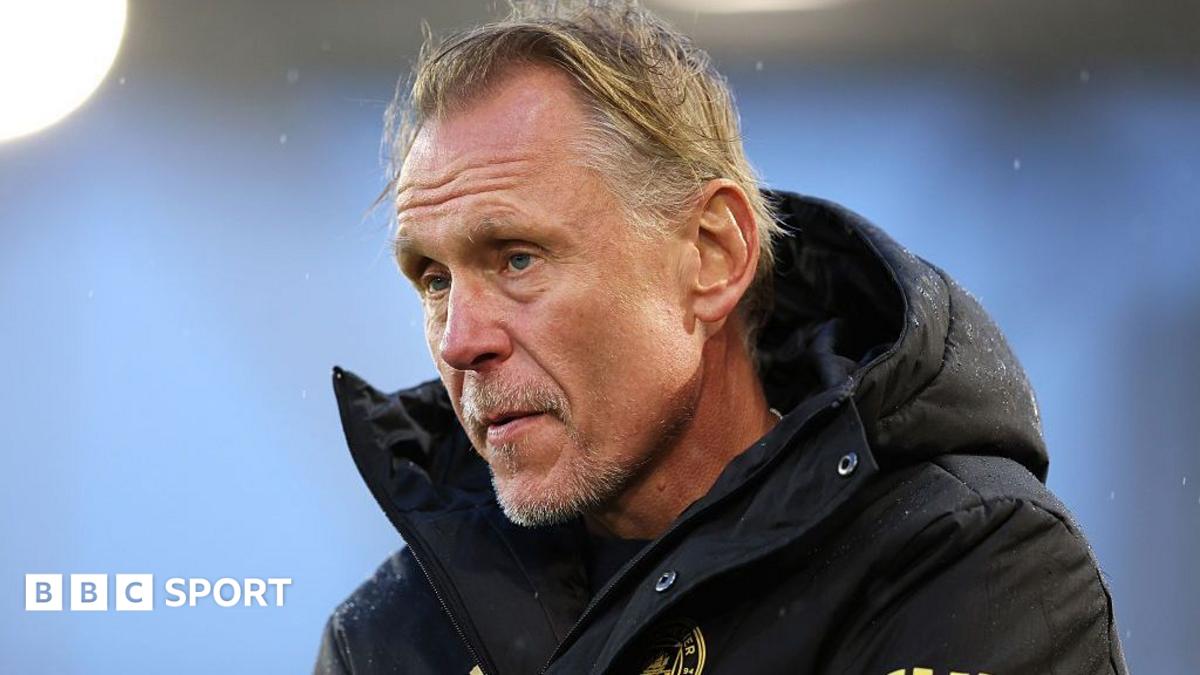
Manchester City manager Andree Jeglertz did not comment on whether he had received assurances that the women’s team would not be impacted after the club was found guilty of Premier League financial breaches.
Jeglertz, who joined City last summer, said it was “business as usual” and when asked about how the women’s team could be affected, added: “I don’t want to comment more around that.”
There were seven questions in total posed to Jeglertz relating to the charges before Manchester City’s press officer requested the media moved away from it.
The club has been found guilty of all charges related to breaches of Premier League financial rules between the 2009-10 and 2017-18 seasons.
The Premier League said City arranged “sham contracts” with a number of commercial partners as part of a scheme to disguise secret funding of more than £830m.
The club continue to deny any wrongdoing and have until 2 October to submit an appeal.
The women’s team were the first representatives of the club to address the media since the guilty charges were confirmed by the Premier League.
It is still unknown what impact the charges could have on the women’s team, though BBC Sport understands there is no active investigation taking place from WSL Football.
The charges, which were breaches of Premier League rules, are different financial regulations to the WSL and they came at a time when the women’s league was under the governing body of the Football Association.
There is no suggestion so far that any WSL opponents have expressed concern for City’s charges, or whether they believe it has helped the women’s team progress.
City defender Jade Rose said the women’s players had received “the same messaging the public has” from the club.
When asked about the charges raising any concerns for the players, she added: “I’m just here to talk about the football. That’s what we’re focusing on.”
The team took part in an open training session earlier on Wednesday morning and there did not appear to be any changes to their routine or behaviour.
Therese Sjogran, director of women’s football at Manchester City, was in attendance for training, as she often is.
There were a few additional media in attendence for Jeglertz and Rose’s press conference to preview their Women’s Champions League game against Real Madrid.
Jeglertz responded to former men’s manager Pep Guardiola’s statement on social media, which voiced his support for the club.
Asked whether Jeglertz also stood beside the club, he said: “Definitely. I am working at the club now so that’s who I am hired by and working with, so, for sure.”
Jeglertz also said he did not find it more challenging to prepare for Thursday’s game despite the noise surrounding the club.
“I don’t think so. We have been training like normal and doing the work we can do to affect the game,” he said.
“We haven’t changed anything, we have just kept on doing everything we normally do. Definitely the thing the club has been presented, is the information we have inside of our group.
“We can’t talk about anything else and we don’t need to talk about anything else at the moment.”
Jeglertz added that he was not frustrated by the negative media attention despite City’s strong start to their WSL campaign.
The defending champions currently have 12 points from their opening four matches in the WSL and are top of the table.
They face Real Madrid on Wednesday (20:00 BST) in their second Women’s Champions League league phase match, having drawn their opener against Bayern Munich last week.
























![Supporters of Romania’s far-right politician and former presidential candidate Calin Georgescu, not in picture, cheer as he leaves the Court of Appeal in Bucharest on September 28, 2026, following a new hearing in the case in which he and other defendants are accused of actions against Romania’s constitutional order [AFP]](https://i0.wp.com/www.aljazeera.com/wp-content/uploads/2026/09/afp_6abd16ba6649-1790777018.jpg?w=640&ssl=1)