WASHINGTON — Federal prosecutors have charged a U.S. Immigration and Customs Enforcement officer with lying to investigators about the events leading up to the shooting of a Venezuelan man during the Minneapolis immigration crackdown earlier this year, a person familiar with the matter told the Associated Press.
The person was not authorized to publicly discuss the investigation and spoke on condition of anonymity. The person said Christian Castro, the officer who authorities say shot Julio Cesar Sosa-Celis in the leg in January, has been charged with making false statements to federal investigators.
The federal charges, which remain under seal, follow Castro’s release from jail last week after Texas’ governor refused to immediately sign an extradition warrant to hand him over to Minnesota authorities, who have charged him separately with assault and false reporting of a crime related to the same shooting.
Federal authorities had initially accused Sosa-Celis and another man of beating an officer with a broom handle and a snow shovel during the confrontation. But federal prosecutors dropped charges against the men after video evidence showed the officers may have lied about the encounter, and officials opened an investigation.
Earlier this week, a federal prosecutor working on the case told lawyers for Sosa-Celis and other victims that Justice Department officials blocked the prosecutor’s push to bring a more serious civil rights charge against the officer for the shooting, ProPublica reported.
But the person familiar with the investigation disputed the prosecutor’s characterization, saying the civil rights probe is continuing and there has been no final decision on whether to bring additional charges. The prosecutor, Matthew Evans, was fired on Thursday and is now under investigation for alleged obstruction of a grand jury probe, the person said.
An automatic email response from Evans’ Justice Department account said he was on leave. Other attempts to reach him were not immediately successful.
Castro was initially arrested in May in the Minnesota case, and he was held in custody in Brownsville, Texas, a city bordering Mexico, while Minnesota officials sought his extradition. But Texas Gov. Greg Abbott refused to immediately sign off, citing continuing investigations of fraud in government social service programs in Minnesota, which Trump used to justify his immigration crackdown there.
Minnesota officials had sought to stop the sheriff in Cameron County, Texas, from releasing Castro, out of fear that he would flee to Mexico. According to a lawsuit filed by Minnesota, Castro had a conversation with a woman, while he was incarcerated, where he spoke about marrying her and buying a house in Mexico after his release.
But Castro was released a week ago after a federal judge refused to order Texas to extradite him.
The Department of Homeland Security previously called Minnesota’s prosecution of Castro “unlawful and nothing more than a political stunt,” saying only federal authorities have jurisdiction in the case.
Castro was suspended from ICE without pay in February while federal authorities conducted the investigation.
“The men and women of ICE are entrusted with upholding the rule of law and are held to the highest standards of professionalism, integrity, and ethical conduct,” ICE’s acting director at the time, Todd Lyons, said then. “Violations of this sacred sworn oath will not be tolerated. ICE remains fully committed to transparency, accountability, and the fair enforcement of our nation’s immigration laws.”
Minnesota officials alleged that Castro, 52, fired through the front door of a home and shot Sosa-Celis in the thigh.
Castro and another officer had chased a different man, Alfredo Alejandro Aljorna, to the Minneapolis apartment duplex where he and Sosa-Celis lived. Minnesota prosecutors said the officer then falsely accused Sosa-Celis and another man of attacking an ICE officer with a broom handle and a snow shovel.
Attorneys for Sosa-Celis and Aljorna, who Minnesota officials have said were legally in the U.S., didn’t immediately respond to emails Thursday from the Associated Press.
Manchester City have signed England goalkeeper Anna Moorhouse on a short-term loan from Orlando Pride.
The 31-year-old will join the Women’s Super League champions until January, subject to international clearance.
Moorhouse has established herself in the National Women’s Soccer League after joining Orlando Pride from French side Bordeaux in January 2022.
She helped them win the NWSL Shield and NWSL Championship in 2024 and earned herself a call-up to the England squad that year.
Oldham-born Moorhouse, who has two England caps and was part of the Lionesses squad that won Euro 2025, counts Arsenal and West Ham among her former clubs.
Sept. 3 (UPI) — The House of Representatives on Thursday approved a bill to bar colleges and universities from participating in boycotts of Israel or preventing students taking part in exchange programs with the country.
According to the bill, colleges and universities that take part in federal student aid programs would be barred from participating in boycotts of Israel. Institutions that receive federal funds for international and foreign language programs would be required to certify they do not impose restrictions on students taking part in programs in Israel.
Students from Israel taking part in programs on their campuses also would be covered.
“This legislation is about a simple principle: our colleges and universities should not discriminate against Israel, Israeli institutions or Israeli students, and federal taxpayer dollars should never support institutions that engage in such discrimination,” said House Education Committee Chair Tim Walberg, R-Mich.
The ranking Democrat on the educational committee, Rep. Bobby Scott of Virginia, said the bill possibly violated the First Amendment.
“No college or university has embraced the BDS movement anyway,” he said. “So, we should combat antisemitism wherever it occurs, but we should not do so by punishing protected speech or conflating a student’s view with university policies.”
Most of the Democrats who voted in favor of the bill are facing tough re-election races in November, or back Israel. Rep. Josh Gottheimer of New Jersey, who co-sponsored the bill, called it “narrow and tailored’ and needed to fight anti-Semitism.
“No student, no professor should be shut out of research, study abroad opportunities, or academic partnerships or feel unwelcome in the classroom because of where they are from or what religion they practice,” he said in a statement.
“Yet, that’s exactly what the boycott-divest-sanction movement seeks to do – targeting one country and one religion: Israel and Judaism.”
The legislation now goes to the Senate for debate.
Ukraine carried out one of its farthest uncrewed surface vessel (USV) attacks from Ukrainian shores, striking the Nefrit, a multipurpose offshore vessel, in the Russian Black Sea resort city of Sochi. The seaside getaway is located about 350 miles on a direct line from the nearest Ukrainian-held territory, but the trip is a lot longer if originating from Ukrainian-held shores.
This marks the first known USV attack on this city that Russian President Vladimir Putin often visits. As we have reported in the past, it has been attacked several times by Ukrainian aerial drones.
The Russian Black Sea port of Sochi came under attack on Thursday. (Google Earth)
“The multipurpose support vessel, flying the Russian flag, was hit by an unmanned naval vessel of the Ukrainian Navy,” the service said on Telegram. “A powerful explosion and smoke were observed in the area of the vessel.”
“The NEFRIT is part of Russia’s maritime and energy infrastructure, providing support for oil and gas operations, servicing offshore facilities, transporting cargo and personnel, and carrying out underwater technical work,” the Ukrainian Navy explained. “Its activities directly supported the enemy’s war economy and financed the criminal aggression against Ukraine.”
“The damage to the NEFRIT is a blow to the enemy’s logistics, special capabilities, and military-economic infrastructure,” the Ukrainian Navy added. “The Ukrainian Navy continues to deprive the enemy of resources and capabilities for waging war, and once again demonstrates that even Russian territory is not a safe haven.”
🇺🇦⚓ВМС України уразили судно забезпечення рф NEFRIT у порту Сочі Багатоцільове судно забезпечення під прапором рф було уражене морським безекіпажним катером Військово-Морських Сил. У районі судна зафіксовано потужний вибух та задимлення.
There is also video of one of the USVs being destroyed before it could reach its target.
Starting at about 6 a.m. local time, Sochi Mayor Andrey Proshunin declared an emergency.
“ATTENTION! THREAT OF A USV ATTACK IN SOCHI,” he warned on Telegram. “All forces and resources are working to defend the city. Take shelter in a safe place, remain calm.”
Sochi Mayor Andrey Proshunin declared an emergency about an impending sea drone attack on Thursday. (Sochi Mayor Andrey Proshunin’s Telegram)
About a half hour later, Proshunin issued an all-clear notice, but did not provide any details about what happened.
Sochi Mayor Andrey Proshunin lifted the emergency about a half hour after it started. (Sochi Mayor Andrey Proshunin’s Telegram)
There was no immediate response from the Kremlin.
Ukraine has carried out long-distance USV attacks on Russian Black Sea targets in the past, including one in 2023 on theRopucha class vesselOlenegorsky Gornyak, located in Russia’s Black Sea port of Novorossiysk. A major Russian port on the eastern coast of the Black Sea, it sits roughly 420 miles from Ukrainian-held shores. Sochi is about 110 miles southeast of Novorossiysk, meaning the USVs in today’s attack would have had to travel an even longer distance if launched from Ukrainian-held shores. However, the launch point of the Sochi USV strike is not publicly known and there is always the possibility that a mothership could have been used.
The attack occurring during broad daylight is also interesting, as Ukraine has often taken advantage of the cover of darkness for USV strike operations on port facilities.
You can see a video of that strike below:
The strike on the Nefrit is the latest in Ukraine’s long-running drone boat campaign in the Black Sea. This onslaught has already kept Russia’s Black Sea Fleet (BSF) at bay, forcing it to retreat from Crimea to Novorossiysk. Ukrainian USVs have also damaged enemy military facilities in occupied Crimea and the Kerch Bridge.
In July, the U.S. military used USVs as combat weapons for the first time, striking Iranian targets in Bandar Abbas. The following video shows that attack.
Yesterday, using multiple one-way attack surface drones, CENTCOM forces successfully struck a submarine and ship maintenance facility in Iran. Three Corsair unmanned surface vessels hit the port at Bandar Abbas Naval Base, marking the first time American forces have employed sea… pic.twitter.com/bOM2kmgRxz
It may be a day or so before we get a better picture of the extent of the damage to the Nefrit. Regardless, the attack itself is another sign that Ukraine can reach targets with sea drones far from its own shores.
The Latest
All across the battlefield, Ukrainian forces are largely holding off continued Russian attacks or are making small advances. Overall, in August, “Russian forces advanced or infiltrated into about 123.53 square kilometers — an average pace of 3.98 square kilometers per day,” according to the Institute for the Study of War (ISW). “Russian forces’ main territorial gains in August 2026 have been in the Fortress Belt area, Donetsk Oblast. Even there, Russian forces managed to achieve only marginal tactical gains and have thus far failed to complete the seizure of Kostyantynivka.”
Kharkiv: Russian forces continued offensive operations in northern Kharkiv Oblast and the Velykyi Burluk direction on September 1 and 2 but did not advance. Russian forces also continued offensive operations in the Borova and Kupyansk directions on September 2 but did not advance. However, Moscow’s troops continued attempts to secure and expand the bridgehead on the left bank of the Oskil River to enable further infiltrations into Kupyansk.
Donetsk: Ukrainian forces recently defeated a Russian infiltration mission in the Slovyansk direction. They also recently maintained positions or advanced in the Dobropillya tactical area. Russian forces continued offensive operations in the Novopavlivka direction on September 1 and 2 but did not advance. Neither Ukrainian nor Russian forces reported ground activity in the Oleksandrivka direction on September 2.
Zaporizhia: Russian forces continued offensive operations in the Hulyaipole direction on September 1 and 2 but did not advance. Russian forces continued offensive operations in western Zaporizhia Oblast on September 1 and 2 but did not advance as Ukrainian forces counterattacked west of Orikhiv.
Kherson: Neither Russian nor Ukrainian forces reported ground activity in the Kherson direction on September 2.
MORE 🧵(1/3): ISW has observed evidence to assess that Russian forces consolidated positions in or seized about 90.35 square kilometers of territory in Ukraine in August 2026, averaging 2.91 square kilometers seized per day. Including Russian infiltrations, Russian forces… https://t.co/0RlwRfBdhspic.twitter.com/Cp2Knry2Du
Air traffic around Moscow continued to be disrupted on Thursday as Russian authorities responded to another large-scale Ukrainian drone operation, according to EU Today. The disruptions came two days after President Volodymyr Zelensky warned international airlines and insurers that Russian airspace was becoming increasingly unsafe for civilian aviation due to Ukrainian drone attacks.
Moscow Mayor Sergei Sobyanin said that 548 drones had flown towards the wider Moscow region between 8 a.m. on Wednesday and midday Thursday local time. However, Russian authorities claimed that most were intercepted before they could reach the Moscow area while 143 were destroyed on approaches to the Russian capital.
“Temporary restrictions were again imposed at Moscow’s principal airports,” EU Today noted. “Vnukovo and Domodedovo stopped arrivals and departures for periods during the operation, while Sheremetyevo handled flights under additional restrictions. The measures produced cancellations, delays and diversions extending beyond the periods in which individual airports were formally closed.”
The disruption “had already become extensive on Wednesday,” the publication added. “Flight-tracking data showed 21 cancellations and 235 delayed services at Sheremetyevo, Russia’s largest airport, while Vnukovo recorded 22 cancellations and 94 delays.”
⚡️ Moscow airports cancel flights after Zelensky’s ‘closed skies’ warning
“Temporary restrictions on the arrival and departure of aircraft have been introduced,” Russia’s Federal Air Transport Agency (Rosaviatsia) said.https://t.co/BAlAASaDv5
Putin on Thursday said there is a chance of resolving the “Ukrainian conflict” but Kyiv’s campaign to shut down Russian airspace is “complicating the negotiation process.”
Russia and Ukraine themselves must reach an agreement, while other countries can only support and assist, the Russian leader added, according to a translation from former Ukrainian government official Anton Gerashchenko.
Russia is in contact with the White House and President Donald Trump “is committed to positive and constructive engagement,” Putin proclaimed. “Russia has many friends in the United States. One of them is Steven Seagal, the ‘best envoy of peace.’”
Putin said there is a chance of resolving the “Ukrainian conflict” but Ukraine’s threats to shut down Russian airspace are “complicating the negotiation process.”
A Russian drone strike on an Odesa apartment building injured at least 17 people, including three children, Zelensky stated on X.
In Odesa, emergency services continue working at the site of a drone strike on an apartment building. Damage to apartments from the 10th through the 17th floors left 17 people injured, including three children. Efforts are also ongoing to deal with the aftermath of the strikes in… pic.twitter.com/FWAmFNJSYp
— Volodymyr Zelenskyy / Володимир Зеленський (@ZelenskyyUa) September 3, 2026
Overall, Ukraine says its air defenses downed or suppressed 135 of 163 Russian drones launched overnight, including Shahed-type UAVs, about half of which were jet-powered. Russia also used S-8000 Banderol, Gerbera and decoy drones. Hits were recorded at 15 locations and debris fell at four.
Ukraine says air defenses downed or suppressed 135 of 163 Russian drones launched overnight, including Shahed-type UAVs, about half of them jet-powered. Russia also used S-8000 Banderol, Gerbera and decoy drones. Hits were recorded at 15 locations and debris fell at four.… pic.twitter.com/JyxTS6QBzL
Russia has been increasingly using jet-powered drones to attack Ukraine. The Ukrainian Defense Ministry released video it says shows troops from the 208th Anti-Aircraft Missile Brigade downing one of those drones. The jet powered Shahed-like one-way attack drones fly higher and faster than their propeller-driven cousins, making them harder to intercept by more cost effective and plentiful means, such as Ukraine’s many drone interceptors. Instead, much more expensive and increasingly scare missile must be used in some circumstances.
What appears to be the first video of Ukrainian troops using Cold War-era Leopard 1 tanks with turrets swapped out for the Rheinmetall Skyranger 35 short-range air defense system has emerged on social media. The @deaidua X account that tracks German war materiel donations to Ukraine said the 1020th Anti-Aircraft Missile Regiment recently took delivery of this system, designed to be a highly mobile counter to a range of aerial threats.
The Skyranger 35 “is equipped with a KDG 35/1000 revolver cannon in 35 mm x 228 caliber with a firing rate of 1,000 rounds per minute,” according to Rheinmetall, which began delivering these to Ukraine in January. “It has an effective range of up to 4,000 meters and a high degree of commonality with the Oerlikon Revolver Gun Mk 3. Thanks to AHEAD technology, the Skyranger 35 is airburst-capable. In the future, it will also be possible to equip it with modern guided missiles.”
It seems that Ukraine’s 1020th Anti-Aircraft Missile Regiment which belongs to the Ground Forces has taken delivery of the first Skyranger 35 SPAAGs mounted on a Leopard 1 chassis made by @RheinmetallAG.
A new documentary about Ukraine’s use of the combat-proven National Advanced Surface-to-Air Missile System (NASAMS) air defense system debuts tomorrow.
“Sky Defenders is a new documentary taking audiences inside the increasingly critical battle to protect the skies of Europe and Ukraine,” according to the film’s producers. “Launching globally on Apple TV and Amazon Prime on Sept. 4, the 50-minute film explores the people, technology and strategy behind modern air defense and the race to stop missiles and drones before they reach their targets.”
SKY DEFENDERS | Official Trailer
A new video shows a Russian soldier being attacked by three Ukrainian kamikaze drones simultaneously, underscoring just how dense the drone threat has become to troops near the front.
That kind of attrition is also visible around Pokrovsk, where Ukrainian kamikaze drones are increasingly coordinating strikes against individual Russian infantrymen and small assault groups.https://t.co/HfKBCW7ZOm
It’s been more than three years since the Russians captured the town of Bakhmut in the eastern Donetsk region after a long battle that incurred a tremendous toll on personnel and equipment on both sides of the fight. New drone video has emerged showing the city remains in ruins, with blocks and blocks of vacant and destroyed buildings.
A harrowing new video from Bakhmut, filmed in the summer of 2026. The Ukrainian city was captured by the Russians three years ago and has lain in ruins ever since.
In this once-vibrant city of 72,000 inhabitants, there are no longer any shops, schools, kindergartens, cafés,… pic.twitter.com/clFfLu5jkq
Norah O’Donnell is returning to “CBS Mornings” in what is expected to be the start of a significant revamp of the struggling program.
CBS News told staffers Thursday that the former anchor of the “CBS Evening News” will become a co-anchor of the morning show on Tuesday Sept. 8 alongside Gayle King and Nate Burleson. O’Donnell is also a full-time correspondent at “60 Minutes.”
The addition of O’Donnell is the first step in a makeover for “CBS Mornings,” which will be redesigned to have a faster pace and more live interviews, according to people familiar with the plans and were not authorized to discuss them publicly.
There is also talk it will become more of a discussion program similar to MS NOW’s “Morning Joe.” The memo announcing her return was written by Jon Tower, a “CBS Mornings” senior producer who once worked on that program.
O’Donnell, 52, was part of the trio of co-hosts that gave CBS News the highest ratings in three decades, “CBS This Morning,” when she shared the desk with King and Charlie Rose. The program launched in 2012 and saw its ratings increase for five straight years. The audience levels fell off when Rose departed the program after he was hit with sexual harassment allegations in 2017.
“CBS This Morning” was renamed “CBS Mornings” in 2021, and adapted the theme music of the network’s popular weekend program “CBS Sunday Morning.” But the revamp never lived up to a promise to deliver the same in-depth stories as the Sunday program and failed to draw new viewers.
“CBS Mornings” has long been the ratings also-ran in the mornings behind NBC’s “Today” and ABC’s “Good Morning America.” But the program has hit record audience lows this year in part due to the cancellation of “The Late Show with Stephen Colbert.”
Colbert was replaced by “Comics Unleashed” which is attracting about a third of the “Late Show” audience which was just over 2 million viewers. As a result, far fewer viewers are leaving their sets tuned to CBS after switching off for the night.
O’Donnell left the morning shift in 2019 to become anchor of the “CBS Evening News.” The program remained in third place in the ratings behind “ABC World News Tonight” and “NBC Nightly News,” but performed far better than John Dickerson and Maurice DuBois, the anchors who replaced her in 2025 and only lasted a year before they were replaced by Tony Dokoupil.
O’Donnell was content with a new role as a senior correspondent and contributor to “60 Minutes.” She has steered clear of controversies that have occurred at CBS News since Bari Weiss was installed as editor-in-chief, and showed a willingness to step up for big assignments.
O’Donnell’s put-me-in-coach attitude has turned out to serve her well as she was elevated to a full-time correspondent at “60 Minutes” and will soon be the center of a revamped morning program.
O’Donnell joined CBS News in 2011 as chief White House correspondent after a 12-year run at NBC News.
Muslims are embroiled in yet another war, but this one isn’t in the Middle East, Southeast Asia or another predominantly Islamic region.
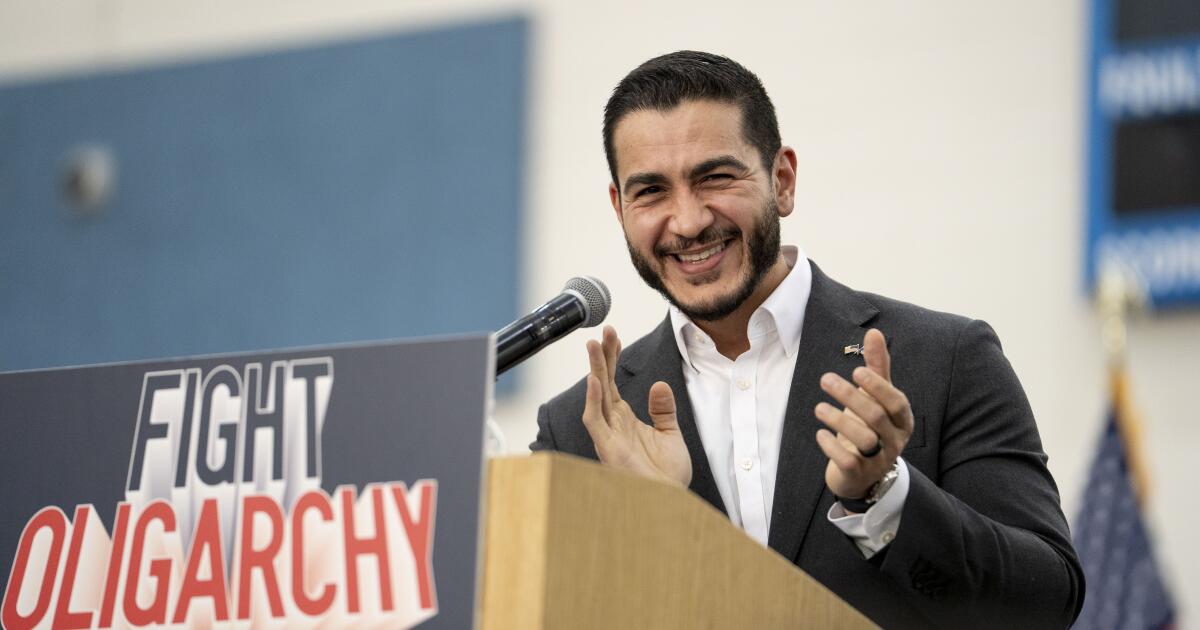
The battleground is Michigan. New York. Minnesota. Or anywhere else in the U.S. where a politician with a name like Abdul El-Sayed, Zohran Mamdani or Ilhan Omar have run for office — and won.
Today’s primary target is Michigan Democratic U.S. Senate candidate El-Sayed. Since his victory in August, the right’s main strategy to beat him this fall is a familiar one: paint El-Sayed, the Muslim son of Egyptian immigrants, as an anti-American extremist.
Vice President JD Vance recently told a crowd that “there’s something about Abdul El-Sayed that is very, very evil,” suggesting that Democratic nominee represents a divisive ideology. Representative Nancy Mace warned of a larger problem when she said that “every single Muslim holding public office in America” is “a threat to both national security and our republic.” Senator Tommy Tuberville flat-out called El-Sayed a “terrorist.”
“The message is that these candidates are a civilizational threat that is going to destroy American society and Western civilization from within,” says Salam Al-Marayati, president and co-founder of the non-profit Muslim Public Affairs Council. “You saw that a lot when Mamdani was elected.”
And given that he was elected, the Islamophobia playbook may need an overhaul.
New York City Mayor Mamdani and El-Sayed are among the more than 255 Muslim elected officials serving across 26 states and at nearly every level of government, according to the Council on American-Islamic Relations. That number includes a historical high of four Muslim Americans in Congress.
But as their political power has grown, so too has the bigoted rhetoric about the dangers of electing a Muslim to office. But now, there’s pushback.
CBS News, now under the leadership of conservative editor-in-Chief Bari Weiss, caught flack this week for publishing a story with the headline: “Michigan Democrat Abdul El-Sayed’s deleted tweets on Sept. 11 attacks invite scrutiny of past remarks.”
Criticisms of the piece were immediate, including commentary in The Atlantic that called the story a political dog whistle for using a tenuous connection to align El-Sayed’s name with the phrase “9/11 attacks.”
The pandemic-era posts from El-Sayed did not celebrate the tragedy or the terrorists who perpetrated the attacks. He instead compared the nearly 3,000 people killed in the September 11 attacks to the growing COVID-19 death toll in the U.S., and called for a strong response against the virus as there was to the 9/11 attacks. In the second tweet, El-Sayed wrote that more Americans had died from COVID than in the 9/11 attacks, so he hoped “that means we’ll spend the next ten years fighting a war for public health & against poverty … like we launched a global #WaronTerror after 9/11. We could save lives rather than take them.”
Hardly the smoking gun that puts him in an Afghan cave, scheming with bin Laden.
The tweets were deleted along with all of Al-Sayed’s other posts dated before July 2023. His campaign said he did so to prevent “old posts from being taken out of context.” Oh the irony.
Similar tactics were used against Mamdani in his run for mayor. After a particularly rousing speech leading up to his 2025 win, the New York Times noted that “…Republican elected officials and right-wing media figures [are] accusing him of promoting Islamic law, supporting terrorism and posing a threat to the safety of New Yorkers, especially Jews.”
Before Mamdani, Somali-American Rep. Ilhan Omar (D-MN) was the subject of “Send her back” chants at Trump rallies. Rep. Lauren Boebert (R-CO) publicly referred to Omar as a member of the “Jihad Squad.”
Nevertheless, Omar became the first African refugee to become a Member of Congress when she assumed office in January of 2019.
“What we have found out from previous elections is that candidates like Abdul Sayed are speaking to the masses,” says Al-Marayati. “They’re not speaking to the Democratic and Republican establishment who believe in this hierarchical structure where you only have a few in control, whether it’s corporate influence or lobbies or a certain race and religion that that are on top and the rest of us are merely visitors who should just be thankful for getting the crumbs from the economy. [El-Sayed and Mamdani] are returning to the vision of a pluralistic democracy.”
The latest efforts to derail El-Sayed’s campaign include weaponizing his association with leftist Twitch streamer Hasan Piker. Piker, who earlier this year appeared on the campaign trail with El-Sayed, is a major influence among progressives and a bogeyman to establishment Republicans and Democrats alike. The right can’t stop talking about his sharp criticisms of MAGA leadership, disdain for US foreign policy, and his pro-Palestinian stance. The left is terrified of being associated with Piker.
Now the candidate is pressed daily to answer for things said by Piker’ stretching as far back as 2019, when the influencer commented that “America deserved 9/11” (a quote that was incorrectly attributed to El-Sayed). El-Sayed has denounced the statement as “stupid,” and Piker has walked back his words.
But the unyielding scrutiny over dubious associations doesn’t cut both ways. Relative to El-Sayed, there’s been little inquiry of Michigan’s Republican U.S. Senate candidate, Mike Rogers, and his close ties with Pastor Lorenzo Sewell. A member of Roger’s faith advisory team, Sewell in August co-organized and led a “Christian Crusader March” and anti-Islam protest in Dearborn, MI alongside far-right activist and January 6 pardoned defendant Jake Lang.
Campaigns that leverage hate and fear against Muslim candidates and elected officials are nothing new, but they appear to be less effective with each passing election season. It’s possible more and more voters see through the prejudiced subterfuge, but it’s more likely that folks simply need a change.
“The real threat that Abdul Sayed represents is that he is knocking down that hierarchical structure, and that’s why you have the attacks on him of being a radical, being a terror sympathizer, being a threat to civilization,” says Al-Marayati. “When Thomas Jefferson was drafting the Charter on Religious Freedom, he included Muslims, and even he was accused of being a Muslim. So you’ve had this problem for a long time. Abdul Sayed’s affiliation with Thomas Jefferson is a badge of honor.”
Could Stan Kroenke do the same thing in his first offseason as the Angels’ owner?
Kroenke is not expected to be approved as Moreno’s successor until early next year. By then, players might be in spring training — or might still be sitting home, awaiting the end of a lockout and a subsequent free-agent signing frenzy.
The best player in this fall’s free-agent class is certain of one thing: Whenever Kroenke takes over, Anaheim instantly becomes a preferred destination for stars across the major leagues, with a new owner not just promising to spend to win but a demonstrated history of doing so.
“Absolutely,” Dodgers pitcher Tarik Skubal told The Times. “Not only an owner that has obvious financial backing, but an owner that has turned the Rams into what the Rams are. I think they’re the Super Bowl favorite this year. There’s an owner that cares about winning.
“The impact he brings to the Angels? You bring an owner that really cares about winning and is willing to do whatever it takes to win and invest, not only with players on the field but all the stuff behind the scenes, like clubhouse renovations. I’m sure there will be a lot of stuff there that changes to make it state-of-the-art, because all that stuff matters.”
Under Perry Minasian, the Angels’ general manager from 2021-26, the largest free-agent signing approved by Moreno: pitcher Yusei Kikuchi, for $63 million.
Kroenke would be the richest owner in baseball, with a net worth estimated by Forbes at $24 billion.
Skubal said he is focused on helping the Dodgers toward a third consecutive World Series championship and has not thought much about his free agency. Speaking generally, he said, it is likely that players that might not have considered signing with the Angels might now do so.
“You want to feel wanted,” Skubal said. “And you have an owner that is willing to do whatever it takes to win. Winning is the most important thing in sports. When you get yourself in that environment, I think guys do want to play there.
“Just look around the league: Guys tend to gravitate toward teams that are winning and teams that are in the playoff hunt every single year, with World Series aspirations every single year. I think free agents gravitate toward that in general. I’m sure that will be the case.”
From the players’ viewpoint, the successive sales of major league franchises at record values — the San Diego Padres at $3.9 billion, then the Angels at $4 billion — reflects good economic times. From the owners’ standpoint, the mid-market Minnesota Timberwolves of the NBA just sold at a $4.5 billion valuation.
Commissioner Rob Manfred has cited lagging franchise values in baseball as a reason owners want a salary cap, which the NBA has. Yet the Padres and Angels sold before their owners found out whether they could secure the salary cap the league insists is a primary objective in collective bargaining.
“I think it’s pretty obvious what that says, right?” said Skubal, one of eight players on the union’s executive subcommittee.
“If that’s the complaint that ownership and MLB is holding onto, I think they’re proving themselves wrong by selling these teams for record values. I think those clubs selling continues to support the argument that our game is in a really good spot.”
The owners also pitch a salary cap as a tonic for competitive balance, citing what they say is a $441-million gap between the Dodgers’ top-ranked payroll and the Miami Marlins’ bottom-ranked payroll.
The players point to franchise sales as another economic indicator. The Padres last sold for $800 million, in 2012. The Angels last sold for $183.5 million, in 2003.
“It’s a very profitable business venture,” Skubal said. “The sport itself is great. The product on the field is outstanding.”
Argentine President Javiar Milei said Argentina’s population is no longer growing at a rate sufficient to ensure generational replacement Photo by Miguel Gutirrez/EPA
BUENOS AIRES, Sept. 3 (UPI) — Argentina’s declining birth rate has drawn renewed attention after President Javier Milei linked the drop in births to the legalization of abortion during at least two public appearances over the past week.
Milei said Argentina’s population is no longer growing at a rate sufficient to ensure generational replacement because of what he called “that passion for murdering children in their mothers’ wombs.” He added that the trend is costing the country dearly in terms of economic growth and its pension system.
But demographic data and experts consulted by UPI challenge Milei’s assertion, noting that the decline began years before abortion was legalized and reflects broader economic and social factors.
Argentina’s birth rate began to fall in 2014, six years before the country legalized abortion in 2020.
According to official data released Wednesday by UNICEF Argentina, the number of births fell by nearly half over the past decade to 413,135 in 2024 from 777,012 in 2014. The fertility rate has reached its lowest level on record at 1.3 children per woman.
Argentina’s trend is part of a global phenomenon, though the decline has been more pronounced in the country. In 2024, Argentina recorded roughly the same number of births as in 1948, despite having three times as many women of reproductive age.
Sociologist and feminist historian Dora Barrancos said Milei’s argument is part of a broader narrative also found among far-right groups in other countries.
“There is a strong ideological focus on blaming feminists and their policies for the decline in the birth rate. From a historical perspective, that explanation has no basis,” she said.
Gala Díaz Langou, director of the International Panel on Social Progress, also rejected abortion as an explanation for the declining birth rate.
“That argument does not hold up. This is a global, multifaceted process,” she said.
Mariana Isasi, head of the United Nations Population Fund office in Argentina, said the declining birth rate reflects tensions between people’s personal aspirations, economic conditions and the way family life is organized.
A recent UNFPA survey on reproductive intentions in Argentina found that 57% of people between ages 18 and 45 would like to have more children.
“There is a gap between the number of children people have and the number they would like to have. This shows that the desire exists, but the conditions to do so are not always there,” Isasi said.
Isasi said conditions were not necessarily better in previous periods, but people today have more tools to make decisions about motherhood.
Uncertainty about the future is another factor influencing decisions about whether to have children. In addition, 20% of those surveyed said they had difficulty finding a suitable partner with whom to have children.
Isasi also noted that Argentina’s adolescent fertility rate has fallen by more than 50%.
“It is good news that teenage girls can continue their education without becoming mothers and can decide later whether they want to have children,” she said.
Another factor is the postponement of motherhood. The average age at which women in Argentina have their first child is 29.2.
“When motherhood is postponed, people may end up having fewer children over the course of their lives,” Isasi said.
Díaz Langou said some of the factors behind the falling birth rate represent positive changes, while others reflect economic and social difficulties.
Among the positive changes, she cited improvements in contraception that allow women’s reproductive decisions to better reflect their preferences and reduce unintended pregnancies.
Economic conditions and the cost of raising children, however, remain major concerns.
“Raising children is very expensive and is becoming increasingly costly because of the limited availability of public care services in Argentina. This is compounded by precarious employment conditions, which affect the real incomes of many people who have children,” Díaz Langou said.
The cost is also linked to the availability of care services. According to a recent analysis by La Cocina de los Cuidados, an intersectoral group focused on care policies, 48 of the 50 national care policies identified by the organization have been eliminated or defunded since December 2023.
The remaining policies have been repealed, cut back or dismantled under Milei’s administration.
Barrancos places the decline in births within a demographic process that began in the second half of the 19th century and reached Argentina by the end of that century.
She said women began to limit the number of children they had long before the expansion of feminism and the movement for women’s right to make decisions about their own bodies.
Barrancos rejected the idea that the decline in births can be attributed to feminism or the legalization of abortion and disputes that the trend represents a threat.
“There is nothing to fear. As the number of children women want to have declines, other forms of family are also growing, including same-sex families seeking to adopt. The alarmist rhetoric of the far right is incompatible with the historical evidence,” she said.
Four Palestine Action activists convicted of criminal damage “with a terrorist connection” after raiding an Elbit Systems factory in the UK are appealing their convictions. The ruling marked the first time property damage was categorised as “terrorism” in a British court.
EXCLUSIVE Great British Bake Off spin off show Extra Slice has been replaced with a new show called Second Helpings which will now run alongside the main show with new hosts too.
Judi Love and Jon Richardson are the hosts of new show Second Helpings(Image: Mark Bourdillon/Love Productions)
Channel 4 are revamping the spin off show for The Great British Bake Off for the first time in 12 years – with new hosts and a show which airs the same day the main show goes out.
Extra Slice, which has been on screen for more than a decade and was fronted by Jo Brand and Tom Allen, will be replaced by a new series called Second Helpings hosted by Bake Off superfan Jon Richardson and Loose Women star Judi Love.
They’ll be joined by celebrity guests and bakers to look at the drama that has happened earlier in the evening on Channel 4. An insider said the plan was part of a major revamp for the show this year and an overhaul which has also seen Nigella Lawson join as a new judge, replacing Prue Leith who quit earlier this year.
“This is going to be a fresh new show, very different in style to Extra Slice,” a source told the Mirror. No strangers to the Bake Off tent, Jon and Judi have both previously taken part in The Great Celebrity Bake Off For Stand Up To Cancer, with varied results.
Confirming her new job, Judi said: “I’ve been lucky enough to be in the tent a few times and work alongside Jon, both were pure joy! Joining the show to talk all things baking and celebrate showstopping bakes, including some unique spins sounds like absolute blast. I can’t wait to get started and of course eat a few cakes or whatever treats they may have.”
Joking about his new job and paying tribute to the previous hosts, Jon, 43, said: “Bake Off is an institution. Jo Brand is a comedy God. Together with Tom Allen, they have made a spin off show that is warm, witty and unique. I pity the poor sap they lure into stepping into those shoes.”
Jo and Tom seem to have taken the news of the revamp well, which has ultimately seen them sidelined after fronting Extra Slice for many years. Jo was first on Extra Slice when it aired on BBC and then continued to work on Bake Off when it moved to Channel 4 in 2017.
The comedian said: “I’ve loved every minute of Extra Slice. The bakers have been brilliant, talented and remarkably calm for people whose pork pies are being discussed on national television. And working alongside my TV husband Tom has obviously been a joy, he’s always been more immaculately presented than anything in the tent.”
Tom, who joined in 2018, added: “I have loved working with the team and with the kindest person in television, Jo Brand. It’s been a joy to meet so many delightful Home Bakers from all over the world and learn about them through their cake creations. Please don’t tell anyone, but I have stolen the whisk.”
The new show will also bring viewers exclusive behind-the-scenes stories and unexpected revelations from those in the know, including Bake Off hosts and judges Alison Hammond, Noel Fielding, Paul Hollywood and new judge Nigella.
Sarah Lazenby from makers Love Productions, said: “We’re delighted to be serving up Second Helpings of Bake Off with comedy pals Jon and Judi. Together they’ll unpack all the gossip and memorable moments from the tent over a cup of tea in Cake Corner.”
Senior Commissioning Editor, Channel 4, Vivienne Molokwu agreed: “We have revamped Extra Slice by giving it a brand-new shape and a brand-new home.
“Second Helpings will be available on the same night as Bake Off meaning viewers don’t have to wait long to chew over what’s gone down in the tent. With the deliciously funny Jon and Judi at the helm we’ll all have a hilarious time talking all things sweet treats”.
Second Helpings will air weekly on Channel 4 alongside the new series of the Great British Bake Off when it begins later this month.
Revolut gets an OCC thumbs up to launch a US bank, but lending ambitions are another issue.
Technically, financial technology company Revolut is already a bank across several regions—it holds licenses in the U.K., France, Mexico and Australia.
Now, in the U.S. market, it is one step closer to bankhood.
The London-based startup announced Thursday that it has received conditional approval from the U.S. Office of the Comptroller of the Currency for a national bank charter. The move would help the company grow its customer base from 80 million to 100 million by mid-2027.
It also exemplifies Revolut’s agility as a fintech compared to traditional banks, which typically take years to pull off similar expansion efforts.
“Legacy banks are working with legacy systems,” David Tirado, Revolut’s VP of Profitability and Global Business, told Global Finance in an interview last year. “Revolut, on the other hand, built our proprietary technology from the ground up with a global mindset. While competitors struggle to scale across different markets and regulatory landscapes, our systems were designed for this from day one.”
What Else Does Revolut Need?
Revolut still needs a green light from the Federal Deposit Insurance Corp. and the Federal Reserve, as well as final sign-off from the OCC, before it can open the proposed bank.
Once fully approved, Revolut said it would offer U.S. customers loans, credit cards, FDIC-insured deposits, and access to stablecoins and cryptocurrencies.
In a prepared statement, Revolut founder and CEO Nik Storonsky said the conditional approval was “an important first step towards establishing the proposed Revolut Bank US,” adding that it gives the company “the foundation to build in the world’s largest financial market.”
The U.S. bid follows Revolut’s expansion across Latin America, where the company recently launched a bank in Mexico and is pursuing licenses in Brazil, Colombia, Peru and Argentina. This year, Revolut has also obtained banking licenses in France, Australia and the U.K., a payments license in the United Arab Emirates, and is seeking a banking license in South Africa.
The company claims to add roughly 1 million customers every 17 days.
What About Lending?
Whether Revolut can become a customer’s primary financial institution without being a major loan underwriter remains to be seen. Revolut’s consumer lending segment remains small relative to its tens of billions in customer deposits. Still, it’s worth noting that the so-called neobank’s loan book, as of March, is up 120% year over year at $2.9 billion.
Felipe Peñacoba Martinez, CEO of Getnet Platforms Payments Hub and former CIO at Revolut Bank (EU), told Global Finance in June: “Revolut is aware this takes time, and they’re going slower than in other areas.”
Ultimately, the central question facing the industry is whether fintechs like Revolut can scale core banking products faster than traditional incumbents can modernize their digital ecosystems.
Anthony Noto covers corporate finance and private credit. Contact him at anoto@gfmag.com
WASHINGTON — Confronted by an intransigent Iranian government that has refused to back down in the face of a massive military campaign, President Trump appears to have settled on a dual-prong approach that combines economic pressure with the potential of a devastating escalation in force.
Having launched “Operation Economic Outcast” just last week to try to isolate Iran from its remaining global trade partners, the Trump administration also resumed strikes in recent days, prompting Iranian retaliation that has renewed concerns of an all-out regional war.
However, the combination of already intense sanctions on Iran and an off-and-on bombing campaign since the war began more than six months ago has not bowed the Iranian leadership and has left the administration struggling to find a way to wind down the conflict. Tehran has dug in its heels — to Trump’s frustration — as energy prices rise, the global economy roils and poll numbers on the administration’s handling of the war dip ahead of November’s midterm congressional elections.
Trump said Wednesday that he didn’t think the conflict would last “much longer,” but he again shrugged off suggestions that its unpopularity and high gasoline prices resulting from Iran’s chokehold on the Strait of Hormuz would affect the elections for Republicans.
“It doesn’t matter. And I’m not affected by the election,” he told reporters. “I’m not running. But my party is running, and I’m going to help my party. But I think my party respects the fact that we’re not allowing Iran to have a nuclear weapon.”
A regional diplomat briefed on the matter described the current impasse between Tehran and Washington as reflective of both countries’ domestic priorities: the midterm elections for Trump and Republicans and the internal crises within Iran.
Domestic issues are critical reasons why neither side is willing to blink first, said the diplomat, who spoke on condition of anonymity to discuss sensitive negotiations.
The diplomat said negotiations, including those between Iran and Oman or even Iran and the U.S., will not go anywhere without addressing the initial catalyst of war: Israel. And the diplomat was skeptical of the Trump administration’s new sanctions plan, saying the threats require more explanation than what the U.S. has provided so far.
The Trump administration’s economic isolation of Iran is off to a slow start
The administration’s new push for Iran’s economic isolation was announced with great fanfare last week and a dire warning for all remaining countries to cut off financial and trade ties with Iran or face U.S. retaliation — but the campaign so far has fallen flat.
Just one branch of an Egyptian bank in the United Arab Emirates has been targeted so far. For actual sanctions to bite, experts agree that they must apply to Iran’s main trading partners: mainly China but also India and Russia. But Trump is loath to target China especially as he is preparing to host President Xi Jinping later this month.
Trump also insists that the U.S. has control over the Strait of Hormuz, where one-fifth of the world’s oil transited before the war began. The strategic waterway has been a key pressure point for Iran, and reopening it fully has become one of the prime goals for the U.S. administration.
Ship traffic through the strait is well below pre-war levels due to the risk of attack if vessels don’t comply with an Iranian vetting regime near its coastline, which is in sharp contrast to the unhindered navigation before the war. There were 102 transits last week and 126 the week before, according to shipping data company Lloyd’s List Intelligence, compared with 130 or more per day before the war.
“As President Trump said, the strait is open and all mines have been cleared,” White House spokeswoman Anna Kelly said Thursday. “The naval blockade remains in full force and effect, and Operation Economic Outcast is underway to sever every remaining economic lifeline sustaining the regime.”
The White House has repeatedly touted the economic impact that the sanctions have had on Iran, citing its rampant inflation and the massive loss in the value of its currency. U.S. officials have described Iran’s financial system as “one big house of cards.”
Going forward, Secretary of State Marco Rubio said “the price” Iran will pay will be primarily economic, “but we reserve the right … to take military action when necessary — not just to protect ourselves but to prevent them from being able to threaten others as well.”
“They’re going to continue to feel the squeeze,” he told Fox News host Brian Kilmeade in an interview that aired Wednesday.
Treasury Secretary Scott Bessent this week likened Iran to a snake that has been decapitated but whose body is still writhing.
“We are burying the head of the Iranian snake,” he said Tuesday. “The snake doesn’t know it’s dead yet, but it will stop wiggling when the sun goes down. And so the Iranian regime — they are in demise, and they will figure it out.”
Combining military force and sanctions on Iran ‘is the only option,’ one analyst says
Complicating things for the U.S., Iran’s leadership has shown signs of divisions between moderates more open to a diplomatic solution and hardliners who want to press ahead with a more confrontational approach.
President Masoud Pezeshkian is one of the most prominent voices still calling for a negotiated solution. But the hardliners appear to have gained the upper hand, and Iran shows no sign of backing down. Tehran continues to lash out at U.S. interests and allies around the region in response to military strikes.
“This kind of a hybrid approach — the combination of military force, blockade and economic pressure — that is the only option that seems to be available to the United States at this moment,” said Hamidreza Azizi, consulting senior Iran analyst for the International Crisis Group.
Still, he said, “it’s been for a long time, but now maybe more than ever, a battle of endurance between the two sides.”
Amr Hamzawy, director of the Middle East program at the Carnegie Endowment for International Peace, pointed to two main reasons for the deteriorating situation.
“One, none of the two parties is satisfied with the outcome — meaning that the current situation does not serve U.S. interests well, and it does not serve Iranian interests well,” Hamzawy said.
The other reason is how leaders from both sides are perceived at home.
“The Trump administration is afraid of being portrayed in the U.S. as an administration that failed to end a military campaign successfully, and that’s going to impact the midterm elections,” he said. “And the Iranians, especially the Revolutionary Guard, are quite afraid of appearing as if they are submitting to U.S. sanctions with no actions on their side, which might hurt them domestically.”
Lee, Magdy and Amiri write for the Associated Press. Magdy reported from Cairo. AP writers Will Weissert in Washington and David McHugh in Frankfurt, Germany, contributed to this report.
The court also gave minimum sentences to the three defendants who were convicted after the victims, who were two women aged 16 and 18, forgave the accused.
The case was “linked to the recording and dissemination of a sexually explicit video related to an intimate encounter at a beach club in Gran Canaria in June 2023”.
Three of Asencio’s former team-mates from the Real Madrid academy were given a one-year suspended prison sentence for “child pornography” and must attend a sexual “re-education” course.
They were also handed a two-year restraining order against the victims, and three years of disqualification from working in any profession related to minors.
In a statement, Asencio said: “Today, after a long period of silence and after respecting a judicial process in which I always had faith, I can say that I have been acquitted.
“Over these past months I have been through a difficult situation and, at times, I have had to see how information and opinions about me were published before justice had its say.
“I understand and respect the work of the media and the right to report and express opinions, but I also believe it’s important to remember that behind every piece of news there is a person and a family who live with the consequences of it.
“I have always trusted that justice would eventually set things right. Today there is a judicial ruling that speaks for itself, and I accept it with peace of mind and with the satisfaction of being able to close a very important chapter in my life.”
In another separate case, Real Madrid have opened disciplinary proceedings against Asencio over a drink-driving conviction which also happened in Gran Canaria.
He was more than three times over the limit in the 16 August incident, which resulted in him being fined and having his driving licence suspended for eight months.
When asked about the incident, Real boss Jose Mourinho said: “Raul Asencio, given the situation he found himself in, I talked to him when he arrived and I talked to him about things that happened in the past.
“I haven’t talked with him since but I don’t discuss situations outside Valdebebas.
“His attitude is perfect here. He picked up an injury a few weeks ago and since then, he is first to arrive and last to leave working on his recovery.
“But obviously a Real Madrid player is a Real Madrid player for 24 hours, seven days a week, 12 months a year, so when you do something outside your professional area, it’s still Real Madrid and it hurts the club’s prestige that is untouchable.
“So I am not happy. We all make errors but no, I’m not happy.”
Asencio referred to his drink-driving conviction in his statement as he added: “I am deeply sorry for what happened and I fully accept my responsibility.
“It has been an experience from which I have learned and I am very clear that it will not happen again.
“I don’t want to get involved in controversies or look back. I want to close this chapter with respect, with my head held high and with a great desire to move forward. And I [am] absolutely in agreement with my coach: not only on the pitch, but also off it.”
Farmers are rebuilding a seed bank destroyed during Israel’s war on Gaza to preserve local crop varieties and help cultivate what farmland remains. The collection has grown to about 32 varieties, but farmers say the project remains far smaller than Gaza’s agricultural needs.
Fox News Media has parted ways with anchor Maria Bartiromo.
The company announced Thursday she is no longer employed at Fox News and Fox Business Network, effective immediately.
Bartiromo was anchor of the daily Fox Business Network program “Mornings with Maria,” which starting Friday will be called “Mornings with Fox Business.” Her weekend program “Sunday Morning Futures” will continue with fill-in hosts until a permanent replacement is named. Bartiromo has not appeared on any Fox News Media programs since August 9.
“We thank Maria for her work over the last 12 ½ years and wish her all the best on her next chapter,” a Fox News representative said in a statement, which offered no other details on the reason for her exit. But Bartiromo has been a problematic figure for the network in recent years, despite being a favorite of Fox Corporation Chairman Emeritus Rupert Murdoch.
Bartiromo was one of the network’s staunchest believers in President Trump’s false accusations of voter fraud during the 2020 presidential election won by Joe Biden. The claims, many of them perpetuated on Bartiromo’s Sunday program, resulted in Fox News paying a $787.5 million settlement to Dominion Voting Systems which sued the network for defamation.
Fox News recently had to issue an apology for comments made by Kevin O’Leary, the entrepreneur and “Shark Tank” personality, who said during an appearance on Bartiromo’s program that opponents of his Utah data center were being funded by the Chinese government.
Bartiromo is a major cheerleader for Trump and her departure is likely to generate speculation that she is headed for a role at the White House. The administration is currently in the process of hiring a new press secretary to replace Karoline Leavitt.
Bartiromo was a protege of the late Fox News chief executive Roger Ailes, who made her a star at CNBC when she became the first woman to report from the floor of the New York Stock Exchange. Ailes later recruited her to join Fox Business Network in 2013.
It was a Thursday evening, and I was performing Gloria Gaynor’s 1978 hit “I Will Survive” for my audience of three on an ocean pier as we waited for the partial lunar eclipse.
As we shimmied to ‘70s hits via a Bluetooth speaker, I boasted about winning a talent competition in my tiny town thanks to my rendition of the disco classic. “We need to see these dance moves!” a fellow camper proclaimed.
Somehow, we had this island all to ourselves.
This was one of several memories I made last week when I traveled to Santa Cruz Island in Channel Islands National Park to stay at Prisoners Harbor Campground on its opening night. When the National Park Service announced that reservations would open Aug. 18, I spent 11 hours that day refreshing the page, waiting for my chance. At last, site No. 1 was mine.
Campsite No. 2 at the Prisoners Harbor Campground on Santa Cruz Island.
(Jaclyn Cosgrove / Los Angeles Times)
In this edition of The Wild, I lay out how you can create your own memories at this quiet campground on a lesser traveled side of Santa Cruz Island. I will explain how to book your site and ferry, what to pack and what you can do while on the island.
You are reading The Wild newsletter
Sign up to get expert tips on the best of Southern California’s beaches, trails, parks, deserts, forests and mountains in your inbox every Thursday.
By continuing, you agree to our Terms of Service, which include arbitration and a class action waiver. You agree that we and our third-party vendors may collect and use your information, including through cookies, pixels and similar technologies, for the purposes set forth in our Privacy Policy such as personalizing your experience and ads.
Step 1: Book your campsite ⛺
Prisoners Harbor Campground is a small, rustic campground open year-round on Santa Cruz Island, the largest island in California. Although the National Park Service lists the campground as having six sites, it technically has seven. Reservations can be made for $15 a night through Recreation.gov.
Prisoners Harbor Campground is about a 13-mile hike southwest from Scorpion Canyon Campground, the popular 31-site spot where most folks visiting the island camp. Unlike Scorpion Canyon, Prisoners Harbor does not have any water on site and is a more DIY experience. There are also fewer tours and experiences led by outfitters on this side of the island.
The map of Prisoners Harbor Campground.
(Jaclyn Cosgrove / Los Angeles Times)
Each campsite at Prisoners Harbor has a dirt-packed tent pad, a picnic table and metal food storage containers that everyone called “fox boxes,” as the island fox is the largest land predator on the island (and will absolutely steal your food, and maybe your shoes).
From the pier, you’ll walk about one-fifth of a mile on a mostly flat dirt road, passing the brick Prisoners Harbor warehouse and two pit toilets. You will cross the Cañada del Puerto, which was dry during our visit but can swell to 3 feet and become impassable, according to the park service.
I was pleased to find that site No. 1 is tucked away in the campground’s northern corner. It is shaded by oak trees and surrounded by thick brush, offering privacy and the feeling like you exist only in this one little corner of the world.
Site No. 2 is on the path to site No. 1 and isn’t presently bookable on Recreation.gov. (I’m guessing the park service will remedy that soon, as the site exists and is ready for campers!)
The shaded campsite No. 6 at Prisoners Harbor Campground.
(Jaclyn Cosgrove / Los Angeles Times)
Sites No. 3, 4, 5 and 6 are all positioned in a row on the southwestern corner of the campground. Similar to site No. 1, site No. 6 is tucked under thick tree canopy. I think it’s probably shaded for most, if not all, of the day. Sites No. 3, 4 and 5 also have some shade.
Site No. 7 is the accessible campsite and has a ramp leading up to it. It is fairly exposed, appearing to have the least amount of shade and privacy. It is closest to the pit toilet, though, which also has a ramp leading up to it.
As I was getting ready for bed, I noticed the soothing sound of ocean waves. My friend Christine was already cozy inside the tent, and I asked her if she’d turned on an ambient soundtrack on her phone to fall asleep. “No, that’s just the ocean!” she said.
Step 2: Book your ferry ⛴️
There are only two ways to get to Santa Cruz Island: Take a private boat or, the more popular route, book a ferry through Island Packers, leaving out of Ventura Harbor.
A roundtrip ferry to Prisoners Harbor costs $72 for children ages 3 to 12, $96 for campers ages 13 to 54, $91 for those 55 and older. It is also $91 for members of the U.S. military.
Upon booking your ferry, you must read the rules that Island Packers emails to you. I cannot stress that enough. There are weight limits (i.e. no single item may weigh more than 45 pounds) and limitations about what you’re allowed to bring. That said, it’s all fairly easy to follow — like not packing your water or fuel inside your bag, as those both are packed in specific places on the boat.
Christine, a friend of The Wild, paddles along the coastline of Santa Cruz Island near Prisoners Harbor.
(Jaclyn Cosgrove / Los Angeles Times)
Step 3: Plan out what you’d like to do on the island 🚣😎
With Prisoners Harbor being more of a DIY experience than Scorpion Canyon, one of the most important things you can do is plan ahead and book your activities at least a full day — ideally a few days — before your trip.
I knew I wanted to try snorkeling, but I don’t own gear — yet. Thanks to a recommendation from Island Packers, whose staff graciously answered all my questions, I contacted Ventura Dive and Sport to see what was doable. Owner Zach Cantrell was helpful and accommodating, setting me up with everything I needed, including a 7-mm wetsuit that made me feel like an actual marine mammal thanks to my ability to float while wearing it. Cantrell also made it easy to return my gear since the ferry was returning after his shop was closed.
Outside of snorkeling, you can also rent a kayak through Channel Islands Kayak Center. Or you can bring your own kayak, keeping in mind that Island Packers has specific rules around which kayaks you’re allowed to bring. You should also take a look at the National Park Service’s safety guidance regarding the risks of ocean kayaking.
The hike along Navy Road offers nice views of ocean and mountain ranges on the mainland.
(Jaclyn Cosgrove / Los Angeles Times)
You can also swim near the Prisoners Harbor pier, but you should keep in mind:
The beach here is not sandy, but rather covered with rocks of varying sizes; pack swim shoes to protect your feet
The waves can get choppy, so make sure not to swim alone
There are stingrays in the area, so enter the water doing the stingray shuffle
There are sea urchins on some rocks in the area, so watch out for those as well, as their sting also hurts
On the island, there’s, of course, hiking. There are two trailheads at Prisoners Harbor:
The 4-mile out-and-back Pelican Bay hike, a challenging trek that traverses along the coastline, offering seemingly endless views of the area, before ending at the bay and Tinkers Harbor, another spot where you can swim and snorkel; The hike is on Nature Conservancy land, an environmental nonprofit that owns 76% of the island, and the conservancy requires that you sign a waiver and only traverse the hike when an Island Packers staffer is present on the trail.
A hike along Navy Road that you can take to the backcountry Del Norte campground, or to a variety of other spots on the island, should you pack a paper map or download a map before your trip.
Christine and I had originally planned to check out the Pelican Bay hike on Friday morning, but then a kind island visitor said we could borrow their kayaks for free. That was an irresistible offer.
I’ve kayaked several times on rivers and in lakes but never on the ocean, so I wanted to be fairly cautious. We paddled northwest along the island’s coast, taking in the island’s jagged rocky cliffs. We spotted what appeared to be a small sea cave but agreed it wasn’t a good idea to explore without a guide who knows the island. You should always be ready on any adventure to check in with yourself and your travel companions about your skill and comfort levels. If the reason you’re wanting to do something is really just “FOMO,” ask yourself if it should instead be a “NO-GO.” (Yes, I just made that up.)
Kayakers leave out of Scorpion Anchorage on Santa Cruz Island.
(Jaclyn Cosgrove / Los Angeles Times)
I saw repeatedly on the National Park Service website that the island’s weather conditions can change rapidly, including while out on the kayak. Christine was out front and noted the wind was picking up. We swiftly paddled back, carried in part by the waves, which pushed our kayaks along in a similar sensation to surfing. I quickly fell in love with that feeling!
Despite the campground being fully booked, there were only two other campers during our trip — retired educators and travel besties Kim Eaton and Annemarie Lee, both of Riverside. They’d visited the Channel Islands multiple times, including Anacapa, Santa Rosa, San Miguel and had made previous trips to Santa Cruz, and they’d always wanted to do the Pelican Bay hike.
We were all on the island when it was particularly hot and humid, so the duo chose to go halfway and turn around.
The cloudy night sky, as seen from the Prisoners Harbor pier.
(Jaclyn Cosgrove / Los Angeles Times)
“The views were beautiful,” Eaton said, noting how clearly they could see the rugged coastline and waves. “We saw you guys kayaking!”
“The color of that ocean is beautiful,” Lee added.
Rocky outcroppings near Scorpion Anchorage.
(Jaclyn Cosgrove / Los Angeles Times)
Step 4: Plan what you’ll pack, including all your water
Everything you pack in, including your trash, you must pack out. There is no food for purchase, and there is no water at Prisoners Harbor, so you must bring whatever you plan to use for drinking and other purposes. I brought 4 gallons, and Christine packed 2. As I said, it was pretty hot, and we left the island with about a gallon and a half left.
I didn’t realize coolers were allowed. Nearby in campsite No. 4, Kim and Annemarie not only had a cooler but large ice cubes they’d frozen specifically for the trip, which last longer thanks to their size. “So if you like your cocktails, you’ll have ice” for multiple days, Kim said.
Step 5: Don’t miss the boat!
Island Packers requires campers to check in an hour before the boat leaves.
I left my home just before 6 a.m., picked up Christine and boogied to Island Packers, parking just before 8 a.m. Parking at Ventura Harbor is free Monday through Thursday, and $10 for a full-day pass Friday through Sunday and on major holidays.
After checking in, we worked with Island Packers staffers to load our gear onto the boat. I also thankfully had time to buy a four-shot latte next door at Freedom Coffee. Island Packers has several items for sale in their gift shop, including waterproof phone cases and other items you might have forgotten at home.
As you board the boat, make sure you remember wherever you tuck your return ticket. Our departure time from the island was 4:15 p.m. Friday, which gave us the better part of the day to explore.
An island fence lizard rests on a log at campsite No. 1, scoping out the new visitors to its island.
(Jaclyn Cosgrove / Los Angeles Times)
Step 6: Have fun!
Full of motion-sickness drugs and glee, we boarded the boat. I tried to keep my expectations low for what we’d see on the trip to the island. I’ve been on three whale watching excursions out of Long Beach, including once when we didn’t see any whales.
A bottlenose dolphin swims alongside the Island Packer boat on its journey to Santa Cruz Island.
(Jaclyn Cosgrove / Los Angeles Times)
However, shortly into our trip, our boat was visited by bottlenose dolphins that swam next to us. As we neared Scorpion Anchorage to drop off the passengers day-tripping and camping there, we saw so many common dolphins, it felt like an organized and official welcoming celebration.
A humpback whale near the coastline of Santa Cruz Island.
(Jaclyn Cosgrove / Los Angeles Times)
But the real magic happened shortly before we docked at the Prisoners Harbor pier when our captain Pancho spotted at least one (maybe two) humpback whale. We paused for a bit to take in the majestic animal’s movements. Christine and I agreed it was easy to see how sailors believed in sea monsters, given how otherworldly the humpback’s body appears as it slithers in and out of the water.
Before leaving for the island, I’d read about how the island foxes will approach you while you’re eating, and that they’ll come into your campsite to try to snag your food. We didn’t have that experience, thankfully, as the campground is so new, and the animals aren’t used to people being there yet.
These tiny canines remained rather elusive — until just before we left. We were headed to the restroom when I gasped. An island fox, about the size of a large house cat, was busy foraging for food in the leaves. It made me happy to see it act naturally, rather than begging us for human food.
An island fox roots through leaves in pursuit of a meal.
(Jaclyn Cosgrove / Los Angeles Times)
The fox cautiously walked a few feet past us on its journey for bugs and other snacks. It was a last bit of island magic before we left.
Although the beauty and biodiversity of the island is a major reason to visit, I carried something else with me back to the mainland, though. To a person, everyone was kind to each other. Prisoners Harbor, through its simple design, offers you the opportunity to move slower, notice more and just enjoy life in a way that’s harder to do when you have cellphone service.
For those looking for a simple escape near L.A., Prisoners Harbor Campground is that and so much more. Late-night karaoke is not required — but highly recommended.
3 things to do
Declan Beck, left, his brother Colson and friend Dayna Monbello visit Malibu Creek State Park near Calabasas.
(Mel Melcon / Los Angeles Times)
1. Celebrate biodiversity around L.A. and beyond California Biodiversity Day, which actually runs for a week from Saturday through Sept. 13, will include several opportunities to get outside and learn in L.A. County. Malibu Creek State Park and UCLA Stunt Ranch are both hosting one-day data collection events, called bioblitzes. Friends of Ballona Wetlands will offer a freshwater marsh tour on Sept. 12 in Playa Vista. And Arroyos & Foothills Conservancy will host a native plant walk. Find events near you at californianature.ca.gov.
2. Celebrate the black walnut in Ascot Hills Coyotl wan Macehualli and several other local groups will host a “Black Walnut Day” from 10 a.m. to 4 p.m. Saturday at Ascot Hills Park. The annual gathering will include plant adoptions, a bird walk, a community bike ride, hiking and more. Learn more at the organization’s Instagram page.
3. Plant seedlings near Agoura Hills The Santa Monica Mountains Fund, a local nonprofit, needs volunteers from 9 a.m. to noon Saturday to work at Cheeseboro Canyon. Volunteers will plant hundreds of live plants grown from locally collected seed. Register at eventbrite.com.
The must-read
(Ryan Gillett / For The Times)
Falling during a hike can lead to a serious injury, or even worse. This is why it’s crucial that hikers not only wear appropriate footwear but also ensure their ability to balance isn’t being hampered by underlying health issues. Times staff writer Deborah Vankin recently wrote “Get A Leg Up,” a multipart series on improving our balance. First, you read about how to test your balance IQ to discern any issues you might have. Then, you can use exercises that Deborah explains to improve your balance. “Knowing your balance ability is a critical component of self-care,” says Mike Teater, director of balance for Fyzical, a national network of clinics specializing in balance and dizziness, “so you can age gracefully and do the things you want to do — and enjoy the life you built for yourself.”
Happy adventuring,
P.S.
The L.A. River community is mourning the loss of Steven Appleton, founder of the LA River Kayak Safari. A longtime L.A. River supporter, Appleton died July 25 at his Elysian Valley home following an 18-month battle with a rare and aggressive form of esophageal cancer, according to a GoFundMe page launched to help his family. Times staff writer Doug Smith wrote of Appleton in 2019, “For more than a decade, he has been launching kayak expeditions just upstream from his newly acquired parcel. He has literally blazed water trails by moving broken chunks of concrete to eliminate obstacles to wading and kayaking.” Money from the GoFundMe fundraiser will help Appleton’s family cover his memorial and final expenses. Thank you, Steven, for doing your part to help our local river.
For more insider tips on Southern California’s beaches, trails and parks, check out past editions of The Wild. And to view this newsletter in your browser, click here.
WASHINGTON — The Trump administration is proposing a new rule that would strip private schools and colleges of their tax-exempt status if they provide targeted help to students based on their race, a significant escalation in the White House’s campaign to eradicate diversity programs directed at Black, Latino and other minority students.
The Treasury Department proposed the change Thursday in a new regulation that, if made final, would take effect after May 2027. The rule is broadly aimed at ending any policies or programs that help students because of their race, and it specifically says such benefits in admissions, scholarships and facilities “would be incompatible” with the rule.
It’s the latest attempt by the Trump administration to pressure schools and colleges to end diversity, equity and inclusion policies that had become common before President Trump returned to the White House with a promise to eliminate them. Trump officials have used Civil Rights-era laws to unwind the policies, saying they discriminate against white and Asian American students.
Scores of universities have shut down or rebranded their Diversity, Equity and Inclusion offices and ended scholarships and clubs designed for minority students under pressure from the White House. In a statement announcing the proposal, Treasury Secretary Scott Bessent suggested that even policies that are no longer under the banner of DEI could be targeted.
“Schools rebranding race-based preferences as equitable, inclusive, or diversity-enhancing does not change their discriminatory nature,” Bessent said.
The Treasury Department and IRS estimate that up to 18,000 private schools, colleges and other education institutions could be affected by the proposal.
America’s private universities have been exempt from many taxes for more than a century because they provide a public good. The benefit saves many universities millions of dollars every year.
Trump has seen the tax-exempt status as a lever to pull in his pressure campaign against colleges that he describes as bastions of “wokeness.” He threatened to cut the benefit for Harvard University last year during his battle with the nation’s oldest college. In a response, Harvard officials said there was no legal basis for doing so and argued it would force cuts to financial aid and crucial medical research.
It’s incredibly rare for the federal government to go after a college’s tax-exempt status, but there’s one notable precedent. Bob Jones University, a small Christian school in South Carolina, lost the benefit in the 1970s over a ban on interracial dating and marriage on campus. The Supreme Court upheld the IRS’s decision to deny the school its exemption. The school has since ended the ban and regained tax-exempt status in 2017.
Laws forbid the IRS from targeting individuals and organizations for ideological reasons, and federal officials are not allowed to direct IRS investigations.
To maintain nonprofit status, which allows donations to be tax-deductible, organizations must follow IRS rules on lobbying, political campaign activity and annual reporting requirements, as well as other obligations.
The Trump administration describes the new proposal as a move toward restoring merit in the nation’s education systems.
The Justice Department has separately opened investigations into several medical schools that it accuses of favoring Black and Hispanic students in admissions. Trump officials say any such favoritism violates Title IV of the Civil Rights Act of 1964, a federal law that forbids discrimination in education and was created to fight segregation and its impact.
A statement from IRS Chief Executive Officer Frank J. Bisignano said private schools that promote discriminatory practices will no longer be exempt from taxes.
“Today’s proposed regulations put institutions on notice and schools that continue to engage in racial discrimination should expect to lose that status,” he said.
Binkley writes for the Associated Press. Associated Press Education Writer Annie Ma contributed to this report.
Spain’s Enric Mas extended his overall lead in the Vuelta a Espana with a late attack as Slovenia’s Jakob Omrzel won stage 12 to Calar Alto.
Omrzel, 20, secured his first Grand Tour stage victory in imperious fashion, riding clear of his remaining breakaway companions on the 17km final climb to finish nearly two minutes clear of Urko Berrade, with Colombia’s Santiago Buitrago in third.
In the process Omrzel moved within 30 seconds of Oscar Onley in the best young rider’s classification after a difficult day for the Briton.
The Netcompany Ineos rider suffered an early crash and was then dropped by his main rivals early on the final climb, eventually finishing over two minutes behind Mas and slipping a place to fifth in the GC.
Movistar rider Mas broke from a small pack including four-time champion Primoz Roglic and Felix Gall with about 13km of the mountainous 166.6km course left.
Slovenian Roglic and Austrian Gall, who sit second and third in the general classification, could not respond as Mas increased his advantage by a further 27 seconds on a day of searing heat on a mountainous course that featured five categorised climbs.
Mas finished sixth, just under three minutes adrift of Ormzel, but extended his overall lead to one minute 56 seconds.
Tadej Pogacar had been leading the Vuelta by almost four minutes but crashed out on stage eight, breaking his collarbone in what may be a season-ending injury.
The race ends in Andalusia on Sunday, 13 September with stages to come in the mountains and hills around Malaga and Granada’s Sierra Nevada.
DID you know of the UK’s most affordable hotel chains was actually inspired by first class plane cabins?
Here is everything you need to know about staying at Yotel London City.
Yotel London City is the best base for exploring the city centreCredit: YotelRooms are simple but spaciousCredit: Yotel
Where is the hotel?
A short walk from London Farringdon station, you couldn’t get much more central when visiting the capital.
What is the hotel like?
The modern hotel has all the trimmings – on-site restaurant, rentable umbrellas, underground gym and hundreds of rooms to choose from.
Sign up for the Travel newsletter
Thank you!
Check in whenever you get there; the lobby is 24 hours or there are self-service machines.
What are the rooms like?
Rooms are minimalist, decked out in clean white and the famous deep purple of the brand, albeit with some essentials such as large Smart TVs and hairdryers.
The highlight is the reclining bed which goes from upright to fully reclined with the click of a button (another cheeky space saver).
Otherwise the toilet and shower are in separate smaller cubicles, kitted out with eco-friendly Urban Jungle toiletries and towels.
Forgo the room service on longer stays and you even get added discounts.
Each room comes with complimentary towels and Urban Jungle toiletries, as well as a safe and fridge, iron and hairdryer.
Rooms range from single beds for solo travellers, to 2-3 person rooms with queen beds or even bunk beds. Ask for the VIP suite to get 399sqft of space to yourself.
Rooms start from £119. See yotel.com.
The Revolve hotel bar is where you will find breakfast, lunch and dinnerCredit: YotelMake sure to try the craft beers and cocktailsCredit: Yotel
What is there to eat and drink there?
The on-site restaurant Revolve has a limited, but perfect menu for food that ticks all the boxes.
I went for the classic pepperoni pizza and it came out fresh from the oven with the perfect level of charred crusts.
It’s also where you will find the bar, with a very extensive list of cocktails, wines and beers.
(I was sold by the elderflower and grapefruit Solar Boom).
If you’re short on time, there is a 24-hour Dine and Dash area with snacks and hot drinks you can buy to take with you.
What is there to do at the hotel?
Make sure to try Yotel’s Anti-Appy Hour, a collaboration with app-blocking keycard Bloom.
Sign up, tap the card on your phone and it blocks your chosen social media for one hour – the perfect time to take advantage of a now-discounted drink at the bar.
There are even postcards throughout the hotel so you can spend time writing them for your loved ones during your off-screen time.
Is the hotel family-friendly?
Cots can be requested at no extra cost, with some rooms sleeping up to three people including a bunk bed.
Is there access for guests with disabilities?
The hotel has lifts between all of the floors, as well as accessible rooms including Accessible Queen and Accessible Premium Plus.
Looking for a place to stay? For more hotel inspiration click here.
Gaza City, Gaza Strip – In the stifling heat of Gaza City, Dr Rizq Sufyan Abo Halima sits in a small tent pitched in an alleyway, waiting for his next patient.
The tent was a last resort for the doctor, given that the high demand and low supply of properties in the Gaza Strip as a result of Israel’s genocidal war have made finding an affordable surgery impossible.
Recommended Stories
list of 3 itemsend of list
“The stifling rise in temperatures was my first challenge,” he told Al Jazeera. “I had to adjust the corners of the tent and lift it at the ends to allow air to pass through.”
His old clinic, Smile One, in Sheikh Zayed City in northern Gaza, was bombed during the early days of the war in 2023.
The 31-year-old built a new clinic in May last year, next to where his current tent is pitched, in Gaza City’s al-Nasr neighbourhood. But three months later, it too was destroyed when Israeli forces assaulted the area, just weeks before the ceasefire last October.
He is now forced to conduct operations and other emergency dental procedures in the tent close to the ruins of his former surgery. When the electricity supply stops, which is frequent, there is little he can do but sit in his tent and wait for the power to come back on.
Finding another office would be the obvious solution, but residential and commercial units are hard to find in Gaza and those few that remain are unaffordable.
More than four in five buildings in Gaza City and northern Gaza have been completely destroyed or severely damaged in Israel’s war, according to the United Nations Satellite Centre (UNOSAT).
Fewer than one in five buildings in Gaza can still be used and Israel’s ban on building materials has made repairs impossible. That has created a skewed supply situation, which has made prices of office spaces or homes unaffordable.
“Before the war, I used to rent an entire apartment for my clinic for 500 shekels ($166) a month, but today I cannot afford the prices of remaining apartments at all,” he said. Now, the cost is closer to $1,000.
Dr Rizq’s previous dental offices were bombed by Israeli forces during the war on Gaza [Nour Abo Aisha/Al Jazeera]
Heat is better than high costs
Using a tent is the cheapest alternative Dr Abo Halima could find, and he does not want to pass on what he calls the excessive price of building rent to his customers, who are already suffering immense personal and financial hardships.
“If I had rented an apartment for my clinic instead of a tent, the cost of one filling to teeth would have doubled for the patient,” Dr Abo Halima said.
“I am here, enduring the harsh summer heat, so that I can protect people from the high prices that I will inevitably have to charge if I rent an apartment, in addition to the fact that I have no other options at all.”
Dr Abo Halima treats his instruments with care. He sterilises them regularly to protect them from dust and germs and hires a security guard. After all, the thin canvas walls offer little protection from thieves.
Despite his best efforts, the collapsed, resource-starved economy in Gaza means that dental care is a luxury for many patients.
One of them, 25-year-old Yousef Abo Halima, sums up the situation in a few simple words: “I can handle the harsh heat inside the tent, but I certainly cannot afford the high costs of fillings at clinics that operate inside apartments”.
Avoiding the expense of having his dental practice in a high-rent building, Dr Abo Halima is able to charge patients less [Nour Abo Aisha/Al Jazeera]
Difficult choices
After Heba Rihan, 23, graduated from Al-Aqsa University with a major in general nursing, she struggled to find work in her field.
So she made an arduous daily journey from the south of the Gaza Strip to the west on foot, looking for work. She eventually found Dr Abo Halima’s clinic in May and began working there.
Now, one of the most regular parts of her job is explaining to patients that the high cost of treatment is due to the scarcity of materials and other issues related to the war and Israel’s siege on Gaza.
“One day [a patient] came in deep pain… When he asked how much the filling cost and was told it was 350 shekels ($116), he didn’t have the money. He asked directly about the tooth extraction, which is only 50 shekels ($17),” she said.
“He decided to extract his original tooth because he could not bear the pain or the cost. That was the most painful moment I’ve ever had here.”