
Month: September 2026

Dutch Pension Shift Hits Long-Term Debt Market

European CFOs must adjust as the region’s biggest pension buyer of long-dated debt cuts back.

This article appears in the September 2026 issue of Global Finance Magazine.

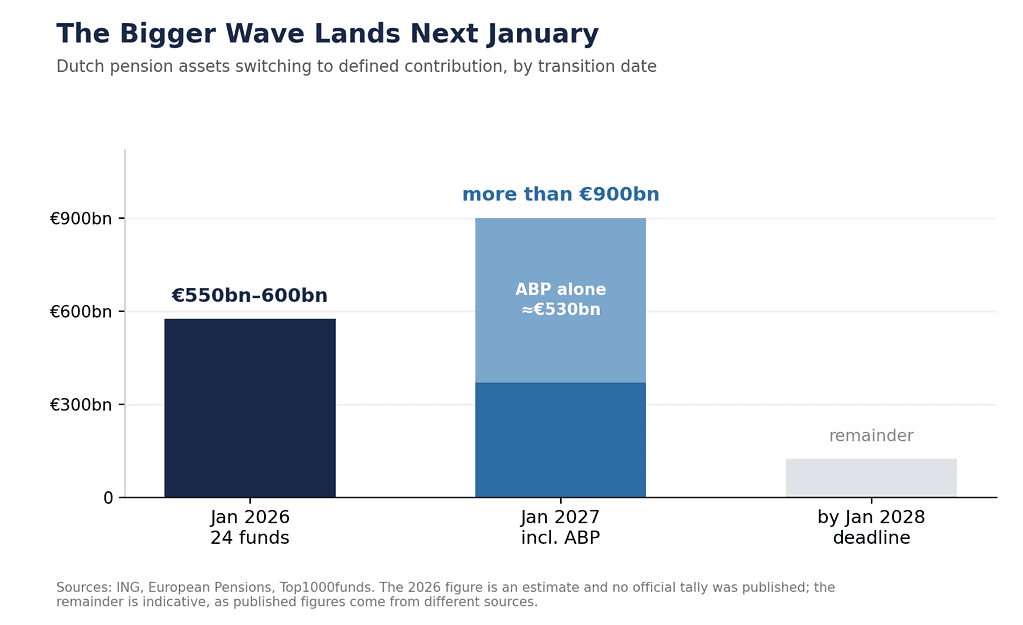
The Netherlands pension system is beginning to reduce one of Europe’s most reliable sources of demand for long-dated debt as a broad regulatory shift changes how Dutch pension funds manage their assets and liabilities. ING Groep NV estimates that nearly €600 billion ($699 billion) of assets have already been affected by the change, with more than €900 billion expected to follow early next year.

Under the old defined-benefit pension system, Dutch funds were required to hedge the interest-rate sensitivity of long-term pension liabilities by using long-dated bonds and swaps to match assets with payments extending decades into the future. Under the new defined-contribution model, which became law in 2023, that liability matching requirement has been significantly reduced, allowing funds to carry less duration and scale back their long-term hedges, resulting in less structural demand for the longest-dated debt and swaps.

For European CFOs, this could mean a higher premium for 20-, 30- and 50-year borrowing as companies and governments compete for a smaller pool of long-duration investors.

The change “should reduce structural demand for long-end duration assets and support curve steepeners over the long-term horizon,” wrote Sara Adjir, senior vice president and portfolio manager, and Jeroen van Bezooijen, account manager, at Pacific Investment Management Co., in a research note. They expect the impact will be mostly concentrated in 50-year swaps, but will also be felt in the demand for 20- and 30-year euro swaps and government bonds, including German and Dutch debt.

Deadlines

The Netherlands runs Europe’s largest pension system, with roughly €1.6 trillion in assets, and every fund must complete the switch by January 2028. Dutch pensions have long dominated the market for European long-dated debt, holding around €88 billion of interest-rate swaps maturing beyond 25 years at the end of last year, roughly a quarter of the total.

The first major wave of the transition came on Jan. 1, when 24 funds converted, among them the healthcare scheme PFZW and the metals scheme PMT, with an estimated €550 billion to €600 billion of pension assets between them. Analysis by the Netherlands central bank shows that Dutch pensions bought almost €34 billion net of swaps maturing inside 25 years while selling more than €12 billion of longer-dated ones. 

The bigger test, however, comes when more than €900 billion of pension assets is scheduled to convert on Jan. 1, with the Dutch civil service scheme ABP accounting for about €530 billion of that. 

The shift does not mean long-dated Dutch debt is suddenly becoming illiquid or even hard to sell: “Overall, we still see strong demand for our 30-year bond. Remember, we are AAA,” said Saskia van Dun, director of the Dutch State Treasury Agency.

Sovereign Issuers Adjust

Data indicates that sovereign borrowers are already adjusting to the change.

The share of Netherlands government bonds sold at maturities beyond 10 years fell from 42% at the start of 2025 to 31% by the third quarter, according to the Organization for Economic Co-operation and Development (OECD), which calls the constraint on long tenors structural. The OECD expects eurozone debt agencies to sell a record €1.35 trillion of medium- and long-term bonds this year into that thinner pool of demand.

For European finance chiefs, however, times are changing. For two decades, long-dated bond demand was unusually deep and predictable. As it recedes, the shifting cost of locking in 20 or 30 years of funding could become a live question.

Thomas Monteiro is a contributing writer based in Spain.

Source link

2,836 UK holidaymakers turned away from airports at two travel destinations

Travel experts say people are confused and think they only need a passport

Thousands of UK holidaymakers are being stopped at international borders and refused entry due to confusion around visas, permits, and entry requirements, new figures have shown/ Data obtained by Confused.com found that more than 2,800 British travellers were refused entry at the US and Australian borders between 2023 and 2025. 2,836 Brits were denied entry across the two countries over the three-year period. More were turned away in 2025 alone (1,607) than in the 2 previous years combined (1,229).

In the US, the 2,533 refusals related to visa or travel-documentation requirements under the visa waiver programme (VWP). In Australia, 303 Brits were refused immigration clearance between 2023 and 2025.

The US figures show a sharp rise in recent years, more than tripling from 424 refusals in 2024. Of the 2,533 Brits turned away, men made up more than two-thirds (1,745), while 18–35-year-olds were the largest age group (1,498). Nearly 100 under-18s were also refused.

Incorrect documentation was behind over half of UK refusals at the Australian border. While some destinations now offer visa-free access, many still require certain permits or specific documentation to be allowed in the country.

Travellers often assume they can rely solely on their passport or arrange permits upon arrival, when in reality, permits can take time to process or come with additional costs. This leaves them at risk of being turned away at the border.

Further research suggests the problem is part of a broader lack of awareness and confidence among travellers. Half say they aren’t confident which countries require a tourist visa for entry and 54% say the visa application process is too complicated or confusing.

Over half of travellers cite visa fees as a deterrent.

Confused.com has launched a new visa checker tool, designed to help UK travellers quickly understand the entry requirements for their destination before they travel.

Tom Vaughan, travel insurance expert at Confused.com, said: “Being turned away at border control is something no traveller expects, but it’s a real risk if you’re unsure about the entry requirements for your destination. Visa rules can be complex and vary between countries, so even small mistakes can result in people being refused entry and losing out on their holiday.

“And it’s worth knowing that if you’re refused entry, it may not be covered by standard travel insurance. Insurers may treat refusals as a preventable risk rather than an unforeseen emergency. This means you could be left to bear the cost of return flights and non-refundable bookings yourself.”

He added: “Visas are just one part of getting ready for a trip. Travellers should also check their passport validity, make sure they have appropriate travel insurance and understand what it does and doesn’t cover, and keep important documents and emergency contacts easily accessible to avoid any last-minute issues.”

Destinations with visa requirements

European Union

  • Requirement: European Travel Information and Authorisation System (ETIAS) permit required for short stays (up to 90 days in a 180-day period).
  • Cost: €20 application fee (exempt for under 18s and over 70s).

United States of America

  • Requirement: Electronic System for Travel Authorisation (ESTA) under the Visa Waiver Program.
  • Cost: $40 USD.

Australia

  • Requirement: eVisitor visa or Electronic Travel Authority (ETA), valid for stays up to 3 months.
  • Cost: Free eVisitor visa, or a service fee of $20 AUD if applying via the ETA app.

China

  • Requirement: Temporary visa-free entry allowed for short stays under a policy running until December 2026.
  • Cost: N/A (Free during the temporary policy window).

India

  • Requirement: e-Visa or regular paper tourist visa (passport must be stamped upon arrival).
  • Cost: £25–£80 for an e-Visa (depending on duration); approximately £127 for a standard paper tourist visa.

Pakistan

  • Requirement: Tourist visa required prior to arrival; Intent to travel must be submitted at least 24 hours before departure to obtain a Visa Grant Notice.
  • Cost: Varies by visa type and duration (processing takes 7–10 business days).

Kenya

  • Requirement: Electronic Travel Authorisation (eTA) applied for online in advance (recommended at least 2 weeks prior to departure).
  • Cost: Approximately £16.

Source link

Arab News | Pilots in Amazon cargo plane Miami crash released from hospital

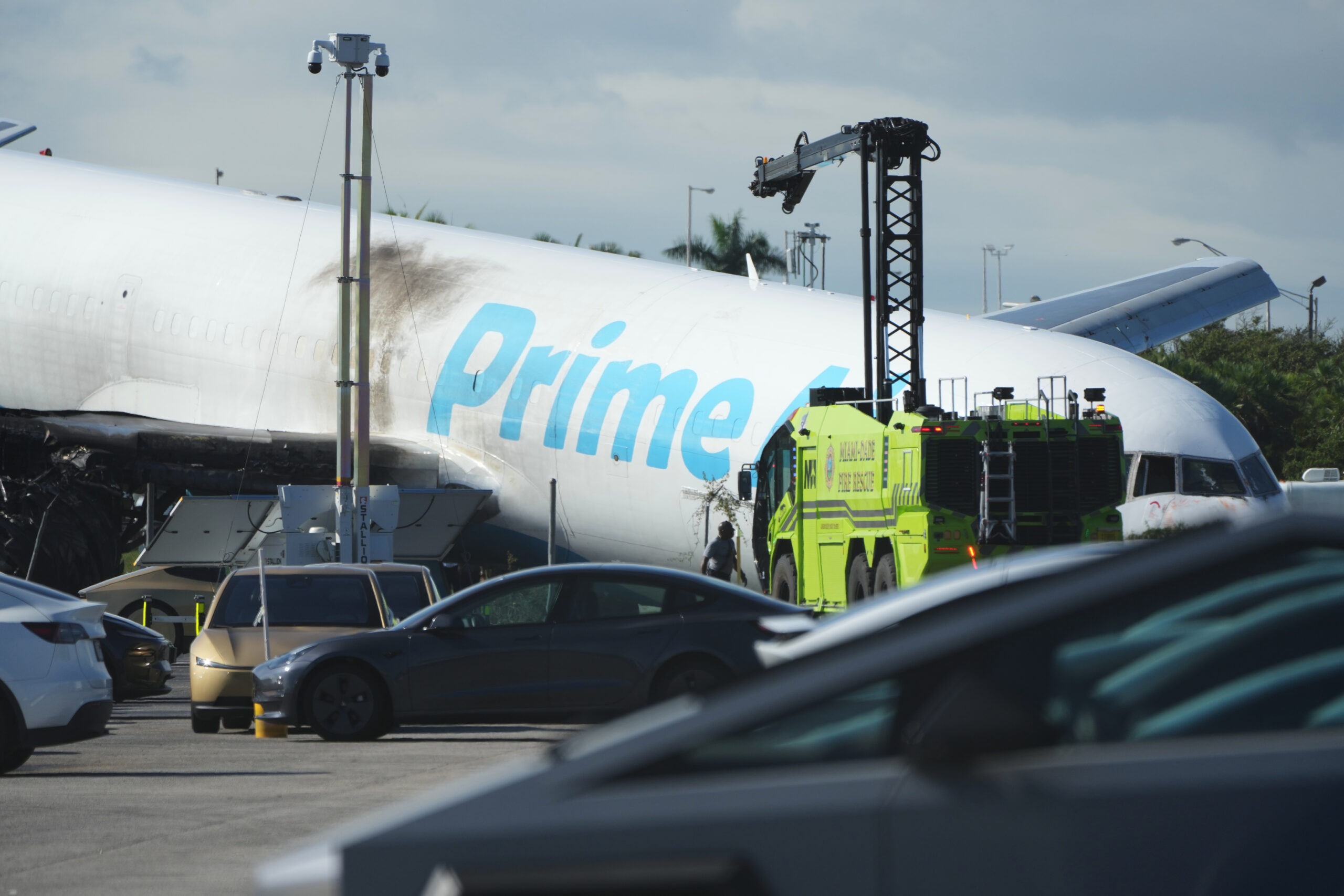
Miami: The two pilots of an Amazon cargo plane that overran the runway while landing at Miami International Airport, striking a van and killing five people, have been released from hospital, officials said Tuesday.

Three people are in hospital, two in critical condition and one stable, following Sunday’s accident, Miami-Dade Sheriff Rosie Cordero-Stutz said at a news conference.

Cordero-Stutz said the National Transportation Safety Board (NTSB) was leading the investigation into the accident while the Miami-Dade Sheriff’s Office would conduct its own inquiry into the deaths on the ground.

NTSB chief Jennifer Homendy said officials were reviewing flight data and cockpit voice recorders from the plane.

Flight data released by investigators on Tuesday suggests the plane tried to abort a landing, before it tore through a perimeter fence and slammed into two vehicles.

NTSB investigator Chihoon Shin said the plane attempted to perform a “go-around” — a routine safety maneuver where a pilot stops a landing attempt and returns to the air to safely make another approach — before abandoning it.

The pilots then applied the brakes to try to stop the plane and put the throttle into idle, Shin said.

Homendy said the plane’s pilot and co-pilot, aged 55 and 37, would be interviewed on Wednesday.

The plane came to a halt about 1,300 feet (400 meters) past the end of the paved runway surface, Homendy said. The five fatalities were in a cleaning-services van.

Hundreds of flights were delayed at Florida’s busiest airport following the crash.

Homendy said the plane was a Boeing 767-300 built in 1994 and operated by 21 Air LLC, based in Miami and contracted to Amazon.

It was on its third flight of the day, and arriving from San Juan, Puerto Rico.


Source link

Man spends night in Benidorm and is floored by how much it costs

A YouTuber set himself a £100 challenge to discover just how much food, drink, accommodation and entertainment he could squeeze into a night in Benidorm

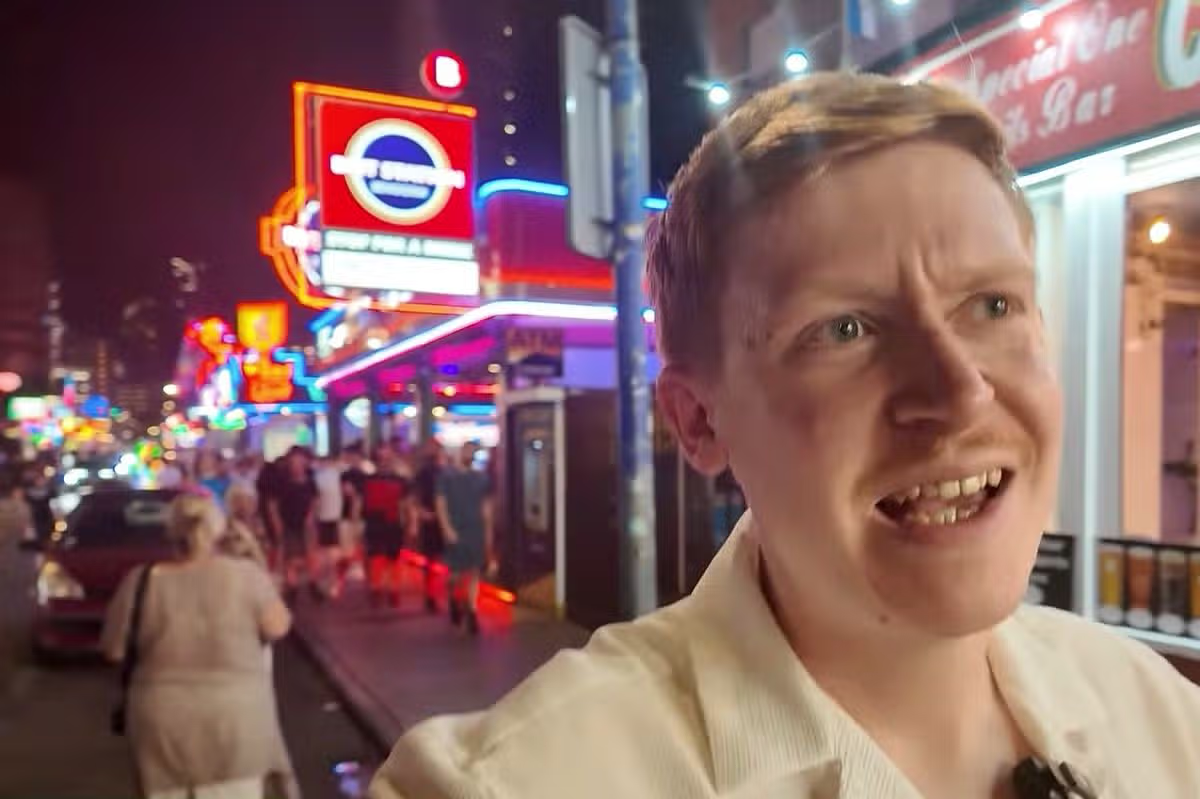
The seemingly endless cost of living crisis is making even our weekly shop a major budgeting challenge. So it’s no surprise that some of us have given up on luxuries like holidays. With that in mind, YouTuber Ed Chapman set out to see how far £100 could take a holidaymaker in one of the most popular Spanish resorts.

Benidorm is renowned for “The Strip”, a street lined with garishly neon-lit English pubs and restaurants promising a traditional fried breakfast. It’s the ideal spot for a cheap and cheerful stag or hen weekend, but just how cheaply can you spend a night there?

Armed with €116 (£100), Ed scheduled a night out, a stay in a one-star hotel and a fun activity for the following day.

A key part of his plan was tracking down a hotel that wouldn’t leave him out of pocket. Ed explained that while he could have saved a bit of cash by opting for a hostel, he’d rather have a proper hotel room to himself.

And given what he paid for it, he said the room exceeded all expectations: “Believe it or not, we have a balcony,” he said. “I was sort of shocked by this for the price.”

The hotel bathroom also came as a welcome surprise: “This is a nice big modern shower. I was really shocked about this. You’ve got a toilet here. You’ve even got a little sink at the side as you’d expect, and a bathroom hand dryer in a holster,” reports the Express.

The room, which set Ed back just £62, was something of a revelation, he said: “I didn’t expect such a good shower situation. And it is a very powerful shower as well. I’ve been really impressed with this for one night.”

For his evening meal, Ed nipped into a bar-restaurant called the Bulldog and went for a wallet-friendly jacket potato. For €6 – just over a fiver – he tucked into a perfectly decent jacket potato with baked beans, served alongside a side salad which, as he rightly noted, “no-one ever eats.”

Washed down with a “massive” pint of cider that brought his total spend to £9, it was a hearty and satisfying meal that set Ed up nicely for a bar crawl.

Spending an evening solo on Benidorm’s notorious “Strip” could have been quite a daunting prospect, but Ed says he had a brilliant time. Settling down with a pint of cider in one particularly “friendly” bar, he recounts how a complete stranger wandered over and planted a kiss on his ear: “Bit friendly, bit familiar,” he said.

Ed spent a couple of hours strolling around Benidorm, noting that while it’s widely regarded as a destination for a “lads’ holiday”, the ratio of men to women meant that romance was unlikely to be on the cards.

He did clock one club hostess, however, stripping a gleeful punter and giving him a smack on the bottom with a leather tawse, which was about as close to romance as the evening got.

With his night’s entertainment wrapped up, Ed headed back to his hotel room before venturing out the following morning for a fry-up, which set him back a very reasonable £5. However, after forking out on two bottles of water with his meal, the total breakfast bill came to £7.

Technically, the “entertainment” element of Ed’s getaway pushed him marginally over budget. His session at a water-park assault course set him back €16 (roughly £14).

Featuring Ed’s efforts to balance on some oversized vinyl beach balls and a go on a soggy trampoline, it proved a somewhat chaotic conclusion to the trip: “No one ever does this on Total Wipeout, do they?” Ed said, admitting that he’d spent £101 of his £100 budget.

Source link

Europe’s wildest pilgrimage route: a trek through the mountains of north-west Sweden | Sweden holidays

I wasn’t exactly in “Sunday best”, but I had made some effort. Well, I’d changed my underwear for the first time in a couple of days and given myself a baby-wipe bath. Still, as we filed into the chapel at Alkavare, I felt more a member of an expedition than a congregation. We sat on the low wooden benches, waterproof jackets rustling and leather walking boots stamping on the flagstone floor to keep warm. Fortunately, the priest, Mogens Amstrup Jacobsen, appeared to be a “man of the Gore-Tex”, as well as a man of the cloth, as he unzipped his own black rain jacket to reveal his dog collar. As the service began, the Arctic wind whipped through cracks in the dry stone walls, insulated only with reindeer hair, and candles flickered in their brass sconces.

I had hiked to Alkavare following the Präststigen, or “Priests’ trail”, a 37-mile (60km) route from Kvikkjokk that could stake a claim as Europe’s wildest pilgrimage route, and certainly one of its most beautiful. The Präststigen follows the path that priests would once have taken to the chapel, built in 1788, to perform a service each summer, and today, on the last weekend in July, intrepid hikers and perseverant pilgrims can attend that same service.

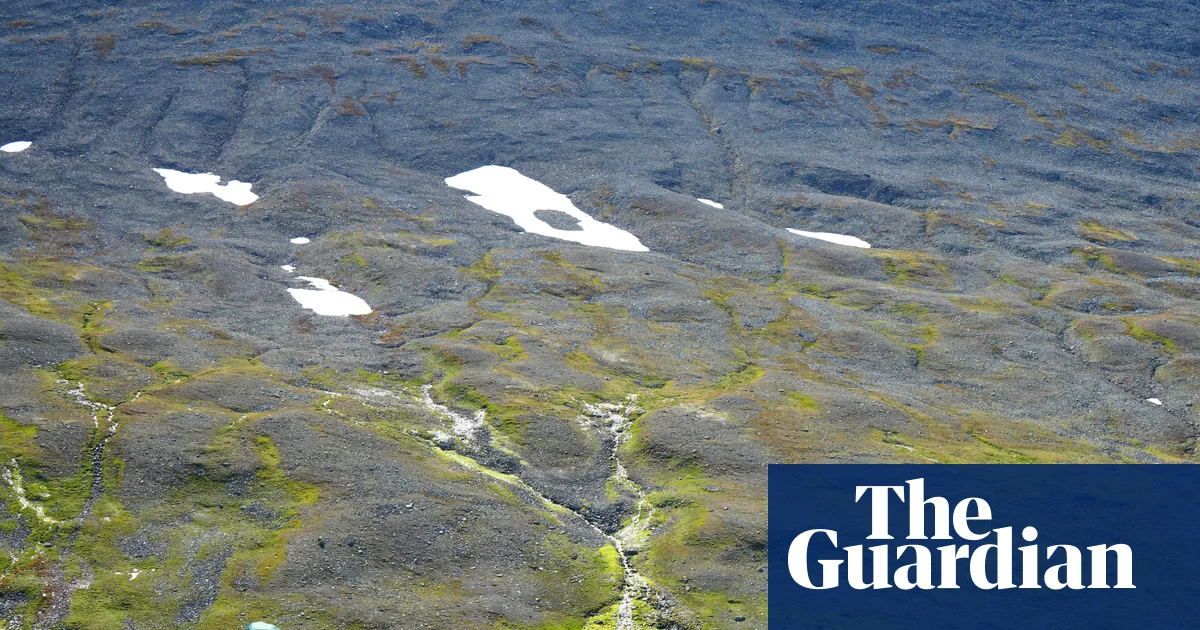
Alkavare sits on the western border of Sweden’s Sarek national park, home to many of the country’s highest mountains and steepest valleys, yet with no campsites or tourist huts and only scant sections of the more famous Kungsleden trail. There are no other marked paths and to hike here means wild camping, a heavy backpack and a sense of adventure. It was described by famed Swedish diplomat Dag Hammarskjöld in 1926 as vår sista stora vildmark – “our last great wilderness”.

Wild camping en route. Photograph: Arctic Sweden

“I hate it when people use the term ‘wilderness’,” Christian Heimrot from Laponia Adventures, a local guiding operator, told me, as I joined him on the research exhibition for a new Präststigen group trip launching next year. “This is a living landscape, people have lived, worked and shaped this land for thousands of years.” Indeed, Sarek national park, (as part of the wider Laponia region), was recognised as a Unsesco World Heritage Site in 1996 for both its cultural and natural value.

The Sami, Europe’s last Indigenous population, have braided themselves into these landscapes as tightly and beautifully as the thread of pewter in their traditional handicrafts. The Sami word for the Laponia area is Sápmi, the same word they use to refer to themselves, highlighting the indelible link between people and their environment. Sarek sits on the Sami’s traditional reindeer herding grounds. While they might now use motorcycles and snowmobiles to follow and herd the reindeer, their knowledge of and kinship with this landscape remains undimmed.

So, not wilderness, then, but certainly wild. To even reach the start of the Präststigen, I had crossed the Arctic Circle on the road north from Luleå, met with Christian at his warehouse in Jokkmokk (home to the famous Sami winter markets each February) to load up our rucksacks for the six-night trip, and journeyed an hour farther west to the town of Kvikkjokk. From there the trailhead was a short boat ride across Sakkat lake.

The first section of the trail climbed steeply, switchbacks tightly coiled in birch woodland; wild blueberries and cloudberries littered the path. Eventually we left the woodland and reached the ridge for our first proper view of Sarek. Away to the north was the cloud-covered summit of Bårddetjåhkkå, where in 1911 Swedish geologist Axel Hamberg built an observatory to conduct meteorological and glacial studies.

The trail involves walking through icy rivers, as there are no bridges. Photograph: Arctic Sweden

We slept soundly, as we eased into the rhythms of wild camping – water collected from a gin-clear lake, a hearty supper of reindeer stew, and an eye mask to keep out the midnight sun. The next day we hiked deeper into Sarek via the Vállevágge, the skies the blue of the Swedish flag, the silence only disrupted by the occasional breath of wind.

We were following the guidebook Priest’s Path by Hans Fowelin (currently only published in Swedish), and while there was no marked trail, Fowelin had plotted a path of cairns we were supposedly to follow. While some were solidly built square towers, most were little more than one rock propped up against another, mere whispers of waymarkers in a landscape of scree and moraine.

Alongside the familiar buttercups and heather there were bright blue blossoms of mountain gentian, red ptarmigan berries and otherworldly looking wild angelica, a source of vitamin C for the Sami. Sarek was visited by botanist Carl Linnaeus during his epic expedition through northern Sweden in 1732, and the first part of the Priest’s trail is sometimes referred to as Linnaeus’s trail.

On our fourth day of hiking Alkavare chapel appeared on a bluff above the glacial blue waters of Alggajavvre lake, surrounded by high peaks and valleys. It was utterly beautiful. I had a grin on my wind-burnt face for most of the day, one that even wading across rivers (a common feature of hiking in Sarek), shin-high in glacial meltwater, failed to dim.

After rowing across the Miellätno river, using one of the rowing boats left on each bank by the park rangers, we climbed up to the chapel late on Saturday evening where Jacobsen greeted us with a beaming smile.

Priest Mogens Amstrup Jacobsen was flown in by helicopter to lead the service.

Over tea, he told us he had been dropped off by helicopter at Alkavare with his family on Friday morning and this was his first time leading the service here. Others in the diocese no longer volunteered. “It is physical, hard work and the days are long,” he said, before heading off to re-tar the chapel’s roof and fix one of the rowing boats that had come loose and floated away down the river – returned, later, swinging beneath a helicopter.

Sunday mass began promptly at 11am the following morning for our small band of pilgrims (we numbered 11 in total, including the priest). The altar had a simple wooden cross and cloths on loan from the church in Jokkmokk. They were in the poster paint palate of traditional Sami clothing and a reminder that it was for the Sami that the chapel had been originally built – not an act of benevolence, but as part of the forced Christianisation and eradication of their shamanistic beliefs in the 18th century.

Alkavare chapel. Photograph: Habip Kocak

After the service we sat outside for coffee and pastries, before beginning our hike home. Christian was keen that we hiked via Sweden’s point of inaccessibility or otillgänglighetspunkten, just over the border from Sarek in the Padjelanta national park. This is the country’s point furthest from any road or town, about 31 miles (50km) in fact, and is often cited as western Europe’s remotest too. Marked with no cairn or monument, just a circle of quartz stones and a trio of reindeer antlers, it felt no more or less remote than most of the previous week’s hiking. And I was struck that what made Sarek and the Präststigen special wasn’t just the scenery, as beautiful as it was, it was the people – the Sami, Hamberg and Linneaus, and the motley congregation we’d briefly joined, and it was a route firmly deserving of more visitors. “I told you,” Christian said, grinning, “It isn’t a wilderness.”

The trip was provided by Laponia Adventures, which will lead a guided, small-group trip along the Priest’s Path to Alkavare in July 2027, and offers equipment rental and advice for independent hikers. For more information on Sarek national park and northern Sweden, visit arcticsweden.com

Source link

Arab News | Slovenia turns Israeli ally with new embassy

LJUBLIJANA: A chill has set in between much of Europe and Israel recently over its treatment of Palestinians, but the Alpine nation of Slovenia is bucking the trend.

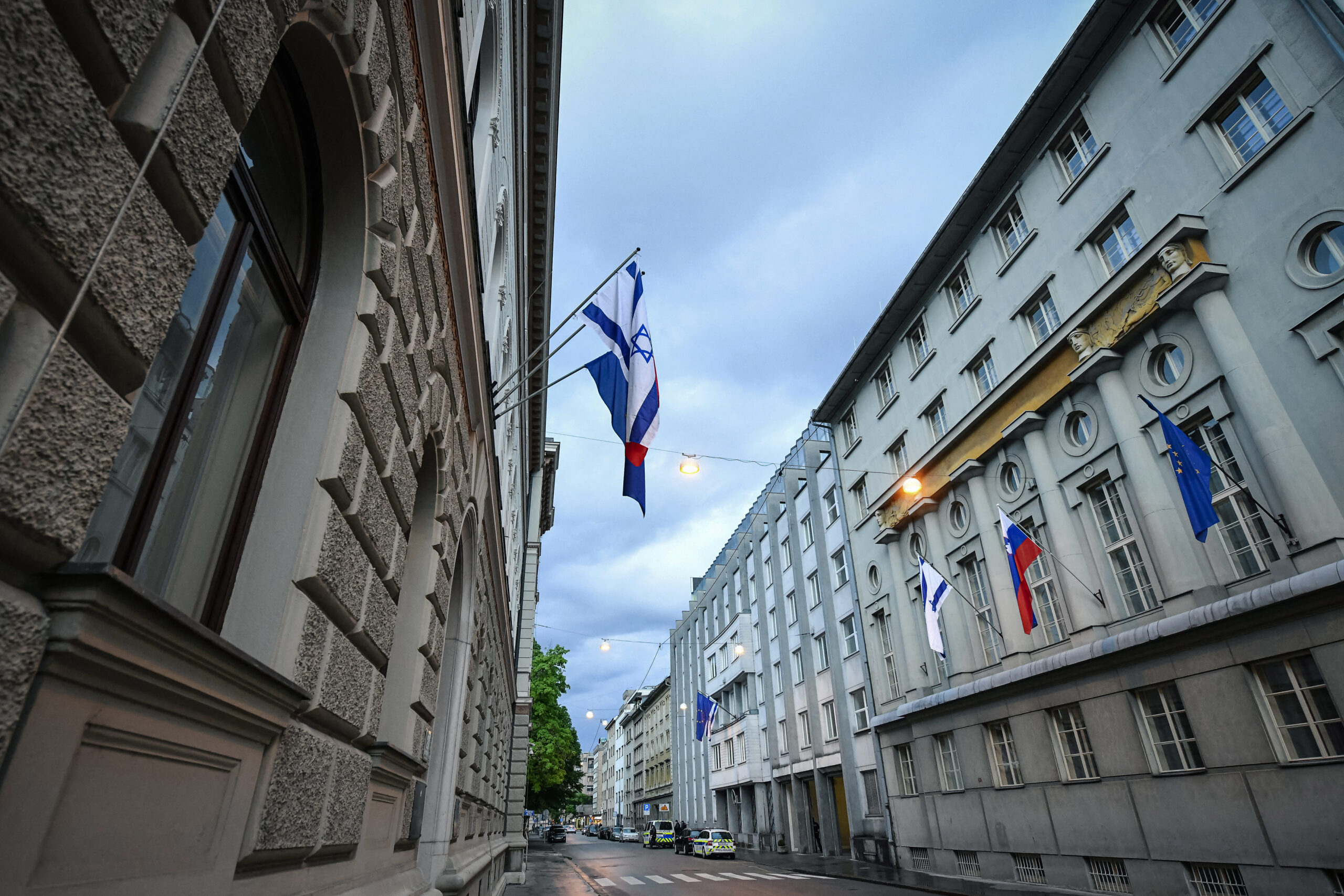
Under nationalist Prime Minister Janez Jansa Slovenia is launching a diplomatic reset of its relationship with Israel, which will send its foreign minister to open its first embassy in Ljubljana on Wednesday.

It is an about-face from the policies of the previous centre-left government, which had been one of the EU’s most critical voices on Israel’s military offensive in Gaza, which it described as “genocide”.

And it comes a day after the United Kingdom and other European countries provoked Israeli fury by banning imports from settlements in the occupied West Bank — the latest move by European governments grappling with growing international condemnation of Israeli policies towards Palestinians.

But in Slovenia, Jansa – who took office for the fourth time earlier this year, and who is often at loggerheads with the European Union – has instead received Israeli accolades for defying the EU over the West Bank settlements.

“Thank you PM Jansa for your courage and clarity amidst EU hypocrisy,” Prime Minister Benjamin Netanyahu posted on X late last month, after Slovenia vetoed an EU statement condemning the settlements.

Under Jansa, Slovenia has also reversed its own ban on imports from the settlements, lifted its arms embargo on Israel and scrapped entry bans on Netanyahu and two of his ministers.

In his first official visit to the country, Israel’s top diplomat Gideon Saar will inaugurate the embassy Wednesday, with his ministry describing Jansa as a “friend of Israel”.

Jansa has said his government was “only normalising Slovenia’s foreign policy and fixing the damage” caused by liberal ex-prime minister Robert Golob.

“To fulfil its priority of improving the well-being of Slovenians, the government will carry out pragmatic policies,” Jansa said in another post earlier.

‘Instrument’

Not all Slovenians are on board, however.

A poll conducted by the daily newspaper Delo in June found that 56 percent of Slovenians opposed closer ties with Israel, while 14 percent supported them.

Several rights groups have announced protests against the embassy’s inauguration, which has also drawn sharp criticism from the opposition.

Golob’s party has described the new embassy as “a return of the favour” for Israel’s alleged support of Jansa during the March election.

The last days of campaigning ahead of the March 22 vote were overshadowed by claims of foreign interference, with authorities probing whether Israeli company Black Cube was behind secretly recorded videos alleging graft in Golob’s government.

Jansa – who faced accusations his party was linked to the videos – has admitted to having met a Black Cube official, but denied being behind the videos.

Daily Dnevnik’s columnist Darijan Kosir in a weekend commentary said Jansa was serving “as the US-Israel’s Trojan horse” in the EU, taking the place of Viktor Orban, Hungary’s long-time premier who lost April elections.

Former president Danilo Turk told AFP that Slovenia has “become an instrument of Israeli policy”.

“This is a very uncomfortable situation,” said Turk, an International Law professor at Ljubljana University.

Source link

Arab News | EU to help cities tighten screws on Airbnb, holiday rentals

BRUSSELS: European cities will gain more leeway to curb short-term rentals such as Airbnb under plans to bring down housing costs in tourism hotspots that the European Union is to unveil Wednesday.

The European Commission is to lay out conditions under which local authorities can limit short lets, as part of an “affordable housing” package that seeks to address what EU chief Ursula von der Leyen has called a “social crisis”.

“Nurses, teachers, and firemen cannot afford to live where they serve. Students drop out because they cannot pay the rent. Young people delay starting families,” she said in a speech last year highlighting the issue as a priority for Brussels.

Though hugely popular with visitors, short-term lodgings are blamed by residents in many popular travel destinations for depriving locals of apartments for long-term rent and pushing up prices.

From New York to Tokyo and Barcelona, a growing number of cities worldwide have imposed or considered restrictions on tourist flats in recent years.

But curbs have often been followed by court challenges from rental providers and tourism operators, resulting in legal uncertainty.

The commission’s Affordable Housing Act aims to provide cities with legal cover, clarifying when authorities can take action without falling foul of EU single market rules.

Cities and other relevant authorities will be allowed to limit holiday rentals as well as the purchase of property for short-term letting purposes in areas deemed “under housing stress”, according to a draft seen by AFP.

The document laid out a series of parameters that needed to be met for an area to be defined as under stress, such as the ratio between house prices and incomes there.

“Population dynamics” and future housing supply and demand will also need to be taken into account, the draft said, adding any measure should be non-discriminatory, necessary and proportionate.

‘Structural solutions’

The legislation will not affect landlords that rent out their own primary residence for short periods of time.

Housing affordability has become a growing issue across the 27-nation bloc in recent years.

Property prices have surged by 60 percent, while rents have climbed by 20 percent over the past decade, leaving millions struggling to find a home they can afford, according to Brussels.

The EU says this is mainly driven by insufficient housing supply but short-term lets add extra pressure in certain areas.

Short rentals account for only about 1.2 percent of the European Union’s housing stock but the share can reach as much as 20 percent in popular districts of some tourist destinations, according to EU data.

Holiday lets “can generate important economic and social benefits, especially for households struggling to make ends meet” but “they may also aggravate housing demand pressures in some constrained local housing markets,” the EU draft read.

Yet, that’s something rental providers dispute.

“For the great majority of cities, the claim that short-term rentals are driving housing stress does not survive contact with this evidence,” tech lobby group CCIA wrote in a letter to the commission this month.

In some cities with restrictions, rents and hotel prices have gone up, the letter added, noting Lisbon recently overturned some of the curbs it had previously imposed.

“Europe’s housing crisis needs structural solutions, and the implementation of this Act should focus on increasing the supply of homes,” said an Airbnb spokesperson.

Source link

New Oasis teaser video ‘confirms’ latest tour location with cheeky nod to moment that caused band to split

A NEW teaser video from Oasis ‘confirms’ an upcoming tour location – with a subtle nod to a moment that happened around the group’s original split.

The legendary rock band – led by brothers Liam Gallagher and Noel Gallagher – reformed in 2024 after breaking up in 2009.

Oasis fans think they’ve sussed out an upcoming tour location after the band posted a new teaser clip online Credit: X/@oasis
The clip in question features a reference to a famous moment between brothers Liam and Noel Gallagher Credit: Getty

It saw the pair overcome their 15-year feud as they embarked on a reunion tour in summer 2025.

The band have now posted a cryptic clip online, with fans certain they sussed out an upcoming tour location.

Fans were convinced the clip hinted at a France tour date – with references to “Rock en Seine” and “Au Marché” visible.

One person commented: “A French date for next year’s tour I see! Possibly for the 7th of July?? Interesting…”

BACK IN ANGER

Oasis shock as secret recordings to be released by ex employee for huge sum


FERRY NICE

Oasis tease another huge gig with cryptic post that throws back to chaotic tour

Oasis originally split in 2009, before reuniting in 2024 Credit: Getty
The band have since been going from strength to strength Credit: Alamy

Another added: “Hey Oasis, you owe me a gig in Paris!!! I was there that night in 2009. F*****g night. So VIVE LA FRANCE!!”

In addition to this, the video also includes a reference to an infamous moment in Oasis history.

A viewer remarked: “Please tell me that was a plum he threw. Genius.”

While a second person said: “OMG ITS LIAM THROWING A PLUM AT NOEL !!!!!”

In the clip, a man wearing a leather jacket took out a plum from a paper bag and began eating it.

Soon after this, he lobbed the plum away somewhere off camera, into the distance.

It references Noel previously telling how – during a heated 2009 argument at the Rock en Seine Festival in Paris the time of his Oasis departure – Liam threw a plum at him.

In 2011, he said at a press conference for solo album Noel Gallagher’s High Flying Birds: “He storms out of the dressing room and on the way out, he picked up a plum and threw it across the dressing room and it smashes against the wall.”

Noel added: “Part of me wishes it did end like that – “plum throws plum.”

Source link

The case for the US going back to the firing squad | Death Penalty

The US has evolved its method of criminal executions, but drug shortages and protests over medical ethics have made lethal injections increasingly difficult to carry out. John Malcolm of the Meese Institute tells Al Jazeera that the US should ‘go back to a firing squad’.

Source link

How Zendaya became Hollywood’s hottest heroine raking in $2.4BILLION at box office in biggest year of her career to date

HOLLYWOOD star Zendaya has become the big screen’s hottest heroine after her films raked in some £3billion this year alone at the global box office.

The 30-year-old actress has pulled in £1.8billion with Spider-Man: Brand New Day and £1.2billion with Christopher Nolan’s The Odyssey — with Dune: Part Three still to come.

Zendaya has become the big screen’s hottest heroine after her films raked in some £3billion this year alone at the global box office Credit: PA
Newlyweds Zendaya and Tom, who also star in the Spider-Man movies Credit: Getty

It puts her ahead of every other leading lady in cinema in 2026 — with her annual income from movies alone estimated at tens of millions of pounds.

Zendaya plays MJ in the Spider-Man movies, opposite husband Tom Holland, also 30, in the title role.

The superhero extravaganza has become one of the biggest movies of all time.

She also stars alongside him and an ensemble cast including Matt Damon and Anne Hathaway in The Odyssey.

ALL GROWN UP

The Inbetweeners WAGs – from Strictly star’s sister to ex-glamour model


mini mol

Molly-Mae shows off incredible figure in matching swimsuit with daughter Bambi

The swords and sandals epic has itself become a massive summer hit and a box office phenomenon.

It easily grabbed the cinema top spot after its July 17 release, until the latest Spider-Man movie took the crown when it came out two weeks later.

Zendaya with Matt Damon in Christopher Nolan’s The Odyssey Credit: PA
Zendaya plays MJ in the Spider-Man movies, opposite husband Tom in the title role Credit: Alamy

Spidey stayed at No1 on the global box office throughout August — until The Odyssey knocked it off again last weekend, proving the pulling power of newlyweds Zendaya and Tom.

She began the year with her other release, romantic dark comedy The Drama, in which she starred alongside Robert Pattinson.

It made £97million worldwide.

And Zendaya is showing no signs of slowing down, with Dune: Part Three set to debut on December 18 and looking to be another massive hit, possibly grossing another billion dollars (£740million).

Zendaya began the year with her other release, romantic dark comedy The Drama, in which she starred alongside Robert Pattinson Credit: Alamy
Zendaya is showing no signs of slowing down, with Dune: Part Three set to debut on December 18 Credit: Alamy

Dune: Part Two made a global gross of over £526million in 2024, growing from part one’s £303million in 2021. It is now likely the third instalment will skyrocket way past its prequel. 

It all comes as Hollywood’s leading lady just recently celebrated her 30th birthday after becoming one of the most influential young actresses of her time.

Source link

A European Central Bank rate hike is all but certain, the reasoning less so

Frankfurt will almost certainly move on Thursday.


ADVERTISEMENT


ADVERTISEMENT

Market odds put a quarter-point hike at close to certainty, which would lift the European Central Bank’s deposit rate from 2.25% to 2.5%.

What makes this a difficult call is not whether the ECB acts, but why, and whether the reasoning survives contact with the data.

The path here has been compressed as the ECB raised rates on 11 June for the first time in three years, lifting the deposit rate from 2% to 2.25% in response to the energy shock from the Iran war, and then held rates in July while Christine Lagarde pointed hawkishly towards September.

August’s inflation figures removed any remaining doubt with eurozone inflation hitting 3.3%, up from 2.9% in July and the highest since September 2023, as energy inflation surged to 14.3% from 10.3%.

The inflation is not spreading

Look beneath the headline inflation and the picture inverts.

Core inflation, which strips out energy, food, alcohol and tobacco, actually fell to 2.4% from 2.5%. Services inflation, the component most closely tied to wages and domestic demand, dropped to 3% from 3.3%.

In other words, there is still little evidence that expensive energy is feeding through into everything else. That is what economists mean by “second-round effects”, and their absence is the strongest argument against tightening.

The ECB’s own research also supports the distinction.

In a paper published on Tuesday, ECB economists found that adverse energy supply factors, driven by geopolitical tensions, accounted for around 90% of the rise in energy inflation between January and May.

“This time the energy supply shock dominates, while demand and public policy stimulus have minor roles,” the economists wrote, adding that “these differences are key to explaining why monetary policy responses differ.”

The 2021-22 surge, by contrast, came from “a combination of large and unprecedented supply and demand-side factors,” which is why the ECB then “raised interest rates forcefully and persistently” rather than gradually.

The national spread across the EU further underlines how uneven this is.

August inflation ran at 4.5% in Spain, 2.9% in Germany and 2.7% in France, three economies facing the same energy shock with very different results, all governed by one interest rate.

Economic growth is the other complication.

The eurozone has proved more resilient than expected, which ING attributes partly to luck, partly to Asian competitors suffering more from the closure of the Strait of Hormuz and partly to fiscal stimulus. However, resilience does not mean the growth could not, or should not, accelerate.

ING characterises Thursday’s expected move as “another insurance rate hike”, or “a dovish rate hike,” noting that even at 2.5% the deposit rate sits within the range the ECB itself considers neutral.

Going further would mean deciding restrictive policy is required, which would be a different judgement entirely.

Everyone is looking to hike at the same time

The ECB is not acting alone, and that matters for the euro.

The Federal Reserve meets on 15 and 16 September, with Chair Kevin Warsh having used his first Jackson Hole address to argue that financial conditions are not restrictive and underlying inflation has not improved.

Investors had put the odds of a US hike at roughly one in three before those remarks, but now price a 60% chance the Fed hikes the target range from 3.5%-3.75% to 3.75%-4%.

The Bank of Japan follows on 17 and 18 September, with markets pricing an 80% to 90% chance of a move to 1.25%.

On the other hand, the Bank of England is expected to hold rates at 3.75% on 17 September as it currently maintains a much higher interest rate than the rest.

If the Fed were to hike while the ECB held, the dollar would strengthen against the euro and that would cut both ways for Frankfurt.

A weaker euro makes European exports more competitive, but it also makes imports dearer, and since oil and gas are priced in dollars, it would push up precisely the energy costs driving the inflation problem in the first place.

Overall, we can assume a September rate hike is a done deal for the ECB but we can also project that it won’t solve the central bank’s current dilemma of raising borrowing costs against an inflation it cannot reach, while withdrawing support an economy could still use.

Source link

Reid Detmers strikes out nine as Angels defeat the Boston Red Sox

Reid Detmers struck out nine and gave up one hit over six shutout innings, Zach Neto was four for five with a two-run homer, and the Angels beat the Red Sox 6-1 on Tuesday night to end Boston’s five-game winning streak.

Vaughn Grissom and Jose Siri hit RBI singles and the Angels scored twice on double-play grounders, providing ample offense for Detmers (5-8), who got his first win since a 1-0 decision over Kansas City on Aug. 15.

Detmers struck out at least one in all six innings he pitched and allowed only three runners. He retired the last 10 batters he faced after hitting Jahmai Jones with a pitch in the third, then was pulled before the seventh after throwing a career-high 112 pitches.

The Angels outhit Boston 15-4 and won for the just the third time in their last 15 games. They also avoided a potential season sweep, improving to 1-4 against the Red Sox.

Boston went without a hit from Wilyer Abreu’s single in the first until Trevor Story led off the seventh with a double off of José Fermin, who gave up Boston’s run when Nick Sogard drove in Story with a single.

Neto gave the Angels a cushion in the eighth with his 24th homer to left-center off Raymond Burgos.

Patrick Sandoval (1-5) struck out seven in six innings for Boston, but also gave up four runs, 10 hits and two walks. His two-out walk of Mike Trout in the third helped lead to two runs when Siri and Grissom followed with consecutive singles to put the Angels up 3-1.

Source link

Gambian leader pledges halt to rolling blackouts as protests turn violent | Energy News

Barrow pledges new power infrastructure, including a 24-megawatt plant, to tackle The Gambia’s worsening electricity crisis.

Gambian President Adama Barrow has said the country will boost energy supplies by next month, hoping to quell violent protests over prolonged power outages as the premier stands for re-election.

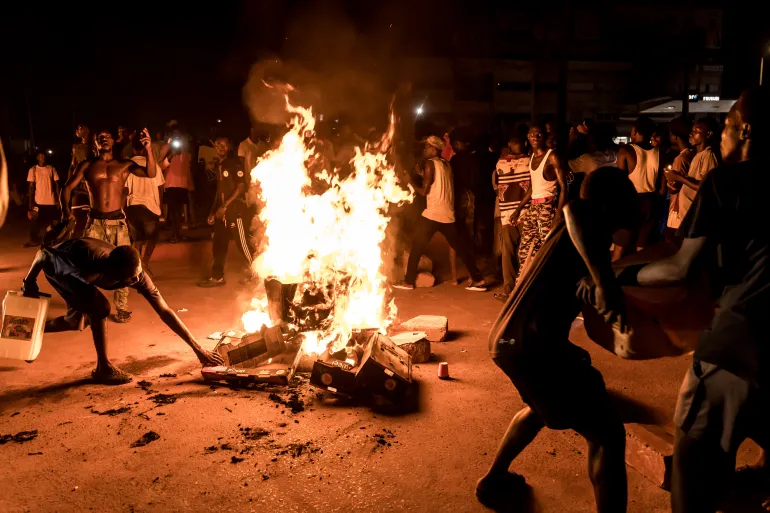
Protesters burned tyres and built barricades blocking traffic, demanding that Barrow resign, in The Gambia’s capital, Banjul, and nearby cities on Monday and Tuesday.

Police used tear gas to disperse crowds who gathered in multiple locations, including near Barrow’s residence and the National Water and Electricity Corporation (NAWEC) headquarters, which supplies the country’s electricity.

Demonstrators burn tyres and block a road during a protest over the country's ongoing electricity crisis and persistent power outages in Brusubi on September 8, 2026. [AFP]
Demonstrators burn tyres and block a road during a protest over the country’s ongoing electricity crisis and persistent power outages in Brusubi on September 8, 2026. [AFP]

Barrow declared the outages an emergency and a “national security issue” during a visit to a NAWEC power station. In a national address, he announced that the government would install a 24-megawatt generation machine by the end of October.

“I know that the fans have stopped turning, children work in the dark, mothers throw away stale food, and the heat is unbearable by day and by night,” Barrow said.

The rolling blackouts are taking place during the West African country’s hot season and have lasted up to 48 hours in some places.

The Gambian president also announced an additional 50-megawatt solar power plant that would begin construction soon.

NAWEC Managing Director Gallo said the prolonged electricity cuts were in part due to climate change and the US-Israel war on Iran. The electricity provider, in a statement released in August, also claimed that it was experiencing an “unforeseen surge” in demand due to high temperatures.

The blackouts come just months ahead of the December presidential election, in which Barrow is running for a third term.

Source link

Cameraman catches the moment Yemeni government forces are ambushed | Conflict

A suspected-Houthi roadside ambush of Yemeni government forces has been captured on camera. The convoy was driving through the Hodeidah governorate when gunmen opened fire, killing one person and wounding several others.

Source link

‘South Park’ is now ‘South America’ in move to mock Trump

Billionaire comedy duo Trey Parker and Matt Stone are unveiling a new name for “South Park” ahead of the show’s 29th season: “South America.”

The satirical series’ name change follows President Trump’s renaming of Lake Ontario to Lake America amid the escalating U.S.-Canada trade war. Last week, tech behemoths Apple and Google honored Trump’s executive order and renamed the Great Lake on their maps for U.S. users.

Parker and Stone made the announcement on social media on Tuesday, writing, “Inspired by the bravery and patriotism of Apple and Google, we are changing the name of South Park to SOUTH AMERICA. We especially want to thank our parent company Paramount — a Skydance Capitulation.”

The duo also jabbed at their parent company and its new owner, Skydance Media, for what media critics have characterized as caving to the Trump administration’s Federal Communications Commission. The “capitulation” involved controversial corporate and programming adjustments as well as agreeing to a $16-million settlement over a lawsuit brought by Trump involving a “60 Minutes” segment to get Paramount’s $8-billion merger with Skydance approved.

Last year, following a particularly incendiary episode of the show — in which a parody of Trump has an X-rated fling with Satan, and the president is portrayed as having an animated micropenis — the White House issued a statement to Variety slamming the series.

“The Left’s hypocrisy truly has no end — for years they have come after ‘South Park’ for what they labeled as ‘offense’ [sic] content, but suddenly they are praising the show,” White House spokesperson Taylor Rogers said in a statement to the outlet. “Just like the creators of ‘South Park,’ the Left has no authentic or original content, which is why their popularity continues to hit record lows.”

Last week, “South Park,” won an Emmy Award for outstanding animated program. And last summer, Parker and Stone reached a five-year, $1.5-billion deal with Paramount to secure exclusive global streaming rights on Paramount+, making the series one of television’s most valuable shows and its creators two of the highest-paid comedy writers in the biz.

The 29th season of “South America” premieres Sept. 16 at 10 p.m. on Comedy Central.


Source link

Arab News | Iran’s Guards say attacked two US vessels and eight oil tankers: state media

Iran’s Revolutionary Guards said Wednesday they attacked two US vessels, eight oil tankers and 10 “non-compliant vessels” trying to pass through the Strait of Hormuz, state media reported.

“Two US vessels, eight oil tankers, and 10 non-compliant vessels attempting to pass through the prohibited and unsafe zone of the Strait of Hormuz were targeted,” the Guards said in a statement published by the official IRNA.

Meanwhile, six cargo ships transited the Strait of Hormuz yesterday, Tuesday, compared to nine ships the previous day and an average of about 12 ships over ten days, according to shipping data released today, Wednesday.

These numbers may change, as some ships typically choose not to operate their transponders during the voyage.

Preliminary data from Kpler at 0200 GMT showed that five of the six ships entered the strait while one exited, and the group included a Panamax-sized tanker and a medium-sized tanker.

The US-Israeli war on Iran escalated yesterday, Tuesday, as Houthi militia in Yemen, allied with Tehran, launched attacks on Saudi cities, further involving the kingdom in the conflict.

Simultaneously, US forces targeted several Iranian oil tankers, while Iran struck a US base in Jordan.

Meanwhile, 25 cargo ships transited the Bab El-Mandeb Strait yesterday, Tuesday, with 11 ships entering and 14 exiting the other vital Middle Eastern waterway.

This compares to an average of about 27 ships transiting the Bab El-Mandeb Strait over the past ten days.

Among the ships that transited the Bab El-Mandeb Strait were two Suezmax tankers, eight Aframax tankers, and a Very Large Crude Carrier.


Source link

Arab News | Ship transits through Strait of Hormuz below average in 10 Days

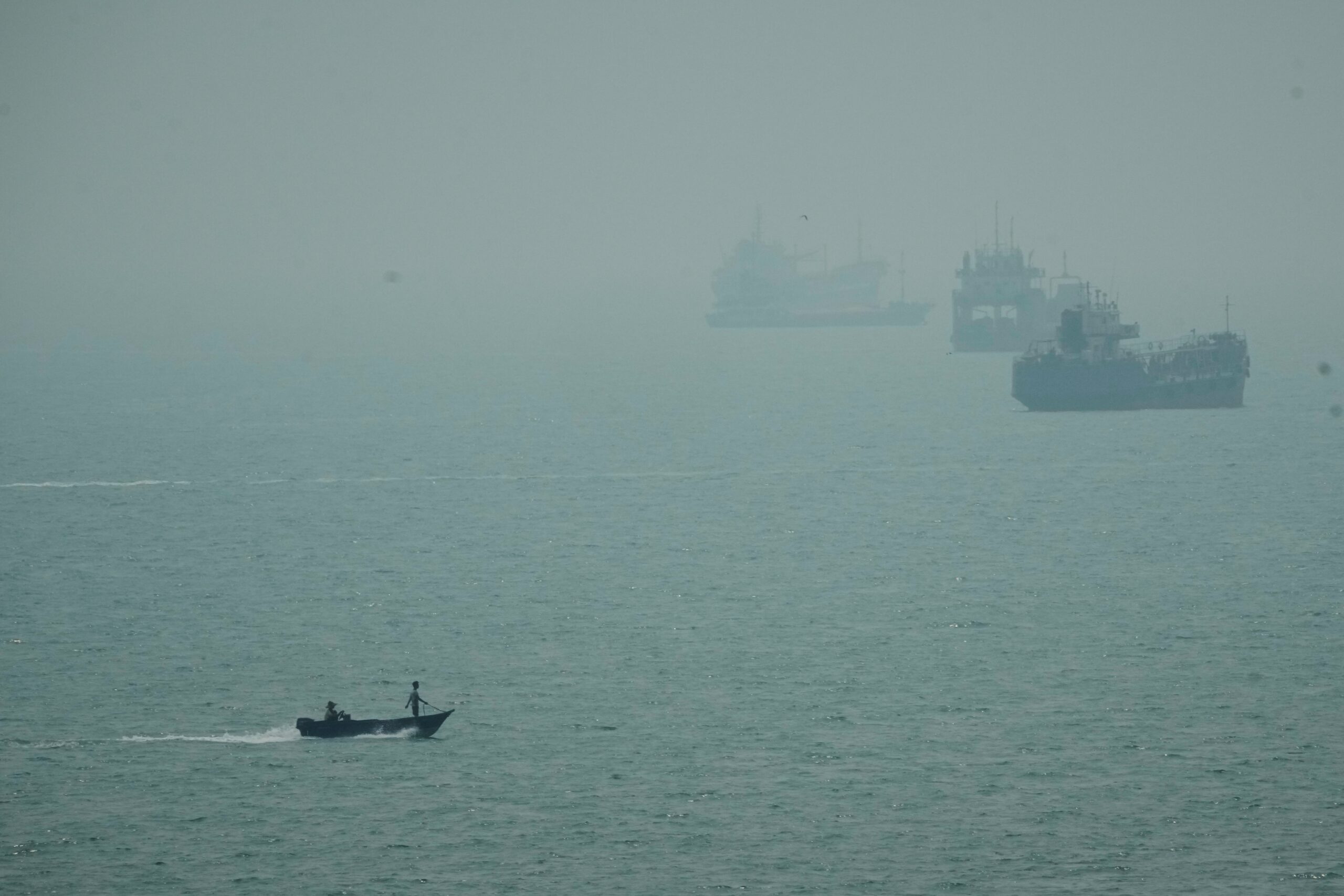
SINGAPORE: Six cargo ships transited the Strait of Hormuz yesterday, Tuesday, compared to nine ships the previous day and an average of about 12 ships over ten days, according to shipping data released today, Wednesday.

These numbers may change, as some ships typically choose not to operate their transponders during the voyage.

Preliminary data from Kpler at 0200 GMT showed that five of the six ships entered the strait while one exited, and the group included a Panamax-sized tanker and a medium-sized tanker.

The US-Israeli war on Iran escalated yesterday, Tuesday, as Houthi militia in Yemen, allied with Tehran, launched attacks on Saudi cities, further involving the kingdom in the conflict.

Simultaneously, US forces targeted several Iranian oil tankers, while Iran struck a US base in Jordan.

Meanwhile, 25 cargo ships transited the Bab El-Mandeb Strait yesterday, Tuesday, with 11 ships entering and 14 exiting the other vital Middle Eastern waterway.

This compares to an average of about 27 ships transiting the Bab El-Mandeb Strait over the past ten days.

Among the ships that transited the Bab El-Mandeb Strait were two Suezmax tankers, eight Aframax tankers, and a Very Large Crude Carrier.


Source link

US reading scores hit near-25-year low in latest global assessment | Education News

Reading scores among 15-year-olds in the United States have fallen to the lowest level in about 25 years, according to an international education assessment.

On Tuesday, the Organisation for Economic Co-operation and Development (OECD) released findings from the 2025 Programme for International Student Assessment (PISA), a global metric for educational achievement.

Recommended Stories

list of 3 itemsend of list

The results showed that US reading scores fell 14 points from 2022, the last time PISA results were released.

The decline was part of a broader international trend, with an OECD average from 23 countries also dropping 16 points.

But the US stood out for the size of its performance gap. Some 25.7 percent of US students were ranked as low performers in reading, while 13.3 percent were flagged as top performers.

“Looking across all 90 participating countries, there was not a single country with significantly wider inequality in reading scores than the US,” Michael Kieffer, a professor of literacy education at New York University, told Al Jazeera. “What is clear is that we are under-serving many students.”

The PISA results come as the administration of US President Donald Trump seeks to reshape the federal government’s role in education.

In March 2025, Trump issued an executive order calling on Education Secretary Linda McMahon to begin the process of dismantling the Department of Education, a federal agency that tracks student achievement, distributes federal education funds and enforces civil rights in schools.

The Education Department, however, does not establish school curriculums or academic standards. That responsibility has traditionally fallen to state and local authorities.

Still, Trump pointed to slipping test scores as a reason to shutter the department. He has also denounced the department for its “entrenched bureaucracy” and called for its responsibilities to be redistributed to the states.

In response to a request for comment on Tuesday, McMahon sent a statement to Al Jazeera echoing Trump’s push.

“The United States of America is a nation built to lead the world, yet our one-size-fits-all federal education bureaucracy has shortchanged our children and stifled our future,” McMahon wrote.

The White House has argued that federal education spending is excessive and has failed to translate into higher standardised test scores.

Since the Education Department was founded in 1979, it has spent more than $3 trillion, according to the White House.

“This moment is a stress test for our nation’s future,” McMahon said in her statement to Al Jazeera. “To pass it, we must enact a hard reset that stops protecting a failed status quo and instead builds a system that empowers state leaders and embraces innovative learning options through school choice.”

“School choice” has been a rallying cry for many US conservatives. The term refers to the practice of diverting taxpayer money away from public education to help parents finance alternative choices for their child’s schooling, like charter schools, homeschooling or private institutions.

The practice is controversial. Critics have accused the “school choice” system of weakening public education in favour of less regulated school systems that receive money with little oversight.

But since returning to office in 2025, Trump has embraced “school choice” as a form of “educational freedom”.

Last year, the Education Department announced $500m for its Charter School Program, touting the funds as the “largest investment” the initiative has ever received.

The money was earmarked to allow states to expand their charter school systems and fund new charter-school developers.

In July 2025, the One Big Beautiful Bill Act – Trump’s signature piece of legislation – also created the first federal tax credit for donations to organisations that provide scholarships for primary and secondary school students, including for private-school tuition and tutoring.

Last month, Trump hosted a “school choice”-themed event at the White House to kick off the start of the new school year.

But critics warn that greater investment in education is needed across the board to reverse diminishing test scores.

“PISA 2025 shows that reversing declines in student performance is urgent,” OECD Secretary-General Mathias Cormann said in a statement.

“The most successful education systems focus on fewer areas in greater depth, invest in teachers, engage parents and provide targeted support for the students and schools that need it the most.”

Source link