The United Kingdom has announced a ban on the import of all goods produced in illegal Israeli settlements in the occupied West Bank, Foreign Secretary Ed Miliband said in Parliament on Tuesday.
It comes in response to an intensifying wave of Israeli settler pogroms and settlement expansions in the occupied West Bank and East Jerusalem.
The ban, set to come into effect within six to nine months, would target settlement exports such as dates, olive oil and agricultural products, with Miliband saying he did not believe “the British people want us supporting the occupation by accepting products from settlements in our shops”.
The International Court of Justice in July 2024 called Israel’s occupation of Palestinian territory “unlawful”. Months later, the United Nations passed a resolution calling for an end to the Israeli occupation within a year.
Israel’s response was furious, as it announced four “counter-measures”, including banning 12 British MPs from entering Israel and closing the British consulate in Jerusalem.
After Miliband’s speech, 11 more countries: Canada, Denmark, Finland, France, Iceland, Ireland, Norway, Poland, Portugal, Spain and Sweden, shared a joint statement supporting the so-called two-state solution and announcing their own intentions to impose restrictions on trade with illegal Israeli settlements.
Aside from Canada and the UK, the rest of the countries considering or already banning settlement goods are European Union members.
The EU is Israel’s largest trading partner, accounting for 31.7 percent of Israel’s total trade in goods in 2025 (43.3 billion euros, or $50.4bn), according to the European Commission. The EU supplied 33.1 percent of Israel’s imports (28 billion euros, or $32.6bn) and received 29.4 percent of Israel’s exports (15.3 billion euros or $17.8bn).
Israel is the EU’s 27th largest trade partner, with Ireland, the Netherlands and Germany being its biggest individual trade partners.
According to a 2026 report by Global Echo Litigation Center, a Palestinian rights legal advocacy group, roughly 5,900 shipments from Israel were headed to Europe, with more than 17 percent containing products originating from settlements.
While no specific figures for settlement trade alone are known, it is understood to be a tiny fraction of total EU-Israel trade, meaning the ban’s impact is much more symbolic than economic.
The table below shows each country’s total trade with Israel for the European countries that have banned, or are introducing bans on, illegal Israeli settlement goods.
The top five European trading partners with Israel either enforcing or set to introduce settlement bans are Ireland, the Netherlands, the UK, France and Spain.
Ireland
Ireland-Israel bilateral trade totalled $5.36bn in 2025. Ireland is Israel’s second-largest export market for goods after the United States, driven largely by tech, particularly semiconductors and integrated circuits.
The Netherlands
Netherlands-Israel bilateral trade totalled roughly $4.8bn in 2025. The Netherlands is also Israel’s largest single foreign investor, accounting for roughly two-thirds of all EU investment in the country.
United Kingdom
According to UN Comtrade, UK-Israel bilateral trade totalled $3.73bn in 2025. An Al Jazeera investigation found at least 17 companies linked to illegal Israeli settlements hold more than 2.1 billion pounds ($2.85bn) in UK public-sector contracts.
France
France-Israel bilateral trade totalled $3.62bn in 2025. A large part of France’s trade with Israel constitutes export licences for surveillance and military technologies.
Spain
Spain-Israel bilateral trade totalled $2.79bn in 2025. In September that year, Spain banned the import of goods from illegal Israeli settlements in the occupied Palestinian territory, as well as the trade of arms.
A sign painted on a wall in the occupied West Bank town of Bethlehem calling for a ban on Israeli products made in Palestinian occupied territory [File: Thomas Coex/AFP]
What are Israeli settlements?
Israeli settlements are Jewish-only communities built illegally on Palestinian land.
Settlements are illegal under international law as they violate the Fourth Geneva Convention, which bans an occupying power from transferring its population to the area it occupies.
Illegal Israeli settlements continue to grow, decades after the 1993 Oslo Accords, which established limited Palestinian self-rule and were meant to lead to a permanent peace settlement.
At the time, about 270,000 settlers lived across the occupied territory. Today, that figure has more than doubled to between 600,000 and 750,000 people, about 10 percent of Israel’s Jewish population, living across some 250 illegal settlements in the occupied West Bank and East Jerusalem.
Birds of a Feather star Pauline Quirke was diagnosed with dementia in 2021.
10:58, 09 Sep 2026Updated 10:58, 09 Sep 2026
Pauline Quirke’s son appeared on Lorraine today
Pauline Quirke’s son Charlie has spoken out about his mum amid her dementia battle, revealing “every day is different”.
The actress went public with her condition last year after first being diagnosed with dementia in 2021. Since then, the Birds of a Feather star has stepped out of the spotlight.
And on Wednesday (September 9), her son Charlie appeared on ITV’s Lorraine, where he spoke about a new campaign he is a part of for Alzheimer’s Research UK.
He said: “Alzheimer’s Research UK has made this brand campaign, and it’s putting a positive light on something that doesn’t have a lot of positivity around it. We believe someone alive today could be the first person to be cured of Alzheimer’s disease.”
Charlie then issued a fresh update on his beloved mum. Lorraine asked him: “When I was telling everyone you were in this morning, and you know the affection for your mum is huge, they just all want to know how she is?”
Charlie replied: “Mum, she’s great. Every day is different, it’s part of our journey. We still do as much as we can, we still go out for lunch, I made her sit through the West Ham win last night.”
Charlie added, “We’ve got such a close family unit that it makes it easier on our journey. But touch wood, she’s happy.”
Lorraine said: “That’s the main thing, that she’s happy and she’s safe and she feels surrounded by people that love her.”
Former Emmerdale actress Pauline’s dementia diagnosis became public knowledge last year, though her son Charlie Quirke disclosed in November that Pauline could still identify her relatives.
He revealed to BBC Breakfast at the time: “My mum knows exactly who we are. Every time she sees all of us, she smiles, laughs, says ‘I love you’, says ‘hello’.”
Pauline’s spouse, Steve, admitted they remain uncertain about precisely where the actress stands regarding the dementia, a condition that leads to deteriorating cognitive and memory abilities.
He explained: “Unfortunately, we are not in the state where we can do much about it. Just take every day, and try to take the best moment out of that day you can.
EastEnders airs Monday to Thursday at 7:30pm on BBC One.
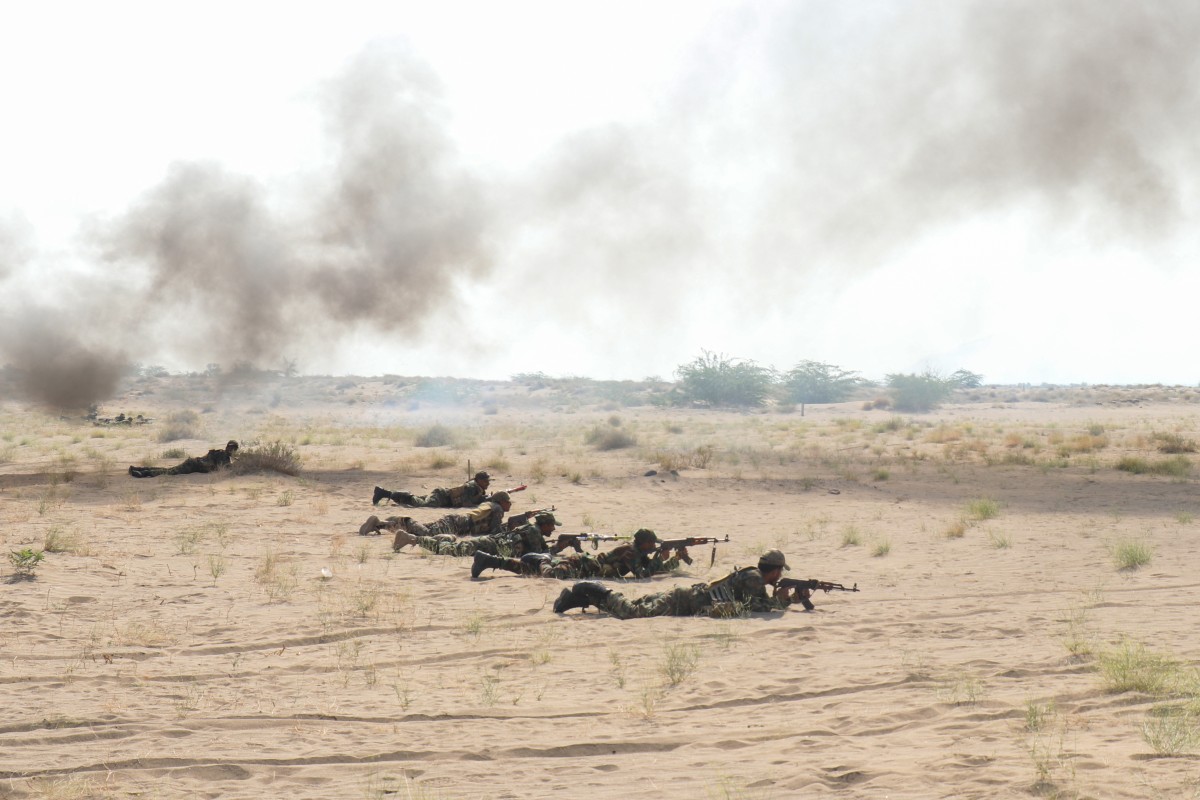
Military operations in Yemen intensified on Wednesday with clashes expanding across several fronts, according to reports by Saudi-owned news channels Al Arabiya and Al Hadath.
The Yemeni armed forces reported that fighting with the Iran-backed Houthi militia has been continuing on the Taiz fronts of Toil and Al-Barah, and claim to have inflicted heavy losses on the group.
Al Arabiya and Al Hadath have reported that Yemeni government forces have captured areas in southern Mahreb, as well as several positions in the northern and southern sectors.
The forces have also reportedly captured new positions and villages on the Al-Kaddah front west of Taiz during an operation against the Houthis.
The offensive was accompanied by heavy clashes, artillery fire and airstrikes targeting Houthi positions, gatherings and reinforcements in the area.
Al Arabiya and Al Hadath sources also said the Yemeni armed forces had launched a counterattack against Houthi positions on the Meris front north of Al-Dhale Governorate.
The sources also reported that Yemeni military aircraft had carried out several airstrikes on the Houthi-held Helan Mountains west of Marib.
For decades scientists and researchers have been vexed by a sound emanating from cats. Not a call of the wild, a roar or a hiss. No, multiple academics have attempted to decipher the meaning behind the mightily adorable meow of the domestic house cat.
Cats, it turns out, are conversationalists. And good news for cat parents: Studies suggest they’re often attempting to talk to us.
“One of the biggest takeaways from scientific research is that meowing seems in many ways to be specialized for communication with humans,” says Jay Schwartz, an associate professor of psychological science at Western Oregon University. “In that sense, the meow holds the legacy of thousands of years of evolutionary change in cats to adapt to life with humans.”
A clowder of stories celebrating cats and the L.A. people who love them.
Adult cats, specifically, rarely meow to one another, instead preferring other vocal intonations or facial signifiers. The meow, in short, is meant for us.
“The exception is communication between kittens and mothers,” Schwartz says, “which is also the main context where we see meows in wild feline species. One hypothesis is that cats have this instinct to meow towards their mother, and humans in many cases sort of take on that mother role.”
But now that we know that cats are attempting to communicate with us, is there a way for pet caregivers to better understand what a cat is attempting to say? Research is ongoing, but many papers have sought to analyze not only the different pitches and tones of the meow, but also how good we — humans, that is — are at understanding them. There’s evidence at least that we’re listening. One European study indicated that cat owners often meow back at their pets. This is different than, say, dog providers, who were reported to rarely return a canine’s bark.
An informal polling of the researchers interviewed for this article found that, yes, cat parents are likely to return the meows of their feline. And I know from personal experience with my own cat that I am an avid meower.
Asked, for instance, if he meows to his cats, Jonathan B. Losos, an evolutionary biologist and author of the book, “The Cat’s Meow: How Cats Evolved From the Savanna to Your Sofa,” wouldn’t deny it. “I’m sure they are deeply offended by my attempts, but yes, yes I do,” Losos says.
But there’s no need to mimic a cat’s meow, especially if one is hoping to train a cat or have them associate certain words with particular rewards — treats, playtime and affection work well for that. And besides, there’s a theory that, with the meow, the cats were evolving to imitate us.
“Our cats’ ancestors were already meowing when they began living alongside humans,” Schwartz says. “We know this because cats’ closest evolutionary relatives, African wild cats, meow.”
Yet there are key differences in the meows. Schwartz says the meow of a domestic cat is “cuter and less harsh” than those of a wild cat. The cats likely knew what they were doing.
“One hypothesis is the meow happened to share some acoustic similarities with the sounds of human infants,” Schwartz says, “and so nearby humans were responsive to it. This set the stage for a co-evolutionary relationship where, over generations, cats began to produce meows that are more fine-tuned for human communication. It’s a case of evolution taking a tool that already exists and modifying it for a new purpose as a species adapts to a different environment.”
And while meows, of course, vary from cat to cat, Kristyn Vitale, a certified applied animal behaviorist and founder of the Michigan-based Maueyes Cat Science and Education center, says there are ways to decode them. Vitale points to research out of a Swedish university that looked at the melody and tone of the meow.
“So when it dips down at the end,” Vitale says of the meow, “that’s often correlated with negative affective states. So, feeling stressed or fearful. You hear that if you’re trying to get your cat into the carrier or messing around with them, like at the vet. Then they’ll often have a downward pitch. And then for happy, more content states, there is an an uptick at the end. They found that to be pretty consistent in their vocalizing. Whether it goes up or down is indicating the cat’s mood.”
And yet the key to understanding a cat’s meow will often rest specifically with that cat’s caretaker. Losos in his book cites a number of papers on cat vocalizations, and one of his favorites is the work of Nicholas Nicastro and the series of studies that followed up on Nicastro’s research. Nicastro made recordings of a number of cat meows when the pets were in different states — being fed, for instance, or brushed. Nicastro also placed cats in unfamiliar environments, hoping to get meows of dissatisfaction.
Nicastro wanted to see whether humans could identify the emotional state of the cat based solely on the sound. “The people did no better than guessing,” Losos says. “They had no clue.” It was an indication, Losos argues, that cats have no uniform language.
But don’t despair, those who want to understand their cats better. Other research has advanced Nicastro’s work, including studies that paired a cat’s meows directly with their caretaker instead of random participants. When those who lived with the cat were involved, the results differed drastically. I joke that I like to think I can understand when my cat’s meow is asking me to open the bedroom window blinds, which is where her desired bird-watching perch is. Losos says I may be right — or at least not entirely wrong.
“The people who lived with the cat were quite good at saying, ‘Chester is unhappy with you,’ or ‘Oliver is very content right now,’ ” Losos says. “What that suggests is that there is a private language that develops between cats and the people they live with in order for cats to communicate what they want or what their mood is. That’s fascinating. You and your cat have worked out how to understand when she’s hungry, for instance.”
Research is continuing to better understand the communication between a cat and the cat’s owner. Schwartz and Vitale, for instance, are hoping to finalize a study soon that looks at how cats may greet their caretakers — or express a form of sadness or confusion when they leave.
“We looked specifically at meows in two contexts: separation from their human in an unfamiliar environment, and then the human’s return,” Schwartz says. “We found some subtle but consistent differences in the pitch and length of meows between those two contexts, suggesting maybe cats have different meows for ‘Where did you go?’ and ‘You’re back!’ ”
Yet there’s one thing that Schwartz wants to make clear. The meow, as cute and attuned as it may be to get a human’s attention, is not in his mind a tool for manipulation, as some have proffered.
“This idea that cats are trying to manipulate us is a big pet peeve of mine,” he says. “I don’t think cats are intentionally manipulating us in the sense of understanding the effects that their meows have on our psychology. However, they probably understand the link between their behavior and ours. If they have learned that meowing is a way to achieve a desired outcome, they’ll do it.”
Even Dodgers catcher Will Smith, who’d never be accused of wearing his emotions on his sleeve, was a little worried during his monthslong absence because of a persistent neck injury that he might not be healthy by the end of the season.
“‘It was kind of the ‘who knows how long it’s going to take,’” Smith said when the Dodgers activated him at the beginning of the month. “But at some point I was going to be fed up and just kind of deal with it.”
It apparently didn’t come to that. And in the Dodgers’ 3-2 win against the Cincinnati Reds on Tuesday, Smith’s fifth time in the lineup since returning from the injured list, he put the Dodgers ahead with a first-inning home run and guided Dodgers left-handed starter Tarik Skubal through 7 ⅓ innings of two-run ball.
“He called a great game,” Skubal said of his Team USA teammate. “And the targets that he sets up, and the way that he goes about it, he gives me a ton of confidence back there.”
A neck problem that was initially expected to resolve on its own in a few days turned into a nearly three-month IL stint. With the revolving door behind the plate in Smith’s absence, getting him back down the stretch and into the postseason was going to be key.
While Smith was on the IL, backup catcher Dalton Rushing was thrown into the starting role, learning how to balance the defensive responsibility of serving as the main backstop at the major-league level with a desire to also contribute offensively.
Rushing seemed to be getting the hang of it, with Chuckie Robinson and then Eliézer Alfonzo behind him, before he hurt his right elbow right before the trade deadline. The Dodgers traded for an entirely new catching duo, Hunter Feduccia and Ben Rortvedt, who held down the position until Smith’s return.
“It was frustrating early,” Smith said. “Just looking for answers why it was taking longer, but we finally got those answers. And then it was kind of a pretty straightforward process from there. So last month or two hasn’t been too bad.”
Smith and the Dodgers sought multiple doctors’ opinions. He was eventually diagnosed with an annular tear and given two possible recovery timelines. Though they proceeded with hope for the earlier return, the longer one came to fruition.
Now, the Dodgers are carrying three catchers, trying not to overwork Smith in his first weeks back. He’ll be out of the lineup Wednesday and play two of three games in Miami, manager Dave Roberts said.
With Rushing back on the IL for the same elbow injury, Feduccia can also serve as a left-handed bat off the bench, and Alfonzo gives the team more substitution flexibility.
Entering Tuesday, Smith had already thrown out three baserunners attempting to steal in his first week back in action. But despite some hard contact, hits weren’t falling for him. He went two for 17 with a single and a double in the same time period.
“Will is just very consistent, dependable,” Roberts said. “I know he’s taking really good at-bats. Hitting some balls to the warning track.”
On Tuesday, batting third in the lineup against Reds left-handed starting pitcher Nick Lodolo, he showcased the kind of influence he can make on both sides of the ball.
In Smith’s first at-bat, he battled for nine pitches, finally lifting a changeup over the left field wall.
“That was really good to see,” Roberts said. “With Will, it’s just great having him in there because you know you can count on the at-bat quality, and obviously having him behind the plate has been good.”
The next inning the Dodgers (88-57) doubled their score when Tommy Edman — hitting in the leadoff spot in place of Shohei Ohtani (right biceps and left knee), who was out of the lineup Tuesday as the Dodgers ease him back from a four-day absence over the weekend — was hit in the leg by a pitch with the bases loaded.
The Reds then tied the score in the third, as Elly De La Cruz launched a two-run homer off Skubal. But the Dodgers pulled ahead again two innings later, courtesy of the red-hot bat Teoscar Hernández has been swinging in September.
Tarik Skubal pitches in the second inning Tuesday.
(Eric Thayer / Los Angeles Times)
Hernández avenged his ill-fated inside-the-park home run attempt — he was thrown out at the plate on an aggressive send two innings earlier — with a well-struck RBI single.
Skubal wrapped up his deepest start of his Dodgers tenure to a standing ovation. He’d limited the Reds to just four hits, while recording five strikeouts in an efficient performance.
Flame-throwing reliever Edgardo Henriquez replaced Skubal, tasked with recording the last two outs of the eighth. He did so with the help of an ABS challenge from Smith that secured an inning-ending strikeout.
Lefty Tanner Scott earned the save, retiring three straight batters after a leadoff walk, and the Dodgers extended their winning streak to six games.
“It’s the last stretch,” Smith said at the beginning of the month. “We’re fighting for seeding as well. So yeah, it’s definitely time to step on the gas.”
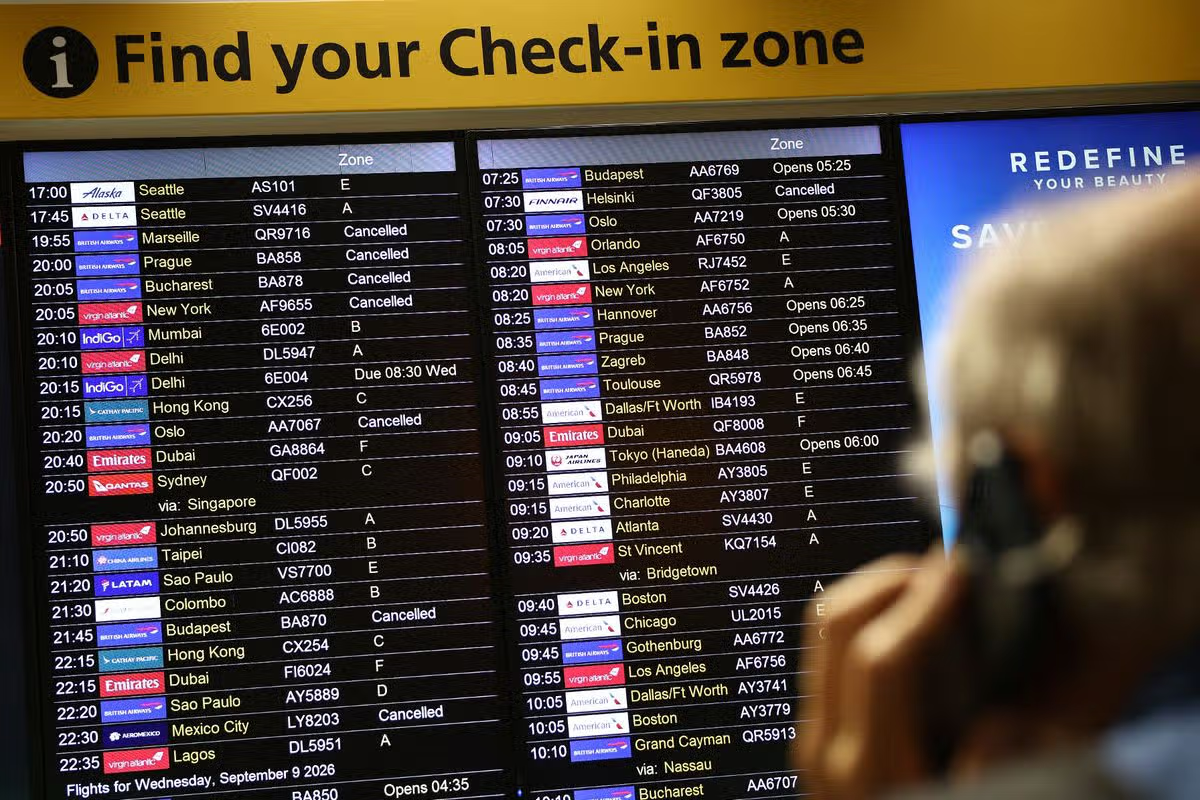
ABTA has issued a statement on the situation at airports across the UK, advising passengers of their rights and what steps they should take if their flight is cancelled or delayed this week
Thousands of flights have been cancelled(Image: Henry NICHOLLS / AFP via Getty Images)
According to BBC figures, obtained from aviation analytics firm Cirium, 1,750 flights were cancelled yesterday (Tuesday, September 8), and more than 150 have been cancelled today so far. Significant delays are also expected to persist today due to the knock-on effect of yesterday’s cancellations.
At least 16 major UK airports have been affected by the wave of cancellations, which are due to a major technical problem impacting National Air Traffic Services (NATS), leading ABTA to issue advice to affected passengers.
Luke Petherbridge, director of public affairs at ABTA, said in a statement: “If your flight has been delayed or cancelled customers will have rights, which will vary depending on whether they booked their flight separately or as part of a package.
“ABTA members will be supporting those booked with them, to help make alternative arrangements, and we have advice on abta.com to help people understand their rights.
“While the immediate priority is supporting customers, as this isn’t the first NATS outage to cause widespread disruption, the industry and the public will want answers as to what has gone wrong, what lessons are being learned, and how the system will be made more resilient to avoid this happening again.”
ABTA has advised passengers to visit it FAQs page, which gives passengers a breakdown of their rights if a flight is delayed or cancelled. If a flight is delayed, your airline is required to offer certain support, from refreshments to accommodation and transfers, depending on the length of the delay and the route.
ABTA also says: “If the delay exceeds five hours, your airline must offer you the choice of taking a refund of the flight cost.” However, it’s unlikely passengers hit by today’s delays and cancellations will be able to claim for additional compensation. It states: “if it wasn’t the airline’s fault, you won’t be entitled to receive any compensation. Delays caused by things like extreme weather, airport or air traffic control strikes or other ‘extraordinary circumstances’ are not eligible for compensation.”
For those hit by cancellations, ABTA says: “If your flight is cancelled and you’re departing from the UK, your airline must offer you the choice of a replacement flight at the earliest opportunity or a refund.”
It advises: “If you were at the airport when your flight was cancelled, and you’ve chosen rerouting, you’re also entitled to care and assistance while you wait to be rerouted. This usually means food, drink, access to communications (e.g. two free phone calls) plus accommodation and the necessary transfers if the replacement flight departs the next day or later.”
Airlines affected by delays and cancellations include London-Heathrow, Gatwick, London-Stansted, London-City, London=-Southend, Manchester, Birmingham, Bristol, East Midlands, Edinburgh, Liverpool John Lennon, Aberdeen, Belfast, EMA, Southampton, Leeds and Jersey.
Have a story you want to share? Email us at webtravel@reachplc.com
DUBAI: A late-night craving for dessert led Hasan Sarwar to leave investment banking and build Peekabox, a Dubai-founded app that sells fresh unsold food from cafes, bakeries and grocery stores at discounts of 50 to 70 percent.
Sarwar was in a Dubai cafe at about 11 p.m. when he noticed the pastry shelves were still full.
The first brand to sign was Tim Hortons. (Supplied)
“I simply asked them, I said: ‘What do you guys actually do with these items?’ And they said, ‘We make it in the morning, and then throw it the same day,’” he told Arab News. “All of these sort of very high-end pastries are getting thrown every single day.”
He went on to develop the idea, comparing it to Too Good To Go, a model he had used while at university in the UK. “We’ve grown up in Dubai. We know the UAE. We know the F&B space,” he recalled telling his parents.
He started alone. Three months in, he asked his brother Omair to join him as co-founder. “It was way too much work for one person,” Sarwar said.
The first brand to sign was Tim Hortons, part of Dubai’s Apparel Group, after a pitch that ran three months with no app and no demo. “I didn’t leave them alone for three months,” he said. Once the contract was signed, he used the name to bring other brands on, and boxes now come from coffee chains, bakeries, restaurants, grocery stores and hotel buffets.
Customers do not choose what they get. “If you say I have this exact item that you want, people are never going to buy full price,” Sarwar said, describing the surprise box as a way to gamify the purchase without cannibalizing full-price sales. His own highlight came from The Grey, an independent Dubai cafe — a strawberry tart, his favorite dessert, with croissants and pain au chocolat.
Getting there meant fighting the same objection on two fronts. Premium brands worried that discounting would dilute their brand equity, so he pointed them to luxury department store Harrods in London, which runs similar schemes, while customers had to be persuaded the food was fresh rather than left over. Both concerns were successfully countered, he said, pointing to the app’s 45 percent repeat order rate.
Peekabox is now in talks with Ne’ma, the UAE’s national food loss and waste initiative, under the Ministry of Climate Change and Environment.
It plans to open in Riyadh and Jeddah next year with franchise partners that have already committed to the launch. “In terms of Saudi (Arabia) as a market, people are more price sensitive for sure, and also the density of stores is greater,” he said.
London, United Kingdom – In a wheat field near High Wycombe in the rolling English countryside, Alex Nelms watched the harvest on his farm die in a matter of days.
His crop had looked strong until the first heatwave came in May, when temperatures surpassed 35 degrees Celsius (95 degrees Fahrenheit) just as his milling wheat entered its grain-fill phase, the critical weeks when the plant fattens its kernels.
Recommended Stories
list of 4 itemsend of list
“It just killed everything stone dead,” he told Al Jazeera. “Everything was finished really early, and when we were sort of full of optimism and hope, it was scuppered almost overnight.”
Nelms farms just over 2,000 acres (809 hectares) of arable land in south Buckinghamshire, on a business his grandparents founded in 1955. His uncle, who has worked the farm for more than 40 years, has just suffered the worst harvest of his career.
Last month, the Department for Environment, Food and Rural Affairs (Defra) said almost three-quarters of England, 71.3 percent, remained in drought. Rainfall in August reached just 34 percent of what would normally be expected by that point in the month, Defra said, and reservoir levels were 18.2 percentage points below where they should be for the time of year.
“We’re totally reliant on Mother Nature,” Nelms said, and nature did not deliver this year.
After a historically dry spring and a run of summer heatwaves, the farm is down roughly 1,000 tonnes on its average harvest, a shortfall of some $270,000 in revenue.
The farm, tucked in the Chiltern Hills, a steep, long ridge of white limestone rock, has no irrigation and never will.
“That has serious knock-on effects on our cash flow,” he said. A third consecutive difficult year would mean hard conversations with his bank and landlord, and farming to minimise risk rather than maximise output, “consequently, probably producing less food”.
‘Financial crisis point’
The National Farmers’ Union (NFU) says farmers are at a “financial crisis point” after the worst drought in 50 years, with historically low harvests, stunted grass growth, rising fuel and fertiliser costs, and a severe outbreak of bluetongue disease in livestock.
The union puts the gross production value loss of wheat at approximately $499m and the cost of replacing a shortfall in forage at roughly $45m.
NFU president Tom Bradshaw has said farmers now lack “breathing space” and are “increasingly exposed to geopolitical shocks, as well as repeated weather extremes, animal disease and global wars”.
He believes action is needed now to ensure the future of British farming “and enable the next generation to keep producing the nation’s food”.
To manage the risk, Nelms is diversifying, planting oilseed rape again on about 350 acres (142 hectares) for the first time in 20 years. He says that the crop’s usual insecticide protection, neonicotinoid seed treatments, is now banned, leaving it exposed to cabbage stem flea beetle and to game birds that can “absolutely nibble, eat, and destroy a crop”.
Growing it also means breaking a continuous wheat rotation that has kept a soil-borne disease called “Take-all”.
Tax allowances would make investing in grain storage and diversified income worthwhile, he said, as well as government-backed bridging loans, modelled on COVID-era support, to survive a bad year without permanent damage.
It is the kind of relief the NFU is pressing the government to provide nationally.
The union wants an interest-free “Keep Britain Growing” loan tied to drought losses, help covering the cost of disposing of livestock lost to bluetongue, faster planning permission for on-farm reservoirs, and clearer rules letting farmers access water as soon as levels allow, echoing Nelms’s case for storage on his farm.
“Drought conditions will continue to worsen until we receive sustained rainfall across the country and we still all have a role to play in conserving precious water supplies,” according to Philip Duffy, the Environment Agency’s chief executive, in a statement shared by Defra.
The Environment Agency has applied for a drought order to restrict abstraction from the River Severn, and 10 water companies, serving 30 million customers, now have restrictions in place.
“A few days or even weeks of wetter weather cannot reverse the impacts of several months of exceptionally dry conditions,” added Duffy.
Defra noted that the first meaningful rains since June have fallen but they have been patchy, so reservoirs and groundwater are still declining even as a handful of rivers see brief upticks in flow.
Despite the losses, Nelms is hopeful about farmers pulling together – sharing labour, machinery and market routes. He points to the Central Chiltern Farmer Cluster, where growers meet to talk through their problems and find solutions together.
“We’re working together, not competing with each other,” he said.
For a farm like Nelms’s, with no irrigation and no water in reserve, that patchiness is the problem. Soil parched from months without rain needs to absorb sustained rainfall before groundwater can even begin to recharge, let alone refill the reservoirs a future harvest might depend on.
“Our climate has changed,” Water Minister Emma Hardy, who chairs the National Drought Group, said late last month, “and we will continue to take all action necessary.”
Folk singer Ray LaMontange was treated for heat-related dehydration after collapsing onstage during a weekend performance amid triple-digit heat in Nashville.
On Saturday, the 53-year-old toppled to the side while performing his popular track “Jolene” in front of a sold-out,crowd at Ryman Auditorium, according to recorded fan footage.
There were reports that LaMontagne had lost his place earlier in his set when performing “Hannah,” per Consequence. According to the National Weather Service, temperatures in the Nashville area reached a high of 101 degrees.
Later that night, LaMontagne’s management released a statement through his Instagram stories, sharing that the Grammy winner was in “good hands with local EMS” and that he was being treated for “heat-related dehydration.”
LaMontagne returned to the stage the following night, performing at the Louisville Palace in Kentucky, where he made no mention of the incident.
Last month, the Americana singer — best known for tracks “You Are the Best Thing” and “Hold You in My Arms” — had kicked off his 20th anniversary tour.
The tour is named after his 2004 debut album, “Trouble,” which is platinum certified in both the United States and United Kingdom; though the album reached only No. 164 on the Billboard 200 chart, it hit No. 5 on the U.K. Albums chart.
Known for his gruff vocals, LaMontagne first came to the scene in the early aughts as a timid troubadour. The New Hampshire-born, Utah-raised artist was once a former shoe factory worker from Maine whose singer-songwriter journey began when he woke up one morning to Stephen Stills’ “Treetop Flyer” on his clock radio.
All nine of LaMontagne’s albums — with the exception of his independently released 2024 LP, “Long Way Home” — have charted in the Billboard 200.
LaMontagne will continue on with his Trouble tour — which features special guest the Weather Station — through Oct. 3, closing out at New York City’s Beacon Theatre.
The front month contract on Brent crude, the international standard for oil prices, crossed $100 per barrel again on Wednesday morning while the US standard, WTI, hovered around $95.
ADVERTISEMENT
ADVERTISEMENT
Prices have risen almost 20% since the middle of last week as fighting around the world’s most important oil chokepoint has once again intensified.
It is also the first time since 23 July that oil has hit the $100 mark.
US Central Command said its forces destroyed five Iranian tankers carrying crude oil on 8 September after Iran’s Revolutionary Guard fired ballistic missiles at a US Navy warship twice within two days. The command did not identify the ship, but said it was not hit and continued patrolling regional waters.
It followed a similar strike on 5 September, when Iranian forces fired ballistic missiles at a US aircraft carrier and a destroyer, both of which evaded the attack. The command responded by disabling or destroying three Iranian tankers.
Tehran retaliated by firing missiles at a US military base in Jordan, where air defences intercepted most of them, and renewed threats to target tankers in Kuwaiti and Bahraini waters.
Iran has also repeatedly warned vessels against using unauthorised routes through the Strait of Hormuz.
Mohsen Rezaei, secretary of Iran’s Supreme National Security Council, said Tehran would soon declare an exclusion zone outside the strait, warning that any vessel entering without Iranian coordination would be added to a sanctions list.
Saudi Arabia has been drawn in too, with Aramco facilities at Jazan attacked again on Monday, though damage was reported as limited.
Roughly 7 million barrels a day are still moving through the Strait of Hormuz, against about 20 million before the war began on 28 February.
No end in sight
The military escalation is running alongside a financial one.
Washington launched Operation Economic Outcast in late August, an effort to sever Iran from the global financial system by targeting its access to digital assets, technology, gold, aviation and shipping.
The US Treasury designated close to 60 companies, individuals and vessels at the outset and has signalled fresh measures weekly, with the European Union endorsing the campaign this month.
Rhetoric on both sides has hardened.
US Secretary of War Pete Hegseth said the country “will destroy [and sink]” Iranian oil tankers if Iran fires on American vessels while the Iranian parliament speaker Mohammad Bagher Ghalibaf replied by stating “strike our assets and you get struck”.
US President Donald Trump has continued to insist the waterway is functioning, posting on Truth Social last week that “Hormuz volumes are BACK” and claiming 18 million barrels a day were flowing.
However, the US Energy Secretary Chris Wright put Monday’s figure at 17 million barrels of crude and products combined, while acknowledging the multi-day rolling average is considerably lower.
During last week’s White House press conference, US Vice President JD Vance also declined to categorise the ongoing conflict as a war and stated that “the only reason we do not have a worldwide energy crisis is because of the leadership of the President.”
Faced with the latest developments, analysts are adjusting upward.
Goldman Sachs raised its Brent and WTI forecasts by $5 on Monday to $85 and $80, respectively, for December and warned prices could exceed $120 next year should Gulf output remain 4 million barrels a day below pre-war levels, though the bank does not treat that as its base case.
Wrexham are away to another side relegated from the Premier League, leaders West Ham United, on Friday evening (20:00 BST).
There are doubts over the availability of Max Cleworth and Josh Windass after injuries against Burnley, but Parkinson is hopeful the blows are not too serious.
Defender Cleworth came off after half an hour while forward Windass did not come back out for for the second half.
“Max looks like his hamstring’s tightened up and Josh got a kick on the calf,” Parkinson added.
“[Max] he felt it early in the half actually and we kept saying to him ‘are you alright’ and he wanted to stay on. I don’t think it’s too serious, but we’ll see.
“Josh had got a whack on the calf and when you’ve made one sub in the first period, you’ve only got then two entries in the second period.
“He probably could have gone out and tried it, but we just decided to make the change then.”
The historic English city with Roman roots was crowned the world’s most beautiful city according to research
One English city is steeped in Roman history(Image: Bardhok Ndoji via Getty Images)
Sitting in northwest England close to the Welsh border, this historic city is steeped in centuries of history. Chester’s story stretches back almost 2,000 years.
The city was founded as Deva Victrix, a major Roman fortress, around AD 79. Today, traces of its Roman past can still be found throughout Chester, including the remains of its impressive amphitheatre and parts of the original fortress.
One of Chester’s biggest attractions is its remarkably well-preserved city walls. The roughly two-mile circuit follows the route of the city’s historic defences and offers a unique way to explore Chester, taking in many of its best-known landmarks along the way.
‘Most beautiful’ city
Chester has been previously crowned the most beautiful city in the world. Taking the top spot with an impressive 83.7% “beauty score” based on the “golden ratio”, Chester had seen off fierce competition from Edinburgh, Bristol, Prague, Venice and even Rome to claim the coveted title.
The research, carried out by Online Mortgage Advisor, used Google Street View to assess the architectural grandeur of thousands of homes, landmarks and streets from across the globe.
While the study ranked cities on their built environment, its foundations are firmly rooted in the world of art.
Explaining the significance of the golden ratio in the art world, it noted: “Artists over the last few centuries have incorporated the golden ratio into their work, believing it to be a gold standard in natural aesthetic perfection,” reports the Express.
Perhaps nothing gives Chester its distinctive character quite like The Rows.
These unusual two-level, covered walkways run through the heart of the city centre, with shops, cafés and restaurants lining the galleries.
The medieval structures are among Chester’s most recognisable features and give the city centre an atmosphere unlike many other places in England.
Meanwhile, the magnificent Chester Cathedral is another highlight, with a history spanning centuries and architecture ranging from the Norman period through to the Victorian era.
The Eastgate Clock has also become one of the city’s most recognisable landmarks. Perched above the Eastgate section of the city walls, it is an especially popular spot for photographs.
Walkable city
Despite officially being a city, Chester’s compact historic centre has a distinctly smaller-town feel.
Visitors can wander between independent shops, pubs, cafés and restaurants while surrounded by timber-framed, black-and-white buildings that give parts of the city an almost storybook appearance.
Beyond the centre, the surrounding Cheshire countryside provides plenty of opportunities to escape the bustle.
Chester’s location also makes it a convenient base for exploring North Wales, while Liverpool and Manchester are both within easy reach.
It is no wonder that Chester draws visitors from across the globe, with many leaving glowing five-star reviews on Tripadvisor.
John J was thoroughly impressed during a visit, saying: “Chester really is a beautiful town.”
He added: “The Chester Rows are just what makes Chester. Beautiful old buildings kept in remarkable condition. Walking around and seeing the history and beauty is so enjoyable. Sampled some nice food and pubs.”
During a visit to the cathedral, Sue. W called it “magnificient inside and out”.
She added: “This cathedral is magnificent. It is large so takes some time to get round it and do it justice. The craftsmanship inside is superb from the stone masonry to the tiled floors and the wooden carving to the stained glass.”
What is the ‘golden ratio’?
For centuries, artists have woven the ‘golden ratio’ into their creations, regarding it as the ultimate benchmark of natural aesthetic perfection.
By applying the ratio to measure buildings and iconic landmarks, experts have been able to determine which cities across the UK and the wider world can boast the most stunning architecture.
Other British cities that made the grade include London and Belfast, scoring 83% and 82.9% respectively.
On the global stage, Chester was closely followed by Venice, which scored 83.3%; Rome, with 82%; and the Spanish city of Barcelona rounding things off with 81.9% on the scale.
This article outlines the historical journey of Tajikistan toward its official Independence Day on September 9th. It details how the nation transitioned from centuries of foreign rule and Russian conquest to its status as a Soviet republic. Despite decades of USSR administration, the Tajik people maintained a strong national identity, eventually declaring sovereignty in 1991 following a period of political unrest. Additionally, the text provides cultural context regarding the capital city, Dushanbe, while offering a broader snapshot of global news, travel tips, and economic datafrom the same period. This summary …
MINAB: The sun set over this southern Iranian city, and Heydar Sadeghi was where he can be found almost every evening: on a bench next to the shattered remains of his grandson’s school. His face was soaked with tears.
A banner strung around the rubble showed the faces of children and teachers killed here by an American airstrike on Feb. 28, the first day of the war on Iran. Among them are Sadeghi’s 11-year-old grandson Hami and the boy’s mother, Neda Salehizadeh.
“I searched the bodies for my kids, thinking maybe one would be among them,” Sadeghi said Monday evening as he recounted how he rushed to the school in the moments after the explosions. He called out their names, saying, “‘Come with me! I’ve come to get you.’ They weren’t there,” he said, weeping.
The Shajareh Tayyebeh school has become a place to wrestle with grief and preserve the memories of the dead. Here, relatives try to comprehend the incomprehensible — how around 120 of their children could be snuffed out, just after they’d been dropped off for a day of classes.
At least one US missile hit the school that morning in Minab, according to an Associated Press investigation, but there has been no final accounting of what happened. Iranian state media have said 168 people were killed in the strike, most of them children.
The Trump administration has yet to directly accept the blame or release findings of a Pentagon investigation into the bombing.
A grandfather grieves every day
For Sadeghi, the day of the strike began as every school day did.
He drove Hami and the boy’s 9-year-old sister Nila to school along with their mother, his daughter-in-law Salehizadeh, who was a teacher. As usual, he planned to pick them up at 1 p.m.
“But the bell was rung early — by Trump,” he said.
Hami was a fifth grader who loved soccer and riding his bicycle, Sadeghi said. His body was so mangled in the blast, they could only identify him from the clothes he was wearing, he said.
Nila was pulled alive from the rubble.
“Thank God, she is physically fine,” Sadeghi said. “But mentally, no.”
The girl and her father have moved in with Sadeghi and his wife. The slightest, unexpected noise frightens her. She often goes to bed in her grandmother’s arms but lies awake for much of the night.
Sadeghi said he often invites Nila’s friends to come spend the night, hoping their presence will distract her.
He wants to see Nila smile. So he grieves here at the school away from her.
“I come here and cry,” he said. “Then I go home and dance in front of the girl.”
The site is becoming a memorial to the dead
The school had a girls’ school upstairs and a boys’ school and preschool on the ground floor. Some of the students were children of officers at a Revolutionary Guard base located next to the school; many were local children from Minab, which is populated predominantly by members of Iran’s Baluch ethnic minority.
The banner at the site listed 120 students killed – 47 girls and 73 boys – and 26 teachers and staff. Three more children are presumed dead but their bodies were never found.
The governor of Hormozgan province, where Minab is located, has said the damaged building would be preserved to be turned into a memorial and war museum.
Several dozen visitors there Monday evening included relatives of the dead but also out-of-towners who had come to see.
In a government-sponsored mourning ceremony held every evening, men and women – including one in the Guards uniform — took turns at a microphone, telling wrenching stories about those who died and describing in graphic detail the day of the attack. Some visitors broke down weeping from their accounts.
A separate section of Minab’s cemetery has also been set aside for those killed at the school. Every grave has a photo of the dead, with a shade overhead and artificial grass around so families can sit with their loved ones. Some lay flowers and prayer beads on the graves. Others bring dishes of “shuleh-zard,” a saffron rice pudding eaten at funerals.
One teacher tried to protect her students
At the cemetery, Fatemeh Barani sat by the grave of her daughter, Nasim Neyestani, a second grade teacher at the school. Barani comes several times a week to be with her daughter.
She thinks about her daughter’s last hours, which school staffers later described to her, and how everything could have turned out differently.
At around 9 a.m. news came of the airstrikes in the capital Tehran that had hit the compound of Iran’s supreme leader. They didn’t know it at the time, but those initial Israeli strikes killed Ayatollah Ali Khamenei and much of the top military leadership.
Neyestani was alarmed, fearing wider strikes, and urged the principal to cancel classes and call parents to come collect their children, Barani said, according to what she was told by other staffers. The principal didn’t think that was necessary. But Neyestani began calling the parents of her 22 students herself, urging them to come get their children, Barani said.
Fourteen of Neyestani’s children were picked up before the strike, Barani said. The parents of eight others did not get there in time.
Neyestani took the eight children into the schoolyard, her mother said. But the principal told her to take them into the school’s prayer room, thinking it would be safe.
The prayer room was hit. Barani said her daughter and all eight children with her were killed.
“My daughter’s classroom was mostly left intact,” she said. “Probably if she had been in that classroom, she would not have been killed.”
Details of Barani’s account could not be independently verified, but it meshes with other accounts. The AP’s investigation of the strike found that several teachers called parents to pick up their children before Iran’s government ordered schools closed nationwide at 10:15 a.m. The first missile hit the school about an hour later. Accounts of the strikes posted on banners at the school say three missiles struck. The principals of both the boys and girls schools were among those killed.
A teacher’s mother is overwhelmed with grief
After the strikes, Barani’s husband and sons went to the school; later, they told her her daughter had been killed.
They found Neyestani’s bag. But Barani said her sons have hidden it from her because they fear seeing it would only hurt her more.
Parents of students who escaped the school because Neyestani had called them visited the family to pay their condolences, but Barani said she was so overwhelmed with grief that she doesn’t remember any of their visits.
She said she still hasn’t been able to enter her daughter’s bedroom.
She talked about how her daughter, who had not married, was rarely idle. She taught in the mornings and worked as a salesperson at a cosmetics store in the evenings. At home, she stayed busy with her hobby making handicrafts, particularly “minakari,” a traditional art of decorating objects with enamel. The enamel work relaxed her, Barani said.
The enamels are still there around the house, a reminder of her daughter.
“Every day, this grief feels fresh again,” Barani said.
THE holiday destinations without the crowds that want MORE tourism have been revealed.
Intrepid has released its annual ‘Not Hot’ List, partnering with Globetrenders to look at alternative destinations to visit instead of the popular, oversaturated places.
Intrepid’s underrated travel destinations for 2027 have been namedCredit: AlamyAlonnisos island in Greece sees a fraction of tourists compared to other islandsCredit: Alamy
Using both Intrepid’s local leaders and destination experts, along with trend forecasts, the study looks at three key elements – areas with few visitor numbers, their ability to welcome more tourists, and any new infrastructure for 2027 such as big events or transport systems.
When it comes to Europe, you might be surprised to realise there are still some Greek islands that don’t have the tourist crowds.
Sign up for the Travel newsletter
Thank you!
Intrepid named Alonnisos as a “not hot” destination which is a more sustainable holiday experience in the region.
They said: “Alonnisos is a slice of paradise that plays host to an array of aquatic and land-based delights, including the endlessly entertaining – and endangered – Mediterranean monk seals.”
The island is actually home to the National Marine Park of Alonnisos and Northern Sporades (Europe’s largest marine protected area), as well as Greece’s only underwater museum, the Peristera shipwreck.
It remains off the radar for most tourists as you can’t fly to the island, with it only accessible by ferry or private yacht.
In 2024, it saw just 70,000 tourists – compared to its neighbour Skiathos’ 500,000 or Santorini’s 3.4million.
Another European destination highlighted was Liepāja, a beach city in Latvia.
Nicknamed the Baltic Mediterranean, next year it will become Europe’s Capital of Culture, meaning hundreds of events, festivals and shows.
Samburu Game Reserve in Kenya is a quieter safari destinationCredit: AlamyCanad’s Whitehorse, in Yukon Territory was named as wellCredit: AlamyWhen it comes to Europe Dalsland in Sweden was highlighted, often nicknamed the country’s ‘Lake District’Credit: AlamyCarretera Austral in Chile also made the listCredit: Alamy
Just under 120,000 tourists visited last year, meaning you’ll get the five-mile, white sand beach all to yourself.
To get there, Ryanair fly to Palanga from London Stansted for £25, which is around an hour from Liepāja
Sweden‘s Dalsland made the top 10 list as well, for being “unspoilt and unexplored”.
Around two hours from both Gothenburg and Oslo, it is known as Sweden‘s ‘Lake District’ for all of its outdoor activities from wild camping to kayaking and hiking.
Just 320,000 people visited last year, compared to the capital of Stockholm which saw 16million.
Other destinations on Intrepid’s list included Samburu National Reserve in Kenya, named for being the place for both “crowd-averse safari fans” and an “emerging astrotourism destination”.
Georgia is fast becoming a new holiday destination, after both British Airways and easyJet launched direct flights to the capital Tbilisi last year.
But Intrepid praised Mestia as an alternative, quieter place which, while popular with neighbouring tourism, is set to become bigger with international tourism due to new infrastructure plans.
The Pekoe Trail is Sri Lanka’s first long-distance walking trail, and an alternative way of seeing the island nationCredit: AlamyTimor-Leste is one of Southeast Asia’s least visited destinations, and is getting easier to go to thanks to new flight connectionsCredit: AlamyJordan’s North Highlands were named as a great alternative to the country’s iconic desert landscapesCredit: AlamyAnd Mestia in Georgia is set to become more popular as wellCredit: Alamy
Otherwise it is popular as an outdoor adventure holiday destination, with both hiking and skiing experiences.
Also mentioned was the Northern Highlands in Jordan, a green “alternative to the country’s iconic landscapes” while “Arctic tourism” was highlighted for visiting Whitehorse in Canada.
Timor-Leste, one of South East Asia’s least-visited destinations was also highlighted, with new flight routes to connect the capital of Dili to major hubs such as Kuala Lumpar.
Sri Lanka‘s first long-distance walking trail Pekoe Trail (with a new 10-day Intrepid trip launched) and Chile‘s ‘route 7’ Carretera Austral rounded out the list.
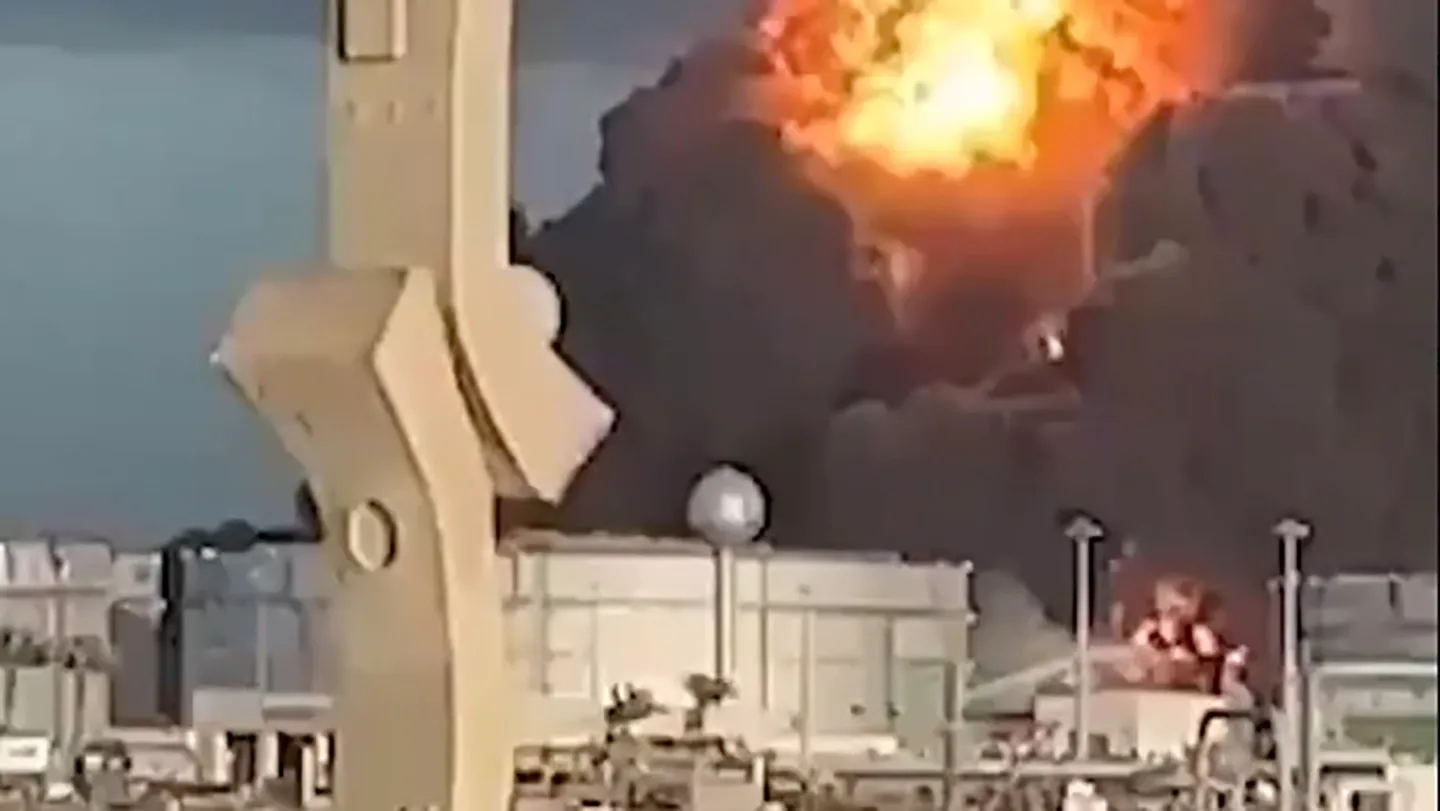
Just hours ago, the Saudi Aramco refinery at Jazan on the Red Sea was engulfed in flames after a Houthi missile and drone attack. Strikes at the heart of the Saudi’s energy infrastructure on the Red Sea, which acts as the remaining primary lifeline of energy exports out of the region, threaten to drastically impact global oil prices further, a concern we have been raising for some time. In the wake of the attack and additional fighting in the Persian Gulf, oil prices surged toward the $100 per-barrel mark.
“The Yemeni Armed Forces carried out a qualitative, large-scale military operation, targeting the Aramco company in Abha, Najran and the Economic City, Aramco in Jizan, and Khamis Mushait Air Base with dozens of ballistic missiles and drones,” Houthi spokesman Brig. Gen. Yahya Saree stated on Telegram. “The strikes were precise, by God’s grace, and direct, causing major damage to those facilities.”
Saree claimed that the strikes were “in response to the Saudi aggression that targeted our people and our country with 121 air strikes over the past three days.”
Saudi officials confirmed Houthi attacks and said they would retaliate.
“The terrorist Houthi Militia’s senseless attacks, the latest of which targeted civilian and economic sites in the cities of (Abha, Khamis Mashait, Jazan and Najran) resulting in injuries to (73) civilians, including women and children, constitute a blatant violation of the Kingdom’s sovereignty and a direct threat to the security and safety of its citizens and residents,” anti-Houthi coalition spokesman Maj. Gen. Turki Al-Maliki stated on X.
“The Joint Forces Command of the Coalition will take all necessary operational measures to deter this Terrorist Militia and resolutely confront its hostile approach, in defense of the Kingdom’s sovereignty, the preservation of its national assets and the safety of its citizens and residents,” Al-Maliki added. “The Command will also take all necessary measures and actions to respond to the sources of the threat and neutralize its danger.”
“…several energy sector facilities and installations in the southern region of the Kingdom were targeted this morning,” the Saudi Ministry of Energy stated on X. The attacks “caused fires at several locations, leading to a temporary halt in some operations,” the ministry added. “Specialized field teams have begun containing the fires, securing the sites and assessing the damage.”
Videos on social media this morning showed the Saudi Aramco facility still burning after the attacks.
Data from NASA’s Fire Information for Resource Management System (FIRMS) indicates a large amount of ongoing thermal anomalies in and near the massive Jazan refinery.
🇸🇦🇾🇪 Houthis appear to have launched a major drone attack on Jazan, SW Saudi Arabia, in recent hours.
The Houthi attacks inside Saudi Arabia came amid increased fighting in Yemen between the rebels and anti-Houthi forces backed by Riyadh.
The conflict between Saudi Arabia and the Houthis grew out of a civil war in Yemen that erupted in 2014. It expanded a year later when a Saudi-led coalition joined forces with the government ousted by the Houthis and raged on until the parties reached a tenuous ceasefire in 2022. The Saudis held off on getting involved in the recent Red Sea conflict which saw the U.S. and coalition warships duking it out with the Houthis, and eventually led to a U.S.-led air campaign over Yemen. Tensions, however, reignited after that conflict ended when the Houthis joined the U.S.-Iran conflict on the side of their major supporter. The Houthis recently imposed a blockade on the Bab al-Mandeb Strait, and began striking Saudi ships in the Red Sea as well as refineries.
As we have frequently detailed, Houthi attacks on Saudi Arabia’s energy infrastructure put further pressure on oil exports from the Middle East, already drastically affected by the Iranian closure of the Strait of Hormuz and the resumption of the U.S. blockade on Iranian ports. Saudi Arabia has diverted millions of barrels of oil per day through pipelines to its Yanbu port on the Red Sea in an effort to minimize the energy shortages due to the hostilities near the Persian Gulf. This also raised the specter of the U.S. having to get as involved as it did during the previous Houthi campaign against shipping that ended last September, which could pull resources away from Iranian-focused operations, if supporting such an operation is even possible at all at this point. The bottom line here is that if the Houthis stop Saudi oil from transiting through the Bab el Mandeb Strait and the Suez Canal, this last lifeline of energy to Europe and Asia and beyond would be severed. This would drastically exacerbate an already ballooning oil crisis.
The Houthi strikes on Tuesday followed a spike in attacks on shipping in the Strait of Hormuz. Last week, U.S. Central Command (CENTCOM) said it destroyed three Islamic Revolutionary Guard Corps (IRGC) oil tankers after the Iranians fired ballistic missiles at U.S. warships.
On Tuesday, “American forces have struck multiple Iranian tankers tied to the IRGC in response to more attempted missile attacks on a U.S. Navy warship,” a U.S. official told TWZ.
The CENTCOM strikes are part of the Trump administration’s new tanker-for-a-tanker policy of hitting Iranian vessels in response to Tehran’s attacks on shipping in the Strait of Hormuz. This marks a change from previous incidents where ships were only attacked for running the ongoing U.S. naval blockade on Iranian ports. The sinking of one of the Iranian tankers in the most recent strikes is another escalation. Previous incidents following major combat operations during Epic Fury involved U.S. forces disabling Iranian transport vessels, not sinking them.
“Following Iran’s failed attacks, CENTCOM permanently disabled the IRGC crude oil carriers M/T Downy off the coast of Kharg Island and M/T Stark 1 near Jask,” the command stated on X on Saturday. “American forces also completely destroyed the unladen crude oil carrier M/T Kylo (also known as the “Noxen”) in the Gulf of Oman, striking the vessel in multiple critical locations to render it inoperable after the crew was directed to abandon ship.”
The three Iranian crude oil tankers “are part of a multibillion-dollar shadow network that funds the IRGC and its regional proxies,” the command added. “Iran has no means by which to defend them.”
“Let the message to the IRGC be clear: If you shoot at two of our ships, we will impose an even higher economic cost —taking out three of yours,” said Adm. Brad Cooper, CENTCOM commander. “We will not hesitate to defend American forces, and if necessary, destroy Iran’s limited and exposed oil fleet.”
“Let the message to the IRGC be clear: If you shoot at two of our ships, we will impose an even higher economic cost —taking out three of yours. We will not hesitate to defend American forces, and if necessary, destroy Iran’s limited and exposed oil fleet.” — Adm. Brad Cooper,… pic.twitter.com/UGGcSGsUtd
In addition to the tanker attacks, CENTCOM is maintaining its naval blockade of Iranian ports. “As of Sept. 6, U.S. forces have redirected 92 commercial vessels, disabled 3 and boarded 2 to ensure strict compliance,” the command stated on X.
A U.S. Air Force F-35A stealth fighter jet patrols over regional waters as CENTCOM forces continue to enforce the maritime blockade against Iran. As of Sept. 6, U.S. forces have redirected 92 commercial vessels, disabled 3 and boarded 2 to ensure strict compliance. pic.twitter.com/oXNN5zKx1t
As these events unfold, the price of oil is rising further, as we noted earlier in this piece. As of noon on Tuesday, the per barrel price of Brent crude was trading at nearly $98, a $10 per barrel gain from Aug. 26, according to OilPrice.com.
Analysts said the price reflected “the market’s recognition that there is no end in sight for the conflict in the Middle East, which has disrupted oil flows through two vital arteries: the Strait of Hormuz and the Red Sea,” The New York Times reported on Tuesday.
“Oil market participants are now pricing in a more prolonged disruption to shipping flows,” Hamad Hussain, a senior economist with Capital Economics, a research firm, told the publication. “They and other analysts have raised oil price estimates, based on an expectation of increased disruptions.”
Amid the strikes on oil-related targets, Iran claimed it captured an Anduril Dive-LD UUV and is in the process of reverse-engineering it. The IRGC released video and images of the device.
The IRGC Navy has released footage showing the captured U.S. Navy Dive-LD autonomous underwater vehicle (AUV) seized in the Strait of Hormuz. pic.twitter.com/XN379Kcpkh
Additional images showing the U.S. Dive-LD AUV that was captured by the Iranians, following what a U.S. official described as a malfunction a number of days ago. pic.twitter.com/fyuDFJxsuv
The IRGC “captured one of the most modern intelligent and unmanned submarines of the terrorist U.S. military at the entrance to the Strait of Hormuz at dawn today, in a complex operation involving intelligence and operational surveillance,” the organization claimed.
The vessel “possesses the latest technology in the field of underwater systems in the world and was delivered to the fleet of the terrorist U.S. military in 2025,” the IRGC added.
Asked if Iran captured a UUV, a U.S. official denied that the Iranians obtained anything sensitive.
“An underwater drone operated by U.S. forces malfunctioned more than a day ago,” a U.S. official told us. “It was surveying regional waters in support of ongoing operations. The defective drone was an older model that neither collected sensitive data nor carried any classified sonar or radar equipment. U.S. operations in area waters continue.”
The Dive-LD can be configured for demining operations. Cooper, the CENTCOM commander, recently stated that: “We have successfully cleared sea mines in the strait’s international shipping lanes that were laid months ago by Iran’s Islamic Revolutionary Guard Corps. Internationally recognized transit routes in the strait are free of Iranian sea mines, thanks to the incredible work of the U.S. military.”
It is unclear whether the Dive-LD system was used in those operations; however Financial Times last week reported that the U.S. sent “Navy Seal divers, robot boats and specialized underwater craft into the perilous strait for a four-month mine-clearance mission.”
“The fraught process of explosive device disposal was carried out underwater and in darkness in an attempt to eliminate a crucial factor deterring ships from carrying vital cargoes through the strait since the US and Israel attacked Iran in February,” the publication added.
US Navy SEAL divers spent four months clearing Iranian mines from the Strait of Hormuz, according to the Financial Times.
SEAL divers worked at night from inflatable-hulled boats with help from underwater crafts to remove the mines.
As the Houthi-Saudi exchanges continue and the Strait of Hormuz is still heavily contested, there appears to be no real movement toward a diplomatic solution.
U.S. President Donald Trump proclaimed that the U.S. will defeat Iran.
“Oil prices will drop precipitously, like everything else is dropping (but more!), when we WIN the war with Iran,” the president stated on his Truth Social site. “Three Dollars a gallon, but ultimately, below Two Dollars a gallon. It will all happen quickly, and Iran will never have a Nuclear Weapon. MAGA!”
Iran, for its part, said it will continue fighting.
“The Islamic Republic of Iran has always opposed war and has considered the preservation of the people’s interests and regional security to lie in refraining from igniting conflict,” Iranian President Masoud Pezeshkian said on X. “However, just as it has boldly risen to defend against aggression up to this day, it will continue this resistance with full strength until the aggressors are brought to complete regret and will remain the guardian of the rights of the great Iranian nation.”
جمهوری اسلامی ایران همواره با جنگ مخالف بوده و حفظ منافع مردم و امنیت منطقه را در پرهیز از آتش افروزی دانسته است. اما چنانکه تا امروز در برابر تجاوز، دلیرانه به دفاع برخاسته است این مقاومت را تا پشیمانی کامل متجاوزان با قوت ادامه خواهد داد و پاسدار حقوق ملت بزرگ ایران خواهد بود.
Should there be a resolution to this conflict, U.S. military and intelligence officials have had “recent quiet discussions about cutting the number of people and facilities typically stationed in Middle East,” CNN reported.
In offices across the US military & intel community, there have been recent quiet discussions about cutting the number of people & facilities typically stationed in Middle East if Trump admin succeeds in ending the Iran conflict, 6 sources tell @KatieBoLillis & me.…
That’s it for now. We’ll update this story when new details emerge.
UPDATE: 6:25 PM Eastern:
CENTCOM said it “destroyed five Iranian crude oil carriers, Sept. 8, after the Islamic Revolutionary Guard Corps (IRGC) targeted a U.S. Navy warship with ballistic missiles twice over the past two days.”
“The U.S. warship successfully evaded the attempted Iranian attacks and continued to patrol regional waters. No American personnel were harmed,” the command added on X. “In response to Iran’s most recent failed attacks, CENTCOM destroyed the IRGC crude oil carriers M/T Kaviz, M/T Charminar, M/T Horizon 1, and M/T Riesco in the Gulf of Oman as well as M/T Derya near Kharg Island. American forces directed the crews to abandon ship before the vessels were struck and rendered inoperable. Iran has used the tankers as part of a multibillion-dollar shadow network that funds the IRGC and its regional proxies. Iran has no means by which to defend these vessels.”
CENTCOM forces destroyed five Iranian crude oil carriers, Sept. 8, after the Islamic Revolutionary Guard Corps (IRGC) targeted a U.S. Navy warship with ballistic missiles twice over the past two days. The U.S. warship successfully evaded the attempted Iranian attacks and… pic.twitter.com/Gi8a2tloN1
In the wake of the CENTCOM strikes, Iran launched a new wave of ballistic missile attacks, a Jordanian source confirmed to us. The official Iranian Fars media outlet said Muwaffaq Salti Air and Prince Hassan air bases were targeted.
حمله به پایگاههای موفقالسلطی و شاهزاده حسن در اردن
گفته میشود پایگاههای هوایی موفق السلطی و شاهزاده حسن اهداف حملات موشکی ایران است.
براساس گزارشها اردن به دلیل ناتوانی سامانههای پدافندی آمریکایی، جنگندههای نیروی هوایی را برای رهگیری موشکهای ایرانی به پرواز درآورده.
Video has emerged on social media of interceptors in Jordan defending against the attack.
An insane amount of Jordanian interceptors being seen used here. Dozens being used, as Iranian fires inundate the local area. So far no visible impacts have been viewed. pic.twitter.com/cyZtoojZ9G
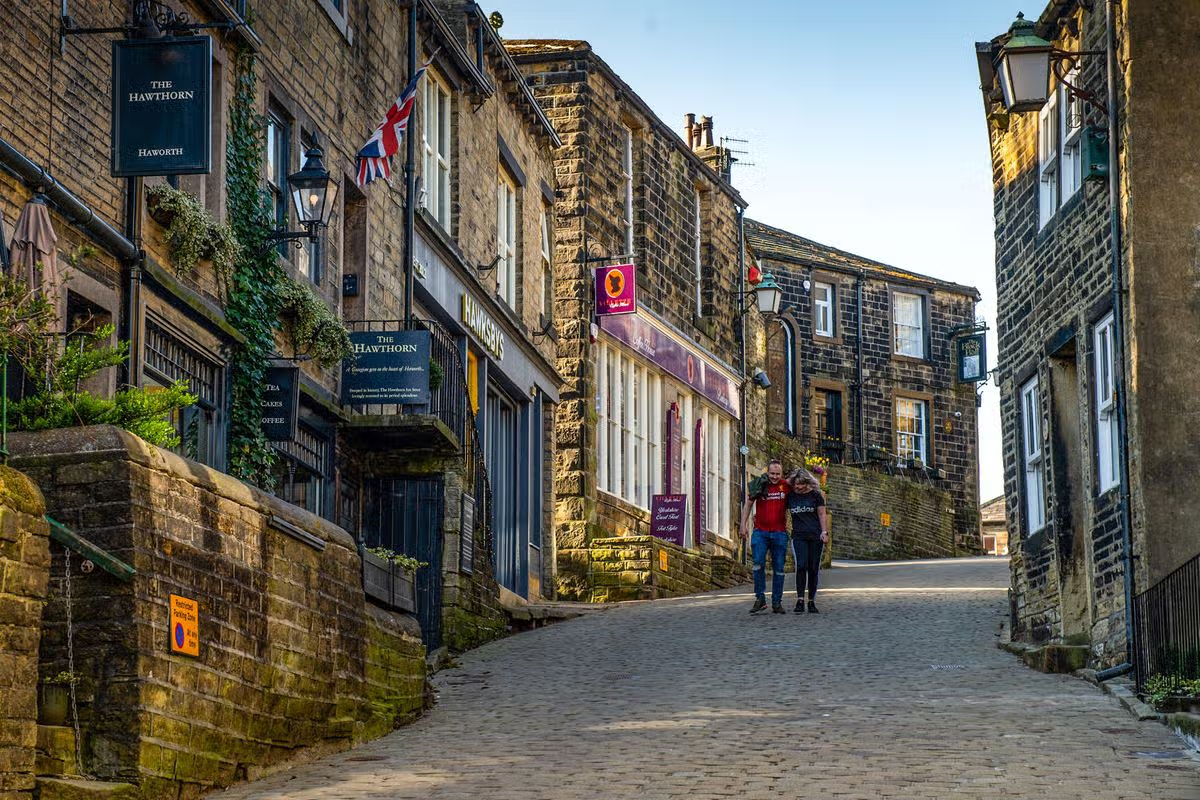
If you’re on your annual Gilmore Girls re-watch and dreaming of an escape to Stars Hollow, without the long-haul flight, then this UK village gives seriously cosy vibes for a day out
The village has been compared to Stars Hollow by British fans of the show(Image: SWNS)
Gilmore Girls may just be the perfect autumn show, and when the weather starts cooling off, many fans find themselves binge-watching the comedy-drama about a quirky mother and daughter duo.
And anyone who has watched the show will no doubt have dreamed about visiting Stars Hollow, the cosy Connecticut town where the Gilmores live, full of unique characters, friendly local shops, and of course, great coffee. Sadly, Stars Hollow isn’t a real location – the pilot was filmed in Canada before a set was built on a studio backlot in Burbank, California – but many fans have been looking out for locations that give the same vibes.
If you don’t fancy the flight to New England, British Gilmore Girls fans have been debating where the UK’s answer to Stars Hollow can be found, and one village with long literary associations is often named as the best local dupe.
Content cannot be displayed without consent
Taking to TikTok, travel creator @lilyjbet posted a video captioned: “pov: you just found the real-life Stars Hollow in England” showing footage of the quaint village of Haworth in Yorkshire. Her video shows a variety of eclectic shops, cafés, and bookstores that would thrill any Gilmore Girls fan.
Haworth has literary associations that Rory Gilmore would find fascinating. The Brontë sisters lived and wrote most of their novels here, and their former home is now the Brontë Parsonage Museum. Sitting atop a hill, it overlooks miles of countryside, and the view no doubt inspired the rugged backdrops of many of their famous works. Fans of gothic literature can walk to Top Withins, a remote farmhouse surrounded by moorland, which many believe helped inspire the gloomy setting of Wuthering Heights.
The museum is an incredible memorial to the literary sisters, many rooms still holding the original furniture and personal items, as if waiting for the family to return.
Many of the colourful independent shops in Haworth look like they belong in Stars Hollow. Wave Of Nostalgia, a vintage bookshop that also sells unique gifts, would certainly be a place the Gilmores would visit. Cabinet of Curiosities is a kind of old-school apothecary which could easily be from the Victorian era, while Spooks of Haworth, a ‘spiritual emporium,’ is the perfect stop for lovers of autumn and Halloween.
And of course, there are plenty of cafés where you can enjoy cosy mother-daughter chats or simply sit and read your book. Café Verde has a great location with outdoor tables on the cobbled streets, while Villette Coffee House and Bakery offers a range of freshly-baked pastries and Yorkshire specialities.
The perfect way to arrive in Haworth is by train. Not only because riding the vintage steam trains to your location feels like stepping back in time, but also because you can avoid needing to navigate the extremely narrow, steep roads that were built for a horse and carriage. The village is on the Keighley & Worth Valley Railway, a five-mile heritage railway that runs through the Yorkshire countryside, giving you stunning views on the way to your destination.
Fans of classic movies may also recognise the train line as being the setting of the 1970s adaptation of The Railway Children. In addition to standing in for the Edwardian railway hub, filming was completed around the village in locations including St Mary’s Churchyard.
Have a story you want to share? Email us at webtravel@reachplc.com
NEW YORK: Carlos Alcaraz tumbled out of the US Open quarter-finals at 3:34 am Wednesday, falling to Ben Shelton in an epic five-set thriller that broke the record for latest finish ever at Flushing Meadows.
The big-hitting Shelton claimed his first career win over Alcaraz, 6-7 (5/7), 6-1, 6-3, 1-6, 7-6 (10/7), ending the Spaniard’s hopes of retaining his title in his first tournament back after a four-month injury absence.
Each year, Intrepid Travel releases its Not Hot List, spotlighting a short list of lesser-known destinations that are ready to welcome more visitors over the coming year
The old village of Chora in Alonnisos island is on the list(Image: Getty Images/iStockphoto)
While some destinations are creaking under the strain of too many visitors, others are actively hoping more tourists will come.
In recent years, Canary Islanders, Romans, Santorinians and even Laplandic folk have complained that overtourism is changing the way they live their lives, and for the worse. Roads are too busy; accommodation too expensive; neighbourhoods unreconigsable.
There are, however, some places that are actively hoping more people will come.
Each year, Intrepid Travel releases its Not Hot List, spotlighting a short list of lesser-known destinations that are ready to welcome more visitors in 2027. Developed using insights from Intrepid’s extensive global network of local leaders and destination experts, the list shines a light on under-the-radar alternatives and less-visited regions where travellers’ presence can have an outsized positive impact.
The destinations on the Not Hot List are selected based on three key criteria:
(1) being less visited, with fewer visitors than comparable places
(2) demonstrating tourism readiness, with infrastructure and capacity to support more tourists
(3) new initiatives, improved connectivity, major events, launches or infrastructure developments that give travellers a compelling reason to visit in 2027.
The 2027 Not Hot List
1. Samburu National Reserve, Kenya
2. Mestia, Georgia
3. Northern Highlands, Jordan
4. Whitehorse, Yukon, Canada
5. Alonnisos, Greece
6. Dili, Timor-Leste
7. Pekoe Trail, Sri Lanka
8. Liepāja, Latvia
9. Carretera Austral, Chile
This year’s list is designed to highlight destinations that offer compelling alternatives to some of travel’s most popular experiences. Kenya’s Samburu National Reserve, for example, represents a nationwide effort to combat overtourism in some of East Africa’s busiest national parks. While Chile’s Carretera Austral provides an alternative to some of the well-trodden trails of Patagonia.
The 2027 Not Hot List also highlights countries like Timor-Leste, Latvia and Georgia, which receive fewer international visitors than their regional counterparts, as well as lesser-known regions of Jordan and Sri Lanka.
To coincide with the report, Intrepid has launched five new trips to several of the featured regions. These include the new 10-day Kenya Safari Adventure, the 16-day Wild Canada & Alaska, the 10-day Hike Sri Lanka’s Pekoe Trail, the 12-day Jordan Uncovered and the new 9-day Trek the Trans-Caucasian Trail in Georgia.
Erica Kritikides, general manager of experiences at Intrepid Travel, said: “If we want tourism to continue to be a force for good, we need to constantly rethink how and where we travel. The Not Hot List isn’t just about surfacing lesser-known places, it aims to shift the conversation and help travellers to discover new destinations where their visit can make a meaningful contribution to local communities and economies.”
Southern Section Adelanto 27, Victor Valley 8 Alta Loma 19, Covina 13 Antelope Valley 18, Eastside 0 Aquinas 41, Arrowhead Christian 6 Arlington 34, Vista del Lago 0 Arroyo Valley 47, Fontana 0 Ayala 18, Glendora 6 Baldwin Park 15, Garey 7 Banning 19, Indio 8 Burbank Providence 19, Pasadena Poly 18 Cajon 14, Vista Murrieta 6 California 19, Mayfair 0 Camarillo 25, Royal 21 Cerritos Valley Christian 19, Village Christian 7 Chaminade 20, Thousand Oaks 7 Citrus Valley 18, Norte Vista 7 Colony 7, Etiwanda 0 Dos Pueblos 49, Lompoc 0 Downey 19, La Serna 6 Eastvale Roosevelt 6, Rancho Cucamonga 0 Edison 39, San Clemente 14 Eisenhower 26, Carter 6 El Rancho 13, Paramont 0 Elsinore 27, West Valley 12 Fillmore 38, Bishop Diego 0 Gahr 60, Long Beach Jordan 0 Garden Grove 34, La Palma Kennedy 6 Grand Terrace 19, Bloomington 14 Hart 46, Golden Valley 6 Heritage 32, Citrus Hill 12 Highland d. Littlerock, forfeit Hillcrest 25, Canyon Springs 6 Hueneme 37, St. Bonaventure 25 Indian Springs 21, Rialto 19 Jurupa Hills 20, Summit 14 Jurupa Valley 36, San Bernardino 0 Knight 0, Palmdale 0 Liberty 31, Orange Vista 12 Los Alamitos 31, Lakewood 6 Los Osos 29, Ontario 0 Moorpark 20, Oak Park 6 Moreno Valley 39, Valley View 6 Mountain View 13, Pomona 6 Nogales 51, Duarte 0 Norco 33, Riverside North 7 Northview 21, Temple City 6 Oaks Christian 24, Ventura 13 Orange Lutheran 19, Mater Dei 12 Oxnard Pacifica 38, Rio Mesa 20 Patriot 34, Corona 27 Quartz Hill 31, Lancaster 0 Rancho Verde 13, Paloma Valley 7 Rim of the World 20, Colton 14 Rio Hondo Prep 33, Chadwick 0 Riverside Poly 32, Hemet 0 Rowland 19, Whittier 6 Sage Hill 33, San Juan Hills 9 San Gorgonio 14, Kaiser 6 San Jacinto Valley Academy 7, Nuview Bridge 6 Santa Barbara 13, Santa Paula 0 Saugus 14, West Ranch 12 Segerstrom 7, Placentia Valencia 6 Sherman Oaks Notre Dame 52, Louisville 0 Simi Valley 32, Newbury Park 12 St. Paul 24, San Marino 6 Sunny Hills 20, Chino Hills 0 Tahquitz 13, San Jacinto 6 Temecula Prep 47, Desert Christian Academy 0 Temescal Canyon 34, Riverside King 26 United Christian Academy 14, Public Safety Academy 0 Valencia 12, Castaic 7 Vasquez 32, PACS 6 Windward 53, YULA 0
A British family said they were forced to fly home early from their summer holiday to Greece after their four-star all-inclusive resort was ‘derelict’ and ‘horrific’
Adam and his family checked into a ‘derelict’ four-star resort in Greece, but flew home early(Image: Handout)
A family of four were left with no choice but to fly home early from their holiday after checking into a hotel that was ‘derelict’ with a ‘green swimming pool’ and ‘brown water slides’.
Adam, his wife and two kids booked a last-minute summer getaway with Love Holidays after seeing a tempting deal at a four-star all-inclusive resort in Kos, Greece. They paid £3,500 for a 10-night stay at Kipriotis Village Resort, which Adam said was almost half price, with rates ranging from around £5K to £6K, during the peak travel season.
“Everything advertised looked good, and Love Holidays advertised it as a four-star, all-inclusive hotel. We read the reviews, and they were ok, so we booked it,” Adam exclusively told the Mirror. “We didn’t expect the Ritz, but we did expect cleanliness and something that was livable.” But before they even reached the hotel, Adam was given a worrying warning. “We got a taxi from the airport, and the guy said, ‘Kipriotis Village?’, and I said, ‘Yeah’, and he went, ‘Oh dear’, so I sat there and thought, oh no.”
Have you experienced a holiday from hell? Email webtravel@reachplc.com
‘It was derelict and dangerous’
The family checked into the Kipriotis Village Resort in Kos at around midnight on Friday, 14 August, but as soon as they walked into their room, they were stunned by its condition. “Honestly, in all my years of travel, I’ve never seen a room like what was presented”, Adam revealed. “There were holes all in the walls, the floorboards were all up, they were manky all around the bed.
“The air conditioning wasn’t working, there were cobwebs and clearly the room hadn’t been cleaned for years. The toilet was constantly running, the flush wouldn’t work, and there was mould around the bath. It was basically derelict.” Love Holidays said the hotel’s four-star rating is based on Greece’s official hotel rating system and aligns with local standards.
In addition to its conditions, the father of two said: “It was a mezzanine room, so the idea was that we had the main bit downstairs and the top part was for the kids’ bed, but the safety bannister was rocking like mad, and if they leaned on it in the night, and they fell off that, it would have killed them.”
No other choice
Horrified by the room, they complained at the hotel reception and declared, ‘We can’t have this.’ Adam claimed that the hotel staff told them, ‘Well, it’s tough, because we’ve got no rooms’, and said, “they were not interested in dealing with us”. He said he called Love Holidays to help with the situation and was allegedly told, ‘We’re just an agent, deal with the hotel’.
Adam said they had “no choice” but to spend the night, as there were no other hotels available. He claimed that at reception the next morning, “the queue was unbelievable”, and said, “everyone had the same problem, all the rooms were falling apart”. Adam claimed: “Love Holidays haven’t checked it, assessed it or done any of the groundwork whatsoever, and they’ve advertised it with old pictures.” He said he spoke to Love Holidays again, to which he was allegedly told, ‘We tried to contact the hotel, they’re not answering, you’ll have to deal with it yourself’.
On their second morning, the hotel offered them an upgraded room. They viewed the room, but Adam said it was “nothing like the photos, but it was all on one level, and the floorboards were intact.” He added, “There were no other hotels I could book. I needed something safe for my kids. What do I do? So I thought, right, I’ll take it.”
The father of two claimed that he was “presented with a waiver form” and was told, ‘You can only have the upgraded room if you sign this’, with article three alleging stating, ‘I waive all my rights for any claims against the hotel’. The dad said he refused to sign it.
Adam claimed the form was “snatched away” from him and was told, ‘Right, you’ll stay where you are then’. But in a bid to get the upgraded room, Adam said he asked how much it would be without signing the waiver, and was told €280. “It’s not ideal, nothing that was advertised, it’s horrific, but at least it’s a safe room for the kids, because I can’t get anything else,” he told the Mirror.
‘Green swimming pool and raw food’
Yet it wasn’t just the rooms that seemed to be inadequate. “The resort was derelict,” Adam said. “The swimming pool was green, there were green stains around the rim, and the drains were green. There were some kids’ slides with brown, sewage-smelling water at the bottom, and some people were letting their kids go down them. The sunbeds had obviously been there for 20 years, just rotting.
“The tennis courts were just dug up, you couldn’t even walk on the surface and were all closed up. The football pitch was a mess, and the kids’ club was non-existent. The cleanliness of the place was horrific; I couldn’t let my kids go in the communal toilets.” He added: “The food, I can’t tell you how bad it was. People were getting raw food. I went for a chicken skewer, and it was just raw inside. The food was really bad. The trays the food was served in will turn your stomach.”
For the first few days of the trip, the father of two said he spent days at reception but “got nowhere”, so in the end, left the hotel every day for aslong as long as possible. “We literally slept in the bed, went out for planned days out, to waterparks and boat trips. I can’t tell you how bad the place was.”
Flying home early
Just when they thought it couldn’t get any worse, Adam said they had “a really bad sewage smell” in the new room. He stated he emailed Love Holidays back and forth, but said, “they were not interested and kept saying, ‘speak to the hotel’.” In the end, the family flew home three days early, “just to get out of there”. “It was just horrific,” Adam added.
He claimed: “Love Holidays have been absolutely horrific with everything. The lack of support and accountability, and lack of remorse from Love Holidays was just so bad, and they would try to fob us off to a hotel that just wouldn’t listen. It’s not necessarily about me. There are people out there who are genuinely saving all year to put money aside to take their families on holidays, and when they get to a place that hasn’t even been checked by Love Holidays, it’s in such a state and so bad.”
A Love Holidays spokesperson said: “We are very sorry that Adam and his family’s recent experience at their hotel in Greece fell short of our usual high standards, and we are investigating the issues raised directly with the hotel. We have contacted Adam to offer our sincere apologies and reimburse him £1,799, covering 50% of his total accommodation costs and out of pocket expenses.”
The Mirror has contacted Kipriotis Village Resort in Kos for comment.
‘Prison cell’ hotel room
This isn’t the first time Kipriotis Village Resort in Kos has been called out for its ‘derelict’ condition. Just last month, a mum told the Express that she paid £1,500 for a ‘holiday from hell’ with a room that compared to ‘a prison cell’ after checking into a room at the same hotel.
Linda Martin, from Cardiff, said: “It was a big place, with massive grounds. We dragged our suitcases down the steps and dragged them through buckets of vomit. So I immediately thought, red flag, this is disgusting.” She explained: “I opened the door to enter what I can only describe as prison cell block H. We were hit by stifling heat, it was stinky, and there were mosquitoes flying everywhere.
“There were three single beds, which were rock hard. The room did not resemble in any fashion the photos in the brochure. It was dilapidated. The curtains were not wide enough, so they couldn’t be closed, and the room was dirty. We had separate rooms, and my daughter looked at the room, and she just burst into tears and said, ‘I’m not staying here, I want to go home, I just want to go back to the airport’.”
The holidaymaker added: “When we walked around the pool area, it was derelict, the sun loungers were hanging, and I had seen nothing like it.” In the end, Linda and her daughter were forced to book another hotel in the area, and Love Holidays reimbursed her £1,772, covering 50% of her total accommodation costs and her taxi expenses.


![A sign painted on a wall in the occupied West Bank town of Bethlehem calling for a ban on Israeli products made in Palestinian occupied territories [Thomas Coex/AFP]](https://i0.wp.com/www.aljazeera.com/wp-content/uploads/2015/07/57ab852fac8a4b3dbc851dfe89553c7e_18.jpeg?w=640&ssl=1)