Japan has issued an unusually direct criticism of its U.S. ally after Washington imposed sanctions on International Criminal Court President Tomoko Akane and senior trial lawyer Abdoulaye Seye.
Japan’s foreign ministry described the sanctions as “very unfortunate” and reaffirmed Tokyo’s support for the ICC and its role in prosecuting serious international crimes. The statement marks a rare public disagreement between Tokyo and Washington over an issue of international law.
The dispute comes as the administration of U.S. President Donald Trump intensifies its campaign against the Hague based court. Washington has increasingly challenged the ICC over its investigations and arrest warrants involving Israeli Prime Minister Benjamin Netanyahu and former Israeli Defence Minister Yoav Gallant, as well as its earlier investigation into U.S. personnel in Afghanistan.
Stay ahead of the geopolitical week.
MD Briefing delivers expert analysis across five global fronts — the Indo-Pacific, energy, geoeconomics, European security, and the Middle East — every Monday morning. Free.
For Japan, however, the issue is particularly sensitive. Tokyo depends heavily on the United States for its national defence, yet it has consistently supported the ICC and the broader international legal framework surrounding it.
Why Did the U.S. Sanction ICC Officials?
U.S. Secretary of State Marco Rubio said the sanctions targeted individuals involved in ICC efforts to investigate, arrest, detain or prosecute officials from governments that have not consented to the court’s jurisdiction.
Among those sanctioned was Tomoko Akane, a Japanese judge who serves as ICC president. Abdoulaye Seye, a Senegalese senior trial lawyer, was also targeted. Seye was part of the prosecution team that sought an arrest warrant for Netanyahu and has been nominated for election as an ICC judge.
Washington argues that the ICC has exceeded its authority by pursuing officials from countries that have not accepted its jurisdiction.
The United States is not a member of the ICC and has repeatedly objected to the court’s actions involving American personnel and Israeli officials.
The latest sanctions therefore represent another escalation in Washington’s confrontation with the institution.
Why Is Japan Supporting the ICC?
Japan joined the ICC in 2007 and has consistently supported its role in prosecuting war crimes, genocide and crimes against humanity.
Tokyo’s foreign ministry said Japan remains committed to strengthening the rule of law internationally while maintaining communication with countries involved in the dispute.
Japan’s position reflects its broader commitment to international institutions and rules based governance.
For Tokyo, the ICC is not simply a legal institution. It is part of a wider international order in which disputes and allegations of serious crimes are addressed through established legal mechanisms.
That creates an obvious tension with Washington’s increasingly confrontational approach.
Why Is This Significant for U.S. Japan Relations?
Japan rarely criticises the United States publicly, particularly on issues involving national security.
The two countries maintain a close military alliance, with U.S. forces playing a central role in Japan’s defence and regional deterrence.
Japan’s decision to openly describe the sanctions as “very unfortunate” therefore carries diplomatic significance.
It does not indicate that Tokyo is abandoning Washington or challenging the broader alliance. Instead, it demonstrates that the two countries can maintain close security cooperation while disagreeing sharply over international law.
That distinction is becoming increasingly important as U.S. foreign policy under Trump diverges from the positions of several traditional allies.
The ICC Dispute Is Also Creating Friction in Europe
Japan is not the only U.S. ally to object to the latest sanctions.
The Netherlands, which hosts the ICC, has also criticised Washington’s action. Dutch Foreign Minister Tom Berendsen said the Netherlands opposed the sanctions and invited Akane to discuss continued support for the court.
The development places Washington increasingly at odds with European partners as well as Japan.
The disagreement therefore extends beyond the U.S. relationship with a single international institution. It raises broader questions about how far America’s allies are willing to follow Washington when its policies conflict with international institutions they continue to support.
What Do the Sanctions Actually Do?
The sanctions have significant practical consequences.
They freeze any U.S. assets held by the targeted individuals and largely cut them off from the American financial system. Because most internationally active banks maintain close connections with the U.S. financial system, the effects can extend beyond American jurisdiction.
The U.S. Treasury Department has also authorized a temporary wind down of transactions involving Akane and Seye through September 17.
The measures therefore do more than express political disagreement. They can directly affect the ability of sanctioned individuals to conduct international financial activities.
Washington’s Wider Campaign Against the ICC
The sanctions against Akane and Seye are part of a broader U.S. campaign against the court.
Washington previously imposed sanctions on several ICC prosecutors and judges after the court issued arrest warrants for Netanyahu and Gallant and pursued an earlier investigation involving U.S. troops in Afghanistan.
Rubio has also indicated that the administration intends to intensify efforts against the ICC through diplomatic pressure on other countries.
According to Reuters, Washington has sought to encourage countries to leave the institution, with at least five countries already responding to the call.
The strategy therefore goes beyond individual sanctions. It represents an attempt to challenge the ICC’s legitimacy and reduce its international reach.
Why Does Japan’s Position Matter?
Japan’s response is significant because Tokyo has generally been closely aligned with Washington on major strategic questions.
Japan faces a challenging regional security environment involving China, North Korea and wider tensions in the Indo Pacific. Maintaining a strong U.S. alliance remains central to Japanese security policy.
Yet Tokyo has also invested heavily in supporting international institutions and the rule of law.
The ICC dispute highlights the possibility that these two pillars of Japanese foreign policy can sometimes pull in different directions.
Japan may need American military power for its security while simultaneously disagreeing with Washington on how international law should operate.
That is not necessarily a crisis in the alliance, but it illustrates its increasingly complicated political foundations.
Could the Dispute Deepen Divisions Among U.S. Allies?
The ICC controversy could contribute to a wider pattern of disagreement between Washington and its traditional partners.
The United States is increasingly willing to use economic and diplomatic pressure against international institutions it considers hostile to American interests. Several European governments, by contrast, continue to view those institutions as essential components of the rules based international order.
Japan’s criticism adds an important Asian voice to that disagreement.
If more U.S. allies openly defend the ICC, Washington could face growing diplomatic isolation on the issue even while maintaining strong bilateral security relationships.
That could make the dispute increasingly difficult to contain as a narrow disagreement between the United States and an international court.
How Far Can Japan Disagree With Washington?
Japan’s criticism of the ICC sanctions should not be interpreted as a fundamental rupture in the U.S. Japan alliance.
Tokyo remains heavily dependent on Washington for defence and security, and there is little indication that the ICC dispute will fundamentally alter that relationship.
Its importance lies elsewhere.
Japan is signalling that alliance solidarity does not necessarily require complete alignment on international law.
For Tokyo, supporting the ICC is consistent with a broader foreign policy objective: maintaining an international system governed by rules and institutions rather than purely by the power of individual states.
Washington’s position is increasingly different. The Trump administration views the ICC as a potential threat to American sovereignty and to officials from the United States and allied governments who could face prosecution by the court.
This creates an unusual strategic contradiction.
The United States and Japan remain closely aligned against major security challenges in the Indo Pacific, yet they are increasingly capable of finding themselves on opposite sides of debates over the international legal order.
The consequences could extend beyond the ICC itself.
If Washington continues using sanctions and diplomatic pressure against international institutions while its allies continue defending them, the United States may find that its strategic partnerships remain strong militarily but become more divided politically.
For Japan, the challenge will be maintaining its essential alliance with Washington without abandoning its support for the international legal institutions it considers important.
The ICC dispute therefore reveals a broader tension within the U.S. alliance system: strategic partners may remain united on security while increasingly disagreeing over the rules and institutions that are supposed to govern international politics.
MATCHBOX 20 frontman Rob Thomas accidentally smashed his bandmate in the head with a metal microphone stand in a nasty gig incident.
Footage of the moment shows a pumped up Rob swinging the stand around, totally in the zone, without realising his guitarist Paul Doucette is stood dangerously close behind him.
Rob Thomas hit his bandmate Paul with a mic stand at a recent gigCredit: Troy Armstrong via StoryfulRob then launched the stand across the stageCredit: Troy Armstrong via Storyful
As he swings it a final time before releasing it, it clips his pal in the back of the head, forcing him to leave the stage.
Rob, 54, then tells the Illinois crowd: “Every night I’m over here and I’m throwing this god damn thing around… oh I went, it nailed him, yeah we nailed him hard.
Sign up for the Showbiz newsletter
Thank you!
“My best friend in the world and I think I almost killed him and I feel really bad about this.”
Paul, 53, returned to the stage with a smile on his face and a glass of wine in his hand.
Paul returned with a smile despite Rob’s fear he ‘could have killed him’Credit: Troy Armstrong via StoryfulRob and wife Marisol have been married since 1999Credit: Getty
He said: “How many times have I told you not to throw that f**king thing? I knew it was only a matter of time.”
The veteran rock band have been together since the mid-90s but have only put out two albums since 2002, the latest being Where the Light Goes in 2023.
They are best known for emotional ballads like Push, 3AM and Bent — their first number one hit.
Frontman Rob is perhaps best-known for his 1999 single, Smooth, with Carlos Santana which became the second best-selling record of all time.
His debut solo album topped the Billboard chart in 2005, led by the hit single Lonely No More.
The singer, who is a dad-of-one, has been married to his wife Marisol since 1999, bucking the lothario stereotype attached to rock frontmen.
Viking Holdings (VIK) delivered another solid quarter, achieving double-digit growth in its key metrics and seeing its itineraries for the remainder of the year nearly fully booked.
“Our second quarter results reflect the continued execution of our long-term strategy and
A GRANDMOTHER is operating her TV remote as if she intends to crush it into oblivion.
Mary, not her real name, changes channels and adjusts the volume by applying pressure to the buttons more usually associated with super-strong Marvel character the Hulk in ‘rage mode’.
She explained: “It’s like a manual typewriter, isn’t it? If you don’t hit the keys hard enough it won’t do anything.
“I also like to go right up to the set when I press the button to increase the chances of it working. You can’t expect a remote control to work from halfway across a normal-sized room. It’s not magic.
“I know what I’m talking about because I worked all my life as a medical secretary. It’s a shame they don’t make these gadgets like the old typewriters. Cheap foreign rubbish, they break every five minutes.”
Her daughter Hannah, not her real name, said: “Mum’s a nightmare with her remotes. She cracks it through sheer force so I get her a new one, and a week later, here we go again.
“It’s certainly fair to say she’s applying Hulk-like strength that could easily snap the neck of Thanos, but I won’t be mentioning it as her only cultural reference points areAntiques Road Trip,The Repair Shopand Corrie.
“I hide my iPhone when I visit because f**k knows what she’d do to that. Touchscreen make Hulk angry.”
Democrat Xavier Becerra pledged on Tuesday to participate in more than one debate against Steve Hilton, his GOP rival in the California governor’s race.
“We will have debates, and between now and Nov. 3, we will continue to go out there and meet with folks to make sure they have an opportunity to see the candidates,” Becerra told reporters after greeting business owners, community leaders and voters in a walking tour of Little Tokyo. “Voters need to have good information. We’ll make sure they have it, and there will be debates.”
Xavier Becerra, center, who is running for governor of California, talks with Roy Kuroyawagi, owner of Japangeles in Little Tokyo on Tuesday.
(Genaro Molina / Los Angeles Times)
Hilton has been needling Becerra for not being as publicly visible on the campaign trail since the two men advanced in the June primary. The British-born conservative strategist and political commentator raises chickens at his Silicon Valley home and has said he named one of them “Xavier.”
“Xavier Becerra wants to be governor while dodging questions from the press and a debate with me,” Hilton posted on the social media platform X earlier this month.”What else do you expect from a lazy, arrogant, entitled ‘empty suit’ 36-year machine politician.”
Becerra held a 55% to 37% lead over Hilton in a UC Berkeley/L.A. Times poll released Thursday. The margin is unsurprising given the edge that Democrats have in voter registration over Republicans in a state that last elected GOP politicians to statewide office in 2006.
“Well, if I were trying to coast, I’d be out on the coast right now instead of here with you all and making a nice visit to Little Tokyo,” he said outside of an Asian-fusion gastropub on an oppressively hot, muggy afternoon. “Listen, this is all about making sure voters have a choice. We’ll get out there and make sure we’re front and center with them … even if it’s a little hot.”
Becerra spoke with reporters after visiting Little Tokyo businesses and chatting with locals and visitors.
When a group of young women pledged to vote for him in the gubernatorial race, Becerra urged them to vote against Proposition 39, a ballot measure that would require Californians to provide government-issued identification when voting and election officials to verify registered voters are U.S. citizens.
“Please vote against that. That would deter people from voting,” Becerra said, making a thumbs-down gesture. “I’m not joking.”
Becerra later told reporters that the proposition, which likely California voters oppose, according to polls, is a direct attack on the state’s elections by President Trump.
“The president has insisted on trying to disrupt elections. When he can’t do it in Washington, D.C., he’s trying to do it in our state directly,” Becerra said. “Prop. 39 is President Trump’s effort to try to interfere in our election. We have to resist it. We have to oppose it. And I hope people know that Prop. 39 is just a prop for Donald Trump. And anyone who believes that we have to see more people vote, we have to see robust elections, should be voting against Prop. 39.”
Becerra also enjoyed a little shopping.
At Japangeles, he purchased a ball cap with “L.A.” superimposed over Japanese characters for “Nihon,” what the Japanese call their own country; at Cafe Dulce, he picked up a fruit tart; and at a 123-year-old Japanese confectionery, he bought sweet mango mochi wrapped in a thin, fluffy pancake.
His visit Tuesday came during the community’s annual Nisei Week festival, which celebrates Japanese American culture and history. Becerra represented the area during his time in Congress. He ran into several people he had known over his long political career, including former Los Angeles City Councilmember Jan Perry, and Brian Kito, the third-generation owner of the Fugetsu-Do Bakery.
Kito showed Becerra a picture of the then-congressman swearing him in as a neighborhood council president more than a decade ago.
“It was a nice reunion,” Kito said. “He’s a true gentleman. … I’m hoping nothing but success for him.”
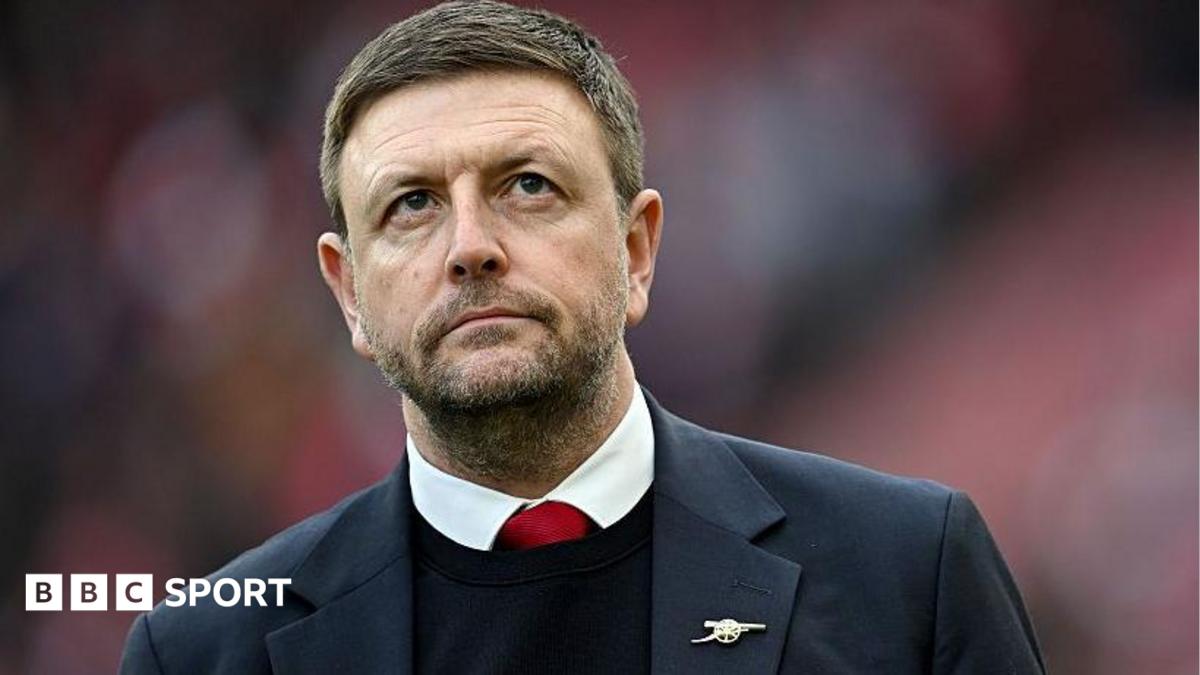
Everyone in the Premier League wants clarity and a speedy resolution in the case against Manchester City which features more than 100 alleged breaches of its financial rules, says Arsenal chief executive Richard Garlick.
An independent commission is yet to publish a ruling, more than a year and a half after a disciplinary hearing concluded, and three and a half years since City were first charged.
City have always denied wrongdoing.
When asked if the length of time the process was taking was frustrating Arsenal, Garlick told BBC Sport: “It has gone on for a while.
“Everybody – the league and the teams – would want the clarity around what’s going to happen next.
“But it’s not something that I can control. It’s not something that I can speculate on.
“And I just hope that there is a solution very quickly.”
Garlick’s comments come on the eve of the new season and after Premier League chief executive Richard Masters said: “I do accept it’s taking longer than expected, and I understand that people want to find out as soon as possible what’s going on, but I simply can’t provide that.”
Describing the case as “hugely complex”, Masters added: “Our rules are very clear – we have to follow the process, and there’s only one real clear route through, which is to allow that process to reach its natural conclusion.”
Privately, officials at a host of other Premier League clubs BBC Sport has spoken to in the past 24 hours have also expressed their frustrations, while acknowledging that this is an independent process which is running on its own timetable.
One said the Premier League should be “actively seeking to put in place a better system” to ensure speedier resolutions.
Another made the point that given that the league spent £45m on legal bills during the 2023–24 season on disputes over its financial regulations, there are mounting concerns at the spiralling costs of such a long legal fight.
YOU might think celebrities are always off on lavish adventures to far-flung places, but sometimes they opt for a cheap stopover.
Katie Price, who is usually seen in the likes of Dubai or Ibiza, was spotted leaving the Radisson Hotel Manchester City Centre after an evening at the UK Hair and Beauty Awards – and the rooms are really cheap.
Katie Price was seen leaving the Radisson Hotel Manchester City Centre on the weekendCredit: SplashThe hotel is in the heart of the city close to the AO Arena and Co-Op LiveCredit: Google maps/ Radisson Hotel Manchester
In the mornings, laid out is a full buffet and cooked breakfast options. In the evening, guests can dine at the hotel’s RBG Bar & Grill.
The hotel has an outdoor terrace too with its own bar and plenty of room for drinks in the evening.
When it comes to facilities, this Radisson hotel has a fitness suite, heated pool, sauna, and steam room.
The Nu Spa offers a variety of treatments including facials, body treatments, and massages.
These facilities aren’t complimentary for all guests though as those with a standard booking will have to pay an extra £15 per room to use the pool, steam room, and sauna.
Rooms range from standard to family and suites starting from £60Credit: Google maps/ Radisson Hotel Manchester
In the lobby is a self-serve refuelling station selling snacks and soft drinks throughout the day and evening.
For those who aren’t heading off to a glamorous event, the Radisson Hotel Manchester City Centre is in an ideal location to explore Manchester.
The AO Arena, which will see Hilary Duff take to the stage next month, is actually opposite the hotel.
Co-op Live is a short tram ride away which will welcome the likes of A$AP Rocky, Andre Roux, Karan Aujla and Westlife are performing in September.
It’s also near the National Football Museum, Printworks and Manchester Victoria Station.
There’s a large breakfast buffet in the mornings and dinner at the RBG Bar & GrillCredit: Google maps/ Radisson Hotel ManchesterIt has an indoor swimming pool, fitness centre and spa tooCredit: Google maps/ Radisson Hotel Manchester
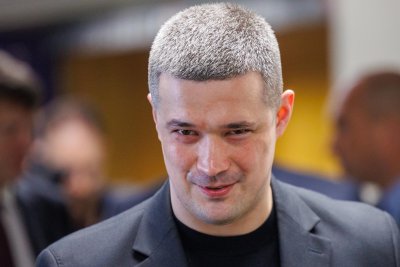
Former Defense Minister Mykhailo Fedorov called Tuesday for elections in Ukraine, arguing that the suspension of democracy was incompatible with the country’s war goals. File photo by Olivier Matthys/EPA
Aug. 19 (UPI) — Former Ukrainian Defense Minister Mykhailo Fedorov called for elections in Ukraine, arguing that the war with Russia was not an excuse and that the suspension of democracy was incompatible with the goal of the war, which was freedom.
Fedorov said in a YouTube video Tuesday that as Ukraine grappled with the fundamental question of how a state should function if war lasts for years he was convinced that the answer was not to effectively give Russia a veto over when Ukrainians could exercise their democratic rights again.
“Democracy cannot be held hostage by Russia. We are fighting precisely because we want to remain a free European state. Therefore, we must find a legal, safe, and realistic mechanism that will allow Ukraine to restore a full democratic process even amidst a prolonged war,” said Fedorov, who was dismissed as defense minister in July.
Fedorov, whose removal sparked protests across Ukraine, added that democracy was not a “peacetime luxury” but was part of “what we are fighting for today, saying that people could not “endlessly live in a state where they do not understand why certain decisions are made.”
Fedorov acknowleged the complexities of holding wartime elections, in particular guaranteeing the voting rights of military personnel, millions of Ukrainians living abroad. and of people living in regions on the frontline.
“We need to ensure the security of the electoral process, the independence of institutions, and trust in the outcome, he said, but stressed that complexity did not mean it could not be done.
“Ukraine has repeatedly done what the world considered impossible. We can find a solution here as well,” said Fedorov.
President Volodymyr Zelensky signed a decree imposing martial law in Ukraine on Feb. 24, 2022, immediately after Russia launched its full-scale invasion of the country, suspending certain fundamental rights and processes, including elections.
Zelensky’s five-year term expired more than two years in May 2024, but elections cannot be held while martial law remains in effect, according to the constitution.
In December, Zelensky held up the prospect of holding elections within the next three months in response to allegations by U.S. President Donald Trump that his administration was using the war as an excuse to stay in power.
Zelensky said he was ready for elections and would seek to hold them on condition that the United States and other allies provided guarantees to keep voters safe at a time when Ukraine’s cities were under attack day and night.
“I’m asking now, and stating this openly, for the United States to help me. Together with our European partners, we can ensure the security needed to hold elections. If that happens, Ukraine will be ready to conduct elections in the next 60 to 90 days,” said Zelensky.
The offer came after Trump called for elections, complaining that Ukraine liked to talk about democracy “but it gets to a point where it’s not a democracy anymore.”
EASYJET is cancelling all flights from a major UK airport for good.
The budget airline has confirmed that the axing of all flights from Leeds Bradford Airport will come into place from January 5, 2027.
EasyJet is scrapping all flights from Leeds in 2027Credit: GettyThe budget airline first launched from the airport in 2011Credit: Alamy
Current routes from Leeds Bradford Airport include Barcelona, Majorca, Malaga and Paris, as well as Geneva and Belfast.
The airline said in a statement: “Following a review of our routes from Leeds Bradford Airport, we have made the decision to no longer operate flights from the airport after 5 January.
Sign up for the Travel newsletter
Thank you!
“Our focus is on maintaining and developing routes which prove most popular with customers.
“We value the relationship we have built with Leeds Bradford Airport and we always keep options for our network under review, with the aim of providing more choice and connectivity where we see demand.”
Iceland will hold a referendum on August 29 on whether to reopen negotiations over joining the European Union, in a closely contested vote that could reshape the country’s economic and strategic direction.
The referendum, however, is not a vote on EU membership itself. Icelanders will only decide whether their government should begin accession negotiations with Brussels.
If voters approve the proposal, negotiations could last two or more years before Iceland holds a second referendum, potentially in 2028, on whether to actually join the bloc.
With opinion polls showing a near-dead heat between supporters and opponents, the vote has become an important test of Iceland’s relationship with Europe at a time of economic uncertainty and growing geopolitical competition in the Arctic.
Stay ahead of the geopolitical week.
MD Briefing delivers expert analysis across five global fronts — the Indo-Pacific, energy, geoeconomics, European security, and the Middle East — every Monday morning. Free.
Is Iceland Voting to Join the EU?
No.
The August 29 referendum only asks whether Iceland should begin negotiations with the European Union.
A “yes” vote would open a potentially lengthy accession process. Iceland would then negotiate the terms of membership with Brussels before citizens have another opportunity to accept or reject the final agreement.
That means the upcoming referendum is essentially a decision about whether to explore EU membership, rather than a final decision to join.
Prime Minister Kristrun Frostadottir’s government has nevertheless presented the vote as a potentially decisive moment.
What Happens If Iceland Votes No?
The government has described the referendum as a “now or never” opportunity.
Frostadottir has warned that rejecting negotiations would effectively put the EU question aside.
This makes the vote particularly important because Iceland has already attempted the accession process once.
Reykjavik applied to join the EU in 2009, but negotiations were abandoned in 2013 after a Eurosceptic government came to power.
A second rejection could therefore close the issue again for the foreseeable future.
Why Does Iceland Want to Reconsider EU Membership?
Economic concerns are among the strongest arguments for reopening negotiations.
Iceland has faced high living costs and economic volatility, while the country’s relatively small economy remains vulnerable to external shocks.
Supporters argue that closer integration with the EU could provide greater economic stability and strengthen Iceland’s position when dealing with larger trading partners.
EU membership could also eventually allow Iceland to adopt the euro, replacing the Icelandic krona.
Supporters say the euro could reduce currency volatility, help address inflation and potentially lower interest rates.
The country’s strategic environment has also changed since Iceland abandoned its previous accession negotiations.
The war in Ukraine and growing competition in the Arctic have encouraged Iceland to reconsider how closely it should align with European institutions.
What Would Iceland Gain From Joining the EU?
EU membership would provide Iceland with access to the bloc’s customs union and its wider internal market.
The customs union eliminates internal tariffs between member states while applying common external tariffs to goods entering the bloc.
Iceland would also gain a formal role in EU decision-making.
Its representatives would participate in institutions including the European Parliament, European Commission and European Council.
For supporters, this is important because Iceland would move from being closely connected to the EU economically to having a direct role in shaping policies that affect it.
The argument is particularly relevant for a small country dealing with much larger economic powers.
Why Do Icelanders Oppose EU Membership?
Opponents argue that membership would transfer too much political authority from Reykjavik to Brussels.
They also question whether joining the EU would substantially improve Iceland’s security.
The most sensitive issue, however, is fisheries.
Why Are Fisheries Central to the Debate?
Fishing is one of the pillars of Iceland’s economy and a major part of the country’s national identity.
Opponents fear that joining the EU would subject Iceland to the bloc’s Common Fisheries Policy and potentially weaken its control over fishing resources.
They worry that common European resource-management rules could eventually increase access for foreign vessels to Icelandic waters.
For a country surrounded by some of the world’s most important fishing grounds, that is not simply an economic concern. It is also a question of national sovereignty.
The fisheries debate therefore gives the opposition one of its strongest arguments against membership.
Why Does Iceland Want to Keep the Krona?
Iceland’s currency is another major dividing line.
Supporters of the euro argue that replacing the krona could reduce exchange-rate volatility and improve economic stability.
Opponents see the krona differently.
They argue that an independent currency provides Iceland with an important economic adjustment mechanism.
During a downturn, the krona can weaken against major currencies, potentially helping Iceland’s economy adjust. During periods of stronger growth, it can appreciate.
Giving up that flexibility in favour of the euro, opponents argue, could leave Iceland with fewer tools to respond to economic shocks.
Who Supports EU Membership?
The country’s centre-left government coalition has backed putting the issue to a referendum.
Vidreisn, Iceland’s most explicitly pro-EU political party, pushed for the vote.
Prime Minister Frostadottir’s Social Democrats also support EU membership, although they have taken a more cautious approach to campaigning.
The coalition’s third party, the People’s Party, opposes membership.
The political divide therefore does not fit neatly along government versus opposition lines.
Who Opposes EU Membership?
The opposition Independence Party, led by Gudrun Hafsteinsdottir, is campaigning against reopening accession talks.
Its argument centres on sovereignty, fisheries and economic independence.
Opponents believe Iceland can maintain its existing relationship with Europe without accepting the political obligations of EU membership.
The close polling suggests neither side has yet secured a decisive advantage.
Why Is the Arctic Important to the Vote?
The referendum is taking place against a backdrop of growing geopolitical competition in the Arctic.
Iceland occupies a strategically important position between North America and Europe.
It sits along the Greenland-Iceland-United Kingdom gap, commonly known as the GIUK gap, a critical North Atlantic maritime corridor.
The area has long been important for monitoring Russian naval movements between the Arctic and the North Atlantic.
Iceland is also a NATO member despite having no standing army of its own.
That makes its strategic location particularly important to the security architecture of the North Atlantic.
What Would Iceland Mean for the EU?
For the European Union, Iceland’s potential membership would have significance beyond economics.
It would expand the EU’s presence in the Arctic at a time when the region is becoming increasingly important to major powers.
Russia, the United States and other countries are paying greater attention to Arctic shipping routes, natural resources and military positioning.
Iceland could therefore give the EU a stronger institutional and geopolitical foothold in the North Atlantic and Arctic region.
Its accession could also be relatively straightforward compared with some other countries seeking EU membership.
Unlike Ukraine and several Western Balkan states, Iceland already has close economic and institutional links with Europe and would require fewer major reforms to align with EU rules.
Could Iceland Join the EU Quickly?
Potentially, but the process would still take years.
A “yes” vote would only begin negotiations.
Iceland would then have to negotiate the terms of membership before citizens could vote again on the final agreement.
The second referendum could potentially take place in 2028.
This means that even if Icelanders vote in favour of talks on August 29, actual EU membership would remain uncertain.
The referendum is therefore the beginning of a political process rather than its conclusion.
Analysis: Why Does Iceland’s EU Vote Matter?
Iceland’s referendum is ultimately about more than whether a small North Atlantic country should join a political and economic bloc.
It reflects a wider debate over sovereignty, economic resilience and strategic alignment in an increasingly contested Arctic.
For supporters, EU membership offers economic stability, greater influence over European decisions and closer integration with a bloc that could provide Iceland with additional leverage against larger powers.
For opponents, the same process represents a potential loss of national control over fisheries, monetary policy and important economic decisions.
The strategic dimension is becoming increasingly difficult to ignore.
Iceland’s location makes it disproportionately important to North Atlantic security despite its small population and lack of a conventional military. As competition involving Russia, the United States and European countries intensifies in the Arctic, Iceland’s relationship with the EU could acquire greater geopolitical significance.
The vote also highlights a fundamental dilemma facing smaller states: whether greater integration with a larger political bloc provides more security and economic strength than the sovereignty it requires them to surrender.
The August referendum will not answer that question definitively.
It will determine whether Icelanders are willing to begin the conversation.
If voters choose “yes,” Iceland could move toward its most significant geopolitical realignment in more than a decade. If they choose “no,” the country may once again put EU membership aside and preserve its distinctive position outside the bloc while remaining closely connected to Europe.
“Other than the needle drops, this is probably my favorite part about making ‘Beef,’” says creator Lee Sung Jin of the show’s episodic title cards, which in Season 2 marry historical paintings with abridged quotations from authors and poets. For the finale, which sees its two feuding couples (Carey Mulligan, Oscar Isaac, Cailee Spaeny and Charles Melton) swept up in a seemingly inescapable fight for survival, the paintings of Giuseppe Arcimboldo’s “The Four Seasons” matched with the title “It Will Stay This Way And You Will Obey,” a reference to a passage in Marion Woodman’s “Coming Home to Myself: Reflections for Nurturing a Woman’s Body & Soul.” “It’s almost prisonlike because these very prominent faces of literally nature have created this wall that the title is stuck in. We wanted to express the cycles and how the four seasons come for you no matter what,” Lee says, alluding to the season’s central idea that people often repeat the same destructive habits. “The final shot is homage to the Buddhist concept of samsara. It was important for us to allow the audience to take a moment after all the craziness of the season to think about their own lives, think about society at large … and depending on where you are, come to your own conclusion.”
The global securities and investment landscape is rapidly being reshaped. Among the challenging market conditions of recent years, institutional investors have turned to resilience-building as their central driver of growth. “The way our clients seek to build resilience varies across businesses, segments, and markets,” says Ee Fong Soh, Group Head of Financial Institutions, Securities & Fiduciary Services, Global Transaction Services, DBS Bank. “Yet we see a common dual objective across the board: the pursuit of diversification paired with an increased focus on asset safety.”
This objective – coupled with technological and regulatory advancements – is driving a monumental shift towards the coexistence and convergence of digital and traditional asset ecosystems. The parallel demand for both asset classes is particularly pronounced in Asia. “Huge leaps in digital asset product optionality are being made alongside growing demand for more traditionally perceived safe asset classes,” explains Soh.
This analogous demand has quickly raised expectations for custodians serving the region. In a recent survey of global financial institutions, 83.8% of respondents in APAC named custody as an institutional priority for digital asset use cases in the next 24 months1. This made custody the leading digital-asset priority in APAC – compared to only the third-ranked priority at the global level.
Two-track innovation
While digital asset adoption is growing rapidly in Asia, traditional asset classes remain the dominant contributor to institutional portfolios. As such, the best custodians must innovate in both the traditional and digital spaces. Soh notes that DBS has in recent years been working on maintaining a balance of progress in both.
“By pioneering solutions in both digital and traditional asset custody, we’ve empowered clients to create new operational efficiencies and growth possibilities.”
Ee Fong Soh, Group Head of Financial Institutions, Securities & Fiduciary Services, Global Transaction Services, DBS Bank
In traditional assets, infrastructure enhancements across Asia are enabling investors to diversify market access. For DBS, being at the forefront of the relevant advancements has enabled the bank to provide its clients with first-mover advantages. For example, in 2025 it became the first foreign bank to be approved as an RMB clearing bank, and to operate in China’s OTC bond market. Combined with offshore custody services capabilities, DBS’ institutional clients now benefit from a broader and more diverse range of market opportunities.
Beyond opportunity expansion, unlocking efficiency gains for clients has been a long-time priority for DBS. One example in 2025 was the introduction of its ‘One Bank’ model for asset managers, combining both banking and custody solutions in one place.
In digital assets, partnerships have been a critical enabler of opportunities. “Our strategic alliance with Franklin Templeton and Ripple last year set a milestone in expanding optionality to serve clients’ diversification needs,” says Soh. Together, these institutions are introducing innovative trading and lending solutions powered by tokenised money market funds.
Elsewhere, DBS recently became the first Asian bank to offer collateral agent services for crypto trading, enabling both crypto exchanges and their members to boost trading capacity and volumes. It also issued its first tokenised structured notes on a public blockchain, with distribution across multiple digital platforms.
Evolution built on trust
With rising demand at both ends of the asset spectrum, and given the ongoing technological and regulatory changes, custodians must continue to evolve at pace.
Soh sees countless possibilities that could further elevate custodial services in Asia. “One exciting initiative underway at DBS is the establishment and expansion of an ecosystem for physical gold, with both custody and tokenisation,” she explains. In a first for the Singapore market, DBS will tokenise, distribute, and manage physical gold tokens entirely in-house. The bank also has plans to list the token on its DBS Digital Exchange (DDEx) and later expand the service to Hong Kong.
Irrespective of the opportunities and advancements ahead, safety must remain a priority. This should be driven by custodians themselves, with asset safeguarding upheld as a central promise in both the day-to-day and across innovation processes. Trust is a critical foundation, and investors are likely to place greater scrutiny on the track records of custodian partners.
“Prioritising trust and safety will ultimately provide the bedrock that enables resilience building in the blended world of digital and traditional investing,” concludes Soh.
WASHINGTON — The only remaining U.S. aircraft carrier patrolling the Pacific departed Asia through Singapore last week en route to the Middle East, marking the latest step in a steady drawdown of American military assets across the region.
An armada of naval forces, alongside a constellation of air-defense and missile capabilities, has been removed from a theater the Trump administration said just last year would be the battleground of the coming century.
And now, President Trump’s surprise decision this week to curtail military exercises with South Korea has further fueled anxiety across Asia, where Washington’s closest allies fear violent consequences from a vacuum of American power.
Trump said his decision to withdraw U.S. participation from the annual military drills was de-escalatory, claiming they would needlessly provoke North Korea’s dictator, Kim Jong Un, with whom he has recently been in touch.
But he also blamed Seoul for its decision to not take part in his war with Iran.
“I said, ‘Would you like to give us a little hand?’ ” Trump told reporters. “He said, ‘No thanks,’ and I said, ‘Wait a minute — we have 39,000 soldiers over there, guarding you from Kim Jong Un, your next-door neighbor, and you’re not going to help us.’ ”
“That’s strange,” Trump added. “We can’t go around and protect all of these countries, especially when they’re not there to help us.”
South Korea’s president, Lee Jae Myung, responded to Trump’s last-minute decision to pull back from the drills with a degree of alarm.
“From now on, we must prepare measures with even the worst-case scenario in mind,” Lee said, “on the premise that the Middle East situation may be prolonged.”
It was the latest jolt to South Korea’s confidence in an alliance that has formed a cornerstone of Washington’s defense strategy in Asia since the end of World War II.
The Pentagon has kept its THAAD missile-defense batteries on the Korean peninsula. But in March, it moved some of the system’s radars and forward-positioned interceptors toward the Middle East, as the Iran war strained U.S. missile-defense stocks. Analysts estimate the conflict has consumed more than 40% of the Pentagon’s THAAD interceptor inventory.
The diversion was accompanied by the redeployment of dozens of combat and dry-cargo ships, mine countermeasure vessels, and guided-missile destroyers out of the region, ahead of the departure of the strike group centered on the nuclear-powered USS George Washington, which is now on its way to the Middle East.
Other U.S. allies in the region reacted swiftly to Trump’s pullback from the Korean exercises.
The Australian government said it remained “deeply concerned” with North Korea’s nuclear weapons and ballistic missile programs, while Japan’s defense minister, Shinjiro Koizumi, warned of historic stakes.
“As Japan faces the most severe and complicated security environment in the post-war era, the cooperation among Japan, the United States and South Korea is critical to the peace and stability of the region,” Koizumi said in a statement.
And Beijing has been quick to capitalize on the vacuum.
China’s Foreign Ministry mocked that the United States “has become addicted to quitting groups and scrapping treaties,” while its military began installing permanent infrastructure in Taiwan’s exclusive economic zone within days of the George Washington’s departure.
“The current international landscape has once again proven that only by ensuring the effective operation of the multilateral system can we prevent the spread of the law of the jungle,” said Mao Ning, a spokesman for the Chinese Foreign Ministry, “and keep the international order from being dominated by the logic that ‘might makes right and force represents justice.’”
Speaking with journalists in the Oval Office on Monday, Trump said that his communication with Kim was “making things safer” in the region.
He did not offer details on their conversations.
“Kim Jong Un has always treated me with great respect,” Trump said, confirming that the North Korean leader had replied to his overtures.
A drone strike on a minibus in the Ukrainian frontline city of Kherson killed at least 4 people and injured 5 others amid a rise in Russian attacks on the approximately one-third of the province still controlled by Ukraine. File photo by State Emergency Service of Ukraine/EPA-EFE
Aug. 19 (UPI) — At least four people riding a minibus in Ukraine‘s frontline Kherson region were killed Wednesday morning after the vehicle was hit by a Russian drone.
Kherson Gov. Oleksandr Prokudin said in an online post that five women injured in the strike in the Korabelnyi district of Kherson city were being treated in the hospital.
“This morning, the Russians hit an ordinary minibus in Kherson with a First-Person-View drone. It is clear that the bus was civilian. The brutal Russian ‘safari’ against our people in Kherson has long gone beyond what any normal person can imagine,” said Prokudin.
He added that during the past 24 hours, nine other people had been injured in Russian strikes targeting critical infrastructure and residential areas in the province, damaging three apartment blocks, a restaurant and several cars.
“These are the realities of everyday life in Ukraine’s frontline regions. While partners hesitate over additional supplies of defense equipment, the Russians have gone long beyond the bounds of what is acceptable” Ukrainian President Volodymyr Zelenskywrote on X.
The United Nations’ humanitarian chief, Tom Fletcher, just back from visiting Ukraine’s Mykolaiv and Kherson regions, told BBC Radio that Kherson was coming under attack from thousands of drones each week with civilians telling him they were the targets.
Moscow insists it only attacks legitimate military and military-related targets.
Russia overran and occupied Kherson province at the start of the war in Feb. 2022, eventually annexing the province by September, but Kyiv routed Russian forces in a fall 2022 counter-offensive, recapturing around a third of its territory, including Kherson, the provincial capital.
Ukraine’s Air Force said in an update on Telegram that it dealt with airborne attacks on the north, south and east of the country overnight involving two Iskander-M ballistic missiles and 65 drones and other munitions, of which 10 got past air defenses to strike their targets.
Falling debris from downed missiles and drones fell in another three locations.
Martin Luther King Jr. delivers his famed “I Have a Dream” speech from the steps of the Lincoln Memorial in Washington on August 28, 1963. The speech galvanized the nation’s civil rights movements and led to the passage of the 1964 Civil Rights Act, the 1965 Voting Rights Act and the 1968 Fair Housing Act. File photo by UPI | License Photo
New Delhi, India – In a crowded ward of New Delhi’s All India Institute of Medical Sciences (AIIMS), India’s premier public hospital, a mother sits quietly beside her 29-year-old son, Piyush Singh*.
Diagnosed with stomach cancer a year ago, Singh has already undergone five rounds of chemotherapy. He now lies in the hospital’s palliative care unit, where the goal is no longer to cure the disease but to relieve pain and preserve his dignity.
Recommended Stories
list of 4 itemsend of list
“The world comes to AIIMS when they are not well. But where shall we go?” asks his mother. “My son has already received five doses of chemotherapy, but his condition has not improved. The doctors are not telling us anything. I don’t know what to do next.”
Piyush’s family is not asking for his life to end. They simply don’t know what comes when treatment fails.
A few floors away, Aryan* has come to AIIMS from Auraiya, a small town in Uttar Pradesh state, to accompany his 40-year-old brother Amit (name changed), who has been battling mouth cancer for four years. Two surgeries, radiation and two rounds of chemotherapy later, doctors say there is little hope of him surviving. The final checkup has been done. There is nothing more left to try.
“There is no duvidha [dilemma in Hindi],” says Aryan. “The doctors have said no. So it is clear now.”
He plans to take Amit to his rented flat in Gurgaon and give him whatever painkillers he has been prescribed. Beyond that, he has no plan, because no one has given him one.
“I don’t know about palliative care. I don’t know how to ease his pain. I have nothing apart from the medicines I got today,” he said.
Piyush and Amit are no exceptions. They represent a reality that many Indians are coming to terms with – with little institutional help.
People and patients inside the AIIMS complex in New Delhi, India [Vishakha Singhal/Al Jazeera]
India recorded an estimated 1.56 million new cancer cases in 2024, according to an Indian Council of Medical Research study published in the Journal of the American Medical Association.But cancer patients are not alone. Families of patients with traumatic brain injuries and degenerative neurological conditions also hit the same wall.
According to a 2025 analysis by ecancermedicalscience, an open-access medical journal, an estimated seven to 10 million people require palliative care in India, but only about 4 percent receive it.
Such families find themselves with little or no awareness or preparedness for what comes next. Many have never heard of palliative care, or that the law gives them the right to document their treatment preferences before a crisis arrives.
The problem is also rooted in how many Indians confront death – a phenomenon that is one of the least-discussed subjects within families or societies. In many households, conversations about dying are considered inauspicious.
In such a worldview, to think of interventions in how or when someone dies carries a moral weight that goes beyond medicine or law. Families often avoid discussing medical wishes until a loved one is critically ill, leaving relatives to make deeply personal decisions during moments of grief and uncertainty.
From caregiving to court
The answers are increasingly being shaped not just by medicine, but also by the law.
In 2018, India’s Supreme Court recognised that the “right to die with dignity” was part of the fundamental right to life, enshrined in Article 21 of the Indian Constitution.
The court also allowed such patients to record their wishes about life-sustaining treatment if they lose the capacity to decide in an advanced stage of their ailment.
The top court’s ruling was in response to a petition filed by Common Cause, an NGO, which called for legal procedures allowing terminally ill individuals to execute Advance Medical Directives, commonly known as “living wills”, to refuse life-prolonging medical treatment.
A living will is a legal document that highlights an individual’s preferences for medical treatment when they cannot voice their choices. The provision allows them to nominate a loved one to decide for them.
“It [judgement] broadens the scope of Article 21. It now affirms, kind of completely, that the right to life includes the right to die with dignity. That is the bottom line for us,” Vipul Mudgal, director of Common Cause, the organisation behind the 2005 petition, told Al Jazeera.
Yet, for most Indians, that right largely existed on paper – until six years later.
In 2024, a family in Ghaziabad, an industrial district on the outskirts of New Delhi, filed a petition in the Delhi High Court and later in the Supreme Court, asking for a decision on the fate of a 32-year-old patient who was in a vegetative state for nearly 13 years.
Harish Rana’s case was a first in India where passive euthanasia, or withdrawal of life support, was permitted by the top court. On March 11, the Supreme Court directed the withdrawal of his life support at AIIMS, New Delhi. He passed away two weeks later.
But the journey from caregiving to courtroom was not easy.
Rana’s family managed his feeding tube, tracheostomy and urine bag every day for 13 years, and it had drained them.
“A family reaches such a decision when it sees no scope for improvement. Harish Rana could not speak, we were his voice,” Rana’s father Ashok told Al Jazeera. “He was not in that state for 13 days or 13 months, but for 13 years.”
All those years, said Ashok, he watched his son breathe but not recover, with only one question on his mind: “I am around 63 years old, and my wife is 58 years old. If something happens to either of us, who would take care of him?”
That is when they decided to approach the court.
While the Rana case is a landmark, experts say it is unlikely to set an immediate precedent in a country where death is an uncomfortable topic. That is why, despite being legalised in 2018, living wills remain uncommon and largely unheard of.
As a result, terminally ill patients do not discuss their wishes while they still can, and families end up making decisions for them without preparation or guidance.
A 2019 survey across seven cities, including New Delhi, Mumbai and Kolkata, by Healthcare at Home (HCAH), a health advocacy group, found that 73 percent of urban Indians were unaware of their right to a living will. Even among people aware of their right, only 6 percent had actually drafted such a will.
“The Harish Rana case was made more complex because there was no living will,” said Manish Jain, the lawyer who represented the family in court. “Living will clinics are absent across India.”
There are only two such clinics in India. The first opened in Mumbai last year, followed by one in New Delhi – both operated by private hospitals, which are beyond the reach of most Indians.
People at a bus stop next to AIIMS, New Delhi, India [Vishakha Singhal/Al Jazeera]
Fears of misuse of living wills
Concerned over a likely misuse of living wills, the Supreme Court made its guidelines complex. However, in the process, the court ended up making it difficult to navigate for most people.
To make a living will legally valid, an individual would sign it before two witnesses and get it countersigned by a magistrate. If the patient later became terminally ill, the treating doctor would be required to form a board of specialists with at least 20 years of experience each, whose findings then had to go to a district magistrate, who would form a second medical board. Only after both boards agreed could the process move forward, and any disagreement meant the matter went to the regional High Court.
In 2019, the Indian Society for Critical Care Medicine, a nonprofit group of physicians, approached the Supreme Court, arguing its guidelines were unworkable. In 2023, a five-judge top court bench simplified the process, removing the requirement of a magistrate’s countersignature, reducing the minimum medical experience requirement for review boards from 20 years to five, and allowing multiple nominees instead of one.
“Decisions are being made every day, sometimes by the family members, sometimes by the doctors, sometimes because of paucity of money,” said Mudgal.
He said if the families, doctors and courts can make end-of-life decisions for an individual, why cannot the individuals make those decisions for themselves? This recognition, while respecting individual autonomy, also relieves family members from the guilt of deciding for their loved one, he added.
“If there is no meaning left in life, somebody is kept alive artificially, just beating the heart with some mechanical device, that life has no meaning,” he said.
Yet, such questions remain unanswered by law. Living wills and the right to die exist entirely through judicial interpretation. There is no parliamentary law governing the same.
“There is no framework [of parliamentary law] passed by the parliament,” Jain said. “The Supreme Court of India itself requested the government to pass legislation regarding this issue,” he added, first in 2018 and again in 2023.
But lack of a law is only one part of the challenge.
For families, the absence of palliative care means little or no guidance on what comes after treatment options run out. Even families like Piyush’s, who have access to palliative care, don’t know what comes next.
“There are many patients like this who don’t have legal awareness of passive euthanasia. Not only patients, but their doctors also do not have full awareness about palliative care,” Dr Saipriya Tewari, principal consultant and unit head of pain management and palliative care at Max Super Speciality Hospital in New Delhi, told Al Jazeera.
She said families often look confused when told there is no treatment left, and that they should take the patient home.
“What will they do after taking the patient home? Nobody tells them. It is only discussed if the palliative care doctor is involved in the treatment,” Tewari said. “And even if the end is coming, then how do we maintain dignity in time? That is the question.”
Piyush’s mother has a different question.
“If he is sick, then we have to get treatment. We have to do something to keep him alive. What should we do? We are not able to think of a way out of this. Nobody is giving us any suggestions about where to go.”
*Names changed to protect the identity of the patients and their families.
THEY’VE been soaking up the Ibiza sunshine, while wrapping their arms around one another like two lovesick teenagers at a beach rave.
So it’s only natural that fans have begun asking whether former glamour model Katie Price, 48, and party king Wayne Lineker, 64, could be embarking on a new romance after a trying year for Pricey – who ditched her wedding ring for the Ibiza bash.
It’s not the first time Katie Price has visited Wayne Lineker at his O Beach Ibiza resort (here pictured in 2025)Credit: BackGridBut this year, Katie put on eye-popping display in this tiny bikini for the businessman who made a cheeky joke about her boobsCredit: waynelineker/Instagram
Pictured on a sunbed at the O Beach Ibiza last week, with Katie wearing a barely-there bikini, the tactile displays of affection between the two showbiz veterans had everyone asking the same question: what on earth is going on here?
Indeed, one insider told me: “It certainly got everyone talking. Naturally people started to wonder if there could be a romantic spark between the pair.
“While many questions have been raised about Katie’s husband Lee Andrews and the reality of his finances, Wayne is the real deal.
“He’s raking it in with all his Ibiza businesses and he’s not ashamed to show off the rewards of his hard work.”
It’s no secret that Katie’s love life has been a rollercoaster of late.
After a whirlwind romance and shock January wedding to Dubai-based businessman Lee, recent months have brought a storm of drama.
Wayne, brother of football legend Gary Lineker, is known as a party boy, and many wondered if the newlywed was seeking comfort in his famously welcoming arms.
After all, he has a taste for models – with his past girlfriends including model Danielle Sandhu and the late Love Island star Sophie Gradon.
But before anyone starts buying a wedding hat for another Pricey trip down the aisle, we can reveal the real truth behind their close connection.
According to those close to Katie, the pair are strictly platonic and the tactile body language is simply the result of two larger-than-life personalities who love letting their hair down together.
“Katie and Wayne are just brilliant mates, plain and simple,” a close insider spilled to us last night.
“People look at the photos of them cuddling up or whispering during the eclipse, and because it’s Katie, they instantly assume there’s a massive romantic scandal brewing.
“But honestly? It’s completely innocent. They just get each other.”
My source continued: “They are both veterans of the showbiz scene and they both love a massive party.
“When Katie is in Ibiza, Wayne is her go-to guy. He treats her like royalty and ensures she has a great time.
“There is zero romantic spark there. She sees him like a fun, cheeky older brother who knows exactly how to throw the best parties.”
Katie’s recent trip to the Mediterranean wasn’t just a wild solo getaway to escape the exhausting Lee Andrews saga back home. It was a fun-filled adventure for her beloved eldest son Harvey, 24, who joined her on the Spanish island.
And it’s actually Wayne’s bond with Harvey that has cemented his status as one of Katie’s most treasured pals.
Harvey, who has Prader-Willi syndrome and is also autistic and blind, was also at the sprawling Ibiza resort dancing away to his favourite tunes.
Katie Price beaming in a mint bikini as she poses alongside Wayne Lineker and Harvey at O Beach Ibiza last weekCredit: waynelineker/InstagramHarvey Price is treated like an absolute icon as he hits O Beach in Ibiza as mum Katie Price ditches her wedding ring againCredit: waynelinker/Instagram
For protective mum Katie, seeing the entrepreneur go out of his way to ensure her boy had a spectacular time meant the absolute world.
“Wayne is absolutely brilliant with Harvey, and that’s the fastest way to Katie’s heart. Not romantically, but purely as a loyal friend,” my insider revealed.
“Wayne rolled out the red carpet for them and even made sure he had his favourite meal of Spaghetti Carbonara.
“He makes Harvey feel so special, safe, and included in all the fun. Katie is endlessly appreciative of that.”
This supportive dynamic is especially poignant for the mum-of-five, given the well-documented absence of Harvey’s biological father.
Former Premier League footballer Dwight Yorke has played no part in his son’s upbringing, leaving Katie to deal with all of Harvey’s very complex needs on her own.
“It genuinely breaks Katie’s heart that Harvey’s real dad has never done a thing for him, so when she sees men like Wayne stepping up just to be kind, patient and supportive, she is so touched,” the pal explained.
“Wayne doesn’t have to go out of his way for Harvey, but he does it because he has a big heart. That’s why Katie is so loyal to him. She will defend their friendship to the hilt.”
So, while the pictures of them cosying up under the sun might scream new romance to the untrained eye, the reality is far sweeter.
It is clearly a feeling shared by Wayne, who took to Instagram to pay tribute to Katie.
He wrote a “special message” to the businesswoman, writing: “We’ve certainly had our moments over the years, you more than anyone knows that.
“We’ve faced obstacles, made mistakes and sometimes been our own worst enemies.
Wayne and Katie were also seen cuddling during last year’s getaway to Ibiza after years of friendshipCredit: INSTAGRAM @waynelinekerKatie’s husband Lee is said to remain locked up in Dubai after being sent to prison last month for the second time this yearCredit: Instagram
“But through it all, there’s one thing I believe we’ve always shared: our two hearts and our genuine love of helping other people.”
With the baggage of her recent marital woes weighing heavily on her mind, Katie wanted a place to let off steam with her son.
And the O Beach did not let her down. The club’s waitresses, wearing skimpy outfits, added to the upbeat party vibe, showing off their best moves on the stage and holding up cards spelling ‘Harvey’ as partygoers chanted his name.
Harvey looked over the moon and threw his hands up in the air with joy.
“Katie knows exactly what she’s doing,” our insider laughed. “She knows people will talk when she wraps her arms around Wayne in a tiny bikini. But she doesn’t care anymore.”
Whether her husband Lee, who remains in Al Awir prison, will be equally nonchalant remains to be seen.
Though I don’t regularly attend Mass, I fondly remember the two years in high school when I prepared for the sacrament of Communion.
In the basement of St. Boniface Church in Anaheim on weekday afternoons and weekend mornings in the mid-1990s, my sister, about 20 other teenagers and I learned about the tenets of our faith.
We were inculcated with the importance of charity, love toward all, good works and humility, and urged to carry those virtues into adulthood. I didn’t agree with everything our lay teachers espoused — why abortion should be outlawed, why necking was bad, why only men could become priests — but I learned enough important moral lessons that I still proudly call myself Catholic.
Confirmation is meant to bring recipients closer to God and “imprints on the soul an indelible spiritual mark,” according to the Vatican’s official guide to its doctrine. What especially stayed with my classmates and me was, well, us.
We were white, Filipino, Vietnamese and Latino, children of working-class parents and equals in the eyes of God. Church fairs were as likely to serve pancit and spring rolls as hamburgers and tacos. When we finally received confirmation at a special Mass at St. Boniface attended by then-Bishop Norman McFarland, we exemplified not just the future of the church but also the promise of a better tomorrow for the United States.
Our parish lived and practiced American Catholicism’s long tradition of welcoming the stranger, the outcast, the refugee — following the example and words of the Gospel we read every Sunday. But even as we committed ourselves to the path of Christ, politicians in California waged a war against illegal immigrants and anything that suggested diversity — a xenophobia that would culminate decades later with President Trump’s election.
Trump is a walking manifestation of the seven deadly sins, to the point that he has depicted himself as Jesus anda pope on social media. Nevertheless, a majority of Catholics — thankfully no one in my immediate family — voted for him in each of his three presidential elections, with support topping out at 55% in 2024, per the Pew Research Center.
Catholics were a key constituency in every sector Trump needed for his historic victory against Kamala Harris. Swing states with old-line communities like Wisconsin and Pennsylvania. Boom states like Nevada and Florida. And especially Latinos, who voted for Trump in numbers never before seen for a Republican presidential candidate. Latino Catholics went even harder for Trump: The Public Religion Research Institute found their support for him increased by 17 percentage points from 2016 to 2024, even as his white Catholic support dropped from 64% to 59%.
Issues from abortion to the economy to transgender rights spurred Catholics to side with Trump, but his hard-line stance against immigration was especially popular. As immigrant Catholics were being demonized, echoing previous eras of American history, too many Catholics sided with the demonizers.
Maria Marin and her husband, Martin Marin, pose with a cardboard cutout of Pope Leo XIV during the Archdiocese of Chicago’s celebration of Leo at Rate Field on June 14, 2025.
(Pat Nabong/Chicago Sun-Times via Associated Press)
A June 2024 survey by Georgetown’s Center for Applied Research in the Apostolate, which tracks American Catholic life, showed that 43% of respondents supported lower levels of immigration. A month into Trump’s second term, 41% of American Catholics thought that increased immigration in recent years had changed the U.S. “for the worse,” compared with 33% who felt it made life better, according to a Pew Research Center poll.
In the lead-up to the 2024 election, I argued about the dignity of Venezuelan and Salvadoran migrants with people from my parents’ native ranchos in Mexico, who came to this country without papers and are regular churchgoers. I sighed in disappointment as former confirmation classmates whose refugee parents fled tyrannical rulers, just like the Holy Family, posted approvingly on social media about Trump’s vow to build a bigger, nastier border wall.
Catholics have frequently exemplified the best and worst tendencies of American society. We’ve been brutal conquistadors and the huddled masses yearning to be free, trailblazing politicians and the millions who stood silently during our church’s sex abuse scandals. Trump’s support among Catholics represented a new low. But by some miracle of God, more and more of those supporters are finally seeing him for who he is.
On Aug. 12 — the feast day of Jane Frances de Chantal, the patron saint of forgotten people — the Public Religion Research Institute released a survey showing that 62% of Catholics think unfavorably of Trump, while 57% oppose his handling of immigration, both legal and illegal. If this repentance transforms into votes against MAGA in the midterms, the rest of Trump’s presidency is doomed.
The poll offers no insight into why Catholic support for Trump has cratered. The easy explanation would be the president’s enmity toward Pope Leo XIV, who has preached a gospel of kindness toward the undocumented and spoken out against the quagmire in Iran. When the Trump administration invited the native-born Chicagoan to visit the U.S. for America’s 250th anniversary, Leo instead decided to spend his Fourth of July on Lampedusa, the Ellis Island of the Mediterranean.
But the poll noted that Leo’s predecessor, Pope Francis, had higher favorability ratings among American Catholics during the same time in their respective reigns — 90% to Leo’s 75%.
Trump’s popularity is also collapsing among Americans as a whole. Only about a third support him, according to an a recent Reuters/Ipsos poll — the poorest showing of his second term, matching the lowest numbers of his first term. But for Catholics, it’s not just high prices, the Iran War and Trump’s drift toward despotism that makes him so onerous.
The Catholics in his government, from Supreme Court justices to Cabinet members to Vice President JD Vance, are acting as a rubber stamp for an imperious ruler, instead of imitations of Christ. Trump’s immigration sweeps are hitting American Catholicism so hard that bishops have allowed the faithful to stay home instead of attending Mass.
What reason is there left for good Catholics to support Trump? If ever a group needed to break away from him, it’s us.
What’s been especially galling about Trump’s second term, from a Catholic perspective, is his gleeful cruelty.
Proverbs 21:13 states, “Whoever closes his ear to the cry of the poor will himself call out and not be answered.” Conservatives who have criticized Pope Leo for taking on Trump over his nastiness toward the meek don’t get that his motive isn’t political — this has been standard Vatican doctrine going back to his namesake, Leo XIII. In an influential 1891 encyclical urging the world to stand by the working class, Leo XIII pointed out that sacrificing oneself “for the benefit of others, is man’s surest antidote against the insolence of the world and immoderate love of self.”
Is there any statement more contrary to MAGA than that?
Cardinals Robert McElroy, Christophe Pierre and Joseph Tobin and Archbishop Bernard Hebda speak to reporters after a Mass in solidarity with migrants at the Chapel of St. Thomas Aquinas on Feb. 27, 2026, in St. Paul, Minn.
(Mark Vancleave/Associated Press)
The Catholics who supported Trump may have forgotten Leo XIII’s words as they repeatedly voted for him. But that’s the beauty of our faith. We can admit our errors and seek to right them through another sacrament — confession.
“Through such an admission man looks squarely at the sins he is guilty of,” reads the catechism of the Catholic Church. That way, people can “take responsibility” for their faults and reconcile with God “in order to make a new future possible.” And the way to do that is by “doing something more to make amends for the sin.”
Catholics are supposed to confess our sins privately. But we must repent of Trump publicly and loudly at the ballot box this November and urge others to follow.
We helped usher in Trump. We must now lead in exorcising him from American society once and for all.
Ollie Robinson gives England the perfect start on the opening morning of the first Test against Pakistan by trapping Azan Awais lbw with the first ball of the day at Headingley.
Russia’s Defence Ministry says 453 Ukrainian drones were downed overnight in various regions.
Published On 19 Aug 202619 Aug 2026
At least five people have been killed and 11 others injured in Russian attacks on Ukraine, authorities said.
A Russian drone attack on a bus in the front-line city of Kherson killed at least four people and wounded four others on Wednesday, Kherson regional Governor Oleksandr Prokudin said.
Recommended Stories
list of 3 itemsend of list
The attack took place at about 8:50am local time (05:50 GMT), and all the casualties were bus passengers.
In a post on the Telegram app, Prokudin said the wounded had been taken to hospital.
He posted blurred photos of a yellow bus with bloodied steps and shattered windows.
Russian forces regularly strike Kherson, which was under Moscow’s control from March to November 2022 – the initial months of the war – with drones, in what Ukraine says is the deliberate targeting of civilians.
Earlier this month, Ukraine accused Russia of chasing a man in a street market in Kherson with a remotely piloted FPV drone, calling it a “safari” targeting civilians.
The city had a population of about 280,000 before the war began with Russia’s full-scale invasion of Ukraine in February 2022.
Russian forces, repelled from the city by a Ukrainian counteroffensive in the last quarter of 2022, are now positioned on the opposite bank of the Dnipro River, which flows past Kherson.
There has been an uptick in civilian deaths in the conflict throughout this year, the United Nations has reported, with 437 civilians killed in Ukraine last month alone, the highest monthly toll since May 2022.
Russian authorities reported 79 civilians killed in Ukrainian attacks in July, up from the previous month.
The four-and-a-half-year war continues to grind on, as United States-backed talks aimed at ending the conflict remain stalled.
In a separate Russian attack, one person was killed and seven others injured in Ukraine’s southeastern city of Zaporizhzhia, according to regional Governor Ivan Fedorov.
Russian drones struck the regional capital, damaging both residential and nonresidential buildings and causing a fire.
Meanwhile, Russian forces struck a cargo vessel in the Black Sea near the Ukrainian port of Odesa, Russian news agency Interfax reported, citing the Ministry of Defence.
The vessel was carrying military cargo, the ministry said.
It said Russia’s air defence brought down 453 Ukrainian drones overnight in various regions.
At the same time, Russian authorities were rushing to put out a small fire after a drone fell in an industrial area in the city of Ufa in the Russian republic of Bashkortostan, the republic’s head Radiy Khabirov said on Telegram.
Khabirov added that a drone hit an apartment building and a few cars in Ufa, an oil refining hub, injuring one person.
A NEW Therme resort is under construction in the UK and is making huge strides towards opening.
Therme Manchester is set to be complete by 2028 and will have everything from huge swimming pools, waterslides and even beaches.
Therme Manchester resort is currently under constructionCredit: SuppliedOnce complete, Therme Manchester will be the ‘UK’s largest paid-for tourist attraction’Credit: Therme Manchester
The Therme Group has announced that they have reached their first milestone of 12 tower cranes being built.
It said the progress marked “the start of an exciting new phase of construction for Therme Manchester“.
Sign up for the Travel newsletter
Thank you!
On social media it continued: “Over the coming months, these cranes will play a key role in bringing our vision to life. Creating an amazing destination where wellbeing, relaxation and fun come together.
“This is just the beginning. Stay tuned as we continue to build something extraordinary!”
One excited person commented: “Wow!!! Can’t wait!! We are watching the process everyday when we pass.”
Another added: “Can’t wait, no more going to Germany to the amazing spa.”
The Therme Group also announced it would be teaming up with Marriott International.
In terms of booking, Marriott Bonvoy members will be offered exclusive travel and lodging packages linked directly to Therme destinations – which when it opens will include Manchester.
The £500m resort will be set across 28 acres making it the “largest water-based wellbeing destination inEurope.”
Inside the resort, visitors can expect a large-scale waterpark with more than 25 waterslides as well as a wave pool.
It will be heated to 33C and will have lots of spa and wellness facilities that will be split into three distinct zones called Play, Relax and Restore.
The Play zone will focus on ‘next-generation’ water fun, as well as a a warm water pool, steam rooms, saunas as well as lounging and family dining experiences.
Inside will be three zones and it will even have its own beachCredit: Therme Manchester
In the Relax zone – which will be adults-only – there will be a “focus on premium wellbeing experiences” as well as indoor and outdoor pools, waterfall showers, mineral baths, steam rooms, saunas and casual dining.
Finally, in the Restore Zone – the second adults-only area – there will be “industry leading health, nutrition and wellbeing therapies”, “sauna rituals”, experience showers, wellbeing consultations and dining.
Therme Manchester is set to become “UK’s largest paid-for tourist attraction” and see just over three million people each year.
India take a 1-0 lead with a 165-run win against the hosts in Galle to begin the two-Test series.
Published On 19 Aug 202619 Aug 2026
Left-arm spinner Manav Suthar finished with a haul of 10 wickets as India thrashed Sri Lanka by 165 runs in the first Test in Galle to take a 1-0 lead in the two-match series.
Suthar, playing only his second Test, impressed with his line and length to ensure India a memorable win on Wednesday in their 600th Test match.
Recommended Stories
list of 4 itemsend of list
He took four wickets in the first innings and kept up the fine show to take 6-55, helping bowl out the hosts for 206 shortly after lunch on the final day.
Set a target of 372 runs, Sri Lanka’s batters failed to apply themselves, other than Sonal Dinusha, who top-scored in both innings.
Indian captain Shubman Gill called the victory “very satisfying”.
“We were in a comfortable position but were not sure if the match would go on [because of the weather], but the team responded well,” he said.
Gill also praised Suthar and the batsmen for their effort on a wicket that was not easy to score runs on.
“He has been bowling magnificently. Looks like a very promising guy and someone who can play for India for a long time,” he said.
India claimed two wickets in the morning session after Sri Lanka resumed from their overnight score of 84-4 and then quickly ran through the tail.
Captain Dhananjaya de Silva (59) and first-innings centurion Dinusha tried to fight back, batting for more than two hours to add 95 runs for the fifth wicket.
De Silva, who had been dismissed off a no-ball early in his innings, looked set to make the most of the reprieve, posting his 20th half-century.
But his knock ended after he attempted a sweep shot off Ravindra Jadeja and was caught at short fine leg by Suthar.
“It was not easy [batting fourth in Galle],” said de Silva.
“They won the toss, got the runs on the board, and with our batting, we lost wickets, and it went downhill from there.”
India’s Manav Suthar, left, bowls on the final day at the Galle Stadium [Ishara S Kodikara/AFP]
Wicketkeeper Niroshan Dickwella posted a half-century in the first innings but could not make an impact in the second.
Dickwella fell for 10 when he attempted to hit Prasidh Krishna over the slips but ended up edging one to the wicketkeeper.
Suthar triggered a late-order collapse with a triple-wicket maiden after lunch and then, in his next over, claimed the last wicket of Keshara Nuwantha as Sri Lanka folded 36 minutes after lunch.
The last four wickets fell for seven runs, with Suthar claiming them all.
The 25-year-old Dinusha (84) put up a solid effort despite little support from his teammates.
Playing his fourth Test, he showcased maturity beyond his age, taking on India’s spinners with nimble footwork.
He was dismissed when Dhruv Jurel at leg slip took a bat-pad catch. He faced 128 deliveries during his defiant knock and hit eight fours and one six.
Apart from Suthar, the other standout performer for India was top-order batter Devdutt Padikkal, who posted 167 and 44 in the game, having come in as a late injury replacement.
“The wicket had its natural wear and tear [but] it was a good Test wicket,” Padikkal said.
“Turned a lot more from the third day onwards. In the end, it was all about who came out on top with their skill-set.”
The teams now head to Colombo for the second Test match, starting on Sunday.