Only a few days ago, Paramount Skydance’s planned $111-billion takeover of Warner Bros. Discovery appeared to be on the glide path to completion.
The deal, which would be the largest merger in Hollywood history, had won approval from several foreign governments and, on June 12, Justice Department antitrust regulators.
The Justice Department’s assent looked to be a major step toward fulfilling the ambitions of David Ellison, the son of multibillionaire tech tycoon Larry Ellison, to bring together Paramount and Warners, which owns CNN and CBS among other properties, under one roof.
‘I will not let Warner Bros. and Paramount merge without a fight.’
— Rob Bonta, California attorney general
The Justice Department’s action ignited suspicions that the Ellisons had profited from their support of President Trump. But it has turned out not to be the last word on the deal. The very next day, California and 11 other states filed a motion to block the merger, stepping in where the Justice Department chose not to tread.
“I will not let Warner Bros. and Paramount merge without a fight,” California Atty. Gen. Rob Bonta said in announcing the states’ action. A hearing on the motion is scheduled for Friday in San Francisco federal court.
Get the latest from Michael Hiltzik
Commentary on economics and more from a Pulitzer Prize winner.
By continuing, you agree to our Terms of Service, which include arbitration and a class action waiver. You agree that we and our third-party vendors may collect and use your information, including through cookies, pixels and similar technologies, for the purposes set forth in our Privacy Policy such as personalizing your experience and ads.
There’s more to this development than an effort to block Ellison’s attempt to repave the entertainment landscape for his own benefit, even though, as my colleague Meg James reports, the states’ motion “poses a major headache” for Ellison. It’s also a pointer toward a major restructuring of antitrust enforcement in the United States.
Customarily, state regulators have piggybacked on antitrust cases brought and managed by the federal government. The feds generally have greater resources than most individual states to conduct the investigations that can lead to antitrust lawsuits. States often have relied on the government to craft consistent and coherent theories of antitrust law to undergird their lawsuits.
But the Trump administration’s apparent pullback from aggressive legal pursuit of allegedly anti-competitive mergers has left a vacuum that states have moved to fill. That’s what’s driving their motion to block the Paramount-Warner Bros. deal.
Dating back to the first Trump term, California and other states have enacted new laws resembling federal statutes requiring merger proponents to provide detailed information about planned deals.
States also have filed their own lawsuits to challenge anticompetitive conduct by pharmacy benefit managers and algorithmic pricing that has driven up housing rents via alleged collusion.
States may have an advantage over the federal government in that their regulators can move faster on complex cases than the feds. That’s what happened in the fight against the proposed 2023 merger of supermarket companies Kroger and Albertsons, something that was widely feared to presage higher prices at the shelf.
Although the Federal Trade Commission moved to block the merger, so too did Oregon, Washington and nine other states in court. The companies called off the merger after a state court in Washington and a federal court in Oregon, ruling on that state’s lawsuit, simultaneously enjoined the merger on Dec. 10, 2024. One day later, Albertsons dropped the proposal.
Some supporters of effective antitrust enforcement suggest that the states’ involvement in these cases could be an effective counterweight to the mercurial approach taken toward enforcement under Trump, which seems to be driven by personal pique, as Paul Glastris, editor of the Washington Monthly, has written.
In 2017, Trump’s Justice Department sued to block AT&T’s acquisition of Time Warner, driven by Trump’s irritation over the coverage he received from CNN, which was owned by Time Warner. (I described the lawsuit as Trump’s doing the right thing for the wrong reason.) The merger eventually went through.
The best example of the states’ willingness to supplant the feds as antitrust enforcers in chief is the antitrust case against Live Nation Entertainment. The federal government and 30 states originally filed the case in 2024 in federal court in Manhattan. The lawsuit sought to break up Live Nation, which has controlled scores of top concert venues, in part by forcing it to divest Ticketmaster, the leading entertainment ticketing firm.
A few days after the trial began this spring, the Justice Department reached a settlement with Live Nation. The settlement led to accusations that the White House interfered in the Justice Department’s work on the case, including that Trump himself personally pushed for a settlement and that the deal was reached without the participation or even the knowledge of the Justice Department lawyers handling the case or of the state attorneys general who were participating. The White House referred my request for comment on these accusations to the Justice Department, which didn’t respond.
The states, asserting that the settlement wouldn’t cure Live Nation’s alleged violations of antitrust law, took over the lawsuit — and won. In mid-April, a federal jury found that Live Nation had maintained a monopoly over the live events business, exposing the company to the states’ claims of as much as $700 million in damages and a possible order that it sell Ticketmaster. The company says it will appeal.
The history of antitrust enforcement in the U.S. generally resembles the complaisant stance taken under Trump. Since the enactment of America’s first antitrust statute, the 1890 Sherman Act, industry has generally benefited from lax enforcement, in part because antitrust theory has been ever-changing. During the New Deal, President Franklin Roosevelt suspended antitrust enforcement so his National Recovery Administration could pursue its mandate to suppress industrial competition, which was thought to drive up prices and thereby foster the Great Depression.
The Supreme Court overturned the National Recovery Administration in 1935, though it had already lost credibility. Roosevelt responded in 1938 by appointing Thurman Arnold, a critic of existing antitrust theory, as the Justice Department’s antitrust chief. In his writings, Arnold implied that antitrust law as then interpreted was a fraud aimed at acclimating consumers to ever-larger business combinations through the pretense that “unfair” or “immoral” deals would be barred.
Arnold’s appointment marked what may have been the most productive period in antitrust enforcement. By the time he departed for a federal judgeship in 1943, he had brought more than 50% of all the cases brought under the Sherman Act in its half-century of existence. He broke the auto industry’s stranglehold on consumer auto lending, and started a case that concluded with the Hollywood studios’ forced divestment of their theater chains.
Since then, there have been a few notable antitrust successes, including the 1982 breakup of AT&T. That resulted from a Justice Department antitrust lawsuit launched in 1974. But the consolidation of major industries into fewer and fewer participants, especially in entertainment, has continued with very few roadblocks.
Khan’s published academic work had taken aim at what she called the lax antitrust treatment of companies such as Amazon. Her argument was that antitrust enforcers’ focus on whether a monopolizing company brought consumers lower prices overlooked the longer-term consequences of giving companies the unfettered right to build market share at the expense of competitors and the free market.
Amazon “has evaded government scrutiny in part through fervently devoting its business strategy and rhetoric to reducing prices for consumers,” Khan wrote in a key article. Once it reached a critical mass, she argued, nothing would stop Amazon from extracting monopoly rents from consumers.
Khan’s aggressive stance on antitrust law earned her the enmity of targets such as Amazon and Facebook, which tried to force her to recuse herself from FTC cases against them. She refused, but due to corporate distaste for her policies, Trump replaced her as FTC chairman on his inauguration day last year.
The Paramount-Warner Bros. deal could be a key test of states’ authority and willingness to take over antitrust enforcement from the federal government. That’s because they’ll be fighting not only resistance from the merger partners, but the government’s conclusion that the deal poses no threat to consumers.
On the other hand, their case at least will be free of the suspicion that the government’s approval owed more to Trump’s friendship with the Ellison family than to sober, painstaking analysis of how reducing the number of big entertainment companies from five to four would be good for the rest of us.
Virat Kohli survives an umpire review before being dismissed with the very next ball as Jofra Archer and Adil Rashid combine to give England an “important breakthrough” against India during the second one-day international in Cardiff.
July 16 (UPI) — The European Commission has ordered Google to share its Android features and search data with competitors on Thursday.
The European Union has placed these requirements on Google under the Digital Markets Act. It said that Google sharing features and data with competitors will allow fair competition for third-party AI developers.
“Today’s decision will ensure that users can activate their preferred AI assistant via voice commands, similar to the ‘Hey Google’ command,” the announcement by the European Commission said of sharing Android services. “Users will be able to use third-party AI assistants to perform actions in apps on their behalf. Importantly, the measures incorporate robust safeguards to ensure that the privacy of users, device integrity and security are protected.”
As for Google sharing search data, the commission said data sharing is “crucial for the development and optimization of third-party search engines.” It added that Google’s data sharing has been ineffective, necessitating new requirements.
Google is required to begin sharing search data with “eligible search engine providers” beginning in January. Users will begin to see changes to Android in July 2027. The commission notes that these specification requirements are legally binding.
“The aim of these measures is to allow companies to be able to offer European users a wider and more feature-rich range of options to choose from, both when it comes to their AI services on Android and to search services,” the commission said.
Astronaut Buzz Aldrin walks on the surface of the Moon during the Apollo 11 mission on July 20, 1969. Photo by NASA/UPI | License Photo
It was a Capitol Hill mystery. For nearly a month, United States Senator Mitch McConnell was not seen or heard from in public.
Little was known about the 84-year-old’s condition, other than that he was hospitalised on June 14. Conspiracy theories began to bubble online. One prominent right-wing influencer, Laura Loomer, even spread rumours that the Republican leader was brain-dead.
Recommended Stories
list of 3 itemsend of list
But after weeks of silence, McConnell confirmed on Sunday that he was on the mend after suffering a fall.
Still, the Kentucky Republican has increasingly appeared frail on Capitol Hill, freezing in front of cameras and walking unsteadily when not in a wheelchair.
Members of Congress are typically on the older side. The average age for a US senator is around 65.
McConnell’s poor health — and the sudden passing of his Senate colleague Lindsey Graham, 71, on Sunday — have reignited the question: What would happen if McConnell were unable to serve the remainder of his term?
The answer is the subject of intense scrutiny, as Republicans seek to preserve their majority in the Senate.
Who is Mitch McConnell?
A seven-term senator from Kentucky, McConnell is the longest-serving party leader in the history of the Senate.
He first entered the Senate in 1985, and in 2007, he became the head of the Republican Party in the chamber, a position he held until 2025.
He continues to serve as a senator, though he is not seeking re-election in November’s midterm elections. His term ends in January.
What is wrong with McConnell’s health?
On Sunday, McConnell said in a statement that a fall on June 14 rendered him “briefly unconscious” and landed him in the hospital. The senator also said he had dealt with a mild case of pneumonia.
But McConnell has long struggled with health and mobility challenges. As a toddler, he survived a severe bout of polio, though it left one of his legs partially paralysed.
McConnell indicated his condition was improving, but that he would not return to the Senate yet.
“With signs of continued progress, I’ve been able to move from hospital care to a rehabilitation center where I’ll keep regaining my strength,” he wrote.
His statement was accompanied by a smiling photo of the senator in a hospital bed, with what appeared to be a copy of Sunday’s Washington Post newspaper.
Senator Mitch McConnell released this photo of himself and his wife, Elaine Chao, on July 12, amid questions about his health [Handout: Office of Senator Mitch McConnell via Reuters]
Has McConnell been hospitalised before?
This is not the first time the senior senator’s health has been a source of concern in recent years.
As recently as February, the veteran lawmaker was hospitalised for flu-like symptoms.
Also, in 2019, McConnell tripped and fell in his Louisville home, fracturing his shoulder.
According to reporting from the Louisville Courier Journal, he also collapsed three times in 2023, suffering a concussion and a broken rib that ultimately led to him using a wheelchair.
It was during that period that McConnell had several instances where he inexplicably appeared to freeze while speaking in public, prompting questions about his fitness to serve.
Why does his presence in the Senate matter?
Republicans have a controlling majority in the Senate — but only by a few seats.
With McConnell absent, the number of Republicans available to vote shrinks from 53 to 52 in the 100-seat Senate.
That could influence the outcome of divisive bills, when every Republican vote matters.
McConnell’s absence has already helped Democrats pass a resolution against President Donald Trump’s war on Iran, with four Republicans crossing party lines to vote for it.
McConnell also sits on the all-important Senate Appropriations Committee, which helps decide discretionary government spending.
The US government has a looming funding deadline on September 30, and McConnell’s continued hospitalisation could muddle efforts to pass funding measures.
Senator Mitch McConnell leans on a colleague’s arm as he walks through the US Capitol on January 15 [Allison Robbert/AP Photo]
What does McConnell’s absence reveal about Republican Party unity?
The Republican majority in the Senate has weakened over time, according to Stephen Voss, a political science professor at the University of Kentucky.
Moderates like Susan Collins and Lisa Murkowski — alongside wild cards like Rand Paul — have shown willingness in the past to join with Democrats during critical votes.
But that small proportion of “swing” Republicans has grown during the midterm primary season.
A number of lame-duck Republicans have lost their re-election bids to party rivals, backed by President Trump. That makes them more willing to buck their party leadership from time to time.
“McConnell’s absence could become inconvenient depending on what sort of policy battles we see in coming months,” said Voss.
What has been the reaction to McConnell’s absence?
News of McConnell’s hospitalisation sent alarm rippling through the US political sphere.
Republican leaders attempted to reassure the public that the senator would soon return to his post. But as the weeks stretched on, questions about McConnell’s condition mounted.
Ultimately, on July 8, Kentucky Governor Andy Beshear sent a letter to McConnell’s office, requesting an update on the senator’s health status.
Beshear has since called McConnell’s written statement on Sunday a “step in the right direction”, but he continues to push for more transparency, suggesting the Republican senator release a video update instead.
Some critics have called on McConnell to step down altogether, questioning his fitness for office. They include Democrat Charles Booker, who is running to succeed McConnell in the midterm elections.
Tres Watson, a Republican strategist and host of the Kentucky Politics Weekly podcast, sees no reason to doubt McConnell’s ability to serve, despite the recent health scares.
“I’ve been around the senator several times in the last year. His brain is functioning fine, his wit is there, his intellect is there, but the body is failing him, and he made the understandable decision not to run for another term,” Watson said.
Kentucky Governor Andy Beshear has pressed Mitch McConnell for a health update [File: Charlie Neibergall/AP Photo]
What happens if Mitch McConnell is unable to serve the rest of his term?
If McConnell were to vacate his senate seat before his term ends, it may be tempting for Democrats to think Beshear, the Democratic governor of Kentucky, could appoint someone from his own party.
That’s not the case, however, because of a recent change in state law. Kentucky is now one of four US states where the governor does not have authority to fill Senate vacancies.
In 2024, Kentucky’s Republican-controlled legislature passed a law requiring Senate vacancies to be filled by a special election, which must be called by the governor.
But experts say holding a special election this year would be fraught with challenges, one of which is timing.
The new law says the governor must give 63 days’ notice before the special election. Senate hopefuls would have to file their candidacy no later than 56 days prior to the vote.
Even if McConnell’s Senate seat were vacated immediately, the earliest a special election could occur is September.
But experts say that cobbling together a special election would not make sense, since November’s midterm elections are barely three and a half months away. McConnell’s Senate seat is up for grabs in that race.
“Setting up the process would take time, so we wouldn’t get a senator in office very quickly, even if this process kicked off soon,” said Voss, the political science professor. “The probability that we’d get a replacement ahead of time is pretty low.”
Watson, the Republican strategist, agrees. He questions the efficiency of rushing to hold a special election, when the midterms are on November 3.
“We’re getting pretty close to Election Day,” Watson said. “They’re not going to put the commonwealth through the expense of having another special election just so someone could be a US senator for effectively one month.”
Representative Andy Barr is running as the Republican nominee to succeed Mitch McConnell in November’s midterm elections [File: Jon Cherry/AP Photo]
Could there be challenges to filling McConnell’s seat?
Yes, a significant challenge could be litigation. Kentucky’s 2024 law is largely untested, and it would almost certainly attract legal challenges.
“I think there’s a decent chance the issue could end up in the courts,” said Joshua Douglas, a University of Kentucky law professor who teaches election law.
Douglas believes there may be a contradiction between the new law and parts of the Kentucky Constitution.
“The 17th Amendment says the legislature may authorise the governor to appoint a temporary replacement, Section 152 of the Kentucky Constitution says the governor appoints one, and the Kentucky legislature now says there must be a special election after the new law,” Douglas said.
Voss explained that the legal challenges could delay any special election to fill McConnell’s seat.
“This is the sort of thing that lawyers know how to tie up in litigation,” Voss said. “There would be people involved who know how to slow walk the process.”
Kentucky Democrat Charles Booker is racing against Republican Andy Barr in November for Mitch McConnell’s open Senate seat [File: Timothy D Easley/AP Photo]
Why can’t the governor pick McConnell’s replacement?
The 2024 law stripped the governor’s authority to select a temporary replacement for a US Senate seat.
Governor Beshear vetoed the bill, but the state legislature, which has a Republican supermajority, overrode his opposition.
The measure is part of a broader strategy of Republican lawmakers to shift powers away from the governor since Beshear’s election in 2019.
“We’ve seen an overall attempt by the Kentucky General Assembly to shift power from the executive to the legislative branch,” Voss said.
But the 2024 law was not the legislature’s first attempt at limiting the governor’s ability to fill Senate vacancies.
Initially, in 2021, Republican lawmakers passed a bill that required the governor to choose a temporary replacement from a list of three provided by the executive committee of the former senator’s party. After filling the vacancy, a special election would be held.
According to Watson, Republicans passed a new version because they were concerned about legal challenges to the 2021 law.
Republicans in the state argue that the 2024 update is more democratic and aligns with the process for filling other vacancies.
Beshear is the only Democrat to hold a statewide office in Kentucky. The state has not elected a Democrat to the US Senate since 1992.
Who is running to replace McConnell in the midterms?
In the general election, Democrat Charles Booker, a former state legislator, is running against Republican Representative Andy Barr to succeed McConnell.
WITH the summer holidays here, you might be regretting not booking a holiday yet.
Well, luckily for you, there are a whole host of places you can travel to for cheap under £210 per person.
You can head on a last minute break for under £210Credit: On The Beach
And what’s even better is that you don’t have to use any of your annual leave as all the following weekend breaks are for between July 24 and 26.
They even take off in the afternoon or evening so you can go after work on Friday.
Sign up for the Travel newsletter
Thank you!
Turiquintas, The Algarve in Portugal
You could head to Turiquintas Hotel in The Algarve in Portugal for a weekend – the hotel has breakfast in the morning, and lunch anddinners are included.
There are 80 apartments in total across the site, as well as a pool, children’s pool, games room, supermarket, cafe and a bar.
You would fly from East Midlands Airport on the Friday at 7:10pm to Faro, and return on the Sunday at 7:10am.
A two night stay costs £165 per person.
a&o Prague Rhea, Czech Republic
For example, you could head to Prague and stay in a&o Prague RheaCredit: On The Beach
If you fancy being in the middle of a bustling and vibrant city, you could head to a&o Prague Rhea for two nights.
All the rooms have their own bathrooms as well as free Wi-Fi.
Downstairs in the lobby, you’ll also find a 24-hour bar.
And in the morning you can head to the breakfast buffet.
To get to the town centre, it is just 20 minutes on public transport where you can explore fairytale-like architecture including Prague Castle.
You would fly from Bristol Airport on the Friday at 9:55pm to Prague, and return on the Sunday at 3:45pm.
A two night stay costs £168 per person.
PortAventura Hotel El Paso & Theme Park, Spain
Or head to Hotel El Paso and you’ll get PortAventura tickets for freeCredit: On The Beach
Want a theme park and a hotel for the price of one? You can head over to PortAventura Hotel El Paso with Woody Woodpecker-themed rooms and unlimited access to PortAventura Park just down the road.
And the beach is also only seven minutes away.
As for the hotel itself, there are two pools including one with a pirate ship, day and evening entertainment, a hot tub as well as a selection of bars and restaurants.
You would fly from Liverpool Airport on the Friday at 9:45pm to Reus, and return on the Sunday to Manchester at 12pm.
A two night stay costs £185 per person.
Granada Palace Affiliated by Melia, Spain
Or if you fancy a stay in Spain, you can head to Granada Palace Affiliated by Melia, in SpainCredit: On The Beach
If you want to feel like a king or queen, then head to Granada Palace Affiliated by Melia, in Spain.
The hotel has rooms and suites, as well as a spa with sauna and steam rooms and an indoor heated pool and an outdoor freshwater pool.
It is great for those who just want a relaxing weekend away, where you can explore Monachil, which is a great spot for hiking including a 63-metre-long bridge across a gorge.
You’ll also be an 18 minute drive from Granada city centre.
The hotel has a restaurant, cafe and bar if you want to grab a bite to eat. And of course, there is a huge buffet breakfast.
You would fly from Manchester Airport on the Friday at 9:30pm to Malaga, and return on the Sunday at 6:40am.
A two night stay costs £175 per person.
ITC Colón by Soho Boutique, Andalucia in Spain
Or you could head to Hotel ITC Colon which has attractions within walking distanceCredit: Love Holidays
In Córdoba, you’ll find Hotel ITC Colón with 40 rooms, each with a private bathroom. There’s also an onsite restaurant, breakfast room and a bar.
When it comes to things to do around the hotel, just a 10-minute drive away is the Mosque-Cathedral – which features 850 columns and towering arches.
Though for something closer you could head to Palacio de la Merced convent, which are both within a five-minute walk.
You would fly from Manchester Airport on the Friday at 9:30pm to Malaga, and return on the Sunday at 6:40am.
A two night stay costs £169 per person.
Studio 17 by Atlantic Hotels, Algarve in Portugal
For a Portugal trip, head to Studio 17 on the AlgarveCredit: Love Holidays
The Studio 17 by Atlantic Hotels sits in Portimao resort in Algarve, Portugal, just a short drive from the coast. The accommodation features Mediterranean-style apartments with kitchenettes and either a balcony or a terrace.
There’s an outdoor swimming pool for adults as well, including a sun terrace with sun loungers and parasols ideal for soaking up the sunshine.
The coast is just a six-minute drive away and the town centre is less than a 20-minute walk from the hotel.
You would fly from Leeds Bradford Airport on the Friday at 6:30pm to Faro, and return on the Sunday at 6:10am.
London — It’s a scorching day and the city feels blanketed by the heat. Even the unusually strong air conditioning in a suite at the Raffles hotel is no match for the temperature. Octavia Spencer immediately peels off her jacket after entering the room and realizing there are no cameras present for our interview. Hannah Waddingham, her co-star in “Ride or Die,” kicks off her heels as they settle onto a plush sofa.
“You’ve seen that we look nice,” Spencer says. “So now we can do this.”
There’s a relaxed, familiar vibe between the actors. They didn’t know each other prior to filming the series, now streaming on Prime Video, but they did develop a real-life friendship during production in Prague last year. It was perhaps inevitable considering that “Ride or Die,” created by Tessa Coates, is about two best friends whose relationship is upended when one of them is revealed to be a professional assassin.
Spencer, 56, plays Debbie Claybourne, a lawyer whose career has been put on hold due to her British husband David’s political aspirations. The actor was approached by Skydance, now part of Paramount, as part of a development deal with the studio. She said yes almost immediately, and by happenstance both she and the producers imagined Waddingham, 51, in the role of Judith Burton, a skilled assassin who works for a shady organization run by the Director (Bill Nighy).
“It was always just the two of us for these roles,” says Spencer, who won an Oscar in 2012 for “The Help.” “We did a Zoom and I was sitting there thinking, ‘I hope she says yes.’”
In “Ride or Die,” Spencer plays Debbie, a lawyer and wife of a British politician, who is best friends with secret assassin Judith, played by Waddingham.(Dusan Martincek / Prime)
“It’s Octavia Spencer and I’m thinking, ‘Be cool, be cool,’” Waddingham chimes in. “Octavia and Tessa start telling me the plot and at the end I said, ‘Who the hell are you going to get to play Judith?’ Octavia’s face filled the whole screen and she said, ‘We want to make you Judith, dummy.’”
Each professes to be a fan of the other, but Spencer is particularly effusive. She admits to initially having to remind herself that Waddingham is, in fact, an actual person and not Rebecca Welton, her character on “Ted Lasso.” She turns to her co-star. “We know you’re a brilliant comedian, but you also showed us in ‘Game of Thrones’ this depth,” Spencer tells Waddingham, adding, “With her beauty and that statuesque presence she has, this role was literally written with a woman of her caliber in mind.”
Waddingham turns red. “I’m not good when she does this,” she admits.
“Well, it’s very true,” Spencer responds. “I think it was kismet. I knew it was meant to be when we were at the upfronts for Amazon and we were in the wings with Will Ferrell and Reese Witherspoon, just chatting it up. I’ve always had severe stage fright. They walked out and I got really quiet, centered myself, and then I felt these arms around me. She wrapped me up from behind, and it was like, ‘OK, I’m good.’ That’s what it has felt like this entire process.”
Waddingham’s memory of that day, her second time meeting Spencer after their first call, is slightly different. “Octavia is so established in Hollywood,” she says. “I’m still a newcomer in this town. So I was having the worst impostor syndrome that day. I was thinking, ‘I look like a competition winner.’”
Nerves settled by the time the production started in January 2025. Before joining forces in Prague, Waddingham flew to Ischgl, an Austrian ski town known for its party vibe, to shoot the show’s opening sequence. The James Bond-style scene introduces Judith as talented, serious and a bit of a loner. That perception is quickly upended when the character arrives at Debbie’s home in London for their book club meeting and the duo begin singing along to Salt-N-Pepa’s “Shoop.”
“Octavia is so established in Hollywood,” Waddingham says of meeting her co-star. “I’m still a newcomer in this town.”
(Bexx Francois / For The Times)
“That was our first scene together and we didn’t plan anything or talk about it,” Waddingham says. “But we had an unspoken, organic process.”
“We had a lot of trust,” Spencer adds. “I knew she was going to come in with 1000% and that I was going to too. Some of those things you figure out when you’re on the set and some of those things just happen in the moment.”
Showrunner Matt Miller points to the scene as evidence of the actors’ “instant chemistry.”
“It really feels like this is a friendship that has endured 25 years from the moment they get on screen,” Miller says, speaking with Coates over video call later. “From the second you see them dancing around, you’re like, ‘Oh yeah, these two are best friends.’”
Coates and Miller wanted to ensure that the characters’ history was baked into the scripts. They’ve been friends for decades, so there had to be a shorthand between them that was immediately apparent and they had to be on equal footing. The duo are forced on the run across Europe, dogged by their past, and successfully get themselves out of danger.
“These characters came from a great desire to see women like this on screen,” Coates says. “So many stories suggest aging is the worst thing that could possibly happen to you. But what if getting older seemed really cool and you got wiser and better at your job and gave less of a s— about things?”
Coates adds they wanted both characters to be competent and clever women who happen to be thrown into difficult circumstances.
“Women in their 50s are just as capable, just as beautiful, just as sexy,” Spencer says. “We’re just aging.”
Spencer and Waddingham, both executive producers on the series, never sought top billing over the other. Although the show is ostensibly an action comedy, they wanted to ground it in real emotions. Everything is tethered to this friendship.
“Women in their 50s are just as capable, just as beautiful, just as sexy,” Octavia Spencer says. “We’re just aging.”
(Bexx Francois / For The Times)
“There couldn’t be one more important than the other,” Waddingham says. “The thing they say about relationships is that when one is at 90 and the other is at 10, or one is at 80 and the other is at 20. That’s what this had to be straight away. If you have that pendulum back and forth, you can create magic.”
Although both characters find small romances throughout the story, men are sidelined for the far more important relationship: their own. And it’s not always an easy partnership between them.
“There is a love story at the center of this,” Spencer says. “It’s not a romantic love story, but it is a familial relationship. It’s contentious, and the relationship is fractious at points.”
Waddingham adds, “You have to be able to call each other out, and then get through that storm and let the water settle.”
Still, there is a lot of action in “Ride or Die.” Judith frequently kicks ass, often taking on groups of imposing men. It’s deeply satisfying to watch Waddingham, who did most of her own stunt work, take these men down.
“In theater, I never had an alternate,” she explains. “I’m not usually Method, but with this I thought my exhaustion from fighting and the stunt training would lend itself to Judith’s exhaustion and her frailty. It wasn’t particularly healthy, if I’m honest, but that fractured tiredness really helped play the role.”
She adds, “It’s a real art form. The first stunt work I did was on ‘The Fall Guy’ and learning to stop before you punch someone in the face is hard.”
“That’s why I was terrified for you,” Spencer interjects. “Because I did punch somebody in the face. The only other time that I actually had to do stunts was on ‘Snowpiercer.’ It was so exciting watching you, but then I was like, ‘Somebody could hit her for real.’”
Waddingham felt added pressure knowing Judith’s background. “She’s not just an assassin, she’s a notorious assassin of 30 years,” she says. “If you see her punching someone, like when we’re running out of the gala, that punch can’t be some girly thing. You have to believe she can do it perfectly and effortlessly.”
Waddingham did much of her own stunt work in “Ride or Die.” “It’s a real art form. The first stunt work I did was on ‘The Fall Guy’ and learning to stop before you punch someone in the face is hard.”
(Bexx Francois / For The Times)
Both actors approached the show with complete dedication. Waddingham and Spencer appear in almost every scene, which vacillate between action, comedy and drama. Debbie, named after Coates’ mother, feels betrayed by Judith and her husband, who is involved in shady dealings with an Albanian gang. “There were the rigors of it physically, but there was also the emotional rigor of it,” Waddingham says.
“It might have been the most challenging job that I’ve ever done,” Spencer agrees. “The most challenging, but also the most gratifying. I knew I would not be called upon to do any stunt sequences, but I did have physical stuff I needed to do. And then dealing with the emotional weight of Debbie discovering that two very important relationships are not at all what she thought they were was a lot.”
She pauses. “But you know what, why not?” she continues. “We don’t want to be in a comfortable place all the time. You want to know you completed something that was very difficult to do. I feel very proud now, looking back.”
“We couldn’t have left our hearts and our bodies and our brains on it any more than we did,” Waddingham agrees. “It is splattered with us. I’ve been very privileged to go from ‘Ted Lasso’ to this, because ‘Ted’ is a very hard act to follow in terms of that constant and emotional push and pull. This has that as well.”
While filming “Ride or Die,” Waddingham found out Apple TV had greenlit a fourth season of “Ted Lasso,” which premieres Aug. 5. She wasn’t expecting to be pulled back to her Emmy-winning role of Rebecca after the series ostensibly concluded in 2023. “I didn’t know anything about it,” she says. “No clue.”
“We found that out together,” Spencer says.
Waddingham had only two weeks off after wrapping “Ride or Die” before flying to Kansas to film the first episode of Season 4, which sees Rebecca attempting to lure Jason Sudeikis’ Ted back to London to coach Richmond’s women’s soccer team. The rest of the series then shot in England. The new episodes keep Rebecca as one of the emotional cores of the show.
“I haven’t really stopped since then,” Waddingham says. “When I’m older, I’m going to have a little sleep. But this is what you wait for in your life.”
For Spencer, “Ride or Die” has raised the bar on what type of project she wants to do as a producer and as an actor.
“It is hard to get things made,” Spencer says. “I don’t have time to do things just for a paycheck. It has to resonate with me because your time and health are your most valuable commodities, and time is something that you have no control over. As an artist, I want to be fulfilled and when you get a project like this now everything has to compare. I’ve learned to be very discerning.”
She gestures to Waddingham. “Don’t you want to be excited about things?” she asks.
“Yes,” Waddingham agrees. “And it just doesn’t happen very often. But this was remarkable from the beginning. To be able to spend a couple of days together right now and regroup, it’s almost like a therapy session. We’ve had distance to reflect on all the good and all the exhausting, and on what we have created together. I know that neither of us will ever forget this.”
Spencer nods. “It is a dream. I feel very fortunate that we get to look for projects like this for ourselves and have an active voice in procuring those things for ourselves and for other people. But you dream it, and then you get something like this, and it surpasses everything you ever thought you could want.”
EastEnders star Tracy-Ann Oberman claims she was refused boarding on a Ryanair flight to Spain, as she was told her passport was not valid under new European rules
15:12, 16 Jul 2026Updated 15:37, 16 Jul 2026
The actress shared the passport warning online
Actress Tracy-Ann Oberman has issued a passport warning to fellow travellers after claiming she was turned away from a Ryanair flight. The 59-year-old star, best known for her role as Chrissie Watts in EastEnders, said she had a year remaining on her passport. However, due to new European regulations, she was denied boarding.
Taking to X earlier this month, she wrote: “Just tried boarding a flight to Spain. My passport runs out June 2027. Was refused boarding because apparently it ran out in 2026 according to new European rules. Can anyone explain this to me ?I’m now stuck.” She later added: “I had a whole year [on my passport] but they said it didn’t count.
Content cannot be displayed without consent
“Ryanair people said that they get fined for people travelling with the extra year on their passport and they don’t want to pay the fine is that illegal.”
One person replied: “It doesn’t matter what date is expiring, it’s only valid for 10 years from issue,” as Tracy-Ann replied: “I wasn’t aware of this. It doesn’t flag it up massively when you book the ticket.”
While another wrote: “Clock runs from issue date. Chances are you renewed yours early. The EU doesn’t recognise the ‘bonus’ months.”
Ryanair has been approached for comment.
What are the new European passport rules?
If you renewed your burgundy UK passport early, the most crucial point to bear in mind is that your passport must be less than 10 years old on the day you enter an EU country, meaning any “extra months” added to your expiry date from your previous passport are completely invalid for EU travel.
The burgundy colour and the words ” European Union ” on the cover do not matter; the document remains entirely valid as long as it meets post-Brexit requirements.
However, because the UK Passport Office used to add up to 9 months of unused validity onto early renewals prior to September 2018, your passport’s expiry date can deceive you into thinking it is valid when it is not.
Mandatory EU entry criteria
To travel to the EU and the Schengen Area, your passport must pass two independent tests:
1. The 10-year issue date rule: The passport must have a ‘Date of Issue’ that is less than 10 years ago on the day you arrive in the EU.
2. The 3-month expiry rule: The passport must be valid for at least 3 months after the day you plan to leave the EU, based on its official expiry date.
Brits with holidays booked this year to Europe could risk facing issues entering Europe if they don’t check a number on their passport well in advance
15:11, 16 Jul 2026Updated 17:02, 16 Jul 2026
Important advice for anyone with a trip booked over the six weeks holiday (Image: Getty)
Schools across the UK will close for the six-week summer holiday, and thousands of families will be taking the opportunity to spend time together abroad during the peak travel season. However, a travel insurance specialist has issued an alert urging people to check a specific number on their passports before they jet away to avoid risk of being refused entry to Europe.
Travellers with passports issued before 2018 are being warned that they could face issues entering Europe if they don’t check a specific number, thanks to a ’10-year passport rule’. New analysis from Saga Travel Insurance found that the EU and Schengen ’10-year passport rule’ was the most discussed passport concern among travellers on Reddit, with discussions amassing 35,417 upvotes across the platform.
The Schengen area is a group of 29 European countries where travellers can move between countries without routine passport checks. It includes popular holiday destinations such as France, Spain, Italy, Greece and Portugal.
Michelle Cooper, Director of Saga Travel Insurance, said: “EU and Schengen countries require passports to be less than 10 years old on the day of entry. While all new passports last exactly ten years, passports issued before 2018 remain valid for 10 years and nine months.
“If you have an older passport, make sure you check both the issue date and expiry date before travelling to avoid problems at the border.” Michelle warns that passengers travelling with these 10-year and nine-month passports may face issues travelling in Europe if they’re in the final nine months of their passport.”
More tha
The analysis also found that more than three-quarters (80%) of holidaymakers are unaware that different countries have different passport validity requirements, according to Saga Travel Insurance’s survey. Meanwhile, half (50%) believe that every country requires a passport to have six months remaining before travel.
Michelle said: “It’s important to check the specific rules of the country you’re travelling to so that you know how long you need to keep your passport. Some destinations require three months remaining on your passport, while others require six months.
“If you travel to a country without enough time left on your passport, there is a possibility you’ll be denied entry into the country. This could be by your airline, before flying, or by border security, once you reach your destination. If you’re denied boarding or refused entry because your passport doesn’t meet those rules, travel insurance is unlikely to cover costs such as cancelled accommodation, missed flights or return travel expenses.
“This is because the responsibility typically sits with the traveller to ensure their passport meets the entry requirements of the country they’re visiting. That’s why checking your passport carefully before travelling is one of the most important things you can do before a holiday.”
Frequent flyers could be turned away for not having enough blank passport pages
Some countries require travellers to have a minimum number of blank pages remaining in their passports for stamps and visas. Michelle says: “People can sometimes focus entirely on expiry dates and forget to check how many blank pages they have left, but some destinations can refuse entry if there isn’t enough room for official stamps or visa documentation.
“If you’re a frequent traveller, you should regularly check how many blank pages you have remaining in your passport before booking a trip. You might also benefit from purchasing a passport with additional blank pages.
“As travel systems evolve, including the gradual rollout of digital border systems such as the EU’s Entry/Exit System (EES), physical passport stamping may become less common. But for now, requirements can still vary depending on destination and border process.”
What should you do if you lose your passport?
One in 20 (5%) Brits have needed an emergency replacement passport before travelling, according to Saga Travel Insurance’s survey. And, one in 25 (4%) have cancelled a holiday because they couldn’t find their passport before departure.
Michelle says: “If you lose your passport before travelling, you can apply for a one-week fast-track application. This is an in-person application that requires an appointment, so it’s important to factor in booking availability – as well as the additional cost. It’s £76 more than a standard passport but means you should still be able to go on holiday.
“If you lose your passport while abroad, you should report this to the HM Passport Office as soon as possible. You will also need to apply for an emergency travel document online so that you can travel home. You’ll typically need a valid digital passport photo, your phone number, an email address, and a debit or credit card to make the £125 payment.
“If the loss of your passport means that you need to delay or rearrange your journey home, travel insurance may be able to help with some of the associated costs depending on your policy. Check your insurance documents and contact your insurer as soon as possible to understand your next steps.”
Brits warned over new ETIAS travel checks for Europe
From late 2026, British travellers visiting most European countries will need to apply for a new European Travel Information and Authorisation System (ETIAS) before travelling. The new system is similar to the UK’s Electronic Travel Authorisation (ETA) scheme and will apply to visa-exempt travellers visiting 30 European countries for short stays of up to 90 days within a 180-day period.
Michelle says: “Travellers may not realise that visiting Europe will soon involve an additional pre-travel authorisation step. From late 2026, British holidaymakers will need to apply for ETIAS approval before travelling to many popular European destinations. The authorisation will be linked directly to your passport, meaning travellers could be denied boarding if their ETIAS details don’t match their travel document or if the authorisation has expired.
“Most ETIAS applications are expected to be processed within minutes, but it could take longer if additional checks are required. Holidaymakers should apply well in advance of departure to avoid last-minute disruptions.”
She added: “Similar systems already exist elsewhere. For example, UK travellers visiting the United States must apply for an Electronic System for Travel Authorisation (ESTA) before departure. These systems are becoming more common globally, so it’s important to check requirements for each destination well ahead of travel.
“As with passport validity rules, people are responsible for making sure they have the correct travel authorisation before they leave the country. If someone is unable to travel because they failed to obtain valid ETIAS or ESTA approval, travel insurance is unlikely to cover costs associated with denied boarding or cancelled trips.”
Ukrainians protested in their thousand central Kyiv and other cities across the country on Thursday calling for the reinstatement of sacked Defense Minister Mykhailo Fedorov (pictured) ahead of a vote in parliament to replace him with Interior Minister Ihor Klymenko. Photo by Olivier Matthys/EPA
July 16 (UPI) — Thousands of Ukrainians rallied in central Kyiv and other cities on Thursday demanding the reinstatement of sacked Defense Minister Mykhailo Fedorov ahead of a vote in parliament to approve his replacement.
The mostly young protestors, waving Ukrainian flags and holding up signs condemning the removal of the popular political figure, shouted “reappoint” and “shame.”
“Hands off Fedorov” and “Stop sabotaging victory!” read some of the placards hours after President Volodymyr Zelensky dismissed Fedorov after just six months in the job as part of a major reshuffle of his cabinet.
The demonstrations come amid widespread opposition by lawmakers, the military and civil society demanding to know the reason for the ejection of one of the government’s most capable officials.
Among other achievements, Fedorov has been credited with breathing new life into the Defense Ministry, spearheading an anti-corruption drive, using data analysis to try to boost battlefield capabilities and opening a new front targeting critical Russian infrastructure in occupied Crimea and the Asov Sea.
In his previous government role in charge of digital transformation, he is credited with successfully lobbying SpaceX‘s Elon Musk to block the guidance systems of Russian drones from utilizing the firm’s Starlink satellite arrays. He also persuaded Musk to supply Starlink terminals to keep the country online amid sabotage of Ukraine‘s terrestrial internet networks.
Protesters said Fedorov’s dismissal would make people doubt the reforms he had embarked on.
A number of lawmakers from the ruling party have indicated they will not back the appointment of Ihor Klymenko, who currently serves as the minister of the interior, with at least one threatening to quit.
“Klymenko might not have enough votes. It’s not even about Fedorov. People have accumulated frustration and fatigue, and Fedorov’s resignation may cause unexpected social turmoil,” an unnamed lawmaker from the ruling party told The Kyiv Independent.
Tatiana Bohdanovska, 29, who lost her younger brother in battle in Kharkiv province four years ago, said it was a slap in the face to those killed defending Ukraine.
“My brother died believing this country would become different. If the government had invested earlier in technology and supported the army the way it should have, maybe he would still be alive,” she said.
Oleksandr, a serving soldier, told the BBC it was “the worst mistake Zelensky has made during his entire presidency.”
Fedorov’s dismissal — part of a shakeup that saw state-run Naftogaz CEO Serhiy Koretsky replace Yuliia Svyrydenko as prime minister — has been attributed to personal friction between him and Commander-in-Chief Oleksandr Syrskyi.
Speaking at a press conference on Thursday, Fedorov accused Syrskyi of sowing division among Ukrainians.
He said he tried to work with Syrskyi and his Chief of the General Staff Andrii Hnatov after Zelensky declined to replace them but every improvement he tried to initiate was rebuffed.
“Instead of finding a way of defeating Russia asymmetrically — which is the job of the commander-in-chief [Syrskyi] — he’s found a way of splitting our country,” said Fedorov.
However, Fedorov said he was 100% confident it would turn out for the best, stressing that Zelensky “hears the Ukrainian people, knows what to do.”
“I don’t believe he has yet chosen a side in the Syrskyi matter. I spoke with him today and said that I am acting according to my conscience,” he said.
Astronaut Buzz Aldrin walks on the surface of the Moon during the Apollo 11 mission on July 20, 1969. Photo by NASA/UPI | License Photo
Khartoum, Sudan – A senior Sudanese minister says more than three years of a devastating war in the country have “profoundly reshaped” its demographic makeup.
Minister of Human Resources and Social Development Mutasim Ahmed Saleh told Al Jazeera Arabic that his ministry was working with several partners to strengthen population policies and link them to social protection programmes.
Recommended Stories
list of 4 itemsend of list
Sudan has been embroiled in a brutal civil war between its army and the Rapid Support Forces (RSF) paramilitary since April 2023. The war is estimated to have killed about 200,000 people and displaced more than 11 million, creating what the United Nations calls the world’s largest humanitarian crisis.
The war has also affected Sudan’s demographics.
Before the war, the North African country’s population was expected to exceed 64 million by 2035, according to official data. In 2020, the population stood at about 44.4 million, with forecasts of a growth rate of about 2.39 percent – one of the highest rates globally.
Sudanese Minister of Human Resources and Social Development Mutasim Ahmed Saleh [Al Jazeera]
The war has not only displaced millions of people internally in South Darfur, North Darfur and Central Darfur states, it has also forced tens of thousands of others to seek asylum in neighbouring countries, including Egypt, South Sudan and Chad.
Saleh said the most significant demographic changes caused by the war included a general increase in poverty levels, a large segment of citizens losing their income, the deterioration of basic services in a number of areas, and a decline in the labour market and human capital.
To mark World Population Day on July 11, the minister said his government would work for the people – “the focus and ultimate aim of the state’s attention” – and strengthen social protection programmes.
Saleh said his ministry, through the National Population Council and with other state partners, would strengthen Sudan’s population policies and link them to social protection, the voluntary return of refugees, the reintegration of displaced people, and human resource development to contribute to rebuilding the country’s human capital as the “cornerstone of national recovery and sustainable development”.
He said that investing in people was “the real investment in Sudan’s future”.
“The more we succeed in restoring population stability and empowering citizens economically and socially, the closer we come to building a more stable, just and prosperous homeland,” Saleh said.
Population imbalance
Experts say Sudan is distinct in its demographic structure – it has a large youth population, with about 70 percent of the population under the age of 30, according to data from the last census conducted in 2008.
They say that its large youth population gives Sudan a demographic dividend that could drive economic development. But Saleh’s ministry said young people have faced challenges such as limited access to education, scarce job opportunities and widespread poverty, even before the conflict turned them into one of the worst-affected groups.
Sudanese women gather for a hot meal at al-Rahmaniyah camp for displaced people, near the city of el-Obeid in the southern Kordofan region, on July 7, 2026 [AFP]
Khalid Saad, director of the Sudanese Center for Development Communication, told Al Jazeera that Sudan’s population crisis did not begin with the war.
Despite the country’s vast territory and abundant natural resources, it has suffered for decades from a clear imbalance in population distribution, he said.
“The war came to deepen this imbalance, redraw the demographic map through displacement and asylum, empty some areas of their populations, burden other cities with numbers beyond their capacity to absorb, while large numbers of people have returned to areas retaken by government forces,” he said.
Saad said the likely return of people does not mean the end of the demographic crisis, because returnees often go back to areas that have lost a large part of their economic infrastructure.
“The challenge therefore remains in rebuilding an environment that ensures their stability and prevents renewed displacement,” he said.
The war, Saad added, raises questions that still require precise answers: the actual scale of human losses; how the war has affected mortality rates; how it has changed patterns of marriage and childbearing; the impact of displacement and migration on birth rates and age structure; and how the emigration of skilled professionals will affect the size of the workforce in coming years.
Answers to these questions form the basis for any economic or social planning in the post-war phase, he said.
Data released by the National Population Council also points to a demographic imbalance.
Sudan’s urban population rose to about 17.9 million in 2020, with Khartoum alone accounting for about 42 percent of the country’s urban population, indicating a pattern of internal migration driven by uneven development.
The International Organization for Migration said that about 4.1 million people have returned to their areas of origin across Sudan. The vast majority — more than 80 percent — returned from within Sudan to nine states, led by Khartoum, Gezira and Sennar.
According to the organisation, the number of internally displaced people has fallen by 23 percent compared with the highest level recorded in January 2025, when the number of people displaced within Sudan stood at nearly 12 million.
Sudan has entered its fourth year of conflict amid a complex political and military landscape, with little hope of a resolution. Infrastructure has collapsed, and essential services remain disrupted.
Meanwhile, local and international warnings are mounting over a worsening humanitarian crisis, driven by shortages of food and medicines, and the difficulty of delivering aid to affected or besieged areas.
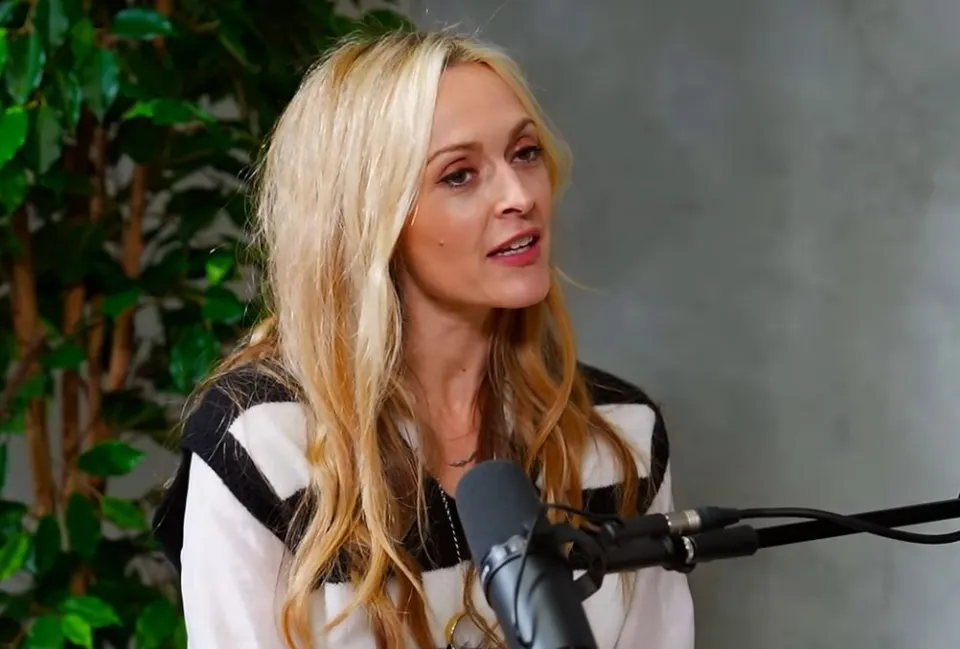
Fearne Cotton has revealed she was shouted at by a “burly” Vatican security guard after she broke one of the Sistine Chapel’s strict rules during a freebie trip to Rome.
The telly presenter was caught snapping pics of Michelangelo’s famous ceiling, despite their being a photography ban.
Fearne Cotton revealed she was left fuming after being ‘shouted at by a burley Italian security guard’Credit: Fearne Cotton’s Happy Place/YouTubeThe TV presenter was desperate to take a picture of The Creation of Adam painting by MichelangeloCredit: Getty
Fearne confessed her first reaction was to tell the guard to “f**K off,” after he caught her in the act.
The 44-year-old claimed she’s “not very good at rules” and only follows them when they “make sense.”
Sign up for the Showbiz newsletter
Thank you!
Speaking on her Happy Place podcast, Fearne attempted to defend the rule break, claiming she completely missed the announcement warning visitors that cameras and phones were off-limits inside the chapel.
Fearne’s faux pas unfolded during her recent European getaway, which was a paid partnership with British Airways Holidays.
The mum-of-two said: “When I was in Rome. I went on a short city break, and obviously, when you go to Rome, what do you do? You go to the Vatican, because it’s famed for the Vatican, and it’s a beautiful place to walk around.”
She explained that she was excited to see the ornate ceilings up close, specifically the Michelangelo one.
“I was desperate to see that in real life – and obviously take a photo of it. I got in there, I didn’t realise you’re not allowed to take photos. I’d missed that tannoy announcement, and I went to take a picture,” said Fearne.
“I got massively reprimanded, shouted at by a very burly Italian security guard, which should have freaked me out and made me go, ‘Oh god, I’m so sorry,’ but instead, I wanted to go, ‘F***k off!’”
The podcast host added: “I would never do that in the Sistine Chapel, obvs.”
But, Fearne was left furious after the incident and said it was because she “doesn’t like people telling me what to do.”
She said: “I was so riled. Like, I want to take a picture of it, I’ve got my flash on, why is it a problem?
“I also understand and respect that there are religious reasons, potentially, as to why I shouldn’t be taking the picture – I’m assuming, because I’m not quite sure why else.”
The Vatican Museums rule book states that while visitors may take snaps for personal use in most of the complex, it’s forbidden in the Sistine Chapel.
Photography, flash photography and filming using any electronic equipment is strictly not allowed throughout the museums, and guards have the power to demand visitors delete images taken in breach of the rules.
Phones are also banned inside the chapel, where visitors are asked to remain silent out of respect for the sacred setting.
Experts have warned parts of Southern Europe could exceed 50C this summer or next, with holidaymakers urged to rethink holiday destinations or could be forced to spend their vacation indoors
Temperatures in parts of southern Europe could exceed 50c(Image: Getty Images)
A sweltering 50C heatwave could hit parts of Europe as experts warned British holidaymakers to prepare for dangerous conditions this summer.
Holidaymakers heading to the Mediterranean have been warned temperatures could soar to 50C, with experts saying the record-breaking heat seen across southern Europe may only be the beginning. Large parts of Spain have already endured temperatures of 44C in recent days, while the heat has fuelled wildfires across Spain and France, forcing thousands of people to flee their homes.
Professor Bill McGuire, Emeritus Professor of Geophysical & Climate Hazards at UCL said even hotter weather could be yet to come. He said: “It would be no surprise if 50C was exceeded, either later this summer or next year, when the heating impact of the unprecedented El Niño building in the Pacific will be at its greatest.”
He urged anyone travelling to the Mediterranean to be prepared to spend far more time indoors than they might have planned. He told the Daily Mail: “I wouldn’t say that they would be a total write-off, but I think holidaymakers will need to be prepared to spend a lot of time in air-conditioned hotel rooms, due to it simply being too hot to do anything outside.”
The highest air temperature ever officially recorded in Europe is 48.8C, set in Sicily in 2021. Before that, the record stood at 48C, recorded in Elefsina and Athens in 1977.
Professor Hanna Cloke, Regius Professor of Meteorology and Climate Science at the University of Reading, said parts of Spain and Portugal could see temperatures climb into the high 40s. She said: “Temperatures in the high 40s are possible in the hottest parts of Spain and Portugal. And where humidity is high it can feel even hotter than that, well above what the thermometer says. That’s the kind of heat that kills.”
She urged holidaymakers to take extra care if temperatures continued to climb. She said: “The old and vulnerable need to be very careful; keeping out of the sun and drinking plenty of water, as they can easily suffer and become ill in 40C+ temperatures.”
Professor McGuire said there was “no doubt whatsoever” climate change was driving the extreme heat. He said: “Europe is heating faster than any other continent as we continue to add more than 40 billion tonnes of CO2 to the atmosphere every year – equivalent to the weight of 800,000 Titanics.
“The average temperature of Europe is now more than 2°C hotter than it was 100 years ago, and high temperature extremes are going up even faster. Heatwaves are getting hotter and longer, and taking many thousands of lives every year.
“But this isn’t the new normal, this is just the beginning. Summers across the Mediterranean region are just going to keep on getting hotter as long as we continue to do next to nothing in terms of reining in carbon emissions.”
TSMC posted a record quarterly profit on Thursday and raised its revenue outlook as booming demand for artificial intelligence chips continued to fuel growth at the world’s largest contract chipmaker.
ADVERTISEMENT
ADVERTISEMENT
Taiwan-based TSMC reported earnings of $4.31 per share for the April-June quarter, beating analysts’ expectations.
Revenue came in at $40.2 billion (€36.8bn), above analysts’ estimates of $39.63 billion (€34.6bn).
In local currency, net profit reached a record NT$706.6bn (€19.1bn), up 77% from a year earlier, while revenue climbed 36% to NT$1.27 trillion (€36.8bn), as appetite for the advanced chips TSMC makes for customers such as Nvidia and Apple showed no sign of cooling.
Given that it manufactures semiconductors for almost every major chip designer, the Hsinchu-based firm’s results are closely read as a gauge of the wider sector and of broader AI demand itself, just as investors fret over a possible bubble.
CEO Che-Chia Wei described global AI-related demand as “extremely robust” and said he expected it to remain very strong until around 2029 or 2030. On that basis, TSMC now forecasts 2026 revenue growth of slightly above 40% year on year, up from its previous guidance of more than 30%.
Thursday’s figures confirmed what monthly sales data had already suggested.
As reported on Monday, June revenue jumped 67.9% year on year, and first-half sales rose 35.6% from the same period in 2025, slightly ahead of analysts’ consensus forecasts for the quarter.
TSMC shares rose about 1% after the earnings release but later pared those gains as a sell-off in AI-related shares weighed on benchmarks across Asia during Thursday’s session.
Expanding US manufacturing
Alongside the results, TSMC said it would spend an additional $100 billion (€87.4bn) to expand its manufacturing capacity in the US, on top of the $165 billion (€144bn) already committed to building six fabrication plants in Arizona.
The move would bring the company’s total US investment pledges to around $265 billion (€231bn).
The fresh funds are expected to fund four further Arizona plants dedicated to the most advanced chips, those of 2 nanometres and below, and are intended to “support the strong multi-year demand” from the company’s leading American customers, CEO Che-Chia Wei said during the firm’s earnings conference.
TSMC also said it would spend more this year than previously planned, increasing its capital expenditure budget to between $60 billion (€52.4bn) and $64 billion (€55.9bn), up from an earlier range of $52 billion (€45.4bn) to $56 billion (€48.9bn).
The announcement follows a trade agreement struck earlier this year between the Trump administration and Taiwan, under which Taiwanese companies committed to invest at least $250 billion (€218bn) in the US technology sector inreturn for lower tariffs.
WASHINGTON — President Trump appeared poised to question the security of U.S. elections with a planned prime-time speech Thursday night, eliciting fears from Democrats and voting rights advocates that he is planning yet another play for federal control over voting in November’s midterms.
The exact reason for the speech has not been disclosed by the White House, with Trump only characterizing it to reporters this week as “really, really big news.” He confirmed it would have to do with “free and fair elections.”
The Washington Post reported, citing sources, that Trump planned to argue that there are vulnerabilities in the nation’s election infrastructure and claim that China had accessed U.S. voter data. The White House declined to confirm any such details Wednesday.
The announcement of the speech set off concerns among the president’s political opponents, as well as elections experts and voting rights advocates, that Trump could again escalate claims that the nation’s voting system is vulnerable to domestic fraud and foreign attacks.
He has previously said that Republicans should “nationalize” election administration, a job that falls to the states under the Constitution, and has pressured his party to tighten federal voting rules.
“We don’t know anything about what he might say … or what he might try to do with his very limited powers, as the president, over elections,” said David Becker, executive director of the nonpartisan Center for Election Innovation and Research. “I expect we’re going to hear a lot of rehashed and debunked claims.”
The president could potentially use new claims to argue that the nation is facing an emergency in upcoming elections that necessitates further federal intervention into voting, Rep. Joseph Morelle of New York, the ranking Democrat on the House Administration Committee, which has oversight of elections, said in an interview with The Times.
“This is going to be the rationale for declaring a national emergency,” Morelle said. “It’s transparent that he is creating the emergency and he’s creating the evidence out of whole cloth to suggest there is an emergency.”
Sen. Alex Padilla (D-Calif.), the top Democrat on the Senate Rules Committee, which oversees federal elections, told The Times on Wednesday that Trump was using a known playbook to “[sow] doubt about the outcome before a single vote has been cast.”
“All signs show that tomorrow’s speech will be more of the same: debunked conspiracy theories offered up not because they’re true, but because chaos and doubt are the only cards he has left to play,” Padilla said.
The speech, which Trump announced on social media Monday, comes four months ahead of midterm elections that will determine whether his party retains legislative control in Washington.
White House spokesperson Karoline Leavitt dismissed news reports about what Trump might say in the 6 p.m. PDT speech as speculation, and said “nobody knows yet what President Trump will ultimately say.”
The address also comes as Trump’s ceasefire with Iranhas fallen apart, renewing expectations for increased gas prices, and his approval rating on the economy has steadily dropped. On Tuesday, it also became public thatTrump had paid $5.6 million to the writer E. Jean Carroll, as ordered by a jury that in 2023 found Trump liable for sexually abusing and defaming her.
“What we’re going to be talking about Thursday is, it doesn’t get bigger,” Trump told reporters who asked Tuesday about the speech. “Because without free and fair elections you don’t have a country.”
Trump has spread baseless claims of widespread election fraud for years. But his prioritization of his claims about the voting system — even as much of the nation’s attention is on cost-of-living issues — has been on particularly clear display in recent days.
He has aggressively lobbied reluctant Republican senators to pass his voter ID legislation,refusing to sign a bipartisan housing bill over it; hefired all remaining members of the bipartisan U.S. Elections Assistance Commission; and his Justice Department said it would send election monitors to six states.
Since the midterm primaries began, Trump has also sown doubt about election security — chiefly in California, where he suggested Democrats had cheated or attempted to in the gubernatorial and Los Angeles mayoral primaries.
Georgia Democratic Sen. Jon Ossoff, whose state was often at the center of Trump’s 2020 fraud claims, said the president’s speech posed a threat to voting rights.
“I expect him to use whatever he puts out there on Thursday as a pretext, either for some attempted unconstitutional use of federal power to interfere in the election,” Ossoff said Tuesday on MS Now, “or to give his proxies and loyalists in state and local jurisdictions some cover for whatever they might attempt, or to lay the groundwork for challenging the result.”
Any effort to federalize or take over elections would face serious legal obstacles, said Nahal Kazemi, a Chapman University law professor. Although Congress can pass laws regarding election administration, as it did with the Voting Rights Act, the executive branch doesn’t play a role in running elections.
“You run into essentially a brick wall that is the Constitution, which makes very plain that states run elections,” Kazemi said.
When it comes to concerns about foreign interference, experts say there is little evidence of other countries attempting to hack systems or change votes. Instead, foreign actors have largely operated via disinformation campaigns, as the U.S. determined had occurred in the 2016 and 2020 elections.
“Of the information that is available to us now, there’s no reason to be alarmed about the possibility that a foreign adversary is going to take over election systems,” said Kazemi, who has studied foreign election interference.
One of the things that helps make American elections generally secure, she said, is that they are not centralized but are run by thousands of counties. Hacking into so many voting systems would be extraordinarily difficult for a foreign adversary, she said.
Jenny Farrell, executive director of the League of Women Voters of California, said California “takes elections security extremely seriously” and has one of the most secure systems in the country, subject to strict voter verification measures and intense chain of custody and auditing procedures.
Democrats have worked with elections experts in recent months on attempts to assure the public that U.S. elections are safe and secure. They have also tried to counter claims by Trump that mail ballots and voting machines are unreliable.
A slew of 2020 election reviews, including by Trump’s first administration, concluded that Trump lost and Biden won. Election experts say there is no evidence that widespread fraud determined the outcome of the election.
A judge also found that claims pushed by Trump and his attorneys that the company Dominion Voting Systems manipulated votes cast through its machines in favor of Biden were untrue.
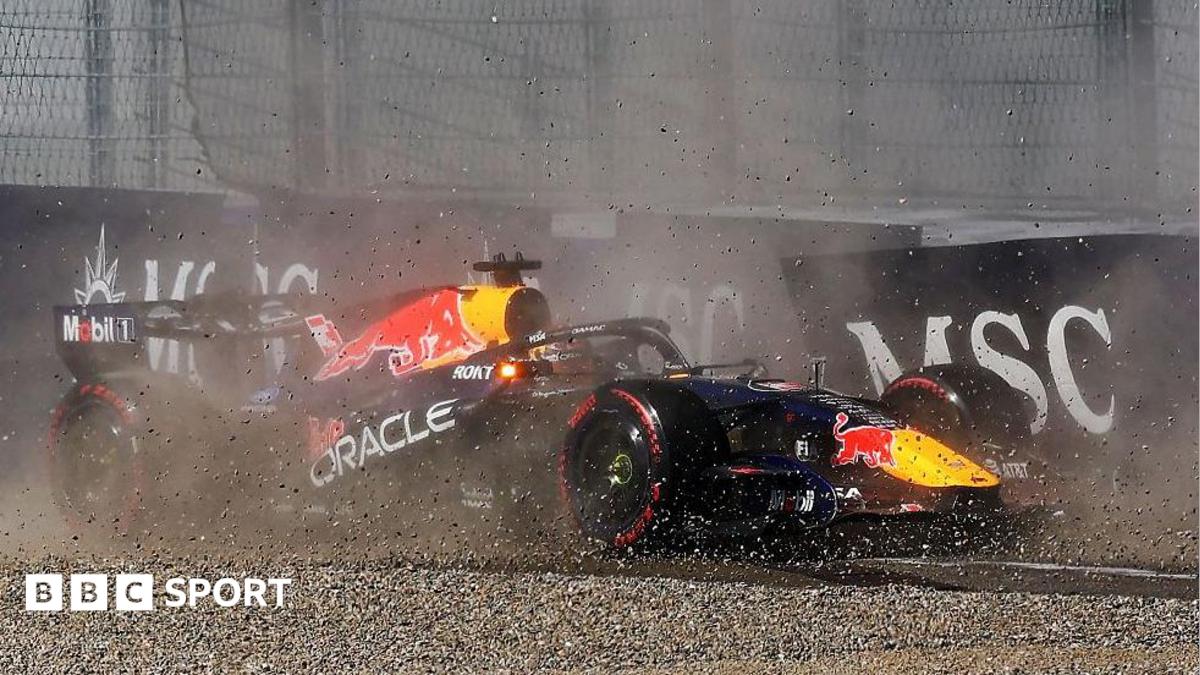
Red Bull are reverting to a conventional rear wing for this weekend’s Belgian Grand Prix following high-speed crashes for Max Verstappen in the previous two races.
The move has been confirmed to BBC Sport by Red Bull team principal Laurent Mekies, who said the team had discovered a problem with their previous wing in tests since the race at Silverstone.
Red Bull are reverting to a wing that opens for straight-line mode in standard fashion, Mekies said.
Verstappen said at Spa on Thursday: “It’s quite obvious why. We will go back on the old one and see whenever the new one is ready again to be used by us.”
Red Bull and Ferrari have this year pioneered a new design where the rear wing opens into straight-line mode by the top flap rotating more than 180 degrees.
This gives a bigger opening, greater drag reduction and therefore increased straight-line speed.
However, Verstappen’s crashes – one during the British Grand Prix and one in qualifying in Austria – were related to the way the wing closed on entry to two high-speed corners.
This photo, taken Thursday, shows the trading room of Hana Bank in Seoul as South Korean stocks fell by more than six percent on tech stock losses amid Middle East tensions. Photo by Yonhap
Seoul shares again plummeted Thursday, led by steep losses in technology heavyweights, as escalating tensions in the Middle East weighed on investor sentiment. The Korean won rose against the U.S. dollar.
After opening 4.45 percent lower, the benchmark Korea Composite Stock Price Index (KOSPI) extended its losses to close at 6,820.60, down 463.81 points, or 6.37 percent from the previous session, after falling as low as 6,730.87.
The Korea Exchange, the country’s bourse operator, activated a sell-side sidecar on the KOSPI for 20 minutes at around 9:10 a.m. after the benchmark index fell more than 5 percent.
The decline came after the index surged 6.24 percent Wednesday as softer-than-expected U.S. inflation data eased concerns about near-term Federal Reserve interest rate hikes.
Adding to investor jitters, the Bank of Korea (BOK) raised its benchmark interest rate by a quarter percentage point to 2.75 percent earlier in the day, the first increase in 3 1/2 years, to curb inflation amid escalating tensions in the Middle East.
The U.S. launched fresh strikes on Iran, escalating tensions in the Middle East and renewing concerns over potential disruptions to regional energy supplies.
“Profit-taking followed sharp gains in technology stocks a session earlier, while persistent concerns over the semiconductor industry kept the index under pressure,” Kang Jin-hyeok, an analyst at Shinhan Securities Co., said.
Institutional and foreign investors sold a net 2.37 trillion won (US$1.6 billion) and 1.38 trillion won worth of shares, respectively, while retail investors bought a net 3.66 trillion won.
Technology stocks led the decline.
Market bellwether Samsung Electronics plunged 8.77 percent to 255,000 won, while rival chipmaker SK hynix tumbled 11.53 percent to 1,842,000 won.
Top automaker Hyundai Motor fell 2.07 percent to 425,000 won, while steelmaker POSCO Holdings slipped 0.95 percent to 311,500 won.
Among gainers, shipbuilder Hanwha Ocean rose 5.73 percent to 86,700 won, while leading beverage firm Hitejinro gained 2.47 percent to 14,910 won.
The Korean won was quoted at 1,480.4 won against the U.S. dollar at 3:30 p.m., up from 1,484.7 won the previous session.
Copyright (c) Yonhap News Agency prohibits its content from being redistributed or reprinted without consent, and forbids the content from being learned and used by artificial intelligence systems.
United States Secretary of State Marco Rubio is hosting more than 65 countries for a conference focused on political violence from the far left, a designation that a number of critics say is being used to target legitimate opposition.
The “Ministerial on the Resurgence of Political Terrorism”, taking place on Thursday, brings together government representatives from around the world to coordinate on what the US Department of State calls a “renewed threat” that has “remained a blind spot in the international community’s counterterrorism focus”.
Critics, including the American Civil Liberties Union, told the Reuters news agency that “the far-left terrorism designations could be used to target lawful protest activity and political opponents rather than genuine security threats.”
Here’s what’s driving the summit and who’s attending:
What is this summit about?
The Trump administration’s 2026 counterterrorism strategy identifies three primary threats: “Islamist terrorism”, “narco-terrorism”, and “violent left-wing extremists, including Anarchists and Anti-Fascists”.
The strategy states that the third category of left-wing “extremists” has been traditionally ignored, and notes that Charlie Kirk’s assassination in September 2025 was executed “by a radical who espoused extreme transgender ideologies”.
The counterterrorism strategy omits right-wing extremism and white supremacist groups, despite growing instances of violence that some of these outfits have been accused of – including several of those who attacked the Capitol on January 6, 2020, in an attempt to overturn the US presidential election that Donald Trump lost.
Thomas Renard, director of The Hague-based International Centre for Counter-Terrorism, said the summit reflects a fundamental shift in how the US sees the threat.
“What we are seeing now in the United States is that counterterrorism has been completely politicised, instrumentalised,” he told Al Jazeera. “For instance, the threat from far-right terrorism, which was for decades considered as the primary domestic threat, has now completely disappeared from the US counterterrorism strategy.”
Who has been invited?
Invites went to more than 70 countries as the State Department wrote on social media that countries had shown “overwhelming interest”. It is reported that Israel’s Foreign Minister Gideon Saar will be present alongside representatives from multiple countries. The stated aim is to “expand coordination, enhance information sharing, and strengthen international law enforcement mechanisms”.
The summit follows a series of smaller meetings held earlier this year, including one in The Hague with law enforcement officials.
Renard says many European nations are expressing their unease with this ministerial meeting by sending relatively junior ministers.
“They are not particularly convinced that this is a topic that justifies this type of gathering, but at the same time, they don’t want to antagonise the United States either. And therefore, this is the compromise they found,” he said.
In November, 2025, the US designated four European groups as terrorist organisations: The German Antifa Ost, the Italian Informal Anarchist Federation/International Revolutionary Front (FAI/FRI), the Greek Armed Proletarian Justice and the Greek Revolutionary Class Self-Defense.
What is “far-left terrorism”?
The term is usually used by governments to describe movements accused of violence and driven by left-wing ideologies, including Marxism, socialism, or anarchism. Such movements usually describe themselves as anti-capitalist and anti-imperialist.
Latin America saw several left-wing armed movements during the Cold War, a number of which carried out sustained campaigns of political violence, such as Colombia’s Revolutionary Armed Forces of Colombia (FARC), the Farabundo Marti National Liberation Front (FMNL) in El Salvador and the Tupamaros in Uruguay. Throughout the 20th century, Washington repeatedly backed hardline right-wing regimes that opposed left-wing movements across Latin America.
India has been dealing with the Naxalite rebellion, a far-left Maoist movement that started in the 1960s and claims to fight for the rural population. The group is seen as one of India’s most serious internal security threats. At its peak, about the year 2000, thousands of people were killed due to the conflict with the Naxalite rebellion.
During the 1970s and 1980s, Marxist groups like the Red Army Faction in West Germany were behind several assassinations, abductions and bombings that they argued were aimed at weakening the capitalist state.
By contrast, the Antifa movement, which the Trump administration has consistently tried to portray as a major violent threat, is a loose, decentralised collection of socialist-leaning individuals opposed to far-right extremism, white supremacy and authoritarianism. Several individuals described by prosecutors as Antifa members have been indicted on accusations of violence in US courts, especially in states like Texas that are ruled by Trump’s Republican Party, since he returned to power. In June, eight such individuals were sentenced to several years in prison: Benjamin Hanil Song, convicted of the attempted murder of a law enforcement officer, was sentenced to 100 years in prison.
Far-right political violence and terrorism in the US
But the same Trump administration has pardoned all those charged with violence during the January 6, 2023 insurrection, including individuals accused of beating police officers.
This week’s summit also specifically focuses on far-left political violence but does not include the threat from far-right ideology and terrorism, similar to the counterterrorism strategy.
This, even though the Oklahoma bombing, which killed 168 people and wounded nearly 700 in the deadliest act of domestic terrorism in the US, was carried out by the right-wing hardliner Timothy McVeigh.
The Cato Institute, a US think tank in Washington, DC, stated in February that of politically motivated terrorism on US soil between 1975 and 2025, excluding the Oklahoma bombing and 9/11, “right-wing terrorists account for 45 percent of people murdered, Islamists are responsible for 32 percent, left-wing terrorists are responsible for 16 percent.”
Renard says the summit creates the very problem it claims to solve: “The United States, with this summit and with its strategy, is creating, actually, a blind spot about far-right terrorist threats, as that threat is strongly anchored and rooted in the United States.”
Christine Negroni, who released a book on the world’s most mysterious air disasters, shared with Sun Travel that when it comes to fires onboard a flight, leggings could leave you with terrible scars.
She said: “Everyone is wearing yoga pants on planes now, but I avoid all artificial fibres because they are more likely to burn and stick to you if there is a fire.
“I’d advise wearing cotton clothes or anything made of natural fibres.”
Anything that restricts blood flow is also not advisable – particularly for long journeys.
The vein specialist at Metro Vein Centers told the Huffington Post: “Wearing restrictive garments such as skinny jeans that are too tight reduces blood’s ability to flow into and out of the legs.”
This, combined with sitting for long periods of time, can cause blood to pool in the legs, which increasing the chances of thrombosis – a serious condition where a blood clot forms in a deep vein of the leg.
To be safe, it’s advisable to wear non-restrictive clothing, like trousers, skirts, shorts or dresses that have an elastic waistband.
Any clothing with swear words or offensive slogans could see you asked to cover up before boarding too.
Wear clothing with elastic waistbands for comfort and health reasonsCredit: GettyHigh heels and flip flops should be avoided as they’re not ideal in an emergencyCredit: Getty
Holidaymakers who are flying to a hot destination are encouraged to dress “modestly”.
For any fan of flip flops, these aren’t advisable to wear onboard a flight – again, for health and safety reasons.
Former cabin crew member Tony Kuna commented on Quora: “During an emergency, all sorts of debris and unpleasant ground surfaces will block your way towards the exit, as well as outside the aircraft.”
“If your feet [aren’t] properly covered, you’ll have a hard time making your way to safety.”
Sitting in the same category are high heels – as these won’t be easy to wear in an emergency.
For more on what to wear – here are the travel bags, plane outfits and accessories we love that start from 99p.
Bags
There’s fewer rules when it comes to bags – apart from make sure they comply with the measurements of the airline.
But to give yourself full comfort, it’s advisable to take a less rigid bag with you if it’s going under the seat.
Having a stiff bag, like a basket or weave one, will restrict your own legroom as it can’t be compressed.
You have to pack power banks in your hand luggage – and NOT use them onboardCredit: GettyWoven and basket beach bags are difficult to collapse downCredit: Alamy
Other items
It might be tempting to pop your contact lenses in before a flight to avoid the faff of glasses.
But the dry environment on a flight really isn’t suitable.
On the London Vision Clinic website, it explains: “With the average humidity on planes coming in as low as 20 per cent, our skin and eyes can dry out pretty quickly.
“Combine this with the moisture-sapping effects of contact lenses, and you can have a real recipe for disaster on your hands.”
Wearing contact lenses on flights can cause itchy, irritated eyes and can even result in “distorted vision”.
Breaking a little-known beach rule may carry a hefty financial penalty
Group of children playing and splashing water in the ocean(Image: Getty Images)
Taking a dip in the sea is one of the highlights of any beach holiday. With the sun beating down, temperatures soaring and swimwear at the ready, millions of holidaymakers head into the water each year to cool off and enjoy time with family and friends.
Anyone travelling to Portugal hoping to do the same may want to brush up on local rules first, as breaking one little-known sanitation regulation could reportedly lead to fines of up to €750 (around £630). Knowing the law before you head to the beach could help you avoid an unexpected and potentially costly mistake.
It relates to urinating in the ocean, something many people – particularly children – have probably done at some point without giving it a second thought. While some may assume the sea would quickly dilute human waste, some travel experts say Portuguese rules are intended to protect marine ecosystems and coastal hygiene.
According to travel website Islands, beach sanitation rules allow authorities to issue fines of up to €750 for people caught urinating in the sea. It does mention, however, that there is no practical way for authorities to monitor the behaviour beneath the waves, and that enforcement is considered rare.
The law exists to reduce pollution in coastal waters, particularly in areas that attract large numbers of visitors during the summer months. Portugal’s beaches are among Europe’s most popular, drawing millions of holidaymakers each year to destinations including the Algarve, Lisbon Coast and Madeira.
Fortunately, most public beaches in Portugal provide public toilets or nearby facilities, making it easy for visitors to avoid any potential issues. Using designated toilets also helps protect water quality and the wider coastal environment.
Portugal is not the only European destination with strict rules covering beach behaviour. In parts of Spain, including Vigo and Marbella, local authorities have introduced similar bans on what they describe as “physiological evacuation” in the sea, with fines also reaching €750, according to local municipal regulations.
Holidaymakers should also be aware of other rules in Portugal. Several beaches prohibit loud music from portable speakers, while Albufeira has introduced regulations that could see people fined for wearing swimwear away from designated beach areas as part of efforts to tackle anti-social behaviour.
The UK Foreign, Commonwealth and Development Office advises British travellers to familiarise themselves with local laws and customs before travelling abroad. Checking the rules before heading to the beach could help visitors avoid unexpected penalties and ensure they enjoy a stress-free holiday.
At first glance, the premium economy legroom feels very impressive – I had no problems stretching my legs and my knees (as a 5”5 lass) were miles aware from the seat in front of me.
Another perk I loved were the addition of slippers. Usually reserved for business class passengers, I had barely sat down myself before I realised all the cabin had already put theirs on.
Along with complimentary water bottles, blankets and pillows, premium economy passengers get complimentary toiletries made by British brand Hunters.
Inside it were the usual – lip balm, cream, ear plugs, socks, eye mask and toothbrush kit – but it was the bag itself I was a huge fan of.
Coming in both red and black, the cord strap makes it the perfect dog walking bag to take back home.
Settling in for the flight, I was also impressed that we were all given free WiFi on the plane.
The premium economy is in a 2-4-2 formation, and each seat has their own locker spaceYou get free slippers – often only reserved for business class passengers
While somewhat patchy at times, I still managed to check my work emails during the 11 hour flight without too many problems.
That’s not to say the experience was 100 per cent perfect.
I was slightly let down by the film choices, having just 144 available. This is compared to Emirates which has more than 2,000.
It didn’t pass my test of having my favourite inflight film – Crazy Rich Asians – onboard, with fewer than 10 romance films.
I would also say food was fine, but nothing crazy to write home about. I loved the metal cutlery, which felt like a nice step up from economy.
They also had herbal teas, something which many airlines struggle with unless you are a business class passenger.
I opted for the chicken and potatoes as well as a breakfast frittata.
(Although the chocolate mousse was nearly licked clean, it was so delicious).
Having a pull out tray from the arm rather than the back of the seats was also preferable as well, as it gave the feeling of more room too.
When it came to getting sleep, the seats are exceptionally comfortable.
There is so much leg room and my knees were nowhere near the seat in frontThe meals were pretty good too – especially the chocolate mousse
I usually struggle to drop off, but the seat itself was soft so no bad backs, and the insanely deep recline meant it almost felt like a bed.
So is it worth it? I would say it is definitely one of the best premium economy seats I have tried, from the little extras to the reclining options.
And in even better news, they will be rolling out their new, upgraded premium economy soon that is even more high class.
It will 42 inches of pitch – making it the world’s most spacious premium economy.
I guess I’ll have to just try them again…?
Return flights from London to Bangkok from £1,871 in premium economy with Eva Air.
The industry saw immediately just how lucrative fear could be. More than a century later, there is always someone in the entertainment media willing to trade in racist tropes for money, as well as an audience ready to receive them.
Two new films, “Citizen Vigilante” and “Run, Fight, Hide: Infidels,” demonstrate that streaming platforms and social media no longer simply distribute controversial content but in fact thrive on content that provokes, polarizes and sustains attention, regardless of the social cost.
Both of these xenophobic and Islamophobic films are being pushed as “anti-woke” vehicles, deliberately engineered to bypass traditional critical reception and capitalize on a fractured media ecosystem. “Citizen Vigilante,” which features an American protagonist killing dark-skinned immigrants and Muslims in an unnamed European setting, was denied a rating certificate by the German government for inciting violence. Yet despite that determination, the film secured global reach through decentralized digital distribution and high-profile promotion from Elon Musk.
Similarly, “Run, Fight, Hide: Infidels” — a campus siege narrative evoking 1980s action film nostalgia that leans heavily into outdated, post-9/11 anxieties — relies on a built-in conservative media apparatus to guarantee financial returns. The film is produced by the conservative media figure Ben Shapiro and the Daily Wire, which he co-founded. It is a sequel to a 2020 film that was their film company’s premiere.
But while promoters of such films frame their work as a brave rebellion, the reality is much more sinister: rehashing 40-year-old tropes while invoking conspiracy theories of Muslims bringing sharia law to America, because outrage is cheap to produce and easy to monetize.
Stories matter. Stories shape how we see one another. They influence what we love, what we celebrate, whom we trust, whom we understand and whom we fear.
Since January, the Muslim Public Affairs Council has documented a sharp escalation in threats and attacks targeting Muslims and Islamic institutions across the United States, including vandalism, shootings, bomb threats, attempted assassinations and physical assaults. These are not isolated incidents. They reflect a broader climate in which dehumanizing representation increasingly manifests as real-world violence.
Entertainment and politics increasingly employ the same tactic as one another, recycling narratives of fear and “otherness” to mobilize audiences, voters and consumers. When political leaders encourage those narratives, as President Trump recently did by amplifying and commenting on a photo of young Muslim American students in hijab, they further normalize the same stereotypes that entertainment companies have learned to monetize.
Yet while the social costs continue to mount, the economic incentives remain firmly intact. “Citizen Vigilante” earned a 93% audience score on Rotten Tomatoes despite receiving just a 6% critics’ score. More tellingly, it quickly climbed to the top of Amazon’s and Apple TV’s paid video-on-demand charts.
And this isn’t just a Muslim and immigrant issue — and it’s not only about who is portrayed on screens, but also who is not. Representation has been backsliding, and audiences are left with fewer opportunities to see the reality and humanity of diverse communities, making them more vulnerable to fear-based narratives.
According to a 2026 report from the nonprofit Define American, which tracks representation across television and film, Latinos account for only 23% of immigrant characters represented on screen, even though they make up more than 40% of the immigrant population in the United States. In 2020, 50% of immigrants on screen were Latino.
The industry’s defense is that whitewashed and xenophobic films reflect audience demand. But the recent research by Define American challenges this assumption. Data show that nuanced, multidimensional storytelling, in which immigrants and minority characters are woven into the fabric of everyday narratives rather than tokenized or villainized, actually leads to greater audience engagement and deeper systemic understanding.
Entertainment doesn’t simply reflect culture; it teaches us who belongs within it. Studios, distributors, streaming platforms and filmmakers all have a responsibility to reject narratives that portray immigrants as enemies and instead embrace stories that reflect the diversity and complexity of our world. At the same time — as with voters — the power ultimately rests with consumers. The choice to demand storytelling that challenges prejudice rather than profits from it belongs to all of us.
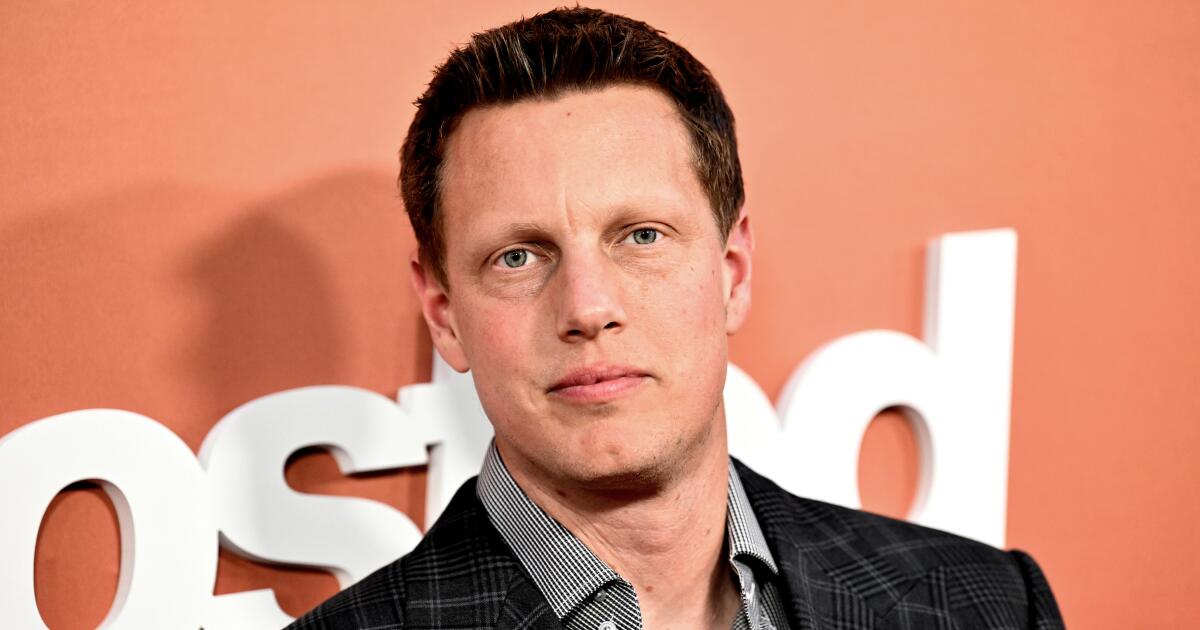

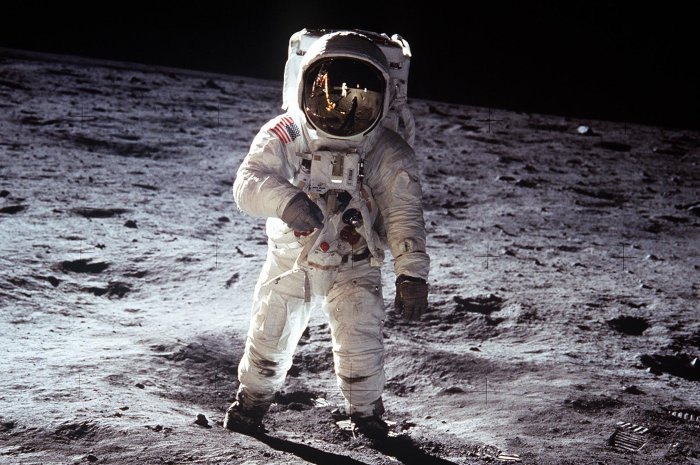












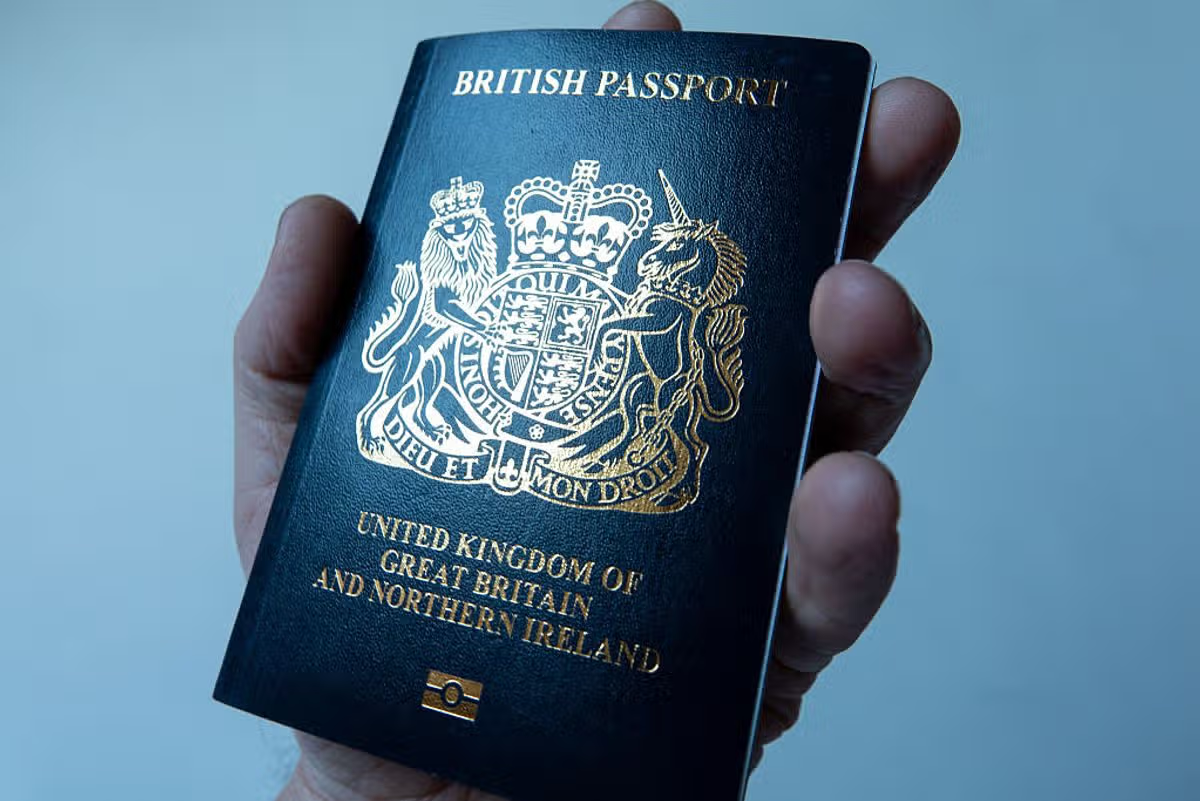



![Sudanese Minister of Human Resources and Social Development Mutasim Ahmed Salih [Al Jazeera]](https://i0.wp.com/www.aljazeera.com/wp-content/uploads/2026/07/%D9%8A%D9%8A%D9%8A-1763634388-1784200340.webp?w=640&ssl=1)
![Sudanese women gather for a hot meal at al-Rahmaniyah camp for displaced people, near the city of el-Obeid in the southern Kordofan region, on July 7, 2026 [AFP]](https://i0.wp.com/www.aljazeera.com/wp-content/uploads/2026/07/afp_6a4f5eab6ba6-1783586475.jpg?w=640&ssl=1)