This article explores the historical and spiritual significance of the First Sermon of Lord Buddha, an event that led to the establishment of the Buddhist monkhood approximately 2,500 years ago. Central to the text is the Middle Path, a philosophical approach that rejects extreme lifestyles in favor of achieving enlightenment and Nirvana. The author details the Four Noble Truths, which address the reality of human suffering and the specific methods available to resolve it. Furthermore, the source outlines the Noble Eightfold Path, a collection of ethical guidelines designed to foster mental clarity and spiritual calm. By focusing on these core doctrines, the text highlights the fundamental goal of Buddhism: the cessation of suffering …
Former Brazilian President Jair Bolsonaro, who is serving a 27-year sentence for a coup attempt, was placed under further restrictions on Friday for breaching conditions of his house arrest. File Photo by Andre Borger/EPA-EFE
July 18 (UPI) — Brazil’s top court on Saturday denied a request from former President Jair Bolsonaro to be visited by Argentinian President Javier Milei while under house arrest.
The attempted visit by Milei, a political ally of the far-right Bolsonaro, was part of a campaign to drum up political support for the son of the former president, who is running against leftist President Luiz Inacio Lula da Silva.
He was already barred from participating in national politics as part of his sentence.
But Bolsonaro was placed under further restrictions on Friday for breaching conditions of his house arrest, after he wrote a political letter supporting his son’s candidature for president.
The son, right-wing state Sen. Flavio Bolsonaro, then showed the endorsement letter during a live stream on social media.
Supreme Court Justice Alexandre de Moraes barred Bolsonaro from receiving any visits of a “political-electoral” nature until after Brazil’s general elections in October.
Bolsonaro’s defense lawyers argued in court he was unaware that his son would divulge his writing on social media, though the former president titled the text “letter to the Brazilian people.”
“The letter — written and personally signed by Jair Messias Bolsonaro — was addressed ‘to the Brazilian people,’ demonstrating that it was not of a private nature but rather intended for political and electoral purposes, with dissemination to the general public, using Flavio Nantes Bolsonaro as an intermediary, or in his own words, as his ‘spokesperson,'” Moraes wrote in his decision, G1 reported.
“The text of the ‘Letter to the Brazilian People,’ therefore, clearly shows that Jair Messias Bolsonaro intended to communicate with his political supporters through his son’s social media accounts,” the justice added.
Bolsonaro is now barred from receiving visits for 30 days, except by his medical and legal teams.
He is also not allowed to be visited by his son for 90 days.
Hardly anyone walking up Peppertree Lane notices the Hollywood Bowl Museum on the way to the amphitheater entrance. The overlooked museum, however, has been refreshed with an enchanting new exhibition. Well-timed, it provides an excellent primer on changing L.A. mores seen through the history of the Bowl over the past century.
Change is again upon us. As Angelenos have evolved, so have our ideas about the Bowl. A concert was a concert and audiences of yore dressed for the Los Angeles Philharmonic, indoors or out. Men wore coats, ties and fedoras. I have a photo of my mother at the Bowl on a chilly 1940s evening sporting, like other ladies around her in the inexpensive bleachers, her mink stole.
The Bowl was said to boast, before the construction of the Hollywood Freeway, a natural acoustical, well, bowl. Even so, sonic adventurers, beginning with Leopold Stokowski in the 1930s, experimented with amplification in an obsessive, seemingly quixotic effort to locate a mythical sonic grail on the Cahuenga Pass. Boys with their toys, thought The Times’ feisty critic Isabelle Morse Jones.
We now have it with a spectacular new sound system along with the old caveat: Beware of what you wish for.
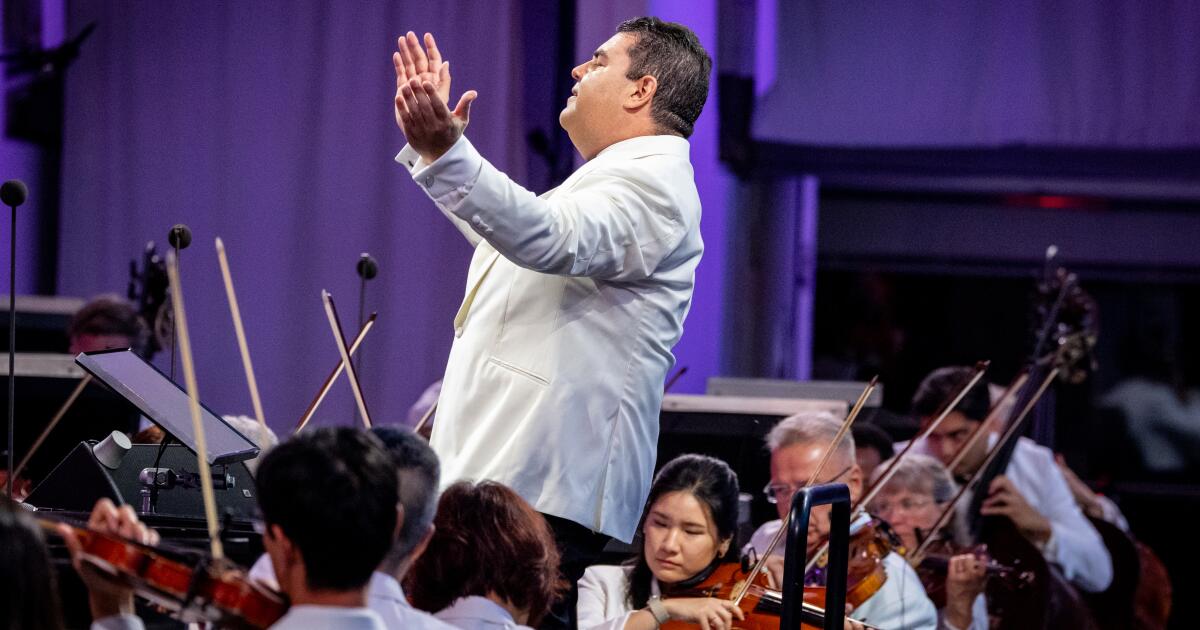
The Bowl, of course, remains the Bowl. Last week when the Los Angeles Philharmonic opened its summer season in the venue it built and has managed for over a century, there were all the familiar alfresco and musical pleasures: convivial picnicking, fine weather, inimitable atmosphere, a white-jacketed orchestra on an iconic stage. The museum’s panorama of ageless ambience is this summer enhanced by increased yet snappy security and a handsome “John Williams Stage” plaque honoring L.A.’s beloved composer.
The newly designed white French loudspeakers suspended over the Bowl stage along with ground-level white cubes of super-effective subwoofers have clean, unobtrusive lines that well fit the shell. Their unobtrusive placement complements their immersive musicality, hitherto only possible outdoors with high-end earphones or headphones connected to sophisticated digital acoustic conversion equipment costing a bundle. For the first time, a dollar seat (there are still a few for the L.A. Phil) strives for such sonic bliss.
It feels miraculous. You are in an excellent concert hall-like acoustical environment while in the great outdoors. Our earbuds have already trained us to think of music as a private escape from reality. Even so, to be in that environmentally exclusive sonic world while sharing music with thousands of others in a special setting, ironically begins to feel more artificially escapist than a crummy sound system that reminds you of where you are.
Will we — should we — learn to love it and find anything less artificial? Car audio systems creating concert hall conditions suggest we will. Audiophiles well know that you get used to new equipment, no matter how revelatory it first sounds, very quickly.
A few years ago, when I heard a demonstration of a souped-up, hi-res recording in surround Dolby Atmos of excerpts from Wagner’s “Die Walküre” on a 32-speaker Burmester audio system crammed into a fancy Mercedes SUV, I was scared out of my wits. “Apocalypse Now” on the 405 is not for the faint of heart.
Yet I’ve spared no expense on what I find a more refined sound system in my Volvo, which I now use more and more for audio books than music. The richer, more human quality of a recorded voice is like having a virtual companion reading to you. I’m less in a hurry. It’s nice to have a pal at rush hour.
It is far too soon to say what ways the fabulous new Bowl sound system, which happens to be AI-endowed, might become friend and/or foe. In the first two L.A. Phil classical concerts, the white speakers brought out wonders and caused problems. But the minimal Bowl rehearsal time allows little opportunity to fine-tune.
One big change in Bowl priorities has been the rise of pop as king. Not that long ago, the L.A. Phil’s opening night was the Bowl opening night, suitable for conspicuous socialite picnicking. Not only has the Bowl opener been turned over to star pop performers (who bring in bigger bucks), this year there wasn’t even a first L.A. Phil Tuesday. That date became yet another money-maker with private event — a screening of “Moana” with live orchestra, luckily before the disappointing reviews and box office performance. The first L.A. Phil concert of the season was moved to Wednesday and poorly attended.
The back-to-back Wednesday and Thursday night programs featured music composed and performed by Americans. Each included a short new work commissioned by the L.A. Phil. On Wednesday, moonlighting Hollywood Bowl Orchestra music director Thomas Wilkins led the premiere of Shaina Taub’s “Suffs” Song Cycle — orchestrations of four songs from her recent musical about women’s suffrage that played just down the road at the Pantages last year. The next evening, Tito Muñoz made a strong L.A. Phil debut in a program that included the premiere of “The Art of the Goal,” celebrating Los Angeles Football Club, and that was credited jointly to filmmaker Josh Kahn and composer Adam Schoenberg.
Both premieres were reminders that the sound system will have many purposes. In “Suffs,” stalwart amplification emphasized the predictability of forthright lyrics and score. AI is supposed to make voices stand out, but it is not helpful to singers’ limitations. On the other hand, is brought out the sumptuous quality Alex Newell’s voice potently making the adamant “Keep Marching” keep marching.
Muñoz’s program was titled “The Classical World Cup,” with music by Argentine composer Alberto Ginastera, Mexican composer Silvestre Revueltas and U.S. composers Samuel Barber and Aaron Copland along with Schoenberg. As it turned out, Mexico and the U.S. were already out of World Cup competition, and “Art of the Goal” came across as an eight-minute advertisement for the L.A. footballers. They’re in the dressing room revving up and, on the field, revved up, sped up, cut up with music that excites and far too many shots of a soccer field lined with advertisements, just the kind of branding we hope to escape at the Bowl.
Then again, even though “Goal” was shown only on video monitors, the Bowl with its new sound system worked brilliantly as the grandest cinema on the planet. Hollywood may be hurting, but let the Bowl now save the day by inspiring Hollywood to reinvent, in its backyard, film with live music.
As for regular orchestral music, the sound system was hit and miss. On Wilkins’ program, Valerie Coleman’s dark “Fanfare for Uncommon Times” brought a listener inside brass and percussion. Leonard Bernstein’s lavish orchestrations of his “Three Dances from ‘On the Town’” and Ellington’s “Harlem” benefited from Wilkins’ low-key conducting, offering ease and freedom to the players.
Muñoz’s program was bookended by dance scores — Ginastera’s “Four Dances from ‘Estancia’” and Copland’s ballet “Billy the Kid” — that evoke the prairie and the people in it in both viscerally and spiritually. The new sound system and eager performances made the prairie feel close. In between, violinist Randall Goosby brought richness to Barber’s Violin Concerto and the L.A. went in for gripping weirdness in “Sensemayá.”
But who did what? Were balances the conductors’, the sound engineers’, AI’s? While the amplified soundstage is now as huge as the Bowl, attention was increasingly drawn to individuals, heightened by video closeups. A horn flub (and horns flub) stands out. The sound is not just big and bold, but scrubbed clean by AI with the goal of maddening perfection. Will such scrutiny, in the end, make players uptight or liberate them? It’s well to remember that in the early days of synthesizing instruments, violins with perfect vibrato sounded especially fake, until tiny errors generated by chance were added to the sine waves.
The Hollywood Bowl has created a beast. If humanized, the Bowl could serve as antidote to a worrisome AI future. But the question remains whether we can change AI or the newly potent sound waves only make matters worse.
Nicaragua is the largest of the republics in Central America.
In 1936, Anastasio Somoza García, the head of Nicaragua’s army deposed the elected President, Juan Bautista Sacasa (who was also Somoza’s uncle), and installed himself as President.
This effectively established a hereditary dictatorship in the country for over 45 years, with two of Somoza’s sons serving as president after Somoza had been assassinated in 1956.
Backed by the US because of their anti-communist stance, the administration brought some reforms to the country, though the Somozas exhibited the usual dictatorial traits of accumulating incredible personal wealth and exiling any potential opponents.
Anastasio Somoza Debayle, the second of Somoza’s sons to be president was seen as particularly dictatorial and was accused of human rights violations.
Not too far in the background of the Somoza rule was the Sandinista National Liberation Front. This was a socialist revolutionary group founded in 1962 and named after Augusto Sandino, a hero of the resistance to U.S. military occupation between 1927 and 1933.
Since their creation, the Sandinistas had steadily built their support base amongst workers, students and peasants. In the 1970s, the political aims spilt over into military attacks on the Nicaraguan government. And although the Somozas retaliated, the revolution was gaining momentum, exploding into direct confrontations between the Sandinistas and the Nicaraguan army in 1978.
England have to find the management and mentality to somehow take themselves somewhere they have never been since 1966.
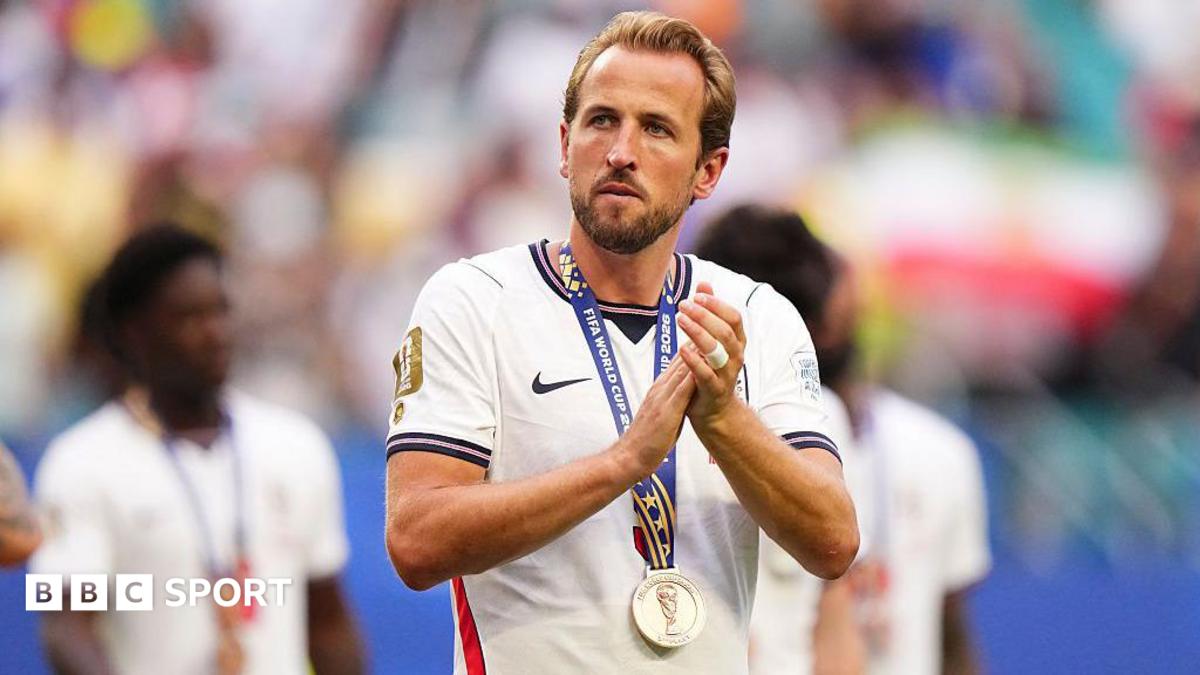
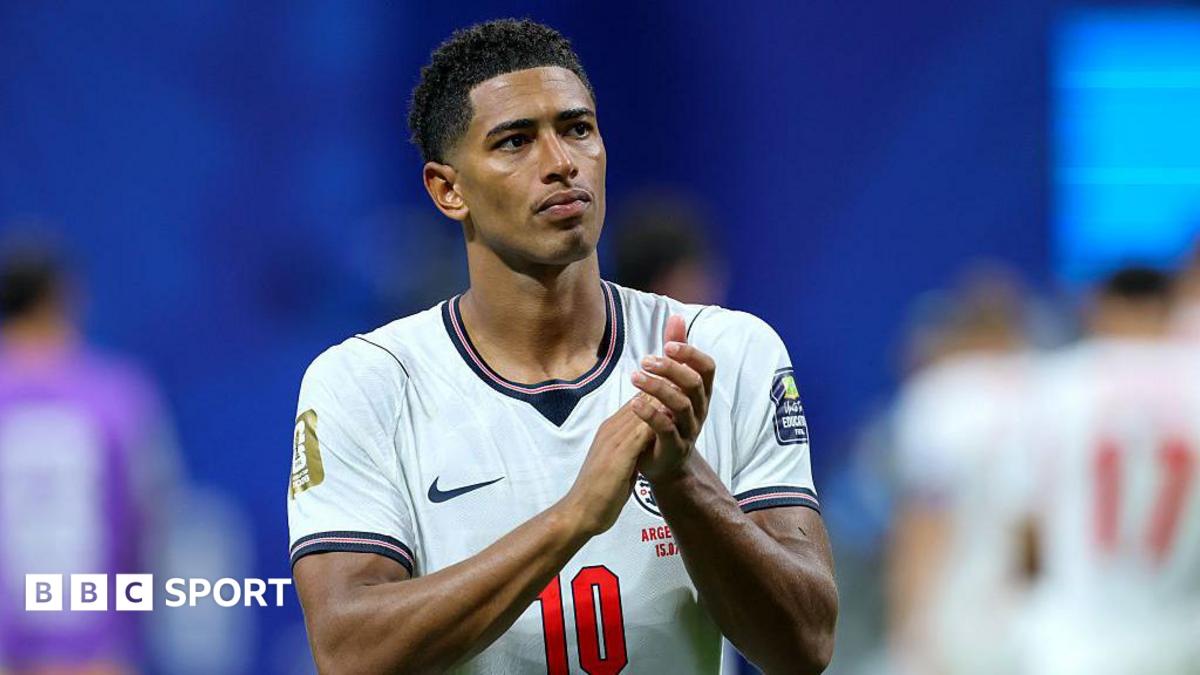
Tuchel built a side in a Premier League image with lots of physicality and moulded around their two world-class players – Bellingham and Kane.
As yet, however, there is no clear idea or pattern of how they can reshape quickly ahead of Euro 2028 and actually win a tournament.
And, of course, they will face France and Spain at those Euros.
Tuchel needs to find a way to make England more potent and resilient, less one-dimensional, and he will be able to draft in the emerging, brilliant talents of Liverpool’s 17-year-old forward Rio Ngumoah and Arsenal’s Max Dowman, only 16.
The head coach did appear to let the handbrake off against France on Saturday (admittedly in a game with little pressure) and his rejigged side proved they can dazzle in attack with their six-goal display.
Nevertheless, clouds still hang over how England solve this puzzle after another failure – and the pressure is on Tuchel to come up with the answers.
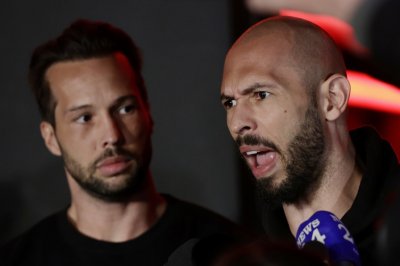
Britain’s Crown Prosecution Service said brothers Andrew (R) and Tristan (L) Tate are awaiting extradition to the U.K. to face a slew of charges over alleged sex crimes. File Photo by Robert Ghement/EPA-EFE
July 18 (UPI) — Influencer brothers Andrew and Tristan Tate were arrested in Miami Saturday on dozens of new charges stemming from alleged sex crimes in the U.K., including child pornography, British prosecutors said.
Britain’s Crown Prosecution Service said the brothers are awaiting extradition to the U.K. to face 21 original charges — as well as a slew of new accusations.
“We have decided to prosecute Andrew and Tristan Tate for further offences including rape, arranging or facilitating trafficking for sexual exploitation and offences relating to indecent images of a child,” said Malcolm McHaffie, head of the Special Crime Division at CPS, in a statement.
Andrew Tate, 39, was charged with 19 counts related to indecent images of a child and extreme pornography. He is also accused of rape, arranging or facilitating trafficking for sexual exploitation and assault occasioning actual bodily harm.
Tristan Tate, 38, was charged with sexual assault, rape and arranging or facilitating trafficking for sexual exploitation.
“These charging decisions followed receipt of a further file of evidence from Bedfordshire Police and bring the total number of alleged victims in this case to seven,” McHaffie said.
CPS said the new charges stem from offenses taking place between July 2010 and August 2017.
The Tate brothers, who hold dual British-American citizenship, were first charged in the U.K. last year for alleged rape and human trafficking.
They are former kickboxers with millions of followers on social media.
The brothers have denied all charges against them.
The Northern Ireland born and New Zealand actor, best known for playing Dr Alan Grant in the Jurassic Park franchise, died on Monday, just months after he was deemed “cancer-free” following a battle with angioimmunoblastic T-cell lymphoma.
Sam was best known for his legendary Jurassic Park role but the actor also once appeared in a ‘masterpiece’ 2002 drama series alongside Keira Knightley.
Doctor Zhivago was released in 2002. It is based on the 1957 novel of the same title by Boris Pasternak, which was also turned into a film in 1965.
The 2002 series is available to watch on ITV and ITVX, who have described it as: “Keira Knightley stars in this gripping drama set in the tumultuous era of WW1 and the Russian Revolution. Dr Zhivago finds himself tormented by his his love for two women.”
Meanwhile, a synopsis adds: “Having witnessed his father’s suicide, Yury is sent to live in Moscow with his uncle, aunt and cousin. Whilst there, he becomes captivated by a stunning young girl called Lara.”
The character of Yuri Zhivago is played by Hans Matheson, Keira plays Lara Guishar Antipova and Sam plays Victor Komarovsky. Other cast members include Kris Marshall as Pasha Antipov/Strelnikov, Celia Imrie as Anna Gromeko and Hugh Bonneville as Andrey Zhivago – to name just a few.
The series, directed by Giacomo Campiotti, has an impressive 78% Rotten Tomatoes score with many viewers calling it a ‘masterpiece’. One person said: “A masterpiece by Giacomo Campiotti”, adding: “It deserves an Oscar.”
Another fan put: “Wow – this was fantastic! It really all came together with the last installment and truly broke my heart. I don’t see how anyone could not fall madly in love with Hans Matheson as Yury, and Kiera Knightley brought such maturity and worldliness to such a difficult role (amazing at such a young age).
“Both actors should be commended. And as for Sam Neill! He was amazing. The screen practically frosted up when he appeared!”
A different viewer commented: “I haven’t seen the 1st version of Dr Zhivago or read the book but this film is absolutely amazing. I suppose i can’t really judge because of not really knowing the story before this, but as far as I can tell Its a wonderful love story although it is shocking in bits of it.”
Meanwhile, another person added: “I have never seen the original Doctor Zhivago film, so I can’t take any prejudged bias. This mini-series is possibly the best UK mini-series I have ever seen and is a sign that perhaps the UK networks are serious about creating some top quality drama television that HBO have been producing for ages!
“The acting is top quality, however, Sam Neill on top form steals every scene he’s in, and that’s saying something with the quality around him on screen.”
Doctor Zhivago is available to watch on ITV and ITVX
Ezri Konsa: The Aston Villa defender featured in every game and continued to show he has the quality for international football. A starting centre-back and also played at right-back in the win over Norway in the quarter-finals. He ended the tournament with a goal in the third-place play-off. 7
John Stones: It was considered a gamble by Thomas Tuchel to take Stones considering his fitness issues. He started the first game, had some shaky moments and dropped out for the next couple. But he regrouped and started the quarter-final win over Norway and semi-final defeat by Argentina. The 32-year-old showed his quality but was caught under the ball for Lautaro Martinez’s winner. 7
Marc Guehi: A staple of the England backline at major tournaments. Guehi did not start the opening game against Croatia but when he came in he showed his usual calmness and quality. Guehi put in an excellent performance against Manchester City team-mate Erling Haaland in the quarter-final against Norway and performed well until England went out. 8
Trevoh Chalobah: The Chelsea defender was called up as a replacement for Tino Livramento. It was a decision that prompted a lot of debate as it was felt it left England short in the full-back areas.Chalobah was brought on in the closing stages of the win over France for his only minutes of the tournament. 5
Jarell Quansah: This was Quansah’s first major tournament and he was arguably a surprise pick in the 26-man squad. But the Bayer Leverkusen defender did show why Tuchel was so keen to have him as a full-back option. Quansah started well against Panama before getting injured, then did likewise against Mexico before he was sent off. He returned for the third-place play-off, and has a bright international future. 6
Dan Burn: The Newcastle defender’s inclusion was the subject of much debate but his performance against Mexico underlined the reasoning. Burn’s aerial prowess gave England a way to see out games, though Tuchel turned to that tactic too early when trying to see out a win against Argentina. 6.5
Nico O’Reilly: This was the 21-year-old’s first tournament and he grew into it after a nervy opening match. O’Reilly only became England’s first-choice left-back in November, and to go from that to a World Cup and start five of the eight matches is very impressive. O’Reilly is very good on the ball but could improve defensively. 6.5
Reece James: The Chelsea captain said it was “boring” when people discussed his fitness, but the first-choice right-back missed three games after sustaining a hamstring injury against Ghana. He recovered to play in the quarter-final and semi-final, and showed his quality. 6.5
Djed Spence: The Tottenham full-back was one of England’s breakout players of the tournament. Spence’s ability to play at both left-back and right-back is extremely valuable in tournament football. He is a very good one-v-one defender and his pace gives an outlet to the team. He produced two of his best performances in the quarter-final and semi-final. Spence also played well against France, winning a penalty. 8
In order to afford a last-minute ticket to the World Cup final at New York New Jersey Stadium — widely billed as the single most expensive sporting event ever played in the United States — you might have to be a millionaire, as the cost for a coveted seat at the venue crossed the $2m mark less than 24 hours before kickoff.
As Lionel Messi’s Argentina face Spain and their teenage superstar Lamine Yamal, ticket prices have soared on the resale market.
By Friday, nearly all tickets appeared to be sold, with a few listed on FIFA’s sales platform at about $32,000 apiece.
On Saturday, there were no last-minute tickets available on the site. However, FIFA’s resale platform had tickets available from a little less than $10,000 to as high as $2.3m.
The final caps a World Cup where fans were willing to shell out more than ever for a seat at the quadrennial showpiece, as ticket buyers confounded even the greatest cynics in the face of sky-high prices.
It is a fitting end to a tournament that has tested the limits of what fans will spend, with FIFA’s gamble paying off after concerns over visa restrictions and domestic unrest in the US.
“What FIFA did a very good job of was determining what demand would be because people [were] paying these absurd prices for just about all the 104 matches,” said Scott Friedman, a ticketing expert who previously worked for the Cleveland Cavaliers.
“A year ago, we didn’t think people would be travelling with Trump’s ICE stuff and all this other conspiracy stuff. But it’s the most popular tournament in the world by far globally, and FIFA, to their credit, they set the prices high, and people ended up paying them.”
According to the Reuters news agency, an analysis of FIFA attendance data found that more than half the 72 group matches were attended to capacity, with most others only a few hundred fans short of a full house. About 99.7 percent of available seats were filled during the preliminary stage matches, FIFA said.
The data erased early concerns that FIFA’s infamously steep prices would put off fans, after swaths of empty seats were seen around the Guadalajara Stadium for the June 11 match between South Korea and Czechia.
Higher prices, higher demand
As the tournament expanded to its largest-ever field, however, with 48 teams involved, so too did interest among fans.
Prices were set initially at $575 a ticket for group games — more than double the most expensive group ticket available during the 2022 tournament — but FIFA’s dynamic pricing system meant that many ticket holders paid far more.
Hundreds of tickets were still available for the final on Wednesday, priced at little more than $7,000 on FIFA’s platform, a surprising fact that prompted speculation over whether FIFA had finally gone too far with its prices.
But the batch of seats available was likely the result of a process known as “slow ticketing”, Friedman explained, a common practice in mega-events in which organisers restrict inventory to motivate buyers.
“They can act like they already sold their seats and kind of just dribble them in accordingly to obviously increase market demand,” said Friedman, who runs the Ticket Talk Network, dedicated to exploring how seats for sports mega-events are bought and sold.
“Like, ‘Oh, there’s only so-and-so amount of tickets left available in the section, I better buy now,’”
A screenshot of the seat map showing available tickets to the World Cup final on the FIFA Marketplace.
‘No one really knows how this works’
An opaque “dynamic pricing” process has also proven a boon for FIFA, as the sport continues its uneasy evolution from a working-class game to a pastime of the wealthy.
FIFA introduced dynamic pricing for the first time at this tournament, allowing ticket prices to fluctuate based on real-time demand and other factors.
“One reason for the frustration over the last few months is that no one really knows how this works,” said Adam Elmachtoub, an associate professor of industrial engineering and operations research at Columbia University.
“People are willing to accept dynamic pricing — we deal with it for airfare, we deal with it even [for] buying clothes — but I think when it’s such a high-profile event, transparency will help a lot.”
FIFA introduced a small number of lower-cost tickets in response to backlash over prices, as politicians including New York City Mayor Zohran Mamdani lobbied for locals to have access to affordable seats.
A high-quality tournament also spurred demand, with the four top-ranked nations in the semifinals for the first time since rankings were introduced, and Sunday’s final will feature the 39-year-old Messi in what is probably his final World Cup match.
“The notion of what is fair pricing here is complex because entertainment is not like a necessity,” said Elmachtoub.
Fan appetite holds up
Lax rules around the resale market in the US have only served to accelerate the pocket-emptying around the tournament, with second-hand ticket sellers largely empowered to set their own prices.
The rules in the US stand in contrast to cohosts Mexico, where resellers are prohibited from listing their tickets above what they spent — and much of the rest of the world.
A flood of final-week listings brought prices down on resale platform SeatGeek, with the average ticket for the final listed for more than $11,000 as of Friday. Still, that figure easily made the final the most expensive event that the platform had sold, 8 percent above the 2024 Super Bowl, SeatGeek said.
“What we’re seeing with this year’s World Cup is that demand fluctuates with every round and every match-up reveal,” said Chris Leyden, senior director for marketing at SeatGeek.
“The appetite for this tournament has held up remarkably well from the group stage through the knockouts.”
An Argentina fan holds a sign for a match ticket in Kansas City before his team’s quarterfinal against Switzerland [Lee Smith/Reuters]
World Cup for ‘a happy few’
Human rights experts warned, however, that the tournament remained out of reach for far too many fans.
At what FIFA President Gianni Infantino had promised would be the most inclusive World Cup, supporters from multiple countries were unable to obtain visas, according to the Sport & Rights Alliance.
“It’s been a World Cup for a happy few,” Ronan Evain, executive director of Football Supporters Europe, told reporters.
“Those in Europe, Norwegians, Scottish, who have enough purchasing power to travel to the US, don’t need a visa to enter the country and can afford the extortionate ticket prices.”
Kylian Mbappe scores twice for France to hit World Cup record but England win 6-4 in third-place playoff final.
Published On 18 Jul 202618 Jul 2026
England beat France 6-4 in a chaotic World Cup third-place playoff as Kylian Mbappe became the all-time leading scorer in World Cup history.
Both teams had higher aspirations at the 2026 tournament but suffered painful semifinal exits – France were outplayed by Spain while England suffered a late collapse against Argentina.
Recommended Stories
list of 3 itemsend of list
Both coaches made multiple changes for Saturday’s match in the oppressive heat of Miami, with a host of stars on the bench at the start.
England boss Thomas Tuchel left out Harry Kane and Jude Bellingham from his starting lineup while Deschamps, stepping down after 14 years at the helm, omitted Bradley Barcola and Ousmane Dembele.
Arsenal midfielder Declan Rice put England ahead with a goal from distance in the third minute and Ezri Konsa headed home to make it 2-0.
Kylian Mbappe and Michael Olise were a threat as France searched for a way back into the game, but they found England’s second-choice goalkeeper Dean Henderson in top form.
The game threatened to become embarrassing for France when Bukayo Saka made it 3-0 after a swift break.
And it was 4-0 in first-half stoppage time when Saka scored his second goal of the game, celebrated with a fist pump by Tuchel.
France coach Didier Deschamps told French TV channel M6 that the first-half display had been “catastrophic”, urging his men to show pride.
He made four changes, bringing on Dembele, Dayot Upamecano, Lucas Digne and Barcola and was rewarded almost instantly when Mbappe scored his ninth goal of the tournament to move clear of Lionel Messi at the top of the Golden Boot standings.
The game had now totally changed complexion, and Barcola pulled another goal back, with Deschamps clenching his fist on the bench.
Mbappe then netted his second of the game to become the all-time leading World Cup goalscorer with 22 goals – slotting home from Olise’s pass.
That put him two ahead of Messi in the race to finish as top scorer at the 2026 tournament.
France squandered a number of chances to equalise, and England were handed a chance to extend their lead when Malo Gusto brought down Djed Spence in the penalty area.
Saka stepped up to the spot and converted to complete his hat-trick.
There was still time for Dembele to grab a fourth for France, but Bellingham then strode forward to score the 10th goal of the match with an individual effort.
In doing so, Bellingham became the first England player to score seven goals at a World Cup.
By finishing third, England secured their best result at a World Cup since winning the tournament in 1966, though they will carry bitter memories of their defeat by defending champions Argentina.
Deschamps led France to World Cup glory in 2018 and finished as runners-up four years ago.
Les Bleus were favourites to win the 2026 tournament after a sensational start but were well beaten 2-0 by Spain in the semifinals.
Three-time champions Argentina face European champions Spain in the final in East Rutherford, New Jersey, on Sunday.
The unprecedented ticket mayhem built hype — not just for the film, but for the format. By the time a second round of tickets were made available last month, buyers swarmed with such frenzy that they crashed the AMC Theatres app.
In Los Angeles, home base for cinephiles of every stripe, scoring one of these coveted opening weekend tickets was particularly challenging. Much of the excitement revolved around the fact that “The Odyssey” was the first feature shot entirely on Imax 70mm film, a technical achievement that involved the invention of a new camera.
Share via
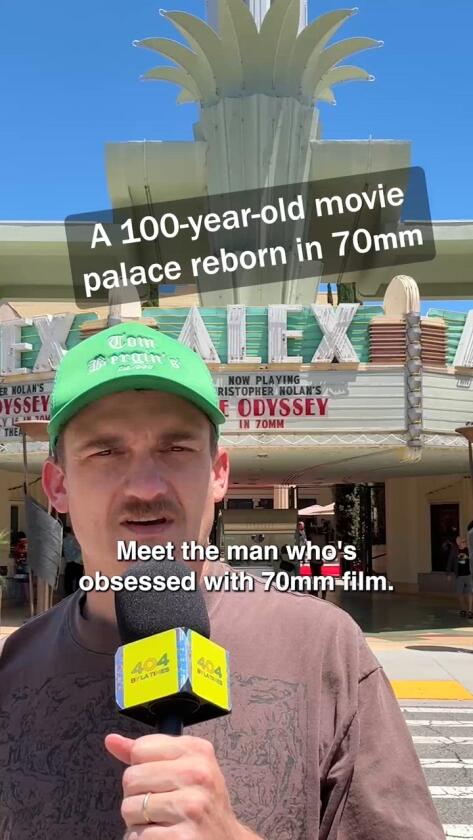
Want to see The Odyssey in 70mm but couldn’t get tickets? Glendale’s historic The Alex Theatre has you covered.
For 28-year-old Van Nuys resident Chase Stanley, who tried and failed to secure a ticket, that milestone was top of mind.
“Ultimately, I’m just jealous that I’m not included,” he said. “Since it’s the first movie to capture the whole thing in 70mm Imax, it’s my due diligence to see it like that.”
Despite the enthusiasm from moviegoers, film projection has been considered a dying art since most movie theaters worldwide switched to digital projection in the early 2010s.
More than a marketing tactic, the scarcity of tickets for Imax 70mm screenings underscored both the dearth of theaters capable of projecting films in the premium large format — only 41 — and projectionists with the requisite skills.
A number of renowned directors, including “The Odyssey’s” Christopher Nolan, prefer to shoot on film and strongly encourage analog viewing. But because few theaters own the necessary equipment or employ full-time projectionists, coordinating a release as massive as “The Odyssey” is its own arduous journey.
Jimmy Gonzales is Cepheus, left, Matt Damon is Odysseus and Himesh Patel is Eurylochus in “The Odyssey.”
(Melinda Sue Gordon / Universal Pictures)
Venues new and old
There are 25 theaters in the United States showing “The Odyssey” in Imax 70mm, eight of which are located in California. One of L.A.’s favorites is the Universal Cinema AMC at CityWalk Hollywood, where veteran Imax projectionist Taylor Umphenour has worked for the last three years.
On his Instagram page, Umphenour shares “projectionist POV” photos and videos with more than 22,000 followers, giving them a unique glimpse into the projection booth for movies like “Sinners,” “One Battle After Another” and “Project Hail Mary.” His company, Film Leader Co., supervises film restorations and runs technical operations for a smattering of cinema houses across the country.
In addition to his work at CityWalk, Umphenour has been busy for weeks overhauling the projection setup at the historic Alex Theatre in Glendale.
Releases such as “The Odyssey” have renewed interest in film projectionists and specialty theaters, including the historic Alex Theatre.
(Allen J. Schaben / Los Angeles Times)
The 100-year-old venue opened in 1925 as a vaudeville and silent movie house where Walt Disney previewed his animated shorts, but it changed identities many times over the course of its history. Now, Umphenour and his team are working with Miles Williams, the theater’s artistic director, to transform it into a “premier cinema house” in time for “The Odyssey’s” release. It marks the first time the theater has been used for a first-run film release since “Terminator 2: Judgment Day” in 1991.
“What better opportunity to relaunch this venue than to open with Christopher Nolan’s ‘The Odyssey’? That’s why this project is on such a tight turn,” Umphenour said.
His team built an entirely new, massive booth in just three weeks to house sound equipment and projectors capable of running both 35mm and 70mm film. To secure the Alex a last-minute 70mm print of “The Odyssey” — which costs tens of thousands of dollars to manufacture, ship and distribute and runs about four miles long — Umphenour relied on his relationship with distribution executives at Universal.
The Alex will screen the movie in 70mm, which uses the same film stock as Imax 70mm but runs vertically instead of horizontally, making each physical frame roughly three times smaller than its Imax counterpart. Audiences seeking the larger-than-life Imax experience will have to look elsewhere — like CityWalk — but Umphenour believes that analog screenings will still draw a crowd.
“What’s special about these — about running on film, about running 70mm, about handling premium large formats — is that it does remind people how much they love going to the movies,” he said.
“What it’s all about is expanding that sense of scope and horizon, the analog color, that sense of immersion.”
Not a job for ‘popcorn projectionists’
In advance of “The Odyssey’s” release, Imax contracted 130 experienced projectionists and required each to attend an intensive, weeklong training program.
“I’ve said for years that the projectionist is the last performer in a long chain of people that started with an idea,” Umphenour said. “They are the final person to deliver the vision of the filmmakers to the audience, and therefore, one of the most crucial.” Far from simply pressing a button, film projectionists must actively guide a screening, threading and splicing reels and closely monitoring for mechanical issues.
But thanks in large part to the dwindling number of theaters projecting analog film since 2013, finding capable, actively working projectionists for releases like “The Odyssey” can be a struggle.
Sean McKinnon, director of specialty presentations and AV integration at Boston Light and Sound, is in charge of hiring these projectionists for about 60 venues across the country screening “The Odyssey” in 70mm. He did the same for “Oppenheimer” in 2023, which had the longest theatrical window of the year.
“It was pretty challenging finding people for ‘Oppenheimer,’ especially because the film was so amazing, it was in theaters for so long,” he said of the 122-day release. Staffing projectionists for “The Odyssey” has been “definitely easier,” he said, as the “word has gotten out.”
The talent pool McKinnon pulls from includes theater managers, retired projectionists, trainees from specialized college programs and even workers in other professions who take PTO for the occasion.
“We get people from really all walks of life,” he said. “It’s a special event and people want to be a part of it.”
Taylor Umphenour checks the projector’s focus at the historic Alex Theatre in Glendale.
(Allen J. Schaben / Los Angeles Times)
Outside of big cities, the lack of local projectionists also means McKinnon’s company has to fly people to Morrow, Ga., or Valley View, Ohio, for instance, to run the booth for the duration of a film’s run.
Leah Saint Marie, a filmmaker and former projectionist at the Vista Theatre in Los Feliz, attributed the staffing struggle to the experience and knowledge divide between hobbyists and experts.
“Training is pretty easy if you want to be what they call a ‘popcorn projectionist,’” she said. They “can thread the movie and push start, but if there are any mechanical issues, they can’t fix it.”
“I don’t think anybody who’s going to run a 70mm Imax are popcorn projectionists, because it’s very technical,” she added. Each Imax film print of “The Odyssey” is 11 miles long and weighs roughly 600 pounds.
The most recent data from the U.S. Bureau of Labor Statistics estimated that in 2023, there were 2,610 motion picture projectionists employed in the U.S. — an increase from 1,900 in 2022. In 2012, the BLS estimated roughly 8,000 projectionists and predicted the number would decline by 26.5% in the next 10 years — but it ultimately decreased by 76%.
“If you want to maintain expertise in the field, what you want are enough [movie] theaters out there running film that somebody can try their hand at it and get better,” Umphenour said.
Why film matters
Could the overwhelming audience demand for Imax 70mm screenings translate into a resurgence of fully equipped theaters? According to Imax Chief Executive Richard Gelfond, it’s more complicated than that.
“The problem is they haven’t made new Imax film projectors in about 50 years,” Gelfond told Variety on Wednesday. “We build new projectors every day, but film projectors, using this film, it’s not practical. So we’ve got to find them and retrofit them and rebuild them, which is what we did for ‘Odyssey.’ But can all 2,000 of our theaters be film projectors? No. There’s just not that many around.”
That said, Cinemark reportedly installed Imax 70mm projectors at three of its theaters ahead of “The Odyssey’s” release, and there are 11 more theaters projecting “The Odyssey” in Imax 70mm than there were for “Oppenheimer.”
Cinema engineer Justin Dennis is working with projectionist and production manager Taylor Umphenour to build a new projection booth capable of running both 35mm and 70mm film at the Alex Theatre.
(Allen J. Schaben / Los Angeles Times)
Saint Marie recalled working as a projectionist in Pennsylvania during the period when most theaters transitioned from film to digital. While training at a new theater, she was surprised to find an old film projector still stored in the booth, and even more surprised to learn it was for Nolan’s sake.
“When he releases a [movie] on film, we have to have the projector. A lot of places around the United States kept their projectors specifically for Nolan,” she said.
Nolan isn’t the only director with an affinity for large format film and analog media. Quentin Tarantino, Paul Thomas Anderson and Ryan Coogler (whose 2025 hit “Sinners” made quite a splash in Imax 70mm) are others associated with what Umphenour dubbed “the 70mm renaissance.”
According to Saint Marie, theaters worldwide transitioned from film to digital projection mainly because the cost of shipping a Digital Cinema Package is much cheaper than shipping a film release print. But the community of skilled laborers and enthusiastic audiences who champion analog projection say it’s worth it.
“I think there’s something to be said about what film gives you as an artistic community, versus what digital gives you is just consuming as a capitalistic society,” Saint Marie said. To McKinnon, it comes down to the “tradition of humans telling a story by flickering light” harking back to prehistoric times.
For Umphenour, the story of “The Odyssey’s” release and all of the 70mm fanfare is one of preservationists triumphing over countless obstacles.
“There are 70mm theaters running this film throughout the world that, frankly, have been kept alive through the deep devotion of people who care about this format,” Umphenour said. “They really do deserve to be celebrated because, like so many things in life, if you don’t have people that care about it, you don’t end up with a thing.”
“The results of all this work are not images projected on screen,” he continued. “It’s a community brought together to hear a story well told, which allows them to create a life memory they get to carry forward for years and years.”
Film projection takes center stage at the Alex Theatre.
THE kids will really dig fossil hunting, seal spotting and making a splash in this off-grid Dorset farm, says Art Director Laura Cunningham.
Here’s how a safari tent adventure will turn into the ultimate family staycation triumph.
A safari tent adventure in Dorset is the perfect family staycation, above the famous coastlineCredit: Getty Images
THE PAD
The spacious safari tents have proper beds and a well-equipped kitchenCredit: Tom & Lizzie Redman PhotographyThey also boast a wood-burning stoveCredit: Supplied by East Shilvinghampton Farm
When I break the news to my workaholic husband Barney and our kids Ellis, 10, Nate, eight, and six-year-old Violet, that we’ll be without electricity and Wi-Fi for four days, I’m met with horrified faces.
But Feather Down’s East Shilvinghampton Farm offers a wholesome family escape that means screens are fast forgotten.
Sign up for the Travel newsletter
Thank you!
The spacious safari tents have proper beds, a wood-burning stove and a well-equipped kitchen, and the kids spend hours feeding the goats and climbing trees – even walking the alpacas with farmer’s son Henry, £20 per animal.
Toasting marshmallows on the campfire and cooking pizzas, £12 each, in the communal pizza oven also creates magical memories.
And be sure to follow Weymouth’s Fossil Trail, from Alexandra Gardens to Hope Square, to hunt down fossil sculptures and learn more about the prehistoric creatures this coastline is famous for.
They’re freshly made throughout the day, and we devour the hazelnut ripple and cherry flavours, £2.50 per scoop (Rossisweymouth.com).
Meanwhile, at Watch House Cafe in Bridport, we tuck into delicious crab focaccia with fennel salad and aioli, £14.50, while overlooking picturesque West Bay, AKA the cliffs made famous by Broadchurch (Watchhousecafe.co.uk).
Closer to the campsite, The Sunray pub in Osmington has a great outdoor play area and dishes including duroc pork loin served with bubble and squeak cake, scrumpy apple compote and garden sage jus, £23.75, while the kids’ sticky toffee pudding, £4, doesn’t disappoint either (Sunrayosmington.com).
BOOK IT
Safari tent stays for six at East Shilvinghampton Farm cost from £399 for four nights (Featherdown.co.uk).
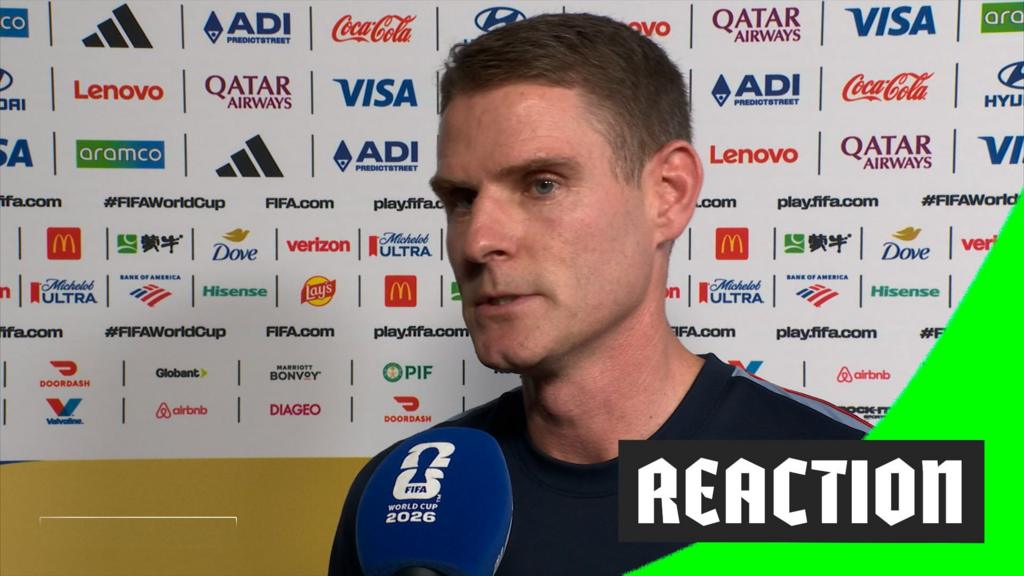
England assistant coach Anthony Berry tells BBC Sport how proud he is of his squad as they lead France 4-0 at half-time in the 2026 World Cup third-place play-off at the Miami Stadium.
Tries: Freeman, Earl 2, M Smith, Feyi-Waboso Cons: F Smith 3
England held on to beat Argentina in a chaotic match in the Nations Championship after the hosts had a last-gasp try controversially ruled out in Santiago del Estero.
With 13-man England leading 31-24, Argentina wing Bautista Delguy scored in the corner with the final play – leaving a difficult conversion to secure a draw.
Referee Angus Gardner had awarded the try on field, but television match official Brett Cronan insisted Delguy was in touch.
While Gardner repeatedly suggested there was no clear evidence to overturn his original on-field call, the try was eventually chalked off.
Henry Slade’s covering tackle on Delguy proved to be the decisive moment, with Gardner surrounded by frustrated Argentina players at full-time.
A combined seven yellow cards were shown in what was a thrilling and action-packed game.
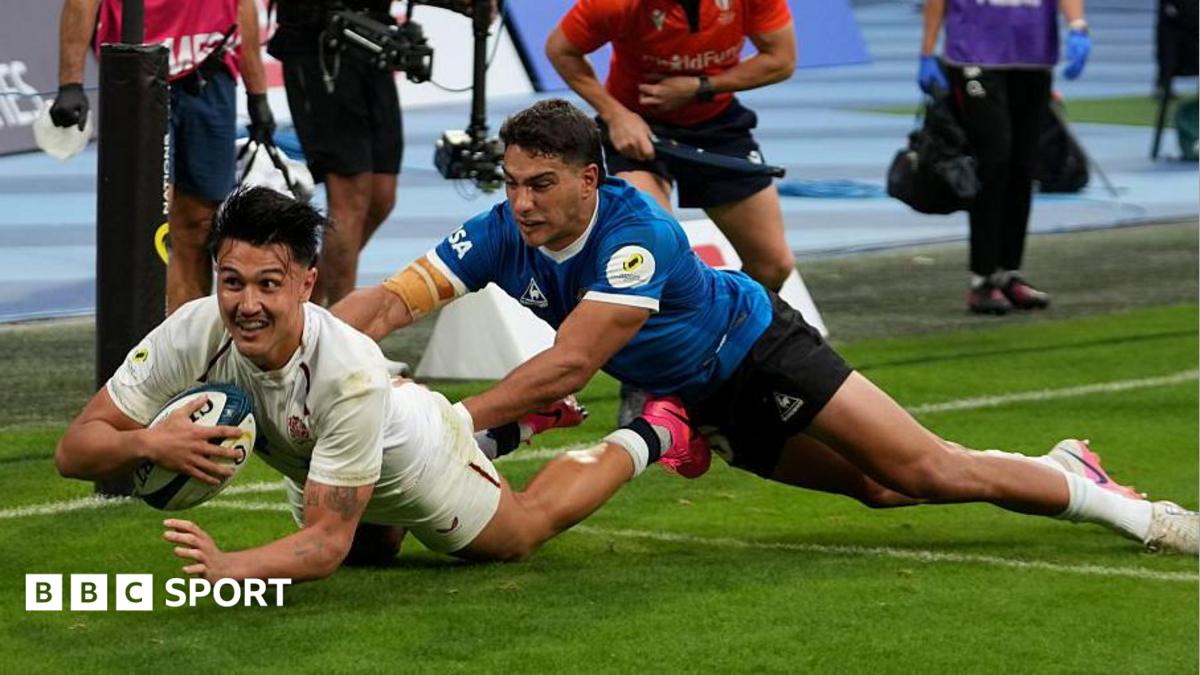
Steve Borthwick’s side looked set for back-to-back Nations Championship wins after Tommy Freeman’s try and two scores from Ben Earl gave them a 16-point half-time lead.
The Pumas, who wore replicas of the football team’s 1986 World Cup kit for the match, scored next before taking advantage of two England yellow cards, but their own ill-discipline prevented them punishing the visitors further.
Marcus Smith’s try in the corner came with number eight Joaquin Oviedo in the sin-bin, before Santiago Carreras joined his team-mate on the sidelines for 10 minutes.
An individual try from Immanuel Feyi-Waboso then silenced the passionate home crowd.
However, England replacements Henry Pollock and Emmanuel Iyogun were next to be sent to the sin-bin, making for a nervy finish.
Justo Piccardo’s late try and Argentina’s subsequent break had 13-man England scrambling, only for a combination of Noah Caluori and Slade to do just enough to force the full-time whistle.
Having gained the backing of the Rugby Football Union after just one win in this year’s Six Nations – England’s worst performance since the tournament’s expansion from the Five Nations in 2000 – this summer’s fixtures were pivotal for Borthwick’s future.
A tough defeat at Ellis Park against world champion South Africa was expected, but wins over Fiji and Argentina have set England up well for November’s Nations Championship games.
ALAN Carr’s ex-husband has told his side of their story in an explosive new memoir — lifting the lid on boozy nights with Adele and his own battles with drink and drugs.
Paul Drayton describes life inside a high-profile relationship and devotes an entire chapter to superstar singer Adele, who lived near the former couple.
Alan Carr’s ex-husband Paul Drayton has told his side of their 13-year relationshipAdele officiated Alan and Paul’s Los Angeles wedding in 2018Credit: instagram
Paul, 54, and Alan, 50, met in 2008 and tied the knot ten years later in a lavish Los Angeles ceremony officiated by Adele.
Recalling their nights together, Paul writes: “Most evenings we’d just get a Thai takeaway. Adele would turn up with a cheap bottle of wine, which we sank in a second, and moved on to our supplies.”
Sign up for the Showbiz newsletter
Thank you!
Paul also claims he helped introduce Adele to her first husband Simon Konecki, the father of her son Angelo, 13.
He writes: “She was always very honest and open with me and Alan because she knew she could trust us.”
Alan and Paul met in 2008 and were together for 13 yearsCredit: GettyPaul has shared candid memories of the former couple’s friendship with AdeleCredit: Instagram
Paul also reveals Adele played them her chart-topping album 30 before its release.
And he fondly recalls “the time I took her to TK Maxx for the first time”, adding: “She couldn’t believe it as we combed through the rails hunting for bargains.”
Elsewhere in the memoir, Paul speaks candidly about his struggles with alcohol and drugs.
He writes: “Alcohol and drugs became my crutch. They slowed my brain down, quietened the constant noise in my head, and evened me out so I felt like I was on the same level as everyone else.”
Paul also lays bare how his relationship with Alan began, and how it developed.
He recalls: “Sexy? Sure. Marriage material? Possibly. Did I know at that moment I’d marry him one day? Of course not. But something clicked. He was unlike anyone I’d ever met.”
The pair later ended up in a nightclub — leaving Paul to wake the following morning thinking: “Oh my God, I’d been snogging Alan Carr.”
Paul went on: “There were moments when I genuinely thought we could’ve been the next Morecambe and Wise.”
But he says life with Alan soon “took over”, adding: “My dream of acting — well, it would have to wait.”
Opening up about living in the comedian’s shadow, Paul writes: “From the outside, it looked like I had it all. Alan in the spotlight, me in the wings. The ‘plus one’. The ‘kept man’… in designer sunglasses, holding the dogs and carrying the bags.
“But I wasn’t just standing there. I was driving the car, clearing the path, fixing the messes. Planning our exits like we were royalty.
“I’d like to think I was his ride or die — as he was mine, or at least, I bloody tried.
“I’ve been the clown, the cleaner, the carer and the chaos. I’ve fallen apart, pulled myself back together, and ended up in a police cell drinking toilet water out of a kid’s party cup.”
A federal prosecutor in Texas has shared new details about the moments before an immigration officer shot and killed Lorenzo Salgado Araujo that cast doubt about the government’s claim that the man struck an ICE vehicle before he was shot.
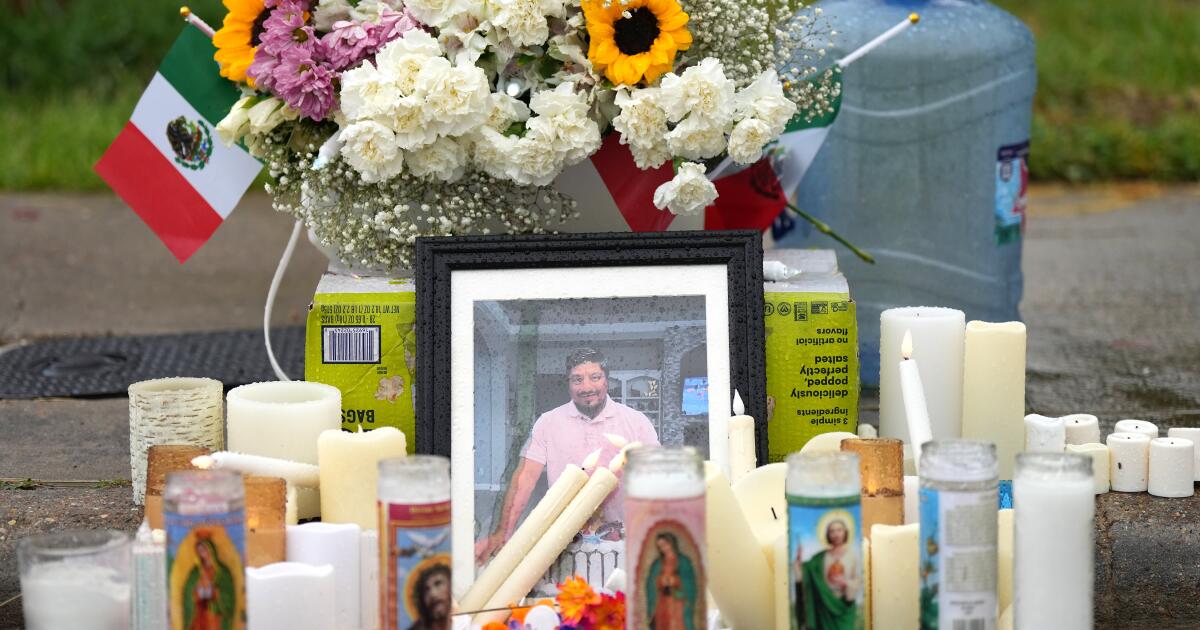
A U.S. Immigration and Customs Enforcement officer killed Salgado Araujo, a 52-year-old Mexican national and longtime American resident, on July 7 as he was driving to a Houston construction job site with three co-workers, including his brother. ICE has acknowledged he was not the target of the operation.
The shooting sparked protests in the nation’s fourth-largest city, echoing Salgado Araujo’s family’s calls for transparency. The family describes him as a hardworking father who was close to obtaining legal status in the U.S. after living in the country for 35 years.
The shooting came just days before two other men were killed, in Florida and Maine, in confrontations in President Trump’s federal immigration crackdown, renewing scrutiny on the Department of Homeland Security’s law enforcement tactics.
Aaron Reitz, the U.S. attorney for the Southern District of Texas, said for the first time Thursday that ICE officers were targeting two Guatemalan men who were potentially subject to deportation. He said they were driving a van similar to the one Salgado Araujo was driving when he was killed. In an earlier statement released the day Salgado Araujo was killed, Homeland Security said he was targeted in an immigration enforcement operation and he was living in the country without legal permission.
Reitz also said that the officers believed that Salgado Araujo and the passengers in his car fit the description of the Guatemalan men the agents were looking for.
Four officers driving two separate law enforcement vehicles attempted to pull over Salgado Araujo’s van using their police lights. Salgado Araujo then made a U-turn and drove over a median to evade getting pulled over, Reitz said.
Later that morning, the officers again encountered Salgado Araujo’s van and for the second time tried to pull him over, this time essentially surrounding the vehicle, Reitz said. Two of the four agents got out of their cars and told Salgado Araujo to put the vehicle in park. Just before he was shot, one of the agents was “partially inside the van or immediately next to it” when Salgado Araujo tried to reverse the van and then drive forward again, Reitz said.
An earlier Homeland Security statement accused Salgado Araujo of “weaponizing” his vehicle. The agency said he rammed his van into a law enforcement vehicle and said an officer opened fire in self-defense. The most recent statement from the U.S attorney’s office, however, didn’t mention any collision between Salgado Araujo’s van and a law enforcement vehicle. It also didn’t explicitly say that the officer feared for his life. There are no reported injuries among the officers involved.
The latest statement didn’t name the officer who killed Salgado Araujo, nor did it specify whether the officer who fired the shot was the same person who was next to, or partially inside, the van.
Reitz also said in the statement that officers “saw in plain view several small bags of a white, crystal-like substance inside the van” and that the FBI later executed a search warrant to investigate for possible illicit substances.
Salgado Araujo’s brother, who was in the van when the shooting happened, has been in ICE detention since the incident. His attorney said the white substance was a salt mixture that the men used as electrolytes to stay hydrated while doing manual labor in the grueling Texas heat.
Few photos or videos surrounding the shooting in Houston have emerged on social media, unlike other deaths involving federal immigration officers.
NEW YORK — The Dodgers’ game against the New York Yankees on Saturday in the Bronx was rained out and rescheduled as the first game in a split doubleheader Sunday.
It was the Dodgers’ first postponement of the season.
They are set to play Game 1 at 9:35 a.m. PDT Sunday, followed by Game 2 at 4:20 p.m.
Saturday’s game was originally scheduled to air on Fox at 5:08 p.m. PDT. But with persistent showers in the forecast, the decision to postpone was made official more than three hours before game time.
Dodgers right-hander Emmett Sheehan (4-6, 4.81 ERA) was scheduled to take the mound opposite Yankees lefty Ryan Weathers on Saturday. The Dodgers didn’t immediately announce how the doubleheader might affect their starting pitching plans.
While Latin Americans have traditionally rallied behind football teams from the region who advance deep into the FIFA World Cup, a flood of memes, jokes and criticism has made it clear there is one exception: Argentina.
In one photoshopped image that went viral, Lamine Yamal — who stars for Argentina’s final opponents Spain — is wearing a Brazilian jersey. The snarky caption? “The hope of the Brazilian people.”
The fervour goes beyond the historic rivalry between Pele’s Brazil and Diego Maradona’s Argentina: Mexico, Colombia, Chile, and others are all hoping Lionel Messi’s Albiceleste bite the dust on Sunday.
A similar phenomenon occurred before Argentina won their third World Cup title in Qatar in 2022.
Colombian sociologist German Gomez believes the “dynamic of solidarity … has been broken” with Argentina.
He said the digital era and social networks have fuelled “narratives” that the team is a darling of FIFA and Gianni Infantino, president of football’s world governing body.
“Argentina has had help from referees,” said Francisco Santos, a Brazilian fan trading World Cup stickers at a shopping centre in Sao Paulo, where cheers rang out when England scored first against Argentina in the semifinal.
If Brazil could not become six-time champions, “I would rather see Spain become two-time champions than Argentina become four-time champions,” the 42-year-old said.
Critics say Argentina have received more favourable calls such as penalties and yellow or red cards against opponents, even when such decisions have been backed by FIFA and experts.
“We’re going to cheer for Spain,” said Juan Camilo Abusaid, a 28-year-old finance worker in Bogota, Colombia’s capital.
‘Very political’
Antonio Lopez, 51, a police officer in Mexico City, described Messi as a “legend”.
But he added: “If you’re going to sweat and break your back on the pitch to become champions twice, I accept that. If referees are going to help you, I don’t”.
At a media conference, Mexican President Claudia Sheinbaum jokingly asked journalists which team they were supporting in the final.
“Spain! Spain!” they replied.
For Mexican anthropology professor Jorge Negroe, a specialist in social studies of sport, “this World Cup has proven to be very political”.
Colombian sociologist Gomez added that while Maradona was seen as a revolutionary who confronted FIFA’s power, current narratives perceive Messi as FIFA’s “golden boy”.
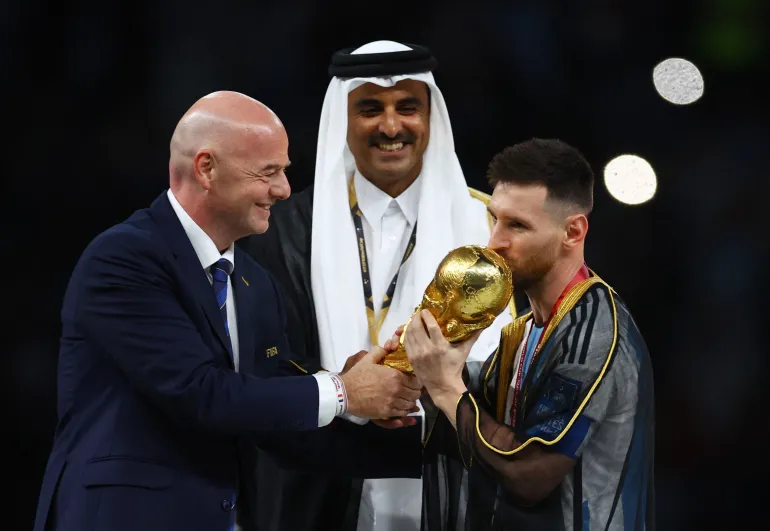
Argentina’s Lionel Messi receives the World Cup in Qatar in 2022 [Kai Pfaffenbach/Reuters]
National politics has also created resentment.
“I really don’t like Javier Milei (Argentina’s president) at all!” said Rachid Sjoberg, a 29-year-old agricultural laboratory operator in Santiago.
“The idea that he would then boast about having won the World Cup if they win does not sit well with me.”
Argentine fans and some players have also faced accusations of racism — such as a chant sung by the team in the past mocking the black players in the French team as not being really French.
There is also a long history of club-level fans throwing bananas on the field or making monkey gestures at Brazilian fans or black players.
During this World Cup, FIFA condemned racism in a statement after an Argentinian supporter told a black US influencer known as IShowSpeed to go “cry at the zoo” during a livestream.
‘We are unbearable’
Messi himself has acknowledged the strong feelings surrounding whether the team wins or loses.
“Four years ago, we achieved what we wanted: to play the final and be the best for four years. Once again, we have shown that nobody gives us anything for free, and we have put ourselves among the two best again,” he said.
“Let it hurt whoever it hurts.”
A brand of fernet, an alcoholic drink which is hugely popular in Argentina, has taken advantage of the anti-Argentine sentiment with humour.
Under the slogan “We are unbearable,” it launched an advert showing fans from different teams sitting in a therapy circle complaining about Argentina’s unbridled passion for football.
While many in Latin America are rooting against Argentina, the team has received a rapturous response at training camps in the US, with fans chanting “Messi! Messi!”
But some still embrace regional solidarity.
“I’m going to support Argentina because it’s a South American country,” said Valentino Tocto, a 20-year-old student in Lima.