The new series follows a reality icon as she makes her long-awaited TV comeback
The series arrives in the UK in a matter of days(Image: Freeform/Hulu)
Reality TV fans have been binge-watching their way through a new series they’re calling ‘perfection’.
House of Stassi follows the life of Stassi Schroeder, a breakout star of long-running Real Housewives spin-off, Vanderpump Rules. However, she was sacked from the series back in 2020 alongside Kristen Doute following a ‘prank’ on a black co-star, with the new show marking her return to TV.
The controversial reality star’s “next act” is the subject of the new series which premiered on Freeform this week before being made available on streaming service Hulu.
Its official synopsis reads: “House of Stassi follows reality TV icon Stassi Schroeder as she steps into her next act. In this meta-docuseries, Stassi navigates her long-awaited return to television – this time with the people she loves most by her side.
“As her ambition pulls her back into the spotlight, those around her level up. But as cameras roll and truths surface, her closest relationships are put to the test.”
All eight episodes are now available on US streaming platform Hulu, with the first reactions rolling in. However, viewers in the UK face a short wait before they can indulge in the series too. The episodes will be made available to UK-based reality fans on Disney+ from August 12.
Get Disney+ for £5.99
This article contains affiliate links, we will receive a commission on any sales we generate from it. Learn more
A Disney+ subscribtion now starts at £5.99 per month and provides access to hit series like Rivals, Only Murders in the Building and The Bear, plus countless titles from Marvel, Star Wars, Pixar and more.
One fan of the show penned: “Binged the whole thing. The second half of the finale is exactly what reality TV should be (and used to be). The way they left it on a cliffhanger was the perfect set-up for Disney to order more episodes.”
They continued: “It makes for great television, my fear is this type of stuff is what permanently alters relationships so hopefully they realise what they really signed up for.”
“I’m on episode five and I can’t stop watching – it’s very entertaining,” said a second viewer, while a third remarked: “So obsessed with this show. Just finished the first three eps. It’s structured amazing. I love the narration and fourth wall breaks/lack of fourth wall. I need a million more episodes.”
House of Stassi is now streaming on Hulu in the USA. It premieres in the UK on August 12 on Disney+
The country is a hidden gem in Europe and travellers say it’s less crowded than Spain, Greece and Portugal
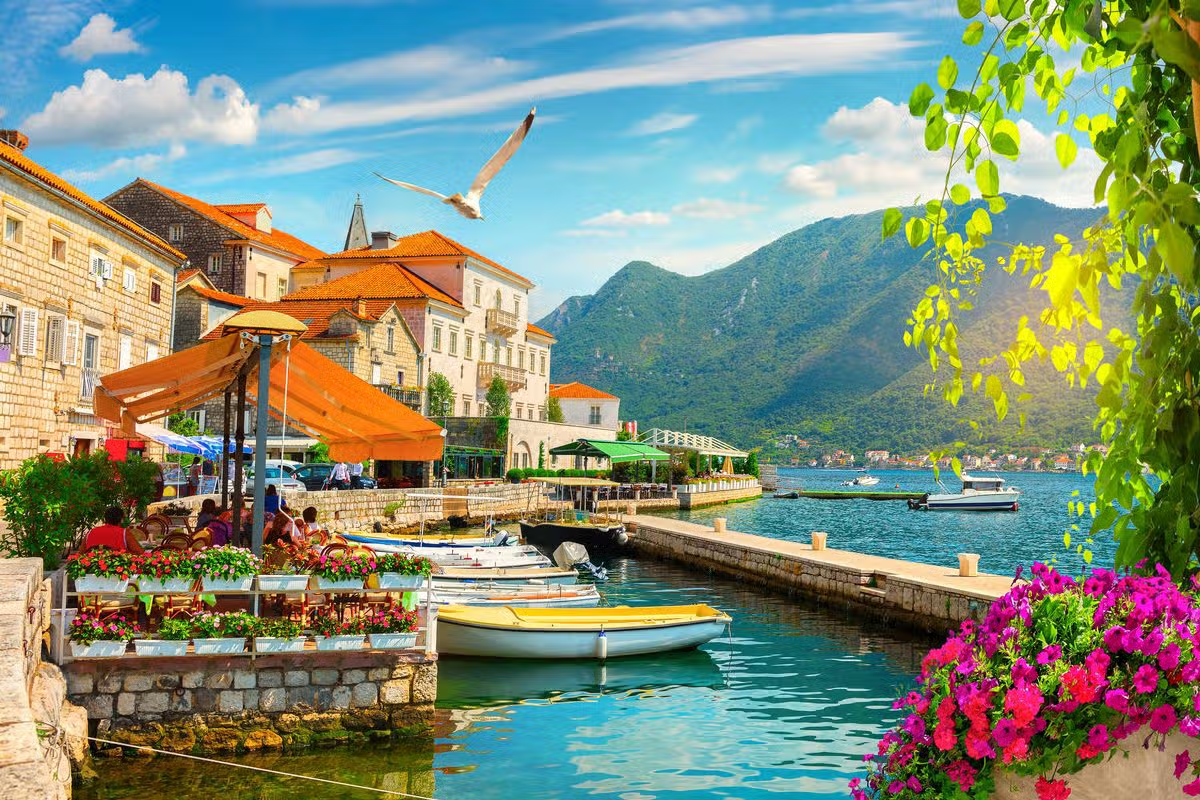
Tourists have praised the country as being better than Spain, Portugal and Greece(Image: Givaga via Getty Images)
Greece, Spain and Portugal remain firm favourites for countless holidaymakers, celebrated for their spectacular scenery and abundant attractions. Yet these hotspots can transform into tourist traps during the height of summer, leaving peace-seekers somewhat disappointed.
Fortunately, there’s a lesser-known destination that some experienced travellers believe could actually surpass them all. Nestled along the Adriatic Sea and sharing borders with Croatia, Bosnia and Herzegovina, Serbia and Albania, Montenegro remains a treasure trove that’s yet to be swamped by mass tourism.
Its spectacular coastline, pristine waters and perfectly preserved towns have earned praise from visitors who believe it matches its more famous neighbours, without the overwhelming crowds.
The Bay of Kotor, a UNESCO World Heritage Site resembling a fjord, stands as one of Montenegro’s finest attractions. Cradled by mountains, this bay features historic treasures such as Kotor and Perast, captivating visitors with their enchanting character.
TripAdvisor reviews overflow with glowing accounts of Montenegro’s appeal, with numerous visitors finding it a refreshing alternative to the heaving Greek islands or packed Spanish coastlines.
One visitor remarked: “Montenegro stole my heart, even more than Greece!” while praising the exceptional seafood and stunning panoramas.
“Greece was great, but Kotor Bay’s cliffs and medieval walls blew me away. Wandering through Kotor Old Town, I loved how peaceful Montenegro felt, far less tourist chaos than Athens or Santorini.”
Another traveller who had recently explored Portugal’s Algarve wrote: “Last summer, I toured Portugal’s Algarve coast. Lovely beaches, bustling towns, but Montenegro left a far bigger mark.
“Its Adriatic coastline is stunning, yet totally uncrowded compared to Portugal in summertime. Jaz and Mogren beaches felt like private retreats.”
A third globetrotter declared that Montenegro surpassed even Spain in their eyes, saying: “I’ve been to Spain’s Costa del Sol several times (think sun, sea, sangria), but Montenegro feels more authentic and affordable. Beach days in Budva and Tivat cost a fraction of Spanish resorts, yet the scenery is just as spectacular.”
The coastal town of Budva attracts hordes of visitors to Montenegro each year, celebrated for its sandy shores, buzzing nightlife, and its charming historic Old Town.
Venture deeper inland, and destinations such as Durmitor National Park offer breath-taking mountain scenery, hiking trails, and exhilarating white-water rafting along the spectacular Tara River Canyon.
One adventurer revealed: “In just a few hours, I went from pebbled beaches on the Budva Riviera to the snow-capped peaks of Durmitor National Park.”
Numerous visitors are keen to flag Montenegro’s budget-friendly credentials when stacked up against other well-loved European getaways.
One tourist noted: “Beach days in Budva and Tivat cost a fraction of Spanish resorts, yet the scenery is just as spectacular.”
Montenegro’s small size makes it especially appealing for holidaymakers, as the country is remarkably easy to get around. Travellers have said that you can fit in a morning trek, an afternoon on the sand, and dinner by the waterfront.
It’s also frequently mentioned as one of the few places in Europe where you can experience both mountain scenery and seaside panoramas within a single day.
Newport were four points adrift of safety in the fourth tier when Fuchs was named as Dave Hughes’ successor in November last year.
The Austrian guided Newport to survival in League Two, but left the club on the eve of their return for pre-season ahead of the 2026-27 campaign.
The arrival of Mullins means it is the third successive summer that there has been a managerial change at Rodney Parade.
He is also the fourth permanent boss appointed by owner Huw Jenkins since his January 2024 takeover of the club, following Nelson Jardim, Hughes and Fuchs in the hot seat.
Former England Under-21 international Mullins – who also played for Reading, Birmingham City and Notts County – moved into coaching within Watford’s youth system in 2016.
Having managed the Hornets’ under-23s, he twice took temporary charge of Watford’s senior team, following the exits of Quique Sánchez Flores and Nigel Pearson from Vicarage Road.
Mullins joined Colchester United as an assistant in 2020 and – following a stint as interim boss – took permanent charge of the U’s in May 2021, but was sacked less than a year later.
He went on to have a brief stint in charge of the Turks and Caicos Islands national team in 2023 before joining Fulham as under-21 boss later that year.
In his first campaign in charge, Mullins led the young Cottagers to Premier League Cup glory with a 4-0 victory over Tottenham Hotspur Under-21s in the final.
July 31 (UPI) — Rescue crews searching for 10 missing mountaineers following an avalanche on Pakistan’s Broad Peak mountain found four bodies, officials said Friday.
The expedition was led by renowned mountaineer Nirmal Pruja and included American climber and wellness entrepreneur Mallory Geis.
Maj. Gen. Irfan Arshad Khan, president of the Alpine Club of Pakistan, said in a statement posted on Instagram on Friday that the bodies had been located.
“Search-and-rescue operations remain ongoing, and we urge the public to await verified updates before drawing conclusions,” the club said in a separate statement.
“The Alpine Club of Pakistan extends its continued thoughts to the climbers and their families during this difficult time.”
The club did not say whether the bodies had been recovered.
The avalanche occurred midday Thursday on Broad Peak, which at 26,401 feet is of the world’s 12th-highest mountain, in Pakistan’s Karakoram mountain range.
The Alpine Club of Pakistan said in a statement that one of its expeditions had gone missing. It was last in communication with the group before the avalanche occurred, it said.
The 10 expeditions members were identified as Purja, Geis, Sohail Sakhi of Pakistan, Wang Zhong of China, Nadhira Ahmed Abdullah Al Harthy of Oman and Nepalese mountaineers Pur Bahadur Gurung, Kili Pemba Sherpa, Nima Sherpa, Nawang Thindu Sherpa and Gyalu Sherpa.
Prime Minister Andy Burnham will give all mayors of city regions in England a share of income tax revenue for the first time, as part of his drive to transfer power from Westminster to local leaders.
Burnham will also allow mayors of English strategic authorities to keep some cash from business rates collected in their areas, and gain greater control over services such as housing, transport, skills.
The government has not yet decided the exact portion of taxes mayors will get, with more details to be announced when Chancellor John Healey delivers his first budget in the autumn.
The Conservatives said the plans lacked detail and could lead to areas with weaker economies losing out on funding.
But Burnham said the move would “make good” on his pledge to “bring power home” to “every postcode in the country”.
“Under our plans, more of the taxes raised in a community will stay in that community,” the prime minister added.
Speaking to BBC Radio 4’s Today programme, First Secretary of State Louise Haigh said areas would not need mayors to benefit from investment.
She said: “We won’t be imposing mayors to areas that don’t want it but we will be creating strategic authorities in every area of England and they will be able to hold these powers and resources as well.
“They don’t need to have mayors in order to control them or in order to retain a share of their income tax and business rates.”
Strategic authorities bring together local councils to control regional issues such as transport and economic development, with decisions taken collectively by council leaders rather than a single elected mayor.
For example, the Lancashire strategic authority will take in Blackburn with Darwen Borough Council, Blackpool Council and Lancashire County Council, which form the Lancashire Combined County Authority area, despite the area not having a mayor.
Haigh added: “Vast swathes of England don’t have strategic authorities or mayors and today’s blueprint will set out that roadmap for every area of England to be covered by strategic authorities that will ultimately be able to retain a proportion of their income tax, business rates and set an overnight visitor levy should they wish, so they can generate revenue and really reinvest it in their local area.”
The power to raise and control tax revenues is highly centralised in the UK, making the country an outlier by international standards.
The share of national taxes collected at a local level in the UK is 5.8%, the lowest in the G7, according to the OECD, external, a global policy forum.
That share is far below that of other countries with large economies such as France (20.4%), Japan (36%), and the US (45.7%).
As it stands, mayors of strategic authorities in England receive most of their funding from central government grants.
During his time as Greater Manchester mayor, Burnham pushed for greater control over tax revenue, rather than having to rely on government grants.
The UK government had already been exploring whether a share of revenue from national taxes could be distributed to metro mayors, before Burnham became prime minister earlier this month.
But in a major speech on devolution in June, Burnham said he would “oversee the biggest rebalancing of power our country has ever seen” if he became prime minister.
Burnham has put devolution at the heart of his plan for government, arguing that metro mayors are best placed to boost economic growth across the country.
Emmerdale is preparing for a huge summer surrounding some of the soap’s biggest female characters including Charity, Sadie, Dawn, Sarah, Gabby and Serena
08:30, 31 Jul 2026Updated 08:30, 31 Jul 2026
Emmerdale is all about strong women this summer
Emmerdale’s strong female characters will take centre stage this summer in a string of big storylines.
The ITV soap has promised a huge summer for some of the biggest characters, with explosive secrets being revealed, new alliances forming and devastating consequences.
For fan favourite Charity (Emma Atkins), there is much drama ahead as her lies catch up with her. With Charity desperate to protect her family, she falls deeper in the lies that the baby she carried belongs to her and Ross Barton.
With everything she holds dear at risk, a confession comes – and the secret she reveals threatens to shake the entire village to the core, with devastating scenes set to air for the wider Dingle family.
Sarah, played by Katie Hill, will struggle to cope when she gets pushed to the edge by devastating news. Her world could come crumbling down if she learns the truth about where her and Jacob’s daughter Leyla’s true parentage lies.
It is bad news for Dawn – played by Olivia Bromley – who finds herself caught in the crossfire of a terrifying feud. She seems happy with Joe Tate and her new family, but things take a turn for the worse.
As her wedding day approaches, she’s trapped and needs to make a huge choice. A present life as it is now, or the hope of finally having the future she wants for her and her family.
New arrival Serena (Casey Al-Shaqsy) has caused quite the star since she showed up as the newest member of the Sugden family. She faces more drama this summer, and needs to decide how much she will face to lose to protect her biggest secret.
Gabby – played by Rosie Bentham – has always been the centre of some big storylines in the Dales, but this summer, she is struggling to keep things under control. Her health will be devastatingly impacted by her struggles and her life is at risk.
She is faced with the biggest moral decision of her life when a terrible incident takes place. Will she destroy the lives of the people she cares about with her terrifying decision?
There’s also a huge return for Patsy Kensit’s character Sadie, who has quite the agenda when she waltzes back into the Dales. Armed with a big surprise, she has a secret to tell, and the village will be left reeling.
Emmerdale Producer, Laura Shaw, teased: “From explosive secrets that shatter lives to dangerous new allegiances that threaten to tear the village apart, this season promises to be one of our most intense yet. The village is set for a dramatic transformation, and we can’t wait for our audience to see the peril these characters face.”
Franco Baresi has died at the age of 66, with AC Milan saying their former captain’s “example and integrity will be forever etched into the club’s DNA”.
Baresi spent his entire 20-year playing career with the club from 1977 until he retired in 1997, winning six Serie A titles and three European Cups/Champions Leagues.
Regarded as one of the greatest defenders to play the game, Baresi captained Milan for 15 seasons, making 719 appearances and scoring 33 goals.
He was capped 81 times by Italy and was part of the squad which won the 1982 World Cup. He played in the 1994 final, which Italy lost to Brazil.
In 2020, Baresi became honorary vice-president of AC Milan, with the club retiring his number six shirt four years later.
Baresi had surgery in August 2025 to remove a lung nodule, and his last public appearance was at the San Siro Stadium for the Winter Olympics opening ceremony in February.
In a statement on X, AC Milan wrote: “Milan is in tears following the passing of Franco Baresi. His example and integrity will be forever etched into the club’s DNA, just as his iconic number 6 shirt is.”
A sweeping package of new Russian sanctions has cleared its first hurdle in the United States Congress, and, if passed, could trigger huge tariffs for countries such as India and China which continue to buy oil from Moscow.
The bill, which was advanced in the US Senate this week, has been named for the late Lindsey Graham, whose funeral was attended by world leaders including Israeli Prime Minister Benjamin Netanyahu earlier in the week.
Recommended Stories
list of 4 itemsend of list
Here’s what we know:
What happened in the Senate?
The “Lindsey O Graham Sanctioning Russia Act of 2026” was advanced overwhelmingly by the Senate this week in a vote of 86 to 12, meaning it can now proceed to the House of Representatives for further deliberation.
Named for the late Senator Graham, a staunch Ukraine supporter who died unexpectedly this month, the bill moved forward with the support of Ukrainian President Volodymyr Zelenskyy, who was in Washington to attend Graham’s funeral and watched the proceedings from the gallery.
“It was an honour to be present as the votes were counted – 86 senators supported the bill,” he wrote on X afterwards. “This is the first step towards implementing Lindsey [Graham]’s plans, and certainly a step towards peace. It is important that this tool works.”
After clearing the Senate, there will be a delay before the bill can move forward to the House, which is now in summer recess.
On Wednesday this week, US President Donald Trump ordered lawmakers to amend the bill to include tariffs covering Iran as well. This will likely delay the bill further if it deters Democrats from supporting it, analysts said.
David Smith, an associate professor at the University of Sydney’s US Studies Centre, told Al Jazeera: “One of the things they’re worried about is how the tariff power in relation to Iran is going to be expanded. They’re going to be ok with tariff powers on Russia but they’re worried about tariff power on countries buying Iranian oil, which means China. I think there are going to be a lot of Democrats that are going to say these powers should be limited to sanctions and not tariffs.”
Without the Iran addition, he said he would have expected the bill to pass once the House resumes given strong Democratic support for Ukraine.
“Democrats have been genuinely worried about the Trump administration abandoning Ukraine. Something like this, which is ramping the pressure up on Russia so much, I just think there will be a large critical mass of Democrats who will vote for this,” he said.
What’s in the bill?
The bill makes use of sanctions and tariffs to target Russia and cut off the economic pipeline that has kept the Ukraine war going.
Major provisions include new sanctions on Russian President Vladimir Putin as well as on more than 20 top officials and companies which work with the Russian defence industry. It also targets Russia’s “shadow fleet” of oil tankers and the network it uses to evade international sanctions on its energy exports.
The bill gives the president authority to impose sanctions by invoking the International Emergency Economic Powers Act (IEEPA). Under it, he would be able to apply tariffs of up to 100 percent on exports to the US from the top five purchasers of Russian energy, military equipment or countries facilitating Russian sanctions evasion.
Tariffs of up to 500 percent can also be applied to Russian imports directly into the US. The US imported $3.8bn in goods from Russia in 2025.
Which countries are likely to be targeted?
China, India and Türkiye are potential targets of the bill, as they are among the largest buyers of Russian energy, according to data compiled by the Centre for Research on Energy and Clean Air (CREA).
China has historically responded to Trump’s tariffs with tariffs of its own on US exports. Even Pay, a director at the Beijing-based consultancy Trivium China, told Al Jazeera that the US may wait to impose tariffs as Trump is due to meet Chinese President Xi Jinping later this year.
Trump would still welcome the option, she said, after the Supreme Court struck down many of his tariffs in February.
“If passed and signed into law [which is still a big if at this point], the legislation would give Trump something he’s wanted for a while, namely, the legislature’s permission to impose high tariffs on China, alongside the small handful of other countries that import Russian oil,” Pay told Al Jazeera.
India is in a tricky position as its attempts to diversify away from Russian energy were disrupted by the shutdown of the Strait of Hormuz, according to Maia Nikoladze, a deputy director of the Economic Statecraft Initiative at the Atlantic Council.
Due to the disruptions, it has also applied for and received US sanction waivers to continue buying Russian oil in the interim, Nikoladze wrote in a report this week, and it is expected to do the same in the future.
“India will face a trade-off between maintaining energy security and managing the risk of US tariffs, potentially prompting it to again seek waivers and exemptions,” Nikoladze said.
What do critics say about the bill?
Critics like Senator Maggie Hassan say the bill gives Trump too much power to impose tariffs while also potentially harming both the US taxpayer and allied countries.
Turkiye, for example, buys Russian energy but it is also a US ally and NATO member, while “major non-NATO ally” Brazil and “major security cooperation partner” Singapore both buy Russian oil products, according to CREA.
In a post on X, Hassan wrote that while she supports sanctioning Russia, she does “not think tariffs, which are paid for by American businesses and consumers, will help Ukraine win”.
The bill is also opposed by lobby groups such as the US Chamber of Commerce, which also says the true cost will be passed on to US businesses and consumers, as with past tariffs.
While many of Trump’s tariffs have already been struck down by the Supreme Court, the Russia tariffs could have more staying power because they would be imposed on a stronger legal basis, according to Smith.
That’s because it is new legislation which has been crafted using the powers of the IEEPA.
“Previously what Trump has done is to go back to old pieces of legislation and invoke from those his power to use tariffs in ways they haven’t been used before and in ways courts have subsequently found less lawful, whereas this looks like new legislation that is going to lawfully expand his tariff authority,” he told Al Jazeera.
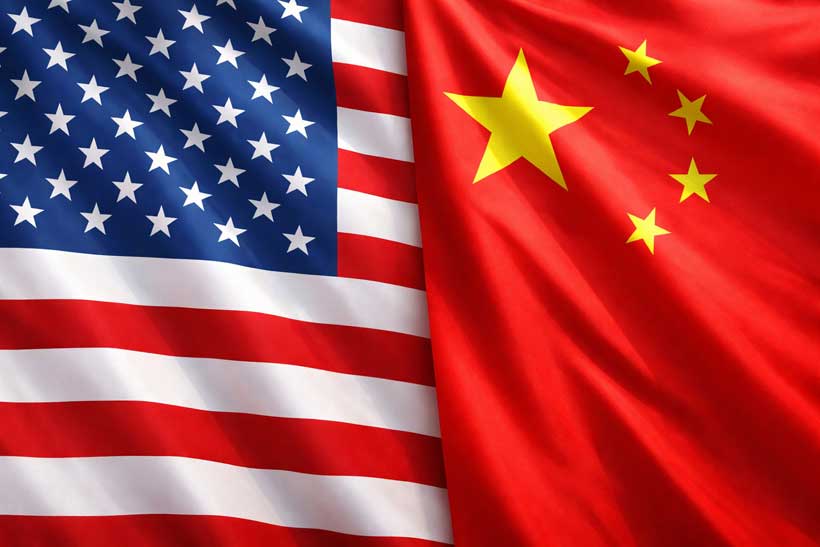
Model distillation, a widely used artificial intelligence training technique, has emerged as a new point of tension in the growing technology competition between the United States and China. While the method has long been accepted within AI research, concerns have intensified over whether proprietary AI capabilities can be replicated without the consent of their developers.
Leading U.S. AI companies and policymakers argue that some Chinese firms are using distillation to extract valuable capabilities from closed-source AI models, raising questions about intellectual property, technological leadership and AI security.
What Is Model Distillation?
Model distillation is a process that transfers selected capabilities from a large, powerful AI model—known as the “teacher”—to a smaller “student” model.
Instead of copying the original model’s architecture or internal parameters, the student learns by analyzing the teacher’s outputs, such as answers, computer code or generated text. The result is a lighter, more efficient model capable of performing many of the same tasks while requiring significantly fewer computing resources.
Stay ahead of the geopolitical week.
MD Briefing delivers expert analysis across five global fronts — the Indo-Pacific, energy, geoeconomics, European security, and the Middle East — every Monday morning. Free.
Why Is Distillation Important?
Training frontier AI models demands enormous investments in advanced chips, computing power and massive datasets.
Distillation makes AI more affordable by enabling smaller models to deliver strong performance on less expensive hardware. These compact systems can be deployed across smartphones, factories, vehicles, enterprise software and private networks, expanding AI adoption without the infrastructure costs associated with frontier models.
The technique has therefore become an important tool for both commercial AI development and national technology strategies.
Why Are Reasoning Traces Valuable?
Recent advances in AI have increased the importance of “reasoning traces”—the intermediate steps an AI model follows before producing a final answer.
Rather than simply learning correct outputs, smaller models can learn how complex problems are solved, improving their reasoning abilities.
Researchers compare this to studying detailed worked solutions instead of only reading the final answers to mathematical problems. As reasoning traces become more sophisticated, they are increasingly viewed as valuable intellectual property because they reveal how advanced AI systems approach difficult tasks.
Who Uses Model Distillation?
Distillation is widely used across the global AI industry and is not inherently controversial.
American researchers and technology companies have employed the technique in projects such as Stanford University’s Alpaca model and Microsoft’s Orca research. Chinese researchers have likewise used outputs from advanced AI systems to develop Chinese-language instruction models.
The key distinction lies between open-weight models, whose underlying parameters are publicly accessible, and closed-source models, such as OpenAI’s ChatGPT and Anthropic’s Claude, which are only accessible through proprietary platforms and APIs.
Why Has It Become a US-China Flashpoint?
The dispute centres not on distillation itself but on whether proprietary AI outputs are being systematically harvested without authorization.
U.S. AI companies argue there is a clear difference between legitimate academic research and large-scale extraction of outputs designed to replicate commercially valuable capabilities from closed-source systems.
Anthropic has accused several Chinese AI companies, including DeepSeek, Moonshot and MiniMax, of attempting to extract capabilities from its Claude models, particularly in software engineering and advanced reasoning. OpenAI has also reported detecting attempts by Chinese actors to use its systems for distillation-related purposes.
Chinese companies have not publicly accused U.S. firms of conducting similar activities involving closed-source models.
Why It Matters
The debate over model distillation reflects a broader shift in global AI competition from hardware and semiconductors to the protection of advanced algorithms and proprietary knowledge.
As AI becomes central to economic growth, military capabilities and technological leadership, governments and companies are increasingly treating model outputs, reasoning methods and training techniques as strategic assets. The controversy over distillation is therefore likely to play an increasingly important role in shaping future AI regulation, international competition and the evolving U.S.-China technology rivalry.
Analysis: AI Distillation Signals the Next Phase of the US China Technology War
The controversy surrounding model distillation marks a turning point in the global artificial intelligence race. The competition between the United States and China is no longer driven solely by access to advanced semiconductors or computing power. Instead, it is increasingly centered on protecting the knowledge embedded within frontier AI models. As reasoning capabilities become the most valuable component of modern AI, companies and governments are beginning to treat model outputs as strategic assets rather than simply products or services.
For years, Washington’s strategy focused on restricting China’s access to advanced chips and manufacturing equipment, hoping to slow Beijing’s AI progress by limiting computational resources. Model distillation challenges that strategy because it enables developers to build highly capable systems without replicating the enormous costs of training frontier models from scratch. If smaller models can absorb sophisticated reasoning from larger ones, technological leadership becomes harder to preserve through hardware controls alone.
This development is also forcing a rethinking of AI intellectual property. Unlike traditional software, where source code defines ownership, modern AI derives much of its value from learned behavior and reasoning patterns. The legal and ethical boundaries surrounding whether outputs generated by proprietary models can be used to train competing systems remain largely undefined. As governments struggle to regulate these practices, AI firms are likely to tighten access to their models, limit reasoning transparency and strengthen technical safeguards against unauthorized capability extraction.
The geopolitical implications are equally significant. AI has become a core element of economic competitiveness, military modernization and national security. Any method that accelerates another country’s ability to close the technological gap will inevitably attract government attention. The United States increasingly views the protection of advanced AI capabilities as part of its broader strategy to maintain technological leadership, while China sees affordable AI development as essential to reducing dependence on foreign technology and overcoming export restrictions.
Ultimately, the debate over model distillation illustrates that the next phase of the AI race will not be determined solely by who builds the most powerful model, but by who can best control, protect and commercialize advanced intelligence. As AI becomes a strategic national asset, disputes over knowledge transfer, model security and intellectual property are likely to become as consequential as the earlier battles over semiconductor supply chains.
Pete Wicks has made a romantic confession amid his ongoing relationship with Olivia AttwoodCredit: InstagramPete recently went Instagram official with OliviaCredit: Instagram
In the latest episode of his latest Staying Relevant podcast that he co-hosts with best pal Sam Thompson, 33, a smitten Pete, 37, talked about what makes him happy in a relationship.
The usually gruff reality star was asked what his “love languages are”, to which he replied: “Mine I would probably say are physical touch, quality time, and acts of service.”
Sign up for the Showbiz newsletter
Thank you!
Co-host Sam then agreed, and said that his was also “physical touch”.
It came when the former Towie star flew out to Ibiza as Olivia filmed a new series of her show, Bad Boyfriends.
Fans went wild when the couple finally confirmed their romanceCredit: InstagramPete and Olivia kept fans guessing about their romance for monthsCredit: Rex
Loved-up Pete then shared a series of black and white shots, which saw them cuddled up together.
In a perfect hard launch, he captioned the snaps with: “I guess someone has to go first…IBIZA” followed by a black heart emoji.
Best pal Sam was quick to comment: “Never thought I’d see the day YOU hard launch!! couldn’t be happier for you brother.”
Liquidity relief today, balance-sheet strain tomorrow: The very structures that make private credit nimble—PIK loans—could also mask risk until it’s too late.
When GoHealth Inc. filed for Chapter 11 bankruptcy protection on June 7, the writing had been on the wall for two years. The Chicago-based health insurance marketplace had inked a payment-in-kind (PIK) deal to preserve liquidity only to collapse under the weight of more than $1 billion in debt.
For GoHealth’s lenders, including Blue Owl Capital, one of the largest private credit managers, it was a familiar scenario — allow a portfolio company to defer cash interest payments and roll them into its debt balance. This preserves liquidity during uncertain times. For GoHealth, the PIK agreement preceded a critical Medicare enrollment cycle.
Ultimately, it only bought time.
Liquidity deteriorated, Medicare Advantage pressures persisted, and GoHealth—once valued at $6.6 billion—ran out of runway. By late last year, lenders had placed the company’s loans on nonaccrual status. By the time GoHealth filed for bankruptcy protection, the PIK arrangement had become just another case study in a growing private-credit risk: debt structures that postpone distress while quietly deepening it.
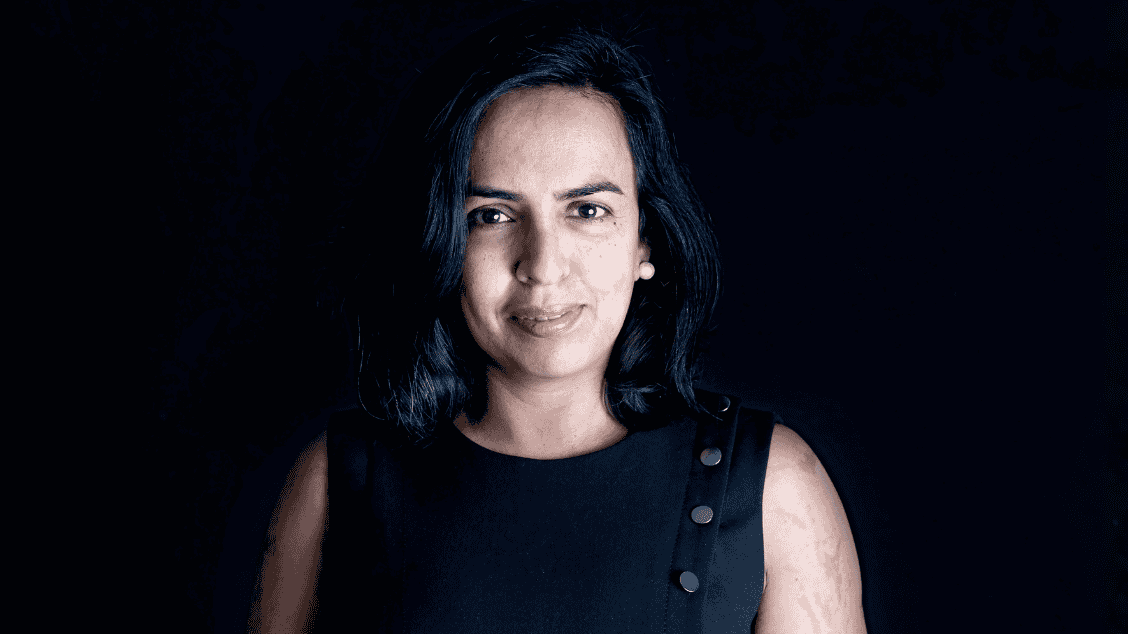
“PIK is like a double-edged sword,” said Lakshmi Ganapathi, founder of Unicus Research in Ridgefield, Connecticut. “Borrowers seem to love PIK toggles in good times because it preserves the cash, but under stress, the accruing principal at a compounding rate becomes a balance-sheet problem. It’s attractive until it’s not.”
GoHealth and Blue Owl did not respond to requests for comment.
Borrower, Beware
Lakshmi Ganapathi, Unicus Research
GoHealth is hardly alone. P3 Health Partners restructured its term loan last year into a cash-and-PIK arrangement, requiring borrowers to pay a portion of interest in cash while adding the remainder to principal. This preserved liquidity but increased leverage over time. The Henderson, Nevada-based healthcare provider now has $380 million in long-term debt at double-digit interest rates.
In some cases, the outcome is more dramatic. Software company Pluralsight, owned by Vista Equity Partners, was ultimately handed over to a consortium of private credit lenders, including Blue Owl, Ares, Golub, Oaktree, Goldman Sachs, and BlackRock. Efforts to manage Pluralsight’s debt burden proved insufficient, and Vista wrote off roughly $4 billion in equity.
“There’s a through-line across all of them,” Ganapathi told Global Finance. “A borrower under cash-flow strain defers an obligation, whether through PIK, an amendment, or a liability-management exercise.”
The deferral increases the debt burden or postpones the reckoning, and the resolution is a lender-led restructuring in which the equity is wiped out or impaired and the debt holders take control.
“The 2026 cluster is concentrated in healthcare and software, where higher-for-longer rates met business models underwritten on cheaper money,” she added.
In a post-bank-crisis world of high interest rates and tightened underwriting standards, private credit has stepped into the void. But the very perks that make it nimble — like PIK loans — can be foreshadowing: a bankruptcy filing that simply formalizes what the PIK plan already implied.
Firms like Blue Owl Capital have exposure across a range of heavily leveraged software, technology, and financial borrowers, some of which have recently faced bankruptcies, insolvencies, or out-of-court restructurings. It’s enough to turn certain dealmakers off completely.
“Our firm doesn’t do any pay-in-kind,” Scott Stevens, CEO of Grays Peak Capital, a New York-based global investment firm, said. “We only do cash pay, and that is, I think, why we’ve had no defaults.”
One need only look to the September bankruptcy of auto parts supplier First Brands Group. The filing came after a PIK-based option had been introduced — highlighting how quickly deferred-interest arrangements can become embedded in stressed credits. Fortified by the “cockroach” imagery used by JPMorgan Chase CEO Jamie Dimon, headlines about the collapse of private credit began circulating.
But the evidence isn’t just anecdotal.
Poorly PIK-ed
An analysis by Lincoln International found that 11% of loans in its private credit database carried some form of PIK interest in 2025, up from 7% in 2021. While the increase appears gradual, the composition of these loans is what’s striking: 58% are now classified as “bad PIK.”
That means the borrowers couldn’t keep up with payments and later had to switch to PIK. The shift matters because it reflects weakening credit quality rather than a pre-planned financing option.
In other words, the loans migrated into PIK status as borrowers faced deteriorating cash flows and required relief. The share of “bad PIK” loans has more than doubled since late 2021, Lincoln notes, effectively turning the metric into a proxy for underlying problems.
The implications are significant. In many cases, borrowers use PIK not because business conditions are improving or because growth is being reinvested, but because cash generation is insufficient to service debt. Lincoln describes this as a potential “shadow default rate,” capturing companies that might otherwise have defaulted absent lender forbearance.
The deterioration in the balance sheet is equally stark. Within the bad PIK group, average loan-to-value ratios have risen from 39.4% at origination to 76.1% today, underscoring how quickly leverage can escalate when earnings weaken and enterprise values compress.
Private credit proponents highlight flexibility and speed as advantages that outweigh the drawbacks. Unlike traditional banks, direct lenders can close deals in weeks, tailor covenants, and even hold entire loan books. Borrowers pay a premium for certainty and confidentiality: a trade-off that often, though not always, takes the form of a PIK arrangement. But Grays Peak Capital’s Stevens sees 2026 as an inflection point.
“A lot of people tightened their lending standards over the last three to six months,” he says. Stevens attributes the stress to a combination of rate resets and companies failing to grow in line with underwriting assumptions. Some defaults are to be expected, especially those that are tech and venture related. “But I don’t think it’s systemic in terms of the economy.”
A Bank-Like Game, Sans the Rules
Scott Stevens, Grays Peak Capital
Not everyone is so optimistic. After all, the sector’s flexibility comes with a cost: opacity. Critics point to the tangled web of interconnections between private lenders and banks as a source of potential systemic risk.
The very features that make private credit attractive — speed, flexibility, confidentiality — also make it difficult to monitor. And as PIK loans accumulate on balance sheets with limited public disclosure, a broader question is taking shape. If private credit is playing a bank-like game, should it play by the same rules?
Regulating private credit providers like banks would be too stifling, Stevens argues. “If they would go too far down the regulatory path, I think this will skirt innovation and growth,” he said, pointing to defense sector financing as an area where private credit needs room to maneuver.
Todd Holleman, a partner at King & Spalding, draws a distinction between the two. Bank regulations exist for a reason, he argued. Deposits are primarily individuals’ money, and the global financial crisis showed how quickly bad investments could put that money at risk. Private credit is different. Its capital comes primarily from sovereign wealth funds, pension plans and insurance companies — sophisticated investors who are already regulated and understand what they’re buying. Applying bank regulations to private credit, Holleman said, would be an apples-to-oranges comparison. “They just wouldn’t work.”
Ganapathi sees it differently, citing the case of Market Financial Solutions (MFS). The UK bridge lender collapsed into administration in February following allegations of fraud and asset double-pledging. HSBC wasn’t directly exposed to MFS — it was exposed to Apollo, which was. The $400 million loss traveled up the chain.
“It cascades,” Ganapathi said, drawing a parallel to Japan’s lost decade, when banks extended credit to insolvent borrowers while avoiding mark-to-market accounting — papering over losses until the system buckled. “They were extending and pretending like nothing happened, not marking to market. That derailed the system. Regulations stopped it. Now, if you take regulation out of the picture, what will stop this? Without a trigger, this could continue for a long time.”
Anthony Noto covers corporate finance and private credit. Contact him at anoto@gfmag.com.
Fifa wants to create a commercial subsidiary to run its main events, including its World Cups, and external investors will be able to buy stakes in it.
It said it would “invite third parties to make minority, non-controlling investments” in a new subsidiary – Fifa Forward Enterprise (FFE).
On Friday, Fifa said FFE had been proposed “to ensure all Fifa member associations have the opportunity to take meaningful ownership of the commercial opportunity of football in their respective countries”.
“This does not come at the cost of either the spirit or the governance of Fifa or football itself,” it added.
However, Uefa has accused Fifa of using football “to enrich themselves and their friends”.
Infantino previously wrote to Fifa members saying they will receive $40m (£30m) if they back his controversial proposal. He set a deadline of 19 September for federations to accept his plans if they want to access an initial $20m (£15m).
If approval is granted, Fifa says Thrive Eternal is expected to lead the proposed investor group for FFE.
Thrive is an American venture capital firm founded by Joshua Kushner – the brother of US President Donald Trump’s son-in-law Jared.
July 31 (UPI) — Fourteen nations have backed the formation of a Saudi-led coalition to protect shipping routes from Houthi attacks in and around the Red Sea, drawing more countries into the Iran-U.S. war.
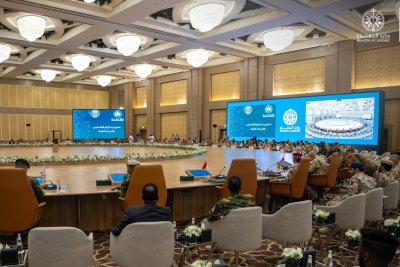
The kingdom’s defense ministry announced their support for the multinational defensive maritime alliance Thursday following a meeting in Riyadh attended by the defense ministers and representatives of 43 countries.
According to a statement, the alliance is aimed at “strengthening maritime security, protecting freedom of navigation, securing international trade routes and energy supply routes and safeguarding shared maritime interests in the Bab el-Mandeb Strait, the Red Sea and the Gulf of Aden.”
“The alliance is exclusively defensive in nature and does not target any state, alliance or international organization,” it said.
The statement said participation in the alliance’s activities and operations “will remain a sovereign decision” for each state, meaning any member country can opt out of specific missions.
It also identifies Saudi Arabia its founding state and the alliance’s leader and says thee kingdom will host its permanent headquarters.
A second statement added that other countries that had participated in the meeting “expressed support for the initiative and are in the process of completing the necessary domestic procedures and approvals to join the joint statement.”
The 14 countries are Saudi Arabia, Kuwait, Bahrain, Qatar, Pakistan, Turkey, Egypt, Jordan, Yemen, Bangladesh, Nigeria, Sudan, Djibouti and Somalia, the Saudi Press Agency reported.
The alliance was formed after the Iran-backed, Yemen-based Houthis early last week announced a maritime blockade targeting Saudi vessels traveling through the Red Sea via the Bab el-Mandeb Strait, accusing Riyadh of conducting an “unjust and oppressive siege on our people.”
The blockade threatens energy shipments that exit ports along the western side of the oil-rich nation at a time with Iran is exercising a similar blockade of commercial vessels at the Strait of Hormuz near Saudi Arabia’s eastern side.
The move is expected to further strain energy supplies, potentially causing fuel prices to surge and trigging an international energy crisis. Yemen’s Houthi forces have already claimed to have attacked Saudi oil tankers in the region for allegedly violating its maritime ban.
وشهد الاجتماع مشاركة رؤساء الأركان وممثليهم من 43 دولة إلى جانب مندوبية الاتحاد الأوروبي لدى المملكة، من أصل 51 دولة ومنظمة مدعوة، بما يعكس الاهتمام الدولي بتعزيز التعاون الدفاعي البحري وتوحيد الجهود لحماية أمن الممرات البحرية. pic.twitter.com/la8vuyh7DF— وزارة الدفاع (@modgovksa) July 30, 2026
Dervla Murphy’s A Place Apart persuaded me to see Northern Ireland differently. Cycling through the country during the Troubles, she looked beyond headlines to find generosity and ordinary lives. Following in her footsteps, you can walk the walls of Derry and stand beside the Giant’s Causeway, where the landscapes are every bit as striking as she described. Yet it is the people you remember most. Conversations begin easily in pubs and cafes, with local people quick to recommend a favourite beach or walk. I went looking for the places Murphy described. I left with the conversations she promised I’d find. James
Profile
Readers’ tips: send a tip for a chance to win a £200 voucher for a Coolstays break
Show
Guardian Travel readers’ tips
Every week we ask our readers for recommendations from their travels. A selection of tips will be featured online and may appear in print. To enter the latest competition visit the readers’ tips homepage
–
Sarajevo, Bosnia and Herzegovina
Inspired by Priscilla Morris’s Black Butterflies
Photograph: Aleksandr Medvedkov/Shutterstock
I read Black Butterflies by Priscilla Morris during a long, hot Covid afternoon and was immediately intrigued by the city of Sarajevo. The book is set during the siege, but I was captivated by the description of the buildings mixing east and west. Last year, I finally went and experienced the beautiful city for myself. The surrounding mountains and the old town, mixed with haunting memories unapologetically left in view by way of bullet holes in buildings and “roses” in the pavement [to mark where mortars fell], gave off a unique atmosphere. There are hints of old Eastern European glamour, Middle Eastern rituals and precious hope for the richness of a hard peace to remain in place. It’s a place that took my heart and showed me that it’s OK, things change but we carry the memories for a reason. Louise
Porquerolles, France
Inspired by Georges Simenon’s My Friend Maigret
Photograph: Telly/Shutterstock
As a Georges Simenon fan, I had always enjoyed the novel My Friend Maigret, set on the island of Porquerolles off the French Mediterranean coast. Nearing 80 years old, I decided it was now or never to visit and resolved to travel by train. So, it was Eurostar to Gare du Nord, RER across Paris to Gare de Lyon, then on to Toulon (despite missing my booked train), a slow train to Hyères, a bus to the port and a boat to Porquerolles. Visiting the sites described in the novel was such a pleasure. I became “Porquerolled” and an addict of the unique atmosphere (and the island wine). Leigh
San Francisco
Inspired by Armistead Maupin’s Tales of the City
Photograph: Chris LaBasco/Shutterstock
It has to be Armistead Maupin’s Tales of the City series. Originally a daily serial in the San Francisco Chronicle, these wonderful novels paint the city as a place of kindness, beauty and pleasure. It made me and my wife Nic commit to two years of saving so we could live like the Barbary Lane gang for a fortnight. San Francisco didn’t disappoint. Weird, gorgeous and fascinating, it’s a city that rewards ambling and curiosity, just as Maupin suggests. Fraser
Orkney, Scotland
Inspired by Amy Liptrot’s The Outrun
Photograph: Harald Schmidt/Shutterstock
I read The Outrun by Amy Liptrot and went on to have a wonderful three-week holiday in Orkney and Shetland. I travelled solo and met the best of people. I stayed in Amy’s mum Jane’s B&B and she took me birdwatching. It was a time to recover from a challenging year and enjoy the peace and beauty of the islands while never feeling lonely. I spent a week in the Papay hostel and walked all around the island. My sister lives in Shetland now and I plan to return soon. Amanda
Bognor Regis, England
Inspired by RC Sherriff’s The Fortnight in September
Photograph: Eye Ubiquitous/Alamy
The Fortnight in September by RC Sherriff, written in the heyday of British seaside holidays, harks back to a time when resorts like Bognor Regis were magical summer destinations that an ordinary family would look forward to all year. The descriptions of the bandstand, beach and lovely walks inspired a trip to Bognor to retrace the family’s steps. Bognor may have seen better days, but it was a perfect base for days out in the Sussex countryside, and there’s still little to beat a stroll along the promenade of this fading seaside town, sun shining and ice-cream in hand. Patricia
Provence, France
Inspired by Émile Zola’s Contes Choisis
Photograph: Serts/Getty Images
While studying French A-level back in the 80s, I read Émile Zola’s Contes Choisis short stories, which made me long to explore Provence. I loved the book, and its visual descriptions made me hanker to see the area for myself. More than 10 years later, I finally got to visit the area, by which time I’d also discovered the works of Cézanne and Matisse. Provence was a glorious feast for all the senses. I have visited a few times now and am always impressed by the beauty. I still have my book, and it is a wonderful reminder of the inspiration of A-levels. Sandra
The Apennines, Italy
Inspired by Eric Newby’s Love and War in the Apennines
Eric Newby’s Love and War in the Apennines inspired my wife and I to spend a month hiking in the mountainous area running the length of central Italy. Newby’s praise for the brave honest people who sheltered him, as a fleeing prisoner of war, in stone cottages and freezing farmyard barns was uplifting. They helped him learn Italian, and the book also delights in showing how he met his wife Wanda, an Italian-Slovenian woman, while hiding from the Nazis. Newby depicts loving, tight communities in towns like Fiumalbo, which we enjoyed visiting and where we were given a warm welcome. When we mentioned Signor Newby and showed his book, we were met with smiles by local people. It felt like we were part of an appreciative, heartfelt legacy created by the writer and those he met. Peter
Naples
Inspired by Elena Ferrante’s My Brilliant Friend
Photograph: Alessandro Tortora/Getty Images
In 2018, after devouring the novel My Brilliant Friend by Elena Ferrante, my lifelong friend and I decided to visit Naples. The book explores two childhood friends who bonded and grew up in various edgy neighbourhoods around Naples in the 50s, exploring social class and poverty. Naples has always had a bad press, focusing on crime and shabbiness. We had wonderful times visiting the places mentioned in the book. We felt safe, were welcomed and fed. Chiaia is mentioned in the book as a waterfront renowned for its promenade along Via Francesco Caracciolo. Carol
Prince Edward Island, Canada
Inspired by LM Montgomery’s Anne of Green Gables
Photograph: James Schwabel/Alamy
My favourite childhood books, read countless times, were the Anne of Green Gables series by LM Montgomery, set in a rural community on Prince Edward Island, Canada. The snowy winters, enchanting woods, winding country lanes, and red sandstone cliffs along the coast captured my imagination, leaving a lasting impression. At the age of 44, I made the journey there myself. My first day was a bitter disappointment, with torrential rain and thick mist obscuring the island’s beauty from dawn until dusk. However, the second day more than made up for it. Under clear skies, I enjoyed a perfect coastal boardwalk, a truly magical visit to Green Gables itself, and finished the day with a wonderful lobster meal. Katharine
Mountaineer Nirmal Purja among those feared missing after avalanche hit Broad Peak, Pakistan alpine club says.
Published On 31 Jul 202631 Jul 2026
Ten climbers, led by renowned Nepali mountaineer Nirmal Purja, are feared missing after an avalanche in northern Pakistan where they were on a climbing expedition, the country’s alpine club said.
“The Alpine Club of Pakistan (ACP) has received deeply concerning reports of an avalanche that struck a team of climbers on Broad Peak (8,047m) in the Karakoram mountain range,” the club said late on Thursday, adding that the team was led by Purja and could not be reached since the incident.
Broad Peak is the 12th-highest mountain in the world.
The ACP said the expedition comprises 10 people, including five from Nepal, one from Pakistan, one from Oman, one from China, one from the United States, and another foreign climber whose nationality it did not disclose.
“The entire team has reportedly been out of communication since the avalanche,” the club said.
“Every possible effort is being made to ensure that helicopter support and all available rescue resources are mobilised at the earliest opportunity, subject to weather and operational conditions,” it added.
Purja, 43, also known as Nims Dai, has broken multiple climbing records since becoming a full-time mountaineer and tour guide in 2018, after leaving the British military.
He climbed all 14 “eight-thousanders” (peaks above 8,000 metres, or 26,000 feet) in six months and six days between April and October 2019, a record at the time.
In 2021, Purja completed the first winter ascent of K2 as part of a team of nine other Nepalese climbers.
Don’t Date Brandon is the ‘terrifying’ true crime series that fans won’t be able to stop watching tonight.
Hayley Anderson Screen Time TV Reporter
22:10, 30 Jul 2026
Channel 4 is airing a ‘chilling’ three-part true crime doc tonight. (Image: PARAMOUNT PLUS)
Don’t Date Brandon viewers have been left with “chills” after watching the three-parter.
Originally released on Paramount Plus last year, Don’t Date Brandon is making its way to Channel 4 tonight, Thursday, July 30, with all three episodes shown back-to-back.
The true crime doc follows Brandon Johnson’s first and second ex-wives, Athena Klingerman and Amber Rasmussen, respectively. After getting in touch and sharing their experiences of a toxic relationship with Johnson, including alleged years of threats, stalking and harassment, they reportedly secured protective orders against him.
The pair then went on to the podcast Ex-Wives Undercover to alert other women and give others who encountered him a voice.
Where is Brandon Johnson now?
Brandon Johnson was sentenced to 10 years in prison after pleading guilty in 2023 to assault as well as attempted kidnapping with intent to rape.
According to the docu-series, he also “admitted to 10 counts of attempted first-degree theft in a separate fraud case”, stealing $392,000 from his former employer HTC.
He was sentenced to 36 months in prison in 2019 for this case ordered to be served concurrently with his 10-year term.
As part of the original plea deal that Johnson made at the time, he agreed to lifetime registration as a sex offender in California.
He is currently serving his decade-long sentence in a California state prison but Johnson is up for parole in May 2027.
Speaking to Variety about concerns they had about turning the podcast into a series, Klingerman said: “We thought long and hard about it, because you’re right: This story is reaching an even broader audience now.
“But we needed to get the word out, so it was worth any consequences we could face. At this point, it’s like let’s keep moving forward.
“Let’s expose who Brandon is, because Brandon represents so many other Brandons out there. It’s worth the risk of backlash to reach a larger audience and let other people know who might be going through this that they are not alone.”
Don’t Date Brandon is available to watch on Channel 4.
The Bank of Japan (BoJ) kept its key short-term interest rate unchanged at 1.0% during its July 2026 monetary policy meeting. The decision leaves borrowing costs at their highest point since September 1995, following a 25-basis-point hike in June.
CHICAGO — The stage was set this past summer, and Lincoln Riley was a ball of nerves.
The USC coach should’ve been used to weathering pressure by that point. After all, his previous four seasons spent coaching the Trojans had been nothing short of a powder keg, filled with ups and downs, as well as a constant undercurrent of tension and uncertainty. But in this particular case, success was out of Riley’s control. He wasn’t even near a football field.
Rather, he was sitting in the audience of a local dance recital, waiting on his two young daughters, Sloan and Stella, who were each making their solo dancing debut with their company.
“This was the first year, stepping out on their own, no one else to rely on,” Riley said. “But they told me, ‘Dad, we’ve got it.’”
Entering his fifth and most pivotal season yet at USC, their father can relate to that sentiment. While the spotlight burns brighter than ever and the collective college football world is spinning 2026 as a make-or-break moment for Riley, the coach had never sounded so confident that his Trojans had turned a corner than he did Tuesday.
“I’ve felt the pressure to win every single year here,” Riley said during Big Ten media days. “What does feel different is that I think our opportunity to do that is greater than what it has been. It just flat out is. The things you need to win, we have more of than we had in the first four years.”
Riley, of course, has made that case before. After each of the last two seasons, in fact. But it’s never been quite as compelling as it is now.
As the coach sees it, USC now boasts more depth on both sides of the ball than at any point in his tenure, in large part because of bringing in the No. 1 recruiting class in the nation in January. Riley also added a Hall of Fame coach at defensive coordinator in hopes of stabilizing matters on that side of the ball. And 10 days earlier, the program moved into its new, state-of-the-art football facility, with all the amenities anyone could ask for.
“It’s just a culmination of all of it, you know?” Riley said. “It is just so much more well-equipped to win consistently right now. It’s so different.”
That’s never been a question for Riley’s offenses at USC, and this year should be no different, with third-year starter Jayden Maiava returning at quarterback and a two-pronged backfield in Waymond Jordan and King Miller leading the way in the run game. The offensive line also looks like Riley’s strongest unit yet in five seasons.
The doubts, per usual, are on defense, where the Trojans are not the most seasoned group.
“The entire defense is just very young compared to last year,” defensive tackle Jide Abasiri said.
Riley is also now working with his third defensive coordinator in five seasons. And one who hasn’t coached in five years, at that.
Gary Patterson does have an impressive resume, with years of top-tier defenses at Texas Christian. And he continues to get rave reviews from Riley, who called the Hall of Famer “one of one” on Tuesday.
“You really have somebody that is like a head coach in that room,” Riley said. “The guy’s one of the most experienced, accomplished coaches in the game. Like, it just is what it is.
“I think just my confidence level and, you know, what’s being handled, how it’s being handled, how we’re developing, how we’re using our roster … is just really, really high right now.”
It better be at this point, considering all that USC has invested in Riley and his total teardown and rebuild of the Trojan football program. Across the city, billboards declaring “THE TIME IS NOW” make abundantly clear just how urgent this season will be at USC.
At the start of his fifth season, Riley is convinced the Trojans are right on schedule.
“All the things that help you win are better,” Riley said. “And that’s gonna give us more chances to win. That’s where my optimism comes from.”
The Seodaemun Police Station in Seoul. Photo by Asia Today
July 30 (Asia Today) — South Korean police have referred a woman in her 20s to prosecutors on allegations that she spread false information about the May 18 Gwangju Democratization Movement on Instagram.
The Seodaemun Police Station in Seoul said Thursday that the woman, whose identity was withheld, was recently referred without detention on suspicion of violating a special law concerning the 1980 democracy movement.
The woman allegedly posted a comment May 15 describing the movement as an armed insurrection carried out by anti-state forces.
She posted the comment under an Instagram message promoting benefits offered in Gwangju and other areas to commemorate the anniversary of the movement.
She then captured an image of her comment and shared it through the Instagram Stories feature on her account, police said.
The May 18 Gwangju Democratization Movement began in May 1980, when citizens protested martial law and military rule. Government troops violently suppressed the demonstrations.
South Korean law prohibits knowingly spreading false information about the movement through newspapers, broadcasts, the Internet or other publicly accessible channels.
A conviction can carry a prison sentence of up to five years or a fine of up to 50 million won, or about $34,200.
Police began investigating after receiving a complaint through the government’s online civil petition service May 21.
“Historical distortion concerning May 18 not only insults victims and their families and damages their reputations but can also create social confusion by spreading a false understanding of history,” a police official said.
Police said they would strictly investigate the deliberate creation and distribution of clearly false information that exceeds the legally protected boundaries of free expression.
Israeli forces struck near Beaufort Castle in southern Lebanon. The military said it used 700 tonnes of explosives to destroy parts of a Hezbollah tunnel network. Israel agreed in June to a phased withdrawal from Lebanon, and have the Lebanese military handle disarming Hezbollah.