Albanian prosecutors probe forged deeds tied to Kushner resort land as protests over the project intensify.
Published On 11 Jul 202611 Jul 2026
Albania’s anticorruption prosecution service is investigating whether the deeds to a stretch of protected coastline earmarked for a Jared Kushner-backed resort were forged, according to case files reviewed by the Reuters news agency, adding another legal complication to a project that has already provoked months of street protests.
The files, compiled by the Special Structure Against Corruption and Organised Crime (SPAK), name Artur Shehu, a Miami-based businessman, as the seller who transferred the land to Albania Land Development, the entity behind the Kushner-linked scheme, in April.
Recommended Stories
list of 3 itemsend of list
Prosecutors allege Shehu and his associates funnelled proceeds from cocaine trafficking into Albanian property, using falsified titles to disguise the money’s origin, and have since frozen roughly 110 million euros ($126m) tied to the sale in a notary’s account.
Shehu’s lawyer, Kujtim Cakrani, rejected the allegations outright. “Nothing that has been alleged regarding Mr Artur Shehu’s character is true,” he told Reuters, adding that his client was neither a trafficker nor a document forger and had lawfully sold land his family had held since Ottoman times.
Cakrani said Shehu was untroubled by the arrest warrant, arguing it was widely assumed in Albania that prosecutors answered to political and business interests. He also said Shehu fled to the United States and won asylum in 1998 after gang violence killed his brother and uncle.
The SPAK files, running to 200 pages and not previously made public, were issued the same day the agency unveiled separate arrest warrants for 20 people accused of narcotics trafficking and money laundering.
Reuters found no evidence that Kushner, Sazan Real Estate Development or other backers of the resort knew of any suspicions surrounding Shehu when the land changed hands.
The disclosure comes amid sustained unrest over the development, which sits on wetlands and beaches along Albania’s southern coast that are home to sea turtles and flamingos, the latter adopted as a symbol by the self-styled “Flamingo Revolution” against the resort and alleged government corruption in general.
Kushner and his wife, Ivanka Trump, have said the idea for the resort came to them after they spotted the coastline from a yacht. He unveiled renderings of hotels, villas and marinas on social media in 2024.
Nightly rallies that began in May, initially focused on the project, have broadened into a wider movement demanding Prime Minister Edi Rama’s resignation over accusations of corruption.
A crackdown last week saw riot police deploy tear gas and water cannon against demonstrators outside parliament, injuring 15 officers and leading to 25 arrests. A Tirana court freed 19 of those detained on Sunday, placing two under house arrest and ordering a dozen others to report periodically to judicial police.
Entela Koja, one of the protesters, said “this is a revolution against the big guys who want to use Albania like a playground for the rich.”
Villagers near the site have separately pursued a decade-long legal challenge to Shehu’s ownership claim, presenting title deeds and tax records they say establish that they are the rightful owners.
Nikolin Markpalaj, one of the landowners, told Al Jazeera: “I told them it would not be easy for them to take this land and enjoy someone else’s land and property. What is happening in this country is madness.”
Rama’s government has dismissed the protests as orchestrated by political rivals and insists the project complies with Albanian and European Union law.
Weekly insights and analysis on the latest developments in military technology, strategy, and foreign policy.
The U.S. Air Force has officially decided that the B-21 Raider will be flown by a crew consisting of two pilots, just like the B-2 is today. The service had previously considered operating the bomber with just one pilot alongside a weapon systems officer (WSO), or ‘wizzo.’ The plan is now to transition some number of qualifying WSOs and combat systems officers (CSOs) to become pilots for the future B-21 fleet.
The formal announcement about the standard two-pilot crew complement for the B-21 came yesterday. This follows the Air Force’s announcement in June that an operational test pilot had taken the controls of a pre-production Raider for the first time.
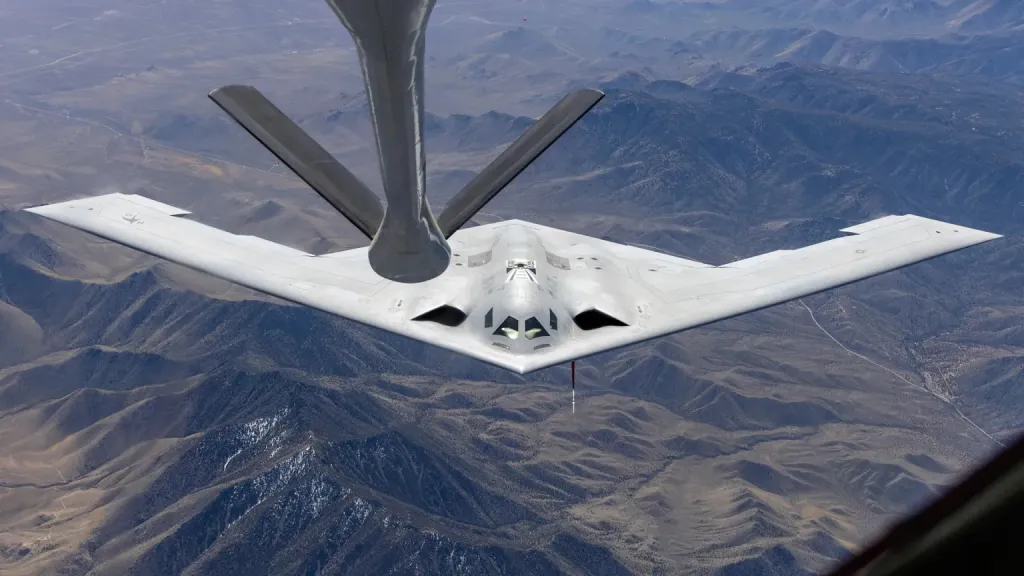
A pre-production B-21 bomber seen from above during aerial refueling testing. USAF
“Following careful analysis of the B-21’s advanced capabilities, Air Force leadership determined that a two-pilot configuration optimally supports the aircraft’s mission profile,” according to an official release. “To maximize the lethality and survivability of the Raider, it is imperative to retain the deep tactical and combat experience currently residing within the WSO and CSO communities.”
“The Air Force is establishing a pilot transition program for select weapons system officers and combat systems officers who will be chosen to attend pilot training with a follow-on assignment to the B-21,” the release added. “Eligible officers will be provided with additional information via command channels when available.”
The Raider is still in development, but the Air Force is now aiming to begin fielding the bombers next year at Ellsworth Air Force Base in South Dakota. The stated plan remains to acquire at least 100 B-21s, but service officials have said they plan to roll out a more precise figure next year, which is widely expected to be larger. This will also have an impact on the total number of pilots required.
The first two pre-production B-21 Raider bombers seen together. USAF
“The pilots will be 11B bomber pilots and the Air Force is still working through the number of B-21 pilots we will have,” an Air Force spokesperson told TWZ directly today when asked for more information about the crewing decision.
“11B” here is the basic Air Force Specialty Code (AFSC) for bomber pilots. Suffixes are used to reflect specific bomber types that individuals are assigned to fly. This administrative code should not in any way be confused with the U.S. Army’s 11B Military Occupational Specialty (MOS) for infantrymen.
As mentioned, the standard crew complement for a B-2 bomber is also two pilots. There is also a small cot that allows for one pilot to sleep while the other flies during portions of a sortie, which can sometimes stretch across multiple days. Having two pilots also offers an additional margin of safety. That being said, for single-pilot B-21 operations, the Air Force could have provided WSOs with additional training to be able to fly the aircraft in an emergency.
“I think the B-21 is going to be largely like the B-2 in how it supports the crews,” Air Force Gen. Stephen Davis, head of Air Force Global Strike Command (AFGSC), told TWZ in an interview with our Howard Altman in January. “There’s enough room for crew members to go on rest status. There’s a place to go to the bathroom, obviously, and to prepare food. All those things will exist in the B-21.”
Exclusive First Look: Step inside the cockpit of a B-2 stealth bomber
This was Davis’ first interview since taking charge of AFGSC, which oversees the Air Force’s bomber fleets, as well as other strategic capabilities. His predecessor, now-retired Gen. Thomas Bussiere, had been the one to recommend operating the B-21 with one pilot and one WSO.
“In terms of the crew complement for the B-21, that’s an ongoing discussion within the Department of the Air Force. No final decision has been made. Frankly, we had the same discussion on the B-2 on how it would be manned. And ultimately, they went with two pilots, in part because of the cost of the platform and the number they were producing,” Davis said in his interview with us when asked about this. “Actually, at the time, it was a requirement to have navigator or WSO experience to be a B-2 pilot. We went away from that over time, but that was one of the initial requirements.”
This latter point is particularly notable now that the Air Force has formally announced that it will transition WSOs and CSOs into B-21 pilots.
“With B-21 pilots, it’s a different plane, as it has a number of different capabilities,” Davis had added. “So we think that the right thing to do is look carefully at that crew complement and decide how to best make that the most capable combat platform we can.”
A pre-production B-21 seen during flight testing. USAF
It remains unclear whether or not the Air Force might still consider single-pilot B-21 operations down the line. There was at least a stated desire for an optionally piloted mode, or the means to rapidly integrate one, as part of the requirements for the Long Range Strike Bomber (LRS-B) program that led to the Raider. TWZ highlighted this all the way back in 2017 after we obtained a heavily redacted copy of a Department of Defense Inspector General report titled “Audit of the Acquisition of the Long Range Strike Bomber,” via the Freedom of Information Act (FOIA). That report was dated September 8, 2015, the same year Northrop Grumman was chosen as the winner of the LRS-B competition.
When reports first emerged that the Air Force was considering single-pilot B-21 operations in November 2025, TWZ pointed out that there were strong signs that a high level of automation and artificial intelligence (AI) infused autonomy had already been baked into the design.
“Since the early 2010s, the Defense Advanced Research Projects Agency (DARPA) has been notably supporting the development of AI ‘co-pilots’ that could be used on helicopters and fixed aircraft to help increase safety margins and reduce workload for human pilots through a program called the Aircrew Labor In-Cockpit Automation System (ALIAS). ALIAS’ work has been centered on Lockheed Martin’s MATRIX autonomy flight control software package.”
Sikorsky Completes DARPA ALIAS Phase 2 Autonomous Flight
“Other companies, such as Shield AI and Merlin, have been developing similar autonomy packages and steadily growing their capabilities. Merlin has been notably working toward integrating its autonomy software onto an Air Force KC-135 tanker. Shield AI’s Hivemind has already been integrated onto a host of crewed and uncrewed platforms. It is also worth noting that the B-21 has been in development for more than a decade, and its capabilities in this regard would have been way ahead of its time.”
“An AI agent would offer a B-21 crew additional layers of redundancy and added safety margins, as well as just helping to reduce total workload, which could offset risks associated with having just one pilot. If the functions of that virtual co-pilot extend to offering well-formulated tactical advice, such as whether or not to attack, jam, or avoid a threat altogether along the B-21’s carefully calculated ‘blue line’ flight path, it could also offer an important boost in survivability and tactical flexibility.”
Otherwise, the B-21 continues to be a model acquisition program that has been able to stay largely on schedule and budget, despite at least some hurdles, according to both U.S. military officials and members of Congress. In February, the Air Force announced that it was boosting the rate of production of the bombers to help accelerate their fielding.
When the first B-21 touches down at Ellsworth Air Force Base, we can now expect it to be flown by a crew consisting of two pilots.
Jane Austen’s most famous novels have been adapted numerous times, but one film adaptation is widely praised as one of the best.
Kelly Reilly stars in the iconic film(Image: UNIVERSAL PICTURES)
Period drama fans need to clear their diaries this weekend for a Jane Austen classic.
Devotees of period dramas and Jane Austen classics are being urged to set aside time as a “simply excellent” Austen reimagining is being broadcast free-to-air. Pride & Prejudice stands as one of Austen’s most celebrated novels and the 1813 masterpiece has been brought to screen on countless occasions.
The narrative charts the tempestuous relationship between Elizabeth Bennet and Mr Darcy and the ramifications of rash judgements.
In 2005, a period romance film featuring Keira Knightley and Matthew Macfadyen in the principal roles was released and it garnered widespread critical acclaim from audiences at home. The 2005 Pride & Prejudice film is being shown on BBC Two this Sunday, July 12, having recently departed Netflix.
Screenwriter Deborah Moggach dedicated more than two years to crafting the script, creating approximately 10 different drafts.
Actress Knightley also disclosed on The Graham Norton Show that she hadn’t been an obvious contender for the leading role, as director Joe Wright believed she was “too pretty”.
Despite considerable uncertainties surrounding the film and some criticism from reviewers, Austen devotees have proclaimed it among the finest adaptations to date.
In July 2025, the film appeared in the Readers’ Choice edition of The New York Times’ list of The 100 Best Movies of the 21st Century.
Enthusiasts turned to IMDb reviews to voice their opinions, with one declaring it an “emotional masterpiece”, stating: “Pride and Prejudice was the best movie I’ve seen in a very long time, if not the best I’ve ever seen.
“It captured the very essence of Jane Austen’s brilliant novel. In fact, I enjoyed the movie more than the book itself. Everything about the movie was perfect.
“This movie is a work of art, an emotional masterpiece. Watching this movie was actually a life-changing experience.”
Another viewer described it as “absolutely perfect”, sharing: “This Pride and Prejudice adaptation perfectly captured the wit, the intelligence, the passion and the romance of Jane Austen’s classic.
“The 1995 mini is fabulous, and I have watched it many times, but I have always been frustrated that while it got so much of the dialogue and the detail right, it somehow fell flat on some of the more subtle dynamics of the novel. But this movie adaptation has captured what has before been missing!”.
A final fan labelled it “simply excellent”, sharing: “Loved this movie. It’s simplicity that empowered every possibility for imagination. The music, the natural scenes, the arts, and every honest soul in the movie made this film alive.”
Pride & Prejudice is being broadcast on BBC Two this Sunday, July 12, at 4.25pm.
The first days after the earthquake were defined by what had been lost. Apartment blocks lay in ruins, entire neighborhoods disappeared beneath the rubble, hospitals overflowed, hundreds of thousands of Venezuelans found themselves without a home. Yet as the emergency slowly gave way to recovery, another realization has emerged, one less dramatic but perhaps more consequential.
Venezuela did not only lose buildings: it is now discovering that it has very little left with which to rebuild them.
Reconstruction is often described as something that begins after disaster strikes. In reality, it begins years earlier, with the reserves a country accumulates while times are good. Wealth matters, but so do things that rarely appear in economic statistics: functioning institutions, domestic industries, engineering firms, construction companies, reliable electricity, access to credit, insurance markets, emergency planning, skilled workers and the public trust needed to mobilize them all. These are the hidden reserves that allow societies to absorb shocks. The earthquake revealed that Venezuela had spent much of them long before the ground began to shake.
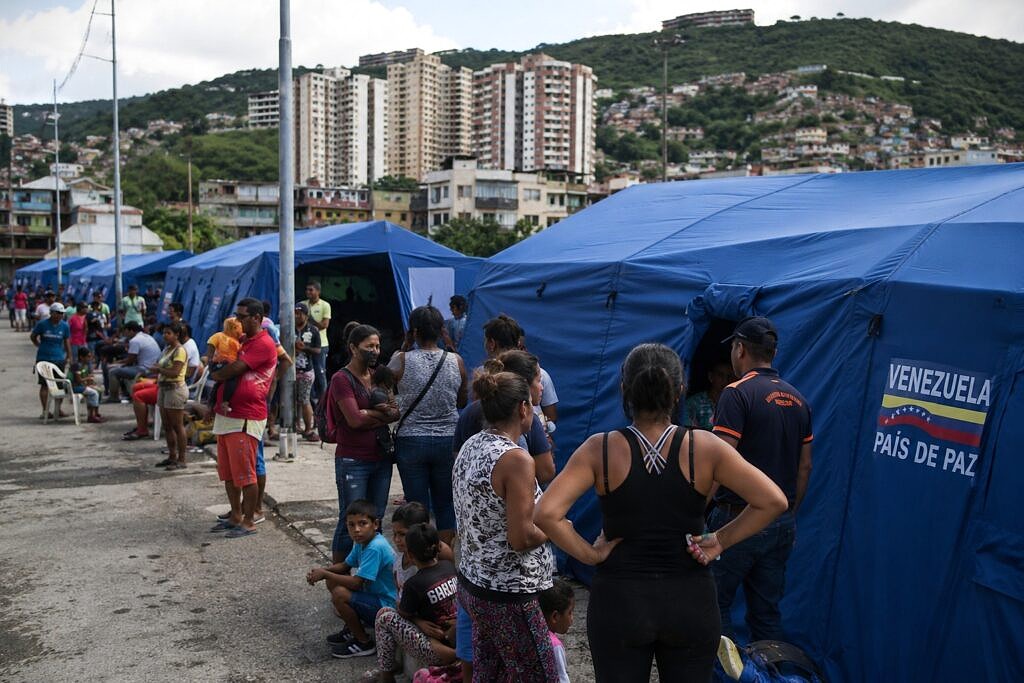
That depletion has become evident in almost every aspect of the response. Venezuela imports a significant share of the food it consumes and much of its medicine. The emergency quickly exhausted whatever inventories existed. Heavy machinery needed to clear debris had to be sought abroad. Medical supplies became scarce almost immediately. Temporary shelters proved insufficient, forcing thousands of survivors to remain in tents erected in parks and public spaces weeks after the disaster. The government is now considering housing many of them in schools, an understandable emergency measure made possible only because classes are suspended for the summer.
Temporary solutions, however, have a habit of becoming permanent in Venezuela. Families displaced by the Vargas Tragedy of 1999 and by the 2010 floods spent years, in some cases decades, living in shelters that were never meant to become homes. The earthquakes risk repeating a familiar pattern, not because Venezuelan authorities necessarily want it to, but because they have long lacked the capacity to offer anything else.
The Venezuelan diaspora contains an extraordinary concentration of precisely the human capital required to rebuild the country. Whether that expertise can be persuaded to return, even temporarily, remains an unlikely scenario.
Some will inevitably attribute this lack of preparedness primarily to sanctions. It is an understandable argument, but one that struggles to explain what the earthquakes actually exposed. The collapse of domestic industry, the deterioration of public infrastructure, chronic underinvestment in the electrical grid, the shrinking of Venezuela’s manufacturing base and the erosion of emergency response capacity all began years before oil sanctions were imposed.
Recent research has also challenged the idea that sanctions caused a discrete collapse in access to food and medicine, showing instead that essential imports had already fallen dramatically before sanctions and later stabilized as the government dismantled some of its own economic controls. The sanctions era itself demonstrated that Venezuela retained the ability to import consumer goods. Supermarkets gradually refilled for those able to pay. Construction cranes returned to Caracas’ wealthiest neighborhoods. Restaurants multiplied. Consumption recovered far more quickly than productive capacity.
The earthquake exposed the difference.
The destruction of resilience
Disasters ask questions that ordinary economic life does not. They care little about how many imported products sit on supermarket shelves or how many luxury apartments are being built in eastern Caracas. They ask whether a country can mobilize excavators, engineers, trauma surgeons, logistics networks, emergency housing, electricity, financing and public institutions at scale. They ask whether resilience has been accumulated or consumed. Venezuela’s answer has been painfully clear.
That is perhaps one of the least understood legacies of chavismo. Much has been written about the destruction of wealth, the collapse of oil production or the country’s prolonged recession. Less attention has been paid to the destruction of resilience itself. For years, the Venezuelan State approached institutions with the same extractive logic that governed its relationship with oil. Productive assets became sources of immediate political or fiscal returns rather than investments to be maintained and strengthened. Private companies were expropriated rather than incorporated into development. Public enterprises became instruments of patronage rather than production. Infrastructure was consumed faster than it was repaired. The country did not merely become poorer. It gradually spent the reserves that societies rely upon when catastrophe arrives.
Resources that may have financed future growth must now finance immediate recovery.
The consequences extend far beyond physical infrastructure. Reconstruction is ultimately carried out by people, and Venezuela has spent the last two decades exporting many of those it now needs most. Engineers who now design highways in Spain, petroleum specialists managing fields in Texas or Guyana, architects working across Latin America, doctors practicing in Colombia and Chile, electricians, project managers and construction supervisors who left because opportunities disappeared at home. The Venezuelan diaspora contains an extraordinary concentration of precisely the human capital required to rebuild the country. Whether that expertise can be persuaded to return, even temporarily, remains an unlikely scenario.
Money presents an equally daunting challenge. Before the earthquake, Venezuela’s slow economic reopening had begun to attract cautious international interest. Much of it remained exactly that, cautious. Memoranda of understanding outnumbered signed investment agreements, access to financing remained limited and investors continued to price Venezuela’s political risks accordingly. The expectation, however tentative, was that new investment would increasingly flow toward rebuilding the electrical grid, expanding oil production and modernizing neglected infrastructure. The earthquake has fundamentally altered those priorities. Resources that may have financed future growth must now finance immediate recovery. Every home rebuilt is a home that cannot wait. Every hospital repaired is indispensable. Every bridge reconstructed delays another project that might otherwise have expanded productive capacity. Reconstruction does not replace development. It postpones it.
Reconstruction-era uncertainty and challenges
The financing challenge has also become more complicated politically. Investors had already approached Venezuela with understandable caution. The humanitarian emergency has increased the country’s fiscal needs precisely as political uncertainty has deepened. The constitutional arrangements established after Nicolás Maduro’s removal were always presented as exceptional. As they become more prolonged and their legal basis increasingly contested, companies considering long-term reconstruction projects must ask whether contracts signed today will remain secure under whatever government eventually succeeds the current one. Investors do not need constitutional certainty, they simply need enough legal certainty to believe that agreements lasting ten or twenty years will survive political change. Venezuela offers remarkably little of it.
This is also why Delcy Rodríguez’s recent call for the lifting of sanctions misunderstands the country’s central problem. Whatever benefits further sanctions relief might provide, it cannot eliminate the uncertainty surrounding Venezuela’s legal and political environment. Investors deciding whether to finance ports, housing developments or power plants are unlikely to base their decisions on sanctions alone. They also ask whether contracts will survive a change of government, whether courts will enforce them and whether today’s authorities will still possess the legal authority to honor them tomorrow.
Reconstruction depends on trust, functioning institutions, access to capital, legal certainty and a productive economy capable of sustaining the effort long after international solidarity inevitably fades.
There is another irony hidden beneath the rubble. The Venezuelan insurance industry will likely survive this catastrophe better than many expected, not because losses have been modest, but because so much of what was lost was never insured. This was an under-insured disaster. Homes, businesses and families that lacked coverage will inevitably look toward the state for assistance. Yet the state that spent years hollowing out its own fiscal and institutional capacity now finds itself acting as insurer of last resort, precisely when it possesses the fewest resources to fulfill that role.
Natural disasters often become moments of national renewal. Reconstruction can modernize infrastructure, attract investment and accelerate reforms that politics alone struggles to produce. Those opportunities exist in Venezuela as well. Rebuilding cities will require new housing, new roads, new power systems, new telecommunications infrastructure and new industries capable of supplying them. But opportunities are only as valuable as a country’s ability to seize them. Reconstruction depends on trust, functioning institutions, access to capital, legal certainty and a productive economy capable of sustaining the effort long after international solidarity inevitably fades.
The earthquake destroyed thousands of buildings. Rebuilding them will take years. What it ultimately revealed, however, is something far more difficult to reconstruct. Over the last quarter century Venezuela has steadily depleted much of the industrial, institutional, financial, human and political capital that countries quietly accumulate before disasters occur. Those invisible reserves are what determine whether recovery becomes a matter of years or generations. They cannot be imported as easily as food or medicine. They have to be rebuilt, patiently, one institution at a time.
Jackson didn’t get a chance for revenge after tearing an anterior cruciate ligament in May, making the Sparks’ 102-87 win at Crypto.com Arena not a true litmus test. Veteran guard Ariel Atkins, who was shipped out of Chicago in the Jackson deal, had her best game with the Sparks, finishing with a season-high 17 points.
The Sparks showcased their potential en route to their second straight win, even with All-Star Kelsey Plum (lower left leg) and Cameron Brink (left ankle) out. Nneka Ogwumike, the Sparks’ other All-Star, posted 25 points and 12 rebounds, Dearica Hamby and Rae Burrell both scored 17, and Erica Wheeler had 15 points and eight assists.
“The ball’s got to move,” Sparks coach Lynne Roberts said. “It can’t be a lot of one on one. And that’s what happens when you have 32 assists, the ball’s moving. So it’s just the continued emphasis of ball movement, player movement, getting those high-quality shots, and we’ve got players that are going to make them for percentage.”
Still a game under .500, the Sparks (10-11) have a long way to go to be considered serious postseason contenders. Chicago also has struggled mightily outside of a win against Phoenix this week and has been engulfed in drama around veteran guard Skylar Diggins, who sat out because of a knee injury.
“After the game on Monday, I think there was just kind of like an ‘enough’ mentality, and we all felt it,” Roberts said. “We all kind of just said, ‘enough.’ That doesn’t mean that we’re going to go undefeated the rest of the way, but we play like that. We give ourselves a chance in every game.”
For the second straight game, all five starters scored in double digits. Hamby had a late backhanded layup over 6-foot-7 Kamilla Cardoso to help close out the win.
Brought in to be Plum’s partner in the backcourt, Atkins has had an inconsistent offensive season, with career-low scoring and shooting numbers. Against her former squad, she showed why the Sparks wanted her, and why they need her to produce with Plum out of the lineup for the foreseeable future.
“It feels good to see shots go in,” Atkins said. “My biggest thing is that it feels good when we all feel good too. When they lead to wins, it makes it even better.”
After the Sparks opened up a 16-8 lead, Chicago (7-15) stormed back to keep it tight throughout the second quarter. The Sparks led 73-70 after three quarters before pulling away late.
Ogwumike made three three-pointers in the fourth to carry the Sparks across the finish line.
“Just to have that poise, like we haven’t shown that in a very long time,” Wheeler said. “So for us to display that tonight, like that should be the standard, and it felt good to have that poise.”
The Sparks scored 25 points off 15 Sky turnovers. They shot 51% from the field.
Ball movement has been emphasized all season, “so it’s good that we’re starting to figure it out,” Roberts said. “When you look at the assists, it wasn’t like one person had 16 or something, right? So it’s balanced. The ball’s moving. There’s [the thought of] ‘we need to get the win,’ not ‘I need to get the bucket.’ And I think that’s the mentality of great teams.”
Veteran forward Emma Cannon played 12 minutes and scored nine points as a key post presence late when Cardoso was in foul trouble.
Ogwumike moved into fifth on the Sparks’ all-time assists list with her third helper in the first quarter, passing Mwadi Mabika.
The Sparks are half a game outside the final playoff spot, not bad given how poor some of their performances have been. They head to Atlanta (13-9) to face a slumping Dream squad on Monday as they try to win three consecutive games for the third time this season.
“It took us a bit with KP out to figure out kind of how we can still flow,” Roberts said. “I think we’ve figured it out.”
July 10 (UPI) — Maine Democrats are hoping to convene by the end of July to find a Senate nominee to replace Graham Platner, it was reported on Friday.
Party leadership has been scrambling to replace Platner since he was accused by a former partner of sexually assaulting her while he was drunk.
Platner dropped out of the race on Wednesday under intense pressure from politicians and groups that had previously endorsed him.
Now, Democrats are hoping to choose delegates within a week, and hold a state convention to pick a replacement the following weekend, The New York Times reported.
The party has not finalized plans, including a date or location for the convention, The Times reported.
Whoever they chose will run against Republican Sen. Susan Collins, the five-term incumbent.
Platner has denied the accusations.
“It’s not the false allegations, though, that have brought us to where we are,” he said in announcing his departure from the race. “It’s the fact that they’re being used by the political establishment to put structural pressure on us.”
“I remember him grabbing my pelvis and being really forceful of me,” Jenny Racicot, 41, told Politico. “I remember the specific moment where I thought to myself, like, ‘This is no longer my choice.'”
Raciot added Platner was “very drunk and wouldn’t take no for an answer,” the New York Post reported.
Maine Democrats are hoping to have a nominee by July 27, according to The Times.
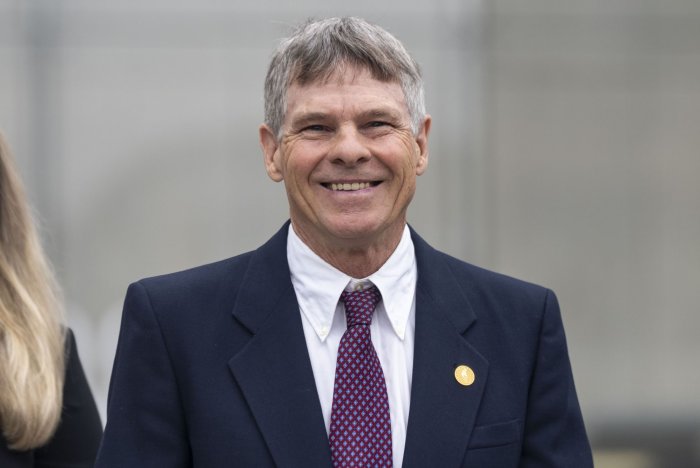
Olympic canoeist David Hearn departs the Moultrie Courthouse after pleading not guilty to damaging the Lincoln Memorial Reflecting Pool on Thursday. Hearn was indicted on July 2 on one count of destruction of property of more than $1,000 for allegedly damaging the Reflecting Pool, carrying a maximum penalty of 10 years in prison if convicted. Photo by Bonnie Cash/UPI | License Photo
Travellers must take extra when packing their suitcases as certain items are not allowed in hold luggage, especially this device would could cause more disruption than usual
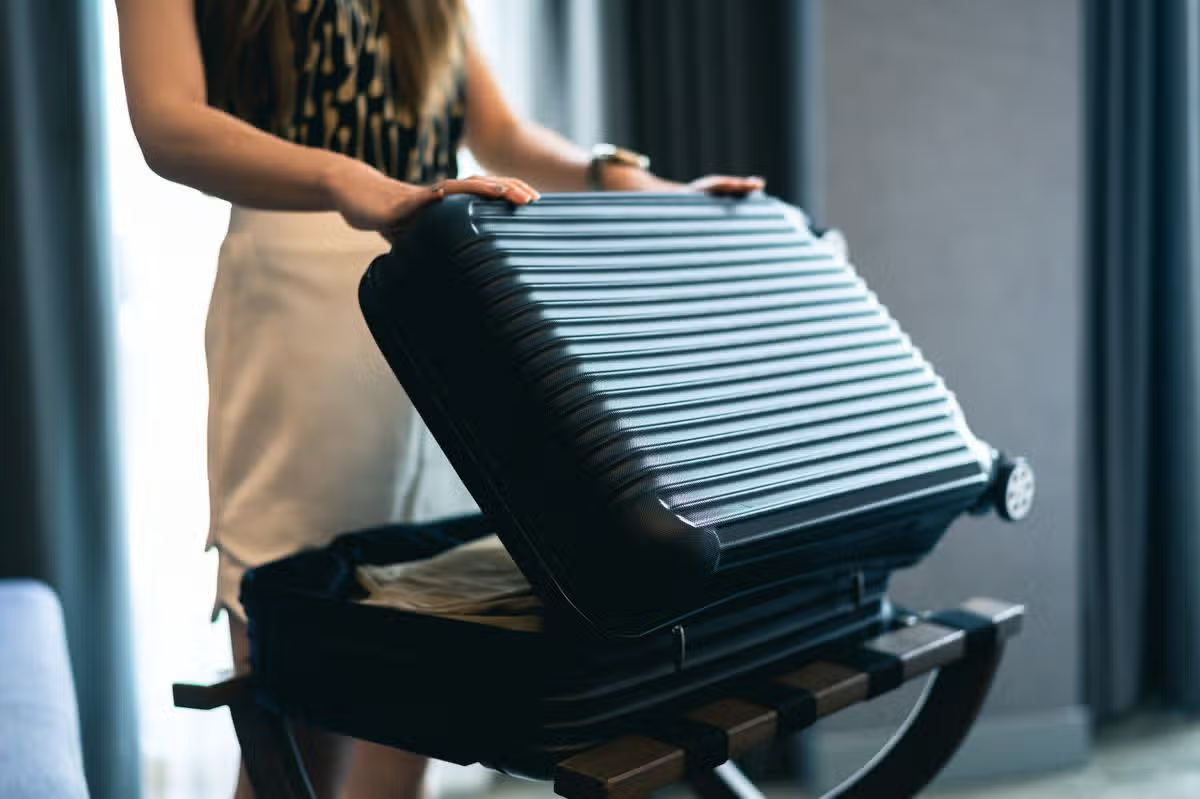
Many people might find packing their suitcase quite stressful(Image: Getty Images)
Packing for a holiday can be both exciting and nerve-wracking in equal measure. Most airlines enforce strict restrictions on weight and size, which can prove incredibly stressful for travellers.
Certain items have long been forbidden during air travel, but what about storing them in your suitcase? According to recent findings, vapes and powerbanks rank among the greatest fire hazards on aircraft. As a result, many holidaymakers remain unsure about the correct procedures when flying with these devices.
To shed some light on the matter, Markus Lindblad, Head of Legal & External Affairs for Northerner, has set out the key guidelines for storing your vape.
He warned that despite safety notices, many travellers are still mistakenly packing vape devices in their hold luggage, when airlines actually require these to be switched off and kept solely in cabin baggage.
Content cannot be displayed without consent
Why lithium batteries and vapes are banned in checked luggage
This comes down to the considerable fire risk posed by lithium batteries. In the past, airlines have been forced to divert flights after a lithium battery caught fire, making it absolutely vital to thoroughly check your bags.
If you’re caught vaping on board, this can set off smoke alarms and alert cabin crew. Depending on the airline and the circumstances involved, failing to cooperate with staff or disregarding safety instructions could land you with a hefty fine.
This could also result in police getting involved once the aircraft touches down, or even a lifetime ban from travelling with that carrier. But if you spot another traveller vaping mid-flight, it’s recommended to quietly alert a member of the cabin crew.
Getting through an entire journey without nicotine can prove challenging for some, but Markus recommends smokers bring patches on board to tide them over until they reach their destination.
They can be stored in both hand luggage and hold baggage, are subtle to apply and don’t produce vapour, making them appropriate for use while airborne.
As with any product, travellers should always verify the regulations of their airline and destination country before departure, as requirements can differ.
France, for instance, has outlawed nicotine pouches. Taking a brief moment to familiarise yourself with the airline’s regulations and pack appropriately can help prevent hold-ups, seized items or fines, ensuring your trip begins smoothly.
Airline vape policies and the UK disposable vape ban
According to the UK Civil Aviation Authority, all vapes and e-cigarettes must be carried in cabin luggage and never in hold baggage.
This is compulsory to avoid lithium battery fires. Furthermore, all e-liquids must adhere to the standard 100ml liquid restriction in a transparent resealable bag.
You should also drain your refillable tanks prior to flying, as changes in cabin pressure often cause e-liquid to seep out through the airflow openings. For more comprehensive policies on precise battery quantities, it’s worth checking your specific airline’s guidelines via British Airways, easyJet, or Ryanair.
It is also worth noting that selling single-use disposable vapes is completely prohibited in the UK. While you are still permitted to travel with ones you already own, purchasing them at UK airports is not allowed.
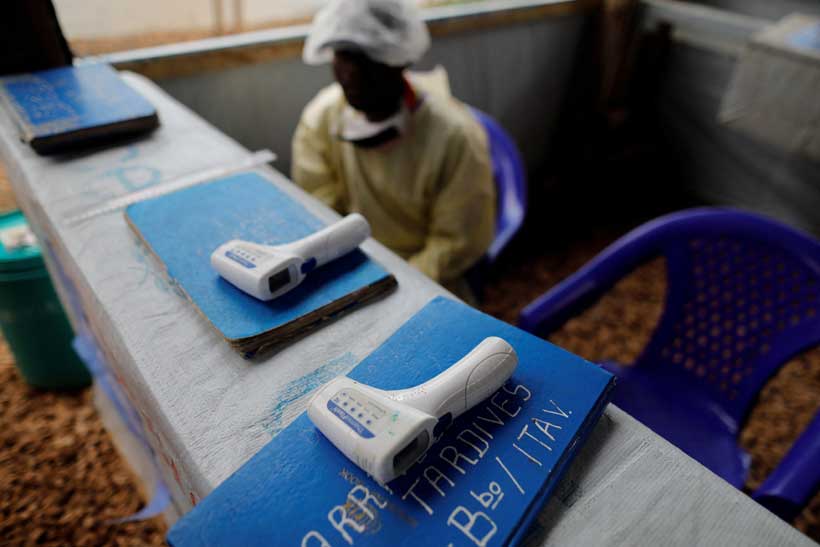
The Ebola outbreak in the Democratic Republic of Congo may be significantly larger than official figures indicate, with most new infections occurring outside known chains of transmission, raising concerns that health authorities are struggling to keep pace with the spread of the virus.
According to the World Health Organization (WHO), around 80% of newly confirmed Ebola patients in the outbreak’s epicentre are not identified through existing contact-tracing networks, suggesting widespread undetected community transmission.
The outbreak, declared in mid-May, has officially infected 1,792 people and killed 625, according to Congolese government figures released on Thursday. However, WHO modelling indicates the true number of infections could be two to four times higher.
WHO Emergencies Director Chikwe Ihekweazu told Reuters that in Bunia, the centre of the outbreak in Ituri province, four out of every five newly confirmed cases are emerging outside the lists of people already being monitored after exposure to infected patients.
Stay ahead of the geopolitical week.
MD Briefing delivers expert analysis across five global fronts — the Indo-Pacific, energy, geoeconomics, European security, and the Middle East — every Monday morning. Free.
Public health experts view contact tracing as one of the most effective tools for controlling Ebola. When large numbers of patients are not linked to known cases, it suggests the virus is circulating undetected in the community, making containment much more difficult.
In contrast, neighbouring North Kivu province has shown encouraging progress, with nearly all new infections occurring among previously identified contacts.
Transmission remains concentrated in eastern Congo
Around 90% of all confirmed cases remain concentrated in Ituri province, particularly in the health zones of Bunia, Rwampara, Mongbwalu and Nyakunde, where transmission remains intense.
The outbreak has nevertheless expanded beyond its original epicentre, reaching North Kivu, South Kivu and more recently Tshopo province.
In Bunia—a city of roughly one million people about half of all individuals tested for Ebola receive positive results, reflecting sustained community transmission.
Milder symptoms may be helping the virus spread
Health officials believe the Bundibugyo strain responsible for the outbreak may produce milder symptoms than other Ebola variants.
While this appears to improve survival prospects for patients who eventually reach treatment centres, it may also encourage infected individuals to remain at home longer or seek medical attention later, unknowingly spreading the virus to family members and the wider community.
According to WHO, prolonged delays before isolation increase opportunities for transmission.
Community deaths remain another major concern. An analysis of the first 400 Ebola fatalities found that roughly 70% occurred outside designated treatment centres, highlighting continued challenges in identifying patients early enough to provide care and prevent further spread.
Health authorities expand surveillance
To improve detection, Congolese authorities have begun training approximately 21,000 community health workers to conduct door-to-door visits, identify suspected infections and encourage symptomatic individuals to seek medical treatment.
Officials hope stronger community surveillance will help uncover hidden chains of transmission and improve contact tracing, which remains the cornerstone of Ebola control efforts.
Hidden transmission is the outbreak’s biggest threat
The most alarming aspect of Congo’s latest Ebola outbreak is not simply the number of confirmed cases but the large proportion of infections occurring outside established surveillance networks. When 80% of new patients are unknown to contact tracers, it indicates the virus is spreading faster than health authorities can detect it.
Although the Bundibugyo strain may cause comparatively milder illness, that characteristic presents a paradox: fewer severely ill patients can reduce public perception of risk, delaying diagnosis and allowing infected individuals to remain in the community longer. Combined with high rates of deaths occurring outside treatment facilities, these trends point to persistent gaps in surveillance rather than failures of medical treatment.
The rapid expansion of community health worker programmes reflects recognition that traditional outbreak response measures alone may not be sufficient. Unless surveillance improves and hidden transmission chains are identified quickly, the outbreak is likely to remain substantially larger than official figures suggest, complicating efforts to bring it under control.
Here’s a terrible-seeming idea: The Rolling Stones should get started on their next album.
Like, now.
After taking nearly two decades to release 2023’s “Hackney Diamonds” — the band’s first set of original material since “A Bigger Bang” in 2005 — the Stones are back this week with a follow-up, “Foreign Tongues,” that took them less than 36 months to get out.
And it’s the better record in every way.
In the old days, of course, two and a half years was all they needed to make “Beggars Banquet,” “Let It Bleed” and “Sticky Fingers.” So let’s not get too carried away by the fact Mick Jagger, Keith Richards and Ronnie Wood are working as fast as they are in their late 70s and early 80s.
Yet to listen to the brisk and sportive “Foreign Tongues” is to hear a band clearly going on instinct rather than overthinking the music à la any number of veteran acts in legacy-maintenance mode. I don’t know if the result is the Stones’ best since 1978’s “Some Girls,” but it’s definitely the funniest, which is actually the more impressive achievement.
“Wake up in the morning and you wanna make me puke,” Jagger sneers in the punky “Hit Me in the Head” — exactly the kind of lyric you’d hope to hear from a band whose only possible reason for still being in the game is to have a gas-gas-gas.
Like “Hackney Diamonds” — and, for that matter, like Paul McCartney’s “The Boys of Dungeon Lane” (to name one recent overthinking-veteran LP) — “Foreign Tongues” was produced by 35-year-old Andrew Watt, who’s made a career of helping boomer icons put a little shine on their late-in-life efforts. And he’s helped the Stones convene an appealingly motley crew of collaborators here, including McCartney (who plays bass on “Covered in You”), the Cure’s Robert Smith (who contributes guitar to “Divine Intervention”), Steve Winwood (who plays piano and organ throughout the album) and Bruno Mars (who’s credited with, uh, cowbell in “Never Wanna Lose You”).
You also get a welcome appearance from the late Charlie Watts in a hard-thwacking performance recorded before his death in 2021. (Steve Jordan otherwise keeps time.)
But none of the stunt casting feels like the point of the album, which instead simply doles out a dozen tunes in the Stones’ various idioms — the bluesy stomp, the country-ish lope, the sleazy disco jam — plus a couple of covers in just over an hour. It’s frisky and lighthearted, even when Jagger is lamenting what he sees as the sorry state of his beloved America in “Ringing Hollow” and when Richards is croaking about love having put him on his knees in “Some of Us.”
And when they go goblin mode, they really lean in: “Mr. Charm” is a demented soul-rock rave-up about how boring money is — OK, Mick — in which Jagger drops a diss of the “mad mogul Mr. Musk” into a verse laying out the delights of staying home and doing anagrams.
In “Divine Intervention,” Jagger offers a colorful travelogue of trips through New York and Los Angeles — “I kept moving on to Silver Lake / To play guitar with a brand new friend of mine” — while Richards and Wood get their guitars slip-sliding all over the place. “Jealous Lover” is gorgeously trashy: a horny little strut that sounds like “Dirty Mind”-era Prince doing “Waiting on a Friend.” (Legitimately loony Mick vocal here.)
For God knows what reason, the Stones offer up a faithful rendition of Amy Winehouse’s “You Know I’m No Good” with Jagger on harmonica. And the album ends with a very ragged take on Chuck Berry’s “Beautiful Delilah,” obviously meant to remind you of how the two lifers at the core of the Stones came together more than half a century ago.
The memory is ancient; the thrill, somehow, is alive.
Jill Robinson visited San Marino, one of the smallest nations in the worldCredit: GettyRimini has 15km of beachesCredit: Getty
I’m in San Marino — the tiny, landlocked microstate completely surrounded by its famous neighbour, and officially the fifth-smallest country on the planet.
Set atop Mount Titano, 700 metres above sea level, San Marino is the oldest republic in the world but is still relatively undiscovered by British tourists who remain in the surrounding regions of its bigger neighbour instead.
Sign up for the Travel newsletter
Thank you!
One of the easiest ways to reach the centre is via cable car and once you step out you’re welcomed by centuries-old streets, the Basilica of Saint Marinus and the incredible Three Towers of Mount Titano.
Built in the 11th century, the towers formed the medieval defences and while the steep incline to get to them is not for the faint-hearted, it’s worth it.
You can visit the two main towers — Guaita and Cesta — linked by a 13th century stone walkway the locals nicknamed The Witches Path.
But there’s another reason to visit.
San Marino is virtually a duty-free haven with taxes around five percentage points lower than in Italy.
I had to be dragged away from all the beautiful handbags and shoes in the cute boutiques dotted throughout the city.
San Marino also produces an array of products including olive oil and wine, which I had a chance to sample over lunch at Ristorante Titano.
The stunning main square in RavennaCredit: GettyTuck into a delicious bowl of cappellacciCredit: Getty
Alongside the light and fresh local wine, I devoured a bowl of cappellacci; the traditional stuffed pasta with a distinctive “big hat” shape originating from the Emilia-Romagna region that San Marino sits within.
While San Marino is landlocked, it is only 30 minutes drive from Rimini’s wide, 15km-long beaches, so close it is visible from the top of the city on a clear day.
Rimini has been a popular seaside destination for decades and I could see why as I gazed out of my balcony room at the 4* Hotel Savoia across the golden sandy beach and the newly redeveloped waterfront.
The hotel itself has the celeb factor — it featured in Italian classic La Dolce Vita and the film’s director Federico Fellini was born in Rimini.
Dramatic Cesta towerCredit: GettyKick your feet up on the golden sandy beachCredit: Getty
But the hotel isn’t the only place where the famous director has left his mark.
There is a museum dedicated to his work split across three spaces, one of which is housed in Castel Sismondo, a medieval castle.
He and his most famous characters are also immortalised in a mural in Borgo San Giuliano, an ancient fisherman district full of pastel-coloured little houses.
And it was history that had me star-struck when I moved on to another Italian city, ravishing Ravenna.
Stunning mosaics from the early Christian and Byzantine periods can be found in Basilica of San Vitale and the Mausoleum of Galla Placidia.
Ravenna is also home to Dante’s Tomb, the resting place of Dante Alighieri, the famous poet known for Dante’s Inferno and as the father of the Italian language.
Another bard with links to the city is Lord Byron, and the Byron Museum is housed in Palazzo Guiccioli, where he pursued an intense love affair with the wife of aristocrat Alessandro Guiccioli in 1819.
After exploring the brilliant interactive displays, I enjoyed an incredible alfresco lunch of lasagne at Taverna Byron at the Palazzo.
All these attractions were just a short walk from my cosy, family-run hotel, Villa Noctis, which has its own peaceful courtyard overlooked by the traditional-style breakfast room.
Ravenna has its own glorious stretch of golden sand and selection of beach clubs to enjoy.
I settled on Singita Marina Beach and I have to say, a cocktail, sun lounger and a delicious plate of tuna tartare on potato croquettes — they don’t scrimp on the portions either — was the perfect way to end the day.
Now that’s La Dolce Vita.
Ravenna is also home to Dante’s Tomb, the resting place of Dante AlighieriCredit: Getty
LAS VEGAS — The highlight dunk was proof that Adou Thiero is just fine. Thiero delivered a breakaway windmill dunk in the second quarter Friday that brought cheers from the fans, a moment in which the second-year Lakers forward displayed his athleticism.
Thiero’s confidence seemed to grow from that point on, his play for the Lakers during their Las Vegas Summer League opener at the Thomas & Mack Center a sign of his development.
He ran the floor and caught a lob for a dunk. He sprinted back on defense and blocked a shot. He finished the third quarter with a last-second shot off the backboard, a basket that gave the Lakers an 86-66 lead over the Oklahoma City Thunder. Thiero came back in the game in the fourth quarter and threw down another lob dunk.
Thiero completed his night with 20 points during the Lakers’ 96-84 win.
He played an all-around game, collecting four rebounds, four assists, three steals and two blocks with zero turnovers in 30 minutes. He was eight for 14 from the field. He missed all five of his three-pointers, but Thiero finished the game plus-13.
“I feel like I was capable of doing this,” Thiero said. “It’s not different from things I was doing in the G League last year. I feel like I got real comfortable in the G League, how to play and everything and just took that break and still trying to get back to healthy and everything and finally getting to go out and play. I feel like I sped myself up a little bit and now I’m slowing down and letting the game come to me.”
Thiero played after missing the Lakers’ final game at the California Classic in San Francisco because of a right wrist injury.
He looked far more in control and at ease than he did in San Francisco.
“He just wasn’t rushed tonight,” Lakers summer league coach Ty Abbott said. “He took what was in front of him. He attacked matchups. He understood that there was going to be some paint swarming. Those guys are going to try to flood and meet him at the rim and he made the right pass. And then when he started doing that, it started to open up for him and he was able to finish at the rim.”
Thiero was asked to critique his windmill dunk, which was his first highlight of the game and one that had fans cheering.
But Thiero was not impressed.
“The windmill was nice, but it wasn’t my best windmill,” Thiero said. “I’d probably say that was one of my worst windmills. I didn’t have my footing. I went back and watched it on video and I didn’t really like it.”
Thiero believed his chemistry with rookie Cameron Carr and his defense stood out. He also said Lakers coach JJ Redick had conversations with him about being a better defender.
“Just trying to go out there and cause havoc,” Thiero said. “JJ, he says that the things he wants, you know, we need a point-of-attack, on-ball defender and everything. So, just trying to go out there and be that, try and get reps in defending and then, offensively, just trying to play basketball, just trying to make the game more simple for myself.”
Carr also played against the Thunder after being limited by a bothersome toenail in his last game. He had another solid game with 18 points on seven-for-13 shooting.
There’s also a handy hack you should try – and it involves socks
People should visit their GP if they are worried(Image: whitebalance.space via Getty Images)
The British Red Cross has highlighted something many of us already know: “it can be difficult to sleep in a heatwave”.
However, what fewer people realise is that the amount of sleep you get can influence how your body copes with the heat – and we’re not just talking about your mood.
It explains: “If it’s too hot or too cold, your internal body temperature may be affected, disrupting your ability to fall asleep and stay asleep. This is important as getting good-quality sleep during a heatwave helps your body recover, stay cool, and maintain overall physical and mental health.
For people in vulnerable groups, getting sufficient rest is especially important. Good-quality rest can help support the immune system, improve energy levels, promote heart health, and help the body manage the additional strain caused by extreme heat.
How can I sleep during a heatwave?
Discussing how to sleep during a heatwave and periods of high temperatures, it is important to aim for the recommended seven to nine hours of sleep each night. With temperatures expected to rise across the UK this week, this is a timely reminder of the importance of prioritising rest during hot weather.
It explains: “According to the NHS, an adult usually needs between seven to nine hours sleep a night. However, this will change depending on age, health and personal circumstances. Teenagers, children and babies need more sleep than others.”
In fact, a lack of sleep, even for one night, can impact your health and may negatively affect your:
immune system
alertness and reaction times
attention
cognitive ability
mood changes and irritability
anxiety and depression
quality of life and social activity
The NHS notes that there are signs and symptoms of sleep problems you should keep an eye out for.
You may:
find it difficult to fall asleep
lie awake for long periods at night
wake up several times during the night
wake up early and be unable to get back to sleep
feel down or have a lower mood
have difficulty concentrating
be more irritable than usual
It adds: “Longer-term sleep problems can affect our relationships and social life, and leave us feeling tired all the time, eating more and not able to do daily tasks.”
If you regularly struggle to sleep and find it difficult to get at least seven hours of rest, consider speaking to your GP. This is particularly important if poor sleep is starting to affect your daily life and wellbeing.
Did you know that cooling your feet may help you feel cooler overall? The Red Cross suggests placing a pair of socks in the fridge during the day and putting them on before bed to create a refreshing cooling effect as you wind down for the night.
You can read more about how to stay cool and sleep during a heatwave here.
Victor Wemnanyama, the NBA’s tallest player, inked the third-largest rookie extension in history.
Published On 11 Jul 202611 Jul 2026
Hours after he told Spurs fans he was “here to stay”, Victor Wembanyama signed a multiyear contract extension with San Antonio that ESPN reported is for five years and $252m.
The deal, which is worth $50.4m per year, is the National Basketball Association’s (NBA) maximum rookie-scale extension and carries a player option for the fifth season.
Recommended Stories
list of 4 itemsend of list
“Spurs family, I’m here to stay,” Wembanyama tweeted Friday. “Whatever it takes.”
The Spurs, who did not confirm financial details, published photos and videos of Wembanyama inking his contract.
Wembanyama has been viewed as one of the elite young players in the sport going back before the Spurs selected him No 1 overall in the 2023 NBA Draft.
The 7ft4in (2.24-metre) centre with an 8-ft (2.44-metre) wingspan has averaged 23.4 points, 11 rebounds, 3.5 assists and 3.5 blocks per game through three NBA seasons.
The Defensive Player of the Year and a first-time All-NBA first-team selection, Wembanyama finished third in Most Valuable Player (MVP) balloting this season after putting up career highs of 25.0 points and 11.5 rebounds per game.
He is a career 34.2% 3-point shooter who has made 2.2 triples per game, and he’s led the league in blocks in every season since his arrival.
The Spurs fell to the New York Knicks in five games last month in Wembanyama’s first NBA Finals.
The current pieces around him include guards De’Aaron Fox, Stephon Castle, Devin Vassell and Dylan Harper, and the Spurs recently signed veteran forward Tobias Harris.
Wembanyama, left, with teammate Stephon Castle during the NBA Finals in June [Ross D Franklin/AP]
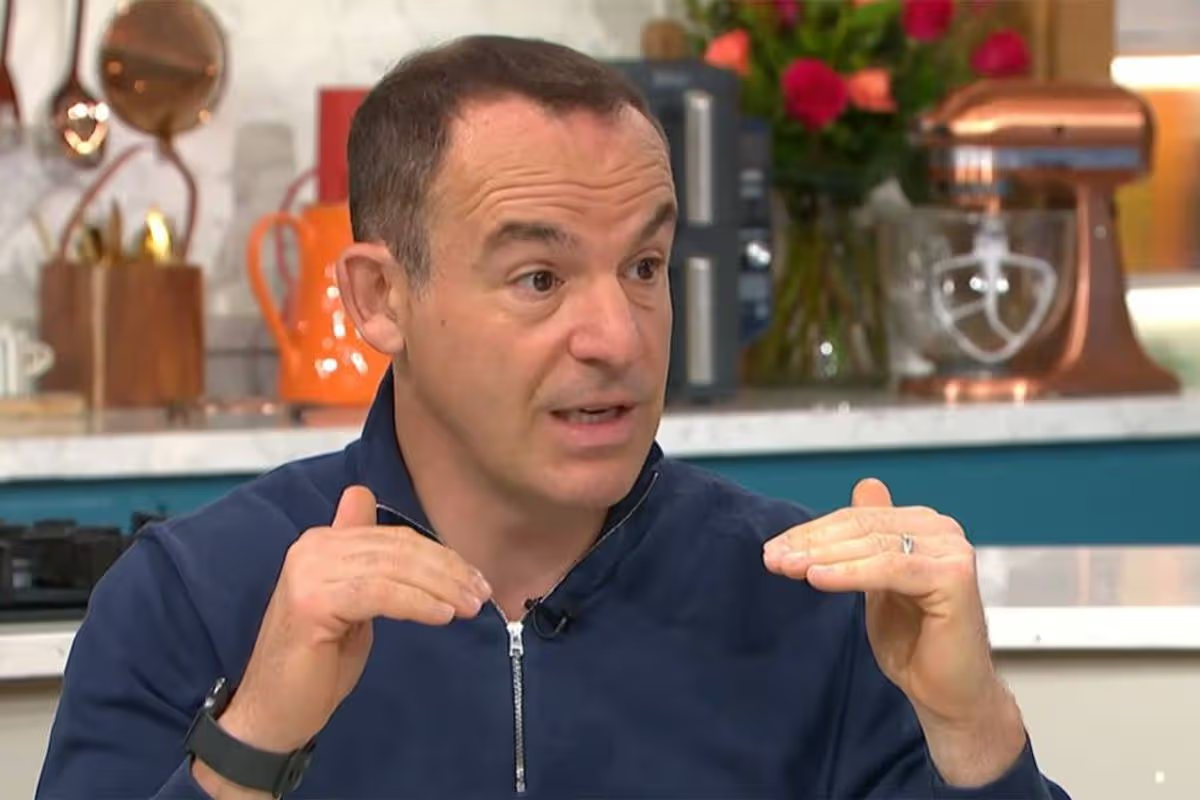
The Money Saving Expert says one thing that is ‘totally free’ could save holidaymakers loads of money
Martin Lewis has shared his holiday advice (file image)(Image: ITV)
Heading to Europe this summer? Before you jet off, Money Saving Expert says there’s one free card every holidaymaker should have in their wallet – and it could save them money.
The Money Saving Expert has issued a reminder to travellers to get the UK Global Health Insurance Card (GHIC) just in case of an emergency. It can help you access state healthcare in many European countries, however he stresses this shouldn’t be a replacement for travel insurance.
Speaking as part of the National Money Assembly held at St Charles 6th Form College in London, Lewis urged anyone heading to the continent to apply for a GHIC before leaving the UK. He explained how the card is “totally free”, and warned people to never pay a third-party website to apply for one.
“First of all, if you’re going to Europe, you always get your GHIC card, your Global Health Insurance Card,” he said. “That’s totally free, never pay for it. This gives you treatment in a state-run hospital in a European Union country or equivalent at the same cost as a local – so if it’s free for them, it’s free for you.
“If you need to go and see the doctor when you’re abroad and local people don’t pay for the GP, you can go to the GP with your GHIC card. So you should make sure that you have one of those.”
The NHS says the GHIC covers medically necessary healthcare during a temporary stay in the EU and certain other countries. However, it does not cover private medical treatment, mountain rescue, being flown back to the UK or costs such as lost or stolen belongings.
For that reason, Martin Lewis says holidaymakers should never rely on the GHIC alone. He urged travellers to arrange travel insurance as soon as they book a holiday, explaining that it protects them both before and during their trip.
Content cannot be displayed without consent
He said basic travel insurance for a young person spending a week in Europe can often cost as little as £7 to £10. Martin added: “If you can afford the holiday, you can afford travel insurance.”
His long-standing rule is to buy travel insurance “ASAB” – as soon as you book. That’s because policies can protect you if illness, injury or another unforeseen event forces you to cancel your holiday before you even leave home.
Applications for a GHIC are free through the official NHS website, and most people can apply online. Anyone using a website that charges a fee is paying for a service they do not need, as the card itself is available free of charge.
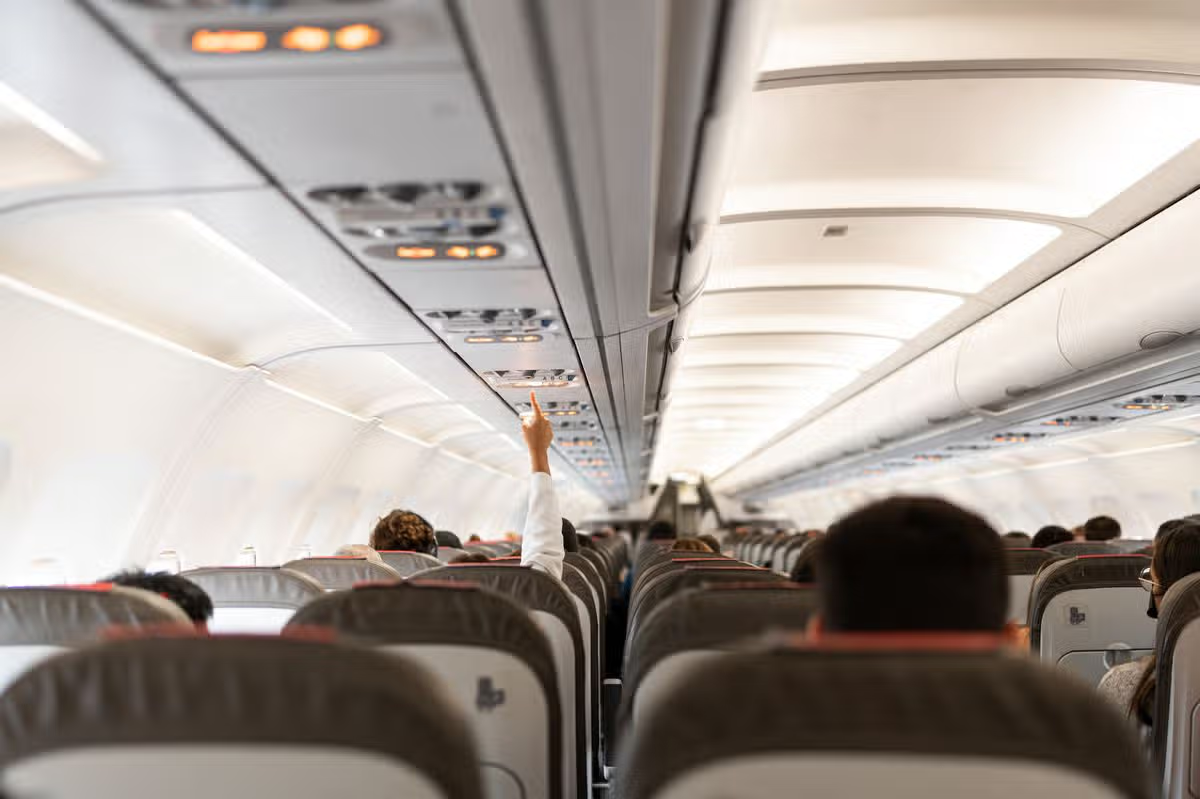
A man claims an airline tried to pressure him into giving up his business class seat so a parent could sit with their child – but he refused to play along and the youngster ended up sitting alone
He refused to swap plane seats (stock)(Image: Getty Images)
But after a flight attendant noticed a child sitting alone in economy while their parent was in business class, they reportedly made it their mission to reunite the pair. Taking to Reddit, he said: “I was asked to move from a row of two so a parent and child could sit together, and I don’t feel guilty for declining, no matter how much the flight attendant and the parent tried to guilt me.
“I wasn’t going to take a downgrade to economy. But even if I was asked to change to a seat in the same class, I would refuse. When I have to fly, I choose the seat that I want. Or, in rare cases when there are no assigned seats, I choose the best seat that’s available.”
He argued that parents should pay the extra cost to ensure they are seated with their children, rather than relying on strangers to swap seats at the last minute.
He added: “I’m not moving just because someone else is a parent. If someone is travelling with a small child, they need to plan better.”
The man also criticised the airline’s handling of the situation, claiming staff tried to pressure him into giving up his seat without offering any compensation.
He said: “While I did complain to the airline about 1) being asked to downgrade to economy without a refund or any compensation – I still wouldn’t have moved, but being told I should help without getting a refund was upsetting – and 2) being guilted by the flight attendants because I refused, I don’t expect a response.
“In Canada, the airline is legally required to give a refund if you are downgraded, so being told I wouldn’t be compensated at all if I changed seats was wrong.
“I don’t know what ended up happening, but the seat next to me was empty during the flight and I got to sit alone.
“Just because I’m not a parent doesn’t mean I should have to move. I don’t care if not moving makes me a bad person.”
Commenting on the post, one user said: “I’m surprised you weren’t offered booze by the flight attendant.”
Another added: “Why didn’t they ask the person next to the child to upgrade so the parent could move to economy instead?”
A third wrote: “So the parent booked business class for themselves and economy for the child, hoping they could guilt someone into upgrading the child for free at their own expense. You did the right thing.”
Weekly insights and analysis on the latest developments in military technology, strategy, and foreign policy.
Welcome to Bunker Talk. This is a weekend open discussion post for the best commenting crew on the net, in which we can chat about all the stuff that went on this week that we didn’t cover. We can also talk about the stuff we did or whatever else grabs your interest. In other words, it’s an off-topic thread.
This week’s caption reads:
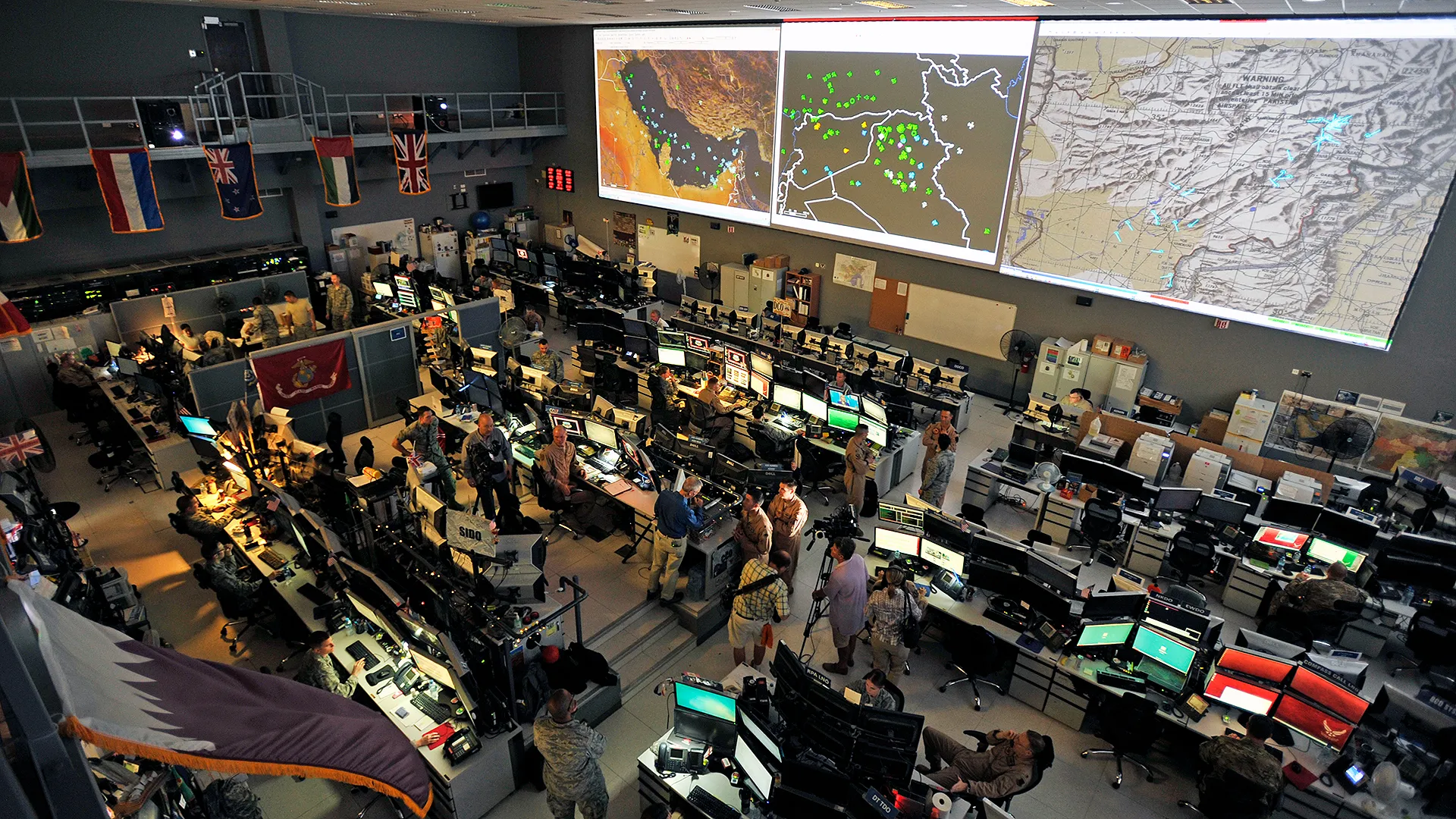
Combined Air Operations Center (CAOC) at Al Udeid Air Base, Qatar, provides command and control of air power throughout Iraq, Syria, Afghanistan, and 17 other nations. The CAOC is comprised of a joint and coalition team that executes day-to-day combined air and space operations and provides rapid reaction, positive control, coordination, and de-confliction of weapon systems. (U.S. Air Force photo by Tech. Sgt. Joshua Strang)
PRIME DIRECTIVES:
If you want to talk politics, do so respectfully and know that there’s always somebody that isn’t going to agree with you.
If you have political differences, hash it out respectfully, stick to the facts, and no childish name-calling or personal attacks of any kind. If you can’t handle yourself in that manner, then please, discuss virtually anything else.
No drive-by garbage political memes. No conspiracy theory rants. Links to crackpot sites will be axed, too. Trolling and shitposting will not be tolerated. No obsessive behavior about other users. Just don’t interact with folks you don’t like.
Do not be a sucker and feed trolls! That’s as much on you as on them. Use the mute button if you don’t like what you see.
So unless you have something of quality to say, know how to treat people with respect, understand that everyone isn’t going to subscribe to your exact same worldview, and have come to terms with the reality that there is no perfect solution when it comes to moderation of a community like this, it’s probably best to just move on.
Finally, as always, report offenders, please. This doesn’t mean reporting people who don’t share your political views, but we really need your help in this regard.
On Saturday (July 11), presenters Charlie Stayt and Naga Munchetty were back at the helm, discussing a range of topics. But according to viewers, football appeared to take precedence.
During the show, the news anchors discussed England playing against Norway in the World Cup later on in the day a number of times.
Not only this, but later on in the show a BBC sports journalist reported outdoors amongst children playing football; this was then followed by a discussion on football stickers.
With all the footie content on show, viewers had enough and demanded a change. Taking to X, formerly known as Twitter, those who were tuned in shared their frustrations.
One viewer said: “Give the football a frigging rest now.” Another fumed: “I’m going to watch the match later but ffs no more of these football fans fillers, I’m not interested in their input.”
A third chimed in and wrote: “I wish that British tennis bloke had won yesterday so they could concentrate on something rather than the football.”
A fourth added: “Four people sitting around a table pointlessly yakking rubbish about football just to fill 30 minutes of #bbcbreakfast.”
Another penned: “Just imagine how football would dominate #BBCBreakfast if England was in the final.”
One more groaned: “Right thats enough now. What a boring lot of old farts.”
For those who are interested in the upcoming England match, England’s quarter-final against Erling Haaland’s Norway will be played at Miami’s Hard Rock Stadium, with a far more fan-friendly kick-off time of 10pm BST.
It’s a welcome change from the last-16 clash with Mexico, which didn’t get underway until 2am in the UK and left plenty of supporters battling through work the following morning after a sleepless night.
The quarter-final gets underway at 5pm local time in Florida on Saturday, July 11, which means a 10pm BST kick-off for fans watching in the UK. If England can get the job done inside 90 minutes, the match should wrap up by around midnight.
If the match can’t be settled in 90 minutes, extra time and a penalty shootout could keep fans watching for another 45 minutes or more. In that scenario, the final whistle may not come until around 1am on Sunday.
Home Bargains shoppers can improve their packing technique with the retailer’s travel set
The travel set could be ideal for the summer holidays (Image: Getty)
Many families are getting their luggage ready for the upcoming holidays. For those who struggle to keep their suitcases tidy, Home Bargains could have just what they need. Known for selling seasonal products, the retailer is stocking travel accessories.
The latest range includes the multipack of Travel Lightweight Travel Cubes. Priced at £4.99, Home Bargains said the set is designed to help customers enjoy “hassle-free packing.” The pack is available to buy online now, with three “lightweight travel cubes” included in each set.
The product description states: “Keep your luggage organised with this simple family three-pack of lightweight travel cubes, featuring durable double zips and breathable mesh panels for easy packing on the go.” The retailer added that the set is “perfect for hassle-free packing on the go.”
Home Bargains sells a range of travel accessories, including the £1.99 Let’s Travel Lightweight Folding Rucksack. The retailer wrote: “The Let’s Travel Lightweight Folding Rucksack is a durable, compact 15-litre bag that folds into its own pocket, with a black design and adjustable straps.”
The description added: “Designed for convenience and versatility, this lightweight folding rucksack is the perfect companion for travel, day trips, and everyday use. Despite its compact design, it offers a surprisingly spacious interior—ideal for carrying your essentials on the go.
“Crafted from durable yet lightweight materials, the rucksack is built to withstand regular use while remaining easy to carry. It features adjustable shoulder straps for comfort and multiple zipped compartments to keep your belongings organised and secure. One of its standout features is its foldable design.
“The bag conveniently packs down into its own compact pocket, making it easy to store in your suitcase, handbag, or luggage when not in use. Simply unfold it whenever you need extra storage space.
“With an approximate 15-litre capacity, it provides ample room for essentials such as clothing, snacks, travel documents, or daily items—without adding bulk or weight.” For £4.99, Home Bargains sells the Travel Adjustable Travel Pillow.
The retailer said: “Stay comfy on the go with this adjustable travel pillow made from soft memory foam, complete with a handy carry bag. Perfect for short trips or long-haul flights, it’s your simple travel essential.”
There’s also the £3.99 Travel Hanging Organiser. The description read: “Stay organised on the go with the Travel Hanging Organiser from the Simple family, featuring 24 mesh pockets and four hooks for versatile storage wherever you are. Compact and practical for hassle-free holidays.”
EXCLUSIVE: After Sarah-Jane Doherty found out she had a brain tumour the size of a golf ball in her brain, she got in touch with loveholidays to cancel a £1,100 upcoming trip – but claims they initially ‘didn’t want to know’
09:02, 11 Jul 2026Updated 09:03, 11 Jul 2026
‘I was misdiagnosed – it took doctors a year to find out what was really wrong’
A young woman who is awaiting brain surgery for a tumour the size of a golf ball watched her mum sob while fighting for her holiday to be refunded after being told she was unfit to fly. Sarah-Jane Doherty, 24, from Doncaster in Yorkshire, was told she had a brain tumour in June 2026 after one year of being misdiagnosed.
She first noticed she was ill in July 2025 when she found herself being overly exhausted, to the point where she could not stand up for long periods of time. Other symptoms included depressive episodes, psychosis, hallucinations, manic episodes, and issues with her mood being up and down, which led professionals to believe she was displaying symptoms of bipolar disorder.
This meant she was put onto anti-psychotic medications which masked what would have been one of her major symptoms, seizures, as an electric shock-type of feeling down her left side. She also suffered issues with her vision before being rushed to A&E after having a severe headache that caused her so much pain that she sobbed on her bed.
After having a CT scan at Doncaster Royal Infirmary, Sarah-Jane was told doctors thought she had a bleed on her brain, and that she would need to be admitted and have an MRI scan. The next morning, Sarah-Jane’s life changed forever after being told she had a brain tumour around the size of a golf ball.
Medication masked a golf ball-sized brain tumour
She said: “They told me in a bay of four people by myself that I had a brain tumour, and that they think is a glioma. I was just distraught, I was absolutely hysterical.
“I rang my mum straight away, and she came into the hospital. She rang my dad and he came home from work to see me. I feel a bit like I’m in an episode of Grey’s Anatomy, like it just doesn’t feel like it’s actually me.
“I was upset, I was stressed thinking, ‘what if it’s not removable?’ I didn’t know what grade it was. What if it’s spread somewhere else in my body? And I just had so many what-ifs in my mind that I just kept crying.”
Before being diagnosed with a suspected grade 2 glioma, Sarah-Jane had booked a £1,100 holiday to Ayia Napa with one of her friends through loveholidays, with flight bookings through British Airways.
Loveholidays booking dispute after Sarah-Jane’s cancer diagnosis
Sarah-Jane said: “I went to Ayia Napa last year and it was really good so we were set on [going] there. But it was last minute because it’s just finding time for us to be together and book holiday.
“I hadn’t been on holiday this year yet, we just wanted to get away so I’d not really had any annual leave or anything like that.
“Just wanted a break and plus because I would be starting a new training programme in September. I wanted to find a decompress before that.”
The day Sarah-Jane was diagnosed with cancer, she contacted loveholidays to make them aware and asked for a refund of her package. At the same time she realised her yearly travel insurance cover had not renewed as she thought it had.
She said: “The first time that we called they didn’t want to know at all. They didn’t even express empathy or anything like that. And then I got an email just saying I can get £62 back.”
Sarah-Jane then sent two letters from medical professionals, one from a consultant at the hospital, and a second from her GP, which were both rejected by loveholidays due to her first letter being a “statement for fitness for Work (SSP)” and the second being a letter that “outlined that it had been issued to support a travel insurance claim”.
Sarah-Jane’s TikTok video prompts action from loveholidays CEO office
After receiving pushback from loveholidays the 24-year-old made a video about her experience on TikTok, with a member of the CEO office at the company reaching out shortly after.
Sarah-Jane continued: “So it was just calls back and forth. They said you need to get in touch with British Airways. British Airways said it has to all be done through loveholidays.
“I asked them to speak to my mum, I just couldn’t deal with speaking to them. I couldn’t keep hearing no and saying, ‘there’s nothing we can do’.
“Then the person from the CEO office said ‘we wish Sarah the best and stuff’ which just shows that there’s no compassion.”
The company then offered Sarah-Jane a £300 refund, which her mum refused, before offering £600, which they also rejected. The following day, however, the loveholiday’s team confirmed they would offer Sarah-Jane a full refund.
She said: “She spent over eight hours on the phone, backwards and forwards, to loveholidays and British Airways because they just kept sending each other to each other. She started crying on the phone because the way people were speaking to her was just… It’s not what she needed to hear.
“She was unnecessarily sent between two different companies that both didn’t want to know. I think that just shows that more protection is needed in the event of major health diagnoses, because if it wasn’t for the TikTok then nothing would have been done.”
Loveholidays and British Airways issue official statements
A loveholidays spokesperson said: “We are deeply sorry to hear about Sarah’s diagnosis and the difficult circumstances she is facing. We wish her all the very best with her treatment and recovery.
“To support Sarah during this difficult time, we have refunded her in full for her holiday, and we have also explained how she can request a refund for the seat purchase she made directly with her airline.
“While we always do everything we can to support customers in difficult circumstances, as a travel agent we are bound by the cancellation policies of our airline and hotel partners, many of which do not provide refunds when customers are unable to travel due to illness.
“For this reason, we always strongly recommend that customers take out travel insurance to help protect them if unforeseen circumstances prevent them from travelling.”
A spokesperson from British Airways said: “We’re very sorry to hear of our customer’s experience and our teams have been in touch.”
The spokesperson also said that the airline had “resolved this matter”, however Sarah-Jane told us that she has yet to receive the refund or, indeed, any further communication from British Airways customer service.
The carriage also has a kitchen so you can rustle up your evening meals and breakfast.
And then in the other carriage – Penzance – you’ll find a sofa bed, as well as more original seats and tables.
The carriage also has a lounge area with wood flooring and a Smart TV.
Other original features have been kept across the carriages too such as the windows, classic glass sliding doors and even safety signs.
One carriage is called Paddington and the other is called PenzanceCredit: Coolstays.comInside there are still some original features such as tables and chairsCredit: Coolstays.com
And for those who have always had the urge to push a big red button in their life, they can do so by pulling the original red emergency lever.
Outside of the carriage there is a small garden with a fire pit and patio.
There’s even a hot tub for the ultimate relaxation.
And if you really want to amplify your train experience, you can order an afternoon tea to be delivered to you, with scones, jam, cream, cakes and several sandwiches – all served with a big pot of English Breakfast of course.
It costs from £180 per night to stay in the carriage, with a minimum stay of two nights.
One recent visitor said: “Just WOW, just as expected lovely location, great accommodation, friendly owners.
“We had the afternoon tea on arrival – excellent. Will definitely stay again.”
Another visitor added: “Fantastic place to stay, so different and such a tranquil setting, loved the hot tub, plus all the little touches, dressing gowns, slippers, biscuits, chocolates, canned drinks plus fresh milk.”
Stays cost from £180 per nightCredit: Coolstays.comAnd outside on the patio, there is even a hot tubCredit: Coolstays.com
The carriage is also only a five-minute drive from the city of Ely, where you can head to the cathedral or even Oliver Cromwell’s House.
If you want to spend even more time outdoors, head to The Fens where there are a number of walking and cycling trails.
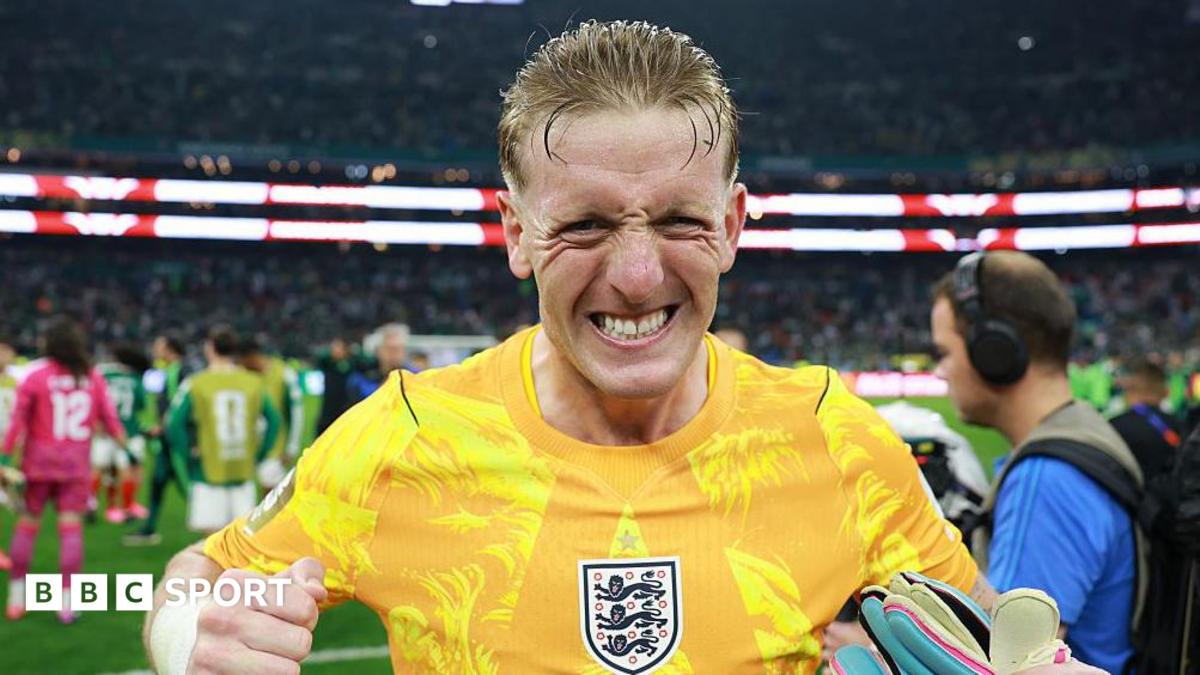
Pickford made an uncertain start to the World Cup, at fault when he was beaten at his near post when DR Congo took the lead against England in Atlanta before captain Harry Kane’s two late goals saw them through.
In the pressure cooker of the Azteca, however, Pickford had his finest game for England, with two brilliant first-half saves from Mexico striker Raul Jimenez, followed by an outstanding display of penalty-area command in a frantic second period.
“It was a very brave display of goalkeeping,” said Robinson. “I really admired what he did out there in that second half and his two saves in the first half kept England in the game. They could have been out of it by half-time if it wasn’t for him.”
Pickford won widespread praise for the way he took charge of his penalty area, taking the initiative by coming for crosses and corners on a regular basis as England, down to 10 men after Jarell Quansah was sent off early in the second half, came under siege.
“He decided that he was going to stand up. He came for crosses, made decisions to go for balls, making life easier for his defenders because of how good he was.
“The easiest thing as a goalkeeper is to stay on your line because you don’t get criticised. If you stay on your line you can’t make a mistake, but he showed maturity and bravery.
“He showed the way his game has developed by coming off his line, making those decisions, making big bold calls. That’s where you see how much he has evolved.
“Jordan took it upon himself, punched the ball, caught the ball, made life easier for his defenders.
“He doesn’t mind what players are in front of him. It doesn’t faze him. He’s played with a different back four for most games, with the full-backs alternating and a change in central defence.
“The players know him and trust him. I think there is a good relationship there.”
And Pickford’s Mexico masterclass can bolster England’s confidence as they try to overcome the dangerous Norwegians and master striker Erling Haaland, who demonstrated their threat by beating Brazil 2-0 in the last 16.
“I think Jordan Pickford’s confidence will be at an all-time high and the team’s will be as well after their win against Mexico,” added Robinson.
“I questioned them on air when Thomas Tuchel went to a back five after 71 minutes. I was thinking I wasn’t sure they would hang on, and that would have been a stick he would have been beaten with.
“It did go right and Jordan Pickford was a big part of it going right.”
Three wins to go. How can your team reach the final and win the World Cup 2026? Click here to find out.
Who: Argentina vs Switzerland What: FIFA World Cup 2026 – Quarterfinal Where: Kansas City Stadium in Kansas City, Missouri, the United States When: Saturday at 8pm (01:00 GMT on Sunday) How to follow: We will have all the build-up on Al Jazeera Sport from 22:00 GMT before our live text commentary stream.
Recommended Stories
list of 3 itemsend of list
After two gruelling knockout contests, defined by controversies more than goals, Argentina enter the business end of the World Cup.
The reigning champions outclassed most title contenders in the group stage, thanks to the unstoppable striking force of Lionel Messi.
But their unconvincing, stuttering run in the knockout phase – where they were pitted against far inferior opponents – has raised a question: Can Argentina really retain their title?
Up next for the two-time world champions is Switzerland, who have quietly made a remarkable return to the quarterfinals for the first time in 72 years.
The impressive duo of Breel Embolo and Johan Manzambi has won Swiss hearts, and Saturday’s clash offers them a chance to seek revenge for a World Cup defeat by Argentina in 2014.
How did Argentina and Switzerland reach the quarterfinals?
Argentina had a strong showing in the first round, topping Group J by beating Austria, Jordan and Algeria. In the round of 32, they were pushed to their limits by Cape Verde before squeezing past 3-2 in extra time, and came from two goals down to beat Egypt 3-2 in a controversial last-16 contest which drew allegations of officiating bias.
Switzerland topped Group B with an unbeaten record, winning against Canada and Bosnia and Herzegovina, and drawing with Qatar. They beat Algeria 2-0 in the round of 32 and beat Colombia 4-3 on penalties to reach the quarterfinals for the first time in 72 years.
Argentina’s fans celebrate after their team reached the quarterfinals [Thomas Coex/AFP]
‘Argentina are not invincible’: Swiss coach
What started out as a confident campaign has slowly turned into a shaky title defence for Argentina.
Tournament debutants Cape Verde – the smallest nation to play in the World Cup knockouts – gave Argentina a wake-up call, forcing the reigning champions to dig deep for victory.
The Argentinian suffering continued in the next game, where they trailed 2-0 against Egypt before turning it around in stoppage time – in a contest where the opposition accused the referee of favouring the title holders.
These performances have pushed Argentina down to fourth in the pecking order of the favourites, while they’ve also slipped from the top spot to number two in the FIFA rankings.
It has instilled the belief in the Swiss camp that beating Argentina is not out of reach.
“We’re up against the defending champions, which is a unique opportunity. At the same time, we’ve realised that Argentina are not invincible,” Switzerland coach Murat Yakin said.
“It should be an interesting match from a tactical point of view.”
Can ageing Messi keep up with the demands of the World Cup?
At 39, when most players’ careers are long behind them, Messi is proving that age is just a number.
In his sixth and possibly last World Cup, Messi has maintained a perfect record, scoring in each of Argentina’s five matches so far. His eight goals keep him second in the Golden Boot race, only behind France’s Kylian Mbappe, who has also scored eight goals but has played a game more, on account of assists.
Although no longer at his athletic peak, Messi is still very much carrying the burden of the goal-scoring duties for his national team – and rescued them from early elimination in the round of 16 with a goal and assist.
In a rare show of emotion, he even broke down after that game, saying he was desperate for his World Cup journey to continue.
But after his own admission of fatigue after playing 120 minutes against Cape Verde and pushing hard against a resilient Egypt, Messi’s ageing body is fighting to keep up with the gruelling demands of tournament football.
As the stakes get higher and the margins for error reduce, it begs the question: Will age finally catch up with him?
Argentina’s forward #10 Lionel Messi is lifted by teammates as they celebrate a come-from-behind victory against Egypt in the round of 16 [Odd Andersen/AFP]
Argentina vs Switzerland predictions
The Opta supercomputer gives Argentina a 57.1 percent likelihood of winning in regulation time, while Switzerland’s chances of winning are 18.7 percent.
The model estimated a 24.2 percent probability of the game going to extra time.
Argentina vs Switzerland: TV schedule, kickoff
Argentina: TyC Sports, TyC Sports Play (10pm, Argentina Time)
Switzerland: SRF, RSI, RTS (3am on Sunday, Central European Summer Time)
United Kingdom: ITV1, ITVX, STV (2am on Sunday, British Summer Time)
To check the TV listings for your country, head to FIFA’s TV listing schedule here.
Who will the winner face in the semifinals?
The winner of the Argentina vs Switzerland match will face either Norway or England in the semifinals in Atlanta on Wednesday.
Argentina vs Switzerland: Head-to-head
The two countries have met seven times, with Argentina winning five of those matches, while two ended in a draw.
Argentina have also won both of their World Cup games against Switzerland: 2-0 in a group game in 1966 and 1-0 in the round of 16 in 2014, which was also the last meeting between the sides in any competition.
Only three players remain from the 2014 meeting: Messi, Swiss captain Granit Xhaka, and defender Ricardo Rodriguez.
Argentina vs Switzerland: Team news
While no injuries are reported in the Argentina camp, Switzerland’s Manzambi and Jaquez are out with knee and muscle injuries, respectively, while Aebischer is doubtful.
Manzambi, Switzerland’s 20-year-old breakout star, also missed the last game.
Argentina’s predicted lineup
(4-1-3-2): Martinez (goalkeeper); Molina, Romero, Lisandro, Tagliafico; Paredes; De Paul, Enzo, Mac Allister; Messi, Lautaro