ITV series Fletchers’ Family Farm has been a hit with viewers since it launched in 2023
The Fletchers are returning for two more series of their show(Image: ITV)
Fletchers’ Family Farm fans have declared they “can’t wait” after the stars posted an adorable video confirming what lies ahead for the show.
Former Emmerdale star Kelvin Fletcher’s programme – which chronicles him, his wife Liz and their children on their Peak District farm – has proven enormously popular with audiences since its 2023 debut. And earlier this month, ITV announced it had commissioned two further series, reports the Liverpool Echo.
The Fletchers have now posted a clip on Instagram featuring their daughter Marnie revealing the announcement. The nine-year-old was spotted calling enthusiastically to her dad, who was occupied feeding the sheep.
“I’ve got some news!” she shouted, but Kelvin said he couldn’t hear her.
She then attempted to inform little brother Milo, who was riding his toy bike, before calling out to her mum Liz and twin brothers Mateusz and Maximus, who are four. “What did she say?” they asked each other.
Marnie then declared: “Guys! The Fletchers are back. Series five and six, let’s go!”
Viewers were delighted by the clip, which was posted on Instagram with the caption: “WE ARE BACK! Who’s excited?!”
“Love this!” commented one individual, while another wrote: “Absolutely love this show, always lifts me up, such a lovely family.”
Another described the programme as “one of the best things on TV”.
“Excellent news,” remarked someone else, while another fan exclaimed: “Fletchers are BACK let’s gooooooooooooooooo.”
“Great news!” observed another viewer, as one admitted: “I’m that excited I almost peed my pants.”
“Wonderful wonderful news and amazing family,” gushed one delighted viewer, while another declared it was the “best show” on television.
Kelvin, who is widely recognised for his portrayal of Andy Sugden in ITV’s Emmerdale, first chronicled his agricultural journey in Kelvin’s Big Farming Adventure, before he and Liz went on to star in Fletchers’ Family Farm together.
The show has proven to be a hit with audiences keen to follow the family’s escapades on their 120-acre farm, and has now run for four successful series.
Reacting to the confirmation of two further series, Kelvin and Liz said: “We’re delighted to be returning for series five and six. What started as a simple desire to share our family’s journey has grown into something far bigger than we ever imagined.”
This Devon market town’s unique blend of independent shops, bohemian culture and charming eateries
02:23, 19 Jun 2026Updated 07:18, 19 Jun 2026
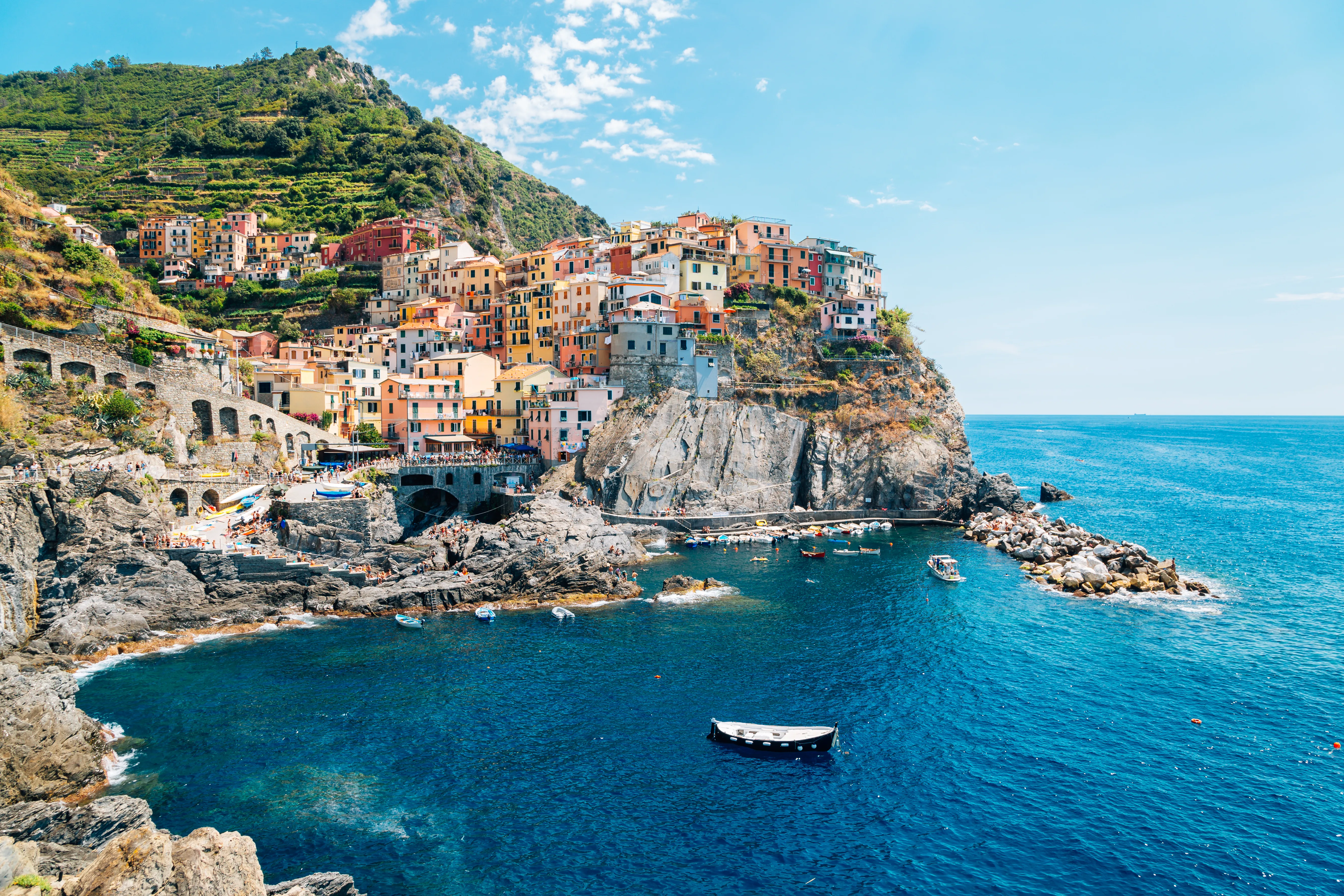
This beautiful town has so much to offer(Image: CHUNYIP WONG via Getty Images)
Living in London, life can feel rather frenetic at times. I adore city living, but I do make an effort to escape at least a few times each year to properly switch off.
One of my favourite spots I’ve discovered is renowned for its relaxed atmosphere and delightful high street.
Totnes is a market town in Devon, celebrated for its artistic community and flourishing bohemian spirit. It also boasts, in my view, one of the finest high streets in Britain.
If you begin at the lower end of the street, you can cross the bridge spanning the River Dart and really absorb the character of the town from there.
During the summer months, the town is adorned with vibrant bunting, and small vessels glide across the water, reports the Express.
There’s verdant riverside greenery, and the town buzzes with energy. Once you’ve crossed the bridge, pop in for a coffee at The Curator – the first of countless independent shops scattered along the high street.
The coffee is excellent, and they offer a wonderful range of pastries if you fancy settling in for a spot to eat – though don’t overdo it, there’s plenty more to discover.
The high street meanders gently uphill and is flanked by hundreds of independent boutiques, charity shops and tea rooms.
Further up the high street, there’s the Cornish Bakery, which fills the air with the mouthwatering savoury aroma of pasties.
They cater for everyone – even my vegan brother discovered something he adored. As the high street sweeps round to the left, you’ll come across Butterworth’s Vintage Co — a compact yet impressive second-hand shop stocking everything from knitwear to workwear and even vintage magazines.
Once you’ve had a good rummage through the shelves, you might fancy a swift pint or another bite to eat — and you’re in luck.
Just a short stroll from Butterworth’s sits The Bull Inn — a stunning pub boasting an extensive organic food menu, along with nine rooms available should you need somewhere to rest your head.
The highlight for me at The Bull Inn is its delightful garden, where you can unwind in the sunshine and watch the world go past. Tucked just across the carpark, and much like the rest of the town, it’s frequently adorned with gorgeous bunting.
On a sunny day, it really is hard to beat — and if you’re anything like me, you’ll be more than ready to take the weight off your feet after all that retail therapy along the high street.
On January 1st 1863, Abraham Lincoln declared the end of slavery with the Emancipation Proclamation. Two and half years later, and two months after the end of the Civil War, Union troops arrived in Galveston on June 19th 1865 to find that news of the proclamation had not yet reached Galveston and that people were still being held as slaves in Texas.
The leader of the Union Troops, General Gordon Granger then formally announced the emancipation from the balcony of the former Confederate Army headquarters.
Granger’s order was based loosely on Abraham Lincoln’s Emancipation Proclamation. (The Thirteenth Amendment, which made slavery unconstitutional, wasn’t ratified until December 6, 1865.) The order first declared that the formerly enslaved were free based on “absolute equality of personal rights and rights of property” between Black people and those who had presumed legal ownership of them.
The reason why the news about the emancipation took so long to reach Texas is subject to speculation. One theory is that the messenger who was originally sent with the news had been killed before he reached Texas. A more likely scenario is that the local slave owners simply held onto the information, ignoring the emancipation order.
Imagine it. A neophyte coach, leading a team for the first time at any competitive level, and it being a high-profile assignment on the biggest of big stages.
A self-assured broadcaster, critical and competitive, having his bluff called, being invited to not just talk about it, but to be about it: Walk the walk, why don’t you?
A former player — scorer, shooter — being challenged to step up and right a listing ship while navigating politics and the push and pull of history and high hopes.
Imagine that guy going: “Bet.”
As in, you betcha. As in, I’d bet on me.
Lakers fans, you’ve seen JJ Redick run this play in the NBA.
Bosnia and Herzegovina’s faithful — who comprised the vocal majority amidst the full house for Thursday’s 4-1 Group B loss to Switzerland at SoFi Stadium — are seeing manager Sergej Barbarez pull the same improbable stunt.
The 54-year-old Barbarez is Bosnia’s national soccer team’s fifth manager since 2022. He’s also a former national team captain turned professional poker player turned broadcaster whose turn coaching this team came as a complete shock.
He might be the most interesting man amidst a mass of most interesting men at the World Cup, and he has Bosnia back on two feet.
And he had them on equal footing Thursday until Switzerland scored the match’s first goal in the 74th minute.
“Maybe our start wasn’t that good,” Barbarez said through an interpreter. “But from the first cooling break until the goal, we were the better players, the better team.
“I don’t like self-pity,” he added. “I entered the dressing room and told them all that they have one hour to cheer up to lift their heads up.”
The loss to the 19th-ranked Swiss was the first in six matches for 64th-ranked Bosnia, following six consecutive 1-1 or 0-0 draws, including their 1-1 World Cup opener against host Canada.
They know they’ll have to win their next match Wednesday against Qatar for an opportunity to reach the knockout stage: “It seemed,” Barbarez said, “from the very beginning that the last game would be the most important one, and it turns out it is.”
And they’ll be ready, he said.
“It’s hurtful; it’s quite painful,” he said. “But this is my job, and trust me, I’ll make sure they will be fine ahead of the next game. We will try to remedy what happened.”
We’d expect to hear something similar from Redick — whose poker face isn’t as good as Barbarez’s, whose small sigh and slight smile betrayed his only emotions during his postgame news conference Thursday.
(As for who wore it better: Barbarez pumping up Bosnian fans in all-black business attire beats Redick’s all-black athleisure.)
Ahead of schedule and happy to be here, Bosnia is playing in the World Cup for the first time in 12 years. Playing hard with house money.
Barbarez spent most of his 14-year professional playing career in the Bundesliga, scoring 105 goals for Borussia Dortmund, Hamburg and Bayer Leverkusen. When he retired, he got his coaching license but didn’t use it until 2024, taking a gamble on a different competitive calling.
He played poker professionally in Europe for a decade, made at least $143,000, according to Cardplayer.com, and reached two final tables in the World Series of Poker.
He also became an unabashed critic of the Football Assn. of Bosnia, which was churning through managers; three of them were hired and fired within months. Beyond failing to qualify for the 2024 Euros, Barbarez admonished the association’s leadership for its 2022 decision to schedule friendlies with Russia soon after it was banned by FIFA and UEFA for invading Ukraine.
And then, in April 2024, he was introduced as the national team manager.
“His energy and authority can be crucial factors in getting the national team back on track for success,” the president of the Football Federation Vico Zeljkovic told reporters.
Also key: “Personality,” Zeljkovic said.
Barbarez maintained from the outset that his goal was to qualify for the Euros in 2028 — and for his players to feel proud wearing Bosnia’s blue, yellow and white.
On Thursday, his players felt it and so did thousands of fans who showed up at SoFi Stadium wearing those colors for a World Cup match. All of them, all in.
“They support us all over the world,” said Ermin Mahmić, who scored his side’s only goal in the 93rd minute. “It’s not normal to be honest, and we’re very thankful for them.”
And surely for Barbarez, who took a path rarely traveled, willing to bet big on Bosnian football.
Harare, Zimbabwe – Zimbabwean lawmakers have approved a bill that would replace direct presidential elections with a vote by parliament, a proposal that supporters say would promote policy continuity but that opponents fear could weaken democratic accountability and further entrench the ruling party’s grip on power.
“I just cannot believe that these are the people who want to elect a president on behalf of everyone,” Barnabas Gura, a 38-year-old from Harare’s Glen View suburb, told Al Jazeera.
“Only 210 members of parliament vote on behalf of a population of 15 million. It is preposterous.”
On Thursday, Constitutional Amendment Bill No 3 passed the National Assembly after 216 lawmakers voted in favour and 42 against. The bill now moves to the Senate, where it is also expected to secure the two-thirds majority required for constitutional amendments.
The bill seeks to amend Zimbabwe’s 2013 Constitution by replacing the direct election of the president with election by a joint sitting of the Senate and National Assembly.
Justice Minister Ziyambi Ziyambi, the bill’s sponsor, has rejected criticism that the proposed changes would undermine Zimbabwe’s constitutional order.
Speaking in parliament on June 3, Ziyambi said the bill was “not an abandonment of our constitutional order in any way, shape or form but a continuation of it”.
“It is a product of practical and experience of institutional reflection and of honesty that after more than a decade of implementation of certain provisions of the constitution requires refinement to enhance their functionality, coherence and their service to national progress,” he told lawmakers.
Ziyambi said there was considerable misinformation surrounding the bill, particularly on social media.
“This bill does not give the president a term extension or a third term. It does not take away the right to vote. It does not postpone elections. It does not concentrate power or the running of elections in the hands of the president,” he said.
Opponents, however, dispute that interpretation and argue the proposed changes would strengthen President Emmerson Mnangagwa’s influence over the political system and could pave the way for him to remain in office beyond the end of his constitutional term in 2028.
Bill threatens democracy
Supporters of the bill, including lawmakers from the ruling Zimbabwe African National Union–Patriotic Front (ZANU-PF) and the opposition Citizens Coalition for Change (CCC), say the changes would promote long-term policy continuity and give Mnangagwa more time to complete his development agenda.
Gura is unconvinced.
He said two more years would not improve the lives of Zimbabweans struggling with poverty.
“Mnangagwa has failed for the past eight years. Only a few who are close to the ruling class are benefiting. More time will not make any difference,” he said.
ZANU-PF has been in power since Zimbabwe gained independence in 1980. Mnangagwa came to power in November 2017 after former President Robert Mugabe was removed from office following a military intervention.
Under the current constitution, Mnangagwa is due to leave office in 2028.
Pride Mkono, a social justice activist and human rights defender, said the proposed amendment would further entrench ZANU-PF’s dominance.
“Since independence, the ZANU-PF party has dominated politics until 2000, when it was challenged by the opposition Movement for Democratic Change. However, the opposition is now comatose and lacks capacity to challenge it,” Mkono told Al Jazeera.
“So, we will effectively enter a one-party state, but one dominated by a cartel of individuals.”
He said the objective of the proposed changes was not to improve the lives of ordinary people.
“It means a continuation of economic and social services collapse and mass impoverishment of the masses,” Mkono said.
Obert Masaraure, a human rights defender and president of the Amalgamated Rural Teachers’ Union of Zimbabwe (ARTUZ), said the amendment would severely weaken the country’s fragile democracy.
“Power will be usurped from the people, and the executive acting in concert with the elites will freely loot national resources, exploit workers, destroy the environment and dehumanise our people without any restraint,” Masaraure told Al Jazeera.
Young people such as Gura say they have little reason to believe extending Mnangagwa’s tenure would improve their prospects.
He argues that removing direct presidential elections would strip citizens of one of the few mechanisms available to hold leaders accountable.
“This is a direct attack on accountability and transparency,” he said, adding that ZANU-PF had promised jobs ahead of the 2018 elections but failed to deliver.
Masaraure drew parallels with the colonial era.
“If you can not vote, you can not hold anyone accountable,” he said.
Violence and intimidation
A parliamentary committee report tabled in the National Assembly earlier this month said 99.4 percent of submissions received during nationwide consultations supported the proposed changes.
But the consultation process was marred by allegations of intimidation and violence.
Activists and rights groups say suspected state security agents abducted and tortured several opponents of the bill.
In Chiredzi, suspected ZANU-PF youths assaulted activist Gilbert Mutebuki after preventing him from speaking against the bill during a public hearing in late March.
Gura said he was also denied an opportunity to speak, along with other citizens opposed to the proposal.
Rawlings Magede, senior programme lead at Heal Zimbabwe Trust, disputed the parliamentary committee’s findings.
“It is not true that most people are in support of the bill. Those supporting it are only a few who think that by supporting the bill, they will get some rewards. People are desperate for gifts,” Magede told Al Jazeera.
He said the reported level of support was misleading and did not reflect the views of many Zimbabweans.
ZANU-PF controls parliament
The ruling party controls both the National Assembly and the Senate.
Its parliamentary dominance grew after the 2023 elections, when Senator Sengezo Tshabangu recalled a number of CCC legislators, strengthening ZANU-PF’s position in parliament.
Critics say many opposition lawmakers who remained in parliament are politically vulnerable because of Tshabangu’s influence.
The opposition remains fragmented and has struggled to mount a coordinated challenge to the ruling party.
Mkono said that although ZANU-PF enjoys a two-thirds majority in parliament, passage of the bill was never really in doubt.
To prevent individual lawmakers from voting independently, he said, the party wanted an open vote by show of hands.
“This is subtle intimidation and closes all avenues for genuine expression of MPs’ views. It is as archaic as it is diabolic,” he said.
Wicknell Chivayo, a controversial businessman and ally of Mnangagwa, has faced accusations from critics of attempting to influence lawmakers through gifts of cash and vehicles.
In April, he offered legislators $3.6m if they passed the bill before withdrawing the offer following public criticism, including from some ZANU-PF youths.
During debate on the bill, Chivayo gave vehicles and cash to MPs Remigious Matangira and Samantha Mureyani after they spoke in support of it in the National Assembly. Critics have described such gifts as inducements intended to influence support for the bill.
Tatenda Chikumbu, from Kambuzuma, another densely populated suburb of Harare, said he has little faith in lawmakers.
“If they can be bribed and vote for the bill, how can I trust them to vote for the president once the amendment is done?” Chikumbu asked Al Jazeera.
Susan Matsunga, an opposition MP who received a vehicle from Chivayo, supported the bill during debates last week.
During voting in the National Assembly on Thursday, more than 30 opposition lawmakers voted in favour of the bill.
Courts are the last line of defence
With the bill now headed to the Senate, opponents are increasingly looking to the courts.
Mkono said legal challenges could slow the process, but argued that political mobilisation offered the strongest response.
“Social movements must be launched and all concerned Zimbabweans come together to fight this politically. That is the only viable option,” he said.
Several legal challenges are already before the courts.
Some citizens are suing their MPs for supporting the bill. Others are challenging proposals that could extend Mnangagwa’s tenure. Human rights activist Youngerson Matete has approached the High Court seeking to stop enactment of the bill without a referendum.
Many Zimbabweans, however, have lost confidence in the judiciary, which critics accuse of lacking independence. The Constitutional Court has already started dismissing some of the cases based on technicalities.

For Gura, the stakes extend beyond the next election cycle.
The proposed constitutional changes, he said, would shape the future of the country his children will inherit.
“This is a direct attack on accountability and transparency,” he said.
Al Jazeera’s Dominic Kane explains that the EU won’t lift crucial sanctions on Iran until a formal nuclear agreement is reached. The bloc’s foreign policy chief Kaja Kallas also clarified that human rights-related sanctions will continue regardless.
Woody and Buzz realise there’s a new enemy in the toy boxCredit: APBonnie’s parents buy her a Lilypad – a kid-friendly tablet that she can ‘connect’ with other children onCredit: PA
IT’S more than 30 years since the first Toy Storyfilm changed the way we look at the contents of an old toy box.
Sign up for the Showbiz newsletter
Thank you!
And it might seem that after four films — and a pretty dire Buzz Lightyear spin-off in 2022 — that the story of toys could have been packed up and put in the loft for ever.
But, no. There’s always room for another play.
And Woody, Buzz and their motley crew realise there’s a new enemy sucking the imagination out of their beloved children’s minds: Technology.
The film focuses on good old rootin’-tootin’ Cowgirl Jessie (voiced by Joan Cusack), who is favoured by her owner, Bonnie.
The kid loves nothing more than playing games where Jessie and Buzz Lightyear get hitched.
Sadly, the neighbourhood kids don’t want to join in with Bonnie. In fact, they laugh at her suggestions.
When Jessie goes on a mission to persuade them otherwise, she watches as they all sit staring at devices, like little zombies.
“That’s not playing!” she exclaims. “They’re not even looking up.”
In a misguided act of kindness, Bonnie’s parents buy her a Lilypad (Greta Lee) — a kid-friendly tablet that she can use to “connect” with other children. And, as you can imagine, this does the opposite.
Bonnie becomes addicted to the screen, while shunning her toys, losing her imagination and getting cyber-bullied by the girls in her class.
So, it becomes Jessie and the crew’s job to get her away from the screen and the misery it brings. Which, as any parent will know, is a near impossible task.
There is also another story running alongside it involving a shipment of new Buzz Lightyears trying to find their way to a star.
At the same time, Woody has to be brought into the pack as he’s living on the outside with the rebellious Bo Peep.
The brilliant dynamic between competitive pals Woody and Buzz is hugely missed here — as is Randy Newman’s superb theme tune, You’ve Got A Friend In Me.
This time, Taylor Swift’s original song, I Knew It, I Knew You, is played at the credits.
And Jessie’s relentless energy also becomes a little grating.
However, it’s great to see the gang back together on the big screen, and this outing has enough entertainment and imagination to make sure you won’t check your phone throughout.
EFFI O BLAENAU
(15) 90mins
★★★★★
Leisa Gwenllian as Effi in Effi O BlaenauCredit: Unknown
THIS hard-hitting drama is adapted from Gary Owen’s one-woman play Iphigenia In Splott, which transforms his doomed Greek tragedy character into a working-class woman.
Effi (Leisa Gwenllian) has a bleak life, spending her days drinking vodka from a mug with her mates and eating Pot Noodles in a grim house in the Welsh valleys.
Her joy comes from club nights in Llandudno, where she meets handsome soldier Lee (Tom Rhys Harries) and the pair have a passionate one-night stand.
After he ghosts her, Effi discovers she’s pregnant.
But in the poorly maintained hospital in the poverty-stricken area, an NHS maternity care horror story then changes her life forever.
This Welsh-language film is a breathtaking work by director Marc Evans.
It strikes the perfect balance of grit and heart to make the subject matter compelling.
Gwenllian’s performance as the unpredictable and broken Effi is a masterclass in how to make an initially unlikeable character be- come someone you want to throw your arms around and care for.
FAMILIAR TOUCH
(12) 90mins
★★★☆☆
Kathleen Chalfant as RuthCredit: Alamy Stock Photo
IN her debut feature film, director Sarah Friedland brings to life a moving story about a woman with dementia who is placed in a retirement community.
We meet clever, stylish Ruth (Kathleen Chalfant) as she’s making a delicious meal with immaculate precision. Yet at one point, she pops a piece of toast on to the dish-drying rack.
Her son then arrives – whose name she needs a reminder of – and she wonders about his profession and acts as though they may be on a date.
But he is there to take her to an assisted-living home.
Ruth has significant short-term memory loss, though she can still reel off the recipes with precision.
She enters with little protest, apart from telling the carer, in front of her son, that she never wanted children.
Chalfant’s performance is brilliant and has none of the clichés of the elderly.
Ruth is still a sassy, flirty woman who really knows her own mind even though it is betraying her.
This gentle film has a slow pace and the long, silent scenes often ask a lot of the audience – and there’s no rush in unravelling the story.
But its subtle characterisation makes it compelling and somehow uplifting.
FILM NEWS
THE Shrek 5 trailer is out, with the film set for release in a year.
ANYA Taylor-Joy joins the cast of The Lord Of The Rings: The Hunt For Gollum.
A THIRD Jump Street film is in the works, starring Channing Tatum, Ice Cube and Jonah Hill.
The provided text outlines the historical and spiritual significance of the Hijri New Year in Omanand the wider Islamic world. This public holiday commemorates the Hijrah, which was the Prophet Mohammed’s migration from Mecca to Medina in 622 CE to escape persecution. The article explains that Caliph Umar ibn Al-Khattab later established this journey as the foundational starting point for the Islamic calendar. Unlike many global celebrations, this occasion is typically observed with quiet reflection, religious gatherings, and spiritual songs rather than loud festivities. It serves as a somber period for believers to contemplate faith, the passage of time, and their shared religious identi …
WASHINGTON — Tom Daschle, the former Democratic senator from South Dakota, remembers the exchange vividly.
The time was September 2002. The place was the White House, at a meeting in which President Bush and Vice President Dick Cheney pressed congressional leaders for a quick vote on a resolution authorizing military action against Iraq.
But Daschle, who as Senate majority leader controlled the chamber’s schedule, recalled recently that he asked Bush to delay the vote until after the impending midterm election.
“I asked directly if we could delay this so we could depoliticize it. I said: ‘Mr. President, I know this is urgent, but why the rush? Why do we have to do this now?’ He looked at Cheney and he looked at me, and there was a half-smile on his face. And he said: ‘We just have to do this now.’ ”
Daschle’s account, which White House officials said they could not confirm or deny, highlights a crucial factor that has drawn little attention amid rising controversy over the congressional vote that authorized the war in Iraq. The recent partisan dispute has focused almost entirely on the intelligence information legislators had as they cast their votes. But the debate may have been shaped as much by when Congress voted as by what it knew.
Bush’s father, President George H.W. Bush, did not call for a vote authorizing the Persian Gulf War until after the 1990 midterm election. But the vote paving the way for the second war with Iraq came in mid-October of 2002 — at the height of an election campaign in which Republicans were systematically portraying Democrats as weak on national security.
Few candidates sparred over the war resolution itself. But Republicans in states including Minnesota, Iowa, South Dakota and Georgia strafed Democratic senators seeking reelection who had supported military spending cutbacks in the 1990s, accepted money from a liberal arms-control group, opposed Bush’s preferred approach for organizing the new Department of Homeland Security, and voted in 1991 against the Persian Gulf War.
With national security then such a flashpoint in so many campaigns, many Democrats believe, the vote’s timing enormously increased pressure on their party’s wavering senators to back the president, whose approval rating approached 70% at the time.
“There was a sense I had from the very beginning that this was in part politically motivated, and they were going to maximize the timing to affect those who were having some doubt about this right before the election,” Daschle said.
White House counselor Dan Bartlett denied that charge, saying the vote’s timing represented a desire to increase pressure on Iraqi President Saddam Hussein, not Democrats.
“The president, during the run-up to the war, went out of his way not to make it political,” Bartlett said.
Whatever the motivation for the vote’s timing, the effect was to produce a clear contrast between the Democratic senators who sought reelection that November and those who did not.
The Democrats not on the ballot split almost evenly, with 19 supporting the war resolution and 17 opposing it. Among those facing the voters, 10 voted for the resolution while only four opposed it. And of those four, only one — Sen. Paul Wellstone of Minnesota, who died in a plane crash a few weeks after the resolution vote — was in a seriously competitive race.
“The political currents were extraordinarily strong for everybody involved,” said Jim Jordan, then executive director of the Democratic Senatorial Campaign Committee. “I’m certainly not implying that Democrats had their finger to the wind and didn’t make votes of conscience, but it was a piece of the puzzle, clearly.”
It is, of course, impossible to say whether more Democrats would have opposed the war resolution — which passed the Senate 77 to 23 on Oct. 11, just hours after the House approved it 296 to 133 — if the vote had occurred after the 2002 election.
Daschle, who voted for the resolution and was not up for reelection that year, said he did not think so, “given the circumstances, the environment, the sense that we were responding to 9/11, and all of the urgency that was created by the rhetoric and cajoling of the administration.”
But Sen. Edward M. Kennedy (D-Mass.) said recently that a delay might have prompted more Democrats to vote no by increasing the time available to study the evidence for war and by dissipating the political pressures surrounding the decision.
“There was a stampede to vote on this,” Kennedy said. “A lot of our people got caught up in it.”
Bartlett said that if some Democrats felt “like they would have made a different decision before the election or after, that doesn’t speak very well of them, because the facts didn’t change in the course of one month.”
Democrats themselves were divided over the vote’s timing. Kennedy, Wellstone and Sen. Robert C. Byrd (D-W.Va.) were among those who passionately urged Daschle to defer the vote until after the election, said several sources who requested anonymity when discussing the party’s internal debate.
The sources said that other Democratic senators supported Bush’s push, in part because the senators believed an early vote might help the party shift attention to domestic issues it wanted to spotlight before election day. Democrats also felt more pressure to act because they recognized that the GOP-controlled House would agree to Bush’s request on the vote’s timing.
Against this backdrop, Republicans across the country were escalating attacks on their Democratic opponents on defense issues.
Starting in mid-September, for instance, then-Rep. John Thune (R-S.D.) issued statements and organized news conferences by veterans to criticize Democratic Sen. Tim Johnson for voting against the 1991 Persian Gulf War.
On Oct. 4, one week before the Senate vote, Thune released an ad that used images of Hussein and terrorist leader Osama bin Laden to criticize Johnson for voting against missile defense systems.
In Minnesota beginning in mid-September, Republican Norm Coleman organized retired military officials to hold news conferences charging that Wellstone “didn’t just vote to devastate our defense; he voted to dismantle it.” In late September, the National Republican Senatorial Committee ran ads attacking Wellstone over votes to reduce military spending.
The committee ran similar ads against Sen. Tom Harkin (D-Iowa) one week before the vote.
Although he did not criticize Democrats over Iraq, Bush stoked the overall security debate during a series of appearances between Sept. 23 and Oct. 4. He criticized Senate Democrats who were blocking the administration’s preferred version of legislation to create the Department of Homeland Security because, they said, it gave the president too much freedom to suspend workers’ civil service protections.
“The Senate is more interested in special interests in Washington and not interested in the security of the American people,” Bush said in New Jersey.
Bush’s comments reverberated most powerfully in the Senate race in Georgia, where Saxby Chambliss, then a Republican House member, began criticizing incumbent Democrat Max Cleland over the Homeland Security issue.
Less than a day after the Senate authorized the use of force in Iraq, Chambliss aired what became the most talked-about ad of the 2002 election: a sharply worded jab that used pictures of Hussein and Bin Laden to accuse Cleland of voting “against the president’s vital Homeland Security efforts.”
Cleland, Johnson and Harkin were among the Democrats who voted for the war resolution; Wellstone voted no.
Less than a month later, Johnson and Harkin were reelected, Cleland was defeated and Coleman beat former Vice President Walter F. Mondale for Wellstone’s seat after the senator’s death. Overall, Republicans widened their majority in the House and swept back into control of the Senate.
But the love affair here has gone way beyond baseball, this has been a glorious embracing of two cultures. A point underlined by the news Boston Mayor Michelle Wu has declared a sister city application with Glasgow.
Fittingly, she did so in a Scottish pub wearing a Scotland football jersey.
Tens of thousands of football fans swarming to a city for a major tournament is nothing new, but it is the manner of the revelry here that has set it apart.
At the time of writing, there has not been one arrest of a Scotland fan either in Boston or Providence, another nearby stronghold of the Tartan Army.
The ground work for this Boston bash was laid two years ago in Bavaria. At the last European Championships, Marienplatz felt like it held more Scots within it than Motherwell.
Again, Scotland fans were lauded for their behaviour, generosity and patter.
Alas, the football did its best to ruin the party.
That is perhaps one key difference to this shindig, apart from the obvious step up in excitement from a Euros to their first World Cup in 28 years.
What mood the Tartan Army would have been in if the opener against Haiti had turned into a disaster we will never know. Although, I would say it would not have made a dent.
The team on the pitch have done their bit to keep the party in full swing and a point against Morocco on Friday could trigger a tidal wave of celebration flooding back into Boston that night the likes they have never seen.
The best way to describe it is this has been the trip of a lifetime for people who are still in their 20s. There is a genuine appreciation from Scotland fans that they have waited this long to see their team at a World Cup, that it may be another three decades before it happens again.
And, even if it did, nothing could rival the week in Boston they’ve just had, regardless of what Miami holds.
For near enough a week, Scotland had the city to itself. Now it has become a tapestry of nations settling into one of the warmest, most welcoming place on the Charles River they could have hoped to visit.
Who knows, they may be back here if they are one of the best third-placed teams.
What will be the Tartan Army’s Boston legacy as the sporrans are soon to get packed away and the online check-ins start for flights to Miami?
Their generosity? Their good spirit? Their ability to alert some locals to the fact the World Cup is even happening?
Perhaps all of the above. Just not a haggis supper.
Pupils learn how to do division as they attend an open math class utilizing digital versions of print textbooks, provided on tablet computers with additional video and audio information, at Namsan Elementary School in Chuncheon, Gangwon Province, South Korea. Photo by YONHAP / EPA
June 18 (Asia Today) — South Korea is again considering changes to a local education funding system that automatically receives a fixed share of national tax revenue, as a semiconductor-driven rise in government receipts is expected to increase grants despite a shrinking student population.
The debate centers on local education finance grants, the main source of funding for elementary, middle and high schools administered by regional education offices.
The grants have risen to about 76 trillion won ($50 billion) under this year’s supplementary budget, according to the National Assembly Budget Office and education officials.
Some projections suggest the total could exceed 80 trillion won ($52.6 billion) if stronger tax revenue from the semiconductor industry is fully reflected.
The grant system receives 20.79% of internal tax revenue along with part of the national education tax. That means the amount increases when tax receipts rise, regardless of changes in student enrollment.
The number of elementary, middle and high school students fell from 5.96 million in 2016 to 4.92 million this year, a decline of 1.04 million, or 17.4%.
Over the same period, local education grants increased from 43 trillion won ($28.3 billion) to 76 trillion won, an increase of 33 trillion won ($21.7 billion), or 76.7%.
Budget officials and public finance experts say the automatic link to tax revenue makes government spending less flexible.
They argue that funding for primary and secondary education continues to expand despite falling enrollment while early childhood, higher education and lifelong learning programs face comparatively greater financial constraints.
Proposals include adjusting the percentage of internal tax revenue allocated to the grants or incorporating changes in the school-age population and nominal economic growth into the funding formula.
Education officials have strongly opposed reducing the grants based mainly on student numbers.
Superintendents-elect from South Korea’s ninth nationwide local elections issued a joint statement Monday warning that students would ultimately bear the cost of a funding overhaul driven primarily by fiscal considerations.
“Personnel expenses for teachers and other employees, school operating costs and facility safety and maintenance expenses arise at the school and classroom level, not simply on a per-student basis,” they said.
Schools also face growing fixed costs for meal services, after-school care and administrative support.
Personnel costs for permanent contract employees at public schools, including cafeteria workers, care staff and administrative assistants, reached 5.74 trillion won ($3.77 billion) last year.
That was a 61% increase from 2021. The figure is expected to exceed 6 trillion won ($3.94 billion) this year.
Three major teachers’ organizations also rejected claims that regional education offices have excess money.
They said the combined initial budgets of special education accounts fell by about 1 trillion won ($657 million) this year.
Funding for teaching and learning support declined 14.9%, while spending on school facility improvements fell 22.4%, they said.
The groups described education office reserve funds as a financial safeguard rather than unused money.
The Education Ministry is reportedly considering alternatives to immediately lowering the legally mandated allocation rate.
Possible measures include retaining the link to internal tax revenue while placing a ceiling on annual increases or allowing regional education offices to use more of the money for early childhood, higher education and lifelong learning.
The approach is intended to avoid a sudden reduction in primary and secondary school funding while directing more resources toward other parts of the education system.
Park Nam-gi, an emeritus professor at Gwangju National University of Education, said many necessary programs remain underfunded despite claims that schools have surplus resources.
“There are many things schools cannot do because they lack funding,” Park said.
He cited the expansion of special education, separate spaces and personnel needed to protect teachers and investment in education suited to the artificial intelligence era.
“It is wrong to conclude that education funding is excessive without properly supporting these needs,” Park said.
He said cash assistance programs introduced by some superintendents should be corrected where necessary, but that such concerns should not be used to justify reducing the overall education budget.
“Unlike welfare spending for the present, education funding is an investment in the country’s future,” Park said.
Weekly insights and analysis on the latest developments in military technology, strategy, and foreign policy.
In what is reportedly the biggest air raid on the Russian capital in two years, multiple Ukrainian drones and cruise missiles hit several locations across Moscow early today. With heavy bombardment occurring during daylight hours, residents of the city have captured and shared dozens of videos showing dramatic impacts and interception attempts. The attack may signal a new phase of Ukraine’s long-range air war against Russian interests.
Most remarkable, perhaps, are the scenes from a key oil refinery in the Kapotno area, in the southeast of Moscow. Videos from the attacks here show multiple fireballs and plumes of black smoke rising from the refinery, which is run by a subsidiary of the state-owned Gazprom. At one point, we can see the disc-shaped roof of one of the storage tanks being thrown into the air, before cartwheeling down. This incredible detonation appears to have been caused by an errant Russian missile, not a Ukrainian weapon.
New footage confirms that an errant Russian surface to air missile was responsible for the tank roof toss at the Moscow Oil Refinery this morning. pic.twitter.com/H5kdsuO2pY
❗️Epic moment of the oil tank lid being ripped off after a kamikaze drone strike on the 🇷🇺Moscow oil depot pic.twitter.com/ei8TEL1fIs
— 🪖MilitaryNewsUA🇺🇦 (@front_ukrainian) June 18, 2026
Footage of a Ukrainian attack drone hitting a storage tank at the Moscow Oil Refinery this morning, sending the tank lid perfectly soaring hundreds of feet. pic.twitter.com/2GIHEGk52M
The refinery appears to have been at least one of the primary targets of the raid, continuing Kyiv’s long-running campaign directed against Russian energy infrastructure. It is notable that at least some of the videos reveal efforts to protect the refinery in the form of anti-drone netting, which seems to have little to no effect against heavier weapons. More substantial cage-type protection for refineries is something we have seen come out of Ukraine’s offensive against Russian oil infrastructure earlier in the war and subsequently appeared during the conflict in the Middle East earlier this year, to help defend against Iranian drone attacks.
This footage shows the „birdcage“ nets Russians have placed around their refineries as protection, but due to weight of the drones, their warheads and, therefore, explosive yield their value is virtually zero. pic.twitter.com/FixIH9zmCK
This particular refinery is one of the most critical in Moscow, supplying up to 40 percent of the capital’s petrol and about 50 percent of its diesel fuel. The strike was the second in two days on the facility. The previous one was described by Ukrainian President Volodymyr Zelensky as “a just response to Russian strikes.” Reportedly, the strike on Tuesday had already halted operations at the refinery.
Last night, our long-range sanctions once again reached the Moscow region – for the second time this week, the Moscow oil refinery was hit. Targets were also struck in the Rostov region and in temporarily occupied territories of Ukraine. This is a fully justified response to… pic.twitter.com/NhFl4FlT9L
— Volodymyr Zelenskyy / Володимир Зеленський (@ZelenskyyUa) June 18, 2026
Russia’s Gazprom-owned Kapotnya Oil Refinery (Moscow Refinery), bellowing with smoke this morning after a wave of attacks from Ukrainian drones.
The widespread destruction of the refinery in Moscow but also the results of Russian air defense missiles have caused fires at multiple spots across the Kapotnya district of the Russian capital. Even wildfire units have been called in. pic.twitter.com/Cs2tIYIeMM
In the wake of today’s Ukrainian attacks, Zelensky framed this as a response to Russia’s striking of a historic Kyiv monastery earlier this week.
On Monday, five people were killed in Kyiv, and the Dormition Cathedral in the Pechersk Lavra monastery complex, a UNESCO World Heritage Site and one of Ukraine’s most significant religious and cultural sites, was badly damaged.
🔥 USF Struck the Moscow Oil Refinery for the Second Time
— 🇺🇦 Unmanned Systems Forces (@usf_army) June 18, 2026
The Russian media outlet RIA Novosti said the overnight attack on energy facilities in Moscow was the biggest in two years.
According to reports, the Ukrainian strikes caught many of the city’s residents off guard, leading to panicked messages on social media.
The Russian Ministry of Defense claims that its air defenses intercepted and destroyed 555 Ukrainian drones over multiple regions overnight. The number actually shot down could not be independently confirmed.
The mayor of Moscow, Sergei Sobyanin, said: “Air defense forces are continuing to repel a large-scale attack,” but admitted that several drones had reached the oil refinery and that the Sadovod shopping center, also in the south-eastern part of the city, was damaged. Sobyanin claimed that about 180 drones heading for the capital had been downed.
Elsewhere in the city, air traffic was disrupted at Vnukovo, Sheremetyevo, and Zhukovsky airports. Sheremetyevo seems to have been especially affected, with reports of evacuations and people seeking refuge in the parking area. Meanwhile, traffic was halted on Moscow’s ring road near the refinery, according to the interior ministry. A high-rise building in Zhukovsky district, not far from the refinery, also seems to have been struck.
Andrei Vorobyov, the governor of the Moscow region, said that a high-rise residential building, an industrial facility, and a number of private houses had been damaged in the wider area around the capital. One video shows an attack drone smashing into a construction crane on its way to its target. Vorobyov said that 16 people had been injured in the attack.
Moscow really needs to do something about all these cranes. They’re seriously interfering with Ukrainian drone traffic😡 pic.twitter.com/FffGLVLycO
— Special Kherson Cat 🐈🇺🇦 (@bayraktar_1love) June 18, 2026
Clearly, a significant number of drones and cruise missiles did manage to get through, or otherwise efforts to intercept them caused damage through falling debris, as seen in the video below, or stray air defense missiles.
Footage of a Ukrainian FP-1 drone being intercepted while flying towards Moscow Refinery. Despite the hit, it still left a considerable explosion when it went down. pic.twitter.com/VNjOaN8FQE
Among them appear to be examples of the Bars, part of a growing family of so-called “drone-missiles,” which combine the features of cruise missiles and uncrewed aerial vehicles (UAVs). Previously, these had been considered as medium-range strike systems, with a maximum range of around 500 miles. Their presence over Moscow would indicate that their range is greater, perhaps evidence that they have been further adapted or reworked.
Bars missiles. (Ukraine Government)
As far as Russian air defenses are concerned, videos from Moscow painted a desperate picture, including at least one likely missile interceptor from a Pantsir short-range air defense system streaking past a Ukrainian drone before making a sharp turn in the opposite direction. In the past, we have seen examples of the Pantsir installed on top of buildings in Moscow, and last month footage appeared showing the counter-drone-optimized SMD-E variant being lifted onto the top of a skyscraper by helicopter.
❗️Impressive footage of the double strike by 🇺🇦Ukrainian FP-1 kamikaze drones on the 🇷🇺Moscow Oil Refinery and a lazily flying Pantsir-S1 SAM missile in the background. pic.twitter.com/sqiDEaPMBS
— 🪖MilitaryNewsUA🇺🇦 (@front_ukrainian) June 18, 2026
Additional footage shows soldiers or security forces using rifle-caliber weapons and man-portable air defense systems (MANPADS) in an effort to bring down drones at very short range.
Fucking chaos.
Several dickheads with rifles and MANPADS trying to shoot down incoming Ukrainian sanctions.
— 𝔗𝔥𝔢 𝕯𝔢𝔞𝔡 𝕯𝔦𝔰𝔱𝔯𝔦𝔠𝔱△ 🇬🇪🇺🇦🇺🇲🇬🇷 (@TheDeadDistrict) June 18, 2026
One video apparently even shows an individual taking aim at a Ukrainian drone using a 9mm Makarov pistol.
For Russian President Vladimir Putin, the very public nature of the attacks on Moscow is especially embarrassing.
The Russian leader had previously warned of impending “systemic strikes” on Ukraine, but Kyiv’s continued ability to hit back at scale, and to target the Russian capital in particular, is now combined with the biting effects of fuel shortages across the country.
In an unusual move, Russia, which is the world’s third-biggest oil producer, is to import fuel by sea this month as it confronts shortages caused by relentless Ukrainian drone attacks on its refineries.
Andrey Gurulyov, a retired lieutenant general and deputy of the state duma (the lower house of the Russian Federal Assembly), called for Russia to “strike the enemy mercilessly” in response to the attack. “We need to strengthen our air defense system, but most importantly, we need to hit the enemy,” he told the RTVI news outlet. “Hit the enemy mercilessly, without overthinking it.”
Just before the latest Ukrainian air attack, President Zelensky said he had held “an important coordination call” with U.S. President Donald Trump and French President Emmanuel Macron that may “bring about significant change.”
Yesterday, Zelensky said he had won key pledges of further support from world leaders attending the G7 Summit in France. “These last few days were very important for Ukraine because it is the reunification of the G7 around Ukraine,” Macron told reporters as he and Trump left the Palace of Versailles near Paris.
In the meantime, with little progress being made by either side on the battlefield, the conflict has increasingly settled into tit-for-tat air assaults on key infrastructure and cities.
Kyiv was this week hit by a major barrage of ballistic missiles and drones, and these, together with the heavy attacks on the Russian capital in the last couple of days, signal a further escalation of the air war between Moscow and Kyiv. Beyond that, this latest barrage on Moscow signals what could be a new, far more aggressive phase of Ukrainian long-range strike operations targeting the economic heart of Russia and its seat of power.
AFTER years of “neglecting” Europe and the UK, Aussie duo Empire Of The Sun return for three sold-out nights at London’s Alexandra Palace next week, proof they are making up for lost time.
“The Empire surges on,” says singer Luke Steele in a quiet moment away from the tour.
Sign up for the Showbiz newsletter
Thank you!
Luke Steele in one of Empire Of The Sun’s trademark costumesFans love Luke’s flamboyant fashionCredit: Unknown
“Empire still feels as intense as ever. It’s like being in a vortex. It’s like Lord Of The Rings when they put the ring on, or when you’re surfing and you’re caught in the wave. Being on this tour is always like that.
“We’ve changed a few things and added a few new songs, and suddenly it changes the ripples of everything else.”
Nearly 20 years after track Walking On A Dream first introduced Empire Of The Sun’s fantastical universe, Steele and non-touring band member Nick Littlemore are bigger than ever.
“It’s incredible because these are our biggest shows and it’s the biggest following we’ve had,” says Steele proudly on a video call.
“It’s exploded in a completely different way, to a whole new generation who are my son and my daughter’s age.
“My daughter Sunny is about to turn 18 and Walking On A Dream came out the week she was born. Nearly 20 years later, it has hit that next generation and it is so reinvigorating. I’m running into kids who are 15 asking, ‘Who’s this new band?’.
“A lot of people have been asking about the band’s outfits — they’re fascinated by the fashion.
“But for so many people, they just hear the songs on the radio or at a party and don’t even know what the band looks like. They’re just captivated by the melodies.”
Empire Of The Sun return for three sold-out nights at London’s Alexandra Palace next weekCredit: UnknownLuke Steele on stage in 2024 in Perth, AustraliaCredit: Getty
Steele is in Budapest to perform, and he has just got back from a scooter ride around the city’s sights on a rare day off.
The pair have survived near burnout and band tensions, but Steele says the music always pulled him back and now he feels the healthiest and sharpest he has ever been.
“We always had great shows in the UK, but it felt like we’d lost a bit of steam by not touring there frequently. Then the pandemic was tough — five years not being able to tour and stuff — so maybe now we’re making up for lost time.”
Last summer’s sold-out Labyrinth On The Thames show at Greenwich’s Old Royal Naval College was Empire Of The Sun’s first London performance in more than six years.
“That was special. It was amazing,” Steele says. “So it’s great we are coming back to the UK — to London and also Cardiff and Halifax — which I am told is right at the top of the UK but not as far as Scotland.” His music is better than his geography.
Empire’s return has meant more than just filling venues. It is about the band’s influence on the fans, who have found their own lives reflected in the songs.
“The music is so important. It’s important for us, for our sanity, but it’s amazing what the records have been doing to people,” he says. “I feel a bit more like a conduit now. I’ve been handed these keys, and it’s like, what are you going to do with them? What doors are going to open?”
“I have to harness that power of influence in a clever, natural way.
Steele says touring feels ‘like being in a vortex’ and can be emotionally intenseCredit: GettyLuke with bandmate Nick Littlemore
“Coming back with the new show and writing new records post-pandemic, it feels like the songs need to have new revelations and new messages in this crazy world.”
Steele reckons part of the success of Empire Of The Sun’s performances has been down to his live band, which includes former Gomez guitarist Ian Ball and drummer Olly Peacock.
“They are the greatest players — really seasoned musicians, which is incredible to have,” says Steele. “People with experience are worth everything in touring. Ian is my right-hand man. The one and only.
“You rehearse for three months, then you get up in front of 80,000 people and suddenly my in-ear pack goes down, or the pedalboard dies. Ian is so calm. He just mooches over, cool as a cucumber, sorts it out and comes back before I’ve even noticed.”
Steele says having a great team behind him means he can execute the ideas he has been inspired by.
“There are quite a few songs from Ask That God in the set.
“We always play the hits, like We Are The People and Alive, because that’s important for people’s memory, and then there are a couple of throwbacks from the earlier records.
“It’s about trying to fit it all in without it becoming an exhausting meal for people.
The frontman says moving back to Australia has been ‘awesome’ after two decades awayCredit: GettyThe band are currently working on a new record after sessions in Hawaii, LA and Sweden
“The first show probably had too many songs — like eating that last chicken wing at the Chinese buffet, where you walk out thinking you’ve had too much. It’s a fine line.
“I don’t like those shows where bands play for three-and-a-half hours. I want to see a concert, get blown away, and go and put my pyjamas on. You don’t want to lose people.”
Almost two years into the Ask That God tour, Steele is still pushing the show forward.
He says: “It’s so exciting and exhilarating, and then there are the fans who mean so much.
“It always sounds so cliched to me, to talk about ‘the fans’ but as I’ve got older and seen their dedication they become like your friends. It’s more than someone buying an album. The music seeps into their lives.
“The other day I met this girl who showed me a video of her three-year-old kid dancing to one of our songs. It’s amazing to be so far away from home and see how much the music touches people.
“We played Poland recently and this girl had spent months making these elaborate Salvador Dali and Escher-style collage illustrations for each song. She printed them all in a book and had written a personal note at the end.
“People really go on the journey with us, so I’m pretty thankful.”
Being away for long periods from his own family in Australia is what hits Steele the hardest.
“I’m not really going home until Christmas. We go from here to the American tour and it just keeps going, but they’re all coming out to the UK shows.
“I find it hard. I go through different stages of exhaustion and depression, excitement and exhilaration. It’s like a wave.
“I feel quite fragile because I’m so emotional. Being on the road is a real vortex. And when you get home it’s not easy — this pipe burst in the front bathroom of my new house I bought in Perth, and 700,000 litres of water flooded the whole house.
“When I came back from tour in January from Miami, it was just like a swimmingpool, so everything’s been gutted now. It’s just all concrete, so we’re in a rental for a while — we’re pretty much homeless now.”
After living in the US then New Zealand, Steele moved back to Perth to be closer to his family.
Steele, who was living in America during Donald Trump’s first presidency, says the country’s extremes fed into his songwriting.
“I had to go because I was writing so many aggressive songs. Now I’m back where I grew up and it’s been awesome,” he says.
“I haven’t lived there for 20 years, so it’s a perfect amount of time to get over the regret, you know?
“And it’s been good to be the hometown hero.
“Walking On A Dream became the soundtrack for Tourism Western Australia’s global campaign and it is even named after that song.
“There’s also a music room at my school named after the family. It feels kind of cool to be given the keys to the city, where it all started.”
Steele lost his dad, blues musician Rick Steele, last year and he recently paid tribute to him with a night of blues.
“It was the one-year memorial and it was awesome to come back together, remember him and play the blues. The blues club he belonged to is stronger than ever, which is great.
“I didn’t want him to pass away and then the club to fall over. His legacy moves on, and we’re about to do a grant the Steele family has started — the Rick Steele Music Grant.
“We’ve also got a plaque on a park bench just down the road from his house, where he lived his whole life. He used to go there most mornings, get a coffee and sit on that bench. I think he’d think that was pretty cool. He’s got his own bench there.”
For Steele, that sense of legacy, home and survival has fed back into the music.
“It’s a good spot to be, because I feel the sharpest I’ve ever been and the healthiest. I got rid of all of that garbage, all the drugs and alcohol, years ago.
“It was music that helped me to heal by writing every song and playing, recording and mixing it myself.
“Music is still such a powerful phenomenon and medium. It’s a healer. It brings renewal, hope and vision.
“Music was always the vessel, even after I said the band was done and went off to write a solo record.”
That sense of purpose also seems to have softened the creative tension between Steele and Littlemore.
They have not always seen eye to eye, but time, distance and their separate lives have made the partnership easier to understand. It’s like a marriage that works because both know when to step away.
“I think Nick and I have been good at that,” he says.
“We probably spend more time apart than together and, when we come together, it’s quite focused on the job at hand.”
After side projects — Littlemore is the frontman of electronic trio PNAU — and an eight-year gap between third album, Two Vines, and the release of 2024’s Ask That God, time apart now seems to be part of how Empire Of The Sun have survived.
Steele says: “When we came back, it was like, OK, we’re older now — what are we actually talking about? What’s the real meaning? So we’re trying to bring more of that into the show and the theatrics.
“But I think now we can sit back and soak in the fruits of our labour a bit.
“For a while, you’re just trying to hold on to it, because you spend your whole life trying to get to a point where people are actually listening.
“Now we have people’s attention, we have to treat that with respect and not take it for granted.
“I haven’t spoken to Nick for a while, but we’ll probably start talking more now we are about 45 songs into the new record and trying to finish a huge batch of songs. It’s definitely going to be a little bit more edgy.
“We’ve been working with different producers and in Hawaii, LA and Sweden. Each territory brings different colours.
“Working with these different people, from different places gives you beautiful ingredients.”
But before new music arrives, there is the small matter of shows in Halifax, Cardiff and three sold-out nights at Alexandra Palace.
It is surely a pinnacle moment, which Empire Of The Sun have been building towards for nearly 20 years.
WASHINGTON — The 101st Congress convened its second session today, facing an agenda suddenly expanded by the emergence of democracy in Eastern Europe and a plan to cut Social Security taxes at home.
Lingering issues also abound, including child care, capital-gains taxes and deficit reduction.
Not waiting for President Bush to send up his own budget and legislative proposals, the Senate almost immediately began debating a far-reaching plan for cleaning up the air–a bill that is more costly and more sweeping than the President wants. Opposition is based more on geography and competing regional interests than on party lines.
The first day of the session was marked by friendly reunions. Rep. Jack Brooks (D-Tex.) told colleagues he’d nearly died of a pancreas ailment during the long break, and he accepted hugs and applause on the House floor.
Outside, a half dozen House members arrived on bicycles after a two-block trip from a congressional office building to call attention to plans for Earth Day in the spring.
On a more substantive matter, Sen. Daniel Patrick Moynihan (D-N.Y.) formally introduced a bill to reduce Social Security taxes–an idea that prompted a full-scale White House attack when he proposed it last month. Moynihan says workers are being deceived because their Social Security taxes are being used to make the federal deficit appear far smaller than it is.
“These are insurance contributions, they are premiums paid,” Moynihan told a news conference. “They do not belong to the government. If we are not going to save them, we should return them.”
His bill, which has drawn widespread interest but few sponsors, would roll back the tax increase that took effect Jan. 1 and reduce another scheduled for next year. That would save a worker with income over $51,300 about $600 and leave the Social Security system with just enough money to pay retirees’ checks, Moynihan said.
The Bush Administration says such cuts would lead to reductions in benefits or to efforts to raise other taxes.
Sen. Ernest F. Hollings (D-S.C.), a member of the Budget Committee, did what is seldom done in Congress these days: He introduced a bill proposing a tax increase. He recommended a 5% national sales tax that would exempt food, health care and housing.
That was what the backup point guard wrote on X, followed by three laughing-until-crying emojis, soon after he was stopped by two police officers who apparently did not recognize him as a Knicks player during the team’s championship parade in Lower Manhattan.
A video that has gone viral on social media shows Kolek skipping along the parade route next to a barrier meant to keep fans off that part of the street, using one hand to hold a beer and the other to slap hands with fans.
At one point, an officer stepped in front of Kolek to block his path while another gently grabbed him by the shoulders and motioned for the confused player to go back in the direction from which he came.
An unidentified man who had been accompanying Kolek quickly stepped in, and then officers allowed him to pass.
To be fair to the officers, Kolek — wearing a Knicks hat, Knicks T-shirt and gym shorts — looked like he could have been one of the estimated 2 million fans attending the parade.
And he’s not the most recognizable player on the team. Kolek has made one start in 103 game appearances during his two years with the Knicks, averaging almost 10 minutes a game. He did not make it into an NBA Finals game but played in eight postseason games this year, averaging 3.5 points and 6.6 minutes a game.
It doesn’t appear that the very brief run-in with the law dampened Kolek’s mood, based on the parade videos he posted on his Instagram. One showed his view of the massive crowds on either side of the street; another showed him throwing confetti while singing along to “New York, New York;” and another showed him standing outside the railing on a moving float while dancing and cheering.
And, yes, one showed the incident with parade security, along with the caption “I hoop bro I swear” and four laughing-until-crying emojis.
The New York Knicks celebrated their first NBA title in 53 years with a frenzied ticker-tape parade through Manhattan. The Knicks, along with finals MVP Jalen Brunson were awarded keys to the city by Mayor Zohran Mamdani in front of thousands of fans.
All five goals were scored in the final 30 minutes as the match in Los Angeles erupted to life in closing stages.
Published On 18 Jun 202618 Jun 2026
Johan Manzambi scored a late brace after coming on in the 71st minute, following goals from Ruben Vargas and Granit Xhaka as Switzerland erupted late for a 4-1 victory over 10-man Bosnia and Herzegovina to top Group B at the World Cup.
The last three Swiss goals at the Los Angeles Stadium followed the 80th-minute dismissal of Bosnian defender Tarik Muharemovic, who was sent off for hauling down Breel Embolo to deny an obvious goalscoring opportunity, in a dramatic finish to the match on Thursday.
Recommended Stories
list of 4 itemsend of list
When it was all finished, Switzerland, with one win and a draw, were in command of the group despite an unexpected 1-1 draw against Qatar in their tournament opener.
Qatar and Canada play in Thursday’s later Group B clash in Vancouver, where the winner will draw level on points with the Swiss side that’s looking to progress to the knockout phase for a fourth consecutive World Cup.
Bosnian substitute Ermin Mahmic scored with a thunderous volley in second-half stoppage time for Bosnia and Herzegovina, who remain on one point.
Ermin Mahmic scored his team’s only goal against Switzerland [Harry How/Getty Images/AFP]
But the Balkan side will need to be more adventurous in their group finale against Qatar to have any chance of progressing after offering little against the Swiss.
All five goals they have conceded have come after the 70th minute, including the equaliser in their 1-1 tournament-opening draw against Canada.
Yet it looked for long stretches like Bosnia’s cagey approach would work until Switzerland coach Murat Yakin sent on Manzambi.
Shortly after his own introduction, Vargas got free on the left and curled in an outswinging cross towards the back post.
Amar Memic tried to head clear, but Manzambi instinctively met the second ball near the penalty spot and thumped a vicious side volley that had too much power for Bosnian goalkeeper Nikola Vasilj.
Any realistic hopes of a positive Bosnian result ended six minutes later when referee Joao Pinheiro had no choice but to produce a red card for Muharemovic’s late challenge from behind.
Four minutes later, Vargas found the bottom right corner after Embolo held the ball up near the spot and then played it to his open teammate to his left.
Vargas was the provider when Manzambi completed his brace in the 90th minute, and after Mahmic pulled a goal back, the veteran Xhaka converted from the penalty spot seven minutes into second-half stoppage time.
The classic Chicano film “Zoot Suit” is celebrating its 45th anniversary this year in style.
The Golden Globe-nominated movie, featuring a lead performance by Edward James Olmos, was based on a stage play penned by legendary screenwriter and director Luis Valdez, who drew inspiration from a pamphlet about the 1942 Sleepy Lagoon murder case and the riots that it sparked.
On Thursday it was announced that the flick will be screened at The Ford amphitheater on July 8 to honor its notable benchmark and enduring legacy. The special screening will include a conversation with Valdez, Olmos and actor-educator Cristina Frías, who will discuss the movie’s production, influence and place in the L.A. film canon.
“‘Zoot Suit’ changed the way our stories could be seen on screen,” Olmos said in a statement. “It gave voice to a history that many people had never been taught and showed the beauty, strength and complexity of the Chicano experience. Forty-five years later, the film continues to inspire because it is about more than one moment in time. It is about identity, dignity and the responsibility we have to remember where we come from.”
The screening will also feature a vintage car show put on by the Pachuco Car Club, which will showcase the rides reminiscent of the time period shown in the movie.
In June 1943, L.A. was engulfed in the lawlessness and violence that became known as the Zoot Suit Riots. The name is misleading because it suggests that the zoot suiters — the young Mexican, Black and Filipino men and boys who wore the flamboyant outfits — were the perpetrators.
The attacks by servicemen and white Angelenos on zoot suiters, derided as “gamin dandies” in The Times, were driven by prejudice and the anti-immigrant attitudes of the era. The roots of the unrest can be traced to events that occurred more than a year earlier — such as the incarceration of Japanese Americans after Pearl Harbor, as well as the murder of a young man, which was later known as the Sleepy Lagoon murder case.
In his 1981 review of the film, The Times’ former film critic Kevin Thomas praised Valdez’s direction and the strength of the cast.
“Valdez has captured well many of the elements of the era that contributed to the fate of the Sleepy Lagoon defendants — the sensationalist press, the feverish patriotism of wartime and the rampant bigotry directed at all minorities,” Thomas wrote. “At the same time, Valdez makes clear that various people outside the Mexican-American community helped in the struggle to mount an appeal for the Sleepy Lagoon defendants. And he questions the entire validity of the switch-bladed, cynical pachuco mystique as [Daniel Valdez’s] Henry comes to realize that El Pachuco [Olmos] is at once his best friend — and worst enemy.”
The original 1979 Broadway run of the “Zoot Suit” play catapulted Olmos to the national stage and led to him getting a Tony nomination for best featured actor in a play.
“It was a monumental moment in time, and we captured lightning in a bottle,” Olmos told The Times in 2023. “Not only did it change the course of Latinos in theater but it touched the very soul of the culture. It was catching the voice of the pachuco.”
WASHINGTON — The White House pushed back Thursday against growing bipartisan criticism of a negotiated settlement to the war with Iran, arguing its concessions to the Islamic Republic were contingent on its conduct and essential to securing peace.
The administration’s defensive posture came as details of the framework agreement, known as a memorandum of understanding, were finally shared with the public, revealing a raft of compromises with Tehran long opposed by Republicans.
Vice President JD Vance, who helped negotiate the deal, told reporters Thursday that the deal was structured to reward Iran for good behavior. But the text of the agreement suggests otherwise.
The Trump administration agreed to release billions of dollars in Iranian assets that were frozen and restricted by the United States “upon the implementation” of the memorandum — before any further actions are taken or additional negotiations begin. The president will issue sanctions waivers on Iranian oil, allowing Tehran to resume trading its most valuable export and breaking with decades of policy. And to facilitate that trade, boosting Tehran’s revenues, Trump agreed to immediately end a U.S. naval blockade of Iranian ports.
Still more concessions were offered to the Iranians, including a commitment by the U.S. administration to establish a fund of “at least $300 billion for the reconstruction and economic development of the Islamic Republic” — in effect providing reparations for the war Trump started.
“All required licenses, waivers and permissions needed for the relevant financial transactions will be granted by the United States of America,” the memorandum reads.
Taken together, the document reads as a stunning reversal of U.S. policy toward Iran after decades of concern across administrations in Washington — including throughout Trump’s two terms — that the Islamic Republic represents the nation’s greatest security threats as the world’s largest state sponsor of terrorism.
Criticism from Republican senators, in particular, has been sharp and swift.
Sen. Roger Wicker (R-Miss.), chairman of the Senate Armed Services Committee, said the $300-billion fund “would make Iran’s payoff under President Obama’s 2015 deal look like a pittance by comparison.” And Sen. Ted Cruz (R-Texas) accused the Trump administration of giving Iran money it would use to kill Americans.
“History demonstrates that giving billions of dollars to theocratic lunatics who want to murder us is an exceptionally bad idea, and I think, unfortunately, the president is receiving some really bad advice on this deal,” Cruz said. “I don’t want to see us send a penny to the ayatollah. And I hope that we don’t.”
The Obama-era deal, known as the Joint Comprehensive Plan of Action, included structured sanctions relief for Iran in exchange for concrete and verifiable steps by Tehran to dismantle much of its nuclear program — a framework that Republicans broadly criticized at the time.
By contrast, Trump’s agreement commits the United States to pursuing economic relief for Iran while providing no clarity about the future of Iran’s nuclear program — the very issue Trump cited as the rationale for launching the war.
The memorandum includes a pledge by Iran to never purchase or construct nuclear weapons — a vow the Islamic Republic has made multiple times before, including by signing the Nuclear Non-Proliferation Treaty, in a religious edict issued by the late supreme leader and in the Obama-era nuclear accord.
Vice President JD Vance speaks to reporters at the White House on June 18, 2026.
(Manuel Balce Ceneta / Associated Press)
Detailed negotiations over Iran’s nuclear program — including whether Tehran could continue domestic uranium enrichment, at what level, and under what monitoring regime — were left for another day.
For more than a decade, the U.S. intelligence community has assessed that Iran sought a threshold nuclear capability, securing the strategic advantages of a nuclear power without incurring the costs of openly pursuing a bomb.
The agreement does include a commitment by Iran to do its “best” to bring commercial shipping traffic through the Strait of Hormuz, a vital international waterway, back to prewar levels. But critics of the president said he had to make deep, historic concessions just to secure a status quo ante upended by the war he started. And in the document, Tehran agreed to refrain from imposing a toll on ships transiting the strait for only a 60-day period.
“Unless you were homeschooled by a day drinker, no one’s confident that Iran is going to do anything,” Sen. John Kennedy, a Republican from Louisiana, told reporters this week.
Sen. Bill Cassidy, Kennedy’s Republican counterpart from Louisiana, called the deal “the worst foreign policy blunder in decades” that would have President Reagan “rolling over in his grave.”
“Iran’s nuclear ambitions were not curbed, and they have learned that threatening the Strait of Hormuz works and will undoubtedly leverage it in the future. Now, Iran gets to build brand-new infrastructure under this deal,” Cassidy said.
“Before the war, the strait was open, Iran was being crushed by sanctions, and 13 service members were still alive,” he added. “Now, 13 Americans are dead, families have paid billions at the pump, sanctions will be lifted, and the bombing has stopped.”
Despite mounting criticism, Trump put his signature to the memorandum on Wednesday night while attending a dinner with the French president in Versailles, a palace infamous for hosting a treaty signing that disgraced Germany at the end of the First World War.
He defended the agreement while in Europe and suggested further concessions might be forthcoming, including recognition of Iran’s claimed right to enrich uranium and a new willingness to tolerate its continued ballistic missile development — another program that Trump had vowed to eliminate as a central war aim.
“He took America to war — killing 13 soldiers, thousands of Iranian civilians and costing taxpayers $60 billion — to get rid of Iran’s missile program. And now that he’s lost the war, he pretends like it’s no big deal,” said Sen. Chris Murphy, a Democrat from Connecticut.
“Just unforgivable,” he added. “What a charlatan.”
The Leeds winger’s 25 tries put him nine clear of the next best, Leigh’s Josh Charnley on 16.
In addition to leaving his mark on the game he left plenty on Warrington’s bruised defence, including Josh Thewlis who felt the full force of Sivo as the winger powered past him to score his second.
When Warrington took two points early in the piece, Ewan Irwin kicking the goal, it was presumably in the belief this could have been a tight affair.
But two tries in two minutes from Sivo and Brodie Croft, who has signed a three-year deal with Warrington starting next season, blew that plan out of the water and a third eight minutes later, Harry Newman gathering a high kick as Thewlis hesitated, really put the visitors in command.
Warrington were perhaps a touch unlucky that the Newman try stood with the Leeds centre looking a shade in front of the kicker when the ball went up but had that gone in their favour it would not have made much difference to the result.
Jake Connor kicked two of the conversions to give Leeds a 16-2 half-time lead and the direction of the game was set.
Miller, returning to the side after a three-match suspension was excellent, pulling the strings at full-back.
It was the Australian whose pass put in Chris Hankinson just three minutes after the restart and he then engineered a penalty when blocked by James Bentley two minutes later which Connor converted.
After Sivo secured his hat-trick shortly before the hour, Warrington staged a belated comeback in the final 20 minutes.
Matty Ashton finished off a nice move to give the home side their only try six minutes from time but it was too little too late and proved just a momentary pause in the Leeds celebrations.
Japanese Prime Minister Sanae Takaichi speaks to the press during her meeting with Italian Premier Meloni at Villa Pamphilij in Rome, Italy, 15 June 2026. Photo by Riccardo Antimiani / EPA
June 18 (Asia Today) — Japanese Prime Minister Sanae Takaichi has left open the possibility of deploying the Self-Defense Forces to the Strait of Hormuz following an agreement between the United States and Iran to end hostilities.
“Nothing has been decided at this point,” Takaichi said Wednesday when asked about a possible deployment during a news conference marking the end of the Group of Seven summit near Évian-les-Bains, France, Japanese media reported Thursday.
Takaichi said Japan must closely examine the U.S.-Iran agreement and conditions in the region before making a decision.
The Strait of Hormuz is a critical shipping route for crude oil from the Middle East. Instability in the waterway could directly affect shipping, energy prices and Japanese industry because the country relies heavily on imported energy.
The U.S.-Iran agreement has shifted Japan’s immediate focus from preventing further fighting to securing freedom of navigation and considering its role in post-conflict efforts.
Even after fighting ends, naval mines and other threats to commercial vessels could remain. Japan would then have to determine whether its involvement should be limited to diplomatic support or include operations by the Maritime Self-Defense Force.
Security in the Strait of Hormuz and other major shipping routes was among the issues discussed at the G7 summit.
Japan faces the challenge of coordinating with its allies and partners while keeping any military involvement within the limits imposed by its pacifist Constitution.
“We will continue every possible diplomatic effort, including those related to reconstruction,” Takaichi said of the situation in the Middle East.
She said Japan would consider necessary measures to secure freedom of navigation through the strait and “steadily carry out what we are capable of doing,” including diplomatic efforts.
Britain, France and other countries have called for the unconditional reopening of the waterway and indicated that mine-clearing operations could be required. Japan has signaled its willingness to participate in a related joint statement.
Takaichi said Japan’s participation in such a statement would remain within constitutional limits.
The central issue is how extensively the Self-Defense Forces could participate.
Article 9 of Japan’s Constitution prohibits the use of force except in circumstances involving the country’s right to self-defense. Mine-clearing operations conducted while fighting continues could therefore be viewed as the use of force against the country that placed the mines.
Clearing mines left behind after a cease-fire, however, may be permitted under Japan’s Self-Defense Forces Act.
Japan deployed Maritime Self-Defense Force minesweepers to the Persian Gulf after the 1991 Gulf War cease-fire. The mission marked the Self-Defense Forces’ first operational deployment overseas and became a turning point in Japan’s debate over its international security role.
Takaichi’s remarks did not amount to an immediate deployment decision. They indicated, however, that Japan could consider participating in maritime security operations depending on implementation of the U.S.-Iran agreement and conditions in the Strait of Hormuz.
Japan’s possible role in the post-conflict Middle East – whether limited to diplomatic and reconstruction support or expanded to include Maritime Self-Defense Force operations – is expected to remain a major foreign and security policy issue.