President Trump accused Iran of shooting down a US Apache helicopter over the Strait of Hormuz and said the US will respond out of “necessity.” The Pentagon confirmed both pilots were rescued by a US sea drone and are uninjured. Kimberly Halkett reports from the White House.
According to multipleoutlets, the former couple — who met on the set of the 2024 musical blockbuster “Wicked” — quietly called it quits several months ago.
“It’s amicable, they gave lots of time and careful consideration and decided to go their separate ways,” a source told People. “They are still friends and very supportive of one another. They have been quietly broken up for several months.”
The “Thank U, Next” singer, 32, and “SpongeBob SquarePants” actor, 34, had been linked since 2023. They made their relationship Instagram-official in 2024 in the lead-up to the release of “Wicked,” in which Grande starred as G(a)linda the Good while Slater portrayed Munchkin and future-Tin Man Boq.
Their dating rumors were scrutinized at the time because Grande and Slater both had highly publicized splits from former spouses around the same time. Grande was previously married to real estate agent Dalton Gomez, while Slater had been married to psychologist Lilly Jay, his high-school sweetheart with whom he shares a child.
In March, Slater wrapped the off-Broadway run of “Marcel on the Run.” In addition to co-writing the play with Marshall Pailet, Slater portrayed mime artist Marcel Marceau.
Grande, meanwhile, embarked on her Eternal Sunshine tour in Oakland on Saturday. This marks the “Hate That I Made You Love Me” singer’s first tour since 2019. Grande is slated for five shows in Los Angeles beginning June 13.
This might be the last time fans can catch Grande at a live concert — at least for a while. In November, she mentioned these shows might be her “last hurrah” as a touring pop star.
“I’m very excited to do this small tour, but I think it might not happen again for a long, long, long, long time,” she said on the “Good Hang With Amy Poehler” podcast. “So I’m going to give it my all, and it’s going to be beautiful, and I think that’s why I’m doing it, because it’s like, one last hurrah.”
Grande’s next album, “Petal,” will be released July 31.
Tim Ream is the only player on the American World Cup team who was alive the last time the tournament was played in the U.S. But he was only 5, so the memories are kind of sketchy.
“I remember bits and pieces of 1994,” he said.
Still, it’s fallen on Ream, as both the captain and the oldest man on the roster, to prepare the team for what they’re about to experience when the U.S. opens play Friday at SoFi Stadium.
“I’ve tried to tell guys and tried to convey the message that this is a once-in-a-career [opportunity] and with that comes more expectation, more pressure,” he said. “But at the same time we have to enjoy it.
“It’s about just opening your eyes and taking everything in because this is unique, this is completely different from anything that any of us as players has experienced.”
Only 22 men in history have suited up for a home World Cup game on U.S. soil. Players including Alexi Lalas, Eric Wynalda, Cobi Jones and Marcelo Balboa parlayed that fame into broadcasting careers. Others have become coaches. Fifteen of them were inducted into the National Soccer Hall of Fame.
Ream, who played in the last World Cup in Qatar, said it’s difficult to compare the experience of that tournament with this one — especially since this one hasn’t started yet.
“It’s not our first rodeo, but it’s our first one on U.S. soil,” he said. “So it’s kind of our first rodeo in a way. It’s exciting.
“So take it in, enjoy it, embrace everything that it is. Because it’s so unique, it’s so special. And it’s not something that we will ever get to do again.”
Midfielder Cristian Roldan was also at the last World Cup, although he didn’t appear in a game. He says the energy is different this time around.
“You feel it when you’re there. You’re kind of isolated, you’re alone,” said Roldan, one of 13 players on this team who were also on the team in Qatar, half a world away. “But it’s different here. You see how many media members are here. You see how many people we’ve seen in training over the last few weeks. You feel that energy, you feel that support.
“Now it’s about translating that energy, that support, that pressure into something good.”
Goalkeeper Matt Turner agreed.
“This one, obviously, it’s a lot more tangible,” he told reporters Tuesday. “You guys are all here, right, real close to us. We have 5,000 fans for training yesterday. It’s very different. In Qatar, you’re in a lot more of a bubble.
“But us players, the ones that had the [World Cup] experiences, I think we’ve done a really good job of keeping that boundary.”
What’s lacking this time, Turner said, was the pressure of a qualifying campaign to bring the team together. Because the U.S. is one of the three host countries — alongside Mexico and Canada — it was assured a spot in 48-team field when it won the right to stage the tournament eight years ago. As a result it hasn’t played a competitive game in more than 11 months.
“The intensity of those games, the environments that you have to dip into and get results, you find out a lot about the players and find out a lot about the team,” he said. “This time around, it’s been different. We’ve had a lot of different looks, a lot of different players getting a chance to prove themselves and show themselves.
“It’s not anything bad or good. I just think it was a little bit different.”
Striker Folarin Balogun, one of 13 World Cup newbies on the U.S. team, said he doesn’t expect the gravity of the experience to hit him until he lines up for Friday’s opening game with Paraguay.
“It’s probably going to start to go more real to me when I’m preparing to go on to the pitch,” he said, sitting behind a table next to Ream. “I’m hearing the fans shouting and screaming, so I definitely think it’ll be real to me the closer I get.
“But you know, this is the first opportunity for me to play in the World Cup so I don’t really have any expectations.”
Balogun then looked over at a frowning Ream, who had just finished urging his teammates to be sure to stop and smell the flowers along this World Cup journey.
“Just trying to stay present, stay in the moment,” Balogun hastened to add. “You know, enjoying the experience. I think it can be a really memorable World Cup.”
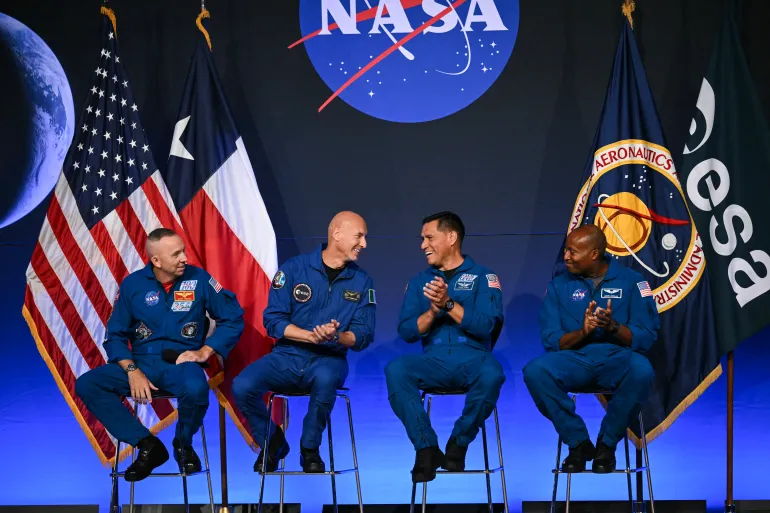
The National Aeronautics and Space Administration, better known as NASA, has unveiled the crew for its upcoming Artemis III spaceflight, a preparatory mission as the United States plans to return to the Moon.
On Tuesday, it was revealed that astronauts Andre Douglas, Frank Rubio, Luca Parmitano and Randy Bresnik will be leading the flight. Serving as a backup is veteran test pilot Bob Heintz, who is able to substitute into any role.
Recommended Stories
list of 3 itemsend of list
Their two-week mission will focus on collecting research and practising in-space docking procedures in preparation for a future Moon landing.
While no women were named to the Artemis III flight, the newly announced crew represents a range of experiences and backgrounds.
Making his first spaceflight is Florida-born engineer Douglas, 40, who was a backup crew member for NASA’s last major spaceflight, Artemis II, which flew a loop around the Moon.
Douglas will serve as mission specialist on Artemis III, and his presence on the flight will make him one of roughly two dozen African American people to travel to space, out of a population of hundreds of space travellers so far.
Also serving as mission specialist will be Rubio, a 50-year-old Salvadoran American physician who used to pilot Black Hawk helicopters for the US Army. He currently holds the record for the longest single-duration spaceflight by a US astronaut, at 371 days.
The oldest member of the four-man crew is its 58-year-old commander, Bresnik. A former US Navy test pilot and Marine, Bresnik is the only Artemis III crew member to have participated in a space shuttle mission, back in 2009. That programme has since been retired.
More recently, in 2017, Bresnik served as the commander for the International Space Station.
The fourth and final member of the Artemis III mission is its pilot, Parmitano, 49. He will be the only astronaut on the mission who is not a US citizen.
Born in Paterno, Italy, Parmitano has a background in his country’s air force. In 2019, he too served as commander on board the International Space Station, becoming the first Italian to do so.
“ Each of you possess a unique background,” said NASA administrator Jared Isaacman, who introduced the astronauts. “Your vast experience and unwavering dedication to NASA’s mission enables you to help make us and take this next great step in space exploration.”
The Artemis III mission will be a public-private partnership. Three rockets will blast off as part of the initiative.
One will carry the four-man crew into orbit around Earth in an Orion spacecraft. Another two rockets will bear aloft Moon lander models from Blue Origin and SpaceX, private firms owned respectively by tech entrepreneurs Jeff Bezos and Elon Musk.
The Orion spacecraft will then practice rendezvous procedures with each of the two landers, in preparation for similar manoeuvres during future Moon missions. The Artemis III flight is set to take off before the end of 2027.
“Artemis III will be an extraordinary demonstration of what is possible when the greatest aerospace companies across the United States, alongside our European partners, come together to showcase the technological might and ambition of the free world,” said Isaacman, a Trump appointee who has experience commanding private space flights for SpaceX.
From left: Randy Bresnik, Luca Parmitano, Frank Rubio, and Andre Douglas speak during a news conference at NASA’s Johnson Space Center, on June 9, in Houston, Texas [AFP]
Explosion prompts concern
The mood at Tuesday’s unveiling ceremony was celebratory, as each newly announced astronaut took the stage to soaring music and standing ovations.
But looming over the event were concerns related to the explosion of an uncrewed Blue Origin New Glenn rocket in Florida on May 28.
That blast sent a mushroom cloud billowing above the city of Cape Canaveral, and it caused severe damage to a launchpad complex where the takeoff was scheduled.
Representatives from both NASA and Blue Origin, however, took the stage to wave aside any concerns.
“While we recognise there are questions about how Blue Origin’s recent anomaly impacts our plans, setbacks are a learning opportunity,” said Jeremy Parsons, NASA’s acting deputy administrator.
He added that NASA was taking an “active role” with its partners to “ensure the right outcomes are achieved”. The private firms, in turn, were granted “unparalleled access” to NASA experts, technology and test facilities.
“We are confident that New Glenn will be ready for Artemis III, together with Blue Origin,” Parsons said.
John Couluris, a representative for Blue Origin, likewise described the May 28 explosion as an “anomaly”.
“We’ve redoubled our efforts and are moving forward,” Couluris said, describing Blue Origin’s factories as “running around-the-clock shifts” to be ready for the Artemis III launch.
“We will measure ourselves not only by our successes but how we respond to setbacks.”
The Artemis II mission in April made a loop around the Moon, capturing images of Earth [File: NASA via AP Photo]
Race to the Moon
The race to beat China’s space programme was another theme that cropped up during Monday’s ceremony.
Several speakers alluded to China’s growing lunar landing programme, a rival to NASA’s efforts.
Earlier this year, the China Manned Space Agency announced its intentions to place a person on the Moon by 2030. Already, in 2024, China became the first country to retrieve soil samples from the far side of the Moon using robotics.
But lunar missions have been a point of pride for the US, which holds the distinction of completing the first crewed mission to the Moon in 1969.
Last April, the Artemis II flight marked the US’s return to lunar travel. For the first time since 1972, a crewed capsule flew beyond low Earth orbit, and it broke records for the farthest crewed flight into space.
Next year’s Artemis III mission is set to build on that effort. The administration of US President Donald Trump has signalled it would like to see astronauts land on the Moon before the Republican leader’s term ends in January 2029.
NASA officials have also described the Artemis programme as a stepping stone to establishing a permanent base on the Moon. Various speakers on Monday highlighted that vision.
Couluris, the Blue Origin representative, called the Moon an “eighth continent” for humans to explore.
NASA scientist Nicky Fox, meanwhile, described the Artemis III mission as part of the preparatory work that would enable the US “to plant astronaut boots back on the lunar surface — to stay”.
But the US’s lunar programme has faced numerous setbacks, as NASA engineers work to address technical issues that could otherwise cause life-threatening situations in deep space.
Originally, Artemis III was supposed to mark the US’s return to the Moon, bearing a crew to the lunar surface. But in February, that plan was scrapped in favour of the present-day project, which focuses on conducting practice drills in low Earth orbit.
“We will use this mission to reduce risk for our future crewed Moon missions with lander test articles from both Blue Origin and SpaceX, to ensure we will beat China back to the Moon,” Parsons said on Tuesday.
“This mission is deliberately designed to take calculated risks so that future crews will be safer and ultimately successful when we put boots on the lunar surface.”
Still, officials applauded Artemis III as a major step towards human beings reaching the Moon once more.
In a recorded statement, Senator Ted Cruz suggested that the Artemis III mission would also put the US a step ahead of China.
“At a time of growing competition with China in space, this mission will strengthen America’s leadership, expand our economy, and help secure a lasting American lunar presence,” he said.
“When America commits to a mission, we lead and we succeed.”
The EU has proposed a new package of sanctions against Russia, aimed primarily at its banks, cryptocurrency networks, and drone production in response to the ongoing war in Ukraine. This 21st package targets 170 individuals and entities, including close to 90 banks, which would raise the total number of Russian banks under EU sanctions to over 100, or more than half of the country’s internationally connected lenders. These banks will face asset freezes and bans on travel and transactions. The proposal will be presented to EU ambassadors for discussion, requiring unanimous approval to be enacted.
Existing Western sanctions already restrict Russia’s banking system heavily. Many major banks were disconnected from the SWIFT payment system in 2022. Nevertheless, Russian companies have turned to smaller lenders to evade these sanctions. The goal of the new sanctions is to significantly harm Russia’s financial sector and push it toward negotiating peace with Ukraine.
As Russia’s economic growth has sharply slowed, warnings of a potential banking crisis have surfaced, though the central bank claims no crisis is present. The proposed sanctions package includes transaction bans on 35 banks, including some outside Russia, and 11 cryptocurrency platforms that aid in circumventing sanctions. EU leaders indicated plans for even stricter crypto measures in the future.
Additionally, the EU wants to freeze the oil price cap to prevent Moscow from gaining increased revenue amidst geopolitical tensions. Other measures include tighter restrictions on Russian liquefied natural gas, listings of vessels associated with sanctioned activities, and new import restrictions on fish and high-performance metal alloys vital for defense and aerospace sectors.
Former EastEnders star Ben Hardy is returning to screens in an Agatha Christie film that also includes a Game of Thrones actor
21:09, 09 Jun 2026Updated 21:09, 09 Jun 2026
Ben Hardy played Peter Beale in EastEnders more than 10 years ago (Image: BBC)
Former Peter Beale actor Ben Hardy is set to start filming an exciting new ‘whounnit’ based on real-life events.
The new film Eleven Missing Days will also star Vincent Cassel and Felicity Jones and tell the story of Agatha Christie’s real-life disappearance.
The novelist’s disappearance made national and international headlines during the 1920s, with famous names joining the search to find her, including leading politicians and fellow writers such as Arthur Conan Doyle, according to Deadline.
The synopsis reads for the film: “In December 1926, at the height of her fame, Agatha Christie became front-page news when she vanished in bizarre circumstances from her home.
“In a case of life imitating art, this whodunnit explores the investigation behind her disappearance, strangely resembling an Agatha Christie novel itself, where everyone in her life became a suspect.”
A stellar cast joins Ben Hardy in the forthcoming movie, including Say Nothing star Ryan McParland, Game of Thrones’s Alfie Allen, The Brutalist’s Stacy Martin, Nicole Elizabeth Berger from He’s Watching You, and The Gorge actor Oliver Trevena.
Currently in pre-production, the picture is on course to shoot this summer in the UK.
Who did Ben Hardy play in EastEnders?
The 35-year-old found fame on the BBC soap in 2013 when he arrived in Walford as legendary character Peter Beale. He had taken over the role from Thomas Law, who had played the part between 2006 and 2010 before returning in 2023.
Ben’s version of Peter was most memorable for being caught up in the ‘Who Killed Lucy Beale?’ saga and for dating Lola Peace (Danielle Harold) before rekindling his romance with Lauren Branning (Jacqueline Jossa).
After finding out his own brother Bobby (Eliot Carrington) had killed Lucy, Peter struggled with life in Walford and moved to New Zealand to start a new life in 2015.
In an interview with The Independent, Ben said that he had “been battling it for a year, how to make things work” before ultimately deciding to leave the show.
“I have so much respect for everyone who works on that show, I felt myself getting lazy as an actor,” he explained. “I felt myself constantly going, ‘This scene doesn’t work’.”
Ben went on to say: “That laziness scared me. I said, ‘I have to get out of here’.”
He has since traded in his fruit-and-veg market stall for the bright lights of Hollywood and landed a role in the 2016 film X-Men: Apocalypse.
He also played Roger Taylor in the biopic Bohemian Rhapsody and portrayed the role of Four in the Netflix movie ‘6 Underground’ alongside Ryan Reynolds.
Ben also played Frank McCulled in the film Pixie, Seb in The Voyeurs, Simon in The Girl Before, and Tre in Tagged.
Most recently, he starred as Oliver Jones in the Netflix movie Love at First Sight (2023) and the 2025 horror movie The Conjuring: Last Rites.
EastEnders airs Monday to Thursday on BBC One and iPlayer
California’s slow vote counting process — still underway and causing friction after last week’s primary — may be forced to change before November’s midterm elections, as the U.S. Supreme Court prepares to rule on whether mail ballots must be received by election day to count.
Whether those changes will speed things up — and help tamp down baseless claims from President Trump and others that the slow count is evidence of fraud — will depend on a variety of factors, election experts said, including how the high court rules, how state lawmakers and local elections officials respond, and whether they push any additional steps to quicken the count.
“We’re all on the edge of our seats, waiting to see what the Supreme Court does,” said Kim Alexander, president of the California Voter Foundation.
“We’re certainly planning for a bad Supreme Court decision in this case, but we don’t really know all of our options for how to respond until we see the court’s decision,” said Assemblymember Gail Pellerin (D-Santa Cruz), chair of the Assembly Elections Committee and a former top elections official in Santa Cruz County.
Pellerin said she has been working on contingency plans with other state officials — including some from the offices of Gov. Gavin Newsom, Secretary of State Shirley Weber and Atty. Gen. Rob Bonta — and has requested $35 million in state funds to educate voters on any new midterm deadlines, though that funding has not been appropriated.
Federal law has, since 1872, set “election day” as the first Tuesday following a Monday in November, and gives Congress oversight over elections for the president and members of Congress. However, most authority for running elections falls to the states.
California currently provides a grace period for ballots to be counted as long as they are postmarked by and received within seven days of election day. More than a dozen states have similar laws that allow for counting late-arriving ballots, and most states accept such mail ballots from members of the military who are stationed overseas.
In March, the nation’s high court heard arguments about a five-day grace period in Mississippi, with the court’s conservative majority appearing skeptical. Many observers expect from those arguments that the high court will rule, by the end of this month, that ballots — at least for federal races — must be received by election day to count.
That outcome — in the case Watson vs. Republican National Committee — is considered likely but not assured, and some elections experts believe the high court has little legal precedent to support such a conclusion.
“That is a bogus interpretation of the statute,” said Rick Hasen, an election law expert and director of the Safeguarding Democracy Project at UCLA Law. “It violates what the statute says as a matter of text and history, and just how it’s been understood since the Civil War basically.”
Hasen and others also doubt that such a change would have much impact on the speed of California’s vote counting process, given that huge volumes of mail ballots that are placed in ballot drop boxes or arrive at processing facilities on or just before election day would still count — and would still drag the counting process out for days after the election.
In 2024, California counted more than 406,000 late-arriving mail ballots, but they represented only about 2.5% of the statewide total.
“The main bottleneck is really not ballots that arrive after election day. The bottleneck is ballots arriving before or on election day,” Hasen said. “So I don’t think the Watson case — however it comes out — is going to appreciably change California’s timing on when they’ll get enough ballots counted in a close race for it to be able to be called by news organizations.”
Nonetheless, state and local elections officials are preparing for changes — and looking for other ways to speed up the vote count, which, as of Monday, had resulted in more than 7.7 million ballots counted from last week’s primary, but more than 1.7 million left to process.
State plans unclear
If the Supreme Court were to rule that votes cast in federal elections must be received by election day, California would need to respond quickly.
It would need to craft a messaging campaign to inform millions of voters of the new rules, and determine when to tell voters they must mail their ballots by in order for their votes to count, experts said. That calculation may be shaped in part by efforts by the Trump administration to assert federal control over the mail ballot process through the U.S. Postal Service, which California and other states are fighting in court.
California officials may also need to determine whether they will create a “bifurcated counting process” with different rules for primary and general elections and different rules for federal races and state and local races on the same ballots, Alexander said, as a narrow Supreme Court ruling may not apply to them all equally.
“That’s a big policy decision that lawmakers will need to make, and I’m not sure how that would go,” Alexander said, citing a lack of detailed public plans from state and local elections officials.
Brandon Richards, a spokesperson for Newsom, said the governor’s office doesn’t comment on “hypotheticals,” but that Newsom “is planning for all eventualities, including but not limited to attacks on our democracy and disruptions in our elections.”
Bonta’s office said it is “in communication with election officials and actively preparing for the possibility that the U.S. Supreme Court could require changes to California’s election procedures,” but that it could not provide details.
Dean Logan, head of the L.A. County Registrar-Recorder/County Clerk’s office, said he was “not in a position to discuss specific contingency planning details” given the high court has yet to rule, but that his office “is closely monitoring the case and has begun evaluating potential impacts to election administration.”
If changes are required by the court, Logan said his office “is prepared to undertake a comprehensive voter education and outreach effort to ensure voters understand any new requirements, deadlines, or voting options,” which would be “multilingual, multi-channel, and designed to reach voters directly across Los Angeles County, particularly in communities that rely heavily on voting by mail and those that have historically done so.”
Funds needed for faster count
Alexander’s group has backed Pellerin’s request for $35 million for a marketing campaign to encourage voters to send midterm ballots in early, and advocated for another $55 million in state funding to support county efforts to build up their vote processing capabilities.
H.D. Palmer, a spokesperson for the California Department of Finance, said it would be “premature” to comment on those requests, but “discussions have been underway and are continuing.”
Both Alexander and Hasen said California should be investing more in its ballot processing capabilities even if the current process is fair and secure and the claims of fraud are baseless, because those claims have succeeded in diminishing trust.
“On the one hand, this is a manufactured crisis. There is nothing that is intrinsically bad about a slow count for a race,” Hasen said. “On the other hand, we live in an era of profound distrust in institutions and in the integrity of elections, in no small part because of Donald Trump.”
In 2012, slightly over half of all California votes were cast via mail ballots. However, that number has increased dramatically since, thanks in part to an expansion during the COVID-19 pandemic, and nearly 89% of ballots were cast by mail in last year’s special election.
Alexander said that throughout that same period, California lawmakers have passed new laws to expand access to the ballot but have not provided counties with the necessary funding to keep up with the volume — meaning “counties are left holding the bag.”
Alexander said California should fix that by providing consistent state funding for new ballot counting machines, more modern and efficient county processing facilities, and an expansion of a program backed by Pellerin and available in some counties already that allows voters dropping off ballot envelopes in person to essentially convert those ballots into in-person votes on the spot — which Alexander called a “hybrid” option that saves counties a huge amount of processing time.
She said the state spent millions to educate voters on new COVID-related vote-by-mail protocols and deadlines in 2020, and it led to both record turnout and a faster count — proving access and speed are not mutually exclusive.
“We’re being asked to make a false choice,” Alexander said. “It is possible to have accessible, secure, reliable and verified elections, and also an accelerated vote count.”
Times staff writer David G. Savage in Washington contributed to this report.
A UFC fight card scheduled for Sunday on the White House South Lawn is facing legal challenges in federal court.
The watchdog group Public Integrity Project filed a lawsuit last weekend on behalf of two Virginia residents aiming to shut down the Mixed Martial Arts event, which has been billed as part of a celebration of the nation’s 250th anniversary. The event is scheduled to take place on President Trump‘s 80th birthday.
The lawsuit refers to the plan for UFC Freedom 250 as “illegal,” stating that proper authorization was not obtained to hold the event and to build structures on federal parklands, and “corrupt,” in that the president and others allegedly stand to benefit financially from the “private, for-profit sports event.”
“This is a profoundly corrupt scheme to enrich the President and his friends,” Public Integrity Project founder Brendan Ballou said in a statement on the group’s website. “If this fight is allowed to proceed, it will be only the beginning, and our national monuments will become little more than branding opportunities for the rich and well-connected. We plan to stop that.”
The group also filed for a temporary restraining order to stop the construction and prevent further planning for the event.
The National Park Service and Department of the Interior, as well as executives from each department, are named as defendants.
“This is an obstructionist, baseless, and dilatory lawsuit brought simply to prevent President Trump from hosting what will undoubtedly go down as one of the most historic sporting events in our Nation’s history during our semiquincentennial celebration,” a Trump administration official said in a statement emailed to The Times.
“This iconic event is no different than the various other White House-hosted events on the South Lawn and properly permitted events on the Ellipse and National Mall throughout the year.”
According to the lawsuit, UFC Freedom 250 violates NPS policy that prohibits sporting events on the South Lawn. In addition, it states that the plans for the event did not receive approval from Congress to construct a massive structure on the lawn and did not undergo a required environmental review before construction.
Last year, the NPS established a temporary rule that allows “special events planned, organized, and executed by executive departments and agencies or the Semiquincentennial Commission for the celebration of the 250th anniversary of American Independence” on Washington’s monumental grounds.
The lawsuit states, however, that the rule does not apply to Sunday’s MMA event.
“UFC Freedom 250 is a private, for-profit sporting event being ‘planned, organized, and executed’ by the UFC, its broadcast partners, and its advertisers, not by the federal government,” the filing states.
“And it is not in any material sense a ‘celebration of the 250th anniversary of American Independence’ — it is, instead, a celebration of the UFC’s brand and the 80th anniversary of Donald Trump’s birth.”
UFC and parent company TKO are said to be footing the bill for the reported $60 million event. Still, it’s a massive platform for UFC, which longtime Trump friend and supporter Dana White runs. The president reportedly bought between $15,000 and $50,000 of TKO stock earlier this year.
No tickets are being sold to the general public. Most of the 5,000 seats next to the White House will be given to military members, while thousands of others will be able to watch on big screens in nearby parks. The event also will stream live exclusively on Paramount+, which is controlled by Trump allies Larry and David Ellison.
“This will be one of the greatest and most historic sports events in history, and President Trump hosting it at the White House is a testament to his vision to celebrate America’s monumental 250th anniversary,” White House spokesperson Davis Ingle said in a statement. “Anyone who finds a problem with that clearly suffers from a severe and incurable disease known as Trump Derangement Syndrome.”
Many of Argentina’s country’s leading shopping mall operators to expand capacity to meet growing demand for retail space. File Photo by Juan Ignacio Roncoroni/EPA
BUENOS AIRES, June 9 (UPI) — International fashion, luxury and sports brands are accelerating expansion into Argentina after years of absence, driving multimillion-dollar investments and prompting the country’s leading shopping mall operators to expand capacity to meet growing demand for retail space.
The renewed interest from foreign companies reflects Argentina’s changing economic environment since President Javier Milei took office.
Looser import restrictions and other market-opening measures have revived the appeal of a market that for years had been left out of the expansion plans of many international firms.
The expansion comes despite a challenging consumer environment. According to consulting firm Scentia, sales of mass-market consumer goods fell 3.8% year over year in April 2026 and were down 3.3% during the first four months of the year.
Federico Vaccarezza, an economist and professor in Austral University’s Faculty of Business Sciences, told UPI that international brands closely monitor sales data from Argentina’s leading shopping malls because they reflect the behavior of the consumers targeted by their products.
He noted that many of these brands are not seeking to reach the broader population, but rather higher-income consumers — a segment that has shown greater resilience in maintaining spending levels despite economic difficulties.
Vaccarezza said those groups represent roughly the top 10% to 20% of income earners in Argentina.
The international chains that have announced plans to enter Argentina are focusing their projects on Buenos Aires’ most exclusive shopping centers and key cities across the country. The trend includes companies entering the market for the first time, brands returning after years away and firms expanding existing operations.
International companies view Argentina as a long-term opportunity because of its market size, with more than 45 million residents, and expectations surrounding recent economic changes.
The influx of brands is already affecting the commercial real estate sector. Shopping mall operators report growing demand for retail space from foreign companies.
To meet that demand, several groups have accelerated expansion and construction projects. Chilean retailer Cencosud, one of Latin America’s largest retail groups, will invest $60 million to expand Unicenter, Argentina’s largest shopping mall, betting on rising demand for commercial space from international brands.
The project will add more than 215,000 square feet of space and 85 new stores by 2027.
“This expansion represents a concrete long-term commitment to Argentina,” Dolores Fernández Lobbe, country manager of Cencosud Argentina, told La Nación.
Meanwhile, IRSA, Argentina’s largest shopping mall operator and owner of some of the country’s most valuable retail assets, including Alto Palermo, Patio Bullrich, Alcorta Shopping and DOT, is moving forward with three new developments in the Buenos Aires area and the cities of La Plata and Mar del Plata. The company has not opened a new shopping center since 2015, when it inaugurated a project in the Patagonian province of Neuquén.
“Shopping mall customers are still there. What has changed is that competition on prices is now more intense,” IRSA President Eduardo Elsztain told La Nación.
According to business news outlet iProfesional, the expansion spans multiple sectors. Fashion, beauty, sports equipment, accessories and luxury goods are among the industries seeking to capitalize on Argentina’s new economic environment.
June is expected to be one of the busiest months for store openings. U.S.-based Skechers will open a new location, while Dolce & Gabbana will launch its first store in Argentina.
In July, Bullpadel, a company specializing in padel equipment, will enter the market. Padel has experienced rapid growth across Latin America in recent years.
U.S. apparel company Lucky Brand will enter Argentina through a partnership with local group Oxford. According to La Nación, the company plans an initial $1 million investment, will open its first store in July and aims to develop a network of 30 standalone stores across the country.
The company also plans to align prices with those in the U.S. market to compete with other brands in the segment.
Spanish fashion retailer Mango confirmed its return to Argentina through a franchise agreement with local group Grimoldi. The company plans to open five stores over the next five years, including a first location at Alto Palermo scheduled for September.
Vaccarezza said 2025 was a favorable year for Argentina’s shopping malls, although the trend began to weaken in 2026, with sales declining about 5% in the first quarter compared with the same period a year earlier.
The economist said looser import regulations and previously unmet demand help explain foreign companies’ interest in Argentina. He added that investment decisions by international brands are driven primarily by market-specific studies rather than broader economic indicators.
“It is a calculated risk. Companies have a clear understanding of the consumers they want to reach. The results will become evident later,” he said.
Economist and consultant Néstor Requelme expressed a similar view, saying the arrival of new international brands reflects recent economic changes and the presence of consumers with strong purchasing power.
Martín Burgos, an economist and researcher at the Latin American Faculty of Social Sciences, or Flacso, said the arrival of new companies could increase competition and help lower clothing prices in Argentina, a market that has historically been more expensive than many others.
“There is a policy aimed at reducing clothing prices. For years, apparel prices in Argentina were above international levels, and the easing of import restrictions is facilitating the arrival of these brands,” he told UPI.
However, Burgos agreed that many of the companies entering the country are primarily targeting higher-income consumers, one of the segments that has best withstood recent economic changes.
“The data show that overall consumption remains weak, but these brands are targeting consumers with greater purchasing power. For that reason, their expansion does not necessarily reflect a broad recovery in consumer spending,” he said.
Recent clashes between protesters and police killed at least 11 people.
It’s called the Joint Awami Action Committee, and it’s being accused of fuelling protests in Pakistan-administered Kashmir.
The group has been demonstrating against a rule that sets aside legislative seats for refugees from India-administered Kashmir who live in Pakistan. They say it gives them disproportionate influence in the divided region.
But the government says any change would require constitutional reform.
The issue has long been a subject of political debate in Pakistan-administered Kashmir. But how will its government deal with tensions rising once again?
Presenter: Imran Khan
Guests: Maria Iqbal Tarana – Senior leader of Pakistan Muslim League-Nawaz
Sahar Khan – Nonresident fellow at the Institute for Global Affairs
Imtiaz Gul – Executive director at the Center for Research and Security Studies
Fans were left concerned for Stephen Sanchez after his chaotic Summertime Ball performanceCredit: Shutterstock EditorialThe star stepped out on stage and immediately almost fell overCredit: TikTok/ @_floss._
A video of Stephen Sanchez has emerged and shows the star’s chaotic performance at the Summertime Ball.
Taking to the stage the flamboyant star was dressed in a peach suit.
But as The Until I Found You hitmaker started to perform, he was seen slipping and sliding everywhere.
At one point Stephen looked like he was about to fall off the stage, as he tried to regain his balance.
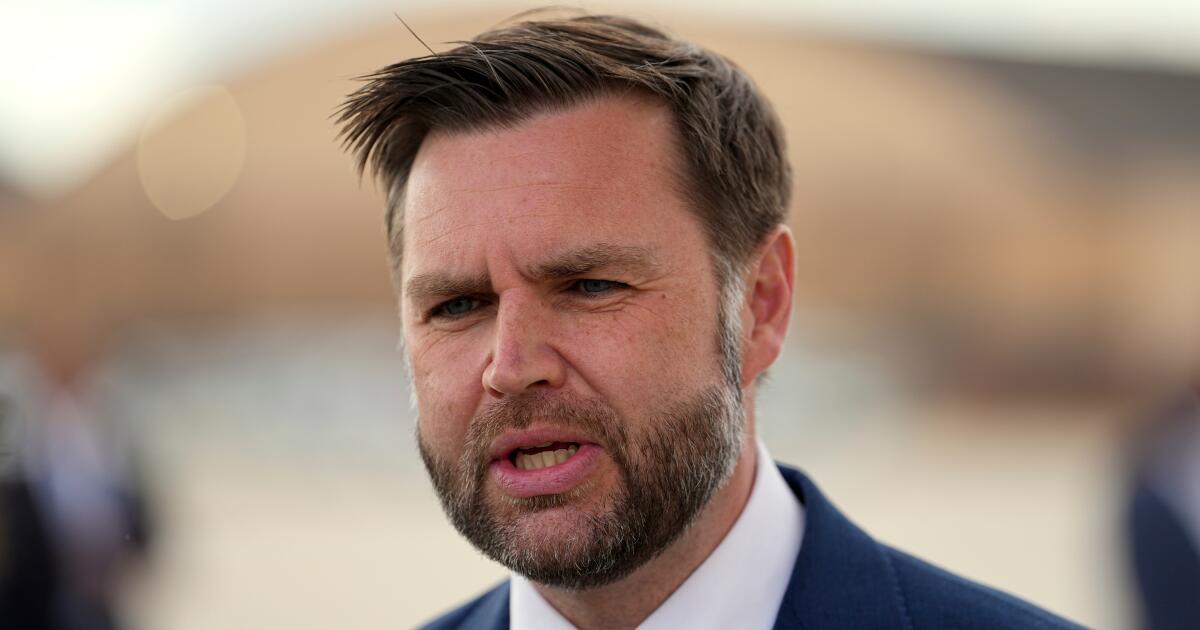
WASHINGTON — Vice President JD Vance is pressing federal prosecutors to investigate Minnesota Gov. Tim Walz and state Atty. Gen. Keith Ellison over allegations they failed to stop widespread social services fraud, amplifying concerns the White House will use a new Justice Department division to target political rivals.
Vance, who has been tapped to lead the Republican Trump administration’s anti-fraud efforts as he seeks to raise his political profile as a potential 2028 presidential candidate, cited in a letter to the Justice Department a report from the Republican-led House Oversight Committee that alleges Walz and Ellison were aware of pervasive misuse of government programs for years and let it flourish.
The Justice Department didn’t immediately respond to questions Tuesday about whether it would open an investigation. It was unclear what, if any, potential violations of federal law could support a probe into the Democratic Minnesota officials, who have characterized a separate Justice Department investigation involving state leaders as politically motivated.
A spokesperson for Walz didn’t immediately respond to a message seeking comment. Ellison called the allegations unfounded and said there’s no evidence his office ignored wrongdoing or failed to act as required by law. He dismissed Vance’s referral as “a political stunt from an administration that uses the machinery of government to target its perceived opponents while extending leniency to those aligned with its interests.”
“It is deeply troubling to see official powers and public resources diverted away from serving the people and instead aimed at pursuing political adversaries,” Ellison said in a statement. “That is not what government is for, and it diminishes public trust in our institutions.”
Vance’s referral to the Justice Department’s new National Fraud Enforcement Division marks an escalation in the Trump administration’s stated “war on fraud” in government programs that officials have said would not be political or partisan.
The new division has drawn intense scrutiny over the potential for political influence given its close relationship with President Trump’s White House, which announced its formation in January and initially said its leader would answer directly to the president instead of the typical Justice Department command.
In his referral, Vance wrote that officials in Minnesota or anywhere else in the country “must be held accountable” if they facilitated fraud, prevented officials from stopping it or retaliated against whistleblowers who tried to report it.
“Minnesota state officials are not above the law,” Vance wrote in a post on X.
Real Madrid have had a 150m euro (£130m) offer for striker Julian Alvarez rejected by city rivals Atletico Madrid.
Real president Florentino Perez last week pledged to make a 150m euro offer for an unnamed “galactico” player if re-elected to his position.
Having successfully retained control on Sunday, Perez made good on his promise.
However, the move for the 26-year-old Argentina international was turned down by his club, who cited Alvarez’s release clause of 500m euros (£430m).
In a statement, Real said: “Following the meeting of the board of directors held today, it has made an offer of 150 million euros to Club Atletico de Madrid for the federative rights of the player Julian Alvarez.
“After reviewing and evaluating the offer, Club Atletico de Madrid has expressed its gratitude for the proposal, made within the framework of the good relations between both clubs, and has rejected it, referring to the player’s release clause.”
Atletico did not immediately comment.
Former Manchester City player Alvarez, who won the 2022 World Cup with Argentina, joined the La Liga club in an £81.5m deal in 2024.
He scored 20 goals in 49 appearances for Atletico last season as they finished fourth in the table and reached the Champions League semi-finals.
June 9 (UPI) — An assistant of Jeffrey Epstein told members of the House Oversight Committee on Tuesday that she was unaware of his crimes but that he was a master manipulator.
Lesley Groff, Epstein’s then-executive assistant, told the committee that she believed the massage appointments she made for Epstein with young women and girls were with massage therapists, two sources told CNN. She said Epstein had every reason to keep his crimes secret from her.
Groff helped manage Epstein’s life, including making appointments with women, setting meetings with powerful people and arranging Epstein’s flights with the young women. She worked for Epstein for nearly 20 years, and her name was listed in the Epstein files more than 150,000 times.
Epstein, a billionaire financier and registered sex offender, died by suicide in prison in 2019.
Groff told the lawmakers that she wants to help and that since Epstein was arrested, she’s lost friends and her family has faced harassment.
Groff said Epstein didn’t sexually abuse her, one of the sources told CNN, and that she didn’t need the job. She said that Epstein and Ghislaine Maxwell told her not to associate with their friends, and they insisted that their business was none of hers.
Survivors told a different story.
Sharlene Rochard was skeptical that Groff didn’t know about the crimes.
“One of the hardest parts for survivors is hearing the people who were closest to Epstein claim they saw nothing,” Rochard told CNN. “That doesn’t match my experience. Survivors deserve answers, not claims of ignorance.”
In a previous statement, Groff’s lawyer told CNN that she worked for Epstein as “part of a professional staff that included in-house attorneys, accountants and other office staff” and that her job included making appointments for Epstein, “taking his messages and setting up high-level meetings with CEOs, business executives, scientists, politicians, celebrities, charitable organizations and universities.”
Committee Chairman Rep. James Comer, R-Ky., told MSNow that the panel has referred two names to the Department of Justice, though he didn’t identify them.
“I think the interviews that we’ve done have been very productive,” Comer told reporters on Tuesday morning.
“We’re bringing in the most important people in the whole Epstein criminal enterprise that are still alive, and hopefully we’ll get the proof to the American people that there’s an opportunity for accountability,” Comer said.
The committee is scheduled to interview Microsoft founder Bill Gates on Wednesday.
Lisa Phillips, a survivor of Jeffrey Epstein and Ghislaine Maxwell, speaks out during a rally with other survivors on Capitol Hill in Washington on September 3, 2025. Photo by Anna Rose Layden/UPI | License Photo
Residents were thrown into despair after a terrorist leader, Jammo Smally, abducted 39 community leaders who had gone to discuss a peace deal with him. The dramatic incident occurred on Sunday, June 7, in the Maradun Local Government Area (LGA) of Zamfara State, North West Nigeria.
Jammo had been sending messages to the leaders in the Magamin Diddi community for over two months, calling for a meeting to discuss the terms of the peace deal as the rainy season approached. The terrorist leader, whose parents live in a hamlet not far from Magamin Diddi, had claimed he was tired of the hostility between his terror group and the community.
Following another invitation a few days after the Islamic Eid al-Kabir celebrations, the traditional and religious leaders decided to meet Jammo and his gang members in the forest. The two parties agreed to meet on Sunday to reach what the community leaders thought would be a peaceful solution to the recurrent attacks on their farms and homes.
“The first thing he asked when we reached there was the whereabouts of the three rifles the Askarawa took away from his boys two months ago,” Malam Aliyu, one of those who went to strike the deal, told HumAngle over the phone on Monday. He had joined 46 other community leaders to strike the deal. “We were confused at first, because we were told that we would be discussing only a peace deal. We thought that he would ask us to give him money, but the first thing he asked was for his rifles.”
“Askawara” is a local term for security volunteers of the state-backed Community Protection Guards (CPG) in Zamfara State. Local sources told HumAngle that towards the end of March, terrorists from the Jammo group had a gunfight with the CPG fighters and other vigilante group members, leading to the killing of two terrorists. Three rifles belonging to the terrorists were taken away by the CPG fighters.
“We didn’t take his guns, but it’s obvious he has made up his mind,” Aliyu said. The terrorist leader released seven community leaders, instructing them to report back to the district head with his demands. He has one condition for the release of the 39 elders: either the rifles are returned, or an equivalent amount of money must be paid to him.
The terrorist leader also set ₦50 million for the peace deal. “He said if we’re still interested in negotiating with him, we should add ₦50 million to the rifles we’re returning. The money is for us to be able to live in peace, go to local markets, and go to our farms,” the community leader said.
Negotiations between terrorists and local communities aiming to establish peace are not uncommon in the ongoing crisis plaguing the northwestern region for over a decade. Typically, these discussions involve communities paying substantial sums to the terrorists under the guise of a peace agreement. However, such negotiations often yield little result, as terrorist attacks continue unabated even after agreements are reached, as seen in various regions of the state.
The Zamfara State government has consistently maintained its stance against negotiating with terrorists. Yazid Abubakar, the Zamfara State Police spokesperson, stated that they have initiated a rescue operation to free the captured individuals.
“Upon receipt of the report, the Zamfara State Police Command immediately initiated efforts to trace the victims’ whereabouts and secure their safe rescue. Operational assets have been deployed, and security operatives are working on available intelligence to locate the abducted persons,” Yazid Abubakar said in a statement on Monday.
Residents of Magamin Diddi, Zamfara State, Nigeria, have been thrust into turmoil after the abduction of 39 community leaders by terrorist Jammo Smally.
These leaders were negotiating a peace deal with Smally, who had been reaching out for over two months, desiring an end to hostilities.
However, during the meeting, Smally demanded the return of rifles taken by local security volunteers or payment in cash, along with an additional ₦50 million for peace.
This incident is emblematic of a broader crisis in northwestern Nigeria, where communities often pay terrorists under the guise of peace deals, yet attacks continue unabated. The Zamfara State government, adhering to a policy of non-negotiation with terrorists, has initiated a rescue operation for the abducted leaders, deploying operational assets based on available intelligence to ensure their safe return.
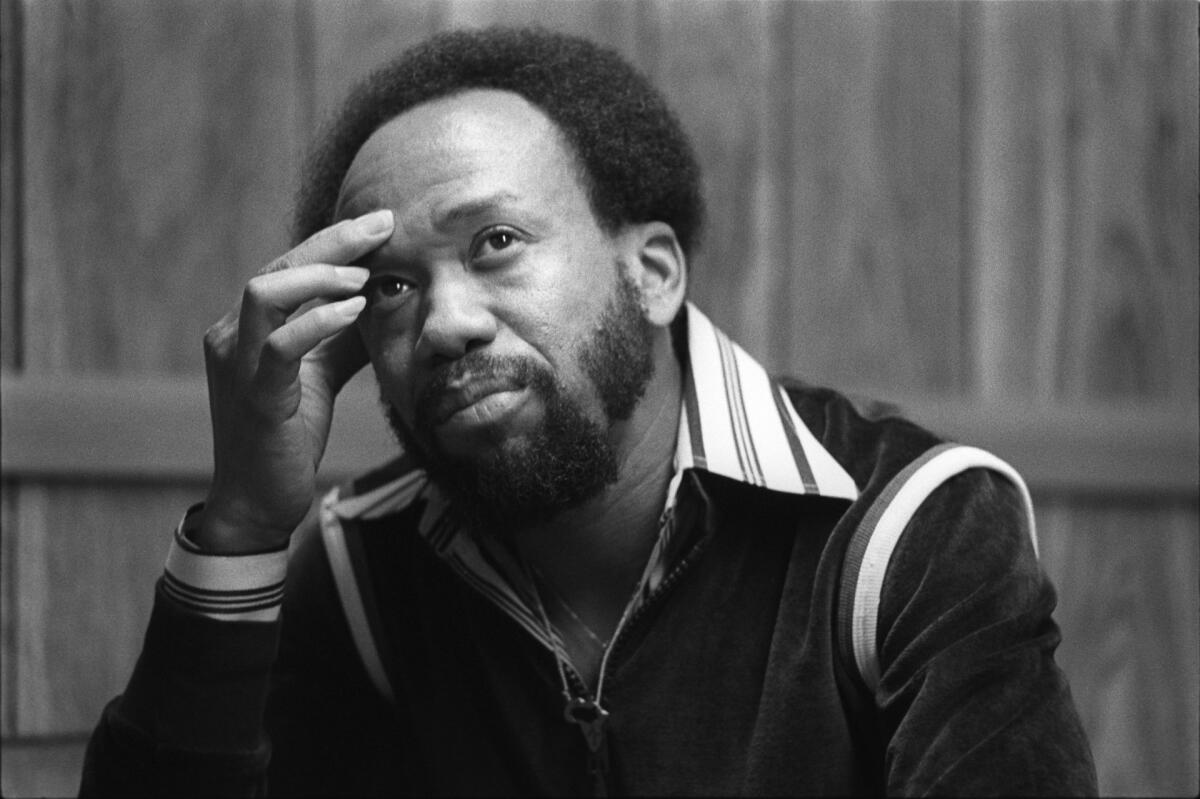
Earth Wind & Fire’s “September,” with its nonsensical phrase “ba-dee-ya,” has been streamed more than 2.3 billion times on Spotify, more than the band’s next five songs combined (including “Let’s Groove,” “Boogie Wonderland” and “Shining Star”).
With networks and streamers seeking to create compelling content, many have found the answer in true stories. But with the surge in documentaries, it can be hard to sift through what’s worth your time. Each month, we provide an inside look at a documentary and others you should add to your queue.
But he also explores, in depth, the complexities of the band’s central figure, Maurice White. A self-affirming visionary who wanted to bring hope to people, White mixed journaling with talk of spaceships and metaphysics. However, he was also traumatized by a childhood in which his mother moved to Chicago for more opportunities, leaving White in Memphis, where he was once brutally beaten by white policemen. Those scars created a man who was a distant father and equally remote with his band members at the peak, mistreating them with casual disdain until everything fell apart.
Questlove recently spoke by video call about the film, now streaming on HBO Max, which features interviews with family, surviving band members, childhood friend Booker T. Jones and a couple of fans named Barack and Michelle Obama. This interview has been edited for length and clarity.
What drew you to this story?
In 2020, I was DJing on the internet, live streaming and I was DJing to calm people down from thinking they’re going to die in the apocalypse. One day I did an Earth, Wind & Fire set and when I got to the fourth hour, I thought, “Yo, is this one of the most relentlessly positive groups of all time?”
I started researching the lyrics and realized this band tricked us into positivity, like getting us to eat our vegetables. I started wondering how a band like that got past the velvet rope and realized that none of it was by accident, it was all by design. Their music was so good and you start singing the lyrics and there’s an osmosis effect of positivity that gets you.
When I started this in 2023, I had a spooky feeling that the turmoil of 2020 was going to visit us again, so I thought people would want something to watch that will help them plant seeds of what to do.
Maurice White, the band’s central figure.
(Henry Diltz / HBO)
You save “September” to the end. Was it so people would see the band was more than their biggest hit or to send audiences off humming and happy?
It’s an unlikely legacy song. They have so many meaningful songs like “Shining Star,” while “September” is a leftover that was a filler song from a greatest hits album that became a career-defining song.
Initially, I was coming out the gate with “September,” just, “Let’s get this out the way.”
It took a while. Early on the Obamas weren’t part of the project. I interviewed them the morning after the 2024 elections; they were so professional and so in the moment and also helped us process the day.
We’d never gotten to see them sit next to each other and be playful and dance. And I didn’t say, “OK, let’s see how you move, dance for 12 seconds,” I was just playing something and they started dancing and the camera happened to be running.
But they put the song in context. In 2009, they said, “What’s the statement we want to make to America to show this is a new era at the White House?” And Earth, Wind & Fire was chosen to be one of the bands at the inauguration and it was that song. So my producer said, “Now we can treat ‘September’ like an encore.” We used that story to show how that song grew on its own organically.
White is a complicated guy. Was it challenging to balance everything in your narrative?
Oftentimes Black artists are seen as caricatures or one-dimensional. It’s easy to do the gotcha of “You’re so positive and metaphysical, what about this or that?” My goal is always to find a human element that you see yourself in. In Maurice’s case with his career, he did drink the Kool-Aid. But his personal life stemmed from not ever forgiving his mother for leaving him behind when he was little. When we hold anger and other emotions in, when we refuse to talk to our partners or friends — and you want people to read your minds — that’s when it becomes a problem. But I wanted to show that in a way where I don’t spell it all out. Hopefully people will make the connection of the importance of dreaming and planning and affirmations but also the importance of letting things go, like forgiving people.
Now open is a revamped, kids-focused area in Looney Tunes Land, a remake of the former Bugs Bunny World and Whistlestop Park. All told, it’s a 5-acre space with nine rides, including two kiddie coasters, as well as still-to-come play areas, a live show and an in-development augmented reality experience.
You’re reading Mr. Todd’s Wild Ride newsletter
Todd Martens’ newsletter delivers news and commentary on the past, present and future of theme parks, right from the theme park capital of the world — Southern California.
By continuing, you agree to our Terms of Service, which include arbitration and a class action waiver. You agree that we and our third-party vendors may collect and use your information, including through cookies, pixels and similar technologies, for the purposes set forth in our Privacy Policy such as personalizing your experience and ads.
I last walked through the area about two summers ago, and it was in a derelict state. I’m happy to report it’s more welcoming, prettier and dotted with plant life and landscaping.
Gone is the vintage Magic Flyer, once Magic Mountain’s oldest coaster (the park’s eldest thrill seeker is now Gold Rusher). Also among the casualties: Tweety’s Escape, a steel swing that placed children in birdcages that had begun to look like mini jails. It was a grim-appearing ride.
The remaining attractions have all received some much-needed TLC. Some even have added mini storylines. What was Whistlestop Train, for instance, is now Taz’s Tasmanian Train Tours. It follows a narrative in which the ride’s titular character has escaped the zoo and is eluding capture, generally causing havoc on the countryside. It’s a calm, slow-moving ride through a small green space, and we see failed attempts to trap Taz, such as an overgrown mice contraption. The ride concludes with a mechanical not-so-hidden Taz, but not before glimpsing a statue of Tasmanian She-Devil in full kiss mode.
A look into the Bugs Bunny-focused area of Magic Mountain’s new Looney Tunes Land.
(Myung J. Chun / Los Angeles Times)
The reimagining comes two years after Six Flags Entertainment Corp. and the Cedar Fair Entertainment Co. completed a merger, which in SoCal brought Magic Mountain and Knott’s Berry Farm under the same ownership. Six Flags’ corporate creative producer Clayton Lawrence says post-merger, the company pinpointed upping the family appeal at Magic Mountain as among its first orders of business.
That meant last summer devoting resources to improving the Hurricane Harbor water park, which Lawrence says specifically attracts families and grandparents. This year, attention was turned to the primary park in Looney Tunes Land.
“We really thought about what this park needs,” Lawrence says. “What will the parents need? How do we slow the guests down a little bit? This park has so many thrills in it — so many coasters — that we wanted to create a place that was nice to take a break from all the action and also develop areas where grandparents and parents could watch little ones burn off energy.”
It’s safe to say that Magic Mountain’s core audience is likely always going to be thrill seekers. And that fan base will be served next year with the planned opening of a new coaster that will overlook the Looney Tunes area.
The kiddie coaster the Road Runner Express at Six Flags Magic Mountain.
(Myung J. Chun / Los Angeles Times)
Magic Mountain attracted 3.3 million visitors in 2024, according to data released by the Themed Entertainment Assn. While Lawrence was not able to break down which percentage of that number included those traveling with children 12 and under, it’s safe to say that a greater family appeal is viewed as one of the ways to boost a SoCal audience.
“There’s a lot of people who grew up coming up here, or their first ride was inside Bugs Bunny World,” Lawrence says. “A lot of families have a daredevil teen who can go on the rides, but they also have a little one. This is about the multi-demo family.”
Looney Tunes Land is broken into four mini areas — Taz-Mania, Road Runner Ridge, Bugs Bunny Play Park and Camp Duck Amok. While there are no major distinctions between the spaces, there are slight differences. Taz’s footprints, for instance, are found in the gravel-colored pavement of Taz-Mania, and in the Daffy Duck locale the flooring looks a bit like rockwork. A small outback-like trail in Taz-Mania will soon be home to an augmented reality game, and a much-needed green space in the Bugs Bunny spot will later this summer be populated with tunnels and little climbing structures.
Asqwer Turki, 13, poses for a picture with Wile E. Coyote at the new Looney Tunes Land at Magic Mountain.
(Myung J. Chun / Los Angeles Times)
There are fun additions to spot on the refreshed rides. The Canyon Cruiser beginner’s coaster, for example, nods to classic Looney Tunes cartoons, specifically prank-filled episodes featuring Daffy Duck, Bugs Bunny and Elmer Fudd. The children’s theater has been remade into Bunny Bowl, and given giant carrots that call the attention of guests.
Such light thematic touches, said Magic Mountain President Brian Oerding, have been missing from parts of the park. They’re vital, he says, in lengthening a guest’s day.
“We’ve learned that softening the hardscape creates a better environment, a better experience, and that means you’re going to want to hang out more,” Oerding says. “Some folks will walk by black asphalt and not think anything about it, but when you look into Looney Tunes Land, and you look at the softness of the pavement and the additional landscaping, we’ve created a happier space. Mom and Dad are happier, and that means they’ll hang out longer.”
Mountain Park President Brian Oerding officially opens the new Looney Tunes Land at Magic Mountain.
(Myung J. Chun / Los Angeles Times)
Looney Tunes Land has also given Magic Mountain some much-needed in-park entertainment, as the area has been lacking a live show for a number of years. “Vacation Mayhem” comes in at just under 15 minutes and features Bugs, Daffy, Porky Pig and Sylvester imagining their perfect getaway spots in song.
Things go wrong, of course, and Bugs even explores some vices by gambling in Las Vegas, which was an odd choice I thought for a kids show, but Looney Tunes did always have a bit of an edge. Nevertheless, the musical numbers, ranging from reworkings of “The Gold Diggers’ Song (We’re in the Money)” to “Hello Muddah, Hello Fadduh (A Letter From Camp)” keep it zipping along.
“If we don’t believe that entertainment and character shows are important, we’re missing it,” Oerding says. “Yes, the rides are cool, but we haven’t done an actual entertainment show in here in a long time.”
And Lawrence says Looney Tunes is essentially a model for the entire park. No, that doesn’t necessarily mean more kiddie rides in the coming years, only that Six Flags is looking at other places where the park can use some beautification.
“This is what we want to do for the rest of the park,” Lawrence says. “Disciplined design. Nice hardscape.”
And here’s hoping for some more plants and an additional fountain or two.
This week in SoCal theme parks
Alexis Rosales of Bell gets drenched by Luke Brodowski, performing as Fluke Mayfield at Knott’s Berry Farm’s Ghost Town Alive! in 2024.
(Allen J. Schaben / Los Angeles Times)
It’s the most wonderful time of the year. Knott’s Berry Farm begins its summer season on Friday, and that means the return of Ghost Town Alive! This interactive live show, now a decade old, is unlike anything at any other SoCal park, and in my mind it’s the best summer entertainment available. This hybrid live-action role-playing game and work of interactive theater enables guests to live out mini-Wild West adventures while interacting with more than two dozen actors. Players follow a loose story centered on the drama in the fictional town of Calico, in the park’s Ghost Town area. It’s silly, it’s wacky and there’s even a daily newspaper. Ghost Town Alive! runs on select days, and I’ll see you there Friday.
World Cup, Lego Style! Carlsbad’s Legoland is celebrating the arrival of the World Cup with a host of limited-time activities and Lego creations. The park, for instance, has built a 30-foot-long re-creation of SoFi Stadium, and elsewhere has created brick versions of a host of soccer stars. There are interactive events as well, such as accuracy challenges and games that have attendees trying to score goals off of Lego minifigures. Legoland’s FIFIA World Cup Experience 2026 launches Thursday and runs through July 19.
Oogie Boogie Bash tickets drop — and a Haunted Mansionstreet parade? The Disneyland Resort’s popular after-hours event Oogie Boogie Bash returns Aug. 18, and tickets for Magic Key passholders go on sale June 16 (the general public sale is June 18). New this year to the Disney California Adventure experience is what the resort is calling “Madame Leota’s Swinging Wake.” Though not a full-scale parade, expect Haunted Mansion characters — the concept art shows floats of the attraction’s “stretching room” portraits — as well as ghostly dancers. But with something new, something must depart. “Madame Leota’s Swinging Wake” is replacing the “Frightfully Fun Parade.” Ticket prices vary by day, starting at $139. October dates, for instance, top off at $199.
“Harry Potter” will hover above Dodger Stadium. A theme park-like drone show is arriving Saturday at Dodger Stadium. More than 1,200 drones will soar over the park as part of a “Harry Potter”-inspired production, which will also feature music, trivia and an appearance from the film’s Bonnie Wright (Ginny Weasley). Expect re-creations of “Potter” iconography such as Hogwarts Castle, magical creatures, the Sorting Hat and more. The hourlong show begins at 9 p.m. and Butterbeer will be on hand. Tickets start at $52.90 for adults.
Tell us your stories. Ask us your questions.
Have a theme park tale to share? Whether it was a good day or less-than-perfect day, I would love to hear about it. Have a question? A tip? A fun photo from the parks to share? Email me at todd.martens@latimes.com. I may feature your note in an upcoming newsletter.
Ride on,
Todd Martens
P.S.
Last week I put out a call for Disneyland fans to share their Carousel of Progress memories. The theater attraction, centered around a rotating auditorium, debuted at the 1964 World’s Fair before making its way to Disneyland in 1967. It was moved to Florida’s Walt Disney World in 1975. The Walt Disney Co. announced recently that the Florida version would be undergoing a top-to-bottom overhaul, but its dedication to technological optimism throughout the decades would remain.
I’m thoroughly enjoying the remembrances. Many cited it as a favorite. “My father was a musician, and it became a family tradition that we’d sit in the back row and sing ‘[There’s] a Great Big Beautiful Tomorrow’ loudly at the top of our lungs from the very beginning of the ride, which I’m sure newcomers thought was weird and probably annoying,” wrote one reader. Another noted, “The mid-60s were exciting years to be a kid, as the future seemed so promising and exciting; the [Carousel of Progress] plugged right into that enthusiasm.”
Many shared similar sentiments. “The animated activities of the characters and their dialogue embraced the ‘Happiest Place on Earth” theme that was prevalent throughout Disneyland in those earlier days,” said one fan. A few, however, called out that the attraction was sponsored by General Electric, making it feel a bit like an advertisement. As one reader summarized: “It was incredibly clunky product placement, even to a kid’s ears.”
TORONTO — A new Canadian-built bridge across the Detroit River that U.S. President Donald Trump threatened to block will open soon, Canadian Prime Minister Mark Carney said Tuesday.
A ribbon-cutting ceremony for the Gordie Howe International Bridge, jointly owned by Canada and the U.S. state of Michigan, is set to take place on Friday, while the bridge itself is expected to open to traffic later this month.
In February, Trump demanded that Canada turn over at least half the ownership of the bridge to the U.S. federal government and agree to other unspecified demands in one of his many salvos over cross-border trade issues.
The bridge, which would connect Windsor, Ontario, and Detroit, and would be a vital economic artery between Canada and the United States, had been expected to open early this year, according to information on the project’s website.
The bridge is named after Howe, the late Canadian hockey great who spent 25 seasons with the Detroit Red Wings.
The project was negotiated by former Michigan Gov. Rick Snyder — a Republican — and paid for by the Canadian government to help ease congestion over the existing Ambassador Bridge and Detroit-Windsor tunnel. Work has been underway since 2018.
“Obviously the bridge will be open at the end of the week. A symbol of, but also a fact of cooperation between our countries,” Carney told reporters as he walked into Parliament.
“Great for Canadians going across the border, Americans coming across the border, and for commerce,” he said, calling it “positive news.”
Trump threatened the bridge as the United States-Mexico-Canada trade agreement is up for review this year, and Trump has been taking a hard-line position before those talks, including by issuing new tariff threats.
Carney, meanwhile, has spoken out on the world stage against economic coercion by the United States.
Sen. Elissa Slotkin, a Michigan Democrat, has said that the Canadian-funded project is a “huge boon” to her state and its economic future.
Michigan is a swing state that Trump carried in both 2016 and 2024.
Snyder wrote in an op-ed in The Detroit News earlier this year that Trump was wrong in asserting that Canada owns both the U.S. and Canadian sides of the Gordie Howe bridge.
“Canada and the state of Michigan are 50/50 owners of the new bridge,” Snyder wrote. “Canada was wonderful and financed the entire bridge. They will get repaid with interest from the tolls. Michigan and the United States got their half-ownership with no investment.”
The Gordie Howe bridge will join the privately owned Ambassador Bridge as the second span connecting Detroit and Windsor, Ontario.
The rival Ambassador Bridge is considered the busiest U.S.-Canadian border crossing, carrying 25% of all trade between the two countries. It plays an especially important role in auto manufacturing.
Companies controlled by the Moroun family, owners of the rival Ambassador Bridge, previously sued to prevent the Howe bridge from being built.
Rams offensive lineman Alaric Jackson was arrested on suspicion of felony domestic violence Monday night in Los Angeles, according to a person with knowledge of the incident not authorized to speak publicly.
Jackson was arrested shortly before 11 p.m. after police responded to a call at a home in West Hills. Upon arrival, police determined that the woman involved in the incident had recorded the interaction and noticed scratch marks on her arms. Jackson was arrested and later booked into jail on a $50,000 bond, according to jail records.
The specific charge Jackson was arrested for is for a person who “willfully inflicts physical or corporal injury resulting in a ‘traumatic condition’ [such as a bruise, scratch, swelling, or internal injury] on an intimate partner.”
The Los Angeles County District Attorney’s Office is reviewing the case for potential charges.
“We are aware of the incident regarding Alaric Jackson, and we take these matters very seriously,” the Rams said in a statement. “Due to this being an ongoing legal situation, we cannot comment further at this time.”
Jackson, 27, entering his sixth season with the Rams as one of their anchors on the offensive line, was suspended by the NFL in 2024 for violating its personal conduct policy.
In November, a woman filed a lawsuit against Jackson alleging he recorded her without her consent during sex. The woman alleged that Jackson repeatedly refused to delete the video and then taunted her with it. The woman reported the incident to the NFL, but the civil case was dismissed.
Jackson, who joined the Rams as an undrafted free agent in 2021, signed a three-year deal with the team in February 2025 that included $35 million in guarantees.
Times staff writers Richard Winton and Gary Klein contributed to this report.
The European Commission has demanded that Meta allow other AI companies access without charge while it investigates the company for antitrust violations. File Photo by Gian Ehrenzeller/EPA
June 9 (UPI) — The European Commission ordered Meta to allow competing artificial intelligence assistants to access WhatsApp while it investigates the company for antitrust violations.
The company must restore access by next week as it was until October, when the competition could use WhatsApp for free.
“In rapidly evolving markets, competition can be lost long before a final decision is adopted. This is why these interim measures will remain in place for the duration of the investigation, in order to prevent harm that would be almost impossible to repair,” Teresa Ribera, executive vice president for Clean, Just and Competitive Transition, said in a statement. “These interim measures will safeguard competition in the growing market for AI assistants, by preserving a key entry point to reach consumers in Europe — WhatsApp — and allowing AI companies to innovate, scale up and reach their full potential.”
The EC began its investigation in December around the same time Italy called foul of the alleged anti-competitive move by the company. Italy folded its complaint into the EC probe. After Brussels warned in February that it may force the company to open back up, in March Meta allowed the other companies in but began charging them fees. Brazil has levied similar complaints.
Meta has said WhatsApp’s business platform was not built to carry AI chatbots and that competitors can reach users through other channels.
“The European Commission has decided that OpenAI and some of the largest companies in the world can use the paid-for WhatsApp Business product for free. This is regulatory overreach subsidized by the many European companies that pay. We will appeal,” a Meta spokesperson told Politico.
Meta is also appealing a $228.34 million fine from the EU for violations of the Digital Markets Act.
If the company ignores the order, it can face fines of up to 10% of its annual revenue.
Troops in landing craft approach Omaha Beach on D-Day in Normandy, France, on June 6, 1944. D-Day was the largest seaborne invasion in history and turned the tide of World War II. Photo by UPI | License Photo
At a campaign rally in Armenia’s capital, Yerevan, on Saturday, one day before Armenia’s election, Prime Minister Nikol Pashinyan, outfitted in a white button-up shirt and a red-brimmed baseball cap, held a look of determination.
Flanked by supporters waving their arms and flashing his campaign’s signature heart-shaped hand gesture, Pashinyan was perched centre stage, pounding away on a drum kit for the crowds – literally drumming up support.
Recommended Stories
list of 4 itemsend of list
By election day, his governing Civil Contract party appeared to have drummed up something more consequential: public backing for his vision of Armenia’s future following the loss of the disputed region of Nagorno-Karabakh to a crushing military defeat by Azerbaijan in 2023.
Pashinyan, who formed a band earlier this year and campaigned with a series of concerts around the country, secured 49.8 percent of the vote in Sunday’s ballot, enough to retain a parliamentary majority.
His victory is seen as a test of his handling of the loss of the Nagorno-Karabakh region and his ability to steer the country away from Russian influence.
He has ultimately prevailed despite Russian meddling in Armenian politics, and the country now looks set to reorient itself away from its former ruler – signalling Armenians’ willingness to embrace a new direction, analysts say.
“Many Armenians are prepared to give his new vision a chance: an Armenia less defined by conflict, more open to normalising relations with Azerbaijan and Turkiye, and increasingly focused on building its future within its internationally recognised borders,” Zaur Shiriyev, an analyst at the Carnegie Russia Eurasia Center, told Al Jazeera.
‘Tired of conflict and war’
The loss of Nagorno-Karabakh could have spelled political doom for Pashinyan. By handing him a second term, Armenians have signalled that they are ready to put the conflict that has intermittently reared its head for decades behind them, analysts say.
“Nationalism no longer resonates among the public, which is demonstrably tired of conflict and war,” Richard Giragosian, director of the Yerevan-based Regional Studies Center, told Al Jazeera, even if the loss of the region remains an “open wound”, he said.
Nagorno-Karabakh, meanwhile, no longer features at all in the Armenian government’s defence reform, nor in its national security strategy, “a final confirmation of the new strategy of diversification”, Giragosian explained.
Peace efforts instead took centre stage in Pashinyan’s campaign, including the agreement he signed at the White House last August with Azerbaijan, finally ending the on-again-off-again war that had raged since the late 1980s.
Unlike in 2021, when Pashinyan’s campaign was shaped by the immediate aftermath of war and questions of political survival, Sunday’s vote became a clearer test of public support for his peace agenda, Shiriyev said.
Peace over nationalism
The result also demonstrates that the nationalist mantras peddled by opposition leaders have not been able to sway the majority of Armenians, said Svante Cornell, director of the Institute for Security and Development Policy and its Central Asia-Caucasus programme.
“The opposition represented a return to oligarchy, nationalism and forever conflict,” Cornell told Al Jazeera.
“While the Pashinyan government has its flaws, it represents something different than the past.”
The election saw the two main opposition forces – Strong Armenia and Armenia Alliance – win 41 seats combined in the new parliament, against the 64 seats the government holds, out of a total 105.
But Giragosian cautioned against overstating the opposition’s strength as, he said, the two opposition parties are unlikely to cooperate given the friction between their leaders – Russian-Armenian oligarch Samvel Karapetyan, whose Strong Armenia took 29 seats, and former President Robert Kocharian, whose Armenia Alliance won just 12.
“The division and dissent within the opposition will present a profound obstacle,” he said.
Although united in their shared pro-Russian leanings, Karapetyan is seen by Kocharian as an “interfering interloper”, with Kocharian himself resenting his third-place position behind Karapetyan, the analyst said.
“This is further exacerbated by Kocharian’s sense of entitlement, and his frustration of being rebuffed by Moscow in his prior attempts to gain direct Russian backing and support,” Giragosian added.
Still, Cornell said, the persistence of pro-Russian, nationalist sentiment in Armenia generally should not be taken lightly.
Until 2020, Armenia was governed by successive administrations that spent three decades pushing a nationalist identity, he said.
“To expect such views, such sentiments would just disappear – would be unrealistic,” Cornell noted.
Supporters of Armenia’s ruling Civil Contract party led by Prime Minister Nikol Pashinyan gather in Republic Square in Yerevan, Armenia, Friday, June 5, 2026, for the party’s final campaign rally [Anthony Pizzoferrato/AP]
Russian influence weakened – but not gone
In the lead-up to Sunday’s election, international observers had accused Russia of attempting to interfere – but its inability to change the result reflects Moscow’s limited reach in the country today, analysts say.
“Moscow still has tools in Armenia, but it no longer has the authority it once had,” Shiriyev said.
“In today’s Armenia, being seen as Russia’s preferred candidate can mobilise voters against you as much as for you.”
As Armenia strives to resist what Shiriyev refers to as the “gravitational pull” of the “Russian orbit”, a window of opportunity has been created by Moscow’s preoccupation with its invasion of Ukraine and a new openness from Western partners.
“The larger risk is from not altering strategy, and the benefits of a pivot to the West are both demonstrable and popular in Armenia today,” Giragosian said.
Russia, he added, is now increasingly viewed in Armenia as a “dangerously undependable so-called partner”.
Benyamin Poghosyan, an Armenia analyst at the Italian Institute for International Political Studies, argues that the primary foreign policy drivers of the election, however, were regional actors – not Russia or the West.
“The reality on the ground is far more nuanced,” Poghosyan told Al Jazeera. Armenia’s future relations with Azerbaijan and Turkiye, as well as the regional fallout from the conflict in Iran, are far greater influences, he said.
There are good reasons not to count Moscow out completely, however. While pro-Russian forces did not prevail this time, they will continue to assert their influence, Cornell said. He referred to the cautionary tale of another Caucasus country.
“In Georgia, the work of undermining a reformist and pro-Western government and turning the country around to a more pro-Russian line took over 15 years,” he said.
At the same time, Moscow still holds massive economic leverage over Yerevan, said the analysts.
Russia remains the primary export destination for Armenian agriculture and wine, is the main source of critical imports like wheat, and supplies the country with heavily discounted gas, Poghosyan noted.
“Because Russia has the capacity to inflict severe economic pain, Yerevan must tread carefully to protect its core interests without completely rupturing its relationship with Moscow,” he said.
Shiriyev added that many Armenians work in Russia, with families depending on remittances, and business ties running deep.
“By contrast, Western integration can still feel abstract and uncertain to many voters. That is why pro-Russian forces can still gain traction, even as Russia’s political image in Armenia has weakened,” he said.
A constitutional hurdle
But while Pashinyan’s re-election has strengthened his hand in the country’s peace process, it has not resolved one key sticking point for constitutional change to ensure it, said Shiriyev.
Azerbaijan has demanded a change to Yerevan’s constitution as a means of guaranteeing that no future Armenian government might revive claims related to Nagorno-Karabakh or Azerbaijan’s territorial integrity.
“But Pashinyan lacks the two-thirds majority needed to move easily toward a referendum, and even a referendum would be politically uncertain,” said Shiriyev.
This election, Cornell said, was “a necessary but not sufficient condition for the peace process to advance”.
Poghosyan warned that if Baku refuses to drop these preconditions, “the peace agreement will remain stalled, leaving both nations trapped in a volatile state of ‘no war, no peace’”.
On the question of regional normalisation, however, the outlook has shifted.
Since the bilateral peace treaty was signed at the White House last August, Azerbaijan has lifted restrictions on trade and transit with Armenia and restarted talks on border demarcation – moves that Giragosian said have also accelerated the opening for Armenia-Turkiye normalisation.
“For Armenia,” said Shiriyev, “the West may offer the road, Russia increasingly acts as the roadblock, and normalisation with Azerbaijan and Turkiye is the real prize.”
Tommy will fight former World’s Strongest Man Eddie Hall this weekendCredit: facebook/@SportskeedacombatTommy has been a hands on dad in the build up to the boutCredit: Instagram
The insider continued: “Now the little fella is here it’s a no-brainer — what better way to announce his name than on his dad’s boxing shorts.
“Molly is now obsessed with it — she’s hoping to be there.
“They’re working out the walk outs at the minute because that’s when it will be revealed, with music and blue fireworks — it will be cool.