Tens of thousands of people marched in central London on Saturday in two protests: one against high immigration levels and another supporting Palestinians. Police deployed 4,000 officers, marking their most significant public order operation in years, and made 11 arrests by noon.
Prime Minister Keir Starmer criticized the Unite the Kingdom march for spreading hate, which was organized by anti-Islam activist Tommy Robinson. The government prohibited 11 foreign far-right figures from entering the UK to address the protest. A previous Robinson-led march attracted around 150,000 participants and resulted in over 20 arrests. Supporters at the recent march waved British and English flags, expressing concerns about high migration numbers and criticizing net-zero policies.
Protesters take part in a “Unite the Kingdom” rally organised by British anti-immigration activist Stephen Yaxley-Lennon, also known as Tommy Robinson, in London, Britain, May 16, 2026. REUTERS/Hannah McKay
Annual net migration peaked at nearly 900,000 in 2022 and 2023 but dropped to around 200,000 last year due to stricter visa rules. Immigration issues have impacted Starmer’s popularity and helped right-wing parties like Reform UK gain support. Some protesters expressed hostility towards Starmer, while Robinson called for peaceful actions during his rally.
Nearby, pro-Palestinian demonstrators commemorated Nakba Day, marking the loss of Palestinian land during the 1948 conflict. This march attracted those opposing Robinson’s protest and included displays of Palestinian flags. London has seen increased anti-Jewish incidents, leaving many Jewish individuals feeling unsafe in the area. The police have been making arrests for various public order offences related to these protests, and the government warned against antisemitic chants. Some slogans during the protest included calls related to the Israeli army that have led to previous arrests.
For more than 40 years, Barry Walters has been closely watching the dance floors of New York and San Francisco, chronicling the ways in which LGBTQ+ culture has influenced mainstream culture. As a writer for the Village Voice, the Advocate and Spin, among others, Walters became one of music journalism’s most eloquent and crucial voices, championing artists like the Pet Shop Boys and Madonna during their formative years.
Walters’ new book, “Mighty Real,” draws on his deep firsthand knowledge, offering a comprehensive history of LGBTQ+ music from 1969 to 2000. I recently spoke with Walters about Babs, Madge and Bowie.
You’re reading Book Club
An exclusive look at what we’re reading, book club events and our latest author interviews.
By continuing, you agree to our Terms of Service, which include arbitration and a class action waiver. You agree that we and our third-party vendors may collect and use your information, including through cookies, pixels and similar technologies, for the purposes set forth in our Privacy Policy such as personalizing your experience and ads.
✍️ Author Chat
In the book, you make a distinction between pre-Stonewall LGBTQ music and post-Stonewall LGBTQ music.
Gay culture before Stonewall really had to be hidden, or at least secretive. I think of Barbra Streisand as a quintessential pre-Stonewall figure. Judy Garland, as well. These women are tough, and even though they sing songs written by men, it’s not in a submissive way. They are singing like they are the champions, even when they are suffering through what men do to women through the torch songs they perform.
What can you say about the encoded nature of certain songs that spoke to gay culture in a way that flew under the radar of hetero listeners in the pre-Stonewall era?
The music that spoke to gay culture, by necessity, had to be encoded. “Secret Love” by Doris Day is a good example. It’s about struggling to have something that’s otherwise forbidden. Sinead O’Connor covered that song. There was a song I loved as a young child called “Have I The Right?” by the Honeycombs, which was written by two British gay men at a time when homosexuality was illegal in England. You know, have I the right to be with whomever I want to be with?
What, in your view, was the big bang of post-Stonewall LGBTQ music?
David Bowie to a large degree. Right around the time that “Hunky Dory” was being released in 1971, he told the Evening Standard newspaper that he was gay, flat out just said it. And it was such a strange thing to say that many people doubted his sincerity.
Barry Walters, a writer for the Village Voice, the Advocate and Spin, among others, wrote a new book about the history of LGBTQ+ music.
(Kelly Lawrence for Walters)
I remember seeing Bowie wearing that dress on the cover of “The Man Who Sold The World,” thinking that was the most transgressive act any rock star had ever committed.
And then he performed “Starman” on Top of the Pops in 1972 and he put his arm around his guitarist Mick Ronson, who also looked gorgeous. They were displaying a familiarity men aren’t supposed to have.
I thought I knew everything about pop music, but you have uncovered so many fascinating stories. Tell me about Olivia Records.
Olivia Records was an independent record label in the Bay Area owned and controlled by lesbians for female artists. This is years before punk or indie rock, when so many small labels cropped up. They pioneered so much. They would recruit fans in different cities to man the merchandise and to help get their records in stores. The idea of a merch table was something new at the time. They also created the forerunner of Burning Man. They would go find a farm somewhere and create an impromptu village, with food, sanitation and the rest.
You have given the most space in your book to Madonna, whom you have written about extensively over the years. Why is Madonna such a huge figure in the history of LGBTQ music?
Her art is so queer. I feel like she is one of us. She’s very much like Grace Jones, in that her sensibility is so aligned with gay culture. I related to Madonna on multiple levels. In the early ‘80s, I would see her around town, dancing at the same New York clubs I was frequenting, like Danceteria. She was steeped in gay culture, and then she brought all of this into the mainstream, and that was profound. I also feel like she was misunderstood in many ways. When straight men called her a slut, things like that. That is so far from the truth. She is such a complex artist. If you are making that claim, you don’t know anything about her.
(This Q&A was edited for length and clarity.)
📰 The Week(s) in Books
(Javier Pérez / For The Times)
Pulitzer prize winner Elizabeth Strout has a new novel called “The Things We Never Say,” and Julia M. Klein approves. “[Strout] reprises her familiar themes: the mysteries of human personality, the perils of solitude, the occasional possibility of grace … in deceptively simple, occasionally mannered prose that draws readers in and immerses them in her fictional worlds,” Klein writes.
They’re on a boat! Paula L. Woods climbed aboard a 130-foot yacht in Marina del Rey to soak in the vibes of the Yacht Girls Book Club. “I wanted conversations with like-minded women that were intellectual but fun,” club founder Aloni Ford told Woods. “And talking about books seemed to be the ideal way to achieve that.”
“PEN15” co-creator Anna Konkle has written a memoir called “The Sane One,” and Rachel Brodsky talked to her about it. “In some ways, ‘PEN15’ was a reaction to loving memoirs,” she tells Brodsky. “Raw memory has always been very exciting to me.”
Finally, our Times critics take the measure of this summer’s hottest beach reads.
📖 Bookstore Faves
Kinokuniya bookstores sell Japanese manga, stationery and literature.
(Courtesy of Kinokuniya)
When Kinokuniya opened its first L.A. shop in 1977, it was primarily to provide Japanese expats with imported books and magazines to read in their native tongue. Forty years later, the store has become a locus of Japanese printed matter for Angelenos eager to scoop up Japanese literature and manga in Japanese and English, as well an expansive selection of imported stationery products that, in L.A., can only be found in Kinokuniya’s three stores. I spoke with Sakura Yamaguchi, who manages two of Kinokuniya’s stores downtown (the third is in Mar Vista) about its many-splendored pleasures.
How did the store travel from Japan to Los Angeles?
Books Kinokuniya was founded by Moichi Tanabe in 1927. Located in the Shinjuku district of Tokyo in a two-story wooden building, the first Kinokuniya started with five employees, including Mr. Tanabe himself. In 1969, Kinokuniya opened its first overseas bookstore in San Francisco. The first Los Angeles store opened in 1977.
Who are your customers?
We first started as a store for Japanese customers, so we imported Japanese books and magazines and sold them, mainly. But in the past 10 years, Japanese manga/anime, stationery and literature has been quite popular in the U.S. Therefore our customers are a mix of Japanese-speaking customers and non-Japanese speakers who are interested in Japanese culture.
What percentage of your clientele buys Japanese–language products?
Forty percent Japanese-language products versus 60% English books.
What specific titles are selling for you right now?
Are you seeing more young people turning to printed matter? It seems like there is an analog revival at the moment.
We have been trying to make exclusive editions that come with freebies to make the printed manga more attractive, but without that our English manga sales have been increasing and our main target for the manga is young people. There are many titles that are published exclusively in e-book format, but we frequently hear from customers asking when they will be released in print form. Also, recently there has been a growing number of cases where titles that were originally available only in digital format have later been published as physical books.
Kinokuniya at the Bloc in Los Angeles is located at 700 W 7th St.
(Please note: The Times may earn a commission through links to Bookshop.org, whose fees support independent bookstores.)
Thousands of protesters marched through central London on Saturday to mark the 78th anniversary of the Nakba, the forcible displacement of 800,000 Palestinians during the creation of Israel in 1948.
Venezuelan oil revenues are currently controlled by the US Treasury Department. (Archive)
Caracas, May 15, 2026 (venezuelanalysis.com) – Venezuelan oil production has moved past 1 million barrels per day (bpd) for the first time in over seven years.
The latest OPEC monthly report placed the Caribbean nation’s April output at 1.031 million bpd, as measured by secondary sources. The figure increased by 46,000 bpd compared to the previous month.
For its part, state oil company PDVSA reported April’s production at 1.136 million bpd, up from 1.095 million bpd in March. Direct and secondary measurements have differed over time due to disagreements over the inclusion of natural gas liquids and condensates.
With the oil industry under crushing US coercive measures, crude production plummeted from around 1.9 million bpd when the first sanctions were levied against PDVSA. Following the US imposition of an export embargo in January 2019, output fell under 1 million bpd, hitting decades-lows around 350,000 bpd in 2020 before a steady recovery in recent years.
Since the January 3 US military strikes against Venezuela and kidnapping of President Nicolás Maduro, the Trump administration has imposed control over the nation’s energy sector, with revenues deposited in US Treasury-run accounts before being partially returned to Caracas at US officials’ discretion.
US Secretary of State Marco Rubio stated on Thursday that “for the first time in over a decade the wealth of Venezuela is benefitting the people of Venezuela,” though he did not mention the impact of US sanctions first imposed in late 2014.
While US coercive measures remain in place, the White House has issued a series of licenses allowing Western corporations to return to the Venezuelan energy sector.
BP, Chevron, Eni, Repsol, and Shell are among the companies to have struck oil and natural gas contracts with the Venezuelan government led by Acting President Delcy Rodríguez in past weeks, taking advantage of a recent pro-business legislative overhaul that slashed royalties and taxes, granted private partners increased control over operations and sales, and opened the way for disputes to be settled in international arbitration bodies.
Lesser-known companies Overseas Oil and Crossover Energy have likewise inked agreements for energy projects in the South American country.
ExxonMobil and ConocoPhillips are also evaluating prospects for a return to Venezuela, according to the Wall Street Journal. The two oil giants saw their assets nationalized by the former Hugo Chávez government in the 2000s after refusing to accept the country’s reforms asserting sovereignty over the industry. Both corporations would go on to secure compensation via international arbitration, with an award of over US $10 billion to ConocoPhillips still outstanding.
The recent rebound in oil production coincided with an increase in US-sourced diluent imports. Exports also surged in April to 1.23 million bpd, the highest figure in over seven years. Apart from a growing number of cargoes to US refineries, Indian refiner Reliance is receiving increased shipments after securing US Treasury approval.
In contrast, two tankers reportedly headed to China and Cuba, respectively, will return their cargoes to Venezuelan ports after being intercepted by US naval forces. Prior to the January 3 operation and US control over oil exports, China had been the primary destination for Venezuelan crude. Caracas had likewise been the main supplier of oil to Cuba in the last two decades.
Venezuelan and US authorities have offered no clarity on the return of export proceeds to the South American country, with US Secretary of State Marco Rubio stating that Caracas needs to submit a “budget request” before accessing its funds. The Venezuelan Central Bank’s handling of US-disbursed resources will be subjected to outside auditing, with Pentagon and CIA contractor Deloitte reportedly among the companies hired.
Despite the absence of official data on Venezuelan export revenues and the portion being returned to the country, the Rodríguez administration’s injection of foreign currency into exchange tables run by public and private banks increased in April and May. US authorities reportedly mandated that PDVSA revenues be funneled directly to private sector importers via forex auctions as opposed to having the Venezuelan Central Bank run foreign currency assignments.
Sam Battle married his wife Melanie in 2012Credit: Instagram
But the competition gets real this evening for Sam Battle, who is representing the UK with his single Eins, Zwei, Drei, because there can only be one winner.
Speaking about Eurovision in a press conference ahead of the final, the artist said: “It has been a lot of work, especially as I have just become a new dad at the same time as prepping for Eurovision.”
On his YouTube channel with more than 700k subscribers, he posts videos about making pro audio gear and synthesizers, as well as original music tracks.
The YouTuber also runs This Museum Is Not Obsolete, a museum in Ramsgate, Kent, showcasing vintage devices repurposed for comic uses.
Sam has been curious about mechanics since early childhood, when he spent much of his time building rockets and robots.
After starting a university course in chemistry, he realised that he “was really not cut out for that” and switched to a music tech course instead.
However, he still quit his studies halfway through to join a music band in London for three years.
Stuck with an album that wasn’t being released and no gigs, Sam used this time to learn electronics.
He worked in numerous jobs, from fixing bicycles at Halfords to cooking in a restaurant, before before setting up indie-rock group ZIBRA with his three friends.
They performed at the Glastonbury Festival in 2015 as the final act on the BBC Introducing stage.
The musician launched his YouTube channel in 2013, primarily posting content for the the band — until its end in 2016 when he switched to his solo music project.
His younger sister Jodie Bartle, who appears in the music clip for Eins, Zwei, Drei by Look Mum No Computer, plays football for Wrexham.
In 2025, Sam developed a video game in collaboration with German indie studio The Bitfather and publisher Headup Games.
The game, called Look Mum No Computer, was nominated for the German Developer Award for Best Audio Design.
Who is Look Mum No Computer’s wife Melanie?
Sam Battle has been married to his wife Melanie for more than a decade.
On her Instagram, Melanie shared that she met Sam after “nicking a piece of plastic from outside of [his] house”.
The couple tied the knot in 2012 and have three children together.
Originally from Manchester, Melania King now lives in Ramsgate, KentCredit: Facebook
Dr Melanie King is an awarded artist and curator based in Ramsgate who specialises in astronomy, alternative and analogue photography.
She works as a co-director of Lumen Studios, an art collective exploring the themes of astronomy and light, and super/collider, an independent agency that “celebrates and champions the connections between science, creativity and culture”.
In 2013, Melanie founded the London Alternative Photography Collective, which has grown from a small group of analogue and alternative photography practitioners to a collective producing large-scale symposiums, exhibitions and workshops.
Recently completing her PhD in Fine Art at the Royal College of Art, the mum-of-three also teaches Photography at Canterbury Christ Church University.
The couple welcomed their baby boy Max in April 2026, as Sam had been working hard on his performance in the iconic song contest.
On his Instagram page, the musician has recently posted more photos of the baby, adding: “Not long till he (Max) will be holding a soldering iron and helping!”
Heavy ship traffic and rising regional tensions fuel fears of a wider confrontation over one of the world’s most critical energy routes. Al Jazeera’s Tohid Asadi gets exclusive access to report from the Strait of Hormuz.
Photographer Jonathan Tweedy took pictures of several U.S. Navy test jets departing Eglin Air Force Base in Florida on May 13. This included an F/A-18F Super Hornet from Air Test and Evaluation Squadron 31 (VX-31) carrying the AIM-260 on the fuselage station outboard of its right engine intake. The jet also has a modified FPU-13/A drop tank with an infrared search and track (ISRT) sensor on its centerline station, as well as flight data pods on its wingtips. The Aviationistwas the first to publish Tweedy’s pictures of the VX-31 jet with the JATM.
A full look at the F/A-18F from VX-31 carrying the AIM-260. Jonathan Tweedy/ @flightline_visuals
Eglin is routinely used as a staging point for U.S. military aerial weapons testing, as well as other aviation research and development and test and evaluation work. The base is situated right next to extensive over-water ranges over the Gulf of Mexico, off the coast of the Florida panhandle.
When it comes to the AIM-260, Tweedy’s picture confirms the design is very minimalist, at least externally, with only four fins at the tail. Unlike the AIM-120, it has no mid-body control surfaces, or even strakes running along the sides. The JATM’s overall configuration reflects optimization for maximum speed and range.
A close-up look at the AIM-260. Jonathan Tweedy/ @flightline_visualsA stock picture of an AIM-120 missile. USAF
The JATM in this case looks to have a live high-explosive warhead, as indicated by a yellow band at the front end of the body. There are also two black bands toward the rear, which could point to the location of the missile’s rocket motor.
The nose cone has a distinct light gray color compared to the rest of the predominantly white body. There are square markings at various points at the rear of the body, which are often seen on aerial munitions and aircraft during testing to help with visual tracking, as well.
Overall, the AIM-260 seen in Tweedy’s pictures looks entirely in line with what had previously been depicted in official renderings of the JATM, both in terms of its design and markings.
A previously released rendering of the AIM-260. USNAnother rendering released in the past depicting an F-22 Raptor firing a JATM. USAF via Gen. Mark Kelly
The Navy is developing the AIM-260 in cooperation with the Air Force. In the past, officials have explicitly cited the growing reach of Chinese air-to-air missiles, and the PL-15 in particular, as key drivers behind the JATM program. China continues to develop and field more capable air-to-air missiles, as you can learn more about this past TWZ feature. A boost in maximum range is therefore known to be a central requirement for the AIM-260, which is reportedly designed to hit targets out to at least 120 miles, if not further.
Another known requirement for the AIM-260 is to have a form factor that is roughly the same as the AIM-120, making it easier to integrate on existing aircraft. Details about the JATM otherwise remain limited. As TWZ has previously written:
“An advanced rocket motor with highly loaded propellant has long been seen as a likely route to give the AIM-260A significantly greater range, as well as speed, over the AIM-120 without making the new missile larger. A core known requirement for the JATM is that it has to have the same general form factor as the AMRAAM, in large part to ensure that it can fit inside the internal bays on stealth fighters like the F-22 and the F-35 Joint Strike Fighter. In addition to crewed aircraft, AIM-260As are expected to arm future stealthy drones like the ones under development under the Air Force’s Collaborative Combat Aircraft (CCA) program.”
…
“The AIM-260A’s rocket motor is also likely to be a dual-pulse design that retains energy across the flight envelope to further extend range and help dramatically with endgame maneuverability. Thrust vectoring capability would also be a requisite to give the missile sufficient agility in the absence of additional control surfaces.”
…
“An active electronically scanned array radar (AESA) seeker is likely. Multi-mode seeker capability, potentially with imaging infrared and passive radiofrequency (RF) guidance capabilities, could be extremely valuable in the face of an ever-expanding countermeasure ecosystem, although we have no idea if this is a feature now or not. It’s also possible it could be introduced in later variants. Advanced networking capabilities would be a key feature, allowing the missile to get additional targeting information from an array of third party sources. This is especially imported for engaging targets beyond the reach of the launch platform’s own sensors and it can allow the aircraft firing the missile, especially a stealthy one, to avoid having to switch on its radar and increase its vulnerability to detection as a result. Multiple networked JATMs might even be able to prosecute engagements cooperatively.”
Another view of the F/A-18F with the AIM-260. Jonathan Tweedy/ @flightline_visuals
Overall, the JATM program, which traces back to at least 2019, remains largely classified. As noted, flight testing of AIM-260 has been underway for some time and has already included multiple live-fire shots. There has also been movement in recent years to get the missile into production and fielded operationally.
Navy Super Hornets, along with U.S. Air Force F-22 Raptors, are expected to be the first types to fly operationally armed with AIM-260s. The missiles will surely be integrated onto a host of other aircraft, including the Air Force’s future F-47 and whatever design the Navy might choose to become its sixth-generation F/A-XX fighter.
What the projected timeline might be for the AIM-260 entering operational service now is unclear. When the program first emerged publicly in 2019, the goal was for the missiles to be fielded in 2022. There were reports late last year that JATM had suffered a new three-month delay due to funding issues, based on a fact sheet distributed by some members of the U.S. House Committee on Armed Services. However, the committee subsequently said that the information was incorrect.
Jonathan Tweedy/ @flightline_visuals
As an aside, the Navy announced back in 2024 that it had begun limited fielding of another, different very-long-range air-to-air missile, the AIM-174B, which is derived from the surface-launched Standard Missile-6. The AIM-260 is expected to be complementary to the AIM-174B, as you can read more about here and check out our video below.
How The Navy’s New Very Long-Range AIM-174 Will Pierce China’s Anti-Access Bubble
The first public sighting of an AIM-260 this week certainly points to new progress toward finally fielding this new air-to-air missile.
Special thanks again to Jonathan Tweedy for sharing the pictures of the AIM-260 on the VX-31 Super Hornet with us.
After Connor Cooper, 33, appeared on ITV’s Deal or No Deal, he said feeling like a ‘TV star’ lead him to become addicted to cocaine, with the contestant spending up to £600 a week on the substance
18:09, 16 May 2026Updated 18:09, 16 May 2026
Stephen Mulhern hosts the game show(Image: ITV)
A former Deal or No Deal contestant has blamed becoming a “TV star” for him developing a £600-a-week cocaine habit. Connor Cooper, 33, claims to have come across a “huge pile” of the drug while partying near to the hotel he and the rest of the contestants of the ITV game show were staying in.
Connor explained that one night, he had been out drinking with the rest of the contestants, and after drinking shots and cocktails all night, decided to give the drug a go. But after taking it, he couldn’t sleep – having got back to his hotel room at 7am, he was picked up at 8am to film the show.
He and some of the other contestants were exhausted, with Connor admitting he was “completely wired” during filming. But it didn’t put the dad-of-one off, with Connor saying he went on to become hooked, saying he was “living in the moment” and had a taste of “the showbiz life”.
Speaking to the Sun, Connor explained: “I was dreading that show going out. I was still completely wired when we filmed and we recorded three games that day.”
Contestants on Deal or No Deal can be living with each other for up to a month, as they return in their bid to win big on the game show. Connor said that this lead to him and the others drinking together, with the “party culture” sucking him in.
He said he would order it secretly to keep himself going, but then he wouldn’t sleep again and have to return to the studios to film the day after. Then they would drink again that evening and he would “do it all over again”, with each contestant allowed two free drinks per day.
But then when he started drinking he would continue out of his own money, adding: “I just thought I was a TV star and dived in with both feet. It was really stupid.”
Connor went on to win £13,500 on Deal or No Deal, and returned to Portsmouth where he worked as a tarmac layer. A month after returning, when Connor was still buying and using cocaine, he found out his long-term partner was pregnant with twins, something he describes as a “wake-up call”
He told her everything and with her support he managed to seek professional help to kick his dangerous and expensive habit. Connor said he didn’t seek help with ITV’s mental health services. The Mirror has contacted Banijay for comment.
In response to the paper, a Deal Or No Deal spokesperson said: “We have a zero-tolerance policy on drug use on all our productions. Contestants stay at the hotel for short periods of time whilst filming and are closely monitored by a specialist welfare team throughout. Having reviewed logs of activity and welfare assessments, we can find no record of any behaviour that would cause concern.”
SACRAMENTO — Citing reasons financial, emotional and political, hundreds of gays and lesbians around California took advantage of a new law Monday and began the process of registering with the state as domestic partners.
To some it seemed a giant step, to others a baby step, toward full recognition of their relationships.
“We are involved in a commitment with caring and loving and all the things I hear people say about their husbands and wives,” said Sam Catalano, a state employee who hummed the wedding march as he and his partner paid $10 to become registered couple No. 66 at the secretary of state’s office in Sacramento.
“But today I have gained one benefit, and those married couples have 1,400,” he said, citing federal studies that estimate more than 1,000 legal benefits of marriage.
Actually, the legislation signed into law last year by Gov. Gray Davis–AB 26 by Assemblywoman Carole Migden (D-San Francisco)–affords some same-sex couples two benefits: hospital visitation rights (which could otherwise be restricted to family members) and health insurance coverage for the dependents of government employees covered by CalPERS, the state retirement system.
With the new law, California became one of the nation’s pioneers in domestic partner policies. Twelve California cities and four counties, including Los Angeles, have their own policies giving health benefits to domestic partners, as do many corporations.
In Vermont last month, the state Supreme Court ruled that homosexual couples are entitled to all benefits and protections related to marriage. And in October, France became the first European nation to legalize civil solidarity pacts.
Across the country, 30 states have enacted laws to prevent same-sex marriages from being recognized, a Californians will decide on such a proposal in the March 7 primary election.
Tens of thousands of couples are expected to register under the domestic partners law. Same-sex couples are eligible, along with heterosexual couples over age 62, who sometimes hesitate to marry because of potential cuts in their Social Security income.
State analysts have no estimate of how much the registrations will cost the state and local governments.
State construction supervisor Billie Norman has been with her partner, Beverly Thames, for 14 years. Every year she has applied to add Thames to her health plan. Every year her application has been rejected.
“I could marry a man tomorrow and they’d give me insurance for him,” Norman said, flashing one of the matching diamond engagement rings the two wear. “We’re stable, we’re homeowners, we’re civil servants. There ought to be recognition of that.”
The state registration program signals a social shift, Norman said, that inches her and Thames closer to the Elvis-themed wedding they hope to have someday. Similar domestic partner bills passed the Legislature in 1994 and 1998 only to be vetoed by former Gov. Pete Wilson.
In March, California voters will vote on Proposition 22, the Limit on Marriages Act spearheaded by state Sen. Pete Knight (R-Lancaster), which would bar California from recognizing same-sex marriages. No state currently permits same-sex marriage, but some have court cases or legislation pending that could change the situation.
Proposition 22 spokesman Robert Glazier said the campaign has taken no position on domestic partnership registration, but “if someone wants to change marriage in California, they should do it in a very upfront way, not through a back door.”
Members of the “No on Knight” camp that opposes the measure predicted that publicity about partnership registration will work in their favor, highlighting the discrimination they believe gays and lesbians face in California and “how the Knight initiative will further discriminate against them,” said campaign manager Mike Marshall.
A small line of applicants greeted secretary of state employees when they arrived at 8 a.m. Monday to open the special filings desk, which falls under the ironically named “Limited Partnerships” division. All through the day couples wandered in, many having just learned of the opportunity in news accounts over the weekend.
By day’s end, spokesman Shad Balch said 71 couples had registered in Sacramento and at four branch offices around the state and hundreds more had taken out applications.
Among them were retirees and young people, middle class and poor, outspoken and shy. One couple has lived together for 29 years, another for three. For some it was the first official documentation of their relationship, for others one of a series of acknowledgments: city registrations, commitment ceremonies and corporate benefit extensions.
Ken Day, Catalano’s partner, said many gay couples they know are reluctant to even bother with the paperwork, a simple one-page form that can be mailed to the secretary of state but must be notarized.
Some think “it’s unnecessary and derivative,” he said. Others, he said, rolling his eyes, think the very idea is “too heterosexual.” A few were not ready for the commitment, which hinges on a pledge of joint responsibility for living expenses.
Among the many rights the state accords to married people but the new law does not extend to same-sex couples are Social Security benefits, inheritance provisions and health coverage after the death of the state employee. It does not give them any of the tax benefits of marriage, and they will not have the right to make medical decisions for each other.
Nor does the law untangle the complicated and expensive arrangements that gay and lesbian couples with children make to share health benefits with, and legal responsibility for, their children.
California Youth Authority counselor Cathyann Intemann spent $4,700 to adopt her partner’s daughter so she could count her as a dependent for her state health benefits. The couple rejoiced on learning Sunday that the new law would take effect in time to cover their second child, due this spring.
Intemann’s partner is a stay-at-home mother who estimated that she pays at least $3,000 a year for her own health insurance. “The bottom line is this saves us money in our household,” Intemann said.
(BEGIN TEXT OF INFOBOX / INFOGRAPHIC)
How to Register
The secretary of state’s office recommends that domestic partners mail registration forms to the Sacramento office, P.O. Box 944225, Sacramento, CA 94244-2250. Both partners’ signatures must be notarized and a fee of $10 enclosed. Forms are available at county clerks’ offices and online at https://www.ss.ca.gov, and can be filed in person at the secretary of state’s offices in these cities:
The Chargers essentially lived on an airplane last season, traveling more miles than any other NFL team.
This season, they will have a long runway followed by a dramatically sharp ascent.
They open against three first-time head coaches in succession, then face four Super Bowl-winning head coaches in a row.
Their first three games are against Arizona (Mike LaFleur), Las Vegas (Klint Kubiak) and Buffalo (Joe Brady), before squaring off against Seattle (Mike Macdonald), Denver (Sean Payton), Kansas City (Andy Reid) and — after a week off — the Rams (Sean McVay).
And it’s not as if the Chargers will be homebodies, as they have four coast-to-coast trips with road games at the Bills, Baltimore, Tampa Bay and Miami. So they will still be racking up the frequent-flier miles.
The NFL made an effort to put some space between those cross-country games for the Chargers.
“We’re always being sensitive, trying to make sure we’re not pingponging a team across the country with travel to the East Coast and back,” said Hans Schroeder, the NFL’s executive vice president of media distribution. “So we try to make sure those trips are broken up where we can, and we’re not doing too much of that back and forth.”
This marks the third season under Jim Harbaugh, who has had remarkable success at every stop in his coaching career but has yet to win a playoff game with the Chargers. Same goes for quarterback Justin Herbert, who was drafted in 2020 and is still looking for his inaugural postseason victory.
SoFi Stadium will host the Super Bowl next February, and the Battle For Los Angeles in Week 8 when the Chargers play at the Rams, a rare meaningful matchup of the crosstown foes.
The Chargers will play three preseason games, all Thursday night games against opponents they will face in the regular season. They will play at Houston on Aug. 13, followed by home games against San Francisco (Aug. 20) and the Rams (Aug. 27). All will be broadcast on CBS-LA.
Sept. 13, ARIZONA, 1:25 p.m. (CBS): It’s a gentle start against the rebuilding Cardinals, who figure to have Jacoby Brissett at quarterback in place of the familiar Kyler Murray, who is now with the Minnesota Vikings. The last time these teams played was in Arizona two years ago, and the Cardinals won, 17-15.
Sept. 20, LAS VEGAS, 1:05 p.m. (CBS): Back-to-back home games for the Chargers, who opened last season in Brazil. The Chargers swept the Raiders last season. Could No. 1 overall pick Fernando Mendoza be starting at quarterback for the Silver and Black?
Sept. 27, at Buffalo, 10 a.m. (Fox): The first of four East Coast trips for the Chargers, who are stepping into a tough environment but at least won’t have to deal with a Buffalo winter. This is the start of a rugged seven-game stretch for the Chargers.
Oct. 4, at Seattle, 1:25 p.m. (CBS): The last time these teams played was 2023, so the rosters have pretty much turned over since then. Kenneth Walker III ran for 167 yards in that 37-23 win by the Seahawks. He was Super Bowl MVP last season and is now playing for Kansas City, so the Chargers will see enough of him.
The Chargers and quarterback Justin Herbert are set to play host to the New England Patriots on Thanksgiving weekend.
(Robert Gauthier / Los Angeles Times)
Oct. 11, DENVER, 1:05 p.m. (CBS): The Chargers and Broncos split last season, with each team holding serve at home. The Chargers won by three at SoFi, but the Broncos held their second-stringers to a mere field goal in the regular-season finale with Denver winning at home, 19-3.
Oct. 18, at Kansas City, 1:25 p.m. (CBS): As is the case with the Buffalo game, the Chargers are sidestepping some potentially harsh weather. They beat the Chiefs in Brazil in last season’s opener, then beat them by three points at Arrowhead in Week 15.
Oct. 25: Bye week. In recent years, the Chargers have almost always gotten their week off in the first half of the season. They had so many injuries last season, they could have used a week off every other week.
Nov. 1, at Rams, 1:05 p.m. (Fox): This is a home game for both teams, so the Chargers catch a break in terms of travel. It will be the third time these stadium-mates have met since the Rams returned in 2016. They split in the previous two meetings, with the Rams winning in 2018 and the Chargers in 2023.
Nov. 8, HOUSTON, 1:05 p.m. (CBS): Harbaugh’s Chargers are 0-2 against the Texans, losing by four to them at SoFi last season, and getting clobbered at Houston in the opening round of the 2024 playoffs, 32-12.
Nov. 16, at Baltimore, 5:15 p.m. (ESPN): This is a “Monday Night Football” game, and for good reason. It isn’t Harbaugh versus Harbaugh — as it would have been when brother John Harbaugh was coach of the Ravens — but Jim Harbaugh vs. Jesse Minter, his former Chargers defensive coordinator.
Nov. 22, JETS, 1:05 p.m. (Fox): Finally, something of a respite after a battering stretch of games. Of course, in the NFL, you can never breathe easy. The Chargers have beaten the Jets five times in a row, true, but those games were played over the past 14 seasons so those lopsided numbers aren’t relevant to this matchup.
Nov. 29, NEW ENGLAND, 5:20 p.m. (NBC): Back to the grind for the Chargers, who generated next-to-no offense in the playoffs last season against the eventual AFC champions. It was a low-scoring game all around, but the Patriots never looked concerned in their 16-3 victory.
Dec. 6, at Tampa Bay, 10 a.m. (CBS): The Buccaneers have beaten the Chargers four times in a row, although that’s dating to 2012, so much of that is ancient history. Baker Mayfield has revived that franchise — and his own career.
Dec. 13, at Las Vegas, 1:05 p.m. (CBS): Sure, the Chargers might face Mendoza in Week 2, but there’s an even greater likelihood they will see him the second time around.
Dec.17, SAN FRANCISCO, 5:15 p.m. (Amazon Prime): This is a Thursday night game, and Harbaugh will be facing the franchise he got to the Super Bowl in the 2012 season. If the NFC West turns out to be as competitive as expected, the Chargers could do the Rams a solid here.
Dec. 27, at Miami, 10 a.m. (Fox): The Chargers won at Miami last season on a last-second field goal by Cameron Dicker. December is a good time of year to play in South Florida.
Week 17, KANSAS CITY, TBD: This is where the schedule gets squishy and the NFL pushes games around to give the most exciting ones the most exposure. This game is TBA. It could be a good one, considering the rivalry.
Week 18, at Denver, TBD: Just like last season, the Chargers finish at the Broncos. A difficult final exam, and maybe another gateway to the postseason.
May 15 (UPI) — Texas Children’s Hospital plans to create the first “detransition clinic” in the United States as part of a settlement with the state for provided transgender care, officials announced Friday.
Texas Attorney General Ken Paxton announced the settlement, which will also require the hospital to fire and revoke the medical privileges of doctors, as well as pay a $10 million fine.
The hospital will make care at the clinic free of charge for its first five years and offer services for children to detransition to their gender assigned at birth.
Paxton investigated the Houston-based hospital in 2023 for the transgender care services it offered at the same time the state legislature was outlawing gender-affirming care for children.
“I applaud Texas Children’s Hospital for changing course and committing to being part of the solution by agreeing to form a first-of-its kind Detransition Clinic that will provide free care to those who have been victimized by twisted, morally bankrupt transgender ideology,” Paxton said in a statement.
The settlement, he said, is meant to reverse damage caused by “ideologically motivated physicians who harmed patients with their transition care, which the attorney general’s office alleged included the use of false diagnosis codes.
The hospital, in its own statement, said that it had spent the past three years cooperating with the investigation, “navigating an unconscionable campaign of mistrusts and mischaracterizations of gender affirming care.”
It said that multiple internal and external investigations support that the hospital has been compliant with all laws — before and after the state ban on transition care.
“Today, we made the difficult decision to settle with the Texas attorney general and the Department of Justice, closing a chapter that has been wrought with falsehoods and distractions,” the hospital said.
“To be clear — we are settling to protect our resources from endless and costly litigation,” it said. “This settlement will allow us to redirect those precious resources to focus on life-saving care and groundbreaking discoveries of our exceptional clinicians and scientists.”
The presidents of Nigeria and the United States have announced the killing of Abu-Bilal al-Minuki, described as the second-in-command of ISIL (ISIS).
Donald Trump first made the announcement in a social media post on Friday, without disclosing when or where the joint Nigerian-US military operation happened.
On Saturday, Nigerian President Bola Tinubu said in a statement that al-Minuki, also known as Abu-Mainok, was killed “along with several of his lieutenants” during a strike on his compound in the Lake Chad Basin.
The Nigerian army described it as “a meticulously planned and highly complex precision air-land operation” carried out on Saturday between midnight and 4am (23:00 to 03:00 GMT) in Metele, in Borno state in northeast Nigeria.
Borno has been the epicentre of a long-running campaign by the Boko Haram armed group and its splinter faction, the Islamic State West Africa Province (ISWAP), which is linked to ISIL.
Who was al-Minuki?
Little is publicly known about al-Minuki, who had been under US sanctions since 2023.
Before pledging allegiance to ISIL in 2015, al-Minuki was a prominent Boko Haram leader, according to the Nigerian army.
An army statement described him as a “key” operational and strategic figure who provided guidance to ISIL entities outside Nigeria on media operations, economic warfare and weapons manufacturing.
“His death removes a critical node through which ISIS coordinated and directed operations across different regions of the world,” the army said.
It added that al-Minuki oversaw ISIL-linked operations across the Sahel and West Africa, including attacks against “ethnic and religious minority communities”. In 2018, he was linked to the kidnapping of more than 100 schoolgirls in Dapchi, in northeastern Nigeria’s Yobe state.
Emerging power
Al-Minuki is believed to have risen through the ranks of ISWAP following the disappearance of veteran commander Mamman Nur in 2018.
His reported ability to operate discreetly and avoid public attention helped him maintain influence over operations, while evading detection by regional and international security forces.
Cheta Nwanze, chief executive of the Lagos-based advisory group, SBM Intelligence, said al-Minuki had previously been declared killed in 2024 after a military operation in Kaduna state.
“That earlier announcement did not produce a lasting degradation of ISWAP’s capabilities,” he told Al Jazeera, warning that eliminating a single commander may have a limited impact.
Nwanze said the group will be able to recover as long as a growing “ransom economy” in Nigeria – which raised some $1.66m between July 2024 and June 2025, according to an SBM intelligence report – “remains intact”.
“The ultimate tool for control is the man on the ground with a gun, and the ultimate backing for that man is a functional social contract, which sadly Nigeria does not have,” he said. “Until the economic logic that feeds these groups is disrupted, the cycle will continue.”
Experts say leaders such as al-Minuki have been central to coordination between local fighters and ISIL’s broader network, but are not irreplaceable due to the group’s decentralised command structure.
“The killing of al-Minuki will disrupt ISWAP operationally in the short term,” Alex Vines, the Africa programme director at the European Council on Foreign Relations, told Al Jazeera.
“ISWAP has proven resilient to leadership losses, suggesting this killing will not be strategically decisive on its own.”
‘Inclusive governance reforms’
ISWAP has recently intensified attacks along the Nigeria-Cameroon border, targeting military outposts and humanitarian convoys.
These operations are seen as part of a deliberate effort to consolidate territory and demonstrate the group’s continued relevance despite ongoing pressure, including after Trump accused Nigeria of not doing enough to protect Christians in the country’s north from attacks.
The Nigerian government has rejected the claim, insisting that Muslims are also being targeted by armed groups. In recent months, dozens of US troops have been deployed to Nigeria to help in the fight against armed groups by providing intelligence sharing and technical support.
Tinubu said Nigeria “appreciates” the partnership with the US “in advancing our shared security objectives,” adding that he looked forward “to more decisive strikes against all terrorist enclaves across the nation”.
Vines said al-Minuki’s killing was “a tactical win” for the Tinubu administration, but ISWAP remains a “serious security concern”.
As for the US, eliminating al-Minuki is likely to be framed as a victory against ISIL’s Africa network. It will also reinforce Nigeria’s importance “as a key security partner and a reminder that bilateral relations are much better than a year ago”, Vines told Al Jazeera.
Nwanze said the joint nature of the strike signalled a deepening of US‑Nigeria security cooperation, but the collaboration “will face limits”.
“Washington’s willingness to engage is likely contingent on narrow counter‑terrorism objectives, not on a wholesale commitment to rebuilding Nigeria’s fractured security architecture,” he added.
Mubarak Aliyu, a political and security risk analyst, called the elimination of al-Minuki “a remarkable operational success”. He stressed, however, that “broader, inclusive governance reforms remain fundamental to solving the long-term security challenges in the wider region”.
A TikTok star has shared her experience of auditioning for Britain’s Got Talent as a child
BGT has been a hit with fans for almost two decades (Image: ITV)
A former Britain’s Got Talent hopeful has revealed the surprising reality she encountered behind the scenes.
The ITV talent show has captivated audiences since launching nearly 20 years ago. Throughout its run, countless aspiring performers have tried their luck, including TikTok personality Emily Jade.
The food and lifestyle content creator took her shot at stardom aged just eight, though her dreams were dashed when she realised she wouldn’t be performing before Simon and the celebrity judging panel.
In a candid TikTok video, Emily recalled: “When I was eight, I randomly decided one day that I was an amazing singer and I was gonna be a pop star. So I decided to audition for Britain’s Got Talent. This was actually really unexpected for me because I was a really shy child, I never put my hand up at school – I was really shy.”
Detailing how she secured her audition slot, she added: “My mum was obviously like, ‘yeah Emily, go for it’, like, encouraging me, because this was out of my character. So, I applied for Britain’s Got Talent online, and then they actually accepted me. I got a letter saying, ‘You’re going to be on Britain’s Got Talent’.”
Content cannot be displayed without consent
Emily continued: “I remember the months leading up to this audition, I was singing in front of all my family members, in front of everyone in my class. This was out of character. Everyone was probably laughing at me because I was horrendously bad at singing.
“And the song I decided to sing was ‘This is Me’ from Camp Rock. So, the day finally comes, and we travel to London, and I remember waiting for hours, and then I was going into these, like, private rooms and, like, practising singing.”
Yet, mere moments before stepping up for her audition, she was crushed to learn the famous panel wouldn’t be watching her performance.
She explained: “Finally, my time comes, and they call me into this room, and I was expecting, guys, this is where you’re gonna be disappointed. I was expecting Simon Cowell- all the judges, I was expecting that.
“I got there, and there were just four random people sitting on a judge’s desk. I don’t remember who they were, I have no idea. I remember they were also filming me; they had a camera as well, and my dad was allowed to come into the room with me when I auditioned.
“And then I just stood there with no music and sang, This is me from Camp Rock. When I auditioned and left that room 100%, they definitely laughed at me. They looked at each other, and they probably went ‘bless her. What is she doing here?'”
Sadly, Emily’s performance didn’t win over the show’s producers, and she missed out on progressing to the televised stages.
“My audition was over, and I think I was only in there for like a minute. Long story short, I waited two months and got a letter saying I didn’t get through to the next round, of course, because I was so bad.”
She added: I’m sorry if you’re expecting some amazing story, and I got through, like, 10 rounds. I didn’t even make it through the 1st round. So the singing career stopped there, and I never sang again.”
Britain’s Got Talent airs Saturdays at 7pm on ITV and ITVX.
YOU don’t have to spend hundreds on theme park tickets or overpriced attractions to have a great family day out this half term.
May half term is nearly here, and we’ve found plenty of days out that will cost you only a couple of pounds – and plenty more that are completely free.
You could meet the Gruffalo on an exciting outdoor trail at Haldon Forest ParkCredit: Haldon Forest ParkHorrible Science: Cosmic Chaos at the Science and Industry Museum has an alien disco for kidsCredit: Science and Industry Museum
Whether you’re a family of mini history buffs, budding astronauts or future artists, we’ve found hands-on activities to suit all interests.
From the north of Scotland down to the coast of Devon, here’s our pick of free and cheap family days out all across Britain for May half term.
North of England
Horrible Science: Cosmic Chaos at the Science and Industry Museum, Manchester – £10
Step into a world of Cosmic Chaos at Manchester’s Science and Industry Museum, where the cast of BBC’s Horrible Science lead you on a bizarre adventure through the planets.
Much like the hit children’s TV show, this experience is packed with weird facts and wacky experiments that make learning surprisingly fun.
Designed for families with children aged 7 and up, the exhibition lets you get hands-on with outer space – from inspecting space toilets, to programming your own rover and analysing moon rocks.
You’ll even get to journey through a wormhole before ending the trip with a dance on an alien disco planet.
The exhibition is open from now until January 2027, costing £10 per person with under 3’s going free. Make sure to book your ticketsonlinein advance.
Room on the Broom trail at Hamsterley Forest, Durham – £4
The National Railway Museum in York is free to enter and has a May half family trailCredit: the national railway museum
This interactive woodland trail follows the theme of Julia Donaldson’s famous picture book through the trees of Hamsterley Forest.
Expect interactive activity points, forest facts and even a Dragon on your journey, which ends with a lovely photo op.
Purchase a trail pack from reception for just £4, which includes colouring, a lanyard, stickers and a pop-out magic wand.
National Railway Museum, York – free
Train geeks young and old will love a day out to the National Railway Museum in York.
You can stand face-to-face with Mallard (the world’s fastest steam locomotive) and climb aboard a Japanese Bullet Train, the only one of its kind outside Japan.
Plus their May half term event sees a free family trail, The Great Object Hunt, which will have you thoroughly searching each collection.
The museum is free to visit and open daily from 10am – 5pm. Make sure to book your free tickets in advance to secure your slot.
Interactive Big Art, Walker Art Gallery, Liverpool – free
Looking for a creative afternoon out in Liverpool? Head to the Walker Art Gallery to discover Big Art, a space specifically for mini artists aged 0–5.
Your little ones can dive into a huge selection of toys and games, explore the dress-up area, or get stuck in at the craft table, which features a brand-new theme every single week.
Session times vary between 11am – 3pm. Check their website for details.
Bolton Museum and Little Lever Library, Greater Manchester – free
Step into hands-on history and nature at Bolton Museum.
Here families can walk through a stunning Ancient Egypt gallery or visit Greater Manchester’s only public aquarium.
Head over to the Little Lever Library for weekly Toddler Tales storytelling sessions.
For older kids, the Create and Craft sessions offer the perfect chance to get hands-on with free arts and crafts activities.
The museum is open daily from 9am – 5pm, and open from 10am – 4pm on Sundays.
Explore the fascinating displays at Bolton MuseumCredit: Bolton Libraries and MuseumsThe RAF Museum: Midlands are running a Heroes of the Air trail this May half termCredit: Supplied
Central and East of England
Heroes of The Air at the RAF Museum: Midlands – £3
From 23 – 31 May, the Royal Air Force Museum are running an exciting Hero Trail.
Families can pick up an activity sheet and work their way through the attraction, looking for clues in the collections as you learn about historic aviation heroes.
There will also be a free screening of the BBC documentary series WWII: I Was There for older history fans running daily from 25 – 29 May.
The museum opens daily from 10am with last admission at 4:30pm.
Downs Banks, Staffordshire – free
Get out and about in nature this May half term and visit Down Banks in Staffordshire.
There’s plenty of trails to walk or cycle through as a family, plus you could plan to bring a picnic or else stop by in the cafe and farm shop.
Down Banks is a National Trust site that is free to enter.
Planet Parade city-wide trail, Leicester – free
From now until 31 May, families can take part in this free city-wide, space-themed fun trail in Leicester.
Set off on an adventure through space-themed art made by local children and artists at multiple venues throughout the city, including visiting the Sun at the National Space Centre.
Download the My Leicester app for access to the free trail, or find more information on their website.
Titanosaur at Peterborough Cathedral – £6
Until May 31, visitors to Peterborough Cathedral can meet the Titanosaur – a huge model of Patagotitan Mayorum, one of the largest dinosaurs ever discovered.
The model is a sight to behold, loaned from the Natural History Museum and displayed in the epic Peterborough Cathedral – perfect for any dinosaur fans in the family.
There’s also educational activities set up in the cathedral to complete your visit.
Entry costs £6 per person, and visiting slots can be pre-booked online.
Play outdoors at Great Notley Country Park, Essex – free
This outdoor space in Essex has a near mile-long trim trail for kids to tackle.
Children can take on tyre swings, a giant see-saw, slides, climbers and more in Essex’s longest play trail.
Here you’ll also find Sky Ropes, a family-friendly high ropes course which costs just £13.50 per person, a much cheaper alternative to other treetop adventure sites such as Go Ape.
Head to Peterborough Cathedral this May half term to meet a giant Titanosaur face-to-faceCredit: englishcathedrals.co.ukThe Box in Plymouth is full of free arts and crafts plus a huge mammoth called MildredCredit: The Box Plymouth
South and West England
May half term activities at The Box, Plymouth – free
The Box in Plymouth is the ideal attraction for a budget-friendly morning.
You can hunt for hidden treasures with a family trail sheet, or meet the famous Mildred the Mammoth statue.
The museum are running family-friendly activities during the May half term, including a picnic-themed arts and crafts session where you can make fun foods from clay for ages 4 – 11.
The museum is open daily from 10am – 5pm.
The Gruffalo Orienteering Trail, Exeter – £1.50
Haldon Forest Park in Devon has endless walking and cycling trails that are perfect to explore as the weather warms up.
Head to the Info Pod in the forest park to grab a Gruffalo Orienteering Trail sheet for an interactive quest through the woods.
Your journey leads you through the forest and finishes at the park’s play area, where you can snap a photo with the giant Gruffalo sculpture.
The trail costs £1.50 and leads you through twelve interactive stations.
Explore the outdoors at Bristol Walk Fest – free
From 1 – 31 May, Bristol Walk Fest is taking over the city, providing the perfect way for families to explore the city’s parks, streets, and hidden corners on foot.
Over 7,500 attend the city-wide festival each year, and it features a huge range of self-guided and guided walks led by local experts.
You can choose from street art discovery tours and historical walks, to gentle strolls through nature or even dress-up costume events.
There’s options available to suit all ages and fitness levels.
Most of the walks are free – check the event website for details.
Bristol Walk Fest offers lots of themed walks that families will loveCredit: Visit WestSpring Family Fun at Southbank has a range of free and cheap activities over the May half termCredit: Southbank Centre
Spring Family Fun at London Southbank – free and low-cost activities
Until May 31, the Southbank Centre in London are hosting a Spring Family Fun festival. There are both free and paid events available.
Highlights include a huge 80th birthday bash for legendary children’s poet Michael Rosen on May 23, followed by the high-energy DanceDanceDiscoPartyFunShow on May 30.
Families can also dive into creative workshops like textile quilting or grab a map for the interactive Architecture Explorers trail.
Make sure to check the festival website for specific events, and to pre-book your place.
Uber Boat London Audio Guide – £2.50 (+ admission ticket)
The Thames Clippers Uber Boat audio guide is an underrated way to explore London as a family from the water.
Hop aboard the boat and you can buy a London audio guide for £2.50 each, where a tour narrated by Rory Bremner teaches you fun facts all about the River Thames.
You can choose from two guides: a historical tour about the River Thames, or a guide to all the famous film and TV locations.
Once you grab the guide, simply download onto your smartphone, and make sure to bring your own headphones to listen along.
Note that the audio guide is a £2.50 add-on to a standard Uber Boat ticket. Tickets start from £6.20 for a single adult journey, with child tickets at 50% off the full adult price. Children 4 and under go free.
Scotland
Adventure Planet and Imagine Zone, National Museum of Scotland, Edinburgh – free
Inside Adventure Planet, children can get hands-on with the museum‘s collections through digital challenges, puzzles, and a dress-up area.
The Imagine gallery features a giant musical floor, wobbly mirrors and a quiet reading corner, perfect for a chilled break with a book.
The National Museum of Scotland, including the Adventure and Imagine zones, are free to enter. The museum is open from 10am – 5pm daily.
The Wee Hub, Edinburgh
This unique attraction acts as a completely hands-on museum, where objects are displayed without glass casing, designed for families to pick up and interact with.
You can find the Wee Hub in the Ocean Terminal Shopping Centre, where there are also often crafts sessions and art exhibitions taking place.
The Wee Hub is open from 11am – 3pm, Wednesday – Sunday.
The National Museum of Scotland has an Adventure Planet and imagine Gallery for kidsCredit: National Museums ScotlandYou can walk through a recreation of a Victorian street at the Riverside Museum in GlasgowCredit: visit scotland travel trade
Riverside Museum, Glasgow – free
This museum in Glasgow will transport you to the early 20th century via walk-through exhibits.
The standout feature is Main Street, a recreation of Glasgow from 1895 – 1930.
You can walk through an old-fashion street, popping into traditional shops with authentic interiors that make you feel like you’re in the past century.
Elsewhere, the floor is packed with transport marvels including the towering South African Loco 3007, life-size vintage buses, and detailed boat models that celebrate the city’s shipbuilding heritage.
The museum is open from 10am – 5pm daily, opening at 11am on Wednesdays and Sundays.
Family fun craft workshops at Art Gallery, Aberdeen – free
Every Saturday, Aberdeen Art Gallery hosts free, themed craft workshops designed for families with children aged 5 – 12.
These creative sessions let kids experiment with different art styles, from building intricate paper sculptures, to decorating treasure boxes and sketching portraits.
The workshops are set up as relaxed drop-in sessions, so there’s no need to book ahead – simply show up and start creating.
The Art Gallery is free to visit and open from 10am – 5pm Monday to Saturday, and 11am – 4pm on Sunday.
Wales and Northern Ireland
St Fagans National Museum of History, Cardiff – free
Walk straight into scenes from the past at St Fagans National Museum of History in Cardiff.
Inside you’ll find live demonstrations from skilled craftsmen, interactive galleries, as well as farming displays and rare breed farm animals outdoors.
You can also visit St Fagans Castle whilst you’re there, a pretty Elizabethan mansion.
Admission is free, with the museum open from 10am – 5pm daily.
The National Waterfront Museum, Swansea – free
This free-admission museum in Swansea is full of nautical and industrial artefacts, perfect for any budding historians.
If you visit between the 26 – 28 May, you can join in a free drop-in Holiday Make and Take session, where kids can create their own crafts to take home.
You can visit St Fagans Castle at the St Fagans National Museum of History in CardiffCredit: GettySnowdonia is one of the most populated areas to go geocaching in the UKCredit: geocaching
Geocaching in Snowdonia – free
Did you know Snowdonia is one of the most popular parts of the UK for geocaching?
Geocaching is an exciting adventure activity for all ages – it is essentially a huge outdoors treasure hunt, and it’s totally free!
Tucked away in nooks of the National Park you’ll find stashes of hidden items and letters known as caches, left by previous participants.
Simply sign up for a geocaching website, and follow the clues to find your hidden item – signing your name once you find the hidden cache to prove that you were there.
Ulster Museum, Belfast – free
The Ulster Museum is a treasure chest of artefacts and activities, where you can come face-to-face with everything from Egyptian mummies and dinosaurs to Spanish Armada gold.
The galleries include deep dives into topics like Inclusive Global Histories and fascinating science in the Elements exhibition.
For kids, the real action is in the Discovery Centres (located on Levels 1, 3, and 5).
These are hands-on zones where they can design their own dinosaurs, crawl inside a massive sensory tree, or raid the costume trunks for a bit of dress-up.
The Ulster Museum andDiscovery Centreare free-entry and open from 10am – 5pm, from Tuesday – Sunday.
Urban Farm, Carrickfergus – free
This community-run farm in Carrickfergus is a hidden gem where you can get up close with pigs, goats, chickens, and ponies without spending a penny on entry.
It’s an underrated spot where families can meet the resident small pets and enjoy the County Antrim fresh air.
The site is also home to the Dancing Goat, a non-profit café serving up hot soups, sandwiches, tea, coffee and more.
The best part is that all the proceeds from the café are reinvested directly into the local area.
The farm is open from 9:30am – 4pm daily however it closes on Sundays.
Good morning, and welcome to L.A. on the Record — our City Hall newsletter. It’s David Zahniser, with an assist from Connor Sheets and Sandra McDonald, giving you the latest on city and county government.
We’ve reached the point in L.A.’s city election season where a juicy piece of news is popping off every day.
With a little over two weeks until the June 2 election, the campaigns’ remarks are getting more scathing, the spending more expensive and the scramble by supporters to get their chosen candidates into the top two more intense.
Like everyone else, we’re struggling to keep track of it all. In the meantime, here are a few of the more unusual moments from the past week:
The police union targets fifth-place candidate Rae Huang
You’ve probably heard about the digital attack ads put out by the Los Angeles County Federation of Labor warning voters that reality TV personality Spencer Pratt is “the LAST thing Los Angeles needs.”
Savvy political players said it wasn’t an attack ad at all, but rather a thinly veiled bid by the County Fed, a group that supports Mayor Karen Bass, to boost Pratt’s chances of making the Nov. 3 runoff election. Those observers say the mayor and her allies would rather run against Pratt, a Republican in a heavily Democratic city, than Raman during the campaign’s second round.
Now, another ad is up. But this time it’s from the Los Angeles Police Protective League, another union that is backing Bass’ reelection.
The league reported Wednesday that it’s spending about $100,000 on digital ads against mayoral candiate Rae Huang, who has been polling in the single digits.
Like the County Fed ad focused on Pratt, it’s not so much a lacerating attack as it is a list of the candidate’s beliefs.
“She supports the anti-business Green New Deal to increase taxes on corporations to provide free public transportation,” the digital ad says.
Once again, political sophisticates see a ruse, saying the police union is trying to lift Huang’s profile among voters, helping her pull support away from one of Bass’ top rivals, Councilmember Nithya Raman. Such a scheme, if successful, would ensure that Pratt ends up in the top two.
Asked about its new ad, league spokesperson Tom Saggau said the union is alerting voters that Huang “hates cops, corporations and real estate developers and voters should be aware.”
“It’s extremely important for voters to know about Rae Huang’s reckless plans to dismantle the police department and blow the city budget with free public transportation and other giveaways,” he said.
Huang said on social media that the police union is going after her because “they know change is possible.” At the same time, she acknowledged the ads were somewhat flattering.
“I think LAPD’s a little scared of me because they just spent over $100,000 in attack ads against me,” she said in a campaign video. “But they’re making me look good, so … thank you!”
Rob Quan, who is part of the advocacy group Unrig LA, replied to Huang at one point on X.
“They aren’t trying to stop you they are trying to boost you,” he wrote.
Raman backers really want Huang to drop out
With the primary campaign nearly over, impatient Raman supporters have been taking matters into their own hands, calling on Huang to drop out and ensure that Bass faces an opponent to her left.
Evan Goodrich, a Raman voter who lives in Echo Park, said he wants Raman in the top two. Voters shouldn’t squander their chance at getting a progressive mayor and creating change at City Hall, he told The Times.
Goodrich, 31, was more blunt on social media.
“Your campaign is broke, you have a snowball’s chance in hell of winning, and you’re costing us the most progressive viable candidate we have. It’s time to drop out!!!” he wrote, in a response to a Huang post.
Huang, a member of the Democratic Socialists of America, said she’s not going anywhere.
During a Q-and-A posted on Reddit, she pushed back at the idea that her campaign is splintering the progressive vote, arguing that she views Raman as “neoliberal,” not progressive.
Raman has shifted her positions on police hiring, anti-encampment laws and Measure ULA, the tax on high-end real estate sales, Huang’s campaign said.
“I would not consider Nithya to be a progressive candidate, full stop. I do see her as being continuing to be a part of the establishment,” Huang said.
Huang did acknowledge that she sees Raman as being to the left of Bass.
Raman accuses Bass of ‘pay-to-play’ politics
As she battles to get into the top two, Raman launched a broadside against Bass this week, accusing her of engaging in multiple “pay-to-play” deals.
In a burst of social media posts, she accused Bass of negotiating “a sweetheart LAPD Union contract that bankrupted the city and a convention center expansion that will cost us over $4 billion after debt payments.” Special interests that supported those deals are now reciprocating, Raman said, by campaigning for the mayor.
Raman offered what she said is a fresh example of pay-to-play politics: the mayor’s push to allow owners of second homes to rent those places out on Airbnb or other short-term platforms, a practice currently prohibited by city law.
The Central City Assn., which supports the move, announced plans this week to spend $1 million on a campaign supporting Bass. A large part of its funding is coming from Airbnb, which also favors the idea. The downtown-based business group also supported Bass on the Convention Center.
“This is what pay-to-play politics looks like,” Raman said.
Bass has been defending her policy moves, saying the police raises were needed to keep officers from taking more lucrative jobs in other cities. The Convention Center expansion will boost tourism and a struggling downtown, Bass said.
The mayor also reiterated her support for the vacation rental policy, saying it would only be temporary, generating additional taxes for the city while ensuring more beds are available for the 2028 Olympic Games.
You’re reading the L.A. on the Record newsletter
Sign up to make sense of the often unexplained world of L.A. politics.
By continuing, you agree to our Terms of Service, which include arbitration and a class action waiver. You agree that we and our third-party vendors may collect and use your information, including through cookies, pixels and similar technologies, for the purposes set forth in our Privacy Policy such as personalizing your experience and ads.
Bass campaign spokesperson Alex Stack called the allegations “another conspiracy theory from a failing candidate who is grasping at straws after her debate disasters and polling showing she won’t make the runoff.”
“The City should absolutely be exploring every way to maximize the economic benefit from the Olympics and to generate revenues paid by visitors, not Angelenos,” he said in a statement.
Nella McOsker, who heads the CCA, struck a similar note, praising Bass for supporting pro-business policies and calling Raman’s assertions “ridiculous.”
Wait, there’s a sheriff’s race?
If the mayor’s race has been blowing up, the contest for Los Angeles County Sheriff has been downright sleepy.
Sheriff Robert Luna, now seeking a second 4-year term, holds a substantial financial edge over the rest of the field, according to the most recent batch of fundraising reports.
In mid-April, Luna had more than $738,000 cash on hand, compared to about $114,000 for former Sheriff Alex Villanueva, who is attempting a comeback. Each of the other challengers had less than $50,000, spending reports show.
Sheriff’s Capt. Mike Bornman, one of the eight candidates running to unseat Luna, said the campaign had a single candidate forum in Compton, and that neither Luna nor Villanueva took part.
State of play
— BERN NOTICE: U.S. Sen. Bernie Sanders announced Friday he is endorsing a handful of council candidates: Eunisses Hernandez on the Eastside, Hugo Soto–Martínez in Hollywood, Faizah Malik on the Westside and Estuardo Mazariegos in South L.A. Sanders is also backing Deputy Atty. Gen. Marissa Roy in her bid for city attorney.
— HITTING THE MOTHERLODE: You can’t put a price on a mother’s love. Or can you? The independent expenditure committee working to elect city controller candidate Zach Sokoloff, bankrolled by his mother Sheryl Sokoloff, continued its campaign spending spree this week, reporting it had paid out nearly $4.8 million by Thursday. The latest tranche of money went toward attack ads against City Controller Kenneth Mejia.
— WAGE WARS: The City Council took the first step Wednesday toward scaling back a planned $30 hourly minimum wage for hotel and airport workers, in the hope of persuading business leaders to drop a planned ballot measure to repeal the city’s business tax. Under the plan, the hourly wage would reach $30 in 2030, instead of summer 2028. The move is not final and more deliberations are planned next week.
— OLYMPIC ANGST: State lawmakers pressed organizers of the 2028 Olympic Games about the effort to secure federal funding, pointing to Trump’s animosity toward California. Joey Freeman, vice president of state affairs for the LA28 Organizing Committee, assured legislators that his committee has a “wonderful working relationship” with the Trump administration. L.A. is on the hook for hundreds of millions of dollars if the games lose serious money.
— POLL POSITION: A new voter survey showed Bass continuing to lead the pack of candidates in the mayor’s race, with Pratt in second and Raman third. Paul Mitchell, vice president of voter data firm Political Data Inc., questioned the poll’s accuracy, saying it oversampled Latinos and undersampled people over 50.
— DUMPING THE DEBATE: The FOX11 mayoral debate that had been planned for this week was canceled after Bass and Raman pulled out. Pratt had already declined to attend the event.
— TARGETING TAXES: L.A. County voters historically have been generous about sales tax hikes, signing off on increases to pay for public transit and homeless servcies. But with the public reeling from soaring gas prices and other rising costs, some are wondering if they will get behind Measure ER, a half-cent sales tax hike to pay for healthcare programs.
— DIGITAL FIRST: TV ads used to dominate in L.A. mayoral campaigns. But this year, candidates have been relying heavily on social media, posting snappy, off-the-cuff videos in the hope of going viral.
— REALITY, STARS: Songwriter/producer David Foster and his wife Katharine McPhee held a star-studded fundraiser for Pratt at their home, one that featured McPhee singing a parodied version of Tina Turner’s “The Best,” according to a video posted on X. Pratt has been scooping up donations from a number of Hollywood players, including Universal Music Group chief executive Lucian Grainge and Sandra Rebish, also known as TLC’s Dr. Pimple Popper.
QUICK HITS
Where is Inside Safe? The mayor’s signature program to combat homelessness went to Boyle Heights this week, tackling encampments at Hollenbeck Park and at the entry to the Sixth Street Bridge. The area is represented by Councilmember Ysabel Jurado.
On the docket next week: The council meets Tuesday to take another stab at renegotiating the terms of the $30-per-hour wage hike for airport and hotel workers.
Stay in touch
That’s it for this week! Send your questions, comments and gossip to LAontheRecord@latimes.com. Did a friend forward you this email? Sign up here to get it in your inbox every Saturday morning.
They aim to end the season playing in Super Bowl LXI on their home turf at SoFi Stadium.
The Sept. 10 opener — a Thursday night in the United States and the morning of Sept. 11 in Melbourne — is the first of 17 games on a schedule announced Thursday by the NFL.
With reigning NFL most valuable player Matthew Stafford and a roster fortified by the addition of All-Pro cornerback Trent McDuffie, the Rams are regarded as a Super Bowl favorite. And their marquee status is reflected in a schedule that includes the maximum seven prime-time appearances, an increase of two over last season when the Rams finished 12-5 and advanced to the NFC championship game before losing to the eventual Super Bowl champion Seattle Seahawks.
Fans will have to wait nearly the entire season to see the Rams play the Seahawks. The first game between the NFC West rivals is Week 16 on Christmas night in Seattle. Two games later, on a date to be determined, they will play in the regular-season finale at SoFi Stadium.
In addition to the Friday night game against the Seahawks on Christmas, they play on “Sunday Night Football” against the Denver Broncos and “Monday Night Football” against the New York Giants and Buffalo Bills. The Rams play the Green Bay Packers on Thanksgiving eve — Wednesday night — and on “Thursday Night Football” against the Kansas City Chiefs.
The Rams play six division games in the NFC West, which is matched this season with the NFC East and the AFC West. The Rams also have games against teams in the NFC North, NFC South and AFC East.
The Rams play a preseason road game against the Chiefs and will play at SoFi Stadium against the New Orleans Saints and the Chargers.
Here is a game-by-game look at the regular-season schedule (all times Pacific):
Sept. 10, SAN FRANCISCO at Melbourne Cricket Ground, 5:35 p.m. (Netflix): Coach Sean McVay starts the season by matching up against mentor Kyle Shanahan and former Rams defensive coordinator Raheem Morris in a huge NFC West game.
Sept. 21, NEW YORK GIANTS, 5:15 p.m. (ESPN): New coach John Harbaugh aims to build a winning culture in the tradition of the one he established in 18 seasons with the Baltimore Ravens.
Sept. 27, at Denver, 5:20 p.m., (NBC): The Broncos aim to reach the Super Bowl that eluded them last season after Bo Nix’s injury. Bonus: There’s history between McVay and Sean Payton.
Oct. 4, at Philadelphia, 10 a.m. (Fox): The Rams opted to draft quarterback Ty Simpson — not former USC receiver Makai Lemon — with the 13th pick. Lemon was selected by the Eagles.
Oct. 12, BUFFALO, 5:15 p.m. (ESPN): The last time the Bills visited SoFi Stadium, the Rams won a 44-42 shootout. First-year coach Joe Brady will try to guide Josh Allen to his first Super Bowl appearance.
Buffalo Bills quarterback Josh Allen signals against the Denver Broncos in an AFC divisional playoff game in January.
(Bart Young / Associated Press)
Oct. 18, ARIZONA, 1:05 p.m., (Fox): Former Rams offensive coordinator Mike LaFleur parlayed his time with McVay into a head coach opportunity with the Cardinals. Now he has to face Matthew Stafford & Co.
Oct. 25, at Las Vegas, 1:25 p.m. (Fox): The Raiders drafted quarterback Fernando Mendoza with the top pick in the draft. Will he play against the Rams or sit behind Kirk Cousins?
Nov. 1, CHARGERS, 1:05 p.m. (Fox): Quarterback Justin Herbert is expected to benefit from the arrival of new offensive coordinator Mike McDaniel.
Nov. 8, at Washington, 10 a.m. (Fox): The Rams travel to play the Commanders for the first time since 2020. Quarterback Jayden Daniels looks to remain healthy and recapture rookie form.
Nov. 15, at Arizona, 1:05 p.m. (CBS): The Cardinals selected running back Jeremiyah Love with the fourth pick in the draft. Will it be Jacoby Brissett, Gardner Minshew or rookie Carson Beck at quarterback?
Nov. 22, off week
Nov. 25, GREEN BAY, 5 p.m. (Netflix): Jordan Love leads the Packers offense, Micah Parson the defense. Coach Matt LaFleur is 5-0 against McVay, who hired LaFleur as offensive coordinator in 2017.
Rams quarterback Matthew Stafford passes during a playoff win over the Carolina Panthers in January.
(Eric Thayer / Los Angeles Times)
Dec. 3, KANSAS CITY, 5:15 p.m. (Amazon Prime): Chiefs have not played the Rams in L.A. since 2018, when the Rams won, 54-51, at the Coliseum. Will Taylor Swift return to SoFi for the end of the Travis Kelce era?
Dec. 13, at San Francisco, 1:25 p.m. (Fox): Quarterback Brock Purdy and running back Christian McCaffrey are mainstays for a team that always challenges McVay.
Dec. 20, DALLAS, 1:25 p.m. (CBS): Dak Prescott comes to town with receivers CeeDee Lamb and George Pickens presumably as top targets. The Cowboys gave up a league-worst 30.1 points per game last season.
Dec. 25, at Seattle, 5:15 p.m. (Fox): Seahawks quarterback Sam Darnold elevated his performance for the Super Bowl champions in regular-season and playoff victories over the Rams last season.
Week 17, at Tampa Bay, TBD: Baker Mayfield reignited his career after a crash course in the Rams offense in 2022 under Zac Robinson. Now Robinson is the Buccaneers offensive coordinator.
Week 18: SEATTLE, TBD: Last season, the Rams donned their Midnight Mode alternate uniforms against the Seahawks and escaped with a narrow victory. Will this game decide the NFC West?
Harare, Zimbabwe – Zimbabwe’s real estate and farming sectors are seeing a surge in diaspora-driven investment, with two young content creators quietly emerging as unexpected influencers shaping the trend.
Kundai Chitima, 31, and Kelvin Birioti, 20, each running their own social media channel, have built followings that seem to influence a growing number of Zimbabweans abroad considering return or investment.
On YouTube and Instagram, they share short videos and posts highlighting opportunities in Zimbabwe. Their popular content ranges from property tours and agricultural tips to market trend analysis.
For some in the diaspora, decisions about returning or investing increasingly appear to be shaped less by official narratives and more by social media content offering on-the-ground perspectives of life in Zimbabwe.
One of those influenced is Catherine Mutisi, who spent 17 years living in the United Kingdom working as an accountant. During that time, she had already begun investing in Zimbabwe, building two houses, buying a small plot and starting a business.
She said her thinking shifted after coming across Birioti’s content during construction.
“Gradually, my mind and plans shifted from just visiting Zimbabwe towards wanting to permanently relocate,” she said.
Mutisi said earlier narratives about Zimbabwe had made her cautious, but online content presented a different perspective.
“Previously, I was just building my houses for my family to get some money. But after watching the videos, my eyes opened,” she told Al Jazeera.
Her experience is not isolated. Both Chitima and Birioti say they hear similar accounts from the Zimbabwean diaspora reassessing their long-term plans.
UK-based Zimbabwean Nyashadzashe Nguwo, an Africa market entry and global expansion adviser, said many people like Mutisi are relocating to Zimbabwe due to what he described as a combination of emotional and lifestyle-driven factors.
“There’s a strong desire among many in the diaspora to reconnect with their roots and contribute meaningfully to national development. For some, the lower cost of living and the opportunity to build something impactful at home outweigh concerns about economic instability,” Nguwo told Al Jazeera.
Two influencers
After growing up in Chinhoyi, a town in northern Zimbabwe about 120km (75 miles) northwest of the capital, Harare, Birioti sought a new start and enrolled at Zimbabwe Ezekiel Guti University (ZEGU) in Bindura. He dropped out, however, due to financial challenges and decided to move to Harare.
There, he met Chitima and began learning content creation. From the outset, he said he avoided entertainment-style content, instead focusing on what he saw as an information gap.
“I saw a gap: the diaspora community was being scammed.”
He built his platform about real estate, rural development and farming projects, often working with diaspora Zimbabweans who granted access to their properties for documentation.
Kundai Chitima worked as a teacher in South Africa before returning to Zimbabwe in 2015 [Al Jazeera]
On the other hand, Chitima worked as a teacher in South Africa before returning to Zimbabwe in 2015.
He said workplace inequality influenced his choice: “We were earning lower than my South African colleagues. I thought of my dignity and made a decision to return home.”
Chitima returned to Zimbabwe with limited resources and a pregnant wife, entering a very different economic environment from the one he had left.
Before his time in South Africa, he had worked as a civil servant. After returning, he gradually moved into content creation, beginning in 2015 and later training younger creators who went on to build large audiences.
Today, he reflects on his platform as both educational and protective for diaspora audiences.
“I receive calls from people crying … they have been scammed.”
He says his content aims to replace uncertainty with grounded information about the realities and opportunities in Zimbabwe.
Economic pressure and unemployment
While no official figures are publicly available on the exact number of Zimbabweans leaving the country or their reasons for doing so, reports from the International Organization for Migration and independent migration studies indicate consistent migration.
The Zimbabwe National Statistics Agency (Zimstat) reported a 21.8 percent unemployment rate in the third quarter of 2024, based on strict International Labour Organization definitions.
Between 76 percent and 80 percent of workers are in the informal sector, relying on subsistence or unregulated employment. Youth unemployment is particularly acute: a 2025 World Bank report estimates it at 76.8 percent.
For many young people, stable employment is increasingly difficult to secure.
Susan Sibanda, 26, describes moving between short-term and informal work.
“I have been switching from one casual job to the next,” Sibanda said.
Her experience reflects a wider labour market where formal employment continues to shrink. In recent years, several big retailers, including Choppies, Truworths, OK Zimbabwe, and N Richards, have downsized or closed operations.
Emigration pressures remain strong
Against that backdrop, migration still features heavily in the decisions of young Zimbabweans.
Sibanda said she now considers that “leaving Zimbabwe is in my best interest”.
Economist Tashinga Kajiva said the story of emigration from Zimbabwe has largely remained high, driven by a combination of push and pull factors that encourage people to seek what they see as greener pastures.
“Zimbabwe’s economy is marked by complex and, some would say, difficult dynamics. For ordinary citizens, disposable income remains low while the cost of living continues to rise. The marginal propensity to save among working-class citizens is also low, as many are living hand to mouth,” he told Al Jazeera.
Zimbabwe’s diaspora is concentrated in South Africa, the United Kingdom, Australia, Canada, New Zealand and the United States, according to government figures.
Keeping ties alive from abroad
The economic link between Zimbabwe and its diaspora remains strong.
According to real estate agents, diaspora buyers now account for a significant share
They state that up to 50 percent of high-end residential properties sold were purchased by Zimbabweans living abroad in recent years. In some regions, land prices have risen by 20–30 percent year-on-year, a surge partly attributed to diaspora buyers.
Diaspora investment is also noticeable in agriculture. Reports from the Zimbabwe Farmers Union indicate that about 10-15 percent of new farm leases over the past two to three years involve diaspora investors, with activity concentrated in Mashonaland Central and Matabeleland regions.
Remittances reached $1.7bn in 2023 and continue to rise. In 2025, Zimbabweans abroad sent $2.45bn home, with the UK and South Africa the largest sources, according to government data. A significant portion of these funds is reportedly invested in real estate, agriculture, and small businesses.
This reflects both practical necessity and emotional attachment to home, as well as a preference for investing in familiar environments, according to economists.
Still, return seems to generate mixed reactions.
Some diaspora Zimbabweans appear cautious, citing political developments and recent protests abroad over governance concerns.
For them, financial ties to Zimbabwe are still strong, but physical return remains uncertain.
With social media reshaping perceptions of life in Zimbabwe, many in the diaspora remain caught between investment opportunities and the country’s economic realities.
As content creators like Chitima and Birioti reshape how some see opportunity in Zimbabwe, domestic economic pressures appear to be pushing others away, leaving the country’s relationship with its diaspora open-ended and still evolving.
“For many Zimbabweans living abroad, investing back home is not just about profit – it’s about staying connected to their roots and shaping the future of their communities,” said Chitima.
British capital sees heightened security as right wing rally takes place at the same time as Nakba Day march.
Published On 16 May 202616 May 2026
Tens of thousands of people are marching through central London in two separate protests – one pro-Palestine demonstration a day after Nakba Day, and the other, a far-right rally staged by Tommy Robinson.
Police in the British capital deployed 4,000 officers, including reinforcements from outside the city, on Saturday and pledged “the most assertive possible use of our powers” in what they called their biggest public order operation in years.
Recommended Stories
list of 3 itemsend of list
Armoured vehicles, horses, dogs, drones and helicopters were also deployed to manage the separate protest marches, the UK Metropolitan Police said.
By 1200 GMT, shortly after both marches started, police said they had made 11 arrests for a range of offences. They had earlier forecast turnout of at least 80,000 – about 50,000 at Robinson’s “Unite the Kingdom” march, and 30,000 more expected to go to the Nakba Day rally.
Authorities had imposed various conditions on the two rallies over their routes and timings, in a bid to keep rival attendees apart.
Prosecutors were told to consider whether certain protest placards or chants may amount to offences and stir up aggression during the rallies.
“This is not about restricting free speech,” said the Crown Prosecution Service’s director, Stephen Parkinson. “It is about preventing hate crime and protecting the public, particularly at a time of heightened tensions.”
The police force, which estimates its operation will cost 4.5 million pounds ($6m), warned in a statement that it would adopt “a zero-tolerance approach”. That includes, for the first time, making organisers legally responsible for ensuring invited speakers do not break hate speech laws.
The British government earlier blocked 11 foreign nationals from entering the country for the “Unite the Kingdom” rally. Right-wing figures claiming to have been barred include Polish politician Dominik Tarczynski, Belgian politician Filip Dewinter, Colombian-American anti-Islam commentator Valentina Gomez and Dutch activist Eva Vlaardingerbroek.
On the eve of demonstrations, Prime Minister Keir Starmer warned: “Anyone who sets out to wreak havoc on our streets, to intimidate or threaten anyone … can expect to face the full force of the law.”
Starmer – facing intense pressure within his ruling Labour party to quit after far-right Reform UK scored huge wins in local elections last week – accused the organisers of Saturday’s far-right rally of “peddling hatred and division”.
Last September, far-right activist Robinson – whose real name is Stephen Yaxley-Lennon – drew about 110,000 people into central London for a similar rally proclaiming “national unity, free speech and Christian values”.
X owner Elon Musk addressed that event, which shocked many in the UK for its scale, directness, and clashes between participants and police, which injured dozens of officers.
Meanwhile, the Stand Up to Racism group has combined its antifascism march with the pro-Palestine event to mark Nakba Day, held annually on March 15 to commemorate the 1948 mass expulsion of Palestinians from their land during the establishment of the state of Israel.
The Met said live facial recognition would be used for the first time to police the protests.
Sarah Engels is representing Germany at Eurovision 2026Credit: AFPShe performed during the first semi-final on May 12, but Germany had already qualified as part of this year’s Big Four nationsCredit: EPA
Who is Germany’s Eurovision entrant Sarah Engels?
Sarah Engels, 33, is a German singer and TV personality of Italian descent who has been a household name in her homeland for more than a decade.
She first burst onto the scene in 2011 when she finished as runner-up on the eighth season of Deutschland sucht den Superstar (DSDS) – Germany’s equivalent of The X Factor.
Her debut single Call My Name reached number two in the German charts and earned her an Echo Award nomination.
Engels, who was previously known by her married name Sarah Lombardi, has carved out an incredibly successful career on German reality TV.
She also works as a presenter, actress and voice artist.
Since November 2025, Sarah has been playing the lead role of Satine in the Cologne production of hit musical Moulin Rouge!
In her personal life, Sarah married fellow DSDS star Pietro Lombardi – who won the show the same year she came second – in March 2013.
The couple welcomed son Alessio in 2015, but split a year later.
She later tied the knot with former footballer Julian Büscher in May 2021, with the groom taking her surname.
Their daughter Solea was born later that year.
What is her Eurovision song ‘Fire’ about?
On February 28, Sarah was crowned Germany’s Eurovision pick after winning the national final Berlin.
She pipped wavvyboi’s Black Glitter and Molly Sue’s Optimist (Ha Ha Ha), with 38.3% of the public vote.
Fire was written by Sarah alongside Dario Schürmann, Luisa Heinemann, Raphael Lott and Valentin Boes.
On the surface, it is a punchy synth-pop banger about a lying, two-faced ex.
In the lyrics, Sarah brands a former flame a “vampire” who only comes out at night, telling him to stop denying his deceit and saying: “Boy, I’m out of your league”.
But the song’s deeper message is one of empowerment, solidarity and self-determination.
These themes are close to Sarah’s heart thanks to her foundation Stiftung Starke Mädchen, or Strong Girls, which she set up to inspire young women.
Sarah said taking part in Eurovision was a chance to share her message, “which comes deep from my heart”.
She added: “My motto for Vienna is: I’m on fire. I truly have no fear at all – I’m just incredibly excited.”
As one of Eurovision’s Big Four, Germany has automatic qualification to Saturday’s Grand Final at Vienna’s Wiener Stadthalle.
The country has won the contest twice – in 1982 with Nicole’s Ein bißchen Frieden, and also in 2010 with Lena’s Satellite.






















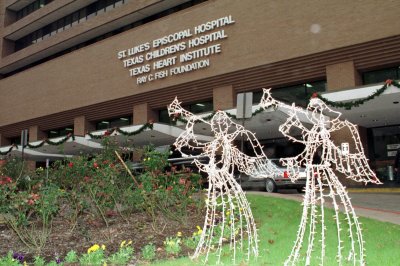











![Kundai Chitima worked as a teacher in South Africa before returning to Zimbabwe in 2015 [Al Jazeera]](https://i0.wp.com/occasionaldigest.com/wp-content/uploads/2026/05/Kundai-Chitima-showcasing-a-modern-house-and-projects-in-rural-Zimbabwe-1778849291.jpeg?w=640&ssl=1)