Month: May 2026

Sen. Cassidy ousted in Louisiana GOP primary, as two rivals advance to runoff

Sen. Bill Cassidy, a Republican who has occasionally asserted his independence from President Trump, failed to advance in Saturday’s GOP primary runoff in Louisiana, as a Trump-backed foe and another candidate finished in the top two spots.

U.S. Rep. Julia Letlow won the most votes, capitalizing on the power of Trump’s endorsement in his latest attempt to purge his party of people he views as disloyal. State Treasurer John Fleming came in second to join her in the next round of voting.

Trump supported Letlow over Cassidy, one of seven Republican senators who voted to convict him during his second impeachment trial over the attack on the U.S. Capitol on Jan. 6, 2021. Cassidy, a doctor, has also clashed with Health Secretary Robert F. Kennedy Jr. over vaccine policy, even though he provided crucial support to help Kennedy get confirmed.

By receiving less than 50% of the vote, Letlow and Fleming, a former U.S. House member and Trump administration official, were unable to avoid the runoff, which will take place June 27. The winner will almost certainly take the November general election because of the state’s Republican leanings.

The Louisiana primary comes in the middle of a month of campaigns by Trump to exact retribution on politicians he views as having crossed him. On May 5 he helped dislodge five of seven Indiana state senators who rejected his partisan gerrymander plan.

Next Tuesday, U.S. Rep. Thomas Massie of Kentucky will face a Trump-backed challenger, Ed Gallrein, in another Republican primary. Massie angered Trump by opposing his signature tax legislation over concerns about the national debt, pushing for the release of the Jeffrey Epstein files and opposing his decision to go to war with Iran.

The president leveled insults at Cassidy on Saturday morning, calling him “a disloyal disaster” and “a terrible guy” on social media. In the evening he followed up with: “Congratulations to Congresswoman Julia Letlow on a fantastic race, beating an Incumbent Senator by Record Setting Numbers.”

Jeanelle Chachere, a 66-year-old nurse, said she considers Cassidy “a phony” and voted for Letlow solely because Trump endorsed her.

“I’m going by what he says, because I like what he does,” she said.

Election changes stir concern

The election was scrambled by a recent U.S. Supreme Court decision focused on Louisiana gutting a part of the Voting Rights Act that affects how congressional maps are drawn. Although the Senate primary is moving forward, Louisiana leaders decided to delay House primaries until a future date to allow them to redo district lines ahead of time, a shift that threatened to cause confusion for voters Saturday.

Mary-Patricia Wray, who has consulted for Republican and Democratic candidates in Louisiana, said before the vote that the change could weigh against Cassidy by dampening turnout among voters who are less fervently pro-Trump.

“Suspending the congressional primaries hurts Cassidy,” she said. “Some people believe the Senate primary is canceled.”

Cassidy also complained that a new primary system enacted last year confused voters by requiring them to ask for a partisan ballot instead of the all-party primary previously in place. He said some called his office to say they had been unable to vote for him.

“The process that was set up was destined to be confusing,” Cassidy told reporters Friday.

Dadrius Lanus, executive director of the state Democratic Party, said his team fielded hundreds of calls from voters statewide who said the changes undermined their ability vote as they planned.

“A lot of the information should have gotten to voters well in advance,” Lanus said. “It’s literally been a whirlwind of confusion.”

A costly primary

Cassidy waged an aggressive campaign to convince voters he should not be counted out. Wray was among the political consultants who, as election day neared, gave the senator a chance of pulling off an upset.

The senator’s campaign was expected to have spent roughly $9.6 million on advertising through May 16, according to the ad-tracking firm AdImpact. And Louisiana Freedom Fund, a super PAC supporting him, was on track to spend $12.3 million.

By comparison, Letlow’s campaign, which launched Jan. 20, spent roughly $3.9 million, while a super PAC backing her, the Accountability Project, spent about $6 million.

Fleming’s campaign spent about $1.5 million.

Cassidy and Louisiana Freedom Fund ran ads attacking Letlow within days of her entering the race for supporting diversity, equity and inclusion initiatives, which Trump has tried to root out of the federal government.

Letlow, a college administrator before her election to the House, said she supported DEI while interviewing for the position of president of University of Louisiana-Monroe in 2020.

The ads, an attempt to characterize Letlow as a progressive trying to pass as a conservative, were one way Cassidy tried to flip the script in a race where he was on the outs with Trump.

Trump’s campaign

The senator’s vote in favor of convicting Trump after his 2021 impeachment has shadowed Cassidy throughout his second Senate term.

John Martin, a 68-year-old retired engineer in south Louisiana, said he would vote for Letlow because he was still upset by Cassidy’s decision. He waved a flier from Letlow’s campaign showing her standing alongside the president.

“I know a lot more about Cassidy than I do about her,” Martin said. “But if she’s endorsed by Trump, I’m going to believe that.”

Cassidy steered clear of Trump’s ire last year, supporting Kennedy to lead the Department of Health and Human Services despite his public reservations about the nominee’s anti-vaccine views.

Mark Workman, a 75-year-old retired infectious disease physician in the New Orleans suburbs, said he backs Fleming. Had Cassidy “stood up and blocked RFK,” Workman said, he would have supported the senator for taking a strong and courageous stance.

“He had the ability to stop him,” Workman said, “and he was too weak to do that.”

As chair of the Senate Health Committee, Cassidy has been more publicly critical of Kennedy, including over funding cuts for vaccine development.

Trump blamed Cassidy for the failed nomination of his second choice for surgeon general, Casey Means, who raised doubts about vaccinating newborns for hepatitis B, a practice Cassidy supports. Trump withdrew the Means nomination and decried Cassidy.

Challenger waited for Trump’s backing

Letlow considered running last year but only entered the race after Trump announced his endorsement in January.

By that time Fleming, who was elected state treasurer in 2023, was already in the race as a Trump devotee. But Landry was looking for a better-known challenger, and he suggested Letlow to the president.

Letlow had an unconventional and tragic entry into politics.

In 2020, while she was a college administrator, her husband, Luke, was elected to the U.S. House but died of COVID-19 before he could be sworn in. Letlow ran for and won the seat in a March 2021 special election and was reelected in 2022 and 2024.

Beaumont and Brook write for the Associated Press and reported from Des Moines and Baton Rouge, respectively

Source link

Chatsworth wins City Section Open Division volleyball championship

It’s now official. You can call Chatsworth a 12-time City Section volleyball champion after the Chancellors won the Open Division championship on Saturday night, knocking off West Valley League rival Granada Hills 24-26, 25-21, 25-14, 25-18.

Noa Beauregard led Chatsworth with 14 kills and Grant Chang had 13.

Coach Sina Aghassy got his team to settle down and dominate the Highlanders after their first-set defeat. The two teams had split their league matches.

Both schools will move on to the state tournament next week, with pairings announced on Sunday.

Baseball

Sylmar 4, Chatsworth 3: The No. 1-seeded Spartans survived a three-run seventh inning by Chatsworth to advance to the City Section Division I semifinals against Verdugo Hills on Wednesday at Stengel Field. Tim Sepulveda had two hits.

Verdugo Hills 8, Sun Valley Poly 2: Jered Smith hit a grand slam in the sixth inning to help the Dons reach the City Division I semifinals.

Taft 11, Cleveland 0: The Toreadors advanced to the Division I semifinal behind Sebastian Gamez, who threw the shutout. Nate Swinson had two hits and two RBIs.

Venice 7, Palisades 6: The Gondoliers earned a match against Taft in the Division I semifinals. Darius Basco’s sacrifice fly in the bottom of the seventh won it. Miguel Medina threw three scoreless innings of relief.

Softball

La Habra 6, Murrieta Mesa 4: Rylee Gruener hit a grand slam during a five-run inning to enable La Habra to eliminate top-seeded Murrieta Mesa in the Division I playoffs. Alyssa Hernandez added three hits.

Orange Lutheran 17, Chino Hills 14: In a wild Division 1 playoff game, Sierra Nichols and Madelyn Armendariz each had four hits for Orange Lutheran, with Armendariz getting three doubles. Nichols, Rylee Silva and Eliza Johnson hit home runs. Brett Lambrecht had five RBIs for Chino Hills.

Sherman Oaks Notre Dame 8, Oaks Christian 5: The Mission League champions advanced behind freshman pitcher Ainsley Jenkins, who came in and provided three innings of three-hit relief pitching. Nadia Ledon, Keira Luderer and Ellayne Tellez-Perez hit home runs.

Norco 8, Riverside Poly 2: The No. 2-seeded Cougars were led by Savannah Gonzalez, who had three hits, including a home run. Coral Williams struck out 13. Camryn May and Sadie Burroughs also had three hits.

Source link

Thousands protest at Eurovision final as five countries boycott over Israel | Protests News

Spain, Netherlands, Ireland, Iceland and Slovenia all withdrew in protest against Israel’s participation in the midst of its war on Gaza.

As the Eurovision Song Contest took to the stage for the Saturday night final in Vienna, thousands protested outside against Israel’s inclusion, and five countries boycotted the event over the genocidal war on Gaza.

Protesters marched through the Austrian capital to highlight what critics described as a double standard. The European Broadcasting Union (EBU) organisers refused to exclude Israel, despite banning Russia following its invasion of Ukraine four years ago.

Recommended Stories

list of 3 itemsend of list

Eurovision, which attracted 166 million viewers last year, is seeing the largest boycott in its 70-year history.

Spain, the Netherlands, Ireland, Iceland and Slovenia all withdrew because of Israel’s inclusion, with some of their national broadcasters refusing to air the show.

Spain’s Prime Minister Pedro Sanchez, who has emerged as one of Israel’s strongest critics in Europe, said on Friday that the decision puts Spain on “the right side of history”.

Last month, more than 1,000 artists called on fans to boycott Eurovision in an open letter against Israel’s participation. Among the artists were outspoken critics of Israel, Macklemore and Paloma Faith. Macklemore has released songs protesting against Israel’s war in Gaza.

Double standards

On Monday, Amnesty International Secretary-General Agnes Callamard denounced the EBU for allowing Israel to participate.

“The failure of the European Broadcasting Union to suspend Israel from Eurovision, as it did with Russia, is an act of cowardice and an illustration of blatant double standards when it comes to Israel,” she said.

Reporting from Vienna, Al Jazeera’s Charlie Angela said 2,000 demonstrators gathered in the city earlier on Saturday to protest against Israel’s participation.

Angela reported that protesters accused the competition of normalising Israel’s actions in Gaza, adding that Eurovision was “bending over backwards” to justify including Israel while excluding Russia.

Russia has faced a widespread cultural boycott following the Ukraine invasion. It is banned from international football tournaments, and FIFA and UEFA have excluded Russian domestic teams from all competitions, including the Champions League.

The winner of Eurovision will be selected by both a professional jury and TV viewers voting for their favourite act.

Austria won the competition last year, with Israel second.

The Israeli government was later accused of unfairly influencing voting. New rules have since been introduced.

Source link

Eurovision 2026 results table as UK is utterly humiliated

The UK has received no points from the public vote for the fourth year in a row with the song Eins, Zwei, Drei.

The UK was humiliated at the Eurovision Song Contest coming dead last with just one point. The UK has received no points from the public vote for the fourth year in a row at the 2026 final of the Eurovision Song Contest, leaving it in last place.

Look Mum No Computer, whose real name Sam Battle, picked up one point from the jury votes and zero from the public tonight with the song Eins, Zwei, Drei. Three previous UK acts – Remember Monday, Olly Alexander and Mae Muller – also received zero points from the public vote.

Some viewers were fuming with one saying: “SURELY it’s time for the BBC Eurovision team to be overhauled. Enough is enough. Why do we partake just to get 0 televotes every year. Viewers expect UK to be last or thereabouts every time because of the poor reputation the BBC has built up over the years.”

READ MORE: Bulgaria wins Eurovision Song Contest 2026 with BangarangaREAD MORE: Eurovision 2026 LIVE: Bulgaria crowned winner but UK humiliated with just 1 point

Another wrote: “The UK is home to some of history’s greatest songwriters… Queen, The Beatles, Adele, David Bowie, Elton John, Amy Winehouse, Phil Collins, George Michael, countless others. So why can we never do that heritage proud at Eurovision?”

The UK gave its 12 points to France in the jury vote of the Eurovision 2026 grand final. The result, presented by Strictly Come Dancing star La Voix, also saw Bulgaria awarded 10 points, Czechia awarded eight and Ukraine given seven.

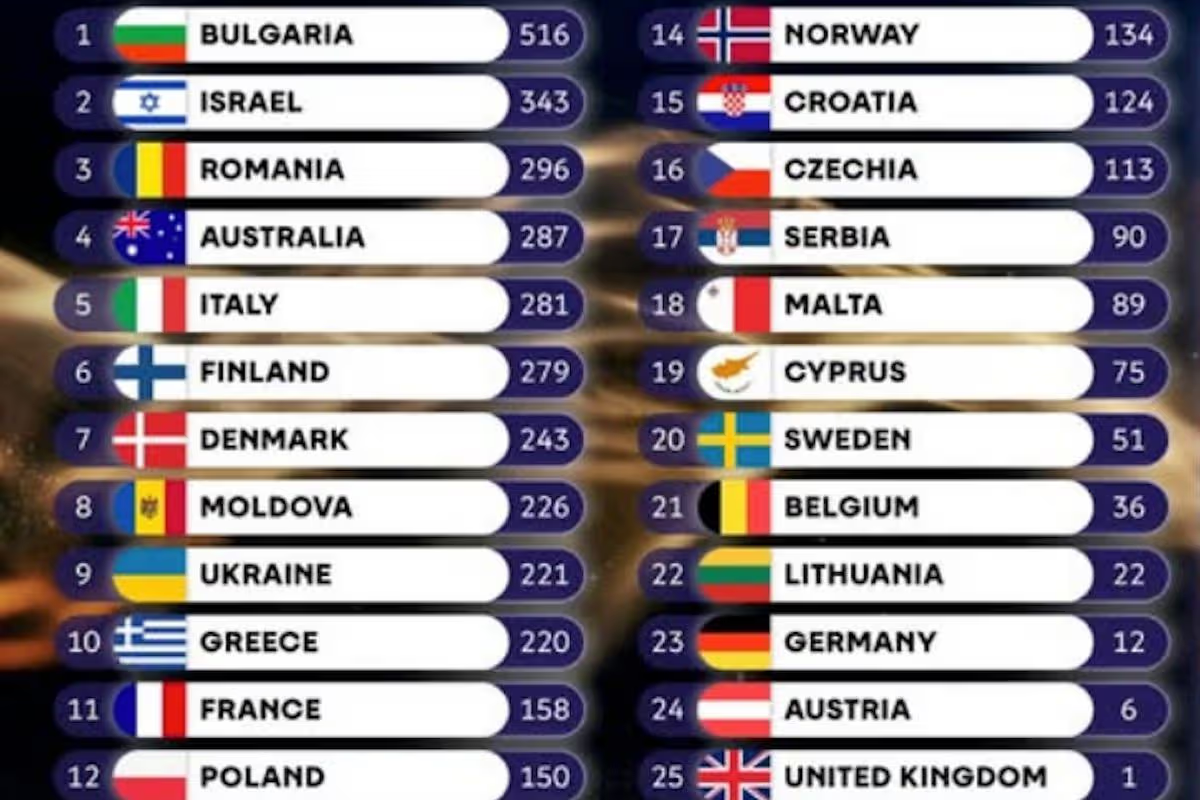
Bulgaria’s Dara won the Eurovision Song Contest with the song Bangaranga, finishing with 516 points, ahead of Israel’s Noam Bettan, with the song Michelle, on 343 points. Romania’s Alexandra Capitanescu, with the song Choke Me, finished third.

Dara said after winning: “I still don’t know what is going on, I want to thank all of the juries who gave us those points, we tried to give our best and I know every artist in this room is special and I got inspired by everybody… y’all amazing.”

UK act Look Mum No Computer appeared to have been ready for a low score, insisting before the competition that he was not worried. The YouTuber, 37, whose real name is Sam Battle, performed the song Eins, Zwei, Drei.

Asked if he has a fear of scoring nothing, he said: “No, in fact, there’s a T-shirt that I’m dreaming of saying, ‘Look Mum, No Points’ There’s an outcome where there’s still fun to be had, even if there is nul points.”

Source link

Congressman Tests His Winning Streak

Rep. Xavier Becerra isn’t worried that he has less money and fewer endorsements than other candidates running for mayor of Los Angeles. He isn’t worried because the lessons he has gleaned from his 11 years in public office are that Things Work Out. Opportunities Arise. The Underdog Surprises People.

If you lived a life shaped by luck and discipline and powerful patrons, a life that propelled you, after one term as a state assemblyman, to become a respected member of Congress, you might feel the same way.

At age 43, driven less by a determined vision than by a strict work ethic and influential allies, Becerra has accumulated a fair share of political success, particularly considering he had no ambition for public office until about a decade ago.

As chairman of the Congressional Hispanic Caucus, he forged strong relationships with Capitol Hill leaders and President Clinton. He won a plum assignment on the powerful House Ways and Means Committee, the first Latino so named. Colleagues from both parties regard him as sharp and fair-minded.

This time around, however, happenstance and hard work may not be enough. The mayor’s race is testing Becerra’s political acumen and his sunny string of luck. The candidate once perceived as the “favorite son” among up-and-coming Latino leaders is jousting for recognition in a crowded field. Even former allies such as County Supervisor Gloria Molina say they are puzzled that he is running.

Becerra has been slow to develop a compelling message for his candidacy. He has infuriated some Latino leaders who fear that he will split community support with fellow candidate and former Assembly Speaker Antonio Villaraigosa, preventing either one from winning. He has come under fire for his role in President Clinton’s controversial commutation of a drug trafficker’s sentence.

Becerra’s involvement in the commutation flap was a jarring contrast to the most persistent image of the congressman–that of a clean-cut, above-the-board legislator, a man some colleagues admire as the “Boy Scout” of politics.

Becerra’s mother, Maria Teresa, has a favorite story about her son. One Sunday morning when he was about 8 years old, he tired of waiting as she readied his three sisters for Mass at their south Sacramento church.

“Vamos, Mama,” he said. “Mass starts in 10 minutes.”

“Si, hijo,” she responded. “Paciencia.”

But Becerra couldn’t wait. Not willing to risk being late, he walked out the door and down the seven blocks to church by himself.

The entire truth about that Sunday may be a little less saccharine.

“I probably didn’t want to go to a later Mass and miss football,” Becerra said recently, laughing.

Hard Work and Good Grades

The only son among four children, Becerra always got good grades. He broke up fights in high school. He helped his father do construction work as a teenager, quick to handle the heavy labor.

Even then, he succeeded with a combination of chance and by-the-books meticulousness.

Take golf.

It was not the obvious sport for the son of a construction worker growing up in a one-bedroom house. But an elementary school friend’s father was an avid player, and gave his son a set of golf clubs. The two boys putted around in the friend’s backyard after class. When they grew older, they played at a small public course nearby, sharing a single set of clubs.

Finally, Becerra’s father scraped together enough money to buy him a cheap set of Kmart clubs. But he didn’t have enough to pay for lessons. So Becerra mastered golf much as he would tackle politics: by cramming.

He went to the library and checked out golf books. He cut the weekly golf tips column out of the Sacramento Bee. Finally, by his senior year at C.K. McClatchy High School, he made the varsity golf team.

During high school, Becerra also mastered a very different hobby: poker. He became so good that years later, during a trip to Las Vegas with his parents, a casino offered him a job as a dealer.

While he gained command of some subjects with focus and diligence, chance also set him on his course to college.

One day in high school chemistry class, a friend who had botched an exam tossed aside his application to Stanford University. Becerra picked it up and, on a whim, filled it out. He didn’t know where the campus was until he and his mother drove there to enroll him in the fall of 1976.

The son of Mexican immigrants–his mother grew up in Guadalajara and his father, Manuel, was born in Sacramento but raised in Tijuana–Becerra would become the first in his family to graduate from college.

Close friend Arturo Vargas, who met Becerra at Stanford, said he “always had a clean-boy image, almost to a fault.”

“On campus, people tended to drink beer and be rowdy,” said Vargas, now the executive director of the National Assn. of Latino Elected and Appointed Officials, based in Los Angeles. “The time I knew him, he was more likely to drink milk.”

Another college acquaintance said he was “the straightest Chicano I knew. It looked like his short-sleeved shirts were ironed.” (They were.)

When his girlfriend–now wife–Carolina Reyes was downstairs in the lounge of the Casa Zapata dorm leading meetings of the Chicano activist organization MEChA, Becerra was more likely to be upstairs studying. Friends encouraged him to take a greater leadership role on campus, but Becerra was intent on getting into law school. (He did, graduating from Stanford Law in 1984.)

“I was the grandiose one who wanted to conquer the world, and he did too, but he wanted to do it step by step,” said Reyes, now an obstetrician.

After working for Legal Aid in Massachusetts while his wife attended Harvard Medical School, Becerra came back to Sacramento to work for state Sen. Art Torres, who had been his boss during a post-college fellowship. He moved to Los Angeles in 1986 to run Torres’ district office.

Soon, he met Eastside political operative Henry Lozano, chief of staff for the venerable Rep. Edward Roybal, the dean of local Latino politics. One day on the golf course, Lozano asked Becerra, so when are you going to run?

He wasn’t.

“I’m a policy guy,” Becerra told Lozano.

A few years later, Lozano and other Eastside community leaders invited Becerra–by then a deputy attorney general–to meet. They posed the question again, more specifically: Will you run for the open state Assembly seat in the San Gabriel Valley?

“I guess we were considered kingmakers,” said Frank Villalobos, a longtime Eastside activist who was at the meeting. “When we asked someone, it was pretty much considered giving them el dedazo.”

El dedazo, literally the fingering from a powerful person: It’s your turn.

New Generation of Latino Leaders

Becerra looked stunned. He thought they were kidding, until he realized no one was laughing. He’d have to talk to his wife, he said.

“My vision was I was going to be the right-hand person that an elected official counts on to do the memos, to advise,” he said. “You know, the one you always see in the movies whispering in the ear of the official, and then all of a sudden the eloquent question comes out.”

But once planted, the idea took root.

A group known as the “macho dogs”–Lozano, Villalobos, future city Councilman Mike Hernandez, future Assembly Speaker Bob Hertzberg and Molina’s husband, Ron Martinez–put together his campaign.

Torres, Becerra’s old boss, loaned staff and helped Becerra raise money. They challenged the candidates being backed by two other powerful Latinos. (Later, Molina, then an assemblywoman, endorsed Becerra and brought on her political team.)

The fresh-faced, Stanford-educated Becerra fit the image voters were seeking, weary as they were of scandal in the wake of state Sen. Joseph Montoya’s political corruption conviction.

Becerra’s victory kicked off a new era in Latino politics, a rise in young, polished college graduates who offered a different mold of leadership than many of their roughhewn elders.

Two years later, Roybal decided to retire from Congress after 16 terms.

The power brokers, including Molina, approached Becerra again. This time, he had the support of both the powerful county supervisor and Roybal.

Becerra moved into the district, sleeping on his friend Villaraigosa’s couch for a few nights before he found an apartment. Fending off criticism that he was a carpetbagger, he won a tough primary against school board member Leticia Quezada and handily beat his Republican opponent that November.

Last fall, he won reelection with 83% of the vote.

Becerra’s relationship with Villaraigosa–and their competition on the ballot–has served as a tense undercurrent to the mayor’s race. Becerra resisted efforts last year by Molina and Henry Cisneros, the former Secretary of Housing and Urban Development, to broker a compromise so that only one Latino would be in the race.

Becerra has repeatedly told supporters that he refused to cut a deal with Villaraigosa because he doesn’t believe in el dedazo.

But isn’t that exactly how he got into office?

He laughed at the question.

“Those were tiny dedos,” he said. “What they offered wasn’t enough to push me over the finish line.”

Others disagreed.

“He’d be nowhere if Gloria Molina hadn’t put him in office,” said one Latino leader and longtime associate who did not want to be identified.

When pressed, Becerra acknowledged he got help.

“I am where I am because of others,” he said. “What I’m saying is I’ve never been part of the establishment.”

‘Not the Best at Playing the Game’

Whatever the origins of his success, Becerra thrived in Congress. His diligent attention to detail earned praise from members of both parties. A fluent Spanish speaker, he has spent much of his time pressing issues affecting his Latino constituency, such as restoring benefits to legal immigrants and defending bilingual education.

“He’s sort of one of the few young dynamic Latino leaders in the House,” said Amy Walter, a congressional analyst for the Cook Political Report. “He’s very intelligent and well-respected, even by Republicans I talk to.”

Although he has succeeded in climbing the Washington ladder, Becerra has also, on occasion, dramatically demonstrated his political naivete.

“I understand the politics,” Becerra said. “I’m not the best at playing the game.”

In 1993, the freshman legislator took on Dan Rostenkowski, then the powerful chairman of the Ways and Means Committee–which Becerra was trying to join.

Rostenkowski wanted to cut welfare benefits to legal immigrants, to fund an extension of unemployment benefits. Becerra and other Hispanic Caucus members objected. They negotiated with House leaders to preserve the payments to blind, elderly and disabled legal immigrants.

An amended bill was drafted with Rostenkowski’s reluctant approval. But before it went to the floor for a vote, Becerra made a fatal mistake. During a weekly Democratic whip meeting, he rose to thank the leadership for supporting the bill. Rostenkowski, still frustrated at the change, growled at him.

Becerra could have stopped talking at that point. But he didn’t.

Breaching House protocol, the young congressman took on the veteran chairman, arguing that legal immigrants had every right to be in the country.

What ensued was an almost unheard of shouting match, as Becerra continued to raise his voice over the chairman’s bellows. Later, on the floor, Rostenkowski lambasted the amended bill as damaging to jobless Americans. The compromise failed. The next day, the original plan passed and was signed into law.

“I learned a lot from that,” an unrepentant Becerra said recently. “There were people who said to me afterward, ‘Xavier, if you just kept your mouth shut, you had it. You had won.’ I said, ‘Why do we have to win that way?’ ”

Becerra’s actions also backfired in late 1996, when he took a four-day educational trip to Cuba just as he was bidding to become chairman of the Hispanic Caucus.

Predictably, his trip set off a firestorm of criticism in the Cuban exile community. The three Cuban American legislators were furious he had visited the island and not denounced Fidel Castro’s regime.

Becerra was eventually elected chairman of the caucus, but its two Cuban American Republicans resigned from the group, ending its bipartisan clout.

Over time, Becerra did develop some political prowess: Under his guidance, the caucus successfully lobbied to win back some of the benefits for legal immigrants cut in 1994, and pushed Clinton to include more Latinos in his administration.

But questions about his political judgment persist, most recently centering on the case of convicted drug dealer Carlos Vignali. Becerra, who has received nearly $14,000 in political donations from Vignali’s father, Horacio, wrote a letter to Clinton in November asking for a review of Vignali’s conviction. He also called a White House counsel–on Clinton’s last night in office–to inquire about the status of the case. Vignali’s sentence was commuted the next day.

His involvement, along with that of other Los Angeles leaders, contributed to the firestorm of controversy that flared over the pardons and commutations granted by Clinton.

Surprised by the criticism, Becerra said that it did not occur to him that he might be seen as using his political leverage on behalf of a donor. He was merely trying to get information, he said. He insists that he never asked Clinton outright to give Vignali clemency–merely to see if his 15-year sentence was too harsh.

Becerra entered the Los Angeles mayor’s race with a few advantages, some shrewdly obtained. He has won convincingly in a district that ranges from Boyle Heights west to Hollywood. Facing minimal competition in his last reelection campaign, he spent almost $860,000–including almost $400,000 on television ads–to boost his name recognition citywide just as the mayoral election approached. It may have paid off: A recent Los Angeles Times poll put Becerra in the thick of a many-candidate tussle for second place behind the front-runner, City Atty. James K. Hahn.

But Becerra’s campaign has suffered from a central disadvantage. Having been fingered by fate for so long, Becerra has found it difficult to answer the most basic of questions: Why is he running?

As recently as December, almost a year after he entered the race, he told Times reporters that he had not yet come up with a message for his candidacy. “I have to figure that out,” he said.

More recently, he said his interest in becoming mayor grew after he battled with the Metropolitan Transportation Authority and Los Angeles Unified School District over their federal funding.

“It was real frustrating and I thought, we have to do better than this,” he said. “The more it became clear that no one was stepping forward who I felt inspired by, the more I started thinking about it. It’s worth a shot.”

(Friends also confirm that his wife, an obstetrician at Cedars-Sinai Medical Center, wanted him to return to Los Angeles so he could spend more time with their three young daughters.)

Not the Only Golden Boy

After casting about for a campaign theme, Becerra eventually sought to tie his disparate proposals together under the rubric of “neighborhoods first.” But his specific ideas tend to resemble mom-and-apple-pie bromides.

He talks about getting every child a library card, about making the Los Angeles Zoo the best in the nation, about making sure everyone has a good school, grocery store, fire station and place to worship near home.

During mayoral forums, while the other candidates draw specific rationales for their candidacies, Becerra repeats his neighborhoods theme religiously, often redundantly.

“We have to do the little things right,” he tells audiences. “Some people say, that’s small thinking. But there’s no way I can think about these big things until we start to get the little things right.”

Some wonder aloud why Becerra is running. He has raised the least money of the top six candidates in the April 10 primary election, and had only about $600,000 on hand at the end of February, compared to Hahn’s $2.2 million. Villaraigosa’s presence on the ballot further complicates Becerra’s chances.

“At one time, he was the golden boy of Hispanic politics in Los Angeles, and now he’s finding out there’s others who have a claim to that title,” said Sergio Bendixen, a Miami-based political analyst and pollster who has experience in California campaigns.

While some say his political path has been made easier by influential champions, Becerra insists that his lack of sheer ambition means he is not overly enticed by the power that accompanies elected office.

“I don’t covet it,” he said. “I fear people who must have it, whatever it takes.”

He brushes aside criticism that he is ill-positioned for victory. People had the same doubts about his prospects when he first ran for office, he said.

His sunny analysis of the toughest race of his career: “We have nowhere to go but up.”

(BEGIN TEXT OF INFOBOX / INFOGRAPHIC)

Xavier Becerra

* Born: Jan. 26, 1958, in Sacramento.

* Education: Stanford University, bachelor’s degree in economics (1980); Stanford University Law School (1984).

* Personal: Married to Carolina Reyes, obstetrician at Cedars-Sinai Medical Center. Three daughters: Clarisa, 7, Olivia, 5, and Natalia, 3.

* Party: Democrat

* Career: Member of the U.S. House of Representatives, 1993-present; state assemblyman, 1990-1992; deputy attorney general, 1987-1990.

* Strategy: Becerra is counting on the support of nearly 78,000 people who voted for him in his congressional bid in November. His campaign hopes to win more votes by pushing his “Neighborhoods First” theme in small community meetings. He is also working to shore up Latino support with frequent appearances in Spanish-language media.

*

Times researcher Maloy Moore contributed to this story.

About This Series

The Times today presents the first of six profiles of the major candidates for mayor of Los Angeles. The articles will appear in the order in which the candidates will appear on the ballot.


Source link

Dodgers’ Blake Snell scheduled for surgery, return date unclear

Blake Snell will have surgery Tuesday to remove the loose bodies in his left elbow, according to Dodgers manager Dave Roberts.

Roberts didn’t know which type of surgery Snell will undergo, but there’s optimism that Snell could undergo a minimally invasive procedure, like the one Dr. Neal ElAttrache performed on Tigers ace Tarik Skubal using new NanoNeedle scope technology, according to people with knowledge of the situation not authorized to speak publicly about the matter.

However, it may not be possible to determine the details of Snell’s procedure before getting an internal view. The exact location of the loose bodies plays a large role in the technique.

If Snell is indeed a candidate for the NanoNeedle Scope 2.0, it could cut down his recovery time by minimizing the damage to the surrounding tissue, compared to a traditional arthroscope.

Because the technology is new, it would still be difficult to put an exact timeline on the recovery. Skubal would be the blueprint. He had a bone chip removed a week and a half ago and is already progressing in a throwing program.

Either way, the Dodgers should have a clearer picture of Snell’s recovery timetable after he undergoes the procedure Tuesday.

The Dodgers scratched him from Friday’s start, only his second of the season, and they backdated the IL move to May 12. The two-time Cy Young Award winner started the season on the injured list, ramping up later than usual due to what the team called left shoulder fatigue. In his first start against the Braves last week, he only pitched three innings, giving up four earned runs.

Source link

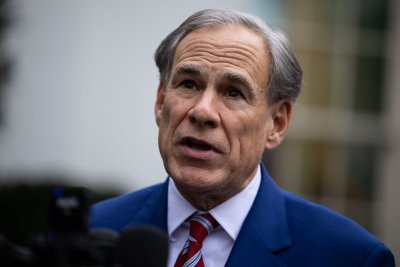
Texas high court rules against Gov. Greg Abbott on removal of Rep. Gene Wu

May 15 (UPI) — The Texas Supreme Court refused to remove state Rep. Gene Wu, D-Houston, from office, despite the efforts of Gov. Greg Abbott after the 2025 redistricting showdown.

Chief Justice Jimmy Blacklock, who once worked as an Abbott aide, wrote that the courts “have uniformly recognized that it is not their role to resolve disputes between the other two branches that those branches can resolve for themselves.”

“The courts’ institutional ‘reluctance … to involve themselves in contests of factional political power,’ a reluctance we reiterate and reinforce today, is a check on the judicial power ‘of ancient standing,’ not an optional preference we are at liberty to discard,” Blacklock wrote.

The fight stems from August 2025 when Texas began an effort to redistrict the state’s congressional seats to create more Republican-leaning districts. Democrats in the state’s legislature fled Texas to prevent a quorum in the House. They eventually returned, and the measure passed.

Texas House Democratic Caucus Chairman Gene Wu led the charge during the exodus of his party members, drawing the ire of Abbott. The governor had threatened to expel any Texas House members who fled the state, of whom there were more than 50.

Wu posted on X Friday: “Texas House Democrats refused to be complicit as Texas Republicans delivered Donald Trump the extra congressional seats he begged for, and now, Gov. Abbott’s final attempt at revenge has been put to rest.”

Texas House Democrats posted: “Today, we won. We’re not going anywhere.”

Republicans hold 24 of Texas’ 38 seats in the U.S. House, with one vacancy. The new map is expected to add five Republican representatives from the state.

Blacklock indicated the matter could be considered in the future.

“Whatever wrong may have been committed by the absent House members, the Texas Constitution’s internal political remedies, none of which involve the judicial branch, were sufficient to the task of restoring the House’s ability to do business,” Blacklock wrote. “Should those remedies unexpectedly prove inadequate in a future case, we might have occasion to consider whether any judicial remedy could ever be available in circumstances such as these.”

Source link

Activists troll far-right UK rally with giant pro-immigration clip | Islamophobia

NewsFeed

Activist group Led By Donkeys has snuck a big screen streaming pro-immigration messages into a far-right Unite the Kingdom march. The stunt prompted boos from the crowd and attempts to shut the screen down. Tens of thousands of people attended the rally.

Source link

UK in crushing Eurovision defeat as final position revealed after 2026 winner announced

THE UK suffered yet another crushing Eurovision Song Contest defeat in tonight’s grand final.

Look Mum No ­Computer’s Sam Battle took to the stage to perform his bonkers entry titled Eins, Zwei, Drei.

Look Mum No ­Computer’s Sam Battle finished at the bottom of the leaderboard Credit: AFP
Bulgaria secured the big win with pop singer’s Dara landing in top spot Credit: Getty

But it sadly wasn’t enough to win over the voters –  landing just one point from the jury and zero points from the public, placing him in bottom spot.

The competition was won by Bulgaria after 25 acts battled it out on stage in Vienna, Austria at the Wiener Stadthalle. 

Sam performed his upbeat hit, which was one of our most unconventional songs ever. 

Last year’s UK entry – Remember Monday –  finished in 19th place after performing What The Hell Just Happened? – landing zero points from the public. 

Cast your votes!

Who is announcing the Eurovision results? Spokesperson for every country


CAST YOUR VOTE

Eurovision 2026 voting: How the Song Contest voting results work

Dara pipped Israel to take home the trophy for the 70th Eurovision Credit: Reuters
Sam divided fans with his performance tonight Credit: AFP
Delta Goodrem blew fans away with her performance of Eclipse Credit: Reuters
Israel’s Noam Bettan finished in second spot Credit: Getty

Pop star Dara’s high-energy song Bangaranga secured her the win.

Singer Dara came just ahead of Israel in the world’s biggest music competition, with an estimated audience of 160million. 

Bulgaria’s best result is a second-place finish with Beautiful Mess performed by Kristian Kostov at the 2017 contest in Kyiv.

Dara performed a high pace dance routine while belting out her catchy tune in sync with her back-up dancers.

Strictly star La Voix was the United Kingdom’s very first Eurovision ‘spokesqueen’, and delivered the results of the UK’s National Jury live from Salford.

In an exclusive interview before tonight’s final, Sam said: “There are gonna be people that don’t like the UK for the sake of it being the UK, but that’s the way it is. We can’t change that.

“So we’ve just got to crack on. Keep calm and carry on.”

Due to its German title and lyrics about being “sick of munching roly-poly with custard” — and about how pounds “feel counterfeit” and needing “some euros to counter it” — some have interpreted it as an apology for Brexit. 

He is also known for his madcap inventions — such as an organ made from Furbies and a synthesiser-equipped bike — which he shares with 721,000 YouTube subscribers. 

Sam, 37, was picked for ­Eurovision by the BBC at the start of the year having made a name for himself by touring across Europe.

Sam recently admitted to The Sun that his song is like “marmite” and Eurovision fans couldn’t have agreed more.

One viewer wrote: “I can confidently say that the UK won’t be winning this year.”

A second posted: “What the hell was that UK Eurovision entry, looked like they picked the act out a pub raffle.”

A third echoed: “UK every year I think you can get any lower but this time I think you managed to do it.”

During tonight’s competition Israeli singer Noam Bettan performed their song Michelle. 

At the start of tonight’s show, Graham Norton mentioned the five countries that had withdrawn from the competition.

He also noted that there was a “mixed response” in the hall, adding: “I’m not quite sure what we’re hearing”.

The crowd then booed when Israel’s entry was awarded a huge public vote – landing then in second spot.

Israel’s participation in the singing competition had sparked controversy.

The Eurovision walkouts followed the European Broadcasting Union’s (EBU) general assembly in Geneva on December 4, 2025.

EBU members voted on new rules to tighten voting and promotion guidelines, but did not put Israel’s participation itself to a separate vote – meaning Israeli broadcaster KAN was cleared to compete.

Within hours, Spain, the Netherlands, Ireland and Slovenia all announced their withdrawals. On December 10, 2025, Iceland followed suit.

The boycotters have cited the war in Gaza and concerns over the integrity of recent contests. 

Spain was the first of the contest’s Big Five broadcasters – the five biggest financial contributors – to officially confirm it was boycotting Eurovision

Source link

Mayoral hopeful Spencer Pratt woos Valley voters in a rival’s district

Lake Balboa resident Jose Meraz is looking for a mayor who will turn L.A. around, cleaning up streets that he says are “filled with garbage.”

Schoolteacher Tracey Schroeder, a Republican candidate for state Assembly, is unhappy about crime, open-air drug use and the slow rebuilding effort in the wake of the Palisades fire, which destroyed thousands of homes.

Greg Whitley, a resident of Reseda, said he’s frustrated with homelessness and the influx of what he called “criminal illegal aliens.”

“I live with the Spanish community. Great people,” he said. “But these illegals that come here for criminal reasons, they’re making them look bad, and they don’t like it.”

All three showed up outside a five-bedroom home in Sherman Oaks on Saturday, looking to speak with reality TV personality Spencer Pratt, now waging an insurgent campaign for Los Angeles mayor in the June 2 election.

Mayoral candidate Spencer Pratt, left, poses with a supporter

Mayoral candidate Spencer Pratt, left, poses with a supporter during a community meet-and-greet event Saturday at a home on Longridge Avenue in a residential neighborhood of Sherman Oaks.

(Etienne Laurent/For The Times)

Standing in the entry to the home’s two-car garage, the onetime star of “The Hills” spent more than two hours shaking hands, giving hugs and posing for photos with his admirers, who waited in line under punishing San Fernando Valley sunshine.

Pratt used social media to invite the public to the campaign event, which took place in the district represented by one of his mayoral opponents, City Councilmember Nithya Raman.

He did not deliver any speeches outside the property, which is listed for rent on Zillow for $15,950 per month. He and a member of his security personnel said he was not taking interviews.

Pratt has been running in voter surveys behind Mayor Karen Bass, who is running for reelection, sometimes swapping places with Raman for second and third. He turned in a strong debate performance this month and has been outpacing his rivals in fundraising, according to the most recent disclosure reports.

While running for office, Pratt has blamed Bass for the 2025 wildfire that destroyed much of Pacific Palisades, including his home. He has railed against the city’s handling of homelessness, saying he would pursue a “treatment first” approach toward people with drug addiction who are living on the street.

Mayoral candidate Spencer Pratt, back to the camera, speaks with supporters

Mayoral candidate Spencer Pratt, back to the camera, speaks with supporters Saturday during a community meet-and-greet event.

(Etienne Laurent/For The Times)

Pratt said recently that he wants to increase Los Angeles Police Department staffing to 12,500 officers over the next decade, up from about 8,600. Speaking with one supporter on Saturday, he said the city needs to “make sure all the laws are being enforced.”

“Plenty of functioning cities enforce their laws,” he said.

That message resonated with many of the people in line.

“He is advocating for the safety and security of our families — specifically, for mothers to be able to walk their kids to school,” said Saba Lahar, a resident of Sherman Oaks, moments after talking to the candidate.

Pratt fans dropped off ballots, picked up lawn signs and stopped to pick up coffee drinks from the Hustle N Dough doughnut truck parked out front.

Some showed up even though they cannot cast ballots in L.A.

A man photographs his father holding a "Pratt for L.A. Mayor" sign in the street

Ruben Jr., no last name given takes a picture of his father during mayoral candidate Spencer Pratt’s community meet-and-greet Saturday in Sherman Oaks.

(Etienne Laurent/For The Times)

Brian Rodda, who runs a walking food tour company, described himself as “an unsatisfied Angeleno” even though he lives in West Hollywood, which is not part of the city of L.A.

“Sadly, because I do live in West Hollywood, I cannot vote for him,” he said. “But I certainly think we need a change.”

Source link

Snooker 900: Ronnie O’Sullivan to face Luca Brecel in final

Ronnie O’Sullivan reeled off three frames in a row to beat Kyren Wilson 6-3 and book a place in the Snooker 900 Global Championship final.

Seven-time world champion O’Sullivan, who won the World Seniors Snooker Championship last week, knocked in a break of 121 in the opening frame as he went 2-0 in front in Reading.

Wilson, the 2024 world champion, levelled and took a 4-3 lead before O’Sullivan surged to victory.

Luca Brecel will face O’Sullivan in the final after the Belgian beat Joe Perry 6-3 in the other semi-final.

Snooker 900 events involve playing frames to a 15-minute (900 seconds) time limit, a 20-second shot clock and a ball in hand rule when a foul is conceded.

Source link

UAE Building Massive ‘Cope Cages’ To Protect Energy Facilities From Iranian Drone Attacks

Forced to defend against thousands of Iranian drone and missile attacks before and after the ceasefire in the now-paused U.S.-Israel war on Iran, the United Arab Emirates (UAE) appears to have taken a play from Russia and its war with Ukraine in an attempt to secure some of its energy facilities with massive metal ‘cope cages.’

An image posted on X by Israel’s I24 News outlet shows what it claims is caging around oil tanks near Dubai International Airport. In the far-right section of the photo, what appears to be a more complete metal enclosure of some of the fuel tanks can be seen, while in the foreground, construction looks to be taking place on caging for additional tanks.

בדובאי החלו למגן באמצעות רשתות ברזל אתרים אסטרטגיים שקשורים לתעשיית הנפט, סמוך לנמל התעופה pic.twitter.com/mL4n28dBSH

— החדשות – N12 (@N12News) May 13, 2026

This seems to be the first sighting of these structures in the UAE and across the Gulf Arab nations. It is unclear when construction on the structures began or how many of these barriers the UAE is building or plans to build. We have reached out to the UAE Embassy in Washington for more details.

As we have reported in the past, the idea behind these kinds of metal structures is to mitigate the damage caused by incoming munitions by creating a barrier between the point of weapon impact and the target. The caging depicted is not designed to protect against Iranian ballistic missiles, and even cruise missiles could be a challenge. These kinds of structures are made to help defend against one-way attack munitions, such as the Shahed-136, many of which Iran has launched against the UAE. They can also protect from near-field small suicide drone attacks, although these have not been a major issue in the UAE during this conflict.

As noted earlier, while these structures may be new to the UAE, it is not the first time metal caging and even mesh nets have been used to protect critical energy infrastructure. Russia has employed these measures on its oil storage facilities in attempts to protect them from repeated Ukrainian drone attacks for a number of years now.

You can see some of those defensive measures in the following images and videos.

Russia Puts Cope Cages on Oil Storage Tanks thumbnail

Russia Puts Cope Cages on Oil Storage Tanks


It is no surprise that the UAE would resort to such measures. Since the conflict broke out on Feb. 28, the Emirates have been particularly hard hit by Iranian attacks, especially on its energy infrastructure.

The UAE Defense Ministry says its air defenses “have engaged a total of 551 ballistic missiles, 29 cruise missiles, and 2,265 UAVs” fired by Iran.

Two of the UAE’s major energy infrastructure sites – the oil storage facilities at the UAE Port of Fujairah and the Habshan natural gas processing facility – have been damaged by Iranian missiles and drones. You can see video of some of the Iranian attacks on the UAE below.

🇮🇷🇦🇪 UAE Attacked AGAIN

Iran is suspected to have done it in retaliation to yesterday strikes. Waiting for comment from Iran.

There are reports of SMOKE at the airport, unclear if it is related to this event or something else. Pending confirmation.

The UAE Ministry of… https://t.co/m0cIgIKe9D pic.twitter.com/7pxMki1CFo

— Ryan Rozbiani (@RyanRozbiani) May 8, 2026

⚡🇮🇷🇦🇪 Iranian attack drones struck oil storage infrastructure worth around $50 billion in Fujairah, UAE, this morning, causing a large fire.

Notably, Fujairah is the only major oil export terminal in the UAE that bypasses the now closed Strait of Hormuz. Oil could hit $100 this… pic.twitter.com/nyIStj7gak

— Defense Intelligence (@DI313_) March 3, 2026

Habshan, the main natural gas plant supplying the fuel in the United Arab Emirates “will only return to full capacity next year, highlighting the long recovery times for some of the region’s most critical infrastructure that was damaged in the Iran war,” Bloomberg News noted

🚨 The Habshan Gas Facility In 🇦🇪 UAE Will Not Be Restored To Its Complete Operational Capacity Before 2027 Because of 🇮🇷 Iranian Strikes.

– Financial Times pic.twitter.com/2Bz0Y9Cy8m

— Asad Nasir (@asadnasir2000) May 12, 2026

The most recent Iranian attack on the UAE came on May 10, more than a month after the U.S. and Iran agreed to a ceasefire that is barely holding on. The Emirates, however, haven’t just taken defensive measures. As we noted earlier this week, reports emerged that it carried out secret airstrikes on Iranian targets.

The war has once again highlighted the need for hardened structures to protect valuable assets, an issue TWZ has frequently covered. Meanwhile, shortly before the war broke out, the U.S. took a step toward acknowledging the importance of these kinds of defensive systems. The Pentagon issued new guidance for protecting critical infrastructure against drone attacks that calls for increased use of netting, cables, and other kinds of passive physical defenses.

The following video shows War Secretary Pete Hegseth introducing the Pentagon’s new approach to protecting infrastructure from drone attacks.

The new plan represented a notable shift in policy within the department. For years now, U.S. military officials have often pushed back on the utility and cost-effectiveness of investing more in the physical hardening of bases and other critical facilities, especially shelters to shield aircraft from drones and other threats.

Whether the new structures UAE is building to defend its energy infrastructure actually work will only be known should Iran launch a new round of attacks that target these sites. Clearly, the world will be watching and taking notes.

Contact the author: howard@twz.com

Howard is a Senior Staff Writer for The War Zone, and a former Senior Managing Editor for Military Times. Prior to this, he covered military affairs for the Tampa Bay Times as a Senior Writer. Howard’s work has appeared in various publications including Yahoo News, RealClearDefense, and Air Force Times.


Source link

Who won Eurovision 2026? Results in full and finishing order for the public and jury vote

THE glitter has settled, the nerve-shredding votes are in, and Europe has crowned its brand-new pop royalty for 2026.

In a night packed with spectacular high notes, outrageous outfits, and the usual dose of nail-biting voting drama, one country managed to come out on top.

Austria Eurovision Song Contest
The Grand Final of the 70th Eurovision Song Contest has come to an end Credit: AP

Whether your favourite act walked away with the grand prize or suffered the absolute dread of the infamous ‘nul points’ the night has not been short of entertainment.

Here is everything you need to know about who won Eurovision, how they managed to pull off the ultimate musical heist, and where the world’s biggest party is heading next year!

Who won Eurovision 2026?

Lifting the iconic glass microphone trophy for 2026 was Bulgaria.

The country came through at the last moment to smash its competitors out of the water on 516 points.

After hearing the result, Dara performed her song Bangaranga for a second time before lifting the iconic glass trophy.

It’s also the first time Bulgaria has ever won the contest.

Grand Final - 70th Eurovision Song Contest 2026
DARA representing Bulgaria with the song Bangaranga was the winner of the 2026 Eurovision Song Contest Credit: Getty

The UK suffered yet another crushing defeat in tonight’s grand final as Look Mum No ­Computer’s Sam Battle sadly didn’t do enough to win over the voters.

He ended up with just one point from the jury and zero points from the public, placing him in the bottom spot.

Here is the breakdown of tonight’s votes in full:

JURY VOTES

  • Bulgaria: 204
  • Australia: 165
  • Denmark: 165
  • France: 144
  • Finland: 141
  • Italy: 134
  • Poland: 133
  • Israel: 123
  • Norway: 115
  • Czechia: 104
  • Malta: 81
  • Greece: 73
  • Romania: 64
  • Albania: 60
  • Ukraine: 54
  • Croatia: 53
  • Moldova: 43
  • Cyprus: 41
  • Serbia: 38
  • Belgium: 36
  • Sweden: 35
  • Germany: 12
  • Lithuania: 10
  • United Kingdom: 1
  • Austria: 1

AUDIENCE VOTES

  • Bulgaria: 312
  • Romania: 232
  • Israel: 220
  • Moldova: 183
  • Ukraine: 167
  • Greece: 147
  • Italy: 147
  • Finland: 138
  • Australia: 122
  • Albania: 85
  • Denmark: 78
  • Croatia: 71
  • Serbia: 52
  • Cyprus: 34
  • Norway: 19
  • Poland: 17
  • Sweden: 16
  • France: 14
  • Lithuania: 12
  • Czechia: 9
  • Malta: 8
  • Austria: 5
  • United Kingdom: 0
  • Germany: 0
  • Belgium: 0

FINAL RESULTS IN FULL

  • Bulgaria: 516
  • Israel: 343
  • Romania: 296
  • Australia: 287
  • Italy: 281
  • Finland: 279
  • Denmark: 243
  • Moldova: 226
  • Ukraine: 221
  • Greece: 220
  • France: 158
  • Poland: 150
  • Albania: 145
  • Norway: 134
  • Croatia: 124
  • Czechia: 113
  • Serbia: 90
  • Malta: 89
  • Cyprus: 75
  • Sweden: 51
  • Belgium: 36
  • Lithuania: 22
  • Germany: 12
  • Austria: 6
  • United Kingdom: 1

How was the winner decided?

Countries are unable to vote for themselves, but may vote for countries they consider friends.

This may be because the countries are close geographically, or if the nations have historical links, which could be culturally or in political terms.

The contest has been eager to avoid links to politics, with a view to avoiding bias.

The votes are split between public votes and national juries, often with celebrities from the various countries appearing to confirm where the juries have given their points.

RuPaul’s Drag Race UK and Strictly star, La Voix, announced the UK’s results.

Who will host Eurovision in 2027?

The victorious nation is handed the honour of hosting the following year’s competition.

That means, thanks to Dara’s success this year, Bulgaria will have the chance to welcome all the other competing countries in 2027.

Source link

Major airlines reschedule 2,949 flights and cancel 366 as airports face chaos

Airports in Japan, China, India, the UAE, Singapore and Thailand have all been impacted, with major airlines cancelling 366 flights and delaying a further 2,949 services.

Hundreds of flights have been axed this weekend as severe weather, airspace chaos and growing operational strain cause widespread disruption.

Airports across Japan, China, India, the UAE, Singapore and Thailand have all been hit, with airlines scrapping 366 flights and delaying a further 2,949 services, according to aviation tracking data reported by Travel and Tour World.

Major carriers affected include China Eastern Airlines, IndiGo, AirAsia and Etihad Airways, with the disruption centred on major transit hubs such as Tokyo Haneda Airport, Shenzhen Bao’an International Airport, Kempegowda International Airport, Singapore Changi Airport and Zayed International Airport.

Industry experts say the chaos is being fuelled by a mix of heavy storms battering parts of Asia, congestion at key airports and the ongoing impact of Middle East airspace restrictions, which have forced airlines to reroute planes and shoulder significantly higher fuel bills.

The broader aviation sector is also grappling with the fallout from geopolitical tensions linked to the conflict involving Iran, which has resulted in airspace closures and extended flight times on major Europe-Asia routes.

It has been reported this week that a number of carriers have already started cutting back international schedules due to spiralling operating costs. Air India has confirmed temporary reductions to several long-haul services between June and August, attributing the move to fuel pressures and operational challenges stemming from diversions around restricted airspace.

Despite the turbulence affecting much of the region, Singapore Airlines has revealed plans to boost capacity on certain routes as passengers increasingly opt for direct Asia-Europe flights that bypass Middle Eastern stopovers.

Australian government travel guidance has also cautioned travellers to anticipate continued disruption related to the conflict, including cancellations, delays and fuel supply problems impacting global aviation networks.

Passengers flying through major Asian hubs this week have been advised to verify flight status updates before departing for the airport, with airlines cautioning that additional schedule alterations remain likely should weather patterns and geopolitical disruption persist.

Source link

Sunday 17 May Constitution Day in Norway

Following the Napoleonic Wars, Norway’s Constitution, which declared the country as a kingdom independent of Sweden was signed at what is now widely considered one of Norway’s most symbolic markers of national pride, the Eidsvoll Manor House, officially beginning its path to total independence.

The constitution was based on American and French models, and elected the Crown Prince of Denmark and Norway, Christian Frederick, as the king.

While full independence was not achieved until June 7th 1905, May 17th remains Norway’s National Day.

Celebrating the day was banned between 1820 and 1829 at the order of King Karl Johan of Sweden, while the two nations were united.

Celebrating the day gained popularity in 1833 when the writer Henrik Wergeland gave a public speech on Constitution Day honouring Norwegian heritage at the memorial service of the opposition minister Christian Krohg, who had died five years earlier.

The Norwegian parliament held the first May 17th celebration in 1836, and since then on May 17th has been regarded as the national day.

Olympics: North of England bid for games in 2040s being assessed

The government has commissioned UK Sport to conduct an “initial strategic assessment” into a potential bid for the north of England to host the Olympics and Paralympics in the 2040s.

It said the funding agency would examine whether the UK could host the Games for the first time since London 2012, along with potential cost, socio-economic benefit and any bid’s chance of success.

“For too long we have been told the Olympics is simply too big and too important to be hosted in the north”, Culture Secretary Lisa Nandy told BBC Sport.

“Not any more. It’s time the Olympics came north and we showed what we can offer to the world.

“We know that we can pull off the most incredible, not just bid, but Olympics. So we’re kick-starting that with a phase-one study about the investment, the resources, the infrastructure, the transport that we’re going to need.”

The findings of UK Sport’s study will determine whether to proceed with a more detailed “technical feasibility study”, with a final decision on any bid resting with the British Olympic Association (BOA).

Source link

Inside Ukraine’s Interceptor Drone Innovations Swatting Down Thousands Of Russian Shaheds

Hours after hunkering down during Russia’s most intense Shahed-136 drone barrage of the war, the head of the country’s defense technology incubator spoke with us about the interceptor drones his country developed to defend against them.

Some of these small munitions cost about $1,000 a piece and can reach speeds of nearly 200 miles per hour. Some also have AI-assisted guidance. They have proven to be a far cheaper alternative to effectors like Patriot interceptors – costing more than $5 million a piece – and even far less advanced missiles for downing Shaheds, which have caused widespread destruction across Ukraine for years. In an hour-long interview, Brave1 CEO Andrii Hrytseniuk talked about how Ukraine developed Shahed interceptors, their effectiveness and the growing interest from the U.S. – which produced its own drone-killing interceptor that Ukraine has used – and other allies. He also spoke about Ukraine’s burgeoning uncrewed ground vehicle industry, which we will discuss in the second part of this interview.

Some of the questions and answers have been lightly edited for clarity.

Brave1 CEO Andrii Hrytseniuk (Brave1) Vasyl Churikov

Q: Tell us about Ukraine’s development of Shahed interceptor drones.

A: The majority of Shaheds are destroyed by interceptors. So this is the dominance of interceptors in aerial defense already. And Ukraine built the new class of weapon globally. It didn’t exist before. Interceptors have extremely high potential, and the main advantage of the interceptors is extremely low price.

In total, we have more than 150 Ukrainian companies who are producing interceptors. And these are interceptors of different architecture. Some are small rocket type first-person view (FPV) drones. In some cases, they resemble small planes. In some cases, they resemble big planes. Some of them are X wings, like a combination between FPV and fixed wing. We use different varieties in different regions and different conditions. 

A small sample of the interceptor drones produced by Ukrainian industry.

Q: How do you determine which interceptors are right for the job?

A: As an example, in case the Shaheds are coming from the Black Sea, where we have Odessa and other cities on the coast, small interceptors are used only in the last kilometers. The planes are used like loitering munitions, flying for hours and when they find a Shahed, they destroy it.

We need some interceptors that are capable of flying for hours and for hundreds of kilometers. For some, we need just a small diameter zone of protection.

Q: Given the success you’ve had with interceptor drones, have the U.S. and allies in the Gulf reached out, considering the death and destruction caused by Shahed drones launched by Iran?

You can see video of one of those attacks below.

A: I am permanently discussing and we are involved in discussion of interceptors and the potential of interceptors. And of course, it’s one of the top priorities for all countries to build the capability to use interceptors.

Ukraine is able to produce more than 2,000 interceptors per day, and this is not a maximum per day, more than 2,000. And for us, this is not a threshold, not a limit. In the case of export contracts and procurements, we can do much more than 2,000 per day. As an example, during the terroristic attack of Russia, they used more than 1,300 Shaheds and this was just during the last 24 hours. So of course, we need to have a huge number of interceptors.

Q:  Did you use more than 1,000 interceptors to defend against them?

A: I will not share details of how many Shaheds were destroyed by interceptors or other types of weapons, but in total, we were able to hit 97% of all Shaheds. This is the public information from our air defense command.

The following video shows some of the aftermath of the recent Russian Shahed barrage.

Search and rescue operations are ongoing in Kyiv following a Russian strike on a residential apartment building.

As of now, five people have been killed by Russia, and more than 10 people remain missing.

Around 40 people were injured in the attack, while 28 have been rescued… pic.twitter.com/n7z2mB42lu

— MFA of Ukraine 🇺🇦 (@MFA_Ukraine) May 14, 2026

Q: So when the U.S. and allies ask for help, what do you tell them and what is the current status of exports? The last time I wrote about this issue, the law prevented exports.

A: Brave1 works with Ukrainian and international companies to build and test solutions. We are not deeply involved in export questions. So I cannot comment here, because I’m not aware of the current status.

Q: The U.S. sent its own interceptor drones, the Merops system, to Ukraine in 2024. It proved so effective that it was sent to the Middle East to protect U.S. assets during the now-paused war against Iran. How much, if anything, did Ukraine learn from it?

A: Most successful defense manufacturers learned from our military and Brave1 – both Ukrainian manufacturers, and Merops. Without the direct input of the Ukrainian military and experts, Merops would never have become such a high-performing system, as it is now.

An interception drone of the American MEROPS counter drone system is seen during tests at the Nowa Deba military training ground, south-eastern Poland, on November 18, 2025. (Photo by Wojtek RADWANSKI / AFP) (Photo by WOJTEK RADWANSKI/AFP via Getty Images)
An interceptor drone of the American MEROPS counter drone system is seen during tests at the Nowa Deba military training ground, south-eastern Poland, on November 18, 2025. (Photo by Wojtek RADWANSKI / AFP) WOJTEK RADWANSKI

Q: What can you tell me about the relationship between Ukraine and the U.S. and allies as a result of what’s taking place in the Middle East?

A: It’s extremely interesting, and a lot of questions are coming to us, and we are sharing our experience.

Q: Have you had direct conversations with the U.S. military?

A: We are working with the majority of our allied countries. We have calls, sessions, conferences where we are sharing our experience, and the results of Brave1 transforming and improving the Ukrainian defense industry. Everyone is interested. This is the magic that it’s possible to do in such a short period of time. Right now, in Brave1, we have more than 2,300 different Ukrainian companies that are building weapons. And when the war started, it was a majority of state run companies and a very small number of private companies, and right now there is a huge list of companies.

Ukraine's $2,000 Drone Is Destroying Russia's $50,000 Shaheds. And Everyone Wants It thumbnail

Ukraine’s $2,000 Drone Is Destroying Russia’s $50,000 Shaheds. And Everyone Wants It


Q: You told me that Ukraine has a wide variety of interceptor drones, from the small ones to the bigger ones. How many different kinds of interceptors do the U.S. and allies need to defend against what Iran was launching?

A: I believe that the minimum is 10.

Q: 10? Why?

A: It takes 10 different types of architecture. For us, it’s important to have more different products, because it creates competition between Ukrainian companies, and they are much quicker, building new innovations, and they run faster to get ahead of the competitors – of their rivals. Also, it’s important to have not only interceptors. Interceptors themselves do nothing. This is the combination of variety of technologies, radars, permanent control system, the navigation systems, the systems for remote control, because the soldiers operating them should be not on the front line. They need to be in shelters. So this is the variety of different sub technologies, and as a whole, this is the segment of drone-based aerial defense.

Q: Wild Hornets, for instance, claims its Sting interceptor can be operated by soldiers from 2,000 kilometers away. How common is that?

A: Right now our pilots are able to manage interceptors from any place in the world.

Wild Hornets 2,000 Km thumbnail

Wild Hornets 2,000 Km


Q: Could pilots at the Tampa, Florida headquarters of U.S. Central Command, which oversees American military efforts in the Middle East, operate interceptor drones?

A: Let’s imagine I’m sending my pilot to the U.S. on a business trip and something happens, and my pilot will be needed to manage interceptors. He will be able to do it from New York or California.

Q: Getting back to the 10 different kinds of interceptor drones the U.S. and allies need. What different kinds? What are the differences?

A: Interceptors against ISR drones. Interceptors against Shahed heavyweight kamikaze drones. Interceptors against decoys. Interceptors that are capable of flying extremely high. Interceptors that are capable of increasing their speed to catch jet kamikazes. Interceptors that can throttle very quickly. Interceptors that have a long flight time and can fly a long distance. So there are a variety of different interceptors.

11 May 2026, Ukraine, Kiew: A Ukrainian soldier returns the Zirka interceptor drone after a test flight during Defense Minister Pistorius' visit to a drone defense site on the outskirts of Kiev. Political talks are on the agenda. Photo: Kay Nietfeld/dpa (Photo by Kay Nietfeld/picture alliance via Getty Images)
A Ukrainian soldier returns the Zirka interceptor drone after a test flight during German Defense Minister Boris Pistorius’ visit to a drone defense site on the outskirts of Kiev. (Photo by Kay Nietfeld/picture alliance via Getty Images) picture alliance

Q: How do you use AI?

A: We have a very responsible attitude about the ethical aspects of AI. Human-in-the-loop sometimes is used, but mostly we use human-on-the-loop where it’s a synchronous usage of human to arm, disarm, to cancel decisions, but not the human-in-the-loop where we need to wait for the human decisions, because speed of decisions should be taken into account. The effective hitting of Shahed drones is much higher when the human is not in the loop, but on the loop.

Q: Has Ukraine learned any lessons watching the U.S. and its allies defend against Iranian Shahed drones?

A: That’s the best question from all my interviews, for the last period of time. I can tell this subjectively from myself, not a representative of Brave1 or the country. One of the main lessons is that you should never be sure that you are secure enough and your technologies are perfect, because you don’t know what is in the pocket of your enemy. And you always need to be ready for the worst case scenario and permanently improve the level of readiness to counteract or react to absolutely non-predictable different things. And the speed of your reaction is crucial.

You can see one such Iranian Shahed attack on U.S. forces in the following video.

Video footage filmed by an American servicemember of an Iranian one-way attack drone, likely a Shahed-136, nearly impacting a radar tower at a U.S. military base in the Middle East earlier this week, possibly located at Ali Al Salem Air Base in Kuwait. pic.twitter.com/zsPyuFXK1c

— OSINTdefender (@sentdefender) March 8, 2026

Q: Is there anything in particular you’ve seen about the performance of Iranian drones against the U.S., Israel, the UAE and other countries that surprises you and that you need to develop new ways to defeat them?

A: No. As you know, there is a strong cooperation between Russia and Iran, and Iranian technologies appear to have been used on the battlefield by Russia, and I’m sure vice versa as well.

Q: Have you seen anything different about how Iran is using these drones?

A: I didn’t see anything different. The things that I saw were the same, but I’m not a military expert. We are focusing on technologies.

You can see Iran’s Shahed drone attack on the U.S. Navy’s facility in Bahrain on the opening day of the war below.

Q: What about Ukrainian companies? How closely are they watching this conflict, and when they talk to you, are they saying anything about what they’ve learned and can use to improve Ukrainian weapons?

A: Everyone would like to help. And because we see that Ukraine, this is the only country who knows – and proven for years – how to defend itself against Russian new technologies. And of course, for us, it’s very painful to see because we have this experience. We know what to do, but all these tens of millions [of] people are facing these problems, but we could help.

DNIPROPETROVSK OBLAST, UKRAINE - FEBRUARY 22: Ukrainian soldier holds interceptor drone Sting before a test flight on February 22, 2026 in Dnipropetrovsk Oblast, Ukraine. With the help of interceptor drones, the Ukrainian army shoots down Shaheds and Gerbers drones, which the Russian army launches over Ukraine. Interceptor drone can reach speeds of up to 300 kilometers and hit an air target at an altitude of 3 kilometers. The interceptor can be controlled using VR glasses or a small ground station. (Photo by Alex Nikitenko/Global Images Ukraine via Getty Images)
Ukrainian soldier holds a Sting interceptor drone before a test flight on February 22, 2026 in Dnipropetrovsk Oblast, Ukraine. (Photo by Alex Nikitenko/Global Images Ukraine via Getty Images) Global Images Ukraine

Q: In March, President Donald Trump said: ‘We don’t need their help in drone defense. We know more about drones than anybody. We have the best drones in the world, actually.’ What do you think about that?

A: I cannot comment.

Q: Would you say there was a difference in the level of interest from the U.S. and allies at the beginning of the war to now? 

A: Of course, absolutely different interest. Previously, it was almost zero interest. And right now, this is number one topic.

TOPSHOT - A member of the 3rd Army Corps Interception Squadron holds an interceptor drone used to protect against Russian drone attacks, at an undisclosed location near the front lines of eastern Uraine, on October 9, 2025. (Photo by Ed JONES / AFP via Getty Images)
A member of the 3rd Army Corps Interception Squadron holds an interceptor drone used to protect against Russian drone attacks, at an undisclosed location near the front lines of eastern Ukraine, on October 9, 2025. (Photo by Ed JONES / AFP) ED JONES

Q: What advice would you give to the U.S. about defeating Shaheds?

A: Number one is, do not believe that you have plenty of time, a lot of time for preparation. The time is gone. The second one is cost matters. And the expenses for defense should be less than the expenses of your enemy to attack you. Number three is permanently focus on asymmetrical solutions.

Q: Like what?

A: When Ukraine didn’t have enough air defense missiles, we invented interceptors (drones). When we had a lack of 155mm ammunition, we invented FPV drones. When we had a lack of helicopters, we invented drone bombers. We had a lack of naval fleet, so we invented naval drones

And we see that such tremendous change of new technologies on the battlefield posed a lot of different new innovations everywhere, and we are the Ukrainian government cluster that analyzes all military ideas of different industry players. We see that every month the number of ideas is increasing, nothing. This is just opening new doors to a new era of new technologies.

Members of the 3rd Army Corps Interception Squadron check the delivery of a mobile workstation used to control interceptor drones, at an undisclosed location near the front lines of eastern Uraine, on October 9, 2025. (Photo by Ed JONES / AFP via Getty Images)
Members of the 3rd Army Corps Interception Squadron check the delivery of a mobile workstation used to control interceptor drones, at an undisclosed location near the front lines of eastern Uraine, on October 9, 2025. (Photo by Ed JONES / AFP) ED JONES

Q: Have interceptor drones been able to replace those fired by high-end systems like the Patriot air defense system and others?

A: No. It’s not about replacement. Interceptors will never replace Patriot. Patriot is a great technology, the best in the world missiles for protection against ballistic missiles, hypersonic missiles. But of course, it absolutely doesn’t make any sense to use it against Shaheds. It’s extremely expensive, extremely it is overkill.

The Pentagon is brushing off concerns that it is running low on Patriot interceptors.
Ukrainian interceptor drones augment, but will never replace, Patriot interceptors, says the head of Brave1. (Lockheed Martin) Lockheed Martin

In our next installment, Hrytseniuk talks about how Ukraine plans to meet President Volodymyr Zelensky’s directive to produce 50,000 uncrewed ground vehicles this year.

Contact the author: howard@TWZ.com

Howard is a Senior Staff Writer for The War Zone, and a former Senior Managing Editor for Military Times. Prior to this, he covered military affairs for the Tampa Bay Times as a Senior Writer. Howard’s work has appeared in various publications including Yahoo News, RealClearDefense, and Air Force Times.


Source link

Paris Fury talks Molly Mae Hague feud & reveals truth about why brother-in-law Tommy was no show at Venezuela’s wedding

PARIS Fury has revealed why Tommy Fury wasn’t at Venezuela’s wedding after his pregnant fiancée Molly-Mae Hague flew to the venue by private jet.

The proud mother-of-the-bride showered Molly, 26, with praise for going above and beyond to make it to Venezuela’s big day, while Tommy was nowhere to be seen.

Paris Fury said she was very impressed by Molly, who travelled by private jet to the wedding Credit: Splash
Bambi was one of Venezuela’s bridesmaids for the big day Credit: Splash

Molly, who is heavily pregnant with her second child, was seen stepping onto the runway with her daughter Bambi, 3, and sister Zoe Rae.

The extravagant soiree is taking place at The Comis Hotel and Resort on the outskirts of Douglas, Isle of Man.

In awe of Molly, Paris told The Sun: “She is incredible. She is being fully supportive, and she is bringing Bambi over, so that Bambi could be a bridesmaid with the kids.

“But I have got to throw her props. She is making that journey while heavily pregnant and I wouldn’t have been able to face that while I was at her term of pregnancy.

Venezuela said ‘I do’ to her husband Noah Price, on the Isle of Man Credit: PP.
Molly-Mae’s fiancé, Tommy Fury wasn’t able to join the wedding celebrations Credit: Splash

“It’s very good,” Paris added.

Molly’s fiancé, Tommy, 27, Tyson’s younger brother, wasn’t able to join in the festivities.

Tommy, who Molly met on the reality TV hit in 2019, had to stay in Manchester for his boxing training camp.

She says: “I’m very glad that they are coming. It means a lot. It’s a big journey for anyone to come from home to here.

Venezuela with husband Noah Price, in a custom-made bridal gown Credit: PP.
Molly-Mae and Tommy are expecting their second baby Credit: mollymae/Instagram

“It’s lovely that they are making the effort. It’s lovely that Bambi and the other little girls all get to be bridesmaids. They are all cousins and it’s sweet that they‘ll make memories together.”

Bambi is one of 13 of the child bridesmaids, including Venezuela’s little sisters Valencia, eight, and Athena, including four of Noah’s cousins, and family members, as well as five grown up bridesmaids.

Venezuela revealed: “I chose powder blue cupcake dresses for the little ones, they’re really cute, and fitted gowns for my friends.”

Paris said: “Evangeline Designs in Liverpool made the bridesmaid dresses and every day there it was like, ‘There’s a new little dress, there’s a new dress there’s a new dress, because we ended up having a few extra little bridesmaids’.

“They’re wearing flowers in their hair.”

Paris revealed: “We found £120 shoes for the little ones, and the only shoes we found in the right shade of blue for the women were stunning shoes that were £13 from Shein.”

Paris stored all the wedding party outfits in a specially allocated wedding room in the basement of their home.

Paris and Venezuela thoughtfully put together goodie bags, which included diamante Primark flip flops, matching pyjamas, a hairbrush, sweets, Doll beauty make up and a “little dolly” for each of the younger bridesmaids.

And it wasn’t just the women who dazzled on Venezuela’s big day. The men were looking just as dapper.

“The men are in black tuxedos, Tyson too and Noah is in an ivory tuxedo. Noah picked it,” Paris said.

“Collecting everything wasn’t easy. I felt like I was doing circles on ferries with carloads.”

Source link

Colorado governor commutes election denier Tina Peters’ sentence after Trump pressure

Colorado Gov. Jared Polis on Friday commuted the sentence of election conspiracy theorist Tina Peters following pressure from President Trump, the latest instance of the president using his influence to reward those who echoed his baseless claims of mass fraud as the cause of his 2020 election loss.

Trump has championed the case of Peters, a 70-year-old former county clerk who was sentenced to nine years behind bars after being convicted in a scheme to make a copy of her county’s election computer system. She will be released June 1.

In April, a Colorado appeals court upheld her conviction but ordered Peters to be resentenced because it said the judge who sent her to prison wrongly punished her for speaking out about election fraud, a decision that Polis praised.

In a letter to Peters, Polis wrote that she was convicted of serious crimes and deserved to spend time in prison. “However, this is an extremely unusual and lengthy sentence for a first time offender who committed nonviolent crimes,” the governor wrote.

He added that Peters’ application “demonstrates taking responsibility for your crimes, and a commitment to follow the law going forward.”

Trump posted around the time of the announcement on his social media platform: “FREE TINA!”

A woman wears a We the People pin along with numerous Free Tina Peters stickers

Jeany Rush, 76, wears a We the People pin along with numerous Free Tina Peters stickers during the Colorado Republican State Assembly on April 11 at Massari Arena on the Colorado State University Pueblo campus in Pueblo, Colo.

(Timothy Hurst/MediaNews Group/The Denver Post via Getty Images)

‘Affront to the rule of law’

Colorado Secretary of State Jena Griswold criticized the decision by the governor — a fellow Democrat — saying that “it was a dark day for democracy” and that ”selling out our state’s justice system for Trump is an affront to the rule of law.”

“A clear message is being sent to those willing to break the law and attack democracy for the president — they will likely not face consequences for their actions,” Griswold said at a news conference.

Peters has been serving her sentence at a prison in Pueblo after being convicted in 2024 by jurors in Mesa County, a Republican stronghold that supported Trump.

Peters sneaked in an outside computer expert, an associate of MyPillow Chief Executive Mike Lindell — a fellow election denier — to make a copy of her county’s Dominion Voting Systems election computer server as state officials updated it in 2021. Peters joined Lindell onstage at a “cybersymposium” that promised to reveal proof of election rigging, after which video and photos of the update, including passwords, were posted online.

After the commutation announcement, Peters issued a statement through her attorney thanking Polis and apologizing.

“Five years ago I misled the Secretary of State when allowing a person to gain access to county voting equipment. That was wrong,” Peters said. “I have learned and grown during my time in prison and going forward I will make sure that my actions always follow the law, and I will avoid the mistakes of the past.”

She also condemned threats and violence against voters, county clerks and election workers.

Gubernatorial candidates weigh in

Polis is ineligible to seek reelection due to term limits, and the candidates running to succeed him weighed in on his decision.

Sen. Michael Bennet, a Democrat in the race, said that he vehemently disagreed with the commutation and that Peters knowingly broke the law, undermined elections and was convicted by a jury.

“Lawlessness only breeds more lawlessness,” Bennet said. “With President Trump continuing to attack Colorado, we must do everything we can to stand strong for our institutions and the rule of law.”

A Republican candidate, state Sen. Barbara Kirkmeyer, said she would have preferred that the trial judge revisit Peters’ sentence as ordered by the appeals court before the governor considered any commutation.

“A commutation or pardon by a governor should be reserved for truly extraordinary circumstances,” Kirkmeyer wrote in a statement. “The governor has a responsibility to apply justice fairly, consistently, and without bias.”

Trump’s influence

Peters was convicted of state, not federal, crimes, which put her beyond the reach of Trump’s pardon power, which he used to free those convicted of crimes for the Jan. 6, 2021, attack on the U.S. Capitol. So the president championed her cause through the media.

Trump has lambasted both Polis, calling him a “Scumbag Governor,” and the Republican district attorney who prosecuted her, Daniel Rubinstein, for keeping Peters in prison. He has referred to Peters as “elderly” and “sick.” Earlier this year, Trump uninvited Polis from a White House meeting with governors over the case.

The president had said Colorado was “suffering a big price” for refusing to release her. His administration has been choking off funds, ending federal programs and denying disaster aid. It also announced the dismantling of the National Center for Atmospheric Research in Colorado and relocated the U.S. Space Command from the state to Alabama.

Matt Crane, executive director of the Colorado County Clerks Assn., said the commutation “signals that it is open season on our election and election officials.”

“Gov. Polis is bending the knee to the same political voices and conspiracy theories that are undermining belief in our democratic institutions,” Crane said. “This is now Gov. Polis’ legacy. He will not be able to run from it.”

Peters’ health

Peters’ lawyers have said her health has declined in prison. Peters, who had part of her right lung removed in 2017, started coughing frequently after the prison’s heating system was turned on for the winter and has had trouble sleeping due to chronic pain from fibromyalgia, her lawyers said.

In January, Peters was involved in a scuffle with another inmate but was found not guilty of assault following a prison disciplinary hearing, Colorado Department of Corrections spokesperson Alondra Gonzalez-Garcia said. Peters was found guilty of being in a location without authorization.

The federal Bureau of Prisons tried but failed to get Peters moved to a federal prison. In January, Polis said he was considering granting clemency for Peters, calling her sentence “unusual and harsh“ for a first-time, nonviolent offender. In March he repeated those arguments in a lengthy post on the social media platform X.

Polis defended his decision Friday in a social media post.

“I’ll always stand for free speech and to make sure that we live in a country that no matter what your viewpoints are, you are not incarcerated longer because of them,” Polis said.

In contrast to some other Democratic governors, Polis, who portrays himself as a political iconoclast, has at times taken an accommodating stance toward Trump. Though he criticized the president’s tariff and immigration policies, the governor praised earlier moves by Trump such as creating the Department of Government Efficiency, which was run by billionaire Elon Musk, and the choice of vaccine critic Robert F. Kennedy Jr. to run the Department of Health and Human Services.

Slevin and Riccardi write for the Associated Press. AP writers Ali Swenson in New York, Jacques Billeaud in Phoenix and Audrey McAvoy in Honolulu contributed to this report.

Source link