Cailee Spaeny looks at Charles Melton, her co-star on the Netflix limited series “Beef,” asking for help. “Wait a minute … how long were we attached?” Melton smiles and reaches for her hand. “We’ve been attached our whole lives.”
Have they? Given how they tease and finish each other’s sentences, it sure feels that way. Spaeny and Melton were cast as Ashley and Austin, a Gen-Z couple working at a Montecito country club, dreaming and scheming toward upward mobility, a good 18 months before filming began in early 2025. To cement their bond, Spaeny, who hails from Missouri, and Melton, an Army brat who considers Kansas home, decided to return to their Midwestern roots, round up their families and go to a Kansas City Chiefs football game just before Christmas.
At one point, Spaeny looked over to see her brother-in-law having a heart-to-heart with Melton’s dad. They were crying. After the game, they all went out for barbecue. Melton surprised his dad with a gift — a truck.
“That was very sweet and emotional,” Spaeny says of the day. “There’s a lot of filling in the blanks when your families are from the same part of the country. They’re down-to-earth, churchgoing families. It felt easy. We’re cut from the same cloth.”
When the Palisades and Eaton fires delayed the start of filming, Spaeny and Melton decamped to Solvang, rented an Airbnb with some friends and continued what Spaeny calls their “weird prep” for playing the series’ besotted couple. They cooked dinners together, played games and even watched “Riverdale,” the CW series that catapulted Melton to fame a decade ago.
“We also watched ‘Wicked’ too many times,” Spaeny, 27, says.
“You were singing a lot,” Melton, 35, tells her.
“I don’t think I sang once,” Spaeny counters.
“Oh she did,” Melton says. “She’s a singer. Sing for us.”
“Guys, what are we doing?” Spaeny says, burying her head in her hands.
Whatever it is, we’re not stopping. We have, as Melton notes much to Spaeny’s chagrin, “caught a vibe.”
Share via
You two represent different generations …
Melton: What? Excuse me?
Charles, you’re a millennial. Cailee is Gen-Z.
Spaeny: Oh my God. You’re so Gen-Z coded.
Melton: I’m a zillennial.
Spaeny: Did you feel like there was an age gap between us?
Melton: I feel like we’re the same age. You know I’m an old soul. My exterior is just goofy. Cailee is wise beyond her years.
What’s the biggest difference between the two generations?
Melton: I think the generations are more alike than different. As a millennial and zillennial, I’ve done my share of weird self-diagnosing.
Spaeny: TikTok therapy for sure. Holding onto words that make us feel more seen through the internet. The comment “I just read the headline. I need to start reading the articles.” It’s sad but it’s true. And I think everyone does it.
1
2
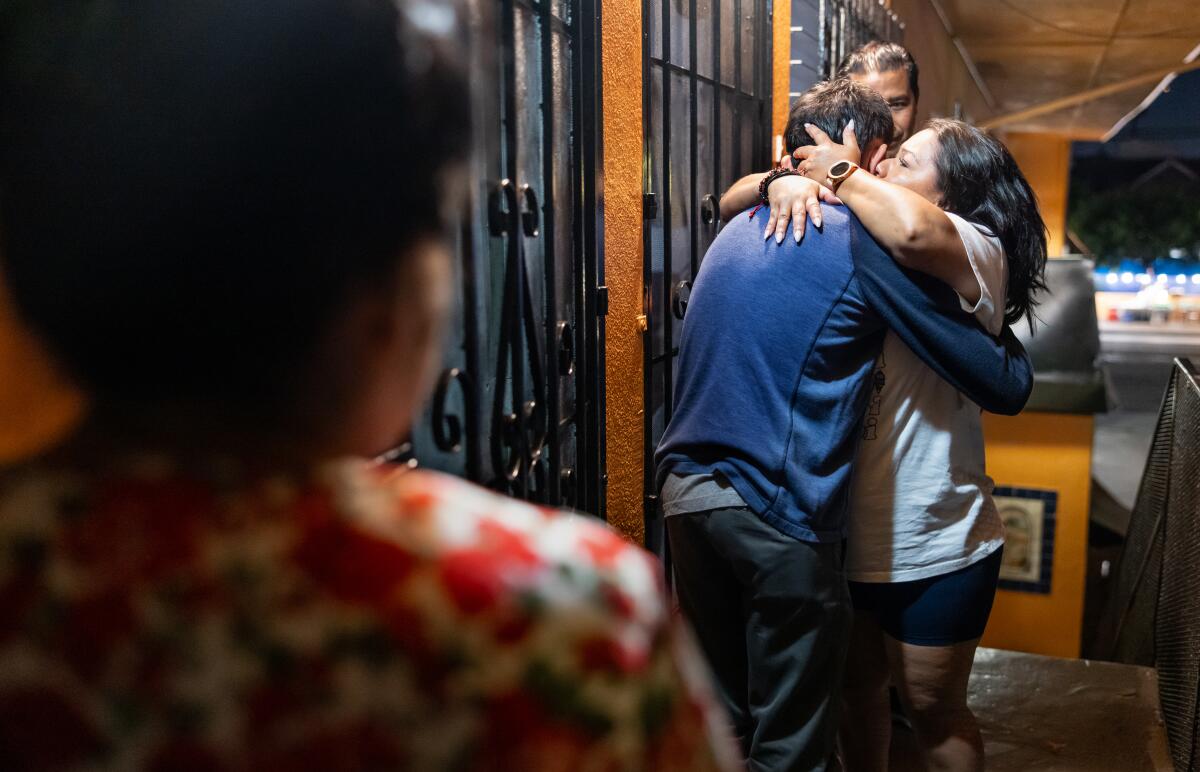
1.Charles Melton.2.Cailee Spaeny.(Erik Carter / For The Times)
Do you relate to your characters’ Gen-Z resentment that previous generations screwed them over? “Everyone grabbed the bag before we could.”
Spaeny: There was a time when having a house by your 30s was guaranteed. Now, you’re having to choose whether you want to have children or stay afloat in your career. We’re all riddled with this feeling of the life we feel we deserve …
Melton: And what will make us happy. Ashley gets the promotion. But the social climb is never enough. It’s “if you do this thing, you’ll get the this thing.”
Spaeny: It’s the constant chase.
You’ve both defied the odds and enjoyed successful careers as actors. Can you be content and sit with that?
Spaeny: We try. But it also feels like it’s set up in a way where you can’t sit. You have to look for the next thing because if you wait, people will get bored with you. You’ll book a job and hopefully it pays well and then you might not work again for two years. It’s easy to be in a place of desperation. Actors are also naturally people-pleasers. So, unfortunately, I think it was too easy for us to relate to our characters.
Melton: Maybe part of your question, which led to your beautiful answer, is: Where’s acceptance? I’m a father now. Sometimes, I’m super tired, but the best thing is I get to read to my kid. Looking at life through a place of abundance … but that can be a tough thing to do.
Spaeny: It’s not just the entertainment industry. I go back home and I’m with my sister, who is an amazing mother and soccer mom. And you can feel that itch inside of people back home too. Have I done enough for my children? Do I need to go to more soccer tournaments? Am I going to church enough?
Melton: It’s everywhere. And under the umbrella of class and healthcare and how expensive everything is, it’s tough. The bill we had just to have a baby was so ridiculous.
Spaeny: Oh yeah. My favorite line in “Beef” was, “Do you know the 16-piece meal at KFC is $52.99 now?” That sums it up.
(Erik Carter / For The Times)
I looked that up. It’s true, though you can get the 16-piece chicken-only meal for about $37.
Melton: But you can’t just eat the chicken. You have to have the sides and biscuits, right?
How about Austin’s line: “All we need is each other … and the beach.”
Melton: That’s what I love about Austin, this optimism but considered to be naivete. Really, at the end of the day, I’ll look at my partner and I’ll look at my daughter and be like, “This is absolutely all I need.”
Spaeny: [Sighs] I would love to get to that point.
Melton: But then to put food on the table, you’re required to do things that take you away from the things that you say are all you need.
Spaeny: The great thing about this show is that it’s zeroing in on everyday impossibilities of life, the things that should be so simple, but drive us all up the wall.
You both talk about Midwest sensibility. Do your roots help ground you?
Spaeny: I just got back from home last night, and I always feel a layer gets peeled off when I’m there. With work, I’m always on edge and trying to hold onto this thing that could be taken away from me any day. When I go back home, I feel like it can really be that simple. But it doesn’t last. That’s the problem. The itch comes back.
There’s nothing wrong with a little ambition.
Spaeny: I’m finding ambition more and more unattractive these days. Maybe that’s me just getting older and wanting more outside of the job.
Melton: We’ve talked about this. If we’re always going from one thing to the next, how can I bring the humanity and soul of my life into my work? If I had my way, I’d take three to six months off between jobs just to live and put my feet on the grass. Cailee and I connect in many ways. I love your determination and drive and passion for the work. Some people want to act like they don’t care, but I think it’s cool to care.
Timothée Chalamet does too, but he got flack for saying that out loud, that he “wanted to be one of the greats.”
Melton: I thought that was f— awesome. You want to be great? We all do.
Spaeny: It’s what every actor is thinking except they’re feigning …
Melton: We love Chalamet over here.
Spaeny: Maybe he didn’t say all the right things, but that speech, that’s why we’re in the building.
It’s OK for an athlete to say that, but if an actor does, the world gives them grief.
Melton: That kind of sincerity is the default in Kansas and Missouri. You know, growing up as an athlete, I was pretty good. I ran the 100-meter dash in 10.9 seconds. Make sure you write that in. [Laughs] You have to have a vision. And the artists that speak on that vision, that’s awesome. Visualization is essential. I wouldn’t be here talking with one of my best friends and one of the greatest actresses ever …
Spaeny: What are you doing?!?
Melton: I’d rather give you flowers all day than talk about what I think. All that to say is that I wouldn’t be doing this if I did not have vision when I was in Kansas to leave with $500 in my pocket, 60 cans of chicken noodle soup and 60 cans of tuna. You have to dream.
Spaeny: A dollar and a dream!
I’ve got to ask. Sixty cans of chicken noodle soup on a road trip? Do you just pop the top and down it cold?
Spaeny: Great question.
Melton: I’d just take off the top and lay it in the sun for two or three hours and it’s good to go.
Spaeny: Please stop.
Melton: OK. I’d just dip my finger in it and because I’m so hot, it just boils.
One week after EU diplomats and lawmakers agreed to eliminate EU duties on most US industrial goods under the EU-US trade agreement, EU ambassadors on Wednesday greenlit a deal with the European Parliament, paving the way for the full agreement’s formal adoption by the EU Council.
ADVERTISEMENT
ADVERTISEMENT
The procedural step comes as the US pressures Europeans to implement the EU-US deal clinched last summer by US President Donald Trump and European Commission President Ursula von der Leyen after weeks of renewed trade tensions.
Trump has threatened to impose 25 percent tariffs on EU cars if the deal is not enforced by the EU by 4 July.
On their side, MEPs still have to formally endorse the agreement reached on the EU side, with a tentative vote scheduled during the plenary session between 15 and 18 June.
“The agreement we reached with the European Parliament marks an important step in delivering on the EU’s commitments,” said a spokesperson for the Cypriot Presidency, which negotiated with MEPs on behalf of EU member states.
The spokesperson added that “robust safeguards” had been included in the agreement “to protect the interests of European businesses and economic operators”.
The deal, considered lopsided by many MEPs, states that the EU would face 15 percent US tariffs while eliminating its own duties on US goods.
However, after Trump repeatedly threatened to impose new tariffs in breach of the deal, EU lawmakers pushed member states to include conditions such as a “sunset” clause that would terminate the agreement on 31 December 2029 unless renewed.
Under the agreement reached last week, the Commission would also be able to suspend the trade deal at the request of either Parliament or a member state if the US fails to lift tariffs on European steel and aluminium products by the end of 2026.
After their work permits expired, an immigration attorney near San Diego was fired and a nurse in the East Bay area was placed on unpaid leave.
Both depend on work permits and legal protection afforded under Deferred Action for Childhood Arrivals, a program created by President Obama in 2012 for immigrants who were brought to the U.S. as children. But recent processing delays at U.S. Citizenship and Immigration Services are leaving many DACA recipients vulnerable to arrest and deportation as their two-year work permits expire.
“It’s definitely an attack on the program,” said the lawyer, Maria Fernanda Madrigal. “My first thought was, ‘Oh, they’re so clever. They weren’t able to end the program through the courts, so this is what they’re doing.’”
The agency did not explain what’s causing the processing delays. Spokesperson Zach Kahler wrote in a statement that “under the leadership of President Trump, USCIS is safeguarding the American people by more thoroughly screening and vetting all aliens.”
DACA does not confer any form of legal status in this country, he said.
During his first term in office, Trump tried unsuccessfully to rescind DACA.
This time around, his administration has simply weakened its benefits.
And last month, a precedent-setting decision from the Board of Immigration Appeals, which will apply to immigration judges across the country, said having DACA is not enough to protect someone from deportation.
A Department of Homeland Security spokesperson said ICE arrested 650 DACA recipients between Jan. 20, 2025, and April 30, nearly 90% of whom had been charged with or convicted of a crime. The spokesperson did not say how many have been deported.
DACA recipient Javier Diaz, center, is welcomed by his neighbors including Martha Avelar, right, in South Los Angeles after returning home from a detention center in Texas in July 2025.
(Christina House / Los Angeles Times)
But in a February letter to U.S. senators, then-Homeland Security Secretary Kristi Noem said the agency had deported 86 DACA recipients between Jan. 1 and Nov. 19, 2025. Federal judges have ordered the agency to return some, including Maria de Jesus Estrada Juarez, a Sacramento mother who was deported a day after her green card interview.
Lawmakers are expressing alarm that DACA’s promise of protection is being undermined.
Last month, Democrats on the Senate Judiciary Committee held a forum on the Trump administration’s “all-out assault on DACA.” The forum featured Santa Ana Police Chief Robert Rodriguez, who testified that he had been forced to fire a police officer because their work permit renewal was not processed on time.
Last week, members of the House from California’s Central Valley, including Rep. David Valadao (R-Hanford), sent a letter to Homeland Security and Citizenship and Immigration Services leaders, urging them to expedite DACA processing.
“Our offices have seen a substantial increase in constituent cases involving pending renewals, with many remaining unresolved for more than six months,” the letter continued. “These extended processing times are creating avoidable hardships for our communities and our economy.”
California has more than a quarter of the nation’s approximately 500,000 DACA recipients, according to Citizenship and Immigration Services figures. On average, they are 31 years old.
To qualify for DACA, applicants had to pass background checks and meet certain educational or work requirements.
During a news conference ahead of the DACA forum last month, Sen. Dick Durbin (D-Ill.) reflected on the day in June 2012 when DACA applications first opened. He said parents of young immigrants asked him if it was safe for their children to sign up for the program, which required admitting their lack of legal status and home address.
“Are you sure that the government won’t use that information against us at some time?” he remembered them saying. “I said, ‘Follow the law exactly as it is written and announced in the executive order, and we’ll stand by you. Just believe in us to do that.’”
Sen. Dick Durbin (D-Ill.), foreground, speaks during a Homeland Security oversight hearing before the Senate Judiciary Committee in March.
(J. Scott Applewhite / Associated Press)
“Well, I didn’t anticipate the current president and what he is now doing,” Durbin continued.
Sarah Krieger, a former Citizenship and Immigration Services official who is now senior policy counsel at the National Immigration Law Center, said processing delays were caused, in part, by the agency temporarily pausing an automated system for processing DACA and other applications.
Krieger said that “streamlined case processing” was turned off about a month after Trump took office last year, in order to audit whether each process had sufficient security checks. The automated system was turned back on a couple of months later but was modified to include more manual security checks. Krieger left the agency last July.
Turning off the automated system was “a purposeful choice that doesn’t increase national security,” she said. “All it does is slow things down.”
Citizenship and Immigration Services recommends that applicants submit their paperwork and pay the $555 fee between 120 and 150 days before their benefits expire.
Among those who did so are two nurses who work for Kaiser Permanente in the Bay Area. Both requested anonymity out of concern over their immigration status.
One of the nurses, who came to the U.S. from the Philippines as a toddler, said she applied for renewal on Dec. 1. Her work authorization expired April 15.
Kaiser placed her on a 30-day unpaid leave of absence, after which she would be fired. Eventually, her work permit was renewed, but only after Sen. Alex Padilla (D-Calif.) and two other members of Congress lobbied the federal government on her behalf.
Sen. Alex Padilla (D-Calif.) speaks during a news conference on the DACA program on May 12 outside the U.S. Capitol.
(Graeme Sloan / Getty Images)
Padilla said his office has fielded requests from hundreds of DACA recipients this year.
Another Kaiser nurse, who also submitted her renewal paperwork in December, is still waiting. She has been on unpaid leave for nearly a month.
The nurse, who is from South America, said one Citizenship and Immigration Services officer told her it could take up to 10 months for her renewal to be processed.
The nurse is pregnant and she and her husband just bought a house. Losing her job would mean losing her healthcare and maternity leave benefits.
“I’ve spent years caring for others in my community, paying taxes, contributing to a healthcare system,” she said. “I worked through COVID and it’s heartbreaking to feel like you’re so easily discarded.”
Another DACA recipient, Elsa Sanchez, 35, of Georgia has maintained DACA status since 2012 and says she always follows the recommendation to submit the renewal application at least 120 days before the expiration date.
For the last three renewals, she said, she was approved within a week or two. This time, her work permit and DACA expired on April 1, more than four months after she submitted her application.
Elsa Sanchez, whose work permit expired because of DACA renewal delays, at her home in Atlanta.
(Emilie Megnien / Associated Press)
The healthcare IT company where Sanchez works as a senior customer success manager allowed her to take a 60-day unpaid leave of absence but said it would have to terminate her employment afterward.
Sanchez’s unpaid leave was set to run out on June 1. On May 20, she got notice that her DACA renewal had finally been approved. But by then Sanchez, a single mom, had had to pull funds out of the college savings account for her 19-year-old daughter, who is attending a local university. She put the money toward her nearly $2,000 rent and food.
“I feel so relieved and grateful,” she said in an Instagram video announcing the news. “I know that a lot of us are still being affected by these delays. I wish that I could share my approval with all of you and that we would all be celebrating today.”
Others have also turned to social media to share their experiences and swap resources. Madrigal, the fired attorney, pivoted to making daily videos. On Tuesday, she shared “day 35 of unemployment.”
“Some days look like big emotions and uncertainty,” she wrote. “Other days look like walks, toddler activities, cooking dinner and ending the night with tostadas. Trying to find joy and normalcy in the middle of it all.”
Since then, speculation has congealed into reality.
By almost any measure, tourism to the United States has cratered. Overall, it was down 5.5% last year from the year before. Visitors from Canada, traditionally the largest pipeline of foreign tourism, plummeted 21%.
Even with global anticipation building, the path to the U.S. for many World Cup travelers feels increasingly less like a red-carpet welcome.
— American Hotel & Lodging Association
That’s the largest drop from any country, according to statistics from the Commerce Department’s International Trade Administration cited by the Congressional Research Service. The runner-up is Germany, with a decline of 11.3%.
Expectations have faded that this summer’s World Cup games, which begin in the U.S. on June 12 with USA vs. Paraguay at SoFi Stadium, would buoy the flow of foreign visitors. Hotel bookings show that hasn’t happened, as my colleague Caroline Petrow-Cohen reports. According to an April survey by the American Hotel & Lodging Assn., hotel operators in all 11 of the U.S. host cities say that bookings are below their expectations.
Get the latest from Michael Hiltzik
Commentary on economics and more from a Pulitzer Prize winner.
By continuing, you agree to our Terms of Service, which include arbitration and a class action waiver. You agree that we and our third-party vendors may collect and use your information, including through cookies, pixels and similar technologies, for the purposes set forth in our Privacy Policy such as personalizing your experience and ads.
Those figures bode ill for the 2028 Los Angeles Olympics, whose organizers are also counting on a robust flow of foreign visitors.
More than 65% of the Los Angeles hotels responding to the survey reported dashed expectations, the association said. That wasn’t the worst result; the percentage was higher in five host cities, led by Kansas City, where nearly 90% of survey respondents reported booking paces below expectations.
The association identifies several reasons for the lackluster bookings, including botched planning by FIFA, the World Cup’s governing body. But much of the blame falls on issues created by one person: President Donald Trump. These include “increased gas and jet fuel prices,” which are artifacts of Trump’s Iran war and its upward pressure on oil prices.
The survey also points to concerns about visa availability and the treatment of foreign visitors once they land in the U.S. or cross the border.
The administration has disavowed any intention to interfere with the World Cup or the Olympics.
“Thanks to President Trump’s leadership, the FIFA 2026 World Cup will no doubt be one of the greatest and most spectacular events in the history of mankind,” White House spokesman Davis Ingle told me by email.
“International visitors who legally come to the United States for the World Cup have nothing to worry about,” the Department of Homeland Security said. “What makes someone a target for immigration enforcement is whether or not they are illegally in the U.S. — full stop.”
Trump pledged in 2018, when FIFA was weighing bids to host the 2028 World Cup, that “all eligible athletes, officials and fans from all countries around the world would be able to enter the United States without discrimination.” But concerns remain that family members of participating athletes might face restrictions on entering the U.S.
Vance said the U.S. wants foreign visitors “to come, we want them to celebrate, we want them to watch the games. But when the time is up, we want them to go home, otherwise they will have to talk to Secretary Noem.” (Trump subsequently ousted Kristi Noem as Secretary of Homeland Security, replacing her with former Sen. Markwayne Mullin, Republican of Oklahoma.)
Trump also committed himself to safeguarding the L.A. Olympics, stating, “I’m going to be supportive in every way possible and make them the greatest games.”
Yet America’s standing as a world-class tourist destination has plainly soured under Trump.
“Even with global anticipation building, the path to the U.S. for many World Cup travelers feels increasingly less like a red-carpet welcome,” the Hotel & Lodging Assn. observed.
“There is a perception that international travelers may face lengthy visa wait times, increased visa fees, and lingering uncertainty around entry processing. For those who do make the journey, concerns do not end at the border — questions about airport security screening wait times and airport congestion add another layer of hesitation.”
None of this should come as a surprise. As I projected last June, two administration initiatives in particular were poised to affect the World Cup and Olympics. The first was Trump’s crackdown on immigration.
Immigration agents, I noted, were acting as though they had carte blanche to detain people suspected of being in the U.S. illegally, conducting raids that sometimes swept up American citizens. That was before the Immigration and Customs Enforcement raids in Los Angeles, Minneapolis and other communities where immigration agents were accused of targeting specific ethnic and racial groups. And it was before the shootings of Renee Good and Alex Pretti in Minneapolis by immigration agents worsened their image as lawless thugs.
By then, however, stories had surfaced of foreign tourists being detained for weeks, even months, without explanation or apparent cause. A 65-year-old British woman named Karen Newman traveling on a valid tourist visa was arrested in September 2025 at the Montana border, shackled and held for six weeks in an ICE detention center. Other stories involved a German tourist who said she was held by ICE for 45 days, some of that time in solitary confinement; and a New Zealand woman who was detained with her 6-year-old son for three weeks.
The Department of Homeland Security didn’t deny that these incidents had occurred, though in relation to the New Zealand woman, whose visa had been only partially renewed, a U.S. Customs and Border Protection spokesman said, “When someone with an expired parole leaves the country and tries to re-enter the US, they will be stopped in compliance with our laws and regulations.”
The other policy that could interfere with the World Cup and Olympics are Trump’s travel bans and restrictions, which as of January covered 75 countries, including Brazil, Russia and 26 African countries.
Stringent regulations for some visa applicants — notably those coming to the U.S. to study or for work-study programs and their dependents — have further clouded America’s image as a destination. Applicants for those visas are required to open their social media accounts for the last five years for inspection by visa officers.
And Homeland Security Secretary Mullin last month raised the prospect of withdrawing customs officers from airports in so-called sanctuary cities, a move that would effectively shut down international flights at those airports.
The change couldn’t happen in time to affect the World Cup, but it could happen before the 2028 Olympics. Mullin’s idea didn’t win immediate favor with other members of Trump’s cabinet, including Transportation Secretary Sean Duffy.
Last year, the Department of Justice published a list of nearly three dozen states, cities and counties it defined as “sanctuary jurisdictions” because they “obstruct or limit local law enforcement cooperation” with ICE. Most are led by Democrats. They include California, and the cities of Los Angeles, San Francisco and Berkeley.
It’s true that immigration policies and rising travel costs are only part of the problem. The Hotel & Lodging Assn. also flayed FIFA for having block-booked hotel rooms in venue cities. These blocks “manufactured artificial demand by locking up large pools of inventory well ahead of the tournament,” the hotel group complained. The practice upended hotels’ planning by prompting them to increase staff and begin World Cup-themed renovations, preparing for crowds that may have been overestimated from the outset.
The block-booking “masked softer underlying traveler demand,” the association said, “with FIFA returning some blocks without a single reservation having been made.”
The hoteliers also groused that New Jersey and Philadelphia had proposed raising sales or lodging taxes in order to squeeze visitors. New Jersey lawmakers have proposed a short-term increase in its sales tax to 9.6% from 6.6% and in its lodging tax to 7.5% from 5%. Philadelphia is planning to raise its hotel tax to 10.5% from 8.5%.
None of this means that ticket sales for the World Cup won’t be healthy. FIFA has said that 5 million tickets have already been sold for the matches, even though the average price for even the cheapest seats at some venues tops $500. As my colleague Kevin Baxter has reported, fans are beginning to feel mulcted. That’s so especially because ticket buyers only learned the specific location of their seats after plunking down their money, at which point they discovered that they were placed in sections nowhere as desirable as they expected.
Travel expert Simon Calder recommended some stunning but underrated European destinations
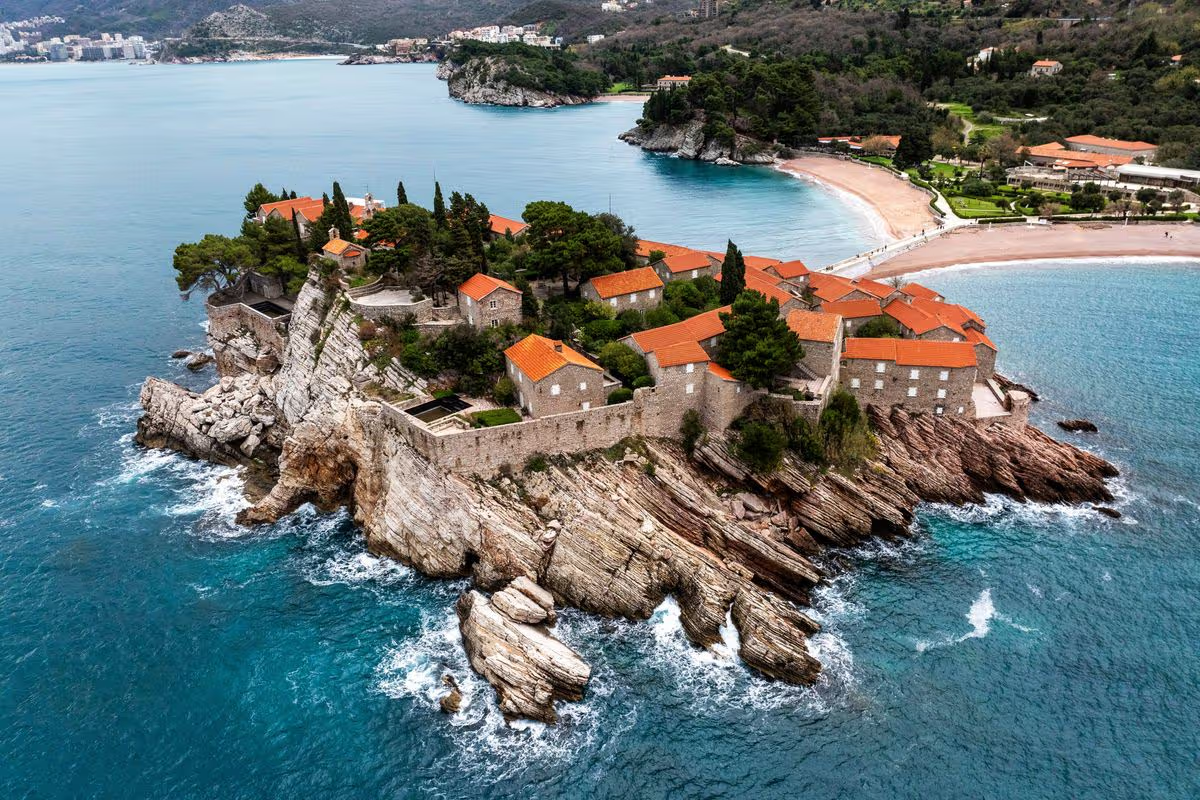
Simon Calder recommends 3 gorgeous and ‘very cheap’ destinations to visit in summer 2026(Image: EXTREME-PHOTOGRAPHER via Getty Images)
Montenegro
Travel expert Simon Calder has championed Montenegro as an absolutely breathtaking yet underrated European gem, boasting a spectacular coastline, sweeping national parks and enchanting medieval towns. The country also happens to rank among Europe’s most affordable destinations, according to a recent study by Jersey Island Holidays.
The most popular holiday spot is Kotor Bay, hailed as “a jewel of the Mediterranean,” brimming with picturesque fishing villages and jaw-dropping vistas.
On Tripadvisor, one traveller gushed that Kotor is one of the “nicest places” they’ve ever visited. Another remarked: “The bay is gorgeous with hills and mountains surrounding it. There are plenty of viewpoints to see it. The towns also look pretty with the red tiled roofs.”
A further visitor enthused: “What a spectacular scene. Kotor Bay is winding and resembles a fjord. It is located in the Adriatic Sea and is a UNESCO World Heritage Site. The natural beauty is stunning, with Mediterranean landscapes, mountains, and cliffs in contrast with the historic buildings.”
Portugal
Though better known as a summer hotspot, Portugal is a stunning nation of vibrant towns and a glorious shoreline. Simon Calder singles out Lisbon, along with the charming towns of Cascais, Estoril and Sintra as must-visit destinations.
He said: “I love Lisbon, one of Europe’s most beautiful capital cities, and the locations on its western flanks – in particular Cascais, Estoril and Sintra. But until now I haven’t strayed south to the Setubal Peninsula: much less well known, but full of surprises.
“Do try O Barbas – an amazing seafood restaurant overlooking the Atlantic in Costa da Caparica; the wild, windy and atmospheric cape of Espichel; and Setubal itself, a sleepy, friendly city.”
Bulgaria
Bulgaria is another under-the-radar treasure and a place where “your money goes further,” according to Simon.
He said: “We’ve been telling everyone for years that Bulgaria is a great holiday destination, about how wonderful the weather is, how soft the sandy beaches are, the excellent hotels and of course the low cost of living there.”
Samsung Electronics Co.’s unionized workers voted to approve a wage agreement, the union said Wednesday. This photo, taken Wednesday, shows Samsung headquarters in Suwon. Photo by Yonhap
Samsung Electronics Co.’s unionized workers voted to approve a wage agreement that includes a substantial bonus package for chip workers, the union said Wednesday, easing concerns over potential disruptions to the global supply chain.
In the six-day vote, 73.7 percent of the 62,616 members of the tech giant’s two largest unions approved the tentative deal. The agreement was finalized after a majority of eligible voters took part in the vote and a majority voted in favor of the proposal.
Later in the day, the two sides signed the wage agreement, with management pledging to strengthen the company’s global competitiveness.
“Starting with the conclusion of this wage agreement, labor and management will work together as one to strengthen our global competitiveness,” Yeo Myeong-gu, head of the company’s Device Solutions division’s People Team, said in a press release.
The labor union and management reached the agreement just an hour before an 18-day strike was set to begin at the world’s top memory chipmaker last Thursday.
Labor and management had been deadlocked since late last year over performance-based bonuses tied to earnings from the company’s artificial intelligence (AI)-related semiconductor business amid the ongoing global memory chip boom.
Under the deal, Samsung will allocate a special semiconductor performance bonus equivalent to 10.5 percent of business performance earnings, without a cap.
The special bonuses will be paid in company stock over at least 10 years, based on targets for the chip division to achieve more than 200 trillion won (US$132 billion) in annual operating profit from 2026 to 2028 and 100 trillion won from 2029 to 2035.
Of the total bonus pool, 40 percent will be allocated to the division as a whole, while 60 percent will be distributed to individual business units.
Based on forecasts that Samsung’s operating profit could reach 300 trillion won this year, the agreement could translate into bonus payouts of up to 600 million won for each of the 28,000 employees in the company’s profitable chip division.
Following the signing, the company announced it will create a 5 trillion-won fund over the next five years to invest in future talent development and build an ecosystem supporting its suppliers and underprivileged groups.
“Over the next five years, we will raise a total of 5 trillion won to invest in win-win cooperation and building a healthy ecosystem, as well as nurturing future talent,” according to the statement attributed by company executives.
The move is widely seen as an effort to counter criticism that the company has been distributing massive profits from the semiconductor supercycle as excessive employee bonuses.
Copyright (c) Yonhap News Agency prohibits its content from being redistributed or reprinted without consent, and forbids the content from being learned and used by artificial intelligence systems.
Coach Ouahbi drew heavily on the country’s diaspora in Europe where majority of the 26 players he selected were born.
Published On 27 May 202627 May 2026
Paris Saint-Germain defender Achraf Hakimi was among nine players from Morocco’s history-making 2022 World Cup squad named for the 2026 tournament in North America.
Morocco coach Mohamed Ouahbi, who was only hired in March, drew heavily on the country’s diaspora in Europe, where the majority of the 26 players he selected were born.
Recommended Stories
list of 4 itemsend of list
Ouahbi was himself born in Belgium, while Hakimi and Real Madrid forward Brahim Diaz are among five players in the squad born in Spain and whose family ties make them eligible for Morocco.
Three of Morocco’s squad – Fulham defender Issa Diop, PSV Eindhoven defender Anass Salah-Eddine and 18-year-old Lille midfielder Ayyoub Bouaddi – had their change of national eligibility approved by FIFA in the past nine months. Diaz has played for Morocco since 2024 after previously representing Spain.
Morocco will be based in New Jersey where it opens against Brazil on June 13 in East Rutherford. The Atlas Lions then play Scotland in Massachusetts and finish Group C against Haiti on June 24, in Atlanta. The top two in the standings go directly to the round of 16, and the third-place team also could advance.
At the 2022 World Cup, when it was coached by Walid Regragui, Morocco made history as the first semifinalist at the tournament from Africa.
Morocco topped its group ahead of Croatia and Belgium, then shocked Spain and Portugal in the knockout rounds before an injury-hit team lost to France.
Goalkeeper Yassine Bounou, who impressed in Qatar, returns for his third World Cup at age 35.
Morocco will go to the United States as the African champion – for now. That title, awarded in a legal case, could be lost within months at the Court of Arbitration for Sport, where Senegal has appealed to regain its victory won on the field in January in Morocco.
After losing the final to Senegal four months ago, Regragui stepped down and was replaced by Ouahbi, who guided Morocco to the Under-20 World Cup title last year. That team that beat Argentina in the final included Strasbourg forward Gessime Yassine, whom Ouhabi picked again on Tuesday.
Morocco will play at the 2030 World Cup as a cohost with Spain and Portugal. South American neighbours Argentina, Paraguay and Uruguay – the original tournament host in 1930 – get one game each to host at that edition as part of a commemorative recognition for their contributions to World Cup history.
Morocco World Cup roster
Goalkeepers: Yassine Bounou (Al-Hilal), Munir El Kajoui (RS Berkane), Ahmed Reda Tagnaouti (AS FAR)
TYSON Fury was clearly feeling loved-up with wife Paris as they holiday in Thailand with their five youngest children.
The couple may have been together for 20 years, but they are still firmly in the honeymoon phase if Tyson’s gushing post is anything to go by.
Sign up for the Showbiz newsletter
Thank you!
Tyson Fury called wife Paris “stunning” as she dressed up for holiday date nightCredit: InstagramParis and her daughters smiled for a family photo during the sunshine breakCredit: Instagram
The boxing legend, 37, shared a glamorous photo of Paris, 36, in full holiday mode wearing a sparkling dress in various pink shades.
He wrote: “Mrs Paris Fury looking stunning tonight! Love ❤️ her so much @parisfury1 #still #wondermother #superwifeandmom.”
Paris replied in the comments: “That’s very nice of you babe.”
The couple tied the knot in 2008 in a lavish ceremony in Doncaster and have since welcomed seven children together.
The couple’s youngest children joined them for the long-haul family tripCredit: TikTokThe Fury family travelled in style on the long-haul flight to ThailandCredit: TikTokThe loved-up couple arrived in Thailand after their marathon journeyCredit: TikTokThe mum-of-seven shared a sweet message after arriving in ThailandCredit: TikTok
But their marriage hasn’t always been plain sailing.
The pair have faced heartbreak over the years, including suffering miscarriages, which Tyson has spoken about publicly in emotional interviews.
Despite the ups and downs, Tyson and Paris are still going strong and even renewed their wedding vows in a romantic ceremony in France last year.
The pair are currently enjoying a lavish Thailand getaway after flying five of their children on £5,000-a-seat business class flights.
Prince Tyson II, nine, Valencia, eight, Adonis, seven, Athena, four, and two-year-old Prince Rico all travelled in private pods on the Etihad flight.
Paris shared: “A serious long travel I think it took us 36 hours in total but well worth it.”
The couple have also just paid for their 16-year-old daughter Venezuela’s £30,000 honeymoon to Marbella following her recent wedding to Noah Price.
People don’t come to White Point/Royal Palms Beach for a lazy day of sunbathing, they come here to explore. At low tide, the rocky shoreline is a maze of crater-like formations and tide pools where visitors crouch over searching for life. During my visit, two men poking around with fishing rods excitedly showed me a small octopus they had spotted in one of the crevices. It’s no wonder: White Point offers some of the most diverse tide pools in Southern California.
If you park in the upper parking and playground area, the experience starts to feel special before even reaching the water. Brass plaques placed throughout the bluff describe the area’s rich history, while dramatic, panoramic views of the rugged cliffs and stony coastline unfold below. From there, it’s about a 10-minute walk downhill to the beach itself. The rocky shore is not ideal for swimming, but scuba divers come to experience the underwater hot springs.
During a recent visit, construction equipment occupied one end of the beach due to work on a sewage line, though the lifeguard on duty assured me that treated wastewater is released about three miles offshore, where deep ocean currents disperse it before it can affect water quality at the coast.
Best for: dramatic views, tide-pooling, scuba diving, fishing
Bathrooms: Yes (additional portable toilets also available at bottom of hill)
Parking: Lot immediately after entrance (10 minutes downhill walk to beach) is free weekdays, $8 on weekends; there’s another lot right by the beach, which is $6 after 9 a.m. on weekdays, $8 on weekends
Dog-friendly: Leashed dogs are permitted on the paved trails beyond the rocks
ADA-accessible: ADA parking, but no wheelchair available due to the rocks
What’s nearby: The nearby White Point Nature Preserve offers 102 acres of coastal habitat and hiking trails. There isn’t much in terms of food or drink in this area, so bring sustenance and make use of the picnic tables on the beach’s upper bluff portion.
With average gas prices topping $6 in Los Angeles, it can be painful to watch your fuel gauge creep toward “E” during a day out around town. It’s time to stop the car and walk. And where better to do that than in the most walkable city in California?
For more than a decade, West Hollywood has been designated a “Walkers Paradise” by Walk Score, earning a 91 out of 100 on the popular walkability index that looks at distance to amenities, pedestrian friendliness, population density and road metrics. The small city within a city scores two points above the state’s second most walkable city, San Francisco. It’s also a full 22 points above Los Angeles, which has a middling score of 69.
But you don’t need a formula to know that West Hollywood’s well-maintained sidewalks dotted with cafes, shops and historic sites is a great place for walking. Take a stroll around the city and you can find out for yourself.
That’s what I did on a recent Friday afternoon, where I met locals like Kimberly Beauchaine out in the neighborhood — yes — walking. “We really don’t use our car here,” Beauchaine said, pushing her 18-month old in a stroller past the Pacific Design Center on Melrose Avenue. “It’s very walkable and very central.”
Alex Uihlein and Kimberly Beauchaine walk down Melrose Avenue with their 18-month-old on their way to the West Hollywood Aquatic & Recreation Center.
(Scott Strazzante / For The Times)
While West Hollywood is easy to navigate on foot, getting there without a car can be a challenge. The closest Metro stop is along the just-opened D-line on Wilshire Boulevard, a two-mile hike from the West Hollywood border. Fortunately, West Hollywood has ample public parking. I found a spot in a public lot on North San Vincente Boulevard, where I paid $12 for the whole day.
The hardest part about planning a fun day in West Hollywood might be choosing a place to start. According to Walk Score, there are about 339 restaurants, bars and coffee shops in the city and you can walk to an average of 13 of them in 5 minutes.
I asked Eric Parker, director of PR and communications for the city of West Hollywood, why there’s such an abundance of spots to eat and drink in the tiny city. He explained that West Hollywood serves not just residents who live within its borders but also the many folks who live in the residential neighborhood of the Hollywood Hills.
“They need a place to live their lives too,” he said. “Beverly Hills has become a little jam-packed with tourists, so West Hollywood has become the heart of L.A. in many ways.”
My journey began at the Butcher’s Daughter on Melrose Avenue, a cheerful and bright plant-forward cafe a few blocks from where I parked my car. The croissant I ordered was fine, but the atmosphere was lovely — open and airy with a communal wood table inside and green and white bistro chairs outside. Pedestrians of all ages strolled by on the wide flat sidewalks, many with small dogs in tow. Trees along the street offered dappled shade, and there were several other cute restaurants nearby, many with outdoor spaces of their own.
Adisa Aditheparot, left, and Mari Muay enjoy a light lunch at the Butcher’s Daughter on Melrose Avenue after walking over from a nearby Pilates class.
(Scott Strazzante / For The Times)
Moving on from the Butcher’s Daughter I headed one block east to the corner of Melrose and San Vincente to take in the rolling lawns and massive green, red and blue glass buildings of the 14-acre Pacific Design Center, which first opened to the public in 1975 and currently houses nearly 100 showrooms. Across the street on San Vincente, I strolled past the excellent West Hollywood Library, the luxurious rooftop West Hollywood Public Pool, and the green expanse of West Hollywood Park where young children were shrieking on the playground.
The vibe shifted as I continued north toward Santa Monica Boulevard. Here, the city’s identity as a gay haven was in full view. The crosswalks were painted with stripes and triangles celebrating the full range of queer identity and although the many colorful bars were quiet on this early Friday afternoon, it was easy to imagine them filled with revelers after the sun set. On the weekends, a free bus runs down this street every 15 minutes, connecting the Troubadour to Formosa Cafe. The area felt fun and funky, but I was only passing through, determined to get to my next destination.
To be fair, walking in West Hollywood is not ideal for everyone. After having lived in Boston, New York and Santa Monica, Sean Patrick Gallagher points out that the hills are real.
“It’s walkable if you are walking east to west,” said Gallagher, who has lived in the city for two years. “If you have to venture north or south, you are destined to hit inclines that are not for every able body.”
Pedestrian traffic outside Book Soup on Sunset Boulevard.
(Scott Strazzante / For The Times)
At the same time, daily conveniences are generally in easy walking distance for many residents. “Most people in West Hollywood can walk to the gym, the grocery store and the laundromat,” he said. “There are enough things on each street that cater to your needs.”
Parker describes West Hollywood as a place where history is hidden in plain sight. I certainly felt that as I passed onto the quiet, shaded streets of Norma Triangle, a historic neighborhood in West Hollywood where Dorothy Parker and Christopher Isherwood once lived. The sidewalks here are more narrow but well maintained, and the streets are filled with locals walking dogs of all sizes. The homes and apartment buildings, many of which date to the mid-20th century, are beautifully landscaped and clearly tended to with care, but I was searching for one in particular — the Lloyd Wright Home and Studio, designed in 1927 by Frank Lloyd Wright’s eldest son who also worked as an architect.
The house was not a disappointment. It’s not open to the public, so I was only able to see the exterior, but it was worth it. The desert landscaping on the corner lot is on point and the building itself, a two-story space that makes use of the organic textile-block pattern popularized by Lloyd Wright’s father, has a unique interlocking design of stylized Joshua Trees. I loved it. It’s also located in deep shade, which is very welcome on a hot day.
With that done, I made my way up to Sunset Boulevard, which is loud and unshaded and not nearly as pleasant a place to walk as some of West Hollywood’s more green and leafy streets. However, there are some cultural landmarks here that I felt should not be missed along with a surge of oval-eyed delivery robots (seriously, so many). This is the famous Sunset Strip where you’ll find the Roxy Theatre, the Whisky a Go Go and the Viper Room. All very cool, but this writer was most excited about getting to spend some time in Book Soup, the iconic bookstore with a real-life magazine stand outside that celebrated its 50th anniversary last year. Down a narrow alley right next door is the more esoteric Mystery Pier Books, which specializes in first editions and is beloved by celebrities.
Taking a walk down Sunset Boulevard in West Hollywood.
(Scott Strazzante / For The Times)
I had ambitious plans to amble past more spots in West Hollywood. More than one friend suggested I go to Mamie on Sunset and Fairfax for Italian sandwiches (the focaccia is supposed to be amazing). I considered ending my day at the perfect patio at Chateau Marmont on the border of the Hollywood Hills. But reader, I was tired, and walkability is not about exhausting yourself. It’s about enjoying your time car-free. So instead, I headed back toward where I started, walking past the high-end shops of Melrose Place before arriving at Zinque for a simple prosciutto and cornichon sandwich and an Arnold Palmer. At 4 p.m., a waiter came past my table to tell me happy hour had officially begun and asked if I’d like a drink.
There is more than one reason why it makes sense to live in a walkable community.
Dodgers utility man Kiké Hernández sat with manager Dave Roberts on the dugout bench for a while after he was lifted from a 15-6 win over the Rockies on Tuesday with what the team later called a left oblique strain.
“He understood how frustrated I was,” Hernández said, “and he was trying to get me to keep my head up.”
The Dodgers plan to put Hernández on the 10-day injured list and recall infielder Alex Freeland, Roberts said after the game. Hernández expects to know more about the severity of the injury Wednesday.
“It’s a bummer,” Roberts said after the game. “He’s missed a lot of time and worked hard to get back, was in great shape, added that spark that we had hoped.”
It was his second game of the season, after starting the year on the injured list after offseason surgery on his left elbow. And he was driving the ball hard.
But he said he initially tweaked his oblique before his season debut, during batting practice Monday.
“I was pretty embarrassed about it,” Hernández said. “I thought it was just weird tightness. Never done an oblique before. So I didn’t really know what I was feeling. Came in today, wasn’t feeling great. I got treatment, but I thought I could play. … Compared to some of the things I’ve played through in the past, it was nothing.
“And, yeah, it was a little more than nothing”
In Hernández’s first at-bat Tuesday, leading off the third inning, he launched a solo home run. That swing, however, “felt awful.”
In between innings, he felt it throwing to first.
In his second at-bat he swung and missed before doubling as part of a four-run rally in the fourth inning. Neither swing felt good. When it also hurt running the bases, he knew it was time to come out of the game.
“Any other year, I would have at least tried to finish the game,” Hernández said. “But … when I was with the Red Sox, going through my core injury, last year with my elbow, I just keep going through things and I make things a lot worse. Today was one of those games that I felt like if I kept going, I was probably going to really, really put myself in danger of missing the rest of the season. So I just told him that I couldn’t go anymore.”
After talking with Roberts, Hernández stood up and disappeared down the tunnel. He was replaced in the lineup by Hyeseong Kim, with Miguel Rojas sliding over from second base to third in the top of the fifth inning.
“Frustrating to say the least,” Hernández said. “Not just because I missed time, but me coming back got somebody off the roster— those types of things. I was only able to give the team four at-bats. Yeah, tough. I feel pretty defeated right now. Hopefully we get somewhat good news tomorrow.”
Hernández had been filling in for Max Muncy at third base, while Muncy recovered from being hit by a pitch on the right wrist on Friday in Milwaukee. But Muncy will be in the lineup Wednesday, Roberts said, after testing his wrist before the game by throwing to bases and hitting on the field. He entered the game Tuesday in the top of the ninth and fielded a groundout.
So, the Dodgers will have options in the infield, even after designating Santiago Espinal for assignment Monday to activate Hernández. Freeland is expected to fill the utility player role. But Hernández made an immediate difference in just two games.
Share via
After Hernández helped jump-start the offense Tuesday, it kept piling on. Mookie Betts had a two-homer game, his first in over a year. Andy Pages’ four-hit game tied a career high. The team combined for 17 hits and 15 runs, both matching season highs.
By the end, both teams had position players pitching. And the Rockies scored all but one of their runs off Rojas.
Ohtani to pitch despite HBP
In the fourth inning, right after Hernández’s double, Rockies starting pitcher Kyle Freeland hit Shohei Ohtani in the right hand with an 85.2-mph changeup.
Ohtani spun and winced but then strode straight to first base. The next inning, Dalton Rushing pinch hit for him.
Shohei Ohtani reacts after getting hit by pitch on his right hand in the fourth inning.
(Gina Ferazzi / Los Angeles Times)
Ohtani still scheduled to start on the mound Wednesday, Roberts said. But his hitting status went from likely to undecided.
“I just want to make sure, how he comes in and physically how he feels,” Roberts said. “Want to make sure he feels really good on the pitching side of things.”
Roberts doesn’t expect Ohtani to need X-rays on his hand, saying the pitch mostly hit the padding on his batting gloves.
WITH 300 days of sunshine, golden beaches and beautiful hotels – the Algarve ticks all the boxes when it comes to summer holidays.
TUI travel agent Donna Connett is a huge fan and has been visiting the region for over 20 years after living there for a decade – so she knows all the best spots from its coastline to top restaurants.
Sign up for the Travel newsletter
Thank you!
The Algavre has over 300 days of sunshine every yearCredit: AlamyTUI travel agent Donna Corbett has been visiting the region since 2005 – and used to live thereCredit: TUI
Follow The Sun’s award-winning travel team on Instagram and Tiktok for top holiday tips and inspiration @thesuntravel.
After living in the Portuguese region, Donna has been back almost 30 times and always heads to one place – Albufeira.
She describes it as “one of those places that just feels easy the second you arrive”.
The Algarve is a popular spot for Brits being just a few hours away from he UK – and of course, for its coastline.
It has more than 150 beaches spread across 125 miles of coast.
One of Donna’s all-time favourite seaside spots, called Praia da Coelha, is just outside of Albufeira.
Donna told us: “It’s a bit tucked away, so you don’t get as many crowds, which is half the appeal. The huge cliffs and clear water make it feels a bit more special than the bigger, busier beaches.
“It’s the sort of place I used to relax on during a day off when I was a rep, and it’s stayed a constant ever since.”
Something else that’s very important whilst on holiday, is finding good places to eat – and Donna has one specific go-to restaurant.
“I’ll always point you towards the Steak House O’Farnel. It’s a small, family-run place – nothing fancy, but just great food and a relaxed atmosphere.”
The Algarve has hundreds of beaches on its 125mile coastlineCredit: Alamy
Donna continued: “It’s the kind of restaurant where you don’t feel rushed, you’re looked after, and you end up staying longer than you meant to. I’ve been going there for years and it’s still one of my first stops every time I’m back.”
There are many beautiful places to see, so Donna has some off the beaten track suggestions too.
“Guia is definitely worth a visit, it’s known as the home of Chicken Piri Piri, and for good reason.
“There’s plenty of authentic, local restaurants – they’re often busy and a bit no-frills in places, but the food feels properly local. Pair your “Frango à Guia” (Piri Piri Chicken) with fries and the traditional tomato and onion salad.”
Guia is the home of Chicken Piri PiriCredit: Alamy
It’s not all lazing about on beaches and getting a tan though, as holidaymakers can get active too.
The nearby Monchique Mountains is popular for mountain biking, jeep safaris, and small-group day tours.
Donna says it’s a great place to visit if you have the time: “It’s a completely different feel to the coast; cooler, quieter, a bit more traditional. You get a glimpse of what the Algarve’s like away from the beaches and resorts, such as a the historic spa village of Caldas de Monchique.”
If the Algarve has your attention Donna knows some incredible hotels to stay in too – and her favourite is the Tivoli Marina in Vilamoura.
Tivoli Marina Vilamoura can be booked through TUICredit: TUI
The five-star resort is right on the beach near to shops, restaurants and bars with multiple swimming pools and a spa.
Donna said: “The Tivoli Marina in Vilamoura is probably the best I’ve stayed in. It’s got that ideal location between the marina and the beach, and it feels a bit more polished without being stuffy.
“I spent a lot of time in Vilamoura during my rep days, so I love going back now and having dinner and drinks around the marina – it’s definitely more relaxing now than when I was looking after guests!”
You can actually book a stay at the hotel with TUI, a seven-night holiday on a B&B basis from £1,361 per person including flights from Manchester Airport June 10.
Another deal is for Hotel Alisios – a seven-night holiday here on a B&B basis from £846 per person including flights from London Gatwick departing June 16.
May 27 (UPI) — The U.S. military has killed another person in its latest strike on a suspected drug-trafficking boat in the Trump administration’s deadly crackdown on alleged narcotics trafficking in interenational waters.
The Tuesday strike was the 58th publicly disclosed by U.S. Southern Command in President Donald Trump‘s monthslong campaign, which has now killed at least 194 people.
SOUTHCOM said three people were aboard the boat and that the U.S. Coast Guard has been notified to conduct search-and-rescue operations.
As with the previous strikes, SOUTHCOM claimed in a statement that “intelligence confirmed the vessel was transiting along known narco-trafficking routes in the Eastern Pacific and was engaged in narco-trafficking operations.”
No evidence has been made public amid the campaign, which began in early September.
A black-and-white aerial video accompanied the SOUTHCOM statement showing a boat racing across the water and then erupting into flames.
On May 26, at the direction of #SOUTHCOM commander Gen. Francis L. Donovan, Joint Task Force Southern Spear conducted a lethal kinetic strike on a vessel operated by Designated Terrorist Organizations. Intelligence confirmed the vessel was transiting along known narco-trafficking… pic.twitter.com/3TmhGECgYB— U.S. Southern Command (@Southcom) May 27, 2026
SOUTHCOM says the boats are operated by one of 10 drug cartels and gangs that Trump has designated as terrorist organizations. Trump has said the United States is in “armed conflict” with the designated organizations in justifying the use of military force in drug-enforcement operations.
However, his administration has been accused of committing extrajudicial killings with the attacks by numerous legal and human rights organizations, as well as by United Nations experts.
Critics contend that it is unlawful for the Trump administration to use the military for ostensibly law-enforcement operations.
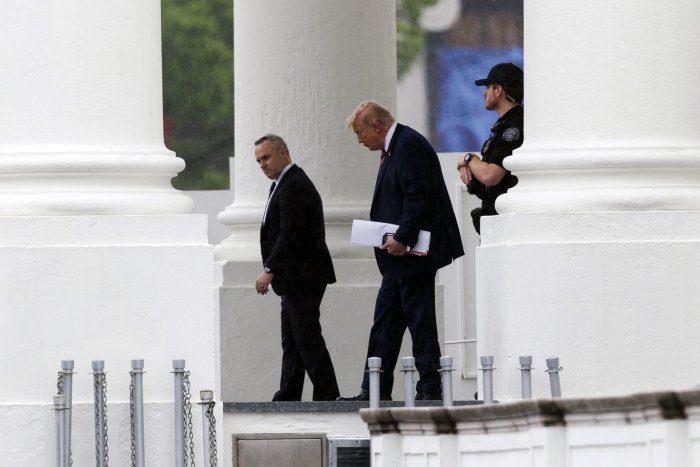
President Donald Trump leaves the White House on Tuesday. Trump is traveling to Walter Reed National Military Medical Center for his annual physical. Photo by Will Oliver/UPI | License Photo
Lionel Messi was injured in Inter Miami’s MLS game on Sunday, but Argentina are confident he will be fit for World Cup.
Published On 27 May 202627 May 2026
Argentina coach Lionel Scaloni said the initial news regarding superstar Lionel Messi’s fitness “is not that bad” and hopes further examinations will confirm that diagnosis, with the World Cup just two weeks away.
Messi has been diagnosed with muscle fatigue in his left hamstring by his Major League Soccer (MLS) club Inter Miami after he made an abrupt exit from Miami’s 6-4 victory over Philadelphia in the 73rd minute on Sunday.
Recommended Stories
list of 4 itemsend of list
Even at 38 and eyeing a sixth World Cup finals appearance, Messi remains the side’s talisman for the defence of the title they won in Qatar four years ago.
The former Barcelona and Paris Saint-Germain forward has scored 116 goals in 198 appearances for Argentina.
“Obviously, we would have preferred that nothing had happened,” Scaloni told Argentinian TV station DSports on Tuesday.
“Now one has to wait and see how it evolves and above all, the new tests they are going to conduct in order to see if it confirms their original diagnosis.”
Scaloni, who is due to name his squad next week, added he had watched the match on TV at the federation’s headquarters and been relieved that Messi had asked to come off.
Inter manager Guillermo Hoyos explained after the match that Messi was tired, the pitch was heavy and no one wanted to take a risk with his fitness.
Inter Miami issued a statement on Monday saying: “The timeline for his return to physical activity will depend on his clinical and functional progress.”
That gave little indication about the status of the eight-time Ballon d’Or winner.
Argentina are set to begin their World Cup campaign on June 16, against Algeria in Kansas City.
They then play Austria on June 22 and round off their Group J campaign against Jordan on June 28.
Messi has managed his workload since joining Inter Miami in 2023, with team staff regularly excusing him from matches in congested fixture periods.
MLS has started a break in its season for the World Cup, which is cohosted by the United States, Mexico and Canada.
Messi has not formally confirmed he plans to play in the World Cup, but is widely expected to return for what would be a record-matching sixth appearance at the finals. His highlight was the victory in the final against France at the 2022 edition.
His great Portuguese rival Cristiano Ronaldo and potentially Mexican goalkeeper Guillermo Ochoa would also be making a sixth appearance.
Argentina are set to play two pre-World Cup friendlies against Honduras on June 6, and Iceland on June 9, both in the US.
Harper Seven Beckham looked amazing as she rocked her mum’s dress while in IbizaCredit: BackGridJust mere days before Harper wore the frock, Victoria wore it on a yacht tripCredit: BackGrid
The family were spotted soaking up the sunshine during a glamorous family getaway in Spain on Sunday.
In snaps of the famous family taken over the weekend, Victoria and David were seen with daughter Harper, son Romeo and his girlfriend Kim Turnball.
Victoria looked amazing in the photos, rocking a floaty chiffon brown dress, which was covered in a pretty floral print.
But now Harper has been spotted rocking the same exact frock after seemingly raiding her mum’s wardrobe and channelling her chic style.
The Beckhams are currently in Ibiza, with Victoria seen with Harper on a day outCredit: BackGridHarper looked incredible in her mum’s stunning frockCredit: BackGridVictoria wore the garment just days beforeCredit: BackGridThis comes as Harper is poised to follow in her mum’s footsteps as a beauty mogulCredit: Instagram
The teenager was seen out and about wearing the garment while smiling from ear-to-ear.
It is thought that the brown chiffon dress could be a new Victoria Beckham piece from the high-end designer fashion brand.
Harper paired the dress with a stunning £1,275 golden Bottega Veneta clutch bag and a pair of £680 Hermès Oran sandals.
This comes as Harper continues to be tipped to follow in her mother’s footsteps as a fashion and beauty entrepreneur.
Back in October last year, HIKU BY Harper, the proposed name for the skincare and beauty brand, was filed under two trademark applications by the business Victoria incorporated for Harper, H7B Limited, matching the teenager’s full name, Harper Seven Beckham.
A source told us at the time: “Harper loves fashion and make-up and has already started doing make-up tutorials.
“The plan is to create a brand aimed at the younger market, taking inspiration for pop culture and Korean beauty.
Victoria previously said of her daughter: “Harper is going to be one of two things.
“She’s either going to be a beauty mogul or she’s going to be a stand-up.
“She is hilarious.”
This comes after football legend and his wife Victoria were revealed to have amassed a fortune of £1.185billion, as per Sunday Times Rich List.
Sir David’s new eye-watering fortune puts him ahead of the King, whose wealth stands at just £680million.
The Beckhams’ skyrocketing ascent to 141st on the list comes thanks to business ventures including Victoria’s fashion brand and their lucrative production company, which was behind their hit Netflix documentary.
The power couple also have a number of commercial deals with the likes of Adidas, Pepsi, Armani, Coty, which made Beckham’s Instinct aftershave, and the Las Vegas Sands hotel group.
But the biggest increase in the Manchester United legend’s wealth was because of his US football club Inter Miami, which he created in 2018 and owns a 26 per cent stake of.
The hugely popular club is continuously growing thanks to its star players like Lionel Messi and fellow ex-Barcelona star Luis Suarez.
Midfielders: Ali McCann (Preston North End), Shea Charles (Southampton), Jamie McDonnell (Oxford United), Paul Smyth (Queen’s Park Rangers), Isaac Price (West Brom), Patrick Kelly (Barnsley), Ethan Galbraith (Swansea), Kieran Morrison (Liverpool).
Tehran, Iran – “The fundamental principle is distrust towards America” – this is how senior lawmaker Abbas Moghtadaei described the situation to state television on Tuesday afternoon.
It came after an Iranian delegation, led by Parliament Speaker Mohammad Bagher Ghalibaf, returned to Tehran from Qatar amid efforts to reach an understanding with the United States on ending the nearly three-month-long war on the country.
Hours earlier, the Ministry of Foreign Affairs accused Washington of committing a “blatant violation” of the shaky ceasefire reached on April 8 by attacking the southern province of Hormozgan on Monday night. It added that the strikes validated the “deep suspicion” Iran harboured towards the US.
The Islamic Revolutionary Guard Corps (IRGC) said Iranian armed forces fired back and shot down a US-made RQ-4 drone, using a domestically-made air defence system called Arash-e Kamangir – named after a hero in Persian mythology. State television aired footage of the remains of a downed drone.
The US military said it was hitting missile launch sites and Iranian boats attempting to lay sea mines in a “defensive” move, but IRGC commanders said they have the right to retaliate.
On Tuesday afternoon, a tanker reported an external explosion and fuel leak some 60 nautical miles (about 111 kilometres) east of Oman’s capital city Muscat, according to British maritime intelligence. Iranian officials did not comment on the incident.
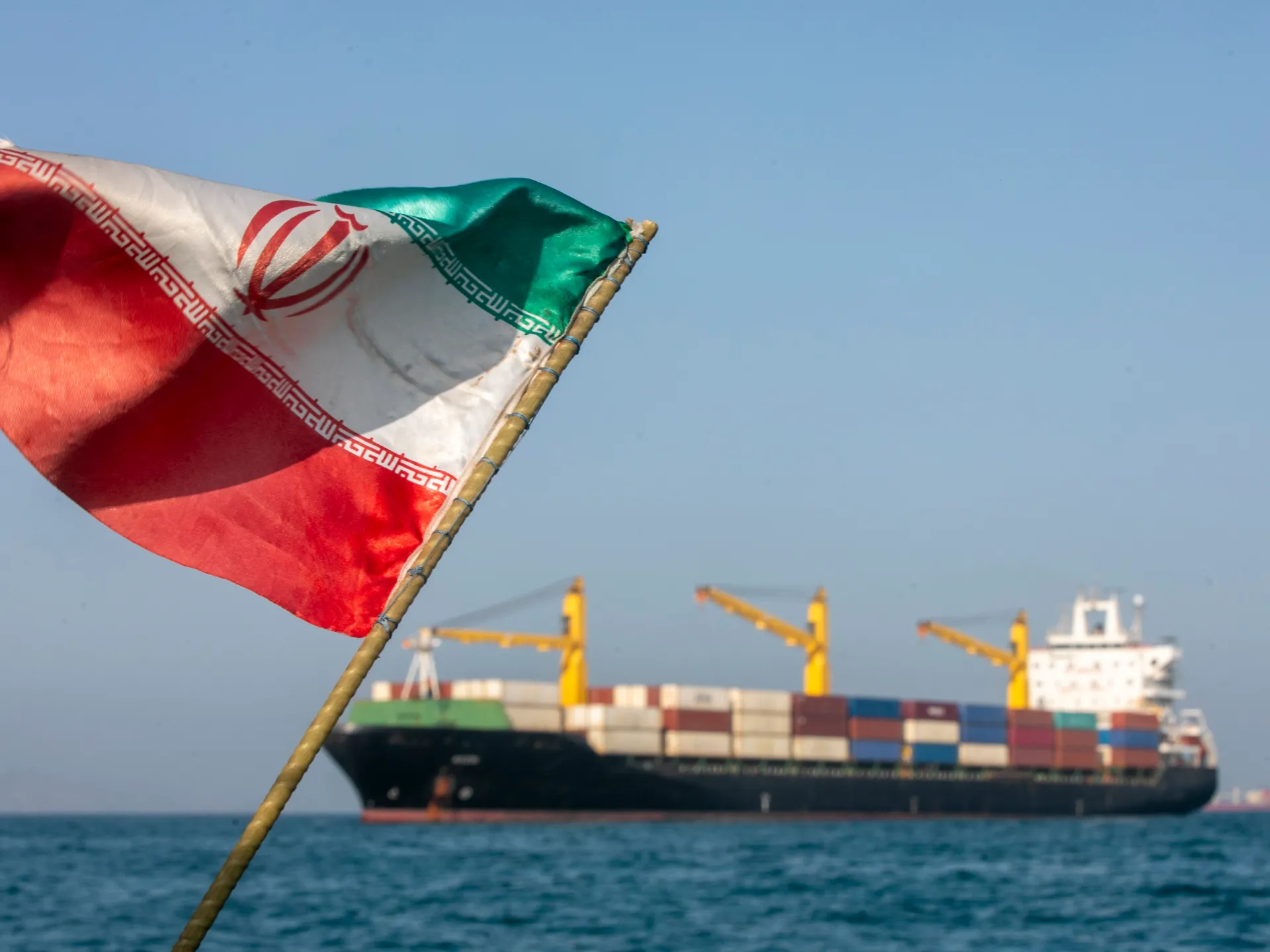
The escalation comes as the two sides try to hammer out the final details of a Memorandum of Understanding (MoM) that could potentially facilitate increased transit through the Strait of Hormuz, which has largely frozen since the US and Israel launched a wave of strikes on Iran on February 28.
The deal would also grant Iran access to some of its own overseas funds that have been frozen due to US sanctions and offer a pathway for a future agreement over the country’s nuclear programme.
Nicole Grajewski, an assistant professor at Sciences Po’s Center for International Research, said many in the Iranian leadership appear concerned that an agreement could simply provide operational pause, intelligence access or political cover before the US and Israel launch another round of large-scale attacks on the country.
“For the deal to be politically sellable internally, Tehran likely needs to frame it not as capitulation under military pressure but as a managed stabilisation that preserved core sovereign red lines,” she told Al Jazeera.
“That probably means maintaining some form of enrichment capability for now, avoiding immediate surrender of the stockpile, securing meaningful sanctions or asset relief, and preserving regional deterrence structures, at least formally outside the agreement.”
‘Negotiating with the enemy is pure loss’
From relatively moderate Iranian politicians in the government to the most hardline military-security factions, all have pledged that the Islamic Republic will not accede to a deal that amounts to “surrender”.
President Masoud Pezeshkian told state television earlier this week that he wants to assure the international community “we are not after nuclear weapons, we are not after insecurity in the region”.
But Majid Mousavi, the influential aerospace commander of the IRGC, wrote in a post on X, in reference to former Supreme Leader Ayatollah Ali Khamenei: “As our martyred imam said, negotiating with the enemy is pure loss.”
Mousavi said he would follow the orders of the country’s new supreme leader, Khamenei’s son Mojtaba, who said in a message to mark the Muslim festival of Eid al-Adha on Tuesday, that “nations and territories of the region will no longer be the shield of American bases”. He also predicted that Israel would no longer exist in 15 years’ time, as foreshadowed by his slain father.
Ali Abdollahi, the commander of the Khatam al-Anbiya Central Headquarters and a leading figure in the war, made a first public appearance on Monday to urge the Iranian armed forces to make the “defeat” of the enemy a priority.
“The Americans talk too much and keep changing their story in a moment. We’ve said many times that we will show on the battlefield what we are capable of,” he told state television on the sidelines of a ceremony in Tehran to commemorate Iranian leaders killed during the war.
In his first public message as the secretary of the Supreme National Security Council, released on Monday, Mohammad Bagher Zolghadr, who is also a top IRGC general, pledged, “there will be no retreat”.
IRGC commander Ahmad Vahidi has also expressed readiness to resume military confrontations with the US if necessary.
Alex Vatanka, senior fellow at the Middle East Institute, said decision-makers in Tehran are not just concerned about a ‘bad deal’ but also one that could force Iran to give up key leverage in the event of future disputes.
“Hardliners are especially alarmed by any discussion involving Hormuz, sanctions sequencing or nuclear concessions because they increasingly view coercive leverage, especially maritime pressure, as Iran’s main post-war bargaining asset,” he told Al Jazeera. That is why the debate inside Tehran has shifted from ‘should we negotiate?’ to ‘what exactly are we giving up?” he told Al Jazeera.
For a deal to succeed, the Iranian leadership will need to believe that some sanctions relief will be tangible and fast, he added.
Iran will also seek to preserve enough of a deterrence mechanism and symbolic dignity to avoid looking defeated, and ensure that the agreement prevents another war from breaking out in the future.
But as it stands – and there is scant information on it – Vatanka said the emerging memorandum “looks less like a historic peace settlement and more like a ceasefire-management mechanism designed to buy time, reduce immediate war risks, reopen parts of Hormuz, and defer the hardest nuclear questions into later rounds”. This would mean lingering suspicion and uncertainty would persist.
Concern for assassination
Iranian state media pundits have also claimed that senior Iranian figures would be vulnerable to assassination if military operations resume.
“If the US, at any point during the current agreement talks, gains access to our supreme leader, it will strike without any consideration for its other interests or consideration for intermediaries like Pakistan and Qatar,” Nima Akbarkhani, an IRGC-linked pundit, said on state television on Tuesday.
Ali Samadzadeh, another state-linked analyst, claimed the emerging US-Iranian agreement could even be a “honeypot” scheme to draw out leaders.
According to US media outlets, Khamenei, who has not been seen or heard from in public since the start of the war, except for written messages attributed to him, is hiding in an undisclosed secure location where even many government officials have no access to him. US officials have said this has slowed the process of talks.
Sciences Po’s Grajewski said over the next few days, the key issue for the Islamic Republic will be securing internal approval. Hardline factions will also scrutinise any concessions made to the US, even those made as part of a crisis-management memorandum that leaves more difficult issues to be faced at a later date.
“So, the realistic outcome in the near term is probably an unstable interim arrangement rather than a comprehensive settlement,” she said.
“Whether it evolves into something more durable depends almost entirely on whether the follow-on nuclear negotiations produce concrete mechanisms both sides can live with.”
Taipei, Taiwan– For Li, an engineer at Taiwanese computer giant ASUS, the AI boom sweeping Taiwan has made it an exciting time to work in tech.
Taiwan is a semiconductor powerhouse, producing about 90 percent of the most advanced chips used to power leading AI models such as ChatGPT and Claude.
Recommended Stories
list of 4 itemsend of list
“I’ve felt Taiwan’s tech and computer industry becoming more vibrant,” Li, who asked not to be identified by his real name, told Al Jazeera, pointing to events such as the upcoming Computex tech and AI expo running from June 2 to 6.
Still, Li worries that the spoils of Taiwan’s AI windfall are not being shared equally.
“Most industries unrelated to tech don’t seem to be feeling the benefits, so it doesn’t feel evenly distributed at the moment,” Li said, explaining that many of his former classmates working outside of tech do not appear to be doing as well.
“It’s mainly the industries at the front of this tech wave that are benefitting.”
Taiwan’s economy is growing at a pace that would be the envy of any country.
Gross domestic product (GDP) rose 8.63 percent in 2025, followed by a heady 13.69 percent expansion in the first three months of this year.
Students dressed in white protective suits and face masks visit a clean room as part of a summer camp organised by US chip designer Synopsys with the goal of attracting more youth to Taiwan’s semiconductor industry, in Hsinchu, on July 18, 2025 [Ann Wang/Reuters]
Exports surged 34.9 percent last year to $640.7bn, with more than two-thirds of the total being tech-related goods and services.
Semiconductors alone account for more than 20 percent of Taiwan’s GDP, according to US trade data, with the vast majority of production handled by Taiwan Semiconductor Manufacturing Company (TSMC), whose top customers include Nvidia and Apple.
TSMC by itself accounts for more than 40 percent of the value of the island’s stock market.
While impressive, the rapid economic expansion has raised concerns about being overreliant on the growth of AI.
Taiwan’s Central Bank Governor Yang Chin-lung has sounded the alarm about an emerging “K-shaped economy,” where certain sectors grow rapidly while others fall into stagnation.
While critical to Taiwan’s economy, the semiconductor industry is far from the largest source of jobs.
The sector employs only about 300,000 people in a workforce of 11 million, according to data compiled by Dachrahn Wu, director of National Central University’s Research Center for Taiwan Economic Development.
The broader electronics and IT manufacturing industry employs about one million people, compared with about seven million working in the service sector, according to Wu’s data.
The heavy reliance on a single industry for growth marks a shift from the Asian Tiger era of the 1960s to 90s, when Taiwan’s economy was driven by hundreds of thousands of small and medium-sized enterprises (SMEs), according to James Lin, a historian who specialises in Taiwan’s post-war economic transformation.
“From the 1970s to 1990s, economic growth was concentrated in the hands of small and medium family enterprises that exemplified the ‘living room factory’ model, where family-owned businesses focused on producing one part for a consumer product,” Lin told Al Jazeera.
“The benefits of this period were thus more widely distributed across Taiwanese society,” Lin said.
“By contrast, today, wealth inequality is growing in Taiwan as land is becoming more expensive and large corporations like TSMC attract the lion’s share of foreign capital investment rather than small corporations.”
Alicia Garcia Herrero, chief economist for Asia Pacific at French investment bank Natixis, said Taiwan’s economic model has left it at risk of becoming a “dual society” where tech sweeps up talent, funding and resources at the expense of other industries.
“It’s very hard if you’re not in [the semiconductor] sector in Taiwan right now,” Garcia Herrero told Al Jazeera, pointing to low wages for workers in non-tech roles and rising costs for businesses.
Some of Taiwan’s challenges are out of its control, said Chao-Hsi Huang, associate dean at the Taipei School of Economics and a former director at Taiwan’s central bank.
Those challenges include US President Donald Trump’s tariffs, which have partially exempted semiconductors but hit exporters in non-tech industries.
“The traditional [manufacturing] sector suffers higher tariffs than other competing countries like Korea or Japan, or even Southeast Asian countries, due to the fact we are not able to sign free trade agreements,” Huang told Al Jazeera.
“We are treated differently, and that’s a difficulty we are facing.”
Critics have placed other issues on the shoulders of the government, including a weak currency that has made exports more competitive but chipped away at consumers’ purchasing power.
Taiwan’s government denies engaging in currency manipulation, though it acknowledges intervening in the market to smooth out “volatility” when the new Taiwan dollar falls or rises sharply against other currencies.
After two decades of stagnation through the 2010s, wages are growing again – albeit unevenly.
Real average wages grew 1.4 percent in 2025, while median wages rose 1.35 percent, according to the Directorate-General of Budget, Accounting and Statistics (DGBAS).
Still, 70 percent of Taiwanese earned less than the average, a statistic attributable to the distorting effect of much higher salaries in the tech sector, where pay is nearly double the national average.
A miniature-sized wafer sorter machine model by Rorze on display at the Science Park Exploration Museum in Hsinchu, Taiwan, on February 6, 2023 [Ann Wang/Reuters]
For Taiwanese frustrated with stagnant pay, Taiwan’s soaring stock market has offered some consolation.
Riding the AI boom, the Taiwan Stock Exchange (TWSE) more than doubled in value between 2019 and 2025 to $2.2 trillion, according to HSBC.
Regulatory changes introduced in 2020 made it easier for small-time investors to buy single stocks, encouraging a rush of everyday Taiwanese into the market.
In January, the TWSE reported that the number of trading accounts had reached 13.77 million – equivalent to 60 percent of Taiwan’s population – while hailing the bourse as a “cornerstone for inclusive prosperity and shared growth”.
Though more equal than neighbours such as Singapore, Hong Kong and China, Taiwan’s wealth divide has grown over the decades.
In 1980, Taiwan had a Gini coefficient of 0.308 – a measurement of wealth distribution where 0 indicates perfect equality – putting it on par with contemporary Norway, according to the DGBAS.
By 2024, Taiwan’s Gini coefficient had grown to 0.341 – lower than many countries but still a significant rise.
“I feel that the benefits of economic growth haven’t been distributed evenly,” Ryan, an engineer in the local tech sector who asked not to be identified by his real name, told Al Jazeera.
“Some industries or asset holders benefit significantly, but ordinary office workers often experience a rise in prices and housing costs, rather than an easier life,” he said.
Wei-ting Yen, an assistant research fellow at the research institution Academia Sinica, said while the semiconductor and stock market booms have helped some Taiwanese, they have heightened the angst of others.
In a survey of 1,195 Taiwanese voters carried out last month, 40 percent said their household was financially either “anxious” or “very anxious” due to rising living costs, particularly housing.
“I think subjectively, they’re anxious that they’re not accumulating wealth and it’s not enough to help them buy a house or an apartment,” Yen told Al Jazeera.
“Housing prices have been going crazy worldwide, and the stock market has been going crazy, [but] for people who do not have extra money to invest in those two options, it creates even more frustration and anxiety around them,” she said.
BBC Radio 2 host Vernon Kay and former Strictly Come Dancing presenter Tess Daly have remained on good terms, following their split after 23 years of marriage
08:49, 27 May 2026Updated 08:49, 27 May 2026
Tess Daly and Vernon Kay announced their shock split earlier this month
Vernon Kay has opened up about a recent family gathering in his first on-air mention of Tess Daly since addressing their split. The couple announced their separation earlier this month after 23 years of marriage and have remained on good terms.
Despite the split, they are believed to still be living together with their two daughters, Amber and Phoebe.
Back on his show on Monday, Vernon shared details about a party that took place at their home. He revealed: “Yesterday, we were tidying up, Amber had a party.
“Tess and I were running around tidying up and thank goodness that the weather was nice, do you know what I mean, with cleaning up the garden. We had such a good time, it was awesome on Saturday night and very funny.
“But in the morning, Tess and I were like, ‘Woah, better get cracking!'” After his co-star Ellie suggested it was an “all day job”, Vernon agreed, adding: “Yeah, brace yourself!”.
In a statement shared with fans on May 8, the couple said their decision to separate had “not been an easy choice”, but came “from a place of mutual understanding and a shared desire for what is best for both of us”.
They added that they “remain great friends and most importantly, fully committed to our roles as loving and supportive parents, which will always be our priority”.
The pair also clarified that there were “no other parties involved” and asked for privacy “as we navigate this transition together”.
Vernon’s father, Norman, has also spoken about the couple’s “sad” split, telling the Daily Mail they had “gone in different directions” over the years.
“But it’s an amicable split and there is no bad blood between them,” he added. “Sometimes these things happen for the better and this is one of those cases.”
Offering some advice to his son, Norman urged Vernon “not to rush into another relationship” before joking: “He’s a good-looking lad but not as good looking as me!”
He later clarified: “He’s not interested in finding anyone else at the moment and there is nobody else involved.”
Vernon and Tess were spotted out together at Pub in the Park just 10 days after their split. Pictures show the duo mingling with fellow attendees, while appearing to be in high spirits.
An onlooker at the event told The Sun: “Tess and Vernon seemed super-relaxed in each other’s company despite the news of their split.
“It’s clear to see that they are still very much happy around one another and there’s been none of this messy split business. They chatted to fans, posed for selfies and had a well-earned boogie.”
Israeli strikes kill 31 in Lebanon as attacks intensify and displacement orders spread.
Published On 27 May 202627 May 2026
Israeli attacks across southern Lebanon killed at least 31 people and wounded 40 others on Tuesday, as Israeli forces intensified strikes and issued dozens of displacement orders for towns and villages in the country’s south and east.
Panic spread across southern Lebanon as residents fled the escalating assault, with Israeli ground forces reportedly pushing deeper into Lebanese territory amid fears of a wider offensive.
Meanwhile, Iranian officials condemned what they called “blatant violations” of the ceasefire by the United States after attacks on southern Iran on Monday, saying the strikes had further damaged already fragile diplomatic efforts.
Here is what we know:
In Iran
Iran accuses US of violating ceasefire: Iran said the US violated the ceasefire by carrying out strikes near the Strait of Hormuz, complicating efforts to end the war. Iranian officials described the attacks in Hormozgan province as a “gross violation”, while the US claimed the strikes were defensive and targeted missile sites and vessels attempting to lay mines.
Khamenei warns Gulf states over US bases: In an Eid al-Adha message, Iran’s Supreme Leader Mojtaba Khamenei said the US was losing influence in the Middle East and warned regional countries against hosting military bases that could be used to launch attacks on Iran.
Iran seeks frozen assets release: Iran’s Tasnim news agency said Tehran is pushing for the release of $24bn in frozen assets as part of ongoing negotiations, with half expected to be unlocked after an initial agreement is signed.
Internet partially restored: Meanwhile, internet access has begun gradually returning after what NetBlocks described as Iran’s longest nationwide crackdown on online access.
War diplomacy
US says Iran deal still possible despite strikes: Despite new US attacks, Secretary of State Marco Rubio said a peace agreement with Iran remained within reach. The strikes threatened the fragile ceasefire between Washington and Tehran, as China called on all sides to honour the truce and resolve disputes through diplomacy.
In Israel
Netanyahu warns of ‘more to come’ in Lebanon: Israeli Prime Minister Benjamin Netanyahu said Israeli forces were “deepening” operations inside Lebanon, with troops “seizing and controlling” territory and expanding what he described as a “security zone”. Speaking after Israeli attacks, Netanyahu also said Israel was intensifying efforts against Hezbollah drones and pledged fighting would continue “until ensuring the full security of Israel’s citizens”.
US warplanes remain stationed in Israel: Israel’s Kan broadcaster reported an “unprecedented” deployment of US fighter jets and refuelling aircraft at Israeli airports, saying the military presence at Ben Gurion and Ramon airports is affecting civilian aviation capacity. The aircraft have remained in Israel despite the ceasefire with Iran.
In the US
US senator criticises Trump’s Iran strategy: Democratic Senator Cory Booker said President Donald Trump’s approach to Iran had backfired, arguing the conflict had strengthened Tehran’s position and given it greater leverage over the Strait of Hormuz. Booker said the US was now in a “worse” situation than before the war and accused Trump of leading the country into a costly deadlock.
In Lebanon
Israeli attacks kill 31 in Lebanon: Recent Israeli ground and air operations killed at least 31 people, as Israeli forces intensified strikes and pushed deeper into Lebanese territory. Israel also issued dozens of forced displacement orders across southern Lebanon and the eastern Bekaa Valley.
Hezbollah ‘not losing the war’: Security affairs analyst Ali Rizk told Al Jazeera that Israel’s intensifying military campaign suggests mounting concern over Hezbollah’s resilience on the battlefield, while also reflecting growing political pressure on Israeli Prime Minister Benjamin Netanyahu at home.
‘Illusion of a ceasefire is entirely gone’: Reporting from Tyre in southern Lebanon, Al Jazeera’s Obaida Hitto said the sharp escalation in Israeli attacks shows that diplomatic efforts to contain the conflict have in effect collapsed. Massive strikes hit eastern Lebanon, including areas near the strategic Qaraoun Dam, while displacement orders spread across dozens of towns and villages. Hitto said civilians were once again facing the “devastatingly familiar reality” of widespread destruction, displacement and fear.