A large fire destroyed an apartment complex in Dallas after crews responded to reports of a gas leak. Authorities say at least three people, including a child, were killed. Other residents are unaccounted for.
The Day of Venezuelan Afro-Descendance celebrates José Leonardo Chirino’s uprising against the Spanish crown in 1795. (Venezuelanalysis)
“In my humble opinion, you have never known how to make coffee or Negroes. The former you leave too light, the latter too black.”
– Venezuelan poet and politician Andrés Eloy Blanco to US visitors, 1944
Contemporary racist attitudes in Venezuela have deep roots in the colonial period (sixteenth to nineteenth centuries). After independence, Venezuela constructed a national narrative that claimed to have overcome racism through miscegenation. We were (are) a “café con leche” (coffee with milk) nation, a blend in which racial differences had dissolved. But this supposed harmony concealed a persistent idea: whiteness remained the ideal, while African and Indigenous identities were seen as something to be diluted and gradually eliminated.
This whitening process was not only biological, but also cultural and political. Paradoxically, racism in Venezuela became invisible to those who practiced it and even to those who suffered from it, masked under the pretext that “here we are all mestizos.” However, we have seen that when political conflicts intensify, the mask of mestizaje falls away and colonial prejudices resurface.
The origin of an ideology
Although the validity of the term “race” has been questioned – on the grounds that we all belong to the human race and differ only in phenotypic traits – according to Venezuelan historian Luis Felipe Pellicer, “…if racism exists, race exists,” but only as an ideological construct of domination, and by no means as a scientific truth.
Racism emerged in Venezuela as a result of an exploitative and extractive economy that created a need for enslaved labor. Initially, this labor force consisted of Indigenous people and was later supplemented by individuals brought from the Atlantic coast of Africa. Countries such as present-day Ghana, Togo, Benin, Angola, and the Republic of the Congo were particularly affected.
Now, the issue of slavery in Africa has deeper roots that warrant a more comprehensive examination, but in the Americas this system underwent a transformation, and what began as an economic activity ultimately established ideas that created negative associations around those subjected to slavery, thereby inventing the political and social category of “blackness.” By merging the condition of slavery with skin pigmentation into a single concept, the colonial mindset ended up stigmatizing every cultural and vital expression of these groups, considering them inferior, ugly, and despicable.
One of the characteristics of enslavement in the Americas was dehumanization and its racial justification. That is to say, here the idea of enslavement due to war or debt repayment was abandoned. The automatic association was: you are a slave because you are a Black African, and vice versa. This phenomenon created the idea that all Africans and their descendants were predestined for servitude and forced labor.
The racist backlash
The recent incident in Madrid that saw supporters of far-right leader María Corina Machado shout slogans against Venezuelan Acting President Delcy Rodríguez reflects a deep social divide. Sectors of the opposition who identify – whether phenotypically or aspirationally – with a Eurocentric worldview and the ideal of “whiteness” believe that the exercise of power by groups they associate with or perceive as people of African descent constitutes a historical affront. For decades before the Bolivarian Revolution, epithets like “monkey,” “mulatto,” “zambo,” “bembón,” and “bad hair,” among others, paraded across TV screens and in the national press with complete normality and often disguised as jokes – another mechanism for propagating Venezuelan racism. Following his government’s post-2001 radicalization of revolutionary reforms, Hugo Chávez was himself notoriously called a “monkey” and prominently caricatured as such by Venezuela’s right-wing opposition.
It is no surprise, then, that the presence of figures such as Venezuela’s current acting president transcends the issue of political ideology to constitute a rupture in “quality,” a term used in eighteenth-century Venezuela. “What is quality or race?” asks Pellicer. “It is an idea of inferiority regarding a human group that is transmitted, corporeally, through sexual reproduction.” It is an affront, then, to the natural order of things, to the pyramid of colonial society that placed peninsular Spaniards at the apex and people of African descent at the base.
With the chant “Fuera la mona” (“Out with the monkey”), the Venezuelan far-right hurled an insult that reveals their undemocratic nature. But more importantly, these insults are not even linked to any incompetence in governance, but rather to what these groups perceive as “racial incompetence.” It is the expression of a wounded “whiteness” that uses racism as a defense mechanism against what they see as a displacement of their traditional privileges. It is, in essence, an attempt to restore a colonial order.
Racism is a power structure. “Colonial thought,” Pellicer observes, “invents the other, whether Indigenous, mestizo, mulatto, or Black, as well as the white self … thereby establishing the ideology of race as the primary marker of inequality, beginning with the invasion of the Americas.” The struggle for honor in the colony was a struggle for differentiation and political recognition. Today, the “animalization” of non-white political leaders is the continuation of that colonial war, which is why the Madrid slur is not a simple rudeness; it is an act of historical violence. It is the voice of the eighteenth century trying to silence the twenty-first. And at this point, one must ask: what is admirable about the idea that, based on skin color, some are more or less fit to govern a country?
The slave owner/racist does not see a person; he sees a tool, a piece of property, and for this to happen, the mind must adopt a psychopathic and callous mindset. The racist needs to strip the oppressed of their status as subjects in order to invoke a visceral fear of otherness that, if acknowledged, threatens their illusion of superiority. Choosing to be part of this ideological operation of domination today should be a source of shame, for it is the most glaring expression of a violence that heralds the end of humanity.
From Cortés to Díaz Ayuso
This exclusionary mindset is part of a transatlantic trend toward neocolonial revival that seeks to re-legitimize old hierarchies. A telling example is Spanish right-wing politician Isabel Díaz Ayuso’s recent visit to Mexico, where her proposal to celebrate the figure of Hernán Cortés serves as an ideological parallel to the “Fuera la mona” chants heard in Madrid. By attempting to portray the invasion and genocide in the Americas as a “civilizing” feat, Ayuso revives the logic of the “society of qualities”: a structure where moral and political superiority is an exclusive Hispanic and white inheritance, while Indigenous and Afro-descendant peoples are reduced to a state of barbarism remediable only through paternalistic tutelage.
This narrative is not merely a historical debate, but a contemporary validation of the racial hierarchy and justification for overthrowing processes of popular sovereignty in Latin America. Ayuso’s discourse seeks to reaffirm a “Hispanic identity” that views ethnic otherness as a threat to the values of Western civilization. In this sense, what happened in Madrid is a clear symptom of the reactionary neo-fascist wave sweeping large parts of the Global North and South.
Racist remarks
The trauma of Venezuela’s War of Independence (1810–1830) and the Federal War (1859–1863) created the need to invent a narrative in which Venezuelan society was free of conflicts and differences, and thus the persistence of racial and social tensions has been glossed over. However, it resurfaces in comments such as: “Fuera la mona”; “We need to improve the race”; “Black but refined”; “Money whitens.”
In 1948, conservative writer Arturo Uslar Pietri responded to Rómulo Gallegos’s presidential campaign by stating: “Anyone who speaks of blacks or whites, anyone who invokes racial hatred or privileges, denies the essence of Venezuela. In Venezuela, in political and social matters, there are neither whites nor blacks, neither mestizos nor Indigenous people. There are only Venezuelans .” This argument was almost exactly the same as that put forward by María Corina Machado when asked about the event at La Puerta del Sol, stating that it had occurred because of the fissures of hatred that Chavismo introduced into its discourse over 27 years in power.
The end of denial
As part of the commemoration of the Day of Venezuelan Afro-Descendance, established under the Hugo Chávez government in 2005 to be celebrated every May 10 [on the anniversary of the 1795 slave uprising led by José Leonardo Chirino], it is both pertinent and necessary to reflect on and understand that racism in Venezuela is a long-standing phenomenon that surfaces with particular virulence during times of political crisis. The historical association between power and whiteness, inherited from the colonial era and reinforced by twentieth-century positivist thought, remains alive in the minds of sections of society that refuse to accept the nation’s diversity, including among working-class communities through what is known as endoracism.
Understanding the origin of this phenomenon is the first step toward dismantling it. We must move from the false harmony of “café con leche” to true decolonial justice, where a person’s “quality” is not dictated by their “whiteness.” The Madrid incident reminds us that the battle for Venezuela’s mental independence far from over.
Rosanna Álvarez holds an MSc in History of Republican Venezuela from the Central University of Venezuela (UCV). She is a researcher at the Centro de Estudios Simón Bolívar and Fundación Hugo Chávez, as well as a writer at the Libertador 8 Estrellas magazine. She is the author of Venezuela vista e imaginada. Un recorrido visual por nuestra historia and host of the Bolívar Nuestro show on Radio del Sur.
The views expressed in this article are the author’s own and do not necessarily reflect those of the Venezuelanalysis editorial staff.
WHO can blame Paul McCartney for glancing in the rear-view mirror on his latest record?
At 83, the likely lad from Liverpool, who became a Beatle and Britain’s best-loved songwriter, is due a moment of reflection.
Sign up for the Showbiz newsletter
Thank you!
Paul McCartney’s new album The Boys of Dungeon Lane was recorded over the past five years, between touring and other commitmentsCredit: UnknownMacca at his album playback in Studio Two, Abbey Road, wearing Beatles socks. And he won’t need Father McKenzie to darn them!Credit: Unknown
He looks at it this way: “As a writer, you often write about things in the past, even if it’s just yesterday.”
Or even, as Macca can’t resist saying, if that past “always seems so far away”.
“That’s another nice idea. I think I might have done that one,” he adds in acknowledgment of his immortal Beatles ballad Yesterday.
His 20th solo studio album, The Boys Of Dungeon Lane, finds him casting his mind back to innocent times before The Beatles changed his life for ever.
Five of the 14 tracks visit the simple pleasures of youth — As You Lie There, Days We Left Behind, Down South, Home To Us (a first ever duet with Ringo) and Salesman Saint — and, as you’ll discover, each comes with a captivating back story.
Here, the master storyteller, whose previous character studies include Eleanor Rigby, The Fool On The Hill and She’s Leaving Home, turns the spotlight on himself for what might just be his most personal song cycle yet.
On The Boys Of Dungeon Lane, Sir Paul makes you believe in HIS yesterdays.
Asked why much of his latest work deals with memories, he replies: “I think writers, including me, ask themselves that.
“When you think about, say, Charles Dickens, what’s he going to write about except stuff he knows and stuff he remembers? Then he can gussy them up.”
And do recent Beatles and Wings reissue projects have an impact on the way he fashions a song these days?
“No,” answers McCartney emphatically. “The thing that pulls it all together is me — it’s my brain making music.
“I don’t think, ‘Wow, oh yeah, let’s do this. This is a Beatles idea, or this is a Wings idea’. I don’t think like that. It’s all current. It’s me. This is what I do.”
Listen to The Boys Of Dungeon Lane and you’ll understand what he’s getting at.
Despite first picking up a guitar nearly 70 years ago, he’s still making eclectic, freewheeling music, brimful of ideas, even if many lyrics are bathed in nostalgia.
The album was recorded over the past five years, when time permitted between touring and other commitments, in the company of in-demand American producer Andrew Watt, known for his work with Ozzy Osbourne, Post Malone, Lady Gaga, Miley Cyrus and, ironically, The Beatles’ chief Sixties chart rivals, the Rolling Stones.
“We just enjoyed it,” says Macca of his sessions with Watt. “We were like a couple of Boys Of Dungeon Lane — little boys in a sandpit — and we were having fun.”
Paul and Beatles drummer Ringo Starr are still closeCredit: GettyMacca riffing with producer Andrew WattCredit: Unknown
So, with the help of telling observations from the man himself, given to me by his team, let’s take a deep dive into the key tracks.
As You Lie There begins proceedings in memorable style with an intimate spoken word passage delivered over minor key acoustic strums.
McCartney intones: “I used to walk past your house. Every night I’d look up at your window. The light was on. I saw your silhouette on the blind. Do you think of me? Do I ever cross your mind?”
The song, with its squalling rock refrain, recalls a teenage crush from the time Macca lived at 20 Forthlin Road in the Allerton area of south Liverpool, in the house where he and John Lennon first discovered their spark of creative chemistry.
“Up in one of the windows, there was a girl I fancied called Jasmine,” he says of his tale of unrequited love. “But I didn’t know how to approach her. I never spoke to her.
“The joke was, she did show up later that year and knocked on the door. I was indisposed — I was on the toilet — so I missed Jasmine.”
Aside from the sweet story behind the lyrics, As You Lie There is important because it is the song that kickstarted the whole process, just as the world was emerging from the Covid pandemic.
McCartney says: “The album really started when my manager said, ‘Would you like to meet Andrew Watt?’
“I knew he was an active young producer, and I liked some of his stuff. I said, ‘Yeah, great’. He said, ‘Well, it’s just a cup of tea. Go down to his studio’.”
The pair hit it off and what began as that cuppa at Watt’s basement studio — located in his Beverly Hills residence once owned by Charlie Chaplin — soon turned into something much more significant.
Macca described his songwriting process, how he would try “to find
a really weird chord”, to give him “a little inspiration”.
To his delight, he realised that Watt, a big guitar collector, “had figured that if I was coming down, it would be handy to have a left-handed guitar.
“I struck this mad chord,” he continues. “I still have no idea what it is, then I changed one note, then another. Suddenly we had a three-chord sequence and Andrew said, ‘We should record this’.”
As the song took shape, they considered bringing in Chad Smith of Red Hot Chili Peppers on drums but Watt suggested that McCartney, a more than proficient drummer, should play them himself.
He says: “I really enjoyed drumming to it, so I put down the drum track, then obviously the bass.
Paul first picked up a guitar nearly 70 years ago, but still make eclectic, freewheeling music, even if many lyrics are bathed in nostalgiaCredit: GettyPaul during filming of ‘Magical Mystery Tour’ in 1967Credit: Redferns
“Then Andrew put the guitar lick down, because he’s a good guitar player. And over a few days, we made As You Lie There. That started the journey.”
The “journey” included recordings in various LA studios as well as Macca’s own Hog Hill Mill in Sussex and his old Beatles stomping ground, Abbey Road.
Of all the ensuing songs, first single Days We Left We Behind sets the tone — and is also significant for yielding the album title.
“This is very much a memory song for me,” says McCartney. “I was just thinking about those days I left behind.”
Whenever he goes to Liverpool these days, to visit the city’s Institute for Performing Arts (LIPA) for instance, he notes that “the back entrance to the airport is in Dungeon Lane”.
He remembers trips down that lane “as a little kid, because I used to wander off, just on my own, with my little bird book”.
It was the keen ornithologist’s gateway to stunning Mersey Shore, an area teeming with wading birds just a short distance from suburban Speke where he lived between the ages of five and 13.
“Speke is quite working class,” says McCartney. “We didn’t have much at all but it didn’t matter because all the people were great and you didn’t notice it.
“It’s my wife Nancy’s favourite track on the album. When we play it to people, we say, ‘You don’t need to cry’, and then you look up and see that they are.”
When asked how he settled on the album title, Macca says you could ask the same question about Sgt. Pepper’s Lonely Hearts Club Band.
“It’s just some words I like. We were thinking Along The Mersey Shore could be good. But then I liked The Boys Of Dungeon Lane — it’s a bit more, ‘What’s that about?’ ”
McCartney says Days We Left Behind “involves a bit in the middle about John and Forthlin Road”. (The McCartney family moved there in 1955).
It suggests that he and his much-missed songwriting partner in The Beatles “wrote a secret code, to never be spoken”.
This leads us to the folkie Down South which, says Macca, is “another one about reminiscing”.
“I often think about John and George,” he continues. “We used to hitchhike in the days before The Beatles. It was in the days when you could — now I warn my grandkids, ‘Don’t do it’, because there are too many nutters out there.”
He remembers: “I got a tip from someone who said, ‘You start off in Chester — because that’s where all the lorries are and they’re all going straight down south. That’s a good place to get your first lift’.”
With Harrison, seven months his junior, coming along for the ride to places like Harlech in Wales, it was a perfect chance to do some “bonding” with his future bandmate.
And speaking of bandmates, what about the rousing Home To Us, which, for good reason, is the only track McCartney doesn’t play the drums on.
During one of his breaks from sessions with Watt, he “talked to Ringo about Andrew”.
“Then Ringo went round to Andrew’s studio and drummed a bit. Next time I saw Ringo, he said, ‘Well, he didn’t do anything with it.’
“I asked what he’d expected and he said, ‘Well, you know, a track’.”
When Macca finally heard his old mucker’s efforts, he suggested to Watt: “We SHOULD make a track and send it to Ringo. So, we did.”
On writing the Home To Us lyrics, he reveals: “This song is done totally with Ringo in mind. I’m talking about where we came from.
“In common with a lot of people, you come from nothing and you build yourself up. Ringo was the one who came from the most ‘nothing’ in The Beatles.
“He was from the Dingle and that was well hard. He used to get mugged coming home from work.
“Even though it was crazy, it was ‘home to us’ and I made the song around that idea.” At first, Ringo only sang a few lines of chorus, but Macca rang him and said he’d “love to hear him sing the whole thing”.
“Next, we took my first line, Ringo’s second line and we had a duet — something we’d never done before.
“We also wanted backing vocals, and I had the idea it would be nice to hear girls. Chrissie Hynde and Sharleen Spiteri are mates — and they did it.”
The last of McCartney’s memory songs is the most poignant, Salesman Saint, which pays tribute to his midwife mother Mary who died when he was only 14 (the “mother Mary” of Let It Be) and his salesman/amateur musician father Jim.
He says: “This song is me remembering my mum and dad. I was born in World War II and I often think, ‘Bloody hell, it’s tough enough having a baby now but imagine if we were all conscious that bombs could be falling any minute’ — and Liverpool was getting heavily bombed.
“I was thinking about them bringing up this kid in those circumstances. My dad happened to be a cotton salesman, and my mum was a nurse. They did it. They managed it and they brought up me and my brother [Mike].
“Got us to doctors, got us to school and did all these things under those circumstances. At the end of the song, there’s music I’m trying to make from their era.”
So now you’ve heard about all the songs inspired by McCartney’s youth but there are NINE more tracks to digest. So here, in Macca’s own words, are his thoughts on those:
Lost Horizon: “This one came about when our dearly beloved and now sadly deceased studio manager, Eddie Klein, was logging some old cassettes of mine.
“He asked me if I remembered Lost Horizon and I said, ‘No’. He said, ‘It’s good, you should listen to it’. So, we remade it faithfully to the cassette version — just with a more modern sound.”
Ripples On A Pond: “It’s a love song. Like a few of the songs, we started this in my studio in Sussex. I said to Andrew, ‘You’re supposed to be a pop producer and we’re making all these records that don’t sound like that to me so, come on, let’s pop this one up!’ ”
Mountain Top: “My wife is a real live music fan and if there’s anything on she’s like, ‘Can we go?’ So, we go to Glastonbury every year and I started fantasising about some young girl tripping — she’s magic mushroomed out. The things you write songs about!” (Nancy delivers the closing spoken words.)
We Two: “A lot of Beatles records were made on a four-track Studer machine, including A Day In The Life. It’s such a classic now. I’ve got one in the studio and we use it sometimes. Andrew loves all these recording legends of the past. I showed him the Studer and he said, ‘Can we use it now?’ Luckily, it’s in full working order so we did We Two on it. It’s a little love song.”
Come Inside: “Going to side two now. We start it off with a rocker love song. It’s straightforward — but with verve.”
Never Know: “When I was in LA, I always liked the idea of Laurel Canyon and that scene. The days of Joni Mitchell, the Eagles — all that hanging out, getting stoned and playing guitars. So that was the vibe that started off Never Know.”
Life Can Be Hard: “I had a little instrumental chord sequence during Covid — and there was a little baby in the house, my wife’s niece’s new baby and it was a thrill. For a lot of people, Covid was terrible if you weren’t with family.
“Anyway, this baby used to like these chords, and it became a song. Life can be hard, but that’s when we put it together again. It’s a positive message.”
First Star Of The Night: “I was on tour and had a day off, which was precious. We were in Costa Rica and it rained hard — all day heavy, tropical rain. I was thinking about being out by the pool, but you really couldn’t go out.
“I thought, ‘I know, I’ll write a song’. I had my guitar with me. So, this starts out, ‘Even when it’s raining’, but then I switched it to, ‘Even when it’s raining inside’, just to give myself somewhere to go with the song.”
Momma Gets By: “The last track on the album and it’s totally imaginary. I was thinking of Porgy and Bess’s world. It’s basically about a woman who you can see is the strength in the family.”
Finally, Macca is asked how he hopes listeners will respond to his new album.
He replies: “Well, I hope they fall in love with the songs and the performances. I hope it takes them to a place of joy.”
Whether it’s Penny Lane, Dungeon Lane or Memory Lane, Paul McCartney will transport you there.
Roll up! Roll up! He is your magical not-so-mysterious tour guide.
PAUL McCARTNEY
The Boys Of Dungeon Lane
★★★★★
Whether it’s Penny Lane, Dungeon Lane or Memory Lane, Paul McCartney will transport you there with his new albumCredit: AP
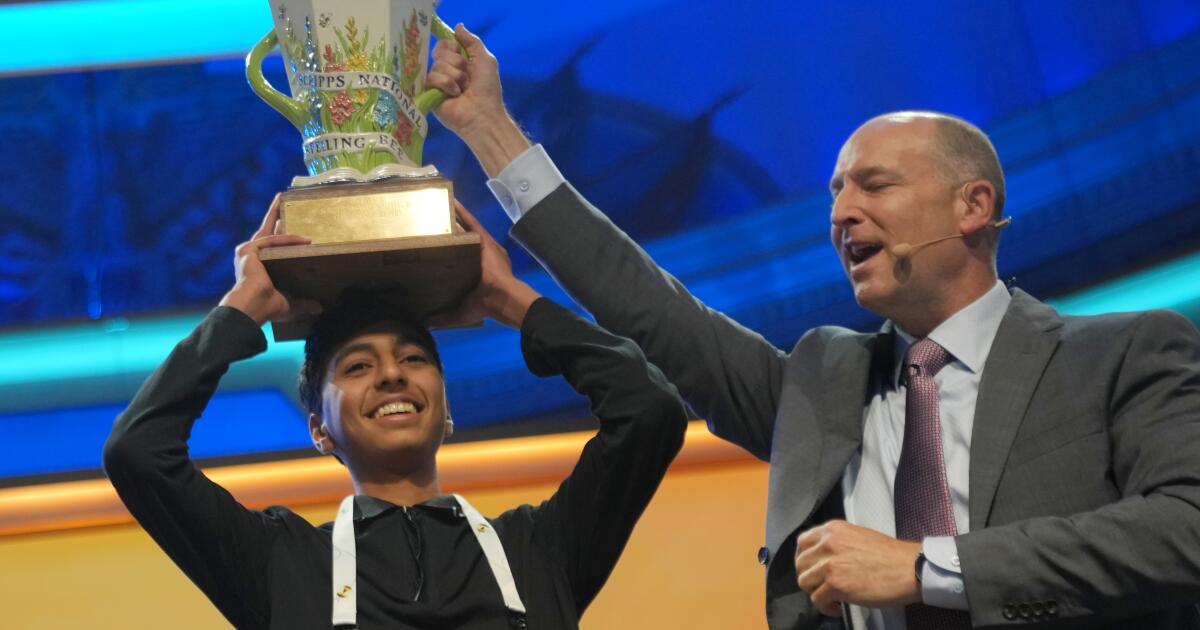
WASHINGTON — Shrey Parikh felt the pressure of arriving at the Scripps National Spelling Bee as a favorite, but his confidence showed every time he got a word he knew. And when the bee came down to a lightning-round tiebreaker against Ishaan Gupta, Shrey left no doubt.
Shrey turned a tense, high-quality final into a blowout Thursday night, racing through the 90-second “spell-off” and getting 32 words right to be crowned the best young speller in the English language. Ishaan spelled 25 words correctly in the tiebreaker.
A 14-year-old from Rancho Cucamonga, Shrey finished third in 2024 but lost his school bee last year when he was battling a fever. He has dominated the bee circuit since, winning several highly competitive online competitions against many of the same kids he outlasted this week in the nation’s capital.
Ishaan, a 12-year-old seventh-grader from Jersey City, N.J., was a semifinalist this year, outperformed some veteran spellers in the finals, and has another year of eligibility left.
Sarv Dharavane, a 12-year-old sixth-grader from Dunwoody, Ga., finished third for the second consecutive year and has two more years to improve that placement.
For the first time in the bee’s history, second- and third-place finishers from the same year have gone on to win. Faizan Zaki won last year, and two years ago he was the runner-up, just ahead of Shrey.
Sporting a business-casual look with a dark, long-sleeve collared shirt, khakis and sneakers, the lanky Shrey strode to the microphone with a dour, apprehensive expression that instantly vanished when he heard his word from pronouncer Jacques Bailly and nodded vigorously — his tell that, yes, he knew it.
Upon hearing the announcement confirming his victory in the spell-off, Shrey turned and shook his competitor’s hand.
He can credit his victory to intense preparation. Shrey’s coaching team included Sam Evans, who has tutored each of the past three champions, and Sohum Sukhatankar, a co-champion himself in 2019. He competed nonstop against other top spellers, pored through advanced study guides and tried to eliminate the variables that had led to the few unexpected exits of his long spelling career.
Former spellers, coaches and other observers described this group of finalists as unusually strong, and they showed off their skills early by going 18 for 18 to start, breezing through the first spelling and vocabulary rounds. Aiden Meng of Orinda, Calif., ended that streak when he was tripped up by “catometope” to start the second spelling round.
Then the crowd gasped when the bell rung on two thought to be capable of winning it all: Oliver Halkett for “Faesulae” and Zwe Spacetime for “vaesite,” words with tricky combinations of origins and vowel sounds.
The bee’s move to Constitution Hall, a point of contention for spellers and their families because of the inconveniences it caused, helped imbue the event with a lively atmosphere, with more intimate seating and better sight lines bringing the crowd closer to the action.
New television host Mina Kimes of ESPN narrated the action smoothly alongside longtime bee analyst Paul Loeffler.
May 28 (UPI) — A 52-year-old California woman convicted of hosting drunken house parties for young teenagers has drawn a 35-year prison sentence, prosecutors said Thursday.
Shannon O’Connor of Los Gatos, Calif., dubbed the “Party Mom,” was handed the maximum sentence on child abuse convictions during a hearing at Santa Clara County Court in San Jose.
Prosecutors said O’Connor procured vodka, whiskey and condoms for the 14- and 15-year-olds who attended parties at her home over a two-year period and encouraged them to drink to the point of passing out.
They alleged she warned the victims not to tell their parents about the parties or she could go to jail, and at one handed an teenager a condom and pushed him into a room with an intoxicated minor.
A jury convicted O’Connor in March and this week the court heard victims’ impact statements, including from one young woman who testified that she became suicidal from the experience.
In another instance during a party attended by five 14-year-olds, prosecutors say O’Connor watched and laughed as a drunk teen sexually accosted a young girl in bed.
In yet another case, she encouraged a sexual act after which the young female victim said to O’Connor, “Why did you leave me in there with him? Like, you knew like what he was going to do to me.”
“Many people call this defendant the ‘Los Gatos Party Mom.’ This isn’t some fun parent giving sips of wine spritzers to kids,” Santa Clara District Attorney Jeff Rosen said.
“She facilitated dangerous and drunken sex acts with these children. She risked their lives and damaged their psyches. She is not a party mom. Shannon O’Connor is a convicted felon. Shannon O’Connor is a registered sex offender.”
Rosen said O’Connor would summon teens to party at her home in the middle of the night and in one instance let a minor drive her SUV while another teen was knocked unconscious after falling off the back.
Proposed $250 bill would mark the first time a living person has appeared on US currency in more than a century.
Published On 29 May 202629 May 2026
US Secretary of the Treasury Scott Bessent says preparations are under way to print a new $250 banknote featuring President Donald Trump’s face, with lawmakers to decide whether the bills will be put into circulation.
US law bars any living person from appearing on US currency, but legislation was introduced last year to create an exception to allow current and former presidents to be featured.
Recommended Stories
list of 3 itemsend of list
Speaking at the White House on Thursday, Bessent said a design had been prepared in anticipation of a change in the law.
“Right now, there is proposed legislation – front of the House, in front of the Senate – to change the first requirement so that a living person, Donald J Trump, could be on a $250 bill,” Bessent said.
Bessent made his comments after The Washington Post reported that Treasurer Brandon Beach, a Trump appointee, has been pushing the Bureau of Engraving and Printing to expedite the process for a new currency note to mark the 250th anniversary of the Declaration of Independence.
“I don’t think that there’s anything untoward about having the president of the United States, the person who’s president of the United States, on the 250th anniversary bill,” Bessent told reporters.
A design mock-up obtained by The Washington Post showed the words “America 250 anniversary”, a nod to the US declaring its independence on July 4, 1776.
The Treasury Department did not immediately respond to Al Jazeera’s request for comment.
Behaviour of dictators, monarchs
A banknote featuring Trump’s face would be the latest example of the US president expanding his personal brand in his official capacity since returning to the White House in 2025.
Banners featuring Trump’s portrait have been hung on the Department of Justice and other federal buildings.
And his slate of appointees to the Kennedy Center governing board added his name to the national performing arts facility, which Congress originally designated as a memorial to assassinated President John F Kennedy.
Trump’s signature is also set to appear on US currency as part of plans to mark the 250th anniversary, a first for a sitting president.
US banknotes have until now featured the signatures of the Treasury secretary and the treasurer.
In March, the US Commission of Fine Arts, led by Trump appointee Rodney Mims Cook Jr, approved the minting of a commemorative gold coin bearing the Republican president’s image.
The announcement, which relied on a legal loophole for commemorative coins, prompted a backlash from critics, who likened the move to the behaviour of dictators and monarchs.
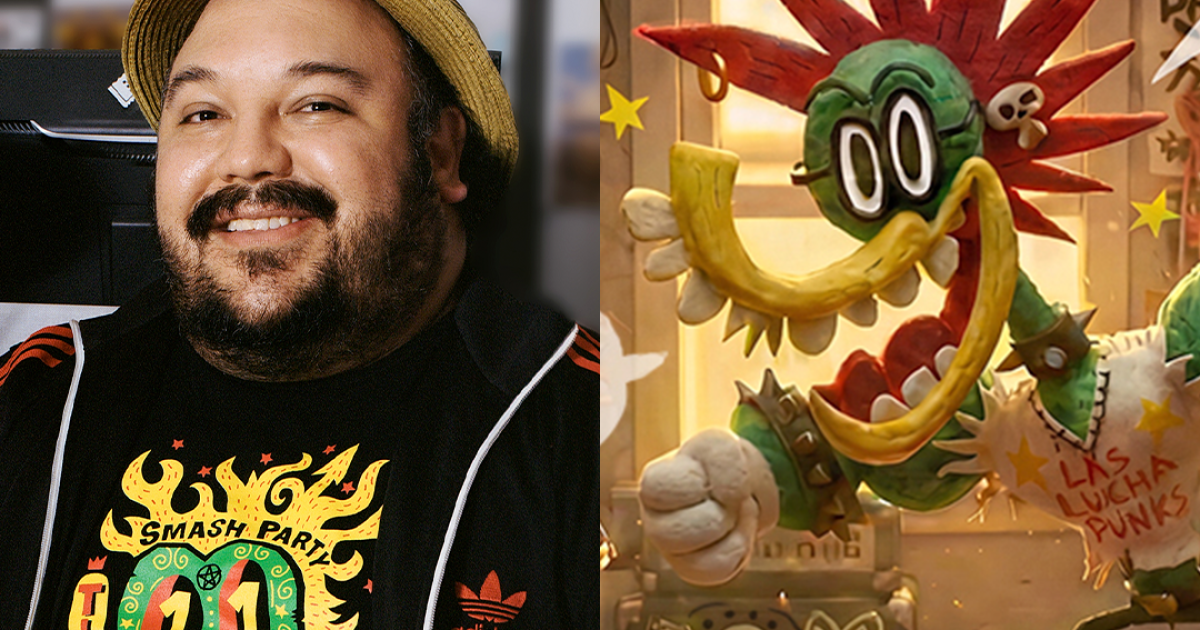
Animator Jorge R. Gutierrez is facing online backlash following news that his latest series, “Punky Duck,” will use artificial intelligence for its production.
Amazon MGM Studios and Amazon Web Services announced on Wednesday the launch of the GenAI Creators’ Fund, a joint initiative that gives creators access to professional-grade AI tools and funding to produce cinematic entertainment.
Three animation projects have already been greenlighted, including Gutierrez’s “Punky Duck,” which follows a punk duck and his best friend, Smiley Cat, through a wildly exaggerated Los Angeles filled with alien invasions, giant monsters, robot criminal conspiracies, telenovela-style family drama and supernatural mayhem.
BuzzFeed Studios’ “Cupcake & Friends” and Albie Hecht’s “Love, Diana Music Hunters” are also part of the initiative.
Fans took to social media to critique the “Book of Life” creator, sharing their disappointment. Many pointed out how the tool is actively reshaping traditional Hollywood jobs, from storyboarding to production design, raising concerns over creative control.
As a response to the backlash, Gutierrez uploaded a screenshot to Instagram that same day featuring news articles by Variety and the Hollywood Reporter with a caption addressing the collaboration: “I understand a lot of you are happy for me and a lot of you are really angry at me for experimenting with AI at Amazon. I’m going to leave the comments open so you can get it all out and hopefully feel better.”
Gutierrez also warned that any death threats will be reported, as well as threats to his family. The post has since been deleted.
In a subsequent Instagram post, he shared a screenshot of a post on X, which showed edits to Gutierrez’s Wikipedia page, where he is described as a “sellout.” Gutierrez captioned his Instagram: “Whoever did this I thought it was really funny!”
The Mexican creator is behind Nickelodeon’s “El Tigre: The Adventures of Manny Rivera” and Netflix’s “Maya and the Three.” He is also currently developing the long-awaited Speedy Gonzales film with Warner Bros. Pictures Animation.
It took over a decade for Gutierrez to get approval for his 2014 film “The Book of Life,” a beloved storybook animation about the Day of the Dead. After multiple rejections from top animation studios, it was eventually produced by Mexican director Guillermo del Toro — a staunch critic of AI, who described its use as “sharting” at a party to The Times late last year.
By comparison, “Punky Duck,” was greenlighted in two months, according to Cartoon Brew.
In a statement to The Times, Gutierrez said he is “cautiously optimistic” about his collaboration with Amazon MGM Studios: “Artists driving tech, and not the other way around, is my goal.”
“It’s a big experiment for me, and like all experiments it might not work, and I will be as cautious and ethical as possible with AI,” he said.
Gutierrez has been critical of AI in the past, expressing distaste for the tool through a series of cheeky memes shared in 2023, 2024 and 2025. Last year, he referred to the nascent technology as a “mutant AI cockroach.”
MIAMI — The Trump administration has quietly instructed federal prosecutors in Miami to avoid pursuing criminal investigations into Venezuela’s acting President Delcy Rodríguez, a longtime target of the U.S. Drug Enforcement Administration, according to current and former U.S. law enforcement officials, in the latest sign of warming relations between the White House and the oil-rich nation.
It’s unclear whether prosecutors had implicated Rodríguez in any crimes or whether investigators were moving toward an indictment. A Justice Department spokesperson said in an email “there was never an investigation into her to shut down.”
But DEA records obtained by the Associated Press earlier this year show she consistently surfaced on the radar of federal law enforcement dating to at least 2018, though she has never been criminally charged in the U.S. like several other senior Venezuelan officials.
The directive to pause scrutiny into Rodríguez was meant to avoid upsetting the administration’s efforts to stabilize Venezuela after the capture of her predecessor, Nicolás Maduro, among other reasons, a current official said. It was not clear whether the White House, which deferred comment to the Justice Department, was involved in the decision.
“Everybody has been told to stand down,” one of the former officials said.
The former officials, who had been briefed on the development, as well as the current official all spoke to the Associated Press on condition of anonymity because they were not authorized to publicly discuss internal deliberations.
Rodríguez, a U.S. attorney representing her and the Venezuelan Communications Ministry didn’t respond to requests for comment.
The move eases pressure on Rodriguez
Removing the threat of potential indictment, even temporarily, eases pressure on Rodríguez as the Trump administration seeks to work with the acting leader to stabilize Venezuela after Maduro’s ouster and open the country to U.S. investment.
President Trump praised Rodríguez as a “terrific person” shortly after the U.S. military took Maduro and his wife to New York to face federal narcotics charges. Both have pleaded not guilty.
In recent months, the U.S. has lifted sanctions against Rodríguez and recognized her as Venezuela’s sole head of state, allowing her to re-establish ties with western banks and more freely work with U.S. investors seeking to tap into the world’s largest petroleum reserves. As ties between the two governments have deepened, some have held out the Venezuelan playbook — characterized by oil blockades, indictments of top leaders and threats of military intervention — as a model to drive regime change from within as the U.S. pressures other longtime adversaries in Iran and Cuba.
Rodríguez and her brother, Jorge Rodríguez, the head of the National Assembly, were hit with U.S. sanctions during Trump’s first term for their role in undermining Venezuelan democracy and cementing Maduro’s authoritarian rule.
Rodríguez “is doing a great job,” Trump wrote on social media in early March. “The Oil is beginning to flow, and the professionalism and dedication between both Countries is a very nice thing to see!”
In recent months, Rodríguez has hosted ceremonies with a steady stream of American oilmen, some of them partaking in high-profile delegations led by U.S. Energy Secretary Chris Wright and Secretary of the Interior Doug Burgum.
Election talk deferred amid Trump’s praise
Missing in all the mutual backslapping is any talk of elections, even as Rodríguez last month blew through a 90-day limit set by Venezuela’s high court to fill Maduro’s position on a temporary basis.
“I don’t know,” she responded in English when a visiting U.S. journalist earlier this month shouted out a question about her time frame for holding elections. “Some time.”
Sen. Jeanne Shaheen of New Hampshire, the top Democrat on the Senate Foreign Relations Committee, has demanded the administration explain its favorable treatment of Rodríguez, calling her a “central figure in Nicolás Maduro’s repressive regime.”
“Sanctions have been lifted on Ms. Rodríguez without any indication that she has taken concrete and meaningful actions to restore democratic order,” Sheehan, joined by Sen. Elizabeth Warren of Massachusetts, wrote in a letter to Secretary of State Marco Rubio and Secretary of Treasury Scott Bessent last week.
Rick de la Torre, a former CIA chief of station in Caracas, said that the decision to shield Rodríguez fits well with the Trump administration’s foreign policy goals in Venezuela.
“She’s a lifelong Marxist and was a senior leader of one of the world’s most corrupt regimes but the U.S. is providing her with breathing space and carrots to lay the foundation for democracy and U.S. investment,” said de la Torre, the CEO of Tower Strategy, which advises companies on Venezuela.
“There’s a shelf life to her utility, however. At some point she will face justice,” he added.
Rodríguez has been on DEA’s radar since 2018
The DEA had amassed a detailed intelligence file on Rodríguez dating to at least 2018, and has received allegations about her ranging from drug trafficking to gold smuggling, the AP reported earlier this year. One confidential informant told the DEA in early 2021 that Rodríguez was using hotels in the Caribbean resort of Isla Margarita “as a front to launder money,” the records show.
Her name has surfaced in nearly a dozen DEA investigations — several of which remained ongoing as recently as this year — involving field offices from Paraguay and Ecuador to Phoenix and New York. She had even been linked to Maduro’s alleged bag man, Alex Saab, whom U.S. authorities first arrested in 2020 on money-laundering charges, the records show.
Rodríguez deported Saab this month as part of a purge of insider businessmen who are accused of having enriched themselves through corrupt dealings with Maduro.
It’s unclear in which Miami investigations Rodríguez’s name surfaced. Two of the former officials said Rodríguez has also come up in meetings with investigators in Tampa, Fla., tasked last year by former Atty. Gen. Pam Bondi with looking into financial crimes in Venezuela.
At the time, Rodríguez was serving as Maduro’s vice president. Justice Department policy requires the attorney general to personally approve the charging of any foreign head of state, who are normally immune from prosecution under international and U.S. law.
Halting high-profile criminal probes of foreign leaders
The pausing of the investigations into Rodríguez comes as the Trump administration has similarly tapped the brakes on ongoing federal investigations into another prominent Latin American leftist, Colombian President Gustavo Petro.
The DEA had also designated Petro a “priority target” over alleged ties to drug traffickers that had been probed for months by federal prosecutors. The New York Times reported in March that U.S. officials recently assured the Colombian government Petro does not face charges in those cases.
Duncan Levin, a former prosecutor who worked for the U.S. attorney’s office in Brooklyn, said it would be “deeply troubling” for law enforcement to be “told to stand down from a legitimate investigation for political or transactional reasons.”
“The White House cannot use criminal enforcement as a diplomatic light switch,” Levin told AP. “DOJ decisions are supposed to be based on law, evidence, policy and public safety — not on whether a foreign official is useful to the administration at a given moment.”
Goodman, Richer and Mustian write for the Associated Press. Richer reported from Washington and Mustian from New York. AP Writer Regina Garcia Cano in Mexico City contributed to this report.
Lionel Messi will play in a sixth World Cup as he captains holders Argentina at the 2026 tournament.
The 38-year-old forward, who led his country to a third World Cup triumph in Qatar with a penalty shootout victory over France four years ago, was named in Lionel Scaloni’s 26-man squad on Thursday.
With 26 appearances, Messi holds the current record for the most World Cup matches by any player – and will join Portugal forward Cristiano Ronaldo, 41, as the only male players to appear in a sixth edition of football’s biggest event this summer.
Aston Villa’s Emiliano Martinez, who was named the goalkeeper of the tournament in 2022, has been selected, as have defenders Lisandro Martinez and Cristian Romero from Manchester United and Tottenham respectively.
Liverpool midfielder Alexis Mac Allister and Chelsea midfielder Enzo Fernandez are also among the five British-based players in the squad for the finals, which will be held in the United States, Canada and Mexico.
Argentina are in Group J and begin their campaign in Kansas City against Algeria (Wednesday, 17 June, 02:00 BST), before they play two games in Dallas, against Austria (Monday, 22 June, 18:00 BST) and Jordan (Sunday, 28 June, 02:00 BST).
Messi had been substituted during Inter Miami’s latest Major League Soccer match on Monday, but his club said he had not sustained an injury and was suffering from “muscle fatigue” in his left hamstring.
He has made 198 appearances for Argentina and will reach the 200-mark if he plays in both of his country’s friendly matches – against Honduras in Texas (Sunday, 7 June, 01:00 BST) and then against Iceland in Alabama (Tuesday, 9 June).
The MQ-28 has now flown at least three times within the Point Mugu Sea Range off the coast of southern California, according to a Boeing press release. The expansive range is routinely used for a wide array of research and development and test and evaluation activities, as well as training. Naval Air Station Point Mugu, part of Naval Base Ventura County, sits right on the coast, surrounded by farmland, with direct access to the range and minimal risk to bystanders. Its location makes it well suited for uncrewed aircraft operations, and it already has a major role in this regard in relation to the MQ-4C Triton and managing target drones.
MQ-28 first international flights
“This testing shows the MQ-28’s ability to operate seamlessly from allied facilities, which helps Boeing demonstrate the aircraft’s maturity and potential export opportunities to international customers outside Australia,” per the press release from Boeing. “Tests at Point Mugu validate autonomous systems while following required airspace, range safety and regulatory approvals.”
Boeing also described this as “MQ-28’s first international operation in allied airspace,” but it is unclear when the first sortie from Point Mugu occurred.
In December, the Pentagon released a video of Secretary Pete Hegseth visiting Naval Air Station Point Mugu with an MQ-28 clearly visible in the background. However, the drone seen in that footage also had an early-style paint scheme with high-visibility orange trim. Pictures and video that Boeing released along with its announcement of the Point Mugu Sea Range flight testing show a Ghost Bat with a two-tone gray livery. It also has an infrared search and track (IRST) sensor system in the nose, something not seen on the example in the Hegseth video. The MQ-28 is a highly modular design, with the nose section designed to be readily swappable.
A comparison of the MQ-28 seen in the video of Secretary Hegseth at Point Mugu, at top, and the Ghost Bat in the video Boeing released as part of its announcement about the flight testing. US Military/US Navy
Boeing itself released a picture of an MQ-28, again with the early paint scheme and no IRST, at MidAmerica Airport outside of St. Louis, Missouri, back in 2023. In that instance, the Ghost Bat was displayed alongside the demonstrator the company had been using to support the development of the MQ-25 Stingray tanker drone for the Navy.
The picture Boeing released of an MQ-28, at left, and the MQ-25 demonstrator, at right, at MidAmerica Airport in 2023. Boeing
How many Ghost Bats are currently in the United States is unknown. TWZ has reached out to Boeing for more information.
The MQ-28 has been flying in Australia since 2021, two years after the design was first shown publicly. Boeing’s subsidiary in Australia had already been working on the design before then under the Royal Australian Air Force’s (RAAF) Airpower Teaming System (ATS) program. To date, RAAF has received eight Ghost Bats in a pre-production Block 1 configuration.
Boeing and the RAAF have already conducted at least one live-fire AIM-120 launch from a Block 1 Ghost Bat, with the missile having been carried aloft on an external pylon under the drone’s fuselage.
Uncrewed MQ-28 Ghost Bat showcases its combat capability
MQ-28, Wedgetail, Super Hornet: Drone Intercept Behind-the-Scenes
Boeing has also been open about its interest in pursuing sales of the MQ-28 outside of Australia. The company has publicly named Japan as a potential customer and has said it is exploring potential opportunities with other unnamed countries in the Indo-Pacific region. In March, Boeing Australia announced a partnership with Rheinmetall in Germany to pitch the Ghost Bat to that country’s armed forces. A carrier-capable version of the design with a tail hook has been pitched to the United Kingdom in the past, as well.
This latter point brings us to what is largely absent in Boeing’s announcement about MQ-28 flight testing from Point Mugu: the U.S. Navy.
In September 2025, the Navy confirmed that it had awarded Boeing, as well as Anduril, General Atomics, and Northrop Grumman, contracts to develop “conceptual” carrier-based CCA drone designs. At that time, the service also announced that Lockheed Martin was under contract for work on an accompanying common control architecture.
In April 2025, Navy Capt. Ron Flanders, public affairs officer at the Office of the Assistant Secretary of the Navy for Research, Development & Acquisition (RDA), had also told TWZ directly that “the U.S. has expressed strong interest in leveraging the MQ-28’s AI-driven autonomy and modular design for future air combat operations.”
As mentioned, Boeing is also developing the MQ-25, a production representative version of which just flew for the first time in April. Beyond the important aerial refueling and other capabilities the Stingray is set to bring to the Navy’s carrier air wings, the service routinely describes it as a “pathfinder” to future uncrewed aviation capabilities.
Flight testing now from Point Mugu is certainly an important development for the MQ-28 program as a whole, and one Boeing hopes could open the door to new opportunities for the Ghost Bat. Whether or not that includes deeper U.S. Navy involvement remains to be seen.
Coronation Street actress Tracy Shaw, who played Maxine Peacock in the ITV soap, has been battling breast cancer and has now shared an update after completing her first day of chemotherapy
She showed herself having her hair cut off(Image: tracy.k.shaw/Instagram)
Coronation Street star Tracy Shaw, who portrayed Maxine Peacock in the ITV soap opera, has shared a health update after she revealed she has been fighting breast cancer.
Following the completion of her first chemotherapy session she explained to fans that she would be shaving her head and donating her hair to charity. Posting a video on Instagram, she disclosed to her followers that she had spent more than eight hours at her initial appointment.
The actress said: “First day of chemo done. I’m feeling alright but that has a great amount to do with the steroids which are helping my body fight the chemo that has gone in. So I went in today to start at 9am and I left at 5:30pm, very hot day and there was a bit of delay.”
She continued: “Basically with my chemo injection, one of which hadn’t arrived, it’s got nothing to do with robots or anything to do with the hospital team, it was the medics delivery, so yeah that was the delay. But I’m feeling really positive but everything I keep eating tastes horrible.
“Everything tastes of metal, just like you told me, and every now and again I feel like the Incredible Hulk, I want to start moving furniture around, the dogs keeping away from me because they sense that.”
This follows her recent decision to cut her hair to donate to The Little Princess Trust, and she has since ventured out to shop for a replacement wig. She posted footage online of herself modelling the various wigs and displaying them while being assisted by a Macmillan nurse who also offered guidance to individuals experiencing a similar situation, reports the Express.
Earlier this month Tracy revealed the emotional difficulties she’s been encountering, informing her followers: “Each morning I wake up and know that I have to go into hospital and receive more news, which has been going on for a long time, that unknown… I just think, ‘I can’t go through with this anymore,’ but I’ve not even started my journey.”
She’s received an outpouring of support online from her followers as she’s posted updates on every stage of her journey, with many of Tracy’s recent posts emphasising how waking up is a “gift” each day.
For the third year in a row, Littler finished top of the Premier League standings.
He went on to reach the final for the third consecutive year and has won the title in two of them.
He set a new record for night wins in the league phase in 2025 and matched that tally of six in 2026.
Despite that, Littler said he felt like he did not want to “go to the next Premier League night”.
He added: “Tonight was one of those wins where I had to get it done. Even sat at home, I didn’t want to go out. I didn’t want to go to the next Premier League night but we’ve done it.
“We’ve all got feelings, not just as dart players, we’re humans. I can’t believe I’ve won.”
The current Premier League format lasts 17 weeks if you reach finals night and sees players travel across the UK, Republic of Ireland and Europe to play every Thursday during the league phase.
The event only features eight players – the world’s four top-ranked players and four players who are invited by the Professional Darts Corporation – and runs alongside ProTour events.
Sky Sports pundit Wayne Mardle highlighted how former world champions Gerwyn Price and Phil Taylor have felt a similar strain to Littler in the past.
He said: “It is not a rarity for the Premier League to become too much. Week after week, it is an endurance test.
“Sometimes you can feel down and if you feel down, you become mentally weaker.
“We know how strong Luke Littler is mentally but when you are feeling like you’re public enemy number one, you can feel like you don’t want to turn up, but he did turn up and this is now the by-product of turning up.”
Despite coming close to leaving the competition, Littler’s dominance in the sport continues to grow.
His victory means he has added the Premier League to his World Championship title, World Masters and UK Open successes this year.
Littler holds seven of the eight ranking titles that the Professional Darts Corporation have, plus the Premier League.
“There is a point in everyone’s career when they are at their peak – we don’t know if this is his peak but we know this is peak level because Michael van Gerwen and Phil Taylor’s peak was this kind of standard,” added Mardle.
“We’re assuming he must be near his peak and it is good enough time and time again. There are no weaknesses really.”
Among the next things for Littler to tick off is glory alongside Luke Humphries for England in June’s World Cup of Darts.
If the pair play anything like they did in London on Thursday night, you wouldn’t bet against them.
Korea Water Resources Corporation is moving to introduce a robot-based
inspection system for managing water supply facilities. Photo Courtesy of K-water
May 28 (Asia Today) — Korea Water Resources Corporation, also known as K-water, is accelerating the use of four-legged artificial intelligence robots to inspect large-scale water treatment plants.
The state-run water agency is adopting robots to improve facility inspections and safety management in hazardous areas and during nighttime patrols at water treatment plants.
Under K-water’s plan to introduce inspection robots at metropolitan water treatment plants, four-legged robots will be deployed this year and next year at four facilities in Seongnam, Hwaseong, Gosan and Gongju.
The agency plans to use data and results from those sites to expand the system to 40 additional water treatment plants by 2030.
K-water plans to deploy robots at 10 plants in 2027, 11 in 2028, nine in 2029 and 10 in 2030. The plan would establish a robot operating system at 44 metropolitan water treatment plants, with 44 robots in total.
A task force will soon begin work to operate the four pilot sites selected for this year.
The total budget for the project is 26 billion won, or about $17.3 million. It includes 7.8 billion won, or about $5.2 million, in state funding and 18.2 billion won, or about $12.1 million, from K-water’s own budget.
The robots will be used for equipment inspections, patrols, construction supervision and accident response. K-water is also considering the phased introduction of water quality analysis assistance robots, grass-cutting robots and unmanned guide robots.
The agency eventually plans to replace some of the robots with humanoid robots.
The use of AI and robots at water treatment plants is part of K-water’s strategy to create fully autonomous facilities. The agency aims to upgrade AI functions now used to assist workers and achieve fully autonomous water treatment plant operations within four years.
After that, K-water plans to package AI-based plant operation technology with robot-based management systems for use in overseas water management markets.
Once the robot operating system is established, K-water expects robots to handle 61% of condition inspection work among inspection and maintenance tasks. Condition inspections include checking whether equipment has visible abnormalities.
The agency estimates the system could save about 2.25 billion won, or about $1.5 million, annually.
K-water also plans to develop its own independent control system to avoid dependence on specific vendors for data accumulated during robot operations and additional operating costs.
“Bidding for the four pilot sites is expected to begin as early as next month, along with software service procurement,” a K-water official said. “Contracts are expected around August, and actual installation is expected to begin at the end of the year.”
The official said K-water will also consider gradually expanding the system beyond water treatment plants to other water supply facilities, dams and sewage systems.
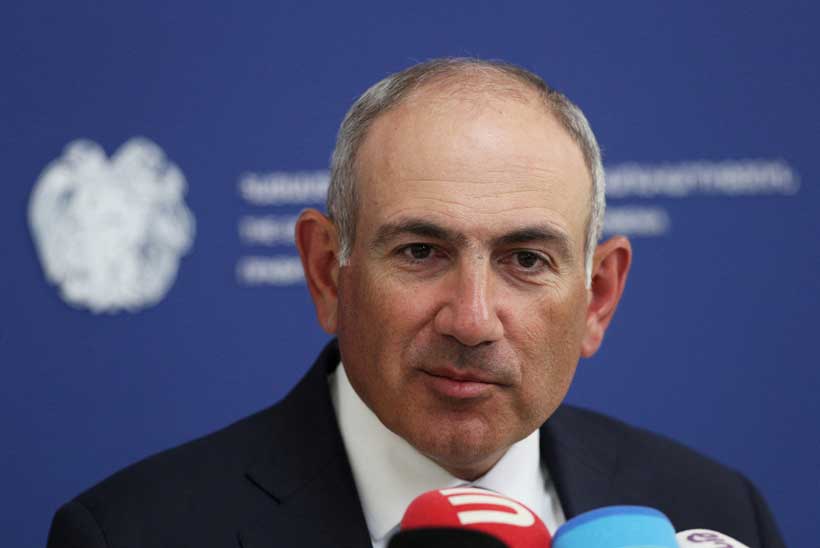
Russia has sharply criticized Armenia for its closer ties with the European Union, arguing that Armenia is not maintaining a balanced relationship with Moscow and is working with countries that wish Russia harm. This criticism comes ahead of Armenia’s parliamentary vote on June 7, where the ruling Civil Contract party, led by Prime Minister Nikol Pashinyan, is seeking a third term and has shown interest in strengthening ties with the West against various pro-Russian opposition groups. Recent polls suggest that Pashinyan’s party holds about 30% support.
Moscow’s discontent with Armenia’s warming relationship with the West was expressed by Russian Foreign Ministry spokeswoman Maria Zakharova, who emphasized that while Russia sees Armenia as a partner, it questions Armenia’s partnerships with the EU, especially given claims from Western nations about a “hybrid war” against Russia.
In response to these developments, Russia’s agricultural safety agency announced new temporary bans on Armenian produce, including tomatoes and strawberries, set to take effect on Saturday. Russia has warned Armenia that it may halt supplies of cheap oil, gas, and diamonds if Armenia continues pursuing EU membership. Armenia, with a population of around 3 million, depends heavily on Russian energy and military support.
The prodigal “Daughter From Hell” returns: Gracie Abrams just announced her upcoming tour, and it includes four nights in her hometown of Los Angeles.
The 64-date Look at My Life tour hits arenas across North America and Europe starting Dec. 2 in Denver, before the singer lands in L.A. later that month. Abrams will take the stage at Inglewood’s Kia Forum for four nights: Dec. 14, 18, 19 and 20. The North American leg of the tour concludes in Brooklyn in March, and she kicks off the European leg in April.
The tour will follow the release of Abrams’ third studio album, “Daughter From Hell,” which drops July 17 via Interscope Records. Abrams took to Instagram to share her upcoming tour dates, teasing fans with the caption, “we’re baaaaaack.”
At the Kia Forum, Abrams will be supported by openers Rachel Chinouriri and Holly Humberstone, both popular British singer-songwriters. Fans can sign up on Abrams’ website for access to the June 2 pre-sale for all dates before tickets go on sale to the general public June 5.
Abrams most recently played in L.A. as part of a three-night residency at the Kia Forum in August 2025 for the Secret of Us Deluxe tour. There, she brought out surprise guest Audrey Hobert, Abrams’ longtime best friend and collaborator. Abrams’ other frequent collaborator, musician and producer Aaron Dessner, co-wrote and produced her latest single, “Hit the Wall,” which dropped in mid-May in advance of her new album.
“There’s nothing I wouldn’t tell either of them, so it makes it easy to be completely open when writing,” Abrams told The Times of Hobart and Dessner in 2024.
Her September 2024 shows at L.A.’s Greek Theater sold out so quickly that the singer-songwriter had to add two additional dates to meet demand. At the time, Abrams told The Times that she would keep performing if the fan support continued.
“As long as they’ll have me, I’ll do this,” she said.
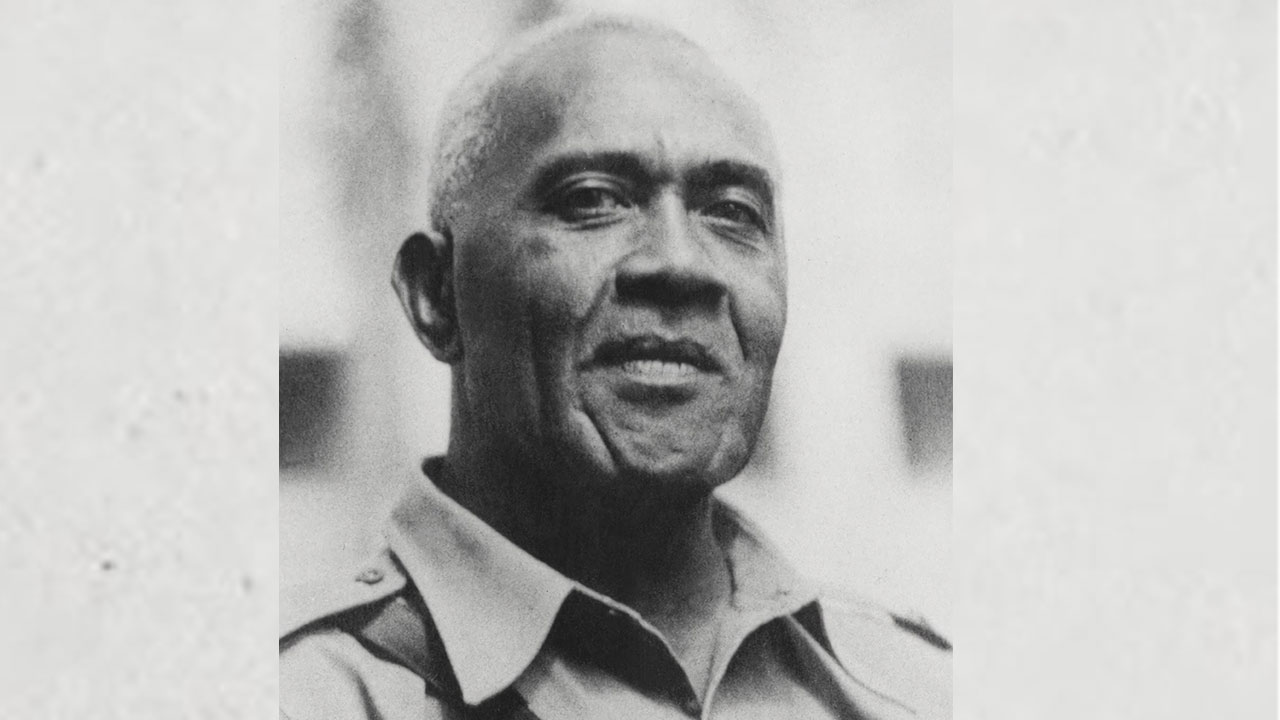
Ratu Sukuna Day is a national public holiday commemorated annually to celebrate the life and service of Lieutenant Colonel Ratu Sir Josefa Lalabalavu Vana’ali’ali Sukuna (22 April 1888 – 30 May 1958) to Fiji.
Ratu Sukuna was once considered the national father of modern Fiji and also a respected statesman and paramount chief of Lau.
Prior to 2023, it was a gazetted public holiday until 2010 when Prime Minister Voreqe Bainimarama declared both Ratu Sukuna Day and National Youth Day would no longer be considered public holidays.
In his first live public address since becoming prime minister, Sitiveni Rabuka announced that he will reinstate Ratu Sukuna Day, saying: “We will reinstate Ratu Sukuna Day. The monumental work of this illustrious traditional leader on land reform has had a continuing beneficial effect on the landowners, the economy, the sugar industry, business and investment.
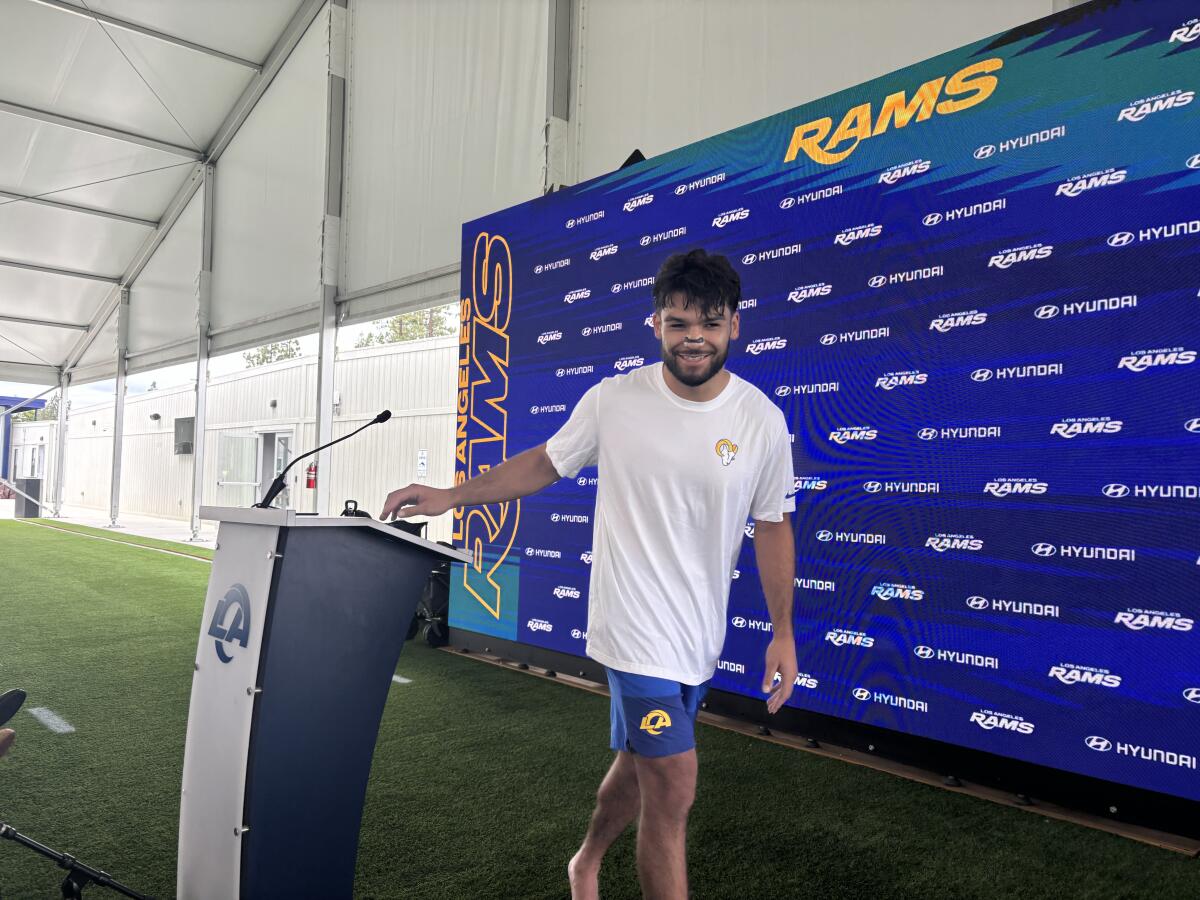
On the eve of his 25th birthday, Rams star receiver Puka Nacua said he was working on becoming a better person — and that if he continued on that journey the potential massive contract extension that appears to have stalled will take care of itself.
Nacua on Thursday addressed reporters for the first time since checking into a Malibu rehab facility in March. Nacua sought help after a string of incidents, which included a December incident that led to a civil lawsuit.
“Something that I feel like I’ve learned is, it’s OK to ask for support,” Nacua said after participating in an organized-team activity workout in Woodland Hills. “And then to recognize the platform that I have in being a professional football player, and trying to use that for the betterment of myself and for those around me.”
With an offense that features Nacua, quarterback Matthew Stafford — the reigning NFL most valuable player — and receiver Davante Adams, and a defense that includes edge rusher Jared Verse and All-Pro cornerback Trent McDuffie, the Rams are regarded as a favorite to play in Super Bowl LXI at SoFi Stadium.
Last season, Nacua led the NFL with 129 receptions and was voted All-Pro. The 2023 fifth-round draft pick is entering the final year of his rookie contract, and he is eligible for an extension that could surpass the $120-million deal the Seattle Seahawks gave receiver Jaxon Smith-Njigba.
But incidents last season and this offseason caused the Rams to put off talks about awarding Nacua an extension.
During a livestream last December, Nacua criticized NFL officials and made a gesture regarded as antisemitic. Nacua apologized, but after the Rams’ loss to the Seahawks a few days later, Nacua criticized officials in a social media post from the locker room. The NFL fined him $25,000.
Rams wide receiver Puka Nacua smiles after speaking to reporters during organized team activities at the training facility in Woodland Hills on Thursday.
(Gary Klein / Los Angeles Times)
His attorney has denied that Nacua made an antisemitic remark and said the bite resulted from “horseplay.”
On Thursday, when asked about the allegations, Nacua declined to comment specifically.
“With it being an ongoing legal battle, out of respect for the other party involved, don’t really have much to speak on,” he said, adding: “A moment for me to learn from, kind of some of the situations I was putting myself in, and then also having just an awareness of how I’m conducting myself in and out of this football field.”
Nacua said he made the decision to seek help with the support from those in his “inner circle.”
“I like to think of myself as a pretty happy outgoing guy that enjoyed life,” he said. “But there also were some difficulties of just being in this professional sport and just throughout my entire life.”
The rehab program was a “short stint,” but Nacua said he continues to meet with a team therapist and has adopted tools such as journaling.
Nacua, who became a father in October, said he was also motivated to continue self-improvement work as a way of sharing with and teaching his son.
“The great things I’ve been able to accomplish and to enjoy those moments, but then also to teach him in some of the mistakes that I’ve made,” he said. “So there’s an opportunity for him to learn before some of those wrong decisions can be made.”
Nacua’s “security in being able to be authentically honest about” seeking help was admirable, coach Sean McVay said.
“I think there’s real strength in some of the vulnerabilities,” McVay said, “and I’m really proud of him.”
Stafford, 38, said he talks with Nacua “nonstop” and that Nacua has looked “fantastic” during workouts.
“He’s a great person, a great kid, and just doing everything I can to try and give advice when it’s needed, or also just be his buddy too,” Stafford said. “I’m doing everything I can — I think everyone is, to just support him. … We’re happy he’s back doing his thing.”
Stafford spoke for the first time since signing a one-year, $55-million extension that keeps him under contract with the Rams through the 2027 season.
“Happy to have … next year taken care of if I decide to play — and they still want me back,” Stafford quipped. “Just excited to get that behind me, cause I just want to come out here and play and not think about that kind of stuff.
“So great to get that done sooner rather than later.”
Before Nacua’s string of incidents, the receiver also appeared on track to receive a possible extension before the 2026 season began.
Now, the Rams are expected to let him play out the season, and then possibly use the franchise tag for 2027 before making a long-term commitment.
Nacua said he could not imagine playing for another team.
“If I can continue to improve as a person, I know the coaches and the people around me are helping me improve as a football player,” he said. “So those are the things I can control, and hopefully allow those other things to handle themselves.”
Iran’s football team still lacks US visas and is not competing on ‘equal terms’, Tehran’s envoy to Mexico says.
Published On 28 May 202628 May 2026
Iran’s football team still lacks US visas and is not competing in the World Cup on “equal terms” because of its difficulty in training ahead of the tournament, Tehran’s ambassador to Mexico said on Thursday.
Abolfazl Pasandideh visited the northwestern Mexican border city of Tijuana, where Iranians have relocated their training camp. They were originally planned to be based in Tucson in the US state of Arizona.
Recommended Stories
list of 4 itemsend of list
The ambassador told a news conference that “the country to the north” – meaning the United States – had not followed through on its responsibility of hosting the Iranian team.
“We don’t know whether or not they’re going to give the players their visas,” he added.
Iran will play their three World Cup group games in two West Coast US cities: Los Angeles and Seattle. The head of the Iranian Football Federation has said there was hope that the players would be granted multiple entry visas.
“We aren’t participating in the World Cup on equal terms,” Pasandideh said.
“We haven’t been able to train our team like they should,” he said, because of the US-Israel war on his country that began on February 28.
On Wednesday, Iranian diplomats visited the stadium where the team is training, a source from Club Tijuana that plays there told the news agency AFP. The diplomats also met with local security officials, the source said.
Iran are due to play in Los Angeles on June 15 against New Zealand, and on June 21, against Belgium. They then play in Seattle against Egypt on June 26.
Ministers in France are meeting to assess the country’s preparedness for heatwaves, while tennis number one Jannik Sinner bowed out of the French Open after suffering from the heat. Meanwhile,Italian authorities issued a red heatwave alert for the capital, Rome, where it topped out at 32C on Thursday.
EastEnders’ Danny Dyer has teamed up with Hollywood star Rob Lowe for a hilarious ad campaign ahead of the launch of the World Cup where the two actors have something of a culture clash
Ex-EastEnders star Danny Dyer has joined forces with Rob Lowe for a new ad campaign ahead of the World Cup(Image: Paddy Power)
Danny Dyer faces off against movie star Rob Lowe for a hilarious World Cup ad campaign. The Rivals actor, 48, and Hollywood star, 62, battle over cultural differences to promote bookie Paddy Power.
Pitted as a clash of cultures, the ad explores everything from having a “pint and a slash” in a pub on the British side, to the glamour of halftime shows that tend to take place in the US. Eventually, Danny takes his shirt off whilst Rob keeps his on and rocks a cowboy hat amid their tense culture clash. At one point, Danny shouts out: “It can’t go on like this, can it?”
Then, former Wolves manager Mick McCarthy responds: “It can!” as a sad-looking Peter Crouch pops up amid the threat that the French could take the cup.
Rob admitted had not seen Danny in anything, but told the Daily Star: “I’d heard he was a bit of a legend over here in the UK and I have to agree, he is really funny, genuine, and a very good actor.
“When he walked on set, within about four minutes I’m thinking he’s got this energy and presence about him. Completely magnetic. As an American, you think you’re prepared for big personalities, but Danny’s got this very specific British edge to him and it was great working with him.”
Rob explained: “I’ve been to a Chelsea game at Stamford Bridge. It’s a great old stadium. I know they’re supposedly building another one, but Stamford Bridge is pretty sick.”
He then addressed the age-old issue of what the beautiful game shout be called, as it differs dramatically on each side of the Atlantic. He said: “If I’m in America, I call it soccer, but if I’m anywhere other than America, I call it football. Football becomes American Football when I’m abroad too.”
Hollywood film star Rob Lowe stars as the face of Paddy Power’s new World Cup ad campaign alongside UK national treasure Danny Dyer. The ad will air from Saturday 30th May across TV and online.
NEWARK, N.J. — Protesters clashed with armed federal immigration officers in front of a New Jersey detention center where advocates have demonstrated for days while asserting that people detained there are staging a hunger strike over poor living conditions.
Groups of demonstrators, many wearing gas masks and other face coverings, linked arms in a human chain in front of Delaney Hall in Newark on Wednesday night, videos and photos posted on social media show.
Some used trash cans, old mattresses, umbrellas and other materials as makeshift shields and barricades as they confronted U.S. Immigration and Customs Enforcement officers. Others attempted to block people and vehicles from entering and exiting the building or threw orange traffic cones and other objects in the direction of the ICE officers lined at the entry gate.
The group chanted, “You will hang!” and, “Every cop, every fed, shoot yourself in the head,” and other taunts at the officers, many of whom wore helmets and tactical vests.
The ICE officers used pepper spray to try to disperse the protesters, according to videos posted to social media. Some used their batons to beat and push back protesters as the officers attempted to clear the roadway for vehicles.
At least one truck driver got out of his vehicle to vent his frustration when some protesters tried to block vehicles driving on the road in front of the detention center. People detained inside could at times be seen waving to protesters from Delaney Hall’s windows.
The U.S. Department of Homeland Security, which oversees ICE, said about six demonstrators were arrested for assaulting law enforcement officers.
“Assaulting and obstructing ICE law enforcement is a crime and felony,” the agency said in a statement. “Anyone who assaults law enforcement will be prosecuted to the fullest extent of the law.”
On Thursday, demonstrators again returned to Delaney Hall.
New Jersey Gov. Mikie Sherrill also said state health department officials were “denied full access” to the facility for a health inspection. The Democrat said the officials were only allowed to inspect a limited part of the facility as she called on ICE to “de-escalate” the situation.
“As I’ve said repeatedly, refusing to provide full access raises serious questions about what ICE is trying to hide from public view,” Sherrill said in a statement that also repeated her calls to shut down the facility outright.
Earlier Wednesday, Democratic members of Congress from New York City toured the facility as part of an oversight visit. A private prison company runs the detention center, which sits along an industrial stretch of Newark Bay.
Reps. Jerry Nadler, Daniel Goldman and Adriano Espaillat, who all represent Manhattan, described dire conditions where people held in the facility are fed small portions of often spoiled food and their varied medical needs are ignored.
Homeland Security spokespersons have denied any hunger strike, abuse or poor conditions inside the center and dismissed criticism from opponents as political posturing.
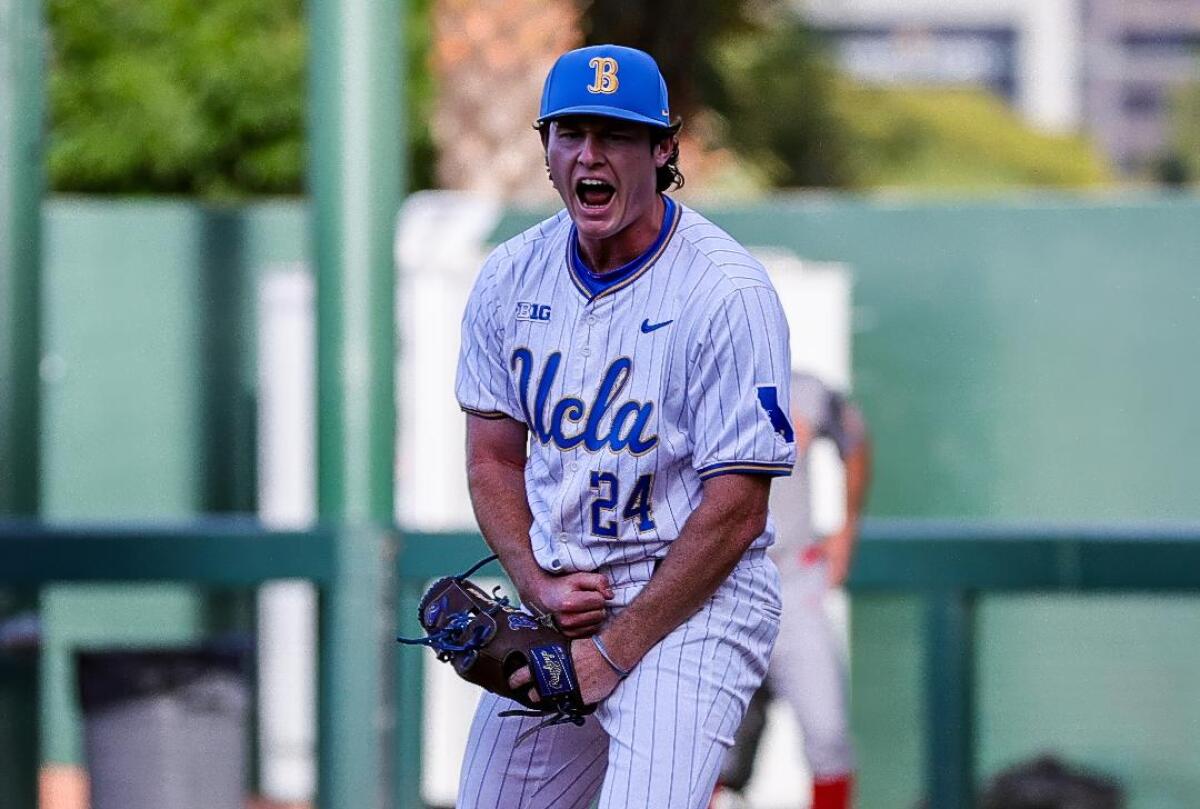
Logan Reddemann of UCLA tied a school record with 18 strikeouts against Rutgers in an eight-inning stint earlier this season.
(Craig Weston)
Bruins’ right-handed ace Logan Reddemann will be unavailable for the Los Angeles Regional with the same throwing-arm soreness that has kept him off the mound since improving his record to 8-0 in a win over Minnesota on April 17.
“Logan looks like he’s still a week away,” Savage said. “Looks like he’s got one more bullpen [session] and [one] more live session if we can get there, to the super regional. But he will not be available this weekend. … I think he’s missed six or seven starts now. We’ve held up the fort since he’s left. Our guys have done a really, really good job.”
Reddemann posted a 2.87 ERA with 89 strikeouts in the 59 2/3 innings he pitched in 2026.
Savage praised right-handed starters Wylan Moss, who will start Friday, and Angel Cervantes for stepping in for Reddemann throughout the year.
Moss, a sophomore, has a 5-1 record and the Bruins have won all but one of his six starts since Reddemann went down. Cervantes, meanwhile, has heated up as he grows comfortable as a freshman, making waves for his start against Oregon in UCLA’s Big Ten championship win on Sunday.
“Wylan’s kind of taking the ball on Fridays,” Savage said. “Clearly, he’s had some really good outings. … And then Angel, you know, clearly filled in for [right-handed pitcher Landon Stump]. Moved Landon to the bullpen, I think that was a really good move. Stump [has] done really, really good out of the bullpen, and Angel looks like a future star as a starter.”
A Cervantes video has gone viral for bringing a mini dinosaur named Jerry with him to the mound every time he pitches. He said glancing at the the dinosaur next to him in the dirt helps keep him calm and focused.
UCLA also will be relying on other arms, such as right-handed starter Michael Barnett, to stay afloat in Reddemann’s absence.