Weekly insights and analysis on the latest developments in military technology, strategy, and foreign policy.
The Department of Energy is seeking millions of dollars for work in part on a new bunker-busting nuclear weapon called the Nuclear Deterrent System-Air-delivered (NDS-A) in its latest budget request. At present, there is only one specialized air-delivered deep-penetrating weapon known to be in America’s nuclear stockpile, the B61-11 gravity bomb, and there have been discussions about a potential successor for decades now.
The Fiscal Year 2027 budget request for the Department of Energy, which was released last month, includes a new line under Weapons Activities for Future Programs. The Department is asking for $99.794 million in the next fiscal cycle to support those efforts.
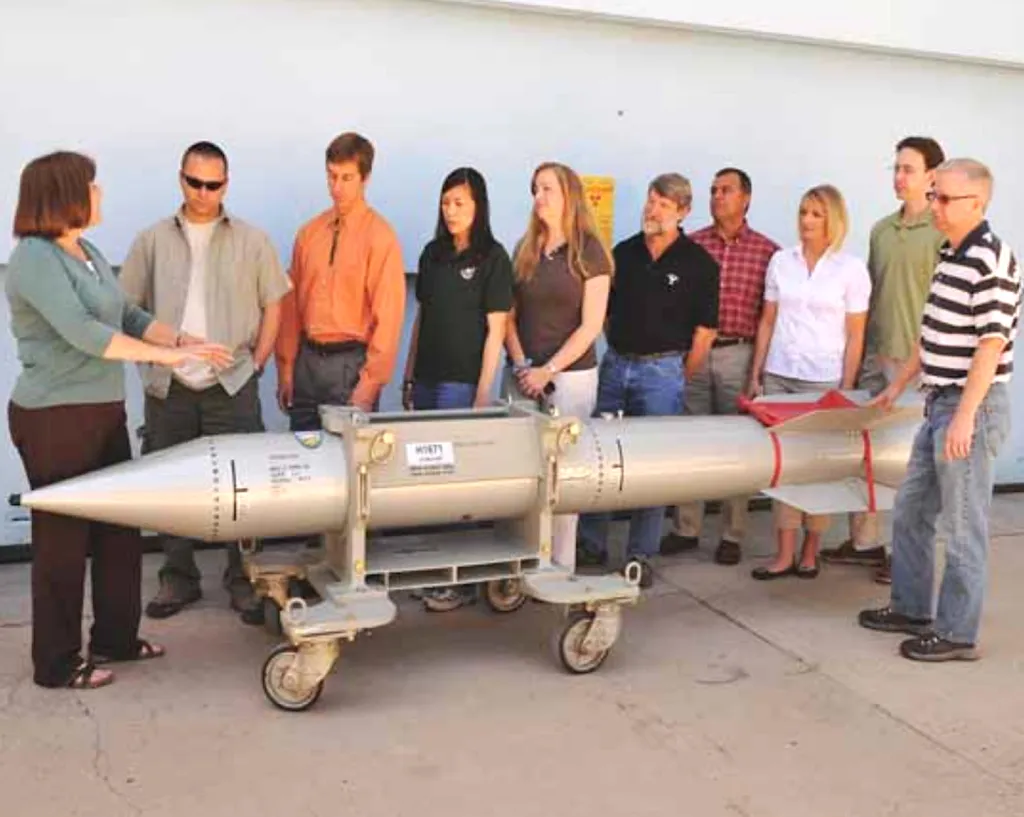
An example of the B61-11, or more likely an inert version thereof. This is the only specialized air-delivered deep-penetrating weapon known to be in the U.S. nuclear stockpile today. Public Domain
“The Increase represents the start of one new Phase 6.X program, currently known as Phase 1 Nuclear Deterrent System-Air-delivered (NDS-A), as well as supporting production assessments for two new Rapid Capability Team (RCT) projects,” according to a public summary of what the Future Program funding would support.
The Department of Energy, in cooperation with the U.S. military, develops, produces, and sustains nuclear weapons, and uses a multi-phase rubric to categorize where they are in their respective life cycles. The Phase 6.X process is itself broken into several stages, spanning all the way from the definition of the basic concept of a weapon and its requirements through to full-scale production.
A graphic offering a general overview of the Phase 6.X process. NNSA
Where the NDS-A may already be in the process is unknown, but the mention of “Phase 1” here could point to Phase 6.1, which is the basic concept assessment stage. Beyond that it will be air-delivered, there are also no details currently available publicly about the weapon’s design, including whether it will be based on something already in the stockpile. It is also not known if it will be an unpowered bomb or a missile/rocket-assisted weapon of some kind. We will come back to this point later on.
“The Nuclear Deterrent System-Air-delivered will provide the President with additional nuclear options to defeat Hard and Deeply Buried Targets, ensuring that adversaries cannot place their most valued assets beyond the reach of America’s nuclear forces,” a spokesperson for the National Nuclear Security Administration (NNSA) told TWZ when asked for more information. “The program is moving aggressively, and further information will become publicly available when it is strategically beneficial to the United States.”
Within the Department of Energy, NNSA is specifically responsible for nuclear weapons-related activities.
As noted, at present, the B61-11 is the only air-delivered nuclear weapon in the U.S. stockpile today that is specifically designed to address this target set. The B61-11 is based on the earlier B61-7, but is substantially different in form and function. It has a heavily reinforced outer shell, possibly with a depleted uranium penetrating nose section, and a rocket booster at the rear to help it penetrate down into underground facilities. Sources differ on the maximum yield of the B61-11, but it is said to either be between 340 and 360 kilotons (identical to that of the B61-7) or to be closer to 400 kilotons. There are also reportedly fewer than 100 of these bombs in the stockpile.
The yield of the B61-11 is classified, but it is a converted B61-7 bomb. The yield of the -7 and -11 are usually given as more than 300 kilotons. @nukestrat says the B61-11 was increased to 400 kt. Either way, this is a very powerful nuclear weapon. pic.twitter.com/2GZ3zB6m4K
— Dr. Jeffrey Lewis (@ArmsControlWonk) June 19, 2025
You can learn more about the entire B61 family, the first versions of which entered service in the 1960s, here.
For a time, the newer B61-12 variant, which has a precision guidance package in a new tail kit, was considered as a potential successor to the B61-11. The B61-12 is also a dial-a-yield design with multiple yield settings, but the highest one is reportedly 50 kilotons. The logic was that improved accuracy would allow for more precise placement of the bomb, and, by extension, of its explosive force. This, in turn, would make up for its lack of deep-penetrating capability and more limited yield. The plan to supplant the B61-11 with the B61-12 was subsequently abandoned.
B61-12 Flight Test with F35-A Lightning II
More recently, a more powerful B61-13 variant, which features the same precision guidance tail kit as the B61-12, was developed explicitly to provide “the President with additional options against certain harder and large-area military targets.” This version is understood to have a maximum yield in line with the B61-7. However, the U.S. government has also previously said that the B61-13 is not intended as a direct replacement for the B61-11, according to the Federation of American Scientists (FAS).
The first B61-13 production unit. NNSA
The U.S. military also has B83-1 nuclear gravity bombs in the stockpile, which are of a completely different design from the B61 series and have a far more powerful megaton-class maximum yield. By virtue of that high yield, the B83-1 is also intended to be used against certain deeply buried and otherwise hardened facilities, as well as large-area targets.
An inert example of a B83-series nuclear gravity bomb. US military An inert B83-series nuclear bomb. DOD
In the early 2000s, NNSA, in cooperation with the U.S. Air Force, did explore the possibility of developing a B61-11-like bomb on the basis of the B83-1, as well as a new deep-penetrating version of the B61 itself. In 2005, Congress brought a halt to work on what was dubbed the Robust Nuclear Earth Penetrator (RNEP).
A low-quality and now thoroughly dated briefing slide discussing the RNEP effort. USAF
There have been hints since then, however, about possible revivals of the RNEP concept and/or other plans for a true successor to the B61-11.
This weapon was not explicitly mentioned in the 2018 Nuclear Posture Review. But NNSA bases the new weapon on the NPR’s guidance to “enhance the flexibility and range of [US] tailored deterrence options.
Welcome back from the grave, RNEP!
— Hans Kristensen (also on Bluesky) (@nukestrat) August 1, 2019
What may be prompting the requirement for the NDS-A now is unknown. There are deeply-buried targets only a nuclear weapon can realistically destroy. The development of the B61-11 is understood to have been prompted heavily by one such facility in particular, Russia’s Kosvinsky Kamen bunker. Kosvinsky Kamen is a key node in the Russian nuclear command and control enterprise and was built under a mountain of the same name in the northern Urals. The nature of its location and design also means it could serve as a so-called “continuity of government” site for senior leadership to operate from before or after a nuclear strike or in response to some other major emergency.
However, the landscape of deeply-buried, hardened facilities that U.S. authorities would be interested in holding at risk has grown substantially in the past two decades since work, at least publicly, on RNEP came to an end.
In the past year, the matter of Iran’s deeply buried nuclear facilities, and the limits of U.S. conventional options for prosecuting those targets, has been an especially hot-button issue. During Operation Midnight Hammer in June 2025, U.S. B-2 bombers struck Iranian nuclear sites at Fordow and Natanz with 30,000-pound-class GBU-57/B conventional bunker buster bombs. The outcome of that operation remains a subject of heated debate and is deeply intertwined with the justifications for U.S. and Israeli forces launching the latest campaign against Iran in February. U.S. officials are now at a crossroads with how to proceed with operations targeting Iran, which has now turned to a maritime blockade, at least for the time being, following the announcement of a ceasefire in April.
The video below is a montage of imagery from GBU-57/B MOP tests over the years.
GBU-57 MOP test
Broader concerns about just getting the B61-11 to its intended target in the future may also be a factor driving plans now for the new NDS-A nuclear bunker buster. Unpowered bunker buster bombs, nuclear or conventional, need to be released relatively close to their targets. The kinds of facilities that the B61-11 is intended to be employed against are deep inside hostile territory, behind layers of integrated air defenses. Major potential adversaries, as well as smaller nation states and even non-state actors, are only expected to expand the scale and scope of their defensive architectures in the coming years. With all this in mind, it is not surprising that the more survivable B-2 is currently the only platform certified to employ the B61-11, as well as the conventional MOP. It is more or less a given that both of those weapons will be integrated onto the forthcoming B-21 Raider for the same general reasons.
A B-2 bomber drops a GBU-57/B MOP during a test. USAF
A rendering of the still-in-development AGM-181 Long Range Stand-Off (LRSO) cruise missile. USAF
As an aside here, powered designs have also been part of the discussions about potential conventional successors to the MOP. A follow-on to the GBU-57/B, the Next Generation Penetrator (NGP), is now in development, but it is unclear whether or not that will be a powered weapon. Still, when it comes to the NDS-A, it seems more likely that it will be a traditional bomb that adapts elements of existing designs, including the B61-11, -12, and -13.
A 2010 briefing slide discussing plans for a Next Generation Penetrator, which could have a powered standoff capability, and other future bunker busters. USAF
More definitely remains to be learned about the NDS-A program and the design of that weapon. What is clear is that the Department of Energy is requesting funding to kick off at least the initial development of a new air-delivered nuclear bunker buster that could succeed the B61-11.
UPDATE: 5:27 PM EST –
It has been brought to our attention that some additional details about the NDS-A effort have been tucked away in U.S. budget requests in recent years.
In its Fiscal Year 2025 budget, the Air Force asked for, and ultimately received just over $39 million for work on NDS-A, but under a budget line titled “Hard and Deeply Buried Target Defeat System (HDBTDS) Prototyping.”
“The Air-delivered Nuclear Delivery System (NDS-A) is a new start project to address a capability gap identified in the 2022 Nuclear Posture Review (NPR). A congressionally directed study based on the NPR led to endorsement of the Deputy’s Management Action Group (DMAG) and initiation of this project,” according to the 2025 Fiscal Year budget documents. “The Air Force will work with the Department of Energy’s (DOE) National Nuclear Security Administration (NNSA) and its National Laboratories to develop a prototype NDS-A system to demonstrate the capability to close this gap in the near term.”
“Early development will include Model and Simulation (M&S) analysis of several nuclear explosive package (NEP) options to refine the proposed NEP,” the budget documents add. “Ground tests may include wind tunnel, static ejection, vibration and thermal, cable pull-down, and sled tests. Flight tests will be performed by USAF F-15E developmental flight test aircraft, with final prototype demonstrations flown on B-2 aircraft.”
The video below shows flight testing of the B61-12 using a U.S. Air Force F-15E Strike Eagle.
B61-12 full-weapon system demonstration at Tonopah Test Range
In the Air Force’s proposed 2026 Fiscal Year budget, the line item was renamed “Nuclear Delivery Systems Prototyping,” but references to NDS-A by name were also omitted. A nearly $18 million year-over-year increase in requested funding (from roughly $39 million to almost $57 million) was attributed “to greater emphasis on prototype design after completion of Modeling and Simulation of mission effectiveness of design space options; increased procurement and development of components; the initiation of subsystem and test unit assembly; and the initiation of ground tests of the Prototype Weapon Assemblies.”
The Fiscal Year 2025 and 2026 budget documents do not provide any details about the design of the weapon or say what aircraft it will be integrated onto operationally.
More details about the current state of the Air Force side of this program are likely contained in the service’s 2027 Fiscal Year budget request documents. However, at the time of writing this update, they are inaccessible online.
As artificial intelligence becomes more embedded in film production, the Academy of Motion Picture Arts and Sciences is drawing a clearer line around it.
In new rules announced Friday for next year’s 99th Academy Awards, the academy said screenplays must be “human-authored” to be eligible for awards consideration, and that only performances “demonstrably performed by humans with their consent” will qualify for acting prizes. The group also reserved the right to request additional information about how AI tools were used in a film and the extent of human involvement.
The academy’s Board of Governors reviews its rules annually.This year’s revisions arrive as the industry continues to grapple with how AI tools are reshaping the creative process — and how institutions like the Oscars should reward that work, if at all.
The new changes build on guidance introduced a year ago, when the academy said that the use of AI would “neither help nor harm” a film’s chances of receiving a nomination, while emphasizing that voters should consider “the degree to which a human was at the heart of the creative authorship.” At the time, the organization stopped short of requiring formal disclosure of AI use, even as the technology became a flash point across Hollywood.
Taken together, the updated language suggests an effort to more clearly define the boundaries of authorship at a moment when tools such as voice cloning, digital doubles and AI-assisted writing are becoming more common in film production. The emergence of synthetic performers such as Tilly Norwood reflects how quickly those questions have moved from theoretical to practical.
In announcing the new rules, the academy framed the changes as part of an effort to reflect the current state of filmmaking, while maintaining what it called a “commitment to honoring human authorship and artistry.”
Beyond the AI provisions, academy leaders approved several structural changes across different categories.
In acting, performers may now receive multiple nominations in the same category if their performances rank among the top vote-getters, aligning the category with other branches.
The international feature film category also saw a notable shift. In addition to the traditional submission process through individual countries, non-English-language films can now qualify by winning top prizes at select major festivals, including Cannes, Berlin and Sundance. The award will be credited to the film itself, with the director accepting on behalf of the creative team, rather than to a submitting country or region.
Other changes — including updates to voting procedures in categories such as cinematography, visual effects and makeup and hairstyling — were largely technical in nature.
The new rules will take effect with next year’s Oscars, scheduled for March 14, 2027.
A shrinking number of seats will determine control of the U.S. House after Republicans and Democrats spent much of the last year redrawing congressional maps to erase swing districts.
Even before Florida’s Legislature approved a new Republican-leaning map last week, just 16 seats were listed as “tossups” by the Cook Political Report, the nonpartisan newsletter that serves as an unofficial electoral scorekeeper. Another 16 districts are listed as leaning toward Democrats or Republicans, with the outcome all but predetermined for more than 400 seats.
This could make for the fewest competitive seats since political analyst Charlie Cook first published his race ratings in 1984. That means even if historical trends and current events favor Democrats heading into November, they’re likely to fall short of the 41 districts they picked up in the 2018 midterms during the first Trump administration.
“There aren’t really 40 seats on the board potentially right now just because of redistricting and that polarization,” said Carrie Dann, managing editor of the Cook Political Report.
That reality allows the two political parties to concentrate their resources. The Democratic House campaign operation lists 44 Republican districts in play, and the GOP equivalent is aiding 17 challengers hoping to unseat Democratic incumbents.
Those numbers can change after primary elections, but one Republican operative familiar with the party’s plans said the total number of contested seats is about half of what those the parties fought over in the last midterm election in 2022.
Republicans say the smaller map favors them. Before the most recent spate of map changes, only three Republican House members were elected in districts that Democrat Kamala Harris won in 2024 — compared with 13 Democrats defending seats that Donald Trump won.
Zach Parkinson, a spokesman for the Republican National Committee, said his party has better campaign infrastructure in place.
“Part of that right now is financial, but part of it is also we’re all very synced up with the president, the White House,” Parkinson said. “Everyone on our side institutionally is rowing in the same direction.”
But Democrats note that Republican efforts to aggressively gerrymander districts in Texas and Florida could leave them even more vulnerable if Democrats leverage the same kind of voter enthusiasm they did in 2018, when they won enough seats to take back the House majority.
John Bisognano, president of the National Democratic Redistricting Committee, said congressional districts in Texas and Florida were already designed to favor Republicans.
“So what you need to do in order to create a deeper gerrymander is make more Republican seats competitive,” he said. “As the Democratic advantage grows, the likelihood and opportunity for dummymanders increases.”
A dummymander happens when one party gerrymanders so aggressively that it spreads its majority too thin — making its seats more vulnerable if the other party performs better than expected.
Florida Democratic Party Chairwoman Nikki Fried said that’s what Republicans did in her state last week when the Legislature pushed through a new map that GOP Gov. Ron DeSantis said will yield his party four more seats.
“I am not actually worried,” Fried said. “All of my congressional members will be reelected. They’re strong in their communities and I feel very bullish about their possibilities.”
Democrats have been overperforming in off-year and special elections by an average of 17 points over Trump’s margin of victory in 2024, and Fried said that trend suggests Democrats could pick up nine seats in Florida alone.
That seems unlikely. A Cook Political Report poll of its 36 most competitive districts as of April 6 — which Trump won by an average of 2 points in 2024 — found a six-point Democratic advantage.
Neither party has been able to solidify much of an advantage through mid-decade redistricting. What started with Republicans in Texas was countered by Democrats in California. Republicans could pick up two more seats from new maps in Missouri and North Carolina. Virginia’s new map could give Democrats as many as four more seats, a move matched by Republicans in Florida.
And it’s not over yet. The Supreme Court’s decision Wednesday limiting the use of the Voting Rights Act to create majority-Black or majority-Hispanic districts has unlocked the potential for Republicans to pick up seats in Louisiana and Tennessee.
SAN DIEGO — Ryan Hollingshead scored his first goal this season in the 14th minute of stoppage time and Denis Bouanga added a goal for LAFC on Saturday night in a 2-2 tie with San Diego FC.
Mathieu Choiniere’s soft header off a corner kick played to the back post by David Martinez bounced in front of the goal and Hollingshead slammed home the finish to cap the scoring.
Marcus Ingvartsen scored two goals — his first career multi-goal game in MLS — for San Diego.
Anders Dreyer played a corner kick to the near post and Ingvartsen headed home the finish to open the scoring in the seventh minute.
On the counter-attack, Dreyer played a cross from the right side to Ingvartsen, who knocked down the ball with his first touch and then blasted a shot from the center of the area inside the left post and into the side-net to make it 2-0 in the 71st minute.
Ingvartsen has seven goals and two assists this season. The 30-year-old had two goals and one assist in eight appearances, five starts, in 2025, his first season in MLS.
Denis Bouanga scored in the 82nd minute, LAFC’s first shot on goal. Bouanga, who has scored at least 20 goals in each of the last three seasons, has five goals this season.
LAFC (6-2-3) beat Minnesota 1-0 last time out to snap a three-game winless streak.
San Diego (3-5-3) snapped a five-game losing streak.
CJ Dos Santos made his season debut and had three saves for San Diego but left due to injury in stoppage time and was replaced by Duran Ferree. The 24-year-old Dos Santos, who had 10 shutouts last season, suffered a fractured cheekbone and orbital floor fracture in a playoff loss at Portland on Nov. 1.
Ukrainian President Volodymyr Zelenskyy’s artistic skills have earned him the reputation of a public relations genius acknowledged by both friends and foes. United States President Donald Trump, who has openly attacked him in public, famously called the Ukrainian leader “the greatest salesman on Earth”. A much more sympathetic voice, New York Times columnist David French, has recently portrayed Zelenskyy as “the new leader of free world”.
But Zelenskyy’s PR genius can do very little when it comes to changing the dynamics of the battlefield in the Russia-Ukraine war. In recent weeks, his administration and allies have tried hard to create the impression that the war might be approaching a turning point. But realities on the ground tell a different story.
For example, there were official claims that in February, Ukraine made more territorial gains than Russia did. Some pro-Ukrainian war monitoring platforms have supported these claims while others have not. It is important to note these calculations can be tricky given that along the frontline there is an extensive grey zone in which control is unclear. The advances themselves are measured in 150-200 square kilometres per month. In other words, methodology can be manipulated in order to produce the desired conclusion: that Ukraine is gaining ground.
In reality, there is nothing at all that suggests a significant change in the battlefield dynamics that have been in place for at least two years now.
More importantly, Russian troops are currently besieging a number of industrial cities in the north of the Donetsk region. Their advances all along the northern border, in particular, are extending the active front line by hundreds of kilometres, which is making Ukraine’s personnel shortages even more acute.
Four years into the war, the Ukrainian army has had to resort to brutal campaigns to enforce mandatory conscription, pulling young men off the streets of towns and villages. Meanwhile, Russia is still able to lure volunteers by offering lavish compensation.
Ukrainian officials have also claimed that Russia is losing more troops than it is able to recruit based on dubious casualty data. Zelenskyy, in particular, has stated the Russians suffered the highest number of monthly casualties in March this year – 35,000. But his statement contradicted his own Ministry of Defence, which claimed that the highest Russian monthly losses crossed 48,000 in January 2025, with an average monthly rate of roughly 35,000 throughout 2025.
Zelenskyy’s chief of staff, former military intelligence chief Kyrylo Budanov, also contradicted this narrative that Russia is having major difficulty with deploying personnel. He acknowledged in a recent interview that the collapse of the Russian mobilisation effort was not forthcoming.
It should be noted that Ukraine is waging a successful drone campaign to damage Russian oil facilities. But it is doubtful that it could change anything beyond providing dramatic footage of oil tanks on fire for TV networks to broadcast.
In April, Russian oil revenues surged to $9bn, thanks to the US-Israel war on Iran. The windfall Russia got in a month is equivalent to 10 percent of the loan Ukraine is to receive from the European Union over the next two years to help fund its war effort.
It cannot be denied that Russia has sustained major economic losses due to the war, and Russian President Vladimir Putin has acknowledged as much. But the Russian economy displays much the same downturn as other European economies, also affected by wars in Ukraine and Iran.
Russia’s gross domestic product (GDP) per capita adjusted for purchasing power parity (an indicator reflecting living standards) currently exceeds that of less affluent EU countries, such as Romania and Greece, according to the IMF charts. The same indicator for Ukraine is on par with Mongolia and Egypt, while the country’s critical infrastructure lies in ruins and millions of Ukrainians have fled the country, most of them for good.
With Ukraine’s prospects bleaker than ever, pro-Ukrainian audiences jump on every news from Russia, which they hope may signify “cracks in the regime”. Last month, an Instagram video by Russian influencer Victoria Bonya made Western headlines for its daring criticism of government policies. There may be frustration in Russia, but the regime is far from approaching a downfall.
This narrative, however, serves to distract Ukrainian and EU citizens from the painful truth that the war is heading towards a deadlock at best and Ukraine’s collapse at worst. Zelenskyy may have received a lifeline with the $90bn euro loan, but his and his allies’ lack of vision and winning strategy is staggering.
The reality has already begun to kick in. German Chancellor Friedrich Merz recently suggested that Ukraine would have to concede some of its territory to Russia to end the war but get a faster track to EU membership in exchange. The EU’s defence chief, Andrius Kubilius, has gone further by claiming that NATO membership for Ukraine was out of the question and EU membership was going to be a “complicated process”. Instead, he proposed a military union of Ukraine and other European countries – an idea that Moscow will reject, interpreting it as NATO through the back door.
What these contradictory statements manifest is that the main bargain over the contours of peace is currently going not so much between Zelenskyy and Putin, but between Zelenskyy and his Western, primarily European, allies.
As Budanov recently claimed, the positions of Kyiv and Moscow can be moved closer to what is realistically attainable in peace talks. But Zelenskyy needs to show at least some kind of gain for Ukraine when a very unpalatable version of a peace treaty is finally signed. Ideally, that gain would be EU membership or real security guarantees, but as Merz and Kubilius’s statements suggest, the chances of attaining either are slim.
The frustration among Ukrainians is already palpable. The head of the Ukrainian parliament’s fiscal committee, Danylo Hetmantsev, said European officials should stop seeing Ukrainians as “a tool for solving someone’s geopolitical tasks” or as a “human shield”. They have no right to define Ukraine’s destiny, he insisted.
But Zelenskyy, who is dogged by a large-scale investigation into corruption involving his immediate entourage, seems to hold no cards to play against Russia or his Western allies. The status quo in which he retains the position of a war leader serves him well, but it is increasingly becoming untenable.
The views expressed in this article are the author’s own and do not necessarily reflect Al Jazeera’s editorial stance.
DAVID Beckham has shrugged off estranged son Brooklyn’s snub once again after celebrating his birthday with family.
The former footballer, who has turned 51, enjoyed his day being ‘blessed’ and ‘spoiled’by loved ones, despite being dealt another blow from Brooklyn and his daughter-in-law Nicola Peltz.
Sign up for the Showbiz newsletter
Thank you!
David Beckham has shrugged off son estranged Brooklyn’s snub once again after celebrating his birthday with familyCredit: Instagram / David BeckhamThe former footballer enjoyed his day being ‘blessed’ and ‘spoiled’ by loved onesCredit: Instagram / David BeckhamDavid was dealt another blow from Brooklyn his daughter-in-law Nicola PeltzCredit: Getty
Taking to his Instagram, David shared two sweet snaps of him as a child and him present day smiling as he blew out his birthday candles.
He added the caption: “I feel very lucky & blessed to have had a very special day today being spoilt by my wife, kids , family and friends from the moment I opened my eyes till now.
“And I just want to say thank you and I love you all so much @victoriabeckham & my beautiful family thank you (heart emoji).”
On the star’s birthday, David was met with a barrage of birthday shoutouts from the Beckham clan.
In the caption, the fashion designer penned: “You are our world, our everything. We love you so much!!!
“Happy birthday to the best husband, daddy, son, brother, and friend.”
Brooklyn’s brothers, Romeo and Cruz, also praised their dad by sharing photos of their younger selves with David.
Cruz wished his father a happy birthday with Romeo penning the message: “Happy birthday dad love u so much. Thank u for everything you do.”
Eldest son Brooklyn chose to remain silent for the second year in a row, which comes as no surprise considering he and wife Nicola’s major fallout with the rest of his family.
Former Spice Girl Victoria led the birthday shoutouts for her husband and gushed over him by sharing a series of unseen private snapsCredit: InstagramRomeo Beckham wished his dad David a happy 51st birthday on InstagramCredit: InstagramYoungest son Cruz Beckham also gave dad David a sweet birthday shoutoutCredit: instagram
Earlier this year Brooklyn had launched a nuclear attack on his family stating that he did “not want to reconcile” with his them, and accused his parents of “controlling” the narrative.
Speaking to The Wall Street Journal magazine, Victoria did not refer to Brooklyn by name when asked about the rift but discussed how she had only ever tried to “protect and love our children”.
The Spice Girls star said: “I think that we’ve always—we love our children so much.
“We’ve always tried to be the best parents that we can be. And you know, we’ve been in the public eye for more than 30 years right now, and all we’ve ever tried to do is protect our children and love our children.
“And you know, that’s all I really want to say about it.”
Eldest son Brooklyn chose to remain silent on his fathers birthday for the second year in a rowCredit: Getty
Nov. 12, 2025, in Oklahoma City Thunder 121, Lakers 92 Neither team was at full strength with James sidelined because of sciatica and the Thunder without Luguentz Dort and Jalen Williams. Oklahoma City still dominated behind an effortless 30-point, nine-assist night from Shai Gilgeous-Alexander. It was the largest defeat of the season for the Lakers until April.
Feb. 9, in Los Angeles Thunder 119, Lakers 110 Both teams were without their MVP candidates as Gilegous-Alexander sat because of a strained abdominal muscle and Doncic was sidelined by a hamstring injury. The Thunder proved their depth and chemistry by holding off the Lakers in the fourth quarter. This was one of just eight clutch-time losses for the Lakers during the regular season.
April 2, in Oklahoma City Thunder 139, Lakers 96 The nightmare score wasn’t as scary for the Lakers as seeing their two leading scorers injured in the same game. Reaves played through what was later diagnosed as a Grade 2 oblique muscle strain, and Doncic left in the third quarter with a Grade 2 left hamstring strain. The game was expected to be a major showdown between MVP candidates and a litmus test for the Lakers, who entered with 13 wins in their previous 14 games.
April 8, in Los Angeles Thunder 123, Lakers 87 The Lakers were without four starters and still reeling from the regular season-ending injuries suffered by Doncic and Reaves the previous week. Matching up with the Thunder again only exacerbated the emotional hangover. Redick tried to inject some energy into the group by benching veterans Rui Hachimura and Jarred Vanderbilt for small mistakes early, but the coach later admitted the tactic didn’t work.
It comes as the UK Government today, Sunday, May 3, introduced a rule change allowing airlines to group passengers from different flights together
Robert Rowlands Deputy editor, money and lifestyle, content hub
15:54, 03 May 2026
(Image: NurPhoto, NurPhoto via Getty Images)
Wizz Air has issued an update to passengers this Sunday afternoon confirming its flight plans. The airline’s latest statement follows new official measures unveiled today, Sunday, May 3, by the Government.
The Government has brought in a temporary rule change permitting airlines to consolidate passengers from different flights onto fewer aircraft as part of efforts to conserve fuel. This follows warnings of a potential jet fuel shortage ahead of the busy holiday season if the Strait of Hormuz remains closed.
Asked this morning whether holidaymakers travelling abroad are likely to encounter difficulties this summer, Ms Alexander told Sky News’ Sunday Morning With Trevor Phillips: “I’ve spent every week of the last two months in close contact with airlines and airports.
“On Thursday of this week, airlines told me very clearly that they have good visibility over the next six to eight weeks of jet fuel supply. There is no current disruption to jet fuel supplies.
“We are, for example, importing more jet fuel from America. We have asked the refineries in the UK to maximise their production. We’ve got four refineries here, refineries in West Africa are also producing more.”
She continued: “The last thing I want is for people to turn up at a departure gate and have last minute cancellations. I am confident, sat here today on the basis of the information that I have available to me, that the majority of people who are travelling this summer will have a similar experience to that which they had last year.”
Her comments come as airlines worldwide take action in response to soaring jet fuel prices. These have been triggered by Iran’s effective closure of the Strait of Hormuz, blocking off one of the world’s crucial routes for jet fuel distribution to other countries.
Lufthansa recently revealed plans to axe 20,000 flights as it scales back capacity to cope with jet fuel shortages. UK carriers have also issued statements in a bid to put customers’ minds at ease.
Among them, Jet2 confirmed it will not impose surcharges on any existing flight or holiday bookings to offset rising costs, such as those for jet fuel. Now Wizz Air has released a fresh statement following the government’s latest proposals.
Speaking today, an airline spokesman said: “Wizz Air acknowledges today’s announcement by the UK government and would like to reassure customers that its operations remain fully stable and unaffected.
“The airline confirms that it plans continue to operate its full summer schedule, flying passengers safely and reliably to their destinations across its extensive network. Wizz Air is working closely with its partners to ensure seamless operations throughout the peak travel season.
“Customers can book with confidence on Wizz Air’s wide selection of routes from more than half a dozen airports across the UK, connecting travellers to popular destinations across Europe and beyond.”
New government rules amid jet fuel shortage fears
The Government’s airline rule change could result in passengers being switched from their originally booked service to a comparable one in order to cut down on wasted fuel from aircraft that haven’t sold out and may otherwise have been cancelled.
Consumer group Which? has hit out at the move, arguing that rules should not be “bent in favour of airlines”. Shadow transport secretary Richard Holden warned that families could find themselves “herded on to a different plane, at a time of the airline’s choosing”.
“The honest message is that Britain is exposed to fuel supply risks that a properly energy-secure country would not face,” he added. Green Party leader Zack Polanski has called for private jets to be grounded in a bid to conserve fuel.
“While ordinary people pay the price, the super rich are simply getting in their private jets at will – wasting huge amounts of jet fuel on unnecessary trips,” he said.
South Korea’s Financial Supervisory Service has reportedly decided to suspend the business operations of Lotte Card for 4 1/2 months over a personal data breach, along with a $3.4 million penalty. File Photo by Jeon Heon-kyun/EPA
May 1 (UPI) — South Korea’s Financial Supervisory Service (FSS) reportedly decided Thursday to suspend the business operations of Lotte Card for 4 1/2 months over a data breach.
The financial watchdog is also reported to have finalized the disciplinary measure, including a $3.4 million penalty and a reprimand warning for its former CEO Cho Jwa-jin.
The FSS declined to confirm the reports, while Lotte Card acknowledged it.
“Imposing a business suspension over a hacking case would be an unprecedented level of sanction,” Lotte Card said in a statement.
“As follow-up procedures remain, including a resolution by the Financial Services Commission (FSC), we will fully explain our position regarding the severity of the punishment, as well as our post-incident response efforts,” it added.
Nearly 3 million Lotte Card customers had their personal information compromised last year. The state-run Personal Information Protection Commission has already imposed a $64 million fine on the firm over the incident.
Following the FSS decision, the FSC is expected to make the final call in the coming months.
In 2019, South Korea’s leading private equity company, MBK Partners, teamed up with Woori Bank to acquire a 79.8% stake in Lotte Card for about $1 billion. MBK took 59.8%, and Woori held the remaining 20%.
MBK Partners sought to sell its stake in Lotte Card in 2023 but failed to find a buyer, and a similar effort last year also yielded limited results.
The pope urged the rememberance of journalists who lost their lives pursuing the truth, particularly in conflict areas.
Published On 3 May 20263 May 2026
Pope Leo has marked World Press Freedom Day by condemning violations of media freedom around the world and paying tribute to journalists killed while reporting in conflict zones.
At the end of his weekly Sunday prayer in a sunny Saint Peter’s Square at the Vatican, the pontiff said the day highlighted both the importance of independent journalism and the growing threats faced by reporters.
Recommended Stories
list of 4 itemsend of list
“Today we celebrate World Press Freedom Day … unfortunately, this right is often violated, sometimes in blatant ways, sometimes in more hidden forms,” he said.
World Press Freedom Day, sponsored by the UN cultural agency UNESCO is intended to show support for media organisations that come under pressure or censorship. It is also an opportunity to commemorate journalists who have been killed at work.
The Roman Catholic leader urged the faithful to remember journalists and reporters who have lost their lives pursuing the truth, particularly in conflict areas.
“We remember the many journalists and reporters who have been victims of war and violence,” the pope said.
A report last month by the Watson Institute for International and Public Affairs’ Costs of War project found that Israel’s war on Gaza was the deadliest conflict for media workers ever recorded, with Israeli forces having killed 232 Palestinian journalists since October 2023.
More journalists have been killed in Gaza than in both world wars, the Vietnam War, the wars in Yugoslavia, and the United States war in Afghanistan combined, the report found.
In past speeches, the leader of the Catholic Church has described journalism as a pillar of society and democracy, and information as a public good that must be safeguarded and defended.
The pontiff has often thanked reporters for sharing the truth, saying that doing their job could never be considered a crime, and frequently calling for the release of journalists who have been unfairly detained or prosecuted.
Last week, the leading Paris-based press freedom NGO, Reporters Sans Frontières (RSF), or Reporters Without Borders, found that freedom of the press around the world has fallen to its lowest level in a quarter of a century.
For the first time since RSF started producing the index in 2002, it said more than half of the world’s countries fall into the “difficult” or “very serious” categories for press freedom – “a clear sign that journalism is increasingly criminalised worldwide”.
In 1995, when the L.A. Metro system was in its most nascent stage, Ken Karagozian — then an amateur photographer in an Owens Valley, Calif., workshop — found his way underground to document the subterranean marriage between downtown L.A. and Westlake through Metro’s Red Line, now called the B Line.
From that came a feature in Life magazine, but more importantly, a driving principle: Karagozian believed that the construction workers, engineers and electricians who were subject to the whims of a city indecisive on the subway project were deserving of intimate documentation. The invisible many who built the pyramids and New York’s skyline never got that chance, he said, but the people who contributed to the historically controversial Metro D Line from Koreatown to Westwood would, if he had a say.
“When I did take photography workshops, they always said, ‘Do a project close to your home,’” Karagozian said on a call from his Agoura Hills residence. “I wrote a letter to [L.A. Metro], which said, ‘How can I get permission to photograph?’”
Days before the fires ravaged L.A. in 2025, Altadena-based historian and author India Mandelkern had a phone call with Karagozian, who was interested in collaborating on a project about the D Line. After publishing a book on the art and politics of street lighting in Los Angeles, Mandelkern worked on the L.A. Metro blog, soliciting interviews from Angelenos who seemed desperate for a line to the Westside.
A Karagozian photo shows a group of workers during the Section 2 breakthrough during the underground construction of the Metro D Line.
(Ken Karagozian)
A photo by Karagozian shows sunlight filtering underground into the Wilshire/Fairfax site during construction.
(Ken Karagozian)
After Mandelkern connected with Karagozian, their project had solid form: a photo book, titled “Wilshire Subway: The Making of the D Line Subway Extension,” about the history, conflict and people behind the scenes and underground ahead of the May 8 opening of the subway expansion along Wilshire Boulevard. (New stations will be added at Wilshire/La Brea, Wilshire/Fairfax and Wilshire/La Cienega. In the future, stations in Beverly Hills, Century City and Westwood will open.)
A related photo exhibition, “Wilshire Subway: Photographed by Ken Karagozian,” is on view through May 14 at the 1301PE art gallery on Wilshire Boulevard.
This week, we chatted more with Karagozian and Mandelkern about their project.
After writing a book about the social history of street lighting, what brought you underground?
Mandelkern: Well, a couple different reasons. First, I was very interested in Metro just because I had worked there as the blog editor, and in that role, I got to explore so many different stories. I thought Wilshire Boulevard was one of the most interesting places, the stories of this rail-building ambition that persisted for so many different years, and what that says about Angelenos. Second, I think that we talk about L.A. as a horizontal city, and that’s certainly true. If you go somewhere like Tokyo, you instantly see that this is what a vertical city is, but I wanted to bring a little bit of that to L.A. There is so much history buried beneath the ground that we seem to forget, and once you start tunneling, you realize that it’s always been there and it hasn’t disappeared. It’s just pushed beneath us.
In support of their new project, writer India Mendelkern, left, and photographer Ken Karagozian appear at the Los Angeles Times Festival of Books in April.
(Ken Karagozian)
Of all the people you spoke to for this book, which one most influenced the way you understood what the D Line could provide for the city?
Karagozian: This was a joint venture between three contractors, and they each had their specialty. It was Skanska, Traylor [Bros.] and Shea. With Traylor, they were brothers and they were doing the tunneling. Richard McLane [chief mechanical engineer of Traylor Bros.] was very helpful in telling me a little bit about the history of Wilshire Boulevard and facts of tunneling. … All these different contractors impacted the project in some way.
Mandelkern: I always say Ken is one of the best construction photographers out there, but his specialty is really people. When I interviewed some of these individual workers, a whole different story came to light, and I realized that many of these workers came to L.A., started at the bottom of the totem pole, and through working on the subway have risen through the ranks, gotten promotions, become leaders, and their kids now work in construction. … It’s just so amazing that so many of these individuals are doing all this work behind the scenes that creates infrastructure that connects all of us.
1
2
1.Carpenter Jenna Dorough poses for a portrait by Karagozian during the underground construction of the Metro D Line.2.A concrete supervisor photographed by Karagozian at the La Cienega Boulevard station.(Ken Karagozian)
There are many portraits in the book of the builders who created the D Line. India referred to the short lifespans of the workers compared to the marvelous structures they craft: Was it intentional that you documented most of the D Line’s visual history through the people who built it?
Karagozian: When I go down underground and after the stations are completed, to me, it’s the people that built it that should tell the story. I didn’t just want to get a shot of them from behind. I really like to photograph their faces. … When I photographed the workers from the Red Line, some of these workers from the middle ’90s are still working on the Purple Line. I’ve known them for years, and now their children are working in construction; it becomes a family issue. … Going down and photographing the tunnels with that lighting in that perspective, it’s always been so interesting.
Mandelkern: That just reminded me of one of the quotes in the book from John Yen, who is the VP of operations at Skanska. He said, “In construction, we work ourselves out of a job.” I always found it really interesting that, as we build, the whole point is to kind of disappear. It reminded me of one of my favorite quotes in the essay, when James [Rojas] writes [that] when the stations are open, they’ll be shiny and new, but that will kind of erase all the memories and all the work of the people who’ve been doing this for all this time. This book really became a way to sort of remember all of these different people that have been working on these projects for decades and decades, even if they’re not really remembered in the official record.
As the D Line prepares to open, does it somehow feel like the end of a journey?
Mandelkern: This just [started] so many other things for me. Afterwards, I decided I really want to learn about the geology of L.A., and I found an interest in paleontology, too. I hope with any book that it just gets people curious, and it gets them to start asking questions. I think that “Wilshire Subway” does accomplish that. L.A. is just this bowl with all these different salad layers, and as we penetrate down, we learn more and more about our history.
Karagozian: It does a little bit. With May 8 being the grand opening, and as the stations are complete and they’re testing the trains underground, it almost feels like it’s graduation time. Time to celebrate the journey of going through high school, college, whatever. I am still continuing to photograph the [Purple Line extension], which is Rodeo or Beverly [Hills] station … Now it’s just the accomplishment of celebrating all the work that I’ve put into this project and going down almost once a week and photographing the process for so many years.
Art exhibition
‘Wilshire Subway’ exhibition
“Wilshire Subway: Photographed by Ken Karagozian” is a new exhibition based on a new photo book by Karagozian and writer India Mandelkern.
Where: 1301PE art gallery, 6150 Wilshire Blvd., Los Angeles
When:Through May 14.
Hours: The gallery is open 10 a.m. to 6 p.m. Tuesday through Saturday. (There’s an opening reception and book signing from 4 to 7 p.m. Friday.)
For Blake Bowen and his JSerra High baseball teammates, their final week of the high school baseball season could not have gone any better.
The 6-foot-4 senior hit three home runs during a three-game sweep of Santa Margarita. But the Lions finished their season on Friday with an 11-17 record, which means there will be no postseason.
“Too little, too late,” coach Brett Kay said.
Bowen came on strong, finishing with nine home runs and a .360 batting average. His ability to hit the ball hard and far should make him a high draft pick this summer.
“It’s the best power I’ve ever seen for a high school player,” Kay said.
Bowen is a former football player who began focusing only on baseball after transferring to JSerra from Riverside King. He plays baseball like he did in football — with an aggressiveness.
“Once he comes into his own, he’s going to be special,” Kay said.
The Lions had a young team that was hurt by injuries. One of the impressive young players was freshman Joey Koenig, who showed he can hit and will get a chance to pitch in the future.
This is a daily look at the positive happenings in high school sports. To submit any news, please email eric.sondheimer@latimes.com
WE’VE all been there, desperately trying to lure the kids away from their devices.
But I’ve found the solution — head to all-inclusive activity specialists Club Med and there will be so much for them to do, the problem will be fitting it all in.
Sign up for the Travel newsletter
Thank you!
On target Piper tried archeryCredit: SuppliedCorben had a ball and joined the Wolves academyCredit: Supplied
There’s nowhere better to tempt the kids away from tech than the golden sands of France’s Atlantic coast.
Sat somewhere between a 20-mile stretch of rugged coastline and the lush La Coubre forest, the world-class Club Med La Palmyre Atlantique is pure “Ooh La La”.
The resort itself looks a little like a chic oyster-farming village, with colourful bungalows scattered between lush trees and distant views of an old lighthouse atop a cliff.
Whether you’re keen to hire bikes and explore the nearby World War II bunker, or just stroll the beach to watch the famous Atlantic rollers with a book, holidays here can be taken at your pace.
I was visiting with my wife Emma and two children Corben, 11, and Piper, nine, and we switched instantly into holiday mode on arrival.
The whole vibe was uber laid-back, despite being an action-packed resort full of families with kids.
And this is where Club Med truly earns its stripes.
Kids’ clubs here cater to all ages, offering arts and crafts, archery and table tennis — although they should be prepared that the resort is heavily French-speaking.
Wind down and relax by the poolsCredit: Club MedPiper loved horse ridingCredit: Supplied
But the perk means they may pick up some Franglais.
There’s also a professional circus school where little ones can channel their inner Greatest Showman, as well as off-site horse riding.
Piper loved taking her horse Jacques on a ride into the woods.
The G.O.s (Gentils Organisateurs — meaning Kind Organisers) took her and a group of others to the ocean for a beach walk and sailing experience.
Meanwhile, my son Corben headed to the resort pitch to join the football camp hosted by Premier League club Wolverhampton Wanderers, and exclusive to Club Med.
Each day, the Wolves coaches ran sessions on dribbling, passing, ball control and shooting, followed by a series of mini games.
The Wolves academy split into age groups from four to 17-years-old from all levels, and my football-mad son loved every minute.
The relaxed vibe meant it didn’t matter whether your child was destined to be the next João Gomes or just loved a kickabout.
And at the end of the week, the young players were congratulated with an awards ceremony.
Best of all, this was included in Club Med’s all-inclusive package and didn’t cost a penny extra.
While the kids are kept busy, adults can kick back by the pool or play a round at the Golf de Palmyre nine-hole course just next door to the resort.
The 2,992-metre course is set around 93 acres of pine wood with water obstacles, large bunkers and rolling fairways.
Ryan, Emma and kids having funCredit: SuppliedZen out at the hotel spaCredit: Club Med
Some holes boast ocean views and the course is ideal for beginners, offering group or private lessons from age 11.
If you’d rather stick together as a family, however, there’s group tennis, archery, sailing and windsurfing, too.
Even the spa offers treatments you can enjoy with the children so we booked in for a family massage beside the beach.
After action-packed days, we would spend an hour or so relaxing ahead of dinner.
Our rooms were in The Dunes area, an upscale space for those who want a bit of extra luxury, and came with a small lounge area and pine forest views.
Then it was time to feast.
The main restaurant, L’Atlantique, offers an impressive buffet which includes fresh seafood, local oysters, steaks, salads and a huge dessert table.
The kids were horrified when I explained what escargot is and how foie gras is made but at least it wasn’t nuggets and chips.
Enjoy tipples at Club MedCredit: Club MedTake in a round at Golf de PalmyreCredit: Club Med
For something a bit more upmarket, The Belle Époque speciality restaurant is perfect for a “date night” while the kids are at a supervised pyjama party.
This gourmet lounge serves up local Charentais wines and seafood with a view of the lighthouse.
And because it’s Club Med, the “all-inclusive” tag means exactly that.
Premium booze, cocktails, and snacks are all included.
Most nights a band played in the main bar and music went on ’til late but like most holidays with kids, Mum and Dad were shattered by 10pm.
Outside of the resort there’s plenty to do if you fancy exploring the region.
From the Île de Ré to the Île d’Oléron, from La Rochelle to Royan, the Atlantic coastline has tons to offer.
Book your family a ticket on “Le Train des Mouettes”, the 19th-century steam train, or climb to the top of the Phare de Cordouan, the lighthouse listed as a Unesco World Heritage Site.
It’s rare to find a resort that genuinely caters to every generation without feeling like a theme park.
But La Palmyre Atlantique manages to stay stylish and very French.
We returned home with a suntan, a slightly tighter waistband and kids who, for a second, forgot what an iPad is.
GO: FRANCE
GETTING THERE: Ryanair flies from Stansted to La Rochelle from £38 return.
This European carrier serves regionally inspired dishes at 35,000ft
Andrea Blazquez Editor of Spare Time
14:56, 03 May 2026Updated 14:56, 03 May 2026
Airline with the best food named – not British Airways, Virgin or Emirates
A Greek airline boasting a fleet of 83 aircraft has been named the top carrier for in-flight dining, beating major rivals including Emirates, Virgin Atlantic, Qatar Airways, and British Airways. A study by Canstar Travel Insurance analysed passenger reviews and meals from the world’s top 100 airlines, concluding that Greek carrier AEGEAN serves up the finest food, earning an impressive score of 7.82 out of 10.
AEGEAN treats passengers to authentic Greek cuisine and regionally inspired dishes, while in business class, meals are lovingly prepared by acclaimed Greek chefs and sommeliers. The airline’s culinary philosophy is rooted in the concept of filema, which champions “love and kindness through food”. Other carriers delivering exceptional onboard dining include Qatar, Asiana Airlines and EVA Air.
On Tripadvisor, one traveller who recently flew with Aegean wrote: “Aegean Airlines is simply amazing! The level of service is very high, and it is incredibly easy to reach their call centre whenever you need help or extra information. On board, they offer food and drinks, and everything was delicious.”
A second passenger added: “I have used British, Virgin, easyJet, Ryanair… but no one is better, always on time and sometimes even earlier at the destination than Aegean Airlines.
“Although I’m Italian, I use it instead of Alitalia when I’m travelling to my country. Warm and delicious food and choices of wines and a particular menu for any kind of dietary or religious needs.”
Holidaymakers will be banned from ordering more than six drinks in their package deals each day under new ‘Responsible Tourism’ rules introduced in Majorca, Magaluf and Ibiza
Tourists will no longer be able to order more than six drinks under the new crackdown (file photo)(Image: AFP via Getty Images)
British tourists heading to popular destinations on package holidays will be limited to only six drinks per day under new rules designed to stamp out anti-social behaviour.
The limit is now in effect across a number of Spain‘s Balearic Islands – including Majorca, Magaluf and Ibiza – after locals complained that unruly behaviour was making their lives ‘hell’ during the peak holiday season.
Under the Responsible Tourism rules, hotels will be banned more than six alcoholic drinks to guests in package deals each day, with additional alcoholic beverages sold separately.
A £2,600 fine is also being imposed on anyone caught drinking alcohol on the street.
Executive director of John Mason International, Simon Hood, told the Mirror: “In response to recent overtourism protests, the islands of Majorca and Ibiza have implemented Responsible Tourism rules following some understandable concern from local residents.
“These laws were first introduced in 2024, however, new amendments have recently been proposed that many Brits are unaware of.
“Be careful you’re not caught out taking alcoholic drinks onto the street and spilling them. Being overly loud and drawing attention to yourself will also land you in trouble quicker.
“Holiday-goers planning on booking all-inclusive packages or bar crawls are also affected by these laws. For example, limits on all-inclusive drinks have been introduced in the party resorts of Magaluf, Playa de Palma, and San Antonio.
“If you have booked an all-inclusive package, you’re only allowed a maximum of six alcoholic drinks per day, and these must be split between your lunch and evening meal.
“Make sure you’re not going over your allowance and trying to cheat hotel staff. Hotels are allowed to charge you more money for breaking all-inclusive rules.”
He added that the ban “doesn’t mean you can’t still enjoy a few pina coladas by the pool”, but that tourists “need to be cautious of your surroundings.”
He added: “These rules may seem strict, but they’re trying to promote harmony between local residents who want to go about their lives and tourists enjoying their holidays. If I can provide one piece of advice, it’s have fun.”
Tickets for the cohosts’ opening game in Los Angeles are available for prices ranging between $1,120 and $6,050.
Published On 3 May 20263 May 2026
With under 40 days to go until the World Cup, tournament organisers continue to struggle with ticket sales as seats remain available for most group-stage games, albeit at exorbitant prices.
Home fans can find tickets for tournament cohost United States’ (USA) opener against Paraguay, with prices starting at $1,120 and going as high as $4,105, with many tickets priced around $2,000 for the June 12 match in Los Angeles. Seats in the hospitality package groupings go as high as $6,050 per seat.
Recommended Stories
list of 4 itemsend of list
Tickets are still available on FIFA’s official website through its “last-minute sales” section.
Football fans are already outraged by exorbitant match prices — the most expensive ticket for the final costs nearly $11,000 — since the first phase of ticket sales in December. Late last month, FIFA announced yet another “last-minute ticket phase” with tickets for all 104 matches available on a first-come, first-served basis.
The stagnant sales contradict FIFA President Gianni Infantino’s assertion in January that demand for tickets for this year’s tournament in the US, Canada and Mexico would be the equivalent of “1,000 years of World Cups at once”.
Experts attribute dynamic pricing and greed as key factors, with fans saying they have been “priced out” by FIFA.
While many in the US are accustomed to the pricing model commonly adopted at the Super Bowl, fans from around the world are not used to dynamic pricing and legal profiting from ticket resales, sports executive Peter Moore told Al Jazeera in a recent interview.
“FIFA taking a 30 percent cut of dynamic pricing is outrageous,” the former Liverpool chief executive said.
“FIFA is taking advantage of the unique commercial opportunities in the US, dynamic pricing and the secondary market being legal here, to make money. Infantino has said [he expects] FIFA revenues from the World Cup to exceed] $11bn. Why not make it more reasonable and accessible and make, maybe, $8bn?”
Last month, four seats for the World Cup final were listed at just under $2m each on FIFA’s official resale site.
A total of seven group-stage games still have general sale tickets available for $380, including Austria vs Jordan, New Zealand vs Egypt, Jordan vs Algeria, Cape Verde vs Saudi Arabia, Algeria vs Austria, Congo DR vs Uzbekistan and Curacao vs Ivory Coast.
The USA vs Paraguay opener is the most expensive group game, followed by Argentina vs Austria ($2,925), Ecuador vs Germany ($2,550), Uruguay vs Spain ($2,520) and England vs Croatia ($2,505).
According to FIFA’s website, a total of 17 group-stage games are sold out, including the tournament opener between Mexico and South Africa in Mexico City on June 11.
Seven games staged in Mexico are sold out, including the cohosts’ two other matches against South Korea in Guadalajara and the Czech Republic in Mexico City.
Turkiye vs USA in Los Angeles, Brazil vs Morocco in New York/New Jersey and Scotland vs Brazil in Miami are among other sold-out games.
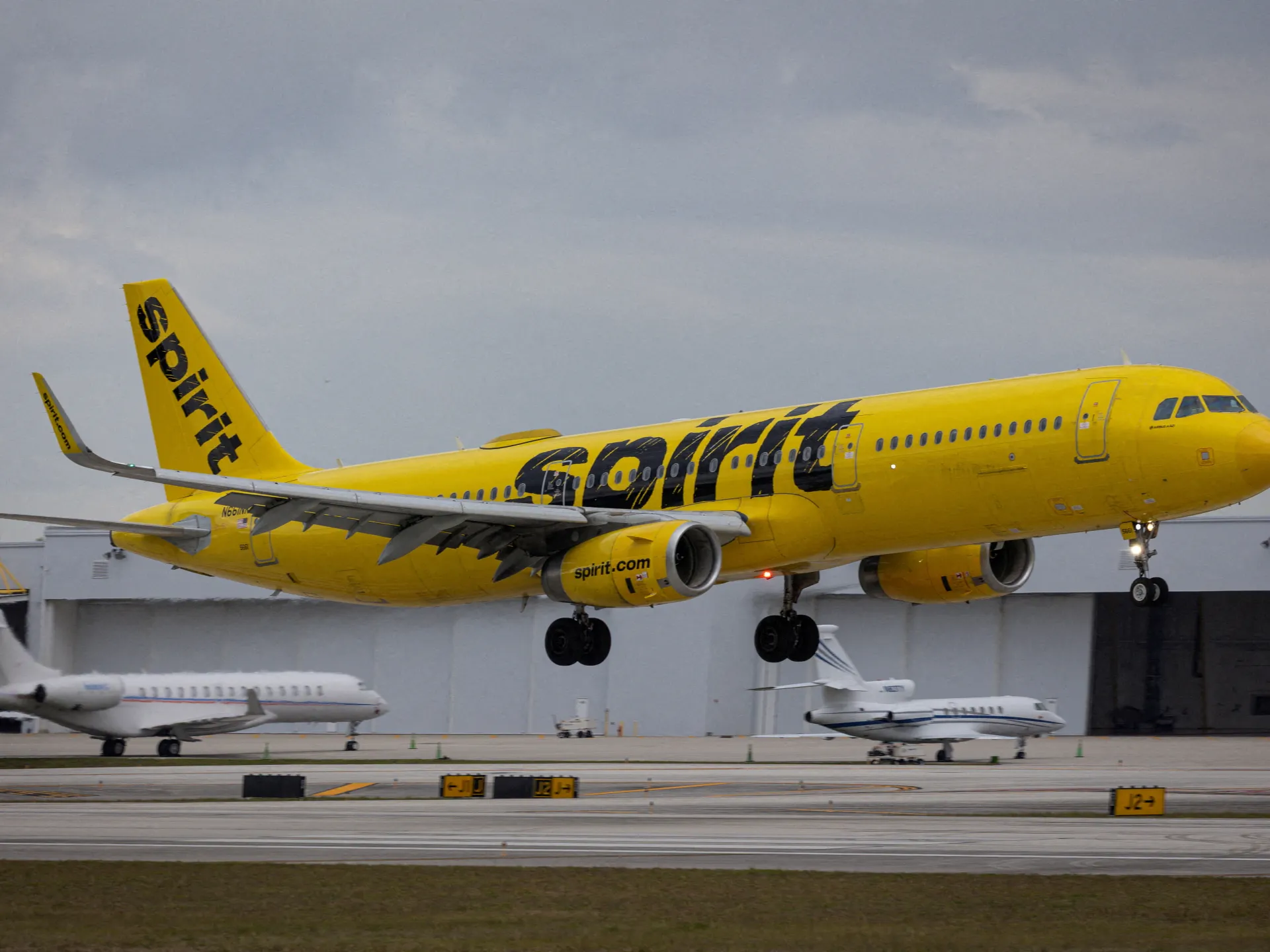
Spirit Airlines, a budget carrier in the United States, has begun winding down operations, cancelling all flights, after talks with the Trump administration to secure a $500m bailout failed. Experts say a spike in aviation fuel prices from the US-Israel war on Iran dealt the final blow to the struggling airline that pioneered the ultralow-cost carrier model.
The airline’s shutdown after 34 years has left some 17,000 staff members unemployed, many passengers stranded, and raised doubts about the future of budget air travel.
Recommended Stories
list of 3 itemsend of list
How did Spirit Airlines reach this point? Did the US-Israel war on Iran deliver the final blow?
Here’s what we know:
What has Spirit Airlines said?
On Saturday, Spirit Aviation Holdings, the airline’s parent company, said the company had started to wind down operations.
“Spirit Aviation Holdings, Inc … today regretfully announced that the Company has started an orderly wind-down of operations, effective immediately. All Spirit flights have been cancelled, and Spirit Guests should not go to the airport,” the company said in a statement on Saturday.
The statement added that, despite its efforts, “the recent material increase in oil prices and other pressures on the business have significantly impacted Spirit’s financial outlook”.
Spirit Airlines, whose airfares were lower compared with other US airlines, had 4,119 domestic flights scheduled between May 1 and May 15, offering 809,638 seats, according to the latest data from Cirium, an aviation analytics firm.
The carrier’s parent firm started as a long-haul trucking company in 1964. It shifted to aviation around 1983. The carrier rebranded from Charter One Airlines to Spirit in 1992.
How did Spirit Airlines reach this point?
The airline had been struggling financially for years and had filed for bankruptcy twice – in November 2024 and then in August 2025 – due to continued losses, high debt, and intense competition from other airlines.
According to a May 2 report by the Reuters news agency, Spirit had recently reached a deal with its lenders that would have helped it emerge from its second bankruptcy by late spring or early summer.
But the war on Iran, which led to a significant increase in aviation turbine fuel (ATF) prices, added to Spirit’s financial struggles and complicated its bankruptcy exit.
Spirit’s restructuring plan assumed ATF costs of about $2.24 a gallon in 2026 and $2.14 in 2027, but prices had climbed to about $4.51 a gallon by the end of April, leaving the carrier unable to survive without new financing.
A Spirit board meeting ended without an agreement to rescue the company, a person close to the discussions told Reuters late on Friday.
US Transportation Secretary Sean Duffy told Reuters he tried to get many airlines to buy Spirit but found no takers. “What would someone buy?” Duffy asked. “If no one else wants to buy them, why would we buy them?”
US President Donald Trump also said he had tried to bail out the airline with a $500m financing package.
“If we can help them, we will, but we have to come first,” Trump told reporters. “If we could do it, we’d do it, but only if it’s a good deal.”
However, a creditor close to the deal told Reuters, “The Trump administration made an extraordinary effort to try and save Spirit, but you can’t breathe life into a corpse. Given that, the company should make its intentions clear for the sake of its customers and employees.”
Anita Mendiratta, special adviser to the UN Tourism secretary-general, noted that while war and geopolitical instability may not have caused Spirit’s collapse, they likely delivered the final blow.
“Surging fuel costs exposed the vulnerability of airlines operating on thin margins with little room for shock absorption,” she told Al Jazeera.
“Spirit’s weaknesses were already there – it had already gone through two bankruptcy filings in the two years prior; global instability simply accelerated the inevitable. In today’s aviation market, volatility is no longer an exception; it is the operating environment,” Mendiratta said.
Are other airlines also under pressure due to the Iran war?
The war on Iran has disrupted global oil and gas prices, with Brent crude rising above $111 a barrel on Friday. The high crude oil prices have also caused ATF prices to rise, affecting budget airlines badly.
Across the globe, airlines have been increasing prices to reflect the high ATF prices, and some have also reduced their flight operations.
German airline Lufthansa said last month it cancelled 20,000 flights in a bid to protect itself from the soaring ATF costs.
On Friday, leading Indian carrier Air India said it has increased fuel surcharges on all flights, adding that it will reduce 100 flights a day across its domestic and international routes.
Mendiratta noted that the aviation industry is on alert as airlines carrying high debt, facing fuel cost volatility, labour cost pressures, fleet constraints, and sustained pricing pressure remain exposed [to the war], especially those operating through a low-cost carrier model.
“What happens next is a defining test of aviation leadership. The rapid response from rival airlines to protect stranded passengers reflects an industry that understands its most valuable asset is not aircraft or market share, it is customer trust [both traveller and cargo],” she said.
“Just as importantly, how airlines support displaced employees, reassure markets, and reinforce operational stability will shape confidence in the sector’s long-term recovery,” she added.
“Mr. Nobody Against Putin” filmmaker Pavel “Pasha” Talankin will soon be reunited with his Oscar statuette after it went missing amid his recent travels.
A spokesperson for European airline Lufthansa confirmed Friday in a statement shared with outlets that the coveted golden statuette has been located and is “safely in our care.” Lufthansa spoke on the missing Oscar after Talankin’s co-director Dave Borenstein raised the flag Thursday on social media. “Mr. Nobody Against Putin” won the documentary feature film category at the 98th Academy Awards in March.
According to Borenstein, Talankin arrived at the John F. Kennedy International Airport in New York “to fly home to Europe” and had the Oscar in tow as a carry-on. Airport security allegedly stopped Talankin from bringing the Oscar on board, citing concerns it could be used as a weapon. Borenstein said the film’s executive producer tried to smooth things but ultimately, “TSA put the Oscar in a box and sent it to the bottom of the plane” because Pavel did not have a check-in bag to place it in. He shared a photo of the cardboard box and Deadline published video of airport workers wrapping the statuette in bubble wrap and yellow tape.
Borenstein concluded his post noting the Oscar “never arrived” in Frankfurt, Germany, and speculated whether his co-director was on the receiving end of unfair treatment. “Would Pavel have been treated the same way if he were a famous actor? Or a fluent English speaker?” he wrote, tagging the Instagram account for the Transportation Security Administration. He also tagged Lufthansa and urged them to assist.
In response, Lufthansa commented on Borenstein’s post that it was on the missing Oscar case, and they are taking it “super serious.” Less than a day after their comment, the airline’s spokesperson said in their statement that it is “in direct contact with the guest to arrange its personal return as quickly as possible.”
“We sincerely regret the inconvenience caused and have apologized to the owner,” the spokesperson added.
Borenstein celebrated the development on Instagram, posting a clip of his interview with the BBC about the update and thanking a Lufthansa rep for their help and followers for spreading the word.
“Mr. Nobody Against Putin” features Talankin, a schoolteacher near the Ural Mountains, as he documents Russian propaganda efforts — from chants and songs — to energize young students around the war in Ukraine. During the Oscars in March, Talankin delivered a poignant message in Russian.
“In the name of our future, in the name of all of our children, stop all of these wars now,” he said through a translator.
There’s a tiny island in the Ionian Sea, just south of Paxos and off the coast of Corfu, that boasts some of Greece’s bluest waters – here’s how to get there and make the most of your visit
14:17, 03 May 2026Updated 14:17, 03 May 2026
The Greek island is stunning and not many know about it (stock image)(Image: REDA, REDA/Universal Images Group via Getty Images)
If you’re dreaming of crystal-clear, azure waters but aren’t keen on venturing beyond Europe, then this “little-known” Greek island could be just the ticket for your travels this year or next. You may not be able to base yourself on this island for your entire holiday, but a visit to soak up its breathtaking scenery is well worth it.
The Greece List revealed that this island boasts some of the “bluest water in Greece,” making it an absolute paradise for swimming enthusiasts and snorkelling fans alike. However, they caution that “getting there and doing it right makes all the difference,” which is why they’ve put together a handy guide to help visitors make the most of their time on the island.
The island in question is Antipaxos, a “tiny island just south of Paxos,” situated “off the coast of Corfu in the Ionian sea”. So, if you can’t actually stay there, how do you go about getting there and back? Fortunately, they’ve got that covered too.
Content cannot be displayed without consent
They suggest joining a boat tour departing from either Paxos or Corfu, which is the most popular way to reach this stunning island.
When booking a boat tour, however, if you’re hoping to take a dip, ensure the excursion includes a dedicated swimming and exploration stop.
Alternatively, you could take the ferry to Paxos first, before hiring a small taxi boat in Gaios town.
Alternatively, for those with the budget, the “best option” is to hire a private boat or self-drive boat from Paxos, as it offers “full flexibility” and allows you to spend the day entirely on your own terms.
Once there, the must-see spots are the main beaches — Voutoumi Beach, and Vrika and Mesovrika Beach. Voutoumi is the “famous one” boasting “almost neon turquoise water”, while the other is “sandy, shallow, and easier for relaxing and swimming,” so it largely comes down to your preferences and how you wish to spend your time.
Visitors note that the “water is insanely clear,” though they caution that it becomes extremely crowded around midday when tour boats arrive in force, so it’s worth reserving sunbeds if you’re after a settled base for the day.
The ideal time to visit is either early morning or late afternoon, once the large tour boats have moved on.
There are a few other things worth bearing in mind — there are “beach clubs and taverns, but in the summer they fill up,” and while technically you can stay overnight on the island, accommodation options are limited and the island “lacks infrastructure”. So if a beach club is high on your agenda, arrive early or book well ahead.
Bear in mind that tour boats only stop for a short while, so if you’re eager to properly explore at your own pace, hiring your own boat is the way to go, and it means you can discover the “hidden coves” too.
In the comments section, others praised it as “amazing,” saying they “loved” it and declaring that “Greek islands are the best”.
One person enquired: “Which is the most WOW? Paxos or Antipaxos for beaches and for children? Which is less touristy?” The response came back: “Paxos is the one to stay at and then take trips to Antipaxos”.
ST. LOUIS — Still smarting from their election loss and scornful of their departing leaders, ranking Republicans met Thursday to select a new party chairman, eyeing five candidates who stress unity but whose links to opposing factions and presidential hopefuls mirror the party’s deep clefts.
On the surface, the three-day meeting of the 165-member Republican National Committee to pick a new leader opened Thursday with a collegial sense of purpose: All five men seeking the post are conservatives who talk of renewing the party at the grass-roots level and loosening ties to the Washington Establishment that called the shots for 12 years.
But the mounting heat produced by this campaign has burnished the differences between the candidates and exposed hints of their ties to the forces buffeting the party–presidential aspirants, religious and anti-abortion elements, even the tattered remains of George Bush’s reelection apparatus.
Party veterans say none of the five–retiring Missouri Gov. John Ashcroft, Mississippi lawyer and political consultant Haley Barbour, Republican Congressional Committee Co-Chairman L. Spencer Abraham, former Army Secretary Howard H. (Bo) Calloway and Oregon party Chairman Craig L. Berkman–appear to have enough support to muster a first-ballot victory this afternoon.
Party regulars described Barbour and Abraham as the perceived front-runners, with Ashcroft, who gained national exposure last fall as a Bush campaign speaker, not far behind. But arriving committee members said up to 40% of the voting members appeared uncommitted.
Committed or not, some of the arriving committee members projected a prickly impatience with the soothing promises made by consultants and cellular phone-wielding floor whips. After 12 years of taking orders from Administration officials, some party officials gleefully flexed their independence.
Outside one reception, a Midwestern committeeman poked a startled staffer in the chest and huffed: “You’re beginning to sound exactly like the dolts we had to endure for the last four years.”
Karen Hughes, the executive director of the Texas Republican Party, said a “strong anti-Washington Establishment” mood pervades the gathering. “I think the deciding factor in the vote is who the members believe will allow them to be part of the process,” she said. “You don’t mind being a rubber stamp body when you win. But when you lose . . . .”
As they lobbied near well-stocked buffet tables in Hyatt Regency hotel hospitality suites and in secluded speeches in spare meeting rooms, the five contestants tried to capitalize on that sense of frustration. They echoed a growing cadre of party regulars who think that Bush’s presidential campaign was fatally flawed by the party’s failure to project a “big tent” image to a diverse nation.
“The sense that the party needs to be inclusionary is playing pretty well here,” said Eddie Mahe, a Republican political consultant who flew in from Washington to lobby for Calloway.
That yearning for a broader, more tolerant Republican Party masks a fear among many stalwarts that they are in danger of a grass-roots takeover by the religious right.
Mary Alice Lair, a national committeewoman from the small southeast Kansas town of Piqua, worries about the “new people,” her hushed description of Christian right volunteers who have swelled party membership rolls in her Republican precinct.
“We need to find ways to show the new people that we’re OK and to teach them how to operate as one group,” Lair said. “We need a chairman who can show the precincts how to organize properly.”
But even as candidates talked earnestly about tinkering with the grass roots, listening to regulars outside the Washington Beltway and turning a deaf ear to well-heeled consultants, they were relying on time-tested Capitol contacts and imported consultants to sway uncommitted members.
And, as they promised a turn in the party’s fortunes by welcoming all of its embittered factions, the five candidates were busy attacking each other for their links to future presidential contenders as varied as former Vice President Dan Quayle and Texas Sen. Phil Gramm, to Christian fundamentalist leaders like Pat Robertson and even to CBS News.
Abraham, a Michigan Republican leader, is selling himself as a leading candidate for change based on his roles in revitalizing his state’s party, in paring consultants’ costs and, as chairman of the congressional campaign committee, in funneling more money last year to Republican House candidates. But his opponents have attacked him for being openly supported by Quayle, who employed him as an aide.
Barbour, one of the earliest to announce his candidacy, has been criticized for his close ties to Gramm–thought to be a presidential possibility–and for representing CBS News against the Bush Administration in a battle over a cable TV bill last year.
Ashcroft has emphasized his recent role as a party spokesman in his bid to do similar work as party chairman. But it is Ashcroft’s very influence that may have prevented him from gaining an edge. His prominence in drafting the party’s platform last year has hurt him, some moderates say. And, like Abraham, he is burdened by his links to some of the powerful influences aiding him. Current RNC Chairman Richard N. Bond is said to favor him, as are a number of influential Christian right figures impressed with his strong anti-abortion stance. That kind of backing hurts the former governor as much as it aids him, party regulars said.
Calloway, who runs a political action committee founded by Rep. Newt Gingrich (R-Ga.), is beloved by many committee members. But he is believed to be a long shot because, at 67, “he’s just too old,” one Abraham backer said.
Berkman, an Oregon moderate who prefers that the party move away from its anti-abortion and anti-gay-rights planks, is said to be limited by his regional support.
Cullen and Leinster, who had comfortably cruised through the tournament last season, came under intense scrutiny after Northampton’s fast start saw them take a 12-point lead at half-time.
The four-time champions fought back and almost snatched the game at the death, with Cullen revisiting late refereeing decisions that cost his side in the 37-34 defeat last May.
A year on, he defended his side, who had previously never beaten three-time champions Toulon, and said he always expects a Champions Cup semi-final to “never go to script”.
“Naturally [in the last 10 minutes] you try and protect things, don’t you? Whereas the other team they don’t have protection and throw everything at it,” he added.
“We were sitting in this room this time last year. We were in that situation and we were throwing everything at Northampton. [Henry] Pollock gets a poach – it should have been a penalty.
“It’s clearly illegal, but nobody wants to report about it after. We should have had a penalty try and nobody wants to report about it. You just want to kick the boot into us, don’t you? But that’s the way it goes.
“Semi-finals come down to the tightest of margins. In 2012, Wesley Fofana knocked the ball over the tryline and that is how we [Leinster] got to the final.
“I would be kind to Toulon as they showed great spirit to the very end.”
Leinster will travel to Bilbao for the final on Saturday, 23 May, where they will face last year’s champions Bordeaux-Begles or Bath, who play on Sunday.
Cullen confirmed centre Robbie Henshaw and flanker Josh van der Flier, who left the field with head injuries, will undergo the graduated return-to-play protocol.
Flanker Jack Conan limped off and “will get checked”, with Tommy O’Brien said to be likely suffering from cramp.
All four are important players for Cullen as Leinster seek a fifth Champions Cup in three weeks’ time.