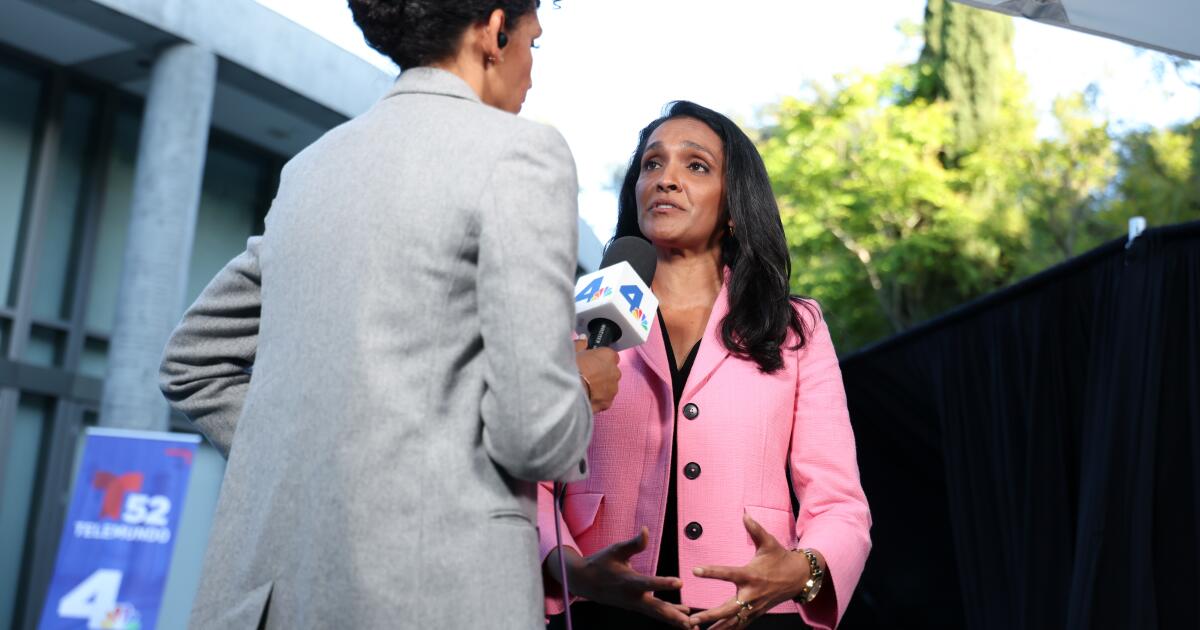
The Los Angeles City Council on Wednesday voted in favor of new restrictions on so-called “pretextual” traffic stops, signaling a growing impatience with the Police Commission’s failure to rein in a controversial LAPD tactic that critics say enables racial discrimination.
The vote requests that the department’s all-civilian watchdog adopt new guidelines similar to San Francisco, which bars police officers from pulling people over for broken taillights and other minor equipment violations unless there is a safety threat.
“Board of Police Commissioners: Get this done; we’re watching, no excuses,” said Councilmember Imelda Padilla, who shared stories of her late father being stopped by police with no explanation. “This is what this generation wants.”
If the new policy were adopted, LAPD officers would be prohibited from stopping motorists, bicyclists or pedestrians for minor violations “except in cases where the violation poses a significant and imminent safety risk.”
The unanimous vote followed sometimes emotional testimony at a City Council meeting from Angelenos about how their lives had been shaken by discriminatory traffic stops and searches.
Several speakers pointed to a growing body of research showing that minor stops disproportionately affect Black and brown motorists and do little to combat violent crime while eroding public trust. In recent years, there have been several high-profile traffic stops that resulted in officers or drivers being killed.
The current LAPD policy, in place since 2022, requires officers to record themselves on their body-worn cameras stating the reasons for suspecting a more serious crime had occurred when making a stop for a minor infraction.
The measure passed Wednesday stops short of a categorical ban that some have sought, but was still met with cautious optimism by traffic safety reformers.
“It helps place the city of Los Angeles on a path of ending racial profiling by LAPD,” said Chauncee Smith, of Catalyst California, a group that advocates for racial justice.
Smith’s group recently released a report that said such stops have continued to disproportionately affect Black and Latino drivers.
Smith said the new policy advanced by the City Council represents “a more formal, explicit prohibition,” adding that he hopes the Police Commission will ultimately give officers even less discretion in deciding when to make stops.
In a brief statement after the vote, Mayor Karen Bass thanked Harris-Dawson for his “leadership and dedication in moving this updated policy forward.”
“I will work closely with the Police Commission and Chief [Jim] McDonnell to implement it and to provide officers with appropriate training,” Bass said.
Any changes to the policy will probably draw strong challenges from within the LAPD and the Los Angeles Police Protective League, the powerful union that represents the city’s rank-and-file officers.
McDonnell has publicly defended the stops as an essential law enforcement tool in the department’s fight against guns, gangs and drugs. He and some transportation safety advocates have argued that persistent traffic deaths — road fatalities have in recent years outpaced the number of homicides — indicate the city needs to crack down harder on reckless driving.
The proposed change comes against the backdrop of a broader effort by city leaders to wrest greater oversight of the LAPD from the Police Commission. A spokesperson for the civilian body said it would evaluate how to proceed.
“The Board intends to place this item on a forthcoming agenda to enable a full and transparent discussion of the Department’s pretextual stop policy, which will include the recommendations from the City Council,” the statement said.
McDonnell did not respond to a request for comment.
The vote was the latest move in a broader push to remove police officers from traffic enforcement. Some advocates have argued that more punitive approaches that prioritize arrests and traffic citations do little to keep city streets safe; instead, they argue the city should invest in unarmed civilian workers and speed bumps, roundabouts and other street modifications that could help curb unsafe driving.
Adrienna Wong, a senior attorney with the American Civil Liberties Union, said Wednesday’s vote showed city leaders taking action on an issue that was personal to them.
“I think what you saw today in council was the council members have lived experiences and are hearing from their constituents and are voting to represent their constituents in a way that the Police Commission has not,” she said.
Champions League analysts Stephen Warnock, Nedum Onuoha and Guillem Balague explain how Arsenal were able to “make life difficult” with the use of a man-to-man press high up the pitch to force Atletico Madrid to play the ball long in their semi-final second leg at the Emirates Stadium.
Police have arrested an anti-war protester after he ended a five-day sit-in atop Washington’s Frederick Douglass Memorial Bridge. Guido Reichstadter, opposed to the war on Iran, started the protest to rally others into non-violent opposition.
US State Department spokesperson Tommy Piggott tells Al Jazeera that the United States is working to create conditions for “good faith conversations” between Lebanon and Israel, while accusing Hezbollah of trying to derail diplomacy through attacks and threats.
On one of her previous visits to Los Angeles, Argentine filmmaker Lucrecia Martel found herself having a smoke on Hollywood Boulevard.
There, while she stepped over the famous concrete-embedded stars, an unhoused man struck up a conversation with her.
“He kept explaining to me that he was poorly dressed because he was currently living on the street after someone robbed him, but he had written a screenplay,” Martel, 59, recalls in Spanish over coffee on a morning in April at a West Hollywood hotel.
“He told me they had stolen a watch from him — not a Rolex but a known brand,” she continues. “The whole time he was trying to convince me he was a millionaire who just so happened to be on the street because of random circumstances.”
One of Latin America’s most indispensable storytellers, Martel is fascinated by how prevalent that dream still is in L.A. — that movies can change your life overnight.
“That particular fantasy is par for the course in this city,” she says, though she’s not above it. It’s the reason she’s back to promote her first documentary, “Our Land,” out Friday.
Unhurried when it comes to her output, Martel has only made four fiction features, among them 2001’s “La Cienaga” and 2008’s “The Headless Woman” (returning to theaters this month in a new 4K restoration). Her biting and formally audacious narratives examine class, politics and — a speciality — the interiority of women through enigmatic portraits of psychologically complex individuals.
“Our Land,” a piercing indictment of the enduring wounds of colonialism, chronicles the murder of Indigenous Argentine activist Javier Chocobar in 2009 and the prolonged trial of the perpetrators in 2018.
Chocobar was shot during a confrontation with armed men over land in the Tucumán province of Argentina where the Chuschagasta Indigenous community has lived for many generations. Martel explores the killing not as an isolated event in her country’s recent past but as part of a long history of dispossession.
“Racism is a foundational element,” she says of her homeland. “The only consistent thing in Argentina, from the country’s birth to the present day, is the rejection of Indigenous people.”
In Argentina, Martel explains, public education has indoctrinated the population into believing Indigenous people no longer exist. Yet many Argentines proudly claim a connection to the Europeans, Italians in particular, who arrived in the country in the late 1800s and early 1900s.
“When giving speeches, our presidents always say, ‘We are a country of immigrants,’ or ‘We came from the boats,’” says Martel. “They use metaphors like these because deep down Argentines feel much more indebted to European immigration than to our Indigenous population. But more than half of the people in Argentina have Indigenous ancestors.”
In 2020, Chocobar’s three convicted murderers appealed their guilty verdicts and were set free. “Our Land” premiered at the Venice Film Festival in September 2025, which brought renewed attention to the case. A month later, the sentence was upheld and two of the men returned to prison (one died in the interim).
Martel believes that outcome was a response to her film. “Communities wage the fight but cinema helps,” she says.
“I believe that we must use cinema for its enormous power to alter perception and not soothe the rich,” Martel says. “It’s not about delivering a message but rather about showing how an idea functions.”
(Jason Armond / Los Angeles Times)
For over 14 years, Martel worked on “Our Land” on and off. This time included periods when she focused on 2017’s “Zama,” her masterful period piece following a Spanish official in 18th century Argentina “who doesn’t want to be American,” she says, referring to the continent. In her mind, both “Zama” and “Our Land” come from the same impulse to dissect colonialism.
As part of her research process, Martel and her team created a detailed archive of documents related to the case that the Chuschagasta community now has at its disposal. Over the years, Delfín Cata, one of the Indigenous men present during the attack, would call Martel. He never asked about how her film was going, but the director sensed he was tacitly checking in on her progress, hoping that she was not losing faith.
“That was a confirmation that, beyond my own interest, there were people who needed this film,” she says. “I felt the immense satisfaction of knowing I was doing something that would be concretely useful.”
For Martel, the question of whether she was the right person to make this film (one she got in Venice) seems unfair. “It’s wrong to prevent a human being from speaking about their own history because they are not a woman, because they are not Black, or because they are not Indigenous,” she says. “It’s better to make mistakes trying to understand something than not to try at all. The chances of making a mistake are enormous in a film, no matter how good your intentions are.”
A key piece of evidence in the Chocobar case, prominent in the film, is a video that one of the attackers filmed, presumably expecting the Indigenous community to react violently, to justify firing his gun at them. The Chuschagasta men that faced them weren’t armed. As used by their aggressors, the camera functioned as a weapon.
Hollywood feels incompatible with Martel’s sophisticated, confrontational movies rooted in her country’s troubles. By Martel’s own admission, it doesn’t feel like a fit for her.
“I would have to force myself to create something outside my own country, outside my own language,” she says. “And that doesn’t really appeal to me.”
Still, Marvel Studios famously asked to meet with her when seeking a director for 2021’s “Black Widow.” Martel says she was among many directors they contacted, but she was curious to take the meeting even if she knew nothing would come of it.
“They wanted to do it over Zoom and I happened to be here in Los Angeles,” she remembers. “I told them I could come in, because I wanted to see what the whole process was like.”
Martel describes the month she spent in L.A. — an eye injury prevented her from flying home sooner — as a “lot of fun in the end,” even if no blockbuster emerged from it. More recently, another Hollywood offer did tempt her, but she ultimately passed.
“It was a good book suggested to me by an actress of undoubted talent,” Martel shares, careful to avoid names. “I considered it, but you very quickly have to picture yourself spending three years or at least a year and a half living in the United States making a movie. I have a thousand things in Argentina to worry about.”
Still, Hollywood, and its significance to moviemaking, has a singular, unnerving allure on her. Two of Martel’s favorite movies set in L.A. are David Lynch’s nightmarish “Mulholland Drive” and Robert Aldrich’s psychodrama “What Ever Happened to Baby Jane?”
“There is something ruthless and utterly devoid of sanity at the heart of this film industry, and I’ve never felt that darkness as clear as in ‘Mulholland Drive,’” she says. “How can an industry that handles so many millions [of dollars] and such impeccably dressed famous people be so full of lunatics? That film captures that perfectly.”
And occasionally, she thinks, a big production breaks the mold, such as Todd Phillips’ “Joker,” which won the Golden Lion at the Venice Film Festival in 2019 when Martel served as jury president — a controversial choice.
“It certainly had an impact on me,” says Martel. “I didn’t vote for it, though. I had another favorite, a Chinese film that stood no chance of winning.”
Phillips, she thinks, created a premonition for what was to come. “For me, the real killer clowns are Trump, Milei or Orbán,” Martel says, referring to polarizing leaders. “They expose themselves to ridicule and spout all sorts of nonsense. Those are clowns. And I think that movie captured that.”
Not one to mince words, Martel elaborates on the relation of Joaquin Phoenix’s social outcast turned supervillain and President Trump.
“The origin of the Joker is social resentment,” she says. “Trump holds no resentment toward society because the system gave him everything. But he has exploited the people who do harbor resentment. That is where you see the kind of clown he is, one who knows how to use people.”
Artificial intelligence, far-right ideologies, voracious capitalism — all of it makes Martel alarmed, seeing it as pushing us collectively to the brink of collapse. But there is hope, she thinks.
“What we have invented is very dangerous but we can dismantle it,” she says. “That is the only thing I’m betting on, that, at some point, a consensus will emerge and we’ll go, ‘Let’s not do this.’”
“I believe that we must use cinema for its enormous power to alter perception and not soothe the rich,” she says. “It’s not about delivering a message but rather about showing how an idea functions.”
She points to one of her subjects in “Our Land,” an Indigenous man who told her he loves the 1959 Charlton Heston epic “Ben-Hur,” a passion she does not share but understands.
“That’s a blow for all of us who make auteur cinema,” Martel says with a laugh. “That feeling that ‘Ben-Hur’ evoked gave him the strength to continue fighting for his community’s territory.”
The night before our interview, Martel rode around L.A. on a scooter holding onto a friend. These days she uses a cane to help her with mobility. “The city has great light,” she says, still open to being surprised by it.
Karen Bass, Spencer Pratt and Nithya Raman each came into tonight’s mayoral debate with goals for what may be their only time together on stage.
As the incumbent mayor, Bass had to weather blows from her challengers while trying to sell voters on her fitness for another term, despite a disastrous 2025.
As a reality TV star with no political experience, Pratt needed to show that he could offer substance instead of just AI fanboy videos and the name-calling — “Karen Basura” — he has indulged in on social media.
Raman’s task was perhaps the hardest. As a city councilmember whose two previous campaigns were backed by the local Democratic Socialists of America chapter, she needed to convince Pratt-curious voters that she’s more conservative than Bass. Yet for others, she needed to appear liberal enough to peel away support from the mayor and come out as a progressive lioness to excite Democrats in a year where GOP candidates like Pratt have to answer for the disaster that is President Trump’s second term.
Only one of the three failed.
At times, Raman was tongue-tied trying to answer simple questions. Moderators kept telling her she was going over her time. Answering a yes/no question about whether noncitizens should be allowed to vote in city elections, the councilmember went on and on, until the moderator cut her off.
While Raman offered some policy plans, she also played a card straight out of Trump’s arsenal. She claimed that Pratt and Bass were teaming up against her — an unlikely scenario that drew laughs from the audience. She got more and more frustrated, to the point that when Bass was allowed time for a rebuttal, she dejectedly proclaimed, “I haven’t been offered that in a lot of this debate.”
Raman, who had endorsed Bass’ reelection before throwing her hat in at the last minute, came off as inexperienced, touchy and unprepared.
The line of the night was Pratt dismissing Raman as a “random councilmember” — which is how the L.A. political world responded to her entry into the race. She was so upset about Pratt’s remark that she continued to whine about it to a KNBC reporter after the debate.
What’s shocking about Raman’s flop is that she should know how important it is to project well to a television audience, given that her husband is a screenwriter. Her tone was flat, when she needed to be passionate.
No one had to remind Pratt of that. He was parrying tough questions on a big stage for the first time, facing an audience who knew him only as the Angry L.A. White Guy he has reveled in playing.
He mostly succeeded.
At his best, Pratt came off as a boisterous bro with enough charm to call himself “humble” without coming off as obnoxious. He dominated the flow of conversation without coming off as commandeering, even interrupting Raman at times to let Bass speak. At one point, he even said “Sorry” when he had taken up too much time and the moderators cut him off.
He was light on specifics, other than saying he was going to do better than the others and that he would prioritize public safety above all. Instead, he was the one person on stage who used anecdotes to sell himself, citing conversations about abused animals, downtown workers too afraid to eat outside and film producers hiring local gang members to keep their shoots safe.
As a TV personality-turned-influencer, Pratt knows that storytelling is far more effective than drowning the audience in statistics, as Bass and Raman did.
But the bad Pratt flared up at times. He earned a reprimand from KNBC anchor and debate co-moderator Colleen Williams when he called the mayor an “incredible liar.” Affecting high-pitched voices to mock Bass and Raman came off as juvenile and possibly sexist. And when it came to last summer’s federal immigration raids that terrorized Southern California, Pratt appeared flummoxed when Bass pointed out that 70% of those arrested didn’t have criminal records — a use of stats that hit.
Bass was also who she had to be — measured, forceful and raring to defend her record, without coming off as defensive. She wasn’t exactly inspirational, but she didn’t have to be. The city’s powerful labor unions have backed her, along with much of the Democratic establishment.
Raman and Pratt are right in deeming Bass the old guard of a beat-up city — but the old guard didn’t get there without knowing how to win.
Former WNBA MVP Tina Charles has retired after 14 seasons in the league.
“Today, I officially announce my retirement from basketball,” the eight-time All Star wrote in a post shared across her social media accounts Tuesday. “This game gave me everything and I’ll miss it deeply.”
The veteran center — the No. 1 overall draft pick selected by the Connecticut Sun in 2010 — played for six WNBA franchises over the course of her career, including a lengthy stint with the New York Liberty. Named the league MVP during her 2012 campaign, Charles is the WNBA’s leader in career rebounds (4,262), double-doubles (201) and made field goals (3,364), as well as second on the list for career points (8,396) behind Diana Taurasi.
“I’ve experienced the highest highs and the lowest lows, and I’m thankful for all of it,” Charles wrote, reflecting on her professional career and “lifetime of love for this game.” “Growing up in Queens, New York, basketball wasn’t just a game, it was a language, a rhythm, its survival, its expression. It pulled me in early, and I gave myself fully to it. It shaped me into the woman I am today and for that, I wouldn’t change a thing.”
Charles is an expected future Hall of Famer. While a WNBA championship eluded her, her career includes three Olympic gold medals with Team USA, two NCAA championships with the UConn Huskies and a number of titles in leagues overseas. Her individual accolades also include being named to the All-WNBA team nine times, most recently in 2021, and to the league’s All-Defensive team four times. (Charles did not play in the 2020 and 2023 WNBA seasons.)
In a July episode of Sue Bird’s “Bird’s Eye View” podcast, Charles spoke candidly about her thoughts around retiring.
“I thought I was done in 2023 when I didn’t play,” she said. “Then [I] came back, found the joy, love for the game again. But here, I probably think about it every day. … Going in, playing, at this age, in the 30-minute range. Just how you feel physically, and then it’s more games.”
Charles returned to play with the Sun for the 2025 season, starting 42 of 44 games while averaging 16.3 points and 5.8 rebounds. She received the Dawn Staley Community Leadership Award for the second time during her final season, for her work with Hopey’s Heart Foundation. Charles founded the nonprofit in 2013 in honor of her late aunt, Maureen “Hopey” Vaz, to raise awareness about sudden cardiac arrest and provide automated external defibrillators to schools and recreation centers that need them.
According to the New York Times, Charles is currently pursuing a master’s degree in sports management at UConn and is eyeing the possibility of working in a front office of a WNBA, NBA or college team in the future while continuing her Hopey’s Heart Foundation efforts. She also has plans to get into the beer business.
“There are still dreams in my heart that are waiting to be lived, and I can’t wait to share that journey with you all,” Charles said in her social media post.
ASEAN leaders have begun meeting in the Philippines as residents near the summit venue say their main concerns are soaring fuel prices and living costs. The regional bloc enters what officials describe as a “stress test decade”, facing issues stemming from the Iran conflict since so many member states are heavily reliant on energy from the Gulf.
EMMY award-winning actor William H. Macy has revealed the most difficult Hollywood stars, according to him.
The star, 76, has been acting for four and a half decades and has worked with the who’s who of Hollywood in his time.
Sign up for the Showbiz newsletter
Thank you!
William H. Macy has revealed the most difficult Hollywood stars in his opinionCredit: SXSW Conference & Festivals viaHe shared his thoughts on the We Might Be Drunk podcastCredit: WE MIGHT BE DRUNK POD
He appeared on the We Might Be Drunk podcast with hosts Mark Normand and Sam Morril as they attempted to get some gossip out of him.
Mark asked: “We gotta ask, which actors do you really hate?,” before listing off some big names, including Tommy Lee Jones, who he acted in the 1994 film, The Client with.
William responded: “He was rough,” before adding: “I’m not letting out any secrets.”
The hosts then asked him what he thought about Jim Carrey, to which he replied: “I did not act with him, but I’ve just heard he can be really tough.
“You know, there are a lot of actors out there, it p****s me off, who make life miserable for a lot of people and they don’t get busted for it and it p****s me off.”
William began his career on stage in theatre, before building his career by starring in small, independent films.
His breakthrough role was in black comedycrime film Fargo in 1996 which got him critical acclaim and a nomination for the Academy Award for Best Supporting Actor.
He went on to star in big Hollywood films in his career, including Psycho, Jurassic Park 3, Spartan and The Lincoln Lawyer.
He claimed Tommy Lee Jones was “rough”Credit: Getty – ContributorWilliam was asked what Jim Carrey is likeCredit: Getty
William’s television work includes playing Dr. David Morgenstern in ER for 15 years and as Frank Gallagher on the US Shameless for 10 years.
He is a two-timeEmmy Awardand four-timeScreen Actors Guild Awardwinner, and has been nominated for anAcademy Award, aDrama Critics’ Circle Award, and fiveGolden Globe Awards.
The Hollywood star married actress Felicity Huffman in 1997 after dating on and off for 15 years.
The pair went on to have two children together – daughters Sophia Grace and Georgia Grace.
Their Spanish coach is the mastermind of this new PSG, built from the ashes of the superstar era which saw Lionel Messi, Kylian Mbappe and Neymar the centrepieces of a dysfunctional, ego-ridden outfit who never resembled a team.
In their place is the perfect combination of brilliant individual skill bolted on to a savage work ethic and defensive solidity that will make them a formidable hurdle for Arsenal to overcome.
And the leader is Marquinhos.
The Brazil centre-half arrived at PSG from Roma in 2013, surviving Luis Enrique’s cull of big names because the coach is wise enough to see a consummate professional and world-class defender when he sees one.
He has formed a superb partnership with the formidable Willian Pacho, who played a key role in keeping Kane under wraps until the England captain’s strike in the dying seconds.
Kvaratskhelia and Dembele combined for the game’s defining moment, while 20-year-old Desire Doue – the young face of the new PSG – tormented Vincent Kompany’s side, coming close on several occasions in the second half.
And yet the glue that held it all together was Marquinhos, still peerless at 31, and with the uncanny knack of being in the right place at the right time while exuding calm authority.
To complete the picture, PSG’s midfield of Vitinha, Fabian Ruiz and Joao Neves is the well-oiled engine room linking it all together.
Ruiz’s pass in the build-up to Dembele’s goal was a thing of beauty – but he then reverted to doing the defensive dirty work Luis Enrique demands and which his team seems only too happy to deliver.
Theme parks are an expensive day out. But there are inexpensive options outside of the major parks, and here are some that offer value for money days out for families ahead of half term
Which theme parks offer the best value for money?(Image: handout)
With a combination of better weather and half term on the way, many people will be heading to theme parks in the coming weeks. However, theme parks are a pricey choice for a day out. It’s not just the cost of the ticket itself, but the extras, such as parking, food, and drinks that add up.
But some theme parks do offer better value for money than others. Aqua, a credit cardprovider, has compared the cost of theme parks across the UK, looking at factors such as the average adult ticket price, the cost per rollercoaster based on ticket price, and even the average cost of a hotel nearby if you stay overnight.
Here are the top five theme parks based on value for money.
Opened in the 1970s, this beachfront amusement park in Aberdeen is a fun family day out. For £24.99, adults can enjoy unlimited rides, a round of pirate golf, and other activities. Rides include a 100ft Ferris wheel, bumper boats, a huge swing ship, and waltzers, and visitors can also enjoy a soft play area, indoor arcade, and go-karting, so there’s something for all weathers.
4. M&D’s Scotland Theme Park – Strathclyde
Scottish theme park M&Ds is currently celebrating its 30th year, and offers wristbands for unlimited rides all day for £19.95. However, if you’re not a rollercoaster fan, you can still enter for free, or pay for individual rides. Attractions include the Miami Rip Tide that twirls riders round in the air, the 21m high Freak Out, and the classic Runaway Mine Train.
3. Fantasy Island – Skegness and Gulliver’s Land – Buckinghamshire
Two theme parks shared first place. Fantasy Island in Skegness offers free entry to the park and on-site market, and you can then choose whether to buy a ride wristband. Costs vary depending on when you visit, with unlimited wristbands starting at £22.50. Rides include Wild River Rapids, the Volcano, which sees guests plunge 183 feet, and the Odyssey rollercoaster.
Gulliver’s has four theme parks across the UK, and Gulliver’s Land in Milton Keynes was highlighted as the best value. It offers free parking, which not all theme parks do, with the average ticket price at £26. While Fantasy Island got slightly higher reviews overall, Gulliver’s Land offers plenty of family fun with rides including Jungle Falls flume, the Buccaneer pirate swing, and Dragon Siege.
2. Lightwater Valley Family Adventure Park – North Yorkshire
Offering 11 rollercoasters, Lightwater Valley Family Adventure Park is a packed day out with the average adult ticket price coming in at £25. The park changed hands in January, with the new owners aiming to turn the attraction around. It has over 35 rides and attractions, including the brand new Spinning Racer Family Rollercoaster, which “sends you twisting, turning and spinning through sweeping bends and surprise drops.”
Blackpool Pleasure Beach clinched the top spot, likely due to its large number of roller coasters for its ticket price. The average adult ticket is £32, and this includes unlimited access to 26 rides, including 10 rollercoasters, four of which are classic wooden coasters.
Blackpool’s thrill rides include the Big One, which includes a 235ft drop, Valhalla, an award-winning water ride, and Grand National, a classic wooden racing coaster. Not into adrenaline-thumping rides? The park is also home to Nickelodeon Land, which includes PAW Patrol and SpongeBob themed areas, and lots of family-friendly rides too.
Have a story you want to share? Email us at webtravel@reachplc.com
Pyongyang says its status as nuclear-armed state ‘will not change based on external rhetorical claims’.
Published On 7 May 20267 May 2026
North Korea’s envoy to the United Nations has declared that Pyongyang will not be bound by any treaty on atomic weapons and that no external pressure will change its status as a nuclear-armed state.
Ambassador Kim Song’s statement – carried by state media on Thursday – came as the United States and other countries criticised North Korea’s nuclear programme at the ongoing UN conference reviewing the Nuclear Non-Proliferation Treaty (NPT).
Recommended Stories
list of 4 itemsend of list
Pyongyang withdrew from the NPT in 2003 and has since conducted six nuclear tests, promoting multiple UN Security Council sanctions.
The country is believed to hold dozens of nuclear warheads.
“At the 11th NPT Review Conference currently under way at UN headquarters, the United States and certain countries following its lead are groundlessly calling into question the current status and exercise of sovereign rights,” Kim said, according to the official Korean Central News Agency.
“The status of the Democratic People’s Republic of Korea as a nuclear-armed state will not change based on external rhetorical claims or unilateral desires,” he added.
“To make it clear once again, the Democratic People’s Republic of Korea will not be bound by the Non-Proliferation Treaty under any circumstances whatsoever.”
He continued that the country’s status as a nuclear-armed state has been “enshrined in the constitution, transparently declaring the principles of nuclear weapons use”.
North Korea has long insisted that it will not give up its nuclear arsenal, describing its path as “irreversible” and pledging to strengthen its capabilities.
It has sent ground troops and artillery shells to support Russia’s invasion of Ukraine, and observers say Pyongyang is receiving military technology assistance from Moscow in return.
The nine nuclear-armed states – Russia, the US, France, the United Kingdom, China, India, Pakistan, Israel and North Korea – possessed 12,241 nuclear warheads in January 2025, the Stockholm International Peace Research Institute (SIPRI) reported.
The US and Russia hold nearly 90 percent of nuclear weapons globally and have carried out major programmes to modernise them in recent years, according to SIPRI.
The nuclear issue has been at the heart of the US and Israel’s war on Iran, with US President Donald Trump saying that Tehran – a signatory to the NPT – can never have a nuclear weapon.
Iran denies seeking an atomic weapon and has long demanded Washington acknowledge its right to enrich uranium.
The internet’s most controversial looksmaxxer is in hot water again.
Clavicular, born Braden Eric Peters, has been charged in Florida’s Miami-Dade County in connection with a video that circulated on social media showing an alligator, which appeared to be dead already, being shot repeatedly in the Everglades. Two others are also facing charges in connection with the incident: Andrew Morales, 22, known online by the moniker “Cuban Tarzan,” and Yabdiel Anibal Cotto Torres, 26, who goes by “Baby Alien.”
Peters is facing a misdemeanor charge of unlawfully discharging a firearm in a public place, according to court records obtained by The Times. The Miami-Dade state attorney’s office filed the charges April 29.
Steven Kramer and Jeffrey Neiman, attorneys for Peters, told The Times in a text message, “Our client has been summoned to appear for a misdemeanor charge that stems from following the instructions of a licensed airboat guide. He relied on that guidance. No animals or people were harmed. We are confident that once the full picture is understood, people will see this for what it is.”
The shooting took place at the Everglades and Francis S. Taylor Wildlife Management Area boat ramp dock on or about March 26, court records said. The video shows the men aboard an airboat firing at the alligator more than a dozen times.
“Yeah, it’s definitely dead,” Peters is heard saying after firing.
Shortly after the video went live on social media, the Florida Fish and Wildlife Conservation Commission announced it had launched an investigation into the incident.
“Florida’s wildlife and waterways deserve respect, not content farming,” Lt. Gov. Jay Collins said March 26 on X. “Under my watch, anyone who abuses wildlife in Florida will be held accountable to the fullest extent of the law.”
Morales’ attorney Richard Cooper emailed The Times a statement Wednesday. “We urge the public not to rush to judgment. Importantly, there is no allegation that any animal was injured, and the available evidence does not support the sensationalized narrative that has circulated online,” the statement read. “My client relied on information and guidance provided by those in authority and had no criminal intent.”
The same week Peters’ alligator video caught the authorities’ attention, the manosphere influencer was arrested on suspicion of misdemeanor battery. He was taken into custody on a warrant issued by the Osceola County Sheriff’s Office and released soon after on bond. Police allege that in February the 20-year-old internet celebrity instigated a fight between his girlfriend, Violet Lentz, 24, and a 19-year-old influencer at a Kissimmee, Fla., short-term rental. That incident was also live streamed to his hundreds of thousands of followers.
Then in April, Peters was live streaming from a Miami nightclub when he appeared to overdose on camera. In the video, Peters is seen taking a swig of an unknown substance and then subsequently starting to mumble, sway and close his eyes as the camera panned away.
TMZ obtained the audio from a 911 call alerting emergency services to the possible overdose of a 20-year-old man. Additional videos, taken by bystanders, showed Peters being carried out of the nightclub.
A source close to Peters told The Times that he was hospitalized for the overdose and checked himself out the following morning. Within hours of his release from the hospital, he was back on streaming platform Kick and telling his followers he would be out at a nightclub that night to promote its grand opening.
Following the collapse of the Soviet Union, Kazakhstan gained its independence in December 1991.
The new-found independence meant the need for Kazakhstan to protect itself and on May 7th 1992, President Nursultan Nazarbayev signed the Decree that established the Armed Forces of Kazakhstan. On the same day, the President enacted the transformation of the State Committee of Defence of the Republic of Kazakhstan into the Ministry of Defence, giving Sagadat Nurmagambetov the military rank of Colonel-General, and the appointment of the General-Colonel Nurmagambetov as Defence Minister of Kazakhstan.
From the 1990s Defender’s Day had been a holiday only for military personnel. In 2012, marking the 20th anniversary, the law was amended to declare it a national holiday for all Kazakhs.
Despite being called Defender of the ‘Fatherland’ Day, thousands of women serve in the Kazakh Armed Forces, so this is not a purely ‘male’ holiday in Kazakhstan.
The holiday is celebrated with military parades, demonstrations, concerts, shows and festive events across the country. It has become an annual tradition that on this day the Supreme Commander-in-Chief of the Armed Forces of Kazakhstan issues a decree on awarding new military ranks and presents awards to distinguished military men.
This holiday is followed two days later with Victory Day, which celebrates the Soviet victory over Nazi Germany and the end of the Second World War, making this a very patriotic time of year.
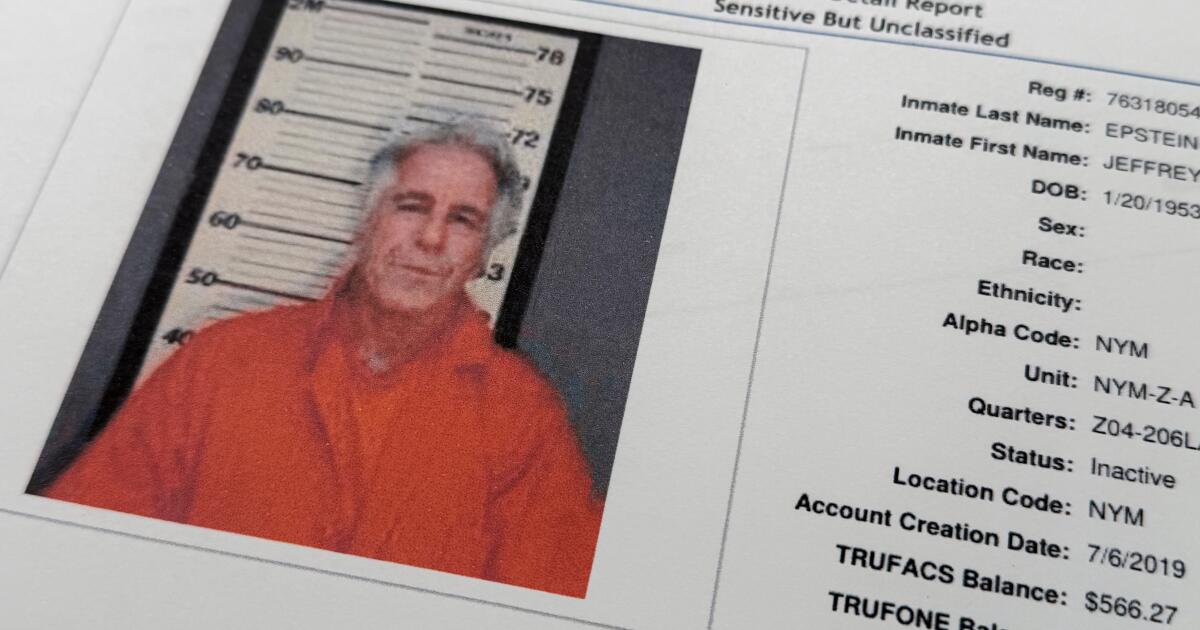
WASHINGTON — A federal judge in New York unsealed a suicide note Wednesday purportedly written by Jeffrey Epstein in July, 2019, before a failed suicide attempt soon after he had been taken into federal custody on sex trafficking charges.
The disgraced financier would ultimately die weeks later in the same New York facility in what was ruled a suicide.
While the note’s authenticity has not been established, it contains an apparent reference to a line from a 1931 Little Rascals film that Epstein had used in at least two email messages, according to the trove of Epstein documents released by the U.S. Department of Justice this year in response to the bipartisan Epstein Files Transparency Act.
In the short handwritten note released Wednesday, Epstein allegedly wrote, “They investigated me for month — Found nuthing!!!”
The note concludes, “Whatcha want me to do — Burst out cryin!! No Fun – Not Worth It!!”
It was a phrase Epstein had used before.
In a September, 2016, email to his brother, Mark, he wrote, “whtchoo want me toodo — bust out crying” in response to news that their cousin had become a grandfather.
And in another message the following year to his childhood friend Terry Kafka, Epstein wrote, “Whatcha want me todo/bust out cryin,” in response to a message from Kafka about being nostalgic
Epstein’s brother and Kafka did not immediately responded to requests for comment.
The line is an apparent reference to a 1931 Little Rascals short film “Little Daddy,” in which the character Stymie says, “Well, what do you want me to do, bust out crying?” when another character says that it will be their last breakfast together.
The note emerged from the court records of Epstein’s onetime cellmate Nicholas Tartaglione, a former police officer who is serving four consecutive life sentences for a 2016 quadruple murder.
The note itself was not included in the millions of pages released by the Justice Department.
In 2020, “60 Minutes” disclosed a note Epstein reportedly wrote days before his August, 2019, death that included complaints about his conditions and similarly concluded with the phrase “No fun!!!”
Journalist Katie Phang sued acting Atty. Gen. Todd Blanche for allegedly failing to comply with the requirements of the Epstein files law passed last year, which required that the documents be released in their entirety within 30 days, with reasoning provided for any documents not released.
The department released the files after the deadline passed and has faced criticism for removing or not releasing some documents and simultaneously failing to redact the names of numerous Epstein victims while redacting the names of some of Epstein’s friends and associates.
Vardy was released by his boyhood club Sheffield Wednesday for being too small, but the documentary unearths footage of his blistering goalscoring form in his Stocksbridge days while also working in a factory making medical splints.
However, in the first of a series of problems in 2007, Vardy admits in the documentary he had “no stability” in his life. He had been convicted of assault when out drinking and had to wear an ankle tag for six months.
He also had a 6pm curfew which meant he had to leave matches early.
Moves to Halifax Town – where Vardy met his long‑time agent John Morris – and later Fleetwood Town followed, before his £1m move to then‑Championship club Leicester City.
Woven throughout are “The Inbetweeners” – a nickname given to Vardy’s small, all‑male social group from Sheffield – who act as his main support, alongside his wife.
“If one of us is having a problem, then get it in the group. Might get abused for a bit but at least it’s us lot keeping an eye on each other,” Vardy says.
They were needed, as former Foxes midfielder Andy King says Vardy experienced an initial “culture shock” at Leicester, where the striker admits he initially felt not good enough.
Physiotherapist Dave Rennie also corroborates accounts of Vardy’s struggles with alcohol, worsened by the pressure of the move, including “manufacturing his own Skittles vodka at home”.
Vardy would arrive at training hungover and, on one occasion, uncontactable to his then-pregnant Rebekah, or Becky as he affectionately calls her.
There was a feeling he was going to throw away his career, but the work of a “good psychologist”, the patience of manager Nigel Pearson and his own efforts to grow up after the birth of his daughter Ella kept him going.
He later described it as “a massive, massive learning curve”, explaining he was never taught which terms he could and could not use.
The film also highlights “one of the harder things” Vardy experienced when he rushed home from a team‑bonding trip to Helsinki after being told a tabloid was publishing a story about his secret biological father, who he had no prior knowledge of.
Still, Vardy became the poster boy and top scorer for Leicester’s Premier League title‑winning campaign in 2015‑16, went on to lift the FA Cup and fulfilled his agent’s prediction, made when he signed for Halifax, that he would one day play for England.
Asked whether he could have achieved more internationally after retiring from England in 2018, Vardy replied: “Possibly. We’ll never know.
“I’ll be honest, going away with England is unbelievable – you want to play for your country – but the mental side of it was tough. That changed when Gareth [Southgate] came in, but before that you were stuck in your room all day.
“You trained and then you were just back in your hotel room, pulling your hair out. There’s only so much time you can spend on a PlayStation or speaking to the kids on video calls. You’ve already not seen them and now you’re getting pulled away for another two weeks. It’s tough.
“At the time, after the World Cup, I just wanted to protect [my legs] as much as possible, prolong my club career, and as I’m still going now, it was obviously the right decision.”
Iran’s Foreign Minister Abbas Araghchi is in Beijing, seeking support on a deal with the US, while US President Trump will be in China next week, and Iran will be on the agenda.
Why is everyone turning to China? What role is Beijing playing in the US-Israel led war on Iran?
Pakistan announced on Friday that it had shot down 77 Israeli-made attack drones launched by India, in the latest escalation between the two sides following exchanged attacks.
This was announced by Military spokesman Ahmed Sharif Chaudhry during a press conference addressing developments in the military situation in the region, according to the local newspaper Dawn.
Chaudhry confirmed that the death toll from Indian attacks had risen to 33, while the number of injured had reached 62. He accused India of “deliberate attacks and targeting civilian areas.”
Responding to Indian allegations that Pakistani aircraft had been shot down or that Pakistan had carried out attacks inside India, Chaudhry said, “India should present the wreckage of at least one aircraft if its claims are credible.”
He revealed that the Pakistani army had not lost any of its people in the clashes between the two countries, despite the casualties among its ranks.
Chaudhry sent a message to India, saying, “If you enjoy our response, we will meet your requests at a time, place, and means of our choosing.”
He continued, “We are prepared for all eventualities. If they decide to continue escalation, let them know that we are the ones who will finish what they started.”
On Thursday, Indian media reported that Pakistan had carried out strikes targeting ammunition depots on the Indian side of Jammu and Kashmir. The Pakistani Foreign Ministry later denied this, asserting that allegations of attacks in the Pathankot and Srinagar areas were “baseless.”
It is worth noting that on 6 May, India launched missile strikes targeting what it described as ‘terrorist hideouts” inside Pakistani territory, in retaliation for a deadly attack on 22 April in the Pahalgam district that killed 26 people.
According to New Delhi, its strikes targeted nine militant sites, while Islamabad said the strikes hit six civilian sites, killing 33 people and wounding 62 others.
Pakistan also announced that it shot down 5 Indian warplanes during the attack, a claim that has yet to be confirmed by Indian authorities.
JUNIOR Andre has revealed he’s working on new music after talks to sign a huge new six-figure deal to team up with sister Princess for an exciting new project.
Junior has revealed he’s working on new music after spending the day in the studioCredit: InstagramHe released his debut single Slide in 2022 and enjoyed huge success with the trackCredit: Instagram
Now Junior, who released debut single Slide in 2022, has told fans he’s working on new tracks.
He took to Instagram to share a clip of him in the car and said: “Just finished the gym, on my way to the studio now.
It comes after The Sun revealed he and sister Junior are have sparked a bidding war to host their own podcastCredit: ShutterstockJunior and Princess with their dad Peter AndreCredit: ABACA/Shutterstock
“I’m excited to make another banger, you lot just wait. I feel good.”
Junior enjoyed huge success with his debut after Slide hit number one on the UK iTunes pop chart in 2022.
We told how Junior and Princess, the children of Katie Price and Peter Andre, are still deciding to who sign with after the huge interest in them.
A source exclusively told The Sun: “Princess and Junior are set to host their own podcast together.
“There was a huge bidding war and they’re still deciding who to sign with.
“It’s worth six figures and everyone is really excited about it.
“They really impressed a lot of podcast bosses on Princess’s TV show and during TV appearances, it’ll actually be their first time hosting together.”
Fans were obsessed with Princess and Junior’s dynamic on her reality show The Princess Diaries and it appears bosses are keen to replicate this on the podcast.
ITV2‘s The Princess Diaries follows Princess as she navigates social media influence, her personal branding and the challenges of being raised in the public eye while trying to trying to maintain a normal teenage life.
Although he lost his bid to become Speaker of the California Assembly, Charles Calderon (D-Alhambra) said he will persist in efforts to curb the powers of that office and to reform the legislative system even if it means working for passage of a Republican-sponsored initiative.
Assemblyman Willie Brown (D-San Francisco) won an unprecedented fifth term as Speaker on Monday, turning back the challenge of a coalition of Republicans and five dissident Democrats, including Calderon. Brown got 40 votes in the 80-member Assembly while Calderon received 34.
Calderon, a 38-year-old attorney, shook hands with Brown after losing the election but said that act did not signal an end to his challenge to Brown’s leadership. All it meant, he said, is that “I’m not a bad loser.”
It was nearly a year ago that Calderon and four other Assembly Democrats rebelled against Brown and formed what the press dubbed “The Gang of Five.” They began working with Republicans to pass legislation Brown opposed and called for reforms to weaken the Speaker’s power.
Gained Support
Brown not only survived the challenge but picked up additional allies in November’s elections.
Nevertheless, Calderon said he considers the Gang of Five effort successful because it has brought legislative reform to the forefront.
He noted that even Brown has said he will support changes in the way the Assembly is run and has appointed a committee headed by Assemblyman John Burton (D-San Francisco) to make recommendations. Calderon said he is skeptical about Brown’s support for reform and in a letter to Burton termed the committee’s preliminary proposals “a clever and skilled rubber-stamping procedure that in reality further concentrates power in the Speaker and his friends.”
Calderon said he is optimistic about the prospects for legislative reform, however, because Democrats apart from the Gang of Five are demanding it.
If the Legislature does not produce meaningful reform, he said, he will support Assembly Minority Leader Ross Johnson’s proposal to reform the Legislature through the initiative process.
In an interview in his Montebello office last month, Calderon said that by putting legislative reform at the top of his agenda, he is responding to the desires of voters in his district.
‘Don’t Give Up’
“Everyone says, ‘Don’t give up. Keep fighting.’ That’s what people want. They don’t want to elect people to go up to Sacramento to lay down for an office. They want people to go up and raise hell for the right reasons.”
Calderon compared the way the Assembly works now to what he saw of the Communist Party when he visited the Soviet Union in a cultural exchange program in 1985.
“The way the Speaker runs the Assembly has many similarities to how the Communist Party works,” Calderon said.
“In the Soviet Union, the only means of upward mobility is through participation and advancement in the Communist Party,” he said. Those who are loyal, do as they are told and don’t challenge those above them move up, he said.
“That’s exactly the way the Assembly works. If you don’t challenge the Speaker, don’t vote against him, don’t embarrass him and do as you’re told, why, then you’ll move up in the Assembly hierarchy.”
Susan Jetton, Speaker Brown’s press secretary, dismissed Calderon’s assertion that the Assembly operates like Soviet politics. Brown, she said, “has never, never said that people have to agree with him.” But Jetton added, Brown has told lawmakers that if they want to chair committees they should support his direction “on procedural matters.”
For example, she said, in the last legislative session Brown appointed Republican Assemblyman Larry Stirling of San Diego as chairman of the Public Safety Committee, even though the liberal Brown often disagreed with the conservative Stirling.
When told that Calderon is continuing to assail Brown’s policies, she said: “I’m sorry Chuck is doing this. The Speaker began the day after the election and has continued . . . to bury the hatchet and say ‘let’s work together.’ ”
Calderon rose to the post of majority whip under Brown and was a member of the powerful Ways and Means Committee. He authored major bills opening California to interstate banking, requiring environmental testing near landfills, and regulating firms that help consumers obtain credit.
Calderon said that even before he joined the Gang of Five, Brown “perceived me as a threat to him and constantly attempted to co-opt me by handing me more titles and assignments, more public praise and that kind of thing. When he realized he wasn’t making any difference, he took the opposite tack and tried to take everything away.”
Fall From Power
Calderon’s allies in the Gang of Five, Gerald Eaves of Rialto, Rusty Areieas of Los Banos, Steve Peace of Chula Vista and Gary Condit of Ceres, all held leadership positions or seats on influential committees before they began challenging Brown’s leadership. Last spring Brown referred to them as “just the most outrageous collection of ungrateful people I’ve ever met.”
All five lost their leadership positions and choice committee assignments.
In addition, Brown dismissed six members of Calderon’s staff and moved him to a smaller office earlier this year. Calderon no longer has any committee assignments, and said he sometimes has been denied the customary legislative per diem of $87 for attending legislative hearings and reimbursement for travel to Sacramento.
Calderon said Brown “arbitrarily approves or denies legislative per diem depending on the way he feels.” A spokeswoman for Brown said he rejects claims that fail to comply with Assembly rules, but does not act arbitrarily.
Speaks as Moderate
Calderon said Brown and other Democratic leaders have increasingly focused on a liberal agenda that excludes moderates such as himself.
“If ‘60s liberalism continues to dominate the leadership of the Democratic Party, then I think the party is doomed,” Calderon said.
“It used to be there was room for everybody in the Democratic Party. The reality is that there is no room for you if you are a moderate or a middle-of-the-road Democrat.”
However Calderon said he does not intend to leave the party. “I have been a Democrat all my life,” he said. “I will always be a Democrat. My mother was a Democrat . . . my father . . . my grandparents, and I will die a Democrat but I won’t sit back and be a silent Democrat.”
Some critics have questioned whether Calderon is moderate and a reformer, or is just maneuvering for power.
Critical Memo
Before Monday’s vote on the speakership, Assemblyman Richard E. Floyd (D-Hawthorne), a Brown loyalist, circulated a 28-page memo titled “The Two Faces of Charles Calderon.” The memo accused Calderon of ducking issues, saying he has one of the highest rates of not voting in the Assembly. The memo also accused Calderon of hypocrisy in advocating a ban on transfer of campaign funds, and then transferring thousands of dollars to political allies. It also noted that he has urged a limit on the number of bills a legislator can introduce but has introduced more than most of his colleagues, although he has had a low percentage enacted.
Calderon said he does not know whether the charge that he votes on fewer bills than other members is true, but he sometimes abstains when he approves the general thrust of a bill but dislikes specific provisions. As to his position on transfer of funds, Calderon said he has supported reform of campaign financing, including Prop. 68 last June, but until reforms take effect he will operate within existing rules, helping allies when that is permitted.
The assemblyman said he does not regard the number of bills introduced and passed to be a measure of effectiveness.
Diffusing Power
Calderon has called for a number of reforms in the Assembly, many of them aimed at sharing power now concentrated with the Speaker. For example, in place of the present system in which the Speaker controls committee assignments, Calderon would have the entire Assembly elect the Rules Committee, which would make other committee assignments. He also would give each member a budget allotment, outside the control of the Speaker.
“We’ve got to diffuse the power of the Speaker by setting up a checks and balances system in the House and by taking away the Speaker’s power to punish members in a personal and political way.
“We need to do away with this punishment and reward system,” he said. “As long as there is this punishment and reward system, members are going to be either seduced or intimidated from representing their own districts.”
One Brown ally, Assemblyman Burt Margolin (D-Los Angeles) said he hopes Calderon will make peace with the Democratic leadership.
GOP Links
“I’m hopeful he’ll return as a fully functioning member of the Democratic caucus and leave behind the alliance with Republicans,” he said.
Margolin said he has repeatedly stressed the following point in conversations with Calderon during the past year:
“Whatever our internal differences, they are best resolved within the Democratic caucus and when you invite Republicans into the discussion what follows is not in the best interest of the Democratic Party . . . because they (the Republicans) clearly have a focused self-interest.”
In an interview on Tuesday, Assemblyman Richard Mountjoy (R-Monrovia) said that Calderon’s future remains bright, despite Monday’s vote.
“I think he’s got a good future here,” Mountjoy said. “I just don’t believe Willie will be around here a long time. I’m not sure if he will become Speaker. That’s not out of the realm of possibility. But even if he’s not Speaker, certainly he will have a key position in the house once Willie moves on and I don’t think Willie will be here forever.”
Calderon, who lives in Whittier, was reelected to his fourth term in November without Republican opposition. He represents a district that contains Alhambra, Montebello, Monterey Park, Pico Rivera, South El Monte and part of Whittier.
Times staff writer Mark Gladstone in Sacramento contributed to this story.