As Trump meets Xi in Beijing for the first time in nine years, can trade war, Taiwan and Iran tensions be contained?
US President Donald Trump returns to Beijing after nine years to meet Chinese President Xi Jinping. The trade war, conflict in Iran, and rising fears over Taiwan shape the talks. With global tensions mounting, can the two leaders find common ground, or will rivalry push the world further into crisis?
In this episode:
Episode credits:
This episode was produced by Marcos Bartolomé and Sarí el-Khalili with Spencer Cline, Catherine Nouhan, Tuleen Barakat, Alexandra Locke, and our guest host, Kevin Hirten. It was edited by Tamara Khandaker.
Our sound designer is Alex Roldan. Our video editors are Hisham Abu Salah and Mohannad al-Melhem. Alexandra Locke is The Take’s executive producer.
EastEnders’ Mark Fowler has resorted to desperate tactics to clear his debt to gangster Delaney, but fans think there’s a further twist on the way that will be fatal for one character
20:16, 14 May 2026Updated 20:16, 14 May 2026
Mark Fowler in EastEnders(Image: BBC/EASTENDERS)
EastEnders fans are convinced Mark Fowler’s latest desperate antics will prove fatal for one character. In Thursday’s episode, airing on 14 May, Mark learned that his debt to gangster Russell Delaney had been doubled after his father, Grant Mitchell, threatened the drug lord. In his panic, his aunt Sam, managed to convince him to do something drastic.
Sam told Mark that he needed Lauren Beale to start working with him on stealing cars and selling them on her car lot. Lauren refused to do that before but Sam suggested that if Mark made it so that she had no choice but to turn to him, then he could get his money. As such, they took a car Lauren was due to sell and set fire to it.
Fans noticed that just before this scene, Bea Pollard, who had been kicked out of Honey and Billy Mitchell’s home after stealing Honey’s identity, was sleeping rough on some bin bags. Some thought she might be too close to the fire and die as a result, as the character is thought to be leaving soon.
“I think Bea was bedding down in one of the lock ups by the car,” one fan said. “Hopefully that will be her leaving scene.” Another added: “Was that Bea asleep on the ground when Mark threw petrol all over the car and put a lighter to it?” A third said: “I thought the same thing. Near the car – bet she saw it all.”
But others pointed out that it looked more like Bea was in McClunky’s, the chicken shop where she works. One wrote: “Bea camping out at mcklunky’s on a bin bag…”
Another said: “Sure she was in the chicken shop.” A third added: “She was in the chicken shop, you could see counter in the background.”
This comes as Bea’s actions left Honey hospitalised. When it was revealed that Bea used Honey’s identity to open a credit card account, which landed her friend in £5,000 debt, Bea tried to convince Honey that it was all a misunderstanding.
When that didn’t work, she said she only did it so that she could buy things for people and make them like her. It was close to persuading Honey to let her stay, until Honey’s husband Billy came home.
Billy threw Bea out on her ear. In a fit of rage, Bea flipped the safety lever on his ladder, so that when he went up to clear the drains, he would fall.
But in a sick twist, it was Honey who went up the ladder. She fell from the ladder and couldn’t be roused by Billy, as Bea watched on from the shadows.
Honey was rushed to hospital, where she eventually woke up. But despite convincing everyone that she wasn’t responsible for Honey’s fall, Bea was not allowed to stay with them in Walford and was told to leave.
Despite U.S. President Donald Trump’s public expectations that incoming Federal Reserve Chair Kevin Warsh will cut interest rates, one investment expert believes the central bank may actually be forced to move in the opposite direction.
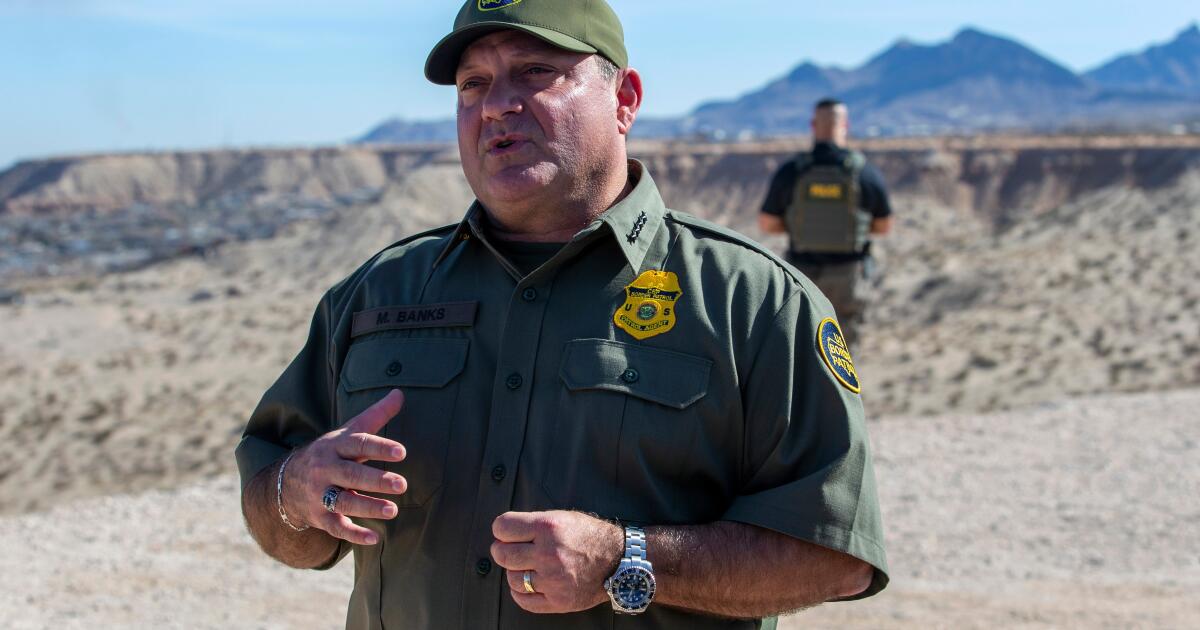
WASHINGTON — The head of U.S. Border Patrol, the agency tasked with securing the nation’s frontiers and increasingly tapped by the Trump administration for immigration operations in American cities, announced his resignation Thursday.
Michael Banks’ decision, announced in a Fox News interview and later confirmed by the Department of Homeland Security, is the latest leadership shake-up of officials implementing President Trump’s immigration crackdown and comes as the Republican administration appears to be recalibrating its approach.
“It’s just time,” Banks was quoted as saying in a report on the Fox News website. “I feel like I got the ship back on course from the least secure disastrous chaotic border to the most secure border this country has ever seen,” he said.
In a statement, the U.S. Customs and Border Protection commissioner, Rodney Scott, thanked Banks for his service “during one of the most challenging periods for border security.”
The White House did not immediately respond to a request for comment.
It was not immediately clear who will replace Banks. He led an agency at the forefront of Trump’s high-profile immigration enforcement efforts but kept a lower profile than some other officials such as Gregory Bovino, a now-retired commander who became a public face of the city operations.
CBP is one of the federal agencies that participated since last year in a series of immigration enforcement operations, carried out primarily in cities governed by Democrats —an effort that triggered a spike in arrests and led to the fatal shooting of two U.S. citizens in Minneapolis this year at the hands of federal immigration officers.
Banks’ resignation takes place two months after Markwayne Mullin, a former Republican senator from Oklahoma, became homeland security secretary. DHS oversees CBP and U.S. Immigration and Customs Enforcement, also known as ICE.
Banks is stepping down at the same time that ICE is also going through a leadership transition. Todd Lyons, the acting ICE director, is leaving later this month and will be replaced by David Venturella, who worked for years for private contractors before returning to government service.
CBP was established in 2003 and handles customs, immigration, and agricultural regulations to secure U.S. borders.
Banks returned to the Border Patrol last year after a long agency career that had never landed him in its senior ranks. His star had risen as border czar to Gov. Greg Abbott, R-Texas, during a period when illegal crossings reached record highs and the state launched a multibillion-dollar enforcement surge that led to turf battles with the Biden administration.
Banks kept a relatively low public profile as arrests for illegal crossings that have plunged to their lowest levels since the mid-1960s, a trend that began toward the end of that Democratic administration.
Banks did not appear publicly at the Border Security Expo this month in Phoenix, an annual conference at which government officials update contractors on the state of the border. Scott, who was Banks’ supervisor, is a close ally of Trump border czar Tom Homan and has acted more as the agency’s public face.
In the interview with Fox News, Banks said that after 37 years, “it’s time to enjoy the family and life.”
WASHINGTON, May 14 (UPI) — Every day at 4 a.m., Cesar wakes up to sell burritos on the streets of Los Angeles. He spends a few hours preparing food in his apartment kitchen and later sets up a small canopy tent with a grill, several coolers and a large sign, made by his sister, advertising “burritos for sale.”
He has done this for the last three weeks, after finding out just over a month ago that he was terminated from his human relations job. He lost the job because of renewal delays to his status under the Deferred Action for Childhood Arrivals, or DACA, program.
Sen. Dick Durbin, D-Ill, said Tuesday that 32,000 people have lost their DACA status largely as a result of delays. The Department of Homeland Security has not released data on the number of people waiting for renewals.
More than 500,000 people rely on DACA, according to the United States Citizenship and Immigration Services. The program requires recipients to renew their status every two years.
“At first, when I was let go, I was feeling devastated, defeated,” said Cesar, who came to the United States when he was 4 and who did not want his last name used for fear of government retribution. “But, after going through those feelings, I knew I couldn’t just sit there.”
Cesar is one of many DACA recipients who have lost their jobs in recent months due to renewal delays, largely caused by increased vetting procedures. The program requires recipients to renew their status every two years.
The Obama-era immigration program provides work authorization to those who qualify, as well as protection from deportation. When their status expires, DACA recipients lose both protections. Many, like Cesar, now have been terminated from their jobs as a result and fear deportation.
Cesar applied for his renewal in early December, nearly six months ago. Like many others, he has received no communication since from USCIS. Previously, renewal applications took one to two months on average, according to the Department of Homeland Security. Last year, the median processing time was 15 days, according to DHS data.
“In its 14 years, we have certainly seen the DACA program face a whole host of attacks,” said Anabel Mendoza, a spokesperson from United We Dream, a youth-led immigrant network. “But what we’re seeing now is truly the most dangerous moment in DACA’s history.
More than 700 people attended a Zoom event hosted by United We Dream last week to help DACA recipients navigate the instability created by these delays. There was a distinct sense of anxiety among the attendees.
Participants flooded the chat feature of the call with anecdotes of losing solid jobs and questions on whether DACA recipients qualified for paid leave or unemployment.
One attendee wrote that, although he would prefer not to use unemployment, he had been waiting five months to receive his renewal. Like many others, he was worried about his ability to pay off significant bills and loans after losing his job.
One person even questioned whether they could sue the current administration.
Another asked whether they could now be deported, with many worrying whether they may even be detained at their immigration appointments.
The two central benefits of DACA, historically, have been legal protection from deportation and work authorization. However, a recent ruling by the Board of Immigration Appeals, an arm of the Department of Justice, said that judges can no longer stop deportation proceedings simply based on the plaintiff having DACA status. This marked a significant shift in immigration policy.
Organizers at the event stressed that DACA still protects recipients from deportation, but judges now have to consider DACA cases more closely. They later acknowledged that many DACA recipients were detained and deported by ICE last year, even before the ruling.
Acting ICE Director Todd Lyons confirmed in April that 343 people with DACA status were detained between January and November 2025, while 176 were deported.
Former DHS Secretary Kristi Noem said in a statement in February that most of these people had “criminal histories.” However she did not specify their crimes or whether they had been arrested, charged or convicted.
“It is part of a broader pattern of really trying to undermine DACA and erode the very protections that the program was meant to uphold,” Mendoza said.
This was a sentiment echoed by Maria Fernanda Madrigal, a mother of three who recently lost her job as an immigration attorney after losing her work permit because of the delays.
In an interview, she questioned whether the delays were an intentional strategy by the Trump administration. She explained that the renewal process had previously been very straightforward for many of her clients — sometimes taking just a week.
“I’m still trying to figure out what the goal is,” Madrigal said. “Because it’s hard, do they want us to leave?”
She highlighted Trump’s attempted termination of the DACA program in 2017 during his first term. The Supreme Court blocked him and preserved the program in 2020.
Now, she wonders whether it may be easier for her and her family to leave the United States. She explained that, unlike their parents, “a lot of us [DACA recipients] have degrees and careers, so we know that we’ll be able to build lives somewhere else.”
Madrigal now keeps the doors of her house locked at all times out of fear of being detained while she awaits her renewal. She said she and her husband have had discussions about whether their small children should share a bed with them.
“If I’m ever detained, these are the moments that I’m going to want, right? I’m going to look back and say I wish I would have cuddled with them a little longer,” Madrigal said.
As Cesar’s new business continues to grow, he faces similar fears, worrying whether he might be “taken away at any moment.”
“I know a lot of people say we’re resilient and we’ll figure it out. And that’s very true,” Madrigal said. “But, I think the main thing that our people understand is, even though we might be able to stick together and get over this, we shouldn’t have to.”
Médecins Sans Frontières (MSF), an international humanitarian organisation, has released its 2025 activity report for Nigeria, and the findings are sobering. The medical emergency organisation, also known as Doctors Without Borders, unveiled the report during an event in Abuja, North Central Nigeria, on Wednesday, May 13, documenting the disturbing rise in malnutrition cases in the country’s northern region.
With more than 3,500 workers delivering essential healthcare services across ten states, MSF reported treating over 440,000 children for malnutrition, more than 300,000 individuals for malaria, and assisting with over 33,500 deliveries in 2025.
This surge, according to the humanitarian organisation, underscores the fragility of Nigeria’s health system and the growing vulnerability of women and children in conflict-affected regions.
The 2025 report shows that MSF recorded more than 600,000 outpatient consultations, 48,000 inpatient admissions, and treated 341,239 patients for malaria, 38,753 children for measles, 6,123 patients for diphtheria, and 985 others for meningitis across its facilities in the region.
These findings are specific to the ten Nigerian states where MSF has been operating since 1996, including Jigawa, Kano, Katsina, Kebbi, Sokoto, Zamfara, and Cross River. The organisation says it has provided a wide range of essential medical services, including paediatric and maternal health care, treating children with malnutrition, responding to disease outbreaks, caring for survivors of sexual violence, offering mental health support, and performing life‑saving surgical interventions.
The MSF country representative, Ahmed Aldikhari, revealed that in 2025, the organisation observed a pattern consistent with that of previous years, starting in 2022. Aldikhari stated that malnutrition is one of the year’s greatest challenges, linking it to the region’s fragile conditions, which are severely affected by insecurity that has worsened food security.
Representatives of MSF unveiling the 2025 report, which revealed the rise in cases of malnutrition in Nigeria. Photo: Isah Ismaila/HumAngle.
“We are seeing a vicious cycle where malnutrition is both a cause and a consequence of diseases such as measles, malaria, and diphtheria, among others, which continue to affect vulnerable communities, especially when healthcare is delayed or inaccessible,” he said, suggesting that Nigeria might soon experience the peak of the malnutrition crisis.
“That is why we are consistently working side-by-side with the ministries of health, humanitarian affairs, budget and planning at the state and federal levels, and also, with our Nigerian colleagues to ensure that efficient services are provided, but they are not enough.”
HumAngle has previously reported on the broader impact of the crisis, stressing how displacements, insecurity, and climate change, among other natural and human-induced disasters, have compounded the problem. In July 2025, MSF, in collaboration with the Katsina State government, mobilised state and non-state actors to address the escalating malnutrition crisis in the northwestern region.
During the 2024 MSF conference in Abuja, organised in collaboration with the North West Governors’ Forum and the Katsina State Government, stakeholders emphasised that malnutrition in the northwestern region is no longer a seasonal emergency but rather a structural crisis that requires urgent mobilisation. The governors acknowledged that insecurity and climate pressures were eroding food systems, but MSF urged greater investment in therapeutic feeding centres and preventive programmes.
Representatives of the humanitarian organisation address journalists on malnutrition, disease outbreaks, and maternal health in Nigeria. Photo: Isah Ismaila/HumAngle.
Northern Nigeria continues to face a critical malnutrition crisis, with Katsina particularly affected, according to MSF’s 2025 activity report. Findings reveal that since 2021, MSF has been present in the state, with the organisation’s leadership revealing that they have witnessed a sharp rise in the number of malnourished children since responding to the growing crisis in recent years.
In 2025, MSF reported treating the highest number of malnourished children in Katsina. With the support of the state Ministry of Health, the organisation focused on preventing illness and malnutrition to reduce mortality and morbidity among children suffering from acute malnutrition.
“Katsina State has faced a chronic malnutrition crisis for over a decade, driven by insecurity, climate shocks, limited primary healthcare services, and high birth rates,” the report revealed. “Throughout 2025, MSF admitted 26,445 patients for inpatient care, provided treatment to 146,301 children through its outpatient centres, and conducted 15,387 outpatient consultations for malaria.”
In response to this, MSF established a new Ambulatory Therapeutic Feeding Centre (ATFC) in Mashi and a second inpatient therapeutic feeding centre at the Turai Yar’aduwa Hospital to handle the increased patient load during peak seasons.
Beyond nutrition in Kebbi, the report states that MSF responded to multiple infectious disease surges and outbreaks by tackling the increase in meningitis cases from February to May, while supporting the Ministry of Health facilities in Jega, Gwandu, and Aliero with logistics, medical supplies, staff training, and facility rehabilitation.
Following the escalating insecurity in neighbouring Zamfara and Niger that led to mass displacement to the Danko-Wasugu areas of Kebbi State as of June, the humanitarian organisation provided basic healthcare and distributed non-food relief kits to vulnerable households.
In Zamfara alone, MSF admitted 47,164 children to inpatient therapeutic feeding centres and provided 14,167 outpatient consultations in 2024, with numbers continuing to rise in 2025. According to Aldikhari, this increase in admissions is due to multiple overlapping crises, including conflict and insecurity in the northwestern and northeastern regions, which have displaced thousands of families, cutting them off from farmlands.
While the 2025 activity report warns that malnutrition is no longer a seasonal emergency but a permanent feature of Nigeria’s humanitarian landscape, it also highlights the fact that the sheer scale of admissions suggests the crisis is outpacing the humanitarian response.
Médecins Sans Frontières (MSF) released its 2025 activity report for Nigeria, highlighting a troubling surge in malnutrition, especially in the northern region.
MSF treated over 440,000 malnourished children, more than 300,000 malaria patients, and assisted with 33,500 deliveries, illustrating the fragility of Nigeria’s health system amid growing challenges in conflict-affected areas. The report details their operations across ten states since 1996, offering a range of essential medical services and responding to disease outbreaks and the chronic malnutrition crisis, particularly in conflict-driven regions like Katsina and Zamfara.
Get our in-depth, creative coverage of conflict and development delivered to you every weekend.
Subscribe now to our newsletter!
The report emphasizes the cyclical nature of malnutrition being both a cause and consequence of diseases, exacerbated by insecurity and climate pressures. Collaboration with local government and NGOs is ongoing, yet MSF warns that the crisis has transformed into a structural issue requiring significant investments in therapeutic feeding centers and preventive programs. Despite increased efforts, the scale of malnutrition and related health crises like measles, diphtheria, and meningitis, is outpacing humanitarian response, marking malnutrition as an enduring element of Nigeria’s humanitarian landscape.
South Korean boy band BTS, U.S. pop culture icon Madonna and Latin music superstar Shakira will be performing at halftime during the World Cup final July 19 at MetLife Stadium in East Rutherford, N.J., FIFA announced Thursday morning.
The performance will support the FIFA Global Citizen Education Fund, which is looking to raise $100 million to assist children in accessing education and soccer.
FIFA president Gianni Infantino wrote on Instagram that the show “will be a truly special moment, bringing together music, football and a shared commitment to improving the lives of children around the world.”
“It’s a chance to show how amazing all different kinds of humans are,” Martin explains to Elmo in the video.
The three acts will bring a variety of cultures, musical styles and generations of fans to the Super Bowl-style concert, which will be the first of its kind for a World Cup final.
Madonna headlined the Super Bowl XLVI halftime show in 2012, and Shakira teamed with Jennifer Lopez to co-headline the Super Bowl LIV halftime show in 2020. Also, Coldplay headlined the Super Bowl 50 halftime show in 2016.
No duration time has been announced for the World Cup show, although soccer halftimes are not supposed to last more than 15 minutes. Bad Bunny’s halftime performance at Super Bowl LX in February lasted 13 minutes.
Among the three of them, Madonna, Shakira and BTS have compiled 20 No. 1 songs on Billboard’s Hot 100 singles chart, 10 Grammys and 37 MTV Video Music Awards. Shakira is scheduled to release “Dai Dai” with Nigerian singer Burna Boy as the official song of the 2026 World Cup this month.
Mobix Labs (MOBX) stock jumped nearly 90% to around $3.24 on Thursday, pushing its monthly gain to about 65%. The stock is now up 41.04% YTD, beating the S&P 500 (SP500) return of 8.75%.
The 67-mile Backbone Trail through the Santa Monica Mountains is a bucket-list trip for many Southern California hikers.
Often, though, it’s hard to carve out time to tackle the whole thing at once. There are limited backcountry camping options, and water can be sparse on the trail. That’s why hikers, myself included, often complete it in sections, similarly to how people will hike the Pacific Crest Trail or Appalachian Trail in segments.
Last week, I ticked off a segment that runs through Latigo, Solstice and Corral canyons that my friends who frequently hike the Santa Monica Mountains have told me is a “must” to try out. I can now see why!
I am eager to share my experience with you and how this hike offers essentially everything there is to love about hiking in the Santa Monicas: incredible ocean views, massive rock formations, native wildflowers and diverse wildlife experiences — all within a short drive from L.A. How lucky are we?
You are reading The Wild newsletter
Sign up to get expert tips on the best of Southern California’s beaches, trails, parks, deserts, forests and mountains in your inbox every Thursday
By continuing, you agree to our Terms of Service, which include arbitration and a class action waiver. You agree that we and our third-party vendors may collect and use your information, including through cookies, pixels and similar technologies, for the purposes set forth in our Privacy Policy such as personalizing your experience and ads.
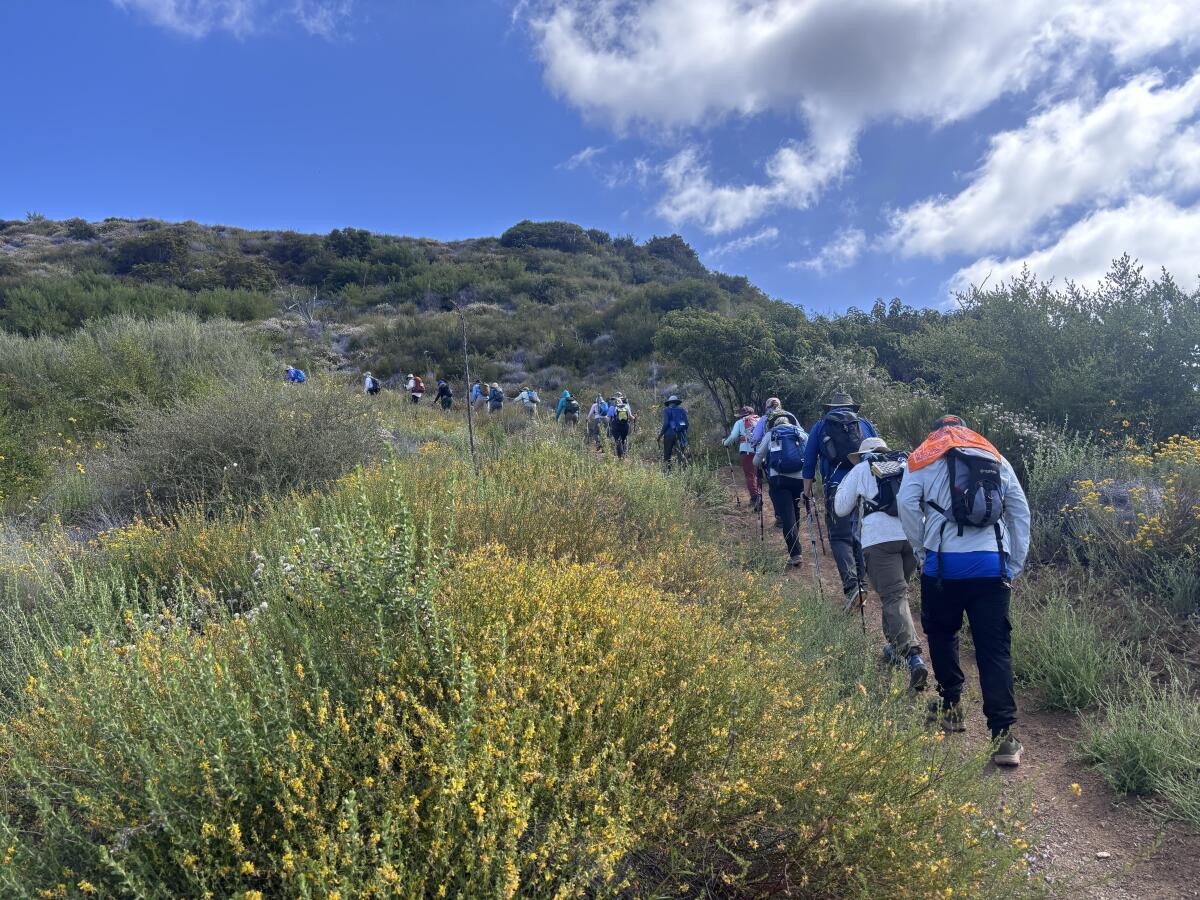
I often hike alone on the weekdays, and I have come to enjoy the solitude. But last week, I hiked a 9.8-mile segment of the Backbone Trail alongside almost 30 other hikers.
Hikers from the Santa Monica Mountains Trails Council’s annual Backbone Trek trudge along the trail.
(Jaclyn Cosgrove / Los Angeles Times)
It is an annual trip organized by the Santa Monica Mountains Trails Council, a volunteer-run group that maintains trails throughout the Santa Monica Mountains and nearby public lands. (The council has regular volunteer opportunities, including three trail workdays this month; RSVP required.)
This was its 21st year to offer the trip at a cost of $625 per person. Trail council volunteers set the route, provide daily hike leaders, set up camp for the group and lug most of the equipment — outside of daypacks, water and snacks — to the group’s next campsite.
The trip usually ends at the eastern terminus of the Backbone Trail in Will Rogers State Park. That area remains closed after the Palisades fire damaged the trail, destroying the Chicken Ridge Bridge. The bridge “is an important link on the [Backbone Trail] and will be the biggest single reconstruction effort for State Parks,” Rachel Glegg of the Sierra Club’s Santa Monica Mountains Task Force wrote last year.
A view from the Backbone Trail around the Newton Canyon area of the Santa Monica Mountains.
(Jaclyn Cosgrove / Los Angeles Times)
I joined the trail council‘s Backbone Trek last Wednesday as an enthusiastic interloper. I showed up late because of horrendous traffic on the 101 Freeway, earning me the trail nickname “Late Edition,” in honor of my punctuality and newspaper job. I felt immediately welcome (and forgiven).
We took a bus from Malibu Creek State Park’s lush group campsite over to the Latigo Canyon trailhead. There is a dirt parking lot there, making it an easy starting point for a day hike.
Our goal was to trek four miles east to the Corral Canyon area, where we’d have lunch among giant rock formations. Shaded by laurel sumac, oak trees and other native plants, we began our journey through the canyons. We were immediately greeted by a resplendence of wildflowers, including purple-pink woolly bluecurls, bright orange southern bush monkey flower, red bursts of cardinal catchfly and at least one Catalina Mariposa lily.
Clockwise from top left: Southern bush monkey flower, Catalina Mariposa lily, keckiella corymbosa and San Bernardino larkspur. Center: Variable checkerspot.
(Jaclyn Cosgrove / Los Angeles Times)
Because I love to dillydally, photographing flowers and taking in the views, I became fast friends with Denise Pomonik, a trail council leader who served as the day’s sweeper, making sure no one got left behind.
Pomonik, who lives in the San Fernando Valley north of the mountains, started volunteering with the council in early 2019 after seeing the 2018 Woolsey fire rip through the Santa Monica Mountains. “The more you hike an area or mountain-bike it, the more personal it gets,” Pomonik said. “I couldn’t control the fire, but I could control what I could do afterward.”
Denise Pomonik of the Santa Monica Mountains Trails Council waves from a large rock formation where the Backbone Trek group had lunch.
(Jaclyn Cosgrove / Los Angeles Times)
The council organizes the annual Backbone Trek not as a fundraiser but instead as a means of creating new land stewards who they hope will fall in love enough with the landscape to want to help protect it, either by donations, volunteerism or activism.
“The more people who fall in love with this mountain range, the more it will be protected,” said Pomonik, who works in the entertainment industry and had no prior trail work experience.
I did not anticipate how expansive the views would be, both of the Pacific Ocean to the south and the nearby peaks, hillsides and valleys to our north. I felt grateful and small.
Chatting with several of the hikers on the trip, I found they had signed up for two main reasons: adventure and healing.
A hiker on the Backbone Trek takes a photo of another as they trek along large boulders and ancient rock formations.
(Jaclyn Cosgrove / Los Angeles Times)
Vidya Oftedal, of Soldotna, Alaska, heard about the trip from a friend who serves on the trails council. Having someone else set up and haul all the gear was the biggest draw for her, she said, because then she could just simply focus on the hiking.
Oftedal, 71, said she loved pushing herself every day on the trip, finding a balance between knowing her limits and learning more about what her body can do.
“I’ve always loved the outdoors,” Oftedal said. “It speaks to me. I feel oneness with nature. Everybody is such an inspiration here. A lot of the women have done solo [trips] … and they’re all seniors like me. It’s like, ‘Wow, maybe I can pick up some courage and do things like that.’”
The camaraderie among the group was easy to see. Although many of them had been strangers just a few days prior, the hikers checked on each other and cheered one another on. After especially steep stretches, we’d pause to catch our breath, and someone would undoubtedly offer snacks to their fellow group members, including roasted fox nuts, or makhana, which the group had become especially taken with.
A raven flies over the rock formation that hikers along the Backbone Trail often say resembles an elephant’s eye.
(Jaclyn Cosgrove / Los Angeles Times)
At lunch, we sat in an area full of large, dramatic rock formations, including one that resembled an elephant’s eye. A few group members perched into small shady alcoves within the boulders. I commented that people had probably been sharing meals together in this area for thousands of years.
I was surprised by how many hikers on the trip were from Southern California but had never visited the Backbone Trail.
I spoke to Bill Edmonds, who told me he’d wanted to tackle the Backbone Trail for years. He grew up in Culver City and around the San Fernando Valley.
Edmonds said he led an active lifestyle, regularly running and skiing, and hiking with his wife, Kathy, who died last June after 51 years of marriage together.
“This has been special,” Edmonds said. “It helped me think about how much she would have enjoyed this.”
A view of the Pacific Ocean from a high point along the Backbone Trail.
I headed out as the group grabbed showers and prepared their taco dinner. I got into my car with a deeper appreciation for what the Santa Monica Mountains can provide us all, along with a few new friends — and a new trail nickname.
3 things to do
Cyclists on a previous Glow Ride hosted by People for Mobility Justice.
(People for Mobility Justice)
1. Illuminate the streets of Florence-Firestone People for Mobility Justice, an L.A.-based transportation equity collective, will host a bike ride from 6:30 to 8:30 p.m. Wednesday starting at Ted Watkins Memorial Park. Riders are encouraged to decorate their bikes with colorful and creative lights for this free Glow Ride through the streets of the Florence-Firestone neighborhood. Register at eventbrite.com.
2. Ascend to new heights in L.A. The Saturday Hike Crew will host a trek at 8:30 a.m. Saturday through Ascot Hills Park. Hikers will ascend steep hillsides to lookout points with sweeping views of L.A. Sturdy shoes are recommended. Register at eventbrite.com.
3. Pack out trash in Fullerton Friends of Coyote Hills needs volunteers at 9 a.m. Saturday to clean up a trail in Fullerton. Participants are encouraged to bring their own gloves and water. You can also bring a trash grabber if you own one. Volunteers should wear sun protection and comfortable sneakers or boots. Register at eventbrite.com.
The must-read
A sign is posted on a eucalyptus tree stating, “Stop killing our trees,” on Glenrose Avenue, where the trees were previously cut down.
(Carlin Stiehl / Los Angeles Times)
Trees in and around the Palisades and Eaton fire burn scars are dying — or being inappropriately removed — at an alarming rate, Times staff writer Noah Haggerty wrote. After a fire, surviving trees in a burn scar often need support, including watering, to survive. Neither city nor county officials prioritized such efforts in the Palisades or Eaton fire scars. Additionally, contractors have removed trees that they were authorized to take down. Builders have also pressured homeowners to cut down trees that they claimed would die anyway, although advocates say native oaks incorrectly identified as dead could have recovered.
It makes me wonder about the fates of trees along hiking trails in the burn scars.
Happy adventuring,
P.S.
Angeles National Forest is home to at least three new ursine residents. Wildlife photographer Robert Martinez documented three cubs following their mom through the forest in late April. Interestingly, the Chaney Trail Corridor Project documented a mama bear and three cubs walking through the foothills of the San Gabriel Mountains near Altadena in early May. I asked them: Could it be the same family? “In theory possible, but unlikely as the locations are more than 20 miles apart,” a volunteer from the Chaney Trail Corridor Project told me via Instagram. “Black bears with young cubs usually keep a smaller home range of just a few square miles. Both families are equally adorable though and about the same size and age!” If this news gives you a bit of the heebie-jeebies, then head over to my article where I explain how to best protect yourself if you encounter a bear while hiking. Be safe out there!
For more insider tips on Southern California’s beaches, trails and parks, check out past editions of The Wild. And to view this newsletter in your browser, click here.
WASHINGTON — Senators unanimously approved a resolution Thursday to withhold their pay during government shutdowns, an attempt to make federal closures financially painful for lawmakers after a string of record-breaking impasses in the past year.
The bipartisan support for the measure comes at a time when federal closures have become longer and more frequent, frustrating lawmakers who say there should be punishment when Congress fails at its most basic legislative duty.
Under the resolution, senators’ pay would be withheld by the secretary of the Senate whenever a government shutdown affects one or more agencies, then released once funding is restored. It will take effect the day after the Nov. 3 general election.
“Shutting down government should not be our default solution to our refusal to work out our issues and our differences,” said Sen. John Kennedy, the bill’s sponsor, in a floor speech Wednesday.
“This is about putting our money where our mouth is,” said Kennedy, R-La.
Two shutdowns in the past year created significant financial hardship for tens of thousands of federal workers, particularly at the Department of Homeland Security. The department reopened last month after a 76-day partial shutdown, the longest agency funding lapse in history.
The Homeland Security shutdown came just a few months after a 43-day lapse of the entire federal government, which was the longest such closure on record.
The Constitution stipulates that lawmakers must be paid so they have received salaries during shutdowns even as federal workers went without paychecks. When the full government shutdown began in October amid a dispute over health care subsidies, Sen. Lindsey Graham proposed a constitutional amendment to require members to forfeit their paychecks when the government is closed.
“If members of Congress had to forfeit their pay during government shutdowns, there would be fewer shutdowns and they would end quicker,” Graham, R-S.C., said at the time.
Graham said his legislation was the most “constitutionally sound” way to deal with the problem, but the process would have been much more laborious as three-fourths of states must ratify an amendment.
Lawmakers in previous shutdowns have often pledged to forgo their paychecks while federal workers went unpaid.
Kennedy told reporters Wednesday that he pushed his measure to ensure there is “shared sacrifice” during shutdowns. He added that it does not go as far as he would like, but that it’s a start.
Asked why it does not extend to the other chamber of Congress, Kennedy said “the House’s business is the House’s business” while also touching on the tensions between the Senate and House.
“There’s a very strong undercurrent of animosity among some of my friends in the House,” Kennedy said.
“It’s quickly becoming like two kids fighting in the back of a minivan,” he said.
Cappelletti and Jalonick write for the Associated Press.
Hall of Famer Lisa Leslie didn’t expect to ever get a statue outside Crypto.com Arena. After all, it had been 15 years since her jersey retirement and no other Sparks player was featured among the Lakers and Kings heroes outside the area.
After years of hearing from fans that she deserve to be immortalized, Leslie learned she would join Sue Bird in Seattle as the second WNBA player to be honored with a statue at a franchise’s home arena.
“One thing I never had on my bucket list was a statue,” Leslie told The Times on Thursday. “I grew up seeing the statues of some of the amazing Lakers, so I’m just really grateful to be alive and to be one of the first, especially in the WNBA for L.A. Sparks. It means a lot to me, and I’m really hoping that our community will really rally around it.”
The Sparks announced Thursday morning that Leslie will receive a statue to be unveiled during a ceremony on Sept. 20 before a game against the Portland Fire.
During her 12-year career with the Sparks, Leslie won three WNBA titles and league MVP honors. She also won four Olympic gold medals. She was the first player in WNBA history to dunk in a game and her No. 9 jersey was retired in 2010.
She was one of the Sparks’ original players in 1997 and is the franchise’s career leader in points, rebounds, blocks, field goals, free throws, offensive rebounds, defensive rebounds, minutes and games played, and is third in the WNBA in blocks and double-doubles.
“I’ve known Lisa for nearly three decades and believe that she is beyond deserving of this incredible honor,” fellow statue honoree and Lakers great Magic Johnson said in a news release. “She was the driving force behind bringing back-to-back championships to the Los Angeles Sparks franchise in 2000 and 2001, and Lisa’s hard work and commitment has made her one of the best to ever play the game.”
Johnson, who is part the Sparks ownership group, accepted responsibility for the team’s skid two years ago and promised to do more. The Sparks owners, who also own the Dodgers and Lakers, have responded to losing at a boom time in the WNBA by executing a coaching change, breaking ground on a new practice facility and installing the first Sparks statue outside Crypto.com Arena.
“Lisa’s legacy isn’t just measured by championships and accolades, though; it’s defined by the doors she opened and the standard she set for generations to come,” Johnson said in the news release. “More than an athlete, she is a pioneer, a cultural icon and a force who elevated women’s basketball to new heights. This statue celebrates her excellence, her leadership and the future she helped create, and it ensures her impact will forever be part of the fabric of this city.”
Leslie said that she noticed fans lobbying for her to get a statue beginning in 2019, and the timing for her and the Sparks felt right during the 30th anniversary season.
“It couldn’t be better with the new [practice] facility coming, the new CBA, everything is aligning so properly,” she said. “It’s more perfect than it would have been a few years before.”
The statue was created by sculptors Julie Rotblatt Amrany and Omri Amrany and will join 15 others outside of Crypto.com Arena, including Johnson, Wayne Gretzky, Oscar De La Hoya, Chick Hearn, Jerry West, Kareem Abdul-Jabbar, Luc Robitaille, Shaquille O’Neal, Bob Miller, Elgin Baylor, Dustin Brown, Kobe Bryant (2), Gigi Bryant and Pat Riley.
“I hope she looks good,” Leslie said of the statue. “People don’t realize how hard it is to make a statue look good. … They helped me to be super specific about every little thing down to my earlobe and fingernail tip. So I’m excited about all the little details that have been added that people can kind of find on their own as well.”
Published reports say Sen. Flavio Bolsonaro negotiated a multimillion-dollar sponsorship deal to finance a film about his father, former President Jair Bolsonaro, with a banker now jailed on suspicion of leading a criminal organization involved in financial fraud. Photo by Andre Borges/EPA
May 14 (UPI) — Just five months before Brazil’s October elections, the presidential campaign of right-wing Sen. Flávio Bolsonaro has become entangled in what authorities describe as the country’s largest recent banking fraud case.
According to reports published by Intercept Brasil, Bolsonaro negotiated a multimillion-dollar sponsorship deal to finance a film about his father, former President Jair Bolsonaro, with a banker now jailed on suspicion of leading a criminal organization involved in financial fraud.
The Brazilian news outlet released audio recordings and messages allegedly tied to negotiations between the senator and Daniel Vorcaro, owner of the collapsed Banco Master. Vorcaro is being held in pretrial detention as part of a financial and political scandal that has expanded to include Brazilian politicians and judges.
The scandal erupted after Brazil’s Federal Police intercepted Vorcaro’s phone messages, which reportedly reveal a close relationship between the two men — with Flávio Bolsonaro referring to the banker as “brother.”
In the conversations, Bolsonaro allegedly pressured Vorcaro to release payment for a sponsorship worth 134 million reais, or about $26 million, according to Brazilian outlet G1 Globo. The funds were intended for the Hollywood production of The Dark Horse, a biographical film aimed at improving Jair Bolsonaro’s public image.
In one audio recording, Flávio Bolsonaro discussed the urgency of the payments and the importance of the film project, according to Agência Brasil.
“Even though you gave us the freedom to hold you accountable, I feel uncomfortable having to ask,” the senator said in the recording. “We are at a crucial point in the movie’s production, and because many payments are still pending, everyone is tense, and I worry this could have the opposite effect from what we expected for the film.”
Authorities say the controversy extends beyond the size of the sponsorship and centers on the source of the money. Brazil’s Central Bank liquidated Banco Master after discovering an accounting shortfall estimated at between $7.6 billion and $10 billion.
Investigators allege the bank operated a scheme involving fraudulent securities sales and the theft of pension savings belonging to public-sector workers. Brazilian media reported that while retirees lost savings, members of the banker’s family purchased luxury homes in Miami and private aircraft.
Hours before the audio recordings became public, Flávio Bolsonaro denied having a business relationship with Vorcaro and dismissed the allegations as false during television interviews.
After the recordings surfaced and his voice allegedly could be heard in the conversations, the senator acknowledged contact with the banker, but argued the deal involved legitimate private sponsorship.
Bolsonaro later wrote on X that he was the victim of political persecution and said the leaked chats only showed a lawful business negotiation.
“It was a son seeking private sponsorship for a private film about his father. Zero public money,” the senator wrote, insisting he did not know the banker’s funds allegedly originated from purported fraud.
The market reaction was immediate. After publication of the recordings, the São Paulo stock exchange fell nearly 2% and the Brazilian real weakened against the U.S. dollar, reflecting investor concerns over political instability.
Recent polls show Flávio Bolsonaro statistically tied with President Luiz Inácio Lula da Silva in a potential runoff election.
Government allies have launched an offensive to capitalize on the scandal, demanding Bolsonaro’s removal from office through ethics proceedings in the Senate. According to Gazeta do Povo, lawmakers are seeking to suspend his political rights for eight years.
Those aligned with Lula also are pushing to create a congressional investigative committee into Banco Master. The proposed inquiry would seek access to Bolsonaro’s banking and tax records to trace the millions of reais allegedly negotiated in the sponsorship deal.
Left-wing parties argue the movie financing arrangement served as a front for money laundering and illicit enrichment, linking the failed bank’s expansion to political protection networks allegedly built during Jair Bolsonaro’s administration.
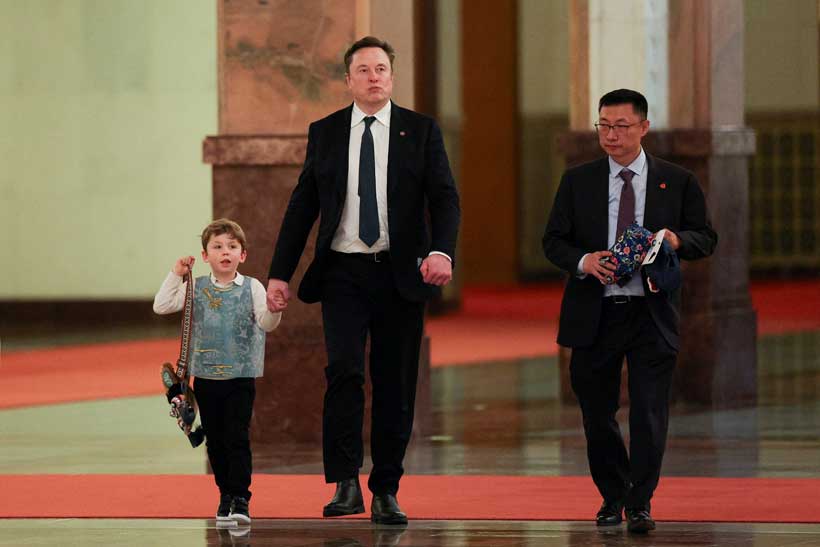
In China, Elon Musk has gained both admiration and criticism. While he is seen as a visionary, he has faced scrutiny from regulators and the public due to issues with customer complaints. The success of Musk’s SpaceX and its Starlink satellite service has also led to concerns from the People’s Liberation Army, especially as Tesla faces growing competition from Chinese electric vehicle (EV) manufacturers, which threatens Musk’s standing in the market.
Musk recently attended a summit in Beijing with U. S. President Donald Trump, alongside other CEOs like Tim Cook and Jensen Huang, focusing on resolving business issues with China. After a formal welcome, Musk expressed his desire to achieve “many good things” in the country. At the same event, Xiaomi’s CEO Lei Jun, an admirer of Musk, took a selfie with him, which became popular on social media, showcasing the public’s interest in Musk.
Despite facing competition on technology and pricing from local companies, Musk and Tesla remain influential in China. Experts note that Musk’s business goals align with China’s technological priorities, including electric vehicles, AI, and advanced robotics, making Tesla’s self-driving technology the standard in the industry. In 2018, Tesla became the first foreign automaker permitted to operate in China without a local partner, and its sales in the country reached about 626,000 vehicles last year, contributing significantly to its revenue.
Other Chinese carmakers, like Chery, draw inspiration from Tesla’s focus on innovation, blending it with Toyota’s emphasis on quality. However, Musk’s other ventures, particularly SpaceX, provoke concern among Chinese military and government officials due to its dominance in satellite communications, especially in light of geopolitical tensions, hinting at efforts to develop domestic alternatives.
Though Musk’s social media platform, X, is banned in China, he has a significant following on Weibo and has been celebrated as a global icon in the country. His recent visit pertains to an attempt to purchase $2.9 billion in solar manufacturing equipment from Chinese suppliers, although this may be affected by China’s potential export restrictions on advanced technologies to the U. S.
Musk’s company is also seeking regulatory approval for more advanced self-driving technology. However, his relationship with China has been delicate, particularly when Tesla faced backlash in 2021 over its handling of customer complaints, highlighted by a public protest at an auto show. Additionally, Teslas were previously banned from military areas due to security concerns.
Looking ahead, organizations believe that Tesla’s standing might challenge Musk’s popularity in China as local companies continue to progress. However, he is likely to remain an influential figure in China’s tech scene for his achievements in the automotive and technology industries.
FORMER glamour model Katie Price has taken a fresh swipe at “missing” Lee as it seems they weren’t on the same page when he failed to show up in the UK.
Katie Price has slammed Lee on social media, captioning a video ‘Where’s Wa-Lee’ after he failed to show up in the UKCredit: @KatiePriceYoutube/BackgridLee posted snaps from the airport in Dubai but fans are convinced they caught him in another lieCredit: wesleeeandrews/Instagram
Katie was left fuming with the Dubai-based “businessman,” who she married in January, and has even issued him an ultimatum.
Lee Andrews and Katie Price tied the knot in JanuaryCredit: InstagramKatie was left blindsided by Lee when he didn’t arrive for their scheduled GMB interview earlier this weekCredit: BackGrid
It seems Katie is beginning to question her man as she bantered that he was hard to track down.
In the video, she said: “I just want him here, just to visit here and shut everyone up that he can get here.
“So next week when we do the pod we’ll find out whether he’s come to England or not and we’ll see what he’s said.”
Lee has claimed he was going to fly into the country multiple times but is yet to show up.
With Lee still mooching about the UAE, Katie admitted today that she has started to question her husband.
She captioned a post on social media: “Time is running out for Lee and he needs to give a good reason as to why he can’t get back because I am not going back to Dubai.”
During her podcast, The Katie Price Show, she admitted to confronting Lee over the situation.
She said: “It’s the fact you keep saying you’re coming and then don’t come.
“Of course, everyone is going to flag up. Even I’ve flagged it up to him. Big time I’ve flagged it up now. I said, ‘Don’t do that to me again. Me having to go on live TV without you and make me look stupid and a d***”.
“No wonder everyone’s saying, ‘You’re this, you’re that’, because they’ve got a reason to say it. I agree, I agree with everyone.”
Lee, dubbed a “Walter Mitty,” was caught in yet another lie as documented his journey to the UK on Instagram.
Sacramento — A veteran California political consultant has agreed to plead guilty in a scheme to steal campaign funds from Xavier Becerra, now a leading candidate for governor, when he served in the Biden administration, according to filings in her criminal case on Thursday.
Dana Williamson will plead guilty to three counts, including bank fraud and lying to authorities. In exchange, the federal government will dismiss 20 other counts against her related to her tax filings and a federal COVID-era loan she received.
A court hearing is scheduled Thursday morning.
Williamson, a former chief of staff to Gov. Gavin Newsom, was arrested in November and pleaded not guilty. The government secured guilty pleas in December from two advisors who worked with alongside her to skim money from Becerra.
Prosecutors say that Williamson, Becerra’s then-chief of staff Sean McCluskie and lobbyist Greg Campbell took part in a scheme to siphon money from Becerra’s dormant campaign account and funnel it to McCluskie.
McCluskie needed the money, according to prosecutors, so he could afford to fly home frequently to see his family in California while working for Becerra, who was Biden’s health secretary, in Washington, D.C.
As part of the scheme, Williamson and another consultant charged Becerra’s account up to $10,000 a month to manage one of his dormant state campaign accounts.
Becerra approved the payments, even though he had never paid such a high amount for a similar job. He told The Times that McCluskie told him to pay the fees.
Becerra’s rivals in the governor’s race are hammering him over his decision, arguing he should have known something wasn’t right. Becerra has said that he didn’t know about the criminal behavior and has called the charges a “gut punch.”
Known as an hard-nosed and aggressive operator, Williamson’s career in politics also included working for former governors Jerry Brown and Gray Davis and mentoring other women.
McGregor Scott, Williamson’s attorney, told reporters last year that federal authorities initially approached Williamson about helping them with a probe into Newsom. She refused, he said, and was subsequently charged.
Details contained in the indictment and other public records suggest that federal authorities were looking into the state’s handling of alleged sexual harassment at Activision Blizzard Inc., a video game company.
May 14 (UPI) — U.S. consumers spent $757.1 billion on retail and food services in April, a 0.5% increase over March, the U.S. Census Bureau reported Thursday.
For 12 months ending in April, not adjusted for price changes, sales increased by 4.9%. Total sales for February through April increased 4.4% over the same period in 2025.
Gasoline sales climbed 2.8% in April after jumping 13.7% in March.
Retail trade sales increased by 0.5% over March and 5.2% over last year. Non-store retail went up 11.1% for the year. Sales minus gasoline and building materials increased 0.46%.
While retail sales increased in April, they did so at a slower rate than in March, which increased by 1.6% for the month. Yet it was still the third consecutive monthly increase.
Retail sales as a whole grew but several categories experienced declines, including furniture store sales, down 2%, car dealerships, down 0.5%, department stores, down 3.2%, and clothing stores, down 1.5%.
A consumer survey conducted by the University of Michigan found that consumer sentiments are low due to concerns about high prices and current economic conditions. This has caused consumers to hold off on making major purchases, such as furniture and automobiles.
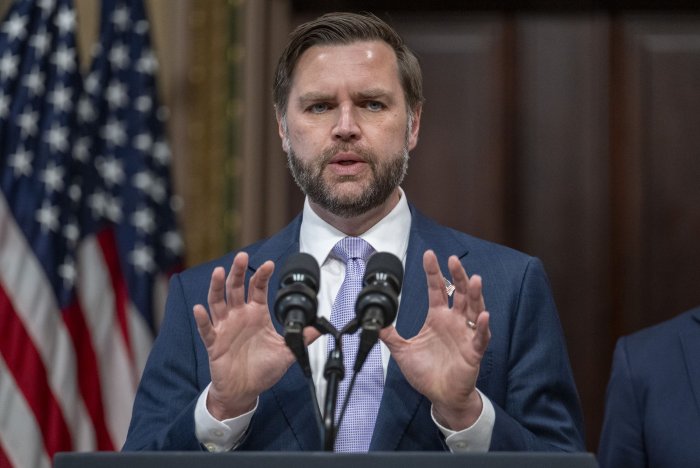
Vice President JD Vance speaks during a news conference on anti-fraud initiatives in the Indian Treaty Room of the Eisenhower Executive Office Building at the White House on Wednesday. Photo by Daniel Heuer/UPI | License Photo
Latvia’s Prime Minister Evika Silina resigned following criticism of her government’s handling of stray drones, believed to be Ukrainian, crossing into Latvian territory. The controversy deepened divisions within the ruling coalition, causing it to lose its parliamentary majority.
Netflix’s ‘micro-series’ has already creeped its way into the UK’s top 10
Hayley Anderson Screen Time TV Reporter
17:04, 14 May 2026
There are 20 mini episodes to stream(Image: NETFLIX)
Fans of a “saucy” drama can binge-watch this one in just an afternoon.
Binge-watching is how most TV fanatics view their favourite shows nowadays with Netflix dropping the perfect “micro-series” for its subscribers.
Mexican thriller Between Father and Son has arrived with the 20-part series focussed on well-respected lawyer Barbara (played by Pamela Almanza) whose life changes after “just a few suspenseful minutes”.
She visits the house of her fiance Alvaro (Erick Elias) before getting married but unexpectedly finds herself attracted to her future step-son Iker (Graco Sendel).
On top of the forbidden sexual tension, there’s also the mystery around what happened to Alvaro’s first wife and Iker’s mum Fernanda who went missing.
Between Father and Son is perfect for those wanting to quickly binge their way through a series.
Each of the 20 episodes have a running time of 10 minutes or less, with seven instalments just seven minutes long.
So Netflix subscribers could binge-watch the entire boxset of Between Father and Son in under four hours if watched back-to-back.
However, while fans have been “hooked” by the Mexican drama, some have complained of a technical issue.
From episode four onwards, fans are currently unable to hear the dialogue in Between Father and Son.
Taking to X, a viewer questioned: “Why’s there no sound?”, as another on Reddit stated: “It doesn’t have any dialogue audio after episode three.”
They went on to add: “I am already hooked though and patiently waiting for the issue to be fixed!”
But others have shared that their audio is working fine, including the English dubbed version of the series.
Between Father and Son is available to watch on Netflix.
THE spring weather has been very up and down so far – but sadly for the week of half-term it looks like rain is on the way.
If you’re considering a family-friendly break this May half-term, there are still plenty of holiday deals in Spain, Turkey and Cyprus.
Sign up for the Travel newsletter
Thank you!
There are still lots of affordable holiday deals in the likes of TurkeyCredit: Love HolidaysLots have all-inclusive deals like the Arabella World Hotel in TurkeyCredit: Love Holidays
Follow The Sun’s award-winning travel team on Instagram and Tiktok for top holiday tips and inspiration @thesuntravel.
On the Beach has found that bookings for May half-term are up by as much as 40 per cent in recent weeks as it looks like weather in the UK will be yet another washout – so we’ve Sun Travel has found some of the best deals abroad on offer.
BLUESEA Los Fiscos, Lanzarote
You can go to BLUESEA Los Fiscos in Lanzarote from £293pp in May half-termCredit: On the Beach
First up is the BLUESEA Los Fiscosin Lanzarote which has a pretty swimming pool and white-washed apartments.
Stays include free Wi-Fi and access to the pool bar – there’s also a children’s playground.
With the all-inclusive package, guests can enjoy the buffet that serves up all three meals and plenty of drinks.
A five-night stay at theBLUESEA Los Fiscosin Lanzarote, Spain, including flights leaving from Manchester on May 27 cost £293pp (based on 2 adults and 2 children).
To make it all-inclusive is an extra £28pp.
Guitart Central Park Aqua Resort, Spain
Guitart Central Park Aqua Resort has its own swimming pool and aquaparkCredit: Love Holidays
Guitart Central Park Aqua Resort in the Costa Brava will be a hit with the kids thanks to its aquapark with two waterslides and splash zone.
To keep them further entertained, the hotel has more activities like football, rugby and tennis.
It has three buffet restaurants, is an 11-minute walk to nearby Cala Banys Beach and has spacious bedrooms.
A five-night half-board stay at the Guitart Central Park Aqua Resort including flights leaving from London Luton on May 26 cost £330pp (based on 2 adults and 2 children).
Miarosa Konakli Garden, Turkey
The Miarosa Konakli Garden in Turkey has a pool with slides and a kids clubCredit: On the Beach
Miarosa Konakli Garden has it all, comfortable rooms, a pool with waterslides and a plenty of entertainment.
The hotel has its own kids club as well as a playground – and for the whole family to get involved there’s activities like darts, table tennis, card games and watersports.
There’s a main restaurant as well as three bars – including one by the pool.
A four-night all-inclusive stay at the Miarosa Konakli Garden in Antalya, Turkey, including flights leaving from London Gatwick on May 25 cost £368pp (based on 2 adults and 2 children).
Best Los Angeles Hotel, Spain
Bes Los Angeles Hotel is 10-minutes from popular beachesCredit: On The Beach
Best Los Angeles Hotel has fewer frills than some of the other offers, but it has everything needed for a relaxing half-term break in the sun.
It’s 10-minutes from popular beaches and the nearby town of Salou is known for its shops, bars and restaurants.
The PortAventura Theme Park is around two miles away too for those who fancy a go on thrilling rides.
A seven-night half-board stay at theBest Los Angeles Hotelincluding flights leaving from Dublin on May 25 cost £320pp (based on 2 adults and 2 children).
MedPlaya Flamingo Oasis, Spain
MedPlaya Flamingo Oasis has a lake-style swimming poolCredit: On The Beach
When the Spanish sun comes out, MedPlaya Flamingo Oasis in Costa Blanca is where you want to be.
During the evenings, there’s performances at the Piano Bar – or head up to the rooftop bar to watch the sunset.
A seven-night half-board stay at theMedPlaya Flamingo Oasisincluding flights leaving from Edinburgh on May 25 cost £260pp (based on 2 adults and 2 children).
Grand Muthu Golf Plaza Hotel & Spa, Tenerife
Grand Muthu Golf Plaza Hotel & Spa is next two two popular golf coursesCredit: On The Beach
It has a swimming pool and lots of entertainment – for any adults who want to golf, there are two of the island’s most popular courses nearby.
Accommodation is in studios, apartments and junior suites with a balcony or terrace.
A four-night all-inclusive stay at theGrand Muthu Golf Plaza Hotel & Spaincluding flights leaving from Glasgow on May 25 cost £310pp (based on 2 adults and 2 children).
Arsi Blue Beach, Turkey
There’s lots of swimming to be done at the Arsi Blue Beach in TurkeyCredit: Love Holidays
The Arsi Blue Beach is a great choice for families as it’s steps away from Antalya’s Alanya Beach and has a children’s pool on-site.
Not forgetting the adults, there are also spa treatments and a sauna is available too.
Guests can enjoy meals at the restaurant and make sure to pop into the lounge bar and beach bar too.
A five-night all-inclusive stay at the Arsi Blue Beach in Turkey including flights leaving from Belfast on May 26 starts from £259pp (based on 2 adults and 2 children).
Arabella World Hotel, Turkey
Arabella World Hotel has a swimming pool, flumes and access to a private beachCredit: Love Holidays
The 4-star Arabella World Hotel sits on Turkey’s sun-drenched southern coast and even has its own private beach.
With swimming pools and slides, dining, wellness and children’s activities too – no one in the family will ever be bored here.
But if that isn’t quite enough, Water Planet Aquapark is around a 10-minute drive away.
A seven-night all-inclusive stay at the Arabella World Hotel including flights leaving from Belfast on May 24 starts from £319pp (based on 2 adults and 2 children).
Cosmelenia Hotel Apartments, Cyprus
This hotel in Ayia Napa is close to a waterpark and is a great family-friendly pickCredit: Love Holidays
Small but mighty, it has everything for a family break from its swimming pool to parasol- covered sunbeds, air-conditioned rooms, a restaurant and bar.
Waterworld Waterpark just a short walk away too.
A six-night all-inclusive stay at the Cosmelenia Hotel Apartments including flights leaving from Belfast on May 25 starts from £319pp (based on 2 adults and 2 children).
Deloix Aqua Center, Spain
The Deloix Aqua Center is on the outskirts of BenidormCredit: Love Holidays
The Deloix Aqua Center is found in a quiet part of Benidorm and has it all from an aqua centre, children’s water playground and rooftop paddle courts with city views.
It has three outdoor swimming pools, including a lagoon-style pool and one indoor pool for year-round paddling.
There’s a spa, gym and wellness centre as well as an on-site restaurant, café and bar.
A five-night full-board stay at the Deloix Aqua Center Spain including flights leaving from Belfast on May 25 starts from £309pp (based on 2 adults and 2 children).
Airlines have been forced to cancel and amend flight schedules due to the ongoing Middle East conflict and soaring jet fuel prices, with Qatar Airways also hit with suspended routes
16:38, 14 May 2026Updated 16:39, 14 May 2026
Qatar Airways has suspended routes to 22 cities(Image: Getty Images)
Qatar Airways has become the latest airline to cancel flights this May.
Since the Middle East conflict erupted in late February, airlines have been forced to axe routes and amend flight schedules due to restricted airspace across the Gulf region. The situation was heightened by Iran’s blockade of the Strait of Hormuz, through which roughly 20 percent of the world’s oil and gas passes, triggering a worldwide shortage and skyrocketing jet fuel prices.
With growing concerns over the long-term supply of jet fuel, a whopping 18 airlines have announced cancellations, and 13,000 flights worldwide have been taken from May schedules, according to figures from aviation analytics firm Cirium. Now, Qatar Airways is the latest airline to have routes axed, with flights to 22 cities suspended during May and beyond.
Qatar Airways has suspended flights from its Doha Hamad International Airport (DOH) to four European countries, Malta, Sarajevo, Sofia, and Venice, according to Simple Flying. As airlines prioritise their routes amid the jet fuel crisis, it is thought Qatar Airways will resume routes to Malta, Sofia and Venice in September.
Additionally, the Doha-based airline is not currently offering flights from its hub to Canberra, Cebu, Djibouti, Kano, Kigali, Mogadishu, Nagpur, or Zanzibar. Around half of these routes are expected to return in September, after one of the busiest travel periods, the summer holidays.
As a result of the Middle East conflict, drone and missile strikes caused major airspace closures, which severely impacted the Doha-based airline. Further routes suspended by Qatar Airways include flights to Aleppo, Gassim, Istanbul Sabiha Gökçen, Mashhad, Neom Bay, Shiraz, Tabuk, Taif, Tehran, and Yanbu. In addition to three cities in Iran, where the airspace remains closed.
Some of the suspended routes, excluding Aleppo and Iran, are expected to resume in September. In total, 22 routes have been suspended.
However, it’s not all bad news in the world of aviation this week. Qatar Airways announced that it is resuming some of its routes and that its Airbus A380s will return next month. The plane has been grounded. In a statement released on 13 May, the airline said: “Qatar Airways continues to restore its network across the Middle East, with the resumption of double-daily passenger flights to Abu Dhabi (AUH), the capital of the United Arab Emirates.”
This comes after the airline announced plans to expand its network further in time for the summer holidays. “Qatar Airways is expanding its international flight network, with services to over 150 destinations from 16 June 2026, connecting more passengers to more of the world this summer,” the statement read.
Airlines with cancelledflights in May
Air Asia X
Air Canada
Air China
Air Transat
Air New Zealand
Asiana Airlines
Cathay Pacific
Delta
KLM
Lufthansa
Norse Atlantic
Qantas
Qatar Airways
SAS
Thai Airways
Turkish Airlines
United Airlines
Vietjet
Vietnam Airlines
Do you have a travel story to share? Email webtravel@reachplc.com