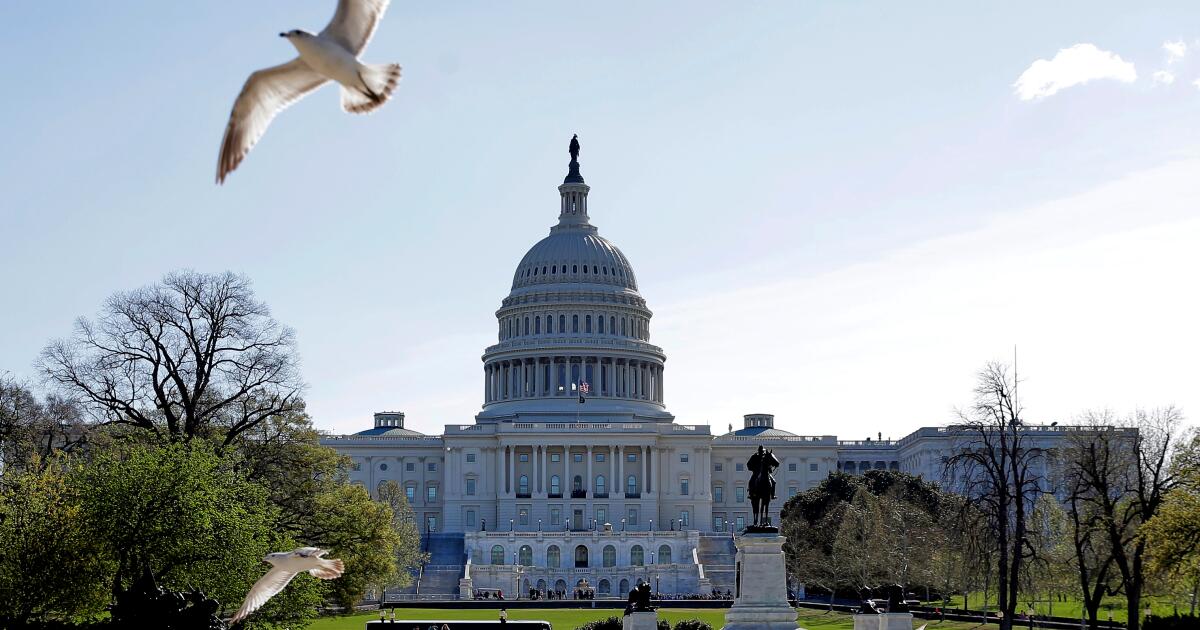


The Indian government is seeking to expedite the implementation of a 2023 law that reserves 33 percent of seats in parliament and state assemblies for women, but has linked the move to a sweeping redrawing of parliamentary constituencies, sharpening political tensions.
“We’re set to take historic steps to empower women,” Prime Minister Narendra Modi said before a special sitting of parliament on Thursday as his government introduced three bills to be debated in the Lok Sabha, the lower house of parliament.
Recommended Stories
list of 4 itemsend of list
While two of the three bills relate to extending the number of women in parliament and state assemblies, a third bill relates to “delimitation”, as the process to redraw parliamentary boundaries based on population is called in India. The bill aims to increase the overall size of parliament from 543 Lok Sabha seats to 850.
The bills are being taken up during a three-day special session and will require a two-thirds majority in both houses to pass. Modi’s National Democratic Alliance (NDA) holds 293 seats in lower house of parliament while a two-thirds majority would require 360 votes.
Women currently account for 14 percent of the Lok Sabha members. “We are all united to give rightful positions to women in India,” Parliamentary Affairs Minister Kiren Rijiju said on Thursday.
Several Asian countries, including India’s neighbours like Nepal and Bangladesh, have similar quotas for women in national legislatures. India already mandates that one-third of seats be set aside for women in local governing bodies.
Opposition alleges ‘gerrymandering’
While there appears to be broad bipartisan support for putting more women into parliament, opposition parties have raised concerns over changing the voting boundaries, warning it could tilt the political balance in favour of Modi’s Hindu majoritarian Bharatiya Janata Party (BJP).
The BJP draws much of its support from the densely populated north, and critics said expanding seats in parliament would, therefore, benefit it the most. Leaders in southern states, where birth rates have declined more sharply, said a population-based delimitation exercise could increase seats in the north and disadvantage southern regions that have slowed population growth and built stronger economies.
The Indian Constitution mandates that parliamentary seats be allocated by population and revised after each census. However, boundaries have not been redrawn since the 1971 census as successive governments delayed the process.
The government is now proposing that delimitation of new seats be based on the last completed census, in 2011, and come into effect for the next general election in 2029.
But opposition parties want the government to wait for the results of an ongoing census, which was launched this month, a formidable logistical challenge that will take a year to carry out – and even longer for the data to be processed.
The main opposition leader, Rahul Gandhi, said that while his Indian National Congress party supports increasing the number of women in parliament, the government’s approach is aimed at consolidating power.
“The proposal that the government is now bringing has no connection to women’s reservation,” Gandhi said in a statement on social media. “It is merely an attempt to seize power through delimitation and gerrymandering.”
Congress parliamentarian Gaurav Gogoi alleged that the intention of the government was not to implement women’s reservation but to introduce delimitation “through the backdoor”, according to a report in India’s Scroll.in website.
Akhilesh Yadav, member of parliament from the Samajwadi Party, asked whether Muslims will be given some kind of reservation within the quota for women, The Indian Express reported.
The BJP pushed back on the criticism, saying it would implement a uniform 50 percent increase in seats across all states and maintain proportional representation nationwide. However, the draft delimitation bill does not explicitly spell this out.
Speaking in parliament, Modi said the legislation is “not discriminatory” and “will not do injustice to anyone”.
But the opposition was not convinced. Some members from southern states turned up in parliament dressed in black as a mark of protest.
MK Stalin, chief minister of the southern state of Tamil Nadu and a rival to the BJP, burned a copy of the bill and raised a black flag in protest, urging people across the state to do the same.
“Let the flames of resistance spread across Tamil Nadu,” Stalin said, accusing the BJP of trying to marginalise the state through redrawn boundaries. “Let the arrogance of the fascist BJP be brought down.”
Katie Price’s husband Lee claims he’ll move to the UK in MayCredit: InstagramLee also posted this wedding announcement todayCredit: InstagramKatie’s husband currently lives out in DubaiCredit: InstagramKatie married Lee earlier this year after a whirlwind weddingCredit: wesleeeandrews/instagram
Speaking in her YouTube vlog, Katie said: “I love that I’m back [in the UK].
“I’m not going to go to Dubai now for a bit. I’ve done my bit in Dubai and with everything going on there, it’s all quiet and I‘ve got things to do back here as well.
“I still want to sort the house out, work, even though I can work there, I just like being home, everything is here.
“Where I’ve been in Dubai, it hasn’t even been sunny, it’s been raining.”
Revealing her husband’s plans to visit her over here, she said: “But hopefully Lee will be flying to the UK soon.
“When he can, he’ll come over and just do normal stuff here.”
We take a look back at the highs and lows of Katie Price’s relationship history.
1996-1998: Katie got engaged to Gladiators star Warren Furman – aka Ace – with a £3,000 ring. But their relationship didn’t make it as far as ‘I do’.
1998-2000: Katie described Dane Bowers as ‘the love of her life’ but she broke up with the singer after he allegedly cheated on her.
2001: Footballer Dwight Yorke is the father of Katie’s eldest child Harvey. He has had very little to do with his son throughout his life.
2002: Rebounding from Dwight, Katie famously had one night of passion with Pop Idol star Gareth Gates, allegedly taking his virginity.
2002-2004: Katie was dating Scott Sullivan when she entered the jungle for I’m A Celebrity…Get Me Out Of Here!. He threatened to “punch Peter’s lights out” when chemistry blossomed between her and Peter Andre.
2004-2009: The jungle romance resulted in Katie marrying Aussie pop star Peter. They had two kids, Junior and Princess, before their bitter split in 2009.
2010-2011: Fresh from her break-up with Peter, Katie enjoyed a whirlwind relationship and marriage with cage fighter Alex Reid. They split 20 months after their Las Vegas wedding.
2011: Katie briefly dated model Danny Cipriani… but it ended as quickly as it begun.
2011-2012: They didn’t speak the same language, but Katie got engaged to Argentinian model Leandro Penna in 2011. He later fled home to South America.
2012-2018: Wedding bells rang once more after Katie met Kieran Hayler in 2013. They eventually called it quits after a rocky marriage.
2018-2019: Katie moved on quickly with Kris Boyson. They had an on-off romance for one year and even got engaged. They split for good in 2019.
2019: Katie was linked to Charles Drury during her on-off relationship with Kris. Charles, who also dated Lauren Goodger, has always denied being in “official relationship” with her.
2020-2023: Car salesman Carl Woods took a shine to Katie in 2020. Their relationship was up and down for three years. They broke up for a final time last year.
2024-2026: After weeks of rumours, Katie confirmed her relationship with Married At First Sight star JJ Slater in February 2024. The pair split in January 2026 after two years together.
2026: Katie shocked fans when she revealed she had married Dubai-based businessman Lee Andrews after a 48-hour engagement and only knowing him a week.
As airlines grapple with the soaring jet fuel prices and global shortage due to the closure of the Strait of Hormuz, two more have been forced to increase their prices for passengers
Two airlines have increased their prices amid the jet fuel crisis (Image: Getty Images)
Due to the escalating fuel crisis sparked by the Middle East conflict, two more airlines have been forced to raise their prices.
Air travel has been severely disrupted with cancelled routes and a sharp rise in jet fuel prices since US-Israeli strikes erupted on February 28, 2026. The situation was further heightened by Iran’s blockade of the Strait of Hormuz, through which approximately 20 per cent of the world’s oil and gas passes, triggering a global shortage.
As a result, airlines have been grappling with rising jet fuel costs and have been forced to raise prices. Air France and KLM are the latest airlines to confirm they’ve had to increase ticket prices as a result.
The airlines, which are part of the same company Air France–KLM, had previously added a surcharge last month to offset soaring jet fuel prices. At the time, economy fares were bumped up by an extra €50 (£43.47) for a round trip, reported The Sun.
Now, with another increase announced, a long-haul round trip with Air France or KLM could cost an additional €50, bringing the fuel surcharge to €100 (£86.98) on top of the standard fare. Meanwhile, flights to the United States, Canada and Mexico could increase by €70 (£60.89), and an economy round-trip could cost an extra €10 (£8.70).
The Mirror has contacted Air France and KLM for comment.
Air France and KLM aren’t the only airlines to raise prices amid the ongoing fuel crisis. Just this week, it emerged that Virgin Atlantic had increased some flight costs with an extra £50 fuel surcharge on economy-class tickets, while premium economy fares are climbing by £180 and business class by £360.
Virgin Atlantic Chief Executive, Corneel Koster, warned travellers that flight prices could climb in the coming months and potentially throughout the remainder of the year. He said: “We have never seen jet fuel at this level and airlines cannot sustain those sorts of high costs.”
“If the fuel price goes much higher, I think the surcharges may go higher. If they go up in a week and you book in two weeks’ time, you’ll be paying higher.”
While there are no fuel shortages at present, Koster acknowledged it was impossible to guarantee supplies in the months ahead. “We have contracts with multiple suppliers who have a wide range of diversity of where the jet fuel comes from,” he explained.
“We have good visibility and no concern for the coming one to two months – certainly for the remainder of April and May. Beyond that I have less visibility, but that is quite normal.”
Meanwhile, it’s also been reported that airlines, such as JetBlue, have increased luggage fees in a bid to offset the soaring fuel costs. For off-peak economy fares, bags are expected to cost $4 more (£2.95), jumping to $39 (£28.79), while peak economy fares are set to be $49 (£36.17).
Do you have a travel story to share? Email webtravel@reachplc.com
Northern Ireland will face two-time world champions France in a friendly in the lead-up to the latter’s World Cup campaign.
The game will take place on Monday, 8 June (20:10 BST) at Stade Pierre-Mauroy in Lille.
Michael O’Neill’s side failed to reach the World Cup finals after losing the play-off semi-final against Italy on 26 March.
Having drawn 1-1 with fellow semi-final losers Wales in a Cardiff friendly five days later, Northern Ireland will test themselves against the world’s top-ranked team.
It will be Northern Ireland’s first fixture in France since their memorable Euro 2016 campaign. Northern Ireland’s second June friendly has not yet been confirmed.
The sides last met in an August 1999 friendly in Belfast with France winning 1-0.
“This is exactly the level of challenge we want. France are one of the top sides in world football so it’s a great test for our players,” said Irish FA technical director Aaron Hughes.
Kharkiv, Ukraine – Hushruzjon Salohidinov, 26, was working as a courier in Saint Petersburg, Russia’s second-largest city and President Vladimir Putin’s hometown.
But last year, the Tajik man and practising Muslim says he was arrested while picking up a parcel which police claimed contained money stolen from elderly women.
Salohidinov says he never interacted with the alleged criminals, but nevertheless spent nine months in the Kresty-2 pre-trial detention centre about 32km (20 miles) from the city, while a judge refused to start his trial because of the “weak evidence” against him.
But instead of releasing him after that, prison wardens threatened to place him in a cell with HIV-infected inmates who, they said, would gang-rape him – unless he “volunteered” to fight in Ukraine.
“They said, ‘Oh, you’ll put on a skirt now, you’ll be raped,’” Salohidinov, who has raven black hair and a messy full beard, told Al Jazeera at a centre for war prisoners in northeastern Ukraine, where he is now being held, having been captured in January this year by Ukrainian forces.
Using a carrot-and-stick tactic, the wardens also promised him a sign-up bonus of 2 million rubles ($26,200), a monthly salary of 200,000 rubles ($2,620) and an amnesty from all convictions.
So, in the autumn of 2025, Salohidinov signed up as he “saw no other way out”.
Officials in Kresty-2, St Petersburg’s prosecutors’ office and Russia’s Ministry of Defence did not respond to any of Al Jazeera’s requests for comment.
Hushruzjon Salohidinov, 26, a Tajik man forced to fight for Russia, at a prisoner of war facility [Mansur Mirovalev/ Al Jazeera]
‘Catching migrants’
Salohidinov is just one of tens of thousands of labour migrants from Central Asia coerced by Russia to become soldiers as part of the Kremlin’s nationwide campaign, according to human rights groups, media reports and Russian officials.
Hochu Jit, a Ukrainian group that helps Russian soldiers surrender, has published verified lists of thousands of Central Asian soldiers like Salohidinov.
“They are literally sent to be killed, no one considers them soldiers that need to be saved,” the group wrote in a 2025 post on Telegram. These soldiers’ life expectancy on the front line is about four months. “Losses among them are catastrophic,” the group reported.
With its low birthrate and large oil wealth, Russia has for years been a magnet for millions of labour migrants from ex-Soviet Central Asia, especially Tajikistan, Uzbekistan and Kyrgyzstan.
The campaign by the Kremlin to force Central Asians to fight in Ukraine dates back to 2023 – the year after Russia’s invasion of Ukraine – when police began rounding up anyone who didn’t look Slavic and charging them with real or imagined transgressions such as a lack of registration, expired or “fake” permits or blurred stamps on their documents. Sometimes, migrants are simply bused straight to conscription offices.
In 2025, Al Jazeera interviewed another Tajik man who said he had been detained with an expired work permit and was then tortured into “volunteering” while being subjected to countless xenophobic and Islamophobic slurs from his officers.
Migrants say they are abused, tortured and threatened with jail or having their entire families deported.
“The main way of recruiting as many migrants as possible is pressure on them with threats of deportation,” Alisher Ilkhamov, the Uzbekistan-born head of the London-based Central Asia Due Diligence think tank, told Al Jazeera.
Sometimes, migrants are simply duped.
Salohidinov said one serviceman in his squad was an Uzbek who “didn’t speak a word of Russian” and was fooled into “volunteering” while signing papers at a migration centre.
In their reports about “catching” migrants, officials frequently use derogatory terms about them, and also when they describe men who have obtained Russian passports but skipped registration at conscription offices. Since the Soviet era, such registration has been obligatory for all men and, since 2024, a newly naturalised Russian national can lose his citizenship if he fails to do it.
“We’ve caught 80,000 such Russian citizens, who don’t just want to go to the front line, they don’t even want to go to a conscription office,” chief prosecutor Alexander Bastrykin said in May 2025, referring to the migrants’ alleged patriotic sentiments.
He boasted that 20,000 Central Asians with Russian passports were herded to the front line in 2025.
The year before, he said 10,000 Central Asians had been sent to Ukraine.
Such remarks resonate with the Russian public that lives with “a high level of xenophobia in the stage of fear and helplessness,” Sergey Biziyukin, an exiled opposition activist from the western city of Ryazan, told Al Jazeera.
“For them, such phrases from Bastrykin are a form of sedative.”
What makes Central Asians easy targets is that they hail from police states, which depend on Moscow politically and economically, observers say.
“While the migrants are frightened into signing contracts, their motherland doesn’t really pay any attention,” Galiya Ibragimova, an Uzbekistan-born, Moldova-based regional expert, told Al Jazeera.
Despite hefty signup bonuses and relentless propaganda, the number of Russians who want to fight in Ukraine fell by at least one-fifth this year, and Moscow will strive to recruit more Central Asians, she said.
Russian conscripts called up for military service attend a ceremony marking their departure for garrisons from a recruitment centre in Saint Petersburg, Russia, on October 15, 2025 [Anton Vaganov/Reuters]
‘We’ll have our fingers broken’
After signing the contract and leaving his debit card with his sign-up bonus with his parents, Salohidinov was sent to the western city of Voronezh for three weeks of training that did little to prepare him for the war.
“We just kept running back and forth with guns,” he said.
Their drill sergeants, he says, told the conscripts that the standard-issue flak jackets, helmets, boots and flashlights were of subpar quality and urged them to pitch in a million rubles ($13,100) each for “better” gear.
The incident corroborates reports on dozens of similar cases in Russian military units.
Salohidinov was ordered to work in a kitchen – and was verbally abused and beaten for the slightest transgression.
Of 28 men in his unit, 21 were Muslims – but their ethnic Russian officers ignored their pleas not to have pork in meals, repeating a decades-old practice of ignoring religion-related dietary restrictions dating back to the Soviet army.
The commanders demonised Ukrainians, telling them “that if we surrender, we’d be tortured, have our fingers broken, maimed, get [construction] foam up our a**, have our teeth yanked out one by one, have our arms broken”, Salohidinov says.
In early January this year, the conscripts were bused to the Russia-occupied Ukrainian region of Luhansk.
Salohidinov says he was tired, frightened and disoriented – Ukrainian drones were “always” above them and a grenade explosion nearby damaged his left eardrum.
A woman waits for news about a missing loved one as some Ukrainian soldiers return during a prisoner of war (POW) swap, amid Russia’s attacks on Ukraine, in an undisclosed location in Ukraine, on April 11, 2026 [Thomas Peter/Reuters]
‘Glad I got captured’
On the fourth day of his service, Salohidinov was ordered to run beyond Ukrainian positions as part of Russia’s new tactic to send two or three servicemen to infiltrate the porous front line.
The mission was suicidal because the terrain was open, dotted with landmines and the bodies of dead Russian soldiers, while Ukrainians were firing machineguns and flew drones above them.
“I ran and ran and saw we were being shot at,” he said. “Me and my commander decided to surrender voluntarily instead of dying for nothing.”
They detached their assault rifles’ magazines, raised their hands and yelled they were surrendering.
What followed was “a calm feeling, beautiful”, he said. “They fed us, let us have a smoke, gave us food and water and even cake.”
Now, Salohidinov hopes to return to Tajikistan and panics at the thought of being made part of a prisoner swap – these have taken place several times each year – and returning to Russia because he would be sent back to the front line.
Tajikistan and other Central Asian nations have never endorsed Russia’s war in Ukraine, but nor have they openly criticised it.
In August 2025, Tajikistan’s Prosecutor General Habibullo Vohidzoda declared that no Tajik national would be charged for fighting in Ukraine.
So, what Salohidinov needs right now is an extradition request.
“I’m even glad that I got captured, because I’m not fighting anyone now, not risking anything,” he said. “I’ll even say thanks to Ukraine for taking me prisoner.”
The Tajik embassy in Kyiv did not respond to Al Jazeera’s request for comment.
Some of the reservists accused of sexually assaulting a detainee have already started combat roles, reports Israeli Army Radio.
Published On 16 Apr 202616 Apr 2026
Israeli military chief Eyal Zamir has authorised five soldiers accused of sexually assaulting a Palestinian inmate in the notorious Sde Teiman detention camp to return to reserve service after charges against them were dropped, according to Israeli media reports.
The soldiers, all from the Force 100 unit assigned to guard military prisons, are being reinstated despite an ongoing, internal military inquiry into their conduct.
Recommended Stories
list of 3 itemsend of list
Israeli Army Radio reported that some of the reservists have already returned to active duty, including deployment to combat roles.
An Israeli army statement, cited by Israel’s Haaretz newspaper, said: “The investigation does not prevent them from continuing to serve … the command-level investigation will be completed as soon as possible.”
The reinstatement comes after Israel’s top military lawyer dropped all charges against the soldiers last month, closing a case that had been among the most divisive in Israel’s recent history.
The soldiers had been charged with aggravated assault and causing severe injury, after footage broadcast by Israeli television showed them abusing a Palestinian man in Sde Teiman. The military’s own indictment described soldiers stabbing the detainee with a sharp object near his rectum, causing cracked ribs, a punctured lung and an internal tear.
A doctor at the facility, Yoel Donchin, told Haaretz he was so shocked by the Palestinian inmate’s condition that he initially assumed it was the work of a rival armed group.
Military Advocate General Itay Offir said the indictments were scrapped partly because of “complexities in the evidentiary structure” and “difficulties” arising from the detainee’s release to the Gaza Strip.
Rights groups condemned the decision as a legal injustice, with Amnesty International calling it “yet another unconscionable chapter in the Israeli legal system’s long-standing history of granting impunity to perpetrators of grave crimes against Palestinians”.
“Since the start of Israel’s genocide against Palestinians in the occupied Gaza Strip, and despite overwhelming evidence of widespread torture and abuse, including sexual violence, against Palestinians in Israeli detention centers, only one Israeli soldier has so far been sentenced over torturing a Palestinian detainee,” said the rights group in a statement.
A February report by the Committee to Protect Journalists also cited dozens of formerly detained Palestinian journalists describing “routine beatings, starvation and sexual assault” in Israeli custody.
JODIE Marsh has been charged with assault after allegedly confronting her neighbour in a row over her animals.
The ex-glamour model, 47, said she “lost it” and “put her hands on his neck” after he carried out what she called a “campaign of harassment”.
Sign up for the Showbiz newsletter
Thank you!
Jodie Marsh turned her back on fame to run an animal rescueCredit: Getty – ContributorFripps Farm is currently home to over 250 animals including alpacas, emus and reptiles, many of which have been saved from slaughterCredit: John McLellanThe ex-glamour model, 47, said she ‘lost it’ with her neighbourCredit: Alison Webster – The Sun
Marsh claims the neighbour filmed her animals and doctored clips to make them look “skeletal” after trespassing on her land.
Describing the clash, she said: “I put my hand on his neck because I leaned in to whisper to him.
“I can’t even remember what I said because I was so upset. It lasted around 30 seconds.
“I’m scared to sleep in my own house. I’m scared to go out.”
The former lads’ mag star turned her back on fame to run Fripps Farm rescue centre in Lindsell, Essex.
Marsh is due to appear at Chelmsford Magistrates’ Court tomorrow.
She is charged with common assault, specifically the use of “threatening / abusive / insulting words / behaviour with intent to cause fear or provoke unlawful violence”.
Common assault carries a maximum sentence of six months in prison.
But speaking to The Sun, Jodie insisted she did not hurt her neighbour, adding: “I didn’t actually injure him in any way.”
An Essex Police spokesman said: “At around 12.40pm on Friday 16 January officers were called to an address in Lindsell to reports of a woman behaving aggressively towards a man and assaulting him.
“It was further reported that verbal threats were made.
“As a result of further enquiries, charges of common assault and using threatening / abusive / insulting words or behaviour have since been authorised against Jodie Marsh, 47, of Lindsell.
“She is due to appear at Chelmsford Magistrates’ Court on Friday 17 April.”
Fripps Farm is currently home to over 250 animals including alpacas, emus and reptiles, many of which have been saved from slaughter.
The reality star’s website reads: “Jodie gives a loving home to animals that are either unwanted or in danger of being put to sleep or slaughtered.”
It comes after a fire on her farm killed two of her beloved marmosets.
Fripps Farm hasn’t been without its controversies amid neighbour rows and court battles.
Marsh was left in tears of joy after winning a court battle to keep lemurs at the sanctuary.
She had appealed against a council’s decision to refuse her application for a wild animal licence.
Concerns had been raised about her taking a meerkat to the pub.
She said trolls were behind much of the criticism.
At a previous hearing, clips of screeching zoo lemurs were played to Chelmsford Magistrates’ Court.
But Judge Christopher Williams dismissed the council’s argument about the animals’ noise.
The star hit headlines when she donned her infamous belt outfit at the height of her lads’ mag gloryCredit: RexThe reality TV star runs Fripps Farm rescue centre in Lindsell, EssexCredit: JOHN McLELLANMarsh is due to appear at Chelmsford Magistrates’ Court tomorrowCredit: John McLellan
THE latest bizarre plane seat concept has revealed it’s ‘final’ design – but won’t be one if you’re claustrophobic.
First revealed back in 2020, the Chaise Longue Economy Seat would see two layers of seating – essentially double decker rows.
Sign up for the Travel newsletter
Thank you!
Double decker seats could one day roll out on flightsCredit: Chaise LongueThe new designs reveal a lot more space for economy travellersCredit: Chaise LongueSome people who tested it said the legroom felt more like business classCredit: Chaise Longue
It’s been designed by Núñez Vicente, who as a then-21-year-old student, created it as a college project.
He was inspired after a flight to Europe, slamming the lack of legroom on offer by budget airlines.
The unusual seating design would – in theory – allow more legroom for passengers as there wouldn’t be a seat directly in front.
Not only that, but reclined seats would also causes fewer problems, as they wouldn’t invade the space of the passenger behind them.
Overhead lockers would be replaced with compartments under each seat – so no battling for space there either.
Other future designs could include lie flat beds even in the middle.
However, some have cited concerns over the claustrophobic designs, as well as it being just another way airlines will cram more seats into the cabin.
Despite this, Mr Vincente said that the designs were not “a joke on the internet” but a real project he wants to get rolled out.
His latest designs were revealed at this year’s Aircraft Interiors Expo in Germany, a huge aviation show that takes place every year.
He told CNN Travel that this was their “best” design and would be as much as they could design as a small start up.
Not only that, but he said he was often consulting with airline bosses in regard to one day rolling these out – last year Airbus said they were “exploring early stage concepts”.
Despite this, the latest design has added slightly more legroom – meaning they are unlikely to remain as a basic economy prospect.
He added: “We have been moving the concept towards more of a premium economy experience.
“We have met directly with airlines and airline executives, CEOs and their customer experience departments, and they told us exactly what they wanted – and they wanted this seat to be something more than just economy.”
Tests conducted by fake passengers earlier this year praised the product, with some saying the lower level seats were closer to a business class seat.
He also maintains that if it did get rolled out – perhaps as an option in the middle of the plane, with other standard premium seats on either side – it could trickle down to economy,
What we REALLY think of these new plane seats
The Sun’s Deputy Travel Editor Kara Godfrey weighs in.
We all know airlines are looking at ways to fit more passengers onboard to squeeze even more money out of us.
At first glance, these double decker seats seem exciting – I hate having someone recline their seat straight into my face.
Not only that but more space for my bags and legs is always a win.
But they feel much too small to be comfortable for anything on a long flight.
And having someone clamber down from above me seems like all kinds of hell.
There is already huge problems when it comes to emergency evacuations on planes as well, with passengers trying to get their bags against safety advice.
Most airlines have to be able to be evacuated in 90 seconds – I highly doubt this would work.
Another airline is launching their own version of double decker economy seats – but as bunk beds.
*If you click on a link in this box, we will earn affiliate revenue.
Sleep headphones These soft sleep headphones make listening to music much more comfortable, particularly when you are trying to sleep. Built in are two mini speakers that connect to Bluetooth, saving you that horrible discomfort that comes with traditional headphones.
Underseat cabin bag This perfect underseat cabin bag will become your best friend on flights. Plain black, collapsible and barrel-shaped, this bag is designed to slide perfectly into those pesky luggage-sizers at the airport gates. Save yourself the extra baggage fee and come prepared.
Waterproof mobile phone pouch Keep your phone bone-dry and your hands free with this handy waterproof pouch. If you’re splashing in the sea or jumping on a paddle board, your tech will stay safe from splashes. The touch-sensitive screen means you can still snap selfies, too.
Eye mask Trying to sleep on a brightly-lit plane is next to impossible, but napping becomes much easier with one of these. Eye masks can be useful when travelling with kids who need to sleep, as they block out all the light and distractions.
5 travel changes Brits should be aware of before summer – The Mirror
Need to know
There have been several changes that will impact British holidaymakers heading to Europe this year, from the new Entry/Exit System (EES), a hike in tourism taxes, to a ban on alcohol
There are some key travel changes that will impact Brits heading on holiday to Europe(Image: Getty Images)
Five key travel changes to be aware of
The European Union’s (EU) new travel rules mean holidaymakers must “create a digital record” and register their biometric details, such as fingerprints and a photograph, upon their first arrival at the airport border in the Schengen area.
Alcohol restrictions are in place in the likes of Spain and Croatia, from rules around the hours booze can be sold, to restrictions on party boats in certain hotspots
Destinations are introducing caps on visitor numbers. Palma in Majorca is set to slash the number of daily cruise ship berths from 8,500 to 7,500 between June and September, under a new arrangement that will take effect from 2027 to 2029.
Some European cities have increased their tourism tax, including Barcelona and Bucharest, while Venice is set to reinstate its ‘day-tripper’ fee.
Major landmarks and attractions in Europe have increased entrance fees, including the Louvre Museum in Paris, the Trevi Fountain in Rome and Juliet’s Balcony in Verona.
Americans could be forgiven if they’re unaware that President Trump recently performed one of his most essential tasks and sent his annual budget request to Congress, though months late and stunningly incomplete.
After all, so much else has been dominating the news lately: the Mideast war that Trump promised not to start. Price rises he’d vowed to end. His repeatedinsults of Pope Leo XIV. His portraying himself as Jesus Christ, then lying about having done so. An incompetent attorney general to fire. And the president’s actual priorities — plans for a $400-million White House ballroomand a massive “Triumphal Arch” nearby!
It’s a lot.
Once again, as in Trump’s first term, the public and press are inattentive to the nation’s fiscal health relative to past years. But that reflects the president’s own disengagement with reconciling spending and revenue — this from a president many Americans voted for based on his purported prowess as a businessman. For decades back to Ronald Reagan’s time, so-called deficit wars in Washington were a big story. Now, even Republicans in Congress complain of Trump’s absence from the fiscal fray as they struggle to belatedly finish this year’s budget work that was due last fall, and to end a weeks-old partial government shutdown, before turning to the budget for the fiscal year starting Oct. 1.
Yet it’s worth paying attention to U.S. budgets even if Trump won’t, for the sake of our children and grandchildren who’ll inherit the bills. In one document, a federal budget reflects the nation’s priorities. And these days, in the perennial guns-versus-butter debate, Trump has made his feelings all too plain.
“We’re fighting wars,” he told a group at the White House on April Fools’ Day. “We can’t take care of day care … Medicaid, Medicare, all these individual things.”
Forget that Trump swore to end wars. Or that last year, long before he went to war against Iran, he cut $1 trillion over 10 years from Medicaid and other healthcare programs in his misnamed “One Big Beautiful Bill.”
Yes, budgets can be boring, especially to a president with a famously short attention span. Trump and many of us Americans are distracted constantly by all the shiny objects he throws at the national consciousness by his words, acts and social media postings at all hours.
Yet the budgetary trend is clear to anyone bothering to look: As president, Trump is once again exacerbating the nation’s unsustainable course of piling up debt. According to the nonpartisan Congressional Budget Office, among other credible sources, debt is now approaching the highest level in U.S. history, which was reached during World War II. It already surpasses the size of the entire economy and threatens higher borrowing costs and reduced investments.
For all the achievements Trump likes to claim — ending eight wars in a year! — here’s one that’s real: He is on a path to break his own record for the most debt in a single presidential term, $8.4 trillion in Trump 1.0, which was nearly double the increase under President Biden.
Need further proof of Trump’s brazen mendacity? Of course you don’t, but here it is: In the face of the well-documented budget record, Trump declared both this year and last year to a joint session of Congress, on national television, that he would balance the federal budget —“overnight,” he said in February.
The inequitable tax cuts and big spending increases for the military and immigration crackdowns that Trump and the Republican-controlled Congress enacted last year are significantly greater than in his first term, and are driving up the debt despite Republicans’ deep healthcare cuts. Just months after Trump took office, the ratings firm Moody’s downgraded the nation’s sterling credit rating for the first time in more than a century.
And now, in his new budget request, Trump seeks to inflate military spending from under $1 trillion when he regained office to $1.5 trillion, for the biggest year-to-year increase in military budgets since World War II.
This fiscal irresponsibility is happening at the worst possible time. For the last quarter of the 20th century, presidents and Congresses of both parties annually debated how to reduce deficits and several times reached consequential multi-year deals, culminating during the second Clinton term in four straight years of surpluses. (Those surpluses ended — wait for it — with Republicans’ tax cuts and war spending during the George W. Bush administration.)
Politicians back then were moved not just by the deficits of their time — deficits that, as a share of the economy, were less than half what they are now. They also were responding to experts’ warnings of a demographic tsunami by the 2020s: With the aging of the huge baby-boomer population, spending for Social Security, Medicare and Medicaid would greatly increase even as the workforce whose payroll taxes support those programs shrank. Today the number of people 65 or older is almost three times what it was 50 years ago, and rising.
This reckoning is upon us, though you wouldn’t know it as Trump keeps calling for cutting revenue and spending more for lawless wars, immigration raids and monuments to himself. Barring bipartisan action, in 2033 Social Security’s retirement fund and Medicare’s hospital fund will no longer be able to cover beneficiaries’ full claims, according to their trustees’ annual report, necessitating reduced benefits or shifts of money from other worthy programs.
Trump did put Vice President JD Vance in charge of a “war on fraud.” But that holds about as much promise as Elon Musk’s fiscal fiasco — remember DOGE? — that cost money instead of cutting $2 trillion as promised.
Like other problems, Trump likely will leave the fiscal follies to his successor, who, should he or she win two terms, would preside as Social Security and Medicare become insolvent. I’ve yet to hear any of the early 2028 presidential aspirants — or Trump — address or be asked about that.
France striker Hugo Ekitike will miss the World Cup after suffering a rupture of the Achilles tendon during Liverpool‘s Champions League defeat by Paris St-Germain on Tuesday.
Ekitike left the pitch at Anfield on a stretcher after slipping in the first half and Liverpool fear a long absence for the 23-year-old, which could also rule him out of the start of next season.
He went for scans on Wednesday, which confirmed the extent of the damage.
In a statement on Thursday, Liverpool did not give a timeline for the recovery.
“Scans on the issue have subsequently confirmed a rupture of the Achilles tendon,” the club said.
“Ekitike will therefore be sidelined for the remaining weeks of the club season and unable to participate at this summer’s World Cup with France.
“Further updates will be provided at the appropriate time.”
On Wednesday night, France manager Didier Deschamps said in a statement published by the French Football Federation that Ekitike was out of this summer’s tournament in the US, Mexico and Canada.
He said: “Hugo is one of the dozen young players who have made their debuts with the national team in recent months. He had perfectly integrated into the group, both on the pitch and off it. This injury is a huge blow for him, of course, but also for the France team.
“His disappointment is immense. Hugo will regain his top form, I’m convinced of it. But I wanted to express all my support to him, as well as that of the entire staff. We know he’ll be fully behind the France team, and we’re all thinking of him very strongly.”
The Iran war has deepened the damage to its sanctions-hit economy, but oil revenues have provided a crucial cushion.
The US has spent decades trying to squeeze Iran economically. Six weeks into the Middle East conflict, Tehran is still standing. US and Israeli attacks on infrastructure, industry and trade have damaged Iran’s sanctioned economy even further.
But oil revenues have kept flowing, giving the regime a financial cushion.
The Strait of Hormuz is now at the centre of this economic battle; whoever controls it controls the pressure.
At the negotiating table, sanctions relief, billions in frozen assets and war reparations are all at stake.
Meanwhile, millions of Iranians are bearing the brunt of inflation, shortages and a collapsing currency.
Weekly insights and analysis on the latest developments in military technology, strategy, and foreign policy.
With orders for the twin-rotor helicopter still rolling in, Boeing has provided details on its future plans for the venerable H-47 Chinook, including adding launched effects and creating a path toward a crewed version of the aircraft. The latter would offer an unprecedented vertical-lift capability, and one that could be of great interest to the U.S. Army and other operators.
At the Army Aviation Association of America’s Army Aviation Warfighting Summit in Nashville, Tennessee, today, Boeing released a computer-generated promotional video showing launched effects being delivered from the rear ramp of a Chinook.
Launched effects, previously referred to as air-launched effects (ALEs), describe a category of various uncrewed systems that you can read more about here. The new launched effects terminology reflects the fact that they might be launched from land or maritime platforms, as well as crewed and uncrewed aircraft. Launched effects drones include types that operate as scouts, electronic attackers, decoys, and suicide drones. They are typically highly autonomous, operating independently or in more complex networked swarms.
An older but nonetheless interesting graphic showing how various types of air-launched effects delivered from various platforms could be employed on a future battlefield. U.S. Army
When it comes to the Chinook, Boeing confirms that launched effects are yet to be tested from the helicopter, but the company is working toward that goal.
Kathleen Jolivette, the vice president and general manager for Boeing’s Vertical Lift division, said today that the company is investing its own funds in the initiative and is currently looking at how rapidly it might be able to move into the demonstration phase, based on expected U.S. Army and international interest.
It’s worth noting, meanwhile, that Boeing and the Army are already pushing ahead on launched effects demonstrations from the AH-64 Apache attack helicopter, including recently announced trials with Anduril’s ALTIUS-700 Unmanned Aircraft System (UAS) launched from an AH-64E. The Army says that this program progressed from a requirement to a live demonstration in less than six months.
An AH-64E Apache launches an ALTIUS-700 at Yuma Proving Ground. U.S. Army
With its capacious hold, the Chinook would be able to accommodate huge numbers of launched effects, allowing multiple missions to be fulfilled over an extended period, especially when compared with other helicopters that typically launch these drones from externally mounted tubes.
The Chinook would also be much better able to handle larger launched effects. In the past, the Army has issued descriptions of ‘large’ drones in this category. These are envisaged as having a combat range of up to 350 kilometers (217 miles) and a total flight time of 30 minutes. However, there has also been an aspiration to increase those performance specifications to up to 650 kilometers (404 miles) and an hour of total time in the air. These would weigh up to 225 pounds each, compared to around 25 pounds for an ALTIUS-600, for example.
A UH-60M Black Hawk launches an ALTIUS-600 during a test in 2020. U.S. Army
There is a possibility that Chinooks, specifically special operations MH-47Gs, are already using some kind of launched effects. As we discussed at the time, there is strong evidence that the U.S. military may have used kamikaze drones during the operation to capture Venezuelan dictator Nicolas Maduro earlier this year. Whatever the case, launched effects are increasingly key to the survival of rotary-wing aviation going forward.
As well as launched effects, Boeing is pushing ahead with work on what it calls an optimally crewed Chinook, reflecting U.S. Army terminology. As far as we understand it, the terms optimally crewed and optionally crewed appear to be interchangeable, although the former could also include reduced-crew flying with the help of an AI copilot. Boeing also pushed us toward an Army press release for the H-60Mx Black Hawk helicopter, described as an optimally piloted vehicle and extensively modified to fly with or without a pilot at the controls.
Heather McBryan, the vice president and H-47 program manager at Boeing, said the company is now “working very closely” with the Army in terms of what additional capability it wants to add to future Block II production lots.
According to McBryan, the Army “publicly stated their desire for what they’re calling an optimally crewed aircraft, where they can, in some instances, reduce the workload for pilots, but in other instances, eliminate it completely, and we’ve made a lot of great progress in those efforts.”
McBryan says that this work is also responding to demand from international customers.
As part of this effort, after years of development and post-production modifications, Boeing recently added its Active Parallel Actuator Subsystem (APAS) to the Chinook production line. A hardware and software system, McBryan describes APAS as working “like lane-assist in your vehicle.”
Tested on the special-missions MH-47G for some years now, APAS reduces pilot workload, but also provides additional situational awareness and enables safer maneuvering, especially at the edges of the aircraft’s envelope. For now, APAS is mainly for the MH-47G and for the United Kingdom’s new Chinooks, but McBryan confirms that Boeing is looking at how to bring additional elements of autonomy into the CH-47F as well.
A U.S. Army MH-47G from the 160th SOAR lands on the flight deck of the Expeditionary Sea Base USS Hershel “Woody” Williams in the Atlantic Ocean. U.S. Navy
In February, for example, a CH-47F successively completed its first fully automated approach and landing test flight, something that Boeing calls “approach to x.”
This used the company’s upgraded Digital Automatic Flight Control System (DAFCS), the software ensuring the Chinook touched down all four wheels on a runway without any pilot intervention. While DAFCS is currently deployed on the CH-47F fleet, the upgraded version further reduces pilot workload and brings autonomy to tactical approaches, boosting flexibility and operational capability.
A U.S. Army CH-47 during cling-load operations. U.S. Army
Right now, every Chinook coming off the production line has the basic DAFCS, while APAS essentially provides an enhancement, building on the same flight control system with a combination of hardware and software.
As Chris Speights, the chief engineer for Boeing Vertical Lift, explains, with APAS, “the parallel actuation system actually amplifies, provides a higher-bandwidth control mechanism for it that the software can then take advantage of. So we get more precise control and augmentation with APAS when you add it on top.”
Boeing CH-47F Block II Chinook Helicopter: Next-Level Heavy Lift
Speights added that Boeing is also looking at the future beyond APAS.
“APAS is the foundation, then there would be other capabilities, whether it’s algorithmic or whether it’s sensors or the integration of those that would give further autonomous capability in the future,” he said.
Potentially, this could lead to entirely autonomous Chinook flights, from takeoff to landing, for an optimally uncrewed or even a fully uncrewed Chinook.
Speights described the work on the upgraded DAFCS and APAS as “foundational,” should the company pursue an optimally crewed Chinook.
“That puts us on the path for the flight automation, not necessarily full autonomy, but flight automation, which starts today with pilot workload reduction, and approach to x,” Speights said. “But it enables further capabilities in the future, as the customer desires, based on their concept of how the aircraft would be used.”
It is worth noting that Sikorsky has been working on both optionally crewed and uncrewed versions of its H-60 Black Hawk series. Late last year, the company unveiled its U-Hawk demonstrator, a fully uncrewed version of the Black Hawk helicopter, intended to carry cargo and deliver launched effects. The U-Hawk leverages the company’s past work on a Pilot Optional Vehicle (OPV) version of the Black Hawk, which has been flying for years.
Introducing the S-70UAS™ U-Hawk™
For now, however, Jolivette said that Boeing is “gonna wait and see what happens” with the Army’s uncrewed/optimally crewed vision. “I think there’s more to come on that,” she added.
As well as APAS, Boeing is looking at how it can bring a digital backbone to the CH-47F. A digital backbone essentially provides a shared network of data and tools that connects both production design and sustainment. The result is that everyone who is working on the aircraft gets the same data points and the same information at the same time. In practice, this would mean adding multiple redundant networks and distributed interface units to ensure precise monitoring. With reliably collected data, the Chinook should be easier to upgrade, safer to operate, and quicker to fix.
The Chinook remains very much in demand, meanwhile.
The latest budget request includes funding for additional MH-47G aircraft. In terms of CH-47F Block II, Boeing is ramping up production to meet the Army’s rapid-fielding ambitions. Six Block IIs were delivered last year, and Boeing received a contract award for nine more in September 2025, with another six orders since then, for a total of 24 under contract. McBryan confirmed that, as of today, three aircraft are in production, with two of those in final assembly.
“We expect to deliver one of those aircraft towards the end of this year,” McBryan said. The total U.S. Army Block II requirement is still to be determined.
In terms of international orders, the first deliveries for new orders from Egypt, South Korea, and the United Kingdom are expected this year. Production of the first German CH-47F is also underway, with expected delivery in 2027.
Although it was first flown back in 1961, the Chinook appears to have a bright future ahead of it. With Boeing now focused on new capabilities, we may very well see Chinooks delivering launched effects and operating in uncrewed versions before too long.
SHAKIRA has been slammed by fans for her ice cold reaction after one of her cameramen fell over in front of her during a live performance.
A video of the awkward moment is currently circulating on X, with the Colombian pop star, 49, seen stepping around the fallen production member on the ground.
Sign up for the Showbiz newsletter
Thank you!
Shakira has been slammed by some fans for her ‘cold’ reaction to a cameraman falling over in front of her midway through a concertCredit: GettyThe pop star was walking through the crowd during a gig when one of the cameramen filming her toppled over some equipmentCredit: XShakira continued making her way to the stage and side-stepped around himCredit: X
In the clip, the cameraman is filming Shakira as she makes her way through a walkway between the crowd, but trips over equipment during the moment.
Shakira side steps around the cameraman, who is on the floor, to continue her journey to the stage and move on with her performance.
Sharing the clip to X, one user wrote: “The camera operator filming Shakira falls, and she doesn’t make the slightest attempt to help him.”
Another said: “Lack of empathy, period. Bet if it were her who trips, they’d pause the show for a few minutes, right? …
During a performance in San Salvador in February, Shakira was singing her hit song Si Te Vas when her right ankle suddenly twisted.
She then completely toppled to her side, falling onto her elbow as she brought her microphone stand down with her.
During the moment, Shakira stopped singing as gasps could be heard amongst the audience.
But ever the professional, she quickly got herself back up and managed to continue the song – with the star’s band continuing as her guitarist cheered her on.
Her next performance will take place on May 2, when Shakira will perform in Rio De Janeiro, before she heads to the USA.
Some fans declared that the singer should have paused her performance to help the injured production workerCredit: XBut others noted how Shakira needed to be on stage at a certain moment due to the strict show timingsCredit: X
The benchmark US equity indices surged to new territory entering price discovery, reflecting a market that appears to be looking past immediate geopolitical risks in favour of potential de-escalation and corporate strength.
ADVERTISEMENT
ADVERTISEMENT
On Wednesday the S&P 500 closed 0.8% higher at 7,022 points, up on the day and surpassing its previous peak from January of this year.
The S&P 500 is now 11% higher since it bottomed on 30 March and after it first dropped 9% during last month.
The Nasdaq Composite also posted a record, rising 1.6% to over 24,000 points while the Dow Jones Industrial Average edged 0.15% lower and continues significantly below its all-time high.
The advance comes despite persistent headwinds.
Shipping through the Strait of Hormuz, a critical chokepoint for roughly one-fifth of the global oil supply, has been severely disrupted since late February following Iranian actions and a subsequent US naval blockade.
Traffic has dropped sharply, with Iran declaring the strait closed to vessels linked to the US, Israel and their allies.
The US Central Command also confirmed its blockade of Iranian ports took full effect earlier this week, stating that “ten vessels have now been turned around and ZERO ships have broken through since the start of the US blockade on Monday”.
Oil prices, while easing in the last two weeks, remain elevated.
At the time of writing, Brent crude stands at around $96.5 per barrel and WTI at $92.5, still well above pre-war levels and contributing to inflationary concerns.
The International Monetary Fund has responded by lowering its global growth outlook. In its latest World Economic Outlook, released on Monday, the IMF cut the 2026 forecast to 3.1% from 3.3% previously projected, citing energy price spikes and supply disruptions.
Headline inflation is now seen at 4.4% for the year, under a reference scenario assuming a short-lived conflict, with risks of even weaker growth and higher prices if tensions escalate and prolong.
The modest decline in energy prices followed reports that the two-week ceasefire is holding and that fresh talks between the US and Iran could resume soon.
US President Donald Trump also indicated that negotiations for lasting peace might restart by the end of the week.
Investors appear to be pricing in an eventual reopening of the Strait of Hormuz and a contained negative impact of the war in general.
Speaking to Euronews, Alan McIntosh, chief investment officer of Quilter Cheviot Europe, explained that “although the first round of talks led to no agreement, a likely extension of the ceasefire gives optimism that an early resolution can be reached”.
“Assuming a fairly swift end to hostilities and a resumption of oil shipments, the economic damage to global inflation and growth should be fairly limited,” he added.
Why US indices defy the odds
Analysts point to several factors behind the market resilience.
Hopes of a swift end to hostilities have encouraged risk-taking, while corporate America is showing strength. Bank executives highlighted a strong US consumer and a healthy pipeline for deals and initial public offerings.
Earnings expectations for the first quarter have been revised higher, with S&P 500 companies now forecast to report combined profits of over $605 billion (€513bn), up from earlier estimates.
Tech shares, particularly those linked to AI, provided additional support. The Nasdaq’s outsized gain reflected renewed enthusiasm for growth-oriented stocks even as broader economic projections softened.
McIntosh told Euronews that “the capital spending boost relating to AI shows no sign of slowing down so this continues to support US economic growth. We have just started the US quarterly results season and so far there is limited evidence of a negative impact from the current Middle East conflict”.
The indices also include defence companies that have all performed well with the war in the backdrop pushing governments, in particular the US, to increase military budgets.
History also offers context for the current rebound. In past US-involved wars, equity markets have frequently experienced short-term volatility followed by recovery and gains.
During the 2003 Iraq War, for example, the S&P 500 rose over 25% in the first full year after the invasion began.
The Gulf War of 1990-1991 saw an initial 11% decline in the index, but a strong relief rally followed the swift coalition victory, delivering positive returns in the subsequent year.
Similar patterns emerged in the Korean War and Vietnam War eras, where stocks posted solid long-term advances despite prolonged uncertainty.
Data compiled by the Royal Bank of Canada and other sources indicate that, across multiple conflicts, equities rose in the first year of hostilities around 60% of the time.
Markets have tended to focus on eventual outcomes rather than immediate shocks, rewarding resolution and economic adaptability. The latest record for the S&P 500 and the Nasdaq underscore this enduring pattern.
While risks remain if the Iran conflict worsens, investors are currently betting that diplomacy and corporate fundamentals will prevail.
WE’VE scoured the internet for the very cheapest Spain deals we could find.
These holidays offer everything from sunny fly and flop spots with golden beaches, to family-friendly resorts close to mega water parks and top attractions.
Sign up for the Travel newsletter
Thank you!
Grab a holiday to Tenerife from £175pp or Salou for £139pp, with flights and hotel includedCredit: Alamy
Here’s 10 last-minute Spain hols to pick from, so you can get something in the diary to look forward to – without breaking the bank.
Hotel Casa del Sol, Tenerife
Puerto de la Cruz is the cool alternative to Tenerife’s busy southern resorts, offering a mix of volcanic black-sand beaches and an artsy Old Town to wander.
The Hotel Casa del Sol has a lovely large pool, and is within walking distance from the beach and the famous the famous Lago Martiánez saltwater pools.
Lastminute.com offer a 7-night room-only stay, with return flights from London Stansted, for £175pp.
S’illot in Majorca is home to a tranquil coastline with crystal clear waters to swim in, plus prehistoric ruins and caves to explore.
The Playamar Hotel & Apartments offer two outdoor swimming pools, kids tropical island-themed splash park with fun coconut tipping buckets, live entertainment, a terrace restaurant and poolside snack bar.
Loveholidays offer a 5-night all-inclusive stay with multiple date options in May, including return flights from London Stansted, for £229pp.
We found a deal for a holiday to S’Illot in Majorca for £229ppCredit: Alamy
Salou, Costa Dorada
Sunny Salou is the ideal family destination, with plenty of beaches and world-class theme and water park PortAventura World.
Beyond the thrill rides, you can wander the palm-lined promenade for an ice cream, or stroll the Camí de Ronda path for hidden coves to swim in.
The Salou Pacific Apartments are 10 minutes walk from the beach, and make for a great base for families to explore all of the nearby attractions.
Loveholidays offer a 5-night self-catering stay at the Salou Pacific Apartments for multiple dates this May, including return flights from Birmingham, from £139pp.
BLUESEA Copacabana, Lloret de Mar
Sat on Spain’s brilliant Costa Brava, Lloret de Mar offers plenty to do from exciting watersports, to a seafront promenade lined with buzzy bars and nightclubs.
This modern hotel by the beach has extensive all-inclusive food and drink options, plus live music and entertainment in the evenings.
We found an all-inclusive package deal for 5 nights’ self-catering stay for multiple dates in May, including return flights from London Stansted, from £199pp!
Lloret de Mar in Spain has fantastic nightlife, but also lots of beautiful nature and rocky covesCredit: Alamy
BLUESEA Faro Cullera, Valencia
Valencia offers the ultimate city-meets-beach break, where you can visit a world-class science museum and planetarium in the morning, and tuck into authentic paella by the beach in the afternoon.
This recently-renovated, family-friendly hotel has an unbeatable location – just steps from the beach and 15 minutes’ walk from attractions like Cullera Castle and Iglesia Santos Juanes.
This deal from On the Beach offers a 7-night stay for multiple dates in May, including return flights from London Stansted, for £180pp.
Casa Turistica La Torre, Cordoba
Cordoba is a dream city break for history lovers, where you can lose yourself in the candy-cane arches of the Mezquita, or walk the 2,000 year-old Roman Bridge.
The historic Casa Turistica La Torre sits in the beautiful Old City, and has a sun-drenched rooftop to enjoy.
On the Beach offer a 7-night room-only stay from 23 – 30 June, including return flights from Birmingham, for £190pp.
You can book a week’s holiday to Coma-ruga in Spain from £228ppCredit: AlamyYou could bag a last minute trip and soon be sat on the golden sands of Tossa de MarCredit: Alamy
GHT Aparthotel Tossa Park, Costa Brava
Tossa de Mar is a stunning medieval gem where you can wander through ancient castle walls, or simply cool off in the sparkling waters of its beaches.
This aparthotel is close to the clear waters of Tossa de Mar Beach, as well as the sprawling Gran Casino Costa Brava.
We found a bargain deal for a 7-night room-only stay, including return flights from London Luton, for just £206pp with Lastminute.com.
Ibersol Playa Dorada, Coma-ruga
Coma-ruga is a hidden wellness gem where you can soak in natural thermal springs right on the beach, or go out snorkelling in the vibrant Masía Blanca marine reserve.
The Ibersol Playa Dorada is a family-friendly hotel with a spacious outdoor pool with plenty of loungers to laze on.
Lastminute.com offer a 7-night stay, including return flights from London Stansted, for £228pp.
Bungalows Castillo Club Lake, Fuerteventura
Bag a super-affordable, all-inclusive trip to Fuerteventura with a stay at Bungalows Castillo Club Lake.
The hotel sits in the lively town of Caleta de Fuste, and is close to both the golden sands of Playa del Castillo beach and watersports spots offering jet-skiing and windsurfing.
This hotel has all the facilities you’ll need, including a big swimming pool, sun terrace, cafeteria, plus games like billiards and bicycle rental, too.
Loveholidays offer a 5-night, all-inclusive stay, including return flights from Leeds Bradford, for just £249pp.
Calpe in Costa Blanca offers plenty of beautiful beaches and scenic coastal hikesCredit: Alamy
Sunsea Village, Costa Blanca
Calpe in Costa Blanca is a pretty coastal town overlooked by a dramatic rock cliff, offering loads of scenic hikes or calm sandy spots to set up for the day and soak up some rays.
The Sunsea Village hotel is a relaxing property in Calpe with a pool plus a dedicated kids pool, and plenty of sporty activities like tennis courts and a gym.
On the Beach offer a 7-night stay from 3 – 10 June, including return flights from London Luton, for just £210pp.
If you’re planning a cruise holiday this summer, it’s crucial to know the prohibited items list – and one travel expert has shared five things that could be confiscated
This article contains affiliate links, we will receive a commission on any sales we generate from it. Learn more
These items will get confiscated(Image: Getty)
Summer is just around the corner, and millions of Britons are busy planning their getaways. Cruises are a wonderful way to explore the world – but if you’re setting sail, it’s vital to know precisely what you can and cannot bring on board.
Packing can be a stressful experience – but knowing what’s permitted and what isn’t puts you one step ahead. Will Sarson, a travel expert with cruise operator Riviera Travel, has revealed the five items you cannot bring aboard a cruise to make your trip that bit smoother, reports the Express.
He said: “When packing for a cruise holiday, it’s important to do your research to understand the list of prohibited items. This can help better planning while packing and help avoid disappointment when items are confiscated.”
His first item to leave behind is alcohol. While not outright banned, many cruise companies have restrictions to prevent passengers bringing their own supply. He said: “Often, travellers are restricted to just a single bottle of wine or champagne – with potential corkage fees for drinking in public spaces.
“With so much alcohol available on board, we recommend leaving the bottles at home to avoid further costs and instead making use of the available liquor found throughout the ship and at varying ports across the world.” His second item to leave at home is your clothes steamer or iron.
Will explained: “Many cruise liners do not allow irons or steamers onboard as they pose a fire hazard. This is an item that constantly catches people out, with travellers forced to part ways with their iron or steamer.
“To avoid disappointment, it’s best to leave these items at home. Many ocean and river cruises have irons or steamers onboard that can be borrowed by guests during their stay.”
Similarly, candles and incense are prohibited owing to the fire risk they present. Cruise personnel will seize these straight away – so it’s advisable to leave them behind.
If you’re fond of your CBD oil, you’re in good company – it’s an extremely popular wellness product for assistance with muscle pain and mental health, but due to its varying legality worldwide, it’s forbidden on cruises. Will stated: “While the product is 100% legal for sale and tender throughout the UK, this is not the case in certain cruise ship stop-off destinations. As a result, the substance is not allowed on board the ship.
His final recommendation may seem entirely self-explanatory, but according to Will, a lot of people don’t realise their pets cannot come with them on their cruise.
He said: ” You’d be surprised at how many people try to gain access to their cruise alongside pets. Domestic animals are typically not allowed on cruises due to the allergy risk and general health and safety aspects that come with allowing cats or dogs on board.”
His final suggestion may appear completely obvious, but according to Will, many people don’t realise their pets cannot accompany them on their cruise.
He stated: “You’d be surprised at how many people try to gain access to their cruise alongside pets. Domestic animals are typically not allowed on cruises due to the allergy risk and general health and safety aspects that come with allowing cats or dogs on board.
“However, animals such as guide dogs are granted access due to the medical assistance they provide. If you’re a pet owner with a cruise holiday booking, it’s best to seek arrangements for your animals, as they generally won’t be allowed to join you on board.”
THE UK’s ‘Golden Mile’ is getting a major revamp and now it has been named as the home of the country’s best pier.
Great Yarmouth’s Britannia Pier has been named the Pier of the Year.
Sign up for the Travel newsletter
Thank you!
Britannia pier in great yarmouth, which recently underwent a £2.2million revamp, was originally built in 1858 as one of the original Victorian timber-framed piers in the UKCredit: Supplied
In the annual National Piers Society’s (NPS) competition, the pier beat 62 other seaside piers around the UK.
According to the BBC, NPS chairman Tim Wardley said: “Huge congratulations to the worthiest of winners who have shown that in challenging economic times, investment is still the way forward to success.”
The pier’s co-owner Joseph Abbott also added: “We feel this is a huge testament to us as new owners for the work, time and investment we have put in since our takeover in December 2022.”
The pier, which recently underwent a £2.2million revamp, was originally built in 1858 as one of the original Victorian timber-framed piers in the UK.
Over the years, the Britannia Pier on the Norfolk coast has undergone a number of transformations including being destroyed and rebuilt after a fire in 1958.
Thanks to the recent £2.2million revamp the pier has several new features including an upgraded amusement arcade, entrance and the end-of-pier Britannia Pier Theatre – which is one of only five remaining in the UK.
Current owners, who bought the pier back in 2022, are keen to make the pier “a must-visit attraction for holidaymakers and the community to enjoy year-round – with a strong line-up of acts, events, shows and family-friendly activities”.
The pier isn’t the only destination in the seaside town to see a change.
Over the coming years, Great Yarmouth will undergo an extensive £40million glow-up.
There will be several projects taking place including opening the 19th century Maritime House and the Iron Duke art deco pub.
The Maritime House, which can be found on the seafront, has been abandoned for five years now.
It was originally a safe house for sailors who became shipwrecked nearby but has seen a number of different uses over the years including being a museum and a tourist information centre.
When it finally reopens, which is expected to be this spring, it will house a cafe and a number of flats.
Over the coming years, Great Yarmouth will undergo an extensive £40million glow-upCredit: Alamy
Our favourite UK seaside towns
*If you click on a link in this box, we will earn affiliate revenue.
Sidmouth, Devon Take a trip to Sidmouth on the Jurassic Coast and wander down Jacob’s Ladder to its pretty shingle beach. Make sure to walk along the promenade and check out the independent shops and boutiques. Stay at the four-star Harbour Hotel for sea views and traditional afternoon tea from £135 per room.
Whitby, North Yorkshire With a history of sailors and vampires, a dramatic coastal path, and the very best in pints and scampi, it takes a lot to beat Whitby. Pop in the amusements, eat award-winning fish and chips, and board the all-singing Captain Cook boat tour on the harbour. The Royal Hotel overlooks the harbour with stays from just £68 per room.
Old Hunstanton, Norfolk This town has some of the best beach walks beside striped limestone cliffs, a Victorian lighthouse and 13th century ruins. The beach has golden sands with rolling dunes and colourful beach huts, backed by a pretty pinewood forest. Stay at a beachfront hotel from £100 per room.
Seahouses, Northumberland This is an authentic British seaside break, with fishing boats bobbing on its pretty harbour and fresh catches of the day to enjoy in local restaurants. There’s no flashing arcades here, but there’s a great beach with rockpools, boat trips, and you may even spot a grey seal, too. Treat yourself to a stay at the Bamburgh Castle Inn from £129 per room.
The Iron Duke pub which closed back in 2007, will also reopen this year following a £2.4million renovation.
The Victorian Winter Gardens will get a major makeover as well, set to cost £18million.
The Grade-II listed landmark is the UK’s last surviving Victorian seaside cast iron and glass winter gardens and will reopen next year as the ‘People’s Palace’ and include indoor gardens, cafes and entertainment venues.
The final project will involve a £20million transformation of the North Quay, which is expected to take a few years.
Eventually the area will include shops, homes and leisure venues, such as a ‘Leisure Box’ which will include a multi-screen cinema and 120-room hotel.
If you are visiting the seaside town, make sure to visit the beach which is often dubbed ‘the Golden Mile’.
One recent visitor said in a review on Google: “First time at Great Yarmouth and we loved it!
Great Yarmouth’s beach is often dubbed the ‘Golden Mile’Credit: Supplied
STAYCATIONS are on the rise once again, as nervous Brits look for a holiday closer to home.
Yet a trip exploring the beauty of the UK doesn’t have to be expensive – if you know where to look.
A UK staycation can still be done on a budget, with lots of hotels under £100 a nightCredit: Alamy
According to Hotels.com, searches for stays across Britain that are under £100 are up 21 per cent compared to last year.
Expedia Group expert Melanie Fish shared some of her top tips on how to find the cheapest hotel room stays, such as booking business hotels on weekends for lower rates.
She also said: “One of the simplest ways to save is checking in on a Sunday night, which is often the cheapest day of the week, helping travellers stretch their budgets further while racking up rewards.”
Here are ten of the best hotels across the country where all the stays are under £100 (so less than £50 each a night), ranging from city centre stays to rural vineyard retreats.
Malmaison Manchester – £94 a night (£47 each)
One of the fanciest on the list, the four-star Malmaison in Manchester, is still an affordable option.
Right in front of the city’s main train station, the hotel is built in a converted Victorian warehouse.
It makes you want to never leave, from the fancy Brasserie serving a British-French menu, to the stylish Mal Bar.
Of course, it’s right by all of the city’s top attractions too, from the Arndale Centre to Old Trafford.
Book your stay
One night at Malmaison Manchester via Hotels.com from £94 see here.
*If you click on a link in this boxout, we will earn affiliate revenue.
Maldron Hotel, Liverpool – £83 a night (£41.50 each)
Despite also being a four-star hotel, the Maldron Hotel is the cheapest on the list.
The Liverpool hotel is no frills, but central – rooms have everything you need from hairdryers to coffee machines.
There’s an on-site barista-coffee cafe, as well as an all-day dining restaurant.
It’s in a great location too – you can easily get to attractions such as the M&S Bank Arena or Royal Albert Docks.
Book your stay
One night stay at Maldron Hotel via Hotels.com from £83 a night see here.
*If you click on a link in this boxout, we will earn affiliate revenue.
Maldron Hotel in Liverpool is simple but central, so perfect for affordable weekend breaksCredit: Maldron Hotel
Lumley Castle, Durham – £92 a night (£46 each)
The 14th-century Lumley Castle is now a hotel and venue space, and is a bargain to stay at.
The hotel has 72 rooms, many of which will transport you back to Ye Olde times with spiral staircases and grand four-poster beds
Settle in for a spot of brunch at the Library Bar, or experience a full classic menu at the Knight’s Restaurant.
One night stay at Lumley Castle via Hotels.com from £92 a night see here.
*If you click on a link in this boxout, we will earn affiliate revenue.
Why not stay in a castle for less than £50 a night?Credit: Supplied
Aldwick Estate, Bristol – £95 a night (£47.50 each)
Still a working farm and vineyard, Aldwick Estate is set across 300 acres.
Guests can not only stay on-site at a number of apartment options, but they can also book some wine tastings.
The 90-minute tours include the history of the estate, as well, of course, some tastings of the award-winning sparkling wines.
It’s less than 10 minutes from Bristol Airport, too.
Book your stay
One night stay at Aldiwick Estate via Hotels.com from £95 a night, see here.
*If you click on a link in this boxout, we will earn affiliate revenue.
Aldwick Estate is one for the wine loversCredit: Aldwick Estate
Rodway Hill Eco Pod, Gloucester – £96 a night (£48 each)
If you want to get back to basics, you can go glamping at the end of a golf course for under £50 each.
Rodway Hill Eco Pod is ideal for keen golfers as you step out right onto the grass from the front of the room.
They’re no frills – you need to take your own towels, and there are shared ensuite facilities.
But with breakfast also included (expect all the classic hot and cold options) – you can be first to put on the day.
Book your stay
One night stay at Rodway Hill Eco Pod via Hotels.com from £96 a night see here.
*If you click on a link in this boxout, we will earn affiliate revenue.
Golf lovers can stay in lodges right by the putting greenCredit: Supplied
Ty Milford Waterfront, Pembrokeshire – £96 a night (£48 each)
Right by Milford beach is Ty Milford Waterfront, with all the hotel rooms kitted out with everything you need
Try Dulse, the on-site restaurant for some of the freshest seafood (and a unique rhubarb and custard profiterole), or work it off at the hotel gym overlooking the water too.
Kids even stay free this half term, and there is often both live music and pub quizzes on.
Want to splash out? Try the ‘floatels’ – four cabins that float on the water to be rocked to sleep by the tide.
Book your stay
One night stay at Ty Milford Waterfront via Hotels.com from £96 a night, see here.
*If you click on a link in this boxout, we will earn affiliate revenue.
Ty Milford Waterfront Hotel even has floating marina lodgesCredit: Booking.com
The Grosvenor Arms, Salisbury – £94 a night (£47 each)
The Grosvenor Arms, built in a 17th-century former coaching inn, has all the best parts of a British pub, but a little bit fancier.
There’s just nine cosy rooms for both couples and families, which they say has more of the “charm of an inn than a hotel room”.
Eating at the pub itself is a must, if you love a menu of British food with a flair – or pop in on a Friday for freshly cooked pizzas.
Nearby attractions include the unusual hexagonal Wardour Castle, which was used to film the 1991 Robin Hood: Prince of Thieves film.
Book your stay
One night stay at Grosvenor Arms via Hotels.com from £94 a night, see here.
*If you click on a link in this boxout, we will earn affiliate revenue.
The Grosvenor Arms is an affordable pub, but with beautiful rooms and foodCredit: The Grosvenor Arms
The Westbridge, London – £97 a night (£48.50)
The chic Westbridge hotel says it is a “home from home,” being in the London district of Stratford.
Dating back to 1740, many of the rooms are named after themed royal family members.
The lounge bar is limited – serving just pizza, some snacks and desserts – so you might want to head out for dinner.
Thankfully is right by all of the popular London attractions too, including the Olympic Park and ABBA Voyage.
Book your stay
One night stay at The Westbridge via Hotels.com from £97 a night, see here.
*If you click on a link in this boxout, we will earn affiliate revenue.
The Westbridge Hotel is an affordable London stay option right by some big attractionsCredit: The Westbridge Hotel
The all-inclusive hotel in the middle of London – that’s £55 each a night
The Sun’s Travel Reporter recently tried out London’s ‘all-inclusive’ hotel which comes in at just over £100 a night.
This sounded too good to be true, so, of course, I had to put it to the test.
I arrived to check in at 3pm – this is when they were offering an afternoon tea selection, which included ham and cheese croissants and a cake stand featuring macaroons, brownies, flapjacks, and pots of tiramisu.
I picked up a handful of sweet treats, including one of the croissants and helped myself to my second can of Fanta.
There was also a made-to-order selection on a dinner menu, which featured a wide choice of sandwiches and salads.
I ordered the salmon and sauerkraut ciabatta – it was simple but tasty and reminded me of the sandwiches and cakes I usually pick up in one of London’s many hipster coffee shops.
However, this would usually set me back £18 for a coffee, pastry or cake and sandwich.
Just an hour later, a selection of cheeses and crackers, with grapes, chutney, houmous and olives appeared.
I helped myself to the black bomber cheddar, with a dollop of caramelised onion chutney and some crackers.
For second helping I went for some olives, camembert and crackers.
Over the course of another hour, I went back and forth, helping myself to the selection.
As I enjoyed my plates of food, I also sipped on a glass of sauvignon blanc – one of three white wines on offer.
If I wanted to, I could have also opted for red wine, cider or beer as well.
When morning arrived, a breakfast spread included toast, flatbreads with omelette and bacon, fresh fruit, Greek yoghurt, and pastries.
I opted for some cold apple juice and helped myself to a coffee, plus a tomato and cheese flatbread, some fruit compote and yoghurt.
Before leaving, I even grabbed a banana and coffee in a takeaway cup for the road.
My verdict? This hotel is a genuine find.
Totting up all the food I had, using the average prices usually found for each item in London, I spent way more than my £55-a-head price tag.
In comparison to other budget hotels, I would say the room itself is on par with Travelodge and Premier Inn, yet a fraction of the price.
Nunsmere Hall, Northwich – £95 a night (£47.50 each)
Inside the Edwardian country house in Northwich is Nunsmere Hall, surrounded by a 60-acre lake.
Usually used as a wedding venue, there are 36 hotel rooms, which are simple but affordable.
But you want to come here for dinner – voted ‘County Restaurant of the Year’ by The Good Food Guide, the ever-changing menu includes dishes such as steak and pasta.
Otherwise, grab a drink at The Captain’s Bar, some afternoon tea or have a wander around Northwich itself, a beautiful riverside town.
Book your stay
One night stay at Nunsmere Hall via Hotels.com from £97 a night see here.
*If you click on a link in this boxout, we will earn affiliate revenue.
Nunsmere Hall is nearly completely surrounded by waterCredit: Nunsmere Hall
The Met Hotel, Leeds – £97 a night (£48.50 each)
One of Leeds‘ most beautiful buildings, The Met Hotel is built into the Victorian listed landmark dating back to the 1890s yet underwent a huge renovation last year.
There are 120 rooms, which have recently been refurbished, with classy interiors that make it feel much more expensive than it is.
Gott’s Bar & Kitchen feels like stepping back in time, with a mix of small plates, mains and grills.
Pop your head into the Met Ballroom too – it’s a beauty.
Book your stay
One night stay at The Met Hotel via Hotels.com from £97 a night, see here.
*If you click on a link in this boxout, we will earn affiliate revenue.
The grand Victorian building is right by the train station tooCredit: The Met Hotel
IF you thought that ditching long-haul holiday for destinations closer to home will save you money, you’re wrong.
Majorca is just a few hours from the UK and a trusted holiday spot – but in some cases it’s actually cheaper to go to the Caribbean.
Sign up for the Travel newsletter
Thank you!
It’s cheaper for Brits to go to the Dominican Republic than MajorcaCredit: Getty ImagesThe island of Majorca has all-inclusive holidays in August from £953ppCredit: Alamy
The Spanish island has always been a top holiday destination, with two million British tourists going there every year.
It’s not hard to see why – the flight is short at around two and a half hours long, it’s got great weather and lots of pretty beaches.
But if you want to get more bang for your buck, you might want to look elsewhere – like the Caribbean.
In some cases, a two-week holiday to the Dominican Republic came in cheaper than a one-week break to Majorca.
This was highlighted by Pedro Fiol, the president of the Aviba association of travel agencies in the Balearics.
Talking to Majorca Daily on behalf of Spanish citizens, he said: “At certain times of the year it is more affordable to spend 15 days in the Caribbean than to enjoy a week in our own country.”
He continued to add: “For one of the most popular weeks of the year, around August 15, this can cost some €2,300 (£2,000) per person.
“In contrast, for the same dates a trip to the Caribbean, for example to Punta Cana (Dominican Republic), for14 nights in five-star all-inclusive hotelscan be found for around €2,250 (£1,957) per person.”
While Pedro Fiol highlighted the expense for Spanish citizens to go on holiday in their own country – the same applies for Brits heading there too.
Looking at the likes of TUI, a one-week all-inclusive in Majorca during the week of August 17, 2026 can be as high as £3,793per person.
To have an all-inclusive break on the seafront – in similar looking locations to the Dominican Republic – you can book a break from £1,921 per person.
This is for a seven-night all-inclusive stay at the Iberostar Selection Albufera Playa departing on August 15, 2026, which has multiple swimming pools and beach access.
Meanwhile, 14-day all-inclusive to Bahia Principe Explore La Romana in the Dominican Republic departing on August 17, 2026, works out at £1,832 per person.
The Bahia Principe Explore La Romana has everything from multiple swimming pools to bars, a kids’ club and five on-site restaurants.
Overall the trip to the Dominican Republic is £89 cheaper – and you get to stay for twice as long.
At a day-rate, the break to the Dominican Republic resort works out at £130pppn, and the one in Majorca is £274pppn.
A one-week all-inclusive in Majorca in August 17, 2026 starts from £953per personCredit: TUI
Here are some of our favourite Caribbean holidays…
*If you click on a link in this box, we will earn affiliate revenue.
Hotel Capriccio Mare, Dominican Republic
Facing the calm, crystal waters of the Caribbean Sea, Hotel Capriccio Mare looks like a bright white island villa. The hotel’s position on Bavaro’s coastline is perfect for exploring the popular resort town of Punta Cana. Whether it’s strolling the sands to grab a fresh coconut with a straw, or venturing out on a catamaran trip to Saona Island, this dreamy Caribbean resort is not one to miss.
This friendly, family-run hotel is a slice of Caribbean paradise. This hotel sits smak-bang on a sugar-white beach with warm turquoise waters. Enjoy both the beaches of Barbados and its plethora of rum bars – there are about 1,500 of them on the island.
Set on the quiet side of St Kitts’ Frigate Bay, the boutique Sugar Bay Club offers superb value and wonderful views of the Atlantic Ocean. Staff are on hand to assist with island tours, from catamaran cruises to scenic railway excursions.
Amazing Antigua has 365 beaches – one for every day of the year – as well as a fascinating history. This resort in Falmouth Harbour is perfect for exploring the beautiful local area, including Pigeon Point, Nelson’s Dockyard and English Harbour.
Bahia Principe Explore La Romana in the Dominican Republic is much cheaperCredit: Unknown
All-inclusive breaks to Majorca don’t have to be that expensive though – with TUI they start from £953 per person.
At this price you can stay for seven-nights at the Hotel Stil Picafort Park which has an adults-only pool, to entertainment like cabaret and comedy performances as well as bars and a restaurants.
It has four-stars and includes return flights to London Gatwick departing on August 17, 2026.
But, it still works out cheaper to go to the Caribbean island though by £6 a day.
The Dominican Republic is one of the cheapest Caribbean islands, so it’s fairly inexpensive to explore when you get there too.
The average price of coffee in the Dominican Republic is £1.54 and a meal at an inexpensive restaurant can start from as little as £4.96, according to Wise.
In Majorca, a coffee can be as much as £3.04 with a meal ranging from £26 to £43.
The flight to the Dominican Republic is, of course, longer, taking on average nine hours and 15 minutes.
But you can expect better weather all year round too – even its coldest month, the average low is 23C.
Canto de la Playa in the Dominican Repubic is one of the world’s best beachesCredit: Alamy Stock Photo
One of the world’s best is Canto de la Playa which is found on Saona Island and is considered ‘one of the Caribbean‘s best-kept secrets’.
It’s been described as having noticeably soft sand with calm waters for swimmers and vibrant coral reefs just offshore.
Saona Island is found off the southeastern tip of the Dominican Republic and forms part of the East National Park which is known for its mangroves coral reefs and palm-fringed beaches.
In the waters around the island, visitors can expect to see sea turtles, dolphins and even humpback whales.
BRITS have been warned to book their summer getaways now or face a massive spike in prices as the Middle East conflict sends fuel costs soaring.
The boss of easyJet today sounded the alarm after revealing the war has already cost the budget airline £25million in fuel hikes.
Sign up for the Travel newsletter
Thank you!
EasyJet reported that the conflict has created “near-term uncertainty around fuel costs and customer demand” as families hesitate to bookCredit: AFP
The Luton-based carrier has been hit hard by rising oil prices after Iran tightened its grip on tankers passing through the Strait of Hormuz.
Holidaymakers are being told that if these high costs persist, the extra bill will be passed directly onto passengers through higher fares across the entire industry.
EasyJet reported that the conflict has created “near-term uncertainty around fuel costs and customer demand” as families hesitate to book.
Official figures show that bookings for the peak summer months of June through to September have already dipped compared to last year.
The airline is braced for a massive headline loss of between £540million and £560million for the six months leading up to the end of March.
Investors reacted with panic to the news as shares in the company tumbled by as much as 9% in early trading on Thursday.
EasyJet chief executive Kenton Jarvis admitted the firm has struggled.
He said: “Our H1 financial performance worsened year on year, impacted by the conflict in the Middle East and the competitive environment in some markets.”
Despite the gloom, the airline boss insisted that planes are still taking off as normal following the busiest Easter period on record.
He added: “Following our busiest Easter holiday period ever, the operational ramp up into peak summer continues as planned.”
Mr Jarvis claimed the company has the cash reserves to survive the crisis.
He said: “EasyJet’s financial strength from our investment grade balance sheet and £4.7billion of liquidity mean we are well placed to navigate current geopolitical challenges while remaining focused on our medium term targets.”
Experts are worried that the war could eventually lead to fuel shortages and forced cancellations, but the airline insists airports are currently “operating as normal” with supplies secured until mid-May.
Everything now rests on whether the crisis in the Middle East escalates or cools down in the coming weeks.
A quick resolution could see prices drop, but a long-term war could see holiday demand dry up as fuel is rationed around the world.
It seems like a simple ask that male politicians don’t sexually harass or even rape women, but also, it seems like an open secret in Congress that sexual misconduct is too common.
Take Eric Swalwell, whose epic political immolation has captivated this week’s national political news, including a TMZ-obtained video of the then-congressman bleary-eyed in a bathrobe on a yacht that was literally the least-worst revelation.
For years “there were swirling rumors about Eric,” former Rep. Jackie Speier told me. Speier in 2018 thought she’d put in place tough new rules to stop sexual misconduct among her former colleagues, and the type of backroom shrugs that allowed men to prowl unchecked.
But despite her efforts, Speier, who represented a part of the Bay Area near Swalwell’s district until 2023, said the problem remains Congress itself, and the “crippling” power that elected officials have over their staffs. Don’t get her started on how that power imbalance is even worse for young lobbyists.
“I’ve always said that Congress is Hollywood for ugly people,” she said. “It’s a whole environment that becomes, I think, toxic.”
But also one that, she added, isn’t inevitable.
The 2018 change
In 2017, the #MeToo movement had swept into the public consciousness and ignited calls for change.
Armed with that outrage and the roiling fire of public opinion, Speier set out to change archaic rules that governed how sexual misconduct was handled in Congress.
“I’ll just run through what it was like,” she told me. “If you wanted to file a complaint, you had to be prepared to go through some period of counseling; to have a cooling off period; to participate in mandatory mediation; and sign an NDA, and then the taxpayers picked up the tab if there was a settlement. It was kind of jaw dropping to think that that was the policy.”
It wasn’t just policy, it was culture. Speier herself had been the victim of an assault when she was a young staffer — a senior staffer pushing her against a wall and forcibly kissing her. And like so many women, she put the episode aside and went on with her career because speaking out would have likely brought her more grief than justice.
But by 2017, she realized the public was at a “tipping point,” and, as she said then, “Congress has been a breeding ground for a hostile work environment for far too long.”
It did away with the weird and coercive requirement for counseling and a cooling off period and most significantly, forced sexual harassers to pay for their own settlements instead of pinning the cost on taxpayers.
But even with the new rules, some colleagues didn’t seem to get it. Speier recalled one man who, informed of possibility he would have to pay sexual harassment settlements out of his own pocket, asked if he could purchase insurance to cover those costs.
“How about you keep your zipper up?” Speier wondered.
The bigger problem
Still, Speier said she thought the law made a difference not just in how claims of misconduct were handled, but in the culture of Capitol Hill.
But, “over time it just was relaxed,” she said.
When Speier left office in 2023, Rep. George Santos (R-N.Y.) was under investigation for sexual harassment — a claim Congress deemed unfounded, but bounced Santos from its ranks for a bunch of other misconduct.
Let’s be real — Congress has never been without scandal.
But Speier said that doesn’t mean sexual abuse can’t be stopped. She just thinks the rules she put in place need to be even tougher: A zero-tolerance approach similar to what corporate America often enforces.
“I’m thinking now that the way to fix this may be something more direct and straightforward and simple, much like they do in the private sector,” she said.
“When the CEO is having an affair with a subordinate and it becomes known, he’s history. He’s relieved of his duties, and if we made it clear that if you sexually harass a staff member, or you have an affair with a staff member, you will be expelled, or you will be subject to expulsion of Congress, that will change their behavior.”
I love her enthusiasm and I support tossing out miscreant members, but I’m not sure even that will keep the zippers up. But there is always hope.
And something has to be done.
“These cases underscore the fact that these women do not feel comfortable coming forward,” she pointed out. “So we’ve got to figure out why and close that hole.
“Is it because they’re fearful that they’ll be retaliated against or that they’ll be ostracized or blackballed? I don’t know the answer, but I’m really urging my colleagues on both sides of the aisle to fix this, and part of fixing it is talking to these women who were, in fact, sexually harassed and assaulted and find out why they didn’t feel comfortable coming forward.”
That’s the real issue, and the real demand we should be making. From the Oval Office to district offices, too many elected leaders have proven they’ll use their power to obtain sex — by coercion or even force.
And too many women remain afraid to speak out because they still suffer both career and social consequences — a realistic fear that coming forward could end their own ambitions, or at least leave them battling to not be defined by the abuse.
Yes, Swalwell and others have been shamed into resigning.
But it’s past time to make sexual abuse a one-strike-you’re-out offense — for the perpetrator, not the survivor.
You’re reading the L.A. Times Politics newsletter
George Skelton and Michael Wilner cover the insights, legislation, players and politics you need to know. In your inbox Monday and Thursday mornings.
By continuing, you agree to our Terms of Service, which include arbitration and a class action waiver. You agree that we and our third-party vendors may collect and use your information, including through cookies, pixels and similar technologies, for the purposes set forth in our Privacy Policy such as personalizing your experience and ads.