A SEAFRONT attraction has taken a major step closer to being restored to its former glory.
The seaside town of Worthing is looking to save its lido – but it could come at a cost of £4.5million.
Sign up for the Travel newsletter
Thank you!
The former lido sits on the beachfront at Worthing in West SussexCredit: AlamyThe lido was popular when it opened in 1957 up until its closure in the 1980sCredit: Alamy
Worthing Lido sits right on the front of the town’s beach minutes from its popular art deco pier.
It was once a popular seawater swimming pool between 1957 and 1988.
And it might be making a comeback as the local council has said it will commit £1.29million towards the first step of its redevelopment.
Councillor Sophie Cox, leader of the council, said: “The community has made it clear how much the lido means to them and that they want us to invest in it for the decades to come.
“Using more than £1m from the Community Infrastructure Levy shows our commitment to turning plans into action, but we know that more is needed to cover even the least expensive substructure solution.”
The funding marks the first time ever that a cash sum has been set aside for the former lido.
While the £1.29million will cover initial works, there are predictions that the work will cost at least £4.5 million.
The lido on Worthing Beach was originally built as a bandstand in 1925 and was used as a performing space for 30 years.
In 1957, the space was converted into an unheated swimmingpool.
It was a popular spot for swimmers up through into the 1980s.
In 1988, Worthing Lido was even used as a temporary home to dolphins from Brighton Sealife Centre.
The dolphins were relocated to the lido while their permanent enclosure at the Sealife Centre was undergoing renovations.
In 1989 the pool was covered over and the site transformed into an entertainment centre.
It’s now home to a cafe, arcade, and is occasionally used as an event space.
Vietnam’s economy is undergoing a remarkable transformation, marked by rapid growth and the recent upgrade to “secondary emerging market” status by FTSE Russell. This shift is creating a new class of affluent and high-net-worth individuals, fueling unprecedented demand for sophisticated wealth management. At the forefront of this burgeoning industry is Techcombank, whose private banking arm, Techcombank Private, was recently named Best Private Bank in Vietnam for 2026 by Global Finance.
The award is more than a simple recognition; it’s a validation of a strategy designed for a new era of Vietnamese wealth. As international investors turn their attention to Vietnam, attracted by its dynamic market and stable growth, the country’s own entrepreneurs and established families are seeking financial partners who can navigate both local complexities and global opportunities. This is where the private banking landscape is being redrawn.
A Rapidly Maturing Wealth Management Landscape
Vietnam’s private banking industry is coming into its own as one of the most sophisticated and competitive markets in the region. Rapid wealth accumulation, driven by entrepreneurial success and significant generational wealth transfer, is fueling the sector’s evolution. Today’s affluent clients demand far more than basic investment services—they expect tailored strategies, global connectivity, and a partner who can support their ambitions at every stage.
“We are witnessing a pivotal moment in Vietnam’s economic story. Our clients are seeking a strategic partner who understands their journey. They are innovative founders and family leaders who require holistic solutions that cover wealth creation, preservation and legacy planning.”
Nguyen Van Linh, Deputy Chief Retail Banking Group at Techcombank Private.
This maturing market is shaped by a new generation of high-net-worth individuals who value seamless digital experiences paired with the kind of trusted, long-term relationships private banking is known for.
“The key is to combine global best practices with a deep understanding of the local context,” Van Linh explains. “Our clients’ ambitions are not confined by borders. Whether it’s planning for their children’s education overseas, exploring international investment opportunities or structuring their business for global expansion, we must provide world-class expertise right here in Vietnam.”
A Model Built on Expertise and Ecosystem
Techcombank Private’s leadership is underscored by its impressive market position, managing over VND 428 trillion in Assets Under Management and holding more than 50% market share in the affluent customer segment.
These numbers reflect a carefully constructed service model. At its core is the dedicated Private Client Relationship Manager (PCRM), an advisor trained to international standards who provides a single point of contact for a client’s diverse financial needs. Supported by a central Chief Investment Office (CIO) team, PCRMs deliver bespoke financial strategies, from intricate estate planning to dynamic portfolio management.
“Our advisory model is built on a foundation of trust and intellectual rigor,” says Van Linh. “We don’t just offer products—we co-create solutions. This involves a deep dive into a client’s personal and business aspirations to build a financial roadmap that is both resilient and aligned with their long-term vision.”
Clients gain access to a diverse portfolio of exclusive investment opportunities, including sophisticated products like ETFs, synthetic iTracker ETFs and personalized structured products. Crucially, they also benefit from privileged access to Techcombank’s integrated ecosystem. This network includes advisory and brokerage from TechcomSecurities, specialized protection solutions from Techcom Life Insurance, and unique access to premium real estate and corporate bond offerings from Vietnam’s leading developers and corporations.
Integrating Wealth and Lifestyle
A defining feature of modern private banking in Asia is the fusion of financial management with curated lifestyle experiences. Affluent clients today see wealth not just as a financial metric but as an enabler of a fulfilling life.
Techcombank Private has embedded this understanding into its service by creating a “Red Carpet Banking Experience.” This goes beyond preferential rates to offer tangible value in clients’ daily lives. The recently launched Techcombank Private lounges at Hanoi’s Noi Bai and Ho Chi Minh City’s Tan Son Nhat airports are a prime example—providing serene, exclusive spaces for clients on the move.
“We believe that true value is created when we can enhance our clients’ lives beyond their finances,” notes Van Linh. “Our 24/7 Global Concierge service, our exclusive cultural events, like the ‘Carmen’ opera, and our partnerships with luxury brands are all designed to give back our clients’ most valuable asset: their time.”
This philosophy extends to the Private Rewards Program, which turns everyday transactions into opportunities. Points can be redeemed for experiences in dining, travel and wellness. The program also features a unique family-sharing component, allowing family members to pool points for shared experiences, strengthening familial bonds and financial engagement across generations.
Nurturing the Next Generation
As Vietnam navigates its path to becoming a high-income nation, the concept of legacy is increasingly important. Recognizing this, Techcombank has committed to nurturing the next generation of leaders. The “Techcombank Education for Next Generation” program, developed in partnership with VinUni University, is a pioneering initiative that provides financial literacy training for the children of private clients.
“Building legacy is a multi-generational endeavor,” Van Linh emphasizes. “By equipping our clients’ children with financial knowledge and a sense of stewardship, we are protecting wealth and helping to ensure it grows and creates a positive impact for decades to come. This is our ultimate commitment—to be a trusted partner through every stage of our clients’ success story.”
In a rapidly evolving market, Techcombank has established a clear vision for the future of private banking in Vietnam—one that is deeply personal, digitally empowered, and holistically integrated into the lives and legacies of the nation’s most successful individuals.
SANTA FE, N.M. — Democratic-led states alarmed by the prospect of federal immigration officers patrolling the polls during this year’s midterm elections are taking steps to counter what they see as a potential tactic to intimidate voters.
New Mexico this week became the first state to bar armed agents from polling locations in response to President Trump’s immigration crackdown, a step being considered in at least half a dozen other Democratic-led states.
The moves highlight a deep distrust toward the Trump administration from blue states, which have been the target of his aggressive immigration tactics while threatened with military deployments and deep cuts in federal funding. Their concerns were heightened after the president suggested he wants to nationalize U.S. elections, even though the Constitution says it’s the states that run elections.
The Trump administration said it has no plans to deploy immigration agents to polling locations. Last month, the heads of Immigration and Customs Enforcement and Border Patrol told a congressional committee “No, sir” when asked if they had any plans to guard polling places. The Department of Homeland Security’s deputy assistant secretary for election integrity, Heather Honey, recently told secretaries of state it “is simply not true” that immigration agents will be at the polls this year.
But a group of eight secretaries of state wants that in writing from the nominee to succeed Kristi Noem as secretary of the Department of Homeland Security. In a letter Monday to Trump’s new pick to lead the agency, Markwayne Mullin, the group pressed for assurances “that ICE will not have a presence at polling locations during the 2026 election cycle.”
Federal law already prohibits the deployment of armed federal forces to election locations unless “necessary to repel armed enemies of the United States,” but Democratic lawmakers, election officials and governors remain concerned.
“The fear is that the Trump administration will attempt to evoke a national emergency or execute some other deployment of federal agents or military troops in order to interfere with elections and intimidate voters,” said Connecticut Democratic state Rep. Matt Blumenthal, co-author of a state bill to establish a 250-foot buffer from federal agents at local polls and other restrictions on federal intervention. “And we’re not going to let that happen.”
A potential clash between states and the federal government
Other bills seeking to ban immigration agents at the polls are pending in Democratic-led states, large and small, from California to Rhode Island.
In Virginia, lawmakers are weighing legislation that could prevent federal civil immigration officials from making arrests within 40 feet of any polling place or courthouse. But the provision on polling sites remains under negotiation, and it’s unclear whether it will be in the final bill.
The newly signed law in New Mexico prohibits orders that put any armed person in the “civil, military or naval service of the United States” at local polling locations and related parking areas, or within 50 feet of a monitored ballot box, from the start of early voting.
Under New Mexico’s new law, which takes effect in May and will be in place for the state’s June 2 primary, people who experience intimidation or obstruction at the polls from federal agents or military personnel can file a civil lawsuit seeking relief in state courts. State prosecutors and local and state election officials also can sue, and the courts can apply fines of up to $50,000 per violation.
It also prohibits changes to voting qualifications and election rules and procedures that conflict with New Mexico law, as Trump prods the U.S. Senate to approve a bill to impose strict new proof-of-citizenship requirements in elections nationwide.
Any state measures intended to counter federal election law will face legal hurdles because of the supremacy clause in the U.S. Constitution, which says federal law supersedes state law.
“It could set up a direct clash between state governments and the federal government. We don’t know exactly how that’s going to go,” said Richard Hasen, director of the Safeguarding Democracy Project at the UCLA School of Law. “Given the supremacy clause, there’s only so much states can do.”
‘We will hold free and fair elections’
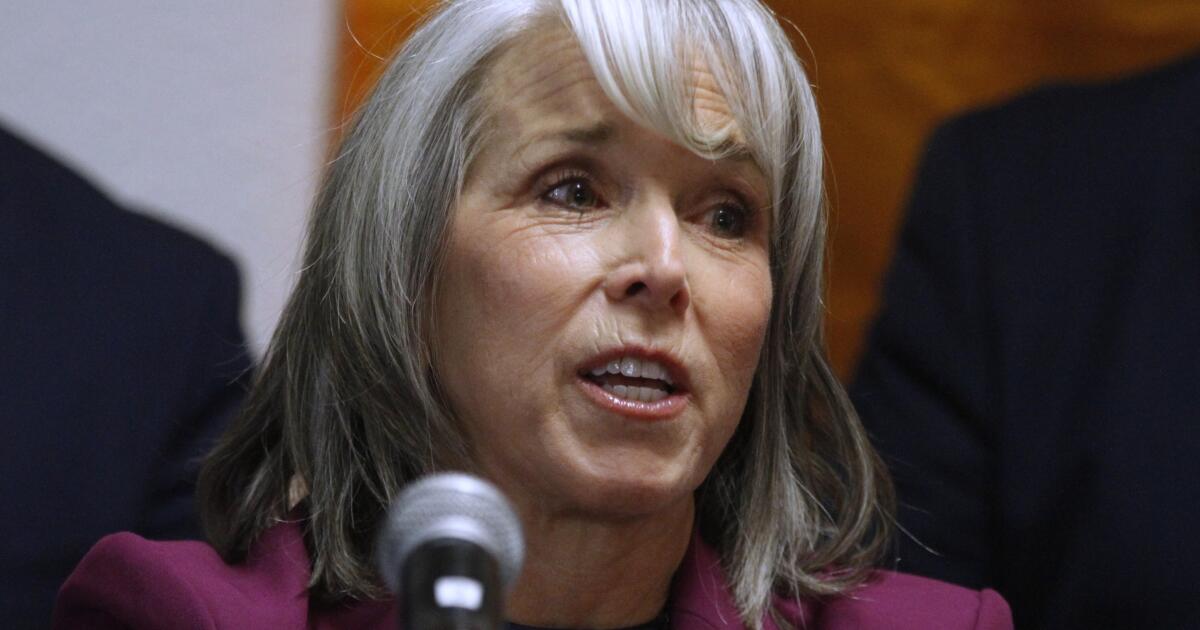
New Mexico Gov. Michelle Lujan Grisham said her own distrust of the Trump administration in election oversight stems from ongoing Department of Justice efforts to get detailed state voter data without explaining why and Trump’s continuing false claims of widespread fraud in the 2020 presidential election.
“Do I believe the federal government and people in the White House? No,” said Lujan Grisham, who terms out of office at the end of 2026.
“We are sending a message to everyone: We will hold free and fair elections, and New Mexicans will be safe in every ballot location and that’s our responsibility,” the Democrat said Tuesday during a news conference. “The Constitution says the states run their elections, and that bill makes that painfully re-clear to the federal government.”
Federal seizure of ballots and election records is a growing concern
New Mexico Republicans, who are in the minority in the legislature, voted in unison against the bill.
“I would question strongly why we have to do this other than just to have to poke the president in the eye,” state GOP Sen. Bill Sharer of Farmington said during floor debate.
State Sen. Katy Duhigg, an Albuquerque Democrat who was a co-sponsor of the legislation, said it’s “better safe than sorry with democracy.” She said she wanted to “make sure that there was some sort of tool that our local law enforcement would have at their disposal if something does happen, if the federal government does in some manner try to interfere with our elections.”
Connecticut’s bill, scheduled for a hearing later this week, also takes aim at federal attempts to seize ballots or other election material. It would require that state officials receive notification of such a move.
Blumenthal said state lawmakers can’t prevent seizures such as the January search by the FBI on an election center in Fulton County, Ga., a Democratic stronghold that includes Atlanta. But he said, “there might be an opportunity for our state attorney general’s office or the secretary of the state’s office to challenge that.”
Lee and Haigh write for the Associated Press. Haigh reported from Hartford, Conn. AP writer Oliva Diaz in Richmond, Va., and David A. Lieb in Jefferson City, Mo., contributed to this report.
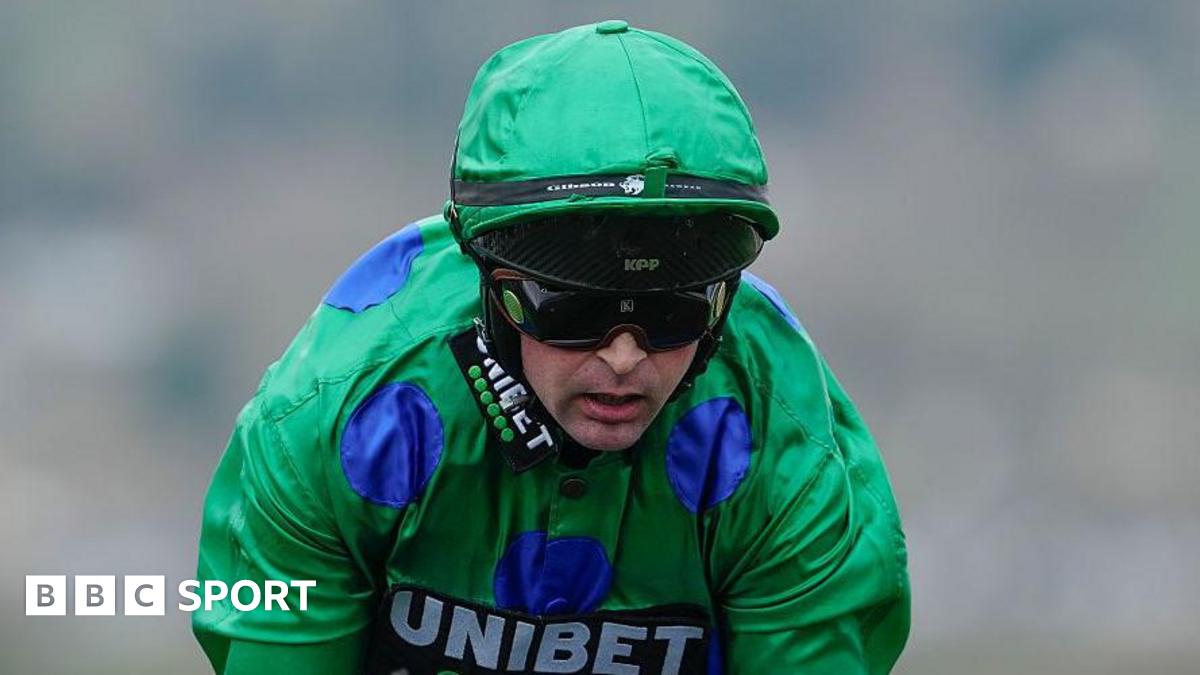
After first accusing De Boinville of being “abusive”, Queally told The Racing Post, external on Wednesday he had received “repeated racist abuse” from his rival.
The Irishman, riding I’ll Sort That, and De Boinville on Act Of Innocence could be seen exchanging words at the start line, but the Englishman denies any wrongdoing.
De Boinville told BBC Radio 5 Sports Extra on Thursday: “It is an ongoing investigation.
“The stewards are gathering all the evidence they can from all the video footage.
“From my point of view, I deny all the allegations against me.
“I can categorically say there weren’t any racial slurs or anything like that. Let’s let it play out.”
Queally, 37, appeared to topple off his horse before Wednesday’s race started and had to be checked over by a doctor. He was given the all-clear to race, along with Ballyfad, who was kicked pre-race and assessed by a vet in a chaotic few minutes.
A number of false starts to the planned rolling start meant the horses were moved to a standing start at the tape – leaving jockeys jostling for position.
After the race, Queally, who finished fifth, was interviewed by ITV Racing before entering the weight room.
He said: “Being abused by an English rider, Nico de Boinville, not very nice.
“I am an amateur, coming over here and riding in front of my kids. Horrific.”
When informed of Queally’s comments about a difficult start to the race, De Boinville responded: “Maybe he should look in the mirror.”
Legendary jockey AP McCoy said Queally has “as much right to be there as anyone”, while Ruby Walsh said the start system “hasn’t worked for 20 years”.
Walsh told ITV: “It’s 2026. How has nobody devised a tape that rolls in front of the horses?
“The tape should have been in front of them when they went on to the track and it should be moved in front of the horses.
“We can send missiles after fighter planes in the Gulf, but nobody can design a rolling flyaway tape. That’s the joke.”
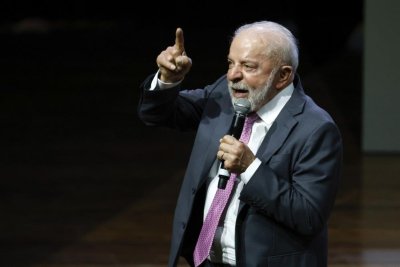
Brazilian President Luiz Inácio Lula da Silva (pictured) and right-wing Sen. Flávio Bolsonaro are each polling 41% in a potential runoff election. Photo by Sebastiao Moreira/EPA
March 12 (UPI) — Brazilian President Luiz Inácio Lula da Silva and right-wing Sen. Flávio Bolsonaro are tied for the first time for a potential runoff after the Oct. 4 presidential election, according to a poll released Wednesday. A runoff would be Oct. 25.
The survey found each candidate with 41% support in a hypothetical second round.
Bolsonaro, a member of the Liberal Party and son of former President Jair Bolsonaro, leads among voters who identify as independent, a shift that could give him an edge.
Among independents, Bolsonaro gained 6 percentage points and would lead Lula 32% to 27% in a runoff scenario. Another 36% said they would not vote and 5% were undecided.
The gap between the two candidates has narrowed steadily, from 10 points in December to seven in January, five in February and zero in March, according to the survey conducted by polling firm Quaest and commissioned by Genial Investimentos.
Similar trends have appeared in other recent polls. A Datafolha survey published Saturday showed Lula with 46% support compared with 43% for Bolsonaro.
Quaest tested first- and second-round scenarios with eight potential candidates. In first-round simulations, Lula leads in two scenarios and is statistically tied with Bolsonaro in five others. Lula’s support ranges between 36% and 39%, while Bolsonaro’s support ranges between 30% and 35%.
Felipe Nunes, Quaest’s director, said Bolsonaro’s gradual rise began after his father publicly named him as a potential candidate in December.
“Flávio has managed to consolidate Bolsonaro’s electorate. He has grown among right-wing voters and improved his performance among independent voters,” Nunes said, according to news website O Globo.
The poll also showed worsening public assessments of the government and the economy.
Both Lula and Bolsonaro face high rejection rates, with 56% of respondents saying they would not vote for Lula and 55% saying the same about Bolsonaro.
“The shift over time is striking. In December, Lula had much greater potential and lower rejection. Now, both have similar levels,” Nunes said.
The survey found 48% of Brazilians believe the economy has worsened over the past 12 months, while 24% say it has improved. In February, negative perceptions stood at 43%.
Iranian President Masoud Pezeshkian has laid out terms for ending the war with the United States and Israel in what analysts say is a possible sign of de-escalation from Tehran as the US-Israel war on Iran entered its 13th day on Thursday.
In a post on Wednesday on social site X, Pezeshkian said he had spoken to his counterparts in Russia and Pakistan, and that he had confirmed “Iran’s commitment to peace”.
Recommended Stories
list of 4 itemsend of list
“The only way to end this war – ignited by the Zionist regime & US – is recognizing Iran’s legitimate rights, payment of reparations, and firm int’l guarantees against future aggression,” Pezeshkian wrote.
This is a rare posture from Tehran, which has maintained a defiant stance and initially rejected any possibility of negotiations or a ceasefire when war broke out nearly two weeks ago.
Pezeshkian’s statement comes as pressure mounts on the US to halt what has become a very costly mission. Analysts say speculation from Washington that Iran would quickly submit after the killing of Supreme Leader Ayatollah Ali Khamenei were misguided.
Tehran is likely going to determine the end of this war, not the US or Israel, because of its ability to inflict economic pain broadly, they say.
Amid a military pummelling by the US and Israel, Iran has launched heavy retaliatory strikes at US assets and other critical infrastructure in Gulf countries, upsetting global supplies. It has also adopted what analysts call “asymmetric” tactics – such as disrupting the critical Strait of Hormuz and threatening US banking-linked entities – to inflict as much economic pain on the region and wider world as it can.
This is what we know about Pezeshkian’s stance and what the pressures are on both sides to draw the conflict to a close, quickly.
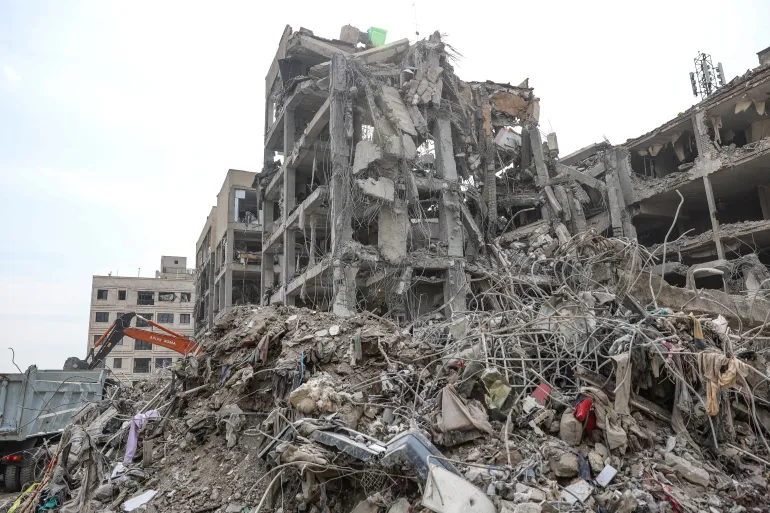
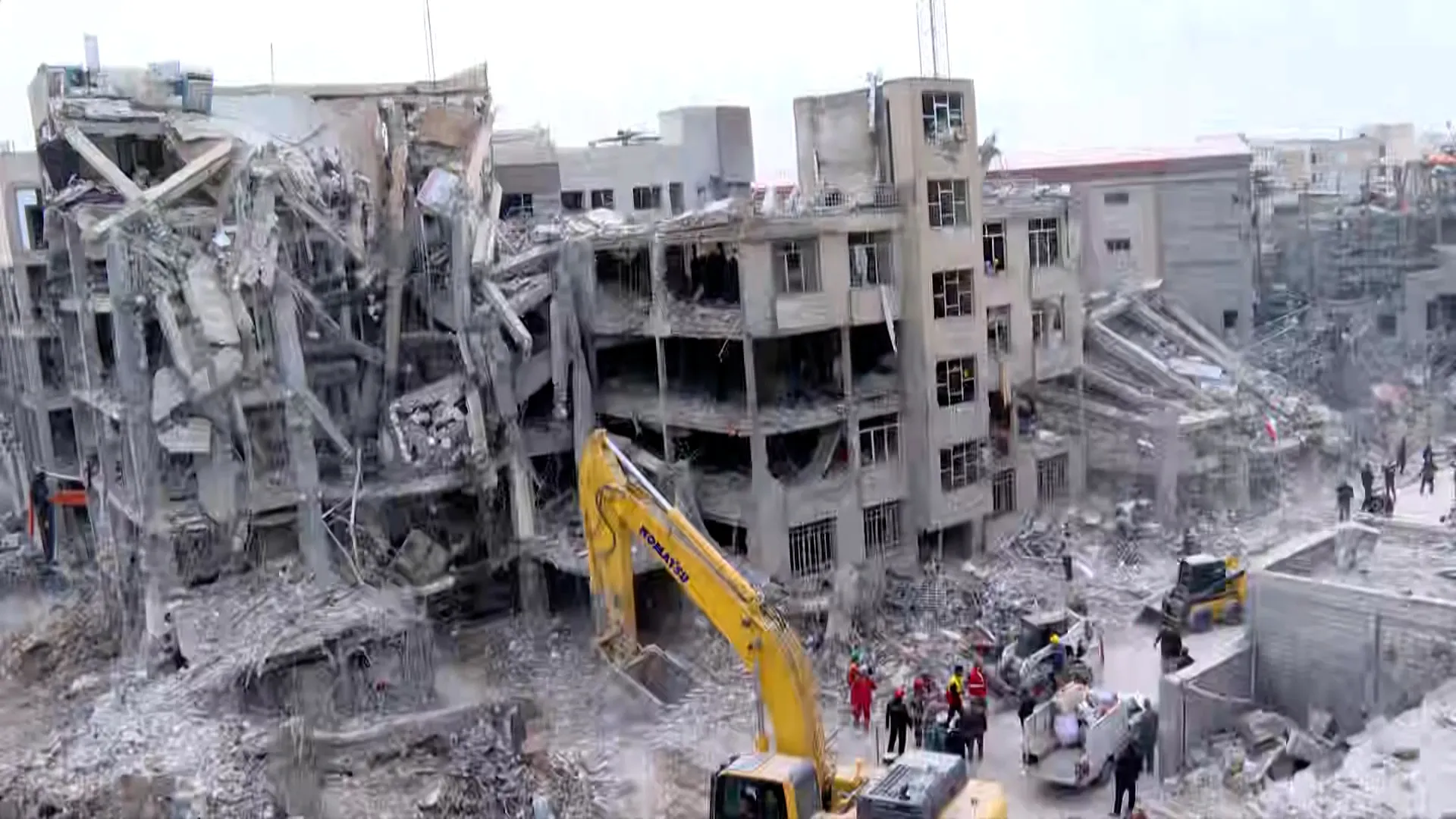
A building lies in ruins after a strike, amid the US-Israeli conflict with Iran, in Tehran, Iran, on March 12, 2026 [Majid Asgaripour/WANA (West Asia News Agency) via Reuters]
What has the war cost so far?
Economically, both sides have weaponised energy. Israel first targeted Iran’s oil facilities in Tehran on March 8, prompting an outcry from global health experts over the potential risk of air and water pollution.
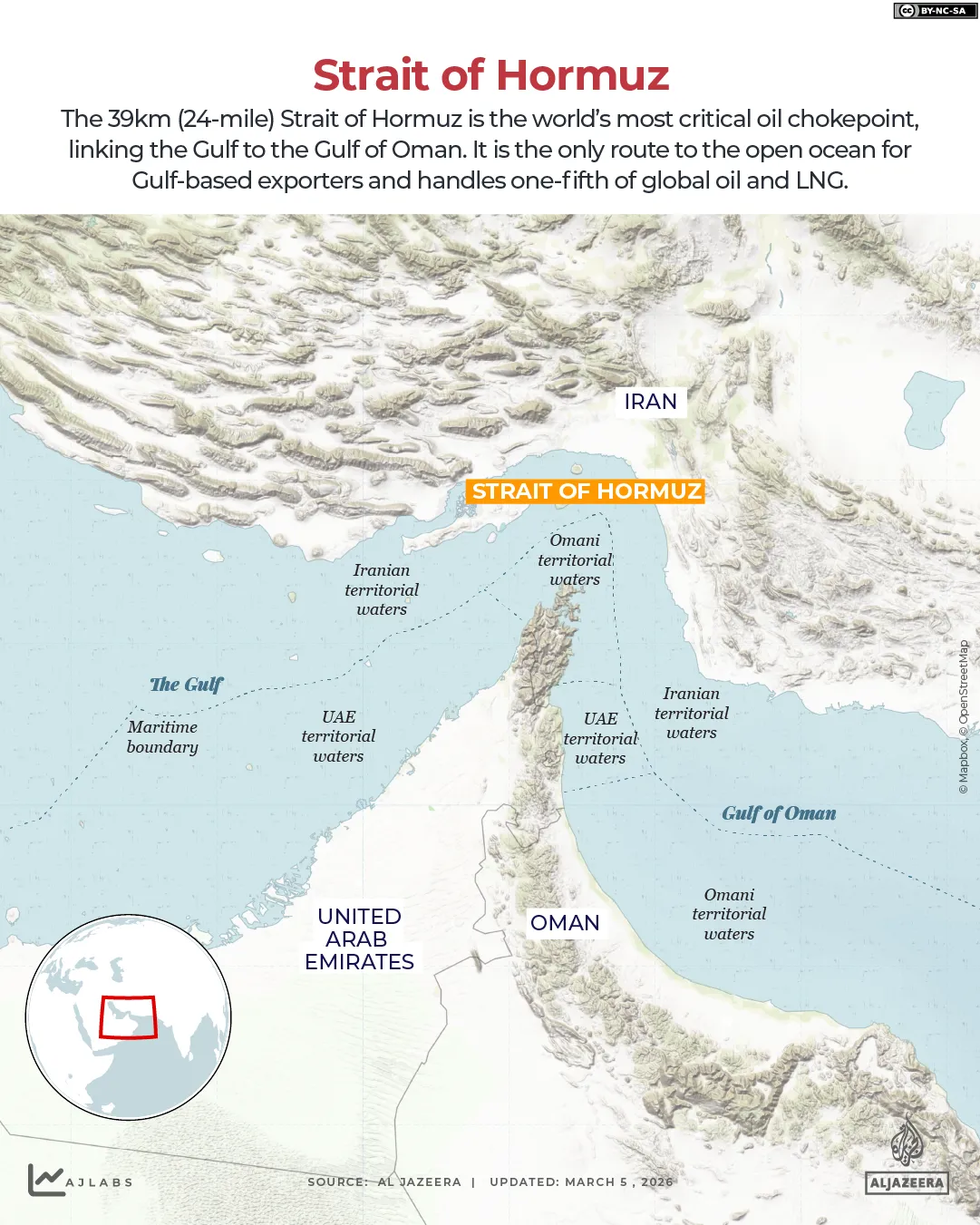
Iran has, meanwhile, tightened its chokehold on the Strait of Hormuz shipping route – the only route to open sea for oil producers in the Gulf – with its military promising on Wednesday that it has the capabilities to wage a long war that could “destroy” the world economy.
Attacks on ships in the strait, through which about 20 percent of global oil and gas traffic normally passes, have effectively closed the route.
Oil prices rocketed above $100 per barrel late last week, up from around $65 before the war, with ordinary buyers feeling the increases at pumps in the US, Europe and parts of Africa.
On Wednesday, Iran upped the ante, saying it would not allow “a litre of oil” to pass through the strait and warned the world to expect a $200-per-barrel price tag.
“We don’t know how quickly it’ll revert back,” Freya Beamish, chief economist at GlobalData TS Lombard, told Al Jazeera. “We do think it’ll revert back to $80 in due course, but the ball is to some degree in Iran’s court,” she said, adding that because Iran needs oil revenue, the price hikes are expected to be time-limited.
The International Energy Agency agreed on Wednesday to release 400 million barrels from the emergency reserves of several member states but it is not yet clear what impact that will have, nor how quickly this quantity of oil can be released.
Tehran has also been accused of directly attacking oil facilities in neighbouring countries this week. Iraq shut all its oil port operations on Thursday after explosive-laden Iranian “drone” boats appeared to have attacked two fuel tankers in Iraqi waters, setting them ablaze and killing one crew member.
A drone was filmed striking Oman’s Salalah oil port on Wednesday, although Tehran has denied involvement.
What are Iranian officials saying about ending the war?
There has been conflicting messaging from the Iranian leadership.
Iran’s elite army unit and parallel armed force, the Islamic Revolutionary Guard Corps (IRGC), continues to show defiance, issuing threats and launching attacks on Israel and US military assets and infrastructure in neighbouring Gulf countries.
However, the political leadership has appeared more inclined towards diplomacy, analysts say. On Wednesday, President Pezeshkian said that ending the war would take the US and Israel recognising Iran’s rights, paying Iran reparations – although it’s unclear how much is being asked for – and providing strong guarantees that a future war will not be waged.
In a video recording last week, he also apologised to neighbouring countries for the strikes and promised that Iran would stop hitting its neighbours as long as they do not allow the US to launch attacks from their territory.
“I personally apologise to the neighbouring countries that were affected by Iran’s actions,” the president said, adding that Tehran was not looking for confrontations with its neighbours.
However, it is not known how much sway the political leadership has over the IRGC. Hours after the president’s apology last week, air defence sirens went off in Saudi Arabia, Qatar, the UAE and Bahrain, as strikes continued on the Gulf.
So, what is Iran’s actual position?
“Iran wants to go to the end to make sure that the United States and Israel never attack Iran again … so this has to be the final battle,” Al Jazeera’s Resul Serdar Atas explained.
Indeed, the IRGC sees this as an existential war, but the timing of Pezeshkian’s statement about ending the conflict also shows Tehran is pressured economically, politically and militarily, Zeidon Alkinani of Qatar’s Georgetown University told Al Jazeera.
“These differences and divisions [between IRGC and political leaders] always existed even prior to this war but we may notice it now more, given the fact that the IRGC believes that it has the right to take the front seat in leading this regional war, which is why a lot of the statements and positions are contradicting with the official ones from Pezeshkian,” he said.
The IRGC reports directly to Iran’s Supreme National Security Council (SNSC) and not to the country’s political leadership. That council is led by Ali Larijani, a top politician and close aide to the late supreme leader, Ali Khamenei, who analysts describe as a “hardliner”.
In a post on X on Tuesday, Larijani responded to threats from Trump about attacks on the Strait of Hormuz, saying: “Iranian people do not fear your hollow threats; for those greater than you have failed to erase it … So beware lest you be the ones to vanish.”
The newly elected supreme leader, Mojtaba Khamenei, was once in the IRGC and was put forward by the unit as the next ayatollah after his father was killed on the first day of the war, analysts say. He is thus not expected to follow the reformist, diplomatic ideals of President Pezeshkian and other political leaders which his father managed to marry with the IRGC militarised stance, they say.
Mojtaba Khamenei, son of Iran’s late Supreme Leader Ayatollah Ali Khamenei, attends a gathering in Tehran on March 2, 2016. Iran marked the appointment of Ayatollah Mojtaba Khamenei to replace his father as its supreme leader with a barrage of missiles against Israel and the Gulf states [File: Rouhollah Vahdati/ISNA via AFP]
What do the US and Israel say about ending the war?
There have also been conflicting messages from the Trump administration and Israel regarding when the war mission on Iran, codenamed Operation Epic Fury, is likely to end.
Trump told US publication Axios on Wednesday that the war on Iran would end “soon” because there’s “practically nothing left to target”.
“Anytime I want it to end, it will end,” he added. He had said earlier on Monday that “we’re way ahead of our schedule” and that the US had achieved its goals, even as speculation mounts about a possible US ground mission.
On the other hand, Israel’s Defence Minister Israel Katz said on Wednesday that the war would go on “without any time limit, for as long as necessary, until we achieve all the objectives and decisively win the campaign”.
Analysts say Trump’s stance that the conflict will be quick reflects increasing pressure on his administration ahead of upcoming mid-term elections in November.
Trump’s advisers privately told him this week to find a quick end to the war and avoid political backlash, according to reporting by The Wall Street Journal. That came as polls from Quinnipiac University and The Washington Post suggested that most Americans are opposed to the war in Iran.
In his 2024 presidential campaign, Trump promised to lower prices, and inflation had stabilised at 2.4 percent ahead of the war, according to government data released on Wednesday. Analysts speculate the conflict will likely push it back up.
The US spent more than $11.3bn in the first six days of the war, Pentagon officials told lawmakers in a classified briefing on Tuesday, Reuters reported this week – nearly $2bn a day.
The Washington-based think tank, Center for Strategic and International Studies (CSIS), estimated that the war cost Washington $3.7bn in its first 100 hours alone, or nearly $900m a day, largely due to its expenditure on costly munitions.
“It’s quite ironic that [Trump] chose a war that would make affordability worse, not better,” Rebecca Christie, a senior fellow at the Bruegel think tank, told Al Jazeera’s Counting the Cost.
“Every time the US loses even one object, air defence or a plane or something like that, that represents an awful lot of money that could have been used on some of these issues that have an impact on people’s day-to-day lives in the United States.”
ITV has shared images from its upcoming true crime series about convicted sex offender John Worboys
14:39, 12 Mar 2026Updated 14:48, 12 Mar 2026
Aimée-Ffion Edwards stars in Believe Me(Image: ITV)
Broadcaster ITV has released a first look at its new true crime drama Believe Me.
Filmed in Cardiff, the four-part series tells the story of John Worboys – who was dubbed the ‘black cab rapist’ after preying on women under the cover of being a licensed taxi-cab driver.
He was convicted in 2009 for crimes including sexual assault and drugging with intent against 12 women.
His modus operandi was to claim that he’d had a win at a casino or on the lottery, then offer women he’d picked up in his cab after a night out a glass of champagne, which he’d laced with drugs, and which rendered his victims unconscious.
ITV said the drama “tells the story of how the victims of one of the most prolific sex attackers in British history were failed by the system”.
The series focuses on the ordeal of Sarah (played byPeaky Blinders‘ Aimée-Ffion Edwards) and Laila (played by Raised By Wolves’ Aasiya Shah), who reported sexual assaults by Worboys (Daniel Mays), and how their allegations were not thoroughly investigated.
Sarah and Laila – both pseudonyms – joined forces with solicitor Harriet Wistrich, played by Philippa Dunne and barrister Phillippa Kaufmann QC, played by Rachael Stirling, to sue the Metropolitan Police under the Human Rights Act for their failure to properly conduct investigations into their allegations of sexual assault, leading to their being subjected to degrading treatment and contributing to their distress.
They won, and when the Met appealed that judgment to the Supreme Court, they won again.
As these women fought to have their cases heard, looming in the background was Worboys’ first parole hearing. Eight years after he was convicted for his crimes, his victims had to fight again to keep him behind bars.
Sarah, Laila, Harriet and Phillippa were joined by Carrie Symonds (played by Industry’s Miriam Petche), a senior figure in the Conservative Party press team. She put her career on the line to spearhead a huge media and political campaign pushing for an unprecedented judicial review of the Parole Board’s decision. The campaign, with Sarah, Laila and Carrie at the forefront, was successful, and Worboys’ parole was quashed.
Sarah, whose identity has been protected, said: “Believe Me is about the courage of every woman who came forward to help put John Worboys behind bars.
“What happened to me changed my life, but in many ways the hardest part was not being believed for so many years. Without the people who stood by me, Worboys would have been freed and continued to pose a huge risk to women. Seeking justice shouldn’t mean more trauma. We shouldn’t have to fight to be believed or feel like we’re the ones on trial. The shame never belongs to the survivor.”
Believe Me will air on ITV
If you or somebody you know has been affected by this story, contact Victim Support for free, confidential advice on 08 08 16 89 111 or visit their website, http://www.victimsupport.org.uk.
From the first oil discoveries to the ambitious economic diversification of Vision 2030, Saudi Arabia’s banks have been indispensable partners in the Kingdom’s transformation.
Once a land of pearl diving and desert trade routes, Saudi Arabia is today one of the world’s largest economies and a powerful force in global finance, with a banking sector that ranks among the most dynamic and well-capitalized in the Middle East.
Regulated by the Saudi Central Bank (SAMA), the country’s banking sector has undergone successive waves of modernization, from the Saudization of foreign-owned banks in the 1970s to the digital transformation reshaping the industry today. Saudi banks are now at the forefront of financing multi-billion-dollar mega-projects — from NEOM’s futuristic, car-free, zero-carbon urban living to the Red Sea Project’s regenerative, marine-focused luxury tourism — while championing Islamic finance innovation and expanding their reach across the region and beyond.
These are the leading banks in Saudi Arabia, listed alphabetically, each with its own distinctive strengths and unique history.
Al Rajhi Bank
What began as a small family currency exchange operation in Riyadh has grown into the world’s largest Shariah-compliant institution with assets nearing $300 billion. Al Rajhi Bank traces its origins to 1957, when four brothers —Sulaiman, Saleh, Mohamed and Abdullah Al Rajhi— who were born in poverty to become one of Saudi Arabia’s most prominent families, began building a network of individual banking and commercial entities. In 1978, these entities were consolidated under the Al Rajhi Trading and Exchange Corporation, and in 1988 the bank was formally established as a Saudi joint stock company.
Al Rajhi Bank has been essential in bridging the gap between modern financial demands and Shariah compliance, pioneering products such as Islamic credit cards, lease financing and Sukuk, and blending dense branch coverage with heavy digital adoption. It serves approximately 20 million customers through a network of over 500 branches and more than 4,000 ATMs across Saudi Arabia, and maintains an international presence in Kuwait, Jordan and Malaysia. Al Rajhi Bank is a repeat winner of Global Finance awards, including for Best Islamic Bank, Best Consumer Digital Bank and Best Foreign Exchange Provider.
Alinma Bank
Established by Royal Decree in 2006, Alinma Bank is the youngest of Saudi Arabia’s major banks and —matching its name, which means “growth” or “development” in Arabic — one of its fastest-growing. Its purple branding incorporates the Khuzama (Wild Lavender), a Saudi symbol of the welcoming desert after rain, to signal a departure from legacy institutions, and position Alinma as a modern, boutique and consumer-centric alternative.
With assets of more than $80 billion, the bank was founded by three of the country’s most powerful state entities—the Public Investment Fund, the Public Pension Agency, and the General Organization for Social Insurance—each holding an equal 10% stake, with the remaining 70% offered to the public in April 2008, making it one of the most anticipated IPOs in Saudi market history.
Fully Shariah-compliant across all its operations, Alinma provides a comprehensive range of retail, corporate, investment and treasury services. With over 100 branches, more than 1,500 ATMs and an extensive digital platform, the bank serves close to 6 million customers. Alinma has earned recognition from Global Finance, including for Best Islamic Bank and in the Best Digital Banks category.
Arab National Bank
Established in 1979 by Royal Decree, Arab National Bank (ANB) took over the operations of six branches previously run by the Jordan-headquartered Arab Bank in the Kingdom, and has since grown its network to over 120 locations.
Always at the forefront of innovation, ANB introduced the TeleMoney international money-transfer service in 1992. In 2000, it became the first bank to launch an internet banking service in Saudi Arabia, evolving into a major player in the Middle East with a strong focus on digital transformation while remaining, to this day, a close collaborator with the FinTech sector.
With total assets close to $70 billion, Arab National Bank delivers a comprehensive suite of financial services spanning retail and private banking, corporate and commercial banking, treasury operations, and insurance. Its Shariah‑compliant products are offered through its subsidiary, Arab National Investment Company. The bank’s financing capabilities range from microlending to project and structured finance, including dedicated support for Small and Medium Enterprises (SMEs), a segment for which ANB was recognized by Global Finance in the Best Bank in Saudi Arabia category.
Bank Albilad
Established in 2004, Bank Albilad is one of Saudi Arabia’s newer and smaller full‑service institutions. As a born‑digital Sharia‑compliant bank that never had to unwind legacy systems, it was designed for modern digital‑first banking, positioning itself early as a nimble provider of services to personal, SME, and corporate clients, who can also rely on a network of over 100 branches across the Kingdom.
Beyond conventional banking services, Bank Albilad has built a diversified group of subsidiaries that strengthen its market offering: Albilad Capital provides investment banking, brokerage, and asset management; Enjaz has emerged as a leader in international remittance services, processing some of the largest outbound transfer volumes in the region; and Albilad Real Estate and Financial Solutions Company round out the group’s capabilities. The bank has also been ranked among the Safest Islamic Banks in the Gulf Cooperation Council by Global Finance magazine.
Bank AlJazira
Established in 1975, by 1979 Bank AlJazira had already transitioned to become a fully Islamic banking institution, earning the distinction of becoming the first bank in the Kingdom to offer fully Shariah-compliant services. In 2002, it again broke new ground by introducing Takaful Ta’awuni, giving Saudis the first fully Shariah-compliant alternative to conventional life insurance.
Today, the Jeddah-headquartered bank manages around $40 billion in assets and serves customers through approximately 80 branches and 60 Fawri Remittance Centers across the Kingdom, offering retail, corporate, investment and private banking services. Its investment arm, AlJazira Capital, extends that reach into brokerage, asset management, and corporate advisory. Global Finance has recognized Bank AlJazira as one of the Safest Islamic Banks in the GCC.
Banque Saudi Fransi
With roots stretching back to the French colonial-era banking institution Banque de l’Indochine et de Suez, Banque Saudi Fransi (BSF) has one of the most international pedigrees of any bank in the Kingdom. When the Saudi government enacted its Saudization policy in the late 1970s and converted all foreign bank branches into Saudi joint stock companies with majority local ownership, BSF was established in 1977 by Royal Decree as a joint venture between prominent Saudi shareholders and its French predecessor. Its cosmopolitan legacy is reflected to this day in its enduring strength in trade finance and cross-border corporate banking through its affiliation with Crédit Agricole Corporate and Investment Bank, an arm of the storied French banking group.
With assets valued at approximately $80 billion, a workforce of around 3,000 employees, and over 80 branches and 570 ATMs nationwide, Banque Saudi Fransi serves approximately 1.3 million customers across four primary segments: retail, corporate, treasury, and investment banking. BSF has been recognized by Global Finance numerous times, including for Best Bank for Cash Management in the Middle East, and in the Best Bank, Safest Banks, and Top Innovators categories.
Riyad Bank
Established in 1957, Riyad Bank is the oldest publicly held bank in Saudi Arabia. Its founding coincided with a period of rapid transformation in the Kingdom, as oil revenues began reshaping the economy and creating demand for sophisticated financial services. Today, the Saudi government retains a 51% stake in the institution, the third-largest in the Kingdom with assets of about $140 billion.
Riyad Bank provides a comprehensive range of fully Shariah-compliant products and services to retail, corporate, and SME clients through over 330 domestic branches, while its investment banking subsidiary, Riyad Capital, is a top player in IPO advisory and asset management.
Much like in its early years, the bank remains a leading arranger of syndicated loans in the oil, petrochemicals, and infrastructure sectors. Yet, the seven‑decade‑old banking institution is very much committed to digital innovation and alignment with Vision 2030. Riyad Bank has been recognized by Global Finance for excellence in Best Corporate/Institutional Digital Banks, Best Investment Bank and Safest Bank categories, among others.
Saudi Awwal Bank
The story of Saudi Awwal Bank (SAB) is, in many ways, the story of banking in Saudi Arabia itself. One of its predecessors, Alawwal Bank—originally the Netherlands Trading Society, established in 1926—was the first bank in the Kingdom and played a crucial role in the country’s early financial development. The other half of SAB’s lineage is the Saudi British Bank (SABB), created in 1978 when the operations of the British Bank of the Middle East were transferred to a new Saudi joint‑stock company in partnership with HSBC, which continues to hold approximately 31% of SAB’s capital.
In 2018, the Saudi British Bank announced its merger with Alawwal Bank. The integration was completed in 2021, resulting in SAB, a universal bank offering the full spectrum of banking and financial services, with approximately $120 billion in assets and more than 100 branches in Saudi Arabia, as well as one in London. SAB has been recognized numerous times by Global Finance, earning awards in the Best Bank, Best Private Bank, Best Trade Finance Provider, Best SME Bank, and Best Bank for Sustainable Finance categories.
Saudi Investment Bank
The Saudi Investment Bank (SAIB) was founded by Royal Decree in 1976 and started operations a year later with a primary mandate to provide medium and long-term industrial financing in support of the Kingdom’s economic development.
Over the years, the bank broadened its scope into full commercial banking, and in 2006 it launched its Alasalah Islamic Banking brand, offering a dedicated range of Shariah-compliant products and services through a network of specialized branches. SAIB has also established a range of joint ventures and subsidiaries spanning investment banking, share trading, asset management, leasing, mortgages, insurance, and credit cards.
A publicly listed company on the Saudi Exchange, with total assets exceeding $46 billion, SAIB caters to about one million customers through its 50 branches across the Kingdom, while keeping a dedicated focus on financing quasi-government and private industrial sectors, alongside trade finance solutions designed to support imports and grow Saudi exports.
Saudi National Bank
Also known as SNB AlAhli, the Saudi National Bank (SNB) is the largest financial institution in Saudi Arabia and one of the largest banks in the Middle East. Its principal heritage is the National Commercial Bank (NCB), which was founded in December 1953 and became the first bank to be officially licensed and operate in the Kingdom under a Royal Decree. For decades, NCB served as the anchor of Saudi banking, financing the country’s development across oil, infrastructure, and commerce. In April 2021, following one of the largest banking mergers in regional history, NCB combined with Samba Financial Group —itself originally established as Citibank’s Saudi operations, nationalized in 1980— to create the Saudi National Bank.
With total assets of over $300 billion, SNB serves approximately 15 million customers through over 480 branches and 20 retail service centers across the Kingdom, with international offices in Bahrain, the UAE, Qatar, as well as in Singapore, China, South Korea, and the United Kingdom.
The Public Investment Fund and the General Organization for Social Insurance are among its largest shareholders. SNB is also the preeminent financier for Saudi Arabia’s landmark Vision 2030 infrastructure and diversification projects, and regularly wins Global Finance awards in the Safest Bank, Best Bank, and Best Digital Bank categories.
WASHINGTON — Republican and Democratic senators vented their frustrations with the lack of progress in funding the Department of Homeland Security, which is resulting in more Americans enduring long lines at airports around the country. It’s a problem that is expected to intensify as the impasse enters its fourth week.
Democrats stressed they were willing to fund some of Homeland Security, but not Immigration and Customs Enforcement as well as Customs and Border Protection, without changes in their operations. Republicans made clear that some of the Democratic demands were a non-starter. The result was that each party blocked the other’s proposal for temporarily resolving the standoff during an hours-long debate Wednesday on the Senate floor.
The stark divide over a shutdown that began on Feb. 14 was acknowledged by members on both sides of the political aisle.
“We are in a negotiation. However, we are not close,” Sen. Brian Schatz (D-Hawaii) said at one point. “You may think this is some issue that we think we’re going to turn to our political advantage, but I promise you, when we saw Renee Good and Alex Pretti killed, this became an issue that was beyond politics.”
“And there are a lot of us who are not going to provide resources to this agency that is acting in such a ways that makes citizens of the United States so unsafe.”
Some Republicans were just as adamant that they oppose some of the changes Democrats are seeking to make.
“Let me be clear, we are going to do nothing — nothing — that kneecaps ICE’s ability to enforce our immigration laws,” said Sen. Eric Schmitt (R-Mo.).
Following the longest federal shutdown in the country’s history last year, Congress completed work on 11 of this year’s 12 appropriations bills. Only the bill for Homeland Security remains outstanding.
Democrats are seeking several changes at the department that include prohibiting ICE enforcement operations at sensitive locations like schools and churches, allowing independent investigations into alleged wrongdoing, requiring warrants to be signed by judges before federal agents can forcibly enter private homes or other nonpublic spaces without consent, and requiring agents to wear identification and remove their masks.
A push for more talks
Senate Majority Leader John Thune (R-S.D.) said his side has made repeated overtures to Democrats on a funding bill. He said the last offer on Homeland Security funding came from the White House nearly two weeks ago and there has been no response from the Democrats.
“Usually, around here, in order to get a deal, there has to be a negotiation where the two sides sit down together,” Thune said. “And my understanding is that has been completely rebuffed by the senator from Washington.”
The senator Thune was referring to, Sen. Patty Murray, the lead Democrat on the Senate Appropriations Committee, said she’s continued to talk with Republican colleagues, but those aren’t “real negotiations.” The White House needs to be at the table for that to occur. She said she needed assurance that Stephen Miller, the influential White House deputy chief of staff, would not upend any agreements that senators reach.
“I am willing to talk to people, but I’m not willing to sit in a room, have coffee, give away a few things and have Stephen Miller override whatever we all agree to,” Murray said. “ … We need to know the White House is serious.”
Homeland Security has been central to President Trump’s sweeping changes in immigration enforcement. Under Trump, the number of people ICE arrests and detains each month has climbed dramatically. The tactics that ICE has employed have generated alarm among Democrats, and some Republicans have also called for a more “strategic” approach.
During bipartisan negotiations earlier this year, appropriators agreed to a Homeland Security funding bill that did include more resources for de-escalation training and $20 million to outfit immigration enforcement agents with body-worn cameras. But that deal unraveled after the Pretti shooting in Minneapolis.
“My side was not going to stand down and say, ‘oh well, nothing happened,’” Murray said.
For the second time in two weeks, Murray offered a proposal to fund all of Homeland Security except for ICE and Customs and Border Protection, but Republicans objected.
Similarly, Sen. Katie Britt (R-Ala.) offered a proposal to fund all of Homeland Security for two weeks so that federal workers could get paid and government operations could continue while the two sides negotiate their differences on immigration enforcement. This time, Democrats objected.
The result was the standoff continues, but lawmakers were at least talking to each other, perhaps one small sign of progress.
Shutdown strains air travel
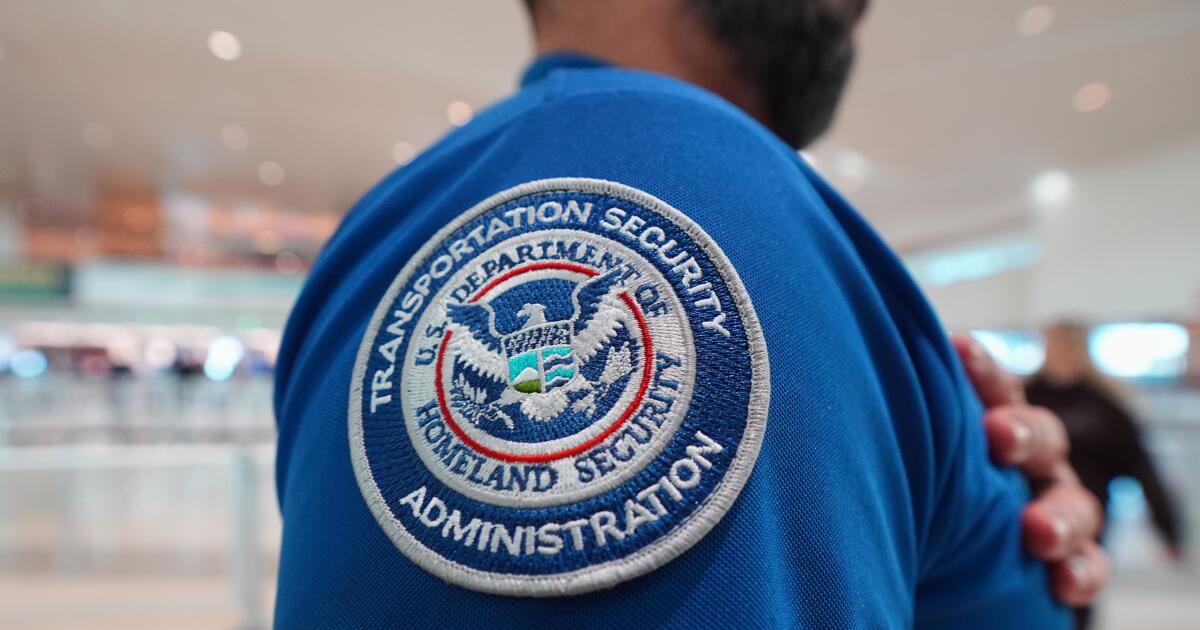
The large majority of the more than 260,000 employees at Homeland Security continue to work but are going unpaid. It’s the second time in recent months they’ve had to work without pay after last fall’s record, 43-day shutdown. The most visible sign of the shutdown has been a shortage of Transportation Security Administration screeners at airports.
Houston’s secondary airport weathered the worst problems, with lines consistently lasting over three hours for much of Sunday and Monday. Passengers also had to wait more than an hour to get through security at several other airports, including in New Orleans and Atlanta.
Homeland Security in a social media post Wednesday blamed Democrats for a shutdown that “has led to HOURS long security lines at airports across the country, leading Americans to miss their spring break flights.”
Trade groups are also worried about the economic impact of the travel delays. The U.S. Chamber of Commerce called on Congress to quickly approve a funding bill and end the department’s shutdown.
“Blocking operational funding and paychecks for those who help us travel safely is wrong and strains the air travel system,” said Neil Bradley, the business group’s executive vice president and chief policy officer.
Adicoff, from Sun Valley, Idaho, has been skiing since childhood – dabbling in both alpine and Nordic skiing before alpine was deemed too dangerous.
He competed against sighted rivals at junior level. After being selected for the US Para-Nordic team in 2013, he went to the 2014 Games in Sochi while still a high school student.
A first Paralympic medal came four years later in Pyeongchang when he finished second behind Canadian Paralympic legend Brian McKeever in the 10km classic event, but he retired after the Games before returning for the 2022 Beijing Games.
Despite high hopes of gold, Adicoff achieved two more individual silvers behind McKeever before anchoring the US team to relay gold for his first Paralympic title.
But it left Adicoff wanting more and with the retirement of 16-time Paralympic champion McKeever the division was wide open.
The American seized his chance to dominate, with World Cup and World Championship success ahead of the Games.
Unlike at Beijing, where supporters did not travel because of the pandemic, athletes at these Games have benefited from being able to be watched by friends and family and Adicoff’s entourage have been enjoying the experience.
Whether they are waving giant faces of Adicoff and his guides Reid Goble and Peter Wolter or wearing hats with his name on it, their presence has been felt at the Tesero Cross-Country Centre
Adicoff, who has another medal chance in Sunday’s 20km event and is also set to go in Saturday’s 4×2.5km mixed relay, may not be able to fully see them while he competes, but he has taken it all in and joined in the post-race celebrations.
“To have so many people that came out and supported us and are going to continue to support us throughout the week. It’s so nice having friends and family here,” he said.
“You see all those white hats up there? It’s so fun to have.
“I love skiing, love ski racing, so it makes finding the motivation kind of easy.”
Multiple explosions have been reported across Iran’s capital, Tehran, and other cities as United States-Israeli attacks and Iranian retaliation continue.
As the conflict saw its 13th day on Thursday, Iran’s representative to the United Nations, Amir Saeid Iravani, said at least 1,348 civilians have been killed.
The humanitarian toll continues to mount with more than 17,000 injured in Iran since the US and Israel launched their war on February 28. UNICEF described the situation as “catastrophic”, noting that more than 1,100 children have been reported injured or killed.
The Office of the UN High Commissioner for Refugees (UNHCR) estimated that up to 3.2 million people have been displaced within Iran since the conflict began. “This figure is likely to continue rising as hostilities persist, marking a worrying escalation in humanitarian needs,” UNHCR said in a statement.
Meanwhile, in Lebanon, Israeli attacks since March 2 have killed at least 687 people, including 98 children, according to Information Minister Paul Morcos.
United Nations refugee agency says forced displacement likely to increase as US and Israel continue deadly strikes across Iran.
Published On 12 Mar 202612 Mar 2026
Share
More than three million people have been displaced in Iran since the United States and Israel launched a war against the country late last month, the United Nations says, as concerns mount over a worsening humanitarian crisis.
The UN High Commissioner for Refugees (UNHCR) said on Thursday that as many as 3.2 million people – representing between 600,000 and one million Iranian households – have been forcibly displaced since the war began on February 28.
Recommended Stories
list of 3 itemsend of list
“Most of them are reportedly fleeing from Tehran and other major urban areas towards the north of the country and rural areas to seek safety,” UNHCR official Ayaki Ito said in a statement.
“This figure is likely to continue rising as hostilities persist, marking a worrying escalation in humanitarian needs.”
The US and Israeli militaries have continued to bombard Iran despite mounting international condemnation and calls for de-escalation.
More than 1,300 people have been killed in US-Israeli attacks across the country to date, according to the latest figures from Iranian officials.
While the US and Israel have said they are targeting Iranian leaders as well as military and nuclear infrastructure, Iran says thousands of civilian sites, such as schools and hospitals, have been attacked.
Iran’s Deputy Health Minister Ali Jafarian told Al Jazeera on Thursday that medical teams have been responding to a growing number of casualties as strikes on urban areas have intensified in recent days.
“Most of these people are civilians,” Jafarian said, adding that more than 30 hospitals and health facilities have been damaged due to the attacks.
On Thursday, explosions were heard in several parts of the capital, Tehran, and other Iranian cities as the strikes continued.
Al Jazeera’s Tohid Asadi said rescuers were digging through mounds of rubble as several multistorey apartment buildings were heavily damaged in recent attacks on a hard-hit eastern neighbourhood of Tehran.
“We saw bodies taken out [of the rubble] … and the situation was far beyond what I can call disastrous,” Asadi said.
Iran has responded to the US-Israeli assault by launching a barrage of missiles and drones at US bases and other sites in countries across the wider Middle East region.
It has also shut down the Strait of Hormuz, a critical Gulf waterway through which about one-fifth of the world’s oil transits, raising serious concerns of disruptions to global energy supplies.
Meanwhile, Lizzie (Sarah Dugdale) and Denny (Kai Bradbury) welcomed their baby daughter, but Lizzie began to struggle with post-natal anxiety.
Elsewhere, Brie Sheridan (Zibby Allen) and Brady (Ben Hollingsworth) were trying their best to get along as friends, but they were both in denial about their feelings for one another.
Also, Brie was on a mission to track down Charmaine Roberts (Lauren Hammersley), who had gone missing following a disturbing death. Here are just some of the major plot points from the finale.
Brady was in a motorcycle accident
The final moments of the season saw Brady on his way to meet Brie for breakfast after the pair rekindled their relationship.
While they had tried their best to remain just friends, Brie realised Brady was the only one who had made her feel alive and free.
They made their relationship official at a huge community event, and Brady was excited to spend the morning with his girlfriend.
However, whilst on his motorbike, he was distracted by thoughts of Brie and did not see a lorry approaching.
Viewers saw Brady come off his bike after it collided with the huge vehicle, but his ultimate fate remained a mystery.
Preacher wanted to leave Jack’s bar
Jack’s best friend and business partner, Preacher (Colin Lawrence), was keen to explore new opportunities at the bar and took on a whole new menu.
He was excited to share his vision of expanding the bar, but when he put the idea to Jack, he was not keen on taking such a big risk.
Feeling that Jack was unappreciative of his work, Preacher asked Jack to buy him out of the business so He could explore his own opportunities.
After some deliberation, Jack decided to grant Preacher his wish and draw up the paperwork, but it appeared Preacher was starting to have second thoughts.
Fans are still waiting to find out whether Preacher signed the paperwork, ultimately cutting ties with Jack and the business.
Roland confessed his love for Hope
Hope McCrea (Annette O’Toole) and Doc Mullins (Tim Matheson) ended up falling out after Doc began having second thoughts about partnering with the doctors at Grace Valley.
Feeling he had gone behind her back in making such an important decision, Hope stormed out on Doc and ended up spending time with her ex-husband, Roland (John Ralston).
During an emotional conversation, Roland revealed the truth about Hope’s father, who was the reason she had come to hate Roland so much, and it transpired that neither was to blame after all.
Roland eventually admitted he still loved Hope and helped her scatter her father’s ashes, so fans may be left wondering whether they will start to rekindle their romance.
Charmaine was kidnapped by Grant and he killed Calvin
A huge storyline in season seven was the disappearance of Charmaine after it was revealed her ex Calvin (Josh Blacker) had been shot and killed.
It transpired that Charmaine’s boss, Grant, had developed an obsession with Charmaine, and they had clearly spent a lot of time together.
Recalling the events of the night of Calvin’s death, Grant, who was holding a gun, revealed Calvin had not wanted him around the babies, and he had come to Charmaine’s house to threaten her.
As Calvin and Charmaine got into an altercation, Grant shot and killed Calvin in order to protect Charmaine. Grant was ultimately arrested for killing Calvin and kidnapping Charmaine and the twins.
Marley’s baby was born with a rare heart defect
Mel’s patient Marley (Rachel Drance) had spent the entire season debating whether or not she wanted Mel and Jack to be the parents of her unborn child.
After the baby’s father came back into her life, the pair decided they were not ready to have a child and agreed Mel and Jack could keep the baby once it had been born.
In a tragic twist, it was discovered that the baby had a rare heart defect that he would need to have a series of operations.
Marley was whisked off to the hospital the next day, and Mel helped deliver the baby, who was then taken off in an ambulance with Mel and Jack present.
Fans were left wondering whether the baby would recover.
Virgin River season 7 is on Netflix
For the latest showbiz, TV, movie and streaming news, go to the new **Everything Gossip** website
Long security lines snaked into baggage claim areas and parking garages at some U.S. airports over the weekend, a possible indicator of more widespread travel problems as the latest government shutdown drags on.
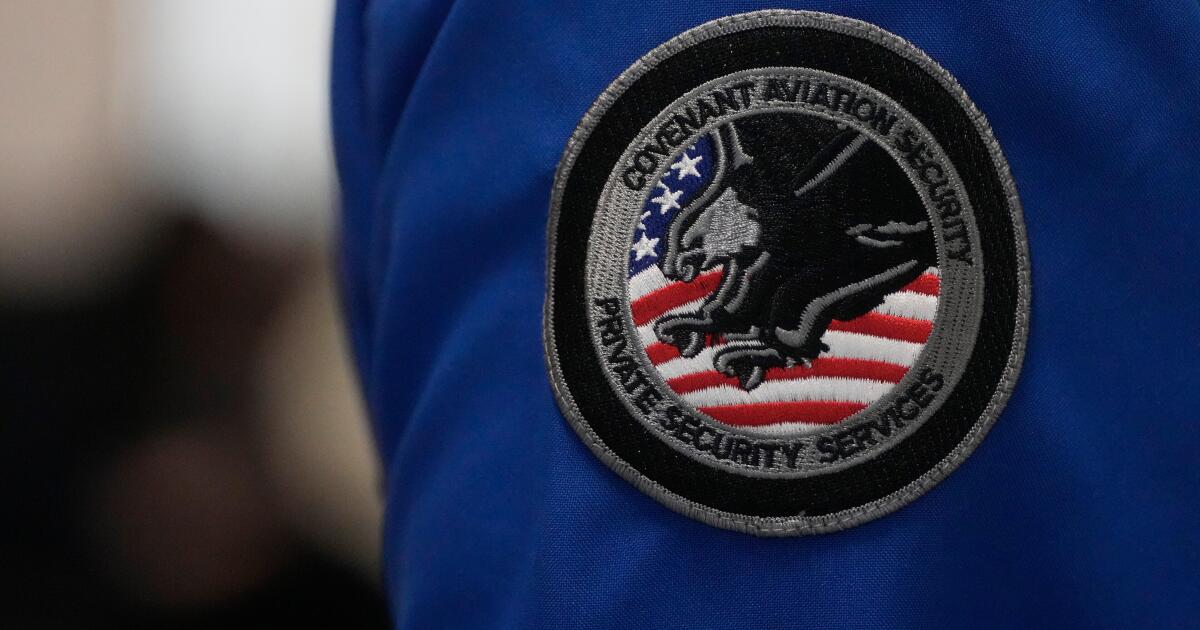
That kind of disruption, while not yet widespread, is not a concern that typically surfaces at San Francisco International Airport, the largest of nearly two dozen U.S. airports where screening checkpoints are staffed by private contractors under a little-used federal program that allows airports to outsource security screenings while maintaining TSA oversight.
Because contractors’ pay comes from a federal contract, it often continues even when the government shuts down.
“The money’s already been allocated, the payments have already been made, and that continues without interruption,” SFO spokesperson Doug Yakel told the Associated Press. “That is a very nice place to be.”
The contrast draws attention to a long-running debate in the aviation industry: Can private contractors operating under TSA oversight provide a stopgap — and shield airport security operations from the political impasses that can disrupt U.S. air travel?
Some aviation experts see the TSA screening program as a potential model for keeping security lines moving with fewer disruptions during shutdowns. At SFO, that system helped maintain screening operations during last year’s record 43-day shutdown, Yakel said.
But critics caution that privatization is not a silver bullet and could introduce new risks. The union representing federal screeners argues that moving operations to private companies could erode job protections and reduce pay and benefits for workers already facing high turnover amid demanding conditions.
How the program works
Established in 2004, TSA’s screening partnership program allows airports to use private security companies chosen by the federal government to run checkpoints while TSA retains authority over procedures and oversight. The agency says private screeners receive the same security background checks as their federal counterparts.
The program “provides needed relief to staffing shortages brought on by a government shutdown,” TSA said in a statement to AP.
In addition to SFO, other participating airports include Kansas City International Airport, Atlantic City International Airport and Orlando Sanford International Airport.
The vast majority of the nation’s roughly 400 commercial airports, meanwhile, rely on federal screening officers employed directly by TSA. During shutdowns, those workers must continue reporting for duty even though they stop getting paid — a dynamic that has historically led to higher absenteeism and slower-moving checkpoints the longer a shutdown lasts.
The current partial shutdown affects only the Department of Homeland Security, which includes TSA. Democrats in Congress refused to fund the department over objections to its immigration enforcement tactics. The lapse marks the third shutdown in less than a year to leave TSA workers temporarily without pay — and once the government reopens, to have to wait for backpay.
Those disruptions can ripple through the travel system, cascading problems across already crowded flight schedules. The strain is especially acute this time of year as airlines and airports brace for what they expect will be one of the busiest spring break travel seasons on record.
San Francisco’s airport is a ‘litmus test’
Aviation security expert Sheldon Jacobson, whose research contributed to the design of TSA PreCheck, said the program’s success at SFO, a large international airport, shows that privatization “is something that needs to be explored.”
SFO is among the top 15 busiest airports in the U.S. when measured by passenger traffic. A major hub for international travel, it is the second-busiest airport in California behind Los Angeles International Airport.
“It’s operated just as well as any other airport,” Jacobson said, adding that SFO’s multiple concourses and status as a hub for United Airlines demonstrate that even large-scale operations can be managed effectively under this model. “If SFO is the litmus test for delivering this privatized product, then many other airports can do it, too.”
Jacobson noted that most airports currently using the program are smaller, but “the scale issue should not be a limiting factor,” and he called for a broader conversation on how such options could deliver government services efficiently and benefit travelers.
“Of course TSA would have oversight. It’s not like they’re freewheeling on their own,” he said of privately contracted screeners. “We might as well use a government shutdown that affects air travel as an opportunity to begin that discussion.”
Why TSA’s union opposes the private model
The American Federation of Government Employees, which represents TSA officers, has long opposed privatization.
“We will never advocate for any privatization of any federal employees. We don’t believe that’ll work,” Johnny Jones, secretary-treasurer of the TSA union’s bargaining unit, said in a brief phone call this week.
In a blog post on its website, the union argues it could weaken accountability for aviation security — one of the reasons Congress chose to federalize airport screening after the Sept. 11 attacks.
The union also warned that private companies could face pressure to cut costs in ways that affect training, staffing levels and employee benefits. Relying on contractors, the union says, could create inconsistencies between airports if different companies operate checkpoints across the country, potentially complicating oversight of a system designed to maintain uniform national security standards.
“We have to remember the TSA was created in the wake of 9/11 when there were no security standards or very minimal security standards,” said airline industry analyst Henry Harteveldt, president of Atmosphere Research Group. “The TSA came around, they established very stringent airport screening security requirements, which exist to this day.”
Others say there are simpler ways to address the shutdown problem.
Industry groups — including the U.S. Travel Assn., Airlines for America and the American Assn. of Airport Executives — are urging Congress to pass legislation that would ensure aviation workers are paid regardless of the government’s funding status.
“Every time Washington fails to fund the government, these essential workers pay the price. So do travelers. So does the economy,” Geoff Freeman, U.S. Travel Assn.’s president, said in a statement. “That is why America’s travel industry has come together, because this workforce is too important, and the stakes are too high, for this to keep happening.”
An unintended benefit of outsourcing screeners
Republican lawmakers have pushed in recent years to dismantle the agency entirely. Last year, two GOP senators introduced the “Abolish TSA Act,” which would phase out the agency and transfer oversight to a new office charged with aviation security. Supporters of the long-shot legislation say privatized screening could be more efficient and less vulnerable to shutdowns.
TSA leadership has signaled an openness to discussion. Speaking at a House Appropriations subcommittee hearing last year, Ha Nguyen McNeill, a senior official performing the duties of TSA administrator, said “nothing is off the table” regarding potential privatization.
“If a new privatization scheme makes sense, then we’re happy to have that discussion to see what we can come up with,” McNeill said. “It’s not an all-or-nothing game.”
At SFO, officials say its screening model was adopted more than 20 years ago for reasons unrelated to government shutdowns. But with shutdowns in recent years growing longer and more disruptive, the airport says its arrangement has revealed an unintended benefit: fewer staffing disruptions at checkpoints.
“The benefits, I think, are compelling,” Harteveldt said. “The real issue is making sure that any vendor, any partner to the TSA, upholds the strict standards that TSA has established and works with TSA to ensure that screening remains efficient and finds ways to make it even better.”
Yamat writes for the Associated Press. AP video journalist Haven Daley contributed to this report from San Francisco.
A travel expert claims he has saved money by looking for flights at a specific time, and early risers could bag a bargain, but there are also other ways to cut the cost of your flight
Night owls could pay less for their flights(Image: MEN MEDIA)
A travel expert has claimed that the time you book a flight can be just as important as the day you choose to travel, and that setting your alarm at a very specific time could help you land the best deals.
Jamie Fraser, owner of Wild Packs, claims that the cheapest time to book flights is exactly 2:48am in what could be good news for night owls and insomniacs. He also claims that evening searches between 8pm and 2pm can also be around 5% cheaper than searching during peak morning hours.
Airlines will often raise prices when they see heavy demand for a destination, so if lots of other people are up at the same time looking for the same route and dates, this could potentially put prices up. Jamie says: “Most people search for flights first thing in the morning while they’re having coffee, but that’s exactly when everyone else is doing the same thing.
“When airline systems see that spike in demand, prices can rise quickly. It’s one of the easiest ways travellers overpay. The cheapest time to book is usually in the early hours of the morning, around 2:48 am, when far fewer people are searching, and airline pricing systems have reset overnight.”
He added: “If you’re not willing to set a 2 am alarm, the next best option is late evening. Booking between 8 pm and 10 pm can still save around 5% compared to that busy morning window.”
So does this hack work? In the early years of internet travel booking, airlines and other sites would update their fares manually overnight. This meant that savvy travellers could sometimes pick up middle of the night bargains. However, nowadays, it’s more complex because systems have evolved, so you may still need a bit of luck on your side.
You could also potentially save money by using Jamie’s other suggested hack, which is to set up price alerts rather than checking fares repeatedly. Jamie also reiterated the often given advice that travellers should be flexible with travel plans, looking out for different airlines, dates, or nearby airports.
If you use sites such as Skyscanner, you can often tick a ‘nearby airports’ box, as an airport a short drive away could end up being cheaper. If you’re flexible on destination, for example you simply want to go somewhere sunny with a beach, then choosing ‘everywhere’ as a destination will show you the cheapest options for your dates.
It’s also worth signing up for emails from specific airlines and looking out for deals such as flash sales or kids fly for free offers, which often have limited availability and need to be snapped up quickly.
Have a story you want to share? Email us at webtravel@reachplc.com
SEVERAL cruises have been cancelled amid growing regional tensions in the Middle East, as some ships have been left ‘stuck’ in ports.
A number of cruise lines are cancelling European sailings following a number of ships getting stuck in ports in Dubai, Doha and Abu Dhabi amid conflict in the Middle East.
Sign up for the Travel newsletter
Thank you!
A number of cruises are being cancelled including European sailings due to the conflict in the Middle EastCredit: EPA
European cruises cancelled include two Celestyal Cruises sailings on March 20 and March 23 in the Aegean Sea.
This is because the Celestyal Discovery has not yet been able to leave Dubai as it needs to travel through The Strait of Hormuz which is currently closed due to the ongoing conflict in the Middle East.
Guests who were booked on the Greek sailings have been offered a full refund or can opt for cruise credit.
MSC Cruises has cancelled its three remaining wintercruises from Dubai that were due to set sail between March 14 and 28 as MSC Euribia remains docked in Dubai port.
Aroya Cruises has also cancelled all cruises for the remainder of the season.
As for TUI, two ships previously stuck in the Strait have resulted in cruises being cancelled up to March 16 for Mein Schiff 4 and March 12 for Mein Schiff 5.
While the final passengers are on their way home via flight, the ships remain in the area.
The main issue for cruise ships at the moment in regards to the conflict, is that since March 2 the Strait of Hormuz has been closed.
This means any ships, so not just cruise ships, are currently not travelling the Strait of Hormuz.
This impacts cruises mainly heading to Doha, Dubai and Abu Dhabi.
Normally, between 10 and 14 cruises travel through the Strait each week during the winter season (November to March).
A spokesperson for AROYA Cruises commented: “Due to ongoing regional operational considerations and in coordination with the relevant maritime and national authorities, AROYA Cruises will not proceed with the remaining sailings scheduled in the Arabian Gulf for the current season.
“All guests were safely disembarked in Dubai on March 7, with the safety, security, and wellbeing of our guests and crew guiding this process.
“We are supporting our guests as they arrange their onward travel and providing guidance and assistance throughout this process.
“The safety, security, and comfort of our guests and crew remain our highest priority and continue to guide every operational decision we make.”
TUI, MSC, Celestyal Cruises, Viking Cruises, Royal Caribbean and Avalon Waterways have been contacted for comment.
Some ships have been stuck in the Strait of Hormuz, which they must travel through to dock in DubaiCredit: Alamy
What does it mean for British cruise passengers?
The UK government is working to support Brits in all of the impacted areas including the United Arab Emirates.
Official guidance advises Brits who are due to head off on a cruise with stops at the impacted ports to check in with their cruse line to see if their sailing has been cancelled, postponed or rerouted.
For Brits heading on fly-cruises, you should also check with your airline to see if they are still operating your scheduled flight.
Lisa Minot, The Sun’s Head of Travel said: “Six cruise ships are stuck in ports in Dubai, Abu Dhabi and Doha, unable to sail to safer waters without entering the Strait of Hormutz.
“Assistance will be provided to all impacted guests, and cruisers on cancelled sailings will receive full refunds or a future cruise credit to reschedule.”
A longer version of this piece in Spanish was published on Marisela’s Substack.
After the systemic rupture that the US incursion of January 3 represents, chavismo has embarked on its third great metamorphosis, carrying out a profound reengineering in a context of tutelage and transactional pragmatism. In my view, the Venezuelan State is undergoing a deep transformation rather than facing an imminent transition to democracy. Nevertheless, the government of Delcy Rodríguez is pursuing this transformation with remarkable speed and bluntness.
The survival of the chavista system has required the sacrifice of its original forms, forcing a mutation that uses economic opening as social anesthesia and the sophistication of repression as a guarantee of stability.
From the oil embargo on Cuba to microeconomic measures that we will discuss in the following lines, these milestones are the material proof of a power that has chosen to fill itself with realism, and to sacrifice its traditional epic narrative.
The case of Alex Saab and friends
A most scandalous event over which public officials have remained silent is the alleged arrest of Alex Saab. Saab was removed as Minister of Industries and National Production on January 17. Although Delcy initially presented the move as a departure to assume new responsibilities, it ultimately marked the beginning of his demise in Venezuela. According to reports from The New York Times, La Nación, and Infobae, SEBIN agents detained Saab and businessman Raúl Gorrín, the owner of TV network Globovisión, who has long navigated sanctions and power and lost his media and political shield almost simultaneously with the capture of Maduro. The novel element in this second arrest of Saab is that reports describe an operation carried out with the knowledge and cooperation of the FBI. It would appear that the new leadership in Caracas is willing to hand over key figures to US authorities in exchange for validation and stability.
Both men immediately disappeared from the public radar. Two weeks later, the Spanish broadsheet ABC claimed that the Trump administration has demanded judicial cooperation from Delcy regarding nine figures close or formerly close to the government, including Maduro’s son (known as Nicolasito), Tareck El Aissami (arrested by Maduro in 2024) and, of course, Alex Saab and Raúl Gorrín. The report describes Saab as “the man who knows where the money is.” The dismissal on February 23 of Saab’s wife, Camilla Fabri (appointed vice minister for international communication a year earlier) reinforces the hypothesis of Saab’s detention.
In the mining sector, foreign capital has abandoned concessions due to the absence of minimal infrastructure and the suffocating control of armed groups.
In theory, the US would be seeking access to Saab’s testimony and archives in order to finish dismantling the money laundering and drug trafficking networks surrounding Maduro’s inner circle. Following his arrest in Cape Verde in 2020 and a prolonged legal battle in Florida over his alleged diplomatic immunity, Saab was released and sent back to Venezuela in December 2023 through a complex prisoner exchange. Upon arrival, he was granted a high political profile and appointed president of the International Center for Productive Investment, positioning him as the key operator for attracting foreign capital under sanctions.
The Saab-Gorrín case demonstrates that chavismo’s ongoing metamorphosis involves sacrificing the financiers who helped evade sanctions in previous years. Even after leading an intense campaign for Saab’s release in 2023, National Assembly president Jorge Rodríguez has shown no hesitation in serving in a government that makes him disappear on the orders of a foreign power. Ruling chavismo now seeks to present itself before Trump as a renewed, pragmatic actor and, above all, one unified under a centralized command without visible fractures. The official silence surrounding this issue stems from the fact that the capture of strategic allies buys the Rodríguez siblings time to manage the internal divisions this would inevitably generate.
Supervised economic liberalization
Since early January, the government has accelerated decrees and measures of economic opening that were previously unthinkable, such as the Hydrocarbons Law’s reform. The objective is to accelerate economic timelines in order to demobilize political demands. However, while the government is betting on a rapid economic rebound to pre-empt any possibility of opposition reorganization, a deep gap is beginning to emerge between the rhetoric of hope and the reality of purchasing power, which continues to deteriorate.
To assess the supposed implementation of these measures, I spoke with economist Manuel Sutherland to unpack the speculation that currently dominates public debate. According to his analysis, the exchange rate system has not undergone structural change: the allocation of foreign currency remains discretionary. Financial flows reveal a complex triangulation in which oil revenues are deposited in a fund in Qatar and then routed to an account at the US Treasury Department. From there, major banks acquire foreign currency through auctions restricted to the purchase of American goods. This process, executed in an opaque environment by private banks, occurs alongside discussions of tax exemptions for certain goods, such as vehicles.
Contrary to public perception, there has been no acceleration of privatization, while in the mining sector, foreign capital has abandoned concessions due to the absence of minimal infrastructure and the suffocating control of armed groups. What initially appeared to be a fast-tracked path toward economic recovery under American supervision now seems to be advancing at the same pace as, or even behind, political changes. The dissonance that once represented a danger for democratization (rapid economic liberalization coexisting with political stagnation) is not occurring. On the contrary, the slow economic rebound is unable to keep pace with the acceleration of political dynamics, which has gained renewed vigor through the mobilization of relatives of political prisoners. While the economy remains trapped in inertia and opacity, the political chessboard is being shaken by social pressure that the government appears not to have anticipated in its calculations for stability.
Amnesty and softer repression
By managing to adapt to this new scenario, chavismo shows it retains room of maneuver to ensure its permanence. This continuity is guaranteed by opening strategic pressure valves in response to the two main sources of coercion: internal social pressure and external pressure. The tactical softening of repression manifests itself as an unfolding of chavismo toward more sophisticated forms of exercising power. During the opening of the judicial year, the acting president delivered a striking speech announcing an amnesty law. The timeframe established for the law (1999-2025) functions as a symbolic rupture with the era that precedes her. All of this seeks to project renewed leadership based on the pillars of efficient technocracy and a pacifist façade.
The Amnesty Law thus operates as both a pacification mechanism and a transactional trophy for the Trump administration. A trophy meant to reduce the political cost of external pressure without implying any real dismantling of the repressive apparatus. It is a functional mutation that attempts to stabilize the system through a new version of authoritarian peace that can only be challenged if social pressure and mobilization manage to move beyond the mirage of this merely symbolic rupture.
Venezuela has ended up suffocating Cuba more effectively than the Helms-Burton Act.
However, attempts to “unify” the country through this law have had the opposite effect. Instead of extinguishing the spirit of struggle, it has revived it. On February 6, while the amnesty bill was still being debated, National Assembly president Jorge Rodríguez appeared at an infamous detention center before the mothers of political prisoners who were on vigil. Rodríguez established a novel form of blackmail: if the law were approved within a record seven days, their children could be released. None of this happened. The discussion was delayed, and once the law was enacted, the release process proved extremely slow. In addition, new cases of abductions and disappearances have emerged, while those who have been released leave prison without fear and determined to remain in the streets. None of this had been anticipated by Jorge Rodríguez.
This whole process, which is still ongoing, has brought the tacit recognition of political prisoners, the implementation of mass release measures, and the positioning of political prisoners within the public discourse—an issue the Maduro government always preferred to deny.
Oil embargo on Cuba and sales to Israel
The abrupt halt in crude shipments to Cuba—confirmed through maritime tracking by specialized firms—has also not been officially acknowledged by Venezuela. Reuters has been the leading outlet reporting the drop in shipments. According to its investigations, based on internal documents from the state oil company PDVSA and export data, Venezuela has prioritized cargoes destined for companies such as Chevron in order to secure foreign currency flows, leaving supply to Cuba in operational limbo. What is new? The beginning of a phase of energy suffocation for Havana led by Venezuela.
Despite the evidence of reduced shipments, neither Caracas nor Havana has issued statements acknowledging a suspension. What has been officially reported, however, is the dismantling of Cuban missions in Venezuela. Official Gazette No. 6,885 published decrees ordering the intervention, restructuring, and liquidation of emblematic social programs such as Mission Barrio Adentro and the Housing Mission.
In addition, international correspondents in Caracas, such as Sarah Kinosian, have reported the departure of Cuban medical personnel and military advisers. These reports cite internal sources in ministries and testimony from health workers who have been notified that their contracts are ending and that they must return immediately to the island.
Within a span of only a few minutes, the Venezuelan Foreign Ministry published and then deleted from all its platforms a statement expressing solidarity with the Islamic Republic of Iran following recent bombings.
How long can the rupture between Caracas and Havana remain hidden in discourse? And what implications does it hold for the Latin American left, which has remained silent about Venezuela’s authoritarian drift in order to preserve a utopian narrative? The only official source regarding the oil embargo on Cuba came from Miguel Díaz-Canel, who admitted that “we are going to live through difficult times” and announced a plan to deal with “acute fuel shortages,” acknowledging that no crude has arrived since December. As one of history’s paradoxes, Venezuela has ended up suffocating Cuba more effectively than the Helms-Burton Act.
Another shift that also lacks official confirmation is the presumed resumption of oil sales to Israel, reported only by Bloomberg and maritime tracker Kpler. Although the government has dismissed these reports as fabricated news through its communications minister, the flow of roughly 200,000 barrels toward the Haifa refinery suggests a reality consistent with the scenario of tutelage and its geopolitical ramifications (Venezuela severed relations with Israel in 2009).
The erosion of the anti-imperialist narrative
An episode that occurred on March 1 offers a window into the speed with which the government has decided to push through a compliant policy shift and how it appears to be redefining its strategic ties. Within a span of only a few minutes, the Venezuelan Foreign Ministry published and then deleted from all its platforms a statement expressing solidarity with the Islamic Republic of Iran following recent bombings.
The episode suggests a latent tension between the discursive inertia of certain officials and the logic of tutelage guiding the government’s current decisions. More than a mere coordination error, the incident could be interpreted as a symptom of constant monitoring of Venezuelan foreign policy by the US embassy in Caracas, or of unclear internal guidelines regarding this shift, where preserving negotiation channels with Washington must prevail over historical ideological loyalties.
The novelty of this shift lies not only in the rhetorical distancing, but in the fact that the internal fissure has become visible. For the first time in decades, the opportunity cost of maintaining a symbolic alliance with Tehran appears to be perceived by the political leadership as greater than the benefit of ideological consistency. This exercise in digital cleansing reinforces the hypothesis of a system that will prioritize the stability of financial flows guaranteed by American tutelage over the rhetoric of confrontation, marking a drastic departure from the alliances that once sustained chavismo.
The reality is that there has been a change in governmental behavior. Not only has the government implemented measures that clash with the historic conduct of a regime attached to the ideological agenda of the revolution, but it has also shown clear difficulty in the communication management of these measures. This suggests they may respond to a strategy of obedience to the occupying power while exploiting certain windows of opportunity for remaining in power.
Delcy Rodríguez’s government knows that exposing the measures recently adopted could generate even deeper cracks within the internal structures of chavismo. So now, in many instances, we just have silence.
Lakers center Deandre Ayton shoots over the Timberwolves’ defense on Tuesday at Crypto.com Arena.
(Ethan Swope / Associated Press)
With 33 missed shots between both teams in the first quarter, Deandre Ayton certainly had plenty of opportunities for rebounds, and the 7-foot center made the most of them.
Ayton almost single-handedly kept the Lakers in contention in the first half, scoring 12 of his 14 points in the second quarter and had a first-half double-double with 11 rebounds.
Ayton, who was scoreless in the first quarter but had six rebounds, scored three of his first four baskets off offensive rebounds. The only exception came when Reaves drove in the lane, wrapped a pass around his back as he found Ayton cutting down the lane for a vicious two-handed dunk. The crowd roared.
“He was a monster,” said Reaves, who had 31 points and eight assists. “… He was the only person scoring for us efficiently and then just being high energy on the other end, just doing what he does. That’s what we need him to do. When he does that, we’re a different team and we’re thankful to have him.”
Ayton’s effort has waned throughout the season, sometimes resulting in him getting benched late in games. But he provided major lifts in marquee wins against the Knicks (six points, eight rebounds) and Timberwolves to earn the confidence and trust of his teammates.
The Lakers needed Ayton at his best after backup centers Jaxson Hayes (back soreness) and Maxi Kleber (lumbar back strain) were ruled out of the game about 15 minutes before tip-off. Hayes was starring in his reserve role in recent weeks, bringing much-needed energy off the bench and a seamless connection with Doncic, but hearing that Ayton would have to hold down the front line by himself gave the former No. 1 draft pick extra motivation.
“I know I’m the only big,” Ayton said, “so I try my best to stay out there as long as possible, especially down the stretch.”
Despite United States President Donald Trump’s repeated declarations of victory in the US-Israeli war on Iran, Tehran’s retaliatory strikes on Israel and US military assets in the region have continued, upending global financial and energy markets.
“We’ve had two decades to study defeats of the US military to our immediate east and west. We’ve incorporated lessons accordingly,” Iranian Foreign Minister Seyed Abbas Araghchi wrote in a post on X on March 1, the day after US and Israeli strikes on Tehran killed Iran’s Supreme Leader Ayatollah Ali Khamenei and other senior Iranian officials.
Recommended Stories
list of 3 itemsend of list
“Bombings in our capital have no impact on our ability to conduct war,” he wrote.
According to analysts, Iran has made use of “asymmetric” warfare tactics while striking the US and Israel. So, are Tehran’s war tactics working?
Here’s what we know:
What is ‘asymmetric’ warfare?
When the balance of capabilities is unequal in a conflict – as it is in relation to weapons in this one – the weaker party can turn to unconventional methods of warfare, John Phillips, a British safety, security and risk adviser and a former military chief instructor, told Al Jazeera.
This is known as “asymmetric” warfare.
This can include the use of guerrilla tactics, terrorism, cyberattacks, use of proxies and other indirect tools, Phillips said, in order “to offset conventional inferiority, avoid the enemy’s strengths, and exploit vulnerabilities in political will, logistics, and legal or ethical constraints”.
“Iran is conventionally weaker than the US and Israel, but relatively strong compared to many neighbours,” he said.
“What makes Iran distinctive is not that it uses these methods at all, but that they sit at the centre of its grand strategy rather than at its margins.”
Why is Iran using asymmetric warfare?
In the ongoing war between Iran and the US-Israel, Washington and Tel Aviv have been using expensive missiles and drones to attack Iran and to intercept missiles Iran has fired back. The Patriot and THAAD defence systems, for example, which launch interceptors to take out incoming drones and missiles, can cost millions of dollars for each missile they fire. This compares with the $20,000-$35,000 cost of each Iranian Shahed drone.
As a result, the US has reportedly spent $2bn a day in its war on Iran and there are fears it could run out of interceptor missiles altogether if the war goes on for more than a few weeks.
It is therefore in Iran’s interests to focus on holding out against strikes and protecting its own weapons supplies while it does so, military experts say.
However, Phillips explained that precision strikes and sabotage by Israel and the US have demonstrated that Iran is not able to fully shield its missile, drone and nuclear‑related assets, while sanctions and domestic pressures have limited its capacity to sustain a very high‑tempo confrontation.
“As a result, Iran’s asymmetric approach is best understood as an effective ‘survival and leverage’ mechanism that produces a chronic, costly ‘shadow war’, rather than a path to decisive regional hegemony or victory,” he said.
Iran began using asymmetric warfare techniques following the 1979 Iranian revolution, which overthrew Shah Mohammad Reza Pahlavi.
“Instead of trying to match high‑end aircraft, precision munitions, or blue‑water fleets, [Iran] has built a ‘forward deterrence’ posture that operates in the grey zone between war and peace,” Phillips said.
“This is backed by large inventories of ballistic and cruise missiles, mass‑produced drones [often handed to proxies], cyber-operations, and a posture of underground, dispersed and hardened facilities that make preemption difficult and preserve some retaliatory capability.”
What asymmetric tactics has Iran been using?
Enemy depletion tactics
Since US-Israeli strikes on Iran began on February 28, Tehran has launched a wave of ballistic missiles targeting Israel and US military bases across the Gulf region.
Using a mix of short and medium-range ballistic missiles, as well as drone swarms through this defence system, Iran aims to deplete Israeli and US interceptor stockpiles.
Economic warfare
Iran has shut down the Strait of Hormuz through which about 20 percent of global oil and gas supplies are shipped. Linking the Gulf to the Gulf of Oman, the strait is the only waterway to the open ocean available to Gulf oil producers.
On Thursday, Iran attacked fuel tankers in Iraqi waters. Instability in and around the Strait of Hormuz drove Brent crude oil prices past $100 a barrel last week, with wild swings ongoing, prompting fears of a global energy crisis.
Iran has also targeted civilian infrastructure like airports and desalination plants which are crucial for water supply in the region, and it has launched drones targeting oil depots.
(Al Jazeera)
War on global finance
Meanwhile, on Wednesday this week, Iran’s Islamic Revolutionary Guard Corps (IRGC) threatened to attack “economic centres and banks” with links to United States and Israeli entities in the Gulf region after what it claimed was an attack on an Iranian bank, with the war in its 12th day.
Since then, many banks like Citibank and HSBC in Qatar, have begun shutting, further threatening global financial stability.
Top technology companies such as Google, Microsoft, Palantir, IBM, Nvidia and Oracle, as well as the listed offices and infrastructure for cloud-based services, are also located in several Israeli cities and in some Gulf countries, which Iran has also threatened to attack.
Use of proxies
Iran has aimed to keep the much more powerful US military and its allies off balance through proxies in Iraq, Lebanon and Yemen. Hezbollah in Lebanon, for example, has fired missiles and drones into northern Israel since March 2 as part of Iran’s retaliatory strikes.
“At the core of this [asymmetric] approach is a network of proxies and partners – Hezbollah in Lebanon, Shia militias in Iraq, groups in Syria, Hamas and Palestinian Islamic Jihad in Gaza and the Houthis in Yemen – which receive weapons, training, funding and ideological guidance from Iran,” Phillips said.
These actors allow Tehran to threaten Israeli and US forces, as well as regional shipping lanes, on multiple fronts, “often with a degree of deniability and at a fraction of the cost of deploying its own regular forces”, Phillips noted.
‘Mosaic’ defence system
Iran has organised its defensive structure into multiple regional and semi-independent layers instead of concentrating power in a single command chain that could be paralysed by a decapitation strike. This concept is most closely associated with the formation of the parallel military force, the Islamic Revolutionary Guard Corps (IRGC), particularly under former commander Mohammad Ali Jafari, who led the force from 2007 to 2019.
The doctrine has two central aims: to make Iran’s command system difficult to dismantle by force, and to make the battlefield itself harder to resolve quickly by turning Iran into a layered arena of regular defence, irregular warfare, local mobilisation and long-term attrition.
What damage have these tactics done to the US and Israel?
Iran’s asymmetrical playbook has made the war more expensive for the US. It has been forced to spend money on replacing stockpiles of expensive missiles like Tomahawks and defensive systems such as Patriot and THAAD interceptors.
According to the Center for Strategic and International Studies (CSIS), the first 100 hours alone of Operation Epic Fury – the codename for the US-Israeli assault on Iran – cost the US approximately $3.7bn, mostly unbudgeted. Israel, already reeling from the economic strain of its prolonged wars in Gaza and Lebanon, faces mounting domestic pressure as daily sirens force millions into bunkers.
While the Pentagon has not yet announced an official estimate for the cost of the war, late last week, two congressional sources told US broadcaster MS NOW that the war is costing the United States an estimated $1bn a day.
A day later, Politico reported that US Republicans on Capitol Hill privately fear the Pentagon is spending close to $2bn a day on the war.
Meanwhile, officials from President Donald Trump’s administration estimated during a congressional briefing this week that the first six days of the war on Iran had cost the US at least $11.3bn, a source familiar with the matter told the Reuters news agency.
Reporting from Washington, DC, following the publication of the CSIS analysis last week, Al Jazeera’s Rosiland Jordan said the Pentagon had put together a $50bn supplemental budget request in order to replace Tomahawk and Patriot missiles and THAAD interceptors already used in the first week of the war, along with other equipment that had been damaged or worn out so far.
Are Iran’s tactics working?
To a certain extent, they are.
According to a report by The Soufan Center, the “pattern of Iranian counterattacks suggests a layered operational approach designed to generate pressure on Gulf states, create regional disruption on land, sea, and air, while simultaneously attempting to exhaust US and allied defensive resources”.
“Tehran appears to be fighting a war of endurance: prolong the conflict, expand the economic battlefield, make the costs increasingly prohibitive, ration advanced capabilities, and impose steady human and financial costs on its adversaries. All with the hope that political tolerance erodes faster in Jerusalem and Washington than in Tehran,” the report noted.
This may be working. Questions about the cost of the war are already causing a political headache for the Trump administration in Washington.
Congress’s House Minority Leader Hakeem Jeffries told reporters at a Capitol Hill news conference last week that President Donald Trump is “plunging America into another endless conflict in the Middle East” and “spending billions of dollars to bomb Iran”.
“But they can’t find a dime to make it more affordable for the American people to go see a doctor when they need one,” he said. “Can’t find a dime to make it easier for Americans who are working hard to purchase their first home. And they can’t find a dime to lower the grocery bills of the American people.”
Trump won the presidency in 2024 largely on the back of a promise to handle the rising cost of living and he faces mid-term elections this year. It is likely that the cost of the war will not play well with voters, analysts say.
In Israel, opposition politician Yair Golan has also criticised his government’s economic management of the war.
In a post on X on Sunday, he wrote: “The war with Iran has been planned for months. The fact that the Israeli government has not prepared an orderly economic plan to support citizens during the war period is a disgrace.
“The serving and working public should not be the one footing the bill for the war out of its own pocket while billions of shekels go to the evading and non-working sector,” he said, adding that the opposition will soon replace the government.
Ali Vaez, director of the Iran Project at the International Crisis Group, told Al Jazeera that at a fraction of the cost – and despite a significant technological gap – Iran has demonstrated an ability to hold the global economy at risk, to pressure Washington into “blinking first”.
“A steady stream of inexpensive drones and limited missile strikes can disrupt the thriving economies of Israel and the Gulf, sending shockwaves through energy markets and ultimately translating into higher prices at American gas stations,” he said.
Phillips, the British safety, security and risk adviser, said the strategy has worked in important but limited ways.
“It has helped the Islamic republic survive intense sanctions, clandestine campaigns and periodic strikes while maintaining a credible ability to hit US bases, Israeli territory and Gulf infrastructure, which in turn raises the political and military cost of any attempt at regime-change war,” he said.
“Iran’s reach – stretching from Lebanon and Syria to Iraq and Yemen – allows it to shape crises, quickly raise the stakes of local conflicts, and force adversaries to devote substantial resources to missile defence, counter‑UAV systems, naval protection and regional coalition management,” he noted.
“However, there are clear constraints and growing problems. Key proxies such as Hezbollah and various militias have suffered leadership and infrastructure losses; the network has become more fragmented and sometimes less controllable, increasing the risk of unwanted escalation even as its coherence as an instrument of policy erodes,” he added.
Al Jazeera’s Tohid Asadi shows the aftermath of US-Israeli airstrikes on a residential neighbourhood in Iran, where rescue teams have been searching for survivors among the rubble.
FEARNE Cotton has revealed she felt “shamed, stared at and ignored” by colleagues after the arrest of her former boyfriend Ian Watkins.
While she does not mention him by name, the former Radio 1 star discusses a “life-altering” news story connected to her in her new book.
Sign up for the Showbiz newsletter
Thank you!
In her new book, Fearne has admitted she felt shunned by colleagues at Radio 1 after the Lostprophets singer’s arrestCredit: GettyFearne dated Ian Watkins for around a year in the mid 2000s, prior to his conviction for child sex offencesCredit: Rex
In Likeable, released this week, the former BBCRadio 1 host hints at the difficult period she endured after the Lostprophets frontman admitted to 13 child sex offences.
The now 44-year-old recalls being live on air when “a horrible news story that doesn’t involve me yet has a tenuous and life-altering link to me will be broadcast on my own radio show again that day”.
Fearne briefly dated Lostprophets frontman Watkins in the mid-2000s after the pair met at the Kerrang! Awards.
The relationship is believed to have lasted around a year, and the presenter largely kept it out of the spotlight at the time.
His offending only came to light years after the pair had split.
Watkins was arrested in 2012 over child sex offences and convicted the following year, during which time Fearne was hosting BBC Radio 1’s weekday mid-morning show.
The radio star wrote: “I feel simultaneously glared at, stared at, yet utterly ignored by those in the office.
“Are they all talking about me behind my back? Or am I a narcissist for thinking that?”
Ian Watkins later pleaded guilty to offences including the attempted rape of a child and was jailed for 29 years in 2013.
In quotes obtained by The Mirror, Fearne writes that she struggled with intense shame and nausea as she tried to keep broadcasting.
Fearne was presenting on Radio One at the time of Ian’s arrestCredit: BBCFearne has hinted she struggled to work following the news of her ex’s arrestCredit: Getty
Trying to push through, she explained that she “shoved down the anger, the rage, the sorrow and tears” in order to keep going, describing the period as one of “depression and a heaviness”.
However, she said she has since worked through those feelings in therapy and realised the shame was never hers to carry.
Instead, she wrote that it “belongs to others” and mostly the men from her past.
The mother-of-two added: “Men who have shamed me, treated me badly and left me lumbered with it.”
The EU’s six largest economies are urging Brussels to accelerate the long-awaited integration of capital markets to “strengthen Europe’s growth potential”, according to a letter sent on Tuesday to the Eurogroup boss and several EU commissioners.
ADVERTISEMENT
ADVERTISEMENT
The finance ministers of France, Germany, Italy, the Netherlands, Poland and Spain say that making tangible progress on the rebranded “Savings and Investment Union” has become an “urgent necessity,” pledging to push “this important project forward”, in a letter addressed to EU economy chief Valdis Dombrovskis and Eurogroup President.
“Deeper and more integrated capital markets would strengthen Europe’s growth potential, enhance its economic sovereignty and provide a stronger foundation for financing common priorities,” the letter said.
In particular, the ministers call on EU institutions to reach an agreement among member states by summer on one of the key elements of the capital markets integration agenda: the Market Integration and Supervision Package (MISP).
The MISP is a set of legislative proposals by the European Commission aimed at strengthening the supervision of financial market infrastructures across the bloc and improving how they operate.
“A central purpose of the package is to remove national barriers and to improve cross border distribution of investment funds, so investors have better access to the EU capital markets and companies benefit from deeper pools of capital”, the letter says.
The six countries also ask the EU to advance its digital payments agenda, specifically by promoting private pan-European payment networks that can compete with US-based Visa and Mastercard, and by accelerating the adoption of the digital euro.
Agreement by the summer
Capital markets allow companies and governments to raise funds by selling assets such as shares or bonds to investors.
To strengthen and integrate these markets across the EU, the European Commission has proposed a series of legislative measures under the Savings and Investment Union package.
In recent months, EU countries and institutions have signalled a more ambitious goal, aiming for an agreement among co-legislators on most of the SIU legislation by June.
However, EU countries are not fully aligned on the technical aspects of capital markets integration, causing delays to the broader strategic agenda.
Another key legislative proposal is the revisions of the securitisation framework, which are EU rules introduced in 2019 with the objective of ensuring safer market practices, to avoid other financial crisis such as the 2008 global shock.
The revision, which aims to simplify certain requirements and reduce high operational costs, is to be approved by autumn 2026, according to signatories.
Digital payments
The six EU countries also support the development of additional pan-European private digital payment solutions, viewed as a key pillar of the EU’s strategic autonomy, since most digital payments are currently processed through US-based infrastructures.
According to 2025 European Central Bank data, Mastercard and Visa account for 61% of card payments and nearly 100% of cross-border ones.
In this context, the six countries are also calling for an accelerated rollout of a public digital payment solution: the digital euro. Currently under negotiation, it would be an electronic form of cash issued by the European Central Bank, serving as an additional payment option alongside cash and bank-issued cards.
The project is facing significant delays in the European Parliament. In particular, the leading rapporteur on the file, the Spanish centre-right MEP Fernando Navarrete, is pushing to reduce the scope of the digital euro to offline payments only, in order to avoid competing with other private infrastructure, such as Visa and Mastercard.
“We push for swift conclusions of the legislative process of the digital euro and we invite the European Parliament to follow the Council’s approach to establish the digital euro (in both its online and offline modalities) as a comprehensive, interoperable and sovereign European payment solution for European citizens”, the six countries wrote in the letter.
The co-legislators initially aimed for full adoption of the digital euro by the end of 2026. However, due to delays in the parliament, the six countries have not set a specific adoption deadline.