Month: December 2025

Trump and Netanyahu are to meet in Florida at a crucial moment for the U.S.-backed Gaza ceasefire

President Trump is scheduled to meet with Israeli Prime Minister Benjamin Netanyahu Monday, as Washington looks to create fresh momentum for a U.S.-brokered ceasefire in Gaza that could be in danger of stalling before a complicated second phase.

Trump could use the face-to-face at his Mar-a-Lago estate in Florida to try to leverage his strong relationship with Netanyahu and look for ways to speed up the peace process. Before that, Netanyahu met separately with Secretary of State Marco Rubio.

The ceasefire between Israel and Hamas that Trump championed has mostly held, but progress has slowed recently. Both sides accuse each other of violations, and divisions have emerged among the U.S., Israel and Arab countries about the path forward.

The truce’s first phase began in October, days after the two-year anniversary of the initial Hamas-led attack on Israel that killed about 1,200 people. All but one of the 251 hostages taken then have been released, alive or dead.

The Israeli leader has signaled he is in no rush to move forward with the next phase as long as the remains of Ran Gvili are still in Gaza. Netanyahu’s office said he met with Gvili’s parents in Florida.

Now comes the next, far more complicated part. Trump’s 20-point plan — which was approved by the U.N. Security Council — lays out an ambitious vision for ending Hamas’ rule of Gaza.

Iran and other topics likely to come up

The two leaders also are expected to discuss other topics, including Iran, whose nuclear capabilities Trump insists were “completely and fully obliterated” after U.S. strikes on its nuclear sites in June. Israeli officials have been quoted in local media as expressing concern about Iran rebuilding its supply of long-range missiles capable of striking Israel.

There are many key facets of the ceasefire’s second phase that Israel’s leader doesn’t support or has even openly opposed, said Mona Yacoubian, director and senior adviser of the Middle East program at the Center for Strategic and International Studies.

“This is going to be a really tall order, I think, for President Trump to get Netanyahu to agree,” she said.

“How he does that, what kind of pressure he puts on Netanyahu, I think, is going to be important to watch for,” said Yacoubian, who also said the two could exhibit ”a broader clash of approaches to the region.”

Next phase is complex

If successful, the second phase would see the rebuilding of a demilitarized Gaza under international supervision by a group chaired by Trump and known as the Board of Peace. The Palestinians would form a “technocratic, apolitical” committee to run daily affairs in Gaza, under Board of Peace supervision.

It further calls for normalized relations between Israel and the Arab world, and a possible pathway to Palestinian independence. Then there are thorny logistical and humanitarian questions, including rebuilding war-ravaged Gaza, disarming Hamas and creating a security apparatus called the International Stabilization Force.

The Board of Peace would oversee Gaza’s reconstruction under a two-year, renewable U.N. mandate. Its members had been expected to be named by the end of the year and might even be revealed after Monday’s meeting, but the announcement could be pushed into next month.

Netanyahu was the first foreign leader to meet Trump at the White House in his second term, but this will be their first in-person meeting since Trump went to Israel in October to mark the start of the ceasefire’s initial phase. Netanyahu has been to Mar-a-Lago before, including in July 2024 when Trump was still seeking reelection.

Much remains unsettled

Their latest meeting comes after U.S. Mideast envoy Steve Witkoff and the president’s son-in-law, Jared Kushner, recently huddled in Florida with officials from Egypt, Qatar and Turkey, which have been mediating the ceasefire.

Two main challenges have complicated moving to the second phase, according to an official who was briefed on those meetings. Israeli officials have been taking a lot of time to vet and approve members of the Palestinian technocratic committee from a list given to them by the mediators, and Israel continues its military strikes.

Trump’s plan also calls for the stabilization force, proposed as a multinational body, to maintain security. But it, too, has yet to be formed. Whether details will be forthcoming after Monday’s meeting is unclear.

A Western diplomat said there is a “huge gulf” between the U.S.-Israeli understanding of the force’s mandate and that of other major countries in the region, as well as European governments.

All spoke on the condition of anonymity to provide details that haven’t been made public.

The U.S. and Israel want the force to have a “commanding role” in security duties, including disarming Hamas and other militant groups. But countries being courted to contribute troops fear that mandate will make it an “occupation force,” the diplomat said.

Hamas has said it is ready to discuss “freezing or storing” its arsenal of weapons but insists it has a right to armed resistance as long as Israel occupies Palestinian territory. One U.S. official said a potential plan might be to offer cash incentives in exchange for weapons, echoing a “buyback” program Witkoff has previously floated.

Questions about Gaza reconstruction

One displaced man in Khan Yunis, Iyad Abu Sakla, said Trump needed to urge Netanyahu to allow Palestinians to return to their homes. Under the agreement, most Palestinians are permitted in a zone just under half the size of Gaza.

“We are exhausted. This displacement is bad; it’s cold and freezing. Enough lying to us and enough insulting our intelligence,” Sakla said.

Israeli bombardment and ground operations have transformed neighborhoods across Gaza into rubble-strewn wastelands, with blackened shells of buildings and mounds of debris stretching in all directions.

Egypt, Qatar, Saudi Arabia and Turkey are pressing for a negotiated deal on disarming Hamas and on additional Israeli withdrawal from Gaza before moving to next elements of the plan, including deployment of the international security force and reconstruction, three Arab officials said.

Three other officials, including two Americans, said the United Arab Emirates has agreed to fund reconstruction, including new communities, although they said plans have not been settled.

All the officials spoke on condition of anonymity to discuss internal deliberations between the various countries. The UAE did not respond to multiple requests for comment.

Weissert, Mednick and Magdy write for the Associated Press. AP writers Darlene Superville in Washington and Lee Keath and Fatma Khaled in Cairo contributed to this report.

Source link

Netanyahu, Trump set to discuss Gaza peace plan at Mar-a-Lago

Israeli Prime Minister Benjamin Netanyahu and President Donald Trump talk with reporters at the White House in Washington, D.C., in February. Netanyahu is scheduled to visit Trump Monday in Florida. File Photo by Shawn Thew/UPI | License Photo

Dec. 29 (UPI) — Israeli Prime Minister Benjamin Netanyahu will visit with President Donald Trump Monday in Florida to discuss the peace plan with Gaza.

Netanyahu is also likely to lobby the president for help with Iran as it continues its work on nuclear weapons.

The meeting will happen at Trump’s Mar-a-Lago resort in Palm Beach, Fla. On Sunday, Trump met with Ukrainian President Volodymyr Zelensky at the resort to continue working on a peace plan between Ukraine and Russia.

Local officials have said that more than 400 people have been killed in Gaza since the cease-fire, NBC News reported.

The Trump administration wants to see progress on the plan’s second phase in January. That means a Palestinian technocratic government would be created. Hamas would disarm, and the Israeli Defense Forces would pull out of Gaza.

But some believe that Netanyahu will stall the process and demand Hamas fully disarm before the IDF withdraws. Hamas has said it will disarm as progress moves toward an independent Palestinian state.

Netanyahu and his staff have repeatedly rejected Palestinian statehood since October.

Israeli Defense Minister Israel Katz said last week that Israel will build settlements in Gaza and “never fully withdraw” even as Hamas disarms, the BBC reported. This would violate the cease-fire agreement.

Secretary of State Marco Rubio will meet with Netanyahu before Trump’s meeting.

Two other tenets of the cease-fire haven’t yet emerged: A “Board of Peace” led by Trump is planned for governance of Gaza, and the International Stabilization Force, led by the United Nations, which will help with peacekeeping in Gaza.

Rubio has said those measures will be in place “very soon.”

Israeli officials are concerned that Iran is moving forward with its plans for ballistic missiles, and Netanyahu is expected to discuss options with Trump at Monday’s meeting.

Israel damaged the operations in June, but it wants to attack again, NBC News reported.

Source link

Boxer Anthony Joshua injured in fatal Nigeria car crash

Makuochi Okafor,BBC Africa, Lagosand

Ian Aikman

AFP via Getty Images Anthony Joshua arrives for his non-title heavyweight bout against US boxer and influencer Jake Paul at the Kaseya Center in MiamAFP via Getty Images

Anthony Joshua recently beat US boxer and influencer Jake Paul in Miami

British heavyweight boxer Anthony Joshua has been injured in a car crash in Nigeria, which killed two other people.

The former world champion was travelling in a vehicle that collided with a stationary truck on a major expressway near Lagos.

Photos from the scene showed the 36-year-old being helped out of the back seat of a black SUV, surrounded by what appears to be broken glass.

Five adult men were involved in the crash, Nigeria’s Federal Road Safety Corps (FRSC) said. Two died, two survived “unhurt”, and Joshua was taken to hospital with minor injuries.

The crash took place on the busy Lagos-Ibadan expressway at around 12:00 local time (11:00 GMT) on Monday.

The incident involved two vehicles: a black Lexus and a stationary red commercial truck.

Adeniyi Orojo Anthony Joshua with no shirt sits in the back of a crashed carAdeniyi Orojo

An image taken by an eyewitness shows Joshua in the back of the crashed car

The FRSC said the Lexus was “suspected to be travelling beyond the legally prescribed speed limit”, based on preliminary findings.

It said the car appeared to have “lost control during an overtaking manoeuvre” and crashed into the stationary truck by the side of the road.

Pictures shared by the FRSC showed a wrecked car at the site of the crash, with a crowd of onlookers gathered around.

The Lagos-Ibadan expressway is known as one of Nigeria’s deadliest roads, with particularly heavy traffic at this time of year as many Nigerians living abroad visit for the festive period.

Joshua, who was born in Watford, has family roots in Sagamu – a town in Ogun state, south-west Nigeria, near the crash site.

He had been spending time in the country following his recent victory over American YouTuber-turned-boxer Jake Paul on 19 December.

Hours before the crash, Joshua posted a video to Instagram of him playing table tennis with another man. It is unclear exactly when or where the video was taken.

Federal Road Safety Corps An image of a police car parked next to the wreckage, with a crowd gathered around itFederal Road Safety Corps

Local police commissioner Lanre Ogunlowo said an investigation into the accident had been ordered.

A relative of Joshua’s in Nigeria, who asked not to be named, told the BBC that news of the crash came as a “shock” to the family.

They said they were hoping for his “speedy recovery” and offered prayers for those who died in the crash.

The family member confirmed that Joshua was travelling from Lagos to Ogun state when the accident happened. His family had been expecting him to join them in Sagamu for New Year celebrations.

The boxer’s family is well known in the town and traces its ancestry there across several generations.

There are plans to build a new indoor boxing venue named after Joshua in Ogun, where the boxer is a sports ambassador.

Source link

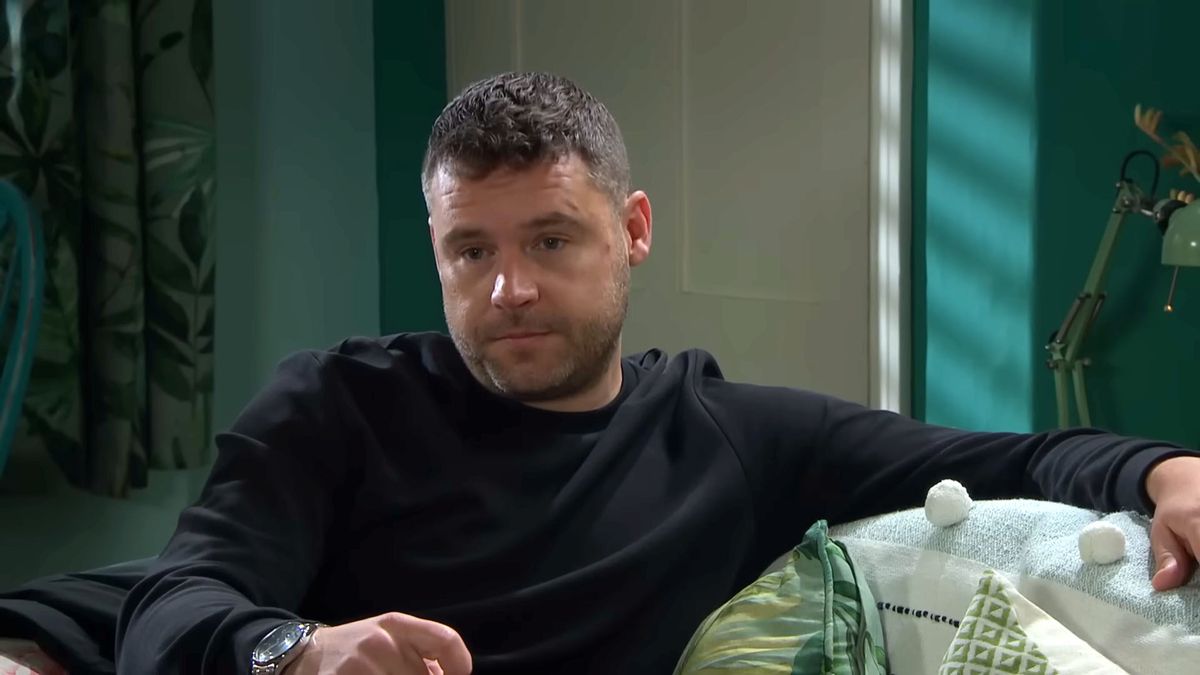
Emmerdale’s Danny Miller flooded with support after rare photo alongside famous dad

Emmerdale star Danny Miller marked Christmas with a special photo showing three generations of his family

Emmerdale legend Danny Miller has delighted fans after sharing a photo alongside his lookalike father, Vince.

Danny, 34, first graced the ITV soap as Aaron Dingle in 2008, but after a five-year stint, he left the soap to pursue other opportunities, including a regular role in the crime drama Scott and Bailey.

However, in 2014, he made the decision to return to Emmerdale, only to take another break seven years later. During this time, he joined the line-up on I’m A Celebrity and was crowned the winner.

In 2023, it was confirmed that Danny would reprise his role as Aaron once again. Away from the dramatic scenes of the Yorkshire Dales, actor Danny Miller enjoys a more tranquil family life.

In the celebrity circuit, Danny isn’t the only one grabbing headlines, as he comes from a lineage of stardom with his dad, Vince Miller, hailed as an entertainment titan.

Warmly referred to as the ‘king of compere’, Vince, who is also a comedian and singer, has carved his niche as the face of the VIP scene at Manchester United, interestingly enough, through Danny’s unwavering support for arch-rivals Liverpool FC.

At 91, Vince can look back on a dazzling showbiz stint that lasted 65 years, during which he mingled with luminaries like Johnny Mathis and Shirley Bassey and even gave a heartfelt eulogy at comedian Bernard Manning’s funeral.

**For the latest showbiz, TV, movie and streaming news, go to the new **Everything Gossip** website**

A defining juncture came when Vince decided to hang up his microphone. Speaking to the Manchester Evening News at 82, Vince declared: “I have no regrets about it. The time is now to retire while you’re on top. You don’t want people saying ‘not him again’.”

Taking to Instagram, dad-of-three Danny shared a photo alongside his dad Vince as they celebrated Christmas as a family.

In one photo, Danny can be seen with his arm around Vince as they sit in front of a Christmas tree. In another sweet snap, Danny poses alongside two of his children and his dad, all striking a smile for the camera.

Danny sweetly captioned the post: “Christmas complete. Three generations of The Miller boys.”

Fans and friends of the soap star have flooded the comments section with their well-wishes, with Emmerdale’s Billy Fletcher star Jay Kontzle writing: “Beautiful mate, merry Christmas.”

A second person wrote: “Aww, precious time, lovely to see your dad smiling and happy”, while a third chimed in: “Heart melting.”

“This is so precious, you look so much like your dad Danny”, pointed out one fan as another echoed: “Danny you have the same smile as your Dad. You can see the pride in his face, and you’re still his little boy.”

Emmerdale airs weekdays on ITV and ITVX

Source link

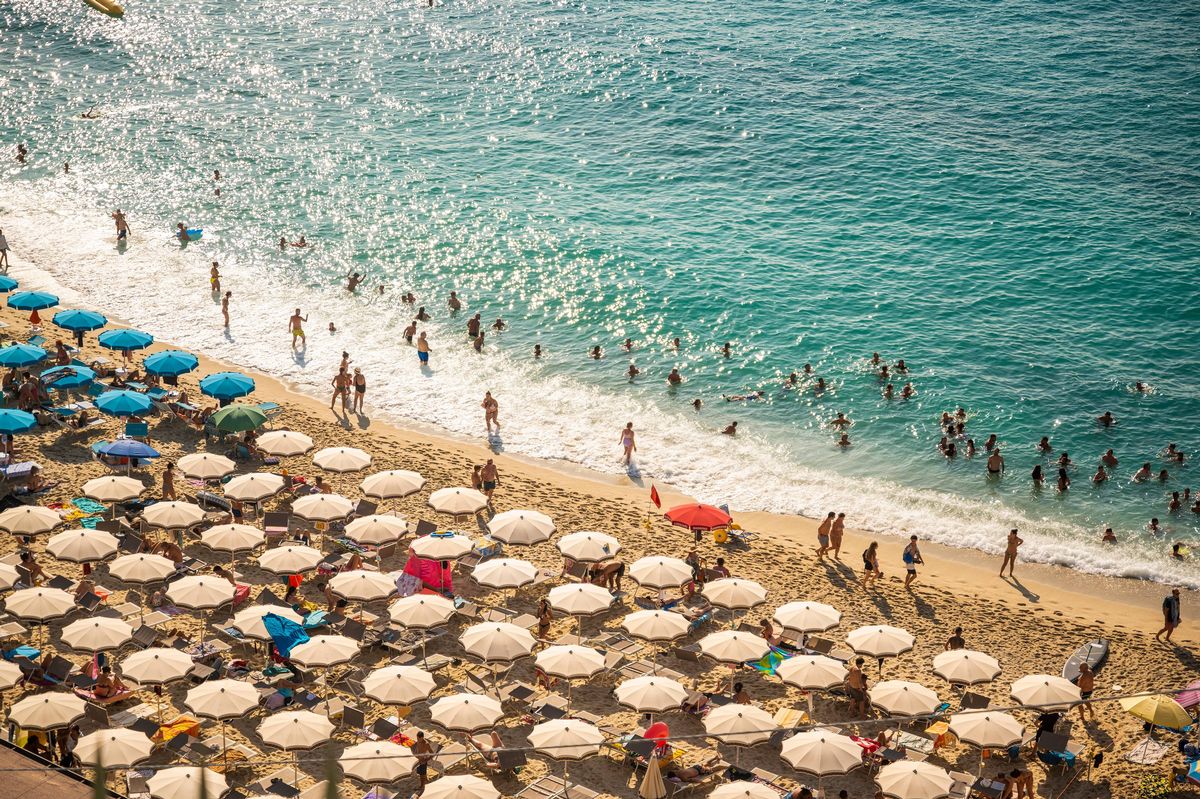
The VERY easy Spanish holiday trick for getting free shots and the rip-off restaurants tourists should avoid

HAVE you ever holidayed in Spain and wondered if you’re saying the right thing or if there’s an easy way to order at a restaurant? One language expert has the answers.

James Smith, who has been teaching Spanish for years and now runs Learn Spanish with James, has revealed to Sun Travel his top tips from ordering food to the lesser-known spots to visit in Spain.

James Smith has been studying Spanish for years and now runs Learn Spanish with JamesCredit: James Smith
Here are some of his top tips – like why you shouldn’t order tapas as your main mealCredit: Alamy

When it comes to speaking Spanish, James says while you might not be an expert (yet), there’s no harm in trying.

Talking to Sun Travel, James said: “People make mistakes in English everyday, but when it’s in a foreign language they worry about sounding silly.

“In Spain they’d just be happy if you try, and you’ll get much better service if you’ve made an effort to speak Spanish with them rather than the expectation for them to speak English – that’s when you start getting free shots to the table.”

Here’s one way to do this in a restaurant, rather than just speaking English more loudly and slowly.

STREET SMARTS

I visit New York 6 times a year – my expert budget guide including £1 pizzas


SNOW WAY

All the best Xmas days out under £10 including FREE ice skating & Santa’s grotto

James explained: “In order to sound quite colloquial, in Spain, you can say ‘me das’ or ‘me pones’ followed by what you want to ask for which is a very Spanish thing.

“It means, ‘can you get me this?’ – in English we’d say ‘can I have?’. On its own if you say it without the context of food it would mean ‘you turn me on’. But you’ll hear it all the time in restaurants and it doesn’t mean that.

“So for example you can say, ‘me pones un café con leche por favor’ – and always remember to say thank you afterwards.”

When it comes to pronouncing words in Spanish, other top tips include pronouncing ‘ll’ like ‘y’ – which will come in handy the next time you order a tasty paella.

Another example is that a ‘z’ is actually a ‘th’ sound and so is the letter ‘c’.

When it comes to holidaying in Spain, most Brits will head to restaurants for fresh seafood and patatas bravas – but there’s one Spanish classic that James warns against ordering a lot of.

A lesser-visited city is Cuenca where you’ll find the Hanging Houses built into cliffsideCredit: Alamy

James explained: “I would say anywhere you’re going where you have tapas as your main meal, you’re probably going to get ripped off.”

He continued: “You’re meant to have small tapa with a drink – it originates from people trying to stop flies in the alcohol, so they’d give you a ‘tapa’ which means lid in Spanish and put it on top of their glass.

“It’s only meant to be a small dish but now people have jumped on that and charge £15 for tapas when in reality, it was a freebie with a drink. I never have it as a main meal.”

Another sign of an inauthentic restaurant, according to James, is if there are pictures on the menu – or you see Spanish cuisine alongside egg and chips.

If you want some good recommendations but aren’t sure where to find them, then James says just ask.

He told us: “I always ask the hotel staff for a place to go and eat where tourists usually don’t go and they’re more than happy to help you.”

James says Cadiz has some of the best beaches in SpainCredit: Alamy

Most Brits head to the likes of Barcelona and Madrid, but aside from the major cities, where would James suggest to visit?

He said: “The Hanging Houses of Cuenca, which are just outside of Madrid. I would say like always look for these kind of day trips when you visit like the main cities.

“Toledo is another one, in the south of Spain, and Cádiz has the best beaches in Spain.”

James has been learning Spanish since he was a child, having taken an interest playing football in rural Spain.

He then studied the language at university before heading off to Buenos Aires and Costa Rica.

Now, he runs Learn Spanish with James suitable for beginners, intermediate and advanced speakers – by signing up you can get a free email series with tips on how to learn the language.

Check out Learn Spanish with James and you can also keep up with James on TikTok.

Plus, one travel writer who’s visited 100 countries always goes back to these Spanish islands…

Robin McKelvie has travelled all over the world but reveals the place he goes back to the most are these Spanish islands…

“Despite having travelled to more than 100 countries in my time as a travel writer, the place I always return to is much closer to home. Having first visited the Canary Islands in Spain back in 1998, I’ve been back at least once a year on holiday.

“In Tenerife alone you can party at the world’s second biggest carnival, bash around the world’s best waterpark (Siam Park) and climb a mountain almost three times higher than Britain’s Ben Nevis.

La Graciosa could be on a different planet. There are no tarmac roads, nevermind an airport.

“It’s a brilliant escape from the modern world, hiking and
cycling around rough tracks, up volcanoes and out to windswept beaches.

Lanzarote and Gran Canaria boast Michelin star restaurants and foodies flock to Tenerife to dine at eight Michelin star restaurants.

“Tenerife boasts more Michelin stars than Wales and the Royal Hideaway Corales Resort has more stars than any hotel in Spain with four!

“And Tenerife just keeps winning stars. This year Il Bocconcino snared one. As a Scot I know when hiking is brilliant. Tenerife has massive variety, as does Gran Canaria, but my top tip is La Palma.

“I hiked around what the Canarios call ‘La Isla Bonita’ with Ramble
Worldwide earlier this year. It was a joy soaring with our friendly group of largely British retirees up volcanoes, through thick forests and down to the cobalt Atlantic.”

For more on Spain, one presenter from A Place In The Sun moved to the Costa del Sol where she spends evenings on the beach – but there’s a catch.

Plus, check out the 15 holiday habits Brits need to ditch from dodgy sangrias to pints of lager.

James has top Spanish tips from where to visit to why you shouldn’t order tapasCredit: James Smith


Source link

Six winter sun destinations with 25C temperatures for Brits this January

A travel expert has shared six winter sun destinations where it will be 25C and above.

While the UK might be in the grip of a cold snap, there’s still plenty of sunshine to be found elsewhere. If you’re not one for the chilly and dark seasons in the UK, then there are numerous other destinations to consider.

Maria Hughes, a travel expert at Good To Go Travel Insurance, has revealed to the Express her top six winter sun spots that holidaymakers should check out.

From vibrant cities to expansive beaches and lush rainforests, there’s a world of options – and these locations all boast temperatures in the mid to high 20s, ideal for soaking up some rays.

6. Valletta, Malta

This majestic walled city is a popular holiday destination for Brits because it’s just a few short hours away. Not only does Malta have some gorgeous beaches, but it also has winding streets filled with cafes and bars, perfect for exploring.

5. Cape Town, South Africa

South Africa is in full summer splendour, and the views are spectacular. Dine alfresco at the foot of the imposing Table Mountain, or take a cable car up to it and see the landscape spread out beneath you. There are white sand beaches and a bustling harbour to sit at and watch the boats sail to and from.

4. Punta Cana, Dominican Republic

White sand, turquoise seas and a gentle breeze rustling the palms as you sit back and relax. The Dominican Republic is a stunning place to explore, and this is no different. This resort town is the perfect place to kick back and enjoy a taste of luxury as the warm, balmy weather sweeps over you.

3. Tenerife, Canary Islands

Although this island is not as hot as some of the other places on the list, it’s still a popular winter sun destination for Brits because it’s so easy to get to. Tenerife has jaw-dropping black sand beaches, volcanoes and a bustling Old Town that makes for a fabulous day out.

2. Sri Lanka

January marks the beginning of Sri Lanka’s dry season, so it’s the perfect time to visit for the best weather. You can explore the misty rainforest highlands and drink tea, or just laze around on the beaches and relax.

1. Barbados, Caribbean

Just as in Sri Lanka, January in Barbados is the dry season. This island paradise is famous for its laid-back lifestyle, delicious food and beachfront resorts. You can swim with turtles, explore the coast by boat and experience true Caribbean hospitality.

Source link

December Hurdle: Lossiemouth takes final Grade One win at Leopardstown

Lossiemouth took the final Grade One win of the year after holding off 2024 winner Brighterdaysahead in Monday’s December Hurdle at Leopardstown.

The pre-race favourite (4-6) produced the goods in what was an exciting finish as jockey Paul Townend delivered the victory for trainer Willie Mullins.

It was the first race of the season for Gordon Elliott’s Brighterdaysahead and the second favourite (5-2) made a late gallop with Jack Kennedy on board, but was unable to overhaul the favourite at the line.

“She was brilliant,” Townend said of the winner, speaking to RTE Sport.

“I hoped she’d get me out of trouble, like she did.

“I was anxious when Patrick [Mullins on Anzadam] flew over a couple of hurdles to go past us. It probably got us racing a bit sooner than if he hadn’t gone by me, but I wanted to mark him and cover all bases and make the rest of them dance to my tune as much as we could.”

Casheldale Lad set the early pace with Lossiemouth on the shoulder, while Brighterdaysahead stayed on the outside along the back straight.

Anzadam, with Patrick Mullins in the saddle, made a move to open a brief lead, yet it was Lossiemouth who roared back superbly and surged ahead on the home straight.

Brighterdaysahead rose to the challenge, narrowing the gap but had to settle for second with Casheldale Lad (16-1) pipping Anzadam for third.

Source link

2025: Trump’s year of ’emergency’, ‘invasion’ and ‘narcoterrorism’ | Donald Trump News

Washington, DC – For United States President Donald Trump, 2025 was a year of crisis.

Roaring into office on January 20 on the heels of a raucous political comeback, the president’s own telling describes a series of actions that have been swift and stark.

Recommended Stories

list of 3 itemsend of list

To name a few, he has envisioned rooting out a migrant “invasion” that includes staunching legal immigrants, and, potentially, targeting US citizens; he has touted a hard reset of uneven trade deals that pose “an unusual and extraordinary threat to the national security”; and, in the final months of the year, he has gone on the military offensive against “narcoterrorists” that he claims seek to topple the US through illicit drugs, possibly used as “weapons of mass destruction”.

For legal observers, Trump’s approach has been a yet-undecided stress test on presidential power, cranked by the gears of broadly interpreted emergency statutes and untrammelled executive authority.

Decisions by the court, lawmakers and voters in the 2026 midterm elections could determine how that strategy resonates or is restrained.

“The use or abuse of emergency powers is only one corner of a larger picture,” Frank Bowman, professor emeritus of law at the University of Missouri, told Al Jazeera.

“In many cases, the administration is simply doing stuff that certainly any pre-existing understandings of executive authority would have said you cannot do,” he said.

Emergency powers and ‘national security’

The US Constitution, unlike many countries, has no catch-all emergency power authorisation for presidents.

In fact, the US Supreme Court ruled in 1952 that presidents have no such implied authorities, explained David Driesen, professor emeritus at Syracuse University College of Law. Still, Congress has passed “numerous statutes that grant the president limited emergency powers under limited circumstances to do specific things”.

Nearly every modern president has used emergency powers with varying degrees of gusto, with Congress and the Supreme Court historically wary of reining in those actions.

Like many US presidents, Trump has also used broad and ambiguous national security claims to justify expanding his reach.

But several factors have set Trump’s second term apart, most notably the lack of distinct inciting events for many of the powers claimed, Driesen said.

“I’ve never seen a president invoke emergency powers to justify practically all of this policy agenda,” he told Al Jazeera, “and I’ve also never seen a president use them to seize powers that really are not in the statutes at all.”

Put simply, he added, “to Trump, everything is an emergency”.

The tone was set on day one, with Trump’s broad executive order declaring that irregular crossings at the southern border meant nothing less than “America’s sovereignty is under attack”. The order has been used to indefinitely suspend US asylum obligations, surge forces to the border, and seize federal land.

The same day, Trump declared a national emergency under the International Emergency Economic Powers Act (IEEPA) to designate Tren de Aragua (TdA) and La Mara Salvatrucha (MS-13) as “foreign terrorist organizations”, posing a threat to the “national security, foreign policy, and economy” of the US.

The administration has, in part, relied on and expanded that order in efforts to circumvent due process in its mass deportation push and to rhetorically justify a militaristic approach to Latin America.

Simultaneously, Trump also declared a wide-ranging energy emergency on his first day in office, laying the groundwork to bypass environmental regulations.

To be sure, as Bowman explained, Trump’s use of official emergency statutes has been only a piece of the puzzle, combined with his broad interpretation of constitutionally mandated power to reshape the government in ways big and small.

That has included cleaving civil servants from congressionally created government departments via the Department of Government Efficiency (DOGE), trying to fire heads of independent agencies, renaming institutions – possibly illegally – in his likeness, and allegedly bypassing required approvals to physically transform the White House.

But the invocation of emergency statutes has remained a backbone of his second term. Trump invoked an emergency to justify sanctioning the International Criminal Court (ICC) for its investigations into Israeli war crimes in Gaza.

He used the “emergency” of fentanyl smuggling to justify tariffs on Canada, Mexico and China, later unilaterally labelling the drug “weapons of mass destruction”.

In April, in one of his most challenged uses of an emergency authority, Trump cited an emergency statute to impose sweeping reciprocal tariffs against nearly all US trading partners.

A ‘mixed picture’

In review, 2025 has shown virtually no willingness from Congress, where both chambers remain narrowly controlled by Trump’s Republican Party, to challenge the president.

Rulings from lower federal courts, meanwhile, have offered a “mixed picture”, according to the University of Missouri’s Bowman, while the country’s top court has left wider questions unanswered.

Bowman noted the six conservative members of the nine-judge panel ascribe to varying degrees to the “unitary executive theory”, which argues the drafters of the constitution envisioned a strong consolidation of presidential power.

“On the one hand, Trump is obviously willing to declare emergencies where no rational person would really believe they exist,” Bowman said.

“On the other hand, at least the lower courts have pushed back, but it remains to be seen whether the Supreme Court will back them up.”

For example, Trump has been temporarily allowed to continue the deployment of National Guard troops in Washington, DC, a federal district where he declared a “crime emergency” in August. City officials have said the characterisation defies facts on the ground.

Despite claiming similar overlapping crime and immigration crises in liberal-led cities in states across the country, Trump has had far less success. Lower courts have limited deployments of the National Guard in California, Illinois, and Oregon.

Trump has also floated, but not yet invoked, the Insurrection Act, another law in the crisis portfolio dating back to 1792 that allows the president to deploy the military for domestic law enforcement to “suppress insurrections and repel invasions”.

A judicial response to the tactics behind Trump’s deportation drive has also been mixed.

Trump’s use of the Alien Enemies Act – a 1798 law designed to quickly expel foreign nationals during times of war – to swiftly deport undocumented individuals without due process has been constrained, but allowed to proceed by the Supreme Court with limited due process protections.

In one of the most-watched cases on the docket, the Supreme Court is expected to make a ruling when it returns to session in January on the legal justification of Trump’s reciprocal tariffs.

A lower court has previously ruled that Trump deployed the emergency statute illegally. Some conservative justices on the top court have also expressed wariness over the president’s claim.

The panel has appeared more amenable in a landmark case determining whether Trump can fire heads of independent agencies, also set to be decided in the new year.

The spectre of war

When it comes to unilaterally making war, Trump has been bounding down a well-trodden path of misused presidential power, according to Matt Duss, the executive vice president of the Washington, DC-based Center for International Policy.

The end of the year has been marked by US military strikes on alleged drug smuggling boats from Venezuela, decried by rights groups as extrajudicial killings.

The administration has claimed, without evidence, that over 100 people killed had sought to destabilise the US by flooding it with drugs. Trump has made a similar claim about the Nicolas Maduro-led government in Venezuela, as he has continued to rattle the sabre of land strikes.

The actions have been accompanied by a pugilistic rebranding of the Department of Defense as the Department of War, a reframing of criminal Latin American cartels as so-called “narcoterrorists” and declaring a new drive to bring the Western Hemisphere firmly under the US sphere of influence.

“We have to understand this in the context of multiple administrations of both parties abusing executive authority to essentially go to war,” said Duss, who explained that the practice accelerated in the so-called “global war on terror” post-September 11, 2001 attacks.

Most recently, Republicans – and a handful of Democrats – in the House of Representatives voted down two separate war powers resolutions that would require congressional approval for future strikes on alleged drug boats or on Venezuelan territory.

The vote, Duss said, underscored “Trump’s near-total control of the Republican Party despite the fact that he is blatantly violating his own campaign promises to end wars, rather than to start them”.

Public opinion

Trump’s control over his party and his influence writ-large over the country will largely be tested in next year’s midterm elections. The vote will determine control of the House and the Senate.

A slate of polls has indicated at least some degree of wariness in Trump’s use of presidential power.

In particular, a Quinnipiac poll released in mid-December found 54 percent of voters think Trump is going too far in his authority claims, while 37 percent think he is handling the role correctly. Another 7 percent believe Trump should go further in using the power of the presidency.

Another Politico poll in November found that 53 percent of US residents think Trump has too much power, while the president has seen an overall slump in his approval ratings since taking office.

To be sure, a panoply of factors determine US elections, and it remains unclear if voters were more likely to respond to the results of Trump’s approach to the presidency, or to the approach itself.

“Does the average person really think much about any of the theoretical bases for the things Trump is doing? And frankly, would the average person care very much if the results were, in the short term, results of which they approved?” University of Missouri’s Bowman mused.

“I don’t know the answer … How all this is perceived across the country, and what’s going to happen next, is anybody’s guess.”


Source link

Portugal’s ‘secret kingdom’ village is the perfect holiday spot

This 800-year-old village is a must-see in the New Year.

Portugal boasts numerous attractions that draw visitors from across the globe. Lisbon and Porto remain incredibly sought-after destinations, with travellers flocking to wander their charming cobbled lanes and savour exceptional cuisine.

Yet venture beyond these hotspots and you’ll discover a corner of Portugal that remains largely unexplored.

This settlement represents a true hidden treasure, though those who’ve discovered it regard it as amongst the nation’s finest spots to visit.

Indeed, Castelo Novo in Portugal received international acclaim from the United Nations’ World Tourism Organization (UNWTO).

The UNWTO assesses settlements using rigorous standards, covering environmental responsibility, prospects for locals, safety measures, plus preservation of cultural and natural heritage.

And Castelo Novo in Portugal secured recognition amongst the globe’s top tourism villages, reports the Express.

This historic community, founded eight hundred years ago, contains one of the area’s most important archaeological locations. The Roman Baths of Quinta do Ervedal represent the main attraction drawing travellers to Castelo Novo.

UNWTO observed: “The oldest mention of Castelo Novo, then called Alpreada, dates back to around 1202 AD. To protect his kingdom against any potential threats, King Dinis rebuilt the village castle adopting typical Gothic features and commissioned several Medieval-style buildings.”

The settlement has also earned praise for its groundbreaking environmental initiatives, becoming Portugal’s first location to reach total carbon neutrality. Castelo Novo offers five electric vehicles to ferry visitors from nearby train stations.

One traveller who visited the village shared: “A secret kingdom. Located in the heart of the Beira Baixa Region, once the capital of Portugal, it is a picturesque stone village that looks out onto the Garduna mountains. It has a terrific visitor centre.”

Another holidaymaker noted: “The castle on top of the hill is a gem. Once at the top the view of the surrounding area is superb even on a grey day.”

Visitors can also learn about the traditional grape-treading methods used by former residents and admire the historic manor houses in the settlement.

Those touring the area can follow the Miller’s Way to see the windmills that were once a crucial part of village life.

The journey to Castelo Novo from Lisbon takes roughly three-and-a-half hours by train or two-and-a-half by car. The village is also conveniently located near Coimbra, a charming riverside city in Portugal with a medieval Old Town.

The drive is just under two hours, making Castelo Novo an easy day trip from the city.

Source link

Protests, strikes after Iran’s economic situation rapidly deteriorates | Israel-Iran conflict News

Iranians are further squeezed every day amid a tanking economy, an energy crisis, water bankruptcy and lethal pollution.

Several protests have erupted in downtown Tehran after business owners closed down their shops in reaction to a free-falling national currency, and no improvement appears in sight amid multiple ongoing crises.

Shopkeepers near two major tech and mobile phone shopping centres in the capital’s Jomhouri area closed their businesses and chanted slogans on Sunday, before more incidents were recorded on Monday afternoon, this time with other people appearing to participate.

Recommended Stories

list of 3 itemsend of list

Videos circulating on social media showed that there were more gatherings in the same area, as well as other nearby neighbourhoods in downtown Tehran. “Don’t be afraid, we are together,” demonstrators chanted.

There was a heavy deployment of anti-riot personnel in full gear on the streets, with multiple videos showing that tear gas was deployed and people were forced to disperse.

Many shops were closed down by owners in and around Tehran’s Grand Bazaar as well, with some footage showing business owners asking others to do the same.

State media outlets also acknowledged the protests, but quickly reacted to emphasise that the shopkeepers are only concerned about economic conditions and have no qualms with the theocratic establishment that has been ruling the country since a 1979 revolution that ousted the United States-backed shah of Iran.

The government’s IRNA news agency claimed that vendors selling mobile phones were disgruntled after their businesses were threatened by the unchecked depreciation of the Iranian currency, the rial.

The rial registered yet another all-time record low of over 1.42 million per US dollar on Monday before regaining some ground.

But the currency is not the only problem. For years, Iran has also been dealing with an exacerbating energy crisis, which has periodically contributed to deadly air pollution that claims tens of thousands of lives each year.

Most dams feeding Tehran and a large number of major cities across Iran continue to remain at near-empty levels amid a water crisis. Iran also has one of the most closed-off internet landscapes in the world.

The continuing decline of purchasing power for 90 million Iranians comes amid increasing pressure from the US, Israel and their European allies over Iran’s nuclear programme.

Israel and the US attacked Iran in June during a 12-day war that killed more than 1,000 people, including civilians, dozens of top-ranking military and intelligence commanders, and nuclear scientists.

The attacks also significantly damaged or destroyed most of Iran’s nuclear facilities, which were under the supervision of the International Atomic Energy Agency (IAEA). The watchdog has since been denied entry to the bombed sites, with no diplomatic breakthrough in sight as the West applies more pressure.

Iran last saw nationwide protests in 2022 and 2023, with many thousands pouring into streets across the country after the death in police custody of 22-year-old Mahsa Amini for alleged non-compliance with strict Islamic laws regarding headscarves.

Hundreds of people were killed, over 20,000 people were arrested, and several people were executed in connection with the protests before they subsided. Authorities blamed foreign influence and “rioters” trying to destabilise the country, as they did with previous rounds of protests.

In parliament on Sunday to defend the controversial budget bill his administration has presented, President Masoud Pezeshkian painted a grim picture of the situation.

His highly contractionary budget bill proposes a 20 percent increase in wages while inflation stands at around 50 percent, consistently one of the highest in the world over the past several years. Taxes are slated to increase by 62 percent.

“They tell me you’re taxing too much, and they’re saying you must increase wages,” Pezeshkian told lawmakers. “Well, somebody tell me, where do I get the money from?”

Source link

Malcolm in the Middle Life’s Still Unfair release date announced in first look

Here’s where you’ll be able to stream the new episodes of the Malcolm in the Middle reboot.

A new trailer has given fans the first look at the Malcolm in the Middle sequel series, confirming the new show’s release date.

Titled Malcolm in the Middle: Life’s Still Unfair, the special four-episode event will see the majority of the cast reunite almost two decades later. The original series lasted for seven seasons between 2000 and 2006.

Over the years, the series followed Malcolm, a bright and intelligent boy, who had to put up with the rest of his dysfunctional family, including his quirky parents, and three older brothers. All while dealing with the troubles of being the middle child and a teenager.

Frankie Muniz, whose acting career began with the series, is set to reprise his role as Malcolm. Alongside him will be Justin Berfield and Christopher Masterson who are also returning as two of his brothers, Reece and Francis respectively.

Bryan Cranston, who went on to star in hit drama Breaking Bad once the show ended will also make his comeback as father Hal, with Jane Kaczmarek returning as strict matriarch Lois.

The first trailer has confirmed a number of other familiar faces will be returning to our screens for the reboot. This includes, Gary Anthony Williams as Abe Kenarban, a friend of Hal’s and father of Malcolm’s mate Stevie. There’s also Emy Coligado as Francis’ wife Piama.

One original cast member who is not returning is former child actor Erik Per Sullivan, who played Malcolm’s younger sibling Dewey. The star has since quit acting and is now studying for a masters degree at Harvard. His character has since been recast.

According to the synopsis for the sequel series, Malcom has successfully been shielding himself from his family for over a decade. However, he along with his own wife and daughter end up dragged back into their orbit when Hal and Lois demand his presence at their 40th anniversary party. Judging by the short clips shown in the trailer, very little is set to go as planned leading up to the big event.

The original series is held in high regard by those who remember it fondly, with an impressive 90% fan score on Rotten Tomatoes. Indeed some mention how they still binge watch the older show regularly and so the sequel will need to meet high expectations.

Fans did not take long to share their thoughts about the trailer, which also confirmed the release date of April 16. All episodes will be made available to stream on Disney Plus, via the Hulu brand.

One fan commented: “One of my most rewatched shows. I hope there’s more seasons or something after Life’s Still Unfair.”

Another added: “It’s good that everyone is still the same character personality wise, I thought they’d change the tone because they’re all older but looks like the original.”

“Used to watch the original all the time with my own dysfunctional family! Honestly it’s nice seeing everyone doing their thing again,” someone else replied, while one fan hoped: “Please be good please be good. The original creators are involved so I have faith!”

And there were some doubts, as a fan said: “Doesn’t look to be shot in the same way as the rest of the series. That could go against this… Hopefully the writing is just as good though.”

Malcolm In The Middle Life’s Still Unfair is streaming on Disney+ from April 16. For the latest showbiz, TV, movie and streaming news, go to the new ** Everything Gossip ** website.

Source link

The ferry route connecting Scotland to Europe that could finally become a reality in 2026

SCOTLAND could soon have its own direct link to Europe via ferry.

Plans have been in the works for years to connect Scotland to northern France and it’s set to become a reality in 2026.

The proposed route will connect a town in Fife, Scotland to the city of DunkirkCredit: Alamy
The route to France would be one of the longest in Europe taking around 20 hoursCredit: Alamy

Called ‘Project Brave’, the ferry route was first proposed in 2022 and was originally set to launch in spring 2025, but has faced delays due to a lack of funding.

The route is now being actively pursued once more and could be reintroduced as early as 2026 with the funding issue having now been resolved.

If it goes ahead, the service will link Rosyth, a town in Fife to Dunkirk in France.

If it goes ahead, the route would run three times a week and take 20 hours in total.

FARE DO

15 things to do NOW to save hundreds on your 2026 summer holiday


SUSSED OUT

Sun readers’ fave family spots in Sussex – top-rated beaches to pirate festivals

Speaking in Westminster in November 2024, Scottish MP Graeme Downie proposed that £3 million in funding was needed to start up the service.

He said: “It is estimated the direct ferry link would initially carry 51,000 passengers a year, rising to 79,000, bringing an additional £11.5 million of spend to the Scottish economy.”

The new proposed route would become one of the longest ferry journeys in Europe.

But that title currently belongs to the service between Portsmouth to Bilbao in Spain, which lasts between 27 and 30 hours.

In the past, Scotland had a similar service between Rosyth and Zeebrugge which Belgium previously connected Scotland to Europe.

The overnight crossing took 17 hours and operated four times per week.

DFDS offers three routes from the UK to France – but these are from Dover and NewhavenCredit: Alamy

The route was discontinued in 2008, following six years of service.

It was reintroduced in 2009, but was pulled again in 2010 because of insufficient demand.

DFDS operates three main routes from the UK to France.

These are from Dover to Calais, Dover to Dunkirk and Newhaven to Dieppe.

Currently, there are no direct passenger ferries from Scotland to mainland Europe.

Other routes DFDS offers include those to the Channel Islands from southern England and the northernmost major ferry route from the UK from Newcastle to Amsterdam.

Another ferry route connects Essex to the Netherlands…

Elsewhere in the UK, Harwich, a seaside town in Essex, already has a direct ferry service to Europe.

Brits looking to head to the Netherlands will be excited to know about Harwich’s ferry link to the Hook of Holland.

With a journey time of roughly seven hours, many tourists opt for the sleeper service so they can arrive in Holland early in the morning.

From the Dutch ferry port, Rotterdam is 40 minutes away by car, while a drive to Amsterdam takes just over an hour.

Meanwhile, a new ferry route to ‘Maldives-style’ UK island loved by royals was scrapped last year.

Plus, find out if taking a ferry could save you money on your next holiday.

DFDS is set to launch a route between Scotland and France in the New YearCredit: Alamy

Source link

Dividend Recapitalization Is On The Rise

Flush markets, easing rates, and shifting tax incentives are driving a surge in dividend recapitalizations—an increasingly popular way for companies and private equity firms to return capital, even as legal scrutiny intensifies.

As the 2025 financial year approaches its end, more companies announce dividend distributions and dividend recapitalization (also known as dividend recap) as part of their strategies to return value to investors, improve market performance, and capitalize on favorable tax and compliance conditions that may change in the coming years.

“By mid-2025, the average dividend recapitalization had reached $350 million, with a total of $21 billion distributed through this method—a significant jump from the year before,” wrote Cyril Demaria-Bengochea, Head of Private Markets Strategy at Julius Bär, in a company blog post.

Several factors underpin the recent expansion of dividend recapitalization in global markets.

First, very strong performance in financial markets over the last two years has added significant cash to many public companies. As some predict a decline in global markets, the timing calls for returning value to investors through dividends.

Second, companies face significant pressure from existing investors to act. Private equity funds, more specifically, use the dividend recap path to cost-effectively distribute capital to investors where other potential liquidity events are down.

Also, the recent moderate decline in interest rates enabled funds to refinance their portfolio companies, taking cheaper loans to finance dividend distributions.

Finally, the current tax and regulatory environment encouraged companies to distribute such dividends at lower tax rates than on income. This policy may change in the coming years. However, the Big Beautiful Bill Act introduced more favorable tax provisions for investors, especially regarding their business taxable income and related R&D expenses.

The dividend recapitalization trend has been across the board so far, covering all sectors and geographies. DarkTrace, a British cybersecurity company, executed its dividend recap plan. Power equipment company Aggreko offered debt to partially finance the payment to its shareholders earlier this year.

Yet, it is important to note that dividend recapitalization may raise legal and other concerns. The trend could also lead to a growing demand for solvency opinions in this space. Almost all such transactions involve banks specializing in fairness and solvency opinions, designed to show that the companies are solvent and that dividend distributions do not harm the existing shareholders’ pool.

Source link

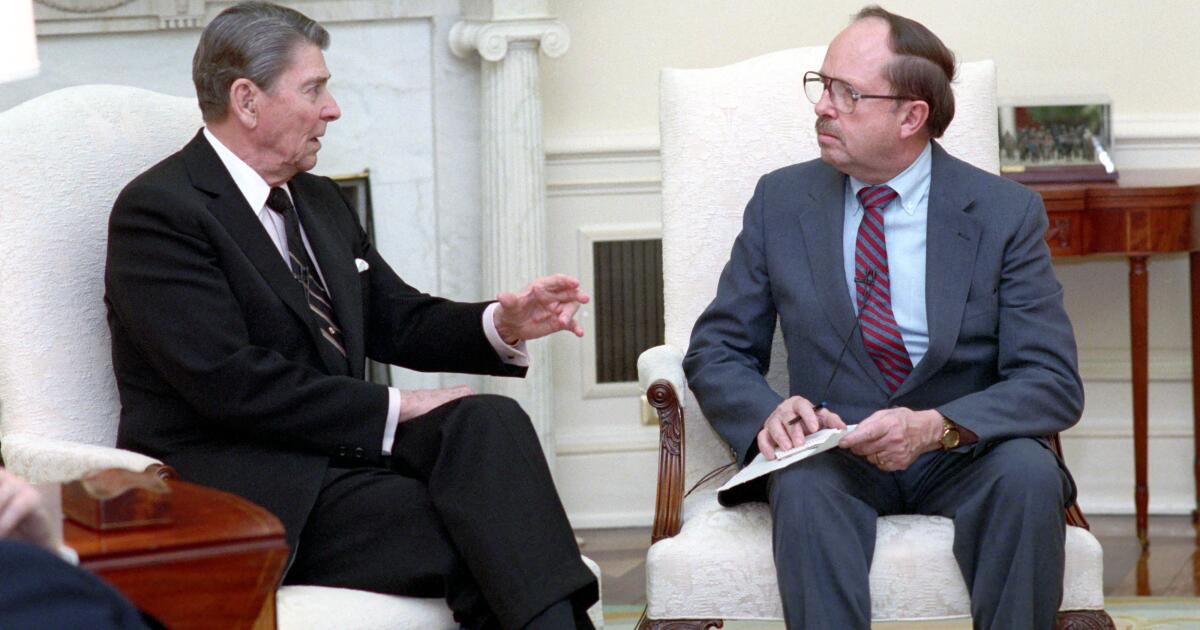
Column: Reagan biographer Lou Cannon always played it straight and true

You are reading our Politics newsletter

Sign up to get an inside guide to the movers, shakers and lawmakers who shape the Golden State.

By continuing, you agree to our Terms of Service and our Privacy Policy.

Lou Cannon was a good friend and a daunting competitor. And he was a national treasure.

The retired newspaper reporter and Ronald Reagan biographer died Dec. 19 at age 92 in hometown Santa Barbara from complications of a stroke.

I use the words “national treasure” hesitantly because they smack of trite hyperbole. But they truly fit.

That’s because it was Cannon who brought to light through several Reagan books innumerable broad details of the actor-turned-politician’s important and often controversial actions as America’s 40th president and California’s 33rd governor.

Bookshelves are crammed with Reagan tomes. But no author has been so thorough on a sweeping scale as Cannon. That’s because he put in the time and did the hard work of sifting through records and conducting hundreds of interviews, then painstakingly explaining it all in very readable nongovernmentese.

Cannon also covered Reagan up close as a reporter during the early years of his governorship and both his terms as president.

Reagan once asked Cannon why he was embarking on yet another book about him. “I’m going to do it until I get it right,” the writer replied, only half-jokingly, according to Cannon’s son, longtime journalist Carl Cannon.

In all, Lou Cannon authored five books on Reagan‘s tenures as governor and president.

That’s an invaluable contribution to historians and contemporary America’s sense of this oft-misunderstood and underestimated world leader.

But that’s not what mainly prompted me to write this column. I wanted to point out Cannon’s core strength. And that was his dedication to strict nonpartisanship in writing, whether it be straight news stories for the Washington Post, syndicated columns or his Reagan biographies.

I knew Cannon for 60 years, competed against him covering Reagan for at least 20 and we became friends very early based on professional respect. In none of my countless conversations with him did I ever learn whether he leaned right or left. He registered to vote as an “independent,” as do many of us political journalists.

Cannon was the type of journalist that millions of Americans — particularly conservative Republicans and MAGA loyalists — claim is rare today: An unbiased reporter who doesn’t slant stories toward one side or the other, especially left.

Actually, most straight news reporters follow that nonpartisan credo or they leave the business. Columnists? We’re supposed to be opinionated. But for some, their opinions are too often rooted more in predetermined bias than in objective facts. But that has always been true, even in the so-called “good ol’ days.”

Cannon’s sole goal was to report the news accurately with analysis and, if possible, beat his competitors to the punch. He beat us plenty, I hate to admit.

I vividly remember one such beating:

At the 1980 Republican National Convention in Detroit, Cannon scooped everyone for a full news cycle on Reagan selecting former campaign rival George Bush as his vice presidential running mate. Still pounding in my ears are the loud whoops and cheers by Cannon’s colleagues as he walked into the Post working area — next to the Los Angeles Times quarters — after Reagan formally announced Bush’s selection. It was deflating.

News sources readily opened up to Cannon, who was intense but always wore a slight smile.

I asked former Reagan speechwriter and Republican strategist Ken Khachigian what Cannon’s secret was.

“You’d get a fair shot from him,” Khachigian says. “He’d always be straight. He just wanted to get information mostly and find out what was going on.

“He had a way of talking to people that made them comfortable and he’d get a lot out of them. He wasn’t aggressive. He had a soft personality, one of his benefits. He’d put people at ease, a big advantage.”

His son, Carl Cannon, says: “If he’d been in politics, he’d have been a Democrat. But he didn’t go into politics. He went into journalism. He wasn’t partisan. He was a reporter who wanted to know what happened and why.”

Cannon began covering the state Capitol in 1965 for the San Jose Mercury News and became friends with Jud Clark, a young legislative staffer. Clark ultimately co-founded the monthly California Journal and persuaded Cannon to write for it on the side. Cannon did that for many years and when it folded, followed up by writing columns for a successor publication, the Capitol Weekly.

Cannon just loved to report and write and juggled it all in — reporting full time for the Washington Post, authoring books and writing for friends’ small publications in Sacramento.

“He would always want something new. In interviews, he didn’t want the standard stock story,” Clark says.

“Lou was curious about everything,” says Rich Ehisen, his longtime editor at Capitol Weekly. “He liked understanding what was going on and breaking things down. He told the straight story unvarnished. Never shortchanged on facts.”

Cannon was a workaholic, but he also knew how to carve out time for fun.

One summer while we covered Reagan vacationing at his beloved Santa Barbara hilltop ranch, Cannon decided he wanted to drive down to Los Angeles to see a Dodgers’ night game. But it’s risky to abandon your post while bird-dogging the president. Anything could happen. And you’d need to explain to your bosses why you weren’t there but your competitors were.

Cannon’s solution was to also get good seats for the two reporters he considered his main competitors– Steve Weisman of the New York Times and me at the L.A. Times. We’d provide each other some cover if any news broke out around the president, which it didn’t. Cannon even managed to wrangle us free dinners in a large suite overlooking the playing field.

He’ll be missed as a friend and a journalist — but not as an unrelenting competitor.

What else you should be reading

The must-read: How the Trump administration sold out public lands in 2025
The Golden State rules: After a year of insults, raids, arrests and exile, a celebration of the California immigrant
The L.A. Times Special: America tried something new in 2025. It’s not going well

Until next week,
George Skelton


Was this newsletter forwarded to you? Sign up here to get it in your inbox.

Source link

UK MPs dig up decade-old tweets to demand rights activist lose citizenship | Human Rights News

Egyptian-British writer Alaa Abd El-Fattah, who faced years of imprisonment in Egypt, ‘unequivocally’ apologises for the tweets.

Alaa Abd El-Fattah, an Egyptian-British human rights campaigner, has “unequivocally” apologised after right-wing leaders in the United Kingdom dug up decade-old tweets to demand he be stripped of British citizenship.

In a lengthy apology posted online, the writer and blogger – who returned to Britain this week after 12 years of imprisonment in Egypt – said the tweets were “shocking and hurtful”, but added that some had been “completely twisted”.

Recommended Stories

list of 4 itemsend of list

Conservative Party and far-right Reform UK leaders, along with right-wing commentators, took to sympathetic outlets and social media to demand that Abd El-Fattah be stripped of citizenship for the posts dating back to 2010, which included alleged references to killing Zionists and police officers.

The tweets were “expressions of a young man’s anger and frustrations in a time of regional crises”, including the wars on Iraq and Gaza, and a pervasive culture of “online insult battles”, Abd El-Fattah wrote.

Still, “I should have known better”, he said.

“I am shaken that, just as I am being reunited with my family for the first time in 12 years, several historic tweets of mine have been republished and used to question and attack my integrity and values, escalating to calls for the revocation of my citizenship,” he added.

Conservative leader Kemi Badenoch wrote in a Daily Mail op-ed that Home Secretary Shabana Mahmood should consider how Abd El-Fattah “can be removed from Britain” and added that she does “not want people who hate Britain coming to our country”.

Nigel Farage, the Reform UK leader, posted a letter he wrote to Mahmood on X and took a swipe at Badenoch for being part of the 2021 administration, then under Conservative Prime Minister Boris Johnson, that granted Abd El-Fattah citizenship.

Human rights activists and supporters of Abd El-Fattah dismissed the efforts as a smear campaign and directed followers to his apology.

Jewish academic and writer Naomi Klein wrote on social media that right-wingers were “playing politics with his hard-won freedom”, while Mai El-Sadany, executive director of the Washington, DC-based Tahrir Institute for Middle East Policy, said the citizenship revocation campaign was “coordinated” to “impugn his reputation and harm him”.

British law allows the home secretary to revoke citizenship if doing so is considered “conducive to the public good”, a policy that critics say is disproportionately wielded against British Muslims.

In a 2022 report, the Institute on Statelessness and Inclusion estimated that at least 175 people had been stripped of British citizenship since 2006, including more than 100 in 2017 – prompting the group to deem the UK “a global leader in the race to the bottom” for revocations.

Part of British conservatives’ ire appeared to stem from the reaction of British Prime Minister Keir Starmer to Abd El-Fattah’s release. Earlier this week, he said the case had been a “top priority” and added that he was “delighted” by Abd El-Fattah’s return, a sentiment echoed by Foreign Secretary Yvette Cooper.

Abd El-Fattah had been jailed during Egypt’s mass protests in 2011 that ousted then-leader Hosni Mubarak. He went on to become a top critic of Egyptian President Abdel Fattah el-Sisi, who took power in a military coup two years later.

The writer received a 15-year prison sentence in 2014 on charges of spreading fake news. He was briefly released in 2019 before receiving another five-year sentence.

He received a pardon in September, along with five other prisoners, after repeated international calls to release him.

Source link

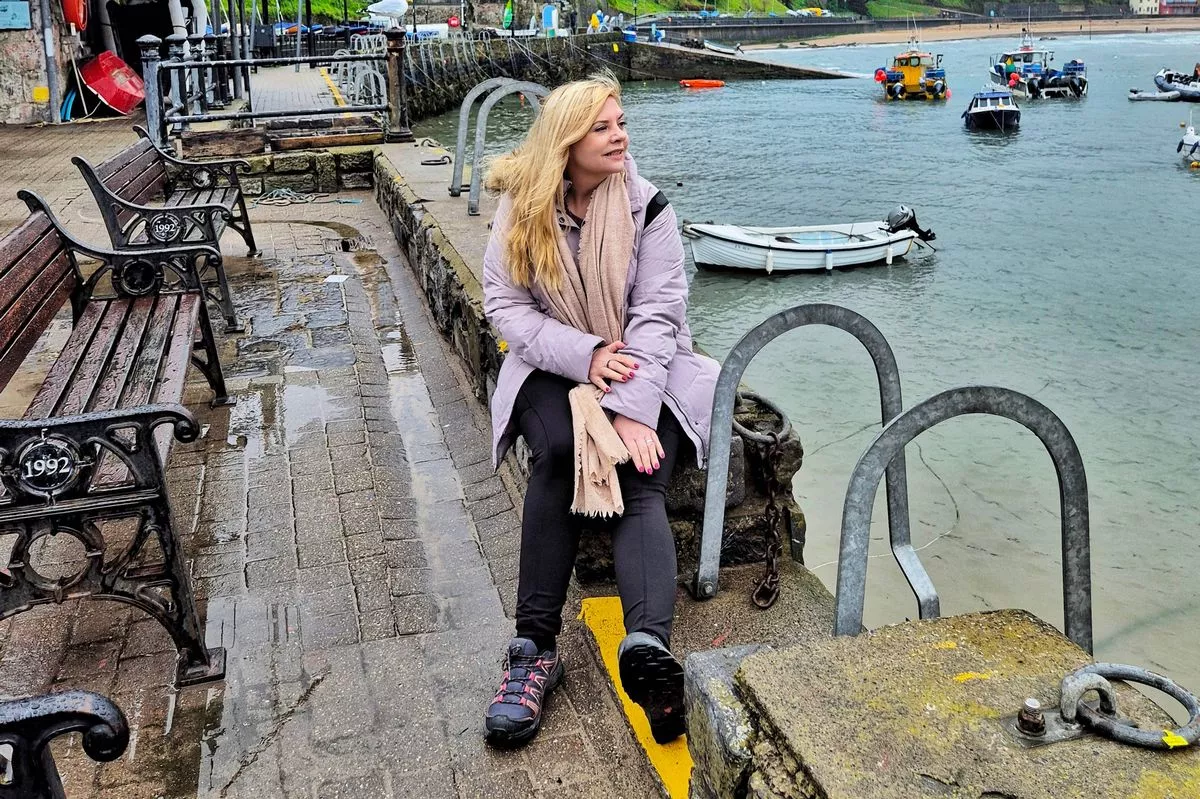
I stayed a weekend out of season in UK’s ‘best’ seaside town — I won’t go in summer again

Wales’ craggy coastline is among the most beautiful in the world and can be enjoyed year-round

The UK’s craggy coastline is among the most beautiful in the world and can be enjoyed year-round, especially in winter when crowds disperse and prices drop. I spent an affordable winter weekend in Tenby, widely considered one of the UK’s best seaside towns — and now summer travel is officially off the list as I want to avoid the crowds and sky-high prices.

There’s a particular joy in taking a solitary coastal walk on a Tuesday in November while everyone else is stuck at their desks. Strolling around the seafront, it’s easy to see why Tenby is such a hit. With picturesque beaches just a short stroll from the lively town centre, pubs, cobbled streets, and eye-catching, brightly coloured houses, I’m not surprised that this coastal jewel consistently tops the list of the country’s “best seaside towns”.

Stepping beyond its historic 13th-century walls, you’ll find sandy beaches and dramatic cliffside vistas over the sea towards the mesmerising Caldey Island. I have visited Tenby many, many times over the years, from childhood holidays to grown-up escapes and I love it a bit more with each visit. While admittedly summer is perfect for sea swimming and long wine-filled afternoons on sun-trap pub terraces, I have come to appreciate Tenby more in winter, especially when I can bag a good accommodation deal.

Sure, the weather might not be as sunny, but this is Wales. It’s completely unpredictable, so you may as well chance a cheaper autumn visit and hope the weather gods smile upon you. I love that if you visit Tenby during the week, say, mid-January, you can escape the crowds and wander the pretty streets and sandy beaches in relative peace. Just wrap up warm, buy a hot chocolate, and watch the waves roll in from a chilled-out seaside cafe.

Where to stay in Tenby

You can get some pretty good deals in the off-season, especially if you visit midweek rather than at the weekend. One of my favourite spots is YHA Manorbier, a very affordable stay that’s a short drive from the town centre.

This budget-friendly hostel, situated on a former military installation, offers glamping and camping facilities and costs under £50 for a private en-suite room for two (YHA members pay even less). Accommodation options include affordable private rooms, unique American Airstreams, cute camping pods, and pitch-up camping.

I usually book a clean, private en-suite room for just £45 for two, and as a YHA member, I get an extra 10% off. Win! Yes, the private rooms can have limited space for large luggage, which estate agents might call “bijou” and normal people might call “compact”. However, for just over £20 each it’s a genuine bargain – especially in the pricey Pembrokeshire area. You’re here for the vibes.

A community-spirited atmosphere fostered by shared kitchens, mismatched mugs, and conversations over wine in the lounge. Want to stay closer to town? Check out autumn deals on Booking.com and book a seaside hotel for around £70 for two adults, or spoil yourself with a stay at a four-star property, the Dunes, for just £80 for a night in the off-season.

The Premier Inn Tenby Town Centre hotel costs just £48 for a night for two in January and offers a cosy stay right in the middle of all the action.

Things to do in Tenby off-season

There’s still plenty to do in Tenby after the busy summer season has ended. You can stomp along the coast path, drink craft ales in local boozers, browse boutique shops, and pick up locally made gifts. Tenby has several sandy beaches where you can take a chilly winter sea dip if you’re feeling brave or drink hot chocolate overlooking the blustery shoreline.

South Beach is a dune-backed sandy beach close to the town and has the added accolade of being a Blue Flag Beach. For food options, check out Salty’s Beach Bar and Restaurant, located right on the beach.

Nearby Castle Beach was crowned the UK’s best beach in 2019 and currently holds a 4.8 out of five rating on Google. Unlike most places in the UK, it’s just a few steps from the town centre. North Beach in the Pembrokeshire town has previously been voted the most photogenic in the UK, beating other stunning sites like Durdle Door in Dorset and Brighton seafront. Pretty Harbour Beach is the smallest but has a backdrop of colourful houses, bobbing boats, and a road leading back to town.

Autumn is also a great time to traverse the Tenby Coast Path. This scenic section of the larger Pembrokeshire Coast Path offers views of Tenby’s colourful harbour, Caldey Island, and St Catherine’s Island.

Popular routes include the four-mile walk to Saundersfoot, a moderate nine-mile loop returning inland, and a challenging 10.9-mile point-to-point path to Freshwater East.

If it’s raining, head to Tenby Museum and Art Gallery, the oldest independent museum in Wales. Established in 1878, this retro museum houses a wide-ranging collection of local geology, biology, archaeology, and maritime artefacts.

Many of the exhibits also relate to the culture and heritage of South Pembrokeshire, offering insight into local history and art. A small gift shop near the entrance also sells local books and gift items.

The museum’s admission price is £6.50 for adults and £3.50 for children. It also operates a reusable ticket scheme – all tickets are valid for one year after purchase, so you can make as many return visits as you like within that time at no additional charge.

Places to eat and drink in Tenby

There are two local breweries in Tenby for Welsh tipples. Both produce quality beers and supply local bars and restaurants. Tenby Brewing Co., which took over from Preseli Brewery, has multiple stockists in Tenby and is one of Wales’s leading craft breweries.

The award-winning brewery was born when two friends decided (over a pint) to quit the rat race and start their own brewery. The Yard is their hip venue here at the brewery, with a capacity of 150, an exciting rotating food offering from awesome pop-up food vendors, draft beer lines from their range, and some of their favourite brewers.

The newer brewery on the scene, Harbwr, is a craft brewery and taproom that brews a range of cask and bottled ales just above Tenby harbour.

Food-wise, Tenby’s cluster of tiny streets and pastel-coloured buildings hides its best restaurants and cafes down the narrowest of alleys.

One of these more secluded dining finds is Plantagenet House, with a warren of flagstone floors, exposed beams, and a 40ft medieval Flemish chimney.

If you book early enough, you can bag a table by the fireplace. A recommended dish is their vegan Thai coconut curry, featuring squash, chargrilled spring onion, spiced rice, and roasted almonds.

Links restaurant is located on the ground floor of Tenby Golf Club and is a great Michelin-recommended dining choice for gastronomes.

Led by a talented local chef, the menu features simple yet incredibly tasty dishes made with the best Welsh produce. Start your meal with their freshly baked ale bread, served with whipped Marmite butter – trust me, it’s the perfect opener.

The atmosphere is relaxed but refined, and the menu strikes the perfect balance between unpretentious and exciting. From hot-smoked salmon with cucumber and buttermilk to heritage tomatoes paired with buffalo mozzarella, there are loads of lush dishes to choose from.

For mains, enjoy locally sourced delights like Pembrokeshire beef or Cornish cod in a bisque sauce, or tuck into a tender Welsh lamb rump, served with all the right accompaniments.

And don’t forget to save room for dessert, whether it’s rich dark chocolate fondant with tarragon ice cream or tangy lemon meringue with almond cake and blueberry sorbet, you won’t go home hungry.

D. Fecci and Sons possibly serve the best fish and chips in Wales and have been serving visitors and locals since 1935. With potatoes grown up the road in Pembrokeshire and groundnut oil making haddock, cod, and calamari fantastically light, the chippy also serves fresh mackerel in the summer.

For sweet treats, pop into Môr Tenby, a swish family-run coffee shop and gift shop that sells its own blend of coffee (“Coffi Môr”), chocolate products, deli items, home fragrances, homeware, gifts, and Welsh produce.

A beloved institution in Tenby, Top Joe’s is the go-to spot for pizza lovers.

This former ’60s diner has transformed into an artisan pizzeria serving freshly-made pizza, pasta, and salads with the finest Italian ingredients. Located in the heart of this picturesque beach town, it’s a firm favourite with locals and visitors.

Chef Giovanni Recchia, recently named one of the best in the world at the Pizza World Championships, brings his expertise to the menu. He crafts pizzas with locally milled flour and top-notch ingredients, including cured meats from Trealy Farm Charcuterie.

After snapping up a room for just £50, strolling straight into pubs that are usually rammed, and demolishing fish and chips by the sea, I can honestly say winter has stolen the crown as my favourite time in Tenby.

In 2026, I fully intend to resist the siren call of summer and book another cold-weather escape, where I can wander the streets before anyone else wakes up and claim the town entirely for myself.

Source link

Are Chelsea subs good enough – or should Enzo Maresca be blamed?

As Villa manager Unai Emery’s changes swung the game in their favour, Maresca’s substitutes made little impact.

Star attacker Cole Palmer reacted furiously to being taken off in the 72nd minute for 18-year-old Estevao Willian, while the decision to withdraw Marc Cucurella drew criticism – though it was later revealed that the Spaniard had a potential hamstring issue.

Maresca’s substitutions have faced scrutiny before, notably in defeats with 10 men against Manchester United and Brighton earlier this season. Atalanta forward Charles De Ketelaere even suggested they “drop” in the second half after his side came from behind to beat Chelsea in their Champions League game in Italy earlier this month.

While Maresca’s changes have occasionally worked, it has usually been when resting key players. In the Carabao Cup against Nottingham Forest, Brentford and Cardiff City, he rotated heavily but ultimately relied on star players to secure wins.

This has sparked a chicken-and-egg debate: some blame the lack of quality on the fringes of the squad, while others question Maresca’s handling of certain players.

Asked about the issue by BBC Sport, Maresca smiled before replying: “No, I think it’s in general.”

That guarded response came after a defeat defined by substitutes.

Villa’s quintet of Watkins, Amadou Onana, former Chelsea loanee Jadon Sancho, Lucas Digne and Lamare Bogarde, had an average age of over 26.

Chelsea, meanwhile, made four changes – Estevao Willian, Jamie Gittens, Liam Delap and Malo Gusto – with an average age of under 21.

In terms of attacking impact, Estevao has delivered five goals and an assist since moving to Stamford Bridge, but injury-hit Delap has scored just once, as has Gittens, albeit having also delivered five assists in all competitions.

“It’s probably how we can improve after we concede a goal, to manage the game a little bit better, in terms of experience game after game,” says Maresca.

Chelsea rely on youth, and have had minimal impact from their changes in the Premier League this season.

The average age of their starting XI is 24 years and 219 days, while substitutes average 21 years and 349 days – both are the youngest in the league.

Alongside Arsenal, Chelsea make the earliest changes, averaging their first substitution at 48 minutes, often at half-time. Despite this, their substitutes have contributed only three goals and one assist in the league this season.

Source link